
 English
 Українська
 Български
 Hrvatski
 Čeština
 Dansk
Dansk Nederlands
 Eesti
Eesti Suomi
Suomi Français
 Deutsch
 Ελληνικα
 Magyar
 Íslenska
 Italiano
 Latviešu
 Lietuvos
 Polski
 Português
 Română
 Русский
 Српски
 Slovenčina
 Slovenščina
 Español
 Svenska
 Türkçe
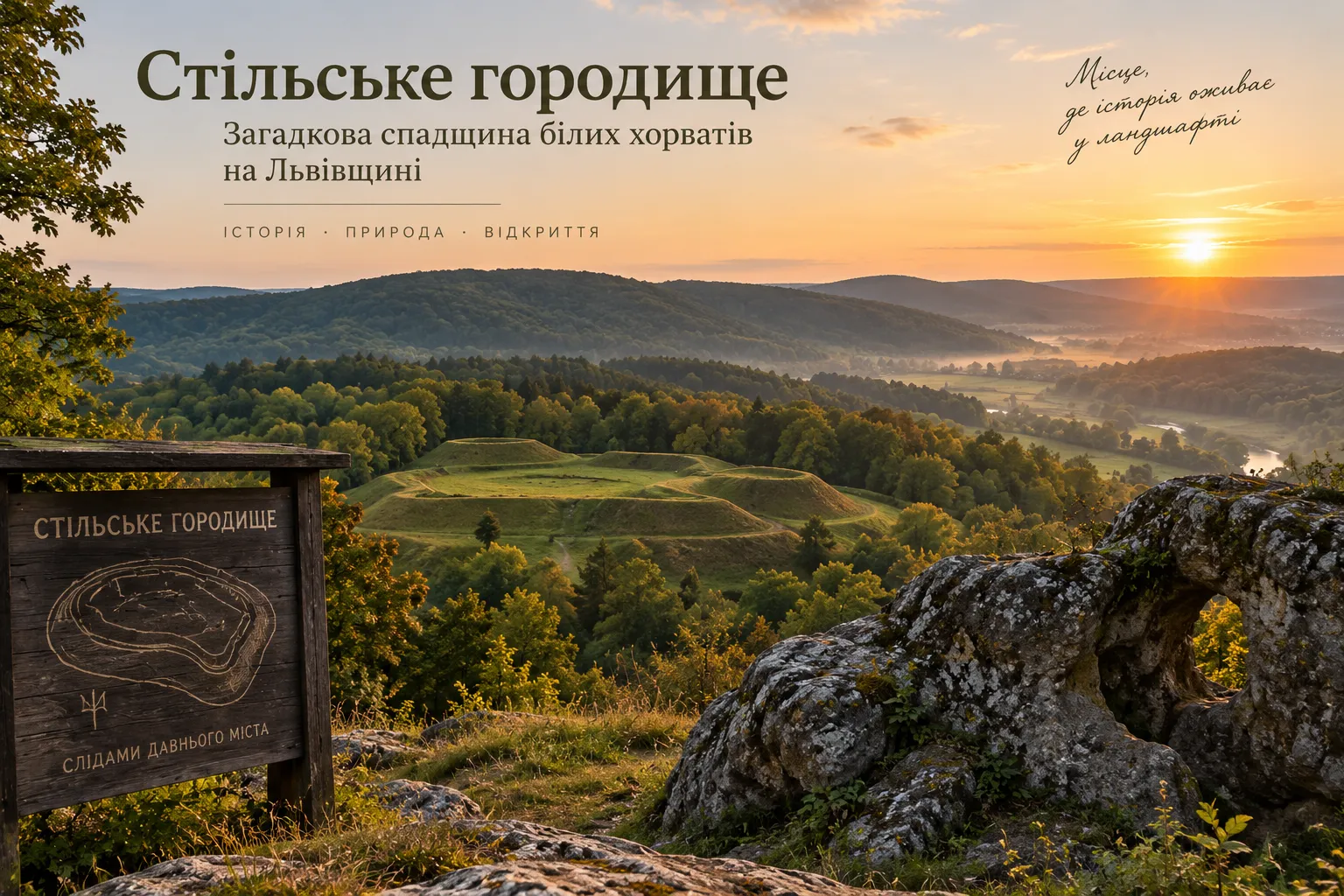
Stilske Hillfort is one of those historic sites in Ukraine where the past does not greet visitors with tall walls, restored towers, or a ticket booth beside a grand gate. The ancient city disappeared long ago, and its traces have dissolved among the hills, forests, and rocks of Lviv region. To see Stilske, you have to help your imagination a little: look closely at the earthen rampart, walk along the old road, peer into the cave complex—and only then does the landscape begin to tell its story.
It is precisely the scale of Stilske that has inspired so many grand claims about it. It is called the capital of White Croatia, described as one of the largest cities of its time in Europe, and associated with tens of thousands of inhabitants, underground passages, and pagan temples. Some of these stories are grounded in archaeological finds and scholarly hypotheses, while others have long since become embellished with tourist legends. And this is where things get most interesting: separating what researchers have genuinely established from the captivating stories that, over the years, have become almost part of the site itself.
The medieval Stilske hillfort in Halychyna is not a single point on a map. The historical and cultural reserve encompasses a complex of archaeological sites in the area of Stilske, Dubrova, and Iliv: remnants of fortifications, settlements, rock and cave complexes, a hillfort-sanctuary, and the famous Diriyavets Stone. Getting to know this area therefore feels more like a small historical expedition than an ordinary visit to a single monument.
And that is important to know before you go. If you arrive expecting something like Khotyn Fortress, you may initially be surprised: «So where is that enormous city?» It is literally beneath your feet and all around you—in the terrain, earthen fortifications, rocks, and traces of human activity more than a thousand years old. That is why a guided tour, or at least learning about the site’s history in advance, makes Stilske several times more fascinating.
In this article, we will explore what is actually known about Stilske Hillfort, who the White Croats were, whether their capital could really have been located here, what remains of the ancient city today, and which caves and rock complexes can still be seen. Most importantly, we will look at how to come here not simply to see a forest and a few hills, but to see beyond them a city that, more than a thousand years ago, was one of the important centers of this region.
The History of Stilske Hillfort and the Legacy of the White Croats
To understand the history of Stilske Hillfort, it is worth forgetting the modern village of Stilske for a while and imagining an entirely different landscape. More than a thousand years ago, the high hills above the valleys were home to a large fortified settlement system with ramparts, ditches, residential and utility buildings, roads, and surrounding villages. Today, most of this picture lies hidden beneath the soil, forest, and grass, but archaeological research has gradually made it possible to reconstruct its basic outlines.
According to the findings of many years of research, it was precisely medieval Stilsko that existed from approximately the 8th century to the beginning of the 11th century, reaching its greatest development in the 9th–10th centuries and at the beginning of the 11th century. This was a time when major political alliances were forming in Central and Eastern Europe, trade routes were changing, and centers were gradually emerging from which medieval cities would later grow.
What the Ancient City at Stilske Was Like
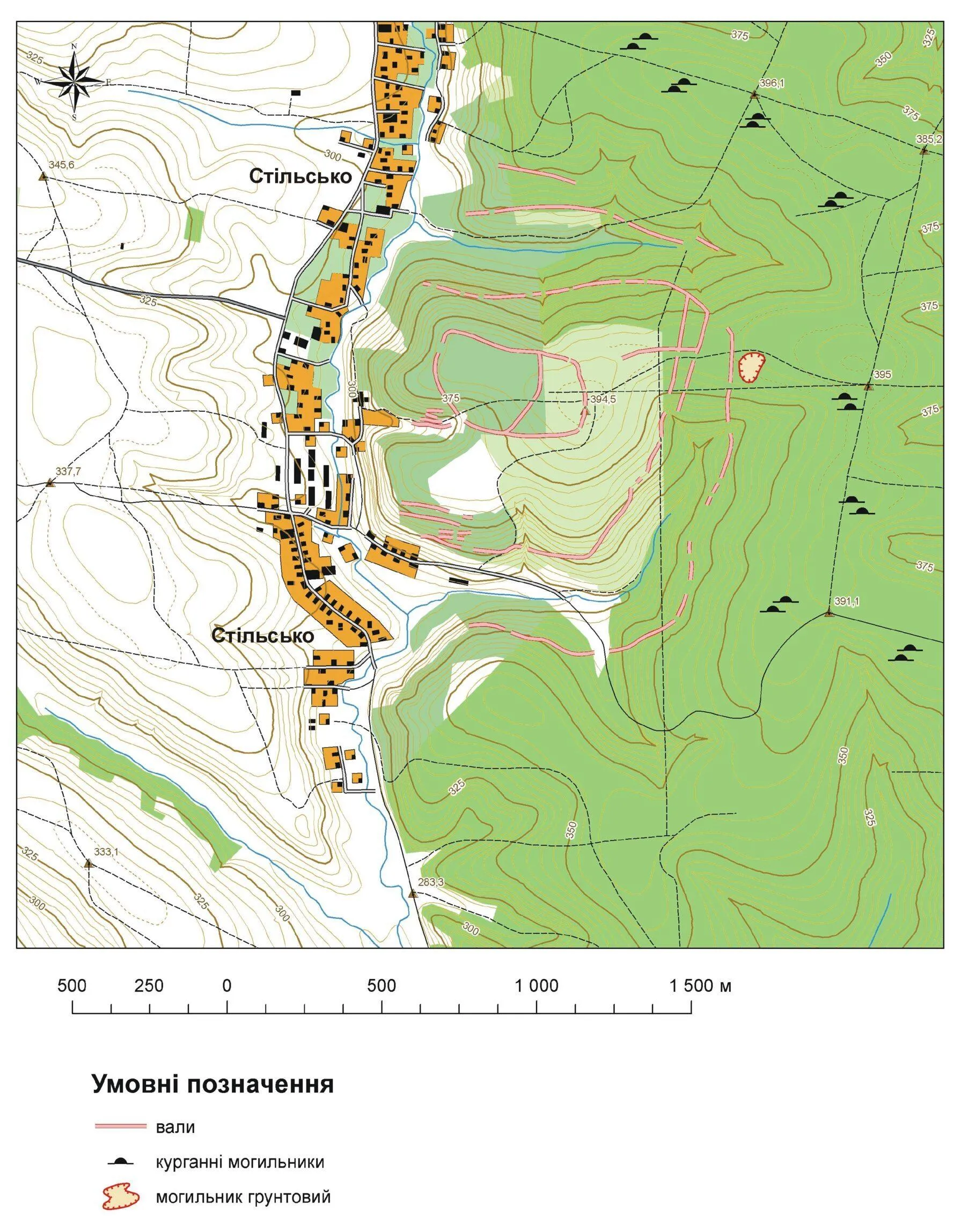
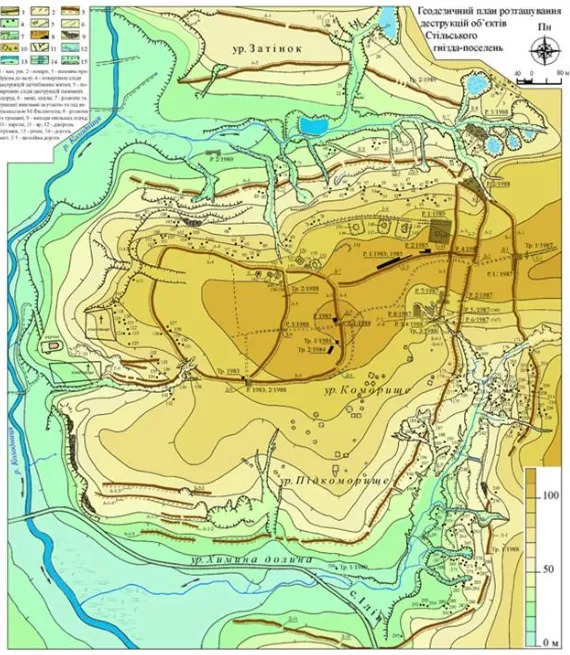
Archaeologists have established that the fortified area of the hillfort covered approximately 250 hectares. For the Early Middle Ages, this was truly a substantial scale, but the settlement’s structure itself is even more significant. It consisted not of a single castle or fortress, but of several interconnected parts.
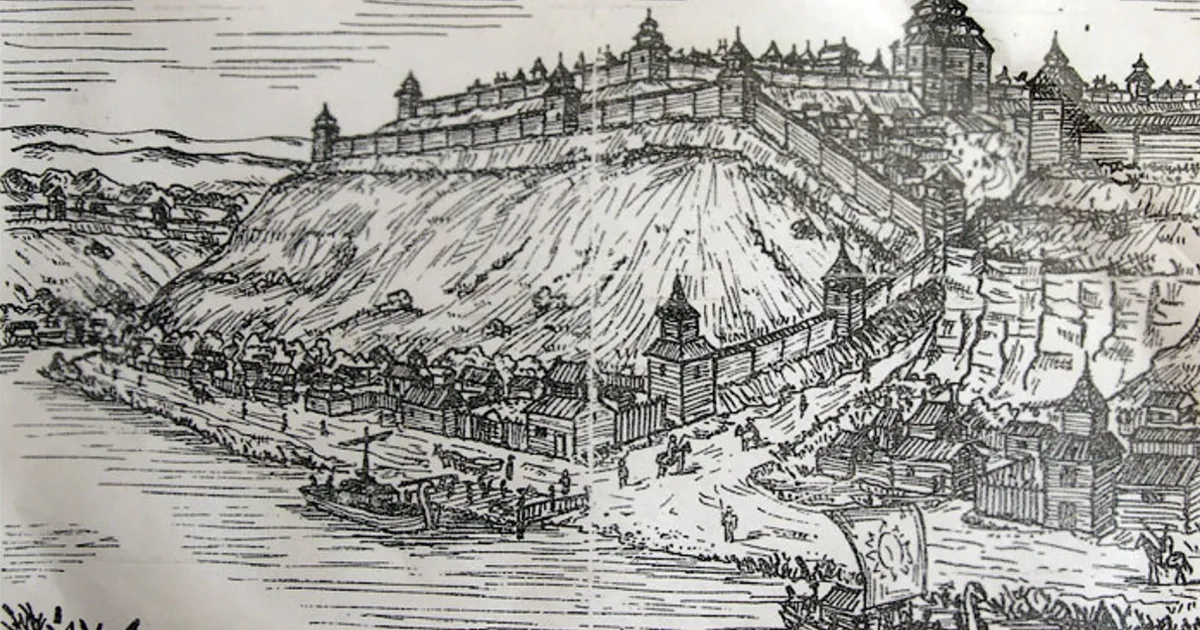
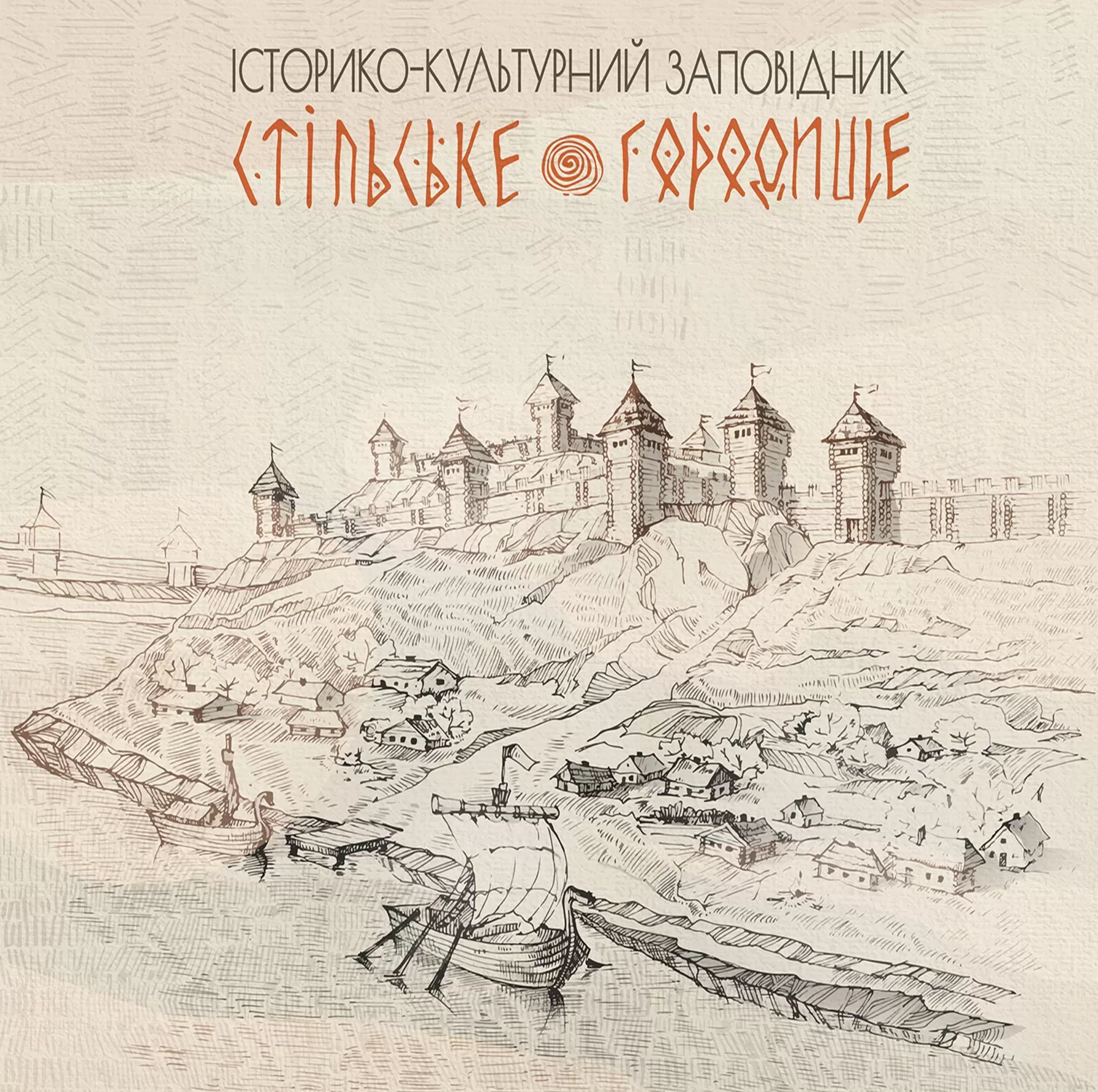
At the center was the detinets—the most heavily protected part of the hillfort, which can roughly be compared to an inner fortress. A fortified suburb stretched around it, followed by numerous open settlements. The entire system was adapted to the natural terrain: hills, steep slopes, and ravines complemented the earthen defensive structures.
Even today, you can trace the remains of powerful earthen ramparts and ditches across the landscape. To an untrained eye, they may sometimes look like nothing more than elongated hills in the forest, but these irregularities are the remnants of a defensive system that defined the boundaries of the fortified center more than a thousand years ago.
Archaeological research has uncovered the remains of residential and utility structures, pottery, iron objects, and other items from everyday life. Settlements, burial mounds, production areas, and sites from various historical periods have also been recorded in the surrounding area. Researchers emphasize, however, that only a small part of the complex’s vast territory has been archaeologically studied.
Who Were the White Croats, and What Do They Have to Do with Stilske?
Much of Stilske’s appeal lies in its possible connection with the White, or Carpathian, Croats—an Early Medieval Slavic population that written sources associate with vast territories north of the Carpathians. Croats are mentioned in medieval written sources, but the precise boundaries of their settlement, their political organization, and even the meaning of the term «White Croatia» remain subjects of scholarly debate. It would therefore be too bold to draw clear borders on a modern map for some single «state of the White Croats.»
At the same time, many researchers associate the archaeological sites of the Upper Dniester region from the 8th–10th centuries specifically with the eastern, or Carpathian, Croats known from written sources. In this context, Stilske is regarded as one of the largest Early Medieval centers in the region.
This is where the popular description of Stilske as the «city of the White Croats» comes from. It has a scholarly foundation, but it does not mean archaeologists found a sign reading «Welcome to the capital of White Croatia.» Reconstructing the ethnic identity of an archaeological population is far more complicated—involving a combination of archaeology, written sources, chronology, geography, and comparison with other sites.
How Archaeologists Discovered Stilske Hillfort
Local residents had long known about the unusual earthen fortifications and antiquities around Stilske. As early as the first half of the 20th century, researchers drew attention to the possibility that a large medieval center had existed here. In 1937, historian Volodymyr Matsiek published an article suggesting that a fortified city had existed in the vicinity of Stilske.
In the 1960s and 1970s, the area was actively studied by local historian Vasyl Deresh. He collected archaeological finds, recorded local legends and place-names, and in 1969–1970 produced the first rough survey plan of the hillfort. This work helped attract much more serious archaeological attention to the site.
Systematic field research began in 1981 under the direction of archaeologist Orest Korchynskyi. At first, the site’s dating was still being refined, but with each new field season it became clearer that researchers were dealing not with an isolated fortification, but with a large Early Medieval complex.
From 1987 onward, work was continued by the permanent Upper Dniester Archaeological Expedition. Orest Korchynskyi, Mykhailo Fylypchuk, Volodymyr Shyshak, and other archaeologists took part in the research. They studied not only the hillfort itself but also the surrounding territory, looking for settlements, burial grounds, production centers, and other sites that might have formed part of the same historical environment.
From Archaeological Excavations to a Historical and Cultural Reserve
In the early 2000s, the scale of systematic archaeological research declined because of insufficient funding. However, the site had already received state recognition: in 2001, Stilske Hillfort was granted the status of an archaeological monument of national importance.
The next important stage came in 2015, when the «Stilske Hillfort» historical and cultural reserve was established. Its objectives included not only preserving the site but also resuming research, documenting archaeological features, promoting its history, and gradually transforming the area into a historical and tourist space that visitors could readily understand.
Research continues today. Archaeologists use GPS mapping, surveys, and non-invasive methods to refine the boundaries of ancient sites and discover new features. This is an important detail: the history of Stilske has not yet been written in full. Some of the answers are still literally lying beneath the ground.
And that is precisely why Stilske is so fascinating. We already know enough to speak of a large Early Medieval center with a powerful defensive system and an extensive surrounding settlement. At the same time, many questions remain: what was its political status, how many people actually lived here, how far did the city’s influence extend, and can it be called the capital of White Croatia?
That final claim is precisely what deserves separate consideration—for the line between archaeological fact, scholarly hypothesis, and an appealing tourist legend can sometimes be very thin.
The Capital of White Croatia: What Is Actually Known about Stilske
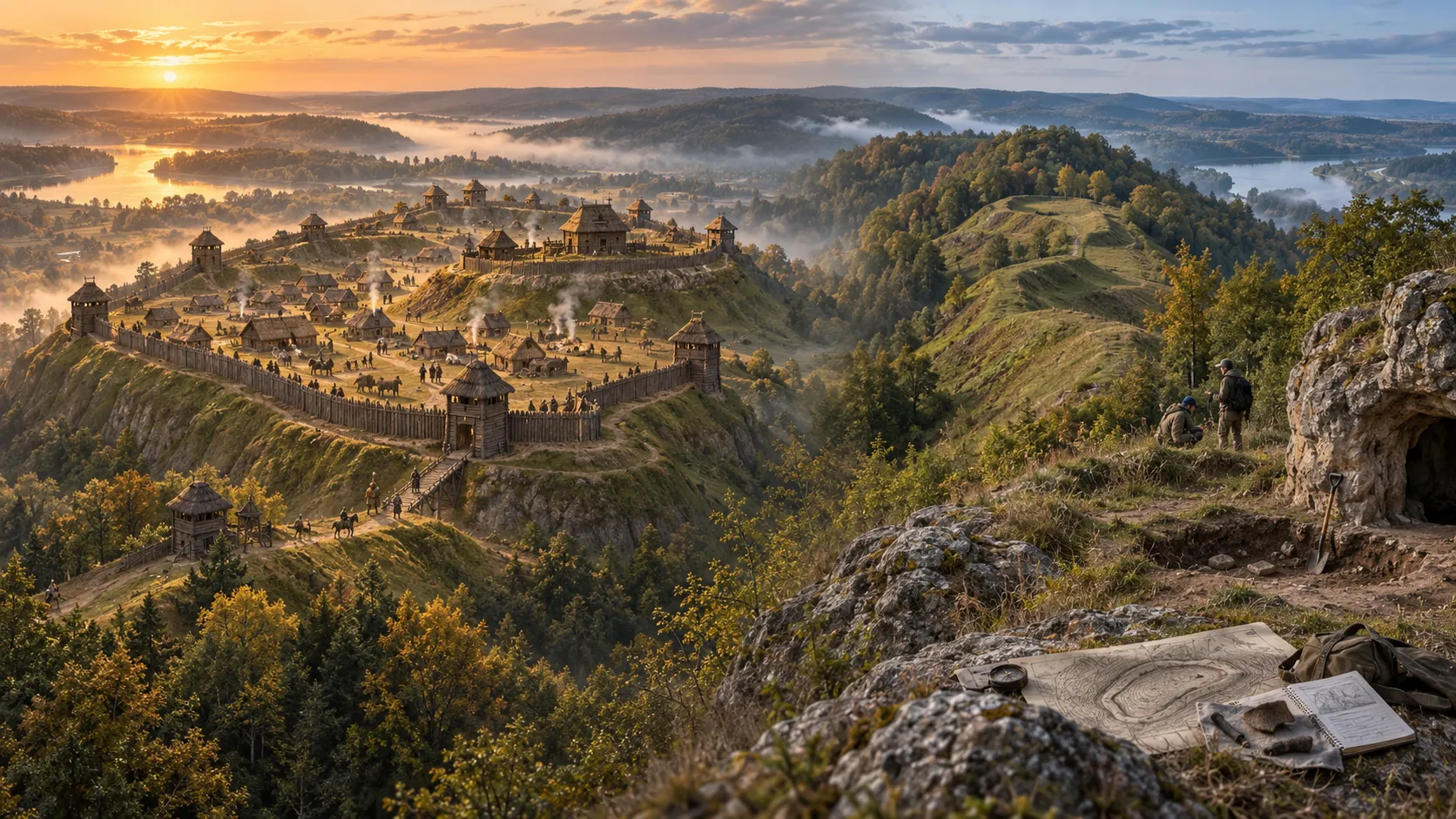
Over the past few decades, an almost separate layer of stories has formed around Stilske Hillfort. Tourist materials call it the capital of White Croatia and one of the largest cities of Early Medieval Europe, and speak of tens of thousands of inhabitants, underground labyrinths, pagan temples, and even sophisticated hydraulic structures. Some of these claims have a genuine archaeological basis, but by no means are all of them equally well supported.
That does not make Stilske any less interesting. On the contrary, the site becomes far more fascinating when you understand where established archaeological fact ends and scholarly hypothesis or local tradition begins.
Was Stilske Really the Capital of White Croatia?
This is the claim most often associated with the name Stilske Hillfort today. It appears in tourist advertising, reserve materials, publications by local authorities, and numerous guidebooks. One of the site’s leading researchers, archaeologist Orest Korchynskyi, also viewed Stilske as a political center of the Carpathian Croats and associated it with Great, or White, Croatia.
There are genuine reasons for this hypothesis. Before us is a fortified center enormous for its time, covering about 250 hectares, with a detinets, an advanced system of ramparts and ditches, a suburb, craft facilities, and numerous settlements in the surrounding area. Such a scale is unlikely to have belonged to an ordinary small village.
In addition, Early Medieval written sources mention Croats north of the Carpathians, while the archaeological sites of the Upper Dniester region are associated with a population that researchers often identify with the Carpathian, or White, Croats. But there is one fundamental problem: no known Early Medieval written source directly calls Stilske the capital of White Croatia. Written references to the Croats and archaeological evidence must be compared with one another, while the hillfort’s political status itself must be reconstructed.
It is therefore more scientifically cautious to say that Stilske may have been one of the largest political, administrative, and economic centers of the Carpathian Croats, while the theory that it was a capital remains a hypothesis. Interestingly, even the reserve’s official website effectively preserves both approaches. In popular materials, Stilske is called the «ancient capital of the White Croats,» whereas the detailed description of the site presents the reference to a capital city as an old local tradition.
Where the figure of 40,000–45,000 inhabitants came from
An equally impressive figure, often repeated in materials about Stilske, is up to 40,000–45,000 inhabitants during the city’s greatest flourishing. This estimate can even be found on official tourism resources for the Lviv region. However, it should certainly not be treated as the result of some kind of medieval census. Archaeologists cannot simply count the inhabitants of a city of the 9th–10th centuries. Such figures are obtained through reconstruction: researchers consider the settlement’s area, possible building density, the number of residential structures, the layout of the territory, and other indirect indicators.
In the case of Stilske, the task is especially difficult because only a small part of its enormous territory has been archaeologically studied. Moreover, not every hectare within the defensive system was necessarily densely built up and permanently inhabited at the same time. Therefore, the figure of 40,000–45,000 is more accurately presented as one estimate of the maximum possible population, rather than as an established fact. It is safer to say that Stilske was a large and probably densely populated center of its time, but the exact number of its inhabitants cannot be determined today.
Was Stilske the Largest City in Europe?
An even more striking claim is that Stilske was the «largest city in Europe in the 8th–10th centuries.» Orest Korchynskyi, among others, used this description to emphasize the site’s exceptional scale. The area of Stilske is indeed impressive: about 250 hectares of fortified territory and approximately 10 kilometers of defensive lines. By these measures, it is one of the largest known early medieval sites of its type in the region.
However, comparing ancient cities by area alone can be misleading. The boundaries of an archaeological hillfort, the area of settled territory, building density, and the very concept of a «city» varied considerably across different parts of Europe. Therefore, the phrase «the largest city in Europe» is better understood as a vivid popularizing description rather than a universally recognized scholarly title.
It is entirely justified, however, to call Stilske one of the largest known fortified centers of the early Middle Ages in the territory of present-day Ukraine. And even without competing for European records, the site’s scale is no less impressive.
The Underground City Beneath Stilske: Fact or Legend?
Perhaps the most romantic part of local folklore tells of an underground city beneath the Stilske hillfort. According to various versions, a system of long tunnels, storage chambers, ritual rooms, and underground passages supposedly exists beneath the plateau.
Cave and rock structures really do exist in the surrounding area—this is not a fabrication. They are known in Stilske, Dubrova, Iliv, and near Mykolaiv, and some show clear signs of human intervention. There have also been reports of geophysical surveys in which cavities or structures that may have been anthropogenic in origin were detected underground.
But this is still a long way from a full-fledged «underground city.» No archaeologically studied, extensive system of streets, rooms, and tunnels beneath the entire hillfort exists today. The site’s official description also treats stories about ancient underground spaces primarily as local legends and tales.
Stilske’s caves should therefore be considered separately—as real archaeological and natural features whose functions may have changed over different periods. The story of an entire underground city is better regarded as a beautiful mystery that has not yet received sufficient archaeological confirmation.
The Golden Gate, the White Road, and the Legend of the City’s Destruction
Another distinctive feature has survived in Stilske: ancient names for particular parts of the landscape. «Golden Gate,» «White Road,» «Prince’s Well,» «Komoryshche,» and other microtoponyms were passed down by local residents for generations and became important clues for researchers.
A tale about the destruction of the ancient city is particularly well known. According to legend, the impregnable capital could not be taken by force for a long time. The attackers then feigned retreat: at night they marched away with lit torches, and the inhabitants decided that the danger had passed. When the gates were opened, warriors who had remained in ambush entered and set the city on fire. After its destruction, the survivors supposedly moved down into the Kolodnytsia Valley, where present-day Stilske emerged.
It is a wonderful story for a guided tour, but archaeology does not yet allow us to reconstruct the city’s destruction in such detail. The tale shows how local people sought for centuries to explain the enormous fortifications on the plateau and the origins of the modern settlement.
What We Can Say with Confidence about Stilske
Even after all the beautiful exaggerations are removed, Stilske remains an extraordinary site. There are several points on which the archaeological picture is considerably more reliable:
- there really was a large early medieval fortified center on the plateau;
- its fortified area covered approximately 250 hectares;
- the total length of the defensive fortifications reached approximately 10 kilometers;
- the city had a citadel, a fortified suburb, and surrounding settlements;
- the ramparts supported wooden defensive walls of log construction;
- residential, domestic, craft, and defensive structures have been discovered across the site;
- the complex reached its greatest flourishing around the 9th–10th centuries and the beginning of the 11th century;
- Stilske belongs to the group of sites in the Upper Dniester region that researchers associate with the Croats of the Carpathians.
This alone is enough to show that Stilske needs no invented sensations. Before us is a truly enormous early medieval center whose history remains far from fully studied. Future excavations may answer some of the disputed questions—or perhaps leave behind even more new ones.
And perhaps that is precisely what makes Stilske so interesting: it is still possible to debate the capital, estimate the number of its potential inhabitants, and search for traces of underground spaces, but the city itself no longer needs legends to impress. Ten kilometers of ancient fortifications among the hills of the Lviv region are reason enough to see this place with your own eyes.
What to See at the Stilske Hillfort
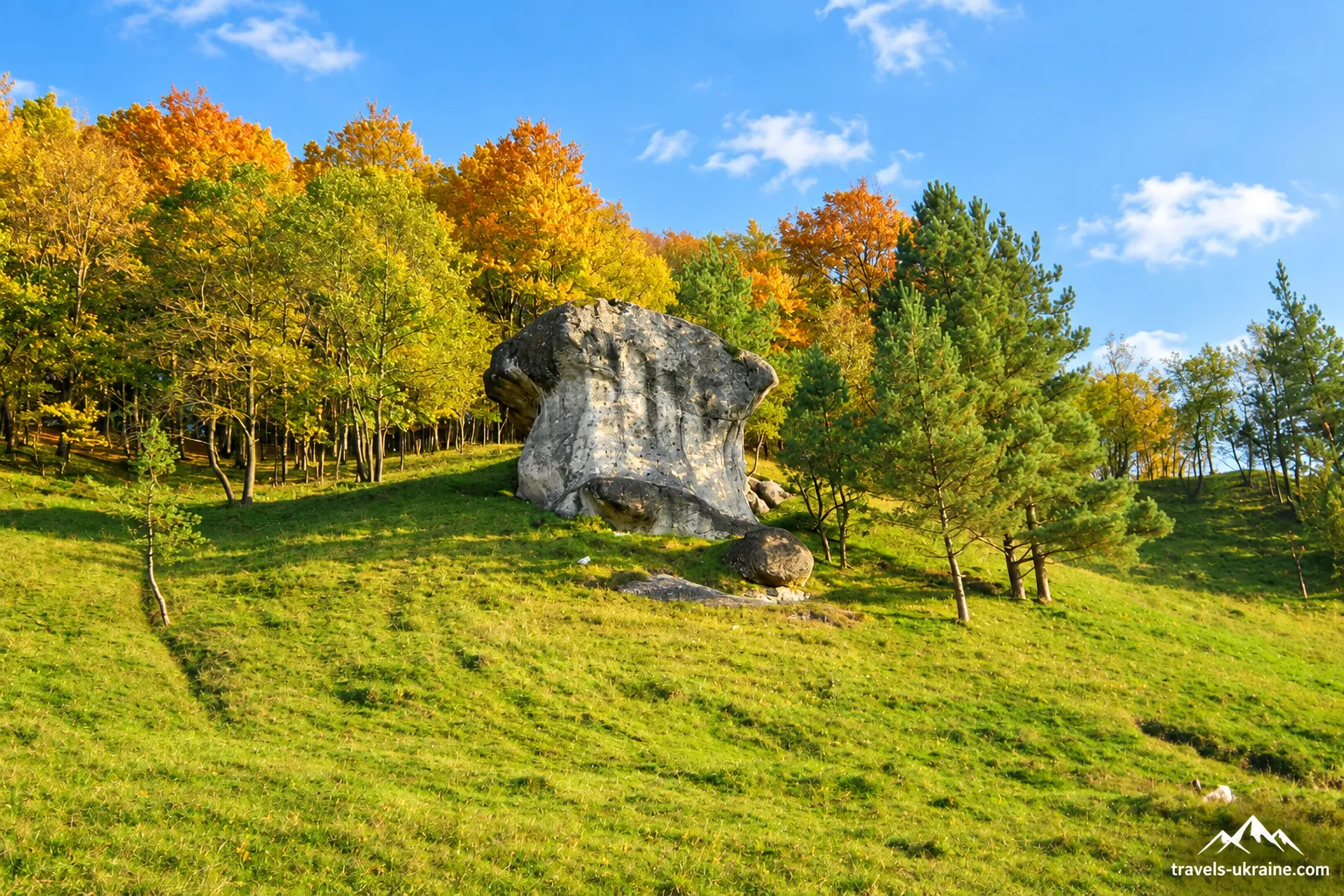
An ancient city among the hills of the Lviv region is not the kind of archaeological site where you simply pass through a gate and immediately see palace ruins, fortress walls, and the remains of old houses. Most of the ancient structures were wooden and disappeared long ago, while what has survived more than a thousand years is now read primarily in the landscape itself: earthen ramparts, ditches, ancient roadways, plateaus, and archaeological areas. Stilske should therefore be explored somewhat differently. Here, you need not merely look but imagine what stood in this place in the 9th–10th centuries. Once you know that an ordinary hill once carried a wooden defensive wall, and that a gap in an earthen rampart was a city gate, the landscape suddenly begins to look completely different.
Of course, more than a thousand years of erosion have significantly changed the appearance of the city: the ramparts have become lower, the ditches have gradually silted up, and some of the fortifications have been covered by forest. Nevertheless, the defensive lines can still be clearly traced across the landscape. It is especially interesting to view them while understanding that the modern earthen embankment is only the foundation of the former defensive system. A wooden wall of log construction once stood along its crest, with a deep ditch running in front of it.
The scale of these fortifications is what best conveys the size of Stilske. Even if almost nothing of the city remains above ground, ten kilometers of defensive lines make it quite clear that this was far from a small settlement.
The Citadel and the Ancient Entrance—the Heart of Old Stilske
The central and best-protected part of the city was the citadel—a princely fortress situated on the dominant height of the plateau. Its platform measured approximately 300 × 500 meters and rose almost 100 meters above the valley of the Kolodnytsia River. The citadel was surrounded by a substantial rampart with wooden defensive structures. This was probably the administrative and most heavily protected part of the city. Today, you will not see a palace or princely tower here, but the plateau’s elevated position clearly explains the logic behind choosing this location: it controlled the surrounding valleys and approaches to the fortifications.
For visitors, this is one of the most important points along the entire route. Here, the connection between the natural terrain and defense is especially clear: the ancient builders did not fight the landscape but used the hills, steep slopes, and elevation as parts of the fortress.
Archaeologists have traced three ancient roadways within the citadel’s defensive system—from the east, west, and south. In local tradition, the southern entrance became known as the «Golden Gate.» The gate itself is, of course, no longer there. However, archaeological research uncovered traces of a gatehouse structure, probably a defensive tower. Thus, a name that may for a long time have seemed merely part of local folklore acquired a quite real archaeological context.
This is a good example of how old local names function at Stilske. Sometimes a word passed down from one villager to another for generations led archaeologists precisely to a place where traces of an ancient structure had survived underground.
The «White Road»—the Route into the City
Another important part of the hillfort is known as the «White Road.» One of the ancient routes to the fortified city ran here. During excavations, archaeologists uncovered a stone pavement made of limestone, sandstone, and river cobbles. A gatehouse tower once stood above the road, as evidenced by the remains of its foundations. Finds from this area included pottery fragments, iron objects, and pieces of equipment belonging to a rider and horse.
The White Road is particularly helpful for imagining the ancient city: it reminds us that Stilske consisted of more than ramparts and wooden walls. Properly constructed roads led into the city, and there were gates, controlled entrances, and the infrastructure required by a large fortified center.
The Prince’s Well and the Legend of the Golden Cradle
In the northern part of the citadel, at one of the highest points, lies an area known as the «Prince’s Well.» One of the best-known local legends is associated with it. According to the tale, when an enemy approached the city, the princess supposedly threw her child’s golden cradle into the well so that the attackers could not seize the treasure. Naturally, there is no archaeological evidence of a golden cradle, but the name of the area has survived and become part of Stilske’s historical memory.
Such legends should not be taken literally, but it would also be wrong to dismiss them entirely. At Stilske, local names have repeatedly helped researchers locate important areas of the hillfort, so oral tradition itself has become part of the site’s history.
Where the People of Stilske Lived and Worked
Beyond the citadel stretched a large fortified suburb. Much of the population lived and worked here, including craftspeople, farmers, and other residents of the ancient center. In the eastern part of the hillfort, archaeologists studied more than three dozen features: the remains of above-ground and semi-subterranean dwellings, utility buildings, cellars, and workshops. Some houses preserved stone ovens, while nearby researchers found 9th–10th-century pottery, knives, sickles, bucket fittings, quernstones, and other everyday objects.
An especially interesting discovery was an iron-smelting complex dating to the beginning of the 10th century. Its territory contained areas for preparing bog ore, producing charcoal, and crushing limestone, as well as the workshop itself with a furnace. This makes it possible to see Stilske not merely as a fortress but as a living city where people worked, produced goods, prepared food, and practiced crafts.
Most of these archaeological sites do not look like a ready-made open-air museum today. Some were conserved after excavation, while others were covered with soil again. That is why a guide is particularly useful here: without an explanation, you can walk over the site of an ancient workshop without even realizing that you have just crossed a thousand years of history.
Stilske is best viewed not as a single landmark, but as an entire landscape
The biggest mistake on a first trip is to look for one main structure in Stilske where you can take a photo and tick «seen» off your list. There is simply no such object here. The main attraction is the historic landscape itself: the citadel plateau, long earthen ramparts, the old entrances to the city, the Kolodnytsia Valley, localities with ancient names, and dozens of archaeological sites scattered around them. Only together do they convey the scale of the settlement.
And that is precisely why Stilske gradually reveals itself as you walk. At first you see a hill. Then you learn that it is a rampart. Next you discover that a wooden wall once stood on it, with a ditch nearby, while a city gate stood a few hundred metres away. After a while, an ordinary Carpathian forest no longer looks ordinary at all. The caves, rock complexes, Dyriavets, and mysterious sites in Dubrova and Iliv are another chapter in Stilske’s history. It is so fascinating and ambiguous that it deserves a section of its own.
The caves and rock complexes of Stilske: between archaeology, cults, and legends
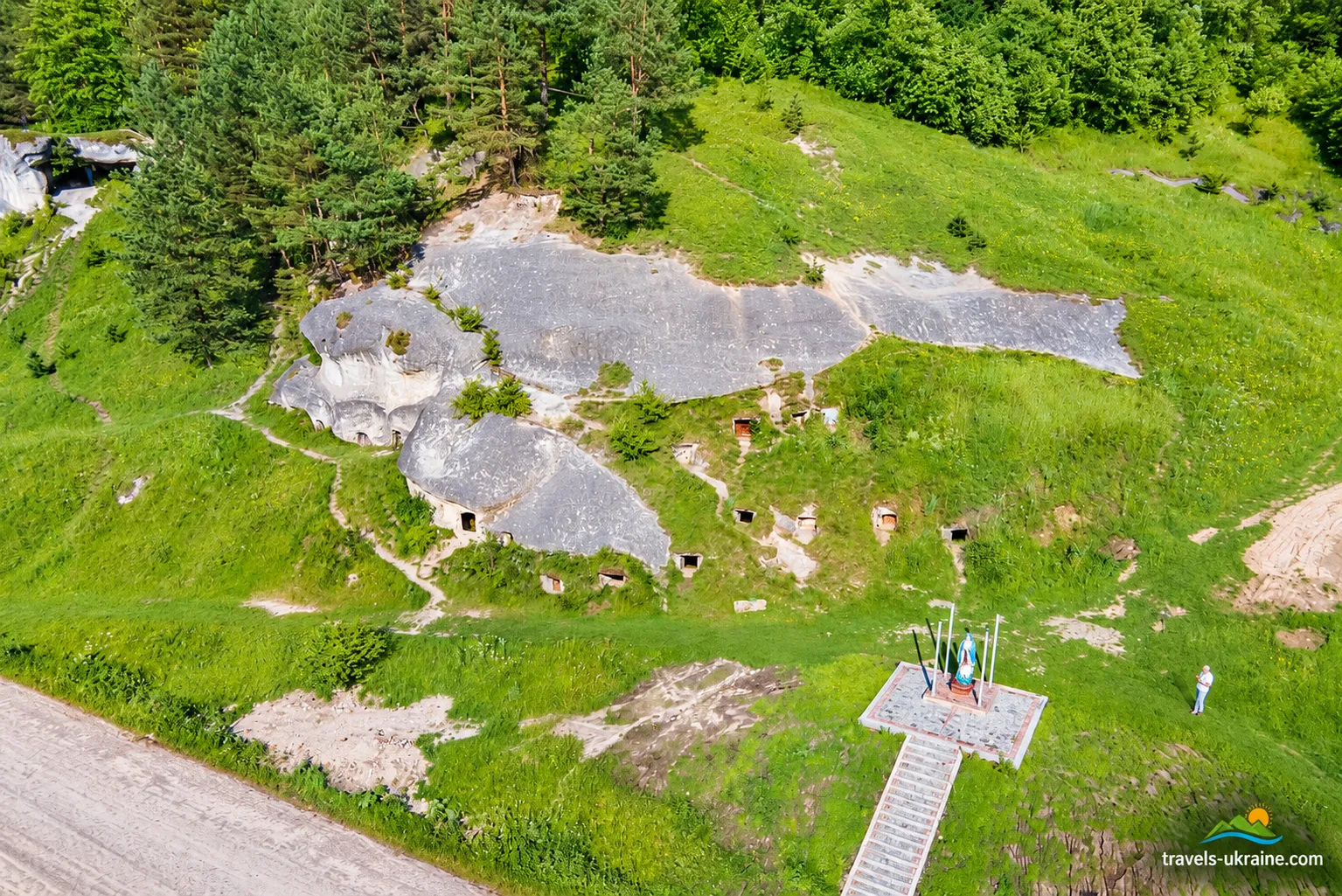
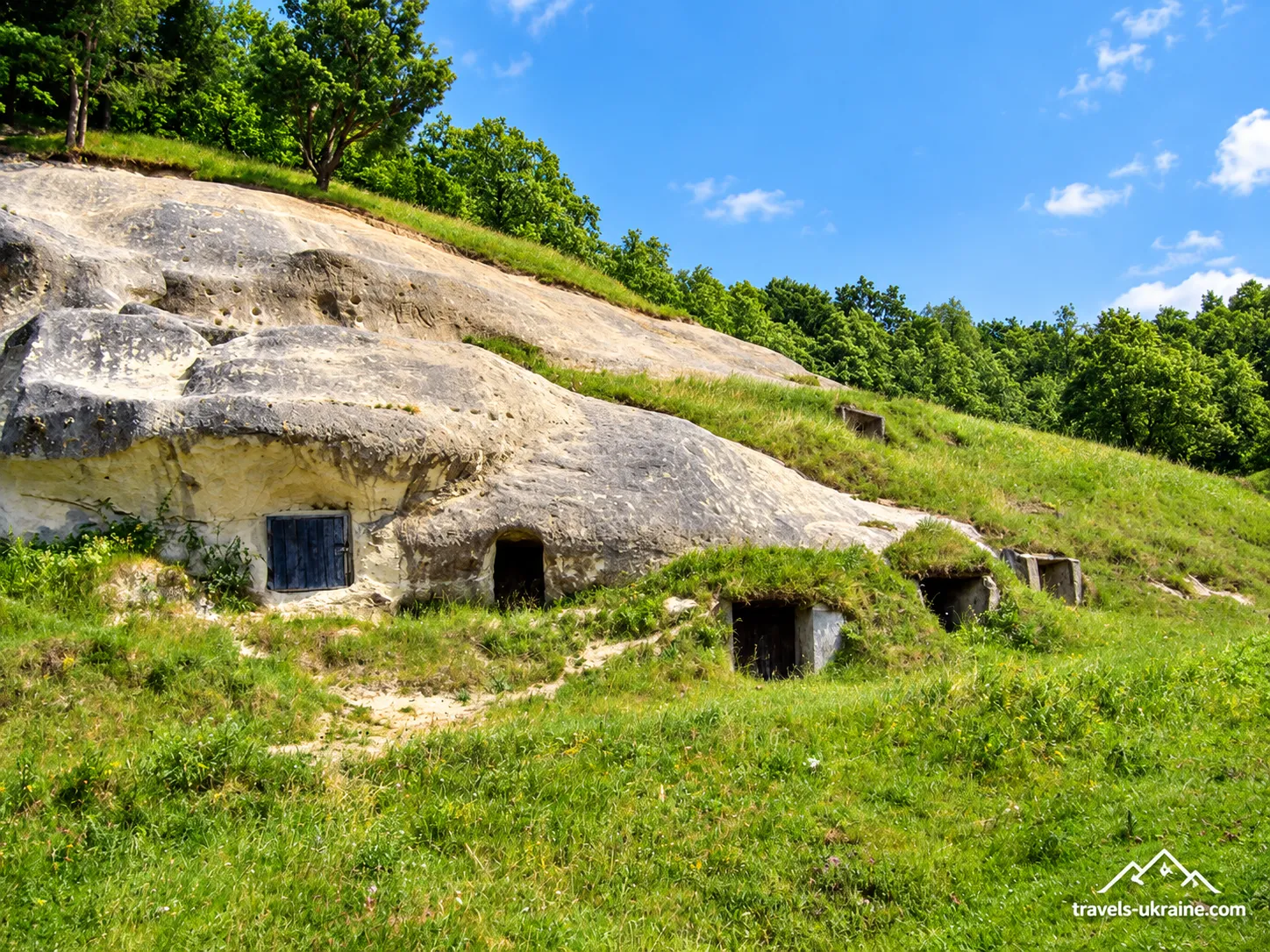
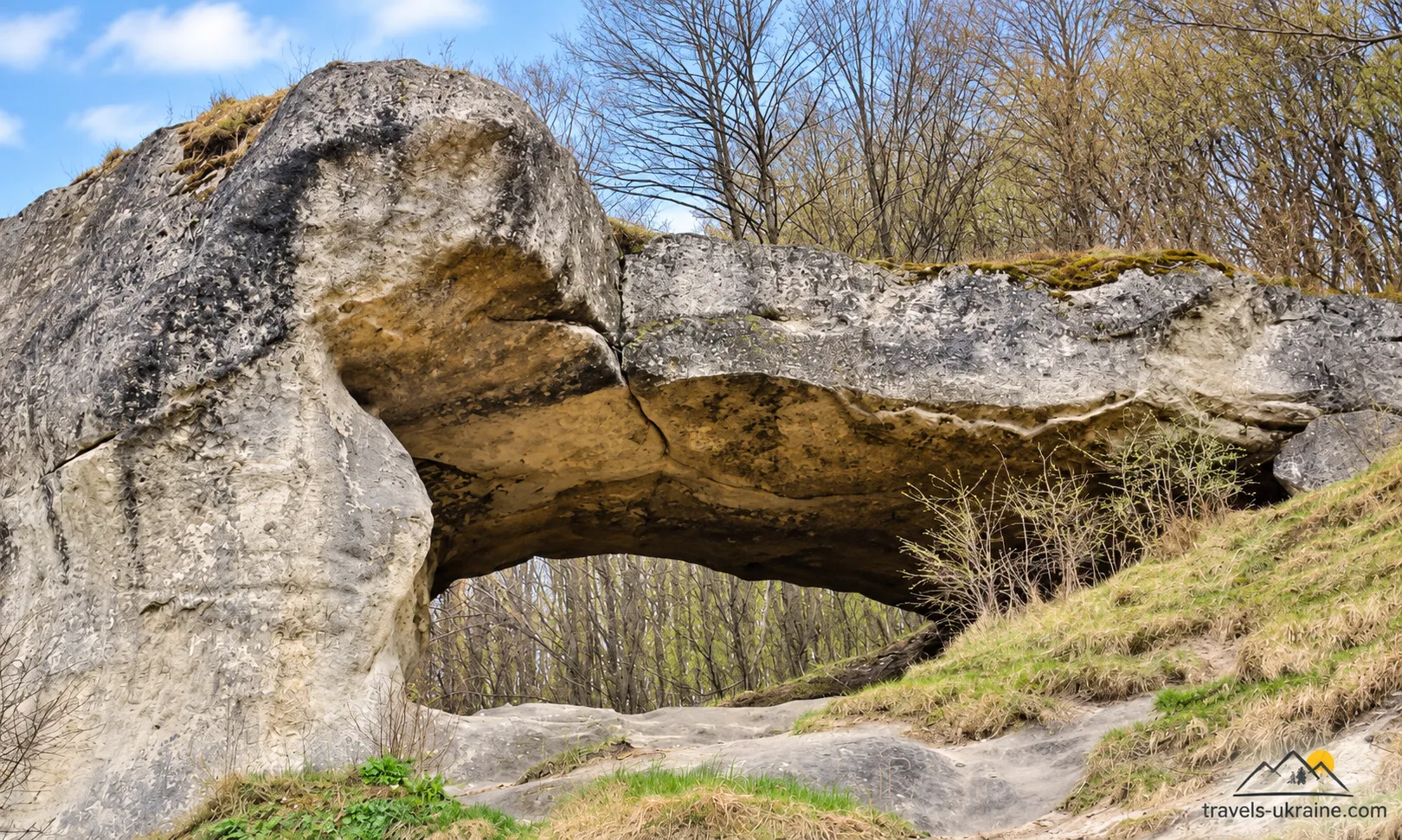
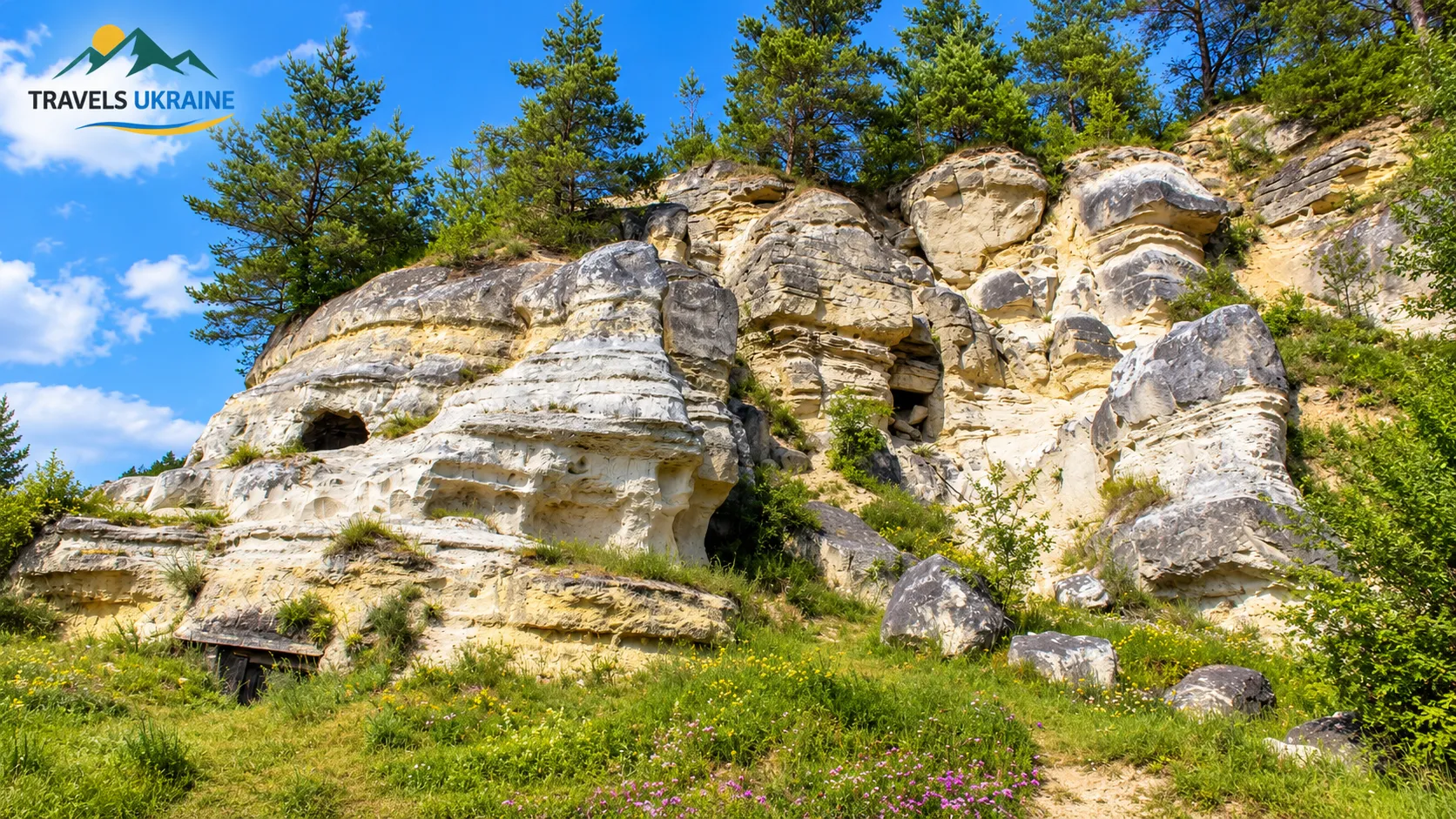
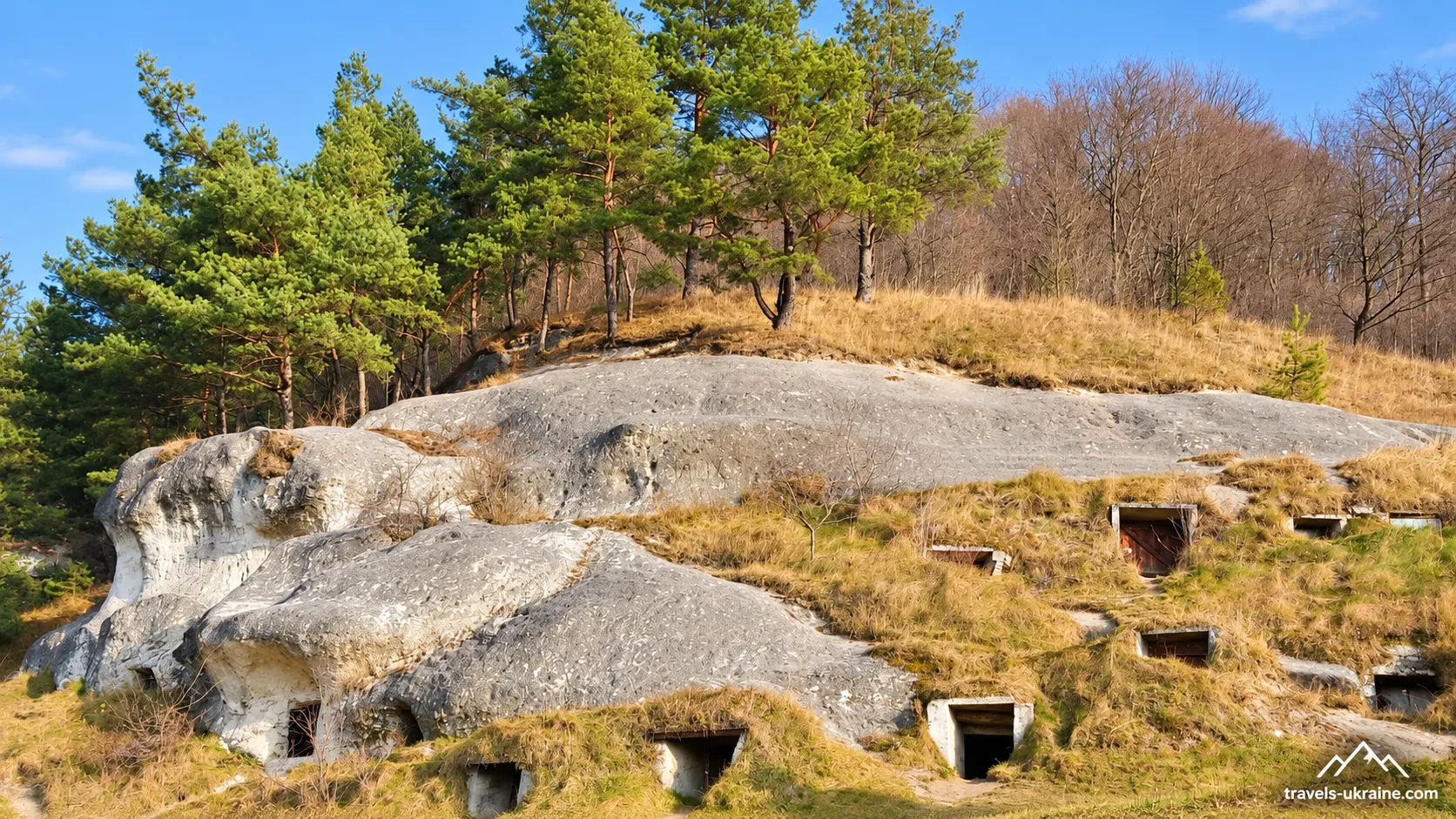
If the earthen ramparts help you imagine the scale of the Stilske hillfort, the caves and rock complexes give the area an entirely different atmosphere. Rooms carved into the rock, niches, steps, openings of unclear purpose, and enormous boulders amid the beech forest easily give rise to stories about pagan priests, secret temples, and underground sanctuaries.
And this is precisely where particular caution is needed. Real man-made caves and archaeological sites do exist around Stilske, but their age and original purpose have by no means always been established. Some interpretations that seemed convincing a few decades ago are already being reconsidered in light of modern research.
So a journey through Stilske’s rock complexes is less an excursion offering ready-made answers than an encounter with archaeology in progress. It may well turn out that a «pagan shrine,» after further excavations, is actually the remains of a defensive structure, while a cave that a tourist guide called a temple was in fact used by people during several different historical periods.
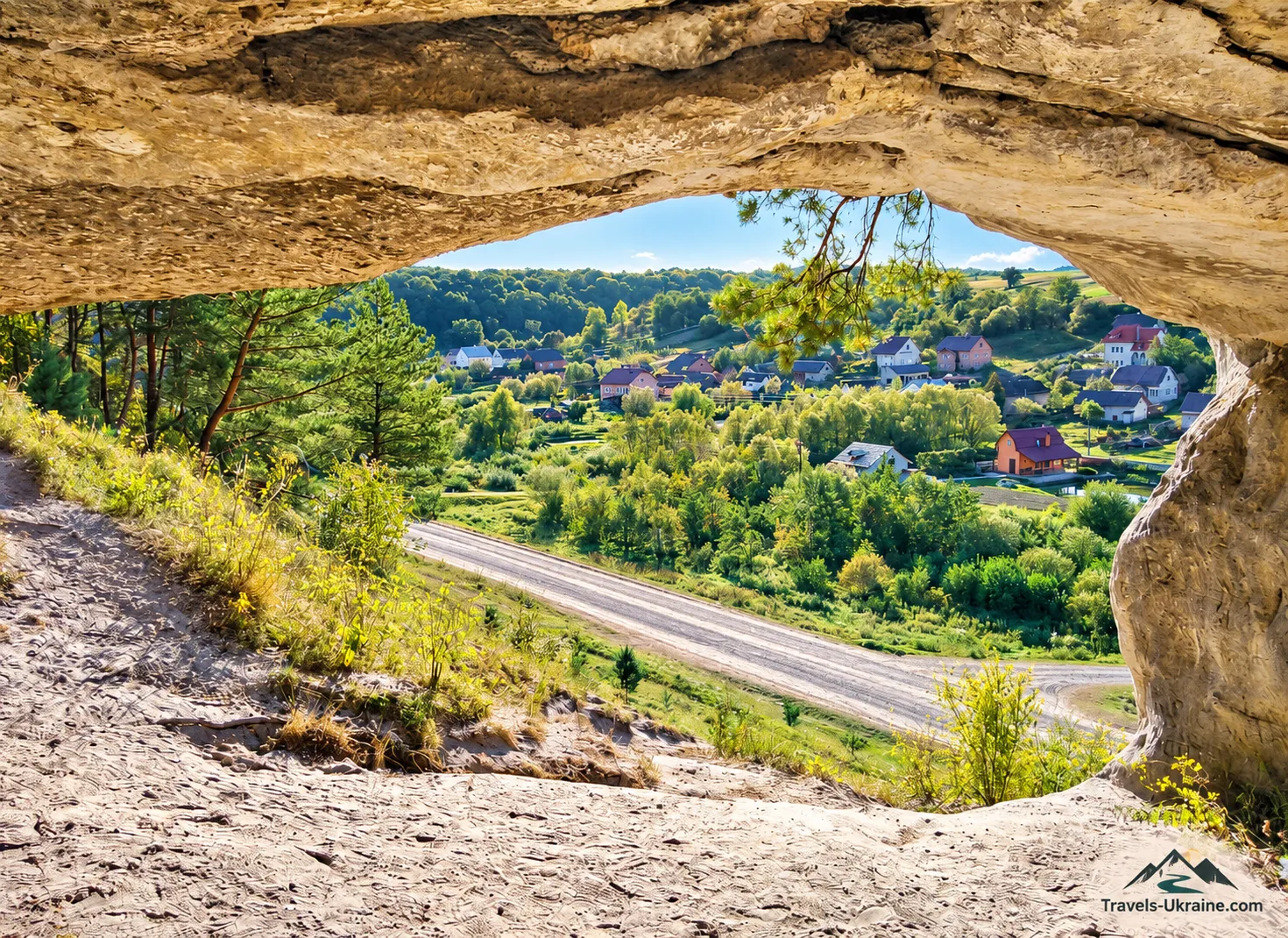
One of the reserve’s most fascinating sites is the Iliv hillfort on the southeastern outskirts of the village of Iliv. It lies in a locality with a very evocative name—«Cave»—on a high, promontory-like rise above the Ilovets River valley. The hillfort occupies a naturally protected area: on several sides, the plateau drops away into steep slopes that in places become sheer limestone-and-sandstone cliffs. It is in these cliffs, beneath the hillfort’s site, that three man-made caves are located.
One of them has a chamber measuring approximately 3 × 3 metres and about 2 metres high. Traces of deliberate human working are also visible in the rock. The reserve’s official description links the cave’s shape to the image of a woman’s womb and suggests that it may have had a cultic significance, while its later use is associated with Christian hermits. Niches that may have been used to install icons are cited, among other things, as evidence of later Christian use. However, the exact date when the cave was created remains undetermined. This is a crucial detail. The presence of a man-made cave near an early medieval hillfort does not, by itself, prove that it was carved by the White Croats or that it was originally a pagan temple.
The «shrine» in Iliv that may have turned out to be a tower
Recent research at the Iliv hillfort vividly shows how quickly archaeological interpretations can change. During excavations in 1987, researchers examined an unusual mound with stone structures on the inner side of the defensive rampart. At the time, the feature was interpreted as a pagan shrine, and this version was repeated for many years in popular-science and tourism materials.
Archaeologists returned to the site in the XXI century. During research in August 2026, they were able to uncover much more of the structure. Beneath an approximately one-metre-high mound, they found a U-shaped stone structure about 7 metres long and 3.5–4 metres wide. It adjoined the base of the defensive rampart directly; nearby, the remains of charred wooden logs and planks were preserved. After discussing the findings, specialists concluded that the site most likely contained not a cult building, but a wooden tower on a stone foundation associated with the hillfort’s defensive system.
This is a highly revealing example. Archaeology rarely works on the principle of «found once, understood forever.» New excavations can completely change the interpretation of a site. So the word «sanctuary,» which has been passed from one tourist website to another for decades, sometimes needs a large asterisk and an explanation at the bottom of the page.
The «Dyravets» Stone in Dubrova
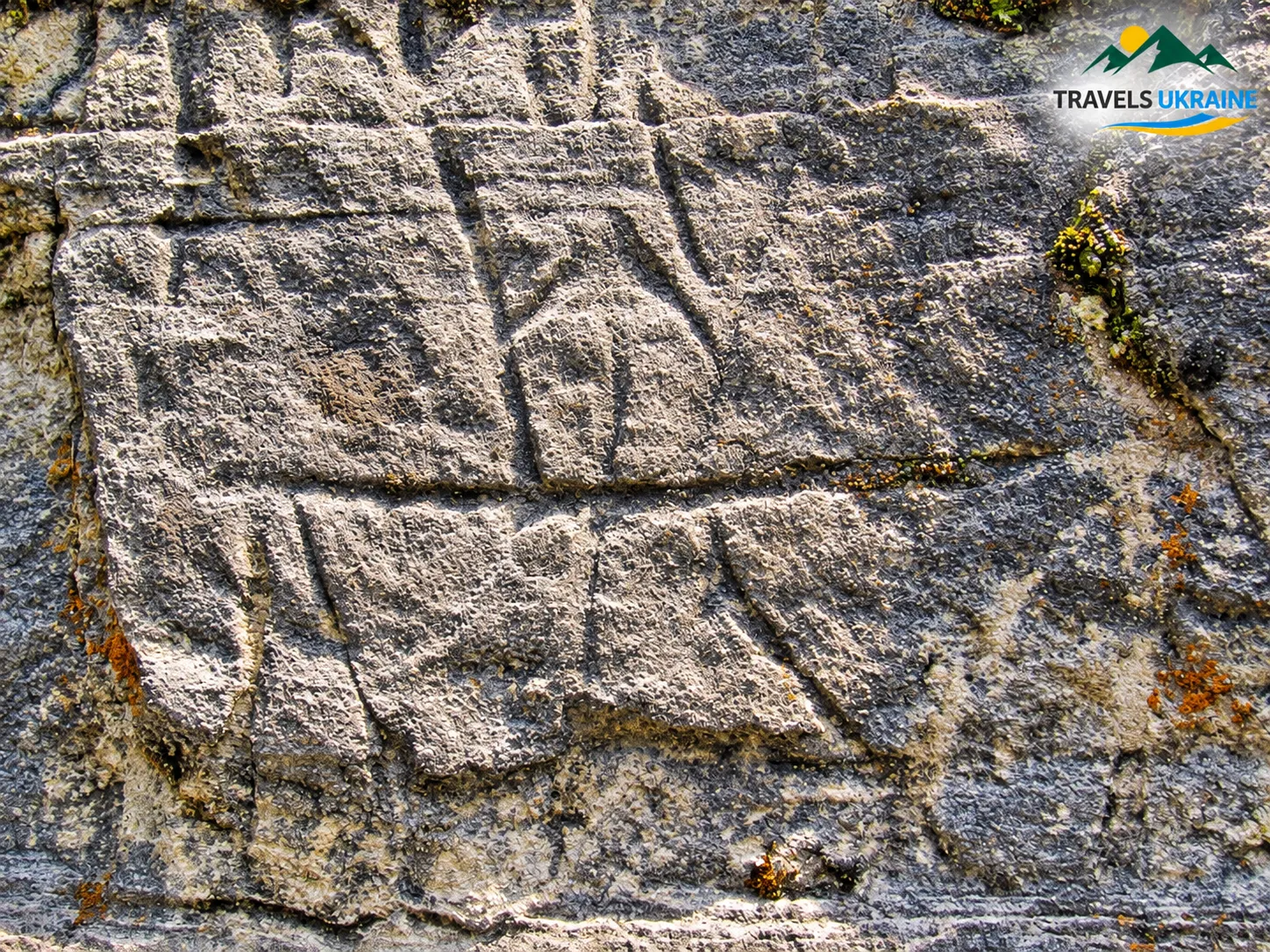
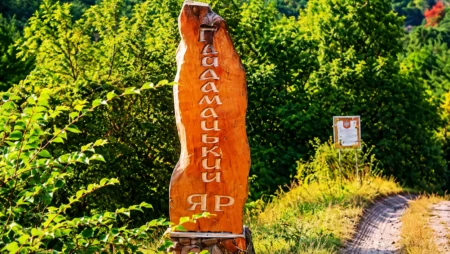
Another recognizable location in the reserve lies near the village of Dubrova. It is a large rock formation known as the «Dyravets» stone—some publications also use the spelling «Dyriavets.» The name comes from the distinctive opening in the stone. Tourist descriptions also use more romantic names, such as «Table Stone» or even «Temple of the Sun.» Rock outcrops and rooms carved into the rock lie nearby, further enhancing the mystery of the place.
Ancient rituals and pre-Christian beliefs are associated with «Dyravets,» and the stone itself is often called a pagan altar. But here again, it is worth distinguishing between a beautiful tourist version and an established archaeological fact. It is currently difficult to reliably determine the stone’s specific cultic purpose, and the popular name «Temple of the Sun» should not be treated as an official archaeological classification.
For a tourist, however, this does not make the site any less interesting. A huge stone with an unusual opening in an old beech forest looks impressive enough even without a legend. Add the history of settlements that existed here more than a thousand years ago, and the atmosphere arises naturally—without any need to invent priests carrying torches.
The caves may have had several lives
There is another reason why determining the original purpose of the caves is so difficult. People may have used the same stone chamber for many centuries, with each generation adapting it to its own needs. A cave might have begun as a utility room, later become a storage space or a place of seclusion, and centuries afterward been used by local residents as a cellar. Other caves may have served as shelters during wars or formed part of defensive structures.
Researchers have even recorded cases in which local residents, in more recent times, used old caves for storing food and vegetables. Therefore, the present-day appearance of a site does not always immediately reveal what it was originally created for.
Why the cave complexes are worth seeing even without the legends
The most interesting thing is that all these scholarly debates do nothing to diminish the visitor experience. Quite the opposite. It is far more fascinating to stand at the entrance to a cave and realize that researchers still disagree about its purpose than to be handed a ready-made sign saying, «pagan temple, IX century,» with nothing left to think about.
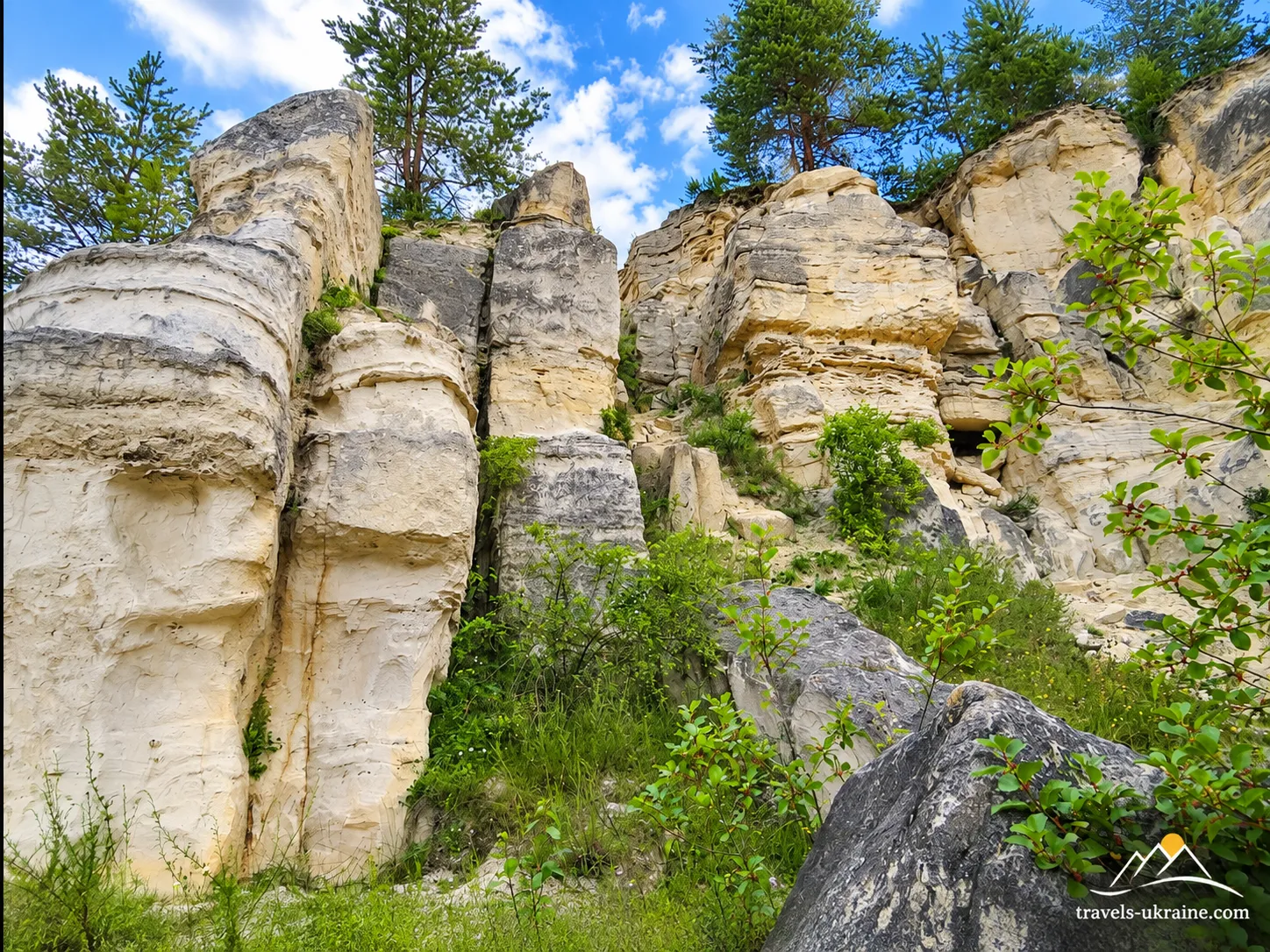
Moreover, the rock complexes are scattered across different parts of the reserve’s vast territory. Iliv, Dubrova, Mykolaiv, and Stilske itself form not one tourist attraction but an entire network of sites from different eras. They are therefore best explored with a guide or at least with a well-planned route. Some caves lie in the forest or on slopes, and certain sites have no obvious significance without an explanation.
And perhaps this is where Stilske once again shows its character. It stubbornly refuses to be a historical site where every question already has an answer written down. On the contrary, the more you learn about it, the more new questions arise. And for a place that is more than a thousand years old, that is, you will agree, a perfectly good way to remain interesting.
How to visit the Stilske hillfort: routes, tours, and getting there
A trip to the Stilske hillfort is somewhat different from visiting a castle or museum, where it is enough to arrive at one address, buy a ticket, and follow the designated route. The reserve’s territory is extensive, and its sites are located not only in Stilske but also in the direction of Dubrova, Iliv, and Mykolaiv. So before setting out, it is worth deciding, at least roughly, what exactly you want to see.
If this is your first introduction to Stilske, it is best to start with the hillfort itself, the citadel, and the defensive ramparts, and then, if you have enough time, continue on to the rock and cave complexes. Trying to see absolutely everything in two hours is much like walking into a large museum ten minutes before closing and then convincing yourself that you have studied the entire exhibition.
Is it worth booking a tour of the Stilske hillfort?
For a first trip, I would definitely recommend using the services of a guide. The reason is not that it is impossible to explore the site independently, but rather the nature of the landmark itself. Almost no stone walls or towers have survived, so without an explanation, some of the most important features may look like an ordinary hill, a forest track, or a long earthen mound.
A guide shows you where the defensive ramparts ran, where the citadel stood, what the ancient entrances to the city looked like, what archaeologists found in specific localities, and which local stories are supported by scientific evidence and which remain legends. After that, the landscape literally begins to read differently.
The reserve still runs organized tours today. In 2026, it continued to offer themed trips along «The Paths of White Croatia», as well as tours for schoolchildren, service members, and ordinary visitors. Tour times can be arranged in advance directly with a guide.
How to drive to the Stilske hillfort from Lviv
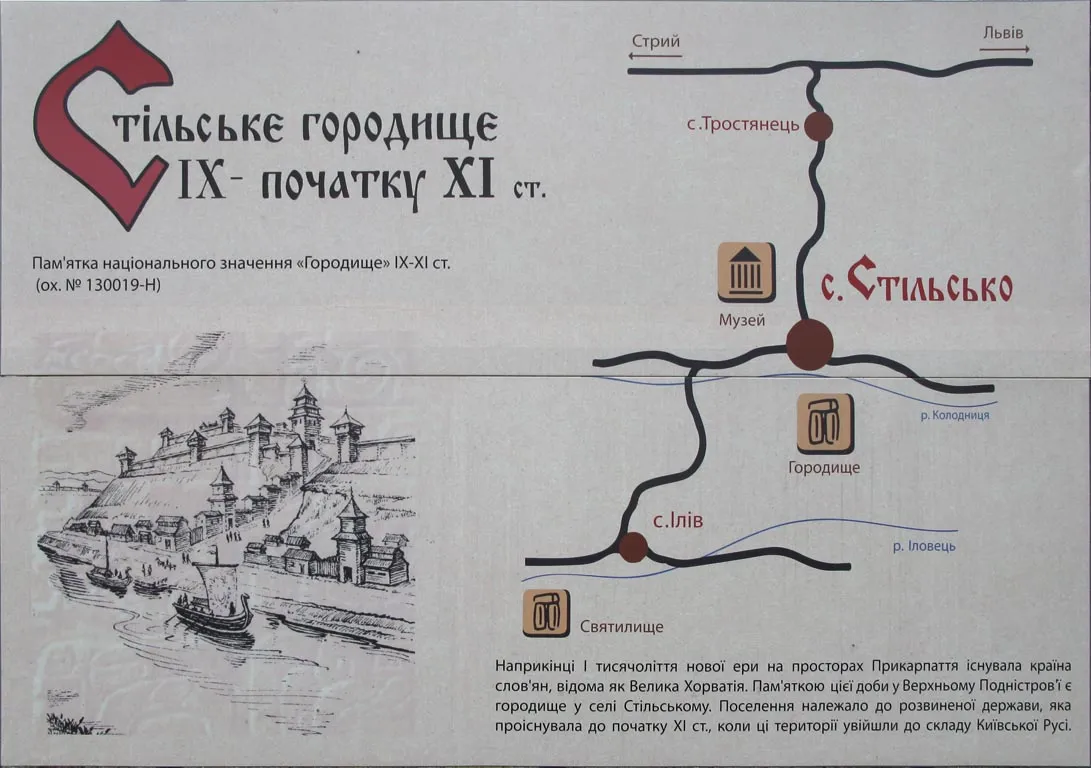
Stilske is approximately 40–50 kilometres from Lviv, depending on your starting point and chosen route. The most convenient way is to take the M-06 / E471 Kyiv—Chop highway toward Mykolaiv. Before Mykolaiv, turn toward Trostianets, then continue to Stilske. Most of the route is straightforward, but near the archaeological sites themselves, the asphalt ends at exactly the point where a city car’s desire to pretend it is an SUV usually ends too.
It is easy to reach the central part of the village in an ordinary passenger car. However, for individual ramparts, rock complexes, or forest areas, it is better to continue on foot rather than try to drive right up to every archaeological site.
How to get to Stilske by public transport
The trip is also possible without your own car, but it requires a little more planning. The most convenient option is to travel from Lviv first to Mykolaiv or Trostianets, and from there continue to Stilske by local transport or taxi. Regional bus schedules may change, so old recommendations on tourism websites listing specific departure times should not be relied on without checking them. This is especially important for the return journey: in the evening, transport connections in small villages may be much less frequent.
If you are travelling in a small group, taking a taxi from Mykolaiv or arranging a transfer in advance may be a practical option. It also gives you more flexibility if you plan to stop in Dubrova or Iliv after visiting Stilske.
Why Stilske Is Best Not Seen in a Hurry
Stilske hillfort is not one of those landmarks that impresses you with a single enormous object. Its power lies in gradually revealing its scale. First you see a rampart, then learn that there were about ten kilometers of such defensive lines; you look across the plateau and only after an explanation realize that you are standing inside the ancient citadel. That is why the best way to visit is not to collect the maximum number of sights, but to give yourself time to understand the place. Arrange a guided tour, walk part of the route, see the hillfort from different heights, and only then head to the caves or Dubrova.
Stilske has one fascinating feature: when you arrive, you first look for the ancient city among the hills. A few hours later, you begin to realize that all this time you have simply been walking through it.
Frequently Asked Questions About Stilske Hillfort
Who built Stilske hillfort?
The archaeological complex is associated with the early medieval Slavic population of the Upper Dniester region, which many researchers identify with the Carpathian, or White, Croats. At the same time, no direct written evidence from Stilske itself has been found that would call its inhabitants White Croats, so this ethnic attribution is based on a combination of archaeological and written evidence.
When did Stilske hillfort exist?
According to archaeological research, the large fortified center existed from approximately the beginning of the VIII century to the beginning of the XI century. Its greatest development occurred during the IX–X centuries and the beginning of the XI century, when Stilske became one of the largest early medieval centers of the Upper Dniester region.
Was Stilske the capital of White Croatia?
This version was supported by some researchers and is now widely used in tourism materials. The scale of the hillfort does indeed make it possible to regard Stilske as an important political and economic center of the Carpathian Croats. However, no written source is known that directly calls Stilske the capital of White Croatia. It is therefore more accurate to regard its capital status as a scholarly hypothesis rather than an indisputably established fact.
Did 40–45 thousand people really live in Stilske?
The figure of about 40–45 thousand inhabitants is often cited in popular and official tourism materials, but it is impossible to establish the exact population of the city in the IX–X centuries. Such estimates are based on the area of the hillfort, possible building density, and reconstructions. Since only part of the territory has been studied, this figure should be regarded as one hypothetical estimate rather than the result of an exact count.
What has survived from the ancient Stilske hillfort?
No stone walls or towers have survived here, as the defensive and residential structures were predominantly wooden. Today, you can see earthen ramparts and ditches, the citadel plateau, sites of ancient entrances, the «Golden Gate» area, the «White Road,» archaeological sites, and the surrounding rock complexes. The fortified territory of the ancient city covered about 250 hectares, while the defensive lines stretched for approximately 10 kilometers.
Are there caves near Stilske hillfort?
Yes. The reserve’s larger complex includes known man-made caves and rock sites in Iliv, Dubrova, the Stilske area, and near Mykolaiv. For example, three man-made caves are located beneath the grounds of the Iliv hillfort. However, not all such sites can confidently be called pagan temples or caves of the White Croats—their age and purpose remain subjects of research in some cases.
Are guided tours held at Stilske hillfort?
Yes. The reserve offers organized tours throughout the year.
How much time is needed to see Stilske hillfort?
For a first introduction to the main part of the hillfort, allow approximately 2–3 hours. If you also plan to visit Dubrova, the Diravets Stone, Iliv hillfort, and the cave complexes, it is best to set aside most of the day for the route. Stilske is a large, dispersed site, so rushing significantly diminishes the experience of the trip.
Practical Information
Stilske—The City That Disappeared but Not from History
Stilske hillfort is unlikely to impress a tourist the moment they step out of the car. There is no enormous stone gateway, preserved towers, or walls that immediately make it clear: this is the main attraction. The ancient city has almost entirely returned to the earth, while nature has carefully camouflaged what remains over a thousand years. But walk a little farther, see an earthen rampart, and learn that a wooden defensive wall once stood on it. Climb onto the plateau and realize that what lies before you is the territory of an ancient citadel. Walk along the White Road, hear about the Golden Gate, look into the caves, see the rocks of Dubrova—and gradually the ordinary landscape begins to form an entirely different picture.
That is precisely why it is worth coming here. Not to photograph one beautiful structure and tick «seen» after twenty minutes, but to try to imagine a city that no longer exists. A city with roads, fortifications, homes, craftsmen’s workshops, and people who, more than a thousand years ago, looked from these same hills over the same valley.
Many questions still surround Stilske. Was it the capital of White Croatia? How many people actually lived here? What purpose did particular caves and rock sites serve? Where is the boundary between archaeological fact, scholarly hypothesis, and legend passed down through generations by local residents? And perhaps it is a good thing that there is no answer to everything. That very ambiguity keeps Stilske alive. Archaeologists continue their research, old theories are revised, new sites are discovered, and what was called a sanctuary yesterday may turn out to be part of a defensive tower tomorrow. Here, history has not been frozen into a final caption beneath a museum exhibit—it is still taking shape.
That is why Stilske hillfort in the Lviv region is worth visiting even without grand claims about «the largest city in Europe» or the indisputable «capital of the White Croats.» About ten kilometers of ancient fortifications, the vast settlement area, archaeological finds, caves, and rock complexes already speak for themselves. And the most intriguing feeling comes somewhere near the end of the walk. At first, it seems you have come to look for traces of a city among the forest and hills. Then, suddenly, you realize: you were not looking for Stilske all this time—you were simply walking along its ancient streets.




No Comment
You can post first response comment.