
 English
 Українська
 Русский

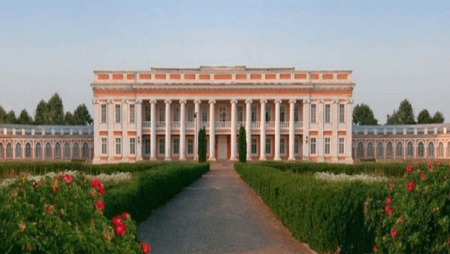
Count Xido's Palace in Khmilnyk is one of the most unusual architectural landmarks in Vinnytsia Oblast, captivating visitors from the very first glance. On one side, visitors are greeted by an elegant aristocratic residence featuring a snow-white colonnade, graceful balconies, and a magnificent ceremonial façade. On the other, imposing stone walls and massive round towers evoke the appearance of a medieval defensive castle. It is hard to believe that these two strikingly different architectural styles belong to the same building. This remarkable contrast has made Khmilnyk Palace one of the most distinctive historical landmarks in Podillia.
Situated on a picturesque hill overlooking the Southern Bug River, the palace attracts attention not only for its extraordinary architecture but also for its turbulent history. It was built between 1911 and 1915 for Konstantin Xido and his wife, Kateryna Levashova, according to a design by the renowned architect Ivan Fomin. The residence was intended to become a magnificent family estate, but the ambitious vision was never fully realized. Subsequent historical upheavals permanently altered the building's fate, leaving visible traces of time on its façades and in its lost interiors.
Today, Xido Castle in Khmilnyk, as tourists often refer to the residence, attracts history enthusiasts and travelers seeking unusual places to explore in Ukraine. Despite its designation as a monument of national significance, the building requires extensive restoration and does not operate as a fully functioning museum. Nevertheless, even the palace's exterior makes a powerful impression. The contrast between its façades, historic architectural details, and scenic surroundings make this destination appealing to travelers, photographers, and anyone eager to discover lesser-known chapters of Vinnytsia Oblast's historical heritage.
In this article, we will explore the history of Count Xido's Palace, its owners, the circumstances surrounding its construction, and the unusual architectural concept that combines the elegance of an aristocratic residence with the imposing features of a medieval fortress. You will discover what remains of the former estate, what makes the historic castle tower and arched bridge so fascinating, what to look for when exploring the complex, and which other attractions in Khmilnyk are worth visiting. After all, behind the walls of this extraordinary building lies a story far more fascinating than it might appear at first glance.
A Brief History of the Palace in Khmilnyk
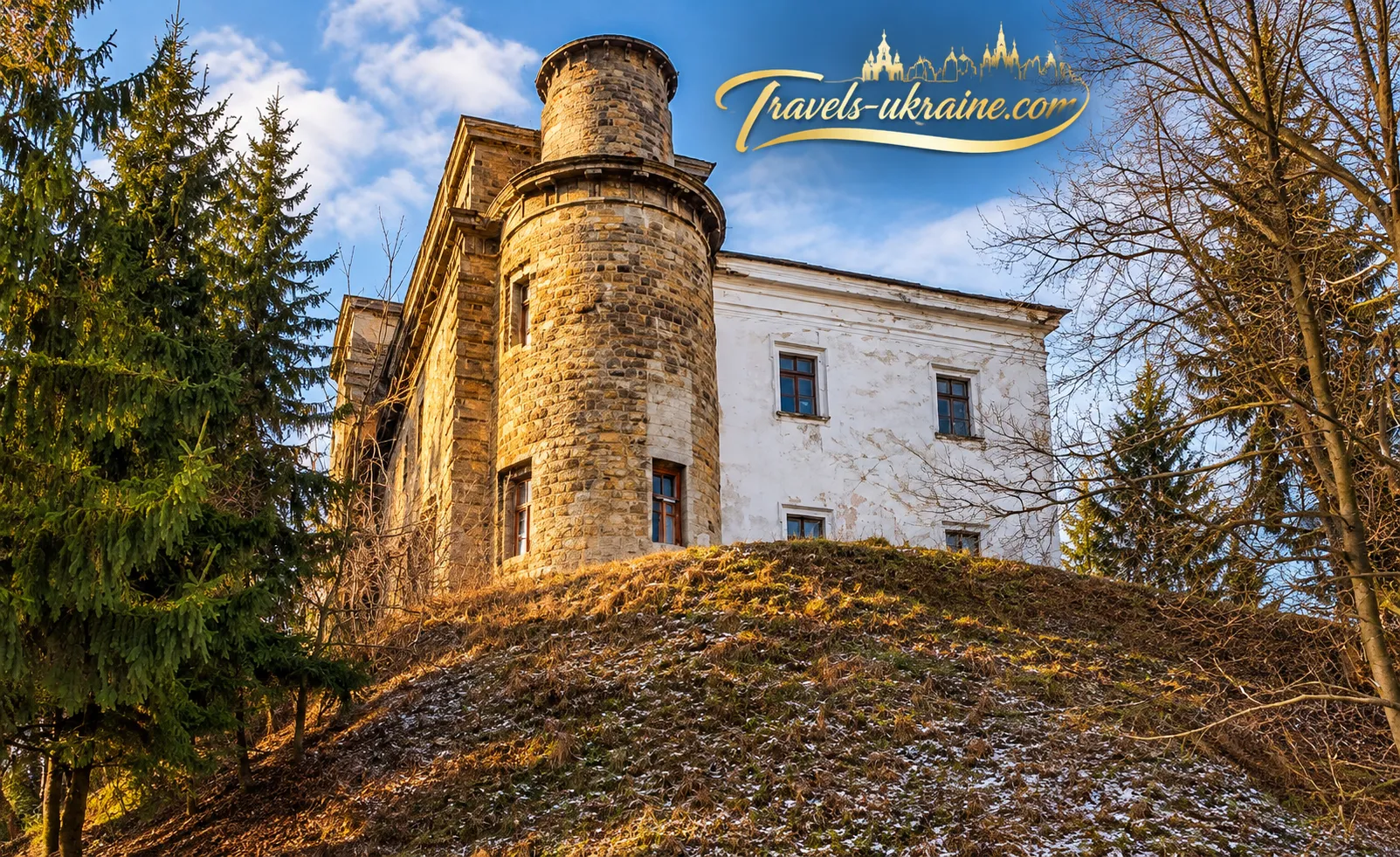
The history of Count Xido's Palace is an extraordinary story of aristocratic ambitions, a military career, family wealth, and a magnificent architectural vision that was never fully realized. Unlike many historic palaces in Vinnytsia Oblast, this residence was built in the early 20th century, when the traditional culture of grand landed estates was gradually becoming a thing of the past. Nevertheless, its owner remained determined to create a building that would impress his contemporaries with its monumental scale and unusual appearance.
The location was no coincidence. On the high bank of the Southern Bug River, where a defensive fortress had once stood, architect Ivan Fomin envisioned combining the romantic image of a medieval castle with the elegance of a European aristocratic residence. This vision gave rise to Xido Palace in Khmilnyk — a building that witnessed the end of an entire historical era, survived wars and changes of government, and endured decades of use for purposes entirely different from those originally intended.
Construction of Xido Palace in 1911–1915
In 1911, work began on an ambitious project to build a new residence on the site of the former Khmilnyk Castle. To develop the architectural concept, Konstantin Xido commissioned Ivan Alexandrovich Fomin (1872–1936), a renowned architect who worked in the Neoclassical tradition and paid particular attention to monumentality, composition, and historical architectural forms. Fomin proposed a design that was unusual even by early 20th-century standards. Instead of creating a stylistically uniform residence, he designed a building that combined two distinct architectural traditions. The main ceremonial façade was intended to resemble an elegant European palace with a classical colonnade, while the side facing the Southern Bug River featured massive walls and round towers characteristic of a romanticized medieval castle.
This architectural approach was more than a decorative whim. The architect sought to incorporate the historical character of the location, its natural terrain, and the proximity of the remains of ancient fortifications. As a result, the new building was intended to blend harmoniously into the surrounding landscape while demonstrating the wealth and social standing of its owners. According to the architect's vision, the Xido Palace complex was to include not only the main residence but also auxiliary buildings, landscaped parkland, decorative architectural features, and a system of connecting passages. An important element of the project was a stone arched bridge across the Southern Bug River, designed to connect the palace grounds with another part of the estate.
Construction continued from 1911 to 1915. During this period, the main structures of the palace were completed, and the architectural ensemble acquired its distinctive appearance. However, Fomin's original vision was never fully realized. Some decorative elements, auxiliary buildings, and planned landscaping remained only on the drawing board. The unfinished nature of the project became one of the defining features of the residence's history. Unlike many palaces that lost their former splendor after decades of use, Khmilnyk Palace never actually achieved the appearance its architect had originally envisioned.
Why Count Xido's Palace Was Never Completed
The decisive factor was World War I, which began in 1914 and fundamentally transformed Europe's political, economic, and social landscape. The war affected the construction industry, the supply of building materials, the financing of major private projects, and the availability of skilled craftsmen. Konstantin Xido, who remained a military officer, returned to active service. During the war, he was involved in supplying the armies of the Southwestern Front. Under these circumstances, continuing the large-scale construction of a private residence was no longer a priority.
By 1915, major construction work had effectively ceased. Certain parts of the palace may already have been in use, but the planned architectural ensemble remained unfinished. The revolutionary events of 1917, the collapse of the Russian Empire, and subsequent changes of government ultimately deprived the owners of any opportunity to resume the original project. For the Xido family, this meant not only losing the prospect of completing their residence but also gradually severing ties with their former way of life. Following the revolution and the civil war, the family left the territory of the former empire. The precise circumstances of the owners' later lives are documented inconsistently across various biographical publications.
The Fate of Xido Palace Under Soviet Rule
Following the revolutionary events and the establishment of Soviet rule, Count Xido's Palace in Khmilnyk lost its status as a private aristocratic residence. Like many former noble estates, it was adapted to accommodate government institutions, educational establishments, and various economic organizations. Beginning in the 1920s, the building housed an agricultural and veterinary school, an electrical engineering educational institution, administrative offices, and utility services at different times. Historical accounts also mention that part of the building was used by the NKVD, while certain rooms served as warehouses and even a mill. Such changes in function inevitably affected the interior layout and decorative finishes. Former ceremonial rooms were adapted for new purposes, historic interior features gradually disappeared, and repeated alterations changed the building's original character.
The palace suffered further damage during World War II. During this period, the building sustained destruction and lost several architectural details. According to historical descriptions, parts of the roof structures and their decorative elements were damaged or destroyed. It was not until the second half of the 20th century that the building was once again adapted for civilian use. From 1964, the former palace operated as a municipal hotel. This allowed the building to remain in usable condition for some time, although its hotel rooms bore little resemblance to the luxurious aristocratic residence of the early 20th century.
A significant milestone was the official recognition of the complex's architectural value. In 1979, Xido Palace was designated an architectural monument of national significance. This recognition confirmed its important place in the history of Ukrainian architecture and the need for state protection. However, protected status alone did not guarantee the building's proper preservation. Due to the lack of comprehensive restoration, structural deterioration, and prolonged use without adequate maintenance, its technical condition gradually worsened.
Count Xido's Palace After Ukraine Gained Independence
After 1991, Khmilnyk Palace remained one of the city's best-known historical landmarks, but the need for restoration became increasingly urgent. Aging utility systems, damaged structures, roofing problems, and the loss of individual architectural details required substantial funding and professional intervention. Eventually, the building ceased operating. The palace gradually lost elements of its interior decoration, while certain sections deteriorated to a dangerous condition. Despite its considerable tourism potential, the landmark remained without a fully developed practical use.
Local authorities repeatedly raised the issue of preserving the architectural complex. In particular, during 2018–2019, preparations were made to attract investors for the palace's restoration. The plans envisaged restoring the historic buildings and potentially adapting them for tourism, hospitality, and restaurant facilities, provided that the monument's architectural value was preserved. Despite these proposals, the comprehensive restoration of the residence remained unresolved. Municipal documents from subsequent years repeatedly emphasized the need for emergency stabilization, conservation, and restoration work.
In 2025, the local community prepared a proposal for the first phase of restoration, aimed at addressing the palace's hazardous structural condition, and submitted it to an international grant competition. However, the application did not receive funding. In 2026, the possibility of installing temporary fencing around the monument was also considered, highlighting ongoing concerns about safety and the preservation of the historic building. Today, the palace remains an important architectural landmark of Vinnytsia Oblast in need of comprehensive restoration. Its historical significance lies not only in its unusual combination of architectural styles but also in its ability to tell the story of a turning point in the early 20th century — a time when the era of grand aristocratic estates was coming to an end and an entirely different social order was emerging.
The fate of Khmilnyk Palace is particularly revealing: conceived as a symbol of wealth and personal ambition, it never became the completed family residence its owner had envisioned. Instead, the building survived revolutions, two world wars, decades of Soviet-era use, and a prolonged period of decline. Although the former estate can no longer boast restored interiors or museum galleries, its history remains an important part of Podillia's cultural heritage.
Architecture of Count Xido's Palace in Khmilnyk — What Tourists Should See
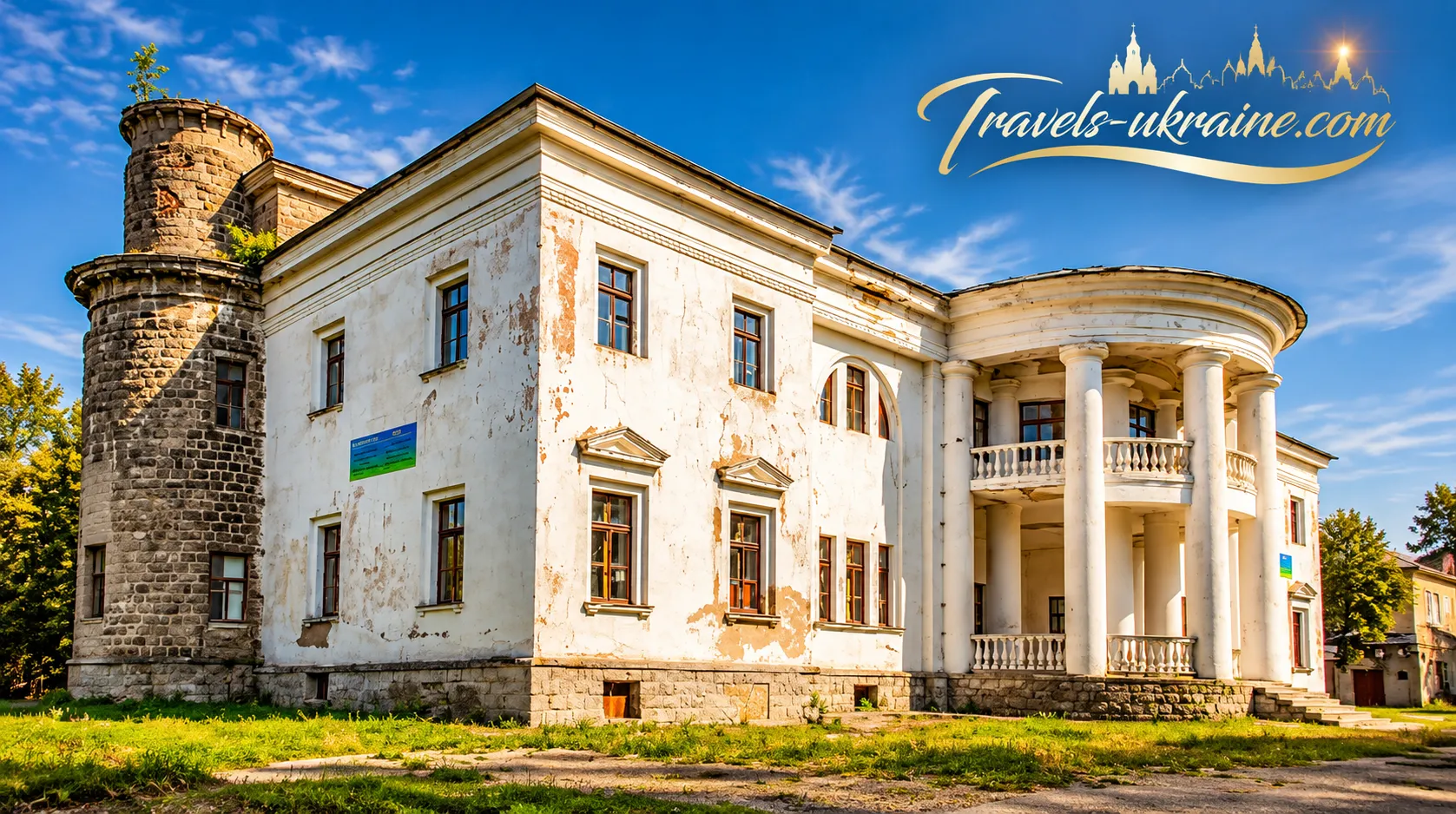
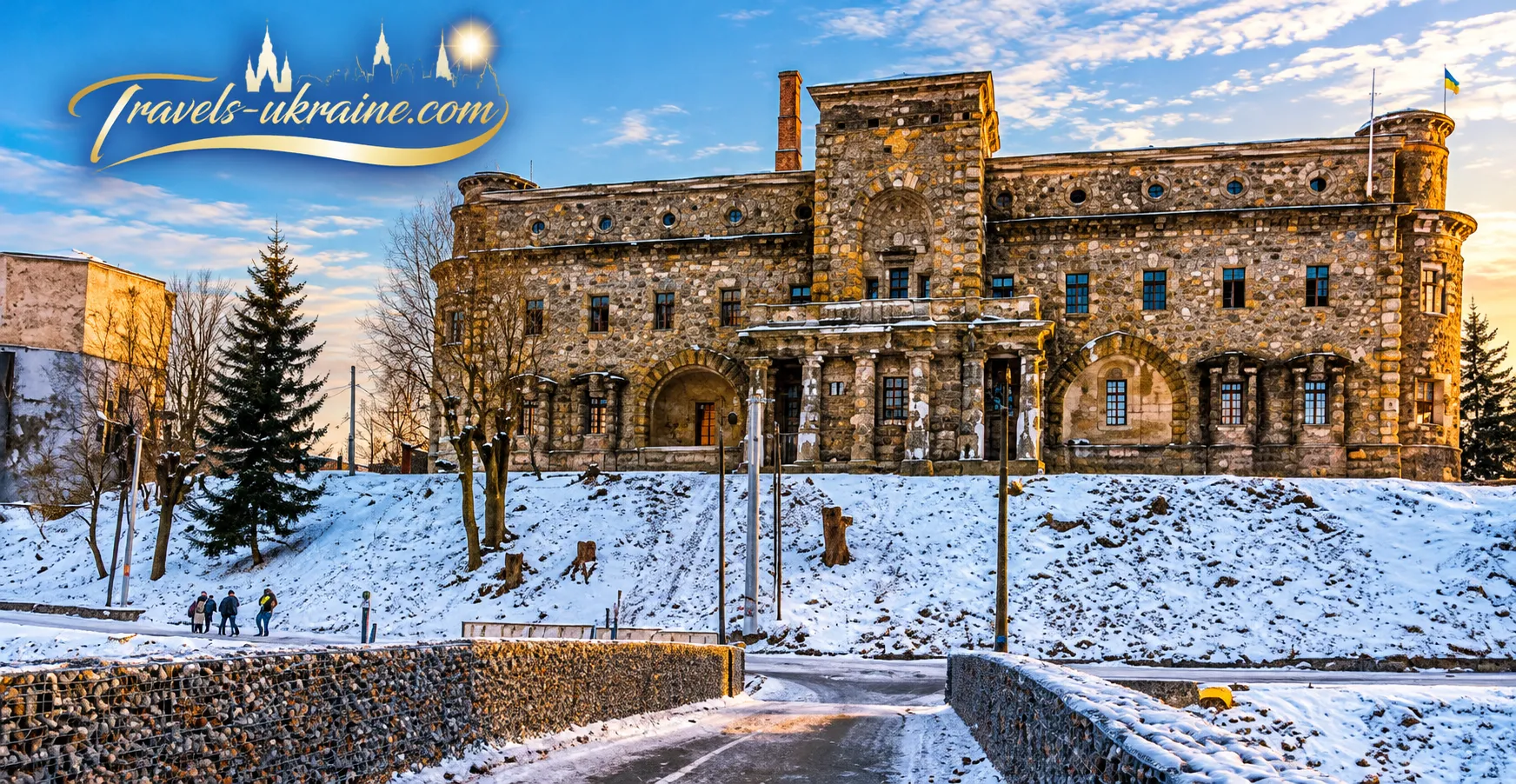
The palace's architecture is an extraordinary combination of two architectural worlds that, at first glance, seem completely incompatible. On one side stands an elegant aristocratic residence with a white colonnade, classical proportions, and decorative balustrades. On the other, an entirely different scene unfolds: massive stone walls, round towers, and the imposing outlines of a building resembling a medieval fortress. It is difficult to believe that both façades belong to the same palace, conceived as part of a single architectural vision.
Although the Xido Palace complex was never completed according to its original design, its main structures have preserved numerous fascinating details. Visitors can admire Doric columns, arched windows, stone cladding, decorative cornices, and towers that give the building its distinctive character. Nearby stand a much older defensive tower and a stone arched bridge — separate historical landmarks that, together with the palace, form Khmilnyk's historic architectural ensemble.
Xido Palace is considered one of the notable examples of early 20th-century Neoclassical architecture in Ukraine. Its artistic design combines the principles of Classicism, Renaissance influences, and architectural elements inspired by defensive fortifications. This approach made it possible to create a building that resembles both a grand country residence and an ancient European castle.
Xido Palace's Main Façade — A Snow-White Colonnade and Aristocratic Elegance
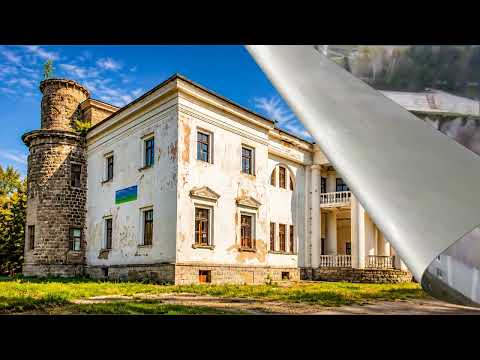
The most recognizable architectural feature of the palace in Khmilnyk is its main façade, facing the town. Unlike the massive stone-clad side of the building, it features light-colored plasterwork, balanced proportions, and an impressive colonnade that forms the centerpiece of the composition. The façade's main attraction is a semicircular, two-level terrace in the form of a semi-rotunda, supported by six Doric columns. The columns form a graceful curve in front of the main entrance and support a horizontal architectural structure known as an entablature. The upper section is decorated with a balustrade, lending the building a sense of lightness and emphasizing its prestigious character.
The Doric order is one of the oldest forms of classical architecture. It is characterized by simple, sturdy columns with understated capitals and minimal decorative ornamentation. This restraint allows the colonnade of Xido Palace to appear both majestic and harmonious. The semicircular shape of the terrace creates an interesting interplay of light and shadow. On sunny days, the vertical lines of the columns stand out sharply against the pale façade, while the curved balustrade softens the building's strict geometry. As a result, the main entrance becomes the central architectural focal point of the entire façade.
It is from the main façade that Ivan Fomin's mastery of classical architectural forms is most evident. Rather than relying on elaborate Baroque decoration, the architect emphasized precise proportions, the flowing lines of the colonnade, and the harmonious relationship between individual elements. For tourists, this part of Count Xido's Palace is particularly interesting. From publicly accessible areas in front of the façade, visitors can appreciate the building's overall composition and examine its colonnade, balustrades, and decorative details. However, it is important to maintain a safe distance from deteriorating structures and avoid approaching areas marked by fences or warning signs.
The Castle-Like Façade — Stone Walls and Round Towers Above the Southern Bug River
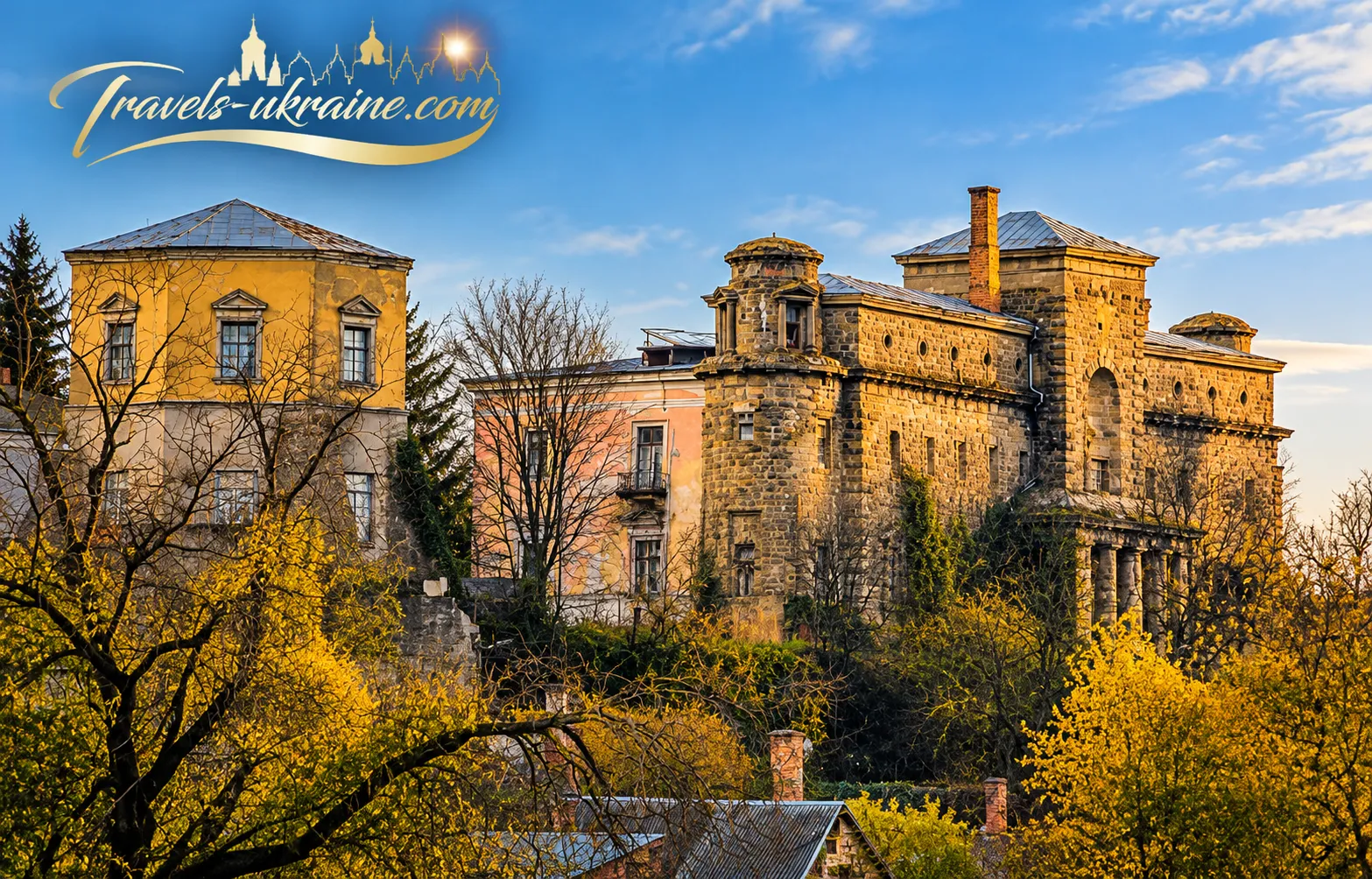
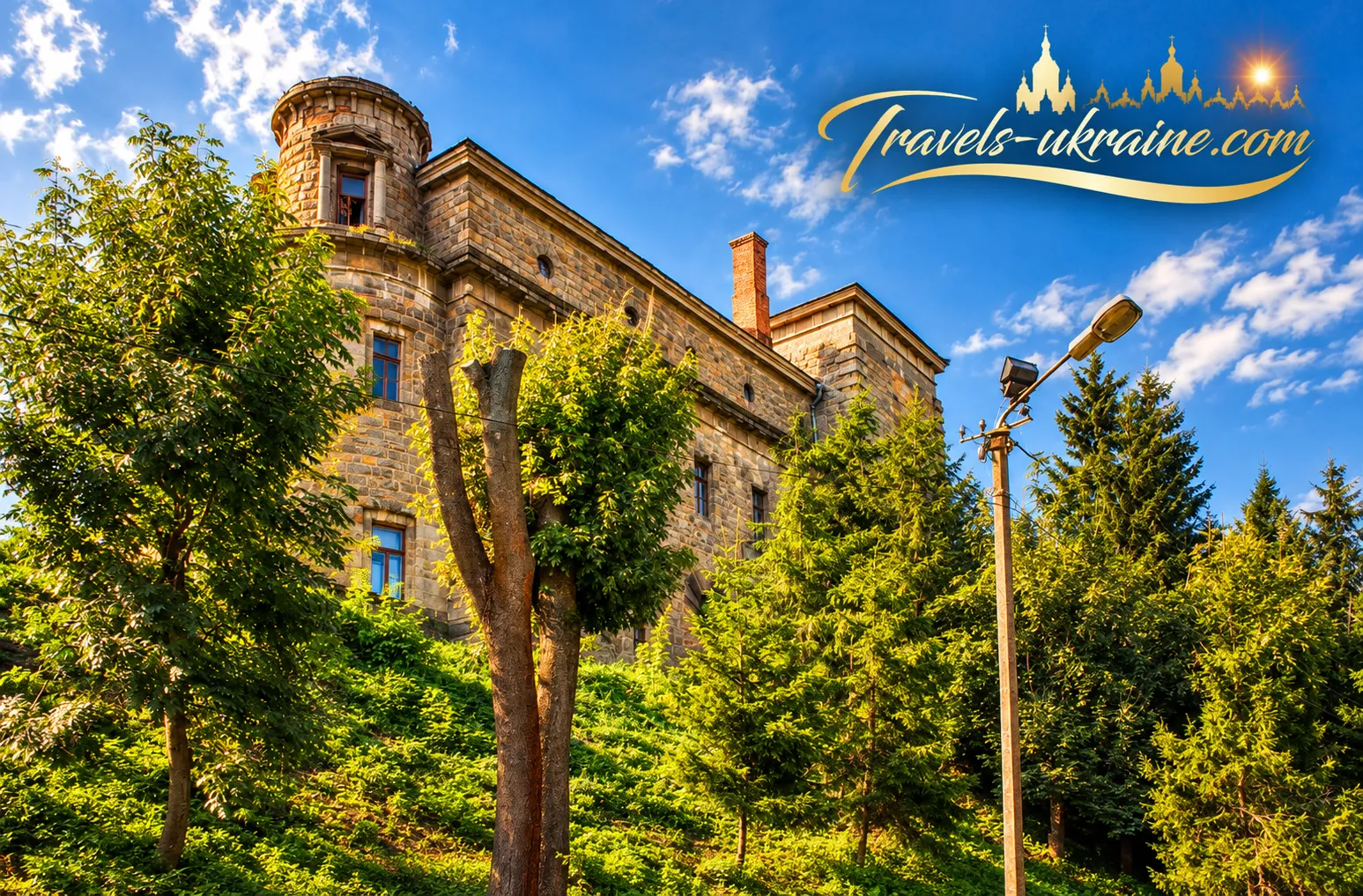
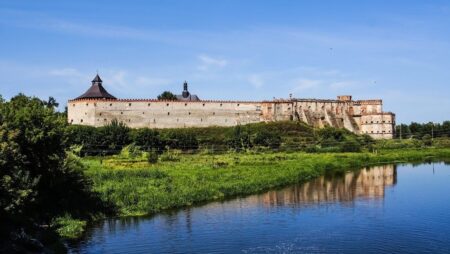
While the main façade resembles an elegant aristocratic residence, the opposite side of Xido Palace creates an entirely different impression. Facing the Southern Bug River, the building appears as a monumental castle with massive walls, stone cladding, and round towers that emphasize its vertical lines. The architect used cut-stone facing slabs, giving the façade its distinctive texture. Unlike the smooth white plaster of the main entrance side, this façade is dominated by rougher surfaces, deep shadows, and massive architectural forms. These features create the illusion of an ancient fortress, even though the building was constructed in the 20th century.
Particularly striking are the round towers of Xido Palace, positioned at the sides of the river-facing façade. They rise through several levels and feature window openings and decorative cornices. The towers give the building its distinctive castle-like silhouette, setting it apart from conventional palatial residences built in Ukraine during the same period. Importantly, these towers were part of the original architectural design rather than remnants of an ancient fortress. Their primary purpose was to create the romanticized image of a medieval castle. Khmilnyk's authentic historic defensive tower stands nearby and belongs to a much earlier historical period.
The Renaissance-inspired features of the façade reflect the architect's pursuit of monumentality. Stone surfaces, vertical towers, and symmetrical architectural accents create the appearance of a fortified residence seemingly guarding the approaches to the river. However, the palace never served a genuine defensive purpose: it was a country estate designed to resemble a castle. This contrast makes the castle-like façade one of Khmilnyk's most fascinating architectural features. Viewing the palace from different angles helps visitors better understand Fomin's unusual vision and his skill in combining historical architectural styles.
Interiors of Xido Palace — What Remains of the Former Residence
Originally, Count Xido's Palace was envisioned as a prestigious family residence with spacious interiors, ceremonial rooms, and a layout suited to the needs of a wealthy household. However, because construction was never completed, the residence did not receive all the decorative finishes and furnishings envisioned in the architectural design. Unlike 18th- and 19th-century palaces that hosted formal receptions and aristocratic social gatherings for decades, the Xido estate had virtually no opportunity to develop a fully established tradition of aristocratic life. World War I, revolutionary upheavals, and changes in ownership interrupted its development while construction was still underway.
Due to numerous alterations, prolonged use, and the absence of comprehensive restoration, the historic interiors of Xido Palace have not survived as a complete ensemble. Certain structural elements and traces of the original interior layout may still provide insight into the architect's initial vision. However, the building is not a restored museum residence with ceremonial halls open to visitors. For a typical tourist visit, it is best to focus on viewing the monument from the outside. If official guided tours of the interior are organized in the future, information about access should be confirmed with the administration or the relevant authorities.
The Ancient Octagonal Tower — A Legacy of Khmilnyk Fortress
Standing near the palace is a structure whose history dates back much further than the residence itself. This is the octagonal fortress tower of Khmilnyk, one of the most fascinating surviving remnants of the town's historic fortifications. Its origins are associated with the 16th century, when Khmilnyk was an important frontier town that required reliable defensive protection. In 1534, the town's fortifications were reinforced with stone defensive structures, including towers and walls. The construction of the octagonal tower, which has survived near the present-day palace, is generally attributed to this period.
The tower is distinguished by its unusual geometric shape. Its octagonal plan contrasts with the round towers of the palace, while its massive walls reflect its original defensive purpose. In the past, the structure formed part of a fortification system that protected the town and controlled access to crossings over the Southern Bug River. During the period of Ottoman rule in Podillia in the late 17th century, the tower was adapted for the needs of the Muslim community. Historical sources associate its use with the minaret of a mosque. After the town returned to the control of the Polish-Lithuanian Commonwealth and underwent further political changes, the building's function changed several times.
Later, the tower was used for religious and civilian purposes, and in more recent times it became part of Khmilnyk's cultural landscape. It is associated with the activities of the local history museum, which introduces visitors to the town's past and its defensive heritage. When exploring the site, it is important to understand that the 16th-century fortress tower and the 20th-century Xido Palace are separate historic structures. They differ in age, architecture, and original purpose. Their proximity creates an unusual combination of medieval defensive architecture and an aristocratic residence from the early 20th century.
For tourists, the tower is particularly interesting as a tangible reminder of Khmilnyk's complex, multilayered history. Even an exterior visit allows visitors to appreciate the character of its ancient stone masonry, its distinctive shape, and its relationship to the grounds of the former fortress.
The Arched Bridge of Xido Palace — An Architectural Highlight of the Southern Bug River
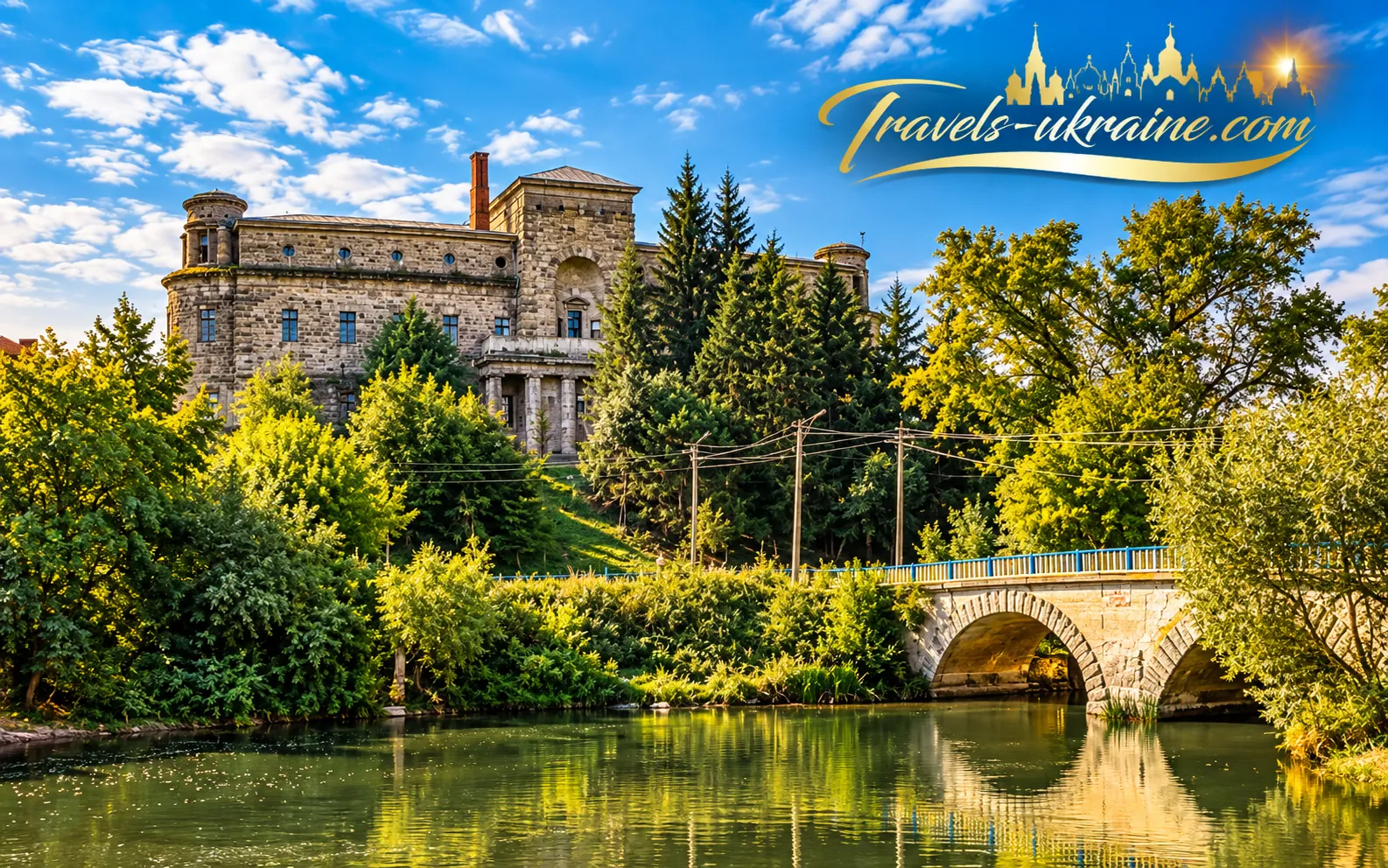
An integral part of the historic palace ensemble is the stone arched bridge across the Southern Bug River, often referred to as the palace bridge or the "Venetian Bridge." This structure became one of the most distinctive elements of Ivan Fomin's design and an important feature of Khmilnyk's architectural landscape. The bridge was intended to connect the palace, situated on a high riverbank, with another part of the estate on the opposite shore. It served not only a practical purpose but also a decorative one, emphasizing the prestigious character of the residence and integrating it into the surrounding landscape.
The bridge consists of stone arches that create a distinctive rhythm above the water. Thanks to the graceful curves of its arched spans, the structure appears light and harmonious despite the use of massive building materials. It is particularly impressive when viewed together with the riverbanks and the architectural silhouette of the palace. In the original design of the Xido palace and park complex, the bridge played an important compositional role. It was intended to form part of a larger landscaped ensemble featuring walking paths, terraces, and green spaces. However, because construction was halted, not all the planned landscaping features were completed.
Interestingly, surviving archival materials also include sketches of another bridge with decorative towers, which the architect planned as a separate structure within the complex. Unlike the arched bridge across the Southern Bug River, this design was never realized.
What to See in Khmilnyk — The Most Interesting Attractions of the Spa Town

Khmilnyk is one of the most fascinating historic spa towns in Vinnytsia Oblast, where centuries-old architecture blends harmoniously with the picturesque landscapes of the Southern Bug River. Most travelers know it primarily for its famous radon-rich mineral waters and sanatoriums, but the town's tourism potential extends far beyond its health resorts. Khmilnyk is home to historical landmarks from different eras, ancient places of worship, interesting museum collections, and sites that reveal the multicultural past of Podillia.
If you are planning to visit Count Xido's Palace in Khmilnyk, it is worth exploring more than just this unusual residence. Nearby, you will find historic churches, museums, and picturesque corners of the town that offer valuable insights into its past. A walk through the old part of Khmilnyk is particularly rewarding, as ordinary-looking streets conceal traces of several centuries of history.
You can explore the town on a short sightseeing tour lasting a few hours or turn your visit into a full weekend getaway. If you would also like to discover interesting places in the Khmilnyk district, the itinerary can easily be extended to include landmarks in nearby villages, historic churches, and museums dedicated to notable figures from the region.
Khmilnyk History Museum — Discovering the Past of Podillia
To gain a deeper understanding of the town's history, consider visiting the Khmilnyk History Museum. Its activities focus on preserving the region's cultural heritage, researching historical events, and promoting awareness of the local community's past. The museum is located in an ancient octagonal tower on Castle Hill, near Count Xido's Palace. The building itself was described in detail in the architecture section, but its role as a museum deserves special attention.
The museum's exhibitions and research activities cover various periods in the history of the Khmilnyk area, from ancient settlements and the town's defensive past to events in modern Ukrainian history. Its collections of photographs, documents, historical artifacts, and other materials help visitors understand how life in the region has changed over the centuries. Particularly valuable is the opportunity to learn more about the town's ancient fortifications, the origins of local landmarks, and the development of its urban environment. A visit to the museum complements the experience of exploring Xido Palace by explaining the historical circumstances that shaped the construction of buildings from different eras on Castle Hill.
For travelers interested in local history, historical documents, and cultural heritage, the museum can be one of the most informative stops on their trip. However, opening hours and exhibition availability should be confirmed before visiting, as museums may change their operating schedules.
Museum of Miniature Shoes — An Unusual Collection in Khmilnyk
Among the interesting tourist attractions in Khmilnyk, the Museum of Miniature Shoes stands out as an unusual exhibition space dedicated to decorative and souvenir footwear. Its collection is particularly remarkable for the diversity of shapes, materials, and artistic designs that transform an ordinary everyday object into a work of decorative art. The museum features miniature shoes and souvenirs made from porcelain, crystal, glass, wood, and other materials. The exhibits vary in size, color, decoration, and style, while some reproduce historical footwear designs from different periods.
According to the "Sunny Podillia" tourist route, the collection contains more than 8,250 exhibits and is presented as the largest collection of decorative and souvenir footwear in Ukraine. The exhibits include both contemporary handmade creations and objects inspired by older artistic traditions. The museum will appeal not only to collectors but also to families with children, enthusiasts of decorative arts, and tourists looking for unusual attractions beyond conventional sightseeing routes. It is well worth considering as an enjoyable addition to a historical walking tour of the town. After admiring the monumental façades of the palace and ancient churches, the exhibition of decorative miniature shoes reveals a completely different, more intimate and unexpected side of Khmilnyk.
Taras Shevchenko Park — Relaxing Among the Greenery
If you would like to spend some time in nature after exploring historical landmarks, consider visiting Taras Shevchenko Park in Khmilnyk. It is one of the town's green spaces, featured in travel itineraries as a destination for walking, family activities, and relaxation. The park combines green areas, ponds, and walking paths, making it an appealing place to slow down, take a break from sightseeing, and enjoy the peaceful atmosphere of this spa town.
Tourist descriptions of the park mention lakes, a cable car, and a small zoo. However, the availability and actual operation of individual recreational facilities should be checked before visiting, as urban park infrastructure can change over time. Even without additional attractions, the green surroundings provide a pleasant setting for walking, photography, and a short rest. The park is particularly picturesque during the warmer months, when the trees provide welcome shade and the surrounding landscape is filled with lush greenery. For travelers visiting Khmilnyk with children or planning to spend an entire day in town, this location can be a convenient addition to an architectural sightseeing itinerary.
Khmilnyk Spa Resort — Radon Waters and Wellness Traditions
Khmilnyk is widely known beyond Vinnytsia Oblast as a balneological spa resort, with a history closely connected to the discovery of local radon-rich mineral waters. These natural therapeutic resources helped transform a small town in Podillia into one of Ukraine's well-known centers for sanatorium-based treatment and rehabilitation. An important stage in the resort's development came during geological surveys in the 1930s, when sources of radon-rich water were discovered. Specialized health facilities were subsequently established in the town, using mineral waters for therapeutic and rehabilitation procedures.
During the second half of the 20th century, the resort developed rapidly. Sanatorium buildings, medical facilities, recreational areas, and other infrastructure were constructed to accommodate visitors staying for extended periods. Khmilnyk gradually earned a reputation as a town where natural resources combine with a relatively peaceful atmosphere and picturesque surroundings. Today, the town's name is associated with radon baths, mineral waters, and specialized wellness programs. However, radon-based treatments have specific medical indications and contraindications, so they should not be regarded as ordinary tourist entertainment. Such procedures should only be undertaken when prescribed and supervised by qualified medical professionals.
For ordinary travelers, the resort area of Khmilnyk is particularly appealing for its atmosphere, green spaces, walking areas, and certain historic buildings. Visitors can discover how the town's spa and sanatorium infrastructure developed and how important the discovery of mineral waters became for its subsequent growth. The opportunity to combine architectural sightseeing with relaxation in a spa-town setting is one of Khmilnyk's distinctive features. This makes the town attractive not only to sanatorium guests but also to travelers seeking peaceful destinations for short trips around Vinnytsia Oblast.
Count Xido's Palace in Khmilnyk — Frequently Asked Questions
Where is Count Xido's Palace located in Khmilnyk?
Count Xido's Palace is located in the central part of Khmilnyk, Vinnytsia Oblast, at 1 Taras Shevchenko Street. The historic residence stands on the high right bank of the Southern Bug River, on the site of the former Khmilnyk Fortress. Nearby attractions include an ancient octagonal tower and a stone arched bridge.
How can I get to Count Xido's Palace from Vinnytsia?
You can travel from Vinnytsia to Khmilnyk by private car or intercity bus. The driving route usually passes through Kalynivka, although the exact distance and travel time should be checked using a navigation app based on current road conditions. Intercity buses also provide a way to reach Khmilnyk without a private vehicle, but departure points and schedules should be confirmed before traveling. Once you arrive in Khmilnyk, you can reach the palace on foot or by local transport, depending on where you get off.
Is parking available near Xido Palace in Khmilnyk?
Count Xido's Palace is situated near the central streets of Khmilnyk, so visitors arriving by car can look for permitted parking spaces along nearby roads. The availability of a dedicated official tourist parking area directly at the palace has not been confirmed. Before leaving your vehicle, pay attention to road signs, potential traffic restrictions, and the condition of access roads. Do not drive onto restricted monument grounds or block access to neighboring institutions.
Can visitors enter Count Xido's Palace?
Public tourist access to the interior of Xido Palace has not been confirmed. The building has been out of use for many years and requires emergency stabilization and restoration work. Therefore, visitors should not expect to explore its historic halls independently. The most accessible way to experience the monument is to admire its exterior architecture from permitted public areas. It is important not to confuse the palace with the nearby Khmilnyk History Museum, which occupies a separate historic tower and operates according to its own visiting schedule.
Is it safe to visit Xido Palace today?
Count Xido's Palace is in poor structural condition, and certain parts of the building may pose serious safety risks. Visitors are therefore advised not to enter the abandoned structure, climb old staircases, or approach damaged walls, balconies, or towers. Areas with weakened masonry and collapsed floors may be particularly dangerous. The building should only be viewed from a safe distance, while respecting all fences and warning signs. Even if doors or window openings remain accessible, this does not mean that entry is permitted or safe.
How much does it cost to visit Count Xido's Palace?
No current official admission fee for visiting the interior of Count Xido's Palace in Khmilnyk has been confirmed, as the building does not operate as a fully functioning museum. Viewing the exterior from publicly accessible areas generally does not require a ticket, unless specific restrictions or rules apply to the location. However, admission to the nearby Khmilnyk History Museum may involve a separate fee. Current ticket prices, discounts, and museum visiting arrangements should be confirmed directly with the institution.
Are guided tours of Xido Palace available, and what are the museum's opening hours?
Count Xido's Palace is included in tourist itineraries around Khmilnyk, but regular guided tours inside the structurally unsafe building have not been confirmed. Visitors can learn about its history during an exterior sightseeing visit. Nearby, however, there is a separate museum institution — the Khmilnyk City History Museum. According to information published by the city council, the museum's opening hours are Tuesday–Saturday, 09:00–18:00, with a break from 13:00 to 14:00; closed on Sundays and Mondays. Before visiting, check the current schedule, availability of guided tours, and access to the exhibitions.
Why is Xido Palace called a castle, and how does it differ from Khmilnyk Fortress?
Count Xido's Palace is often referred to as a castle because of the unusual architecture of its river-facing façade, which features massive stone walls and round towers. However, the building was never intended for defensive purposes. It was constructed between 1911 and 1915 as a private aristocratic residence designed by Ivan Fomin. The original Khmilnyk Fortress, by contrast, existed much earlier and served a genuine military defensive function. A separate octagonal tower associated with the 16th century has survived from the fortress. Therefore, the palace and the fortress tower are two distinct historical structures, even though they stand close to each other.
How much time should I allow to explore Count Xido's Palace?
For an exterior visit to Count Xido's Palace, it is generally worth allowing approximately 30–60 minutes. This provides enough time to admire accessible sections of the main façade, examine the colonnade and castle-like architectural features, and take photographs. If you also plan to visit the Khmilnyk History Museum and view the historic tower and arched bridge from safe locations, you should allow additional time. A more comprehensive walk through the historic center of Khmilnyk and visits to other landmarks will take several hours.
When is the best time to visit Xido Palace and take photographs?
The most comfortable seasons for visiting Count Xido's Palace in Khmilnyk are spring, summer, and early autumn, when the weather is generally suitable for walking through the historic part of town. The contrasting façades are particularly interesting for photography: the light-colored main entrance with its colonnade and the imposing castle-like features overlooking the Southern Bug River. Daytime visits with soft natural lighting are recommended, as architectural details are easier to appreciate and photograph. In autumn, colorful foliage enhances the scenery, while winter reveals the building's unusual silhouette without dense vegetation. Regardless of the season, visitors should never enter restricted areas or approach dangerous structures merely to capture a better photograph.
Count Xido's Palace — An Unfinished Dream That Has Survived for More Than a Century
The palace in Khmilnyk is one of those architectural landmarks capable of surprising even experienced travelers. Its unusual appearance challenges conventional ideas about historic aristocratic residences: an elegant snow-white colonnade on one side and imposing stone towers on the other create a remarkable contrast rarely seen among the palaces of Ukraine. Overlooking the picturesque Southern Bug River, this architectural ensemble still preserves a unique atmosphere where aristocratic grandeur, medieval castle romance, and a turbulent history intertwine.
What makes Khmilnyk Palace particularly remarkable is its unfinished story. Conceived as a luxurious family residence, it never became the magnificent estate envisioned by its owners and architect Ivan Fomin. Wars, revolutionary upheavals, changes of government, and decades of use for purposes other than those originally intended left visible traces on its appearance. Yet even without its restored interiors and former decorative splendor, the palace continues to impress visitors with the originality of its architectural concept.
Visiting Xido Palace offers an opportunity not only to admire an unusual combination of architectural styles but also to discover the centuries-old history of Khmilnyk itself. The ancient fortress tower, the arched bridge over the Southern Bug River, historic churches, and charming corners of the spa town create an appealing setting for an enriching journey. Exploring local museums and landmarks also provides a deeper understanding of the cultural heritage of this picturesque part of Vinnytsia Oblast.
If you are looking for unusual historical attractions in Vinnytsia Oblast, Xido Palace certainly deserves your attention. There is no need to embellish it with invented legends or romantic tales — the true history of this residence is already fascinating enough. A single glance at its contrasting façades reveals just how ambitious the architect's vision was, while a walk through historic Khmilnyk only enhances the experience. This is a place where an unrealized aristocratic dream became a unique architectural legacy that deserves to be preserved for future generations.




No Comment
You can post first response comment.