
 English
 Українська
 Русский

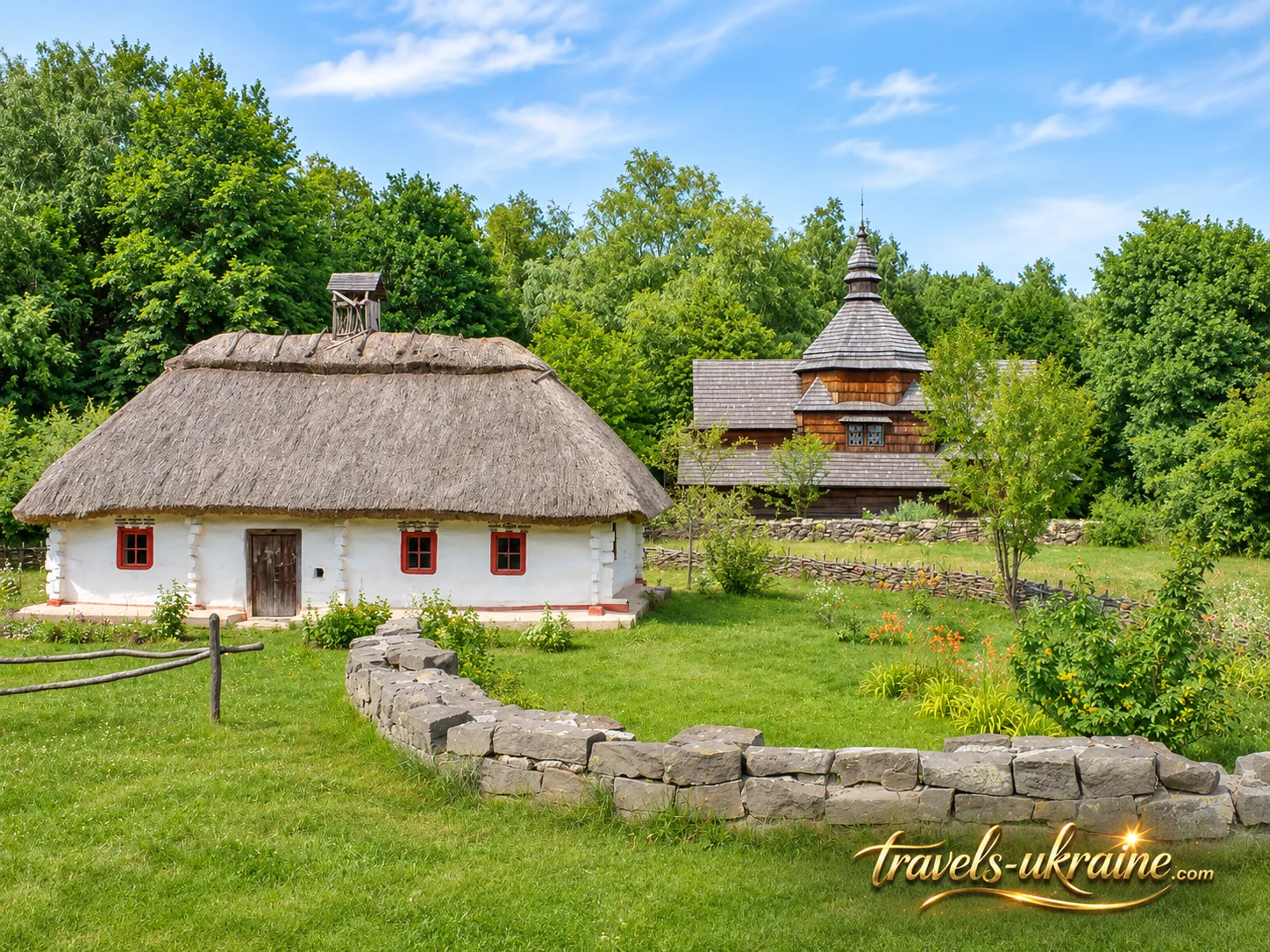
Imagine that one fine day, you decide to leave behind the bustling streets of Kyiv, endless traffic jams, and the hustle and bustle of city life and embark on a journey several centuries into the past. And you won't even need a time machine! All you have to do is visit Pyrohiv Museum, where instead of modern high-rise buildings, you'll discover traditional Ukrainian houses, wooden churches, windmills, and picturesque countryside landscapes. You might even feel as though a village housewife is about to appear from behind the nearest fence and ask why you're wandering around doing nothing when there's still so much work to be done around the farm.
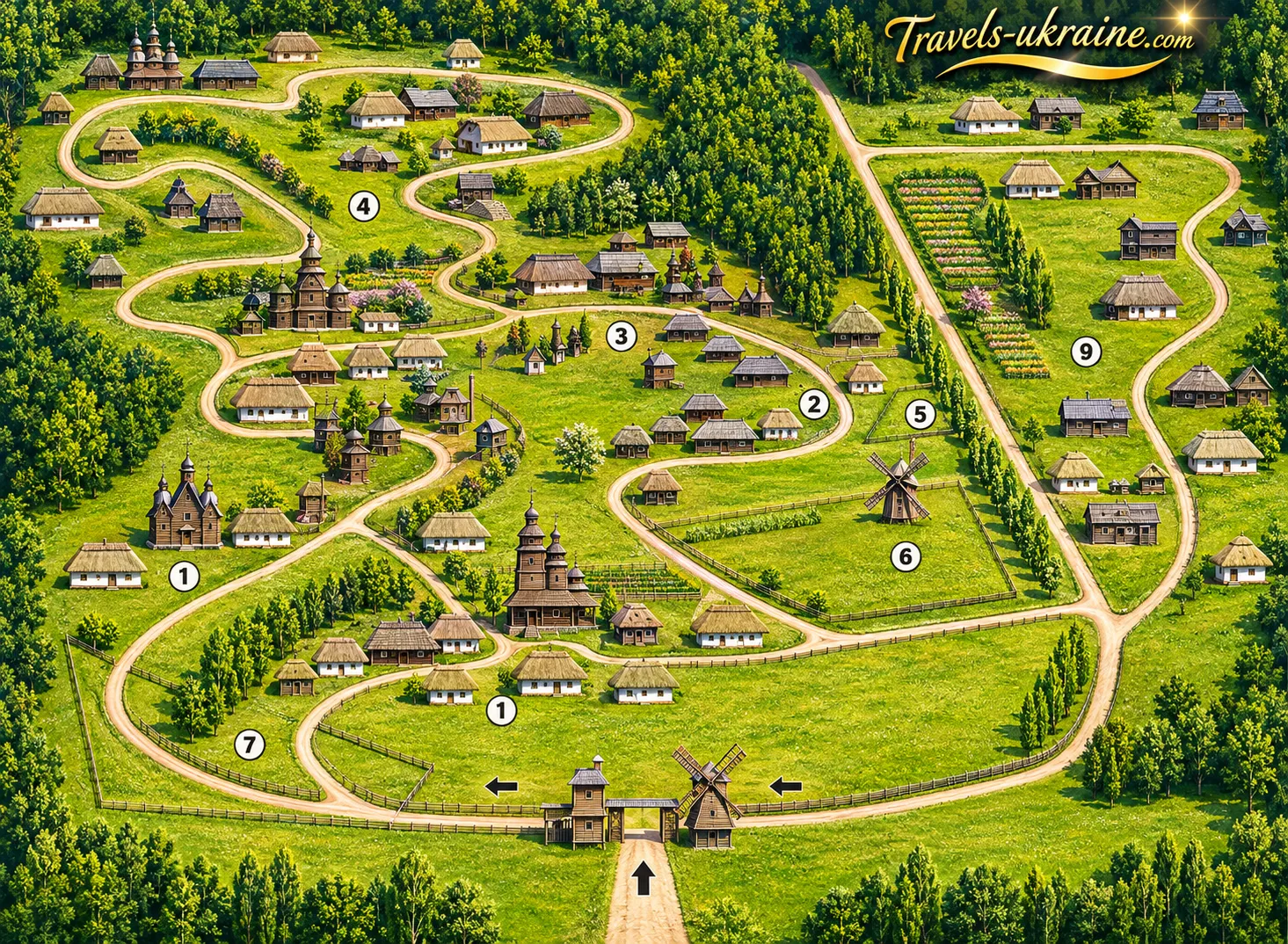
The National Museum of Folk Architecture and Life of Ukraine is located in the picturesque Pyrohiv area on the southern outskirts of Kyiv. It is one of the largest open-air museums in Europe, with approximately 300 authentic examples of traditional architecture dating from the 16th to the 20th centuries spread across an enormous landscape of green hills, gardens, and woodland clearings. Here, you can discover what Ukrainian villages looked like hundreds of years ago, how our ancestors built their homes, managed their farms, and created comfortable living spaces without electricity, running water, or modern household appliances.
But the open-air museum in Pyrohiv is much more than a collection of historic buildings. It is a place where Ukrainian history seems to come alive. Following its winding paths, you can explore Polissia, step inside a traditional farmhouse from the Poltava region, discover the everyday life of people from Podillia, and experience the atmosphere of a Carpathian village — all in a single day. And you can do it without suitcases, train tickets, or hours of travelling. Comfortable shoes, however, are highly recommended. The museum covers a vast area, and Ukrainian history, as it turns out, enjoys a good long walk.
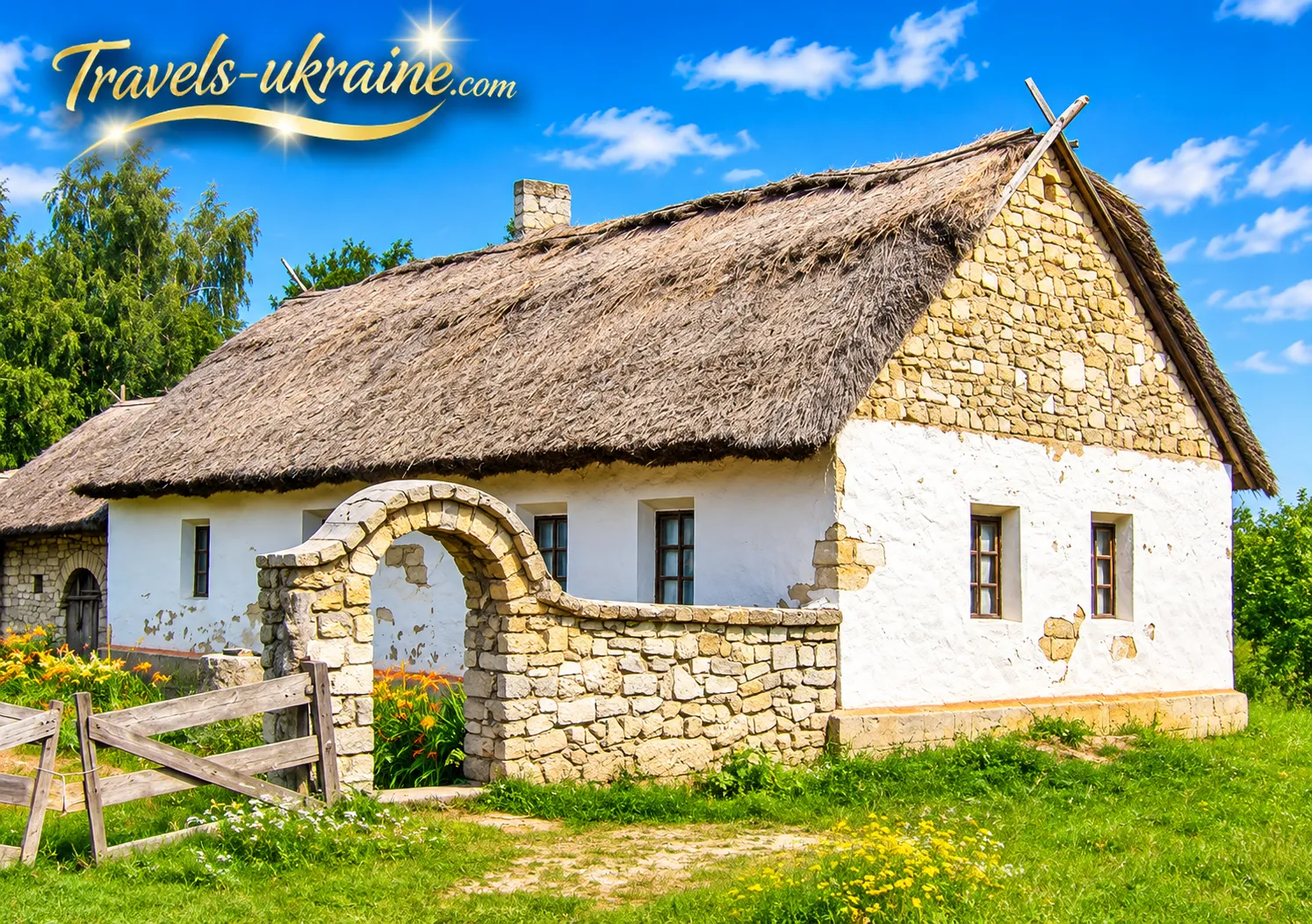
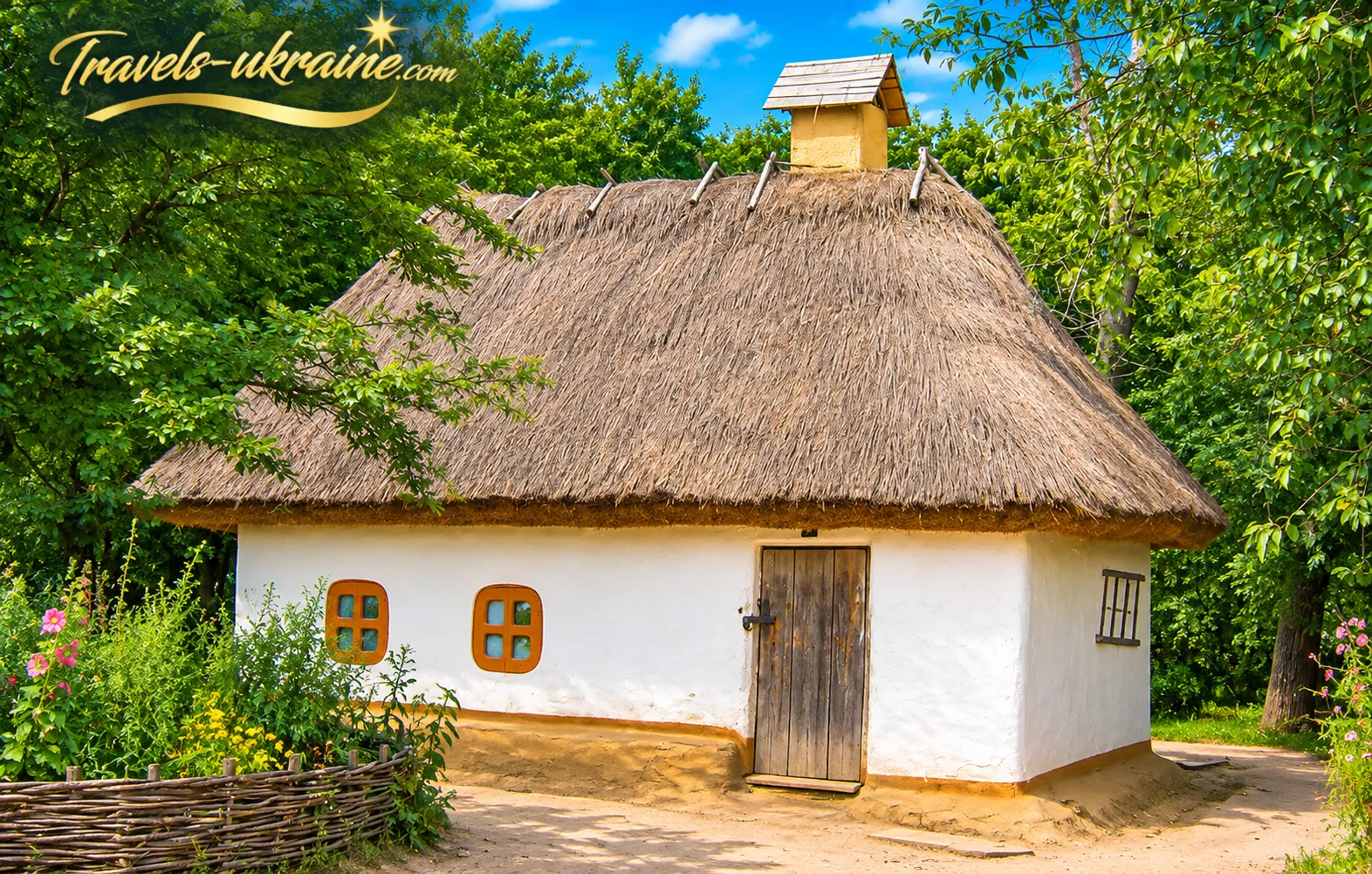
What makes this place especially charming are the traditional Ukrainian houses with thatched roofs, wooden churches, wells, mills, and historic farm buildings. Behind woven fences, you can glimpse peaceful village courtyards, with trees and flowers growing beside the houses, while magnificent windmills rise above the surrounding hills. It's easy to imagine a Ukrainian village waking up centuries ago: a housewife lighting the stove, a farmer tending his livestock, and neighbours chatting somewhere nearby, sharing the latest news faster than any modern social media platform ever could.
What's particularly fascinating is that these buildings aren't simply modern replicas constructed as backdrops for tourist photographs. Most are genuine examples of traditional Ukrainian architecture, carefully relocated to the museum from different parts of the country. Every house, church, and windmill has its own story, connected to the people, traditions, and everyday lives of Ukrainians. That's why the Pyrohiv Ethnographic Museum offers more than just a glimpse into the past. It helps visitors understand how Ukrainian customs, culture, and national identity developed over the centuries.
Families with children will find this place especially interesting. After all, reading about the lives of Ukrainian peasants in a history textbook is one thing, but standing in front of an enormous windmill, seeing an old-fashioned stove, or stepping inside a wooden house that once sheltered an entire family is quite another. It's also a wonderful opportunity to explain to the younger generation that long before the internet existed, the word "cloud" had absolutely nothing to do with storing photographs.
History of the Museum of Folk Architecture and Life in Pyrohiv
The history of this museum began not with an old farmhouse or a wooden windmill, but with an ambitious idea — to preserve for future generations a part of Ukraine that was gradually disappearing along with its traditional villages. In the mid-20th century, traditional buildings were increasingly giving way to new brick houses, while old farmsteads, barns, and mills were being demolished or dismantled for building materials. Along with them, priceless evidence of traditional architecture and the everyday lives of our ancestors could have been lost forever.
It was around this time that Ukrainian historians, ethnographers, and public figures began discussing the idea of creating a special museum where historic buildings would not simply be preserved as individual exhibits but arranged into entire village ensembles. The concept was ambitious: to bring together the architectural heritage of different Ukrainian regions in one location, recreating their characteristic courtyards, streets, and farmsteads. Essentially, the goal was to build a vast historical Ukraine under the open sky — without a time machine, but with plenty of construction equipment.
The Founding of Pyrohiv Museum and the Role of Historian Petro Tronko
The official founding date of the National Museum of Folk Architecture and Life of Ukraine is considered to be February 6, 1969. On that day, a government decision was adopted to establish a museum of folk architecture and everyday life in the Ukrainian SSR. The Ukrainian Society for the Protection of Historical and Cultural Monuments played an important role in bringing this idea to life, bringing together people dedicated to preserving the country's historical heritage.
One of the project's principal initiators and organizers was Petro Tymofiiovych Tronko, a Ukrainian historian, public figure, and future academician of the National Academy of Sciences of Ukraine. He understood that historic buildings needed to be saved not at some distant point in the future, but immediately, while there was still an opportunity to preserve their original structures and decorative features.
The task proved far from simple. It required the involvement of historians, architects, restorers, ethnographers, builders, and dozens of other specialists. After all, finding an old farmhouse and declaring it a museum exhibit was not enough. The building had to be studied, documented, carefully dismantled, transported, and reconstructed in a new location. And all of this had to be done in such a way that, after the move, the structure remained a valuable historical monument rather than becoming an ordinary pile of old wooden planks.
How Traditional Ukrainian Houses Were Transported to Pyrohiv Museum
One of the most challenging stages in creating the open-air museum in Pyrohiv was finding authentic historic buildings. Researchers travelled on expeditions across different regions of Ukraine, visited remote villages, spoke with local residents, and searched for structures that had preserved the distinctive characteristics of traditional Ukrainian architecture.
Buildings that retained their original wooden structures, traditional log-joining techniques, historic roofs, and other architectural features were particularly valuable. Every selected monument was carefully studied, measured, and photographed to ensure that its original appearance could be reproduced as accurately as possible during restoration.
What followed was a genuine engineering adventure. Traditional farmhouses, wooden churches, windmills, and agricultural buildings had to be dismantled into individual components, with each structural element labelled before being transported by road to Kyiv. Once at the museum, restoration specialists reassembled the buildings, using preserved original materials and recreating missing details based on historical examples.
Just imagine the reaction of someone watching parts of an old village farmhouse being transported along the road. Moving furniture is hardly surprising today, but in this case, it was not a sofa and wardrobe being relocated — it was an entire farmstead, sometimes several centuries old. And the main challenge was not simply delivering it to its destination, but preserving every historically valuable detail along the way.
Work on the surrounding landscape was equally important. The exhibitions were designed so that historic buildings would stand among hills, gardens, and open spaces resembling the natural environments of their respective Ukrainian regions. As a result, the museum gradually developed into something far more meaningful than a collection of old buildings — a complete architectural and landscape complex.
The Opening of Pyrohiv Museum in 1976
After several years of intensive work, the first section of Pyrohiv Museum opened to visitors on July 17, 1976. By that time, numerous examples of traditional architecture had already been restored on the museum grounds, and historical and ethnographic complexes representing different parts of Ukraine had been established.
For its time, this was a truly remarkable event. Visitors could not only admire historic objects behind museum glass but also walk through authentic village courtyards, explore traditional buildings, and compare the architecture of different regions. History, which previously had to be studied mainly through books, suddenly stood right before their eyes.
Over the following decades, the museum continued to develop. Its exhibitions were expanded with new architectural monuments, ethnographic collections grew, traditional crafts were studied, and historic Ukrainian interiors were recreated. Beginning in 1978, the museum also started organizing seasonal ethnographic fairs, helping to promote Ukrainian folk culture.
In 2008, the museum was granted national status, highlighting its importance in preserving Ukraine's historical and cultural heritage.
Pyrohiv Museum Today — Preserving the History of the Ukrainian People
Today, the museum grounds contain approximately 300 examples of traditional architecture dating from the 16th to the 20th centuries, while its collections include around 100,000 museum objects. These include traditional clothing, furniture, tools, ceramics, musical instruments, woven fabrics, and countless other items that help recreate the everyday lives of Ukrainians in past centuries.
However, the significance of this national open-air museum cannot be measured by the number of exhibits alone. It preserves the tangible memory of generations who built their homes, worked the land, raised children, and created a culture that became an inseparable part of Ukraine's national heritage. And perhaps this is where Pyrohiv's greatest value lies. As long as an old farmhouse continues to stand, a wooden windmill stretches its sails above a hill, and new generations of Ukrainians walk along the museum paths, the past ceases to be something distant and forgotten. It remains close — alive, understandable, and remarkably meaningful to everyone who wishes to discover more about the history of their homeland.
What to See at Pyrohiv Museum — The Most Fascinating Architectural Landmarks
A walk through the museum offers an opportunity to discover Ukraine's genuine architectural treasures — buildings that have survived wars, changes of government, several historical eras, and even relocation from their original villages to the capital. Here, every traditional farmhouse has its own story, wooden churches showcase the remarkable skills of their builders, and majestic windmills recall a time when the wind did the work of an electric motor.
Among the hundreds of museum buildings, several particularly valuable monuments deserve a closer look. Some amaze visitors with their age, others with their unusual construction, while some offer a glimpse into everyday Ukrainian village life, as though their inhabitants had merely stepped outside for a moment.
The House from Samary Village — The Oldest Building at Pyrohiv Museum
One of the National Museum's most valuable exhibits is a traditional house from the village of Samary in Volyn, dating back to 1587. Just imagine: this wooden building was constructed when Bohdan Khmelnytsky had not yet been born, and modern construction technology was still centuries away. The house was built from pine planks, mainly using axes and chisels. Marks left by these traditional woodworking tools can still be seen on its walls today. Its distinctive features include a simple single-room layout without the usual entrance hall, small window openings, and an old-fashioned smoke-filled stove.
Interestingly, the house had no modern chimney as we understand it today. Smoke from the heating stove escaped through special openings and ventilation arrangements, while some of it could remain inside the living space. Complaints about the smell of smoke from the neighbours would probably have surprised no one back then — the important thing was keeping the house warm.
This building is a rare surviving example of what Ukrainian homes looked like more than four centuries ago. Its architecture is modest, yet every detail tells a story of the ingenuity of people who knew how to create homes using readily available natural materials.
St. Paraskeva Church — A Wooden Masterpiece of Ukrainian Baroque
Among Pyrohiv's most outstanding architectural monuments, St. Paraskeva Church from the village of Zarubyntsi in Cherkasy Oblast holds a special place. Built in 1742, it reflects the traditions of Ukrainian Baroque — an architectural style combining the grandeur of religious buildings with the refined craftsmanship of traditional wooden construction.
Interestingly, the craftsmen who built the church's wooden structure did not use metal nails. Instead, they relied on traditional carpentry joints that required extraordinary precision. Try assembling an ordinary wardrobe without screws today, and you'll quickly appreciate just how skilled those historic builders were.
The church was founded by Ursula Franciszka Radziwiłł, a representative of the princely Wiśniowiecki family. In the 1930s, Soviet authorities closed the church, but the building itself survived. It was later relocated to the museum, where it became one of the main highlights of the Middle Dnipro Region exhibition.
The church's multi-tiered wooden roofs are particularly impressive. They create a distinctive silhouette rising gracefully above the surrounding traditional farmsteads.
St. Michael's Church from Dorohynka Village
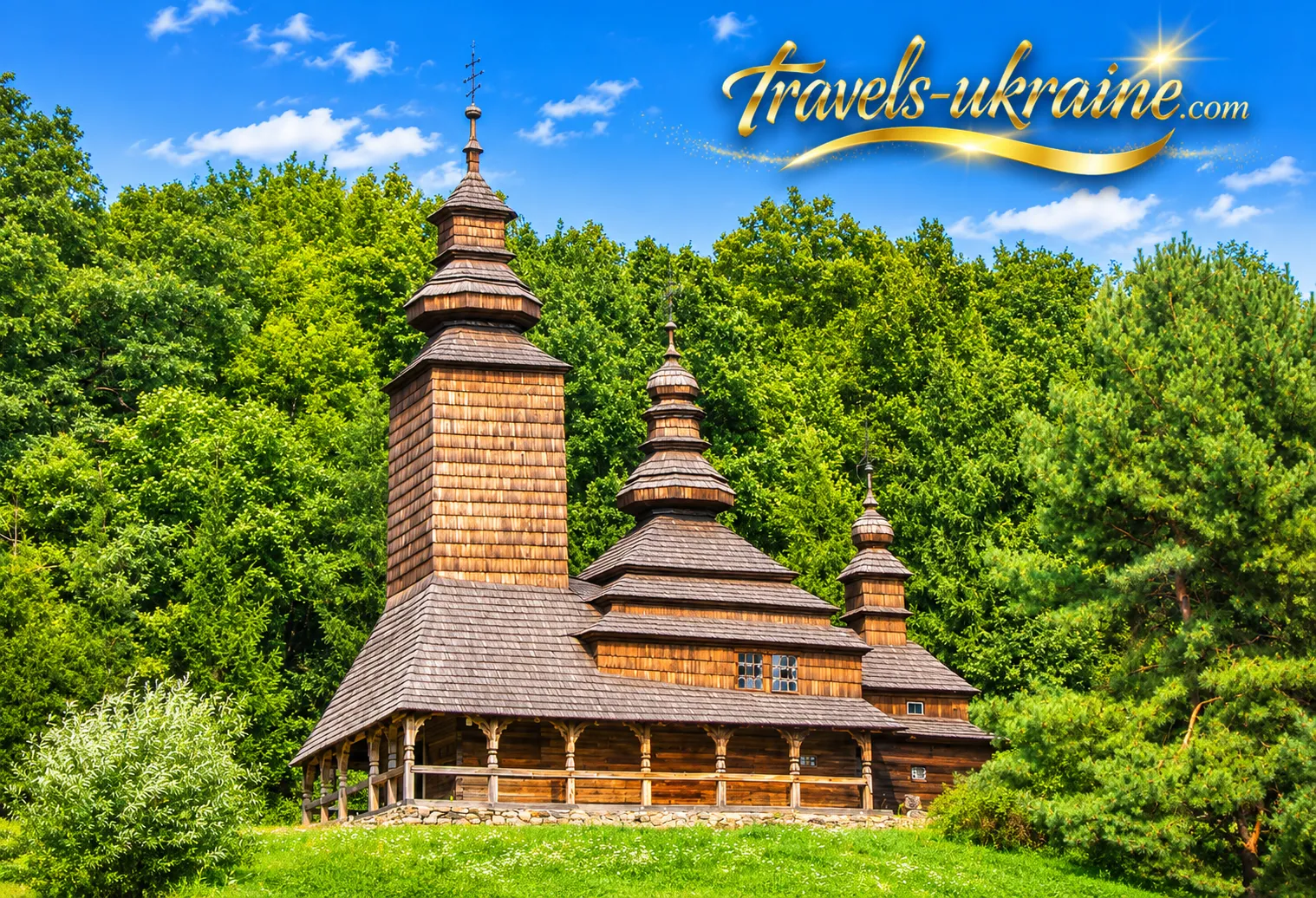
Another architectural gem of the museum is St. Michael's Church from the village of Dorohynka in Kyiv Oblast. According to historical accounts, it dates to approximately 1600, making it one of the oldest surviving examples of Ukrainian wooden church architecture. However, the exact year of construction is not confirmed by an inscription on the building itself.
The church features a traditional three-part layout and three tall roofs that gradually narrow towards the top. Its wooden structures demonstrate the exceptional craftsmanship of traditional carpenters, who created complex architectural forms without modern design software or construction machinery.
Throughout its history, the church underwent alterations, and during the Soviet period, it was used as a storage facility. By the time museum researchers discovered the building, much of its original appearance had been lost. Restoration work made it possible to recreate its characteristic historical forms and preserve the church for future generations.
The historic iconostasis, featuring intricate carved decoration, is particularly valuable. Even if religious architecture is not usually your interest, this church is worth visiting simply to admire the extraordinary craftsmanship of artisans who transformed ordinary wood into genuine works of art.
Windmills at Pyrohiv Museum — The Wooden Giants of Ukrainian Villages
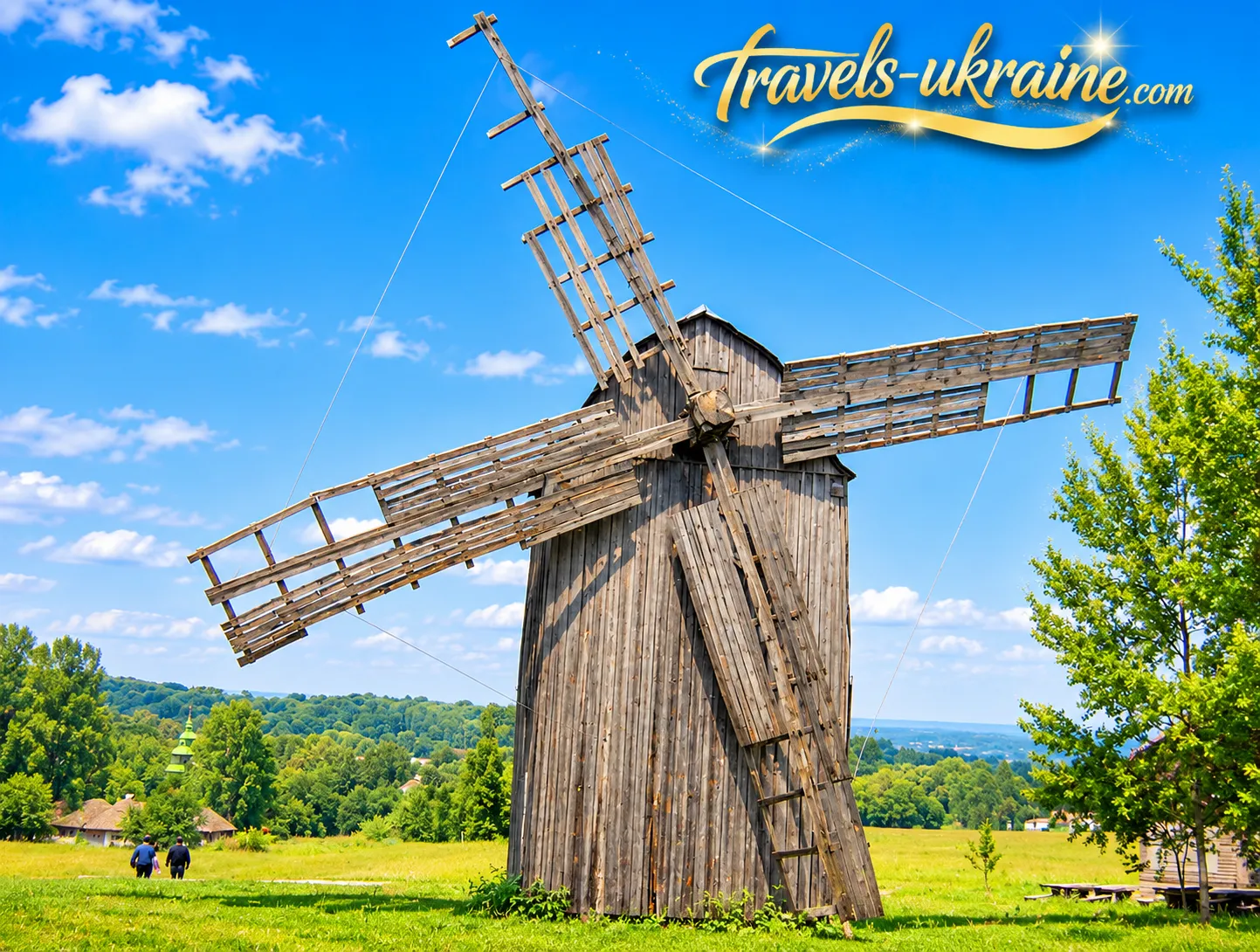
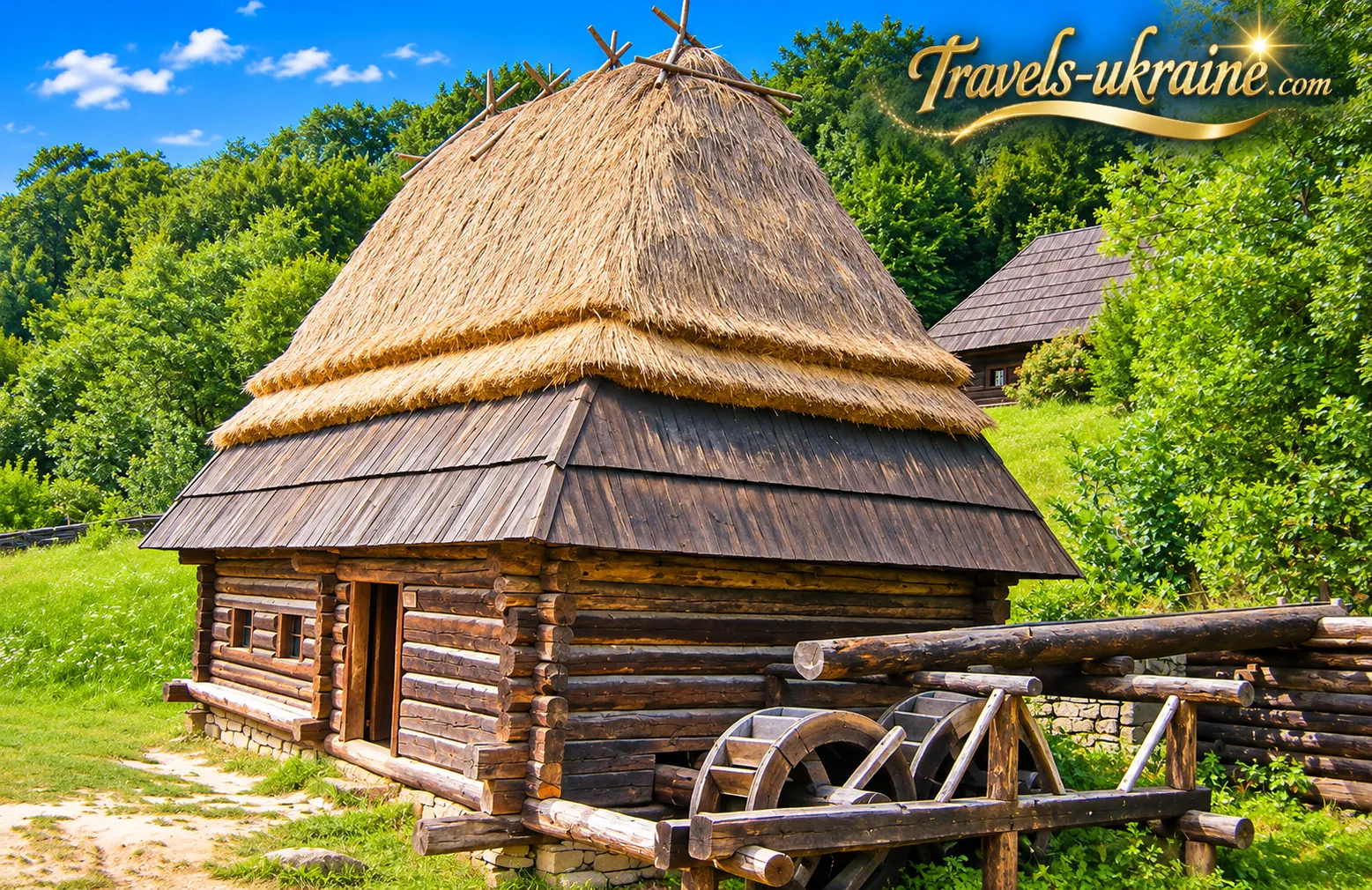
Perhaps the most recognizable structures at the Pyrohiv open-air museum are its historic windmills. Standing proudly on the hills, they create picturesque panoramas that have long become a symbol of this tourist destination. The museum features windmills from various regions of Ukraine, including the villages of Liutenski Budyshcha, Nurove, Blahovishchenka, Horodyshche, and Livyntsi. These structures were used to grind grain into flour, while some were also equipped with machinery for producing groats.
The design of traditional post mills is especially fascinating. In these windmills, the entire wooden body could be rotated to face the wind using a long wooden beam known as a tailpole. In tower-style windmills, by contrast, only the upper roof and sails turned. Inside, a sophisticated system of wooden wheels, shafts, and millstones operated together. The wind turned the sails, the machinery transferred the motion to the millstones, and grain was gradually ground into flour. No electric motors, start buttons, or electricity bills — everything depended on the strength of the wind and the skill of the miller.
The Village School from Lotasheve — How Children Studied Over a Century Ago
Among the museum's unusual exhibits, the historic school from the village of Lotasheve in Cherkasy Oblast, built in 1903, deserves special attention. It is an authentic parish school where village children once received their education. The building contained a separate classroom area and living quarters for the teacher. Inside the reconstructed classroom, visitors can see long wooden desks, benches, a blackboard, an abacus, and other objects used during lessons.
Education lasted three years, and a single teacher worked with several groups of children at the same time. Subjects included arithmetic, calligraphy, religious instruction, and the languages prescribed by the educational system of the Russian Empire at that time. Teaching in Ukrainian was prohibited.
One particularly revealing detail is a bucket containing birch rods, also displayed in the exhibition. It serves as a reminder of the strict disciplinary methods used in those days. After seeing it, a modern school test might no longer seem like the most frightening challenge in a student's life.
The Historic Tavern from Babanka — Where Villagers Once Shared the Latest News
Not all traditional buildings were intended for living, worship, or hard work. The museum also features a traditional tavern from the village of Babanka in Cherkasy Oblast, built in the late 19th century. The building combined the innkeeper's living quarters with a room for visitors. Its wooden walls were coated and whitewashed, while the four-sided roof was covered with straw. A small storage room with a cellar was arranged in the entrance area.
In the past, establishments like this were more than places to enjoy a drink or a meal. Local residents gathered here to discuss news, business matters, and events in village life. In many ways, the tavern served as a kind of community centre — just without the internet or a news feed. The building offers a fascinating insight into another aspect of everyday Ukrainian village life that tourists often overlook.
Ukrainian Farmsteads, Blacksmith Workshops, and Agricultural Buildings
Alongside its most famous landmarks, the National Museum of Folk Architecture and Life also features many more modest structures without which it would be impossible to imagine a traditional Ukrainian village.
Throughout the museum's farmsteads, visitors can see granaries, threshing barns, livestock sheds, outbuildings, blacksmith workshops, and wells. Each building served a particular purpose: granaries stored food supplies, barns were used for processing harvests, blacksmiths made and repaired metal tools, and wells provided water for the household.
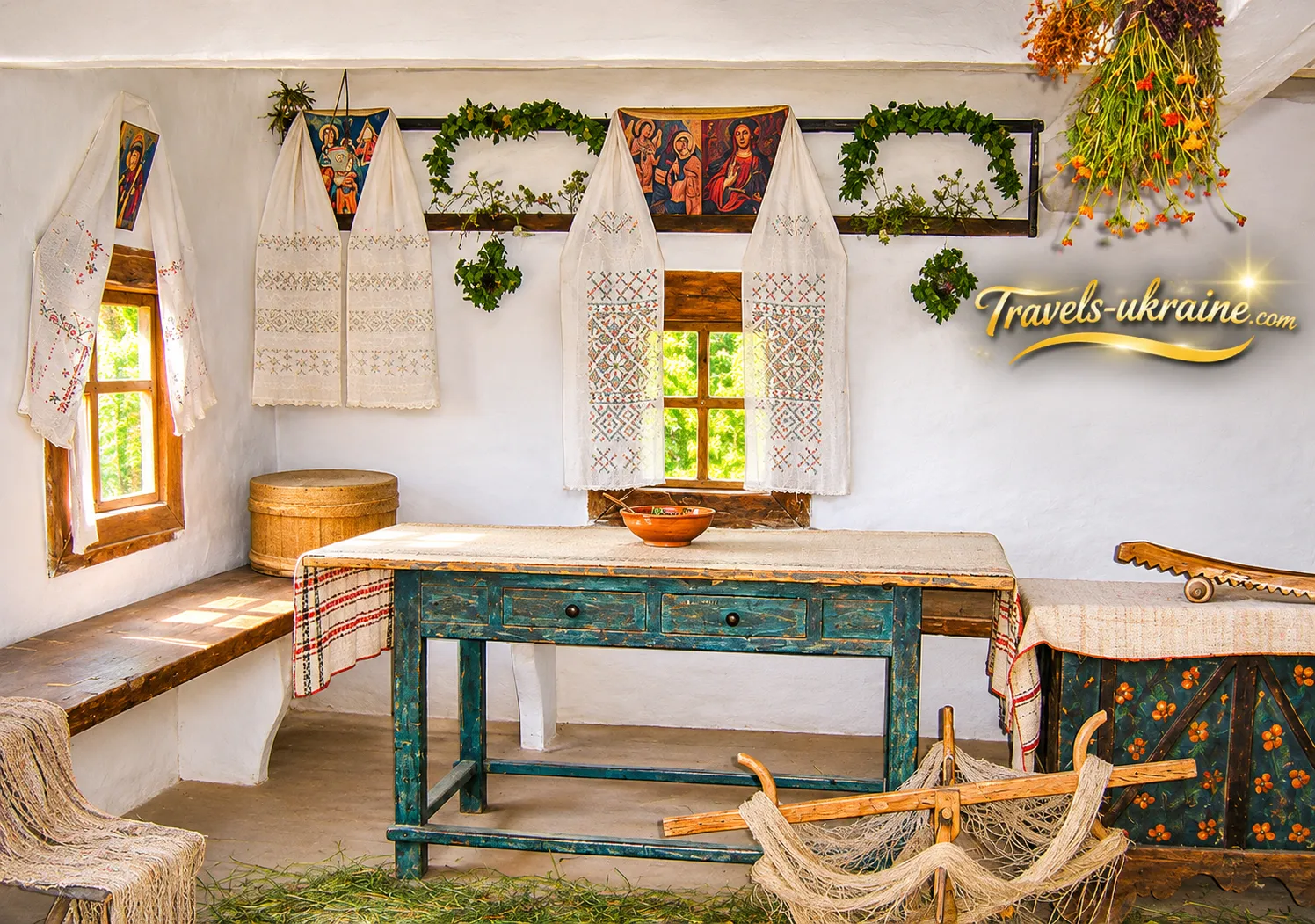
The reconstructed interiors of traditional Ukrainian houses are equally fascinating. Wooden benches, storage chests, clay pottery, weaving looms, embroidered towels, and traditional furniture help visitors understand how people arranged their homes, worked, and spent their free time. The practical design of traditional peasant households is particularly impressive. Almost every object had a useful purpose, and people tried to make their belongings last as long as possible. Today, we might call this sustainable consumption. Back then, it was simply common sense: if something could still be repaired, why buy a new one?
It is precisely these details that make the architectural landmarks of Pyrohiv Museum so fascinating. Behind the historic walls lie not only dates and construction techniques, but also the lives of ordinary people — their daily responsibilities, family joys, work, and dreams. Although visitors usually take the most photographs beside the magnificent churches and windmills, don't rush past the smaller farmhouses and agricultural buildings. Sometimes, a modest wooden structure can reveal more about the history of the Ukrainian people than the grandest palace. All you need to do is stop and take a closer look.
Ukrainian Traditions, Folk Festivals, and Workshops in Pyrohiv
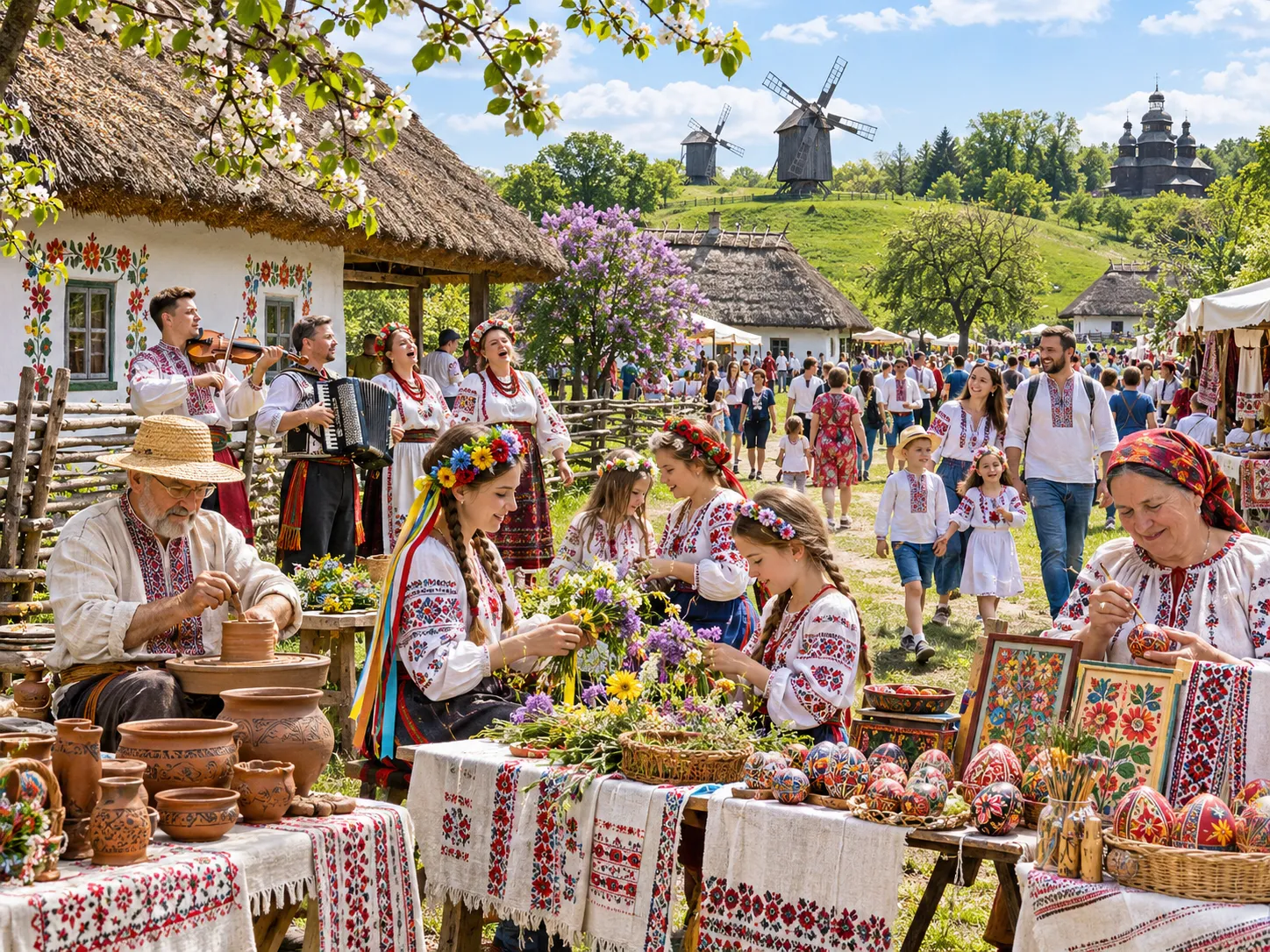
Traditional farmhouses, wooden churches, and magnificent windmills are far from everything that Pyrohiv Museum in Kyiv has to offer. The real magic begins when the museum courtyards fill with folk songs, cheerful voices, music, and the aromas of traditional Ukrainian dishes. On days like these, it feels as though an old Ukrainian village has come back to life and its residents have decided to throw a grand celebration and invite everyone to join in.
The Museum of Folk Architecture and Life does more than preserve historic buildings — it also introduces visitors to living folk traditions. The museum hosts folklore events, themed exhibitions, ethnographic programmes, fairs, and workshops dedicated to Ukrainian crafts. Sometimes, an ordinary walk through the museum turns into a genuine adventure, where visitors can not only observe history but also become part of it.
Traditional Festivals at Pyrohiv Museum
One of the museum's most distinctive features is the recreation of traditional Ukrainian festivals and rituals. Throughout the year, themed events are organized to celebrate Christmas, Kolodii, Easter traditions, Kupala, St. Andrew's Eve gatherings, and other occasions from the traditional folk calendar.
Every celebration has its own unique character. In winter, the focus is on Christmas carols, traditional New Year songs, and the ancient customs of Ukrainian Christmas. During Kolodii, visitors discover traditional winter farewell celebrations, folk games, and festivities. Easter programmes introduce guests to the art of decorating traditional Easter eggs, festive rituals, and the symbolism of Ukrainian culture.
Kupala celebrations are particularly atmospheric. Among green meadows and historic farmsteads, traditional songs fill the air as participants weave wreaths from wildflowers, dance in circles, and discover ancient summer rituals. At moments like these, it becomes easy to understand why Ukrainian folk festivals have brought entire communities together for centuries.
And if you think traditional folk dancing looks easy, try following a few steps performed by experienced dancers. Within minutes, you'll discover that our ancestors knew not only how to work hard, but also how to celebrate so energetically that a modern gym workout might seem like a gentle warm-up.
Workshops in Pyrohiv — Try Traditional Ukrainian Crafts
Another exciting opportunity for visitors is to take part in workshops dedicated to traditional Ukrainian crafts. During the warmer months, the museum operates a Creative Workshop, where visitors can explore folk art under the guidance of skilled artisans and make a small handmade item of their own.
Activities featured in museum programmes include traditional Easter egg decoration, embroidery, paper cutting known as vytynanka, willow weaving, straw weaving, fabric block printing, Petrykivka and Samchykivka painting, making traditional motanka dolls, and weaving flower wreaths. Each craft has its own history, techniques, and artistic traditions.
For example, during a pysanka-making workshop, participants can learn how wax and dyes were traditionally used to create intricate patterns on eggs. A vytynanka workshop introduces the art of cutting decorative paper designs, while making a motanka doll offers a deeper understanding of the symbolism behind this traditional Ukrainian toy.
The museum occasionally hosts weaving classes and demonstrations of other crafts requiring specialized equipment. Watching a traditional weaving loom in action is particularly fascinating, especially when you realize how much effort once went into producing even a simple piece of fabric.
After participating in these activities, even an ordinary towel begins to look completely different. Once you've tried creating even a small decorative pattern with your own hands, you quickly understand that the words "handmade" are much more than an attractive phrase on a price tag.
Ukrainian Fairs at Pyrohiv Museum — Traditional Crafts and Folk Culture
Traditional craft fairs hold a special place in the museum's cultural life. They continue the longstanding Ukrainian tradition of community markets, where people gathered not only to buy essential goods but also to meet friends, exchange news, listen to music, and spend time together.
During museum fairs, visitors can discover works created by traditional artisans, including pottery, decorative wooden objects, woven textiles, jewellery, and other handmade products. Some programmes also include folklore performances, themed entertainment, and live demonstrations of traditional crafts.
Such fairs are much more than opportunities to buy souvenirs. They allow visitors to see how Ukrainian folk traditions continue to live through the work of contemporary artisans. They also offer amusing proof that the Ukrainian habit of spending ages choosing gifts for relatives has very deep historical roots.
Traditional Ukrainian Life — From Bread Baking to Evening Gatherings
Themed programmes devoted to everyday life in traditional Ukrainian villages can be equally fascinating. They introduce visitors to historical cooking methods, household tasks, traditional clothing, music, and family customs. During festivals dedicated to Ukrainian bread, for example, guests learn about ancient farming traditions, examine traditional agricultural tools, and discover how bread was baked in a Ukrainian stove. Children may also have the opportunity to knead dough themselves, discovering for the first time how much work goes into making an ordinary fragrant loaf of bread.
Ukrainian vechornytsi — traditional evening gatherings of young people — deserve particular attention. During these gatherings, participants sang, joked, met new people, made handicrafts, and enjoyed entertainment together. Interactive museum programmes help recreate the atmosphere of such evenings while introducing visitors to folk songs and the symbolism of traditional clothing.
And if anyone believes that people had nothing to do in the evenings before smartphones existed, Ukrainian vechornytsi quickly prove otherwise. There was plenty of conversation, music, humour, and romance even without mobile phones. Best of all, nobody could complain that the person sitting opposite them had spent the entire evening staring at a screen.
When Should You Visit Pyrohiv Museum to Experience a Folk Festival?
If you would like to experience Pyrohiv Museum during a folk festival, cultural event, or workshop, it's worth planning your visit in advance. Cultural activities follow a separate schedule, and their programmes, prices, and availability may vary depending on the season and organizational circumstances. The greatest variety of events traditionally takes place during the warmer months, when performances, fairs, and creative activities can be held outdoors. However, Christmas and winter programmes offer their own distinctive atmosphere.
Ukrainian traditions at Pyrohiv Museum are not merely memories of the past — they provide an opportunity to see how folk culture continues to thrive today. Traditional songs once again echo through village courtyards, ancient crafts find new practitioners, and the customs of our ancestors become meaningful to younger generations. Through experiences like these, Ukrainian history becomes more than a story in a textbook — something visitors can see, hear, feel, and even try creating with their own hands.
What to See Near Pyrohiv Museum: Interesting Places Around Kyiv
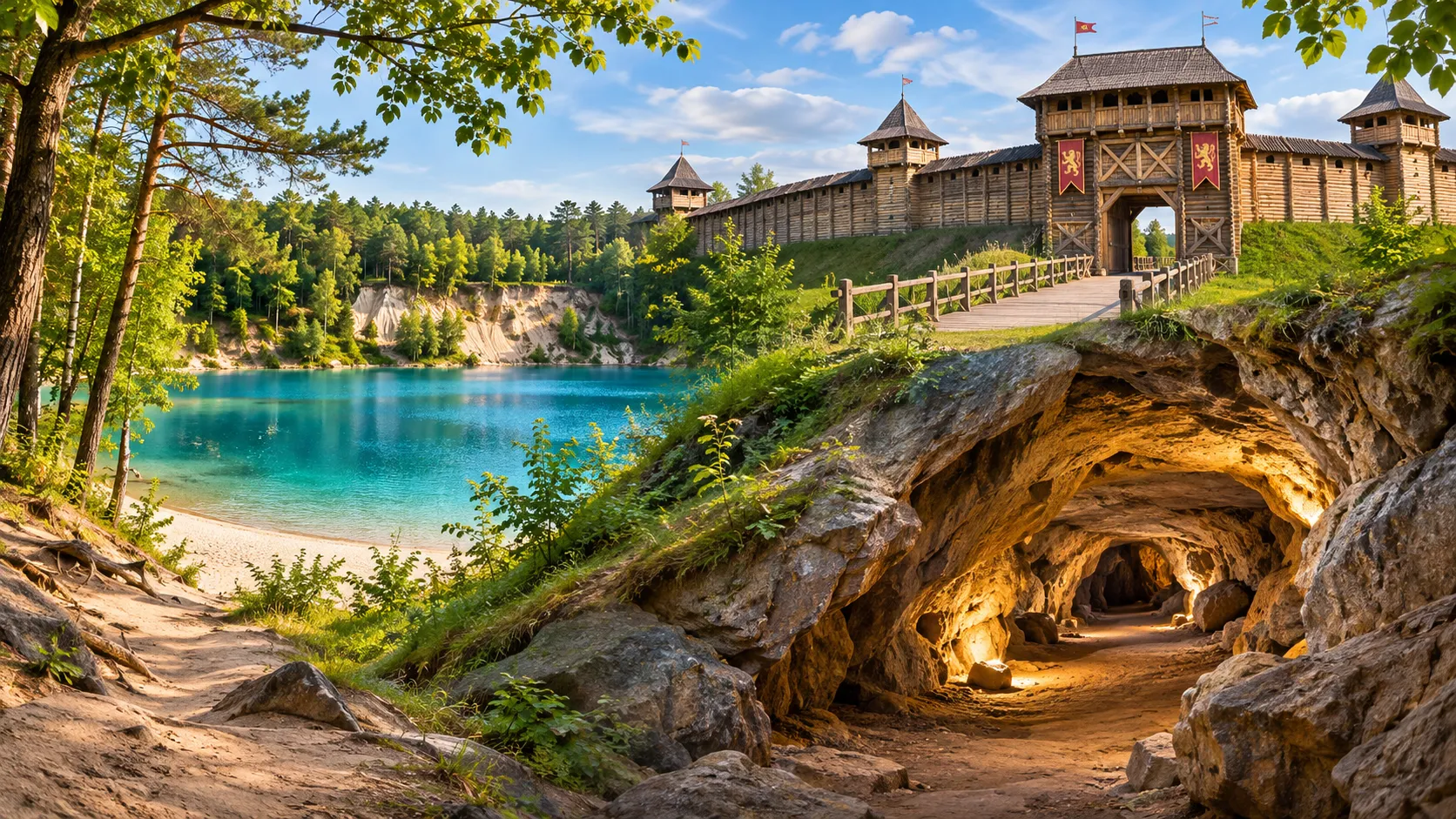
A visit to Pyrohiv Museum can be the perfect beginning to a much bigger adventure. The southern outskirts of Kyiv and the surrounding areas of Kyiv Oblast offer plenty of fascinating places capable of surprising even experienced travellers. Here, you can swap traditional rural scenery for the turquoise waters of a lake, set off in search of an unusual underground cave, or find yourself surrounded by the wooden fortifications of a medieval city.
Of course, after several hours of walking around Pyrohiv, your legs may have other ideas about continuing the adventure. So there's no need to try visiting every destination in a single day. It's better to choose one or two places that interest you most and enjoy the journey at a relaxed pace.
Blue Lake in Pidhirtsi — A Turquoise Gem Near Kyiv
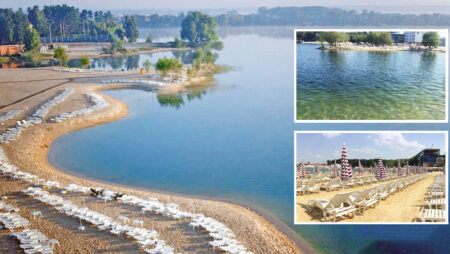
If you feel like relaxing beside the water after exploring traditional Ukrainian architecture, consider visiting Blue Lake in Pidhirtsi. This picturesque lake lies south of Kyiv and is known for its clear water, which takes on beautiful blue and turquoise shades on sunny days.
Sandy shores, green trees, and open stretches of water create a peaceful setting for relaxing outdoors. During the warmer months, visitors come here for walks, sunbathing, and the opportunity to spend time away from the noise of the city. Some sections of the shoreline have designated recreation areas, although access conditions and beach facilities should be checked before travelling. The lake looks particularly beautiful on clear days when the water reflects the sky and surrounding trees. At times, you might even feel as though you've arrived at a seaside resort. Of course, the local seagulls are under no obligation to maintain that illusion, and the real sea is still quite a journey away.
Blue Lake makes a pleasant addition to a visit to Pyrohiv Museum, particularly if you're planning a relaxing family day surrounded by nature.
Geonavt Cave — A Mysterious Underground World in the Hills of Khodosivka
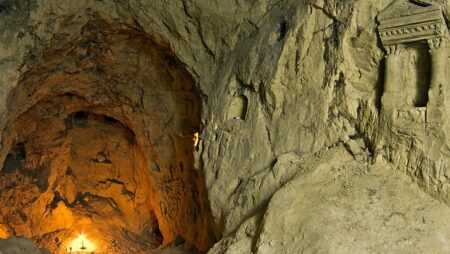
Travellers interested in unusual natural attractions should consider Geonavt Cave, hidden among the wooded slopes near the village of Khodosivka. This small underground cavity attracts adventurers with its unusual structure, narrow passages, and mysterious atmosphere.
Geonavt has approximately 60 metres of underground passages. Inside are small chambers, low tunnels, and recesses in the walls, some featuring unusual relief formations and markings. The origins of certain features remain a matter of speculation, so not every mysterious niche should be interpreted as evidence of an ancient underground temple.
The surrounding ravines, woodland paths, and hills give the area its distinctive character. Exploring them reveals a completely different side of Kyiv Oblast — far removed from city avenues, apartment buildings, and familiar tourist attractions. However, Geonavt is not a developed show cave. Steep slopes, unstable rock formations, low passages, and a lack of lighting present genuine hazards. Entering the cave independently without a professional assessment of its condition and experienced guidance is therefore not recommended.
Although Geonavt is considerably smaller than Ukraine's famous cave systems, it reminds us that fascinating natural discoveries can sometimes be found surprisingly close to home. The important thing is to remember that a proper adventure should end with beautiful photographs and happy memories — not a call to the emergency services.
Kyivan Rus Park — A Journey to Medieval Kyiv
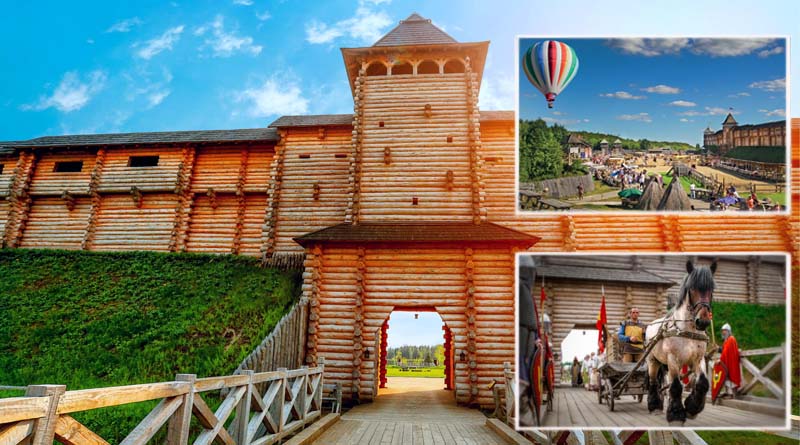
If Pyrohiv's historic Ukrainian farmsteads have sparked your curiosity about an even earlier period of history, a wonderful next destination is Kyivan Rus Park, located near the village of Kopachiv in the Obukhiv district of Kyiv Oblast. Also known as Ancient Kyiv, this historical and cultural complex is dedicated to recreating the architectural appearance of the medieval capital of Rus. Visitors can see tall wooden defensive walls, watchtowers, city gates, and other structures inspired by the architecture of the princely era.
Unlike Pyrohiv Museum, which preserves authentic historic buildings, Kyivan Rus Park is a modern reconstruction complex. Its architecture helps visitors imagine what a fortified city might have looked like many centuries ago, when life flourished behind the towering wooden walls of medieval Kyiv.
The large-scale defensive structures are especially impressive. Standing before the tall city gates, it's easy to imagine merchant caravans, princely warriors, and travellers from distant lands approaching the city. Fortunately, modern visitors have things much easier — nobody asks them to prove their loyalty to the prince before entering.
The complex is also known for themed events, equestrian performances, and historical programmes. However, these activities do not take place every day, and regular festivals currently face restrictions. Visitors should check the latest opening hours and available activities before travelling.
All in all, interesting attractions near Pyrohiv Museum can make a journey through southern Kyiv Oblast wonderfully varied. Blue Lake offers peaceful relaxation surrounded by nature, the Geonavt area provides the atmosphere of a small adventure, and Kyivan Rus Park transports visitors into the world of medieval architecture and princely traditions. Although these destinations are very different, each reveals a unique aspect of Ukraine's beauty, history, and tourism potential.
Frequently Asked Questions About Pyrohiv Museum
Where is the National Museum of Folk Architecture and Life of Ukraine located?
Pyrohiv Museum is located on the southern outskirts of Kyiv, in the historic Pyrohiv area of the Holosiivskyi district. Its official address is 1 Akademika Tronka Street, Kyiv. This large open-air museum features approximately 300 examples of traditional Ukrainian architecture dating from the 16th to the 20th centuries, set among picturesque hills.
How can I get to Pyrohiv Museum by public transport or car?
You can reach Pyrohiv Museum in Kyiv by public transport. According to the museum, trolleybus No. 11 from Vystavkovyi Tsentr metro station, bus No. 57, and minibus No. 496 operate to the turn-off for the museum. From the stop, it takes approximately 15 minutes to walk to the entrance. By car, the museum is conveniently accessible via Akademika Zabolotnoho Street. Parking is available near the museum, with an official fee of UAH 100. Check current public transport routes before your visit.
What are the opening hours of Pyrohiv Museum and its indoor exhibitions?
Pyrohiv Museum grounds are open daily from 9:00 AM to 6:00 PM, including Mondays. Indoor exhibitions operate according to a seasonal schedule: November–February and September–October, 10:00 AM–4:00 PM; March–April, 10:00 AM–5:30 PM; and May–August, 9:30 AM–5:30 PM. The interiors of the historic farmsteads are closed to visitors every Tuesday and Wednesday. Before visiting, it is advisable to check the museum's official website for any changes to the schedule.
Who is eligible for free admission to Pyrohiv Museum?
Free admission to Pyrohiv Museum is available to preschool children, combat veterans, war veterans, people with Group I disabilities, and other categories designated by the museum administration. In addition, on the last Thursday of each month, certain groups of students, pensioners, and people with Group II–III disabilities may visit the museum grounds free of charge. Visitors must present appropriate documentation to receive admission benefits.
Can visitors enter the historic houses and churches at Pyrohiv Museum?
Yes, some of the historic houses, churches, and farmsteads at Pyrohiv Museum are open for indoor visits according to the exhibition schedule. Inside, visitors can see traditional Ukrainian furniture, stoves, pottery, embroidered towels, and other household objects. However, not all historic buildings are open to visitors, and indoor exhibitions are closed every Tuesday and Wednesday. Touching fragile museum exhibits without staff permission is prohibited.
Is Pyrohiv Museum suitable for children, and are dogs allowed?
Pyrohiv Museum is an excellent destination for families with children. Visitors can explore traditional Ukrainian houses, windmills, wooden churches, and learn about folk customs. Children under 12 must be accompanied by an adult while on the museum grounds. Dogs are also permitted, but they must be kept on a leash, owners must clean up after them, and animals are not allowed inside the historic museum houses. Bringing drinking water is recommended, as the museum covers a large area.
Pyrohiv Museum — Where the Memory of the Ukrainian People Lives On
Some places leave you with beautiful photographs, while others leave something far more meaningful in your heart. Pyrohiv Museum near Kyiv belongs to the second category. Here, among traditional Ukrainian houses, wooden churches, and windmills, you cannot help but feel a special connection with the past. It seems as though the voices of our ancestors can still be heard behind the whitewashed walls, while the cosy courtyards continue to hold the warmth of family stories passed down from generation to generation.
As you wander along the museum paths, you gradually begin to appreciate just how rich and diverse Ukraine's cultural heritage truly is. Every region had its own traditions, architectural features, and customs, yet all shared the desire to create a comfortable home, preserve family warmth, and pass on what mattered most to their children. Although life was often difficult for our ancestors, they still found time not only for work but also for songs, celebrations, humour, and sincere human connection.
It is particularly fascinating to look at these historic homes through modern eyes. Without the internet, television, washing machines, or even ordinary refrigerators, our ancestors somehow managed to run their households, raise children, create beautiful handmade objects, and still find the energy for lively evening gatherings. After a walk like this, you may begin to suspect that the real problem with modern life isn't a lack of time, but how we choose to spend it.
So, if you're looking for interesting historical attractions in Kyiv Oblast where you can not only relax but also genuinely experience the spirit of Ukraine, make sure to visit Pyrohiv. Wander along old village streets, stop beside a wooden church, admire the windmills standing on the hills, and allow yourself to forget the bustle of city life, even if only for a little while.
Sometimes, to better understand who we are today, we need to return, if only for a moment, to the places where our history began. And that is exactly what the Pyrohiv open-air museum offers — a place where Ukraine's past does not disappear into the pages of history books but continues to live among traditional houses, green gardens, and the peaceful hills of the Ukrainian countryside.

No Comment
You can post first response comment.