
 English
 Українська
 Български
 Hrvatski
 Čeština
 Dansk
Dansk Nederlands
 Eesti
Eesti Suomi
Suomi Français
 Deutsch
 Ελληνικα
 Magyar
 Íslenska
 Italiano
 Latviešu
 Lietuvos
 Polski
 Português
 Română
 Русский
 Српски
 Slovenčina
 Slovenščina
 Español
 Svenska
 Türkçe
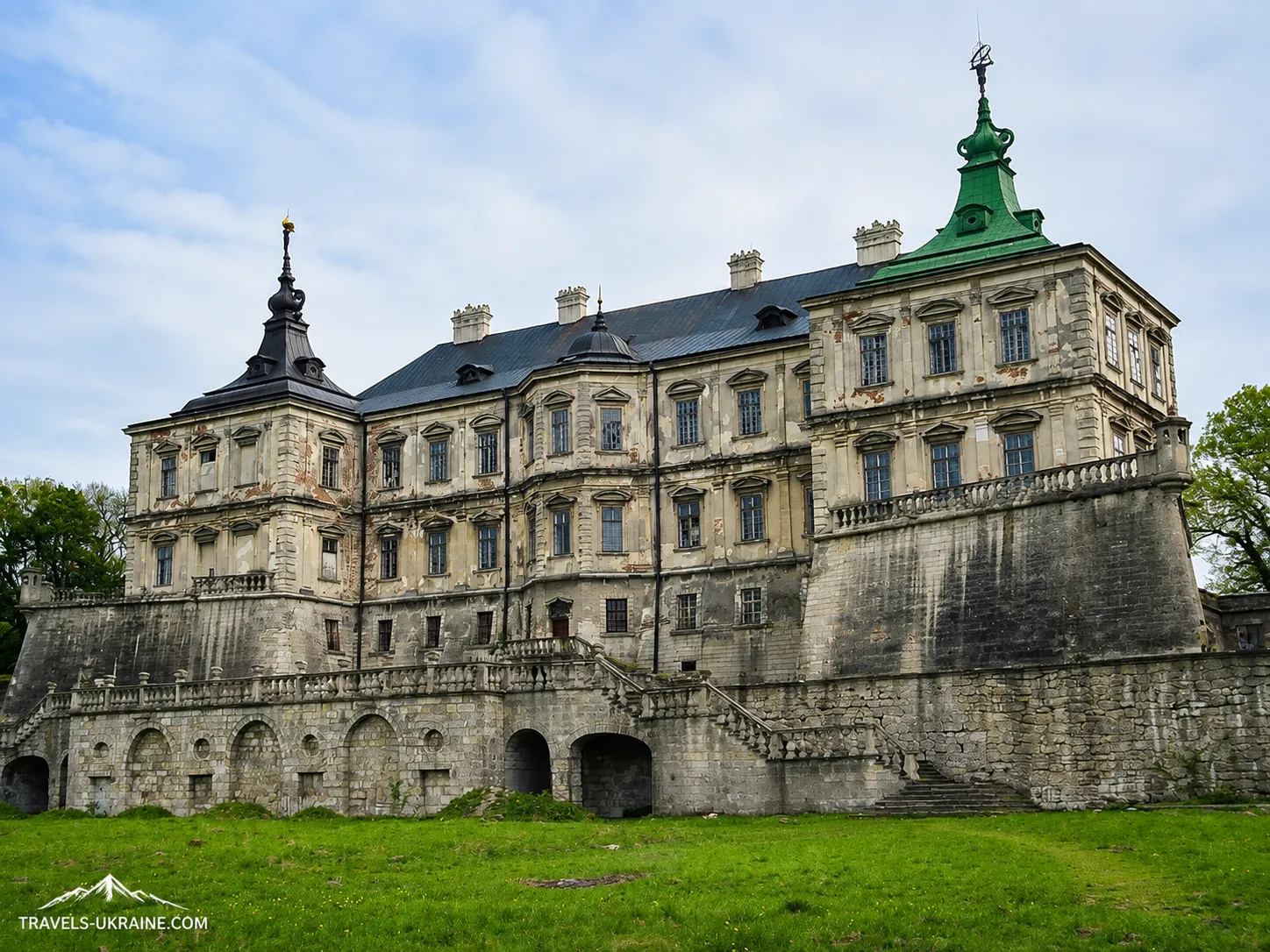
There are places that make you slow your pace without even realising it. Not simply because you are standing before an old building, but because you sense that far more lingers behind its walls than meets the eye. Pidhirtsi Castle is just such a place. It rises above the surrounding countryside with quiet grandeur, as though still keeping the modern world at a distance from the life that once flourished beyond its gates.
From a distance, the palace seems almost flawless — pale façades, symmetry, open space, and silence all around. But as you draw closer, that first impression begins to change. The old walls bear the marks of time, an elusive melancholy seems to linger in the empty windows, and beneath the outward beauty, you begin to sense a history with its share of darkness.
It is this very contrast that makes the palace in Pidhirtsi so fascinating. It captivates you while also compelling you to ask questions. What was this place like when its halls were filled with people? What secrets lie within walls that have stood for centuries? Why have so many stories sprung up around the castle, and why do some of them continue to haunt researchers and travellers to this day?
You may come here for beautiful photographs and views of the Lviv region, but it soon becomes clear: this castle is far more than a striking tourist attraction. It is a place not merely to be seen, but to be discovered gradually — layer by layer, story by story. And the deeper you delve into its past, the less a visit to Pidhirtsi feels like an ordinary tour of an old palace. Ahead lies a story of people, ambition, splendour, loss, and mysteries that continue to make this residence one of the most intriguing places in the Lviv region.
The History of Pidhirtsi Castle: Four Centuries of Grandeur, Loss, and Revival
The history of Pidhirtsi Castle reads like a long novel in which each new generation rewrote the previous chapter. It was built as the residence of one of the most powerful men of his time, passed between influential aristocratic families, remodelled, filled with art, turned into a museum, and saved from war — only to lose almost everything once again. Over four centuries, the palace has undergone so many changes that its present appearance is just one snapshot in a much longer story.
Pidhirtsi was owned in turn by the Koniecpolski, Sobieski, Rzewuski, and Sanguszko families. Each left its own mark here, but two periods were particularly significant: the creation of the residence under the Koniecpolski family and its magnificent heyday under the Rzewuski family.
The Beginnings of Pidhirtsi Castle: The Koniecpolski Family
In the early 17th century, Pidhirtsi was not yet the destination that today draws visitors from across Ukraine. That changed when the estate passed to Stanisław Koniecpolski — Grand Crown Hetman of the Polish–Lithuanian Commonwealth and one of the most influential military and political figures of his era.
In 1635–1640, a new residence took shape in Pidhirtsi. For a man whose life was inseparable from military campaigns, it was intended as a place to rest after the rigours of war. This vision reflected the contemporary ideal of an aristocratic estate: it was expected not only to provide comfort but also to convey the owner's power to guests without a word being spoken.
Koniecpolski did not live long after the main building work was completed — he died in 1646. His descendants inherited the Pidhirtsi residence, and the palace began a life of its own, one that grew ever further removed from the plans of its first owner.
Pidhirtsi Castle Under the Sobieski Family: The Royal Period
In 1682, Pidhirtsi passed to the Sobieski family. This new chapter in its history was linked to the royal family and to John III Sobieski — King of the Polish–Lithuanian Commonwealth, best known for his victory over the Ottoman army at the Battle of Vienna in 1683.
The king himself visited Pidhirtsi only occasionally, but ownership by the Sobieski family gave the residence a special status. During this period, it was well maintained and underwent alterations and improvements, while the palace moved ever further away from the image of a purely defensive castle.
The royal chapter was relatively short-lived. In the early 18th century, the Sobieski family gradually lost interest in some of their estates, and Pidhirtsi changed hands once again. This marked the beginning of what could be described as the palace's true golden age.
The Rzewuski Family and the Golden Age of Pidhirtsi Palace
In 1720, Pidhirtsi Castle passed to the Rzewuski family — one of the most influential noble families in the Polish–Lithuanian Commonwealth at the time. The estate was initially owned by Stanisław Mateusz Rzewuski, and after his death, Pidhirtsi became the principal residence of his son, Wacław Piotr Rzewuski. It was under him that Pidhirtsi Palace entered one of the most illustrious periods in its history. The residence was remodelled and expanded, and life within its walls took on the scale of a fully fledged aristocratic court. Works of art, antique weapons, books, and documents were collected here, musicians were employed, theatrical productions were staged, and receptions were held.
Pidhirtsi was no longer simply a country estate. It had become a centre of culture where its owner displayed not only his wealth, but also his learning, his interest in the arts, and his desire to leave behind something more than a beautiful house. Yet this prosperity did not last forever. In the late 18th and early 19th centuries, the family faced difficult times, and the condition of the residence gradually deteriorated. Some of its contents were lost or dispersed, certain rooms needed repairs, and its former splendour began to fade into memory.
The situation changed under Leon Rzewuski, who cared for Pidhirtsi in the 19th century. Rather than merely attempting to save the old family residence, he began treating it as a historic monument: he organised the archive, catalogued the collections, and drew up inventories of the artworks. Thus, long before the establishment of the modern museum, the idea of preserving the castle for its historical significance had already begun to take shape in Pidhirtsi.
The Sanguszko Family and the Transformation of Pidhirtsi Castle into a Museum
In 1865, nearly a century and a half of Rzewuski ownership came to an end. Pidhirtsi Castle passed to the princely Sanguszko family, who took on responsibility for preserving the old residence. This proved crucial for the palace. During the second half of the 19th and the early 20th centuries, repair and restoration work was carried out, the collections were catalogued, and the castle gradually took on the character of a museum. Visitors could see objects left by its previous owners, including works of art, weapons, furniture, documents, and family memorabilia.
Pidhirtsi thus underwent a remarkable transformation: a private aristocratic residence gradually became a place dedicated to preserving its own history. Thanks to this transformation, an exceptionally valuable ensemble of historic interiors and collections remained here at the beginning of the 20th century.
Pidhirtsi Castle in the 20th Century: War, Fire, and a Return to Life
The greatest trials still lay ahead. As Europe approached the Second World War, the last private owner of Pidhirtsi, Prince Roman Władysław Sanguszko, sought to save the most valuable part of the castle's collection. A considerable number of objects were successfully evacuated. Some of these rescued treasures later reached Brazil and formed the basis of an art collection associated with the Sanguszko family in São Paulo.
After 1939, the old order disappeared for good. The castle lost its private owners, endured the war years, and underwent a change of use. After the war, a medical facility was established within its walls — a purpose far removed from the palace's historic role. Then, in 1956, a major fire broke out. The flames caused catastrophic damage to the residence, destroying much of the interior decoration that had survived earlier wars and changes of power. It marked one of the most tragic moments in the entire history of Pidhirtsi Castle.
A new chapter began in 1997, when Pidhirtsi Castle was placed under the care of the Lviv Art Gallery. Since then, the complex work of researching, conserving, and gradually restoring the historic site has continued. Perhaps this is why Pidhirtsi Palace makes such a powerful impression today. What stands before us is not a building that history has passed by, but a place on which almost every century has left its mark. The Koniecpolski family created the residence, the Sobieski family gave it royal status, the Rzewuski family transformed it into a cultural centre, and the Sanguszko family sought to preserve it as a museum, while today's generation has inherited the difficult task of bringing what was saved back to life.
Yet history alone is not enough to truly understand the vision of Pidhirtsi's creators. We need to look more closely at the palace itself — for within its architecture lies an unusual blend of a luxurious residence and a defensive fortress.
The Architecture of Pidhirtsi Castle: A Palace Hidden Within a Fortress
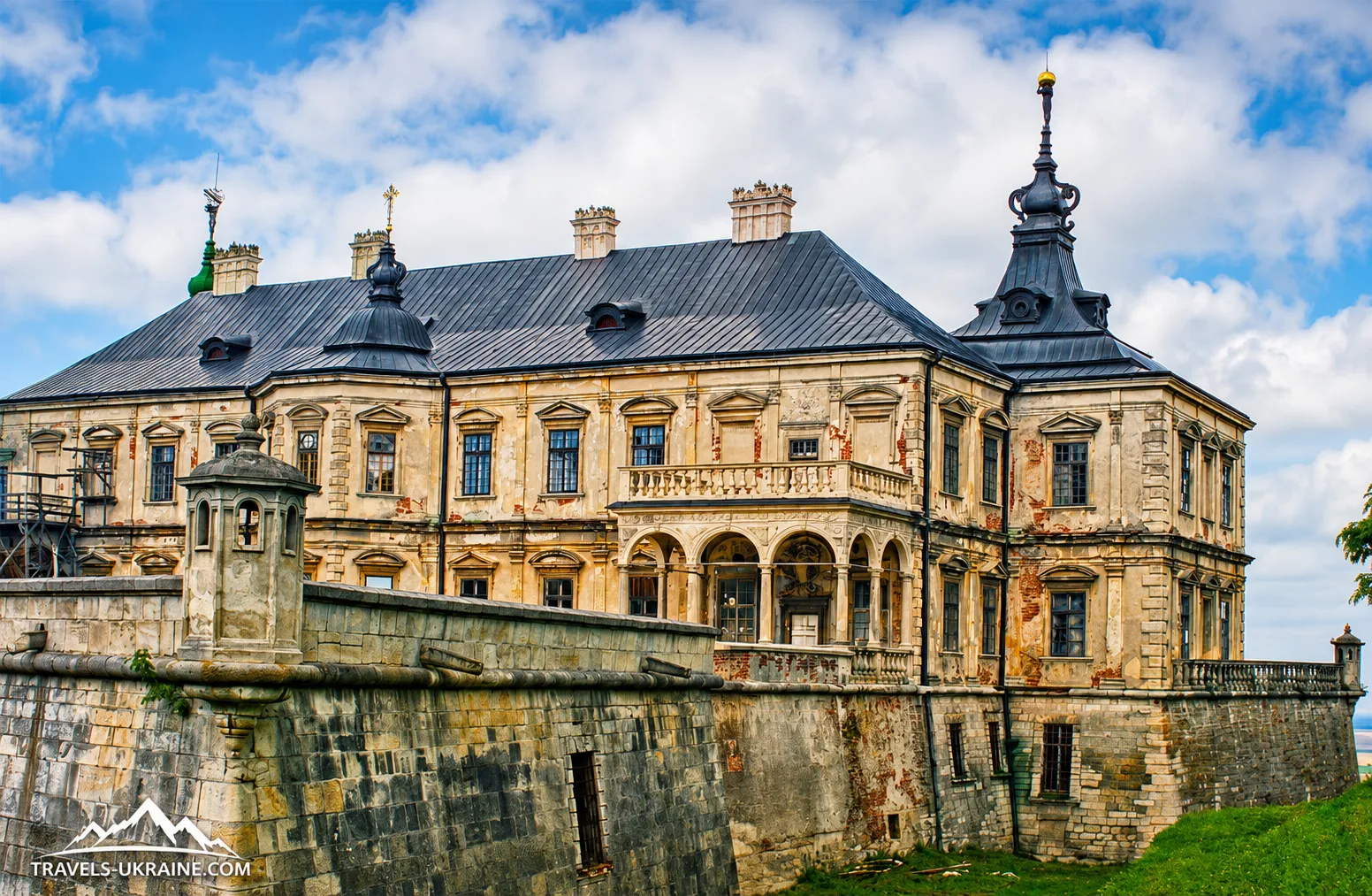
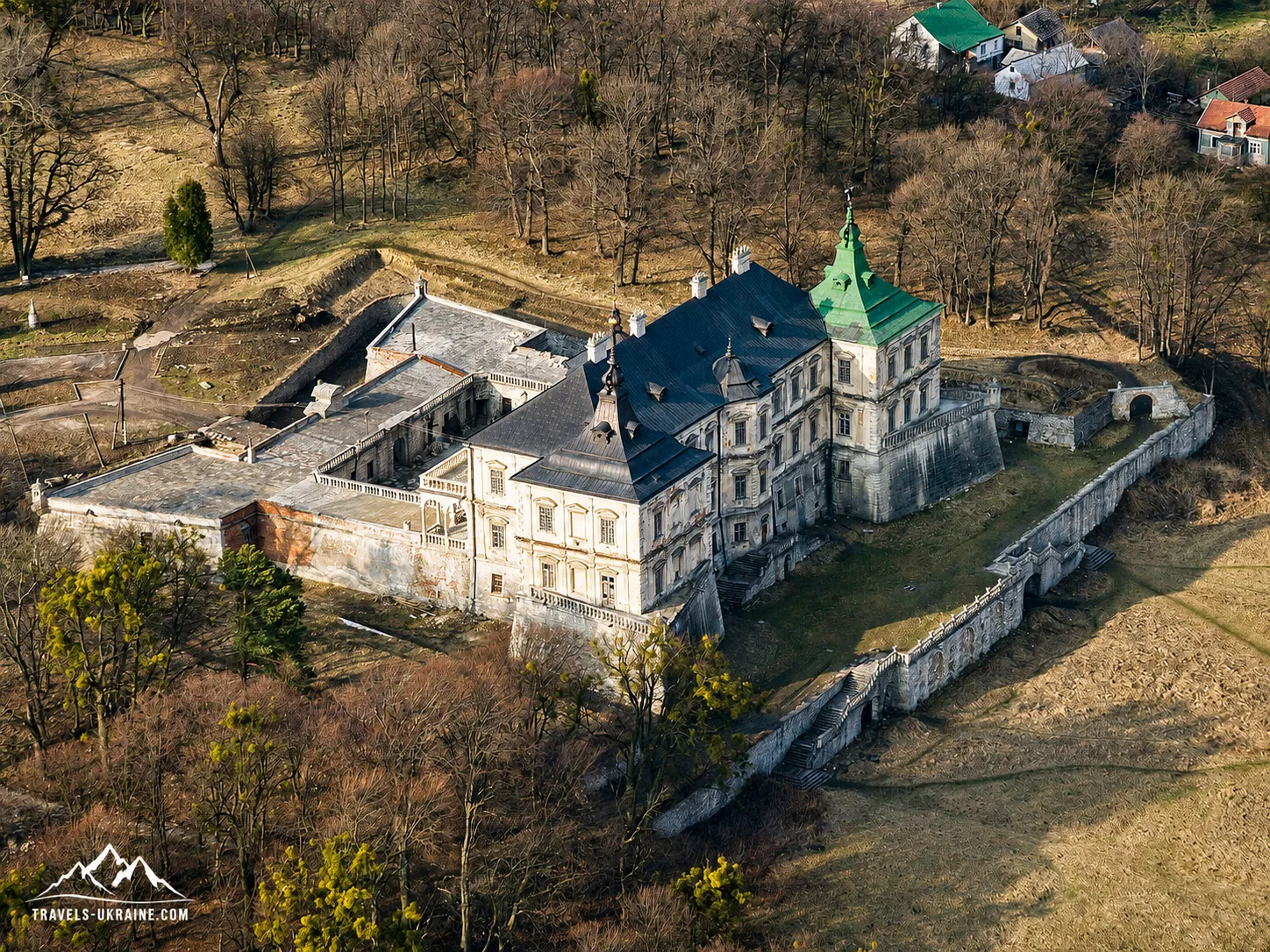
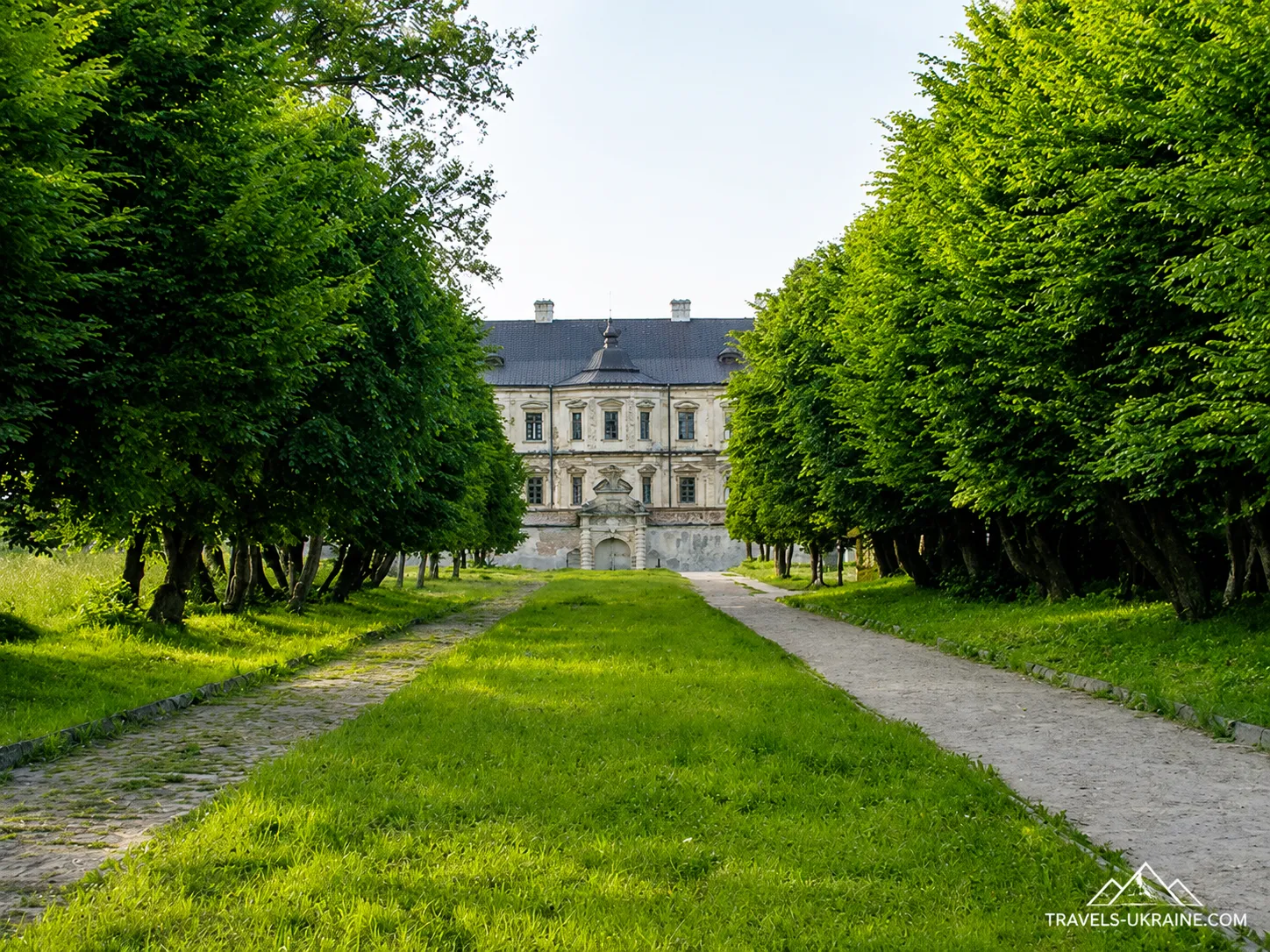
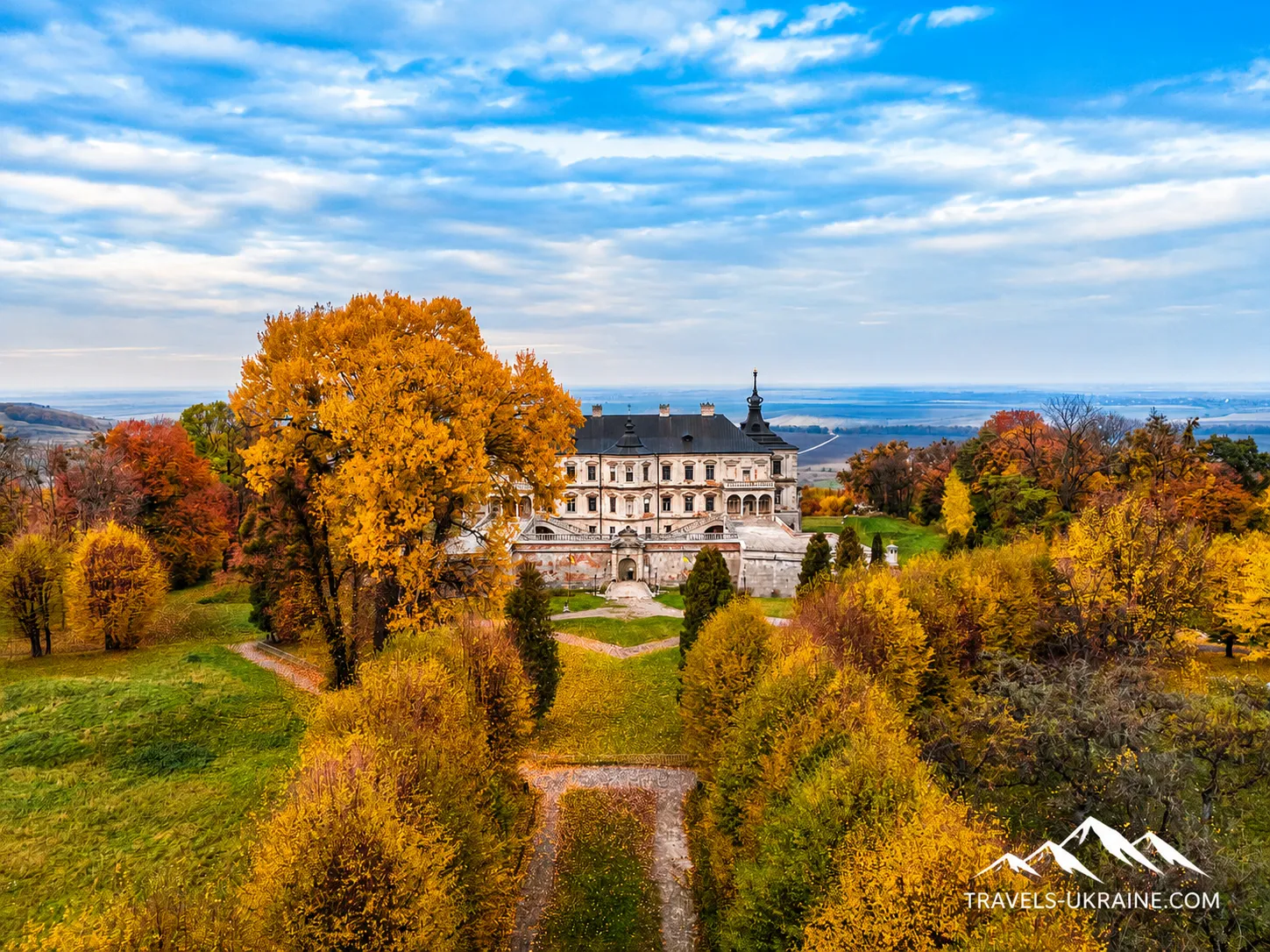
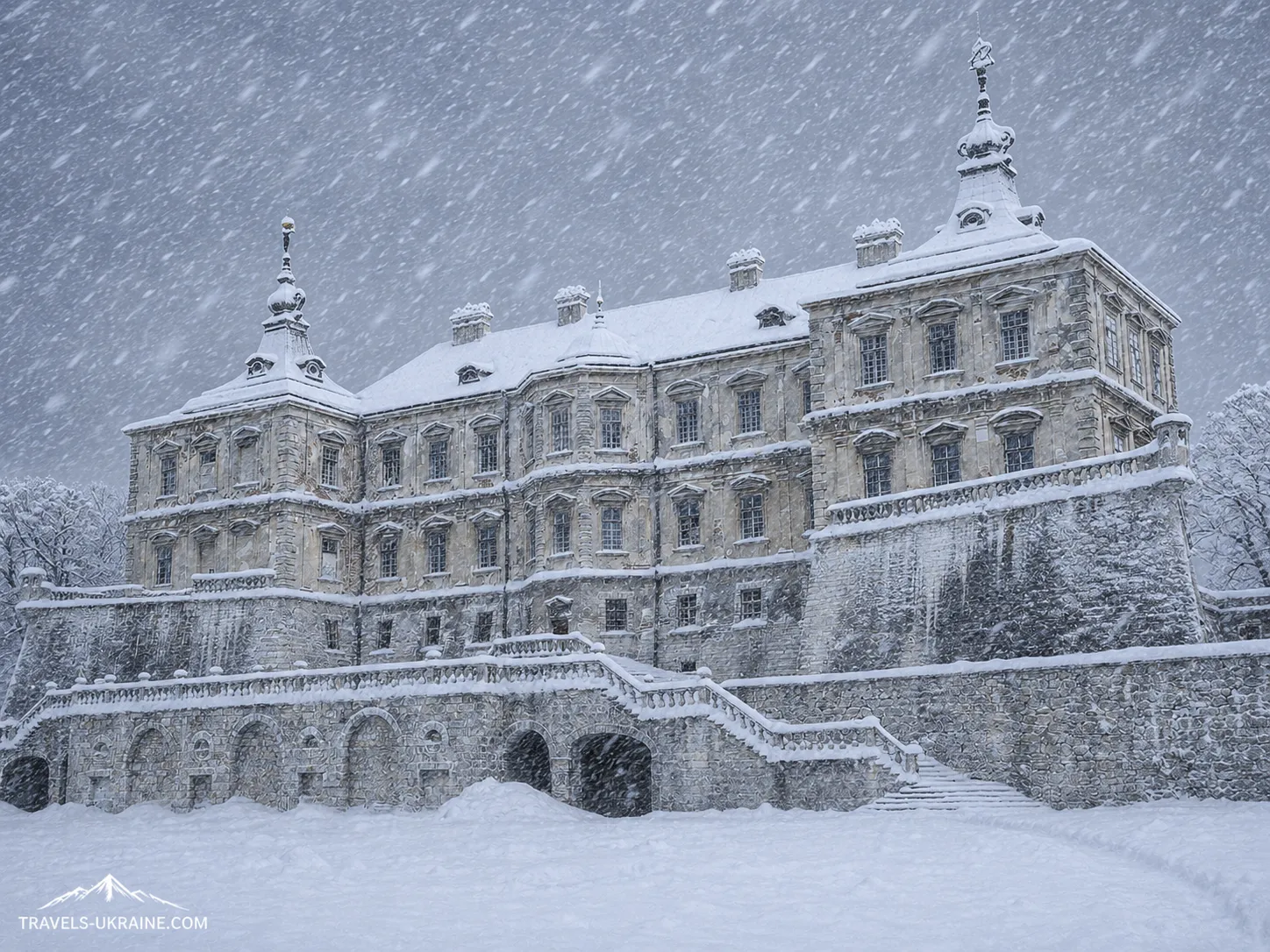
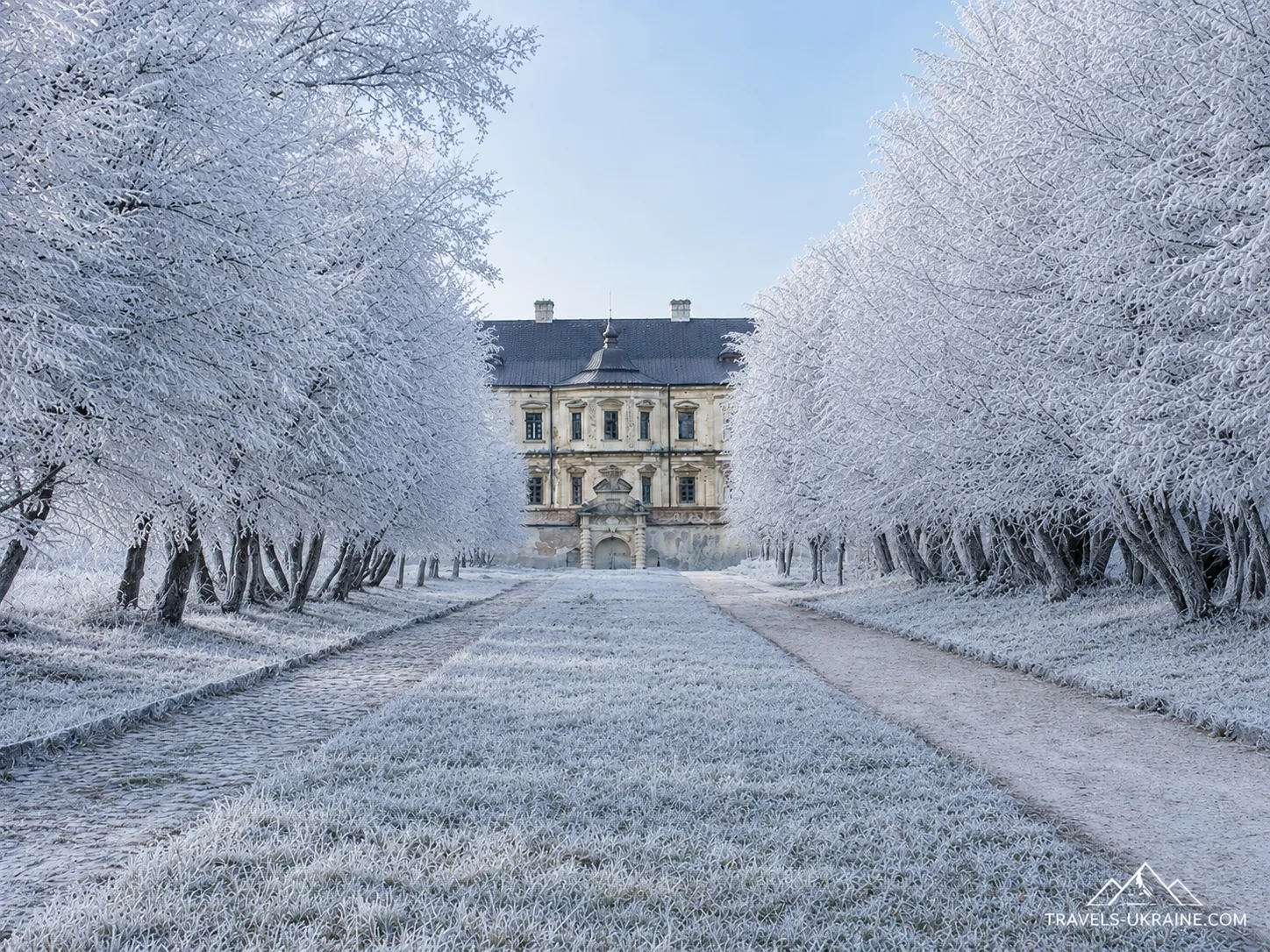
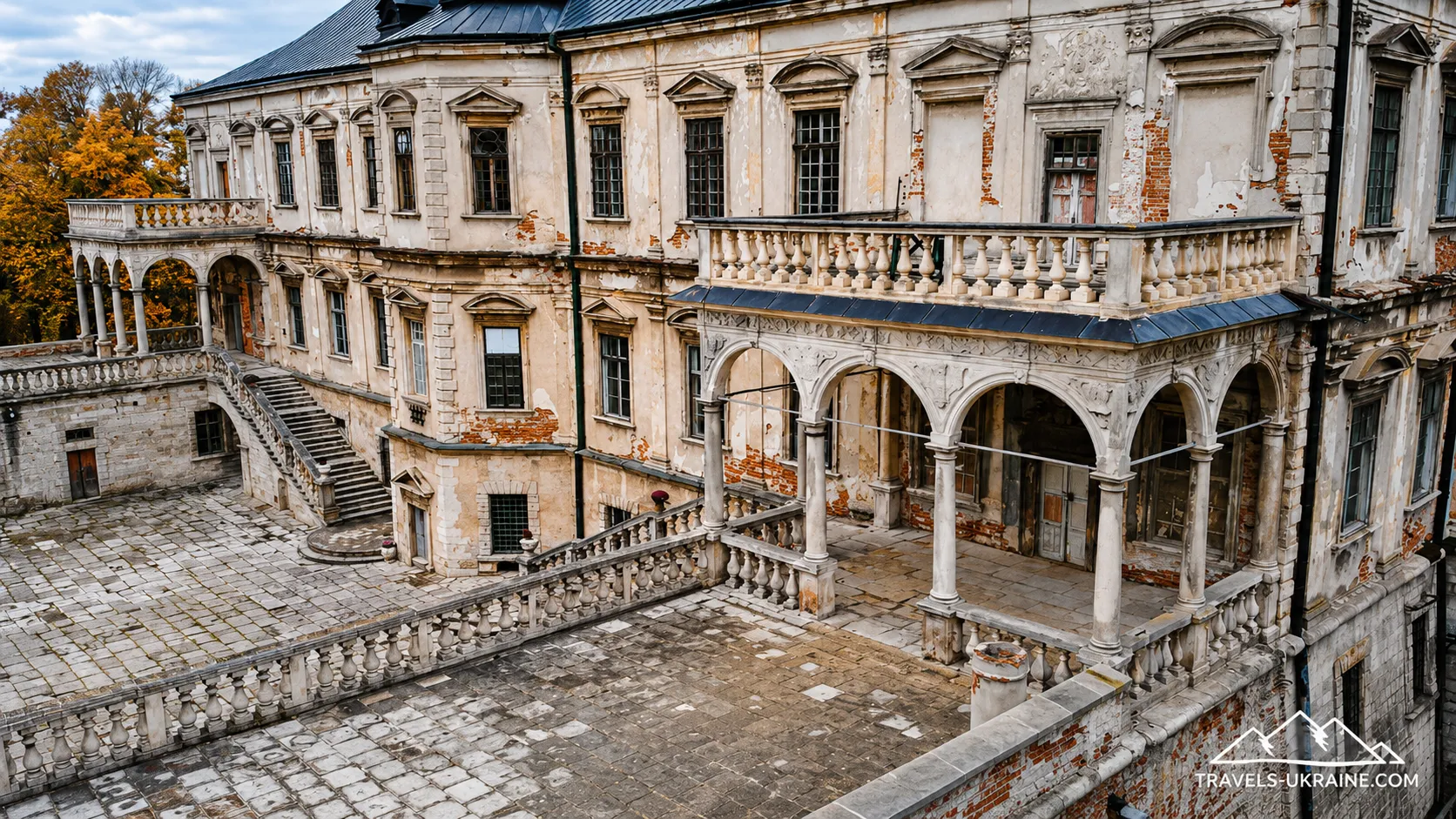
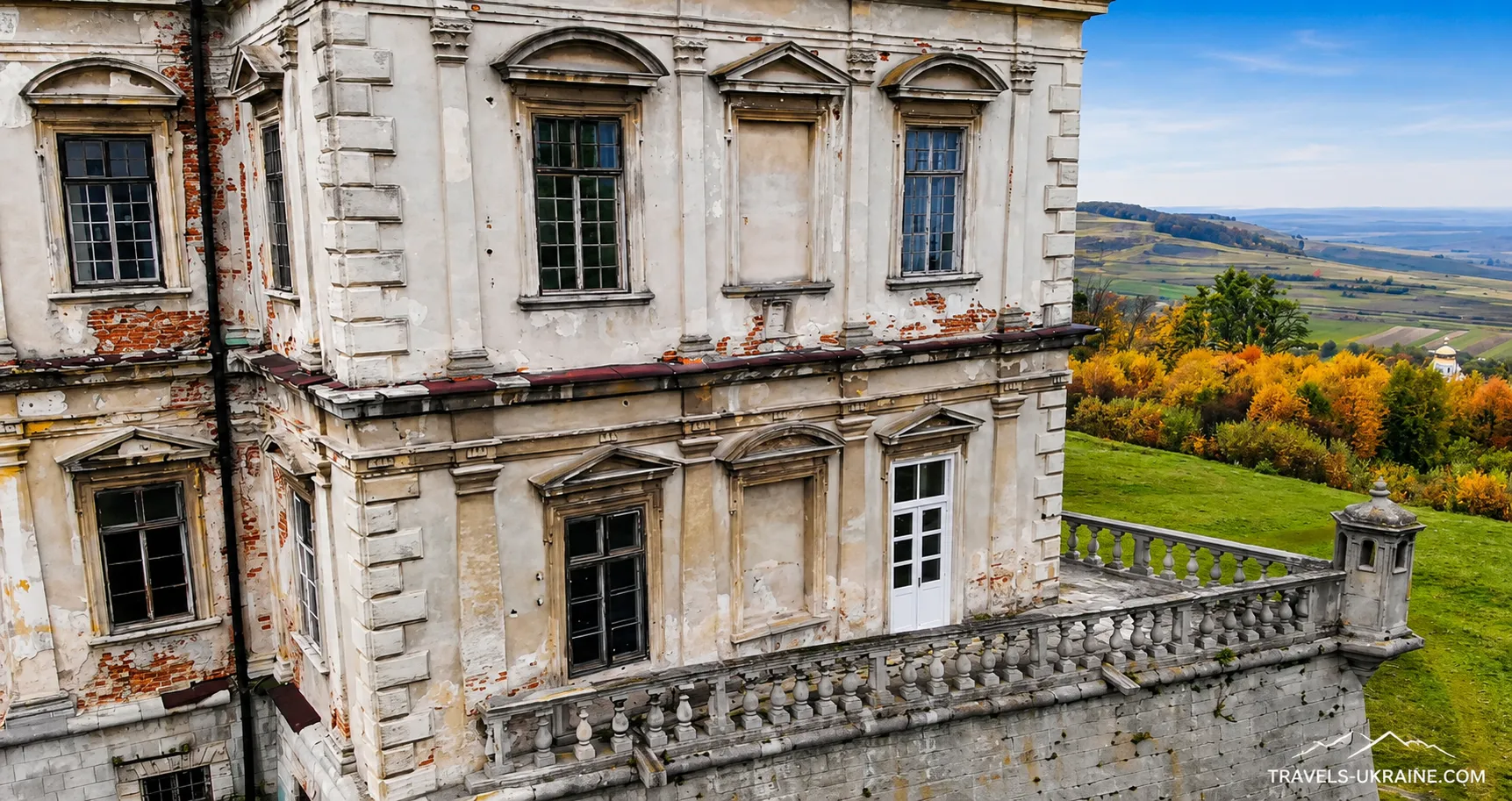
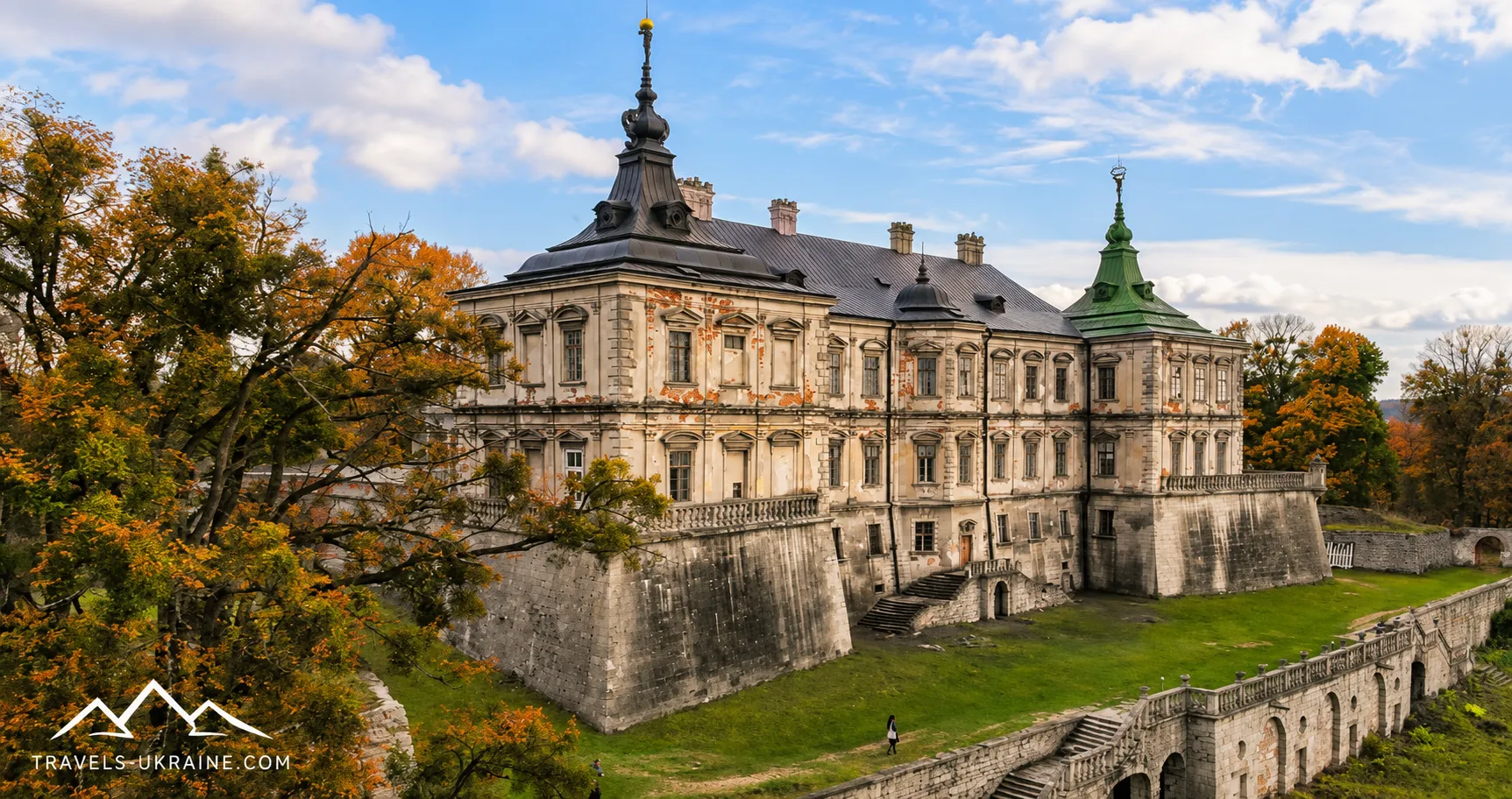
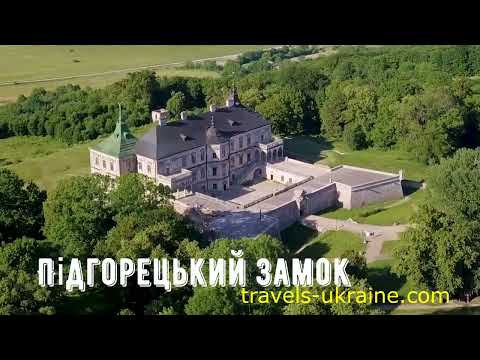
Pidhirtsi Castle is easily recognisable even among the many historic residences of Ukraine. It does not fit the familiar image of a medieval stronghold with massive towers and forbidding walls. Instead, the traveller is greeted by a light-coloured, almost regal palace with a symmetrical façade, a high roof, open loggias, and broad staircases. Only when the eye travels lower does it become apparent that this entire graceful structure rises directly from a formidable system of defensive fortifications.
This is the defining architectural feature of Pidhirtsi. The complex was designed according to the principle of palazzo in fortezza — “a palace within a fortress” — combining a grand residence with a bastioned system of defence. In the 17th century, this concept meant that the owner did not have to choose between security and comfort: the exterior could withstand an attack, while the interior offered a lifestyle befitting one of the wealthiest magnates of the age.
A Palace in the Late Renaissance and Baroque Styles
The centrepiece of the entire complex was Pidhirtsi Palace. Originally, it was a two-storey building with taller pavilions on either side. Its architecture combined elements of the late Renaissance and early Baroque: clear symmetry, an orderly rhythm of windows, restrained ornamentation, and an emphasis on harmonious proportions.
Over the following decades, the appearance of the residence changed. Under the Rzewuski family, a third storey was added, giving the palace the elongated, monumental silhouette familiar today. Earlier, under the Sobieski family, grand stairways leading to two loggias had been added beside the main entrance. Their design reveals characteristic features of Italian Mannerism. Yet the most striking aspect is not any individual decorative detail, but the proportions of the building as a whole. The palace does not seek to dominate through height. Instead, its impact comes from horizontal lines, symmetry, and its commanding position at the edge of the high ground. As a result, when viewed from the plain, it appears far larger than it actually is.
The Bastions of Pidhirtsi Castle: Beauty Above the Defensive Walls
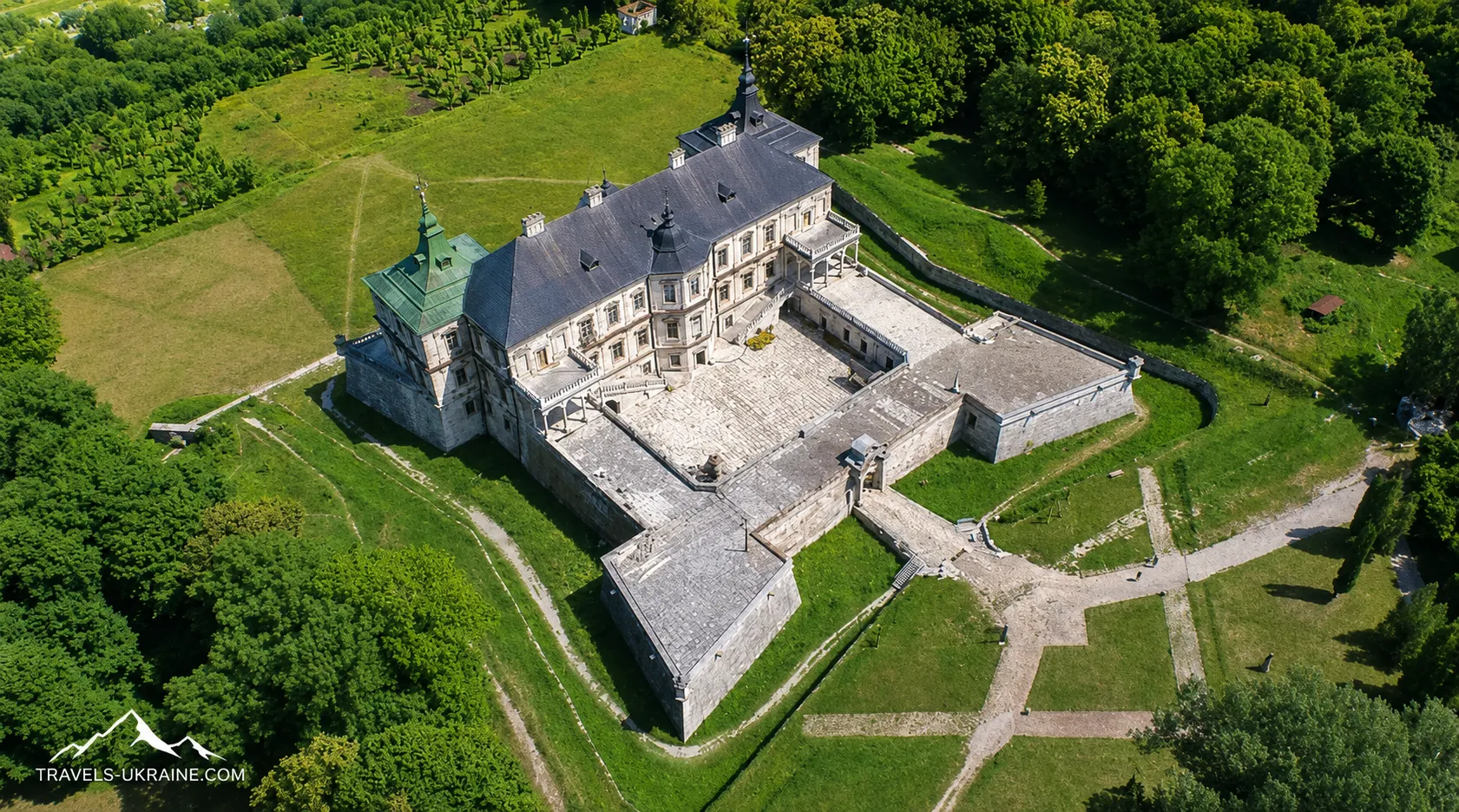
Beneath the elegant palace lies a very different kind of architecture — military in purpose. The castle stands on a quadrangular bastioned base, protected by earthworks, stone fortifications, and moats. Bastions were placed at the corners, allowing the approaches to the residence to be controlled and the walls to be defended from multiple angles.
The design of the fortifications is traditionally associated with the French engineer Guillaume Le Vasseur de Beauplan, while the palace itself is attributed to the Venetian architect Andrea dell’Aqua. It was precisely this combination of military engineering and Italian palace architecture that gave Pidhirtsi its distinctive character.
For today’s visitor, the bastions are especially fascinating because they allow the building’s concept to be understood almost at a glance. If you look only at the main façade, you might think you are standing before an ordinary European palace. But walk around the complex, and it becomes clear that beneath it lies a fully developed defensive system.
The Park of Pidhirtsi Castle and Its Lost Terraces
The architecture of Pidhirtsi did not end with the palace walls. From the very beginning, the surrounding landscape formed part of a unified design, so the park of Pidhirtsi Castle should be seen not as an ordinary green space, but as an extension of the residence itself. The garden on the northern slope was especially impressive. Here there was an Italian-style park with three terraces descending with the natural contours of the land. The grounds were adorned with sculptures, fountains, green passageways, and pavilions. Much of this composition has not survived to the present day, so modern visitors must partly reconstruct its former appearance in their imagination.
Later, the park ensemble was expanded. In front of the palace and along its sides appeared elements of a formal French-style park, where nature was shaped according to geometry: straight avenues, symmetry, and clearly defined compositional axes. In this way, the area surrounding the castle underscored the status of the residence no less than its façades did.
St Joseph’s Church and the Main Axis of the Ensemble
The scale of the vision behind Pidhirtsi becomes especially clear as you step away from the castle towards the main avenue. At its opposite end stands St Joseph’s Church, built between 1752 and 1766. The palace, avenue, and church were aligned along a single compositional axis, so anyone approaching the residence would perceive them as parts of one grand ensemble.
A space adorned with columns and sculptures was laid out in front of the church. Together with the park, palace, bastions, and Hetman’s Inn, this formed not a collection of separate buildings, but a carefully planned architectural and landscape ensemble. This is why Pidhirtsi Castle is best explored from more than one viewpoint. Walk along the fortifications, admire the palace from the side of the former terraced gardens, then step onto the central avenue and look back towards the church. Only then does it become clear how skilfully the architects made use of the terrain.
Pidhirtsi Castle is not simply a beautiful palace within old walls. It is a unified ensemble in which defensive engineering, palace architecture, garden design, and the natural landscape all served a single vision. Even after the loss of parts of the gardens and historic decoration, that vision remains visible — you simply need to take your time and look carefully around you.
What to See at Pidhirtsi Castle Today
Pidhirtsi today is nothing like a museum where visitors are led from one perfectly restored room to the next. That is precisely what makes this place so special. Pidhirtsi Castle today offers a chance to see a historic monument being brought back to life: restored features stand alongside traces of what has been lost, and behind the grand façade, the troubled history of the old residence can still be felt.
It is worth coming here for more than a single beautiful photograph in front of the main façade. Take your time exploring the castle complex — pass through the gate, linger in the inner courtyard, examine the bastions, notice the palace’s architectural details, and only then walk around to the other side. From each vantage point, the palace in Pidhirtsi reveals a different face.
The first thing most visitors notice is the palace itself. Its pale, elongated façade, with two side pavilions and a high roof, gives it an almost regal air. This is the view most often seen in tourist photographs of Pidhirtsi, yet the building appears far larger in person. Do not rush straight on. Step back a few dozen metres to take in the palace as a whole. From there, you can clearly appreciate the building’s symmetry, the changes in elevation, and how harmoniously the residence fits into its setting on the edge of the plateau. The castle is particularly striking in the soft light of early morning or evening, when the façade takes on greater depth and its decorative details are not lost in harsh shadows.
The Inner Courtyard, Entrance Gate, and Castle Fortifications
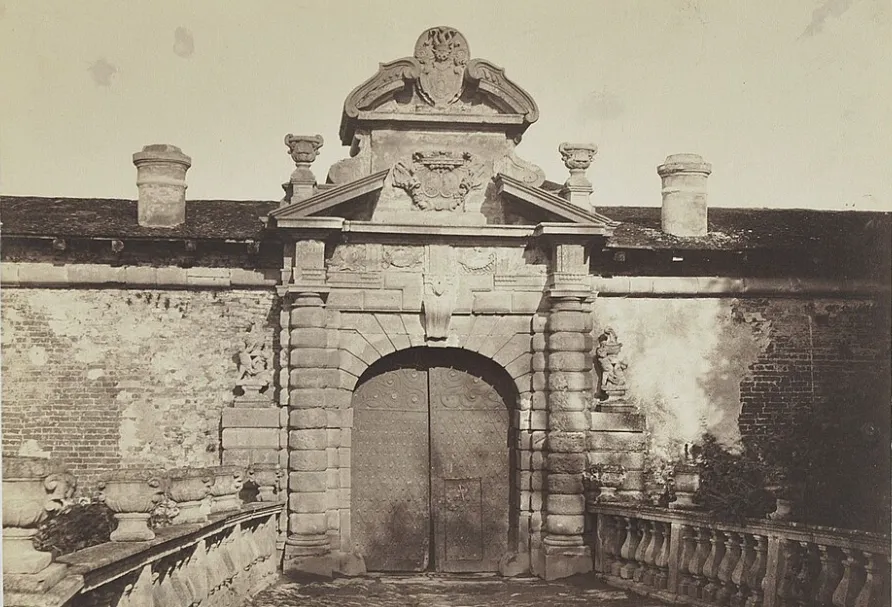
Once inside the fortifications, visitors enter a space that was once part of the residence’s everyday life. The inner courtyard of Pidhirtsi Castle is far more understated than the palace’s grand façade, and it is here that the contrast between the complex’s ceremonial and defensive roles becomes especially apparent. This is a good place to examine the palace up close: its old masonry, entrance portals, window surrounds, and traces of alterations and restoration work. Details that are barely noticeable in panoramic photographs begin to tell their own stories. Carefully restored sections stand alongside surfaces on which time has left a much more visible mark.
To understand Pidhirtsi, be sure to look not only at the palace itself, but also at the structure beneath it. The bastion fortifications reveal the complex’s dual character most clearly. Above stands an aristocratic residence; below lies a massive defensive base, built for purposes far removed from the splendour of formal receptions. A walk along the fortifications offers unusual views of the castle and a better sense of its scale. It is particularly fascinating to see how the palace’s silhouette changes: from one side, it appears almost light and airy, like a country residence; from another, it towers above formidable walls.
What to See Inside Pidhirtsi Castle
Unlike in many previous years, some of the rooms inside Pidhirtsi Palace are now open to visitors. After a long period during which tourists could explore the complex mainly from the outside, the castle’s state rooms have gradually begun to reopen, providing spaces for museum displays, exhibitions, and themed events.
However, visitors should not expect fully restored aristocratic interiors from the 18th century. Much of the historic decoration has been lost, while the furniture, paintings, weapons, porcelain, and other objects that once formed the palace’s collections are now held in various museum collections. The rooms that are open are therefore particularly interesting for the opportunity they offer to explore the palace’s interior layout, historic halls, surviving architectural details, and present-day museum displays.
Access to individual rooms may change depending on restoration work and the museum’s programme, so before travelling, check the latest visitor information on the website of the Lviv National Art Gallery or contact the museum directly.
Panoramic Views from Pidhirtsi Castle
The views from Pidhirtsi Castle are another reason not to limit your visit to a few photographs by the entrance. The residence stands on high ground, with views stretching far beyond the complex itself. Here, it becomes especially clear why this location was chosen for its construction. The palace takes on an entirely different character when seen in the context of the surrounding landscape. It does not simply stand in a village — it commands its surroundings, while the sweeping horizon becomes part of the architectural experience. On a clear day, this vantage point offers one of the loveliest views on a tour of the castles of the Lviv region.
That is why it is worth allowing more than a token twenty minutes to explore Pidhirtsi Castle. The most fascinating part of a visit begins when you stop seeing the palace as a single photo opportunity and start noticing the ensemble as a whole: the gate, courtyard, bastions, old outbuildings, viewpoints, and details that are easily missed in a rush.
The Lost Splendour of Pidhirtsi Palace: What the Castle Looked Like in Its Heyday
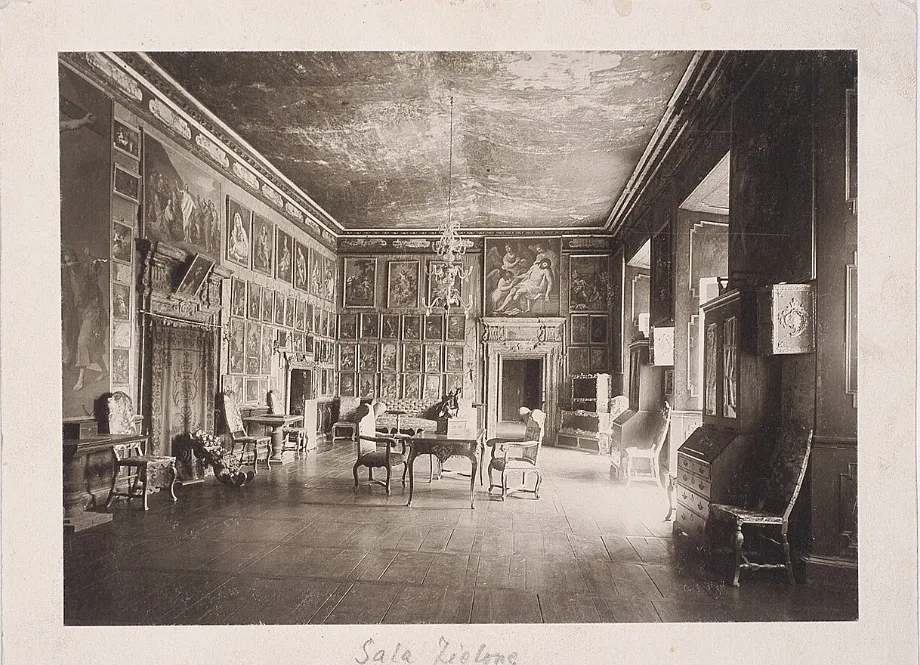
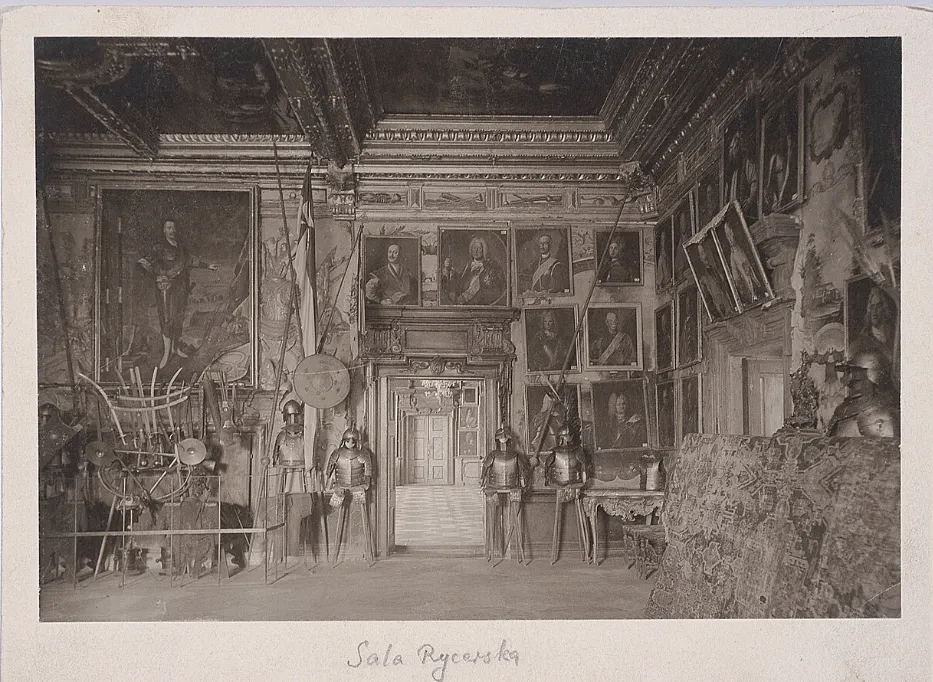
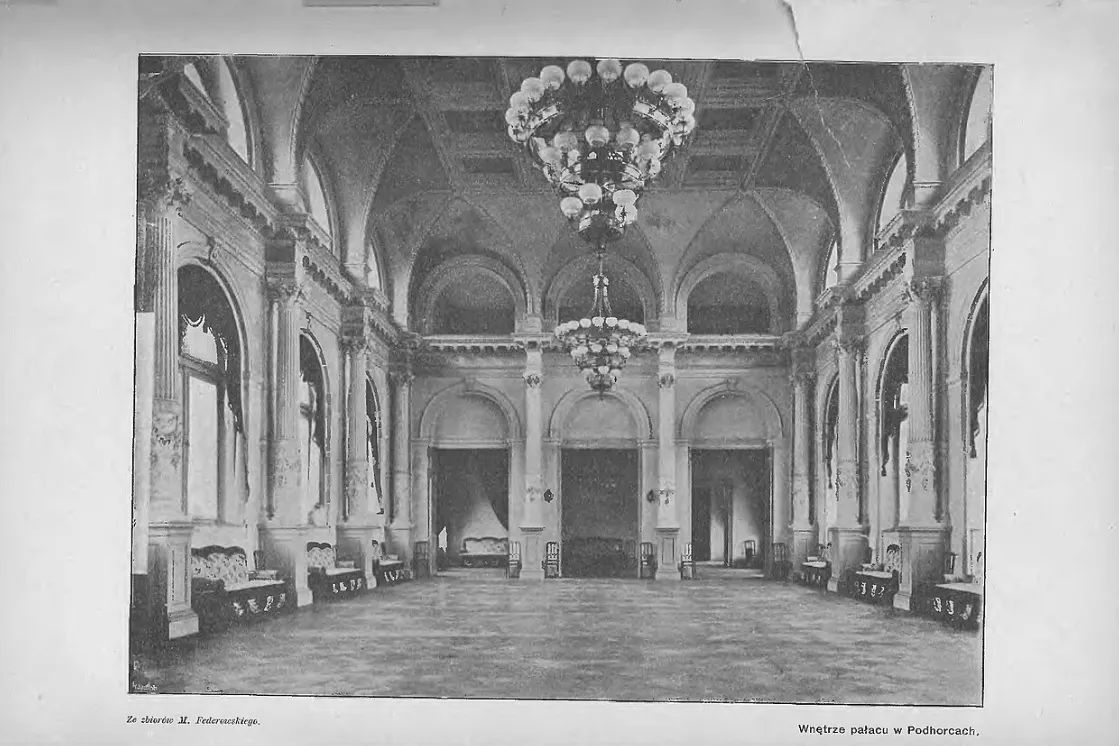
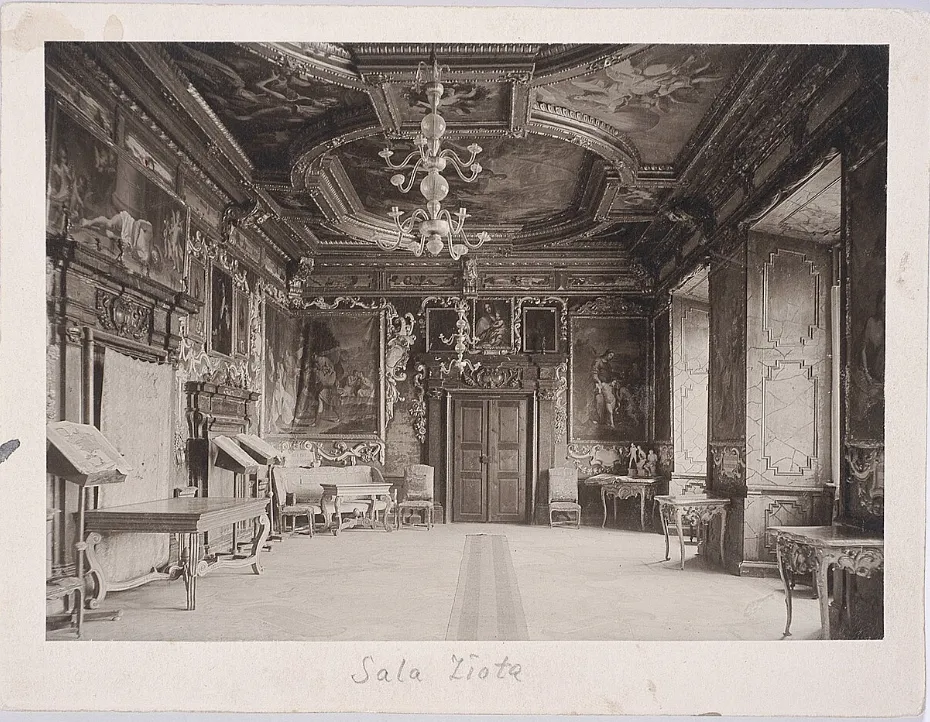
Walking through the halls of Pidhirtsi Castle today, it is difficult to imagine just how different the palace’s interiors were in its heyday. What now feels like a subdued historic space bearing the traces of many losses was, more than a century ago, filled with paintings, mirrors, furniture, decorative fabrics, porcelain, weapons, and dozens of works of art. Fortunately, this chapter of its history has not vanished without a trace. Photographs from the late 19th and early 20th centuries have survived, offering a glimpse of Pidhirtsi Palace as it once was. Images from the first decade of the 20th century reveal not merely another castle in the Lviv region, but a true aristocratic residence where almost every room had its own character, colour scheme, and purpose.
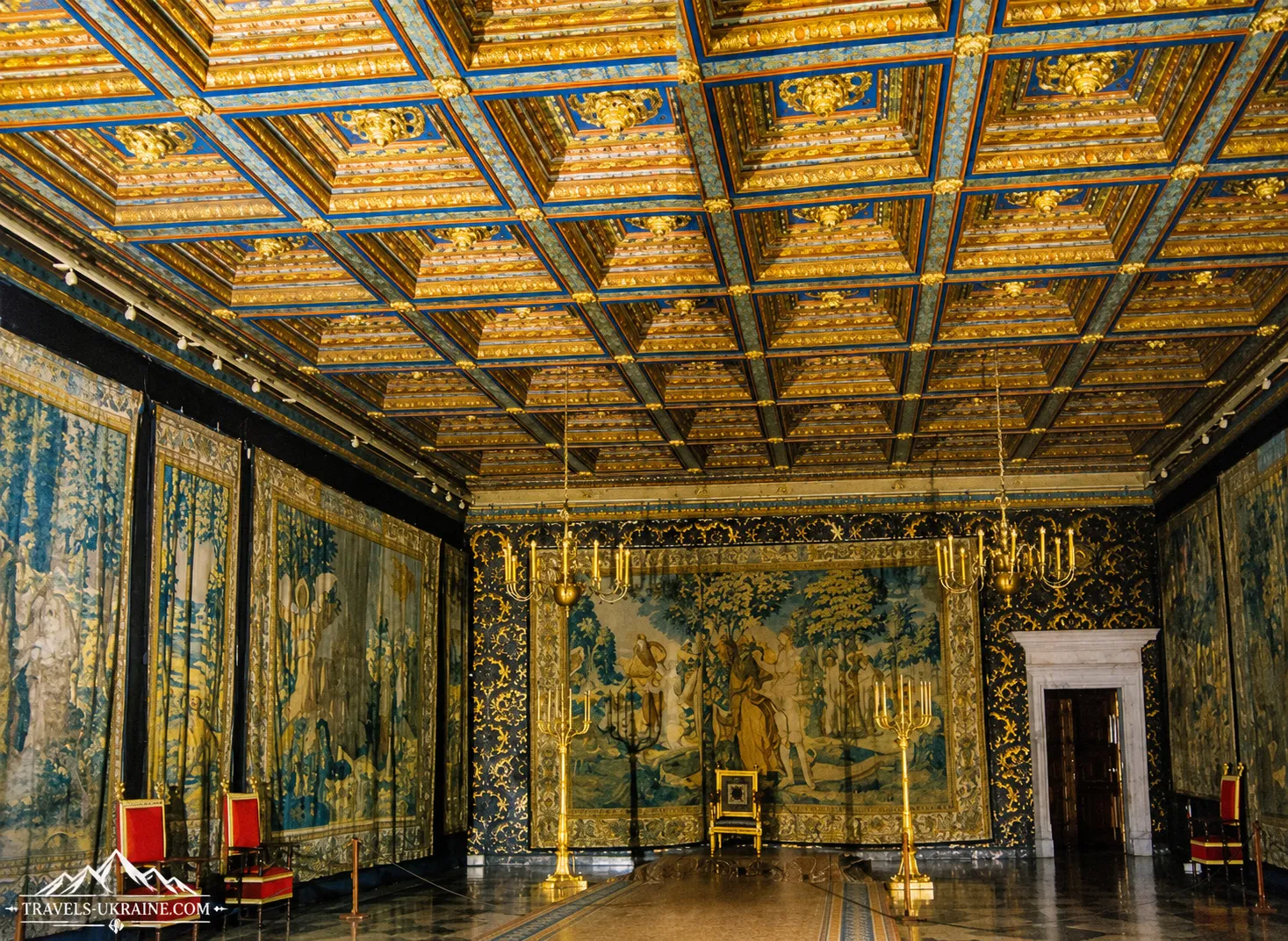
These old photographs are particularly striking once you have seen the castle as it stands today. They effectively place two moments in the history of the same place side by side: a palace filled with life and art, and the building that remained after wars, a change of use, and a fire in the 20th century. That is why these photographs deserve to be seen as more than ordinary illustrations of the past. They are windows into a lost world. Simply compare a room as it looks today with a photograph of that same room a century ago, and the scale of the losses becomes clear without further explanation.
Perhaps this comparison makes Pidhirtsi Castle even more moving. Rather than seeing only empty spaces within its walls, you begin to imagine the glint of mirrors, old paintings, heavy doors, furniture, and an enfilade of rooms through which the palace’s inhabitants once walked. Pidhirtsi’s past has not been lost for good — it simply has to be pieced together.
The Golden Hall, the Hall of Mirrors, the Crimson Hall: Each Hall at Pidhirtsi Castle Had Its Own Character
The names of these historic rooms sound almost like something from a novel set in a palace: the Golden, Yellow, Green, and Crimson Halls, the Hall of Mirrors, and the Knights’ Hall, along with the Chinese and Mosaic Studies. These were not merely names chosen for the benefit of tourists. Each room was genuinely distinct in its decoration, purpose, and contents.
The Golden Hall of Pidhirtsi Castle looks particularly striking in old photographs. Images from the early 20th century reveal intricate ceiling decoration, large paintings, a fireplace, furniture, and walls with scarcely any bare space. The paintings formed part of a unified decorative scheme rather than simply being displayed as individual museum exhibits.
The Hall of Mirrors was no less remarkable. Its interior featured mirrors, ornate doorways, paintings, and a large tiled stove. The Crimson Hall took its name from its distinctive décor, while the Yellow Hall was named after the yellow damask fabric covering its walls. Colour, textiles, paintings, furniture, and light thus combined to create a different atmosphere in each room.
The old photographs capture one aspect particularly well that is difficult to appreciate today: just how densely furnished and decorated the palace was. To modern visitors accustomed to spacious museum galleries, such interiors might even seem excessive. Yet in an aristocratic residence of the period, paintings, expensive furniture, decorative fabrics, weapons, and family heirlooms were more than mere ornament — they conveyed the owners’ lineage, wealth, learning, and social standing.
The Chinese Study — One of the Palace’s Most Unusual Interiors
Among the historic rooms, the Chinese Study of Pidhirtsi Castle stood out in particular. Its decoration reflected the European fascination with Chinese art and exotic motifs that became highly fashionable among the aristocracy in the 18th century. Old photographs reveal decorative panels, distinctive wall treatments, furniture, and door surrounds. Compared with the traditional state rooms, this study must have looked particularly unusual. It shows that the owners of Pidhirtsi did more than simply collect expensive objects — they also followed artistic trends at European courts.
Today, it is these old photographs that allow us to appreciate the full extent of this decorative scheme. Without them, the Chinese Study would remain little more than an evocative name in a historical account of the castle.
Paintings, Venetian Mirrors, Porcelain, and Weapons
The collections of Pidhirtsi Palace were built up over generations. The official description by the Lviv National Art Gallery mentions Venetian mirrors, porcelain, portraits of the owners, battle paintings, and copies of works by Raphael, Rubens, Titian, and Caravaggio. Alongside the paintings were antique weapons, furniture, and other objects associated with the history of the residence’s owners.
It is important to understand that the palace was not a museum in the modern sense of the word. Works of art were an integral part of its living spaces. Tables and armchairs stood beneath paintings, guests were received in the halls, and residents and servants passed through the enfilade of rooms. What we would now regard as a museum collection of immense value was then part of an aristocratic family’s everyday surroundings.
The White Lady and the Dungeons: Where History Ends and Legend Begins
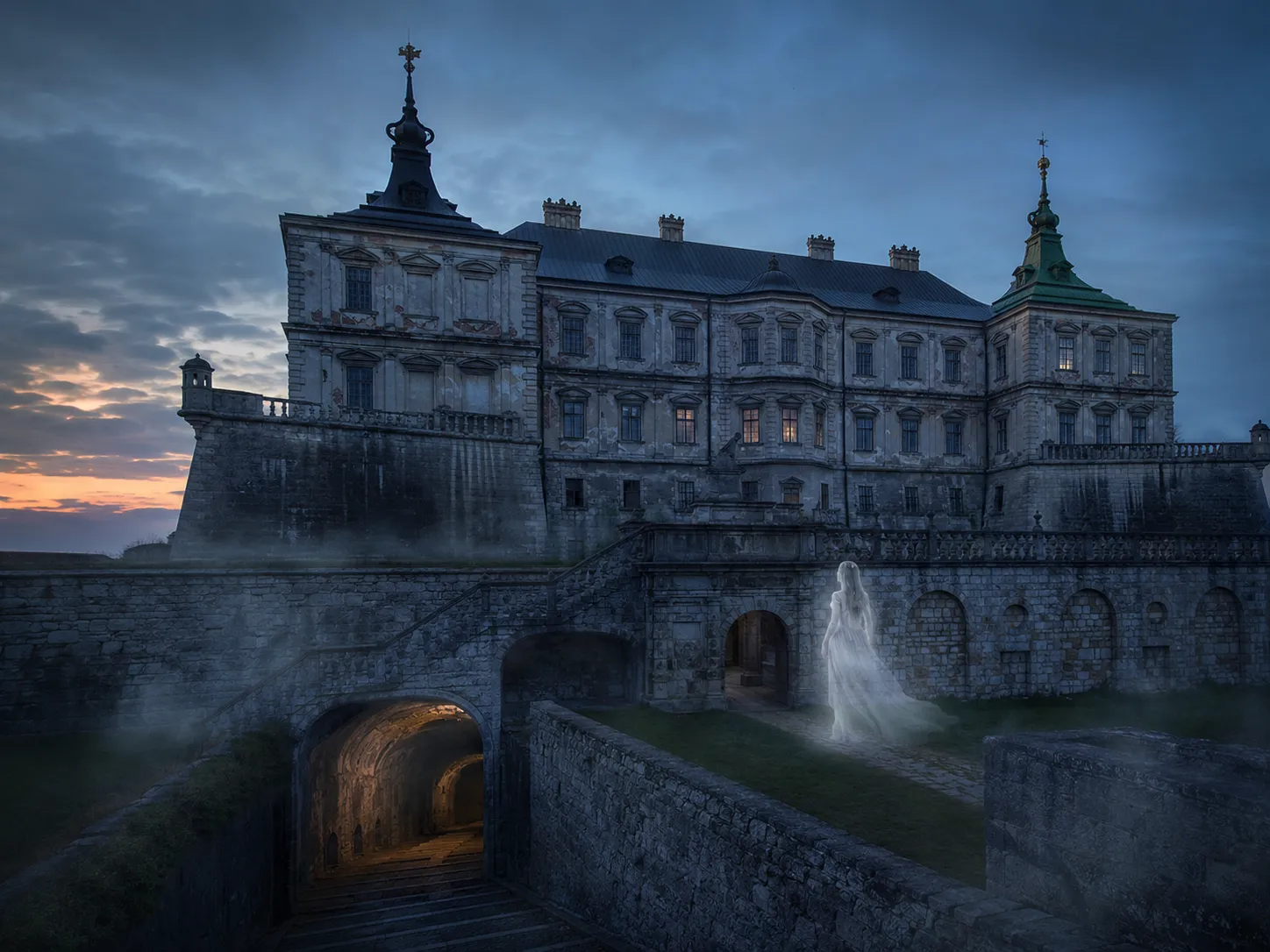
Almost every old castle with several centuries of history eventually acquires a ghost of its own. At Pidhirtsi, it is the White Lady — a mysterious female figure said to have been seen in the corridors, cellars, and grounds of the old palace. Today, her story is retold by tour guides, travel websites, and television programmes, while Pidhirtsi Castle is often described as one of the most mysterious places in the Lviv region.
Yet try to discover who this woman was, and what initially seems a straightforward legend begins to unravel into several very different stories. The heroine’s name, the identity of her husband, the reason for the tragedy, and even the place of her death all change from one version to another. This is where things become truly intriguing: the documents tell a very different story from the popular legend.
The Legend of the White Lady of Pidhirtsi Castle
The best-known version reads almost like the plot of a Gothic novel. An elderly and intensely jealous owner of Pidhirtsi Castle supposedly married a beautiful woman much younger than himself. In the versions told to tourists, she is most often called Maria. Her husband suspected her of infidelity, forbade her from leaving the palace, kept a close watch on her, and eventually ordered her to be killed and her body walled up, either within the palace walls or in the dungeons.
From that moment on, the legend says, the young woman’s restless soul could not leave Pidhirtsi. People began to see a pale female figure in the dark corridors and hear footsteps and unexplained sounds. And so a name emerged that is now far better known than those of many of the castle’s actual inhabitants — the White Lady of Pidhirtsi Castle.
In different versions, the role of the cruel husband is attributed sometimes to Wacław Piotr Rzewuski, sometimes to his son Seweryn, and occasionally to other members of the family. The very fact that these details vary suggests that this is not an account of a documented crime, but a legend that has changed over generations along with its storytellers.
Was a Young Wife Really Walled Up at Pidhirtsi Castle?
Historical documents do not support the popular story of a young woman named Maria who was supposedly walled up alive at Pidhirtsi by her jealous husband. Moreover, research into the Rzewuski family’s genealogy offers clues to how this legend may have developed. One of its early written versions concerns not the fictional Maria, but the real Ludwika Eleonora Kunicka — the wife of Stanisław Mateusz Rzewuski. According to 19th-century family accounts, she was supposedly walled up after her husband’s death so that others could seize the inheritance, and before dying, she cursed those responsible and their descendants.
However, surviving documents allow the actual events to be reconstructed. In 1732, Ludwika was indeed forcibly confined during a bitter family dispute, but this happened not at Pidhirtsi Castle, but on her estate in Torhovytsia. She did not die behind a wall: she was released after a few months and spent several more years in legal battles with her sons over property and inheritance.
Behind the legend, then, there probably lies a real family tragedy whose retellings grew darker over time. Actual confinement became a tale of being walled up, a family dispute turned into a story of murder, and the account of a curse gradually merged with tales of a mysterious female figure in white.
Who, Then, Might Have Been the Real White Lady?
This is where the story becomes particularly intriguing. Although the legend of Ludwika being walled up does not withstand historical scrutiny, old accounts of a female figure appearing in white do exist. However, they concern a different woman — Anna Kolumba of the Lubomirski family, the wife of Wacław Piotr Rzewuski. Anna Kolumba was a real resident of Pidhirtsi. Her married life was difficult, and towards the end of her life, she became seriously ill and moved to Lviv, where she died. She was buried not within the castle walls, but in Olesko.
The Rzewuski family memoirs preserve a story that, after her death, Anna Kolumba supposedly appeared several times to members of the Pidhirtsi Castle staff. One old account describes a female figure dressed in white who allegedly asked them to pray for her soul and deliver a message to her husband.
Of course, such an account is not evidence that ghosts exist. But it reveals something far more interesting: the story of the White Lady did not originate in modern tourist brochures. Tales of a female figure in white genuinely circulated within the Rzewuski family and later became intertwined with other dramatic episodes in the family’s history.
The Dungeons of Pidhirtsi Castle and the Legend of a Secret Passage
A separate strand of local folklore centres on the dungeons of Pidhirtsi Castle. There are indeed cellars and underground chambers beneath the palace, and generations of local residents have readily imagined them filled with treasures, secret rooms, and hidden passageways. The most spectacular legend claims that an extraordinarily long underground passage led from Pidhirtsi to Olesko Castle. The two residences are several kilometres apart, so such a structure would have been a remarkable feat of engineering. However, there is no reliable archaeological or documentary evidence that such a tunnel ever existed.
Other tales tell of jewels hidden in the dungeons, barrels of coins, and even life-size silver horses. These stories belong firmly to traditional castle folklore: old residences have almost always inspired legends of hidden treasure, particularly after wars, changes of ownership, and the disappearance of some of their contents.
Seweryn Rzewuski’s Alchemical Laboratory: Legend or Fact?
Yet the story that initially seems the most fantastical has a genuine historical basis. In the late 18th century, Pidhirtsi was owned by Seweryn Rzewuski, who did indeed take an interest in alchemy. Historical accounts mention an alchemical workshop at Pidhirtsi Castle equipped with retorts, alembics, cauldrons, and other apparatus. Popular retellings often place the laboratory in an eerie dungeon, where Seweryn supposedly sought the philosopher’s stone and the secret of eternal youth. Old descriptions, however, locate the workshop in a rather more ordinary setting — a room above the Crimson Hall.
Whether Rzewuski actually attempted to turn metal into gold, how serious his experiments were, and who exactly worked in the laboratory are harder questions to answer. Nevertheless, historical accounts do support the presence of alchemical equipment at Pidhirtsi. In this case, reality turns out to be almost as extraordinary as the legend.
“Ghost Hunters” at Pidhirtsi Castle
Pidhirtsi’s reputation for the supernatural eventually spread far beyond Ukraine. In 2010, a team from the American television series Ghost Hunters International visited the castle, investigating its rooms and dungeons with specialised equipment. Their interest was sparked in part by photographs that supposedly showed a translucent human figure near the entrance to the dungeons.
Of course, televised investigations into paranormal activity should not be equated with scientific evidence. No verified findings have established the existence of supernatural phenomena at the castle. Yet the presence of an international television crew only strengthened Pidhirtsi’s reputation as one of the best-known “haunted castles” in Ukraine.
So, does the White Lady of Pidhirtsi Castle really exist? That is a question each traveller can answer for themselves. History does not support the popular tale of a young wife walled up alive by a jealous count. But it does leave us with real family disputes, old accounts of a woman appearing in white, an aristocrat who genuinely pursued alchemy, and underground chambers that have fuelled people’s imaginations for centuries.
Perhaps this is why the legends of Pidhirtsi have endured so well. The best of them never arise out of thin air — somewhere at their heart lies a real event, a name, or an unexplained detail. And when the old palace empties in the evening and its long corridors fall silent, the boundary between history and legend seems a little less clear.
The Restoration of Pidhirtsi Castle: Bringing the Palace Back to Life
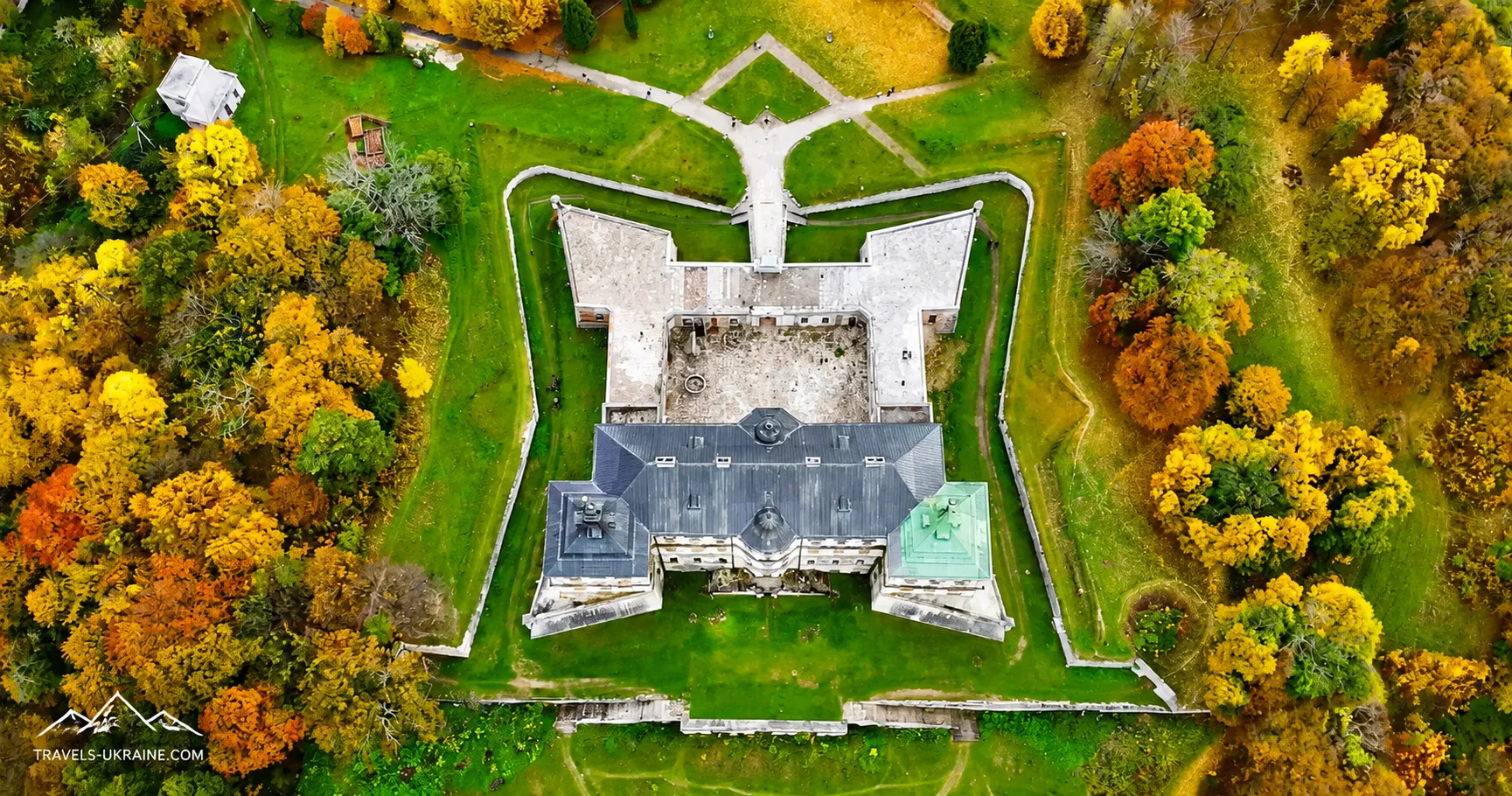
Pidhirtsi Castle today presents a striking contrast. On the one hand, it remains a majestic palace, easily recognisable in old engravings and photographs. On the other, you need only step closer to notice cracks, missing plaster, traces of past repairs, and areas that still require extensive work. The restoration of Pidhirtsi Castle is not yet complete, and visitors today are witnessing the gradual rescue of this historic site.
This is important to understand before your visit. Pidhirtsi should not be compared with fully restored palaces where every room has been returned to its 18th-century appearance. Here, restorers face a much more complex task: first, they must halt the building’s deterioration, study its historic structures and materials, and stabilise unsafe sections — only then can they gradually move on to restoring individual rooms and decorative features.
Repairs Underway Inside Pidhirtsi Palace
Work is gradually extending to the interiors as well. In 2025, work included routine repairs to part of the ground floor of Pidhirtsi Castle. This does not yet mean recreating the Golden or Crimson Halls in all their former splendour, but it allows individual rooms to be used more safely and gradually brought back into use as museum spaces.
Visitors today can therefore see an intriguing intermediate stage. Some rooms are already used for exhibitions and museum events, while others still await investigation and restoration. This gives a visit its own distinctive character: you see not only the results of restoration, but also the process of bringing the old palace back to life.
Pidhirtsi Castle in 2026: The Museum Comes Back to Life
Despite the poor condition of some parts of the complex, Pidhirtsi Castle today is neither abandoned nor entirely closed to the public. It operates as a museum-reserve under the Borys Voznytsky Lviv National Art Gallery, welcomes visitors, and is gradually restoring a cultural role to its interior spaces.
In 2026, the palace is hosting lectures, themed museum events, and art exhibitions. Museum events have taken place on the first floor, and in the summer of 2026, Pidhirtsi Castle hosted the exhibition project “Landscape of Presence”. For a historic site whose interiors were almost entirely inaccessible until relatively recently, this represents a significant change.
However, access to the palace does not mean that all its historic rooms and halls are open to visitors. Some areas remain subject to restoration and conservation work, and the visitor route may change depending on the condition of the rooms, exhibitions, and ongoing work. Before travelling, it is therefore worth checking the latest information on which interiors are open.
Will Pidhirtsi’s Historic Palace Interiors Be Restored?
This is perhaps the most intriguing question for anyone who has seen historic photographs of Pidhirtsi Castle. Recreating the palace exactly as it looked a hundred or two hundred years ago is extraordinarily difficult. Some of its decoration has been destroyed, some of its furniture and art collections have been dispersed across museums in different countries, and certain features are known only from old photographs, descriptions, and inventories.
A sensitive restoration should therefore not turn the castle into a modern stage set made to look old. Far more important is preserving the original walls, portals, layout, surviving decorative fragments, and everything else that has genuinely endured through the centuries. It is these authentic details that are gradually shaping the future of Pidhirtsi as a museum.
Pidhirtsi Castle as Part of the “Golden Horseshoe of the Lviv Region” Tourist Route
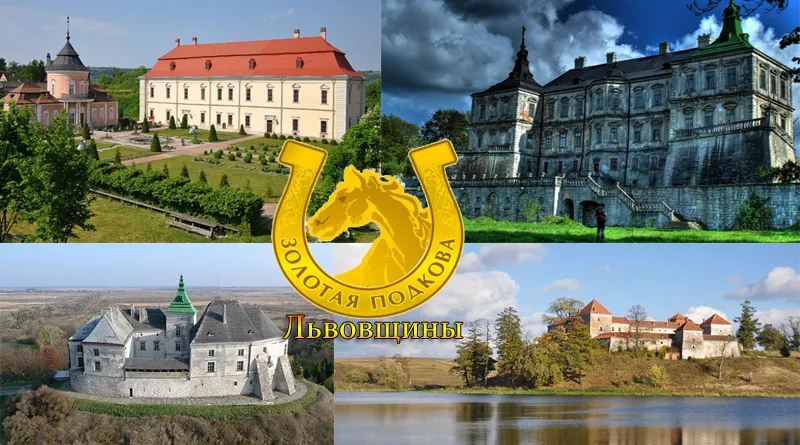
Pidhirtsi Castle is one of the main attractions on the renowned “Golden Horseshoe of the Lviv Region” tourist route. Its name reflects the arrangement of the castles on the map: together, they form an arc resembling a horseshoe. The route was established at the initiative of Borys Voznytsky to preserve Galicia’s castle heritage.
There is no single, fixed list of sites included in the “Golden Horseshoe”. Olesko, Pidhirtsi, and Zolochiv Castles are traditionally considered the core of the route — this is the combination most commonly offered today as a day trip from Lviv. A broader itinerary includes Svirzh Castle, while more extensive versions may also feature Zhovkva, Pomoriany, and Stare Selo Castles.
Travellers can therefore choose their own approach: from a compact day trip covering the three principal residences to a more extensive tour of the castles of the Lviv region lasting two or more days. So, time permitting, do not treat Pidhirtsi Castle as a place to simply arrive, take a photograph, and leave. It is far more rewarding as the centrepiece of a wider journey through the historic Lviv region, where landmarks from different eras, each with its own distinctive character, lie surprisingly close together.
Olesko Castle — The Most Convenient Next Stop After Pidhirtsi
Olesko Castle is very close to Pidhirtsi, making the two sites a natural pairing for a single itinerary. It is noticeably more compact than Pidhirtsi Palace, yet inside, visitors will find a substantial museum exhibition. Here you can see Ukrainian portraiture from the 16th to the 18th centuries, Galician–Volhynian icon painting, and European painting and sculpture. After the partially lost interiors of Pidhirtsi, Olesko Castle therefore makes a very different impression: here, it is much easier to imagine what once filled these historic residences.
Zolochiv Castle and the Chinese Palace
The third main stop on the “Golden Horseshoe” route is Zolochiv Castle. Its particular appeal lies in the opportunity to discover another type of 17th-century aristocratic residence. Behind its bastion fortifications stand the Grand Palace and the unusual Chinese Palace, which now houses the Museum of Oriental Art.
The Grand Palace offers museum exhibitions, while the underground chambers display examples of stone carving and other historic artefacts. Built for the family of John III Sobieski, the Chinese Palace brings a distinctly different atmosphere to the route and contrasts markedly with what visitors see at Olesko or Pidhirtsi.
With a morning departure from Lviv, it is entirely possible to complete the Olesko Castle → Pidhirtsi Castle → Zolochiv Castle route in a single day. However, an early start is advisable, and the museums’ opening hours should be checked in advance.
Ancient Plisnesk — An Archaeological Site Near Pidhirtsi Castle
For those keen to venture beyond the classic three-castle route, one of the most fascinating sites lies right beside Pidhirtsi. The Ancient Plisnesk Historical and Cultural Reserve protects an extensive archaeological complex that was home to an early Slavic settlement and, later, a settlement of medieval Rus’.
This offers an entirely different kind of visit. There are no grand façades or palace halls here — instead, the focus is on earthwork fortifications, archaeological sites, and the landscape itself, beneath which lie traces of several historical eras. For those interested not only in castles but also in the early history of Galicia, Plisnesko is a natural next stop when exploring Pidhirtsi.
This is more than just another attraction near the castle. The archaeological complex lies just outside the village of Pidhirtsi, and the reserve offers guided tours and educational programmes that reveal the history of the area long before the Baroque palace was built.
Pidkamin — When One Day Is Not Enough
Another interesting destination is Pidkamin — a settlement known for its enormous hilltop boulder, historic monastery complex, and numerous legends. Reaching it from Pidhirtsi Castle involves a separate trip, so trying to squeeze Pidkamin into an already packed three-castle itinerary is not always advisable.
For a two-day trip, however, it makes an excellent addition. After the palace architecture of Pidhirtsi and the museum exhibitions at Olesko and Zolochiv, the focus here shifts to the natural landscape, the rock, religious architecture, and panoramic views of the surrounding countryside. This adds variety to the journey, making it more than just a tour of castles.
A Personal Account: Pidhirtsi Castle Through a Traveller’s Eyes
As travelling is one of my hobbies, I had planned our trip along the “Golden Horseshoe of the Lviv Region” route well in advance. All that remained was to convince my family, who, unlike me, have no great passion for castles, museums, or hours of stories about who left yet another fortress to whom, and when. Luckily for me, the family council eventually approved the outing. So, on the appointed day, we got into the car and set off for the first stop on our route — Zolochiv Castle.
As for our impressions of that stop, perhaps the old saying puts it best: “If you have nothing nice to say, say nothing at all.” In our case, it was almost perfectly apt. The issue was not so much the castle itself or its historical value as our impression of the museum staff’s attitude towards visitors. We found it less than welcoming and felt that the standard of visitor service left something to be desired. But, as they say, these things happen.
We walked around the grounds, explored the exhibitions, and followed the tradition of making wishes by the famous stones — because when fate gives you not one but three wishing stones, it would be foolish to waste the opportunity — before continuing to Olesko Castle. There, the atmosphere changed almost immediately. A well-kept avenue, pleasant grounds, smiling people, and an overall sense of calm. The castle itself is relatively small, but our whole family enjoyed it — even the children, which, on a museum trip, already counts as a small victory.
Olesko Castle has an intriguing blend of simplicity and grandeur. It does not try to overwhelm you with its scale, but it has a character of its own and a very pleasant atmosphere. Near the castle, we could get a bite to eat, buy souvenirs, and take a short break before the next leg of our journey. And then Pidhirtsi awaited us.
I have visited almost all of the most famous castles in western Ukraine, but Pidhirtsi Castle was the one that truly captured my heart. Even today, it remains my favourite of all the castles I have seen in person. And it certainly is not because it is in perfect condition — quite the opposite. At the time, some of the windows were damaged, plaster was crumbling from the façades, and the palace itself clearly needed major restoration. Yet somehow, all of this almost ceased to be noticeable.
It radiated a power and atmosphere that were difficult to put into words. Looking at the old walls, I seemed to stop seeing the cracks and damage. My imagination filled in a different picture: lavish receptions, carriages outside the palace, guests in formal attire, music, illuminated windows, and blooming avenues around the residence. Perhaps this is the true magic of old castles. Before you stands a building that has survived several centuries, and suddenly your mind refuses to see it merely as a museum object and begins to recreate the life that once flourished here.
During our visit, the interior of Pidhirtsi Castle was still closed to visitors. It was possible to explore the grounds around the palace and enter the basement, where an installation dedicated to the legendary White Lady had been arranged. Although we did not get inside the palace itself that time, we had no desire to leave Pidhirtsi at all. We spent about three hours walking around the grounds and, this time, were in no hurry. We wanted to walk along the facade once more, look at the castle from a distance once more, and linger by the old walls once more.
That is why the final planned stop on the route—the Svirzh Castle—remained unvisited that day. Time ran out much faster than our desire to continue the journey. So, from my own experience, I can offer this advice: if you plan to visit all four castles of the «Golden Horseshoe of Lviv Region» in a single day, do not rely too heavily on an optimistic schedule. In theory, it seems feasible, but if you happen to like one of the castles a little more, the entire perfect itinerary begins to fall apart. Especially if that castle turns out to be Pidhirtsi.
Interesting Facts About Pidhirtsi Castle
Pidhirtsi Castle has many details that get lost behind its dramatic history and legends. Some of them offer an entirely different view of the palace: as a retreat for a military commander, a cultural center with its own theater, one of the earliest aristocratic museums, and even a cinematic set that turned Galicia into France on screen.
An unusual chapter in its history is connected with Leon Zhevusky. Between 1833 and 1865, he systematized the palace collections, organized the archives, and carried out an inventory of the paintings. In effect, the residence began to be deliberately preserved not only as a home estate but also as historical and artistic heritage. For the 19th century, such an attitude was far from ordinary. Thanks to this, by the beginning of the 20th century, Pidhirtsi still contained a large number of antique objects and interiors that can now be seen in archival photographs.
One of the most surprising geographical twists in Pidhirtsi’s history connects a small village in Lviv Region with distant São Paulo. On the eve of World War II, a significant portion of the most valuable items from the castle’s family collections was evacuated. The rescued works of art traveled a long way and eventually became the foundation of the Sanguszko art collection in Brazil. Thus, some of the objects once housed in the palace rooms of Pidhirtsi are now separated from the castle not by a few kilometers, but by the entire Atlantic Ocean.
Pidhirtsi Castle Was Included in the World Monuments Watch List
In 2008, Pidhirtsi Castle was included in the World Monuments Watch—an international list of historic sites whose preservation required special attention. The American World Monuments Fund drew attention to structural deterioration, moisture penetration, gallery problems, and the consequences of unsuccessful Soviet-era alterations.
For a tourist, this fact may sound sad, but at the same time it demonstrates Pidhirtsi’s international significance. The castle is regarded not merely as a regional landmark of Lviv Region, but as part of Europe’s architectural heritage, whose preservation extends far beyond a single village or region.
Pidhirtsi Castle in the Film «D’Artagnan and the Three Musketeers»

Pidhirtsi Castle (or the Palace at Pidhirtsi) has its own place not only in history but also in cinema. In 1978, it was used during the filming of the famous adventure television film «D’Artagnan and the Three Musketeers». The palace’s majestic facade became part of 17th-century Paris on screen and looked so convincing in this role that, without knowing the filming location, you would hardly guess that this was not France but Lviv Region. And it must be admitted that Pidhirtsi Castle handled its «French role» without the slightest accent.
In the film, d’Artagnan races to Pidhirtsi Castle after returning from England, bringing Queen Anne of Austria’s diamond pendants. The palace facade is clearly recognizable in the shot, although according to the story, the viewer is no longer seeing Lviv Region but royal 17th-century Paris, where a ball is to be held.
Interestingly, the interior ball scenes were filmed at other locations. Through editing, several Ukrainian architectural landmarks became a single French setting on screen, so the cinematic geography worked flawlessly: you could get from Pidhirtsi to Paris literally in a single cut. And this was far from the only such cinematic trick—other episodes of the film were also shot in various parts of Ukraine that convincingly transformed on screen into France and England.
Where Else Was «D’Artagnan and the Three Musketeers» Filmed in Ukraine?
Pidhirtsi Castle was just one of many Ukrainian locations that «played» 17th-century France and England in the film:
- Svirzh Castle—d’Artagnan’s family estate, the Béthune monastery, and several other episodes;
- Lviv—numerous streets and courtyards in the historic center became Paris on screen;
- The House of Scientists in Lviv—the interiors of Cardinal Richelieu’s residence;
- Potocki Palace in Lviv—the residence of Captain de Tréville;
- Khotyn Fortress—besieged La Rochelle;
Thus, while traveling among the castles of Lviv Region, you can unexpectedly visit several «countries» from the film at once: Pidhirtsi became Paris, Olesko became England, and Svirzh took on several different French identities.
Frequently Asked Questions About Pidhirtsi Castle
Where is Pidhirtsi Castle located?
Pidhirtsi Castle is located in the village of Pidhirtsi, Zolochiv District, Lviv Region, at: 1 Zamkova Street. The castle is approximately 85–90 km from Lviv by road.
What are Pidhirtsi Castle’s opening hours?
As of 2026, the museum-reserve is open Wednesday to Sunday from 10:00 to 18:00, with the ticket office open until 17:30. Monday and Tuesday are days off. It is best to check the schedule again before your trip, as the museum may temporarily change its opening hours.
Can you go inside Pidhirtsi Castle?
Yes. Part of the interior of Pidhirtsi Palace is currently open to visitors and is used for museum exhibitions, temporary exhibitions, and themed events. However, not all historic rooms are open on a permanent basis, and the route may change because of restoration work.
How much time is needed to visit Pidhirtsi Castle?
For an unhurried visit, allow approximately 1.5–2.5 hours. If you plan to see the accessible interiors and walk around the bastions, park, avenue, and Church of St. Joseph, you may need more time.
Who is the White Lady of Pidhirtsi Castle?
The White Lady is the most famous legendary figure associated with Pidhirtsi Castle. A popular tale tells of a woman who was supposedly killed or walled up in the palace, but there is no reliable historical evidence of such a crime. Most likely, the legend developed from several real family stories of the Zhevusky family that gradually became intertwined with local folklore.
Are there dungeons and secret passages beneath Pidhirtsi Castle?
There really are basement and underground rooms beneath the palace. However, the popular legend of a multi-kilometer underground passage to Olesko Castle has no reliable archaeological or documentary confirmation.
What is the most convenient way to get to Pidhirtsi Castle from Lviv?
The most convenient option is to travel by car on the M-06 highway toward Brody, then turn toward Pidhirtsi. You can also take buses toward Brody, Pidkamin, or Zolochiv, but it is advisable to check the specific stop and return service before traveling.
Which castles are included in the «Golden Horseshoe of Lviv Region» route?
The core of the route traditionally includes Olesko, Pidhirtsi, and Zolochiv castles. The broader version often adds Svirzh Castle, while extended routes may also include Zhovkva, Pomoriany, and Stare Selo castles.
Where can I check current access to the halls of Pidhirtsi Castle?
The most reliable option is to check the official website of the Lviv National Art Gallery or contact the museum-reserve directly. This is especially important if the purpose of your trip is to see the palace interiors.
Pidhirtsi Castle — a place that stays in your memory
Pidhirtsi Castle is difficult to assess solely by the condition of its façades, the number of rooms open to visitors, or its museum exhibits. Its true value lies in the feeling of an entire world that once existed within these walls—a world of aristocratic residences, grand ambitions, art, receptions, old family stories, and dramatic events that left visible traces on the palace.
Perhaps it is the certain imperfection of modern-day Pidhirtsi that makes it feel so authentic. Not everything here has been restored to a dazzling finish, not every room is open, and some of the former splendour can be seen only in old photographs. Yet this is precisely why Pidhirtsi Castle does not feel like a beautiful set. It remains a living historical monument, where the past can still be read in the old walls, portals, bastions, and empty spaces of the former halls.
You can come to Pidhirtsi for the architecture, the legend of the White Lady, the old interiors, the photographs, or a journey along the Golden Horseshoe of Lviv Region route. But it is entirely possible that what stays with you most is something else—the moment when you walk a few dozen metres away from the palace, turn around, and suddenly try to imagine it as it was several centuries ago.
Without scaffolding or damaged walls. With carriages by the gate, well-tended avenues, illuminated windows, and music drifting from the grand halls. This, perhaps, is the special power of Pidhirtsi Castle: it makes you do more than simply look at the past—it makes you imagine it. And if, after your journey, one old building keeps returning to your thoughts for a long time, then it was no longer simply another tourist destination.

No Comment
You can post first response comment.