
 English
 Українська
 Български
 Hrvatski
 Čeština
 Dansk
Dansk Nederlands
 Eesti
Eesti Suomi
Suomi Français
 Deutsch
 Ελληνικα
 Magyar
 Íslenska
 Italiano
 Latviešu
 Lietuvos
 Polski
 Português
 Română
 Русский
 Српски
 Slovenčina
 Slovenščina
 Español
 Svenska
 Türkçe
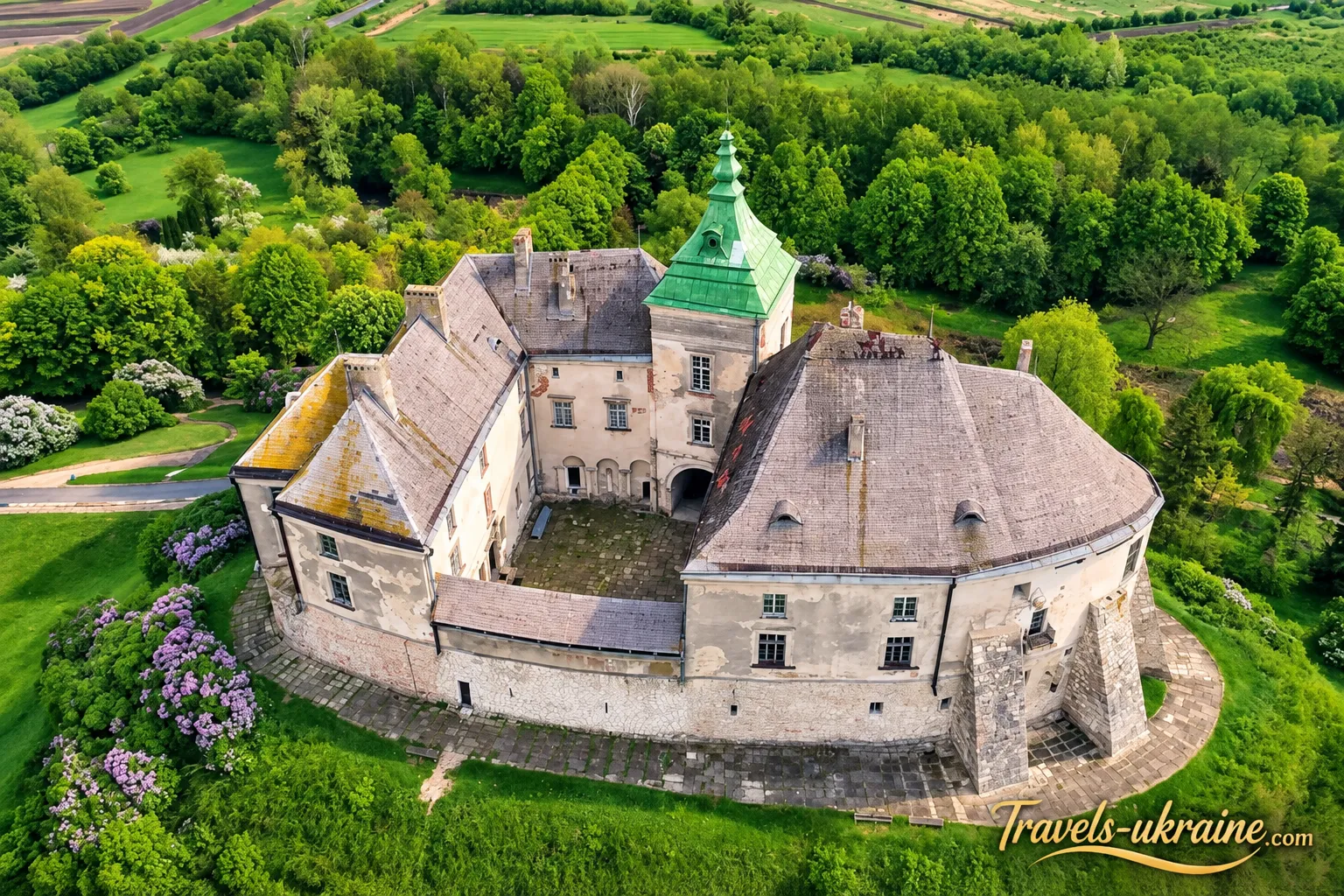
On a high hill above the small town of Olesko stands a castle that history gave every chance to disappear several times. It was destroyed by wars, damaged by earthquakes and fires, and in the mid-20th century its ancient walls came so close to total ruin that the fortress’s present-day appearance can be considered a small historical miracle.
Olesko Castle has seen kings, noble families, soldiers, and artists. The future king John III Sobieski was born within its walls, while among those connected with the castle residence was even the name of the father of Bohdan Khmelnytsky. Old legends add a storm on the night of the king’s birth, a cracked marble table, and signs of a great destiny—although here, as often happens with old castles, history is no longer easy to separate from a beautiful legend.
Yet the old castle in Olesko surprises visitors most not with its legends and tales. It is enough to compare the present-day castle with 18th-century drawings, old engravings, and photographs from the period when it stood almost in ruins to understand that this is not simply a well-preserved historic monument. It is a fortress that was, quite literally, miraculously brought back to life.
Today, Olesko Castle is among the best-known tourist destinations in Lviv Oblast and lies along the «Golden Horseshoe of Lviv Oblast» route. Inside, a museum houses collections of paintings, icons, sculpture, and decorative art, while beyond the old walls lies an entirely different world—far richer than one might expect after a first glance at the fortress’s compact silhouette.
A Brief History of Olesko Castle: Centuries of Struggle, Prosperity, and Decline
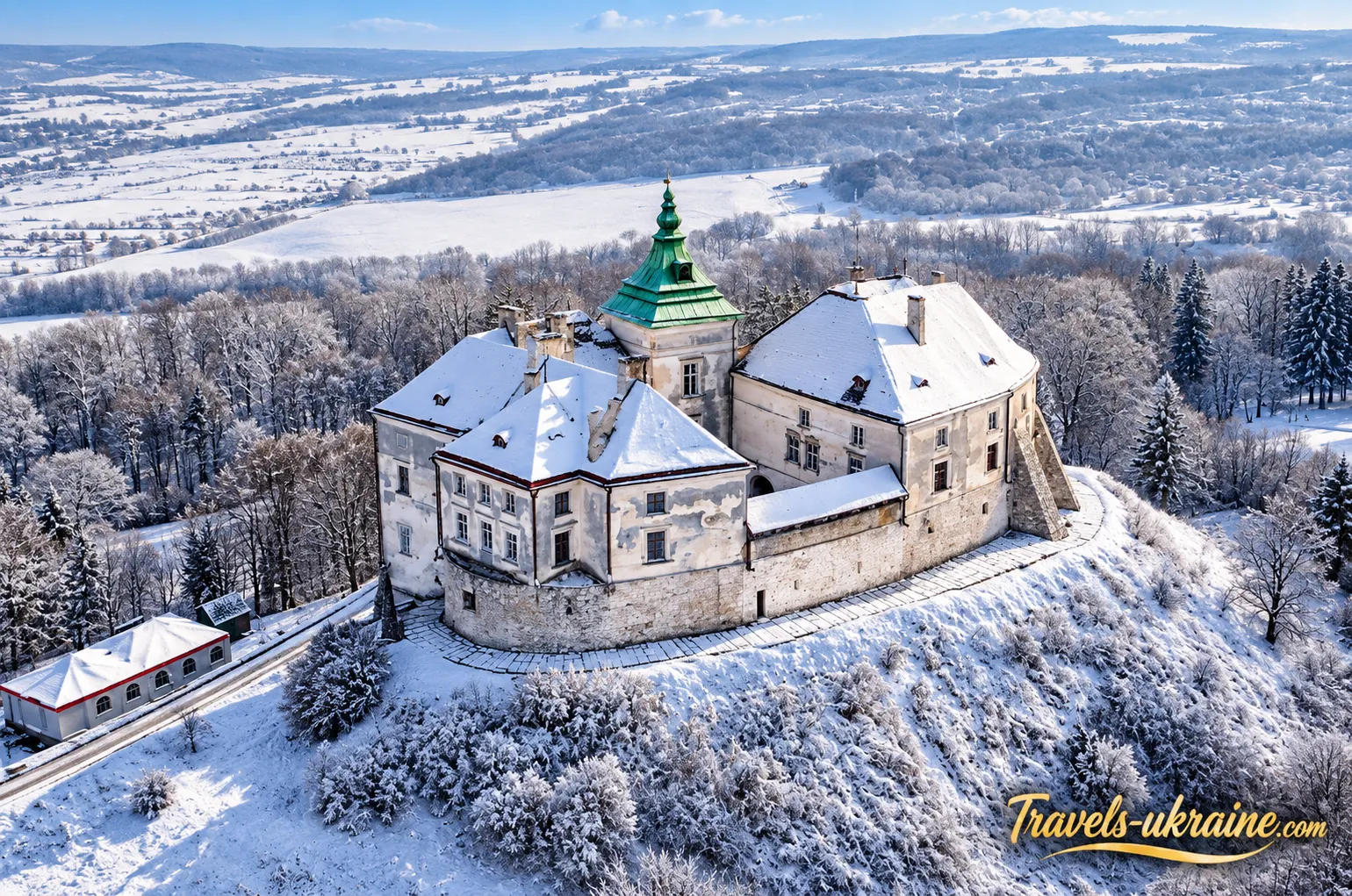
The history of Olesko Castle began not with ceremonial halls, art collections, or royal receptions. Its first role was far more severe: controlling important borderland territory and providing protection at a time when the surrounding lands were constantly changing hands. Only much later did the defensive stronghold become a comfortable palace, and its walls bear witness to the lives of several influential families.
It is this transformation that makes the history of Olesko especially fascinating. A modern visitor sees a compact and rather harmonious castle, but behind its current appearance lie several entirely different eras—from Kyivan Rus and the struggle for Galicia to the time when the future king of the Polish–Lithuanian Commonwealth was born here.
When Was Olesko Castle Built?
Historians do not know the exact date when the castle was founded. Its origins are associated with the final decades of the Kingdom of Galicia–Volhynia and the reigns of Princes Andrii or Lev II, the sons of Yurii Lvovych. Historical tradition often cites 1327: it was under this date that Olesko Castle was mentioned in Sadok Barącz’s «Chronicle of Olesko.»
Still, the fortress’s early history should be described with caution. More reliable documentary references to events around Olesko appear in the second half of the 14th century. They also clearly explain why the castle arose here in the first place. Its hill was a natural defensive position, and the surroundings were easily observed from the summit, while the marshy lands around it made approaching the fortifications even more difficult. The original castle had an oval shape and was primarily a military structure—far simpler and sterner than the palace we see today.
A Fortress Contested for Almost a Century
After Galicia became the centre of a struggle among neighbouring states in the 14th century, Olesko Castle acquired particular strategic importance. For roughly a century, Rus princes, Lithuanians, Poles, and Hungarians competed for control of it. Documents preserve references to events in 1366, the 1370s–1380s, and especially dramatic episodes in 1431–1432. At that time, Olesko became one of the centres of resistance to Polish rule in the Rus lands. The castle changed hands, withstood sieges, and remained an important point on the region’s political map.
Today, looking at the inner courtyard and museum halls, it is difficult to imagine that the main question here was once not interior decoration, but whether the walls would withstand the next attack.
From Military Stronghold to Noble Estate
In 1441, Olesko Castle became the property of Jan of Sienno. His descendants later adopted the name Oleski. In the 16th century, through marriage and inheritance, the estate was divided among several families, including the Herburt, Kamieniecki, Wasiaczynski, Żółkiewski, and Daniłowicz families.
This was the period that gradually changed the character of the fortress. Its military function did not disappear, but the castle increasingly became a permanent residence for the nobility. Its owners now needed not only walls and defensive rooms, but also comfortable living quarters, representative halls, and space for receiving guests.
One of the most important stages began in the early 17th century, when Olesko was owned by Ivan Daniłowicz. Under his rule, the old defensive structure underwent extensive reconstruction and began to take on the character of a palace-fortress. The castle wings were expanded, living quarters were rebuilt, and a more comfortable interior layout was created. The fortress now had to do more than provide protection—it also had to reflect its owner’s status. At the same time, Olesko Castle retained its compact exterior, unlike large palace complexes: life here was essentially concentrated within the enclosed oval circuit of the walls.
A little-known episode in Ukrainian history is also connected with the Daniłowicz family. The nobleman Mykhailo Khmel—the father of the future hetman Bohdan Khmelnytsky came from Zhovkva to enter the service of Ivan Daniłowicz. This fact shows how closely the history of Olesko was intertwined with events and people whose significance would later extend far beyond the castle itself.
The Birth of John III Sobieski at Olesko Castle
In 1629, Jan Sobieski was born at Olesko Castle—the future king of the Polish–Lithuanian Commonwealth, John III Sobieski, who would later become one of the best-known European rulers of the 17th century. His birth subsequently gave rise to numerous legends. One tells of a powerful storm, another of the Tatar threat near Olesko, while the most dramatic tale claims that the marble table on which the newborn was placed supposedly cracked. All of this belongs to castle folklore, so we will return to these stories separately in greater detail.
The period associated with the Sobieski family firmly established Olesko’s image as not only a fortress but also a royal residence. The interiors reflected the high status of their owners: the living quarters were decorated with decorative fabrics, paintings, furniture, and other objects that had little in common with the austere life of a medieval fortification.
The castle remained compact, yet within its walls existed a world of an entirely different level of comfort. It was during this period that the contrast still perceptible today took shape: outside, a restrained stone stronghold on a hill; inside, a space adapted to the life of an aristocratic family.
The Rzewuski Family and the Final Age of Palace Splendour
In 1719, Crown Prince Jakub Ludwik Sobieski, with his brother’s consent, sold Olesko Castle to Stanisław Mateusz Rzewuski. This marked the beginning of another important stage in the residence’s history. Under the Rzewuskis, the interiors were changed and enriched once again. The castle rooms were decorated with monumental paintings, stucco, and works of art. Sources from the period allow us to speak of Olesko as a luxurious palace, although its ancient defensive forms remained clearly visible.
However, Olesko gradually lost its role as the family’s principal residence. In the mid-18th century, some of the most valuable works and objects were moved to Pidhirtsi Castle, and its former splendour slowly began to fade. From that point, the history of Olesko Castle entered an entirely different phase—one of prolonged decline, damage, and attempts to save the old monument. But before turning to the dramatic events of the following centuries, it is worth taking a closer look at the castle itself and understanding what remains today of its medieval fortress and palace reconstructions.
What to See at Olesko Castle Today
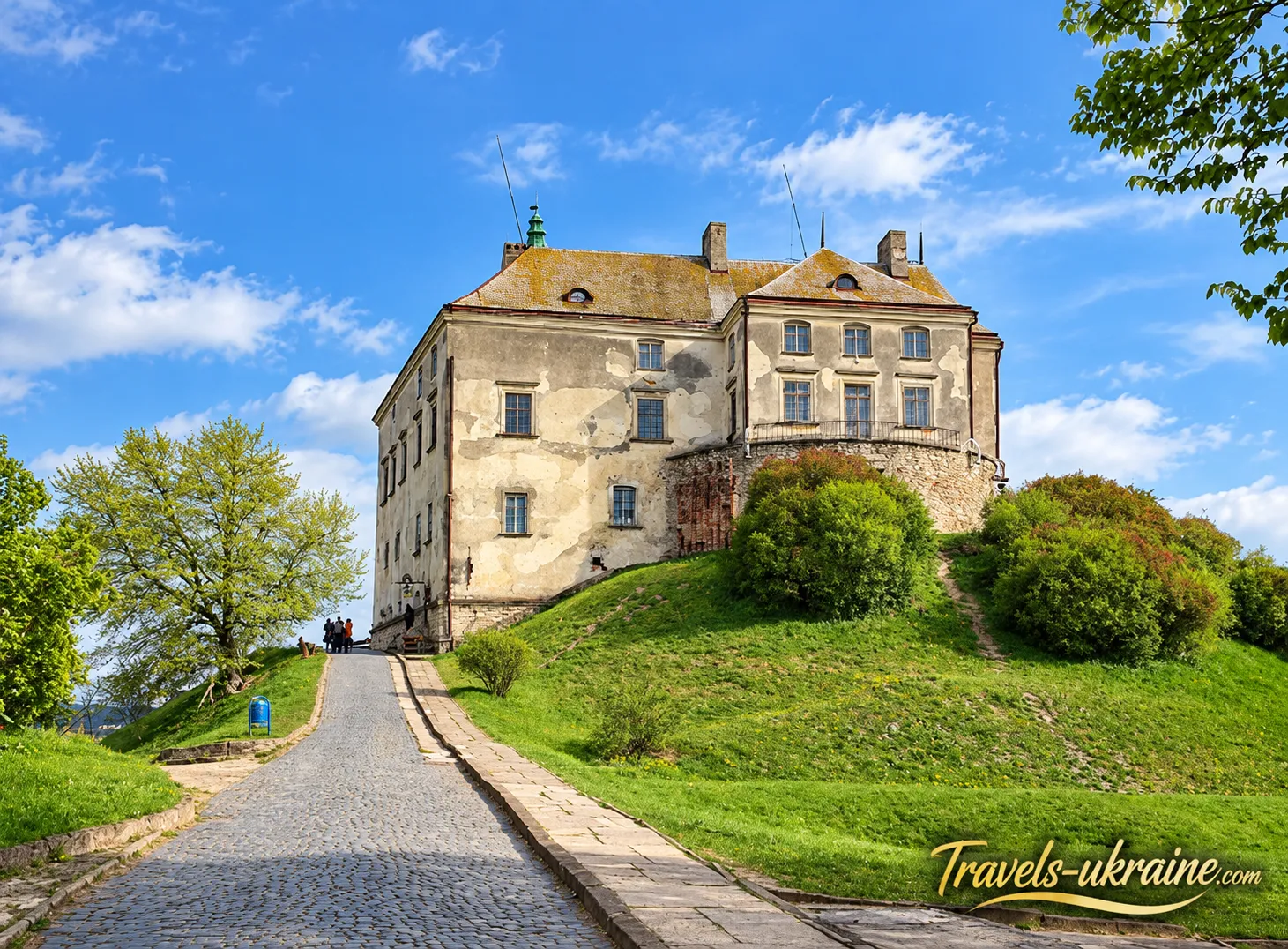
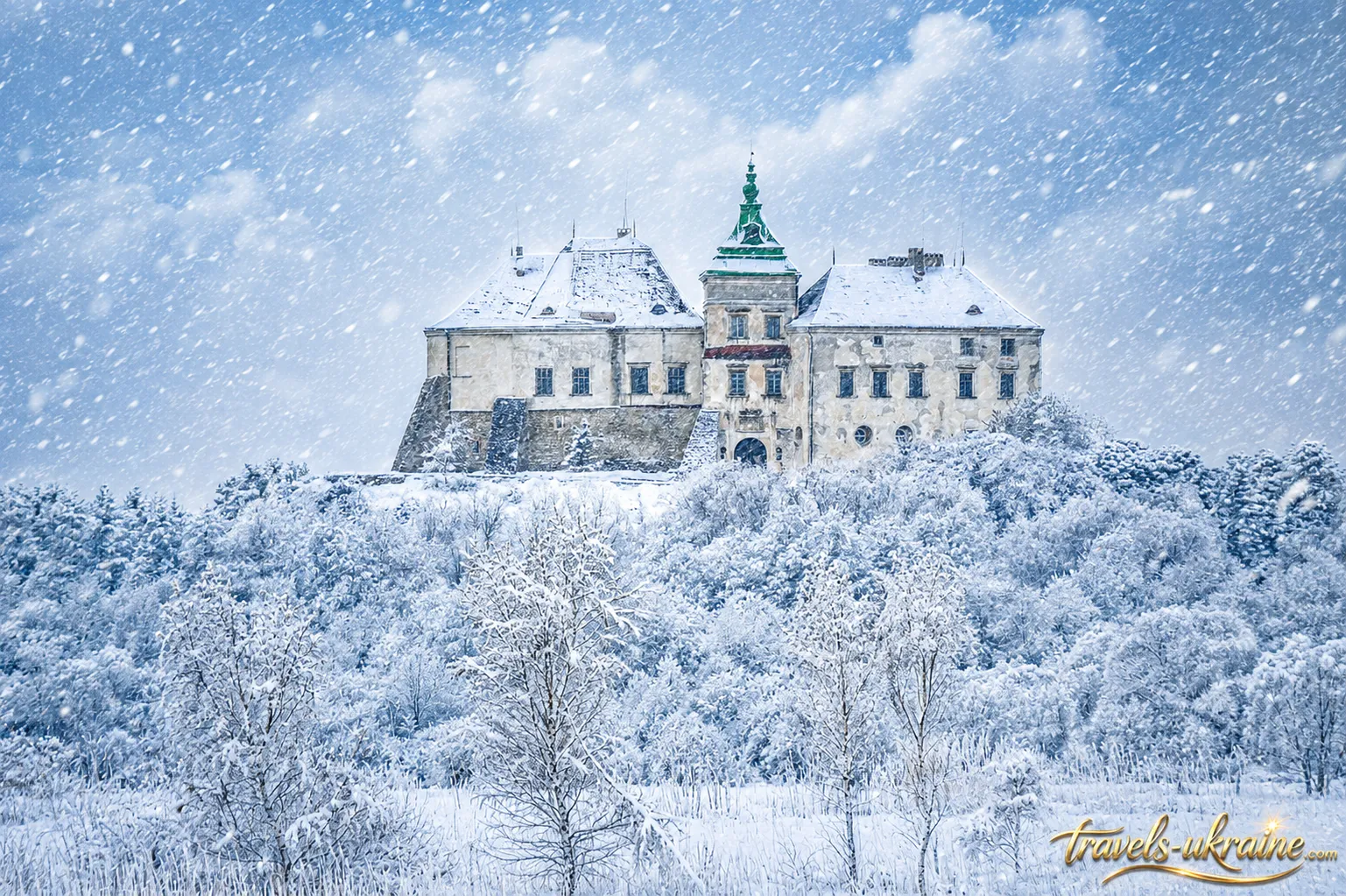
Olesko Castle is not one of those monuments that impress with enormous dimensions. On the contrary, it is quite compact, which makes it convenient to explore at a leisurely pace. There is no need to cover kilometres between separate wings: the main architectural elements are arranged around a single inner courtyard, and the castle can be readily understood during the first walk around the grounds. At the same time, its exterior simplicity is somewhat deceptive. The present-day appearance of Olesko Castle took shape over several centuries, so behind a single façade one can see features of a medieval fortress, a Renaissance residence, and later reconstructions. The most interesting approach is not to search for one «correct» era, but to observe how they layered over one another.
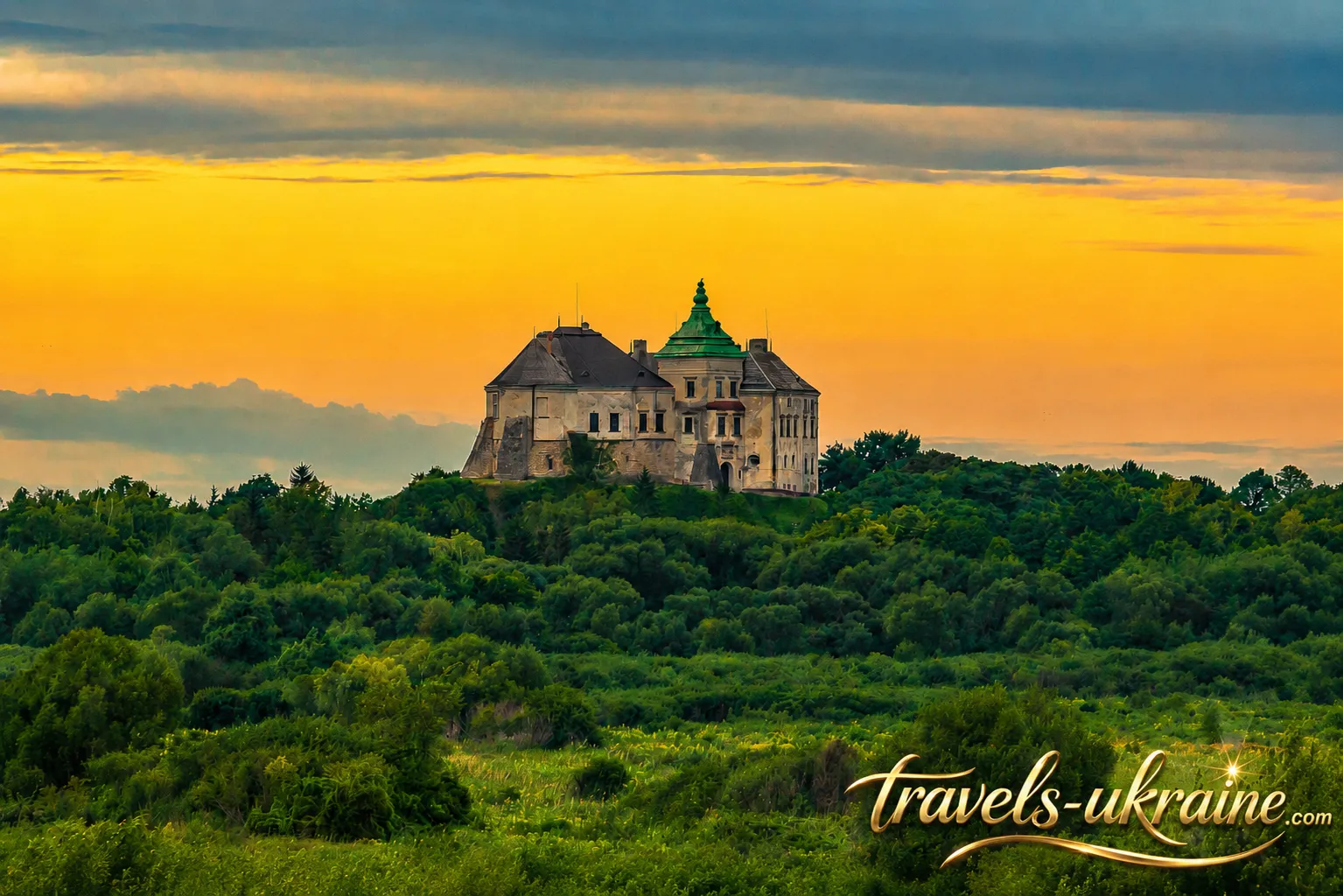
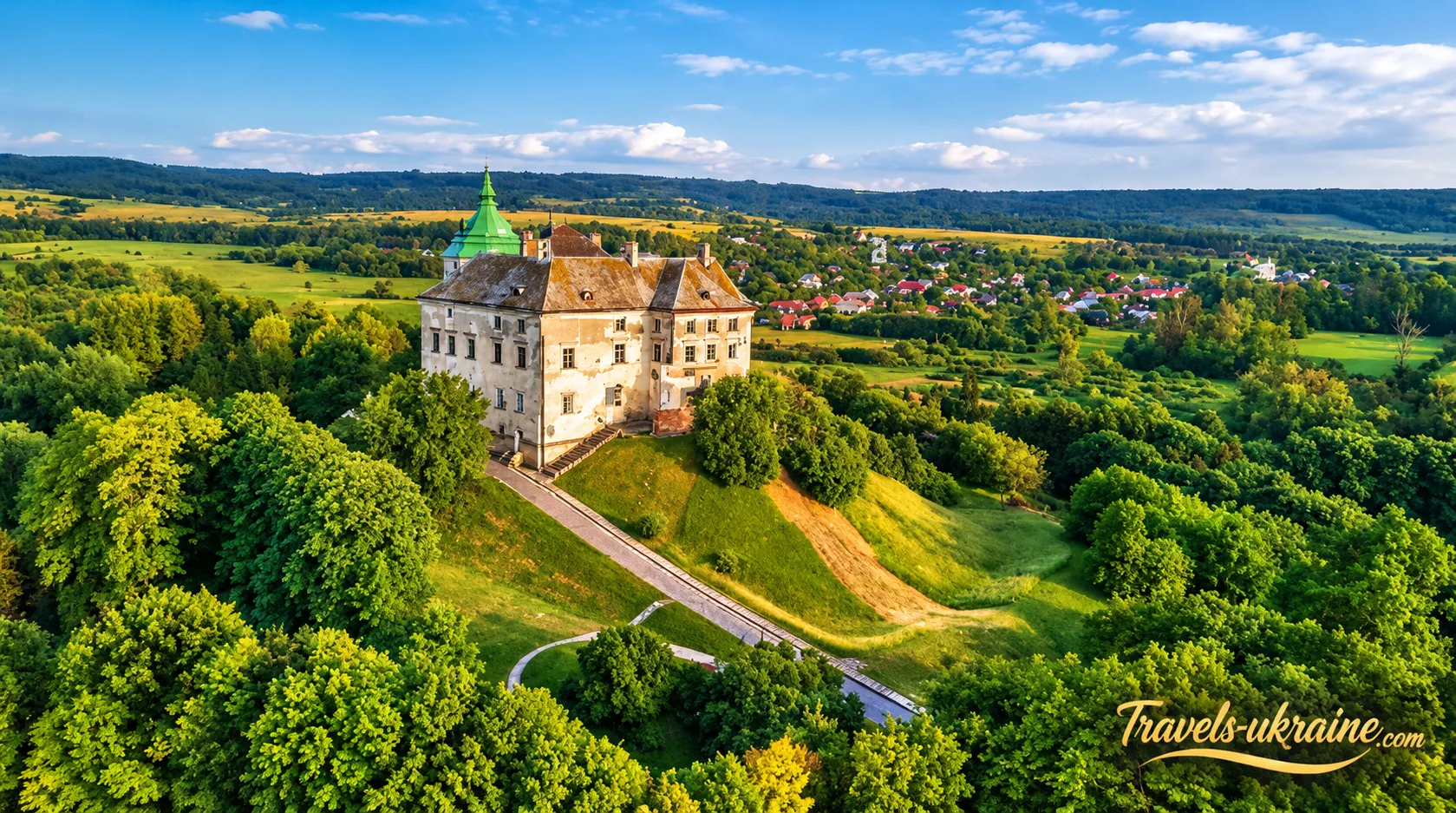
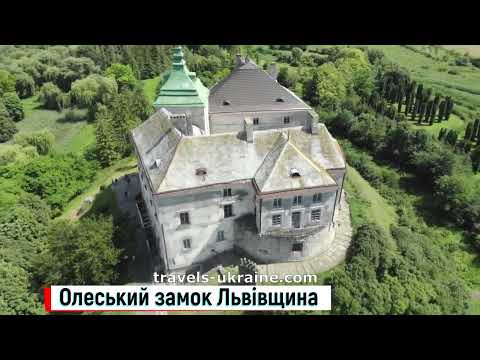
Olesko Castle stands on a high hill that rises noticeably above the surrounding plain. This location once made the site convenient to defend: marshy areas stretched all around, while the approaches to the fortifications could be clearly observed from above. Today, that military advantage has become one of the location’s main tourist attractions.
The castle’s silhouette is best appreciated before entering the grounds. Because of its oval plan and compact layout, it seems almost like a natural continuation of the hill. This is the view worth remembering—in historical drawings from the 18th–19th centuries, Olesko Castle looks very similar, although its surroundings have changed almost completely over time.
The Gate Tower and Inner Courtyard of Olesko Castle
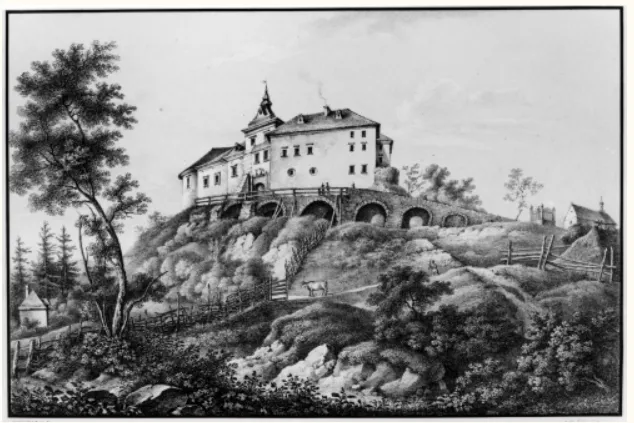
The modern approach to the castle is far more comfortable than it was several centuries ago. Historically, a road on masonry supports led to the rectangular gate tower of Olesko Castle, with wooden structures laid between them. A drawbridge stood before the gate, and in the event of an attack, access to the entrance could be quickly blocked. This system can be clearly traced in 19th-century engravings, where a distinctive arcade structure is visible in front of the castle. It has not survived in its original form, but old images help us understand how different the approach to the fortress once looked.
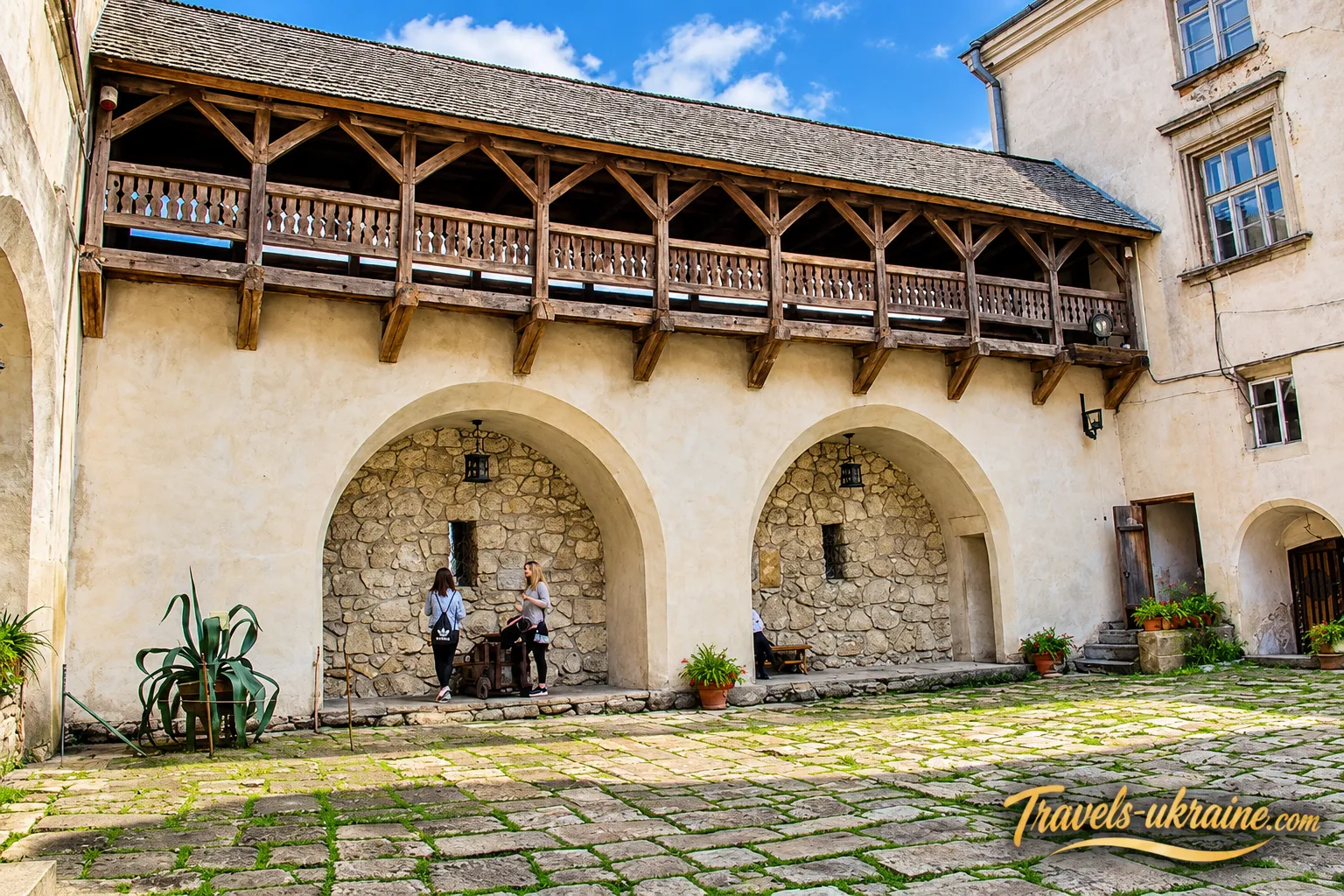
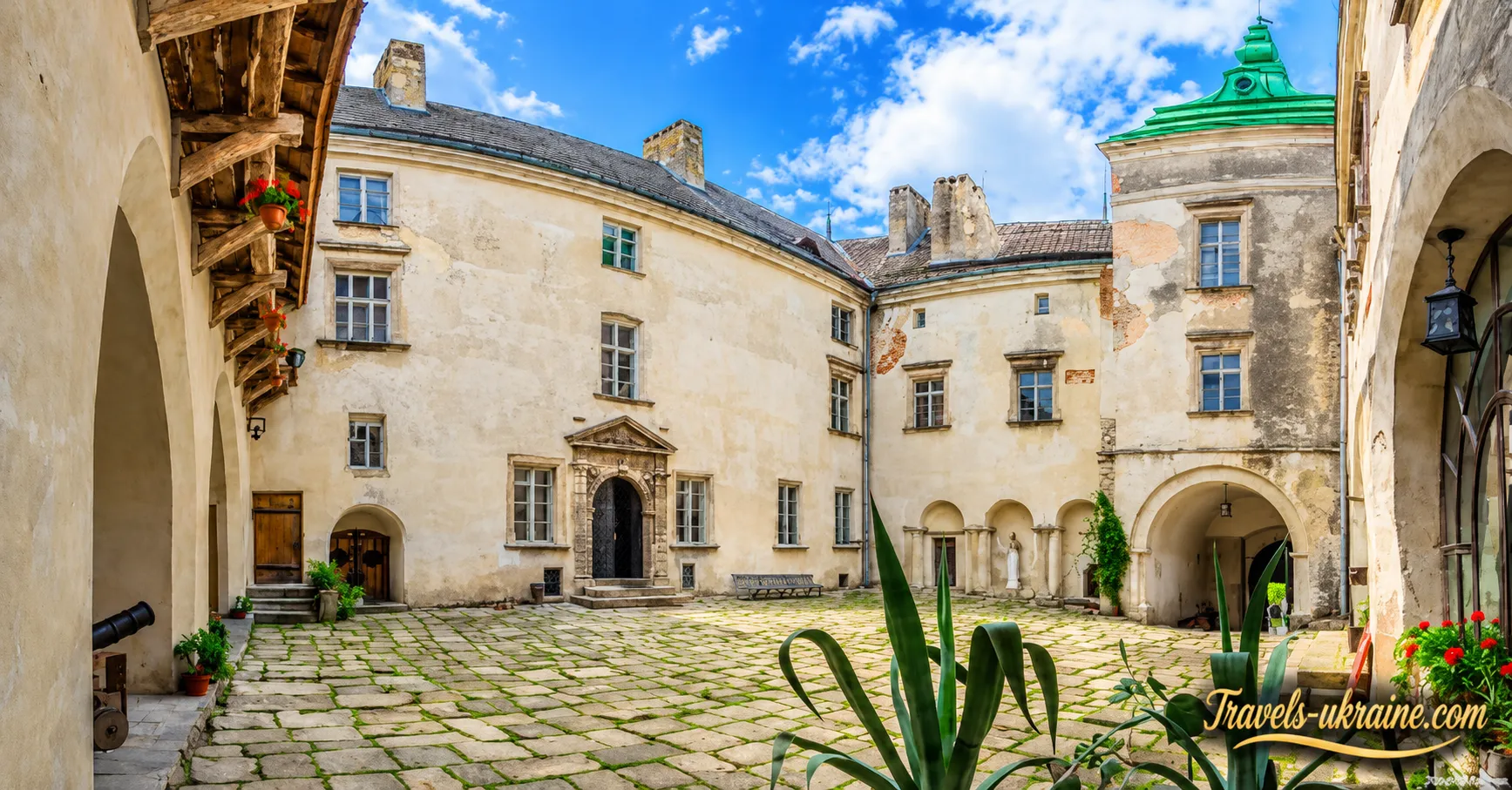
After passing through the gate, one of the complex’s most characteristic areas opens up—the inner courtyard of Olesko Castle. It is small, almost intimate, and surrounded on all sides by historic wings. Here, more than anywhere else, one can feel the difference between the fortress’s external image and the inner life of the former residence.
In the courtyard, pay attention to the portals, window surrounds, passages between the wings, and traces of different construction periods. The architecture does not appear perfectly symmetrical—and that only adds to its character. The castle was rebuilt gradually, so its interior retains traces of several historical stages.
One of the courtyard’s most interesting features is the deep castle well. For a medieval fortress, it was essential: during a prolonged siege, a private water source could determine the fate of the entire garrison. Today, this detail looks almost ordinary, but in the days when the castle was genuinely prepared for defence, its significance was entirely different.
Olesko Castle Museum Exhibits: Art That Has Survived the Centuries
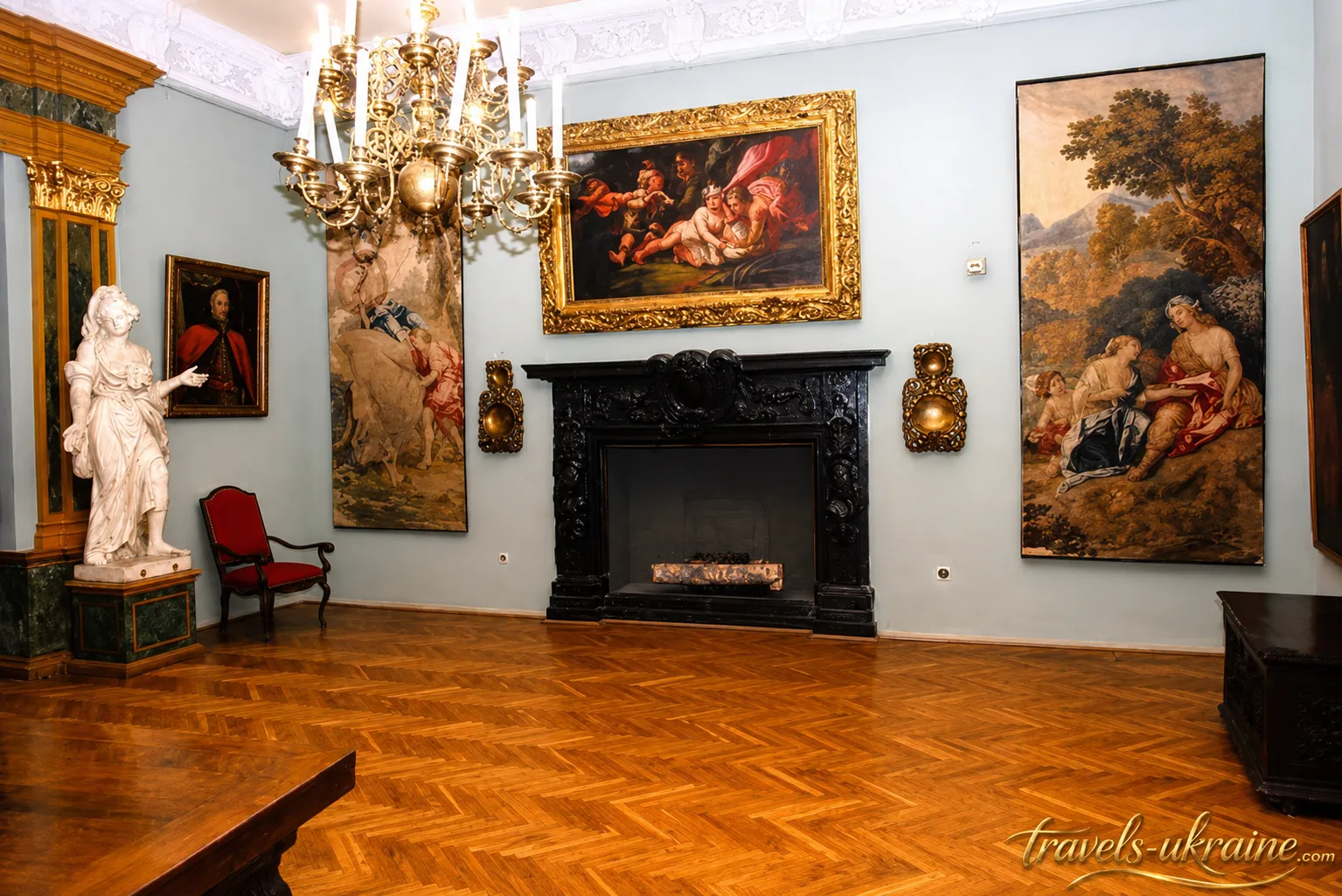
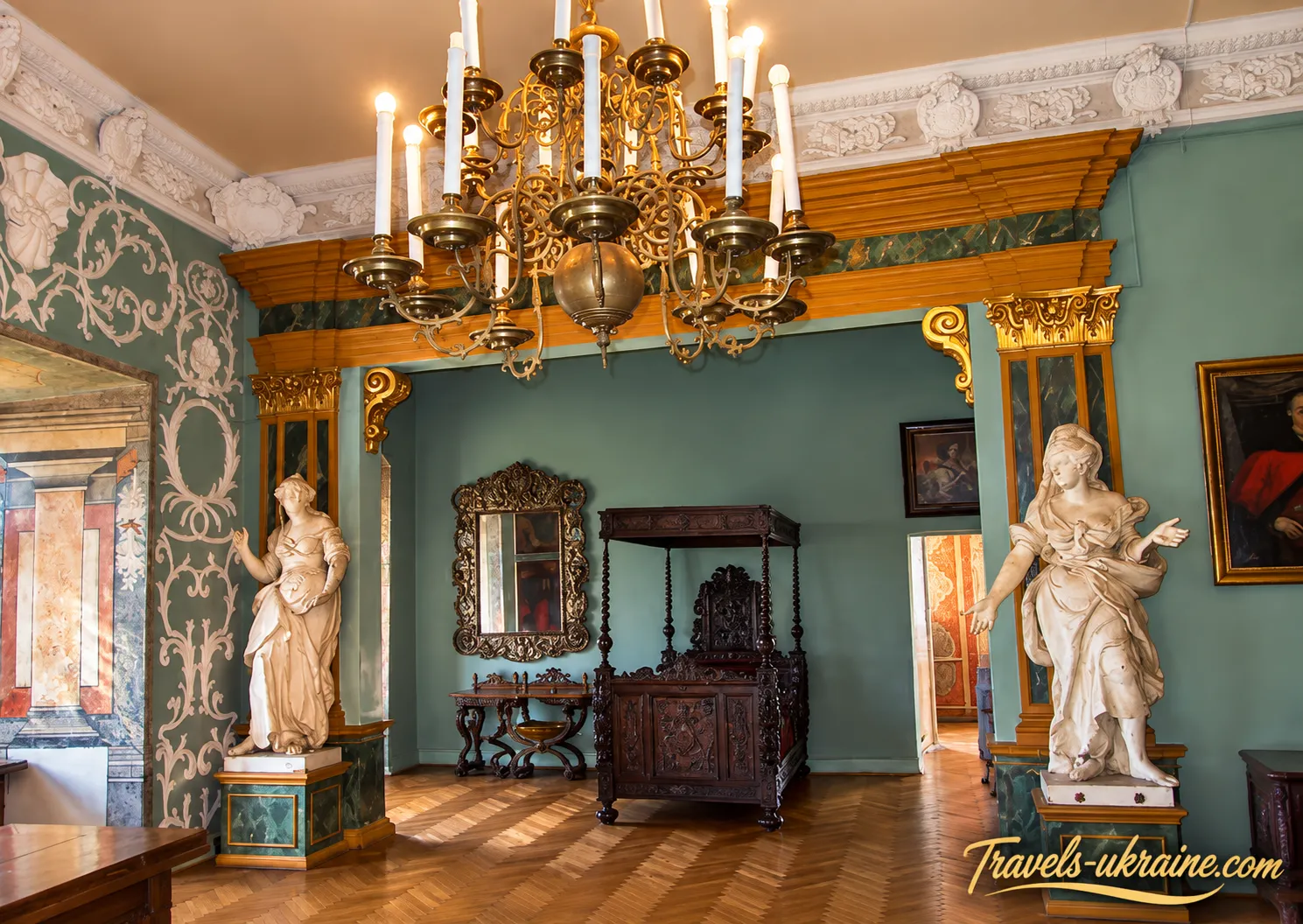
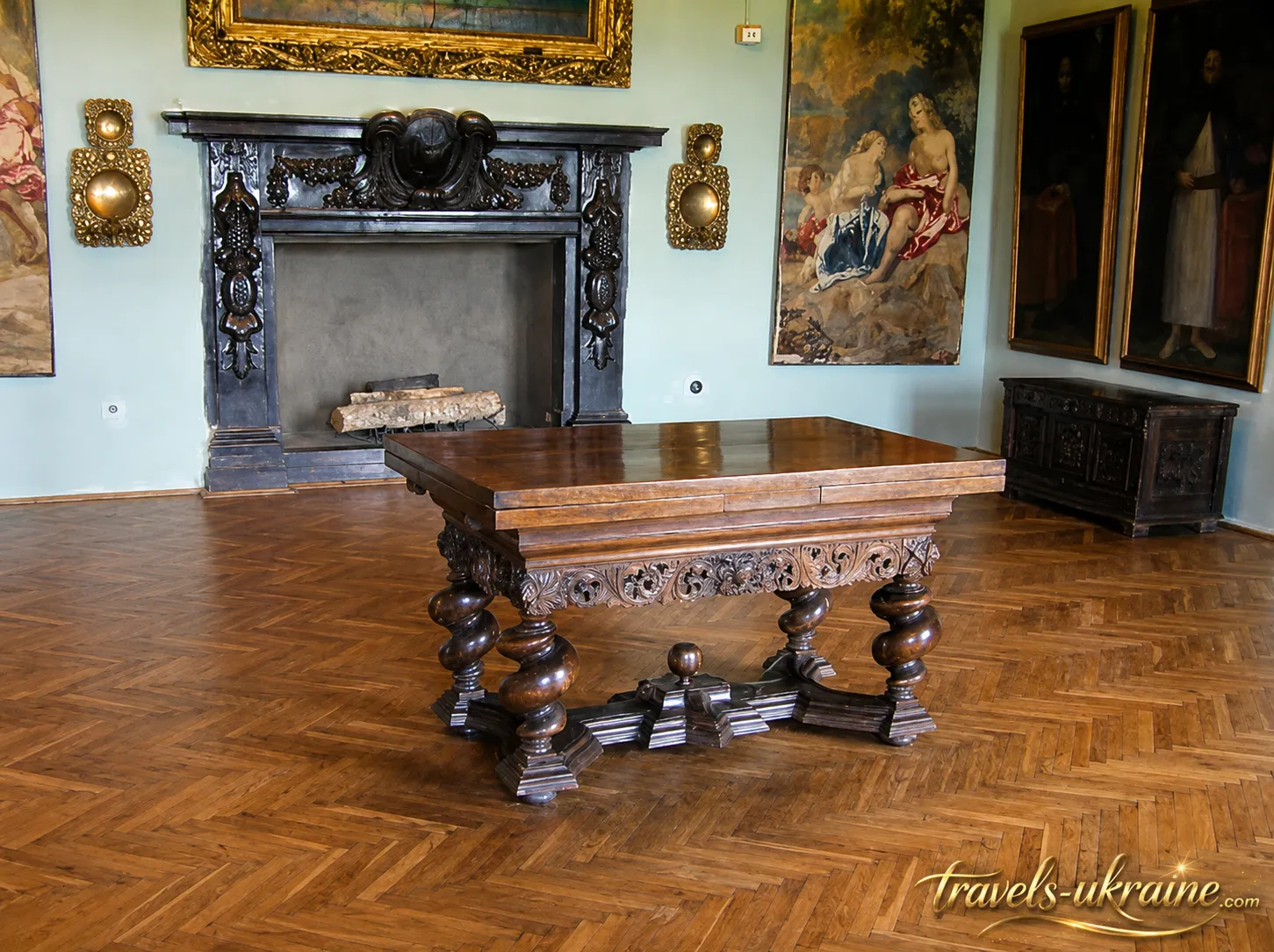
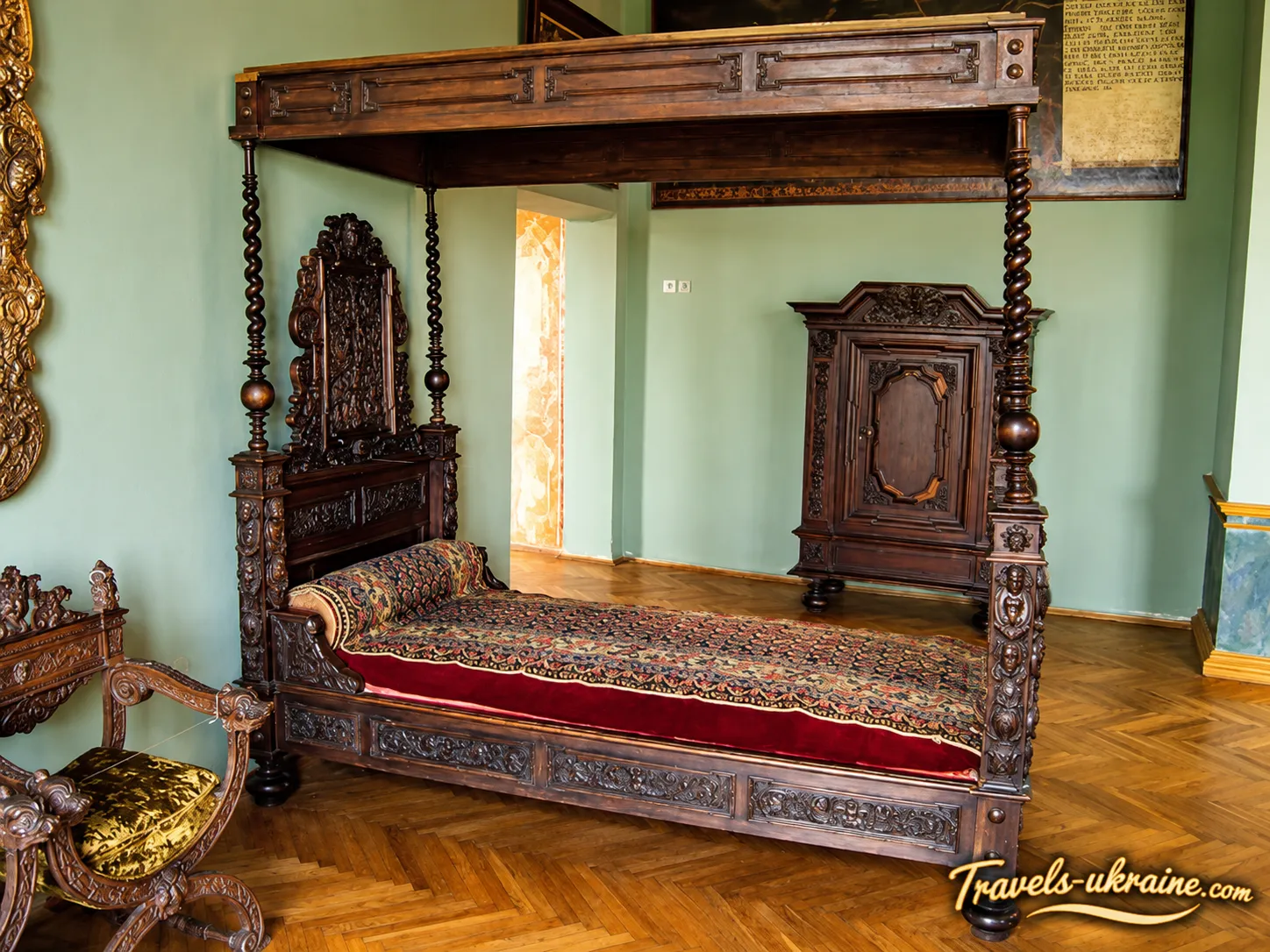
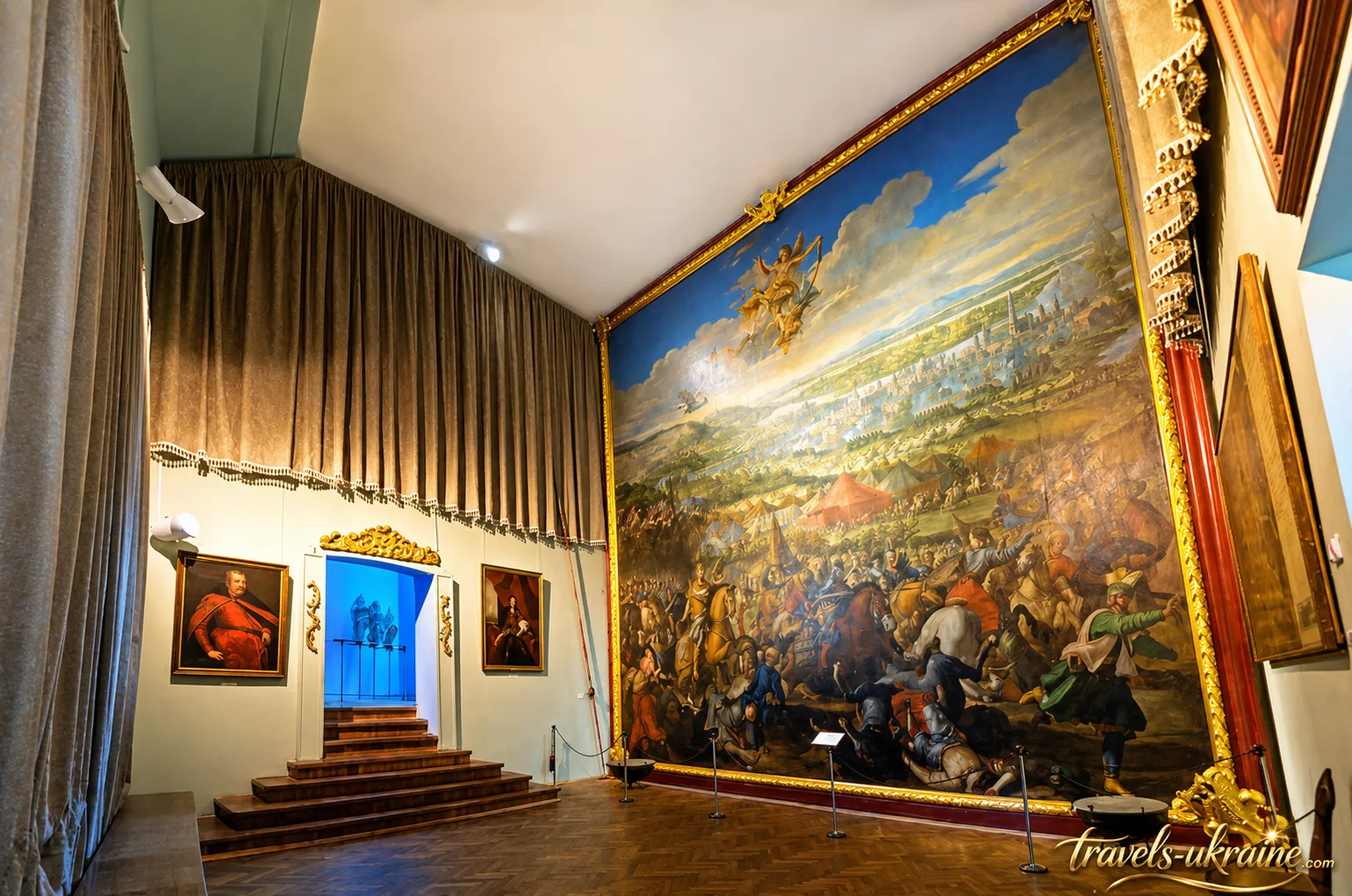
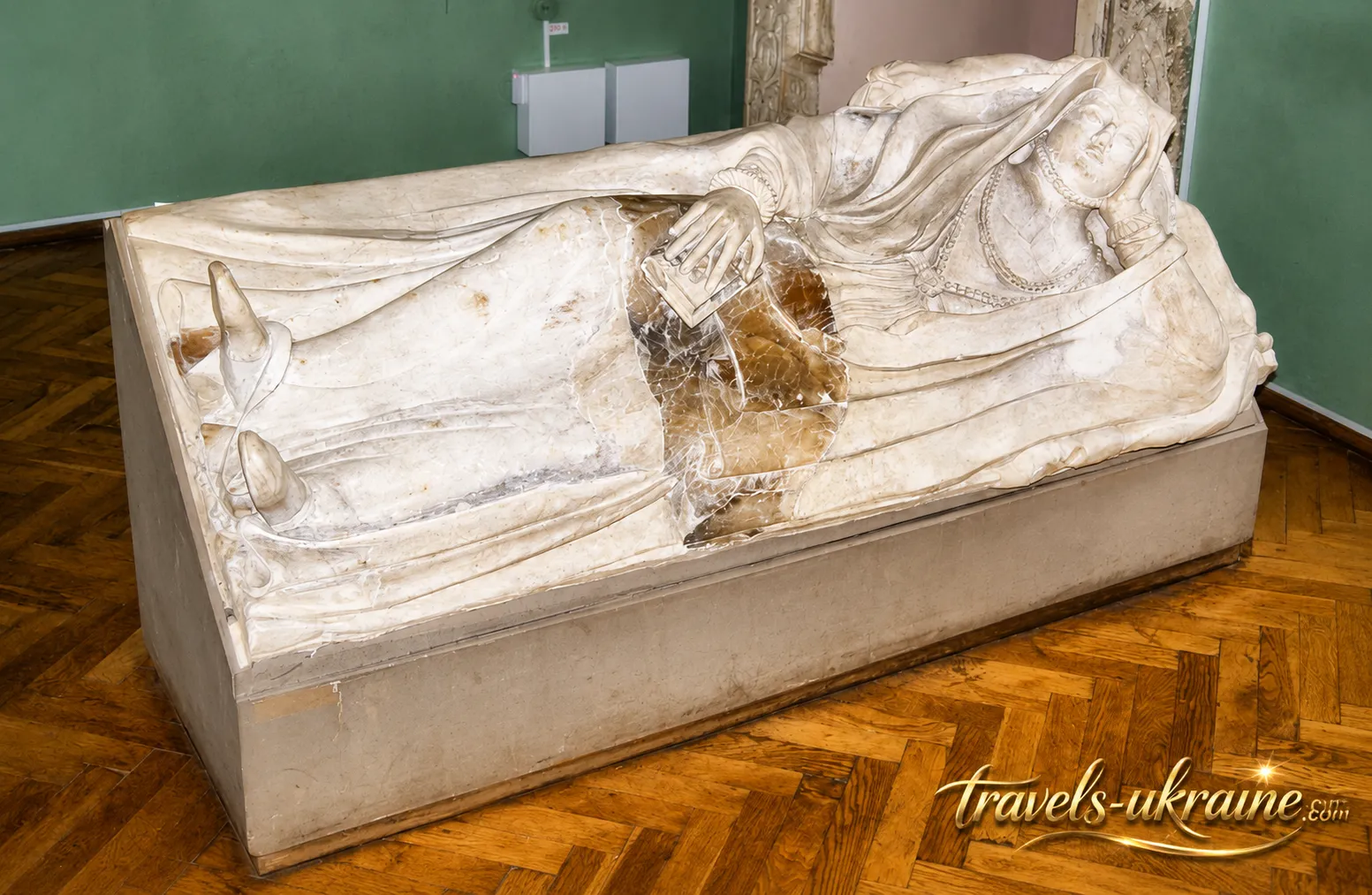
Today, Olesko Castle is interesting not only for its architecture and history. Its halls house a major museum exhibition introducing visitors to the art of the western Ukrainian lands and Central Europe across several centuries. Here, the ancient fortress effectively becomes an art museum where visitors can see old icons, aristocratic portraits, wooden sculpture, religious and secular paintings, early printed books, and decorative art objects side by side.
It is important to understand that the current exhibition is not a complete reconstruction of what the rooms of Olesko Castle looked like under its former owners. Some of the works on display come from other castles, churches, and historical collections of Galicia and were assembled by the Lviv National Art Gallery. Thanks to this, the museum offers a much broader view of the region’s cultural life than the history of a single residence could provide.
A special place is occupied by early Ukrainian icon painting of the 15th–18th centuries. Among the exhibits are icons and fragments of iconostases from Galician churches, clearly revealing the development of the local painting tradition. One of the most interesting works is the monumental icon The Passion, which combines several Gospel scenes within a single composition.
The collection of Baroque sculpture is no less striking. Wooden figures of saints, angels, and biblical characters impress with their form, movement, and emotional intensity. The museum collection includes works by masters of the Lviv school of sculpture, including Anton Osinsky, Sebastian Fesinger, Maciej Polejowski, and other artists of the 18th century. These works vividly demonstrate how rich and accomplished the sacred art of Galicia was at the time.
In several rooms, portraits of nobles, magnates, military figures, and members of wealthy families draw attention. They are interesting not only for their artistic value. Clothing, weapons, jewelry, hairstyles, and even the sitter’s pose reveal social status, fashion, and ideas of prestige in the 17th–18th centuries. Some portraits come from the collections of Pidhirtsi, Chortkiv, and other castles, so the Olesko exhibition effectively brings together the histories of several aristocratic residences.
Alongside the portraits, visitors can see works depicting biblical and mythological subjects, battle scenes, still lifes, and paintings by European artists. They add variety to the exhibition and make it possible to move from religious art to the secular culture of the period. As a result, a walk through the rooms does not become a monotonous survey of old objects—each room reveals a different layer of history.
It is the museum collection that makes a visit to Olesko Castle complete. From the outside, it appears to be a compact fortress on a hill; inside, an entirely different world unfolds—a world of icons, portraits, sculptures, and works of art that outlived their owners and now help us imagine the cultural milieu of old Galicia.
The Park Around Olesko Castle
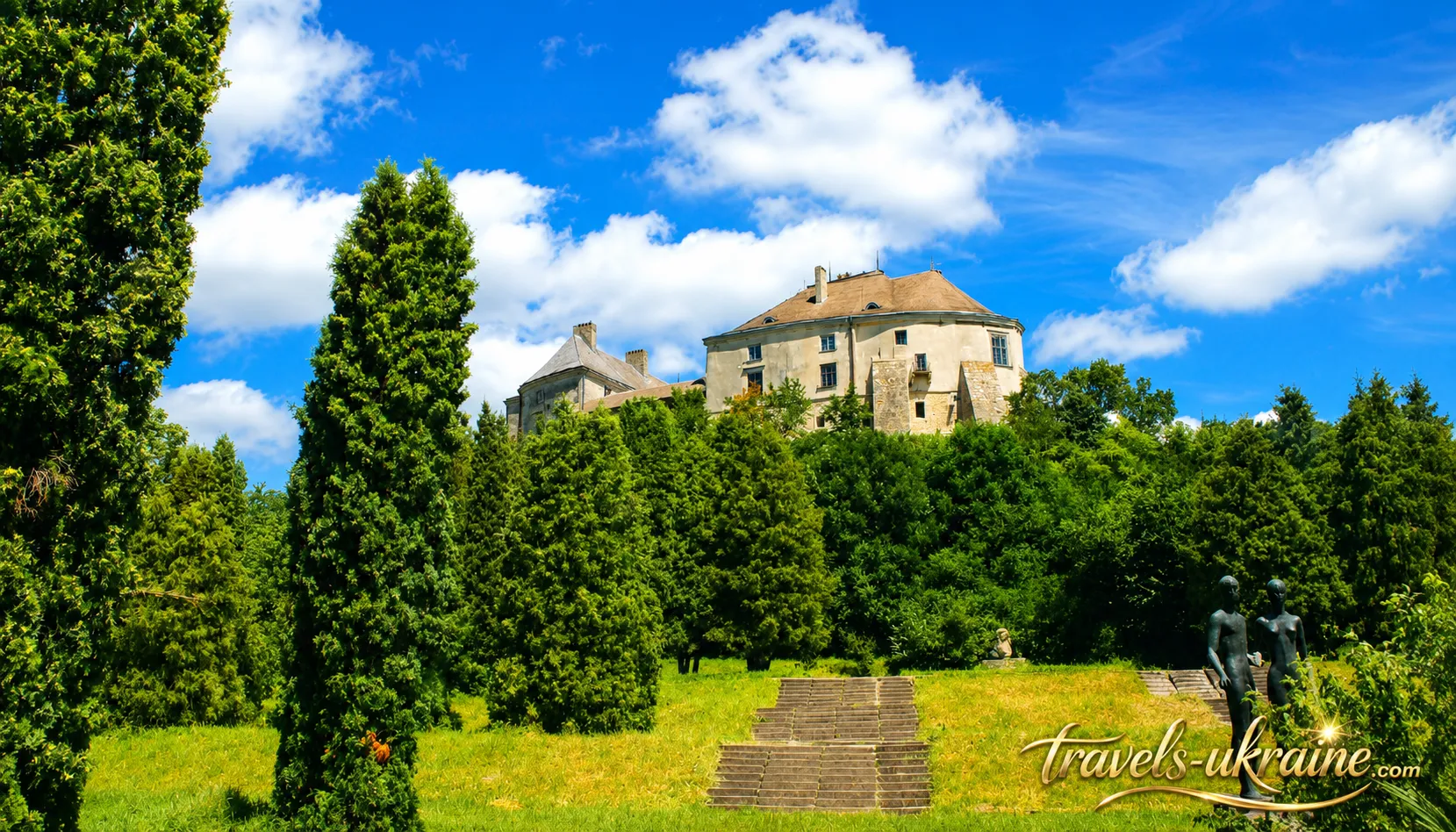
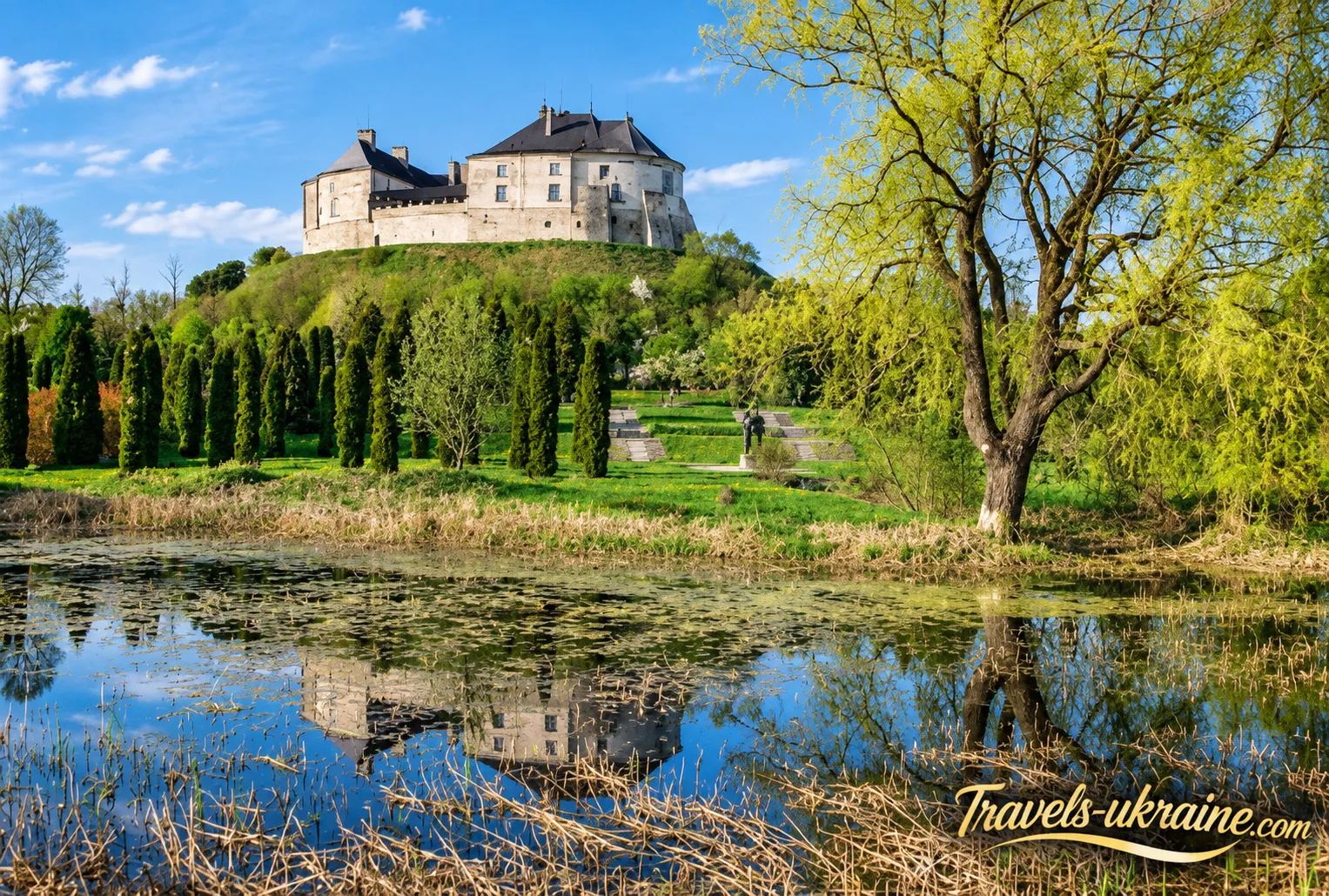
A visit to the castle should not end immediately after leaving the museum rooms. At the foot of the hill lies the park of Olesko Castle, whose history also stretches back several centuries. At the beginning of the 17th century, a formal garden in the Italian tradition stood here, with ponds, fountains, sculptures, gazebos, and ornamental plants.
The historic park has not survived intact. Much of its present layout was recreated in the second half of the 20th century during the creation of the museum complex. Even today, however, visitors can walk along the paths, see the ponds and sculptural compositions, and go far enough away to appreciate the castle in its landscape.
It is particularly interesting to compare this area with the old drawings by Jean-Henri Müntz or 19th-century engravings. The hill was once much more open, there were far fewer trees around it, and the castle dominated the surrounding area even more strongly than it does today.
Where to Find the Best Views of Olesko Castle
For photographs, do not limit yourself to the main entrance. One of the best ways to see Olesko Castle in the Lviv region is to walk down into the park and view it from the foot of the hill. From here, the fortress’s overall shape, its height above the surrounding terrain, and its compact silhouette are clearly visible.
Interesting views also open up from the side paths, where the castle can be seen partly through the trees. The area is especially photogenic in autumn, while in spring and summer the green surroundings create an entirely different impression from the old engravings showing an almost bare hill. Allow at least 40–60 minutes for viewing the exterior, exploring the inner courtyard, and walking through the park, separate from the museum exhibition. Olesko Castle is small, but there is no reason to hurry: it is in the details that one notices how a medieval defensive structure gradually became a noble residence.
Olesko Castle: What It Looked Like in the Past
Old castles are especially fascinating when considered not only as they are today. Drawings, engravings, and early photographs allow us to rewind history and see how the building and the surrounding landscape changed. In the case of Olesko Castle, this visual journey spans more than two centuries. And it holds a certain surprise. Comparing images from the 18th–19th centuries with modern photographs reveals that the fortress’s main silhouette has survived remarkably well. The space around it, by contrast, has changed almost beyond recognition.
One of the most valuable early images of Olesko was created by the traveler and artist Jean-Henri Müntz around 1781. In his drawing, the castle rises above an almost open hill, surrounded by a rural landscape of fields, roads, and scattered buildings. Particularly striking is how isolated the castle appears. Today, trees and the park partly conceal the slopes, whereas the fortress was once visible from afar and literally dominated the landscape.
Olesko Castle in 1823: A Lithograph by Antoni Lange
The next important visual document appeared in 1823. The artist Antoni Lange created a detailed lithograph of Olesko Castle based on his own drawing from life. It was printed in Lviv in an album of Galician views. Unlike Müntz’s more atmospheric drawing, Lange’s work allows the architectural details to be seen more clearly. The castle hill, the fortress buildings, the central part of the structure, and the distinctive arcaded structure of the old entrance drive are all clearly visible.
This particular detail is especially interesting to modern visitors. The approach to the castle looks entirely different today, so the old lithograph helps us understand how access to the fortress was once arranged and how much more closely its architecture was tied to its defensive function.
A French Engraving from 1836: The Castle as the Birthplace of a King
In the first half of the 19th century, Olesko was already known far beyond Galicia, above all as the birthplace of Jan III Sobieski. This is the subject emphasized by a French engraving by Auguste-François Allé from 1836, with the telling title: «Le Château d’Olesko, où naquit Jean Sobieski»—«Olesko Castle, where Jan Sobieski was born.» Once again, the fortress appears on a high, open hill, with a road, arcades, and the surrounding landscape visible below. Comparing several independent images from the period shows that artists depicted the castle’s main features quite consistently, giving these works value not only as art but also as historical evidence.
Olesko Through the Eyes of Napoleon Orda in the 19th Century
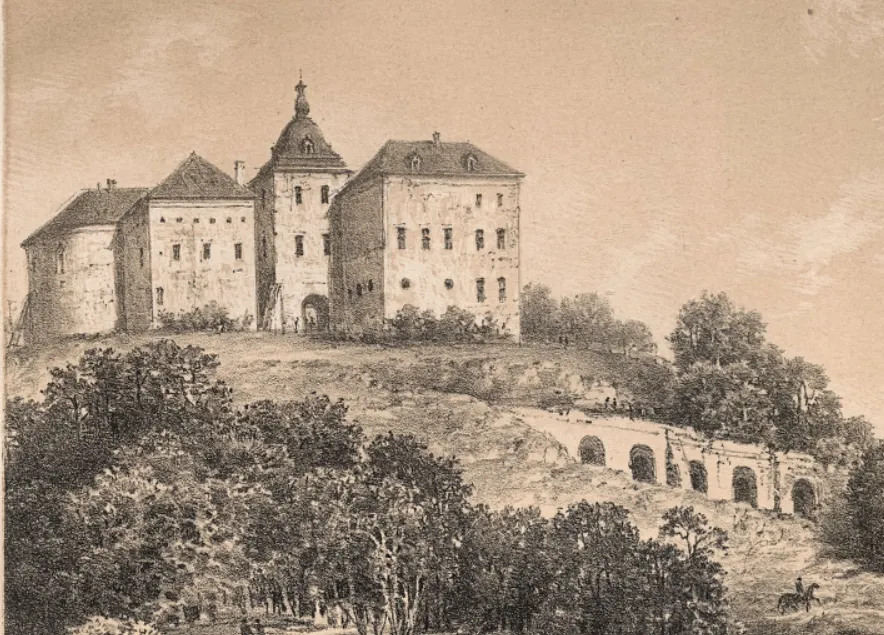
Another well-known image of Olesko Castle was left by Napoleon Orda—an artist, musician, and traveler who created a vast series of images of historic landmarks across Central and Eastern Europe. His work «Olesko nad źródłami Styru», dated 1873–1883, presents a broader panorama. The castle remains the dominant feature, but roads, gardens, buildings, and other elements of 19th-century Olesko can be seen around it.
For modern viewers, this lithograph is particularly interesting because it shows the castle not in isolation but as part of a historic landscape. What is perceived today as a tourist complex with a park and landscaped grounds was then a living part of a small Galician town.
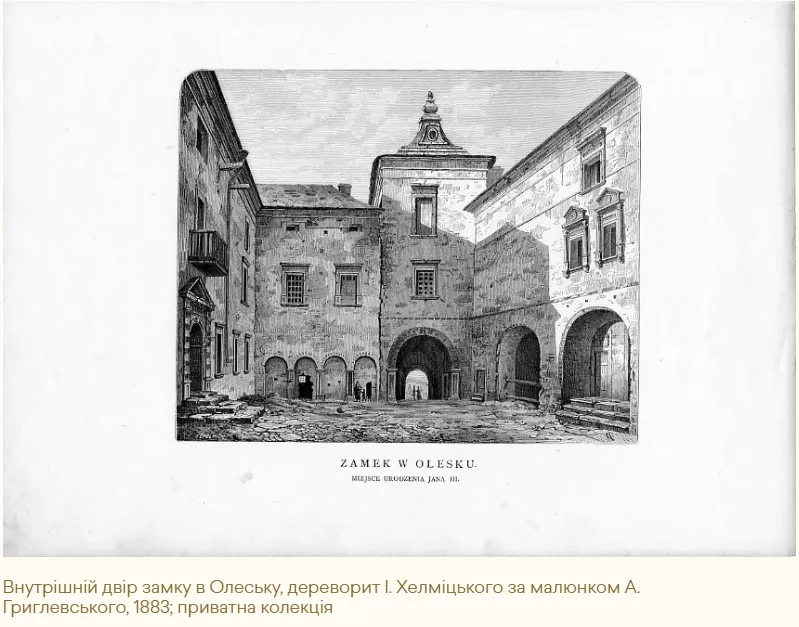
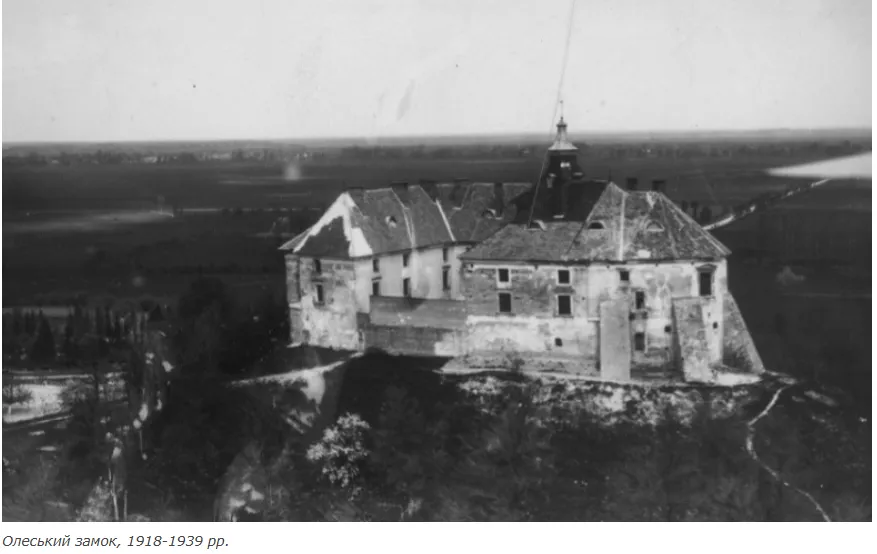
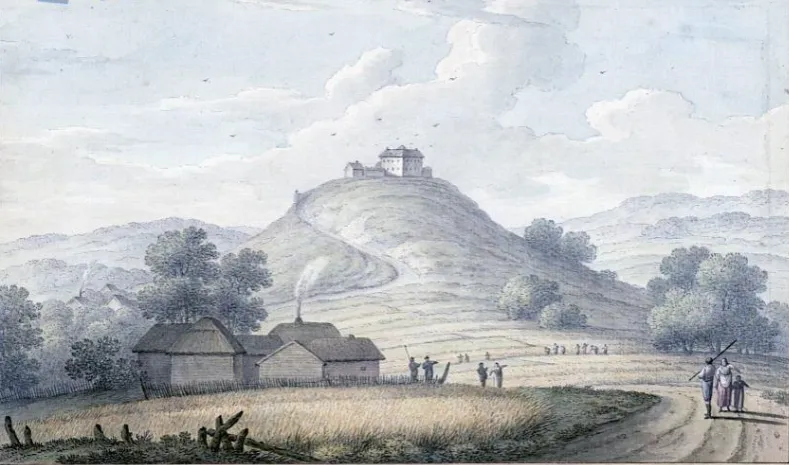
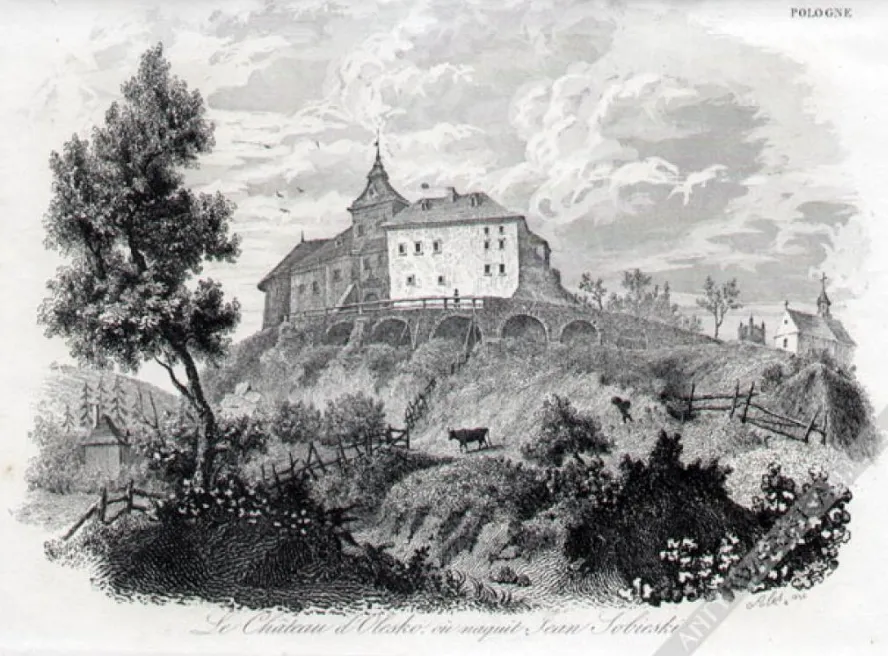
The First Photographs of Olesko Castle
By the end of the 19th century, photography had gradually replaced artists. From then on, we could assess the castle’s condition not through an author’s interpretation but through actual photographs. Photographs from the late 19th and early 20th centuries show Olesko Castle with its old roofs, open hill slopes, and far fewer trees. Some images make it especially clear that the location’s modern green character took shape much later.
It is interesting to place these photographs beside modern views taken from the same or a similar angle. It then becomes obvious that the castle itself has changed less than its surroundings. The greatest contrast is found in photographs from the mid-20th century. After prolonged decline, wars, and fires, Olesko Castle was in an extremely poor condition. Old photographs show damaged roofs and floors, exposed walls, neglected rooms, and grounds that scarcely resemble the modern museum complex.
These photographs most clearly dispel the widespread myth that today’s Olesko Castle has simply «survived well.» In reality, its present appearance was made possible by extensive research and restoration. At the same time, it would be inaccurate to say that the fortress was rebuilt from scratch. Despite its catastrophic condition, the historic stone walls and a substantial part of the structure survived. Restorers worked with an authentic monument, rebuilding lost roofs, floors, and individual architectural elements and adapting the castle for museum use.
What Changed Most Over Two Centuries
When Müntz’s drawing from 1781, Lange’s lithograph from 1823, Napoleon Orda’s work, and a modern photograph are placed side by side, the most interesting discovery is that Olesko Castle remains recognizable. The space around it has changed the most. The open slopes became covered with trees, the modern park took shape, and the roads and buildings at the foot of the hill changed. Restored roofs and façades returned the building to a well-kept appearance, while the grounds became a museum complex.
That is why old images of Olesko Castle should be viewed as more than beautiful illustrations. Together, they form an almost continuous visual chronicle of the monument from the 18th century to the present day. In just a few minutes, one can see the castle during the decline of the noble residence, in romantic 19th-century engravings, in the first photographs, and almost in ruins before its major restoration.
And after such a comparison, modern Olesko Castle is perceived quite differently. Its neat roofs, museum rooms, and well-tended park no longer seem self-evident—they become the result of the monument’s long history, in which it had to fight, quite literally, several times for the right to remain on its hill.
Olesko Castle in Ruins: Fire, Rescue, and Major Restoration
Looking today at the well-kept façades and museum rooms of Olesko Castle, it is easy to think that the monument simply survived the centuries by good fortune. In reality, the situation in the mid-20th century was almost the opposite: the castle stood in ruins, and its continued existence was by no means guaranteed.
It did not reach this state overnight. A prolonged decline began as early as the late 18th and 19th centuries, while the earthquake of 1838 caused serious damage to the building. By the end of the 19th century, the castle already required extensive rescue work, and restoration efforts begun after the monument came under state protection were later interrupted by wars. Yet the most difficult trial was still ahead.
The Fire That Left Olesko Castle in Ruins
In 1951, a major fire broke out at Olesko Castle. According to the official version, it was caused by a lightning strike. The fire burned for several days and destroyed virtually all the wooden structures that still remained inside: floors, ceilings, part of the roof, and the remnants of the furniture.
The stone walls survived, but without a roof and floors, the old fortress began to deteriorate even faster. Rain entered the building, the masonry remained unprotected, and fragments of brick and stone lay all around. That is why Olesko Castle looks so dramatic in photographs from the early 1950s. It was not a completely destroyed structure, but it was no longer a functioning palace either—rather, a large stone shell with almost no usable rooms left inside.
After the fire, the castle’s main threat was no longer the elements. According to materials from the Lviv National Art Gallery, local authorities considered dismantling the remains of Olesko Castle and using the stone and brick for agricultural construction, including cowsheds and pigsties. Residents of nearby villages were already arriving at the ruins with horse-drawn carts and taking away building materials.
From today’s perspective, the idea sounds almost absurd: one of the best-known landmarks of the Lviv region could literally have disappeared into the walls of several farm buildings. But in the postwar years, attitudes toward old aristocratic architecture were entirely different, so the danger was very real.
Andriy Shulyar—the man who saved Olesko Castle from destruction
The turning point came in 1954, when the ruins were inspected by Andriy Shulyar, then chief architect of the Lviv region. He secured the landmark’s protection and insisted that the castle should be restored rather than dismantled. According to Shulyar’s own recollections, during his first inspection he found ruins on the hill, while a woman and her daughter were temporarily living in the basement. She told the architect that carts regularly came to the castle to take away stone and brick.
It was after this that systematic work began. The site was surveyed, archaeological research was conducted, and archival materials and old images began to be studied. In 1954, a restoration project was initiated, and from 1955 onward the grounds were cleared of rubble and prepared for reconstruction.
How Olesko Castle was restored
Full-scale construction work began in 1958. Restorers essentially had to recreate everything the fire had destroyed inside the surviving historic walls. New floor structures were installed, the roof framework and tile roofing were restored, windows and doors were fitted, interior plasterwork was renewed, floors were prepared, and utility systems were laid. At the same time, work continued in the nearby former Capuchin monastery.
At the same time, restoration did not mean constructing a modern copy of the old castle. The main stone walls, layout, and a significant part of the historic structures remained authentic. The task was to strengthen them, restore lost elements, and return the landmark to completeness.
The main phase of construction was completed by approximately 1965. At first, the restored complex was even intended to be used as a tourist facility or holiday home. Had history followed that plan, modern-day Olesko Castle might look entirely different.
Borys Voznytsky and the birth of the museum at Olesko Castle
A new turn came in the late 1960s. In 1969, Andriy Shulyar proposed that Borys Voznytsky, director of the Lviv Picture Gallery, establish a museum department at Olesko Castle. For Voznytsky, the idea offered a chance to fulfill a long-held dream—not merely to return a roof and walls to the old castle, but to restore its cultural life. After the complex was transferred to the Gallery, restoration continued with its future museum function in mind.
From 1972 to 1975, the restored rooms were used to assemble an exhibition of art from the lands of western Ukraine dating from the 14th–18th centuries. Paintings, icons, sculptures, early printed books, and decorative art objects were brought to the castle; today, they form the foundation of the museum collection. And on December 21, 1975, the Olesko Castle museum officially opened to visitors.
Interesting facts and legends of Olesko Castle
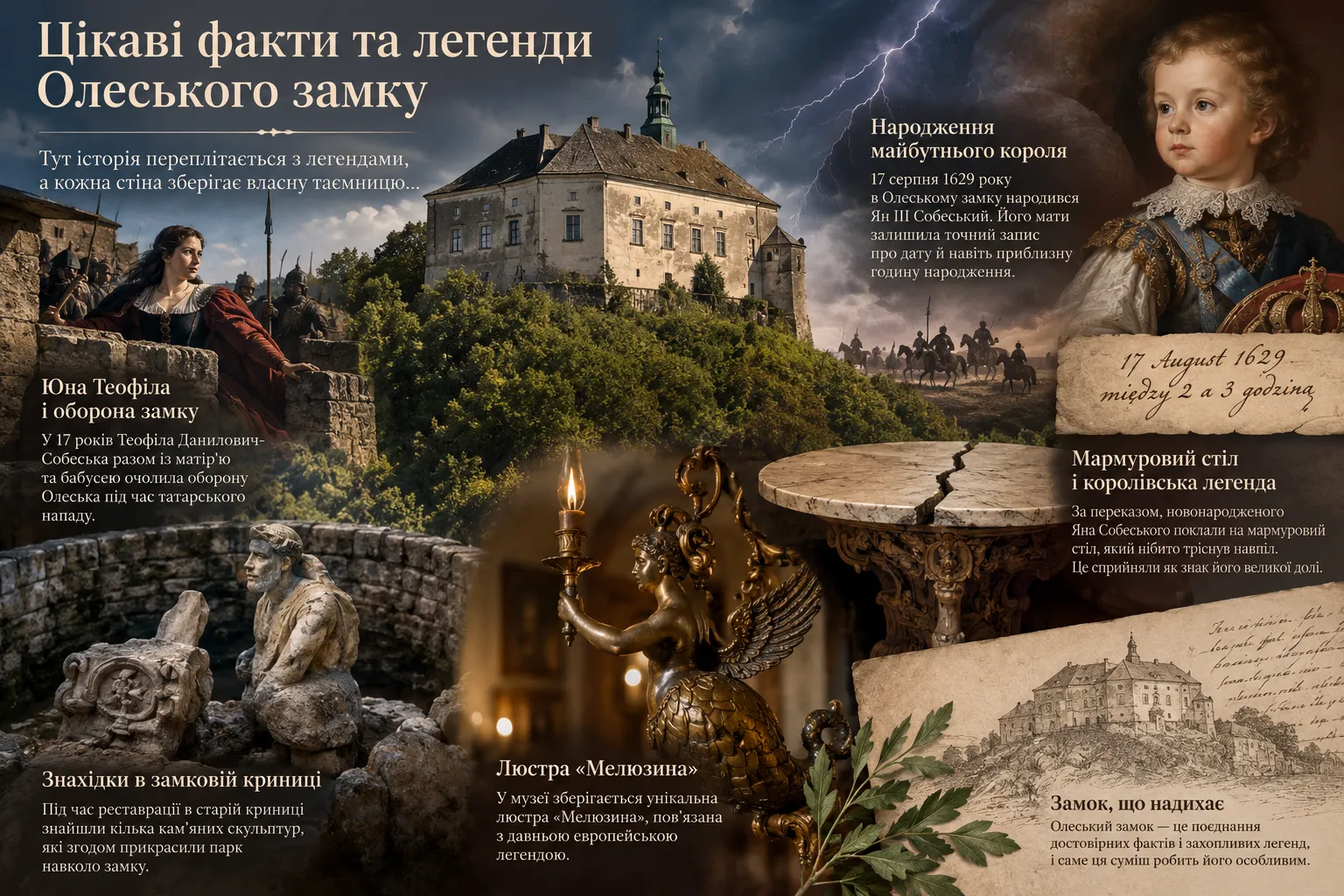
In the case of Olesko Castle, the boundary between history and legend is especially thin. Some events are documented down to the exact hour, while other tales have accumulated so many details over the centuries that they now sound almost like the script of a historical drama. That is why the most interesting approach is not simply to repeat old legends, but to try to understand where fact ends and a beautiful story begins.
For example, the birth of Jan III Sobieski at Olesko Castle is not a legend but a well-documented fact. His mother, Teofila Sobieska, left a handwritten note stating that her son Jan was born on August 17, 1629, between two and three o’clock in the afternoon. For an event nearly four centuries ago, such precision is impressive in itself. Much later, more dramatic details emerged around the birth of the future king: a storm, Tatar forces near the castle, and various omens of a great destiny.
According to the best-known legend, a powerful storm raged over Olesko on the day Jan was born, Tatar forces were operating nearby, and the newborn was placed on a marble table that supposedly split in two. This was interpreted as a sign that the child was destined to become a mighty ruler. Historical sources make it possible to neatly separate the tale from the fact. In her own note, Teofila Sobieska mentioned the date, time, and place of her son’s birth, but wrote nothing about a storm, a Tatar attack, or a miraculously split table. Those details appeared later.
Nevertheless, the legend proved so persistent that later Sobieski collections really did preserve a split marble table, which tradition associated with the birth or baptism of the future king. So the object itself existed—the question is whether it truly survived that particular dramatic moment.
Jan’s mother took part in the defense of Olesko as a teenager
The real story of Teofila Danilovych-Sobieska is no less fascinating than the legends about her son. In her youth, she lived in Olesko, and according to biographical materials from the Museum of King Jan III’s Palace at Wilanów, at about 17 years of age she led the castle household staff, together with her mother and grandmother, during the repulsion of a Tatar attack. This little-known episode is a good reminder that Olesko Castle was not merely a beautiful aristocratic residence. The danger of steppe raids remained very real, and the people inside the walls sometimes had to remember quickly why fortresses needed thick walls.
An unexpected discovery during the restoration of the well
Interesting discoveries in Olesko were made not only in archives. During 20th-century restoration work, students and researchers cleared the stonework of the castle well. Several old stone sculptures were found inside. Rather than remaining at the bottom forever, the figures were given a second life—some were later used to decorate the park around the castle. It seems that even cleaning out an old well here could turn into a small archaeological expedition.
Olesko Castle and the «Golden Horseshoe of Lviv Region»: what to see nearby
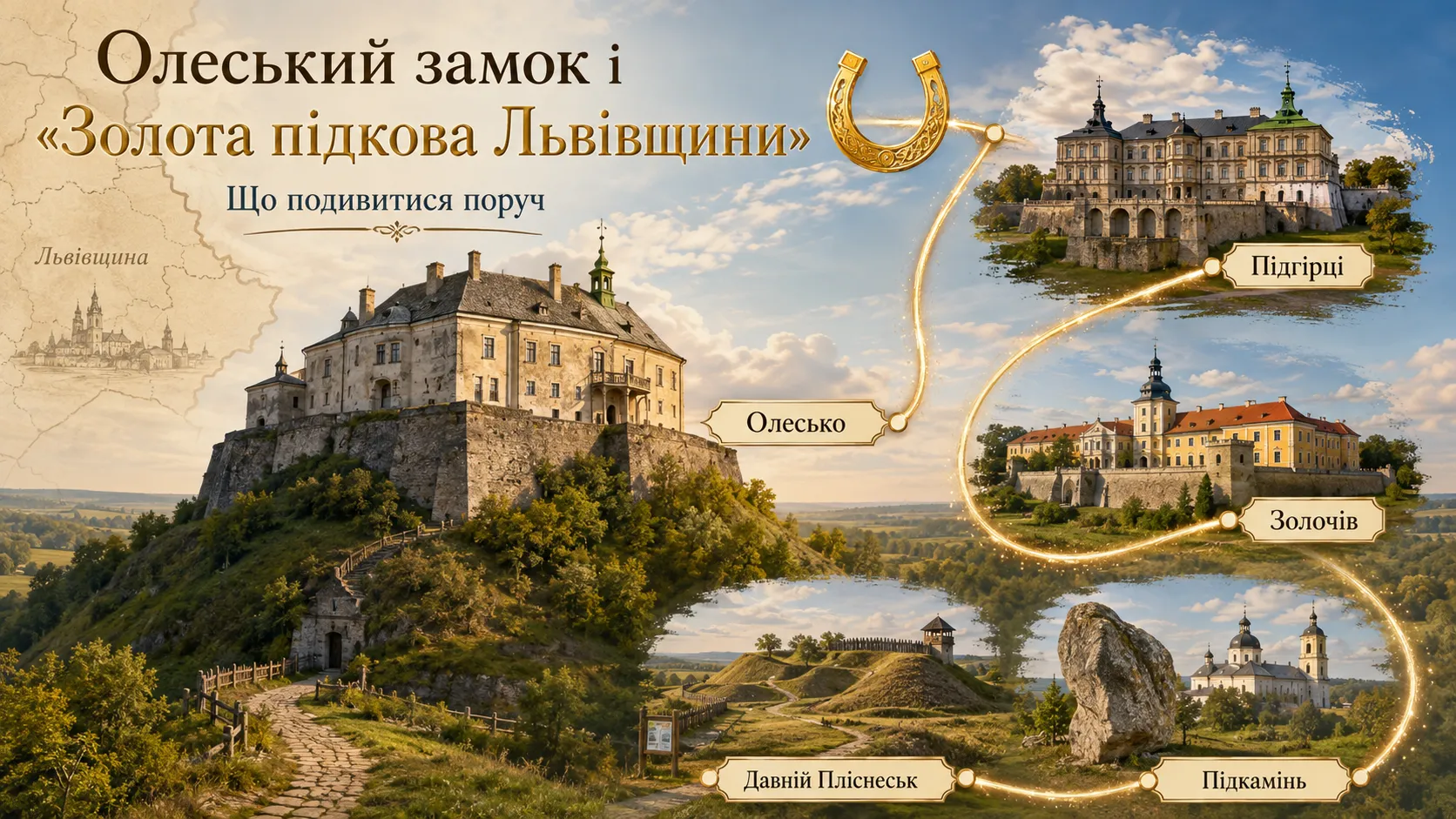
Olesko Castle is best visited not as a standalone tourist attraction, but as part of a larger journey through the historic Lviv region. Together with Pidhirtsi and Zolochiv castles, it forms the traditional core of the famous tourist route known as the «Golden Horseshoe of Lviv Region»—one of the region’s best-known castle routes.
Interestingly, the three main castles are not alike at all. Olesko retains the character of a compact old fortress with a rich museum exhibition, Pidhirtsi impresses with the scale of an aristocratic palace, and Zolochiv adds bastion architecture and an unusual Chinese Palace to the route. This difference is precisely what makes the journey interesting: after several hours on the road, you do not feel that you have seen the same fortress three times in different settings.
Pidhirtsi Castle—a palace unlike Olesko
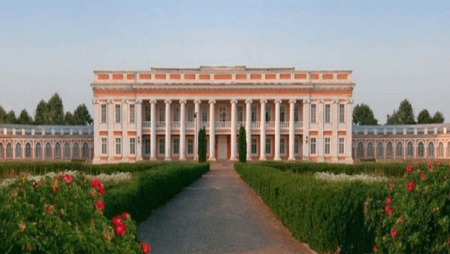
The most logical continuation of the journey after Olesko is the palace in Pidhirtsi. If Olesko Castle is primarily perceived as an old fortress, Pidhirtsi is an entirely different world: a grand aristocratic ensemble built on powerful bastion fortifications. It is worth setting aside time for more than just the façade. The complex includes a park, bastions, avenues, and the monumental Church of St. Joseph. Some of the palace’s interior rooms are also used today for museum exhibitions and displays.
Pidhirtsi is especially interesting after Olesko: the two neighboring residences vividly show how differently aristocratic architecture could look in the same historical era.
Zolochiv Castle—the Grand Palace and Chinese Palace
The third main stop on the route is the castle in Zolochiv. It is also surrounded by bastion fortifications, but inside, visitors encounter a completely different composition—the Grand Palace and Chinese Palace. The Grand Palace houses a museum exhibition, while the small Chinese Palace is now associated with a collection of Eastern art. This part of the complex particularly distinguishes Zolochiv from the other castles on the route.
If you start your journey in the morning, the sequence Olesko Castle → Pidhirtsi Castle → Zolochiv Castle works well for a one-day road trip. But there is no need to rush: if you plan to visit the museums, take photographs, and walk around the grounds, the three major sites can easily fill an entire day.
«VeloPidkova»—the Golden Horseshoe of Lviv Region by bicycle
In 2026, the classic route gained another format—the «VeloPidkova» tourist cycling route. It is approximately 58 km long and directly connects Zolochiv, Pidhirtsi, and Olesko castles.
For a cycling trip, this is more than simply traveling between three museums. The road runs through hills, small settlements, and quiet local roads, making the journey itself part of the tourist experience. This option is better suited to travelers who want to combine historic landmarks with active recreation.
What else to visit near Olesko Castle
If your trip is not limited to one day, the route can easily be extended with several other locations. They do not belong to the traditional core of the «Golden Horseshoe,» but they complement a journey through the Lviv region well. Near Pidhirtsi lies the «Ancient Plisnesk» Historical and Cultural Reserve—an archaeological complex where you can see the remains of fortifications and learn about settlements that existed here long before the appearance of Baroque palaces.
Another possible destination is Pidkamin, with its enormous stone outcrop, monastery complex, and panoramic views. This is a completely different type of location, so after several castles, a stop here provides a welcome change of pace.
Frequently asked questions about Olesko Castle
Where is Olesko Castle located?
Olesko Castle is located in the settlement of Olesko, Zolochiv Raion, Lviv Region, approximately 70–75 km from Lviv. Museum address: 30 Zamkova Street.
Can you go inside Olesko Castle?
Yes. Inside, there is a full-fledged museum with collections of iconography, paintings, aristocratic portraits, Baroque sculpture, old printed books, and decorative art. The museum exhibition itself is one of the main reasons not to limit your visit to viewing the castle from the outside.
What are the opening hours of Olesko Castle?
As of 2026, the museum is open Wednesday to Sunday from 10:00 to 18:00, with the ticket office open until 17:30. Monday and Tuesday are days off. Before your trip, it is worth checking the current schedule on the museum’s official website.
How much does a ticket to Olesko Castle cost?
As of 2026, an adult ticket costs UAH 200, a student ticket costs UAH 150, and tickets for children and pensioners cost UAH 100. Family tickets and separate guided tours are also available.
How much time is needed to visit Olesko Castle?
For a full visit, you should allow approximately 2–3 hours. This is enough time to see the museum exhibition, inner courtyard, and architecture, and enjoy a leisurely walk through the park near the castle.
How do you get to Olesko Castle from Lviv?
By car, the most convenient route from Lviv is the M-06 Kyiv–Chop highway toward Brody and Rivne. The journey takes approximately 1–1.5 hours. You can also reach Olesko by buses traveling toward Brody, Zolochiv, Rivne, or Lutsk.
Is it true that Olesko Castle was completely destroyed and rebuilt?
No. In the mid-20th century, the castle was indeed in very poor condition, and the fire of 1951 destroyed the wooden ceilings, floors, and part of the roof. However, the historic stone walls and the castle’s main structure survived. During the major restoration, lost elements were restored rather than building a modern copy from scratch.
Which castles can be visited together with Olesko Castle in one day?
The most convenient combination is Olesko, Pidhirtsi, and Zolochiv castles. Together, they form the traditional core of the «Golden Horseshoe of Lviv Region» tourist route. For all three castles, it is best to plan a full day and leave Lviv in the morning.
Olesko Castle — a fortress that survived its own history
It is easy to underestimate Olesko Castle if you see it merely as another old fortress in Lviv Region. It does not overwhelm you with its size, have dozens of towers, or try to compete with the grandeur of large palace residences. Its strength lies elsewhere — in the feeling of real history that has literally remained in the stone here.
Over the course of several centuries, this small castle has been a defensive stronghold, an aristocratic residence, and the birthplace of a future king. It has survived wars, an earthquake, a fire, a long period of decline, and even a time when it might simply have been dismantled for building materials. Today, visitors once again walk behind its walls, a museum operates there, and works of art are preserved that tell the story not only of Olesko, but of an entire era of old Galicia.
The castle is especially fascinating after you have seen old drawings and photographs. Comparing its present-day appearance with the works of Jean Henri Müntz, 19th-century engravings, or photographs of the half-ruined fortress from the mid-20th century, you begin to see the neat roofs, restored halls, and well-kept park in a completely different light. Then it becomes clear that what we see today was not a guaranteed outcome of history. Olesko Castle might simply not have survived to our time.
That is why it is worth coming here not only for the museum exhibition or a beautiful photograph against the old walls. Walk through the inner courtyard, linger by the exhibits, descend into the park, and spend at least a few minutes looking at the castle from the foot of the hill — just as travelers did two hundred years ago.
And if, after that, Olesko Castle seems a little smaller than you imagined before the trip, do not rush to be disappointed. Sometimes the scale of history has nothing to do with the size of a fortress. In the case of Olesko, this rule works almost perfectly.

No Comment
You can post first response comment.