
 English
 Українська
 Latviešu
 Lietuvos
 Русский
 Slovenščina
 Español
 Svenska
 Türkçe
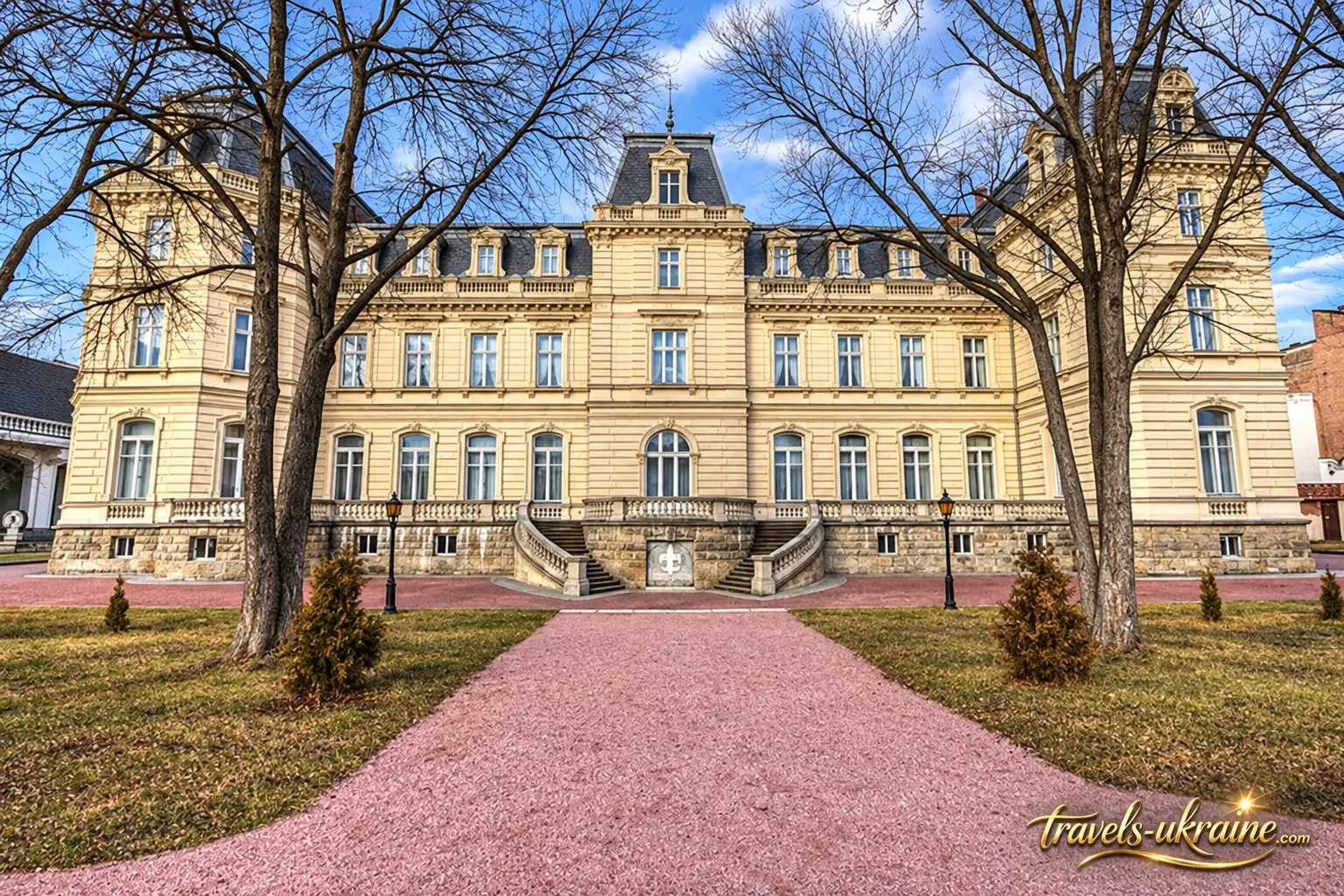
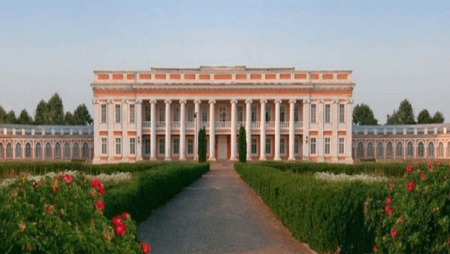
In the center of Lviv, there is a place where the city seems to forget its narrow townhouses, cobblestones, and medieval courtyards for a few minutes and decides to be a little Paris. With its grand gates, spacious courtyard, French-inspired façade, and lavish salons, Potocki Palace looks nothing like most of Lviv’s historic buildings.
It was not built as a cozy family home where someone could wander into the kitchen in slippers for an evening cup of tea. It was meant to be an aristocratic residence capable of explaining to a guest from the very first moment exactly whose home they had arrived at. The enormous courtyard was designed for carriages; beyond the doors, guests found an enfilade of grand salons, marble fireplaces, mirrors, gilding, and interiors in which the word «modesty» clearly had no place in the design brief.
But the most interesting part begins when you stop seeing the palace simply as a beautiful backdrop for photographs. Here, you can literally trace how a great aristocratic residence functioned: where guests were received, why there were several salons, where balls and banquets were held, and why even the color of a room could reveal a great deal about its purpose.
There is also a small trap. When you see an old table, chair, or cabinet, it is very easy to assume that the Potockis actually dined or wrote letters there. In reality, not everything now displayed in the palace interiors belonged to the former owners. A significant part of the furniture and decorative objects comes from the collections of the Lviv National Art Gallery and helps recreate the atmosphere of the era. But among the palace’s own decorations, some objects remain that truly remember its inhabitants.
Today, Potocki Palace is part of the Lviv National Art Gallery, so the second floor also houses a large collection of European paintings. But we are not going to turn this article into a catalogue of two hundred names. Even if you are the kind of person who starts studying the «Exit» sign more closely after the third museum gallery, there are several works and details here that are genuinely worth pausing for.
Nor did the palace’s life end with the Potockis. Over the following decades, it took on several roles, hosted newlyweds, appeared in films, found itself alongside Lviv’s ambitious transport projects, and eventually became one of the city’s best-known museum spaces. So we will not memorize the Potocki family tree or count all the architectural styles on the façade. Instead, let us explore the palace as an ordinary traveler sees it: starting at the gates, looking into the salons, figuring out what is authentic, choosing the most interesting works of art, and finding out whether it is worth going inside at all if museums are not your greatest passion.
What Potocki Palace Tells You Before You Even Step Inside
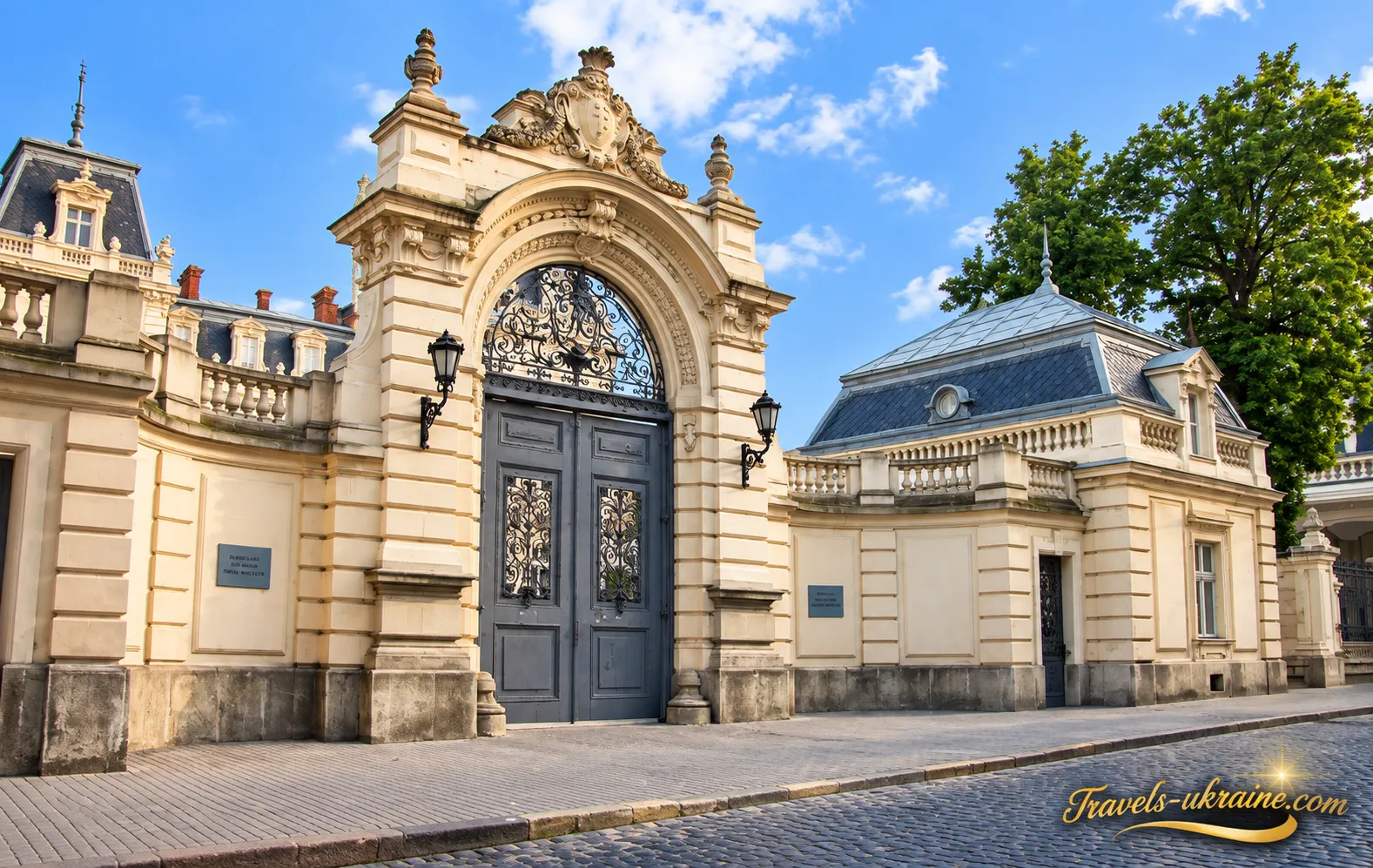
There is one typical tourist mistake at Lviv’s Potocki Palace: seeing the beautiful façade, taking a photograph by the gates, and heading straight inside. Don’t rush. The complex begins telling you about its owners before you even touch the door handle. Almost every detail served one simple idea: guests were meant to understand where they had arrived before meeting the owner. The spacious courtyard, tall wrought-iron gates, comital symbols, and French character of the façade were not merely attractive decoration but part of a carefully planned ceremonial scenario.
Start at the Gates: The Potockis Signed Their Palace at the Entrance
The first thing worth noticing is the tall wrought-iron gates of Potocki Palace. Their decorative design features the monogram of Alfred II Potocki and a count’s crown. This is one of those details that is easy to miss if you look only at the building from a distance.
Today, the monogram may seem like nothing more than a beautiful metal ornament. In the 19th century, its meaning was much more obvious: this was the private residence of a man who did not need to hang a sign saying «owner of the palace.» A crown above the initials was quite enough.
The fence itself also deserves attention. It does not hide the palace behind a blank wall; on the contrary, it allows the building and spacious ceremonial courtyard to be seen from the street. The residence was not meant to be concealed from the city. Everyone was meant to see it. Small service rooms for guards were provided on both sides of the entrance. This is a good reminder that the grand gates were not a decorative entrance for tourist photographs but a real, controlled entrance to a private aristocratic residence.
Why Did the Potockis Need Such a Large Courtyard?
After the gates, take a look at the space in front of the main façade. For central Lviv, the courtyard seems suspiciously large. And that is no coincidence. According to the Lviv National Art Gallery, it was planned so that eight carriages could pass one another freely at the same time. In the Potockis’ day, this was not an architectural whim but a practical necessity. Dozens of guests might arrive for a reception, and the ceremonial courtyard had to function much like a well-organized drop-off area outside a large hotel does today. Only instead of taxis, there were horses, carriages, and coachmen.
A guest would be driven to the palace and get out by the grand entrance, while the carriage had to quickly clear the way for the next one. If half of Lviv’s aristocracy was invited for the evening, parking suddenly stopped being an exclusively 21st-century problem. The courtyard is also the best place to appreciate the main façade. There is no need to immediately identify the names of every architectural element. It is far more important to see the overall concept: this is neither a fortress nor a traditional urban townhouse, but a ceremonially designed residence with the character of a country estate, effectively inserted into Lviv’s urban fabric.
Why Does Potocki Palace Look Slightly «Un-Lviv-like»?
Even without an education in architecture, it is easy to notice that this historic palace differs from Lviv’s typical historic buildings. Researchers are not wrong to call it one of the city’s most French-in-character palaces. The reason is fairly straightforward: the original design was created by the Parisian architect Louis d’Auvergne. The building was meant to resemble French aristocratic residences and reflect the status of the Potocki family. In Lviv, the project was carried out by local architects and craftsmen, including Yulian Tsybulsky and Ludwik Baldwin-Ramult, while Lviv specialists worked on the decorative design.
So what we have here is an interesting architectural compromise: the concept is distinctly French, while the execution is largely Lviv-made. You could say that the Potockis ordered themselves a little Paris, just without the Eiffel Tower, but local craftsmen assembled the marvel.
The main façade does not try to impress with medieval towers or excessive height. Its effect is built differently: symmetry, large windows, decorative stonework, balustrades, sculptural elements, and the grandeur of the composition as a whole. This is architecture designed not to frighten but to display the owner’s taste, wealth, and position.
Don’t Forget the Garden Behind Potocki Palace
The ceremonial courtyard was only half of the ensemble. Behind the residence was a French formal garden with flowerbeds and rare tree species. It was meant to extend the palace outdoors: geometry, order, ornament, and the ability to stroll without leaving one’s own grounds. The garden has not survived in its original form, but the area behind the palace remains an important part of the complex. And there is one botanical detail that is easy to miss even after carefully examining all the comital monograms.
One of the central avenues is home to a metasequoia that the Lviv National Art Gallery calls the only one in Lviv. The tree is interesting in itself because metasequoias were known for a long time only from fossil remains and were considered extinct until living trees were discovered in China in the 20th century. So on the grounds of Potocki Palace, you can find not only French architecture and a comital crown but also a tree with a biography that would make some museum exhibits jealous.
Put it all together—the monogrammed gates, comital crown, broad carriage courtyard, French façade, and garden—and it becomes clear that the palace’s exterior was effectively the first part of a grand reception. The guest had not yet entered the building, but the residence had already communicated almost everything necessary: its owners were wealthy, well acquainted with European fashion, accustomed to receiving many guests, and clearly had no intention of economizing on impressions.
But the real aristocratic logistics began beyond the doors. A beautiful façade was not enough for the Potockis—the interior contained an entire system of salons, each with its own purpose. This is where you can best see how Lviv’s aristocracy actually lived and received guests at the end of the 19th century.
How the Potockis Lived: What Were All These Salons For?
As soon as you enter Potocki Palace, it becomes clear that the ordinary «hallway—living room—kitchen» arrangement was nowhere near sufficient. A large aristocratic residence operated by entirely different rules. Guests had to be welcomed, led through the grand rooms, seated somewhere for conversation, fed somewhere else, and perhaps provided with music—or enough space for dancing. That is why the palace’s first floor is arranged as an enfilade of salons—a series of rooms whose doors face one another and create a long, uninterrupted perspective. When all the doors are open, the rooms literally form one grand ceremonial route.
For a modern apartment, such a number of doors might seem like excessive design. For the Potockis, it was part of the reception scenario: a guest did not simply enter the house but gradually moved from one space to another, with each successive room having its own character.
The Reception Salon: Where the Introduction to the Hosts Began
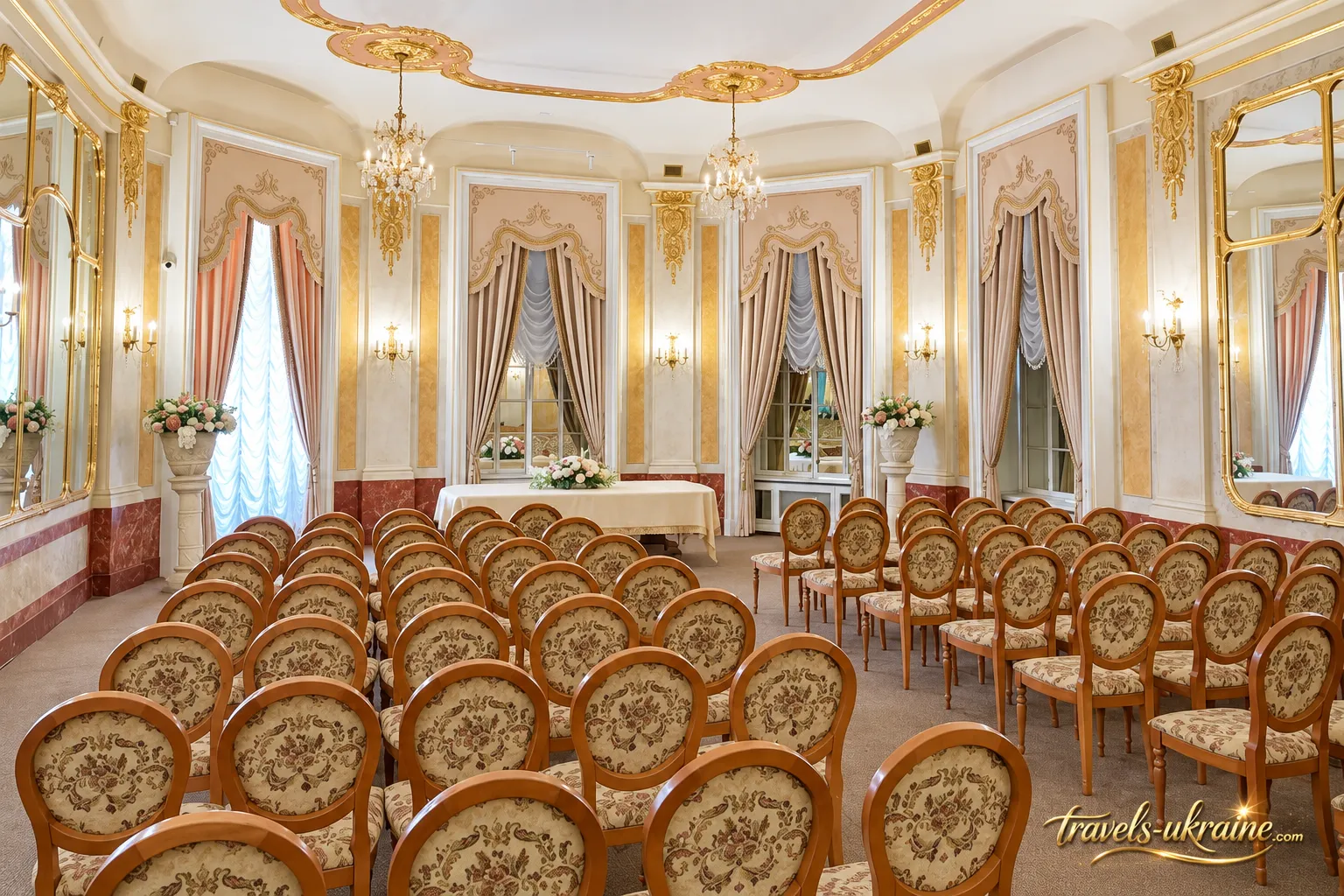
One of the first grand rooms was the Reception Salon, with access to the terrace. Today, it is easy to recognize by its light decoration: old-ivory-colored panels, white ornament, and golden silk wallpaper create a very airy, almost French atmosphere. The name itself explains the room’s function well. It was a space where a guest could be received without immediately being admitted to every other part of the residence.
In a large aristocratic house, a guest’s status mattered. Not everyone who crossed the threshold automatically received a full tour of the owners’ private rooms. The palace allowed such questions to be handled very discreetly through architecture: the farther you were led along the enfilade, the more of the residence was opened to you.
The Green Salon: A Room That Still Serves a Ceremonial Purpose
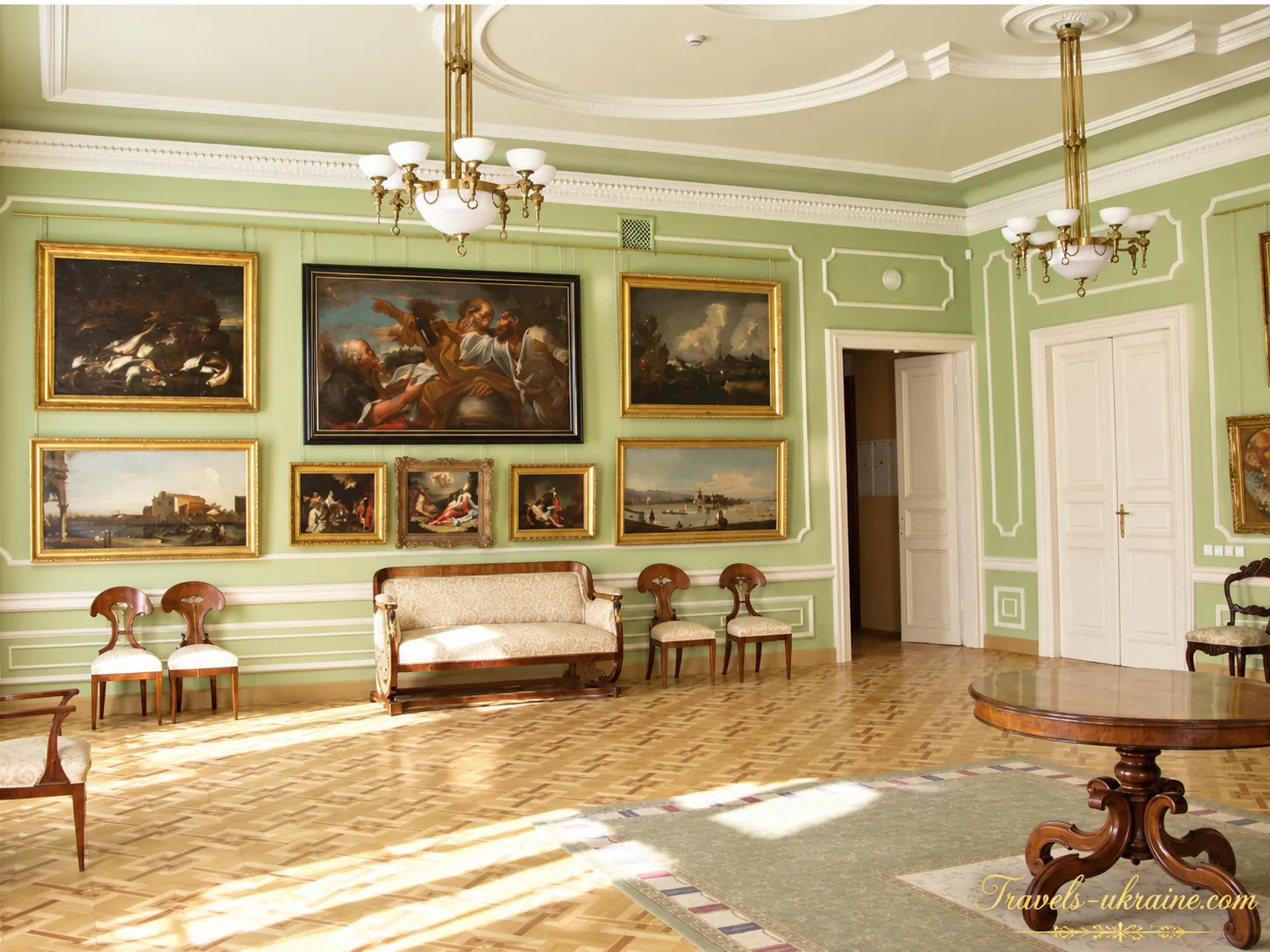
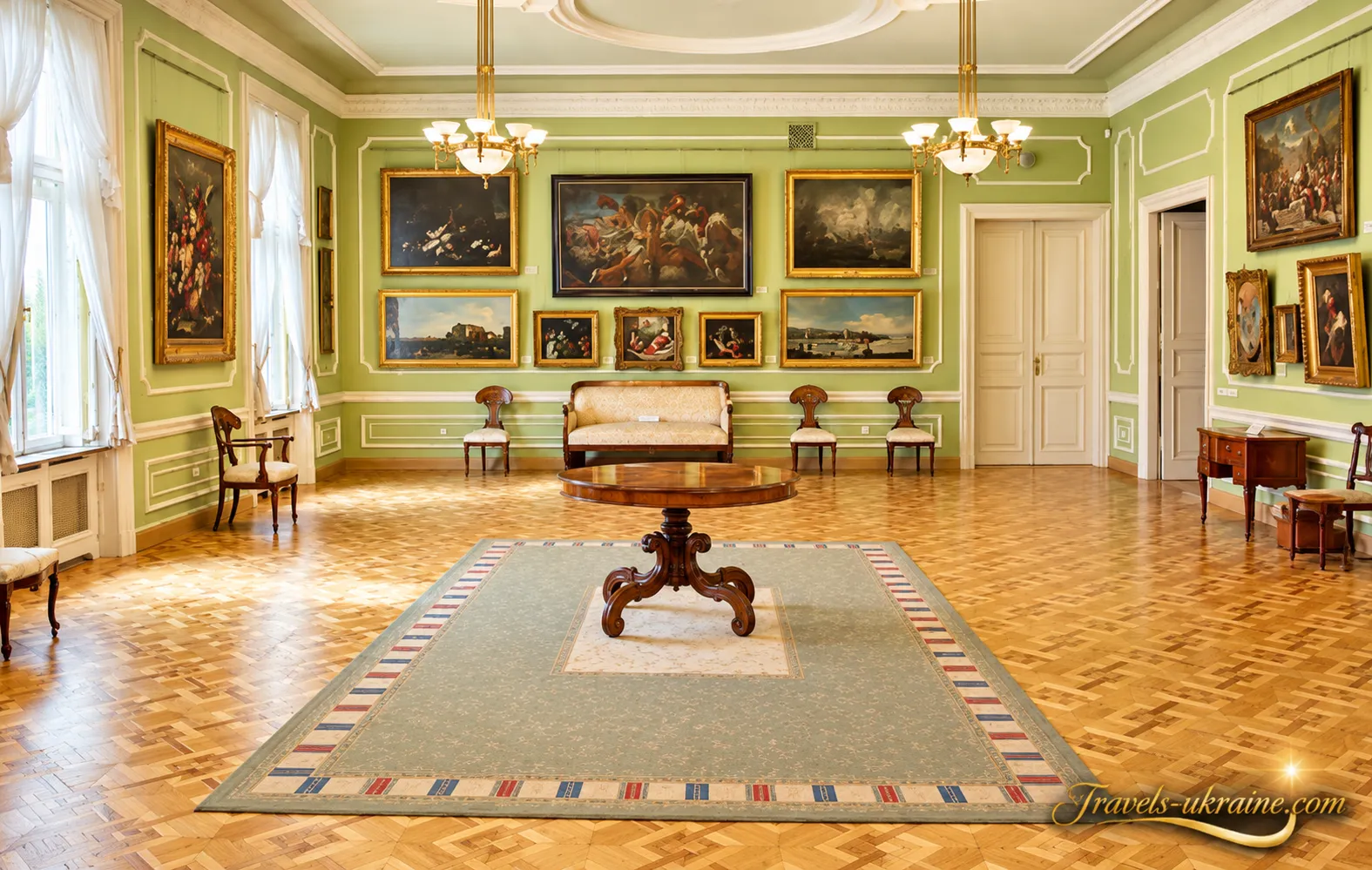
The next interesting space is the Green Salon. It contains one detail that is easy to miss: a concealed door built into the decorative wall treatment. Particularly interesting is the fact that the room has not become merely a museum set. According to the Lviv National Art Gallery, high-level meetings are still held in the Green Salon.
In other words, a room created for ceremonial life at the end of the 19th century continues, more than a hundred years later, to perform much the same role. The costumes, political maps, and ways in which guests arrive have changed, but the need to seat important people in a beautiful room has remained remarkably stable.
The Red Salon: When Music Needs a Room of Its Own
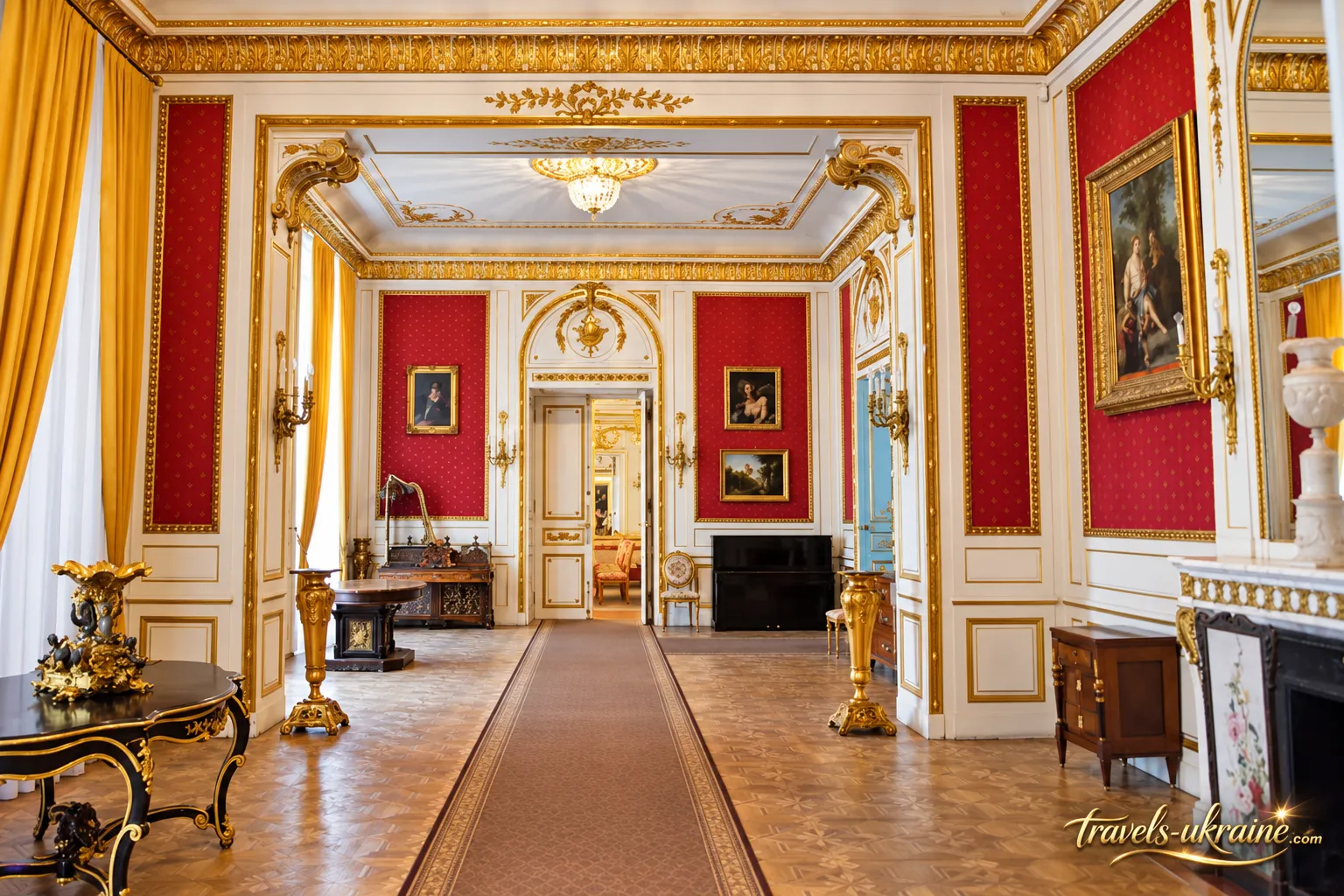
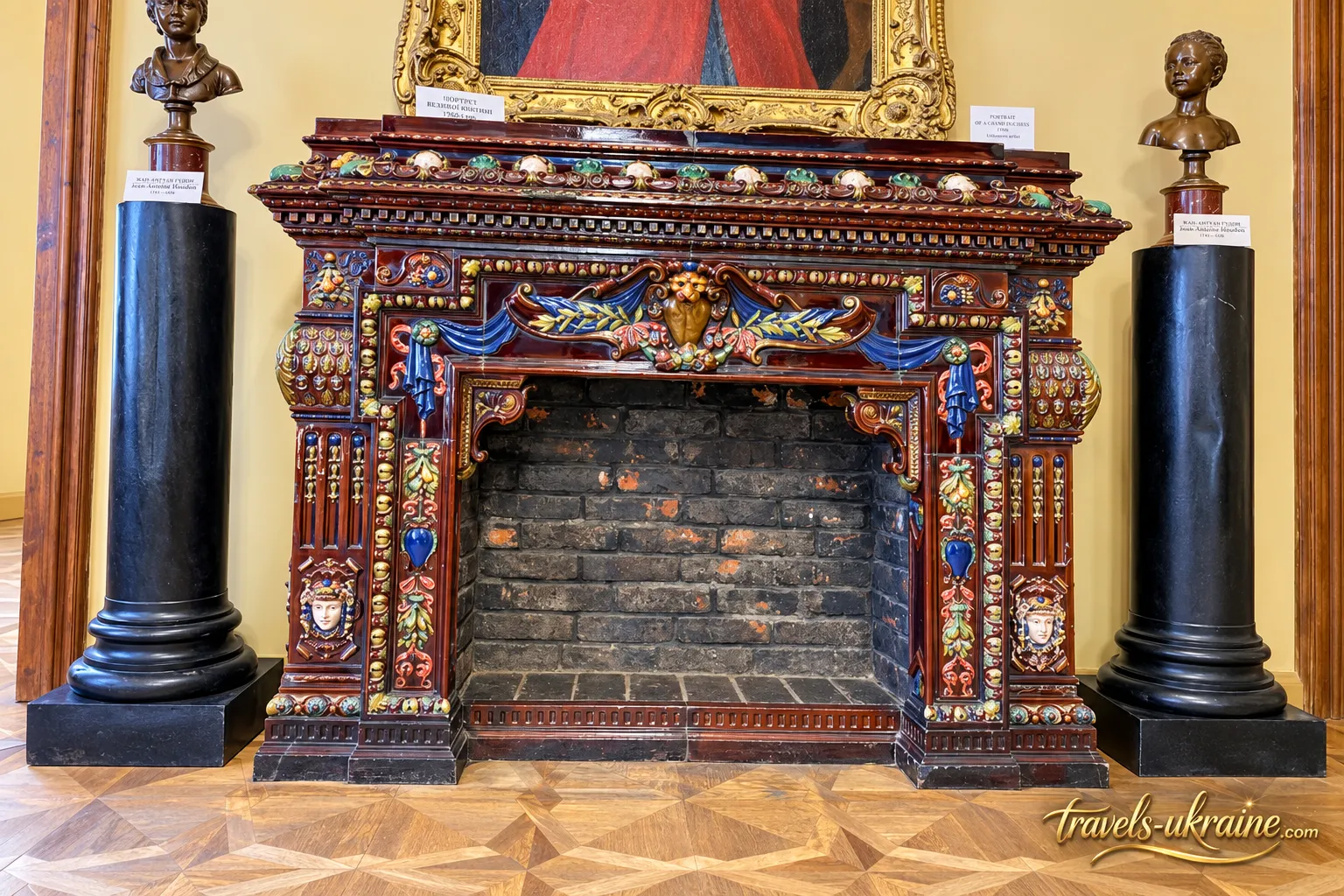
The Red Salon also had another name—the Music Salon. This already explains quite well why the palace needed so many different rooms. Today, the main attraction here is the fireplace made of white Carrara marble, enhanced with copper decorative elements, along with the rich gilded stucco. The interior leaves little chance of mistaking this room for a service office.
Music in an aristocratic home was part of social life. A chamber concert did not mean that someone had placed a speaker beside the sofa and asked guests to squeeze together. There was a separate salon for that, where the space, furnishings, and acoustics were all designed to create an entirely different atmosphere. Rooms like these clearly reveal the main difference between a grand palace and simply a very expensive house: here, different forms of leisure had their own dedicated spaces.
The White Salon: when guests came not to sit, but to dance
The most striking room on the ground floor could be considered the White, or Ballroom Salon. Its purpose requires no complicated explanation either. Light-colored walls, large mirrors in ornate bronze frames, gilded stucco, and decorative motifs featuring musical instruments create precisely the image of a palace interior that usually comes to mind at the words «aristocratic ball.»
And here, it is important to look not only at the décor but also at the space itself. The ballroom had to accommodate a considerable number of people while leaving enough room for dancing. This was a space where architecture effectively served as a stage for social life. In the evening, carriages arrived at the palace, guests passed through the ceremonial rooms, music played, and the White Salon became one of the main centers of the reception. After that, the modern question «where can we put two more chairs for the guests?» seems rather modest.
The Turquoise Salon: after the dancing, everyone still had to be fed
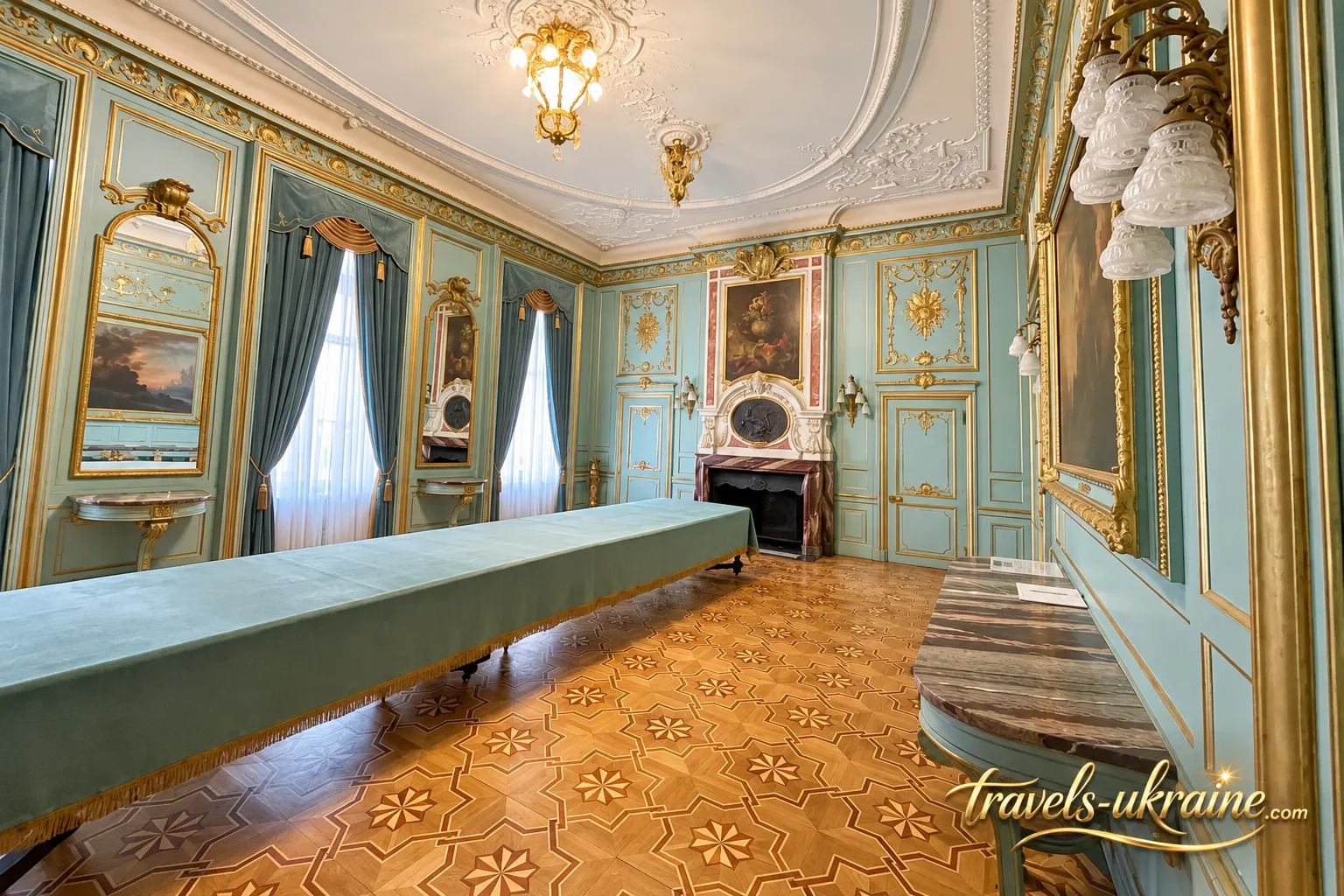
One of the most distinctive interiors is the Turquoise, or Banquet Salon. Even the theme of the décor changes here: the walls and ceiling are decorated with motifs of hunting, fishing, and nature’s bounty. This design is not accidental. The room was associated with banquets, so its decorative scenes literally evoked food, hunting trophies, and the owners’ prosperity.
The jasper-and-marble fireplace is particularly impressive. Beside it hangs «Still Life with Flowers and a Red Parrot», which deserves special attention if only because, according to the Gallery, the Potockis themselves admired it. And this is where the palace begins to work in an entirely different way. We are no longer looking at an abstract «nineteenth-century interior,» but at a specific room where people dined, received guests, and saw some of the very same decoration that we are looking at today.
There was far more to the palace than five beautiful salons
The ceremonial rooms are only the most visible part of the residence. According to the Lviv tourism portal, the building contained about 102 rooms. In addition to the grand salons, there were offices, private rooms, bedrooms, and service areas. In other words, the Potocki Palace should not be imagined as a collection of museum halls, but as a complex organism. The ceremonial floor existed for guests and social life, the private areas for the family, and somewhere behind those beautiful doors, an entire household system had to operate—without which all that aristocratic elegance would very quickly have been left without heating, food, and clean dishes.
This is what makes a walk through the salons more interesting. Once you know their purpose, the White Hall stops being merely «a beautiful white room,» the Red one «a red room,» and the Turquoise one just another place for a photograph. A whole scenario of life in a grand residence takes shape before you: a guest arrived, was escorted onward, conversation followed, music was heard, dancing took place, and everyone moved on to the banquet.
There is, however, one detail that is easy to forget while looking at the furniture and décor: not everything currently found in these salons belonged to the Potockis. The family took some of the furnishings away from Lviv, while the present-day atmosphere was recreated by museum staff using objects from the Gallery’s collections. And this is where perhaps the most intriguing game inside the palace begins—trying to work out what genuinely witnessed the Potockis and what appeared here much later.
What remains authentic in Potocki Palace
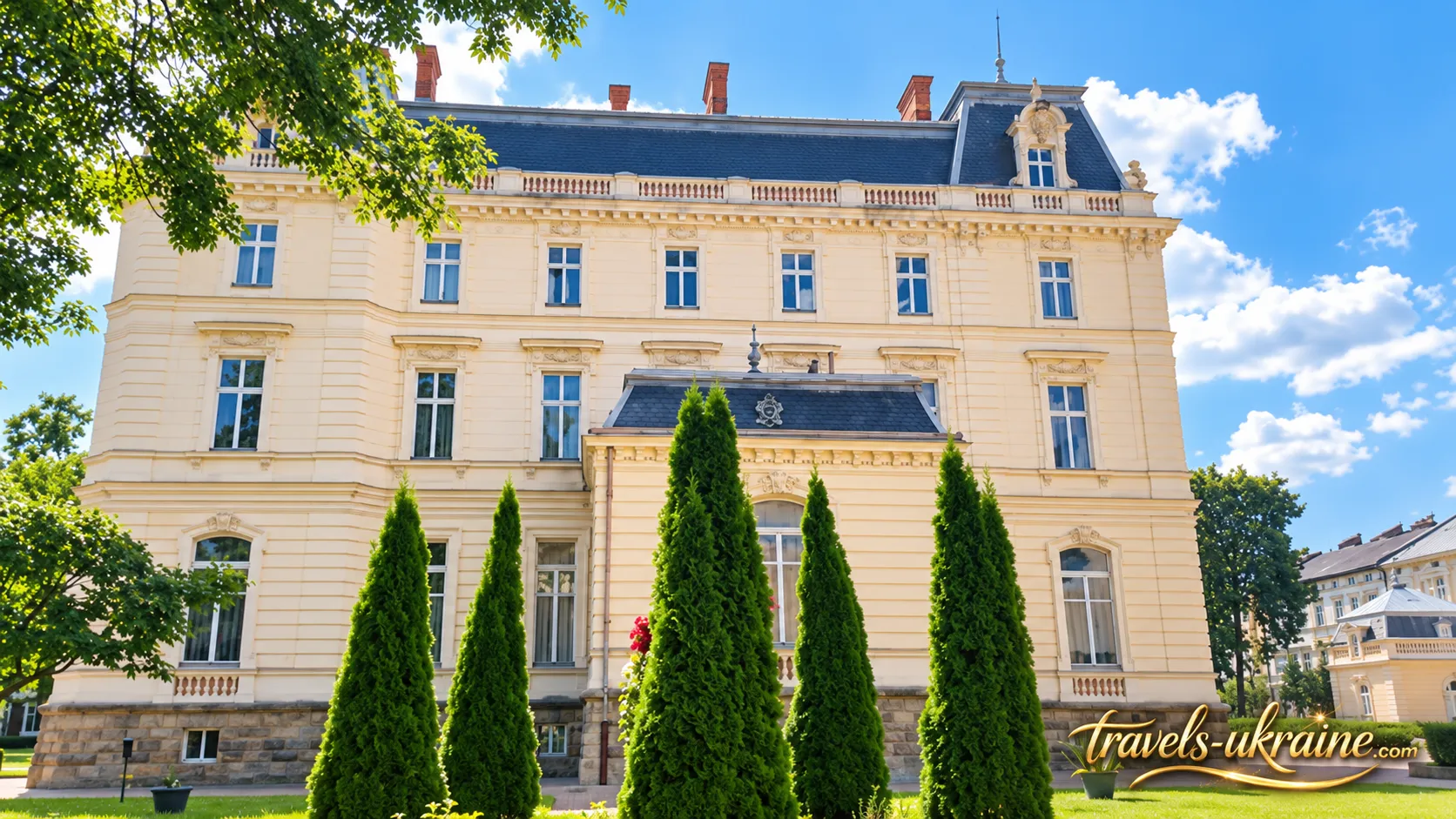
In old palaces, the tourist imagination often works very simply: if there is an antique table in front of us, the count must have dined at it; if we see an armchair, he probably read the newspaper there; and if there is a wardrobe nearby, then family secrets are almost certainly hidden somewhere inside. At Potocki Palace, everything is a little more complicated—and therefore even more interesting.
When the Potocki family left the palace, a significant portion of the original furniture, paintings, and movable property was taken away. So the present-day arrangement of the ceremonial salons should not be viewed as a frozen photograph of the nineteenth century. Furniture suites, paintings, and decorative arts were selected from the collections of the Lviv National Art Gallery to recreate the atmosphere of an aristocratic residence of the late nineteenth and early twentieth centuries. In other words, an armchair may be entirely genuine and antique, but that still does not mean Alfred Potocki personally left a dent in it.
The most valuable thing here is the architecture of the interiors themselves. Marble fireplaces, decorative wall treatments, stucco, mirrored compositions, doors, and part of the flooring belong to the environment created for the residence’s owners. The fireplaces deserve particular attention. The Red Salon retains a striking fireplace made of white Carrara marble with copper decorative appliqués, while the Turquoise Salon has a jasper-and-marble fireplace. These are not objects brought in by museum staff to create the right mood. They are part of the palace itself.
Another detail that is easy to overlook is the original oak parquet preserved in one of the rooms. Against a backdrop of gilded stucco and large paintings, the floor rarely becomes the main subject of photographs, yet it is one of the details that literally remembers the footsteps of the residence’s inhabitants and guests. And this makes the visit more intriguing: instead of asking «what is beautiful here?» you can ask another question—«what I am looking at now might the Potockis have touched?»
The painting with the red parrot that the palace owners themselves saw
In the Turquoise Salon, beside the richly decorated fireplace, hangs «Still Life with Flowers and a Red Parrot.» This is a special case. The Lviv National Gallery explicitly states that the Potockis themselves admired this painting. So we are not simply looking at an old canvas chosen to match the color of the walls, but at an object connected with the life of the palace itself.
These are precisely the things I would recommend looking for first. There is a major difference in feeling between «a seventeenth- to nineteenth-century painting now hanging in an old palace» and «a painting that was already part of this interior during its owners’ time.» And, oddly enough, the parrot does a surprisingly good job as a time machine.
The palace after the Potockis: a registry office, cinema, airplane, and a metro that never happened
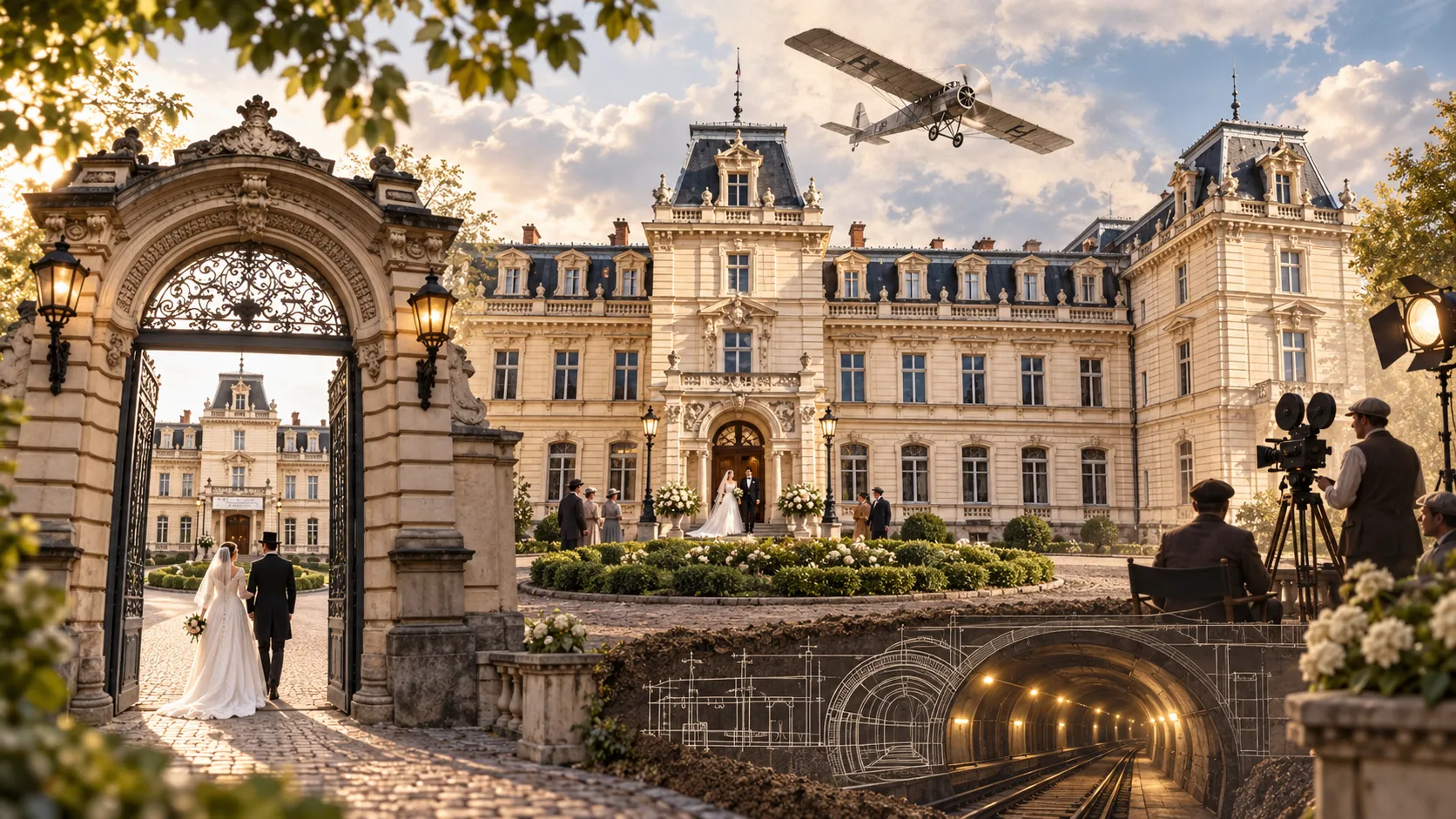
It would be logical to assume that after the Potocki era, life in the palace gradually became quieter: the owners left, the balls ended, the salons fell silent, and the building slowly turned into a museum. But the palace in Lviv is clearly not one of those buildings that enjoys a quiet biography. During the twentieth century, it served as a diplomatic residence, survived a plane crash, welcomed scientists and newlyweds, became a film set, and nearly acquired an underground transit station right next door. So after the counts’ receptions, the level of events here did not really decline—it simply changed genres.
An airplane at Potocki Palace—and this is no artistic exaggeration
One of the strangest stories happened back when the palace formally still belonged to the Potockis. In 1918–1919, the building housed the Barthélemy Mission—the representation of the Entente countries, which was based in Lviv during an extremely turbulent period for the city. And in 1919, the palace received a guest who certainly had not been on the invitation list.
During city celebrations, American pilot Edward Graves was performing aerobatic maneuvers in the sky. The flight ended in disaster: the airplane crashed into Potocki Palace. The damage was serious, and restoration of the building took many years—the repairs were completed only in 1931. So if you ever feel that modern tourists treat historic landmarks too carelessly, just remember: at the beginning of the twentieth century, an airplane literally crashed into this palace. The bar for carelessness was set remarkably high.
From 1975, Lviv residents began getting married at Potocki Palace
The palace’s next role proved much closer to its ceremonial character. In 1975, part of the building began to be used as the city Palace of Ceremonies—a civil registry office. And it must be admitted: it was a pretty good choice of venue for registering a marriage.
Marble fireplaces, grand staircases, mirrors, stucco, and former counts’ salons were far more convincing than a standard office with a potted plant in the corner. For many Lviv families, therefore, this palace is associated not so much with Alfred Potocki or French architecture as with their own wedding photographs.
This is an interesting chapter in the building’s life also because the palace effectively returned to ceremonial events. Instead of counts’ balls, there were weddings; instead of carriages, cars—but once again, these interiors filled with people in festive attire.
Potocki Palace as a film set
A place that looks so distinctly French was bound to attract filmmakers sooner or later. And it did. The palace interiors and grounds have repeatedly been used for film shoots. Among the productions in which the palace can be recognized, the official Lviv tourism portal names «The Attaché,» «The Mysterious Diary of Symon Petliura,» «Bishop Andrei,» and the legendary television film «D’Artagnan and the Three Musketeers.»
For a director, the advantage is obvious: instead of building expensive sets for an aristocratic residence, the camera can be brought to a place where marble, mirrors, tall doors, and a French façade have already stood for more than a century. For tourists, this offers another small amusement: after visiting the palace, they can watch old films more attentively and suddenly recognize a familiar salon or façade. Lviv has a talent for convincingly playing other cities on film, and Potocki Palace is clearly not the least important member of this cast.
How Lviv’s «metro» was almost built beside Potocki Palace
And now for a story that sounds as though it was added especially for a tourist guide. Toward the end of the Soviet period, Lviv planned a major transport project—a underground rapid tram, often called the «Lviv metro» in popular accounts. One of the underground sections was to run precisely in the area of Potocki Palace.
At the end of the 1980s, workers even created a shaft for future tunnels in the palace park. A service building for the construction work was erected nearby; it has survived to this day and is now used as a museum space. Then the construction began to resemble a scenario in which the architectural landmark clearly disagreed with the transport planners’ designs. According to the official Lviv tourism portal, after work began, the ground in the palace area began to subside, threatening to damage the buildings. The underground transport project was eventually abandoned.
So the complex never got its own metro station. Perhaps that is for the best: a French residence should of course be easily accessible to tourists, but an entrance to a tunnel directly beneath the ballroom would have been slightly excessive service.
In 2002, the palace finally found its calling as a museum
A major new stage began in 2002, when the architectural landmark was transferred to the Lviv Art Gallery. The ceremonial interiors began to be restored as a museum space, and the salons were filled with furniture, paintings, and decorative arts from the gallery’s collections.
Since 2007, this has been home to a permanent collection of European art from the 14th to the 18th centuries. At the same time, the palace remains a vibrant cultural space, hosting temporary exhibitions, lectures, presentations, and other events. Some salons are also used for official functions, so even today the building has not become a place where, after the museum closes, someone simply turns off the lights and leaves the exhibits waiting for the next morning.
This is one of the most fascinating features of Potocki Palace. In just over a century, it has taken on so many roles that they could have belonged to several separate buildings: an aristocratic residence, a diplomatic mission, a palace damaged by an air crash, a scientific institution, a civil registry office, a film set, a neighbor of the ill-fated underground tram, and finally a museum.
What to See Near Potocki Palace in Lviv
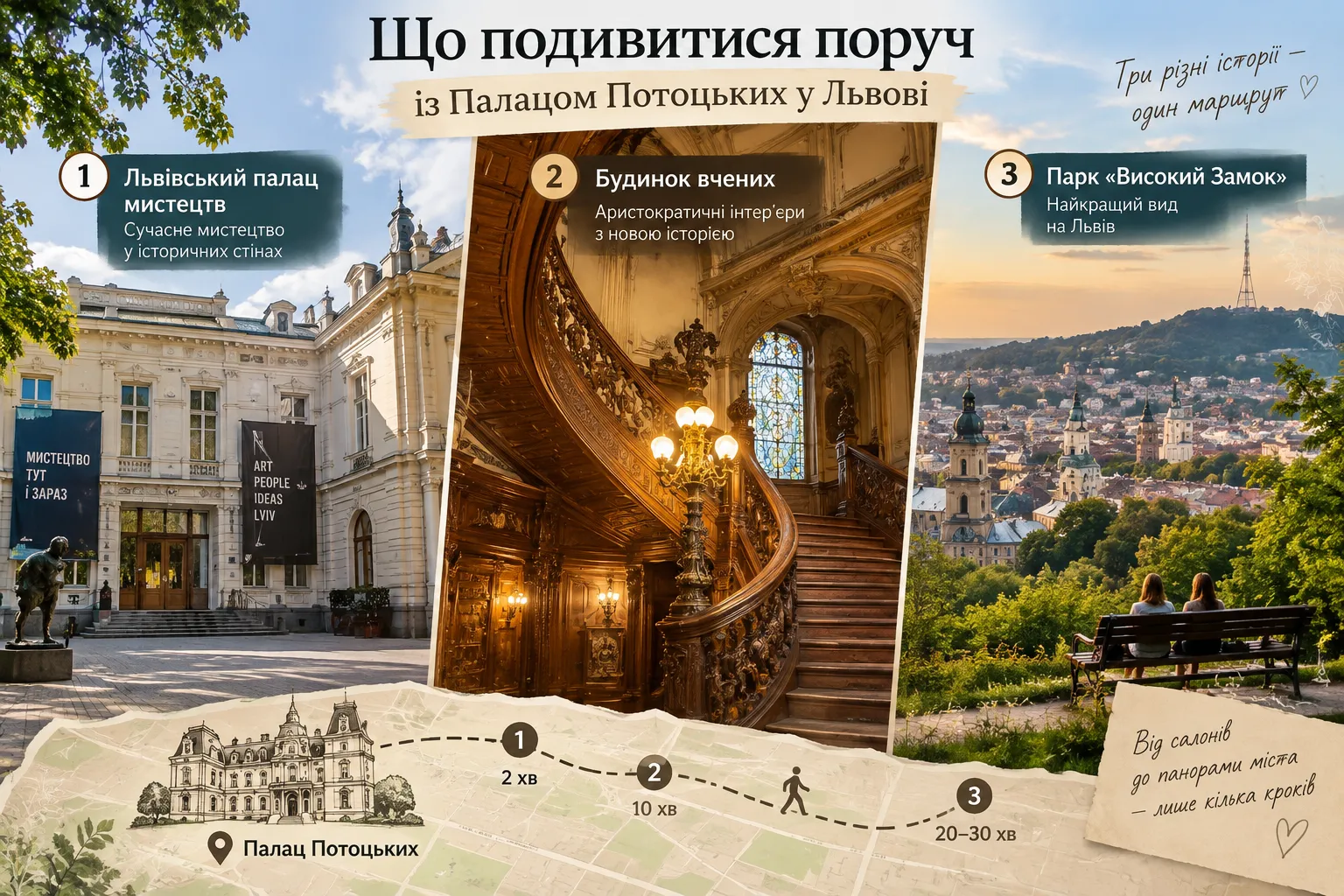
After Potocki Palace, you do not have to immediately switch into «where is the nearest coffee shop?» mode. You are already in central Lviv, and several nearby places make excellent additions to your walk without forcing you to run around the city with a map in your hands.
We are deliberately not going to compile a list of twenty Lviv attractions. For a single route, three locations with distinct characters are more than enough: a contemporary art space, another impressive aristocratic interior, and a place where, after all the salons and paintings, you can finally look out over Lviv from above.
Lviv Palace of Arts — Literally Next Door
The easiest way to continue the route is practically right next door, at 17 Kopernyka Street. Lviv Palace of Arts stands directly beside Potocki Palace, so there is no need to organize a separate expedition across the city. It is a large exhibition complex hosting contemporary art and sculpture exhibitions, festivals, concerts, film screenings, workshops, and other events throughout the year. As a result, the experience depends less on the building itself than on what is taking place there on the day of your walk.
And this creates a striking contrast with Potocki Palace. Just a few minutes ago, you were looking at marble fireplaces, counts’ salons, and European paintings from centuries past; now you may find yourself among contemporary installations or photography. It is worth checking the current program before your visit. After all, the art here changes much faster than the fireplace in the Potockis’ Red Salon.
House of Scientists — A Little More Aristocracy, but with a Different Character
If, after Potocki Palace, you would like to see another lavish interior, head to House of Scientists at 6 Lystopadovoho Chynu Street. It was once the Nobility Casino, a private club for Lviv and Galician elites. The two buildings make for a fascinating comparison. Potocki Palace was a private family residence, while the former casino was a place where the aristocracy came to socialize, be entertained, and show themselves to other members of their circle.
The best-known detail of House of Scientists is its enormous carved wooden staircase. It is so photogenic that it often becomes the main subject of photographs, even when visitors initially came to see the building as a whole. The interior also preserves spacious halls, mirrors, stucco, fireplaces, and rich decorative finishes. So if Potocki Palace has not quite satisfied your appetite for aristocratic luxury, you can easily get another helping here. It is also a great way to see two different sides of wealthy Lviv life: at the Potockis’, how aristocrats lived at home; at the Nobility Casino, how they spent their time away from home.
Vysokyi Zamok Park — The Best Change of Scenery after the Palace Salons
If, after paintings, mirrors, fireplaces, and carved staircases, you feel like getting some fresh air, you can finish the route in a completely different way—with a walk to Vysokyi Zamok Park. This is no longer a neighboring building, so you will have to walk a little farther through the city and uphill. But that is precisely why Vysokyi Zamok works so well as the final stop: after several hours amid historic buildings, you are rewarded with a panorama of virtually all of Lviv.
Despite its name, very little of the castle itself remains. Only a small fragment of the old fortifications survives on the hill, while the modern park consists of lower and upper terraces. The best-known part is the viewing platform on an artificial mound. From here, you can especially clearly see how compact Lviv’s historic center really is. Somewhere below are Potocki Palace, the old townhouses, and the streets you have just walked along, while an entirely different perspective of the city opens up before you. Besides, after several hours of museum culture, a short climb up the hill is a convincing reminder that a sightseeing program can exercise not only the brain, but the legs as well.
How to Plan Your Route after Potocki Palace
There is no need to visit all three places. If you are interested in contemporary art, stop by the Palace of Arts. If you want to continue exploring aristocratic interiors, choose House of Scientists. And if, after the museum, you simply feel like walking, Vysokyi Zamok is the best way to finish.
You can combine everything: Potocki Palace → Lviv Palace of Arts → House of Scientists → Vysokyi Zamok Park. But leave some time for Lviv itself. Between the tourist sights, you will often find something just as interesting: an old courtyard, an unfamiliar lane, a small coffee shop, or simply a façade where you unexpectedly spend more time than at the attraction you had planned to visit. And that is probably the best way to explore Lviv: have a route, but do not let it dictate your entire day.
Frequently Asked Questions about Potocki Palace in Lviv
Where is Potocki Palace in Lviv?
Potocki Palace is located in central Lviv at 15 Kopernyka Street. It takes approximately 10–15 minutes to walk there from Rynok Square, making the palace easy to add to a walk through the city center.
What are Potocki Palace’s opening hours?
According to the current schedule of the Lviv National Art Gallery, Potocki Palace is open Wednesday to Sunday from 10:00 to 18:00, with the ticket office open until 17:30. Monday and Tuesday are closed. It is worth checking the official website before your trip, as hours may change on holidays or during special events.
How much time is needed to see Potocki Palace?
Allow 45–60 minutes to see the ceremonial salons and several of the most interesting works. If you are genuinely interested in European painting, plan on an hour and a half or more.
Did all the furniture in Potocki Palace belong to the Potocki family?
No. The family took much of the movable property with them, so the modern furniture suites and decorative objects come primarily from the collections of the Lviv National Art Gallery. By contrast, the fireplaces, part of the parquet flooring, the stucco, doors, and architectural decoration are authentic elements of the palace itself.
What should you definitely see inside?
Above all, pay attention to the White Ballroom, Red Music Salon, and Turquoise Banquet Salon, as well as the old fireplaces, mirrors, and decorative finishes. On the second floor, take time to see Georges de La Tour’s painting «The Payment» and walk through several galleries of European art.
Can you take photographs in Potocki Palace?
The Gallery asks visitors to obtain prior approval from the administration for professional photography and video filming. The rules for personal photography may depend on the particular exhibition, so it is best to check with museum staff before taking pictures.
Is Potocki Palace suitable for children?
Yes, especially for older children who are already interested in interiors, history, or art. Several rooms in a row may feel lengthy for a young child, so it is better to focus on the most impressive salons rather than trying to see the entire exhibition down to the last painting.
Is it worth going inside if I do not like museums?
Yes, if you enjoy historic interiors and architecture. The ground floor is interesting even if you are not a great fan of painting: the main impression comes from the salons themselves, the fireplaces, mirrors, parquet flooring, and the atmosphere of the residence. You can explore the second floor selectively.
What can you see near Potocki Palace?
The most logical way to continue your route is via Lviv Palace of Arts, House of Scientists, or by finishing your walk in Vysokyi Zamok Park with its city panorama. All three locations offer completely different experiences, so there is no need to visit them all at once.
Is Potocki Palace Worth Adding to Your Walk Around Lviv?
The Potocki Palace complex is exactly the kind of place where a beautiful façade is not enough. From the street, it looks like an impressive aristocratic residence, but the building’s true character reveals itself only once you walk through its grand salons, see the old fireplaces, mirrors, and stucco ornamentation, and begin to understand what all these rooms were actually meant for. At the same time, you certainly do not have to be an art historian or someone capable of standing in front of paintings for hours. You can come here for something else: to see what life was like for Lviv’s aristocracy, walk through a genuine 19th-century residence, and spend an hour in a completely different Lviv.
What is especially fascinating is that the palace did not remain a preserved fragment of a single era. It outlived the Potockis, an aviation disaster, research institutions, Lviv weddings, film shoots, and even the construction plans for an underground tram nearby. That is why its history feels less like one completed chapter and more like the long biography of a building that was constantly given a new role. So if you have only a few minutes, step into the courtyard and take a close look at the façade. If you can spare an hour, go inside. The White Hall, old fireplaces, and enfilade of rooms will give you a far better understanding of the palace than any photograph taken from the street.
Good journeys are remembered not by the number of exhibits you have seen, but by a few powerful impressions. And Potocki Palace in the city of Lviv is more than capable of leaving you with one of them. If, after this walk, you feel like discovering Lviv more deeply, do not stop at its most famous squares and façades. Behind many doors, you will find palaces, historic interiors, courtyards, and buildings with their own strange stories. Discover the city gradually—room by room, street by street.




3 Response Comments
You can post first response comment.