
 English
 Українська
 Русский

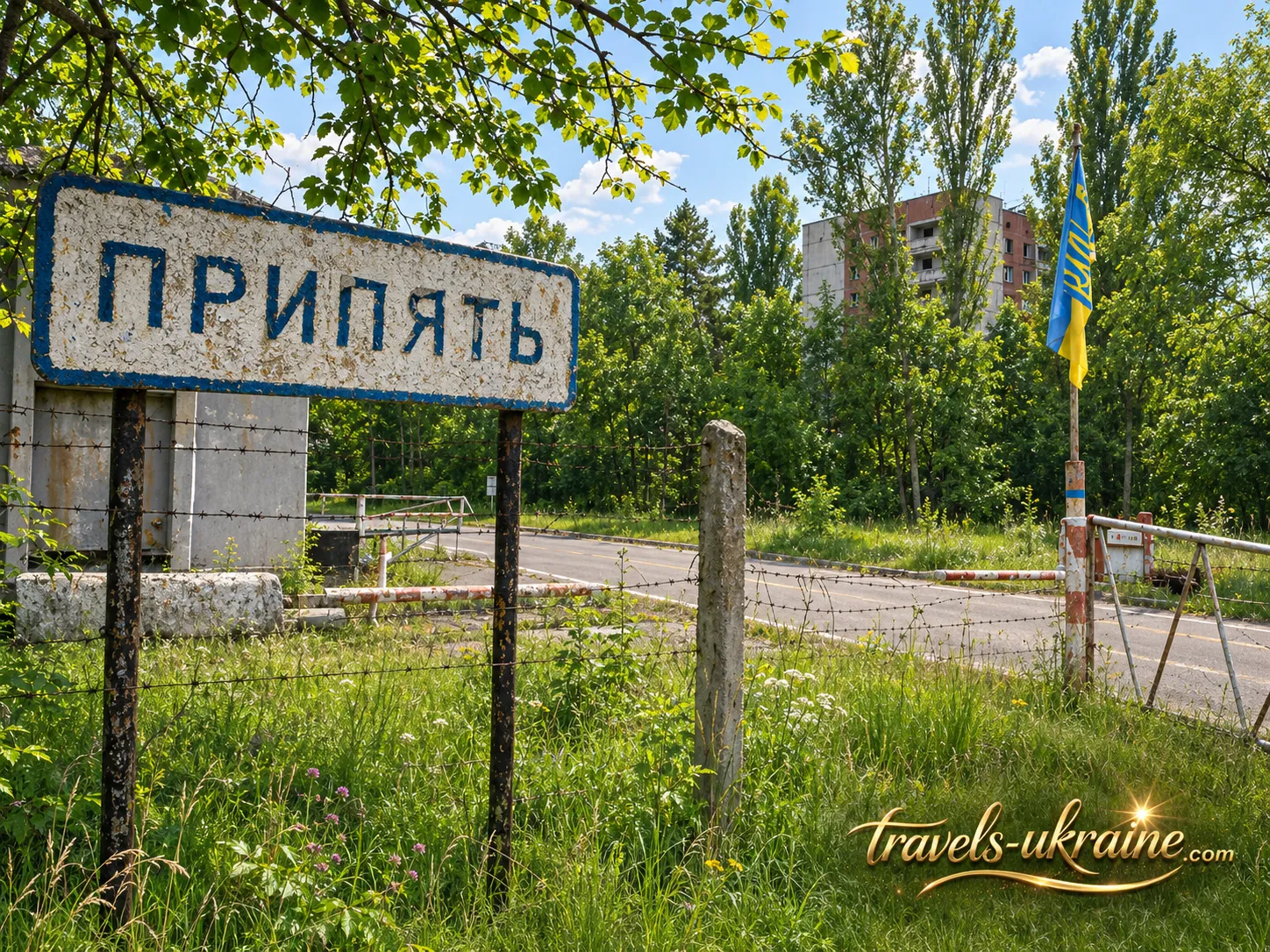
Some cities disappear from geographical maps, others gradually fall into decline, and some have their history brought to an abrupt end almost overnight. Pripyat — a city in the Chornobyl Exclusion Zone — became one of the most heartbreaking symbols of human tragedy in the 20th century. Once, life flourished here: children were born, plans for the future were made, and the streets were filled with laughter and ordinary everyday concerns. No one could have imagined that all of this would soon survive only in memories.
As recently as the spring of 1986, Pripyat was a young, modern, and promising Ukrainian city. Schools and kindergartens were operating, new shops were opening, and sports and cultural facilities were thriving. Residents were preparing for the May holidays, children were dreaming of summer vacations, and a brand-new amusement park was awaiting its official opening. But in the early hours of April 26, 1986, an accident at the fourth reactor unit of the Chornobyl Nuclear Power Plant forever changed the fate of the city and tens of thousands of its residents.
Shortly afterward, a mass evacuation began. People left behind their apartments, photographs, treasured possessions, and familiar lives, hoping to return soon. They locked the doors of their homes, unaware that for most of them, this farewell would be permanent. A city built for the future suddenly found itself without its people.
Years passed. Trees gradually spread across courtyards, vegetation pushed through the asphalt, and once-bustling streets transformed into quiet green corridors. Abandoned schools, residential buildings, the Lazurny Swimming Pool, and the famous Ferris wheel became silent witnesses to the life that had once flourished here. Pripyat became famous far beyond Ukraine, appearing in documentaries, music videos, and video games. Yet behind its mysterious image lies the true story of thousands of human lives.
Today, the abandoned ghost city continues to change under the influence of time, nature, and the new hardships brought by war. Yet even among its overgrown streets and empty buildings, it preserves the memory of its former residents. So let us look beyond the silent facades of this extraordinary city, discover what it was like before the disaster, explore what it has endured, and uncover the mysteries and stories that remain hidden among its deserted streets.
The History of Pripyat — From a City of Dreams to the Chornobyl Tragedy
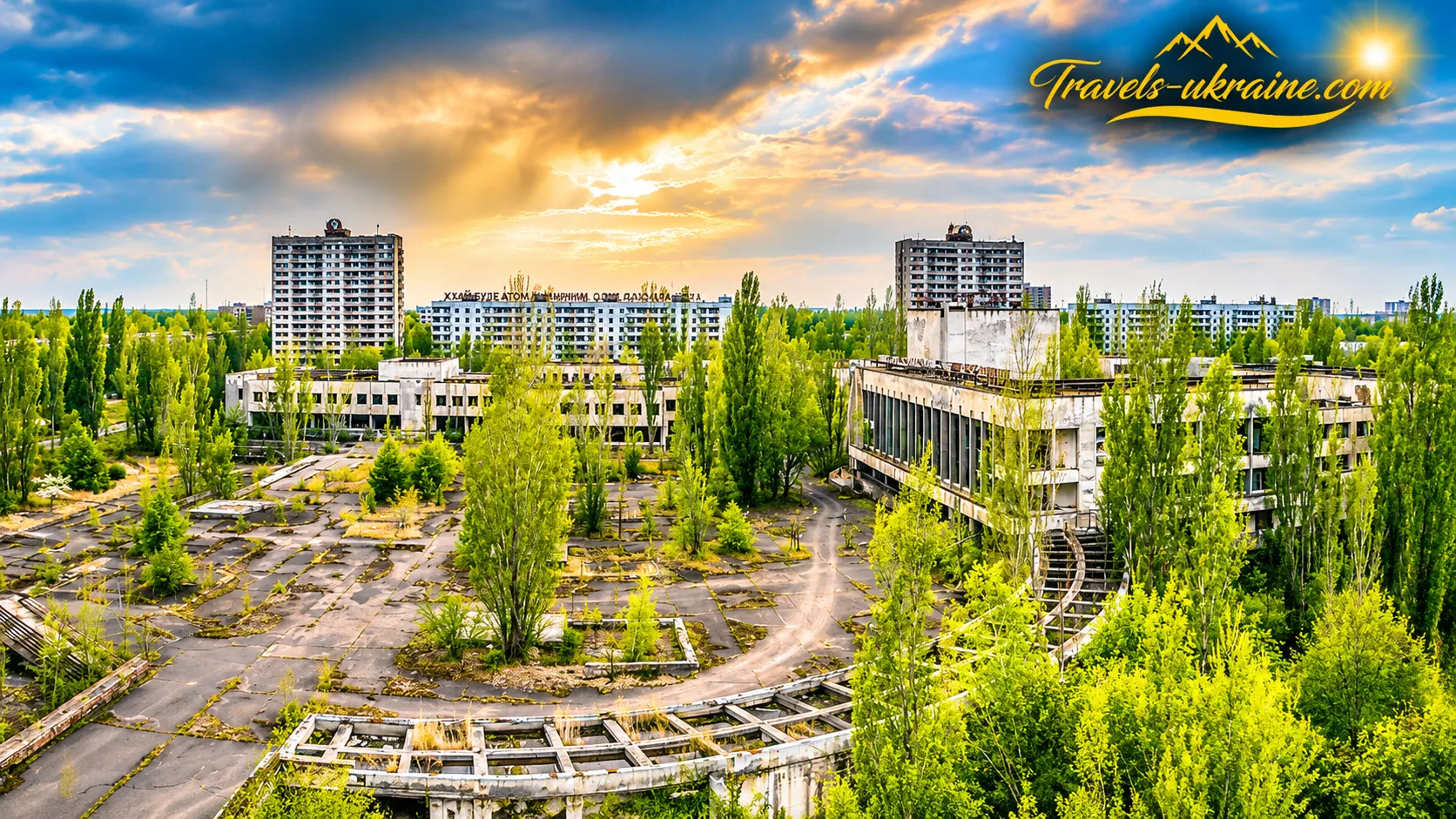
The history of the city of Pripyat is remarkable not only for the scale of the tragedy that befell its residents, but also for how short the city's existence as a thriving community turned out to be. Just over sixteen years passed between the construction of its first buildings and the complete evacuation of its population. During that time, a modern city emerged among the forests of Polissia, with wide avenues, apartment buildings, schools, sports facilities, and ambitious plans for the future. A future that was never meant to become reality.
The Birth of Pripyat — A City Built for Nuclear Power Plant Workers
Pripyat was founded on February 4, 1970, on the banks of the river of the same name, near the construction site of the Chornobyl Nuclear Power Plant. The new city was primarily intended for the employees of the future energy giant and their families. During the Soviet era, such settlements were known as satellite towns of industrial enterprises. However, from the very beginning, Pripyat was envisioned not simply as a workers' settlement, but as a fully developed, modern urban center.
Construction progressed rapidly. Residential neighborhoods appeared where forested land had once stood, roads were built, utility networks were installed, and social infrastructure was developed. Young engineers, construction workers, energy specialists, doctors, teachers, and other professionals arrived from different parts of the Soviet Union. Many saw Pripyat not only as a place to build their careers, but also as a city where they would spend their entire lives. Its development followed the principles of Soviet urban planning in the second half of the 20th century. Residential districts were designed together with schools, kindergartens, shops, and public spaces. Wide streets and landscaped courtyards were intended to provide a comfortable environment for young families. Future plans envisioned expanding the population to approximately 75,000–78,000 residents.
In 1979, Pripyat received the status of a city under regional jurisdiction. It continued to grow alongside the Chornobyl Nuclear Power Plant, becoming one of the youngest and most rapidly developing urban centers in the Kyiv region.
Life in Pripyat Before the Disaster — Youth, Families, and Ambitious Dreams
To truly understand the tragedy of Pripyat, it is worth imagining the city as it once was — full of life rather than abandoned. Picture streets without overgrown trees, buildings without broken windows, and apartments still filled with families. Instead, imagine children's laughter in courtyards, buses stopping along busy streets, shoppers outside stores, and families going about their everyday routines. Pripyat was an exceptionally young city. A significant proportion of its residents were employees of the Chornobyl Nuclear Power Plant and their families. Children were born here, new educational institutions opened, and sports clubs, libraries, and cultural centers welcomed visitors. The city enjoyed an ordinary, vibrant life filled with work, education, celebrations, and family recreation.
Among its best-known public buildings were the Energetik Palace of Culture, the Polissia Hotel, sports facilities, and shopping centers. New residential districts were under construction, while additional cultural and sports complexes were being planned. One particularly anticipated event was the opening of an amusement park featuring a Ferris wheel, scheduled for the May holidays in 1986.
At the time of the Chornobyl disaster, Pripyat had a population of approximately 49,000 people. Behind that number were tens of thousands of individual stories: young couples who had just received their first apartments, children attending school for the first time, professionals building their careers, and families who believed they had found a home for many years to come. None of them could have imagined that they would soon be forced to leave everything they had spent years building. And perhaps the most painful part of this story is not simply that the buildings would become empty. It is that, along with their city, people would lose the familiar world in which they had imagined their future.
April 26, 1986 — The Night That Changed Pripyat Forever
In the early hours of April 26, 1986, at 1:23 AM, a catastrophic accident occurred during a safety test at Unit 4 of the Chornobyl Nuclear Power Plant. A series of explosions destroyed the reactor, fires broke out, and radioactive materials began escaping into the environment. The consequences of this disaster would eventually be felt far beyond Ukraine's borders.
The first people to face the danger were plant workers and firefighters who arrived to extinguish the flames. They operated in conditions of extremely high radiation exposure, often without complete information about the scale of the threat. For some of them, the effort to contain the disaster resulted in fatal radiation injuries. Meanwhile, in nearby Pripyat, an ordinary Saturday morning was beginning. Many residents still had no idea what had happened at the power plant or how dangerous the invisible radioactive substances could be. People continued with their everyday activities, and outwardly, the city looked almost exactly as it had the day before.
This invisible nature of the danger became one of the most terrifying aspects of the Chornobyl disaster. Radiation cannot be seen or detected by smell. The sun, trees, and familiar buildings remained unchanged, even as radiation levels in the surrounding environment continued to worsen. Throughout the day, specialists conducted measurements, and by evening it had become clear that remaining near the destroyed reactor posed a serious threat to the population.
On the evening of April 26, the decision was made to prepare for the evacuation of Pripyat's residents. During the night, buses and other vehicles began gathering near the city. A massive logistical operation was underway, with the safety of tens of thousands of people depending on its successful organization.
The Evacuation of April 27 — The Day the City Lost Its Residents
April 27, 1986, became the final day of ordinary life in Pripyat. Around midday, residents were informed through the city's public announcement system that a temporary evacuation would take place. People were advised to take their documents, essential personal belongings, and enough food for a few days. They were told that their departure would not last long.
At 2:00 PM, the organized evacuation began. Buses arrived in residential neighborhoods, where families gathered with children and small bags. People left their apartments, locked their doors, and boarded the waiting vehicles. According to information published by the Chornobyl Nuclear Power Plant, the main evacuation operation was completed in approximately three hours.
Most residents hoped to return soon. Furniture, dishes, books, children's toys, family photographs, and countless everyday belongings remained inside their apartments — things no one had intended to abandon forever. What appeared to be a brief, unavoidable departure became a permanent farewell to their hometown.
Evacuated residents were accommodated in other settlements, and many families later faced a long process of relocation. Some former residents of Pripyat settled in Kyiv and other Ukrainian cities. A new city, Slavutych, was subsequently built for employees of the Chornobyl Nuclear Power Plant and their families. Thus ended the history of Pripyat as an ordinary inhabited city. But the story of its people did not end. They continued living, working, raising children, and preserving memories of a place that would forever remain their home.
Pripyat did not disappear from the map of Ukraine — it lost its people. That is why, behind every abandoned building, we should see not only the consequences of a disaster but also the lives that once filled its walls. After all, this is not merely a ghost city. It is a real human story that cannot be measured solely in dates, numbers, or radiation levels.




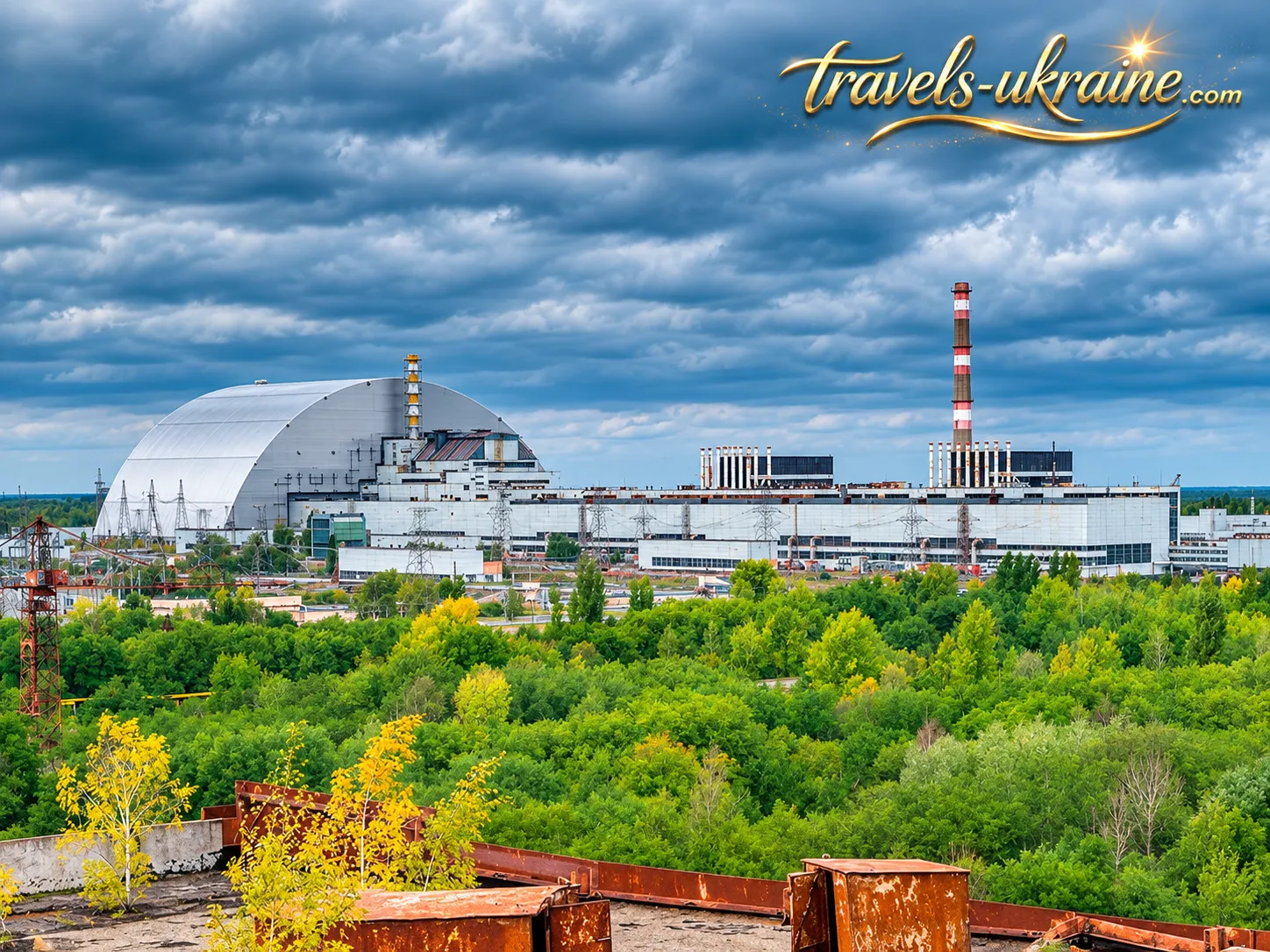
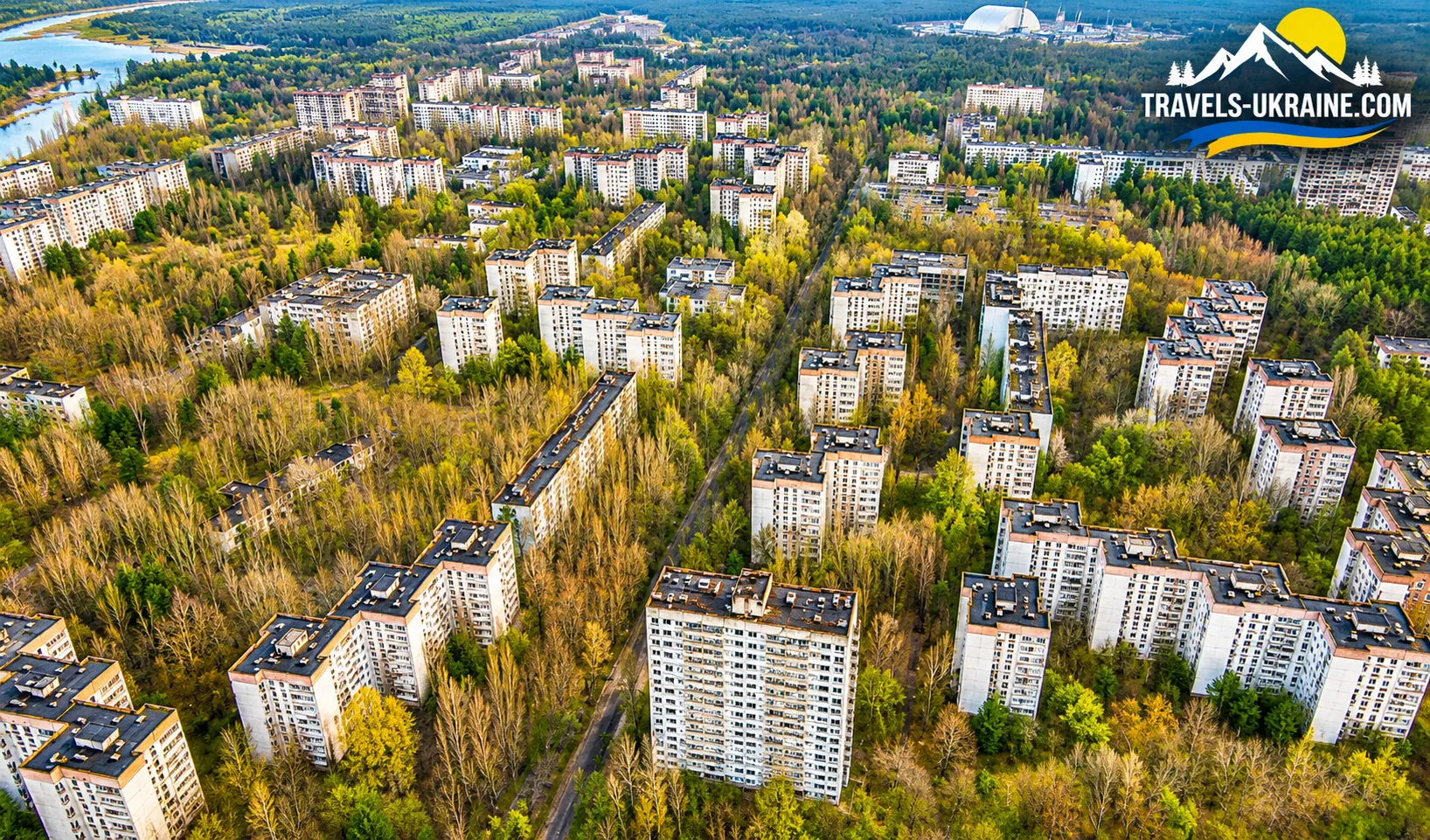
The Most Famous Places in Pripyat — What Remains of the Former City
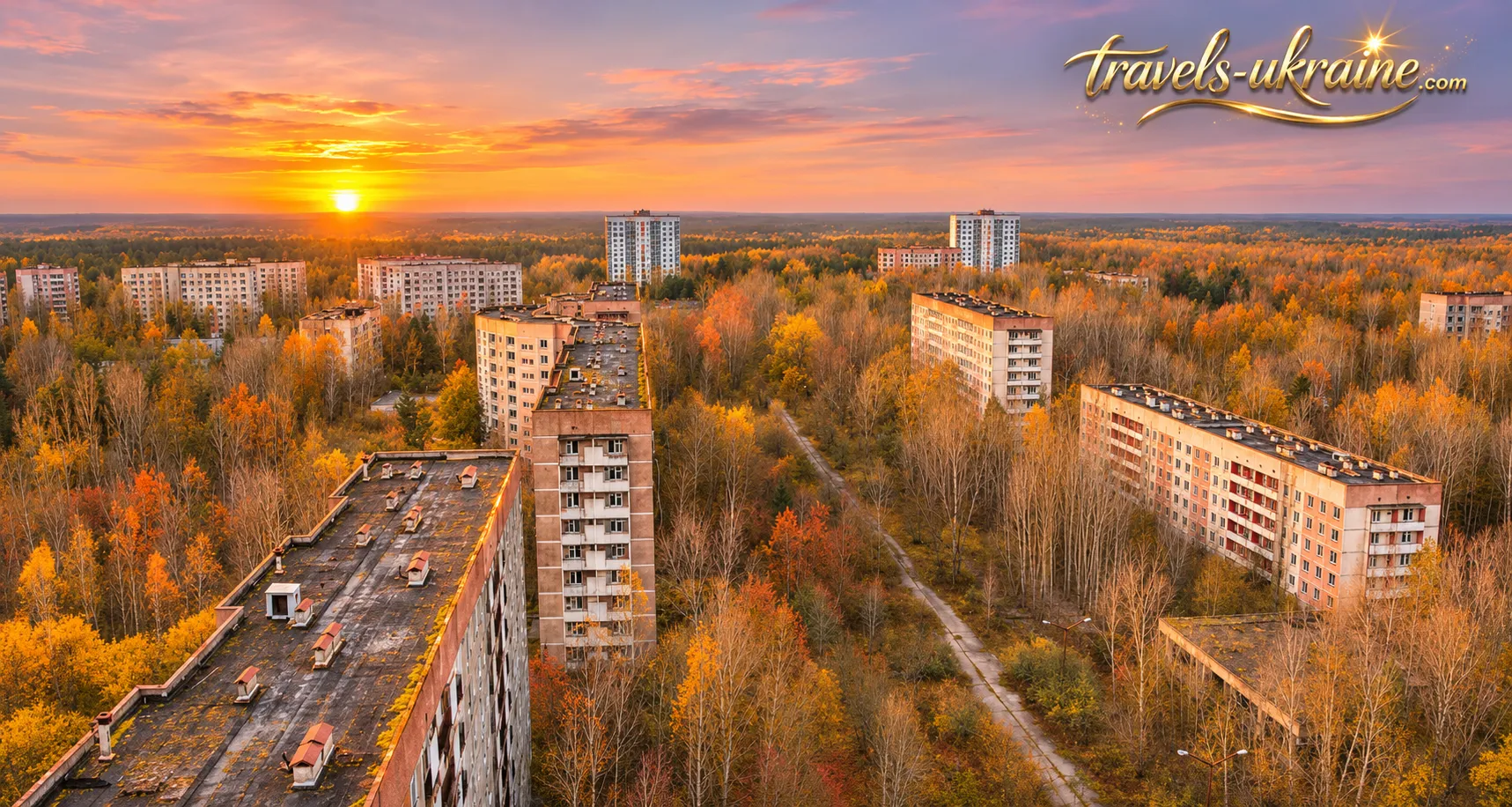
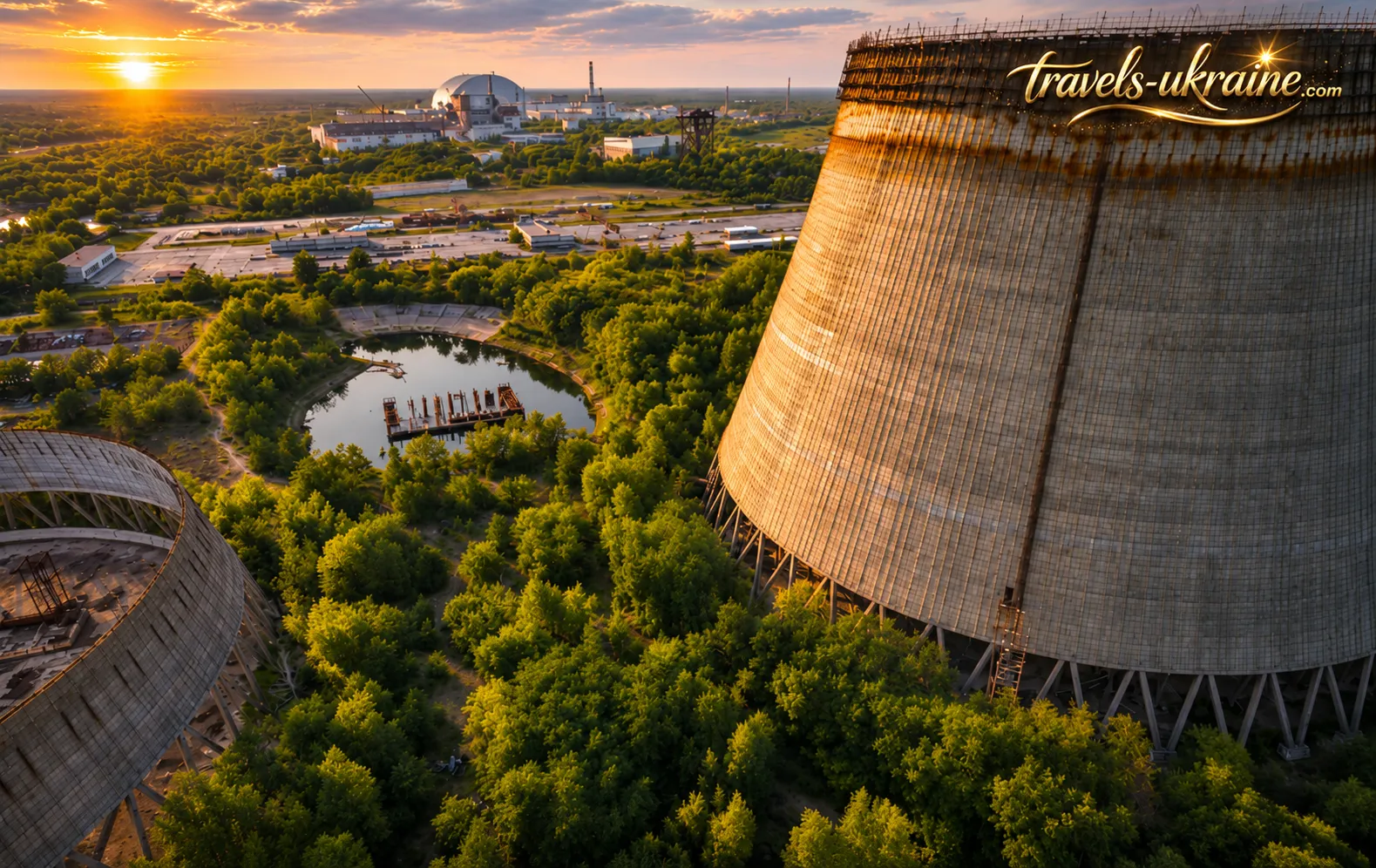
Once, these buildings echoed with children's laughter, hosted concerts and sporting competitions, and were filled with the energy of everyday city life. Today, the abandoned buildings of Pripyat stand as silent witnesses to a past forever changed by the Chornobyl disaster. Nature is gradually reclaiming former courtyards and streets, while time relentlessly wears away the buildings that were considered the pride of this young city just a few decades ago.
Pripyat's most famous landmarks attract the attention of researchers, photographers, documentary filmmakers, and people seeking to understand the history of the Chornobyl Exclusion Zone. Yet behind every familiar facade seen in photographs lies a very different story — not one of a mysterious ghost city, but of real people for whom these buildings were once an inseparable part of home.
Pripyat's Ferris Wheel and Amusement Park — A Celebration That Never Came
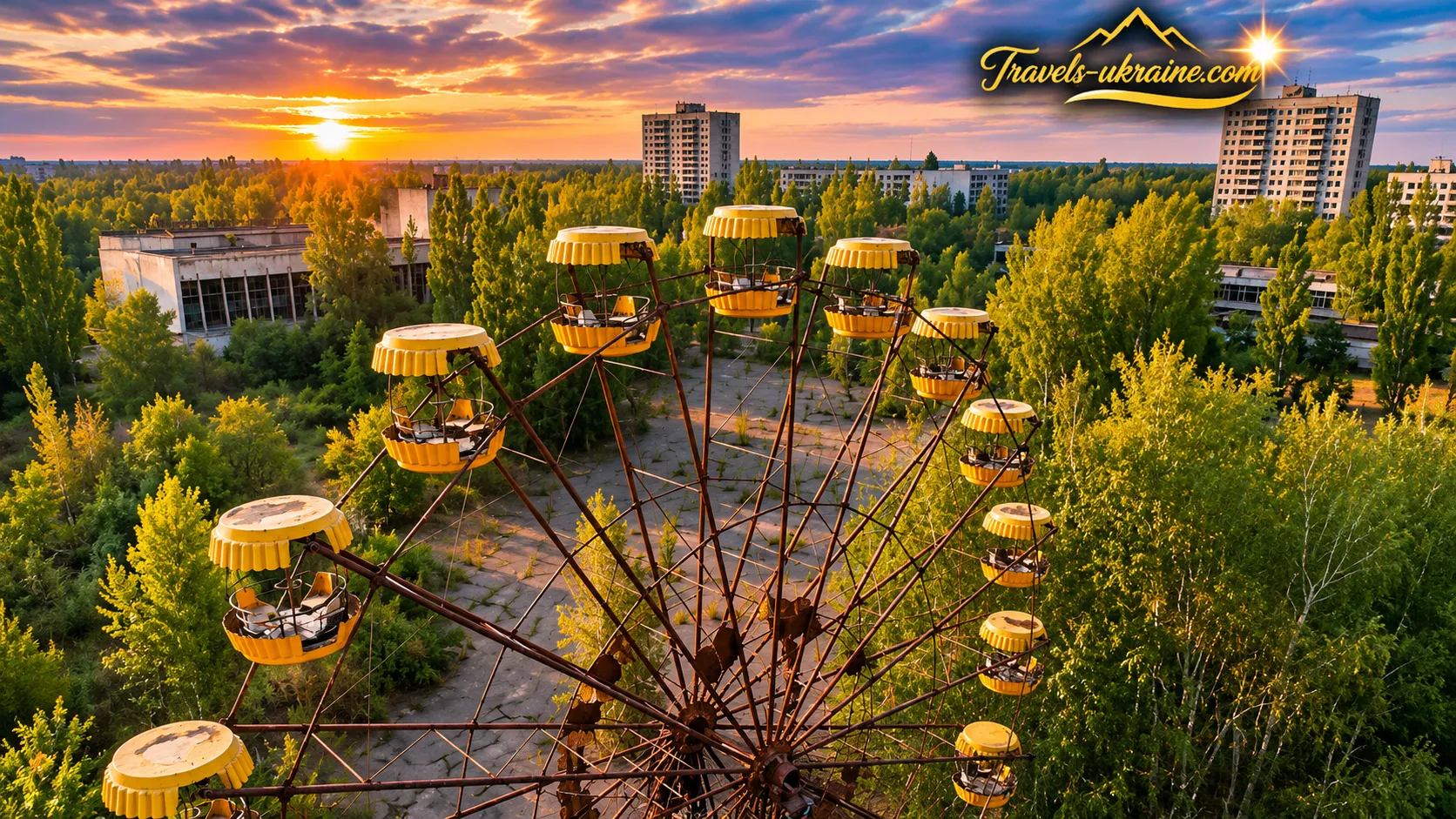
Perhaps the most recognizable symbol of the abandoned city of Pripyat is the Ferris wheel with its yellow passenger cabins. Its silhouette is recognized around the world today, although the attraction's history is remarkably short and tragic. The wheel was installed in the city's new amusement park, which was scheduled to officially open on May 1, 1986. Only a few days remained before the eagerly anticipated celebration when the accident at the Chornobyl Nuclear Power Plant occurred.
The park never officially opened to the public. There are conflicting accounts of possible test runs of certain attractions before the evacuation, but reliable confirmation that they were fully operational is lacking. As a result, the story of a Ferris wheel that never had the chance to bring children the celebration they had been promised has become one of the most heartbreaking images associated with Pripyat.
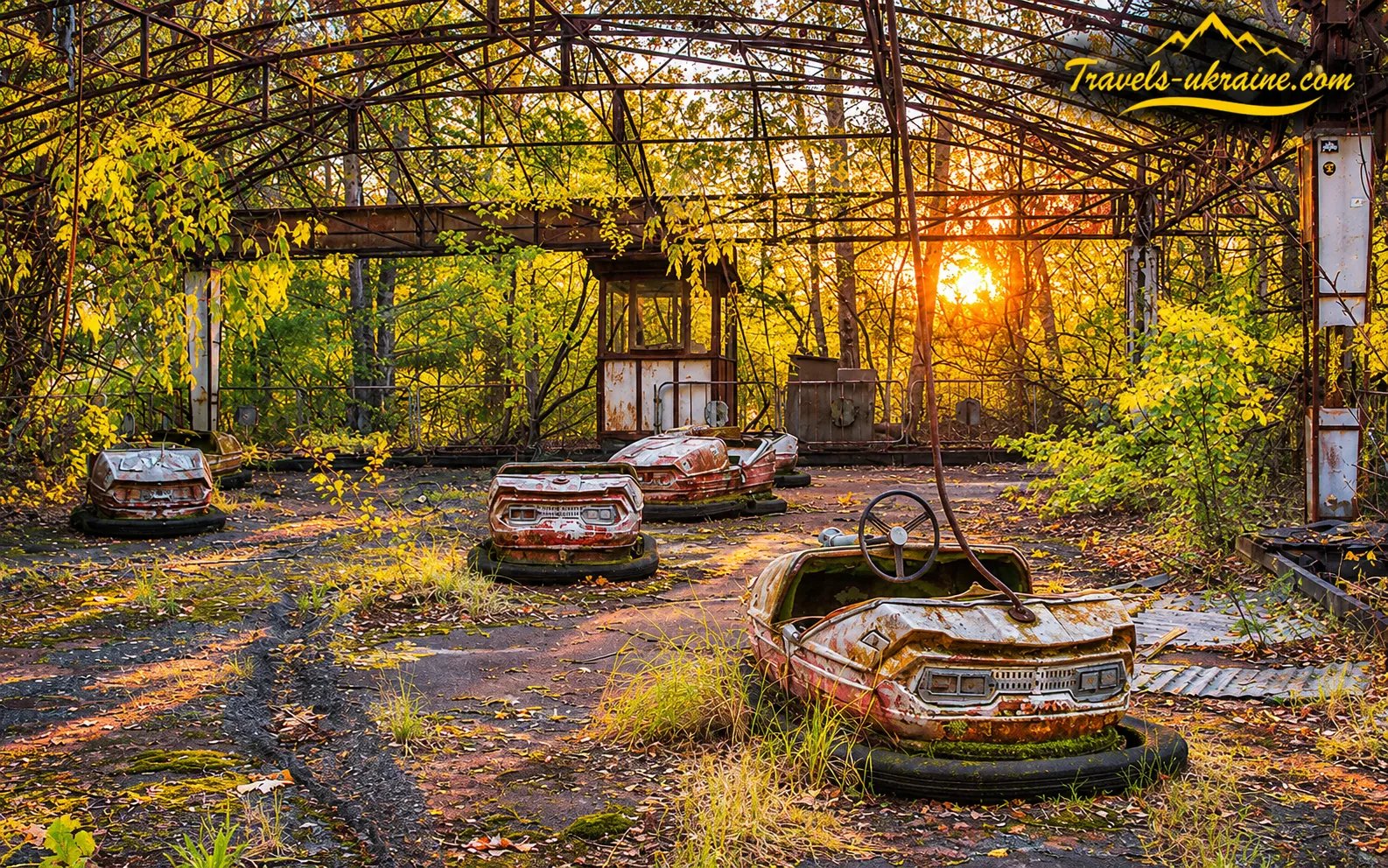
Other attractions still stand near the Ferris wheel, including a bumper car arena, carousels, and swings. Rusting structures, cracked asphalt, and trees growing directly through the former amusement grounds create a striking contrast with the original purpose of this place. After all, the park was built for joy, children's smiles, and happy memories, yet its story ended before it had truly begun.
The Energetik Palace of Culture — The Heart of Pripyat's Community Life
Located in the central part of the city, the Energetik Palace of Culture is one of Pripyat's most famous public buildings. Before the disaster, it served as an important center of cultural life, hosting concerts, ceremonial events, creative gatherings, and activities for artistic groups. Institutions like this held particular significance in a city built for nuclear power plant workers. They brought together people who had arrived from different regions, helped residents make friends, develop their talents, and enjoy their leisure time. Within the walls of Energetik, a vibrant community life flourished far beyond the daily routines of working at a nuclear power plant.
Following the evacuation, the building gradually fell into disrepair. Its spacious halls, corridors, and rooms lost their original purpose, while its facade, displaying characteristic features of Soviet modernist architecture, became one of the most recognizable architectural images of abandoned Pripyat. Today, Energetik stands as a reminder of the cultural life of a city that no longer exists as it once did.
The Polissia Hotel — Pripyat's Former Gateway for Visitors
Not far from the Palace of Culture stands the Polissia Hotel, which once welcomed visiting specialists, city guests, and professionals involved in the development of the Chornobyl Nuclear Power Plant. For rapidly growing Pripyat, the hotel was an essential part of the city's infrastructure. Its multi-story building overlooked the central square, while the upper floors offered views of the surrounding neighborhoods. After the disaster, the building lost its original purpose and gradually became another symbol of the abandoned city.
The name Polissia itself is particularly meaningful. It recalls the picturesque natural region where Pripyat was built, with its forests, rivers, and wetlands. Today, nature is gradually returning to the city streets, as though reclaiming the former hotel and blending it back into the surrounding Polissian landscape.
The Lazurny Swimming Pool — A Facility That Continued Operating After the Disaster
Among Pripyat's abandoned buildings, one has a particularly unusual history — the Lazurny Swimming Pool. Unlike most city facilities, it did not permanently cease operations immediately after the 1986 evacuation. The pool continued to be used by workers involved in the cleanup of the disaster and the maintenance of the Chornobyl Nuclear Power Plant. It remained in operation for approximately eleven more years before finally closing in 1997. This makes Lazurny a unique landmark in Pripyat's post-disaster history.
Eventually, its premises also became deserted. The large empty pool, tall windows, tiled walls, and remnants of sporting facilities became widely known through countless photographs. Yet the most fascinating aspect of this building is not its abandoned appearance, but the reminder that human activity and work within the Chornobyl Exclusion Zone did not come to an immediate halt after the evacuation.
Abandoned Schools and Kindergartens — The Most Heartbreaking Witnesses of the Past
Perhaps the most emotionally powerful places in Pripyat are its abandoned schools and kindergartens. Once, lessons took place here, children learned to read and write, prepared performances for celebrations, and made their own little plans for the future. Today, these buildings stand empty, and some have deteriorated to a structurally unsafe condition.
Photographs from the Chornobyl Exclusion Zone often show old school desks, books, educational posters, toys, and other objects that recall the everyday lives of children. However, it is important to understand that not every such image accurately reflects the condition of a room on the day of the evacuation. Over the decades, some objects have been moved by visitors, while certain well-known photographic arrangements were deliberately staged for the camera.
Yet even without staged scenes, these places remain profoundly moving. The real tragedy lies not in abandoned toys or empty classrooms, but in the lives of children who, on one April day, left behind their familiar routines, friends, and homes, unaware that they would never return to their schools as ordinary pupils again.
Pripyat's Residential Neighborhoods — Homes Once Filled with Life
Another essential part of the city's history is its abandoned residential buildings. Apartment blocks, wide avenues, playgrounds, and green courtyards once formed the image of a modern, comfortable city that was still expanding rapidly. Every apartment once had its residents, family photographs, books, furniture, and countless ordinary household belongings. People celebrated birthdays, welcomed guests, raised children, and made plans for the future here. Following the evacuation, these homes were left without their owners, and over the years they suffered from deterioration, looting, and the effects of natural processes.
Today, trees grow close to the facades, roots break apart sidewalks, and some structures are gradually losing their structural integrity. Behind the outward silence of these neighborhoods lies the history of thousands of families for whom Pripyat will forever remain their hometown — even though returning to their former lives is no longer possible.
Pripyat's most famous landmarks are not merely abandoned architectural structures or unusual backdrops for photographs. Each preserves a part of the history of a city built for life, work, and future generations. That is why discovering Pripyat should begin not with a search for eerie images, but with respect for the people whose lives will forever be connected to these streets.
Mysteries of Pripyat — Supernatural Legends, Mysterious Stories, and Reality

Abandoned cities have always attracted mysterious stories. And when it comes to Pripyat in the Chornobyl Exclusion Zone, the human imagination has almost unlimited room to wander. Empty apartments, dark corridors, rusting amusement rides, and trees growing through cracked asphalt create an atmosphere where even an ordinary gust of wind can sound like someone's mysterious whisper.
Over the decades, countless legends have emerged around Pripyat, ranging from ghosts haunting abandoned buildings to mysterious creatures that supposedly predicted the Chornobyl disaster. Some stories originated among urban explorers, while others came from films, literature, and video games. But how much of this is true, and how much is simply a cleverly invented ghost story?
Ghosts of Pripyat — Who Wanders the Empty Streets?
One of the most common supernatural themes involves stories about ghosts haunting the abandoned city. Online, you can find accounts of mysterious silhouettes appearing in apartment windows, unexplained footsteps echoing through empty corridors, and even children's laughter supposedly heard from old schools and kindergartens. Particularly unsettling are stories of strange sounds breaking the silence of buildings where no one has lived for decades. Creaking doors, rattling unsecured structures, and branches rustling outside broken windows can easily seem supernatural in Pripyat's unusual atmosphere.
However, there is no reliable evidence that ghosts exist in Pripyat. Most such stories belong to modern urban folklore. Sometimes fear arises not from what we actually see, but from what we cannot explain. And abandoned buildings, especially after dark, have a remarkable ability to put the human imagination to the test.
The Secret Duga Radar Station — The Mystery of the Soviet "Woodpecker"
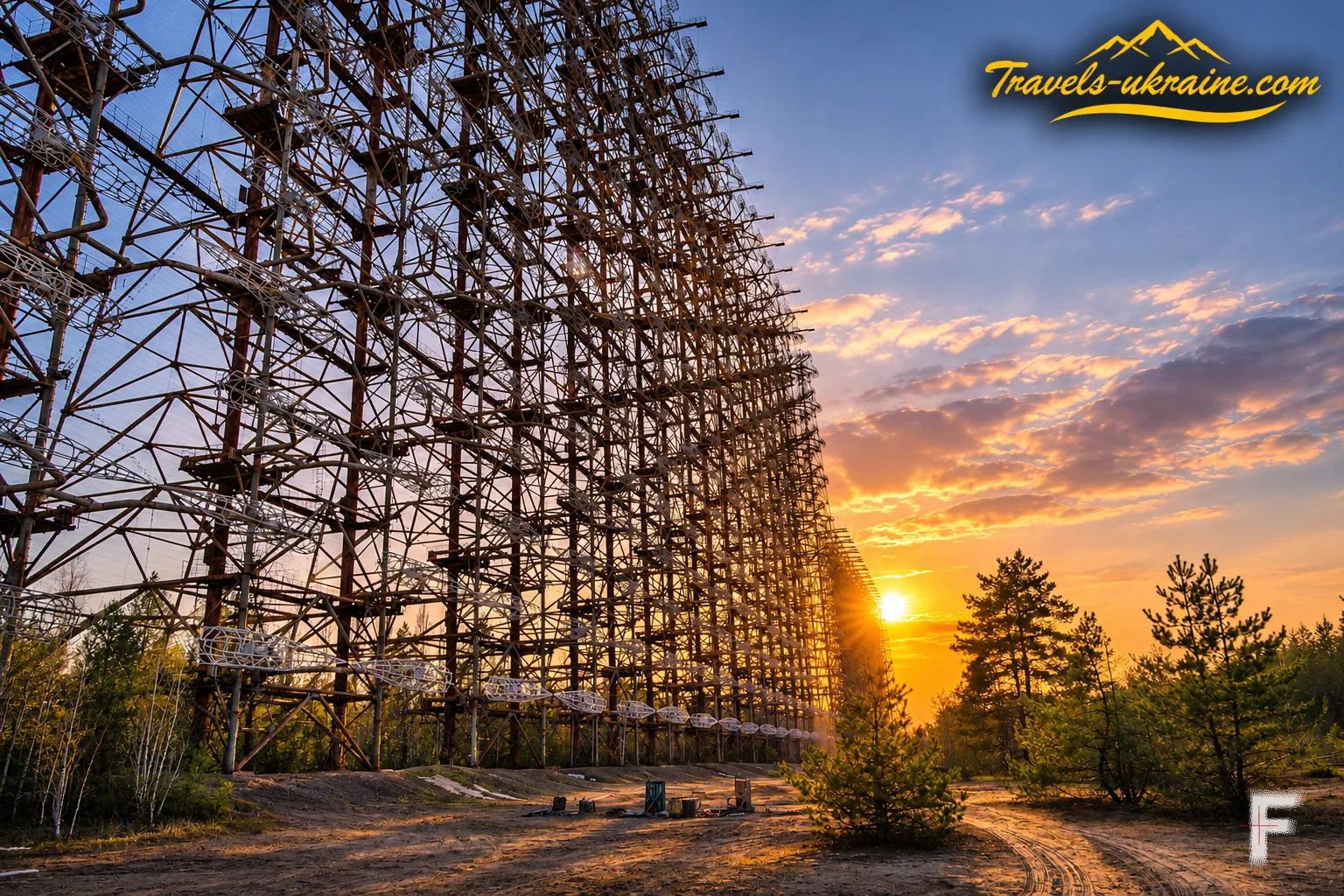
Unlike stories about ghosts, the Duga radar station is a very real structure with an extraordinary past. This enormous metal installation stands approximately 10 kilometers from Pripyat, on the grounds of the former secret military complex known as Chornobyl-2. During the Soviet era, information about the facility was classified. The station was designed to detect ballistic missile launches beyond the horizon. Its massive antennas rose above the surrounding forests, while the radar system generated distinctive rhythmic interference on shortwave radio frequencies. Because of this unusual sound, the installation became known in the West as the "Russian Woodpecker".
The extraordinary structure inspired numerous conspiracy theories. It was associated with secret experiments, attempts to influence human consciousness, and even alleged involvement in the Chornobyl disaster. However, there is no verified evidence supporting these claims. Duga's actual purpose was military and technological, not supernatural. In 2021, the station was added to Ukraine's State Register of Immovable Monuments as a monument of science and technology of national significance. Its real history reminds us that the genuine secrets of the past can sometimes be just as fascinating as the wildest inventions of the imagination.
Mutants of the Chornobyl Exclusion Zone — Terrifying Legends and Scientific Reality
Another widespread myth concerns fantastic animals supposedly inhabiting the forests around Pripyat. Giant wolves, two-headed creatures, dangerous monsters, and animals unknown to science have become particularly popular images thanks to horror films and video games. Reality, however, is far more complex and just as fascinating. Ionizing radiation can indeed damage the DNA of living organisms, cause developmental abnormalities, and negatively affect animal health. However, this certainly does not mean that fantastic monsters capable of surviving through supernatural mutations have appeared.
The Chornobyl Exclusion Zone is home to wolves, deer, wild boar, foxes, birds, and other wildlife typical of the Polissia region. Scientists continue to investigate how radioactive contamination and the long-term absence of permanent human settlements affect local ecosystems. The results of these studies are not always straightforward, as numerous factors influence the natural environment simultaneously. Therefore, the real mystery of Pripyat does not lie in searching for ghosts or imaginary mutants. It lies in understanding how an ordinary young city lost its residents in a matter of days, how an entire world of legends developed around that tragedy, and how nature gradually transforms a place that people once built for living.
And perhaps the most powerful impression comes not from invented supernatural stories, but from the reality of abandoned Pripyat itself. Behind its empty streets lies genuine human memory — a history that needs no supernatural embellishment to leave a lasting impression on our hearts.
UFOs Over Chornobyl — Mysterious Witness Accounts, Photographs, and Documented Facts
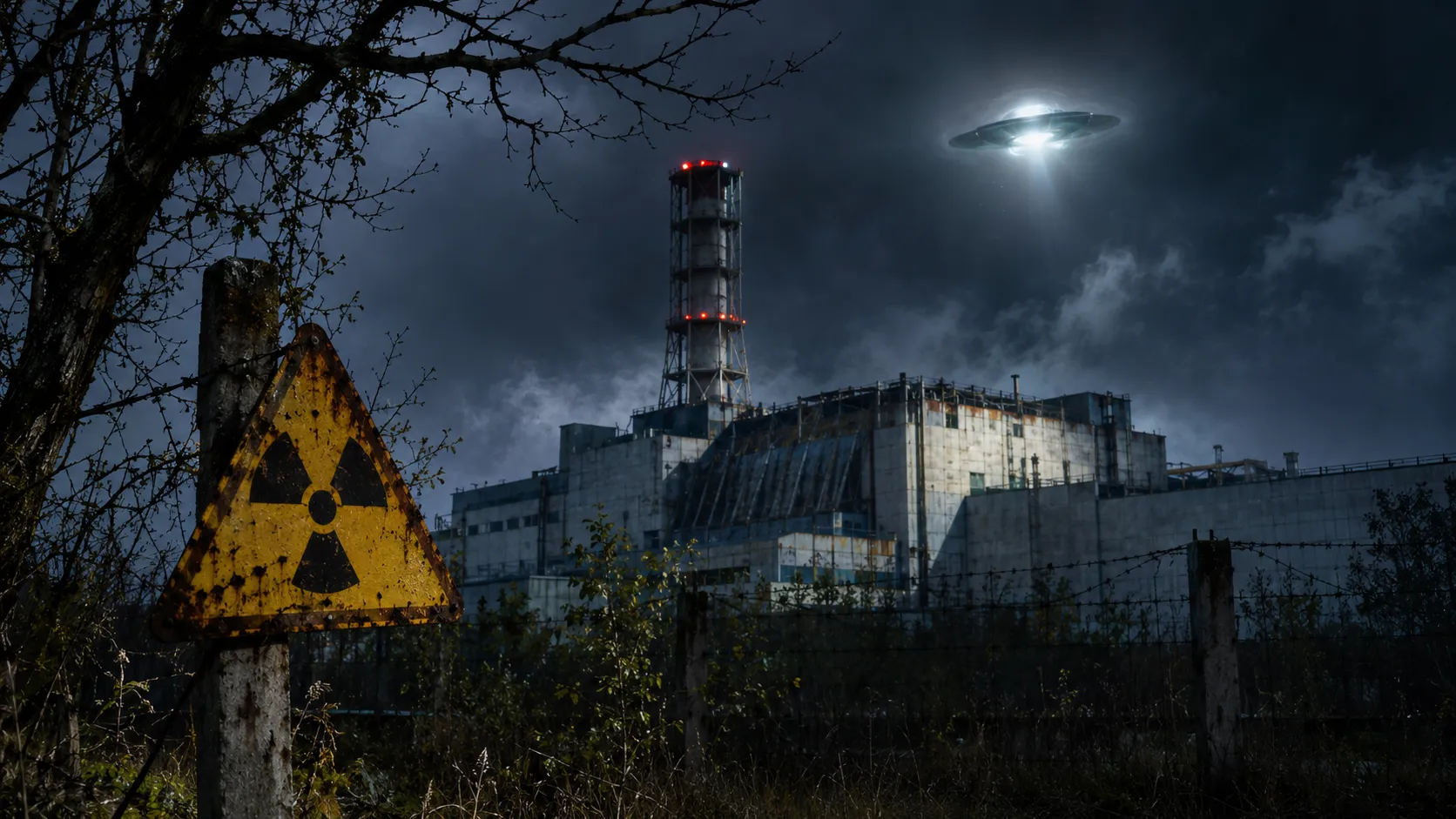
The Chornobyl disaster left behind not only an enormous collection of documents, scientific studies, and personal memories. Over time, unusual stories also emerged around the event, and some continue to spark controversy today. Among them, a particularly intriguing place belongs to reports of unidentified flying objects (UFOs) over the Chornobyl Nuclear Power Plant. Some witnesses allegedly saw mysterious glowing spheres, others described unexplained phenomena in the sky, and eventually even photographs appeared that were presented as possible evidence of these events.
Unlike ordinary supernatural legends, some of these accounts contain specific names, dates, and references to newspaper publications. But is that enough to consider them reliable? Let's examine what the documents actually confirm and what remains nothing more than unverified testimony.
So, let's conduct a little investigation of our own, look behind the veil of mystery, and try to discover what really lies behind the strange reports of UFOs over Chornobyl. Were these genuine observations of unexplained phenomena, ordinary natural or technological events, or simply stories that accumulated increasingly incredible details over the years? We will examine eyewitness accounts, archival publications, and official documents to distinguish verified facts from speculation and legend. After all, sometimes the truth can be just as fascinating as the wildest fantasy!
Mysterious Objects Before the Chornobyl Disaster
Ufological publications sometimes claim that unusual glowing objects were observed near the Chornobyl Nuclear Power Plant even before the accident on April 26, 1986. Some authors recount stories involving pilots and air traffic controllers who allegedly noticed unidentified phenomena in the skies above the nuclear power plant area.
Over time, these stories became associated with speculation that the mysterious objects might have been some kind of warning of the impending disaster. However, no original observation logs, verified radar recordings, or independent documents confirming these accounts have been identified. Such reports should therefore be regarded as part of modern Chornobyl folklore rather than established historical events.
A Glowing Sphere Above Reactor Four — The Story of Dosimetrist Mykhailo Varytskyi
The most famous story about UFOs over the Chornobyl Nuclear Power Plant is directly connected to the night of the disaster. According to an account published in ufological literature, senior dosimetrist Mykhailo Andriiovych Varytskyi and his colleague Mykhailo Samoilenko were allegedly near the destroyed fourth reactor unit at approximately 4:15 AM on April 26, 1986.
According to the statement attributed to Varytskyi, the workers supposedly saw a large glowing sphere measuring approximately 6–8 meters in diameter above the power plant. The object, according to their description, was about 300 meters from the reactor and emitted two bright red beams toward it. Several minutes later, the glow disappeared, and the sphere allegedly moved slowly toward the northwest.
Another detail of this story raises even more questions. Publications claim that dosimeter readings changed from 3,000 to 800 milliroentgens per hour. Some authors even suggested that the mysterious object might have influenced radiation levels near the reactor. But this is precisely where the story must be separated from verified facts. The testimony was indeed circulated in specialized publications, including the book "Tayny NLO" ("Secrets of UFOs") by Aleksandr Varakin and Leonid Zdanovich. However, the original written statement, independent dosimetry records, and documents confirming that the mysterious sphere affected radiation levels have not been available for verification.
The Mysterious Photograph of 1991 — The Case of Volodymyr Savran
Another story is connected with the events of October 11, 1991, when a fire broke out at Unit 2 of the Chornobyl Nuclear Power Plant, damaging part of its turbine hall. This incident is a confirmed historical event and is mentioned in documents of the Verkhovna Rada of Ukraine. Several days after the fire, Volodymyr Savran, a photojournalist for the newspaper "Ekho Chernobylya" ("Echo of Chornobyl"), photographed the damaged structure. According to his published account, the sky appeared normal during the photo shoot, and he noticed no unexplained objects. However, after developing the photographic film, a dark shape resembling an unidentified flying object allegedly appeared in one of the photographs.
The image associated with this story later appeared in ufological archives. In particular, it is described in the Ukrainian catalog of UFO reports known as UFOBUA. The archive also recounts the newspaper editorial staff's claim that the negative had supposedly undergone examination. However, the story contains significant gaps. Different publications provide conflicting dates for the photograph — October 12 and October 16, 1991. Furthermore, neither the original negative nor a complete independent expert report is publicly available to establish the origin of the mysterious image.
Without examining the original photographic material, it is impossible to rule out film defects, optical effects, foreign objects, or other ordinary explanations for the appearance of unusual details in the photograph. Therefore, Savran's photograph remains an intriguing story from Chornobyl's journalistic past, but not proven evidence of an extraterrestrial spacecraft.
What Do Official Documents and Scientific Research Confirm?
Unlike reports of mysterious lights, the circumstances of the 1986 Chornobyl disaster have been investigated by numerous Ukrainian and international experts. The official chronology published by the Chornobyl Nuclear Power Plant confirms that the accident occurred at 1:23 AM during a test involving the electrical power supply system of Unit 4. Following a rapid increase in reactor power, the reactor was destroyed, fires broke out, and radioactive substances began escaping into the environment.
The International Atomic Energy Agency (IAEA), in its INSAG-7 report, analyzed the technical and organizational causes of the disaster. Among the key contributing factors were dangerous characteristics of the RBMK reactor, design flaws in the control rods, violations of safety requirements, and shortcomings in the organization and operation of the nuclear power plant. Official investigations have established no confirmed role for unidentified flying objects in causing the accident or reducing its consequences. At the same time, the absence of such confirmation does not automatically establish what people might have seen, assuming that individual observations actually occurred.
Thus, stories about UFOs over Chornobyl do have a documented history of circulation: publications identify alleged witnesses, preserve retellings of their accounts, and reference newspaper articles and photographic catalogs. However, there remains a significant difference between the existence of such publications and verified evidence that a mysterious aircraft actually appeared.
Perhaps one day original recordings, photographic negatives, or other materials will emerge that allow these cases to be investigated more thoroughly. Until then, reports of UFOs over Pripyat and the Chornobyl Nuclear Power Plant remain part of the lesser-known history of unexplained aerial phenomena rather than established scientific facts. And perhaps this is where the true value of serious investigation lies: not rushing to declare every mystery a miracle, but also not replacing the search for answers with unsupported assumptions.
The Chornobyl Disaster — Technical Accident or Deliberate Sabotage? What the KGB Archives Concealed
Four decades have passed since the explosion at Unit 4 of the Chornobyl Nuclear Power Plant changed the lives of hundreds of thousands of people. During that time, international experts, engineers, historians, and journalists have investigated the causes of the disaster. One might think that almost everything is already known about the events of the night of April 26, 1986. However, the declassification of Soviet archives has revealed new chapters of history that raise difficult questions: What did the Soviet leadership know about the dangers at Chornobyl? What role did the intelligence services play? And could the disaster have resulted from deliberate interference?
This story truly resembles a political thriller. But unlike a fictional film, the goal here is not to find someone to blame at any cost, but to establish what authentic documents actually confirm and what remains mere speculation.
The KGB at the Chornobyl Nuclear Power Plant — What Did Soviet Intelligence Know Before the Disaster?
In June 2020, the Sectoral State Archive of the Security Service of Ukraine, together with the Ukrainian Institute of National Memory, presented a collection entitled "The KGB Chornobyl Dossier: From Construction to the Accident". The publication contained 229 documents, most of which had previously been inaccessible to the general public.
The archival materials revealed that Soviet intelligence services had been closely monitoring the Chornobyl Nuclear Power Plant since its construction began. The KGB received reports concerning violations of technical requirements, construction defects, equipment malfunctions, and dangerous incidents that occurred long before April 1986. Particularly alarming is the fact that emergency incidents had occurred at the Chornobyl Nuclear Power Plant before the disaster, but information about them was concealed from the public. Intelligence reports included information about possible acts of sabotage and assessments of various threats to the plant's operation.
It is important to interpret these documents correctly. The existence of an intelligence report concerning possible sabotage does not mean that sabotage actually occurred. Likewise, the presence of KGB personnel at a strategic facility does not prove that they directly controlled the reactor or instructed plant operators to violate technical regulations.
To date, no authenticated order issued by Soviet intelligence services has been identified that would confirm deliberate interference with the operation of Reactor 4 for the purpose of causing the disaster. However, the archival documents clearly demonstrate something else: the Soviet system received warnings about potential dangers, while the public had no opportunity to learn the full truth about the nuclear power plant's actual condition.
Why Did Reactor Four Explode? — Findings of the International Investigation
To understand whether the disaster could have been deliberate, it is necessary to examine its technical causes. One of the most important documents is the INSAG-7 report by the International Atomic Energy Agency (IAEA), which revised and supplemented earlier conclusions about the Chornobyl accident. International experts established that the disaster resulted from a combination of several dangerous factors. The RBMK-1000 reactor had design characteristics that, under certain conditions, could cause a sudden and extreme increase in power. Particularly important were the positive steam void coefficient of reactivity, flaws in the control rod design, and weaknesses in the emergency protection systems.
The situation was further complicated by the way the safety test was conducted, the actions of operating personnel, and shortcomings in the Soviet nuclear safety regulatory system. Later analysis significantly shifted the emphasis away from blaming the operators alone and toward reactor design flaws and systemic problems within the Soviet nuclear industry. This is a fundamentally important conclusion. After the disaster, Soviet authorities placed much of the responsibility on plant employees. Subsequent investigations demonstrated that the actual causes were far more complex and could not be reduced to the mistakes of a few individuals.
At the same time, the IAEA's technical investigation found no evidence that Soviet intelligence services had deliberately orchestrated the accident. The identified design and organizational failures explain the mechanism of the reactor's destruction without requiring an assumption of hidden external interference.
Could the Disaster Have Benefited the USSR by Slowing Global Nuclear Energy Development?
One hypothesis suggests that the Chornobyl disaster could have benefited a state interested in slowing the development of nuclear energy in other countries. The reasoning behind this theory is understandable: nuclear power plants can generate substantial amounts of electricity without continuously burning oil, natural gas, or coal. Therefore, the expansion of nuclear technologies could influence international energy markets. However, the possibility of economic benefits does not constitute evidence that the disaster was deliberately organized. Moreover, in 1986, the Soviet Union itself was actively developing its own nuclear power industry, constructing new reactors, and cooperating with other countries in the field of nuclear technology.
The Chornobyl accident caused enormous human, economic, and reputational losses for the USSR itself. It raised serious doubts about the safety of Soviet reactors, forced the government to devote vast resources to disaster response and cleanup, and triggered international criticism of the Soviet management system. Therefore, the theory that the disaster was intentionally caused to undermine nuclear energy development in other countries requires much stronger evidence than general arguments about possible economic interests. At present, there are no reliable documents confirming such a plan or its implementation.
Chornobyl and Germany's Nuclear Phase-Out — Is There a Connection?
One argument used by supporters of this theory relates to Germany's subsequent energy policy. Indeed, the 1986 Chornobyl disaster significantly strengthened anti-nuclear sentiment in German society. It became an important part of public debates about the risks of nuclear energy and its future. However, Germany did not immediately begin shutting down all its nuclear power plants after Chornobyl. A political agreement on the gradual phase-out of nuclear energy was reached in 2000, and the corresponding legislation came into force in 2002.
In 2010, the German government even extended the planned operating lifetimes of nuclear reactors. However, following the disaster at Japan's Fukushima Daiichi Nuclear Power Plant in March 2011, Germany accelerated its withdrawal from nuclear power generation. On April 15, 2023, Germany permanently shut down its last three nuclear reactors.
Thus, Chornobyl's influence on German energy policy was real, but it was only one factor in a long political process. Directly linking the closure of German nuclear power plants to an alleged Soviet act of sabotage would mean replacing an established historical sequence with an unverified theory.
What Did the Soviet Authorities Really Conceal — and Which Questions Remain Unanswered?
Declassified KGB archives have made it possible to reassess not only the accident itself but also the activities of the state system responsible for overseeing the Chornobyl Nuclear Power Plant. We now know that reports of technical problems had been received long before the disaster, information about previous accidents was concealed, and after the explosion, Soviet authorities attempted to restrict the circulation of unwanted information. These facts raise important questions about the responsibility of the leadership, state oversight, and why the system failed to prevent the catastrophe. However, proven concealment of safety risks and the deliberate creation of an accident are two fundamentally different claims that require different types of evidence.
Could the tragedy have been less severe if information about the reactor's design flaws had not been concealed? Why did earlier incidents fail to trigger sufficient improvements in safety measures? Who exactly made the decisions that influenced the plant's operation? These questions have a documentary basis and remain important for understanding the history of Chornobyl.
The most disturbing truth about the Chornobyl disaster may not lie in the existence of a secret sabotage plan, but in the fact that a dangerous system received warnings for years and still failed to provide adequate protection for people. That is why studying declassified documents, eyewitness accounts, and international technical investigations matters not only to historians but also to the future of nuclear safety.
Pripyat and Nature — How the Abandoned City Is Changing Over Time
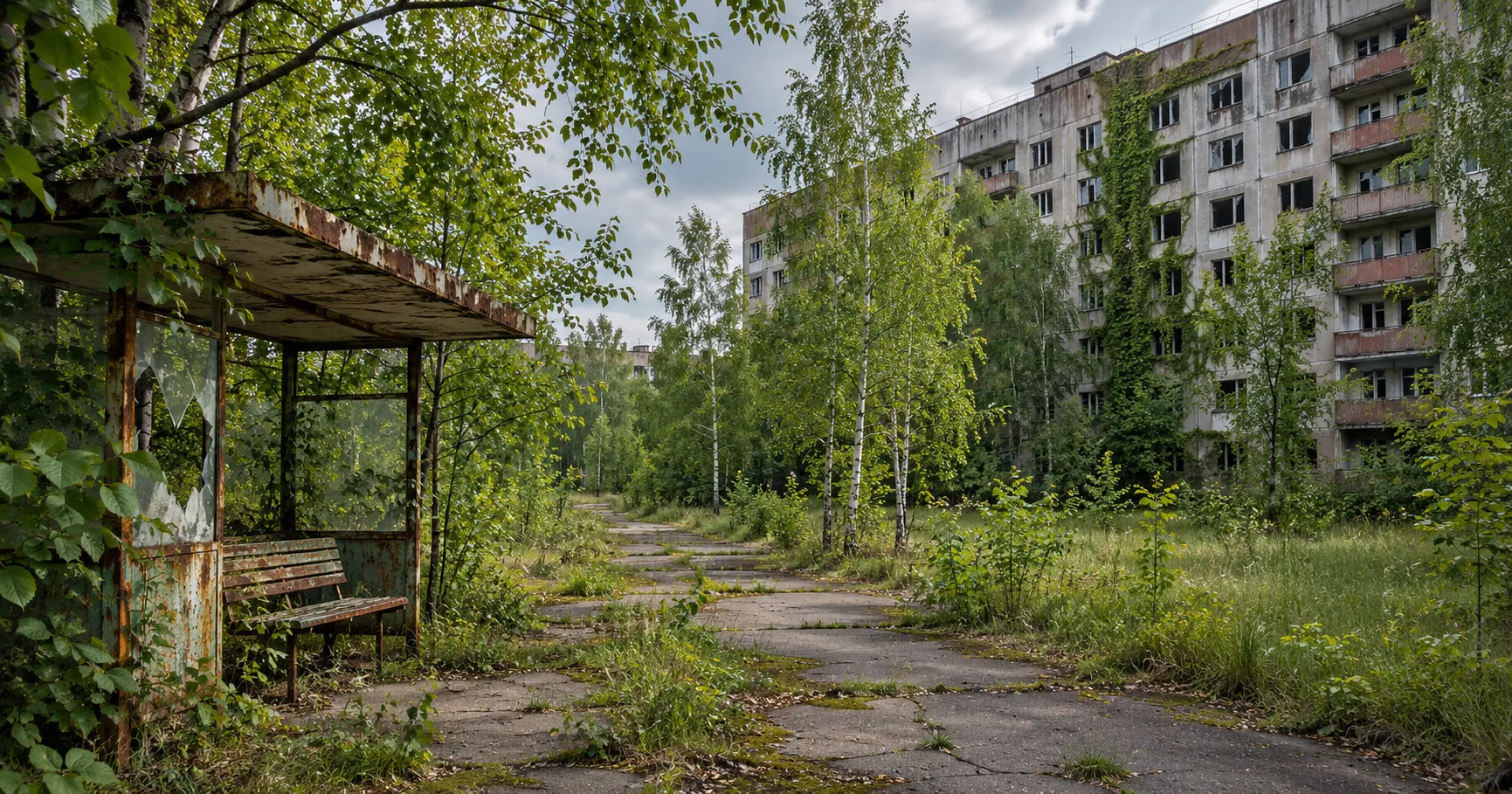
Four decades have passed since the last buses carrying evacuated residents left the city of Pripyat. During that time, its streets have changed almost beyond recognition. Young trees now grow where cars once drove, former lawns have turned into dense thickets, and bushes and grass push through cracked asphalt. It almost seems as though nature had been patiently waiting for its moment, gradually reclaiming every patch of land after people abandoned the city.
Today, it is difficult to imagine Pripyat without trees growing close to apartment buildings, green courtyards, and forest vegetation spreading between abandoned structures. Yet behind this extraordinary beauty lies a much more complex story — one of nature's ability to adapt to change, the consequences of radioactive contamination, and the remarkable transformation of an urban landscape.
After the evacuation in 1986, the regular maintenance of Pripyat's green spaces came to an end. No one mowed the lawns, removed young trees from sidewalks, or cleared overgrown courtyards anymore. Seeds carried by the wind and birds began to germinate in places where they previously had little chance to grow. This marked the beginning of a natural process known to scientists as ecological succession — the gradual change in plant communities within a particular area. In Pripyat, this process is especially fascinating because it is taking place not in ordinary fields or forest clearings, but within the streets and neighborhoods of a former city.
In 2015, an international team of researchers published the results of a study examining urban trees in Pripyat. Across forty research plots, scientists recorded 20 tree species and identified active natural regeneration of vegetation. Young maple trees were particularly widespread, while other characteristic species included oaks, poplars, and aspens. Interestingly, the researchers observed differences between former lawns, roadside plantations, and paved areas. Places once occupied by ornamental urban trees are gradually developing into entirely different plant communities, where the species best adapted to local environmental conditions are becoming dominant.
However, the return of greenery also has another side. Tree roots damage road surfaces, moisture penetrates abandoned buildings, and growing vegetation gradually conceals the city's architecture. In this way, Pripyat is slowly losing the familiar appearance remembered by its former residents.
Wildlife in the Chornobyl Exclusion Zone — Nature Returns in the Absence of Humans
The changes have affected more than just vegetation. Following the end of permanent human activity, vast areas of the Chornobyl Exclusion Zone became habitats for many wild animals. Where agricultural machinery once operated, roads crossed the landscape, and settlements stood, visitors to the region may now encounter moose, deer, roe deer, wild boar, wolves, foxes, and other wildlife native to Polissia.
One particularly fascinating story concerns Przewalski's horses, which were introduced into the Chornobyl Exclusion Zone in 1998–1999, primarily from Ukraine's Askania-Nova Biosphere Reserve in the Kherson region. At first glance, what could wild horses from the southern steppes possibly have in common with the forests of Polissia? Yet the animals managed to adapt to their new environment, formed herds, and began breeding in the wild. As a result, the Chornobyl Exclusion Zone became another important refuge for this rare species, while the story of their relocation became an unusual example of conservation cooperation between two regions of Ukraine.
Research using camera traps has confirmed the presence of large predators and ungulates in the exclusion zone, including wolves, lynx, and deer. However, it is important to understand that these findings relate to the extensive natural territory surrounding Chornobyl, not to the permanent presence of all these animals directly on the streets of Pripyat. For many species, reduced human activity has created more favorable living conditions. But this does not mean that radiation has become beneficial to nature. Rather, the situation reflects a complex interaction between two opposing factors: hazardous radioactive contamination and a substantial reduction in human economic activity.
Has Nature in Pripyat Really Recovered After the Disaster?
At first glance, it may seem that nature has completely overcome the consequences of the Chornobyl disaster. Trees are growing, animals are reproducing, and birds are returning to the forests. However, a green landscape does not necessarily mean that radiation hazards have disappeared. Radioactive contamination in the exclusion zone is unevenly distributed. Some areas remain considerably more hazardous than others, while radionuclides can persist in soils, vegetation, and natural ecosystems for decades. The effects of long-term radiation exposure also vary depending on the species, the radiation dose received, and environmental conditions.
That is why scientists continue studying the Chornobyl Exclusion Zone. Some studies reveal signs of harmful radiation effects on individual organisms, while others demonstrate that certain populations are successfully surviving even in contaminated areas. These findings do not necessarily contradict one another — they simply illustrate how complex natural processes can be following a major technological disaster. Moreover, Pripyat's natural environment is facing new challenges. Forest fires, changes in water conditions, deteriorating structures, and the consequences of the Russian invasion pose additional threats to the ecosystems of the Chornobyl Exclusion Zone. Therefore, its future will depend not only on natural regeneration but also on continued conservation and scientific research.
Pripyat today is an extraordinary meeting place of human history and wild nature. A city once built as a symbol of technological progress is gradually becoming part of the Polissian forest. Yet behind the beauty of its green streets, we must not forget the most important thing: nature is transforming the abandoned city, but it cannot erase the tragedy that forced people to leave their homes.
Pripyat in Global Culture — A City That Became a Legend in Film, Music, and Video Games
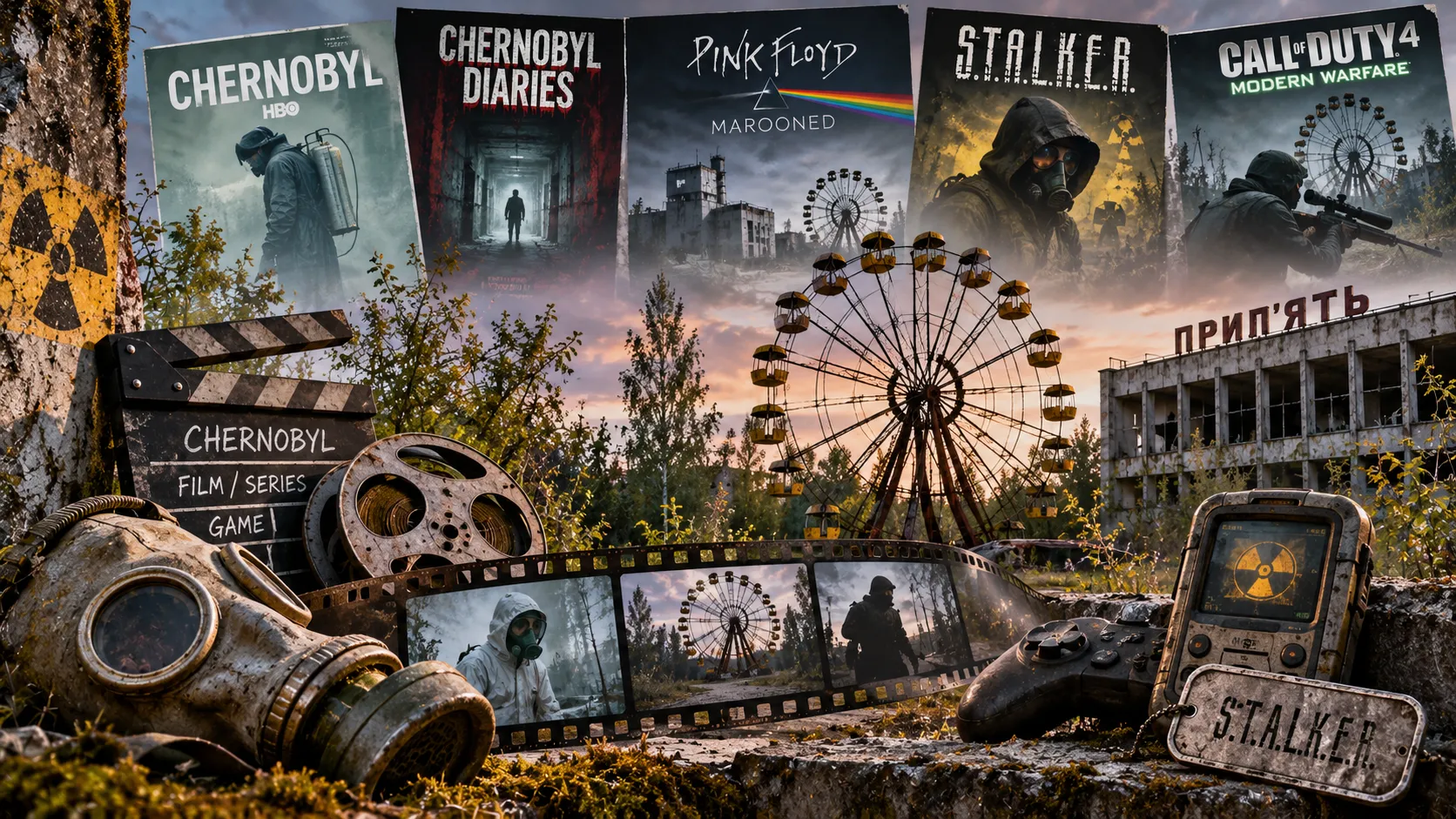
Few abandoned cities in the world have achieved the same level of recognition as Pripyat in the Chornobyl Exclusion Zone. Its deserted streets, residential apartment blocks, overgrown trees, and famous Ferris wheel have become not only reminders of a tragic history but also powerful symbols of modern culture. Directors have filmed music videos here, filmmakers have recreated the city on screen, and video game developers have built entire fictional worlds inspired by the atmosphere of the Chornobyl Exclusion Zone.
Most interestingly, millions of people first encountered Pripyat not through historical documentaries, but through movies, music videos, and video games. For some, their introduction to the city came through a dramatic television series; for others, through the haunting music of Pink Floyd; and for many more, through dangerous adventures in the S.T.A.L.K.E.R. universe.
Pripyat in Film — From Historical Drama to Horror Movies
One of the most famous screen productions about the Chornobyl disaster is the HBO miniseries "Chernobyl" (2019). This five-part historical drama tells the story of the events of April 1986, the consequences of the accident, and the people who struggled to contain the catastrophe. The creators paid particular attention to recreating Soviet everyday life, architecture, and the atmosphere of Pripyat before the evacuation. And here is an interesting fact: many scenes that viewers recognize as Pripyat were actually filmed in Vilnius, the capital of Lithuania. In particular, the Fabijoniškės residential district was transformed into a cinematic version of the nuclear workers' city, while scenes at the power plant were filmed at the Ignalina Nuclear Power Plant and on specially constructed sets.
The series received international acclaim and numerous awards, while also sparking discussions about the historical accuracy of certain scenes. After all, a fictionalized production, even one based on real events, cannot completely replace documentary evidence and scientific research.
A completely different approach was taken by the horror film "Chernobyl Diaries" (2012). Its plot follows a group of young tourists who travel to abandoned Pripyat, where they encounter mysterious dangers. However, despite the real geographical setting, the film's events are entirely fictional. Interestingly, this movie was not filmed in Pripyat either. To recreate the city's streets, the filmmakers used a former Soviet airbase in Hungary, other locations in Serbia, and digital visual effects. This is how a real Ukrainian city became the backdrop for an imaginary horror story.
Music Videos Filmed in Pripyat — Pink Floyd and "Marooned"
A particularly notable musical work associated with the Chornobyl Exclusion Zone is the official music video for "Marooned" by the British rock band Pink Floyd, released in May 2014 to mark the twentieth anniversary of the album "The Division Bell". Unlike many fictional films, a significant portion of this video was actually filmed in Pripyat. It was directed by Aubrey "Po" Powell, renowned for his long-standing collaboration with Pink Floyd. The film crew worked in Ukraine in early April 2014.
In the video, footage of the abandoned city is combined with images of Earth captured by NASA from the International Space Station. This unusual contrast creates a powerful impression: on one side, the vastness of our planet; on the other, a small corner of Ukraine where human dreams and hopes were abruptly shattered by a technological disaster.
The music itself makes the video even more moving. "Marooned" is an instrumental composition without lyrics, so its story is told through guitar melodies, the silence of deserted streets, and images of buildings gradually being reclaimed by nature. Sometimes music can truly express what even thousands of words cannot.
Pripyat in Video Games — From S.T.A.L.K.E.R. to Call of Duty
Perhaps the greatest contribution to popularizing the image of the Chornobyl Exclusion Zone among younger audiences came from the Ukrainian video game series S.T.A.L.K.E.R., developed by GSC Game World. The first game, S.T.A.L.K.E.R.: Shadow of Chernobyl, was released in 2007 and invited players to explore a fictional version of the Chornobyl Exclusion Zone. Here, real landscapes and architecture were combined with science fiction elements, including dangerous anomalies, mysterious artifacts, mutants, and conflicts between different factions.
Pripyat played a particularly important role in S.T.A.L.K.E.R.: Call of Pripyat, where the developers incorporated recognizable features of the abandoned city. In 2024, the series received a sequel, S.T.A.L.K.E.R. 2: Heart of Chornobyl, which once again transported players into the fictional world of the Chornobyl Exclusion Zone, this time with far more detailed landscapes and modern graphics technology.
At the same time, it is important to remember that the world of S.T.A.L.K.E.R. is a fictional interpretation of a real location. Radioactive anomalies, fantastic monsters, and magical artifacts belong to the imaginary game universe, not to the actual history of the Chornobyl disaster.
Pripyat also became widely recognizable thanks to Call of Duty 4: Modern Warfare (2007). In the famous mission "All Ghillied Up", the player accompanies Captain MacMillan through abandoned areas, attempting to remain undetected. The continuation of this story, the mission "One Shot, One Kill", takes place near Pripyat's famous Ferris wheel.
In this way, the image of an abandoned Ukrainian city became part of global gaming culture. For many players, these virtual journeys were their first encounter with Pripyat, inspiring them to learn more about the real history of the Chornobyl Exclusion Zone. Pripyat has left a profound mark on modern culture, but it is important not to forget the boundary between reality and fiction. Cinema can recreate its streets in other countries, music can convey the atmosphere of the abandoned city without a single word, and video games can populate it with imaginary creatures. Yet the real Pripyat remains a Ukrainian city with a genuine history and real human stories whose significance goes far beyond any portrayal on screen.
Pripyat Today — The Consequences of Russian Occupation and the City's Current Condition
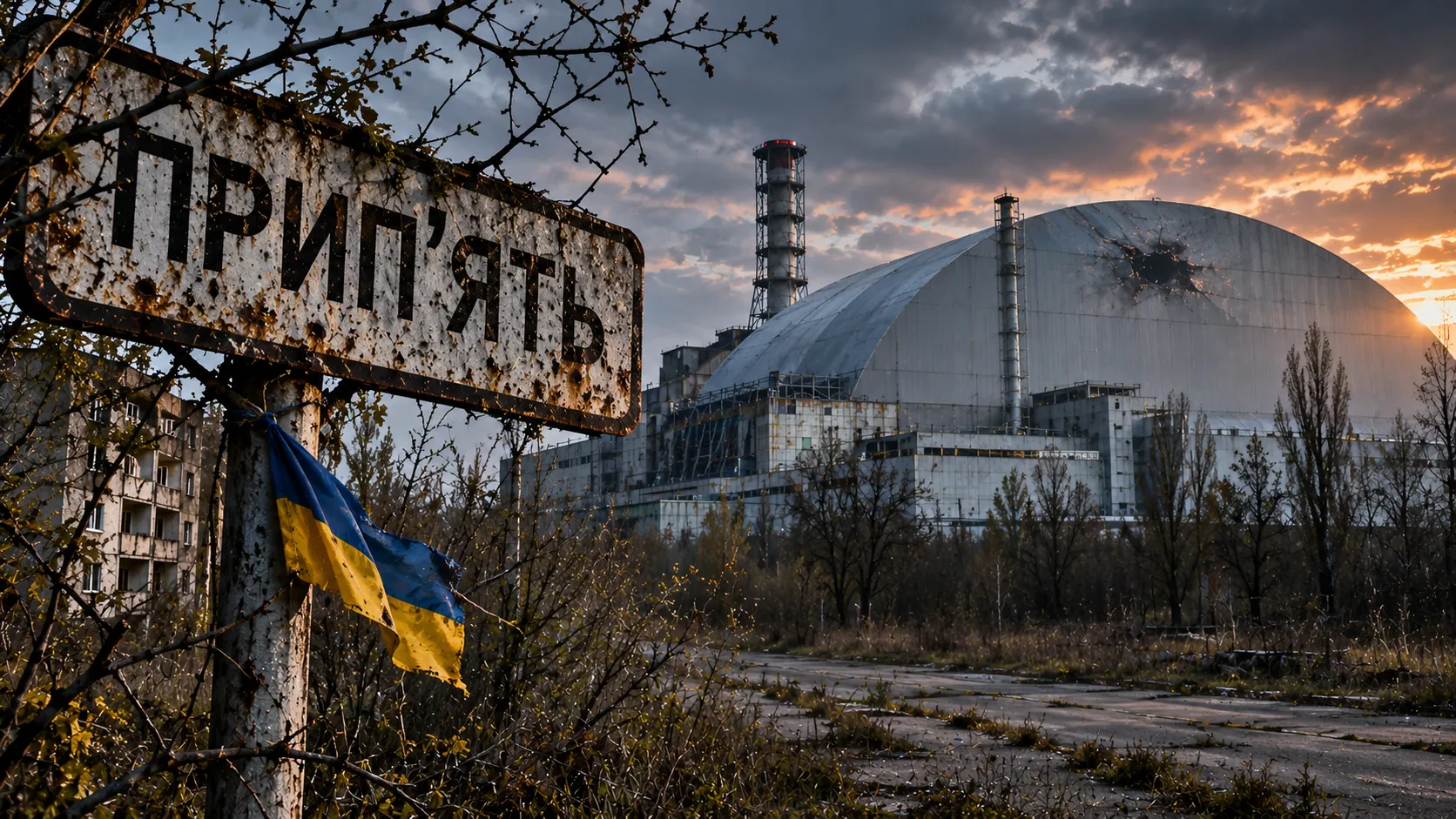
One might think that Pripyat, located in the Chornobyl Exclusion Zone, had already endured the worst. The 1986 disaster, the evacuation of tens of thousands of residents, and decades of abandonment permanently changed its fate. Yet almost 36 years later, the deserted city once again found itself at the center of tragic events. Russia's full-scale invasion brought new threats to a territory that requires special protection even in peacetime.
Russian Occupation of Pripyat and the Chornobyl Nuclear Power Plant in 2022
On February 24, 2022, Russian troops invaded Ukraine from Belarus and seized the Chornobyl Nuclear Power Plant along with the surrounding part of the exclusion zone. Pripyat also came under occupation. Military forces stationed equipment near nuclear facilities, while plant personnel were forced to work under constant psychological pressure and disrupted safety procedures.
On March 31, 2022, the occupying forces withdrew from the Chornobyl Nuclear Power Plant. Following their retreat, Ukrainian specialists faced damaged infrastructure, stolen equipment, and the danger posed by landmines and other explosive remnants of war. Radiation monitoring systems and infrastructure supporting the operation of the exclusion zone were particularly affected. At the same time, not all damage to Pripyat's abandoned buildings can be attributed to the occupation — much of the city had already been deteriorating long before the war.
The 2025 Strike on the Protective Arch of the Chornobyl Nuclear Power Plant
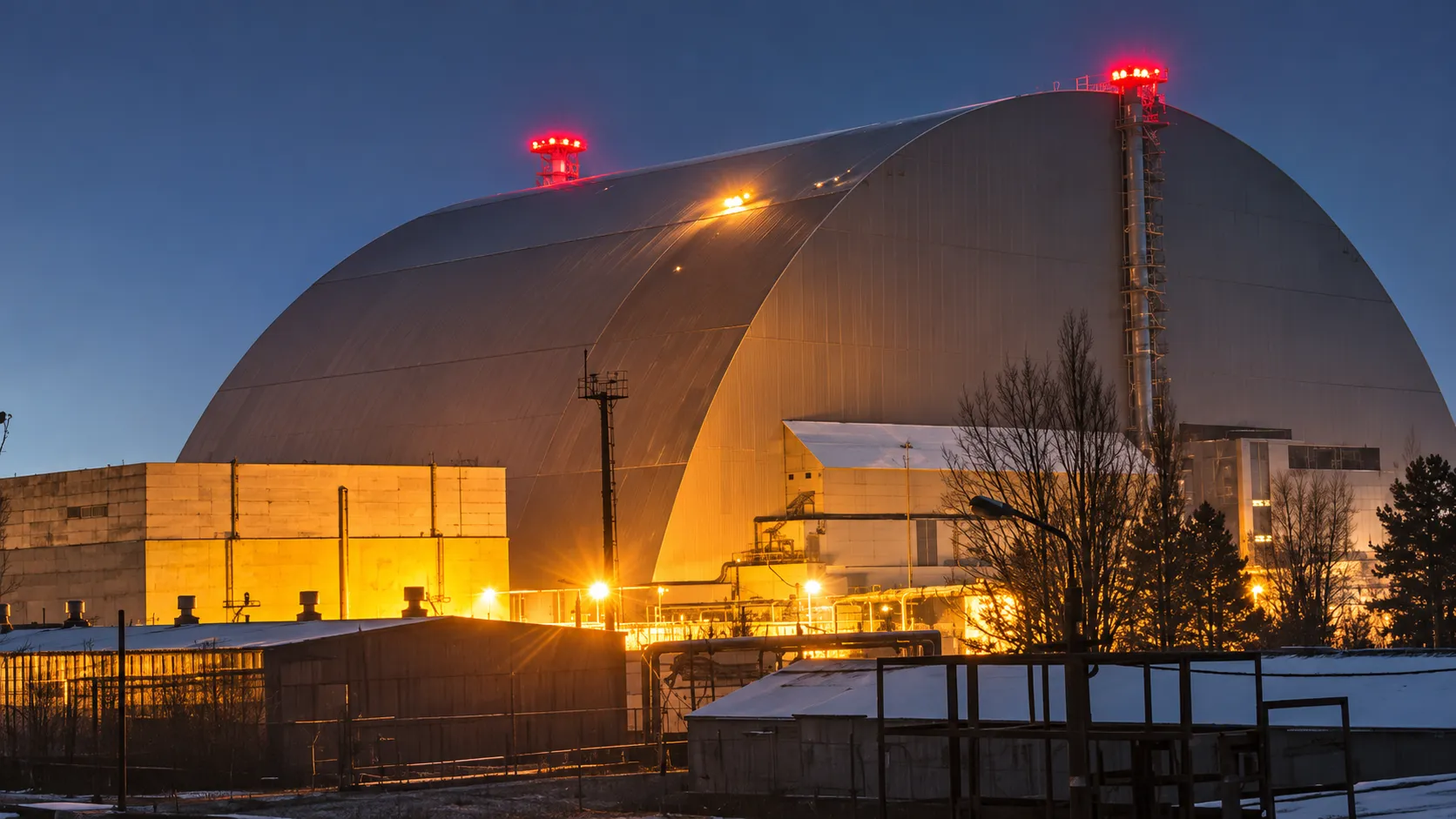
Another dangerous incident occurred on February 14, 2025, when a Russian attack drone struck the New Safe Confinement structure above the destroyed fourth reactor unit of the Chornobyl Nuclear Power Plant. The strike caused a fire and damaged parts of the protective enclosure designed to isolate radioactive materials.
The International Atomic Energy Agency confirmed that the structure's protective functions had been compromised. However, no dangerous increase in radiation levels was detected as a result of the strike. As of November 2026, preparations for restoring the confinement structure are ongoing, with its main protective functions planned to be restored by 2030.
Pripyat in 2026 — Is the City Open to Tourists?
As of November 2026, Pripyat remains under Ukrainian control but is closed to regular tourist visits. In addition to radiation-related risks, potential explosive hazards, damaged infrastructure, and the unsafe condition of abandoned buildings pose serious dangers. Before the full-scale invasion, organized tourist groups could visit the city along designated routes. Today, such tours have not resumed, and access to the exclusion zone is permitted only for specific categories of visitors holding the required special authorizations.
Pripyat has endured two tragedies from different eras — the Chornobyl disaster of 1986 and the Russian occupation of 2022. The first deprived the city of its residents, while the second brought new dangers and destruction. Yet despite everything it has endured, Pripyat remains a Ukrainian city, a symbol of human memory, and a reminder of our responsibility to future generations. We can only hope that one day its streets will once again be safe to visit — not in search of thrills, but to preserve a history that the world must never forget.
Frequently Asked Questions About Pripyat
Where is the city of Pripyat located?
Pripyat is located in Vyshhorod District, Kyiv region, Ukraine, on the right bank of the Pripyat River, approximately 3 kilometers from the Chornobyl Nuclear Power Plant. The city lies within the Chornobyl Exclusion Zone, not far from Ukraine's state border with Belarus.
When was Pripyat founded, and how many people lived there?
Pripyat was founded on February 4, 1970, as a city for employees of the Chornobyl Nuclear Power Plant and their families. Its population grew rapidly, reaching approximately 49,000 residents by the time of the disaster in April 1986. Future development plans envisioned expanding the city to accommodate 75,000–78,000 people.
When was Pripyat evacuated, and why did residents never return home?
The evacuation of Pripyat began on April 27, 1986, at 2:00 PM, approximately 36 hours after the accident at the Chornobyl Nuclear Power Plant. Most residents were evacuated within three hours. They were initially informed that their departure would be temporary, but due to extensive radioactive contamination, permanent residential life in the city was never restored.
Do people still live in Pripyat today?
Pripyat has no permanent civilian population. Following the evacuation, the city ceased to function as a residential community. Specialists responsible for radiation monitoring, security, and infrastructure maintenance may work within the Chornobyl Exclusion Zone, but this does not mean that ordinary urban life has resumed.
Is radiation in Pripyat still dangerous?
Yes, radioactive contamination remains present in the Chornobyl Exclusion Zone, although radiation levels vary significantly from one location to another. Some areas have relatively low radiation levels, while certain contaminated sites remain hazardous. The safety of any particular location can only be assessed using current radiation measurements and established radiation protection regulations.
Can tourists visit Pripyat in 2026?
As of November 2026, regular tourist excursions to Pripyat have not resumed. Following the Russian occupation in 2022, additional dangers include possible explosive remnants of war, damaged infrastructure, and structurally unsafe buildings. Certain official or work-related visits are permitted only under established procedures and with the appropriate authorizations. Unauthorized entry into the exclusion zone is prohibited.
What is the difference between Pripyat and Chornobyl?
Pripyat and Chornobyl are two different cities. Pripyat was founded in 1970 to accommodate nuclear power plant workers, while Chornobyl has a history stretching back many centuries. After the disaster, Pripyat lost its entire permanent population, whereas Chornobyl retained administrative and operational infrastructure supporting the management of the exclusion zone.
Did Pripyat's famous Ferris wheel operate before the disaster?
The official opening of Pripyat's amusement park was scheduled for May 1, 1986, but the Chornobyl disaster occurred five days earlier. There are accounts suggesting that some attractions may have undergone test runs, but their regular operation before the evacuation has not been reliably confirmed. Today, the Ferris wheel is one of the most recognizable symbols of the abandoned city.
Conclusion: Pripyat — A City the World Must Never Forget
Some cities remain in our memories because of their beauty, magnificent architecture, or centuries of history. Others are remembered because of tragedy. Pripyat is one of them. A city born from ambitious dreams of the future lost its most precious treasure — its people — in a single day. Today, its deserted streets, abandoned buildings, and rusting Ferris wheel remind us just how fragile ordinary human happiness can be.
Over the decades, Pripyat has become a worldwide symbol of the Chornobyl disaster. Its images appear in films, music videos, and computer games, while the mysterious atmosphere of the abandoned city continues to capture the attention of millions. Yet behind these images, we must not lose sight of the real story — the story of families who left their homes on an April day, hoping to return soon. The story of people for whom Pripyat will forever remain their hometown, even though they can no longer walk its streets as they once did.
Time is gradually erasing the traces of human presence: trees grow through the asphalt, walls crumble, and nature reclaims former residential neighborhoods. Yet the memory of Pripyat must not disappear along with its buildings. This is especially important today, when the city has endured not only the Chornobyl tragedy but also the ordeal of Russian occupation. Preserving its history means more than remembering the past — it means recognizing the consequences of human error, indifference, and irresponsibility.
Perhaps one day Pripyat will once again become safe to visit, allowing new generations to see this extraordinary place with their own eyes. But the reason to come here should not be to capture eerie photographs or search for ghosts. Above all, it should be to understand what happened. Because Pripyat is far more than a ghost city in the Chornobyl Exclusion Zone. It is part of Ukraine's history, a place of human remembrance, and a warning to the entire world that we must never forget.







No Comment
You can post first response comment.