
 English
 Українська
 Български
 Hrvatski
 Čeština
 Dansk
Dansk Nederlands
 Eesti
Eesti Suomi
Suomi Français
 Deutsch
 Ελληνικα
 Magyar
 Íslenska
 Italiano
 Latviešu
 Lietuvos
 Polski
 Português
 Română
 Русский
 Српски
 Slovenčina
 Slovenščina
 Español
 Svenska
 Türkçe

Some castles try to impress with their scale, the thickness of their walls, or the splendour of their palace halls. Svirzh Castle takes an entirely different approach. It seems to hide among the green hills of Lviv region, lets its reflection drift into the pond’s still waters, and gradually reveals its character to those who decide to stay longer than a few photographs.
At first glance, the castle seems remarkably harmonious: light-coloured walls, tiled roofs, towers, a bridge over the moat, and water at its foot. Yet behind this almost romantic picture lies a far more complicated history. Svirzh has survived wars, fires, reconstructions, changes of ownership, and decades when its future was far from certain.
What is equally interesting is that the castle in Svirzh has not turned into a conventional museum with fully recreated chambers and rows of exhibits behind glass. Its old walls, fireplaces, wooden ceilings, spacious halls, and traces of different eras remain inside — from a noble residence to much later reconstructions. That is why walking through its rooms feels more like discovering living architecture than taking an ordinary museum tour.
Svirzh Castle also has an unexpected cinematic biography. Its courtyard, walls, and surroundings have repeatedly changed their «geography» before the camera, transforming into entirely different places. Sometimes all it takes is watching an old familiar film to suddenly recognise a castle on screen that stands not in France at all, but in Lviv region.
Yet the main impression of Svirzh comes not even from the facts. It arrives when you move away from the castle gate towards the water and look back. The light-coloured walls are reflected in the pond, the trees conceal the modern buildings, and for a few minutes it feels as though you are not looking at a 21st-century tourist attraction, but at an old residence that has simply allowed you a brief glimpse into its past.
That is the feeling with which you should begin discovering Svirzh Castle — a place where a romantic landscape proves to be merely the beautiful cover of a far more complex story.
History of Svirzh Castle: from residence to modern restoration

The history of the castle in the village of Svirzh shows how deceptive the modern appearance of an old monument can be. Today, its light-coloured walls and tiled roofs create an almost idyllic picture. Yet over several centuries, the castle has served as a defensive stronghold and a noble residence, survived attacks, fires, and wars, changed dozens of owners, nearly lost all its historic interiors, and eventually gained a new life as a cultural and tourism space.
When was Svirzh Castle built?
The first fortifications on this hill appeared as early as the 15th century. Specialist sources mention 1427 as the first known reference to Svirzh as a possession of a local noble family, while 1484 is cited as the official date when the castle was founded. At the same time, some sources name 1530 as the first documentary reference specifically to the castle structure, so the early chronology should be treated without excessive certainty.
The fortified residence is believed to have been founded by members of the Svirzhsky family, from whom the castle takes its name. The original structure was primarily defensive: the elevated terrain, ponds, marshy areas, and moat created a natural system of protection reinforced by stone walls.
However, the Svirzh Castle seen by today’s visitors differs considerably from the early fortress. Its recognisable appearance took shape later.
The Cetners transformed the fortress into a noble residence
The most important reconstruction took place in the 17th century, when Svirzh passed to the Cetner family. It was then that the defensive castle began to acquire the character of a comfortable aristocratic residence. The extensive rebuilding is associated with Count Oleksander Cetner, while the design and supervision of the work are attributed to the renowned military engineer Paweł Grodzicki. He managed to combine two functions that do not always coexist easily in one structure: defensive strength and palace comfort.
It was during this period that Svirzh largely acquired the Renaissance appearance for which it is valued today. The castle was enlarged, two inner courtyards were created, the residential wings became more formal, and the austere fortress gradually turned into a true noble home.
An inventory from 1674 mentions not only a large quantity of weapons in the castle, but also carriages, furniture, and works of art. This clearly shows that it was no longer merely a military position on a hill, but a residence where defence coexisted with a thoroughly comfortable aristocratic lifestyle.
Robert Lamezan de Salins and Svirzh’s new golden age
By the beginning of the 20th century, the castle was already in far from its best condition. The situation changed in 1907, when it was acquired by Robert Lamezan de Salins, a military figure in the Austro-Hungarian Empire who became one of the most important owners in Svirzh’s modern history. He invested substantial funds in restoring the estate, put the castle and its grounds in order, and once again turned it into a comfortable country residence. Art collections, family portraits, furniture, and a large library appeared inside, while a park and garden were developed around it.
The irony of history was that the result of many years of work survived for a very short time. On 2 September 1914, at the beginning of the First World War, the castle was set on fire by Russian troops. The flames destroyed the roof, interior decoration, library, family portraits, and much of the accumulated valuables. In effect, only the stone walls remained of the luxurious residence.
Yet Lamezan de Salins did not give up on Svirzh. After the war, he began rebuilding it once again. Portals, decorative rosettes, floral ornaments, and other elements were recreated from surviving photographs and drawings. Until his death in 1930, the owner continued to care for the residence, park, and estate.
The Soviet period: from residence to tractor drivers’ school
After the Second World War, the old order disappeared completely. The castle lost its private owners and was given functions that the Cetners or Lamezans could hardly have imagined. At various times, it housed storage facilities and a tractor drivers’ school. Such use left its mark on the historic building. Some rooms were remodelled, large former chambers were divided into smaller rooms, and individual architectural elements were damaged. Traces of these changes can still be seen inside the castle today.
In the 1970s, the situation began to change. The complex was transferred to the Union of Architects with the intention of creating an Architects’ House of Creativity there. Between 1975 and 1983, an extensive phase of restoration work was carried out: ceilings, white-stone portals, staircases, and utility and residential rooms were restored. The project was ambitious, but it was never fully completed. Some planned works were halted because of unstable funding, and the castle once again remained almost closed to the general public for a long period.
Svirzh Castle today: between restoration and a new life
In the 21st century, active discussion around Svirzh began again: what should the future of the old castle be? On the one hand, the monument requires extensive restoration work — above all, repairs to the roof, drainage system, individual structures, and interiors. On the other, closing it for decades while waiting for an ideal restoration would once again disconnect the castle from tourists and cultural life. A different approach gradually emerged: to use the castle now while preparing it for future restoration. Guided tours, cultural events, festivals, concerts, and film shoots are held here. Svirzh has once again ceased to be merely a beautiful building behind locked doors.
At the same time, major restoration still lies ahead. According to estimates published in 2024, approximately UAH 100 million is needed for priority work on the roof, structures, and drainage. Project documentation and a revitalisation concept have been prepared, but because of the war, state and regional funding opportunities are severely limited, so grants and international partners are being sought for implementation. Today, Svirzh Castle occupies an interesting transitional state. It is no longer a closed, half-forgotten monument, but neither is it a fully restored palace residence. Its history is effectively continuing before the eyes of today’s visitors.
And perhaps that is why discovering Svirzh should continue not with dates and surnames, but with the castle itself — crossing its bridge, looking into its two courtyards, examining the Renaissance portals and defensive features, and finding the viewpoints that have made this old fortress one of the most recognisable landmarks of Lviv region.


What to see at Svirzh Castle
Svirzh Castle should be explored unhurriedly and not only from the side of the grand entrance. Its main feature lies in the combination of architecture and landscape. There is no single spot from which everything of interest can be seen: the castle gradually reveals itself during a walk across the bridge, through the courtyards, along the walls, and beside the pond. From every new angle, it looks slightly different — now like a noble palace, now like a genuine defensive fortress. That is why it is easy to underestimate the castle if you limit yourself to a few photographs at the entrance. Behind the grand façade are two distinct courtyards, old white-stone portals, remnants of the defensive system, utility rooms, a well, and viewpoints offering an entirely different image of the castle.
The grand entrance and bridge over the former defensive moat
Your introduction to Svirzh begins before you even pass through the castle gate. A stone bridge leads to the main entrance, spanning the former defensive moat. This is one of the most recognisable views: the light-coloured entrance tower, two symmetrical sections of the building, and the bridge create an almost theatrical perspective.
Once, the approach to the castle had a thoroughly practical defensive purpose. Water, marshy areas, steep slopes, and the moat made an attack more difficult, while the narrow, controlled entrance helped protect the main gate. Today, visitors cross this route without particular obstacles, but the composition itself is a strong reminder that this is not simply a country palace.
The bridge is the perfect place to pause for a few minutes and look at the entire façade. From here, the castle’s symmetry and the contrast between the almost palatial elegance of the upper section and the old defensive foundation are easiest to appreciate.
The upper courtyard of Svirzh Castle
Beyond the gate lies the upper, or residential, courtyard — the most formal part of the complex. It is surrounded by the wings of the former residence and is far more intimate than one might expect when viewing the castle from outside. Pay attention not only to the overall appearance, but also to the small architectural details: stone door and window surrounds, white-stone portals, passages between the wings, and traces of reconstructions from different periods. Some of these elements survived wars and fires; others were restored during 20th-century restoration campaigns.
The upper courtyard is where Svirzh’s palatial character is felt most strongly. There is much less of the fortress’s austerity here, and the composition more closely resembles the inner space of a noble residence designed for the everyday life of its owners.
The lower service courtyard and castle well
The second courtyard has an entirely different character. The lower, or service, courtyard of Svirzh Castle was once connected with the practical life of a large estate: it contained the service and utility rooms without which no aristocratic residence could function properly.
One of the most interesting details is the old castle well. To today’s visitor, it is merely a small feature of the courtyard, but for a fortress, its own water source had strategic importance. During a siege, access to water could determine how long the castle would be able to hold out without outside assistance.
The contrast between the two courtyards clearly shows how Svirzh was organized: one part served a representative and residential function, while the other supported everyday хозяйство.
Defensive Walls, Loopholes, and the Castle’s Natural Protection
Svirzh Castle was never merely a beautiful backdrop above the water. Its location was chosen with defense in mind: the hill, ponds, and marshland formed a natural barrier, while the stone walls reinforced this system. Even today, the grounds contain loopholes and defensive features that recall the complex’s military past. In different parts of the castle, they stand alongside palace windows, portals, and decorative details—this combination is precisely what makes Svirzh’s architecture so fascinating.
On the one hand, we are looking at a Renaissance noble residence. On the other, it is a structure that had to withstand real attacks. Although the castle’s defensive capabilities may no longer be immediately obvious today, simply walking along the outer walls and looking at the steep slopes is enough to understand the logic behind its location.
Svirzh Castle: The View That Became Its Signature
The most famous view of Svirzh opens up not from the inner courtyard, but from the water. Svirzh Castle above the pond is the angle from which it is most often recognized in photographs. In calm weather, the pale walls and tiled roofs are reflected in the water, creating an almost symmetrical composition. There is no dense urban development around it, so the landscape does not compete with the architecture; instead, it enhances it. This is where it becomes easiest to understand why the castle is often called one of the most romantic in the Lviv region.
For photographs, it is worth moving to the opposite bank or following the path along the water. The farther you get from the main gate, the fewer modern details appear in the frame, and the more distinctly the castle looks like a separate residence among the hills and water.
During tours, visitors are also shown viewpoints within the complex from which the small island in the lake is clearly visible. Modern tour routes even draw special attention to a window offering one of the best views of the water. This detail may seem minor, but such perspectives capture the character of Svirzh particularly well. The castle was designed not merely as an enclosed defensive space: the surrounding landscape was part of life at the residence, while the water and green slopes shaped the view from the living quarters.
When Svirzh Castle Looks Its Most Impressive
The Svirzh castle complex is at its most striking when the water is calm and reflects the building’s façades clearly. In the morning or toward evening, the light is softer, so the architectural details on the walls are easier to make out, while the reflection in the pond becomes more pronounced.
Spring and summer add a green frame to the castle, while in autumn the surrounding trees change color and overcast weather creates an entirely different, almost cinematic mood. As a result, the same location can look very different depending on the season and time of day.
Allow at least an hour for viewing the exterior, the two courtyards, the walls, and taking a walk by the pond, not counting tours of the interior. Svirzh Castle is not so large that you can easily get lost, but it is varied enough that a rushed twenty-minute visit will leave half of its most interesting details beyond your route.
After viewing the exterior, it is worth stepping through the castle doors. That is where it becomes clear that Svirzh today is not a recreated palace museum, but an entirely different kind of historical monument, where the main exhibits remain the walls themselves, the portals, fireplaces, and traces of several eras.
Svirzh Castle Today: Interiors, Tours, and Visitor Access

Once inside Svirzh Castle, do not expect a traditional palace museum with recreated owners’ bedrooms, antique furniture, and exhibits behind glass. The residence’s historic interiors have barely survived to the present day in their original form, and a substantial part of the building was remodeled in the 20th century to meet entirely different needs.
Yet that is precisely what makes exploring the castle interesting in its own way. The main «exhibits» here are the rooms themselves: old stone portals, vaulted ceilings, a fireplace, wooden floor structures, parquet, corridors, underground chambers, and traces of various alterations. Visitors effectively walk through a building in which several historical eras coexist, and do not always try to look perfect.
What Has Survived Inside Svirzh Castle
Among the most valuable interior details are the Renaissance white-stone portals. They are clearly visible inside the building and allow visitors to imagine, at least in part, what the residence’s architectural culture was like during its heyday. Nearby, you can see old stone surrounds, vaulted ceilings, and individual decorative elements.
In some rooms, wooden beam ceilings have survived or been restored. They create the «castle-like» appearance so noticeable in modern photographs of the interiors. At the same time, it is worth remembering that some structures were restored during 20th-century renovations, so not every beam overhead dates directly from the 17th century.
Particular attention should be paid to the old fireplace in a room that once served as a sitting room. According to the castle administration, the fireplace remains functional, although it needs restoration. Nearby, you can also see the old parquet: it has survived better in some rooms, while in others it already needs repair.
The Great Hall of Svirzh Castle
One of the most distinctive rooms is the great hall with a high wooden ceiling. At different times, it was adapted for conferences, meetings, and cultural events, so modern photographs may show tables, chairs, chandeliers, or temporary décor. It is important not to mistake such furnishings for a reconstruction of a noble interior. This is a modern functional space inside a historic building. Its primary authentic value lies in the hall’s architecture, the proportions of the room, the ceiling structure, and the surviving details.
It is in rooms like these that the difference between Svirzh and a classic museum palace is especially clear. The castle does not try to create the illusion that its owners left five minutes ago. In front of the visitor is a real space bearing traces of several centuries of use.
Traces of the Soviet Remodeling That Remain Today
Not all the changes inside the castle can be called restoration. After the Second World War, the old residence was used for хозяйственные needs and even as a tractor-driving school. Later, when the complex was transferred to architects, some of the large former chambers were divided into smaller rooms intended to house participants in the House of Creativity.
Today, these interventions can still be read in the interior structure: long corridors, small rooms, and individual partitions do not always correspond to the original layout of the noble residence. For visitors, this can even be a useful explanation. If a room looks overly plain or does not resemble a palace hall at all, the reason is not necessarily «poor restoration»—sometimes what we are seeing is the result of how the castle was used throughout the 20th century.
Svirzh Castle’s Underground Chambers and Their Unusual Inhabitants
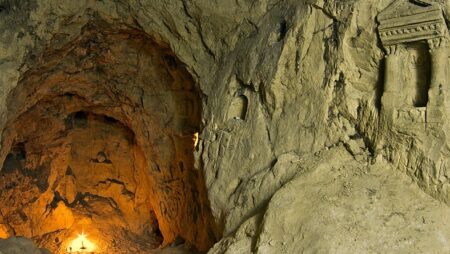
The tour route may also include the underground rooms of Svirzh Castle. They are considerably more austere than the residential wings and strongly evoke the complex’s defensive and хозяйственные past. A large colony of bats has also made its home in the underground chambers. They are not driven out: the animals are protected, so they have effectively become additional residents of the old fortress. In terms of the castle’s atmosphere, it is an almost perfect detail—although this time the mystery has an entirely natural explanation.
Is There a Museum Exhibition at Svirzh Castle?
Unlike Olesko or Zolochiv castles, Svirzh does not currently have a permanent traditional museum exhibition. You should not expect large collections of paintings, armor, historic furniture, or fully recreated rooms from the 17th–18th centuries. The value of a visit lies elsewhere: you can enter the historic building itself, walk through its courtyards and rooms, and see the portals, fireplace, old structures, and traces of alterations. The castle’s architecture itself effectively serves as the main exhibition.
Future revitalization projects envisage much broader use of the interior spaces—including exhibition halls, cultural functions, and partial recreation of historic interiors. But as of today, these are largely plans for the future rather than a completed museum complex.
How to Enter Svirzh Castle
Unlike the surrounding grounds, where you can walk independently, the interior rooms are accessible only as part of a guided tour. This is an important feature of Svirzh to bear in mind before your trip. During the 2026 tourist season, the Svirzh Castle Cultural and Arts Center opened the interior rooms for tours on Saturdays and Sundays. The route passes through the courtyards and some of the castle’s rooms, allowing visitors to see what usually remains hidden from those who come simply to photograph the fortress beside the pond.
If you expect a lavish palace museum, Svirzh may seem too empty. But if you see it as an opportunity to step inside a genuine historic building and experience it without excessive decoration, the tour takes on an entirely different meaning. Here, it is interesting to focus not on the number of exhibits but on the details: an old portal in a doorway, a mark left by heavy machinery on the stone, a fireplace in the former sitting room, uneven parquet, or a Soviet partition where a large chamber once stood. Together, these fragments sometimes tell the story of the castle better than a perfectly restored room.
That is why Svirzh Castle today is fascinating precisely because of its unfinished state. It is already open to people, but has not yet been turned into a polished tourist attraction. Visitors have the rare opportunity to see the monument at a moment when its past is still clearly legible, while its future is only beginning to take shape.
Svirzh Castle on Film: «D’Artagnan and the Three Musketeers»

Svirzh Castle was fortunate enough to gain another life—one on screen. Its walls, courtyards, bridge over the moat, and largely unchanged surrounding landscape fit the image of old Europe so well that all the directors had to do was position the camera correctly. The castle’s most famous screen appearance was in the adventure musical television film «D’Artagnan and the Three Musketeers», filmed in 1978 by Odesa Film Studio.
What is especially interesting is that Svirzh did not play just one role in the film. The same castle appears several times in different episodes, becoming at one point the young Gascon’s family home, at another a monastery, and at yet another simply part of the French landscape. It seems the filmmakers quickly realized that once they had found such a photogenic castle, using it only once would have been wasteful.
More Than Musketeers: Svirzh Castle in Contemporary Ukrainian Cinema
Svirzh’s cinematic history did not end in 1978. The castle continues to serve as a natural set in contemporary Ukrainian productions. In particular, scenes from the historical action film «Dovbush» were shot here—one of the most expensive Ukrainian films of recent years. The castle grounds were used to create a battle scene and one of the climactic episodes. This is entirely logical: at Svirzh, a director gets an almost ready-made filming location—old walls, two courtyards, a bridge, natural terrain, and a minimum of modern details in the frame.
So, while walking around the castle, it is worth looking at it from time to time not only through a tourist’s eyes. The stairs in the upper courtyard had already become Gascony, the grand gate a French monastery, and the old walls a backdrop for entirely different historical eras. Svirzh Castle can convincingly play other roles, but it remains most fascinating when it plays itself.
Interesting Facts and Legends of Svirzh Castle

Svirzh Castle does not need to invent dozens of ghosts to remain mysterious. Here, entirely real architectural details coexist with tales of secret passages, betrayal during a siege, and hidden belongings of former owners. The most interesting approach is not to blend everything into one beautiful fairy tale, but to try to distinguish what can be seen with your own eyes from stories passed down by word of mouth for generations.
One of Svirzh’s most recognizable symbols is the griffin—a mythical creature with the features of a lion and an eagle. Its image can be seen on one of the castle towers, although it is not known for certain who ordered it to be placed on the façade.
One version connects the griffin with Ignacy Cetner, the Voivode of Belz. The Lviv Regional Military Administration suggests that the owner may have transferred this symbol from Belz’s heraldic tradition to his Svirzh residence. In any case, the griffin fits so naturally into the image of the castle that today it is perceived almost as its personal guardian.
And not all of Svirzh’s interesting stories have to be sought in symbols or underground. In front of the modern castle complex, the remains of an older defensive tower have survived, associated with the fortress’s early period. Nearby, you can trace the defensive moat and, lower down the slope, elements of the old fortifications. This is a good reminder that today’s Svirzh Castle represents only one phase in the development of this place. Before the Cetners’ Renaissance residence stood here, there was a much harsher defensive structure, traces of which have not completely disappeared beneath later reconstructions.
The Legend of the Girl Who Opened the Gates to the Enemy
The best-known legend of Svirzh Castle is connected with an old well in the service courtyard. According to the tale, during one of the sieges, a local girl fell in love with a soldier from the enemy army and agreed to secretly open the castle gates to the attackers. The fortress was captured, but the story did not have a happy ending. Legend has it that the invaders decided that someone who had betrayed her own people once could just as easily betray her new allies, so they threw the girl into the castle well.
The details vary in different versions of the tale—the enemies are sometimes Tatars and sometimes Turks, while the story is occasionally expanded with the appearance of a female ghost. There are no reliable documents confirming this tragedy, so it should be viewed specifically as a local legend, not an established historical fact.
The Secret Passages of Svirzh Castle: Twenty Kilometers Underground?
Another popular legend tells of the underground passages of Svirzh Castle. According to the boldest versions, they may have stretched for dozens of kilometers and led far beyond Svirzh—to neighboring defensive structures or sacred complexes. Even official tourism materials for the Lviv region mention tales of a network of passages up to twenty kilometers long. However, there is no archaeological evidence that such a vast system existed. There really are cellars and underground rooms beneath the castle, while some old passages were sealed or blocked at various times because of the danger of collapse.
Thus, a secret tunnel that could have allowed someone to leave Svirzh unnoticed and emerge several villages away remains much closer to a beautiful legend than to a proven engineering fact.
A tale about an underground connection between the castle and the nearby former Church of the Holy Trinity and the Assumption of the Virgin Mary sounds much more realistic. The church dates from the 16th century and itself had defensive features, so the possibility of a short underground passage between two fortified sites does not seem impossible. Such a passage is mentioned repeatedly in local-history sources, although its original route cannot now be fully traced. Here, too, it is better to leave a small question mark rather than turn an appealing version into an indisputable fact.
A Treasure That Contained No Gold
Another intriguing tale is associated with Svirzh’s more recent history. After World War II, it was supposedly discovered by chance that camouflaged doors in the moat near the castle led to a basement room. Inside, a «treasure» belonging to one of the former owners was found. There was no gold, jewelry, or antique coins, however. According to the tale, the hiding place contained furniture and valuable tableware that the owner had tried to save from the chaos of war. After the hiding place was opened, the items quickly found their way into homes in the surrounding area, making it virtually impossible to trace their subsequent fate today.
It is difficult to reconstruct this story from documents, but it is much more mundane—and at the same time more plausible—than legends about barrels of gold. In wartime, expensive furniture, tableware, and family belongings could genuinely have been no less valuable a treasure to the owner of an old estate.
In Svirzh, Facts Are More Interesting to Seek Than Ghosts
Svirzh Castle has all the ingredients of a good ghost story: an old well, dungeons, several centuries of wars, dim corridors, and even bats. It is no surprise that tales of female figures, strange sounds, and secret passages arose around it over time. Yet Svirzh’s most interesting feature lies elsewhere. Some of its «legendary» details have a completely real basis: underground rooms genuinely exist, the well has survived, old fortifications can be seen, and the castle has endured sieges and destruction more than once.
That is why it is particularly easy to understand here how castle legends are born. First there is a real place or event, then the details are lost, and a few generations later the story acquires love, betrayal, a secret tunnel, and an obligatory ghost. In this sense, Svirzh is almost a perfect textbook example of how history gradually turns into folklore.
What to See Near Svirzh Castle

A trip to Svirzh Castle does not have to end immediately after the tour. Bibrechchyna and the neighboring districts offer several very different attractions that can easily be combined into one journey—from a contemporary sculpture park and seasonal flower fields to castles and a medieval defensive tower. This variety is precisely what makes the route more interesting: after Svirzh’s ancient walls, you can change the atmosphere and move on to contemporary open-air art, floral landscapes, or continue exploring historic Lviv region at other fortresses and palaces. As a result, even a short trip can easily become a full day of travel, with each successive stop adding an entirely different mood rather than repeating the previous one.
PARK3020—Contemporary Art in the Open Air
One of the most interesting ways to continue the route is PARK3020 in the village of Strilky—the first large park of contemporary Ukrainian sculpture in Ukraine. Its exhibition is located outdoors, so a walk there feels more like encountering art in a landscape than visiting a traditional gallery.
After Svirzh’s historic architecture, this contrast works especially well: several centuries of history give way to contemporary forms, metal, stone, and large artworks set amid greenery. PARK3020 operates as an independent tourist attraction and offers guided tours, so it is better to set aside dedicated time for it rather than stop by «for ten minutes.»
«Fairy-Tale Fields»—A Seasonal Stop Among Lavender and Flowers
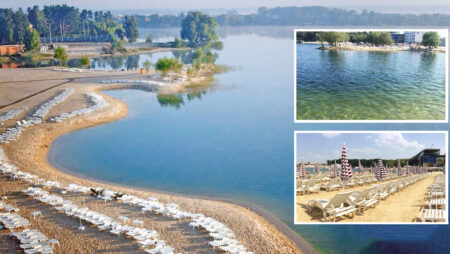
Near Strilky lies the «Fairy-Tale Fields» park. This is an entirely different kind of leisure destination, with ornamental plants, lavender plots, roses, hydrangeas, and photo zones. It is especially appealing during the peak flowering season, although the exact dates depend on the weather each year. The attraction was created specifically as part of Bibrechchyna’s tourism development. The Lviv District Administration once separately emphasized its proximity to Svirzh Castle and PARK3020, so these three points combine well into one easy summer tourist route.
The Castles of the «Golden Horseshoe of Lviv Region»—Continuing the Svirzh Journey
Svirzh Castle is often included in the extended tourist route known as the «Golden Horseshoe of Lviv Region.» Its traditional core consists of the Olesko, Pidhirtsi, and Zolochiv castles, while Svirzh becomes a very logical addition to the journey—especially for those who want to see not three similar fortresses, but entirely different types of noble residences.
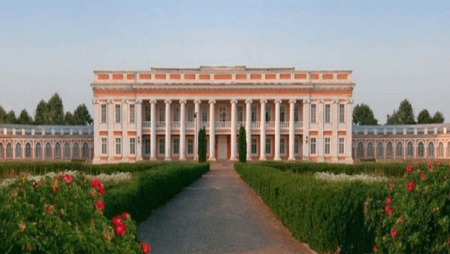
Olesko Castle takes travelers to a medieval fortress on a hill and a large museum collection. Pidhirtsi Castle impresses with an entirely different scale—a magnificent palace-fortress with bastions, a park, and the Church of St. Joseph. At Zolochiv Castle, be sure to see the Great Palace, the bastion fortifications, and the unusual Chinese Palace.
Svirzh has its own character in this company. It is much more intimate, romantic, and closely connected with the surrounding landscape: the pond, bridge, green slopes, and reflections of the bright walls in the water create an entirely different impression from that of the route’s three main castles. So, if you have enough time, these locations can be combined into a major road trip through the Lviv region lasting two days.
Frequently Asked Questions About Svirzh Castle
Where is Svirzh Castle located?
Svirzh Castle is located in the village of Svirzh, in Lviv District, Lviv Region, approximately 45 km from Lviv. The fortress stands on a hill above a pond and is one of the best-known historic landmarks in this part of the Lviv region.
Can you go inside Svirzh Castle?
Yes, but the interior rooms can only be visited as part of guided tour groups. Visitors cannot walk through the castle halls independently. Tours operate seasonally, so before your trip, it is worth checking the current opening schedule.
When is Svirzh Castle open?
During the 2026 tourist season, interior tours are held on Saturdays and Sundays from 10:00 to 17:00, with the last tour beginning at 16:00. Since the schedule is seasonal and may change, it is best to check the latest announcement from the «Svirzh Castle» Cultural and Artistic Center before visiting.
How do you get to Svirzh Castle from Lviv?
The most convenient option is to drive from Lviv toward Bibrka and then continue to Svirzh. The distance is approximately 45 km, and the journey usually takes about an hour. You can also reach Svirzh or Peremyshliany by bus, but it is best to check the current timetable directly before traveling.
How much time do you need to visit Svirzh Castle?
For an interior tour, a look around both courtyards, the grand entrance and a walk by the pond, allow approximately 2–3 hours. If you are planning only an exterior visit and photography, you will need less time.
What else can you visit near Svirzh Castle?
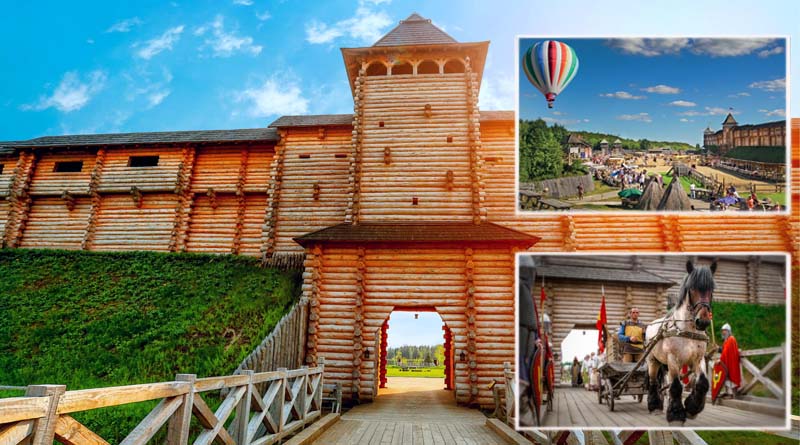
You can combine the trip with PARK3020, Kazkovi Polia Park, Univ Lavra, and the Pyatnychany Defensive Tower. For a longer tour of the Lviv region, Svirzh is also often included in the Golden Horseshoe castle route—Olesko, Pidhirtsi, and Zolochiv castles.
Svirzh Castle Complex—a fortress that has kept its character
Svirzh Castle is not one of those places where visitors are impressed by the number of museum exhibits, the shine of restored halls, or perfectly recreated interiors. Its strength lies elsewhere—in the combination of old walls, water, hills, two inner courtyards, and the feeling that what stands before you is not a set but a genuine building with a remarkably complex history.
Over the course of several centuries, the castle has served as a defensive stronghold and a noble residence, enduring fires, wars, Soviet alterations, and long periods of uncertainty. Some historic interiors have been lost, certain rooms have changed purpose, and large-scale restoration still lies ahead. Yet it is precisely this incompleteness that makes Svirzh feel especially alive.
What is fascinating here is not only what has already been restored, but also what has survived: white-stone portals, old ceilings, a fireplace, dungeons, defensive details, and the very structure of the residence. During the tour, you can literally see how different eras layered themselves one on top of another without completely erasing what came before. Outside, the castle reveals an entirely different side. Walk over to the pond, look back at the sunlit walls, and see their reflection in the water—and this stern historic monument suddenly becomes one of the most romantic views in the Lviv region.
Perhaps that is why Svirzh works so well on film. Its architecture can easily transform into settings from other eras and countries, but after visiting in person, one thing becomes clear: the most interesting role of Svirzh Castle is simply to be itself. So if you are looking for a place where you can combine history, architecture, beautiful views, and a hint of unfinished mystery, Svirzh is worth a trip of its own. Not as a quick stop «along the way,» but as a destination that deserves your time. Because some castles are remembered not for what has already been restored, but for what they still make you imagine.



No Comment
You can post first response comment.