
 English
 Українська
 Български
 Hrvatski
 Čeština
 Dansk
Dansk Nederlands
 Eesti
Eesti Suomi
Suomi Français
 Deutsch
 Ελληνικα
 Magyar
 Íslenska
 Italiano
 Latviešu
 Lietuvos
 Polski
 Português
 Română
 Русский
 Српски
 Slovenčina
 Slovenščina
 Español
 Svenska
 Türkçe
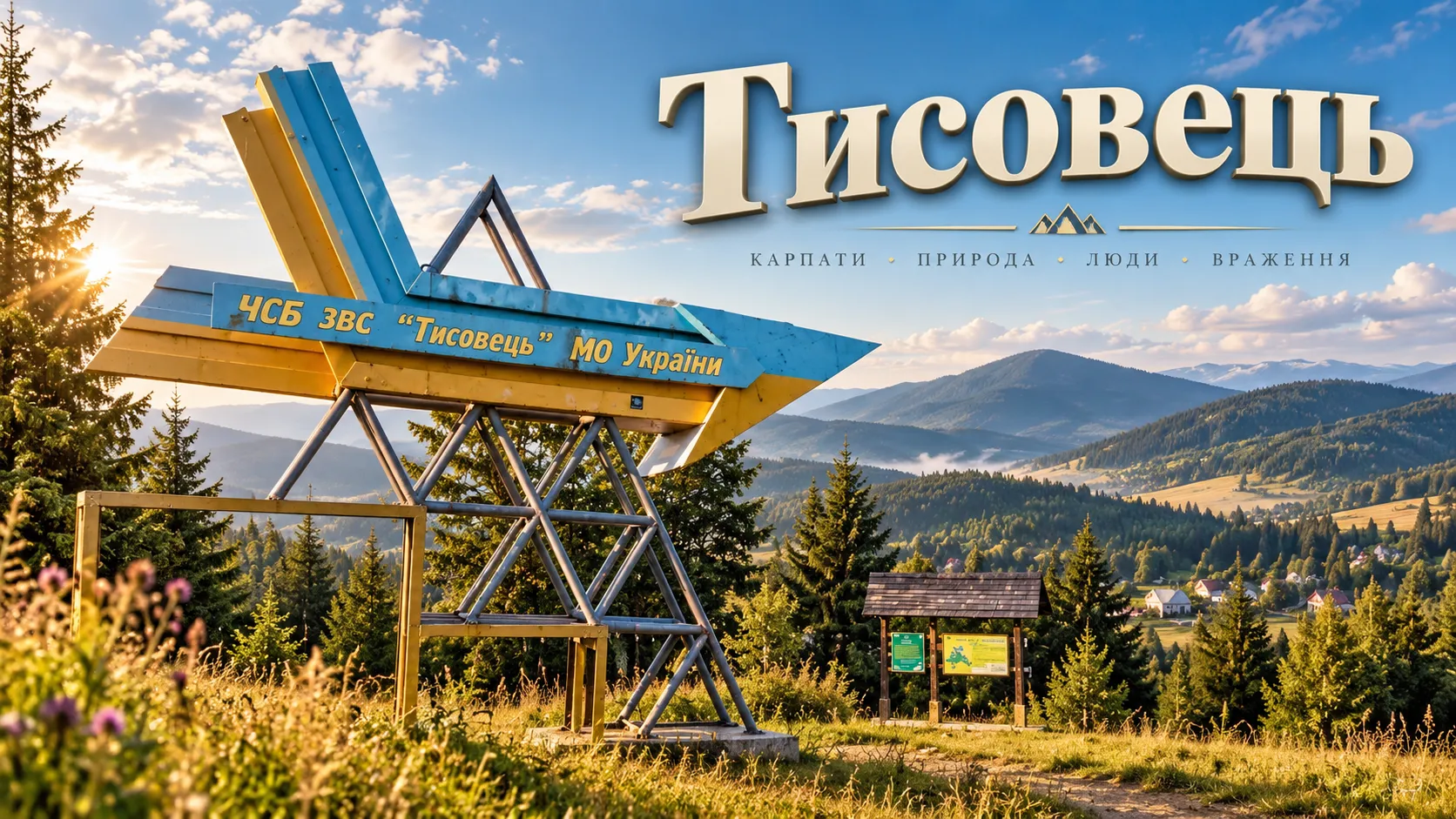
Tysovets is one of those places in the Carpathians whose name still reminds many people of skis, snow-covered slopes, and sports training camps in the mountains. Today, however, it is more accurate to view it not as an ordinary ski resort, but as a training and sports facility for winter sports that continues to operate in the Skole Beskids.
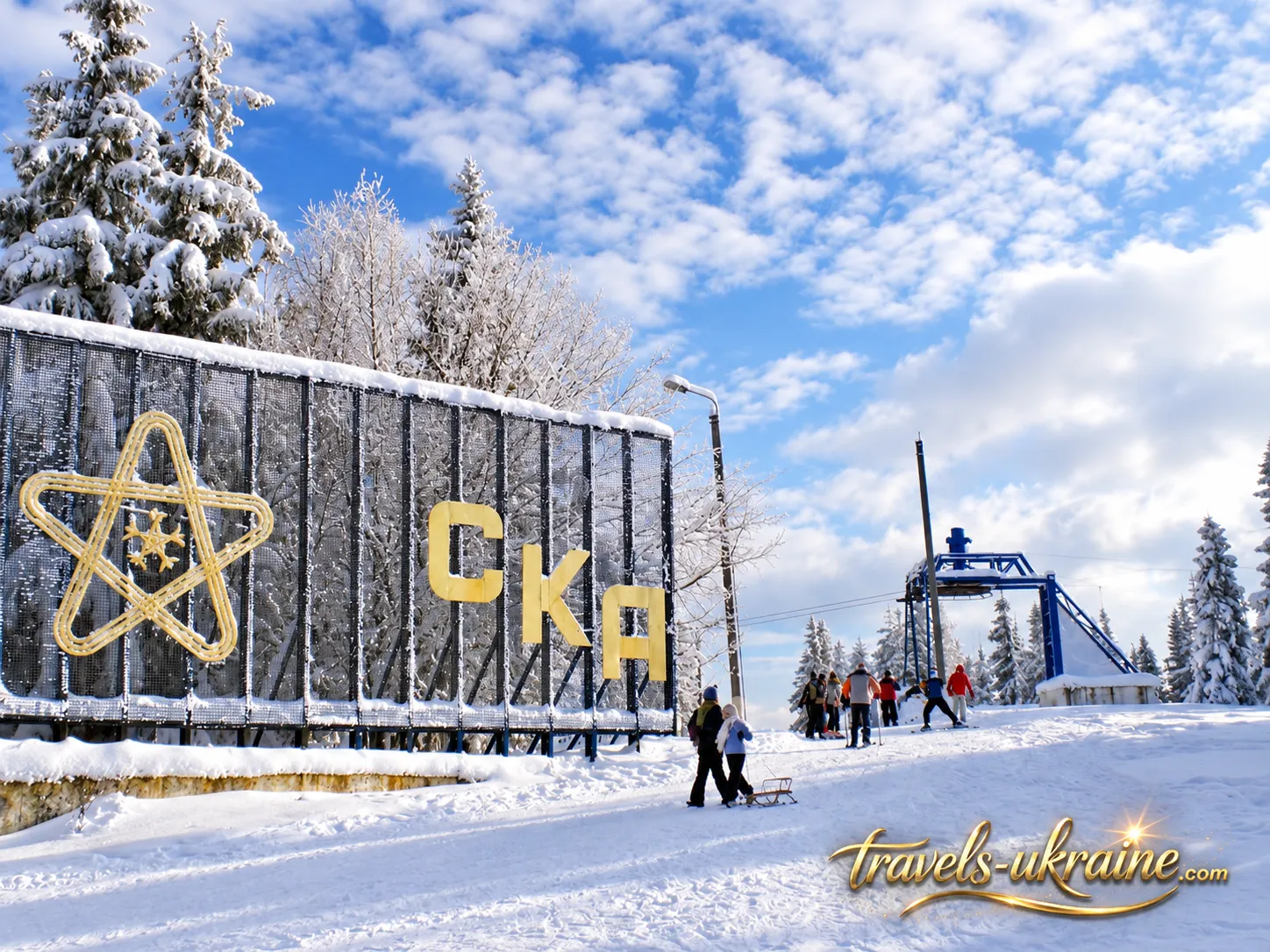
The Tysovets facility is located in Lviv Oblast, amid Carpathian forests and mountain slopes, far from the atmosphere of large tourist complexes. There is no sense of a resort town with a long street of restaurants, souvenir shops, and hotels at every turn. Tysovets was developed primarily as a place for athlete training, biathlon, cross-country skiing, and other winter sports, and its sporting character remains its main defining feature.
The training and sports facility is part of the sports infrastructure of the Ministry of Defence of Ukraine and has the status of an Olympic training base. Although many tourist descriptions of Tysovets found online were written back when it was actively promoted as a ski complex, the facility has not been reduced to a page in Carpathian history—it still hosts sports training camps, practices, and competitions today.
This is precisely why Tysovets is interesting not only to athletes. For travellers, it offers a chance to see a different side of the Carpathians—without the bustle of a major resort, among mountains, forests, and sports facilities that recall decades of training Ukrainian athletes. At the same time, before travelling here, it is important to understand the facility’s current status: which infrastructure is operating, what is available to ordinary tourists, whether it is possible to stay here, and whether you should expect to go skiing.
So, without relying on outdated promotional descriptions and legends of a «resort where everything is operating,» let us look at what Tysovets was like in the past, what it is like today, what remains of its sports infrastructure, and whether this place is worth including in a route through the Skole Beskids.
History of the Tysovets Sports Facility: From Military Territory to Sport
The history of the Tysovets sports facility did not begin as the story of an ordinary Carpathian resort. It did not gradually develop from a few private guesthouses into a large tourist complex, as happened in many other mountain areas. Tysovets was established primarily as a specialised area for military and sports training, while its future was largely determined by the natural conditions of the Carpathians.
As early as the beginning of the 1970s, land in the Tysovets tract was assigned to defence-sector structures. Archival and court documents refer to a 1972 decision by the Lviv Regional Executive Committee, approved by an order of the Council of Ministers of the Ukrainian SSR; in 1983, a state deed granting the right to use a substantial area in the Tysovets tract was issued. It was on this land that the training and sports facility for winter sports later developed.
How the Sports Facility Emerged in Tysovets
The active development of its sporting focus began in the mid-1970s. Studies of sports infrastructure mention the Tysovets training and sports facility near Or yavchyk as early as 1975. Tourist sources also associate an important stage of its development with the second half of the 1970s, when the area began to be deliberately adapted for sports and physical training.
The choice of location was entirely practical. The mountain terrain, long winter season, substantial elevation differences, and extensive territory made it possible to create not only ski runs but also long courses for cross-country skiing, biathlon, Nordic combined, and other winter sports. As a result, Tysovets gradually became a complex where athletes could do more than attend a few events—they could complete full training camps.
At different times, the facility’s sporting specialisation was much broader than its name might suggest. Official lists of Olympic training bases associated Tysovets with biathlon, cross-country skiing, Nordic combined, ski jumping, freestyle skiing, and alpine skiing. The list of disciplines changed over time, but its main role remained constant: training athletes in mountain conditions.
Tysovets After Ukraine Gained Independence
After 1991, the facility did not lose its sporting purpose and remained within the system of the Ministry of Defence of Ukraine. Athletes continued to train here, while training camps and national competitions were held on site. In the 1990s, biathlon coaches, among others, worked at the facility, and Tysovets remained one of the better-known training locations for winter sports athletes.
An important milestone was granting Tysovets the status of a base for Olympic and Paralympic training. A government list approved in 2006 included the Tysovets training and sports facility for winter sports among institutions where high-level athletes, including members of Ukraine’s Olympic team, could train. For a site sometimes viewed merely as an old ski complex, this is a crucial detail: its sporting function has always been far more important than its purely tourist role.
That is why Tysovets is better understood not as the story of a resort that once enjoyed its heyday, but as the story of a specialised sports facility in the Carpathians. Ski slopes and lifts were only part of a larger system created for training, camps, and competitions. This also explains Tysovets’s distinctive character today: tourism exists alongside sport here, but it has never been the sole purpose of the site.
Tysovets Today: Current Conditions and Sports Infrastructure
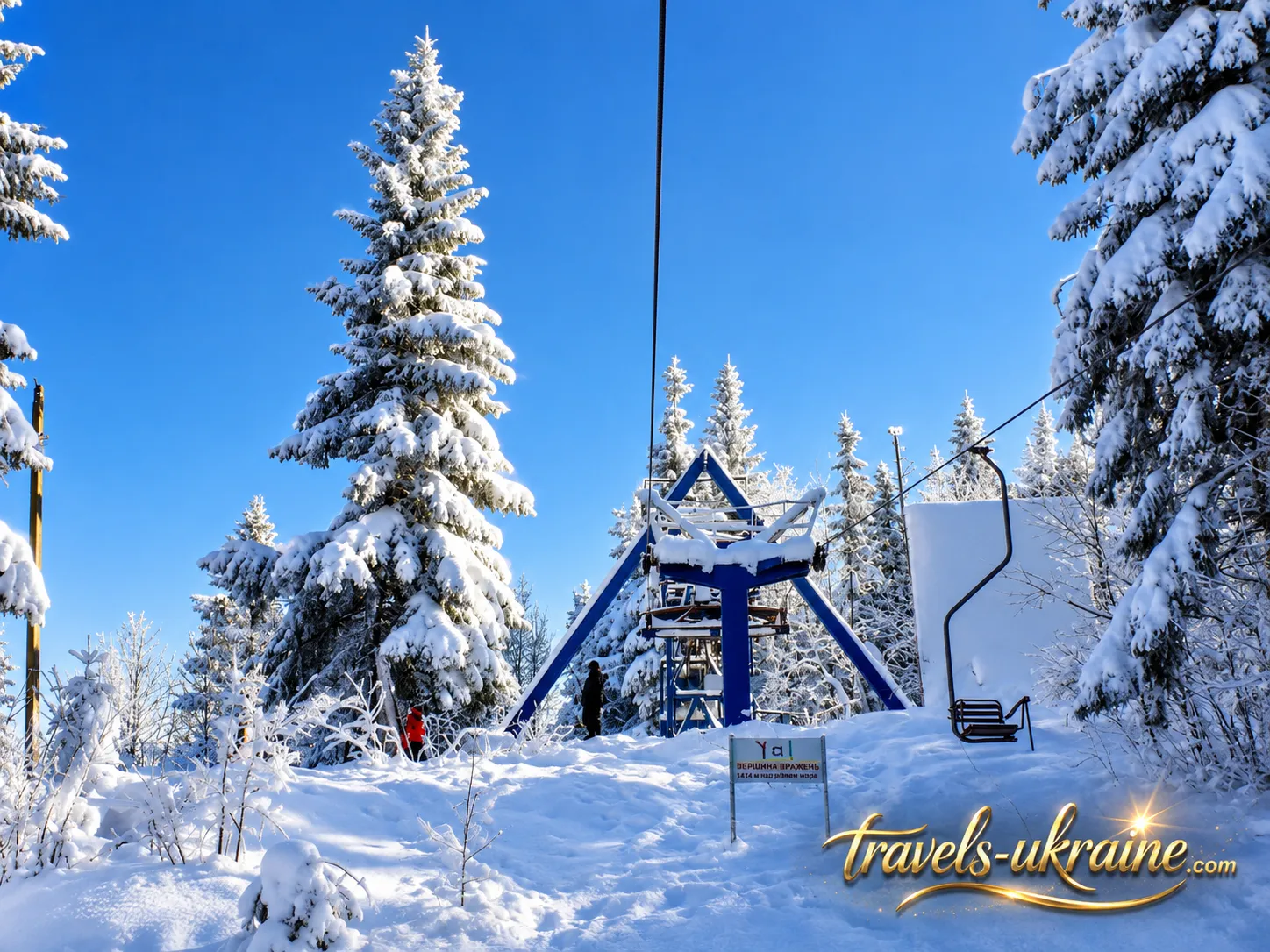
If you search for information about Tysovets today, it is easy to come across tourist pages that still describe it as a full-scale ski resort with a chairlift, several drag lifts, equipment rental, and prepared runs. Some of this information has a historical basis, but it should no longer be treated as an up-to-date list of tourist services.
The Tysovets training and sports facility for winter sports continues to operate and remains a sports site of the Ministry of Defence of Ukraine. It is neither an abandoned complex nor a former facility surviving only in old photographs. Training camps, sporting events, and athlete preparation still take place here today.
Recent examples clearly confirm this. In June 2026, young biathletes held a training camp in Tysovets as they prepared for the new sporting season, using local conditions for physical and specialised training. Throughout the year, the facility also provided accommodation, meals, and support for sports camps. It would therefore be incorrect to say that «Tysovets no longer operates.»
What Sports Infrastructure Is Used in Tysovets
Tysovets has always been defined not by a single ski run but by an entire complex of facilities for athlete training. Documents concerning the operation of its sports infrastructure in recent years confirm the use of a biathlon shooting range, ski and roller-ski tracks, a gym, and rooms for ski preparation and sports-equipment storage.
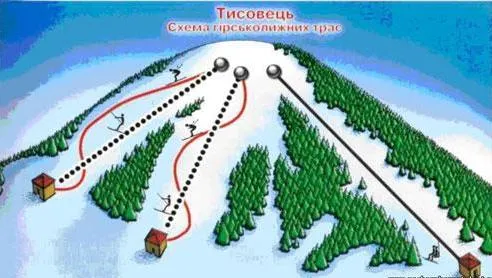
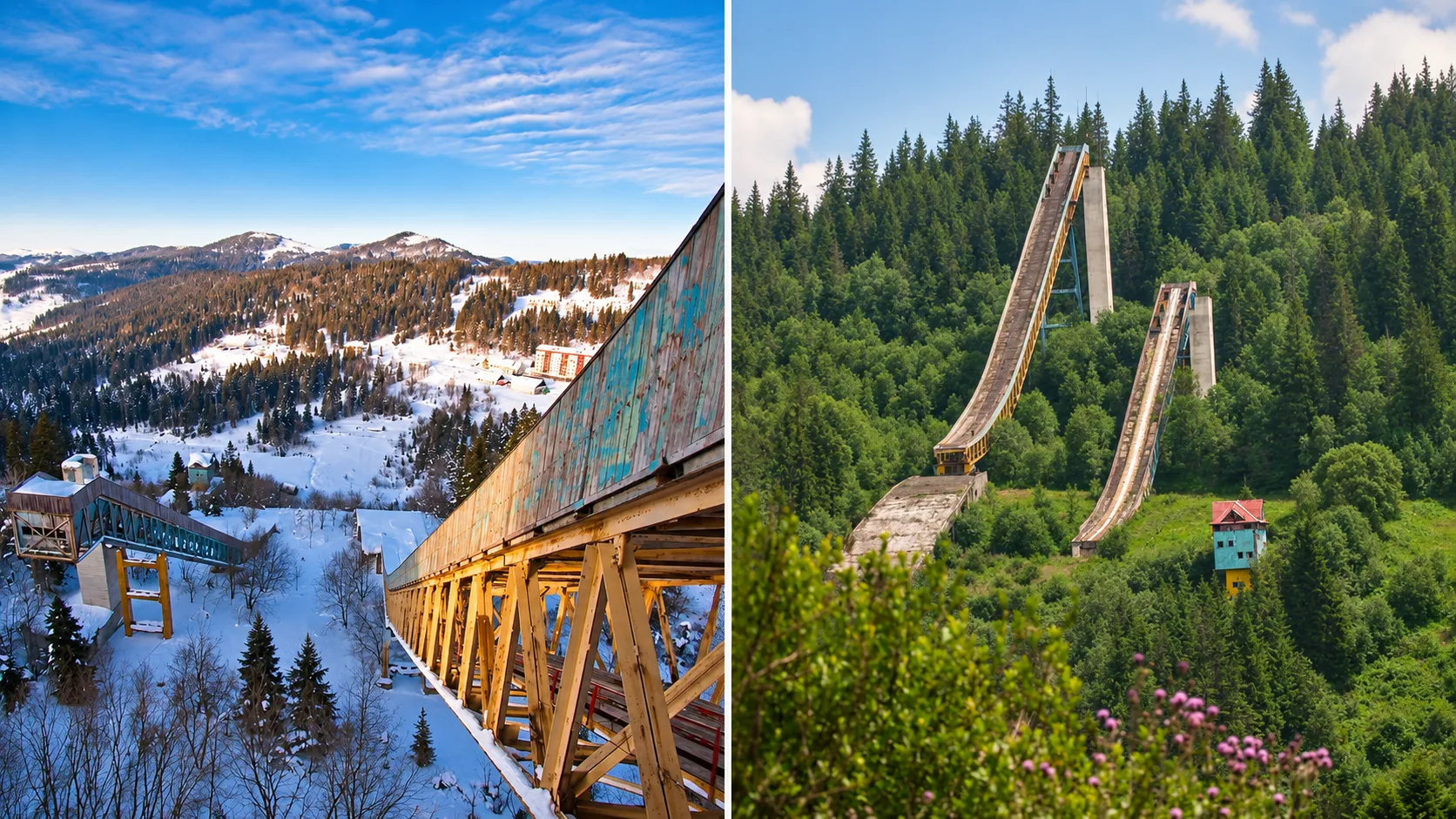
Biathlon holds a particularly important place here. The combination of mountainous terrain, considerable elevation above sea level, tracks, and a shooting range allows comprehensive training, which is why Tysovets has been associated with the preparation of Ukrainian biathletes and skiers for many years. Historically, the facility’s sports infrastructure was much broader. Tysovets featured alpine ski runs, drag and chairlifts, a complex of ski jumps, and cross-country skiing and biathlon tracks. That is why old travel guides still often call Tysovets a ski resort.
It is important, however, to distinguish between two things: the existence of a sports facility and its regular operation for tourists. The fact that a particular lift, ski jump, or run existed and was once used does not mean that it currently operates in the usual resort mode.
Are the Ski Runs and Lifts Operating in Tysovets?
This is the question that causes the most confusion online. Older descriptions list chairlifts and drag lifts in detail, along with run lengths and even equipment-rental options. However, there is currently no sufficiently reliable official confirmation that all of this ski infrastructure in Tysovets regularly operates for ordinary holidaymakers in the same way as at commercial Carpathian resorts. It is therefore risky to plan a trip here solely for skiing based on old trail maps or lift descriptions. Before a winter trip, it is worth checking separately which runs and lifts are available during the current season.
Is Tysovets Accessible to Ordinary Tourists?
At the same time, the facility’s military status does not mean that Tysovets is completely isolated from civilian life. In different years, it has hosted not only professional training but also sports camps, training programmes, and other organised events. In 2026, the facility continued to provide accommodation and meals for participants in such events.
Even so, Tysovets should not be viewed as an ordinary tourist complex where you can arrive without preparation and be guaranteed the full range of resort services. It is best to confirm the access arrangements, accommodation options, meals, and use of individual sports facilities directly before your trip.
And this is the main difference between modern Tysovets and its image in old travel guides. The facility is alive and operating, and its sporting life continues, but today it is primarily a centre for training athletes in the Carpathians and only secondarily a place that may interest tourists.
What to See and Do in Tysovets
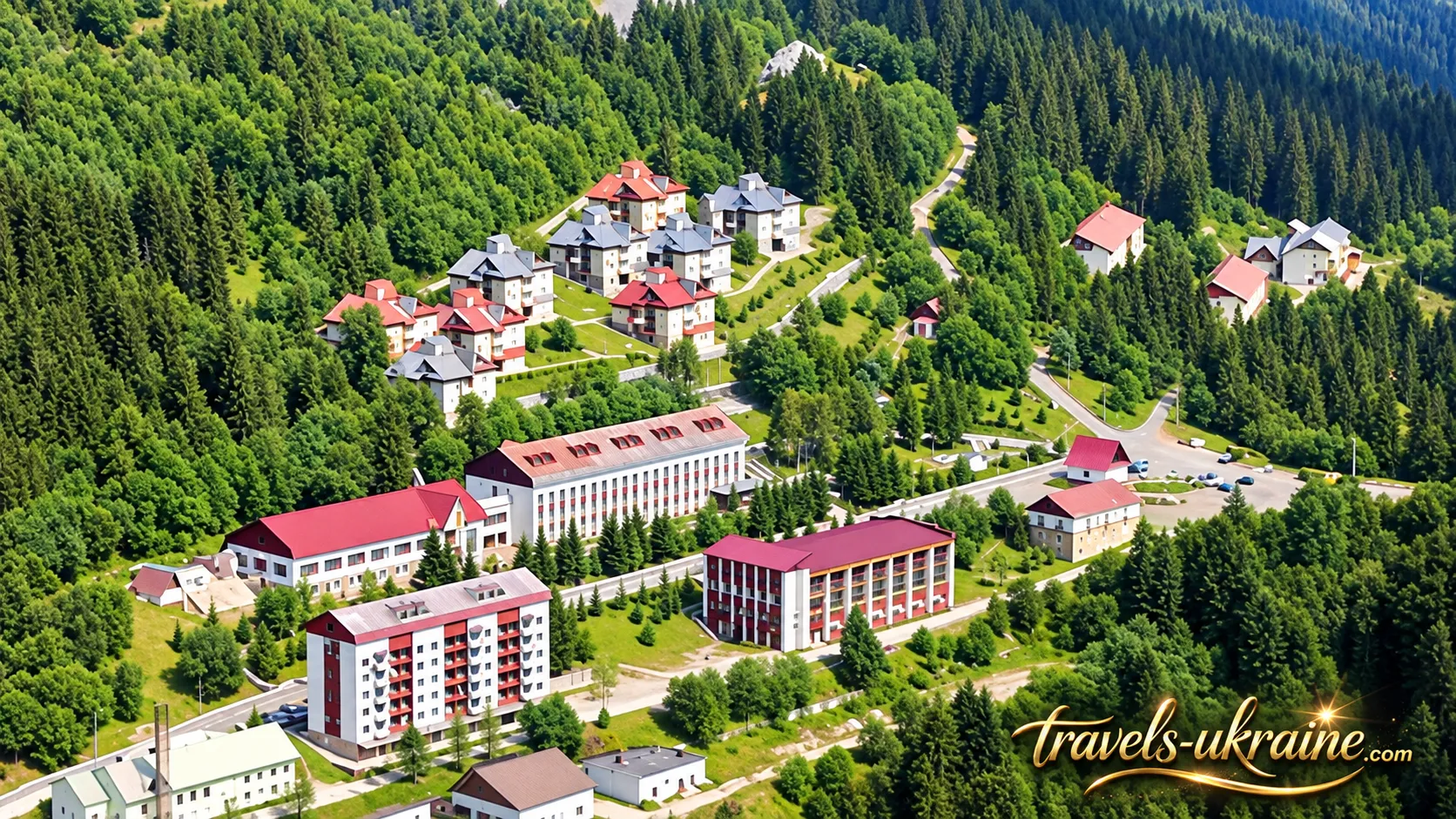
The Tysovets sports facility is hardly a place where tourists move from one attraction to the next with a ready-made checklist in hand. The area itself is what makes it interesting: a mountain valley, forested slopes, sports facilities, and a sense of openness that differs considerably from the atmosphere of the major Carpathian resorts. A trip to Tysovets is therefore best suited to those who enjoy nature, walks, sports history, and uncrowded mountain areas. It is worth visiting less for a particular attraction than to see an unusual part of the Ukrainian Carpathians, where sport has been literally woven into the mountain landscape for many decades.
The most distinctive features of Tysovets are its sports facilities. Biathlon and ski tracks, remnants of the old ski infrastructure, training facilities, and especially the ski jumps are vivid reminders of why the base was created. The jumps are perhaps one of the most recognisable symbols of old Tysovets. They rise sharply above the forest and even today look unusual against the backdrop of the Carpathian slopes. For someone who has never seen such a structure up close, the scale of the construction makes a much stronger impression in person than in photographs.
At the same time, the sports facilities should not be treated as tourist attractions with unrestricted access inside. The condition of individual structures and access arrangements may vary, so you should not climb onto the ski jumps or enter closed structures or sports areas without permission.
Walks in the Skole Beskids
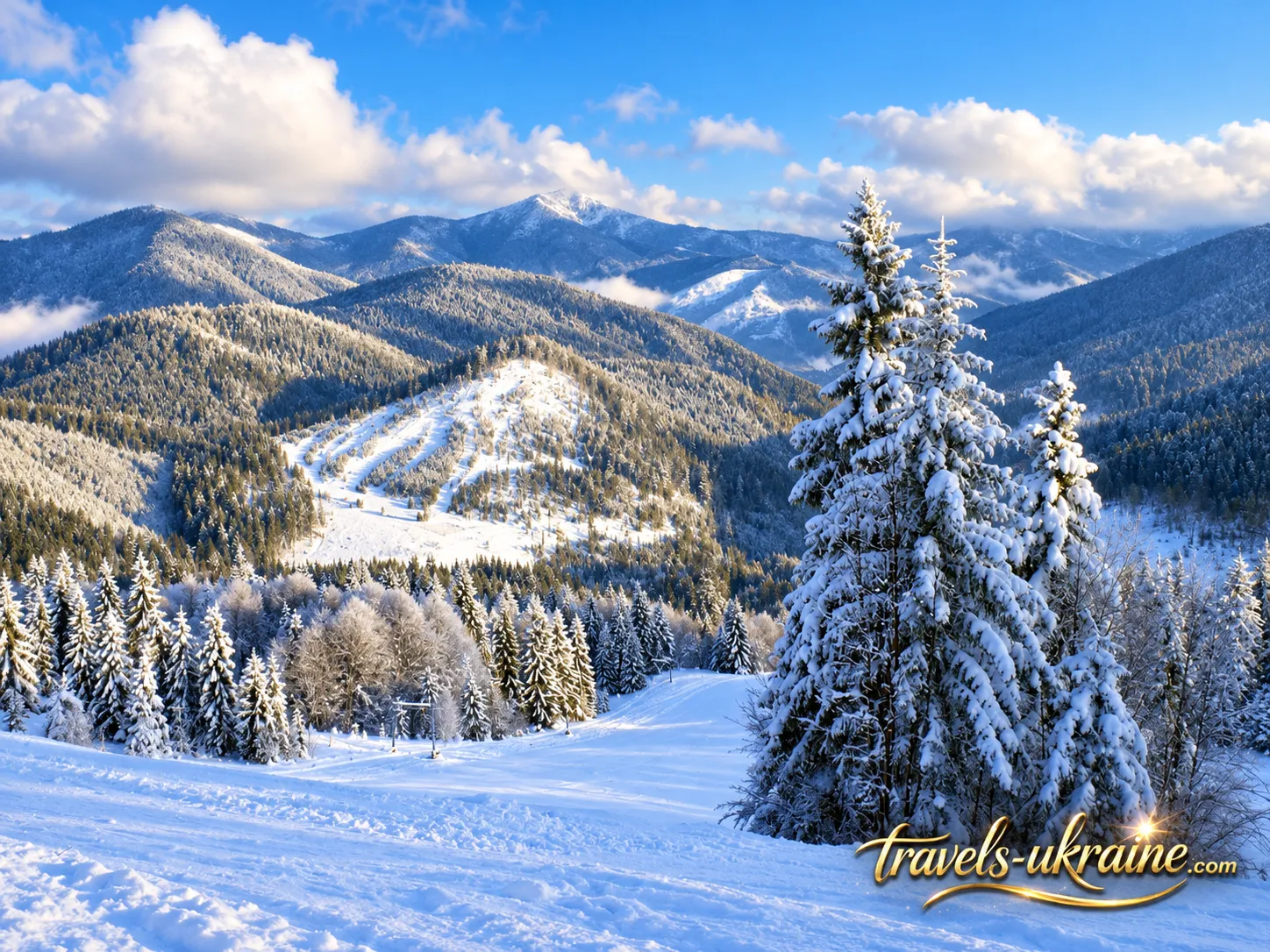
Even without its sports facilities, Tysovets has one major advantage: its location. The surrounding area features forests, mountain meadows, mountain roads, and trails, while the site itself lies at elevations where the true mountain terrain is already clearly perceptible. It is easy to understand why the area was once chosen for athlete training: the road is constantly gaining and losing elevation, level sections quickly give way to climbs, and new slopes and panoramas appear beyond the forest.
In the area around Tysovets and neighboring Oriavchyk, there are hiking trails through the Skole Beskids. If you are planning a longer hike, it is best to download the route to your phone or GPS device in advance and check its current condition — forest roads and trails in the Carpathians do not always look as obvious as the line drawn on a map.
Tysovets in summer: trails, cycling, and mountain routes
Although the name of the base is directly associated with winter sports, Tysovets is also interesting during the warmer months. Once the snow melts, the ski terrain becomes an area for running, hiking, and cross-country training.
How well Tysovets lends itself to this type of recreation was clearly demonstrated by Meest Trail Tysovets, held here in June 2026. The start was organized directly at the educational and sports base, and participants were offered 6-, 12-, and 24-kilometer routes. The longest route featured nearly 1,000 meters of elevation gain and followed Carpathian hiking trails at elevations of up to approximately 1,100 meters.
This changes the usual perception of Tysovets as a place that only «comes alive» when snow falls. In summer, the atmosphere is completely different: instead of white slopes, there are green forests; instead of frost, the scent of grass and pine; while the area’s sporting character remains unchanged.
Tysovets for photographers and those seeking an unconventional Carpathian experience
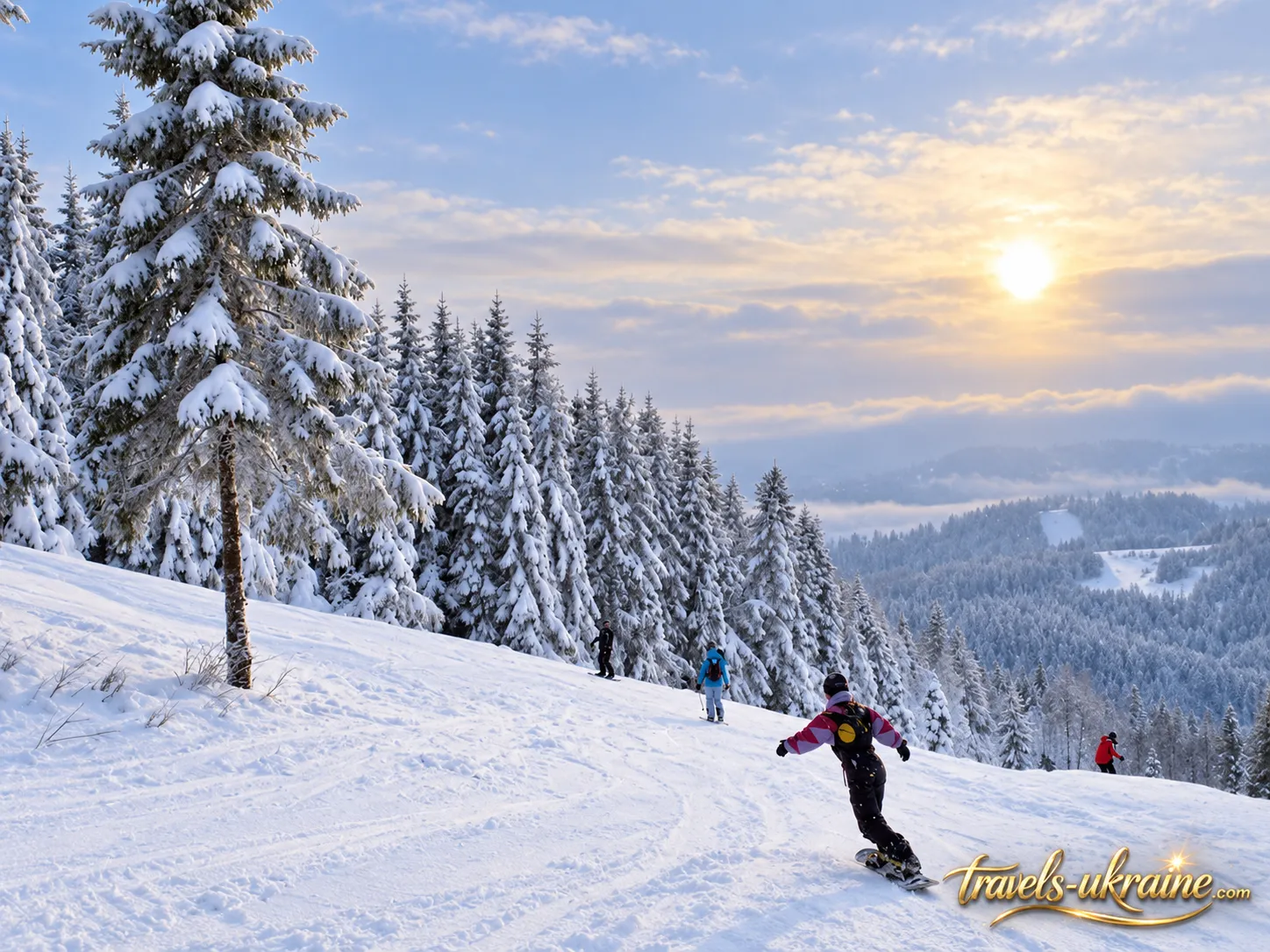
For photography, Tysovets is especially interesting because of its contrasts. Massive sports structures stand literally in the middle of a Carpathian forest, old ski jumps stand alongside mountain slopes, and in winter the technical facilities almost disappear among the snow and coniferous trees. The best shots here do not necessarily require climbing to a summit. Panoramas open up from elevated areas of the terrain, while morning fog or low evening sunlight can completely transform a familiar landscape.
And perhaps that is the most interesting way for an ordinary traveler to discover Tysovets: rather than expecting the standard range of resort attractions, see it as an unusual sports destination in the mountains. It is worth slowing down here, taking in the mountains, walking around the surrounding area, and remembering that the Carpathians are interesting not only where a queue forms beside a ski lift.
How to get to Tysovets and what to know before your trip
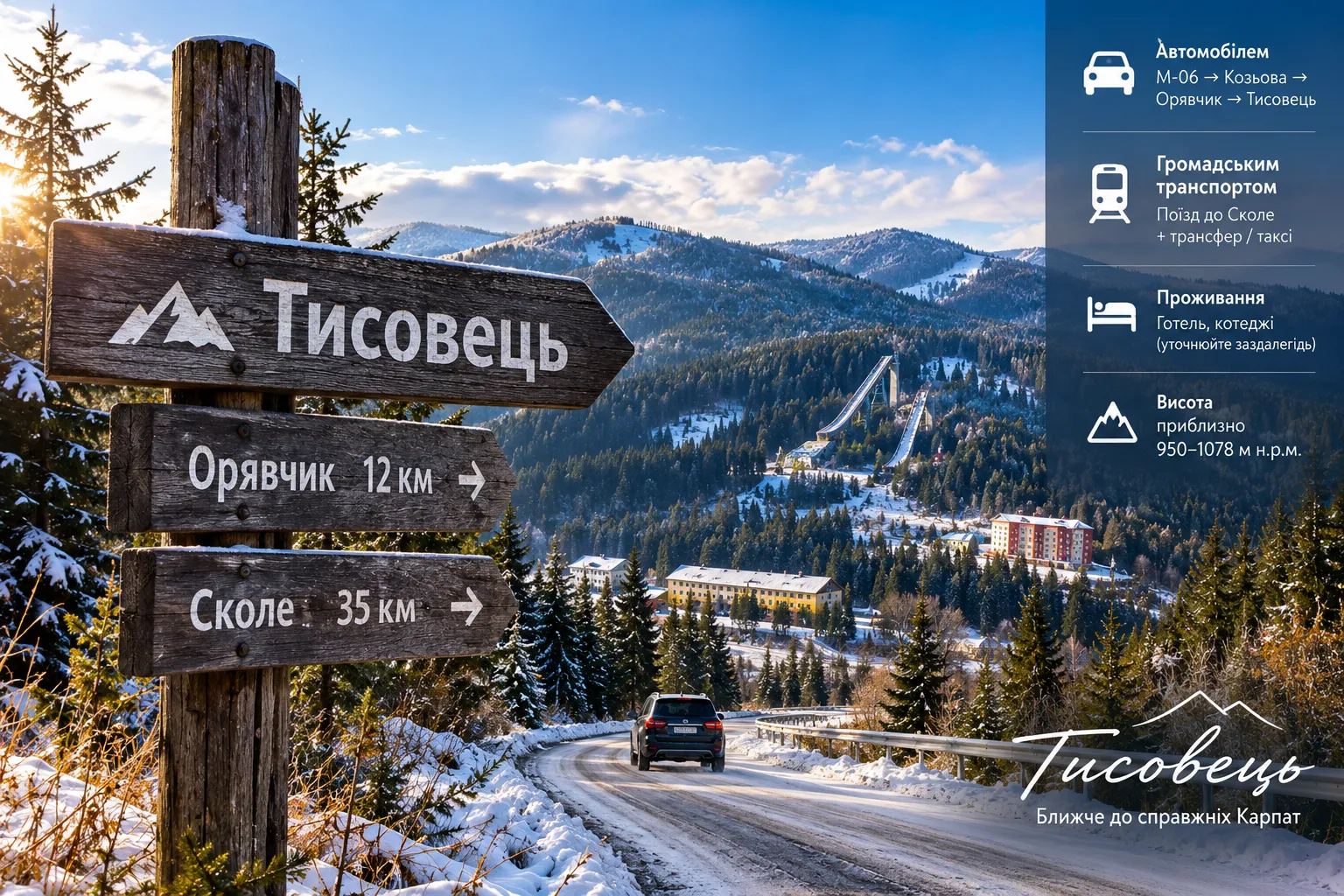
Tysovets Base is located in Lviv Oblast, in the mountainous part of the Skole region. The most convenient way to get there is by car, as the base lies away from major transport hubs and the final part of the route follows local mountain roads.
The main route follows the M-06 Kyiv — Chop international highway. Near the village of Kozova, turn toward Oriavchyk and Tysovets, after which the road gradually climbs higher into the mountains. Signs for Oriavchyk and Tysovets can be found along the route, so in normal weather conditions, the required turn is easy to locate.
The final section of the road already has a distinctly Carpathian character: climbs, bends, forested stretches, and fairly steep terrain in places. During the warmer season, this usually causes no particular problems, but in winter conditions can depend heavily on snow, ice, and road clearance. Before a winter trip, it is therefore worth checking the weather forecast and road conditions, rather than relying solely on the route shown in your navigation system. In mountainous terrain, good winter tires are not a formality but a necessity.
How to get to Tysovets by public transport
The most convenient railway point for continuing the journey remains Skole. You can get there by trains and suburban rail services from the Lviv and Zakarpattia directions, then continue by car, taxi, or a pre-arranged transfer.
It is best not to count on frequent direct public transport to the sports base itself. Therefore, if you are traveling without your own car, it is better to arrange the final part of the route from Skole or another nearby settlement before setting out.
Can you stay directly at Tysovets Base?
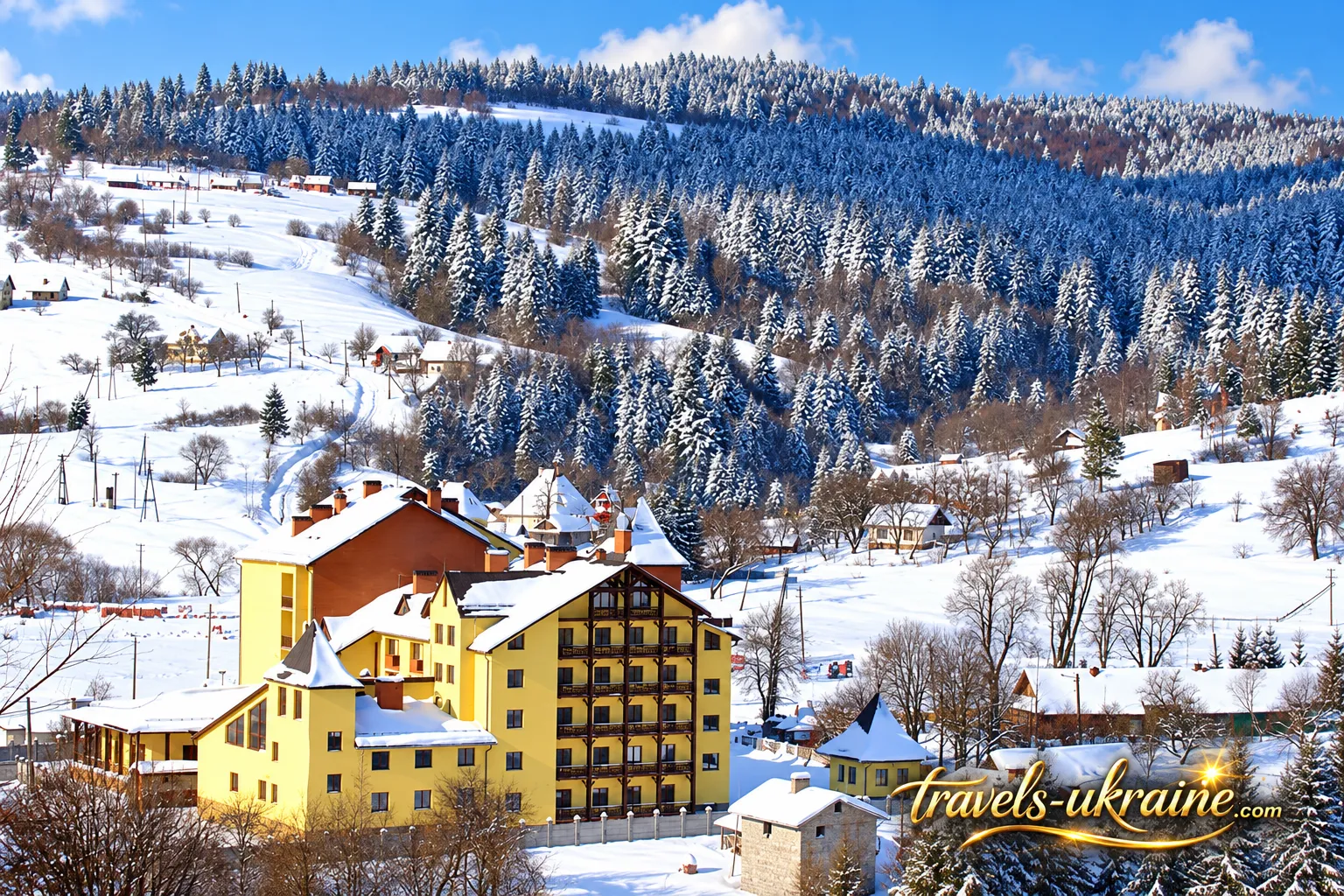
Yes, the Tysovets training and sports base has its own accommodation facilities. Current information materials from 2026 list a hotel and cottages with a total capacity of up to 341 beds, as well as a dining hall with 220 seats. This is an important detail, since the base is not merely a training ground without residential infrastructure. Sports camps, rehabilitation programs, and organized events with accommodation and meals are held here.
However, it is better to check the availability of rooms for individual travelers in advance. During large sports camps or organized programs, some of the accommodation may be occupied by event participants.
Weather and seasonality in Tysovets
The sports base is located at approximately 950–1078 meters above sea level, so the weather here can differ noticeably from that in Skole or the settlements below. Even during the warmer season, temperatures can drop quickly in the evening after a sunny day, while rain in the valley often means fog and cooler conditions higher in the mountains.
For a summer walk, bring a lightweight rain jacket, comfortable shoes, and a warmer outer layer. In winter, dress not only for freezing temperatures but also for wind and prolonged time outdoors. Tysovets is a place where a little preparation makes a trip considerably more comfortable. Rather than traveling with the attitude of «we’ll figure it out when we get there,» it is better to clarify the main details in advance and then enjoy the Carpathians at ease.
What to see near Tysovets: interesting places in the Skole Beskids
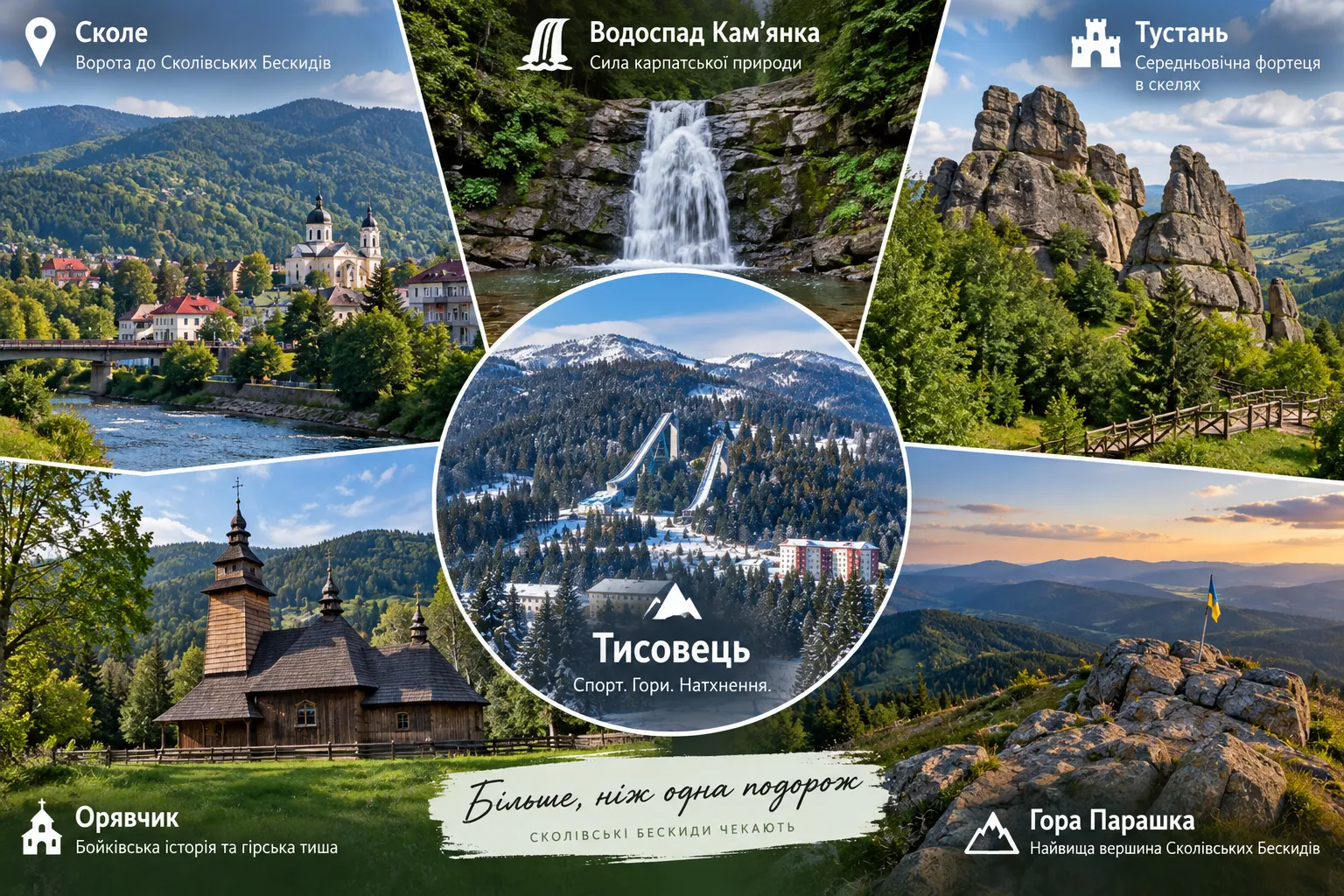
A trip to Tysovets does not have to be limited to the sports base. One of the most interesting parts of the Lviv Carpathians lies nearby — the Skole Beskids, where you can combine mountain routes, waterfalls, old Boyko villages, and historical landmarks over one or several days. The format of such a trip can easily be adapted to your available time and fitness level. For a relaxed day, Oriavchyk, Skole, or a waterfall are good options; if you want a full mountain adventure, you can set aside a separate day for a hike to Mount Parashka. Tustan, in turn, adds the history of a medieval rock fortress to the Carpathian landscape.
Of course, the number-one stop and Tysovets’s closest neighbor is Oriavchyk, located literally next to Tysovets and effectively a natural continuation of this mountainous area. The village lies in the Oriavchyk River valley on the edge of the Skole Beskids National Nature Park and is suitable for those who want to combine the sports base with a more traditional Carpathian getaway.
Oryavchyk is home to the 19th-century wooden Church of the Epiphany of the Lord, with a separate bell tower. Forest roads and mountain trails begin around the village, and during the warm season, the area is well suited to leisurely walks, mushroom and berry picking, and discovering the natural beauty of the Carpathians. If accommodation is limited in Tysovets during a particular period or some facilities are unavailable, Oryavchyk can also serve as a convenient base for an overnight stay nearby.
Skole — the gateway to the Skole Beskids
Skole is the nearest town and also one of the main tourist centers in this part of the Carpathians. The railway and the Kyiv — Chop highway pass through it, so for many travelers, Skole is where their introduction to the surrounding mountains begins. In the town itself, you can stroll along old streets, see historic buildings, visit the local history museum, or use the town as a starting point for routes in the national park. One of the region’s best-known hikes — the route to Mount Parashka — also starts here.
Skole is therefore useful for more than just a transport stop. If you have another free day after Tysovets, the town can serve as a kind of «crossroads,» with roads leading to waterfalls, mountain peaks, and other tourist destinations in the Beskids.
Kamianка Waterfall and Zhuravlyne Lake
For a trip without a difficult, hours-long ascent, one of the best options is Kamianка Waterfall — one of the best-known natural attractions in Skole Beskids National Park.
Here, a mountain river plunges from a rocky ledge, forming a cascade approximately seven meters high. The waterfall is especially full in spring and after prolonged rainfall, but even in summer the cool Kamianка valley is well suited to a few-hour stop in the forest.
The walk can then continue to Zhuravlyne, or Dead, Lake, hidden in the nearby forest. In this way, a single trip can easily take in several different natural landscapes: a mountain river, a waterfall, beech and coniferous forest, and a small marshy lake.
Tustan — a fortress that is almost gone but can still be seen
If you would like to add a historical site to your mountain trip, head to Tustan near the village of Urych. Today there is no stone castle in the usual sense, but in the Middle Ages a wooden fortress stood among enormous sandstone cliffs, with its structures attached directly to the rock massif.
Numerous grooves and carved openings in the stone recall its former appearance, allowing researchers to reconstruct several stages in the fortress’s development. Tustan served defensive and customs-control functions and controlled important routes through the Carpathians. Today, the site is part of the Tustan State Historical and Cultural Reserve. Visitors can climb to observation platforms among the rocks, visit the museum, and see one of Ukraine’s most extraordinary archaeological complexes.
Mount Parashka — for those seeking a real hike
For those who want more than just a walk after Tysovets, one of the best options is Mount Parashka. It stands at 1268 meters and is the highest peak of the Skole Beskids. The official tourist trail from Skole is approximately 10 kilometers one way and is classified as difficult by the national nature park. Allow approximately 4–5 hours for the ascent and most of the day for the entire trip.
The route initially passes through the forest before emerging onto an open ridge, from which panoramas of the surrounding mountains gradually unfold. That is why it is better not to try to «squeeze» Parashka between Tysovets and several other sites — it deserves a day of its own.
How to combine Tysovets with nearby destinations
If you are short on time, the easiest option is to combine Tysovets and Oriavchyk in one trip. For a full day, you can add Skole or Kamianка Waterfall. If you have two or three days, the Skole Beskids offer enough variety to create a much more eventful itinerary.
- For a few hours: Tysovets → Oriavchyk;
- For one day: Tysovets → Skole → Kamianка Waterfall → Zhuravlyne Lake;
- A separate day: hike from Skole to Mount Parashka;
- For the historical part of the trip: Tysovets → Tustan;
- For two days or more: Tysovets → Kamianка → Tustan → one of the mountain routes in the Skole Beskids.
This is also one of the main advantages of Tysovets' location: even if the sports base itself does not become a full-day destination, it can easily be incorporated into a longer trip through the Lviv Carpathians. Sometimes all it takes is opening a map of the area around Tysovets for a planned “short trip to the mountains” to quietly turn into a route lasting several days.
Frequently asked questions about the Tysovets sports base
Is the Tysovets sports base open today?
Yes. The Tysovets Educational and Sports Base for Winter Sports continues to operate. As of 2026, it hosts training camps, biathlon competitions, and other sporting events, while providing accommodation, dining, and access to sports facilities. Therefore, Tysovets is not an abandoned or closed sports complex.
Can ordinary tourists visit Tysovets?
Tysovets is not a completely restricted area for civilians: sporting and organized events are held here, guests are welcomed, and accommodation is available. At the same time, it is an operational sports base of the Ministry of Defence of Ukraine, not an ordinary tourist resort. Access rules for certain areas and sports facilities may change, so it is best to confirm the current conditions with the administration before travelling.
Are the ski lifts operating in Tysovets?
Older tourist descriptions of Tysovets mention chairlifts and drag lifts; however, there is no current confirmation that all of this infrastructure operates regularly for tourists. Therefore, you should not plan a trip based solely on old trail maps or guidebooks. Before a winter visit, check separately which lifts are operating in the particular season.
Can you ski in Tysovets now?
Tysovets remains a training centre for athletes in winter sports, but this does not mean that a conventional tourist ski service operates here every day. The possibility of skiing on specific slopes depends on the season, snow conditions, lift operations, and the access arrangements for the sports facilities. If the purpose of your trip is specifically alpine skiing or snowboarding, you should obtain up-to-date information directly before setting out.
Where is the Tysovets sports base located?
The Tysovets sports base is located in the village of Tysovets, Stryi Raion, Lviv Oblast, amid the Skole Beskids. The area lies at approximately 950–1100 metres above sea level, near Oriavchyk and the M-06 Kyiv — Chop highway.
Can you stay overnight at the Tysovets sports base?
Yes. The base has a hotel and cottages, as well as a dining hall. In 2026, the base continued to provide accommodation for athletes and participants in organized events. Ordinary travellers should book or confirm availability in advance, especially during training camps and competitions.
What is there to see near Tysovets?
A trip to Tysovets can easily be combined with visits to other places in the Skole Beskids. Oriavchyk is the closest, while a little farther away you can visit Skole, Kamianka Waterfall, Zhuravlyne Lake, and the Tustan historical and cultural reserve. For a full day, consider hiking Mount Parashka—the highest peak in the Skole Beskids.
Tysovets — the Carpathians with a sporting spirit
Tysovets is not the place to visit expecting a typical Carpathian resort with dozens of restaurants, souvenir shops, and a guaranteed schedule of entertainment for every day. Its character is entirely different. Everything here is much more restrained, more athletic, and even somewhat austere—and that is perhaps its defining feature. Old ski jumps in the forest, training trails, biathlon facilities, mountain slopes, and the sports base buildings create the atmosphere of a place where the Carpathians were, for many years, not merely a backdrop for recreation but a genuine training ground. Athletes trained here, camps and competitions were held, and generations of coaches and teams came and went—while the mountains remained in place.
Today, Tysovets has not become a museum of the past either. The base continues to operate, sporting events and training sessions take place here, and the area itself is gradually opening up to other kinds of travel as well—hiking routes, trails, walks, and opportunities to discover the Skole Beskids. Come here for the atmosphere itself: to see the Carpathians from a different perspective, walk among the sports facilities, experience the quiet of a mountain valley, and then continue your route to Skole, Kamianka, Tustan, or Parashka.
And perhaps that is exactly why Tysovets stays with you. Not because it tries to be the most modern or famous resort in the Carpathians, but because it has never been that kind of place. It is a place with its own history, rhythm, and sporting character, one that can be felt even when there are no race bibs or spectators around. And here, the Carpathians do what they do best: leave you with the feeling that one day you will want to return—if only to see once again how old ski jumps rise among the forest, with the mountains beginning beyond them.


No Comment
You can post first response comment.