
 English
 Українська
 Български
 Hrvatski
 Čeština
 Dansk
Dansk Nederlands
 Eesti
Eesti Suomi
Suomi Français
 Deutsch
 Ελληνικα
 Magyar
 Íslenska
 Italiano
 Latviešu
 Lietuvos
 Polski
 Português
 Română
 Русский
 Српски
 Slovenčina
 Slovenščina
 Español
 Svenska
 Türkçe
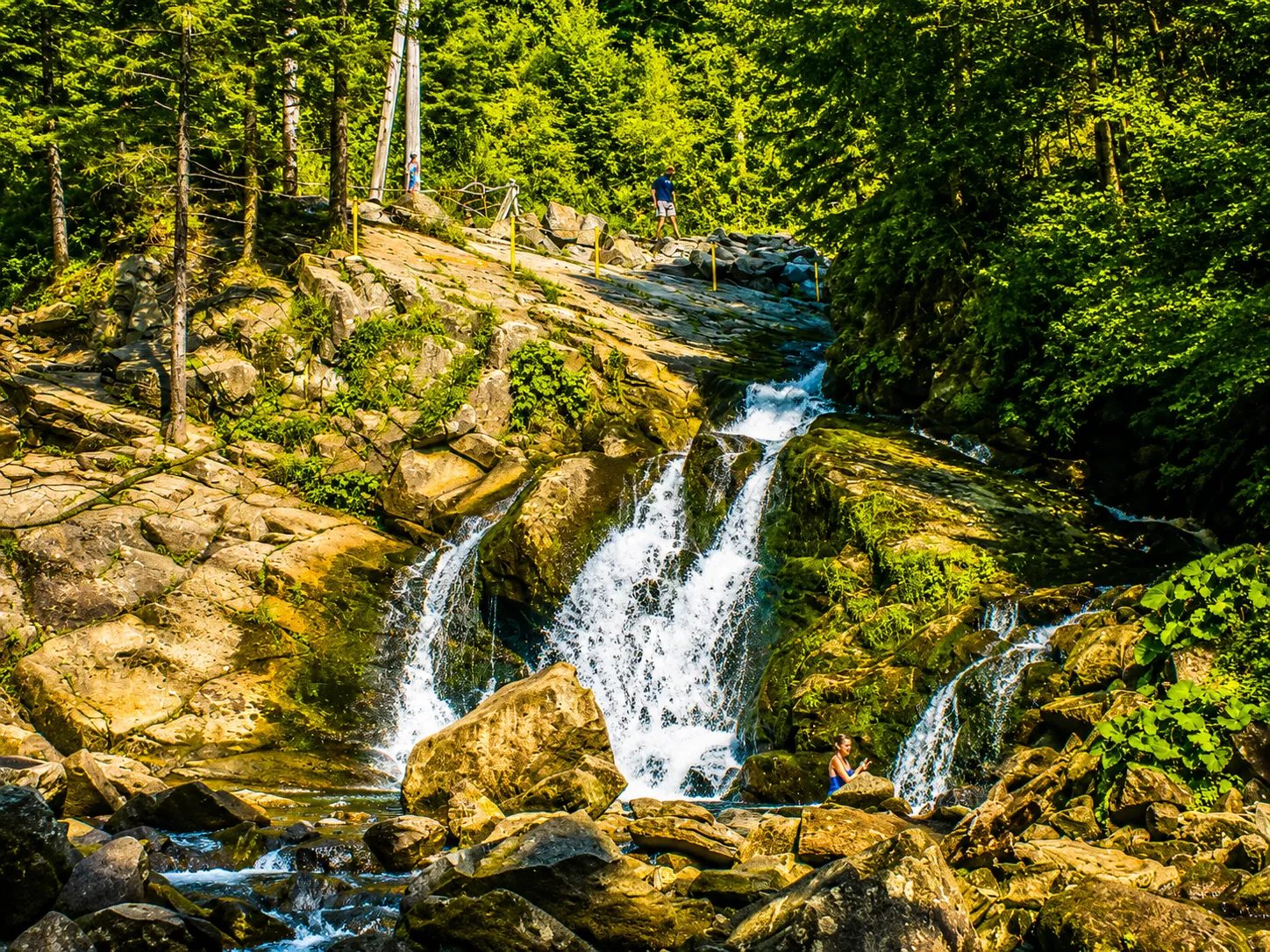
There are places people visit not for noisy entertainment or crowded tourist resorts, but for the sound of rushing water, the coolness of a mountain forest, and the feeling of being truly close to nature. Kam'ianka Waterfall is precisely such a place — one of the best-known natural attractions of Skole Beskids National Nature Park. Hidden among rocky slopes, firs, and spruces, it has long been a popular stop for those planning a holiday in the Carpathians, a day trip around Lviv, or a leisurely hike in the mountains.
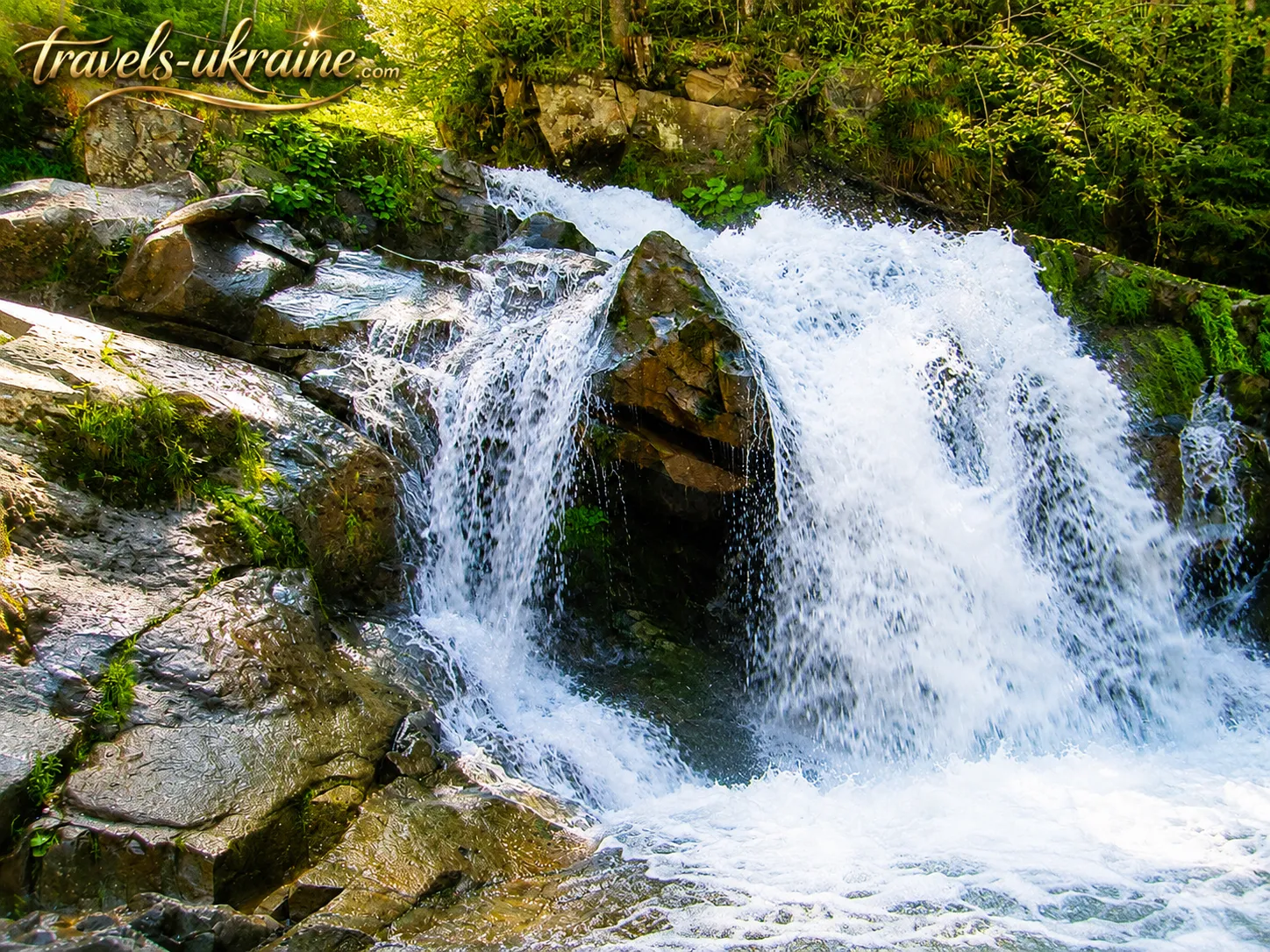
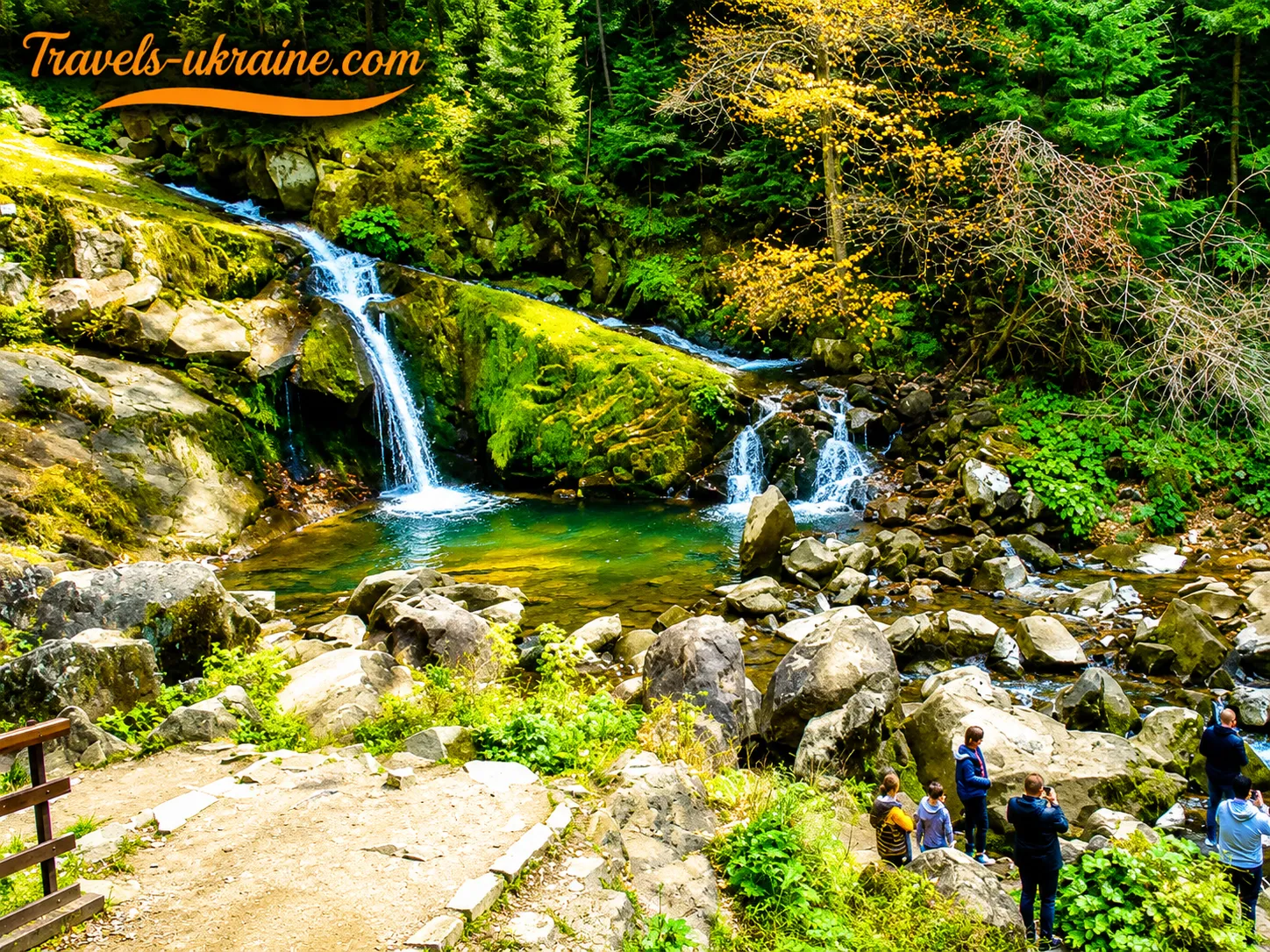
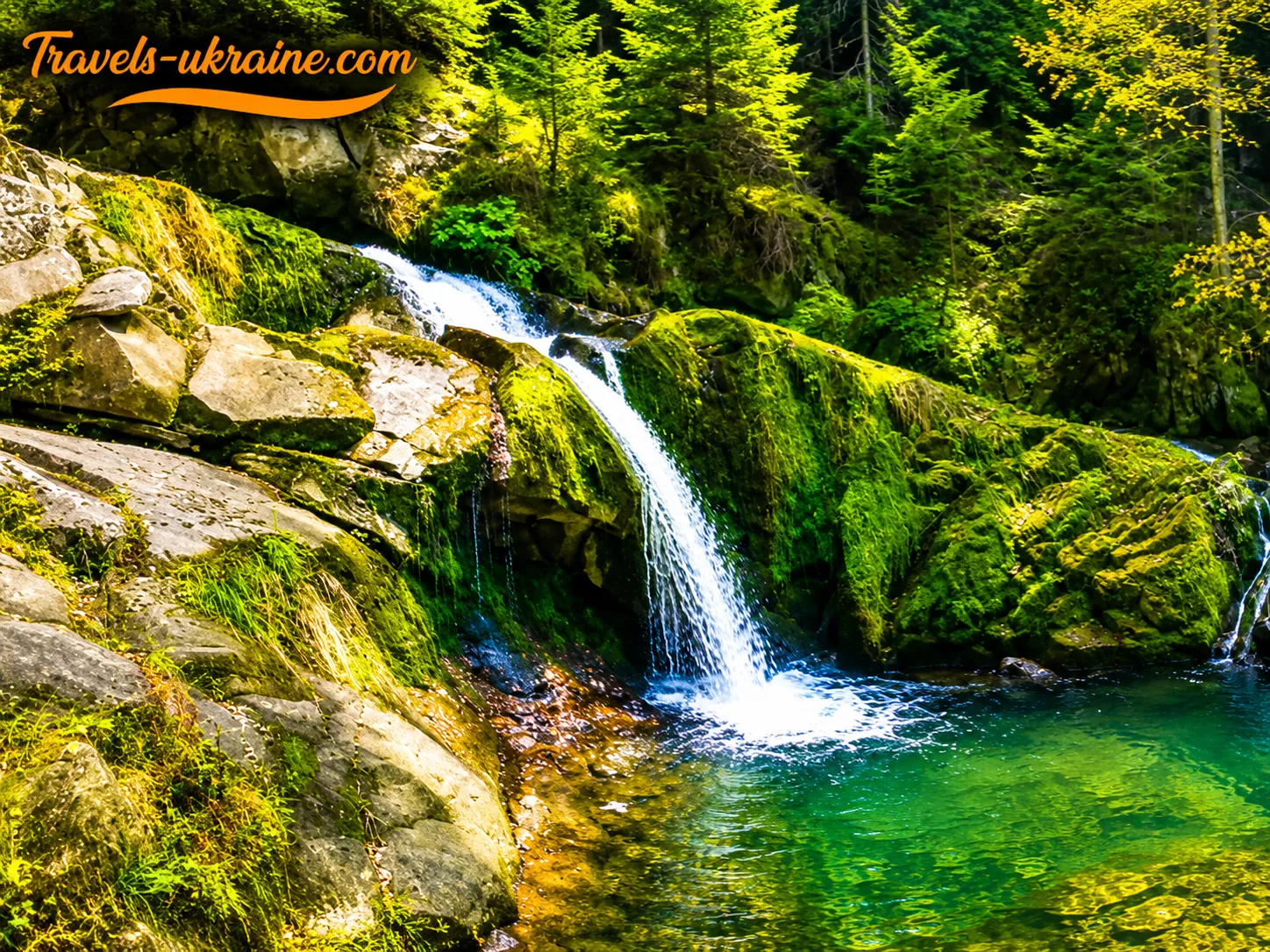
Kamianets Waterfall, as travelers often call it and search for it online, is located on the Kam'ianka River near the village of Dubyna and the town of Skole. Here, the mountain stream cuts through hard layers of sandstone and plunges down, forming a cascade about 7 meters high. A rocky outcrop divides the water into two streams, giving the waterfall its distinctive appearance, especially after rainfall or during the spring snowmelt.
This is not Ukraine's largest waterfall, nor is it a place whose appeal lies solely in its height. Its charm comes from something else: the harmonious combination of water, stone, and Carpathian forest. Huge boulders in the riverbed, sheer cliffs, moss-covered banks, and cool air create an atmosphere that makes visitors want to stay longer. In sunny weather, tiny droplets above the stream may form a rainbow, while the steady sound of the water drowns out people's voices and reminds you how far you are from the bustle of the city.
Kam'ianka Waterfall in the Skole Beskids suits many types of travel. Families with children, couples, photographers, nature tourism enthusiasts, and travelers combining a visit to the waterfall with hiking routes through the surrounding mountains all come here. For some, it is the main destination; for others, it is the first stop before continuing to Zhuravlyne Lake, Kliuch Mountain, or other natural sites in the national park.
Its convenient location makes the waterfall near Skole an excellent destination for a one-day trip through the Carpathians. The waterfall area is accessible by car, while those seeking a more active experience choose hiking routes along the Kam'ianka River valley. The journey does not require extensive physical preparation, yet it offers characteristic landscapes of Lviv Oblast: forested slopes, rocky riverbeds, narrow valleys, and fast-flowing Carpathian streams.
In this article, we will explain in detail where Kam'ianka Waterfall is located, how the water cascade was formed, what the road to the waterfall is like, and which route is best to choose. You will also learn when to visit, how much time to allow for a walk, what to see nearby, where to relax, and how to organize a complete weekend tour of the Skole Beskids.
A trip to Kam'ianka is an opportunity to see the Carpathians without spending hours climbing to mountain peaks. Here, the region's mountain character reveals itself simply and vividly: in the cold water forcing its way through sandstone, in the dark forest above the cliffs, and in the hiking trail leading onward to new natural discoveries.
Kam'ianka Waterfall: from a mountain river to a renowned tourist attraction
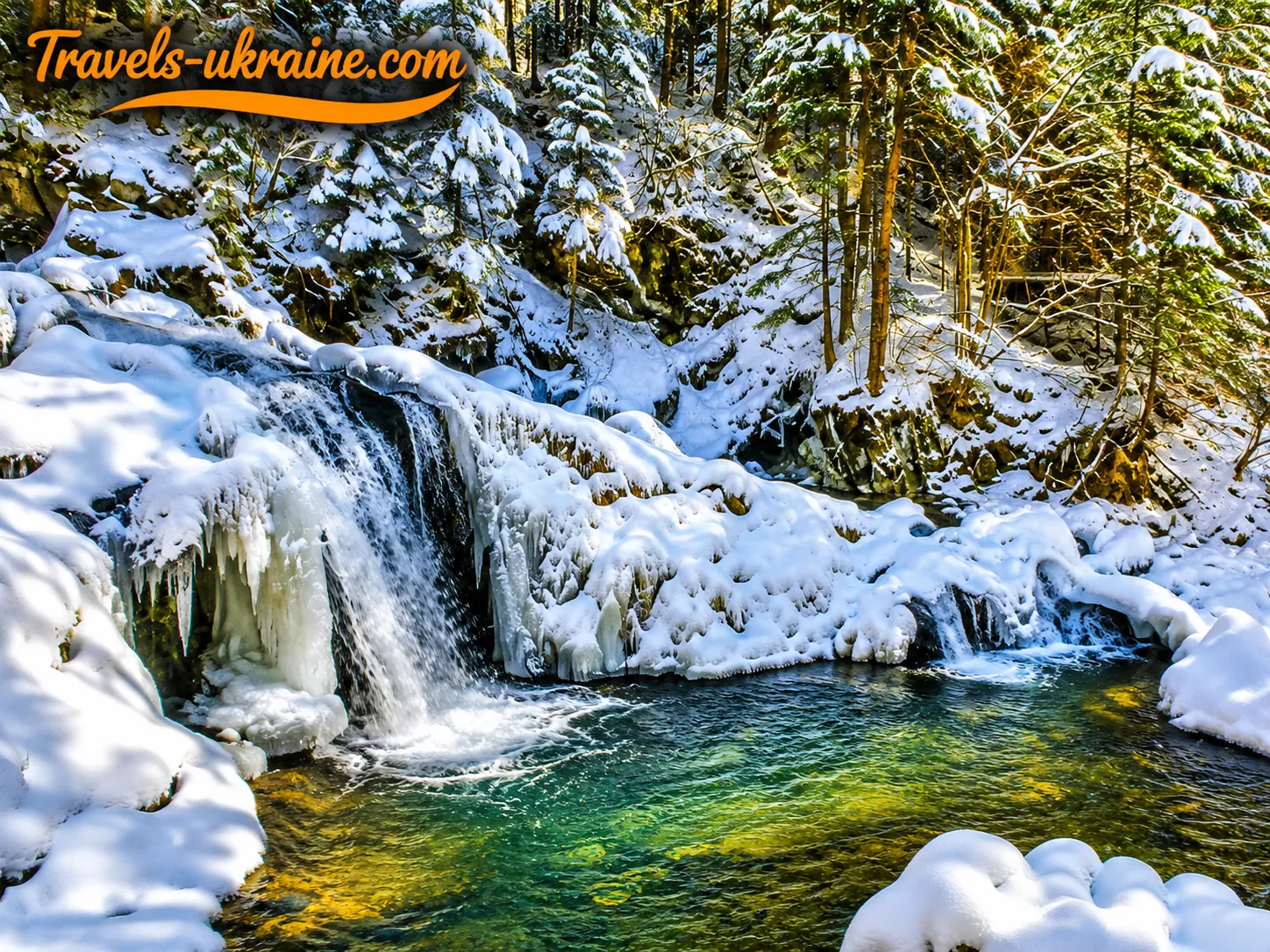
The story of natural places does not always begin with a precise date, an ancient document, or the name of a first discoverer. The waterfall on the Kam'ianka River existed long before tourist routes, motor roads, and Skole Beskids National Nature Park itself appeared. Its true history is recorded not in chronicles, but in the stone, the mountain riverbed, and the relief of the Carpathians.
Unlike artificial water cascades created by dams or changes to a riverbed, Kamianets Waterfall in the Carpathians is natural in origin. It formed where the Kam'ianka River crosses a band of strong quartz-bearing Yamnenske sandstones. These rocks proved far more resistant to erosion than the surrounding layers. Water gradually washed away weaker sections of the riverbed, while the hard stone step remained in place. It was on this step that the drop formed, creating the water cascade seen today.
How Kamianets Waterfall in the Carpathians was formed
The waterfall developed through a lengthy natural process. The river carried sand, small stones, and rock fragments that acted on the riverbed like a natural abrasive. During floods, the force of the current increased; the water carried larger fragments and gradually deepened the channel below the hard sandstone band. As a result, a pronounced ledge formed between the upper and lower sections of the river.
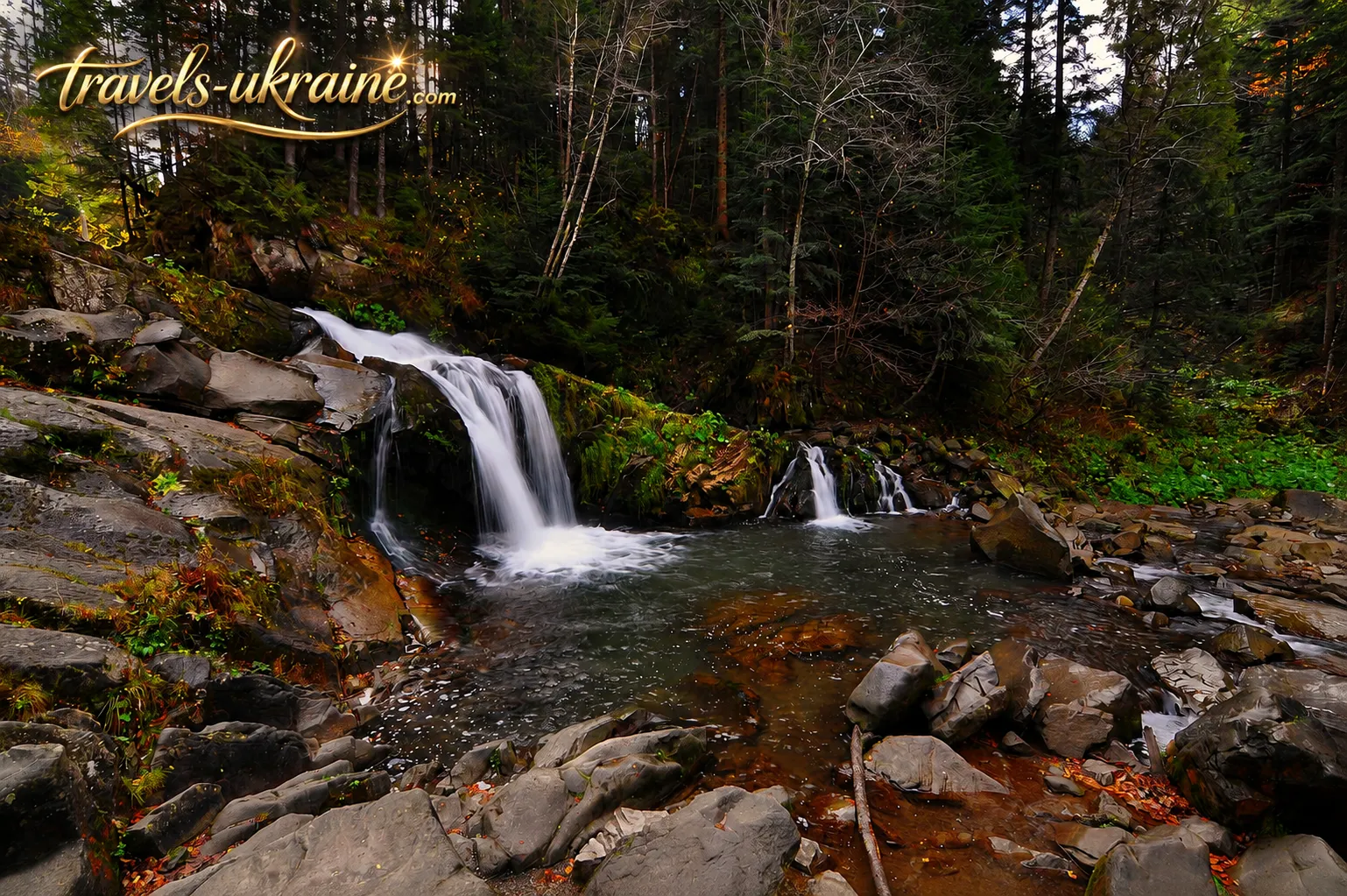
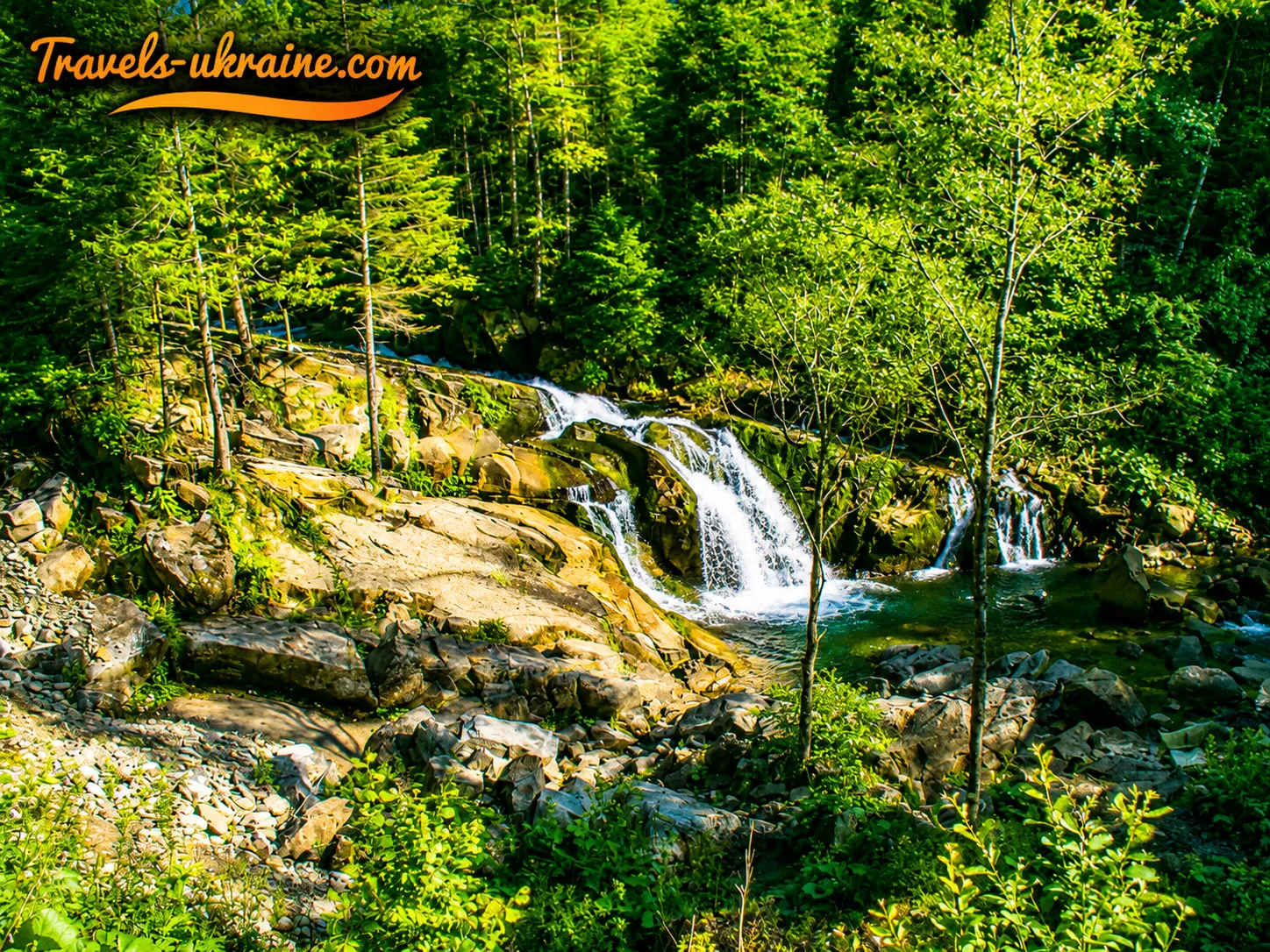
A rocky outcrop has remained in the middle of the cascade, dividing the stream into two parts. Because of this, the waterfall on the Kam'ianka changes appearance depending on the water level. After prolonged rain or snowmelt, both streams become more powerful and partly merge into a broad curtain. During dry periods, the water more clearly flows around the rocky outcrop, revealing the structure of the rock ledge.
The large boulders in the riverbed are also part of the area's natural history. They broke away from the surrounding slopes through weathering, the action of water, and seasonal freezing and thawing. Some stones remained directly beneath the cascade, creating its characteristic rugged landscape. The combination of water, sandstone cliffs, and massive boulders makes Kam'ianka one of the most recognizable waterfalls in Lviv Oblast.
The Kam'ianka River and the history of its natural water cascade
The Kam'ianka River, where the waterfall is located, is a right tributary of the Opir and belongs to the Dniester basin. It is about 11 kilometers long, and its drainage basin covers more than 37 square kilometers. The river rises in the mountainous area south of the village of Kam'ianka and runs through a narrow valley with a rocky bed, riffles, and natural rapids.
Most of the river basin is forested. This affects the local microclimate and the nature of the current: forest soils retain some precipitation, while the shaded riverbed stays cool for longer. During intense rainfall, however, the water level can rise quickly, so the waterfall's appearance changes throughout the year.
The canyon-like Kam'ianka valley, rocky slopes, and accumulations of stone fragments testify to the constant work of natural forces. Water continues to polish the sandstone surface, alter the hollow beneath the cascade, and move small fragments. These changes are nearly imperceptible to people, but over decades and centuries the riverbed gradually takes on new shapes.
Kam'ianka Waterfall in the history of the national nature park
A new stage in protecting this territory began at the end of the 20th century. On February 11, 1999, the Skole Beskids National Nature Park was established by Decree of the President of Ukraine. Its mission was to preserve the valuable natural complexes of the Ukrainian Carpathians, restore forest ecosystems, conduct scientific research, and develop nature tourism.
Kamianets Waterfall in the Skole Beskids became one of the park's best-known tourist attractions. Over time, recreational infrastructure, informational materials, and designated viewing areas appeared nearby. This made the natural site more accessible to visitors, while also increasing the need to control tourist pressure.
How the waterfall near Skole became a tourist attraction in Lviv Oblast
The waterfall's location contributed to its growing popularity. It lies near the Kyiv–Chop highway, between the villages of Dubyna and Kam'ianka, making it easier to reach than many remote Carpathian cascades. Visitors do not have to tackle a difficult climb, and the trip can be combined with visits to Skole and other places in Stryi Raion.
Thus, the waterfall near the village of Dubyna gradually changed from a little-known natural site into one of the most recognizable stops in the Skole Beskids. Its photographs appeared in travel guides, calendars, and materials about holidays in Lviv Oblast. Yet its widespread popularity has not changed the site's main value: visitors still encounter a natural cascade formed by the river's current and the resilience of the mountain rock.
Natural features of Kam'ianka Waterfall
The foundation of Kamianets Waterfall in Lviv Oblast consists of hard, non-calcareous quartz sandstones. The Kam'ianka River cuts across this substantial band, but cannot erode it as quickly as the softer rocks around it. As a result, a stone ledge remains in the riverbed, from which the water plunges downward. The ledge's surface is uneven, with natural channels, projections, and hollows that direct the flow and give the waterfall its distinctive shape.
At first glance, it may seem that the traveler is looking at two separate waterfalls. In fact, it is a single water cascade divided by a rocky outcrop. This structure is especially apparent in summer, when the river level falls. In spring or after prolonged rainfall, the flow covers more of the stone ledge, making the waterfall appear wider, louder, and much more turbulent.
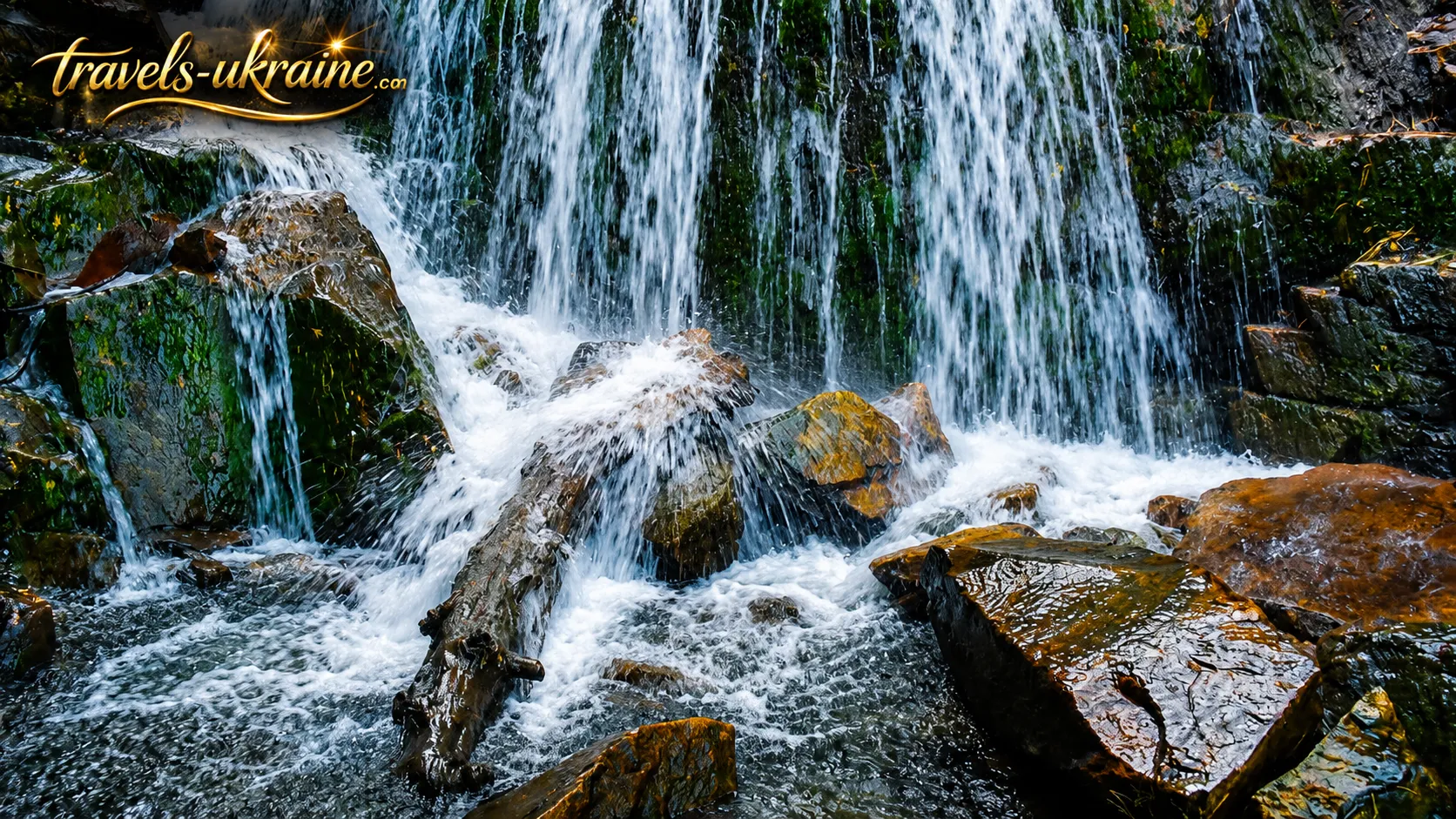
Beneath the cascade, the water enters a natural hollow and then continues between large boulders. The constant movement of sand, pebbles, and small fragments gradually polishes the stone surface. As a result, some rocks beside the riverbed have smooth edges, yet they remain slippery even when they appear dry.
Sandstone boulders and the rocky banks of the Kam'ianka River
The large boulders in the riverbed are not decorative additions but an important part of the natural landscape. They broke away from the slopes through weathering, temperature fluctuations, water freezing in cracks, and the gradual erosion of the rock. Some fragments came to rest directly near the waterfall, while others lie downstream, forming small rapids.
The left bank of the river is particularly striking. Sheer cliffs rise above the water, their surfaces held by the roots of firs and spruces. In places, the root systems emerge above the ground, envelop stones, and follow their contours. Mosses, damp wood, and sandstone walls create the feeling of an ancient Carpathian forest, where the boundary between living plants and stone disappears.
This setting makes the mountain waterfall interesting not only as an individual natural attraction. Here, visitors can observe an entire section of the valley, from the rocky ledge and riverbed to the forested slopes that retain moisture and shield the stream from direct sunlight.
The Kam'ianka River and the character of a mountain stream
The Kam'ianka River has a rocky bed, numerous riffles, and rapids. In some sections, its valley narrows sharply between rocky slopes, causing the water to accelerate and rush through the channel with a noticeable roar. The waterfall is the most prominent, but not the only expression of this terrain: along the way, visitors can see smaller drops, turbulent sections, and quieter pools between the boulders.
The mountain river's flow depends directly on rainfall, snowmelt, and moisture accumulated in forest soils. Therefore, Kamianets Waterfall in the Carpathian mountains does not look the same throughout the year. Its power, the width of the flow, the color of the water, and even the character of its sound are constantly changing.
- In spring, the waterfall usually becomes fuller thanks to snowmelt and seasonal precipitation.
- In summer, the flow is often calmer, and in sunny weather a rainbow can sometimes be seen above the fine water droplets.
- In autumn, the cascade stands out against yellow and copper-colored foliage and quickly gains strength after rainfall.
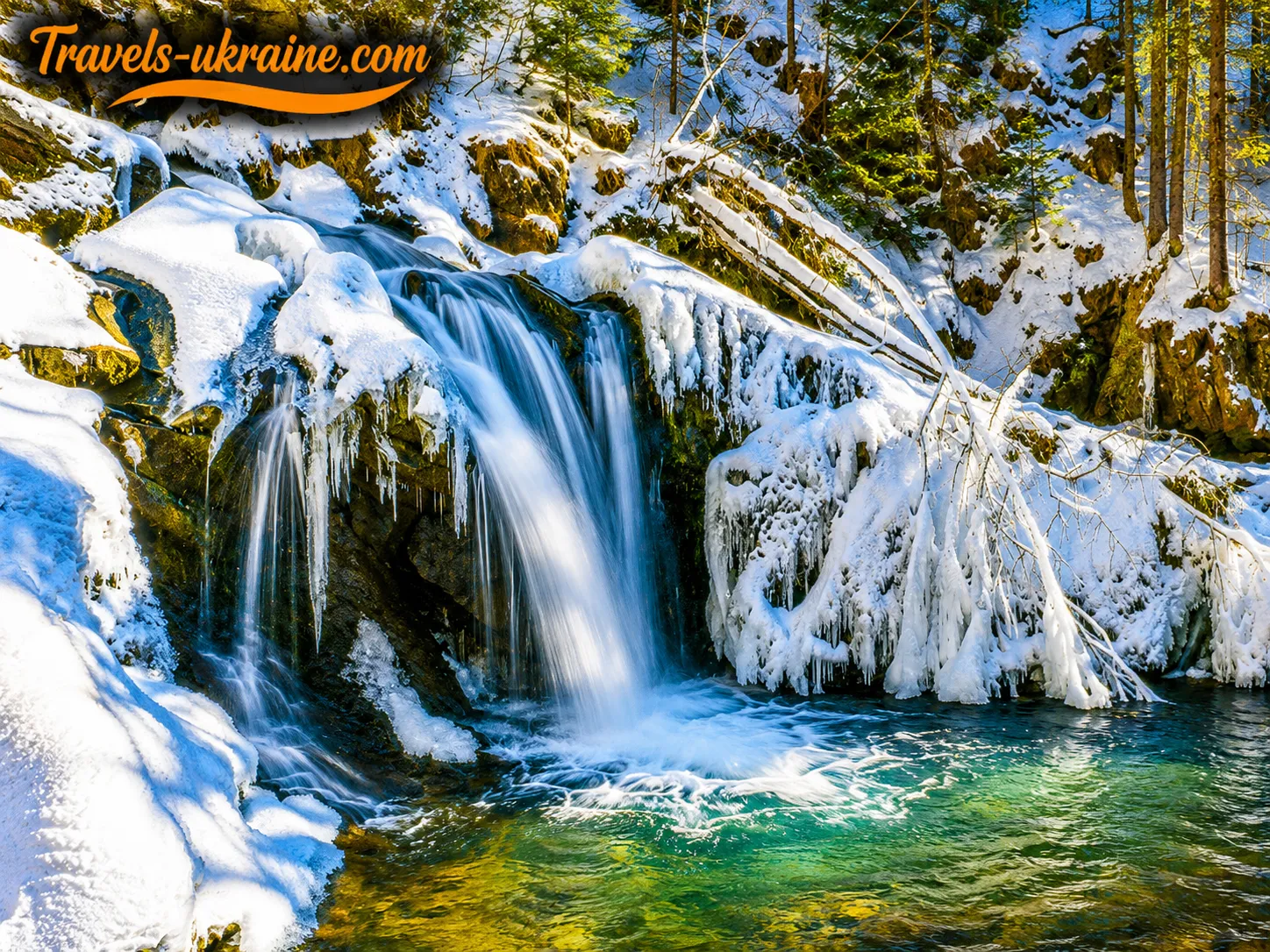
- In winter, ice formations, icicles, and slippery patches may develop on the rocks, although the water beneath them often continues to flow.
After heavy rainfall, the water may lose its usual clarity as the current carries fine soil particles, sand, and plant debris. This is a natural process for a mountain river. During such periods, the waterfall looks especially powerful, but approaching the river channel is dangerous because of the fast current and wet rocks.
The Mountain Forest Around Kamyanka Waterfall
Here, the rocks and water seem to form a single whole with the surrounding forest. Fir, spruce, and deciduous trees create a dense green canopy over the valley, helping it remain cool even on warm days. Humidity is higher near the stream, so moss grows abundantly on the rocks, trunks, and fallen wood.
The forest also affects how the waterfall sounds. Steep slopes and trees partly hold the sound within the narrow valley, so the roar of the cascade can be heard before it comes into view. For many travelers, this gradual transition—from a quiet tourist trail to increasingly louder water—becomes one of the most memorable moments of the journey.
The vegetation around the river channel performs an important natural function. Roots stabilize the soil on the slopes, the forest floor retains some of the rainfall, and shade limits excessive water warming. At the same time, trees growing directly on the rocky banks remain vulnerable to windstorms, erosion, and natural landslides.
Why Kamyanka Waterfall Looks Different in Photographs
Photos of Kamianetskyi Waterfall can differ considerably, even when taken from the same spot. The reason lies not only in the lighting or camera settings. After rain, the stream becomes wider and brighter, while in dry weather more of the rocky surface is exposed. In the morning, the waterfall is often in soft shade, whereas during the day, sunlight breaks through the canopy in patches.
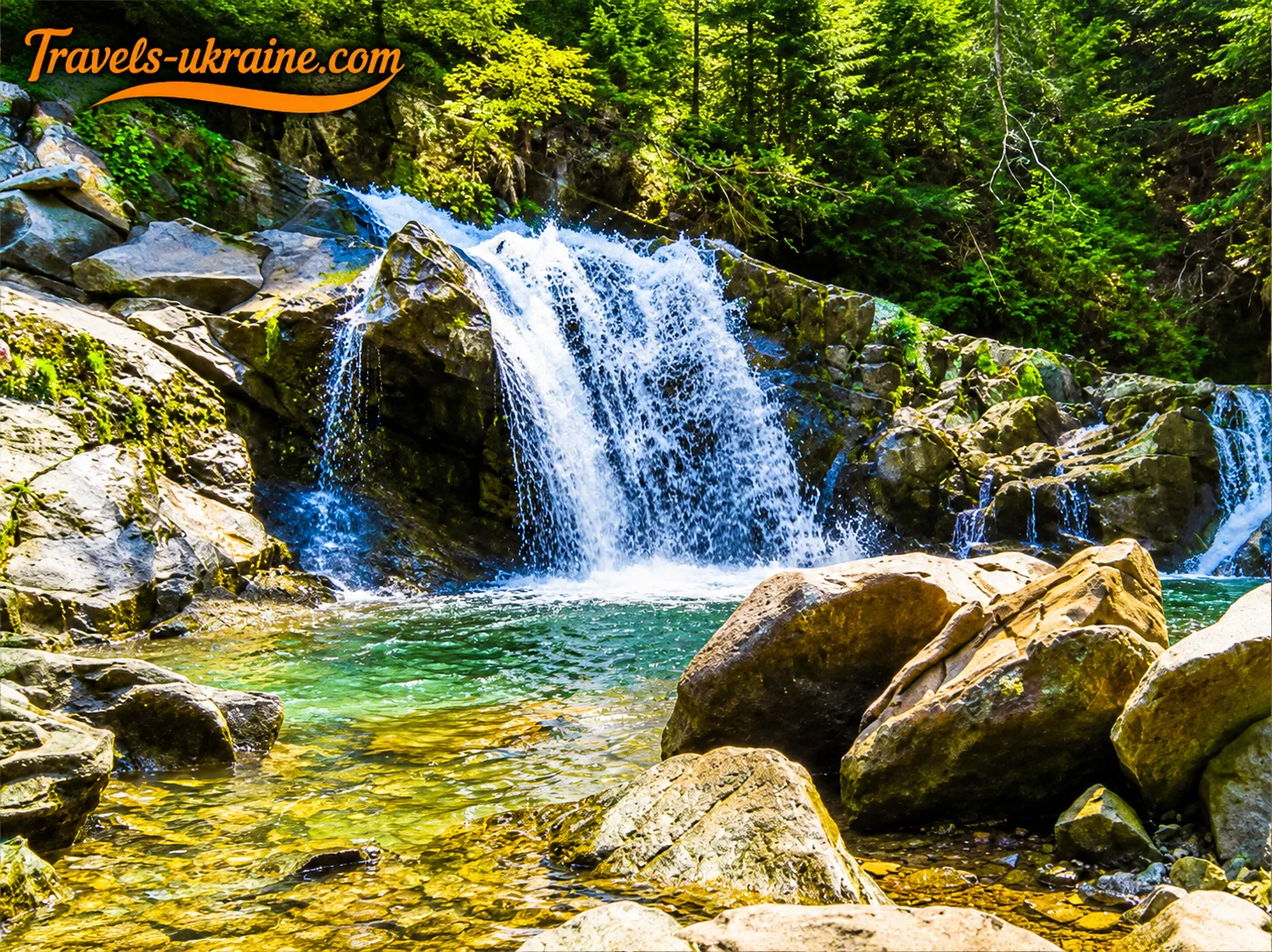
The color of the water also depends on its depth, the condition of the riverbed, the weather, and the viewing angle. In the calmer natural pool beneath the cascade, it may appear green or blue-green because it reflects the forest and sky. During a flood, the current takes on a grayish or brownish hue because of the particles carried by the river.
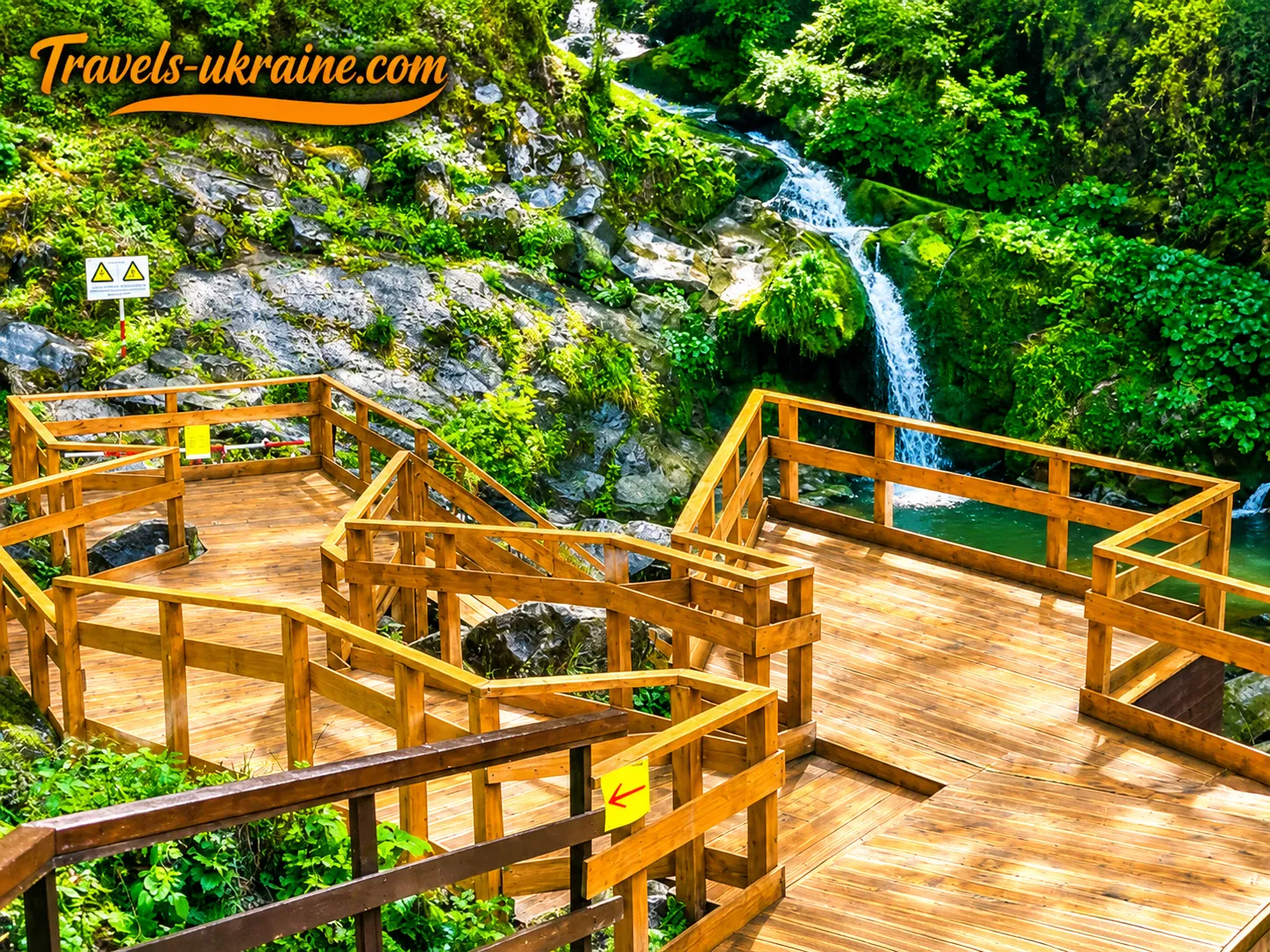
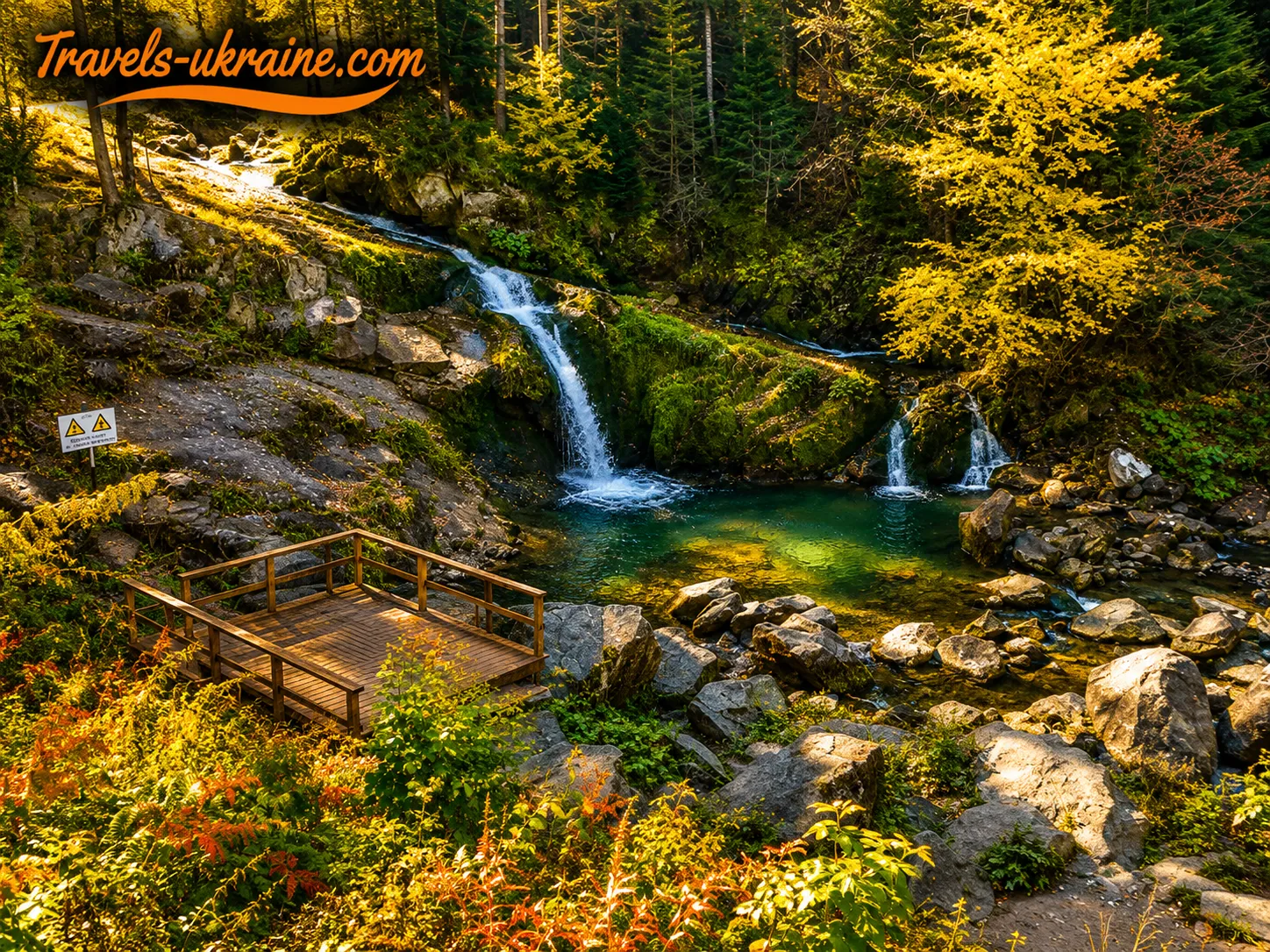
A viewing platform has been arranged for observing the cascade. From there, visitors can clearly see the division of the flow, the rocky ledge, and the lower part of the channel. It is not worth stepping onto wet boulders for a different angle: the natural surface offers little secure traction, and the strong current leaves little time to react in the event of a fall.
Kamyanka Waterfall shows how expressive a relatively small natural site can be. There is no single dominant feature standing apart from everything else. The rocky ledge, two streams of water, rocky banks, boulders, coniferous forest, and the narrow river valley form a unified Carpathian landscape that deserves to be seen in person, not only in photographs.
Photo and Video Gallery
A Brief Travel Guide to Kamyanka Waterfall
A trip to Kamyanka Waterfall can be organized as a short stop during a road journey, a leisurely walk, or part of a longer route through the Skole Beskids. No special physical training is required to see the cascade itself, but the natural rocky terrain, damp slopes, and slippery sections call for comfortable footwear and caution.
The official «Kamyanka River Valley» trail begins near the information board opposite the «Dubyna» bus stop on the Kyiv–Chop highway. The route is 4.6 kilometers long, is marked as easy, and takes approximately two hours. Along the way, travelers pass an information and access checkpoint, a mineral spring, rest areas, Kamianetskyi Waterfall, and a turnoff to Zhuravlyne Lake.
What Type of Tourist Attraction Is Kamyanka Waterfall?
Kamianetskyi Waterfall, located within Skole Beskids National Nature Park, is a natural tourist attraction that complements a mountain hike. A visit combines observing a mountain cascade, taking a short forest walk, and exploring the Kamyanka River valley. There are no museum halls, rides, or entertainment complexes here: the main attractions remain the natural landscape, the sound of water, and the Carpathian forest.
The site is best suited to travelers who value nature tourism, peaceful outdoor recreation, photography, and easy hiking routes. The waterfall can be included in a day trip from Skole, combined with a forest lake, or made one of the stops on a road trip through Lviv Oblast.
- Type of attraction: natural waterfall, mountain river, forest recreation area.
- Trip format: independent walk, family outing, excursion, or part of a hiking route.
- Best suited to: families, couples, photographers, eco-tourism enthusiasts, and fans of short hikes.
- Special preparation: not required for the main route, but weather-appropriate footwear is important.
Parking Near Kamianetskyi Waterfall
You can drive almost right up to Kamyanka Waterfall. From the road to the viewing platform and the cascade itself, only a few dozen meters remain on foot, making the site convenient for a short visit, families with children, and travelers who are not planning a long hike.
Visitors usually leave their cars on the roadside near the waterfall or use available parking spaces. On warm weekends and holidays, many cars may gather here, so it is better to arrive in the morning, when there are still relatively few tourists.
Cars must be parked so that they do not narrow the roadway, block other traffic, obstruct access to the waterfall, or prevent service or emergency vehicles from passing. Do not drive onto forest clearings, the riverbank, or vegetated areas, even when there are no free spaces beside the road. After rain, the roadside may be soft and slippery, so before stopping, make sure the vehicle will not get stuck or create a hazard for other road users.
Difficulty and Accessibility of the Route to Kamyanka Waterfall
The park classifies the tourist route through the river valley as easy. Most of the walk does not involve prolonged steep climbs, mountaineering equipment, or mountain-hiking experience. That is why the scenic waterfall is often chosen as an introduction to the Skole Beskids.
At the same time, «easy» does not mean that the route is completely level or urban in character. The trail may include rocks, tree roots, puddles, and sections washed out by rainfall. Near the cascade itself, the surface is often wet, and the sandstone boulders quickly become slippery. Conditions may deteriorate considerably after heavy rain.
The recreational area can be reached by car. Parking is available near the information and environmental station, along with gazebos and a meadow for tourist tents. However, viewing the natural waterfall up close still requires walking.
Travel Budget for a Trip to Kamianetskyi Waterfall
Recreation near Kamianetskyi Waterfall can generally be considered an affordable type of tourist trip. Transportation usually makes up most of the budget. The total will depend on whether travelers use their own car, public transport, a taxi, or an organized excursion.
Visitors should also take into account the cost of recreational and tourist services provided by the National Nature Park. Current rates may change, so it is worth checking the exact cost immediately before the trip on the park’s official resource or at the information and access checkpoint. Guided tours, use of certain rest areas, and other additional services may be charged separately.
What Level of Comfort to Expect Near Kamyanka Waterfall
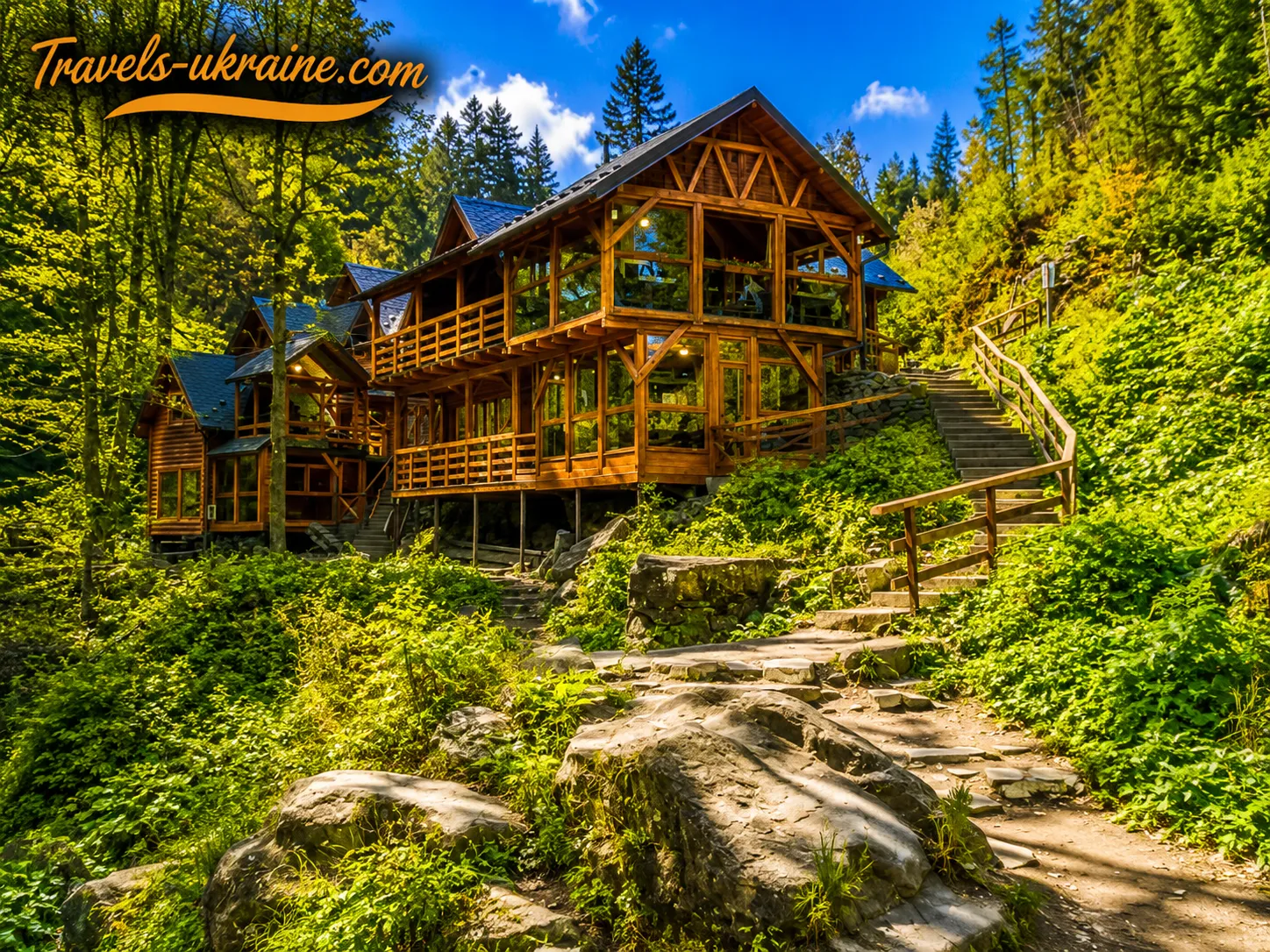
The infrastructure near Kamyanka makes it convenient to arrive by car, get information about the route, view the cascade from a safe platform, buy souvenirs, have lunch, and rest in a gazebo. For a natural tourist attraction, this is a sufficient set of basic amenities.
However, the site’s main value is not its service but the Carpathian landscape. Travelers should be prepared for changeable weather, uneven trails, a limited selection of goods, and the need to provide their own water and equipment and clean up after their visit.
This balance makes a trip to the Carpathians accessible without turning the Kamyanka River valley into an ordinary entertainment complex. The necessary amenities are available, but the sound of water, the forest, and the rocky riverbed remain more important than any retail pavilions or tourist services.
Events and Festivals Near Kamyanka Waterfall in the Skole Beskids
Kamyanka Waterfall remains primarily a natural attraction rather than a permanent festival venue. There is no single major celebration with a fixed date held directly beside the cascade every year. However, the Kamyanka recreational area, nearby tourist trails, and the town of Skole occasionally host charity, sporting, patriotic, and environmental education events.
This format suits the character of the area well. Events in the Skole Beskids usually combine active recreation, an introduction to nature, local culture, and a socially beneficial purpose. Participants may follow the route to Kamyanka Waterfall, join a themed excursion, or attend a cultural program at one of the park’s recreational sites.
Are Festivals Held Directly Near Kamyanka Waterfall?
There is no permanent festival devoted exclusively to Kamianetskyi Waterfall in the National Nature Park’s public calendar. At the same time, the area near the cascade has previously been used for individual cultural and charity events.
In 2024, the «Opryshky» charity event took place at the tourist shelter in the «Waterfall on the Kamyanka River» recreational area. Its program combined a demonstration class in Ukrainian martial arts, performances by local artists and guests from Lviv, refreshments, and children’s charity auctions. The event had a patriotic and charitable focus, and the funds raised were donated to support children who had lost their parents because of the war.
This example shows that a well-known tourist attraction in Lviv Oblast can be more than a place for a walk—it can also provide a natural setting for intimate cultural events. However, such events should not be considered guaranteed annual occurrences: the program, venue, and dates may change.
Mountain Races and Sporting Events in the Skole Beskids
Mountain and charity races hold a separate place in the region’s calendar. Forest roads, elevation changes, rocky sections, and marked routes create good conditions for outdoor sporting events. However, tourists should understand that race courses may run through different parts of the park and do not always pass directly near the waterfall.
In 2024, the «BESKYDY TRAIL» charity mountain race was held in the Pavliv Stream area, attracting around two hundred participants. The following year, the sporting event took place again within the Skole community and brought together more than five hundred participants from different regions of Ukraine. The routes ran through forests, rocks, and natural landmarks of the National Park.
Such events can significantly affect tourist traffic. On race day, some roads and trails may be busier, temporary restrictions may be introduced near starting areas, and parking spaces may fill up more quickly. If your tour to Kamianka Waterfall coincides with a sporting event, it is worth arriving earlier and checking the traffic plan.
Environmental Initiatives and Educational Tours to Kamianets Waterfall
The national nature park organizes not only tourist walks but also environmental classes, themed meetings, conservation initiatives, and educational tours. Their purpose is to explain to visitors how Carpathian ecosystems function, why they must stay on marked trails, and how tourist pressure affects rivers, forests, and wetland areas.
Some tour programs cover several natural attractions. For example, a route may combine a natural waterfall, a mountain river valley, and a lake. During such trips, participants learn about local plants, watch birds, study the rules of conduct in the forest, and discover why the peat bog near the lake requires careful treatment.
Environmental events are most often aimed at schoolchildren, youth groups, hiking clubs, and organized groups. However, the park also offers guided tours for ordinary visitors. Such a waterfall tour is ideal for those who want not only to take photographs but also to better understand the geology, vegetation, and historical and cultural surroundings of the Skole Beskids.
Events and festival programs can make a getaway near Kamianets Waterfall more engaging, but they should not be the only reason to travel here. The main event takes place every day without a stage or poster: mountain water flows over a rocky ledge, the forest changes color with the seasons, and the tourist trail reveals ever-new views of the Beskids.
What to See and Do Near Kamianka Waterfall
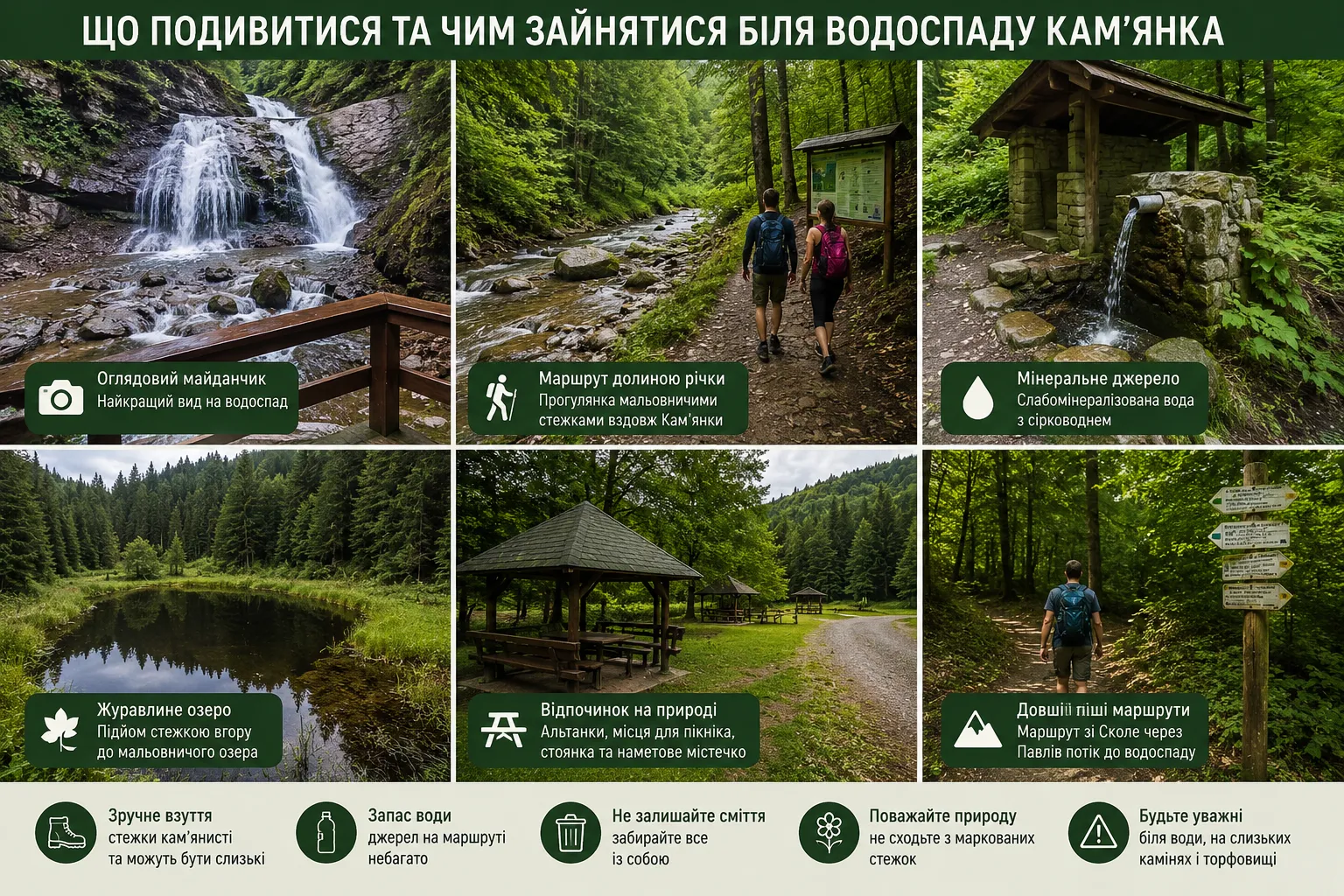
A trip to Kamianka Waterfall is about more than taking photos beside the cascade. The mountain river valley, forest trails, viewing platform, mineral spring, and climb to the lake make it possible to create a full program lasting several hours. Here, you can choose a relaxed nature getaway or a more active hiking route without setting out for the challenging Carpathian peaks.
It is best not to rush and to experience Kamianka as part of a larger natural landscape. While some travelers head straight to the waterfall, more attentive visitors stop by the river, examine the rocky banks, listen to the changing sound of the water, and watch the dense forest gradually reveal the main cascade. This unhurried approach helps you experience the true character of the Carpathians.
Of course, the main activity during the trip is viewing the waterfall from the equipped viewing platform. From here, you can clearly see the rocky ledge, the division of the water into two streams, the large boulders in the channel, and the lower part of the cascade. This vantage point allows you to examine the waterfall’s natural structure without having to step onto slippery rocks.
Do not limit yourself to one quick glance. The water is constantly changing shape: individual streams disappear behind rocky outcrops, join together again, and break into tiny droplets. After rainfall, the cascade becomes louder and wider, while during dry periods the relief of the sandstone ledge is easier to see. To enjoy the picturesque site in peace, it is better to arrive in the morning or on a weekday. On warm weekends, more tourists gather near the platform, making it harder to enjoy the sounds of nature and take photographs without large numbers of people in the frame.
Follow the Kamianka River Valley Hiking Trail
The most rewarding way to get to know the area is to follow the «Kamianka River Valley» trail. It allows you to see not only the famous cascade but also the character of a mountain river: its rocky channel, small rapids, forested slopes, riffles, and stretches where the water moves quietly between large boulders.
Along the way, pay attention to the information boards. They help visitors better understand natural processes, the features of local vegetation, and the rules of conduct within the national nature park. This walk is especially interesting for families with school-age children, as an ordinary waterfall getaway becomes an introduction to the nature of the Carpathians.
The trail does not require an athletic pace. On the contrary, frequent short stops allow you to hear birds, look closely at mosses on the rocks, examine tree roots above the rocky banks, and notice small cascades that are easy to miss if you are always in a hurry.
Visit the Mineral Spring Near Kamianka Waterfall
Near the bridge over the river, a short trail leads to a mineral spring. It is located close to the main tourist route, so visiting it does not require a lengthy detour. A rest area with gazebos has been set up opposite it.
The spring water is lightly mineralized and contains a small amount of hydrogen sulfide. Its noticeable smell may be unusual for those who have never tasted Carpathian mineral water. The spring should be regarded as an interesting natural feature of the valley, not as a guaranteed medicinal treatment.
Before consuming any mineral water in large quantities, consider your own health. For most tourists, it is enough to collect a small portion, assess the taste, and continue the walk without leaving plastic bottles or other litter near the spring.
Climb from Kamianka Waterfall to Zhuravlyne Lake
One of the most interesting extensions of the route is the climb to Zhuravlyne Lake, also known by its popular name, Dead Lake. The turnoff begins approximately half a kilometer from the waterfall and leads uphill along a steeper forest slope. This section is noticeably more challenging than the walk through the valley, especially after rain.
The lake lies amid a sphagnum peat bog. Dark water, mosses, wetland vegetation, and submerged branches create an atmosphere completely different from that of the noisy waterfall. If movement is the dominant impression at the cascade, silence and an almost motionless water surface prevail at the lake.
The natural landmark’s name is associated with the cranberry species that grows in the peat bog. Cotton grass, bog sedge, and round-leaved sundew can also be found here. However, plants should be viewed only from the safe trail: hidden beneath the soft layer of sphagnum moss is treacherous ground.
Why You Must Not Enter the Peat Bog Near Zhuravlyne Lake
The surface around the lake may look like a solid green meadow, but this impression is deceptive. Waterlogged areas lie beneath the vegetation and peat, and a person can fall through them. Getting out of the bog unaided is extremely difficult.
Therefore, during your visit, stay on the designated approach, do not test the strength of the moss with your feet, and watch children especially carefully. This restriction protects not only people but also the highly vulnerable wetland ecosystem, which can easily be damaged by a single careless step.
Enjoy a Break Near Kamianets Waterfall
Near the information and environmental station, there are gazebos, short-rest areas, a car park, and a clearing where tourists are permitted to pitch tents. This is a convenient option for travelers who want not merely to see the waterfall but to spend several hours by the river.
There are food establishments near the waterfall where you can have lunch, try local dishes, and taste Carpathian wine. However, if you plan to spend several hours near Kamianka, follow a longer tourist route, or take an extended break, bring drinking water and a small supply of food. Reusable containers are the most convenient option: they create less waste and are well suited to a hike.
After your break, be sure to take packaging, bottles, napkins, and other waste with you. Food scraps should not be thrown into the forest or left near the gazebos either: they attract wild animals, alter their natural behavior, and pollute the recreational area. The best rule for any traveler is simple: after your visit, the site should be just as clean as it was before you arrived.
Choose a Longer Hiking Route
For travelers who find a short walk too easy, the «Pavliv Stream — Kamianka Waterfall» route is a good choice. It passes through fir and beech forests, a bio-clearing, and areas with noticeable elevation changes. Along the way, you can see more than fifty species of herbaceous plants and, under favorable circumstances, traces of—or the animals themselves—who inhabit the forest.
This route also includes an archaeological site from the pre-Christian period—a sanctuary dating to the IX–X centuries. Thus, the hike combines nature tourism, physical activity, and an introduction to the ancient history of the Skole region. The trail ends in the river valley not far from the waterfall. From there, you can continue along the route to Zhuravlyne Lake or head toward the village of Dubyna. This option requires more time, reliable footwear, a supply of water, and prior study of the map.
How to Plan a Getaway Near Kamianka Waterfall
Choose the format of your trip according to the available time, weather, and participants’ physical abilities. For a family with small children, it is enough to view the cascade, walk partway through the valley, and rest in the equipped area. More active travelers can add the climb to Zhuravlyne Lake, while experienced hikers can reach the waterfall from Skole via Pavliv Stream.
- Easy program: viewing the waterfall, a short walk along the river, and a rest in a gazebo.
- Moderate program: the waterfall, mineral spring, and climb to Zhuravlyne Lake.
- Active program: a hike from Skole via Pavliv Stream, ending at the cascade.
Regardless of which option you choose, do not try to fit as many stops as possible into your trip. A Carpathian getaway is remembered not by the number of kilometers covered but by the chance to hear a mountain river, walk through a Carpathian forest, and, for at least a few hours, replace the usual urban rhythm with the calm of nature.
Safety Near Kamianka Waterfall: Essential Advice Before Your Trip
The waterfall is an accessible natural attraction, but the nearby road and equipped viewing platform do not eliminate natural risks. Wet sandstone boulders, a fast mountain current, sudden weather changes, slippery forest trails, and unreliable mobile service can create a dangerous situation even during a short walk.
Viewing the cascade itself does not require special mountaineering equipment or advanced physical fitness. However, travelers should check the weather forecast in advance, wear suitable footwear, charge their phones, and stay within the equipped areas. Take particular care after rain, during the spring flood season, in winter, and when traveling with children.
The most obvious danger near the cascade is wet boulders and smooth rock surfaces. Do not descend into the river channel, jump between boulders, or approach the edge of the cascade for a photograph. If you lose your balance, you could strike the rocks or be swept into the fast current. The water below the waterfall moves unevenly, and it is difficult to judge its force accurately from the bank.
What to Do During a Thunderstorm in the Skole Beskids
Before your trip, be sure to check the hourly forecast rather than just the overall temperature for the day. Weather in the Carpathians can change quickly: a sunny morning does not guarantee that there will be no downpour, strong wind, or thunderstorm in the afternoon. When you hear thunder, leave open ground, move away from water, isolated tall trees, metal fences, and power lines. Do not shelter directly under the tallest tree or lean against a wet trunk.
It is best to return to your car, a tourist shelter, or another reliable shelter in advance. If a group is on the trail, there is no need to scatter in different directions. Participants should remain within sight of one another and make sure no one falls behind.
Child Safety Near Kamianka Waterfall
A trip to the waterfall is possible with children, but near the water they must remain under constant adult supervision. Do not allow a child to climb onto boulders alone, climb over barriers, approach the edge of the bank, or run across the slippery area. On narrow sections of the trail, it is best to hold a young child by the hand. If there are several children in the family, adults should agree in advance on who is watching which child. The most dangerous situations often arise precisely when each adult assumes that someone else is supervising the child.
The ascent to Zhuravlyne Lake requires special attention. Children must not step onto the sphagnum bog: the green surface may conceal a quagmire. The lake should be viewed only from the designated approach.
What to Pack in a Small Hiking First-Aid Kit
Even for a day trip, it is worth carrying a basic first-aid kit. It should not be too large, but it should allow you to treat a minor scratch, cover a wound, and help someone until professional assistance arrives.
- sterile wipes, a bandage, and an antiseptic for treating hands and skin;
- bactericidal adhesive bandages in various sizes and disposable gloves;
- personal medication that the traveller takes regularly;
- insect repellent and sun protection suitable for the season.
Do not give another person unfamiliar medication or medicines prescribed specifically for you. In the event of a serious injury, loss of consciousness, difficulty breathing, or significant bleeding, call emergency services and follow the dispatcher’s instructions.
Frequently Asked Questions About Kamianka Waterfall in the Skole Beskids
Where is Kamianka Waterfall located?
Kamianka Waterfall is located in Lviv Oblast, within the Skole Beskids National Nature Park. It formed on the Kamianka River near the village of Dubyna and the town of Skole. The site is relatively close to the Kyiv–Chop highway, making it easier to reach than many remote Carpathian waterfalls.
Can you drive directly to Kamenets Waterfall?
You can drive almost right up to the waterfall. From the road to the viewing platform and cascade, only a few dozen metres remain on foot. Visitors usually leave their cars in available parking spaces or on the roadside near the site. Park the car so that it does not block the road, access to the waterfall, or passage for service or rescue vehicles.
Is there an entrance fee for Kamianka Waterfall?
The waterfall is located within a national nature park, where recreational fees and separate charges for tourist services may apply. Payment is accepted at checkpoints and cashlessly via QR code. Since fees may change, check the current price on the park’s official website or directly at the information point before starting the route.
How much time is needed to visit Kamianka Waterfall?
Approximately 40–60 minutes is enough for a brief look at the cascade, taking photographs, and a short rest. Allow about two hours for a walk along the «Kamianka River Valley» tourist trail. If you also plan to ascend to Zhuravlyne Lake, stop by the mineral spring, and take a leisurely break, it is better to plan at least three hours or half a day.
When is the best time to visit Kamenets Waterfall in the Carpathians?
The most convenient period for a trip is considered to be from the second half of April to the beginning of November. In spring, the waterfall is usually fuller; in summer, the valley offers welcome coolness; and in autumn, the cascade looks especially beautiful among yellow and copper-coloured leaves. The site is also visited in winter, but ice, short daylight hours, and slippery approaches make such a trip require extra caution.
Is Kamianka Waterfall suitable for a trip with children?
The site can be visited with children, as reaching the waterfall itself does not require a difficult, hours-long climb. However, near the water, wet boulders, and viewing platform, children must remain under constant adult supervision. Do not allow children to climb over barriers, descend to the riverbed on their own, or run across slippery sections. The ascent to Zhuravlyne Lake is more difficult because of the steeper forest trail.
Can you swim in Kamianka Waterfall?
Kamianka is not an equipped place for safe swimming. Large slippery boulders lie beneath the cascade and in the riverbed, the water remains cold even in summer, and the current becomes stronger after rainfall. Do not go beneath the waterfall, jump from the rocks, or try to swim across turbulent sections. The safest way to watch the cascade is from the viewing platform.
How do you get from Kamianka Waterfall to Zhuravlyne Lake?
The turnoff to Zhuravlyne Lake begins near the waterfall. The distance is approximately half a kilometre, but the trail climbs a steep forest slope, so the walk requires comfortable footwear and more time than the map might suggest. At the lake, do not step onto the sphagnum bog: beneath the green layer of moss lie waterlogged areas and a dangerous quagmire.
Are there places to eat and rest near Kamianka Waterfall?
Seasonal food outlets and small shops operate near the waterfall, where you can eat and buy souvenirs, local products, and drinks. The recreational area also has gazebos, places for a short rest, and a meadow for pitching tourist tents. Opening hours depend on the season and the number of visitors, so for a longer route it is worth bringing drinking water and a light snack.
What should you bring to Kamianka Waterfall?
For a short walk, closed shoes with a grippy sole, drinking water, a lightweight raincoat, and a charged phone are sufficient. A longer route calls for a small snack, an offline map, a power bank, insect repellent, a basic first-aid kit, and personal medication. Be sure to bring a rubbish bag and take all your waste with you after your visit.
Visitor Information About Kamianka Waterfall
Kamianka Waterfall: A Carpathian Journey Worth Taking
Mountainous Kamianka Waterfall is an example of a tourist site that needs no record-breaking height, flashy advertising, or difficult hours-long route to make a strong impression. Its appeal comes from the simple, harmonious combination of mountain water, massive sandstone boulders, cool forest, and the narrow valley of the Kamianka River.
You can come here for just an hour, view the cascade from the platform, and continue your ecotourism journey through Lviv Oblast. But it is much more interesting to stay longer: walk along the river, listen to the small rapids among the rocks, visit the mineral spring, climb to Zhuravlyne Lake, or continue your hiking route through the forests of the Skole Beskids.
Kamenets Waterfall is suitable for all kinds of travellers. Families with children will appreciate the convenient access and short distance to the cascade; photographers will enjoy the changing light, rocks, and the full-flowing stream after rainfall; and outdoor enthusiasts can combine the waterfall with longer forest routes. For those seeking peace and quiet, it is an opportunity to leave the noise of the city behind for at least a few hours and listen only to the water, wind, and Carpathian forest.
The best impressions of Kamianka are not made by those who try to quickly check off as many places on the map as possible, but by those who allow themselves to slow down. It is worth stopping by the river, taking in its channel, waiting for the viewing platform to become less crowded, and walking at least part of the tourist trail. It is in moments like these that the true character of the mountains is revealed. If you are looking for an accessible route for discovering the Carpathians, planning a holiday, or want to spend a day surrounded by mountain nature without a challenging ascent to a summit, a trip to Kamianka Waterfall is an excellent choice. This place reminds us that sometimes all it takes for a true reset is a forest trail, a rocky river, and water that relentlessly carves its way through the Carpathian rocks.


No Comment
You can post first response comment.