
 English
 Українська
 Русский
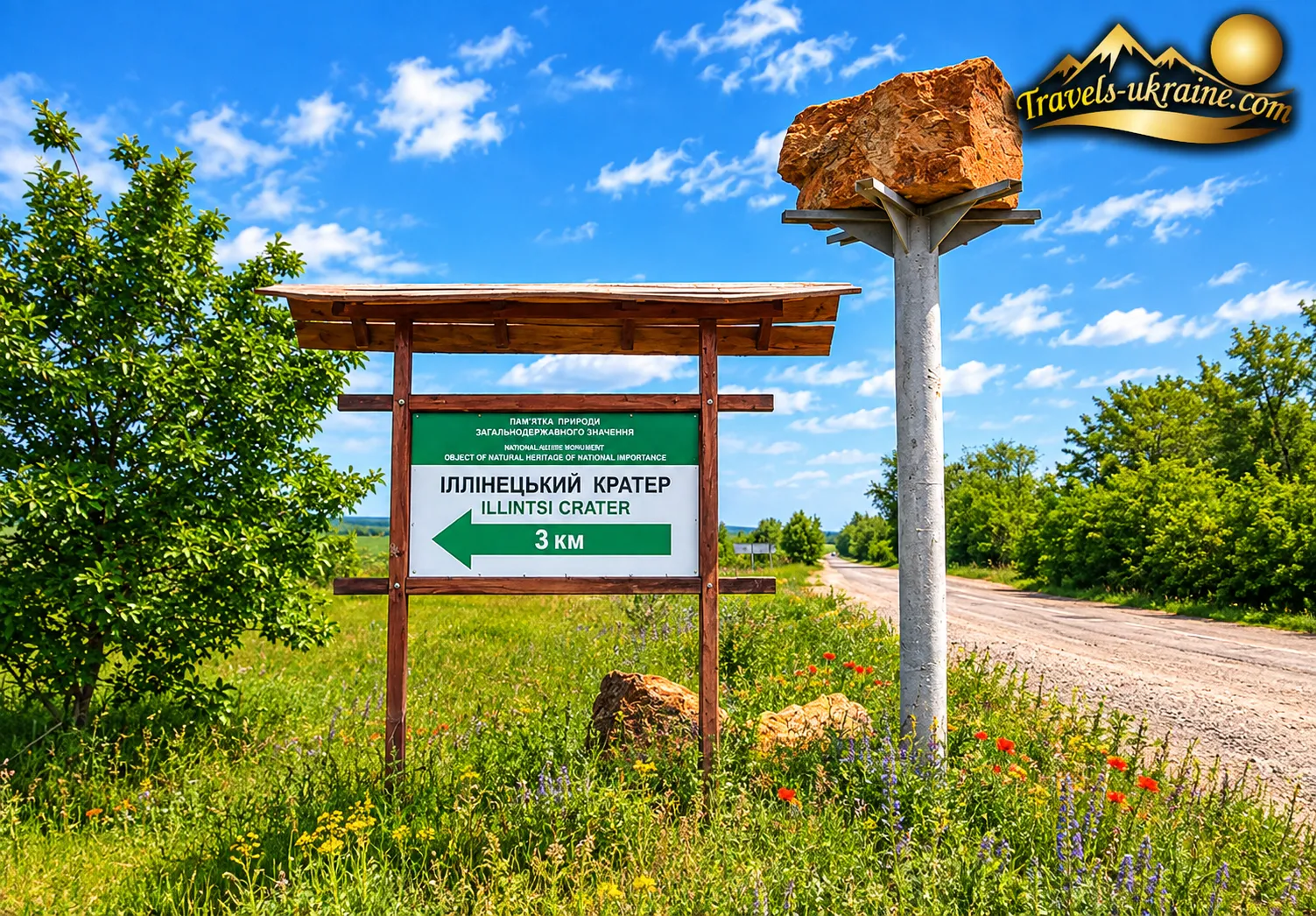
Imagine a place where, nearly 446 million years ago, the calm of Earth was shattered in an instant by a cosmic body crashing into its surface at tremendous speed. The colossal impact fractured and partially melted the rocks, formed a crater, and permanently changed this part of the planet. This is the Illinets Crater — one of Ukraine’s most fascinating impact structures, located near the town of Illintsi in Vinnytsia Oblast.
But if you are already picturing a huge circular depression with high rims, like those seen in photographs of the Moon, your expectations need a little adjustment. Over hundreds of millions of years, water, wind, erosion, and other geological processes have almost completely erased the crater’s original shape. The modern landscape no longer shouts at visitors, “A meteorite fell here!” — and without knowing what to look for, you could pass very close by without realizing just how unusual the ground beneath your feet really is. The crater has almost disappeared from the modern landscape, but the rocks have “remembered” the impact.
Nearly half a billion years later, the local rocks still preserve traces of the enormous pressure and temperature generated by the cosmic collision. The rocks were shattered and deformed, while some of them were melted and transformed into distinctive impact-generated rocks known as impactites. These geological “pieces of evidence from the scene” helped scientists determine that this was not a volcanic structure, an ordinary depression, or the result of slow processes in the Earth’s crust, but the trace of a genuine meteorite impact. And this is perhaps the main intrigue of the Illinets astrobleme: visitors can barely see the crater itself, yet they can literally stand among rocks that survived a cosmic catastrophe.
And it was a catastrophe so ancient that the usual scales of history almost stop making sense here. When the Illinets meteorite crater was formed, hundreds of millions of years still remained before the first dinosaurs appeared. There were no modern forests, flowering plants, birds, or mammals on land, while most complex life on Earth was concentrated in the seas.
Modern high-precision dating places the impact at approximately 445.8 ± 0.8 million years ago — near the end of the Ordovician Period. Even this figure has an interesting story behind it: the exact age of the event was refined significantly only through modern analysis of minerals that survived the impact. In other words, the rocks preserved not only the traces of the event itself. In a sense, they also preserved a geological clock that scientists were able to read hundreds of millions of years later.
That is why the Illinets astrobleme is much more interesting than just a point on the map marked “a meteorite once fell here.” It is a natural laboratory where you can trace an entire chain of events: cosmic body → collision → shock wave → destruction and melting of rocks → crater formation → hundreds of millions of years of erosion → the modern landscape.
How the Illinets Crater Formed: Meteorite Impact and Cosmic Explosion
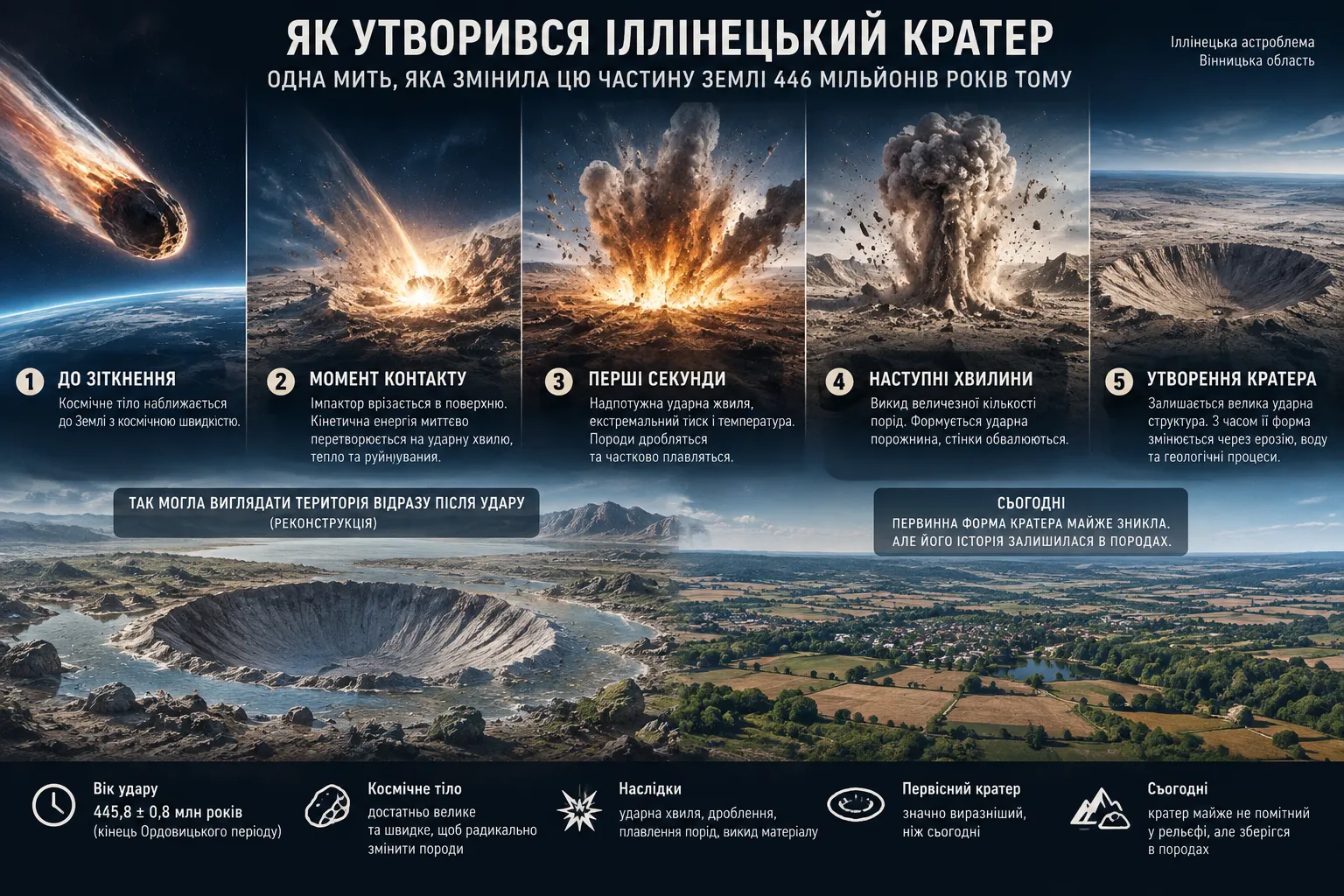
The exact size of the asteroid or meteoroid that formed the crater cannot, of course, be measured directly. The celestial body itself has long since disappeared in its original form, while the present-day structure has been heavily altered by erosion. Scientists estimate the parameters of ancient impactors indirectly — based on the size of the impact structure, the properties of the rocks, crater-formation models, and the amount of energy required to produce such geological changes. That is why popular claims such as “the meteorite was exactly 300 meters in diameter” should be treated with caution. For an event this ancient, it is more accurate to speak in terms of scientific estimates and ranges rather than precision down to the last meter.
One thing can be stated with confidence: the cosmic body was large enough and moving fast enough that, at the moment of impact, it generated pressures and temperatures capable not merely of shattering surface rocks, but of radically altering their internal structure and partially melting them. So let us imagine geology in slow motion for a few seconds:
Before the impact. A cosmic body approaches the Earth’s surface at tremendous speed. It contains an enormous amount of kinetic energy — and it is this energy, rather than some kind of “explosive charge” inside the meteorite, that will become the source of the coming catastrophe.
The moment of impact. The impactor strikes the Earth’s surface. Its speed is so great that ordinary ideas of a falling rock no longer apply. A huge portion of the kinetic energy is almost instantly transformed into a shock wave, heat, destruction, and the displacement of rock.
The first fractions of a second. An extremely powerful shock wave travels through the rocks. Pressure rises sharply. Minerals undergo deformations that do not form under normal near-surface geological conditions. Some of the rocks are shattered, while others are heated so intensely that they begin to melt. And it is at this very moment that the rocks begin to “remember” the cosmic impact. Millions of years later, a geologist will no longer see the meteorite itself or hear the explosion, but will be able to examine the minerals under a microscope and identify structures created by extreme pressure.
The next few seconds. An enormous mass of fragmented rock moves in different directions. Some material is ejected beyond the future crater, some is mixed together, while molten rocks form impact melt.
The next few minutes. The initial impact cavity begins to change under the influence of gravity. Unstable walls collapse, fragmented material and melt are redistributed, and the structure gradually takes on the form that geologists will later call an impact crater. On a cosmic timescale, all of this happens almost instantly. On a human timescale, it happens fast enough for the landscape to be transformed beyond recognition in the time it would take us today merely to realize that something catastrophic was happening.
The phrase “meteorite explosion” can create the wrong impression, as though the cosmic body exploded like a bomb. In reality, the main source of energy was its speed. The kinetic energy of a body moving at cosmic velocity is released so rapidly when it is brought almost instantly to a stop that the consequences truly resemble an extraordinarily powerful explosion: a shock wave forms, rocks are shattered and ejected, temperatures rise dramatically, and some of the material melts. That is why large impact craters do not require an “explosive” asteroid. Its motion already contains the stored energy.
After the most active phase of the collision ended, a large impact structure remained on the surface. The original Illinets meteorite crater was far more pronounced than what can be seen today. Inside and around it were shattered rocks, impact breccias, material that had experienced extreme pressures, and rocks that had partially or completely passed through a molten stage. Then an entirely different part of the story began — a very slow one.
Millions of years passed. Climates, seas, ecosystems, and landscapes changed. Water broke down the rocks, erosion wore away the raised parts of the structure, and depressions were gradually filled with sediments. Continents shifted their positions, while life on Earth went through several major evolutionary transformations. The crater slowly lost the obvious shape it had immediately after the impact.
From a Cosmic Impact to Modern-Day Vinnytsia Oblast
Nearly 446 million years have passed. Entire groups of living organisms appeared and disappeared. Dinosaurs emerged — and vanished as well. Mammals, humans, cities, roads, and eventually the very name “Vinnytsia Oblast” came into existence. Yet the trace of that ancient impact remained. Not as a perfect circular depression. Much of the original relief has long since been destroyed. The most valuable evidence survived elsewhere — in the rocks of the Illinets impact structure itself.
They contain geological signs of the extreme conditions produced by an exceptionally powerful impact: fragmentation, melting, and specific pressure-induced changes in minerals. These rocks allowed scientists, nearly half a billion years later, to reconstruct an event whose witnesses have long since disappeared. And this raises an almost detective-like question: how can a piece of rock prove that a cosmic body really struck this place 446 million years ago? What traces does such an impact leave inside minerals, what are impactites, and why are they so important to geologists? That is what we will explore next — in a kind of geological investigation of the Illinets astrobleme.
How Scientists Proved the Crater’s Meteorite Origin
The crater’s original shape has been almost completely erased by erosion, which raises an obvious question: how do scientists know that a cosmic collision once occurred near Illintsi at all? After all, a circular depression by itself is not enough. Similar landforms can be created by volcanic, karst, and other geological processes. And even an unusual rock found at the site is not, on its own, proof of a meteorite impact.
The main witnesses of the Illinets catastrophe are much smaller — and far more reliable. They are the rocks and minerals themselves, whose internal structure was altered by extremely high pressure and temperature. In other words, the investigation did not begin with the search for a giant fragment of meteorite, but with reading the traces that the impact left in terrestrial rocks. Science has shown that during ordinary geological processes, rocks can be heated, compressed, fractured, and transformed over millions of years. A meteorite impact works very differently: enormous pressure is generated almost instantaneously. A shock wave passes through the rock, exposing minerals to conditions that are nearly impossible to produce near the Earth’s surface through normal natural processes. They deform at the microscopic level, and if enough energy is released, part of the material melts.
This is how shock metamorphism occurs — a set of changes in rocks and minerals caused by short-lived extreme pressure during the collision of a cosmic body with the Earth. For a geologist, it is something like fingerprints at a crime scene. The “culprit” itself has long since disappeared, and the landscape has changed beyond recognition, but the characteristic traces still allow scientists to reconstruct what happened.
Impactites and Impact Breccias — the Rocky Chaos Left by the Impact
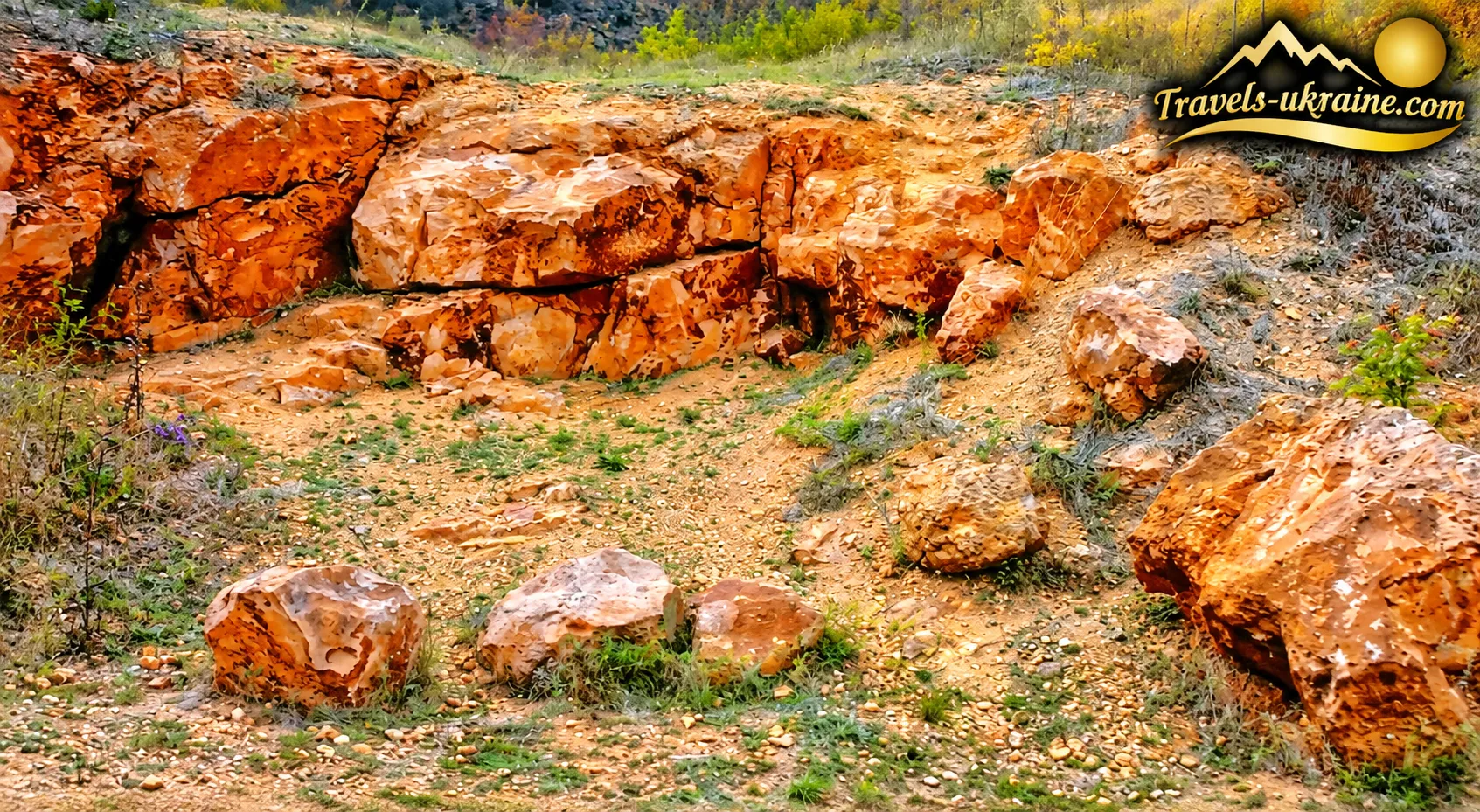
One of the key terms in the story of the Illinets Crater is impactites. This name refers to rocks that formed or were significantly altered as a result of a meteorite impact. They can vary greatly in appearance and composition. Some consist of rock fragments shattered and mixed together by the impact. Others contain material that was exposed to intense heating. And if the temperature became high enough, part of the rock could melt and later solidify again as impact melt.
An impactite, therefore, is not necessarily a fragment of the meteorite itself. In most cases, it is terrestrial rock that was altered so profoundly by the cosmic impact that it became geological evidence of the collision. This distinction is important. A tourist may be looking at a piece of rock created by the catastrophe, but that does not mean they have found a fragment of a 446-million-year-old asteroid.
Another characteristic type of rock found in impact structures is breccia. Breccias consist of fragments of different rocks that were shattered, displaced, and later cemented together. During a major impact, the surface does not simply receive a neat circular dent. Rocks are destroyed on a colossal scale, fragments are mixed together, some material is thrown outward, while some remains inside the structure. In this sense, breccia is essentially geological chaos frozen in place after the catastrophe. To a non-specialist, it may look like nothing more than an unusual rock containing fragments of different colors and textures. To a geologist, it is another page in the history of the impact.
Rocks That Were Once Melted by the Impact
One of the most remarkable features of the Illinets astrobleme is that the energy of the collision was sufficient to partially melt terrestrial rocks. Imagine an ordinary stone. Turning it into molten material requires an extremely high temperature. During the meteorite impact, the necessary energy was released almost instantaneously. Some of the molten material later cooled and solidified. Such rocks are especially valuable to researchers because they not only confirm the extreme conditions of the collision, but may also contain minerals suitable for determining the age of the event.
That is why the phrase “rocks that survived a cosmic explosion” is not merely a poetic tourist image in the case of the Illinets Crater. Some local rocks were indeed shattered, deformed, or partially melted by the energy of the ancient impact. Things become even more interesting when geologists use these rocks not only as evidence of the collision, but also as a kind of clock.
Impact-melt rocks contain minerals such as zircon. Its crystal structure and the ratios of radioactive isotopes make it possible to apply U–Pb dating — one of the most precise methods for determining the age of very ancient geological events. Modern high-precision analysis of zircons from impact rocks made it possible to determine the age of the Illinets impact structure. And this gives another meaning to the idea of “rocks that remembered the impact.” The rocks preserved not only the physical consequences of the catastrophe — nearly half a billion years later, they also allowed scientists to determine exactly when it happened.
Did Any of the Meteorite Itself Survive?
This is one of the most natural questions a visitor can ask: if a meteorite fell here, where is it? After a collision of this scale, you should not imagine the cosmic body as a large rock that simply settled neatly at the bottom of the crater and waited for archaeologists to find it. During a hypervelocity impact, the impactor undergoes catastrophic destruction, while its material may melt, vaporize, and mix with terrestrial rocks.
For comparison, one can mention the famous Knyahynia meteorite, which fell in Zakarpattia on June 9, 1866. As it passed through the atmosphere, the cosmic body broke apart into numerous fragments, some of which were recovered, while the largest pieces eventually entered scientific and museum collections. In the case of Knyahynia, therefore, we can speak about actual preserved fragments of the meteorite itself.
The situation with the Illinets astrobleme is fundamentally different. This was not a relatively recent fall that left fragments scattered across the surface, but a hypervelocity collision that formed a large impact crater approximately 446 million years ago. Under such conditions, the main “witnesses” of the cosmic body are no longer large, recognizable meteorite fragments, but the changes that the impact left in terrestrial rocks. That is why the primary objects of study at the Illinets astrobleme are not a “meteorite lying in the center,” but the geological consequences of its collision with the Earth: impactites, breccias, shock-altered minerals, and rocks that endured enormous pressure and heating.
What Remains of the Illinets Crater and What Visitors Can See
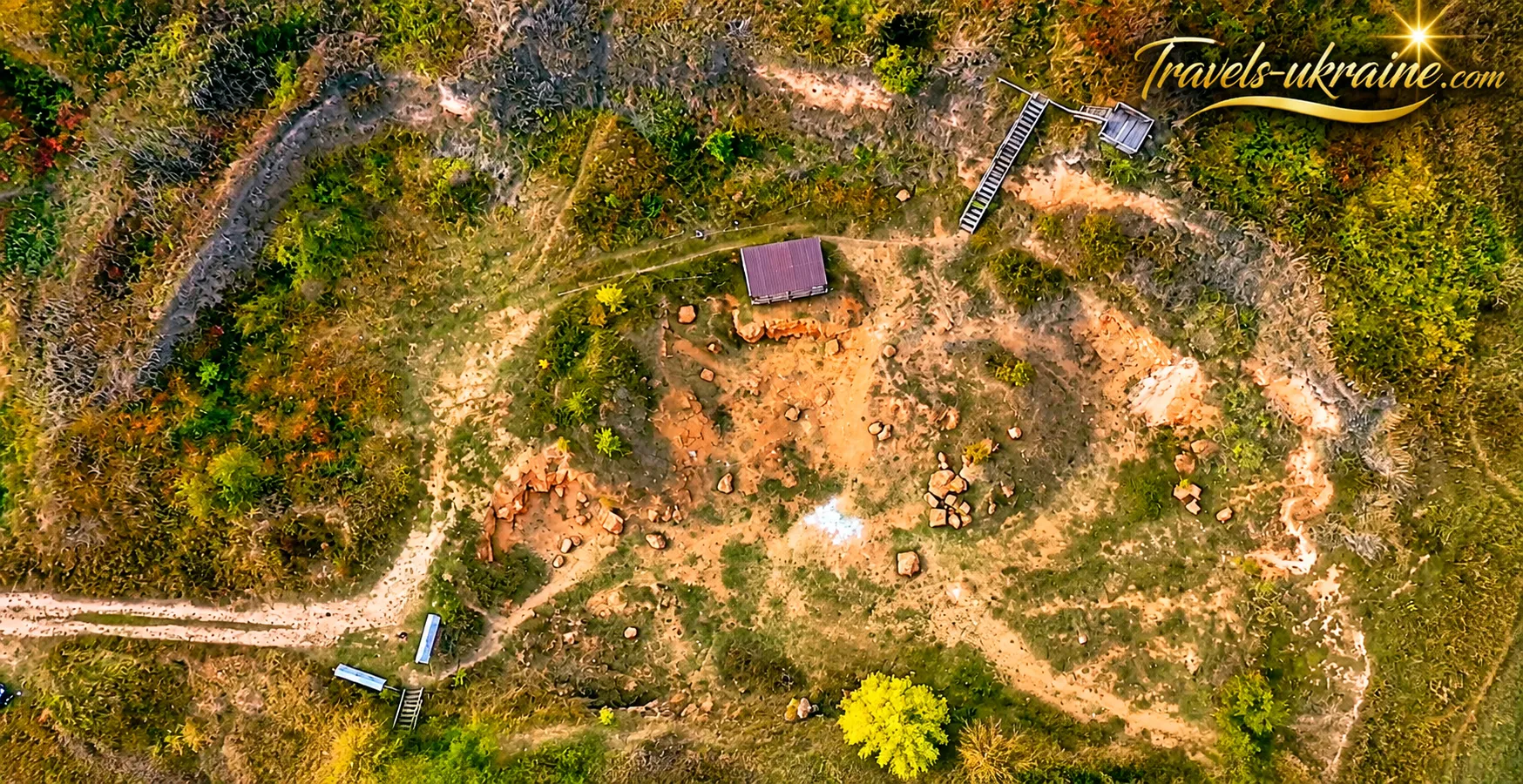
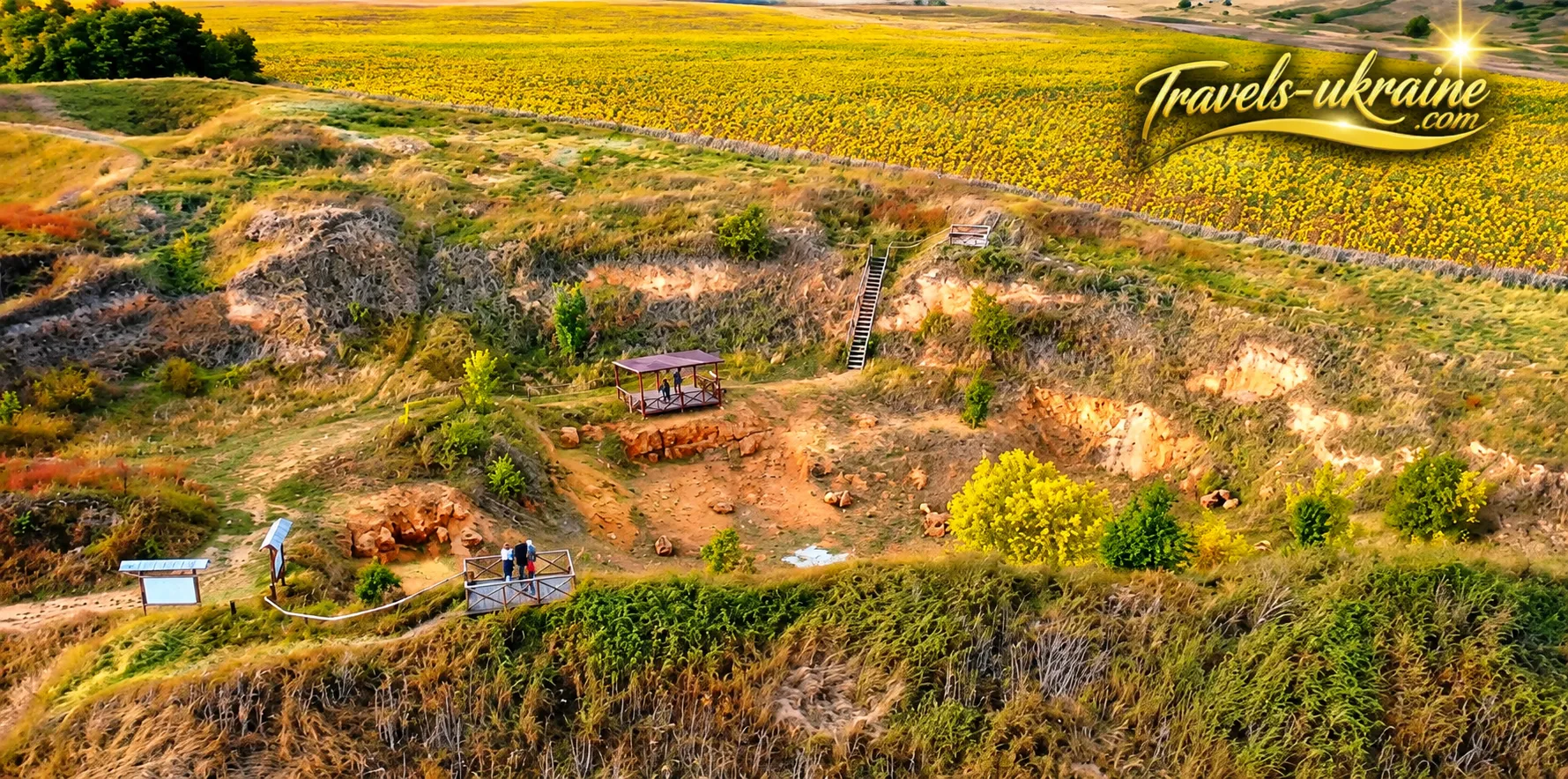
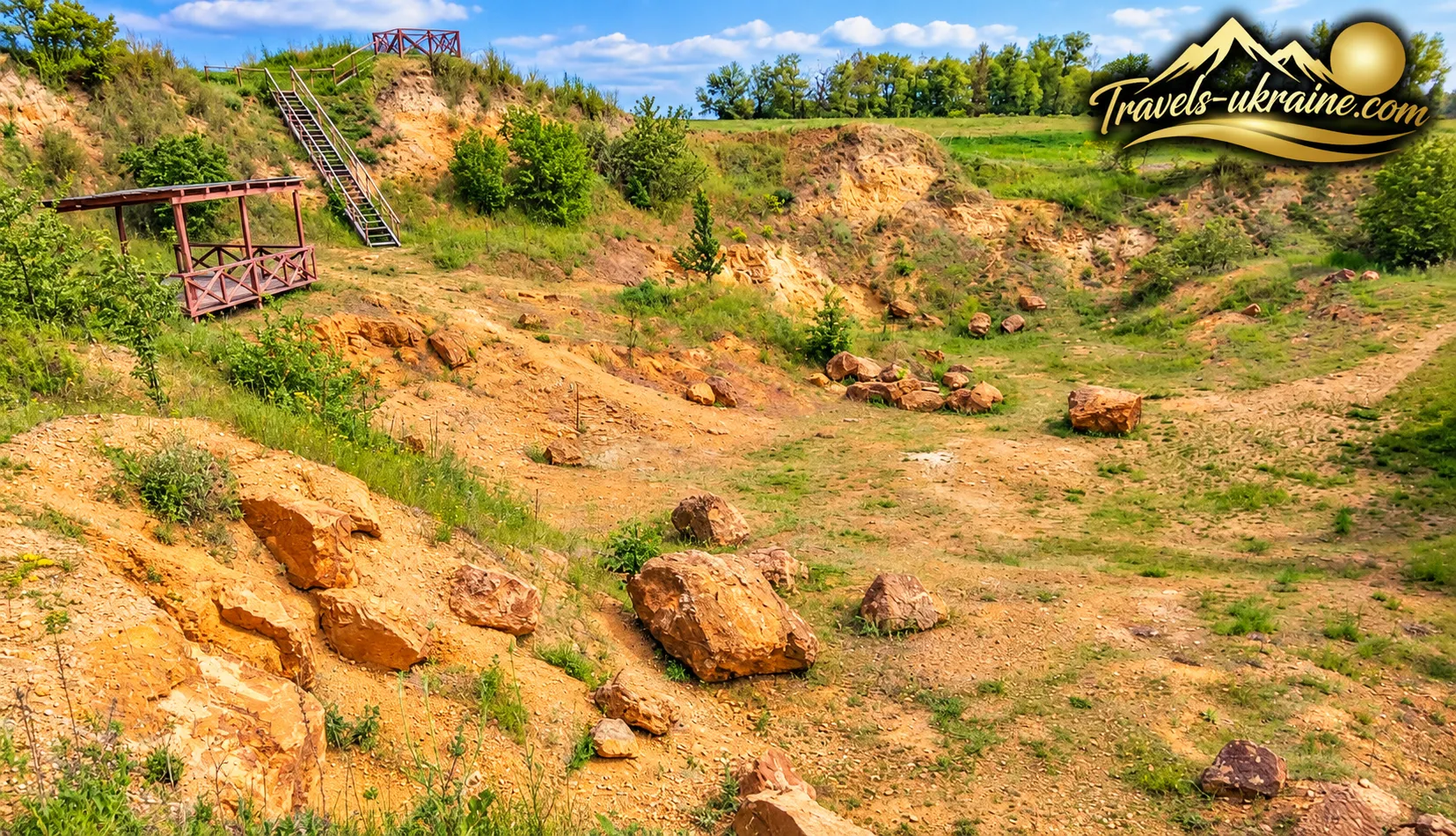
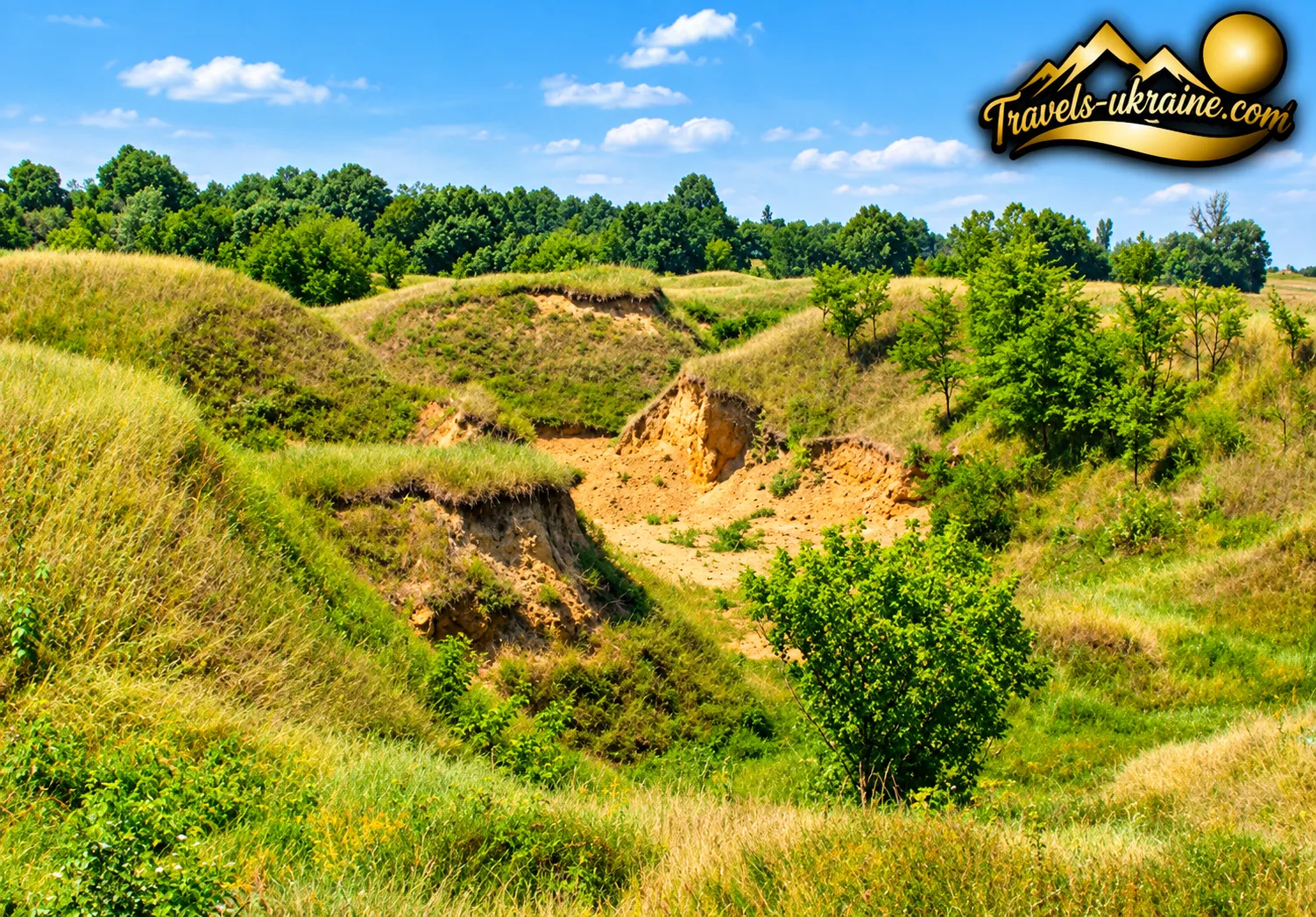
After hearing about the cosmic body, shock wave, and molten rocks, it is easy to imagine that a huge circular depression awaits visitors near Illintsi. But the classic shape of a meteorite crater is no longer visible today. Millions of years of erosion, weathering, and sediment accumulation have almost completely erased it from the modern landscape. So someone who comes here expecting a “Moon-like crater” may quite reasonably ask: “Where is it?” The answer is unusual — you are already standing inside the ancient impact structure. Today, however, it must be sought not in the form of a giant hollow, but in the rocks themselves.
Instead of a landscape scorched by a cosmic impact, what you see today is ordinary green Vinnytsia Oblast: fields, vegetation, roads, bodies of water, and settlements. The boundaries of the original crater are not obvious enough in the relief for a visitor to simply stand at a viewpoint and see the entire structure. This contrast is precisely what makes the place so interesting. You are looking at a peaceful modern landscape while knowing that beneath it lie the remains of a structure created by one of the most powerful natural processes — a hypervelocity collision between a cosmic body and the Earth.
Geological Outcrops — the Main Thing Visitors Can See
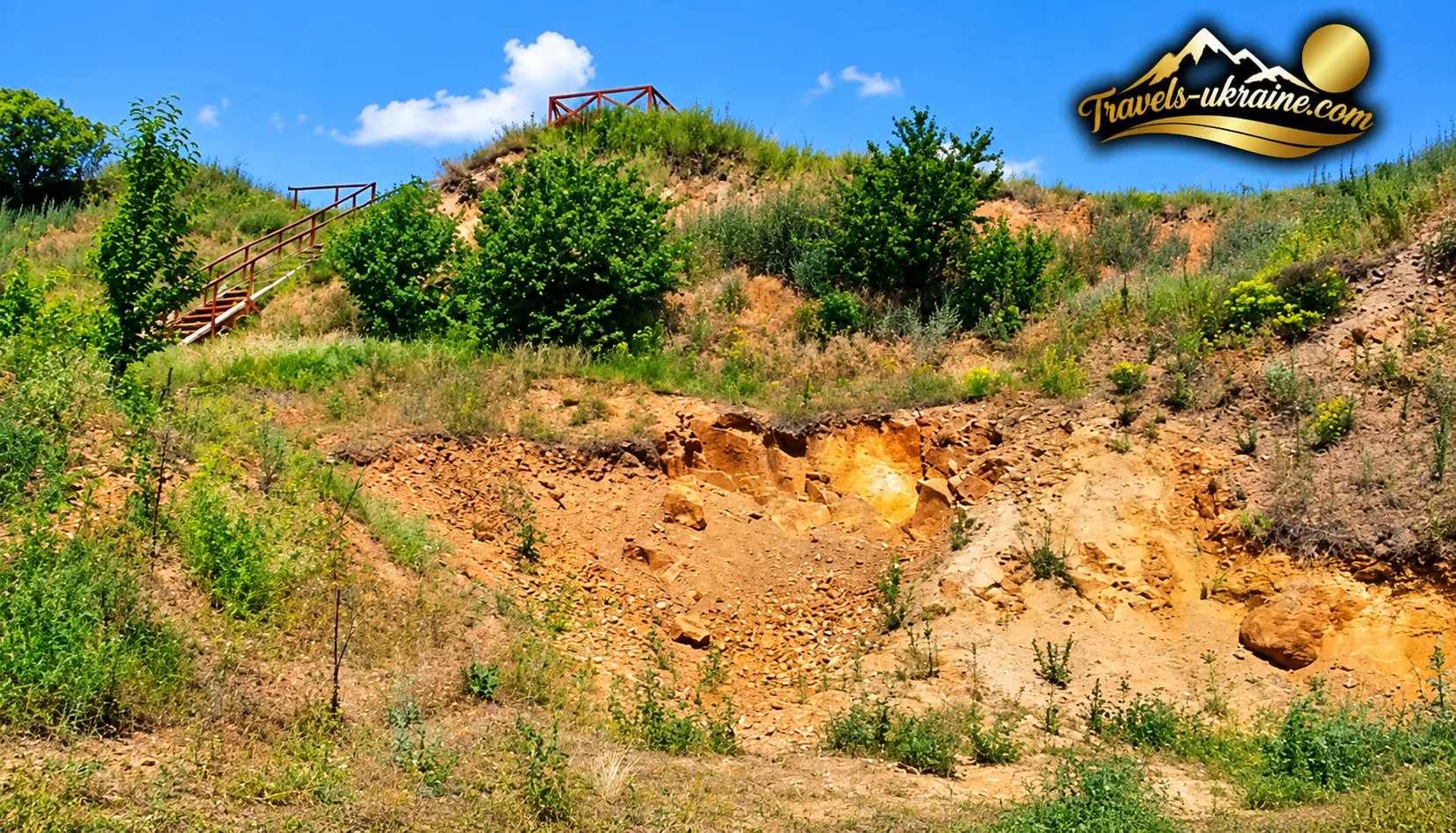
The most interesting features for visitors are the rock outcrops, where material from the Illinets impact structure reaches the surface. From the outside, they may look like rocky slopes, exposed stone, or unusual sections of bedrock, but this is where geological evidence of the ancient cosmic catastrophe has survived. In the area of the astrobleme, visitors can encounter shock-altered rocks, breccias, and impactites — material that was shattered, deformed, or partially melted during the meteorite impact.
Without geological training, it is not always easy to distinguish an impactite from an ordinary rock, so before visiting, it is useful to look at photographs of characteristic specimens or explore the site with someone familiar with the local geology.
Rochechouart-Chassenon in France — an Analogue of the Illinets Crater
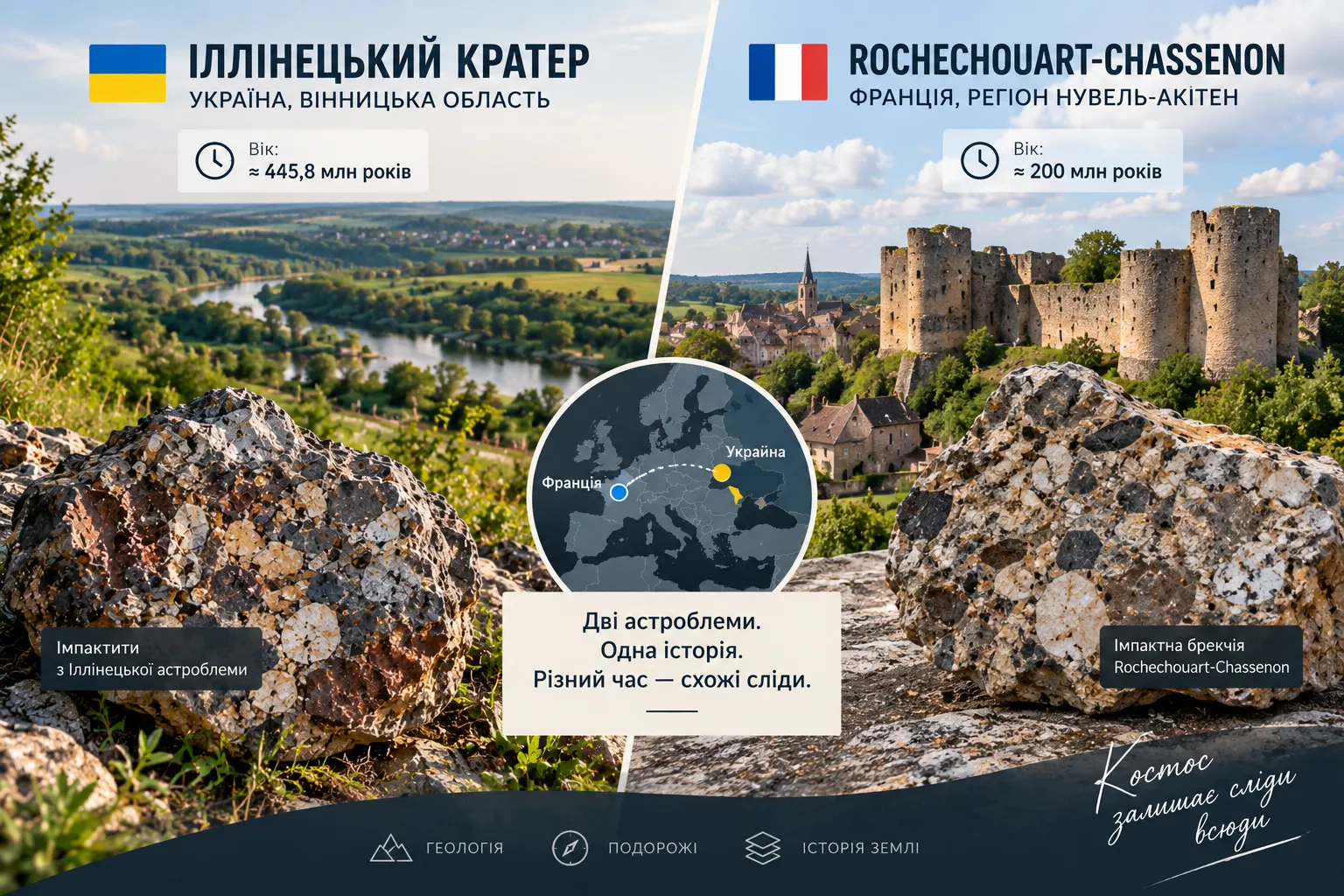
If, after learning about the Illinets Crater, you are still surprised that almost nothing remains of the classic circular depression of such a huge impact structure, it is worth traveling roughly two thousand kilometers west — to France. There lies the Rochechouart-Chassenon astrobleme, and its history provides a remarkably good explanation of what happens to meteorite craters over hundreds of millions of years.
About 200 million years ago, a large cosmic body struck the territory of present-day France. The impact shattered, deformed, and melted part of the terrestrial rocks and formed a large crater. But if you travel to Rochechouart today expecting to see a gigantic bowl-shaped depression, the result will feel familiar to anyone who has already visited the area near Illintsi: the obvious crater is practically absent from the modern landscape.
Over millions of years, erosion did its work. The original shape was destroyed, the slopes were smoothed out, and the landscape became completely unlike the site of a catastrophic cosmic collision. And here an almost mirror-like parallel with Vinnytsia Oblast appears: at Rochechouart, too, the crater has almost vanished, but the rocks have preserved the memory of the impact.
Two Craters That Must Be Read Through Their Rocks
Both at Illintsi and at the French Rochechouart-Chassenon site, the main witnesses of the ancient catastrophe today are not the shape of the relief, but impactites, impact breccias, melted rocks, and shock-altered rocks. In France, geologists likewise study rocks that endured extreme pressure and temperature during the collision. It is these rocks that made it possible to reconstruct the history of the event after the crater itself ceased to be obvious in the landscape.
The main difference is the timescale. Rochechouart-Chassenon is approximately 200 million years old, whereas modern dating of the Illinets astrobleme gives an age of about 445.8 ± 0.8 million years. In other words, the Ukrainian impact structure is more than twice as old. And if even the French crater has almost completely lost its original form after 200 million years, it becomes much easier to understand why, after nearly 446 million years, visitors near Illintsi do not see a huge circular basin in front of them.
In France, Impactites Were Even Used to Build Houses
Rochechouart has another detail that perfectly illustrates how inconspicuously a meteorite crater can become part of ordinary human life. For centuries, local residents used the unusual rocks as building material without knowing their true origin. Impact breccias can be found in historic buildings throughout the region, including the architecture of Rochechouart itself and nearby settlements.
The result is an almost unbelievable picture: people lived among the traces of an ancient cosmic impact, built walls and structures from them — and only much later did science explain where this unusual stone came from. This closely resembles the central intrigue of the Illinets Crater. The most valuable evidence can lie in plain sight for years and look like an ordinary rock until someone learns how to read its geological history correctly.
The French Example Shows What Geotourism Can Look Like
The greatest difference between the two astroblemes today is not even geological, but touristic. In France, the Rochechouart-Chassenon Astrobleme National Nature Reserve has been created around the impact structure. A specialized center dedicated to the meteorite impact operates there, themed guided tours are organized, and visitors are offered geological routes where they can see different types of impact rocks. In other words, the French do not try to show tourists a crater that is no longer there. Instead, they have made the story of the cosmic impact itself — and the rocks that preserve it — the main attraction. And this is where Rochechouart-Chassenon can serve as a particularly interesting example for Illintsi.
The Illinets astrobleme does not need an artificial “meteorite pit” or sensational legends either. It already has something far more valuable: genuine impactites, geological outcrops, and scientific research that make it possible to reconstruct the ancient catastrophe. A geological trail with marked outcrops, information panels, rock samples in a local museum, and a clear open-air 3D reconstruction of the moment of impact could transform the Illinets Crater into a much stronger destination for scientific and geological tourism.
Illintsi Is Older — Rochechouart Has Learned to Tell Its Story Better
There is little point in deciding which crater is “better.” Both are fascinating precisely because they show how dramatically geological time can alter the consequences of a cosmic collision. Rochechouart-Chassenon is younger, but it is presented to visitors far more effectively. The Illinets Crater is more than twice as old, yet today its story has to be discovered much more independently.
The main parallel between them is very simple: in both cases, the most interesting evidence is not a huge depression visible before your eyes, but the rocks beneath your feet. And if the French astrobleme proves that an almost “invisible” crater can become a fully developed tourist and scientific attraction, then the Illinets impact structure has no fewer reasons to do the same — and it has an even more ancient history.
What to See Near the Illinets Crater
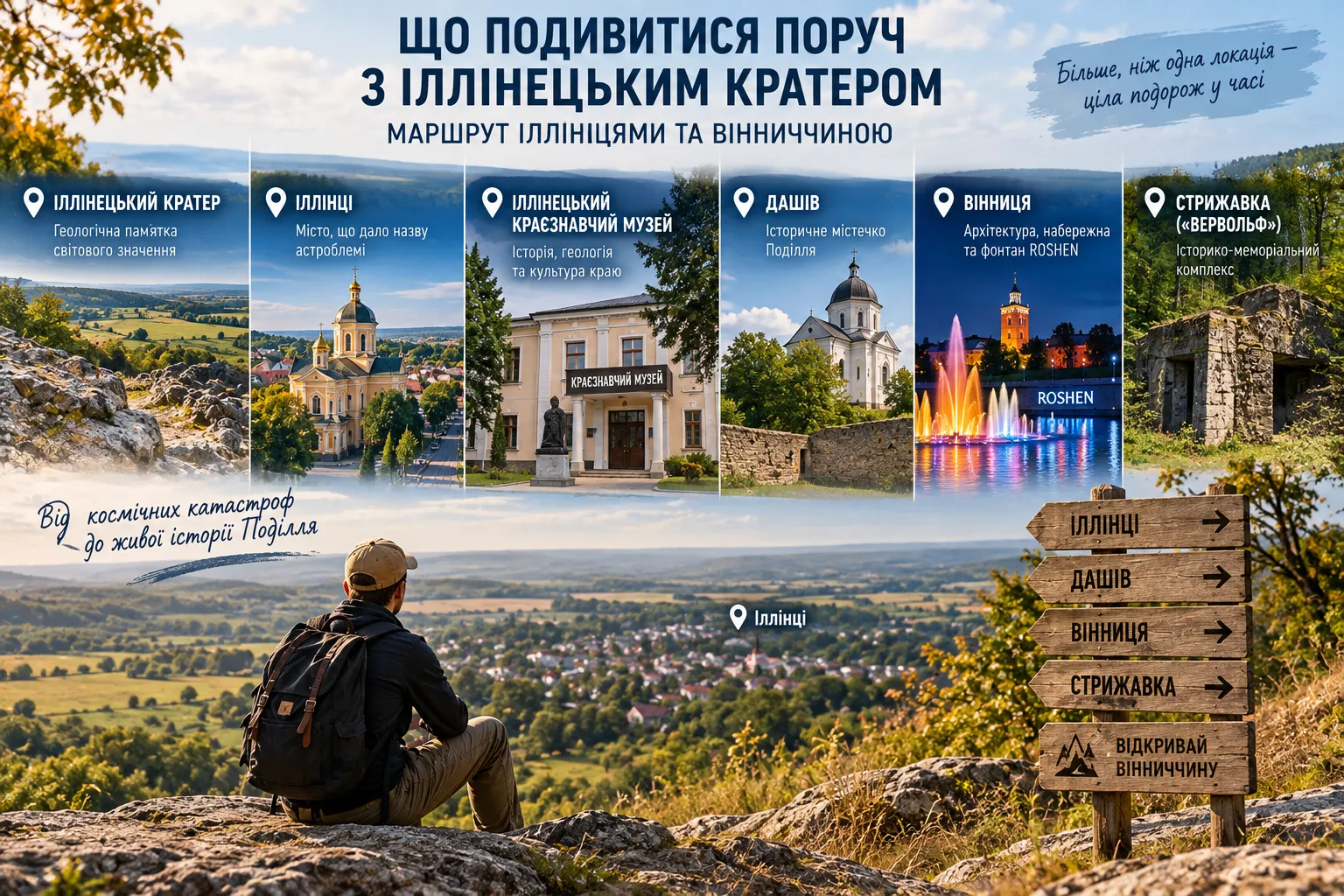
A trip to the Illinets Crater is best not treated as a tourist route to a single point on the map. The impact structure itself covers a considerable area, and after exploring the geological outcrops, you can continue your journey through Illintsi and other interesting places in Vinnytsia Oblast. This is especially convenient for a road trip: in the morning — an introduction to geological history almost half a billion years old; next — the history of a small Podillian town; and if you have enough time, the route can be extended to other attractions in the region.
The most logical continuation of the route is Illintsi itself. The town gave its name to the meteorite structure and can serve as a convenient base for exploring the surrounding area. After the geological part of the trip, it is worth simply walking around the town and looking at it from a somewhat unusual perspective. Today, it is an ordinary settlement in Vinnytsia Oblast, yet very close by lie rocks that preserve traces of an event that took place hundreds of millions of years before humanity even appeared.
The contrast is almost surreal: modern houses, roads, shops — and a geological structure whose age is measured in nearly half a billion years. A good addition to this picture is the Illintsi Museum of Local History, which is worth including in the route. For a location like this, a museum is especially useful, because without explanation, geological rocks do not always reveal their story to an ordinary visitor. Local-history materials help turn the abstract idea of “there was once a meteorite crater somewhere around here” into the story of a specific area, its geology, archaeology, and the development of the town itself.
Vinnytsia — If You Are Planning a Full-Day or Weekend Route
For a longer road trip, a natural continuation of the route can be Vinnytsia. Here, it is easy to put together a separate itinerary lasting several hours or even a full day. Among the city’s best-known tourist attractions are the historic center, the Vinnytsia Mury, the Artynov Tower, the Mykola Pirogov Estate Museum, and the Southern Bug riverfront.
During the warmer months, the route can be completed at the ROSHEN Fountain — the largest floating fountain in Ukraine and one of the largest complexes of its kind in Europe. After the ancient geology of the Illinets astrobleme, this example of modern water engineering creates an appealing contrast.
The “Werwolf” Headquarters near Stryzhavka — for History Enthusiasts
If you are interested not only in natural landmarks but also in the history of World War II, another possible addition to the trip is the “Werwolf” headquarters near Stryzhavka — Adolf Hitler’s former field command complex. Today, the site is home to the Historical and Memorial Complex dedicated to the victims of Nazism, while huge fragments of destroyed reinforced-concrete structures remain scattered throughout the forest. There is no preserved underground bunker open to tourists, but the area is still interesting for its documented history, the scale of the former complex, and the many legends surrounding its underground section.
The combination of these two places is unusual: near Illintsi, we read the history of the Earth through rocks hundreds of millions of years old, while near Stryzhavka, we read the history of the 20th century through fragments of concrete.
Illinets Crater: Answers to the Most Frequently Asked Questions
Where is the Illinets Crater located?
The Illinets impact structure is located in Vinnytsia Oblast, in the area around the town of Illintsi. It is not a single compact tourist site, but a large geological structure, so before your trip it is worth identifying the specific outcrops and locations you plan to visit.
How old is the Illinets Crater?
Modern high-precision U–Pb dating of zircons from impact rocks places the age of the impact event at approximately 445.8 ± 0.8 million years. This means the crater formed near the end of the Ordovician Period — long before the appearance of the dinosaurs.
Can the Illinets Crater still be seen today?
Yes, but not as a huge circular depression. Over nearly 446 million years, erosion and other geological processes have almost completely erased the crater’s original shape. Today, the main points of interest are the geological outcrops and rocks that preserve traces of the ancient impact.
Can you find a meteorite fragment in the Illinets Crater?
You should not expect to find large, recognizable fragments of the cosmic body lying in the center of the structure. During the hypervelocity impact, the impactor underwent catastrophic destruction, and its material may have melted, vaporized, and mixed with terrestrial rocks. Today, the main evidence of the event is the geological consequences of the impact, rather than a large preserved meteorite.
Can you visit the Illinets Crater independently?
Yes, but it is advisable to prepare before your visit. The boundaries of the crater do not appear as an obvious circular depression, and the most interesting features are specific geological outcrops. It is therefore useful to identify viewing points in advance or seek the help of a local historian or specialist familiar with the geology of the astrobleme.
How much time is needed to visit the Illinets Crater?
To explore several of the main geological sites, it is worth allowing approximately 1–2 hours. If you are traveling with a guide, are particularly interested in geology, or plan to visit several outcrops, you may need more time.
Illinets Crater — the Place Where Space Left Its Mark on Earth
If you expect an ancient meteorite impact site to look like a huge circular depression with a viewing platform on the rim, this place may surprise you at first. Nearly 446 million years have done their work: the original landscape has long since changed, and modern Vinnytsia Oblast has hidden the traces of the cosmic catastrophe beneath fields, vegetation, roads, and everyday life. And yet, it is still worth visiting — you simply need to come not for a spectacular panorama, but for a completely different kind of experience.
The main value of the Illinets astrobleme lies in the sense of geological time it gives you. Human history suddenly feels very short here. When a cosmic body struck the territory of present-day Vinnytsia Oblast, there was no Ukraine, no humans, no mammals in the diversity familiar to us today, and no dinosaurs. Hundreds of millions of years still remained before their appearance. Yet some of the rocks that survived that impact have endured to the present day.
That is why the Illinets Crater is more interesting not simply to “look at,” but to read as a geological archive. Outcrops, breccias, and impactites tell the story of an event whose witnesses disappeared long ago. The rocks preserved traces of extraordinary pressure and temperature, while modern research methods have even made it possible to determine when the catastrophe occurred. There is something remarkable about this: the crater has almost disappeared, the impactor itself is not lying in the middle of it like a giant cosmic boulder, and yet the event left behind enough evidence for scientists to reconstruct its history nearly half a billion years later.




No Comment
You can post first response comment.