
 English
 Українська
 Български
 Hrvatski
 Čeština
 Dansk
Dansk Nederlands
 Eesti
Eesti Suomi
Suomi Français
 Deutsch
 Ελληνικα
 Magyar
 Íslenska
 Italiano
 Latviešu
 Lietuvos
 Polski
 Português
 Română
 Русский
 Српски
 Slovenčina
 Slovenščina
 Español
 Svenska
 Türkçe
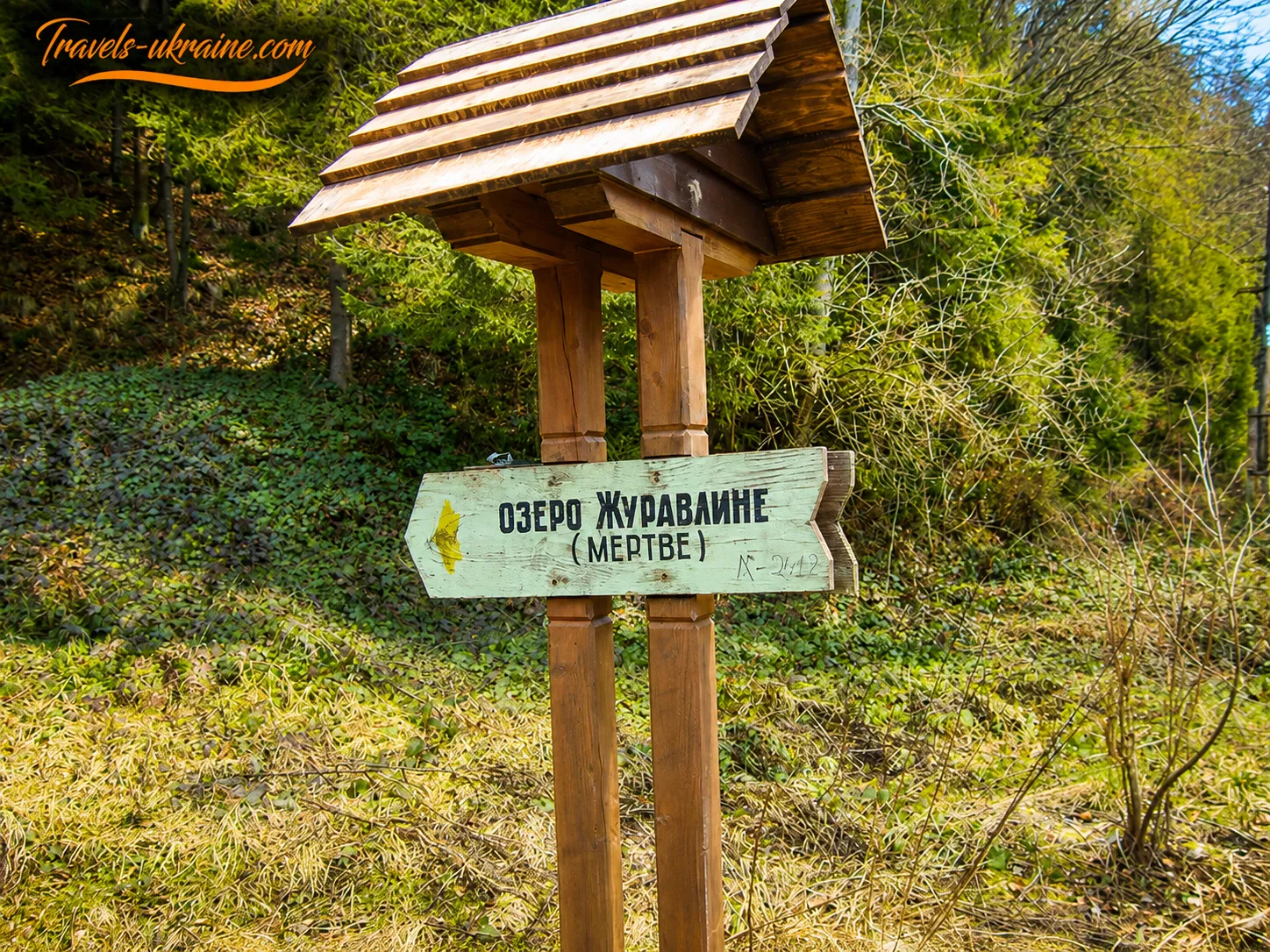
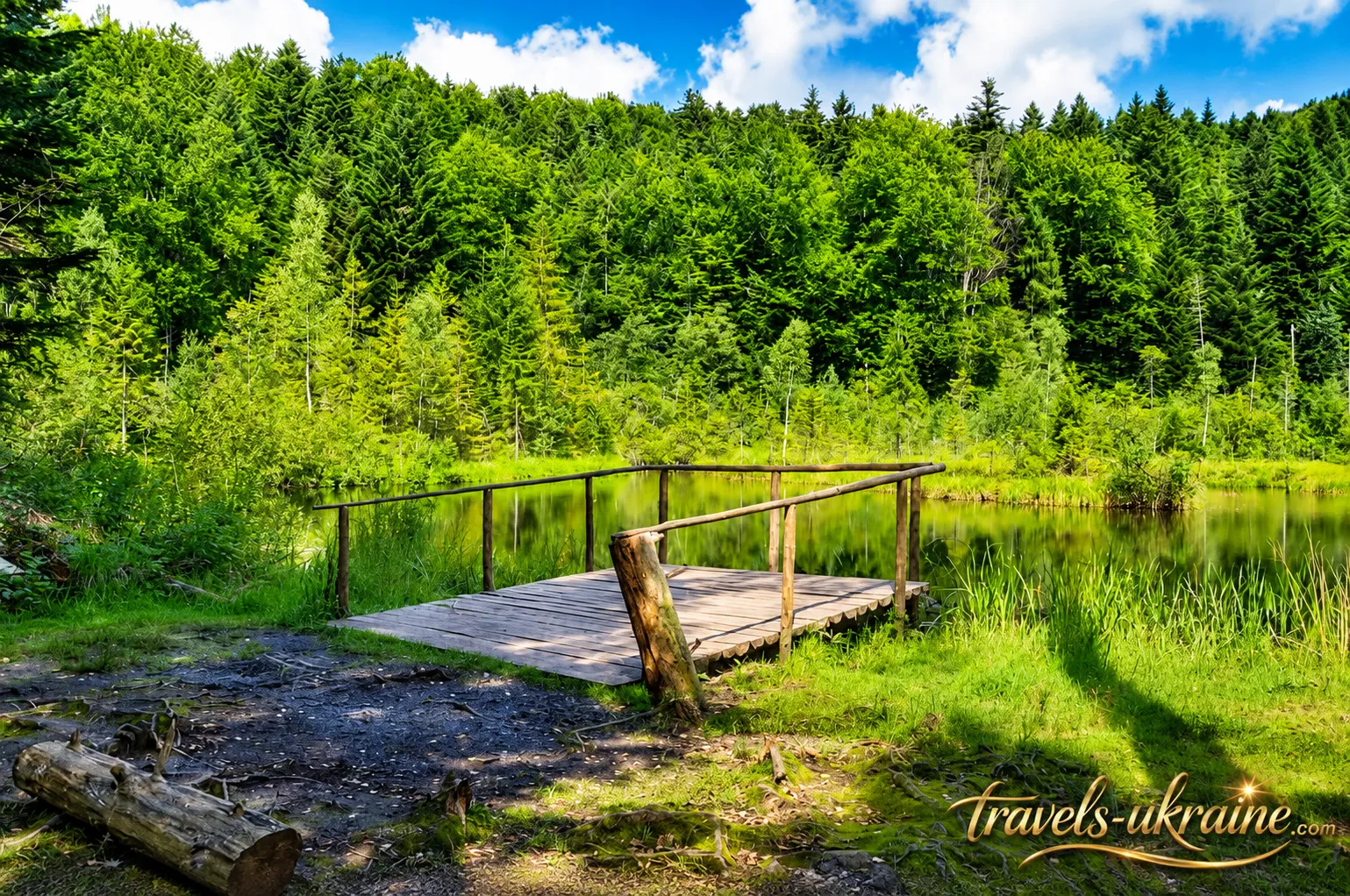
Lake Zhuravlyne, or Dead Lake, is a small Carpathian body of water hidden among the dense forests of Skole Beskids National Nature Park. It is located near the village of Kamianka in Stryi District, Lviv Region, and is one of the most fascinating natural sites near the town of Skole. Visitors come here not for a beach holiday or swimming, but for the silence, unusual landscapes, and feeling of a true Carpathian mystery.
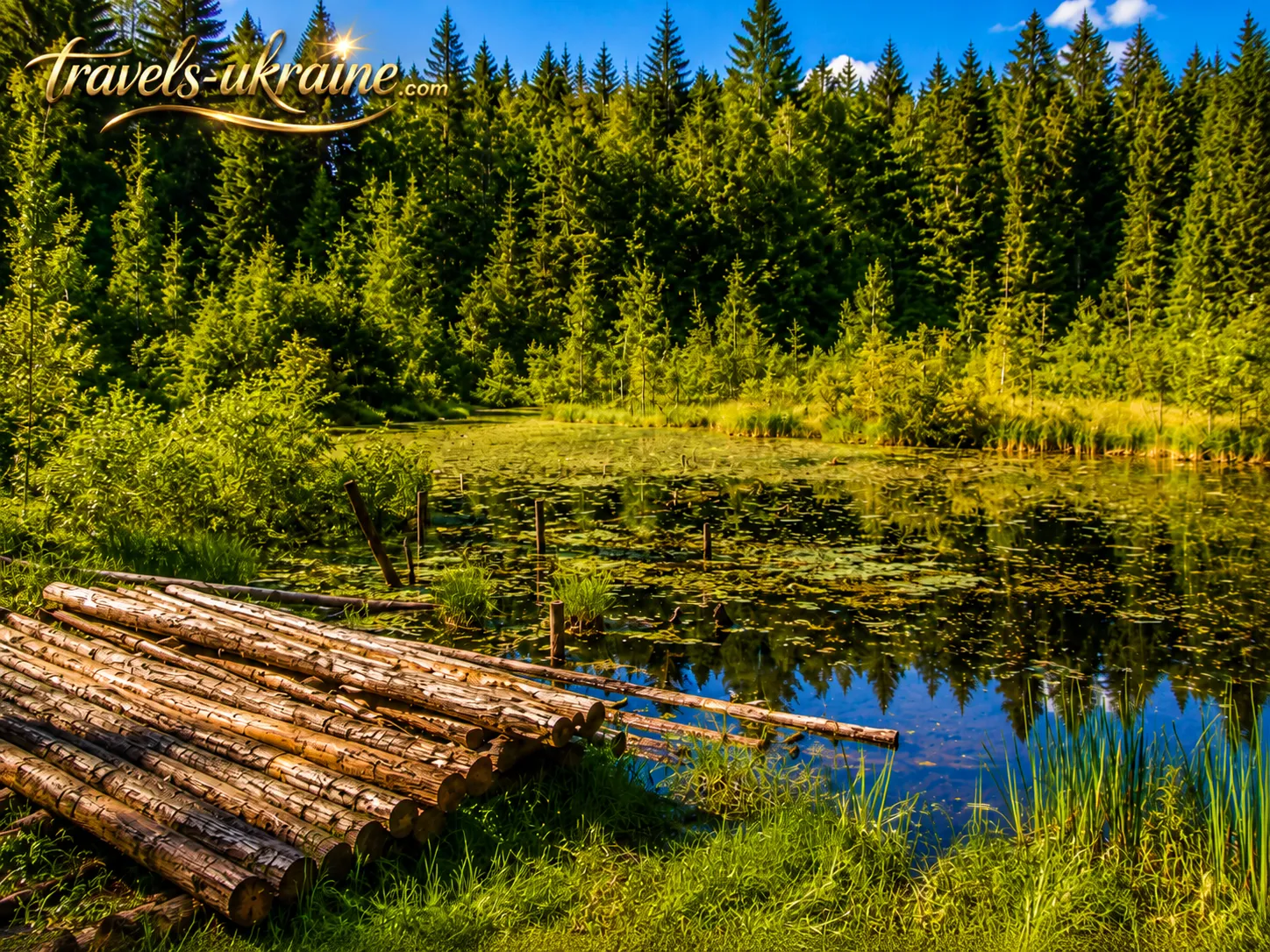
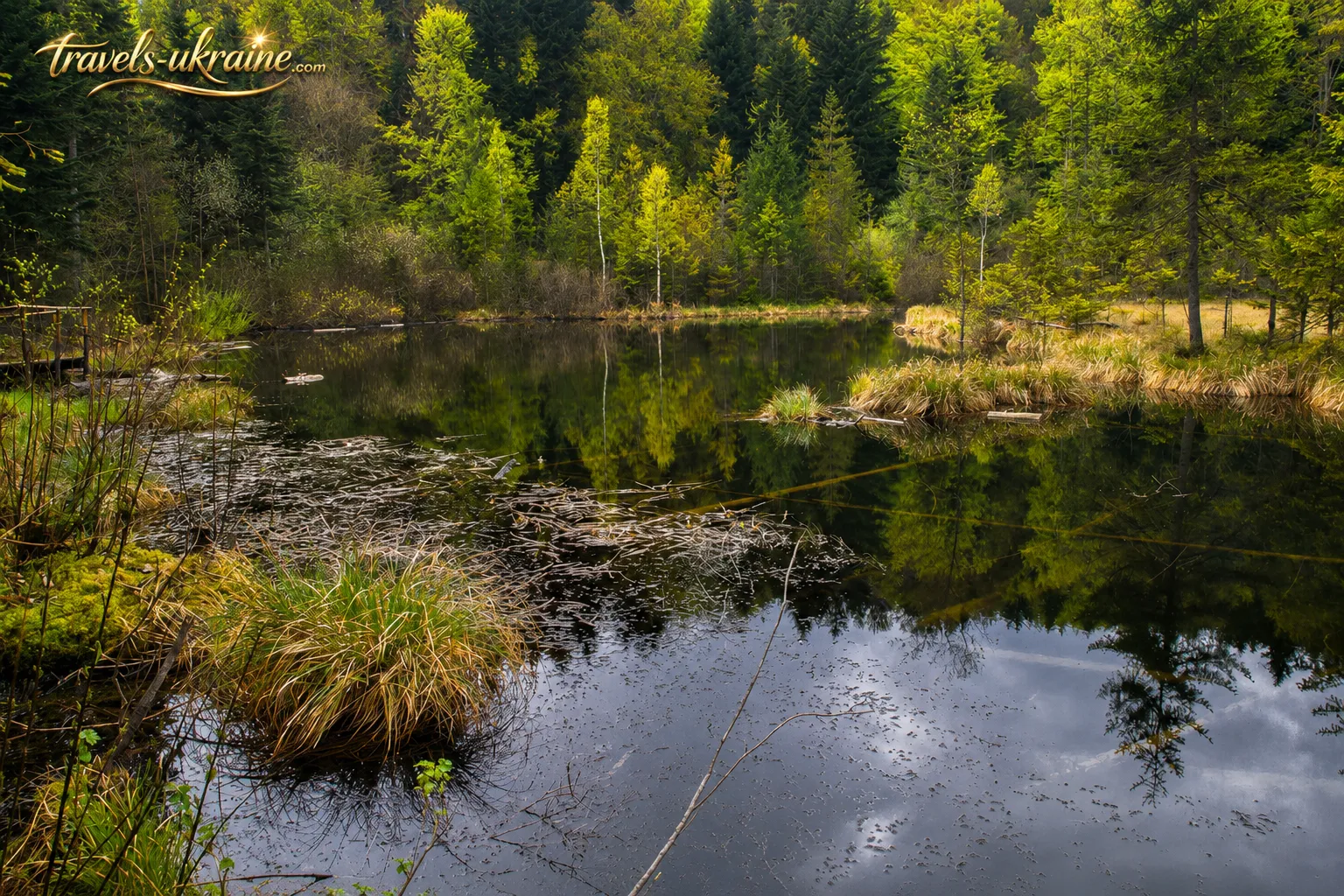
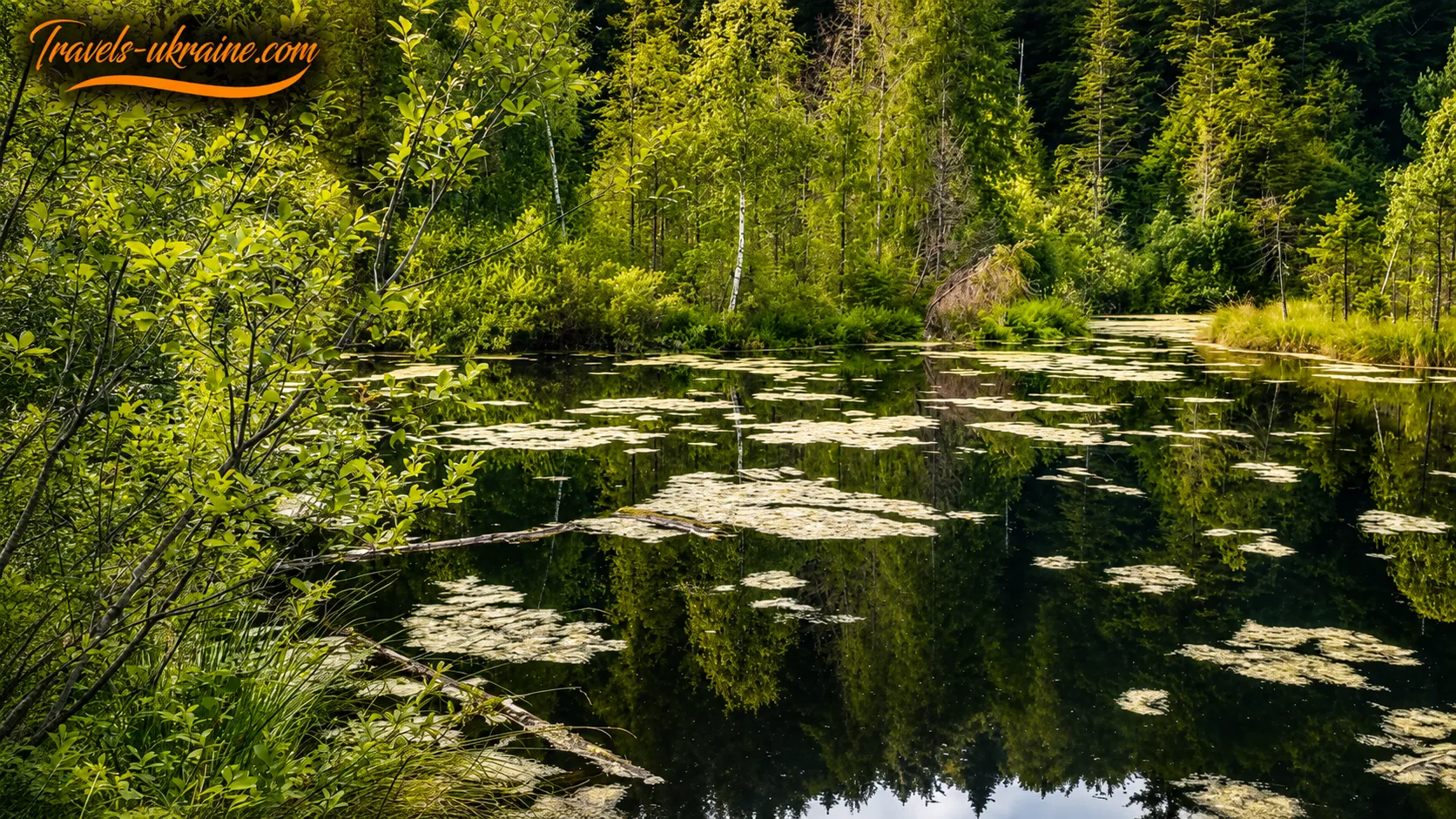
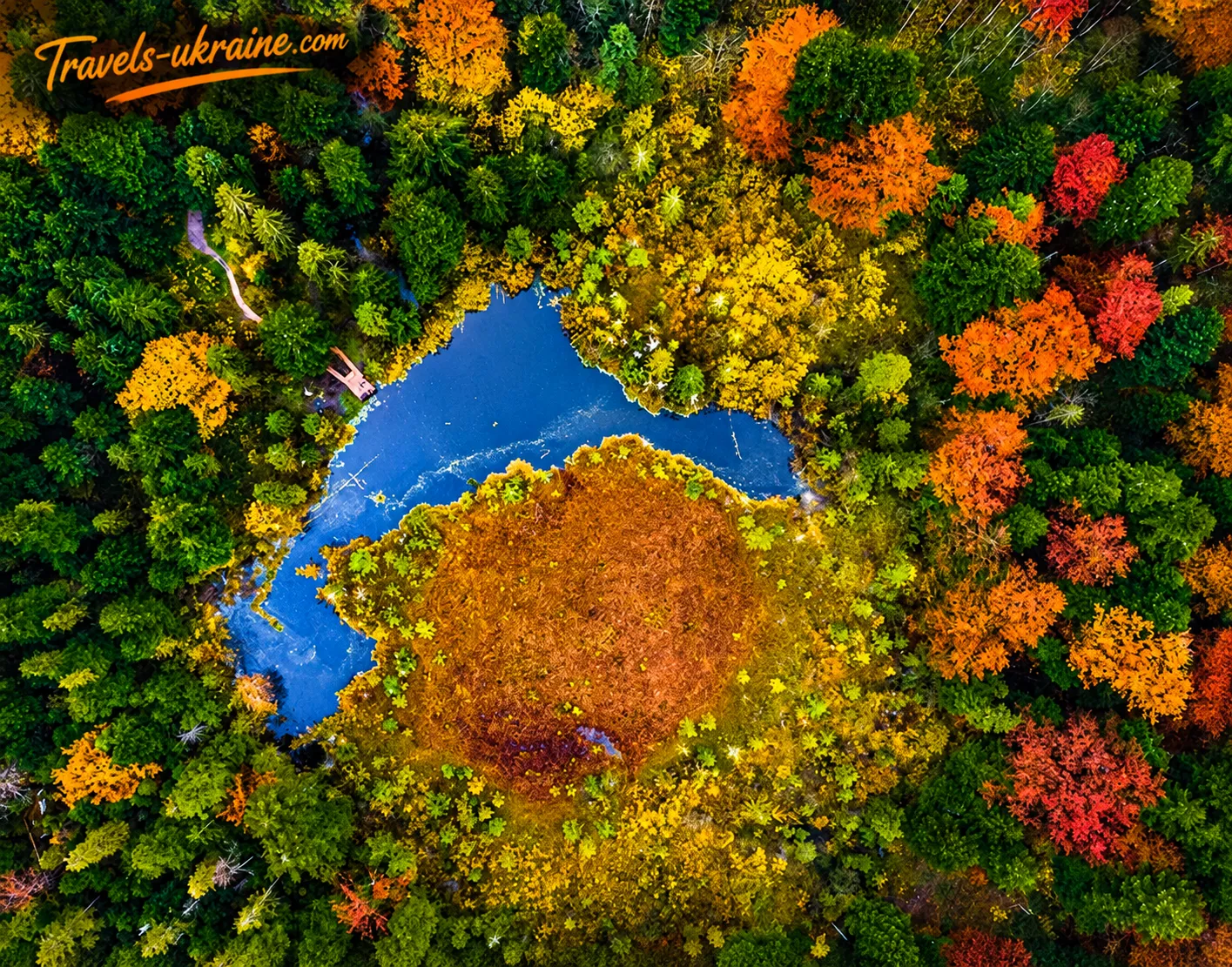
A first encounter with the lake often comes as a surprise. Instead of clear water, travelers see a dark, almost motionless surface surrounded by moss, marsh vegetation, and old trees. In overcast weather, Dead Lake appears almost black, while in sunny conditions the water takes on amber and brown hues. This color is explained by natural processes in the peat bog, not by pollution.
The two names of this natural site reflect its main features. The name Lake Zhuravlyne is associated with bog cranberry, which grows in the moist sphagnum areas around the water. The name Dead Lake arose from the dark color of the water, marshy shores, and unusually quiet atmosphere. No mysticism is needed to explain it, although the local landscape readily encourages the most mysterious theories.
The body of water is not impressive in size, but it has special natural value. This is a peat lake in the forest that is gradually changing under the influence of vegetation, moisture, and the accumulation of organic remains. These processes have created a distinctive wetland complex of mosses and other plants adapted to an excessively wet environment.
For tourists, Lake Zhuravlyne near Skole is most often an extension of a walk to the Kamianka Waterfall. A forest trail leads from the popular natural landmark to the lake, making it convenient to combine both sites into a single trip into nature. The route does not require a lengthy mountain crossing, but some sections may be wet and slippery after rain.
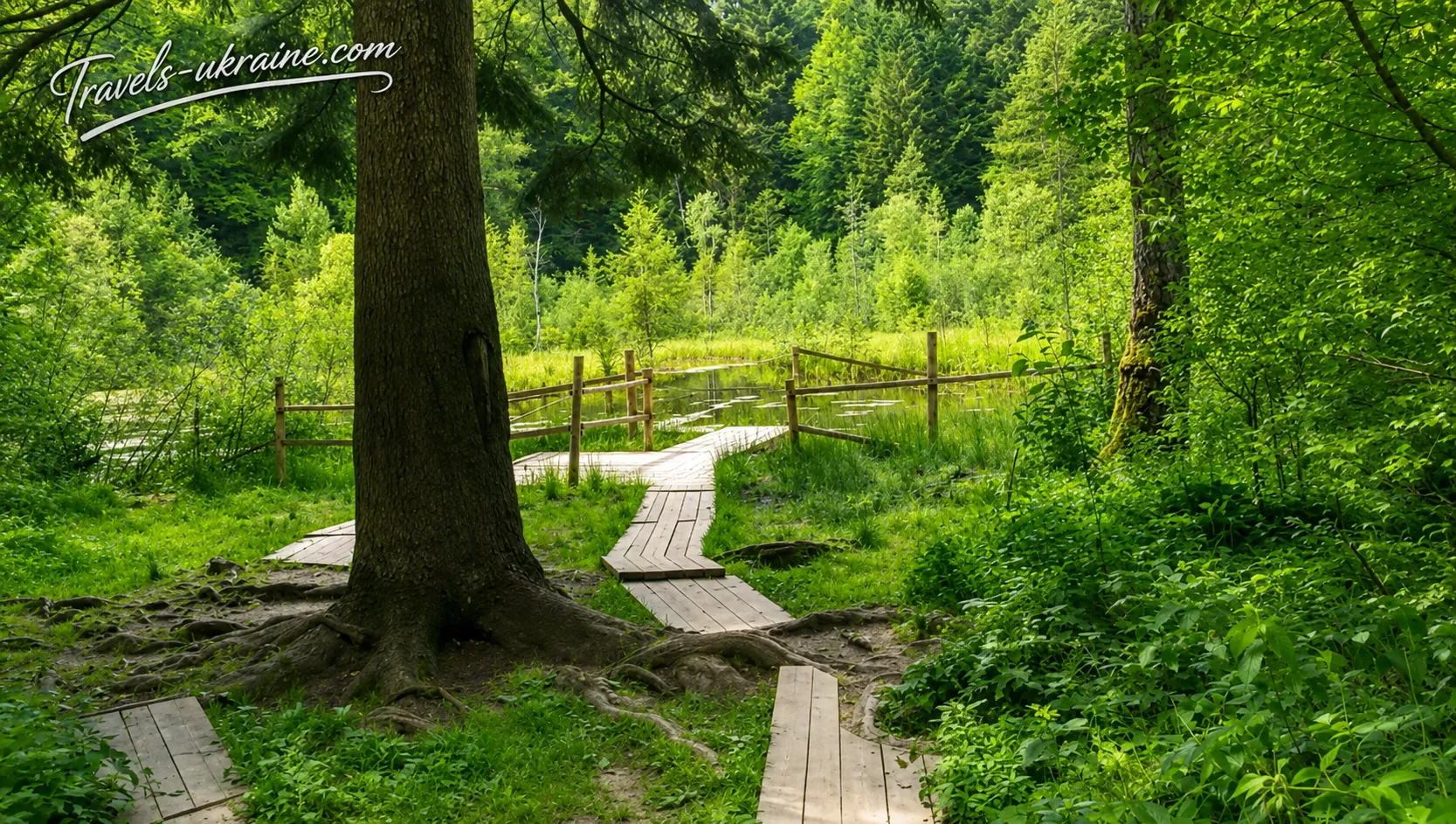
A walk to the lake reveals another side of the Carpathians—not open mountain meadows and high peaks, but shaded forest, peaty soil, tangled tree roots, and a small body of water existing almost unnoticed among the greenery. Here, it becomes especially clear how diverse the natural lakes of the Carpathians can be.
Why Lake Zhuravlyne (Dead Lake) Belongs on Your Travel Itinerary
Lake Zhuravlyne will appeal to travelers seeking peaceful ecological recreation rather than noisy entertainment. The lake attracts visitors with its secluded atmosphere, unusual water color, and opportunity to see the unique ecosystem of the Skole Beskids. Even a short stop by the lake helps demonstrate that a place’s natural value does not always depend on its size or tourist popularity.
This natural site is an excellent addition to a trip to Kamianka Waterfall, a walk around Skole, or a day trip in Lviv Region. At the same time, the lake requires careful treatment: its marshy shores and vegetation can easily be damaged by an incautious step. For this reason, observe the body of water from the tourist trail without attempting to approach the water itself.
- Type of site: a natural peat lake and forest bog in the Skole Beskids.
- Location: near the village of Kamianka, the town of Skole, and Kamianka Waterfall.
- Trip format: a short walk, ecotourism, or a weekend trip.
- Main impressions: dark water, the silence of the Carpathian forest, and unusual wetland vegetation.
How Dead Lake Came to Be in the Skole Beskids
The history of Lake Zhuravlyne began long before the appearance of tourist routes, information boards, and the name by which the lake is known today. It is neither a man-made pond nor a former quarry filled with water, but a natural part of the mountain landscape. It formed in a depression where excessive moisture and poor water drainage gradually created conditions for wetland vegetation to develop.
Sphagnum mosses played an important role in this process. They can retain considerable amounts of moisture and create an acidic environment in which dead plant matter decomposes very slowly. Year after year, organic material accumulated, compacted, and turned into peat. In this way, an ombrotrophic sphagnum peat bog formed around the lake—a natural system that receives nutrients mainly from precipitation and is characterized by sparse but well-adapted vegetation.
Throughout its natural history, Lake Zhuravlyne in the Carpathians has been constantly changing. The open water surface gradually became overgrown with mosses, sedges, and other moisture-loving plants, while the shores grew increasingly marshy. This process continues today, which is why the lake has an irregular oval shape and looks much smaller than the familiar mountain lakes of Lviv Region. In fact, visitors see not only a lake in the forest, but also one of the natural stages in the transformation of a body of water into a peat bog.
This gradual change explains the site’s distinctive appearance. Dark water, soft moss cover, and an almost imperceptible boundary between dry land and bog create the impression that the Carpathian body of water has become frozen in time. In reality, natural processes are continuously taking place here: peat is accumulating, vegetation is changing, water is being retained, and a specific habitat for wetland species is forming.
How Lake Zhuravlyne Near the Village of Kamianka Became a Tourist Site
For a long time, the small mountain lake remained a local natural feature known mainly to residents of nearby settlements, foresters, and Carpathian researchers. The situation changed as tourist routes developed in the Kamianka River valley. Its proximity to Kamianka Waterfall made the lake a convenient additional stop on a short trip.
On February 11, 1999, Skole Beskids National Nature Park was established. Since then, Lake Zhuravlyne in Stryi District has been located within a large protected area whose mission is to preserve forest, mountain, and wetland complexes. The lake gained status as a valuable protected natural site, and the route to it became part of the park’s organized tourist network.
The official tourist trail through the Kamianka River valley leads from the waterfall area to the lake for approximately half a kilometer along a forested slope. As a result, the Kamianka Waterfall–Lake Zhuravlyne route has become one of the most popular options for a short trip in the Skole Beskids. At the same time, growing tourist interest has made compliance with conservation rules especially important, as sphagnum cover recovers slowly and is easily damaged.
Natural Features of Lake Zhuravlyne
Lake Zhuravlyne in Lviv Region is not an ordinary body of water with a rocky bottom and clear water. Its value lies in the combination of a small lake, a sphagnum peat bog, and a damp Carpathian forest. This complex formed gradually and is now a habitat for plants capable of surviving in waterlogged, acidic, nutrient-poor soils.
The natural site lies at an elevation of approximately 620 meters above sea level. The lake has an irregular oval shape and is about 50 meters long. Because of its marshy shores, the exact boundary between open water and dry land cannot always be determined visually: the moss cover gradually gives way to damp soil that only appears solid.
Despite its name, the small body of water is not devoid of life. On the contrary, the lake and surrounding bog form a complex ecosystem. Its inhabitants are simply less visible. Mosses, wetland grasses, small invertebrates, and microorganisms play the main roles here, contributing to the slow decomposition of organic remains and the formation of peat.
The Sphagnum Peat Bog Around Lake Zhuravlyne
One of the site’s most important natural features is its deep sphagnum peat bog. Sphagnum can retain large amounts of water, so the surface around the lake resembles a soft green sponge. The lower parts of the moss gradually die, but because of the lack of oxygen and high moisture, they decompose very slowly. Peat layers form over an extended period in this way.
At first glance, the sphagnum carpet may look completely secure, but water, liquid peat, and unstable areas sometimes lie beneath it. That is why walking onto the marshy shore is dangerous. One careless step may not only end in a fall into the quagmire, but also damage vegetation that recovers much more slowly than ordinary forest grass.
The Zhuravlyne Bog belongs to a group of wetland communities that are rare in the Carpathians. According to Skole Beskids National Nature Park, its flora includes 31 species of vascular plants. Conditions in the central part of the bog are much harsher, so only 11 species have been recorded there. This small number does not indicate natural impoverishment; rather, it shows how specialized plants must be to survive in this environment.
Bog Cranberry, Sundew, and Other Wetland Plants
One of the most characteristic plants is bog cranberry, from which the lake takes its name. Its shoots trail across the sphagnum moss, and its red berries ripen in late summer and autumn. They should not be picked in a protected area: the plant is part of a vulnerable wetland ecosystem, and trampling causes the peat bog far more damage than may seem apparent.
Round-leaved sundew, a carnivorous plant, is particularly fascinating. Its leaves are covered with sticky droplets that trap small insects. This feeding method helps it obtain nutrients that are scarce in the poor bog soil. It is not easy to spot: the plant is small, so look for it only from the trail and never leave the path.
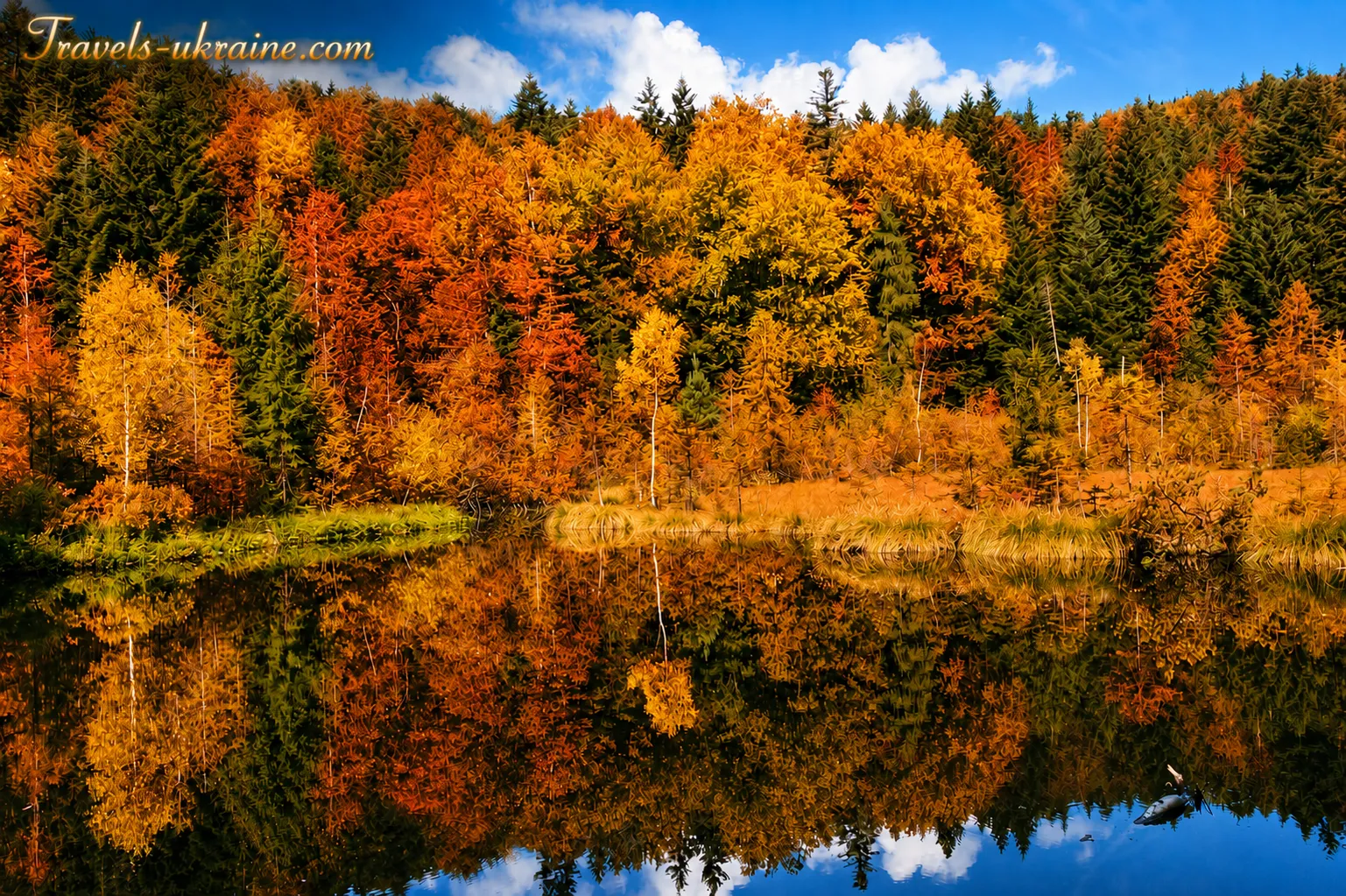
Other plants growing in the wetland include bog sedge, common cottongrass, common reed, and other species adapted to excess moisture. In spring and summer, the vegetation around the lake displays rich shades of green; in autumn, yellow, red, and brown hues appear, while in winter the bog’s surface may be covered with snow and thin ice.
Why Lake Zhuravlyne Is Called a Unique Body of Water in the Skole Beskids
The forest lake is important not only as a tourist site. Sphagnum bogs store water, support local water regulation, and preserve organic matter in the form of peat. They are also natural archives whose layers may preserve pollen, seeds, and other traces of vegetation from past periods.
Lake Zhuravlyne is gradually becoming overgrown—this is a natural stage in the development of a peat lake, not a sign of neglect. Mosses and wetland plants slowly occupy the open surface, accumulate organic material, and alter the lake’s contours. That is why old photographs and the site’s present-day appearance may differ.
The greatest threat to this ecosystem is not natural overgrowth but recreational pressure. Tourists frequently leaving the trail, trampling moss, picking plants, and leaving litter disrupt the fragile wetland cover. You can see the picturesque lake in the forest without harming nature—simply remain on the designated route and do not attempt to reach the water directly.
Photo and Video Gallery
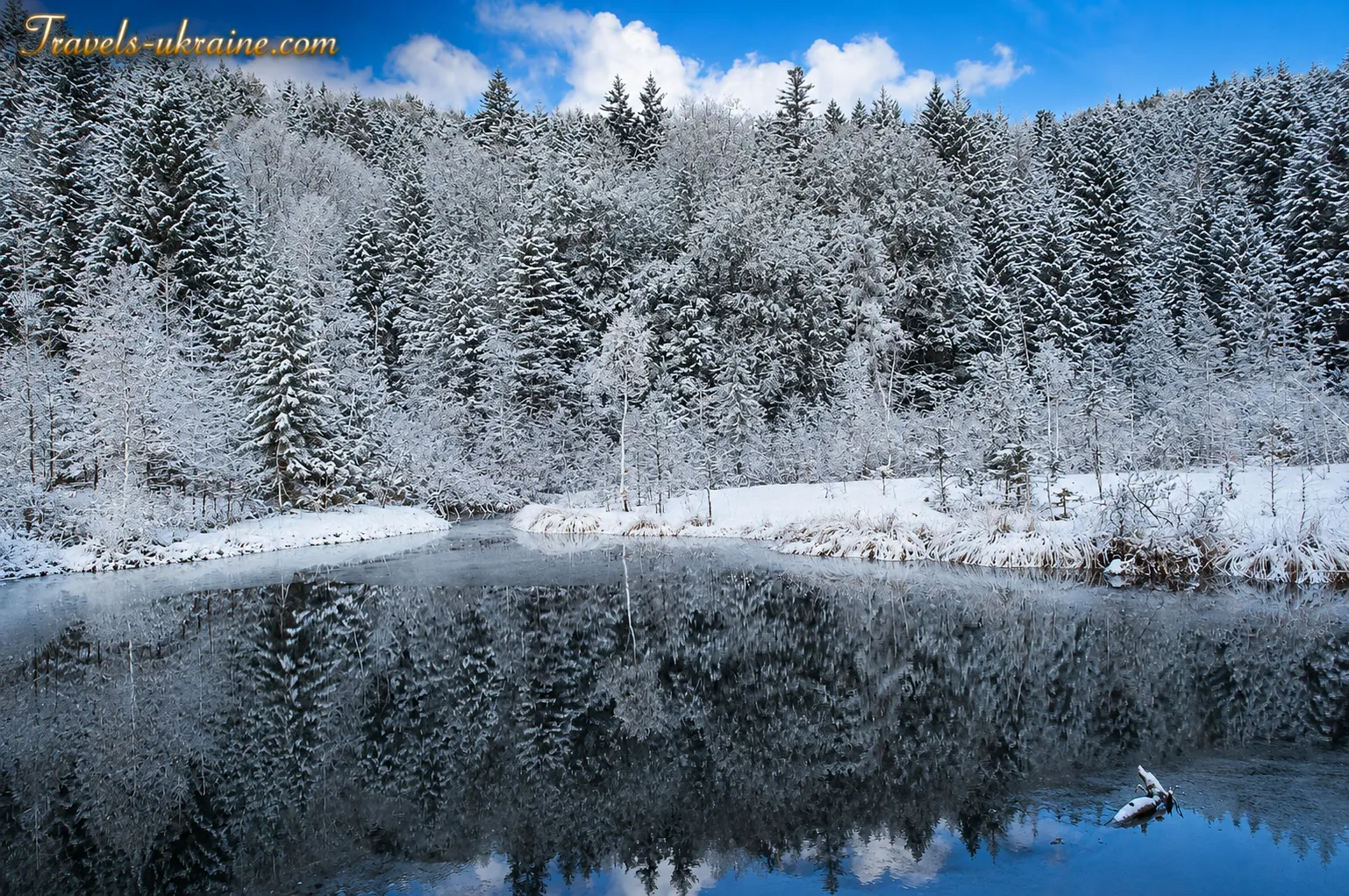
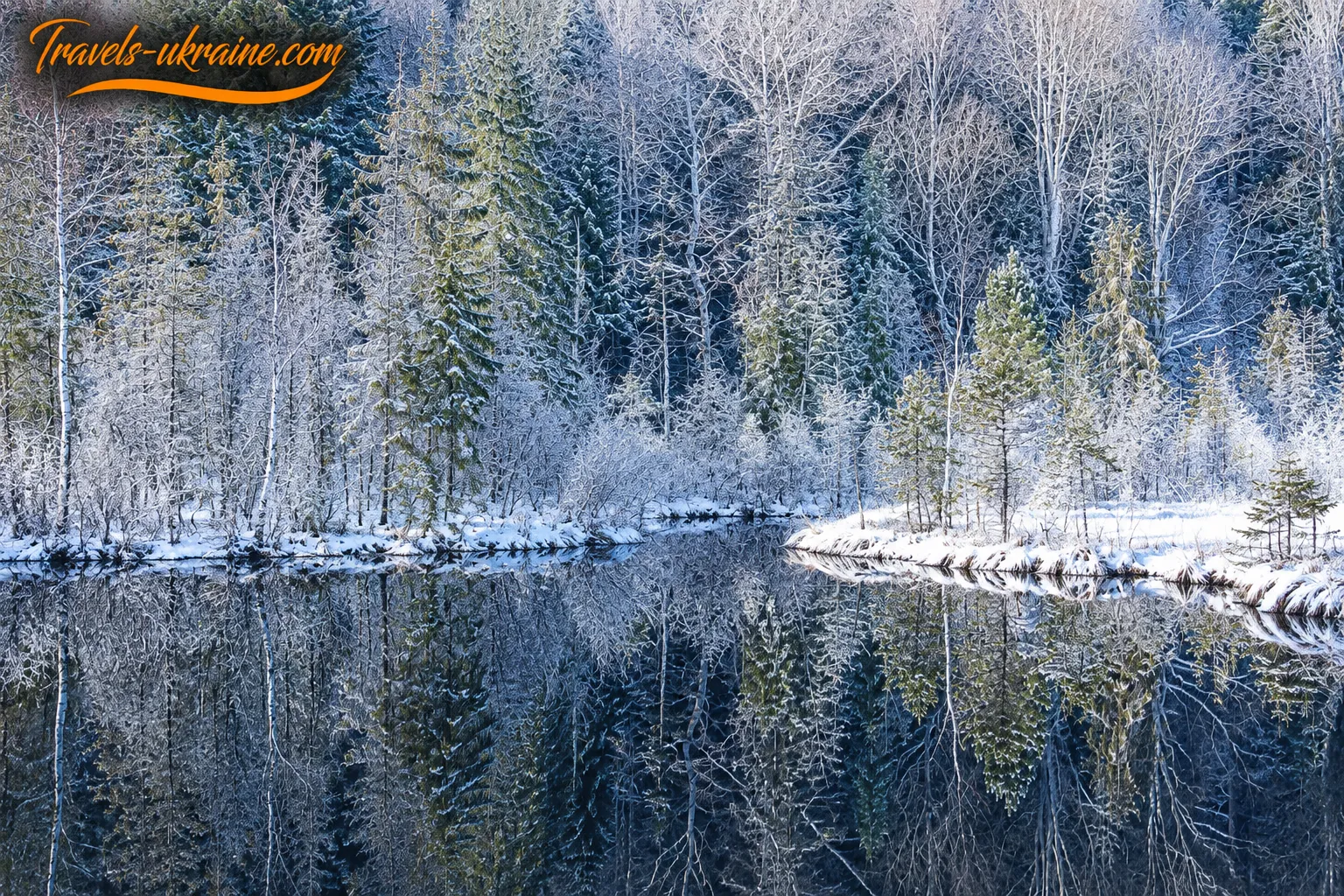
Lake Zhuravlyne in the Skole Beskids: A Brief Guide for Tourists
Before traveling to Crane Lake near Skole, it is worth assessing the format of your planned outing. This is not a developed resort or a swimming spot, but a protected natural area in the Carpathian forest. A visit to the lake is usually combined with Kamyanka Waterfall and a walk along the «Kamyanka River Valley» trail.
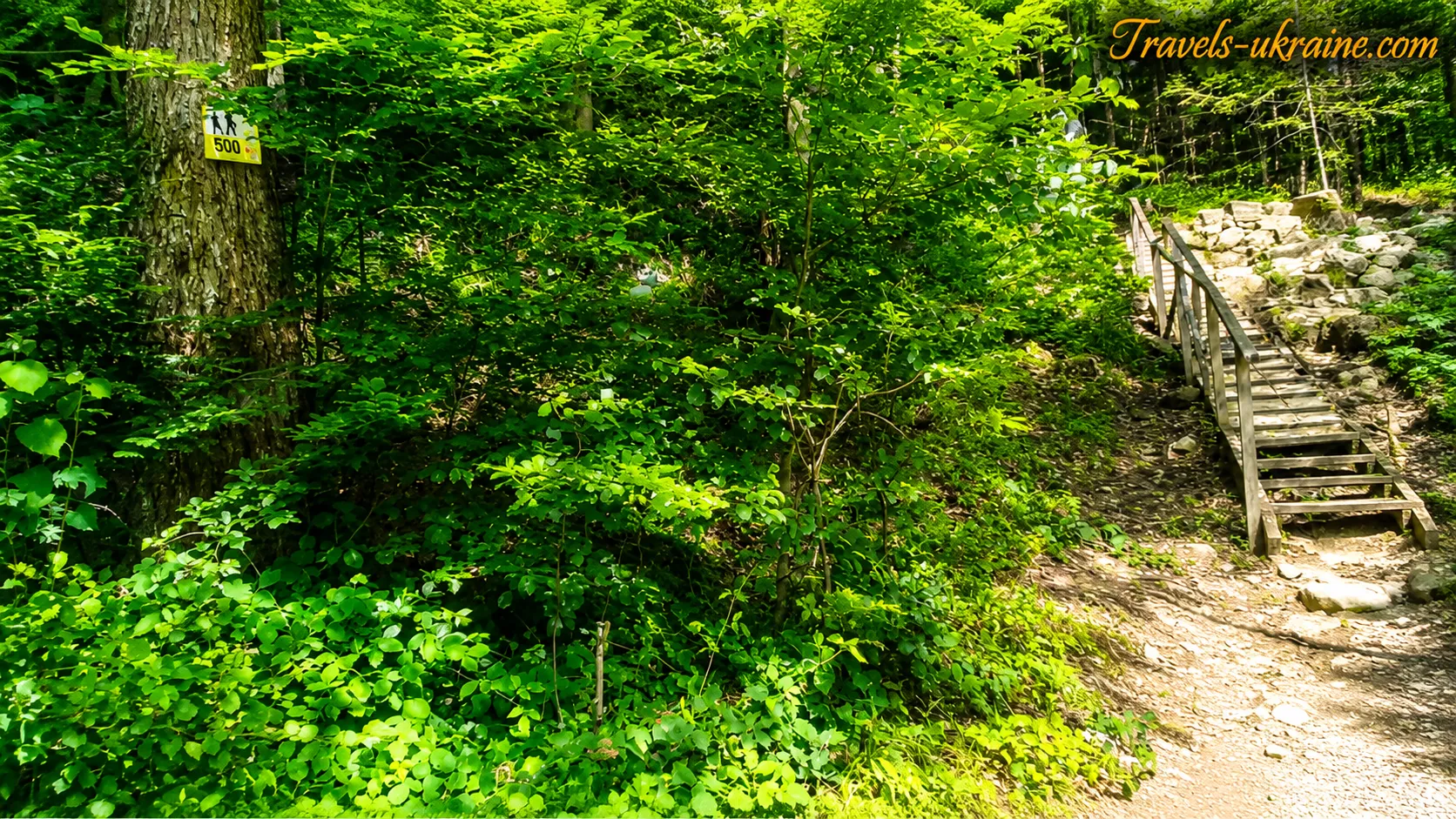
The official route is 4.6 kilometers long, is classified as easy, and takes approximately two hours. A separate branch leads to the lake itself: about 500 meters from the waterfall, the trail turns left and climbs a steeper forest slope. As a result, the final section requires caution, especially after rain.
Type of location and duration of a visit to Crane Lake
Carpathian mountain lakes include a small natural body of water surrounded by a sphagnum peat bog. The location is best suited to walking, nature observation, photography, and low-impact recreation. There is no beach, safe swimming area, or boardwalk around the entire shore.
Allow 20–30 minutes to view the lake itself. Including the walk from Kamyanka Waterfall and the return journey, about an hour is usually sufficient. If you complete the entire tourist route and stop by the river, waterfall, information boards, and rest areas, the trip will take approximately two to three hours.
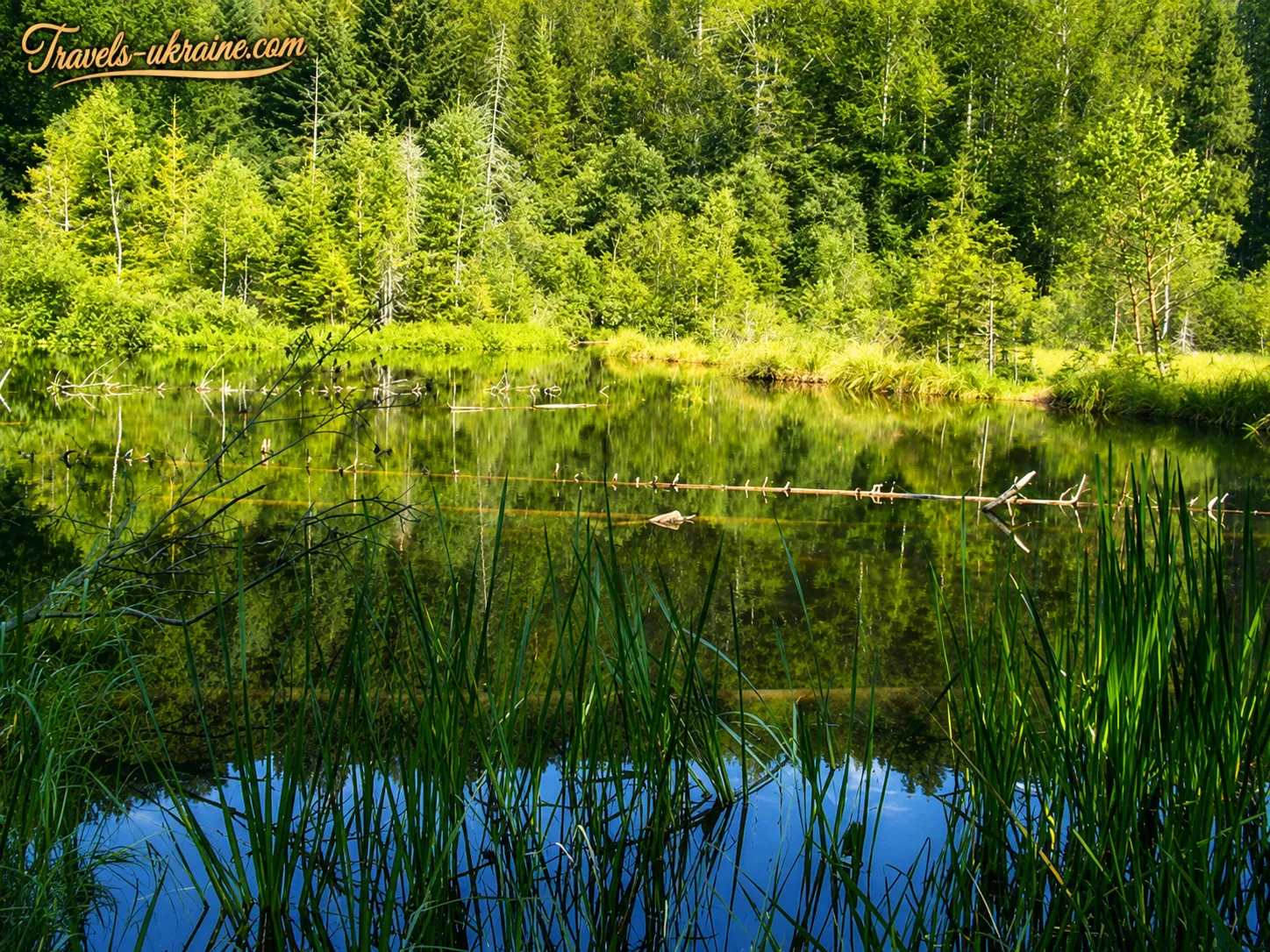
There is no point in rushing at this location. Crane Lake reveals itself through its details: the dark shades of the water, sphagnum moss, bog plants, reflections of the trees, and the silence of the surrounding forest. However, staying for a long time directly beside the water is not always comfortable, as the banks are wet and there are few safe places to sit.
Difficulty and accessibility of the route to Dead Lake
The main trail through the Kamyanka River Valley is officially classified as easy. Much of it is suitable for visitors without specialized mountain training. At the same time, the branch to Dead Lake near Kamyanka Waterfall follows a natural forest path with a steeper climb, tree roots, rocks, and sections that become slippery after precipitation.
For the walk, trekking boots or comfortable sports shoes with a treaded sole are recommended. Small children should be kept close at all times, as an unstable sphagnum cover begins near the water. The final section may be difficult for people with significant mobility limitations and travelers with strollers because of the natural surface and changes in elevation.
Why you must not step onto the peat bog at Crane Lake
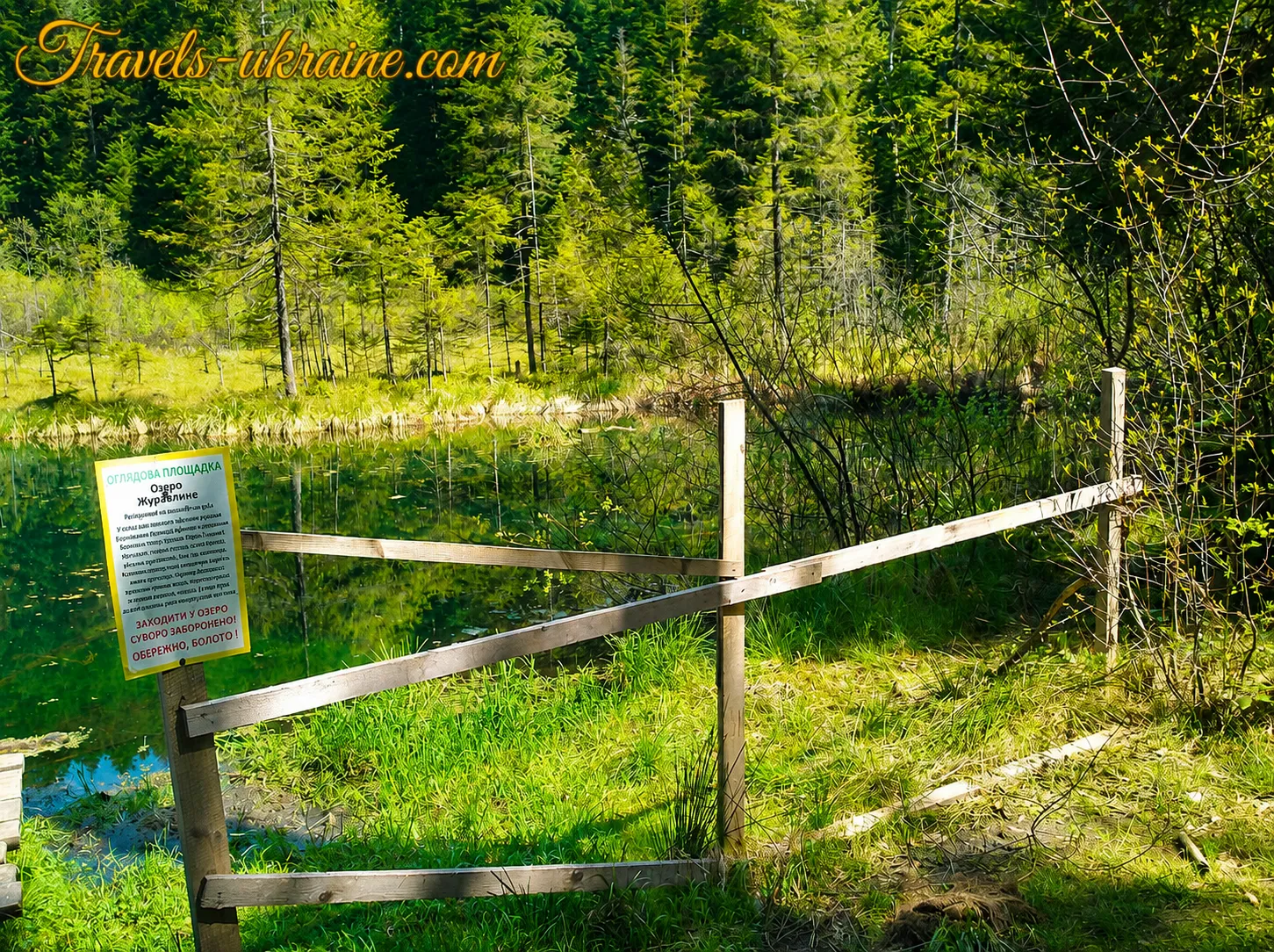
The moss carpet around the lake only looks solid. Waterlogged areas and quagmires lie beneath the layers of sphagnum and peat, so stepping onto the bog surface is strictly prohibited. This is dangerous for people and also damaging to rare vegetation. The lake should be viewed only from the safe section of the tourist trail.
Excursions and environmental education activities near Crane Lake
Crane Lake in Lviv Oblast is not a festival venue in the usual sense. Stages are not installed on its shores, loud concerts are not held, and mass celebrations are not organized there. It is a protected natural site with a sphagnum peat bog, so large crowds, loud music, campfires, and leaving the tourist trail can seriously damage its fragile ecosystem.
Official tourism materials from Skole Beskids National Nature Park present the peat lake primarily as a place for educational excursions, nature observation, and low-impact recreation. Events associated with this body of water are therefore mainly educational and are held in small organized groups.
Park specialists periodically organize environmental lessons, educational trips, and themed excursions along the route to Kamyanka Waterfall and Crane Lake. During these activities, participants learn about the lake’s origin, sphagnum mosses, bog vegetation, deadwood, and the rules for responsible conduct in the forest.
Environmental activities and educational excursions to Crane Lake
Organized events near the lake most often take place for schoolchildren, students, Plast members, naturalist clubs, and tourist groups. These are not entertainment festivals but full outdoor lessons in which the natural environment becomes a living classroom.
One popular focus is studying the biodiversity of the Kamyanka River and Crane («Dead») Lake. Participants learn about the features of mountain bodies of water, examine plants, discover the role of peatlands in storing water, and discuss the threats posed by litter, trampling, and careless use of fire.
The programs for these excursions may vary depending on the participants’ age, the season, the weather, and conservation restrictions. Some lessons are supplemented with environmental games, introductions to Ukraine’s Red Book, insect observation, or stories about the animals of the Skole Beskids.
How to join an organized activity in the national park
Travelers who want more than simply seeing the lake and would like an informative account of its natural features should book a guided excursion in advance. The national park offers tours of natural attractions, tourist trails, and environmental education centers. Current terms, available dates, group sizes, and prices must be confirmed directly with the park administration.
It is usually not possible to join a school or closed educational group spontaneously. However, a family, group of travelers, or organized tourist group can book a private excursion. This is especially useful for those visiting Dead Lake near Kamenets Waterfall for the first time and wanting to learn to identify bog plants without leaving the safe trail.
Things to do near Crane Lake in the Carpathians
Crane Lake at Kamyanka does not offer the usual water activities, a beach, or equipment rental. The value of this location lies elsewhere: visitors can see a rare sphagnum peat bog, walk through a shaded Carpathian forest, observe bog plants, and experience a silence rarely found near popular tourist sites.
The best way to experience the lake is through a leisurely walk. There is no need to look for dozens of activities or try to fill every minute. Stop at a safe section of the trail and take in the color of the water, the moss cover, and the reflections of the trees. Their appearance changes with the lighting: in the shade, the water seems almost black, while in sunlight it takes on brown and copper tones.
For a closer look at nature, it is useful to bring a small pair of binoculars or a camera with a zoom lens. This allows you to observe plants and forest birds without approaching the marshy shore. Do not pick cranberries, sundews, or other vegetation: the lake lies within a national nature park, and its ecosystem is sensitive to trampling.
The scenic lake is particularly interesting for landscape and nature photography. There is no wide panorama like the one from a mountain summit, but there are intimate subjects: a dark water mirror, branches over the shore, sphagnum moss, mist, raindrops, and red cranberries among the greenery.
The most expressive photos are often taken in the morning, after rain, or in overcast weather, when the forest light is soft and there are no harsh reflections on the water. In autumn, yellow and crimson leaves add to the lake’s dark colors. In winter, the lake looks especially austere, but the snow-covered trail and boggy areas hidden beneath the snow require extra caution.
Walking the Kamyanka Waterfall–Crane Lake route
The most rewarding option is to combine the lake with Kamyanka Waterfall. The tourist trail follows a mountain river among large sandstone boulders, forested slopes, and rock outcrops, allowing visitors to see two different types of Carpathian bodies of water in a single walk. Kamyanka impresses with the noise, movement, and power of its flow, while the lake welcomes visitors with an almost motionless surface and the silence of a bog. This contrast makes the route especially fascinating.
Along the way, you can observe the structure of the river valley, boulders in the channel, tree roots on the slopes, and deadwood, which is an important part of the forest ecosystem. For travelers who want to learn more about the local natural environment, the park offers educational excursions devoted to the lake’s origin, moss species, birds, and rules of conduct in the forest.
Picnicking and camping near Crane Lake
Picnicking by the lake directly on the marshy shore is not allowed. There is no safe place to spread out a blanket, and staying off the trail damages the sphagnum peat bog. For resting and eating, it is better to use the developed recreation areas along the main route.
There are gazebos, rest areas, a parking lot, and a clearing designated for tourist tents near the trail. Therefore, staying near the lake with a tent means spending the night in a designated recreation area, not camping freely on the peat bog. Fires may be lit only in specially prepared places and when no temporary fire restrictions are in effect.
This format works well for a one-day family outing, a short hiking trip, or a peaceful weekend getaway. Travelers can complete the route, see the waterfall and lake, and then rest in a developed area without turning protected land into an improvised venue for a loud party.
What to visit near Crane Lake
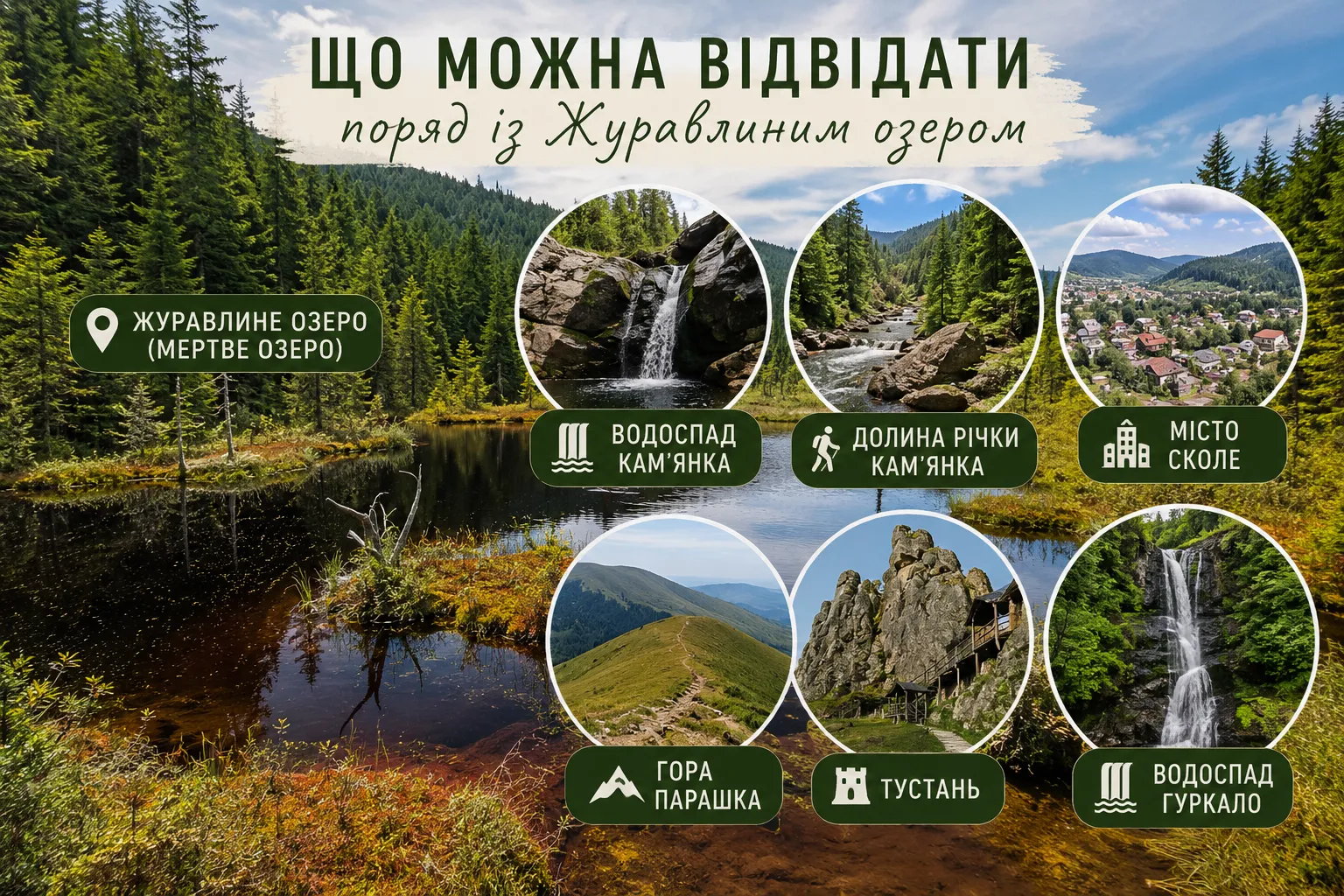
The natural lake is conveniently located for a full-day trip. Nearby are a waterfall, a mountain river, forest trails, and developed recreation areas. If you have more time, you can continue to the town of Skole, climb Mount Parashka, or devote a separate day to exploring the Tustan rock fortress.
It is best to plan the route not around the principle of «seeing everything before sunset,» but with the distance, trail difficulty, and your fitness level in mind. Crane Lake and Kamyanka Waterfall are easy to combine in one walk. Parashka, Hurkalo, and Tustan require more time, so they should be considered separate parts of a trip through the Skole region.
Kamyanka Waterfall — the main attraction near Dead Lake
Kamyanka Waterfall is the nearest and most convenient attraction to visit. Tourists usually climb the forest trail to Crane Lake from the waterfall area. The branch to the lake begins approximately half a kilometer from the waterfall and follows a steeper slope.
Kamenets Waterfall formed where a mountain river crosses a layer of hard Yamna sandstone. Water cascades between large stone boulders, and its appearance changes noticeably depending on the season and amount of precipitation. In spring and after prolonged rain, the flow becomes more powerful, while during dry periods the waterfall looks calmer.
Combining the two locations makes it possible to experience the different characters of Carpathian water. Kamyanka Waterfall greets visitors with noise and movement, while Dead Lake impresses with silence and a dark, motionless surface. Allow at least several hours to explore both natural sites, not including the journey to the national park.
The Kamyanka River Valley and the «Pavliv Stream–Kamyanka Waterfall» route
The «Kam ianka River Valley» tourist trail is an easy route. It follows a mountain river, passing rocky outcrops, large sandstone boulders, a spring, and places for short breaks. This route is the most convenient addition to a visit to the lake.
Travelers who want to see more forest scenery can consider the «Pavliv Stream — Kamianka Waterfall» route. It takes approximately two hours. The trail follows a forest road and passes through beech woodland before reaching the waterfall area. From here, the journey can continue to Zhuravlyne Lake.
This option is suitable for tourists who have arrived by public transport in the village of Dubyna or want to walk a longer forest section. Before setting out, check the condition of the trail markers, the weather, and the time until sunset, as the additional ascent to the lake increases the total duration of the walk.
Skole and the Tourist Attractions of the Skole Region
The town of Skole is a convenient base for trips to Skole Beskids National Nature Park. You can stay overnight, replenish your food supplies, have lunch after a hike, and plan your next trip here. The town is also home to the Skolivshchyna Historical and Local Lore Museum, where you can learn more about the region’s nature, way of life, and history.
A walk around Skole is a good option after returning from the lake if there is still time left in the day. More challenging mountain routes, however, are best started in the morning. The town is the starting point for several tourist trails, including the particularly well-known route to Mount Parashka.
Mount Parashka — A Route for a Separate Day
Mount Parashka, at 1268 meters, is the highest peak in the Skole Beskids. Its open sections offer views of the surrounding ridges, mountain meadows, and forest-covered valleys. However, the ascent should not be added to the short Kamianka Waterfall — Zhuravlyne Lake route.
The route from Skole to Parashka is about 10 kilometers one way, is considered challenging, and requires approximately four to five hours for the ascent. Together with the descent, it is a full-day hike requiring an early start, sufficient water, a snack, suitable footwear, and a reliable weather forecast.
Tustan — A Historic Landmark near the Skole Beskids
For a second day of travel in the Lviv region, consider the «Tustan» historical reserve near the village of Urych. It is a complex of rocks where a wooden cliff fortress stood in the Middle Ages. Traces of the structures remain in the stone, allowing researchers to reconstruct the appearance of the fortification.
Tustan served defensive and customs functions along an ancient trade route. Today, visitors can explore the rocky complex, follow tourist trails, and visit the museum, which presents archaeological finds and materials about life in the medieval fortress.
Combining Tustan with Zhuravlyne Lake in one short day is advisable only if you have a car, leave early, and make a plan in advance. For a relaxed trip, it is better to leave the cliff fortress for the following day rather than turn your holiday into a race between parking areas.
Hurkalo Waterfall — Another Natural Attraction of the Beskids
Another interesting place in the region is Hurkalo Waterfall near the village of Korchyn. A plunge pool has formed at the foot of the waterfall, and a nearby clearing is often used by tourists for отдых. Hurkalo can be visited on its own or included in a longer hiking route toward Mount Parashka. The road to the waterfall and the condition of the access route depend on the weather, so after heavy rain, be prepared for wet and washed-out sections. It is best to save this location for a separate trip, especially when traveling with children.
- For a short walk: Zhuravlyne Lake, Kamianka Waterfall, and the Kamianka River Valley.
- For an extended route: the «Pavliv Stream — Kamianka Waterfall» trail followed by an ascent to the lake.
- For ending the day: a walk around Skole and a visit to the local lore museum.
- For a separate mountain day: an ascent to the highest peak of the Skole Beskids — Mount Parashka.
- For a historical trip: the rocks and museum of the medieval Tustan fortress.
- For another trip into nature: Hurkalo Waterfall near the village of Korchyn.
Rules and Tourist Etiquette near Zhuravlyne Lake
The lake in the Skole Beskids lies within a national nature park, so visiting this location involves not only eco-friendly recreation but also a responsible attitude toward nature. The dark water, sphagnum peat bog, and marsh vegetation form a fragile ecosystem that can easily be damaged by just a few careless steps.
The main rule near a body of water is simple: stay on the hiking trail. The soft green cover around the lake may look like ordinary moss, but beneath it lie waterlogged peat and unstable marshland. Stepping onto the sphagnum mat is dangerous for people and destructive to plants that recover very slowly. So do not try to approach the water itself, check the depth of the marsh with a stick, or find a «better angle» beyond the route. The lake is clearly visible from the accessible section of the trail, and a few extra meters will not make the photograph valuable enough to risk testing the strength of the Carpathian bog for its sake.
Campfires, Picnics, and Camping in the Skole Beskids
Campfires may be lit only in specially designated areas. There is no equipped place for an open fire directly beside Zhuravlyne Lake, so cooking food, using a barbecue grill, or leaving hot coals on the marshy shore is prohibited.
For picnics and relaxation, use the recreational areas near the main route and Kamianka Waterfall. Even in a designated area, a fire must be monitored continuously and fully extinguished before you leave. Do not burn dry grass, throw away unextinguished matches or cigarette butts, or use fireworks.
In hot, dry weather, the park administration may introduce additional fire-safety restrictions. In that case, the ban applies regardless of whether you can see an old fire pit. Check current warnings before your trip and follow the instructions of the protected-area staff.
How to Treat Animals and Plants near the Lake
In the park, it is prohibited to destroy bird nests or anthills, catch insects, or take away nestlings or wild animals. If a frog, newt, snake, or another forest inhabitant appears near the trail, the best approach is to observe it from a safe distance and not try to pick it up.
Do not pick cranberries, flowers, or medicinal plants, or dig up moss for home decor. The bog cranberry gave the lake its name, but that does not mean every tourist should take a handful of berries home as proof of a visit. A photograph taken without damaging the plants is a much more appropriate souvenir.
You should behave quietly on a nature trail. Loud music, shouting, and prolonged use of portable speakers disturb other visitors and wildlife. For those who have come to hear the Carpathian forest, someone else’s loudspeaker is rarely a welcome part of nature’s orchestra.
Ethical Photography at Zhuravlyne («Dead») Lake
Photography should not alter the natural appearance of the location. Do not break branches, pick plants, move stones, or step onto the marsh to clear the frame. You should also not leave inscriptions on trees, information boards, or other objects along the route.
When photographing people, make sure they are standing in a safe area. Children require particular supervision, as they may mistake the mossy shore for an ordinary clearing. Drone use must be agreed in advance with the protected-area administration, and current airspace restrictions must be checked.
Respect for Other Tourists on the Trail to Zhuravlyne Lake
On narrow sections of the trail, do not stop as a group in a way that blocks the passage. Let tourists moving faster pass, and when two groups meet, calmly pass one another on a wider section of the route. Do not push near viewpoints or occupy the only convenient photo spot for a long time.
Information boards, signs, fences, benches, and gazebos are the property of the national park. Do not break, move, paint, or use them as fuel. If you notice a damaged sign, a fallen tree on the route, or a dangerous section, report it to park staff.
Responsible recreation in nature does not require complicated rules. Simply stay on the designated route, leave no litter, do not disturb animals, do not damage plants, and respect other travelers. This is what makes it possible to preserve Zhuravlyne Lake not only in photographs but also in its natural state.
Frequently Asked Questions about Zhuravlyne Lake, or Dead Lake
Where is Zhuravlyne Lake located?
How do you get to Zhuravlyne Lake from Kamianka Waterfall?
From the waterfall area, follow the official «Kam ianka River Valley» tourist trail. Approximately 500 meters from the waterfall, the route turns left and climbs a steeper forest slope to the lake. The trail includes roots, rocks, and sections that become slippery after rain, so closed footwear with a sturdy tread is required.
How much time is needed for the Kamianka Waterfall — Zhuravlyne Lake route?
Allow approximately one hour to walk from the waterfall to the lake, view the lake, and return. The full walk along the «Kamianka River Valley» tourist trail, including views of the river, waterfall, and lake and a few short stops, usually takes about two to three hours. The duration depends on the weather, physical fitness, and number of tourists.
Can you swim in Dead Lake?
No, Dead Lake is not intended for swimming. It is a small peat lake surrounded by unstable sphagnum marshland. There is no beach, safe access to the water, lifeguard station, or equipped swimming area. Approaching the water through the bog is dangerous, so the lake should be viewed only from the tourist trail.
Why is Zhuravlyne Lake called Dead Lake?
The popular name is associated with the dark color of the water, marshy shores, and almost motionless surface. Because of peat, mosses, and organic remains, the water has a brown or nearly black hue. At the same time, the lake is not dead in the biological sense: it is home to small crustaceans, insect larvae, newts, and marsh plants.
Is the route to Zhuravlyne Lake suitable for children?
The route is suitable for children who can confidently walk along forest trails, but only under constant adult supervision. The final section includes an incline, tree roots, and slippery ground. Near the water, children must be kept close and not allowed to run across the moss cover. The climb to the lake may be difficult with a standard stroller.
When is the best time to visit Zhuravlyne Lake?
The most convenient period for a trip is from the second half of April to early November. In summer, it is best to arrive in the morning, while in autumn the lake is especially picturesque thanks to the colorful foliage. After heavy rain, the trail becomes slippery; during a thunderstorm or strong winds, it is best to postpone the walk. In winter, the route requires extra caution because of snow, ice, and hidden marshy areas.
How much does it cost to visit Zhuravlyne Lake in 2026?
In 2026, the fee for visiting the National Nature Park’s tourist trails independently, without a guide, is 50 hryvnias for an adult and 25 hryvnias for a child aged 7 to 14. Parking, guided tours, and the use of recreational areas or a tent site may incur additional charges. Before your trip, it is advisable to check the rates again on the park’s official website.
Can you pitch a tent or have a picnic by the lake?
Tents may not be pitched, blankets spread out, or fires lit directly on the lakeshore. The shore is part of a fragile sphagnum peat bog. For a picnic, use the gazebos and recreational areas near the main route. For overnight camping, the park recommends the Pavliv Potik tract and the clearing near Kamyanka Waterfall.
What should you bring on the route to Dead Lake?
Bring closed-toe shoes with a textured sole, a rain jacket, drinking water, a light snack, a charged phone, a portable power bank, a small first-aid kit, tick repellent, and a bag for your own waste. It is useful to download an offline map in advance. Even for a short walk, it is advisable to carry a flashlight, especially if the route begins in the afternoon.
Zhuravlyne Lake: A Journey’s Summary to a Mysterious Carpathian Gem
Zhuravlyne Lake, or Dead Lake, proves that the true value of a natural site is not always measured by its size. This small body of water has no wide beaches, crystal-clear water, or noisy entertainment, yet it leaves a much stronger impression than many developed tourist destinations. Its dark surface, sphagnum peat bog, and the silence of the forest create a landscape that is difficult to confuse with any other.
This is a place for travelers who value nature trips, nature observation, forest walks, and peaceful recreation away from excessive bustle. It is fascinating to examine the mosses and bog plants, photograph the reflections of the trees, listen to the forest, and observe how the color of the water changes with the weather. At the same time, recreation by the water at Zhuravlyne Lake does not include swimming, fishing, or picnicking directly on the shore.
Among the tourist lakes of Lviv Oblast, this body of water stands out not because of its size, but because of its natural character. Unlike popular beach destinations, the lake near Kamyanka village introduces travelers to the wetland ecosystems of the Carpathians. Here, you can see how sphagnum mosses retain moisture, how peat gradually accumulates, and how plants adapt to acidic, nutrient-poor soil.
For a family, it is an opportunity to combine a walk with an educational outing. For a photographer, it is a chance to work with dark water, soft light, and forest reflections. For an independent traveler, it is an easy route to a unique body of water in the Skole Beskids. For anyone tired of city noise, it offers several hours in nature, where the main sounds are the wind, birds, and the Kamyanka River.


No Comment
You can post first response comment.