
 English
 Українська
 Български
 Hrvatski
 Čeština
 Dansk
Dansk Nederlands
 Eesti
Eesti Suomi
Suomi Français
 Deutsch
 Ελληνικα
 Magyar
 Íslenska
 Italiano
 Latviešu
 Lietuvos
 Polski
 Português
 Română
 Русский
 Српски
 Slovenčina
 Slovenščina
 Español
 Svenska
 Türkçe
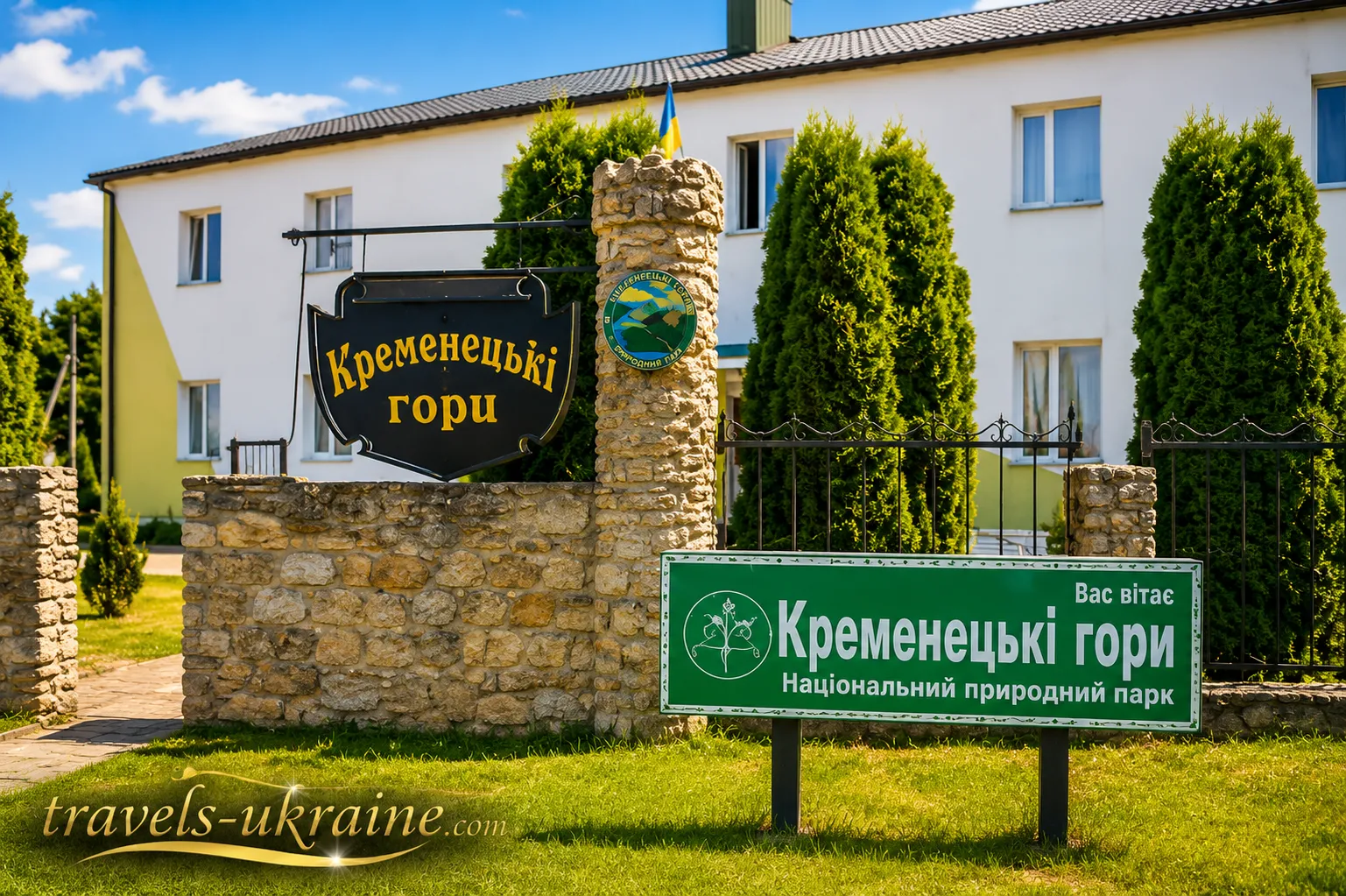
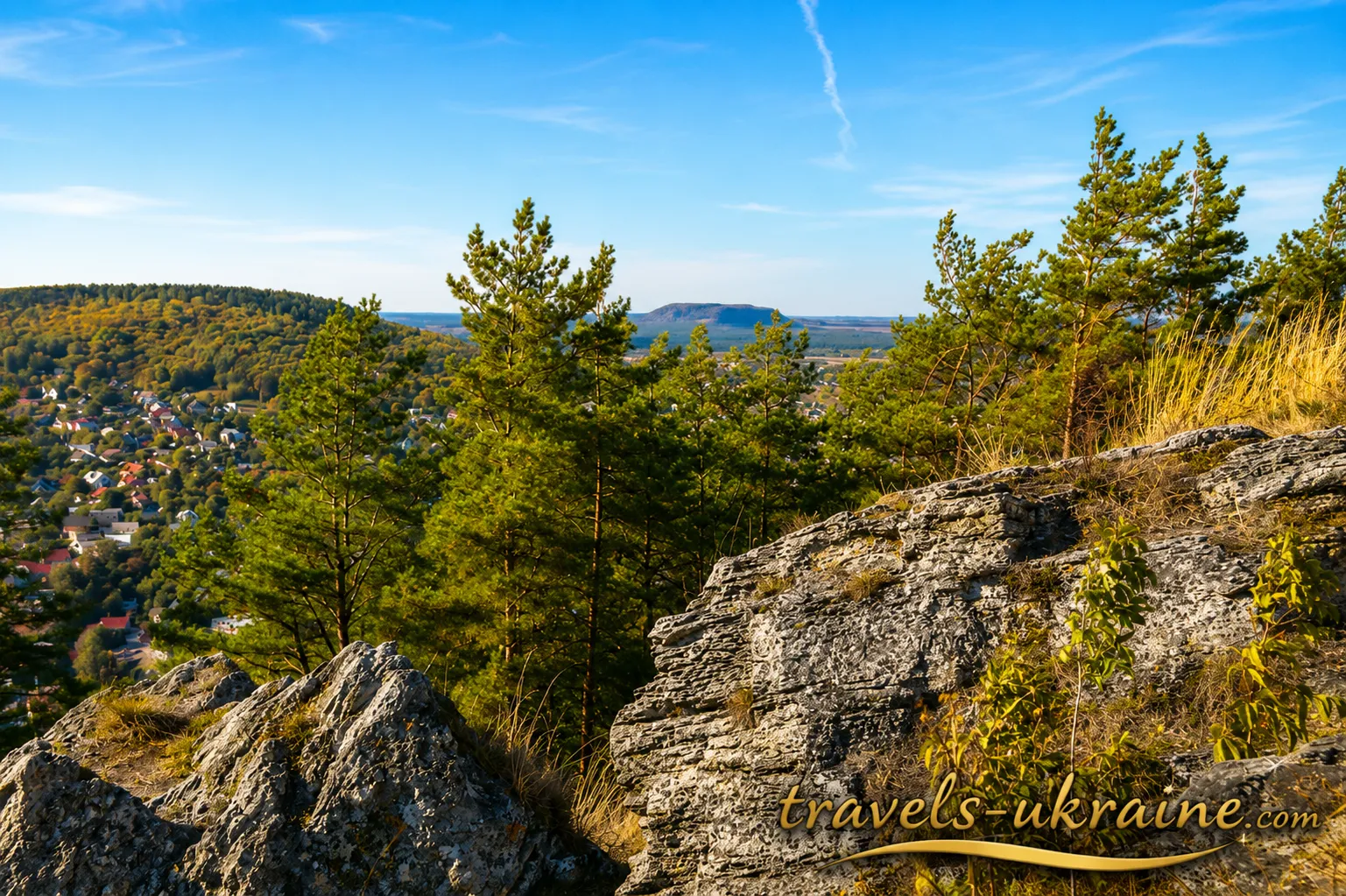
Kremenets does not begin with the town square, or even with its ancient stone buildings. It begins with the silhouettes of hills rising above houses, roads, and old churches. On one side, Mount Bona with the ruins of Kremenets Castle towers over the town; on the other are Chercha, Divochi Skeli, Strakhova, and other forested peaks of the Kremenets Ridge. Here, nature does not exist separately from history: every trail may lead to a viewpoint, a rocky outcrop, the remains of an ancient fortification, or a place associated with a local legend.
The Kremenets Mountains are also fascinating because their landscape literally preserves traces of different eras. Mount Bona is not merely a viewpoint with castle ruins; it is a place mentioned in old descriptions of Kremenets Castle dating from the XVI century. Here, the natural terrain became part of the town’s defenses and later part of its legends. Even the mountain’s name is linked to Queen Bona Sforza, although historians are careful to note that there is no documentary evidence that she actually lived in Kremenets Castle.
Kremenets Mountains National Nature Park was established to preserve the valuable natural and historical-cultural complexes of the Kremenets region. Its territory covers almost seven thousand hectares within Ternopil Region. This is not a continuous mountain range, but a system of separate elevations, slopes, plateaus, ravines, and residual mountains formed by long-term natural processes. That is why this protected area has a distinctive character: it does not impress with its height, but surprises with its terrain, sharp elevation changes, rocky outcrops, and sense of hidden space.
For travelers, Kremenets Mountains Park reveals itself gradually. First comes the panorama of Kremenets. Then come forest routes, limestone cliffs, deep ravines, and trails leading to God’s Mountain, rocky outcrops, or lesser-known natural corners. Here, visitors can combine time in nature, a walk, an introduction to the town’s history, wildlife and plant watching, and an unhurried journey through the picturesque surroundings.
The Kremenets Mountains are not simply a beautiful park for walks. They are a place where nature, history, and legend overlap. You can follow a forest trail, see cliffs and hills ahead, and at the same time understand that this very terrain once determined the town’s defenses, shaped its skyline, and left its mark on old documents, maps, and tales. That is why the Kremenets region should be explored slowly and attentively, allowing it to reveal its story step by step.
History of Kremenets Mountains National Park: from rocky reserves to a national park
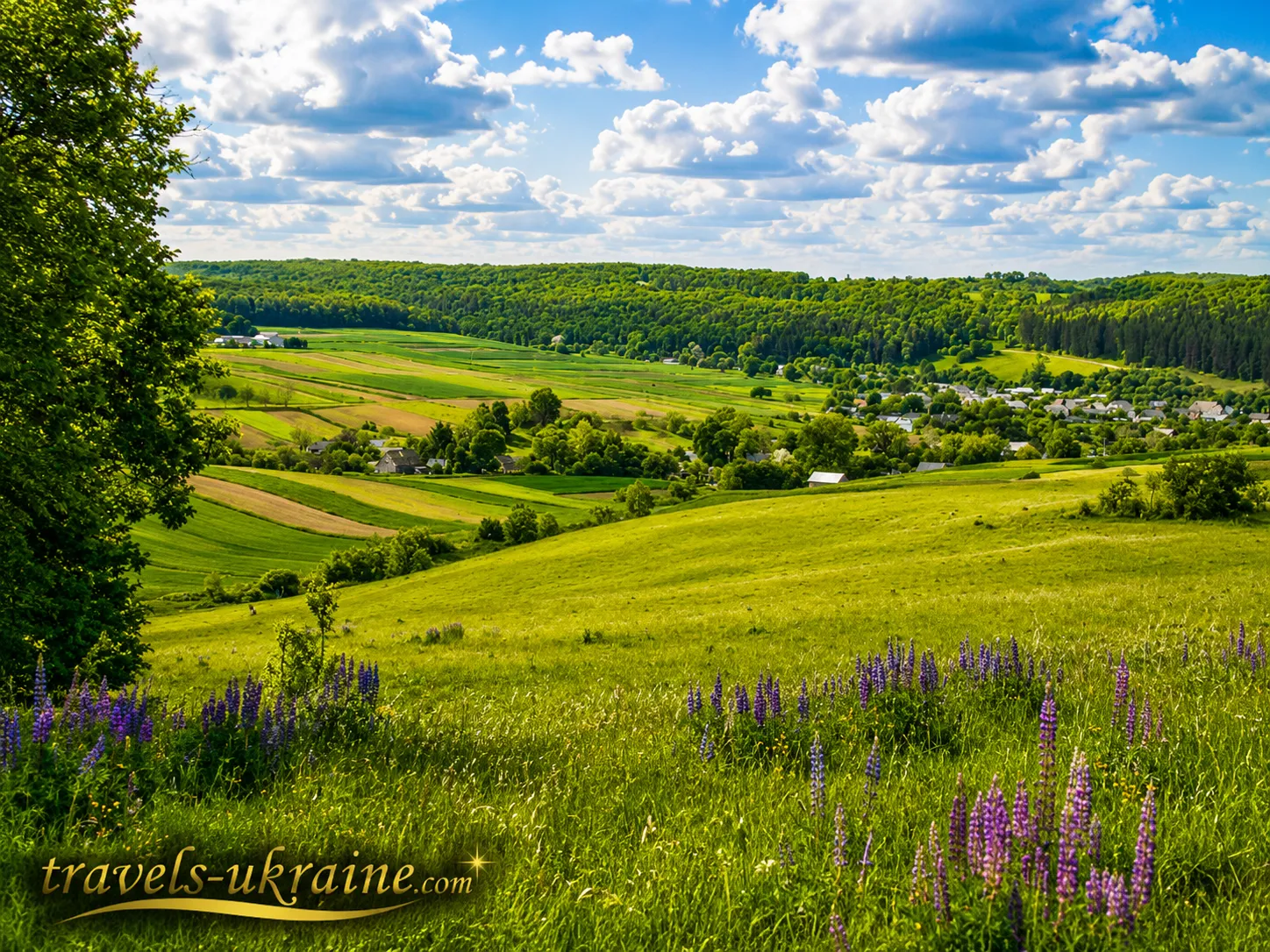
The official history of the National Park in Kremenets began on December 11, 2009, when Presidential Decree of Ukraine No. 1036/2009, “On the Establishment of Kremenets Mountains National Nature Park,” established a new protected-area institution. However, the most valuable corners of the Kremenets Ridge had been protected long before the modern national park appeared. Its creation resulted from decades of work by researchers, conservationists, and local communities, who gradually developed a network of protected areas around Kremenets.
At first, individual cliffs, peaks, beech stands, and geological formations were placed under protection. Over time, it became clear that protecting only small, isolated areas was not enough to preserve nature. The natural heritage of the Kremenets region needed an integrated protected-area complex capable of protecting forests, rare plants, animal habitats, rocky slopes, and historical monuments at the same time.
The first protected areas of the Kremenets Mountains in the 1930s
The first known protected sites within the modern park appeared as early as the 1930s. They included the Kremenets rock reserve in the area of today’s Kniazha Street and the Zamkova Mountain rock reserve. Even then, the natural and historical value of these places was viewed as an inseparable whole.
The protection of Zamkova Mountain was particularly significant. Mount Bona was important not only as an elevation with rare plant communities and limestone outcrops, but also as the site where the ruins of Kremenets Castle have survived. Thus, the first conservation decisions in the Kremenets region effectively combined landscape protection with the preservation of historical memory.
In 1957, as part of the general planning of the nature-reserve network, the creation of a separate Kremenets Mountains nature reserve in Ternopil Region was proposed. The plan could not be implemented immediately, but the idea of comprehensive protection for the Kremenets Ridge had already gained a scientific foundation.
How the Kremenets Mountains became a protected-area complex
The next important stage began in the 1970s. In 1971, the 1000-hectare geological natural monument of national importance «Kremenets Mountains» was established. At the same time, Mount Stizhok and Danylo’s Mountain were granted protected status of local importance. This was formalized by Decision No. 645 of the Ternopil Regional Council dated December 13, 1971.
Later, in 1977, the network of protected areas was expanded. It included Slovatskoho Rocks, the botanical natural monument Kremenets Beech Forest No. 1, and larch and beech stands. These decisions helped preserve not only distinctive landforms but also valuable forest areas characteristic of the natural complex of the Kremenets region.
Throughout the 1980s, several more important areas were placed under state protection:
- Veselivskyi Botanical Reserve, established to preserve valuable plant communities (Resolution No. 617 of the Council of Ministers of the Ukrainian SSR dated 16.12.1982);
- Mount Unias and sections of the Bilokrynytsia Beech Forest (Decision No. 320 of the Committee of the Ternopil Regional Council dated 19.11.1984);
- Bilokrynytskyi and Volyn General Zoological Reserves (approved by the Committee of the Ternopil Regional Council No. 198 dated 30.06.1986);
- Dovzhotskyi Botanical Reserve of national importance (Resolution No. 2 of the Council of Ministers of the Ukrainian SSR dated 07.01.1987).
Thanks to these decisions, a system of separate protected sites developed around Kremenets and Shumsk. They protected the most vulnerable areas, but did not yet form a single territory with coordinated conservation, research, and tourism management.
The Medobory Reserve branch—the foundation of the future Kremenets Mountains National Nature Park
A turning point came in 1990, when, pursuant to Resolution No. 25 of the Council of Ministers of Ukraine dated February 8, 1990, a branch of the Medobory Nature Reserve was established on the basis of the geological natural monument under the name “Kremenets Mountains.” It covered 1000 hectares. The protected-area system included the most valuable sections of the Kremenets Ridge, including Masliatyn, Strakhova, God’s Mountain, Divochi Skeli, Bona, Chercha, and Hostra.
The status of a reserve branch made it possible to strengthen protection of natural complexes, restrict environmentally harmful activities, and begin systematic scientific monitoring. This step is considered one of the key stages on the way to creating a separate national nature park.
Establishment of Kremenets Mountains National Nature Park in 2009
In 1994, 15 hectares of valuable natural areas in the Kremenets Mountains region were reserved for further designation as protected areas. This decision was intended to protect habitats of rare plants, animal habitats, and landscapes that could be affected by development, plowing, or other economic use.
The final stage came on December 11, 2009, when Presidential Decree of Ukraine No. 1036/2009 established Kremenets Mountains National Nature Park. Its purpose was defined as preserving the valuable natural and historical-cultural complexes of northern Ternopil Region.
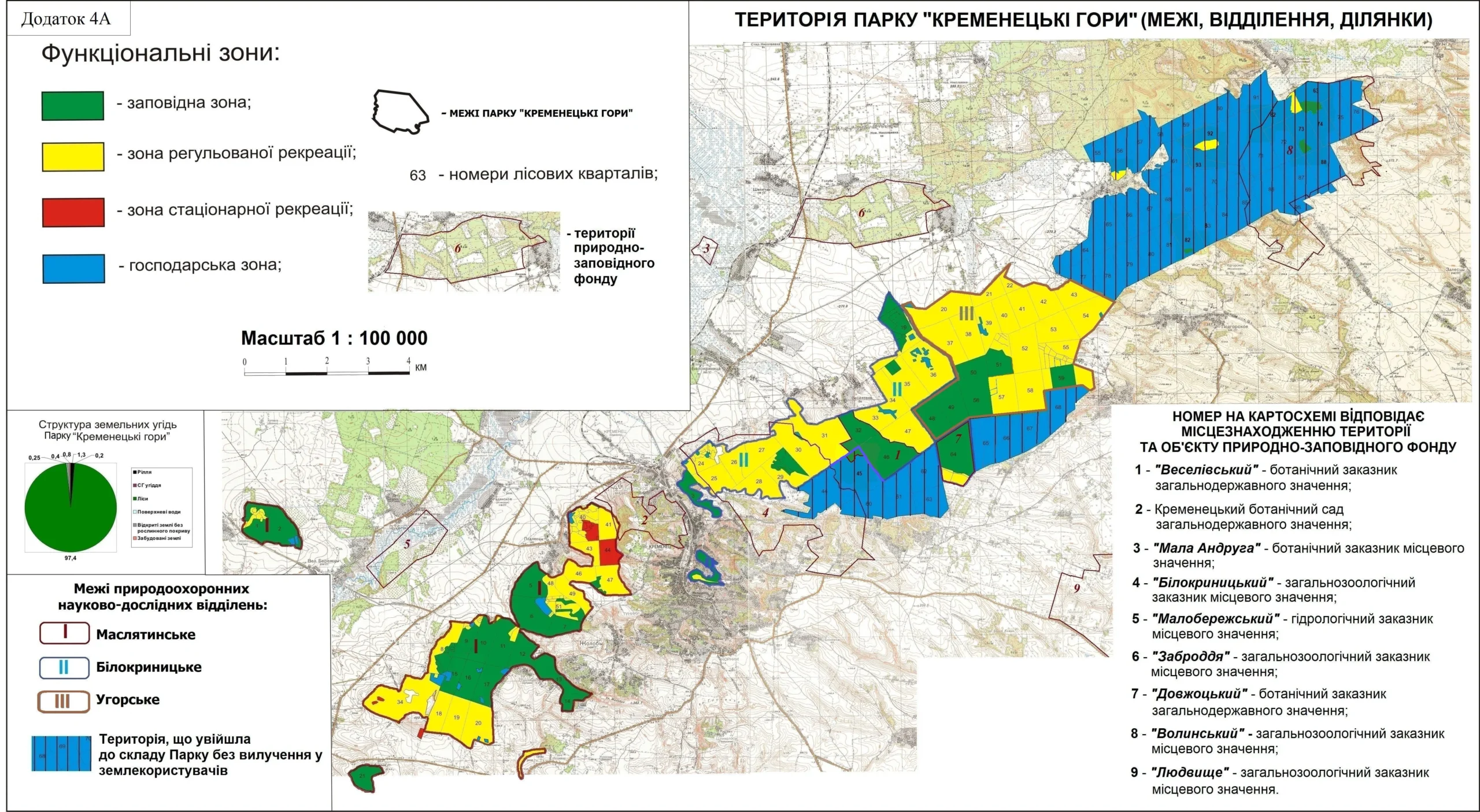
The newly established park was agreed to include 6,951.2 hectares of state-owned land. Of these, 3,968.6 hectares were transferred to Kremenets Mountains National Nature Park for permanent use, while another 2,982.6 hectares of forest land became part of its territory without being withdrawn from the then-current land user.
This approach made it possible to unite protected forests of the Kremenets region, individual residual mountains, geological monuments, botanical reserves, and sites with important historical heritage within a single protected-area complex. Kremenets National Park became not merely a state-protected territory, but a center for biodiversity conservation, scientific research, environmental education, and organized tourism.
Establishing the park administration and modern protection system
In December 2011, the regulations governing the park were approved, and at the beginning of 2012 its dedicated administration began to take shape. Later, the national park established conservation and research departments responsible for forest protection, monitoring the state of nature, studying rare species, developing tourist routes, and providing environmental education.
This brought to an end the long transition from protecting individual cliffs and forest areas to the integrated management of a large natural territory. Today, Kremenets Mountains National Nature Park combines conservation, research, recreational, and cultural functions, remaining one of the most important protected natural sites in Ternopil Region.
Natural features of the Kremenets Mountains: terrain, cliffs, and protected forests
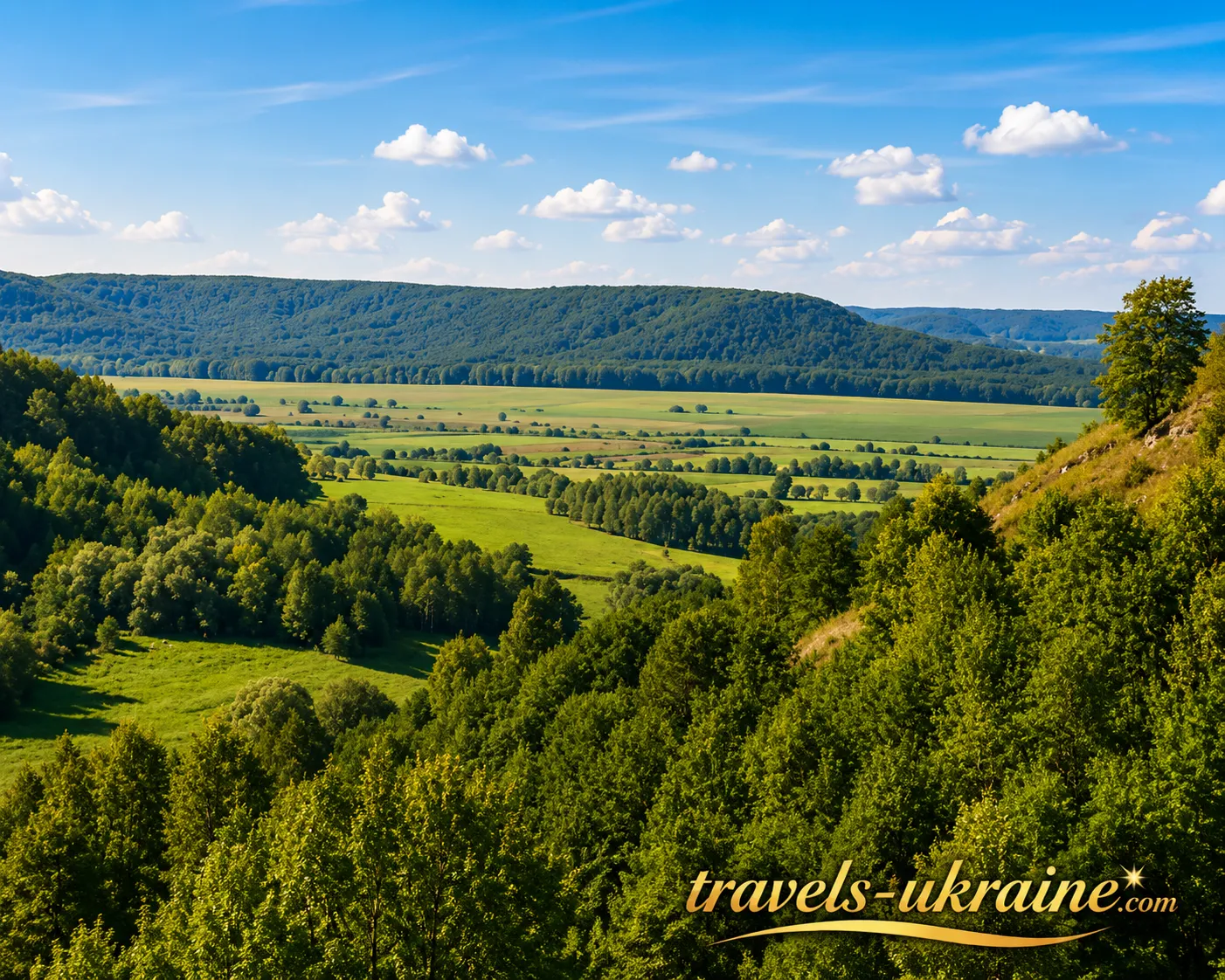
The Kremenets Mountains do not resemble a conventional mountain massif with a continuous ridge and a long line of peaks. They form a complex system of separate hills, plateau-like elevations, steep escarpments, deep ravines, and residual mountains divided by valleys, forests, and settlements. This structure gives the area its distinctive character: every peak has its own silhouette, natural surroundings, and history.
The Kremenets mountain massif lies in the northern part of the Podolian Upland, between the valleys of the Ikva and Viliia rivers. To the north, its slopes descend sharply toward the plains of Little Polissia, so even mountains of modest absolute elevation appear much more massive. The relative height of the slopes reaches 150–200 meters, while the highest point, located west of Kremenets, rises to 421 meters above sea level.
For visitors, this difference in elevation is felt on every climb. Trails may begin amid urban development, fields, or quiet deciduous forest and, just a few minutes later, emerge onto an open slope overlooking Kremenets, the surrounding villages, and the rolling plain. Thanks to this contrast, Kremenets Mountains Park feels far more varied than one might expect from a low-mountain region.
How the Kremenets Ridge was formed
The modern landscape of the Kremenets region formed over millions of years. The geological foundation of the mountains consists of thick Upper Cretaceous strata, among which white chalk is especially prominent. These layers contain seams and individual nodules of dark flint—a hard rock that ancient people used to make tools.
The upper parts of the Kremenets Mountains are formed by layers of limestone and sandstone that are more resistant to erosion. They seemed to protect the peaks from rapid denudation, while softer rocks on the slopes gradually broke down under the action of water, frost, wind, and temperature changes. As a result, separate residual mountains, rocky outcrops, cliffs, ravines, and gullies emerged—features that now define the area’s distinctive appearance.
This erosional origin explains why the wildlife area does not form a continuous ridge. Once a more unified surface was gradually dissected by natural processes, the most resistant sections remained as isolated uplands. That is why Mount Bona, Chercha, Strakhova, Bozha Mountain and Stizhok appear to be independent natural features, even though they belong to the single Kremenets Hills region.
Limestone Cliffs, Chalk and Flint
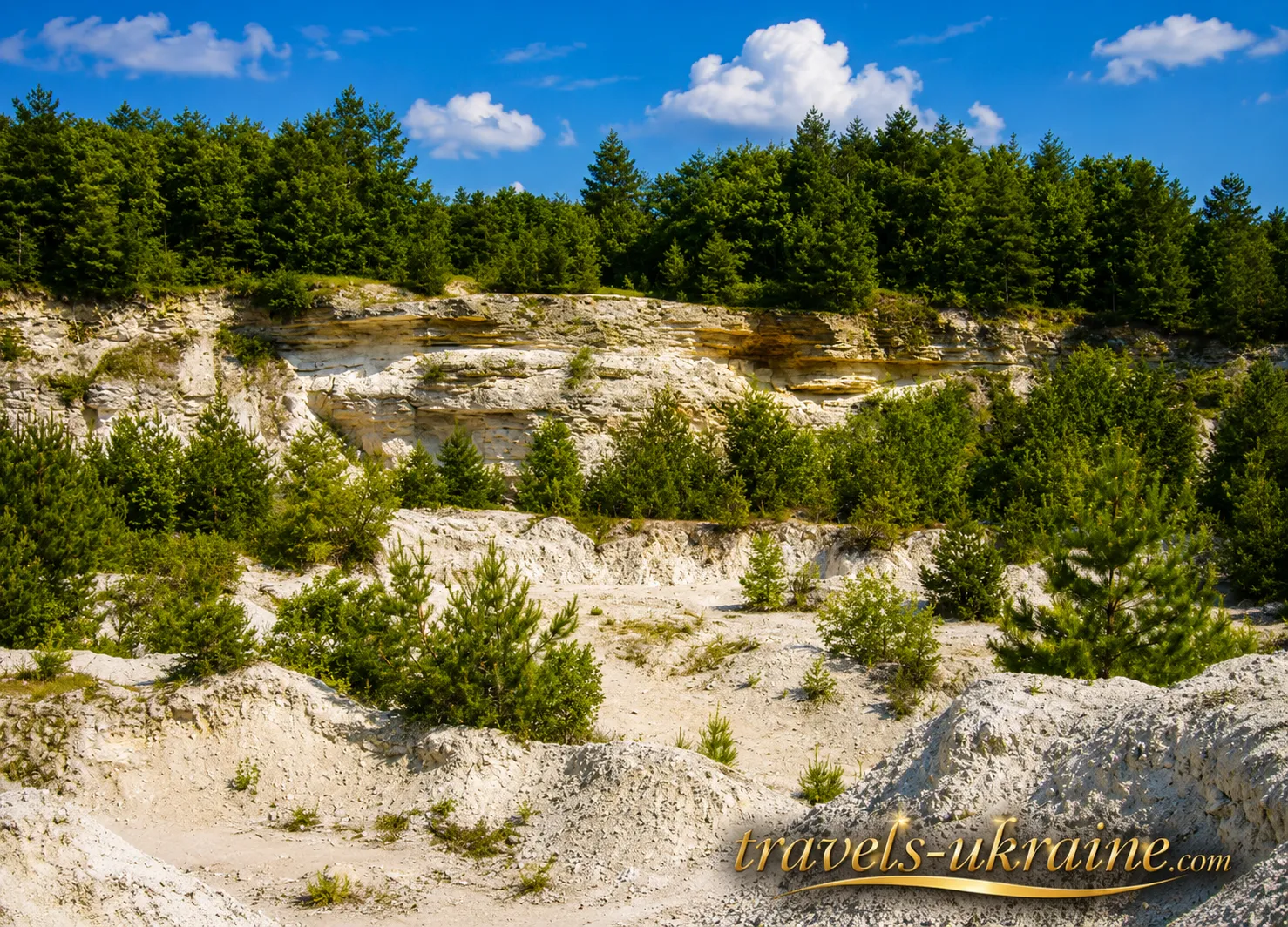
In the park’s open areas, visitors can see natural outcrops that reveal the geological past of the region. Pale limestone walls, sandstone exposures and chalk formations are especially visible at the Divochi Rocks, on some slopes of Mount Bona and near former quarries.
These formations are important not only as picturesque places for photography. They create special conditions for plants adapted to dry, well-lit, rocky slopes with little soil. That is why forest, meadow, steppe and rocky-steppe plant communities can coexist within a small area.
Residual Hills and the Most Famous Peaks of Kremenets Hills National Park
The national nature park encompasses not one summit but an entire system of natural areas located around Kremenets and in the territory of the former Shumsk District. They include popular tourist destinations, historic sites and remote forested areas where the largely undisturbed natural environment remains the main attraction.
- Castle Hill, or Bona, is Kremenets’ best-known summit, with the ruins of Kremenets Castle preserved on it and a panorama of the city opening up from its top;
- the Divochi Rocks are a forested upland with rocky outcrops, viewpoints and areas of rare rocky-steppe vegetation;
- Mount Chercha is a forest-covered summit near Kremenets, known for its natural slopes, beech stands and hiking trails;
- Mount Strakhova is part of a protected natural complex with forest communities and areas of valuable flora;
- Bozha Mountain is a natural and spiritual site associated with a spring, a chapel and local legends;
- Mount Stizhok is a distinctive residual hill where natural landscapes meet traces of an ancient settlement;
- Mount Unias is a forested upland with archaeological sites and the remains of a medieval fortified settlement.
These peaks are located some distance from one another, so it is impossible to see the entire Kremenets Hills National Nature Park on one short walk. For a first introduction, tourists most often choose Mount Bona, the Divochi Rocks and Chercha, while the more remote sites are left for a separate car or bicycle trip.
The Forests of the Kremenets Hills — the Foundation of the Natural Complex
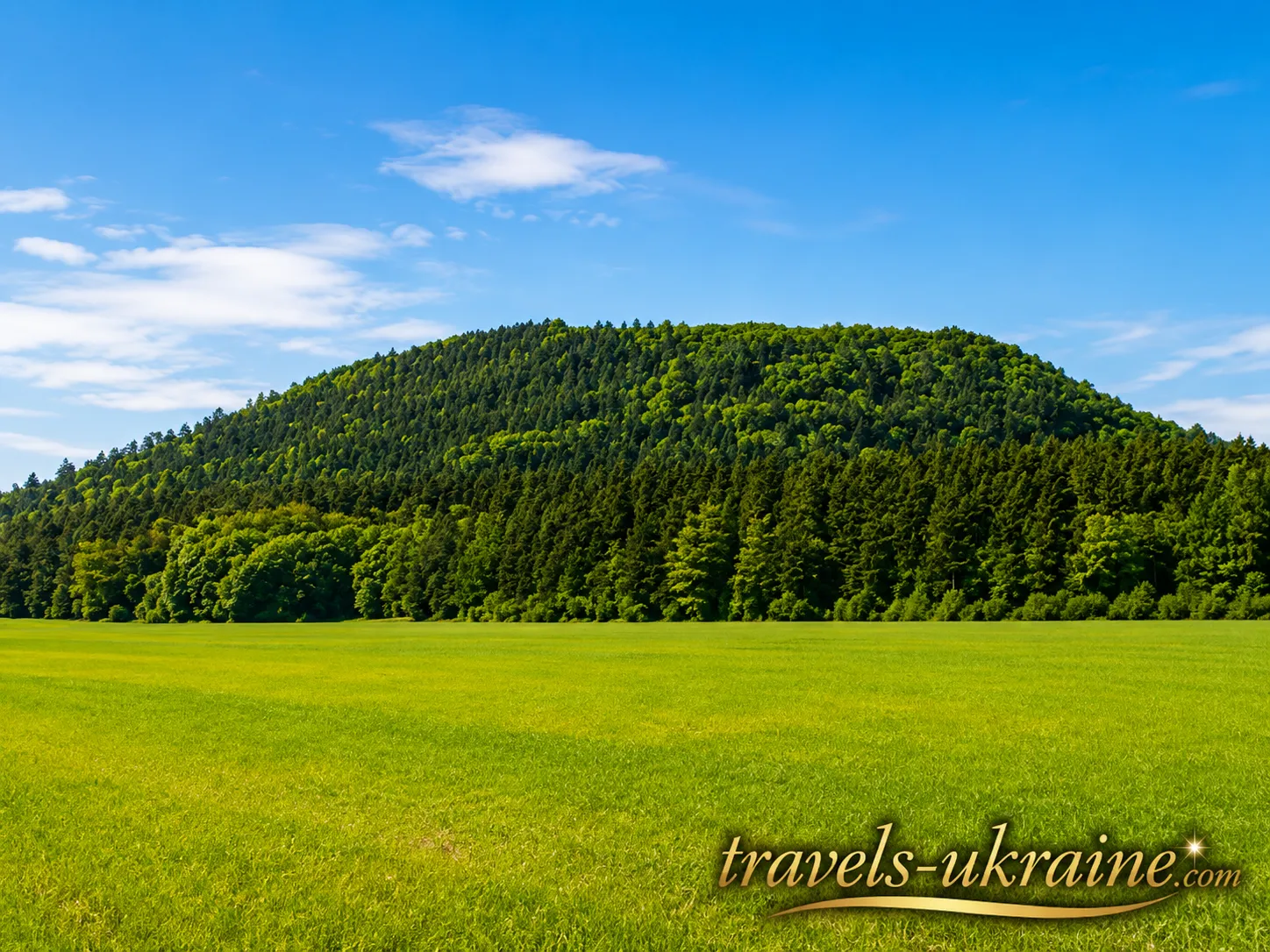
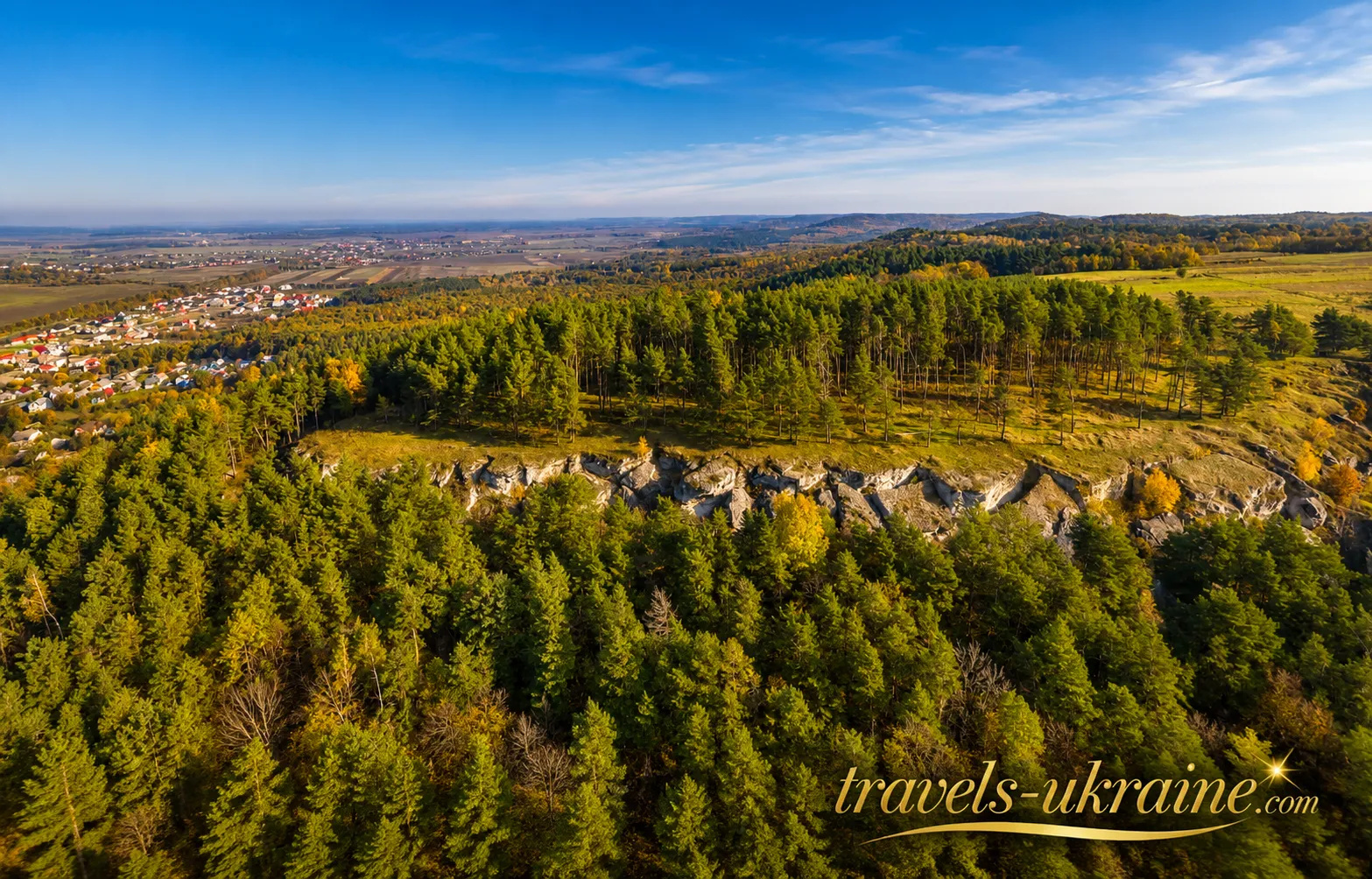
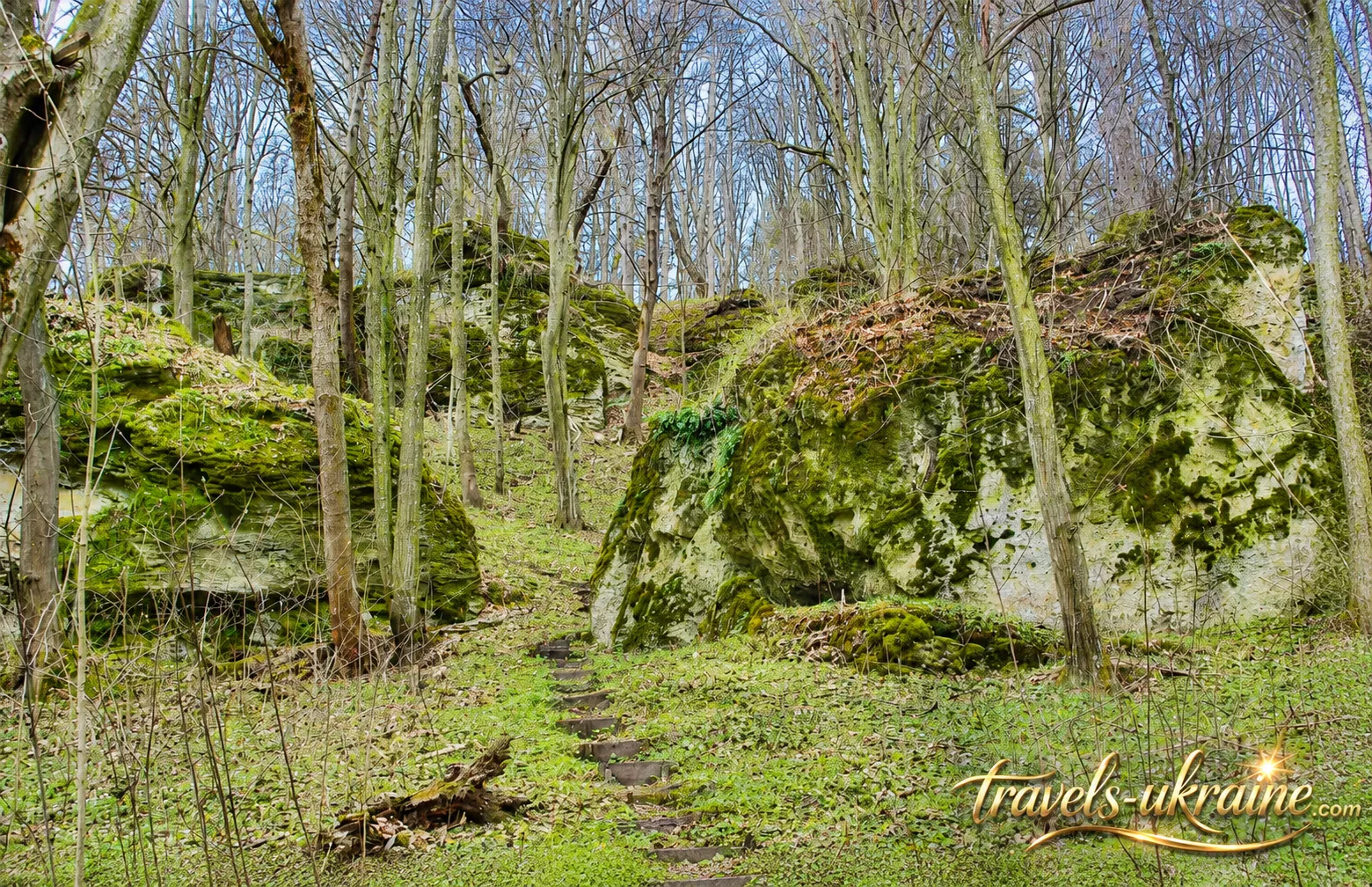
Forests cover more than 96% of the park’s territory, so they define its primary natural character. Oak-hornbeam, pine-oak and mixed stands are widespread on the slopes, while valuable beech forests have survived in some areas. The beech stands on Masliatyn and Chercha mountains are particularly well known.
Relief directly influences the character of the vegetation. Moisture persists longer on shaded northern slopes, so denser, cooler forest areas predominate there. Open southern slopes receive more heat from the sun and create conditions for meadow-steppe and rocky-steppe plants. In ravines, near springs and in lower-lying areas, a completely different, moisture-loving plant environment develops.
Thanks to this mosaic, the flora of the Kremenets Hills combines species characteristic of Polissia, Podillia, broadleaf forests and steppe areas. Relict, endemic and Red Book-listed plants grow here, and throughout the warm season visitors can see various species of wild orchids in bloom.
Why the Vegetation of the Kremenets Hills Is Unique
One of the park’s most valuable features is the combination of forest and open rocky habitats. Plants that require dry limestone soils and minimal shade have survived on cliffs and other well-lit slopes. In the forests, by contrast, species adapted to coolness, moisture and a rich layer of fallen leaves thrive.
The park protects the unique Klokov birch, rare steppe plants and numerous orchid species. Some plants have extremely limited ranges, so even trampling a small area or picking flowers can cause significant harm to an entire local population.
What Scientists Say
Modern geomorphological studies show that the Kremenets protected natural area is far more complex than it may seem at first glance. In some areas, researchers have also identified karst processes — the natural dissolution of limestone by groundwater. These processes gradually altered the appearance of individual slopes and contributed to the formation of distinctive landforms that are still visible to the naked eye today.
In the master’s thesis «The Kremenets Hills as an Independent Geomorphological System,» completed by Andrii Bermes at the Department of Geomorphology and Paleogeography of Ivan Franko National University of Lviv under the supervision of Professor Andrii Bohutskyi, it is noted that systematic research on the Kremenets Hills has scarcely been conducted. At the same time, the author emphasizes that the current understanding of the region’s geological and geomorphological structure is based on the longstanding work of researchers including A. Yan, V. Laskarev, C. Pasternak, Y. Svynko and A. Bohutskyi. This is why the Kremenets Hills are interesting not only for their height or panoramas. Their true value lies in their complex relief, where every residual hill, ravine, cliff or chalk outcrop forms part of the region’s long geological history.
Research source: Andrii Bermes. The Kremenets Hills as an Independent Geomorphological System. Master’s thesis. Ivan Franko National University of Lviv, 2023.
The Kremenets Natural Complex Through a Traveler’s Eyes
The park’s natural features are best seen not from a single viewpoint but while moving between different landscapes. Along one route, a traveler may pass through a shaded beech forest, climb a dry rocky slope, reach a rocky outcrop, see open meadows and finish the walk on a summit overlooking the city or the surrounding plains.
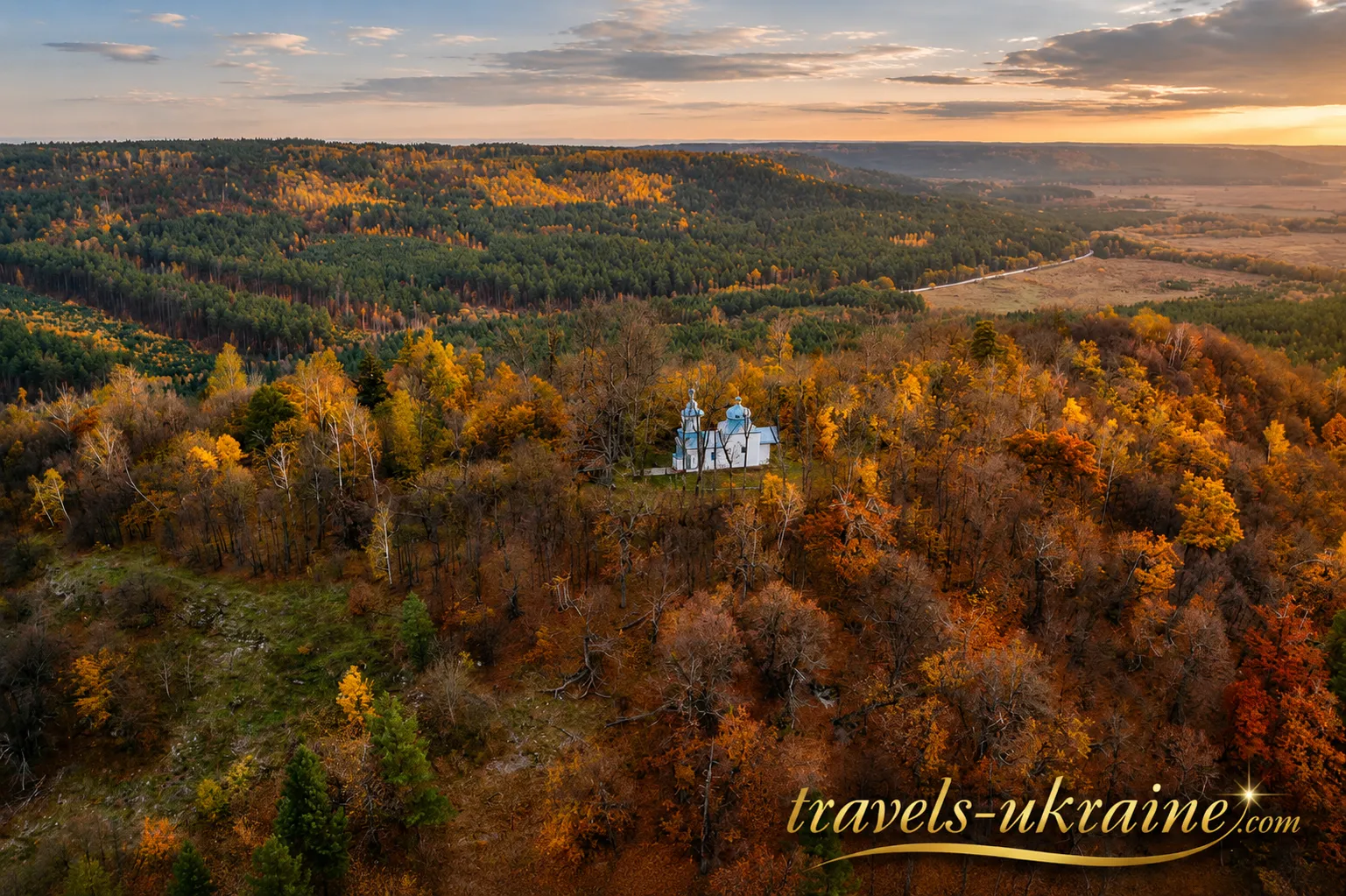
In spring, the natural park of the Kremenets region attracts visitors with the flowering of forest and steppe plants. In summer, dense trees provide cool shade along the trails; in autumn, the slopes are covered in yellow, copper and crimson hues; and in winter, the leafless forest reveals views hidden by greenery at other times of year.
It is precisely the combination of erosional relief, limestone cliffs, deep ravines, forests and open panoramas that makes the Kremenets Hills in Ternopil Oblast a distinctive natural complex. There are no Carpathian elevations or steep Alpine peaks here, but there is a different kind of appeal — the chance to see remarkably varied landscapes in a short time and experience how nature literally shaped the history of the Kremenets region.
Photo and Video Gallery
National Park in Kremenets: Visit Duration, Trail Difficulty and Budget
The tourist gem of the Kremenets region is not an ordinary city park with a central entrance, ticket office and single walking path. Its territory consists of separate natural areas, residual hills, forested tracts, eco-trails and tourist routes located in Kremenets and its surroundings. Therefore, the duration of your trip, its difficulty and its cost depend on the specific locations you plan to visit. After all, the list of nature reserve areas included in Kremenets Hills NNP is quite extensive.
For a first introduction to the park, it is enough to choose one or two accessible peaks near the city. For a more comprehensive trip, set aside an entire day, while more distant mountains, forest tracts and the sights of the Shumsk region are better included in a separate two-day excursion.
Most popular walking routes have an easy or moderate difficulty level and do not require special mountain equipment. At the same time, some climbs follow steep slopes, dirt roads, rocky sections and forest paths with exposed tree roots. After rain, the surface may become slippery, especially on mountain and cliff slopes and in shaded forest areas. Therefore, it is best to wear comfortable shoes with a sturdy tread, even if the route seems short.
Is Kremenets National Park Suitable for Families with Children?
For families with children, the best options are short environmental education trails and routes near the park’s administrative buildings. In particular, the «Forest Symphony» trail is about one kilometer long and includes information stops and rest areas. Children should only be taken on more challenging climbs after considering their age, endurance and the weather conditions.
Accessibility and the Budget for a Trip to Kremenets Hills Park
Some popular sites are located close to Kremenets’ residential neighborhoods, so visitors can reach the start of a route on foot or by public transport. To visit Bozha Mountain and other remote areas, it is more convenient to use a car or book an organized tour of Kremenets Hills Park.
Most nature trails do not have continuous hard-surface paving, ramps or specially equipped paths. Because of the uneven terrain, steep slopes and forest floor, they may be difficult for people with mobility impairments, wheelchair users and parents with strollers. Before traveling, it is worth checking with the park administration which trail best meets the needs of your particular group.
A holiday in the Kremenets Hills can be arranged on a modest budget. For an independent trip, the main expenses will be travel to Kremenets, food, accommodation and transport between remote parts of the park. Guide services, use of recreational facilities and other services listed in the NNP’s current price list are charged separately.
The exact cost of a tour of Kremenets Hills Park should be checked before your trip, as tariffs may be updated. For a group excursion, it is advisable to contact the administration in advance to agree on the route, program duration, number of participants and payment method.
Thus, the Kremenets Hills are suitable for recreation ranging from a short walk to an action-packed weekend trip. The key is to plan your route in advance, assess your physical fitness realistically and avoid trying to cover every part of this large protected area in just a few hours.
Interesting Facts and Legends about the Kremenets Hills
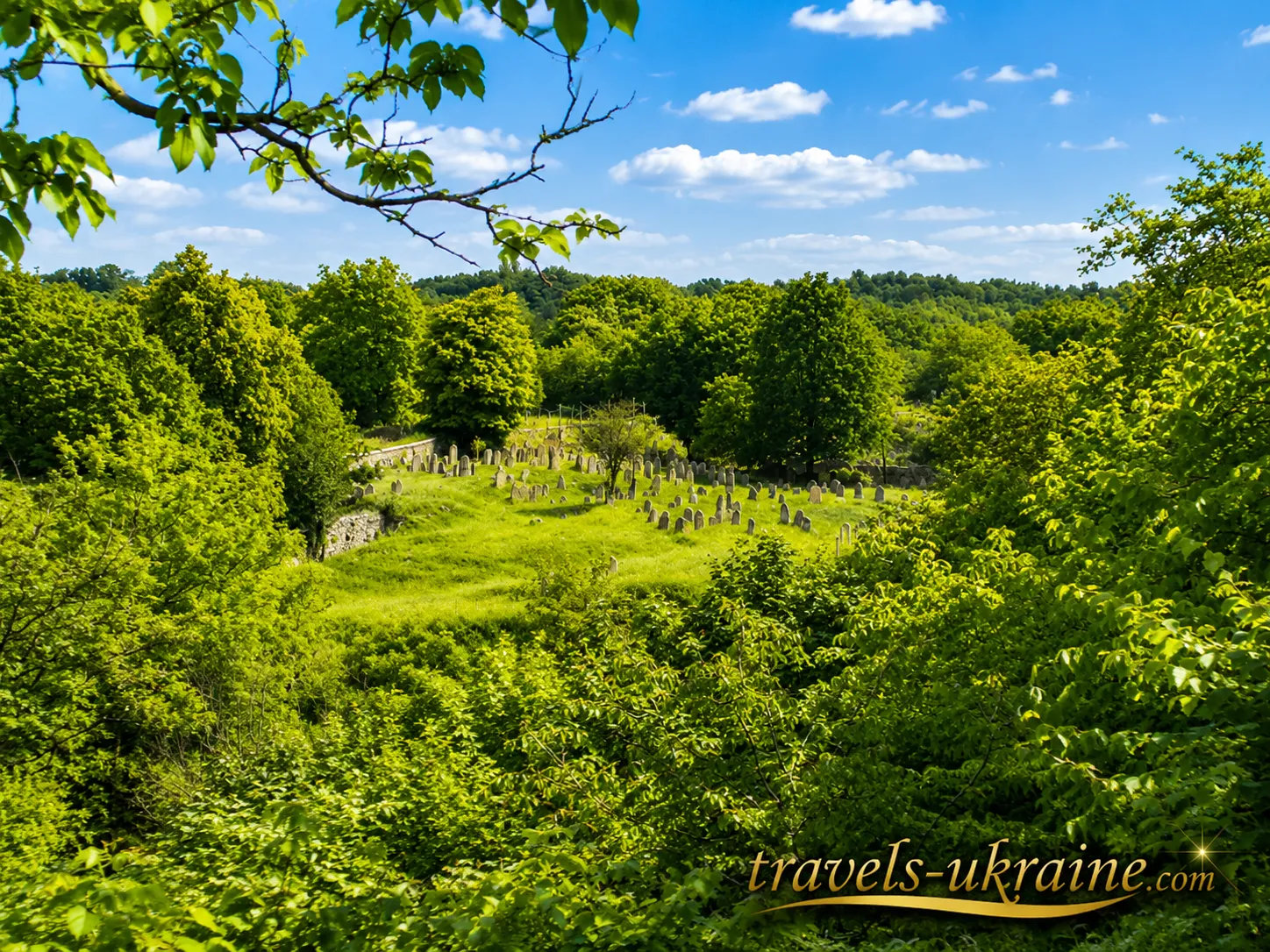
The natural gem of Ternopil Oblast near Kremenets is interesting not only for its forests, cliffs and panoramas. Almost every well-known summit here has its own legend, and historical events have become so closely intertwined with folk imagination that it is sometimes difficult to separate documented fact from legend. That is why a journey through the park feels like an introduction to two parallel worlds: the real natural complex and the Kremenets region as local residents have imagined it over the centuries.
At the same time, legends should not be taken as an exact account of the past. They are part of the region’s intangible cultural heritage — stories passed down from generation to generation that explain the names of mountains, unusual rock formations, the appearance of springs and ancient ruins. During a tour of the park, such stories help visitors better experience the atmosphere of the area, but they should be distinguished from verified facts.
Legends of the Maiden Rocks
The Maiden Rocks are one of the best-known natural landmarks of Kremenets. Rocky outcrops, cliffs, boulders, and forested slopes create a particularly dramatic landscape here, so it is no surprise that several folk legends are associated with this place. The best-known legend tells of girls whom attackers attempted to take captive during a Tatar raid. To avoid captivity, they supposedly tied their braids together and threw themselves from the high cliffs. From that time on, the mountain and its rocky outcrops were said to have acquired their name.
According to another version of the tale, the captive girls prayed for deliverance, after which the attackers fell asleep and the captives managed to escape. In gratitude, they supposedly founded a monastery nearby. The rest of the legend tells of a gigantic rock hurled by an evil force at a church, the fragments of which formed the boulders on the slopes.
These stories cannot be historically confirmed, but they convey the central motifs of local folklore well: the danger of Tatar raids, fear of captivity, faith in miraculous rescue, and an attempt to explain the origin of the unusual rock formations.
Mount Bona: Where a Queen’s History Became a Legend
The name Mount Bona is associated with a real historical figure—Bona Sforza, the Polish queen and Grand Duchess of Lithuania. That is why the mountain bears her name. Materials from the Polish Borderlands Museum indicate that in 1536 Sigismund the Old gave Kremenets to Bona, and the castle consequently came under her control. During this period, the existing fortifications on Castle Hill were rebuilt and strengthened.
This fact has a documentary basis, yet over time Queen Bona’s image became embellished with numerous tales. In local folklore, she was often portrayed as a mysterious, powerful, and even cruel ruler. Stories circulated about hidden treasures, underground passages, mysterious punishments, and the queen’s ghost, which supposedly appears near the castle ruins. Such stories are typical of many old fortresses, so they should not be treated as historical evidence. What is reliably known, however, is that Mount Bona was an important defensive stronghold, while its natural features—steep slopes and a commanding position above the town—significantly strengthened the defensive capabilities of Kremenets Castle.
The Archives Speak: What Kremenets Castle Was Like Almost 500 Years Ago
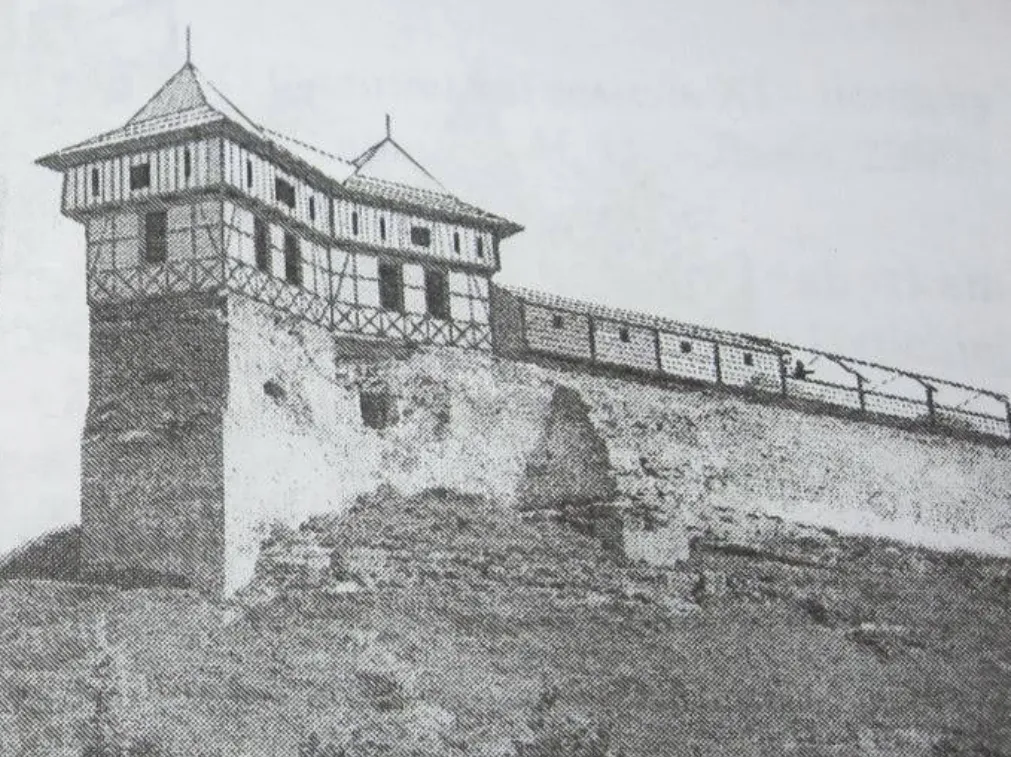
Kremenets Castle is known from more than just legends. Its condition was described in detail by state inspectors of the Grand Duchy of Lithuania in 1545 and 1552. The purpose of these inspections was to assess the fortifications and weaponry, check food supplies, and determine who was responsible for maintaining the fortress. Thanks to these documents, historians can now reconstruct the appearance and defensive capacity of the sixteenth-century castle with considerable accuracy.
It is also worth noting that the archives helped solve one of the mysteries of Kremenets Castle. During the 1545 inspection, officials recorded memories of an earlier entrance to the fortress through the Cherlena Tower. This record allowed modern historians to establish that the castle’s fortification system had changed even before the mid-sixteenth century, and that the main gate was located elsewhere at different times. Thus, archives sometimes work better than GPS: the record is almost 500 years old, yet it still tells historians where to look for the main entrance to Kremenets Castle.
Kremenets in Old Postcards and Maps: Photos
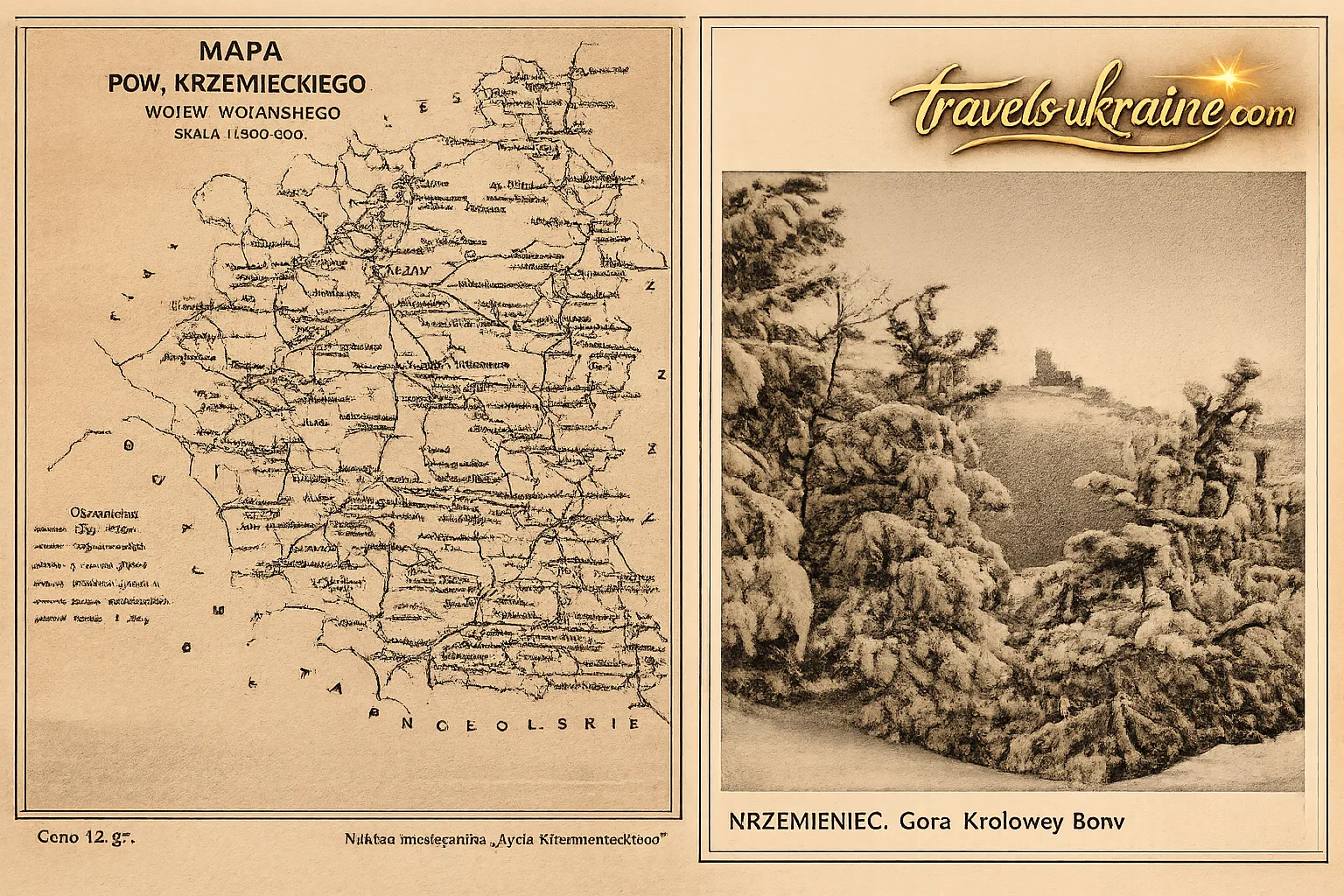
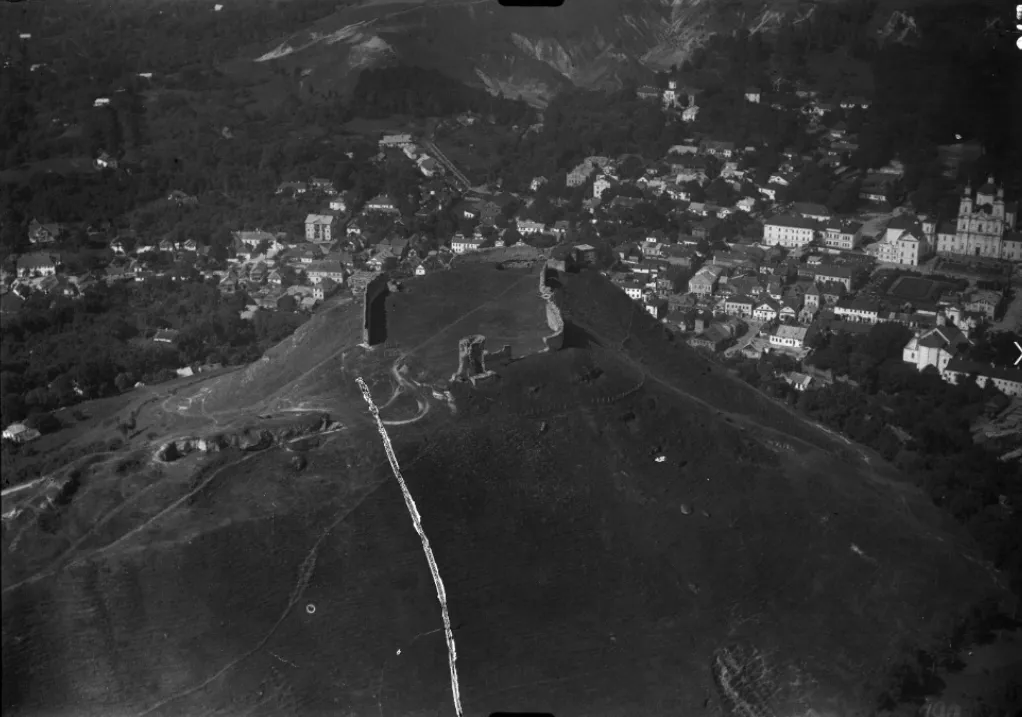
Old visual materials help us see Kremenets as it was known almost a century ago. The Polona digital library preserves an interwar postcard, «Krzemieniec, Góra Królowej Bony», dated approximately 1920–1930, as well as a map of Kremenets County in the Volhynian Voivodeship, published before 1939. The postcard shows that Mount Bona was already a recognizable symbol of the town at that time, while the map helps convey the historical administrative landscape around Kremenets before the major changes of the mid-twentieth century.
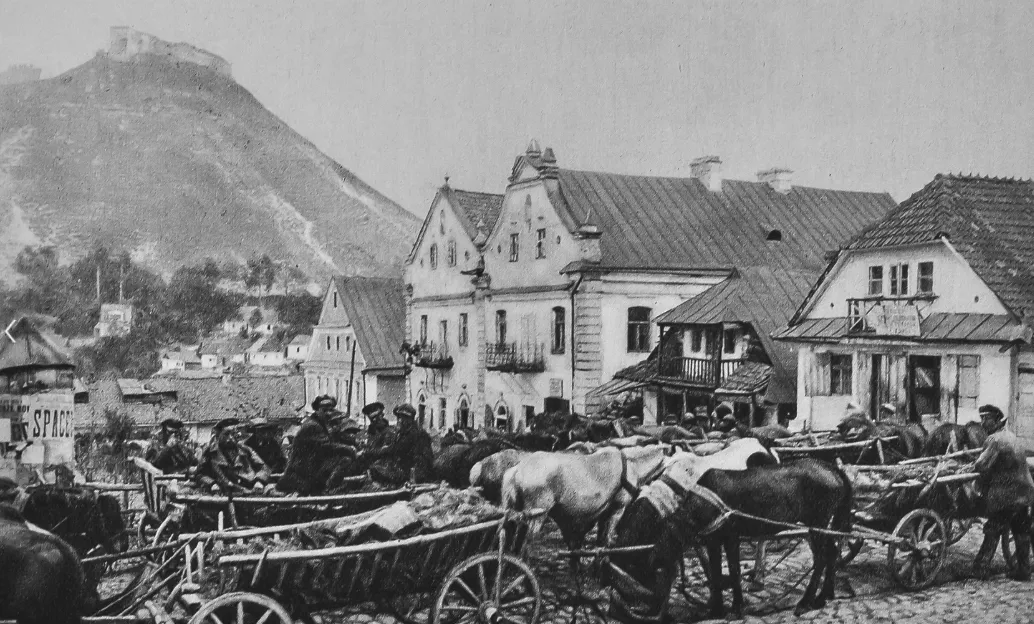
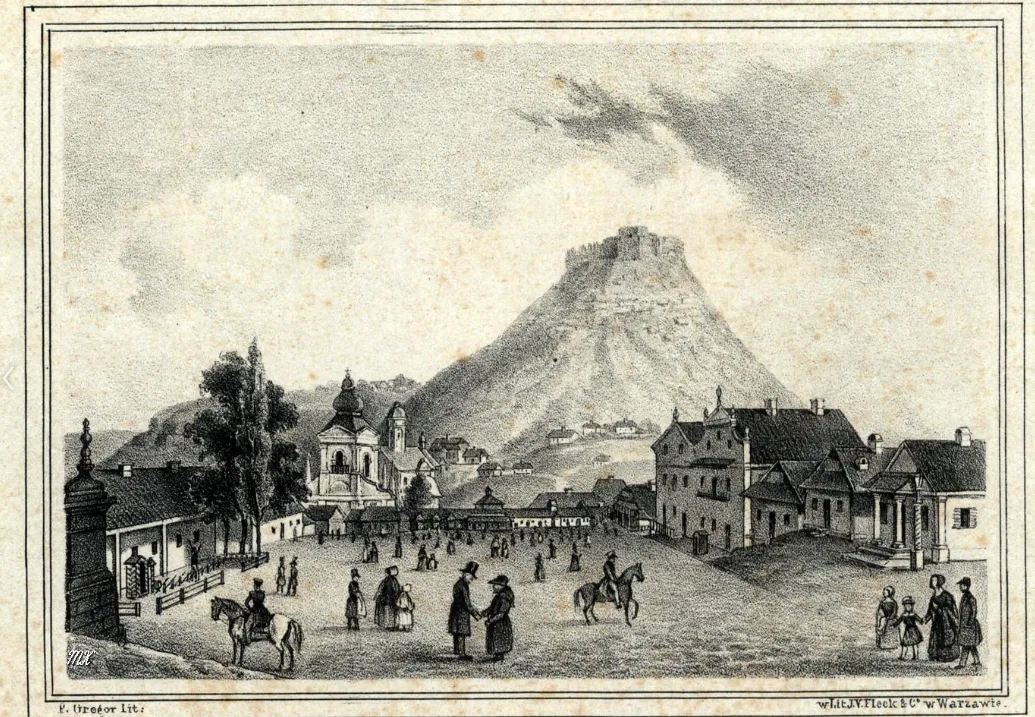
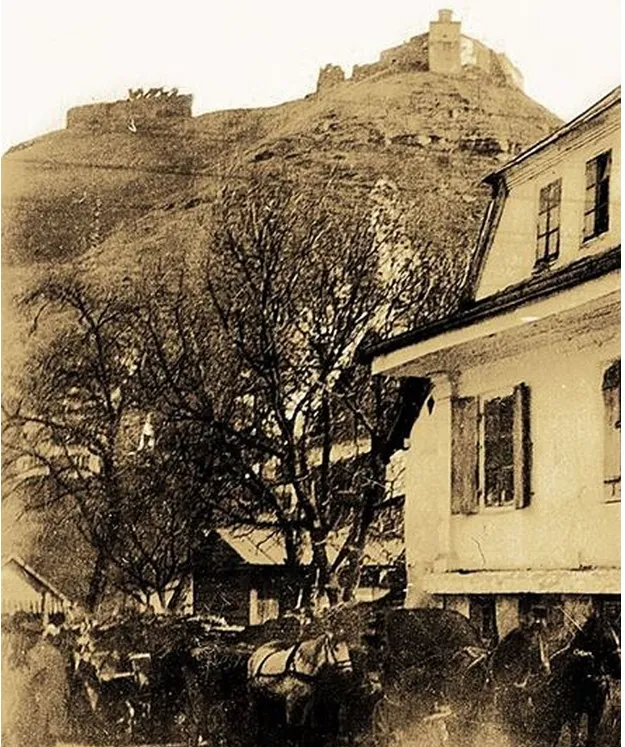
The Polish photographic documentary resource Fotopolska is particularly valuable for researching the historical image of Castle Hill and the town of Kremenets. Its collection devoted to Mount Bona in Kremenets includes old photographs and postcards showing what this location looked like in the first half of the twentieth century. The materials include panoramas of Kremenets from the 1920s and 1930s, images of the castle ruins at the summit, and a reference to an aerial photograph of Castle Hill taken in 1927. These visual sources help reveal not only a modern tourist attraction but also the historic landscape that shaped Kremenets’s image over the decades.
Interesting Facts About the Flora of the Kremenets Mountains
Legends create an emotional image of the park, but the real natural facts about the Kremenets Mountains are no less impressive. Within a relatively small area, beech forests, oak-hornbeam stands, rocky slopes, steppe areas, caves, springs, and former quarries come together. This diversity of habitats forms the basis for an exceptionally rich flora.
- The Kremenets Mountains are the only known place in Ukraine where Klokov’s birch grows.
- Within the park and adjacent areas, visitors can see 22 species of wild orchids.
- The Maiden Rocks preserve rare rock-steppe plants adapted to dry limestone slopes.
- The forests contain extensive stands of perennial honesty, ramsons, and snowdrops.
One of the most interesting species is gray sunrose. According to the park administration, following the occupation of Crimea, within the territory controlled by Ukraine it can be seen specifically at the Maiden Rocks. This further highlights the conservation value of small rocky areas that may at first glance appear to be ordinary slopes.
Kremenets Mountains National Nature Park is one of the most valuable centers of plant diversity in Western Ukraine. As of 2024, 1,394 species of vascular plants have been identified within its territory, more than 1,200 of them confirmed by scientific research. More than 70 plant species have protected status and are listed in the Red Data Book of Ukraine; they are also protected by international conservation lists, including the Bern Convention, CITES, and the European Red List. This figure is supported by the park’s scientific publications and the latest botanical research.
The legends of the Kremenets Mountains help us see the landscape through the eyes of people from the past, while scientific facts reveal its true value. It is this combination of folklore, history, and living nature that makes this picturesque corner of the Ternopil region a special destination for educational tourism.
Events, Tours, and Forums in Kremenets Mountains Park
The nature park does not have a single permanent festival held on the same dates every year. Instead, the park administration organizes engaging tours, educational walks, conservation campaigns, meetings with children and young people, scientific events, and themed trips through various parts of the Kremenets Ridge.
The program of these events changes throughout the year, so it is worth checking the park’s latest announcements before traveling. Some activities require advance registration, have a limited number of participants, or take place only in favorable weather. This is especially important for quarry tours, long forest crossings, and routes through remote protected areas.
Tours of Kremenets Mountains Park and Themed Trips
One of the most interesting ways to get to know this natural area is to take a guided tour of Kremenets Mountains Park with a specialist. During such a walk, visitors learn about the origins of the local terrain, the protected forests of the Kremenets area, rare plants and animals, and the rules for behaving in a protected natural area.
Depending on the program, a tour may follow an environmental education trail, a forest route, the outskirts of Mount Cherchi, the area near the Maiden Rocks, or other accessible parts of the park. Themed trips are also organized to the Kremenets quarries, where the natural history narrative is complemented by information about geology, the history of stone extraction, and underground bat habitats. Such programs may be regular paid tours, educational trips, or charitable events. Therefore, the format, route, cost, and duration should be confirmed directly before visiting.
Environmental Campaigns, Workshops, and Educational Events
Environmental education is an important part of the park’s work. National park staff hold meetings with students, outdoor lessons, themed talks, environmental campaigns, workshops, and educational tours. These events not only explain the natural environment but also show why even an ordinary-looking patch of forest can be an important habitat for rare species.
The topics usually concern forest conservation, seasonal changes in nature, rare plants, birds, bats, pollinators, and responsible recreation. Some programs are aimed at children, but certain events may also interest adult visitors who want to better understand this picturesque corner of the Ternopil region.
Such events sometimes coincide with the opening of new environmental trails, conservation work, planting activities, cleanups, or observations of particular groups of animals. For tourists, this is an opportunity to see the national park not merely as a place for walks but as a living center for biodiversity conservation.
Scientific Conferences and Nature Events at Kremenets Mountains National Nature Park
The park also organizes scientific and research-and-practice conferences, seminars, training sessions, workshops, and meetings devoted to nature conservation. Participants include staff of protected-area institutions, researchers, lecturers, students, and specialists studying flora, fauna, landscapes, and conservation management.
To an ordinary tourist, such events may seem highly specialized, yet open lectures, presentations, and some field trips often contain plenty of fascinating information about the rare plants of the Kremenets Mountains, changes in forest ecosystems, habitat restoration efforts, and the results of wildlife observations.
Cultural Events in Kremenets to Combine with a Visit to the Park
A visit to the Kremenets Mountains can easily be complemented by a cultural program in the town itself. One of the best-known recurring events is the international Ukrainian-Polish literary and arts forum «Dialogue of Two Cultures», traditionally held in Kremenets in early September and associated with the town’s famous native, Juliusz Słowacki.
The forum features literary meetings, exhibitions, concerts, scholarly discussions, and commemorative events. One of its main venues is the Juliusz Słowacki Literary Memorial Museum, so you can plan your trip to explore Kremenets’s tourist trails in the first half of the day and then attend the cultural program in the town’s historic center.
Throughout the year, other artistic, family, religious, and historical-cultural events may take place in Kremenets and the surrounding settlements. They are not part of the national park’s official program, but they offer a deeper introduction to the history, culture, and traditions of the Kremenets area.
Cultural events and organized tours make a trip to Kremenets more rewarding, but the area’s greatest asset remains its nature. Even without a special program, Kremenets’s biodiversity conservation center is worth a separate visit for its forest routes, cliffs, panoramas, and the quiet that is difficult to experience during crowded events.
What to See and Do in Kremenets Mountains Park
The protected area of Kremenets Mountains National Park cannot be explored as one compact tourist destination. Its protected sections stretch along the Kremenets Ridge and are located some distance from one another. Some routes begin directly in Kremenets, while other attractions are more conveniently reached separately.
That is why it is worth deciding on your main purpose before traveling: climbing to the castle ruins, walking along a forest trail, seeing limestone cliffs, visiting a spiritual site, descending to the quarries with a guide, or dedicating the day to a longer hiking route. It is this diversity that makes Ternopil region’s green treasure a popular natural destination for families, photographers, history enthusiasts, and active travelers.
The flora and fauna of the Kremenets Mountains make the park an interesting place to visit throughout the year. In spring, forest plants bloom here; in summer, beech and oak-hornbeam forests provide welcome shade; in autumn, the slopes become colorful natural scenery; and in winter, the outlines of the mountains are more visible through the bare trees.
So there is hardly a bad season for traveling here—unless you set out in brand-new white shoes right after a heavy downpour. Still, to keep your walk from ending with just a few photographs and the question «Beautiful, but where do we go next?», it is worth finding out in advance which hiking destinations the protected area conceals, what can be seen nearby, and what tourists can do here. After all, an ordinary turn in a forest trail may reveal rocky precipices, ancient hillforts, springs, fortress ruins, or a panorama worth walking a few extra kilometers for.
Overall, the park has a network of eco-tourism routes introducing visitors to different parts of the protected area. As of 2024, the administration of Kremenets Mountains National Nature Park listed ten routes with a total length of 33 kilometers—and each of them reveals the Kremenets area from a different perspective.
Climb Castle Hill and see Kremenets Castle
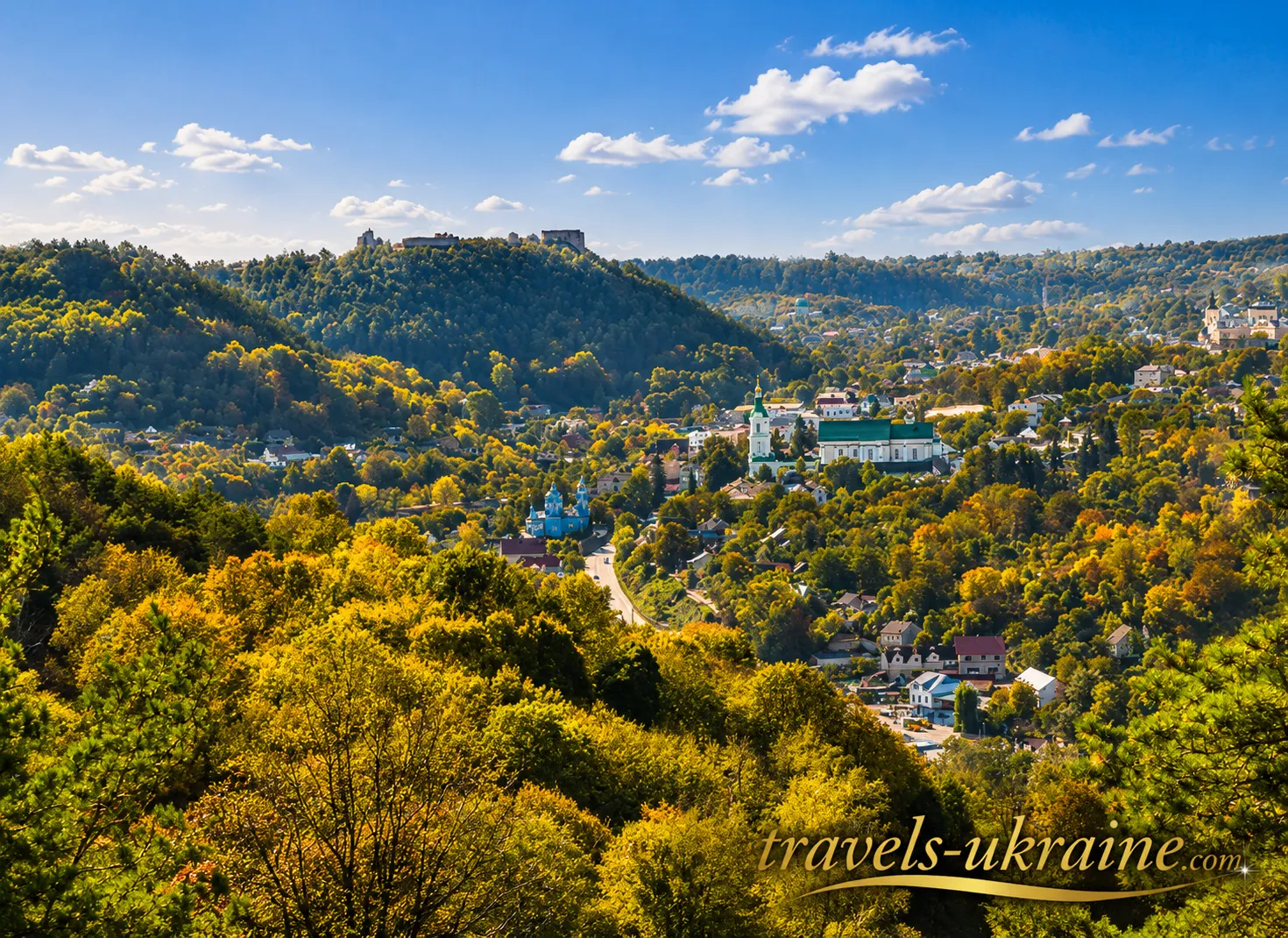
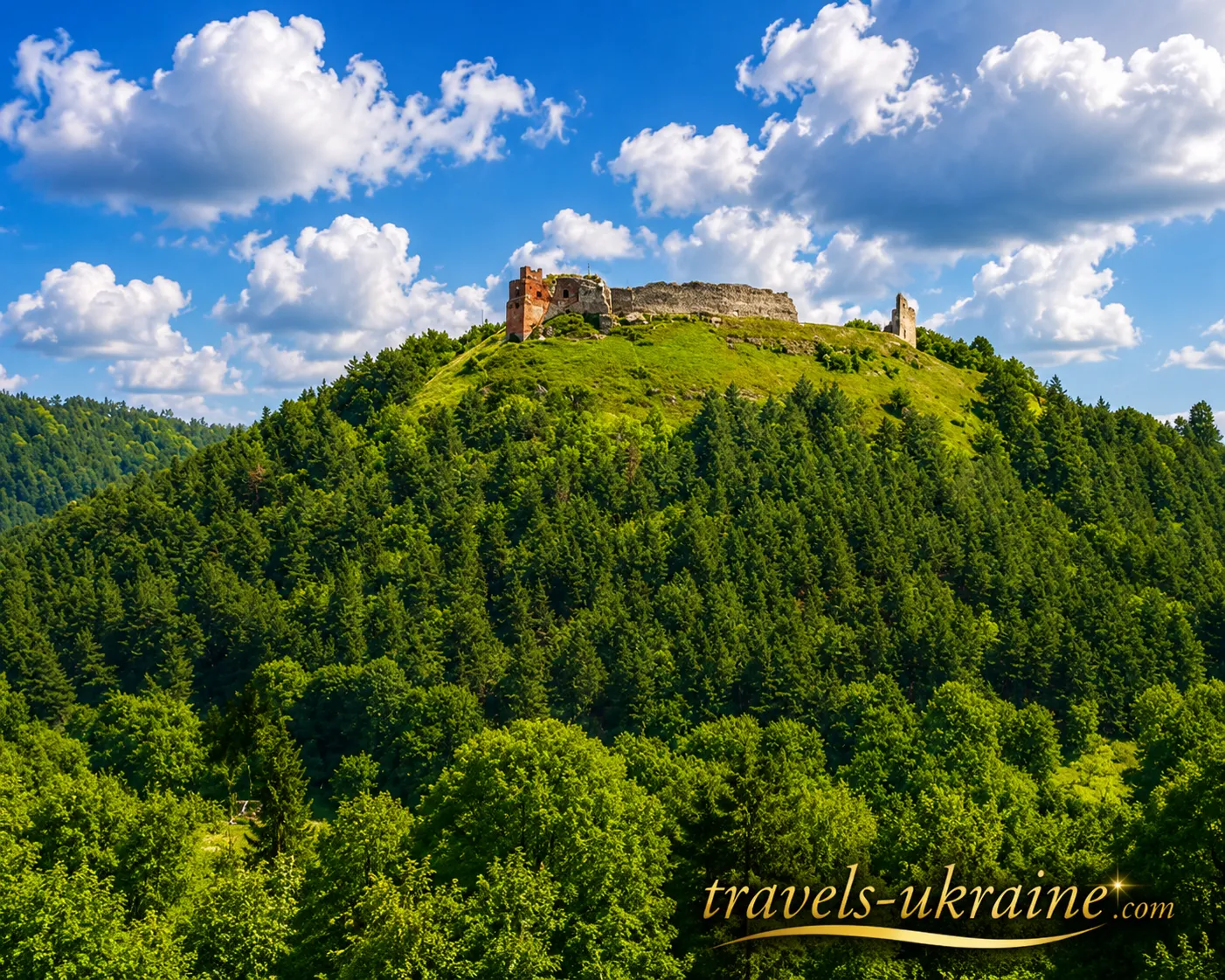
Castle Hill in Kremenets, also known as Bona Hill, is the city’s best-known tourist attraction. Castle ruins remain at its summit, while the slopes offer panoramic views of the historic center, churches, residential neighborhoods, and surrounding hills.
The official eco-tourism route «Castle Hill» is 2.2 kilometers long. The climb requires no special equipment, although some sections are quite steep, and the soil and rocks may be slippery after rain. This is the route travelers often mean when searching for an eco-trail to Bona Hill.
At the summit, do not limit yourself to a quick look at the walls. Different parts of the castle courtyard offer distinct views, while the natural terrain helps explain why this elevation was so important for defense. Allow at least an hour and a half for a leisurely climb, exploring the ruins, and taking photographs.
See Maiden Rocks and the limestone cliffs
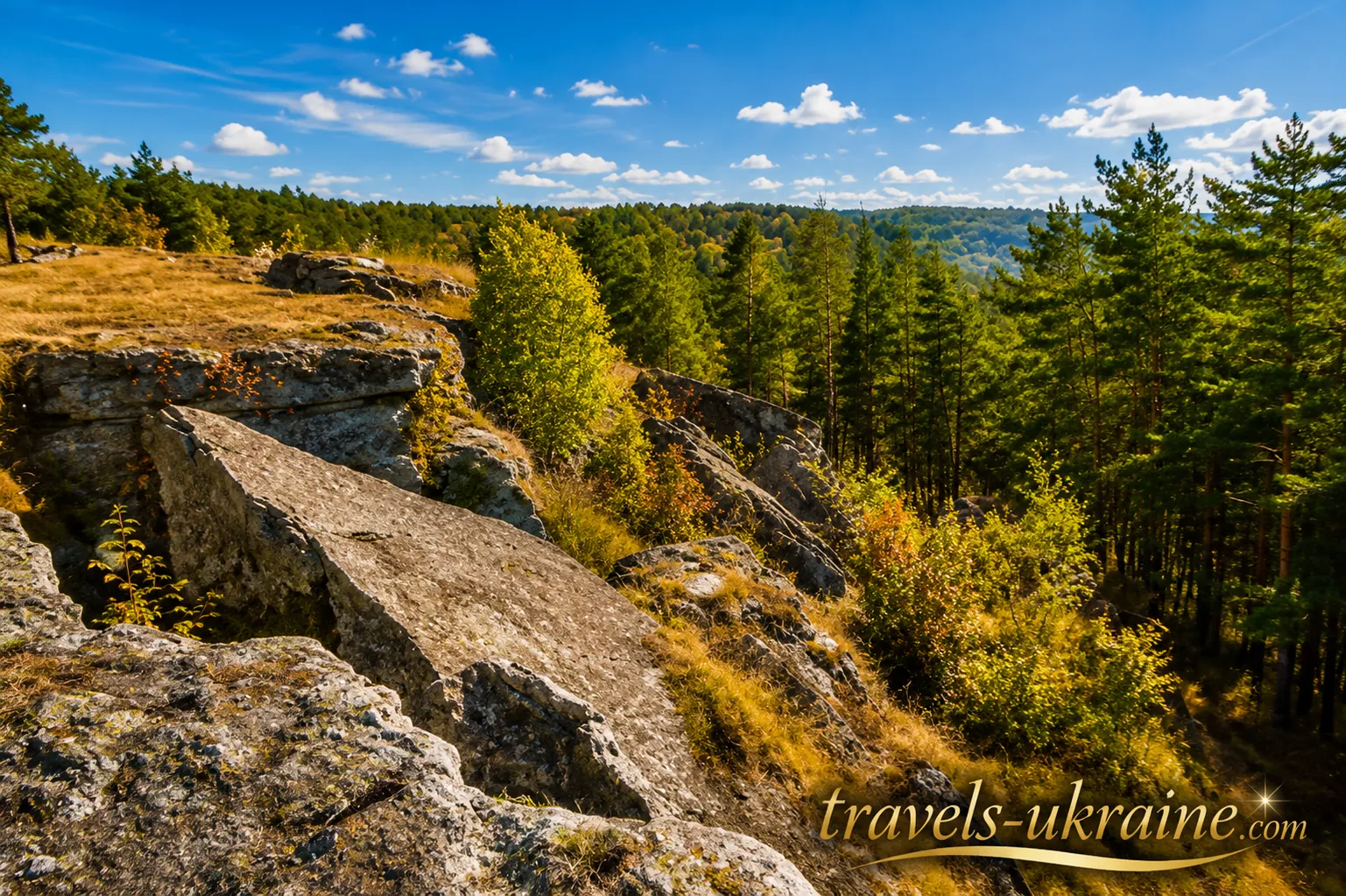
Maiden Rocks are one of the most striking natural landmarks near Kremenets. Limestone outcrops, massive boulders, precipices, and rocky platforms rise amid the forest, offering views of the surrounding hills and plains.
This part of the park is interesting for more than its scenery. The open, dry slopes are home to rare plants, so visitors must not leave the established trail, pick flowers, or trample the vegetation near the rocks. Particular caution is needed near the edges of the precipices: there is no continuous railing, and wet rock surfaces can be slippery.
These rocks are ideal for a leisurely walk, nature photography, and observing changes in the vegetation. In spring, the slopes attract visitors with their blooms; in summer, the forest offers protection from the heat; and in autumn, this part of the Kremenets Mountains is especially striking, with its combination of pale stone and colorful foliage.
Take the route to God’s Mountain
The «God’s Mountain» route is 1.7 kilometers long and leads to one of the best-known natural and spiritual sites in the Kremenets area. The mountain rises amid open countryside, but its slopes are forested, so during the ascent travelers gradually move from open fields into a shaded natural environment.
The main places to visit are the spring and the sanctuaries associated with the mountain. For some, this is a tourist route; for others, a pilgrimage site. Visitors should therefore behave quietly near the chapel and spring, avoid unnecessary noise, and respect those who come here to pray.
It is best to plan a trip to God’s Mountain as a separate part of a weekend itinerary. It lies outside the city center, so the trailhead is most conveniently reached by car, after which the journey continues on foot.
Visit Danylo’s Mountain and the hillfort on Unias Mountain
Danylo’s Mountain is notable for its combination of natural landscape, ancient history, and sacred architecture. The official 2.5-kilometer route offers views of forested slopes and a site associated with the medieval city of Danyliv Hrad.
Another lesser-known but rewarding destination is Unias Mountain. A 2.1-kilometer route leads to it. Traces of an ancient fortified settlement remain on the mountain, while the walk itself passes through quiet forest areas with far fewer visitors than Bona Hill or Maiden Rocks.
Danylo’s Mountain and Unias are well suited to travelers who have already visited Kremenets’s main attractions and want to see less crowded parts of the park. For this trip, check the route’s starting point in advance and download a map, as mobile coverage in the forest may be unreliable.
Take a guided tour of the Kremenets quarries
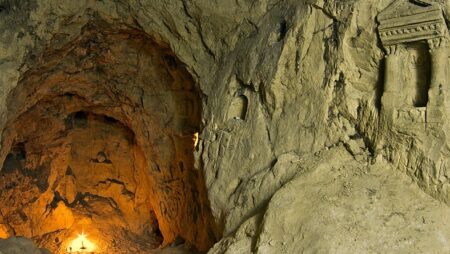
The Kremenets quarries, sometimes called catacombs, are a man-made system of underground workings. They were created through stone extraction and later became an important wintering and roosting site for bats. Today, this route complements Kremenets’s tourist trails.
Entering the underground passages independently is dangerous. It is easy to lose your bearings inside, and there are low passages, uneven surfaces, loose rock, and areas of high humidity. The only safe way to visit is on an organized tour with a guide who knows the accessible passages and the rules for behaving near areas inhabited by animals.
Before the tour, find out what equipment the organizer provides and what you need to bring. Closed-toe shoes, warm clothing, gloves, and a headlamp are usually advisable. Inside, do not touch the bats, shine bright lights at them, or make loud noises.
Follow the educational eco-trail with children
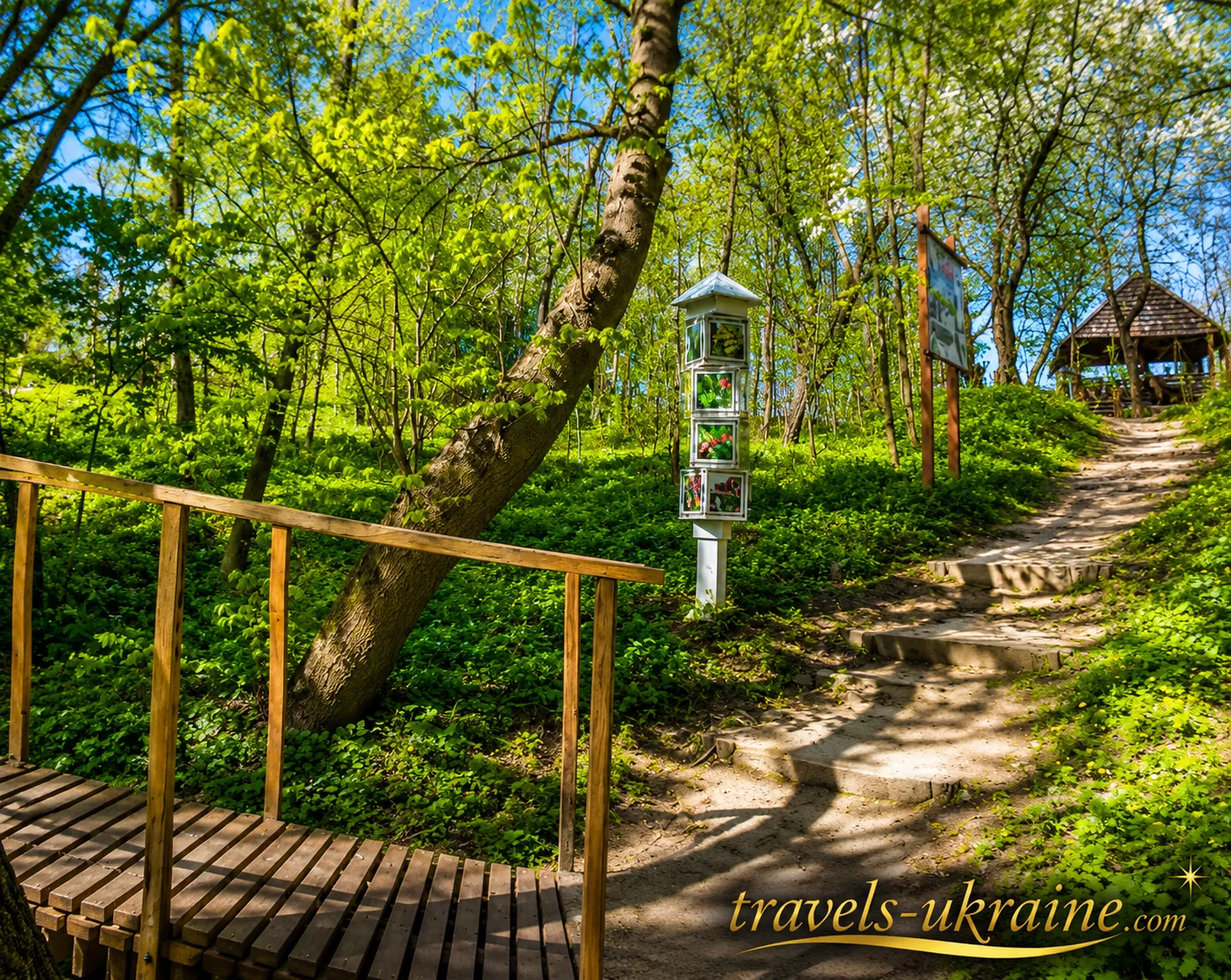
For families and school groups, the park offers two educational trails. «Forest Symphony» begins near the National Nature Park administration in Kremenets, is about one kilometer long, and includes seven themed stops. The route features information about living and non-living nature, flora, fauna, and Red Data Book species.
The «Discover Nature with Us» trail is located in the village of Lishnia, near the administrative building of the Uhorskyi Nature Conservation Research Department. It consists of six stops and is equipped with bridges, a summer classroom, and interactive elements.
This is one of the most convenient options for a family excursion in Kremenets Mountains National Park, especially if the children are not yet ready for long climbs or challenging forest crossings.
Take a cycling trip along the Kremenets Ridge
Four routes have been developed for experienced cyclists within the park and surrounding areas. Each allows travelers to combine forests, scenic summits, historical landmarks, sacred sites, and little-known corners of the Kremenets area in a single trip—places that would take much longer to reach on foot.
A bicycle makes it possible to cover several remote natural and historical sites, but the terrain here is uneven and demanding in places. The routes include long climbs, steep descents, dirt sections, forest roads, tree roots, and rocky stretches. After rain, the trails may become slippery, while soft ground can significantly slow progress, making a city bike with narrow tires a poor choice. A mountain or touring bike with reliable brakes and tires offering good traction is more suitable for this trip.
Before setting out, check the bicycle’s condition, tire pressure, and gear-shifter operation, and take plenty of water, a light snack, a pump, a spare inner tube or patches, a multitool, and a small first-aid kit. Even if the route seems short, the climbs may take more energy and time than expected, so plan your pace without rushing. It is also useful to download an offline map and mark rest stops in advance, as mobile coverage may be unreliable in forested areas.
A cycling trip through the Kremenets Mountains is not a race, but an opportunity to see more while maintaining a sense of direct contact with nature. On open summits, stop for the panorama; by the springs, take a break; and in protected areas, slow down and stay on the designated route. This way, the ride will be enjoyable and safe for both the traveler and the environment.
Relax in the recreational area near Wolf Mountain
A recreational area near Wolf Mountain has a tent site, gazebos, water, a toilet, a sports ground, and a designated campfire area. It is an option for travelers who want to stay in the park longer and combine hiking routes with time in nature. This eco-trail is 2.1 km long.
Before pitching a tent or lighting a fire, check the current rules and any seasonal restrictions. During periods of high fire danger, open fires may be prohibited even at previously designated sites.
The Kremenets Mountains for recreation offer much more than a single panoramic summit. You can follow a short eco-trail, climb to an old fortress, see rocky precipices, visit a spring, take a forest walk, ride a cycling route, or join an educational excursion.
Those who want to learn more about the region’s nature and history should also consider the park’s other official routes. The 2.4-km «To Slovatskyi Rocks» trail leads to picturesque rock formations associated with Kremenets’s cultural heritage. The 3.7-km «Along the Trails of Ancient Kremenets» route combines natural landscapes with historic sites in the city, while the 4.7-km «Lishnia Trails» route introduces visitors to quieter forest areas and the outskirts of Lishnia village.
The 3.4-km «Treasures of the Kremenets Forest» route is suitable for those interested in the plant and animal life of protected forests, while the 2.4-km «To the Clear Springs» trail combines a leisurely walk with visits to natural springs. Each route reveals a different part of the Kremenets area, so choose according to the time available, your fitness level, and your preferred travel style.
The main thing is to use official trails, consider the distances between destinations, check trail conditions before setting out, and leave behind nothing but footprints on the path. That is how a trip through the Kremenets Mountains can remain enjoyable for tourists and safe for protected nature.
What to visit near Kremenets Mountains National Park
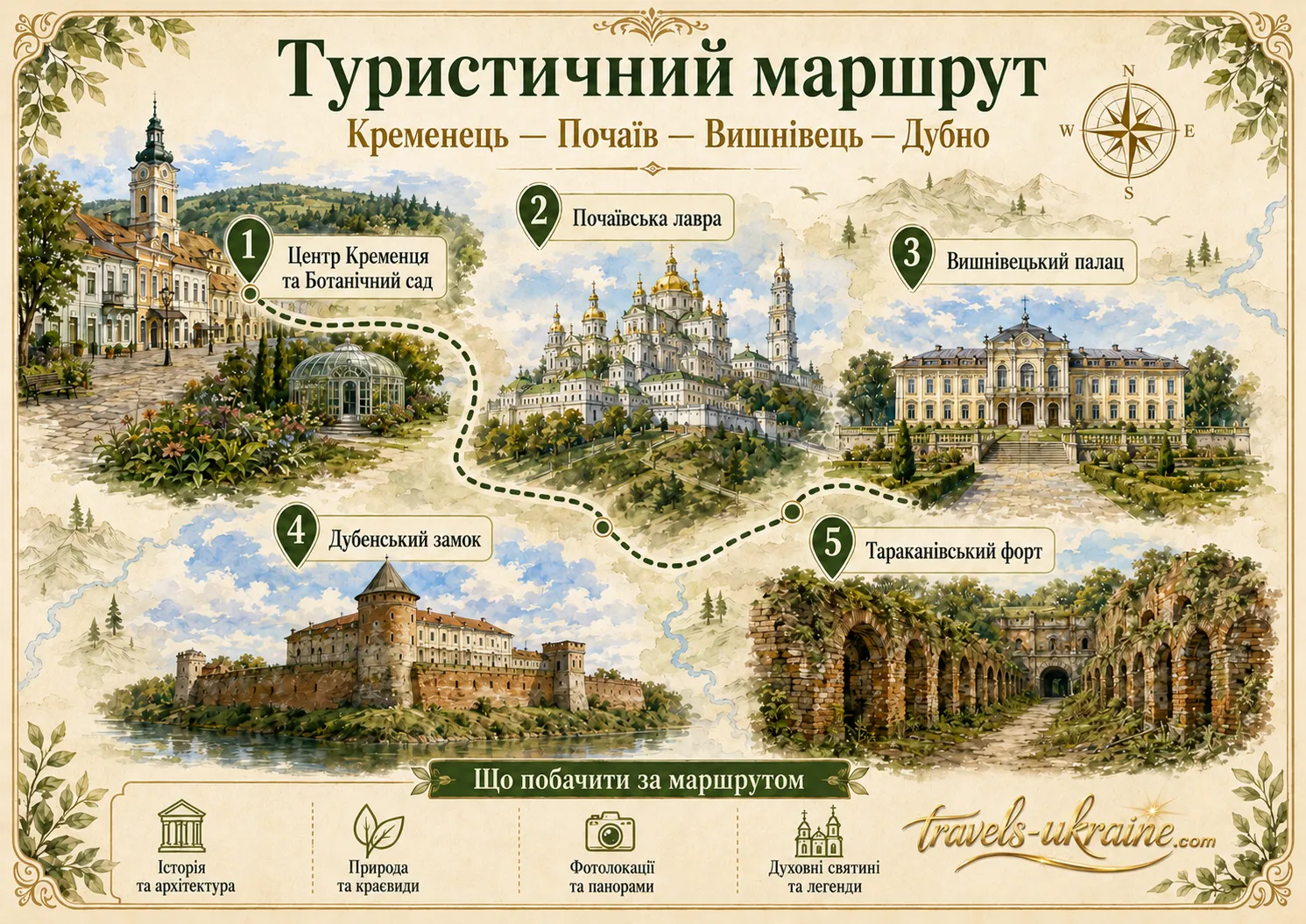
A trip to Kremenets Mountains National Nature Park can easily become an action-packed route through the northern part of Ternopil Oblast and neighboring Rivne Oblast. Alongside natural trails, there are ancient churches, museum-estates, palaces, monasteries, and fortification landmarks. Some can be explored on foot within Kremenets, while others are more conveniently reached by car.
The traveler's biggest mistake is trying to fit everything into a single day. After climbing Bona, walking among the Maiden Rocks, and spending several hours in the forest, even the most devoted tourist starts thinking more about dinner than eighteenth-century architecture. That is why it is better to arrange the nearest sights by distance and time, leaving enough opportunity to explore each place at a leisurely pace.
Kremenets Historic Center and Botanical Garden
The easiest way to continue your journey is with a walk through Kremenets itself. The city's historic center lies between mountain slopes, so the old houses, monasteries, and churches are naturally integrated into the landscape. After following forest routes, it is especially interesting to see how the forests of the Kremenets Mountains shaped the layout of the streets and the city's overall appearance.
One of the main architectural landmarks is the former Jesuit Collegium, built in the eighteenth century. The Volhynia Gymnasium and Kremenets Lyceum later operated within its walls. The large Baroque ensemble is clearly visible from the surrounding elevations and remains one of Kremenets's most recognizable symbols.
In the central part of the city, it is also worth paying attention to the ancient churches, monastic buildings, residential architecture from past centuries, and streets offering unexpected views of Bona Mountain. Allow at least two hours for this walk rather than leaving it for the final twenty minutes before departure.
Kremenets Botanical Garden will be a natural continuation of your introduction to the flora of the Kremenets region. It is one of the oldest botanical gardens in Ukraine: its development as a scientific institution began in the early nineteenth century at the Volhynia Gymnasium. The garden occupies a complex, hilly landscape with significant changes in elevation. Its grounds combine collection plots, forest stands, open slopes, and viewpoints overlooking the mountains and the city's surroundings.
It is best to set aside several hours for the botanical garden and wear comfortable shoes. The word «garden» may create a misleading impression of level paths and a short walk, but the local terrain quickly reminds you that you are still in the Kremenets Hills.
Pochaiv Lavra
Approximately 24 kilometers from Kremenets stands the Holy Dormition Pochaiv Lavra—a large monastic complex rising above the city of Pochaiv. Its silhouette, with its bell tower, cathedrals, and golden domes, can be seen on the approach to the city. The lavra is an active monastery and an important pilgrimage site, not merely an architectural landmark. Visitors should follow the accepted rules of conduct, avoid disrupting services and speaking loudly, and check the requirements for clothing and photography in advance.
Pochaiv and the Kremenets nature reserve can be combined in a single day, but the itinerary will be quite full. The best option is to devote the morning to a nature walk and head to Pochaiv after lunch—or, conversely, set aside a separate, unhurried day for the park.
Vyshnivets Palace and Park Complex
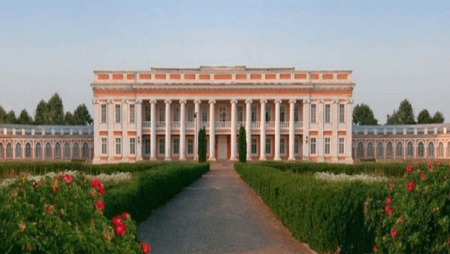
About 32 kilometers farther from Kremenets, in Vyshnivets, stands the palace of the Vyshnevetsky princes. Its architecture combines features of late Baroque and Classicism, and the complex itself is a landmark of national importance that will add a memorable dimension to your trip.
The palace halls house museum exhibitions devoted to the history of the residence, the Vyshnevetsky family, and the culture of the region. After exploring the natural routes of the Kremenets Mountains, this location lets you change the pace of your journey and move from forest trails to the interiors of an old aristocratic residence.
Vyshnivets is convenient to include in a separate driving itinerary. Before setting out, it is advisable to check the museum's opening hours, admission fee, and access to individual halls.
Dubno Castle and Tarakaniv Fort
Travelers with another free day can continue their journey toward Dubno. The distance from Kremenets to the city by road is approximately 35–40 kilometers, depending on the route chosen. Here, it is worth visiting Dubno Castle—one of the best-known fortification landmarks in Rivne Oblast. Its preserved bastions, palace buildings, courtyard, and museum exhibitions offer a look at a much more complete castle complex than the fortress ruins on Bona Mountain.
Nearby stands Tarakaniv Fort—a massive nineteenth-century defensive structure with galleries, casemates, ramparts, and underground rooms. Because some structures are in disrepair and there are open collapses and confusing passages, exploring the fort alone can be dangerous. It is best visited during the day, in sturdy closed-toe shoes, and with an experienced guide.
Rules of Conduct in Kremenets Mountains National Nature Park
Kremenets Mountains National Park is a protected natural area, so visitors must follow a few simple rules. They help preserve rare plants, animals, and forests. Stay only on established tourist trails, as leaving the route can damage vegetation, cause soil erosion, and create hazards on steep or rocky slopes.
Rare plants, including wild orchids, grow in the park and the protected forests of the Kremenets region, while Red Book-listed animals and bats inhabit the forests and quarries. Do not pick flowers, dig up plants, touch animals, or photograph them with flash.
Do not play loud music, shout, or disturb animals and other visitors. Near chapels, springs, and sacred sites, behave respectfully, as these are places of prayer and pilgrimage for many people. So keep quiet and show consideration for others.
Some routes within the national park may be temporarily closed because of fire danger, bad weather, trail damage, or conservation activities. In such cases, follow the instructions of park rangers and choose another route for your sightseeing trip.
The main rule is very simple: do not damage nature, and leave behind nothing but footprints on the trail. This will keep the Kremenets Mountains clean, vibrant, and interesting for future generations of travelers.
Safety While Traveling in the Kremenets Mountains
The hiking trails of the Kremenets Mountains generally do not require special mountaineering equipment, but that does not mean a walk should be taken lightly. Steep slopes, wet rocks, tree roots, forest junctions, and unreliable mobile service can turn an ordinary outing into an unexpected challenge.
The best way to avoid problems is to choose your route in advance, check the weather, assess your fitness, and avoid setting out too late for an unfamiliar area. The mountains here are not high, but the navigator, rain, and twilight sometimes have a sense of humor of their own.
Closed-toe or athletic shoes with a deeply textured sole are best for walks in the park. Sandals, smooth-soled sneakers, and dress shoes may look good only until the first wet slope. Choose clothing according to the layering principle. Even on a warm day, shaded forests and quarries can be cool. In summer, a hat is advisable; in spring and autumn, bring a lightweight waterproof jacket.
Before setting out, download an offline map, save the coordinates of your starting point, and tell someone close to you exactly where you are going. In forested areas, the signal may weaken, while a fork that looks identical to the last one can quickly make you reconsider your excessive faith in intuition. If you lose the route, do not continue wandering aimlessly through the forest. Return to the last familiar marker, check the map, and, if possible, contact the park administration or rescuers.
Remote forest routes and little-known trails are best tackled by at least two people. An experienced guide is essential for excursions into underground workings, as it is easy to lose your bearings, slip, or enter a dangerous area inside.
In warm weather, forests may contain ticks, mosquitoes, and other insects. Wear covered clothing, use insect repellent, and carefully check your body, hair, and clothing after returning. If a tick attaches itself, remove it correctly as soon as possible or seek medical care. Do not burn the tick, cover it with oil, or try to pull it out with a sudden movement.
What to Do When You Encounter a Wild Animal
If you see a snake or another wild animal, do not try to approach it, touch it, or drive it away with a stick. Stop, give the animal an opportunity to leave, and slowly go around the area at a safe distance. In the event of a snakebite, immobilize the affected limb, call for help at 103 or 112 and reach a medical facility as quickly as possible. Do not cut the bite site, suck out the venom, or apply a tight tourniquet.
And remember the golden rule: even for a short walk, it is useful to carry bandages, antiseptic, allergy medication, personal medicines, and the painkiller you usually take. It is also a good idea to keep a charged power bank, flashlight, whistle, and a small supply of water in your backpack.
Safe recreation in the Kremenets Mountains begins with simple planning. Comfortable shoes, a map, water, a charged phone, and a realistic assessment of your own abilities take up far less space than a backpack full of unnecessary items, yet they are far more useful.
Frequently Asked Questions About Kremenets Mountains National Nature Park
Where is Kremenets Mountains National Nature Park located?
The park is located in Ternopil Oblast and covers sections of the Kremenets Ridge in Kremenets and nearby settlements. It is not one compact area with a single entrance, but a system of mountains, forest tracts, natural landmarks, and tourist routes.
Which route is best for getting acquainted with the Kremenets Mountains?
For a first visit, the most convenient choice is Castle Mountain, or Bona, with the ruins of Kremenets Castle. After the climb, you can continue through Kremenets's historic center, visit the botanical garden, or follow one of the short nature trails near the city.
How much time is needed to visit Kremenets Mountains National Nature Park?
Plan approximately 1.5–3 hours for one short location. A full day is needed to explore several places in Kremenets. If you want to visit Bozha Hora, Danylova Hora, Unias, or other remote parts of the park, it is better to set aside two days.
Do you need to buy a ticket to enter Kremenets Mountains National Nature Park?
There is no single admission ticket for the entire park because its areas are located separately. However, guided tours, the use of individual recreational facilities, and other services may incur a fee. Please check the current prices with the park administration before your trip.
Are the Kremenets Mountains suitable for a holiday with children?
Yes, but the route should be chosen according to the child’s age and stamina. For families, short educational nature trails, walks around Kremenets, and routes without steep cliffs are the best options. Children should be kept under constant supervision at Maiden Rocks and on steep slopes.
Is special equipment needed for the hiking trails in Kremenets?
Mountaineering equipment is not required for most official routes. Closed shoes with a treaded sole, comfortable clothing, a supply of water, an offline map, and a small first-aid kit are sufficient. Visiting the quarries requires a guide, a flashlight, and suitable protective clothing.
When is the best time to visit the Kremenets Mountains?
Spring, summer, and autumn are the most convenient seasons. In spring, wild plants are in bloom; in summer, the trees provide shade; and in autumn, the slopes take on especially vivid colours. The park is also interesting in winter, but snow, ice, and short daylight hours can make the route more challenging.
Can I visit the park with a dog?
On routes open to visitors, dogs must be kept on a leash and not allowed to chase wild animals or run into protected thickets. Owners must clean up after their animals. Before your trip, it is advisable to check whether there are any restrictions in the specific area.
Where can you enjoy the best views of the Kremenets Mountains?
The best-known panorama opens up from Castle Hill, overlooking Kremenets and the surrounding hills. Striking views can also be seen at Maiden Rocks, in the botanical garden, and in several open areas of the Kremenets Ridge.
What is prohibited in Kremenets Mountains National Nature Park?
It is prohibited to pick or dig up plants, disturb animals, leave litter, damage trees or rocks, light fires in unauthorised places, or leave official routes without permission. When an area is temporarily closed, visitors must follow the instructions of park staff.
The Kremenets Mountains in the Podolian Upland — a place you will want to return to
Kremenets Mountains National Nature Park is much more than a few picturesque hills surrounding an ancient city. Within a relatively small area, it brings together protected forests, limestone cliffs, deep ravines, springs, ancient hillforts, sacred sites, and landmarks that preserve the history of the region.
It is this diversity that makes Kremenets Mountains National Nature Park an excellent destination for a weekend trip, a family holiday, an educational tour, a cycling adventure, or a leisurely walk surrounded by nature. Here, you can combine active tourism with history, photography, birdwatching, and an introduction to Kremenets’ cultural landmarks.
At the same time, this natural treasure of the Kremenets region requires careful treatment. Rare plants cannot withstand trampling, bats are vulnerable to disturbance, and forest slopes suffer from informal trails and litter. The best way to thank the park for its beautiful views is to follow an official route, leave nature unharmed, and take away only photographs and memories.
The Kremenets Mountains do not try to impress with their height — they captivate with their richness. Behind every hill, there may be an ancient legend, a rare plant, the remains of a fortification, or a view that makes you stop and forget the time you had planned. Perhaps that is why, after the first trip, you are left with the feeling that you have seen far from everything.

No Comment
You can post first response comment.