
 English
 Українська
 Български
 Hrvatski
 Čeština
 Dansk
Dansk Nederlands
 Eesti
Eesti Suomi
Suomi Français
 Deutsch
 Ελληνικα
 Magyar
 Íslenska
 Italiano
 Latviešu
 Lietuvos
 Polski
 Português
 Română
 Русский
 Српски
 Slovenčina
 Slovenščina
 Español
 Svenska
 Türkçe
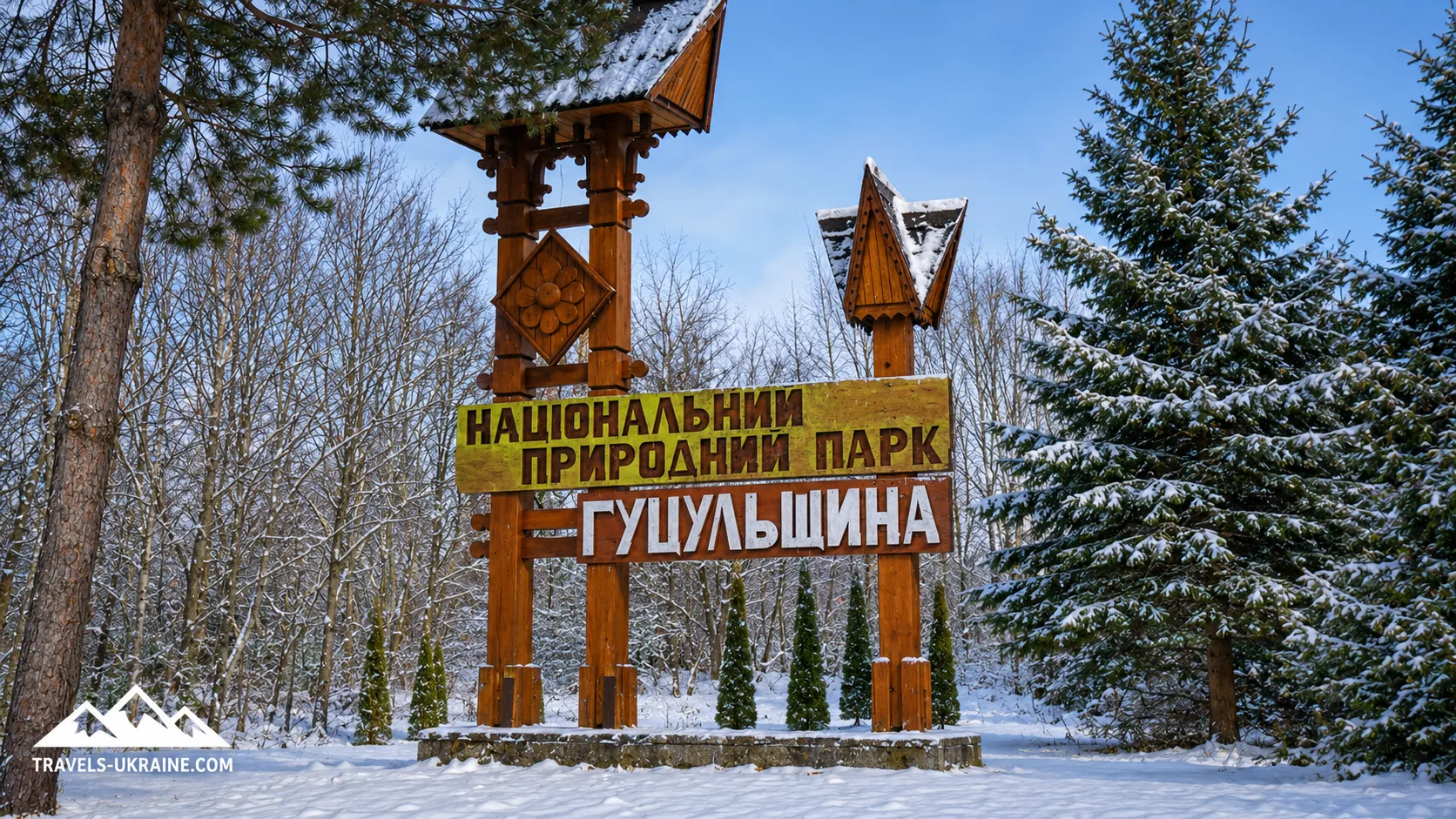
Hutsulshchyna National Nature Park is a place where the Carpathians cannot be experienced merely as mountains, forests, and beautiful panoramas. Here, the natural landscape has shaped people’s way of life for centuries, influencing crafts, architecture, farming, and local traditions. Mountain trails pass through forests and mountain meadows, leading to rivers, waterfalls, and peaks, while nearby communities continue to preserve Hutsul culture as part of everyday life.
The park is located in the Kosiv area of Ivano-Frankivsk Oblast and encompasses a significant part of the picturesque landscapes of the Pokuttya-Bukovyna Carpathians. Its territory stretches between Kosiv, Sheshory, Pistyn, Kuty, and dozens of surrounding settlements. Therefore, Hutsulshchyna is not a single compact tourist destination with a central entrance, but a vast system of forests, mountain ranges, valleys, natural landmarks, and trails.
Travellers can begin exploring the park right on the outskirts of Kosiv. Trails lead from here to the surrounding peaks and ranges, and the route can then continue to Pistyn, Sheshory, or other parts of the Kosiv area. Some trails are suitable for a short, several-hour walk, while others allow visitors to spend almost an entire day amid Carpathian nature.
Among the park’s best-known natural sites are the Sheshory Huk waterfalls, Lake Lebedyn, Rosokhata mountain meadow, Mount Ostryi, Mount Mykhalkiv, the Brusnyi Ridge, and Dovbush Rock. However, the true value of Hutsulshchyna National Nature Park is not limited to a collection of individual tourist attractions. The most interesting experiences happen along the way between them—in old forests, beside mountain streams, on open slopes, and along quiet trails where tourist-filled Kosiv gradually gives way to almost untouched nature.
Hutsul cultural heritage holds a special place in the character of the park. Traditional crafts, wooden churches, ancient customs, horse breeding, beekeeping, and Hutsul architecture are not artificially created tourist scenery here. They developed in this natural environment and largely explain why the park was named Hutsulshchyna.
That is why a journey through this area can easily become much more than an ordinary hike. In a single day, visitors can climb to a panoramic summit, follow a forest nature trail, see waterfalls, discover Hutsul crafts, or visit the Hutsul Horse Centre «Hutsulyk.» For families, cyclists, photographers, and hiking enthusiasts, the park offers entirely different ways to experience the Carpathians.
However, to plan such a trip properly, it is important to understand what Hutsulshchyna National Nature Park protects, which places are truly worth seeing, which routes are suitable for beginners, and which require more time and preparation. Below, we will explore the park’s nature, its most interesting locations, nature trails, Hutsul cultural heritage, and the practical aspects of travelling through the Kosiv area.
How Hutsulshchyna National Nature Park Was Created and What It Protects
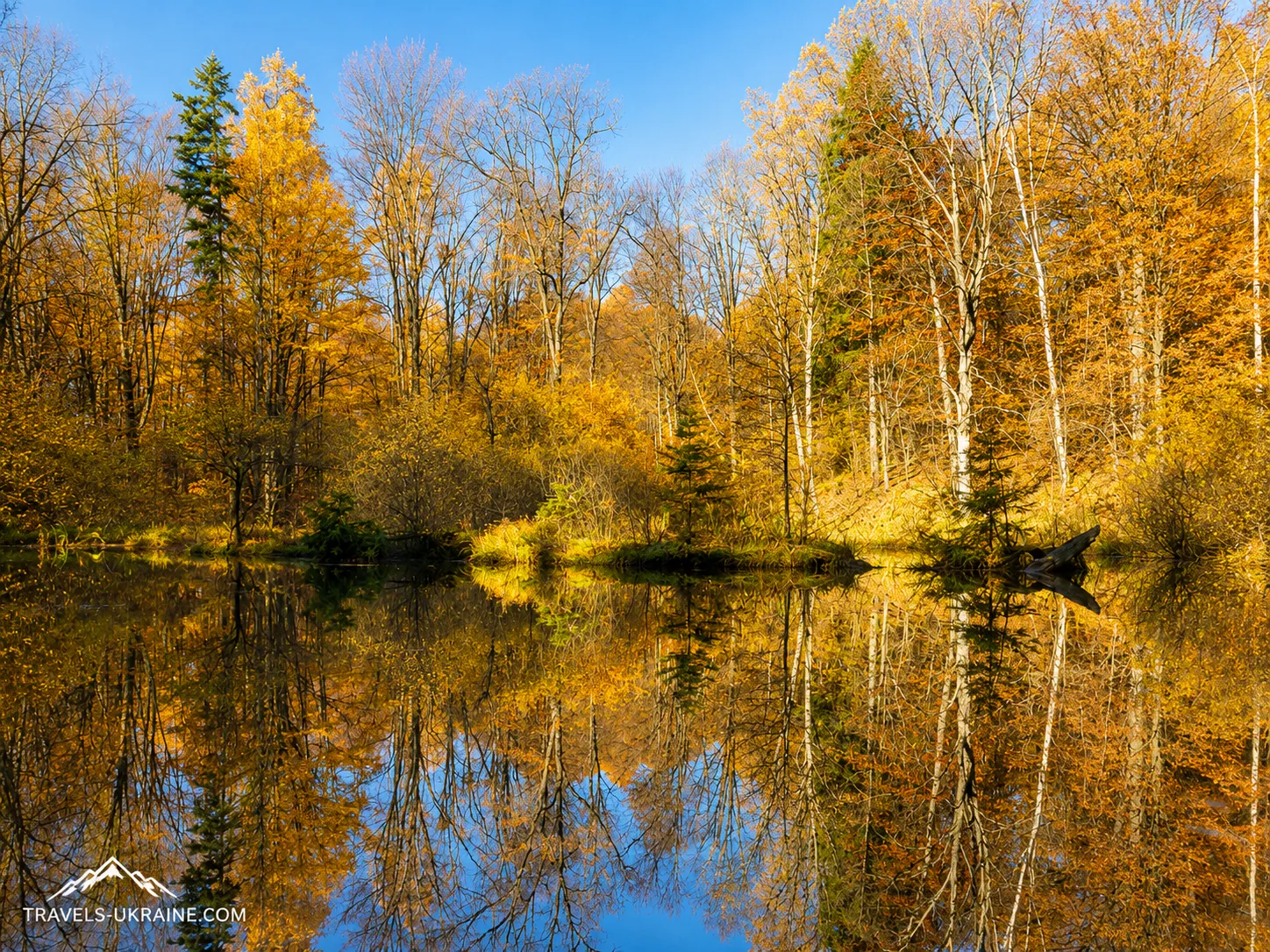
The idea of creating a large protected area in the Kosiv region did not arise by chance. This area combines mountain forests, river valleys, mountain meadows, rock formations, and places with exceptionally rich cultural heritage. Some natural sites had been protected before, but over time it became clear that preserving intact Carpathian ecosystems required a much larger territory with a unified system of protection, scientific research, and regulated tourism.
Important steps in this process were the decisions of the Kosiv District Council in 1998 and the Ivano-Frankivsk Regional Council in 1999 to establish a national nature park of the same name on the basis of the Hutsulshchyna Regional Landscape Park. The process was completed on 14 May 2002, when Hutsulshchyna National Nature Park was officially established by Decree of the President of Ukraine No. 456/2002.
What Area Does the Park Cover?
The total area of Hutsulshchyna National Nature Park is 32,271 hectares. Of this, 7,606 hectares were designated for permanent use by the park, while another 24,665 hectares were incorporated without being withdrawn from existing land users.
This structure explains one of the park’s main features: its territory is not one continuous uninhabited expanse. It has a mosaic structure and borders approximately 40 settlements in the Kosiv area. Natural sites stand alongside villages, roads, traditional farms, and land belonging to other users, so nature conservation here is directly connected with the lives of local communities.
Almost the entire territory is forested: according to the park’s current materials, approximately 98.8% of its area consists of forest fund land. Forests are therefore the foundation of Hutsulshchyna’s natural complex and play a key role in preserving local biodiversity, the water regime, and mountain landscapes.
Why Was Hutsulshchyna National Park Created?
The decree establishing the park defines its main purpose as the preservation, restoration, and rational use of typical and unique natural complexes of the Pokuttya Carpathians, which have conservation, scientific, aesthetic, recreational, and health-related value.
In other words, the park was not created merely to protect individual scenic mountains or rare plants. Its task is much broader: to preserve entire natural systems—old forests, mountain streams and rivers, mountain meadows, rocky areas, animal habitats, and the natural corridors through which animals move.
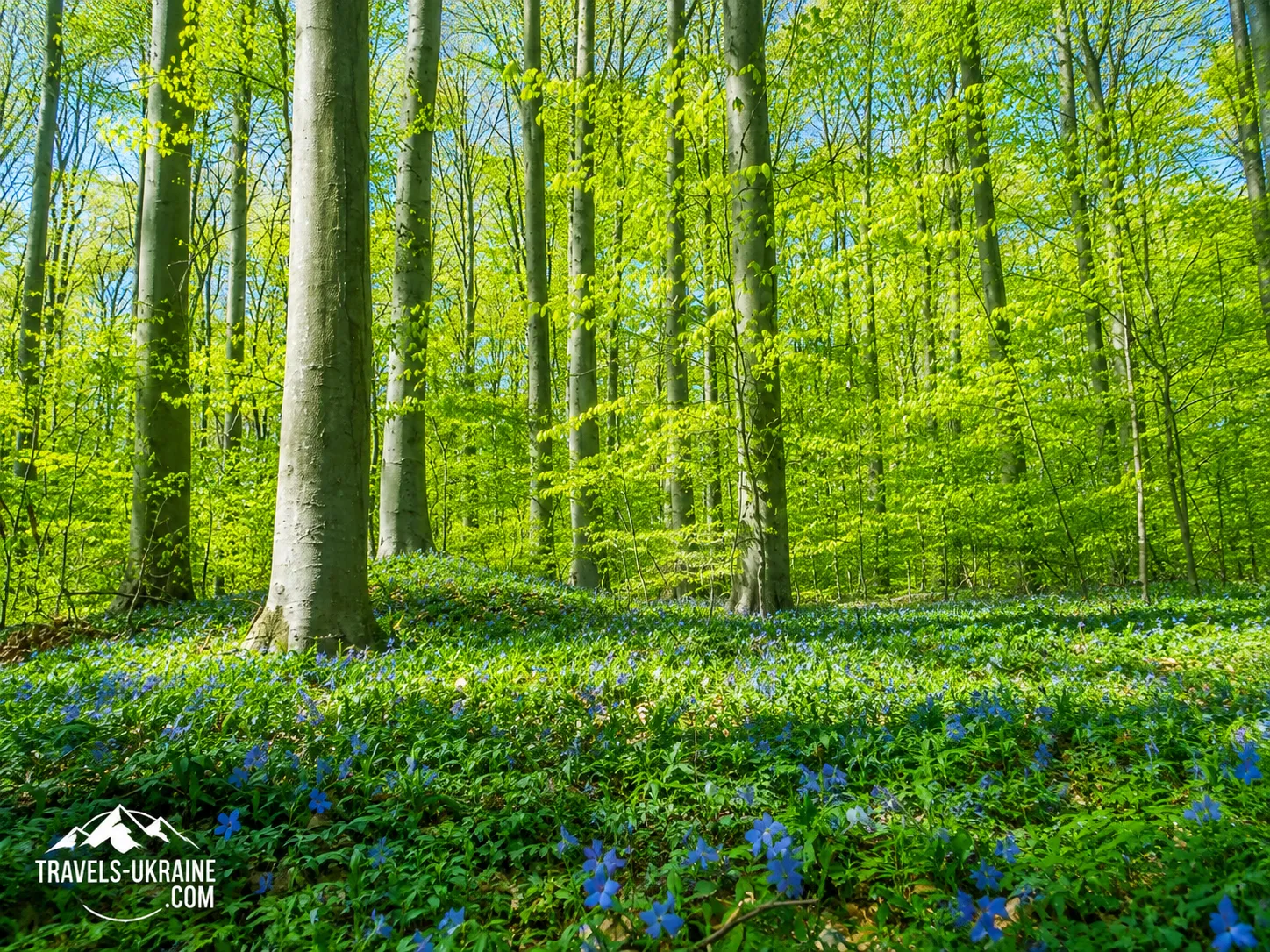
Of particular importance are beech, fir-beech, and other old-growth forests. These areas have a more complex structure than ordinary managed plantations: trees of different ages grow alongside one another, while natural undergrowth, standing deadwood, and fallen timber create habitats for large numbers of fungi, insects, birds, and small animals.
At the same time, Hutsulshchyna National Nature Park is not an area completely closed to people. One of its tasks is to provide opportunities for organised tourism, recreation, and environmental education. That is why the park develops educational nature trails, tourist routes, recreational areas, and environmental education facilities.
Why Do Different Parts of the Park Have Different Rules?
To combine nature conservation with tourism and the traditional use of the territory, Hutsulshchyna National Nature Park is divided into four functional zones: a protected zone, a regulated recreation zone, a stationary recreation zone, and an economic zone.
The protected zone is intended for the most valuable natural complexes. It has the strictest protection regime, and activities capable of disrupting natural processes are severely restricted.
For travellers, the regulated recreation zone is particularly important. Tourist routes and nature trails may pass through it, while short-term recreation and visits to natural landmarks may also be organised there. The stationary recreation zone is intended for tourist infrastructure, while the economic zone covers areas where activities compatible with the park’s conservation objectives are permitted.
Three Nature Protection Departments
The territory transferred directly to the park’s use is divided among three nature protection research departments—Kosiv, Starі Kuty, and Sheshory. Their employees protect natural areas, monitor the condition of forests, ensure compliance with conservation regulations, and participate in scientific research.
This division is particularly important because of the NNP’s large, fragmented territory. From Kosiv to Sheshory or Stari Kuty, natural conditions, tourist pressure, and the character of the landscapes vary, so each part of the park requires continuous local supervision.
As a result, Hutsulshchyna Park now performs several functions at once: it protects Carpathian ecosystems, conducts scientific research, supports environmental education, and creates opportunities for responsible tourism. To understand why this area requires such protection, it is worth taking a closer look at its nature—its old forests, mountain rivers, mountain meadows, plants, and wildlife of the Kosiv region.

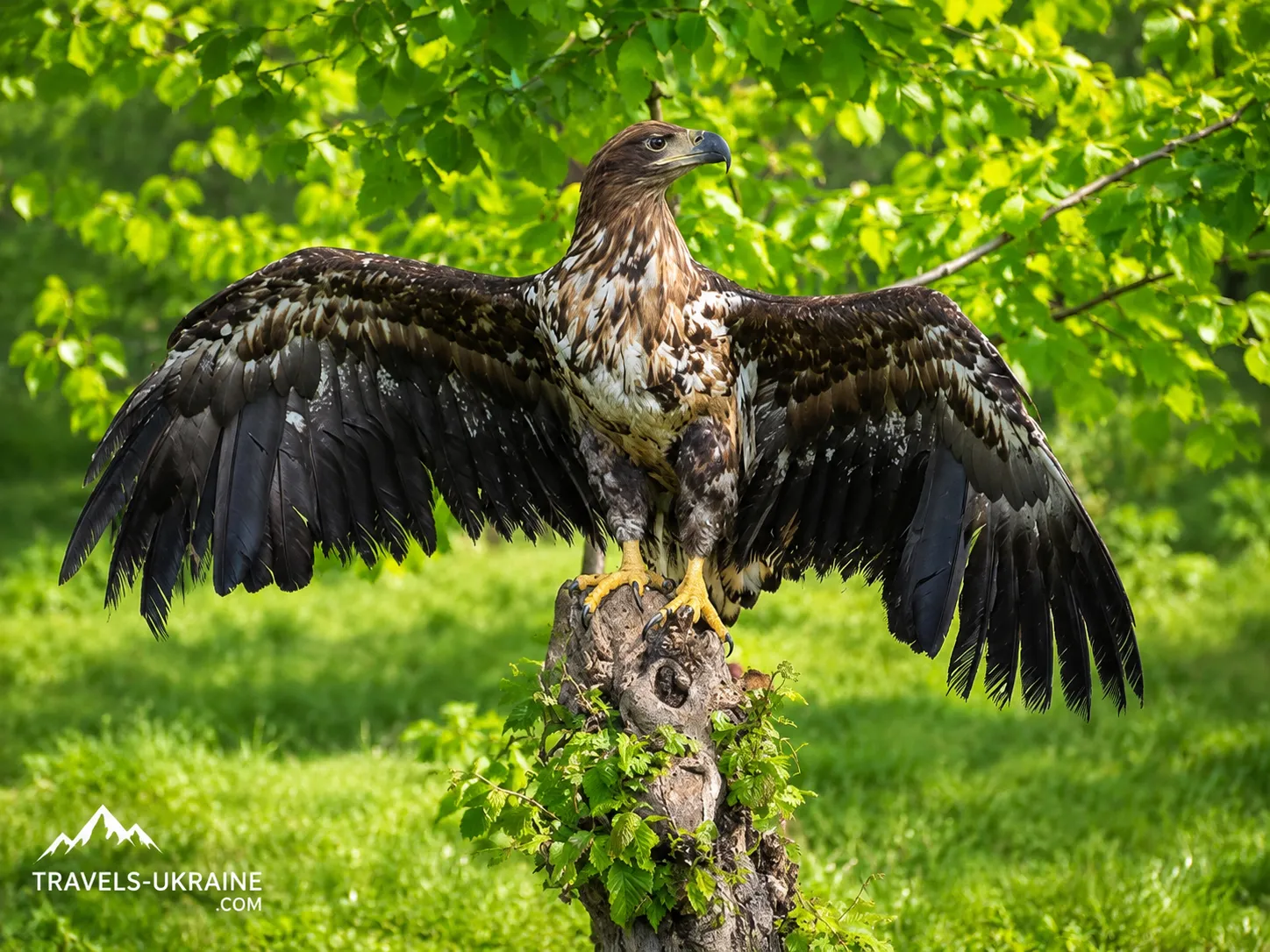
The Nature of Hutsulshchyna National Nature Park: Primeval Forests, Mountains, Rivers, and Carpathian Wildlife
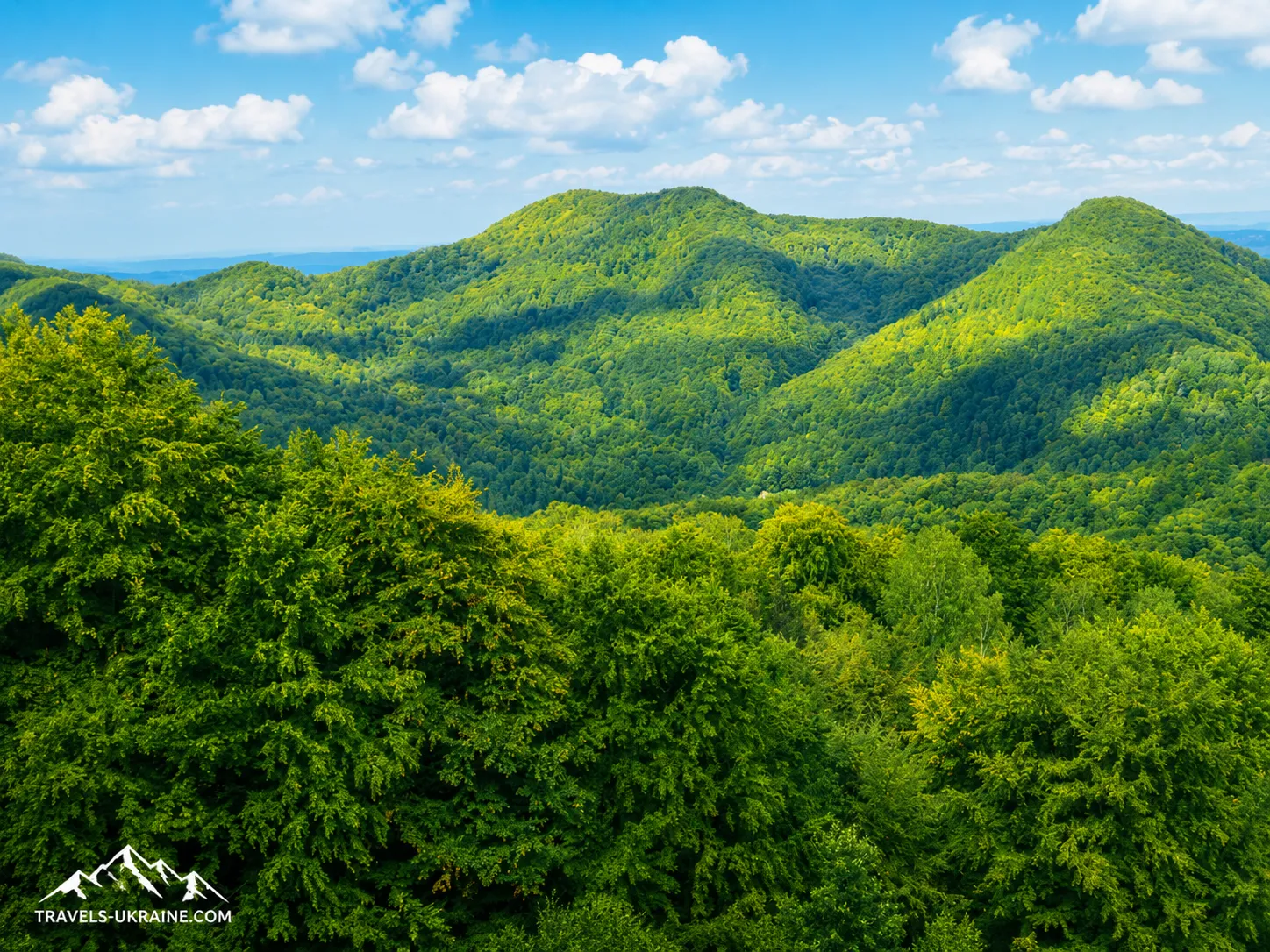
The nature of Hutsulshchyna National Nature Park is far more diverse than the familiar word “Carpathians” might suggest. Its territory stretches from the foothills of the Kosiv area to the forest-covered ranges of the Pokuttya-Bukovyna Carpathians, so altitude, moisture, vegetation, and the character of the landscape itself change over relatively short distances.
Visitors can walk through oak-hornbeam forests, climb among beeches and firs, emerge onto spruce-covered slopes, and see rocky screes, mountain streams, waterfalls, and open mountain-meadow areas. The park’s highest point is Mount Hrehit, 1,472 metres high, but Hutsulshchyna’s natural value is defined not by one particular summit, but by the diversity of habitats preserved between its mountain ranges and valleys.
From the Foothills to the Park’s Highest Ranges
The terrain of Hutsulshchyna National Nature Park changes gradually. Near Kosiv, lower forested ridges, river valleys, and hills suitable for short tourist routes predominate. Farther southwest, the mountains become higher, the slopes steeper, and the forest areas more continuous.
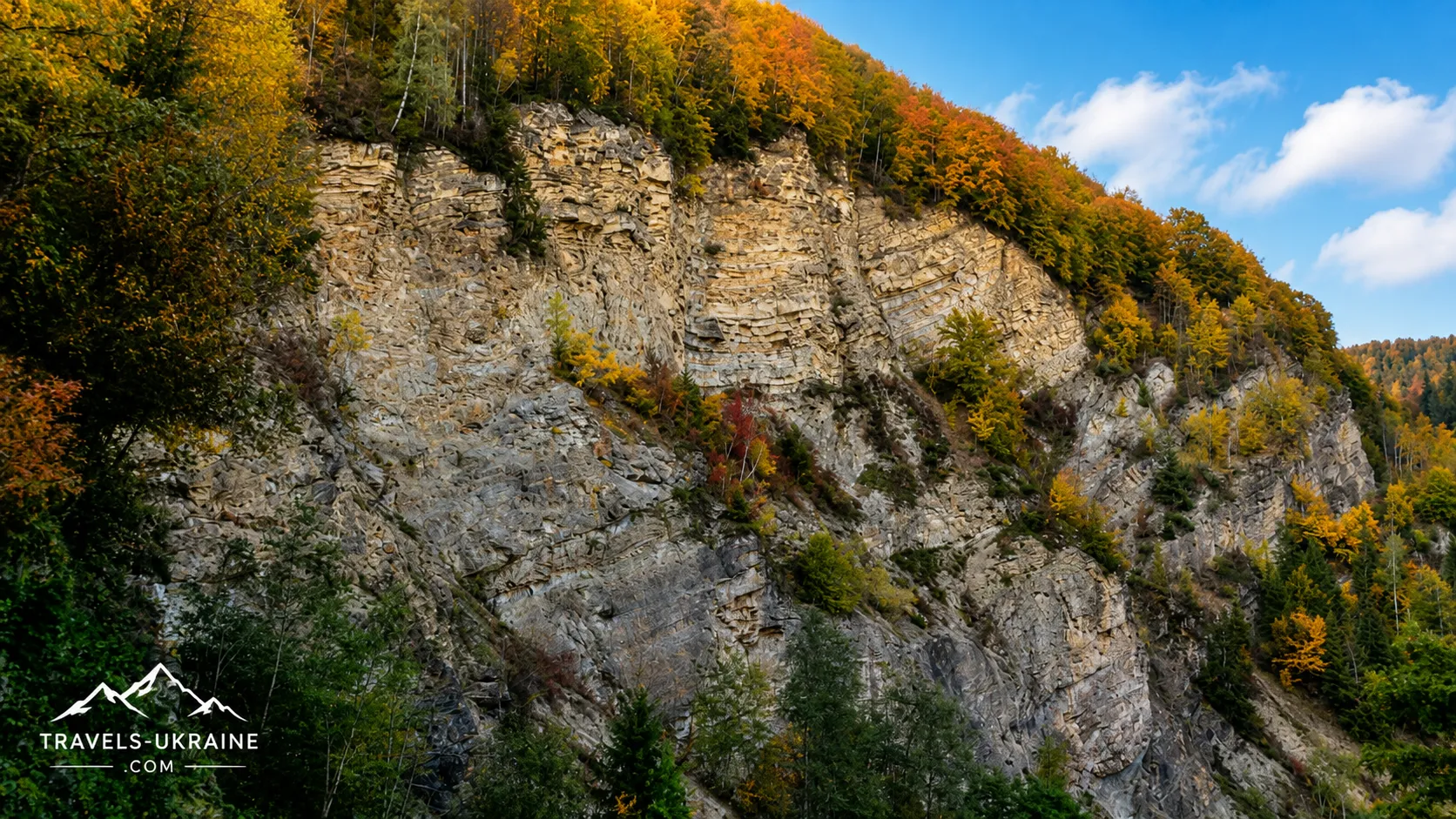
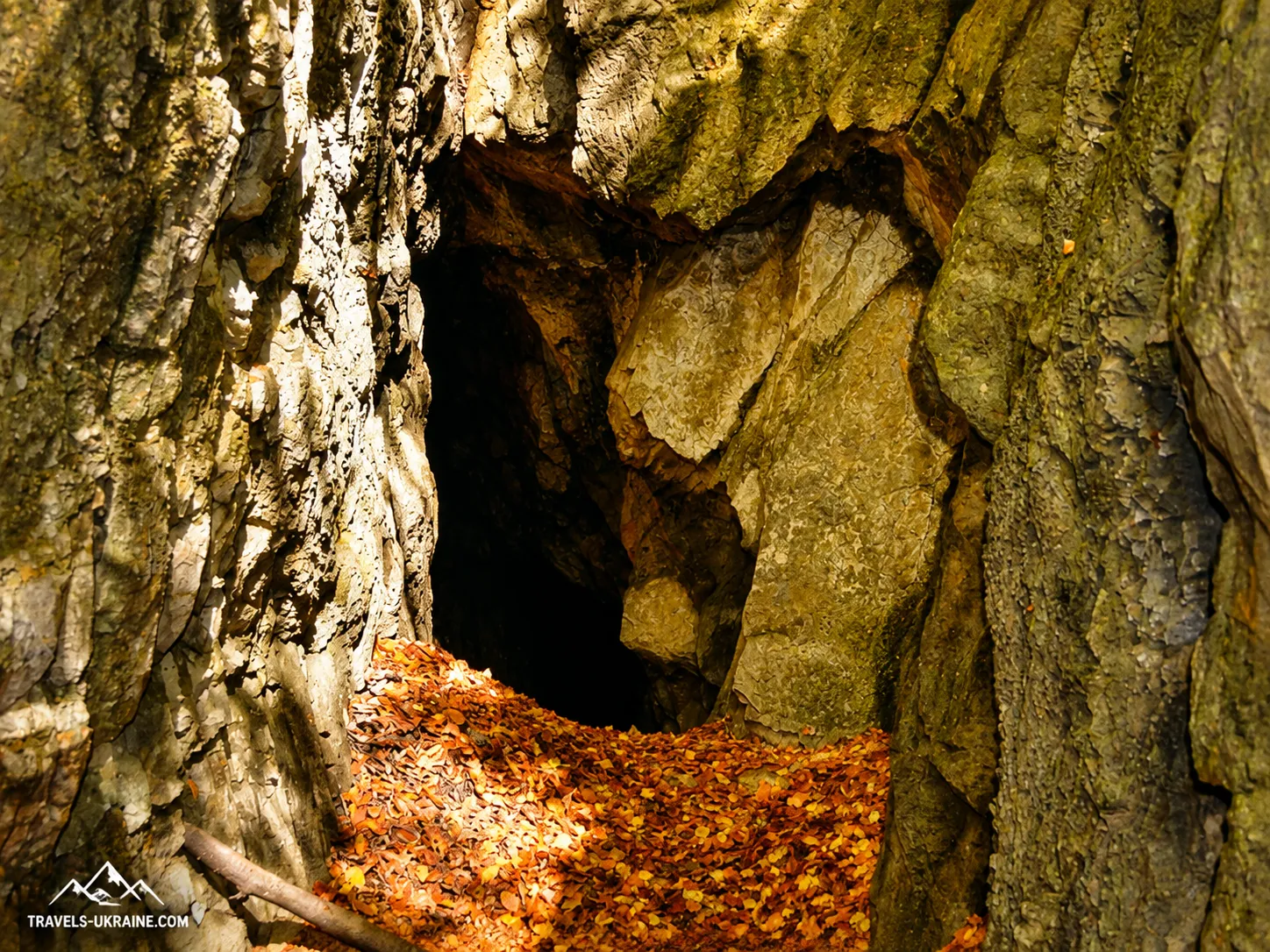
In the higher mountain areas, visitors encounter rocky sites and screes of broken rock characteristic of the Carpathians. This landscape is especially pronounced around Hrehit, where natural rock screes combine with spruce forests and open sections of the ridge.
It is this change in elevation belts that creates the feeling that, over the course of a single day, a traveller passes through several different natural regions. What begins as a gentle walk through a foothill forest can become a true Carpathian route higher up, with rocky terrain and sweeping mountain panoramas.
Old-Growth Forests—Hutsulshchyna’s Greatest Natural Treasure
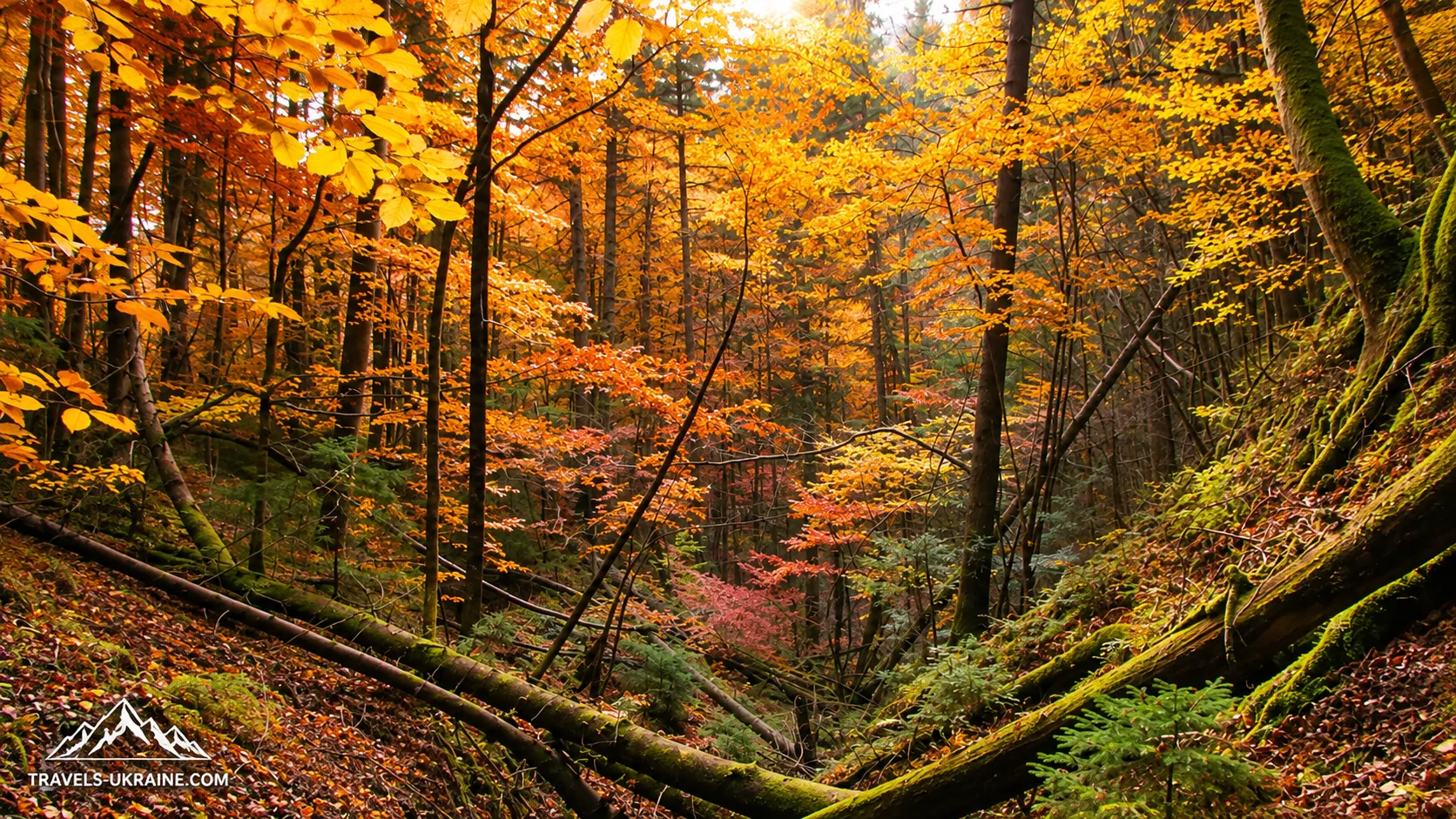
Forests form the foundation of the park’s natural environment. Particularly valuable are old-growth and primeval forest areas, where natural processes have continued for a long time with minimal human intervention. At different elevations, beech, fir-beech, spruce-beech, oak-hornbeam, and mixed forests are found. Their appearance depends on altitude, slope aspect, moisture, and soil. Oak and hornbeam can be found in the lower areas, while beech, fir, and spruce become increasingly dominant at higher elevations.
An old natural forest differs from an ordinary managed plantation. Young and very old trees grow side by side, while fallen trunks, standing deadwood, and timber at various stages of decomposition remain in place. To tourists, this may look like an «untidy forest,» but this very structure creates habitats for enormous numbers of fungi, insects, mosses, birds, and small animals.
Some routes also reveal unusual combinations of tree species. For example, in the area of Mount Mykhalkiv, the park describes pine-beech-larch forests—a rare combination for this region that creates a distinctive forest landscape.
Rivers, Mountain Streams, and Waterfalls
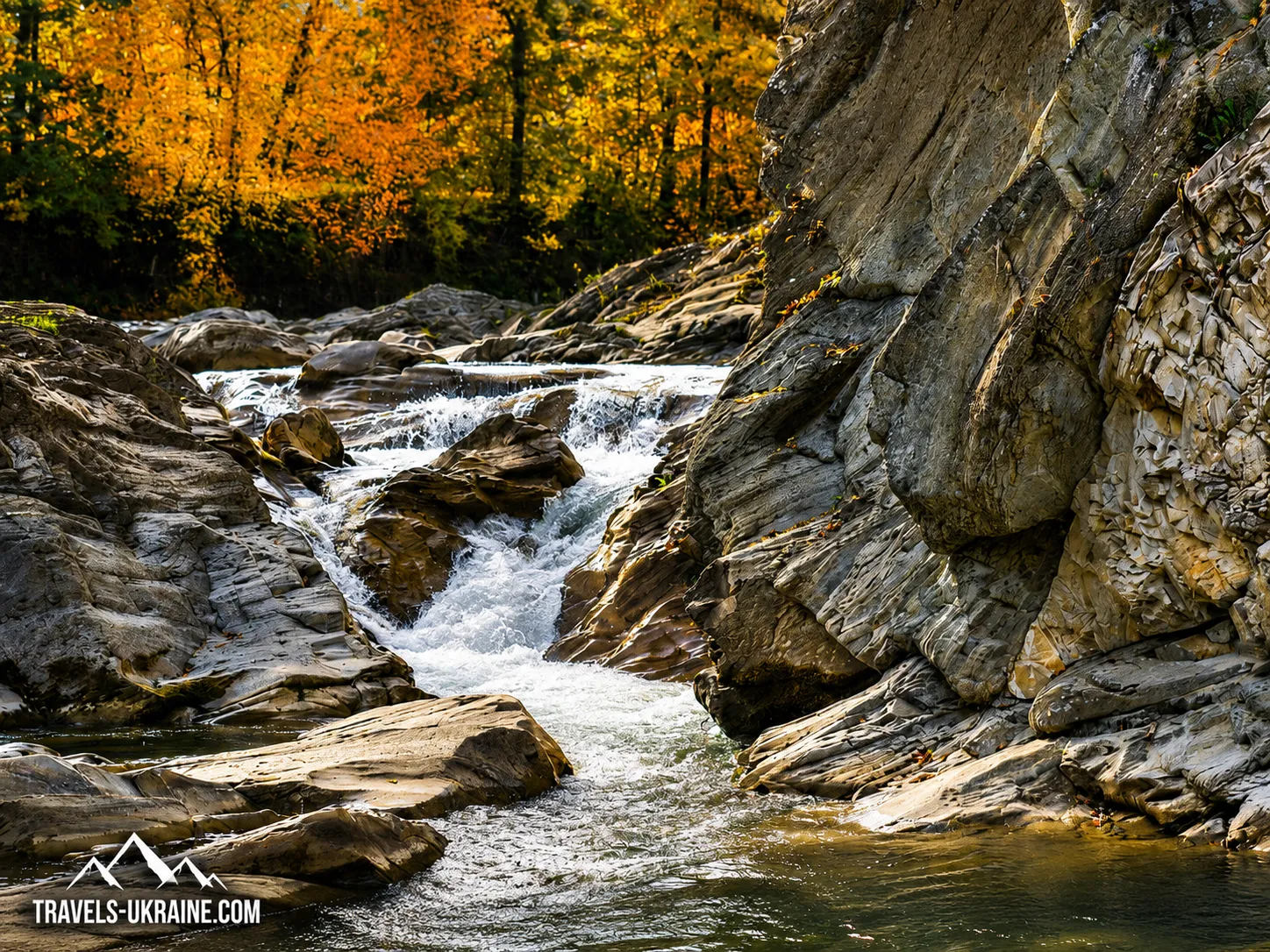
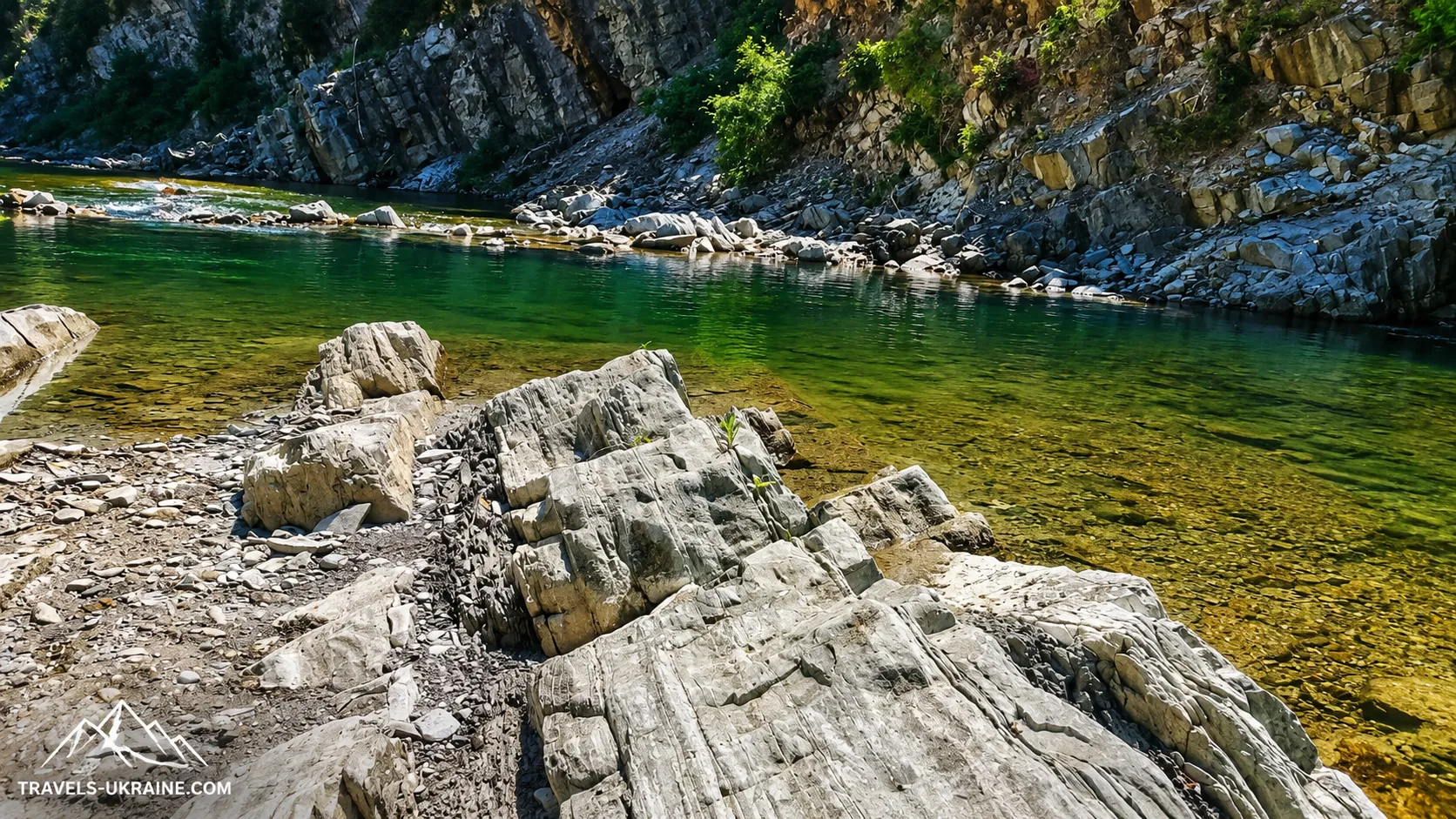
The park’s territory is densely interwoven with watercourses. The largest rivers of the Kosiv area associated with the natural complexes of the NNP are Lyuchka, Pistynka, Rybnytsia, and Cheremosh. They belong to the Prut basin and collect water from numerous mountain streams and springs. In the mountainous part, the rivers have fast currents, rocky beds, and considerable changes in elevation. Where the water crosses alternating layers of harder and softer rock, riffles, rapids, and waterfalls form. In the Hutsul region, such noisy waterfalls are traditionally called «hukes», after the characteristic rumble of the water.
The best-known example is the Sheshory Hukes on the Pistynka, but the park’s aquatic world does not end there. The Kosiv Hukes are located on the Rybnytsia, while along many hiking trails, travelers are accompanied by small streams, springs, and forest brooks.
A separate natural attraction is Lake Lebedyn, hidden among the forest. It differs completely from the fast-flowing Carpathian rivers, with a quiet water surface, marshy areas, and moisture-loving vegetation. We will explore the most interesting water locations in greater detail in the travel section of the article.
Plants of Hutsulshchyna NNP
The combination of different elevations, forests, open slopes, wetlands, and river valleys has created an exceptionally rich plant world. According to the park’s latest scientific data, as of the beginning of 2026, approximately 2,580 species of higher and lower plants had been recorded within its territory. Dozens of them have national or international conservation status.
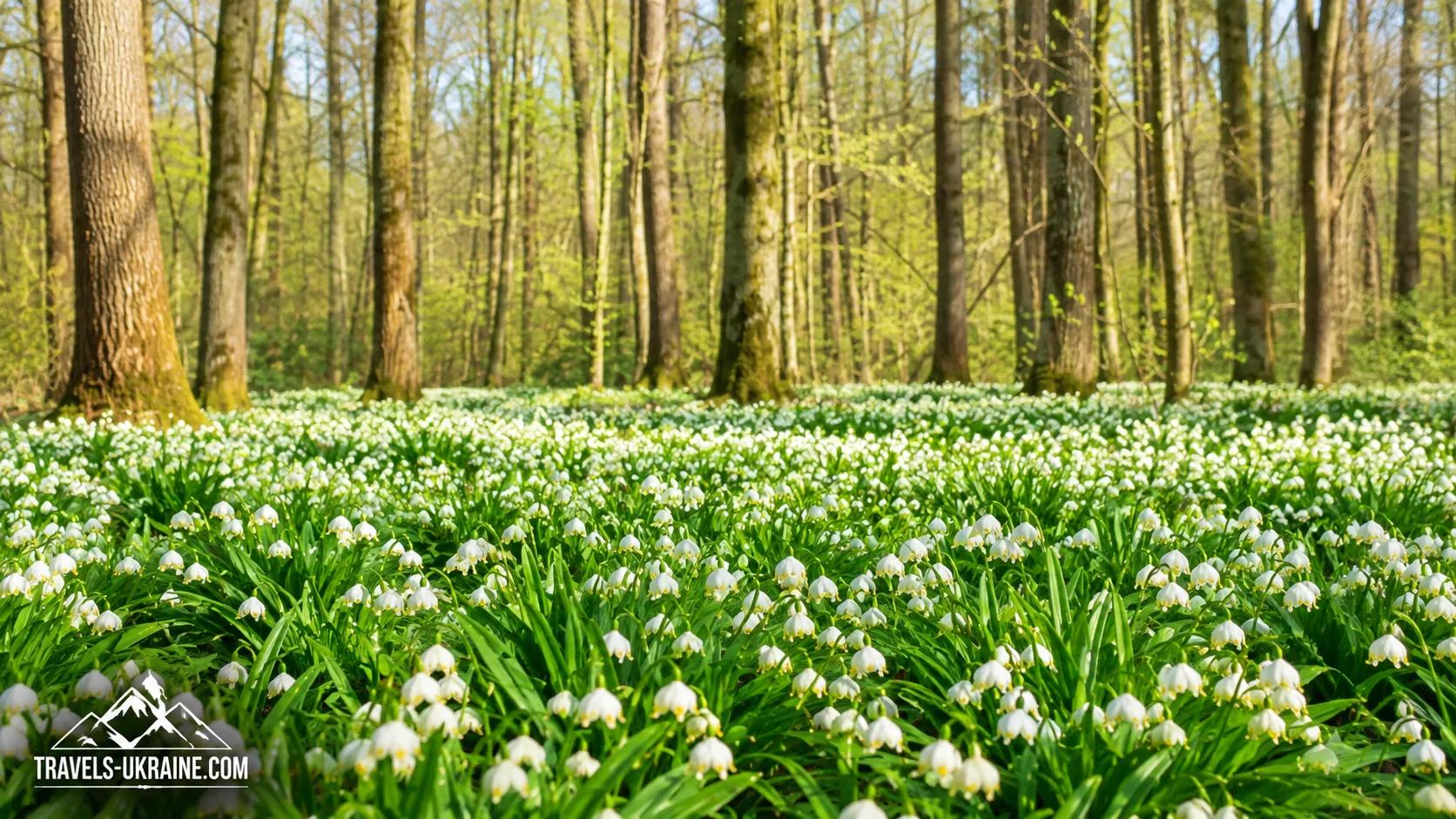
In the forests and open areas, you can encounter snowdrop, spring snowflake, Heuffel’s crocus, martagon lily, wild garlic, perennial honesty, autumn crocus, and various species of wild orchids. Among the valuable woody plants, special attention is paid to the European yew and European stone pine.
The most spectacular time to explore the flora is spring and early summer. However, during mass flowering, plants suffer most from being picked and trampled. A photograph of a rare flower in its natural setting is therefore a much better souvenir than a bouquet that will wilt before you even get home.
What wild animals can you encounter
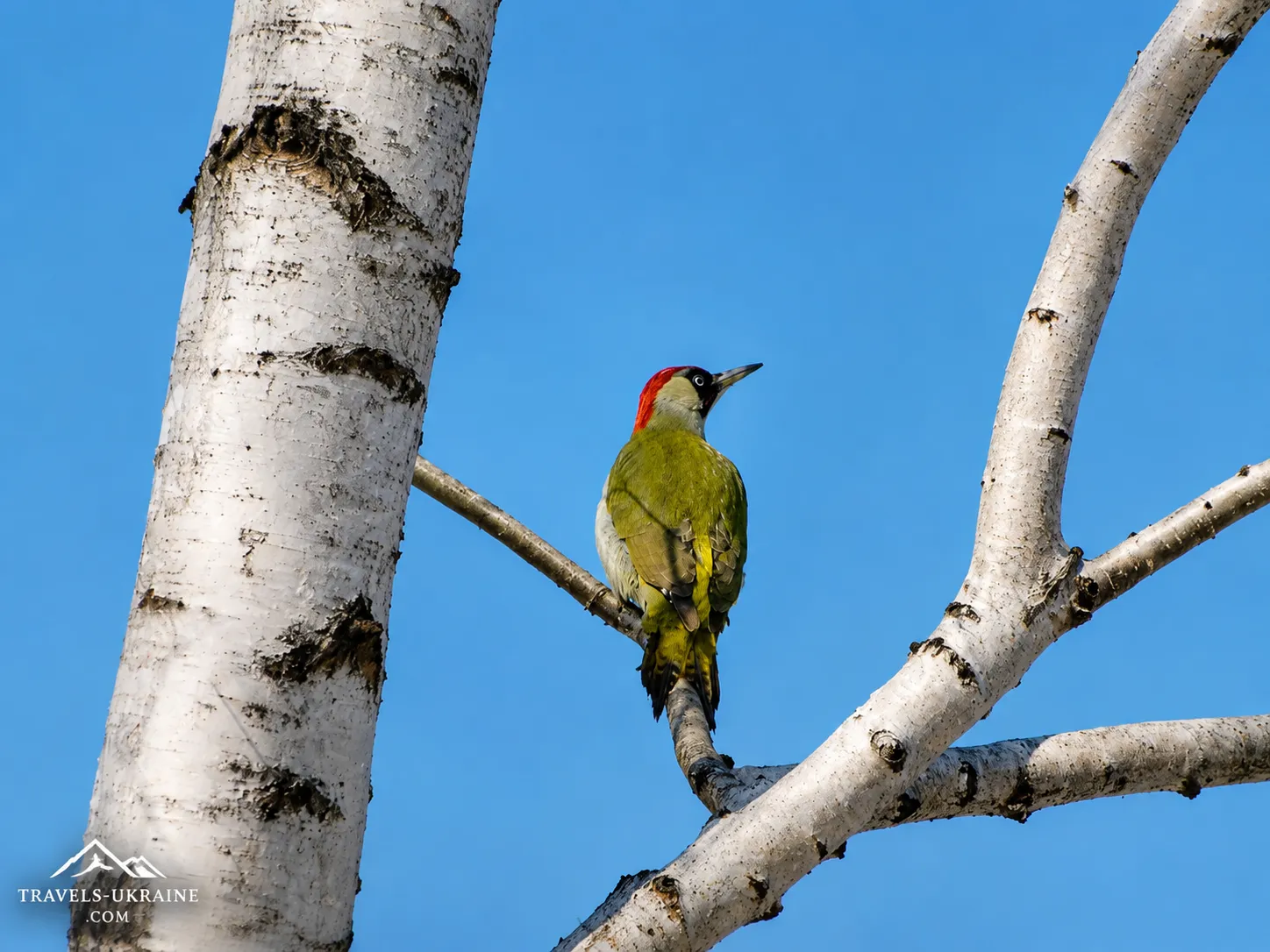
Large forest areas provide shelter for typical inhabitants of the Ukrainian Carpathians. The park is home to red deer, roe deer, wild boar, badger, fox, martens, and other mammals. Brown bears, lynx, and wildcats occasionally appear in more remote forest areas. According to the latest data from the scientific department, as of January 1, 2026, the animal list of Hutsulshchyna Park included 2,321 species. Of these, 117 species are listed in the Red Data Book of Ukraine, while hundreds of others are protected under international conservation agreements.
The world of birds, insects, and other small animals is especially diverse, and tourists are far more likely to notice them than large mammals. Seeing a bear during an ordinary walk is unlikely—and that is probably good news for the tourist as well. It is much more realistic to hear forest birds, spot the tracks of hoofed animals, or see a squirrel, butterflies, or amphibians near damp areas.
Fungi—a separate natural world of the park
Hutsulshchyna NNP stands out for more than its plants and animals. It is home to an exceptionally rich fungal world, the study of which has become one of the park’s notable areas of scientific research. According to current data, more than a thousand species of fungi and fungus-like organisms have been recorded here, including rare species.
This diversity is directly connected with the old-growth forests. Fallen trees, deadwood, moisture, and the natural structure of the stands create conditions for species that are almost never found in young managed forests.
The park’s scientists not only study fungi but also work on methods for preserving and reproducing rare species in their natural environment. For tourists, mushroom season adds special appeal to the autumn forests; however, mushrooms should be collected only where this is permitted under the regulations governing the specific part of the park.
Nature is best not «conquered» in a hurry
The main value of the nature of Hutsulshchyna NNP lies not in a single record-breaking waterfall or the highest peak. The park is fascinating precisely because of its transitions between different natural worlds: from a mountain river to an old beech forest, from a quiet valley to a rocky ridge, and from a forest lake to an open alpine meadow.
That is why it is best to explore Hutsulshchyna not by racing to check off as many points on the map as possible. It is far more rewarding to choose several natural locations and walk between them, noticing how the forest, terrain, water, and views change. We will look at the best places to do this in the next section, devoted to the most interesting places in Hutsulshchyna National Nature Park.
What to see in Hutsulshchyna NNP: the most interesting natural places
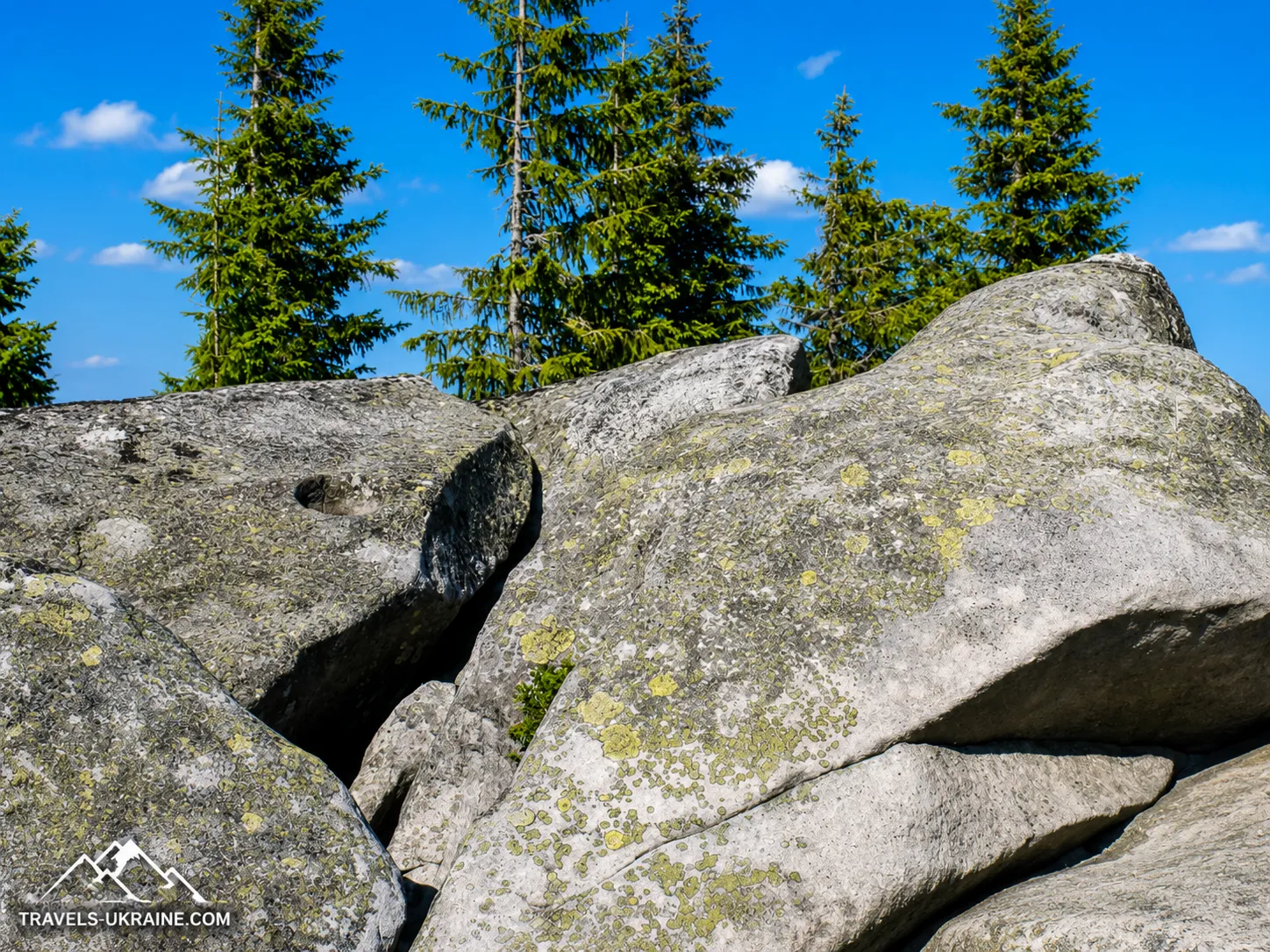
Hutsulshchyna National Nature Park has no single main tourist attraction after which you can say that you have seen the park. Its most interesting places are scattered between Kosiv, Sheshory, Pistyn, and the surrounding mountain areas, so each part reveals a completely different character of the Kosiv region. In some places, waterfalls are the main draw; in others, it is a lake in the forest, an alpine meadow with active pastoral farming, or a short summit offering views of the Pokuttya-Bukovyna Carpathians. For your first trip to the Carpathians, it is better not to try to see everything at once, but to choose several locations that match your pace and interests.
The best-known waterfalls of Hutsulshchyna Park
The Sheshory Hukes (or Silver Waterfalls) are one of the best-known natural attractions in the Kosiv region. They are located directly in the village of Sheshory, on the Pistynka River, which crosses powerful layers of rock here and forms a whole cascade of waterfalls and rapids.
The best known are the Great Huk and the Small Huk. A pool has formed below the waterfalls, which local residents call Syniplyas. In summer, this part of Sheshory becomes a popular place to relax, while in winter the waterfalls take on a completely different appearance as some of the streams freeze over.
The advantage of the Sheshory Hukes is their accessibility: you do not need to plan a challenging high-mountain hike to see the waterfalls. That makes them ideal for a first introduction to Hutsulshchyna NNP, a family trip, or a short stop during a journey through the Kosiv region.
Lake Lebedyn—a quiet body of water in a Carpathian forest
Lake Lebedyn leaves a completely different impression. It is located in the protected area of the same name, at an elevation of approximately 601 meters above sea level, and is hidden among the forest. The lake has a roughly oval shape and approximate dimensions of 200 × 100 meters; according to park data, its depth reaches up to 28 meters in some places. Its origin is considered probably karstic.
Lebedyn is interesting for more than the lake itself. The route to it passes through natural meadows and forest areas with a great variety of rare plants. Several species of wild orchids listed in the Red Data Book of Ukraine have been recorded along the route. Unlike the Sheshory Hukes, Lebedyn should not be treated as a brief roadside stop. This is a full walking excursion, so you should allow considerably more time to explore the lake.
Rosokhata Alpine Meadow—a place where traditional mountain pastoralism still thrives
This alpine meadow is interesting because the natural landscape is directly combined with traditional Hutsul farming. During the warm season, cows, sheep, and horses are driven here, and pastoral farming has operated here for many years. For tourists, it is an opportunity not only to see an open mountain clearing among old-growth forests, but also to learn about the traditional production of brynza, budz, and vurda. During the grazing season, these products can be tasted or purchased directly at the alpine meadow.
Rosokhata offers views of the surrounding ridges, including Brusnyi. It is one of those locations where the defining feature of Hutsulshchyna NNP is especially clear: nature here is inseparable from culture and traditional ways of life.
Mount Ostryi—a short route to a sweeping panorama
If you want to see the Carpathians from above without undertaking a long hike, consider Mount Ostryi near the village of Horod. It stands 584 meters high and has an observation deck at the summit. From here, you can enjoy views of Kosiv, the surrounding villages, and the ridges of the Pokuttya-Bukovyna Carpathians. Kamianystyi, Sokilskyi, Brusnyi, Holytsia, Ziniakiv Verkh, Mykhalkova, and other peaks are clearly visible.
Ostryi is particularly convenient for those who have only a few hours. The official nature trail to the observation deck is approximately 1.5 km long and takes about an hour, making this summit suitable even for a short tourist itinerary.
Mount Mykhalkiv and Kremenetsia Tract
Another interesting summit near Kosiv is Mount Mykhalkiv, which rises to 812 meters. Its appeal lies not only in the panorama but also in the variety of natural landscapes along the way. The route passes through forests where pine, beech, and larch grow side by side—a rather unusual combination for this part of the Carpathians. The trail then leads through the Kremenetsia Tract, a canyon-like valley formed by a stream of the same name among hard sandstones.
The stream contains small waterfalls, while the tract itself is home to rare plants, including members of the orchid family, spring snowflake, Heuffel’s crocus, and perennial honesty.
From the summit of Mykhalkiv, views open over Kosiv, the surrounding villages, and distant Carpathian ridges. This option is somewhat longer than the ascent of Ostryi, but it is still well suited to a several-hour walk.
Hrehit—the highest point of Hutsulshchyna NNP
For more experienced travelers, Mount Hrehit is a special attraction—the highest point in the national park, rising to 1,472 meters above sea level. This area differs significantly from the low tourist peaks near Kosiv. More pronounced high-mountain landscapes appear here, along with rocky screes, mountain meadows, and areas of old-growth forest. The park’s scientists regularly conduct botanical and mycological research in the Hrehit area, recording rare plant species.
Hrehit should not be included in a short itinerary for a first introduction to the park. This is a separate mountain journey that requires more time, a carefully planned route, good weather, and appropriate physical fitness.
What to choose for your first trip
If you are visiting the Kosiv region for the first time, the most convenient combination is Kosiv, Mount Ostryi or Mykhalkiv, and the Sheshory Hukes. This route lets you see the town, forested slopes, a Carpathian panorama, and mountain waterfalls in a single day without excessive physical exertion.
You can save Lake Lebedyn or Rosokhata Alpine Meadow for the second day. Hrehit and the more remote ridges are best planned as a separate mountain trip.
This approach prevents your introduction to Hutsulshchyna NNP from becoming a race between points on a map. It is much more rewarding to choose several different landscapes and give yourself time to see how waterfalls, forests, alpine meadows, and peaks gradually come together to form a single picture of the Kosiv Carpathians.
Hutsul culture as part of Hutsulshchyna NNP
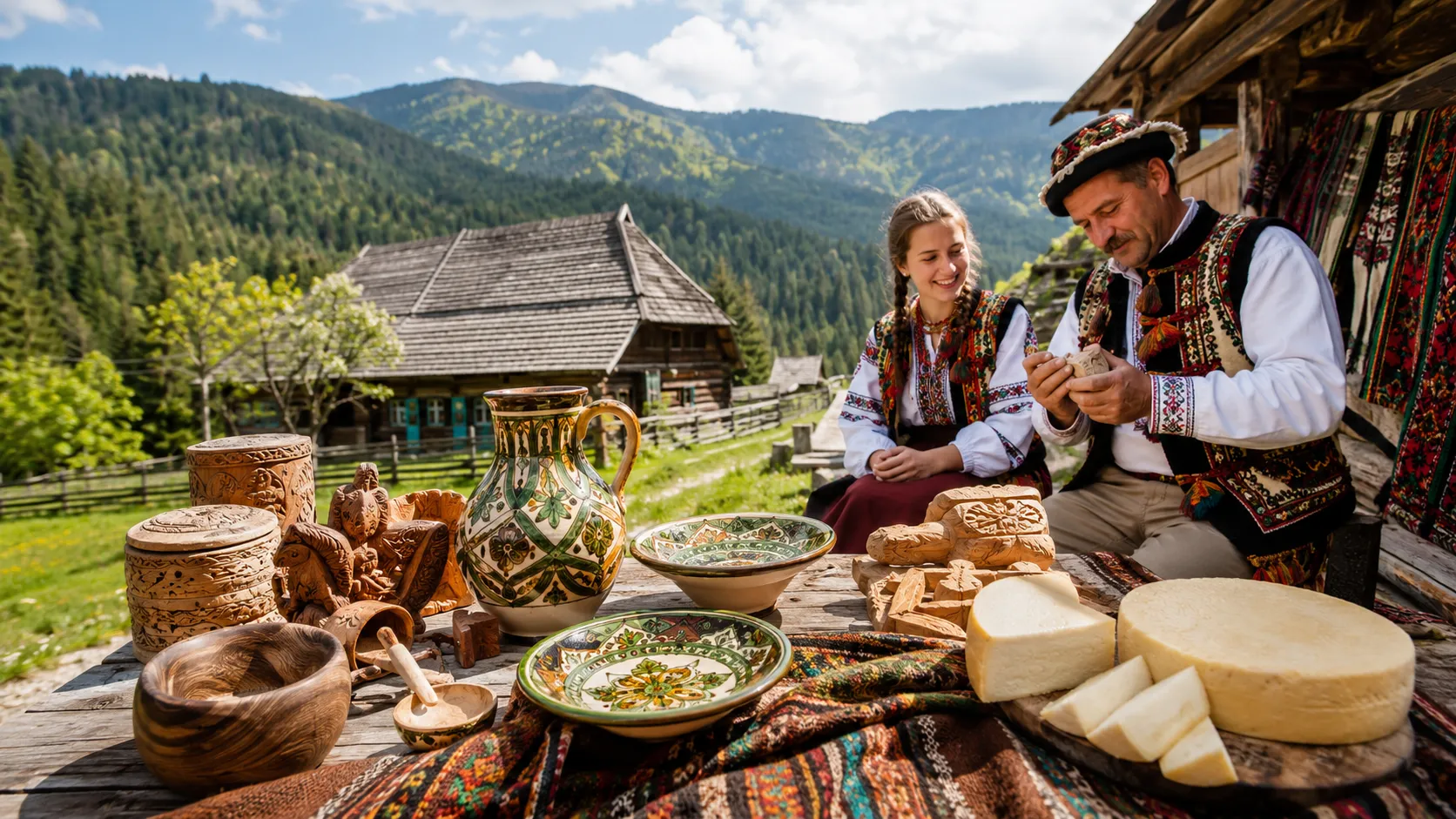
The name Hutsulshchyna National Nature Park is not accidental. Unlike many protected areas, where cultural landmarks exist merely as an addition to nature, here the traditional way of life was shaped over centuries by the mountain landscape itself. Forests provided timber for construction and carving, mountain meadows offered grazing grounds, rivers determined the location of settlements, and the remoteness of mountain villages helped preserve local crafts, clothing, music, and customs for longer.
That is why a journey through Hutsulshchyna National Nature Park is interesting not only because of the opportunity to follow a Carpathian trail. In Kosiv, Sheshory, Pistyn, and neighboring villages, visitors can see living craft traditions, mountain-meadow farming, Hutsul horses, traditional pottery, weaving, woodcarving, and local cuisine. This is what sets the park apart from an ordinary collection of mountain routes.
Kosiv Ceramics — a Tradition of Global Significance
One of the best-known cultural symbols of the Kosiv region is the tradition of Kosiv painted ceramics. It is easily recognized by its distinctive green, yellow, and brown colors, as well as narrative compositions in which artisans depict Hutsul everyday life, animals, plants, musicians, horsemen, and scenes from daily life.
This craft emerged as early as the XVIII century and was passed down through generations of artisans in families and small workshops. In 2019, the tradition of Kosiv painted ceramics was inscribed on UNESCO’s Representative List of the Intangible Cultural Heritage of Humanity.
For travelers, this is not merely a museum exhibit. Artisans still work in Kosiv today, producing tableware, tiles, decorative plates, candlesticks, toys, and other items using traditional techniques. Some workshops offer classes, allowing visitors to see the creation process much more closely than during a conventional museum display.
«Hutsul Living Room» — Discovering Crafts in the Park Itself
For those who want to gain a general impression of the local culture in a short time, the park’s educational and outreach center is home to the museum and creative space «Hutsul Living Room».
Its exhibition features Kosiv ceramics, woodcarving, woven products, pysanky, Hutsul traditional dress, and traditional jewelry. In 2023, the museum was renovated with modern multimedia elements and augmented reality: some exhibits can be viewed in 3D, and visitors can also watch traditional production processes.
Workshops are held here as well, making the «Hutsul Living Room» especially suitable for a family trip or a first introduction to the culture of the Kosiv region before visiting individual artisans.
Woodcarving, Weaving, and Other Crafts of the Kosiv Region
Ceramics are just one part of the Hutsul craft world. The Kosiv region is also known for woodcarving, weaving, embroidery, furriery, artistic metalwork, pysanka painting, and the production of traditional clothing. Some of these crafts are directly connected with the Carpathians’ natural resources. Wood was used for building homes, furniture, musical instruments, and household items; wool was used for blankets and clothing; and natural dyes were used to decorate fabrics.
That is why meeting local artisans is such a good complement to nature trails. After several hours in the forest, a carved wooden object takes on an entirely different meaning when you understand how closely traditional crafts were connected with the surrounding environment.
The Hutsul Horse and the «Hutsulyk» Center
Another important element of traditional Carpathian life is the Hutsul horse. Short, hardy, and well adapted to mountain conditions, these horses helped local people transport goods, travel along difficult mountain roads, and work on their farms for centuries.
Hutsulshchyna National Nature Park is involved in preserving and breeding this breed and has established the “Hutsulyk” Hutsul Horse Center. Here, visitors can learn more about the breed, see the horses, and take part in horseback riding or other programs if they are available at the time of their visit.
For families with children, this can be one of the park’s most engaging nature-education attractions, while adults can gain a better understanding of why horses held such an important place in Hutsul life.
Saint Nicholas’s Estate in Pistyn
Another cultural and educational attraction in the park is the Residence of Saint Nicholas in Pistyn. It is primarily aimed at family trips and combines festive traditions with Hutsul culture. The grounds include themed rooms, a workshop for New Year and Christmas toys, children’s and sports playgrounds, Hutsul craft houses, and rest areas. Children can take part in workshops where they make a festive toy with their own hands.
The estate is especially popular in winter, but it can also be included as part of a broader route through Pistyn and the surrounding natural areas.
A Culture Best Experienced in Person
The most important thing when discovering Hutsul culture is not to reduce it to a collection of souvenirs and beautiful photographs. Many traditions of the Kosiv region remain alive precisely because local artisans, families, and communities continue to practice them.
That is why a good cultural itinerary can be very simple: visit the «Hutsul Living Room,» stop by a ceramicist’s or woodcarver’s workshop, follow the trail to Rosokhata, taste mountain-meadow cheese, and finish the day with a walk through Kosiv. In this format, culture ceases to be a separate «excursion program» and becomes a natural continuation of the journey itself.
This is what makes Hutsulshchyna National Nature Park special among the Carpathian national parks. Here, visitors discover not only what nature has created, but also how people have learned over the centuries to live in this landscape, use its resources, and at the same time develop their own distinctive culture.
Frequently Asked Questions About Hutsulshchyna National Nature Park
Where is Hutsulshchyna National Nature Park located?
Hutsulshchyna National Nature Park is located in the Kosiv region of Ivano-Frankivsk Oblast, within the Pokuttia-Bukovyna Carpathians. Its natural areas cover the surroundings of Kosiv, Sheshory, Pistyn, Kuty, and other settlements. The park administration is located in the city of Kosiv.
What is the area of Hutsulshchyna National Nature Park?
The total area of Hutsulshchyna National Nature Park is 32,271 hectares. The park has a mosaic structure and does not form one continuous tourist area.
What should you see first in Hutsulshchyna National Nature Park?
For a first trip, the most convenient option is to combine Kosiv, one of the shorter scenic peaks—Ostryi or Mykhalkiv—and the Sheshory Huk waterfalls. If you have more time, consider planning a separate hike to Lebedyn Lake or Rosokhata mountain meadow.
What routes are available in Hutsulshchyna National Nature Park?
The park has a network of marked ecological-educational trails and tourist routes. Popular options include Mount Ostryi, Mykhalkiv, Lebedyn Lake, Rosokhata mountain meadow, the Kormytura Ridge, and the «Four Roads» route complex. Cycling and horseback-riding formats are also available.
Which Hutsulshchyna National Nature Park route is suitable for beginners?
One of the easiest options is the route to Mount Ostryi, approximately 1.5 km long and taking about an hour. The route to Rosokhata mountain meadow is also relatively short. For a first trip, it is best to start with trails like these and save longer routes for the following days.
Where are the Sheshory Huk waterfalls, and are they difficult to reach?
The Sheshory Huk waterfalls are located directly in the village of Sheshory on the Pistynka River. This is one of the most accessible natural attractions in the Kosiv region: viewing the waterfalls does not require a difficult mountain hike, making the site well suited to a short trip and a family outing.
Is Hutsulshchyna National Nature Park suitable for a trip with children?
Yes. Families will find the Sheshory Huk waterfalls, Mount Ostryi, Saint Nicholas’s Estate, the «Hutsul Living Room,» and the «Hutsulyk» Hutsul Horse Center especially convenient. Longer routes to Lebedyn or along the Kormytura Ridge should be chosen only after considering the child’s age and physical fitness.
When is the best time to visit Hutsulshchyna National Nature Park?
For most hiking routes, the most convenient period is from late spring to mid-autumn. In spring, the waterfalls and blooming forest plants are especially beautiful; in summer, the mountain-meadow farms are operating; and in autumn, beech and mixed forests take on vivid colors.
How many days are needed to explore the park?
In one day, you can see Kosiv, take a short mountain route, and visit one natural attraction such as the Sheshory Huk waterfalls. For Lebedyn Lake, Rosokhata, several ecological trails, and cultural attractions, it is better to plan two to three days.
Is camping with a tent allowed in Hutsulshchyna National Nature Park?
Yes, but tents may be pitched only in designated recreational areas. The park has several equipped camping areas near Kosiv, Pistyn, Sheshory, and the Starokutsk Nature Protection Department. Before traveling, it is advisable to check the current regulations for the specific campsite.
Do you need to buy a ticket to visit Hutsulshchyna National Nature Park?
There is no single ticket granting access to the entire park. Certain excursions, nature-education programs, recreational services, and visits to specific attractions may be paid. It is best to check the current terms directly before your trip.
What is not allowed in the park?
In protected areas, it is forbidden to damage trees and plants, pick rare flowers, leave litter, disturb wild animals, light fires without authorization, or pitch tents outside designated areas. You should also bear in mind that different protection regulations apply in the park’s various functional zones.
Is Hutsulshchyna National Nature Park Worth Visiting?
Hutsulshchyna (National Nature Park) is far more than a few tourist trails in the Carpathians. Its greatest value lies in the combination of natural and cultural environments: old-growth forests, mountain rivers, waterfalls, mountain meadows, peaks, and traditions that have taken shape here over many generations.
The park is suitable for travellers with very different expectations. For a first introduction, you can choose a short hike up Ostryi, walk to the Sheshory Huk waterfalls, or visit Kosiv. Those who want to spend more time surrounded by nature should head to Lebedyn Lake, the Rosokhata mountain meadow, or take one of the longer forest trails.
At the same time, this is an area best discovered without rushing. Given the considerable distances between individual locations and the large number of trails, there is little point in trying to see the entire park in a single day. It is much more enjoyable to choose a few places, leave time for walks, stops, and getting to know the local culture, and save the remaining trails for your next trip.
Hutsulshchyna National Nature Park will be especially interesting to those who seek the Carpathians not only in the form of their highest peaks. Here you can find quiet forest paths, accessible scenic mountains, roaring huk waterfalls, a lake hidden in the forest, active mountain meadows, and villages where Hutsul traditions remain part of everyday life.
That is why a trip to Hutsulshchyna can easily become a reason to return. After a first visit, there is almost always a trail, peak, mountain meadow, or village that there simply was not enough time to reach. And perhaps this best captures the character of the park: it is not something to try to “check off”—it is more rewarding to discover it gradually.

No Comment
You can post first response comment.