
 English
 Українська
 Русский

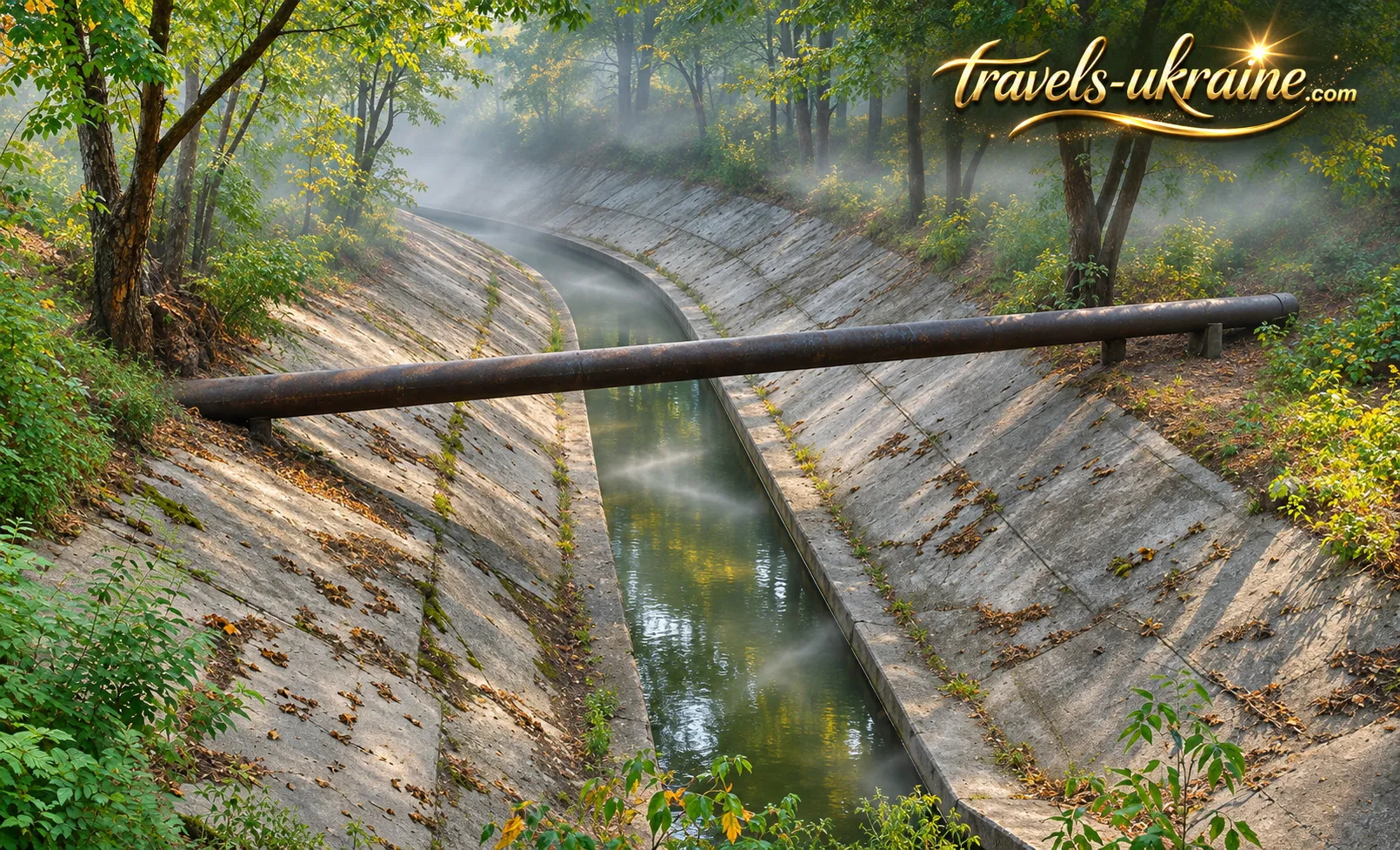
Imagine a river that remembers the princes of Kyivan Rus, ancient merchant boats, and events that changed the course of Ukrainian history. A river whose name survived in the pages of medieval chronicles but later almost disappeared from city maps. And most remarkably, this required neither natural disasters nor thousands of years of geological change. Just a few centuries of human intervention and large-scale urban development were enough.
Such is the story of the Pochaina River — one of Kyiv's most mysterious historic waterways. Its waters once flowed along the banks of ancient Podil, near important trading docks. Merchant boats arrived here carrying goods, the life of a medieval city flourished along its shores, and the river itself was an inseparable part of the Kyiv we know today primarily through chronicles, historical research, and legends.
Pochaina holds a special place in the history of the Christianization of Kyivan Rus. According to one historical tradition, it was in the waters of this river that the people of Kyiv were baptized in 988, during the reign of Prince Volodymyr Sviatoslavych. However, historical sources do not provide a completely definitive answer regarding the exact location of this event: some texts mention the Pochaina River, while others refer to the Dnipro River. Regardless of these scholarly debates, Pochaina's connection to the Christianization of Rus remains an important part of Kyiv's cultural memory.
But how did a river with such a remarkable historical past end up on the verge of being forgotten? In this article, we will trace the history of the Pochaina River from the era of Kyivan Rus to the present day. We will explore the role it played in the life of ancient Kyiv, discover why it gradually disappeared from the urban landscape, and examine the progress of its restoration in 2026.
After all, the story of Pochaina is much more than the tale of a nearly lost river. It is the story of Kyiv itself — its transformations, human decisions, and attempts to correct the mistakes of the past. And perhaps the most intriguing question is not even where the Pochaina River disappeared to, but whether the modern city can reclaim what it once almost destroyed with its own hands.
The Pochaina River in the History of Kyivan Rus — Princes, Trade Routes, and the Baptism of Kyiv's People

Today, it is difficult to imagine that the area of modern-day Obolon and the neighboring Podil district in Kyiv once looked completely different. Where residential neighborhoods, major roads, and industrial zones now stretch across the landscape, there was once a complex network of branches of the Dnipro River, floodplains, channels, and marshy riverbanks. Among them, the Pochaina River held a special place as one of the most important waterways of ancient Kyiv.
Its history is inseparably linked to the city's development, trade, princely rule, and the spread of Christianity. Moreover, Pochaina is not merely a beautiful name preserved in ancient legends. The river is mentioned in medieval written sources, while historians, archaeologists, and researchers of Kyiv's history continue to study its former significance.
Pochaina — the Natural Harbor of Ancient Kyiv
During the era of Kyivan Rus, the Pochaina River was connected to the Dnipro and formed part of its complex water system. According to the Encyclopedia of the History of Ukraine, it was an ancient branch of the Dnipro River, with its lower section flowing near Podil and providing a convenient anchorage for vessels.
For a medieval city, such a harbor was enormously important. Before the existence of modern highways and railways, rivers served as the primary transportation routes for people, goods, and military forces.
The Dnipro formed part of the famous trade route "from the Varangians to the Greeks", which connected the northern lands of Europe with the Byzantine Empire. Thanks to its geographical location, Kyiv became a major trading center, while the Dnipro's sheltered bays and branches provided favorable conditions for boats to anchor away from strong currents. Pochaina served precisely this purpose. Vessels arriving in Kyiv could stop here, while nearby Podil developed into a thriving commercial district and one of the city's oldest neighborhoods. Thus, Pochaina was much more than a feature of the natural landscape. It formed part of the waterway infrastructure that was essential to the economic life of the ancient Rus capital.
The First Chronicle Reference — Princess Olga and the Byzantine Emperor
One of the earliest known written references to Pochaina appears in the Primary Chronicle, under the year 955. Interestingly, it is connected not to a simple geographical description but to a fascinating episode in the diplomatic relations between Kyivan Rus and the Byzantine Empire. According to the chronicle, Princess Olga visited Constantinople, the capital of the Byzantine Empire. During her stay, she interacted with the imperial court, where diplomatic negotiations, ceremonial receptions, and the exchange of gifts were important elements of political relations.
After returning to Kyiv, Olga received envoys from the Byzantine emperor, who reminded her of the gifts she had promised. Her response was remarkably sharp and, by the standards of medieval diplomacy, surprisingly witty. According to the account in the chronicle, Olga suggested that the emperor wait in Pochaina for what he had been promised just as long as she had been made to wait in the harbor of Constantinople. This reply is interesting not only for what it reveals about the princess's character. It also suggests that Pochaina was sufficiently well known for the chronicler to use its name as Kyiv's equivalent of a harbor in the Byzantine capital.
At the same time, this chronicle dialogue should not be regarded as a verbatim record of an actual conversation. The Primary Chronicle was compiled considerably later than the events it describes, and its narratives combine historical information with literary techniques characteristic of medieval chronicles. Even with this qualification, the reference to Pochaina remains significant: in medieval historical memory, it appears as a recognizable harbor of princely Kyiv.
Pochaina and the Baptism of Kyiv's People in 988 — What Do Historical Sources Say?
The most famous historical episode associated with Pochaina concerns the Christianization of Kyivan Rus under Prince Volodymyr Sviatoslavych in 988. This event gave the river particular importance in Kyiv's historical and religious memory. According to the traditional historical narrative, after adopting Christianity, Prince Volodymyr began establishing the new religion throughout his lands. A mass baptism of the population was organized in Kyiv, symbolizing the beginning of a new chapter in the state's history.
But where exactly did this event take place? The answer is far more interesting and complicated than it might initially seem. The Primary Chronicle identifies the Dnipro River as the location of the mass baptism. However, medieval hagiographic texts dedicated to Prince Volodymyr mention the Pochaina River. This discrepancy has long attracted the attention of historians. In particular, researcher Yaroslav Zatyliuk analyzed the relationship between chronicle accounts and hagiographic narratives, pointing out that the hagiographic version appeared later and may have resulted from a reinterpretation of the earlier chronicle account.
One widely discussed historical hypothesis places the baptism near the point where Pochaina flowed into the Dnipro. Such a location could partially explain why different bodies of water are named in written sources. Nevertheless, the exact location of the mass baptism of Kyiv's inhabitants remains a matter of scholarly debate, and there is no direct archaeological evidence that would conclusively establish its coordinates. Therefore, the claim that all of Kyiv's inhabitants were baptized specifically in Pochaina should be understood as one historical tradition rather than a definitively proven fact.
Regardless of how this scholarly debate may eventually be resolved, Pochaina has remained part of the historical memory of the Christianization of Kyivan Rus for many centuries. Its name appears in medieval texts, historical studies, and accounts of the development of ancient Kyiv.
Why Was Pochaina So Important to the Ancient City?
When we bring together the evidence concerning the natural harbor, Podil's commercial activity, and references in medieval chronicles, it becomes clear that Pochaina played a much greater role than an ordinary small river. For the inhabitants of ancient Kyiv, it formed part of the waterway network around which economic life developed. For the princely authorities, it was an important element of the city's geography, closely associated with diplomacy and trade. And for later generations, it became one of the symbols of the Christianization of Rus.
This creates a particularly striking contrast. A river whose name survived more than a thousand years of history eventually faced the threat of disappearing itself. The banks of the Dnipro changed, Podil was rebuilt, and Obolon expanded. Gradually, the waterscape once familiar to the inhabitants of princely Kyiv became almost unrecognizable. Yet Pochaina's story did not end there. New challenges still lay ahead — changes to its course, urban development, concrete drainage channels, and a decades-long struggle by people determined to restore the legendary river to its rightful place on the map of Ukraine's modern capital.
The Pochaina River — From Oblivion to Revival
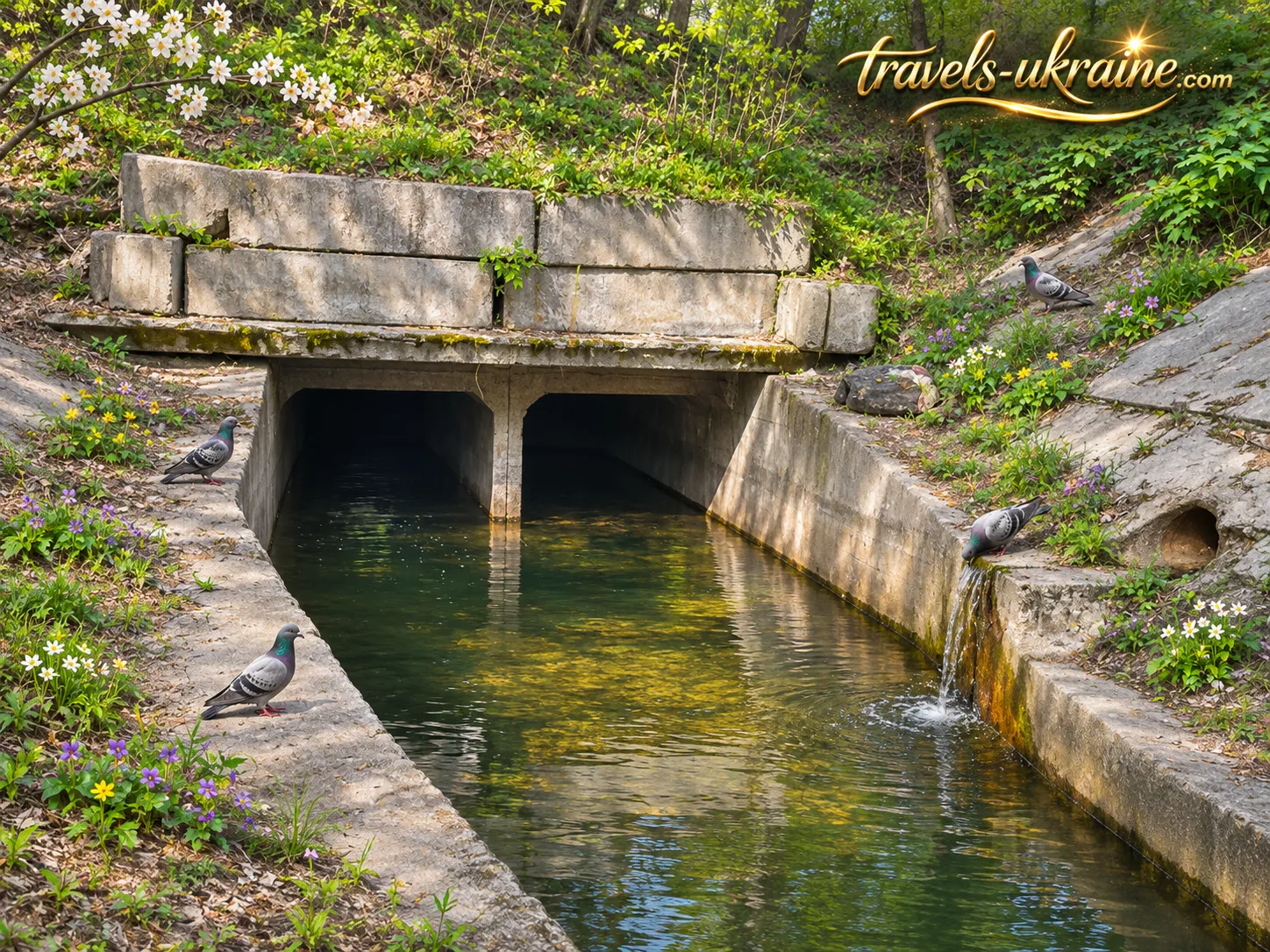
The history of the Pochaina River has one remarkable feature that is difficult to overlook. It survived the princes of Kyivan Rus, medieval wars, numerous urban transformations, and centuries of historical change. Yet its greatest challenges came much later — when people decided that the river's natural course could be adapted to meet the needs of a modern city.
Once an important part of the Dnipro River system, Pochaina gradually transformed into a network of inconspicuous canals, lakes, and sections hidden inside concrete drainage channels. Its name slowly faded from the everyday lives of Kyiv residents, while the river itself increasingly lost its resemblance to the Pochaina known to the inhabitants of the ancient capital. Yet the most remarkable thing is that its story did not end there. Many years later, people emerged who were determined to restore not only Pochaina's historical name but also its opportunity to become a living part of the urban landscape once again.
How Pochaina Disappeared from the Map of Kyiv
The transformation of Pochaina happened gradually. Long before the development of modern Obolon, its course had already been changing under the influence of natural processes, the expansion of navigation, and the construction of urban infrastructure. One particularly significant event was the development of Kyiv Harbor in the late 19th century. The construction of port facilities transformed the waterways near Podil and, consequently, changed the nature of Pochaina's connection with the Dnipro River.
Another serious disruption to the natural water system occurred in 1916–1917, during the construction of a railway bridge and the embankment of the northern railway semicircle. The embankment separated part of the former Obolon Bay and the Pochaina riverbed from Kyiv Harbor. Water that had previously flowed naturally into the Dnipro began accumulating in isolated sections. This gradually transformed the local water system, including the area that would later become Vovkuvata Bay.
In the mid-20th century, part of Pochaina's course was redirected through artificial canals and concrete hydraulic structures. These modifications were carried out, among other reasons, to regulate water flow and protect surrounding areas from flooding. However, the most extensive changes began during the development of Obolon in the 1960s–1980s. Constructing the new residential district required preparing vast areas of low-lying land that had previously been regularly flooded by spring waters.
Large-scale sand reclamation works began during this period. Sand extraction and extensive engineering modifications significantly altered the ancient river system. Large bodies of water formed in parts of the former floodplain, becoming what is now known as the Opechen Lake System. This system includes Yordanske, Kyrylivske, Andriivske, Ptashyne, Luhove, and Minske lakes. They are interconnected by underground water passages that allow water to continue circulating between the lakes.
It is important to understand, however, that the modern Opechen lakes are not simply unchanged remnants of the ancient Pochaina River. Their shapes and depths were largely formed through sand extraction and urban development. Consequently, the present-day water system only partially reflects the historical river landscape.
Some sections of Pochaina were enclosed in concrete drainage channels, while others became open canals. Over time, the river virtually disappeared from the everyday perception of Kyiv's geography. People continued living alongside its waters, often without realizing that an unremarkable canal or lake concealed the history of one of the capital's oldest rivers.
The Struggle to Bring Pochaina Back
Interestingly, efforts to protect Pochaina began even before the development of Obolon was completed. In 1967, the renowned naturalist Mykola Sharlemann and architect Pavlo Dolyshchynskyi called for the preservation of the historic river. In an article published in the newspaper "Vechirnii Kyiv" (Evening Kyiv), they emphasized the need to protect Pochaina's water system during the construction of the new residential district. Their proposal included preserving the existing water bodies and creating a green zone around them. However, these ideas were never fully implemented. Obolon continued to expand, while the historic river increasingly became part of the city's drainage infrastructure.
A new chapter in the struggle to preserve Pochaina began in 2015. Kyiv journalist and civic activist Annabella Morina (Hanna Honcharenko) became interested in the fate of Yordanske Lake after learning about plans to develop the surrounding area. While studying historical maps, documents, and research materials about Kyiv, she discovered the connection between Obolon's modern lake system and the Pochaina River mentioned in medieval chronicles. Soon, activists, local historians, and concerned Kyiv residents united around the idea of preserving the river. This led to the establishment of the Pochaina Civic Movement, whose members began advocating for official recognition of the historic river, protection of its surviving sections, and the creation of a natural park along its banks.
The first major achievement came on April 26, 2016, when Kyiv City Council supported the restoration of the historical name "Pochaina" to the watercourse between Yordanske Lake and Vovkuvata Bay. This decision carried more than symbolic significance. It helped restore the river's place in the city's official geographical naming system and brought the issue of its preservation back onto the agenda of Kyiv's municipal authorities.
The next milestone came on February 10, 2017, when Kyiv City Council approved the creation of "Pochaina Park," a recreational park covering approximately 10.10 hectares along the river toward Vovkuvata Bay. In February 2018, the historic river's name also appeared on the Kyiv Metro map when the "Petrivka" station was officially renamed "Pochaina".
Yet the most important issue was not the river's name but its actual condition. After all, restoring Pochaina to the map was only part of the challenge. Restoring natural riverbanks, improving water quality, and creating a space where the river would no longer function merely as a technical drainage channel would prove far more difficult.
Pochaina Today — What Is Known About the River's Condition in 2026?
As of November 2026, the Pochaina River still exists, although its present-day appearance differs significantly from its historical form. A surviving open section of the watercourse runs through Kyiv's Obolon district, particularly near Verbova Street, before the water system connects with Vovkuvata Bay. One of the main restoration initiatives has been a river revitalization project aimed at restoring a more natural appearance to certain sections and improving their ecological condition. Work near Verbova Street began in 2020–2021. The project included removing part of the concrete channel, widening the riverbed, reinforcing the banks with gabions, and developing the surrounding area for a future park.
Following the beginning of Russia's full-scale invasion in February 2022, implementation of the project became considerably more difficult. Some construction work was suspended, while further restoration depended on available funding and the overall situation in the city.
In 2026, reports emerged about the possible completion of another stage of the project. According to published plans by the municipal enterprise "Pleso," the city's 2026 program allocated approximately 32.97 million Ukrainian hryvnias to improve Pochaina's environmental and sanitary-technical condition. The planned work primarily concerned a section of the river approximately 370 meters long, stretching between Yordanske Lake and a water-control structure near Verbova Street. According to estimates attributed to the municipal enterprise in published reports, approximately 60.4% of the planned work had been completed at the relevant stage.
Importantly, this figure refers to a specific construction project, not the restoration of the entire Pochaina River. Likewise, funding allocated for 2026 does not automatically mean that the work has been completed. As of November 2026, there is no independent confirmation that the revitalization project has been fully completed. Meanwhile, the river continues to face other challenges. For many years, Obolon's water system has been affected by urban and industrial infrastructure. Its long-term preservation requires water quality monitoring, proper maintenance of drainage structures, riverbank management, and protection of natural ecosystems.
It is equally important to recognize the limits of what restoration can achieve. Due to extensive changes in the terrain and decades of urban development, fully restoring Pochaina to its ancient course and original historical appearance is practically impossible. However, this does not rule out restoring a more natural condition to surviving sections and creating accessible public spaces along its banks. That is why the future Pochaina Park is significant not only as a recreational area. It could also serve as a reminder that natural and historical heritage deserves protection, even in a large modern city.
And perhaps there is something particularly symbolic about this story. More than a thousand years ago, Pochaina was part of everyday life in princely Kyiv. In the 20th century, it was almost buried beneath concrete, while in the 21st century, Kyiv residents began fighting to bring it back. The river is still far from being fully restored. Yet its story already demonstrates one important truth: even something a city has almost erased from its map can sometimes be brought back — provided there are people determined not to let the past be forgotten.
Frequently Asked Questions About the Pochaina River
Where is the Pochaina River located in Kyiv?
The Pochaina River is a historic watercourse in Kyiv, associated with the ancient Dnipro floodplain and the modern network of lakes in the Obolon district. Its lower section once flowed near Podil and served as a natural harbor. Today, a surviving open section of the Pochaina River can be found near Verbova Street, between Yordanske Lake and Vovkuvata Bay.
Is it true that Prince Volodymyr baptized the people of Kyiv in the Pochaina River?
According to one historical tradition, the mass baptism of Kyiv's inhabitants in 988 took place in the Pochaina River. However, the Primary Chronicle identifies the Dnipro River as the location of the baptism, while some medieval hagiographic texts mention Pochaina. Due to these differences between written sources, the exact location of the event remains a subject of historical debate. Nevertheless, Pochaina's connection to the Christianization of Rus remains an important part of Kyiv's cultural memory.
Why did the Pochaina River almost disappear from the map of Kyiv?
Pochaina gradually changed as a result of natural processes and human activity. Major factors included the development of Kyiv Harbor, the construction of railway embankments, and the large-scale urban development of Obolon during the 20th century. Parts of the water system were transformed into artificial canals and lakes, while certain sections of the riverbed were enclosed in concrete drainage channels. As a result, the river almost completely lost its original natural appearance.
Does the Pochaina River still exist today?
Yes, the Pochaina River still exists today, although its modern course differs significantly from its historical one. Part of the watercourse remains visible above ground in the Obolon district, while other sections have undergone extensive engineering modifications. In 2016, Kyiv City Council officially restored the historic name "Pochaina" to the surviving watercourse. As of 2026, initiatives and projects aimed at improving the river's ecological condition remain underway.
How is Pochaina connected to the lakes of Obolon?
The modern Opechen Lake System, which includes Yordanske, Kyrylivske, Andriivske, and several other lakes, developed within the former Dnipro floodplain associated with the historic Pochaina River. During the construction of Obolon, much of the surrounding landscape was transformed through sand reclamation and the creation of artificial bodies of water. Therefore, the modern lakes are connected to the former water system but are not unchanged remnants of the ancient riverbed.
What is known about the restoration of Pochaina and the creation of Pochaina Park?
In 2017, Kyiv City Council approved the creation of Pochaina Park along part of the historic watercourse. Restoration work subsequently began on certain sections of the river, including the removal of concrete structures and improvements to the riverbanks. Additional funding for the revitalization project was planned for 2026. However, the full completion of the restoration work and the development of the park had not been independently confirmed as of November 2026. Restoring the entire historic riverbed to its original appearance is practically impossible due to extensive changes to the urban landscape.
Can visitors still see the Pochaina River in Kyiv today?
Yes, surviving open sections of the Pochaina River can still be seen in Obolon, particularly near Verbova Street. Another useful landmark is the Pochaina metro station, named after the historic river. However, improvements to the surrounding riverbanks have not yet been completed everywhere, so the area should not be regarded as a fully developed tourist park. Visitors should be aware of possible construction activities and avoid entering restricted or potentially hazardous areas.
Can Kyiv Bring Its Pochaina River Back to Life?
The story of Pochaina is much more than the tale of a river that gradually disappeared from the map of Kyiv. It is the story of a city that transformed, expanded, and rebuilt itself over centuries, sometimes without considering how much of its natural heritage it was leaving behind. Once, the river played an important role in the life of ancient Kyiv. Its waters witnessed merchant boats, the age of princes, and events that would later be recorded in medieval chronicles. Many centuries later, residential neighborhoods, roads, industrial facilities, and concrete structures appeared where the ancient floodplains had once stretched. The city continued to grow and develop, while the river that had once helped it flourish gradually became an almost invisible part of its urban infrastructure.
And here lies a rather bitter irony. We are accustomed to carefully preserving ancient churches, monuments, and architectural landmarks, as well as exploring fascinating tourist attractions in Ukraine, because they remind us of the past. Yet, for some reason, we rarely stop to consider that rivers, lakes, and natural landscapes are also part of our historical memory. Unlike stone monuments, however, they cannot be preserved simply by restoring facades or installing information boards.
But the story of Pochaina is not entirely a sad one. It demonstrates that even after decades of neglect, public attention can be drawn back to something that once seemed irretrievably lost. Thanks to civic activists, researchers, and concerned Kyiv residents, the river's historical name has reappeared on official maps, while the question of its preservation has become more than just a concern for a small circle of local historians. Of course, reviving Pochaina does not mean restoring the river to its appearance during the era of Kyivan Rus. Modern Kyiv is an entirely different city, and the former water landscape has been so extensively altered by urban development that fully recreating it is practically impossible. However, this does not mean that the surviving sections of the river are any less deserving of restoration.
On the contrary, even a small open watercourse with natural riverbanks, cleaner water, and thriving riverside vegetation can become a valuable part of the urban environment. And the future Pochaina Park, if successfully completed, will be important not only as a place for recreation but also as a reminder of our responsibility toward nature and our own history. Perhaps we will never again see Pochaina as the inhabitants of princely Kyiv once knew it. But we can preserve what remains and prevent the complete disappearance of a river whose name has survived for more than a thousand years.







No Comment
You can post first response comment.