
 English
 Українська
 Русский
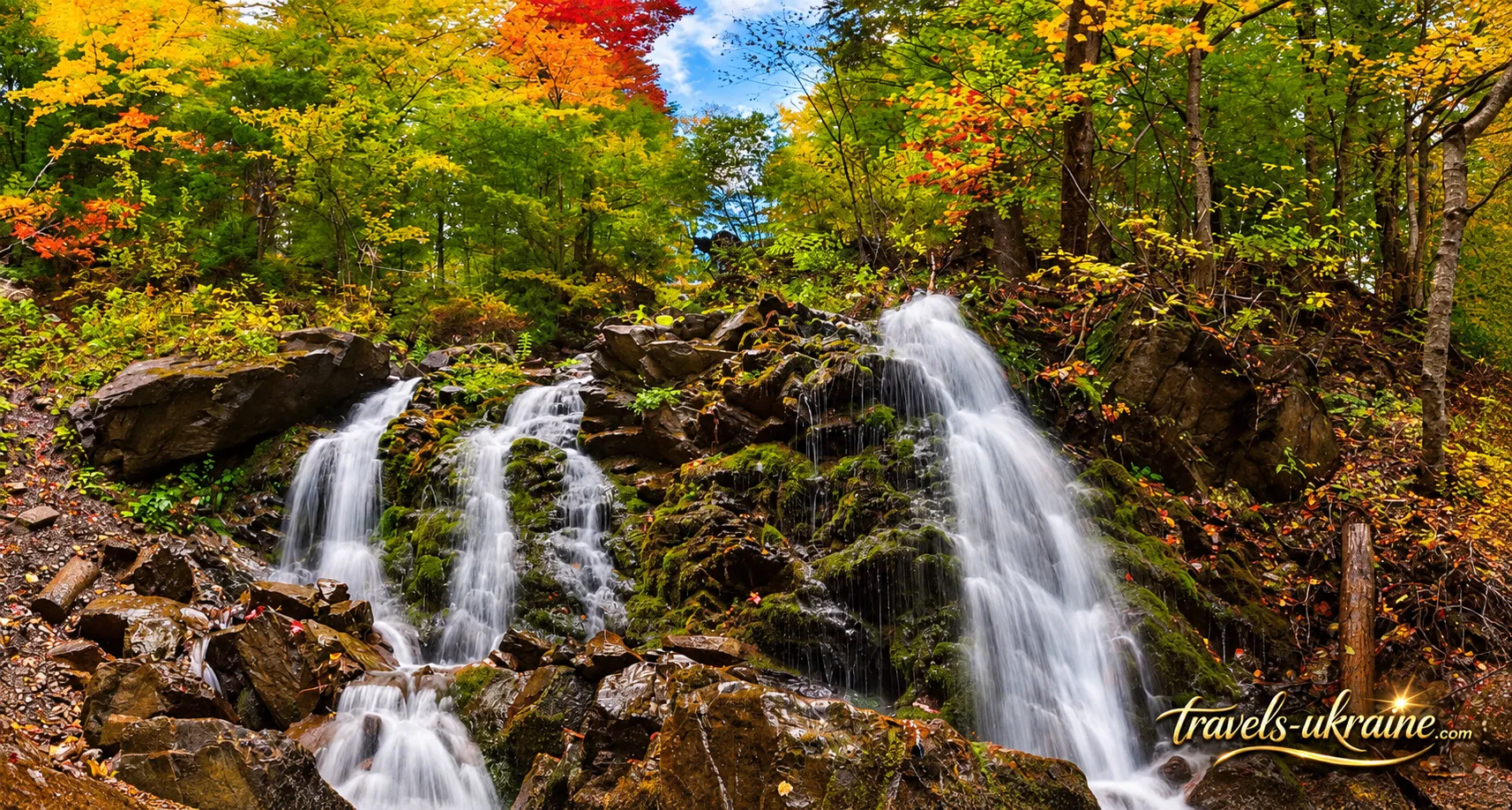
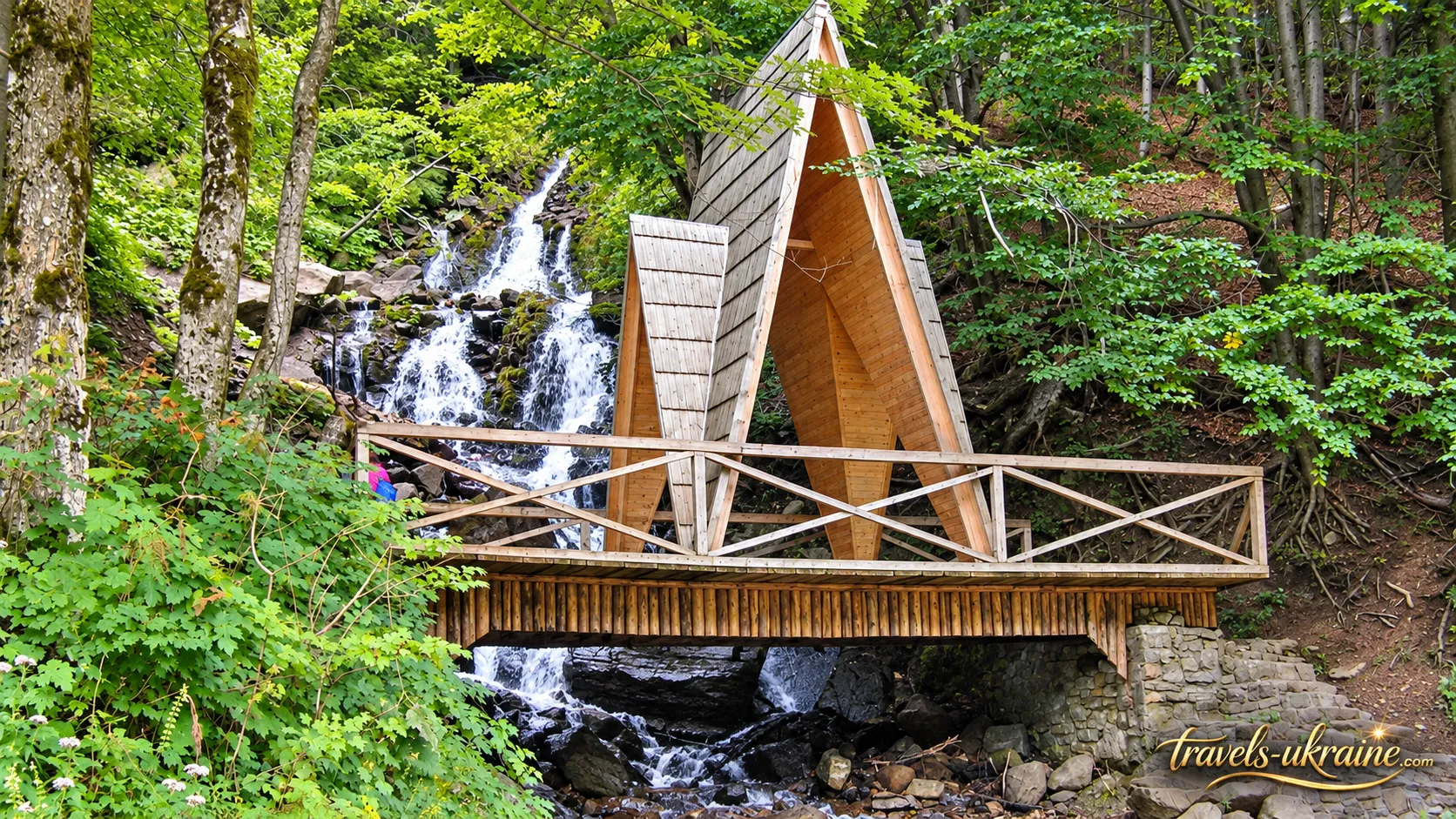
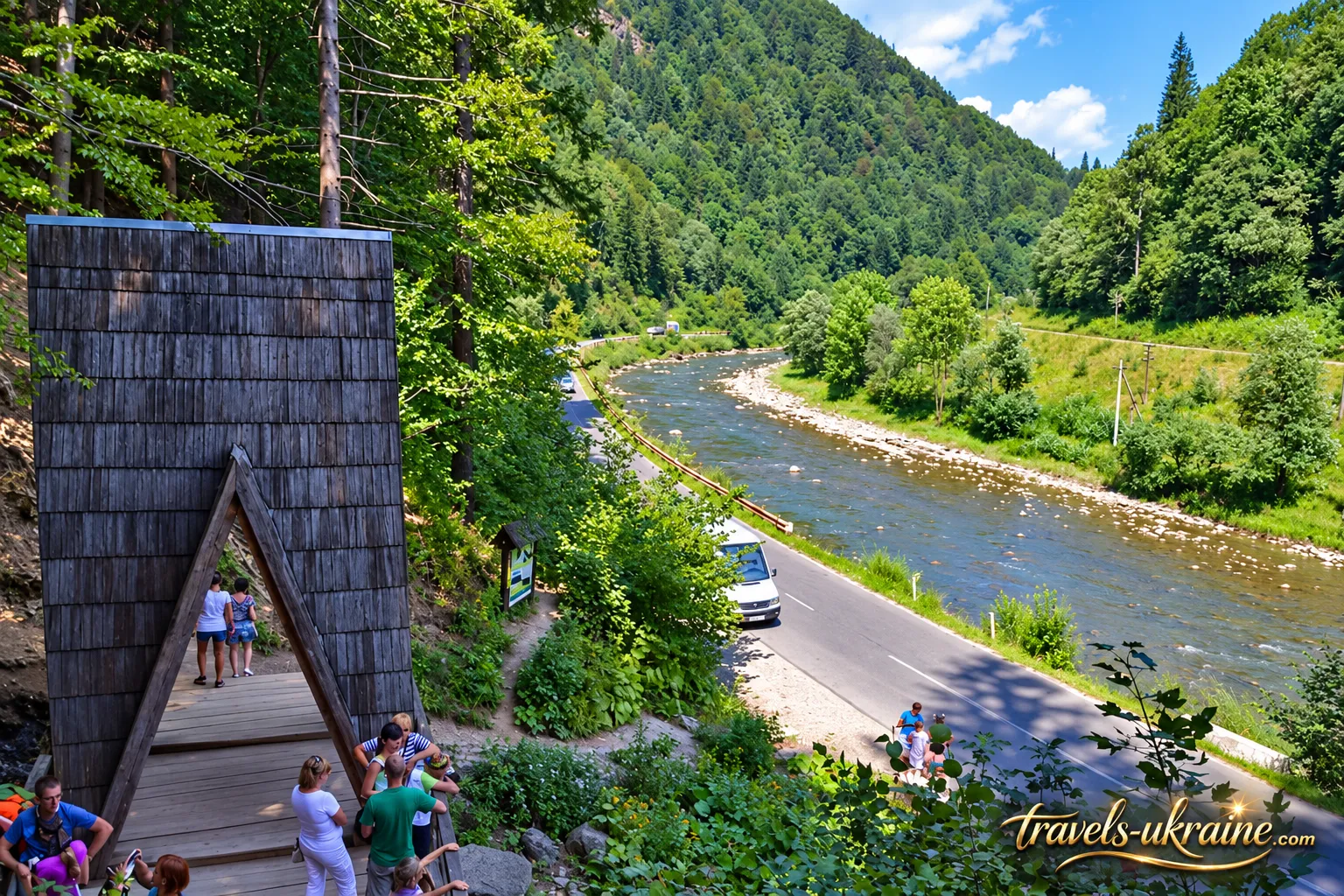
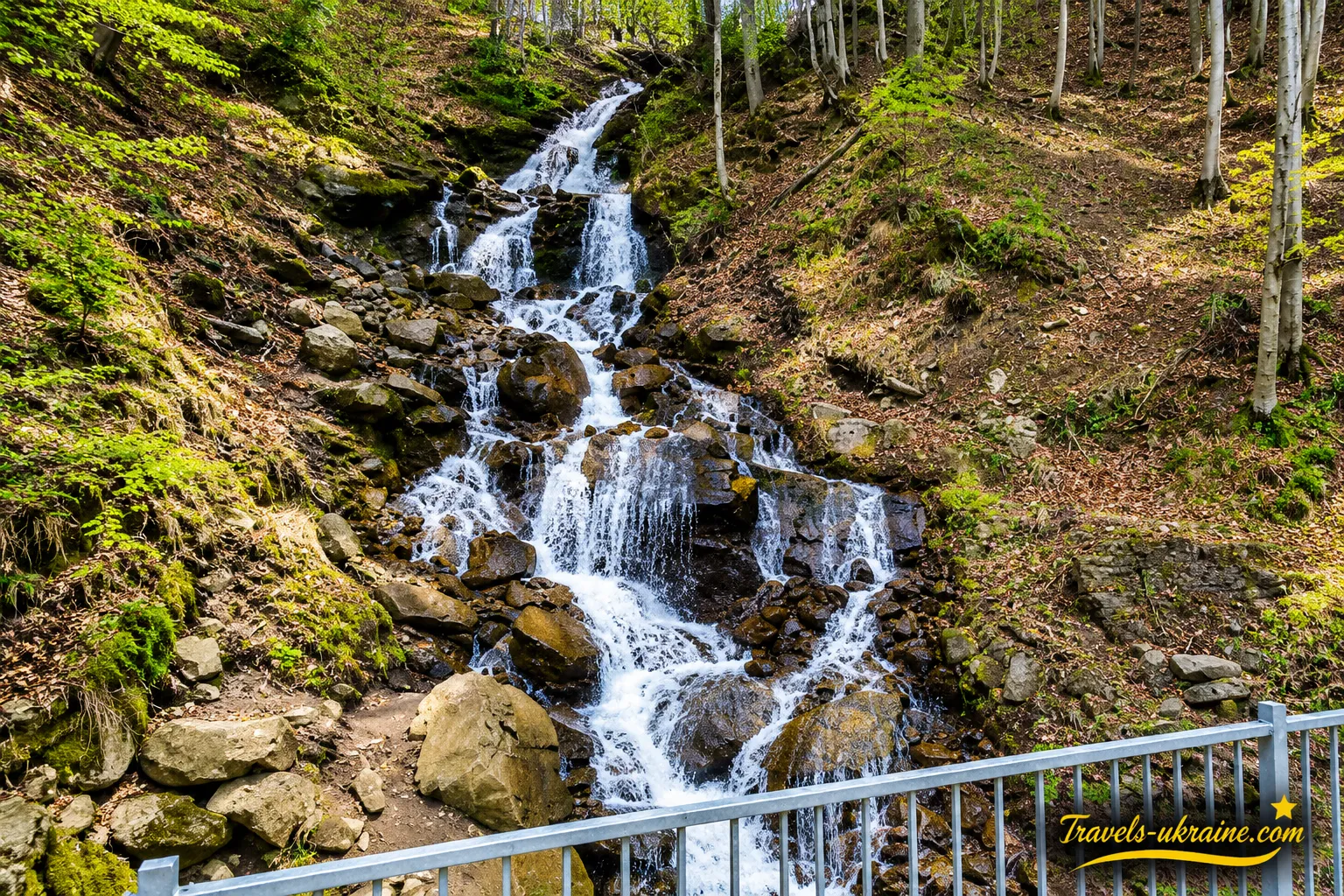
Between Kvasy and Yasinia, right beside the H-09 highway, lies a place where discovering a Carpathian waterfall does not require waking up at five in the morning, packing a large backpack, or spending hours searching for a trail in the mountains. Trufanets Waterfall is located so close to the road that it can easily become a stop on an ordinary road trip through the Rakhiv region.
But first impressions can be deceiving. Only part of the waterfall is visible from the road, while the entire Trufanets cascade system consists of more than five cascades with a total height of approximately 36 meters. A few minutes of walking uphill therefore reveal a completely different side of this natural attraction than a quick photograph beside the lowest cascade.
The water reaches this spot from the slopes of the Svydovets mountain range. The Trufanets stream originates at an elevation of approximately 1,720 meters near the foot of Mount Blyznytsia, flows for almost three kilometers through mountainous terrain, travels underground for part of its course, and finally plunges over the waterfall before joining the Chorna Tysa River.
Trufanets Waterfall becomes particularly impressive in spring, when snow melts in the high mountains, or after heavy rainfall. On such days, this seemingly modest roadside waterfall quickly reminds visitors that Carpathian mountain streams have a character of their own — and fortunately, they have little interest in anyone's travel schedule.
Trufanets does not require a separate, hours-long expedition, and that is precisely one of its greatest advantages. You can make a short stop, walk alongside the cascades, enjoy the cool air of the Svydovets forest, and return to your journey in as little as half an hour. But take a closer look, and you will discover that behind this remarkable accessibility lies a far more fascinating natural system than you might initially expect.
Trufanets Waterfall: Why It's Bigger Than It Looks
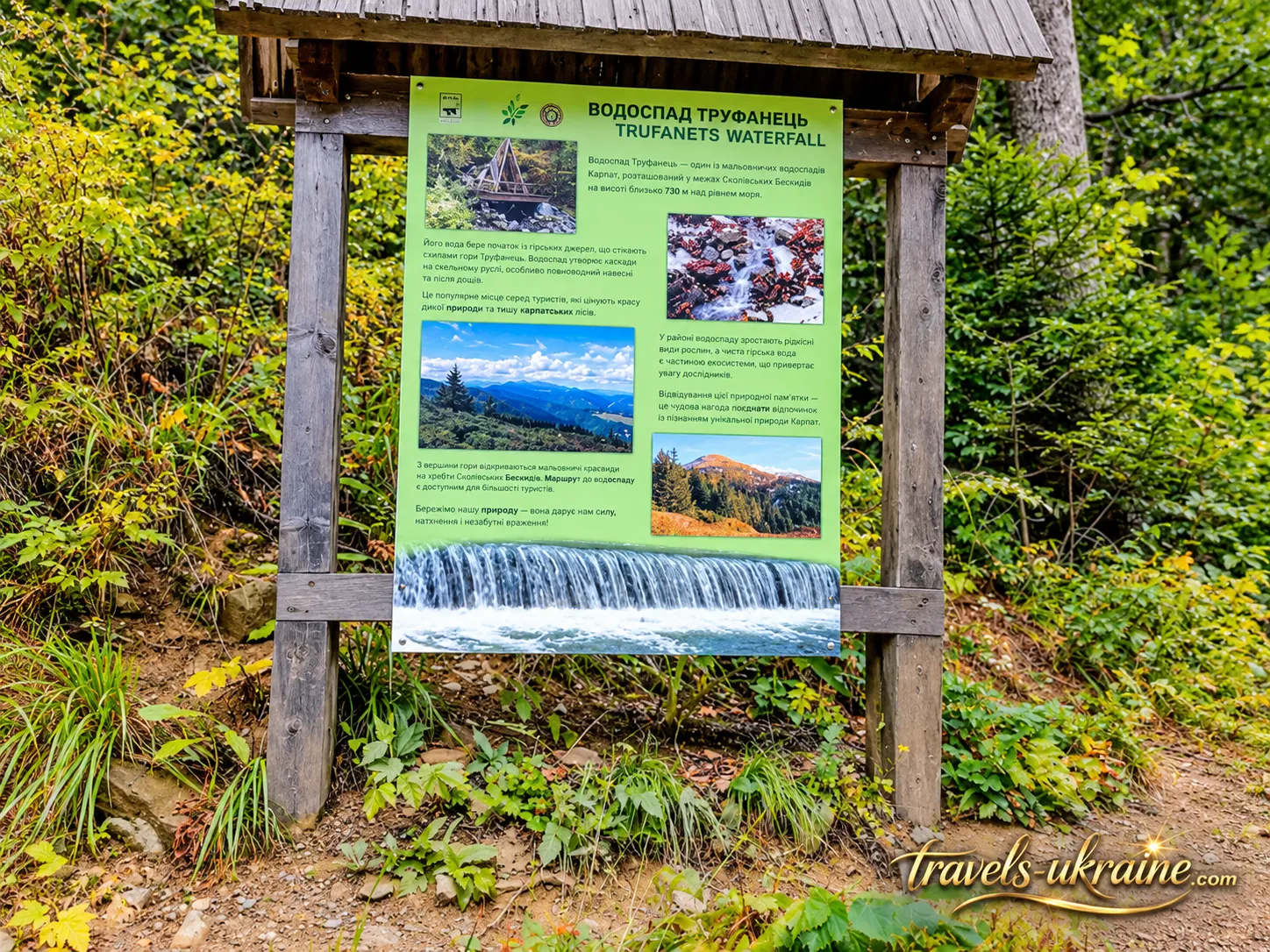
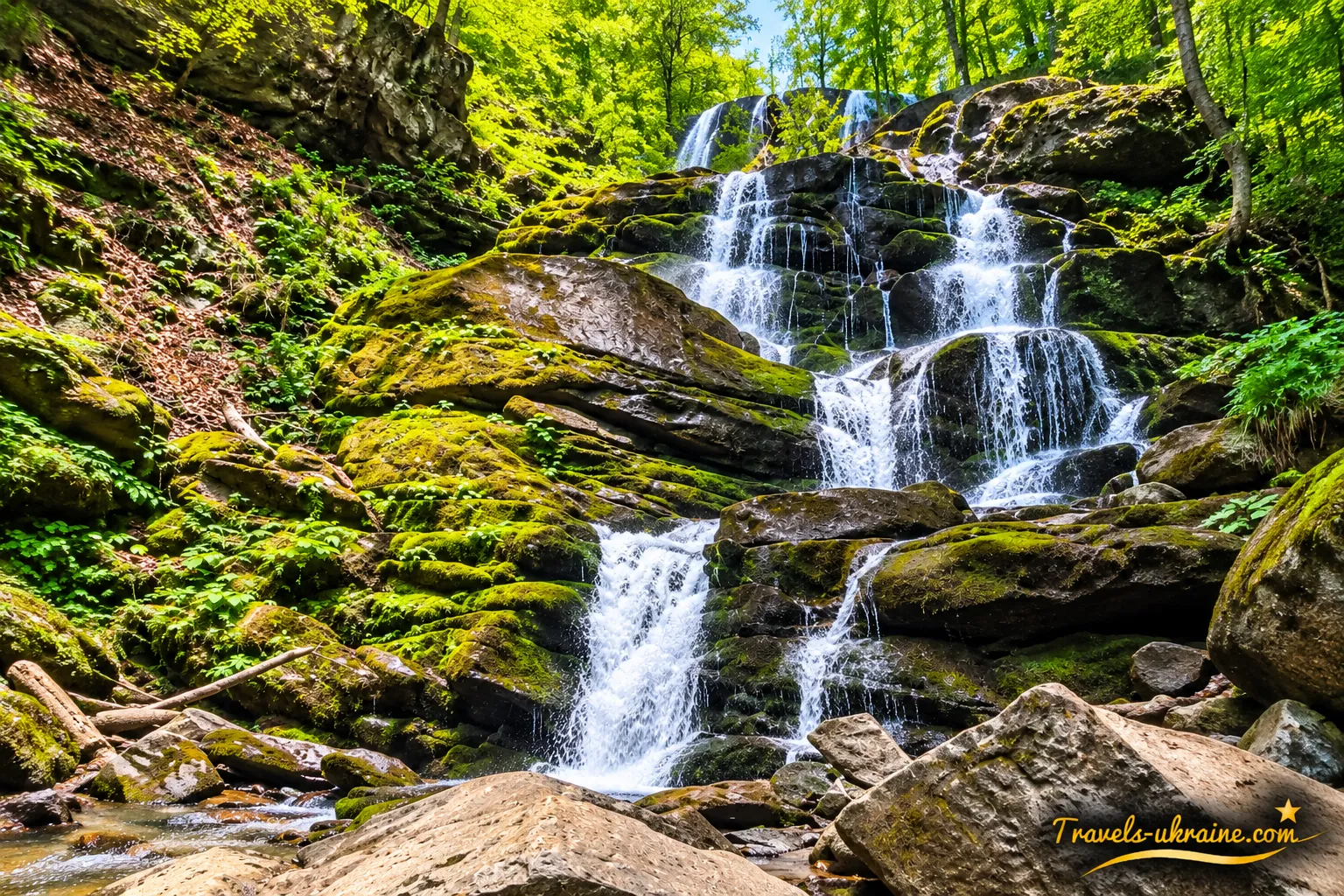
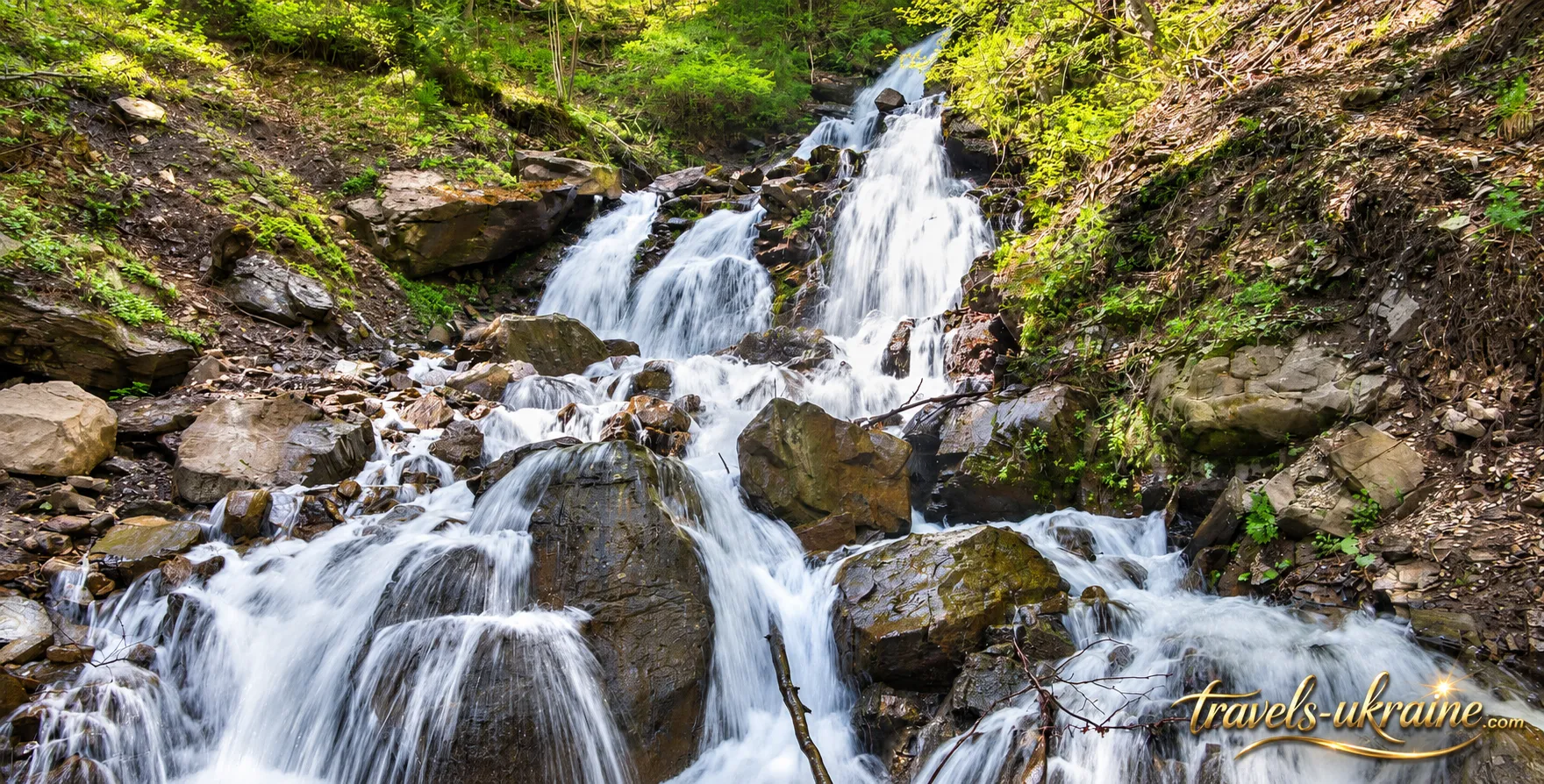
If you look at this Carpathian waterfall only from the road, it is easy to assume that you are seeing a small cascade worth just a few minutes of your time. In reality, this is merely the lower section of a much larger system. The stream descends the mountainside over a series of rocky ledges, forming more than five cascades with a combined height of approximately 36 meters. So Trufanets has a rather unusual talent: it manages to look considerably smaller than it actually is.
What makes the stream particularly interesting is that it flows underground for approximately 230 meters of its course. In other words, before reaching its famous cascades, Trufanets briefly disappears beneath the surface. The Carpathians have never been particularly fond of straightforward routes — even the water sometimes prefers to take a shortcut through a mountain. After emerging above ground, the stream continues descending through the forest, forms the waterfall, and eventually flows into the Chorna Tysa River. Because of the considerable elevation difference, the current is quite fast in certain sections and becomes significantly more powerful after snowmelt or heavy rainfall.
Why Does Trufanets Have So Many Cascades?
The waterfall's stepped appearance is closely connected to the geological structure of the Svydovets mountain range. The stream crosses exposed layers of hard sandstone that erode more slowly than the softer surrounding rock. As a result, rocky ledges gradually form along the streambed, creating the distinctive cascades over which the water flows. This process never truly stops. Water gradually wears away the rocks, carries fragments downstream, and reshapes the streambed during floods, while fallen trees sometimes create new temporary obstacles. Trufanets is therefore not a static natural display but a living system that slowly reshapes itself.
The waterfall is at its most spectacular in spring, during the snowmelt season, and after heavy rainfall. At these times, the stream gains strength, the lower cascades become wider, and the sound of rushing water can be heard even before you reach the waterfall. In summer, Trufanets is generally calmer, but the dense forest provides welcome coolness even on hot days. Autumn brings the colorful foliage of the Svydovets forests, while in winter, some of the cascades may become covered with ice. Each season gives the waterfall a different appearance, but spring remains the best time for those hoping to see it at its most powerful.
Since 1997, Trufanets has been part of the Carpathian Biosphere Reserve. This means it is much more than a convenient roadside photography stop — it is part of a protected natural area. The best way to visit is remarkably simple: admire the scenery, take photographs, avoid damaging anything, and leave nothing behind but footprints — preferably not on the slippery, wet rocks.
What to See Near Trufanets Waterfall
One of the advantages of Trufanets Waterfall is how easily it fits into a longer itinerary through the Rakhiv region. Exploring the cascades themselves does not take much time, so within a few hours, you could be admiring traditional Hutsul wooden architecture, heading into the Svydovets Mountains, or stopping in Kvasy to sample its famous mineral water. This part of the Carpathians is almost like a travel construction set: the main thing is not to try to fit every attraction into a single day.
Yasinia and the Strukiv Church
The nearest cultural stop is Yasinia. This mountain settlement is home to the wooden Church of the Ascension, also known as Strukiv Church, built in 1824. Together with its wooden bell tower, the church represents the traditional Hutsul style of religious architecture. Since 2013, it has formed part of the transnational UNESCO World Heritage Site known as the "Wooden Tserkvas of the Carpathian Region in Poland and Ukraine." After the rushing waters of the waterfall, this destination offers a completely different atmosphere: centuries-old timber, the peaceful valley of the Chorna Tysa River, and architecture that has survived more harsh winters than most modern tourist resorts combined.
Dragobrat and Mount Blyznytsia
If a short stop at Trufanets is not enough and your legs are still enthusiastically demanding adventure, you can continue toward Dragobrat and the Svydovets mountain range. The Trufanets stream originates near the foot of Mount Blyznytsia, so this journey allows you to explore the very mountains from which the waterfall receives its water.
Mount Blyznytsia is one of the best-known hiking destinations in the Svydovets range. A full-day hiking route from Yasinia via Dragobrat covers approximately 20 kilometers and involves a substantial elevation gain. In other words, this is no longer "just another quick stop after the waterfall" but a proper mountain adventure that requires time, preparation, and a willingness to discover whether your legs were really as enthusiastic about the idea as they initially seemed.
Kvasy and Its Mineral Springs
In the opposite direction from Yasinia lies Kvasy, a historic spa village in the Chorna Tysa River valley. Its name is associated with the Hutsul expression "kvasna voda," referring to mineral water. The local springs have been known for generations, and the first mineral-water treatment facility, called "Burkut," was established here as early as the 19th century.
This is one of the easiest ways to continue your journey. After visiting Trufanets, there is no need to conquer another mountain. Simply drive to Kvasy, take a leisurely walk through the village, and try the local mineral water. After navigating the winding Carpathian roads and feeling the cold spray of the waterfall, your body is unlikely to object to such a relaxing conclusion to the trip.
So, Trufanets Waterfall is best considered not as a standalone destination requiring an entire day, but as a beautiful natural stop between Yasinia, Kvasy, and the Svydovets Mountains. The waterfall itself takes relatively little time to explore, yet the surrounding area offers plenty of opportunities to create an itinerary lasting several hours or even a full day in the Rakhiv Carpathians.
Trufanets Waterfall: A Small Stop Worth Adding to Your Itinerary
Trufanets Waterfall does not require an entire day, a challenging hike, or extensive preparation. And that is precisely its greatest advantage. While traveling between Kvasy and Yasinia, you can simply make a short stop and find yourself beside a genuine Carpathian waterfall within minutes. Yet Trufanets is far more fascinating than it appears from the road.
The best way to experience Trufanets is as part of a broader journey through the Rakhiv region, combining it with visits to Yasinia, Kvasy, Dragobrat, or the Svydovets mountain range. In this way, a twenty-minute stop beside the rushing water becomes a natural addition to a much longer travel itinerary through the Carpathians.
Sometimes, a memorable travel experience does not require hiking twenty kilometers with a heavy backpack. Sometimes, all you need to do is slow down at the right moment and pull over beside the road — Trufanets is exactly that kind of place. And if one waterfall is not enough, continue exploring other waterfalls in Ukraine. Among them, you will find everything from easily accessible roadside cascades to remote natural wonders that will require a much closer friendship with your hiking boots.



No Comment
You can post first response comment.