
 English
 Українська
 Русский

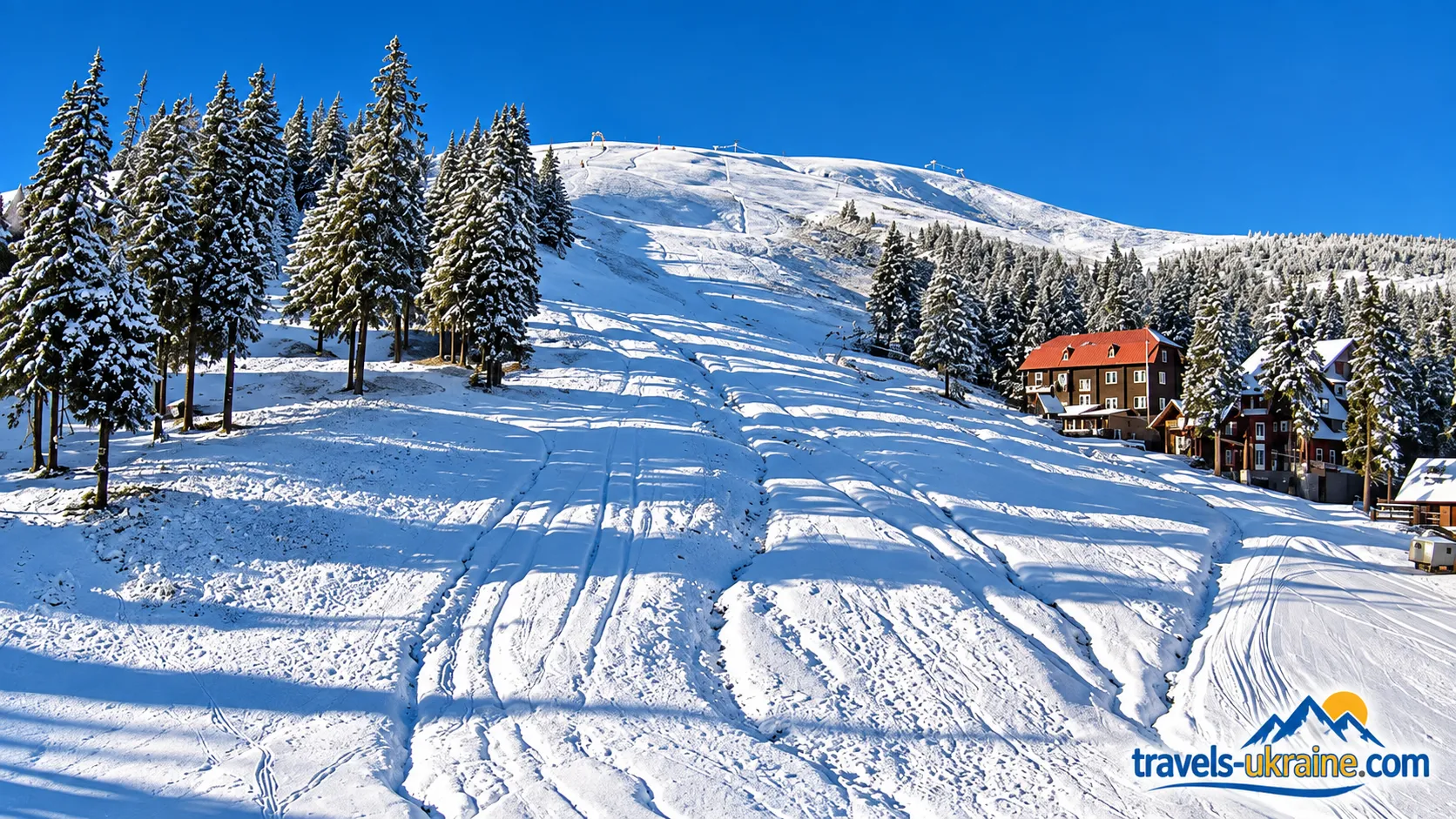
Dragobrat is one of those places in the Carpathian Mountains where the journey itself gradually reveals that an extraordinary mountain experience lies ahead. The higher you climb from Yasinia, the fewer familiar roads and buildings you encounter, while mountains, alpine meadows, and wide-open landscapes increasingly dominate the scenery. Situated at elevations of approximately 1,300–1,700 meters above sea level, at the foot of Mount Stih and near Mount Blyznytsia, Dragobrat is Ukraine's highest-altitude ski resort and has long been one of the most recognizable destinations for winter holidays in Zakarpattia.
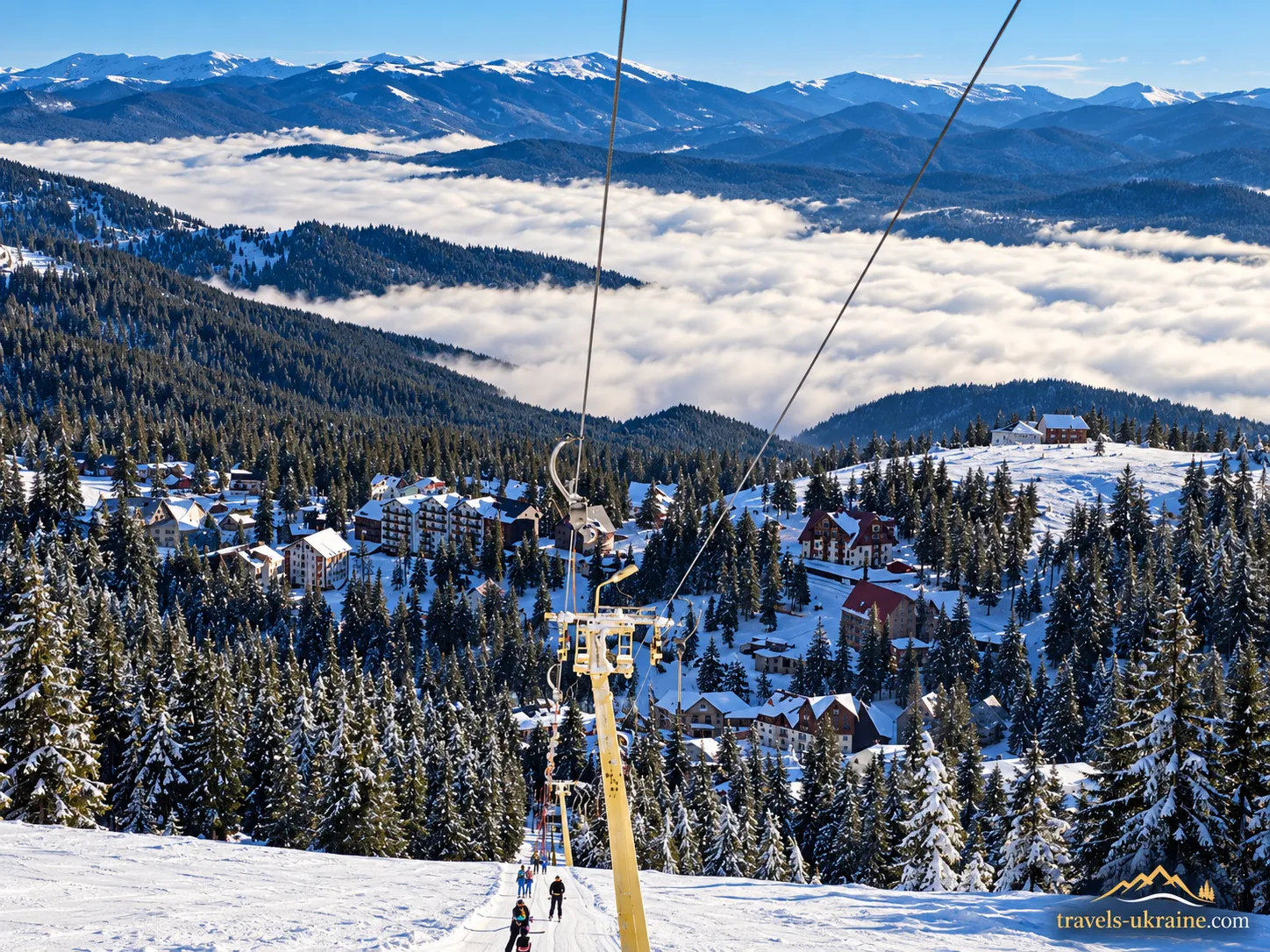
In winter, Dragobrat is instantly recognizable: snow-covered slopes, skiers and snowboarders, drag lifts and chairlifts, snow grooming machines, and vast open terrain ideal for freeriding. Its high elevation and the natural conditions of the Svydovets mountain range help snow remain on the slopes longer than at most other Ukrainian ski resorts. For this reason, the name "Dragobrat Ski Resort" has become almost synonymous with deep snow, untouched powder, and the winter landscapes of the Carpathian Mountains.
However, once the last patches of snow disappear from the mountainsides, Dragobrat undergoes such a dramatic transformation that it can feel like an entirely different destination. Skis give way to hiking boots, downhill runs are replaced by trails across the Svydovets Ridge, and mountain summits, alpine meadows, and high-altitude lakes become the main attractions. Mount Stih, Mount Blyznytsia, Lake Hereshaska, Lake Vorozheska, and other natural landmarks make Dragobrat in summer an appealing destination not only for winter sports enthusiasts but also for hikers, nature lovers, and travelers seeking outdoor adventures and spectacular mountain scenery.
At the same time, Dragobrat differs noticeably from a conventional resort with a single centralized infrastructure system. Various tourist complexes and ski lift operators work independently here, alongside hotels, mountain cottages, restaurants, equipment rental services, and ski schools. Skiing conditions may vary depending on the particular slope and lift. Even getting to the resort is part of its distinctive character: the final ascent from Yasinia requires considerably more attention to transportation than a typical drive along a paved road to a tourist destination.
That is why planning a holiday in Dragobrat requires more preparation than simply arriving and deciding what to do afterward. In winter, it is important to know which ski slopes and lifts suit your experience level, how ski passes work, where to rent equipment, and when skiing conditions are at their best. During summer, the priorities shift toward hiking routes, mountain weather, distances to lakes and peaks, and the availability of local services outside the ski season.
In this guide, we will explore Dragobrat as it is today: a high-altitude mountain destination best known for its winter sports but offering opportunities for outdoor recreation throughout the year. We will discover where the resort is located and why snow lasts so long here, examine its ski slopes, lifts, freeride terrain, and skiing season, explore the best things to do in Dragobrat during summer, and explain where to stay, how to get there, and which natural attractions of the Svydovets mountain range are worth visiting nearby.
Dragobrat in Zakarpattia: Location and What Makes the Resort Special
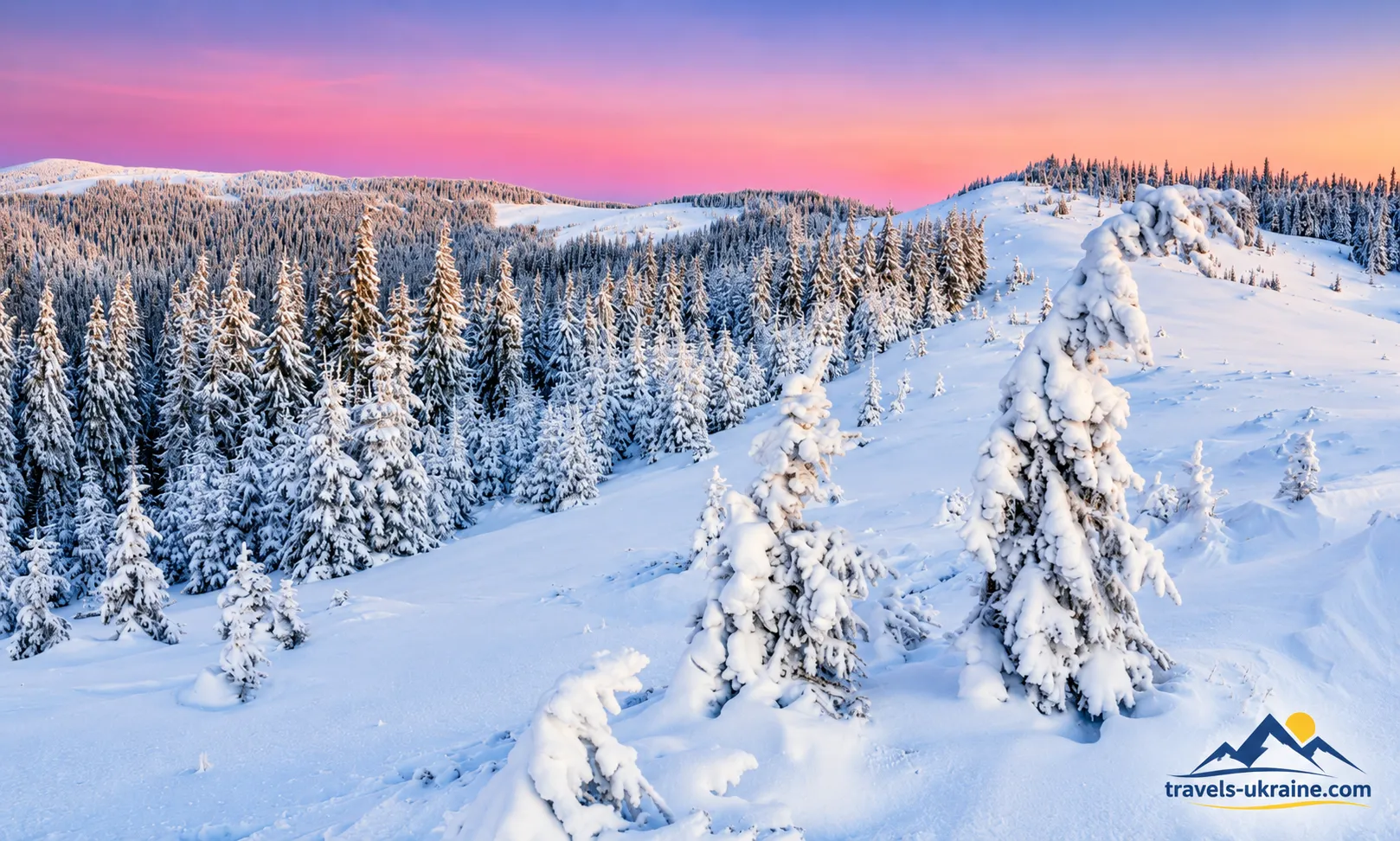
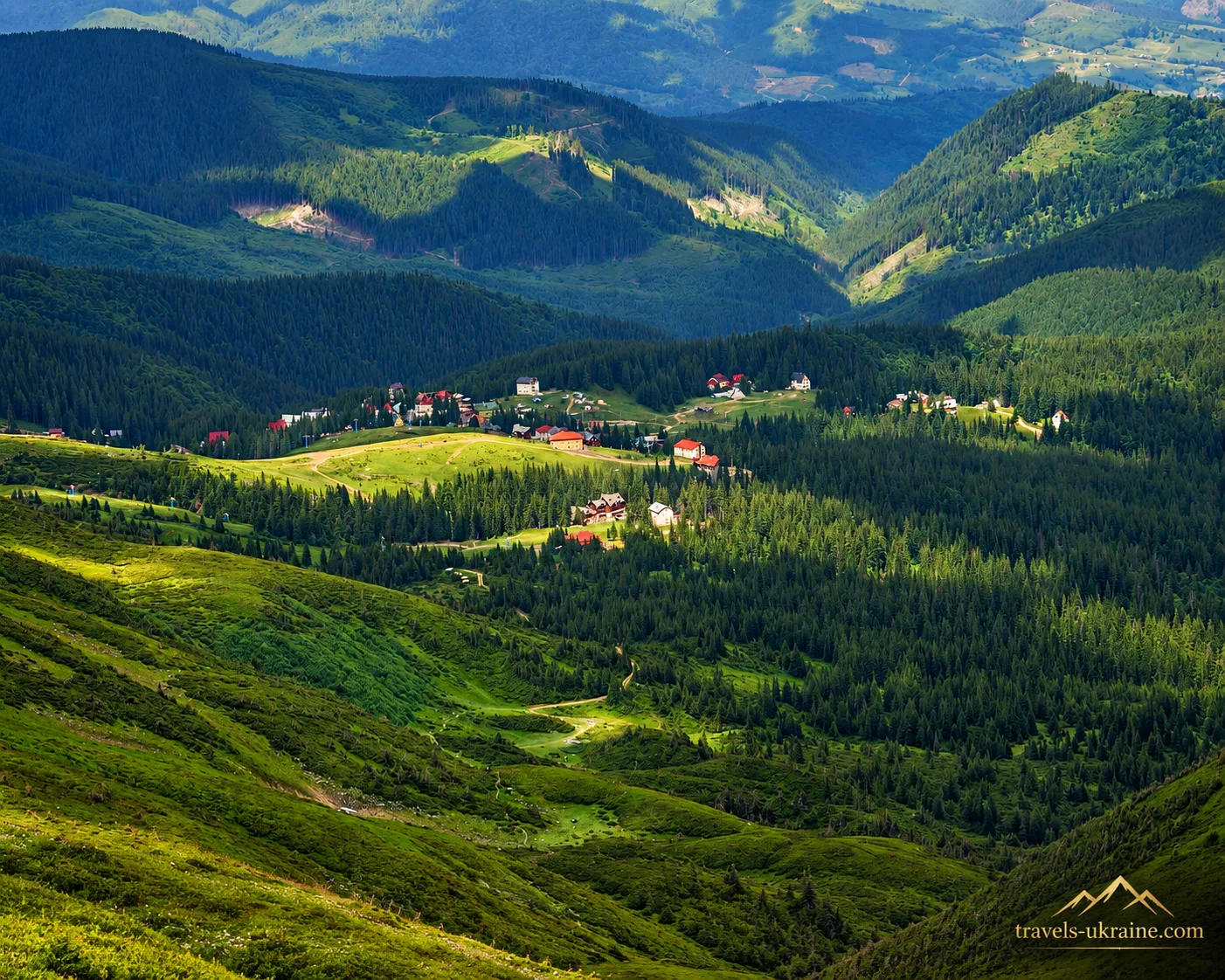
Dragobrat is located in Rakhiv District, Zakarpattia Oblast, in the high-altitude section of the Svydovets mountain range, approximately 18 kilometers from the settlement of Yasinia. Unlike many other Carpathian resorts, Dragobrat is not situated in a valley or near a major populated area. Instead, it occupies the upper slopes of Svydovets, where coniferous forests give way to subalpine meadows. This exceptional location creates a completely different atmosphere: buildings are relatively scattered, while sweeping panoramic views open up toward the Chornohora range, the Gorgany Mountains, and the central section of the Svydovets Ridge.
Why Does Natural Snow Last Longer in Dragobrat?
One of the defining features of Dragobrat Ski Resort is its reliance primarily on natural snowfall. The resort's high elevation, open mountain terrain, and distinctive weather conditions of the Svydovets range contribute to the accumulation and preservation of snow on the slopes. In favorable years, skiing can begin as early as late autumn, while some patches of snow remain until late spring.
However, the actual length of the ski season varies from year to year. It depends on temperatures, precipitation, wind, and the condition of the slopes. Therefore, the popular claim that "there is always snow in Dragobrat until May" should not be taken literally for every season. It is more accurate to say that, thanks to its elevation and natural conditions, the ski season in Dragobrat is often longer than at lower-altitude Carpathian resorts.
Dragobrat Is More Than a Single Hotel or Ski Complex
Another important characteristic of Dragobrat is its structure. The name "Dragobrat" is often used as though it refers to one large tourist complex. In reality, it is an entire high-altitude resort area with numerous hotels, mountain cottages, restaurants, equipment rental services, ski schools, and independently operated ski lifts.
There is a separate Dragobrat Ski Complex with its own infrastructure, ski slopes, and lifts. However, other complexes also operate nearby, including Vershyna Karpat, Karpatska Chaika, Oaza, and others. As a result, visitors should understand that skiing conditions, lift prices, and even ski pass systems may vary depending on the particular operator.
This decentralized structure distinguishes Dragobrat from resorts where all ski slopes and lifts are integrated into a single system. Some visitors may find this arrangement less convenient, but it has also helped preserve the atmosphere of a more rugged, natural mountain environment.
How Is Dragobrat Different from Other Carpathian Ski Resorts?
Dragobrat's main advantage is its combination of high elevation, natural snow, and diverse mountain terrain. Visitors will find both groomed ski slopes and extensive open alpine meadows that attract freeride enthusiasts. The resort focuses more on the mountains and skiing experience than on extensive urban-style resort infrastructure.
Another distinctive feature is its relative isolation. Reaching Dragobrat is more challenging than traveling to many other Carpathian tourist centers, but this remoteness is part of what defines its character. After the ascent from Yasinia, visitors find themselves surrounded by high-altitude mountain meadows, where the main attractions are not shopping centers or entertainment complexes, but mountains, snow, wind, and vast open landscapes.
In summer, this same characteristic becomes an advantage for a different kind of holiday. When the ski slopes turn green, Dragobrat becomes a convenient base for hiking in the Svydovets Mountains. From here, travelers can explore Mount Stih, Mount Blyznytsia, high-altitude lakes, and longer ridge trails leading toward Kvasy or other hiking destinations in the Rakhiv region. Therefore, Dragobrat is best understood not simply as a ski resort, but as a high-altitude tourist destination in the Svydovets Mountains, where winter sports remain the main attraction, while the surrounding landscape offers a much wider range of outdoor activities throughout the year.
Dragobrat in Winter: Skiing, Freeriding, and the Ski Season
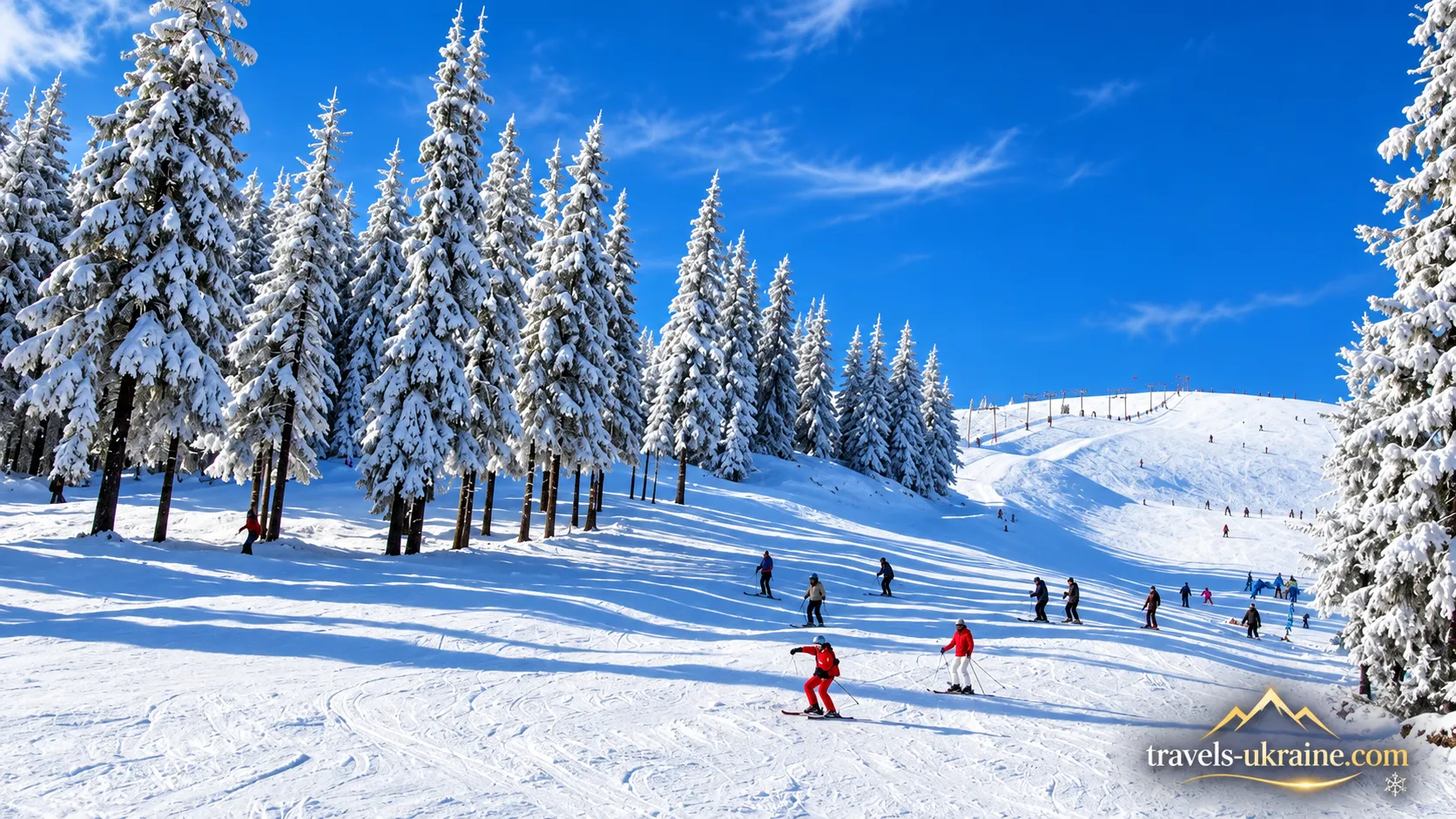
During winter, Dragobrat, Ukraine's highest-altitude ski resort, is all about natural snow, the high mountain slopes of Svydovets, and skiing conditions that differ significantly from those at lower-altitude resorts in the Carpathians. The winter season has shaped Dragobrat's modern reputation as a tourist destination. Beginners, experienced skiers, snowboarders, and freeride enthusiasts come here to enjoy the open slopes and extensive areas of untouched powder snow.
However, the resort's high-altitude location also means that conditions are strongly influenced by the weather. A sunny morning can quickly turn into fog, strong winds, or snowfall, while the condition of the slopes may change noticeably within a single day. For this reason, winter in Dragobrat should be approached as a genuine mountain experience rather than simply a visit to a resort with ski lifts. Weather conditions remain one of the most important factors when planning a trip.
The most predictable period for winter activities usually falls in the middle of the season, once a stable snow cover has developed. Even then, conditions can change considerably following snowfall, a thaw, or strong winds. Fresh snow makes Dragobrat particularly attractive to powder skiing enthusiasts. Conversely, after a prolonged period without snowfall, popular slopes may become harder and more compacted, while wind can redistribute snow and create drifts in exposed areas. Therefore, rather than relying solely on the calendar, it is best to check the weather forecast for Dragobrat, snow depth, and ski slope conditions before traveling. The official ski complex website provides live webcams, allowing visitors to check the slopes, queues at certain lifts, and actual weather conditions.
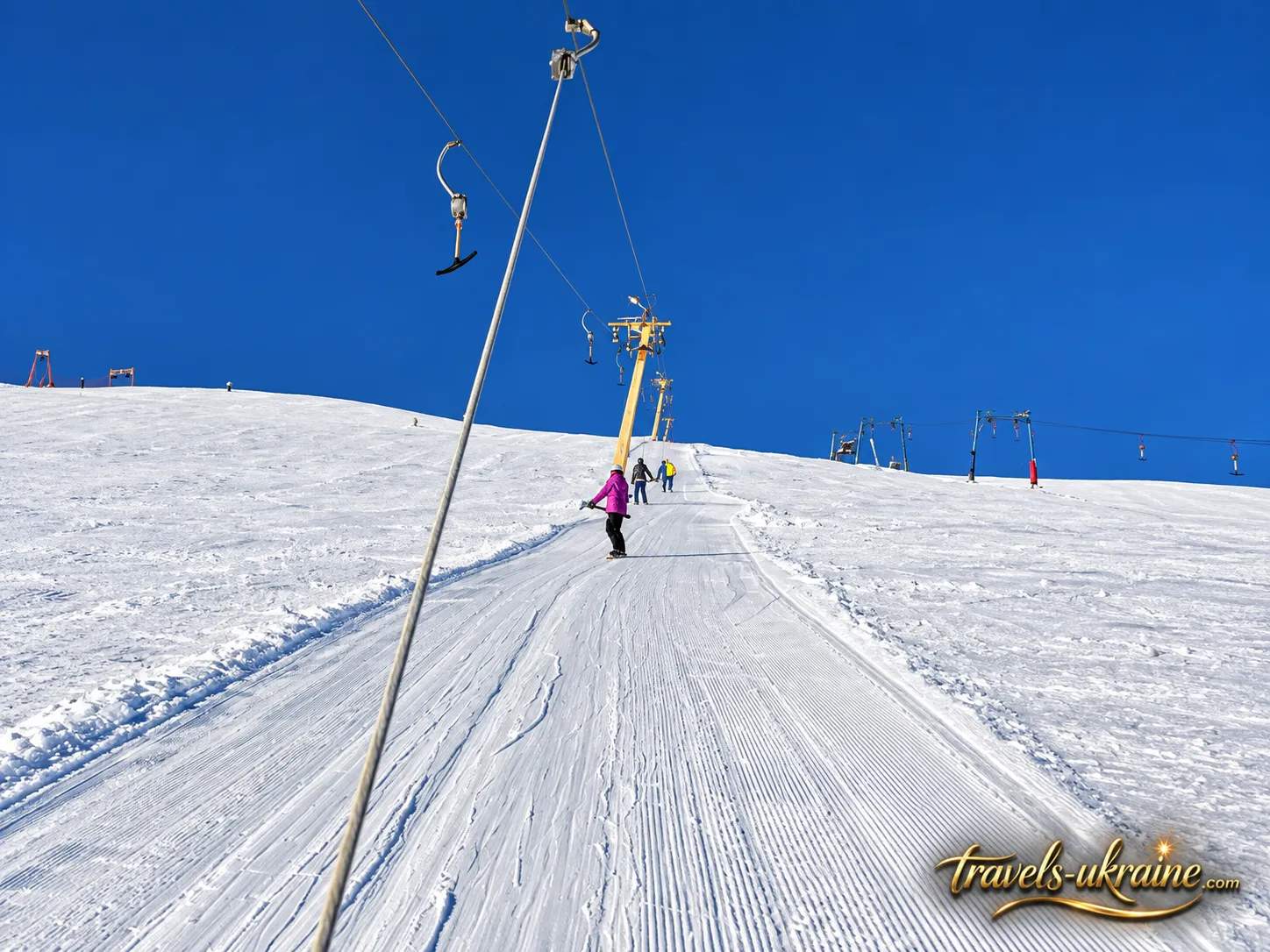
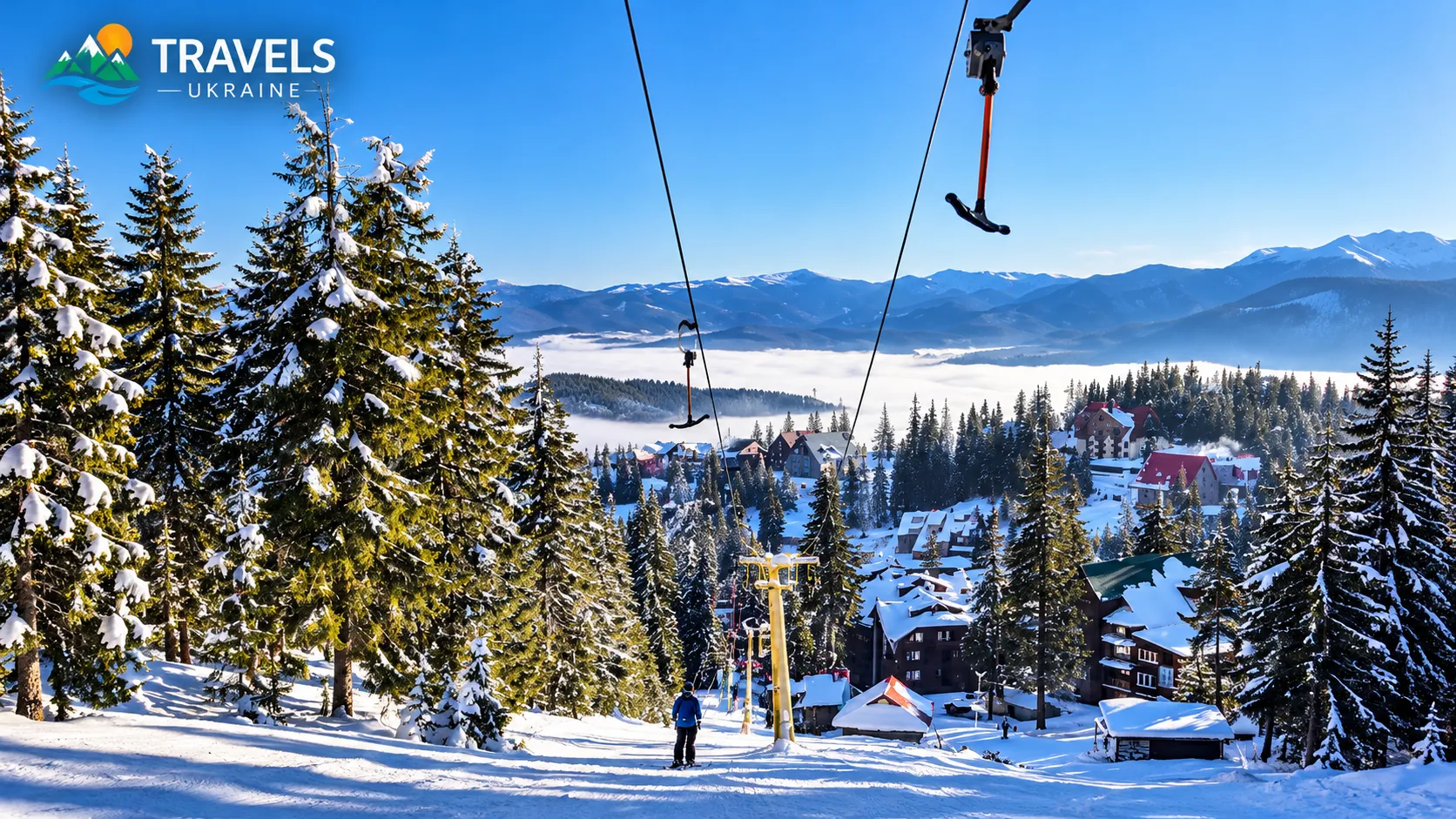
Freeriding in Dragobrat — The Resort's Main Winter Attraction
Freeriding in Dragobrat has long been a major reason for winter sports enthusiasts to visit. The official ski complex even promotes the resort as one of Ukraine's leading destinations for powder skiing. Open alpine meadows, natural variations in terrain, and substantial snowfall create far more opportunities for off-piste skiing than resorts where skiers spend most of their time on groomed runs.
For experienced riders, the high-altitude areas around Mount Stih, the Zhandarmy peaks, and Mount Blyznytsia are particularly interesting. Some of the more remote slopes are accessed using snow groomers or with local mountain guides, allowing riders to descend through untouched snow toward the resort area. However, this is where the important distinction between ordinary skiing and genuine freeriding becomes clear. Outside groomed ski runs, there are no guarantees of safe terrain, marked routes, or monitored conditions. Rocks, holes, and other natural obstacles may remain hidden beneath fresh snow, while exposed high-altitude slopes can become avalanche-prone under certain conditions.
Freeriding for Beginners — Professional Instruction Is Essential
Skiing through fresh powder may look exciting, but technically it differs considerably from skiing on groomed slopes. Skis and snowboards behave differently in deep snow, making it more difficult to control balance, speed, and direction. Therefore, even those who are confident on regular ski runs should avoid heading independently into remote freeride terrain if they have no previous off-piste experience. The ski school at Dragobrat Ski Complex officially offers freeride technique lessons for skiing in untouched powder snow, alongside traditional skiing and snowboarding instruction.
For a first experience with powder snow, the wiser approach is to choose a suitable area with an instructor, learn how to distribute your weight correctly and control your speed, and only then progress to more challenging routes.
Skiing and Snowboarding for Those Who Prefer a More Relaxed Experience
Despite its strong reputation for freeriding, winter holidays in Dragobrat are certainly not limited to extreme skiing. Many visitors spend their entire holiday on groomed slopes, gradually progressing from beginner areas to more challenging runs. The resort has a ski school offering private and group lessons. Instructors teach alpine skiing and snowboarding, while more experienced visitors can improve their technique through advanced lessons, including carving and competitive skiing skills.
What Ski Slopes Are Available in Dragobrat?
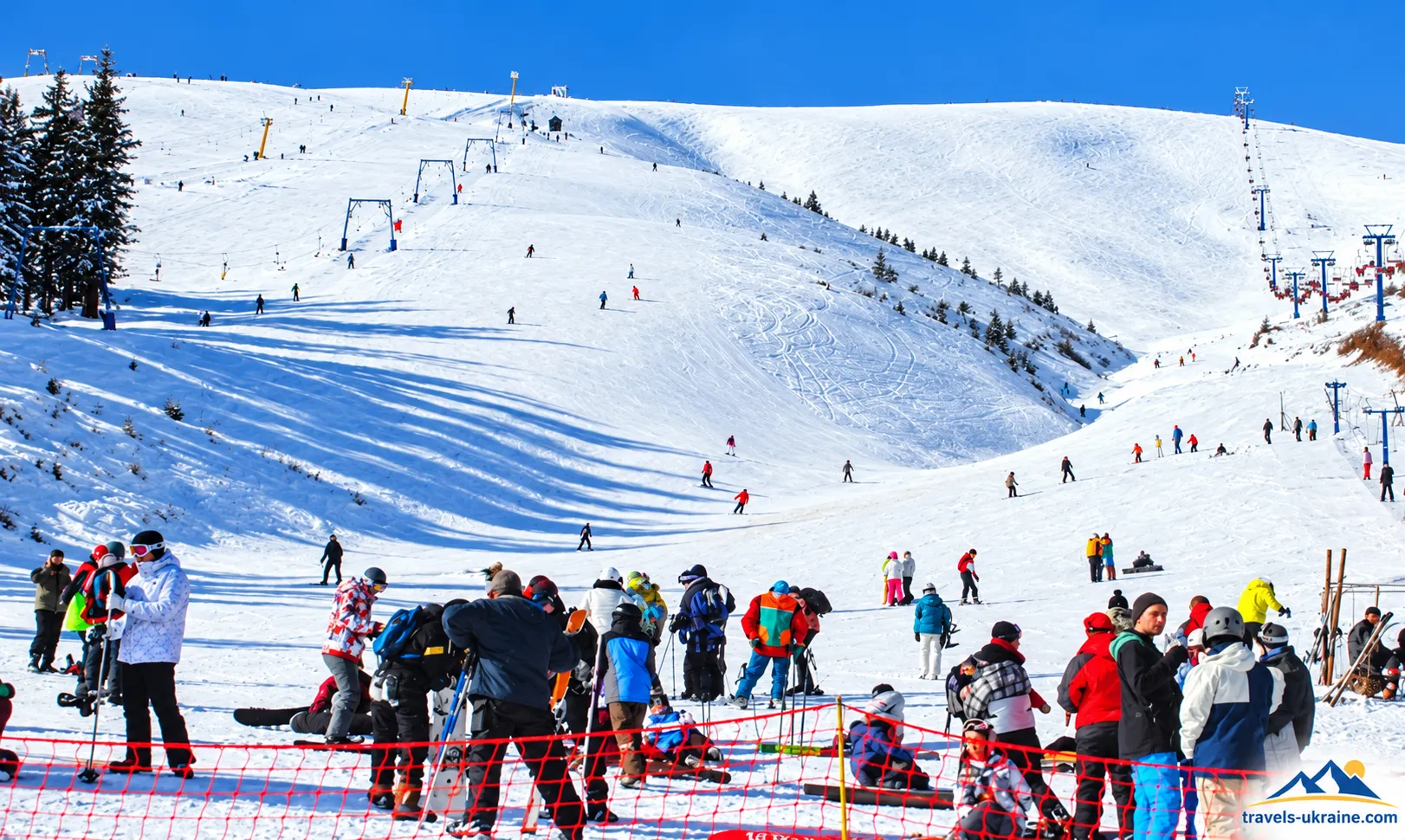
The ski slopes in Dragobrat are one of the main reasons visitors travel high into the Svydovets Mountains during winter. Unlike resorts with a single comprehensive trail map, centralized lift gates, and one ski pass covering every slope, Dragobrat consists of several separate skiing areas. Each has its own lifts, runs, and payment system. Therefore, before your first day on the snow, it is worth having at least a general idea of which area you plan to ski in.
Dragobrat's varied terrain offers slopes for different experience levels, from short beginner runs to red and black pistes. Beyond the groomed slopes lie extensive open sections of the Svydovets Mountains that attract experienced freeriders. The official Dragobrat Ski Complex advertises more than 20 km of ski runs of varying difficulty, including blue, red, and black routes. Unlike resorts where all skiers descend along a single wide slope from the upper station of a major cable car, skiing in Dragobrat is spread across different mountainsides. The character of each run can vary significantly depending on elevation, snow conditions, and the particular skiing area.
Blue runs and beginner areas are designed for visitors learning to ski or snowboard. These slopes have gentler gradients, making it easier to control speed and practice basic turns. For first-time skiers and snowboarders, it is better to start on these easier slopes with a short beginner lift rather than immediately attempting longer drag lifts.
Red runs require more confident speed control and skiing technique. They offer more varied terrain, with steeper sections in places, allowing intermediate skiers and snowboarders to experience the distinctive character of high-altitude skiing in Dragobrat.
Black runs and challenging natural terrain are intended for experienced skiers and snowboarders. They feature steeper gradients, while surface conditions may be more heavily influenced by weather, wind, and previous skiing activity. At a high-altitude resort, even a familiar run can look completely different after overnight snowfall or strong winds.
Things to Do in Dragobrat in Winter Without Skiing
Even if some members of your group do not ski or snowboard, a winter trip to Dragobrat can still be an enjoyable experience. The official ski complex lists walks through snow-covered mountains and snowmobile rides among its winter activities. Other options include winter photography, relaxing in hotels, visiting restaurants and traditional Carpathian mountain huts, enjoying saunas, or simply spending a few days surrounded by spectacular high-altitude winter scenery.
However, sleds and similar equipment must not be used on active ski slopes. The ski complex rules permit sledding only in specially designated areas to avoid creating hazards for skiers and snowboarders.
Dragobrat in Summer: Hiking Trails, Mountain Lakes, and Outdoor Activities
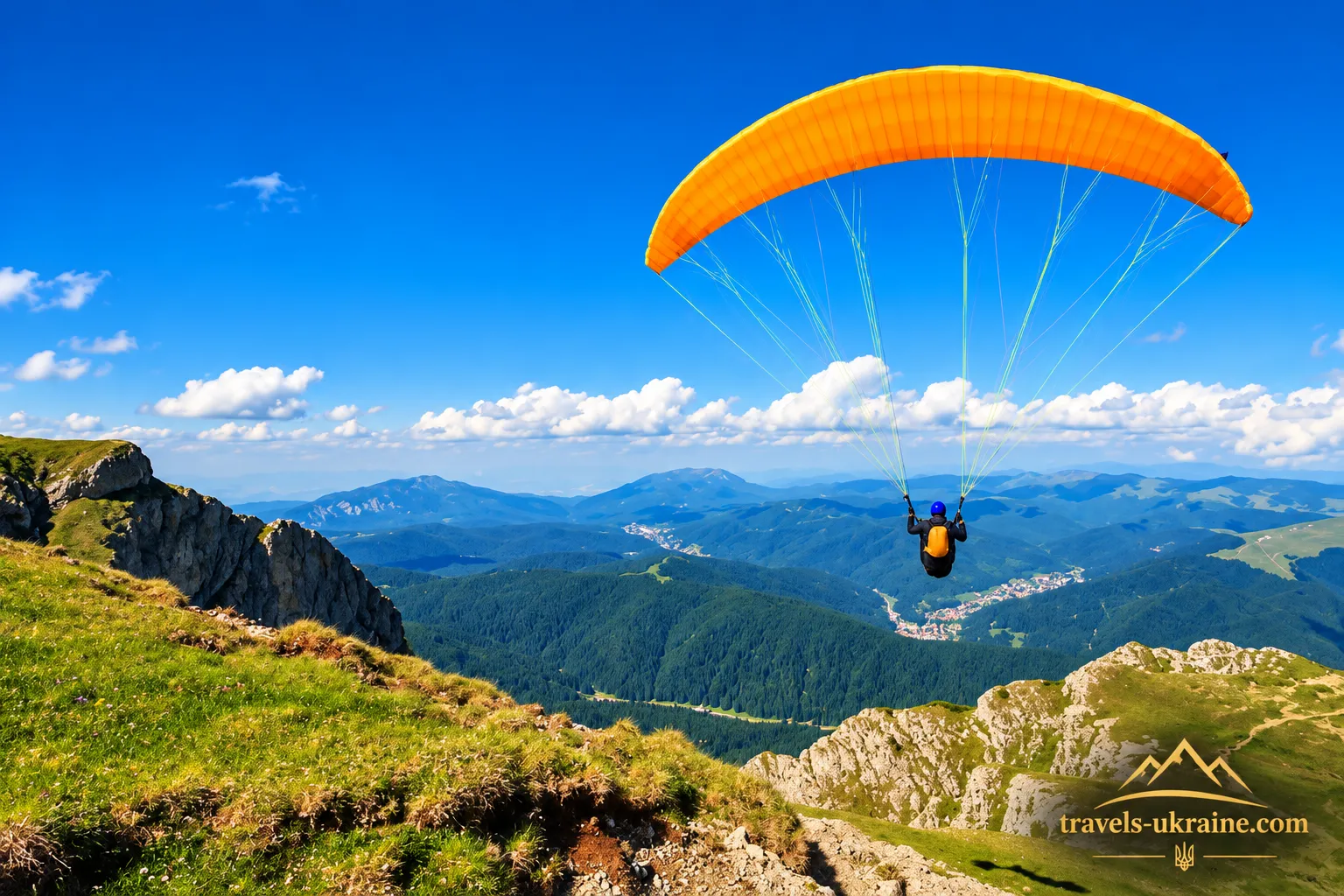
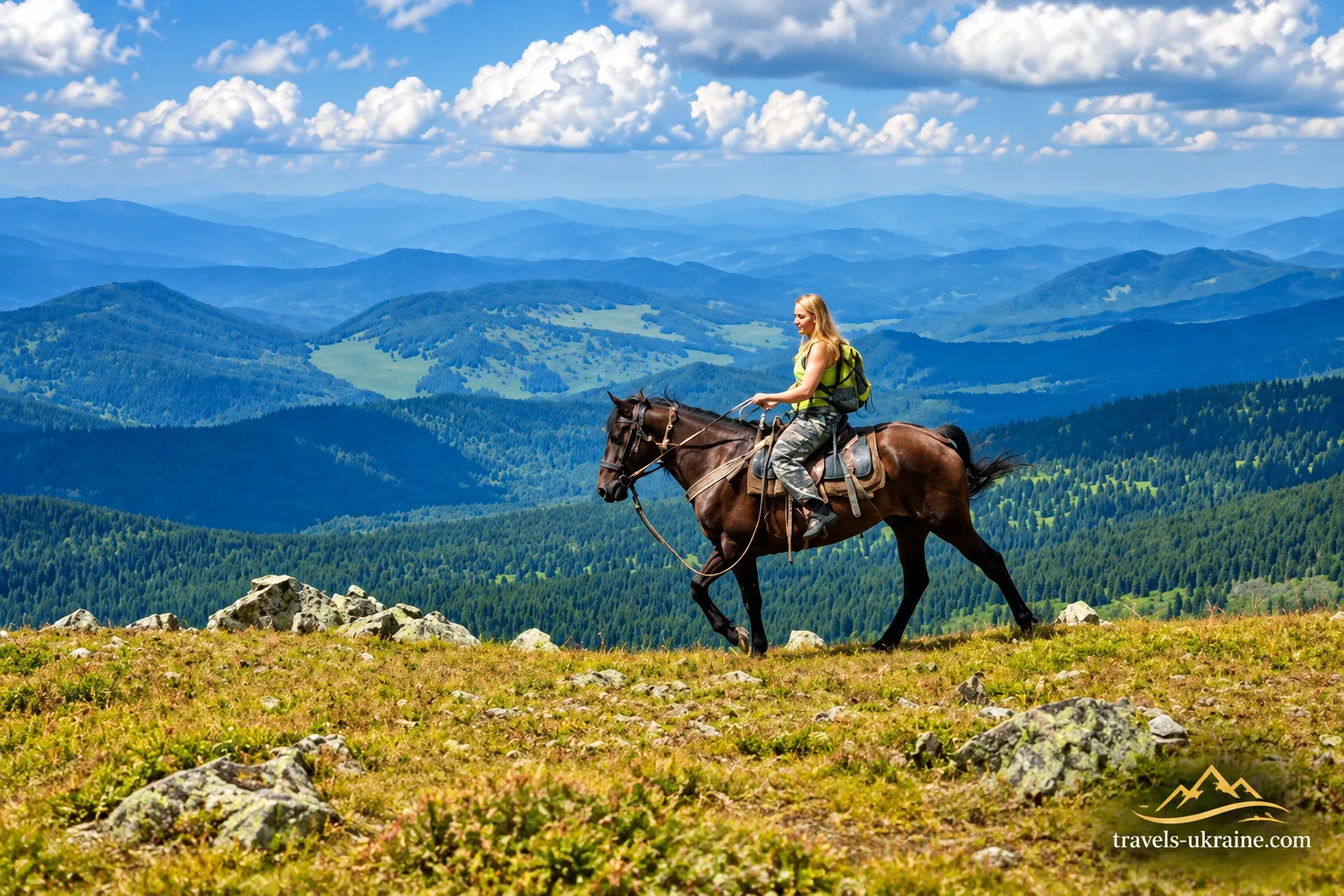
Dragobrat in summer looks completely different from the winter ski resort, and that is precisely one of its greatest advantages. As the snow retreats from the slopes, alpine meadows turn green and high-altitude lakes become free of ice, the resort area transforms into an excellent starting point for exploring the Svydovets mountain range. Instead of ski lifts and snow-covered runs, visitors can enjoy trekking hiking trails, mountain summits, panoramic viewpoints, alpine lakes, and peaceful walks through mountain meadows.
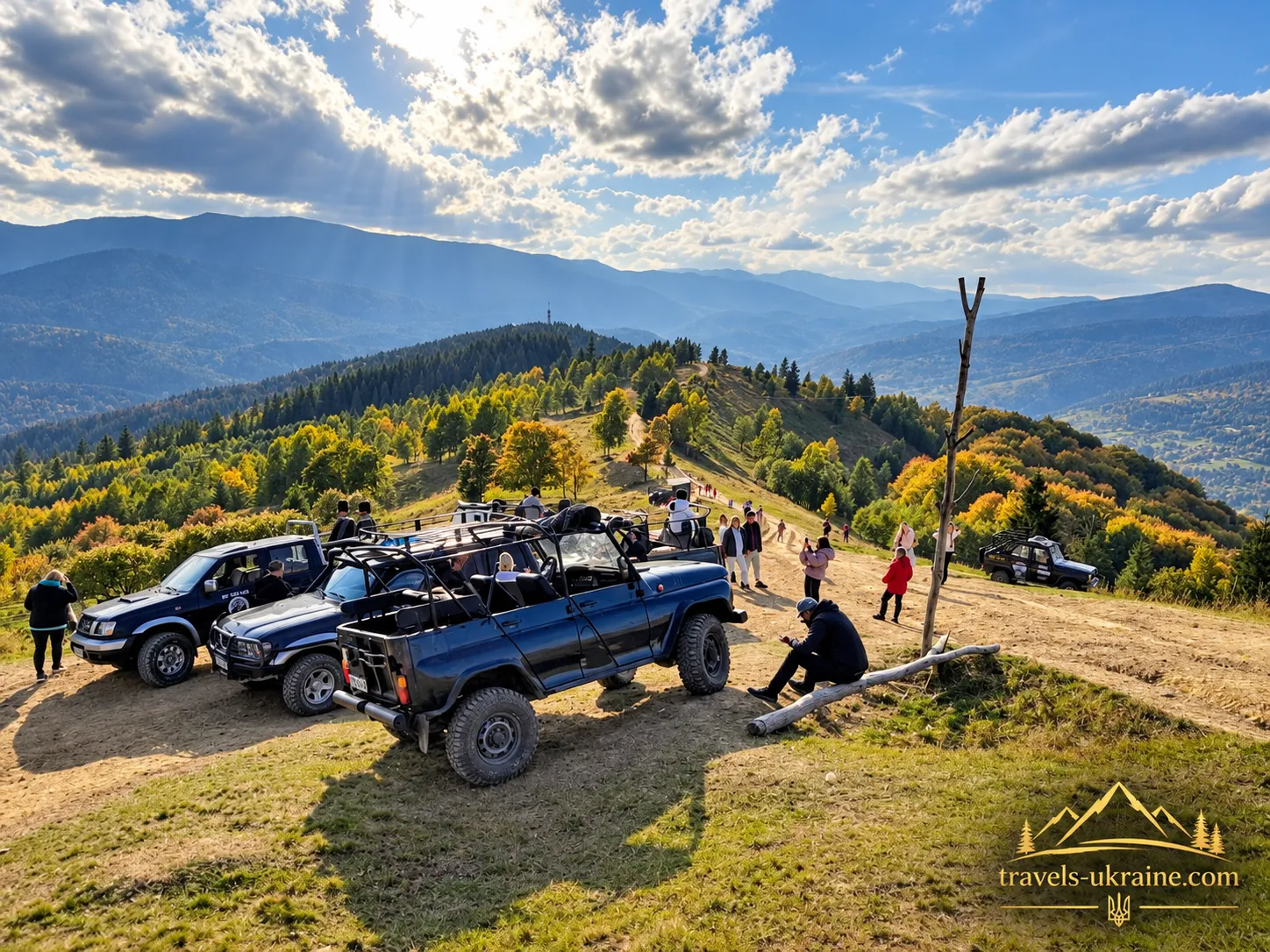
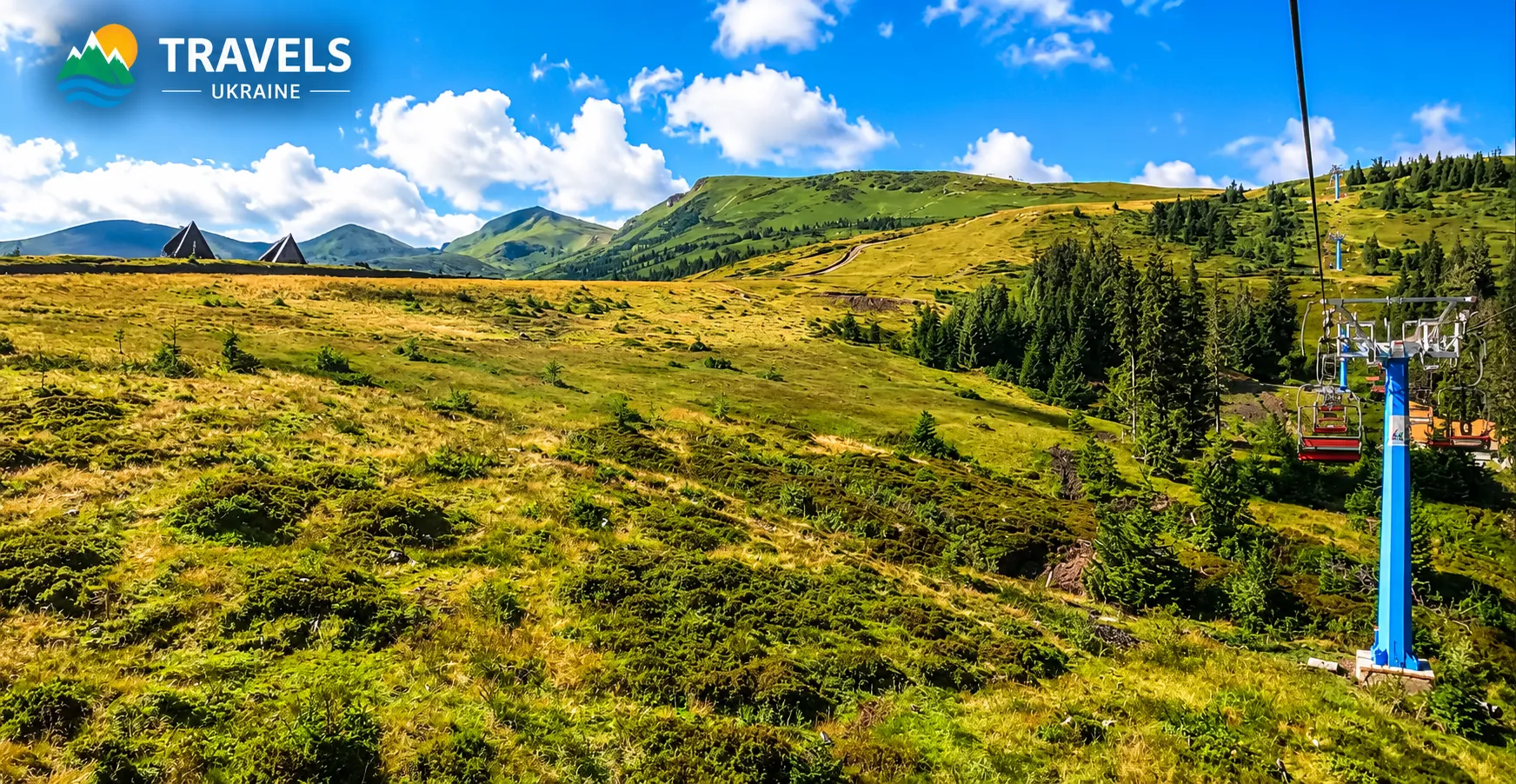
Dragobrat remains an active tourist destination during the summer season. Several hotels and tourist complexes welcome guests throughout the warmer months, organizing guided hikes, jeep tours, and excursions. For example, in 2026, Villa Dragobrat officially announced its summer season from late June until the end of August, while Vershyna Karpat states that its chairlift operates not only in winter but also during summer. In other words, Dragobrat in the warmer months is not simply a ski resort closed for the season — it is a fully functioning base for mountain holidays and outdoor adventures.
Hiking Trails in the Svydovets Mountains
The main reason to visit Dragobrat in summer is the opportunity to start exploring the mountains from an already elevated location. There is no need to spend several hours climbing from the valley before reaching the main hiking routes. Much of the elevation gain is already behind you, making Dragobrat an excellent starting point for both short walks and longer treks along the Svydovets Ridge. The easiest trails lead across surrounding alpine meadows and toward scenic viewpoints. Those ready for longer hikes can explore routes to Mount Stih, continue toward Mount Blyznytsia, visit high-altitude lakes, or follow the Svydovets mountain ridge farther into the Carpathians.
Official hiking routes in the Rakhiv region pass through Dragobrat and Mount Stih, while the surrounding mountain meadows have traditionally served as an important access point to the central section of the Svydovets range. As a result, summer visitors include not only hotel guests but also backpackers following multi-day hiking routes through the Carpathian Mountains.
Jeep Tours and Mountain Excursions in Svydovets
Not everyone visiting Dragobrat in summer wants to walk dozens of kilometers. For this reason, jeep tours have become a popular outdoor activity. Local tour operators and hotels organize excursions to high-altitude lakes, scenic viewpoints, the Chorna Tysa River, and other natural attractions. This type of trip allows visitors to see more locations in a single day, but it also has an environmental impact. Svydovets is a fragile high-altitude ecosystem, and off-road driving can damage mountain soils, vegetation, and hiking trails. Whenever possible, the most valuable natural areas are best explored on foot, while vehicle travel should remain on existing roads rather than crossing untouched alpine meadows.
Summer Facilities and Accommodation in Dragobrat
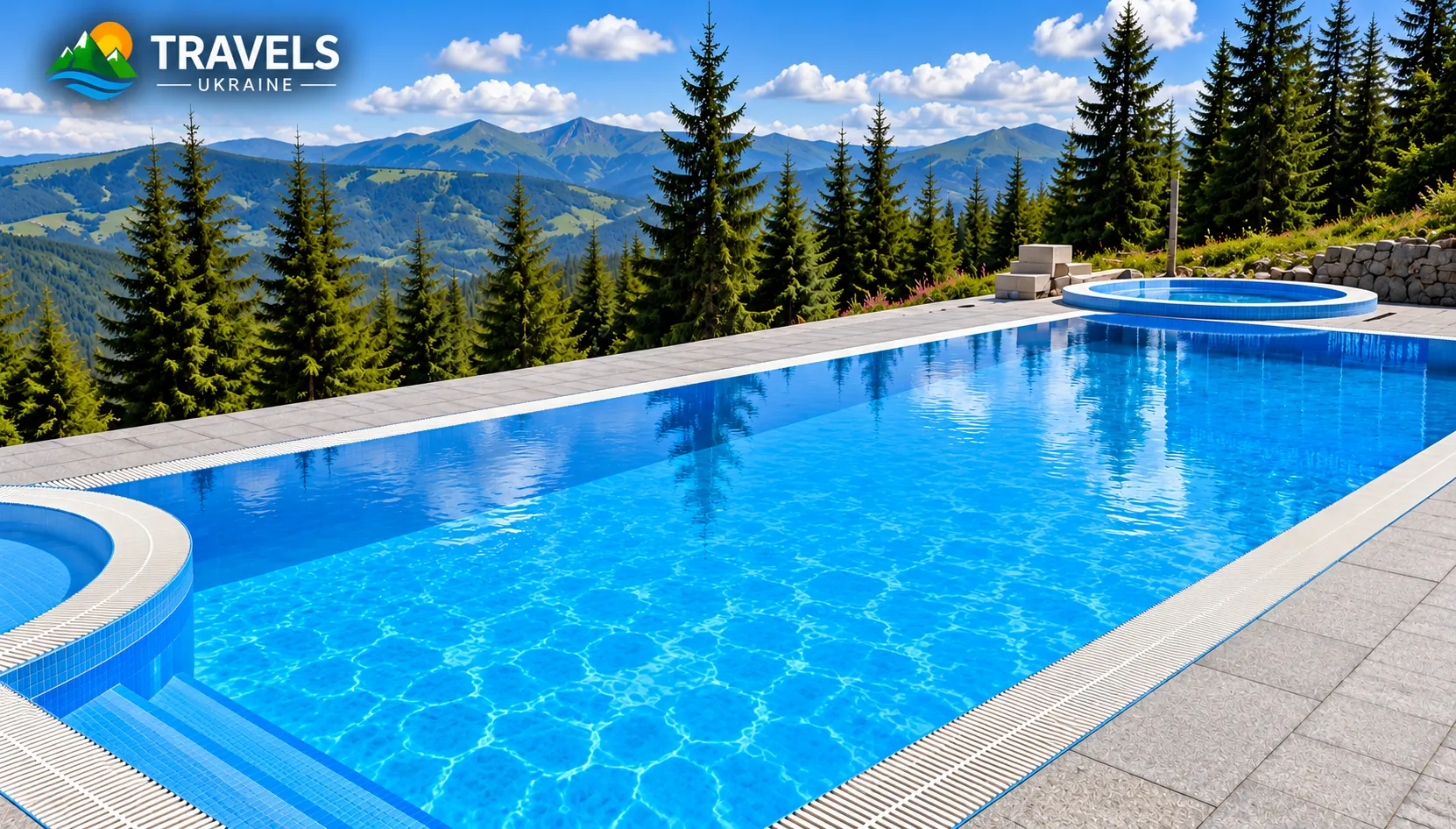
Some hotels and restaurants in the mountain resort area remain open after the ski season ends. In 2026, for example, Villa Dragobrat officially operated its summer season from June 25 to August 31, with access to a heated outdoor swimming pool included in the accommodation price. Other resort complexes also offer summer holiday programs, restaurants, saunas, excursions to mountain lakes and waterfalls, and organized hiking adventures.
For most hiking routes, the most comfortable period is July, August, and early September. At the beginning of summer, patches of snow may still remain on higher slopes, while the weather can be unpredictable after a cold spring. During the second half of summer, trails are usually drier, and alpine meadows are covered with lush grass and wildflowers. However, even in August, Svydovets remains a high-altitude mountain environment. Sunny weather can quickly give way to fog, rain, or thunderstorms, and exposed ridges offer little shelter from strong winds. Therefore, hikers should carry a waterproof jacket, warm clothing, drinking water, a fully charged phone, and a downloaded offline map.
Summer makes it especially clear that Dragobrat is much more than just a ski resort. In winter, visitors come for the snow and ski slopes, while during the warmer months, the greatest attraction is the Svydovets mountain range itself: open ridgelines, glacial lakes, alpine meadows, mountain peaks, and the opportunity to spend several days surrounded by nature, far from the noise and bustle of city life.
Accommodation and Facilities in Dragobrat
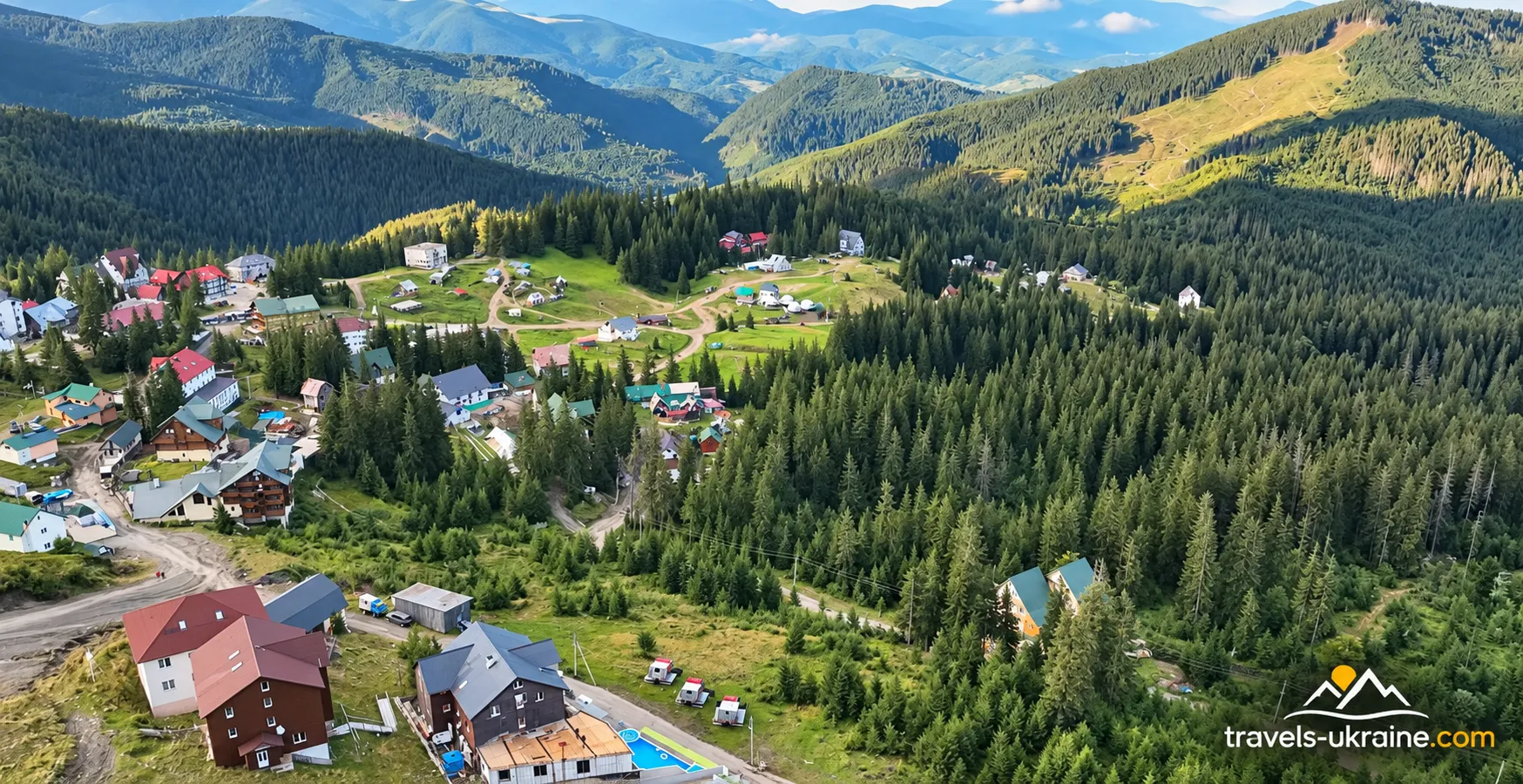
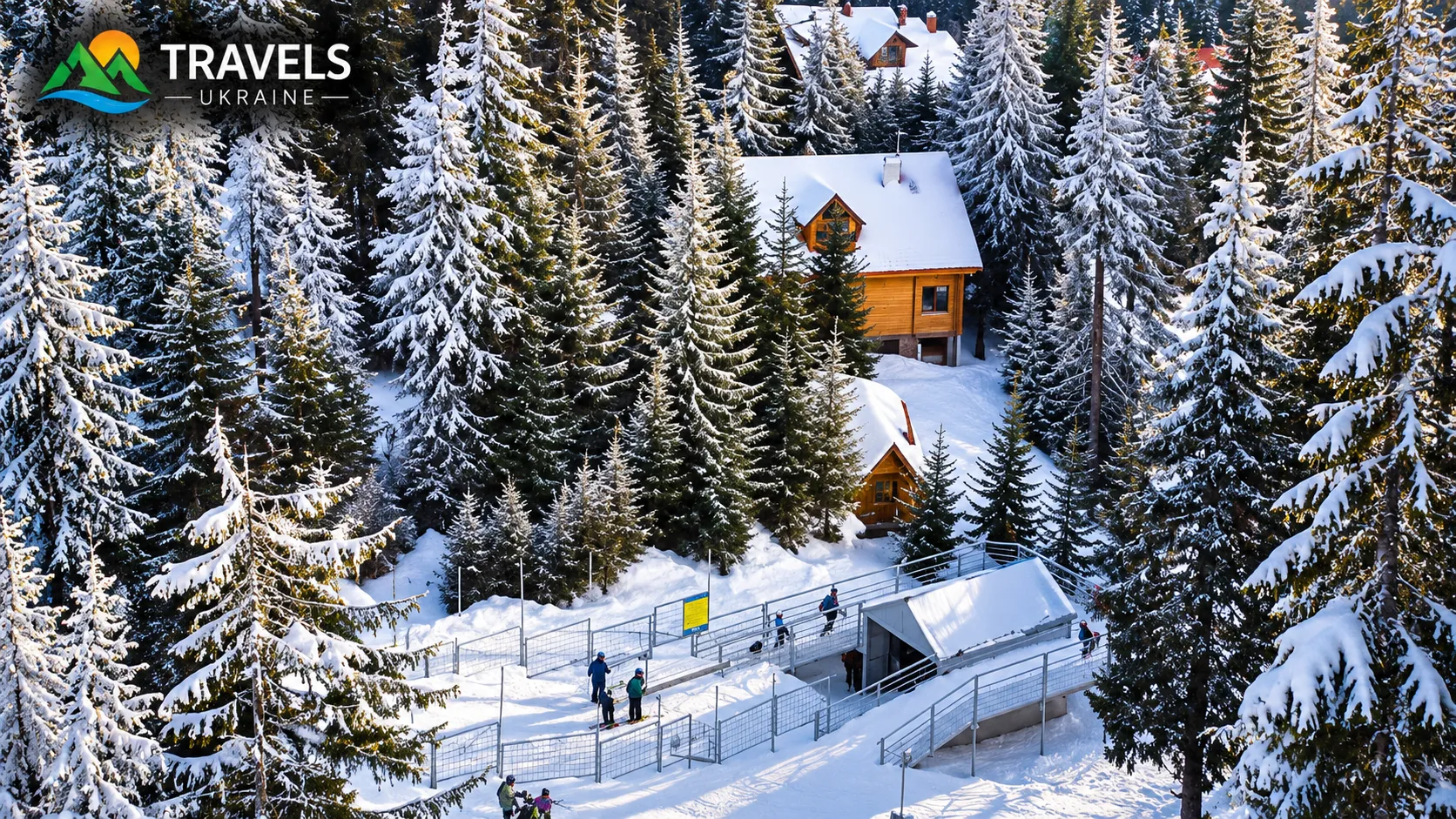
Accommodation in Dragobrat has its own distinctive character. There is no single large hotel complex around which the entire resort is organized. Instead, dozens of independent hotels, mountain cottages, and tourist complexes operate across the mountain meadows, alongside restaurants, traditional Carpathian mountain huts, equipment rental shops, ski schools, saunas, and other services. Some properties are located directly beside the ski lifts, while others stand farther away on the slopes, meaning that your choice of accommodation can significantly affect the convenience of your stay.
In winter, accommodation within a few minutes' walk of a ski lift is particularly desirable, especially when guests can practically start skiing right outside their hotel. During summer, priorities change: panoramic mountain views, access to hiking trails, dining options, terraces, saunas, and swimming pools become more important. That is why, before booking, visitors should check not only the photographs of their room but also the hotel's exact location and which facilities are available during their intended travel season.
Hotels and Mountain Cottages in Dragobrat
The range of accommodation is quite extensive, from small privately owned guesthouses to larger tourist complexes with their own restaurants, equipment rental facilities, and additional amenities. The central Dragobrat Ski Complex, for example, has a five-story hotel with 33 rooms and two cottages containing 8 rooms each. Most rooms accommodate two, three, or four guests and include private bathrooms and facilities for drying skiing equipment.
Other complexes offer their own distinctive holiday experiences. Vershyna Karpat combines hotel accommodation with a restaurant, bars, a sauna, equipment rental services, a ski school, and nearby ski lifts. MARINA Hotel is situated in the central part of the resort area and emphasizes convenient access to the slopes. Villa Dragobrat, in addition to its winter facilities, also operates during the summer season and provides additional recreational opportunities during the warmer months.
Therefore, the term "hotel in Dragobrat" can refer to very different levels of comfort and service. Before booking, it is worth checking whether meals are included, how far the nearest ski lift is located, and whether the property offers equipment drying facilities, backup power, Wi-Fi, and transportation arrangements from Yasinia.
Restaurants, Traditional Mountain Huts, and Dining Options
Dragobrat offers both independent dining establishments and restaurants located within hotels. The selection is usually wider during the winter season because of the larger number of visitors. The central ski complex has its own food court serving hot meals, beverages, and traditional Carpathian cuisine, while larger hotel complexes often operate their own restaurants.
Some hotels offer accommodation packages that already include meals. For example, MARINA provides options with breakfast and dinner, while Vershyna Karpat includes breakfast in several of its accommodation rates. This arrangement is particularly convenient at a high-altitude resort, as guests do not have to search for an open restaurant far from their hotel when the weather deteriorates or evening arrives.
If you are planning an early morning hike in summer or a full day on the ski slopes in winter, carrying some drinking water and snacks is still advisable. The selection of food and the opening hours of dining establishments in the mountains can vary depending on the season and the number of visitors.
Ski and Snowboard Equipment Rental
Bringing your own skiing equipment to Dragobrat is not essential. Several rental shops operate throughout the resort, including those located directly within hotels and tourist complexes. The central Dragobrat Ski Complex offers equipment rental services, Vershyna Karpat operates its own rental facility, and additional rental points are available at other hotels.
Visitors can usually rent skis or snowboards, boots, poles, and helmets. Some rental shops offer equipment of different performance levels, so experienced skiers and snowboarders should check the availability of specific models and sizes in advance, particularly during holidays and peak season.
Another important amenity is a dedicated ski equipment storage and drying room. After spending an entire day on snowy slopes, having dry boots the following morning makes a much bigger difference than many travelers realize when choosing accommodation. Such facilities are available at the central Dragobrat Ski Complex and several other resort properties.
Ski Schools and Professional Instructors
For visitors trying skiing or snowboarding for the first time, Dragobrat offers ski schools and professional instructors. The central ski complex provides private and group lessons covering basic skiing techniques, carving, competitive downhill skiing, and freeriding. Professional instruction is valuable not only for complete beginners. Even experienced recreational skiers can benefit from a few lessons to correct technical mistakes or learn how to handle untouched powder snow for the first time. During peak season, it is advisable to book lessons in advance. On weekends and during holiday periods, popular instructors may be fully booked several days ahead.
Saunas, Swimming Pools, and Relaxation After Mountain Activities
After a day of skiing or a long summer hike, many visitors prefer warmth, comfort, and relaxation rather than additional physical activities. Several hotels in Dragobrat offer saunas, traditional heated outdoor bathing tubs, swimming pools, and relaxation areas. The exact selection of facilities depends on the chosen property. Vershyna Karpat, for example, has a sauna, restaurant, and bars; MARINA offers its own sauna and relaxation room; and Villa Dragobrat provides guests with a heated outdoor swimming pool during the summer season. These amenities are particularly appealing to travelers planning to spend several days in Dragobrat rather than visiting for a single-day excursion.
How to Get to Dragobrat: Traveling via Yasinia and Mountain Transfers
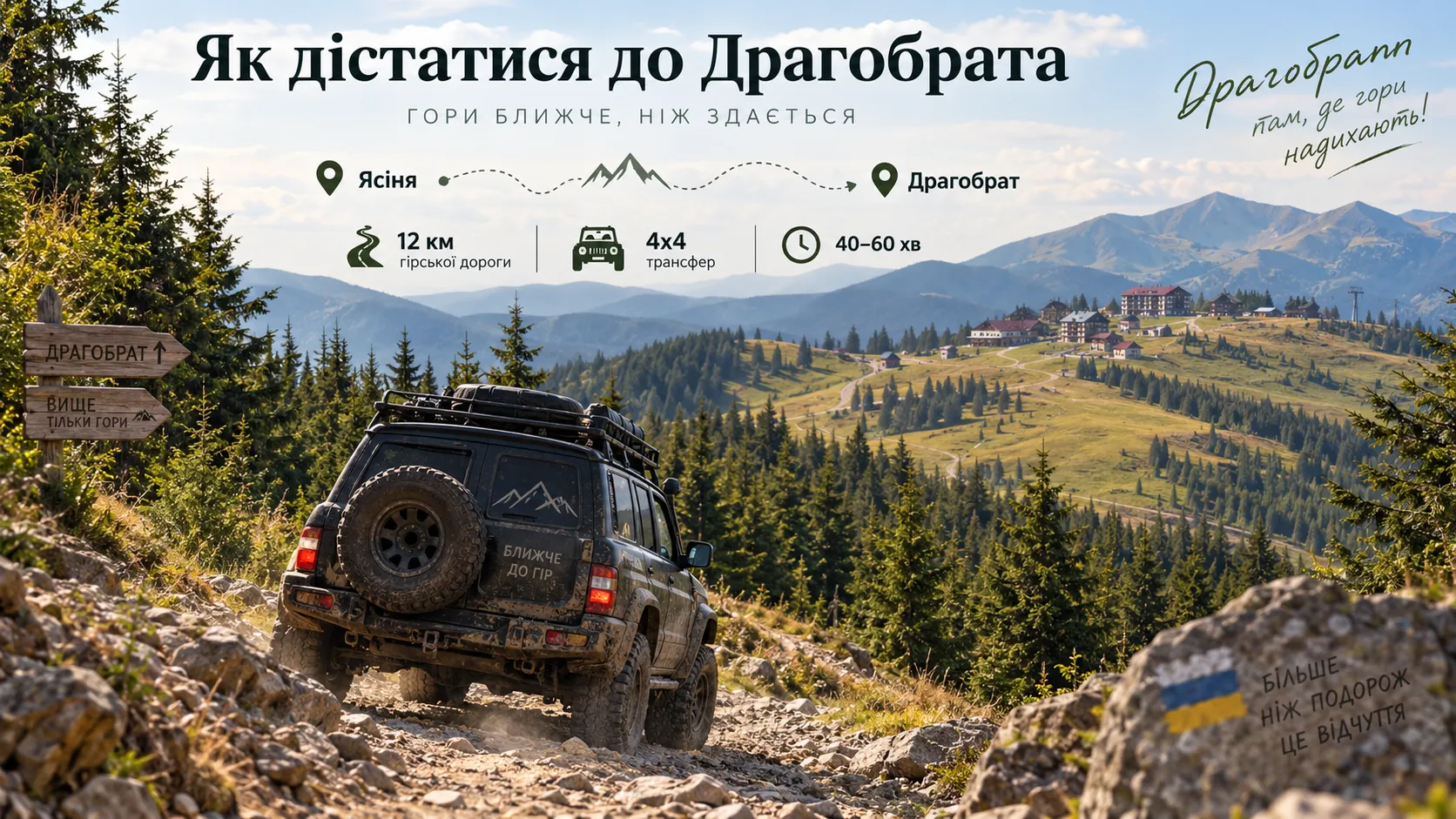
Getting to Dragobrat is one of the resort's most distinctive features and something worth considering before booking accommodation. There are no regular direct bus or train services to the high-altitude resort area. The main transfer point is Yasinia, which can be reached by train, bus, or private car. From there, the journey continues along a more challenging mountain road, usually requiring a high-clearance four-wheel-drive vehicle. As a result, traveling to the resort involves two stages: first, reaching Yasinia, and then taking a local mountain transfer to the hotels and ski lifts in Dragobrat. This arrangement applies in both winter and summer, although road conditions and travel times can vary significantly depending on the weather.
Yasinia is located along the main road and railway corridor connecting Ivano-Frankivsk, Yaremche, and Rakhiv. It is the last major settlement before the ascent to Dragobrat, where travelers can purchase supplies, leave their cars, meet their transfer drivers, or change transportation after arriving by train. From Yasinia to the Dragobrat resort area, the journey covers approximately 12–18 km of mountain roads. Although this distance may seem relatively short on a map, travel speeds cannot be compared with those on ordinary highways. Rocky sections, steep climbs, sharp bends, deep ruts, and uneven surfaces can significantly slow down the journey.
Reaching Dragobrat Ski Resort is more challenging than traveling to most major tourist destinations in the Carpathian Mountains, but this remoteness is also part of its unique character. After changing vehicles in Yasinia, the ordinary road gradually gives way to a winding mountain track, while the buildings of the settlement disappear below. And when the vehicle finally reaches the alpine meadows, it becomes clear why Dragobrat feels less like a conventional ski resort and more like a separate high-altitude world within the Svydovets Mountains.
Places to Visit Near Dragobrat
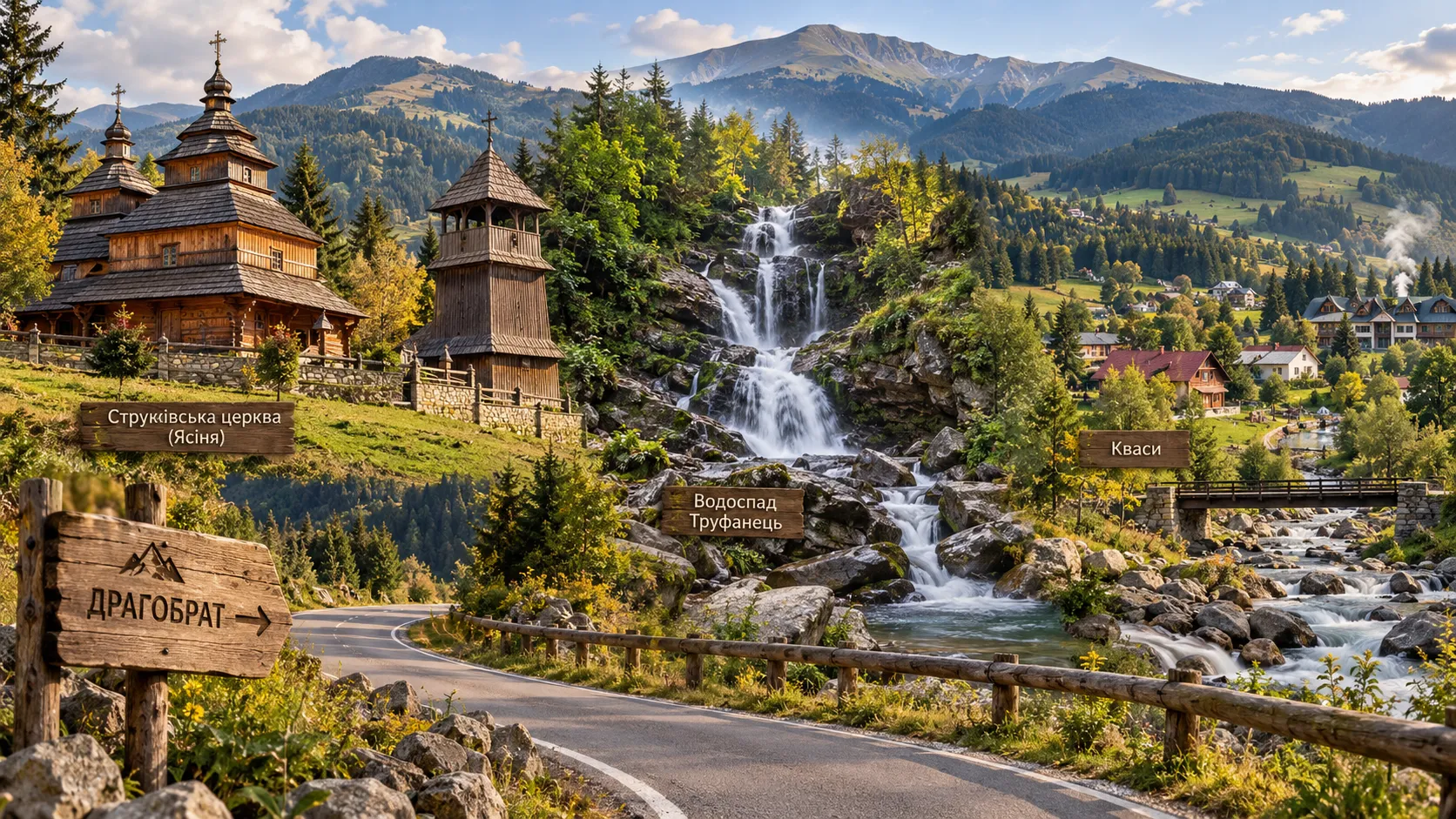
A trip to Dragobrat can easily be combined with several fascinating attractions in the Rakhiv region without turning your holiday into an exhausting sightseeing marathon. We have already explored the high-altitude lakes, Mount Stih, and Mount Blyznytsia as part of summer activities in the Svydovets Mountains. Here, we will focus on places that are convenient to visit before heading up to Dragobrat or after returning to the valley.
Yasinia and Strukivska Church — UNESCO World Heritage
For most travelers, Yasinia is much more than a transfer point on the way to Dragobrat. The settlement is home to one of the finest examples of traditional Hutsul wooden architecture — the Church of the Ascension of Our Lord, commonly known as Strukivska Church. The present church was built in 1824 using spruce wood and represents the distinctive Hutsul style of wooden church architecture. An 18th-century iconostasis has been preserved inside, while a separate wooden bell tower stands nearby. The architectural significance of this remarkable complex is recognized internationally: it forms part of the transnational UNESCO World Heritage Site "Wooden Tserkvas of the Carpathian Region in Poland and Ukraine."
Strukivska Church is particularly convenient for visitors who are already stopping in Yasinia before taking a mountain transfer to Dragobrat. Exploring the church does not require an additional day, and the landmark offers an opportunity to discover a completely different side of the Rakhiv region — not only its spectacular mountain landscapes but also its traditional Hutsul architecture and cultural heritage.
Trufanets Waterfall — A Scenic Stop Between Yasinia and Kvasy
Approximately between Yasinia and the village of Kvasy lies Trufanets Waterfall, one of the best-known natural attractions in this part of Zakarpattia. Located close to the main road, it is considerably easier to visit than most high-altitude waterfalls in the Carpathian Mountains.
The cascades of Trufanets Waterfall have a combined height of approximately 36 meters. The stream originates on the southeastern slopes of the Svydovets Mountains at an elevation of around 1,720 meters, near Mount Blyznytsia, before descending toward the Chorna Tysa River valley. The waterfall consists of several picturesque cascades that look particularly impressive after rainfall or during the spring snowmelt. For visitors staying in Dragobrat, it makes an excellent additional stop. If you have an hour to spare after descending from the mountain resort, there is no need to organize a demanding hike — simply continue along the road toward Kvasy.
Kvasy — Mineral Springs and Traditional Hutsul Atmosphere
Farther along the road lies the village of Kvasy, a well-known spa and tourist destination in the Rakhiv region. While Dragobrat is primarily associated with high mountains and outdoor adventures, Kvasy offers an opportunity to slow down and enjoy a few peaceful hours or even an entire day at a more relaxed pace. The village is famous for its natural mineral springs, and the name "Kvasy" is associated with the local mineral waters, traditionally described as slightly sour or acidic. Today, the village has several wellness facilities, including the Hirska Tysa Sanatorium, while the surrounding area offers mineral springs, hiking trails, and small artisanal producers.
Kvasy is also an interesting destination for experiencing contemporary Hutsul culture. Local crafts continue to develop here, including the production of traditional woolen blankets known as *lizhnyky*. The village is home to small farms and museums and also serves as one of the starting points for hiking routes into the Svydovets Mountains. There is even a long-distance hiking trail connecting Yasinia — Dragobrat — Blyznytsia — Kvasy, covering approximately 28 km. Geographically, all these attractions form part of the same remarkable mountain tourism region.
Frequently Asked Questions About Dragobrat
Where is Dragobrat located?
Dragobrat is located in Rakhiv District, Zakarpattia Oblast, in the high-altitude section of the Svydovets mountain range, near the settlement of Yasinia. The resort area lies approximately 1,300–1,700 meters above sea level, at the foot of Mount Stih.
Why is Dragobrat considered Ukraine's highest-altitude ski resort?
Dragobrat's main resort area is situated considerably higher than most other Ukrainian ski resorts. Its high elevation and location within the Svydovets mountain range help natural snow cover remain on the slopes for longer periods.
When does the ski season begin in Dragobrat?
Under favorable weather conditions, sufficient natural snow cover may allow skiing to begin as early as late autumn. The main ski season usually covers the winter months and early spring. Exact opening and closing dates vary each year depending on natural snowfall, temperatures, and slope conditions.
Is Dragobrat suitable for beginner skiers and snowboarders?
Yes. Dragobrat has beginner slopes, short training lifts, and ski schools with professional instructors. Beginners should first learn basic skiing or snowboarding techniques on gentle slopes before progressing to longer blue runs and more challenging terrain.
Is there a single ski pass covering all lifts in Dragobrat?
No. Dragobrat has several independent ski lift operators, so a ski pass purchased from one complex may not be valid at another operator's lifts. Before skiing, visitors should choose their preferred skiing area and check the current lift prices and ski pass options offered by the relevant operator.
Can you go off-piste skiing in Dragobrat?
Dragobrat is known as one of Ukraine's leading freeride skiing destinations. However, off-piste skiing requires experience and an understanding of mountain hazards. Exposed slopes may contain hidden rocks, snowdrifts, and avalanche-prone terrain. Those trying freeriding for the first time should seek instruction from a qualified instructor or guidance from an experienced local mountain guide.
Can you drive to Dragobrat in a regular passenger car?
Driving from Yasinia to Dragobrat in a regular passenger car is not recommended. The final section of the route follows a challenging mountain road, so visitors usually leave their cars in Yasinia and take a mountain transfer in a high-clearance four-wheel-drive vehicle.
How can you get to Dragobrat without a car?
The most convenient option is to travel to Yasinia by train or bus. From there, local operators provide transfers to the resort area using four-wheel-drive vehicles. During the winter season and holiday periods, it is advisable to arrange your mountain transfer in advance.
Is Dragobrat open during summer?
Yes. Tourism in Dragobrat continues after the ski season ends. Some hotels, restaurants, and tourist complexes remain open during summer, offering guided hikes, jeep tours, and excursions. Certain operators also run chairlifts during the warmer months, although their operating schedules should be confirmed before traveling.
What can you see and do in Dragobrat during summer?
In summer, visitors can hike from Dragobrat to Mount Stih and Mount Blyznytsia, explore sections of the Svydovets Ridge, discover the high-altitude lakes Ivor, Hereshaska, and Vorozheska, and visit Dragobrat Waterfall. For shorter outings, walks across alpine meadows and visits to scenic viewpoints around the resort are excellent options.
Dragobrat — A High-Altitude Resort for Travelers Seeking an Authentic Carpathian Mountain Experience
Dragobrat is difficult to confuse with any other resort in the Ukrainian Carpathians. It does not attempt to become a large urban-style tourist center filled with continuous rows of buildings, shopping galleries, or perfectly paved roads leading to every hotel. Its greatest attraction is its high-altitude location, natural snow, open slopes of the Svydovets Mountains, and the unmistakable feeling that nature, rather than resort infrastructure, remains the main attraction.
In winter, Dragobrat is one of the most fascinating destinations for skiers and snowboarders. Groomed slopes of varying difficulty, several independent ski lift systems, beginner areas, and a well-established freeride culture offer opportunities for both newcomers and experienced riders. At the same time, visiting Dragobrat requires a little more preparation. Travelers need to understand the different lift operators and ski pass systems, check weather forecasts, and arrange a mountain transfer from Yasinia. This relative difficulty of access is one of the reasons the resort has preserved its distinctive character. After the journey along the mountain road, visitors find themselves far removed from the familiar rhythm of urban life, surrounded by alpine meadows, snow, wind, and spectacular mountain panoramas. For some, this may seem inconvenient; for others, it is precisely what makes them want to return again and again.
But Dragobrat is not only a winter destination. During the warmer months, it transforms into an excellent base for exploring the Svydovets Mountains. Mount Stih, Mount Blyznytsia, Lake Ivor, Lake Hereshaska, Lake Vorozheska, high-altitude alpine meadows, and scenic ridge trails reveal an entirely different side of Dragobrat — quieter, greener, and more focused on hiking and nature than traditional resort entertainment. Summer holidays here provide a particularly clear perspective on the true scale of this mountain destination. Slopes used for skiing in winter become part of a vast alpine landscape in July, while ski lifts, hotels, and mountain roads seem like small features within the expansive Svydovets mountain range.
For this reason, the most accurate way to describe Dragobrat Ski Resort is as a year-round high-altitude mountain tourism destination with a strong winter sports focus. If your main goal is skiing, snowboarding, or freeriding, winter is the ideal time to visit. If you prefer hiking trails, mountain lakes, alpine meadows, and panoramic landscapes, Dragobrat is equally appealing during summer.
This destination is best suited to travelers willing to exchange some urban comforts for an authentic high-altitude holiday in the Carpathian Mountains. That is why Dragobrat remains much more than a ski resort with slopes and lifts. It is one of Zakarpattia's most distinctive mountain tourism areas, where every season reveals a different side of the remarkable Svydovets Mountains.

No Comment
You can post first response comment.