
 English
 Українська
 Русский
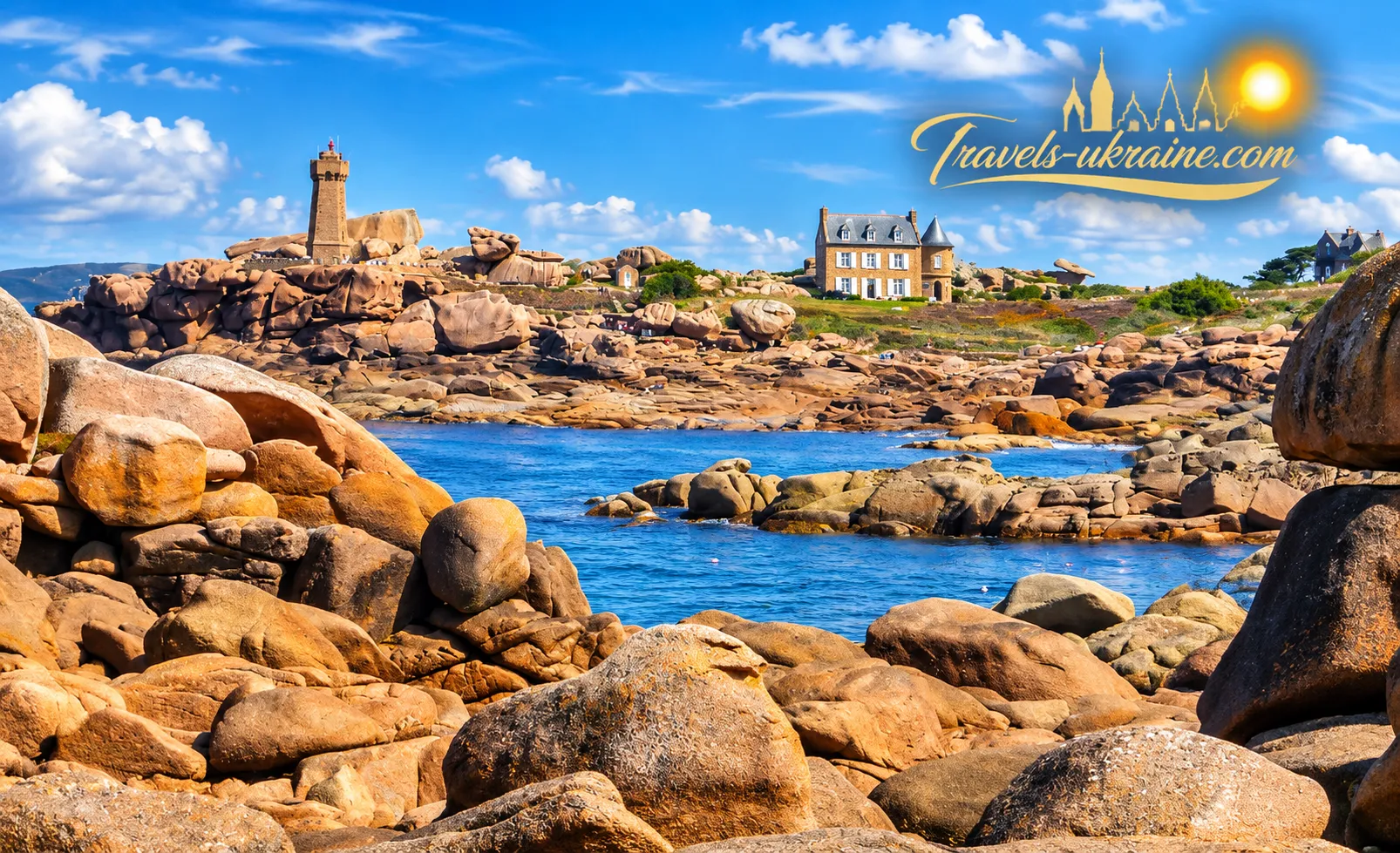
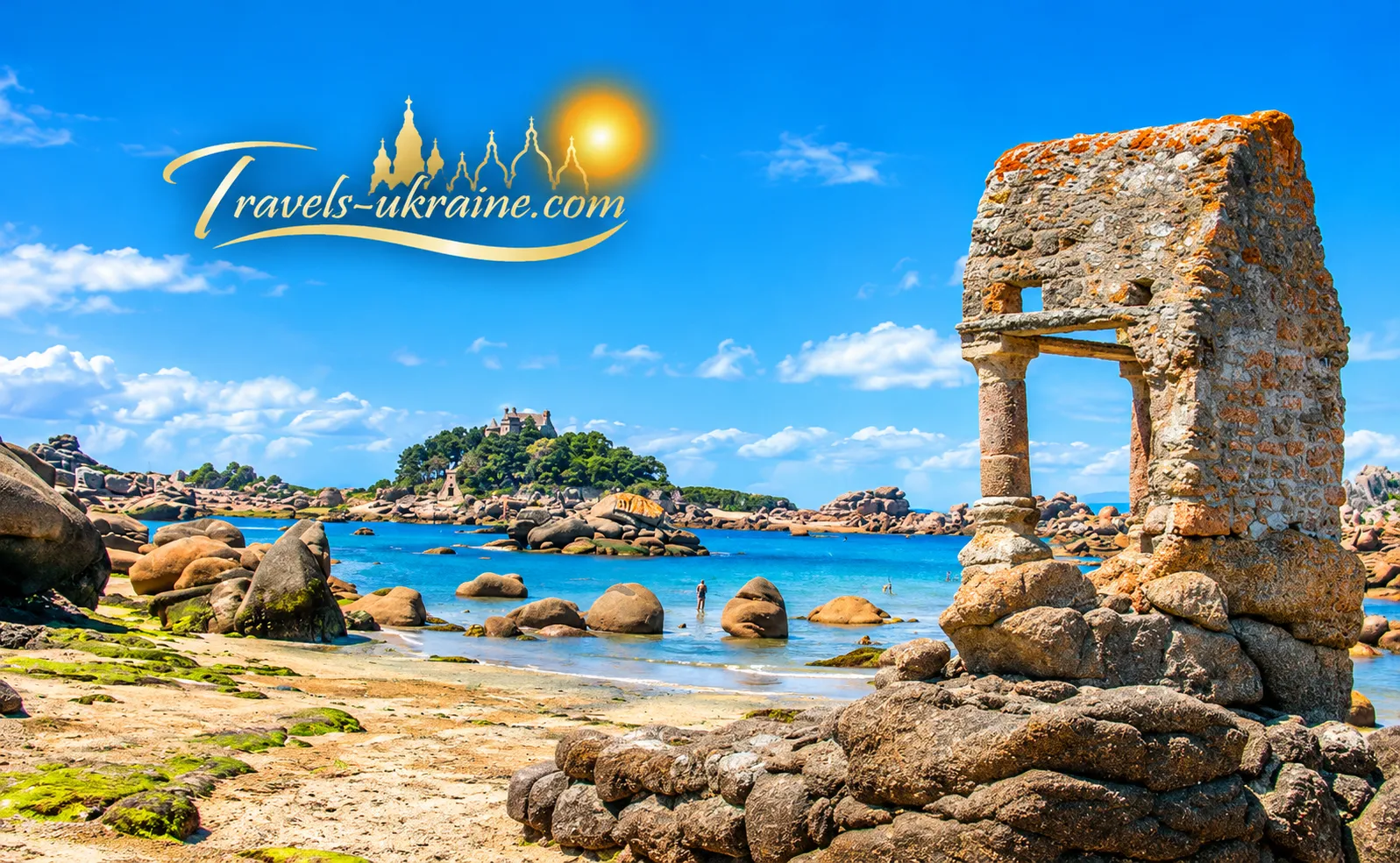
In northwestern France, where the rugged waters of the English Channel meet the picturesque shores of Brittany, stretches one of Europe's most extraordinary coastlines — the Pink Granite Coast (Côte de Granit Rose). This place is unlike any typical seaside resort. Instead of an ordinary shoreline, enormous granite boulders in delicate shades of pink, copper, and reddish hues rise above the landscape, while sheltered coves, sandy beaches, and small coastal villages nestle among the towering rock formations. It feels as though nature has transformed the coastline into a vast open-air gallery of fantastic sculptures.
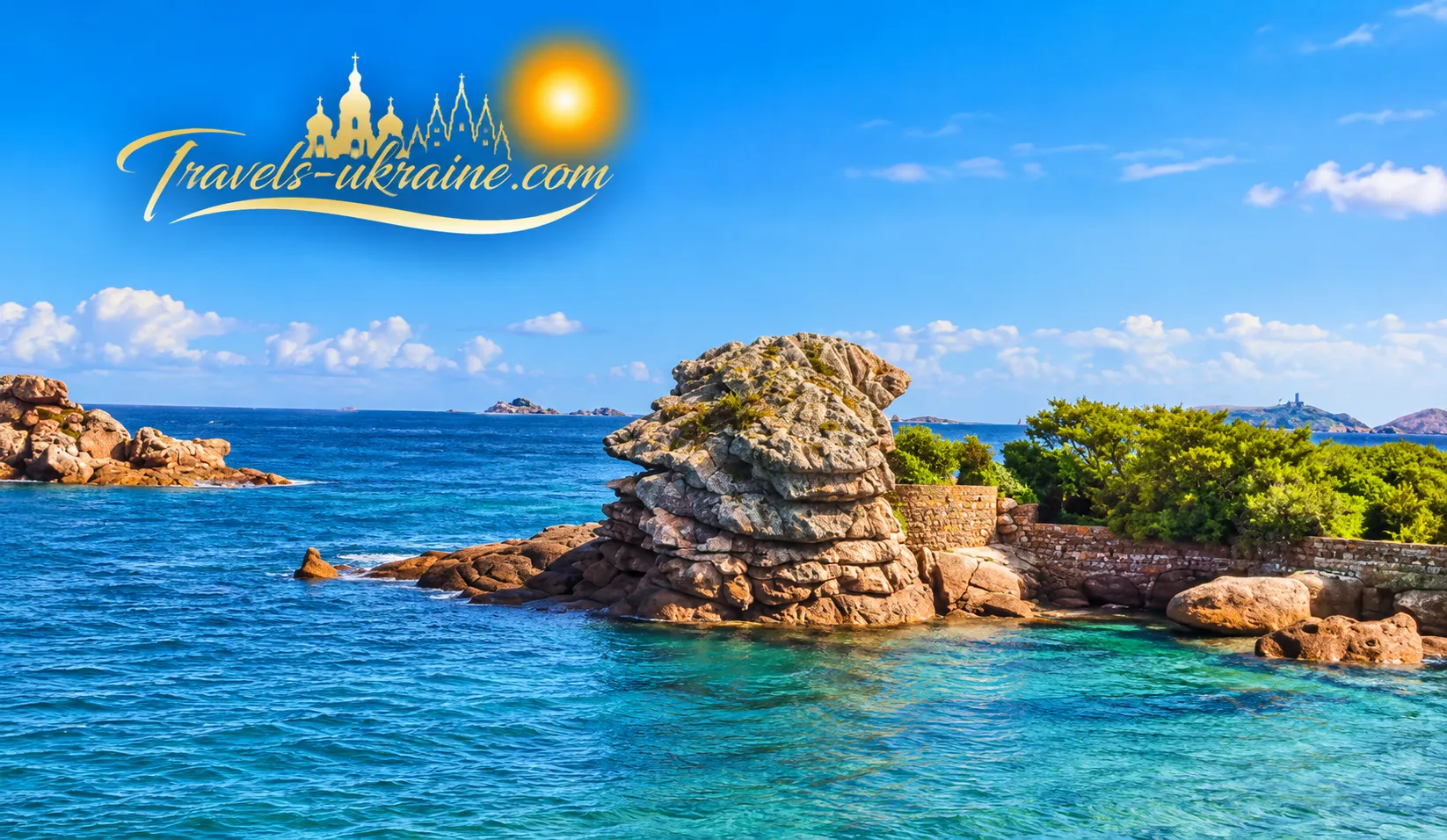
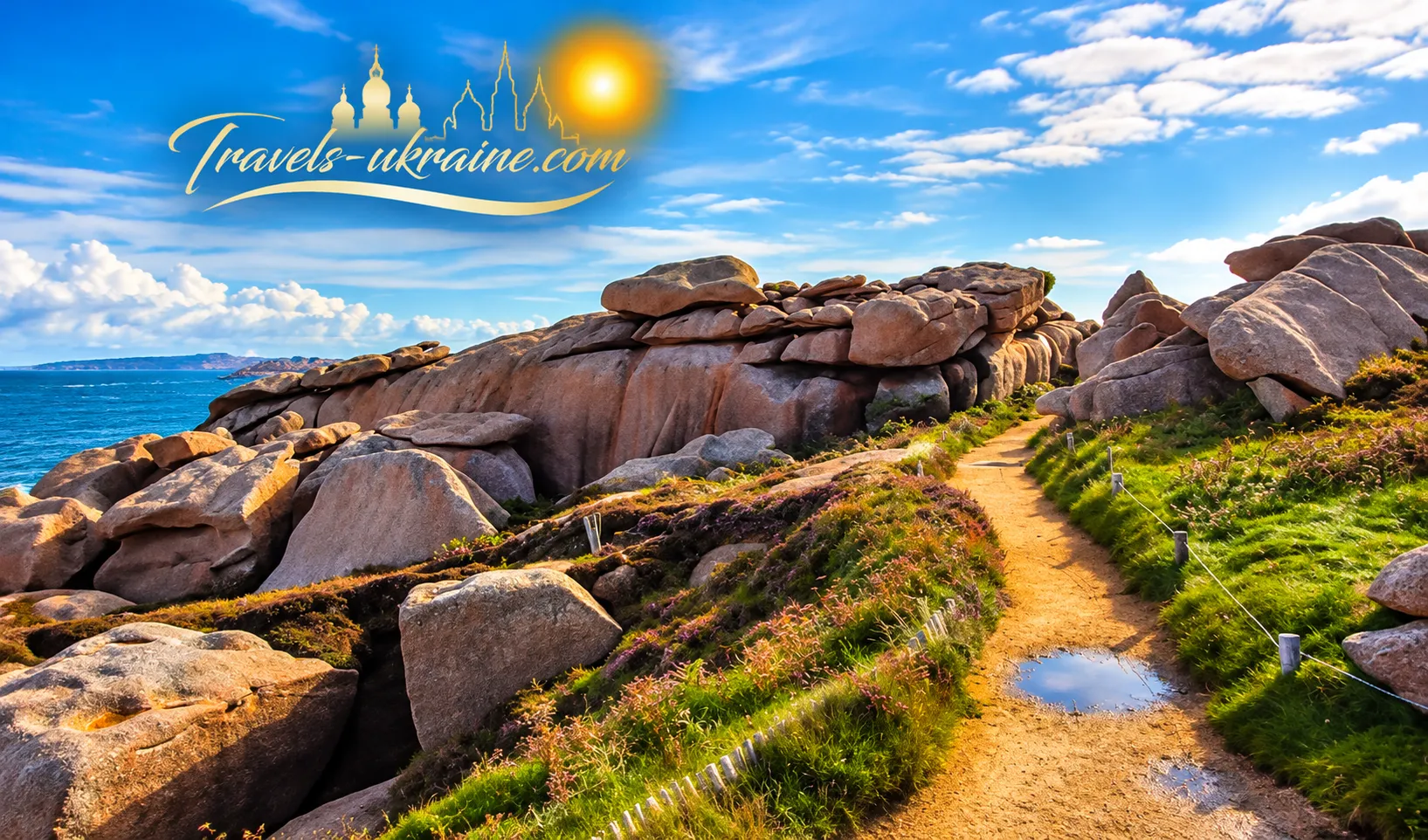
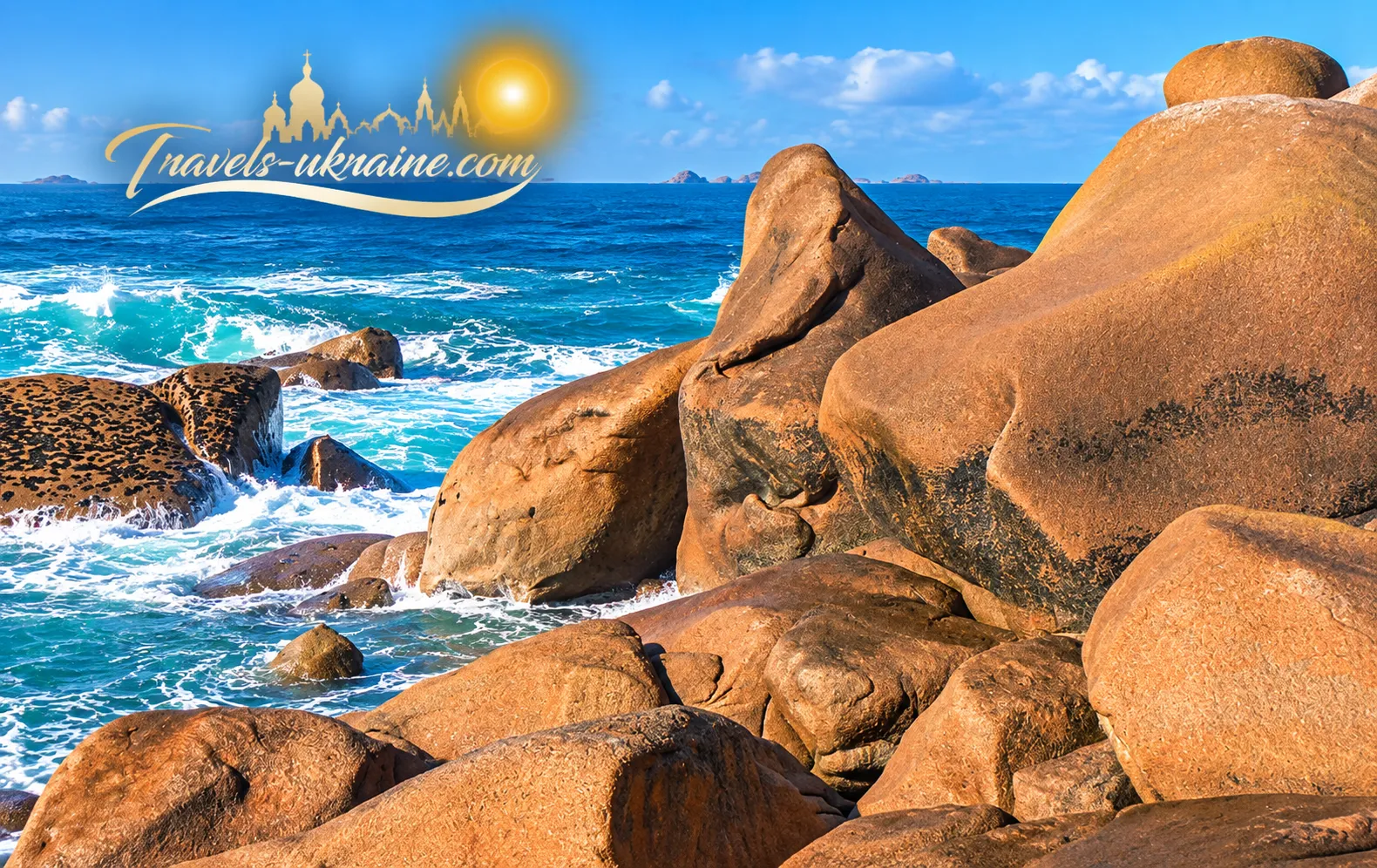
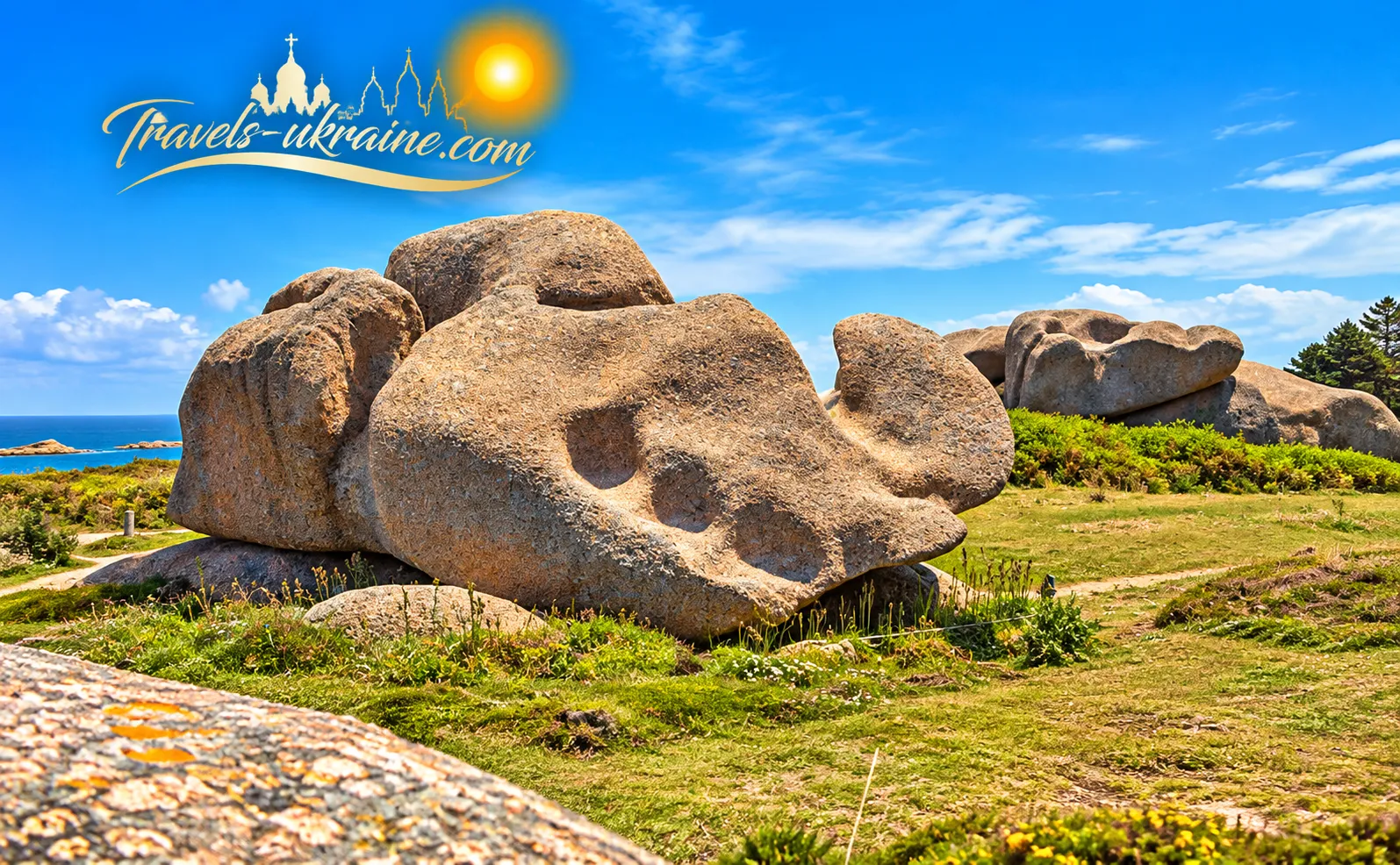
The Pink Granite Coast in France is located in the historic region of Brittany, in the Côtes-d'Armor department. Its most famous landscapes can be found near the seaside resort of Perros-Guirec, the picturesque village of Ploumanac'h, and the coastal town of Trégastel. Here, the pink granite rocks take on their most extraordinary shapes: some resemble enormous heads, others look like imaginary creatures, while certain formations appear as though gigantic stones have been deliberately stacked on top of one another. Particularly fascinating is the way their colors change with the light. In the morning sunshine, the granite appears soft pink, while the warm rays of the setting sun transform it into rich copper-red tones.
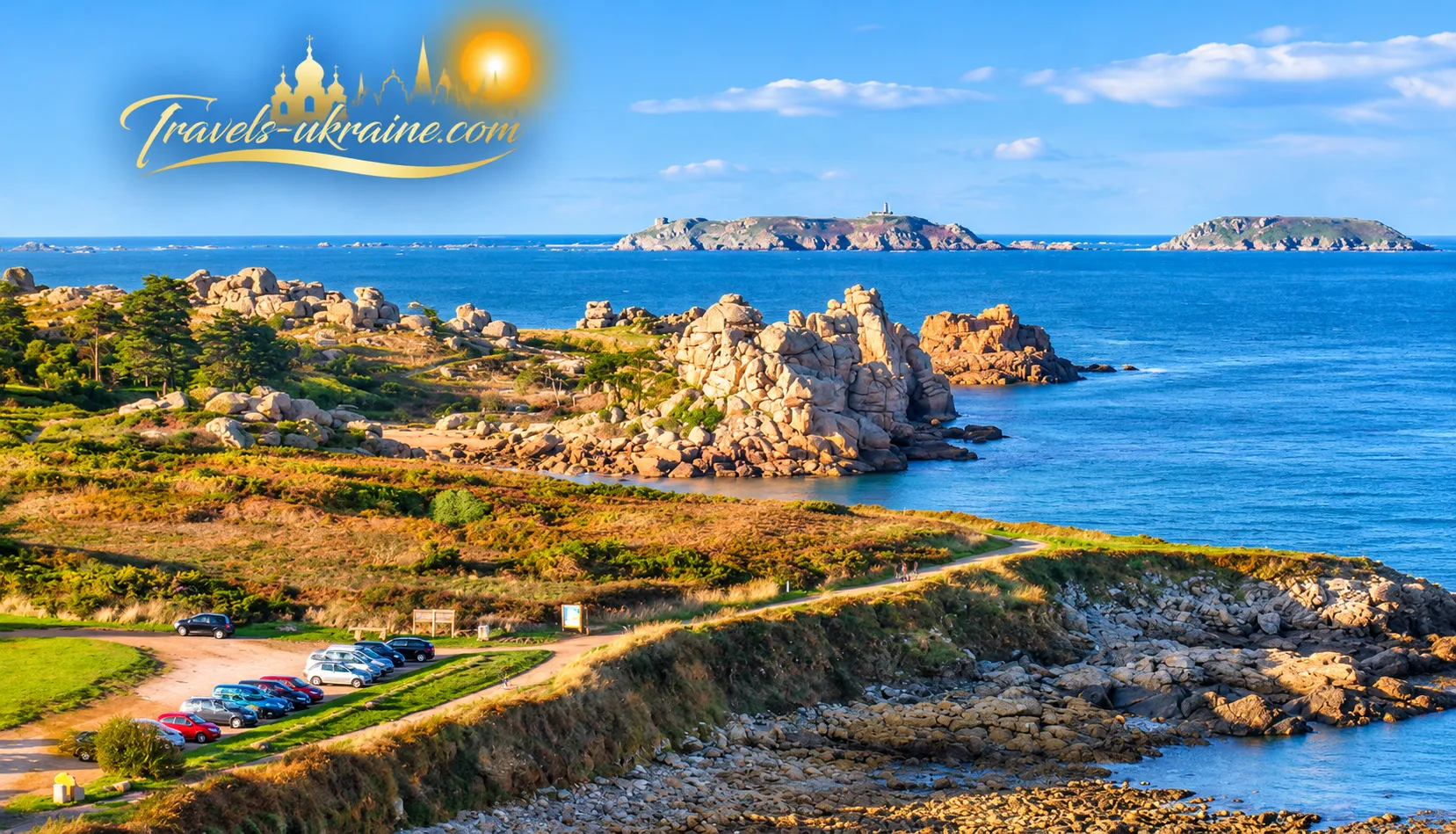
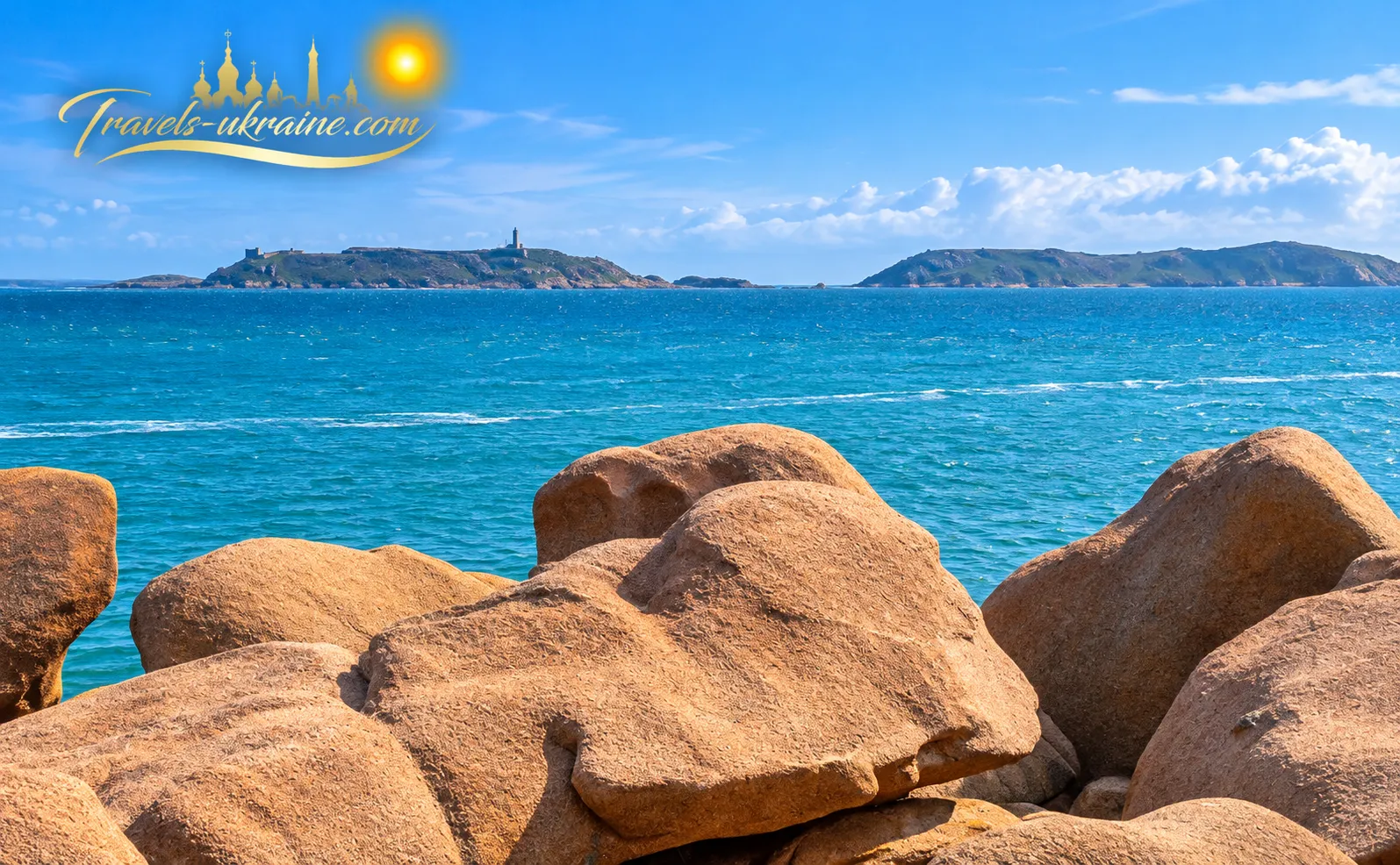
However, the pink granite rocks of Brittany are far from the only reason to visit this remarkable corner of France. Scenic walking trails wind along the coast, offering breathtaking panoramas of the sea, small islands, and rocky headlands. Lighthouses rise above massive granite boulders, fishing boats gently sway in sheltered harbors, and at low tide, the receding sea reveals new details of the coastal landscape. Adding to the charm is the wonderful sense of openness and freedom that accompanies travelers almost everywhere along the shore.
This coastline attracts not only nature lovers and photography enthusiasts but also travelers searching for unusual places to visit in France, those who enjoy leisurely walks, and families planning a memorable holiday. You can spend a few hours admiring the most famous rock formations or dedicate several days to exploring the coastal villages, beaches, and natural attractions. Best of all, the most beautiful scenery is not hidden behind museum walls — it unfolds naturally as you walk along the sea.
Côte de Granit Rose is a place where even an ordinary walk becomes a small adventure. Around every bend in the trail, a new view appears, and granite boulders that seem ordinary at first glance suddenly reveal fantastic shapes. In the following sections, we will explore the natural wonders of this remarkable coastline, discover its most interesting attractions, and introduce scenic routes that will help you experience the true beauty of French Brittany.
Why Are Brittany's Rocks Pink? Geology and Natural Features
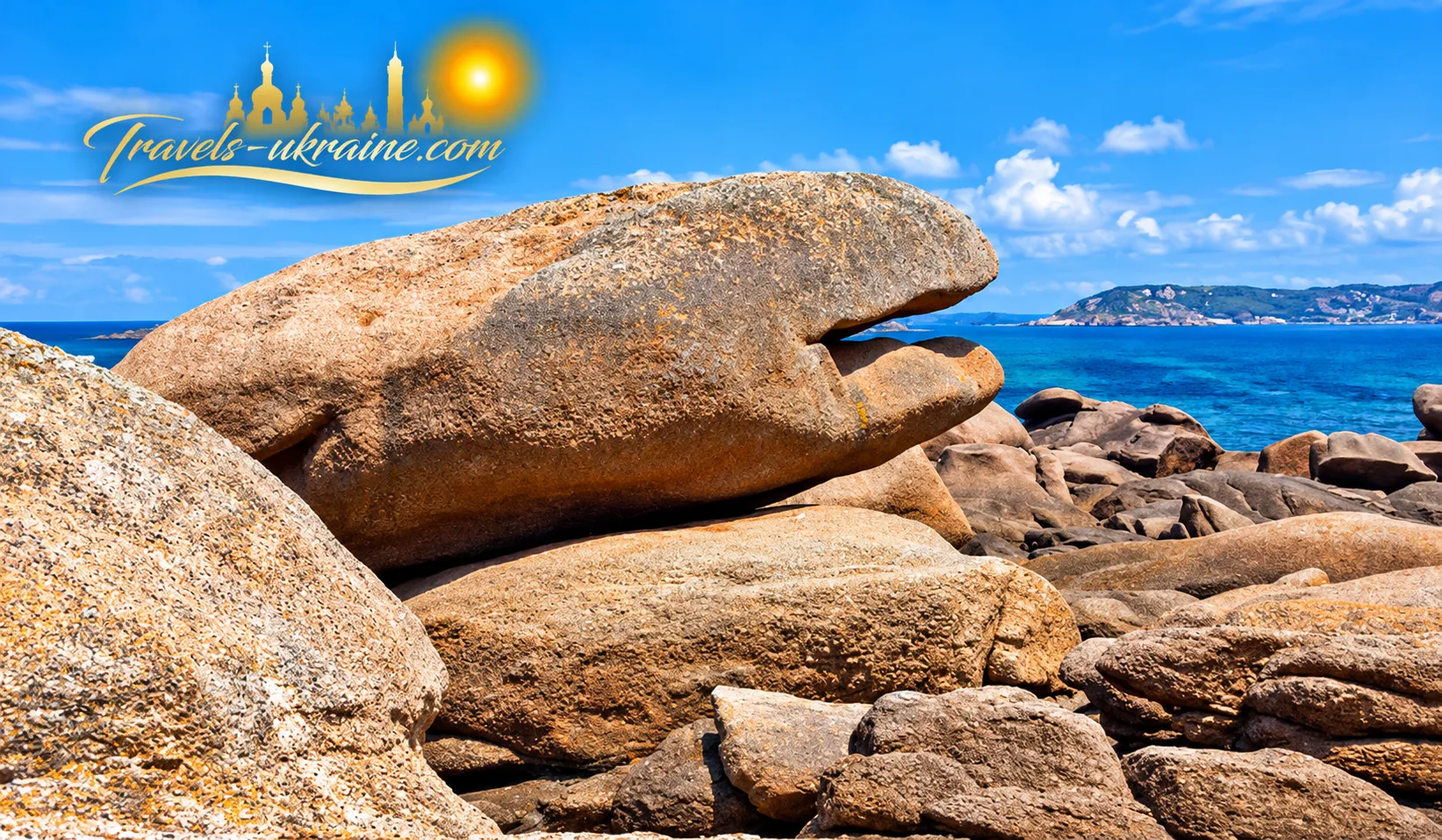
It is hard to believe that the enormous boulders decorating the Pink Granite Coast today were once molten rock hidden deep beneath the Earth's surface. Their formation was the result of geological processes that unfolded over hundreds of millions of years. Nature created an extraordinary combination of colors, shapes, and textures here, transforming what might otherwise seem like ordinary rock into the defining feature of Brittany's northern coastline. Behind these remarkable landscapes lies a history of ancient mountains, slowly cooling magma, the erosion of mountain ranges, and the relentless forces of water and wind.
How France's Pink Granite Rocks Were Formed
The geological history of this place began approximately 300 million years ago, toward the end of the Carboniferous Period. At that time, the territory of present-day Brittany was affected by large-scale tectonic processes associated with the formation of the ancient Variscan, or Hercynian, mountain belt. Deep within the Earth's crust, enormous masses of molten magma accumulated, gradually cooled, and crystallized, forming a strong igneous rock known as granite.
Unlike lava, which cools rapidly after a volcanic eruption, granite formed slowly several kilometers beneath the surface. This prolonged cooling allowed minerals to develop clearly visible crystals. This is how the Ploumanac'h granite massif formed — a complex geological structure whose individual sections differ in color, mineral grain size, and rock composition. Over subsequent geological periods, the rocks that once covered this massif gradually eroded away. Eventually, the granite was exposed near the Earth's surface, where it became directly affected by atmospheric conditions.
Therefore, the pink rocks of Brittany were not formed by lava solidifying along the seashore. They are parts of an ancient underground granite massif that became visible through prolonged weathering and erosion. The rocks themselves formed hundreds of millions of years ago, while their present-day shapes developed much later.
Why Does the Granite Have Such an Unusual Pink Color?
The secret behind the distinctive coloring lies in the mineral composition of the stone. Granite consists primarily of feldspar, quartz, and mica. The proportions of these minerals determine its appearance, grain structure, and color. On the Pink Granite Coast, large crystals of potassium feldspar play a particularly important role. Their pink and reddish shades are associated with traces of iron compounds.
If you look closely at the surface of a rock, you can distinguish light-colored or translucent quartz grains, pink feldspar crystals, and dark flecks of mica, particularly biotite. Together, they create a natural pattern that makes every stone unique. Some areas feature delicate pink tones, while others display richer reddish or grayish shades. This diversity results from variations within the granite massif and differences in the mineral composition of its individual sections.
Interestingly, the color of the rocks changes noticeably depending on the lighting. On cloudy days, the stones may appear grayish-pink, while direct sunlight emphasizes their warm tones. After rainfall, the wet surfaces often look darker and more saturated. However, these are simply optical effects: the characteristic coloring comes from the natural properties of the rock itself, rather than seawater or surface pigments.
How Erosion Created Giant Stone Sculptures
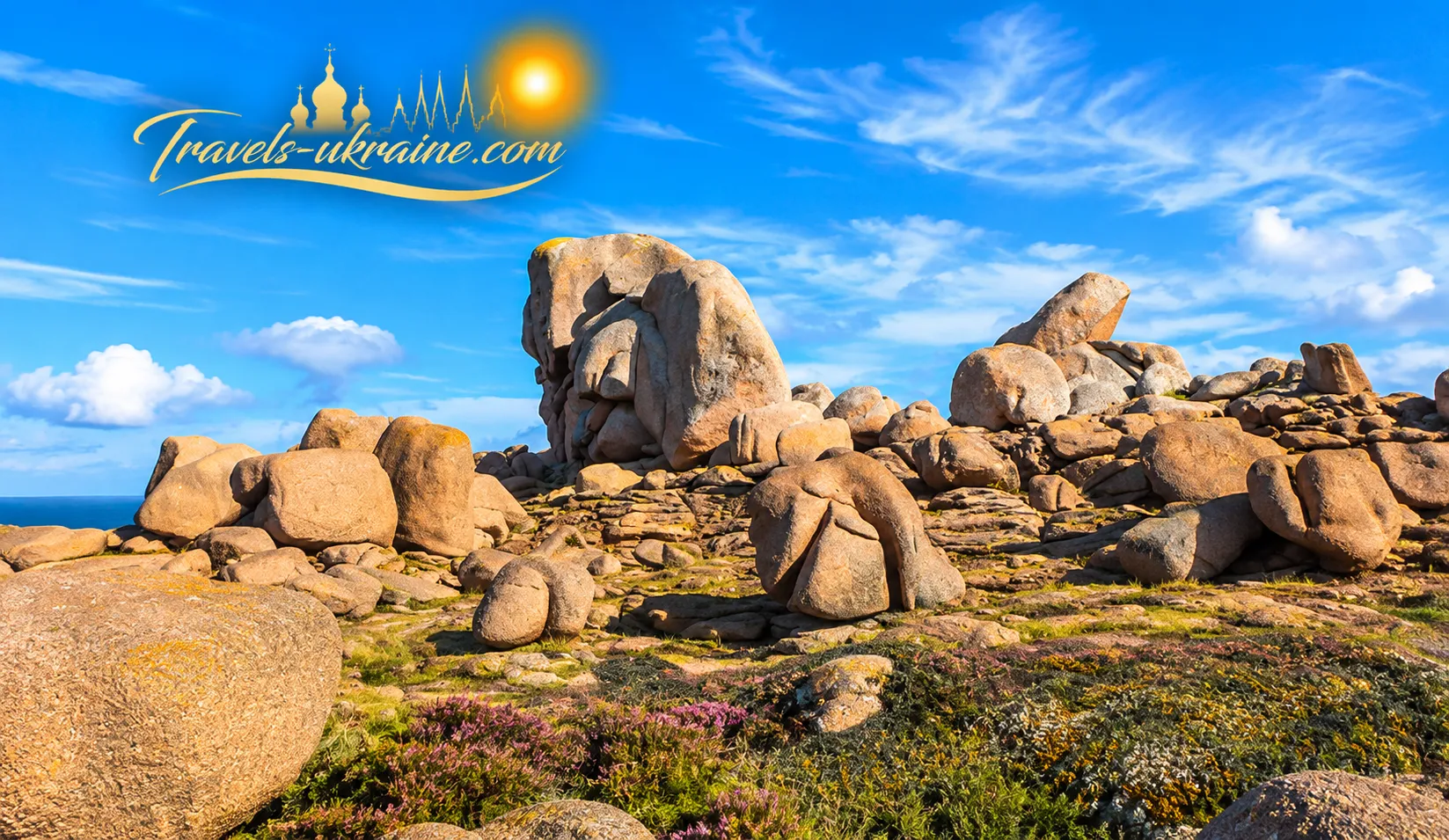
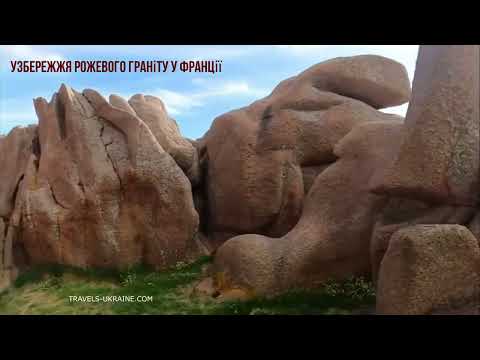
The shapes of the granite formations are just as remarkable as their colors. Some rocks resemble enormous rounded boulders, while others form bizarre piles, narrow passages, or massive natural walls. In certain places, it looks as though someone deliberately stacked gigantic stones on top of one another. In reality, these formations developed through the gradual weathering and erosion of the rock.
From the beginning, the granite massif was crossed by a system of natural fractures known to geologists as joints, or diaclases. Water penetrated these fractures, interacting with the minerals and gradually weakening the rock. The corners and edges of individual blocks weathered particularly intensely because water could act on them from several directions simultaneously. Over long periods of chemical weathering, angular rock masses gradually acquired rounded shapes.
Later, rainfall, surface runoff, and other erosional processes washed away the loose products of weathering, exposing large rounded boulders. Where these stones remained close together or accumulated on top of one another, they formed characteristic granite boulder fields, known in French geological terminology as chaos granitique. These formations create the extraordinary rocky landscapes for which the surroundings of Ploumanac'h and Trégastel are particularly famous.
Once the rocks were exposed, sea waves, salty air, wind, and temperature fluctuations also began shaping the coastal landscape. However, it is important to understand that not all rounded boulders were sculpted by the sea. Many of their distinctive forms developed during subsurface weathering, long before the stones became exposed at the surface.
A Living Landscape: The Sea, Tides, and Granite Massifs
One of the defining characteristics of the natural landscapes of the Pink Granite Coast is the constant interaction between the granite formations and the marine environment. The tides of the English Channel noticeably transform the coastline. At high tide, some boulders become surrounded by waves, while small coves appear enclosed by stone walls. When the sea retreats, stretches of sandy and rocky seabed emerge, revealing passages between the rocks and additional features of the coastal formations.
Another important element of the local environment is vegetation adapted to wind, salty sea spray, and nutrient-poor soils. Exposed coastal areas support heathland vegetation, low-growing shrubs, and grasses. In more sheltered locations, the vegetation becomes denser, creating a striking contrast between the rugged granite surfaces and the green areas along the coast.
The rocks also create numerous microhabitats. Moisture accumulates in cracks, lichens and mosses grow on shaded surfaces, and rocky coastal areas provide shelter for various small organisms. Even the massive granite boulders, which may appear almost lifeless from a distance, form part of a complex natural ecosystem.
Thus, the Pink Granite Coast of Brittany is much more than a picturesque collection of unusual stones — it is a natural record of Earth's geological history. Its rocks preserve evidence of ancient geological processes, while water, wind, and atmospheric conditions continue to shape the coastline today. This combination of ancient geological origins, rare coloration, and extraordinary rock formations makes this corner of France so recognizable and unique.
Interesting Facts and Legends of the Pink Granite Coast
Brittany's coastline holds far more fascinating stories than you might notice during your first walk. Behind the unusual names of rock formations, small seaside shrines, and old fishing villages lie local legends, ancient customs, and unexpected historical facts. Here, even an ordinary stone may have its own name, while a modest chapel by the sea may be associated with a romantic legend passed down through generations.
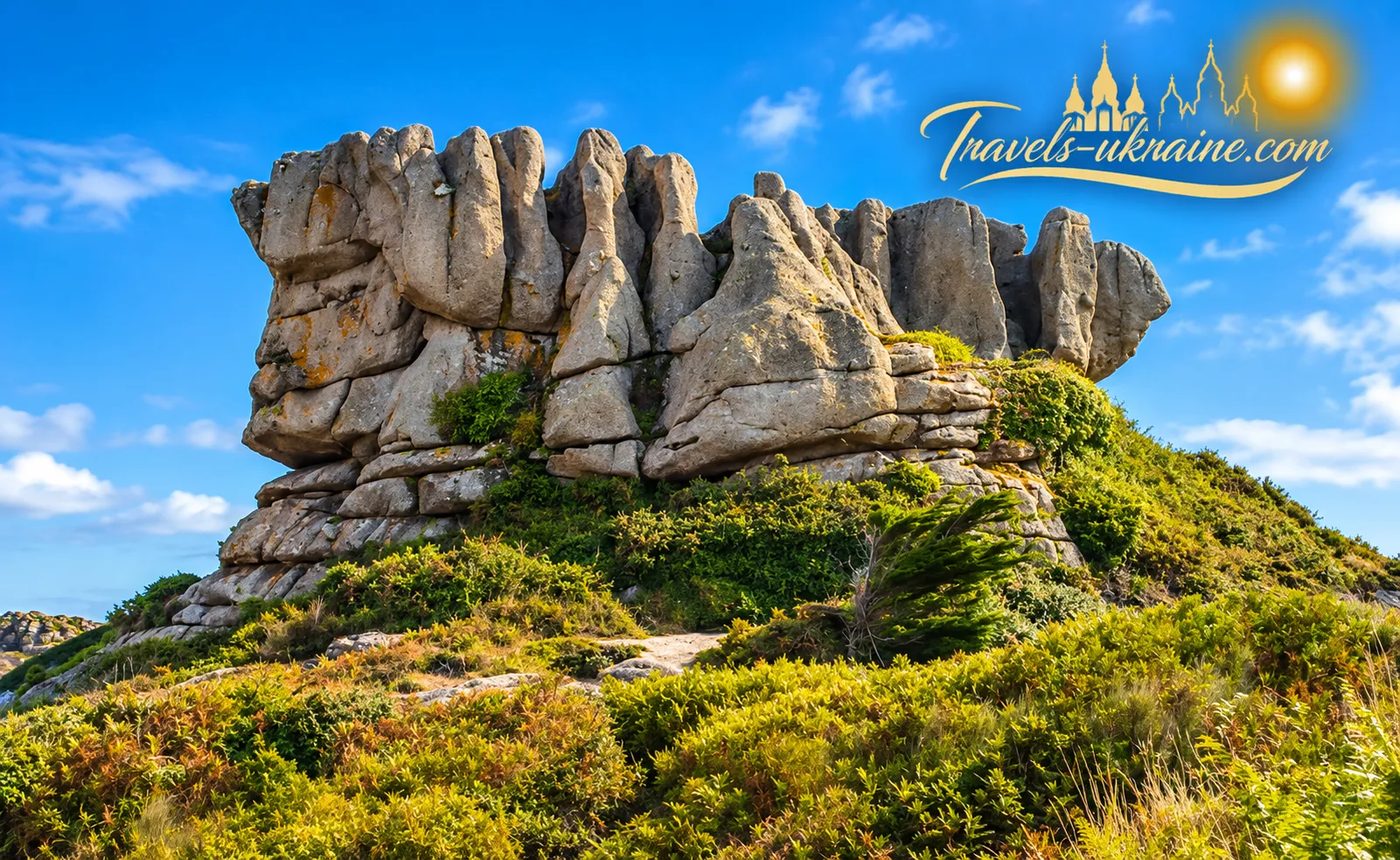
One of the most fascinating features of the pink rocks of Ploumanac'h is their traditional names. For generations, local residents and travelers have recognized familiar objects, human figures, and animals in the unusual outlines of the granite boulders. This gave rise to names that have become part of the coastline's tourist appeal. Among the most famous is "Napoleon's Hat" (Le Chapeau de Napoléon). This enormous rock formation has a silhouette resembling the French emperor's famous bicorne hat. The stone has no historical connection to Napoleon himself: it received its name solely because of its appearance. Nevertheless, its distinctive shape has made it one of the area's notable natural curiosities.
Equally unusual is "The Upside-Down Bottle" (La Bouteille Renversée) — a granite boulder resembling a bottle turned upside down. In other rock formations, visitors recognize turtles, rabbits, sharks, human faces, and even witches. Interestingly, some silhouettes become visible only from a particular angle. Take a few steps to the side, and a stone that moments earlier resembled an animal suddenly looks like an ordinary rock. This imaginative game makes walks along the coast especially enjoyable for families with children. You can even organize a little competition: who will be the first to spot an unusual figure among the rocks or invent a new name for a formation? The most fascinating part is that every visitor sees something different in the same granite shapes.
The Legend of Saint Guirec: A Stone Shrine That Helped People Find Love
One of the best-known local legends is associated with the Oratory of Saint Guirec (Oratoire de Saint-Guirec), which stands among granite rocks beside the beach of the same name in Ploumanac'h. This small stone structure, whose origins date back to the 12th century, is dedicated to a Breton monk of Welsh origin associated with the region's early Christian traditions. The most intriguing story concerns an old custom practiced by unmarried women. According to local belief, a young woman hoping to find a husband had to stick a pin into the nose of the saint's wooden statue. If the pin stayed in place, it was considered a good omen, predicting marriage within a year. If it fell out, she would have to wait longer for her wish to come true.
This unusual custom became so widespread that the old wooden statue gradually suffered damage. It was eventually replaced with a stone representation of the saint. Today, the legend remains part of Ploumanac'h's cultural heritage, although it should be understood as a historical tradition rather than an invitation to repeat the old ritual.
Ploumanac'h — The Fishing Village That Won the Hearts of France
Today, Ploumanac'h is known far beyond Brittany, but it was once a small fishing settlement whose daily life depended on the sea, the weather, and the day's catch. Its traditional stone cottages, narrow streets, and old harbor sheltered from the open sea still reflect its maritime past.
In 2015, Ploumanac'h won the French television competition "Le Village préféré des Français" — "France's Favorite Village." This recognition marked an important moment for the small community, which attracted nationwide attention thanks to its natural beauty, maritime character, and distinctive atmosphere.
Interestingly, Ploumanac'h gained international recognition not because of magnificent palaces in France or monumental historical buildings, but because of the picturesque combination of natural landscapes and a traditional Breton settlement. Here, visitors can truly appreciate how closely the everyday lives of local residents are connected to their extraordinary natural surroundings.
Mean Ruz Lighthouse: A Coastal Landmark That Survived the War
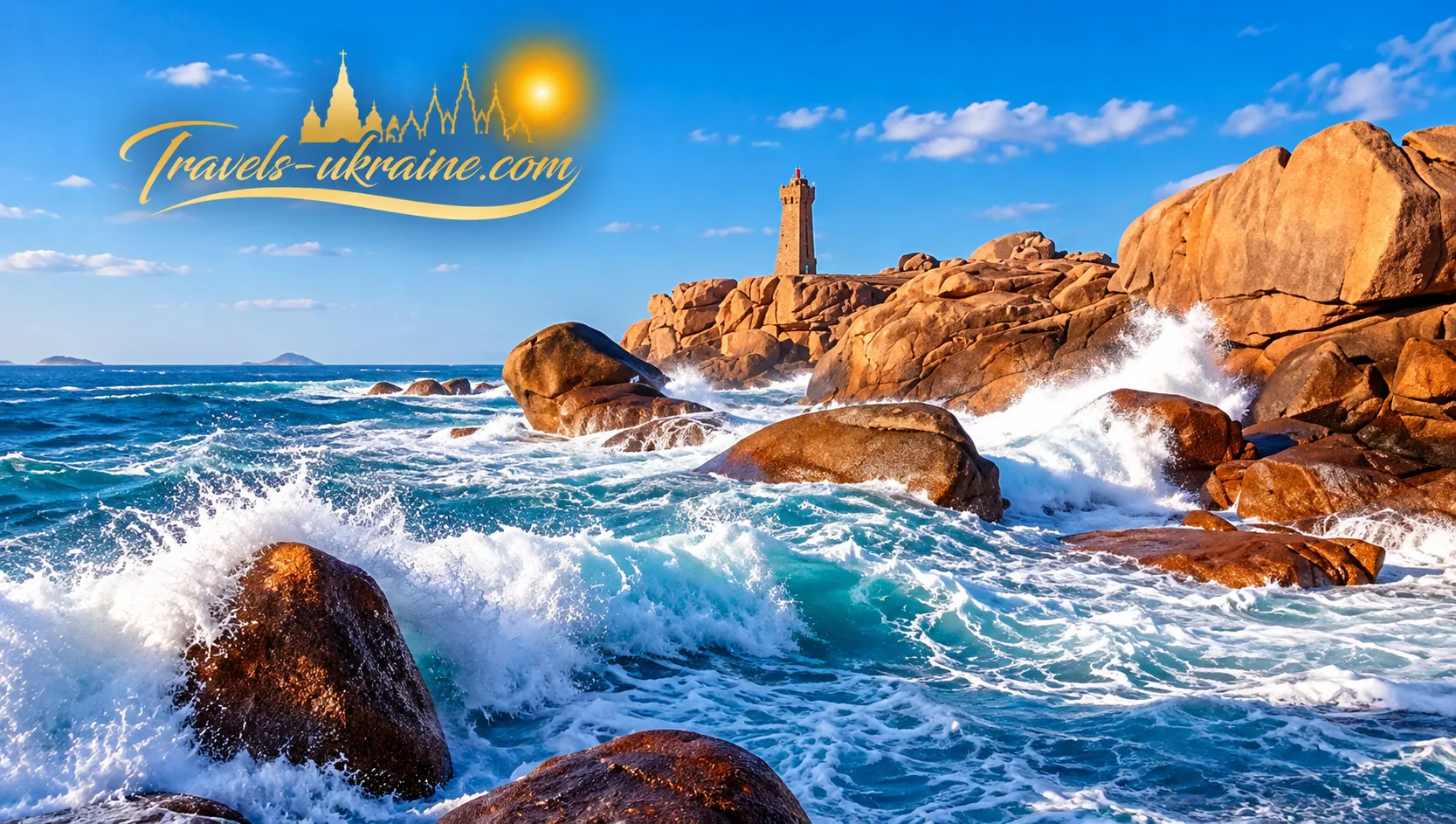
Another lesser-known fact concerns the famous Mean Ruz Lighthouse (Phare de Mean Ruz), whose silhouette has become one of the symbols of the Pink Granite Coast. Although the lighthouse appears to be an inseparable part of the ancient rocky landscape, the present-day structure was built only after World War II.
The first lighthouse at this location was constructed in 1860 to help vessels navigate safely toward the harbor of Ploumanac'h. It was built primarily from gray granite sourced from Île-Grande. In 1944, the structure was destroyed during the retreat of German forces. Rebuilt after the war, the lighthouse acquired an entirely different appearance: local pink granite from the La Clarté quarries was used in its construction.
As a result, the new lighthouse blends remarkably well with the surrounding rocks. From a distance, its walls appear to be a natural extension of the granite massif. It is a striking example of how an engineering structure originally built for practical navigation purposes became a recognizable part of the natural landscape.
When Stone Becomes a Work of Art
The unusual granite of this region has inspired not only travelers but also professional sculptors. In 1998 and 2007, international gatherings of artists were held in Perros-Guirec, during which sculptors created monumental works from granite. These events contributed to the development of the Sculpture Park (Parc des Sculptures) near Ploumanac'h, where 18 stone sculptures are displayed.
Interestingly, visitors can observe two different expressions of stone sculpture here: natural formations that acquired their remarkable shapes without human intervention and artistic compositions created by skilled sculptors. This combination encourages a new appreciation of granite — not merely as a building material or part of the region's geological heritage, but also as a source of artistic inspiration.
The interesting facts and legends of the Pink Granite Coast reveal the living cultural heritage of Brittany behind its spectacular maritime scenery. The romantic legend of Saint Guirec, the amusing names of the rocks, the history of the fishing village of Ploumanac'h, and the reconstructed lighthouse all give this natural destination a unique character. And although the rocks themselves need no invented mysteries, the human stories associated with them make exploring the coastline even more fascinating.
What to See on the Pink Granite Coast: The Most Beautiful Places
The Pink Granite Coast (Côte de Granit Rose) is not a single viewpoint but a series of picturesque seaside destinations, each with its own distinctive character. Here, you can wander among enormous granite boulders, admire historic lighthouses, discover sheltered beaches, and watch how the tides transform familiar coastal scenery. The greatest concentration of the famous pink rocks lies between Perros-Guirec and Trégastel, where natural attractions blend with small fishing harbors, sandy coves, and scenic coastal trails.
One of the greatest advantages of this part of Brittany is that its most fascinating places can be explored at a leisurely pace, combining sightseeing with relaxation by the sea. Some locations are ideal for photography, others are perfect for family outings, while certain spots offer unusual perspectives of the pink granite formations. Below are the most remarkable landmarks and natural attractions that reveal the diversity of this extraordinary coastline.
Ploumanac'h — The Heart of the Pink Granite Coast
If you have time to visit only one part of Brittany's coastline, Ploumanac'h should be your first choice. This picturesque district of Perros-Guirec is one of the region's most famous destinations, thanks to the incredible formations of granite boulders stretching along the shoreline. It is here that you will find the landscapes most frequently featured in travel photographs of French Brittany.
Walking through Ploumanac'h is an extraordinary experience. Huge stone boulders surround narrow paths, form natural passages, and rise above the sea. Some have such unusual shapes that they resemble imaginary creatures, while others form remarkable natural stone towers. Between the rocks, panoramic views open up across small islands and coastal coves.
The historic part of Ploumanac'h also deserves attention. Traditional Breton stone cottages, known as pentys, charming narrow streets, and a small harbor have been preserved here. Unlike bustling seaside resorts, this area attracts visitors primarily with its peaceful natural surroundings and the atmosphere of a small coastal village.
The best way to discover Ploumanac'h is by walking along the coast. Rather than limiting yourself to a single viewpoint, take your time exploring the trails. The most spectacular scenery reveals itself gradually, with new granite formations appearing around every bend. The landscape is particularly beautiful in the morning and toward sunset, when the low-angle sunlight highlights the texture and contours of the rocks.
Mean Ruz Lighthouse — The Iconic Landmark of the Pink Granite Coast
Among the enormous granite boulders of Ploumanac'h stands one of northern Brittany's most recognizable landmarks — Mean Ruz Lighthouse (Phare de Mean Ruz), also known as Ploumanac'h Lighthouse. Its square tower, built from pink granite, blends so harmoniously with the surrounding landscape that it appears to be a natural extension of the rocky coastline.
The lighthouse stands on a rocky headland near the entrance to Ploumanac'h harbor. Massive granite boulders surround it on the seaward side, while the coastal path provides excellent views of the structure and the nearby rock formations. The lighthouse looks particularly impressive against the deep blue sea, where the warm color of the stone contrasts beautifully with the cool tones of the water.
This is one of the most popular photography locations along the entire coast. The most striking compositions can be found not only directly beside the lighthouse but also along the surrounding trail, where the tower appears framed by enormous boulders. On clear days, the islands of the Sept-Îles archipelago can be seen on the horizon, just offshore.
It is worth remembering that Mean Ruz is primarily an active navigational lighthouse rather than a conventional observation tower open to tourists. Its main attractions are its exterior architecture and the surrounding panoramic views. Nearby stands the Maison du Littoral, an information and educational center dedicated to the coastal environment and its conservation.
Saint-Guirec Beach — A Picturesque Cove Surrounded by Rocks
Hidden in the heart of Ploumanac'h is a small sandy cove considered one of the most photogenic coastal spots in France. This is Saint-Guirec Beach (Plage de Saint-Guirec), surrounded by massive granite boulders, traditional coastal houses, and beautiful sea views. Its greatest attraction is the unusual combination of natural and architectural landmarks. Just beside the sandy shore stands the small stone Oratory of Saint Guirec, while a little farther away, on a separate rocky islet, rises the romantic Costaérès Castle. Together, they create one of the most iconic views of Ploumanac'h.
At low tide, the exposed sandy area becomes wider, revealing additional sections of the seabed around the granite boulders. When the tide returns, the cove takes on an entirely different appearance: the rocks stand close to the water's edge, and the oratory seems to rise directly from the sea. This is why the beach is especially interesting to visit at different stages of the tide.
Saint-Guirec is ideal for relaxing, watching the sea, and taking photographs. In favorable weather, visitors can spend time on the sand, although anyone planning to swim should consider the water temperature, tides, and current sea conditions. Even if swimming is not part of your plans, this cove is worth visiting for its remarkable combination of pink granite formations and coastal architecture.
Costaérès Castle — A Romantic Building on a Rocky Island
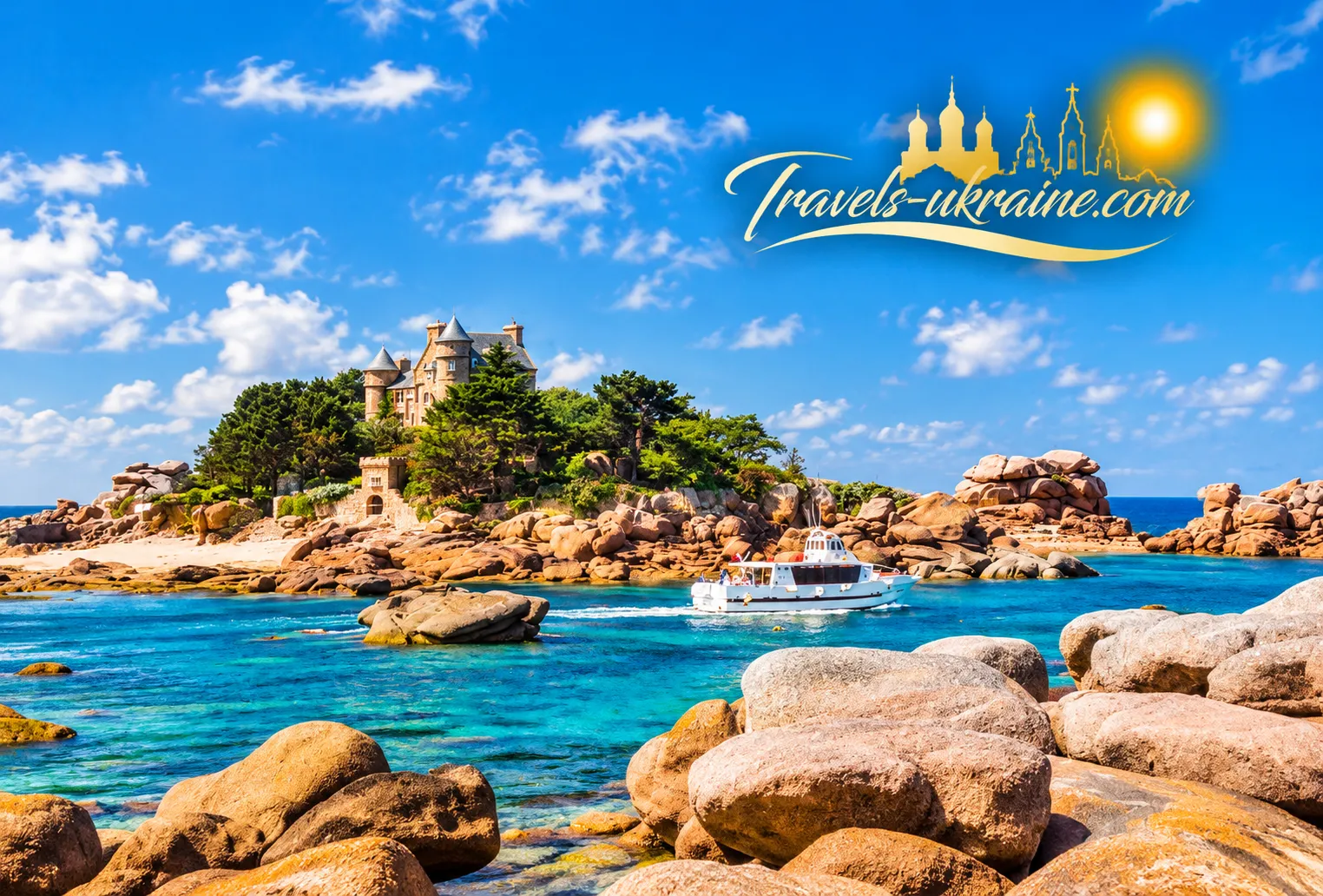
One of the most beautiful architectural features of the local landscape is Costaérès Castle (Château de Costaérès), situated on a small granite islet in the Bay of Sainte-Anne. Its stone walls, steep roofs, and turrets create the impression of a medieval fortress, although the building was constructed much later.
In reality, Costaérès is a private residence built in the late 19th century in a romantic historicist style. Local granite was used in its construction, allowing the architecture to blend naturally with the rocky island. From certain angles, the building appears to rise directly out of the stone, forming a single composition with the surrounding landscape.
Some of the most picturesque views of the castle can be enjoyed from Saint-Guirec Beach and the nearby coastal areas around Tourony. Depending on the tide, the islet looks quite different: at high tide, the castle seems to stand in the middle of the sea, while at low tide, the surrounding rocky areas become more visible.
It is important to remember that Costaérès Castle is private property and does not operate as a museum open to the general public. Therefore, it is best appreciated and photographed from the shore, without attempting to enter the grounds of the residence.
GR34 Customs Officers' Path (Sentier des Douaniers)
Some of Brittany's most spectacular scenery can be discovered while walking along the famous Customs Officers' Path, which forms part of the extensive GR34 long-distance hiking trail. This route follows the Breton coastline, linking rocky headlands, sandy coves, sweeping sea views, and small coastal villages. One of its most popular sections runs between Trestraou Beach in Perros-Guirec and Ploumanac'h. Along this stretch, visitors pass the best-known clusters of pink granite boulders, admire Mean Ruz Lighthouse, and enjoy panoramic views of the offshore islands. In some places, the trail runs close to the water, while elsewhere it rises above the rocky coastline.
What makes this route especially attractive is the constantly changing scenery. At one moment, the path winds among giant boulders; at another, it opens onto a vast sea horizon before leading toward small, sheltered coves. As a result, even a relatively short walk offers an excellent introduction to the most distinctive natural features of the Pink Granite Coast.
Trégastel — Beaches and Rocky Coves of Brittany
West of Ploumanac'h lies the coastal town of Trégastel, renowned for its sandy beaches, sheltered coves, and enormous granite boulders. Unlike the busiest trails around Ploumanac'h, Trégastel offers an opportunity to combine exploring unusual natural landscapes with a relaxing seaside holiday.
One of the most interesting places is Coz-Pors Beach (Plage du Coz-Pors), around which several tourist attractions are concentrated. The beach is surrounded by characteristic pink granite rocks, while nearby attractions include the Trégastel Marine Aquarium (Aquarium Marin de Trégastel) and the Forum de Trégastel seawater wellness complex. It is also a convenient starting point for a walk around the Renote Peninsula.
The neighboring beaches of Grève Blanche and Grève Rose are equally picturesque. They differ in the shades of their sand and the surrounding terrain, while enormous granite boulders provide a distinctive frame for the coastal scenery. Grève Rose is particularly noteworthy, where the pinkish tones of the rocks and sand create a landscape characteristic of this area.
Trégastel is also an appealing destination for families. Visitors can alternate between leisurely beach time, discovering marine life at the aquarium, and exploring coastal viewpoints. However, swimming conditions vary between beaches, so it is important to pay attention to local safety notices and the availability of seasonal lifeguard supervision.
Renote Peninsula (Presqu'île Renote) — A Natural Labyrinth
One of the most fascinating natural attractions near Trégastel is the Renote Peninsula (Presqu'île Renote), which is particularly appealing to those who enjoy leisurely walks and photography. This small stretch of land, surrounded by the sea and numerous granite formations, offers an excellent opportunity to experience Brittany's characteristic scenery without having to cover long distances.
A walking trail approximately two kilometers long runs around the peninsula. The path passes enormous rounded boulders, small inlets, and rocky sections of coastline. In some places, the rocks rise directly above the sea, forming spectacular natural compositions, while views of nearby islands and coastal settlements open up between them.
The special appeal of Renote lies in its closeness to nature. There is no need to rush from one attraction to another: the walk itself is the main experience. Simply stopping beside an unusual boulder, watching the waves, or finding the perfect angle for a photograph is enough to appreciate the beauty of this place.
The peninsula is also fascinating because its landscapes change with the weather and sea conditions. On sunny days, the pink rocks contrast beautifully with the blue water, while cloudy weather gives the scenery more subdued, almost dramatic tones. For travelers hoping to discover as many natural features of the Pink Granite Coast as possible, Renote is an excellent addition to a visit to Ploumanac'h.
Boat Trips and Exploring the Coast from the Sea
Although most visitors discover this coastline on foot, seeing it from the sea offers an entirely different experience. From the water, familiar granite boulders appear far more massive, while rocky headlands, small islands, and sheltered coves form a picturesque panorama that cannot be fully appreciated from the shore.
Perros-Guirec has water sports and sailing centers offering sailing trips, boat excursions, kayaking, and other marine activities. Some routes follow the granite coastline, allowing visitors to admire Mean Ruz Lighthouse and the remarkable rock formations from unusual angles. Others venture farther offshore toward islands and protected natural areas.
A trip aboard a traditional sailing vessel can be particularly memorable. It offers not only beautiful sea views but also an opportunity to discover Brittany's maritime heritage, where fishing and seafaring have played an important role in the lives of coastal communities for centuries.
Those seeking more active experiences can choose kayaking or stand-up paddleboarding, although these activities require suitable weather conditions and careful consideration of tides and currents. For visitors without previous experience, organized excursions led by an instructor are the safest option. Boat trips also depend on the season, sea conditions, and operators' schedules, so availability should be checked before traveling.
What to See Near the Pink Granite Coast
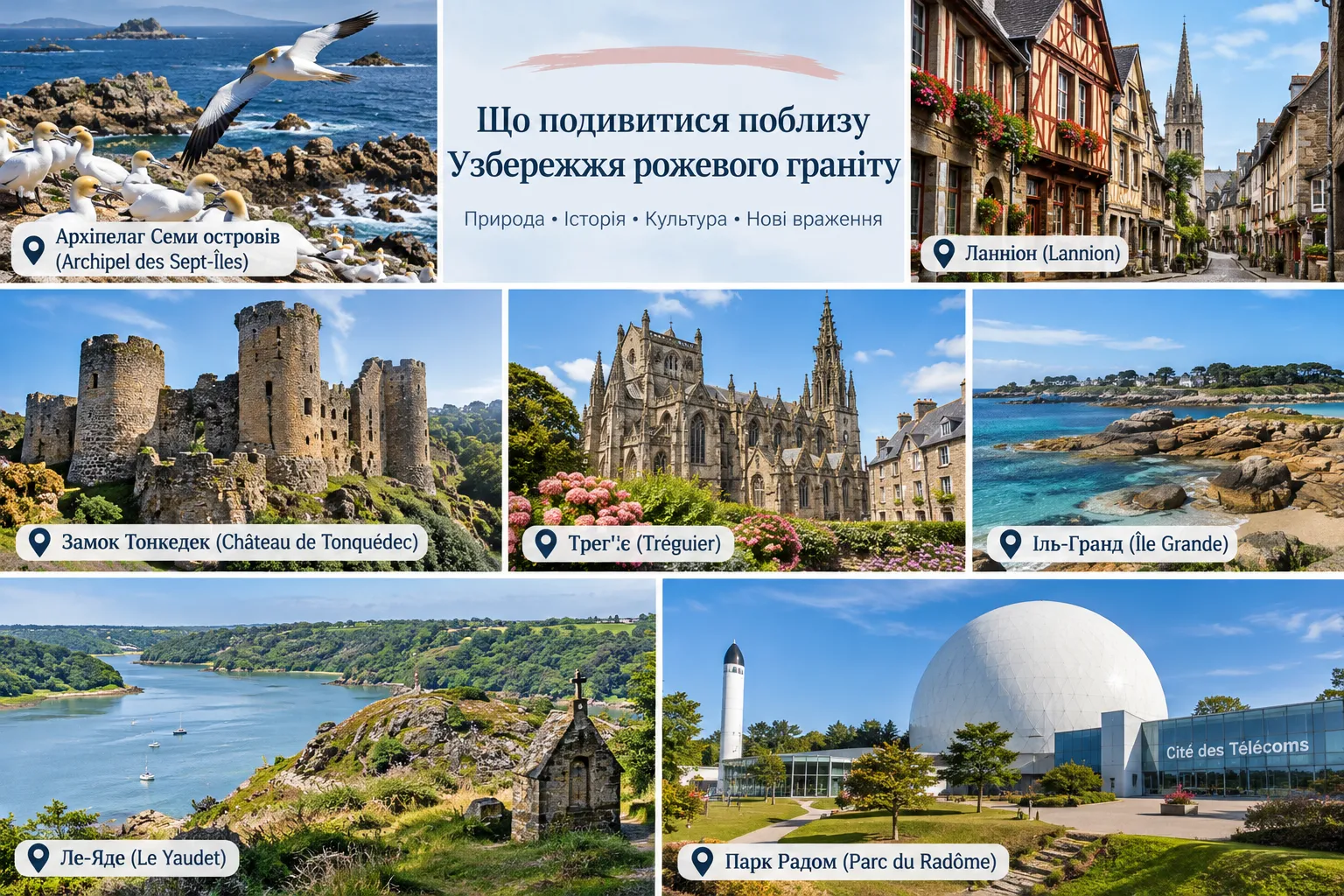
A journey along the Pink Granite Coast in France can be just the beginning of discovering one of Brittany's most distinctive regions. Not far from the famous rocks of Ploumanac'h, visitors will find medieval towns, impressive castle ruins, ancient cathedrals, nature reserves, and small islands where life is still shaped by the rhythm of the tides.
Interestingly, you do not have to travel far to experience a completely different landscape. Just beyond the coastal resorts, another side of Brittany awaits — one of half-timbered houses, wooded valleys, and landmarks that preserve centuries of history.
The surroundings of Perros-Guirec, Lannion, and the historic region of Trégor are particularly worth exploring, as natural attractions blend with a rich cultural heritage. Some places are ideal for a short stop, while others deserve several hours or even an entire day. Below are some of the most interesting places to visit near the Pink Granite Coast, offering opportunities to diversify your holiday and make your journey through Brittany even more memorable.
The Seven Islands Archipelago — A Kingdom of Seabirds
Just off the coast of Perros-Guirec, in the waters of the English Channel, lies the Seven Islands Archipelago (Archipel des Sept-Îles) — one of the most valuable natural areas in French Brittany. Despite its name, the archipelago consists of five main islands, along with numerous smaller islets and rocky reefs. Its greatest attraction is its exceptionally rich seabird population, which is the main reason the area enjoys special protection.
The true star of the archipelago is Rouzic Island, home to France's only breeding colony of northern gannets — large white seabirds with black wingtips. During the breeding season, enormous numbers of these birds gather here, covering the rocky slopes and creating an extraordinary natural spectacle. Elsewhere in the archipelago, visitors may encounter European shags, guillemots, gulls, and Atlantic puffins with their brightly colored beaks. Grey seals also inhabit the surrounding waters, although sightings during excursions are not guaranteed.
The most popular way to explore the islands is by taking an organized boat excursion from Perros-Guirec or Trégastel. Excursion boats pass close to the rocky shores, allowing visitors to observe seabirds in their natural habitat. Some tours include a stop on Île aux Moines, where the remains of an old fort and a lighthouse can still be seen. Landing is permitted only under suitable conditions and along authorized routes, while the other islands remain closed to visitors.
This excursion is particularly appealing to nature lovers, photographers, and wildlife enthusiasts. However, it is important to remember that the archipelago is a protected nature reserve. Approaching nesting colonies, disturbing birds, or landing in restricted areas is prohibited. Binoculars are useful for birdwatching, while windproof clothing is recommended for the boat trip.
Tonquédec Castle — A Medieval Fortress Surrounded by Forests
Not far from Lannion, in the picturesque valley of the Léguer River, stand the imposing ruins of Tonquédec Castle (Château de Tonquédec) — one of the most impressive medieval fortresses in this part of Brittany. Unlike many castles that were later transformed into luxurious aristocratic residences, Tonquédec has retained the rugged character of a defensive stronghold.
The fortress occupies a rocky elevation overlooking a wooded valley, providing a strategically advantageous position for defense. Its massive stone walls, remains of residential buildings, and numerous defensive towers recall the era when local feudal lords controlled the surrounding lands. The architectural complex includes eleven towers, making the castle remarkably impressive even in its partially ruined state.
The history of Tonquédec is closely connected with political struggles and armed conflicts in medieval Brittany. The fortress changed hands several times and underwent destruction and reconstruction. Today, its surviving remains provide insight into medieval defensive architecture and help visitors imagine life behind the high walls of a fortified castle.
Tonquédec is especially beautiful against the backdrop of the surrounding forests. Green hillsides, stone towers, and the peaceful atmosphere of the valley create a setting reminiscent of a historical film. The fortress is open to visitors during certain periods of the year, so it is advisable to check current opening hours and access restrictions before traveling.
Le Yaudet Archaeological Site — Traces of Ancient Civilizations Above the Estuary
For travelers interested in the ancient history of France, the Le Yaudet archaeological site near Lannion can be a fascinating discovery. It occupies a rocky headland above the mouth of the Léguer River, where the natural terrain provided an ideal location for a defended settlement.
This area has an exceptionally long history of human habitation. Archaeological research has revealed evidence of human presence dating back to prehistoric times, while a fortified Gaulish settlement later developed here. Parts of the ancient defensive structures were reused and modified during the Roman period, and the site continued to serve different purposes throughout subsequent centuries.
Today, Le Yaudet is particularly interesting for its combination of archaeological heritage and natural scenery. Visitors can see the remains of ancient fortifications, the historic Notre-Dame-du-Yaudet chapel, and viewpoints offering beautiful panoramas of the Léguer estuary. Unlike large archaeological complexes, this site does not impress visitors with monumental reconstructions. Instead, its charm lies in the opportunity to discover authentic traces of different historical periods within a natural landscape.
Le Yaudet is an excellent destination to combine with a visit to Lannion. After wandering among medieval houses, travelers can continue to this ancient headland, where the history of human settlement stretches much further into the past. The area is accessible for independent walks, but visitors should remain on marked trails and treat the archaeological remains with care.
Parc du Radôme — Unusual Attractions for the Whole Family
If you are traveling through Brittany with children or want to add something different to your exploration of historic and natural attractions, consider visiting Parc du Radôme in Pleumeur-Bodou. This unusual cultural and educational complex brings together attractions dedicated to the history of communications, space exploration, and the lives of the ancient Gauls.
The most recognizable feature of the complex is an enormous white dome housing a historic telecommunications antenna. It recalls the era when the development of satellite communications opened up new possibilities for transmitting information between continents. Today, the structure forms part of the region's scientific and technological heritage.
The complex includes the Cité des Télécoms, featuring interactive exhibitions about communication technologies; the Planetarium of Brittany (Planétarium de Bretagne), which offers educational shows about space; and the Gaulish Village (Village Gaulois), a themed attraction dedicated to the everyday lives of the region's ancient inhabitants.
Parc du Radôme offers a completely different kind of experience. After spending several days exploring coastal rocks, visitors can immerse themselves in science, astronomy, and ancient history. The complex is particularly suitable for families with school-age children, although many of its exhibitions will also appeal to adults. Opening hours and availability should be checked separately for each attraction, as they may vary depending on the season.
How to Get to the Pink Granite Coast
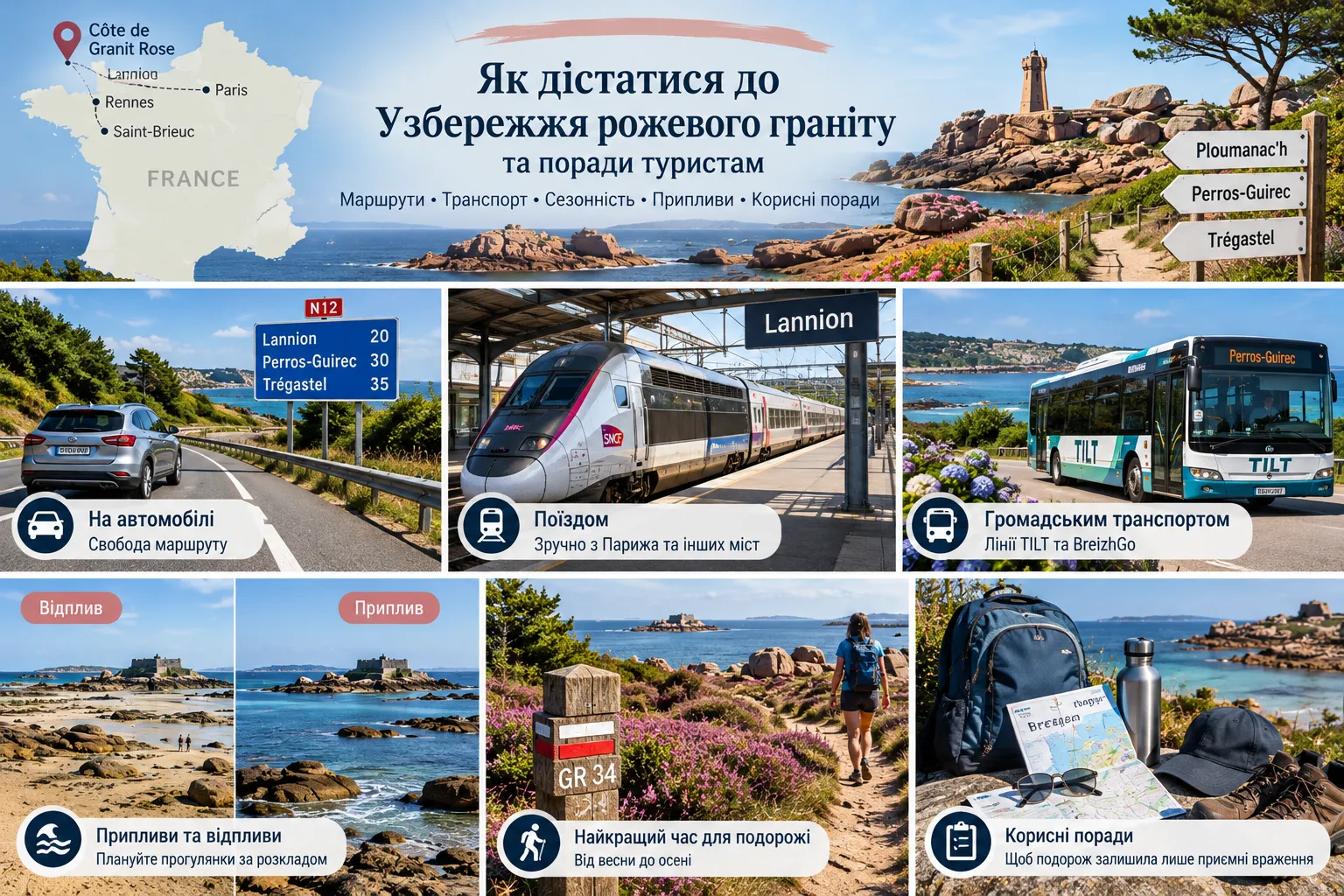
A trip to the Pink Granite Coast is a wonderful opportunity to discover extraordinary natural landscapes and explore a less familiar but remarkably picturesque side of France. Despite its distance from the country's major tourist centers, the coast can be reached by car, train, or public transportation. The most important consideration is choosing the right destination, as the famous granite formations stretch along several coastal towns and villages rather than being concentrated in one location.
For a first visit, the best place to start is Ploumanac'h, a picturesque district of Perros-Guirec, where some of the most famous walking trails among the pink granite rocks begin. Another convenient destination is Trégastel, known for its sandy beaches and the Renote Peninsula. If you plan to travel by train, the nearby town of Lannion will serve as an important transportation hub.
How to Get to the Pink Granite Coast by Car
Traveling through Brittany by car is one of the most convenient ways to explore the Pink Granite Coast. Having your own vehicle or a rental car allows you to plan stops independently, adjust your itinerary according to the weather, and visit small coastal villages that are not always easily accessible by public transportation.
The main transport route through northern Brittany is the N12 national road (RN12), which connects Rennes, Saint-Brieuc, and Brest. Its principal sections have two lanes in each direction and are generally toll-free. To reach the most famous pink granite formations, leave this road toward Lannion and then follow the local roads to Perros-Guirec or Trégastel.
If you are traveling from Paris, the usual route heads west toward Rennes before continuing along the N12 into northern Brittany. The distance and travel time depend on your starting point in the capital, the chosen route, and traffic conditions. As a general guide, the drive to Lannion takes approximately five hours without extended stops, although heavy traffic can make the journey longer.
From Rennes, the drive to Lannion generally takes approximately one hour and forty-five minutes; from Saint-Brieuc, around forty-five minutes; and from Brest, roughly one hour and fifteen minutes. These estimates mainly refer to the journey to Lannion, so additional time should be allowed to reach Ploumanac'h or Trégastel.
For visitors traveling by car from Germany, Belgium, Poland, or other European countries, the Pink Granite Coast can easily be included in a broader road trip through France. For example, you can combine your visit with stops in Normandy, Saint-Malo, Rennes, and other destinations in Brittany. This approach is particularly suitable for travelers planning to spend several days or a full week exploring northwestern France.
How to Get There by Train from Paris and Other French Cities
For travelers without a car, the most convenient option is to use the rail connection to Lannion (Gare de Lannion). This is one of the region's main transport hubs, from which visitors can continue their journey by bus, taxi, or rental car.
Trains from Paris generally depart from Paris-Montparnasse station. Depending on the timetable, travelers may be able to take a direct TGV high-speed train to Lannion or choose a connection involving regional TER trains. A common option involves changing trains at Guingamp or Plouaret-Trégor. The fastest journeys take approximately three and a half hours, although the exact duration depends on the number of connections and waiting times.
Direct high-speed rail services to Lannion have seasonal variations. More direct services may be available during summer, while connections are more common outside the main tourist season. Therefore, it is important not to rely on a single timetable throughout the year. Before purchasing tickets, check the available train services for your specific travel date.
If you are traveling from other parts of France, convenient transfer points may include Rennes, Saint-Brieuc, and Guingamp. From these cities, you can continue by regional train or bus. Up-to-date schedules, ticket prices, and available connections can be found through the official SNCF Connect service.
It is important to remember that Lannion railway station is not located directly beside the famous granite rocks. After arriving, you will need to arrange onward transportation to Perros-Guirec, Ploumanac'h, or Trégastel. For travelers planning only a day trip, coordinating train arrival times with local bus services is particularly important.
Public Transportation: How to Reach Ploumanac'h and Trégastel
The region is served by the TILT (Transports Intercommunaux Lannion-Trégor) intermunicipal bus network, which connects Lannion with surrounding towns and villages. Line E is particularly useful for visitors, as it runs between Lannion and Trégastel via Perros-Guirec. This service makes it possible to reach the main coastal resort areas without a car.
Another option is Line D, which connects Lannion with Trégastel via Trébeurden. It may be useful for travelers who want to explore the western part of the coastline or visit several coastal communities during the same trip.
A local bus service called Le Macareux also operates between Perros-Guirec, Trégastel, and neighboring communities. It serves locations including Louannec, Saint-Quay-Perros, Perros-Guirec, and Trégastel. Depending on the route and timetable, this service can be a convenient way to travel between coastal resort areas.
However, public transportation in small coastal towns is generally less frequent than in major French cities. Services may be limited on weekends, public holidays, and outside the summer season. It is particularly important to check the departure time of the last bus if you plan a long walk among the granite rocks or need to return to Lannion in the evening. Current route maps and timetables are available on the official website of Lannion-Trégor Communauté. For regional bus journeys across Brittany, travelers can also use the BreizhGo network.
Pink Granite Coast: Frequently Asked Questions
Where is the Pink Granite Coast located in France?
The Pink Granite Coast (Côte de Granit Rose) is located in northern Brittany, in the Côtes-d'Armor department of France, along the English Channel. The most famous pink granite formations can be seen around Ploumanac'h, Perros-Guirec, and Trégastel.
Why are the rocks on the Pink Granite Coast pink?
The unusual color of the rocks is explained by the mineral composition of the granite, particularly the presence of pink potassium feldspar crystals. The rock's color can range from pale pink to deep reddish tones depending on its composition, lighting conditions, and surface moisture. The granite massif formed approximately 300 million years ago.
How much does it cost to visit the Pink Granite Coast?
Walking along public coastal trails and admiring the pink granite rocks is free. No separate admission ticket is required to explore Ploumanac'h, view Mean Ruz Lighthouse from the outside, or walk around the Renote Peninsula. However, additional costs may apply for parking, organized excursions, boat trips, or admission to paid attractions.
How much time do you need to explore the Pink Granite Coast?
Approximately 2–3 hours is usually enough to see the most famous rock formations in Ploumanac'h, Mean Ruz Lighthouse, and Saint-Guirec Beach. If you also plan to visit Trégastel and the Renote Peninsula, it is better to allow a full day. For boat excursions, beach activities, and exploring nearby towns, a stay of 2–3 days is recommended.
When is the best time to visit the Pink Granite Coast?
The most convenient period for coastal walks is from May to September. Late spring and early autumn are ideal for exploring the natural scenery at a relaxed pace, while July and August are best suited for beach holidays and water activities. However, the coastline can be explored throughout the year when weather conditions are favorable. Checking the wind and rain forecast before your visit is recommended.
Is the Pink Granite Coast suitable for families with children?
Yes, it is a wonderful destination for a family trip. Children particularly enjoy the granite boulders that resemble animals and imaginary creatures, sandy beaches, and walks by the sea. Families with young children should choose shorter, well-maintained routes, such as the walk around the Renote Peninsula. Adult supervision is essential on rocky sections of the coastline.
Is the Pink Granite Coast accessible to people with reduced mobility?
Accessibility depends on the specific route. Some developed coastal areas are suitable for visitors with strollers and people with reduced mobility. However, certain sections of the GR34 trail include steps, uneven surfaces, and rocky passages. The tourist office recommends the route around the Renote Peninsula for walks with strollers, but wheelchair users should confirm accessibility along their chosen section before visiting.
Can you swim at the beaches of the Pink Granite Coast?
Yes, the coastline has several beaches suitable for swimming and relaxation. Among the best known are Trestraou Beach in Perros-Guirec, Saint-Guirec Beach in Ploumanac'h, and Coz-Pors Beach in Trégastel. However, the waters of the English Channel can remain cool even during summer. Before swimming, visitors should consider the tides, sea conditions, weather, and local safety notices.
Where are the most beautiful pink granite rocks for photography?
The most famous views can be found around Ploumanac'h, particularly near Mean Ruz Lighthouse and along sections of the GR34 Customs Officers' Path. Saint-Guirec Beach, with its view of Costaérès Castle, and the Renote Peninsula in Trégastel are equally picturesque. For the most striking photographs, visit in the early morning or evening, when sunlight enhances the pink tones of the granite.
Why You Should Visit the Pink Granite Coast
The Pink Granite Coast is one of those places that leaves you with more than beautiful photographs — it creates the unforgettable feeling of discovering something truly extraordinary. Here, nature has shaped landscapes unlike those found anywhere else in France. Enormous granite boulders in warm pink tones, sheltered seaside coves, picturesque lighthouses, and the endless horizons of the English Channel create a unique atmosphere that makes visitors want to return to Brittany again and again.
What makes this coastline particularly special is its diversity. It can captivate travelers seeking solitude in nature, families with children, couples enjoying a romantic getaway, and outdoor enthusiasts alike. Some visitors will remember the fantastic rock formations of Ploumanac'h most vividly, while others will treasure a walk along the scenic GR34 trail. For others, the most lasting memory may be a peaceful evening by the sea, when the final rays of sunlight bathe the granite in soft golden-pink hues.
At the same time, exploring the Pink Granite Coast offers much more than a visit to an unusual natural landmark. It is an opportunity to experience the true character of French Brittany — its maritime traditions, historic architecture, local cuisine, and the distinctive rhythm of life in small coastal towns. There is no need to rush constantly from one attraction to another. On the contrary, the most memorable experiences often happen during an ordinary walk, when you can pause, breathe in the fresh sea air, and simply appreciate the beauty around you.
If you are planning a trip to France and looking for unusual natural destinations that are truly worth discovering, be sure to include Côte de Granit Rose in your itinerary. Allow enough time to explore it without rushing, wander among the granite giants, and discover the beauty of Brittany's northern coastline. After all, sometimes the most precious souvenir from a journey is not something you buy, but a moment when you stand before an extraordinary landscape and realize just how beautiful and unpredictable nature can be.
No Comment
You can post first response comment.