
 English
 Українська
 Русский

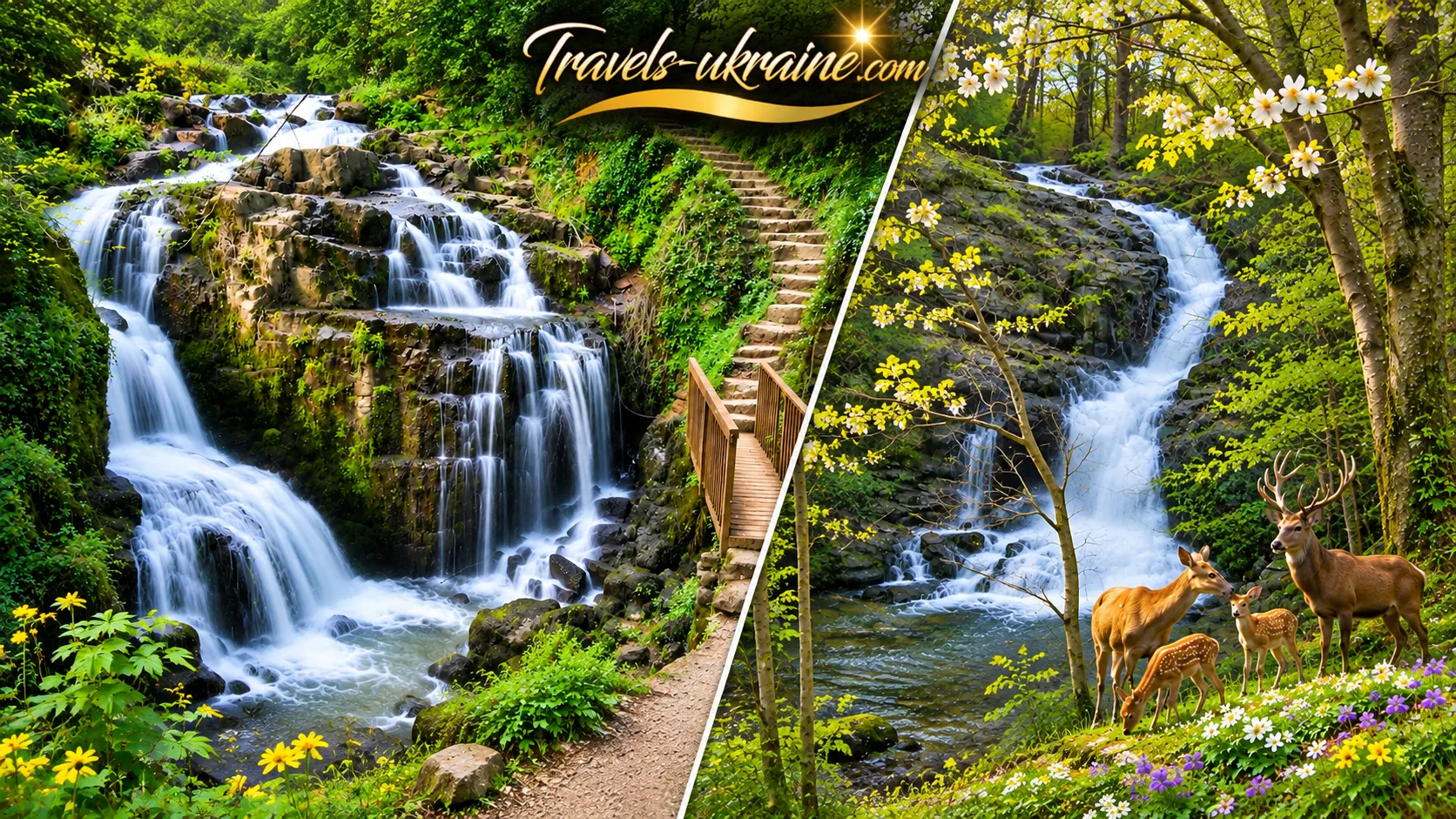
French Normandy never ceases to amaze. Its coastline alone, with towering white cliffs, medieval abbeys, and picturesque towns where time seems to have decided to take a little break, is enough to captivate any traveler. But venture beyond the popular tourist routes and into the region's rolling green hills, and an entirely different Normandy reveals itself — peaceful, mysterious, and filled with ancient forests, rocky gorges, and rushing streams carving their way through the cliffs.
It is here, near the small French town of Mortain, that the Mortain Waterfalls (Les Cascades de Mortain) lie hidden — two remarkable natural attractions, each with its own character, history, and even its own river. One impresses with a powerful torrent crashing over rocky ledges, while the other enchants visitors with a narrow forest gorge, where water winds its way between the rocks as though trying to reveal a long-forgotten secret.
The Great Mortain Waterfall (Grande Cascade de Mortain) is the more spectacular of the two. Its waters rush down a rocky slope, creating a breathtaking scene surrounded by lush greenery. Nearby lies the Little Mortain Waterfall (Petite Cascade de Mortain), which, despite its modest name, is no less captivating than its larger neighbor. Instead of a single powerful drop, visitors discover a series of smaller cascades nestled between towering stone walls. Yet the most fascinating aspect of these places goes far beyond their natural beauty. The rocks from which the waterfalls emerge preserve the story of Earth's distant geological past, dating back to a time when the world as we know it did not yet exist. And if these stones could speak, their stories would hardly fit into a single book!
And then there are the legends. At least, local folklore suggests that among the rocks of Normandy, one might stumble upon traces of mysterious goblins, hear a tale of tragic love, or discover why one of the bridges received such an eerie name — the Devil's Bridge (Pont du Diable). Although these stories belong to the realm of folklore, they lend the area a unique atmosphere in which nature and human imagination have been intertwined for generations. Interestingly, the Mortain Waterfalls were attracting travelers long before the age of travel blogs, smartphones, and social media photography. Their picturesque scenery inspired artists, while the area's remarkable natural landscape eventually received protected status.
So, join us on a short but fascinating journey to one of the most intriguing natural corners of Normandy, France. We will explore the Great and Little Mortain Waterfalls, travel back through their ancient geological history, uncover the stories behind local legends, and discover what makes these places so appealing to visitors. And who knows? Perhaps after this journey, you too will want to find out whether the rocks of Normandy really echo not only with the sound of rushing water, but also with the whispers of stories that have been told here for centuries.
The Great and Little Mortain Waterfalls — Beauty in Two Dimensions
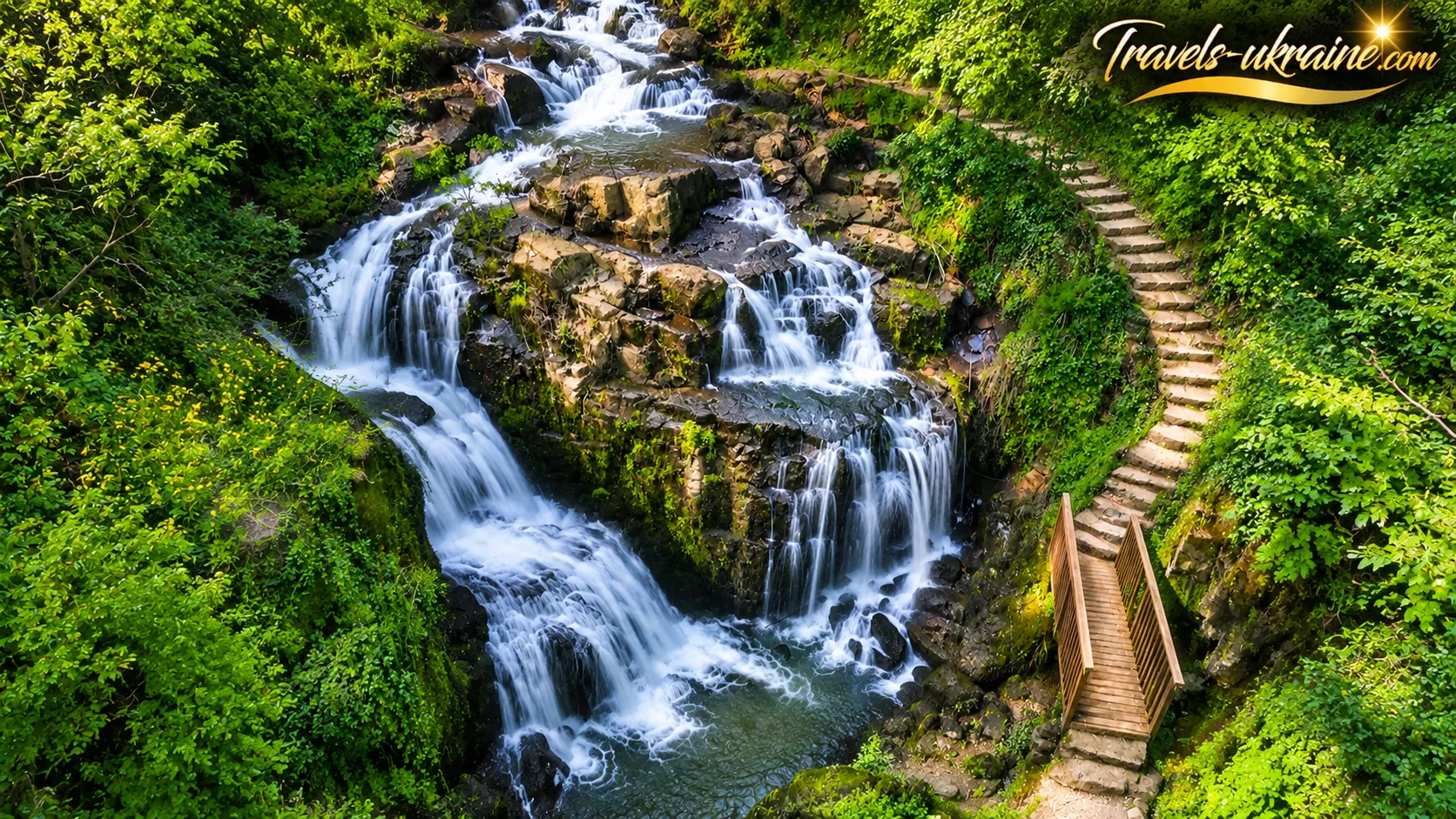
French Normandy is a land of remarkable natural contrasts, where the magnificent chalk cliffs of Étretat rise above the waters of the English Channel, while the famous Mont Saint-Michel captivates visitors with its medieval architecture and extraordinary sea tides. Yet among the region's green pastures, historic estates, and picturesque hills lies a place where nature reveals an entirely different character. Near the town of Mortain, two small rivers have carved their way through rocky slopes, creating the Great and Little Mortain Waterfalls (Les Cascades de Mortain).
Despite sharing a common name, these waterfalls are remarkably different. The Great Waterfall impresses with its height, rushing waters, and the rugged beauty of its rocky gorge. The Little Waterfall, meanwhile, conceals an entire sequence of cascades, natural rock pools, and narrow stone passages. While the first captivates visitors with its power, the second enchants them with the diversity of its landscapes.
The Great Mortain Waterfall — A Rushing Torrent Among Ancient Rocks
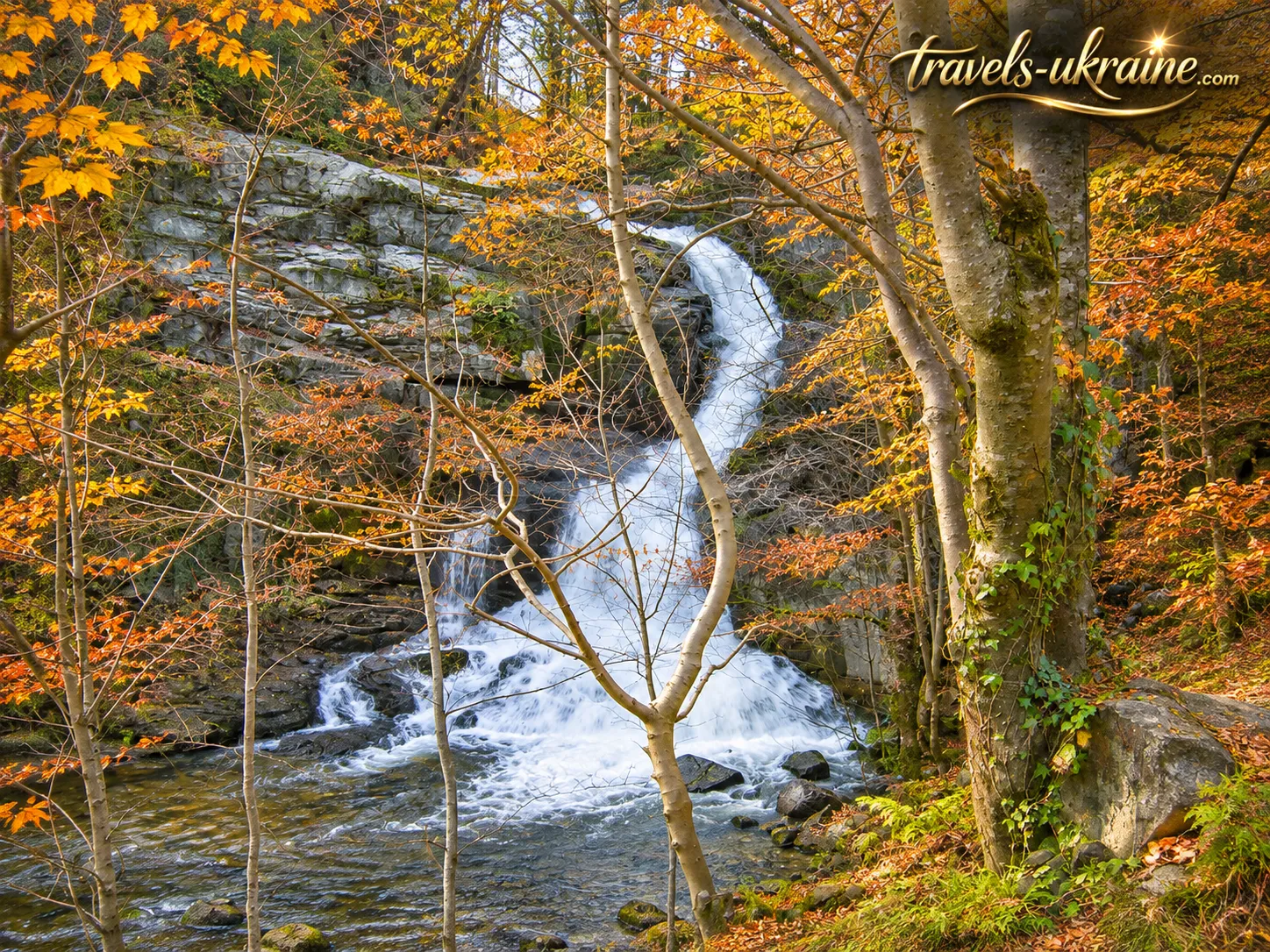
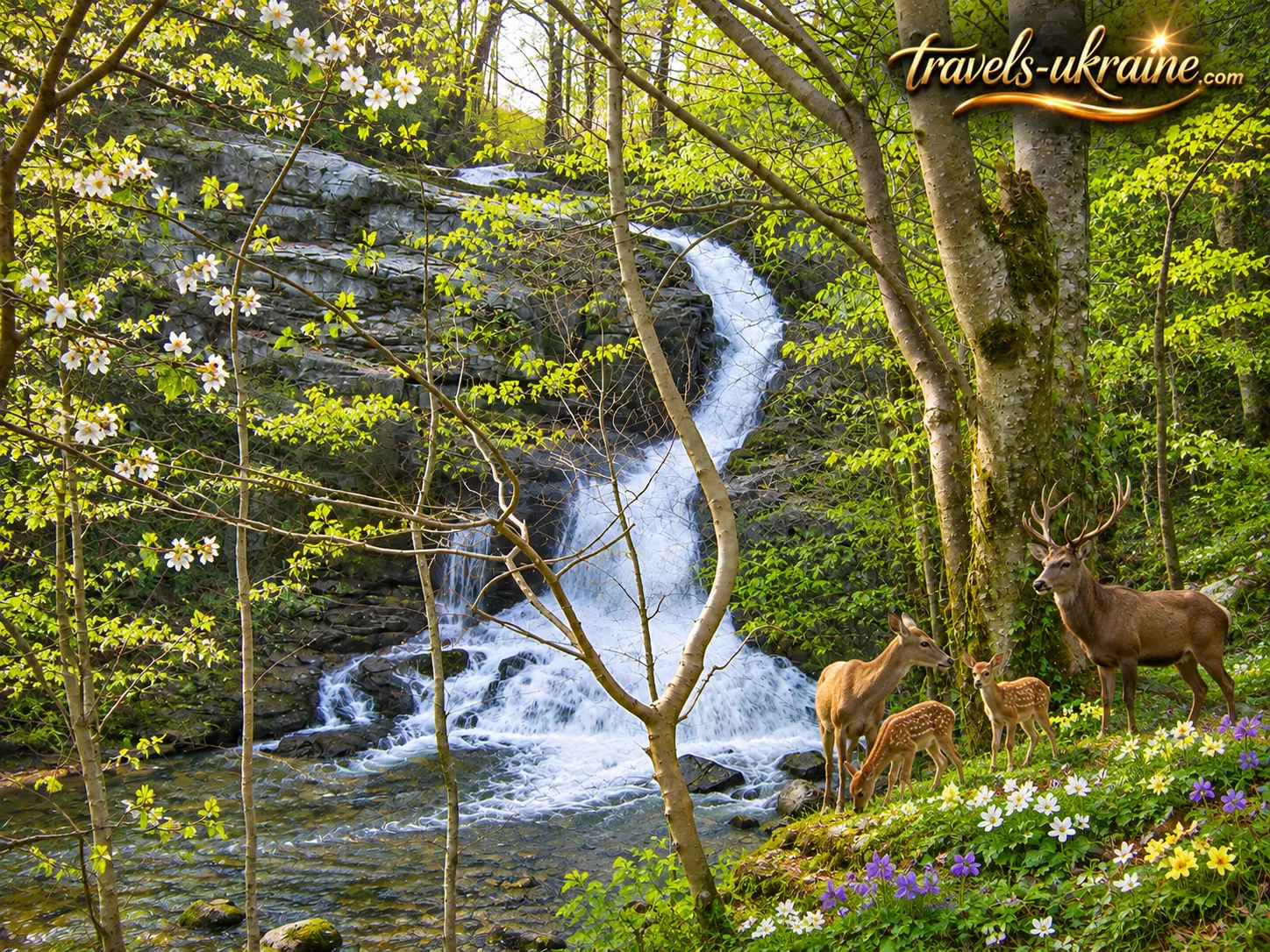
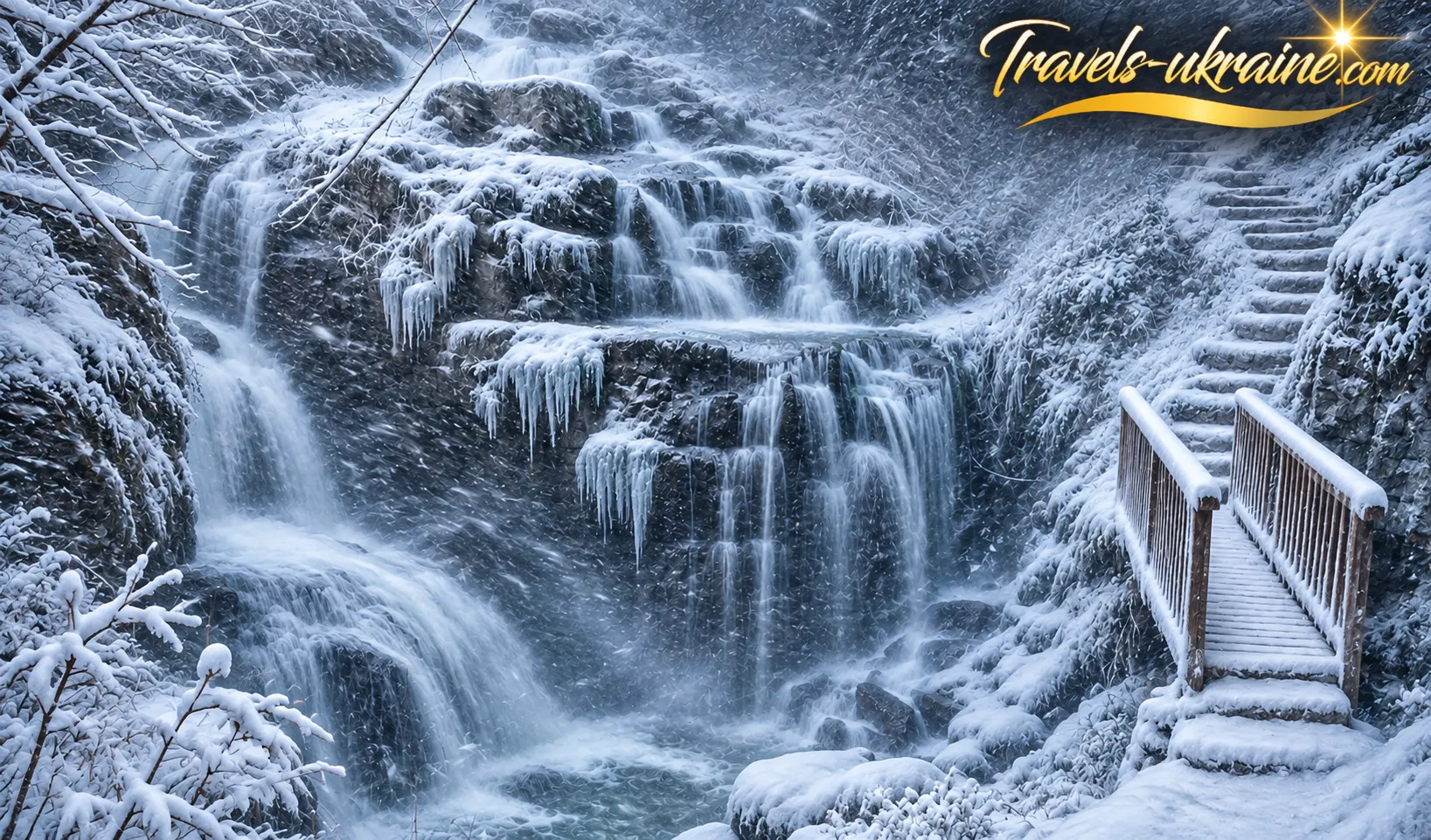
The Great Mortain Waterfall is formed by the Cance River (La Cance), a tributary of the Sélune River (La Sélune). Flowing through rocky hills, the river reaches a massive outcrop of Armorican sandstone, where its bed drops sharply. It is here that one of western France's most impressive natural waterfalls takes shape. According to French Wikipedia and environmental conservation documents, the waterfall has a drop of approximately 20 meters. Rather than forming a perfectly vertical curtain of water, the river rushes over rocky ledges, breaks into numerous streams, and tumbles noisily toward the bottom of the gorge. Massive boulders covered with mosses and lichens give the waterfall its distinctive appearance. The surrounding dense woodland creates the atmosphere of a secluded forest retreat, even though the town itself is just a short distance away.
The contrast between water and stone is particularly striking. Bright streams seem to bring the dark rocks to life, while natural ledges constantly force the river to change direction. After heavy rainfall, the waterfall becomes significantly more powerful, and its roar can be heard even before the cascade comes into view through the trees. Interestingly, this destination's popularity among visitors is far from a modern phenomenon. As early as the 19th century, the Great Waterfall was a well-known walking destination, and its picturesque scenery attracted the attention of French painters. Among the artists associated with the area in historical sources are Jean-Baptiste-Camille Corot, Gustave Courbet, and Paul Huet.
They were drawn to the rocky slopes, rushing water, and unusual combination of natural forms. And that is hardly surprising: long before the arrival of cameras, it was artists who helped people discover the beauty of France's remote landscapes. Through landscape painting, places like these gradually became known far beyond the surrounding settlements.
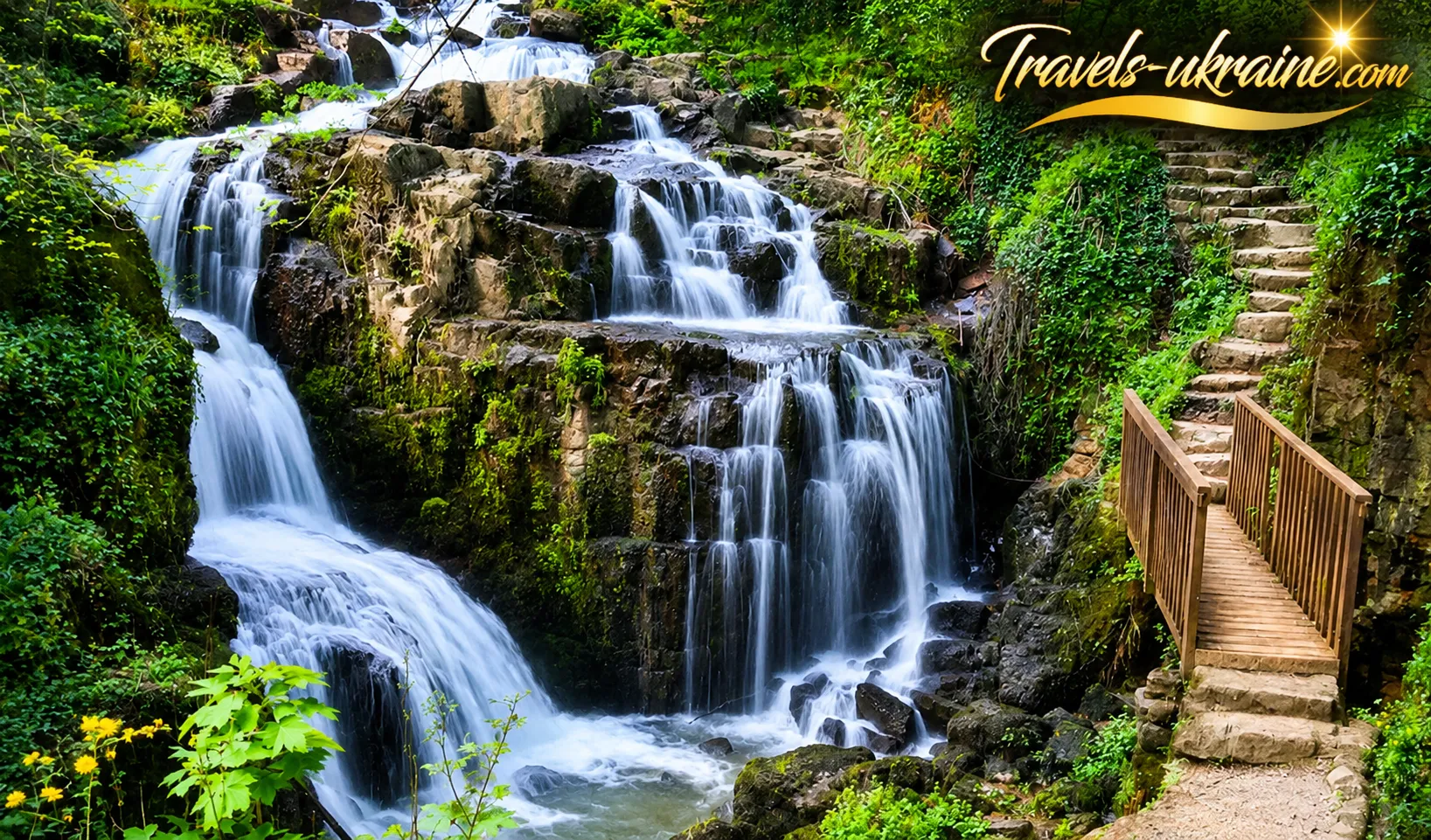
Today, a walking trail with steps runs alongside the Great Waterfall, allowing visitors to admire it from different levels — from the upper section to its base. By changing your viewpoint, you can see just how differently the same stream appears: from above, it is a fast-flowing river disappearing among the rocks, while from below, it becomes an entire composition of cascading water sculpted by nature.
The Little Mortain Waterfall — An Enchanting Gorge and a Golden River
If the Great Waterfall primarily demonstrates the power of water, the Little Mortain Waterfall offers something entirely different. It is formed by the Cançon River (Le Cançon), which flows through a narrow rocky gorge before eventually joining the Cance. Here, there is no single continuous high drop. Instead, the river passes over a succession of natural ledges, creating small waterfalls, rapids, rushing streams, and pools among the rocks. At times, the water flows gently between the stones; then suddenly it accelerates, foams, and disappears into a narrow rocky passage.
The distinctive feature of the Little Waterfall is its varied terrain. Within a relatively small area, visitors can discover a woodland stream, a rocky gorge with fast-flowing water, a small waterfall with a natural pool at its base, and cascades descending between the cliffs. According to information provided by Normandy's tourist office, the total elevation difference between the upper section of this area, near the Devil's Bridge, and the confluence of the Cance and Cançon rivers is approximately 30 meters. However, this is not the height of a single waterfall, but rather the change in elevation along this particular stretch of the gorge.
The Cançon River has another unusual characteristic. Local residents call it the "Golden River" (la rivière dorée). And it has nothing to do with precious metals or hidden treasure! After heavy rainfall, the current carries fine clay particles that give the water a yellowish tint. As a result, the river can sometimes appear genuinely golden. The natural explanation is quite simple, but the name sounds as though a chest of treasure belonging to Norman pirates might be hidden somewhere nearby.
The walking trail near the Little Waterfall winds through a wooded gorge, past rocky outcrops and small bridges. The atmosphere of an ancient forest is especially noticeable here: lush, damp greenery, moss-covered rocks, the gentle sound of flowing water, and natural pools that reveal a new view around every bend.
Nearby are the Devil's Bridge (Pont du Diable) and Needle Rock (Rocher de l'Aiguille). Both landmarks are associated with local legends, which we will explore in greater detail in a separate section. After all, the people of Normandy seem never to have missed an opportunity to add a mysterious story to an already beautiful landscape.
Two Waterfalls — Two Different Natural Stories
What makes the Mortain Waterfalls so special is that, although they are located close to each other, they offer completely different experiences. The Great Waterfall is defined by its height, powerful flow, and dramatic rocky landscape. The Little Waterfall invites visitors on a journey through a narrow gorge, where the river creates a series of smaller cascades. Although the two waterfalls are formed by different rivers, they belong to the same natural system of the Cance Valley. This is why exploring them is best experienced as a single journey — from the mighty rush of falling water to peaceful, almost fairytale-like corners hidden among the rocks.
Yet the greatest mystery of these places lies even deeper — within the rocks themselves. The cliffs of Mortain consist of geological formations whose history began hundreds of millions of years ago. And to understand how such unusual gorges and waterfalls appeared among the hills of Normandy, we must travel back in our imagination to a time when modern Europe did not yet exist.
Natural Mysteries of the Mortain Waterfalls — 475 Million Years of History
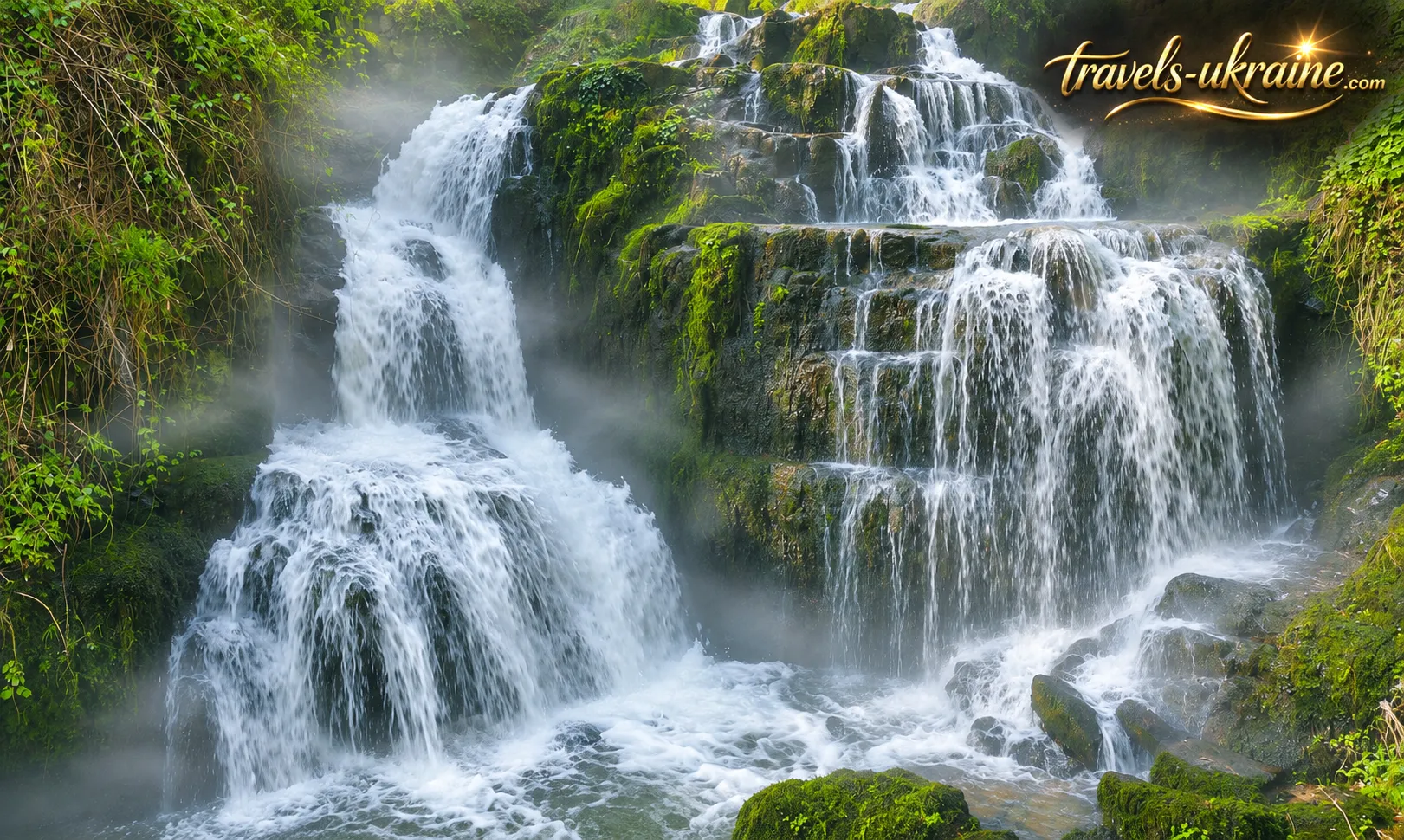
Looking at the Mortain Waterfalls, it is difficult to imagine that their rugged stone walls conceal a history that began long before the appearance of dinosaurs, the first forests, and even most forms of life familiar to us today. While water tirelessly rushes over rocky ledges, the cliffs themselves remain silent witnesses to the remarkable transformations of our planet. And perhaps the most fascinating fact is that an entirely different natural environment once existed where Normandy's green hills now stand. To understand how these extraordinary rocky gorges emerged among the forests of France, we must take an imaginary journey nearly 475 million years into the past.
When an Ancient Sea Covered the Land of Normandy
The main geological foundation of this area consists of Armorican sandstone (Grès armoricain) — an exceptionally ancient sedimentary rock formed during the Early Ordovician Period, approximately 475 million years ago. In those distant times, the territory that would eventually become the Armorican Massif was connected to marine basins where enormous quantities of sand accumulated. Over millions of years, these sandy deposits were compressed, cemented together, and gradually transformed into solid rock formations.
Later, geological processes changed their original positions. During ancient mountain-building events, the rock layers underwent deformation, developing folds and faults. These processes helped shape the complex geological structure of the Mortain area. One fact is particularly astonishing: when Armorican sandstone was forming, dinosaurs did not yet exist. Hundreds of millions of years still remained before their appearance. Meanwhile, the rocks now washed by the waters of Normandy's rivers had already begun their long geological history.
Traces of Prehistoric Life Hidden in Stone
Yet the ancient rocks of Mortain preserve more than memories of long-vanished seas. They also contain genuine evidence of life that existed long before humans appeared. Geologists have identified distinctive fossil structures here known as Skolithos. These are vertical, tube-shaped trace fossils left behind by the burrows of ancient marine organisms that lived in sandy sediments.
Importantly, these are not fossilized animal bodies, but rather traces of their activity. Such formations are known as ichnofossils, or trace fossils. They help scientists reconstruct the environmental conditions of ancient marine ecosystems. Skolithos traces have been documented directly in the rocks near both the Great and Little Mortain Waterfalls, including on rocky walls and large boulders. On certain surfaces, they appear as small parallel indentations or tubular structures.
Just imagine: an ordinary-looking stone beside a waterfall may preserve traces of creatures that lived almost half a billion years ago! And you do not need a time machine to discover them — just a keen eye and an understanding of what these ancient rocks are hiding.
How Did Rivers Create the Rocky Gorges and Waterfalls?
Despite the remarkable age of the surrounding rocks, the Mortain Waterfalls themselves are considerably younger than the rock formations through which they flow. Their development is associated with the gradual evolution of river valleys and geological changes in the landscape. Armorican sandstone is an extremely resistant rock, but even it does not remain completely unchanged. Ancient tectonic movements created networks of fractures and faults within it, allowing water to gradually deepen its channels along these natural weaknesses.
During the Quaternary Period, changes in the landscape and increased river incision contributed to the formation of the present-day gorges. Water gradually eroded less resistant sections of rock, followed natural fractures, and flowed over rocky ledges, creating cascades. This is how two neighboring yet remarkably different natural landscapes developed. The Great Waterfall features the steep descent of the Cance River across a rocky ridge, while the Little Waterfall consists of a complex series of stone ledges and narrow passages carved by the Cançon River.
Thus, the Mortain Waterfalls are the result of a prolonged interaction between ancient geological structures, tectonic fractures, and the relentless action of flowing water. And although the cliffs may appear unchanging, nature continues to reshape them even today.
Rare Plants and the Unusual World of Damp Rock Faces
Geological uniqueness is only one aspect of the natural value of the Mortain Waterfalls. Humid gorges, shaded rock walls, and the constant presence of flowing water create special conditions for plants, some of which are relatively rare. Particularly fascinating are the mosses, liverworts, lichens, and ferns that cover the rocky surfaces. In certain places, they form thick green carpets, making the cliffs resemble scenery from an ancient fairytale.
One of the most valuable plants found in this area is the Tunbridge filmy fern (Hymenophyllum tunbrigense) — a small fern that requires a moist, shaded environment. It has exceptionally delicate, thin fronds and is protected at the national level in France. According to French nature conservation studies, the waterfall area is one of the important habitats for this species in the historic region of Lower Normandy. Other moisture-loving plants can also be found nearby, benefiting from the favorable conditions created by the rocky gorges.
The local wildlife is equally interesting. The white-clawed crayfish (Austropotamobius pallipes) has been recorded in the Cance River. This species is sensitive to the deterioration of freshwater ecosystems and is of particular conservation importance.
Various species of birds and invertebrates also inhabit the surrounding woodland and rocky habitats. The Mortain Waterfalls are therefore much more than picturesque streams flowing among stones. They form an entire natural complex in which geology, water, and living organisms are closely interconnected.
Protected Natural Heritage — What Makes the Mortain Waterfalls Special?
The uniqueness of this area attracted the attention of French conservation authorities as early as the first half of the 20th century. On September 23, 1922, the Great Waterfall and its surrounding cliffs received protected landscape status (site classé). This marked an important milestone in preserving the area's natural appearance. Both waterfalls are also included in the Type I ZNIEFF natural area known as "Cascades de Mortain", which covers approximately 21.5 hectares according to information cited by French Wikipedia.
ZNIEFF is a French inventory system identifying natural areas of particular ecological, botanical, and zoological interest. It helps recognize valuable natural sites and ensures that they are considered when planning environmental conservation measures. However, this inventory designation does not, by itself, establish a separate legally protected status.
Particular attention is devoted to preserving vegetation growing on rocky surfaces, damp woodland habitats, freshwater ecosystems, and areas supporting rare species. Therefore, the natural value of the Mortain Waterfalls extends far beyond the beauty of their cascades. Their rocks preserve traces of prehistoric marine life, rare ferns thrive in their humid gorges, and the rivers continue to shape a landscape whose geological history stretches back hundreds of millions of years.
And perhaps this is the greatest wonder of Mortain: what appears to be an ordinary forest waterfall is actually a small window into the immense history of our planet.
Legends of the Mortain Waterfalls — Goblins, Fairies, and Mysteries of Ancient Rocks
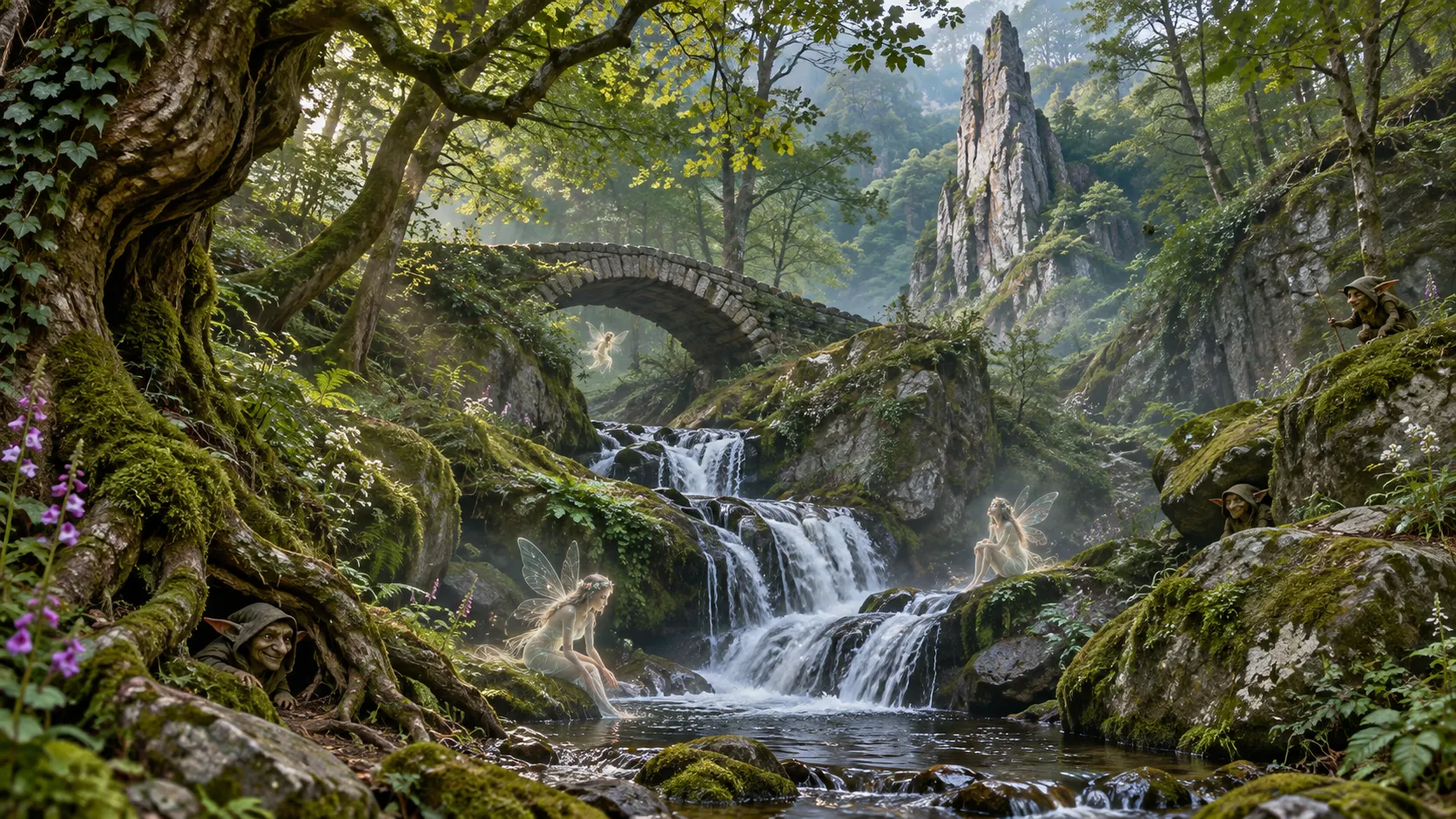
In Normandy, even an ordinary stone sometimes has a story of its own. And if that stone stands in the middle of an ancient forest, not far from a rushing waterfall, you can be almost certain that a legend involving fairies, mysterious creatures, or supernatural forces is never far away! The Mortain Waterfalls are exactly such a place. For generations, local residents have passed down tales of extraordinary events said to have taken place among these rocky gorges. These stories intertwine love and jealousy, human curiosity and cleverness, magical beings, and even bargains with the Devil himself.
Although these tales should not be regarded as historical facts, they allow us to see the waterfalls from an entirely different perspective. After all, for our ancestors, unusual natural landscapes often became places where the real world seemed to meet the realm of folklore and imagination.
Tristan and Iseult — A Legend of Love Near the Great Waterfall
One of medieval Europe's most famous stories is associated with the Great Mortain Waterfall — the legend of Tristan and Iseult (Tristan et Iseult). It is a tragic tale of love between the young knight Tristan and the beautiful Iseult, who was destined to become the wife of King Mark. According to the best-known versions of the legend, the heroes' fate changed forever when they accidentally drank a magical love potion intended for Iseult and her future husband.
From that moment onward, their love became a series of secret meetings, dangerous trials, separations, and suffering. Tristan found himself torn between loyalty to his king and feelings he could not resist. Iseult, meanwhile, became the heroine of a story that has survived for centuries and inspired countless literary interpretations.
The earliest surviving written versions of this tale date back to the 12th century, although the legendary tradition itself developed earlier. Its themes are associated with Celtic folklore and medieval courtly literature.
Needle Rock — The Tragic Story of a Young Man Named Léonix
Not far from the Little Mortain Waterfall, near the confluence of the Cance and Cançon rivers, rises an unusual rock formation known as Rocher de l'Aiguille — Needle Rock. Today, this natural landmark attracts tourists and rock-climbing enthusiasts. However, local folklore offers a far more mysterious explanation for its existence. According to legend, fairies once lived in this area and enjoyed gathering beside the river to spin flax. They did not want outsiders watching their secret activities.
But one day, a young man named Léonix could not resist his curiosity. He decided to secretly watch the fairies, hoping to glimpse something hidden from ordinary mortals. Unfortunately for the young man, his indiscretion did not go unnoticed. The Fairy Queen spotted the unwelcome observer and, in a fit of anger, threw her long needle at him. According to the legend, the needle pierced Léonix straight through the heart, and the young man was turned to stone. Ever since, Needle Rock has stood above the gorge as a silent reminder of a tragic encounter between a human being and the magical world.
But the most chilling part of the story does not end there. Local tales claim that Léonix's heart continues to beat inside the rock to this very day. If you press your ear against the stone and listen carefully, you may supposedly hear its faint, muffled rhythm. Of course, there is no scientific evidence to support such a phenomenon. Nevertheless, the legend is so deeply connected to the area that even Normandy's official tourist office recounts it.
And although checking a rock for a heartbeat is hardly necessary, the story of Léonix encourages us to see an ordinary stone as a character from an ancient fairytale. It also serves as a reminder that excessive curiosity can sometimes have rather rock-solid consequences!
The Devil's Bridge — A Bargain That Outwitted the Devil
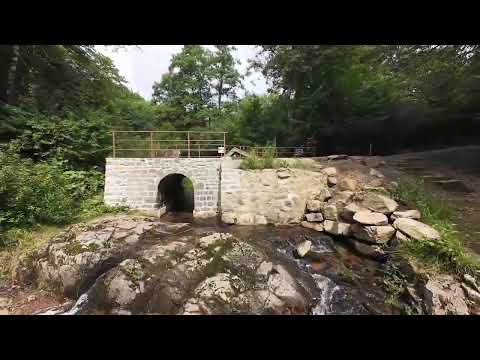
Another legend is connected with the Devil's Bridge (Pont du Diable), located in the upper part of the Little Waterfall's gorge. According to local tradition, the crossing over the river was once constantly being destroyed. Heavy rains, floods, and powerful currents repeatedly swept the bridge away, leaving residents without a reliable crossing. One day, after yet another flood had destroyed the structure, a hooded stranger appeared before the villagers. His appearance was unusual, and his hands resembled long, hooked claws.
The mysterious man offered to accomplish the impossible: rebuild the bridge in just one night. Desperate for a solution, the villagers agreed, and by the following morning, a sturdy new bridge stood over the river. However, the stranger turned out to be the Devil himself, and his help came at a terrible price. In exchange for his work, he demanded the soul of the first person to cross the new bridge.
The trap seemed flawless. But one clever local young man devised a way to trick the Devil. Instead of allowing a person to cross, he made a black cat run across the bridge. According to the tale, the young man burned the frightened cat's paws to make it race over the crossing. Thus, instead of receiving the human soul he had expected, the Devil was left with the first four-legged traveler. The legend uses this episode to explain the origins of an old superstition claiming that black cats serve the Devil. Of course, this is merely a folkloric motif, not a reason to regard black cats with suspicion.
Today, the Devil's Bridge forms part of a local tourist trail. And although visitors no longer need to negotiate with supernatural forces for permission to cross, its unusual name continues to recall the cunning tale that has been passed down through generations.
The Goblins of Mortain — Tiny Inhabitants of a Mysterious Forest
But fairies and the Devil are far from the only characters in Normandy's legends. According to local folklore, the rocks, trees, and waterfalls of Mortain have long been home to goblins (Gobelins) — small mythical creatures that occupy a special place in French folklore. They are often described as short beings with large, pointed ears and rather unusual appearances. In some stories, they are mischievous pranksters, while in others, they appear as mysterious forest dwellers who know far more than they are willing to reveal to humans.
Has anyone ever actually seen these little creatures? There is, of course, no verified evidence of their existence. But in a quiet woodland gorge, where water rushes between the rocks and sunlight barely filters through the dense trees, even the ordinary rustling of leaves can sometimes seem mysterious. Perhaps that is why stories about goblins have become so closely associated with Mortain. After all, an unusual natural landscape always leaves plenty of room for imagination.
Why Did the Mortain Waterfalls Become a Place of Folk Legends?
If we take a closer look at these stories, we can notice something they all have in common. Almost every legend attempts to explain something unusual in the surrounding world. A strangely shaped rock becomes a reminder of a young man punished for his curiosity. An old bridge gains a story about a clever bargain with the Devil. And dark forest gorges become home to invisible inhabitants of an enchanted world.
For centuries, people used such stories to give special meaning to natural phenomena. Where a modern researcher sees the results of geological processes and erosion, the popular imagination once discovered traces of ancient magic, love, danger, and human ingenuity. The legends of the Mortain Waterfalls are not documented history, but part of Normandy's cultural heritage. They help us understand how local communities perceived the natural world, what they feared, what they dreamed about, and which stories they passed down to future generations.
And that is precisely why these places are fascinating for more than just their waterfalls. Here, we can discover how ancient rocks, rushing rivers, and human imagination have created a unique world in which nature preserves its history in stone, while people preserve theirs in legends.
Frequently Asked Questions About the Mortain Waterfalls
Where are the Mortain Waterfalls located in France?
The Great and Little Mortain Waterfalls (Les Cascades de Mortain) are located near the town of Mortain, in the municipality of Mortain-Bocage, Manche department, Normandy region, France. The Great Waterfall is formed by the Cance River (La Cance), while the Little Waterfall is formed by the Cançon River (Le Cançon).
How can you get to the Great and Little Mortain Waterfalls?
The easiest way to reach the waterfalls is by car via the town of Mortain. To visit the Great Waterfall, follow the D977 road toward Sourdeval and look for signs marked Grande Cascade. The Little Waterfall can be reached by following a walking trail downhill from Place du Château in the town center, using the signs for Petite Cascade. Both waterfalls are also connected by hiking trails.
Is there an entrance fee for the Mortain Waterfalls?
No, visiting the Great and Little Mortain Waterfalls is free of charge. Both natural attractions are accessible for independent walks throughout the year. However, some organized guided tours may require a fee.
Where can you park near the Mortain Waterfalls?
There is a small parking area opposite the entrance to the Great Waterfall, on Avenue de l'Abbaye Blanche. Local authorities also recommend a larger parking area approximately 400 meters from the entrance, with a walking path leading to the waterfall. To visit the Little Waterfall, visitors can use the parking facilities near Place du Château in the center of Mortain.
How long is the hiking trail connecting the Mortain Waterfalls?
The official Les Cascades de Mortain hiking route, which allows visitors to explore both waterfalls, is approximately 4 kilometers long. Allow around 1.5–2 hours for the walk, depending on your pace, trail conditions, and the number of stops for photography. The route can be found on the official Normandie Tourisme website, where a GPX file is available for download.
Are the Mortain Waterfalls suitable for visiting with children?
Families can visit the waterfalls with children who are confident walking on uneven terrain, but constant adult supervision is essential. The trails include rocky sections, stairways, and areas close to steep slopes. The full route may not be accessible for strollers or visitors with limited mobility. Before setting off, it is advisable to consider the weather conditions and your family's physical abilities.
Can you swim at the Mortain Waterfalls?
Swimming at the Mortain Waterfalls is strongly discouraged. The official tourist office warns visitors about the dangers of strong currents, slippery rocks, and natural depressions in the riverbed. The waterfalls are primarily intended for enjoying the scenery and exploring nature along designated walking trails.
What safety precautions should visitors follow at the Mortain Waterfalls?
When visiting the waterfalls, it is important to stay on marked trails, keep away from cliff edges, and wear footwear with non-slip soles. Rocks and steps can become particularly hazardous after rainfall. Not all sections of the trails have protective railings, and accidents have occurred in the area in the past. Visitors should also respect the natural vegetation and keep dogs on a leash.
Mortain Waterfalls — Where Nature Becomes Legend
Some places impress us with their immense scale, magnificent monuments, or worldwide fame. Others captivate us in an entirely different way — through natural beauty, the peaceful silence of an ancient forest, and the feeling that you have accidentally discovered a corner of the world that still keeps its own secrets. The Mortain Waterfalls in French Normandy belong to this second category. There is no need to search for grand spectacles or extraordinary attractions here. Nature has already taken care of everything: the Great Mortain Waterfall impresses with powerful streams crashing over rocky ledges, while the Little Waterfall invites visitors into a world of narrow gorges, moss-covered stones, and small cascades hidden among lush greenery.
Yet the true value of these places becomes apparent when you begin to notice the details. Rocks that seem ordinary at first glance turn out to be silent witnesses to a geological history stretching back hundreds of millions of years. The stones preserve traces of ancient marine organisms, while the humid gorges have become a refuge for rare plants that depend on very specific environmental conditions.
And, of course, it is difficult to remain indifferent to the local legends. Stories about fairies, goblins, the unfortunate Léonix, and the mysterious Devil's Bridge recall a time when people explained unusual natural phenomena through magic and supernatural forces. Today, we know much more about the origins of rocks and waterfalls, but that certainly does not prevent us from enjoying these ancient tales. After all, even an ordinary stone can become far more fascinating when there is a good story behind it.
The Mortain Waterfalls are not merely two picturesque natural attractions, but also an extraordinary combination of geology, history, nature, and human imagination. They remind us that discovering something truly remarkable does not necessarily require traveling to the ends of the Earth. Sometimes, all it takes is leaving a popular tourist route and allowing yourself to notice what others hurry past without a second glance. So, if your travels ever take you through Normandy, do not limit your exploration of the region to its most famous landmarks. Make a stop in Mortain, wander along its forest trails, listen to the sound of flowing water, and take a closer look at the ancient rocks.
You may not encounter any goblins, and the heartbeat of Léonix may remain nothing more than a beautiful legend. But you may well discover one of those charming corners of France that remain in your memory not because of famous names, but because of their unique atmosphere. And who knows? Perhaps it is precisely these small discoveries that make our journeys truly unforgettable.


No Comment
You can post first response comment.