
 English
 Українська
 Русский

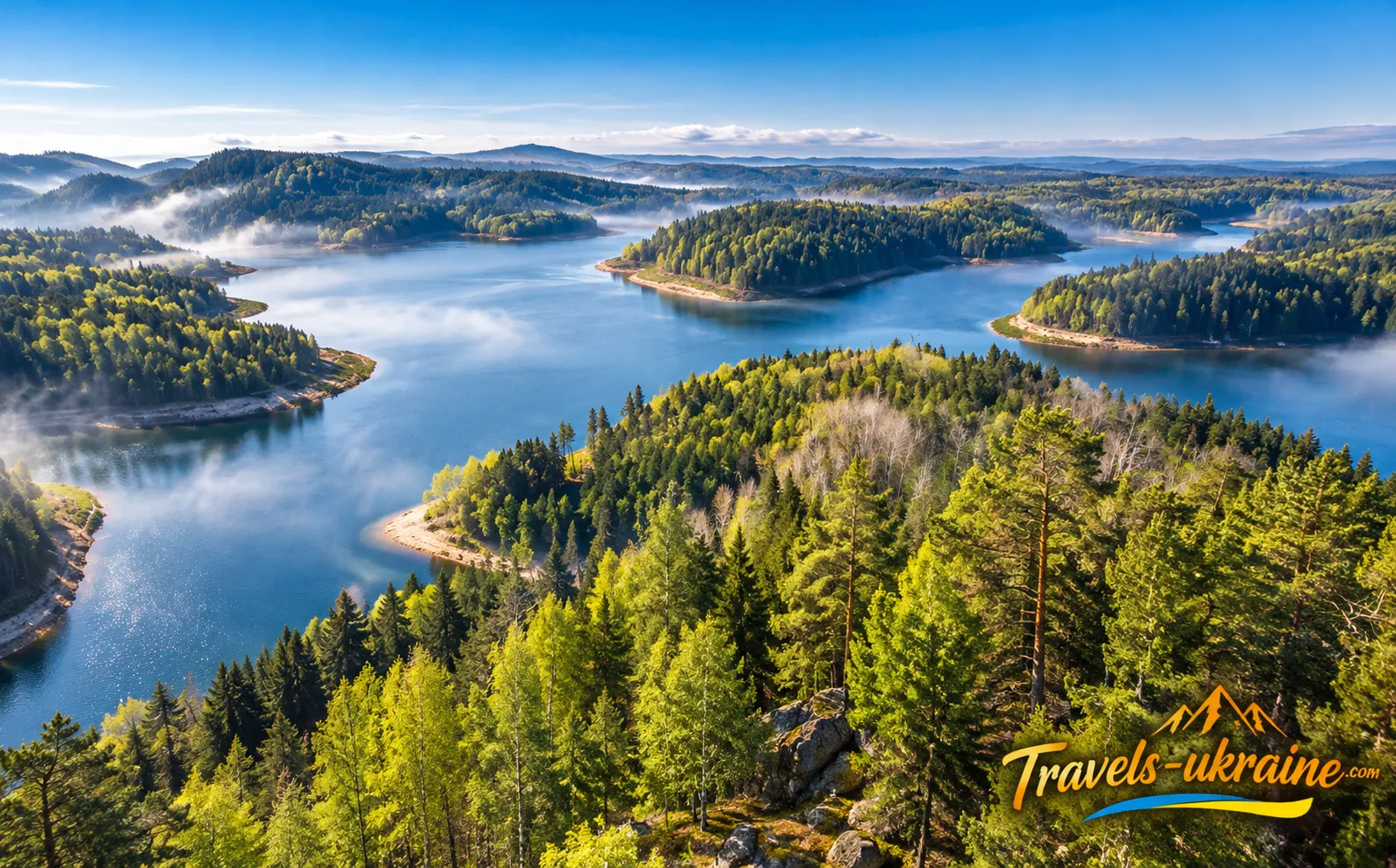
There are places where nature creates landscapes so extraordinary that you instinctively want to pause, forget your everyday worries, and simply enjoy the beauty of the world around you. Imagine a vast mirror of water hidden among dense forests, where green hills slope down to the water’s edge and quiet inlets disappear between picturesque peninsulas. There is none of the bustle of big cities here — just peace, fresh forest air, and a special atmosphere that draws you back to nature time and again.
This is the scene that greets travellers at Lake Pierre-Percée (Lac de Pierre-Percée) — one of the most picturesque lakes in the Grand Est region of northeastern France. It lies in the department of Meurthe-et-Moselle, among the wooded hills of the historic region of Lorraine, near the Vosges Mountains. Here, vast expanses of water blend harmoniously with dense coniferous forests, creating scenery that feels more like a distant corner of North America than a typical European landscape.
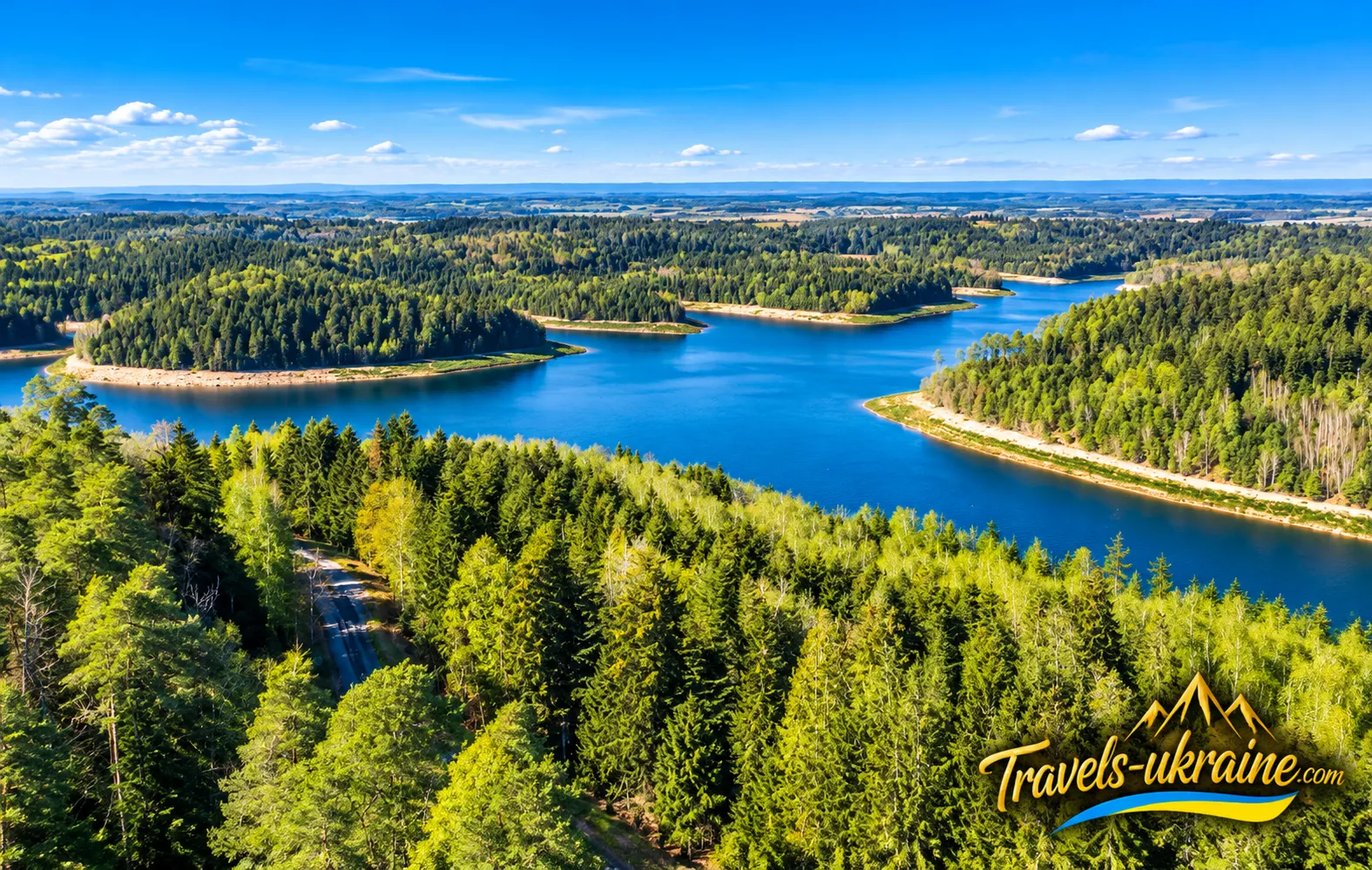
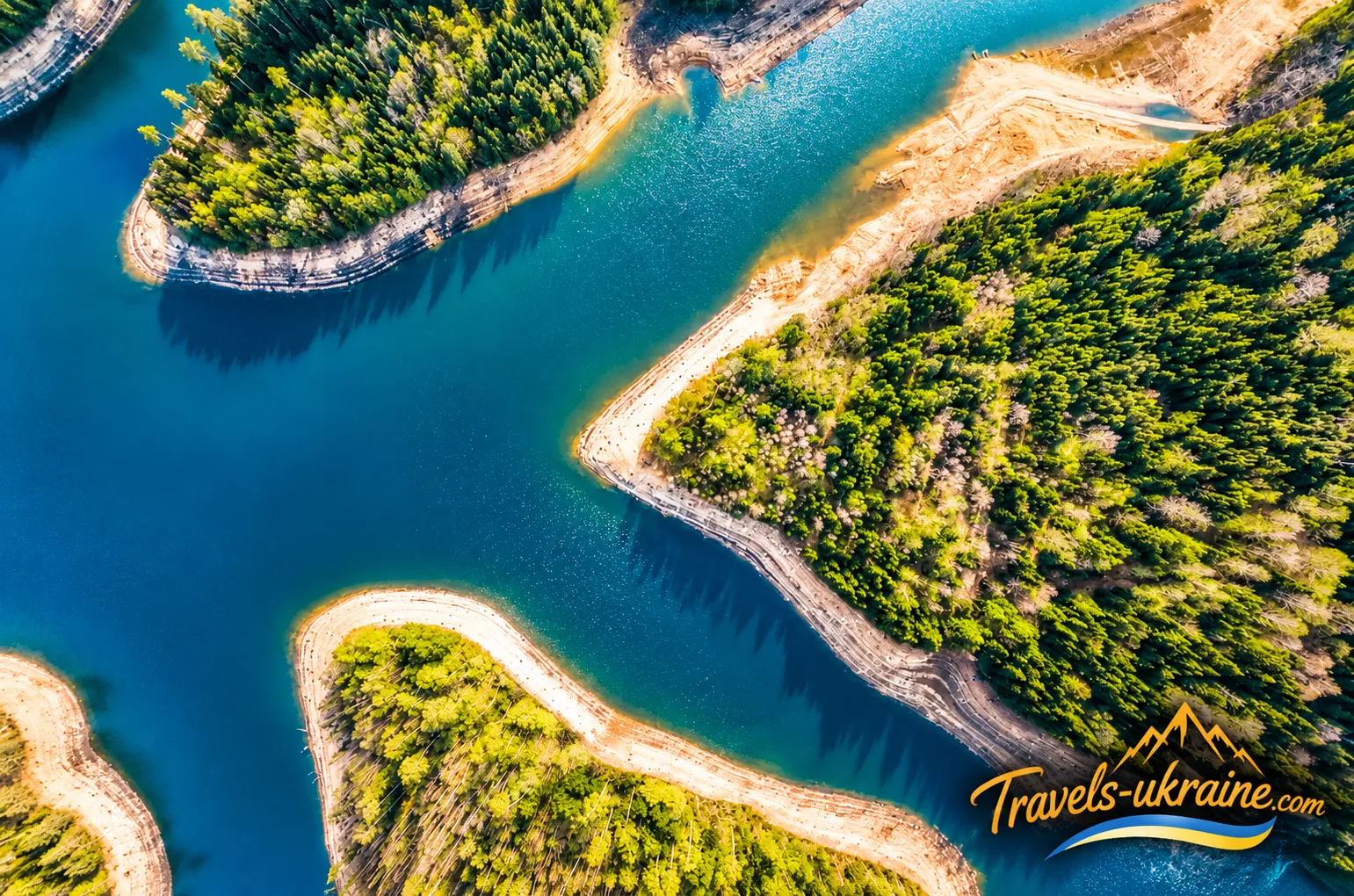
It is no wonder the lake is known as “Lorraine’s Little Canada”. Seen from above, its unusual outline resembles a maple leaf — one of Canada’s best-known symbols. Numerous bays, narrow channels between wooded shores, and peninsulas form an intricate natural pattern that looks particularly striking in panoramic photographs.
Yet there is far more to the charm of Pierre-Percée in France than its aerial views. Sheltered coves line the shores, where the water reflects the trees and sky, while forest trails lead to picturesque spots hidden from view. In one place, the lake seems boundless; in another, it becomes a small, quiet bay surrounded by green slopes. Sometimes, you only need to walk a few hundred metres for a completely different view to unfold before you.
Today, Pierre-Percée in the Grand Est region attracts lovers of beautiful scenery, photographers, hikers, and outdoor enthusiasts. Some come for peace and a chance to connect with nature; others come to explore forest trails, admire the lake from viewpoints, or discover unusual corners of the French Vosges.
France is remarkable for its diversity: some travellers set out to discover the magnificent castles of France, steeped in centuries of history and legend, while others are captivated by the beauty of historic towns and famous seaside resorts. Yet peaceful natural settings, such as Lake Pierre-Percée, can leave just as vivid an impression. Sometimes, all it takes for an unforgettable journey is a few simple things: a picturesque lake among green forests, fresh air, and a chance to forget the bustle of everyday life, if only for a little while.
The History of Lake Pierre-Percée and the Vieux-Pré Dam
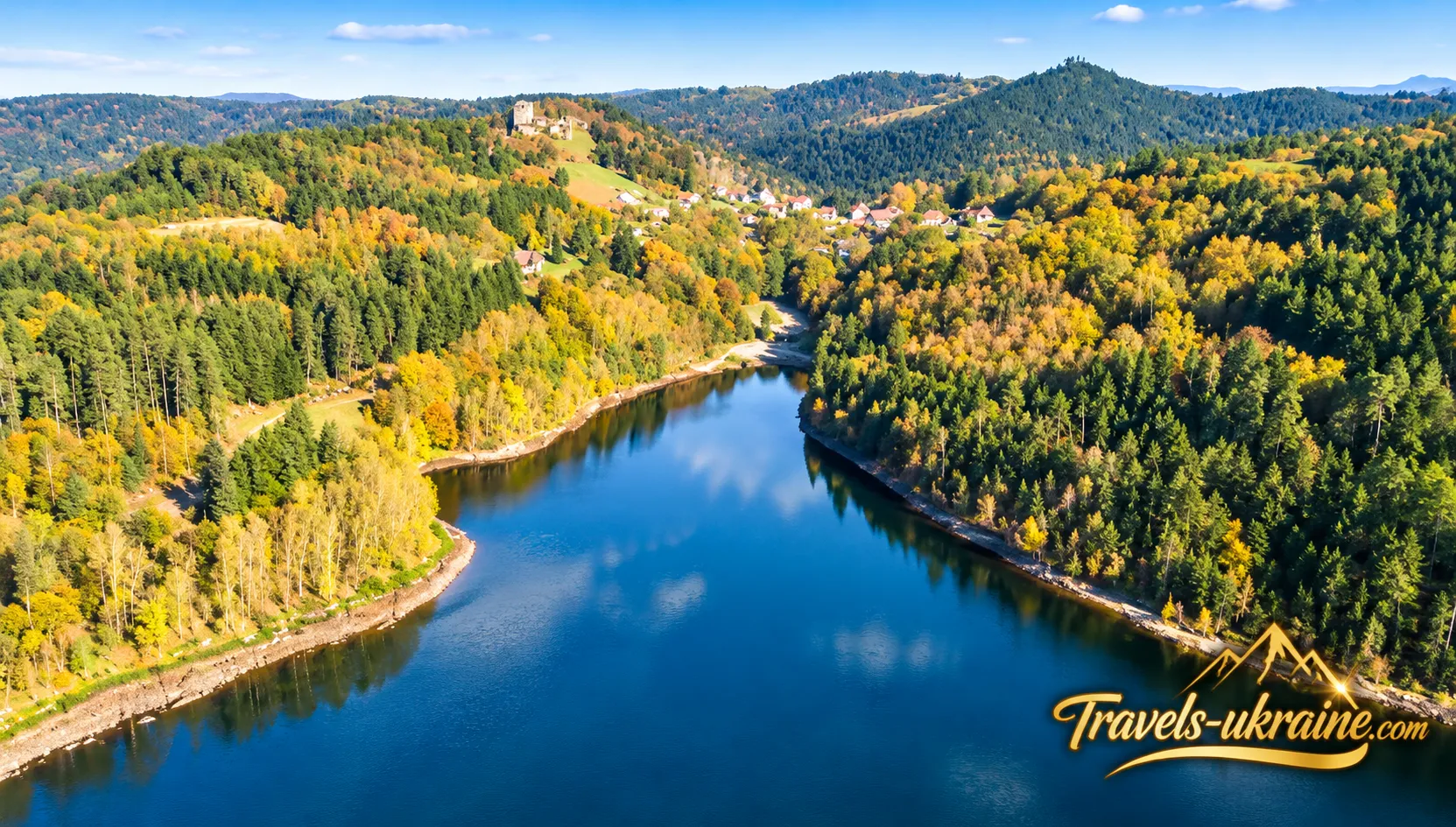
Today, as you admire the calm waters amid Lorraine’s dense forests, it is hard to believe that just a few decades ago this vast lake did not exist at all. Where clouds are now reflected, wooded valleys once stretched, streams flowed, and old roads passed through. The history of Lake Pierre-Percée began not with a whim of nature, but with a major engineering project that changed the local landscape forever.
In the late 1970s, the French energy company Électricité de France (EDF) was looking for a way to maintain a stable flow in the Moselle River, whose water was used by the Cattenom nuclear power plant. During dry periods, the river’s water level could fall significantly, creating a need for a large reservoir capable of making up the shortfall.
The picturesque valley of the Vieux-Pré stream, near the village of Pierre-Percée, was chosen as the construction site. Its natural terrain was well suited to creating a reservoir: the narrow valley outlet made it possible to build a dam across it, while the valley’s many branches between the hills provided space to store vast volumes of water.
Building the Vieux-Pré Dam — the Birth of a New Lake
Major construction work on the Vieux-Pré Dam began in 1981. Over the next four years, construction crews reshaped the valley, carried out earthworks, reinforced the slopes, and built a complex water supply system. The main structure was a massive embankment approximately 78 metres high. Its base was formed from clay-rich materials, sandstone, and durable rock. The structure had to withstand the pressure of tens of millions of cubic metres of water.
Filling the reservoir began in 1985. However, the process proved more complicated than the engineers had expected. Tests revealed problems with the watertightness of certain sections of the sandstone, so additional work was needed to seal and reinforce the structures. It was not until 1993 that the Vieux-Pré complex was officially commissioned. A vast artificial lake had emerged among the wooded hills, eventually becoming one of Lorraine’s best-known destinations for nature tourism.
How Does the Pierre-Percée Reservoir Work, and What Is Its Purpose?
Today, the Pierre-Percée Reservoir, also known as Lac du Vieux-Pré, can hold around 62 million cubic metres of water. Its main purpose is to support flows in the Meurthe and Moselle rivers, particularly during droughts, and to compensate for water losses associated with the operation of the Cattenom nuclear power plant. What makes the system unusual is that it uses not one, but two artificial lakes. The smaller Lake La Plaine lies at a lower elevation and is connected to the upper reservoir by a dedicated hydraulic engineering system.
When water is plentiful, powerful pumps can transfer it from the lower reservoir to Pierre-Percée, replenishing the strategic reserve. When needed, water is directed back through turbines, generating electricity. In this way, the vast lake serves both as a water storage reservoir and as part of a hydroelectric complex.
Water levels here can vary noticeably depending on rainfall, the season, and the needs of the water management system. As a result, broad strips of soil and stones are sometimes exposed along the shores, although they are completely submerged when water levels are high. What is most remarkable is that a structure created primarily for technical purposes has, over time, become one of the most picturesque tourist attractions in France’s Grand Est region. Today, Pierre-Percée draws travellers with its wooded scenery, unusual bays, and opportunities to relax in nature. Few people admiring its beauty immediately realise that what lies before them is not simply a lake, but the result of decades of human effort, engineering skill, and the gradual transformation of the landscape.
Natural Features and Scenic Views of Lake Pierre-Percée
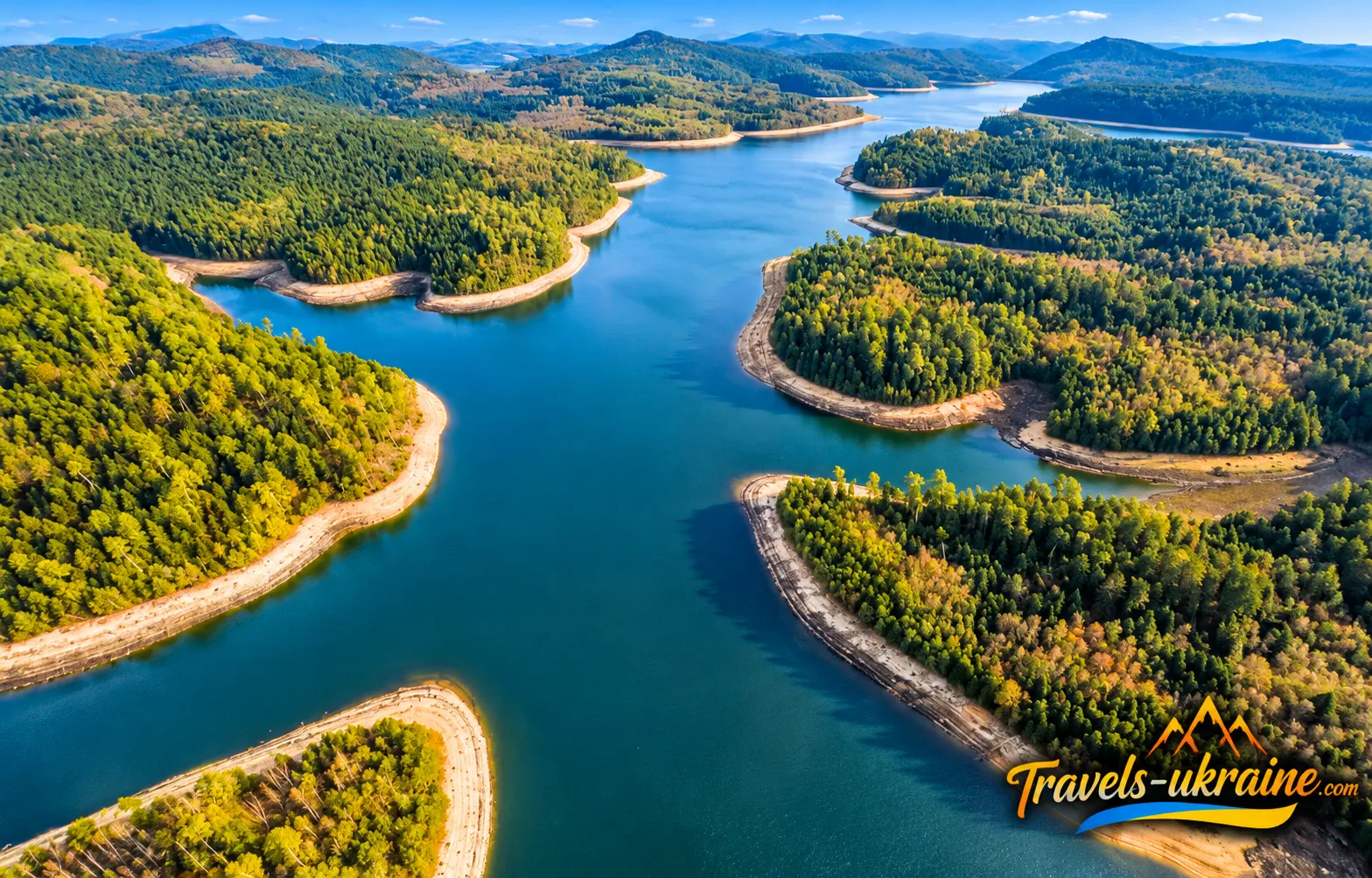
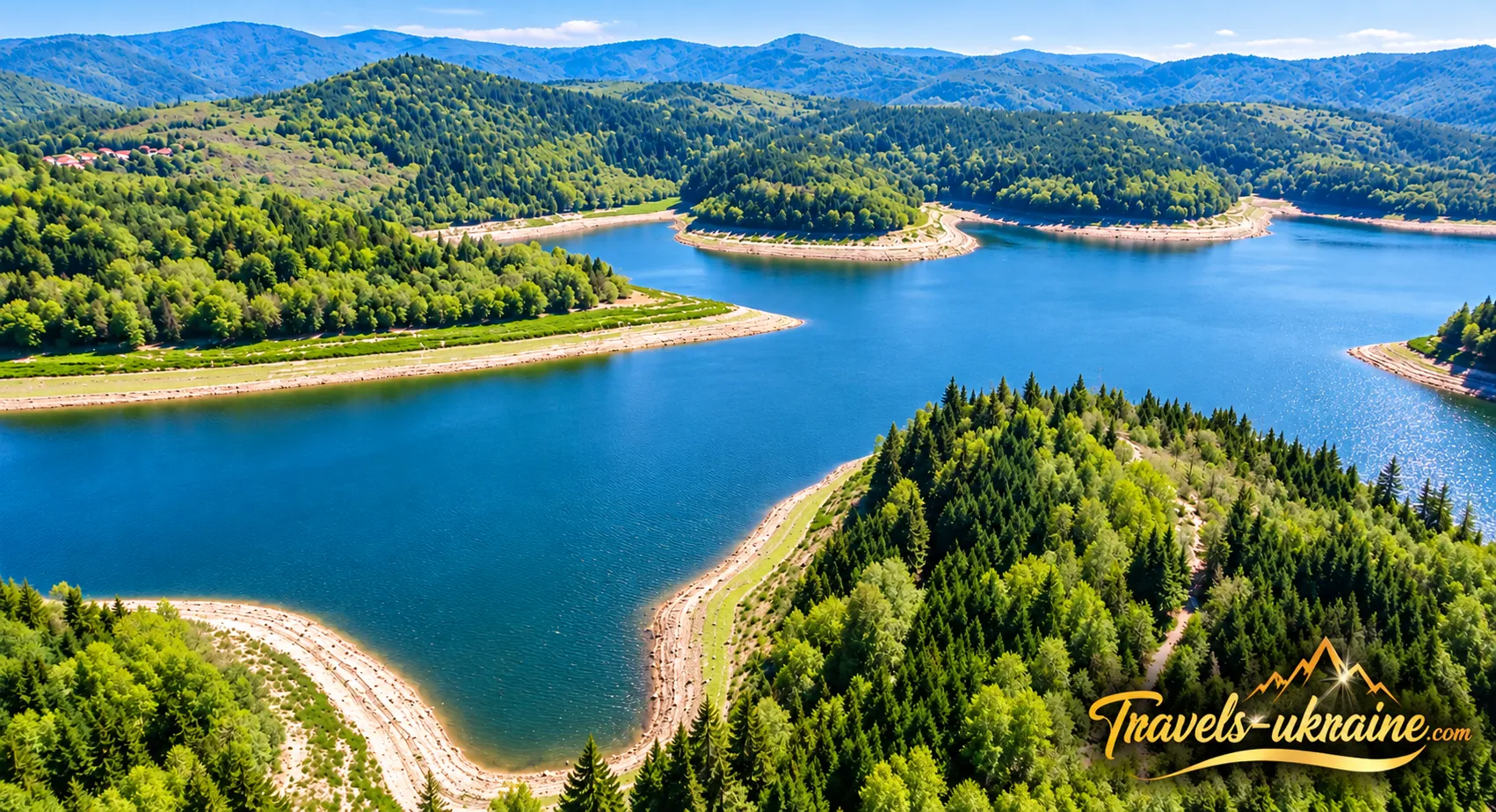
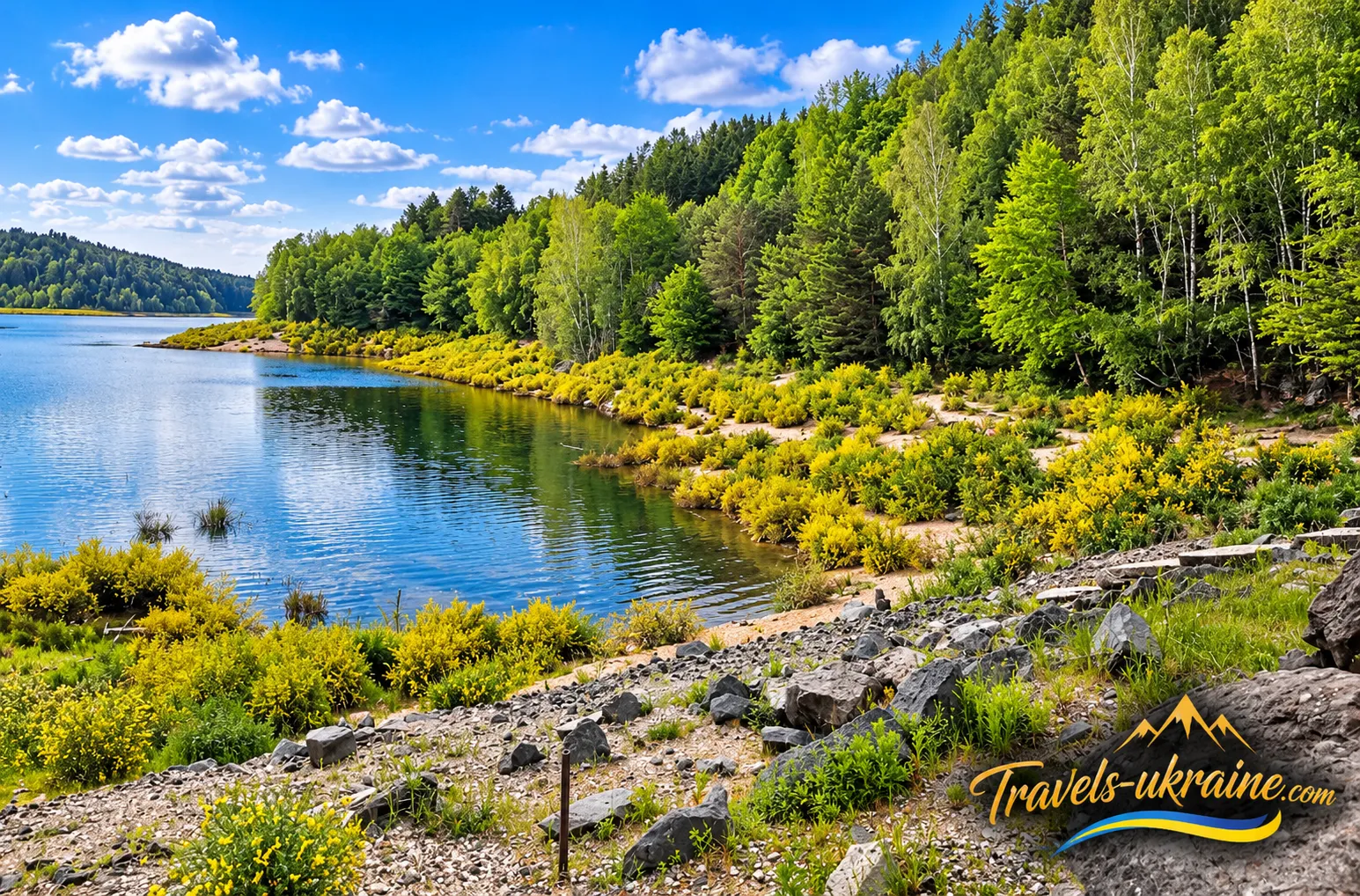
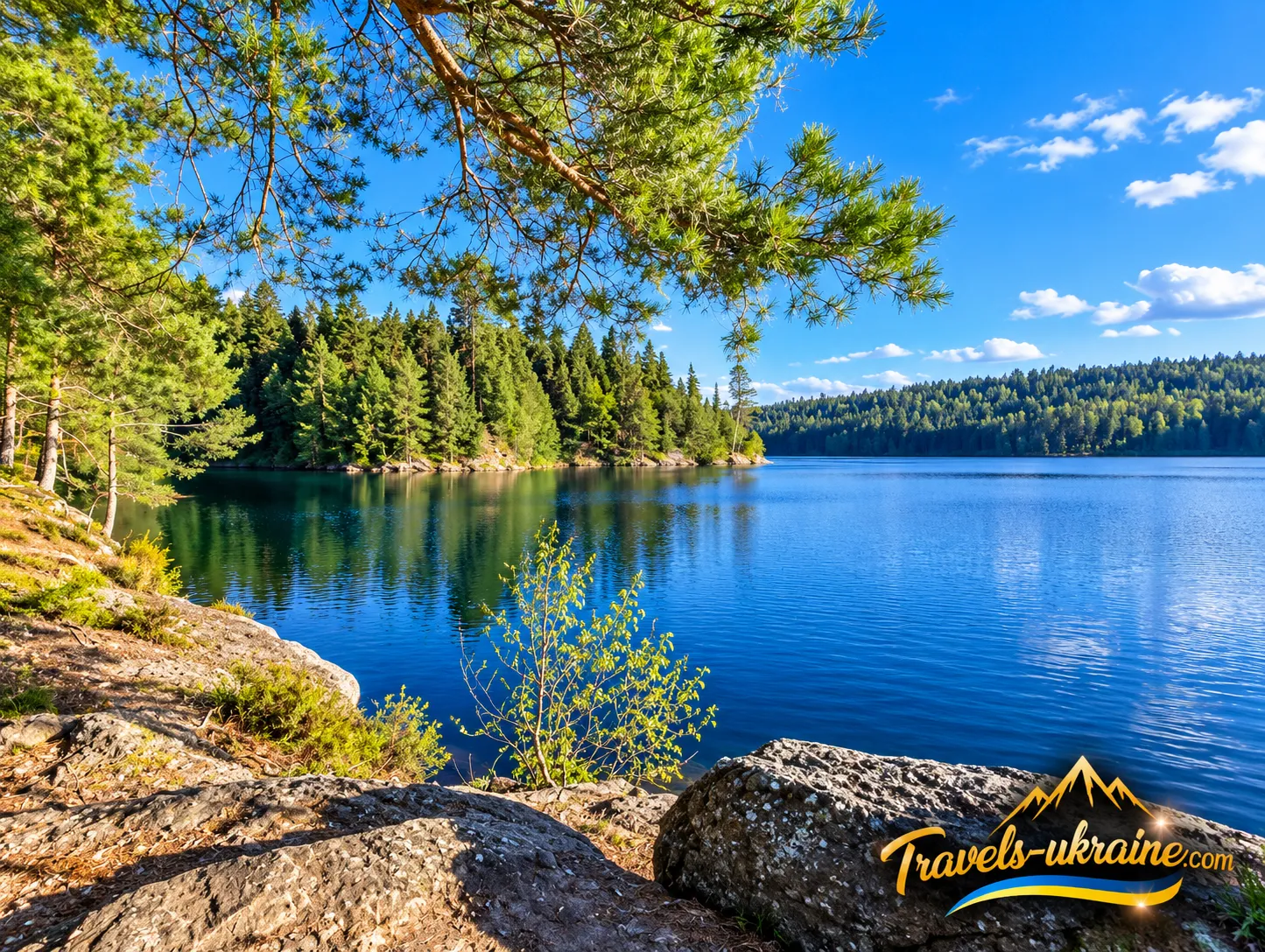
Nature in France’s Lorraine region has a way of surprising you with its understated beauty. There are no towering snowy Alpine peaks or endless seaside beaches here, but there are places where water, forests, and hills come together to create remarkably harmonious landscapes. Lake Pierre-Percée is one such place. Its picturesque bays hide among the trees, wooded peninsulas extend far into the water, and the surrounding hills offer views that look more like the wilderness of North America than an ordinary corner of France.
The lake’s distinctive appeal lies in its variety. It is almost impossible to find two identical panoramas here: broad stretches of open water gradually give way to narrow inlets, steep banks are replaced by gentle wooded slopes, and dense vegetation reaches right down to the water’s edge in places. Sometimes, the lake is barely visible even from the road, as though deliberately hiding its beauty behind a dense curtain of trees.
The Depth of Lake Pierre-Percée and Its Shoreline Features
Despite its tranquil appearance, this French reservoir has considerable depth. In some places, its depth reaches approximately 80 metres, making the lake not only picturesque but also rather unusual in its characteristics. The lake lies at an elevation of around 387 metres above sea level, in the foothills of the Vosges Mountains. The surrounding terrain is made up of wooded hills, valleys, and rock outcrops. Along parts of the shore, you can see sandstone cliffs, rocky slopes, and small natural ledges that give the landscape a distinctive character.
Another distinctive feature of Pierre-Percée is its fluctuating water level. Because the lake serves as a reservoir, its shores do not always look the same. At lower water levels, rocky strips of shoreline are exposed, and the inlets become noticeably narrower. Photographs taken at different times of year can sometimes differ so much that they seem to show entirely different lakes.
The Forests of the Vosges and Nature Around Lake Pierre-Percée
The forests surrounding Pierre-Percée are a real highlight, covering the hills almost down to the water’s edge. Here, firs, pines, beeches, birches, and other trees grow, forming dense coniferous and mixed woodland. These forests make the lake feel secluded from the outside world, even though small villages and roads lie nearby.
The woodlands create a special atmosphere of tranquillity. In quiet spots along the shore, you can hear rustling leaves, birdsong, and the gentle lapping of water. In calm inlets sheltered from the wind, the trees are reflected so clearly that it can be difficult to tell where the real forest ends and its reflection begins.
For nature lovers, this corner of the Grand Est region offers more than picturesque scenery. Dense forests, remote inlets, and varied terrain provide habitats for numerous species of birds and woodland animals. The best way to observe nature is quietly, staying on paths open to visitors and taking care not to disturb the forest’s wildlife.
Visiting Lake Pierre-Percée: Activities and Trails
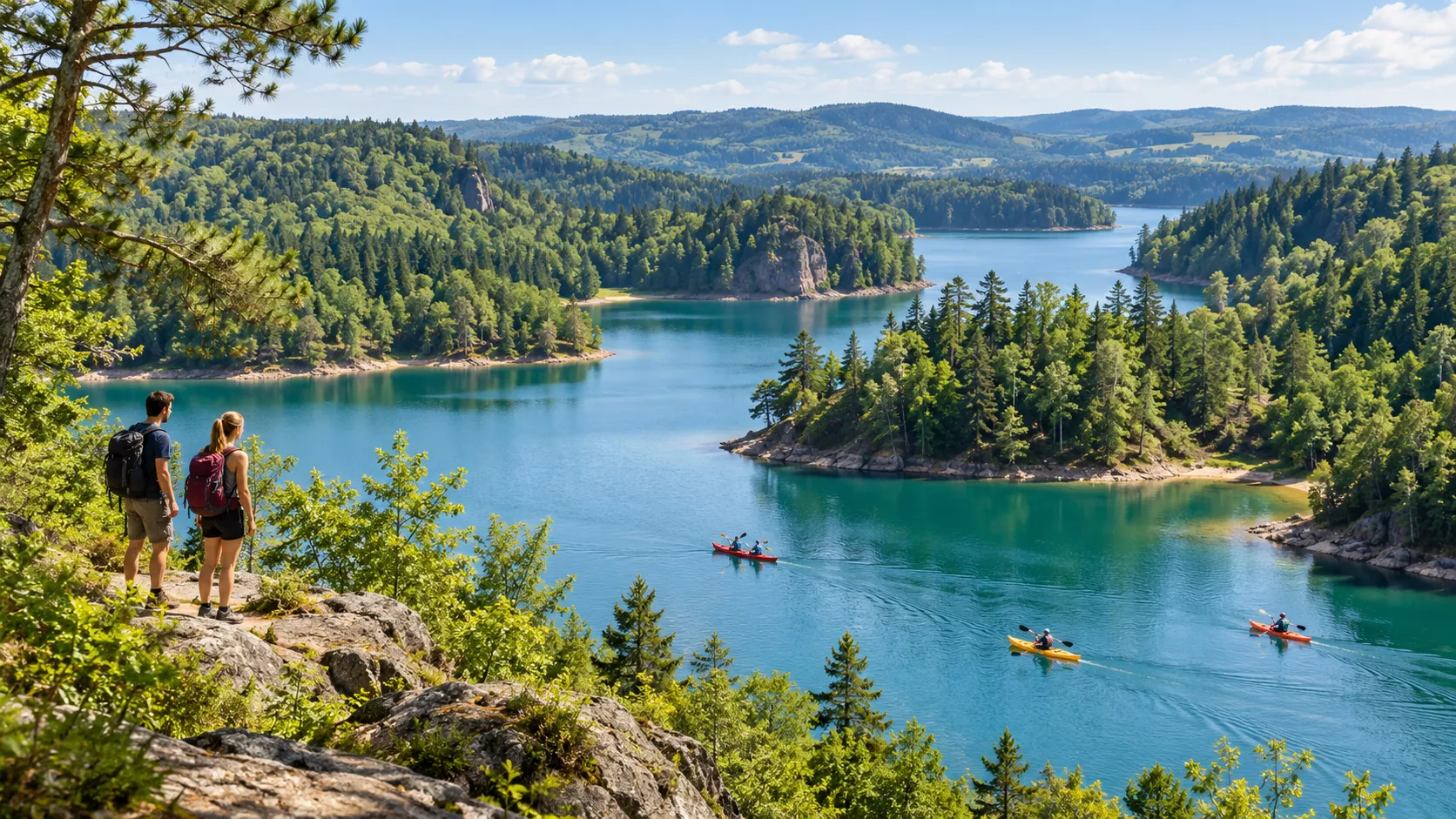
A visit to Lake Pierre-Percée in France is a wonderful opportunity to combine peaceful woodland walks with a little adventure on the water and more demanding challenges for outdoor enthusiasts. You can spend a few hours admiring the picturesque bays or devote a whole day to exploring the surrounding hills. And if simply admiring nature seems too leisurely for you, there are activities nearby that are sure to get your heart beating faster.
The tourist area encompasses two lakes: the large Lake Pierre-Percée (Lac de Pierre-Percée) and Lake La Plaine (Lac de la Plaine), which lies at a lower elevation. The former attracts visitors with its remote wooded shores, long walking trails, and outings on the water. The latter has more developed facilities for family recreation, sporting activities, and entertainment for children.
Walking Around Lake Pierre-Percée
One of the best ways to discover the beauty of Pierre-Percée is to set off on foot along its shores. The walking trails around the lake pass through coniferous forests, cross small valleys, and offer wonderful panoramic views of the water. Along the way, you can see sheltered coves, remote peninsulas, and picturesque wooded slopes that look completely different with every new bend in the path.
Experienced hikers can follow the circular Tour du Lac de Pierre-Percée route, which is approximately 27 kilometres long. It follows much of the indented shoreline and passes mainly through woodland. Allow a full day to complete it, taking into account changes in elevation, path conditions, and rest stops.
If you are not planning to hike for several hours, you can choose a shorter walk starting at the Vieux-Pré Dam (Barrage du Vieux-Pré) or explore individual forest paths near the lake. This option suits anyone who wants to see the most beautiful scenery without having to cover dozens of kilometres.
Cycling Routes Among the Lakes and Forests of Lorraine
The area around Pierre-Percée also appeals to cycling enthusiasts. Forest roads, varied terrain, and numerous climbs make this area particularly interesting for mountain bikers. The available routes include a circular cycling route approximately 27 kilometres long around the large lake. Because of the uneven terrain, it is considered one of the more challenging routes, so it is worth making a realistic assessment of your fitness and preparation before setting out.
For a more relaxed outing, try the shorter cycling routes near Lake La Plaine, as well as the developed sections of the Voie Verte de la Plaine greenway. Here, you can enjoy nature without constant steep climbs. These rides are especially pleasant in spring and early autumn, when the weather is well suited to outdoor activities.
Kayaking and Water Excursions on Lake Pierre-Percée
Kayaks, canoes, and stand-up paddleboards let you see the wooded shores from a different perspective. Lake Pierre-Percée has a dedicated hire point, Point Location Canoë, where you can hire equipment for outings on the water during the tourist season. Exploring the lake this way reveals a completely different side of its beauty. Unlike walking trails, a kayak route allows you to view bays and remote stretches of shoreline from the water. In calm weather, it is particularly enjoyable to watch the surrounding trees reflected in the still surface of the lake.
At the same time, remember that the large lake is deep and that wind and weather conditions can change. For activities on the water, you must wear a life jacket, follow the hire operator’s rules, and avoid venturing far from shore without the appropriate experience.
Fishing at Lake Pierre-Percée
The Pierre-Percée Reservoir is also of considerable interest to anglers. Its waters are home to various fish species, including pike, perch, and whitefish. The lake is well known among anglers for its depth, varied lakebed, and numerous bays. You can fish from permitted sections of the shore or from a boat, in accordance with local rules. To fish legally, you must hold a valid French fishing permit, the carte de pêche, and comply with the seasonal restrictions applying to individual fish species.
Even if your catch is modest, the surrounding scenery can certainly make up for the disappointment. Still, a description of nature’s incredible beauty is unlikely to replace a dinner of fresh fish if that is what everyone at home was counting on.
Aventure Parc — Thrilling Activities in the Forests of Pierre-Percée
If ordinary walks are not enough for you, consider Aventure Parc Pierre-Percée, an adventure park set in the forest near the large lake. It offers ropes courses of varying difficulty, suspended walkways, and attractions for thrill seekers. One of the park’s main attractions is a large zip wire approximately 800 metres long, which runs above the picturesque landscape near the lake. The boldest visitors can also try bungee jumping from a height of around 25 metres.
The park also offers less extreme activities, including ropes courses for visitors of different ages and levels of experience. Access to individual attractions depends on age, height, weather conditions, and safety rules. The park operates mainly during the warmer months according to a seasonal calendar, so check its opening times and booking conditions before your trip.
What to See Near Lake Pierre-Percée: Places of Interest in Lorraine
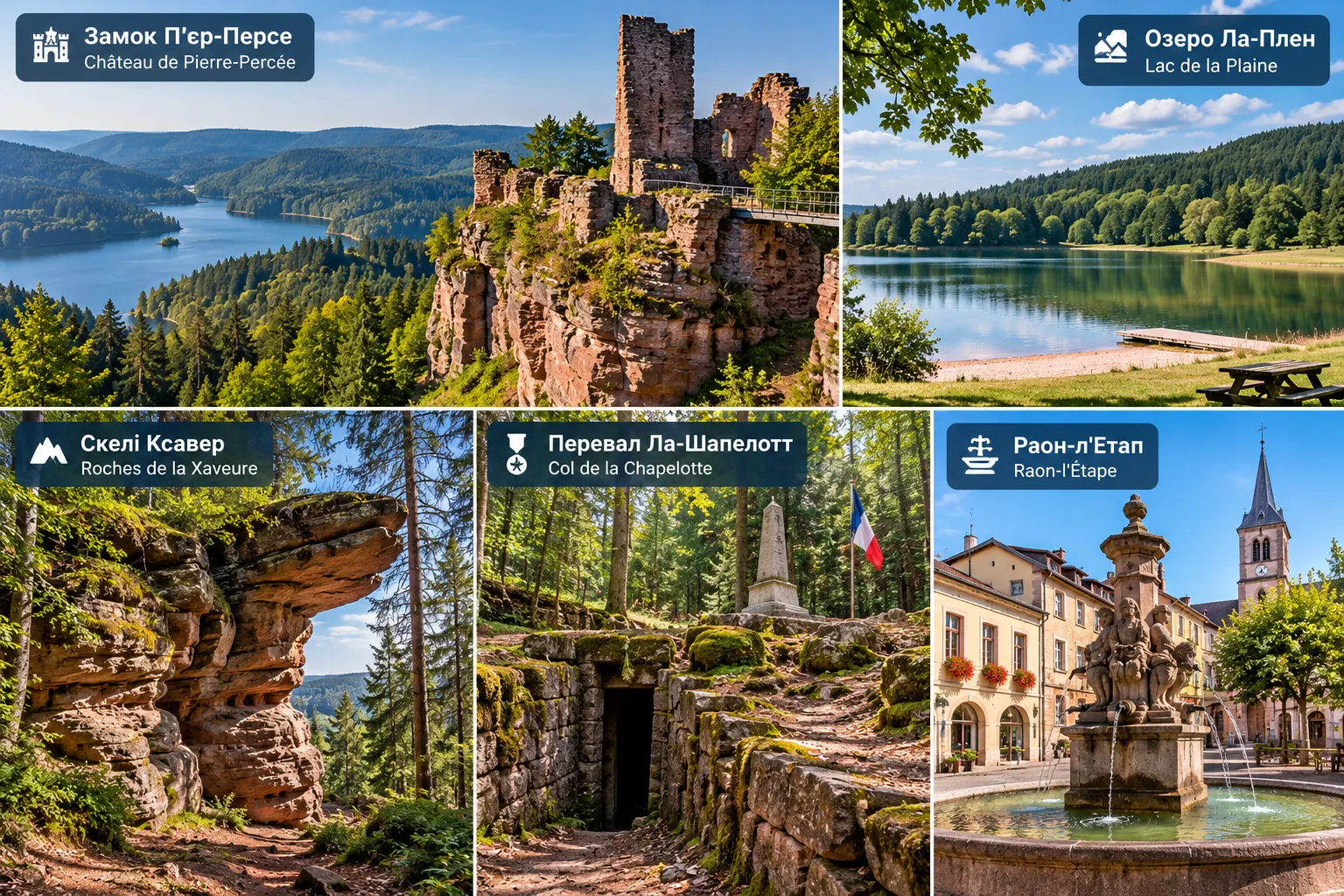
A trip to Lake Pierre-Percée in Lorraine, France can offer far more than a simple walk along its picturesque shores. Hidden among the surrounding hills are the ruins of medieval fortresses, unusual sandstone formations, historic towns, and landmarks that bear witness to difficult chapters in European history. Sometimes all it takes is a turn off the main road to exchange a familiar woodland view for something entirely unexpected.
It is particularly convenient that the attractions near Pierre-Percée lie relatively close to one another. This makes it easy to combine a stay by the lake with visits to the natural and historic sights of the Vosges without spending the whole day on the road.
Pierre-Percée Castle (Château de Pierre-Percée) Above the Lake
High on a rocky ridge above the village of the same name stand the remains of Pierre-Percée Castle, also known as Château de Salm. It was once a formidable medieval fortress that controlled the surrounding lands and important routes through the wooded uplands of Lorraine.
The castle’s history is closely linked to the Counts of Salm. In the 12th century, the fortress was strengthened with a stone tower and a deep well, and around 1135 it endured a prolonged siege by the forces of the Bishop of Metz. The castle subsequently changed hands many times, while destructive wars gradually reduced it to picturesque ruins.
The fortress’s setting is particularly impressive. Pinkish sandstone cliffs rise above dense forests, offering sweeping views of the surrounding hills and the lake. Here, it is easy to imagine medieval sentries peering into the distance, although today the view is of peaceful green countryside rather than an enemy army.
Lake La Plaine (Lac de la Plaine) — a Tranquil Lake Among Green Hills
Close to the large reservoir lies Lake La Plaine, a much smaller lake covering around 36 hectares. Here, the landscape is more open than around Pierre-Percée’s indented shores, and the surrounding area is better suited to leisurely walks and family outings.
La Plaine is surrounded by wooded slopes, green meadows, and walking paths. In calm weather, the surrounding hills are beautifully reflected in the water, while the peaceful atmosphere makes this a particularly pleasant place for a short stop during a trip. The two lakes are connected by a hydraulic engineering system, but offer different visitor experiences. While Pierre-Percée attracts visitors with its sweeping forest panoramas, La Plaine is better suited to a relaxing break, with established visitor facilities. However, swimming in the lake is prohibited, so you should not plan a conventional beach holiday here.
Xaveure and Marie Fontaine Rocks — Unusual Natural Formations in the Vosges
Those who enjoy discovering lesser-known natural attractions should consider Xaveure Rocks (Roches de la Xaveure) and Marie Fontaine Rocks (Roches de Marie Fontaine). Hidden among dense forests near Pierre-Percée, these sandstone formations stand out for their unusual shapes, projecting ledges, and distinctive layered surfaces.
Over a long period, wind, water, and changes in temperature have shaped the sandstone, gradually forming cracks, hollows, and unusual rock contours. Among the trees, these masses of stone look particularly mysterious, like the remains of ancient walls that nature has chosen to hide from human eyes.
You can discover them along the Roches de la Xaveure walking trail, approximately 12.2 kilometres long. It runs through forests, close to the lakeshore, and through the village of Pierre-Percée. This moderately challenging route takes around four hours to walk. It is a good choice for those who enjoy discovering unusual natural sites in France without crowds of tourists and souvenir shops at every turn.
La Chapelotte Pass (Col de la Chapelotte)
Among the wooded uplands near the lake lies La Chapelotte Pass, one of the most interesting historic sites in this part of the Vosges. Today it is a peaceful place, but during the First World War the surrounding slopes became the scene of fierce fighting between French and German troops.
This sector of the front was notable for its underground warfare. The opposing sides dug tunnels beneath each other’s fortifications, laid explosive charges, and tried to destroy enemy positions from below. Some of these military tunnels reached considerable depths, and complex ventilation and electricity supply systems were built to keep them operational.
Today, La Chapelotte’s history trails (Sentiers de mémoire) introduce visitors to the remains of defensive structures, war memorials, and the sites of former fighting positions. Nearby, you can see the Pierre à Cheval rocks and the Grotte des Poilus cave, both linked to the area’s wartime history.
Specialist guided tours are available with advance booking for those wishing to explore the history of the pass in greater depth. Entering the old military tunnels independently is dangerous because of the risk of collapse and other hazards.
Raon-l'Étape — a Historic Town at the Gateway to the Vosges
Another interesting stop to add to your trip is Raon-l'Étape, a small town on the River Meurthe, often described as one of the gateways to the Vosges Mountains. Its history is linked to forestry, trade, and the development of settlements in the river valley. The historic fountains of Raon-l'Étape, adorned with decorative sculptures and architectural details, are particularly striking. They give the town’s streets a distinctive character and recall a time when public fountains were an important part of everyday life.
It is a pleasant place to stroll through the old quarters, admire the local architecture, or simply take a short break on the way to the lakes. After the woodland trails, a walk here reveals another side of Lorraine: the gentle pace of its small French towns. Together, the attractions near Lake Pierre-Percée make it possible to create a remarkably varied itinerary. The medieval castle offers an insight into Lorraine’s past, Xaveure Rocks introduce you to the natural wonders of the Vosges, La Chapelotte Pass preserves the memory of dramatic events of the past, while Lake La Plaine and Raon-l'Étape offer an opportunity to relax. Sometimes these unexpected stops make the journey every bit as interesting as its main destination.
Frequently Asked Questions About Lake Pierre-Percée
Where in France is Lake Pierre-Percée?
Lake Pierre-Percée (Lac de Pierre-Percée) is located in northeastern France, in the Meurthe-et-Moselle department of the Grand Est region, within historic Lorraine. The lake lies among the wooded foothills of the Vosges Mountains, near the villages of Pierre-Percée and Badonviller. It is also known as Lac du Vieux-Pré.
How do I get to Lake Pierre-Percée, and where can I park my car?
The most convenient way to reach Lake Pierre-Percée is by car, via Badonviller or Raon-l'Étape. Depending on your route, you can enter Barrage du Vieux-Pré, Pierre-Percée, or Anse des Bordes into your navigation system. Car parks are available near some sections of the shore and boat launching points. Keep in mind that the lake is large, and you will need to follow local roads or forest paths to move between different places of interest.
Is Lake Pierre-Percée free to visit?
Walking along the publicly accessible paths around Lake Pierre-Percée is free. You do not need an admission ticket to see the lake and enjoy the surrounding scenery. There are separate charges for kayak hire, fishing permits, adventure attractions, and certain organised activities. Prices depend on your chosen service and the tourist season.
Can you swim in Lake Pierre-Percée and neighbouring Lake La Plaine?
No, swimming is prohibited in both Lake Pierre-Percée and Lake La Plaine. At Lake La Plaine, the ban has been in place since 2024 because of silting and water quality problems in the former swimming area. However, organised activities on the water, such as kayaking and pedalo rides, are permitted in accordance with the operators’ rules. Check the current restrictions before your visit.
Can you walk all the way around Lake Pierre-Percée, and how long does it take?
Yes, the Tour du Lac du Vieux-Pré walking route runs around the lake for approximately 28.5 kilometres, with a total ascent of around 760 metres. It is a challenging route, so you should allow a full day. For a more leisurely walk, choose shorter forest paths or individual viewpoints where you can enjoy panoramic lake views without significant physical exertion.
Is fishing allowed at Lake Pierre-Percée?
Yes, fishing at Lake Pierre-Percée is permitted with a valid French fishing permit (carte de pêche). The lake is home to pike, perch, zander, and whitefish. You can fish from permitted sections of the shore or from a boat, provided you follow the established rules. Seasonal restrictions, catch limits, and minimum size requirements apply to certain species. The current rules are published by the Fédération de pêche de Meurthe-et-Moselle.
Is Lake Pierre-Percée a good place to visit with children?
Yes, the area around the lake is ideal for family walks and outdoor recreation. For families with young children, however, neighbouring Lake La Plaine is a more convenient choice, with playgrounds, picnic areas, and seasonal activities. Pedalos and mini golf are also available, along with sporting activities subject to age restrictions. Swimming is prohibited in both lakes, and children need constant adult supervision on the steep banks.
When is the best time to visit Lake Pierre-Percée?
Walking is usually most enjoyable in late spring, summer, and early autumn. Summer offers the widest choice of seasonal activities, while in autumn the forests around the lake take on shades of gold, copper, and crimson. The scenery is especially beautiful in September and October. In winter, you can still admire the lake from open areas, but the weather may make walking along forest routes more difficult.
Lake Pierre-Percée — an Emerald Jewel of French Lorraine
Some places to visit in France captivate you at first sight, while others reveal their true beauty gradually. Lake Pierre-Percée in Lorraine belongs to the latter. At first, you are struck by the vast expanse of water among green hills; then your gaze lingers on the winding inlets and wooded shores. Before long, you begin to notice even the smallest details — trees reflected in the water, the play of sunlight, and that special stillness so often missing from everyday life.
Pierre-Percée does not try to compete with the majestic Alps or France’s famous resorts. Its charm is much simpler, yet deeper at the same time. Here, you can admire the scenery for hours, wander along woodland paths, or simply pause by the water and let your thoughts finally slow down. Sometimes it is these very moments that become the most treasured memories of a trip, even if you had originally planned only a short stop.
It is particularly remarkable to realise that this picturesque lake was created through human effort, yet has gradually become an inseparable part of the surrounding natural landscape. Forests, hills, and quiet inlets have formed a harmonious world here, where it is hard to draw the line between what people have created and what nature itself has provided. So if your journey takes you through the Grand Est region of France, be sure to take a closer look at this picturesque corner of Lorraine. The true value of travel is not always measured by the number of sights you visit or photographs you take. Sometimes a single view is enough to leave a lasting memory of an entire journey.
No Comment
You can post first response comment.