
 English
 Українська
 Русский

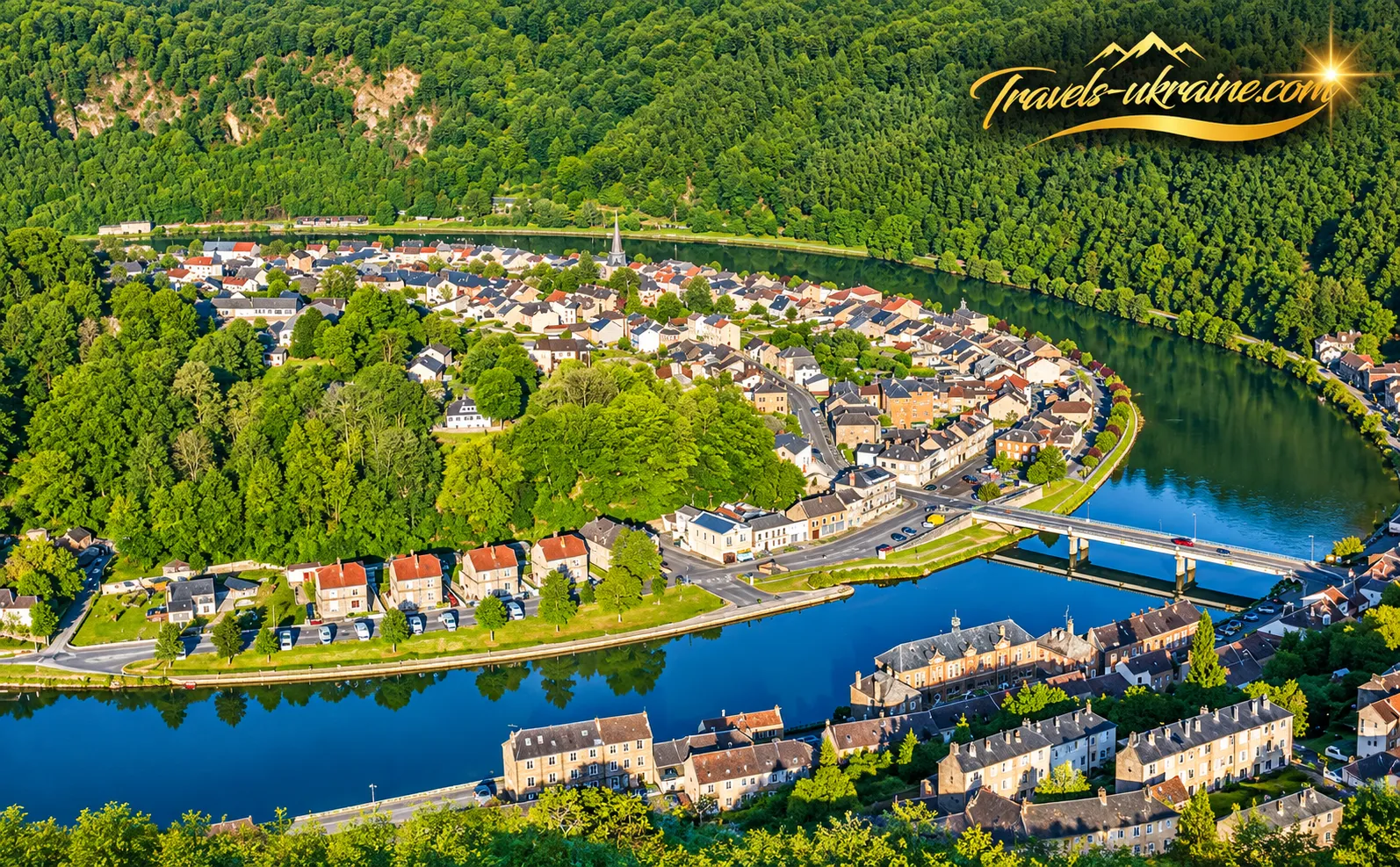
France is a country that seems to have decided to gather all the world's travel delights in one place. Here you will find romantic Paris, majestic medieval castles, and vineyards stretching all the way to the horizon. And just when it seems there is nothing left to surprise a traveler, French nature pulls yet another trump card from its sleeve! This time, we are heading to the picturesque Ardennes, where among dense forests and green hills lies the small town of Monthermé, home to one of the most remarkable river panoramas in northeastern France.
The main star of this corner of the Grand Est region is the Meuse River, which near Monthermé makes such a striking bend that, from above, it resembles a giant horseshoe. It feels as if the river simply changed its mind about flowing straight, decided to take a walk around the town, and only afterward remembered that it actually had somewhere to go! And Monthermé itself is especially lucky: not every town can boast that nature literally embraces it on three sides.
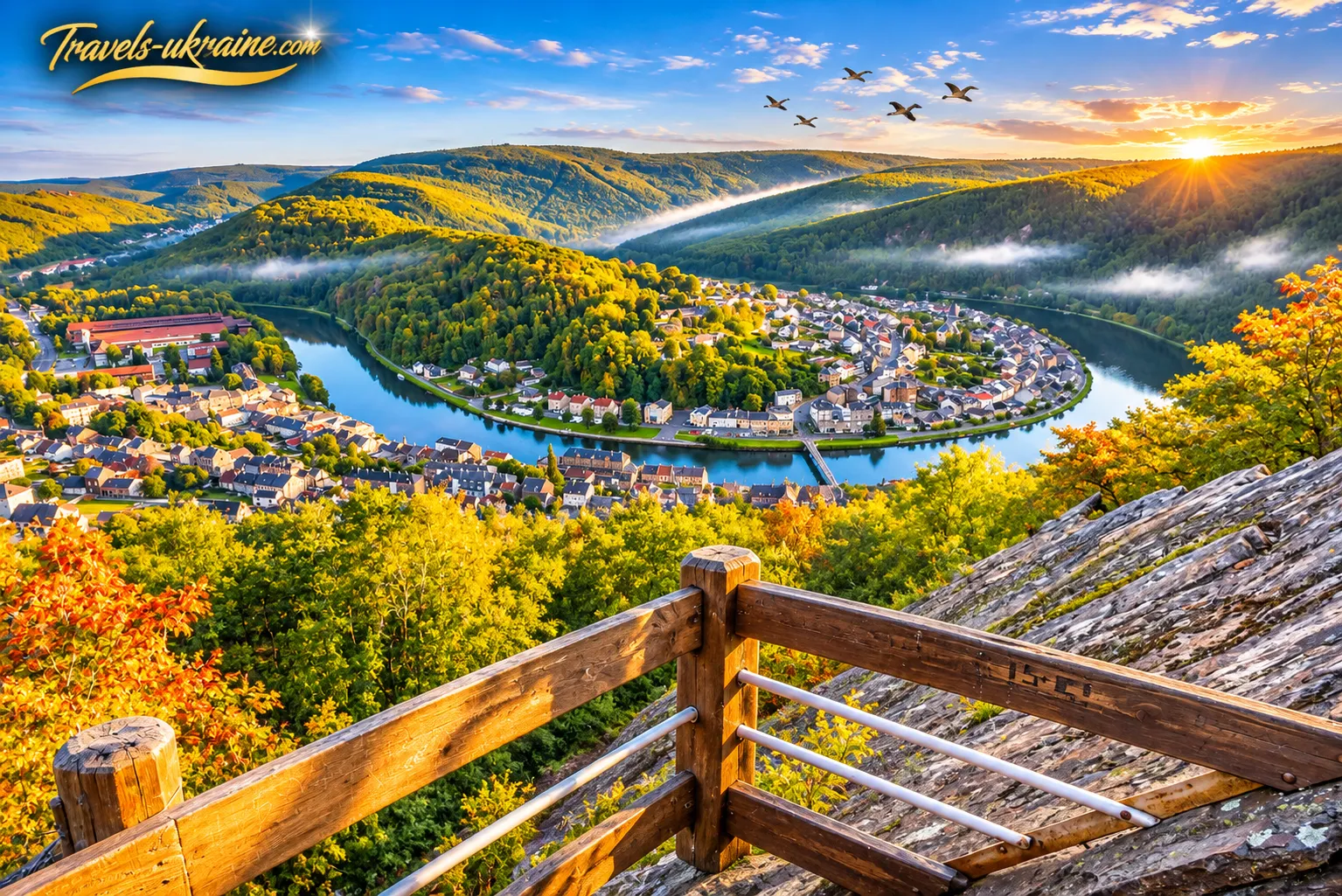
The most breathtaking view opens up from the high observation points, where you can clearly see the silver ribbon of the Meuse curving around the forest-covered peninsula, while the little houses of Monthermé rest snugly between the water and the green slopes. It is the kind of place where you want to stop, forget about the time, and simply admire the scenery. Even your smartphone seems to start working overtime here — because resisting the urge to take dozens of photos is nearly impossible!
But Monthermé in the French Ardennes is far more than just a beautiful panorama for photographs. Travelers will find scenic forest trails, необыкновенные rocky viewpoints, peaceful banks of the Meuse, and interesting natural landmarks nearby. And most intriguingly, this French landscape has a surprisingly similar counterpart in Ukraine! But more about that a little later. For now, let us set out to discover a place where an ordinary river bend has turned into a true masterpiece of nature.
Where Is Monthermé Located and How Did the Famous Horseshoe Bend of the Meuse River Form?
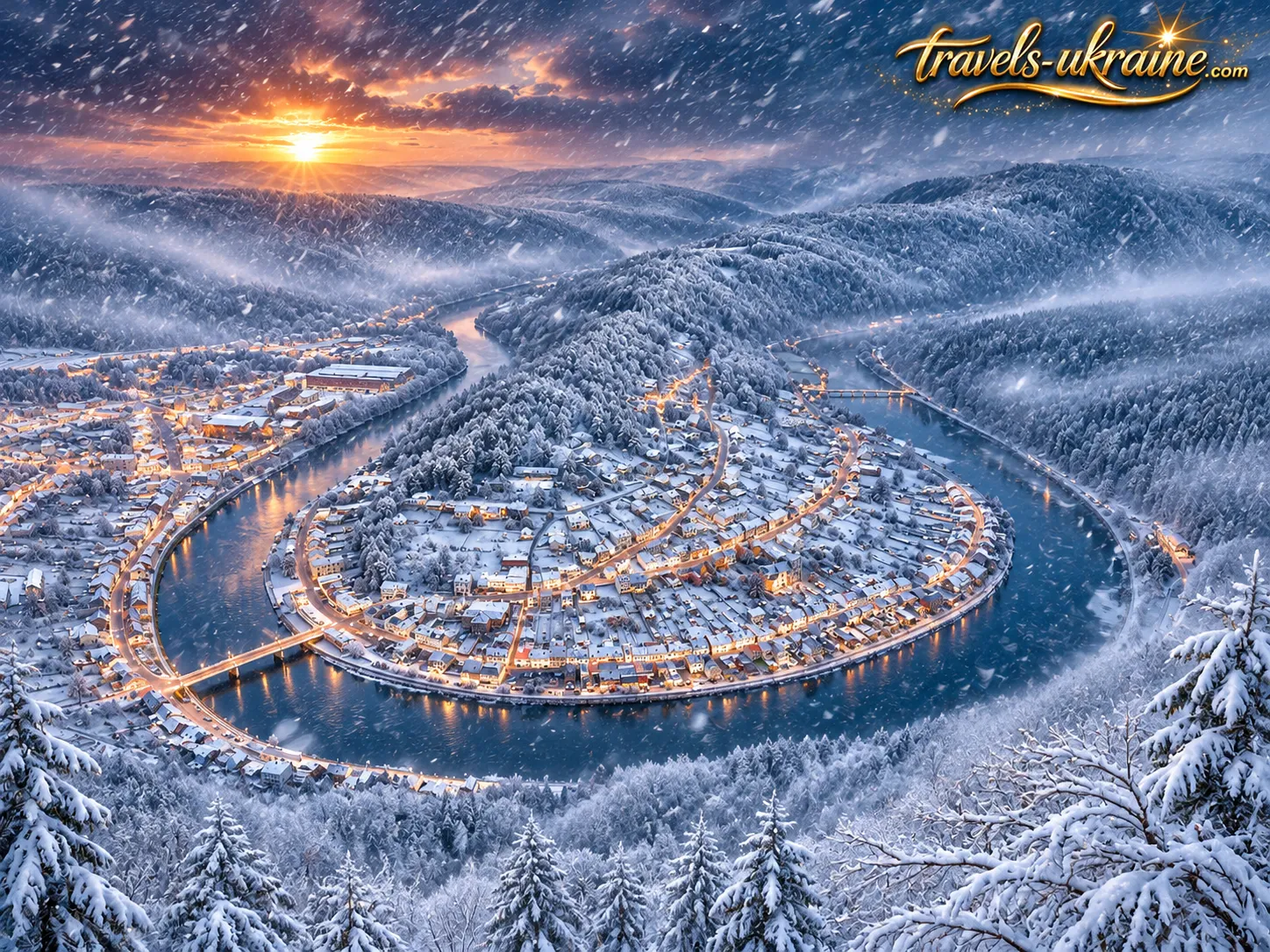
Monthermé is a small French town located in the Ardennes department of the Grand Est region, approximately 15 kilometers north of Charleville-Mézières. It lies in the heart of the Ardennes Regional Natural Park, where dense forests cover ancient mountain slopes and the Meuse River winds its way through lush green hills.
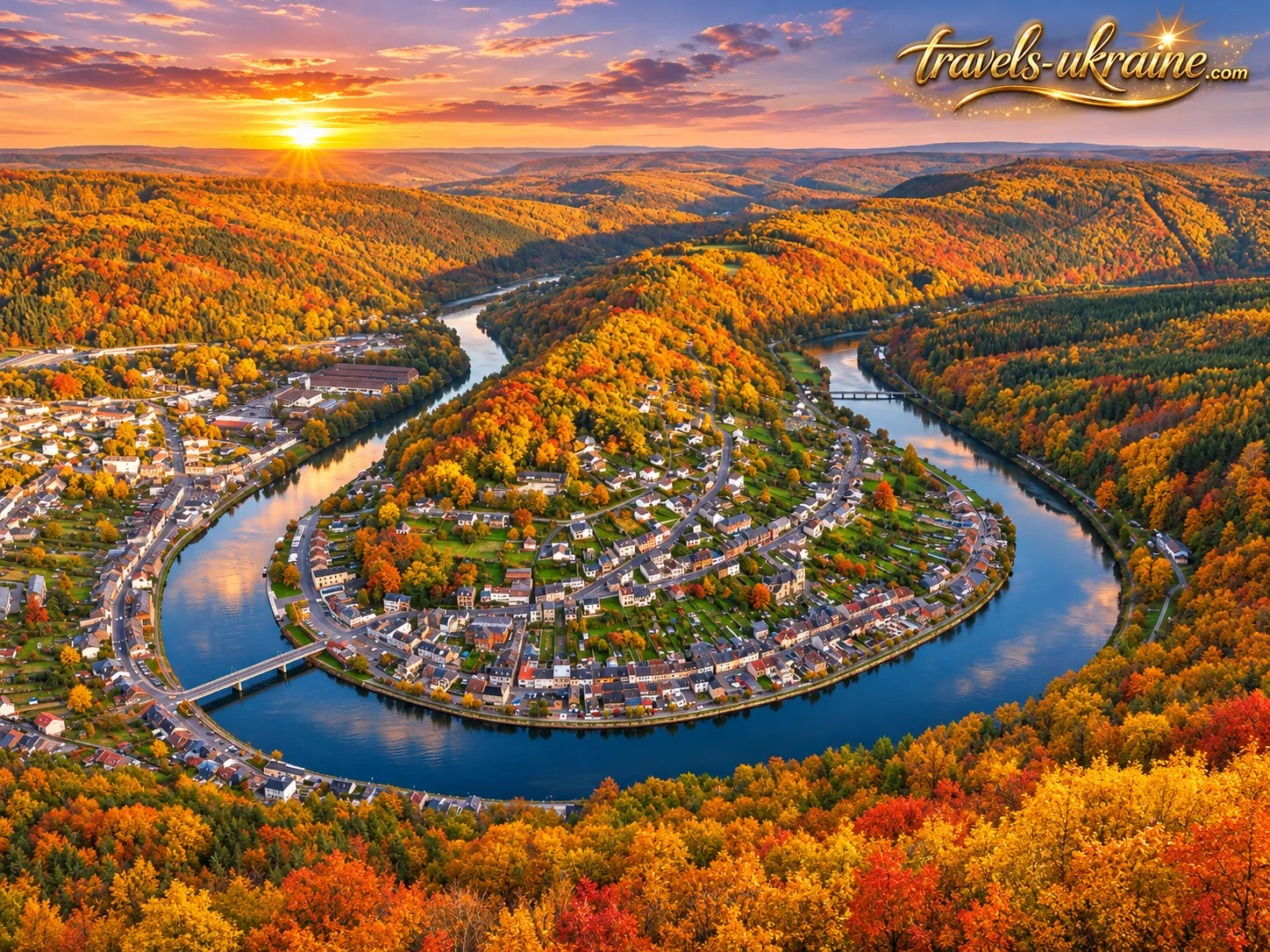
It is here that nature has created one of the most recognizable panoramas of the French Ardennes — the horseshoe-shaped bend of the Meuse River. The river makes a sweeping turn around a forest-covered headland, forming an enormous loop. From above, the landscape resembles a giant green horseshoe framed by a shimmering silver ribbon of water. It almost seems as though the Meuse decided to linger in Monthermé for a while, admire the local scenery, and only then continue its journey across Europe.
How the Horseshoe Bend of the Meuse River Was Formed
In geography, such bends in a river's course are known as meanders. They develop gradually as flowing water erodes riverbanks, transports particles of rock and sediment, and changes direction over long periods. On the outer side of a bend, the current generally erodes the bank more actively, while on the inner side, sediments carried by the water may accumulate. This is how rivers create winding channels that sometimes take on remarkably unusual shapes.
However, the bend of the Meuse near Monthermé has a distinctive feature. Unlike meanders that can freely change their shape across flat plains, here the river has carved deeply into the ancient rocky formations of the Ardennes Massif. Such formations are called incised meanders. Their development is associated with prolonged river erosion and the geological evolution of the landscape, during which the river channel gradually deepened while preserving its winding course.
The surrounding hills consist of ancient rock formations, including schists and quartzites, which formed hundreds of millions of years ago. As the river gradually deepened its valley, it left a high, forested headland between neighboring sections of its channel. Thanks to this remarkable combination of geological history and the river's relentless work, visitors today can admire an extraordinary panorama that almost looks like a painting.
And here is the most interesting part — this landscape cannot be fully appreciated from the riverbank alone. The true scale of the river loop becomes visible from the surrounding hills, where you can clearly see how the Meuse curves around the forest-covered peninsula. From these heights, it becomes easy to understand why natural panoramas, rather than monumental architectural landmarks, have become Monthermé's greatest tourist attraction.
Monthermé in France and Zalishchyky in Ukraine — Two Horseshoe Bends Created by Nature
And now for the most fascinating part! Ukrainians do not necessarily have to travel to France to witness a similar natural wonder. In Ukraine's Ternopil region lies the picturesque town of Zalishchyky, which is embraced by an enormous horseshoe bend of the Dniester River, forming an almost enclosed peninsula. The most famous panoramic view opens up from the high riverbank near the village of Khreshchatyk in the Chernivtsi region. From there, Zalishchyky looks as if the Dniester decided to wrap the entire town in a gentle embrace and absolutely refused to let go! Although the French Meuse and the Ukrainian Dniester flow through very different landscapes, their picturesque curves are surprisingly similar. Monthermé enchants visitors with the lush green forests of the Ardennes, while Zalishchyky impresses with the magnificent scenery of the Dniester Canyon. And after seeing both, try deciding which country has nature's more talented artist!
The Most Beautiful Viewpoints in Monthermé: Where to See the Meuse River Bend
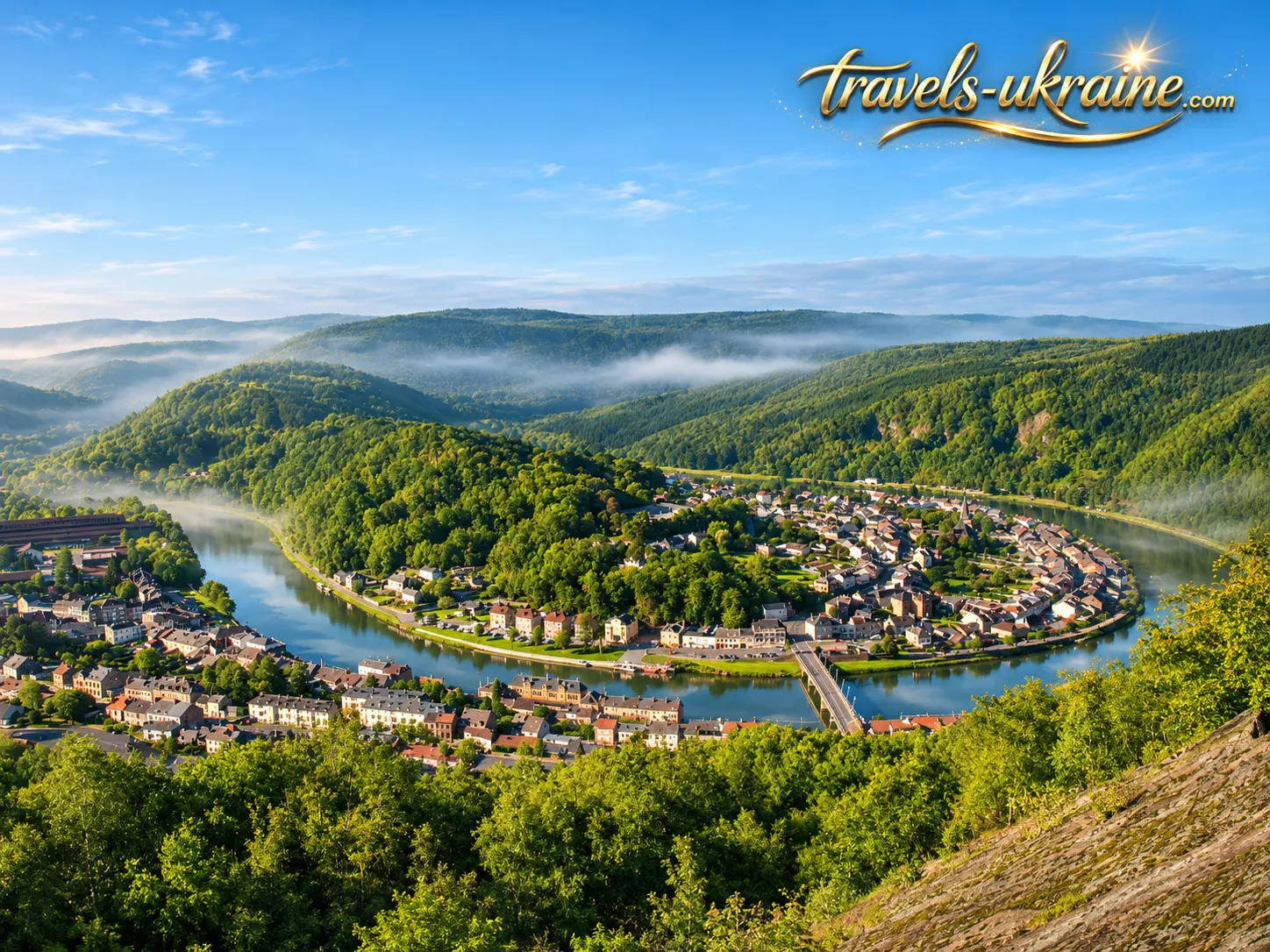
If you have already arrived in Monthermé but still haven't spotted the famous horseshoe bend of the Meuse, don't be too quick to accuse French nature of exaggerating! The most spectacular views here are not found along the town's streets but high above them, on the surrounding rocky hills. This is where the two most famous viewpoints — La Roche à Sept Heures and La Longue Roche — are located, offering magnificent panoramas of the river bend in all its glory.
La Roche à Sept Heures — The Seven O'Clock Rock with an Incredible Panorama
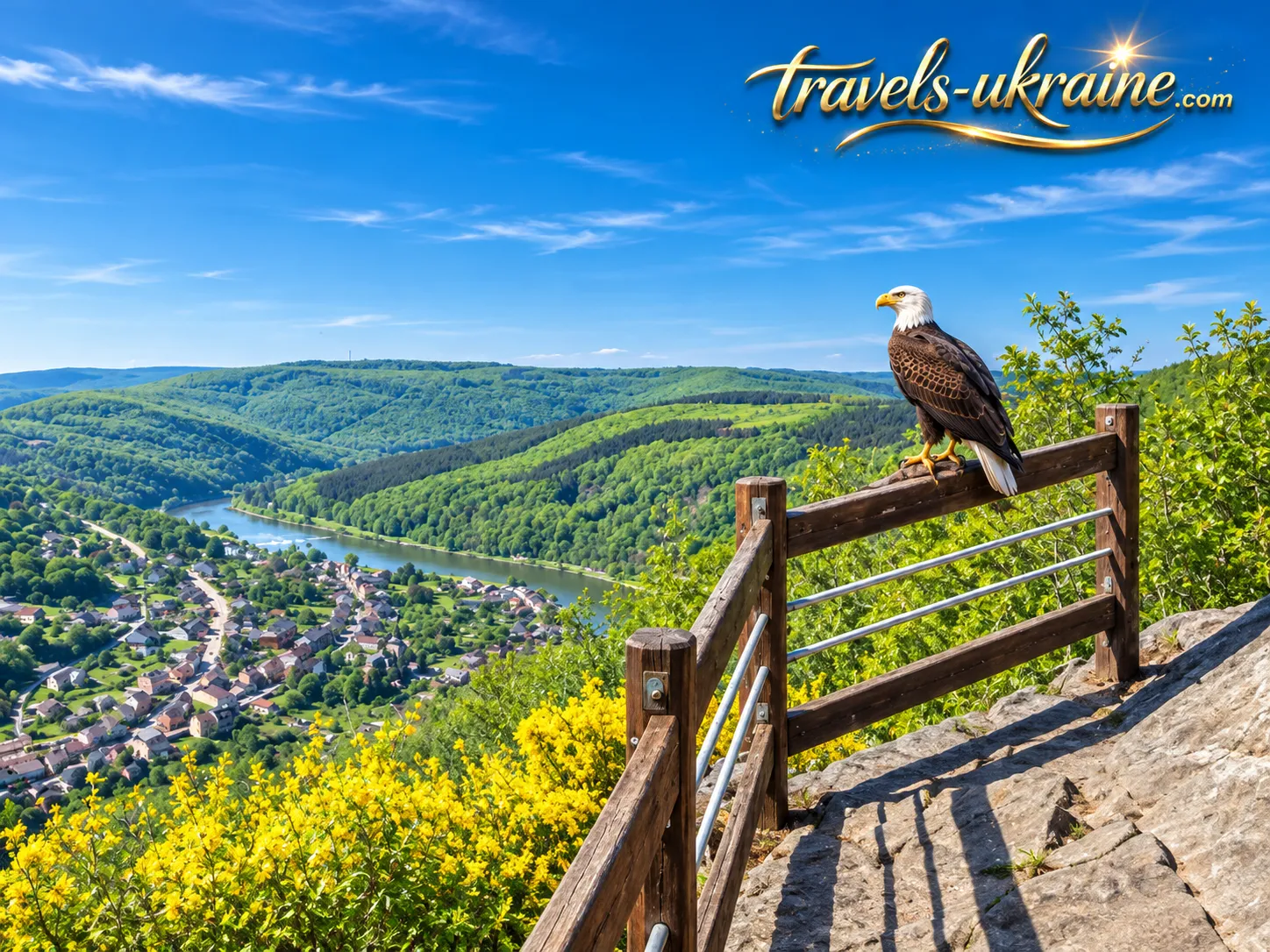
La Roche à Sept Heures, or "Seven O'Clock Rock," is one of the best-known natural viewpoints in the French Ardennes. It is located in the communal forest of Monthermé, on a high rocky outcrop overlooking the Meuse Valley. From here, visitors can enjoy breathtaking views of the river loop, tree-covered slopes, and the town's tiny houses, which look like carefully arranged toys from above.
But the name of this place is particularly intriguing. According to one local explanation, it is associated with sunlight illuminating the rocky outcrop at around seven o'clock, making it visible from a distance. The rock consists of quartzite, a durable stone with a high quartz content whose surface can reflect light. There you have it — a natural clock! Although it is probably best not to rely on it for the exact time: French rocks never promised to run on a schedule.
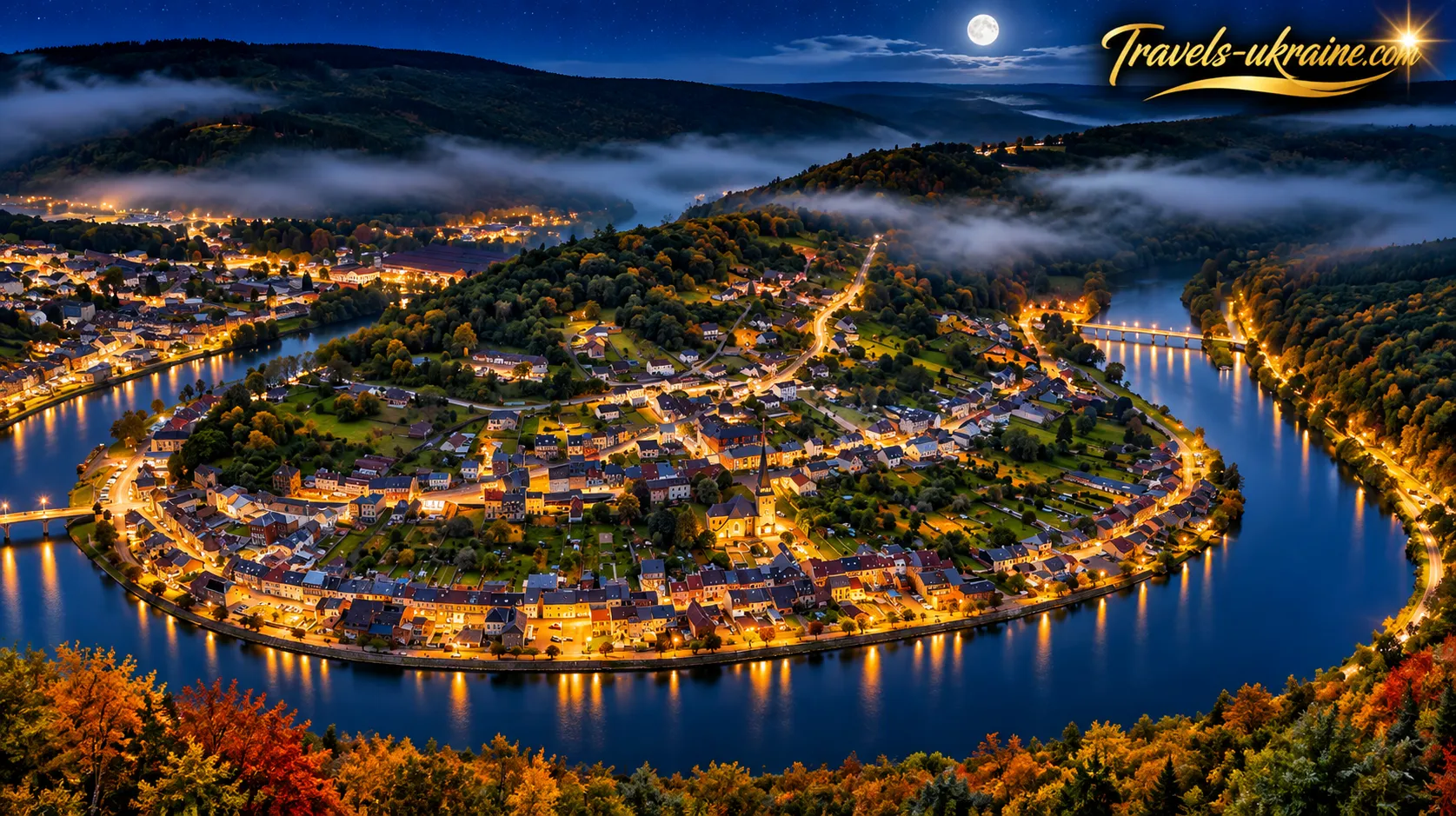
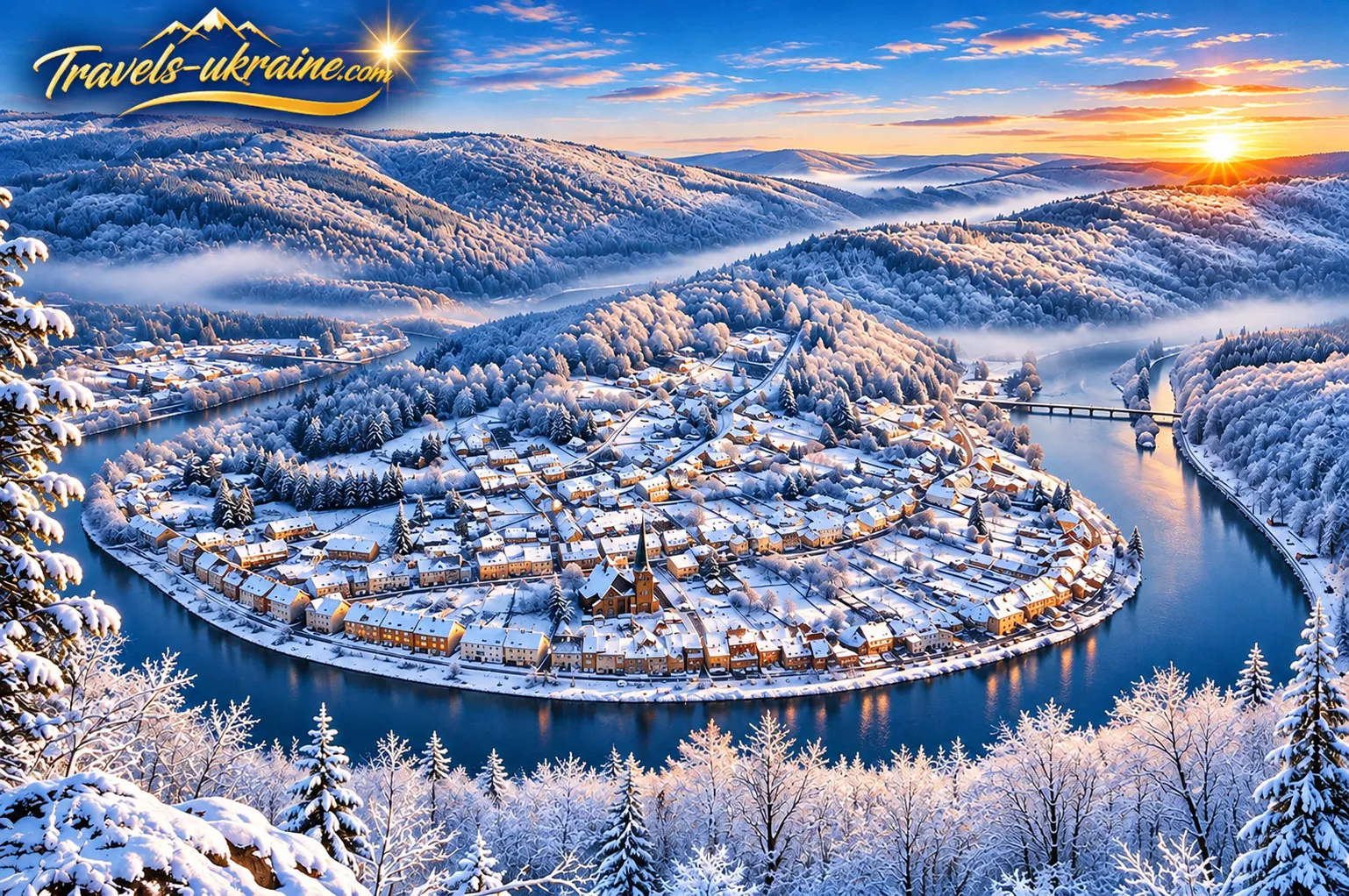
From the viewpoint, the unusual shape of the valley becomes especially apparent. The Meuse gracefully curves around the forested headland, while the surrounding hills provide a natural green frame for the entire panorama. The scenery changes with the seasons: in spring, the slopes come alive with fresh greenery; in summer, the trees form a dense forest canopy; in autumn, the landscape bursts into golden and copper tones; and in winter, the bare branches reveal new details of the river valley.
La Longue Roche — Another Perspective on the Famous Horseshoe Bend of the Meuse
Not far away lies another well-known viewpoint — La Longue Roche, meaning "Long Rock." It is situated among the forests of Château-Regnault, on high rocky outcrops rising above the Meuse River. This location offers a different perspective on the famous river bend. From here, it is particularly fascinating to observe how the valley changes direction and how the winding river channel fits between the steep slopes of the Ardennes. The panorama provides a better sense of the landscape's scale and reveals Monthermé surrounded by forested hills.
La Longue Roche attracts visitors not only with its scenery but also with the atmosphere of the walk itself. The trail winds through woodland, where picturesque glimpses of the valley occasionally appear between the trees. And if you thought you had already taken the perfect photograph at the first viewpoint, here you will find yourself reaching for your camera once again. The Meuse seems determined to add even more pictures to your collection!
Hiking Trail Between the Viewpoints of Monthermé
For those who want to experience both panoramas, there is a scenic circular hiking trail called La Roche à Sept Heures, approximately 5.9 kilometers long. It begins near the Monthermé Tourist Office at Place Jean-Baptiste Clément, climbs toward the rocky viewpoints, and follows forest paths along the surrounding hills.
The route first leads to La Roche à Sept Heures and then follows a ridge trail toward La Longue Roche. Some sections include steps, metal handrails, and steeper climbs. The return journey descends along a different slope, allowing hikers to complete the loop without retracing the entire route.
Allow approximately 2 hours and 30 minutes for the full hike, or a little longer if you plan to stop frequently for photographs. The trail involves a total elevation gain of more than 200 meters, so despite its moderate distance, comfortable footwear and a willingness to tackle some uphill sections are essential.
And this is where Monthermé reveals its greatest charm: the two viewpoints allow visitors to admire the same natural wonder from different perspectives. One impresses with the striking horseshoe shape of the river, while the other reveals the vast scale of the valley and the surrounding Ardennes. Together, they offer an unforgettable panorama that makes you want to leave your car behind and set off on a little adventure into nature.
Things to See and Do in Monthermé
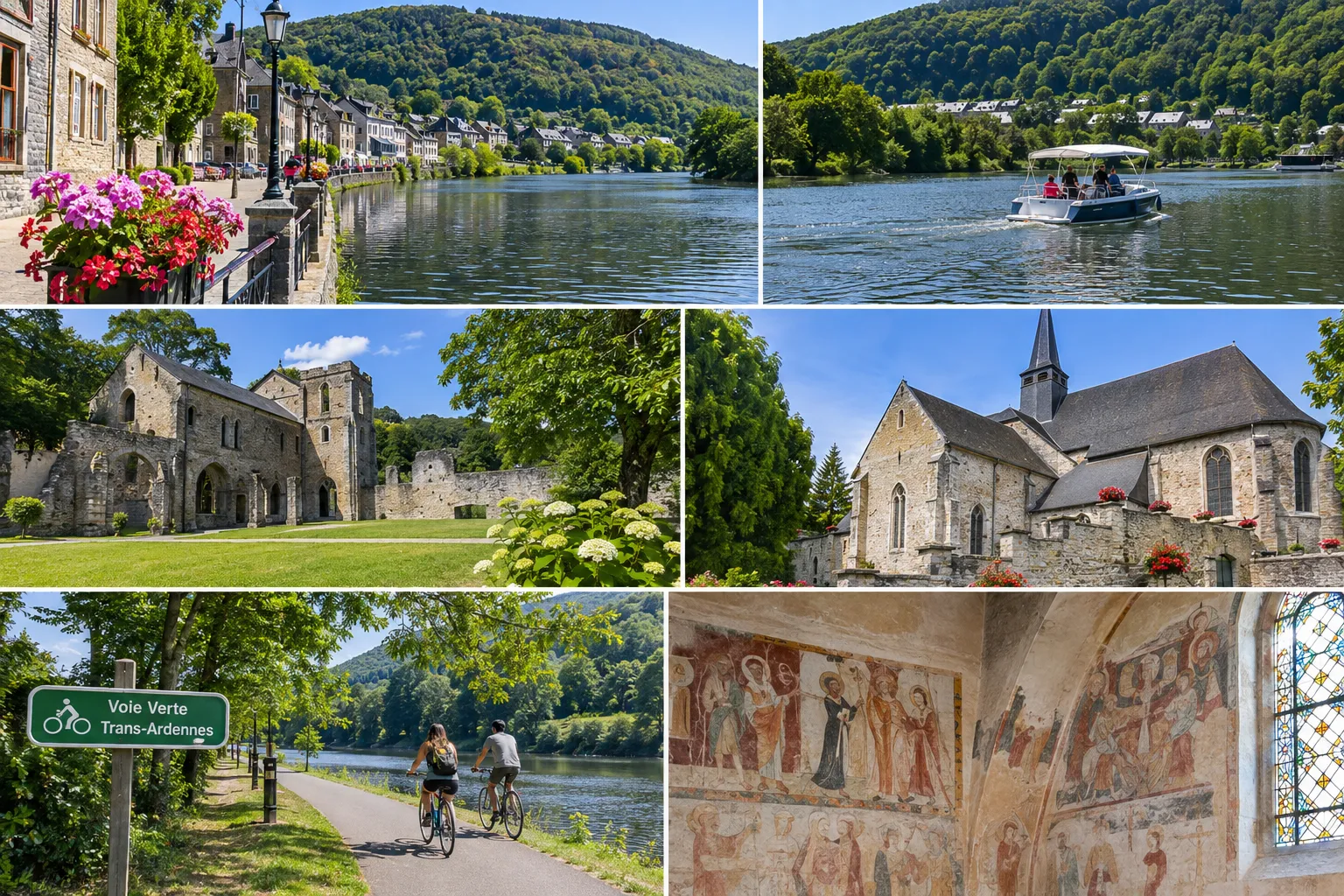
Admiring the horseshoe bend of the Meuse River from above is an extraordinary experience. But it would be a shame to overlook Monthermé itself! After all, this small French town has much more to offer than spectacular natural panoramas. Here, you can stroll along peaceful riverbanks, enjoy a boat ride, discover medieval landmarks, or simply embrace the relaxed pace of life in the French Ardennes. Sometimes, a perfect holiday doesn't require a packed itinerary — just beautiful scenery, good company, and no alarm clock!
Walking Along the Meuse River in Monthermé
After enjoying the breathtaking panoramas from above, it's worth discovering Monthermé from the water's edge. Pleasant walking paths stretch along the Meuse River, offering a completely different perspective on the surrounding Ardennes. From here, the river no longer looks like a thin silver ribbon; instead, forest-covered hills rise majestically above the broad expanse of water.
The area around the local marina, Port de Plaisance de Monthermé, is particularly charming, with pleasure boats and small vessels moored along the river. The gentle current, reflections of green hillsides on the water, and leisurely movement of boats create the atmosphere of a peaceful little resort town. It's a wonderful place to stop, take a few photographs, or simply sit by the river and watch everyday life unfold.
Boat Trips — Discover the Famous Meuse River Bend from the Water
But what if you changed your usual sightseeing perspective and explored Monthermé not from the riverbank, but directly from the water? That's possible here too! The local marina offers rentals of small electric boats that can be operated without a special boating license. It's a wonderful opportunity to cruise leisurely through the picturesque valley and admire the forested banks of the Meuse from an entirely different angle.
From the water, you can truly appreciate the height of the surrounding slopes and how closely the river valley is connected to the life of the town. A boat trip also offers a completely different experience of the famous horseshoe bend of the Meuse: while from above it resembles an enormous natural painting, from a boat it becomes a fascinating journey between green hills.
Of course, before imagining yourself as the captain of a great expedition, it's worth checking the boat rental season and rental conditions. After all, even the most romantic river adventure begins with a few practical details — an available boat and good weather!
Laval-Dieu Abbey — The Medieval History of Monthermé
History enthusiasts should definitely visit Laval-Dieu Abbey (Abbaye de Laval-Dieu), located not far from the river. Its history dates back to the 12th century, when a community of Premonstratensian canons settled here in 1128. The name Laval-Dieu is associated with the French expression meaning "Valley of God," giving this place a particularly evocative historical identity.
For centuries, the abbey played an important role in the life of the surrounding settlements. The monastery owned land, forests, and agricultural estates, while its residents influenced the development of the local community. Over time, the buildings were repeatedly reconstructed and suffered damage, so only part of the former monastic complex has survived to the present day.
Of particular interest is the historic abbey church, featuring remarkable 18th-century wooden decoration. Its interior is adorned with oak panels that recall a time when the craftsmanship of woodcarvers was considered just as important as the skill of architects. Today, it remains one of Monthermé's most fascinating historical landmarks, although access to the interior depends on the current visiting schedule.
Saint-Léger Church — Ancient Frescoes and a Defensive Past
Another historic treasure of Monthermé is Saint-Léger Church (Église Saint-Léger), whose original structure dates back to the late 12th century. At first glance, it may appear to be just another old church, of which France has plenty. However, behind its stone walls lies a rather turbulent history.
In 1445, the church was looted and burned during an armed attack on the settlement. It was later rebuilt and reconsecrated in 1452. Because of the constant threat of wars and raids, the church was partially adapted for defensive purposes: openings were incorporated into its walls to support wooden structures where armed defenders could take position.
Thus, in medieval Monthermé, the church served not only as a place of worship but also as a refuge in times of danger. Today, particular attention is drawn to its 16th-century wall frescoes, which remained hidden beneath layers of whitewash for many years. Some of these paintings were rediscovered only in the 20th century, after which research and restoration work began.
Cycling Along the Meuse River
If you feel like enjoying a more active experience after exploring the historical landmarks, Monthermé offers another excellent opportunity — cycling along the Voie Verte Trans-Ardennes route. This picturesque greenway largely follows the former towpath beside the Meuse River and passes through numerous towns and villages in the French Ardennes.
The entire route stretches for more than 120 kilometers, but there's absolutely no need to cover it all. Around Monthermé, you can choose a shorter section for a leisurely ride along the river, enjoying forest landscapes, scenic river views, and charming settlements along the way.
The route is suitable not only for cyclists but also for pedestrians. Some sections are also used for rollerblading and rides on multi-seat pedal-powered vehicles. Its main advantage is that it is separated from regular motor traffic, allowing visitors to focus more on the beautiful natural surroundings.
Best of all, Monthermé in the French Ardennes makes it possible to combine several completely different experiences in a single day. In the morning, enjoy breathtaking panoramas from the hills; during the day, explore the town and discover its history; and toward evening, relax peacefully beside the Meuse River. And who could still claim that small French towns don't know how to surprise their visitors?
Interesting Places to Visit Near Monthermé
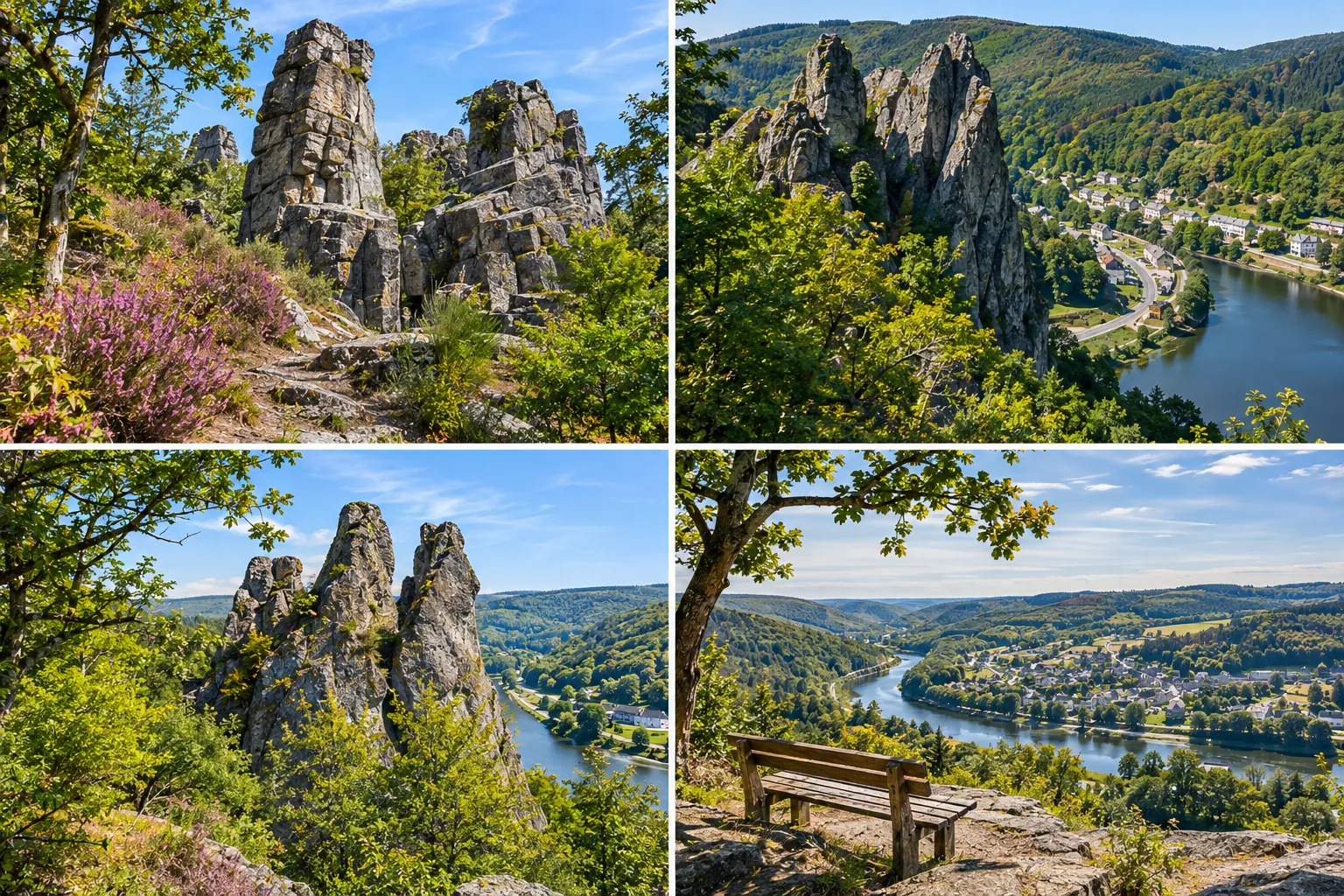
If, after exploring Monthermé, you think you've already seen the most beautiful landscapes of the French Ardennes, don't rush to pack your bags! The surrounding forests and valleys hide many more natural wonders, while local legends add a special touch of mystery and charm. Here, even seemingly ordinary rocks may turn out to be the remains of a devil's castle, petrified heroes of ancient tales, or silent witnesses to romantic dramas. It seems that nature and the imagination of the local people once formed a remarkably successful creative partnership in the Ardennes!
Roc la Tour — The Mysterious Rocks of the Devil's Castle
Among the most fascinating natural attractions near Monthermé, Roc la Tour holds a special place. This unusual collection of enormous quartzite rock formations is located in the Château-Regnault state forest. The towering stone pillars rise among the trees at an altitude of approximately 408 meters above sea level, forming bizarre shapes that resemble the ruins of an ancient fortress.
According to local legend, the devil once attempted to build a magnificent castle here, but his ambitious plan was never completed. All that supposedly remained of the grand structure were scattered stone blocks. Of course, geologists have a much more down-to-earth explanation for the origin of these rocks, but let's admit it: the story of the devil's failed construction project sounds far more entertaining than an ordinary report on the weathering of rock formations!
Today, Roc la Tour attracts travelers with its unusual rock formations, woodland trails, and panoramic views of the Semoy Valley. It is also a popular destination among rock-climbing enthusiasts, with specially established climbing routes on its towering stone formations.
The Rocks of the Four Sons of Aymon (Rochers des Quatre Fils Aymon)
Not far from Monthermé, in the town of Bogny-sur-Meuse, rise the Rocks of the Four Sons of Aymon — one of the most famous natural and legendary landmarks of the Ardennes. Their sharp rocky peaks tower above the Meuse Valley, creating a distinctive silhouette against the surrounding green hills.
The name comes from a medieval legend about four brothers — Renaud, Alard, Guichard, and Richard — who rebelled against Emperor Charlemagne. According to the tale, the brothers were saved by a magical horse named Bayard, capable of carrying all four riders at once and making extraordinary leaps across rocks and valleys.
The local people embraced this story so deeply that it became an inseparable part of the Ardennes' cultural heritage. Today, visitors can explore hiking trails around the rocks, admire views of the Meuse River, and imagine the legendary Bayard galloping across these hills. Of course, modern travelers will have to rely on their own two feet — magical horses are not yet available for rent in the area!
The Ladies of the Meuse (Les Dames de Meuse) — Three Stone Figures Above the River
Another unusual natural landmark is located near the village of Laifour. Les Dames de Meuse, or the Ladies of the Meuse, consists of three enormous rocky outcrops rising above the river valley. Their distinctive shapes and the surrounding forest-covered slopes create a picturesque panorama that has inspired writers and artists for many years.
According to an ancient legend, three young women — Berthe, Hodierne, and Ige — were turned to stone as punishment for marital infidelity while their husbands were away on a crusade. Of course, this is only a local legend, but it is the story that gave the rocks their unusual name.
Today, the area mainly attracts nature lovers and hiking enthusiasts. A hiking route approximately 8.4 kilometers long leads from Laifour to the viewpoint and takes a little over three hours to complete. From above, visitors can enjoy sweeping views of the Meuse River, the surrounding forests, and the rocky slopes of the Ardennes.
Roche aux Sept Villages — A Panoramic View of Several Valleys
For those who haven't yet had enough of admiring the Ardennes from above, another interesting stop is Roche aux Sept Villages, or the Rock of the Seven Villages, located in the Château-Regnault forest near Monthermé. The viewpoint stands at an altitude of approximately 325 meters above sea level and offers panoramic views over the Meuse and Semoy valleys.
The rock takes its name from seven historic settlements that can be seen from the surrounding heights: Monthermé, Laval-Dieu, Bogny, Château-Regnault, Braux, Levrezy, and Deville. Among the forested hills, the Meuse River forms an enormous S-shaped bend, while small houses scattered along its banks add a special charm to the scenery. This place is fascinating not only for photography. It also helps visitors understand how settlements in the Ardennes developed over the centuries, closely connected to the river valleys, forests, and surrounding hillsides.
Best of all, a trip around Monthermé and its surroundings can easily be tailored to your personal interests. Those who love unusual natural formations will appreciate Roc la Tour, fans of ancient legends will enjoy the Four Sons of Aymon and the Ladies of the Meuse, while admirers of breathtaking scenery will be drawn to Roche aux Sept Villages. However, trying to visit all these places in just a few hours is not recommended, as some require a separate hiking excursion. Life in the Ardennes moves at its own relaxed pace — and sometimes travelers would do well to follow its example!
Frequently Asked Questions About Monthermé and Its Viewpoints
Where is Monthermé located in France?
Monthermé is located in northeastern France, in the Ardennes department of the Grand Est region, approximately 15–20 km north of Charleville-Mézières. The town lies within the Ardennes Regional Natural Park and is famous for the picturesque horseshoe-shaped bend of the Meuse River.
Where can you get the best views of the Meuse River's horseshoe bend?
The most famous panoramic viewpoints in Monthermé are La Roche à Sept Heures and La Longue Roche. Both offer beautiful views of the river loop, forested hills, and the town itself. For a more complete experience of the area, it is worth visiting both viewpoints, as they allow you to admire the Meuse River bend from different perspectives.
How can you reach the viewpoints in Monthermé?
The viewpoints can be reached via the marked circular hiking trail La Roche à Sept Heures, which begins near the tourist office at Place Jean-Baptiste Clément in Monthermé. The route is approximately 5.9 km long, with an elevation gain of around 230 meters and a recommended walking time of 2 hours and 30 minutes. The trail passes through La Roche à Sept Heures and La Longue Roche.
Where can you park your car in Monthermé?
The most convenient option for starting the hiking trail is the free parking area at Place Jean-Baptiste Clément, near the Monthermé tourist office. The official hiking route to the panoramic viewpoints begins here. Before visiting, it is advisable to check local restrictions, as special parking regulations may apply in forested areas, particularly during periods of increased wildfire risk.
Do you have to pay to visit the viewpoints?
La Roche à Sept Heures and La Longue Roche can be visited without purchasing entrance tickets. Both viewpoints are located along natural hiking trails, so paid reservations are not required for a regular visit. However, visitors must follow the current regulations of the natural park and any temporary access restrictions.
When is the best time to visit Monthermé and the Meuse River horseshoe bend?
The horseshoe bend of the Meuse River can be admired throughout the year. In spring, the Ardennes come alive with fresh greenery; in summer, dense forests create beautiful landscapes; and in autumn, the hillsides turn spectacular shades of gold and crimson. Winter offers unusual views through the bare trees, although snow and icy conditions can make the climbs more difficult. For photography, clear weather with soft morning or evening light is particularly recommended.
Are the hiking trails in Monthermé suitable for families with children?
Yes, Monthermé offers walking routes suitable for family outings. However, the full trail to La Roche à Sept Heures and La Longue Roche includes uphill sections, steps, uneven forest paths, and areas close to steep slopes. Families with young children should consider shorter walks, and children must always be supervised at the viewpoints. The complete route is not suitable for strollers.
Are there any restrictions on visiting natural attractions in Monthermé?
Yes, temporary restrictions may apply in forested areas due to wildfire risks or unfavorable weather conditions. In particular, starting on July 16, 2026, local authorities introduced a ban on parking motor vehicles between 8:00 PM and 7:00 AM near Roc la Tour, La Longue Roche, and La Roche à Sept Heures, along with restrictions on lighting fires and overnight camping. Before visiting, travelers should check whether these regulations remain in effect on the municipality's official website.
La Longue Roche
Conclusion: Why You Should See the Horseshoe Bend of the Meuse River
Some places are remembered for their magnificent architecture, others impress visitors with their rich history, and then there are places where nature itself is the greatest artist. Monthermé belongs to the latter. Here, the Meuse River winds peacefully around green hills, creating a remarkable horseshoe-shaped bend, while high rocky viewpoints offer breathtaking panoramas that make you want to forget about everyday worries, even if only for a little while.
And best of all, Monthermé doesn't try to impress visitors with noisy entertainment or endless queues at famous attractions. Its true charm lies in its peaceful atmosphere, cozy streets, woodland trails, and stunning views that need no embellishment. Although a camera with plenty of storage space certainly wouldn't hurt — returning from this place with just a couple of photographs is practically an impossible challenge!
So, if you're planning a journey through the French Ardennes, be sure to make time for Monthermé. And if you enjoy unusual natural landscapes, picturesque towns, and fascinating stories, discover even more tourist attractions in France. After all, this country has plenty of surprises waiting far beyond Paris, and sometimes the most unforgettable experiences can be found in places far from the tourist crowds.
No Comment
You can post first response comment.