
 English
 Українська
 Русский

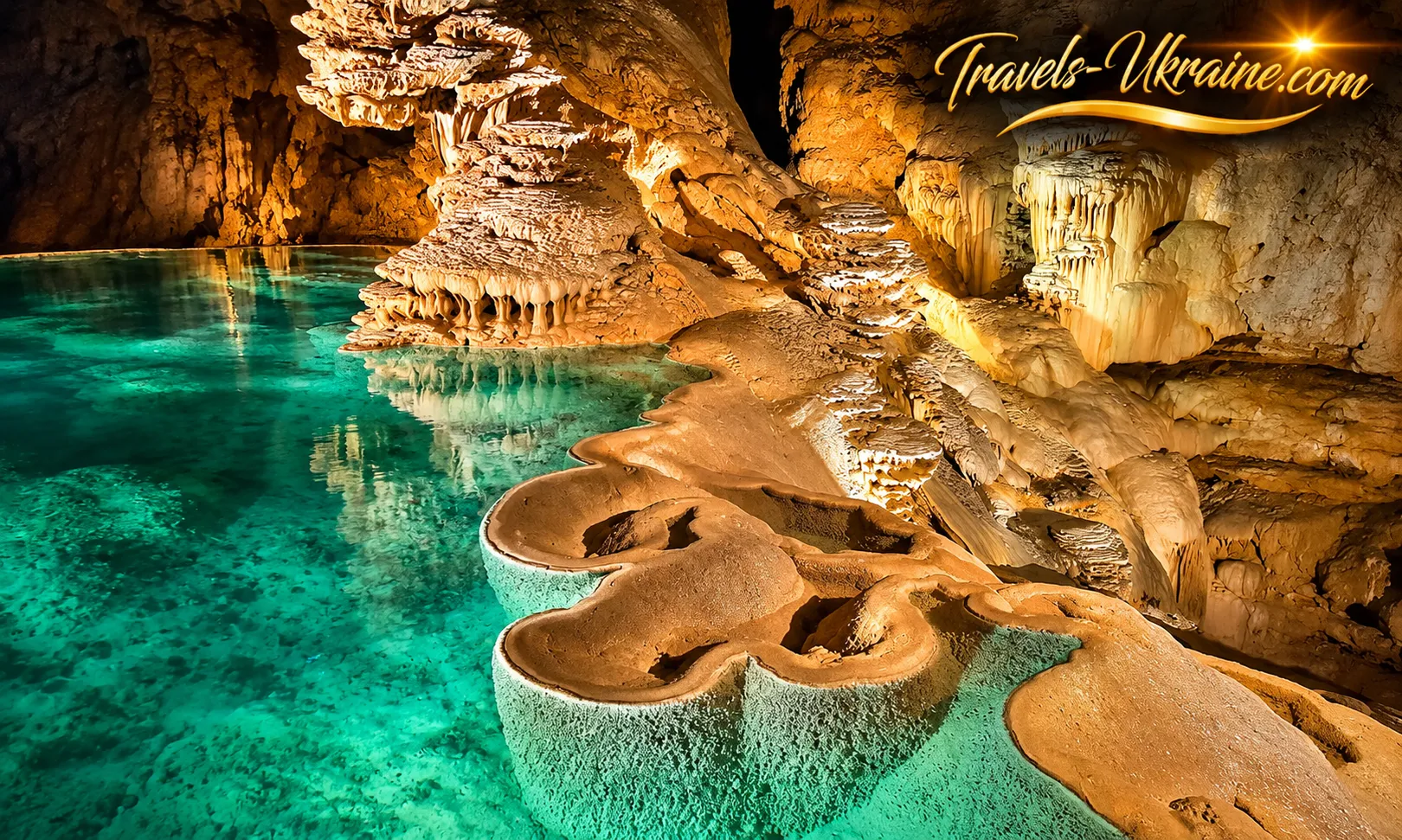
France has a remarkable ability to surprise travellers. The majestic Alps, the Eiffel Tower, picturesque valleys, castles and historic towns attract millions of tourists every year. Yet not all of the country's natural treasures can be found on the surface. Some lie so deep underground that it is difficult to imagine the extraordinary landscapes hidden beneath ordinary green meadows and peaceful French villages. One of the most astonishing places of this kind is the Gouffre de Padirac (Padirac Chasm) — a true gateway to the mysterious underground world of Occitanie.
Imagine an enormous circular opening suddenly appearing in the middle of a peaceful limestone plateau. Its sheer rock walls plunge to a breathtaking depth, resembling a gigantic natural well whose bottom is partly concealed by shadows and greenery. But the most fascinating part lies much farther below, where the chasm leads into an extensive network of underground passages through which a real river flows.
The Gouffre de Padirac is located in France, in the Lot department of the Occitanie region, not far from the famous medieval town of Rocamadour. This part of the country is known for its remarkable karst landscapes, caves and ancient settlements. Yet even among such natural diversity, the Gouffre de Padirac holds a special place, offering visitors the opportunity not merely to gaze into a deep abyss but to embark on an actual journey beneath the Earth's surface.
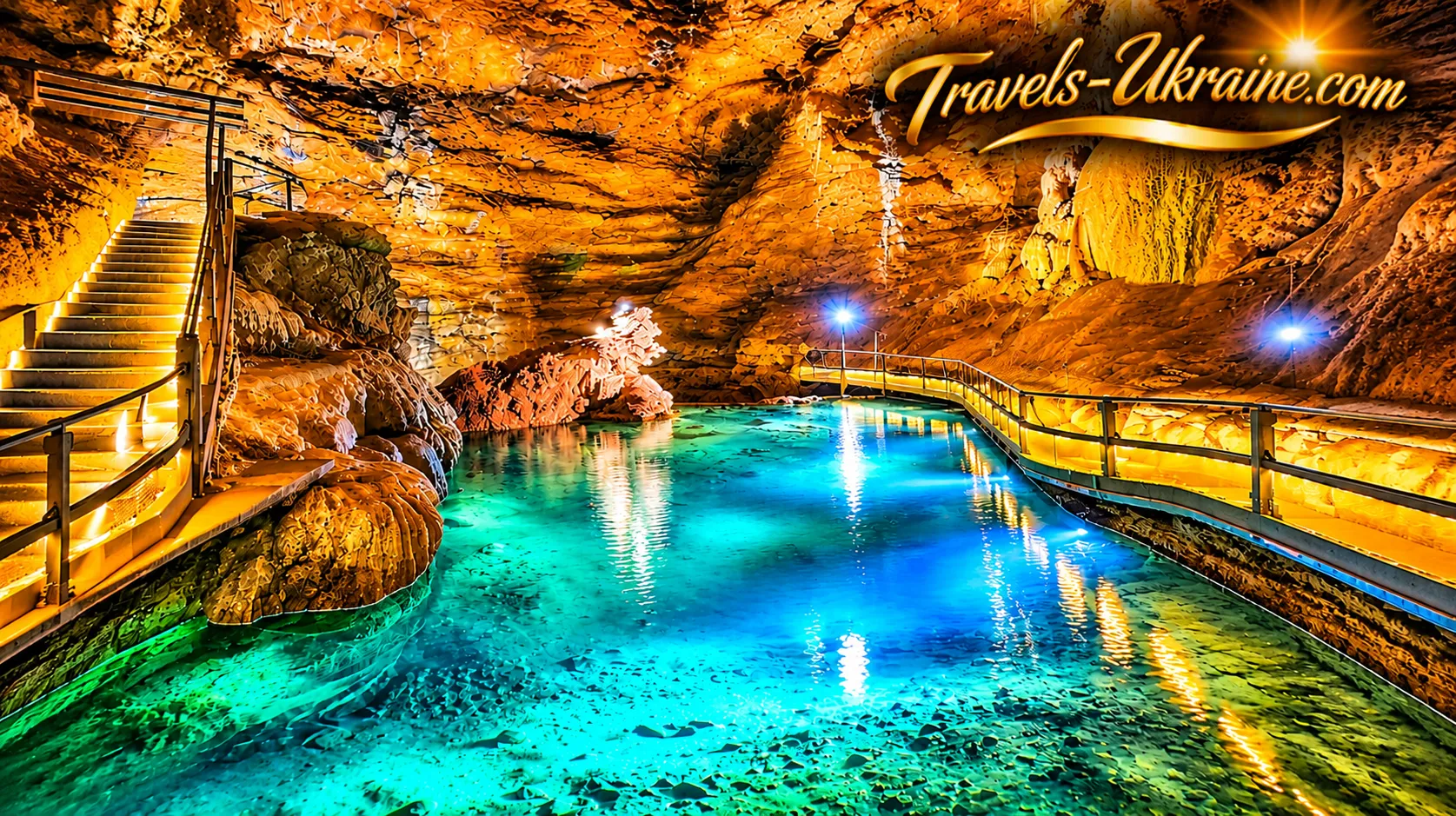
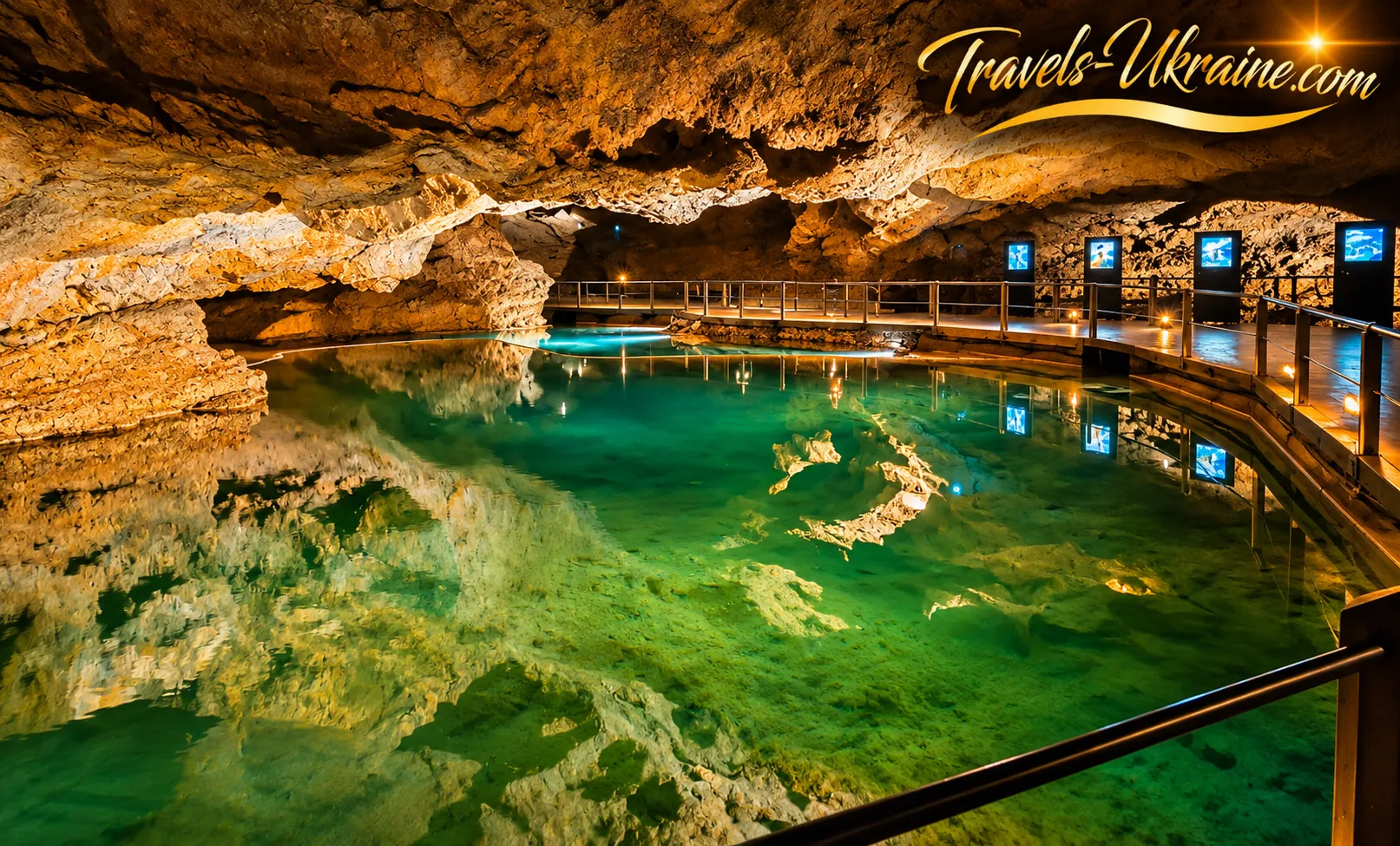
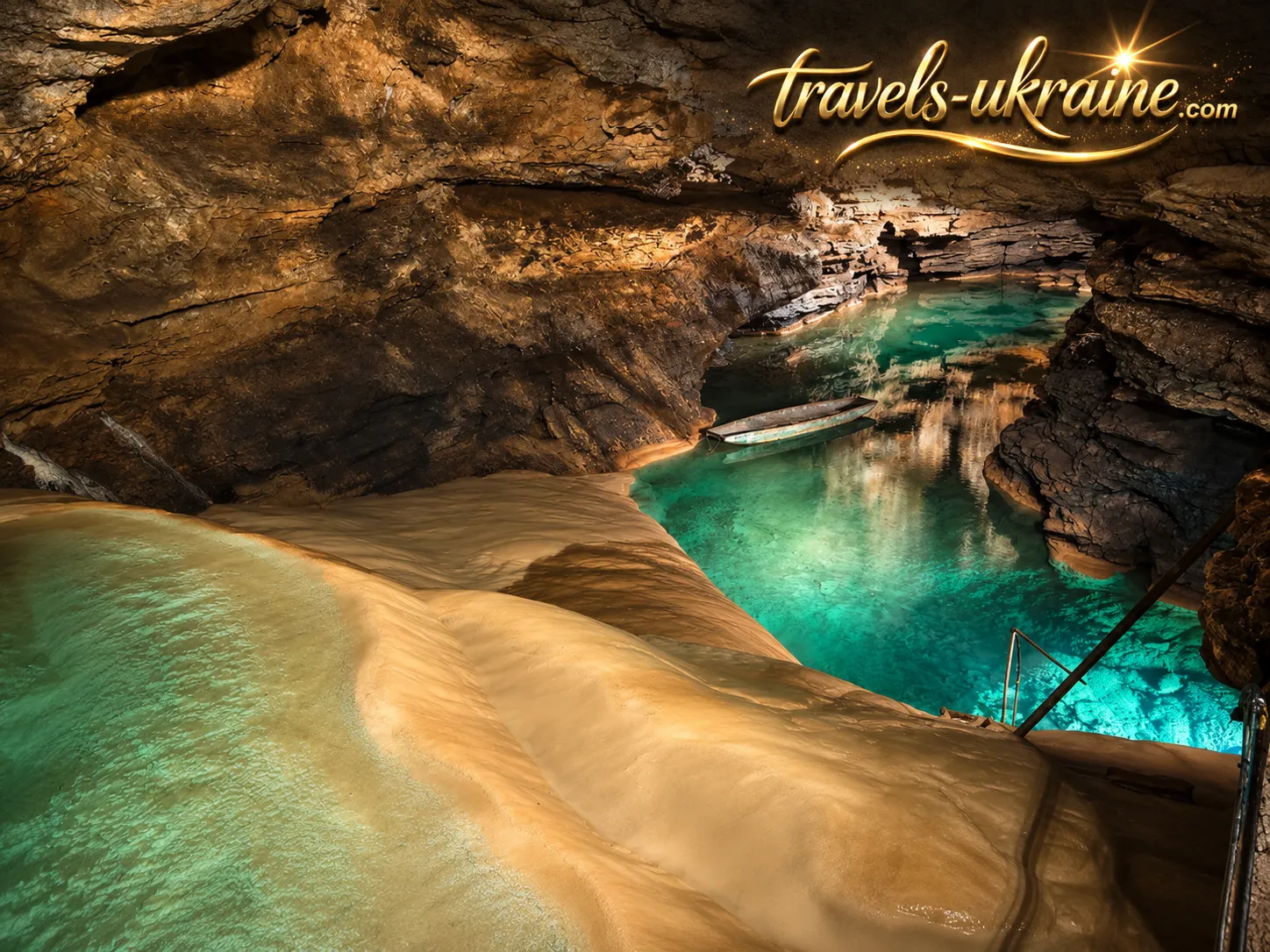
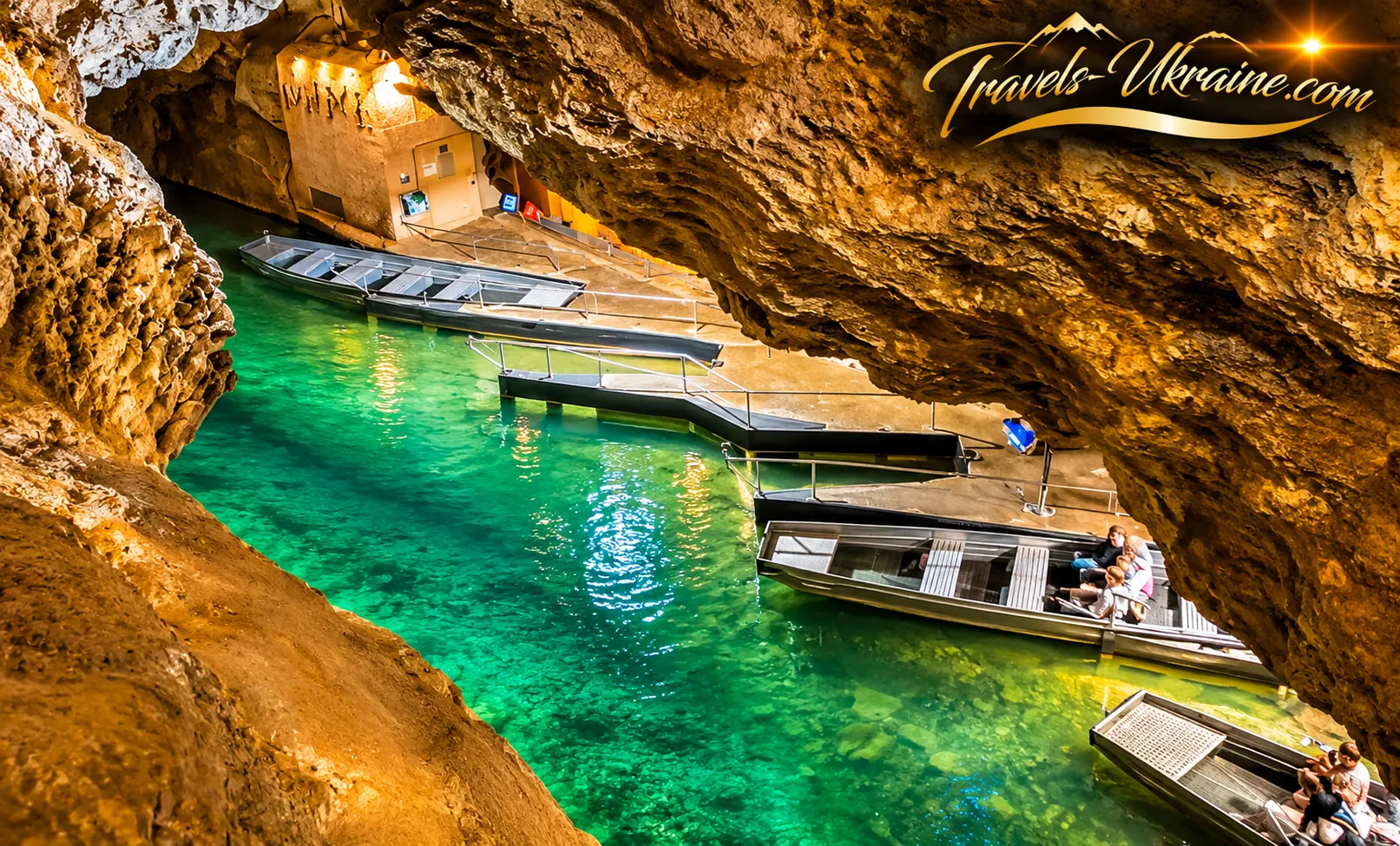
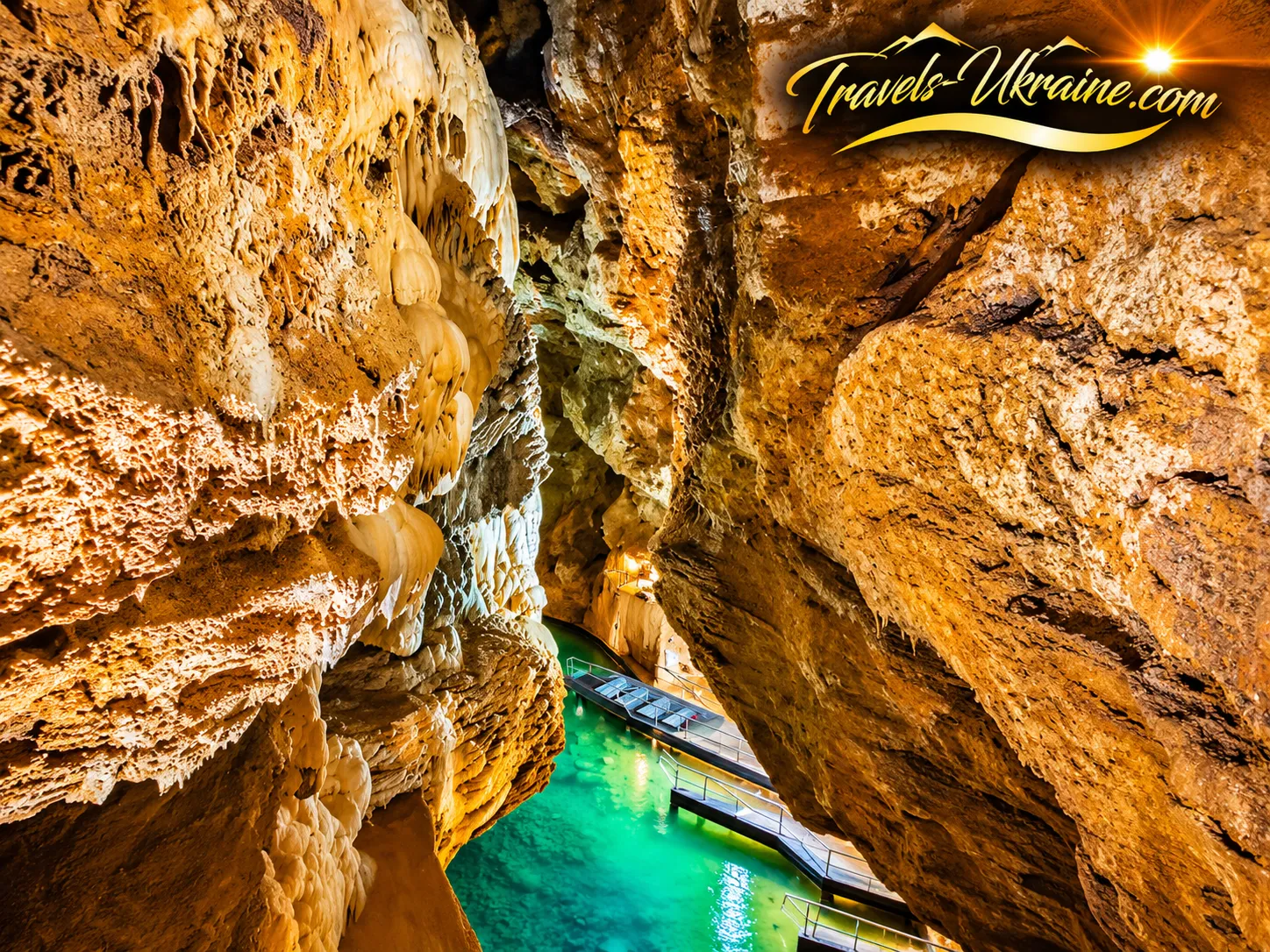
And this is where Padirac reveals what truly sets it apart from ordinary show caves. At a depth of approximately 103 metres below the Earth's surface, visitors encounter an underground river that they can explore by boat. Picture the scene: towering rock walls surround you, a cavern ceiling stretches overhead, blocking out every trace of sunlight, and new underground passages unfold ahead. Only the lighting installed along the visitor route makes it possible to admire the fantastic rock formations that nature has shaped over immense periods of time.
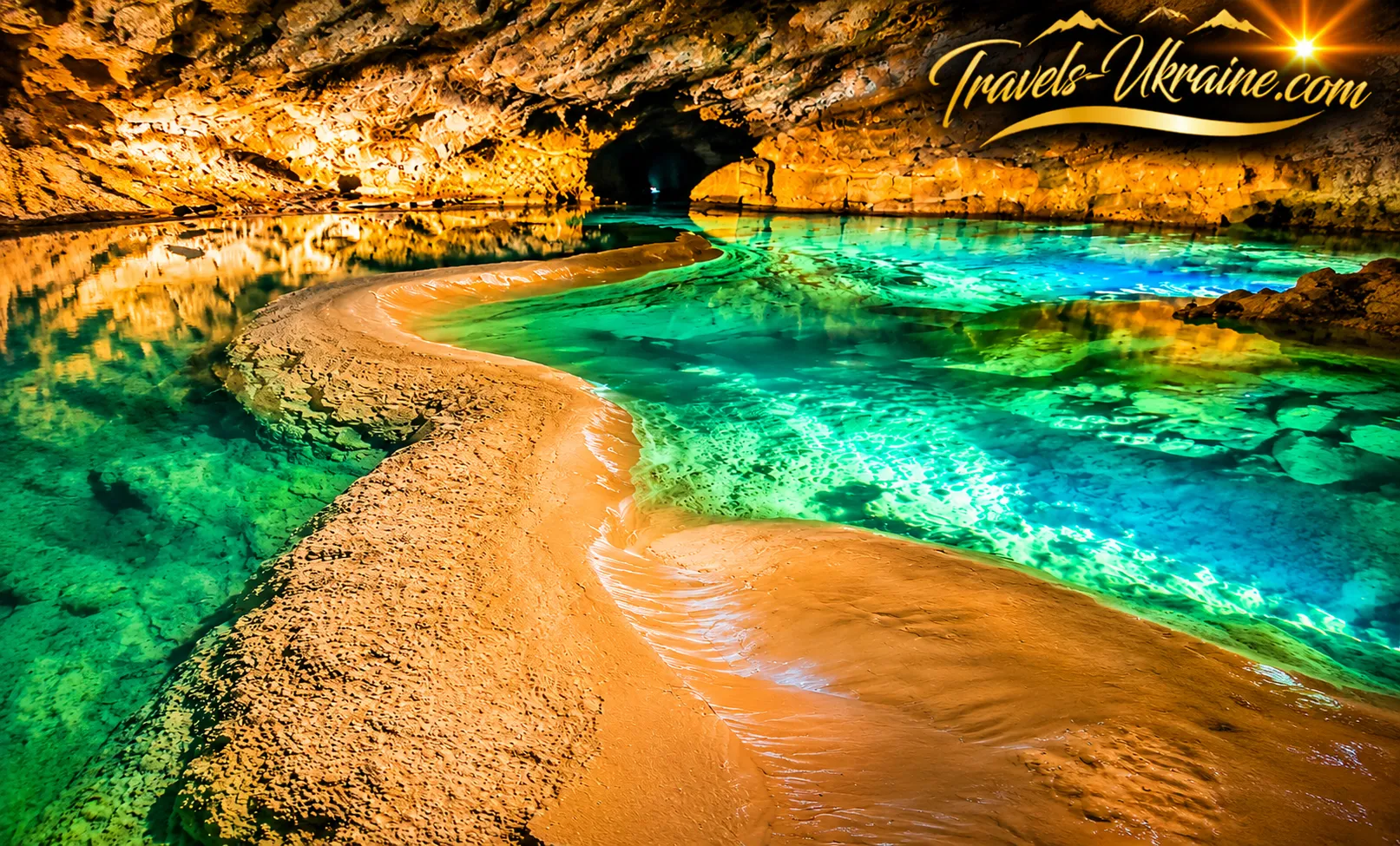
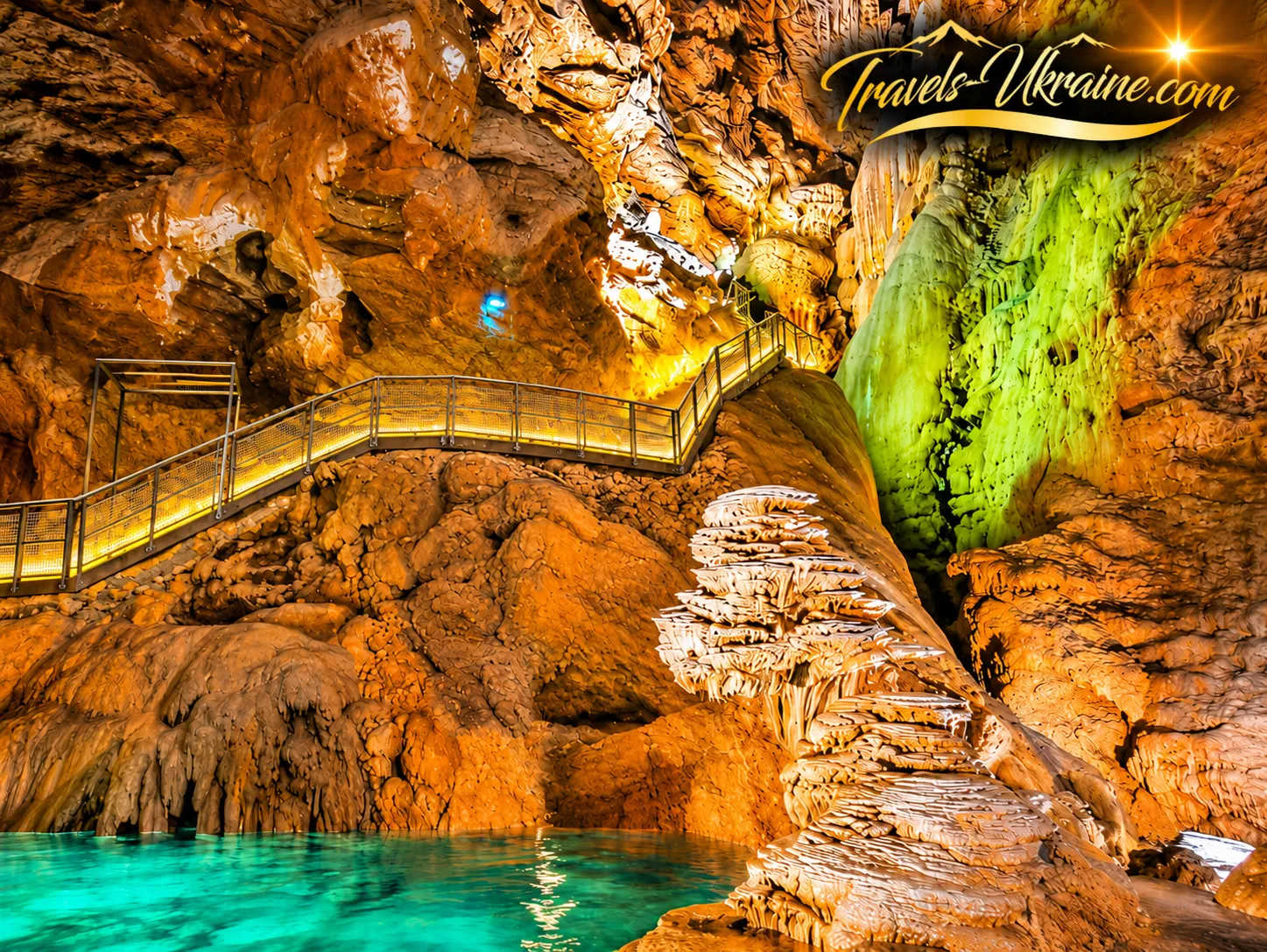
But the underground river is far from Padirac's only wonder. Deep beneath the surface lie crystal-clear lakes, enormous cavern chambers, extraordinary stalactites and stalagmites, natural stone columns and calcite formations resembling frozen waterfalls. Some of these underground spaces are so vast that their scale is difficult to comprehend even when standing inside them. Carefully designed lighting further enhances the otherworldly beauty of landscapes hidden far beyond the world we know.
It is impossible not to wonder: how did nature create such an enormous cavity in the middle of a limestone plateau? Where does the underground river lead after carving its way through solid rock over countless centuries? And who was the first person brave enough to descend into this dark abyss, long before modern lifts and illuminated visitor pathways existed? After all, such an expedition once demanded far more than simple curiosity — it required extraordinary courage.
So, let us set off on an extraordinary journey to one of France's most fascinating natural wonders! We will discover how the Gouffre de Padirac was formed, explore the history of its discovery, venture into its mysterious cavern chambers, travel along an underground river by boat and find out everything visitors need to know before planning a trip. After all, genuine discoveries do not always require climbing to the top of a mountain — sometimes all it takes is descending a hundred metres underground, into a world whose existence we rarely even stop to consider.
Padirac Chasm — a Giant Abyss in the Heart of Occitanie
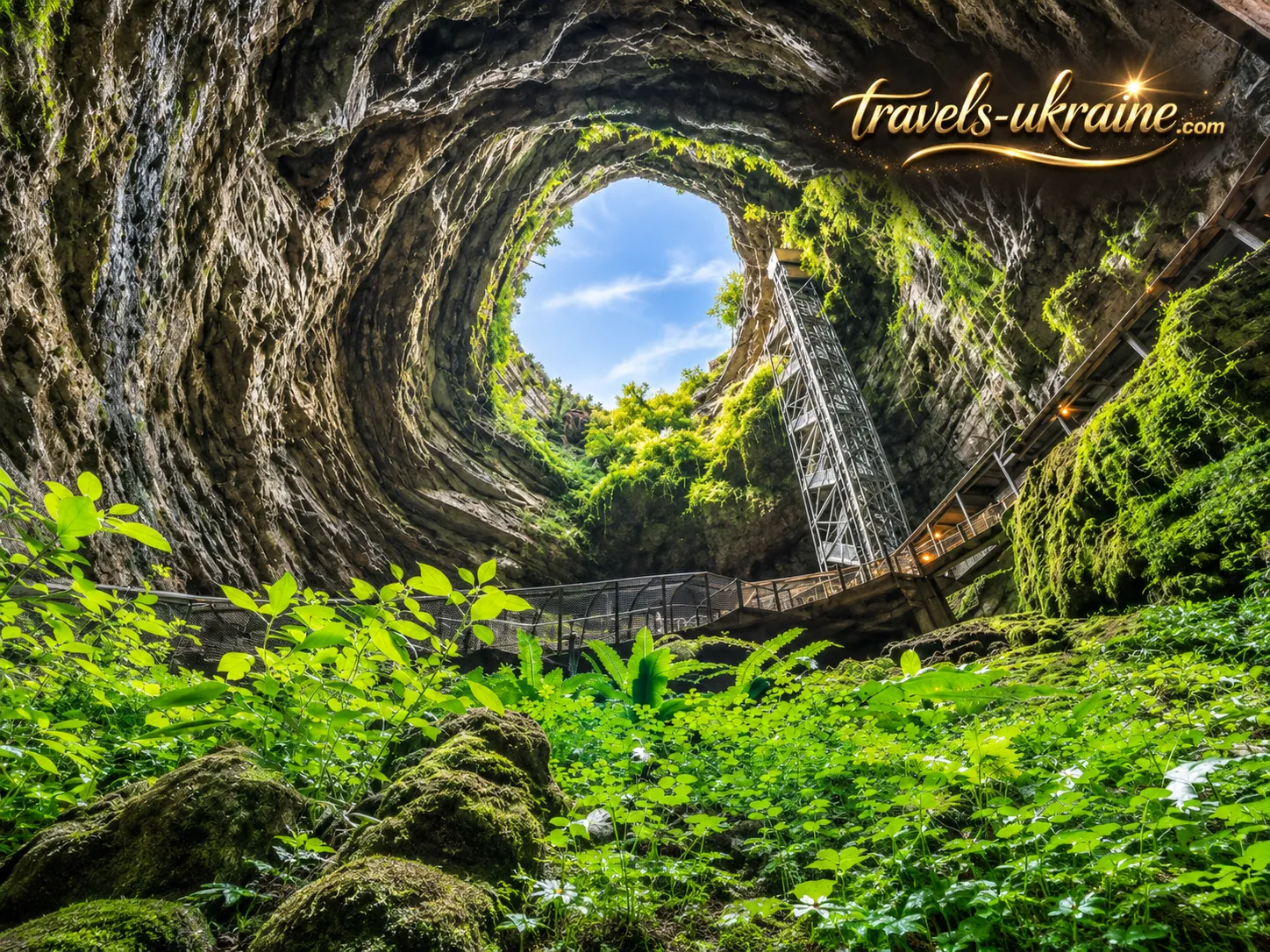
Some natural wonders reveal their grandeur even from a distance. Towering mountains rise above the horizon, rocky gorges stretch for kilometres, and mighty waterfalls announce their presence with the thunder of rushing water. But Padirac Chasm in the French region of Occitanie is entirely different. It is almost impossible to spot from afar, because the true magnificence of this natural landmark lies not above the ground, but beneath its surface.
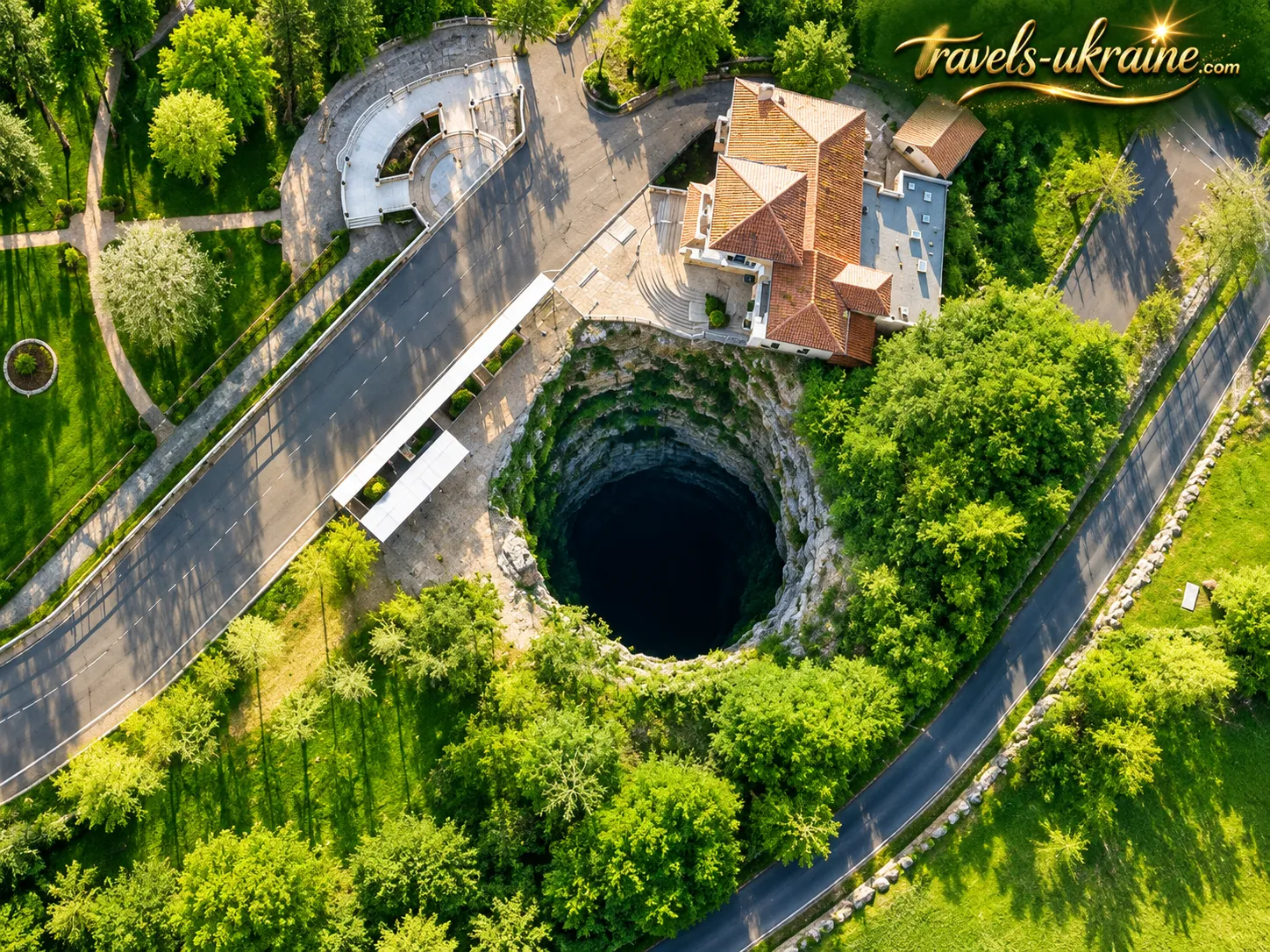
At first glance, the surrounding countryside looks much like many other picturesque tourist attractions in France. Peaceful green landscapes, narrow roads, stone walls and the charming rural scenery typical of the French countryside. Yet in the middle of this familiar setting, an enormous circular chasm suddenly opens up, its sheer rock walls plunging dramatically into the depths. And it is here that you begin to realise that an entirely different world lies hidden beneath the seemingly peaceful surface of the plateau.
Dimensions of Padirac Chasm
Padirac Chasm measures approximately 33 metres in diameter, while its open vertical shaft reaches a depth of 75 metres. These dimensions make the natural opening truly impressive: its width is comparable to the length of a large passenger aircraft, while its depth exceeds the height of many multi-storey buildings.
The shape of the chasm is particularly striking. Viewed from above, it resembles an enormous natural well surrounded by irregular limestone walls. In places, its edges project outwards, forming rocky ledges, while the cavity itself narrows and changes shape towards the bottom. As a result, even looking down from the surface does not immediately reveal all the features of its interior.
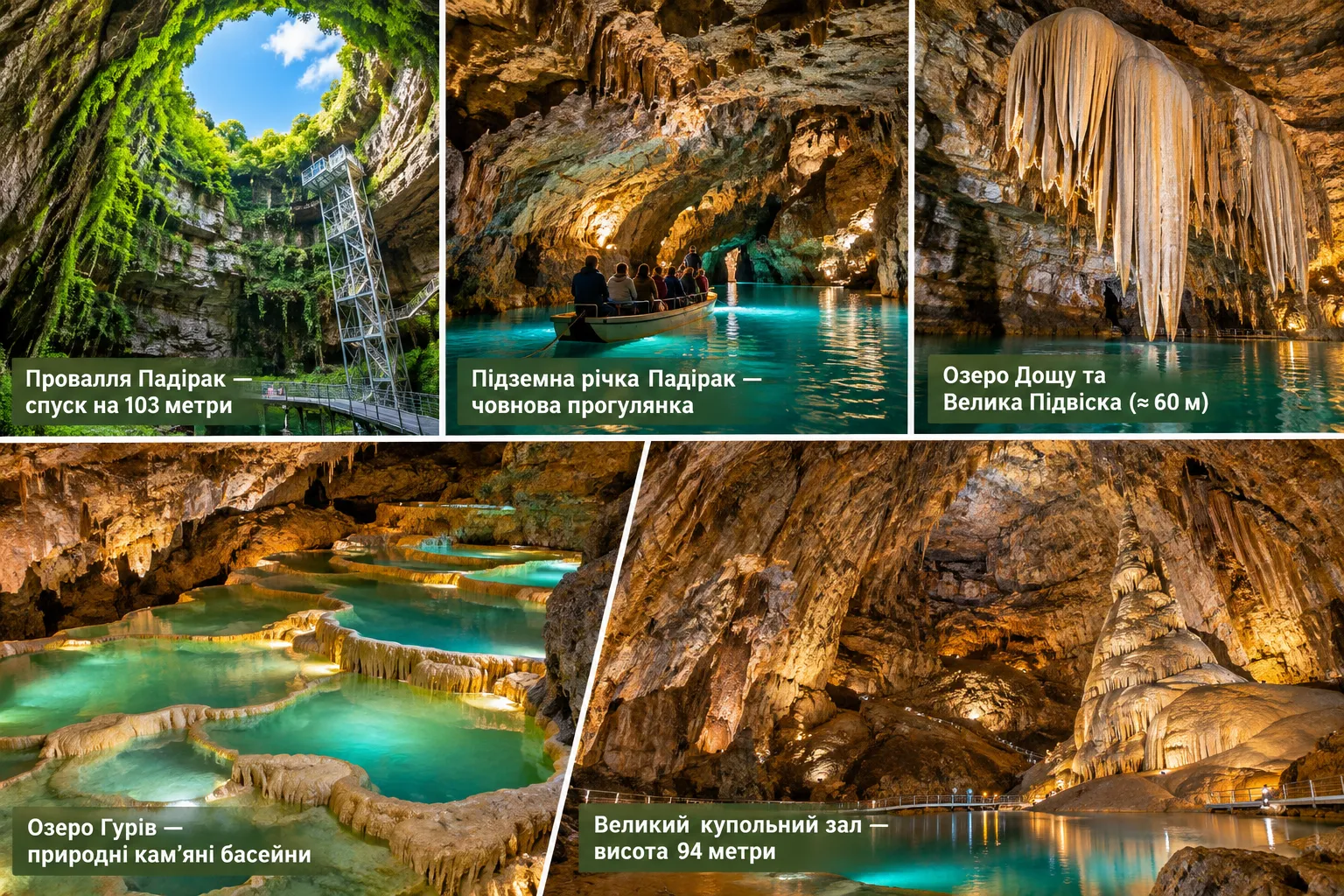
Interestingly, the open chasm is only the upper part of the Padirac natural complex. Below it lies a system of underground passages leading to a river approximately 103 metres beneath the surface. Therefore, these two figures do not contradict each other: the first describes the depth of the natural vertical shaft, while the second refers to the level of the underground section of the visitor route.
It is precisely this contrast between the relatively compact entrance and the much larger underground world that makes the Gouffre de Padirac so extraordinary. From the surface, only a small part of the natural system is visible, and its true scale is impossible to imagine from its external appearance alone.
Padirac's Natural Shaft — Stone Walls, Greenery and a Unique Microclimate
One of the most fascinating features of Padirac Chasm is its natural environment. Unlike completely enclosed underground caves, the upper section of the chasm is directly connected to the surface, allowing sunlight, rainwater and air to enter. However, conditions at the bottom of this deep natural shaft differ noticeably from those on the open plateau. The towering rock walls limit the amount of sunlight reaching the depths, reduce the effects of wind and help retain moisture. As a result, a distinctive local microclimate develops inside the chasm.
This explains the surprisingly lush vegetation growing along its walls and rocky ledges. Mosses, ferns, shrubs and trees create an unexpected contrast with the rugged limestone surfaces. In places, leafy branches literally hang over the abyss, while plants take root in cracks where sufficient moisture and soil have accumulated.
This natural scenery becomes particularly striking on sunny days. The upper sections of the cliffs are illuminated by daylight, while the lower areas gradually disappear into shadow. This uneven lighting makes the chasm appear even deeper and gives its stone walls a more dramatic, three-dimensional appearance. Interestingly, the natural shaft looks completely different depending on the viewing point. From above, visitors can appreciate its circular shape and impressive dimensions, while the descent reveals details of the limestone walls that are almost invisible from the surface. What initially appears to be a continuous expanse of rock gradually transforms into a complex natural landscape filled with ledges, cracks and vegetation.
The Vertical Structure of Padirac Chasm — From the Surface to the Underground Galleries
To understand the scale of the Gouffre de Padirac, it is important to imagine it not simply as a deep hole in the ground, but as an extraordinary natural vertical structure connecting two entirely different worlds. The upper level is the surface of the limestone plateau, where the entrance to the natural shaft is located. Below it begins the open vertical section of the chasm. Deeper still are underground passages and galleries leading towards the bed of the subterranean river.
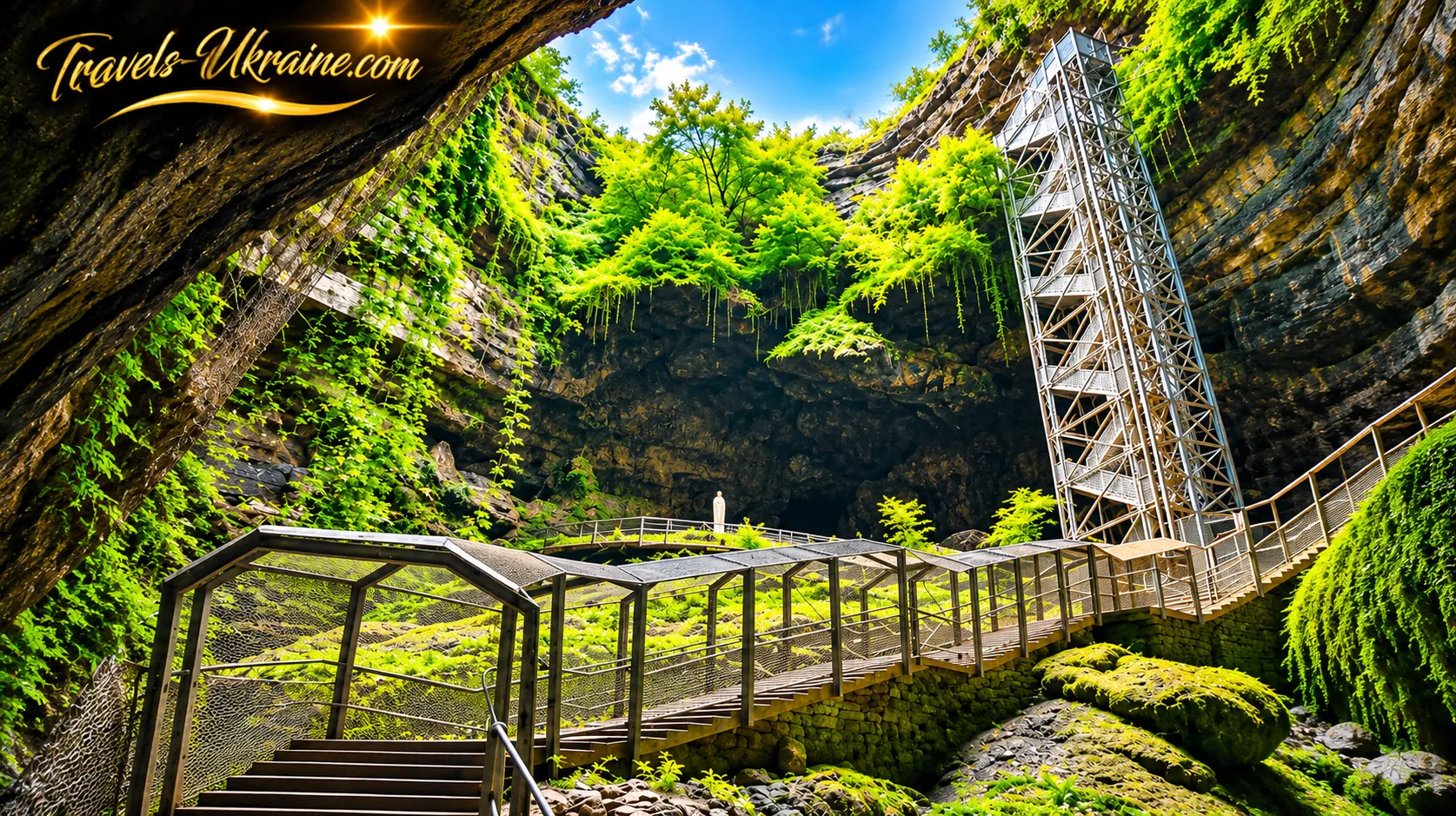
Today, visitors no longer need specialised climbing equipment to descend into these depths. The chasm is equipped with a staircase system and panoramic lifts, allowing tourists to travel downwards while admiring the limestone walls of the natural cavity. One of its best-known architectural features is a staircase with 207 steps, whose design resembles the metal structures associated with the engineering achievements of the Eiffel era. The staircase allows visitors to gradually change their viewing height and admire the natural shaft from different perspectives.
However, the descent into the chasm should not be confused with the entire underground visitor route. The natural vertical shaft is only the first stage of exploring Padirac. Beyond it begin enclosed stone galleries where daylight no longer penetrates and the surrounding passages are illuminated by specially installed lighting. This transition makes the difference between an open karst chasm and a genuine underground cave system particularly noticeable. The bright opening overhead gradually disappears from view, while ahead stretches a hidden world concealed deep within the limestone plateau.
What Makes Padirac Chasm Different from Other Caves in France?
Most famous tourist caves are associated with horizontal entrances in mountainsides, narrow corridors or stairways that gradually lead deeper into the rock. Padirac Chasm has a fundamentally different feature — an enormous natural vertical entrance that is a remarkable geological attraction in its own right. In addition, Padirac's underground system is distinguished by its river, vast chambers and complex network of galleries. Unlike smaller caves, where a tourist visit may be limited to just a few passages, the underground world here extends far beyond the areas accessible to visitors.
At the same time, it would be incorrect to describe Padirac as the largest or deepest cave in the world. Its uniqueness lies not in record-breaking dimensions, but in the rare combination of an open chasm, an accessible underground river and enormous natural cavities. And this raises the most fascinating question of all: how could such an enormous vertical abyss have appeared in the middle of a relatively flat limestone plateau? Why did the rock formations take on this particular shape, where did the underground galleries come from, and how did water manage to carve its way through the rock at a depth of more than a hundred metres?
The answers lie in the geological history of the Quercy region, where natural processes unfolding over millions of years gradually transformed even the most resistant rock formations. These processes explain the origins of one of France's most famous karst sinkholes.

How Padirac Chasm Was Formed — Its Geological History
Looking at the enormous rocky abyss in the heart of French Occitanie, it is difficult to believe that this place once had neither a deep chasm nor underground galleries, and that the limestone plateau itself did not yet exist in its present form. In fact, millions of years ago, the area where Padirac Chasm stands today was part of an ancient seabed. And it is with this surprising fact that the geological history of one of the world's most fascinating natural wonders begins.
Unlike caves in France formed by volcanic activity, Padirac has a karst origin. Its underground cavities were created primarily by water seeping through cracks in limestone formations, gradually dissolving the rock and carving its way deeper into the Earth. This process continued over an extraordinarily long period, and the modern chasm is only one of its most visible results. To understand how this remarkable formation came into existence, we need to travel approximately 170–180 million years into the past, to the Jurassic period of Earth's geological history. At that time, large areas of what is now France lay beneath the waters of a warm, relatively shallow sea. Where the limestone plateaus of Quercy stand today, there was once a marine environment inhabited by numerous invertebrates, molluscs and other ancient sea creatures.
Sediments rich in calcium carbonate gradually accumulated on the seabed. They included fragments of shells, remains of marine organisms and fine carbonate material. Over millions of years, these deposits became compacted, underwent structural changes and eventually transformed into solid sedimentary rocks — the limestones that now form the foundation of the Causse de Gramat plateau. It may be difficult to imagine, but the stone walls of Padirac, which today appear so solid and unchanging, are actually composed of rocks formed in an ancient marine environment. What was once sediment on the seabed eventually became the building material for an enormous underground system.
As geological time passed, the sea retreated, leaving the thick limestone formations exposed at the surface. According to educational materials provided by the Padirac visitor complex, the final retreat of the sea from this region occurred approximately 65 million years ago. However, the chasm we see today did not yet exist. Further geological transformations would eventually create the conditions necessary for the development of its underground cavities.
The Collapse of an Underground Roof — How Did Padirac Chasm Form?
This raises a perfectly reasonable question: if water created the underground galleries, where did the enormous vertical opening that visitors see today come from? After all, an ordinary underground stream could not directly carve such a wide, open shaft extending from the surface to the bottom.
The answer lies in the collapse of the roof of an ancient underground cavity. As water gradually widened the galleries, sections of the rock above them slowly lost their stability. Weathering, fractures and the deterioration of limestone weakened the natural structure that had supported the overlying rock layers for a very long time. Eventually, the roof above one of the large underground cavities collapsed. Part of the rocky ceiling gave way, creating an enormous opening at the surface that connected the outside world with the underground system. This is how the formation now known as Padirac Chasm (Gouffre de Padirac) came into existence.
Determining the exact date of this event is impossible. According to geological estimates, the natural opening has existed for at least several hundred thousand years. The system of underground galleries itself, however, began forming much earlier. It is important to understand that Padirac is not a volcanic crater, although its enormous circular shape may sometimes create that impression. No volcanic eruption or meteorite impact occurred here. What we see today is the result of prolonged water activity, the gradual erosion and dissolution of limestone, and the subsequent collapse of part of the underground structure.
The Underground River of Padirac — Where Does the Water Go Beneath the Earth?
One of the most fascinating consequences of karst processes was the formation of Padirac's underground river. Its water enters the subterranean system through numerous fractures and drainage areas across the limestone plateau, before flowing through natural galleries and channels. Unlike surface rivers, whose courses can be traced on an ordinary geographical map, underground watercourses often remain hidden from human sight. They may pass through narrow rock channels, expand into large cavities, form underground lakes and disappear once again into deep galleries.
The Padirac underground river forms part of a complex karst water system connected to the Dordogne River basin. The water travels approximately twenty kilometres underground before returning to the surface through natural springs. One of the confirmed outlets of these subterranean waters is the Saint-Georges Spring (Fontaine Saint-Georges) near Montvalent.
Interestingly, water continues to flow through the underground galleries at all times. After heavy rainfall, water levels may rise, while during prolonged dry periods they can fall. This means that the cave system is not a static geological formation: it continues to evolve, although most of these changes take place extremely slowly.
Stalactites, Stalagmites and Calcite — How Are the Stone Sculptures of Caves Formed?
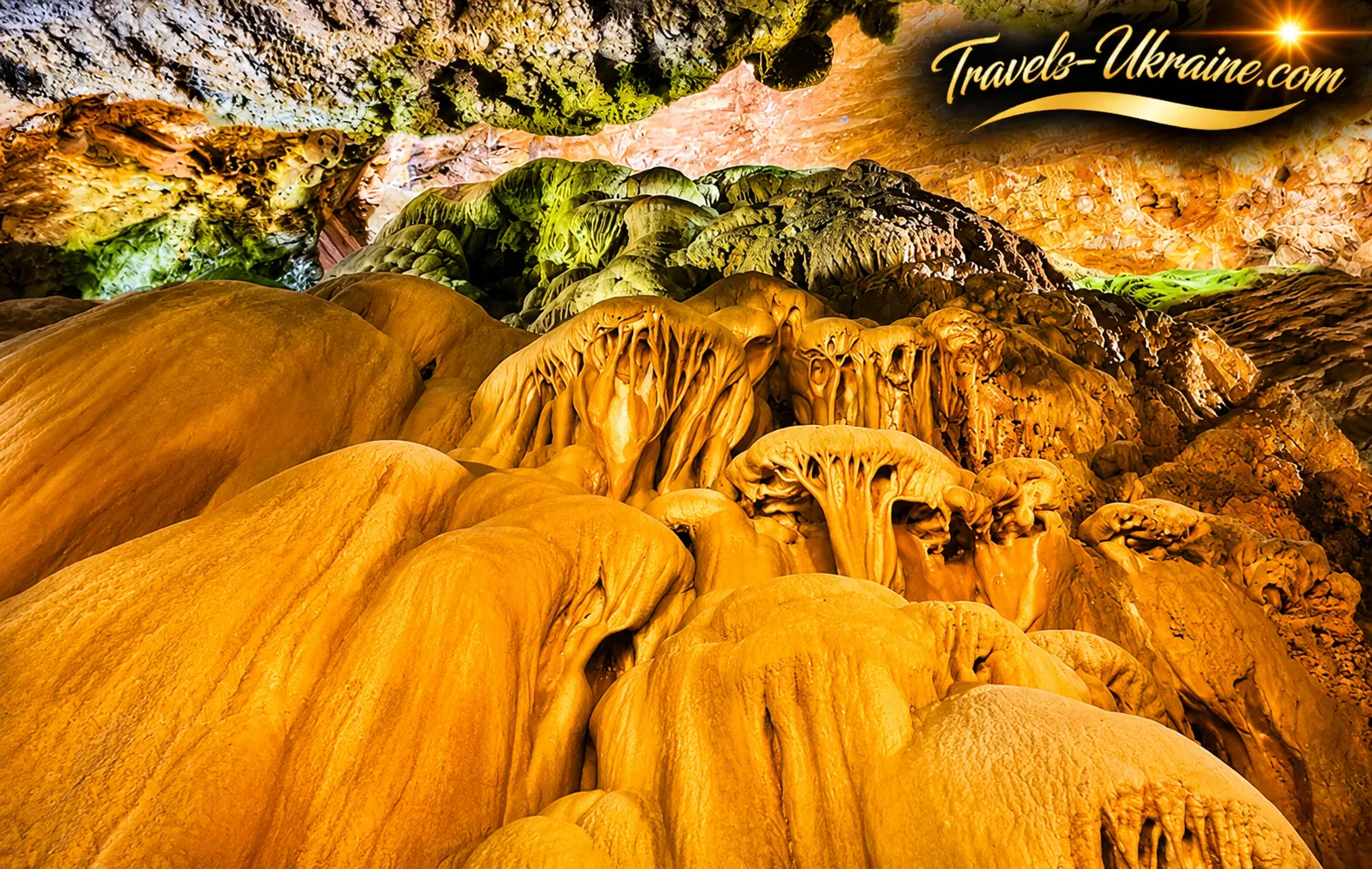
While Padirac's underground galleries were formed through the dissolution of limestone, the numerous stone formations inside the caves developed through the opposite process — the deposition of minerals from water. As rainwater passes through layers of limestone, it dissolves some of the calcium carbonate contained in the rock. When this mineral-rich water enters the air-filled space of a cave, it may release some of its dissolved carbon dioxide, causing calcium carbonate to gradually precipitate in the form of the mineral calcite. This is how the famous stalactites and stalagmites are formed. Stalactites grow downwards from cave ceilings, while stalagmites develop on the cave floor where drops of mineral-rich water repeatedly fall over long periods. If the two formations eventually meet, they create a natural stone column.
However, calcite formations are not limited to the familiar pointed shapes. Depending on water flow, the height from which droplets fall, the concentration of dissolved minerals and the cave's microclimate, extraordinary flowstone surfaces, stone curtains, terraces and massive mineral structures may develop. Particularly fascinating are rimstone pools (gours) — small natural basins separated by calcite barriers. They form where water slowly flows over minor obstacles, leaving behind mineral deposits. Over time, these barriers gradually grow, creating cascades of miniature underground pools.
In the caves of Padirac, these natural processes have produced an extraordinary variety of mineral formations. Some reach heights of several tens of metres, yet grow so slowly that enormous periods of time are required for such large structures to develop. And it is here that one of the most remarkable features of the underground world becomes apparent: water can simultaneously dissolve and erode rock in some places while creating new mineral structures in others. As a result, the underground galleries gradually change their shape, while natural stone formations continue to develop even today.
Could Padirac Chasm Change in the Future?
Padirac's geological history did not end with the formation of the open chasm. Underground water continues to move through karst channels, limestone rocks gradually dissolve, and mineral deposits alter the appearance of the cave chambers. On a geological timescale, this means that the natural complex remains active and capable of further transformation.
One of the most fascinating examples is the Great Dome Chamber (Salle du Grand Dôme), where the ceiling reaches a height of approximately 94 metres. According to geological information provided in tourist educational materials, the thickness of the rock above part of this enormous chamber is only about nine metres. In theory, after a very long period of rock deterioration, this ceiling could also collapse, creating a new open karst shaft. However, this does not mean that such an event is expected in the near future. The geological processes responsible for forming large sinkholes can take thousands or hundreds of thousands of years, and their development depends on numerous natural factors.
Climatic conditions, water infiltration into the rock, temperature fluctuations and the mechanical breakdown of limestone all play important roles. It was the combination of these processes in the distant past that contributed to the formation of the modern Padirac Chasm. Therefore, Padirac is not merely an enormous abyss, but the result of a complex geological history that began on the floor of a Jurassic sea and continues to this day. Ancient marine sediments, tectonic movements, underground water and the collapse of a rocky ceiling together created a natural complex that now allows visitors to glimpse the hidden depths of the Earth.
The Discovery of Padirac Chasm — The Story of Édouard-Alfred Martel
Today, Padirac is one of France's most famous underground natural attractions. However, as recently as the late 19th century, this enormous chasm remained a mysterious place, and almost nothing was known about its underground river and vast cave galleries. Their discovery became an important milestone in the history of speleology, largely thanks to the French explorer Édouard-Alfred Martel.
On 9 July 1889, the French explorer, accompanied by Gabriel Gaupillat, Émile Foulquier and Louis Armand, embarked on an expedition that would forever change the history of Padirac Chasm. Martel was a qualified lawyer, but he devoted much of his life to exploring caves. His systematic expeditions, geographical measurements and mapping of underground spaces eventually earned him recognition as one of the founders of modern speleology.
During their descent into Padirac, the explorers used rope ladders, ropes, candles and a magnesium lamp. There were no lifts, developed walkways or reliable means of communication with the surface at that time. Underground, they faced unexplored passages, slippery rocks and water obstacles. On the first day, the expedition advanced approximately 400 metres from the entrance shaft, but an underground river blocked their further progress. The following day, Martel and Gaupillat continued their exploration aboard a small collapsible boat named “Crocodile”.
It was an extraordinarily risky journey through complete darkness, beneath rocky ceilings and along unexplored water-filled galleries. Nevertheless, this expedition made it possible to investigate a significant section of Padirac's underground river in detail for the first time. Altogether, approximately 1,640 metres of underground passages were explored during the 1889 expedition.
How Did Padirac Chasm Become a Tourist Attraction in France?
Martel did not stop after his first discovery. In the following years, he organised further expeditions, explored additional galleries and produced maps of the underground system. By 1900, his team had managed to survey approximately 2,750 metres of passages. At the same time, the explorer wanted to make this natural wonder accessible to ordinary travellers. With the support of businessman Georges Beamish, work began on developing visitor pathways, staircases and other facilities for tourists.
The first paid tours took place on 1 November 1898, and on 10 April 1899, Padirac Chasm officially opened to the public. By 1900, it had already welcomed 3,935 visitors, an impressive figure for an underground attraction at that time. Over the following decades, the infrastructure continued to improve: electric lighting was introduced in 1901, and the first lift was installed in 1930. These developments made the descent considerably more comfortable and helped transform Padirac into one of the most popular natural attractions in the Occitanie region.
Today, the story of Édouard-Alfred Martel reminds us that even the greatest geographical discoveries often begin with simple human curiosity. Thanks to his determination and courage, the mysterious “Devil's Hole”, as this place was once known, revealed its extraordinary underground world to humanity.
A Journey Along Padirac's Underground River — Boat Rides, Cave Chambers and Natural Wonders
Imagine a journey where towering stone ceilings replace the sky above your head, and an ordinary walking trail suddenly gives way to an underground river. This is exactly what awaits visitors on a tour of Padirac Chasm (Gouffre de Padirac) — one of the most extraordinary natural adventures in the French region of Occitanie.
The visitor route combines a descent into an enormous karst chasm, a walking tour through underground galleries and a boat ride along a subterranean river. The tour lasts approximately 1.5 hours, with a total route length of around 2.2 kilometres. During this time, visitors discover underground lakes, enormous chambers and extraordinary calcite formations.
Of course, the adventure begins with a descent into the enormous natural shaft. Visitors can use panoramic lifts or staircases, gradually making their way down alongside the towering limestone walls. Daylight becomes increasingly distant above, while the surrounding space takes on an entirely different atmosphere. At the bottom, the underground section of the route begins. Visitors follow illuminated galleries towards the river flowing deep beneath the surface of the Causse de Gramat plateau.
Next comes one of the main highlights of the Gouffre de Padirac — a boat ride along the underground river known as the Rivière Plane. At a specially equipped landing stage, visitors are welcomed by boat guides who accompany them through the water-filled galleries. The boat section of the route extends for more than 500 metres. Towering stone ceilings, still water, reflections of illuminated rock formations and the almost complete absence of sounds from the outside world create an extraordinary atmosphere. It feels as though the boat is travelling not along an ordinary river, but through an immense natural palace hidden deep within the Earth.
Underground Lakes and the Great Pendant — Symbols of Padirac Chasm
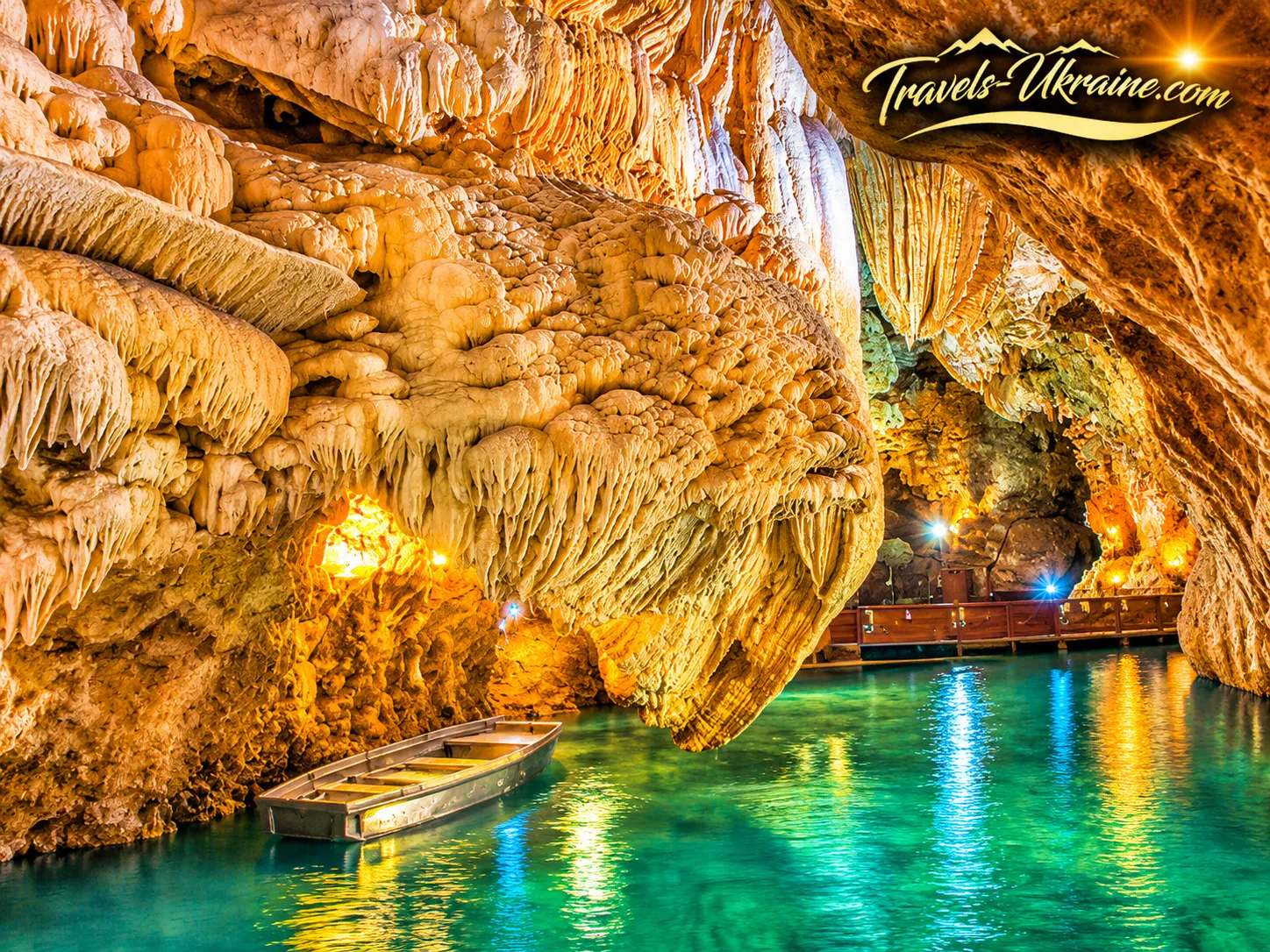
The underground river leads to Rain Lake (Lac de la Pluie), which takes its name from the drops of water falling from the cave ceiling, creating a remarkable underground rainfall effect. Rising above the lake is the famous Great Pendant (Grande Pendeloque) — a gigantic calcite formation approximately 60 metres long. It resembles an enormous stone icicle hanging from the cave ceiling almost to the surface of the water. This is one of Padirac's most famous natural wonders.
After the boat ride, the tour continues on foot. Among the most fascinating sights is Lake of the Gours (Lac des Gours), renowned for its unusual calcite barriers that create cascades of small natural pools. These formations are known as gours, or rimstone pools. They develop through the gradual deposition of minerals from water. With its gently curved stone edges, crystal-clear water and soft lighting, the lake resembles a fantastical underground masterpiece created entirely by nature.
The Great Dome Chamber — 94 Metres of Underground Grandeur
The highlight of the tour is the Great Dome Chamber (Salle du Grand Dôme) — an enormous natural cavity whose ceiling reaches a height of approximately 94 metres. In terms of scale, this space can be compared to a 30-storey building, yet it is completely hidden underground. The chamber is decorated with numerous stalactites, flowstone formations and natural stone columns. Particularly remarkable are the Upper Lake (Lac Supérieur) and the unusual calcite formation known as the “Stack of Plates” (Pile d’Assiettes). Carefully designed lighting makes these natural formations appear even more spectacular.
It is here that the true grandeur of Padirac's underground world becomes most apparent: enormous stone ceilings rise high overhead, remarkable rock formations tower all around, and beneath your feet stretches a vast cave system that continues to conceal many unexplored mysteries.
Frequently Asked Questions About Padirac Chasm (Gouffre de Padirac)
When is Padirac Chasm open, and can you visit it in winter?
Padirac Chasm is a seasonal tourist attraction. The visitor season generally runs from spring to autumn, while the underground complex is closed during winter. For example, the 2026 season ended on 1 November, and the next opening is scheduled for spring 2027. For exact dates, opening hours and available tour times, check the official Gouffre de Padirac calendar.
How much are tickets to Padirac Chasm, and how can you book them?
During the 2026 season, ticket prices ranged from €20 to €24 for adults, €18.50 to €22 for visitors over 12 and students, and €14 to €18 for children aged 4 to 12. Children under 4 could visit the complex free of charge. Prices varied depending on the season. Advance online booking is recommended, particularly during summer and at weekends. Current prices and tickets are available through the official booking website. Before making a payment, carefully check the selected date and time, as electronic tickets are generally non-refundable and cannot be exchanged under the standard booking conditions.
What is the temperature inside Padirac Chasm, and what should you wear?
The air temperature inside the Padirac caves remains at approximately 13°C (55°F) throughout the year, while the underground river has a water temperature of around 12°C (54°F). Even on a hot summer day, the underground environment remains cool. Visitors are advised to bring a light jacket or warm jumper and wear comfortable, closed-toe shoes with non-slip soles. Stone pathways and steps may be damp.
Can you visit Padirac Chasm with young children?
Yes, Padirac Chasm can be visited with children of different ages. Admission is free for children under 4, but pushchairs and prams are not permitted inside the underground complex. A suitable baby carrier is recommended for very young children. Parents should also consider the length of the tour, the cool underground temperature and the number of steps. Children must be supervised at all times, especially during the underground boat ride.
Are there lifts at Padirac Chasm, and is the tour accessible to visitors with reduced mobility?
Padirac Chasm has three lifts that make descending underground and returning to the surface easier. The complete route involves approximately 500 steps when using the staircases, while visitors who use the lifts still need to negotiate around 150 steps in total. Due to the natural terrain, stairways and underground boat crossing, the tour is not wheelchair-accessible. Visitors with reduced mobility should contact the attraction's management in advance to discuss their individual accessibility requirements.
Where can you park near Padirac Chasm?
Visitor car parks are available near Gouffre de Padirac, including parking areas P1 and P2. Designated spaces are also provided for tourist coaches and visitors with reduced mobility. During the peak tourist season, arriving early is recommended to allow enough time to park and walk to the entrance. Visitors should check the current parking arrangements on the attraction's official website before travelling.
Can you take photographs inside Padirac Chasm, and are pets allowed?
Photography without flash is permitted inside Padirac Chasm along the walking sections of the visitor route. Photography is prohibited during the underground boat ride for safety reasons. Pets are not allowed inside the underground complex, except for guide dogs and specially trained assistance dogs. Visitors are also prohibited from touching stalactites, stalagmites and other natural calcite formations.
What safety rules should visitors know before exploring Padirac Chasm?
During the tour, visitors must stay on the designated route and follow the instructions of the staff, remain behind safety barriers and avoid leaving the established walkways. Particular care should be taken on staircases, damp surfaces and when boarding the boat. Visitors with a severe fear of heights, significant mobility difficulties or other limitations should contact the attraction's management in advance to discuss the conditions of their visit.
Padirac Chasm — A Journey into a World Hidden Beneath the Earth
France never ceases to amaze with its natural treasures, but not all of them can be discovered in the open air. Some lie deep underground, among rocky galleries, subterranean lakes and enormous vaulted chambers. Padirac in Occitanie is precisely such a place, where an ordinary sightseeing trip becomes a fascinating journey into a world shaped by nature over millions of years. What makes this destination truly special is its remarkable combination of an enormous karst chasm and an extensive underground cave system. Here, visitors can not only descend deep beneath the Earth's surface but also enjoy a boat ride along an underground river, admire extraordinary calcite formations and explore cavern chambers whose immense scale is almost impossible to imagine from above.
Yet what impresses visitors most is not simply the depth of the chasm or the grandeur of its natural ceilings, but the realisation that all these extraordinary formations were created by nature itself. Water, which seems so gentle and powerless against solid rock, has managed to shape an entire underground world over immense periods of time. And even today, this hidden world continues to evolve according to its own natural processes.
Padirac Chasm in France is particularly appealing to travellers looking for something beyond conventional tourist routes. It offers an excellent opportunity to enrich a journey through Occitanie, discover the remarkable natural attractions of the Lot department and experience France from an entirely different perspective.
And perhaps most interestingly, the natural discoveries do not end here. Just a few kilometres from Padirac lies another picturesque attraction in Occitanie — Autoire Waterfall. Its 30-metre cascade, enormous rocky amphitheatre and medieval Château des Anglais create a completely different atmosphere, although both destinations share a common geological history. The distance between them is approximately 10 kilometres by road, making it entirely possible to combine an underground adventure at Padirac with a scenic walk to the waterfall in a single day.
Of course, this adventure is worth planning in advance, as the underground complex operates seasonally. But if your trip coincides with its opening season, Gouffre de Padirac certainly deserves a place on your travel itinerary. And perhaps, after visiting Padirac, you will begin to see ordinary hills, green meadows and rocky plateaus in an entirely different light. After all, you will know that sometimes, beneath a peaceful landscape, an entire world lies hidden — one just as extraordinary as anything we are accustomed to seeing on the surface.


No Comment
You can post first response comment.