
 English
 Українська
 Русский

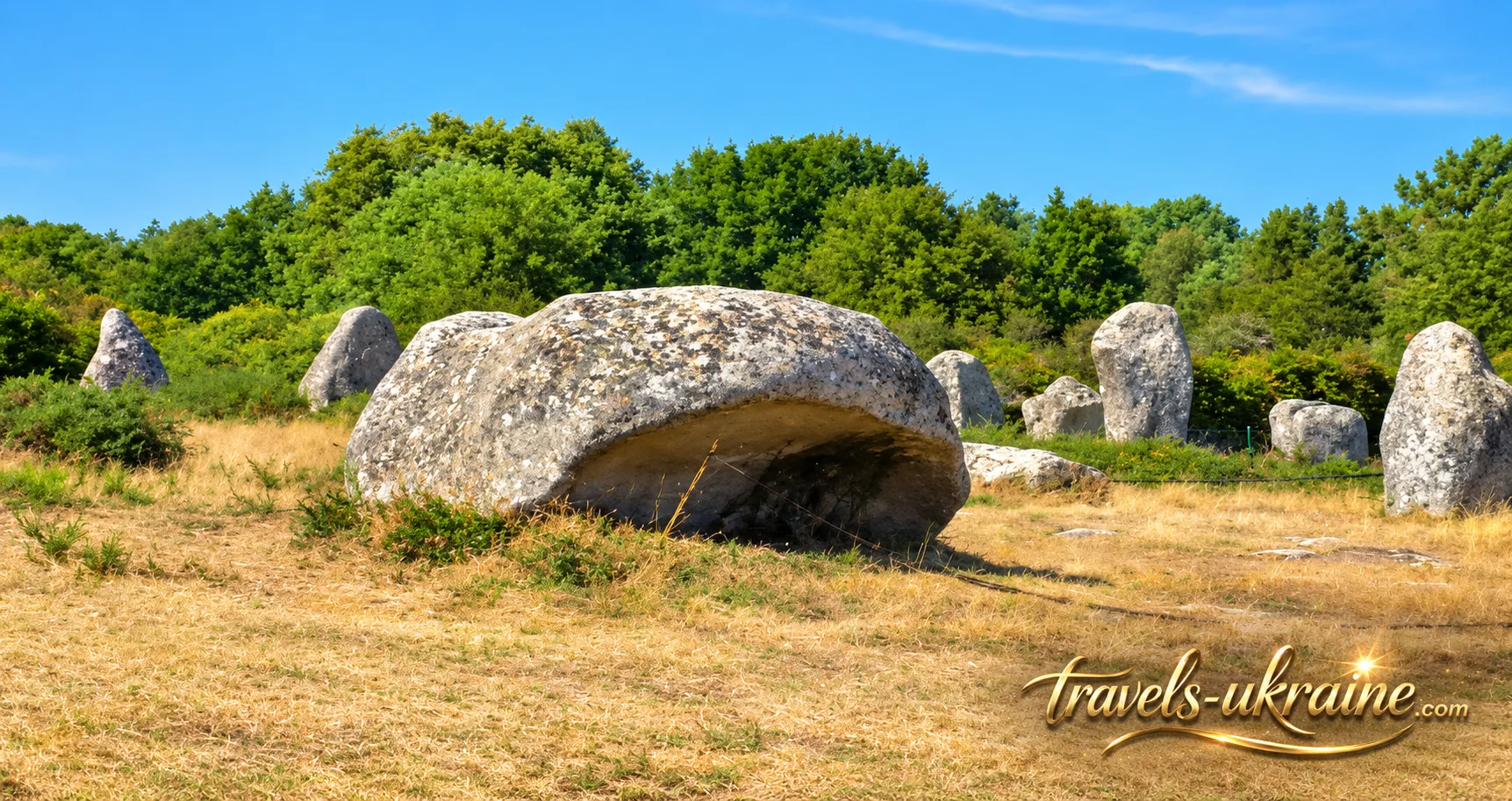
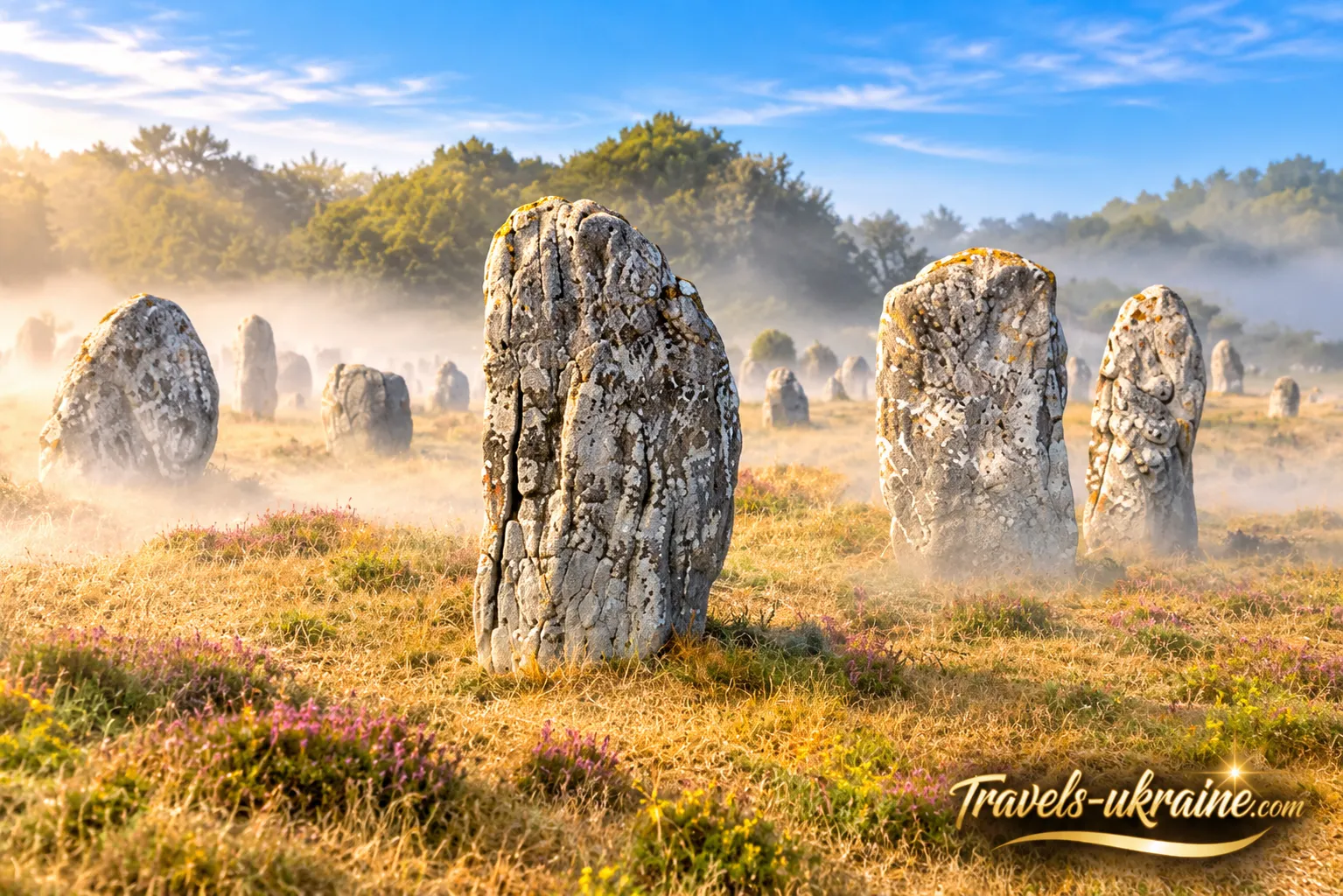
Imagine a place where time seems to have stood still for thousands of years. Among the green meadows of French Brittany, beneath the ever-changing Atlantic sky, stand thousands of silent stones. Some barely rise above the ground, while others tower over human height. They stretch in long rows towards the horizon, like pages of ancient history left behind by unknown builders — a story that humanity is still trying to decipher.
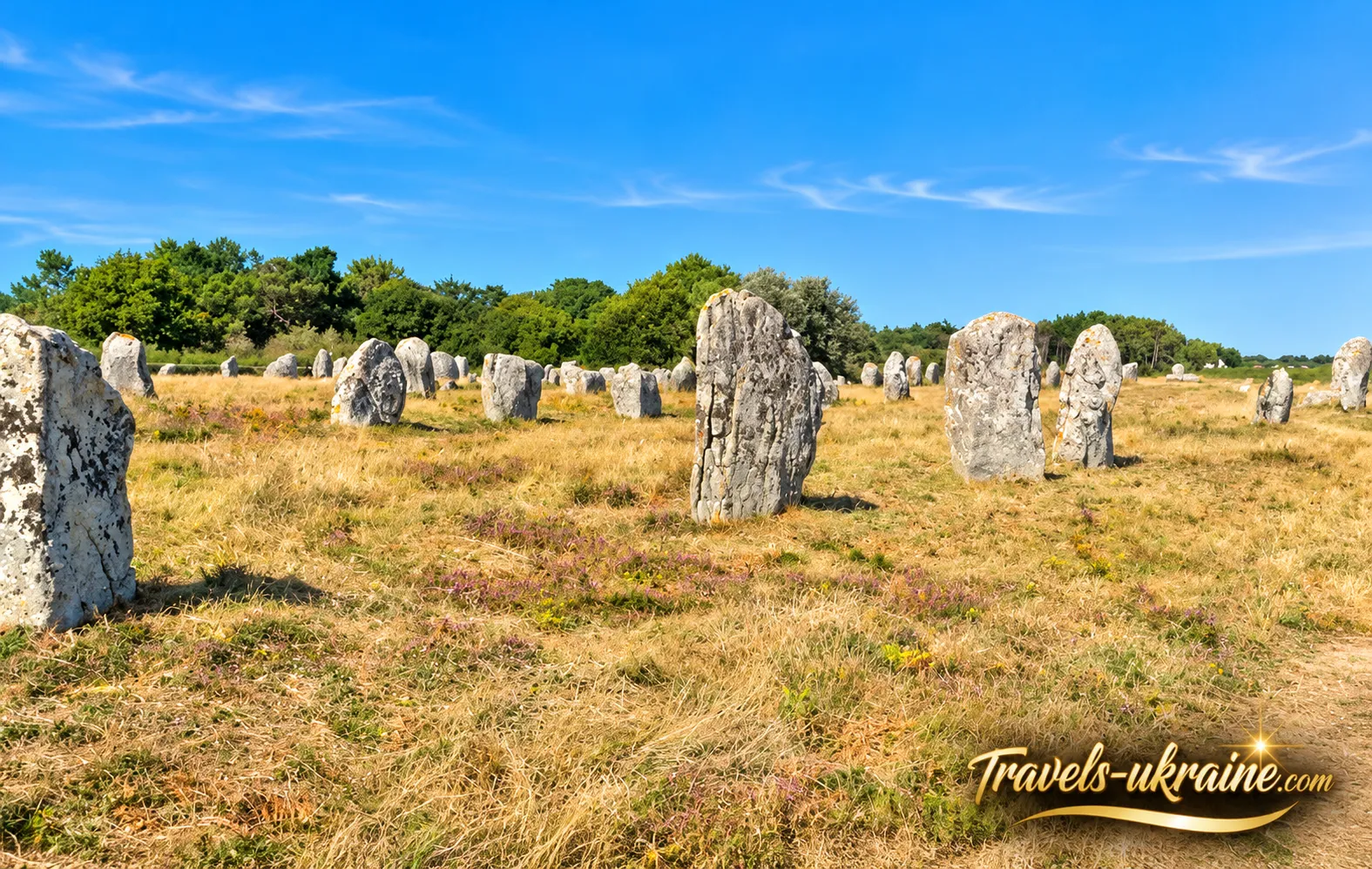
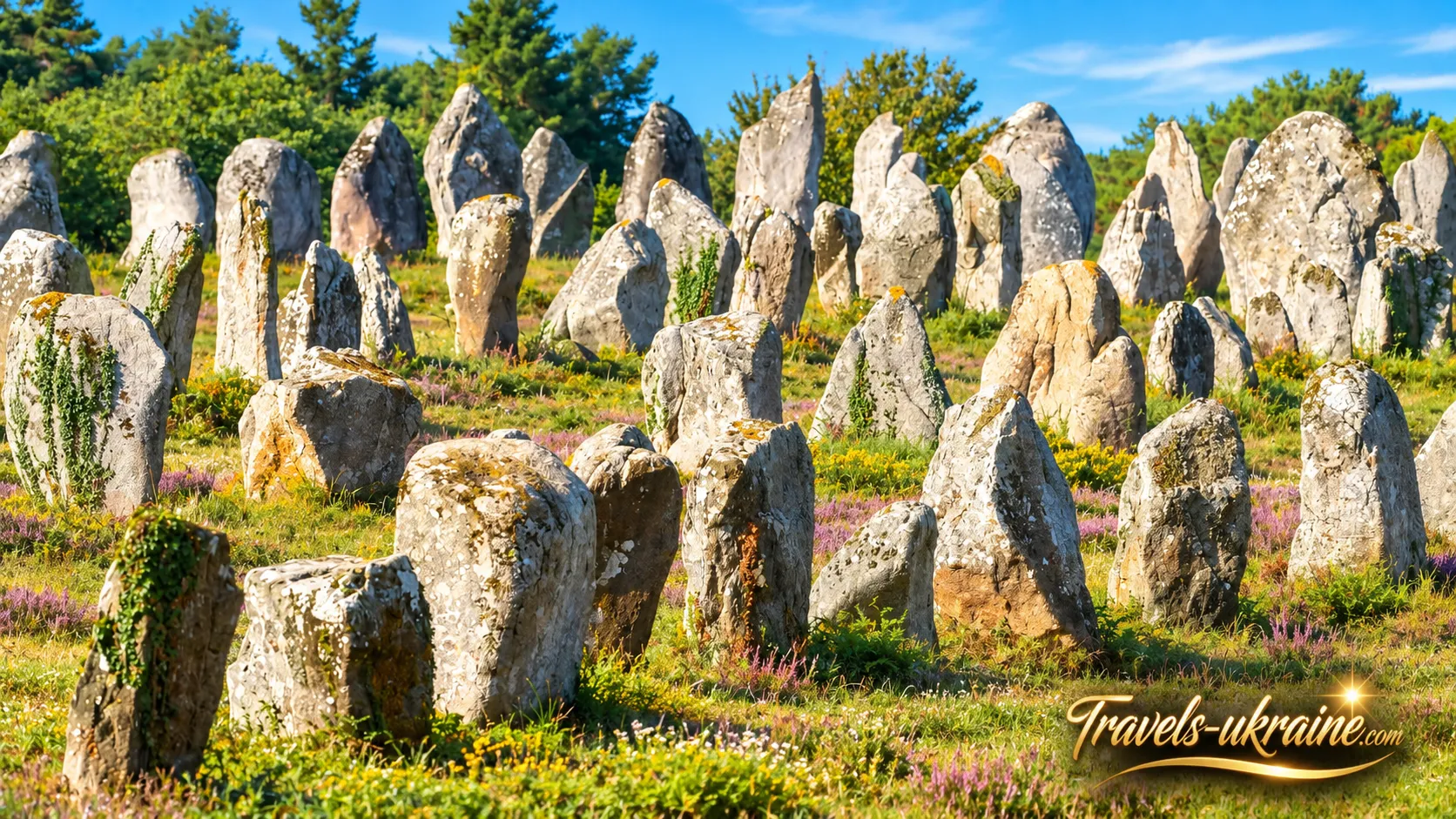
These are the Carnac Megaliths (Alignements de Carnac) — one of Europe's most impressive prehistoric complexes and one of France's most mysterious historical landmarks. Near the small town of Carnac, in the Morbihan department of southern Brittany, approximately 3,000 menhirs — large standing stones set vertically into the ground — have survived across an area stretching nearly four kilometres. Their history dates back approximately 6,500 years, to a time when people were beginning to develop agriculture and establish permanent settlements.
Yet what makes these stones truly fascinating is not even their age, but the mystery surrounding their purpose. Why did Stone Age communities need to erect such an enormous number of granite blocks? Were these rows a sacred site, part of ancient rituals, or perhaps a symbolic boundary between two worlds? Archaeologists have studied the Carnac megalithic complex for generations, but no definitive answer has yet been found. It is precisely this uncertainty that gives the ancient stones their extraordinary appeal.
Unlike museum exhibits preserved behind glass, the stones of Carnac remain part of Brittany's living landscape. The seasons change around them, the grass turns green, wildflowers bloom, and clouds drift above their granite peaks. Here, it is easy to feel an extraordinary connection with the distant past: everything around them continues to change, yet the stones still stand where they were placed by people whose names have been lost to history forever.
History, Origins and Mysteries of the Carnac Megaliths
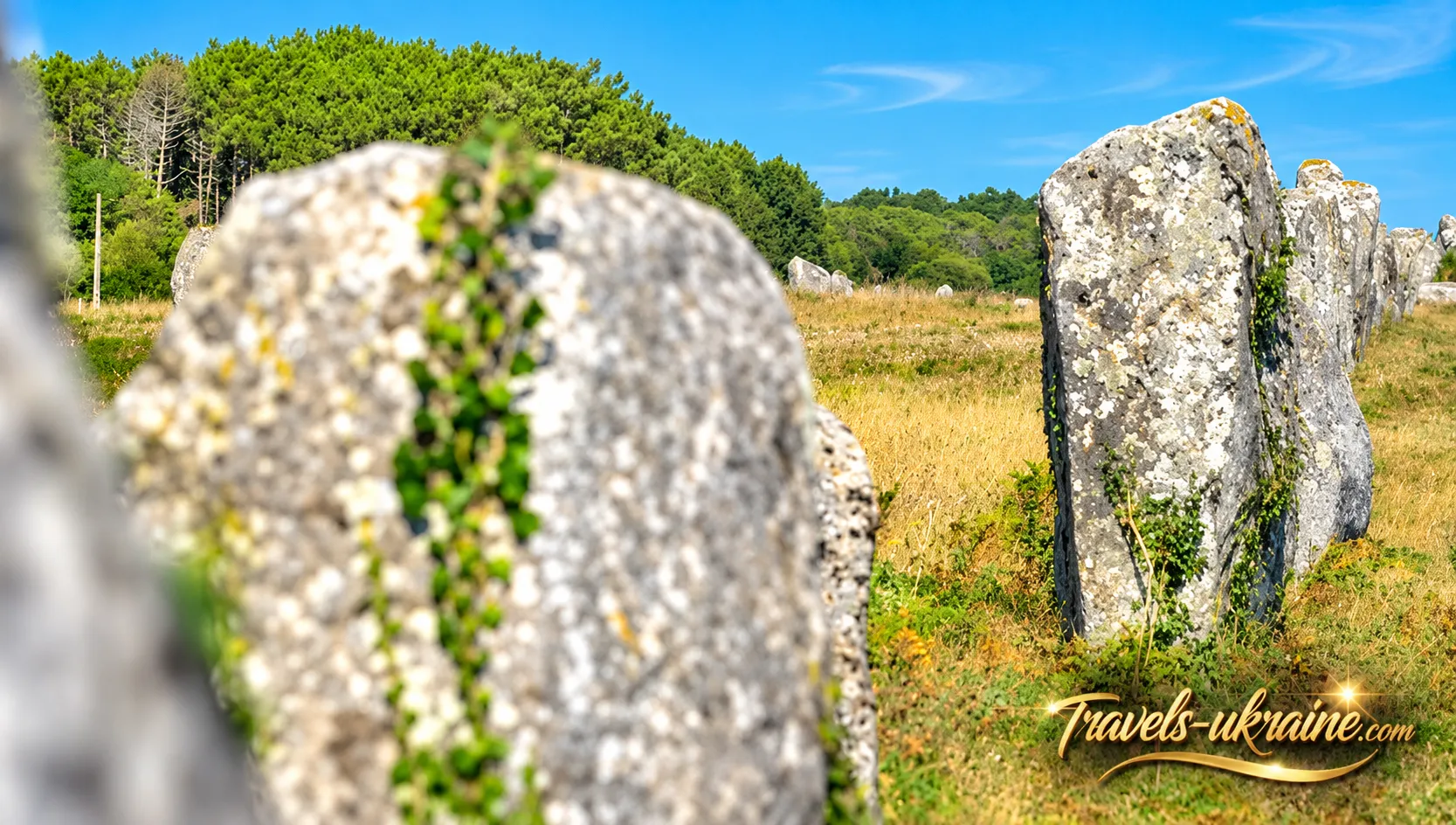
The history of the Carnac Megaliths began long before the emergence of Europe's first cities, ancient temples and the famous Egyptian pyramids. Millennia passed, peoples, beliefs and states changed, yet the enormous granite stones continued to stand on the lands of Brittany. They survived eras that left behind no written records, preserving the memory of people whose names have been lost in the depths of time.
Today, archaeologists can approximately determine when these structures were built, investigate the techniques used by their ancient builders and even reconstruct certain stages of their work. Yet the most important question remains unanswered: what motivated Stone Age communities to devote so much effort to creating such a monumental stone complex?
When Were the Carnac Megaliths Built, and Who Built Them?
The origins of the Carnac stone alignments are closely connected to the Neolithic period — the final stage of the Stone Age, when agriculture, livestock farming and permanent settlements gradually spread across what is now France. According to archaeological research, the construction of megalithic monuments in the Carnac area took place over an extended period, primarily during the fifth and fourth millennia BC.
It was a world entirely different from our own. Natural pathways stretched across the landscape instead of modern roads, small settlements existed in place of stone-built cities, and everyday life depended on the land, the weather and the changing seasons. People cultivated cereal crops, raised domesticated animals, made pottery and worked with wood and stone. At the same time, they already possessed sufficient knowledge and social organisation to construct complex monumental structures.
Who exactly directed the construction of the Carnac menhirs remains unknown. Their builders left behind neither written explanations nor names. However, the sheer scale of the complex suggests that its creation required the coordinated efforts of many people, careful planning and accumulated practical experience. This was not a random collection of stones, but a carefully organised system of monuments whose positioning took the natural features of the landscape into account.
How Did Ancient People Erect Such Enormous Stones?
One of Carnac's most fascinating mysteries concerns the techniques used during construction. Imagine people who had no steel tools, modern construction machinery or powerful mechanical equipment, yet managed to move massive granite blocks and position them upright. Some menhirs stand several metres tall, while the largest stones weigh many tonnes.
The natural environment of Brittany provided an important advantage to these ancient builders. In the Carnac area, granite occurs naturally at the surface, meaning that some stone blocks could be obtained relatively close to where they were erected. On certain menhirs, researchers have identified natural fracture surfaces and other traces that help explain the origins of the stones.
Archaeologists suggest that wooden levers, ropes, wooden sledges and other simple devices may have been used to move the heavy blocks. Experimental archaeology has demonstrated that large stones can be transported and raised through human effort and carefully organised teamwork. Nevertheless, the precise sequence of techniques employed by Carnac's builders remains a subject of ongoing research.
The erection of a menhir probably began with the preparation of a pit in the ground. The stone would have been moved towards the excavation, gradually raised using levers and pulling forces, and then secured at its base with smaller stones and soil. However, it cannot be assumed that every menhir in the complex was erected using exactly the same method.
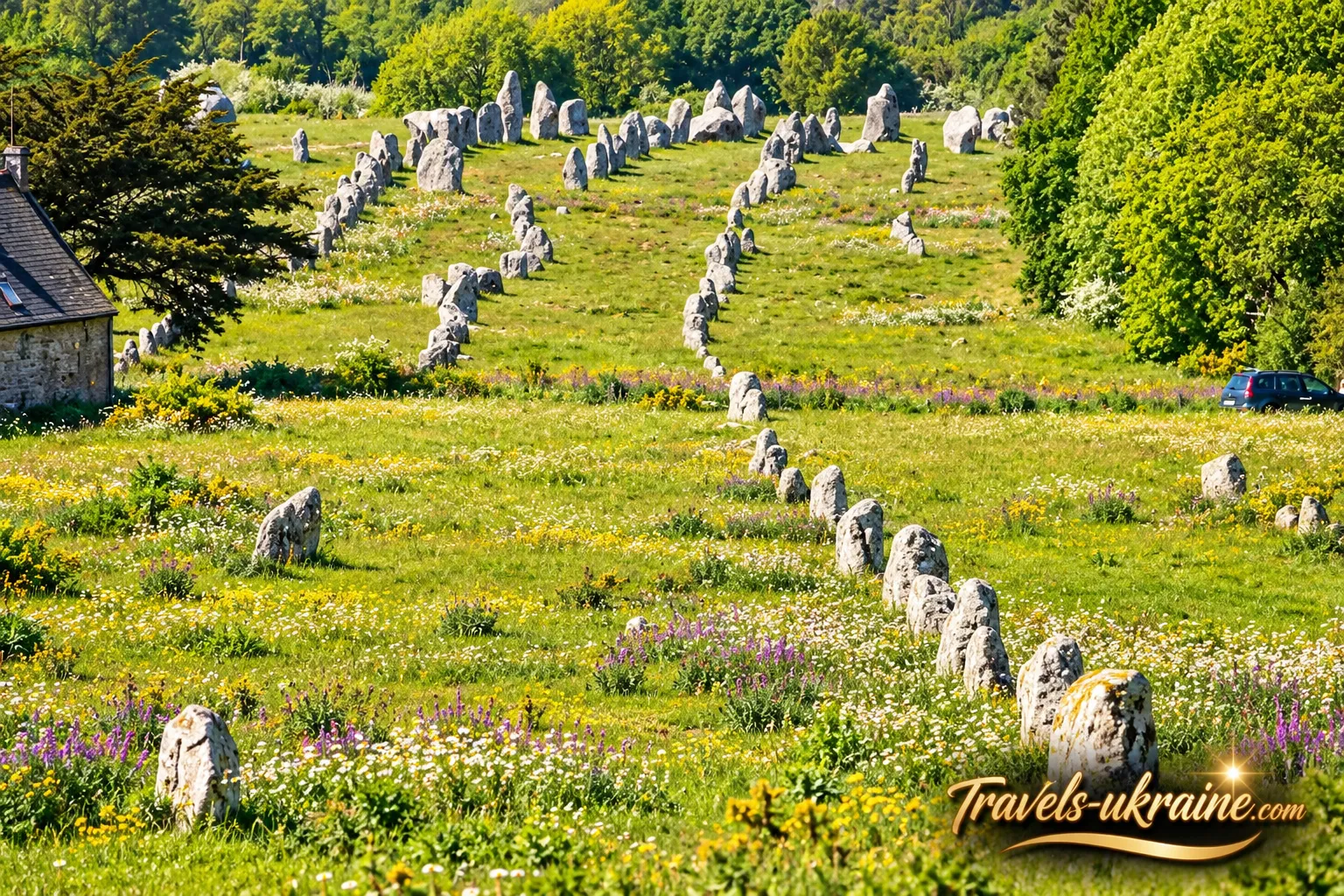
The arrangement of the stones is equally remarkable. The Carnac stone alignments do not simply follow straight lines: their layout is closely connected to the natural terrain, while the height of the stones gradually changes in certain parts of the complex. This creates a distinctive visual effect that becomes apparent when looking along the rows. The ancient builders clearly understood the characteristics of the landscape and knew how to incorporate them into their structures.
Why Were the Carnac Megaliths Built? The Main Scientific Theories
While theories about how the stones were moved can be tested through practical experiments, determining their true purpose is far more difficult. Why did ancient communities erect thousands of menhirs and arrange them in long rows? Why did they choose this particular location, and why did the construction of the complex continue across so many generations?
One of the most widely discussed scientific theories connects the megaliths with the religious and ceremonial practices of Neolithic communities. Stone enclosures may have marked special areas of symbolic importance, while the rows of menhirs could have formed pathways for ritual processions. This interpretation is consistent with the spatial organisation of certain megalithic monuments, although it has not been conclusively confirmed.
Another hypothesis interprets individual stones as commemorative markers associated with ancestors, important events or sacred places. Ancient burial structures are indeed found near megalithic complexes throughout Brittany. However, this does not mean that every menhir served as a gravestone or that the entire Carnac complex had an exclusively funerary purpose.
There is also a theory suggesting a possible relationship between the arrangement of the stones and the movements of the Sun, Moon and other astronomical phenomena. Neolithic communities carefully observed the sky because seasonal changes were essential to agriculture. However, popular claims that Carnac functioned as a precisely calculated prehistoric observatory remain controversial and cannot be regarded as a proven explanation for the purpose of all the stone alignments.
It is possible that the megalithic complex served several different purposes, which may have evolved over the centuries. For some generations, it could have been a ceremonial site; for others, a symbol of their ancestors or part of a sacred landscape. This is why modern researchers generally avoid offering a single universal explanation.
Archaeological Research and the Preservation of the Carnac Stones
Serious scientific interest in the Carnac Megaliths increased during the 19th century, when researchers began systematically documenting, mapping and studying the stone monuments. Gradually, it became clear that these were not the remains of Roman or Celtic temples, as had sometimes been suggested, but monuments belonging to a much earlier prehistoric era.
Over many centuries, some menhirs fell, certain stones were reused as building materials, and the surrounding land was adapted for agricultural and other practical purposes. As a result, the complex's present appearance does not fully reflect its original condition. During the late 19th and early 20th centuries, efforts were made to raise some fallen stones and restore sections of the alignments.
The Breton archaeologist Zacharie Le Rouzic played a particularly important role in studying and preserving the monument. He investigated megalithic sites throughout the region and actively contributed to their protection. Thanks to the work of several generations of researchers, a substantial part of the complex has survived. Nevertheless, archaeologists emphasise that the stone alignments visible today represent only the remaining fragments of a once much more extensive prehistoric landscape.
Modern archaeological investigations continue to reveal new information about Carnac's builders, the sequence in which the monuments were constructed and the connections between individual megalithic sites across Morbihan. Every archaeological discovery adds another piece to the story, while also reminding us how many of its pages remain unread.
Perhaps this is where the true greatness of the ancient Carnac Megaliths lies. They do not tell their story through words, nor have they left us the names of rulers or inscriptions celebrating great victories. Yet these stones bear witness to the determination, knowledge and spiritual world of the people who inhabited Brittany thousands of years ago. And even today, when we know incomparably more about the past than our ancestors did, Carnac continues to guard its greatest mystery — why was all of this created?
Interesting Facts About the Carnac Megaliths: Secrets of Brittany's Ancient Stones
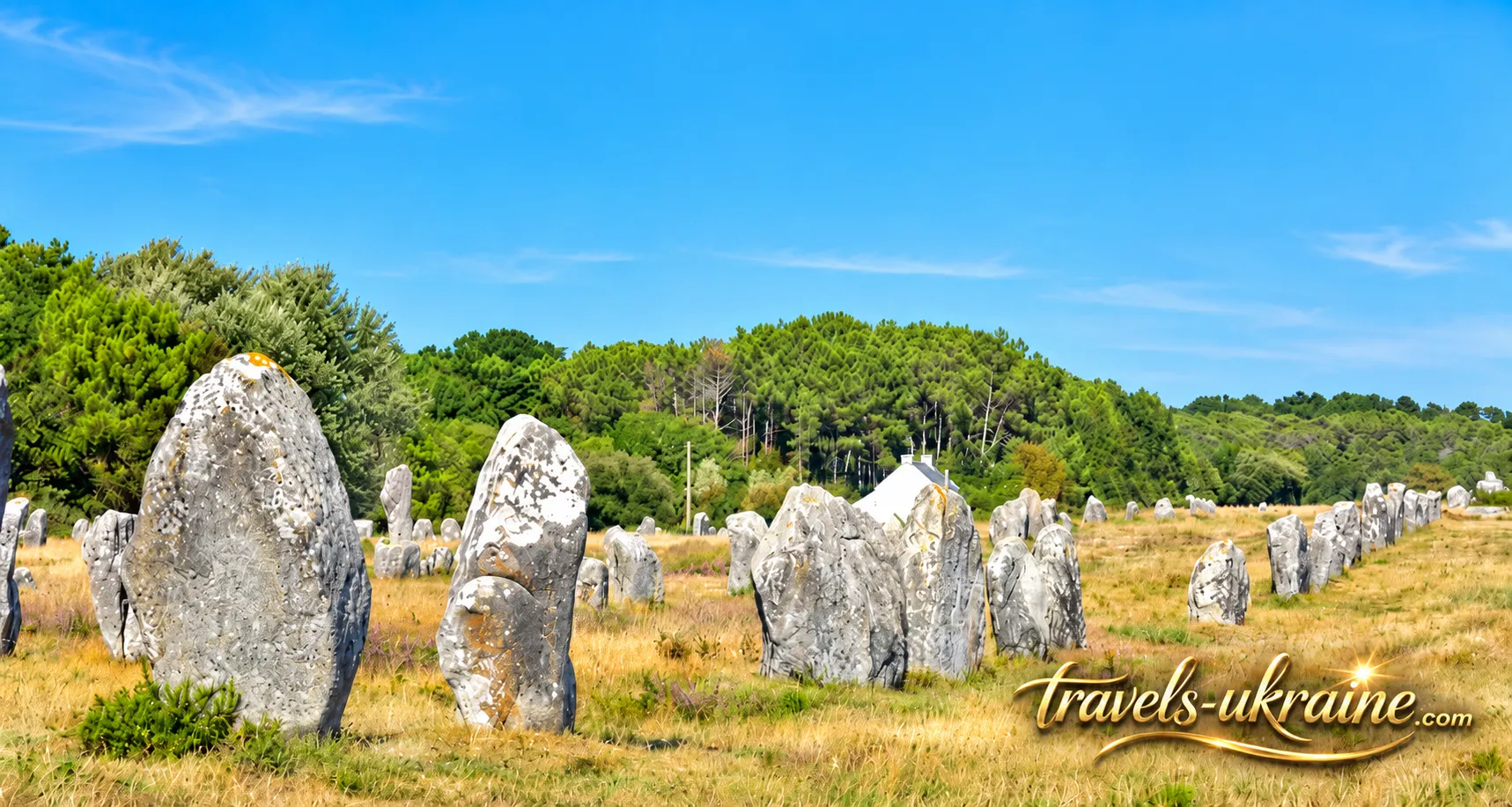
At first glance, the Carnac Megaliths in France may seem like nothing more than enormous stones standing among green meadows. Yet behind their silent grandeur lies far more than one might imagine. Some facts about these prehistoric monuments surprise even those with a long-standing interest in archaeology. After all, Carnac is not simply a Stone Age landmark, but an entire world of remarkable discoveries, where human history is closely intertwined with the natural landscape of Brittany.
Among the most fascinating facts about Carnac, its extraordinary scale stands out. Approximately 3,000 menhirs have survived within the main stone alignments, forming a connected landscape of monuments stretching roughly four kilometres. In terms of the number of standing stones and the distinctive way they are arranged, this is one of the world's most remarkable megalithic complexes. However, the true extent of the region's prehistoric heritage reaches far beyond the town itself. In the surrounding communes, visitors can discover isolated menhirs, stone enclosures, burial mounds, dolmens and other archaeological monuments. Together, they form a remarkable chronicle written in stone, scattered across the coastal landscape of Morbihan.
For modern travellers, this means that exploring the megaliths is not limited to a single tourist attraction. In this part of Brittany, it is possible to travel from one prehistoric monument to another, gradually uncovering new chapters in the lives of Stone Age communities.
The Carnac Megaliths Became a UNESCO World Heritage Site in 2025
On 12 July 2025, during a meeting of the World Heritage Committee in Paris, a decision was made to inscribe the Carnac Megaliths and the shores of Morbihan on the UNESCO World Heritage List. This marked a historic moment for Brittany, as the complex gained international recognition as the first World Heritage property located entirely within this French region. Particularly interesting is the fact that UNESCO recognition extends far beyond the famous stone alignments. The designated heritage property includes more than 550 archaeological monuments and sites across 28 communes in the Morbihan department. These include menhirs, dolmens, burial structures and other traces of Neolithic communities, all connected through a shared cultural and natural landscape.
Preparations for international recognition continued for many years, bringing together archaeologists, historians, local residents, government institutions and environmental organisations. The true significance of this heritage lies not only in the individual stones but also in the preservation of an entire ancient landscape that developed over thousands of years.
Ancient Carnac Menhirs Are Helping to Protect Breton Sheep
One of the most unexpected facts about Carnac concerns the modern management of the megalithic site. Among the stone alignments, visitors may encounter real sheep grazing peacefully between the granite blocks. This is neither a coincidence nor a tourist attraction arranged for entertainment. A local breed known as Landes de Bretagne is used to help manage the vegetation. Grazing sheep helps prevent excessive growth of grass and certain other plants, reducing the need for mechanical mowing. This approach maintains the open appearance of the stone alignments while providing a more environmentally sensitive way to care for the surrounding landscape.
Protecting the soil is particularly important. Constant foot traffic from large numbers of visitors can cause soil compaction and damage the vegetation cover. For this reason, guided tour routes are carefully managed, while certain areas are periodically left undisturbed to allow natural recovery. In this way, ancient stones and modern conservation practices have found an unexpected connection. One might even say that the thousands-of-years-old history of Carnac continues today thanks to the ordinary inhabitants of Brittany's pastures.
Frequently Asked Questions About the Carnac Megaliths
Where Are the Carnac Megaliths Located in France?
The Carnac Megaliths are located in southern Brittany, France, in the Morbihan department, near the town of Carnac. The main stone alignments stretch for several kilometres across green meadows not far from the Atlantic coast. The most convenient place to begin exploring the complex is the Maison des Mégalithes visitor centre, next to the Le Ménec alignments.
How Can You Get to the Carnac Megaliths by Car or Public Transport?
The most convenient way to reach Carnac by car is via the town of Auray. From there, follow the D768 towards Carnac and Quiberon, then take the D119 and follow the signs for Alignements du Ménec. If you are travelling by train, the nearest convenient railway station is Auray, where you can catch a bus to Carnac operated by the regional BreizhGo network. Local bus services may also operate during the tourist season. Parking is available near the visitor centre, with additional parking in the Kerabus area.
How Much Does It Cost to Visit the Carnac Megaliths, and Can You See Them for Free?
You can view the Carnac stone alignments free of charge from the designated walking paths. Admission to the Maison des Mégalithes visitor centre is also free. According to the published admission prices, a guided tour inside one of the main sections costs €13 for adults and €6 for children aged 7–17. Children under 7 may enter free of charge, subject to the applicable conditions. Before travelling, it is advisable to check the latest admission prices and guided tour availability on the complex's official website.
Are Visitors Allowed to Walk Among the Ancient Carnac Menhirs?
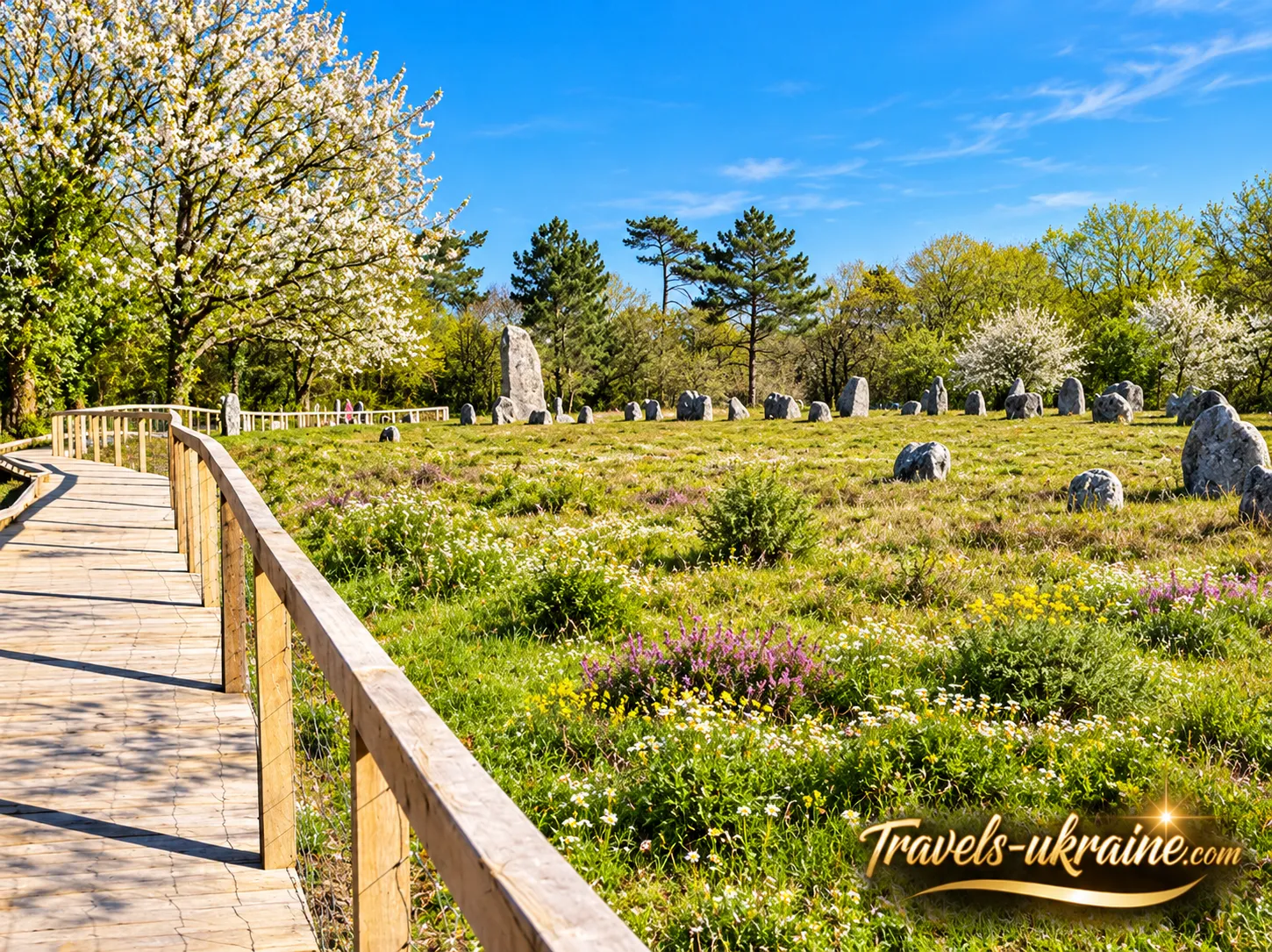
Access directly among the Carnac menhirs depends on the season, soil conditions and conservation restrictions. During the peak tourist season, visitors can usually enter the main stone alignments only as part of an organised guided tour. From October until the end of March, certain sections may be opened for independent visits. Climbing over fences, touching the stones in violation of site regulations or climbing onto the menhirs is prohibited.
How Much Time Do You Need to Explore the Carnac Megalithic Complex?
Allow approximately 2–3 hours to explore the main stone alignments and the visitor centre. A standard guided tour lasts around one hour. If you plan to visit Le Ménec, Kermario, Kerlescan, Le Petit Ménec and the Manio Giant, it is best to set aside at least half a day. Archaeology enthusiasts, photographers and those who enjoy leisurely walks could easily spend an entire day exploring the area.
When Is the Best Time to Visit the Carnac Megaliths in Brittany?
For comfortable walks, late spring and early autumn are particularly pleasant, when the surrounding meadows are green and visitor numbers are generally lower than during the peak summer months. Summer is ideal for combining a visit to the megaliths with a holiday on the Atlantic coast. In winter, the stone alignments have a distinctive atmosphere, although visitors should be prepared for cool, windy and rainy weather. For photography, the most attractive natural light is often found in the morning and towards sunset.
What Are the Opening Hours of the Carnac Megaliths and Visitor Centre?
The Maison des Mégalithes visitor centre operates on a seasonal schedule: from April to June and in September, 9:30 AM–6:00 PM; in July and August, 9:30 AM–7:00 PM; and from October to March, 10:00 AM–1:00 PM and 2:00 PM–5:00 PM. The centre is closed on 1 January, 1 May and 25 December. Walking routes around the stone alignments are accessible free of charge, while guided tour schedules and access to the enclosed sections should be checked separately.
Are the Carnac Megaliths Suitable for Visiting with Children?
Yes, the Carnac Megaliths are suitable for a family visit. Children may enjoy seeing the enormous ancient stones, while the visitor centre provides an opportunity to learn about life during the Stone Age. However, most guided tours take place outdoors on natural ground, so comfortable closed-toe footwear is recommended. Pushchairs can be used on the designated external pathways, but navigating between the stone alignments with a pushchair can be difficult.
Are the Carnac Megaliths Accessible to Visitors with Reduced Mobility?
The Maison des Mégalithes visitor centre offers accessible facilities, and designated routes suitable for wheelchair users are available near certain sections of the complex. However, the paths directly between the menhirs are not wheelchair accessible because of the uneven natural terrain. Before visiting, it is recommended to check the available accessible routes and contact the site administration for detailed accessibility information.
What Else Can You See Near the Carnac Megaliths?
Nearby attractions include the Carnac Museum of Prehistory (Musée de Préhistoire de Carnac), the ancient Saint-Michel burial mound, the megalithic monuments of Locmariaquer and the picturesque coastline of the Gulf of Morbihan. Those who enjoy coastal scenery should visit the Quiberon Peninsula, famous for its dramatic Wild Coast (Côte Sauvage). These destinations can easily be combined into a rewarding journey through the historical and natural landmarks of southern Brittany.
Carnac Megaliths — Silent Witnesses to Thousands of Years of History
Some places captivate us with their beauty, others impress us with their grandeur, while certain extraordinary corners of the world make us reflect on the very passage of time. The Carnac Megaliths in Brittany belong to this last category. There are no magnificent French palaces of the kind we have grown accustomed to admiring, nor any elaborate architectural decorations. Only ancient stones, green open spaces and a silence in which the distant past almost seems to breathe.
Looking at these majestic menhirs, it is impossible not to imagine the people who lived on this land thousands of years ago. They looked up at the same sky, welcomed the sunrise, watched the seasons change and left behind structures whose true purpose remains a mystery. Perhaps we will never discover what thoughts and beliefs inspired them to create these stone alignments. Yet it is precisely this uncertainty that makes Carnac such an extraordinary place.
Visiting the Carnac Megaliths offers an opportunity to experience one of Europe's oldest monuments not through museum glass or the pages of a history book, but within the authentic landscapes of Brittany. Walk along the paths beside the stone alignments, feel the fresh Atlantic breeze, pause beside the granite giants and forget the rush of modern life, even if only for a moment. These are often the experiences that create the most lasting travel memories.
If you are planning a holiday in Brittany or searching for fascinating places to visit in France, be sure to include this prehistoric complex in your itinerary. After all, the true value of travelling lies not only in discovering new landscapes but also in experiences that change the way we see the world. And perhaps, standing before the silent stones of Carnac, you will experience something that words can scarcely describe: just how brief a human lifetime is compared with eternity.

No Comment
You can post first response comment.