
 English
 Українська
 Русский
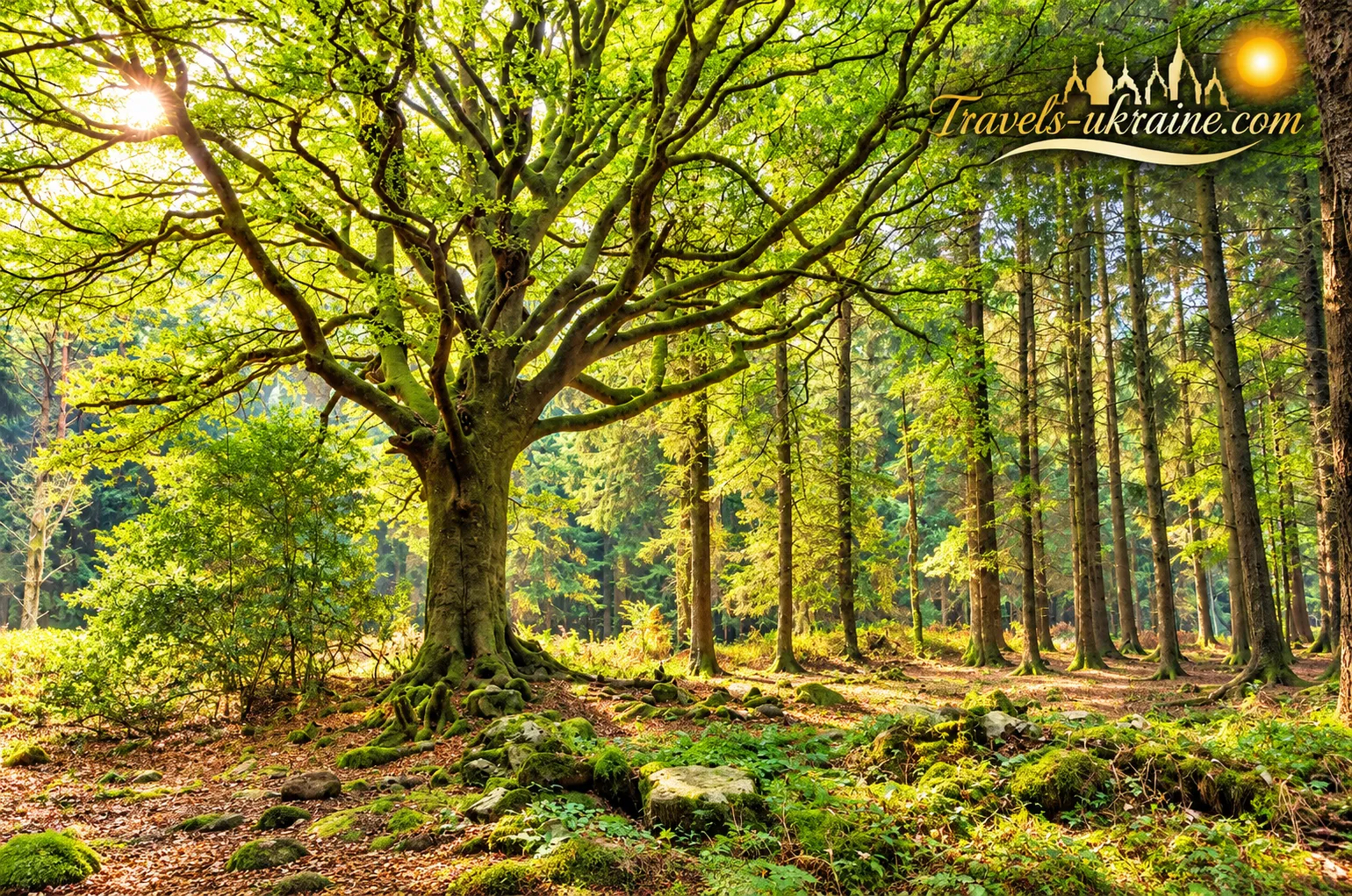
What if there were a place where an ordinary walk through the woods could turn into a journey through the pages of ancient legends? Where, just around a bend in the trail, you might encounter a tree that has witnessed countless generations, or a quiet spring hiding a story about wizards and fairies? Such a place really does exist — at least if you believe the many traditional tales of Brittany. It is Brocéliande Forest, one of the most extraordinary places in France, where picturesque natural landscapes are so deeply intertwined with legends that it can sometimes be difficult to tell where reality ends and the fairy tale begins.
Located in the heart of the French region of Brittany (Bretagne), near the small town of Paimpont, this vast woodland is nothing like an ordinary tourist park. There are no artificial sets designed specifically for visitors. Instead, the main attractions are centuries-old trees, moss-covered stones, peaceful lakes, and winding paths that disappear into the dense greenery. This very landscape is traditionally associated with the mysterious world of King Arthur, the wizard Merlin, the fairy Viviane, and the Knights of the Round Table. And although no historian can confirm that Merlin actually wandered along these paths, the atmosphere makes it surprisingly easy to imagine that he might have.
Interestingly, Brocéliande and Paimpont Forest (Forêt de Paimpont) are names with somewhat different origins. Paimpont is a real woodland with its own natural and cultural history, while Brocéliande is primarily known from medieval literary works describing the adventures of Arthurian heroes. Over the centuries, the legendary forest gradually became associated with this particular part of Brittany. As a result, a real geographical location acquired a second, almost mythical identity, while ancient tales became an inseparable part of its appeal to visitors.
However, Brocéliande Forest in France has much more to offer than legends alone. Its natural landscapes are remarkably diverse: dense oak and beech woodlands alternate with pine forests, open heathlands, and small bodies of water. In some places, ancient trees form magnificent green canopies above the trails, while sunlight filtering through the branches creates a beautiful interplay of light and shadow. On a peaceful day, you can hear the rustling of leaves, birds singing, and the gentle murmur of nearby streams. It almost feels as though the forest is deliberately speaking in whispers.
The area's unusual natural and cultural landmarks add another layer of enchantment. Somewhere among the trees lies a place known as Merlin's Tomb. In another part of the forest stretches the Valley of No Return, while ancient pathways lead to springs and megalithic monuments associated with local folklore. All these names sound as though they were invented specifically for an adventure novel. Yet the places themselves are very real, and many can be explored during an independent walk or a themed guided tour.
The enchanted forest of Brittany is particularly appealing to travelers who enjoy discovering unusual places to visit in France, are fascinated by mythology, or simply want to spend some time away from the noise and bustle of city life. Here, you can join a walk led by a local storyteller who brings ancient legends to life, explore scenic woodland trails, or enjoy the tranquility of nature. And if, during your adventure, you suddenly get the feeling that a wizard is hiding behind the nearest tree, there is no need to panic. It is probably just another tourist trying to find the way to the next attraction. Still, despite its magical atmosphere, Brocéliande remains a genuine natural environment, not a theme park where visitors can wander wherever they please.
Natural Wonders of Brocéliande Forest: Ancient Trees, Lakes, and Wild Landscapes
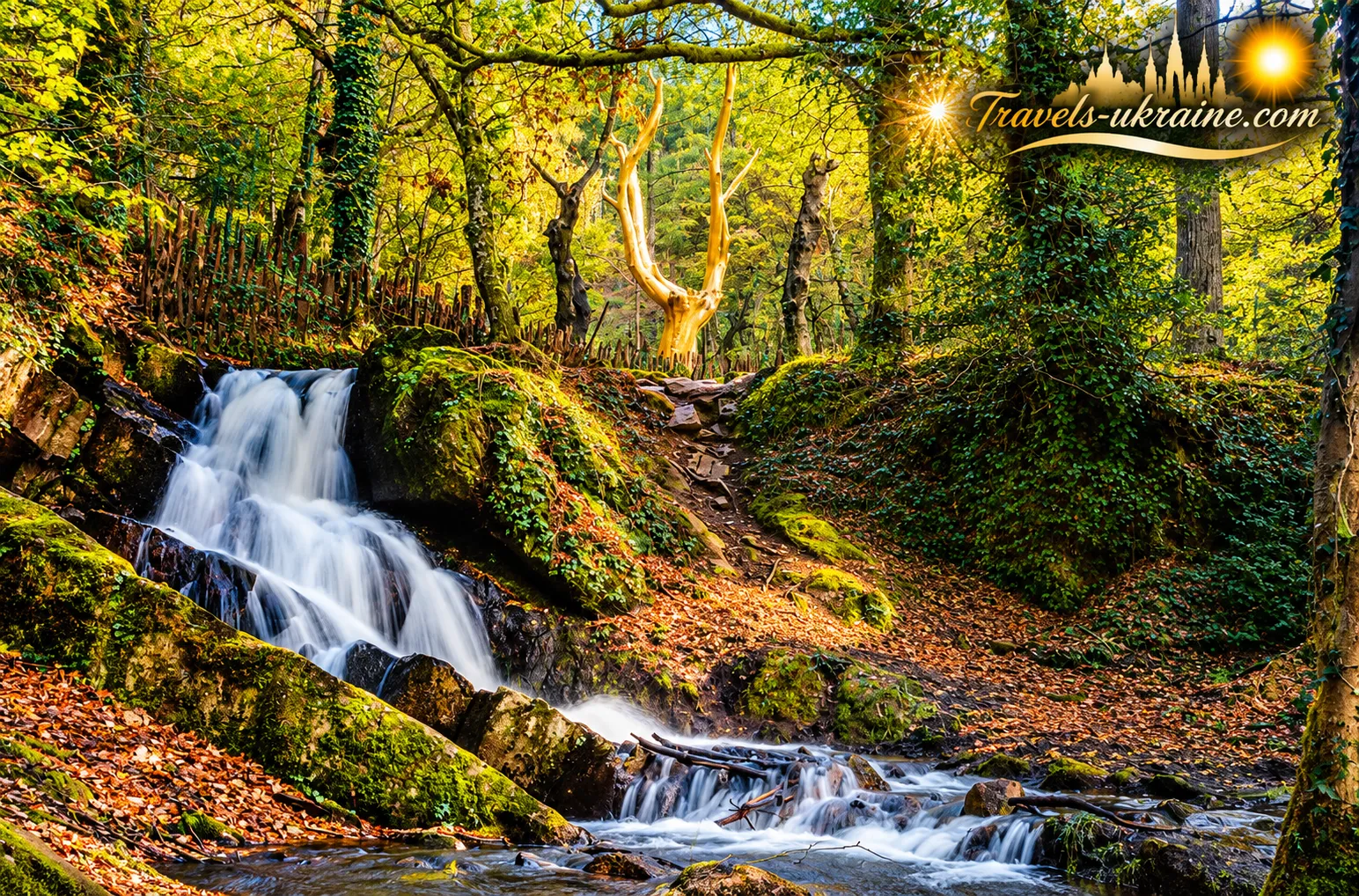
The natural landscapes of Brocéliande Forest are far more diverse than they might appear at first glance. Behind its famous name lies an extensive natural landscape where shady oak groves give way to pine forests, open heathlands, marshy lowlands, and peaceful bodies of water. Rather than a continuous blanket of greenery stretching to the horizon, the scenery changes constantly. And with each change in the landscape come differences in lighting, vegetation, soil conditions, and even the sounds of the surrounding natural world.
The real woodland known as Paimpont Forest (Forêt de Paimpont), traditionally identified with Brocéliande, is among the largest forested areas in Brittany. Its natural environment has been shaped by the humid Atlantic climate, the region's geological structure, and centuries of human land use. Together, these factors have created a distinctive mosaic of habitats, ranging from magnificent ancient trees to low-growing shrubs scattered across exposed rocky slopes.
Oak and Beech Woodlands — The Green Heart of Brocéliande
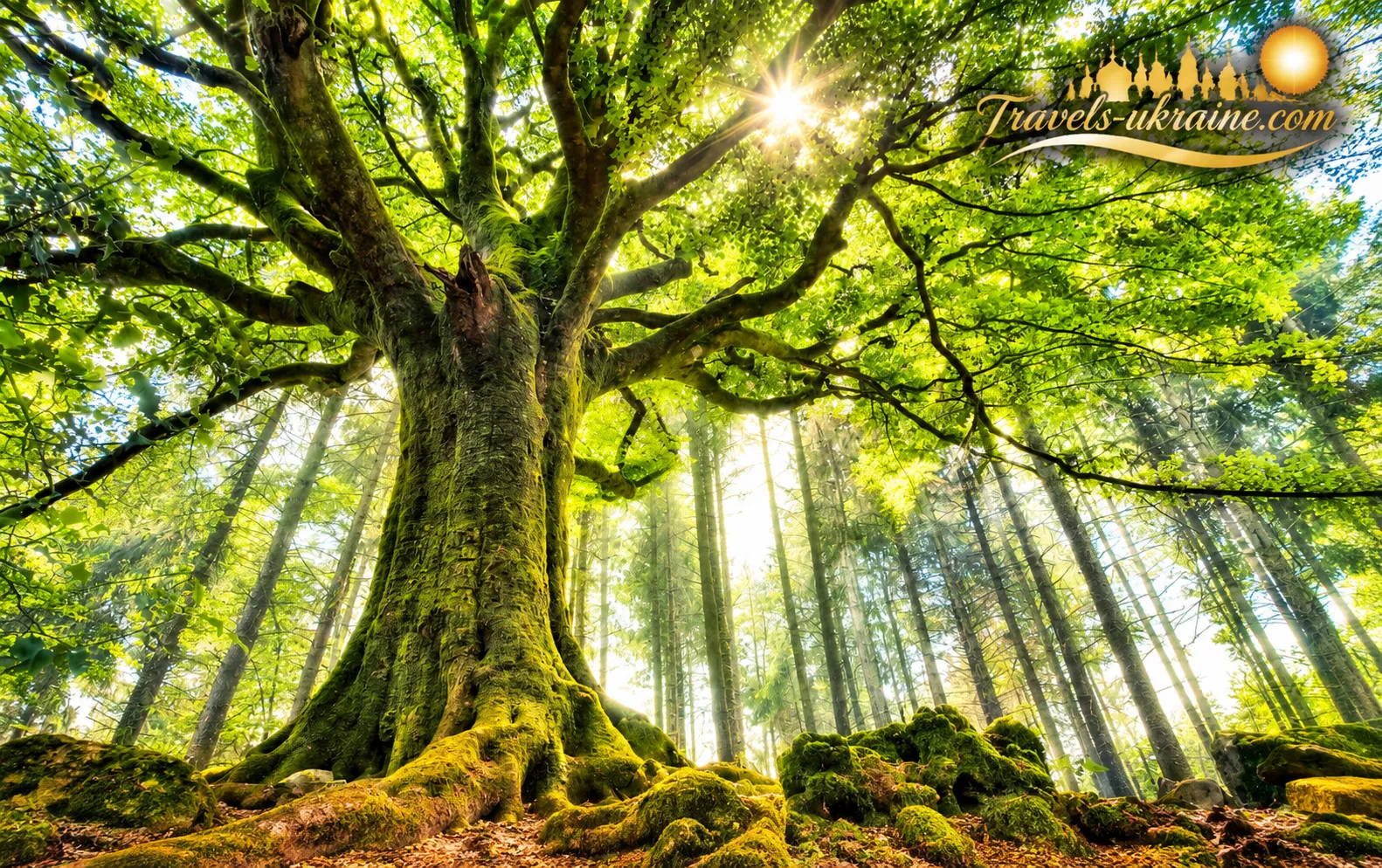
The natural broadleaf forests of Brocéliande are dominated by oak and beech trees. These species create the characteristic woodland scenery of western France, with tall trunks, spreading crowns, and dense undergrowth. In some places, the branches of neighboring trees intertwine overhead, forming an almost continuous green canopy. Even on a sunny day, soft, diffused light filters through the leaves, while the air beneath remains pleasantly cool.
The oak woodlands are particularly fascinating because of the variety of shapes and forms found among the trees. Slender young oaks stand alongside ancient specimens with broad trunks, irregular crowns, and massive branches. As they age, their bark develops deep grooves, while mosses and lichens gradually colonize the shaded surfaces of their trunks. These trees become miniature ecosystems in their own right. Cracks in the bark, hollow cavities, and decaying wood provide shelter for insects, birds, and numerous small woodland creatures.
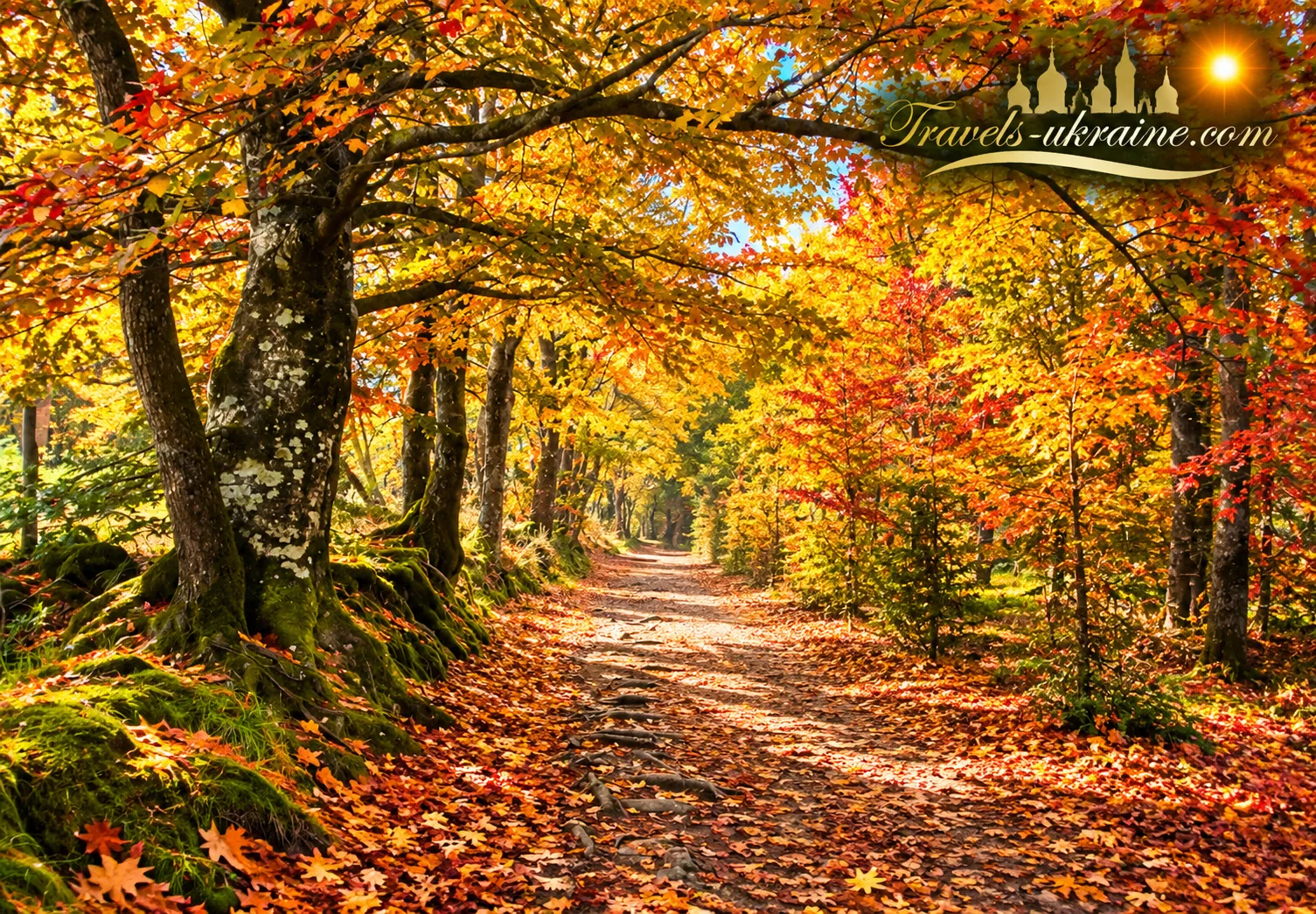
Beech trees give the forest a different character. Their relatively smooth, grayish trunks rise above the ground, while their broad crowns form a dense canopy of foliage. In spring, young beech leaves appear in delicate shades of light green. During summer, they gradually darken, before turning golden and copper-colored in autumn. Beech woodlands are especially beautiful in sunny weather, when light penetrates between the trees and highlights the graceful curves of their ancient branches.
However, modern Brocéliande is not composed entirely of deciduous trees. Large areas are covered by coniferous woodland, particularly pine trees, which have spread through a combination of natural conditions and forestry activities. These trees give certain parts of the forest a completely different appearance. Broad leaves give way to evergreen needles, while the ground is covered with a carpet of fallen pine needles and cones.
Guillotin's Oak and Other Ancient Trees of Brocéliande
Among the region's natural treasures, the ancient trees of Brocéliande hold a particularly special place. Some have become tourist attractions in their own right. Their significance lies not only in their remarkable age but also in their extraordinary dimensions, unusual trunk shapes, and ability to survive through countless human generations. The most famous of these natural giants is Guillotin's Oak (Chêne à Guillotin). Its age is estimated at approximately 1,000 years, while the circumference of its enormous trunk measures around 9.65 meters. Over time, a spacious natural hollow has developed inside the tree, becoming one of its most distinctive features. Despite its extraordinary age, the oak remains alive. Its trunk and branches demonstrate just how immense individual trees can become under favorable conditions. It is difficult to imagine how much the surrounding world has changed during its lifetime. If trees kept diaries, this particular oak would probably need an entire library to store them.
Another fascinating veteran of the forest is the Hindrés Oak (Chêne des Hindrés), believed to be approximately 400 years old. The tree has a distinctive spreading crown and unusually curved branches, making it easy to distinguish from its younger neighbors. Its natural beauty attracts photographers and enthusiasts of ancient woodlands alike.
Also worthy of special mention is Ponthus's Beech (Hêtre de Ponthus), one of Brocéliande's best-known trees thanks to its extraordinary shape. Its massive branches extend in different directions, creating a striking silhouette. Several local legends are associated with this remarkable tree, but we will explore those mysterious stories in greater detail in the next section.
Heather-Covered Heathlands — A Completely Different Side of Brittany
One of Brocéliande's most surprising natural features is its heathlands (landes). Unlike the dense woodland areas, these are open landscapes covered with low-growing vegetation, particularly heather, gorse, and other shrubs adapted to nutrient-poor, acidic soils.
These landscapes are especially fascinating in late summer, when the heather begins to bloom. Large stretches of the hillsides become covered in shades of pink, lilac, and purple, creating a striking contrast with the dark green forests nearby. In sunny weather, the scenery is remarkably picturesque, while on overcast days it takes on a more restrained, almost rugged character.
Brocéliande is home to both dry and wet heathlands. Dry heathland generally develops in areas with shallow soils and rocky ground, where plants must adapt to limited moisture. Wet heathland, on the other hand, forms where groundwater levels are higher and may gradually merge into marshy meadows or peat bogs.
These open heather-covered landscapes are extremely important for local wildlife. They provide suitable habitats for specialized species of birds, insects, and reptiles that cannot survive in continuously dense woodland. Sand lizards can be found in these environments, while characteristic bird species include the woodlark and Dartford warbler.
Interestingly, these open landscapes do not always remain that way without human intervention. If traditional land management practices are abandoned, some heathlands gradually become overgrown with young trees and taller shrubs. Preserving them therefore requires specific conservation measures aimed at maintaining their characteristic vegetation.
Forest Lakes, Ponds, and Mysterious Peat Bogs
Forest lakes, ponds, and wetlands form another important part of Brocéliande's natural environment. They create an entirely different atmosphere from the dry hillsides and dense woodlands. Here, peaceful stretches of water, lush waterside vegetation, and small marshy depressions dominate the landscape, creating distinctive local microclimates.
One of the best-known bodies of water is Paimpont Lake (Étang de Paimpont), which covers approximately 50 hectares. Located beside the town of the same name, it is surrounded by woodland and wetland habitats. On calm days, the surface of the water reflects the surrounding trees and nearby buildings.
Other interesting bodies of water include the Pré and Pont Dom Jean ponds (Étangs du Pré et du Pont Dom Jean), Pas du Houx Pond (Étang du Pas du Houx), and Comper Pond (Étang de Comper). They differ in size, shoreline characteristics, and surrounding natural conditions. Some of these ponds are artificial in origin, having been created or modified in the past for economic activities, including the operation of local ironworks.
The peat bogs of Brocéliande are of particular ecological importance. They develop in permanently waterlogged areas, where dead plant material decomposes extremely slowly because of limited oxygen. Over time, peat gradually accumulates, while specialized plant communities establish themselves on its surface, adapted to acidic, nutrient-poor conditions.
Among the most fascinating plants found in these habitats are sundews (Drosera), small carnivorous plants whose leaves are covered with sticky, hair-like structures. These enable them to trap tiny insects and obtain additional nutrients from their prey. The wetlands are also home to sphagnum mosses, cottongrasses, and other species characteristic of wet, acidic soils.
These natural habitats are extremely sensitive to changes in water levels and damage caused by trampling. Even minor disturbance of a peat bog's surface can destroy vegetation that has taken many years to develop. For this reason, visitors should explore these areas only from designated trails and specially constructed walkways.
Wildlife of Brocéliande — Hidden Life Among the Trees
The wildlife of Paimpont Forest is not always easy to spot during an ordinary walk. Most woodland animals avoid busy areas, while some species are most active at dusk or during the night. Nevertheless, the diversity of natural habitats provides favorable conditions for numerous mammals, birds, amphibians, and insects. The woodlands are home to roe deer, along with smaller mammals such as foxes, badgers, and various species of rodents. In quieter areas, visitors may notice signs of their presence: footprints in damp soil, narrow paths through the vegetation, or remains of food. The animals themselves generally keep their distance from people, so sightings are never guaranteed.
Birdlife is particularly rich. Woodpeckers nest in old trees, while the calls and songs of tits and other woodland birds can be heard among the branches. Near the water, visitors may encounter grey herons and mallards, the latter recognizable by their distinctive blue wing markings and orange legs. During winter, the ponds also provide resting and feeding habitats for waterbirds stopping in the area during their seasonal movements.
The forest's damp habitats are especially important for amphibians. Among the protected species recorded in the Paimpont natural complex is the great crested newt. Small ponds also attract frogs, dragonflies, and numerous aquatic invertebrates, all of which play important roles in the local ecosystems.
At dusk, bats can sometimes be seen flying above forest clearings and bodies of water. They use these areas to hunt nocturnal insects, while old trees and natural cavities may provide suitable roosting places. When observing wildlife, it is best to remain quiet, avoid approaching nests, and never attempt to feed wild animals.
Legends of Brocéliande Forest: Merlin, King Arthur, and the Secrets of an Enchanted World
Imagine a forest where a powerful wizard can predict the future, a fairy can stop time, and an ordinary valley becomes a prison for unfaithful lovers. Sounds like the plot of a captivating fantasy novel? In fact, stories just like these have shaped the reputation of the legendary Brocéliande Forest (Forêt de Brocéliande) for centuries. Here, Celtic mythology, medieval romances of chivalry, traditional folklore, and the human belief in a hidden supernatural world have become deeply intertwined.
What makes Brocéliande particularly fascinating is that its fame does not come from a single legend. Over the centuries, writers and poets populated the forest with new characters, expanded familiar stories, and connected fantastic events with real locations. As a result, the legends of Brocéliande sometimes exist in several different versions, and the same character may appear as a wise mentor in one story and a completely different personality in another. This is precisely what makes the forest so captivating: its mysteries simply cannot be contained within a single tale.
How Brocéliande Became the Forest of King Arthur and the Knights of the Round Table
Brocéliande's literary reputation began taking shape during the Middle Ages. One of the most influential authors to connect this forest with the world of chivalric adventures was Chrétien de Troyes, a 12th-century French poet whose works played a major role in the development of Arthurian legends. His romance "Yvain, the Knight of the Lion", written around the 1170s–1180s, describes an extraordinary spring capable of summoning a storm. This work represents one of the early literary connections between Brocéliande and the adventures of King Arthur's knights.
The forest subsequently appeared in other medieval literary works, particularly the "Lancelot-Grail" (Lancelot-Graal) cycle, composed during the first half of the 13th century. In these romances, real geographical landmarks became increasingly intertwined with imaginary castles, dangerous valleys, enchanted springs, and extraordinary trials that only the bravest knights could overcome.
The Round Table occupies a particularly important place in Arthurian legend. According to tradition, King Arthur gathered the finest knights of his kingdom around it. Its circular shape symbolized equality among those present: no one sat at the head of the table, and no knight enjoyed a privileged position simply because of where he was seated. The knights were expected to demonstrate courage, honor, loyalty to their word, and a willingness to protect those who were weaker than themselves.
Of course, the heroes themselves did not always live up to these ideals. They fell in love with the wrong people, broke promises, stumbled into traps, and frequently created more problems for themselves than all their enemies combined. It was precisely these human weaknesses, combined with extraordinary adventures, that made medieval romances so compelling.
It is important to understand that the historical existence of King Arthur remains a subject of debate. Medieval legends cannot serve as documentary proof of his adventures or his presence in what is now Paimpont Forest. However, their influence on literature, art, and the cultural heritage of France is very real.
Merlin the Wizard — The King's Mentor and Keeper of Secrets
Among all the characters in Arthurian legend, perhaps the most mysterious is Merlin (Merlin l'Enchanteur). He is portrayed as a powerful wizard, prophet, and wise adviser capable of seeing into the future and influencing the destinies of kings. Yet Merlin is a far more complex character than the familiar fairytale image of an elderly man with a long beard and a magical staff.
Different medieval sources offer different explanations of his origins. Some traditions associate Merlin with the figure of a wild prophet who lived far from human society, while others attribute a supernatural origin to him. In the works of Robert de Boron and later writers, Merlin becomes an important figure in the Christianized Arthurian world — a man whose knowledge and prophecies help shape the future of the kingdom.
According to the best-known versions of the legend, Merlin played a crucial role in the rise of the young Arthur. He supported the future ruler, offered guidance, and helped him understand his destiny. In some traditions, the wizard is also connected with the appearance of the famous sword Excalibur, although the details vary depending on the literary source. At the same time, Merlin was no ordinary royal adviser. His true domain remained the forests, wild landscapes, and solitude. Far from the royal court, he could regain his strength and return to his natural element. This image fitted particularly well with the medieval perception of forests as places where people encountered the unknown and faced their greatest trials.
The Fountain of Barenton — Water That Could Summon a Storm
Among the oldest fantastic stories associated with Brocéliande, the legend of the Fountain of Barenton (Fontaine de Barenton) holds a special place. According to medieval tradition, its water possessed an extraordinary power: pouring it over a particular stone beside the spring was supposedly enough to unleash a terrifying storm in the sky.
In Chrétien de Troyes' romance "Yvain, the Knight of the Lion," a similar enchanted spring becomes the setting for a dangerous chivalric trial. When the hero performs the ritual with water, the clear sky suddenly darkens, powerful winds rise, a thunderstorm breaks out, and the surrounding world seems to turn against the unsuspecting traveler.
But the storm was only the beginning of the adventure. According to the legend, a knight guarding the enchanted spring would appear afterward and challenge whoever had disturbed the peace of the place. Thus, a seemingly simple action became a test of courage, honor, and the willingness to accept responsibility for one's actions.
In later local traditions, the spring was also believed to have the power to bring rain. Such stories may have been particularly meaningful to rural communities, whose harvests and livelihoods depended directly on the weather. However, there is no documented evidence supporting the water's supposed supernatural properties.
Interestingly, Barenton became much more than the setting of a single legend. It gradually developed into one of the symbols of Brocéliande itself. In various literary and local traditions, other fantastic events were later associated with the spring, including the meeting between Merlin and Viviane. Over the centuries, an entire world of interconnected stories grew around this single natural landmark.
Lancelot of the Lake — The Knight Raised by a Fairy
Brocéliande is associated with more than the adventures of powerful wizards. Another important figure in its legendary world is Lancelot of the Lake, one of King Arthur's bravest and most celebrated knights. According to Arthurian romances, Lancelot was placed under the protection of the Lady of the Lake during his childhood. In many traditions, this mysterious figure is identified with Viviane. She raised the young boy, taught him noble manners, trained him in the arts of warfare, and introduced him to the ideals of chivalry, preparing him for his future life at the royal court.
In some versions of the legend, the magical guardian lived in a mysterious realm hidden beneath the waters of a lake. Its surface created the illusion of an ordinary body of water, while a magnificent palace supposedly existed beneath it. This story was later associated with the lake near Comper Castle, where, according to local legend, Viviane's crystal palace remains concealed to this day.
Korrigans — The Mysterious Little Inhabitants of Brittany's Forests
The legendary world of Brocéliande is not limited to kings, knights, and powerful enchantresses. Breton folklore also features korrigans, mysterious supernatural beings described in various traditions as small woodland or water spirits. According to local tales, korrigans may dwell among ancient stones, near springs, inside caves, or in secluded corners of the forest. Their appearance and personalities vary depending on the tradition. Sometimes they are portrayed as mischievous creatures who enjoy leading travelers astray, while in other stories they become dangerous guardians of hidden treasures and ancient secrets.
Stories about nighttime encounters with korrigans are particularly common. A traveler might hear unusual singing, witness a circle of tiny creatures dancing together, or suddenly lose their sense of direction among familiar trees. In some tales, korrigans reward polite and kindhearted people but severely punish those who behave arrogantly or attempt to steal their treasures.
These characters belong to the broader world of Celtic and Breton folk beliefs. Their stories were passed down orally, which is why they do not follow a single fixed narrative. Korrigans were not central characters in the major medieval Arthurian romances in the same way as Merlin or Lancelot. Their presence in the modern tourist image of Brocéliande reflects the blending of Arthurian literature with local folklore. So, if you suddenly hear a strange rustling or quiet laughter among the trees during your walk, do not immediately start searching for korrigans. It is probably just the wind, a bird, or another tourist. Although local storytellers would probably be rather reluctant to dismiss the more interesting explanations quite so quickly.
Are the Legends of Brocéliande Connected to Real Historical Events?
Despite its rich legendary heritage, it is important to distinguish between medieval literary works, Breton folklore, and historically documented facts. Blending these three sources often creates the mistaken impression that all the adventures described in the legends took place at specific locations within today's Paimpont Forest. In reality, the process of identifying the legendary Brocéliande with the actual woodland developed gradually. French researchers, local historians, and writers of the 19th century played a particularly important role in this process, attempting to match locations described in medieval romances with real geographical landmarks.
For example, in 1820, the local researcher Jean-Côme-Damien Poignand associated an ancient megalithic structure with the name of Merlin. Later, other writers began identifying possible locations for the Valley of No Return, legendary springs, and the supposed domains of fairies. Some of these geographical associations changed over time before becoming established in local tourism traditions.
As a result, today's map of Brocéliande's legendary landmarks reflects centuries of literary development combined with relatively recent attempts to connect those stories with the real landscape. Merlin's Tomb is a genuine archaeological site, but there is no historical evidence that it ever belonged to the wizard. Likewise, the Valley of No Return and the Fountain of Barenton are real places, although their supernatural properties remain firmly within the realm of legend.
Yet none of this makes Brocéliande any less fascinating. On the contrary, its history demonstrates how works of fiction can shape the way people perceive a real place across many generations. Centuries ago, writers imagined extraordinary adventures among mysterious trees. Today, travelers from around the world visit Brittany to walk along the paths that have become part of one of the great legendary worlds of medieval literature.
What to See in Brocéliande Forest: Mysterious Places, Hiking Trails, and Guided Tours
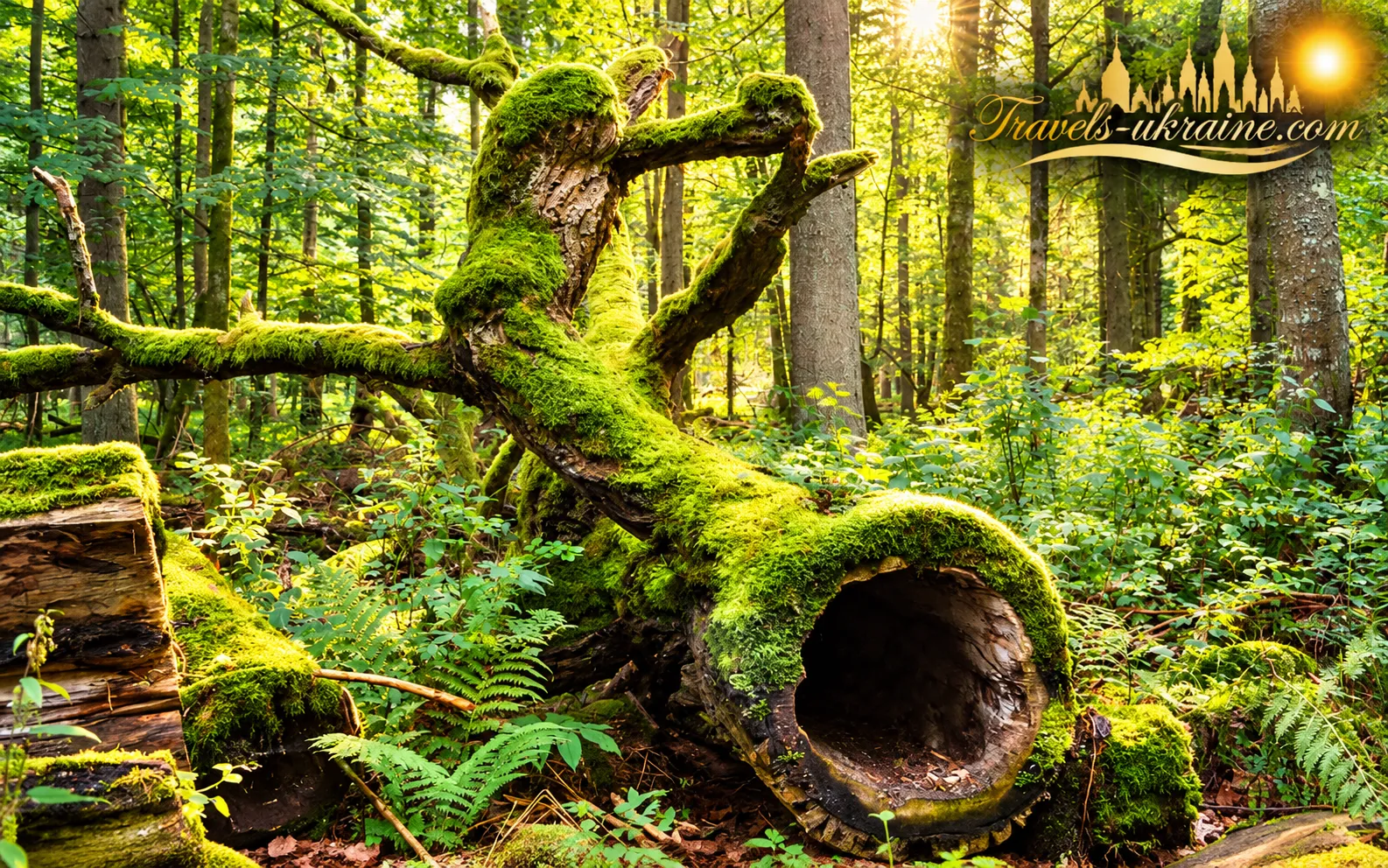
After discovering the legends of Brocéliande, a perfectly natural question arises: where exactly are all these mysterious places, and can you actually see them for yourself? Fortunately, most of these famous locations are very real. Hidden among the trees are ancient megalithic monuments, small natural springs, picturesque valleys, and unusual works of art. Some are located close to parking areas, while reaching others requires walking several kilometers along forest trails.
However, the tourist attractions of Brocéliande Forest are not concentrated in a single location. They are scattered around Paimpont, Tréhorenteuc, Concoret, and several other small settlements. Trying to visit them all during one short walk is rather like searching for Merlin without a map: adventure is practically guaranteed, but success is considerably less certain.
For your first visit, the best approach is to choose several locations that suit your interests and level of physical fitness. Some trails are ideal for a leisurely family walk, while others require comfortable footwear, drinking water, and a willingness to tackle rocky slopes. Below, we explore the most famous attractions in Brocéliande, helping you turn your visit to this legendary forest into a memorable adventure.
Merlin's Tomb and the Fountain of Youth
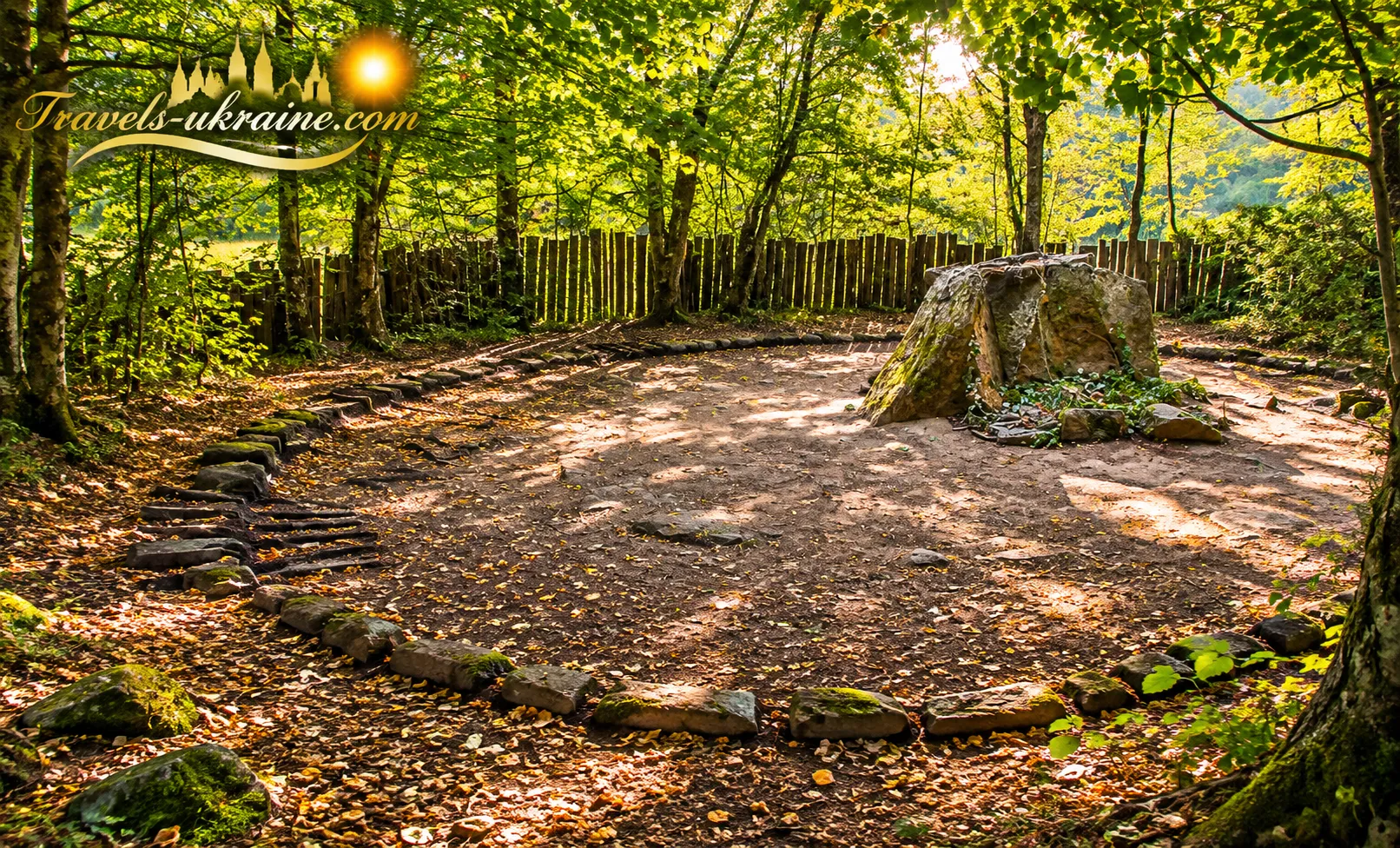
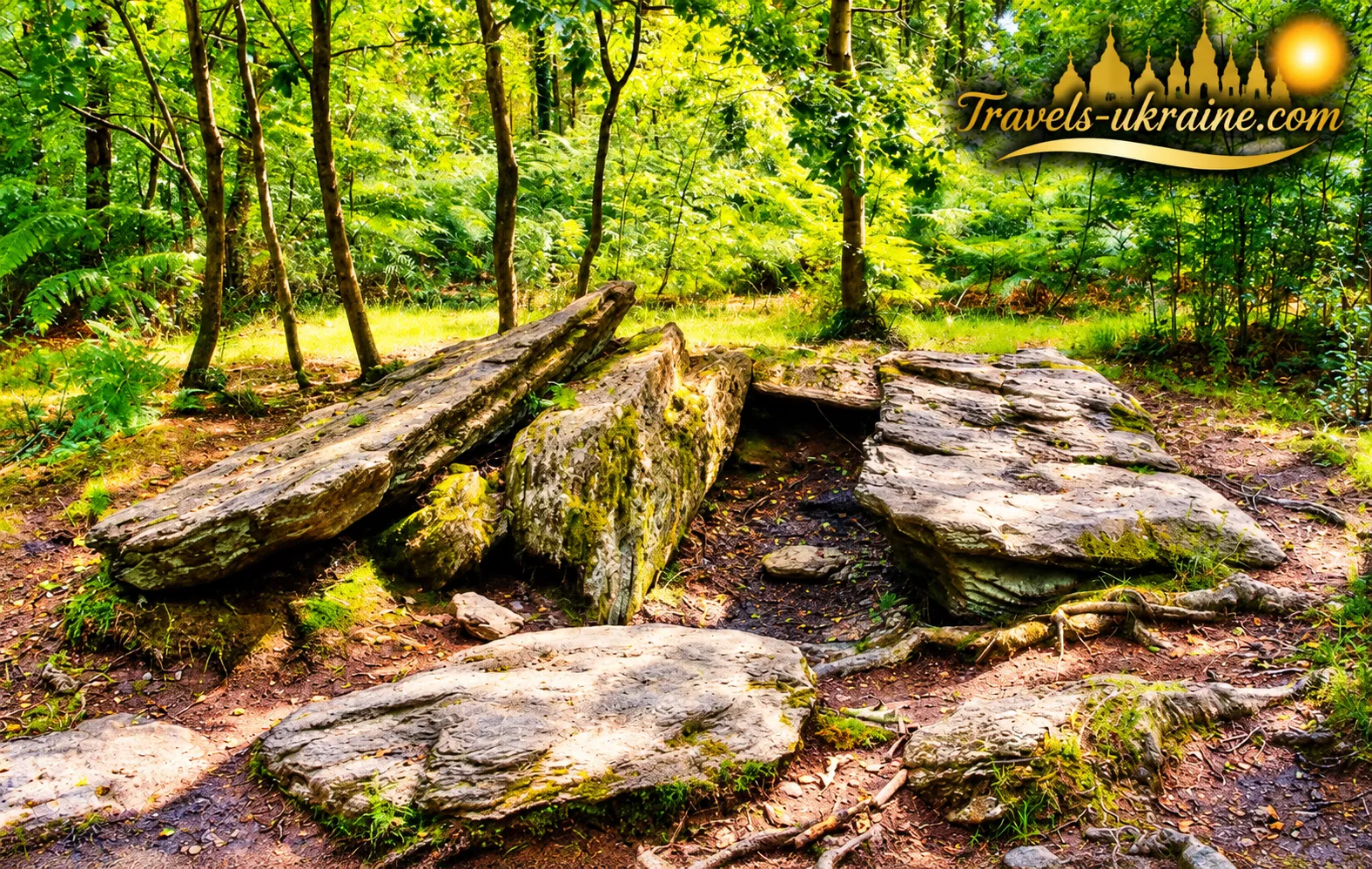
One of the most visited places in the forest is Merlin's Tomb, located in the northern part of Paimpont Forest. Despite its impressive name, do not expect a magnificent mausoleum, an underground crypt, or a monumental stone structure. Instead, visitors discover the remains of an ancient megalithic burial monument surrounded by trees and a small clearing.
The monument's present-day appearance is rather modest: a few upright stone slabs, remnants of an ancient structure, and a small open space around them. Yet this very simplicity creates an unusual impression. There are no elaborate decorations or spectacular artificial displays — just genuine ancient stones that eventually became part of Brittany's legendary heritage.
Not far from Merlin's Tomb lies the Fountain of Youth (Fontaine de Jouvence), a small natural spring that has become another symbolic landmark of Brocéliande. Its name sounds particularly promising, especially to anyone who can barely remember what it felt like to be twenty years old. Unfortunately, expecting genuine rejuvenation after encountering the local water would be a little too optimistic.
The Valley of No Return and the Golden Tree
If you would rather explore an entire natural landscape than visit just one small landmark, the area near the village of Tréhorenteuc is well worth your attention. This is one of Brocéliande's most famous destinations, combining rocky hills, heather-covered slopes, bodies of water, and several legendary sites.
The valley has a completely different character from the dense woodlands of Paimpont. Wide panoramas reveal hillsides covered with low-growing vegetation, while reddish rocky outcrops create a striking contrast with the surrounding greenery. On sunny days, the scenery is particularly picturesque, while cloudy skies give the landscape a wilder, more dramatic appearance.
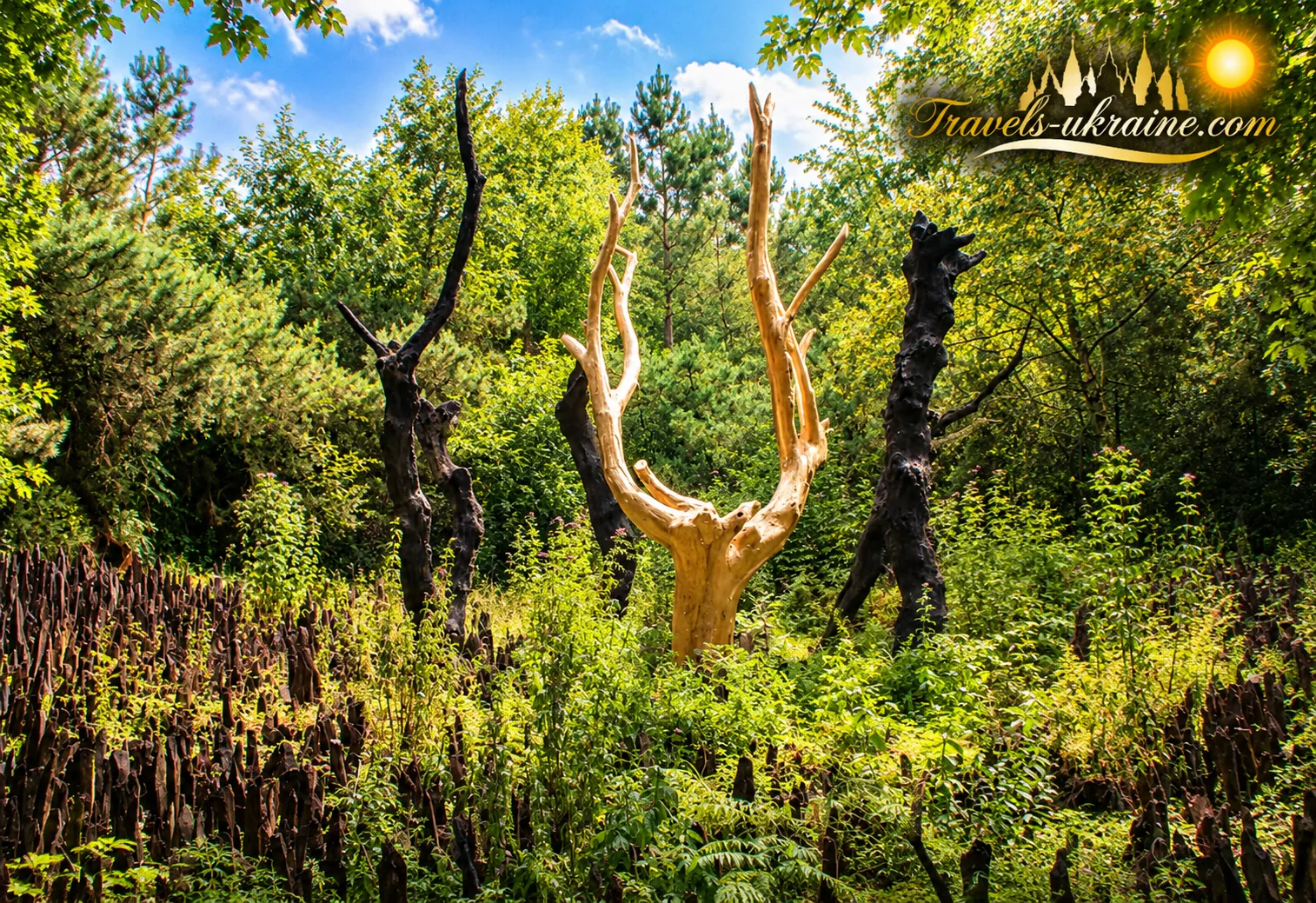
Near the entrance to the Valley of No Return stands one of Brocéliande's most unusual artistic landmarks — the Golden Tree (L'Arbre d'Or). This installation attracts attention through the remarkable contrast between its golden trunk and the darkened trees surrounding it. Created by French artist François Davin in 1991 following a devastating forest fire the previous year, the artwork features a chestnut tree trunk covered in gold leaf, surrounded by blackened trees. Together, these elements symbolize the rebirth of life after destruction.
The Golden Tree looks particularly striking against the surrounding natural vegetation. Its unusual golden surface creates a dramatic contrast with the rocks, water, and green hillsides. It is one of those landmarks that are instantly recognizable in photographs, yet seeing the installation in person creates an entirely different impression.
The Fairy Mirror — A Peaceful Pond Among Mysterious Hills
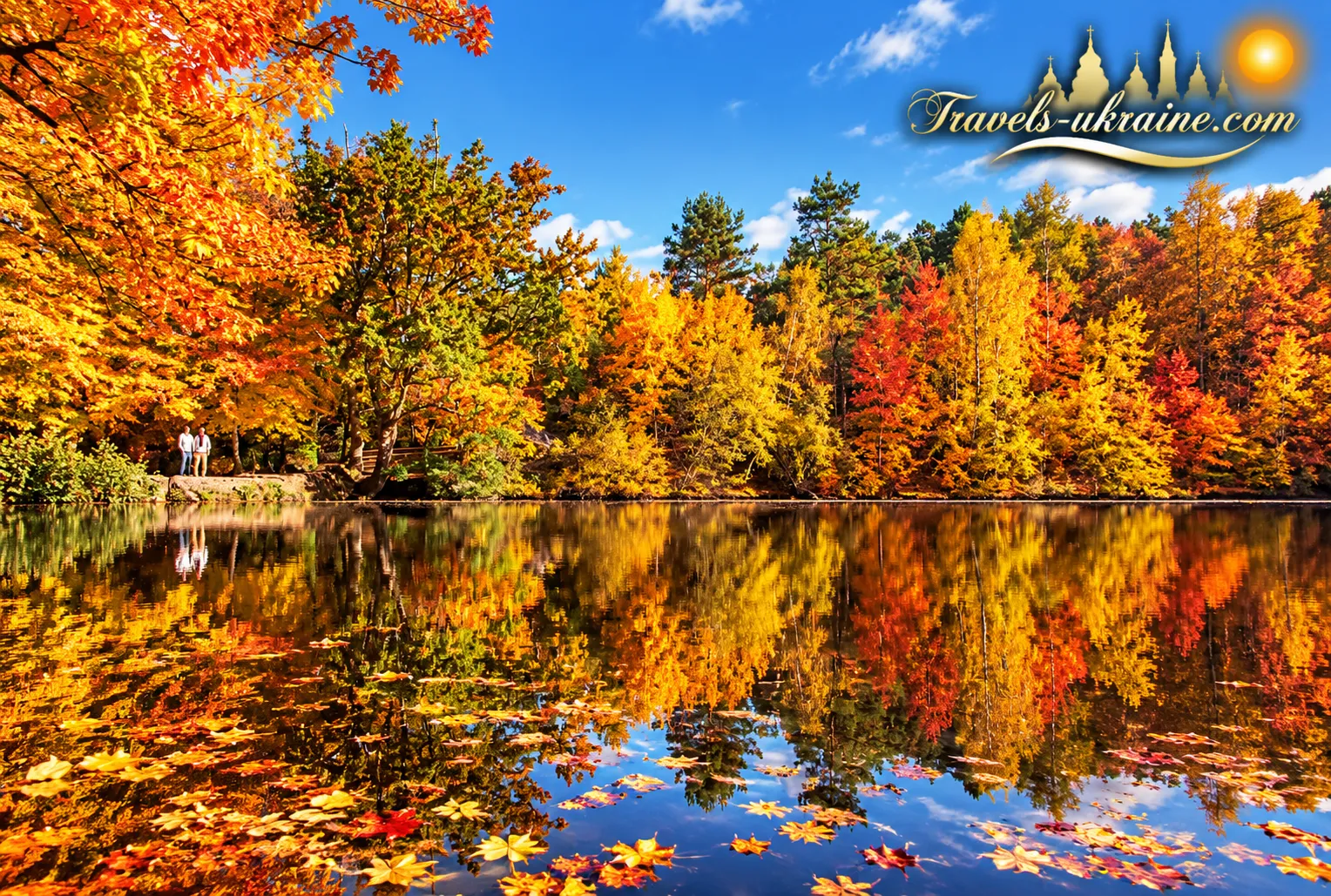
Close to the Golden Tree lies the Fairy Mirror (Miroir aux Fées), a small body of water that has become one of the most recognizable features of the Valley of No Return. Its greatest attraction is its ability to reflect the surrounding trees, sky, and rocky hillsides. On a windless day, the water can become so perfectly still that it creates an almost symmetrical reflection of the landscape. These are the moments when the pond looks particularly enchanting. After rainfall or during strong winds, however, its character changes: the mirror-like surface disappears, and the scenery becomes much more dynamic.
This location is especially appealing to photographers. Here, you can create beautiful compositions featuring reflections of trees or capture the morning light illuminating the surrounding natural landscape. However, the Fairy Mirror is not a designated swimming area. Visitors should avoid entering the water and take care not to damage the shoreline vegetation or trample the surrounding soil. The most beautiful views can be enjoyed from the official walking trails.
The Fountain of Barenton — A Walk to a Legendary Forest Spring
Among Brocéliande's natural landmarks, the Fountain of Barenton (Fontaine de Barenton), located near the area known as Folle Pensée, deserves special attention. This small natural spring became famous through medieval literary works. Visitors should not expect a grand fountain decorated with elaborate sculptures. Instead, they will find a modest pool of water surrounded by stones and vegetation. One of its unusual natural characteristics is the occasional appearance of bubbles on the water's surface. Such phenomena may have helped sustain the spring's mysterious reputation over the centuries.
The journey itself is one of the main attractions of visiting Barenton. From the parking area near Folle Pensée, visitors can follow a circular woodland route of approximately 3–4 kilometers. The trails lead through relatively peaceful sections of the forest, where you can admire a variety of trees, moss-covered stones, and small open clearings.
Viviane's House — An Ancient Megalithic Monument on a Hilltop
Another fascinating Brocéliande landmark stands on elevated ground overlooking the Valley of No Return. This is Viviane's House (Hôtié de Viviane), also known as the Druids' Tomb. Despite its romantic name, the monument has a genuine archaeological origin. Visitors encounter a small stone structure built from large slabs. Archaeological investigations have established that it was an ancient burial monument dating to approximately 2500 BC. This makes the site considerably older than the medieval literary works that eventually brought Brocéliande its fame.
Its location is particularly interesting. The monument stands at an elevation of approximately 191 meters above sea level, with the surrounding terrain offering picturesque views of forested slopes and open heathland. It is an excellent destination for anyone who wants to combine an interest in archaeology with a walk through nature. From the nearest parking area, visitors need to walk approximately 800 meters each way. The trail includes uneven ground and uphill sections, making it unsuitable for visitors with limited mobility. When exploring the site, avoid entering the stone structure or attempting to move any of its ancient elements.
The Garden of the Monks — A Mysterious Neolithic Monument
For travelers interested in genuine prehistoric monuments, the Garden of the Monks (Jardin aux Moines), near Néant-sur-Yvel, is a particularly fascinating destination. The name might suggest an ancient monastery garden, but the site is actually home to an unusual megalithic complex. The monument consists of numerous stone blocks arranged in an elongated rectangular formation approximately 25 meters long and 5–6 meters wide. Local stone materials were used in its construction, including quartz conglomerate and purple schist.
Archaeological excavations carried out in 1983–1984 under the direction of Jacques Briard uncovered flint arrowheads and fragments of pottery. However, the original purpose of the entire structure remains a subject of scientific discussion. It is precisely this uncertainty that makes the monument especially intriguing for archaeology enthusiasts.
Tourist Facilities and Visitor Guidelines for Brocéliande Forest
Brocéliande Forest is not a typical tourist park with a central entrance and a continuous network of well-maintained pathways. It is an extensive woodland where public walking trails alternate with privately owned land. However, the surrounding towns and villages offer essential tourist facilities, including hotels, restaurants, campsites, parking areas, and visitor information centers. The key is to choose a convenient base and check the accessibility of your planned routes in advance.
One of the most convenient places to stay is Paimpont, a small town widely regarded as the main tourist center of Brocéliande. Visitors can choose from hotels, guesthouses, holiday apartments, and campsites. Additional accommodation options are available in nearby communities such as Plélan-le-Grand, Concoret, and Tréhorenteuc. When choosing where to stay, consider the distance to the attractions you want to visit. Brocéliande's landmarks are spread across a large area, so accommodation advertised as being "near the forest" is not necessarily close to the particular trail you have in mind.
Paimpont and the surrounding villages have restaurants, cafés, and traditional Breton pancake restaurants known as crêperies. Be sure to try Breton buckwheat galettes (galettes bretonnes), sweet crêpes, and the famous buttery pastry kouign-amann. In smaller French establishments, kitchens often operate only during designated lunch and dinner hours, so it is worth checking opening times in advance. For longer woodland walks, remember to bring drinking water and a snack.
Accessibility of Forest Trails for Visitors
The accessibility of walking routes in Brocéliande depends on their location and the natural terrain. Paimpont has several developed walking areas, including part of the lakeside route that is suitable for visitors with reduced mobility. The local tourist office holds the French Tourisme & Handicap certification and provides specialized visitor information. However, most trails in the more remote parts of the forest have uneven surfaces, exposed tree roots, rocky sections, and natural slopes. For families with young children, baby carriers are generally more practical than strollers on these routes. Visitors with reduced mobility should check the accessibility of their chosen trail before setting out.
Private Land and Seasonal Access Restrictions
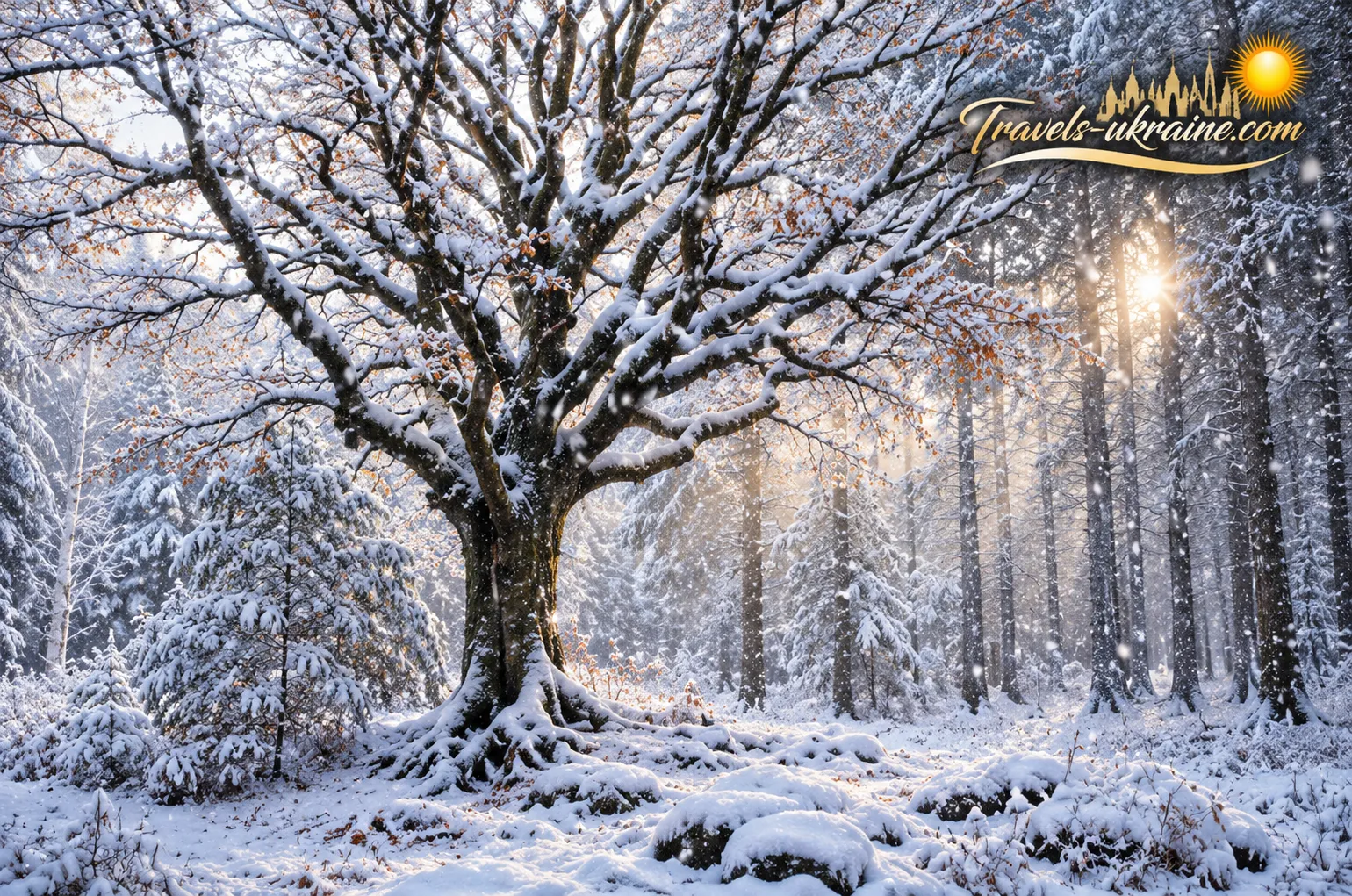
A significant portion of Brocéliande Forest is privately owned, meaning visitors cannot freely explore every part of the woodland. During the warmer months, many designated tourist trails are accessible through agreements with landowners, but access to certain areas becomes restricted in autumn and winter. Particular care is needed during the hunting season, when some paths may be temporarily closed. For publicly managed forest areas, the French National Forests Office (Office National des Forêts, ONF) publishes relevant hunting schedules. Before your trip, check the latest maps and announcements from the local tourist office, and never cross fences or ignore signs indicating restricted access.
Brocéliande Forest: Frequently Asked Questions
How do you get to Brocéliande Forest from Rennes?
The most convenient option is to drive toward Paimpont via the N24 national road. The distance from Rennes is approximately 45 km, and the journey usually takes around 40–50 minutes. For first-time visitors, Paimpont is an excellent starting point for exploring Brocéliande before continuing to other attractions scattered throughout the forest.
Can you visit Brocéliande Forest without a car?
Yes. The BreizhGo regional bus service, route 500, connects Rennes with Paimpont. The scheduled journey takes approximately one hour. However, some attractions are located far from bus stops, so visitors without a car may find it more convenient to explore the walking trails around Paimpont or join an organized guided tour. Up-to-date timetables are available at breizhgo.bzh.
When is the best time to visit Brocéliande Forest?
For hiking and woodland walks, the most convenient period is from April to early September, when a wider selection of trails is accessible. In spring, the forest is particularly lush and green. Summer brings more themed guided tours, while autumn transforms the trees into beautiful shades of gold. Before visiting, always check the weather forecast and confirm that your chosen trail is open.
Can you explore Brocéliande Forest in autumn and winter?
Yes, but not all walking routes remain accessible. Between September 15 and March 31, some trails crossing privately owned woodland are closed or have their routes changed because of hunting activities and forestry operations. Before your trip, check the seasonal map of open trails on the official Brocéliande tourism website.
How much time do you need to visit Brocéliande Forest?
For a brief introduction, 2–3 hours is enough if you choose a single walking route. If you want to visit several famous landmarks, it is better to allow a full day. For travelers planning storytelling tours, a visit to Comper Castle, and other regional attractions, spending 2–3 days in the area is a more comfortable option.
Can you see all of Brocéliande's legendary sites in one day?
Visiting every landmark in a single day is difficult because the attractions are spread across different parts of the forest. For a one-day trip, a good option is to explore the Valley of No Return, the Golden Tree, and one or two additional accessible sites. Trying to see absolutely everything is not advisable, as a considerable amount of time would be spent traveling between locations.
Can you explore Brocéliande Forest without a guide?
Yes. Many of Brocéliande's walking trails can be explored independently. The most important things are to use official maps, stay on designated paths, and respect seasonal access restrictions. Joining a walk led by a local storyteller is not essential, but it can greatly enrich your experience by bringing the medieval legends associated with the places you visit to life.
Which Brocéliande walking trails are suitable for beginners?
For your first walk, consider a route near Paimpont Lake or a short circular trail leading to the Golden Tree in the Valley of No Return. The official spring and summer trail map includes walks of approximately 2–4 km. However, keep in mind that even shorter trails may feature rocky uphill sections and uneven ground.
Is Brocéliande Forest suitable for families with children?
Yes. Families with children can enjoy short nature walks, themed storytelling tours, and the interactive experience "The Gate of Secrets" (La Porte des Secrets) in Paimpont. However, not all woodland trails are suitable for strollers. Choose your route according to your children's ages, the difficulty of the terrain, and current trail accessibility.
Are guided tours of Brocéliande Forest available in languages other than French?
Most themed walks led by local storytellers are conducted in French. The availability of tours in other languages should be confirmed directly with the organizers. For independent exploration, visitors can use maps and guidebooks, while the multimedia experience "The Gate of Secrets" (La Porte des Secrets) offers audio commentary in several foreign languages.
Why Visit Brocéliande Forest — A Place Where Legends Come to Life
Some places captivate visitors with magnificent architecture, impress them with the sheer scale of their natural landscapes, or attract them with unusual activities. And then there is Brocéliande Forest — a place where the greatest discovery is the atmosphere itself. Here, even an ordinary woodland walk can turn into a small adventure, while childhood stories about wizards, fairies, and knights suddenly take on an entirely new meaning. What makes Brocéliande particularly special is that it does not try to become a fairy tale designed for tourists. It is a genuine forest with its own natural environment, historic landmarks, and cultural heritage. Yet all it takes is a short walk deeper among the trees, a moment spent listening to the rustling leaves, or a pause beside an ancient stone to understand why this landscape has inspired writers, poets, and traditional storytellers for centuries.
A visit to Brocéliande Forest in France will especially appeal to travelers who appreciate unusual destinations, enjoy spending time in nature, and would not mind briefly returning to the world of childhood imagination. You do not have to believe in magic to experience a certain sense of enchantment here. And there is absolutely no need to search for Merlin behind every tree — although, admittedly, meeting him would make your holiday truly unforgettable.
If you are planning a trip to Brittany, be sure to leave some time to discover Brocéliande. Do not try to see absolutely everything in a single day, and do not turn your woodland adventure into a competition to visit as many landmarks as possible. Give yourself permission to stop, admire the scenery, and enjoy the peaceful atmosphere. After all, the most precious travel memories are sometimes created not beside famous tourist attractions, but along an ordinary forest path where there is nothing around you except trees, silence, and your own imagination.
And who knows? Perhaps when you return home, you will realize that the greatest secret of the legendary Brocéliande Forest has nothing to do with ancient spells or hidden treasures. Its true magic lies in its remarkable ability to remind adults what it feels like to experience the world with a sense of wonder again. And that, you have to admit, can sometimes be worth more than any magical spell.
No Comment
You can post first response comment.