
 English
 Українська
 Български
 Hrvatski
 Čeština
 Dansk
Dansk Nederlands
 Eesti
Eesti Suomi
Suomi Français
 Deutsch
 Ελληνικα
 Magyar
 Íslenska
 Italiano
 Latviešu
 Lietuvos
 Polski
 Português
 Română
 Русский
 Српски
 Slovenčina
 Slovenščina
 Español
 Svenska
 Türkçe
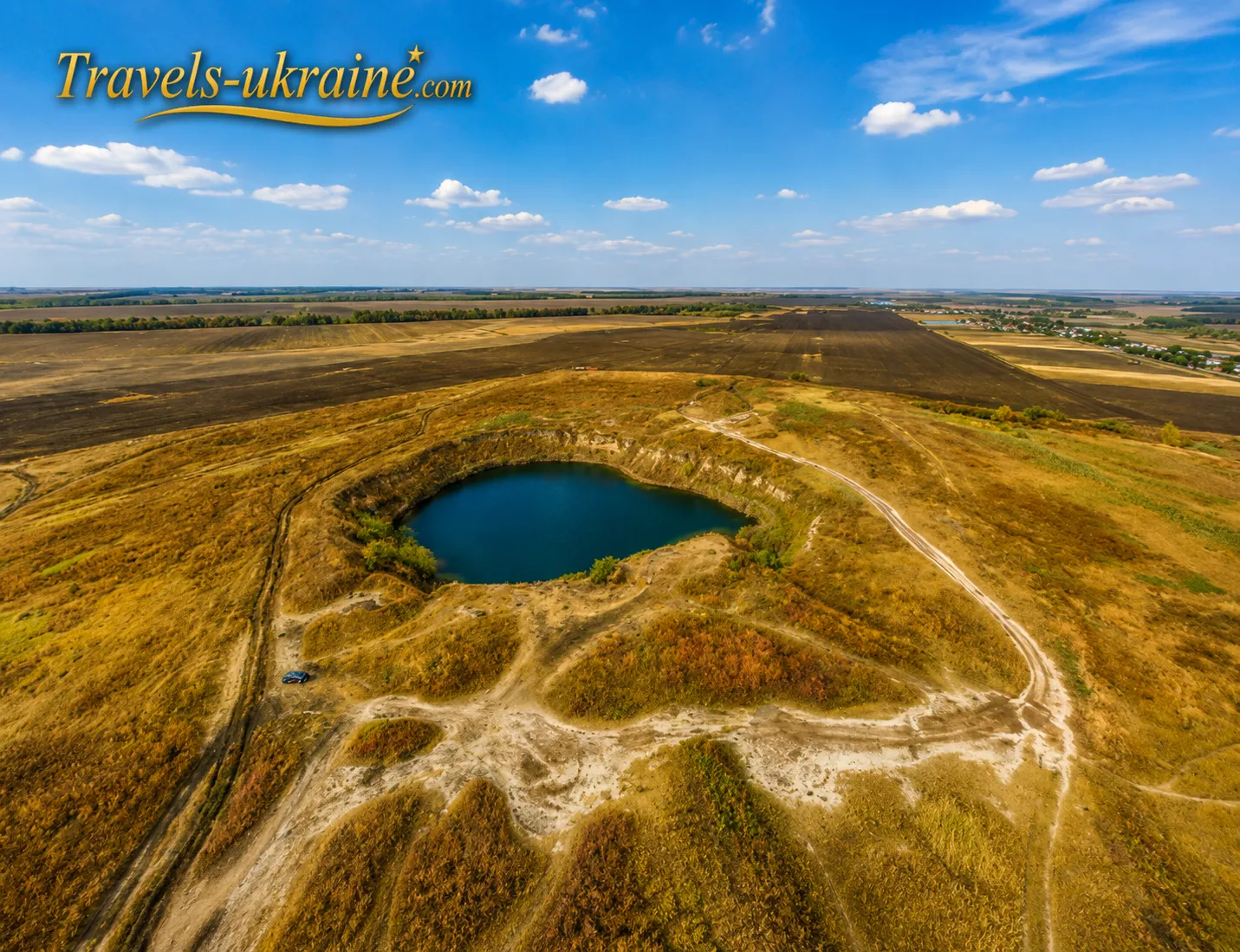
Salt Lake is one of those places you do not want to describe with loud advertising slogans, but rather with quiet excitement: “You have to see this.” Hidden among the steppe landscapes of the Kharkiv region, near the village of Antonivka, lies a unique body of salt water that is often called the Ukrainian Dead Sea. Although it is not a resort with hotels, a promenade and ready-made tourist infrastructure, this is precisely where its special appeal lies — here you can experience genuine open space, silence, wild nature and that rare feeling when the city finally lets you go.
Salt Lake in the Kharkiv region attracts travellers not only with its unusual appearance, but also with the story of how it came into being. It is not a typical natural lake formed over thousands of years. Its appearance is linked to an industrial accident during the drilling of a gas well: the ground collapsed, a crater formed and later filled with water rich in minerals and salts. This is how a place appeared on the regional map that people now search for as the Dead Sea near Kharkiv.
This destination is especially suitable for those seeking not a noisy holiday, but a short weekend trip, a picnic by the lake, beautiful photographs, steppe scenery and a sense of distance from everyday concerns. People come here for simple pleasures: to spend time beside the water, walk along the shore, admire the lake’s unusual colour, pause for a while, breathe in the dry steppe air and see how nature gradually transformed the trace of an industrial accident into a little-known lake with its own tourist appeal.
Next, we will follow this route as though we have already set off: we will discover exactly where the lake is located, how to reach it, why it is called the Ukrainian Dead Sea and what lies behind its unusual industrial origin. You will learn when it is best to visit, where to take photographs, whether the location is suitable for camping, what to see nearby and which mistakes to avoid during your trip. So, if you would like to find a place on the map of the Kharkiv region where the steppe, salt water and silence create a genuine sense of renewal, this lake certainly deserves your attention.
The history of Antonivka Salt Lake: how an industrial accident created the lake
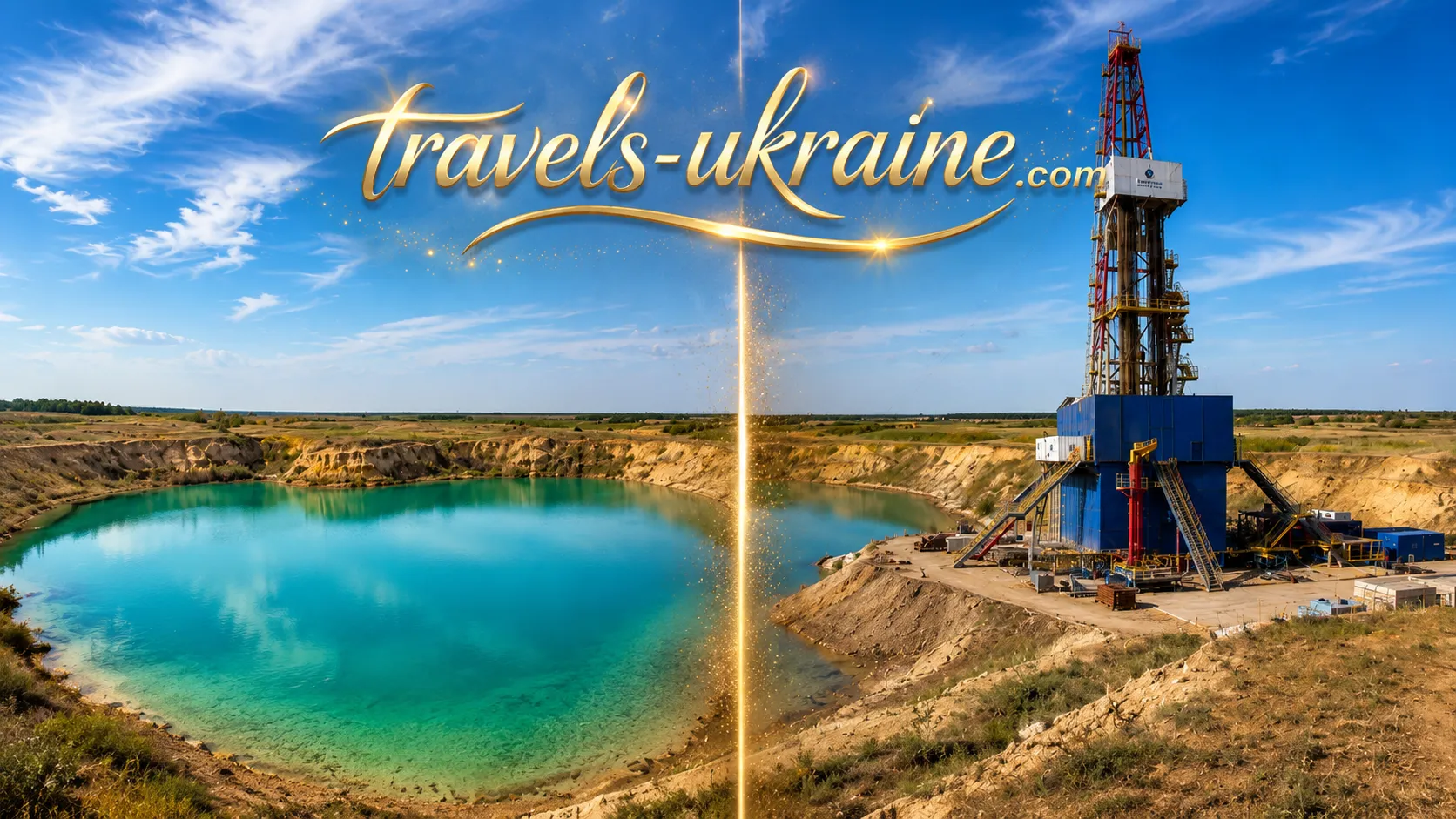
The story of how the salt lake appeared sounds almost like the plot of a documentary: people were searching underground for gas and oil, but instead created one of the most unusual bodies of water in the Kharkiv region. Today, tourists come here for the silence, scenery and sense of wild nature, but it did not begin as a tourist story at all. Geological work was once carried out on the site where the lake now lies.
During the 1960s, this part of the Kharkiv region attracted industrial exploration because of its natural gas and oil deposits. Near the village of Antonivka, within the present-day Kehychivka community, specialists drilled a well that, according to widely cited information, reached a depth of around three kilometres. It passed through salt layers, while gas accumulated underground under extremely high pressure. This feature caused the industrial disaster that left a crater on the map and eventually created the lake.
According to the memories of local residents, everything began before dawn. At around four in the morning, people felt the ground tremble. At first, it resembled a distant vibration, as though a powerful shock had travelled somewhere deep beneath their feet. Then came a rumbling sound — low, alarming and unfamiliar in the village. It quickly intensified, becoming louder and louder, and within only a few minutes it became clear that something serious had happened near the drilling rig.
Before long, powerful flames erupted around the well. A column of fire rose above the steppe and could be seen from a great distance. Every available emergency service, piece of machinery and specialist began arriving at the disaster site. This was how the residents of Antonivka learnt about the accident: not through official announcements, but through the roar, alarm, fire above the fields and commotion that suddenly engulfed the surrounding area. An ordinary village that had been living its peaceful rural life only the day before found itself at the centre of an extraordinary event.
Chaos and fear spread among the local population. People were urgently evacuated because nobody could say with certainty how the situation would develop. Some homes fell within an area of severe contamination: houses were covered in places with a tar-like mixture and mud halfway up the walls, and in some cases almost to window level. Everything around them turned into thick sludge. Waist-deep in mud, people tried to save their livestock, carry out whatever possessions had survived, protect their farms and retrieve at least the essentials.
Later, a powerful jet of gas began erupting from the newly formed crater. To prevent an even greater disaster, it had to be set alight. However, bringing the fire under control proved extremely difficult. Local residents recall that the flames could not be extinguished for approximately three months. Throughout this period, the accident site remained a dangerous zone, and for the people of Antonivka those events became some of the most frightening memories of their lives.
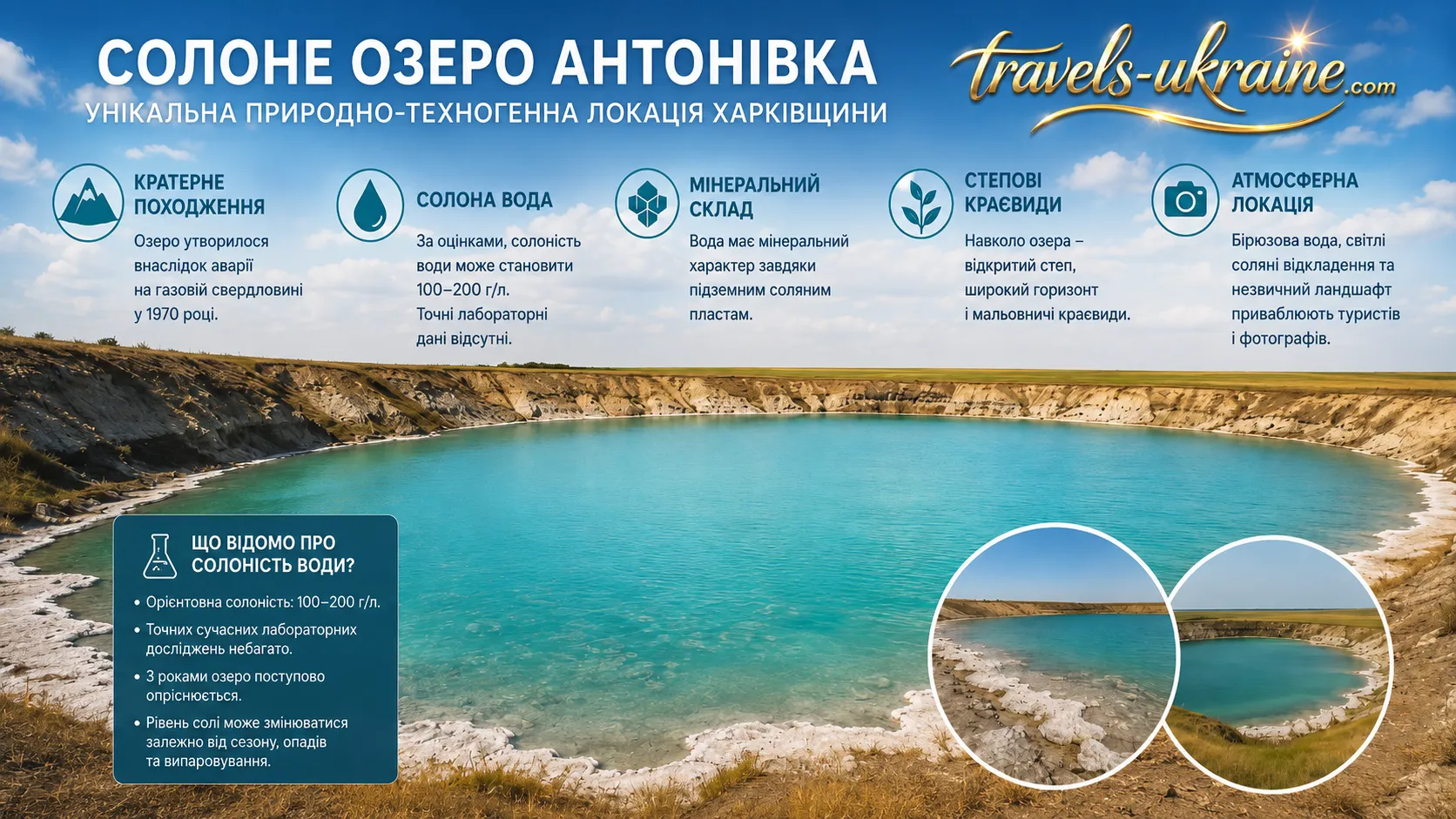
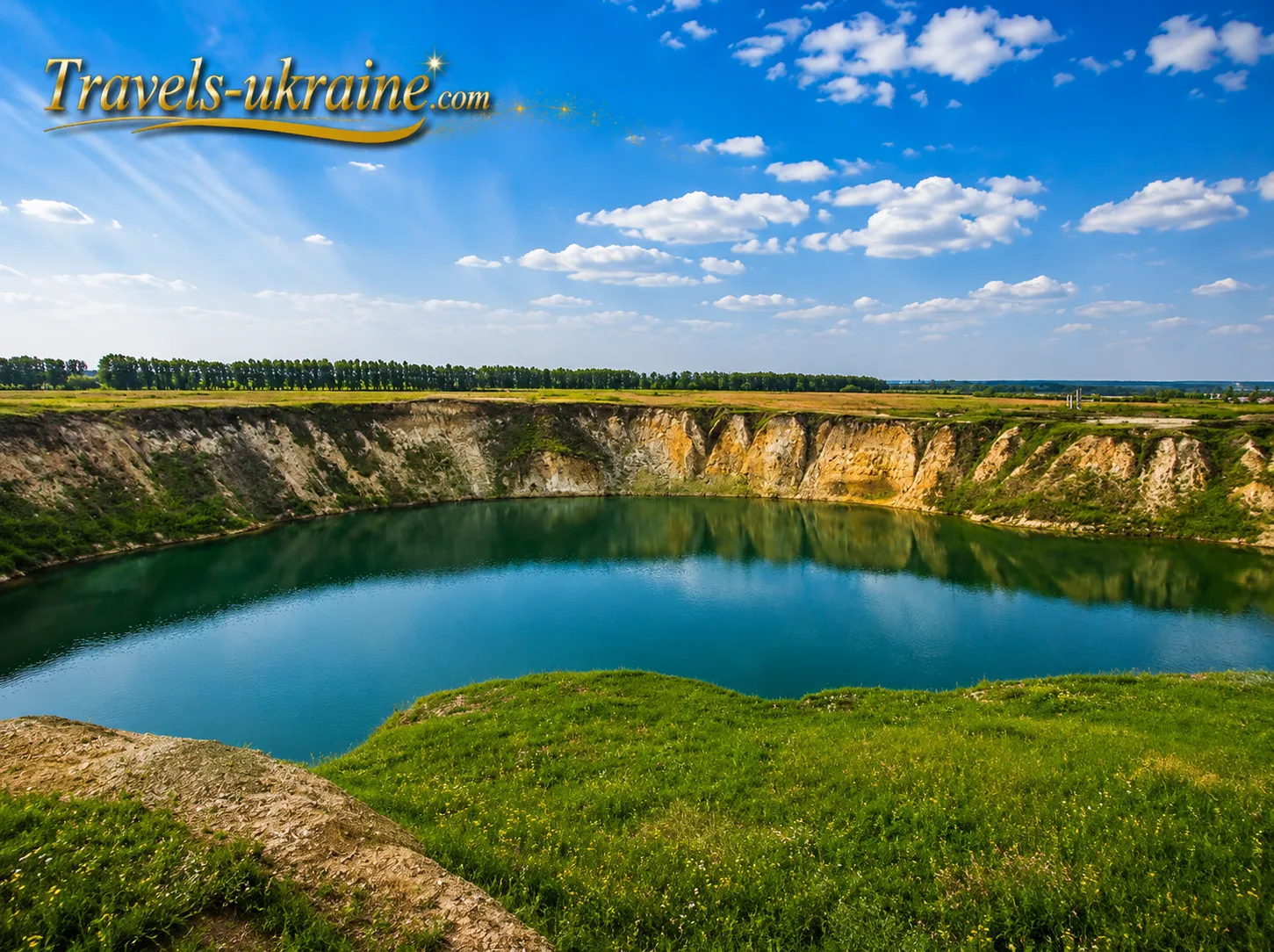
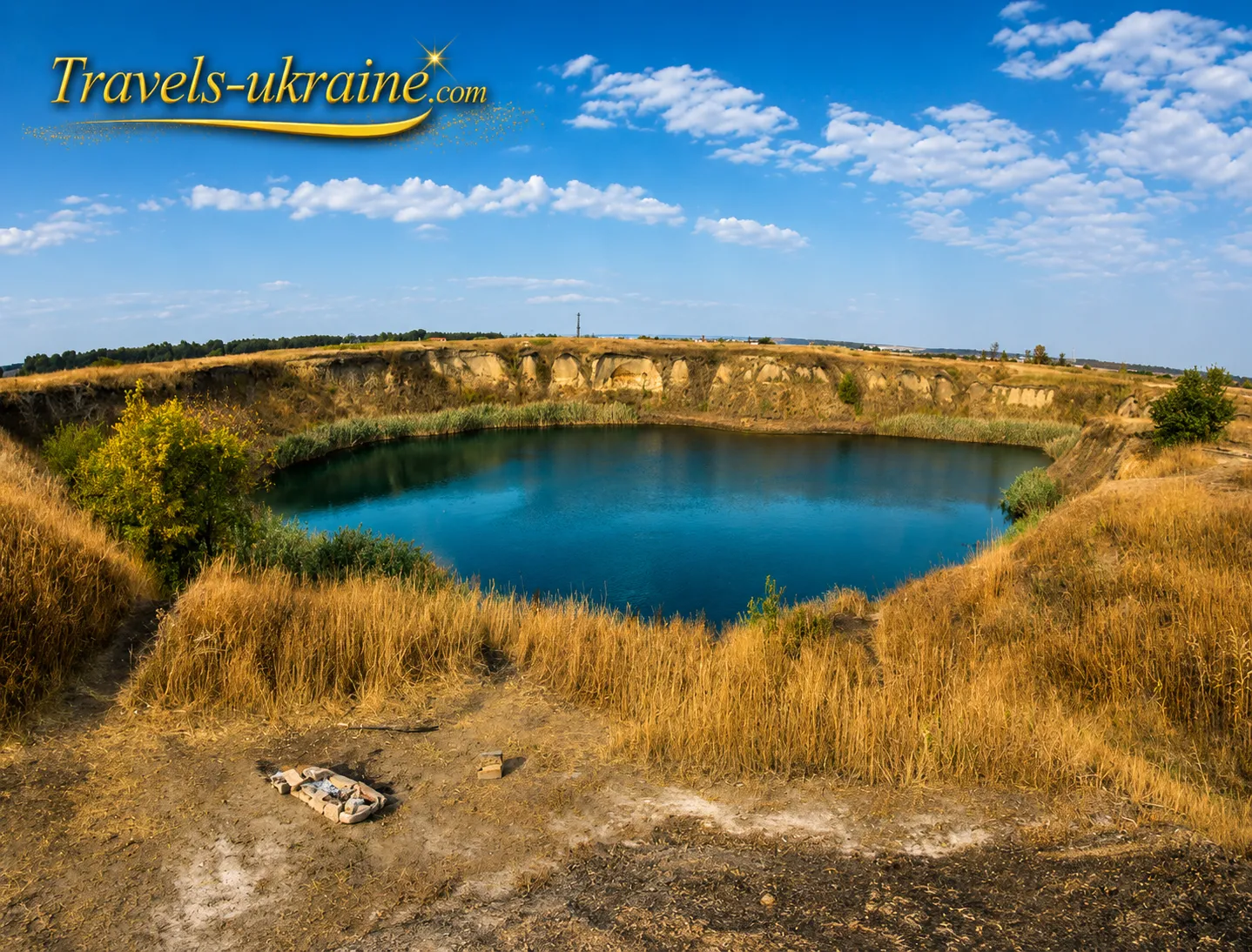
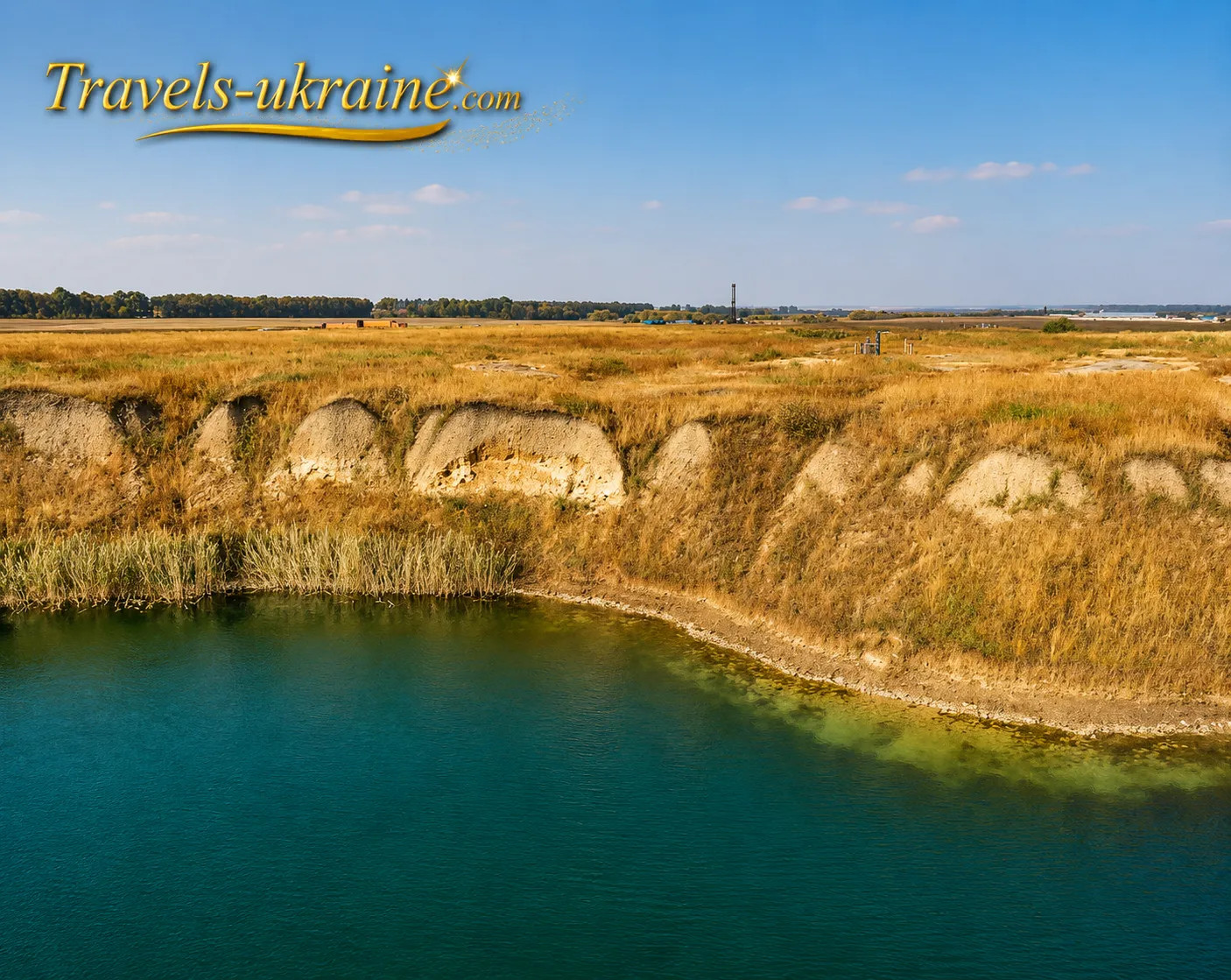
When the flames finally went out, a large crater remained at the accident site. Over time, it began filling with salt water that rose from underground layers and came into contact with salt deposits. This is how Antonivka Salt Lake gradually emerged on the site of an industrial disaster. According to widely cited information, the lake covers more than 6,128 square metres, while its diameter reaches approximately 85 metres. Its exact depth is not known with certainty, which only adds to the mystery of the location and strengthens the feeling that this is not simply a body of water, but a living reminder of an event that changed the local landscape forever.
Why the lake in Antonivka is called the Ukrainian Dead Sea
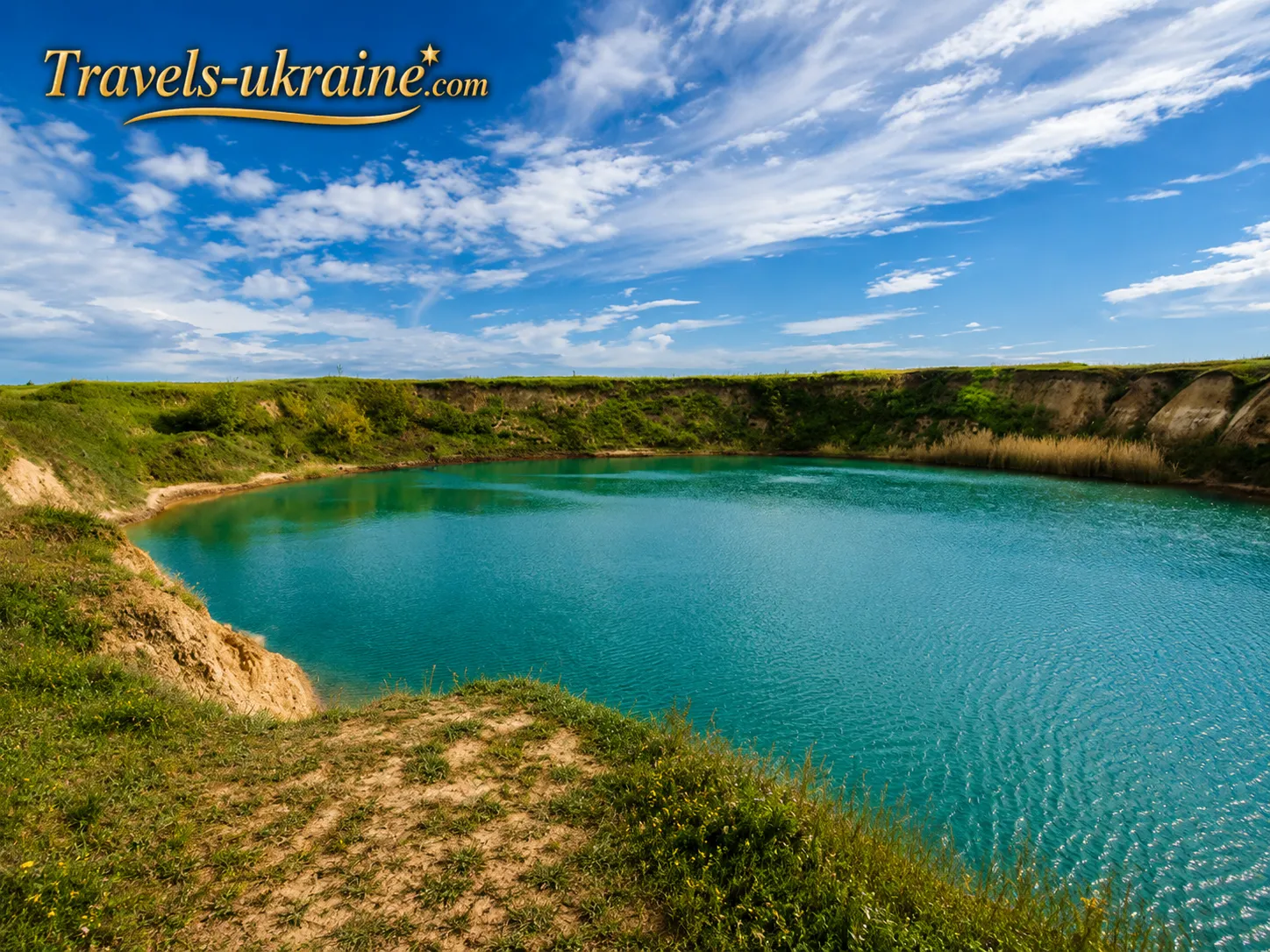
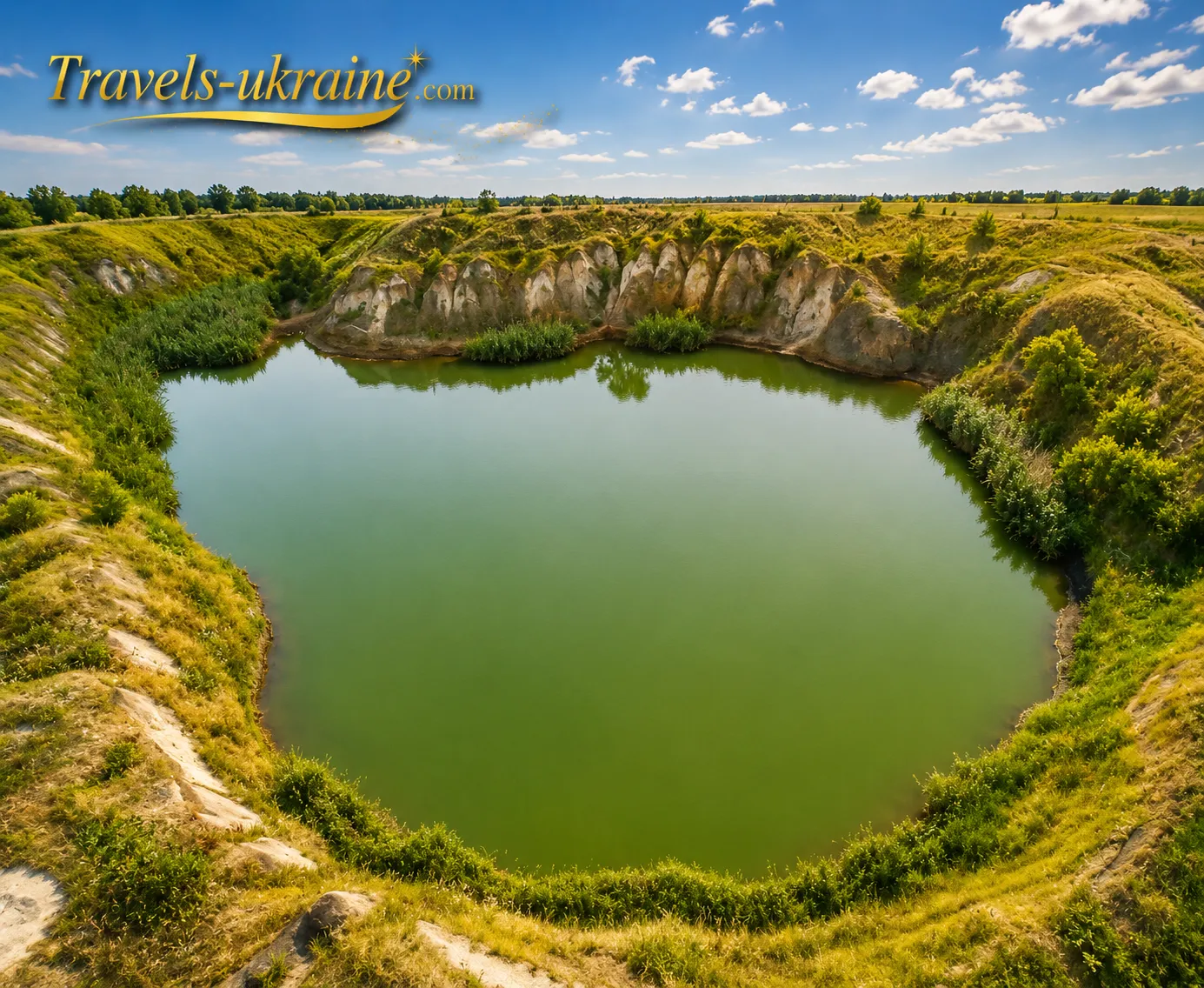
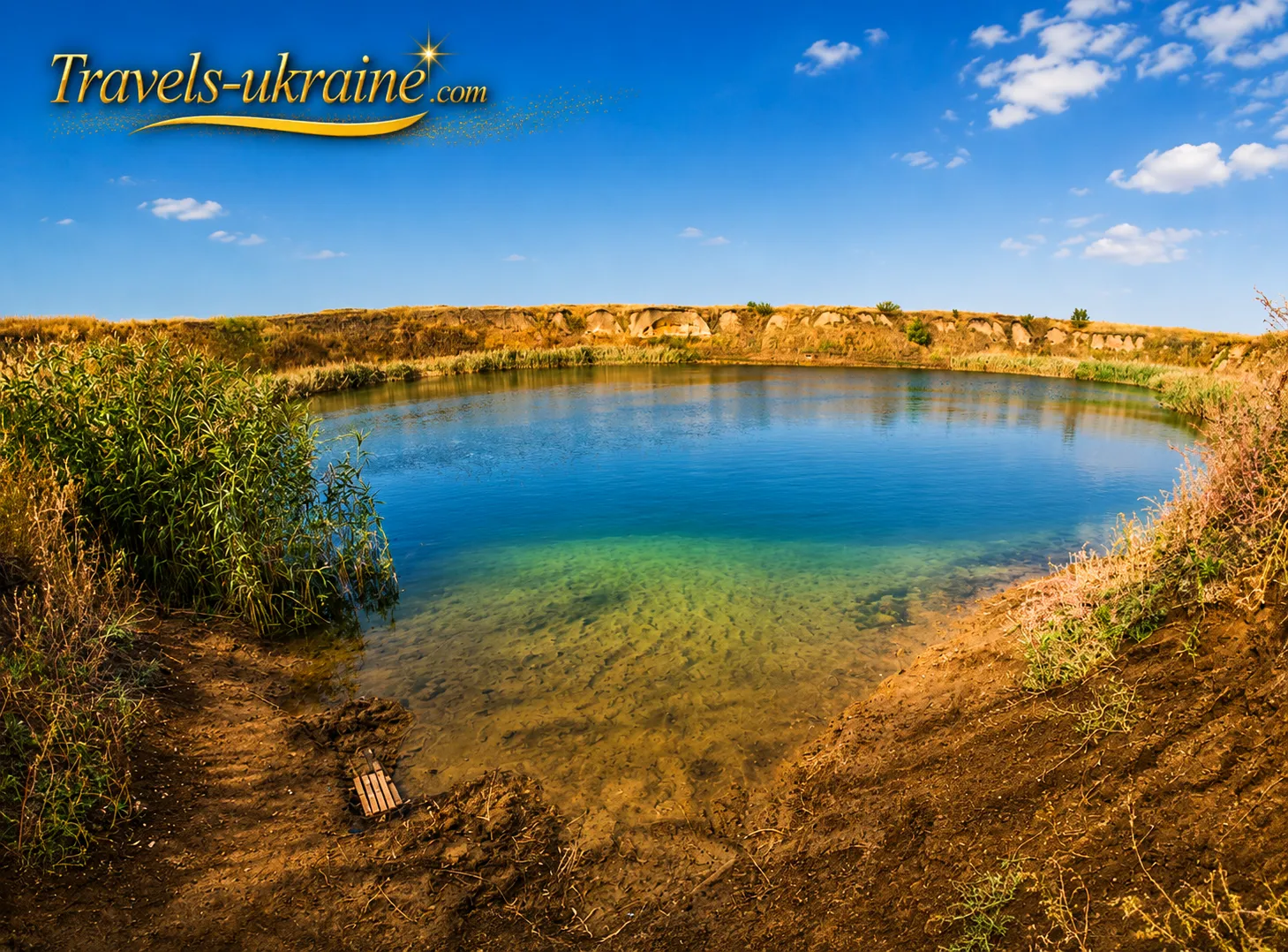
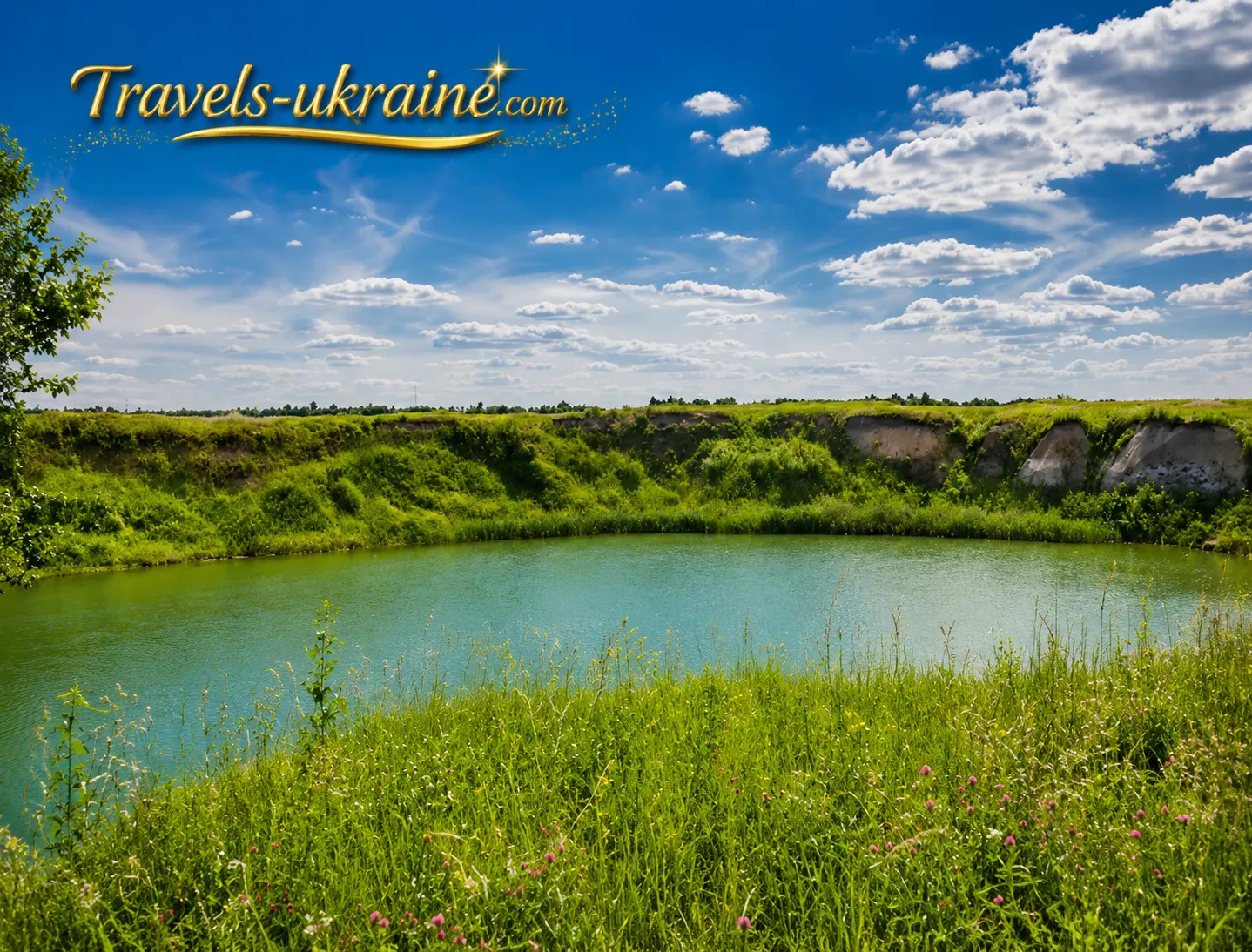
Antonivka Lake is striking not only because of its history, but also because of its appearance. This is not a traditional lake with soft green banks, reeds and a familiar village beach. Instead, travellers are met by a completely different scene: a rounded bowl of water formed inside a crater, exposed slopes, pale soil, salt deposits beside the water and a wide steppe landscape stretching around it. This unusual combination of natural surroundings and industrial origins makes the lake especially interesting to tourists, photographers and anyone looking for a little-known lake for a relaxing break.
Its industrial origin is only one reason why this salt-water lake attracts travellers. Over time, it became known as the Ukrainian Dead Sea, and the comparison did not arise by chance. Of course, Salt Lake near Kharkiv cannot match the real Dead Sea in size, depth or salinity, but the impression created by the location is genuinely unusual.
It is important to understand that the Kharkiv Dead Sea is primarily a popular tourist nickname rather than an official geographical designation. It helps convey the first impression of the location, but should not be misleading. This is a wild, little-known destination that even many residents of Kharkiv have never heard of. It is therefore worth visiting with the right expectations: not for services, but for atmosphere, history, space and the feeling of making a discovery.
The natural and industrial lake seems to be hidden away from popular tourist routes, although it has a history unlike that of any other location in the region. At first, its nickname may appear exaggerated: the surroundings consist of steppe, fields and a village rather than a seaside coast or salt mines. Yet it is precisely here that the salt water, pale deposits along the banks and unusual origin of the lake create an impression that fully explains this intriguing name.
What does science say about the lake’s salinity?
According to some estimates, the salinity of the water in Antonivka Lake may be approximately 100–200 g/l, meaning between 100 and 200 grams of salts per litre of water. Such high mineralisation explains why the lake acquired the popular label of the Dead Sea. Its water differs from ordinary ponds and rivers in the Kharkiv region: its salty character is connected with the underground salt layers through which water passed after the crater was formed.
At the same time, these figures should be treated with caution. Precise laboratory analyses of the salinity level in Antonivka Salt Lake have not been confirmed in publicly available sources, so it would be incorrect to present one fixed figure as definitive. The composition of the water may change depending on the season, rainfall, evaporation, groundwater levels and natural processes occurring within the crater. After a rainy period, the salinity may be lower, while during hot, dry weather, when the water evaporates more actively, the concentration of salts may feel stronger.
In addition, local scientific sources often mention that the lake has gradually been becoming less saline over the years. This means that the unique salt-water lake may no longer have the same level of mineralisation it had during the first years after its formation. Nevertheless, even with a possible reduction in salinity, the lake retains its distinctive character.
From an industrial accident to a tourist destination in the Kehychivka area
The most interesting part of the location’s history is that nobody planned to turn the mineralised lake into a recreational area. It emerged as the result of an error, risk and the force of underground processes that proved more powerful than human calculations. Yet the years passed, the dangerous area settled, the banks changed and the water became part of the local landscape. What was once regarded as an industrial problem gradually developed into an interesting destination for travellers.
Today, the Kehychivka community regards Salt Lake as one of its unusual natural formations, capable of attracting tourists, photographers, enthusiasts of wild camping and anyone seeking new routes for travelling through Ukraine. It has not lost its harsh history, but that history gives the place additional depth. Standing beside the water and looking across the calm surface of the lake, it is difficult to imagine that a powerful gas jet once erupted here, heavy machinery roared and the ground literally changed shape.
This transformation is precisely what makes the Ukrainian Dead Sea in the Kharkiv region so appealing to travellers. It is unlike typical tourist attractions with signs, ticket offices and rows of souvenir stalls. Its appeal lies in its true story, the combination of industrial origins and natural recovery, and the feeling that before you lies not simply a lake, but a living reminder of how unpredictably landscapes and individual lives can change.
Who will enjoy Salt Lake in the village of Antonivka?
This unique body of water will especially appeal to those who enjoy less obvious destinations. If you are attracted by wild locations, unusual natural phenomena, trips without crowds, and camping holidays, this place may become a delightful discovery. It is also suitable for travellers looking for interesting photography spots, a short route from Kharkiv or an option for a peaceful break in nature.
- Type of location: a natural and industrial crater lake with salt water.
- Type of visit: photography walk, picnic, landscape viewing or a short weekend trip.
- Atmosphere: silence, open steppe, unusual terrain and a sense of distance from the city.
- Level of facilities: minimal, so it is best to bring everything you need with you.
In other words, Salt Lake in the Kharkiv region is a tourist destination for those who value impressions rather than services. It does not require complicated organisation, but it does demand care, preparation and respect for the location. If you bring drinking water, comfortable footwear, a charged phone, a small supply of food and a good mood, the trip may become one of your most interesting discoveries in the Kharkiv region.
Photo and video gallery
How does the water of Salt Lake affect human health?
Salt Lake in the Kharkiv region is often described as a place for relaxation and wellbeing because its water has a high level of mineralisation and a distinctly salty character. This is why travellers come here not only for the steppe landscapes, silence and unusual atmosphere, but also in the hope of experiencing the positive effects of salt water on their wellbeing. For many visitors, contact with this kind of water is associated with relaxation, a feeling of lightness in the body, relief for tired muscles and a distinctive form of natural renewal.
At the same time, it is important to understand that the local salt lake is not an officially recognised health resort or sanatorium area. Any discussion of its effects on health should therefore be cautious, without exaggeration, dramatic promises or claims of guaranteed treatment. The high concentration of salts in the water may indeed create a noticeable mineral effect, but it cannot replace medical procedures, a doctor’s consultation or proper treatment. The most sensible approach is to regard the lake as a naturally mineralised destination for peaceful relaxation, where the salt water is an interesting feature rather than an officially proven medical remedy.
Nevertheless, it would be strange to deny that salt water can provide distinctive sensations. Because this water is denser, the body floats more easily, the muscles gradually relax, and simply spending time beside an open lake surrounded by steppe, silence and a wide horizon often has a positive effect on psychological wellbeing. For many visitors, a salt lake of this kind is a place where they can slow down, release tension after the journey, feel lighter in their bodies and escape the rhythm of the city for at least a few hours.
In some respects, this location may be cautiously compared with the well-known salt lakes and salt mines of Solotvyno in Zakarpattia. However, the two should not be treated as equivalent: Antonivka Lake is considerably smaller, has no developed medical infrastructure, sanatorium services or official resort status. Its advantage lies elsewhere — it is a closer and more accessible option for a short trip for residents of the Kharkiv, Sumy and Poltava regions who would like to see an unusual salt-water lake, relax beside the water and experience the atmosphere of a small “Ukrainian Dead Sea” without travelling a long distance.
Can Salt Lake near Kharkiv help the joints and muscles?
The Dead Sea in the Kharkiv region is sometimes described as a place people visit “for their joints” or “for their back”. Such accounts are usually based on visitors’ personal experiences rather than confirmed medical studies of this particular lake. At the same time, a certain logical effect can be explained quite simply: the body floats more easily in salt water, the strain on the muscles and joints feels different, and peaceful time spent beside the water may reduce tension following a journey, work or stress.
However, this does not mean that the lake treats osteoarthritis, sciatica, osteochondrosis or any other condition. Anyone with chronic problems involving the back, heart, blood pressure, joints or blood vessels should consult a doctor before swimming in an unmanaged natural lake. People recovering from surgery, those with cardiovascular conditions, pregnant women, older visitors and anyone who struggles in hot weather should be particularly cautious.
Therefore, the water of Antonivka Salt Lake may provide pleasant sensations, lightness in the body, relaxation and a special atmosphere. However, it should not be presented as having guaranteed healing properties. The best approach is to enjoy the location sensibly: do not drink the water, avoid swimming with open wounds, do not overestimate its health benefits, protect your skin from excessive drying and remember that the principal value of this destination lies not in medical promises, but in the combination of salt water, steppe, silence and genuine renewal.
What to visit near Antonivka Salt Lake
Salt Lake in the Kehychivka area can be visited as a separate destination for a few hours, but it is far more interesting to regard it as part of a short tourist route through the Kharkiv region. If you are already travelling to the village of Antonivka, it is worth allowing some extra time to explore what lies nearby: the steppe scenery of the Kehychivka community, historical sites in the Berestyn area, ancient defensive structures, local museums and quiet country roads that convey the character of this region particularly well.
This type of route is especially suitable for those who prefer not to rush. The lake in the Kehychivka area creates a strong impression in its own right, but the surrounding places provide a better understanding of the region: its history, landscape and connections with rivers, villages, ancient roads and defensive lines. As a result, the trip becomes more than an excursion to a lake and develops into a complete journey through a little-known but meaningful part of the Kharkiv region.
The Koenig Estate: a romantic continuation of the route after Salt Lake
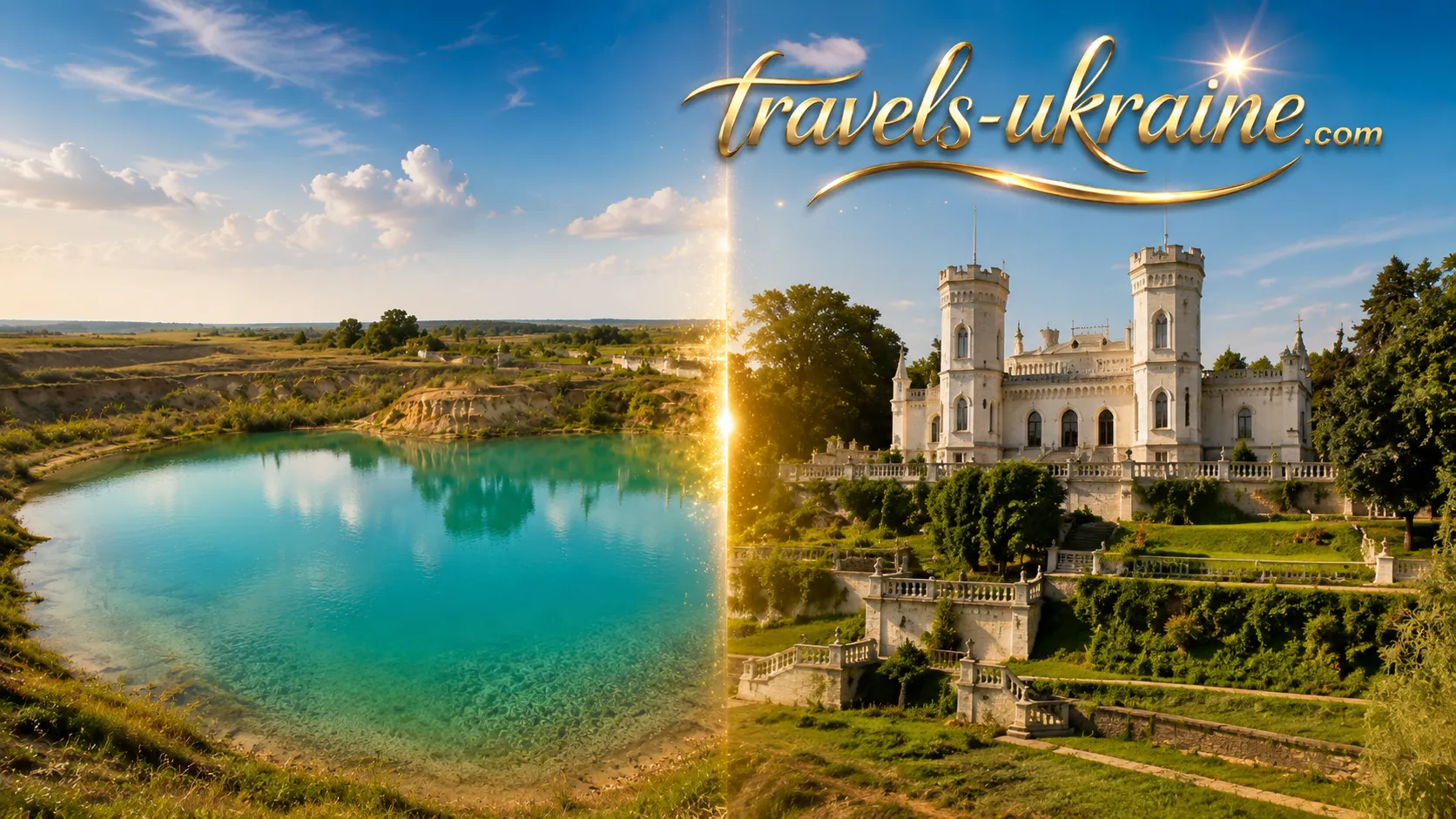
If you would like to add architectural beauty as well as steppe landscapes to your route after visiting Antonivka Salt Lake, consider visiting Sharivka Palace. The distance from Salt Lake to Sharivka is approximately 112 kilometres, depending on the chosen route, so it is better to plan this destination not as a quick stop “on the way”, but as a full continuation of your journey through the Kharkiv region. Such a route requires a little more time, but offers a completely different mood — from a wild salt lake to the romantic history of a palace.
Sharivka Palace, often referred to as the Koenig Estate or Sharivka Castle, dramatically changes the emotional tone of the trip. At the lake, the main impressions come from the open steppe, crater, salt water, silence and sense of a natural and industrial wonder. In Sharivka, architecture, the historic park, the shade of centuries-old trees, romantic façades and the atmosphere of aristocratic history take centre stage. This contrast makes the route especially memorable: within one day or weekend, you can experience two completely different sides of the Kharkiv region — the austere, steppe-like and almost wild scenery around the lake, and the refined, palatial and contemplative atmosphere of Sharivka.
Rules and etiquette at Salt Lake: how to visit responsibly
The lake near Antonivka is more than a beautiful place for photographs, a picnic or a short trip. It is a sensitive location with a complicated history, an open steppe landscape, fragile banks and minimal infrastructure. This is why spending time in nature here requires not only a desire to see an unusual place, but also a responsible attitude. If every visitor leaves the area clean, avoids damaging the banks and respects the silence, this well-known lake in the Kharkiv region can remain an enjoyable destination for travellers.
The main rule is very simple: behave as though you are a guest of nature, rather than visiting a place that “can withstand anything”. At first glance, the steppe may appear vast and resilient, but litter, vehicle tracks, the remains of fires, damaged slopes and careless behaviour can quickly change its appearance. The mineralised lake in the Kharkiv region is valuable precisely because of its wild atmosphere, so that atmosphere should be protected. Before travelling, bring a separate rubbish bag and agree with everyone in your group from the beginning: everything you bring must leave with you.
If the place looks as though nobody has been there after your picnic, then you have enjoyed the lake responsibly. This approach protects the area not only for future tourists, but also for local residents who live nearby and see the consequences of irresponsible visits much more frequently than occasional travellers do.
Do not turn Salt Lake into a place for disruptive recreation
Salt Lake near the village of Antonivka is best suited to a quiet, thoughtful and nature-focused journey. A walk, photography, a picnic, landscape viewing, camping beside the lake or a peaceful stop during a route through the Kharkiv region are all appropriate here. By contrast, disruptive recreation involving loud music, litter, dangerous vehicle access, damage to the banks and disregard for other people quickly destroys the value of the location.
This place does not require excessive activity. Its strength lies in its silence, open space, history and unusual character. If you allow the atmosphere to work, the experience will remain in your memory far longer than any noisy entertainment. This is how the salt lake reveals itself most fully — without haste, without noise and without harming nature.
The rules of behaviour at the lake are not complicated, but they will determine the future of this place. If travellers behave responsibly, the lake will remain a destination for peaceful relaxation, beautiful photographs, picnics, short trips and genuine renewal.
Frequently asked questions about Antonivka Salt Lake
Where is Antonivka Salt Lake located?
Antonivka Salt Lake is located near the village of Antonivka in the Kharkiv region, within the Kehychivka community. It is a little-known but highly unusual travel destination that people often search for as Salt Lake in the Kharkiv region, Salt Lake in Antonivka or Salt Lake near Kharkiv. The location has natural and industrial origins: the lake formed inside a crater following an accident at a gas well.
How can you reach Salt Lake in Antonivka?
The most convenient way to reach Salt Lake in Antonivka is by car, having saved the route on an offline map in advance. The final sections of the journey may pass along village or field tracks, so check the weather and the condition of unpaved roads before setting off. Reaching the lake by public transport is more difficult: you will need to plan a route through the nearest settlements and separately consider how to reach the lake itself.
Can you swim in Antonivka Salt Lake?
Swimming in Antonivka Salt Lake should be approached with great caution. This is not a developed beach or an official recreational area with lifeguards, an inspected lakebed and infrastructure. The water has a high mineral content, while the banks may be uneven or slippery. Do not dive, venture far from the shore, swallow the water or swim with open wounds. Should you decide to enter the water, do so carefully, and after contact it is advisable to rinse the salt from your skin with clean fresh water.
What is the salinity level of Salt Lake?
The exact current salinity level of the water in Antonivka Salt Lake has not been reliably confirmed by publicly available laboratory research. Tourist and local sources provide estimates of approximately 100–200 g/l, but these figures should be treated with caution. Salinity may vary depending on the season, rainfall, evaporation and the gradual natural dilution of the lake over time.
Is there an entrance fee for Salt Lake in the Kharkiv region?
Salt Lake in the Kharkiv region is generally not regarded as a paid tourist attraction with a ticket office, admission tickets or an official visiting system. The main costs of the trip are the journey, fuel or transport, drinking water, food and equipment for a comfortable visit. Check the current situation before travelling, as access rules for particular areas may change depending on circumstances in the region.
Is Salt Lake suitable for camping?
Salt Lake near the village of Antonivka may appeal to enthusiasts of wild camping, but an overnight stay in a tent should be planned only by those with experience of independent outdoor camping. There are no designated tent pitches, showers, toilets, lighting or security near the lake. Tents should be pitched away from steep banks and unstable slopes, and all rubbish must be taken away after your stay.
Are there cafés, shops or tourist facilities near the lake?
Do not expect to find cafés, shops, toilets, showers, equipment hire or a developed beach directly beside Salt Lake in the Kehychivka area. This is a wild natural and industrial location with minimal infrastructure. It is best to bring drinking water, a snack, a first-aid kit, sun protection, a rubbish bag, a power bank and everything else required for a picnic.
Can you visit Antonivka Salt Lake with children?
A visit to Antonivka Salt Lake with children is possible, but requires particular care. There are no fences, level paths, lifeguards or children’s areas, while the banks may be steep or slippery. Children must never be left unattended near the water or slopes. The best format for a family visit is a short walk, viewing the lake from a safe point, taking photographs and enjoying a light picnic without descending into dangerous areas.
When is the best time to visit Salt Lake for photographs?
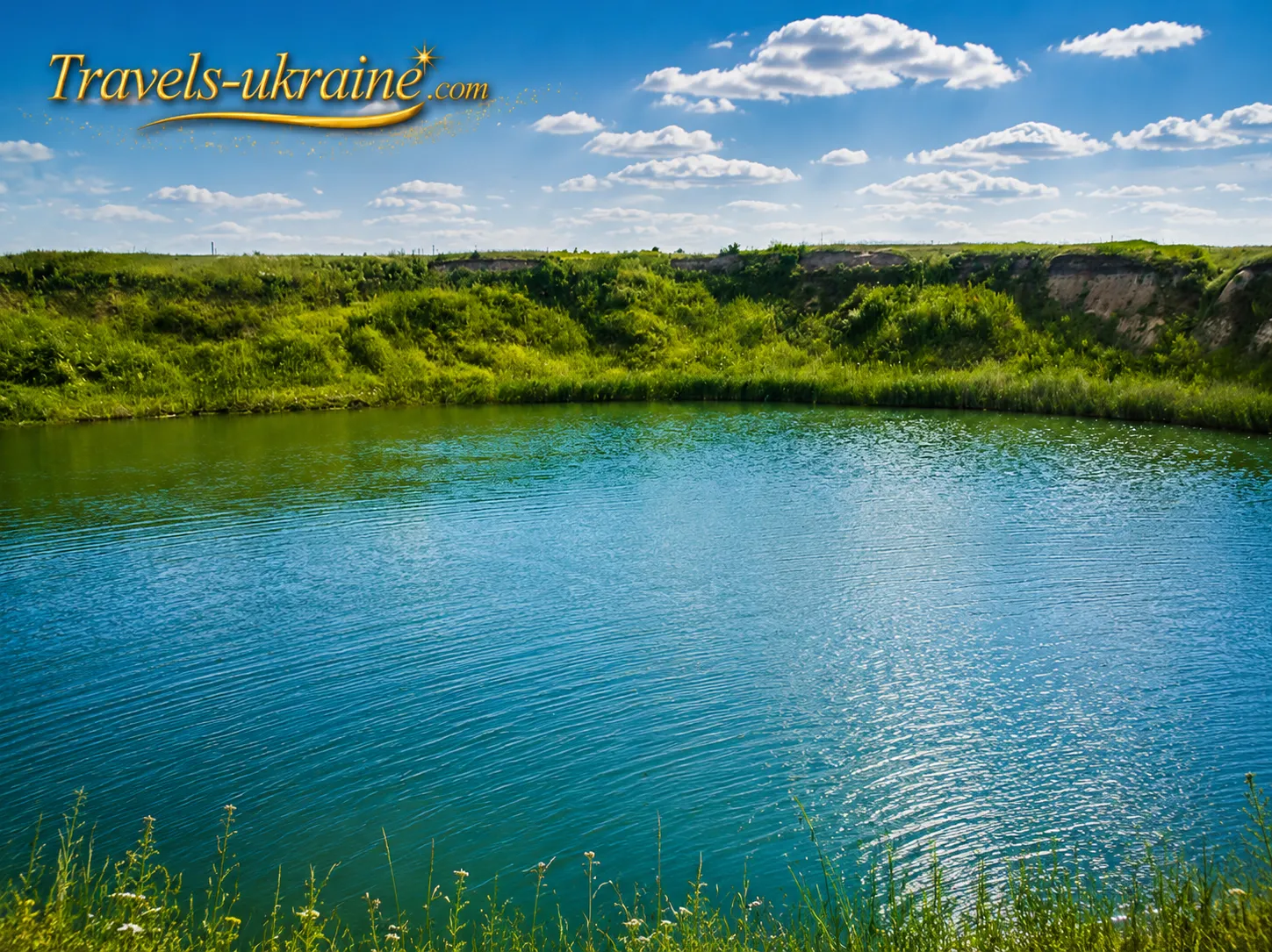
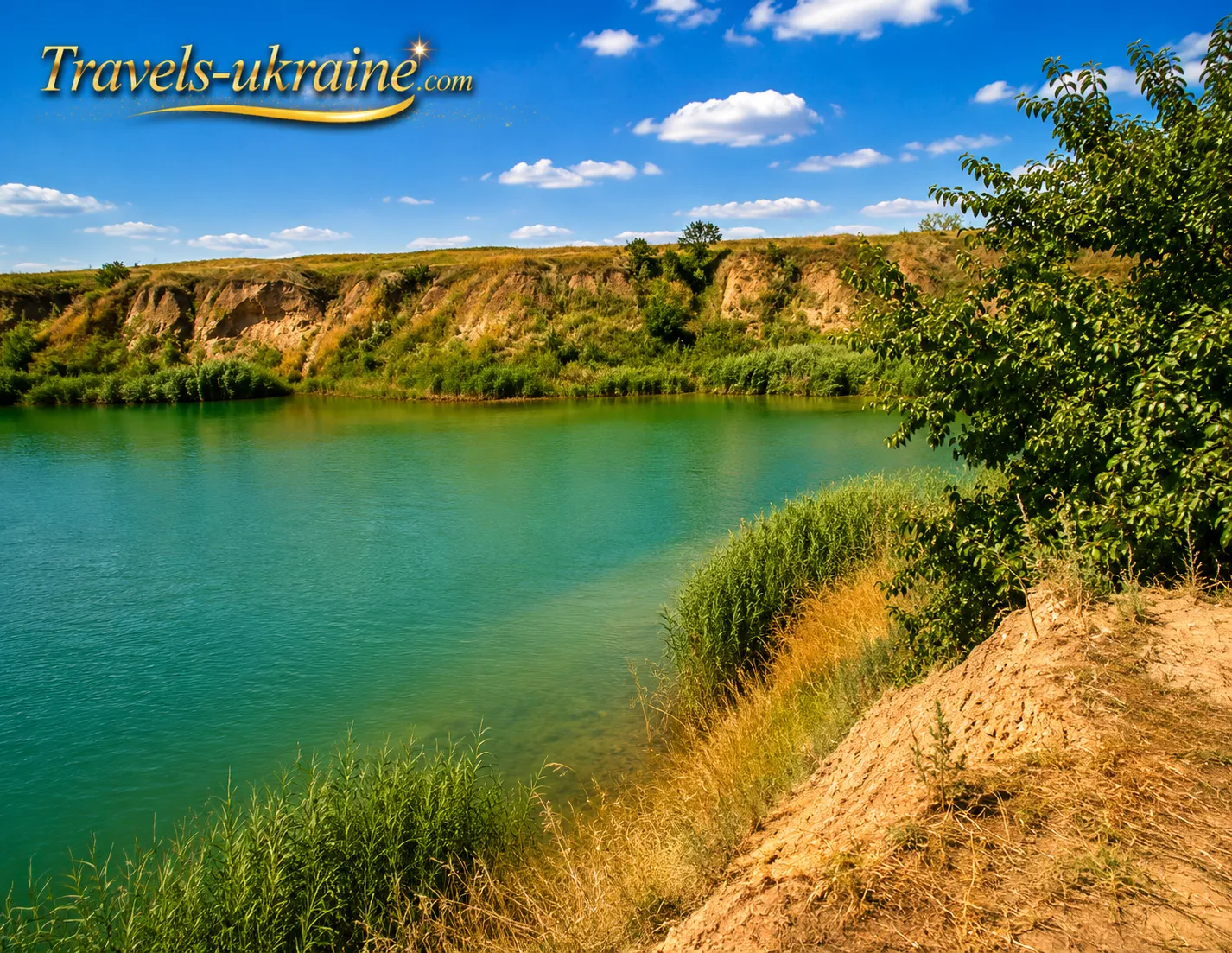
For photography, Salt Lake near Kharkiv is best visited in the morning or shortly before sunset. At these times, the light is softer, the banks take on warmer tones and the water may appear deeper and more expressive. In sunny weather, the salt-water lake often acquires a blue-green or turquoise colour, creating particularly atmospheric photographs. Take care after rainfall: the banks may be slippery and the access roads muddy or washed out.
What can you visit near Antonivka Salt Lake?
After visiting Antonivka Salt Lake, you can continue your route through the Kharkiv region. The nearest option is Kehychivka and the surrounding settlements, where you can take a break and gain a better sense of the local area. With more time available, the route can include Berestyn, historical sites in the Berestyn area or a journey to the Koenig Estate in Sharivka. The distance from Salt Lake to Sharivka is approximately 112 kilometres, so it is best to plan this stop as a separate continuation of the journey.

No Comment
You can post first response comment.