
 English
 Українська
 Български
 Hrvatski
 Čeština
 Dansk
Dansk Nederlands
 Eesti
Eesti Suomi
Suomi Français
 Deutsch
 Ελληνικα
 Magyar
 Íslenska
 Italiano
 Latviešu
 Lietuvos
 Polski
 Português
 Română
 Русский
 Српски
 Slovenčina
 Slovenščina
 Español
 Svenska
 Türkçe
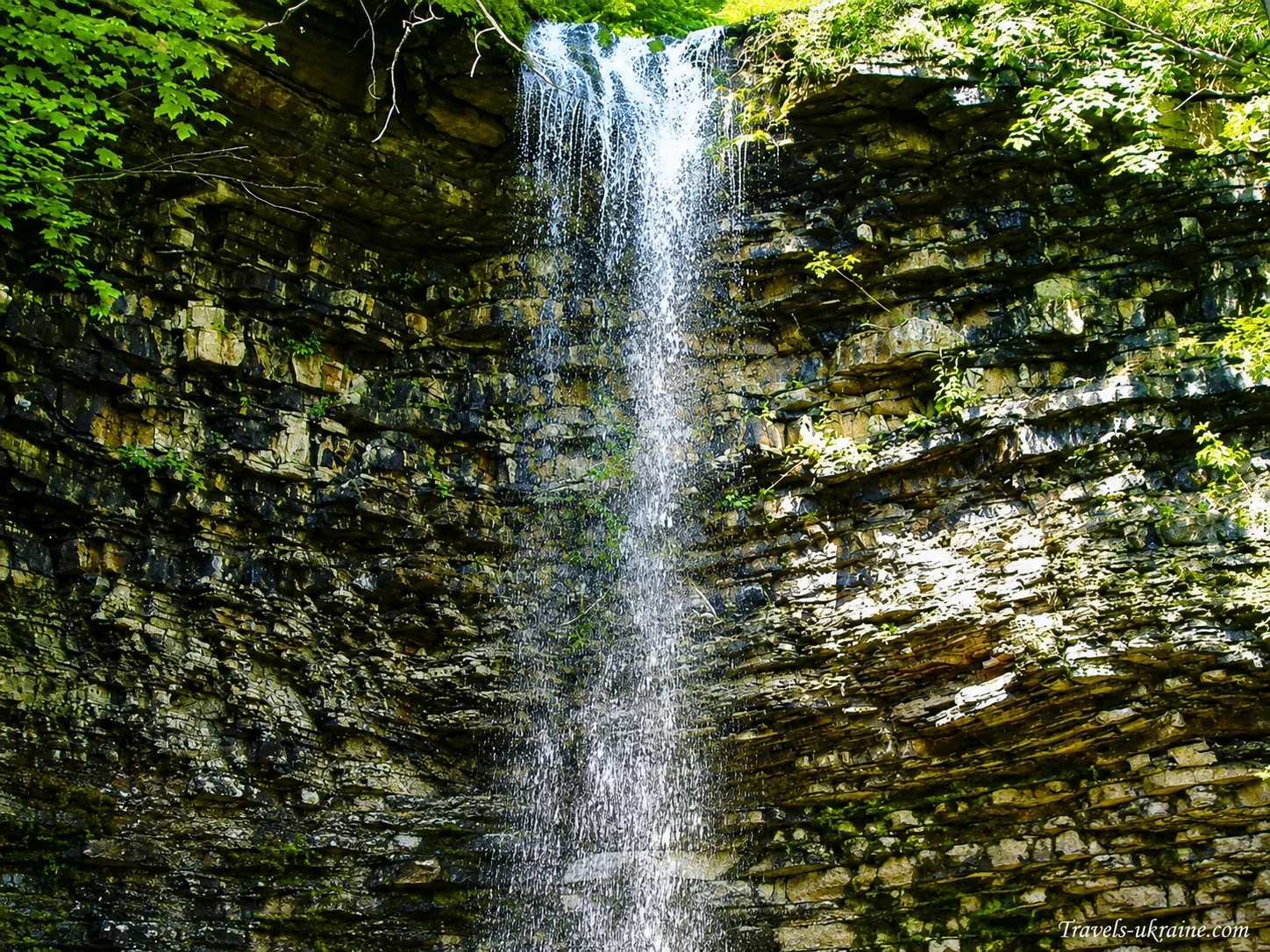
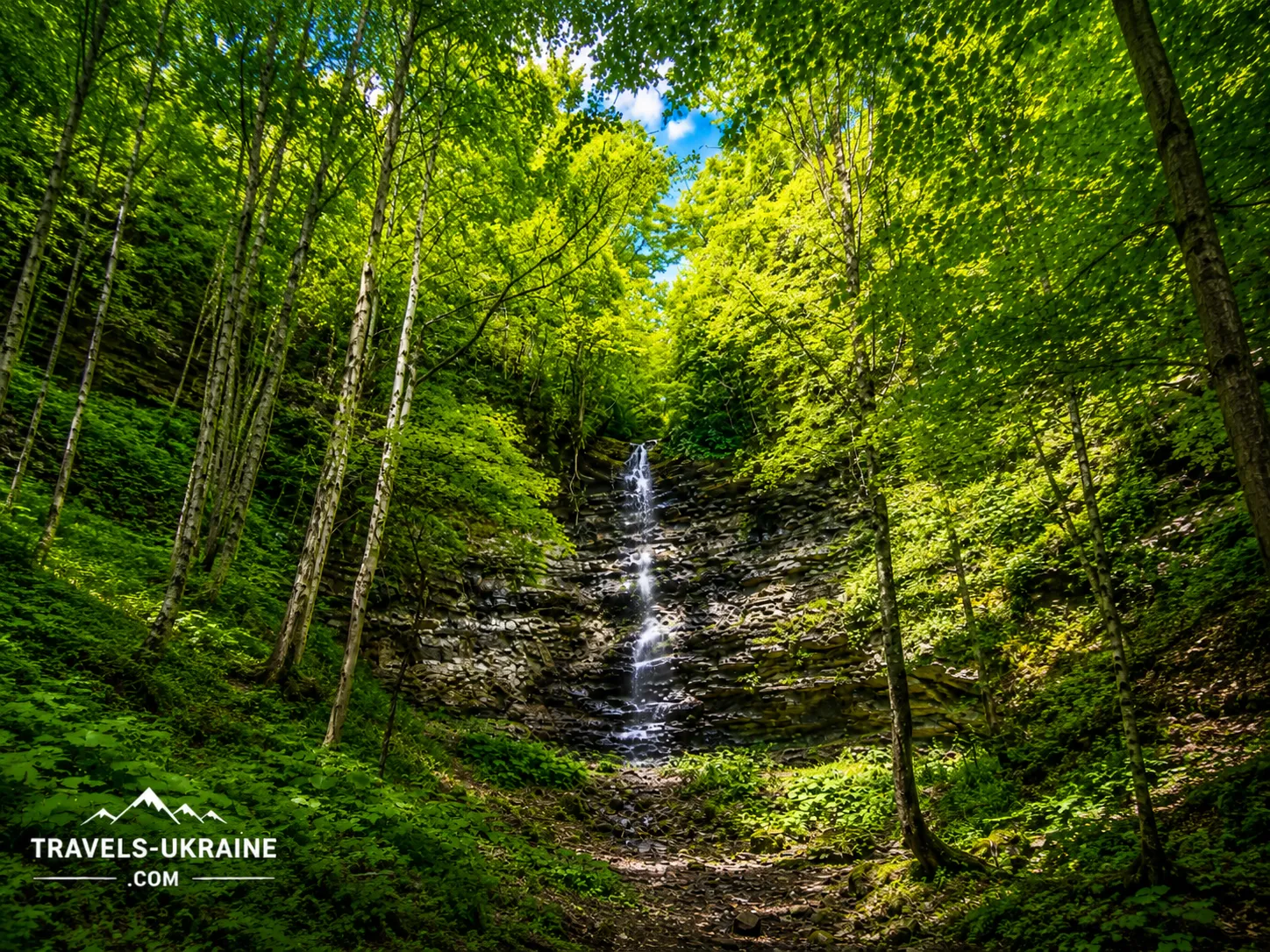
In the Carpathians, not every waterfall tries to impress with roaring water, multi-metre cascades, or crowds of tourists with phones at the ready. Some places work quite differently—quietly, almost imperceptibly, yet that is precisely why they are so memorable. Krapelkovyi Waterfall near the village of Bukove in Nadvirna Raion is one of them. Hidden among the greenery and rocks of the Gorgany, it resembles a natural set piece accidentally left in the middle of a Carpathian forest.
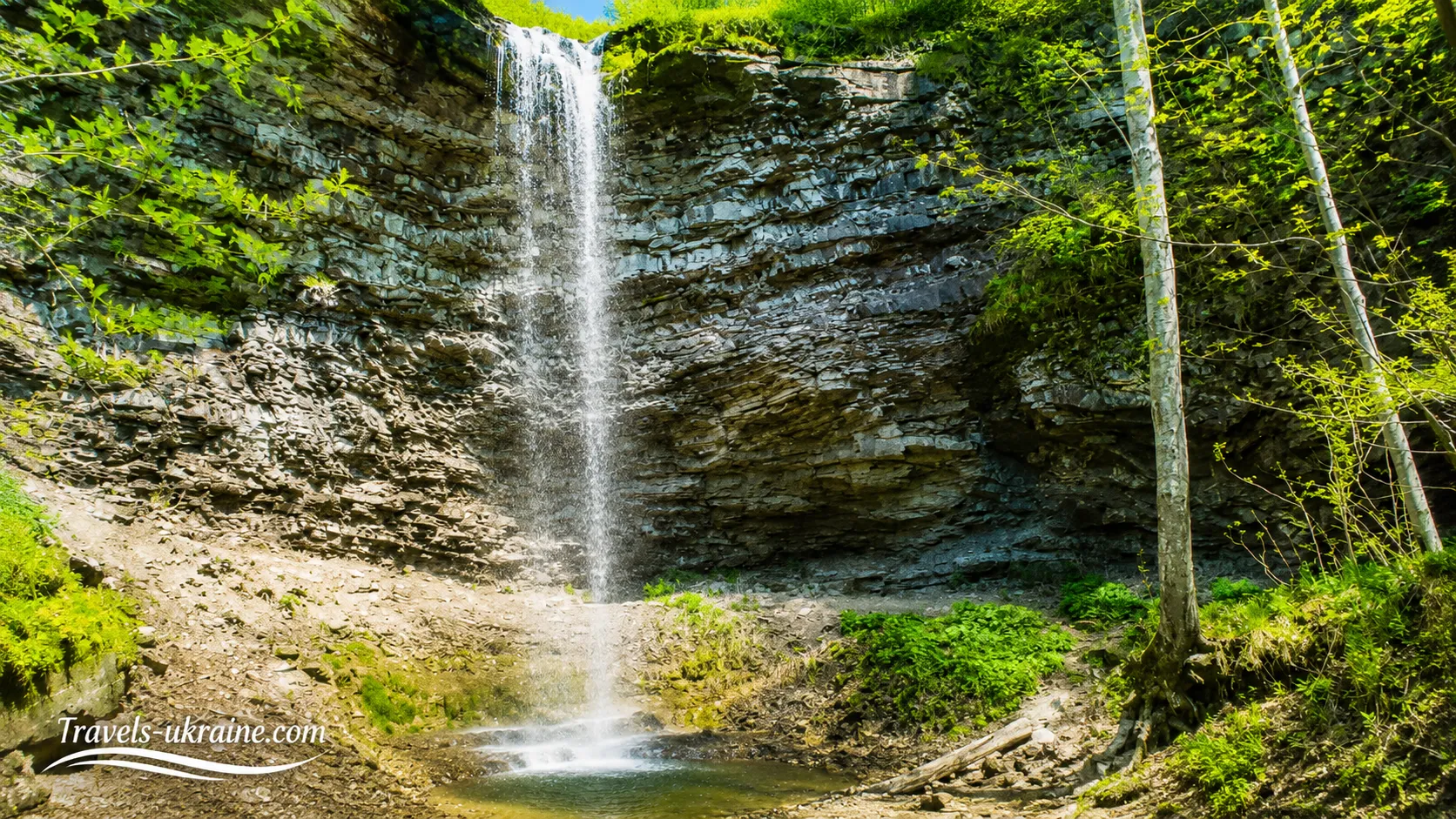
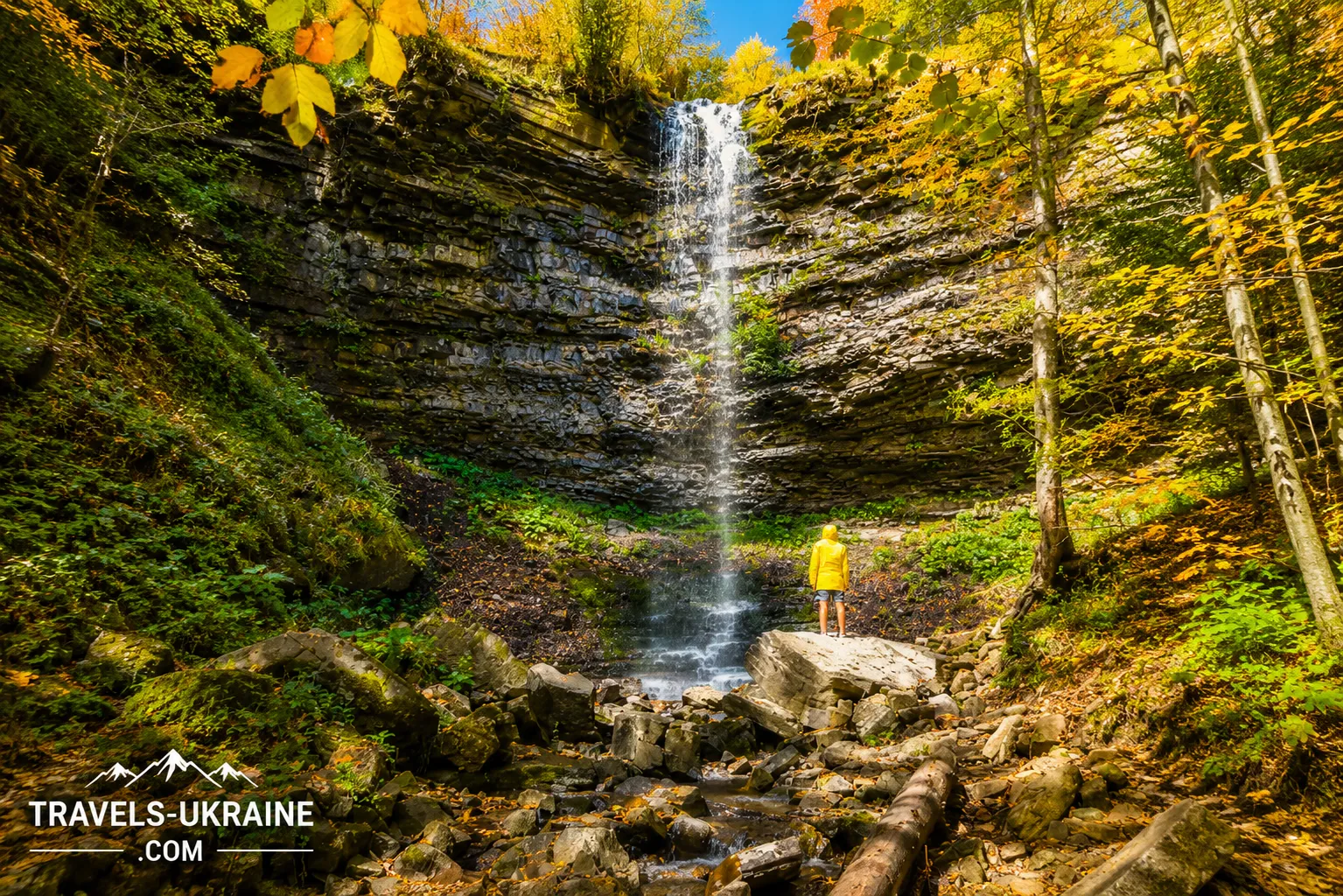
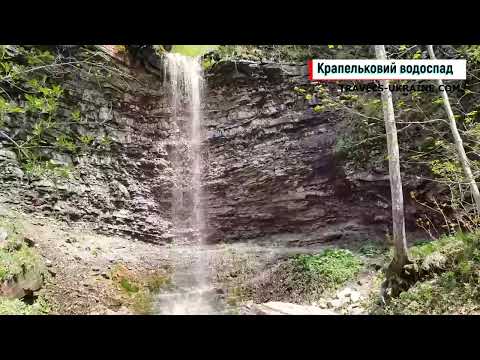
This little-known waterfall in the Carpathian foothills formed on a small mountain stream that drops from a rocky massif into the Bukhtivets Valley. It is about 10 metres high, but its main feature has nothing to do with numbers. The water does not always plunge down as one powerful, solid wall—instead, the small stream breaks into thin jets and countless droplets, which gave the waterfall its unusual name.
It looks especially atmospheric when the droplets hang in front of the dark rock, while dense Carpathian greenery surrounds everything. Moss, damp stone, trees, and the coolness beside the water create the feeling of being much farther from civilisation than you really are. There is no need for observation towers or decorative photo zones here—the Gorgany’s nature has long arranged everything itself.
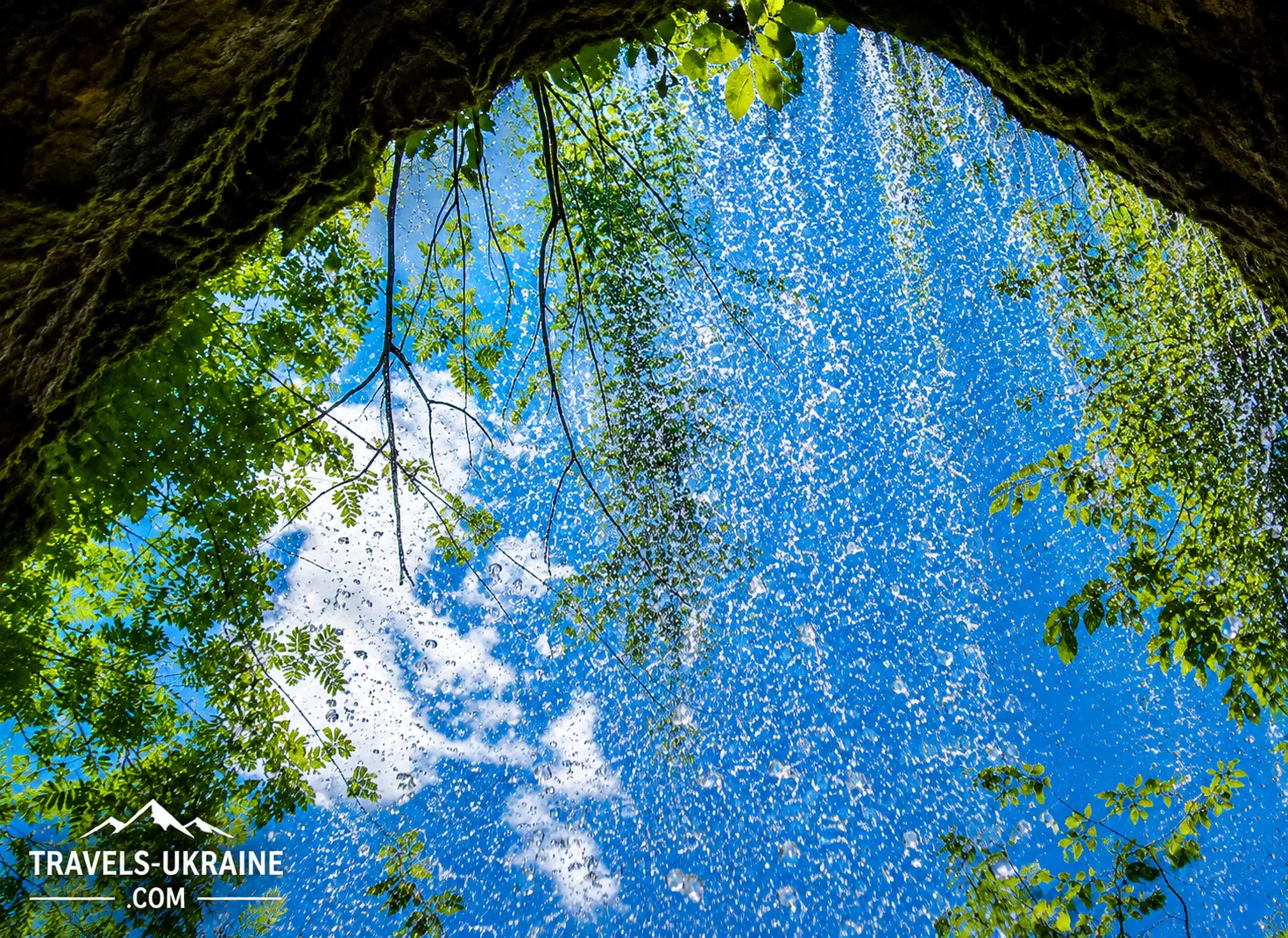
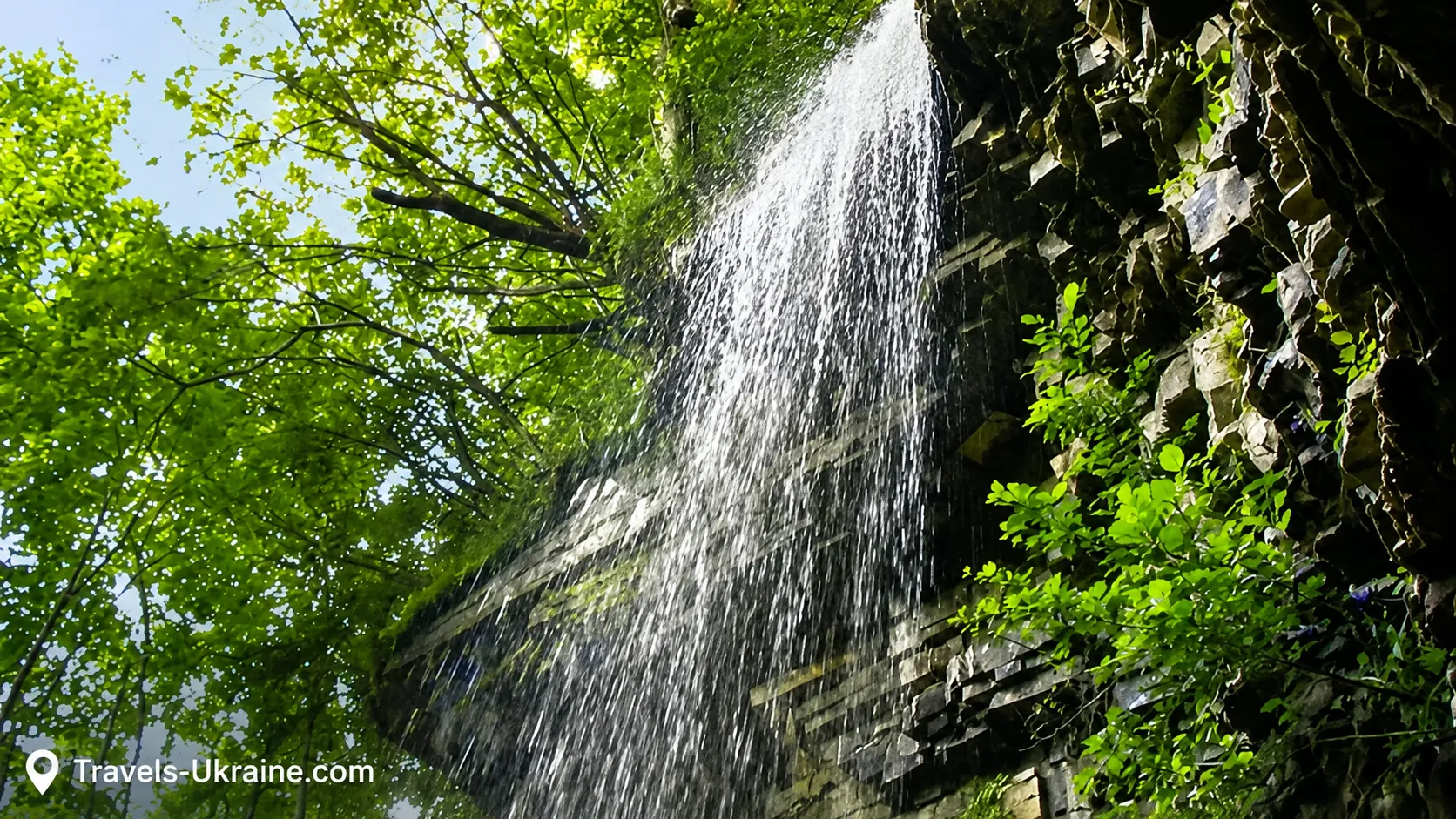
Krapelkovyi Waterfall has another feature that makes it more interesting than many larger cascades: you can approach the stream from beneath an overhanging rock and see the water almost «from the inside». Of course, wet stones require caution, but the viewpoint is unusual—in front of you is no longer simply a waterfall, but a delicate curtain of water through which the forest can be seen.
Everyone who visits this place experiences its special atmosphere of unity with nature in their own way. This is not merely a waterfall in the Carpathians where you want to take a few quick photos and move on. It is worth lingering for at least a few minutes: listening to the quiet rustle of the water, feeling the coolness from the wet rocks, and simply allowing yourself not to hurry anywhere.
What Makes Krapelkovyi Waterfall Special
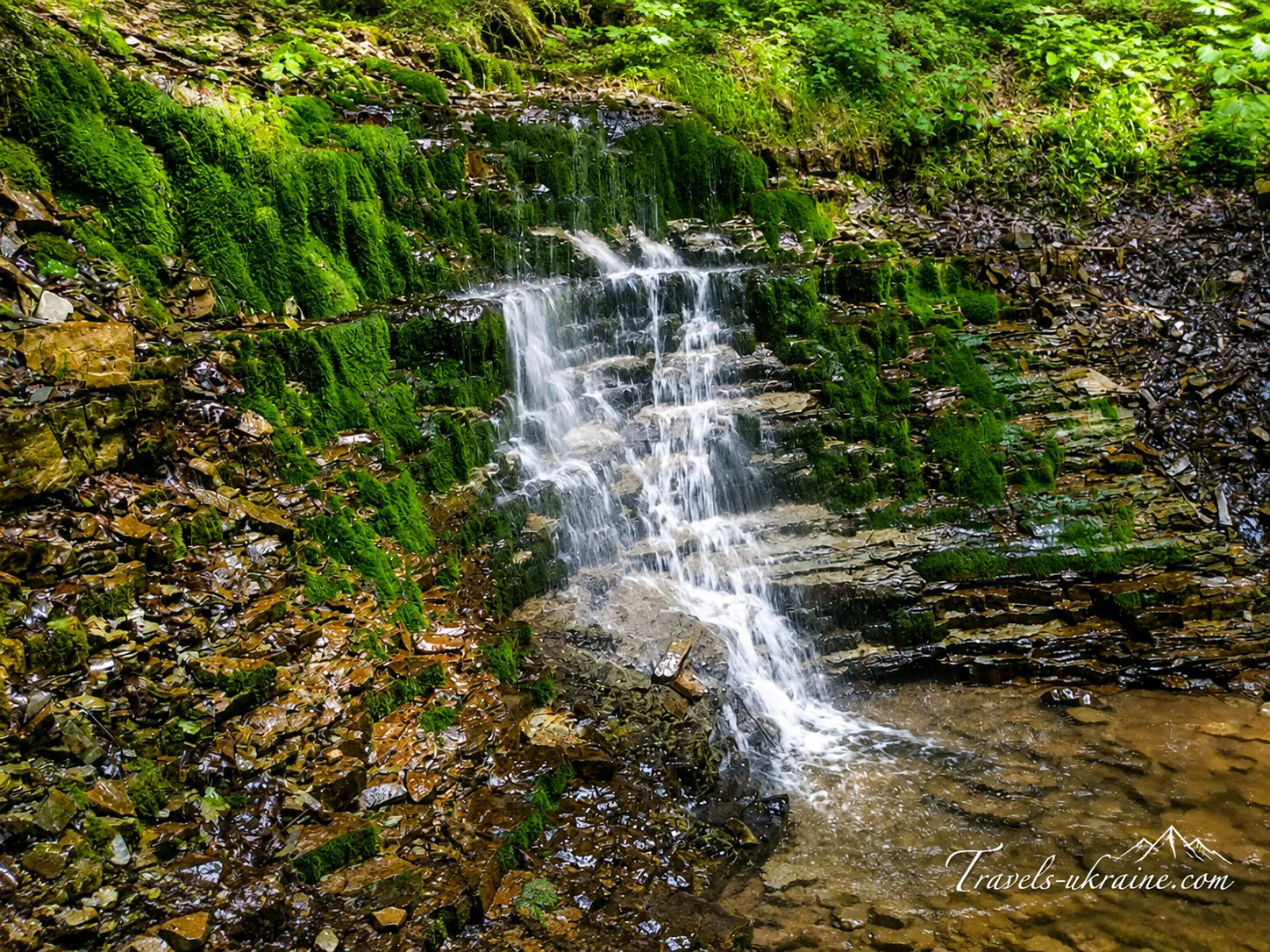
The true character of this location becomes apparent as soon as the trail leads directly to the rocks. Krapelkovyi Waterfall near the village of Bukove is hidden in a small natural amphitheatre where stone walls, trees, and water form an almost enclosed space amid greenery and austere rocky forms. As a result, even this small-scale location feels remarkably expressive: there is no wide valley or open horizon, so your attention naturally focuses on the details.
Wet rock glistens in the shade, moss grows on the stones, greenery pushes through the cracks, and tree roots cling literally to the rocky outcrops. Everything around looks as though nature has been gradually assembling this composition for years—with no hurry and no particular need to consult a designer about the result.
A Natural Grotto Beneath an Overhanging Rock
The most interesting detail is the large rock overhang that forms a kind of natural grotto. Thanks to it, you can view the waterfall not only in the traditional way—from the front—but also approach it from the side and stand almost behind the flow. From here, an entirely different picture opens up: the forest, rocky slope, and valley lie ahead, while water flows between you and the landscape. It looks especially beautiful when sunlight filters through the trees—individual sprays begin to shimmer, and the dark rock overhang creates a natural frame for the view.
It is precisely the opportunity to see a Carpathian waterfall from beneath a rock that makes this location unusual. Such viewpoints are not common at popular waterfalls, while here the very structure of the rocks seems to invite you to look at a familiar natural phenomenon from another side.
Gorgany Flysch Rocks, Coolness, Moss, and a Unique Microclimate
The rocks around the waterfall deserve special attention. This part of the Carpathians is characterised by flysch formations—alternating layers of sedimentary rock that are clearly visible in natural outcrops. Water, frost, precipitation, and weathering have gradually altered the rock surface, creating ledges, hollows, and overhanging sections. For visitors, the geology here can be read without a textbook: simply look closely at the stone wall. You can see layers of rock, cracks, uneven edges, and places where water has gradually made its way downward. The rocks are what give Krapelkovyi Waterfall a character that an ordinary stream in the forest would not have.
Even on a warm day, the rocks feel cool. The shade of the forest, damp stone, and constant presence of water create a local humid microclimate in which mosses and other plants thrive. As a result, the surrounding rocks often have a rich green colour, and after rain the entire location seems to come alive. This combination—Carpathian forest, rocks, moss, and water—makes the place especially photogenic. You do not necessarily need to wait for a sunny day, either. Overcast weather or light fog often highlights the texture of the rocks and the depth of the green tones even better.
Krapelkovyi Waterfall as a Natural Photography Spot
There are several completely different scenes to capture here. You can photograph the waterfall head-on together with the rock overhang, look for a side angle, shoot the water through the greenery, or use the dark rock as a contrasting background. Particularly striking images can be taken from beneath the overhanging rock, where a stone wall forms the foreground and the forest is visible beyond the water.
At the same time, there is no need to reach every beautiful stone for the sake of a photograph. The surface beside the water is almost constantly wet, and moss can be extremely slippery. The perfect shot is definitely not worth getting acquainted with Carpathian geology by falling onto it personally.
Bukhtivets and Krapelkovyi Waterfalls—Two Locations in One Walk
One of the greatest advantages of travelling to this part of Nadvirna Raion is the opportunity to see Bukhtivets and Krapelkovyi Waterfalls practically in one outing. They are located very close to each other in the Bukhtivets Valley, so there is no point choosing between them: once the road has brought you to one, the other is well worth adding to your walk.
The distance between the waterfalls is approximately 50 metres. That is why Krapelkovyi often becomes a pleasant continuation of your visit to Bukhtivets rather than a separate distant destination on the tourist route. A few minutes on foot, and instead of a stronger flow between narrow rocks, an entirely different, more intimate natural composition opens before you.
Two Waterfalls—Two Different Personalities
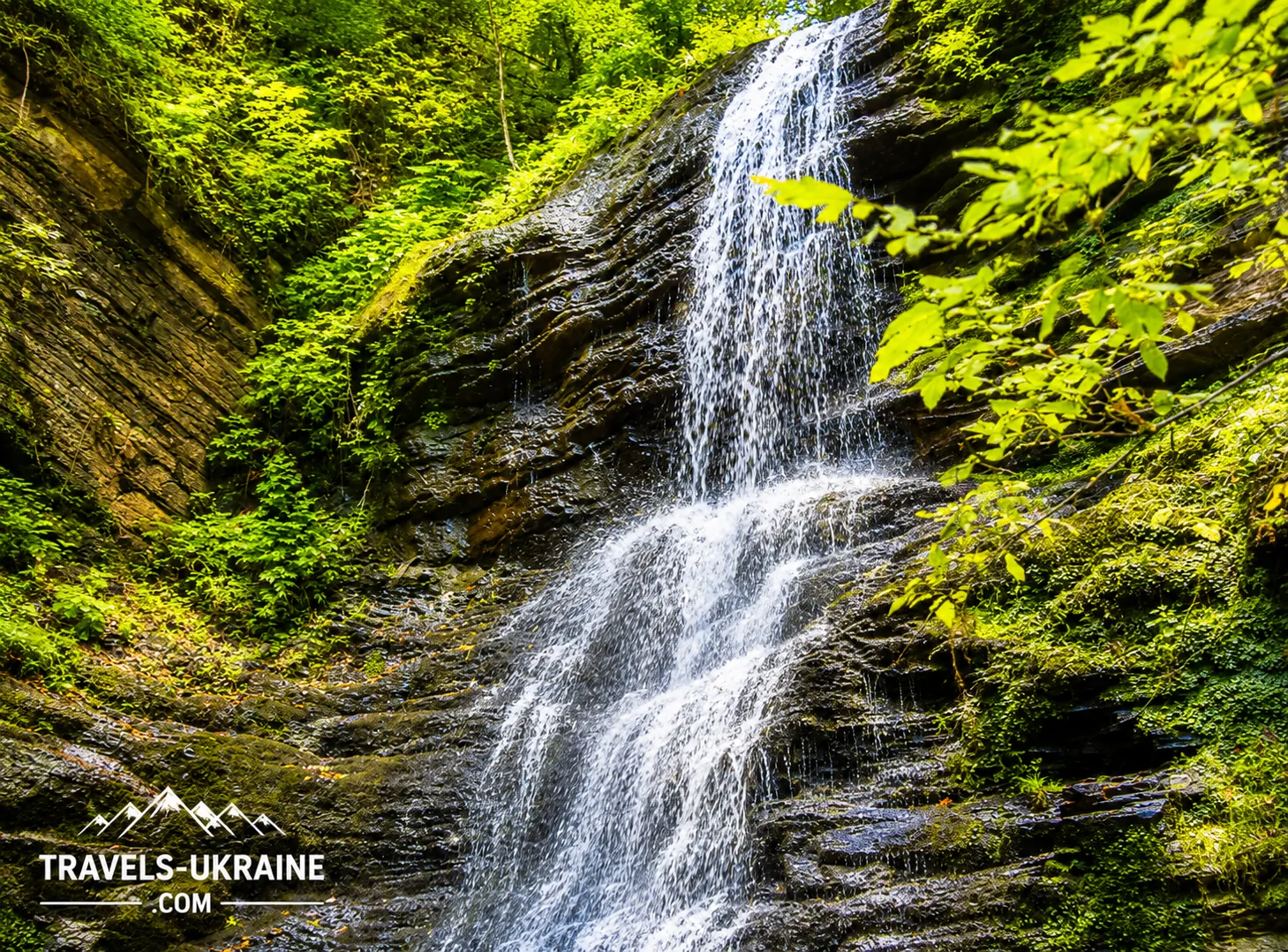
Bukhtivets Waterfall in Ivano-Frankivsk Oblast feels more dynamic and familiar: water bursts through a narrow rocky chute and falls into a canyon-like valley. Around it are steep stone walls, the roar of the stream, and a sense of greater power in the mountain water.
Krapelkovyi nearby looks completely different. Here, attention shifts from scale to details—the rock overhang, moss, greenery, light, and the quieter rustle of water. This contrast makes the route to Bukhtivets and Krapelkovyi Waterfalls more interesting than visiting only one location. First, the Carpathians demonstrate their strength, and a few dozen metres later, almost jeweller-like work in water and stone. All without driving elsewhere, finding a new parking spot, or searching for another interesting route.
How to Plan the Walk
In practical terms, it is most convenient to plan both locations as a single tourist route near the village of Bukove. You can first explore Bukhtivets Waterfall, walk along the rocks and canyon, then continue to Krapelkovyi and linger by the natural grotto. You do not need to set aside an entire day just to see the two waterfalls, but there is no reason to hurry either. It is better to leave time for photographs, a short break, and an unhurried walk among the rocks. Besides, in a place like this there is always one more viewpoint that is «definitely the last»—at least until the next bend in the trail.
Combining these two waterfalls will especially appeal to travellers looking for little-known waterfalls in the Carpathians and natural places without extensive tourist infrastructure. The landscape itself remains the main attraction: water, rocks, forest, and small paths between them. It is a good option for a one-day trip around the Carpathian foothills or part of a longer route through Nadvirna Raion. If you have enough time and energy, you can continue to other waterfalls in the Bukhtivets Valley, including Upper Bukhtivets and Dzvinka.
Even if you limit yourself to the two main locations, the trip will no longer feel like a brief stop at one small waterfall. Bukhtivets and Krapelkovyi Waterfalls complement each other perfectly: one is remembered for its power and canyon, the other for its quiet, rock overhang, and entirely different mood. That is why you should come here not to count the number of places visited, but to experience a little Carpathian adventure in which, within just a few dozen metres, nature manages to reveal two completely different personalities.
`
How to Get to Krapelkovyi Waterfall
Krapelkovyi Waterfall is located near the village of Bukove in Nadvirna Raion, in the Bukhtivets tract. There is no need to look for a separate, complicated road to it: the route practically coincides with the road to the much better-known Bukhtivets Waterfall. The main landmark for travellers is therefore to reach Bukove first and then head towards the Bukhtivets Valley.
If you are travelling by car from Ivano-Frankivsk, the clearest route heads towards Nadvirna, from where you continue via Pasichna to the village of Bukove. This is the route used to reach Bukhtivets and Krapelkovyi Waterfalls. While the route follows main roads and populated areas, it is fairly easy to navigate. More attention is needed after entering the mountain region, where the road gradually narrows and asphalt gives way to dirt on some sections.
Before setting off, it is therefore worth saving the route to Krapelkovyi Waterfall on an offline map. In the mountains, it is better to have the required point saved on your phone before the navigator suddenly decides that the nearest forest track looks convincing enough.
The village of Bukove is the main landmark on the final part of the route. From there, head towards the Bukhtivets tract and the waterfall of the same name. This is where the journey begins to take on its truly Carpathian character: asphalt gives way to a real mountain road, while the surroundings fill with more forest, mountain slopes, and streams. The condition of the dirt sections depends heavily on the weather. After several dry days they may pose few problems, but prolonged rain brings puddles, muddy ground, and ruts. Owners of passenger cars with low ground clearance should therefore avoid trying to reach the waterfall itself at any cost.
If the road starts raising more questions than your desire to continue driving, the sensible choice is to find a suitable place to leave the car and continue on foot. In the Carpathians, walking a few hundred extra metres usually costs far less than introducing your car’s undercarriage to a large rock.
From Bukhtivets to Krapelkovyi Waterfall
The easiest way to look for Krapelkovyi is after reaching Bukhtivets Waterfall. The two locations are literally right next to each other. There is therefore no need to get back in the car or plan a separate transfer between them.
From Bukhtivetskyi, it is worth continuing on foot, carefully following the local paths and terrain. Because the two waterfalls are so close to each other, looking for Krapelkovyi becomes more of a short extension of the route than a new hike. That is why it is best to plan the route to Bukhtivetskyi and Krapelkovyi waterfalls as a single trip from the outset. This approach is simpler both for navigation and from a tourism perspective: you do not waste time making repeated journeys, but simply continue exploring the Bukhtivets Valley.
Can You Get There Without a Car?
Traveling without your own car is also possible, but it requires a little more planning. By public transport, the most convenient option is to first get to Nadvirna or Pasichna, and then use local transport, a taxi, or plan a longer walking section of the route.
If you are traveling without a car, it is especially important to check current services and return options in advance. Public transport in small Carpathian villages does not run as frequently as you may be used to in a large city, and an evening «we’ll somehow get back» can sometimes turn into a separate travel adventure.
Overall, getting to Krapelkovyi Waterfall is straightforward if you remember this simple sequence: Nadvirna — Pasichna — Bukove — Bukhtivetskyi Waterfall — Krapelkovyi Waterfall. It is better to view the final part of the road not as an inconvenience, but as the beginning of the journey itself: the car is left behind, the road noise gradually fades, and all that remains is the forest, rocks, and the sound of water.
When Is the Best Time to Visit Krapelkovyi Waterfall?
Spring and autumn can be considered the best seasons to visit Krapelkovyi Waterfall, when nature changes the surrounding landscape particularly vividly. In spring, after the snow melts and seasonal precipitation arrives, mountain streams become fuller, so the waterfall may look much more dynamic and expressive. During this period, nature gradually comes alive: fresh greenery appears, the first plants bloom, and the forest fills with the sounds of spring.
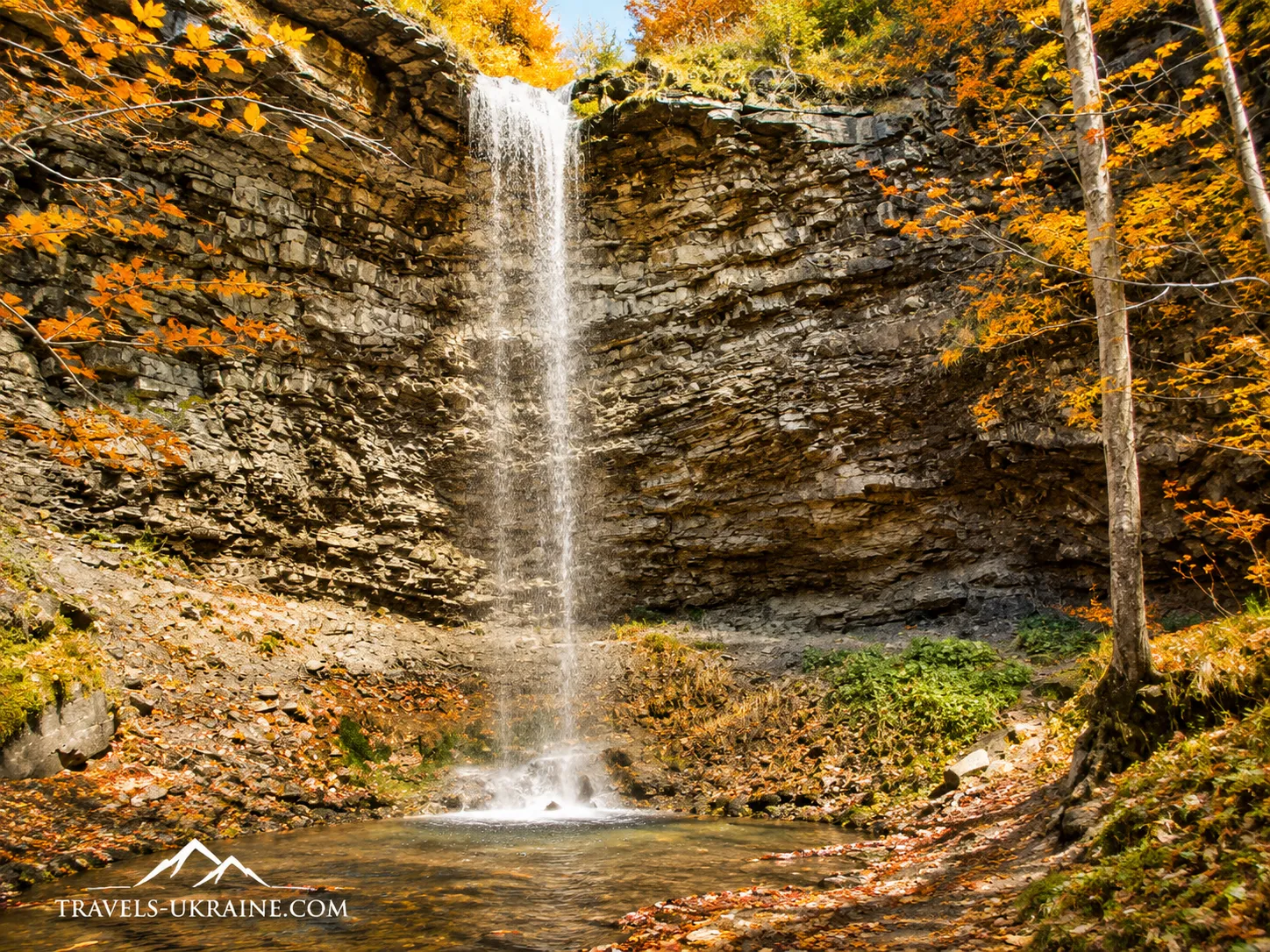
Autumn, in turn, transforms Krapelkovyi Waterfall in the Carpathians into an especially picturesque natural attraction. The leaves around it turn shades of yellow, red, and orange, creating a warm frame for the dark rocks and water. At this time, the cascade is exceptionally photogenic: transparent streams against the autumn forest create atmospheric landscapes. Autumn is also ideal for those seeking quiet, unhurried walks, and the chance to spend at least a little time alone with nature.
Summer has its own advantages, too. Warm days, long daylight hours, and lush greenery make the area around the waterfall a pleasant place for walks and family recreation. During dry periods, the flow may become less powerful, but this is precisely when Krapelkovyi Waterfall’s distinctive feature becomes especially apparent—the water breaks into thin streams and countless individual droplets. The dense forest provides coolness and shade, so even on a hot day, the atmosphere among the rocks and water feels completely different.
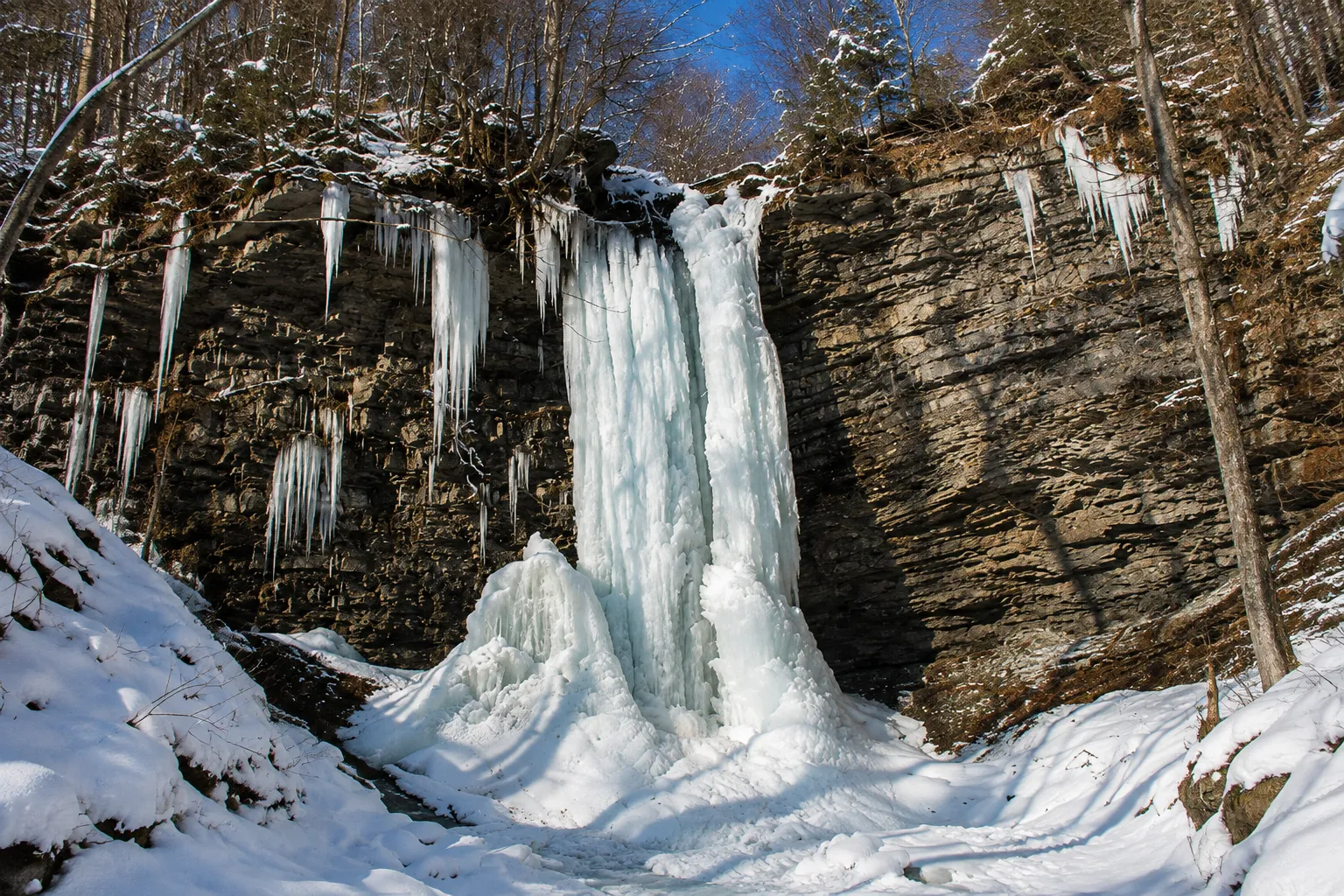
Winter gives Krapelkovyi Waterfall a special character. In freezing weather, part of the flow and the wet rocks may become covered with ice, forming intricate icy shapes. The snow-covered forest around it makes the landscape seem almost magical, but a winter trip requires considerably more caution because of slippery paths, rocks, and icy sections near the waterfall.
So, what time of year should you plan your trip to the waterfall? There is no single answer, since each season reveals Krapelkovyi Waterfall in its own way. Spring attracts visitors with more water and nature’s awakening, summer with greenery and the characteristic watery mist, autumn with the forest’s warm colors, and winter with unusual ice formations. The best time to visit is when the weather allows you to follow the route at an unhurried pace, approach the rocks safely, and see this small Carpathian attraction in precisely the mood nature has given it that day.
What to See Near Krapelkovyi Waterfall
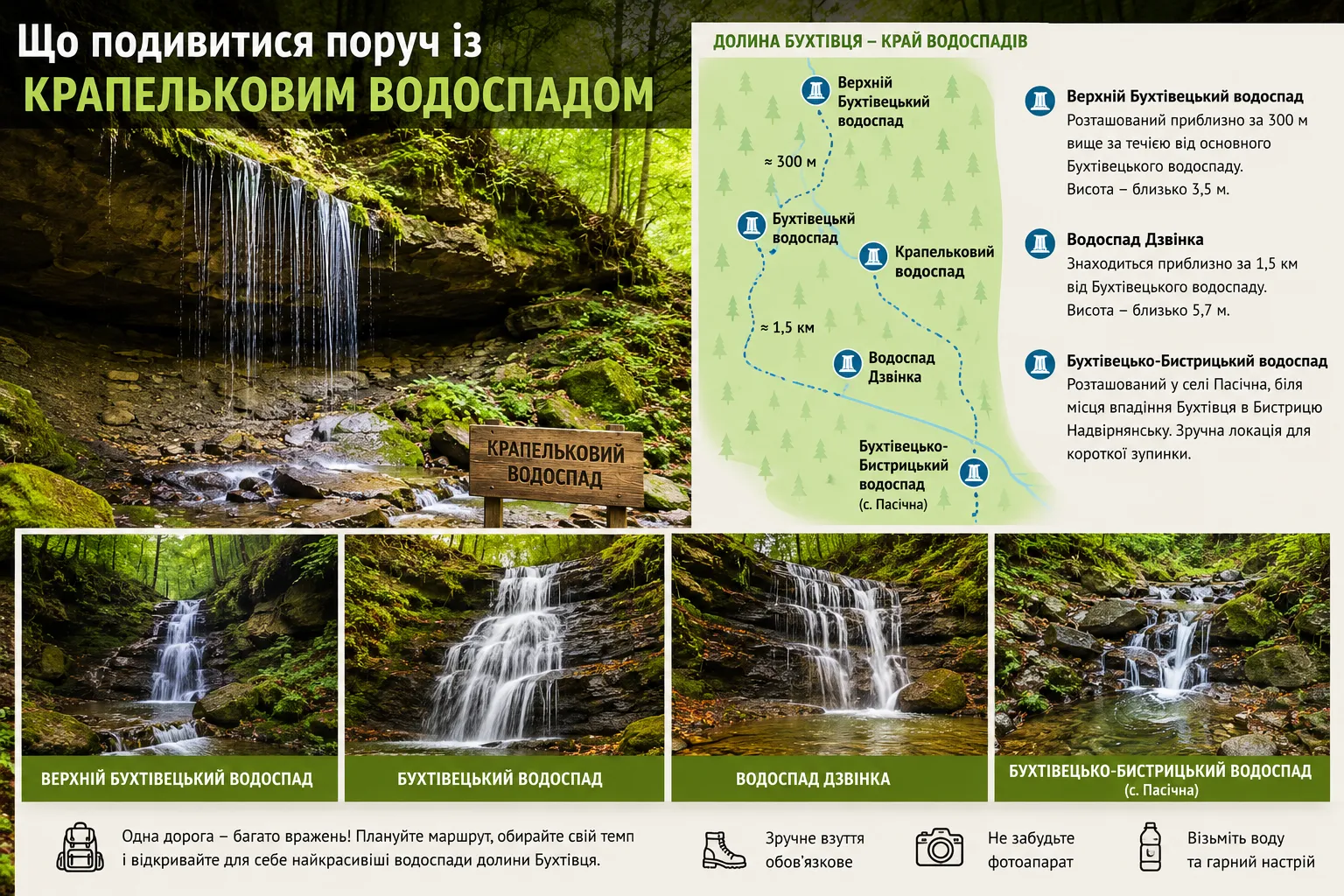
If, after visiting Krapelkovyi and Bukhtivetskyi waterfalls, you are not yet ready to return to the car, the Bukhtivets Valley offers plenty of ways to extend your walk. Several waterfalls are hidden within a relatively small area of this part of the Gorgany, so an ordinary trip to a single natural attraction can easily become a small waterfall route through Nadvirna Raion.
The closest continuation of the route may be Upper Bukhtivetskyi Waterfall. It is located approximately 300 meters upstream from the main Bukhtivetskyi Waterfall and is about 3.5 meters high. It is considerably more modest in size than its neighbors, but that is precisely where its appeal lies. You come here not for a grand cascade, but for the chance to look a little more deeply into the Bukhtivets Valley, walk alongside a mountain stream, and see another little-known natural location.
If Krapelkovyi has already taught you not to judge Carpathian waterfalls solely by their height, Upper Bukhtivetskyi reinforces that lesson well.
For those ready to continue walking, Dzvinka Waterfall is an interesting next stop. It is located approximately 1.5 km from Bukhtivetskyi Waterfall and formed on a small mountain stream among the flysch rocks characteristic of the area. Dzvinka is about 5.7 meters high. The location is less well known among mass tourists, making it a good fit for travelers interested not only in the most popular waterfalls of the Carpathians, but also in small natural corners that require a little walking to reach.
Together, Krapelkovyi, Bukhtivetskyi, Upper Bukhtivetskyi, and Dzvinka form a thoroughly worthwhile waterfall journey. Each location has its own character, so after the third waterfall you are unlikely to feel that you are simply looking at the same scene in different settings.
Another small natural attraction can be found near the village of Pasichna—where the Bukhtivets River flows into the Bystrytsia Nadvirnianska, you will find Bukhtivets–Bystrytsia Waterfall. It is much smaller than Bukhtivetskyi, but conveniently located near the road and can serve as a brief additional stop on the way to Bukove or on the return journey. Around the stream, you can see piles of stone slabs and the distinctive rocky Carpathian terrain. Even a short stop here therefore adds nicely to the overall picture of a journey through the Bystrytsia and Bukhtivets valleys.
How Many Waterfalls Should You Include in One Trip?
There is no need to try to see every nearby attraction at any cost. For a relaxed first trip, Krapelkovyi and Bukhtivetskyi waterfalls are more than enough. If you have time and would like to walk farther, it makes sense to add Upper Bukhtivetskyi and extend the full route to Dzvinka. This format lets you set your own pace. You can limit yourself to a short walk near the two neighboring waterfalls, or turn the day into a real hunt for Carpathian cascades—only instead of trophies, you take home photographs, tired legs, and yet another desire to return to the Gorgany.
And that is precisely what makes the area around Bukove so interesting: one road leads not to a single tourist attraction, but to an entire valley of waterfalls that every traveler can explore at their own pace.
Why You Want to Stay Longer by the Waterfall
Waterfalls have a strange effect on time: you come just to look, take a few photographs, and move on, but ten minutes later you realize that you are still standing by the water and are in no hurry to leave. There is something deeply natural about it. The constant movement of the stream, the rustling forest, the coolness from the rocks, and the absence of familiar city noise quietly shift your attention from everyday affairs to what is happening right before your eyes.
Water has a strange way of drawing the eye. It never repeats itself: every stream moves a little differently, droplets break against the rocks, disappear among the moss, and gather again into a small flow. At Krapelkovyi Waterfall, this is especially noticeable, because what is fascinating here is not so much the force of the water as the minute details of its movement.
Sound also plays a role. The steady rush of water gradually pushes conversations, cars, phone notifications, and the other sounds that usually fill our day into the background. What remains is the rustling of leaves, droplets on stone, birdsong, and the mountain stream. Perhaps that is why it is so easy to simply remain silent by a waterfall—here, silence does not mean an absence of sound.
There is another important detail about places like this: the journey to reach them. To see a Carpathian waterfall, you often have to leave the car, follow a forest path, descend between rocks, and gradually move away from your usual rhythm. At first, you hear the water somewhere ahead, then the sound grows louder, and only afterward does the waterfall itself appear between the trees. This small journey makes meeting it much more memorable than an ordinary stop at a tourist attraction right beside the road.
At Krapelkovyi Waterfall, this effect is heightened by the rocks, moss, and dense Carpathian forest. There is no need to constantly look for the next attraction. You can sit down nearby, watch the water, photograph the details, or simply put your phone away for a while. Sometimes a few quiet minutes like these are remembered better than a dozen attractions visited in a rush. Perhaps that is why relaxing by a waterfall feels so different from an ordinary tourist stop. You do not have to do anything, climb anywhere, or try to fit in as much as possible. It is enough to look, listen, and allow yourself not to hurry anywhere for a while—a luxury we somehow constantly forget in everyday life.
There is a certain symbolism in the water’s continuous movement, too. The stream meets rocks, changes direction, falls from the cliff, and still continues on its way. Perhaps that is why it is so easy to set aside unnecessary thoughts for at least a few minutes beside a waterfall and remember a simple truth: sometimes the best way to move forward is to stop for a while first. So when you find yourself at Krapelkovyi Waterfall among the forest and the Carpathians, do not rush straight on to the next point on your route. Take your photographs, then give yourself a few more minutes simply for this place. Listen to the water and look closely at the rocks and greenery around you. These may be the moments of the journey you remember longest.
Is Krapelkovi Waterfall Worth Visiting?
If natural sites are judged solely by waterfall height, stream width, or the number of tourist attractions nearby, Krapelkovi Waterfall in the Gorgany Massif is easy to underestimate. It does not try to be the biggest, loudest, or most famous waterfall in the Carpathians. Yet that may be where its main appeal lies. Come here for a completely different kind of experience: walk through a Carpathian forest, descend to the rocks, feel the cool air by the water, and see how a small mountain stream can create an exceptionally beautiful natural composition. And the opportunity to visit another waterfall during the same walk makes the trip even more interesting and rewarding.
Krapelkovi will especially appeal to those who love lesser-known places in the Carpathians, where nature has not yet been turned into a backdrop for tourist infrastructure. Here, the forest, rocks, water, and silence remain the main attractions. Sometimes, that is more than enough to return from a few hours of walking in an entirely different mood. So do not come here expecting a grand spectacle. It is better to leave those expectations somewhere on the road near Nadvirna and let the place surprise you in its own way. Perhaps what you remember most will not be the waterfall itself, but the light on the wet rocks, the scent of the forest after rain, a brief stop beside the stream, or that moment when you suddenly realize you have been standing still for several minutes, with nowhere to hurry.
And if, after Krapelkovi, you feel like walking a little farther to the next waterfall, that is only a bonus. Bukhtivets Valley is exactly the kind of place where one short stop quietly turns into an entire Carpathian adventure.
So, is Krapelkovi Waterfall worth visiting? Absolutely—especially if you are interested not only in well-known tourist spots but also in small natural discoveries. Come without rushing, leave behind only footprints on the trail, take photographs and fond memories with you, and let everything else remain here—among the rocks, moss, and the quiet murmur of Carpathian waters.
Because sometimes the best places in the Carpathians are not the ones everyone talks about, but the ones you discover one day yourself and then want to remember for a long time.

No Comment
You can post first response comment.