
 English
 Українська
 Български
 Hrvatski
 Čeština
 Dansk
Dansk Nederlands
 Eesti
Eesti Suomi
Suomi Français
 Deutsch
 Ελληνικα
 Magyar
 Íslenska
 Italiano
 Latviešu
 Lietuvos
 Polski
 Português
 Română
 Русский
 Српски
 Slovenčina
 Slovenščina
 Español
 Svenska
 Türkçe
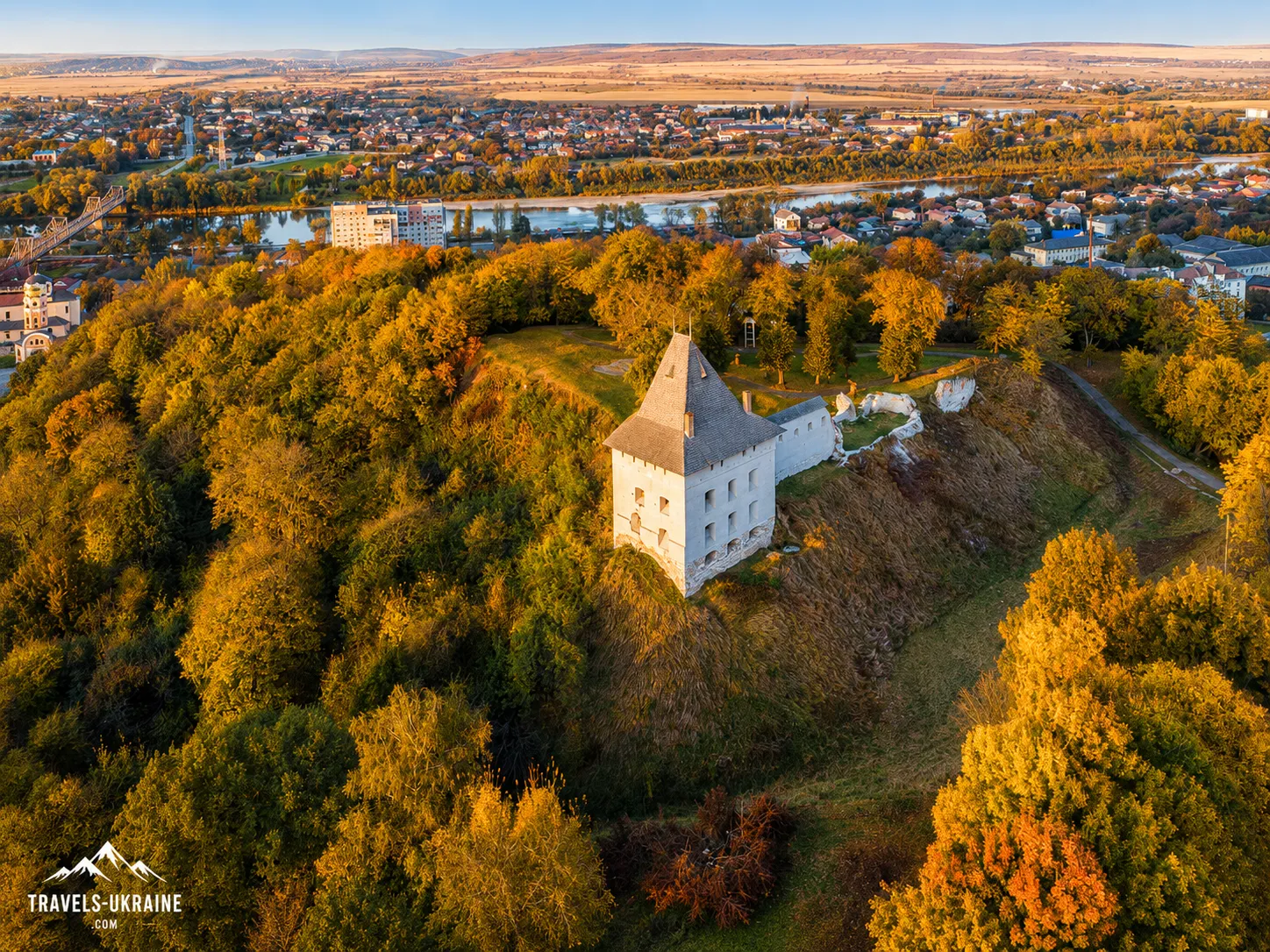
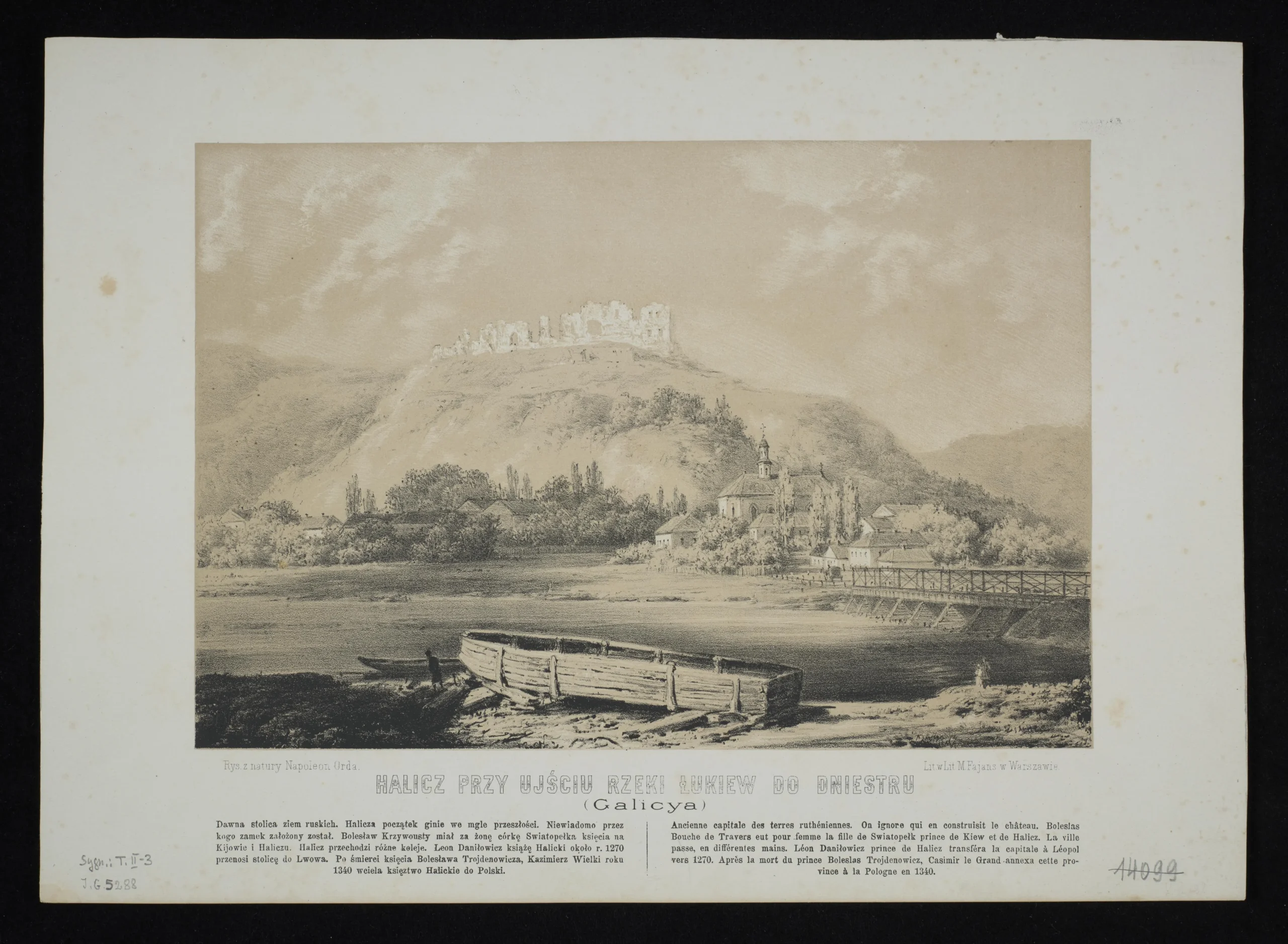
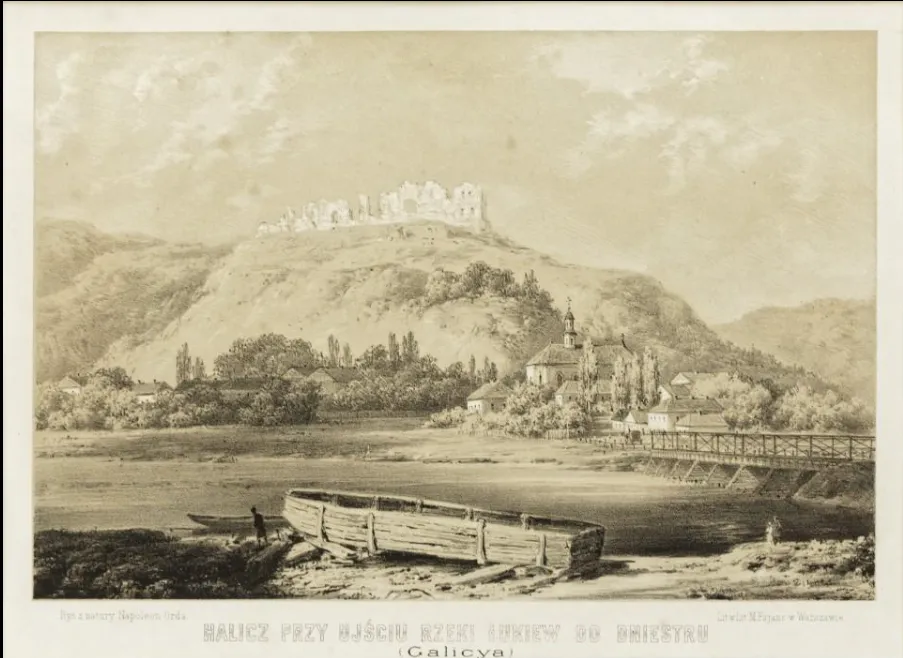
High above modern-day Halych, on Castle Hill, stand the walls of a fortress offering a sweeping panorama of the city and the Dniester Valley. Today, Halych Castle appears relatively small: only part of the once-mighty stronghold remains, while some of its elements were restored in modern times. Yet several centuries ago, it was a much larger defensive structure that played an important role in Halych’s life and repeatedly found itself at the center of military events.
The old stone walls survived reconstructions, sieges, destruction, and a prolonged decline. The surviving fragments of the fortifications still rise above the city, recalling the times when the fortress controlled the surrounding area and was one of the region’s important defensive strongholds. Standing on Castle Hill, it is difficult to imagine that the modern ruins are only a small part of a much larger complex that once existed here.
Another name for the landmark is Starosta Castle. It is connected with the period when the fortress served as the administrative and military center of the Halych Starostwo. During this historical era, the castle was actively rebuilt, with its defensive system adapted to new methods of warfare and the spread of firearms.
During its greatest period of development, the castle looked completely different from today. Its grounds were surrounded by defensive walls and towers, while residential, utility, and administrative buildings stood inside. The fortress changed along with the city: it was expanded, strengthened, rebuilt after attacks, and eventually gradually lost its military importance.
Time did not spare the stronghold. Some of the walls were destroyed during wars, while other structures fell into disrepair or were dismantled after the castle ceased to serve its defensive function. In the modern period, part of the complex began to be restored, so today Castle Hill displays authentic remnants of the old fortress alongside reconstructed elements. This boundary between genuine ruins and modern restoration is one of the landmark’s most fascinating features.
Today, Halych Castle, also known as Starosta Castle, is interesting for more than its history. Castle Hill has become one of Halych’s best-known viewpoints, offering views of the city, the Dniester, and the surrounding hills. Here, visitors can easily combine an encounter with a historic landmark with a leisurely walk and see Halych from an entirely different perspective.
What was the medieval castle like at the height of its prosperity, who built and rebuilt it, which sieges did the fortress survive, why did it decline, and which features on Castle Hill are authentic while others were restored in modern times? Below, we will explore the history and architecture of Starosta Castle and its most important events, as well as learn how to visit the fortress today and what else is worth seeing on a trip to Halych.
History of Halych Castle: From Ancient Fortifications to Starosta Fortress
The history of Halych Castle is far more complex than it may seem on first encountering its ruins. The fortress whose remains now tower above the city did not emerge all at once. Castle Hill was used for defense for many centuries, while its fortifications were repeatedly rebuilt, expanded, and adapted to new military conditions.
That is why, when discussing when Halych Castle was built, it is not entirely accurate to name just one date. It is necessary to distinguish between the early fortifications on Castle Hill, the medieval timber-and-earth fortress, and the much later masonry Starosta Castle, which took shape in a different political and military reality.
What Stood on Castle Hill Before Starosta Castle Appeared
The Ancient Halych National Reserve links the castle’s earliest predecessor to a fortified citadel mentioned as early as 1114. The first defensive structures were mainly wooden and took advantage of the natural benefits of the high hill above the Dniester. The site was chosen for good reason. From its height, the surrounding territory, the river valley, and the approaches to the settlement could be clearly observed. The Dniester was both an important natural barrier and a transport artery, so control of this area had strategic importance.
It should be noted that the early fortification on Castle Hill should not automatically be called the same castle that has survived to the present day. Centuries of rebuilding, destruction, and changes to the defensive system separate the fortifications of the princely era from the Starosta Fortress of the XIV–XVII centuries.
The fate of the old wooden fortification also remains unclear. Written sources do not provide a definitive answer as to when exactly it was destroyed or under what circumstances. The next chapter of its history is much better documented: the formation of the fortress as the defensive center of the Halych Starostwo.
Rebuilding the Fortress in the XIV Century
A new stage in the history of the castle in Halych began around the middle of the XIV century, when Halych Land came under the rule of the Polish Crown. The old fortification began to be rebuilt and transformed into an important defensive stronghold needed to control the territory and protect Halych.
At the same time, the question of who exactly initiated the rebuilding of Halych Castle has no definitive answer. Some historical sources associate the construction of the new timber-and-earth castle with the Polish king Casimir III the Great. According to another version, the fortification may have been built by the Volhynian prince Liubart around 1350–1352.
It would therefore be incorrect to attribute the fortress’s creation unreservedly to one specific person. It is much more accurate to speak of a prolonged rebuilding process that began in the middle of the XIV century and continued over the following decades. According to the Ancient Halych National Reserve, the castle was rebuilt over nearly a century. In the XIV–XV centuries, it was already among the largest and most important fortifications in Halych Land. The fortress had a large garrison, while the development of firearms gradually forced changes to its defensive system.
Why the Castle Is Called Starosta Castle
The name Starosta Castle is directly connected with its function. After the creation of the Halych Starostwo, the building became the residence of royal starostas—representatives of the authorities who governed the territory on behalf of the monarch. Thus, the castle gradually became more than a military facility. Administrative and judicial functions were concentrated within the defensive complex, documents were stored there, a chancery operated, and utility rooms and living quarters were provided for people involved in administering the starostwo.
In this way, the castle-fortress became a kind of center of power over a substantial territory. Its walls had not only to withstand a possible attack but also to protect the institutions, documents, supplies, and people necessary for the administration to function.
What the 1582 Inventory of Halych Castle Reveals
The 1582 inventory of the Halych Starostwo is particularly important for studying the fortress. It is the oldest known detailed written description of Starosta Castle, or Halych Castle, allowing its appearance and internal organization to be reconstructed with considerably greater accuracy.
The document is important because it moves the castle’s history from the realm of later accounts to specific descriptions. It recorded defensive elements, rooms, utility facilities, and the condition of individual parts of the fortress. It is thanks to inventories such as this that historians can reconstruct how the castle functioned at the end of the XVI century.
Scholars Myron Kapral and Andrii Stasiuk, who published and studied this document, describe the castle as one of the most important defensive outposts of Halych Land during the late Middle Ages and the early modern period. However, the complex of the late XVI century was not yet the masonry citadel most strongly associated with the modern ruins. The most extensive changes awaited the castle in the following century, when the development of artillery required an entirely different approach to defense.
In the XVII century, Halych found itself at the epicenter of a series of military conflicts. The fortress was attacked by rebel detachments, Tatar forces, and the armies of Bohdan Khmelnytsky, and after further destruction it was rebuilt according to new fortification principles. It was then that the castle acquired the form that researchers today seek to reconstruct from written and archaeological sources.
What Remains of Halych Castle Today and How It Was Restored
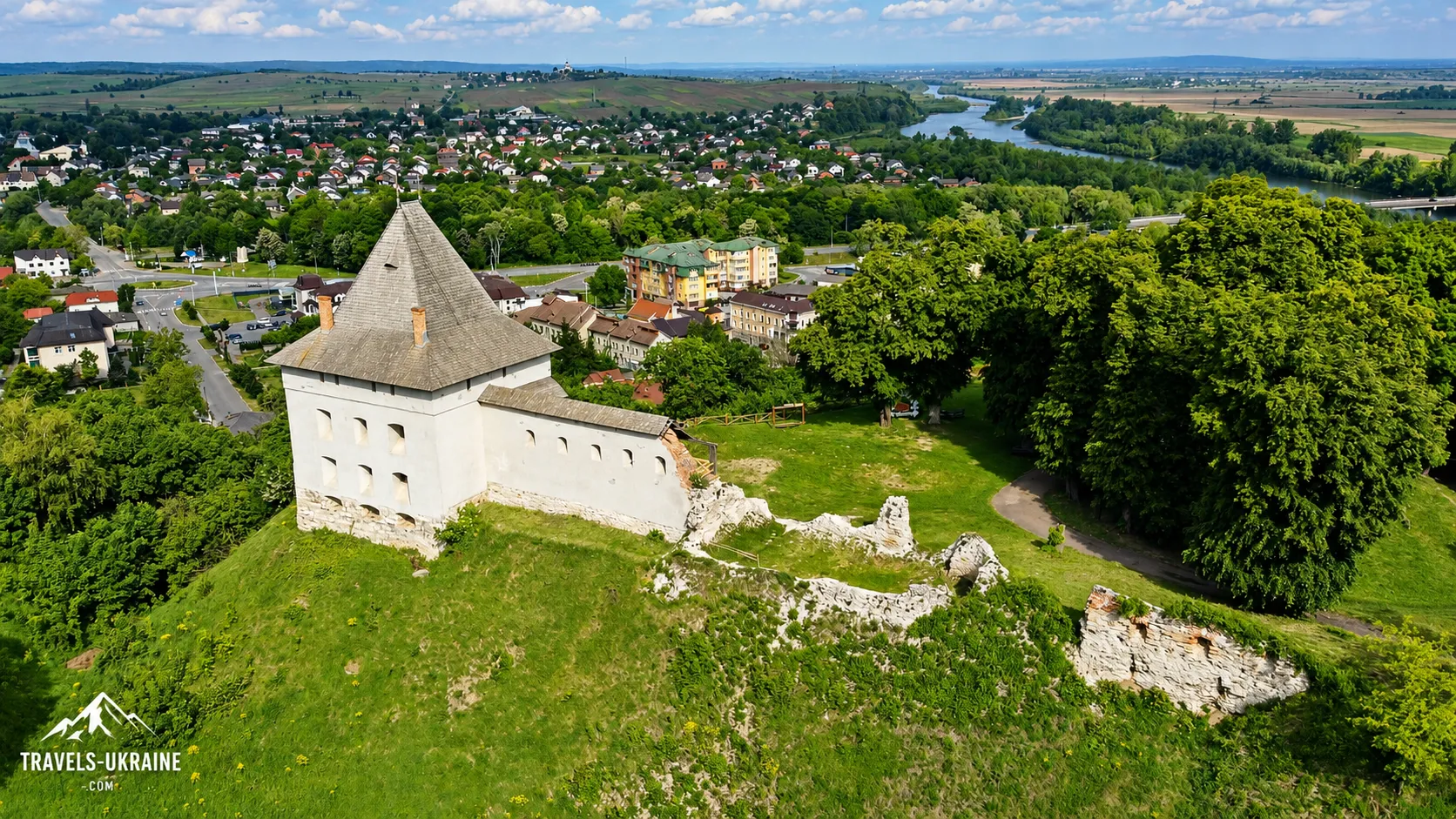
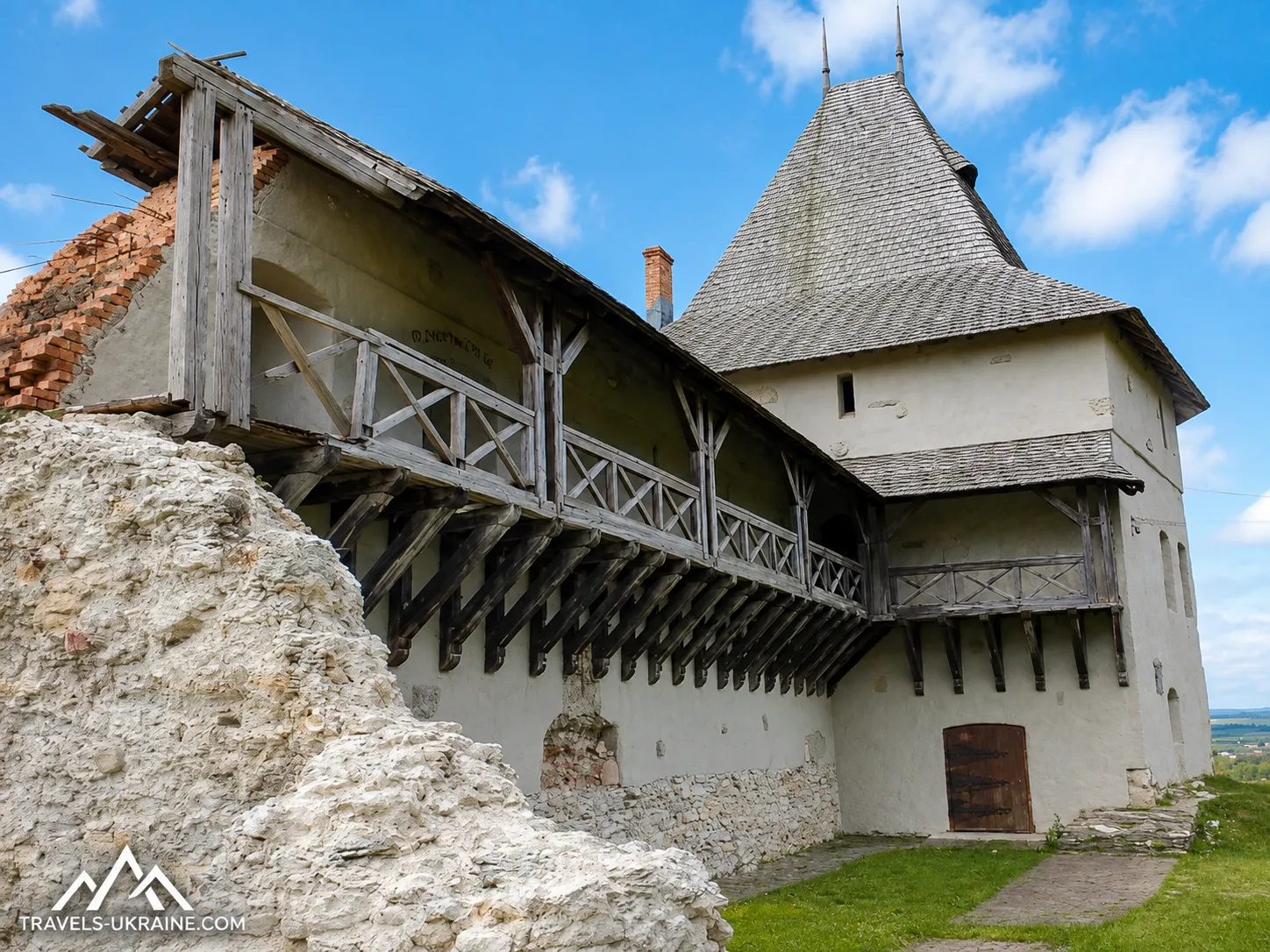
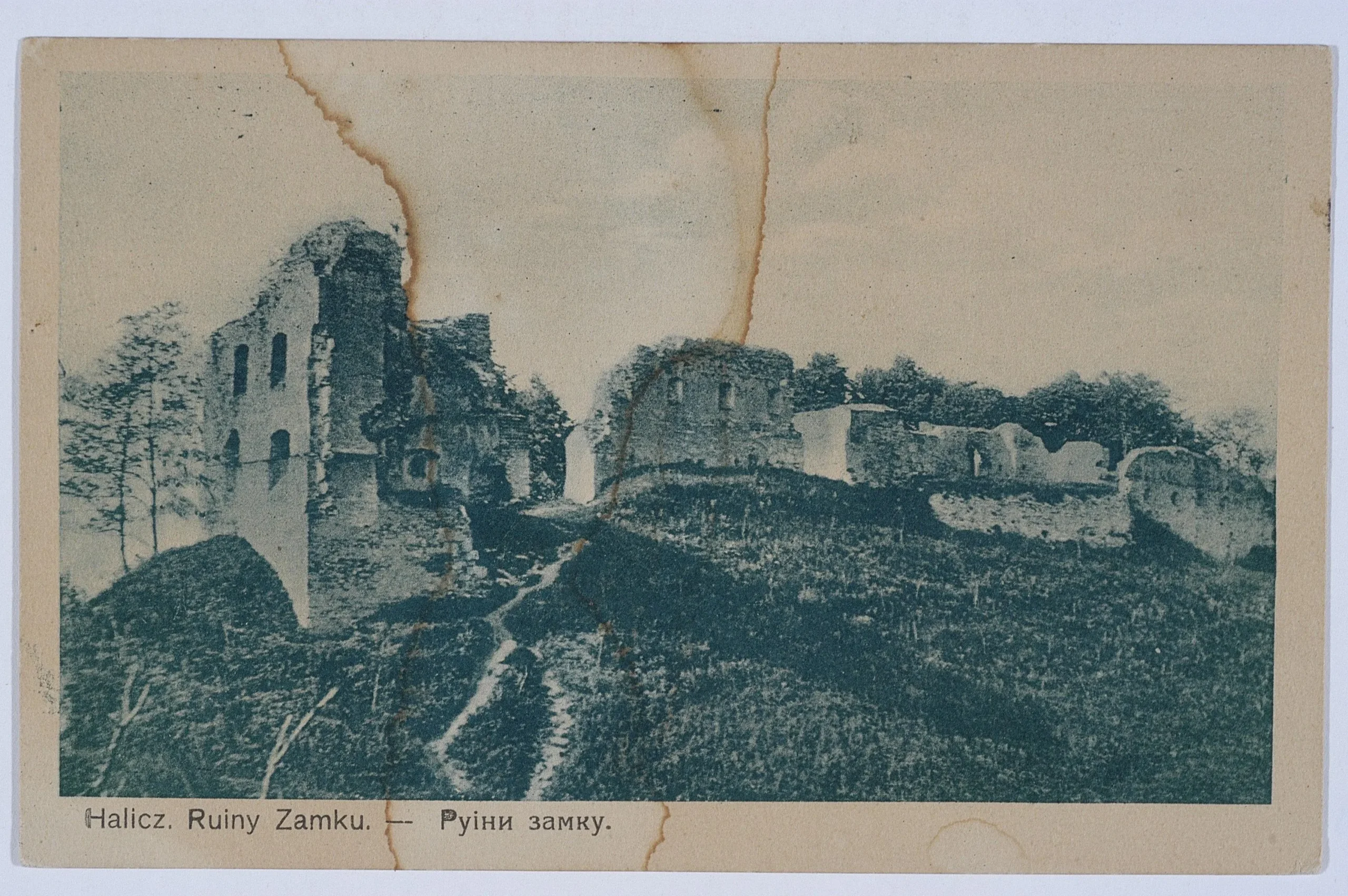
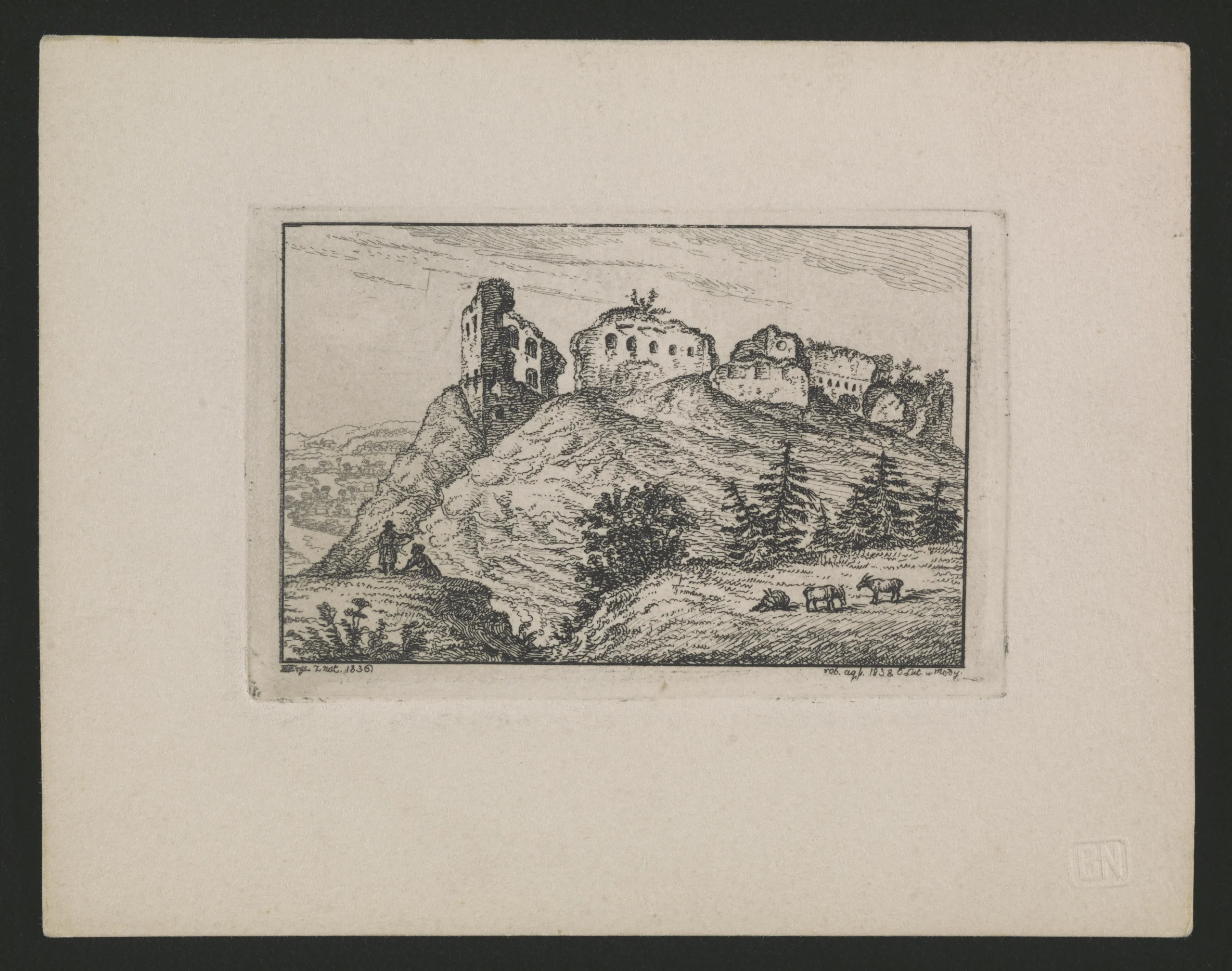
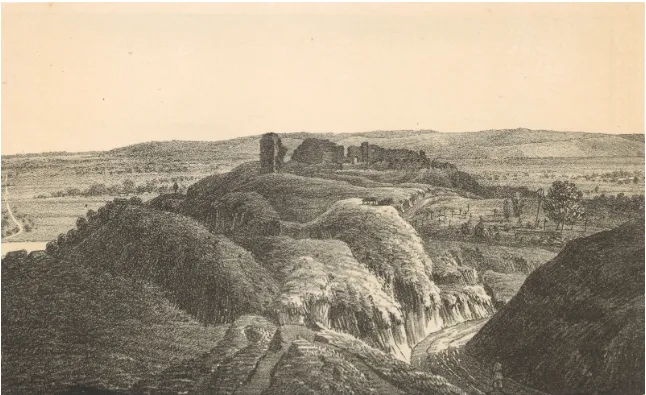
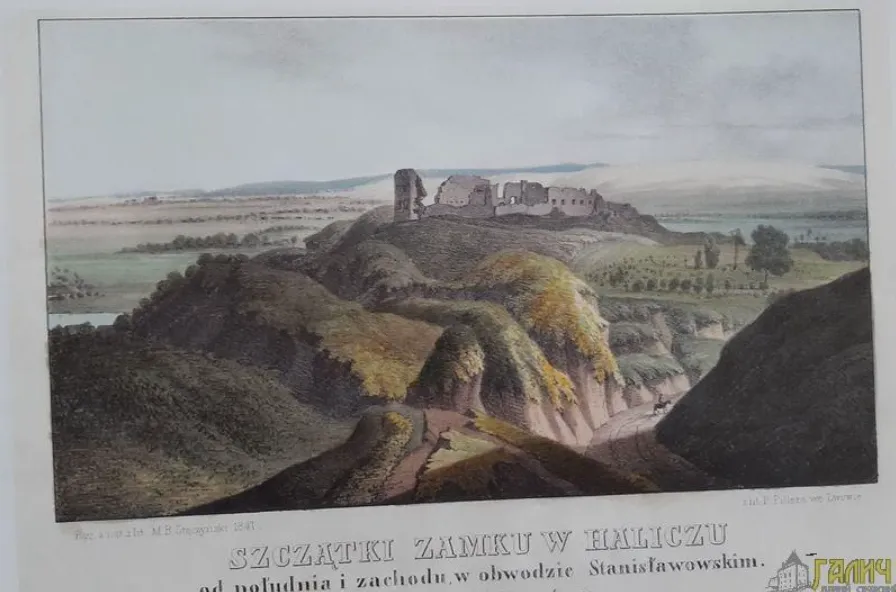
Modern Halych Castle is only a small part of the former fortress. After the destruction of the XVII–XVIII centuries, a prolonged decline, and the dismantling of its walls, most of the structures disappeared from the surface of Castle Hill. What visitors see today combines preserved historical fragments, archaeologically uncovered remains, and elements restored during conservation work.
For this reason, the castle’s modern appearance should not be regarded as an exact copy of a XVII-century fortress. It is rather a partially restored fragment of a large defensive complex, most of which either has not survived or remains hidden underground.
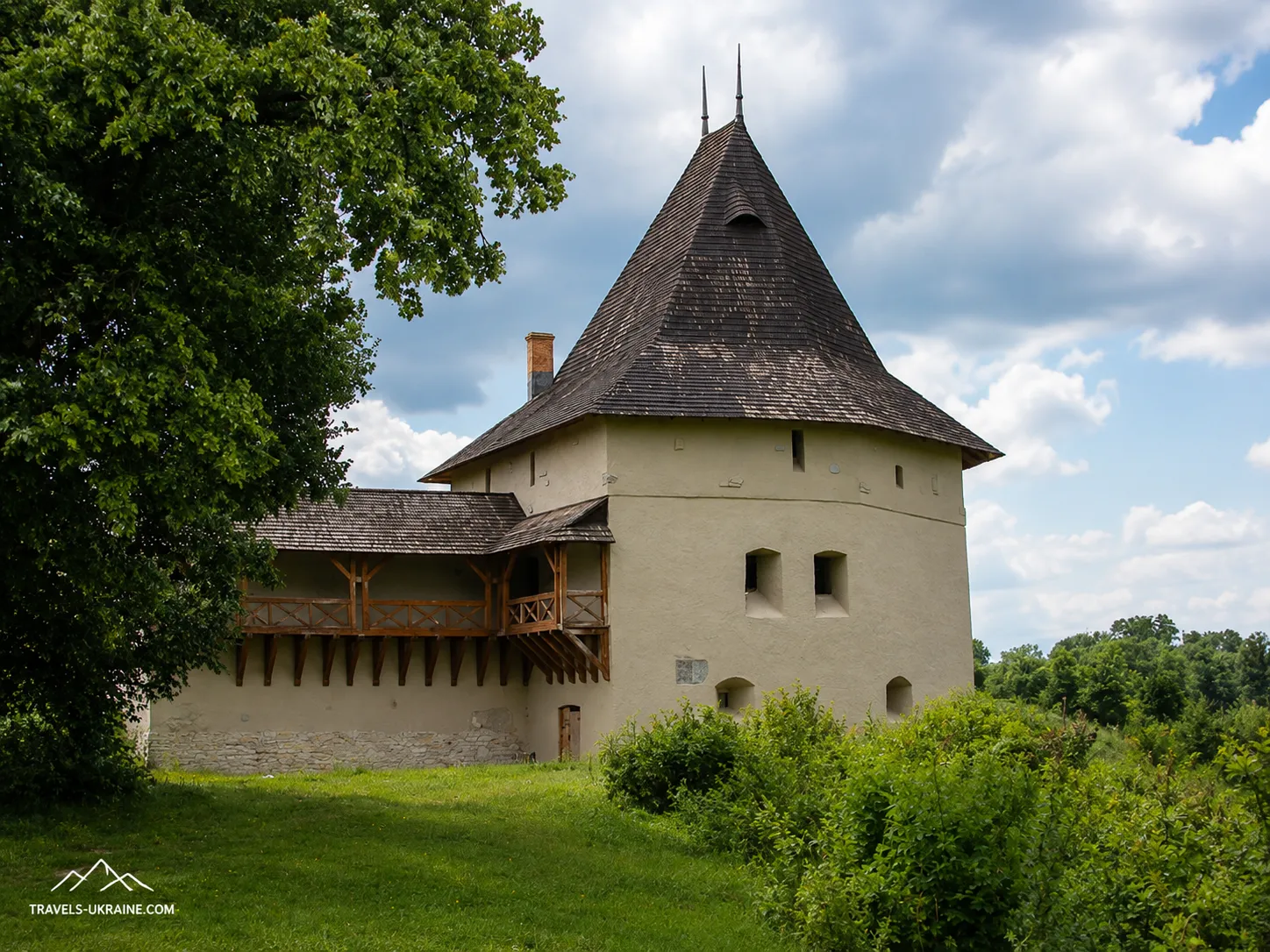
The main architectural landmark of Castle Hill today is the Starosta, or Noblemen’s, Tower. It is the feature most often seen in modern photographs of Halych. The tower was one of the corner elements of the fortress’s defensive system and belonged to the masonry part of the castle complex.
Before large-scale restoration work began, the structure was in significantly worse condition. According to the 1995 technical inspection report, Starostynskyi Castle was considered approximately 80% lost. The surviving elements included a corner tower, sections of the southeastern walls, the remains of the chapel apse, and a fragment of the southern defensive wall with loopholes.
During the restoration, the tower was reinforced, parts of the walls and ceilings were restored, and fragments of the defensive wall were reconstructed nearby. Thanks to this work, the Starosta Tower is once again perceived as a coherent architectural structure, although a significant part of its present appearance is the result of scholarly restoration.
Chapel of Saint Catherine
One of the important elements of the castle complex was the Chapel of Saint Catherine. It is mentioned in historical descriptions of the fortress and is included among the structures slated for restoration as part of the Halych Castle restoration project. Only fragments of the chapel have survived to the present day. Researchers recorded remnants of the apse and parts of walls made of stone and brick set in lime mortar. The project also envisaged recreating the defensive wall between the chapel and the Starosta Tower to better convey the structure of this part of the fortress.
At the same time, there is no completely restored historic chapel today in the form in which it may have existed in the XVII century. Therefore, when describing the landmark, it is more accurate to speak of the chapel remains and its reconstruction project, rather than a fully reconstructed church.
Archaeology Continues to Change Our Understanding of the Castle
What is particularly fascinating is that the history of Halych Castle is not yet complete, even for researchers. Much of its architecture has disappeared from the surface, but its foundations, cellars, and lower levels may survive underground. Thus, in 2023, archaeologists reported discovering the remains of a large XVI-century entrance tower, located approximately 80 meters from the restored Starosta Tower. Some of its structures ended up underground after the castle’s destruction, while access to the interior was blocked by rubble for a long time.
The discovery is especially important because it confirms that the visible part of the fortress today occupies only a small portion of the former complex. Archaeological research is gradually making it possible to correlate the remains of the structures with old inventories and reconstruct the plan of Starosta Castle more precisely.
Archaeological work on Castle Hill reveals more than just the foundations of walls and towers. During the excavations, researchers have found fragments of pottery, glass, tiles, coins, smoking pipes, and other objects from everyday life. Some of the finds date back to the XVII–XVIII centuries. These objects help us see the fortress from an entirely different perspective. The castle was not merely a place of battles and meetings of the starosta’s administration. People lived here, prepared food, heated the rooms with tiled stoves, used tableware, traded, and carried out their daily work.
It is archaeology that is gradually restoring to history the details absent from chronicles and official documents.
What Halych Castle Looked Like at the Height of Its Prosperity
It is difficult to imagine the true scale of Halych Castle from its present-day ruins. During its greatest period of development, the fortress occupied a much larger part of Castle Hill than the area now perceived as the castle complex. It underwent especially significant changes in the mid-XVII century, when the Halych starosta, Andrzej Potocki, carried out a major reconstruction according to the fortification principles that were new at the time.
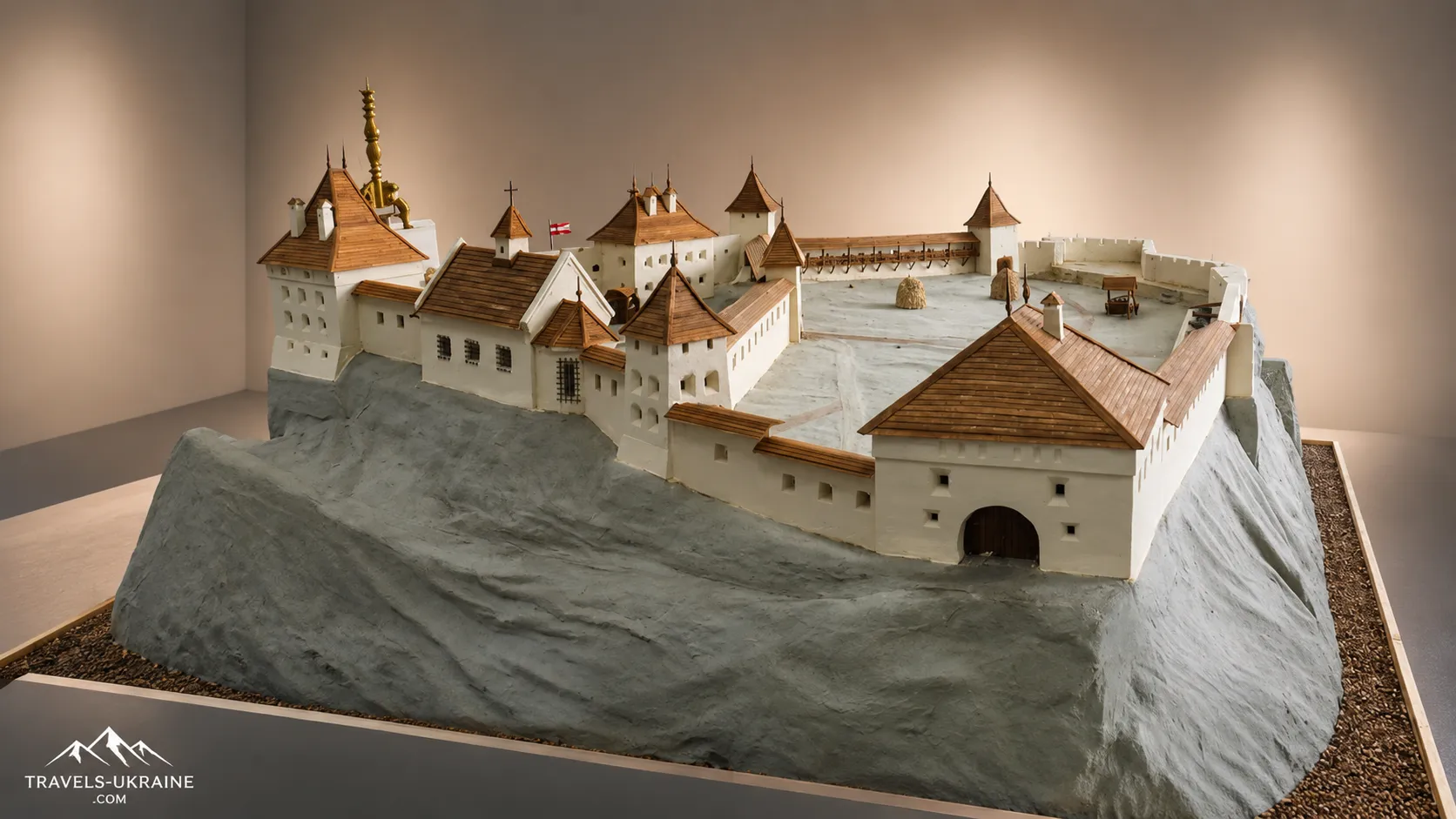
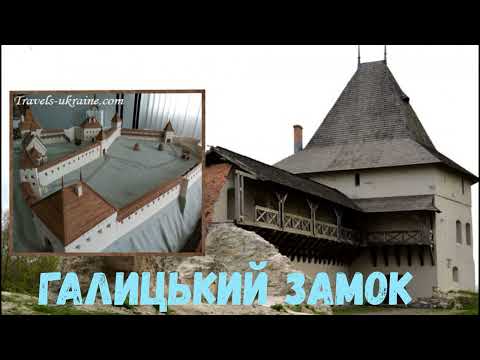
After the reconstruction, the castle occupied approximately 1.7 hectares and had the shape of an irregular triangle adapted to the natural terrain of the hill. Three masonry towers, connected by defensive walls, stood at the corners. The fortress grounds were arranged on two levels, or terraces, which made it possible to use the steep slopes of Castle Hill more effectively for defense.
Behind the walls stood more than military structures. Halych Castle was at once the residence of the starosta, an administrative and economic center. It housed a chancery, court, archive, storerooms, and other facilities necessary for the functioning of the starosty and garrison. The fortress grounds also contained a Chapel of Saint Catherine, the remains of which were later discovered by archaeologists.
Thus, the present-day Starosta’s Tower and fragments of the walls provide only a partial impression of the former stronghold. In the XVII century, a traveler on Castle Hill would not have seen a single tower amid the ruins, but rather a large fortified complex with several defensive structures, inner buildings, and a powerful system of walls. This contrast between the past and the present helps us better understand how significant a fortress Halych Castle once was.
The Modern Status of Halych Castle
Today, Halych Castle has the status of an architectural monument of national importance. In the State Register of Immovable Monuments of Ukraine, it is listed as «Halych Castle» of the XIV–XVII centuries, with protection number 090018-N. This means that the remains of the fortress and the monument’s territory are under state protection.
The castle is also part of the Ancient Halych National Reserve, which includes a separate Halych Castle sector. Its task is to research, preserve, restore, conserve, and promote the monument. In other words, today the structure is regarded not merely as a tourist attraction, but as a fully fledged cultural heritage site requiring continuous scholarly oversight.
In the modern period, archaeological and restoration work has been carried out on the castle grounds. The projects included strengthening and restoring the surviving walls, reconstructing the southwestern tower, recreating part of the defensive wall, and restoring the Chapel of Saint Catherine. At the same time, it is important to understand that the complex’s present appearance combines authentic remains of historical fortifications with restored elements.
Today, Halych Castle is open to visitors as one of the sites of the Ancient Halych National Reserve. Guided tours and cultural and educational events are held on Castle Hill, while the monument remains one of the most recognizable historical landmarks of modern Halych.
Legends and Mysteries of Halych Castle: Treasures, Dungeons, and Ancient Tales
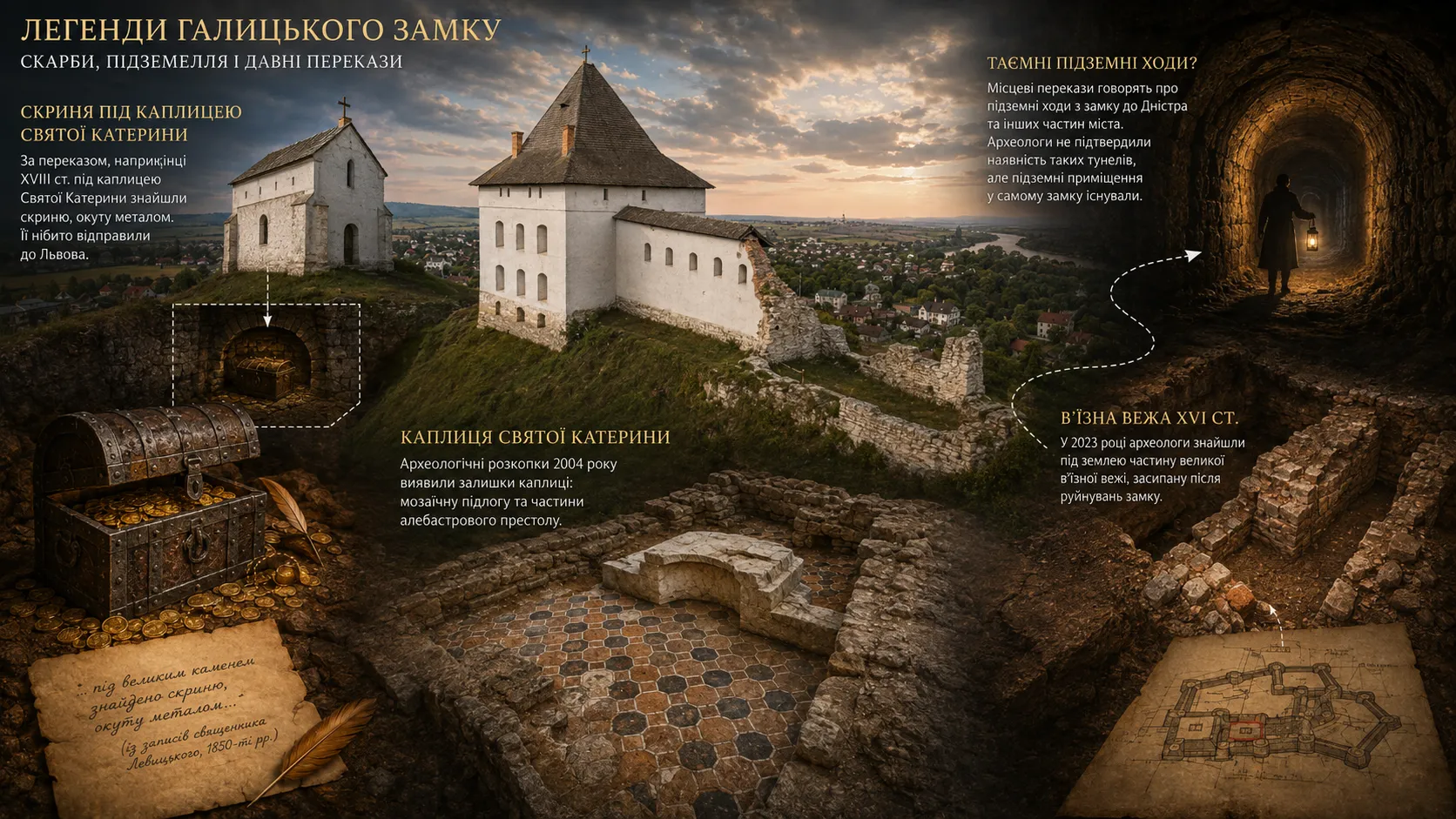
Over the several centuries of its existence, Halych Castle endured so many wars, destructions, and reconstructions that the emergence of legends around it was practically inevitable. Old underground chambers, buried foundations, vanished towers, and a chapel of which only archaeological traces remain created the perfect setting for stories about hidden treasures and secret passages.
However, in the case of the Starosta’s Castle, it is particularly interesting to distinguish later tourist inventions from tales that were genuinely recorded many decades ago. Some contain such specific details that today they seem almost like the plot of a historical novel.
The Legend of the Treasure Beneath the Chapel of Saint Catherine
One of the most fascinating tales about the treasures of Halych Castle was recorded in the XIX century by a priest named Levytskyi, who studied the history of Halych and its surroundings. In his notes from the 1850s, he retold a story then told by local residents. According to the tale, sometime between 1780 and 1790, the Austrian authorities allegedly received information from old municipal documents about a hiding place on the castle grounds. Two officials arrived in Halych from Lviv, accompanied by two soldiers.
Local residents were asked to show the place where the castle Chapel of Saint Catherine had once stood. The search then began approximately where the chapel’s altar was believed to have been. According to the tale, they found a metal-bound chest beneath a large stone. It was supposedly extracted only with great difficulty, after which the find was taken away and sent to Lviv.
Yet the author of the record himself treated the story cautiously. He explicitly noted that it was unknown to what extent the tale corresponded to reality. There is currently no documentary confirmation that the chest or its contents existed, so the story should not be presented as an established fact. But unlike many modern «treasure legends,» this tale has an important distinction: it was recorded as early as the XIX century from the words of Halych residents. Thus, the story of the mysterious chest existed in local tradition at least more than a century and a half ago.
Did Secret Passages Exist Beneath Halych Castle?
Another inseparable part of the legends surrounding the Starosta’s Castle is its underground passages. Local tales include stories of tunnels that supposedly descended from Castle Hill to the Dniester or connected the fortress with other parts of Halych. Similar stories are characteristic of many old fortresses in Ukraine. During a siege, a secret exit could indeed have been extremely useful: in theory, it could have allowed people to leave the encircled fortress, deliver messages, or gain access to water.
However, in the case of Halych Castle, the existence of a long underground tunnel from Castle Hill to the Dniester has not yet been confirmed by archaeological research. It is therefore more accurate to speak of local tales rather than an established fact. At the same time, underground rooms genuinely did exist in the fortress. Archaeologists are studying the foundations, cellars, and lower levels of structures, much of which ended up underground after the castle was destroyed. These real remains may have gradually become the basis for far more expansive legends about an entire network of secret tunnels.
The Underground Tower Discovered by Archaeologists
The story of the «castle dungeons» took a particularly interesting turn after new archaeological research. In 2023, researchers uncovered part of a large XVI-century entrance tower on Castle Hill, which had previously been known from historical descriptions of the fortress. The structure is located approximately 80 meters from the present-day Starosta’s Tower. After the destruction, much of its lower tier ended up underground and was concealed by rubble.
This discovery may sometimes create the impression that archaeologists «found the legendary underground passage,» but that is not the case. It concerns a buried section of a real defensive structure, not confirmation of a tunnel to the Dniester. At the same time, the find clearly demonstrates why legends about Halych Castle’s underground chambers could survive for centuries. A substantial part of the old fortress truly lies below the present ground level, and structures that archaeologists are only beginning to investigate still remain beneath Castle Hill.
Legends or Historical Facts?
When exploring the history of Halych Castle, it is important neither to strip it of its legends nor to turn them into historical facts. The tale of the chest beneath the chapel is interesting above all because it was recorded as early as the XIX century. The secret passages remain part of local tradition, but their existence on the scale described in the legends has not been proven.
By contrast, real archaeological discoveries can sometimes be no less captivating than legends. Lost sections of defensive structures, the foundations of castle buildings, chapel remains, and numerous objects from past centuries have already been found underground. Therefore, the greatest mystery of the Starosta’s Castle in Halych may not lie in mythical treasures. A significant part of the former fortress is still hidden underground, and each new archaeological study may expand or even change our understanding of what Halych Castle really looked like and how life unfolded there.
How to Visit Halych Castle: Route and Opening Hours
Halych Castle is located directly in the city of Halych, atop Castle Hill, also known as Halych Hill. Unlike many remote fortresses, it does not require planning a separate complicated route: the castle can be reached on foot from the city center, and the climb itself is part of the walk. One route begins near Christmas Square and leads uphill via stairs along the slope of Castle Hill. This option allows visitors to gain elevation gradually while taking in an increasingly expansive panorama of the city.
There is also another approach, from Yevhena Konovaltsia Street and the park area of Halych Hill. This makes it possible to avoid returning by the same route: for example, climb the stairs from the center, explore the fortress, and descend through the park on the other side. The climb from central Halych does not take long. At a normal pace, the castle grounds can be reached in approximately 10–20 minutes, depending on the route chosen and the number of stops at viewpoints.
Can You Drive to Halych Castle?
It is possible to drive considerably closer to the top of Castle Hill than when taking the walking route from the center. The road passes through the Halych Hill area, after which the final section to the monument itself must be covered on foot. However, even if you are traveling by car, it is worth walking at least one of the routes. During the climb, it becomes especially clear how well the site was chosen for a defensive fortress: the city gradually falls below, while the Dniester valley opens up with increasing elevation.
Halych Castle Opening Hours
Halych Castle is part of the Ancient Halych National Reserve and has official visiting hours.
- Monday–Thursday: 09:00–18:00;
- Friday: 09:00–17:00;
- Saturday–Sunday: 09:00–18:00.
Before a specially planned trip, it is best to check the schedule again on the National Reserve’s website, as opening hours may change because of public holidays, events, or other circumstances.
Is It Worth Booking a Guided Tour?
If the goal is simply to climb to the viewpoint and see the remains of the fortress, the castle can certainly be explored independently. But for understanding its history, a guided tour of Halych Castle is considerably more valuable than at many well-preserved castle sites.
The reason is simple: much of Halych Castle has been lost. Without old plans, archaeological data, and explanations, it is difficult to understand where the defensive walls once ran and where the other towers, chapel, and inner structures stood. What looks today like an empty area of Castle Hill may have been part of a large fortified complex in the XVII century.
Therefore, getting acquainted with Starostynskyi Castle is best understood not simply as viewing a single tower, but as an attempt to imagine the fortress that once occupied a much larger area. And after descending from Castle Hill, a journey through Halych is only just beginning — several landmarks associated with the city’s princely period are located nearby.
Frequently Asked Questions About Halych Castle
Where is Halych Castle located?
Halych Castle is located in the city of Halych, Ivano-Frankivsk Oblast, on the summit of Castle Hill above the central part of the city and the Dniester Valley. Landmark coordinates: 49.121767, 24.730453.
When was Halych Castle built?
There is no single exact construction date. Fortifications on Castle Hill existed as early as the Middle Ages, while the formation of the Starostynskyi Castle began around the middle of the XIV century. In the following centuries, the fortress was rebuilt several times, with its most extensive modernization carried out in the XVII century.
Why is Halych Castle called Starostynskyi Castle?
The name Starostynskyi Castle is connected with the fact that the fortress served as the residence of royal starostas and the administrative center of the Halych starostwo. Military, administrative, and judicial institutions were located here.
Was Halych Castle a residence of the Halych princes?
No, modern Halych Castle should not be identified with the princely center of ancient Halych. The political and spiritual center of the chronicle city was located in the area of present-day Krylos. Starostynskyi Castle took shape in a different historical era.
What has survived from Halych Castle to the present day?
Fragments of old walls, remains of defensive structures, parts of the Chapel of Saint Catherine, and other archaeological features have survived to the present day. The most prominent part of the complex is the restored Starostynskyi Tower. The castle’s current appearance combines authentic remains and restored elements.
Who destroyed Halych Castle?
The fortress was not destroyed in a single event. It suffered repeatedly from attacks and wars, but the events of 1676 were particularly devastating, when Ottoman forces captured the castle and blew up part of its walls and towers. Later, the fortifications fell into decline, and some of the stone was dismantled for use in other buildings.
Are there underground passages beneath Halych Castle?
Underground rooms and buried lower sections of the castle structures do exist, as confirmed by archaeological research. However, popular legends about long secret tunnels running from the castle to the Dniester or other parts of Halych still lack sufficient archaeological confirmation.
Were any treasures found at Halych Castle?
There is an old legend about a metal chest that was supposedly found at the end of the XVIII century beneath the Chapel of Saint Catherine and sent to Lviv. The story was recorded as early as the XIX century; however, there is currently no documentary confirmation of either the chest’s contents or the discovery itself.
Is there an entrance fee for Halych Castle?
Halych Castle is part of the «Ancient Halych» National Preserve, so admission to the museum section of the complex is paid. It is best to check current ticket prices and opening hours on the preserve’s official website before your trip.
How much time is needed to see Halych Castle?
For an independent visit to the castle and the panorama from Castle Hill, around 40–60 minutes is usually enough. If you take a guided tour or explore the fortress’s history in detail, allow approximately 1–1.5 hours.
What else can you see near Halych Castle?
It is best to combine the castle with a trip to Krylos, where the center of princely Halych was located. It is also worth visiting the foundations of the Dormition Cathedral, Halychyna Mohyla, the Museum of the History of Halych, the Church of Saint Panteleimon, and the Museum of Karaite History and Culture.
Is Halych Castle Worth Visiting?
Today, Halych Castle does not impress with the scale of its surviving walls in the way that the large fortresses of Kamianets-Podilskyi or Khotyn do. Its value lies elsewhere: on Castle Hill, you can literally see several layers of history — authentic remains, restored defensive structures, and places where archaeologists continue to uncover long-lost parts of the castle complex.
It is especially interesting to view the castle complex not as an isolated romantic ruin, but as part of Halych’s own history. The fortress was a military and administrative center, endured sieges, changed along with the development of weaponry, fell into decline, lost its walls, and centuries later once again became an object of research and restoration.
Visiting the castle also helps you better understand the difference between princely Halych and the later Starostynskyi Castle. After Castle Hill, it is worth continuing the route to Krylos, the Church of Saint Panteleimon, and other landmarks of the «Ancient Halych» National Preserve. Then the individual ruins, churches, and archaeological sites come together to form a much broader picture of the city’s history.
There is another reason to come up here—the Castle Hill itself. The panorama of Halych, the Dniester Valley, and the surrounding hills makes it clear why this particular site was used for defense for centuries. And even without a deep interest in fortifications, a walk to the castle remains one of the most fascinating parts of exploring the city.
Halych Castle is worth visiting for anyone who wants not merely to photograph an old tower, but to see a place where history is still literally beneath their feet. Much of the former fortress has been lost, some of its structures are known only from old descriptions, and new archaeological discoveries continue to expand our understanding of the castle. It is precisely this unfinished quality that makes Starostynskyi Fortress one of the most fascinating historical sites in Halych.



No Comment
You can post first response comment.