
 English
 Українська
 Latviešu
 Lietuvos
 Русский
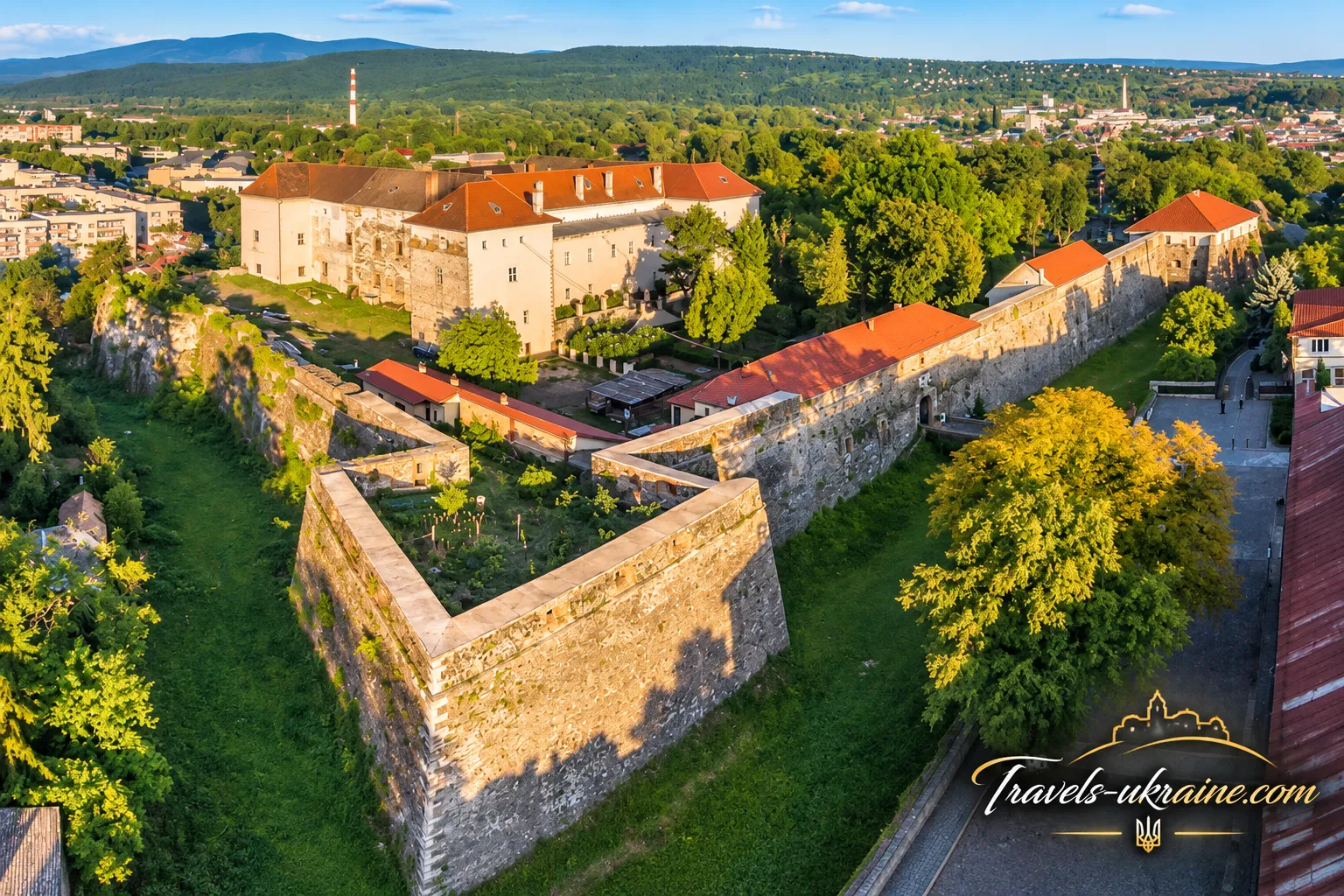
Unlike many castles in Zakarpattia, Uzhhorod Castle does not need to be reconstructed in the imagination from a few fragments of walls. The fortress has survived so well that even today visitors can pass through its gates, enter the inner courtyard, and step inside the old palace. But its familiar modern silhouette did not emerge all at once. It took centuries of rebuilding, wars, and changes of ownership to create it, while the history of the fortifications on this site began long before the appearance of the mighty stone bastions.
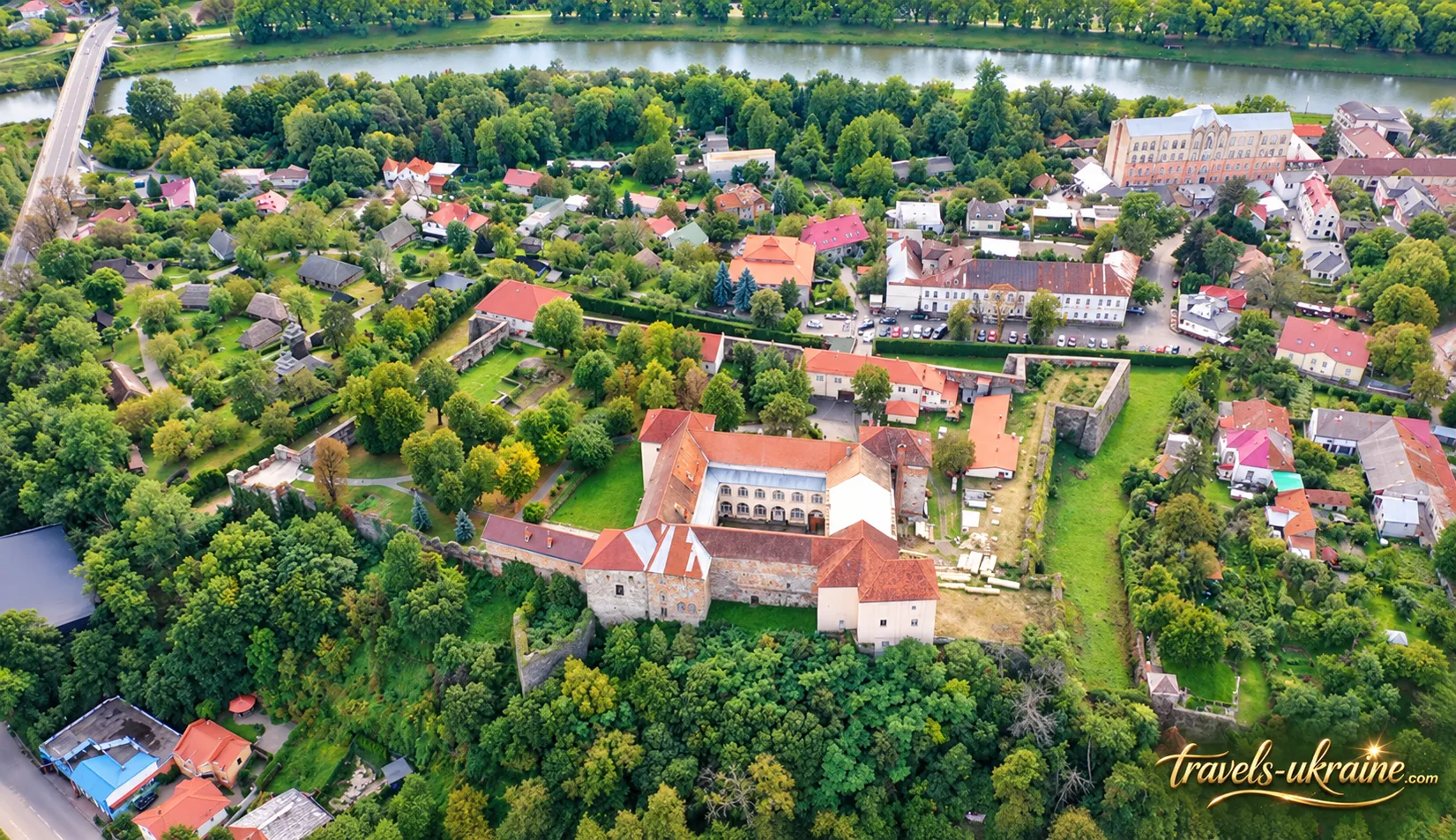
The site was chosen for a fortification with great care. Castle Hill in Uzhhorod is a volcanic hill that rises approximately 30 metres above the valley of the Uzh River. From here, it was convenient to control the surrounding area, roads, and approaches to the settlement, while the natural terrain itself gave the defenders an advantage.
Medieval Hungarian chronicles tell of the fortification of Hung, which existed here when the Hungarians arrived in the Carpathian Basin at the end of the 9th century. The famous story of Prince Laborec is also connected with these legends. However, the chronicle account and the reliably traceable history of the castle itself are not quite the same thing. Modern researchers speak much more cautiously about the earliest period: a masonry castle arose on the site of a hillfort dating from the 10th–11th centuries, and its architecture changed repeatedly in the centuries that followed.
The earliest fortification was far simpler than the fortress we see today. Defence was probably provided by a tower or a small fortified centre, earthen ramparts, a ditch, and a wooden palisade. This was a place for controlling the territory and protecting the settlement, not an aristocratic residence with a grand palace.
A serious test came with the Mongol invasion of 1241. According to materials from the Transcarpathian Regional Museum of Local Lore, the fortress of that time was captured and destroyed. However, Castle Hill retained its strategic importance, so the fortifications were rebuilt, and stone gradually came to be used more extensively instead of wood.
The Drugets — the family that transformed Uzhhorod Castle
A genuine turning point in the castle’s history came in the 14th century. The powerful Druget magnate family appeared on the political stage of the Kingdom of Hungary; its members had arrived from Italy with the Angevin dynasty. The first member of the family closely associated with Uzhhorod was Philip I Druget, a close ally of King Charles Robert. In the first half of the 14th century, the Drugets received Uzhhorod Castle and extensive estates around it. From then on, the history of the fortress and the family became intertwined for almost four centuries. The Encyclopedia of the History of Ukraine dates their ownership of the castle to approximately 1322–1691.
The Drugets did not simply live in the old fortress. They gradually adapted it to new military and residential needs. The castle was expanded, old fortifications were rebuilt, stone buildings were erected, and the defences were strengthened. Particularly extensive changes took place in the 16th–17th centuries, when the spread of firearms forced European fortresses to evolve: high medieval walls were no longer sufficient, and powerful bastions and artillery positions were needed.
What Uzhhorod Castle Looked Like at the Height of Its Prosperity
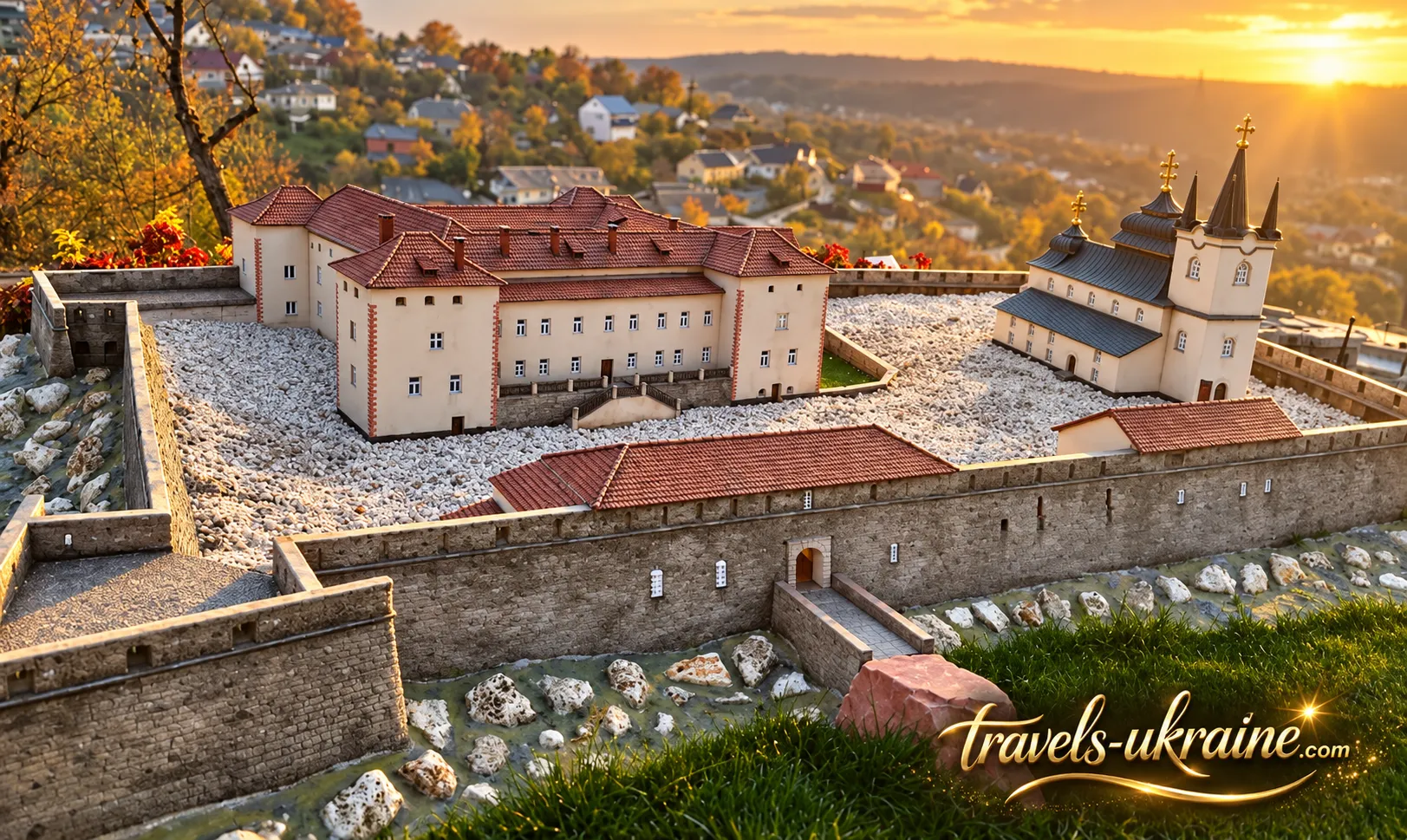
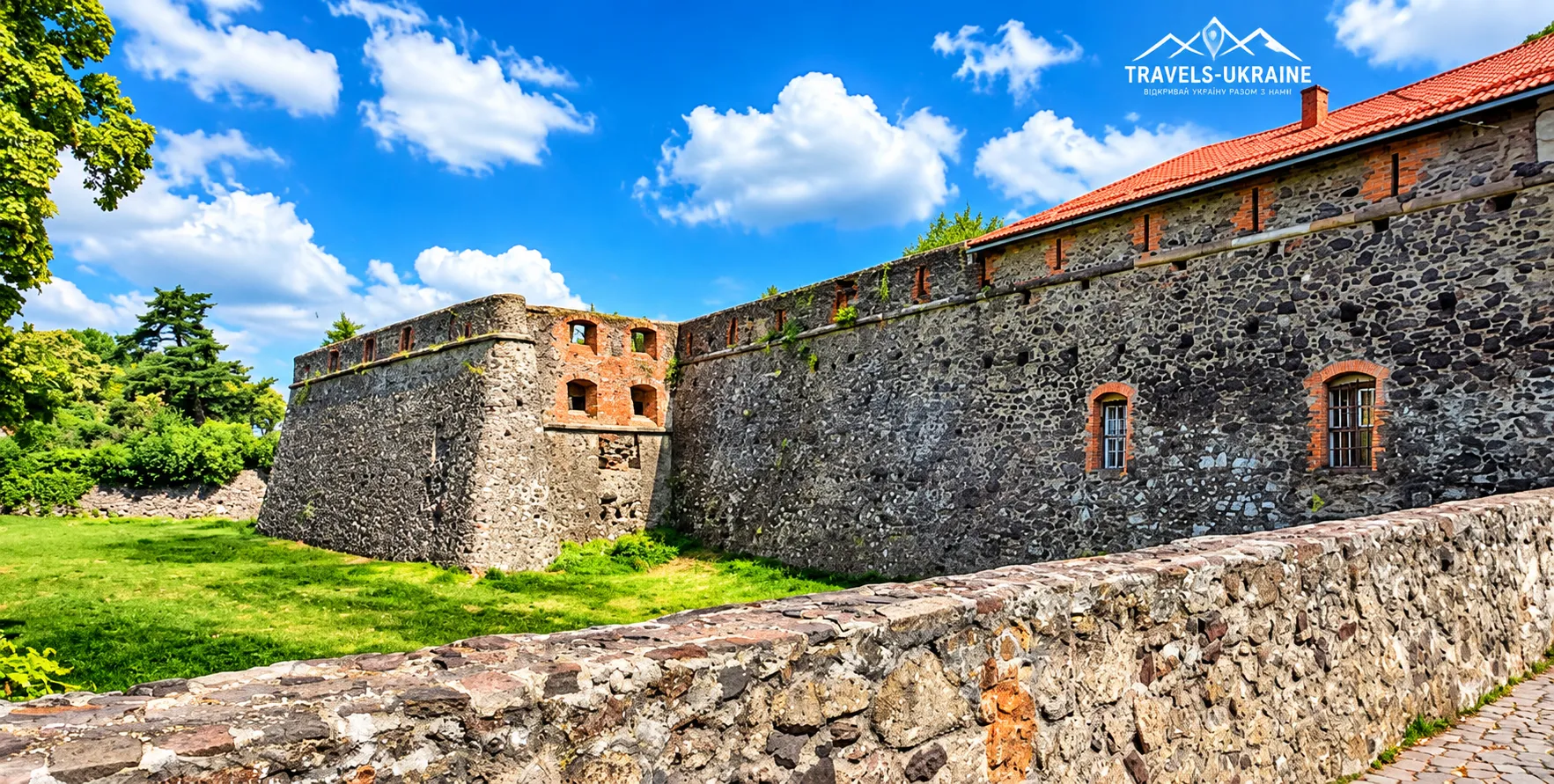
Modern Uzhhorod Castle has preserved its basic structure well, so here it is much easier than at many other fortresses in Zakarpattia to imagine yourself several centuries in the past. This is not a romantic palace with decorative turrets, but a carefully designed defensive system created so that an attacker would encounter obstacle after obstacle before reaching the residential section.
The castle acquired its most distinctive features in the 16th–17th centuries, when the spread of firearms forced old medieval fortifications to be rebuilt. High, narrow towers no longer provided sufficient protection from artillery, so the fortress was adapted to a new kind of warfare: powerful stone bastions, thick curtain walls between them, and wide defensive ditches appeared.
Bastions That Controlled Every Approach to the Fortress
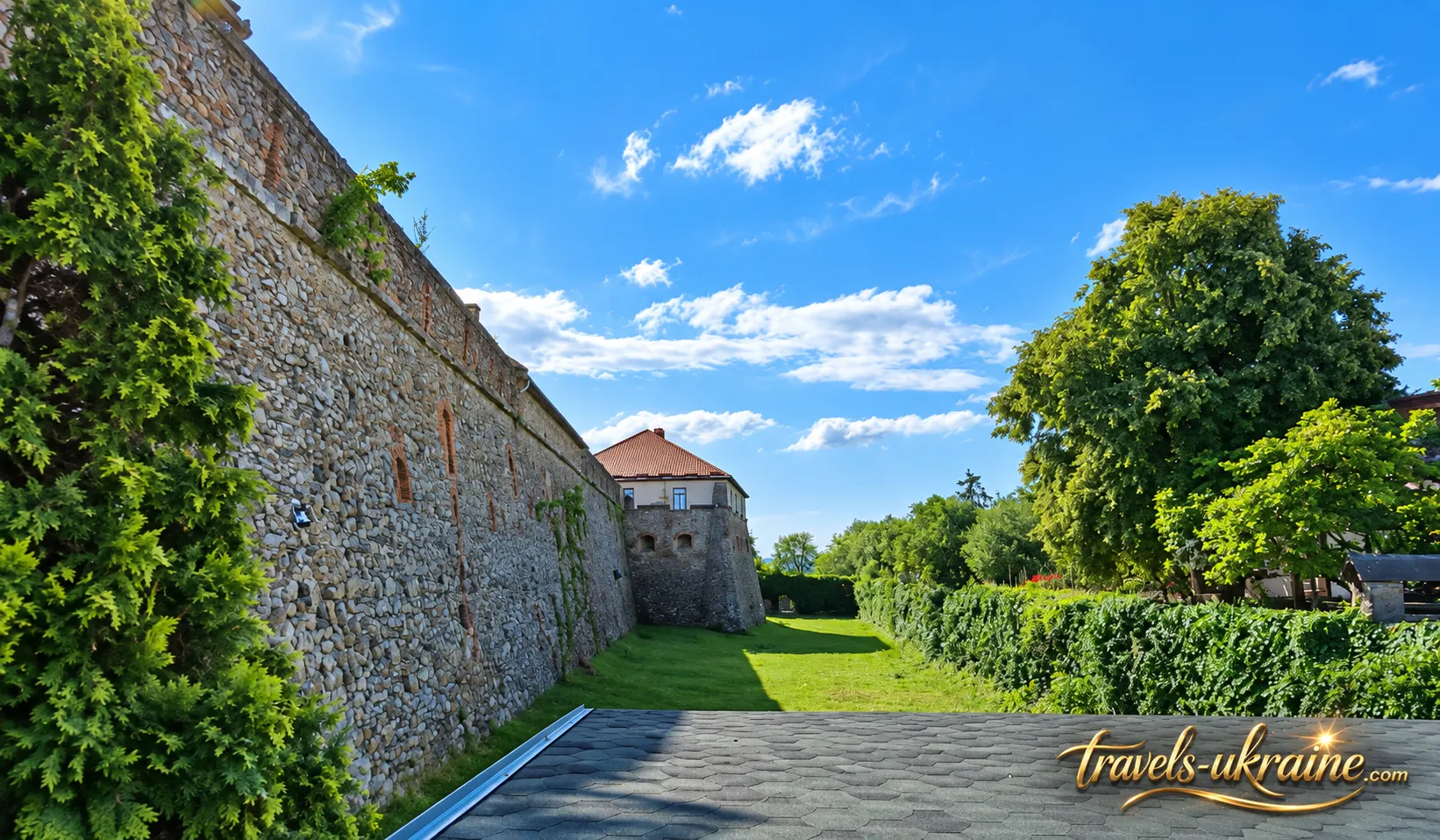
The outer perimeter of Uzhhorod Fortress formed an irregular quadrilateral, and after an additional northern bastion was built, it came to resemble an irregular pentagon. Massive bastions projected from the corners beyond the line of the walls. This arrangement was far from decorative. Cannons were installed on the bastions, and their projection beyond the main line of the walls allowed fire to be directed not only forward but also along the neighbouring walls. As a result, an attacker approaching the fortress came under fire from several directions at once.
In the 17th–18th centuries, the bastions had individual names: Joseph, Charles, Ferdinand, Theresa, and Francis. The latest addition to the system was a wedge-shaped bastion on the northern side, which covered an area that could not be adequately reached by fire from the other artillery positions.
The Dry Moat and Drawbridge: Water Was Not Necessary Here
On three sides, the castle was surrounded by a huge dry moat cut into the rock. In places, it reached approximately 20 metres in width and 8–10 metres in depth. On the fourth, north-eastern side, the steep slope of Castle Hill provided additional natural protection. The term «dry moat» sometimes misleads tourists: it may seem that there was once water here and that it simply disappeared. In fact, there was no need to fill it with water. A deep stone obstacle was entirely sufficient to hinder access to the walls, the use of assault ladders, and the movement of heavy equipment.
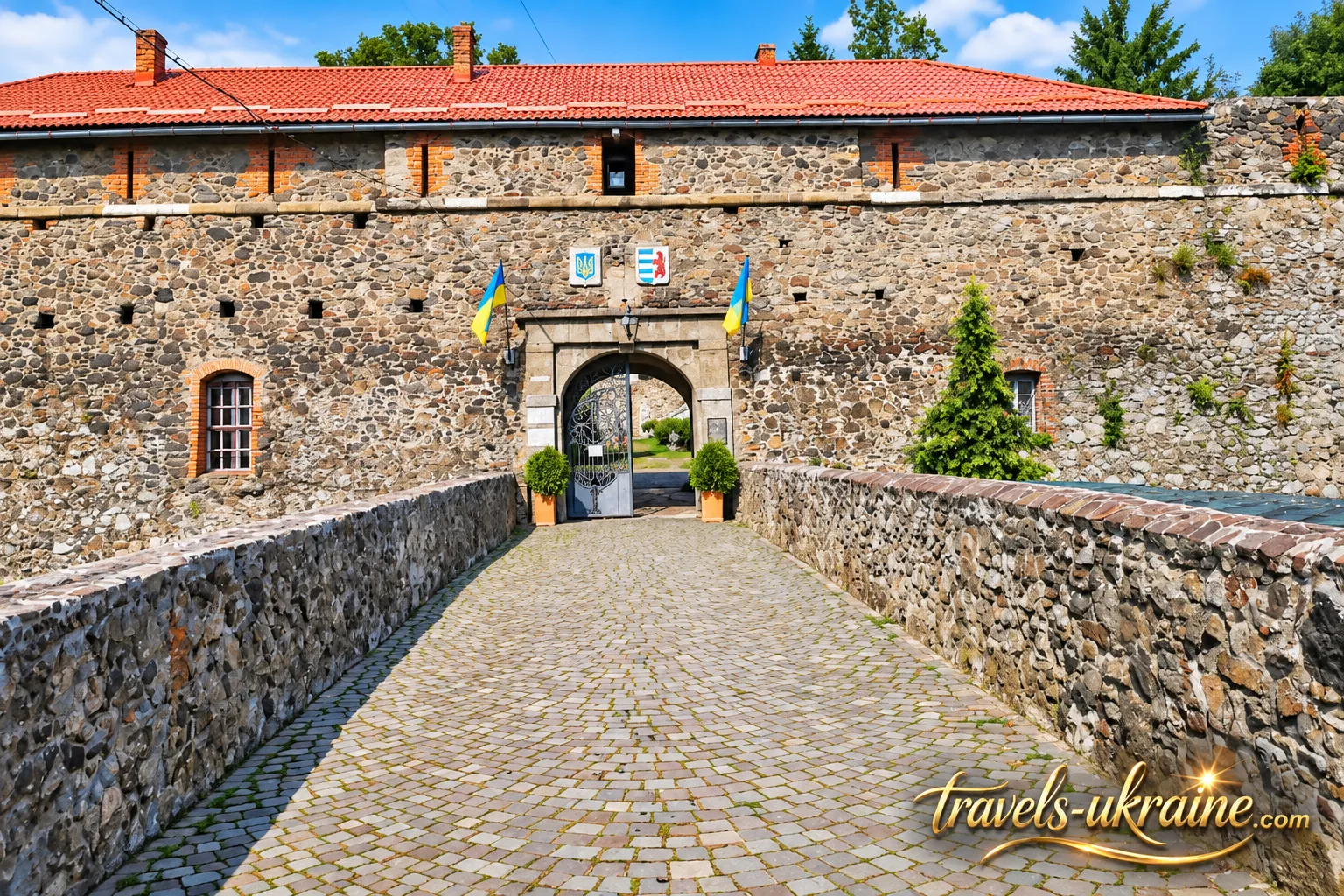
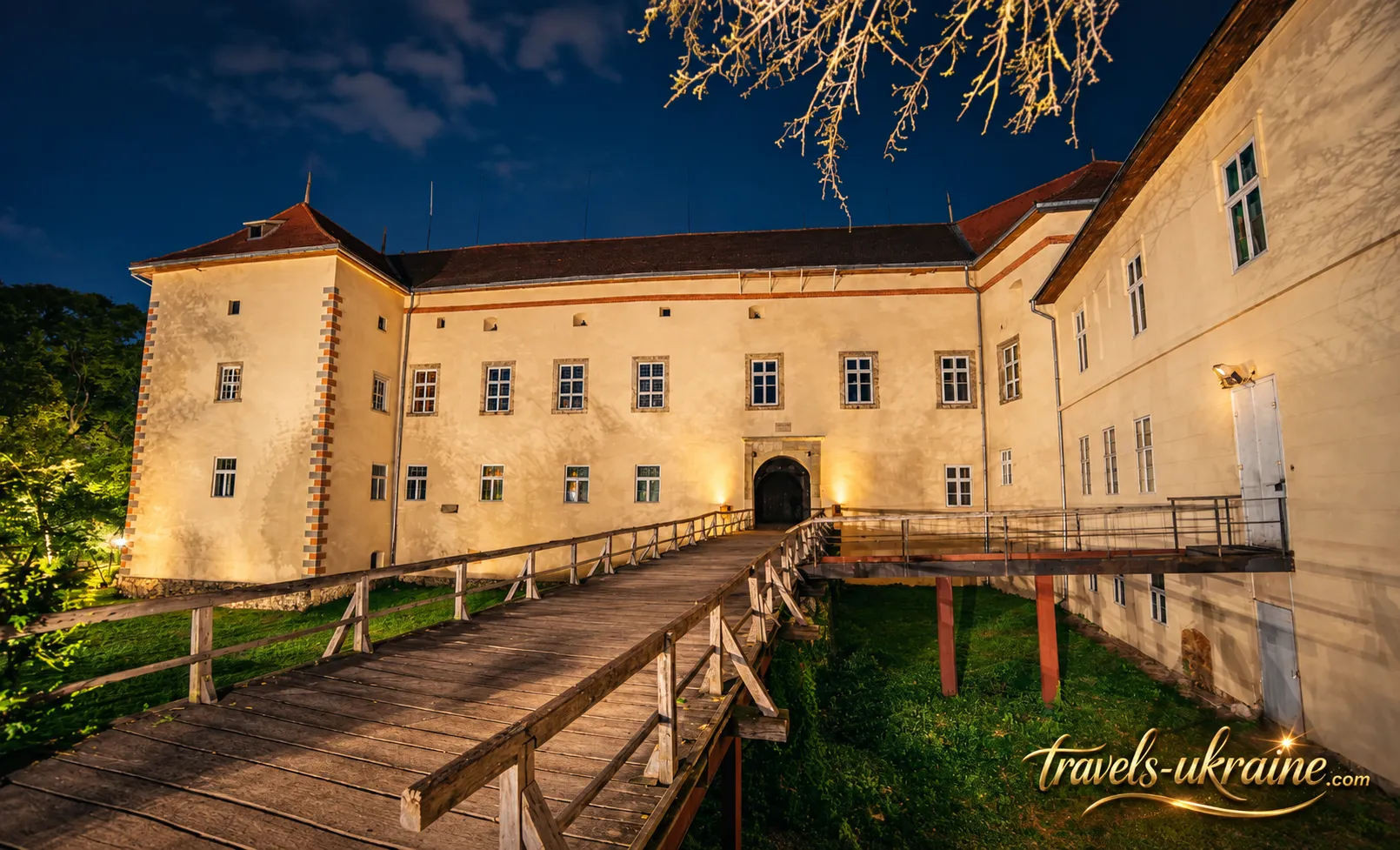
A drawbridge led to the main gate. In case of danger, it could be raised, effectively cutting off the most convenient route to the fortress. The historic structure was later replaced with a permanent bridge, which is still used by visitors today.
The Palace Inside the Castle, the Inner Courtyard, the Well, and the Underground Casemates
Even breaking through the outer walls meant overcoming only the first level of defence. Deep within the grounds stood the massive Renaissance Druget Palace, which could defend itself separately from the outer fortress. It was built beside the steep north-eastern slope of Castle Hill. On its three more accessible sides, the palace was also separated by ditches, and its entrance was reached by its own bridge, originally a drawbridge. Thus, even after capturing the outer bastions and courtyard, an enemy would still have had to overcome another defensive line. This arrangement recalls the principle of a «palace within a fortress» — palazzo in fortezza: the aristocratic residence was simultaneously part of the defensive complex and the last fortified position in the event that the outer walls were breached.
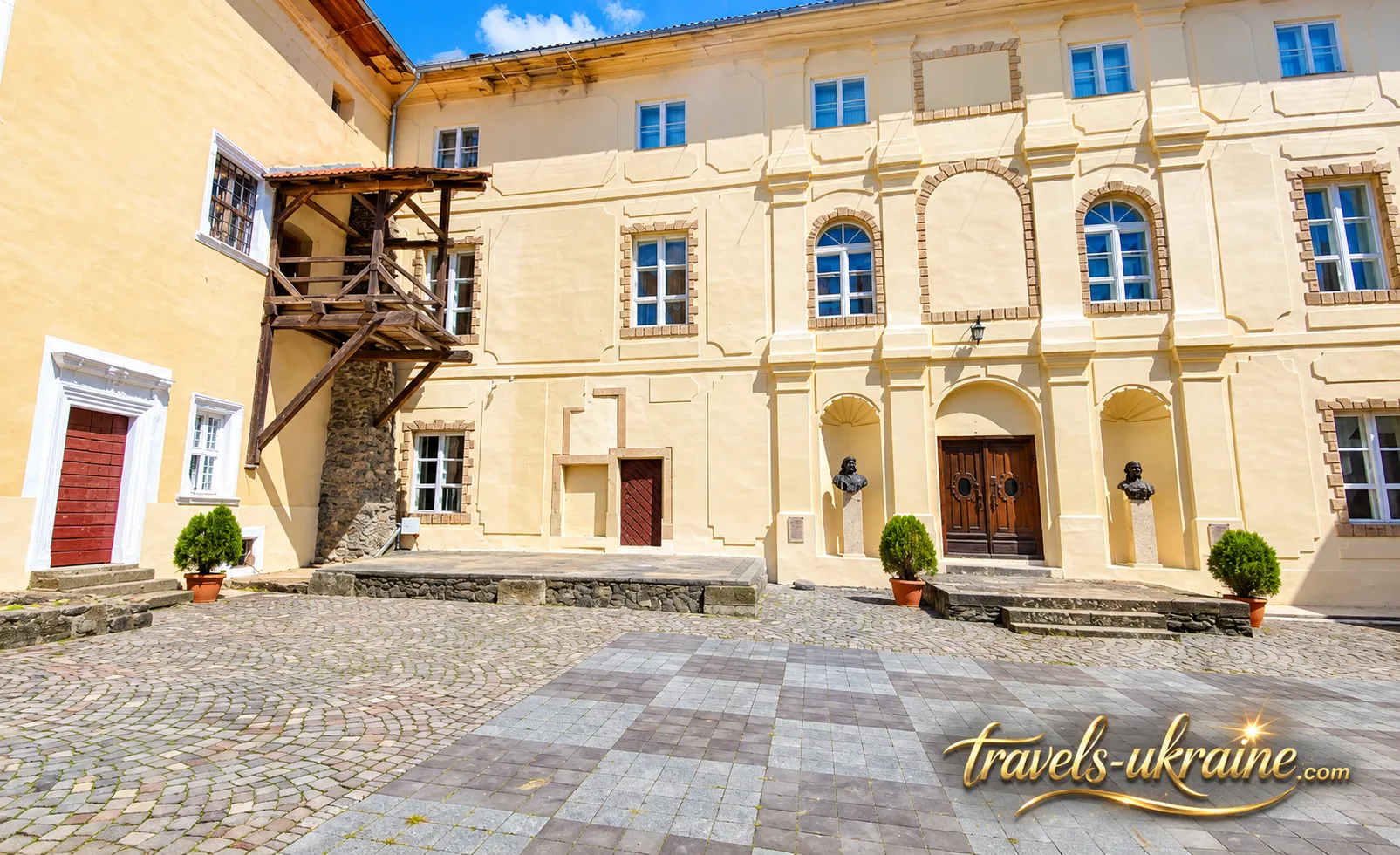
At the centre of the palace is a compact inner courtyard approximately 25 × 25 metres in size. A well was built in its middle, hewn into the rock to a depth of more than 40 metres. For the fortress, this was a vital structure: during a prolonged siege, the garrison could remain supplied with water even when access to the city was blocked.
Spacious cellars and casemates used for storing supplies lay beneath the palace. Utility rooms, stables, warehouses, and other facilities needed for life on a large fortified estate were located in various parts of the complex. The total area within the fortifications is approximately 2.5 hectares. To someone entering through the gates for the first time, the castle may seem compact, but walking along the bastions and looking down into the dry moat reveals the true scale of the defensive system.
Why Uzhhorod Castle Was Considered Almost Impregnable
Its strength lay not in a single exceptionally high wall, but in the combination of several levels of defence. The natural hill, steep slope, wide moat, artillery bastions, thick stone walls, controlled entrance, and separately fortified palace functioned as one system. This logic becomes especially clear during a modern walk around the site. Instead of simply viewing the castle from the inner courtyard, walk closer to the bastions, look into the dry moat, and notice how far the corner fortifications project. It then becomes clear that the architecture here was determined not by symmetry or the beauty of the façade, but by where an enemy might come from and how to leave no safe direction for an attack.
At the same time, a completely different life unfolded behind the austere outer walls. The palace had dozens of rooms, residential halls, utility rooms, and spaces for the castle’s owners. Today, it houses the Transcarpathian Regional Museum of Local Lore, so the next stage of exploring the fortress begins not beside the artillery bastions, but inside the former Druget residence.
The Palace and Museum Inside Uzhhorod Castle: What Tourists Will See
If the outer bastions present Uzhhorod Castle as a military fortress, the palace within the walls reveals an entirely different side of it. This was where the castle’s owners lived, received guests, stored supplies, furnished ceremonial rooms, and managed the affairs of a large estate. Today, these historic walls house the Tyvodar Lehoczky Transcarpathian Regional Museum of Local Lore. This is an important distinction between the castle in Uzhhorod and many other fortresses in Zakarpattia. Visitors come here not only to walk through the courtyard and look at the old walls — much of the visit takes place inside the palace itself, where historic architecture is combined with museum collections.
Thus, the first encounter with the castle ensemble begins even before entering. The road to the castle passes through the former defensive moat, and the gate itself immediately conveys the scale of the fortifications. It is worth slowing down here and noting the thickness of the walls, the shape of the bastions, and the difference in elevation between the fortress grounds and the bottom of the dry moat. Once inside, visitors can examine the defensive perimeter and see the fortress from the side of the inner courtyard. The castle walls and bastions offer views of the old part of Uzhhorod, while the geography of the site clearly explains why this particular hill was chosen for the fortification.
More Than 40 Rooms in the Former Palace
At the beginning of the 18th century, the palace already had a complex multi-level structure. Including the cellars, it was four storeys high and contained more than 40 rooms. The lowest level consisted of wine cellars and casemates, where food and other supplies were stored. Utility rooms and quarters for servants occupied the first floor, while the owners’ and guests’ living chambers were located above.
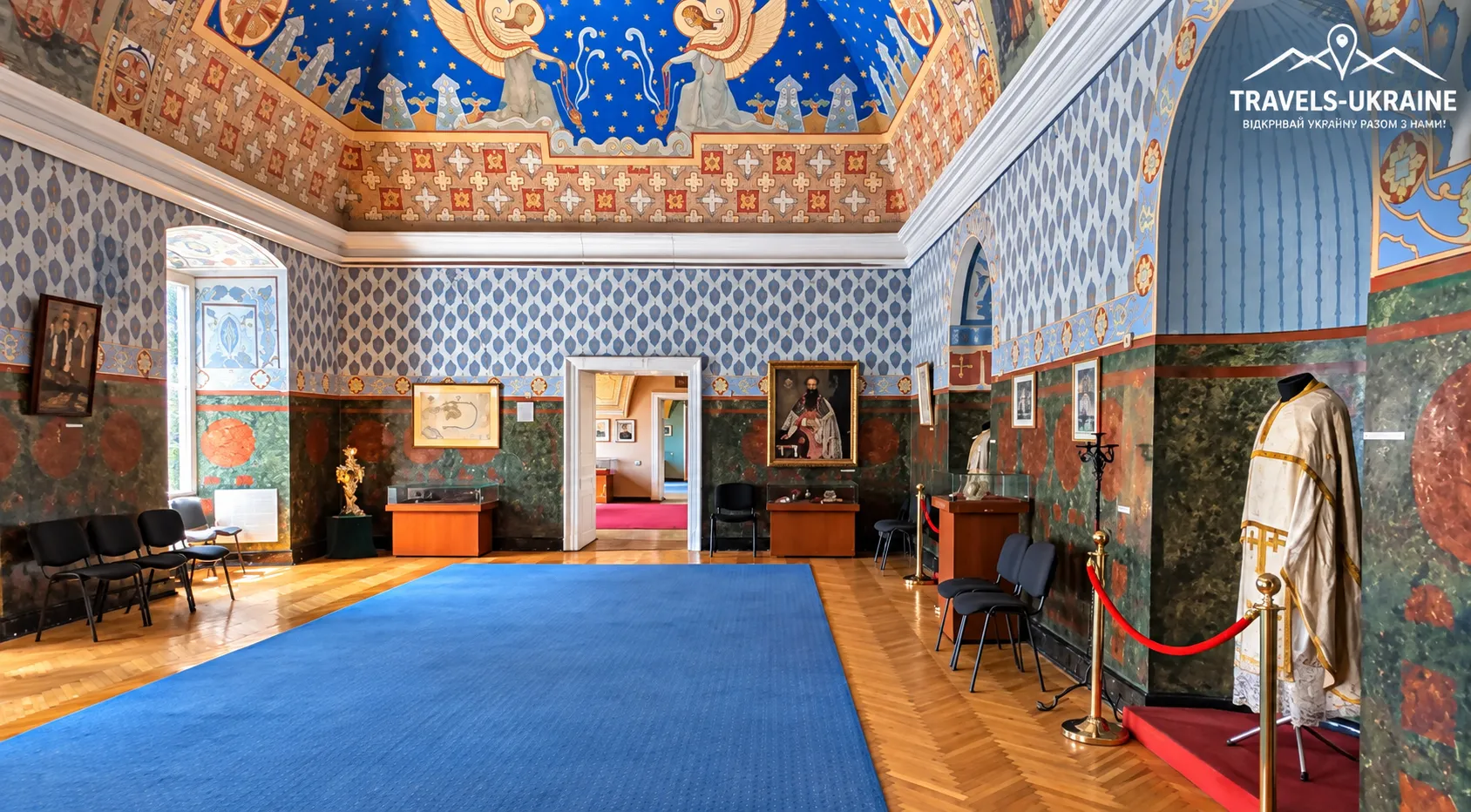
A large knights’ hall on the second floor held a special place. In the 19th century, when the castle was already serving other functions, it was converted into a private chapel. In 1857, the artist Ferdinand Vydra painted the room, while the neighbouring halls were decorated with stucco, paintings, and gilding. Some of this historic décor has survived and is gradually being restored.
That is why, while walking through the museum halls, it is worth looking beyond the exhibits in the display cases from time to time. The walls, vaults, doorways, and layout themselves remind visitors that the modern museum is not housed in a purpose-built exhibition building, but in the former residence of the castle’s owners.
«Castles of Zakarpattia» — A Good Starting Point for Exploring the Museum
One of the most interesting displays for travellers is the permanent exhibition «Castles of Zakarpattia» on the palace’s first floor. It is devoted to the region’s twelve best-known fortresses and helps place the castle in a broader historical context. The exhibition features models, diagrams, archaeological finds, reconstructions of weapons and armour, family coats of arms, and portraits of castle owners. It is particularly useful if, during your trip around Zakarpattia, you plan to see not only Uzhhorod but also Mukachevo, Khust, Nevytske, or other castles in the region.
From Medieval Weapons to Traditional Dress of Zakarpattia
The museum is not limited to the history of the fortress itself. Among the exhibits that particularly attract visitors is «Cold and Firearms from the 16th to the Early 20th Century». Here, you can see various types of weaponry and trace how methods of warfare changed over the centuries—the very changes that once led to the reconstruction of the castle’s bastions.
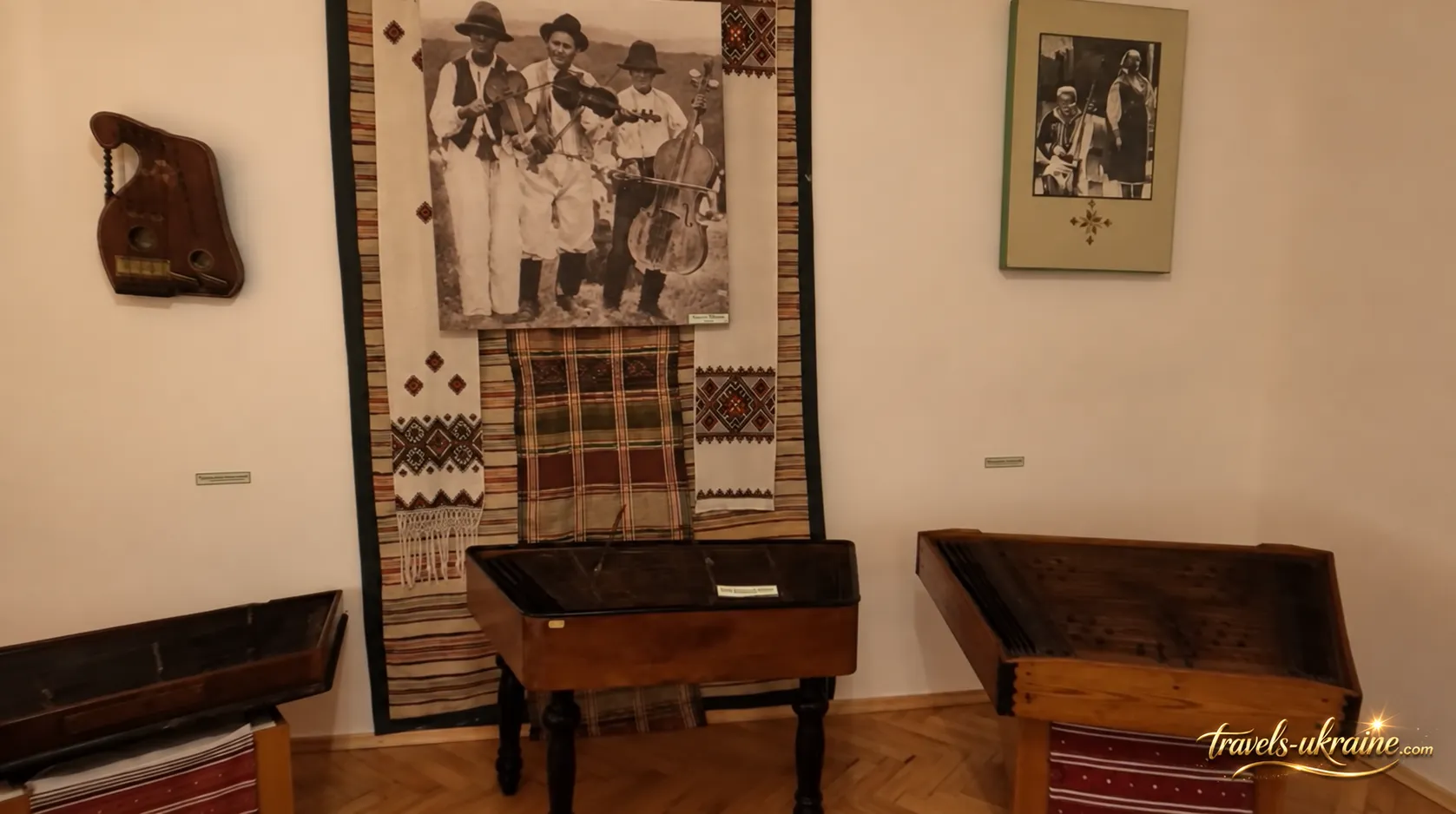
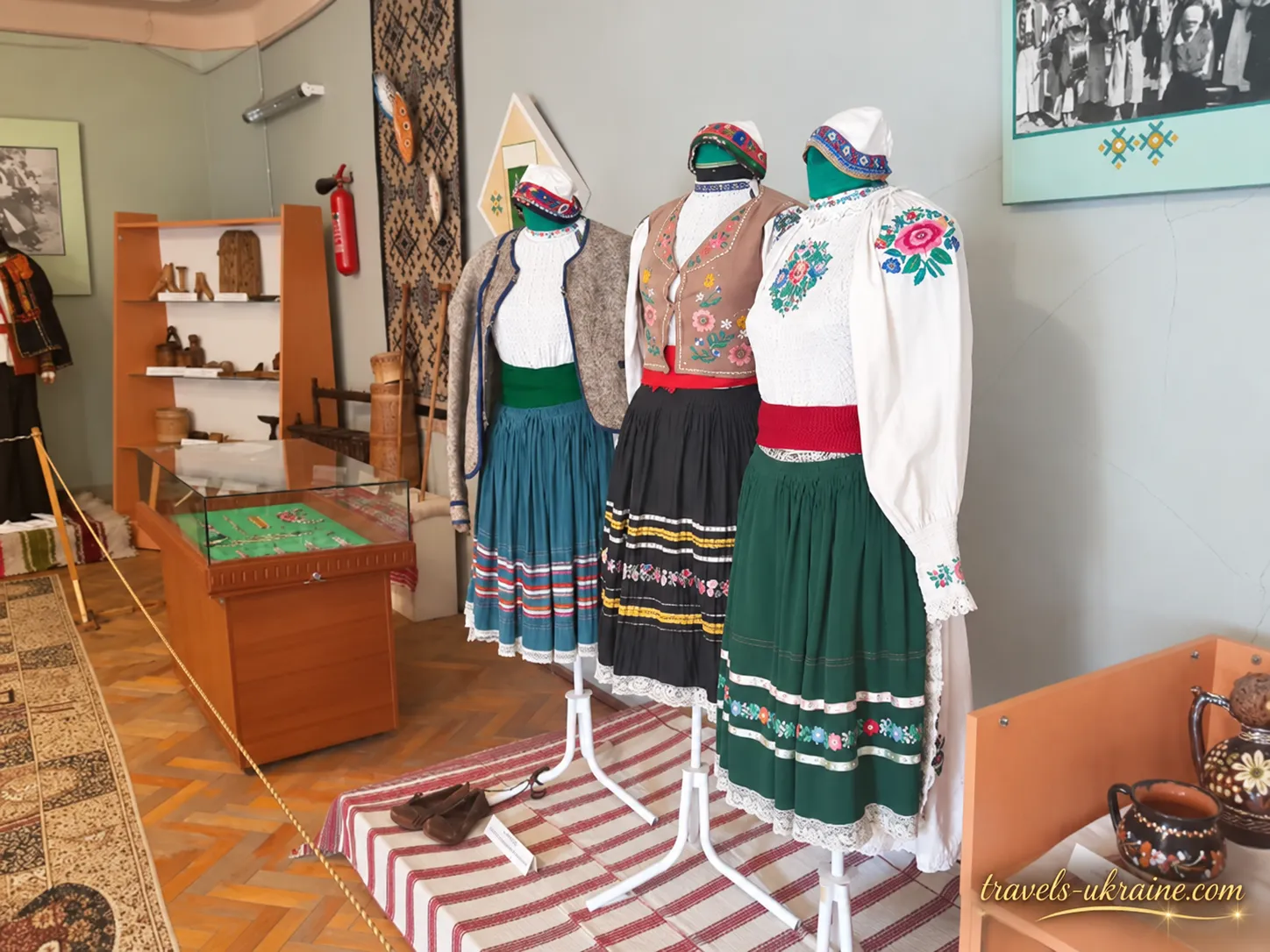
The region’s entirely different side is revealed by the exhibition «Folk Musical Instruments and Traditional Clothing of Transcarpathia,» updated in 2026. It features traditional costumes of the Boykos, Lemkos, Hutsuls, Dolynians, and the Hungarian and Romanian communities of Transcarpathia, along with musical instruments, embroidery, woodcarving, and ceramics.
This hall no longer looks like an old museum with endless rows of labelled display cases. Modern multimedia features have been added to the exhibition, including an interactive 3D mirror that allows visitors to virtually «try on» traditional clothing from different ethnic groups of Transcarpathia and take a photograph.
Artifacts from the Medieval Church of Uzhhorod Castle
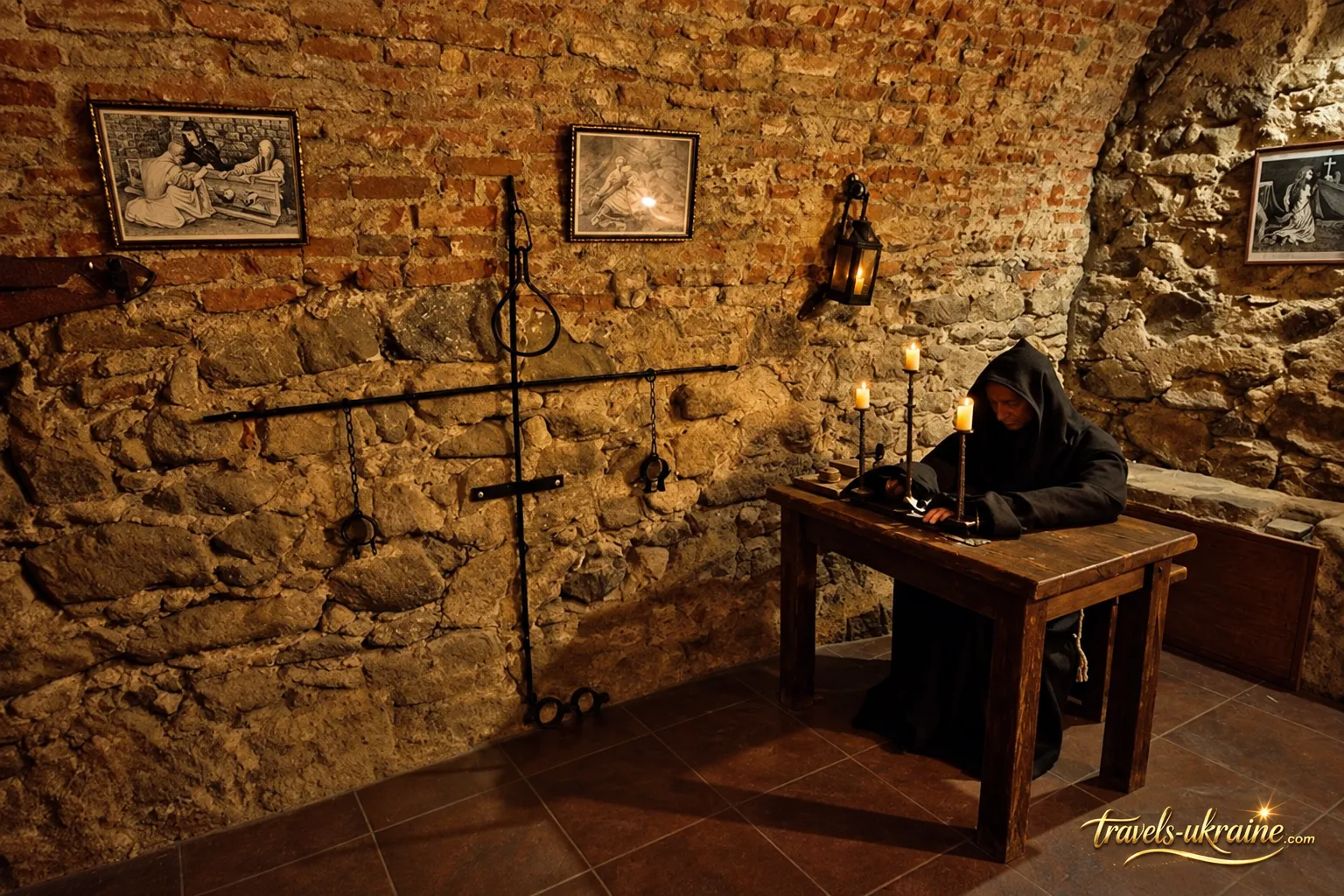
The history of the medieval castle church deserves special attention. Its ruins have survived right on the fortress grounds, while some of the objects discovered during archaeological research are displayed in the museum exhibition. The finds include coins, clothing details, church objects, jewellery, weapons, ceramics, and stone artifacts. They are complemented by diagrams, portraits of members of the elite of the time, and a model of the castle grounds. As a result, the few stone remains of the church in the courtyard are no longer simply an incomprehensible foundation—the museum helps visitors see the real history of the people who lived here several centuries ago.
In 1646, the history of the castle church was directly linked to the Uzhhorod Church Union, an important event in the religious history of Transcarpathia. In 2026, the museum separately commemorated its 380th anniversary, and a new sculptural composition was installed beside the ruins of the medieval church.
Heracles, Hermes, and the Turul in the Castle Courtyard
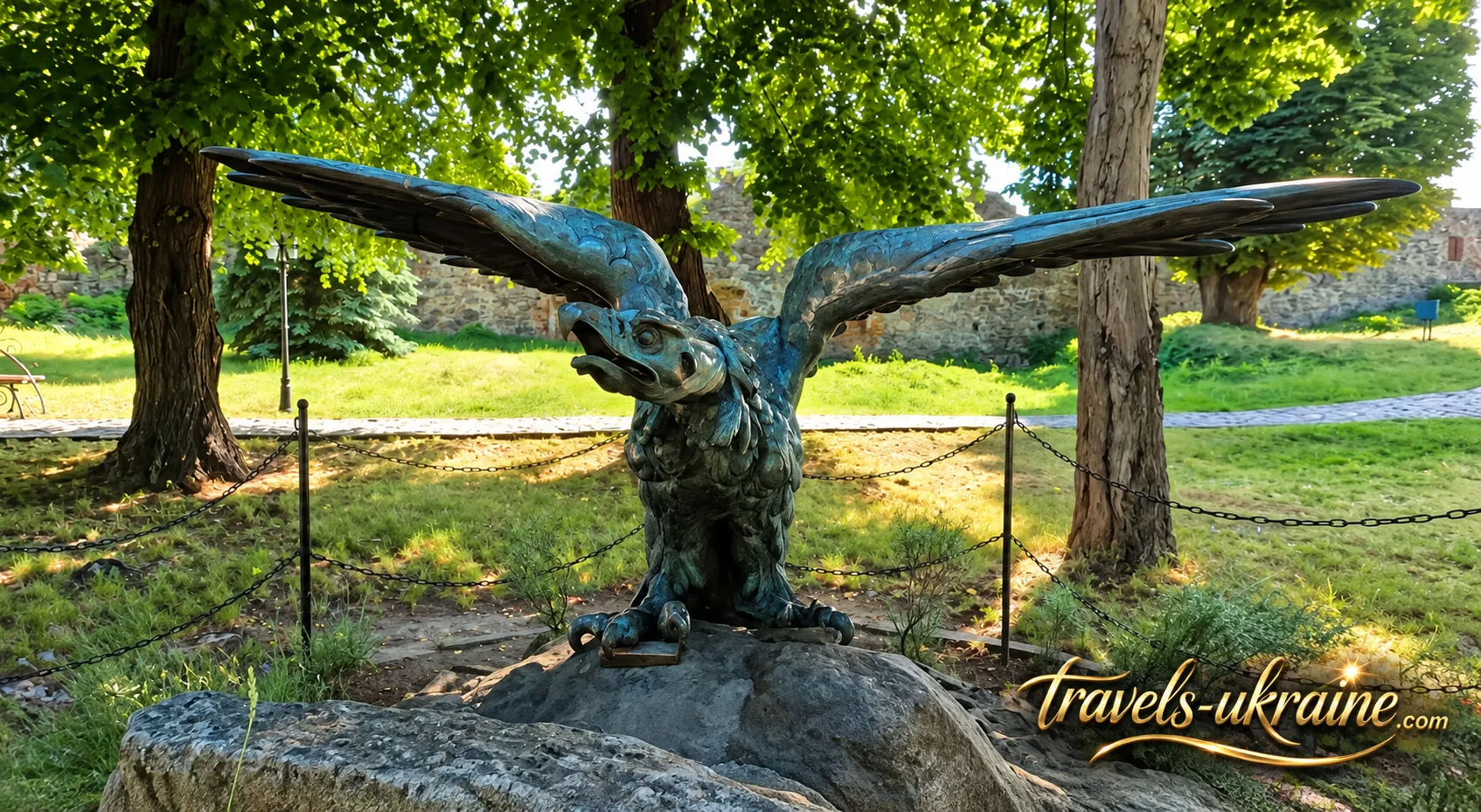
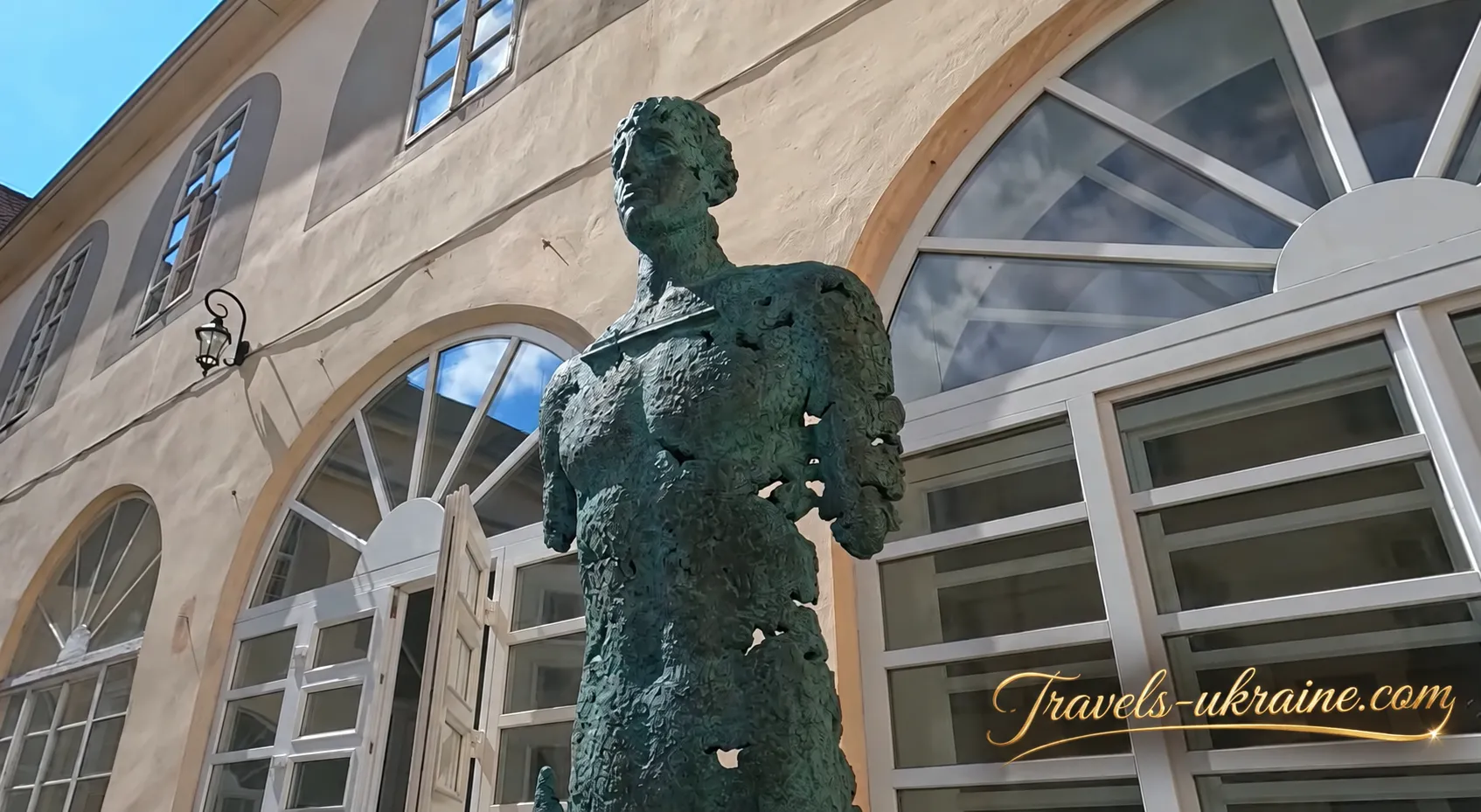
In the courtyard, it is worth paying attention to more than just the fortifications. Several sculptures have been installed here and have long become recognizable features of the castle. The best known is the cast-iron composition «Heracles and the Lernaean Hydra,» cast in 1842. It originally decorated a resort at the Uzhok Pass, but after the Second World War it was moved to Uzhhorod and installed on the castle grounds. Nearby, you can see a sculpture of the resting Hermes and the Turul—a mythical bird associated with Hungarian historical tradition. These details are easy to miss if you hurry straight to the museum halls, although they are themselves part of the history of the castle complex.
A Museum That Continues to Change
It is worth noting that the Transcarpathian Museum of Local Lore is not a static exhibition arranged once and then left unchanged. In recent years, new halls have opened, older exhibitions have been updated, multimedia elements have been added, and temporary exhibitions, lectures, concerts, and themed events have been organized.
In 2026, for example, the exhibition about Transcarpathia during the Second World War was updated, the ethnographic hall was modernized, and visitor navigation was improved. New information materials were installed near the entrance, and an additional site plan appeared inside the castle. That is why a visit to Uzhhorod Castle should not be planned as a quick 20-minute walk around the courtyard. If you enter the palace and take the time to explore the museum exhibitions properly, the fortress reveals itself in an entirely different way: the outer walls explain how the castle was defended, while the museum inside shows who lived here, what they fought with, what they wore, what they built, and what history they left behind.
What to See Near Uzhhorod Castle
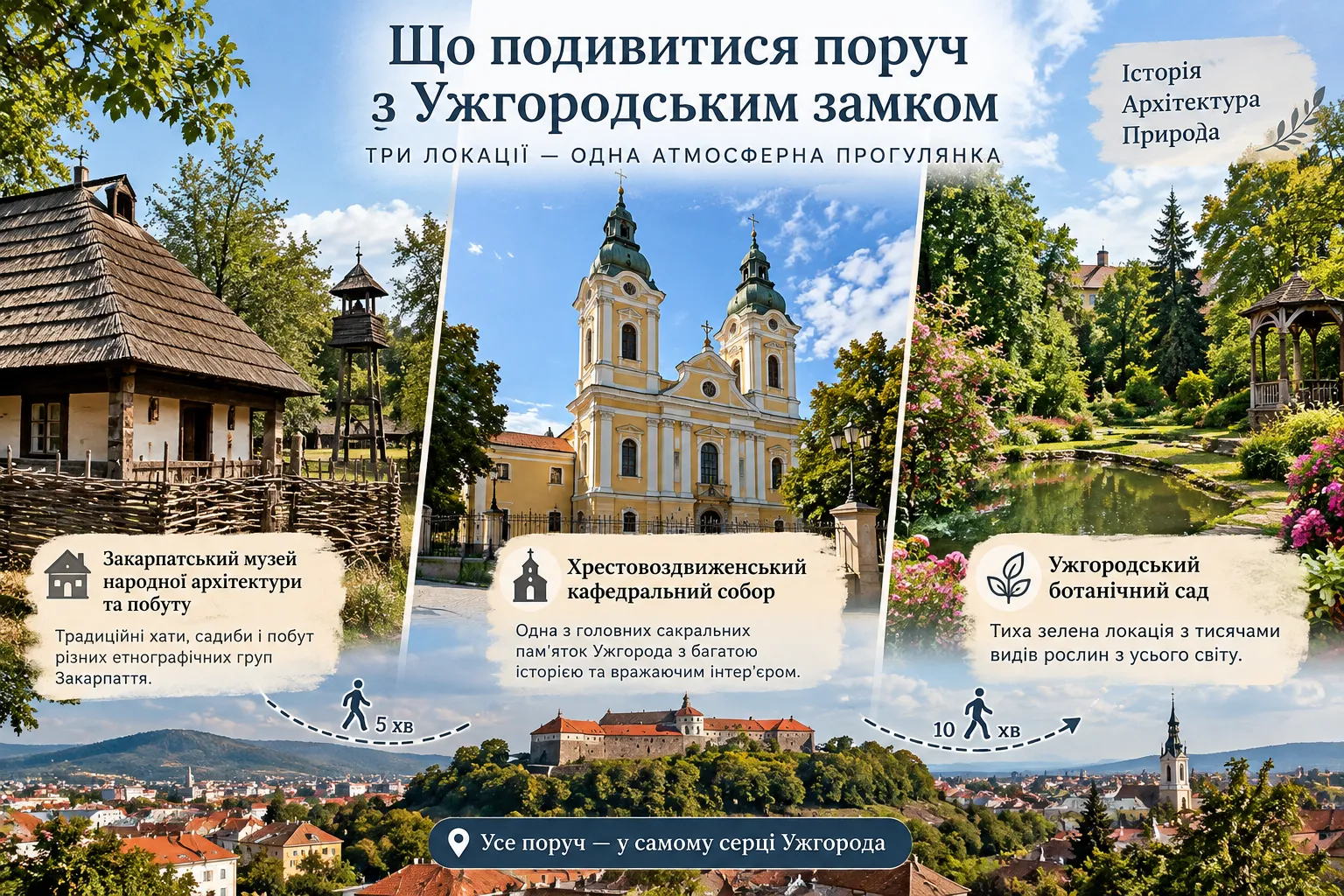
Uzhhorod Castle is located in a very convenient spot for tourists—practically in the historic city centre. So after spending several hours among the bastions and museum exhibitions, there is no need to get in a car and travel to the other side of Uzhhorod. Several other locations are nearby, allowing you to experience completely different sides of Transcarpathia in one walk—traditional village life, sacred architecture, and nature.
Of course, the most logical continuation of the tour is the Transcarpathian Museum of Folk Architecture and Life. It is located practically next to the castle, on Kapitulna Street, so these two attractions can conveniently be regarded as one large tourist complex. This open-air museum has collected and recreated traditional residential and farm buildings from different parts of Transcarpathia. Here, you can see how the Boykos, Hutsuls, Dolynians, Hungarians, and Romanians of Transcarpathia lived, as well as explore wooden houses, homesteads, outbuildings, and old household items.
It is especially interesting to come here immediately after visiting the castle. Behind the high walls, you have just encountered the lives of magnates, soldiers, and fortress owners; literally nearby, you can see an entirely different world—the everyday life of ordinary Transcarpathian residents. As a result, the region’s history is no longer made up solely of castles, battles, and aristocratic dynasties.
Exaltation of the Holy Cross Cathedral in Old Uzhhorod
Next, another important nearby stop awaits: the Greek Catholic Cathedral of the Exaltation of the Holy Cross. Its two tall towers are easily recognizable in the city panorama, while the church, together with the former bishop’s residence, forms one of Uzhhorod’s most striking architectural ensembles.
The cathedral’s history is directly connected with the Drugeth family, which we have already discussed in the history of the castle. In the 17th century, János Drugeth invited the Jesuits to Uzhhorod and provided land for the construction of a college and church. Later, the complex passed to the Mukachevo Greek Catholic Eparchy and was rebuilt as a cathedral.
Inside, particular attention should be paid to the iconostasis, wall paintings, and decorative finish. Some historic elements were restored, with their original details and gilding returned. Thus, after the castle’s austere defensive architecture, this church reveals an entirely different Uzhhorod—Baroque, sacred, and considerably more ceremonial.
Uzhhorod Botanical Garden—A Quiet Green Stop After the Museums
If you would like to change the pace a little after visiting historical sites, the Uzhhorod Botanical Garden, a department of Uzhhorod National University, is located nearby. This compact green area in the very centre of the city is home to thousands of plant species from different parts of the world.
It is especially pleasant to visit in the warmer months, when the garden is filled with greenery and flowers. There is no need to study every sign with its Latin name—you can simply slow down after an eventful tour, walk among the trees and plants, and take a few minutes to rest from the bustle of the city.
For tourists, this location is also convenient because of its setting: the botanical garden is not far from the castle and the open-air museum. You therefore do not need to create a separate tourist route across the city. As a result, it is easy to arrange several hours of complete leisure around Uzhhorod Castle: begin with the fortress and local history museum, continue to a traditional Transcarpathian open-air village, visit the cathedral, and finish the walk among the greenery of the botanical garden. All of this lies within Uzhhorod’s historic district, without long journeys between attractions.
Frequently Asked Questions About Uzhhorod Castle
Where is Uzhhorod Castle located?
Uzhhorod Castle is located at 33 Kapitulna Street, Uzhhorod. The fortress stands in the historic part of the city on Castle Hill. It is easy to walk here from the Cathedral of the Exaltation of the Holy Cross and the old city centre.
What are Uzhhorod Castle’s opening hours?
The Transcarpathian Regional Museum of Local Lore at Uzhhorod Castle is open from 10:00 to 18:00. The museum exhibitions and displays are closed on Mondays, but the castle grounds are open to visitors at a separate admission rate.
Can Uzhhorod Castle be visited on Monday?
Yes, but the museum exhibitions and displays are closed on Mondays. Only the castle grounds can be visited.
How much time is needed to visit Uzhhorod Castle?
For a proper introduction to the castle, plan approximately 1.5–2 hours. This is enough time for the fortress grounds, bastions, inner courtyard, church ruins, and main museum exhibitions. If you explore most of the halls in detail, the visit may take 2–3 hours.
Can I book a tour of Uzhhorod Castle?
Yes. The museum offers guided tours of the grounds and exhibitions. Admission tickets are paid for separately.
Is Uzhhorod Castle interesting for children?
Yes. Children will find more than museum display cases here, including real bastions, a dry moat, a well, castle models, weapons, large sculptures, and an inner courtyard. The museum also offers themed programmes for children. It is best to keep young children close to you near the old walls and changes in elevation.
How do I get to Uzhhorod Castle from the city centre?
The castle is very close to the historic centre, so the most convenient option is to go on foot through the old part of Uzhhorod to Kapitulna Street. The Cathedral of the Exaltation of the Holy Cross, with its two tall towers, can serve as a landmark—a short pedestrian route leads from it to the castle.
What is located inside Uzhhorod Castle today?
The former palace houses the Tivadar Lehoczky Transcarpathian Regional Museum of Local Lore. Its exhibitions focus on the history and archaeology of Transcarpathia, the region’s castles, weapons, traditional clothing, musical instruments, ethnography, and other subjects.
Is Uzhhorod Castle Worth Visiting?
Uzhhorod Castle is one of those landmarks where you do not have to imagine history from just a few fragments of walls. Its bastions, defensive moat, palace, inner courtyards, and other fortress elements have survived, so even a brief walk around the grounds gives you a clear sense of how a true fortified complex was designed.
But the castle’s greatest advantage is that it does not end at the outer walls. The Zakarpattia Regional Museum of Local History operates inside the former Drugeth residence, and the museum’s exhibitions give the fortress meaning: they help visitors understand who lived here, how the region was defended, what Zakarpattia’s culture was like, and how the castle itself changed over the centuries.
For a first introduction to Uzhhorod, this location is particularly convenient because of its setting. The Museum of Folk Architecture and Rural Life, the Cathedral of the Exaltation of the Holy Cross, and the botanical garden are nearby, so the castle is easy to include in a walking route through Uzhhorod’s historic center without lengthy transfers.
If you are looking for things to see in Uzhhorod, Uzhhorod Castle should definitely be among the first stops on your itinerary. It is not simply a well-preserved fortress, but a place where architecture, a museum, the city’s history, and the atmosphere of old Zakarpattia come together.


No Comment
You can post first response comment.