
 English
 Українська
 Ελληνικα
 Íslenska
 Italiano
 Latviešu
 Lietuvos
 Русский
 Türkçe
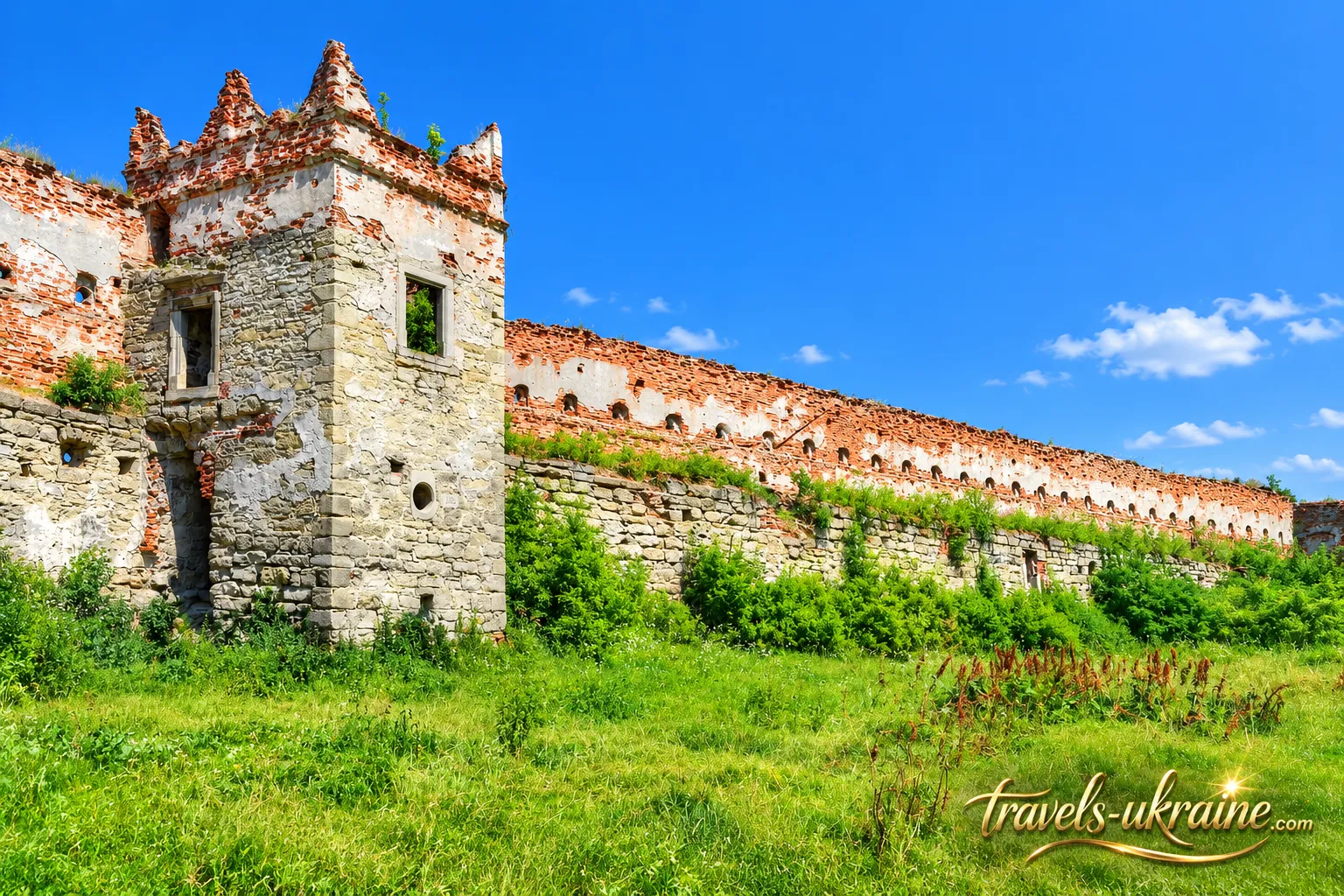
Some castles draw you in with lavish halls, antique furniture, and portraits of their owners in gilded frames. And then there is Starosilskyi Castle. Here, grass replaces carpets, fragments of walls replace grand staircases, and instead of a stern museum guard, you will most likely be watched by a local cat. Strangely enough, that is precisely where its special charm lies.
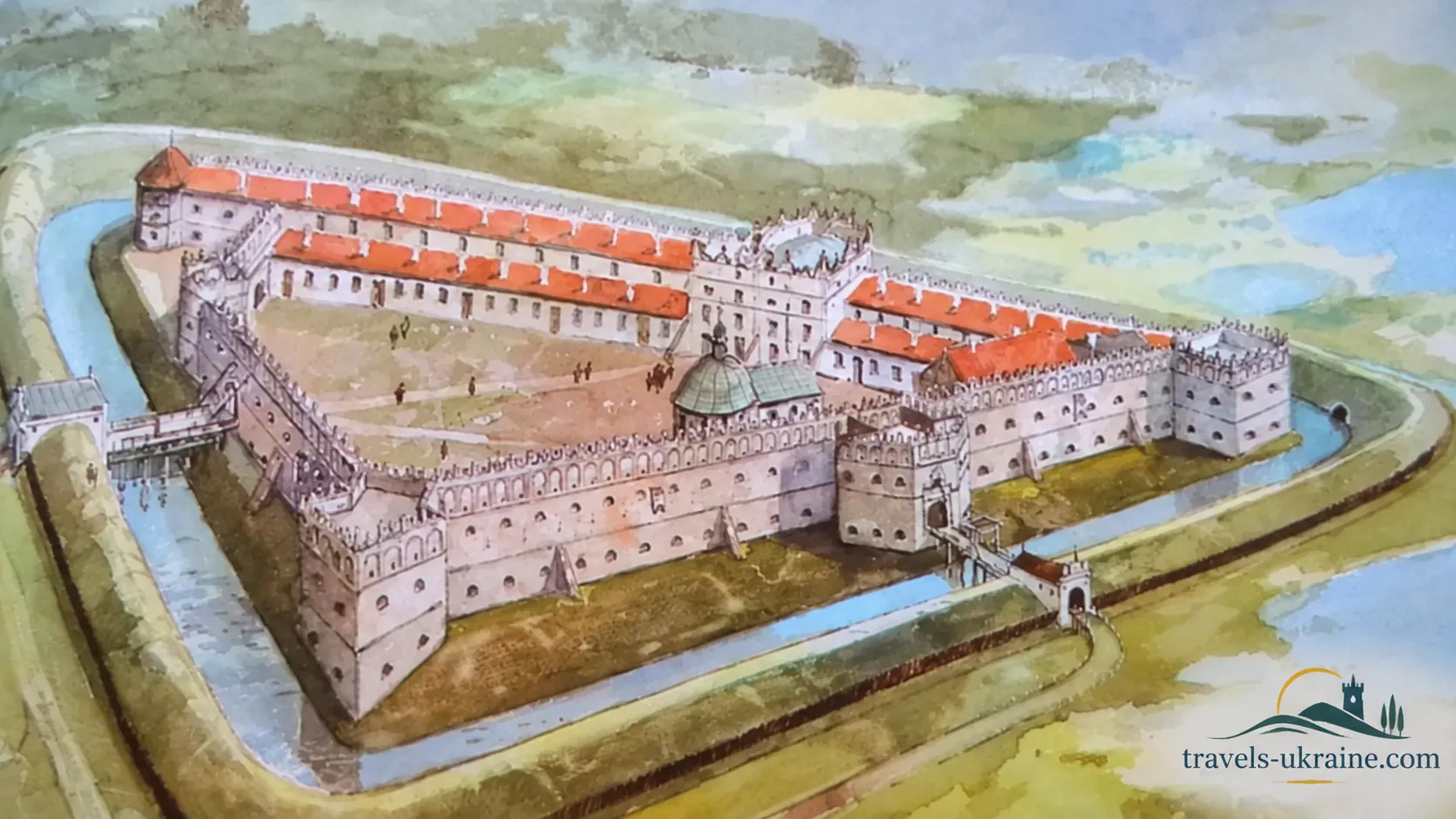
Today, the castle’s enormous inner courtyard can create a strange impression: as if someone built several massive towers, enclosed two hectares of land with a stone wall, and then decided that would be enough. In reality, everything once looked very different. Residential and utility buildings stood along the walls; the castle had rooms, a large dining hall, a chapel, an arsenal, and storehouses, while towers with decorative finials rose above it all, some resembling stone crowns.
And this was not merely a beautiful residence for princely strolls. The castle in Stare Selo was built as a serious defensive fortress. It was surrounded by moats, earthworks, and marshland; a drawbridge led to the entrance, while artillery could be positioned on the towers and walls. The fortress was stormed, destroyed, rebuilt, and attacked again—and far from every army managed to capture it.
Over the course of several centuries, Starosilskyi Castle served as a princely residence, a military stronghold, a large arsenal, and even a place where beer was brewed. In other words, history here followed a fairly logical path: first cannons, then a brewery. Perhaps humanity really is capable of drawing the right conclusions.
In this article, we will not turn a walk through the castle into a history lesson followed by a test. Instead, we will try to understand what Starosilskyi Castle actually looked like at the height of its glory, what stood behind its walls, why the fortress was so difficult to capture, what Jan III Sobieski had to do with it, and what can still be seen today among the vast ruins.
Because if you see Starosilskyi Castle merely as old walls near Lviv, you can walk through it in twenty minutes. But if you know what once stood here and what happened behind these walls, the walk becomes an entirely different experience.
How a Fortress of This Scale Came to Stand in Stare Selo
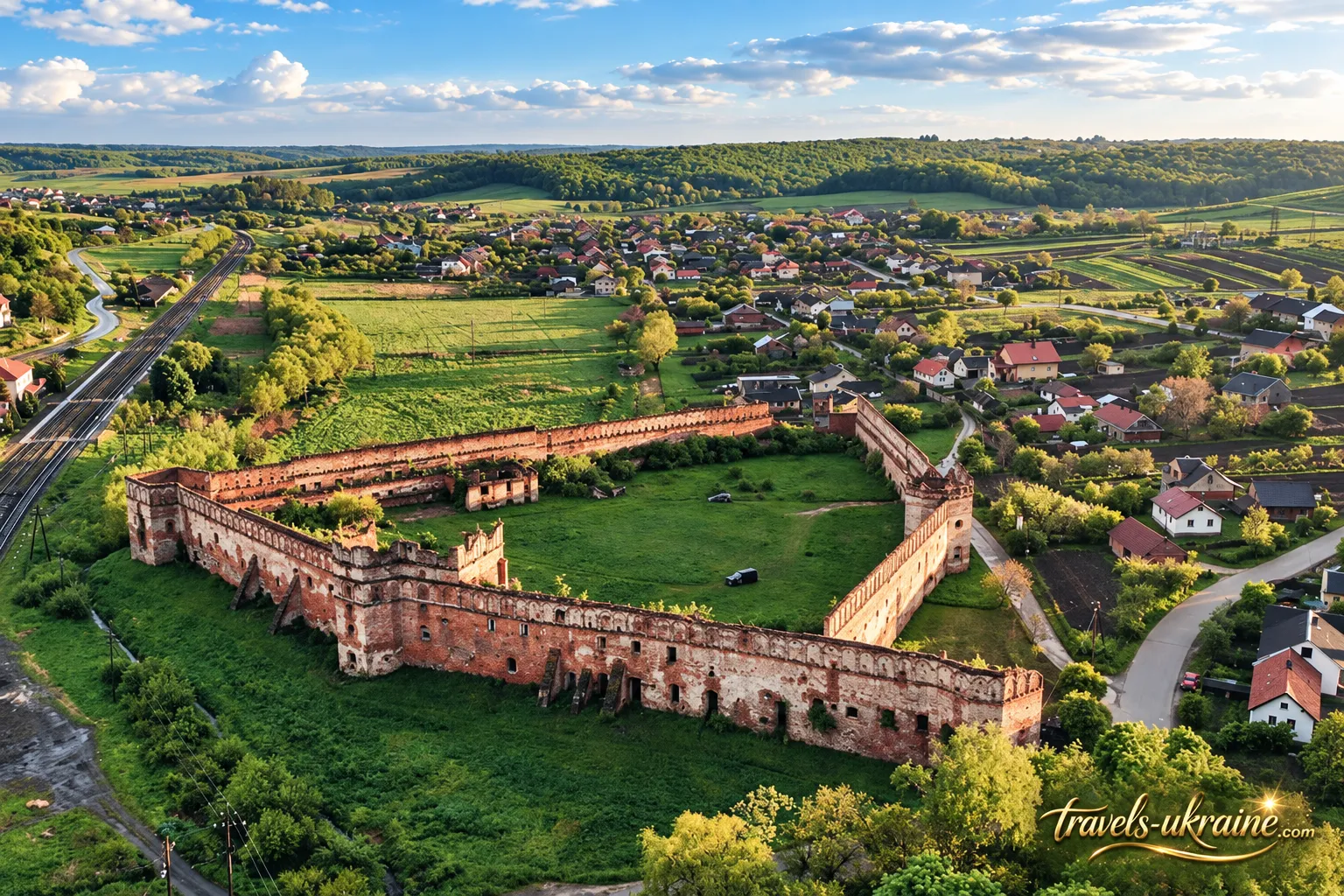
When you stand in the middle of Starosilskyi Castle and try to take in its walls, a perfectly logical question arises: why would anyone need a fortress covering around two hectares in a village near Lviv? The answer is simple: when it was being built, thick walls were not an expression of architectural grandeur but a fairly practical investment in one’s own survival.
Galicia in the 16th–17th centuries was far from the kind of place where the greatest problem a traveler might face was a bad road or the lack of a coffeehouse. Important routes ran through the region, while Tatar raids, military campaigns, and conflicts between great powers regularly reminded local landowners that a pleasant view from the window was nice, but a few meters of stone wall were sometimes more useful.
The First Stone Castle and the Ostrozky Princes
The history of stone fortifications in Stare Selo is traditionally linked to the Ostrozky princes, one of the most influential and wealthiest families of their time. Tourist guides often give fairly specific dates: 1584–1589. The construction of the first masonry fortress is usually dated to this period. At the same time, it is important to note that this refers specifically to the stone castle. The first mentions of wooden fortifications in Stare Selo date back to 1448, so these two stages of its history should be clearly distinguished.
There is, however, one inconvenient fact about medieval and early modern castles for today’s tourists: they rarely leave behind a tidy folder containing blueprints, a commissioning certificate, and a ceremonial photograph of the builders. As a result, the early history of Starosilskyi Castle has several versions, and researchers are more cautious about naming one specific year of its birth. The best way to imagine the castle’s development is not as one grand building that was started and ceremoniously completed five years later, but as several stages of rebuilding and strengthening the fortifications. The fortress changed along with its owners, military threats, and ideas about what a modern castle should look like.
1642: The History of the Fortress We Recognize Today Begins
A key turning point came in 1642, when Stare Selo was owned by Prince Władysław Dominik Zasławski-Ostrogski. He is associated with the large-scale rebuilding of the complex and the creation of the monumental fortress whose remains we see today.
The design of the new fortification is associated with Ambrosius Prikhilnyi, an architect of Italian origin who worked in Lviv and was well acquainted with European Renaissance architecture. Stare Selo was therefore receiving not merely a wall around an estate, but a carefully planned defensive and residential complex in which military practicality was to be combined with the status of a princely residence. And the construction came at a very timely moment. Though not quite timely enough to finish everything.
1648: When Building Plans Collided with a Major War
In 1648, during the Cossack campaign against Lviv, Bohdan Khmelnytsky’s forces reached Stare Selo. The fortress was captured and seriously destroyed. For its owner, this was fairly convincing feedback on the quality of the defenses—roughly along the lines of: «Good idea, but it needs to be sturdier.»
Władysław Dominik did not give up on the castle. On the contrary, a major rebuilding campaign began after its destruction. In 1649–1654, the fortress was restored with very fresh combat experience in mind. It was then that Starosilskyi Castle acquired much of its formidable defensive form. So when looking at the enormous walls today, it is important to understand that they are not the result of a single building season, or even a single era. Starosilskyi Castle literally grew out of its own destruction. It was rebuilt after attacks, strengthened after failed defenses, and adapted to warfare that was becoming increasingly technologically advanced.
As a result, by the mid-17th century, Stare Selo had developed not simply a castle for a noble family to live in, but a vast fortified complex with palace rooms, towers, outbuildings, and a powerful defensive system. And this is where the modern ruins begin to mislead us a little. Today, an almost empty space stretches inside the walls, but the castle looked entirely different during its heyday. People lived, received guests, ate, prayed, stored weapons, and managed a large estate behind these walls. So before turning to cannons and sieges, it is worth trying to restore Stare Selo Castle’s roofs, floors, and rooms—at least in our imagination.
What Starosilskyi Castle Looked Like at the Height of Its Glory
The greatest trap of Starosilskyi Castle is that its modern ruins are very easy to mistake for its original appearance. You enter and see a huge green courtyard, several towers, and walls all around. And a logical question arises: did the princes really spend so much stone just to create a very well-defended lawn?
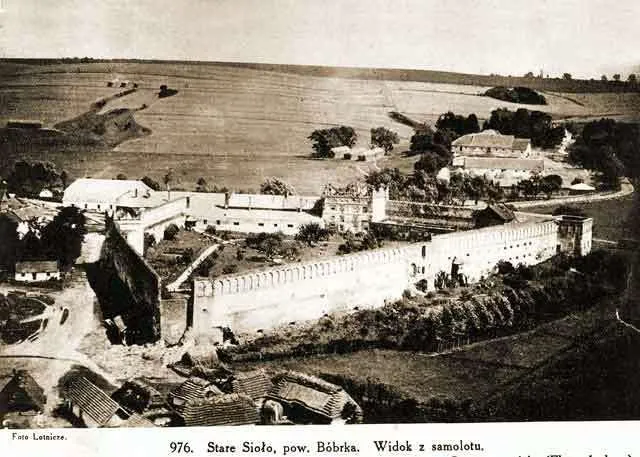
It is no longer possible to fully recreate the castle’s interiors today. We do not know what color the walls of the great dining hall were, what furniture stood in particular rooms, or what hung above the princely table. And here it is better to honestly say «we do not know» than to add gilded chairs simply because they look beautiful in an illustration. However, old drawings, lithographs, photographs, and inventory records have survived, allowing us to see the castle in a considerably more complete state. Images from the 19th and early 20th centuries still show elements that are no longer there today, while old photographs of the inner courtyard clearly demonstrate that the space within the walls was far more complex than today’s green field.
There are even archival photographs and survey materials of Stare Selo now preserved in the collection of the Institute of Art of the Polish Academy of Sciences. Thanks to such materials, it is possible to compare literally the same tower one hundred years apart and observe how the castle gradually lost its decorative elements, ceilings, and inner buildings. So when walking through Starosilskyi Castle, it is worth doing one simple thing: stop looking at it as a ruin for a few minutes. Imagine roofs over the walls, two floors of living quarters, people in the courtyard, horses beside the utility buildings, a chapel, guards on the galleries, and smoke rising from the chimneys.
Then the vast empty territory suddenly begins to form an entirely different picture. You are no longer looking at several old towers standing amid the grass, but at a large princely castle where people lived, prayed, received guests, stored supplies, and prepared for war all at once. And here, they had to prepare for war regularly.
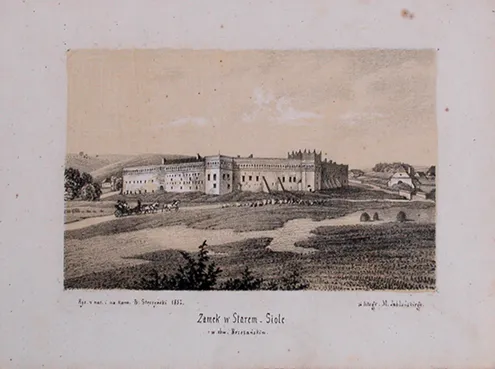
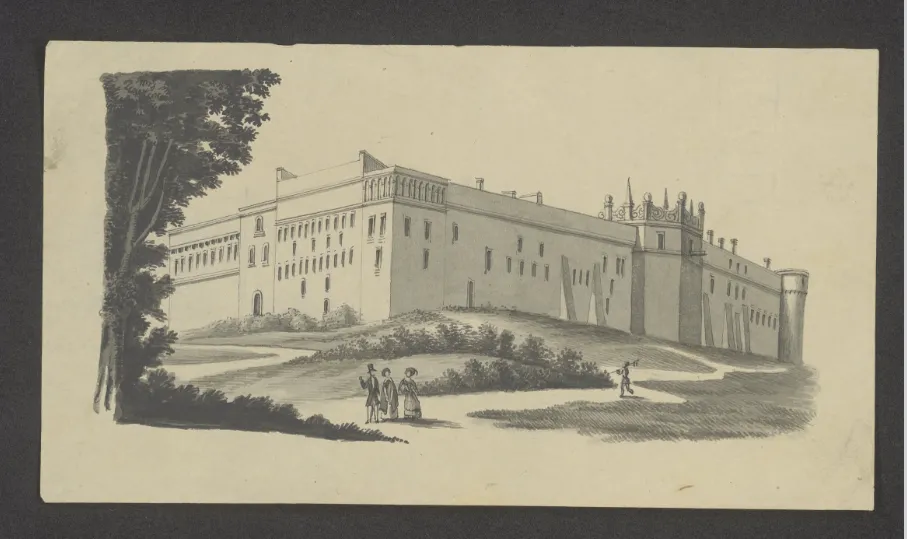
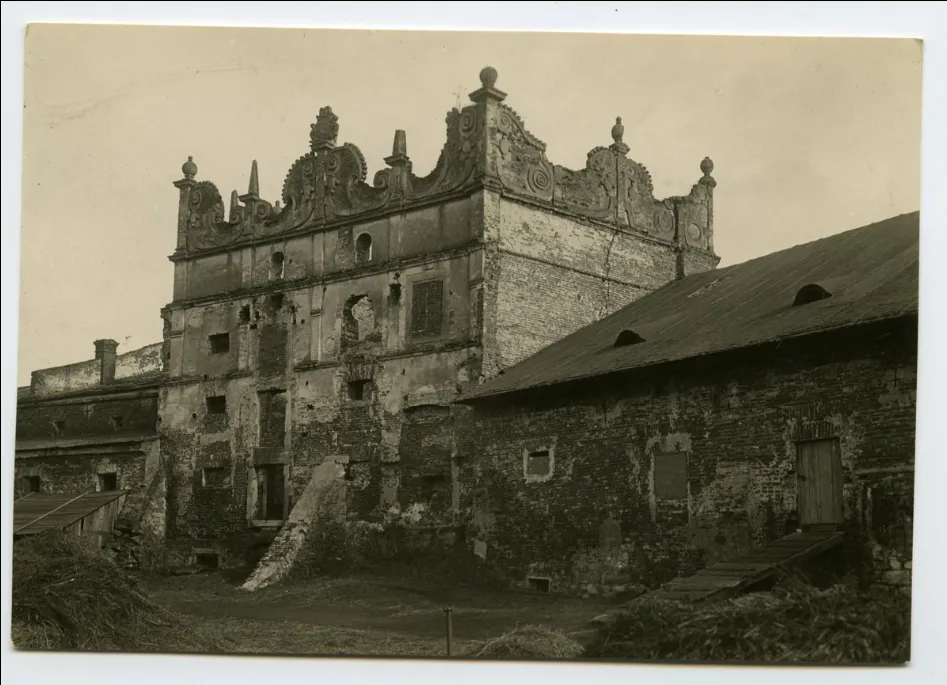
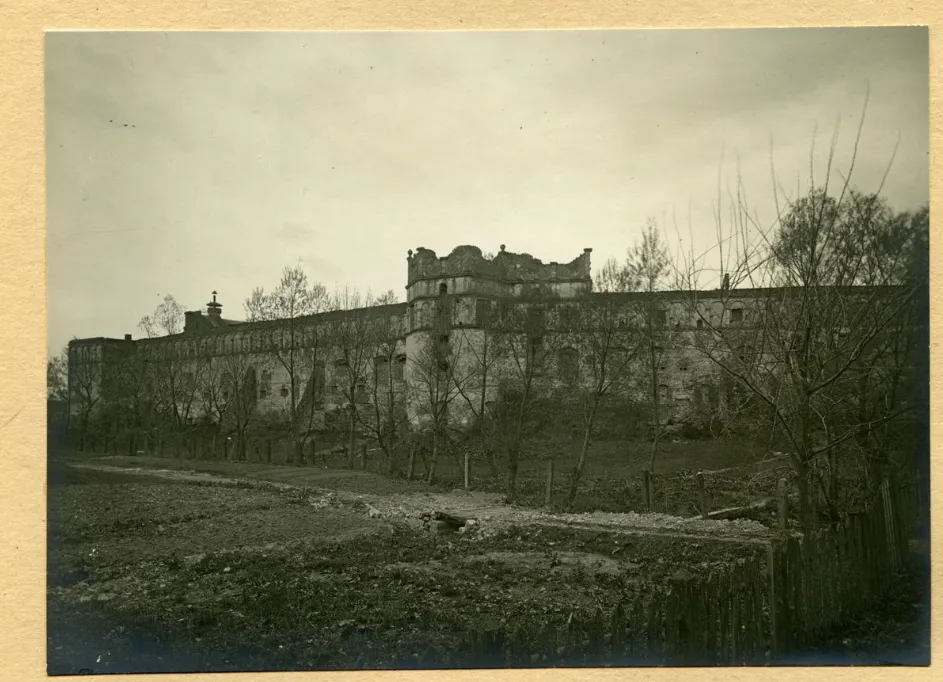
The Towers and Walls of Starosilskyi Castle: A Fortress with Stone Crowns
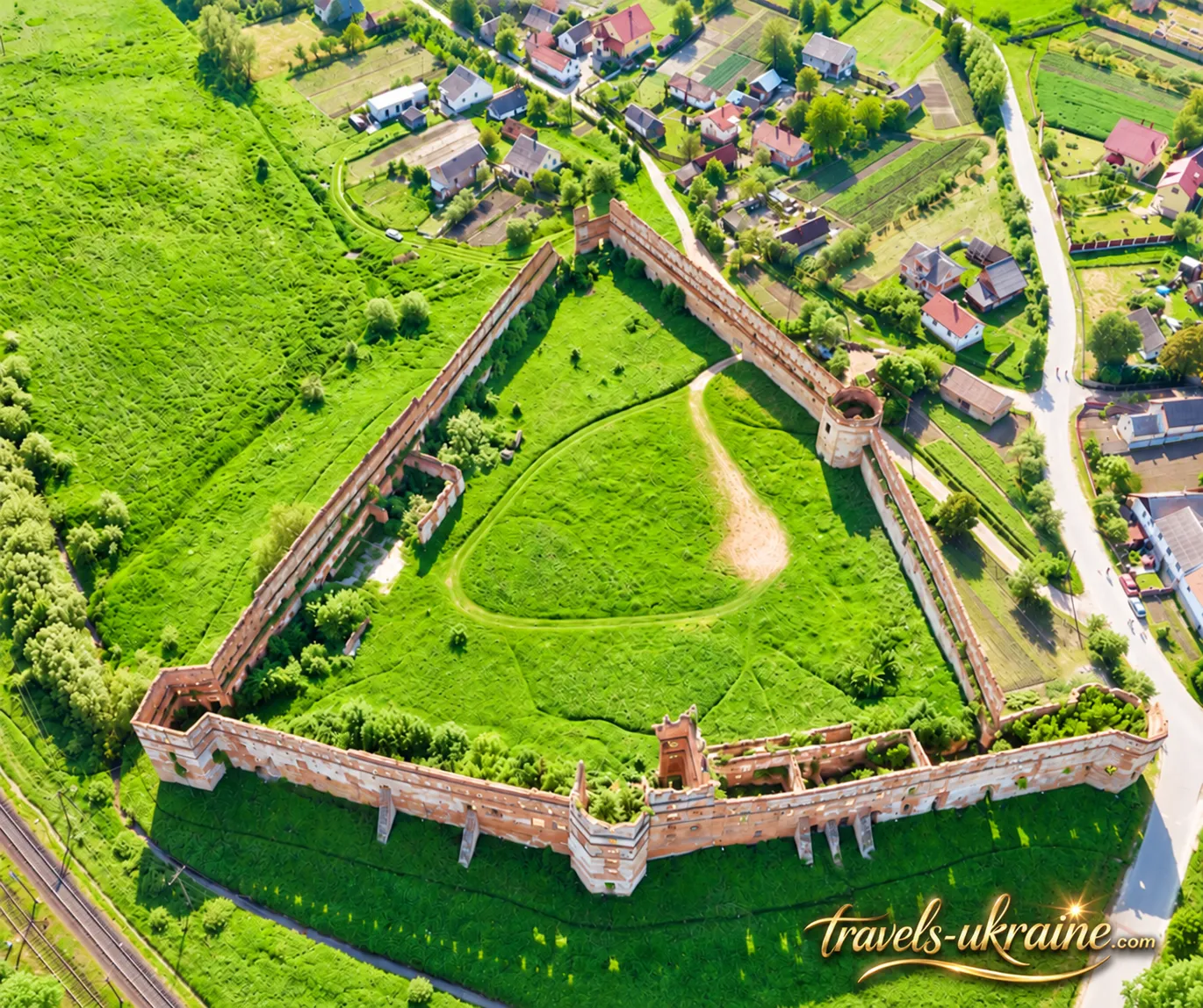
The castle’s plan resembled a large irregular pentagon covering around two hectares. Its perimeter was protected by powerful stone walls and six towers. Some towers projected beyond the line of the walls, allowing the defenders to control the space along the fortifications and fire at attackers from different directions. But the owners clearly did not want their fortress to look like a merely very large stone box.
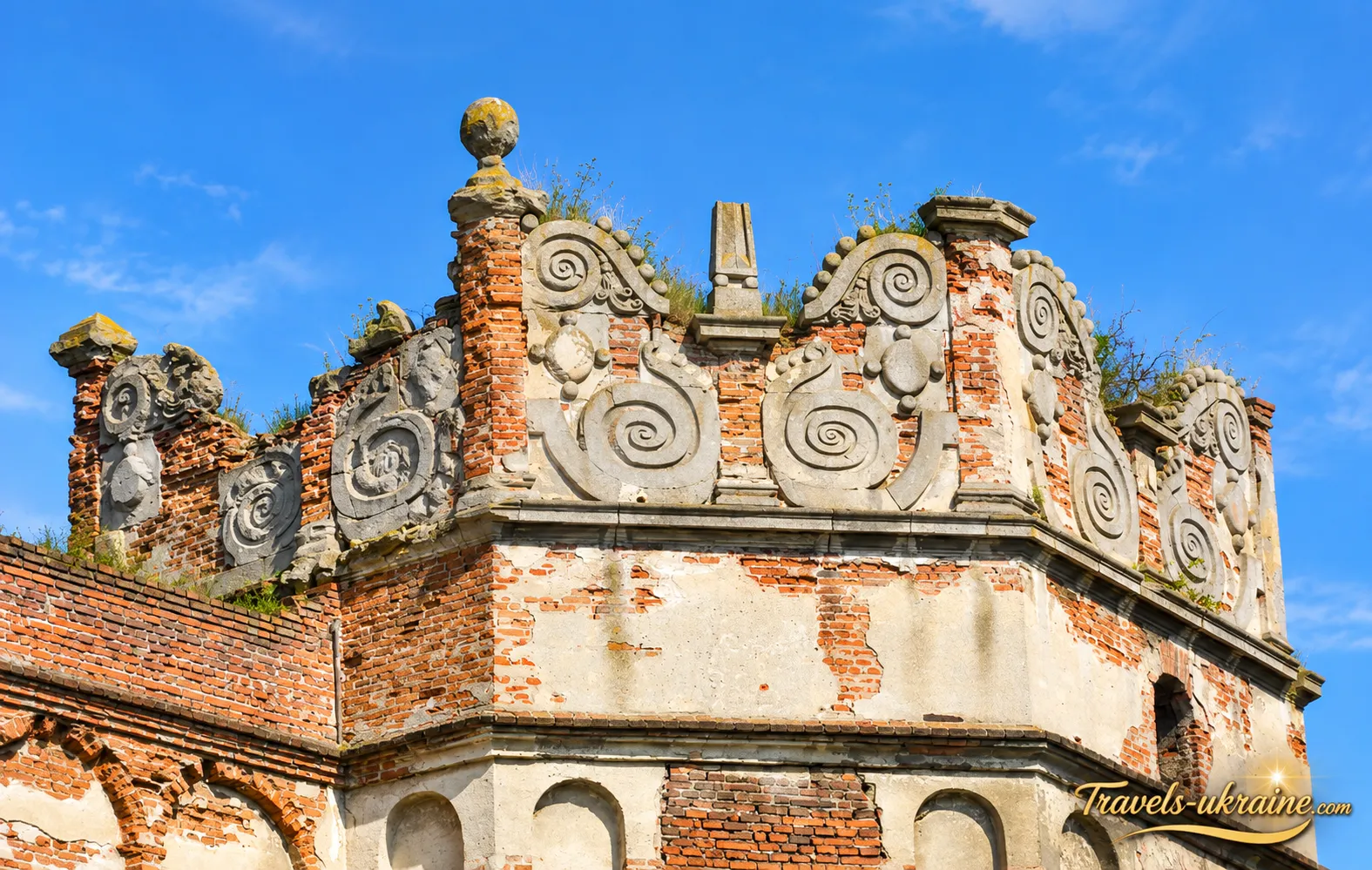
The walls were decorated with arcaded bands and attics, while the tops of the towers received intricate stone ornamentation. Particularly unusual were the decorative finials, which resembled large stone crowns. Fragments of this carving can still be seen on the eastern tower. At the height of its glory, then, Starosilskyi Castle had a striking appearance: loopholes, cannons, and several meters of serious defensive architecture below; decorative crowns above. A subtle reminder to guests that the owners were cultured people—but testing the strength of the gates was still not recommended.
One of the towers retains another intriguing trace of its owners: a heraldic composition and the letters WDXOYZWSLS. Behind this seemingly random collection of consonants lies the titulature of Władysław Dominik, Prince of Ostrogski-Zasławski, Voivode of Sandomierz and Starosta of Lutsk.
What Was Inside Starosilskyi Castle
If we return to the modern courtyard, the hardest thing to imagine is precisely the inner buildings. Today, there is a great deal of open space between the walls, but in the 17th century part of the perimeter was occupied by residential and service buildings. A large residential section stood along the eastern side, connected to the towers and defensive walls.
This means that Stare Selo Castle was not a place where its owner ceremoniously arrived twice a year, looked at the cannons, and went home. It was possible to live here normally—as far as the word «normally» can apply to the 17th century at all. The description of the castle from 1687 is particularly valuable to us. It allows us to glimpse, at least partially, inside rooms that no longer exist today. The document mentions a tower containing a stołowa izba—essentially a large dining room or dining hall. A row of other residential rooms extended from it.
It also mentions lower chambers, cellars, windows, doors, wooden ceilings, and beams. Some rooms were still unfinished at that point, while the condition of others was far from princely: the roofs leaked, the windows were damaged, and the wooden structures suffered from damp. The document even reports that some lower rooms were used for horses. Thus, only a few decades after the great rebuilding, the castle was already slowly moving from the status of a powerful residence toward the state of «it will stand a little longer.» History showed that it did stand. Just not quite in the form the architects had planned.
The Chapel of Starosilskyi Castle and Life in the Inner Courtyard
In the southern part of the inner grounds stood the castle chapel. It has not survived to the present day, so it is difficult for a modern visitor even to guess that it once existed. Later, the site where the chapel stood was used for an entirely different purpose—a garden appeared there. Around it were utility rooms, storage buildings, and other structures necessary for the everyday life of a large estate. It is worth remembering that such a fortress was effectively a small self-contained world: it had to accommodate people, food supplies, horses, weapons, fuel, and everything else without which even the most formidable castle would quickly turn into a very inconvenient stone dormitory.
The Castle Arsenal: They Stored More Than Just the Family Silver Here
A separate place was occupied by the arsenal of Stare Selo Castle. It was located in one of the towers and was far from decorative. The fortress had substantial weapons stores: the arsenal contained cannons, mortars, firearms, ammunition, and bladed weapons. Thus, its military function always remained no less important than its residential one.
Old descriptions even mention specific artillery stocks—cannons and more than a dozen mortars. In other words, this was by no means a display arsenal. In times of danger, the castle could equip a substantial garrison and conduct a real defense, rather than merely look impressive on the horizon.
Stare Selo Castle, Which Was Not Easy to Take: Sieges, Cannons, and Sobieski

If the previous section may have created the impression that Stare Selo Castle was primarily a grand princely residence with rooms, a dining hall, and a chapel, it is time to recall the other half of its character. All of this stood inside a fortress built for one very specific purpose: to make an unwelcome guest’s life as short and uncomfortable as possible.
The site for the castle was chosen very well. Marshland stretched all around it, making it difficult for a large army to approach in the first place. Added to this were earthworks, deep moats, massive stone walls, and towers. The main entrance was protected by a drawbridge with chains, while the road to the fortress ran through the marsh and across a causeway.
Today, all of this sounds almost romantic: an old castle amid greenery, water, a bridge, and tall towers. In the seventeenth century, the romance ended roughly when a cannon was turned toward you from a loophole.
1648: When Stare Selo Castle Was Finally Taken
The castle’s invincibility should not be exaggerated. In 1648, the forces of Bohdan Khmelnytsky captured Stare Selo Castle and severely damaged it. It was after this event that Władysław Dominik Zasławski-Ostrogski decided not merely to restore the residence, but to transform it into a much more powerful defensive structure.
The result was convincing. During the rebuilding, the fortress was additionally protected by moats and ramparts, its entrance system was strengthened, and the fortifications were adapted for artillery use. The work was completed by approximately 1654. Very soon, there was an opportunity to see whether the money had been well spent.
1655: The Second Attempt Proved Much More Difficult
During Bohdan Khmelnytsky’s second campaign against Lviv in 1655, the situation was different. The rebuilt Stare Selo Castle proved such a serious obstacle that this time the fortress did not suffer the fate it had in 1648. This clearly shows how dramatically the castle changed in just a few years. Its owners had effectively received a very expensive but convincing lesson in military architecture: if one fortress has already been destroyed, the next should preferably be built so that fewer people are eager to repeat the experiment.
It was not only the thickness of the stone walls that helped. Defensive galleries ran along the walls, and the loopholes were adapted for both handheld firearms and cannons. The towers made it possible to control approaches to the walls from several directions, while the marshy terrain greatly limited the possibility of a rapid assault.
1672: The Ottoman Army Also Left Without the Castle Keys
An even more serious test awaited Stare Selo in 1672. That year, the forces of the Ottoman Empire launched a major offensive against the lands of the Polish–Lithuanian Commonwealth. After the fall of Kamianets-Podilskyi, Ottoman and Tatar detachments operated far to the west, and the threat reached the outskirts of Lviv.
Stare Selo Castle withstood the siege. The combination of high walls, towers, artillery, moats, and marshy approaches worked once again. The fortress was not captured. A local story is also associated with this siege: a Turkish commander was supposedly killed by a shot from the castle near two old lime trees. It is a beautiful tale, especially when told right beside the fortress, but there is no documentary confirmation of this particular episode. So let us leave it where it is most comfortable—in the realm of castle legends.
Jan Sobieski and the Weapons from Stare Selo
In 1673, Jan Sobieski, then Grand Crown Hetman and the future King Jan III Sobieski, was preparing for a campaign against the Ottoman Empire. Before the campaign, he took a considerable quantity of weapons and ammunition from Stare Selo Castle. Academic sources explicitly mention this episode. That same year, the army commanded by Sobieski won an important victory over the Ottomans at Khotyn. It would be too bold to claim that the cannons from Stare Selo decided the battle. But the fact itself clearly demonstrates the castle’s importance: it was not merely a local fortress, but also a major storage facility for military supplies, whose resources were used during serious military campaigns.
At the beginning of the eighteenth century, Stare Selo’s military role made itself known once again. The new owners repaired the fortifications, and the castle continued to be used for storing weapons. Yet the age of great private fortresses was gradually passing. Armies were changing, artillery was becoming more powerful, and living behind walls several meters thick was becoming less and less necessary.
From Cannons to Beer: Stare Selo Castle Changes Careers
And here history takes one of those turns we love it for. Once the need to prepare regularly for a siege disappeared, some of the castle’s large rooms were given a much more peaceful purpose—they were converted into a brewery. The former vaulted rooms on the ground floor were used for brewing beer; there was a brewhouse with a large kettle, and the utility complex even had a horse-powered mill for grinding malt.
Nearby stood a large icehouse, needed to store the products, while some of the castle structures were used as warehouses. According to historical sources, Stare Selo beer was once well known in Lviv and its surrounding area. Thus, over the course of several generations, the same building underwent a remarkable transformation. Where gunpowder and cannonballs had once been stored, supplies for daily operations appeared; rooms built for the needs of a great fortress were put to productive use; and instead of preparing for the next siege, people brewed beer here.
Seen optimistically, this was even a form of progress: in the seventeenth century, weapons were transported from Stare Selo to war, and later beer was transported to Lviv. The second option, you will agree, is much more pleasant. Yet it was precisely the loss of military importance that marked the beginning of an entirely different stage in the castle’s life. The palace rooms changed functions, some buildings gradually disappeared, and the once-mighty fortress slowly acquired the appearance we see today. The next question, then, is what has survived from this enormous complex to the present day.
Stare Selo Castle Today: What Remains of the Mighty Fortress
After stories of six towers, princely chambers, cannons, a chapel, and a brewery, modern Stare Selo Castle may seem like a somewhat... disassembled set. There are no roofs, the palace wings have almost disappeared, the chapel can no longer be found, and the former living quarters must largely be reconstructed from old descriptions and photographs.
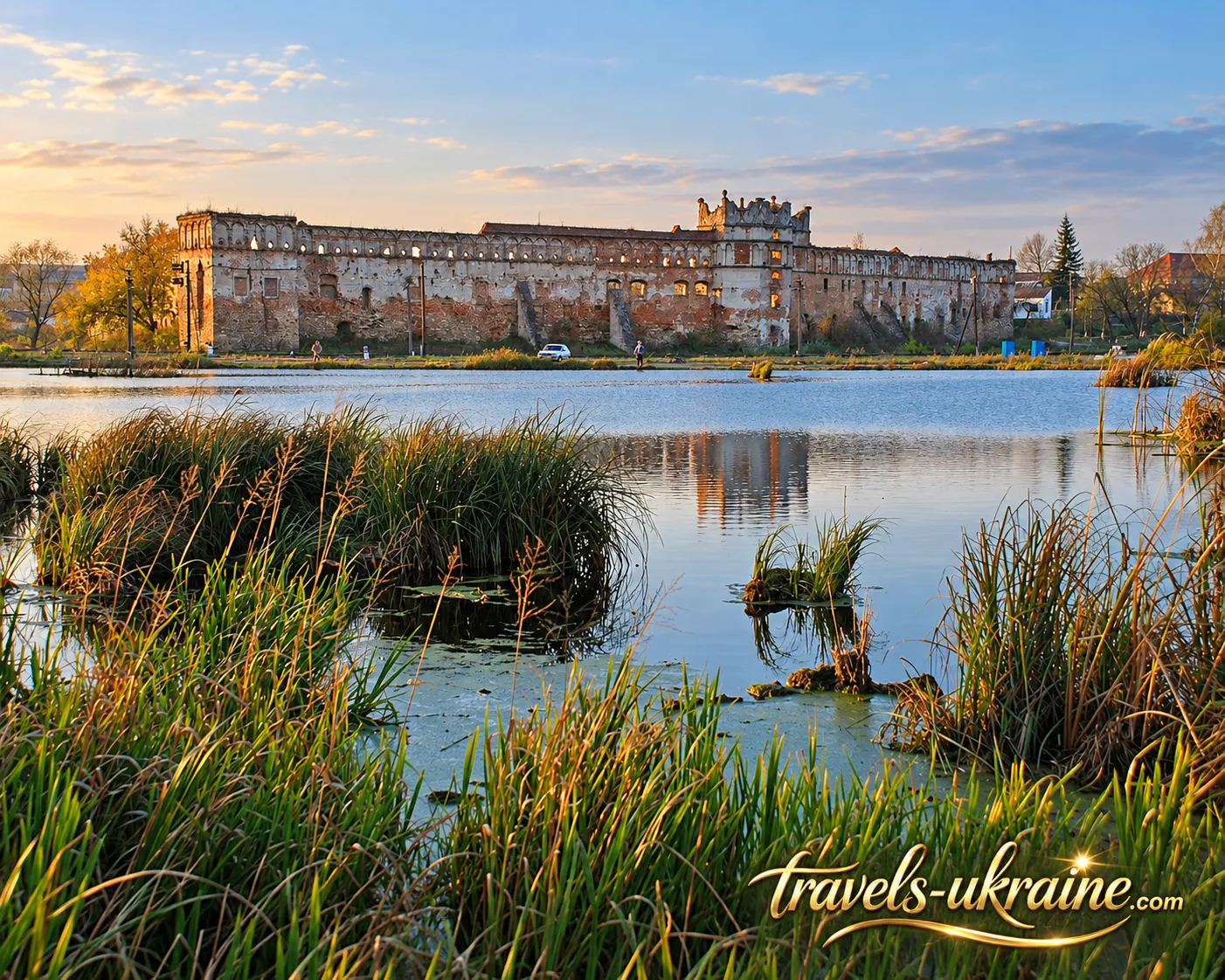
But calling Stare Selo Castle simply «the remains of walls» would be unfair. Even today, it has preserved the most important thing—scale. When you step inside and see how far apart the towers stand and how much space the defensive walls enclose, it becomes clear why this fortress once made an entirely different impression from the smaller private castles.
Three Towers Out of Six—and Each Deserves a Closer Look
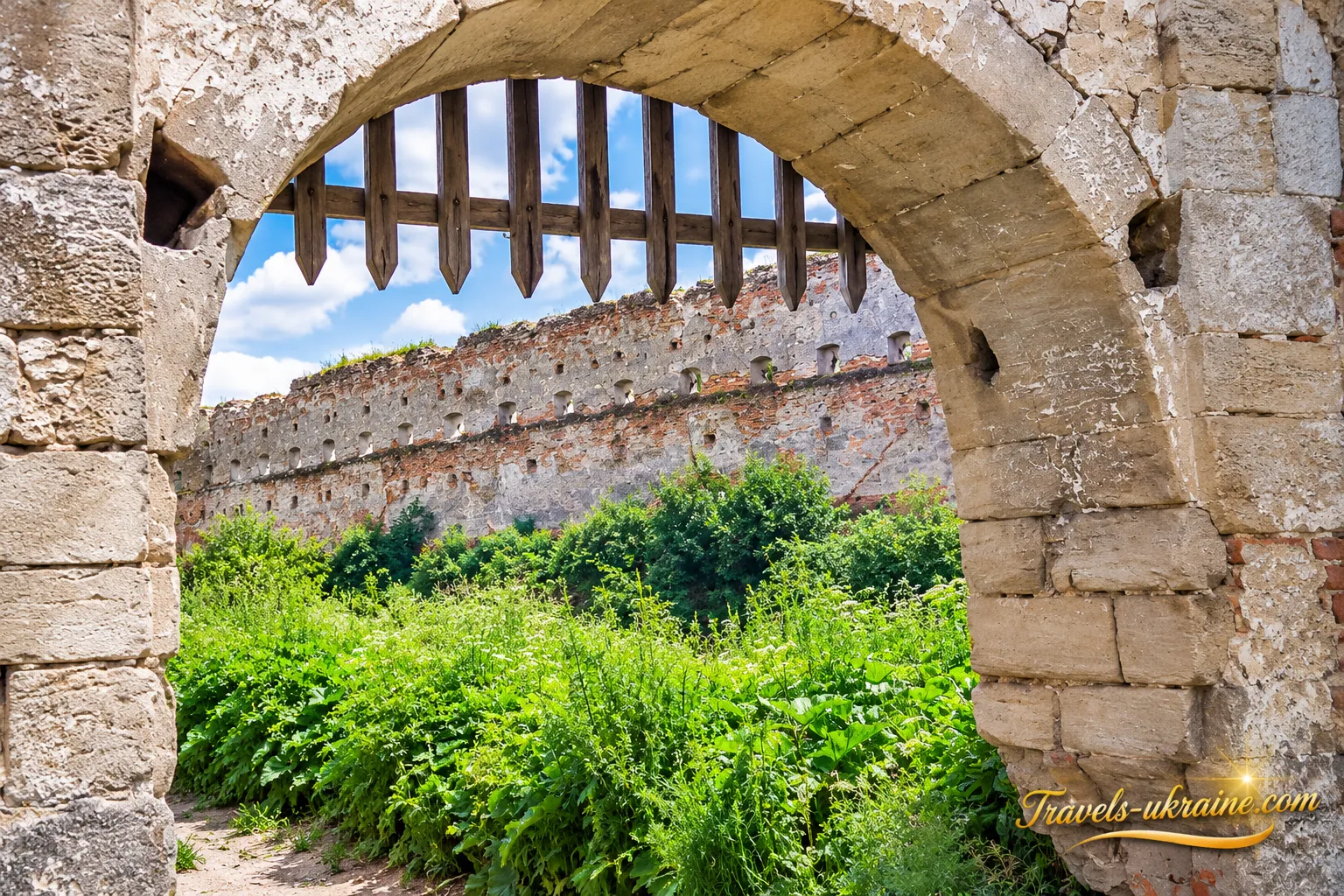
Originally, Stare Selo Castle had six defensive towers. Three have survived to our time in varying condition. Today, they are the best way to imagine the true height and monumentality of the former fortress. The eastern tower of Stare Selo Castle deserves particular attention. It still displays fragments of the same decorative detailing mentioned earlier: carved elements, volutes, and remnants of the sculptural crown that once created the effect of a stone crown.
This is probably one of the most interesting contrasts in the entire castle. The lower part of the tower looks utterly serious: a thick wall, loopholes, and defensive geometry. Then, at the top, the architect suddenly decided that the whole thing lacked a little beauty and added almost palace-like decoration. Details like these are a good reminder that Stare Selo was not merely a military stronghold. It was also the residence of very wealthy owners who wanted not only to survive a siege, but also to make the right impression on their guests.
Defensive Walls That Still Preserve the Castle’s Shape
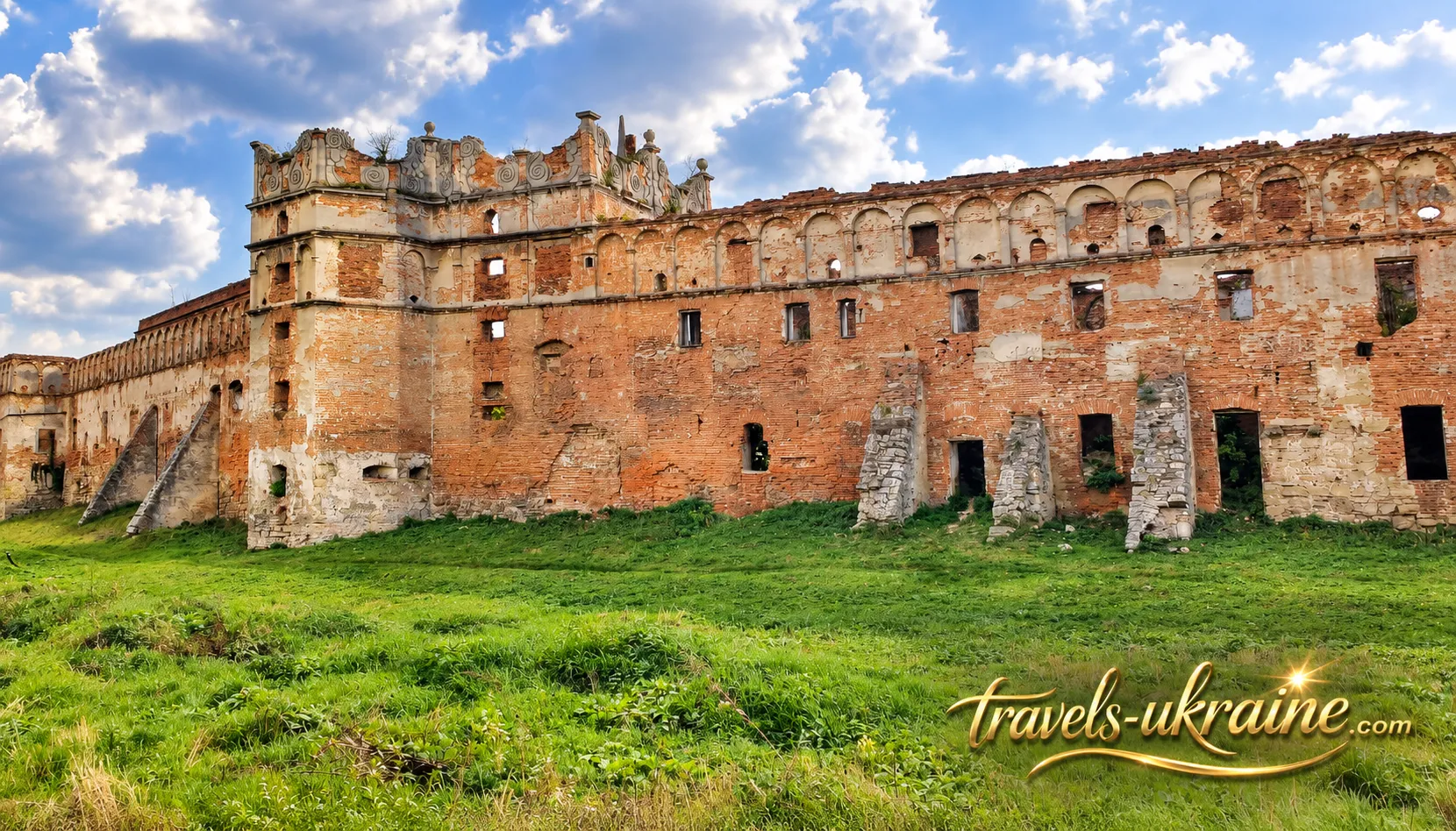
The best-preserved feature is the perimeter of the Stare Selo fortress. Substantial sections of the walls still allow you to literally read the castle’s plan in the landscape. Thanks to them, the inner space has not become an ordinary field; it still feels like a gigantic castle courtyard. If you examine the walls more closely, you can spot loopholes, decorative arched elements, and traces of structures that once adjoined the walls on the inside. Where bare brick and openings are visible today, there may once have been ceilings, galleries, or rooms.
That is why the castle is more interesting when you do not simply walk around its perimeter, but stop from time to time and look at the walls from within. They function almost like an enormous blueprint: here you can see a beam socket, farther on a sealed passage, and higher up a loophole or remnants of a decorative arcade. Of course, without an architectural plan, it is not always easy to decipher all this. But even without a restorer’s diploma, it soon becomes clear: the inner side of the walls once looked far more complex than it does today.
And Where Are the Palace, the Chapel, and All Those Rooms?
This question arises almost automatically. If there was such a vast residential complex here, where did it go?
Most of the castle’s inner buildings gradually disappeared during the nineteenth and twentieth centuries. After it lost its military importance, the rooms were used for хозяйственные needs, some structures collapsed naturally, and certain building materials were dismantled and reused.
The roofs and wooden floors disappeared, entire levels ceased to exist, and almost all of the residential buildings were lost. The castle chapel did not survive either. What remains of the former complex interior are individual wall fragments, vaulted rooms, and traces of buildings that are easy to miss today if you do not know exactly what to look for.
Old photographs of Stare Selo Castle are especially helpful here. Images from the beginning of the twentieth century still show far more of the inner buildings than exist today. Comparing such photographs with the modern courtyard sometimes works better than ten paragraphs of description: it becomes obvious how much the castle has lost in just the past hundred years.
Ruins That Can Still Surprise You
There is another distinctive feature of Starosilskyi Castle: it does not try to look like a neat tourist attraction. There are no freshly restored façades, antique-style new paving, or rooms where modern furniture convinces tourists that a prince sat on this very chair four hundred years ago. What you see is a genuine ruin—overgrown in places, unsafe in others, and severely damaged in some sections. And that is precisely why the different layers of history are so clearly visible here. Old brick, stone masonry, bricked-up openings, traces of plaster, loopholes, vaults, and decorative elements have not been hidden beneath modern restoration.
That said, there is no reason to romanticize its condition either. At the end of 2022, an official inspection recorded significant destruction and the castle’s unsafe technical condition. In 2023, after a failed concession lasting many years, the landmark was returned to state ownership. So all those beautiful cracks and leaning fragments of walls are not an artistic concept but a real conservation problem.
That is why it is best to follow one simple rule while walking around: you can look at almost everything, but there is no need to test the strength of medieval masonry with your hands. If a section of wall has stood for several hundred years, that does not mean it has been waiting for you to conduct its final stress test. Even so, in this condition Starosilskyi Castle remains remarkably photogenic. Massive reddish walls, an overgrown green courtyard, the remains of crowned towers, and the surrounding rural landscape create a highly distinctive picture. The scale of the fortress is especially clear from above—no wonder modern aerial photographs of Stare Selo look as if someone accidentally left an entire medieval citadel in the middle of an ordinary village.
But simply entering the courtyard, taking a few photographs, and leaving means missing half the interesting things. The castle contains details that are easy to walk past: remnants of decorative carving, old loopholes, traces of floors, vaults, and places where interior buildings once stood. So let us now explore the fortress as tourists and see what exactly to look out for when visiting Starosilskyi Castle.
What to See at Starosilskyi Castle and What to Look Out For
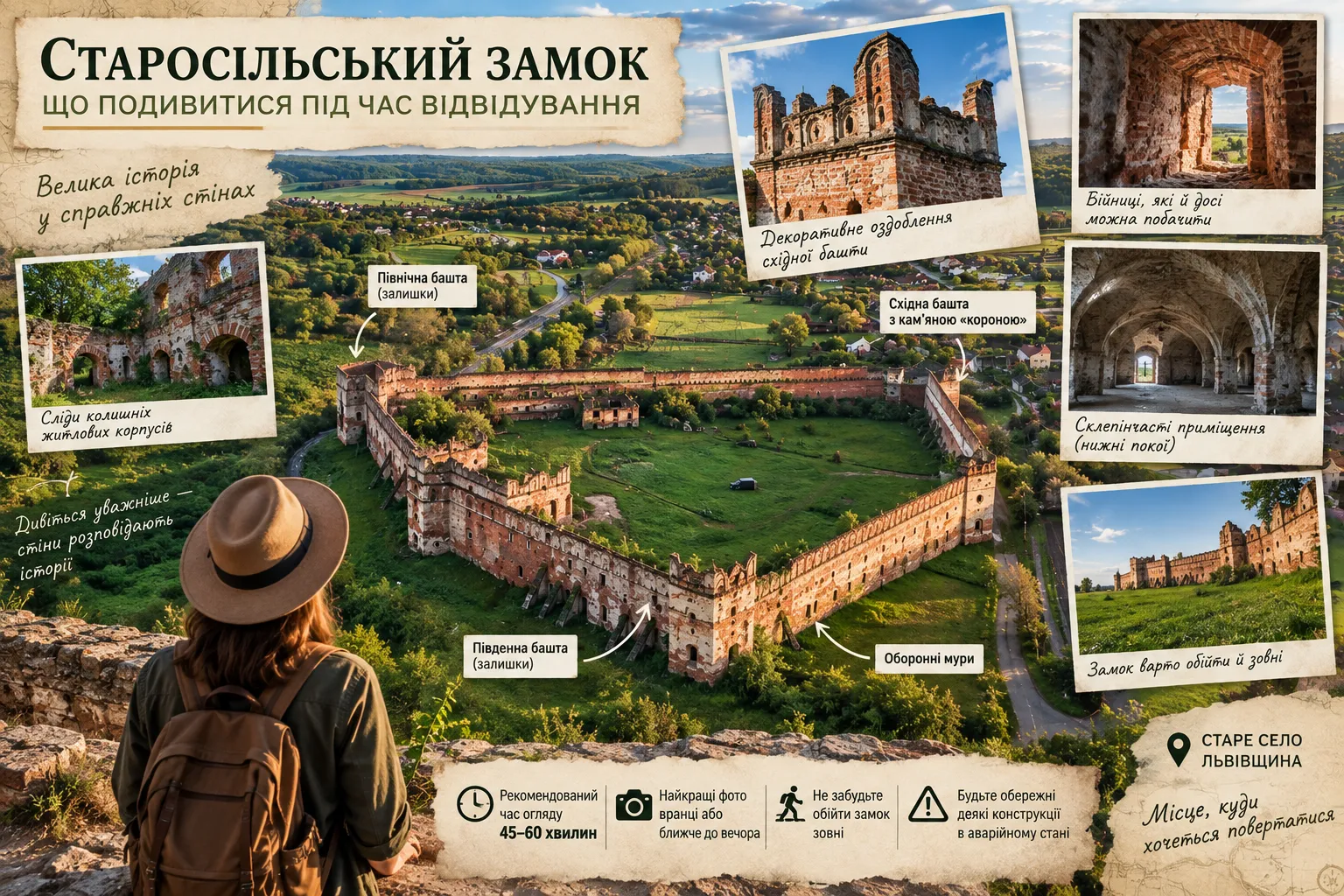
The castle complex has no classic tourist route with arrows, an audio guide, and a sign saying «you are here.» On the one hand, that is slightly inconvenient. On the other, it creates the rare feeling that you are not completing a museum quest but exploring an old fortress yourself. The main mistake on a first visit is to enter the inner courtyard, take a few photographs of the towers, and decide that you have seen everything. In fact, the most interesting details of Starosilskyi Castle are scattered around its entire perimeter, and some are easy to miss if you do not know where to look.
So before you start looking for coats of arms, loopholes, and traces of floors, do one simple thing—walk a little farther into the courtyard and simply look around. This is where you get the best sense of the fortress’s true size. The walls stretch far off in different directions, the towers turn out to be a considerable distance from one another, and the inner space seems disproportionately large for an ordinary castle.
It is useful to remember here that you are looking at about two hectares of fortified territory. Today it is mostly grass, but several centuries ago part of this space was occupied by residential buildings, utility structures, a chapel, storehouses, and other buildings. So if your first thought is, «Wow, what a huge courtyard,» you are absolutely right. It just was not quite a courtyard back then.
If you have time, do not limit yourself to the inner courtyard. The castle is also worth seeing from the outside, where the height of the walls, the projecting towers, and the overall geometry of the defenses are easier to read. From the outside, it is much easier to imagine what a person approaching the fortress several centuries ago felt—someone arriving with anything but tourist intentions. Certain spots offer excellent views of the castle’s long walls. From here they look particularly monumental, while the surrounding village houses emphasize the scale of the structure. Walking around the outside also helps you understand how strongly the terrain and surrounding landscape formed part of the defensive system.
Find the Tower with the Stone «Crown» and Take a Closer Look at the Walls
One of the castle’s most interesting details is the decorative crown of the eastern tower. Even after centuries of destruction, fragments of elaborate stone decoration remain, making the upper part of the structure resemble a crown. This tower best demonstrates that the architects of Stare Selo were thinking about more than military effectiveness. The fortress was meant to display the owners’ status, so austere defensive forms were combined with decorative architecture.
Come a little closer and look not only at the overall silhouette but also at the carved elements, arches, projections, and remnants of the decorative crown. In photographs, all of this often blends into a single mass of stone, while in person the small details are much easier to see.
At first glance, a wall is just a wall. But the inner side of the castle walls deserves to be examined with roughly the same care as an old photograph. You may notice loopholes, arched openings, bricked-up passages, and traces of beams and floors. In some places, it is clear that other structures once adjoined the walls. These are remnants of the inner buildings that have almost entirely disappeared. It is especially interesting to look at openings positioned high above the ground. Today they seem like strange «windows to nowhere,» but floors, wooden galleries, or ceilings once ran at that level.
So if you see a doorway several metres above the ground, the architect did not make a mistake with the stairs. The stairs and the floor simply disappeared long ago.
The Loopholes of the Starosilskyi Fortress: Small Openings with a Very Serious Purpose
Around the castle perimeter, pay attention to the defensive openings and loopholes. Some were adapted for firearms, while the fortress as a whole was designed for active defense from the walls and towers. Today, you may want to look through a loophole at the village and take a photograph. In the XVII century, the direction of the gaze was roughly the same—the reasons were just somewhat different.
Details like these make it especially easy to understand that the castle was not created as a decorative residence designed to look «old-fashioned.» It was a genuine military structure, and practically every part of the outer perimeter served a defensive purpose.
Peek into the Preserved Vaulted Rooms—but Without Any Unnecessary Heroics
Some parts of the castle retain old vaults and lower rooms. They are particularly interesting because they allow you to partially experience the fortress’s interior—not merely look at a façade but see what the lower floors of the castle buildings might have looked like. However, you need to remember the condition of the landmark. Some structures are unsafe, stones may crumble, and the old floors certainly have not passed an annual safety inspection.
Do not enter beneath visibly damaged vaults, climb onto unstable sections of the walls, or test the bricks with your hands. A medieval atmosphere is wonderful, but it is best not to make a personal contribution to the castle’s further destruction.
What to See Near Starosilskyi Castle
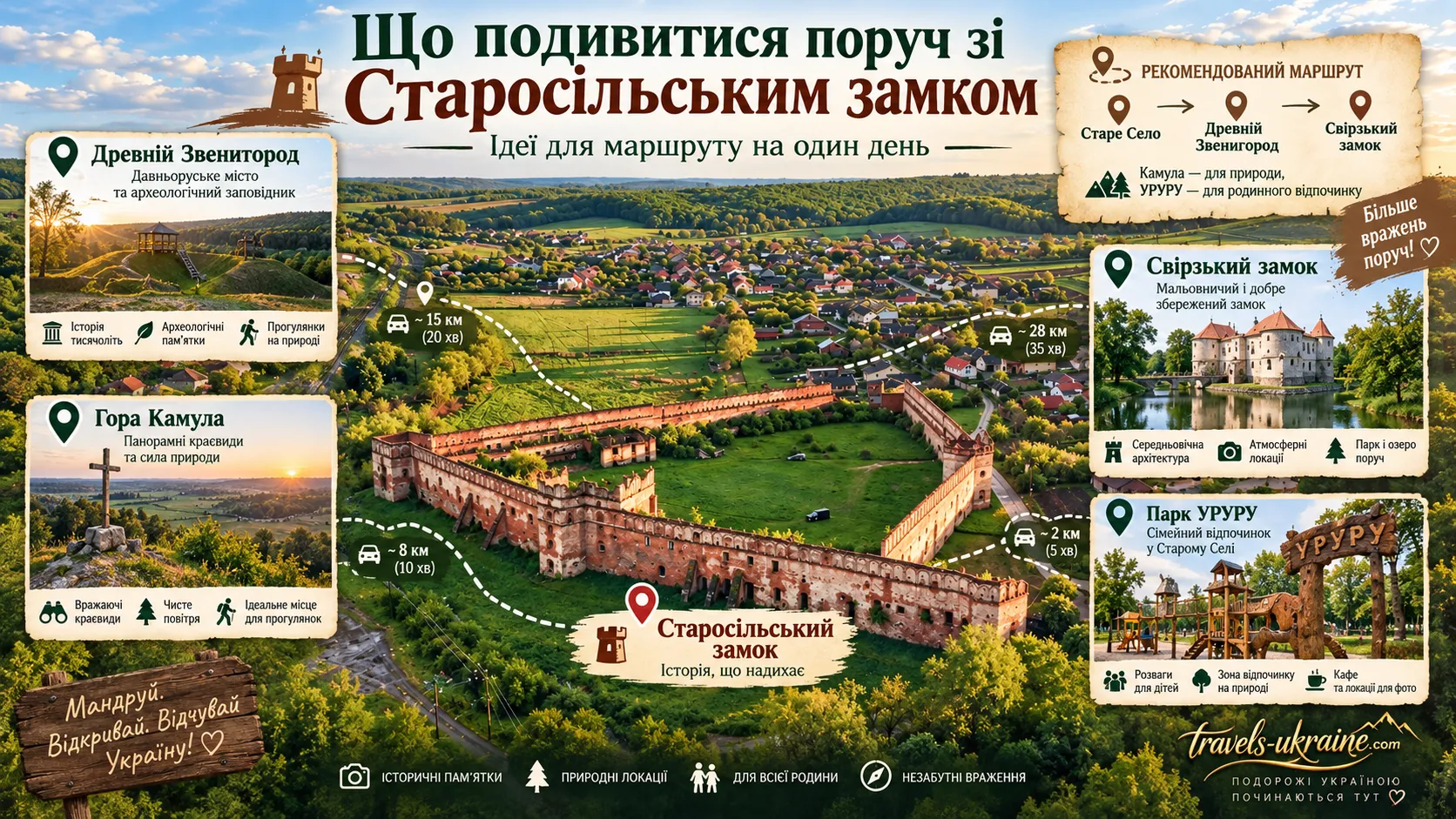
There is no need to travel to Starosilskyi Castle for just one hour of walking around and then immediately turn back. The area southeast of Lviv is surprisingly rich in places where you can continue the historical theme, swap old walls for nature, or rescue children from yet another story about princes, cannons, and sieges. At the same time, there is no point trying to cover half of Lviv Oblast in a single day. It is much more pleasant to choose one or two additional locations near Stare Selo and enjoy a proper trip rather than an automotive marathon of photographing landmarks through an open window.
Ancient Zvenyhorod—If You Still Have Not Had Enough History After the Castle
One of the most interesting additions to the route is located approximately 10–15 kilometres from Stare Selo: the Ancient Zvenyhorod historical and cultural reserve. Today it looks like an ordinary, peaceful settlement, but about nine centuries ago its scale was entirely different. In the XI–XIII centuries, it was a large princely city, and in the first half of the XII century it was the capital of the Principality of Zvenyhorod. The first chronicle mention of it dates to 1086.
And while in Stare Selo you have to actively use your imagination to restore the vanished floors and rooms, in Zvenyhorod modern technology has done some of the work for you. At the museum, you can see archaeological finds and, thanks to a virtual reconstruction of the medieval city, walk through its streets and see the princely palaces and churches as researchers have recreated them.
Among the finds from Zvenyhorod are objects that sound much more interesting than the standard museum label «ceramic fragment No. 742.» They include an ancient gusle, jewelry, household objects, and the famous birch-bark documents—some of the oldest written records discovered on the territory of Ukraine. That makes the combination of Starosilskyi Castle + Ancient Zvenyhorod especially successful: first the XVII century with cannons and towers, followed by a leap several centuries further back into the age of princely Rus.
Svirzh Castle—When You Want to See a Castle That Still Has a Roof
Approximately 20–25 kilometres from Stare Selo lies another fascinating fortress—Svirzh Castle. After Starosilskyi Castle, the contrast is immediately noticeable. If Stare Selo impresses with the scale of its ruins, Svirzh has preserved the image of a genuine castle residence much better: an entrance gate, buildings, inner courtyards, towers, roofs, and a picturesque pond nearby.
Svirzh Castle was rebuilt many times and survived wars and fires, yet it has reached our time in a far more intact condition. That is why the two castles complement each other so well. At Stare Selo, you can see the skeleton of a huge fortress, while at Svirzh it is much easier to imagine what similar residences looked like when they still had roofs, doors, and inhabitants.
In addition, the Svirzh castle complex is surrounded by a park and water, so the atmosphere here is completely different. After the austere walls of Stare Selo, the place even feels slightly resort-like. That is, of course, unless you remember that history periodically decided to burn everything down here as well. If you are planning a one-day castle trip near Lviv, the Stare Selo–Svirzh route is one of the most natural options.
Mount Kamula—If You Want Some Nature After the Walls
Not everyone wants to spend an entire day moving from one old wall to another. In that case, you can balance the historical part of the route with nature and head toward Mount Kamula, located approximately 15 kilometres from Stare Selo. This is a completely different kind of trip: forest, hills, and a walk instead of towers and loopholes. It is an especially suitable option in warm, dry weather, when after visiting the castle you do not want to get straight back into the car and drive home.
That said, you will need proper footwear and at least a minimal desire to walk. The Starosilskyi defensive fortress still allows you to convince yourself that you are simply enjoying a cultural outing. At Kamula, your body will quickly realize that it was brought there for a walk.
URURU Park—A Backup Plan for Travellers with Children
And if you are travelling with children and, after the words «now we’ll look at one more castle,» the car falls silent in a way that promises nothing good, you will not have to go far. The Stare Selo amusement park «URURU» operates right there—a large family destination in the forest with rides and various activities. It is not a historical landmark and has nothing to do with the castle, but for a family trip it can be a very useful way to round off the day.
The formula is simple: adults get a 17th-century fortress, while children get entertainment. The chances of everyone returning home satisfied increase dramatically.
Which Route to Choose from Stare Selo Castle
If the main goal is historical landmarks of Lviv region, the most interesting option is to combine Stare Selo with Zvenyhorod and Svirzh. These are three places with completely different characters: an 11th–13th-century princely city, a vast 17th-century defensive fortress, and a much better-preserved castle residence.
For a more relaxed trip, it is better to visit only two locations. For example, explore the Stare Selo castle landmark in the morning and spend the second half of the day in Svirzh. Alternatively, after the fortress, head to Ancient Zvenyhorod if archaeology and the history of the princely era interest you more.
And this is probably the best approach to travelling around Lviv region: do not try to set a record for the number of points on the map. One castle, another interesting location, a proper lunch, and time to stop wherever you simply like the view will leave far more impressions than seven landmarks with a twenty-minute schedule for each.
Frequently Asked Questions about Stare Selo Castle
Where is Stare Selo Castle located?
Stare Selo Castle is located in the village of Stare Selo, Lviv district, Lviv region, approximately 20–25 km southeast of Lviv. The fortress stands directly within the village, so you will not need to search for it somewhere in the middle of a forest—the structure is quite difficult to miss.
Do you need to buy a ticket to Stare Selo Castle?
Stare Selo Castle does not operate like a traditional museum with a ticket office, exhibition halls, and a regular tour schedule. Tourists can visit the fortress grounds freely, but the landmark is in an emergency structural condition. Before your trip, bear in mind that access to certain areas may change for safety reasons.
How much time is needed to see Stare Selo Castle?
Allow approximately 45–60 minutes for an unhurried walk. If you plan to take photographs, walk around the fortress from the outside, and examine its architectural details, you can easily spend an hour and a half here. You can also «see» the castle in twenty minutes, but that would be rather like reading a book by looking only at its cover.
Is it safe to enter the towers and old rooms?
Damaged towers, vaults, and unstable sections should be approached with extreme caution. An official inspection of the landmark recorded significant destruction and an emergency structural condition. Do not climb onto the walls, enter beneath visibly damaged ceilings, or try to squeeze into places where the architecture itself suggests that the tour is already over.
Can you visit Stare Selo Castle with children?
Yes, but small children must be supervised at all times. The grounds are not arranged like a modern tourist park: there is uneven ground, tall grass, masonry debris, open holes, and dangerous fragments of structures. For older children, the walk can become a small quest—to look for loopholes, towers, traces of old floors, and the stone «crown.»
When is the best time to visit Stare Selo Castle?
The most convenient time to visit is in dry weather in spring, summer, or early autumn. After prolonged rain, the ground and overgrown areas may be less comfortable for walking. For photographs, morning or the second half of the day is especially suitable, when the low sun highlights the texture of the old brick and the relief of the walls.
Are guided tours held at Stare Selo Castle?
There is no permanent museum service with regular guided tours here, as there is at Zolochiv or Olesko castles. Stare Selo Castle is better understood as an open historical landmark that can be explored independently or visited as part of an organized tourist route with a private guide.
What should you definitely photograph at Stare Selo Castle?
The most interesting shots include the eastern tower with its decorative top, the long defensive walls, the inner courtyard, loopholes, and the remains of vaulted rooms. It is also worth stepping farther away from the castle: its enormous scale simply cannot fit in the frame from close up.
What can you see near Stare Selo Castle?
The most interesting continuation of the historical route is Ancient Zvenyhorod and Svirzh Castle. If you would like some nature, you can add a walk in the area of Mount Kamula, while for a family trip with children there is the «URURU» amusement park in Stare Selo itself. For one day, it is better to choose one or two additional locations rather than try to set a personal record for sightseeing in Lviv region.
Is Stare Selo Castle being restored?
In 2010, the castle was transferred to a private company under a concession agreement requiring it to bring the landmark out of its emergency condition and carry out restoration work. The obligations were not properly fulfilled, and in 2023 Stare Selo Castle was returned to state ownership. The landmark remains in a difficult condition, so the issue of its conservation and full restoration is still relevant.
Is Stare Selo Castle Worth Visiting?
If you expect restored halls, antique furniture, and a guide waiting at the entrance, a trip to Stare Selo Castle may seem a little unusual. Almost nothing here tries to convince tourists that they are looking at a historical landmark. The castle simply stands in the middle of Stare Selo—vast, damaged, and in places almost reclaimed by nature.
Here, it is easy to sense the true scale of an old fortress without decorations or modern reconstructions. You can walk along the walls, peer through the loopholes, find the remains of a stone «crown» on a tower, and try to imagine how residential wings, a chapel, an arsenal, and service buildings once stood before you instead of today’s green courtyard. After that, the story of Cossack sieges, the Ottoman army, Jan Sobieski’s cannons, and the castle brewery no longer looks like a collection of textbook dates. It acquires a specific place—these walls, these towers, this space.
This castle will especially appeal to those who prefer places that require a little work from their own imagination rather than ready-made museum displays. There is no plaque beside every brick, but you can discover traces of former floors, blocked-up passages, old loopholes, and the remains of rooms for yourself. And there is another reason not to postpone the trip for too long. The historical landmark is in a difficult structural condition, and some parts continue to deteriorate. One would like to believe that Stare Selo will someday receive professional conservation and restoration. But today, we see the fortress just as several centuries of history have left it.
So it is worth coming here not for glamour or comfort. Stare Selo Castle is a journey for scale, atmosphere, and the chance to see history without decorative packaging. And if, after your walk, the courtyard suddenly seems too empty, just remember: there were once palace rooms, a chapel, cannons, horses, storehouses, soldiers, and even a brewery here. For one castle, you must admit, that is quite a rich biography.
And if Starosilskyi Castle has already made you look at old walls a little differently, don’t stop at just one route. Ukrainian castles are dozens of entirely different stories: from royal residences and impregnable fortresses to romantic ruins hidden among hills and forests. Discover them gradually, travel, compare, and create your own map of places where history still lives not only in books, but right before your eyes.


No Comment
You can post first response comment.