
 English
 Українська
 Български
 Hrvatski
 Čeština
 Dansk
Dansk Nederlands
 Eesti
Eesti Suomi
Suomi Français
 Deutsch
 Ελληνικα
 Magyar
 Íslenska
 Italiano
 Latviešu
 Lietuvos
 Polski
 Português
 Română
 Русский
 Српски
 Slovenčina
 Slovenščina
 Español
 Svenska
 Türkçe
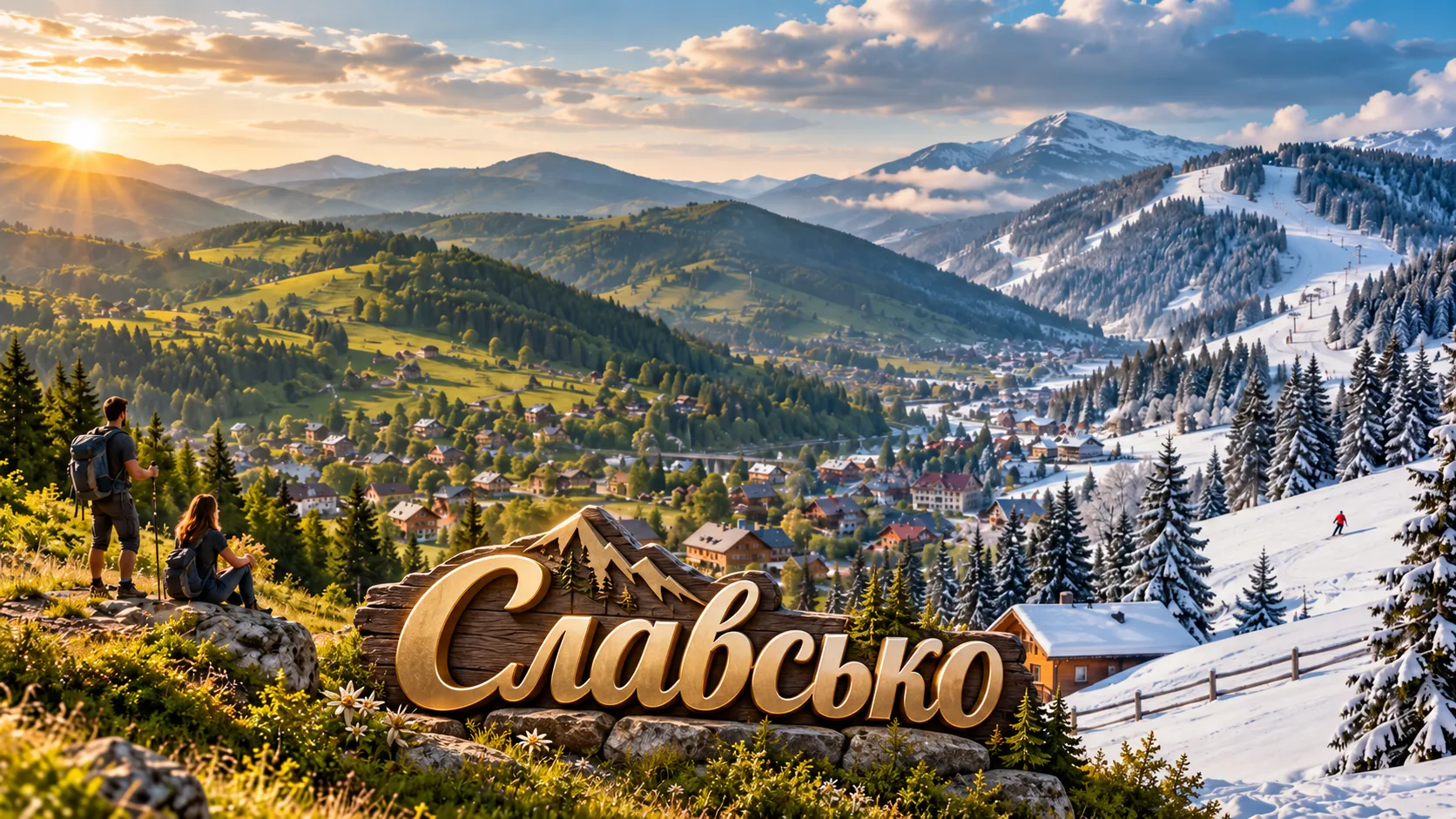
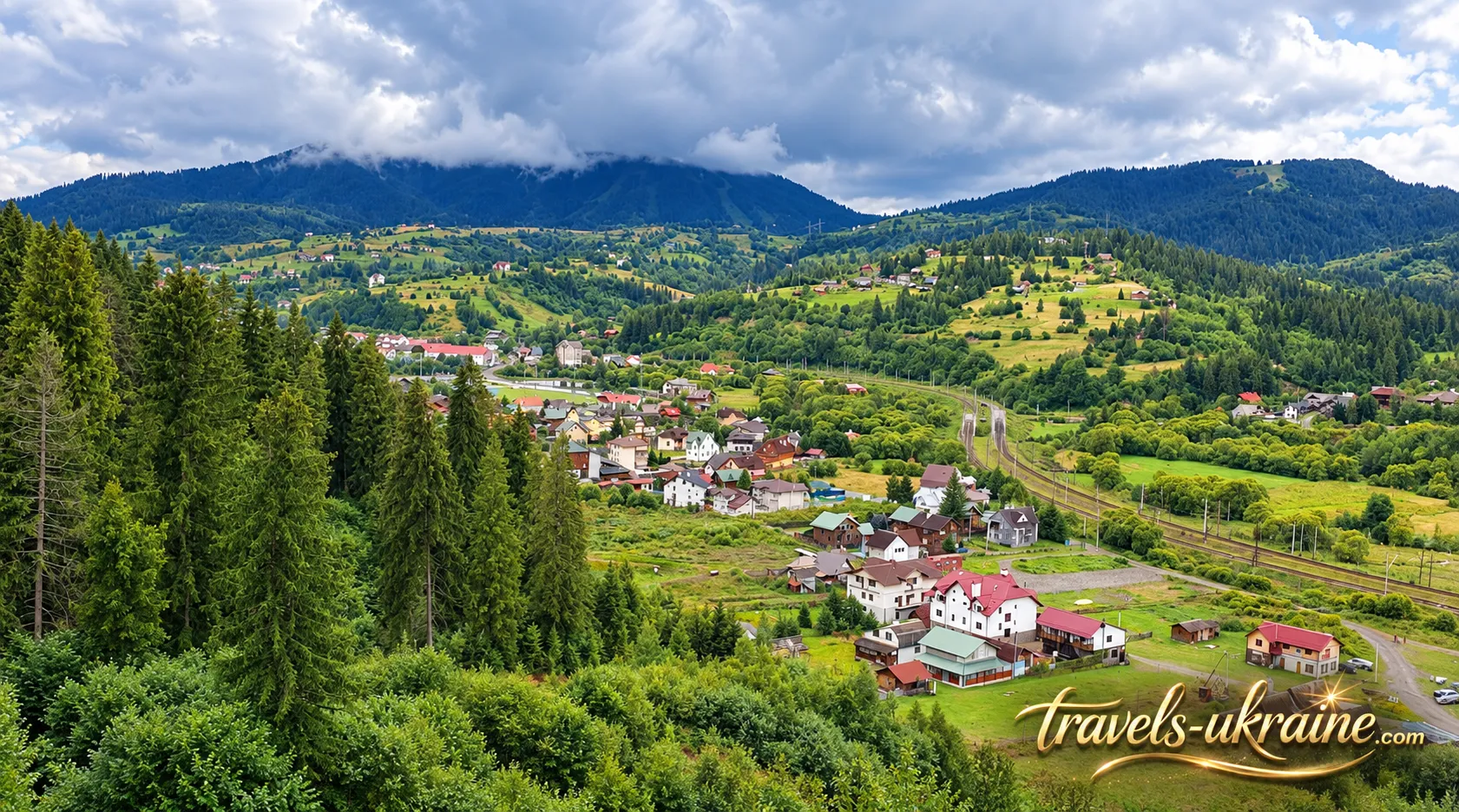
Slavske is a place where you feel the Carpathians at once. Mountain slopes rise close by, the morning air smells of forest, and within minutes of leaving the center you can find yourself surrounded by silence, green mountain meadows, and panoramas that make you want to stop and simply look. That is why people come here not only in winter for skiing, but all year round—for the mountains, the peace, and the feeling of a true Carpathian journey.
In summer, Slavske reveals a completely different side: instead of snow-covered runs, there are green ridges, hiking and cycling routes, climbs to the summits, and walks through the Skole Beskids. In winter, the resort changes character—the slopes are covered in snow, the lifts come alive, and the mountain landscapes become even more striking. In spring and autumn, there are fewer tourists, more peace and quiet, and that special Carpathian mood when the journey itself becomes part of the holiday.
Slavske Resort is well suited both to a short weekend trip and to a few unhurried days in the mountains. You can spend the morning being active, climb higher for the views, test whether Carpathian air really does give you more energy, and then return to the village with nowhere else to hurry. Because in the Carpathians there is a simple rule: once you have come this far, rushing back somehow feels impolite. Better to sit down with a cup of something warm, look at the mountains, and pretend that this was exactly how you planned to spend the whole day.
Slavske does not force you to choose between being active and taking it easy—you can easily combine both in a single day. So let’s look at where to go, what to see in different seasons, and how to organize your trip without spending half your holiday trying to figure out where exactly to go.
Slavske at a glance: what makes this Carpathian resort special
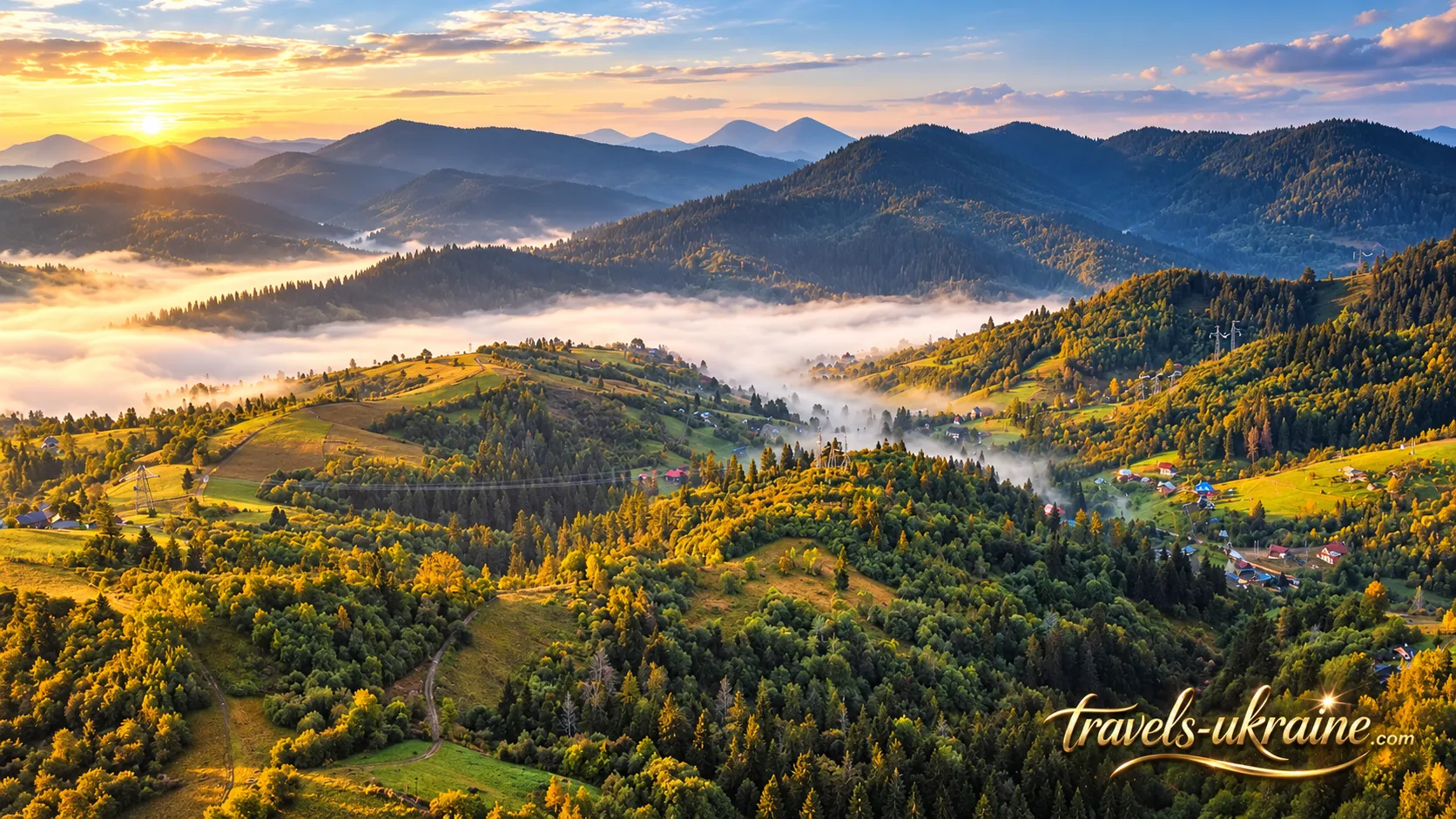
Slavske is a year-round Carpathian resort situated in a valley among the ridges of the Skole Beskids—as if the mountains decided to gather around the village and shield it from the rest of the world. You can see peaks from almost everywhere, forests begin right beside the houses, and an ordinary morning walk can easily end with the thought: «Since we’re already here, shall we go a little higher?»
Today, Slavske is one of the best-known resorts in the Ukrainian Carpathians, but its main advantage is not simply its popularity. It brings together mountain nature, rail connections, tourist infrastructure, and the opportunity to enjoy a holiday all year round particularly well. In winter, the slopes come alive with skiers and snowboarders, and as soon as the snow melts, those same mountains belong to hikers with backpacks, cyclists, and anyone who simply wants to spend time among the Carpathians.
Why Slavske became one of the Carpathians’ best-known resorts
The resort’s location has played a major role in its development. Unlike many mountain destinations that are difficult to reach without a car, you can arrive in Slavske by train, almost right in the center of the village. It is one of those rare Carpathian situations where you can step off the train, breathe in the mountain air, and avoid beginning your holiday with a two-hour search for a transfer.
Several well-known mountain areas surround Slavske—Trostian, Pohar, Vysokyi Verkh, Ilsa, and other Beskid peaks. In winter, some are associated primarily with skiing, but in the warmer seasons they become excellent destinations for hiking routes, panoramic climbs, and leisurely walks in the mountains.
It was the resort’s winter popularity that originally established Slavske’s reputation as a ski destination. But if you come here in July or early autumn, you quickly realize how narrow that description is. Green slopes, forest roads, mountain streams, hiking routes, and panoramic peaks do not disappear when ski season ends—on the contrary, a completely different Slavske opens up. In summer, you can spend the day in the mountains, climb higher for the views, or simply set off for a walk without much of a plan. And in the Carpathians, that can sometimes be the most dangerous option: you go out «just for an hour to have a look» and return in the evening because every bend leaves you curious about what lies beyond it.
Slavske or Slavske—what is the correct name?
The resort’s name has its own small linguistic history. For many years, the form «Slavske» was used in documents, on maps, and in tourist materials, so it remains familiar to most travelers. In 2023, the settlement officially restored its historical name, «Slavske,» and today this is the form considered correct in official usage.
At the same time, the old name has not disappeared from everyday speech. You can still hear it from tourists, see it on old signs and in hotel names, or encounter it in search queries. So if someone says, «We’re going to Slavske,» it does not mean they are heading somewhere else. Sometimes habits simply last longer than official signs.
What to see in Slavske: interesting places and the best views
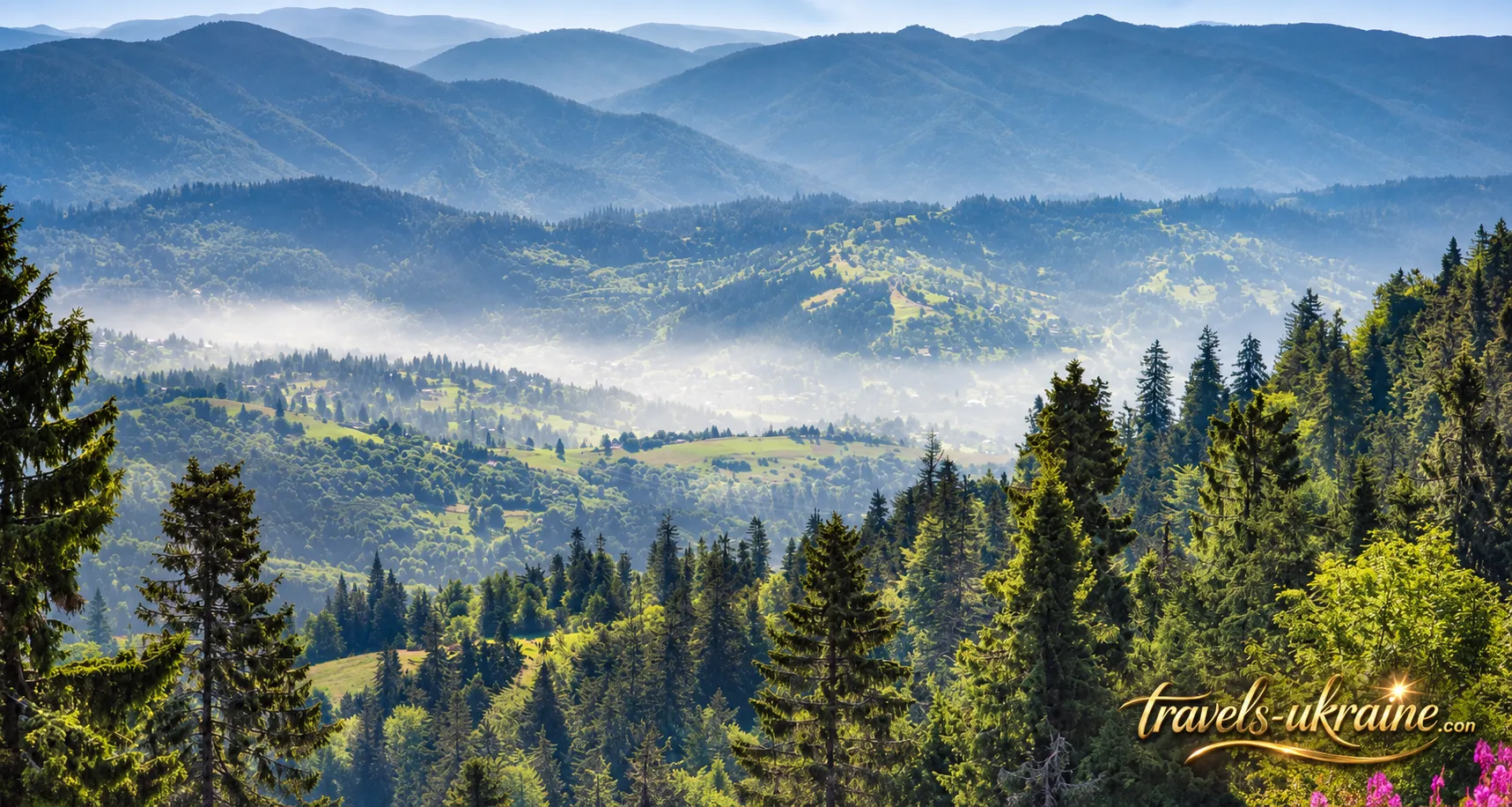
Slavske is not one of those resorts where tourists receive a list of twenty «must-see sights» and are invited to heroically tick off every one. Things work a little differently here. Slavske’s main attraction is the Carpathians themselves, beginning literally a few steps from the center. The most interesting places are therefore often not hidden behind museum doors, but revealed on the way to a summit, beside a river, or from a high slope above the village.
In one day, you can walk through central Slavske, see one of its best-known architectural landmarks, climb higher for a panorama, and then slowly return to the valley. This is one of those trips where its richness is measured not by the number of places visited, but by how many times you had to stop because everything around you was once again too beautiful to simply walk past.
Between mountain climbs, it is worth leaving some time for the village itself. The Opir and Slavka rivers flow through Slavske, shaping the resort’s valley. There is no large historic center with dozens of landmarks, but there is what many people come to the Carpathians for: small streets, wooden homesteads, mountain slopes above the rooftops, and the constant feeling that the town will end around the next bend and the forest will begin. Choose a few key spots, and leave room for an ordinary walk between them. Sometimes the best view in the Carpathians is nowhere near the place marked on a tourist map.
Church of the Dormition of the Blessed Virgin Mary in Slavske
In the central part of the village stands the Church of the Dormition of the Blessed Virgin Mary, one of Slavske’s most prominent historic buildings. The stone church was built at the beginning of the XX century to a design by the renowned Ukrainian architect Vasyl Nahirnyi. Its silhouette fits naturally into the mountain valley and remains one of the landmarks that make the resort center easy to recognize.
The church is notable for more than its exterior architecture. Its interior had particular artistic value because of murals by Modest Sosenko and Yulian Butsmaniuk. Unfortunately, the original wall paintings were destroyed during renovations in 2019—a development that caused considerable concern among art historians and restorers. Even if you did not plan a separate tour of sacred sites, it is almost impossible to pass the church without noticing it: it stands at a natural crossroads, where roads branch out toward the mountains.
Pohar Mountain—the Slavske panorama without a long hike
If you want to see Slavske from above but a full, several-hour hike is not yet part of your plans, Pohar Mountain is one of the most convenient options. It is located very close to the central part of the village, so the ascent is easy to fit even into a short trip.
From the summit, a broad panorama opens over the valley, surrounding slopes, and mountain ridges. In winter, Pohar is well known as one of Slavske’s ski areas; in the warmer months, people come here not for speed but for the views. It is a good compromise for anyone who wants to say, «Today we were in the mountains,» without having to explain to their legs why a walk suddenly turned into a ten-kilometer route.
Ilsa—peace, forest, and views away from the resort bustle
For those who want to get a little away from the tourist bustle, Ilsa Mountain makes an appealing destination. Its route begins not far from the center of Slavske and gradually leads through forests and open sections to the summit, where you can see neighboring ridges, including Trostian and Vysokyi Verkh.
Ilsa has a completely different atmosphere from the developed resort slopes. There is less infrastructure and more of the feeling of an ordinary Carpathian journey: a forest trail, meadows, silence, and that moment when a panorama suddenly appears and makes the entire climb seem shorter at once.
Vysokyi Verkh and a panoramic ascent
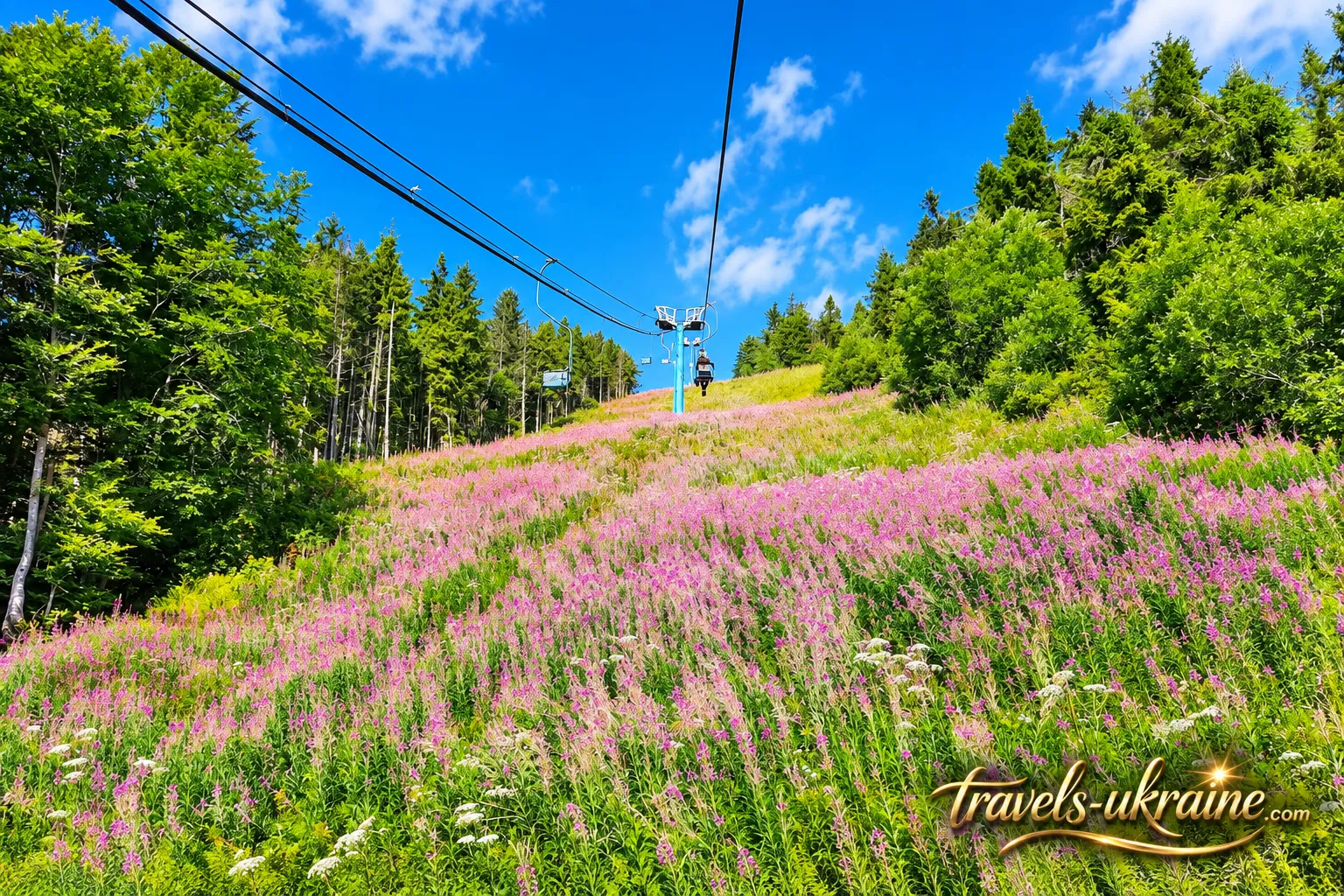
Another excellent viewpoint is Vysokyi Verkh near Volosianka. You can reach the upper part of the mountain not only on foot: the Zahar Berkut tourist complex operates a cable car here, so even those not planning a full ascent can enjoy high-mountain panoramas.
At the summit, the sense of space is completely different: the valleys lie far below, while waves of Carpathian ridges unfold all around. In good weather, it is one of those places where you take far more photos than you will later feel like looking through. But in the moment, it is hard to stop—the next shot always seems certain to be better than the last.
If you want to turn the climb to Vysokyi Verkh into a full mountain walk, you can add another interesting location—the Pysana Krynytsia spring near Slavske. This small mountain spring among rocks and beech forest is associated with legends about Oleksa Dovbush. One of the hiking routes toward Vysokyi Verkh passes through Pysana Krynytsia, so the two locations are easy to combine in one trip.
Slavske in summer: routes, cycling, and relaxation among the green Carpathians
When the snow melts from the slopes, Slavske does not fall asleep until next winter—it simply swaps skis for hiking boots and bicycles. The mountains turn green, forest roads become accessible again, and instead of queues at the lifts, you see hikers with backpacks trying to convince themselves that the climb «over there, not far at all» really will be easy.
The warmer months make it especially clear that Slavske is much more than a ski resort. You can spend an entire day hiking, set off on a cycling route, climb one of the surrounding peaks, or simply take your time—walking through the valley, stopping beside mountain streams, and enjoying that rare kind of holiday where the main entertainment is sometimes just a good view.
A summer holiday in Slavske does not have to become an athletic marathon. After a hike or bike ride, it is perfectly reasonable to leave one day free of major plans: walk around the village, sit beside the water, find a peaceful spot overlooking the slopes, or simply watch the light change over the mountains.
That is one of the greatest advantages of summer in Slavske: you can set your own pace. Today you might walk a few kilometers along a mountain route, tomorrow you can get on a bike, and the day after that decide that the most important tourist activity is coffee with a view of the Carpathians. And if you think about it, that is a perfectly respectable route too.
Hiking routes—from an easy walk to a full day in the mountains
Many hiking routes of varying lengths and difficulty levels begin around Slavske. Some start directly in the village, so you do not need to arrange a separate transfer for your first introduction to the mountains. Popular destinations include routes to Ilsa, Pohar, Trostian, Klyva, Menchil, and other peaks of the Skole Beskids.
For a short walk, you can choose one of the nearest peaks, while those looking for a true day in the Carpathians can set out on a longer route involving several hours of climbing. It is important here not to confuse the words «easy route» with «you can do it in slippers.» The Carpathians have their own sense of humor: a sunny trail after twenty minutes of rain can sometimes explain the difference between a city stroll and a mountain hike very quickly.
That is why even in summer it is worth having comfortable footwear, extra water, a lightweight rain jacket, and an offline map of the route downloaded. Mountain weather changes quickly, and mobile coverage outside the village can be unreliable.
Slavske by Bike
Another way to see the surrounding area is through cycling routes. Mountain roads, forest trails, and changes in elevation make the Slavske area appealing both for leisurely rides and for those who already find an ordinary flat cycle path an insufficiently convincing reason to get tired. Routes belonging to the «Velokarpatia» network pass through Slavske Hromada, while the surrounding area offers routes of varying difficulty. Before setting out, it is better to consider not only the distance but also the elevation gain: ten kilometers on a Carpathian road and ten kilometers along a city waterfront are, as they say in the mountains, two very different tens.
For a more relaxed trip, you can choose short routes through the valleys and around the village, while experienced cyclists may prefer mountain roads between ridges and neighboring villages. In any case, a bicycle allows you to see far more places in a single day than you would on an ordinary walk.
A Panoramic Ascent for Those Who Don’t Want to Walk the Entire Way
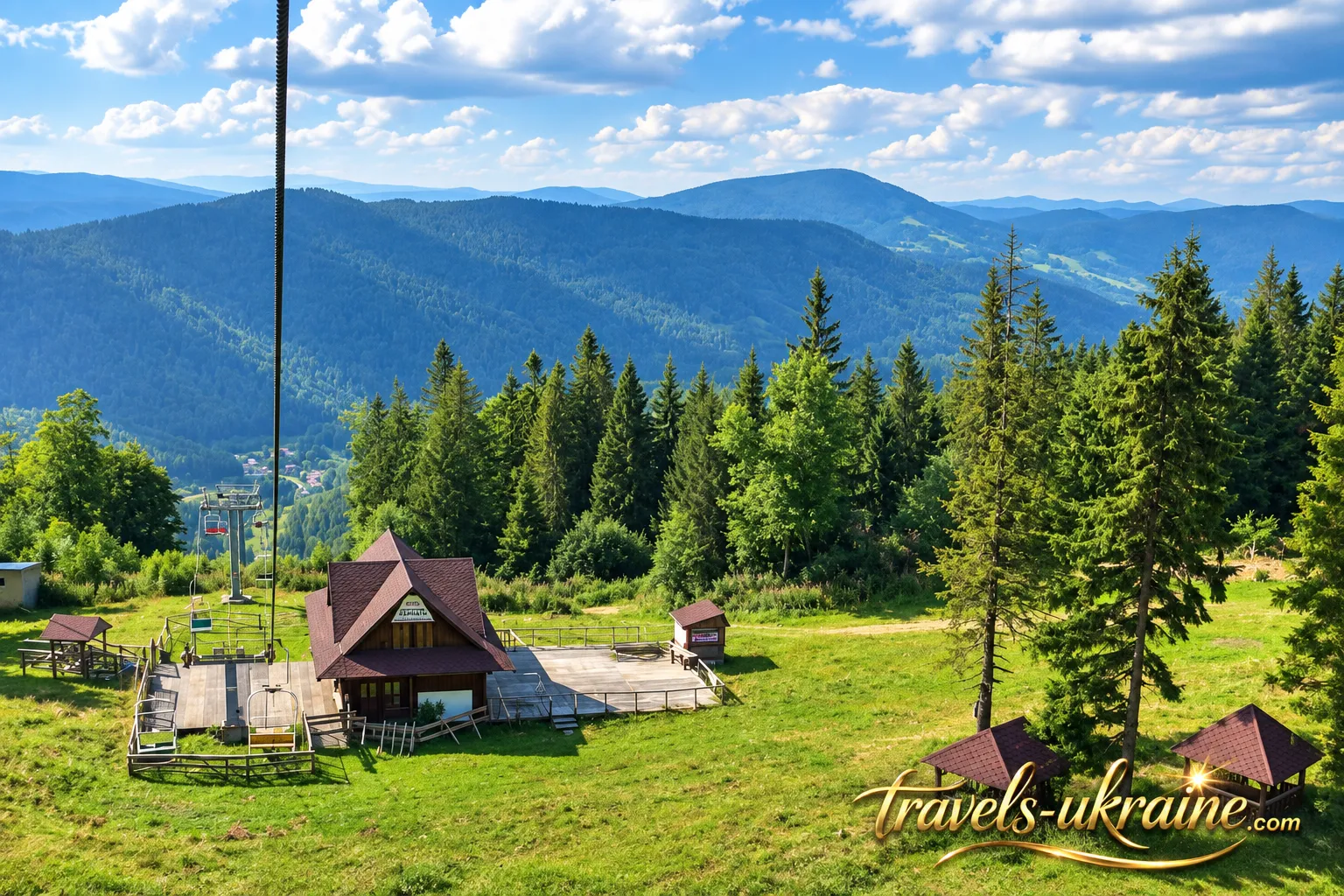
To see the Carpathians from above, you certainly do not have to embark on a several-hour climb every time. A cable car operated by the “Zakhar Berkut” tourist complex is located in the Vysokyi Verkh area and is used for panoramic ascents during the season. Its schedule may change, so it is worth checking the latest information on the complex’s official website before your trip. This is a good option if you want panoramic views without serious physical exertion. As you ascend, the valley gradually remains below, neighboring ridges come into view, and at the top you can take a walk and choose your own spot to relax. Sometimes this is the most honest way to conquer a peak: the mountain is high, the view is real, and your knees do not demand a separate vacation afterward.
Slavske in Winter: Skiing, Snowboarding, and Relaxation in the Snowy Carpathians
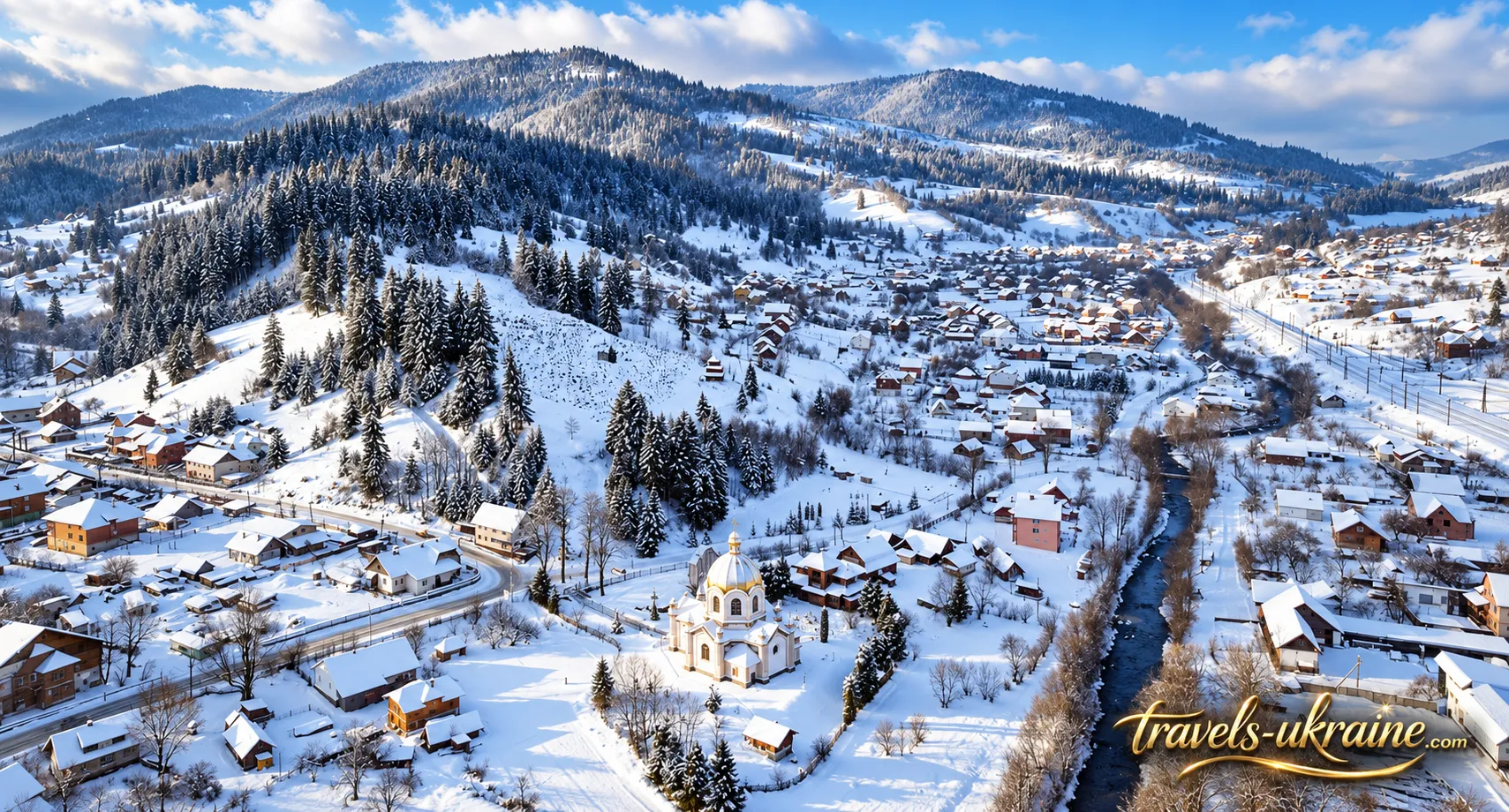
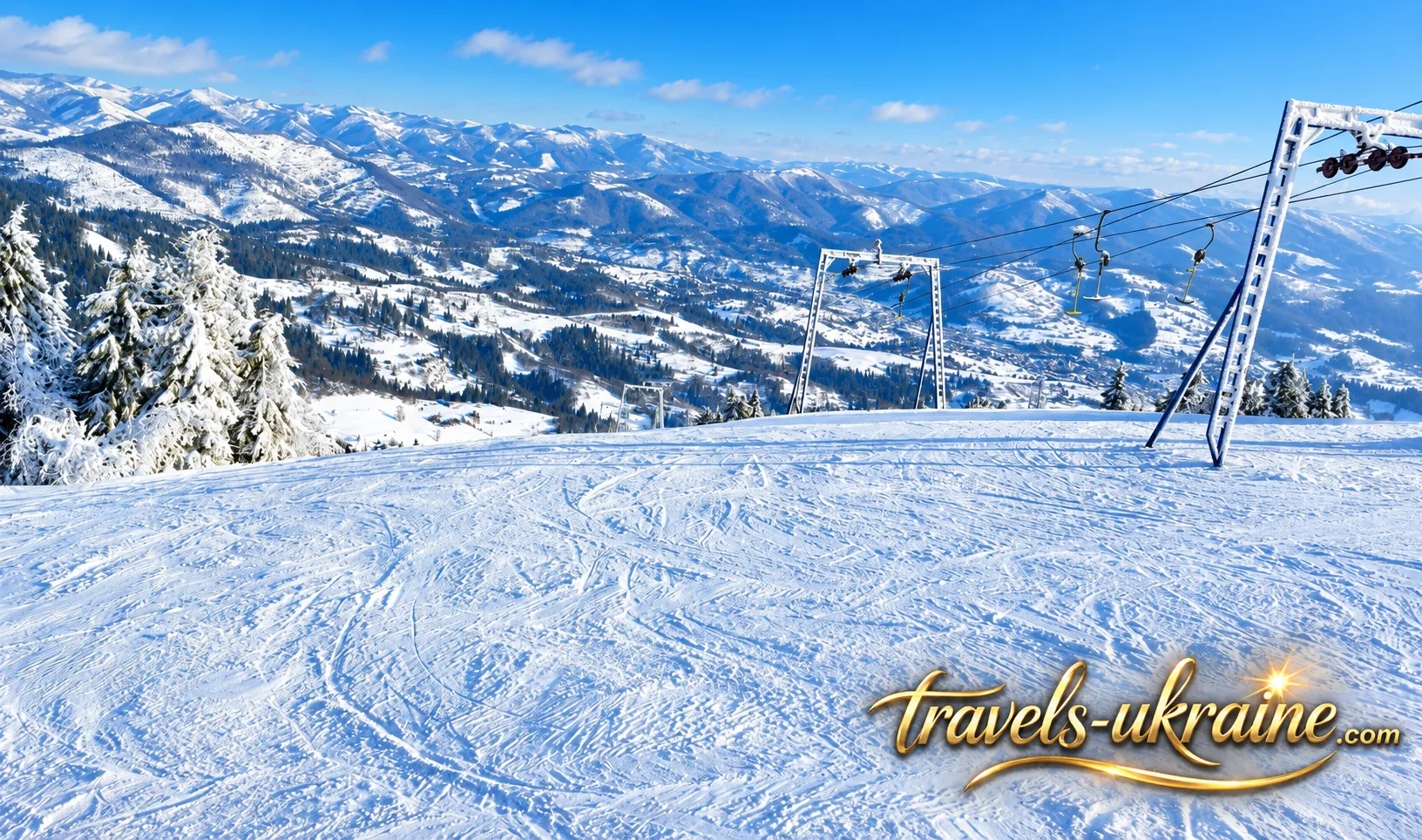
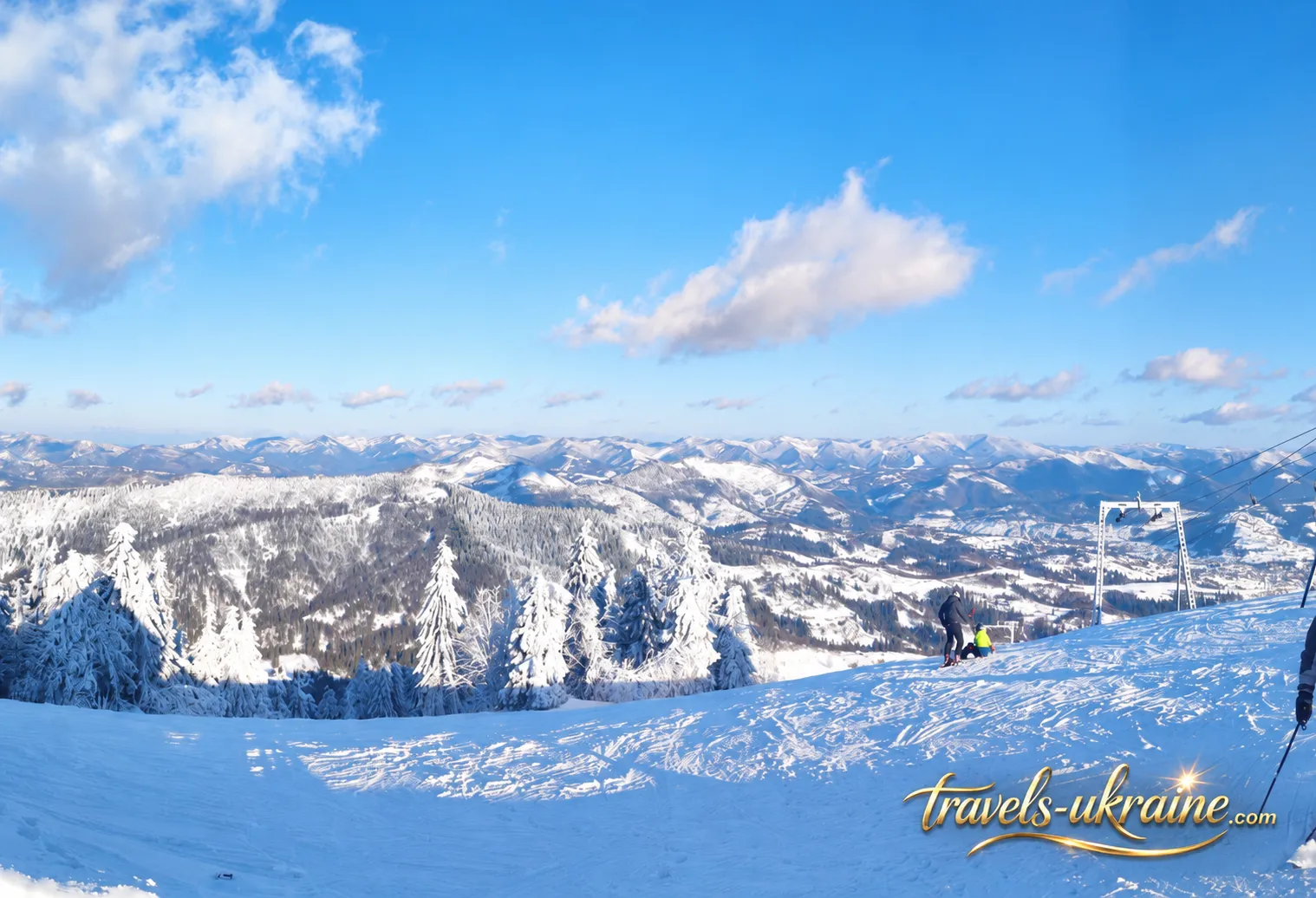
In winter, Slavske changes almost beyond recognition. Green slopes become covered in snow, skis and snowboards appear beside the lifts, and quiet mountain roads become part of a large winter resort. For many tourists, it was skiing that first introduced them to Slavske, and that reputation remains strong to this day.
At the same time, winter in Slavske is not just one mountain or one ski resort. There are several ski areas around the village, each with slopes of a different character, so both first-time skiers and tourists for whom the phrase «steep descent» sounds more like an invitation than a warning can find an option that suits them.
When planning a winter holiday in Slavske, you should not rely solely on the month shown on the calendar. The beginning and duration of the season depend on temperatures, the amount of natural snow, and the condition of specific runs. Even in the middle of winter, different slopes may operate differently, and some lifts may be temporarily closed. That is why, before setting off, it is best to check the latest information directly with the ski resorts: which runs are open, which lifts are operating, and what condition the snow cover is in. In the Carpathians, this is a more useful habit than arguing with the weather forecast. The forecast might still be persuaded, but the mountain probably will not.
Trostian — a Classic of Skiing in Slavske
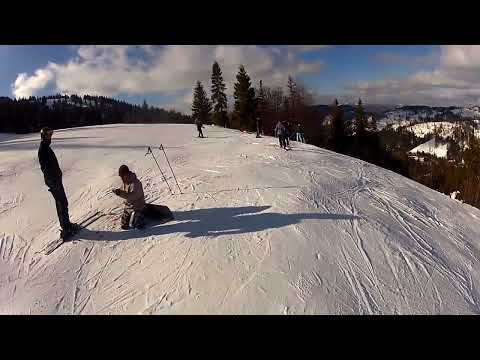
Mount Trostian has long been one of the symbols of wintertime Slavske. It stands 1232 meters high, and its slopes are known for varied terrain and runs of different difficulty levels. This is where people who already have skiing experience often come when they want a wider choice of descents than a small beginner slope can offer.
Trostian is also valued for its atmosphere. There is no feeling of a sterile, purpose-built resort here—the mountain retains its natural character, while its upper sections offer broad panoramas of the Carpathian ridges. Nature has a say here too, however: the condition of the runs depends heavily on snow, weather, and lift operations, so it is best to check current conditions before your trip.
Pohar — Closer to the Center and Without Unnecessary Logistics
Mount Pohar is located near the central part of Slavske, making it one of the most convenient options for those who do not want to spend much time traveling to the slopes. The history of skiing in this area began on Pohar: even in the resort’s early development, the first lift systems operated here.
Today, Pohar appeals with its compact size and convenient location. It is easier to combine skiing here with a walk around Slavske itself, and after your descents you do not need to organize a separate expedition back to the village. For a short winter trip, it is a very practical option.
«Zakhar Berkut» and Vysokyi Verkh
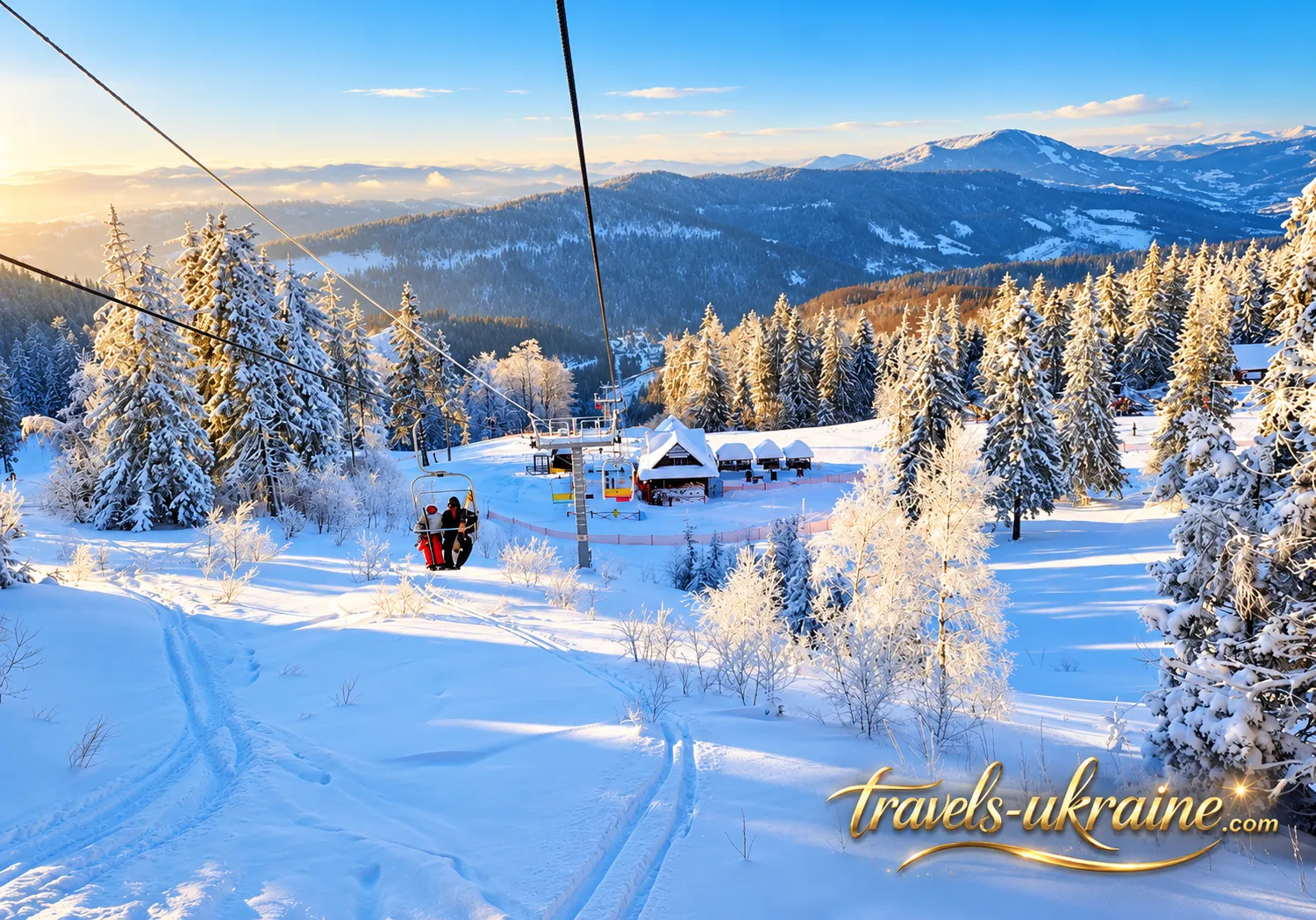
Another well-known winter area is located near the village of Volosianka—the «Zakhar Berkut» tourist complex on the slopes of Vysokyi Verkh. More than nine kilometers of runs of varying difficulty are laid out here, from easier blue runs to red and challenging black runs. There are chairlifts and drag lifts, while beginners have a separate magic carpet lift.
This area is convenient because it allows you to spend almost the entire day without constant transfers: skiing, ascending to higher elevations, views, and tourist facilities are all concentrated in one place. And if you no longer feel like skiing downhill, you can always pretend that you came exclusively to admire the winter Carpathians. The main thing is not to forget to take off your skis before taking a photo.
If You Have Never Skied Before
Slavske is not only suitable for experienced skiers. The resort has equipment-rental points and instructors, while some ski areas offer easier sections and beginner lifts. In particular, the «Zakhar Berkut» complex has runs of various difficulty levels and separate facilities for beginners.
An instructor for your first few hours on the slopes is not an unnecessary luxury. The self-taught method of «I’ll somehow figure it out on the way down» works somewhat less well in the mountains than it seems from beside the rental desk. Even a few basic lessons will help you learn to brake and turn properly—and avoid getting acquainted with the snow more closely than planned.
What to Do in Slavske in Winter If Skiing Is Not Your Thing
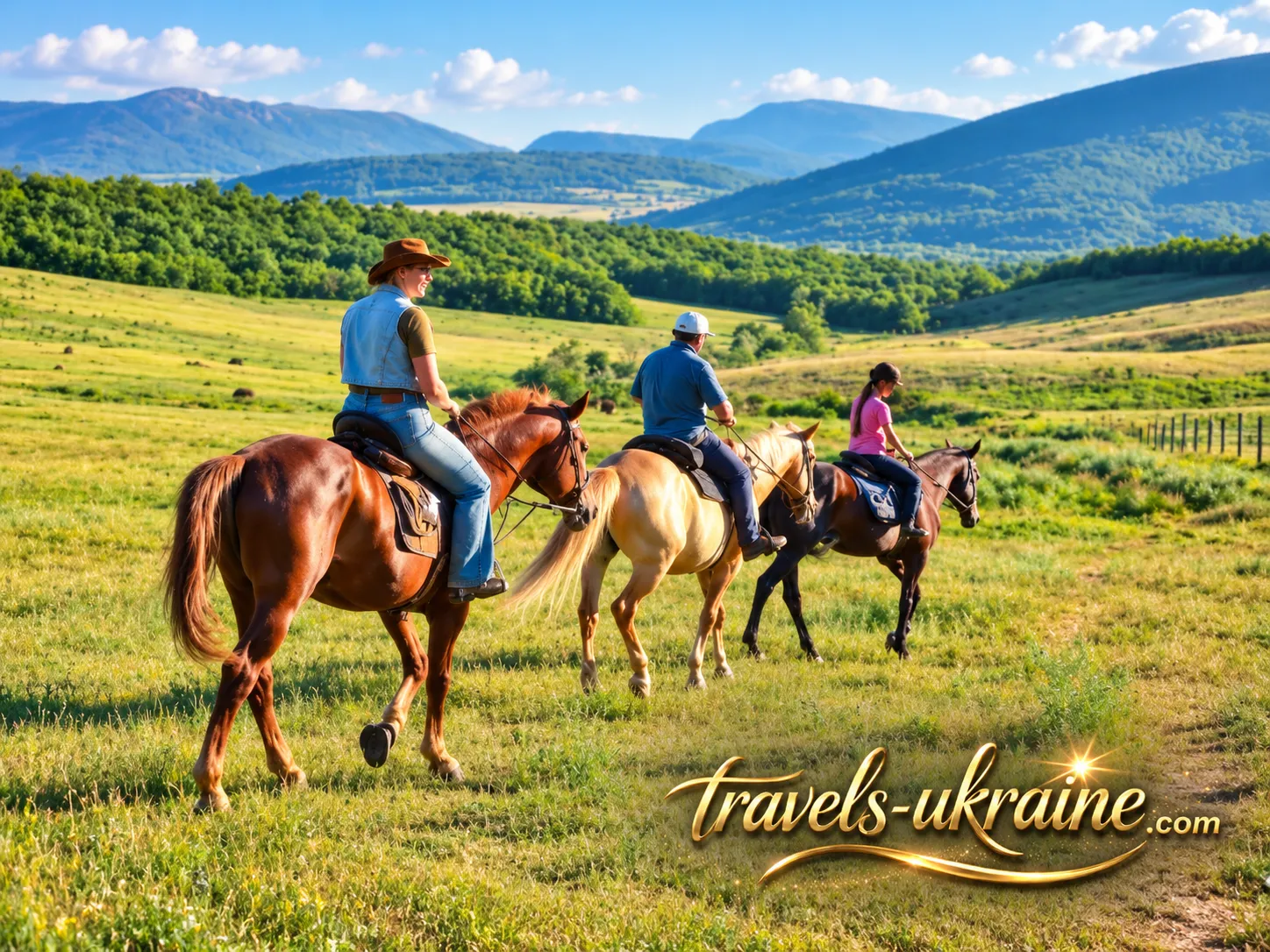
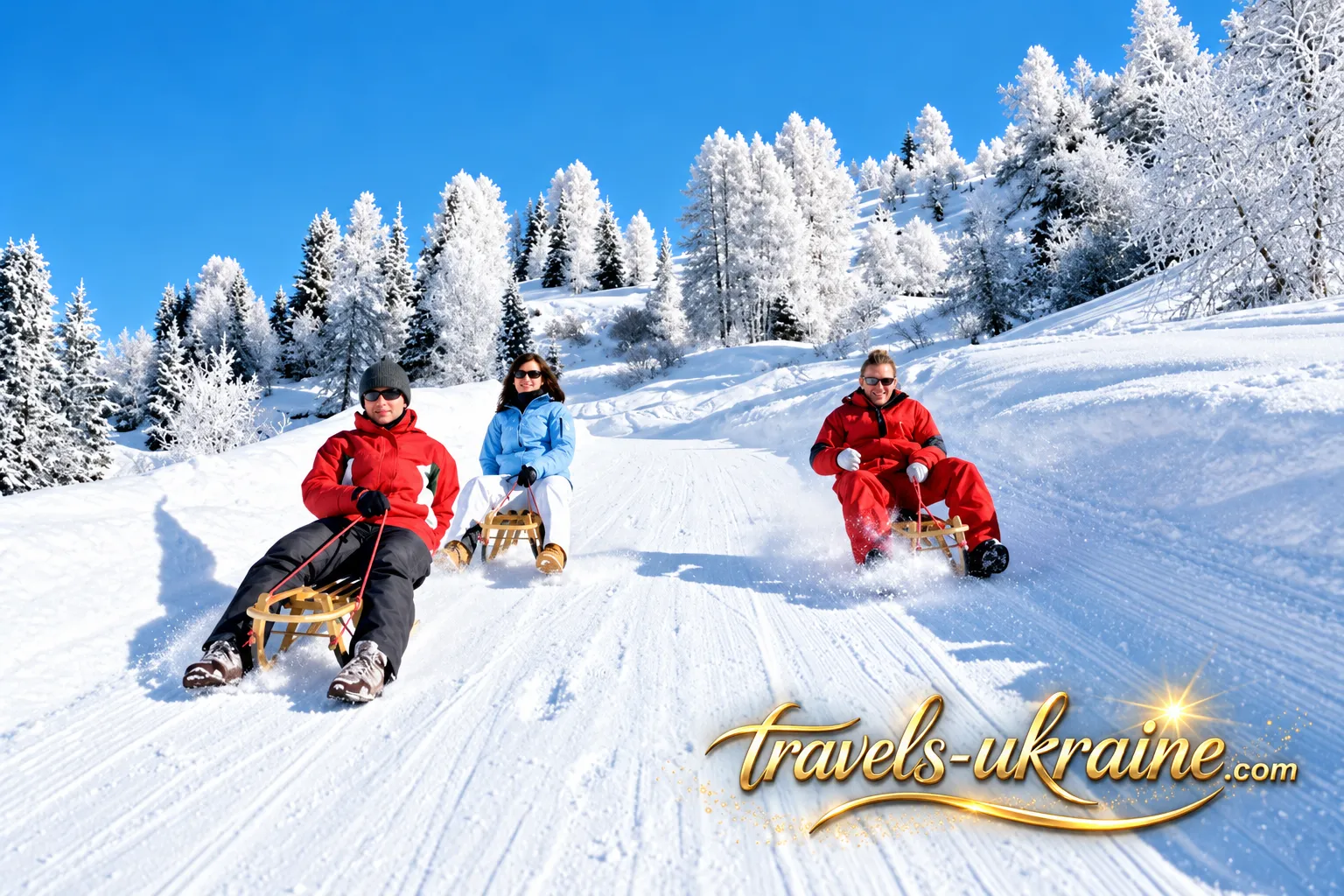
A winter holiday in Slavske does not have to begin with renting skis. You can ride a sled or snow tube, take a snowmobile trip, ride a cable car for winter panoramas, or simply walk through the snowy surroundings. Those looking for more Carpathian atmosphere can enjoy horseback rides and horse-drawn sleigh rides in the area. After several hours in the cold, another type of Carpathian sport works well too: slowly easing into a hot tub. There are plenty of guesthouses and complexes with hot tubs, saunas, and relaxation areas in Slavske and the surrounding villages. Here, no one times the speed of your descent or counts the kilometers of your route—the main thing is deciding in time whether you want to get out at all.
And if you want the most peaceful day possible, you can simply leave the skis at the rental shop for someone else, take a walk around the village, find a kolyba serving hot food, and look at the snowy slopes from the sidelines. Sometimes that is even more enjoyable than proving to the mountain which of you is better at staying on your feet.
How to Get to Slavske and Where to Stay
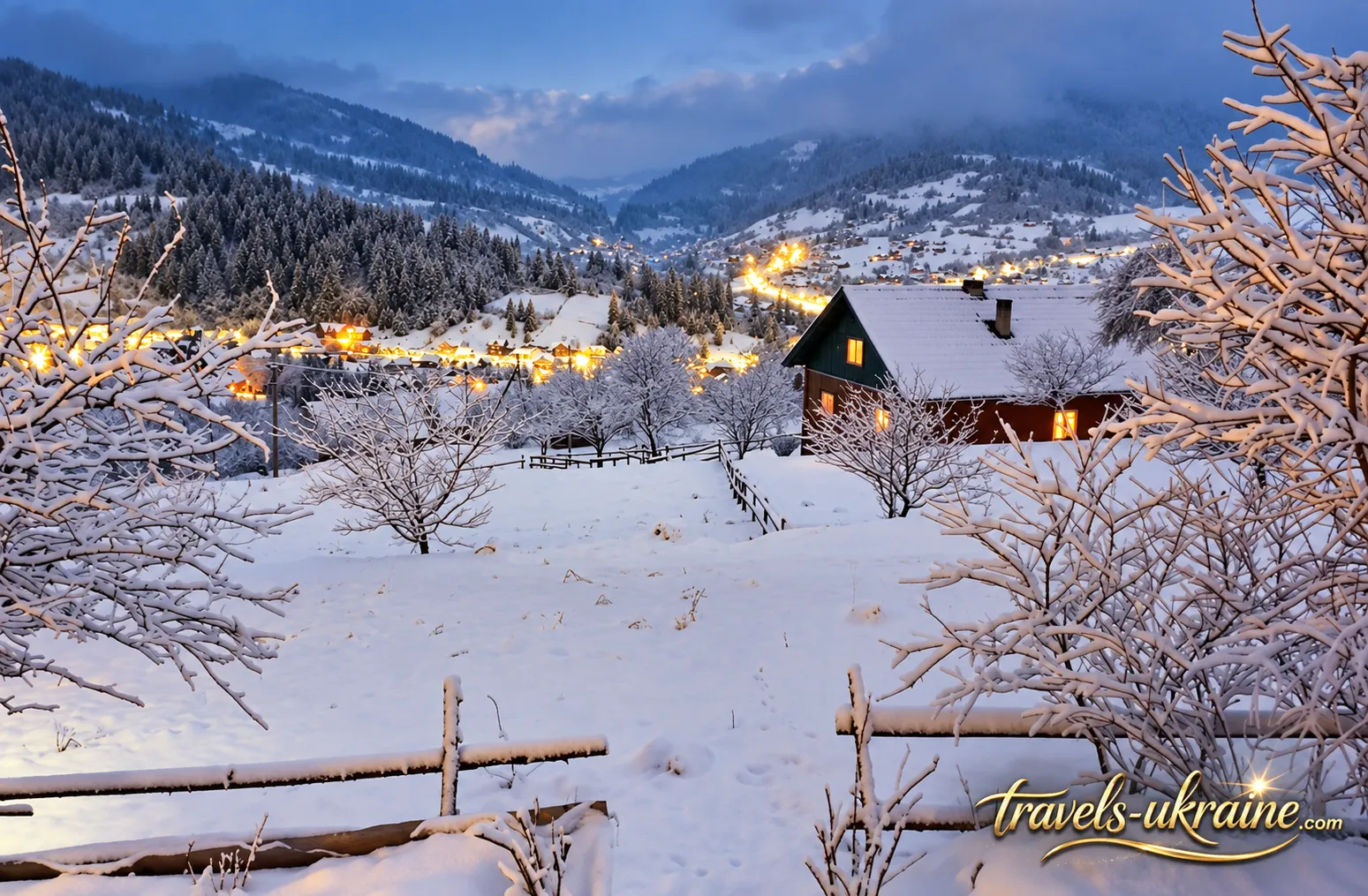
One of the major advantages of Slavske is that you do not necessarily need to drive your own car or look for a complicated transfer across half the Carpathians. The village has a railway station, and the tracks run right through the resort. You can therefore step off the train almost in the middle of the mountains and, within a few minutes, see mountain slopes instead of a platform. For a tourist resort, this is a genuinely important advantage. A car gives you more freedom to explore the surrounding area, but if you plan to spend several days in Slavske itself, the railway is often the easiest way to get here. It also has one undeniable advantage: on the way, you can look out of the window at the Carpathians instead of searching for the next pothole or bend.
How to Get to Slavske by Car
If you are traveling by car from Lviv, the route usually runs toward Stryi and Skole, after which the road continues toward Slavske. Having your own car is particularly convenient if you plan to visit not only the resort itself but also Volosianka, Tukhlya, Skole, Tustan, or other interesting places in the surrounding area.
In the warmer season, this journey usually presents no particular difficulties, but in winter it is worth paying closer attention to the weather. Snowfall, icy conditions, and mountain roads can quickly change the usual pace of a trip, so winter tires are not a matter for debate here but an entirely practical necessity.
Where to Stay in Slavske
There are many accommodation options in Slavske: private guesthouses, cottages, apartments, small hotels, and larger tourist complexes. But instead of searching for some abstract «best hotel,» it is more useful to first decide what exactly you plan to do during your trip. If your priorities are walks around Slavske itself, train travel, and the ability to manage without a car, it is convenient to stay closer to the center and railway station. There are more shops, dining establishments, and amenities nearby, and after arriving you will not have to immediately look for transport to your accommodation.
Those coming primarily for outdoor activities may find it more convenient to look for accommodation closer to their chosen mountain area. In winter, this means spending less time traveling to the lifts, while in summer it lets you reach the start of hiking routes more quickly. Another option is staying in Volosianka, near the «Zakhar Berkut» complex and Vysokyi Verkh. Here, the feeling of staying directly among the mountains is stronger, although you will need transport to reach central Slavske.
What to Check Before Booking
In the Carpathians, distances on a map sometimes behave suspiciously. The phrase «800 meters to the lift» sounds wonderful until you discover that half of those meters are uphill. So before booking, it is worth looking at more than just photos of the room: check the exact location of the accommodation, access road, distance to the place you need, and whether parking is available.
In winter, it is also useful to ask about the condition of the road to the guesthouse and whether the hosts provide transfers to the slopes. In summer, proximity to trails, a place to store a bicycle, or the ability to simply step out of the yard and head straight into the mountains may be more important.
And most importantly, you do not necessarily have to stay where it is most expensive or closest to the lift. In Slavske, it can sometimes be worth traveling a little farther from the busiest places to get what many people come to the Carpathians for: quiet, a view from the window, and a morning with nowhere you need to hurry.
What to See Near Slavske: Where to Go for a Day Trip
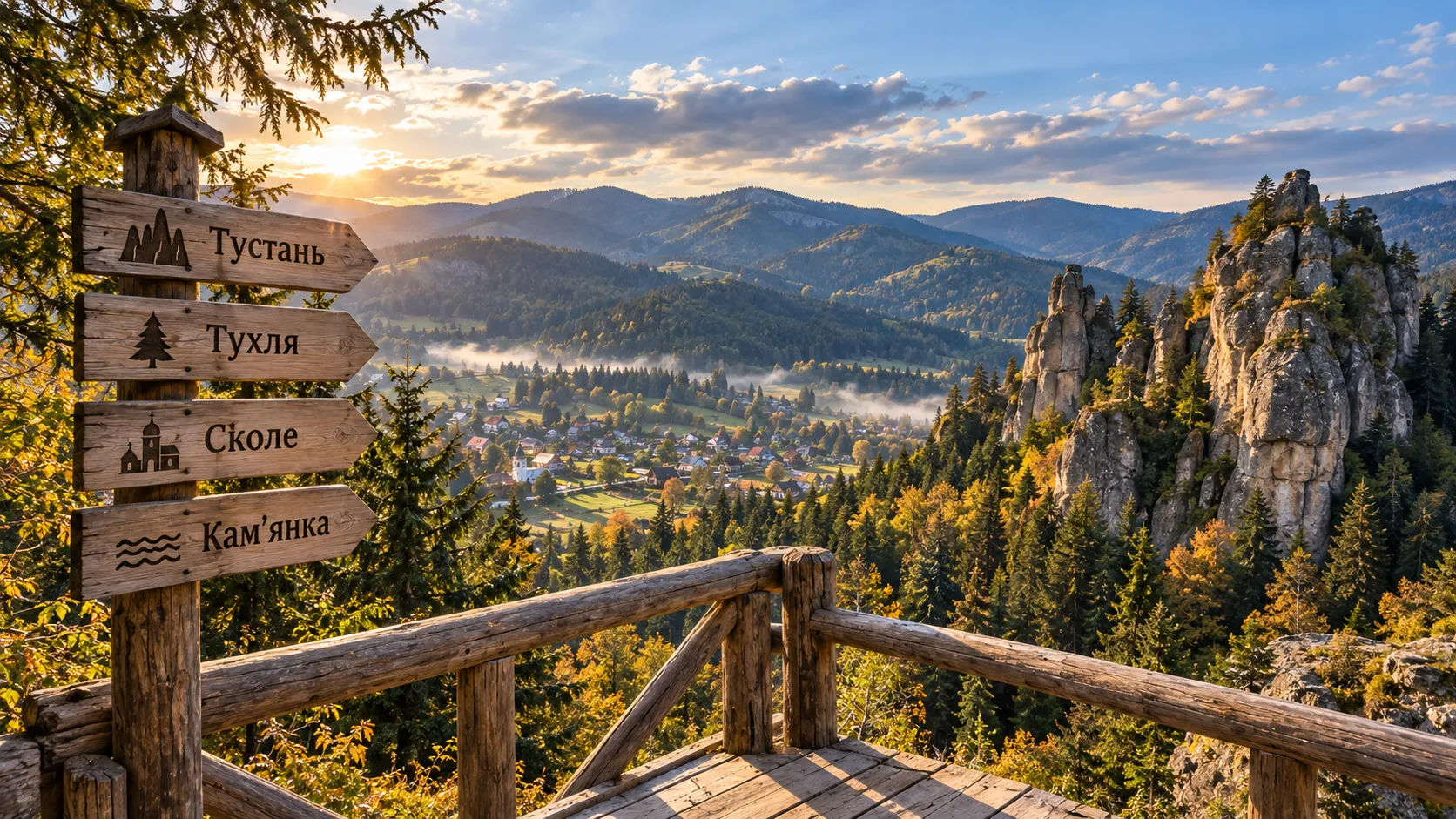
If you have already seen Slavske itself from below, above, and somewhere halfway up a mountain slope, there is no need to head home just yet. There are enough interesting places around the resort to extend your trip by another day or two: the medieval rocks of Tustan, the waterfalls of Skole Beskids, the old town of Skole, and the small village of Tukhlya, whose name has long traveled far beyond its own Carpathian valley.
Some of these locations are convenient to combine into a single road trip, while others are better saved for a separate day. Slavske has another advantage here: it can be not only the final destination of your route but also a good base for exploring the Skole Beskids.
Tukhlya — Where the History of «Zakhar Berkut» Comes Alive
Just a short distance from Slavske lies Tukhlya—an old Carpathian village in the Opir Valley, which most Ukrainians primarily know thanks to Ivan Franko. It was here that the writer set the events of the historical novella «Zakhar Berkut», and the area remains closely connected with this story to this day.
Tukhlya is unlikely to require a whole day, but it fits perfectly into a route around the area. It is simply pleasant to drive through the valley, see the mountains from a different perspective, and experience the Carpathians not as a resort but as a place where people have lived between the ridges for many generations. After Slavske, the difference is especially noticeable: there is less tourist bustle, but certainly no fewer mountains.
Tustan—The Fortress Partly Built by the Rock Itself
If you are choosing one location near Slavske that is worth getting in the car for, Tustan will be among the leading candidates. Near the village of Urych, among enormous sandstone cliffs, there was once a wooden fortress—a defensive and customs post on important trade routes.
The wooden structures have long disappeared, but thousands of recesses and cutouts remain in the rocks, allowing researchers to reconstruct what the ancient fortress looked like. Today, you can follow the route around the cliffs, climb to viewing points, and try to imagine how multi-level wooden fortifications towered amid this stone labyrinth several centuries ago. The national park also has a separate tourist trail, «Along the Paths of Legendary Tustan», about 3.5 km long.
And this is where a phone photo loses out to reality: the scale of the cliffs is best understood when you stand below them and start wondering who first looked up and decided, «This would be a pretty good place for a fortress.»
Skole and Skole Beskids National Park
The town of Skole makes a good additional stop along the way. The town itself is small, but around it begins the vast territory of Skole Beskids National Nature Park, with tourist trails, forests, mountain streams, waterfalls, and natural viewpoints.
The park encompasses dozens of natural attractions and has a network of marked hiking trails. Among the best-known places are Kam’ianka Waterfall, Zhuravlyne Lake, Gurkalo Waterfall, and numerous routes to the mountain ridges. So if, after a few days in Slavske, you suddenly feel that you have had enough of the Carpathians, Skole Beskids can quickly convince you otherwise.
How to Plan a Route Around Slavske
There is no need to try to see everything in a single day. If time is limited, you can choose Tukhlya and Tustan for a historical route, or head toward Skole and Kam’ianka Waterfall, focusing on nature. If you have a car and several days free, it is better to split these routes up—then the trip will not turn into the traditional tourist sport of «get out, take a photo, move on.» Slavske is convenient precisely as a starting point. Today, you can stay among its mountains, tomorrow drive to medieval Tustan, and the next day look for waterfalls in the forests of Skole Beskids. And the Carpathians will be slightly different each time.
Frequently Asked Questions About Holidays in Slavske
Where is Slavske located?
Slavske is located in Stryi Raion, Lviv Oblast, among the ridges of the Skole Beskids. The settlement lies in a mountain valley and has its own railway station, making it one of the most convenient Carpathian resorts to visit without a car.
What can you do in Slavske in summer?
In the warmer months, you can go on a mountain hike, explore cycling routes, climb to viewpoints, or take a panoramic lift. Popular destinations include Ilsa, Pohar, Trostian, Vysokyi Verkh, and other peaks of the Skole Beskids.
Where can you ski and snowboard in Slavske?
The best-known ski areas include Trostian, Pohar, and the Vysokyi Verkh area near Volosianka. The slopes differ in terrain, trail difficulty, and infrastructure, so before your trip it is worth checking snow conditions, lift operations, and the availability of specific trails.
What can you do in Slavske in winter if you do not ski?
A winter holiday in Slavske is not limited to skiing. You can ride a sled or snow tube, go snowmobiling, take a cable car, explore the snowy surroundings or spend a few hours in a hot tub or sauna.
What is the most convenient way to get to Slavske?
One of the most convenient options is the train, as the railway station is located right in Slavske. A car is more practical if you plan to explore the surrounding area actively—to Volosianka, Tukhlya, Skole, Tustan, and other tourist destinations in the Skole Beskids.
Where is the best place to stay in Slavske?
If you are traveling without a car, it is convenient to look for accommodation closer to the center and railway station. For an active holiday, you can choose a guesthouse, cottage, or hotel closer to the mountain area you need. Before booking, it is worth checking not only the distance on the map but also the actual road access and elevation change.
Is Slavske suitable for a holiday with children?
Yes. For a family holiday, you can choose easy walks, panoramic lifts, simple routes, and winter activities without challenging slopes. During mountain hikes, be sure to consider the children’s age, weather, route length, and elevation change.
What can you see near Slavske?
The most interesting nearby places include Tukhlya, Tustan, Skole, Skole Beskids National Nature Park, and Kam’ianka Waterfall. If you have a car, Slavske is a convenient base for several day trips through the Carpathians.
Slavske—A Resort That Does Not Depend on the Season
Slavske in the Carpathians has long outgrown the image of a resort visited only for its winter slopes. Yes, skiing and snowboarding remain an important part of the local atmosphere, but the true strength of this place lies in its versatility. In summer, hiking and cycling routes open up; in autumn, the Carpathians become especially quiet, misty, and colorful; in spring, the forests and mountain streams come alive; and in winter, everything once again shifts into a world of snow, lifts, frosty air, and hot tea after several hours on the slope.
Slavske is ideal for those who do not want to build their holiday around one particular activity. Today, you can climb high into the mountains and look at ridges disappearing somewhere beyond the horizon; tomorrow, spend a few hours on the slopes, drive to Tustan or Skole, and the day after that make no plans at all. Simply step out for a morning walk, turn onto an unfamiliar road, stop for coffee, listen to the sound of the river, and linger on a hillside longer than you intended.
That, perhaps, is Slavske’s true character. It does not try to prove every minute that there is something you absolutely must see, photograph, or fit in. On the contrary, the urge to hurry somewhere disappears rather quickly here. The surrounding mountains, the smell of the forest, cool evenings, mist between the peaks, and that special Carpathian feeling when even an ordinary walk suddenly becomes part of the journey.
And the longer you see this place not as another point on a tourist map but as somewhere you can spend several days at your own pace, the more you want to come here yourself. Not for one particular lift, route, or summit photo. Simply to wake up among the Carpathians one morning, open the window, see the mountains, and decide: where to today?
Perhaps you will not even need an answer. Because in Slavske, sometimes it is enough simply to step outside—and the Carpathians will take care of the rest.
No Comment
You can post first response comment.