
 English
 Українська
 Русский

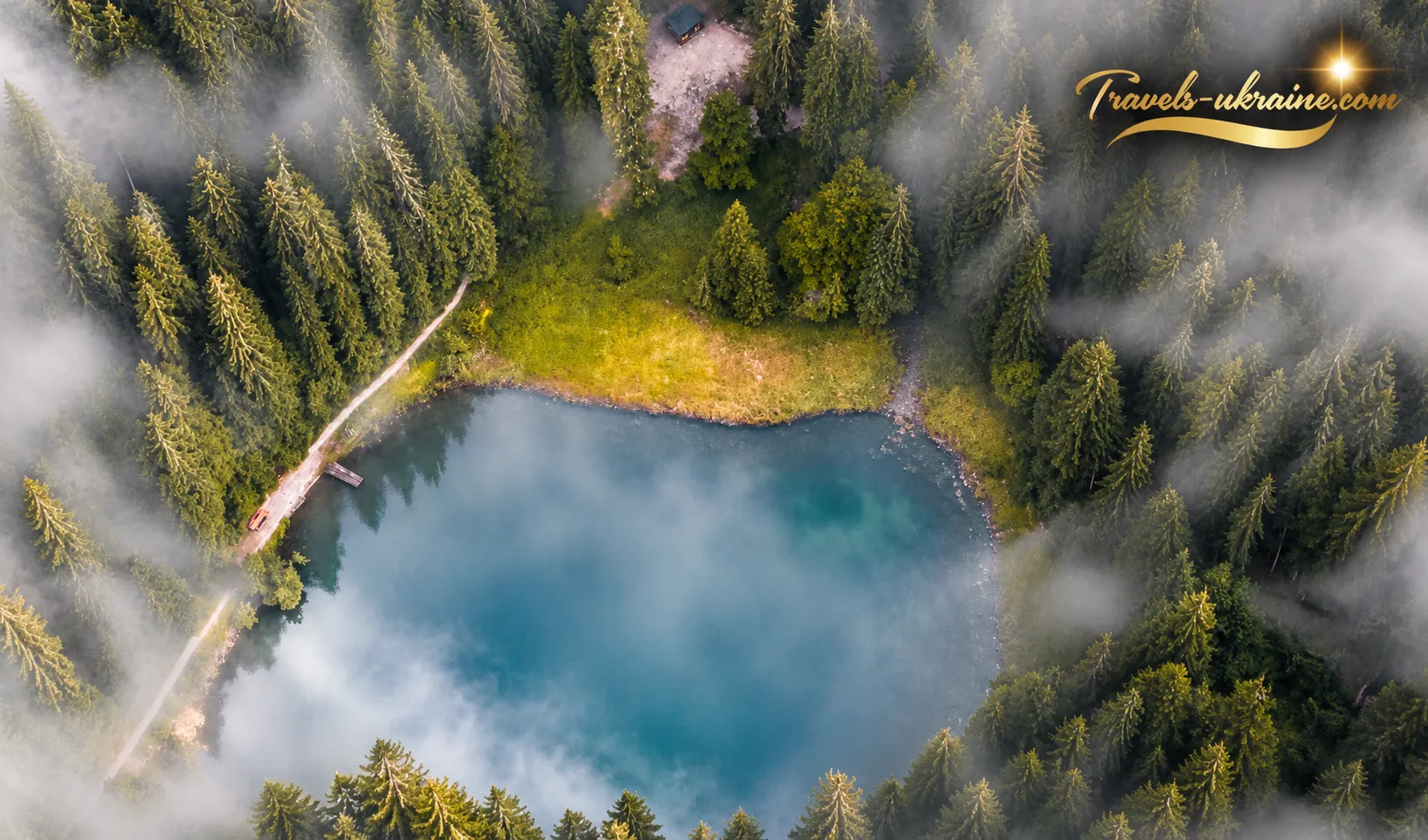
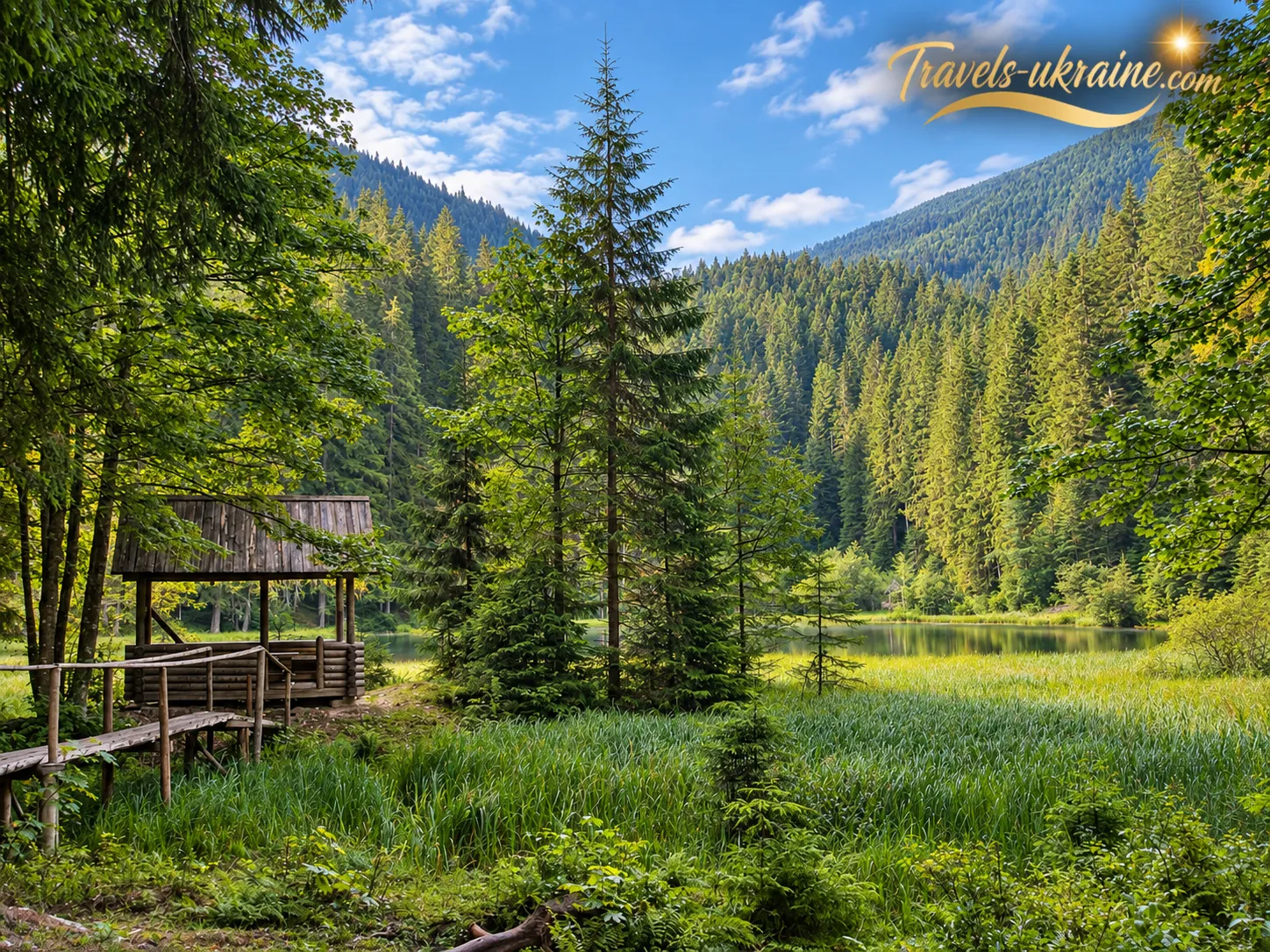
Hidden among the forests of the Bukovinian Carpathians lies a small and mysterious lake known as Mountain Eye Lake (Hirske Oko), also called the Bukovinian Eye or Carpathian Eye. Located in the Yalovychory Mountains near the village of Nyzhnii Yalovets, it is one of those hidden corners of the Carpathians where the journey to the destination becomes an adventure in itself.
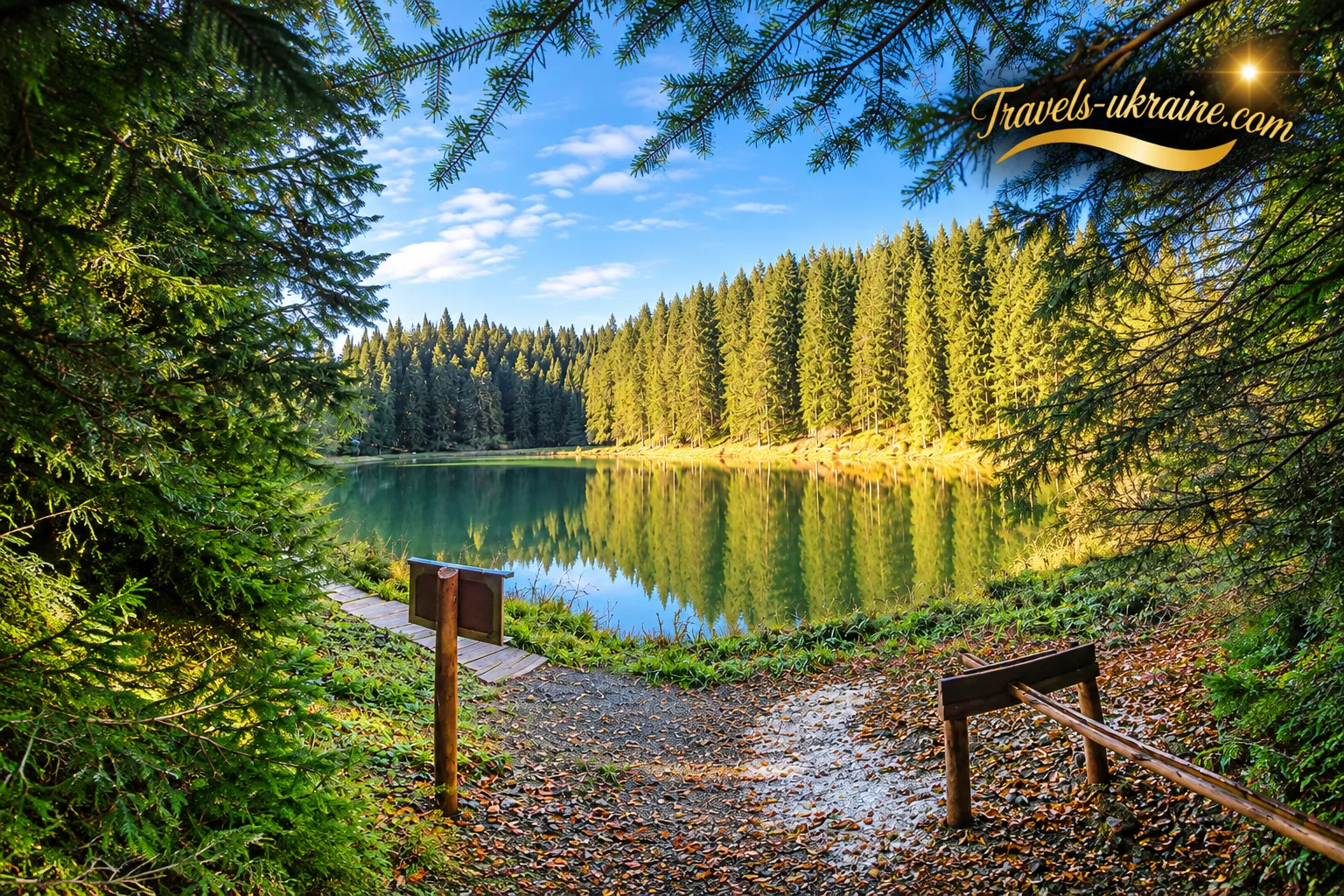
Viewed from above, the lake truly resembles a large, dark eye surrounded by dense Carpathian forest. Its calm waters, trees growing almost to the water's edge, and remote location far from major tourist centres create a unique atmosphere. Unlike the popular high-altitude lakes of the Chornohora mountain range, Mountain Eye Lake in Bukovina remains a much quieter and less crowded natural destination.
But the lake's most fascinating secrets lie not in its surroundings, but beneath its surface. Its formation is linked to a natural landslide, submerged trees remain hidden underwater, and estimates of its maximum depth still vary. Even during the warmer months, the water stays remarkably cold, so the temptation to test its temperature for yourself usually disappears faster than you can take off your shoes. And when you peer into the dark water and spot tree trunks beneath the surface, your imagination immediately starts working harder than a GPS navigating mountain roads. It's hardly surprising that these unusual features have inspired numerous legends and unanswered questions — questions that Mountain Eye Lake seems in no hurry to answer.
Mountain Eye Lake in the Bukovinian Carpathians: Location and Unique Features
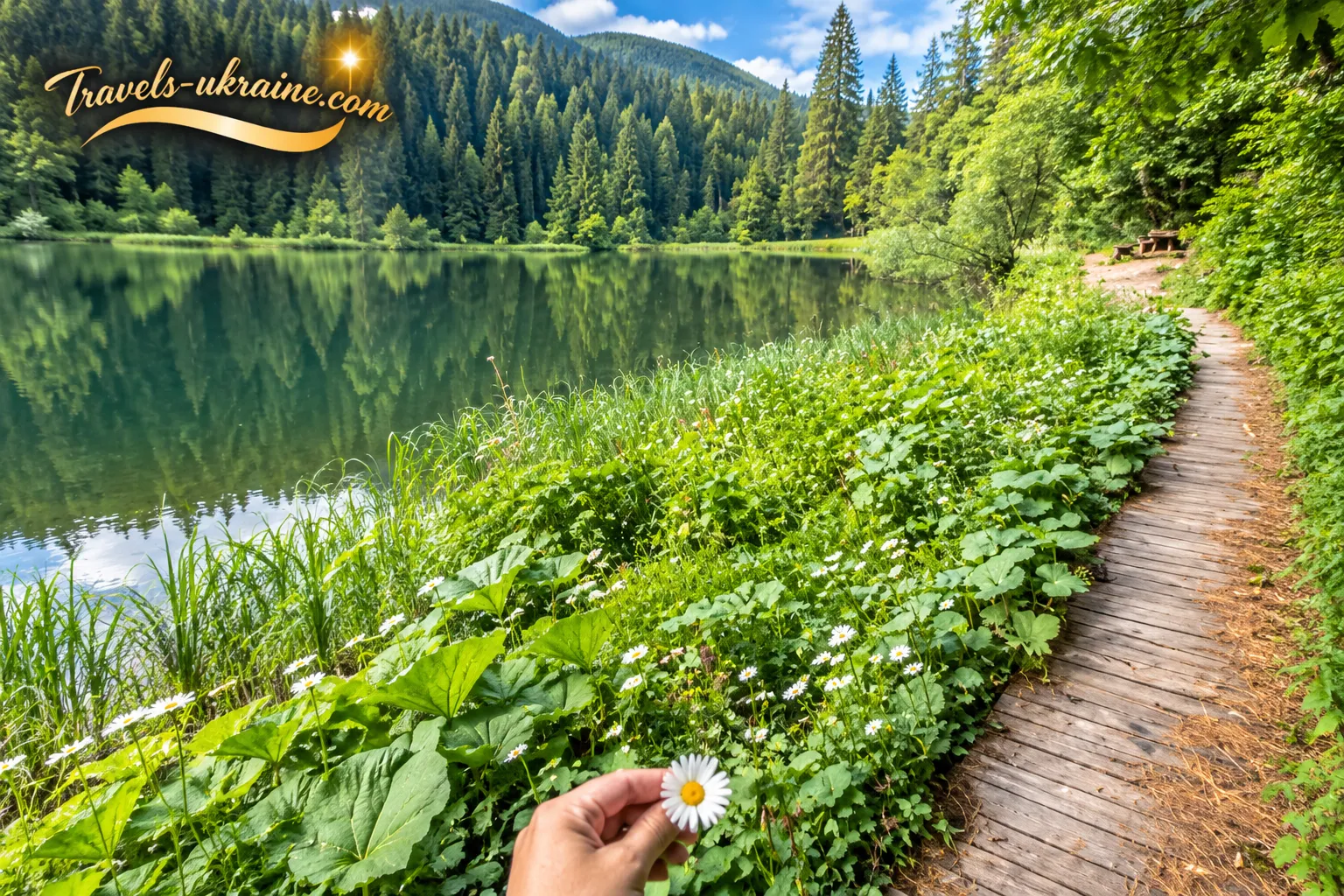
This picturesque mountain lake is located in the Yalovychory Mountains, approximately one and a half kilometres east of the centre of Nyzhnii Yalovets village, within a protected natural area managed by the State Enterprise "Putyla Forestry". The lake lies at an altitude of around 1,000 metres above sea level, surrounded by dense Carpathian forest and far from major resorts, hotel complexes, and the usual crowds of tourists.
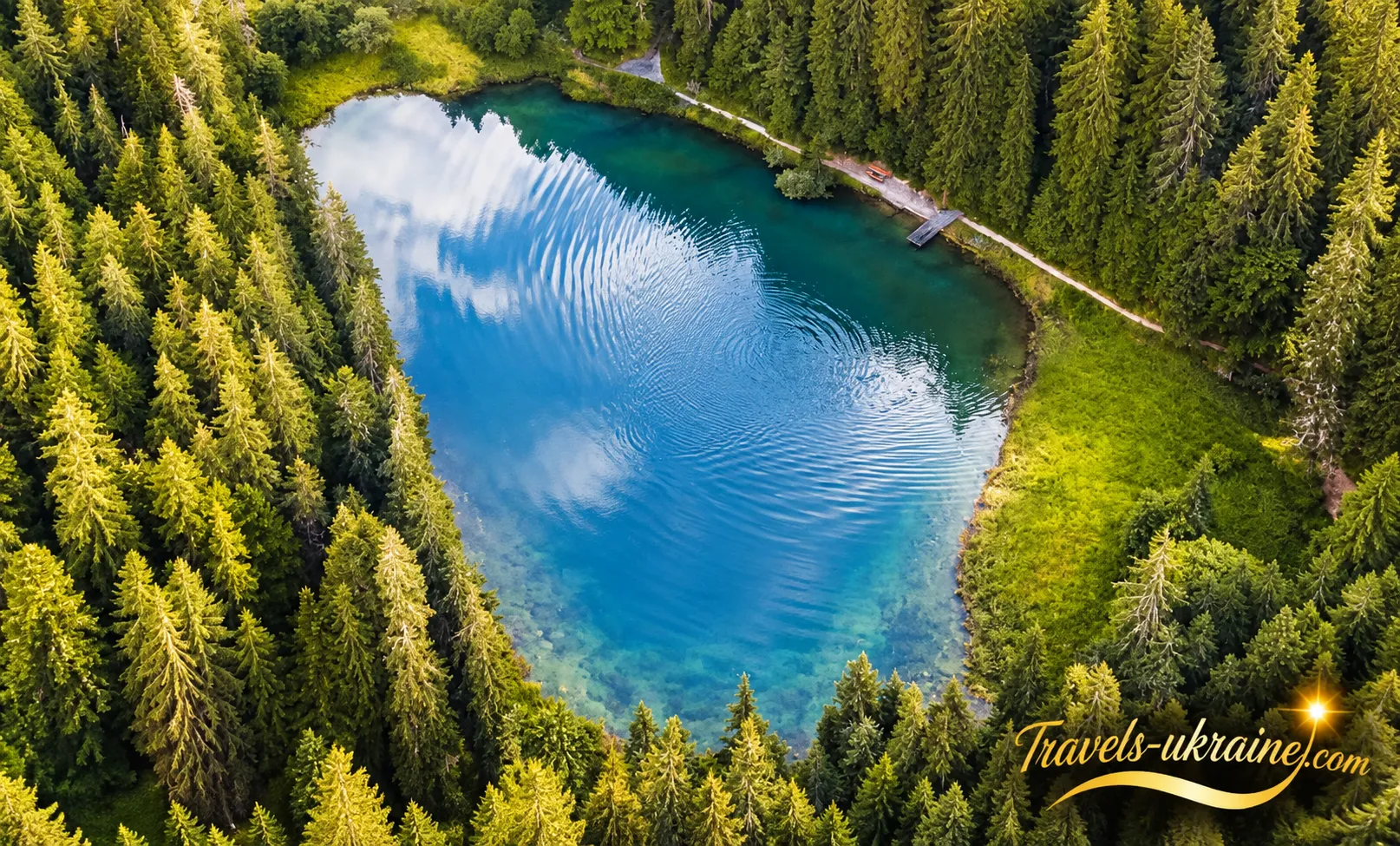
Mountain Eye Lake is relatively small, measuring approximately 100 metres in length and 70 metres in width. But this is one of those places where size has little to do with the impression it leaves. Surrounded by trees on almost every side, its dark water surface really does resemble an eye peering out from the green slopes of the Carpathian Mountains when viewed from above.
A Mountain Lake Far from the Tourist Crowds
One of the defining characteristics of Bukovinian Eye Lake is its remote location. You won't find buses arriving with dozens of tourists, a lakeside promenade lined with cafés, souvenir stalls, or queues of visitors waiting to take identical photographs. Instead, there's forest, fresh mountain air, silence, and a road that reminds you that the most fascinating places in the Carpathians aren't always located beside a paved highway.
Mountain Eye Lake has the status of a hydrological natural monument of local significance. The lake forms part of the wild Carpathian environment and is one of the most interesting destinations along hiking and travel routes for those exploring the more remote parts of the Bukovinian Mountains. Here, you quickly realise that the word "remote" is no exaggeration in the Carpathians. Your mobile signal may disappear before you even think about checking the map, and a good pair of hiking boots suddenly becomes far more important than the number of megapixels in your smartphone camera. But the reward is well worth the journey — peace, forest, and scenery that makes you want to stay much longer than planned.
Yet the lake's beauty is only half the story. Things become even more intriguing when a simple question comes to mind: what lies beneath these calm, dark waters? This is where Mountain Eye Lake becomes more than just another picturesque Carpathian lake — it turns into a place with a natural mystery of its own.
How Mountain Eye Lake Was Formed: Cold Waters and the Mystery of Its Depth
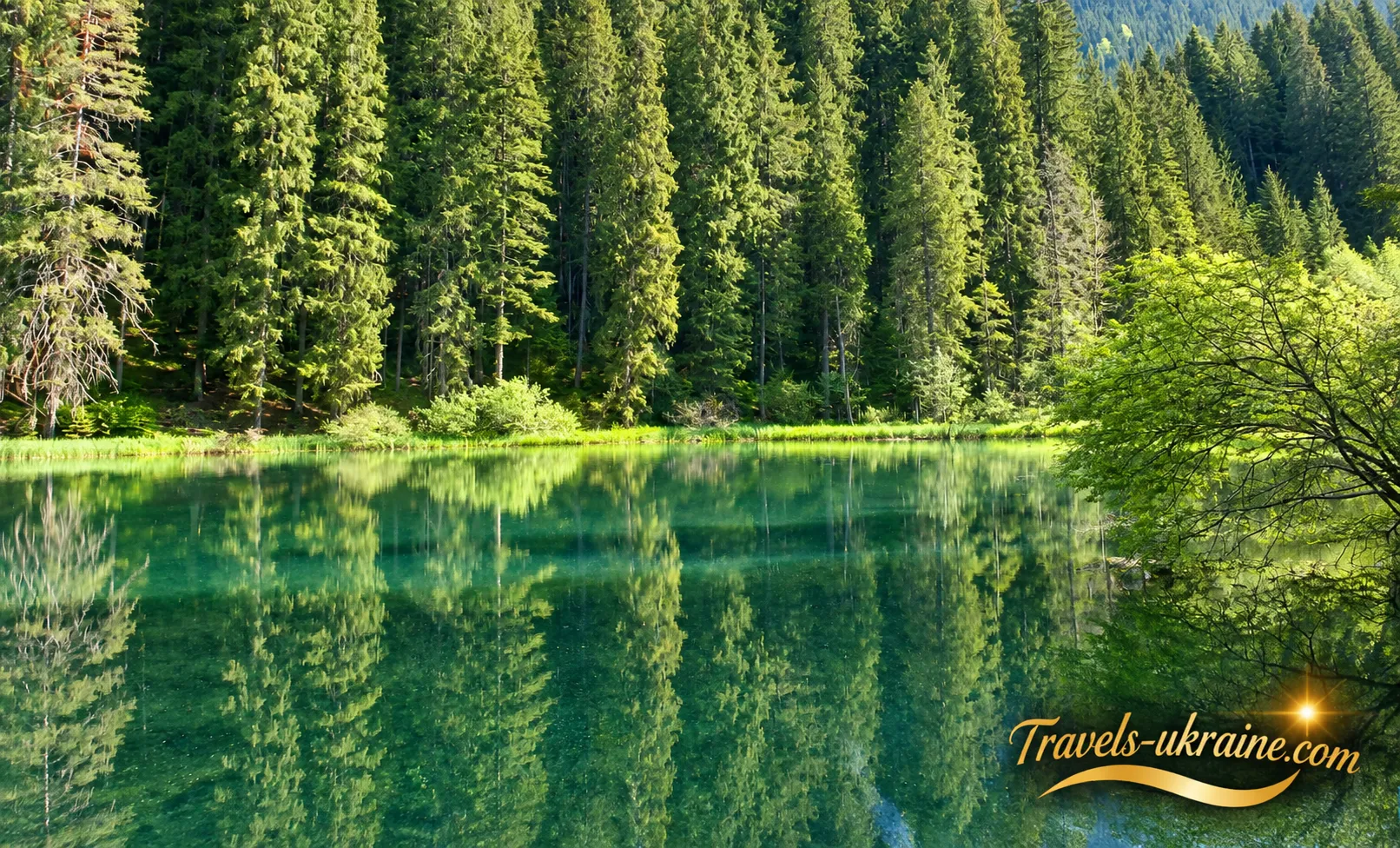
Mountain Eye Lake, also known as Carpathian Eye, owes its existence neither to a glacier nor to a man-made dam. The lake was formed by a landslide involving clay-rich rock and soil, which blocked the course of a small mountain stream — a tributary of the Yalovychora River. Water gradually filled the natural depression, submerging some of the trees that had been growing in the area.
These submerged trees have become one of the most fascinating features of Bukovinian Eye Lake. Beneath the calm surface lie large tree trunks and branches, scattered irregularly at different depths. Their presence makes exploring the lakebed difficult, which is one reason why estimates of Mountain Eye Lake's maximum depth still vary — from approximately 6 to 12 metres. It would therefore be misleading to treat any single figure as definitively established. In this respect, the lake certainly lives up to its mysterious reputation: it may keep a watchful eye on visitors, but it seems in no hurry to reveal everything hidden beneath its waters.
Why Does the Water Stay Cold Even in Summer?
Another distinctive feature of the lake is its extremely cold water. Even when air temperatures are high, the water reportedly rarely warms above 12–14°C, according to local conservation authorities. As a result, photographing Mountain Eye Lake is usually far more comfortable than testing the water temperature yourself. After taking just one step into the lake, most visitors suddenly remember that they came here primarily to admire the scenery.
Interestingly, winter conditions can be just as unusual. Because water flows into the lake from relatively warmer mountain streams, some sections of its surface may remain unfrozen even when the surrounding forest is already covered in snow.
The Legend of Bukovinian Eye Lake
Of course, a place this mysterious wouldn't be complete without a local legend. According to one traditional tale, anyone who washes themselves from head to toe in the waters of Mountain Eye Lake will enjoy success in their endeavours and happiness in life. It's difficult to say how effective Carpathian magic really is, but one thing is certain: completing such a ritual would require considerable willpower, as the water remains far from pleasantly warm even in summer.
The combination of its natural origins, submerged trees, icy waters, and uncertain depth makes Mountain Eye Lake in Bukovina far more intriguing than an ordinary scenic lake hidden in the forest. It's a place where the natural beauty of the Carpathians comes with a touch of mystery — one that nature has yet to fully reveal.
How to Get to Mountain Eye Lake: Travel Route and Visitor Tips
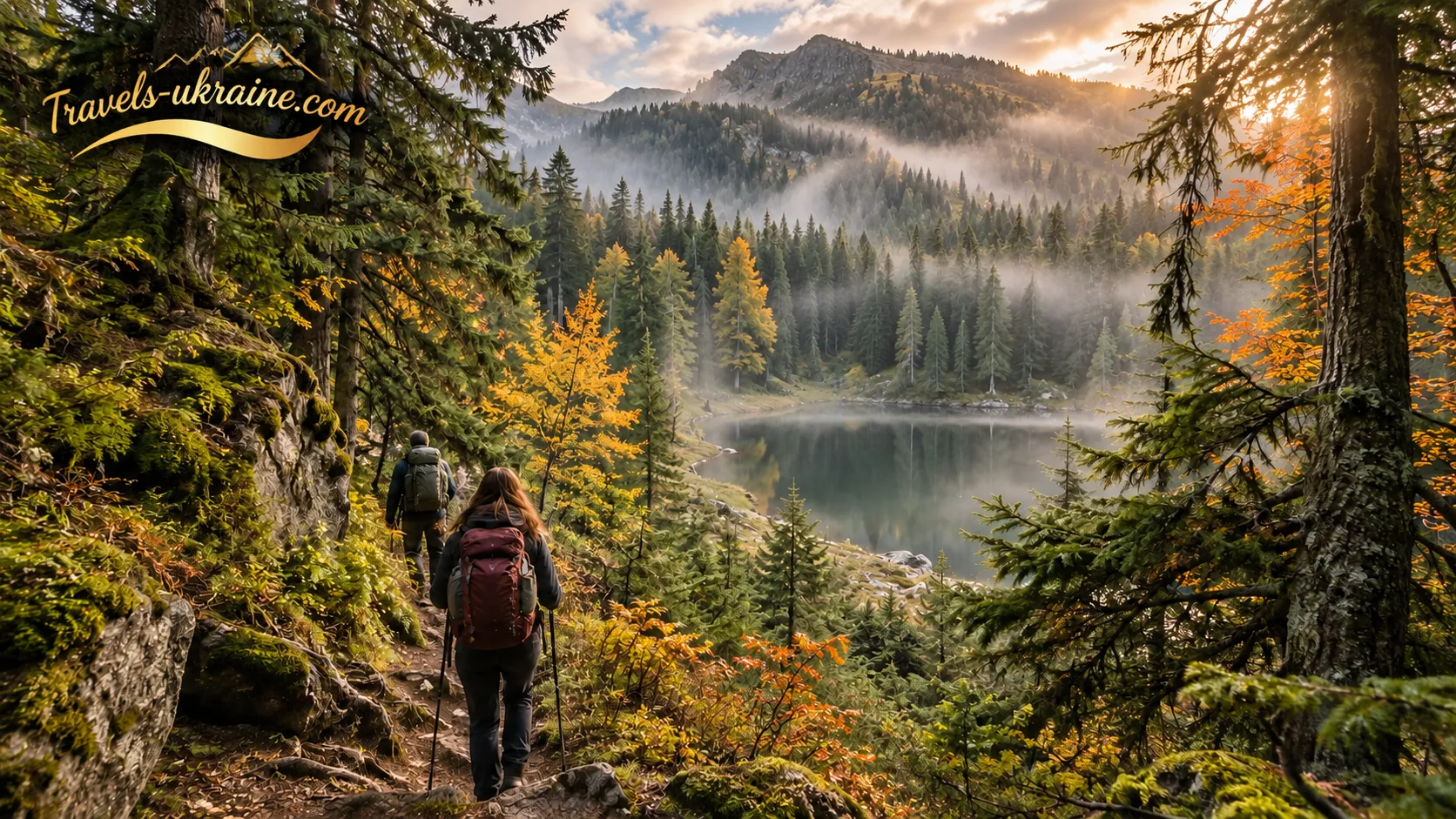
Mountain Eye Lake is hidden quite far from the main tourist roads, so it's best to plan your journey in advance. The main route from Chernivtsi passes through Putyla, Ploska, Seliatyn, Shepit, Verkhnii Yalovets, and Nyzhnii Yalovets. This is no longer the kind of trip where you can simply enter a destination into your navigation app, tap "Start", and expect to find a convenient car park waiting at the entrance.
Route from Chernivtsi to Nyzhnii Yalovets
If you're travelling by car from Chernivtsi, the route heads towards Putyla, then continues through Ploska and Seliatyn to the village of Shepit. From there, the road crosses Dzhohol Pass towards Verkhnii Yalovets before continuing to Nyzhnii Yalovets. The pass itself is considered one of the more challenging mountain roads in the Bukovinian Carpathians, with steep climbs and descents. It's therefore important to assess both your vehicle's capabilities and the weather conditions realistically.
In other words, a low-clearance city car and the reassuring phrase "Don't worry, we'll drive carefully" aren't always enough to convince a Carpathian mountain road to cooperate. After heavy rainfall or during the colder months, conditions on mountain roads can become significantly more difficult, so it's worth checking the latest local road conditions before setting off.
From Nyzhnii Yalovets to Mountain Eye Lake
The lake is located near Nyzhnii Yalovets, hidden in the forest to the east of the village centre. A dirt track and forest trail lead from the village towards the water. Visitors usually complete this section on foot, following signs or using offline maps, as the area is largely undeveloped and rarely crowded. This part of the journey is best approached as a short mountain walk of approximately 1.5 kilometres, where finding your way is generally straightforward. Comfortable hiking shoes, a waterproof jacket, and a supply of drinking water will come in handy. However, relying entirely on mobile internet in the remote Carpathians is not a good idea. These mountains have a long-standing habit of making your signal disappear at precisely the moment you decide to check whether you turned at the correct fir tree.
What to See Near Mountain Eye Lake: From Carpathian Pamir to Suchavskyi Huk Waterfall
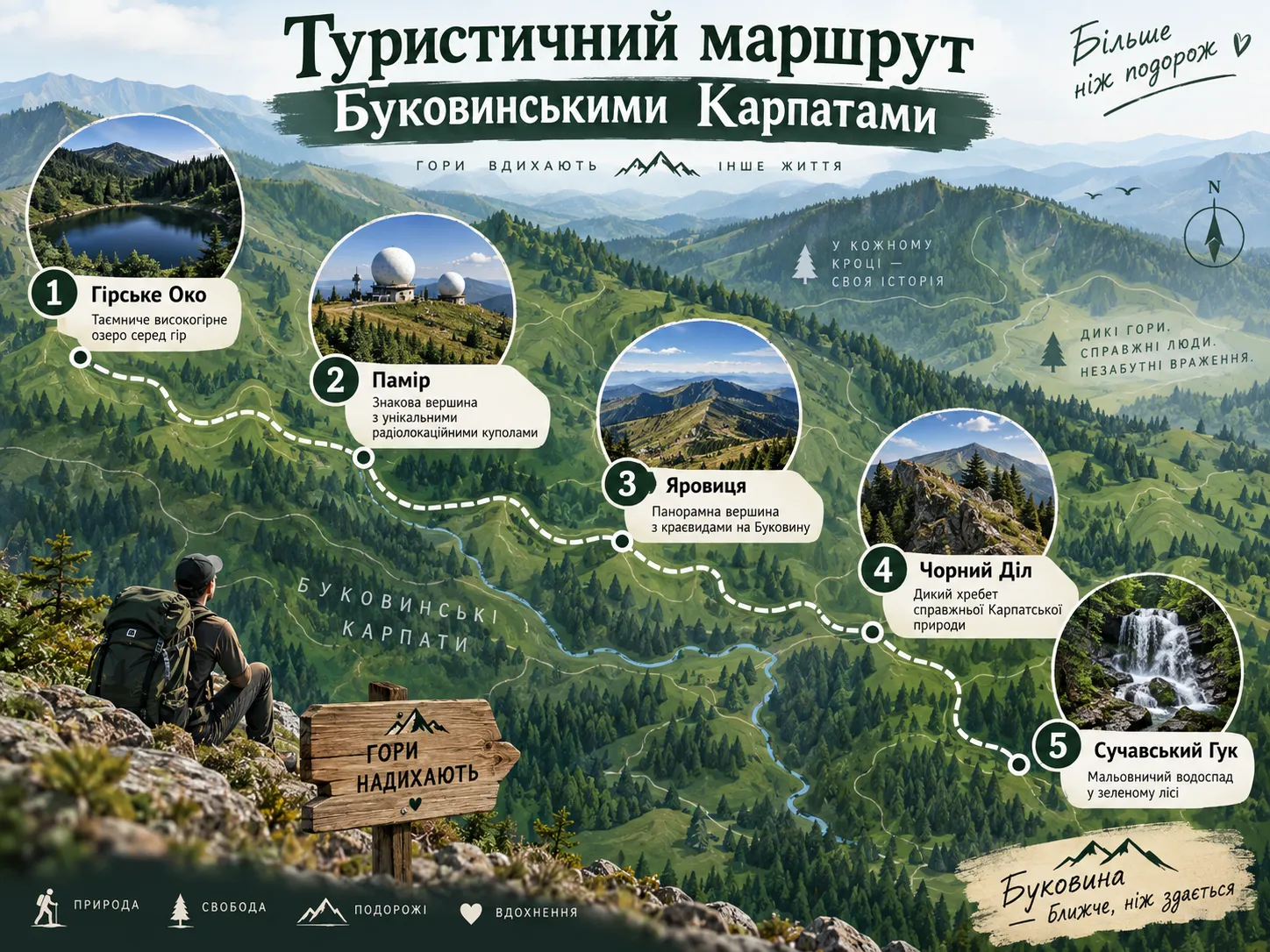
There's no need to limit your trip to Mountain Eye Lake alone. This part of the Bukovinian Carpathians is rich in mountain peaks, waterfalls, alpine meadows, and unusual historical landmarks. With a little planning, your visit can easily turn into several days of exploring one of the least crowded and most unspoilt corners of the Carpathian Mountains.
A natural starting point for discovering these wild mountain landscapes is Nyzhnii Yalovets. This small mountain village lies near the confluence of the Yalovychora and Bilyi Cheremosh rivers and can serve as a convenient base for exploring other nearby attractions. It's here that the distinctive character of this part of Bukovina becomes especially apparent: scattered mountain homesteads, rivers, forests, and roads that quickly remind you that the mountains aren't just about picture-perfect viewpoints. They're also places where planning your route requires a little more attention.
There's nothing artificial or resort-like about the atmosphere here. On the contrary, everything feels authentic and slightly rugged: narrow roads, wooden houses, mountain streams, and steep slopes rising close to the village. At times, even your navigation app may seem to lose confidence in its own decisions. Yet these are precisely the places that leave the strongest memories for travellers who want to experience the real Carpathians rather than the postcard version.
If you've already made the journey to Bukovinian Eye Lake, don't rush straight back. This remote part of the Ukrainian Carpathians holds plenty more fascinating destinations, from mountain peaks and wild ridges to waterfalls and mysterious relics of the past. Discover what else you can visit near Mountain Eye Lake and enrich your adventure with trips to Carpathian Pamir, Yarovytsia, Chornyi Dil, and Suchavskyi Huk Waterfall. After travelling this far, heading home immediately would almost feel like an insult to the Carpathians. Your legs are already tired, your backpack has practically become part of your personality, so why not add a few more unforgettable places to your itinerary? After all, these are the moments that make you say later, "I'm so glad we didn't head home too early."
Carpathian Pamir — An Abandoned Radar Station on Mount Tomnatyk
One of the most famous attractions in the surrounding area is Mount Tomnatyk, best known for the former Soviet military radar station called "Pamir". At an altitude of more than 1,500 metres, enormous white radomes still stand among the mountain meadows, alongside old military buildings and remnants of infrastructure from what was once a secret military installation.
The contrast between the natural mountain landscapes and the futuristic white domes is so striking that Pamir looks as though someone accidentally left the set of a science fiction film in the middle of the Carpathians. You can learn more about the station's history, how to get there, and what remains of the former military complex in our dedicated article about Carpathian Pamir on Mount Tomnatyk.
Mount Yarovytsia and Panoramic Views of the Bukovinian Carpathians
Another excellent destination for mountain hiking enthusiasts is Mount Yarovytsia. Rising above the surrounding valleys, it is considered the highest peak in the Bukovinian Carpathians. Much of the Yarovytsia mountain ridge is covered with open alpine meadows, so as you climb, the landscape gradually changes from dense forest to sweeping mountain panoramas.
From here, you can enjoy impressive views of neighbouring ridges, mountain river valleys, and Mount Tomnatyk with the distinctive white domes of Pamir. If your legs haven't yet submitted an official request for a rest after the journey to Mountain Eye Lake, Yarovytsia could be a rewarding continuation of your adventure.
Chornyi Dil Ridge — The Wild Side of the Carpathians
For travellers seeking even more mountains and even less civilisation, Chornyi Dil Ridge is another fascinating destination. Stretching for approximately six kilometres, it forms part of one of the most valuable natural areas within Cheremoskyi National Nature Park. From the ridge's open sections, visitors can admire views of the Yalovychory Mountains, surrounding alpine meadows, and distant Carpathian ranges. This is a route for adventurous travellers who hear the words "somewhere beyond the next ridge" not as a warning, but as an invitation.
Suchavskyi Huk — A Waterfall on the Way to Mountain Eye Lake
Another beautiful natural attraction can be visited along the route to Nyzhnii Yalovets. In the village of Shepit, on the Suchava River, you'll find Suchavskyi Huk Waterfall, a cascading waterfall more than six metres high. One of the main routes towards Verkhnii and Nyzhnii Yalovets passes through this area, making the waterfall an excellent place for a short stop before continuing deeper into the mountains. After several hours behind the wheel, the opportunity to step out of the car and admire a genuine Carpathian waterfall rarely needs any additional persuasion.
Suchavskyi Huk is particularly impressive against the backdrop of green riverbanks and the rocky bed of the Suchava River. The sound of rushing water quickly drowns out the road noise and returns travellers to the familiar Carpathian rhythm: phone in your pocket, eyes on nature. It's easy to stay longer than planned, because the phrase "We'll only stop for five minutes" tends to be about as reliable in the Carpathians as a mountain weather forecast. This beautiful natural attraction makes an excellent short stop before continuing towards Mountain Eye Lake. Adding it to your itinerary provides another opportunity to experience Bukovina's distinctive landscapes without turning the day into an exhausting marathon between tourist attractions.
Frequently Asked Questions About Mountain Eye Lake
Where is Mountain Eye Lake located?
Mountain Eye Lake is located in the Yalovychory Mountains of Bukovina, near the village of Nyzhnii Yalovets. The lake is hidden among dense Carpathian forests at an altitude of approximately 1,000 metres above sea level.
What other names is Mountain Eye Lake known by?
The lake is also known as Bukovinian Eye and Carpathian Eye. All three names refer to the same mountain lake near Nyzhnii Yalovets.
How deep is Mountain Eye Lake?
The exact maximum depth of Mountain Eye Lake has not been reliably established. Different sources provide varying estimates, while submerged trees make surveying the lakebed particularly difficult. Therefore, any specific depth figures should be regarded as approximate.
Why is the water in Mountain Eye Lake so cold?
The lake is surrounded by mountain forests and fed by cold mountain water. Even in summer, the water temperature remains low, usually reaching only around 12–14°C.
Can you swim in Mountain Eye Lake?
Due to its extremely cold water, Mountain Eye Lake is hardly a suitable destination for a traditional beach holiday. The water remains chilly even during summer, so most visitors come here to enjoy scenic walks, photography, and the peaceful natural surroundings rather than swimming.
When is the best time to visit Bukovinian Eye Lake?
The most convenient time to plan your visit is from late spring to early autumn, when mountain roads and forest trails are generally easier to navigate. The lake is particularly picturesque in autumn, when the forests of the Yalovychory Mountains turn beautiful shades of gold and red.
What should you bring when visiting Mountain Eye Lake?
For your trip, it's advisable to bring comfortable hiking shoes, a waterproof jacket, drinking water, snacks, a fully charged phone, a power bank, and an offline map. Mobile phone coverage can be unreliable in remote areas of the Bukovinian Carpathians.
What attractions can you visit near Mountain Eye Lake?
A trip to the lake can be combined with visits to Carpathian Pamir on Mount Tomnatyk, Mount Yarovytsia, Chornyi Dil Ridge, and Suchavskyi Huk Waterfall. These attractions offer an excellent opportunity to create a longer travel itinerary through the remote landscapes of the Bukovinian Carpathians.
Mountain Eye Lake — A Peaceful Hidden Gem of Bukovina Worth Discovering
Mountain Eye Lake, also known as Bukovinian Eye, is unlikely to impress visitors with its size. It's a small lake hidden among the forests of the Yalovychory Mountains. Yet that is precisely what makes it so special. There are no crowds of tourists, noisy attractions, or rows of souvenir shops. Instead, you'll find cold, dark waters, submerged trees, the tranquillity of a mountain forest, and the feeling that the Carpathians still have hidden places where nature remains firmly in control.
A journey to Carpathian Eye Lake is also rewarding because the adventure doesn't have to end at its shores. Nearby, you can discover Carpathian Pamir on Mount Tomnatyk, explore the slopes of Mount Yarovytsia, hike along Chornyi Dil Ridge, or stop to admire Suchavskyi Huk Waterfall. What begins as a single destination on the map can easily turn into a memorable journey through one of the most remote parts of the Bukovinian Carpathians.
And if you return home with several hundred photographs on your phone, a little Carpathian mud on your boots, and the thought, "We really should have stayed another day," then you've planned your adventure perfectly. Mountain Eye Lake doesn't try to compete for the title of the most famous lake in the Carpathians. It simply rests quietly among the mountains, waiting for travellers willing to venture a little further beyond the popular tourist routes.
When planning your visit, there's just one important thing to remember: leave Mountain Eye Lake as clean and unspoilt as you would wish to find it on your next journey. After all, the best footprint a traveller can leave in the Carpathians is one that is almost impossible to find.

No Comment
You can post first response comment.