
 English
 Українська
 Русский
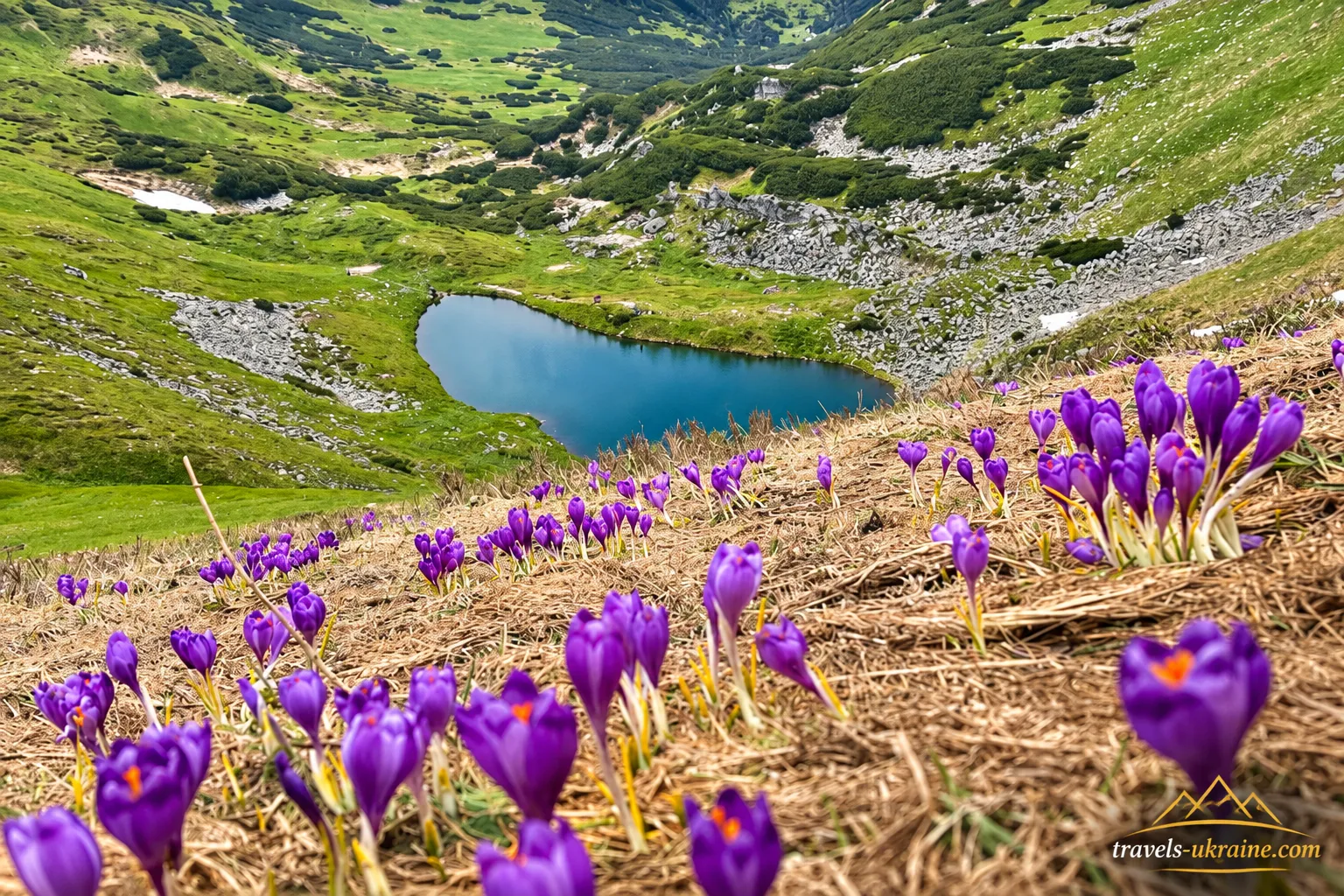
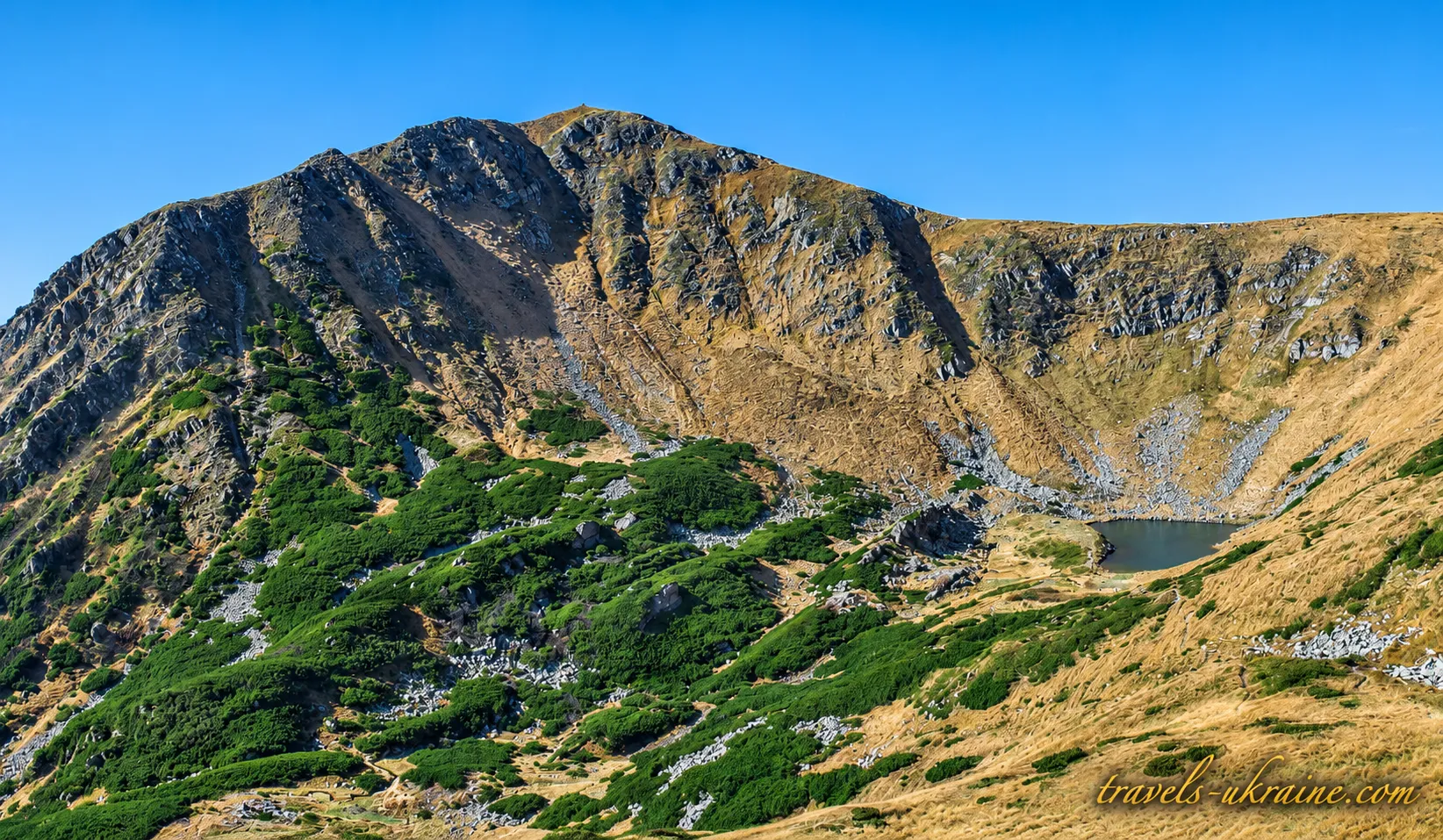
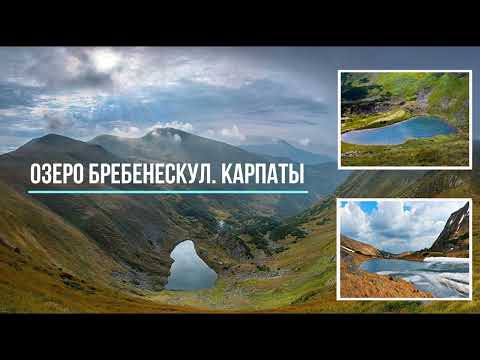
At an elevation of 1,801 meters above sea level, nestled among the rugged slopes of the Chornohora mountain range, lies Lake Brebeneskul — the highest-altitude lake in Ukraine. Small in size, the lake is hidden between the peaks of Brebeneskul and Hutyn Tomnatyk in a glacial basin, where even in summer, sunshine can give way to fog, wind, and rain within minutes.
You cannot drive to Brebeneskul or simply stop by for a quick ten-minute visit. To experience it in person, you must follow a genuine high-altitude hiking route through the Chornohora Mountains. That is why this protected hydrological natural landmark is remembered not only for its cold, mirror-like waters but also for the journey itself — steep ascents, rocky slopes, open alpine meadows, and sweeping panoramas of some of Ukraine's highest mountains.
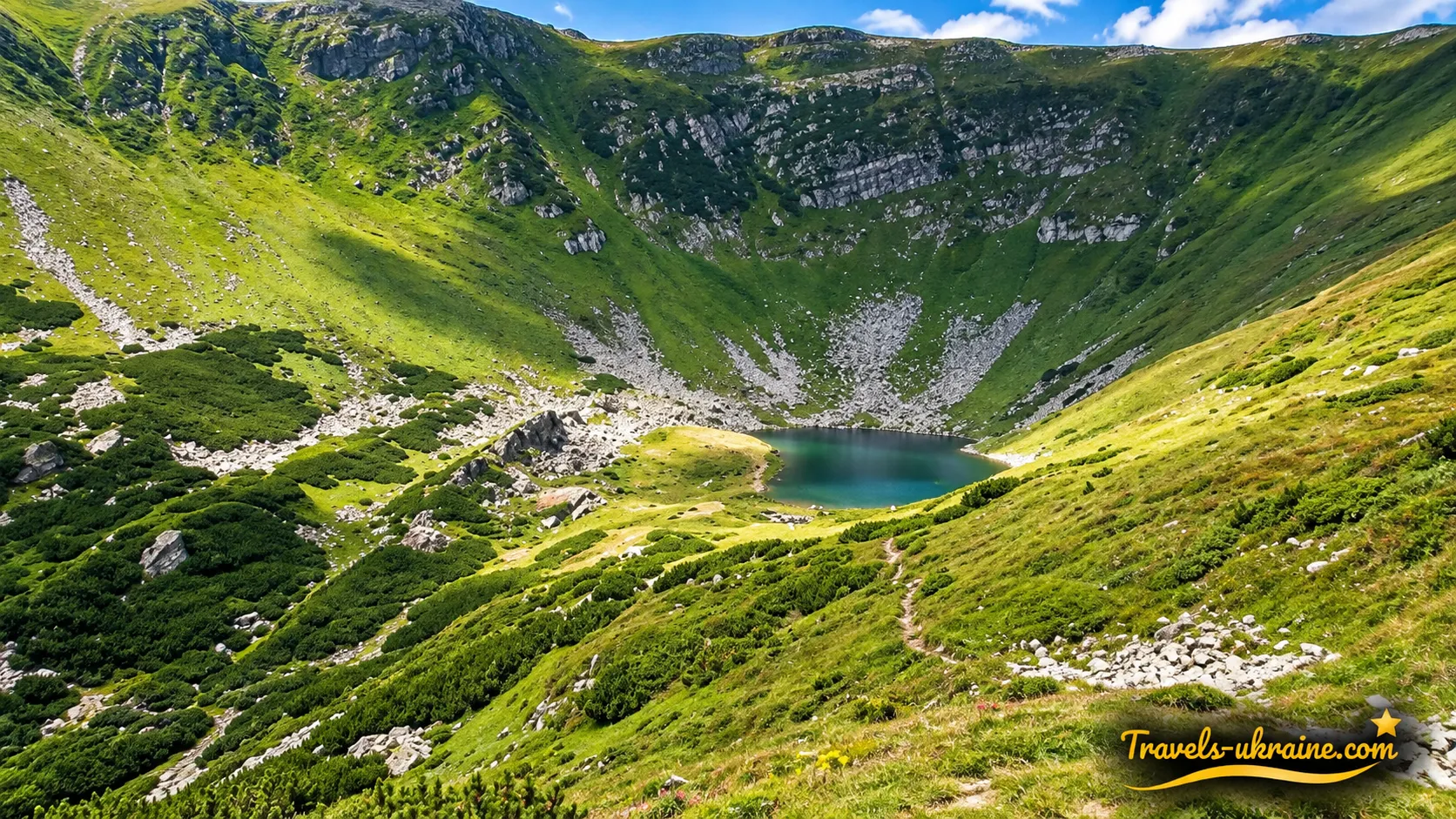
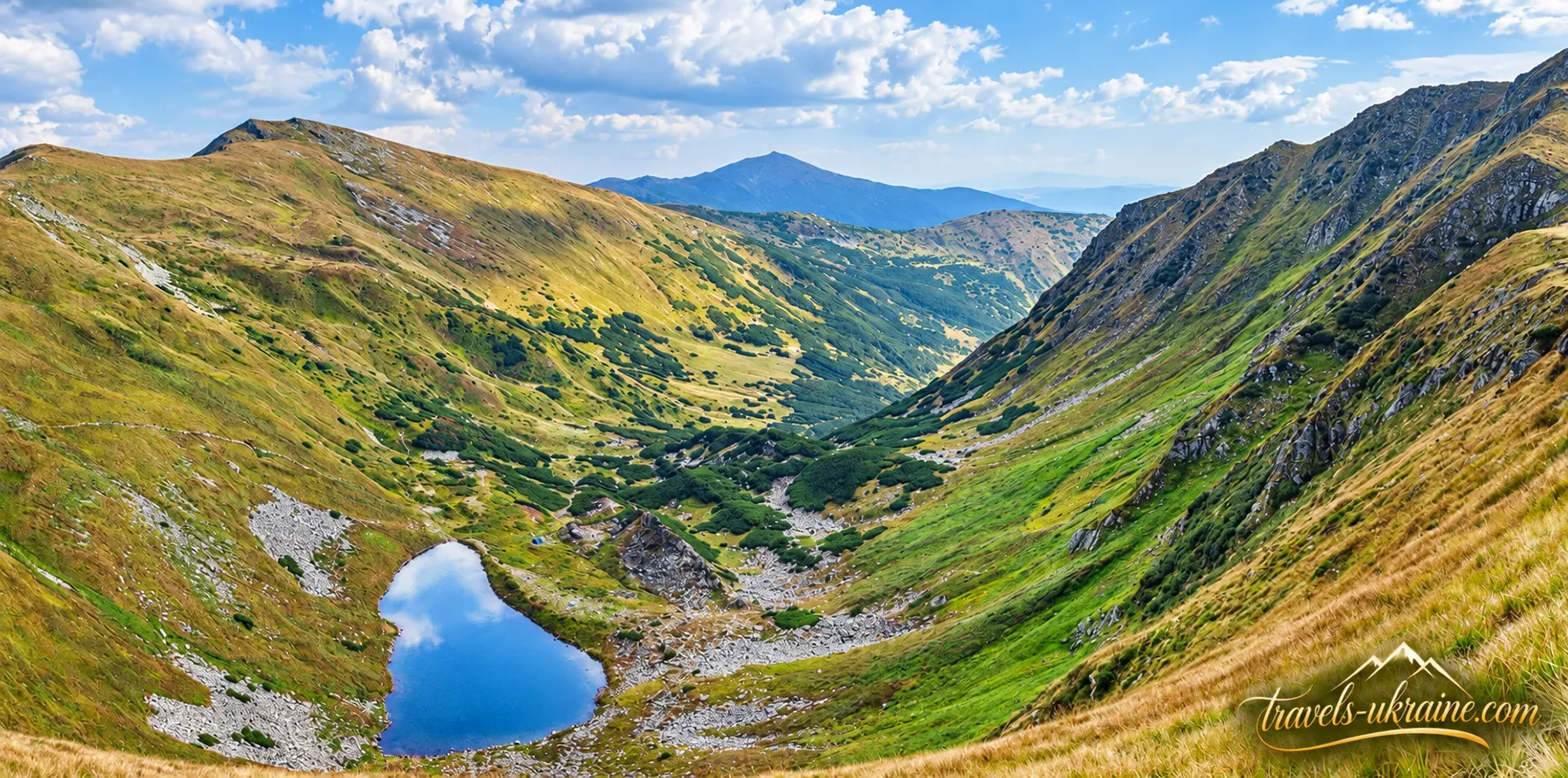
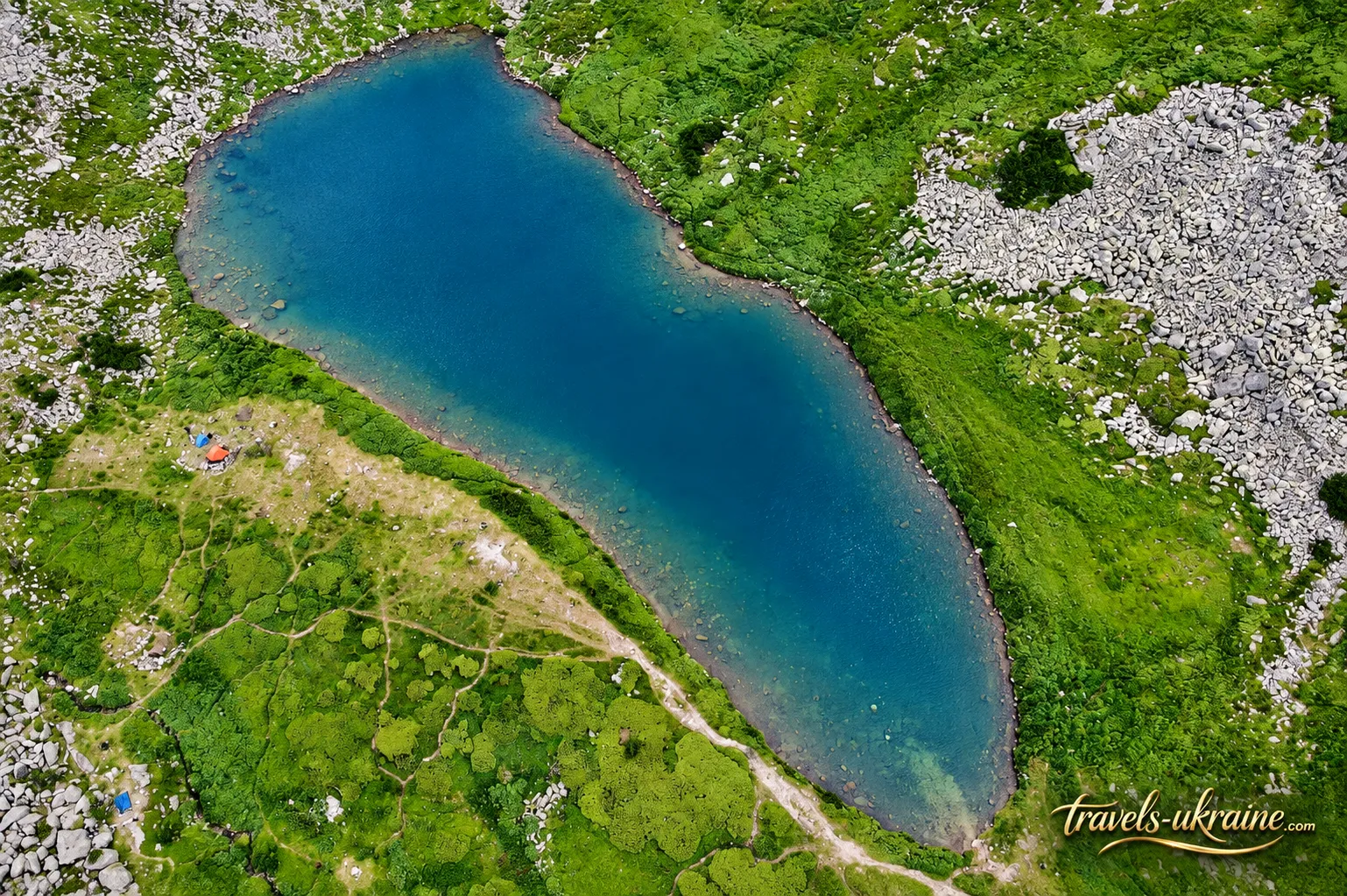
Lake Brebeneskul formed approximately 10,000–15,000 years ago following the retreat of an ancient glacier. The ice carved out the basin that would eventually hold the lake, while a moraine ridge of accumulated rock debris formed a natural dam. Today, the lake measures approximately 147 meters in length and 67 meters in width, with a depth of just over three meters.
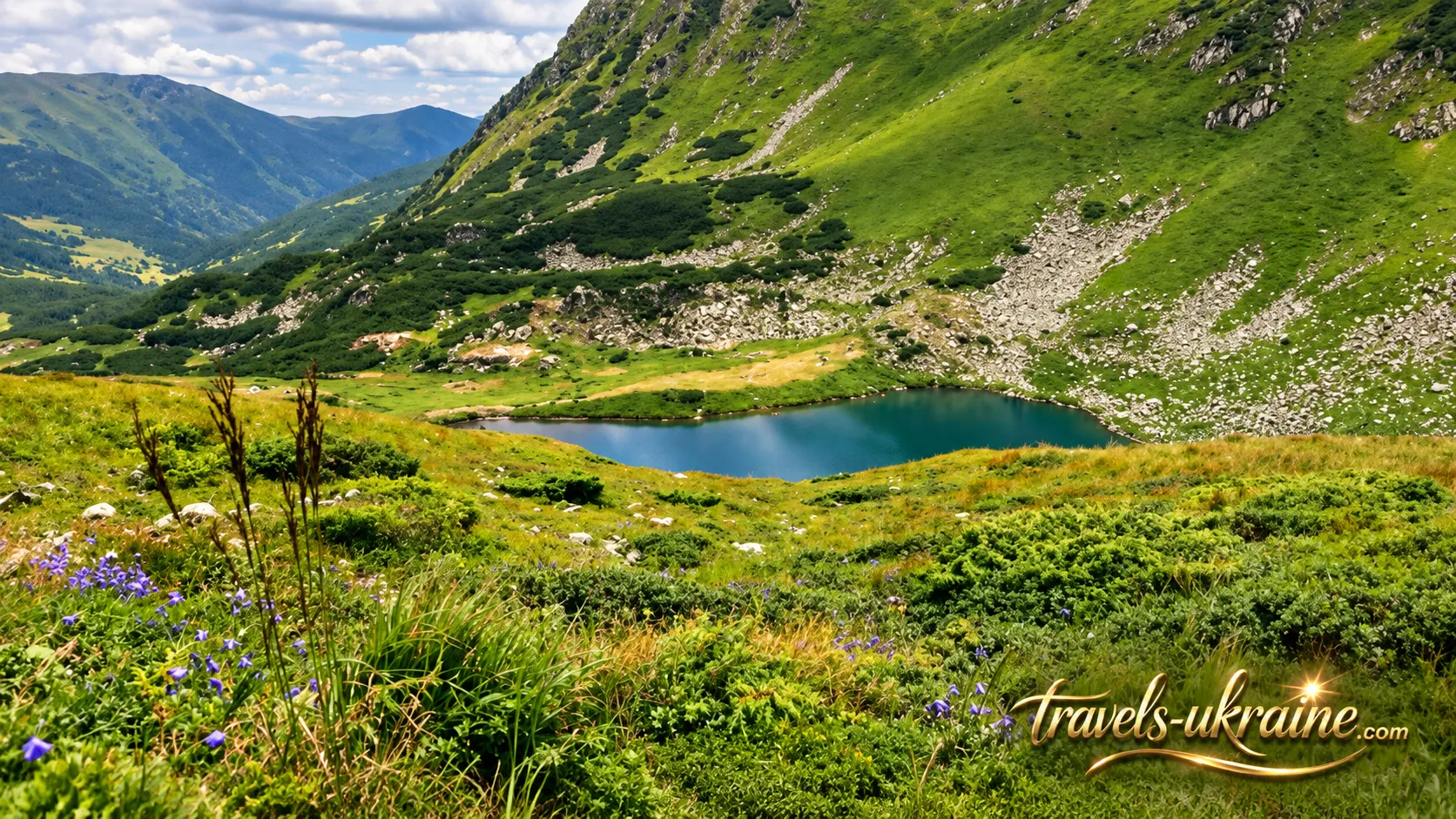
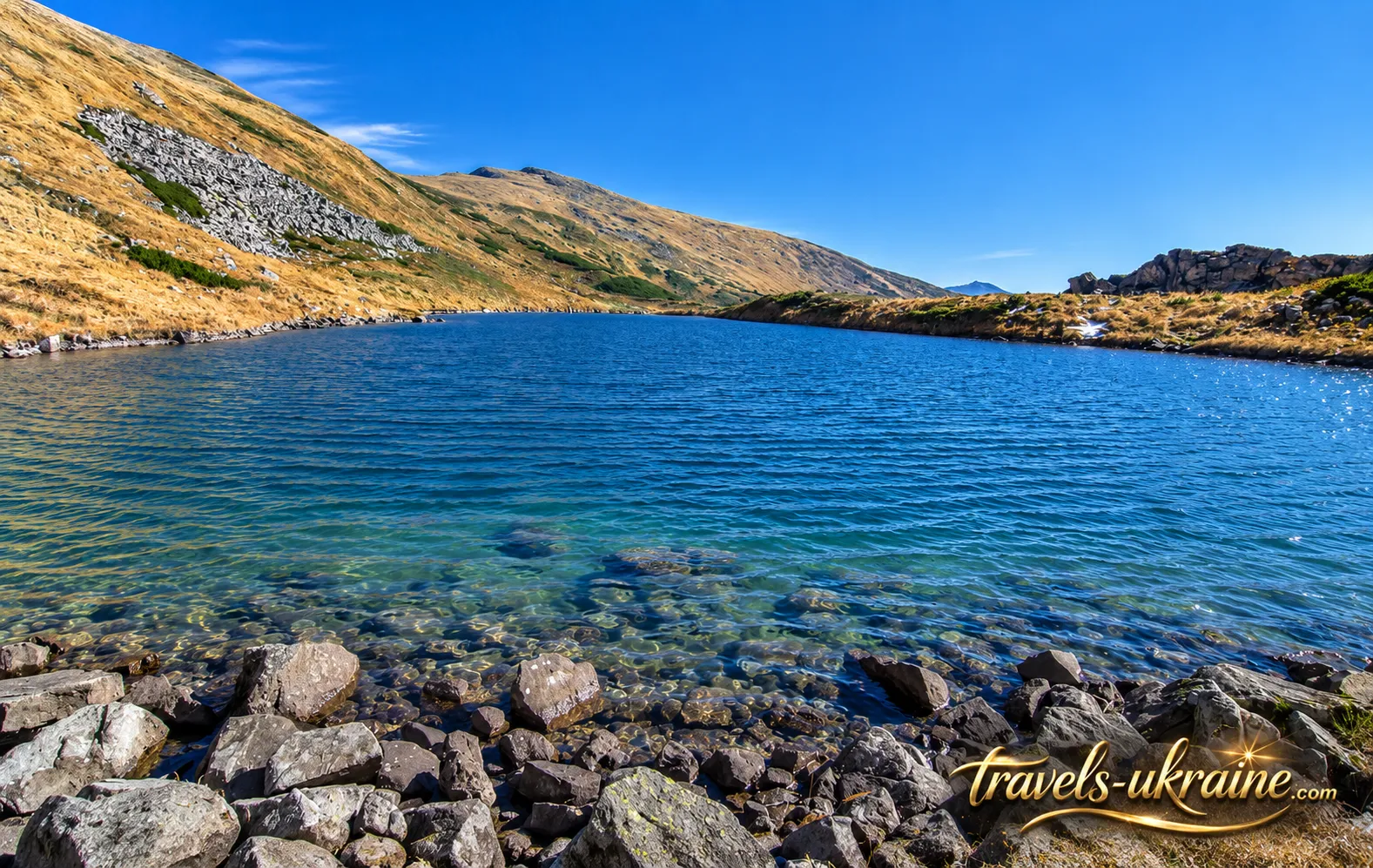
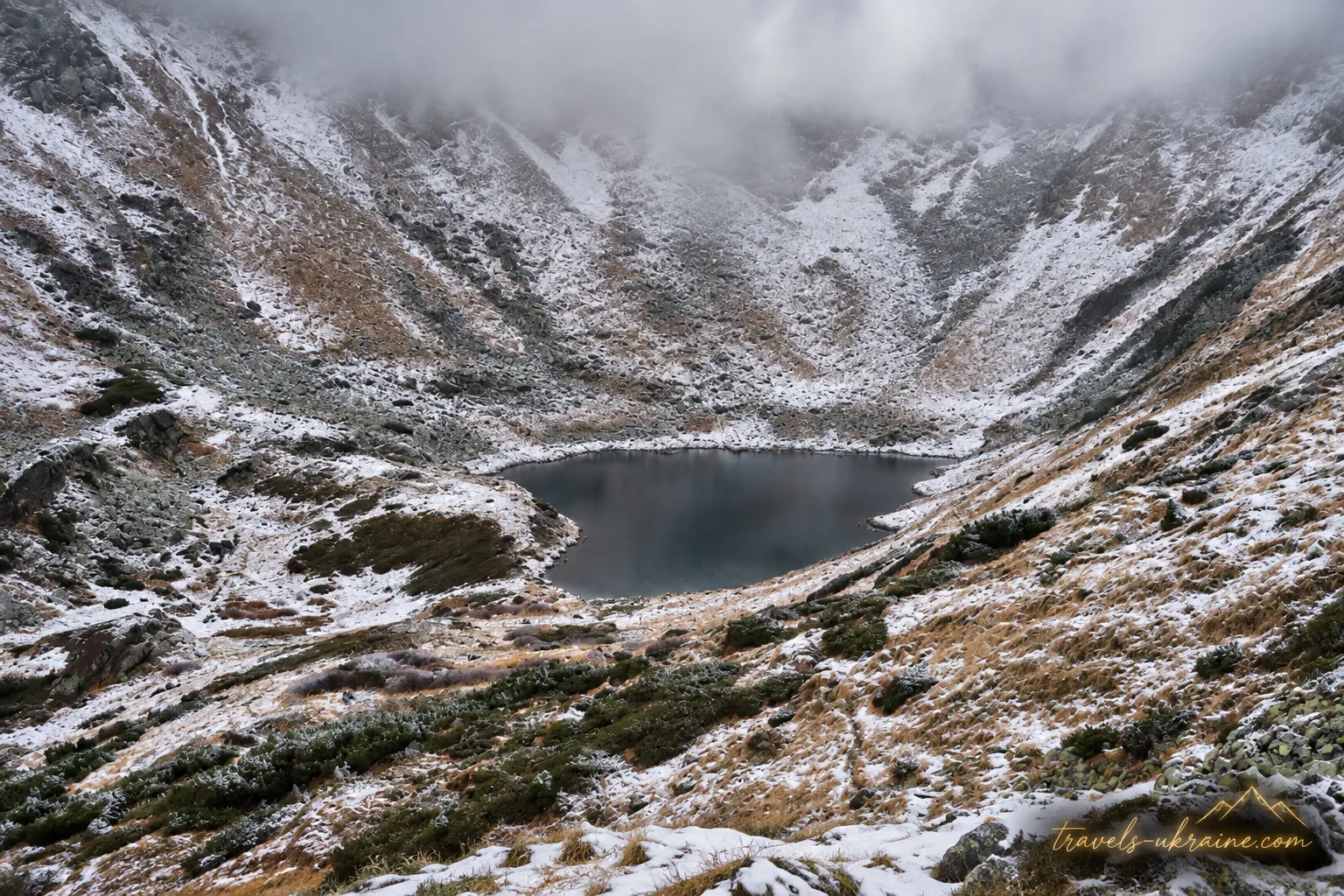
Yet numbers alone can hardly capture the character of this remarkable place. What makes Brebeneskul so impressive is the contrast: a small expanse of still water rests within the vast mountain landscape of Chornohora, surrounded by rocky scree slopes and peaks rising above 2,000 meters. Here, it is easy to understand why high-altitude lakes are often called the mirrors of the mountains. On a calm day, Brebeneskul reflects the sky so perfectly that you may have to look twice to distinguish the water from its reflection.
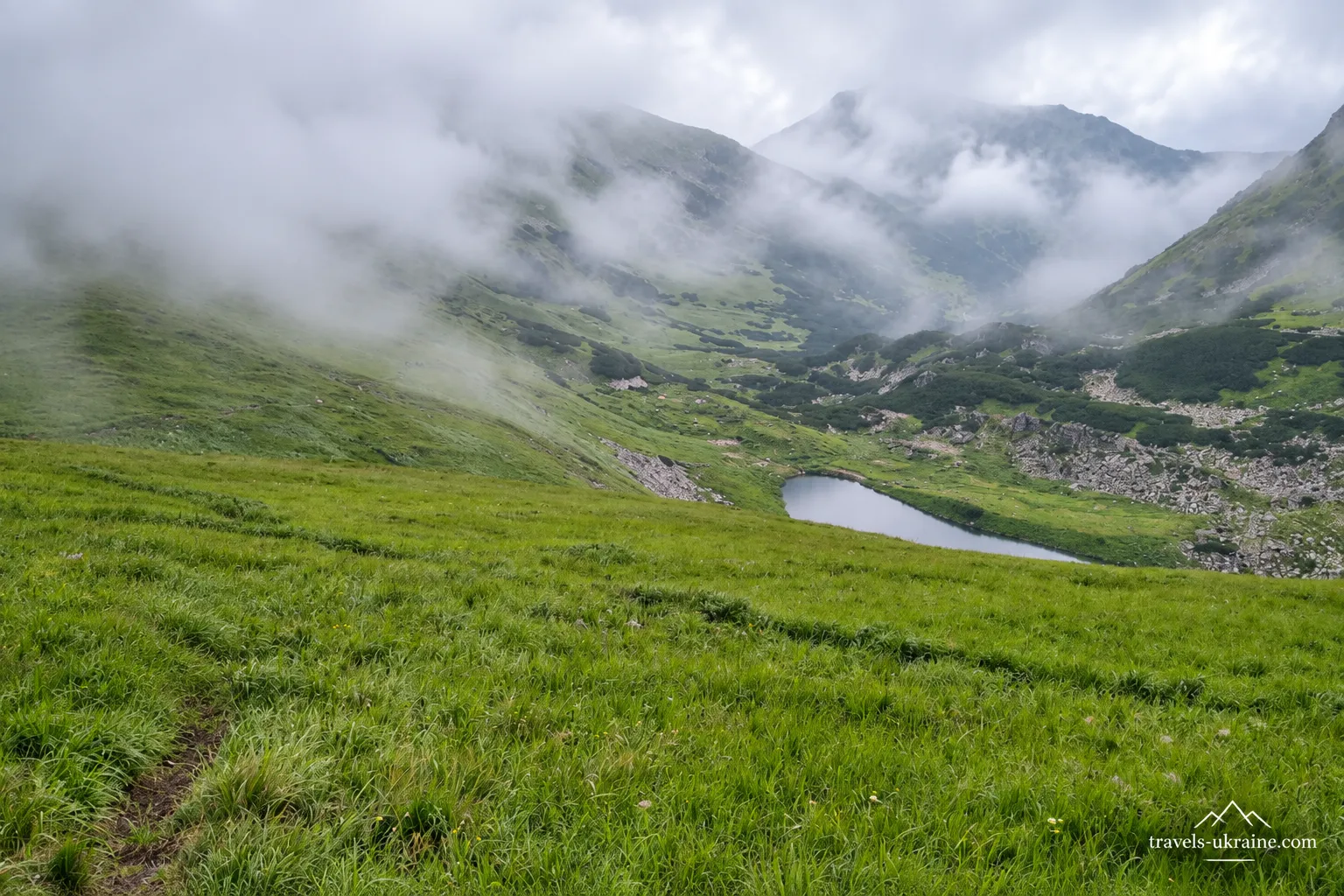
But the romance of the high mountains comes with another side: cold temperatures, strong winds, fog, and sudden weather changes are all perfectly normal here. A journey to Lake Brebeneskul in the Ukrainian Carpathians is therefore much more than a simple walk to a beautiful mountain lake. It is an opportunity to experience the true wilderness of Chornohora, where nature alone decides which side of its character it will reveal that day.
The Mysterious Mirror of the Mountains: What Makes Lake Brebeneskul Special
The lake is primarily fed by precipitation, groundwater, small streams flowing down the surrounding slopes, and melting snow. As a result, its water level depends heavily on weather conditions. After a snowy winter or prolonged rainfall, the lake fills up, while during dry periods, its water level drops. Lake Brebeneskul is not an enclosed body of water. A mountain stream of the same name flows out of the lake, descends through the Chornohora Mountains, and eventually joins the Tysa River basin. So the water that reflects the clouds between the Carpathian peaks today will eventually begin a much longer journey through the river systems of Central Europe.
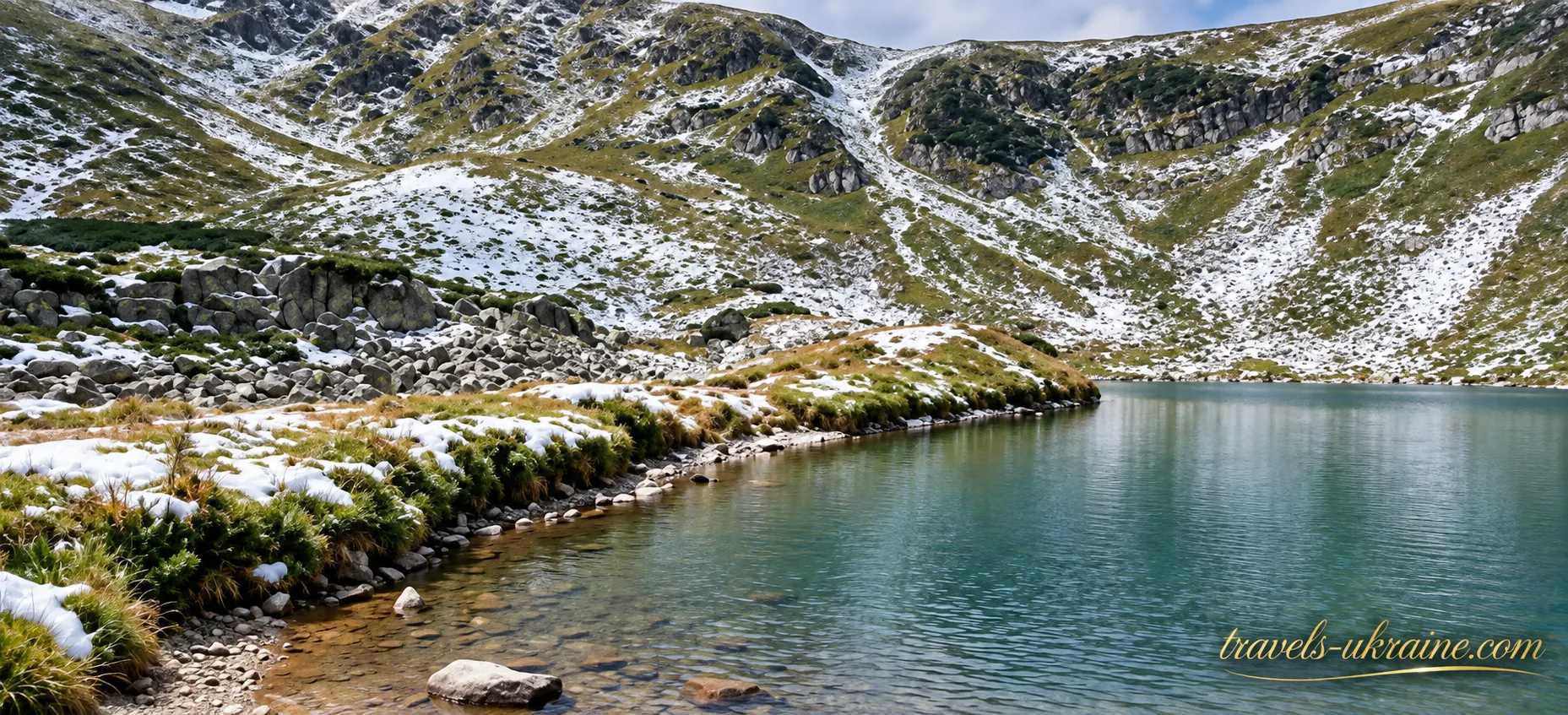
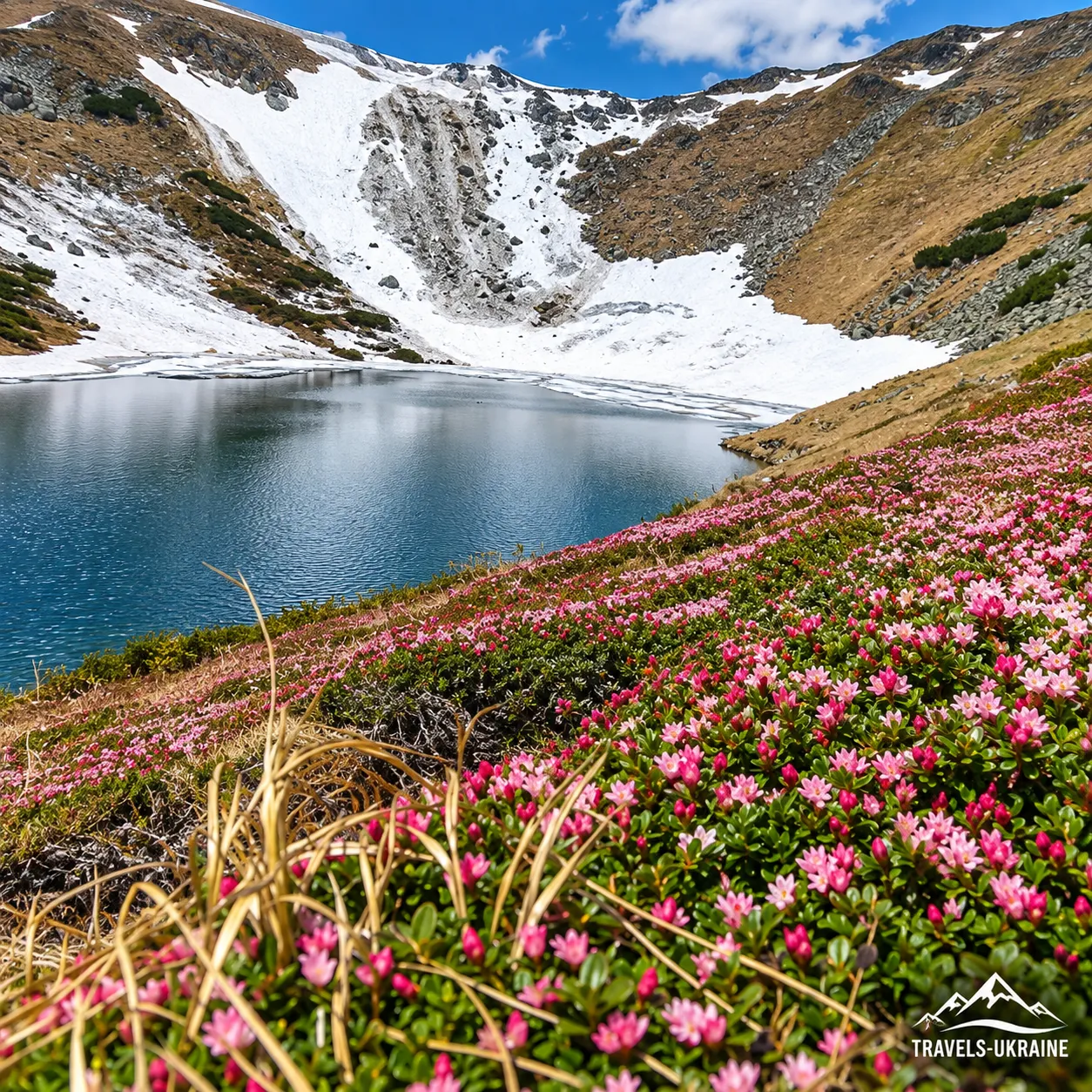
Because of its high-altitude location, the water in Lake Brebeneskul warms up very slowly. Even in summer, it remains cold, while the long winter prevents the lake from accumulating much heat. The lake freezes completely, and its ice cover can remain in place for approximately 5–6 months each year. Scientific studies of Lake Brebeneskul's water have shown that it is very soft, slightly acidic, and low in dissolved minerals. The lake also contains relatively few nutrients, which means its shores are not densely covered with aquatic vegetation. This low concentration of minerals and organic matter, combined with the cold mountain climate, helps maintain the characteristic clarity of its high-altitude waters.
Why Are There No Fish in Lake Brebeneskul?
Conditions here are simply too harsh for fish. The prolonged period of ice cover, cold water, relatively shallow depth, and limited food supply make it difficult for fish populations to survive. As a result, the lake has no naturally occurring fish population. However, amphibians adapted to the high-altitude environment of the Carpathians are much better suited to these conditions. Carpathian newts, alpine newts, and common frogs can be found in the surrounding area. For these species, the cold, damp conditions and small mountain water bodies provide a natural habitat.
Lake Brebeneskul Changes with the Chornohora Mountains
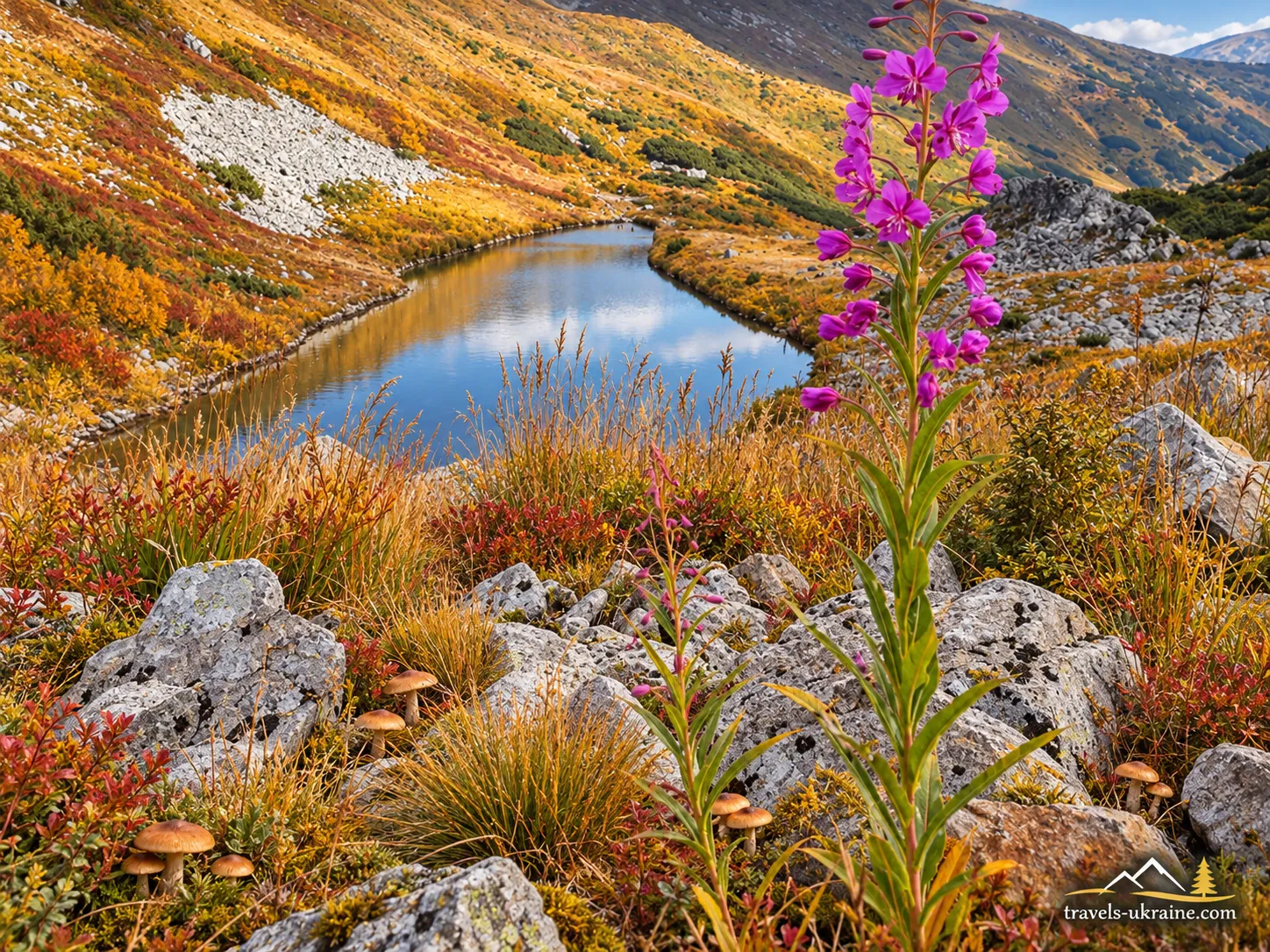
The lake looks remarkably different throughout the year. In spring, patches of lingering snow may still cover the surrounding slopes, while melting snow replenishes the water. During summer, the shoreline becomes more accessible to hikers, although the icy water shows absolutely no interest in turning itself into a beach resort. In autumn, the surrounding mountainsides take on darker shades, and with the arrival of the first serious frosts, Lake Brebeneskul gradually disappears beneath a layer of ice once again. This constant dependence on high-altitude weather is precisely what makes the lake so special. Brebeneskul does not simply lie among the peaks of Chornohora — it follows the mountains' natural rhythm, changing with the snow, rain, mist, and short Carpathian summer.
Hiking to Lake Brebeneskul: How to Get There and Trail Difficulty
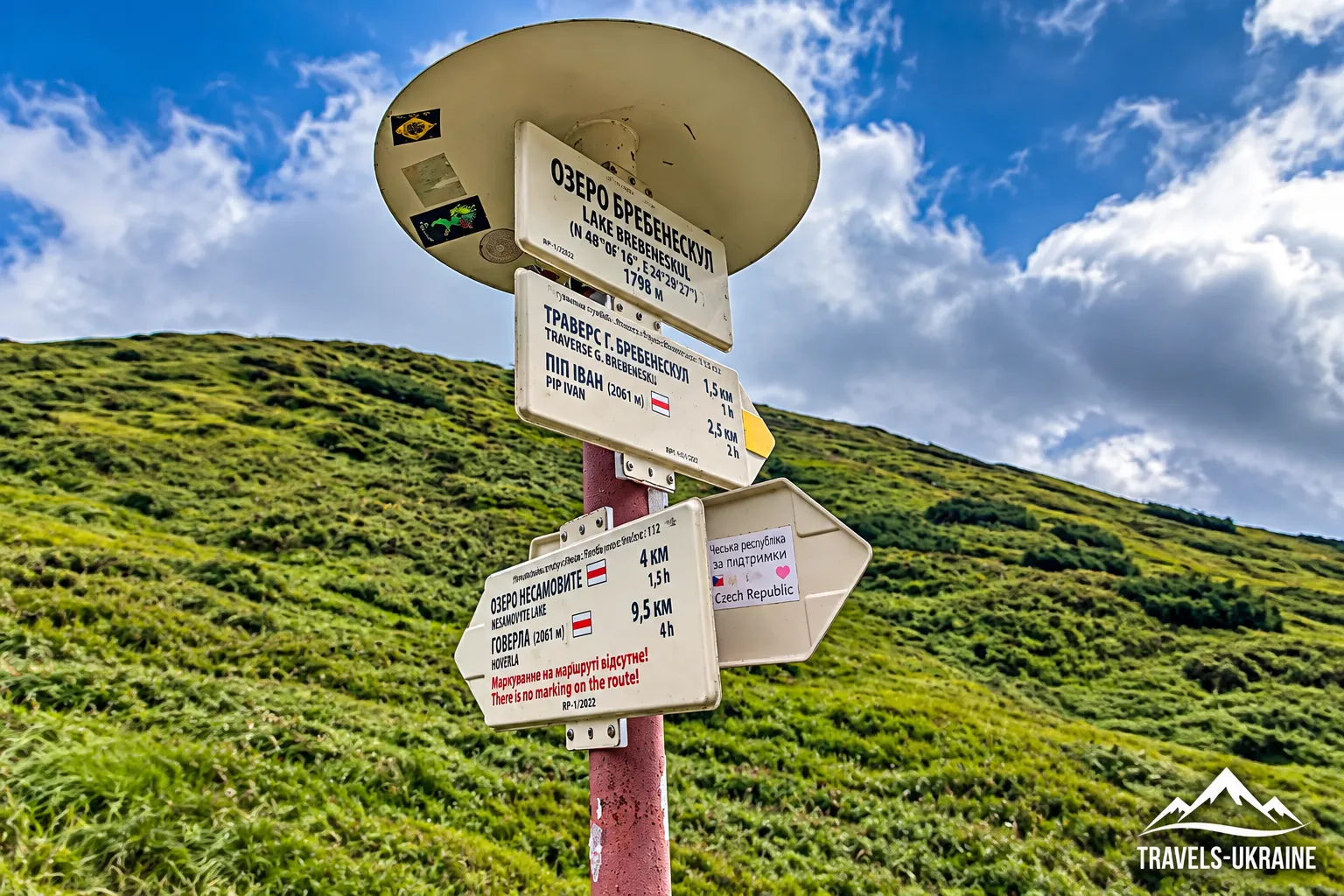
There is no short walking trail from a parking lot to Lake Brebeneskul. The lake lies high in the Chornohora Mountains, so reaching it involves a substantial elevation gain and several hours of hiking. Most visitors experience Brebeneskul either as the destination of a dedicated hike from the Bystrets or Dzembronia area or as part of a longer trek along the main Chornohora Ridge.
Hiking from Bystrets and Dzembronia
One practical approach starts near Bystrets and passes through high-altitude mountain meadows and the areas around Shpytsi and Rebra before reaching Lake Brebeneskul. Hiking descriptions for this route suggest a total distance of approximately 20 km and 10–12 hours on the trail, depending on the exact route, the group's pace, and the starting point. This is a full-day mountain hike for people with a reasonable level of physical fitness, not a leisurely stroll after breakfast.
From Dzembronia, Lake Brebeneskul is often included in longer circular or multi-day routes through the Chornohora Mountains. For example, one hiking route passing Mount Brebeneskul and Menchul covers approximately 24 km with a total elevation gain of more than 1,500 meters. For a first experience of Chornohora, it is therefore advisable to allow plenty of time or travel with an experienced mountain guide.
Lake Brebeneskul as Part of a Chornohora Ridge Traverse
For hikers already following the main mountain ridge, the lake fits naturally into an itinerary connecting Pip Ivan Chornohirskyi, Mount Brebeneskul, Hutyn Tomnatyk, Rebra, and Lake Nesamovyte. One recorded route from Pip Ivan to the lake is approximately 8.5 km long, while a route from Brebeneskul through Hutyn Tomnatyk and Nesamovyte to Zarosliak covers around 11.9 km.
These mountain traverses are particularly rewarding because the lake becomes part of the vast Chornohora landscape rather than an isolated destination. However, they also require reliable navigation skills. Some route variations are described as unmarked or only partially marked, so simply following the people walking ahead of you is not exactly the most dependable navigation strategy.
How Difficult Is the Hike to Lake Brebeneskul?
The main challenges are not technical rock-climbing sections but rather the distance, elevation gain, and unpredictable high-altitude weather. Along the exposed Chornohora Ridge, there are few places where hikers can quickly find shelter from strong winds, dense fog, or thunderstorms. Even in summer, temperatures can drop sharply, and thick fog can obscure a clearly visible trail within minutes.
Before setting out, download an offline map or GPX track, check the weather forecast, and inform mountain rescue services about your planned route. The State Emergency Service of Ukraine (SES) specifically advises against hiking during severe weather or fog and recommends registering planned mountain trips. For beginners, the safest option is to choose a well-marked route or hike with someone who knows the Chornohora Mountains well.
When Is the Best Time to Hike to Lake Brebeneskul?
For most hikers, the most suitable period is summer and early autumn, when most of the snow has melted from the high-altitude trails and daylight hours are sufficiently long. The Carpathian Biosphere Reserve, which includes the lake, generally identifies April through October as the best period for exploring its hiking trails and tourist routes. However, for Lake Brebeneskul specifically, actual hiking conditions depend primarily on the weather in the Chornohora Mountains.
In spring, large patches of snow may still cover the higher slopes. In winter, Chornohora presents an entirely different level of difficulty, with snow, ice, powerful winds, and avalanche hazards. Without winter mountaineering experience and appropriate equipment, attempting this hike is not advisable. Lake Brebeneskul rewards those who make the long journey, but it is not a place to rush. It is far better to allow plenty of time than to try squeezing in "just one more attraction before sunset." In the high mountains, the weather usually has the final say — not your travel itinerary.
The High-Altitude Nature of Lake Brebeneskul and the Chornohora Mountains
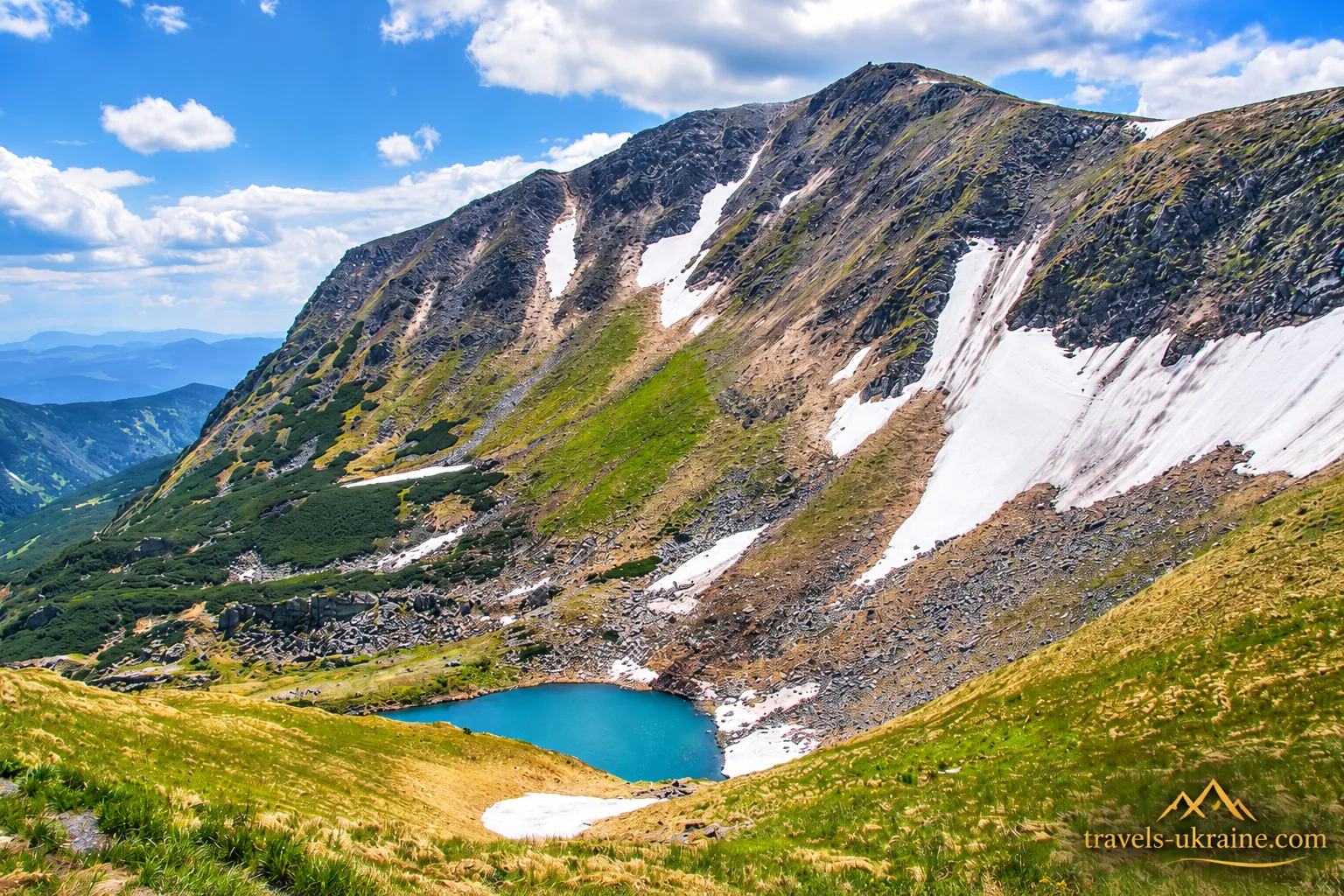
At the elevation of Lake Brebeneskul, the familiar Carpathian forests are already far below. Above approximately 1,600 meters, trees gradually disappear, and the landscape gives way to the subalpine and alpine zones of the Chornohora Mountains. Instead of towering spruce trees, the terrain is dominated by low-growing grasses, mountain shrubs, rocky scree slopes, and plants capable of surviving strong winds, cold temperatures, and an extremely short summer.
The high mountains may appear almost barren, but they are actually home to exceptionally valuable plant life. Within the Carpathian Biosphere Reserve, researchers have recorded 125 alpine and arctic-alpine plant species, dozens of which are included in Ukraine's Red Data Book and international conservation lists. The Chornohora region provides a refuge for plants naturally adapted to cold, rocky mountain slopes. Near the hiking route between Lake Brebeneskul and Mount Hutyn Tomnatyk, for example, lies one of the few known locations in Chornohora where mountain avens (Dryas octopetala) grows — a characteristic species of cold Arctic and high-altitude environments.
The lake forms part of a much larger protected natural complex known as "Ozirnyi-Brebeneskul". In 2019, this high-altitude area was added to the list of Wetlands of International Importance under the Ramsar Convention. Protection here extends far beyond the lake itself. The entire network of small mountain lakes, wetlands, streams, glacial landforms, and rare natural habitats is of ecological importance. For many plant and animal species, these places represent small islands of suitable habitat within the harsh high-mountain environment.
Why Is the Nature Around Lake Brebeneskul So Fragile?
High-altitude plants grow slowly, and the thin mountain soil takes considerably longer to recover than soil in lower valleys. As a result, even ordinary foot traffic can leave visible damage. Researchers have already documented the effects of intensive tourism around Lake Brebeneskul, including damaged vegetation, trampled areas, fire pits, and accumulated litter.
The southern shore of the lake is particularly affected, as hikers frequently use it for camping. Some of the waste left behind ends up directly in the lake or is carried downstream into the Brebeneskul stream valley. The Carpathian Biosphere Reserve also specifically emphasizes that swimming in the lake harms its fragile ecosystem.
Frequently Asked Questions About Lake Brebeneskul
How do you get to Lake Brebeneskul?
Lake Brebeneskul can only be reached on foot via mountain hiking trails in the Chornohora range. The lake is most commonly included in hikes starting from Bystrets or Dzembronia, as well as longer treks along the main Chornohora Ridge through Rebra, Hutyn Tomnatyk, and neighboring peaks.
How long does it take to hike to Lake Brebeneskul?
The hiking time depends on your chosen route. For a day hike, expect several hours of active walking in each direction, along with a substantial elevation gain. Longer traverses through the Chornohora Mountains may take an entire day or form part of a multi-day hiking itinerary.
How difficult is the hike to Lake Brebeneskul?
The hike is considered moderate to challenging, depending on the starting point. The main difficulties include the long distance, substantial elevation gain, exposed mountain terrain, and rapidly changing weather conditions. Good physical fitness, proper hiking boots, and offline navigation are essential for a safe journey.
When is the best time to hike to Lake Brebeneskul?
The most suitable period is summer and early autumn, when the main high-altitude trails are generally free of snow. In spring, large snow patches may remain on the mountain slopes, while winter hiking requires specialized equipment and experience due to ice, snow, strong winds, and avalanche hazards.
Can you swim in Lake Brebeneskul?
The Carpathian Biosphere Reserve advises visitors not to swim in Lake Brebeneskul because of its fragile high-altitude ecosystem. The water remains cold even in summer, and the lake forms part of an internationally important protected natural area.
Is the hike to Lake Brebeneskul suitable for children?
For young children, the hike is generally too demanding because of the distance, elevation gain, and unpredictable mountain weather. Older teenagers with previous mountain hiking experience may be able to complete the route in good weather, provided the pace and itinerary are planned carefully.
What can you see near Lake Brebeneskul?
Some of the most impressive nearby destinations include Mount Hutyn Tomnatyk, Mount Rebra, the Shpytsi rock formations, and Lake Nesamovyte. These attractions can be combined with Lake Brebeneskul on a longer high-altitude hike through the Chornohora Mountains, provided the weather, available time, and your physical fitness allow it.
Lake Brebeneskul: A Journey into the Heart of the Chornohora Mountains
Lake Brebeneskul is not the kind of destination you can quickly tick off your sightseeing list while traveling between other attractions. To experience it in person, you need to follow a high-altitude hiking route, climb into the mountains, feel the winds of Chornohora, and accept one simple rule: in these mountains, the weather always has the final say over your plans.
That is precisely why Lake Brebeneskul leaves such a lasting impression despite its modest size. This small, cold mountain lake, surrounded by rocky slopes, becomes a peaceful pause in the middle of a vast mountain landscape — a place where, after several hours on the trail, all you want to do is stop and watch the clouds drifting above the water.
The best way to experience this destination is as part of a wider journey through the Chornohora Mountains. Hutyn Tomnatyk, Rebra, Shpytsi, Lake Nesamovyte, and other high-altitude landmarks create a hiking itinerary in which Brebeneskul becomes not necessarily the final destination, but one of the most memorable moments of the entire adventure. It is also particularly important to remember how fragile the mountain environment is. Keeping the shores clean, leaving no litter behind, and respecting the rules of the nature reserve are not mere formalities. They are essential to preserving the lake in the pristine condition that makes visitors want to discover it in the first place.
If you are drawn to places where beauty is not waiting beside a parking lot but reveals itself gradually — step by step, climb by climb — Lake Brebeneskul is definitely worth the journey.


No Comment
You can post first response comment.