
 English
 Українська
 Български
 Hrvatski
 Čeština
 Dansk
Dansk Nederlands
 Eesti
Eesti Suomi
Suomi Français
 Deutsch
 Ελληνικα
 Magyar
 Íslenska
 Italiano
 Latviešu
 Lietuvos
 Polski
 Português
 Română
 Русский
 Српски
 Slovenčina
 Slovenščina
 Español
 Svenska
 Türkçe
Ukraine’s Nature Reserve Fund brings together the country’s most valuable natural areas and sites, established to preserve landscapes, ecosystems, and rare plants and animals. According to official data from Ukraine’s Ministry of Environmental Protection and Natural Resources, as of 2025 it comprised 9,084 areas and sites covering 4.189 million hectares, as well as the Zernov’s Phyllophora Field Marine Reserve, covering 402.5 thousand hectares. In total, protected natural areas cover nearly 7% of Ukraine’s territory.
An integral part of this nature conservation system is Halych National Nature Park—a nationally significant institution for nature protection, recreation, cultural education, and research. Its territory is protected as a national heritage site, while the park’s main task is to preserve valuable natural complexes and create conditions for their study and responsible recreation.
Unlike many national parks in western Ukraine, which are primarily associated with high mountain peaks, Halych NNP reveals an entirely different natural world. Here, the Dniester Valley, deciduous forests, meadows, meadow-steppe areas, bodies of water, and wetlands exist side by side. This combination of diverse environments creates conditions for exceptionally rich plant and animal life.
Another distinctive feature of the park is the close interweaving of nature with the history of the Halych region. Modern Halych, Krylos, and monuments of the former capital of the Principality of Galicia–Volhynia are nearby, making it easy to combine historical and natural sites in a single itinerary.
For visitors, Halych NNP is not one specific point on a map or an ordinary urban park with walkways. Its territory consists of various natural areas, explored through nature trails, tourist routes, conservation sites, and individual spots suited to enjoying nature.
Visitors can walk along trails through old forests, see the meadow-steppe landscapes of Kasova Hora, watch birds near bodies of water, learn about the work of the Wild Animal Rehabilitation Centre, or visit a museum dedicated to the nature of the Halych region.
Below, we explore how Halych National Nature Park was established, which natural complexes it protects, what is worth seeing, which routes to take, and how to plan a trip independently so that discovering the park is not only beautiful but truly meaningful.
How Halych National Nature Park Was Established and What It Protects
The national nature park was established on 9 August 2004 by Decree No. 877/2004 of the President of Ukraine. Its territory included natural areas of the former Halych District in Ivano-Frankivsk Oblast that were particularly valuable for preserving the nature of the Precarpathian region.
The park covers a total of 14,684.8 hectares. Of this area, 12,159.3 hectares were transferred to the park for permanent use, while another 2,525.5 hectares were incorporated without being withdrawn from previous land users. This is why Halych NNP does not appear as one continuous tract: it consists of various natural areas located in several parts of the Halych region.
Why Halych NNP Was Established
The park was established primarily to preserve typical and unique forest and forest-steppe natural complexes. This concerns not only rare plants and animals but entire natural systems—forests, meadows, steppe areas, bodies of water, and habitats supporting numerous species.
The park’s distinctive feature is the diversity of its landscapes. It lies at the boundary of several natural regions, so within a relatively small area, oak-hornbeam and beech forests, meadow-steppe areas, river valleys, bodies of water, and wetlands exist side by side.
The park’s responsibilities extend beyond nature protection. It also conducts scientific research, restores natural complexes, provides environmental education, and creates conditions for organized tourism and recreation without harming the environment.
What Exactly the Park Protects
Above all, the park protects natural complexes characteristic of the Precarpathian region and the forest-steppe part of Ivano-Frankivsk Oblast. These include old deciduous forests, areas of natural meadows and steppe vegetation, floodplains of the Dniester and its tributaries, and habitats important for the breeding, wintering, and migration of animals.
These conditions support a great diversity of plants and animals, including species listed in the Red Data Book of Ukraine and other conservation lists. That is why protecting the park means not only safeguarding individual species but also preserving the habitats without which those species could not survive.
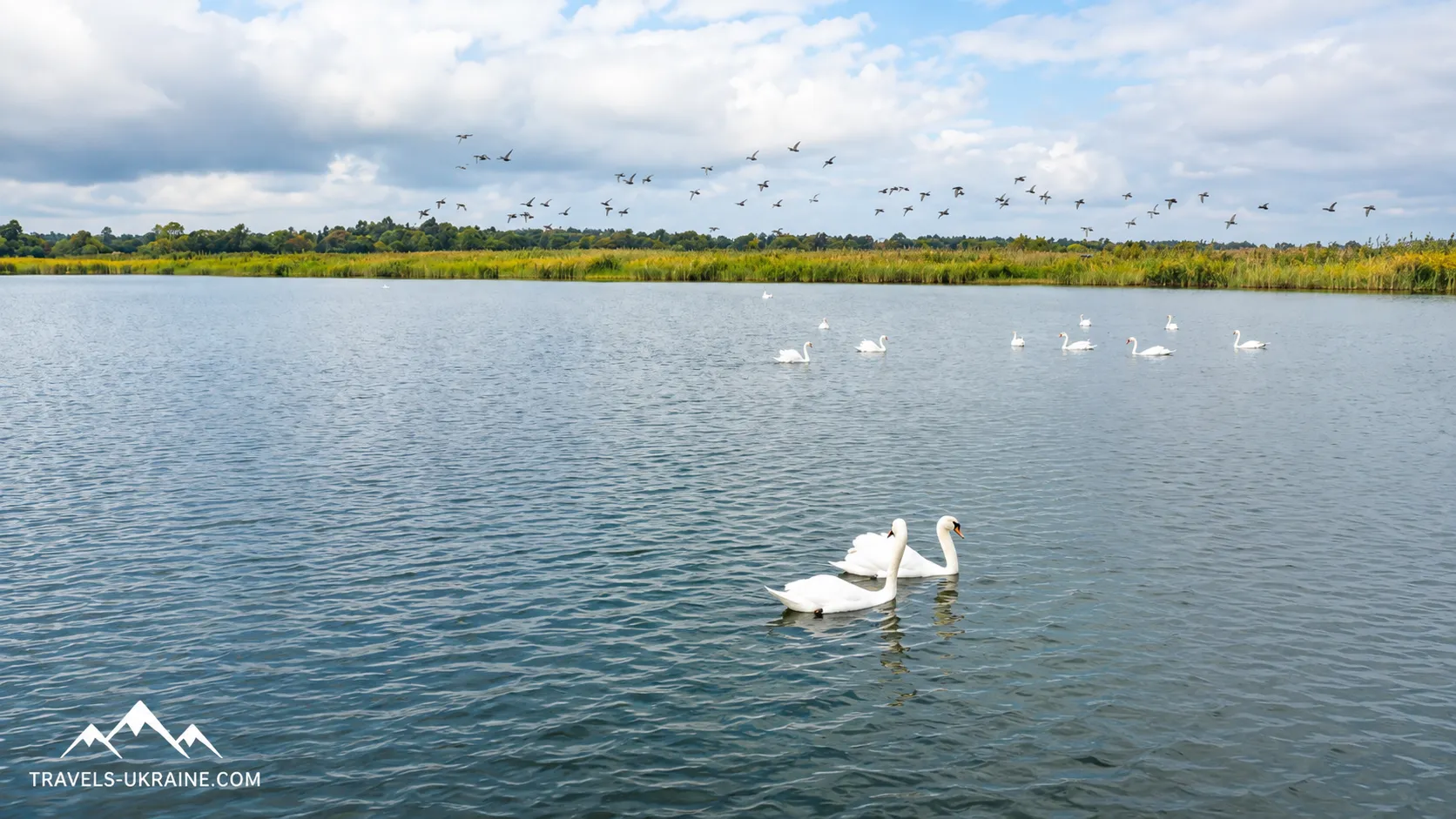
Aquatic ecosystems are also important. The Dniester Valley, floodplain meadows, ponds, and other bodies of water provide conditions for large numbers of waterfowl and water-associated birds. For some, the park is a breeding ground; for others, it is a stopover during seasonal migrations.
Why the Park’s Territory Is Divided into Different Zones
Halych National Nature Park does not have the same protection regime throughout its territory. Under nature conservation legislation, it is divided into four functional zones: a protected zone, a regulated recreation zone, a stationary recreation zone, and an economic zone.
The protected zone has the strictest regime. It is intended to preserve the most valuable natural complexes, so unrestricted access by outsiders, lighting fires, pitching tents, camping, parking, and other recreational activities are restricted or prohibited.
For tourists, the regulated recreation zone is the most important. Tourist routes and nature trails may be established here, excursions conducted, and short-term recreation in nature organized, provided that the applicable conservation rules are followed.
The stationary recreation zone is intended for tourist service facilities, while the economic zone covers areas where certain economic activities are permitted subject to nature conservation restrictions.
A National Park Is Not a Place Where You Can Walk Everywhere
This is an important point for travelers. National nature park status does not mean that every part of the territory can be accessed without restrictions. Some areas exist primarily for nature protection, while tourism is concentrated along designated routes, nature trails, and recreational sites.
Therefore, it is best to explore Halych National Nature Park via official tourist routes and environmental education sites. This not only helps visitors avoid violating protection rules but also allows them to see the places where the park’s nature is most accessible and interesting.
To understand why this territory requires such protection, it is worth taking a closer look at its nature—forests, meadows, wetlands, plants, and animals that together form one of the most diverse natural complexes in the Halych region.
The Nature of Halych NNP: From Oak–Beech Forests to Wetlands
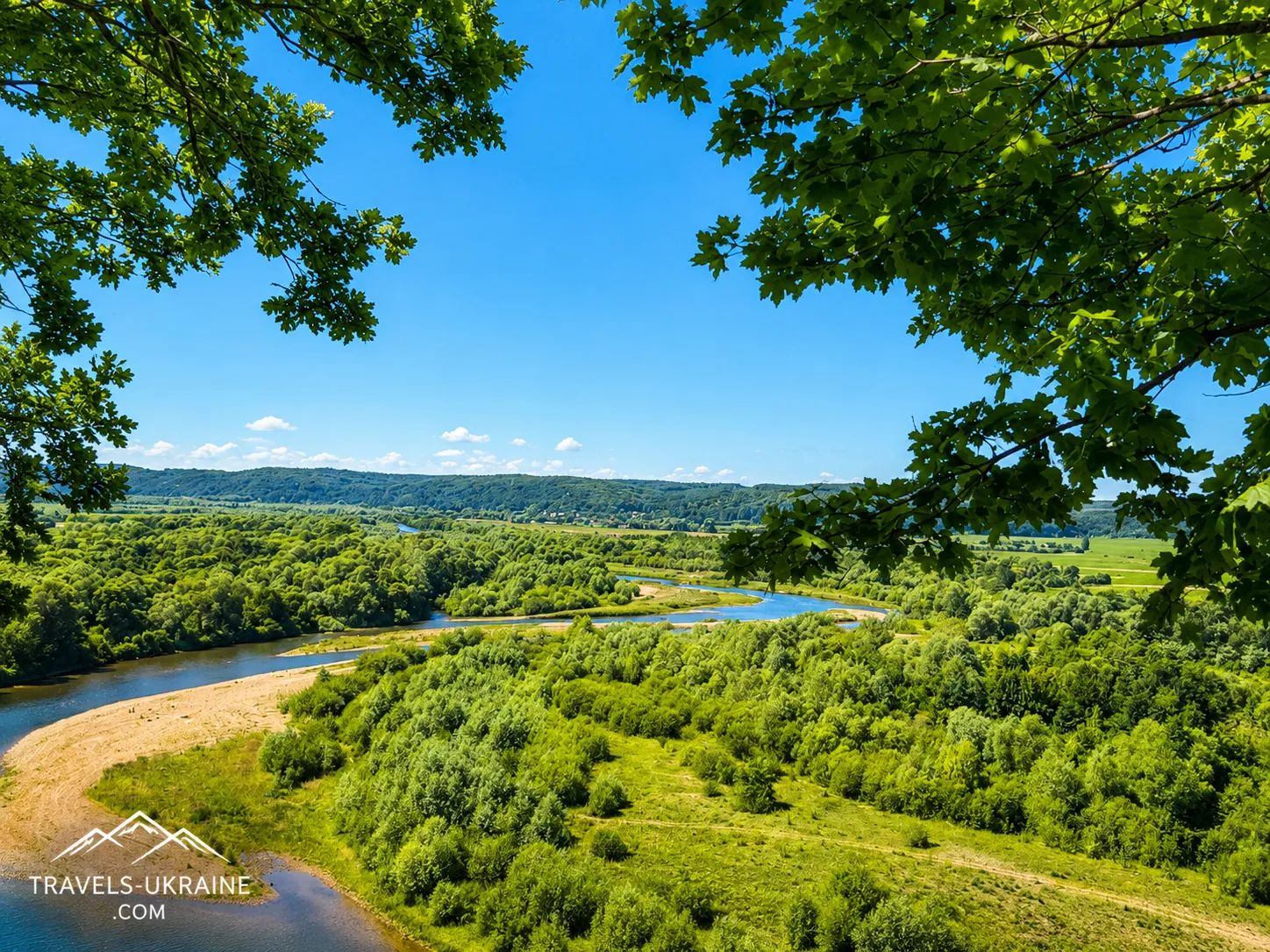
The main natural feature of Halych National Nature Park is the extraordinary diversity of landscapes within a relatively small territory. There are no high mountain ranges or alpine meadows typical of many Carpathian national parks. Instead, hilly forest tracts, valleys of large and small rivers, meadows, meadow-steppe slopes, Dniester oxbow lakes, marshy areas, and large bodies of water exist side by side.
The park lies at the junction of the Precarpathian Plain and the Volhynian–Podolian Upland. This geographic position largely explains its natural mosaic: species and natural complexes characteristic of both the Precarpathian region and Podolia and the forest-steppe zone occur here.
Oak, Beech, and Fir Forests
Forests occupy a significant part of the park. According to Halych NNP, forest areas cover approximately 11.6 thousand hectares. The most characteristic are oak forests, beech forests, and forests with fir, hornbeam, lime, maple, and other deciduous species.
Oak forests are more common on flatter areas and the lower parts of slopes. Valuable oak groves have survived, in particular, in the Dibrova, Tenetnykivskyi Lis, Soliana Brama, and Korcheva tracts.
Beech forests are more characteristic of the right bank of the Dniester and the slopes of hills. In some tracts, old-growth beech forests have survived, where in spring the forest floor is covered with snowdrops, fumewort, spring snowflakes, ramsons, and other spring plants.
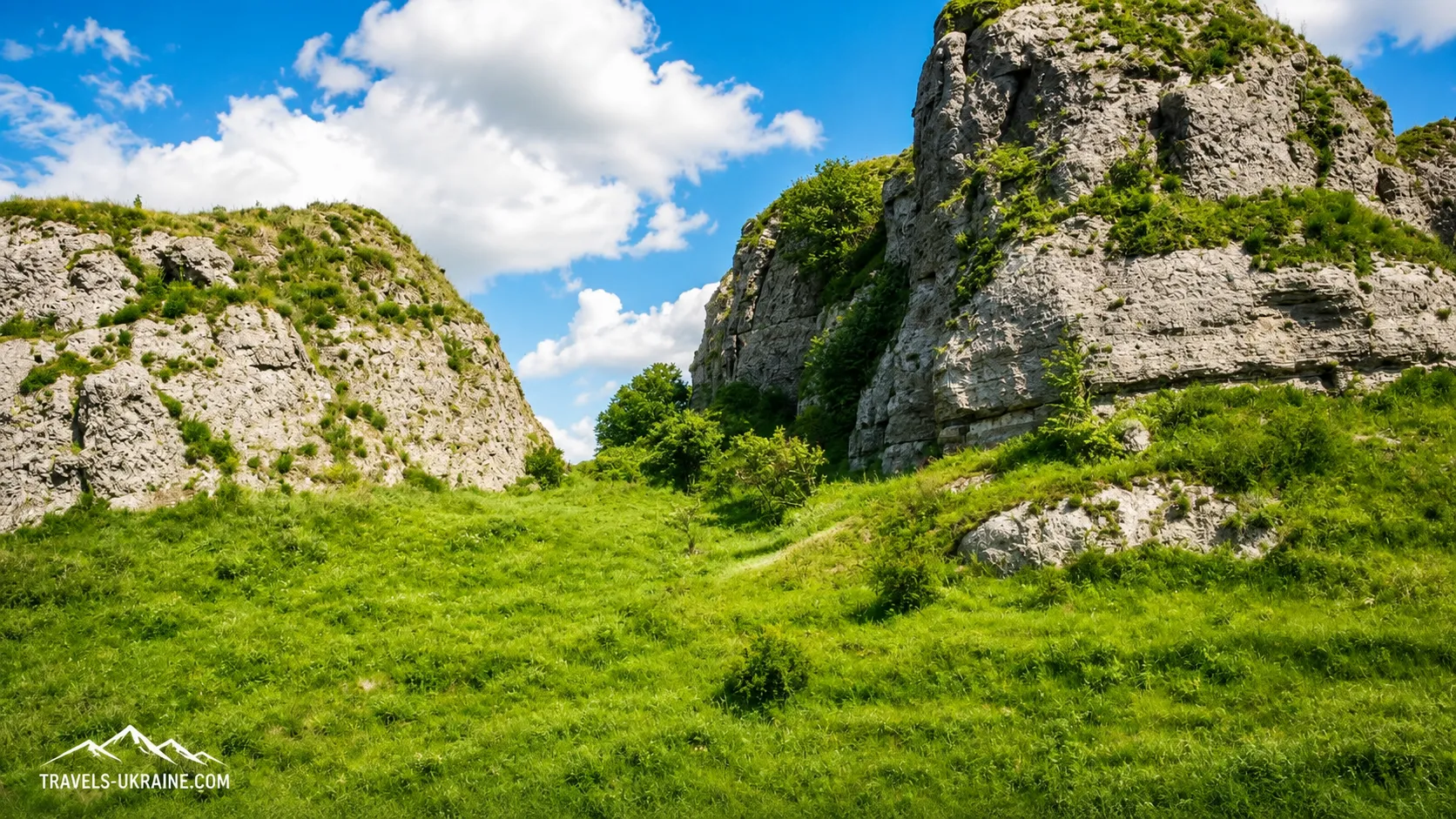
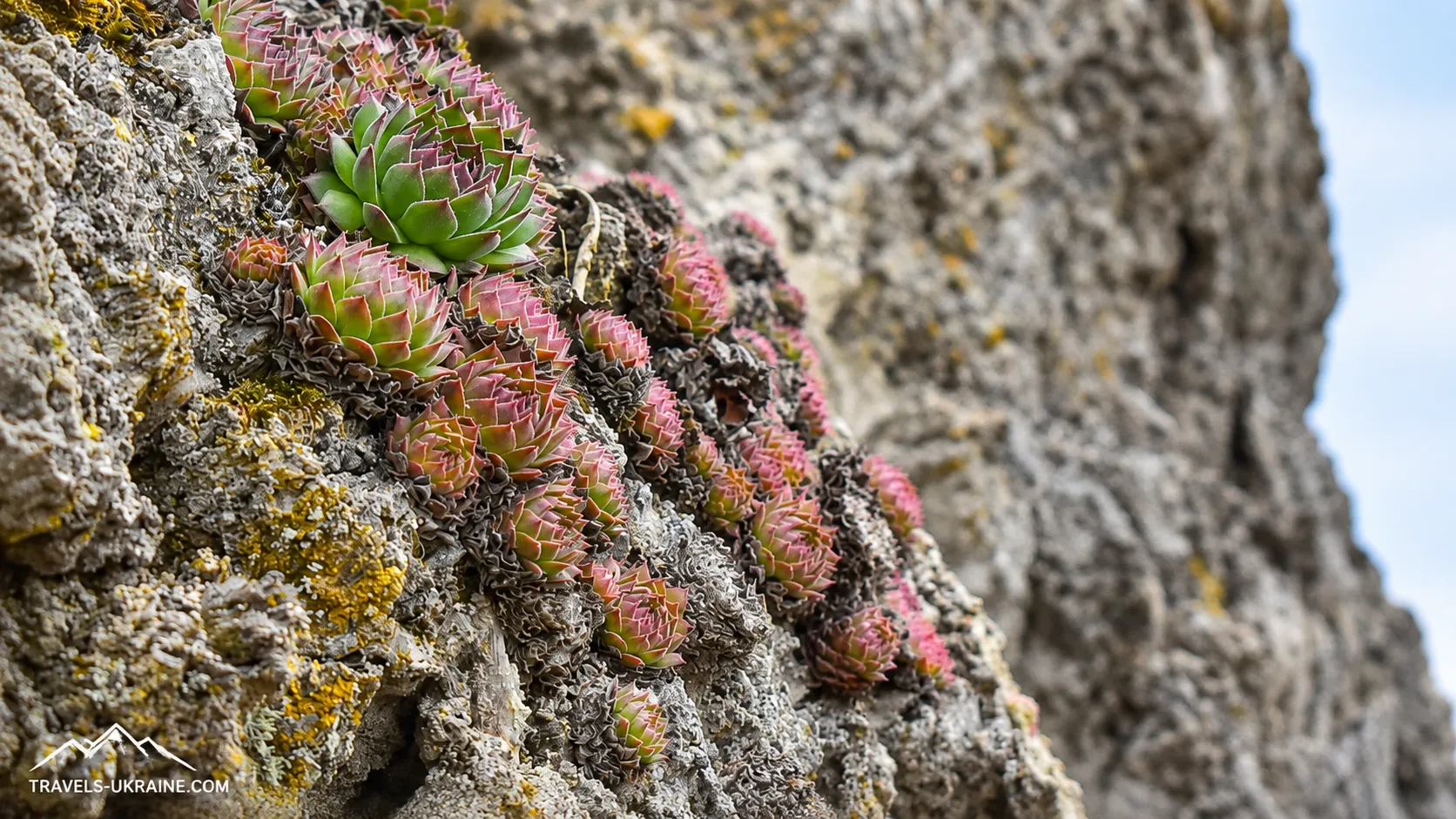
One interesting example is the Halych-Hora tract between Krylos and Halych. Here, hilly terrain is dissected by ravines and gullies, while the slopes are covered with beech, oak, and hornbeam forest stands. Where gypsum rocks reach the surface, distinctive plant communities have developed, some of which are listed in the Green Book of Ukraine.
Meadows and Small Areas of True Steppe
Meadow-steppe vegetation is an equally fascinating part of the park’s nature. It most strongly challenges the stereotype of Halych NNP as a purely forested area. Fragments of steppe communities with feather grass, fescue, and other plants characteristic of much drier parts of Ukraine have survived on the warm southern slopes of the hills.
The best-known such natural complex is Kasova Hora. Its slopes preserve rare meadow-steppe flora, including several species of feather grass and other plants associated with dry open slopes. Kasova Hora deserves special attention during a trip through the park.
Valuable meadows have also survived in other tracts. In wetter areas, visitors may find the snake’s-head fritillary, Siberian irises, gladiolus imbricatus, autumn crocus, and members of the orchid family. Some of these plants are protected at the national or international level.
The Dniester—The Park’s Main Waterway
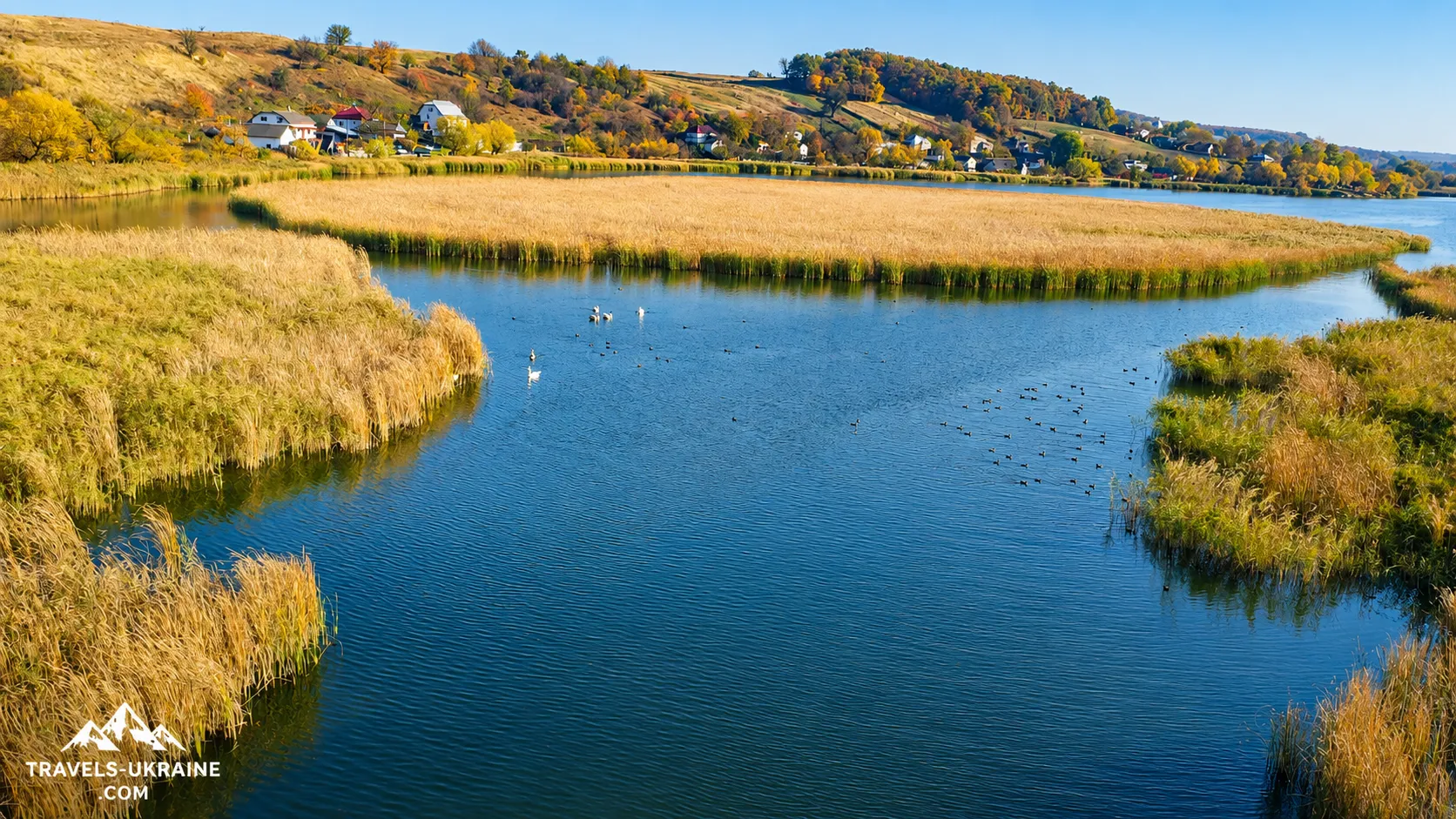
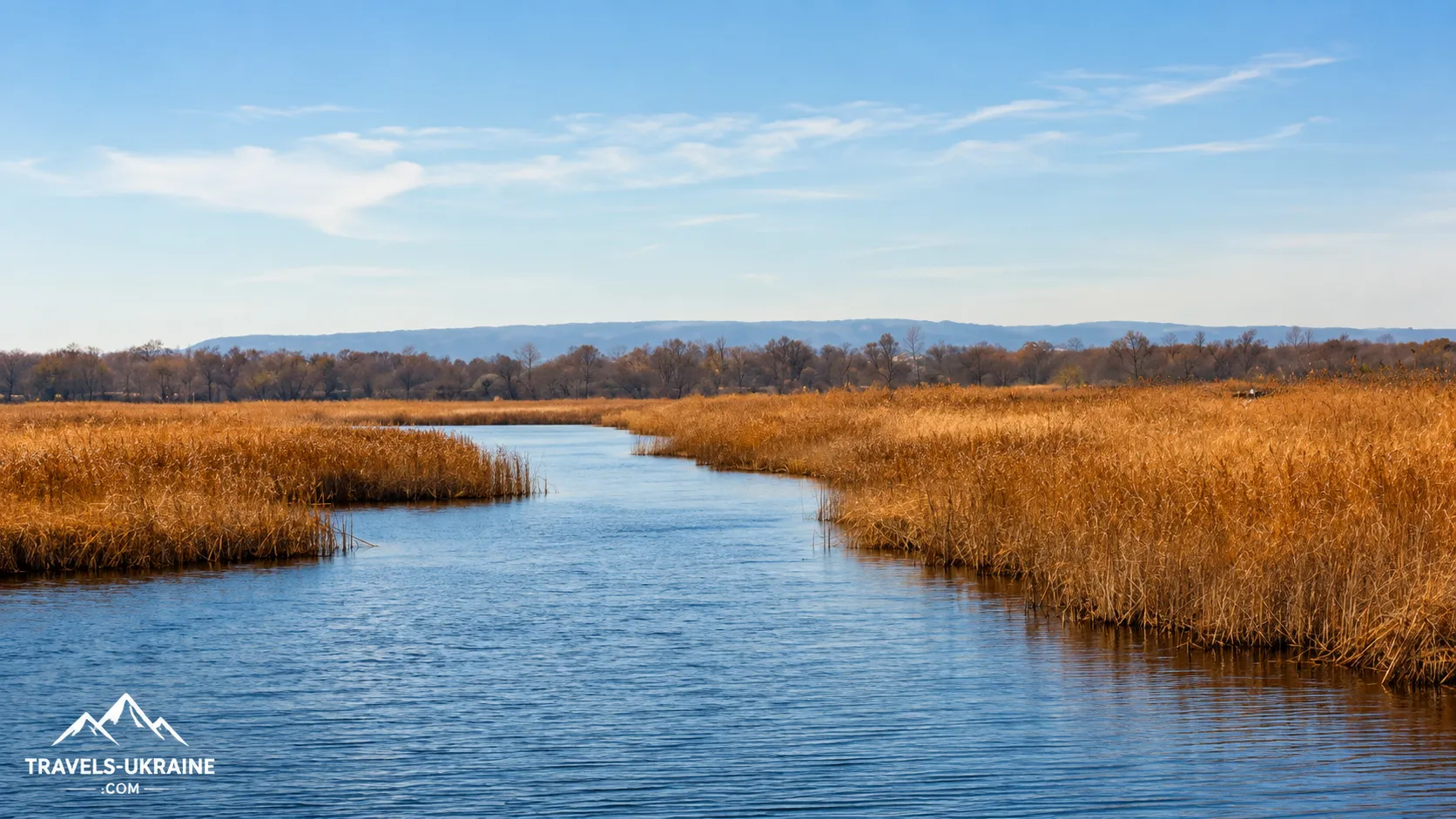
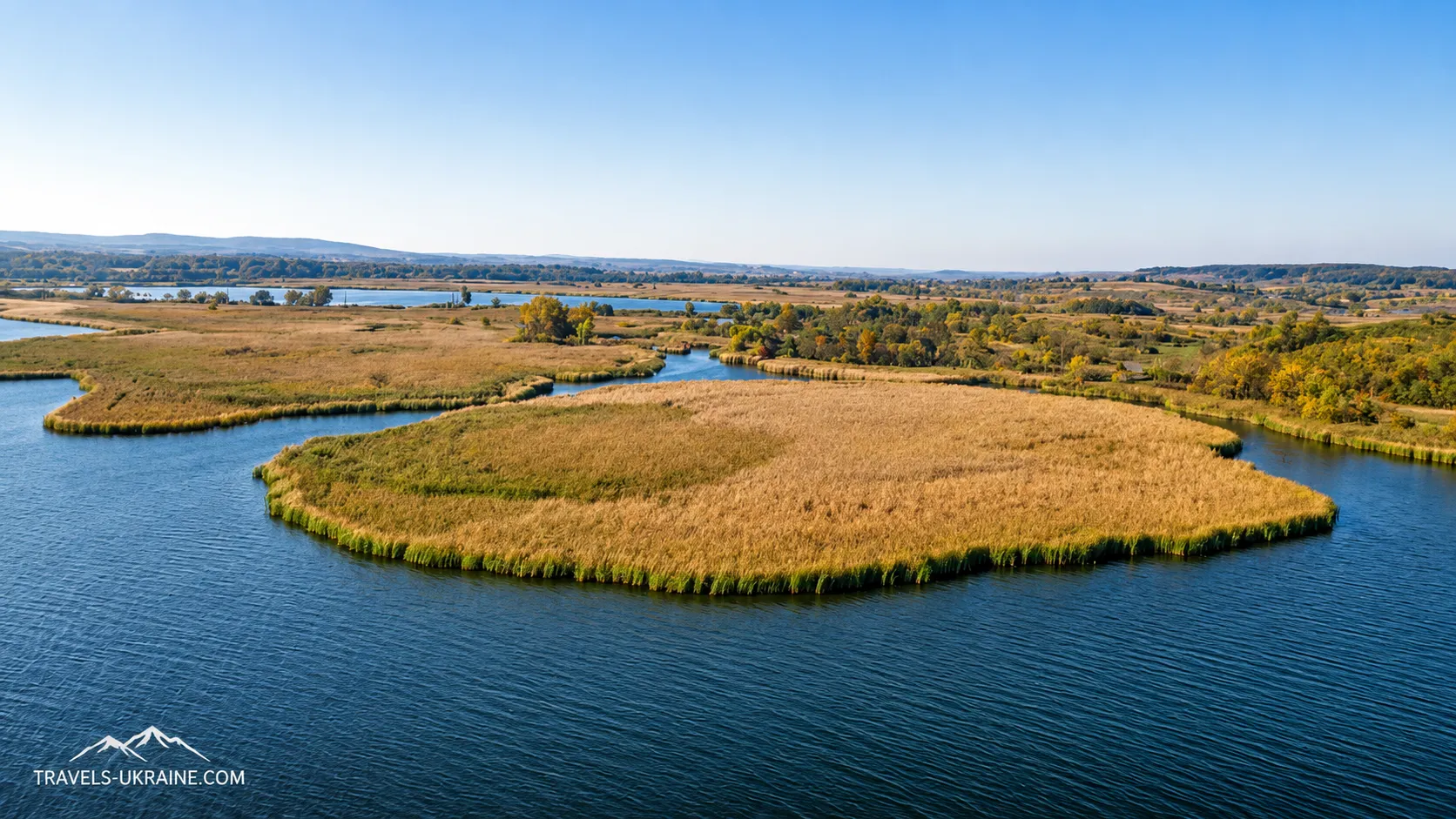
The Dniester plays a particularly important role in the nature of Halych NNP. Within the park, the river flows through a broad valley: in places, the right bank is high and steep, while the left is much gentler. The floodplain preserves meadows, marshy oxbow lakes, islands, and riparian areas that have become important habitats and resting places for animals.
The Dniester shapes not only the landscape but also an entire system of natural environments. During floods, water reshapes the banks, creates new channels, and separates former parts of the riverbed. This is how oxbow lakes—bodies of water that were once part of the river—are formed, eventually becoming separated from the main flow.
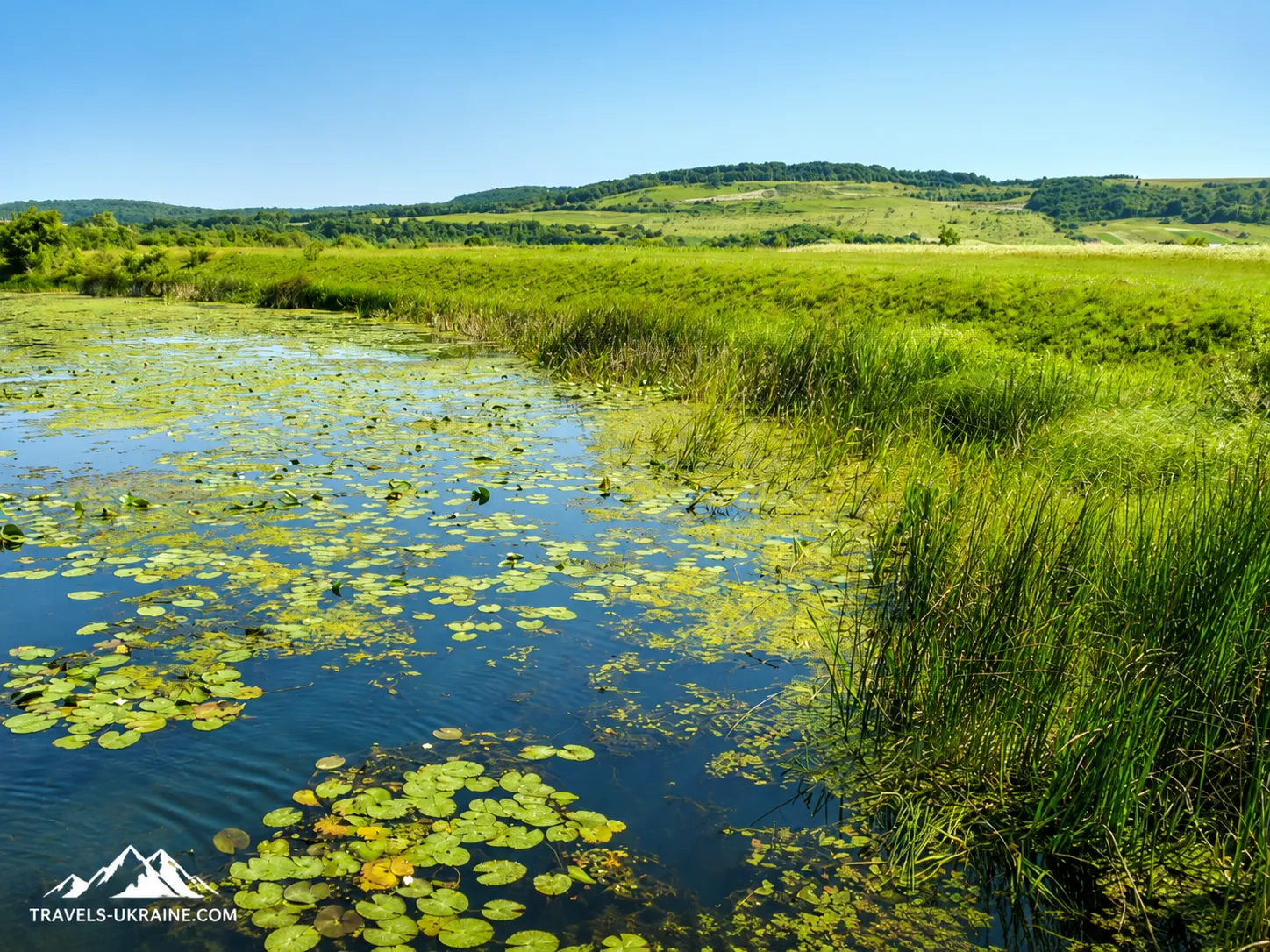
Among these bodies of water within the park are the Korolivka and Vodnyky oxbow lakes. Water lilies, yellow water-lilies, floating watermoss, and other aquatic plants grow there, while riverside thickets are used by numerous birds for nesting and resting.
Wetlands of International Importance
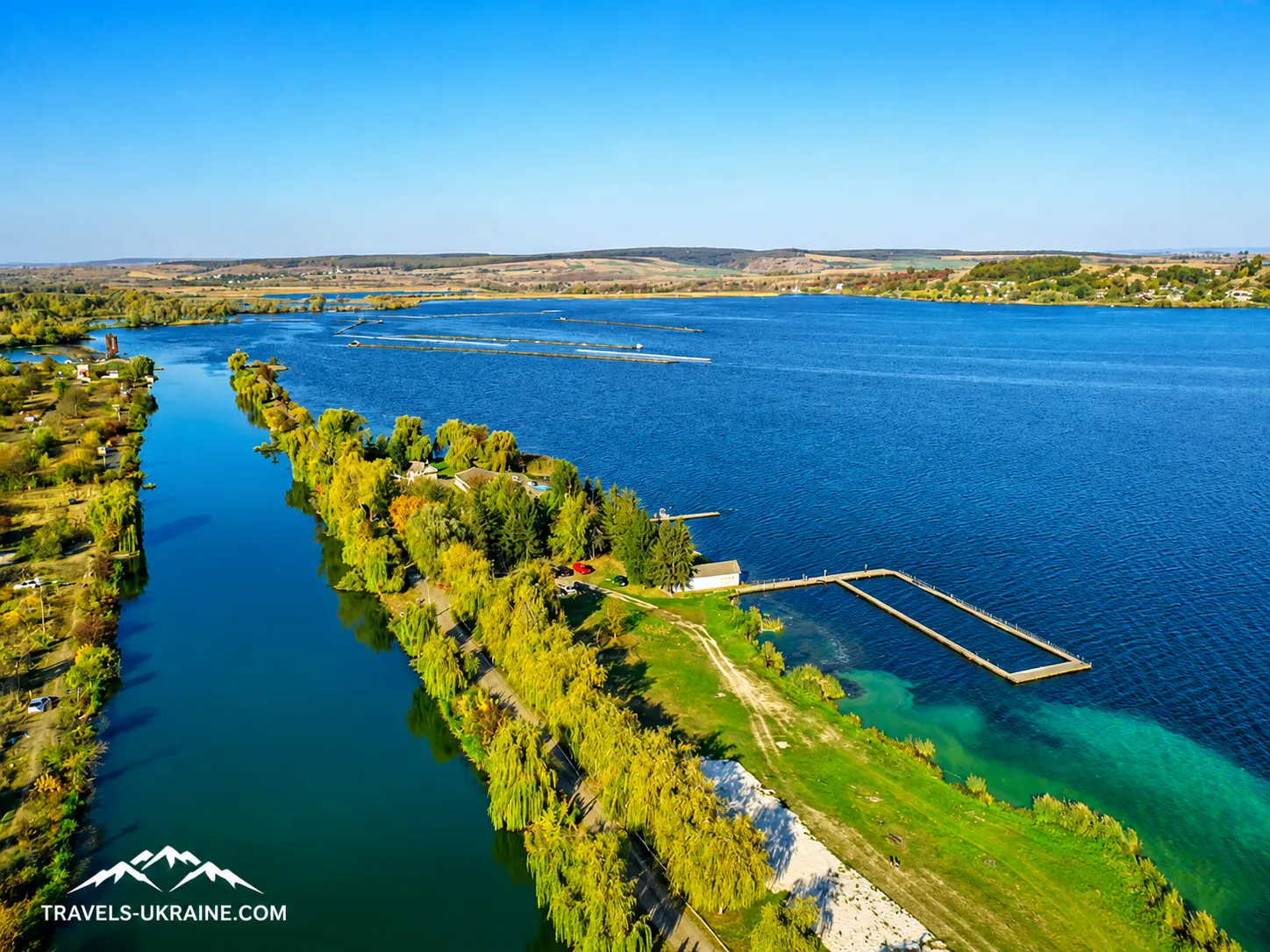
Water bodies hold a particularly important place in Halych National Nature Park. The total area of the water surface of natural and artificial water bodies is nearly 2,550 hectares. In addition to the Dnister and its oxbow lakes, this system includes the Limnytsia, Lukva, Hnyla Lypa, ponds, and the Burshtyn Reservoir.
Since 2019, the section of the Dniester within the park and the Burshtyn Reservoir have held the status of wetlands of international importance. These areas are particularly important for birds during seasonal migration and wintering.
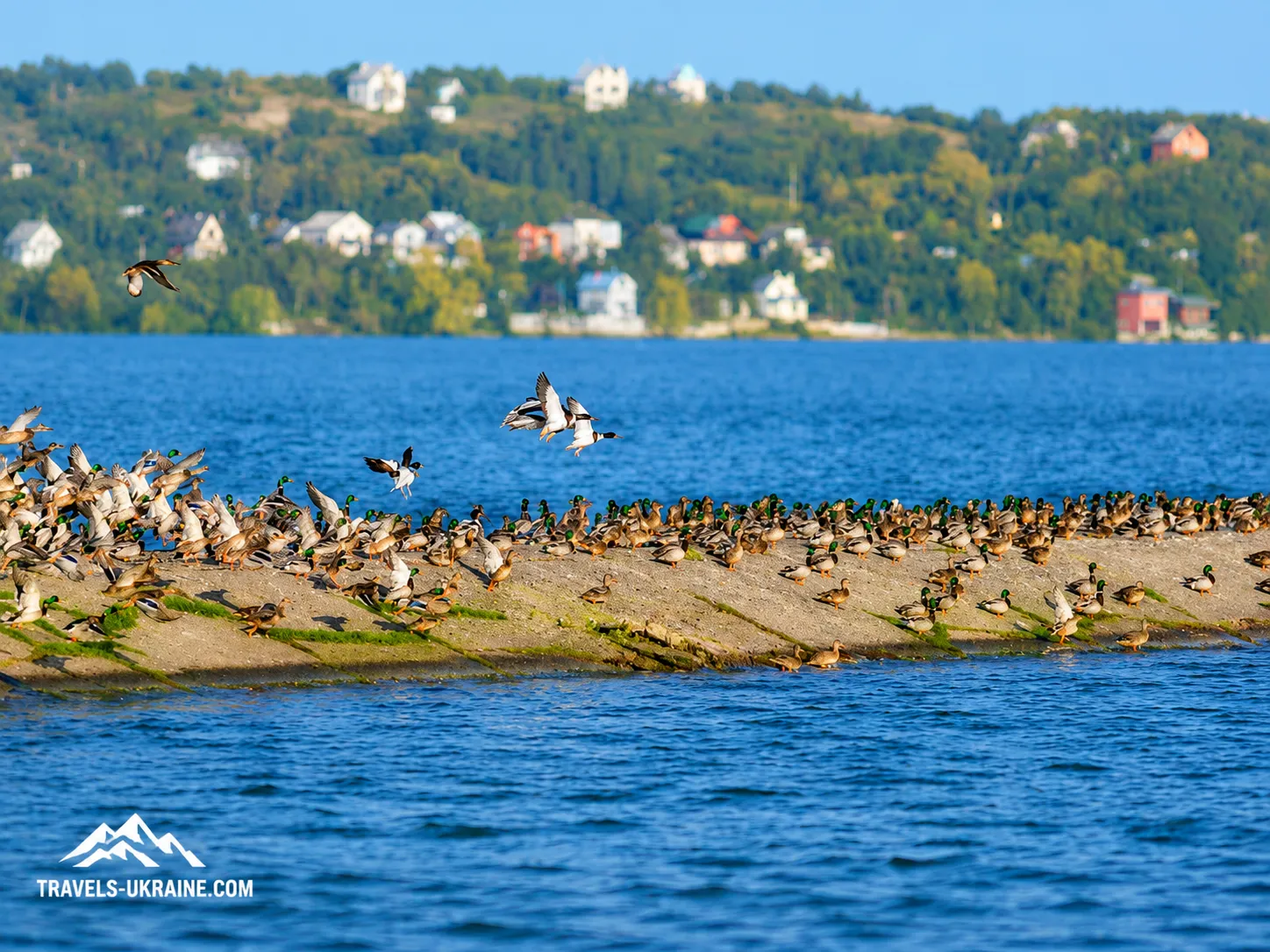
River and little terns nest on the islands and banks of the Dniester, kingfishers can be spotted here, and in winter the park’s waters attract large gatherings of waterfowl. For tourists interested in ornithology and wildlife watching, the park’s wetlands can be no less fascinating than its forests.
Plant Life of Halych National Park
According to the park administration, around 1,050 species of vascular plants have been recorded within its territory. This diversity is explained by the combination of forest, meadow, steppe, marsh and aquatic vegetation. Among the most notable protected plants are snowdrops, spring snowflakes, ramsons, snake’s-head fritillaries, Siberian irises, various orchid species and feather grasses. Floating water chestnut and floating salvinia are protected in the park’s waters.
However, the park’s value lies not only in individual rare species. Entire plant communities are protected here—from old beech forests to meadow-steppe slopes and the aquatic vegetation of the Dniester’s cut-off channels.
What Animals Can Be Seen in Halych National Park
The variety of natural habitats has created ideal conditions for abundant wildlife. According to the park’s official data, 63 species of mammals and 242 species of birds have been recorded here, along with more than fifty fish species in its waters.
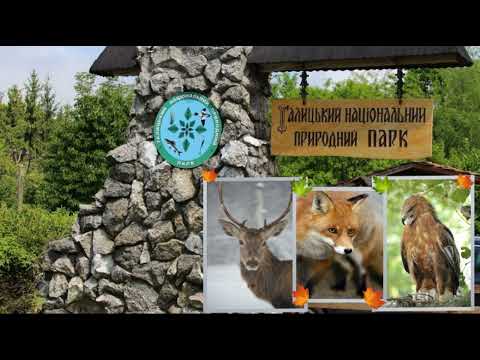
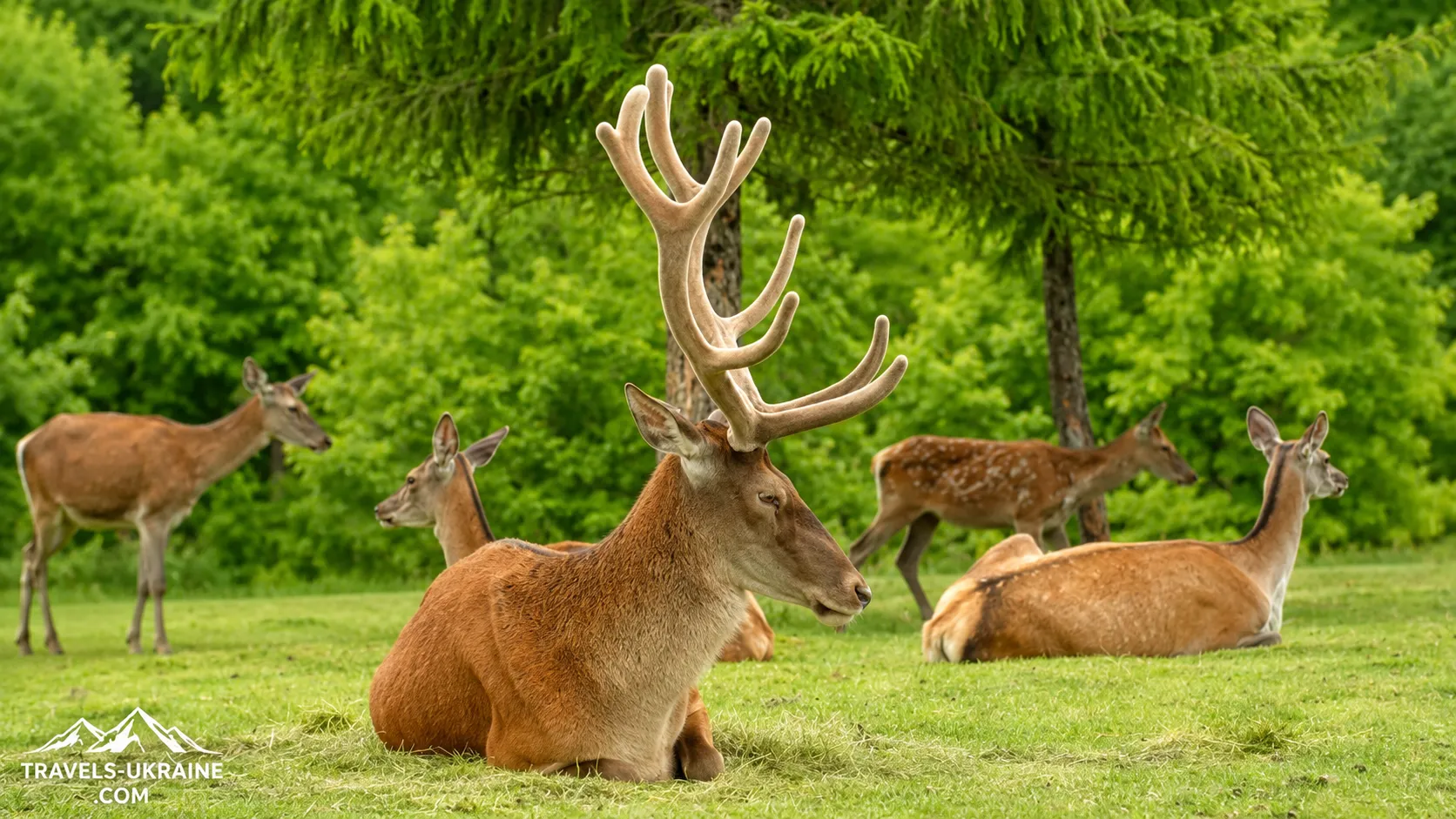
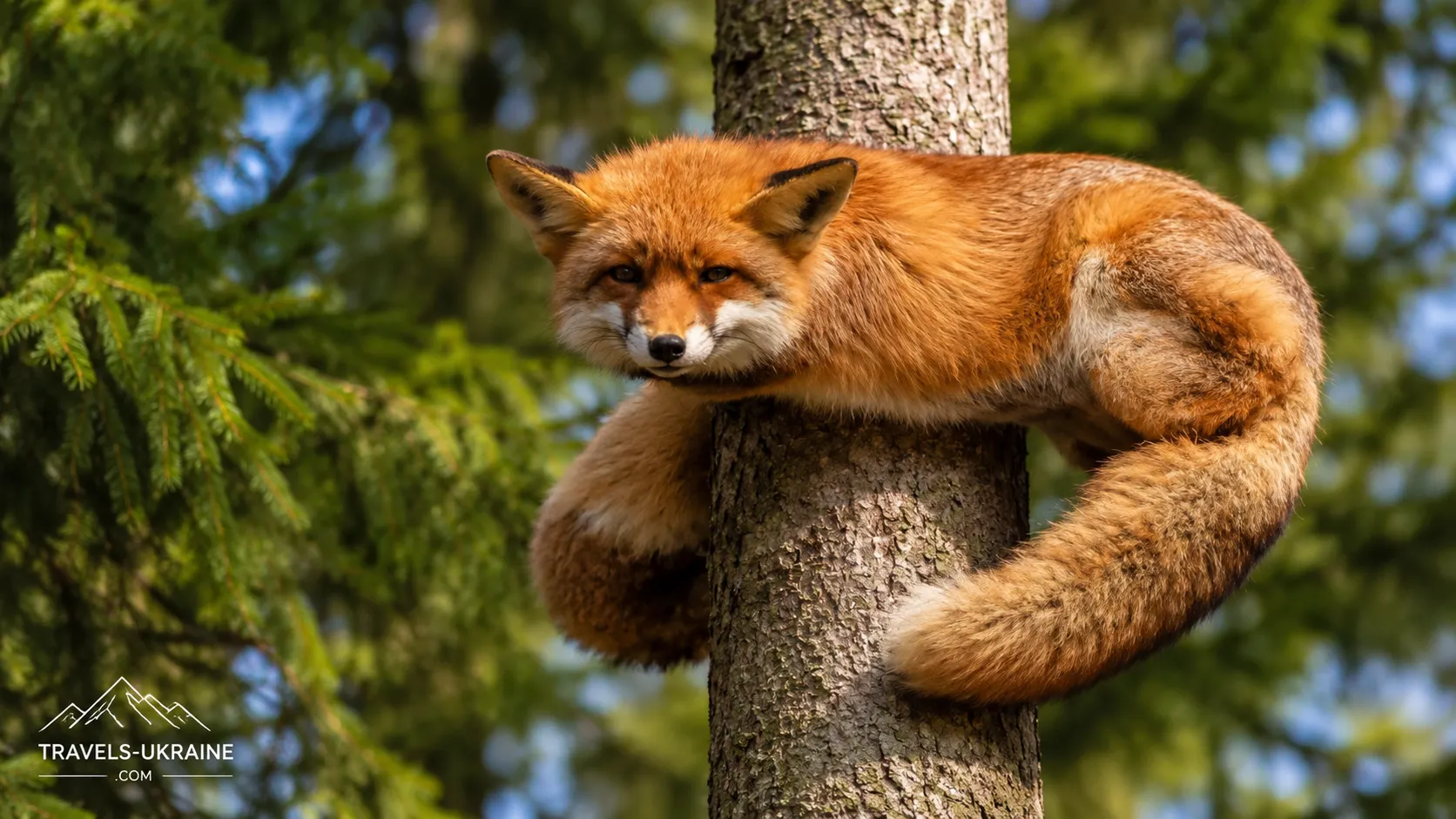
The forests are home to red deer, roe deer, wild boar, badgers, foxes, martens and squirrels. Eurasian otters can be found near the water, while hares and other forest-steppe inhabitants can be seen in open meadows and fields.
The birdlife is particularly rich. This is because forests, meadows, rivers, ponds, islands and large open bodies of water lie close to one another. In different seasons, visitors may see storks, herons, ducks, terns, birds of prey and woodland birds, while migration periods bring an even greater variety of species.
At the same time, a national park should not be treated like a zoo where seeing an animal is guaranteed. Most wild inhabitants avoid people, and the best way to observe them is quietly, from a safe distance, without trying to approach or feed them.
This very diversity of natural habitats is one of the main reasons for the value of the Halych National Nature Park. In a single trip, you can see completely different landscapes—walk through a broad-leaved forest, emerge onto a dry steppe slope, descend to the Dniester floodplain and end the day beside a body of water where thousands of birds stop.
What to See in Halych National Nature Park
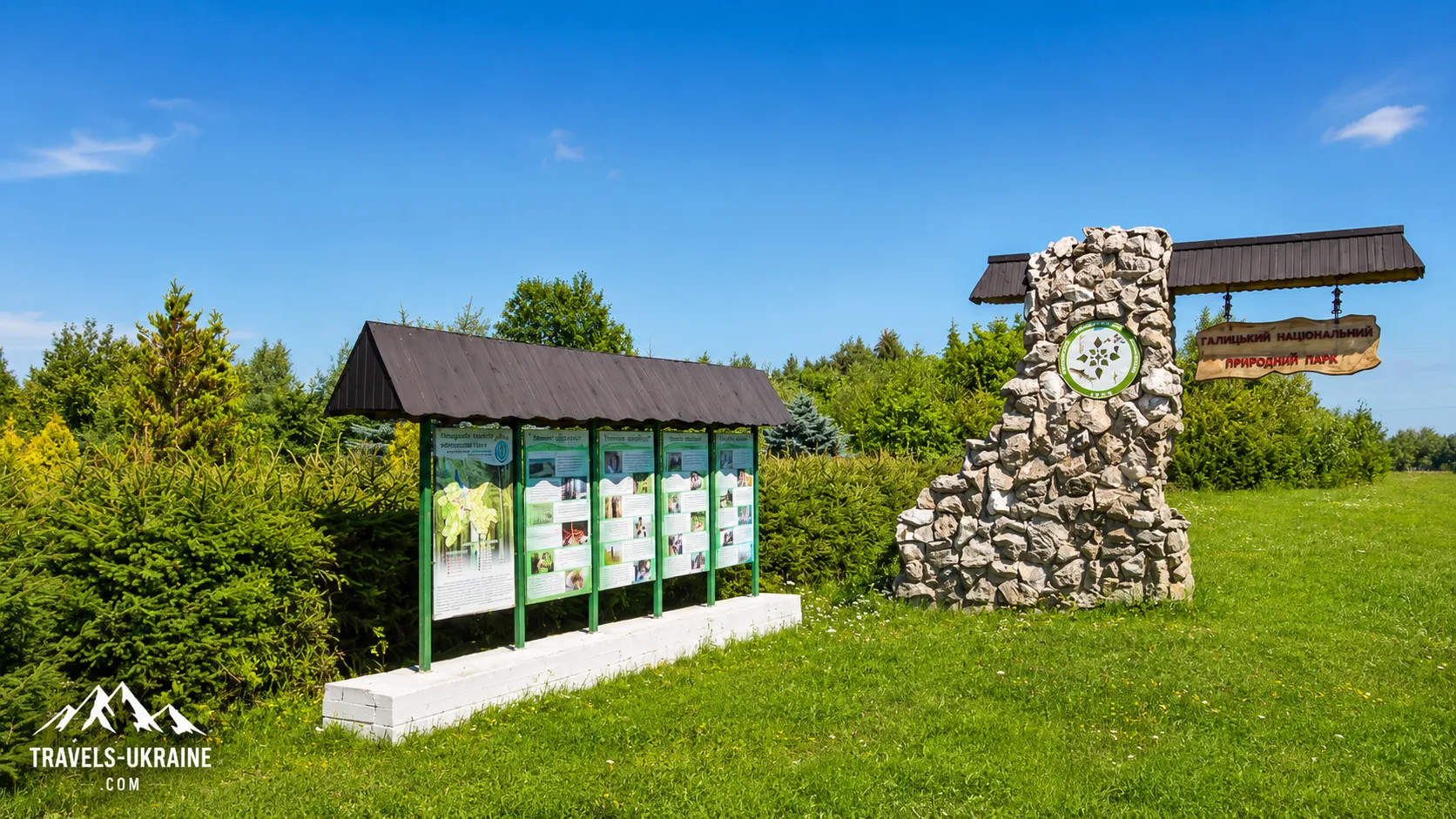
The Halych National Nature Park has no single central entrance beyond which tourists immediately find all of its natural attractions. The park consists of different areas, so it is best to plan your visit around specific natural and environmental education sites.
Some places offer views of the forests, meadows and waters characteristic of the park; others introduce visitors to its wildlife, while some were created specifically for environmental education. This makes it easy to adapt a trip here to different formats—a family outing with children, birdwatching, a short walk or a full-day hike.
Environmental Education and Tourism Complex
For a first introduction to the park, one of the most convenient places to visit is the environmental education and tourism complex of Halych National Park. Several attractions are gathered within a relatively small area, allowing visitors to gain an overview of the national park’s natural heritage in a short time.
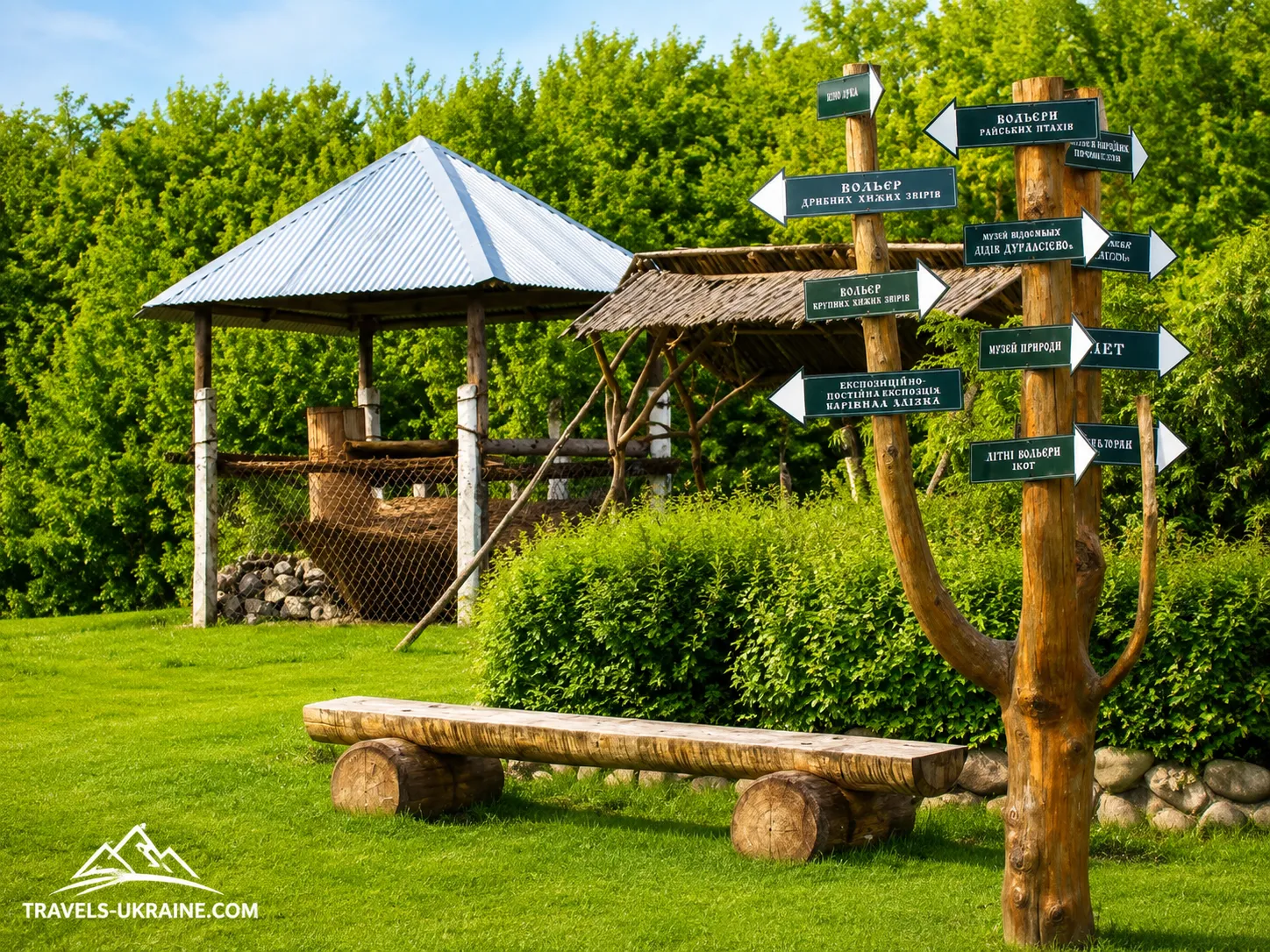
The complex includes the Nature of the Halych Land Museum, an arboretum area, a botanical hill, an exotarium, a Wildlife Rehabilitation Centre and the Fairy Forest tourist attraction. A recreation area with gazebos and a place to relax has been arranged nearby, making this part of the park especially convenient for a family trip.
The complex is best viewed as a kind of «introduction point» to Halych National Nature Park. If you do not have time for a longer tourist route, this is where you can explore the park’s main areas of work and find out which parts of its territory are worth visiting separately.
Nature of the Halych Land Museum
You can begin exploring the region’s natural heritage at the Nature of the Halych Land Museum. Its exhibition is designed to showcase the diversity of the national park’s ecosystems—forest, meadow-steppe and wetland. This is especially useful because it is impossible to see the entire territory of Halych National Park in one short trip. At the museum, visitors can gain a general understanding of the park’s landscapes, plants and animals before choosing specific natural areas to explore later.
For children, the museum can be a good introduction before a walk through the park: after seeing characteristic species and ecosystems in the exhibition, it is much more exciting to look for signs of them in nature itself.
Wildlife Rehabilitation and Reintroduction Centre
One of the best-known sites in Halych National Park is the Wildlife Rehabilitation and Reintroduction Centre. It was established to help injured, orphaned or disabled wild animals that cannot survive independently in their natural environment.
The animals are treated, vaccinated and gradually prepared for release back into the wild. If they regain the ability to live independently in their natural habitat after rehabilitation, they are released. Individuals that can no longer survive on their own because of injuries or other reasons remain under permanent care.
According to the park itself, since the centre began operating, more than 700 animals representing over fifty species have been treated, rehabilitated and returned to the wild, including species listed in the Red Book of Ukraine.
Visitors can see various mammals and birds undergoing rehabilitation or remaining at the centre because they cannot return to the wild. At different times, its residents have included deer, roe deer, mouflon, wolves, badgers, bears and numerous birds. At the same time, the Rehabilitation Centre should not be viewed as an ordinary zoo. Its main purpose is to treat, restore and, whenever possible, return animals to the wild. This is why visiting the centre also has a strong environmental education component.
Arboretum, Botanical Hill and Exotarium
The environmental education and tourism complex also includes an arboretum area and botanical hill. Here, visitors can learn about various species of trees, shrubs and herbaceous plants, while the grounds are ideal for a leisurely walk after visiting the museum or Rehabilitation Centre.
The exotarium is another part of the complex. It is best understood primarily as an environmental education facility that complements the main exhibition and offers a closer look at representatives of the animal kingdom. For families with children, these attractions are convenient because they do not require a long walk: the museum, nature education areas and Rehabilitation Centre can all be combined in a single visit.
The Dniester and Its Floodplains
A completely different side of Halych National Nature Park reveals itself near the Dniester. There are no museum displays or enclosures here—the main attraction is nature itself.
The river floodplain, islands, cut-off channels and riverside thickets create important habitats for waterfowl and water-associated birds. At different times of year, visitors can observe terns, herons, ducks, kingfishers and other wetland inhabitants. These areas are particularly interesting in spring and during seasonal migrations, when bird numbers increase. The best way to observe them is from a distance, using binoculars or a camera with a telephoto lens, without approaching nesting sites.
Burshtyn Reservoir
Another important wetland area in the park is Burshtyn Reservoir. Together with the Dniester section, it is internationally significant as a wetland and plays an important role in bird migration and wintering. For tourists, the area is especially interesting as an opportunity to observe waterfowl and see a landscape entirely different from the forested part of Halych National Park. During the colder months, the reservoir may attract particularly large numbers of birds.
Kasova Hora
Among the park’s natural areas, Kasova Hora holds a special place as one of the most valuable centres of meadow-steppe vegetation in the Precarpathian region. Here, visitors can experience a natural setting very different from the oak forests or the Dniester: open slopes, steppe plants and sweeping views.
Kasova Hora differs so greatly from other parts of Halych National Park and has such an interesting conservation history that it deserves a section of its own. In addition, a short educational nature trail leads here, making this location one of the most accessible for tourists.
Thus, the question of «what to see in Halych National Park» has no single answer. To see animals, visit the Rehabilitation Centre; to understand the region’s natural heritage, visit the museum; for meadow-steppe landscapes, head to Kasova Hora; and for birdwatching, go to the Dniester or Burshtyn Reservoir.
That is why the park is best discovered through several different locations rather than during one brief stop. The nature trails and tourist routes of Halych National Nature Park make it possible to combine them into a full journey.
Routes and Nature Trails in Halych National Nature Park
The best way to explore the natural heritage of Halych National Nature Park is to follow one of its educational nature trails or tourist routes. They pass through different natural areas, so each presents the park from a different perspective: old oak forests, meadow-steppe slopes, wetlands or places where nature meets the historical heritage of Halych.
The park’s official website currently lists «Through Dibrova,» «To Kasova Hora,» «Along Burshtyn Reservoir» and «Prince’s Well—Castle Hill» among the main routes for visitors. They differ considerably in length and character, so choose a route not only according to how much free time you have, but also according to what exactly you want to see.
«Through Dibrova» Educational Nature Trail
«Through Dibrova» is one of the park’s longest and most rewarding nature routes. The trail passes through the picturesque Dibrova oak-hornbeam tract, covering approximately 425 hectares, where valuable areas of old-growth broad-leaved forest have been preserved.
The route is approximately 8.7 km long, and you should allow about 4 hours to complete it. This is more than a short walk near the tourist complex: it is a full hiking route where you can see different types of forest communities, ravines, springs and other natural features. Dibrova is particularly fascinating in spring. At that time, beneath the old oaks and hornbeams, extensive populations of spring snowflakes, ramsons and other early-spring plants appear, forming large natural carpets in places.
One of the most impressive viewpoints in this part of the park is the Sokilski Skeli viewpoint near the village of Sokil. From here, you can enjoy a panorama of the Limnytsia Valley, its bends and forested hills. For those who want to experience the forest character of Halych National Park and are ready for a several-hour walk, “Through Dibrova” is one of the best options.
«To Kasova Hora» Educational Nature Trail
The «To Kasova Hill» route offers a completely different format. It is only about 2 km long, and the trail can be completed in approximately an hour. This makes it one of the most convenient options for a first introduction to the park’s nature. The route begins near the village of Bovshiv and initially passes through forest before emerging onto the open meadow-steppe slopes of Kasova Hill. Green-and-white markings are used in the forest section, while signpost stones indicate the direction directly on the hill.
The trail is equipped with rest areas and a viewing platform. From the height, views open up over the Dniester Valley, the Burshtyn Reservoir and the surrounding areas, while in good visibility the horizon stretches much farther. However, the route’s main value lies not only in the panorama. Kasova Hill is one of the park’s most important botanical sites, preserving rare meadow-steppe plant communities. That is why we will devote separate attention to this location.
«Along the Burshtyn Reservoir» Route
Those more interested in bodies of water and birdwatching should consider the educational nature trail «Along the Burshtyn Reservoir». It reveals a completely different side of Halych National Park, where water, shoreline vegetation and numerous waterfowl are the main natural attractions.
The route begins near the car park by Burshtyn Thermal Power Plant, on the shore of the reservoir. The starting area features a viewing platform, information boards and benches. The boards introduce visitors to the reservoir’s conservation importance, its birdlife and the rules of birdwatching.
This route is most interesting during seasonal migrations and the wintering period, when large numbers of waterfowl gather on the reservoir. It is therefore worth bringing binoculars: the opportunity to observe birds from a distance is one of the main reasons to visit this part of the park. Unlike Kasova Hill or Dibrova, this route does not require a continuous ascent. Its value lies primarily in quietly observing nature and becoming acquainted with wetland ecosystems.
«Kniazha Krynytsia — Zamkova Hill» Tourist Route
The most unusual of the park’s routes is «Kniazha Krynytsia — Zamkova Hill», as it combines the natural and historical-cultural heritage of the Halych region. It is approximately 7.4 km long, has green-and-red markings, and takes about 4 hours to complete.
This is a good choice for travellers who do not want to separate their trip into «nature» and «history.» During a single route, you can see natural areas of Halych NNP while also discovering landmarks associated with both ancient and modern Halych.
The route’s main points of interest include Kniazha Krynytsia, the Krylos area, the Museum of the History of Ancient Halych, Halychyna Mohyla, the Assumption Church, and the Museum of Folk Architecture and Everyday Life of the Carpathian Region. It then takes in the educational nature complex of Halych NNP, with its nature museum and Wildlife Rehabilitation Centre, and ends in the area of Zamkova Hill.
The final historical landmark is Halych Castle, also known as the Starostynskyi Castle, offering panoramic views of the city and the Dniester Valley. This is why the route is particularly convenient for visitors coming to Halych for the first time who want to see several different aspects of the region in a single day.
Which Halych NNP Route Should You Choose?
There is no single route that is best for everyone. If you have little time and want a beautiful nature walk without a long trek, Kasova Hill is the most convenient option. Those who enjoy forests and longer hikes will be better suited to «Through Dibrova».
For birdwatching, the logical choice is the Burshtyn Reservoir, especially during the migration season. Those who want to combine nature with the history of princely Halych and the Starostynskyi Castle will find «Kniazha Krynytsia — Zamkova Hill» the most suitable route.
It is also worth bearing in mind that the educational nature trails pass through protected areas of the park with an established conservation regime. The administration of Halych NNP requires an organised guide-led visit for access to the educational nature trails, so before travelling, it is advisable to check the current conditions for following your chosen route directly with the park.
Of all these routes, one natural site deserves special attention. Kasova Hill is not simply a short trail with a viewing platform, but one of the most valuable centres of steppe vegetation in western Ukraine, where an extraordinary concentration of rare species has survived in a small area.
How to Visit Halych NNP: Getting There and Planning Your Trip
When planning a trip to Halych National Nature Park, it is important to bear in mind its main feature: it is not one compact tourist area with a single entrance. Natural sites, nature trails and points of interest are spread across different parts of the Halych region, so it is best to decide on your route before setting out.
If you are visiting the park for the first time, the most convenient place to begin is the educational nature tourism complex. Here you can gain an overview of the park’s nature, visit the museum and Wildlife Rehabilitation Centre, explore other facilities and, if necessary, obtain information about routes and the conditions for following them.
The official address of Halych NNP is 1 Halytska Street, Krylos village, Ivano-Frankivsk Oblast. Krylos is a convenient starting point for discovering not only the park’s nature but also the historical heritage of ancient Halych. This starting point is especially convenient for travellers planning to combine a nature and history programme. The landmarks of the Krylos hillfort are nearby, and one of the park’s routes can continue the journey towards modern Halych and Zamkova Hill.
How to Get There by Car
Of course, the easiest way to travel around the park is by car, as its attractions are located a considerable distance from one another. From Ivano-Frankivsk to Krylos is approximately 20 km along the H-09 highway. According to general information from tourists, the drive takes about 25 minutes.
If you plan to visit Kasova Hill, the Burshtyn Reservoir or other remote natural sites, you will need to travel between them by car. It is therefore not worth trying to explore the entire Halych NNP as one walking area.
Cars should be left in permitted areas. Driving directly into natural areas and onto nature trails in a private vehicle is prohibited unless the park administration has specifically provided for this possibility.
How to Get There by Public Transport
The nearest railway stations are in Halych and Ivano-Frankivsk. For travellers from other regions, a convenient option may be to take a train to Ivano-Frankivsk or Halych, and then continue by bus, taxi or other local transport. It is also possible to travel from Ivano-Frankivsk by buses operating towards Lviv, Burshtyn and Rohatyn. Before travelling, it is best to check the timetable and the specific stop near your chosen location separately, as bus routes may change.
Do You Need to Arrange a Guided Tour in Advance?
For organised visits to the educational nature trails and guided tours, the park administration provides staff accompaniment. Therefore, if you plan to follow a particular route with a guide or visit the park as part of an organised group, it is best to contact the administration in advance.
This is especially relevant to longer routes, environmental education programmes and group trips. Park staff can also provide information about the current condition of the trails, possible temporary restrictions and the best way to visit a particular natural site.
Frequently Asked Questions About Halych National Nature Park
Where is Halych National Nature Park located?
Halych National Nature Park is located in Ivano-Frankivsk Oblast, around Halych, Krylos, Burshtyn and the surrounding areas. The park administration and educational nature tourism complex are located in the village of Krylos, approximately 20 km from Ivano-Frankivsk.
What is the area of Halych NNP?
The total area of Halych National Nature Park is 14,684.8 ha. Its territory consists of various natural sites and does not form one continuous tourist area.
What is worth seeing in Halych National Nature Park?
Among the most interesting places are Kasova Hill, the Dniester Valley, the Burshtyn Reservoir, the Dibrova tract, the «Nature of the Halych Land» Museum and the Wildlife Rehabilitation Centre. The choice of location depends on what interests you most: hiking routes, rare plants, forests, birdwatching or educational nature sites.
What tourist routes are available in Halych NNP?
The park’s main educational nature routes include «Through Dibrova,» «To Kasova Hill,» «Along the Burshtyn Reservoir» and «Kniazha Krynytsia — Zamkova Hill». They differ in length, difficulty and the natural attractions that can be seen along the way.
What makes Kasova Hill interesting?
Kasova Hill is one of the most valuable centres of meadow-steppe vegetation in the Halych region. Rare plant communities and species listed in the Red Data Book of Ukraine have survived on its slopes. A short educational nature trail and a viewing platform have been arranged here for visitors.
Can you see wild animals in Halych NNP?
The park’s natural areas are home to deer, roe deer, wild boar, badgers, otters and numerous bird species, but encountering a wild animal during a walk is not guaranteed. Visitors can learn more about wildlife at the Wildlife Rehabilitation and Reintroduction Centre, which helps injured and orphaned representatives of wild fauna.
Is Halych NNP suitable for a trip with children?
Yes. The educational nature tourism complex in Krylos, with its nature museum, Wildlife Rehabilitation Centre, arboretum area and other environmental education facilities, is particularly suitable for family visits. For older children, you can add the short trail to Kasova Hill.
When is the best time to visit Halych National Nature Park?
The park is interesting throughout the year. Spring and early summer are particularly well suited to observing the flowering of forest and meadow-steppe plants, autumn is ideal for walks through broadleaf forests, and the cold season can be interesting for observing waterfowl on the Burshtyn Reservoir.
How much time is needed to visit Halych National Nature Park?
A few hours are enough for a first introduction to the environmental education complex. If you plan to take one of the longer nature trails, it is best to set aside an entire day. To see different parts of the park — forests, Kasova Hora, and wetlands — it is advisable to divide the trip over two days.
Can visitors walk freely throughout Halych National Nature Park?
No. Different protection regimes apply across the national park. Recreational activities are significantly restricted in the strict nature reserve zone, so tourists should use official routes, nature trails, and designated recreational areas.
Are Halych Castle and Krylos part of Halych National Nature Park?
Halych Castle and the main historical and archaeological landmarks of Krylos are not part of Halych National Nature Park. Most of them belong to the Ancient Halych National Preserve. However, because they are located close to the park, the natural and historical sites are very convenient to combine in a single trip.
Is Halych National Nature Park worth visiting?
Halych National Nature Park is interesting above all for its diversity. There is no single main attraction that draws everyone to one particular spot. The area reveals itself gradually — through old broadleaf forests, the steppe slopes of Kasova Hora, the Dniester Valley, wetlands, birdwatching routes, and environmental education sites.
This is what sets it apart from many other national parks in western Ukraine. You do not need to seek out high peaks or challenging mountain crossings to enjoy an interesting trip. In one day, you can follow a forest nature trail, see rare steppe vegetation, and finish your route by the Dniester or at one of the viewpoints.
Especially valuable is the combination of the nature and historical heritage of the Halych region. Krylos, the landmarks of princely Halych, the Church of Saint Panteleimon, and Halych Castle are located near the park. This makes it easy to turn one trip into a full introduction to both the nature of the Carpathian foothills and the history of one of Ukraine’s oldest centers.
The park is suitable for all kinds of travelers. Hiking enthusiasts will find several nature routes, photographers will find forest and waterside landscapes, birdwatchers will find places for observing birds, and families with children can begin their visit at the nature museum and the Wild Animal Rehabilitation Center.
If you are looking for a place where you can combine peaceful nature routes, rare landscapes, wildlife observation, and historical landmarks, Halych National Nature Park certainly deserves your attention. This is not a park to try to «check off» during one short stop. It is best remembered when enough time is set aside to explore its different parts.

No Comment
You can post first response comment.