
 English
 Українська
 Български
 Hrvatski
 Čeština
 Dansk
Dansk Nederlands
 Eesti
Eesti Suomi
Suomi Français
 Deutsch
 Ελληνικα
 Magyar
 Íslenska
 Italiano
 Latviešu
 Lietuvos
 Polski
 Português
 Română
 Русский
 Српски
 Slovenčina
 Slovenščina
 Español
 Svenska
 Türkçe
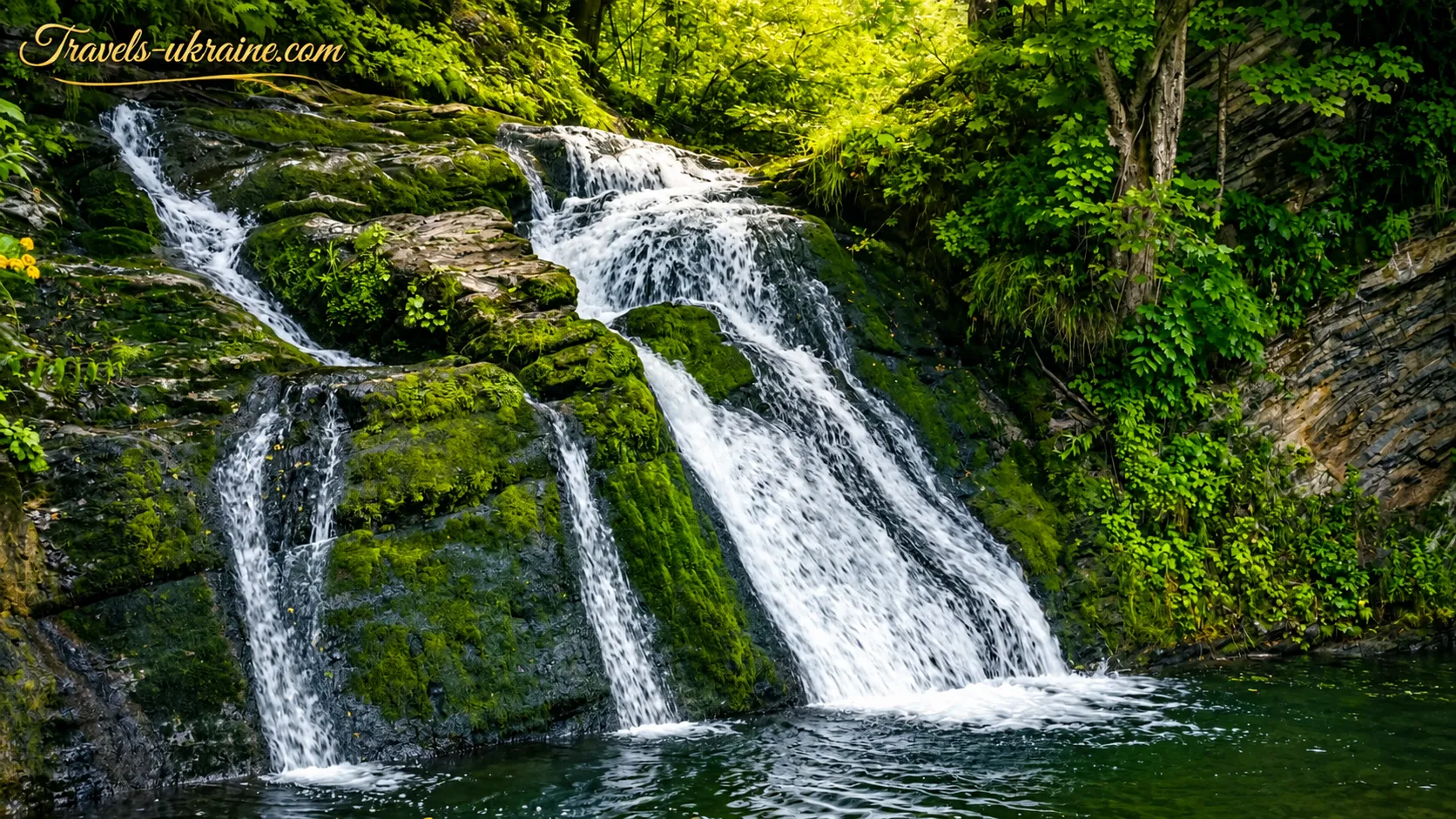
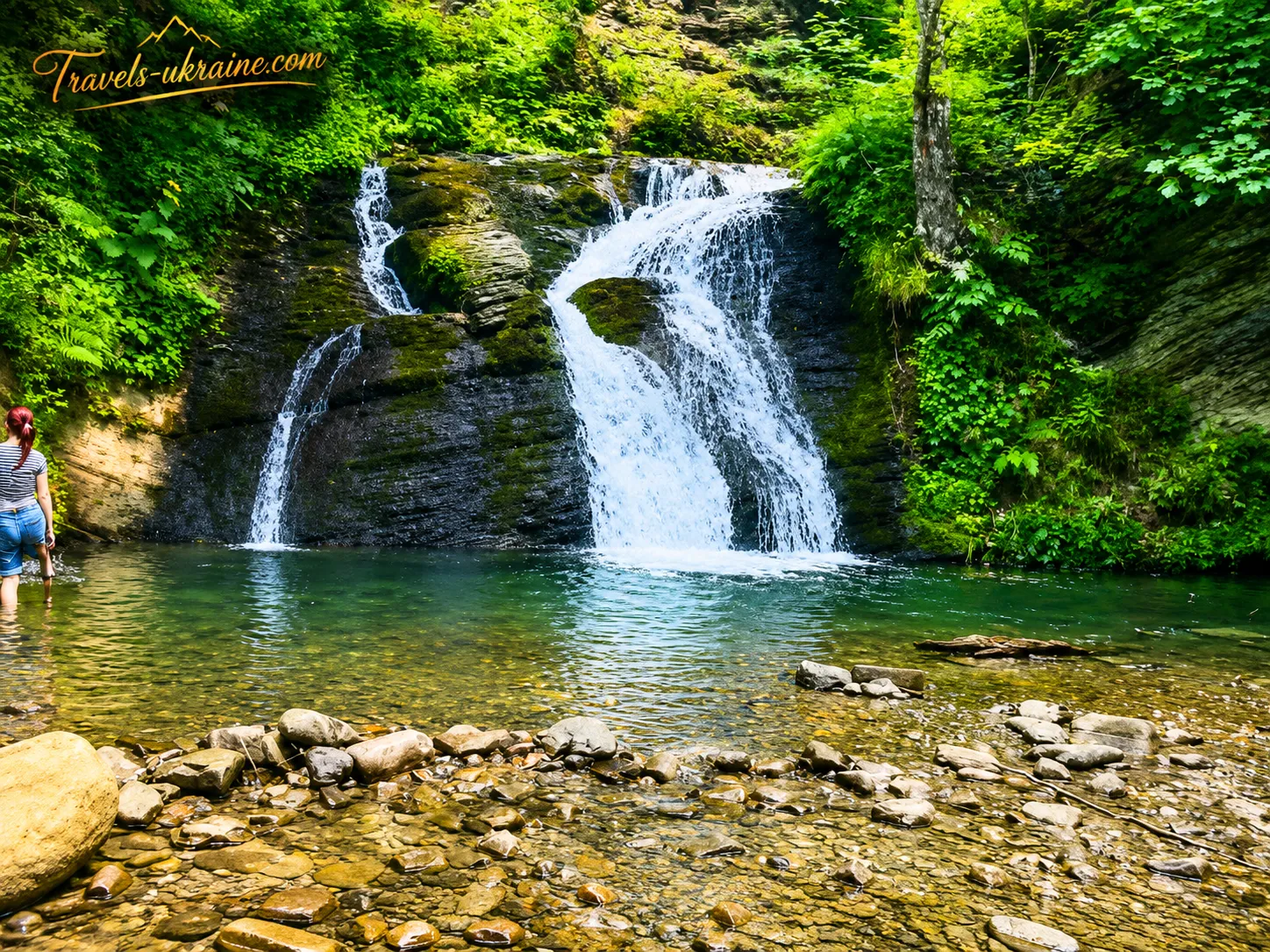
First you hear it—and only then do you see it. Deep in the Carpathian forest, the sound of rushing water gradually grows louder until the Hurkalo Waterfall appears beyond the trees. The Velyka Richka stream plunges from a rocky ledge, splits into two flows, and falls into a natural stone basin. After rainfall, the roar of the water echoes through the valley, fully justifying this place’s unusual name.
Hurkalo Waterfall in the Skole Beskids is located near the village of Korchyn in Stryi Raion, Lviv Oblast. From the road bridge in the village center to this natural landmark, it is approximately four kilometers southwest. The route follows the Velyka Richka valley through forested sections, open meadows, and places where the trail approaches the water several times.
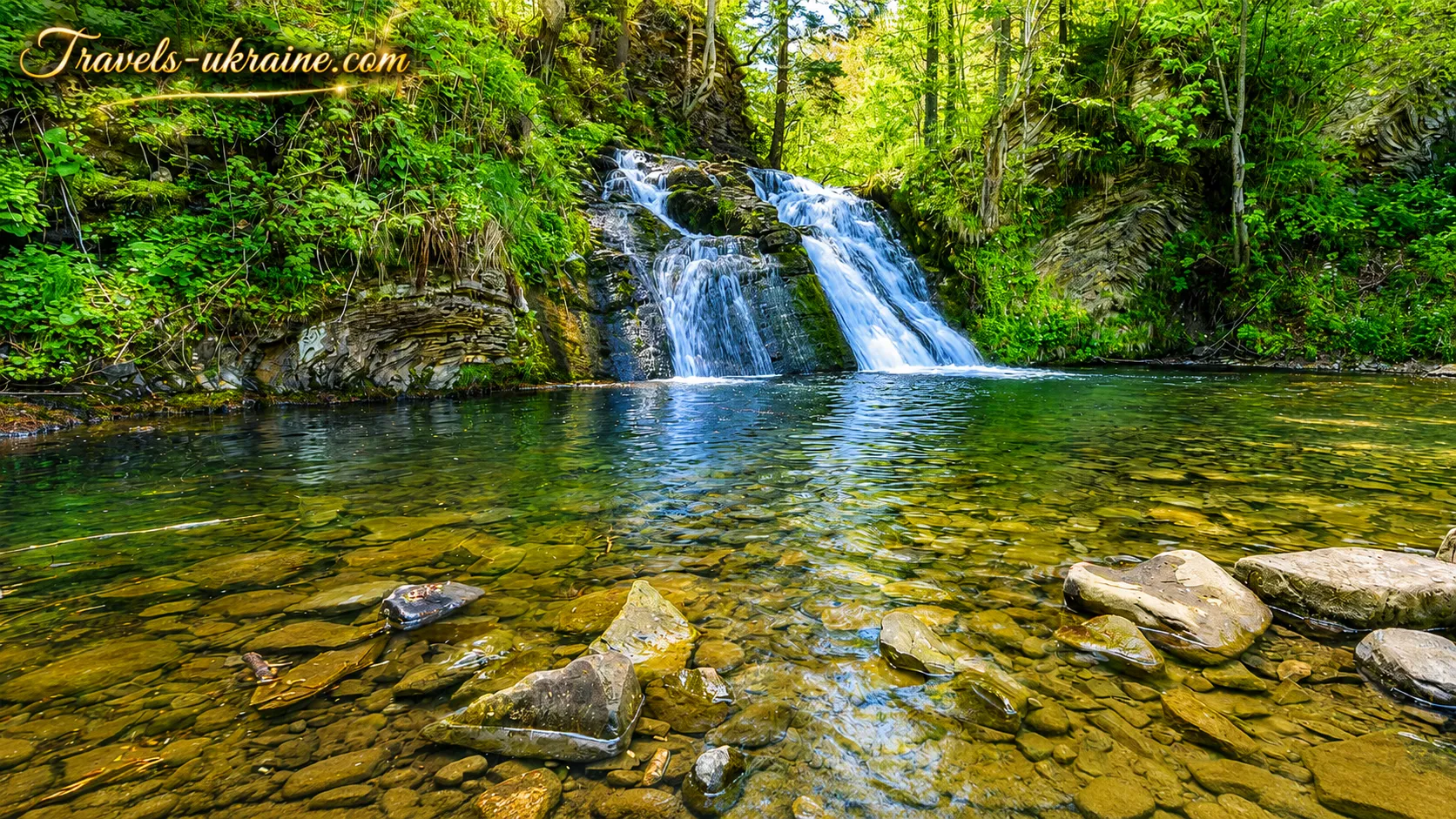
The water drops approximately five meters. This is not the highest Carpathian waterfall, but its appeal is not measured in record-breaking figures. Hurkalo captivates visitors with its intimate natural setting: green-covered slopes rise all around, trees lean over the riverbed, and a plunge pool approximately ten meters in diameter has formed at the foot of the cascade.
Hurkalo Waterfall on the Velyka Richka River is especially impressive in spring, during snowmelt, and after prolonged rainfall. The stream descending from the slopes of the Parashka Range then gathers strength, transforming the tranquil forest setting into a vivid display of Carpathian elemental power. During dry periods, one of the two flows weakens, so the waterfall’s appearance changes noticeably with the season and weather.
What makes a trip to Hurkalo Waterfall appealing
A picturesque gem of the Skole Beskids, it is ideal for those who want to combine a hiking route, nature tourism, and unhurried relaxation beside a mountain river. There is no urban noise or large entertainment complexes here. Instead, visitors find beech forest, cool water, rocky banks, meadows for resting, and the feeling of a true journey through the Carpathians.
Hurkalo can be visited as a destination in its own right during a trip to Lviv Oblast or included in a longer tourist route via Mount Parashka. The official trail from Korchyn follows the Velyka Richka valley and can continue to one of the best-known peaks of the Skole Beskids. This allows travelers to choose their own travel format: a short walk to the cascade, a family outing in nature, or a full-day hike.
In this article, we will explain in detail where Hurkalo Waterfall is located, how to reach it from Lviv and Skole, what the road through Korchyn is like, when the stream is at its fullest, and what you can see nearby. We will also examine the route’s difficulty, tourist infrastructure, safety rules, and practical advice for those planning a Carpathian getaway with children or friends, or independently planning the «Skole Beskids» road trip.
The history of Hurkalo Waterfall and the origin of its name
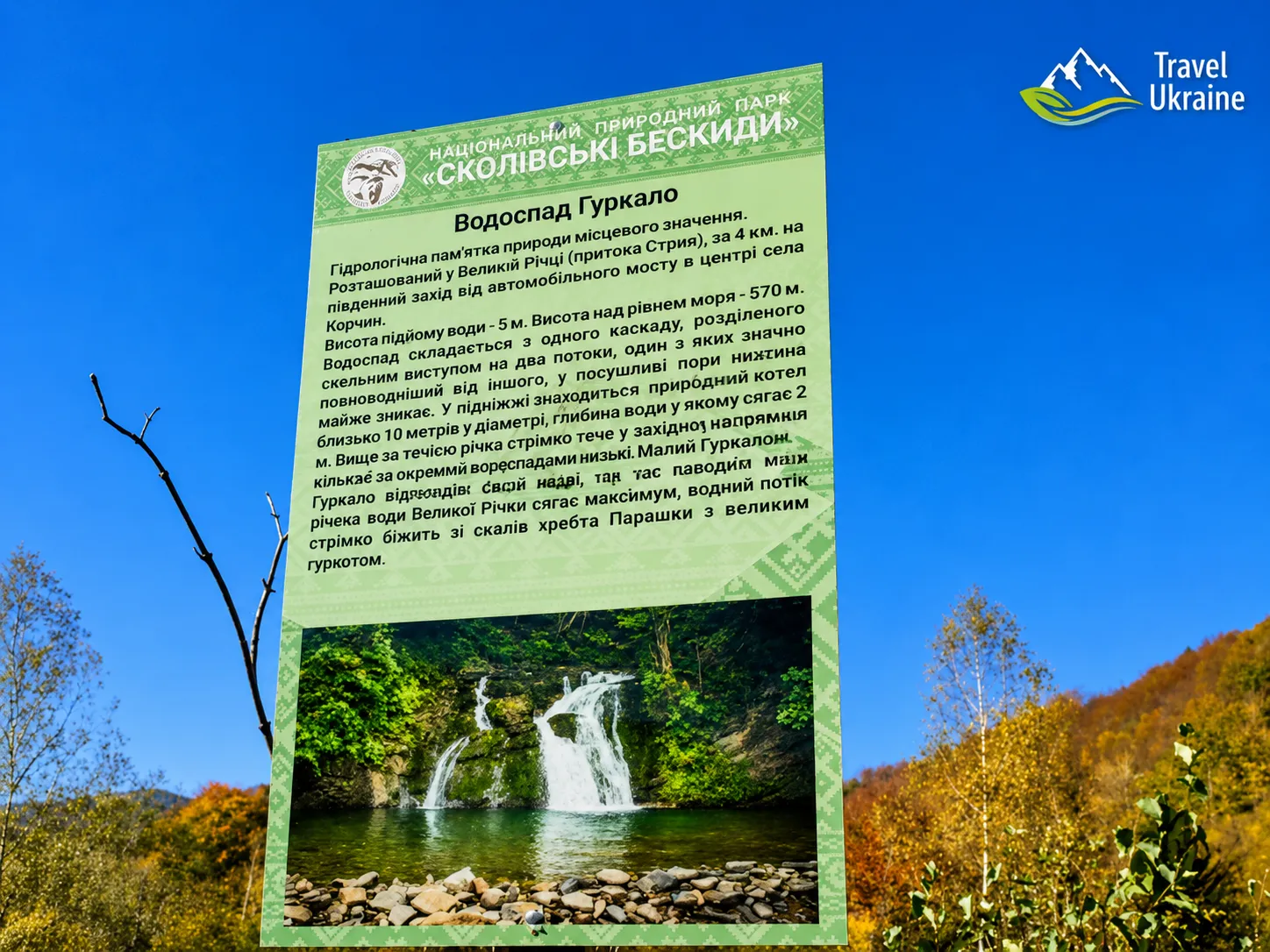
Open official sources do not provide an exact date when Hurkalo Waterfall in Korchyn village received its name or was first described by travelers. This natural cascade has been part of the landscape of the Velyka Richka, familiar to local residents for centuries. Its name arose not from a solemn historical event, but from a sound that is especially distinct during floods.
In spring, after the snow melts, and during prolonged rains, the river becomes full. The stream rushes down the slopes of the Parashka Range and plunges with a powerful roar from a five-meter rocky ledge. The name Hurkalo derives from the words «roar,» «to rumble,» or the local verb «hurkaty.» It accurately conveys the waterfall’s character when the water level is highest, as the cascade’s roar can be heard before reaching the meadow.
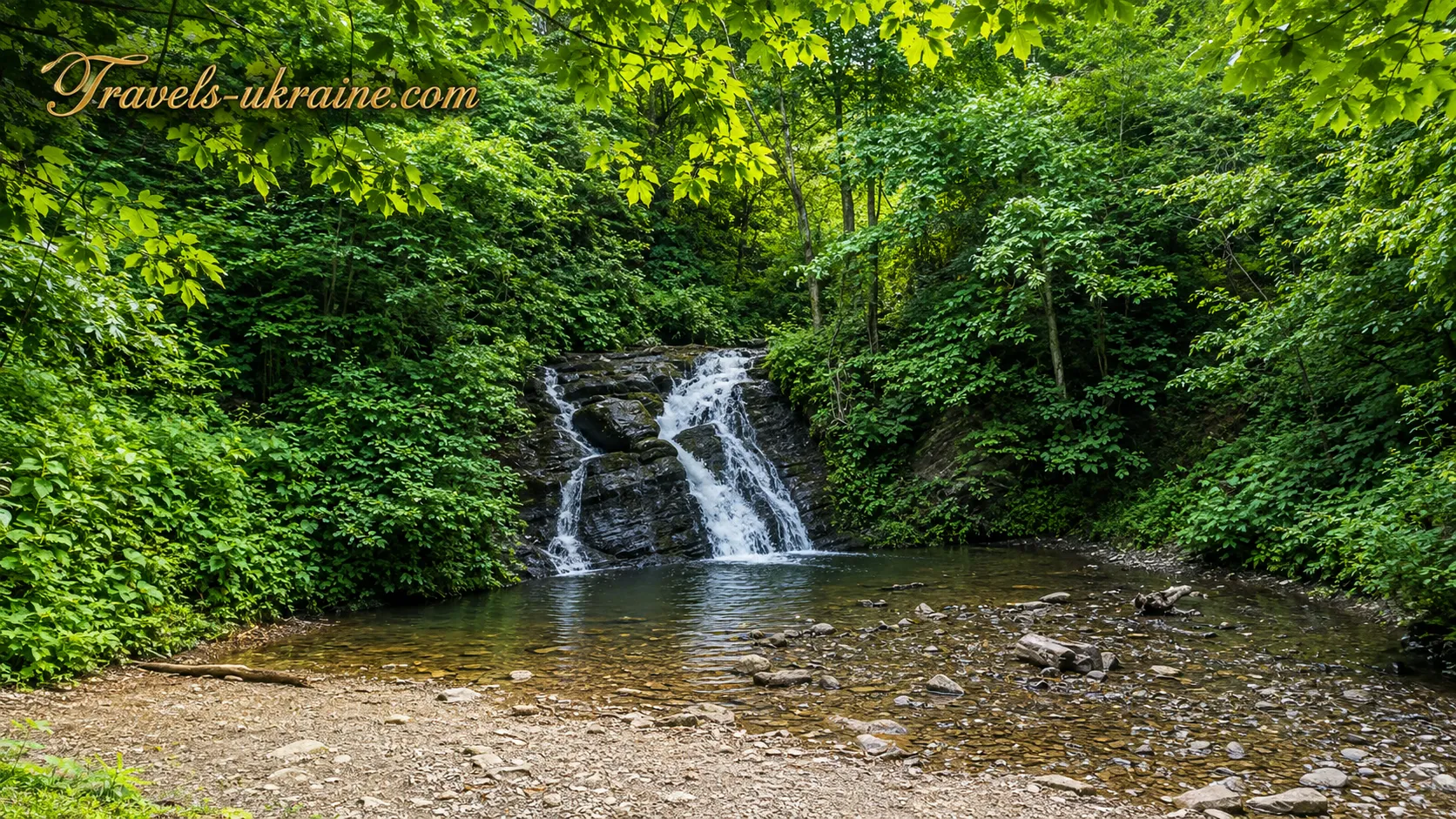
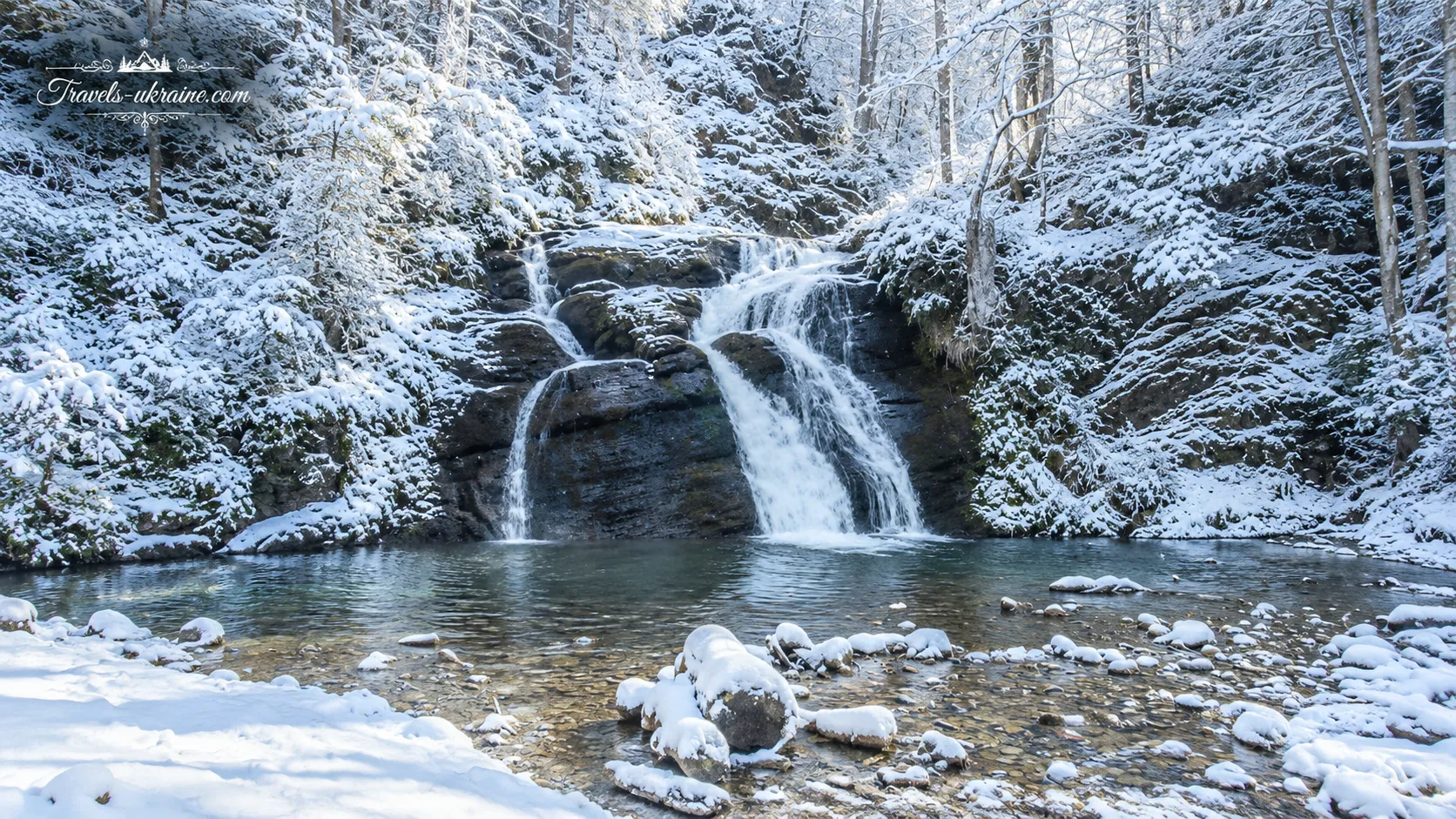
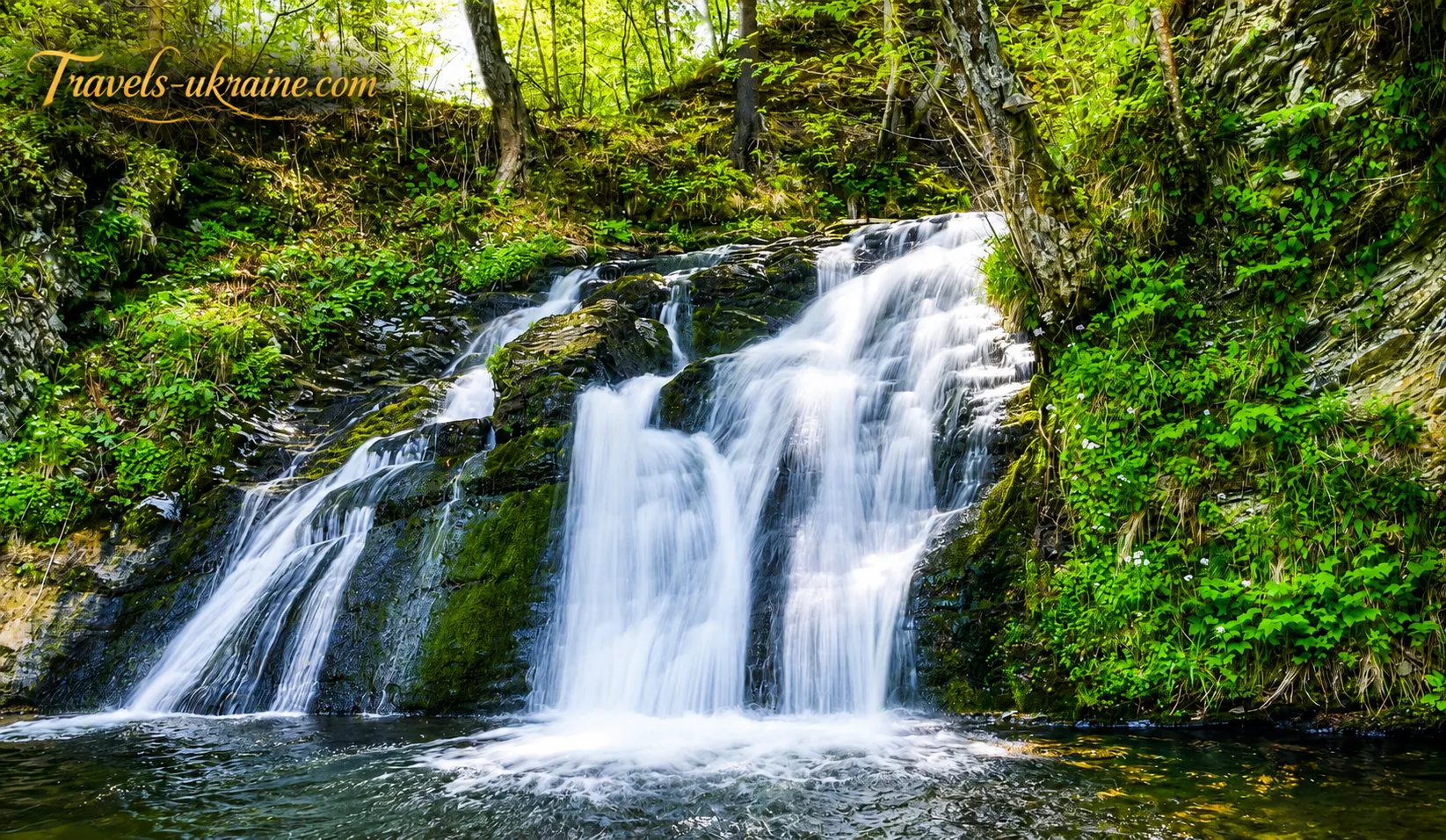
A natural wonder of Lviv Oblast, it does not look the same throughout the year. Its single cascade is divided by a rocky projection into two streams, one considerably stronger than the other. During dry weeks, the smaller flow almost disappears and the roar grows quieter. During floods, both streams strengthen, the water fills the plunge pool at the foot, and the waterfall’s name reveals its literal meaning.
Names like this are typical of the Carpathians’ folk geography: places were often named after their sound, shape, vegetation, or use. As a result, «Hurkalo» is not merely a tourist name but a concise description of a natural phenomenon. It helps explain why the waterfall is best experienced when water levels are high.
Hurkalo Waterfall within the national nature park
A new stage in preserving this area began after the Skole Beskids National Nature Park was established on February 11, 1999. Since then, Hurkalo Waterfall in Skole Beskids Park has been regarded as part of a broader conservation and tourism complex encompassing forests, mountain rivers, natural areas, and trails along the Parashka Range.
Today, two officially described hiking routes lead to the cascade. The route from Korchyn follows the Velyka Richka valley and can continue to Mount Parashka. The other begins on the outskirts of Skole, passes through the Kamenystyi natural area, an old quarry, and forest paths, and reaches Hurkalo from the opposite side.
Thus, the waterfall’s history is not made up of a single legend or notable date. It combines the folk origin of its name, the economic past of Carpathian natural areas, and modern conservation efforts. This context transforms the cascade on the Velyka Richka from a beautiful photo spot into a fully immersive destination for an educational journey.
The natural features of Hurkalo Waterfall in the Skole Beskids
Hurkalo Waterfall in the Skole Beskids lies at an elevation of approximately 570 meters above sea level. It was formed by the Velyka Richka, a cold mountain tributary of the Stryi that rises on the slopes of the Parashka Range. As the water moves along its rocky bed, it reaches a ledge and plunges approximately five meters.
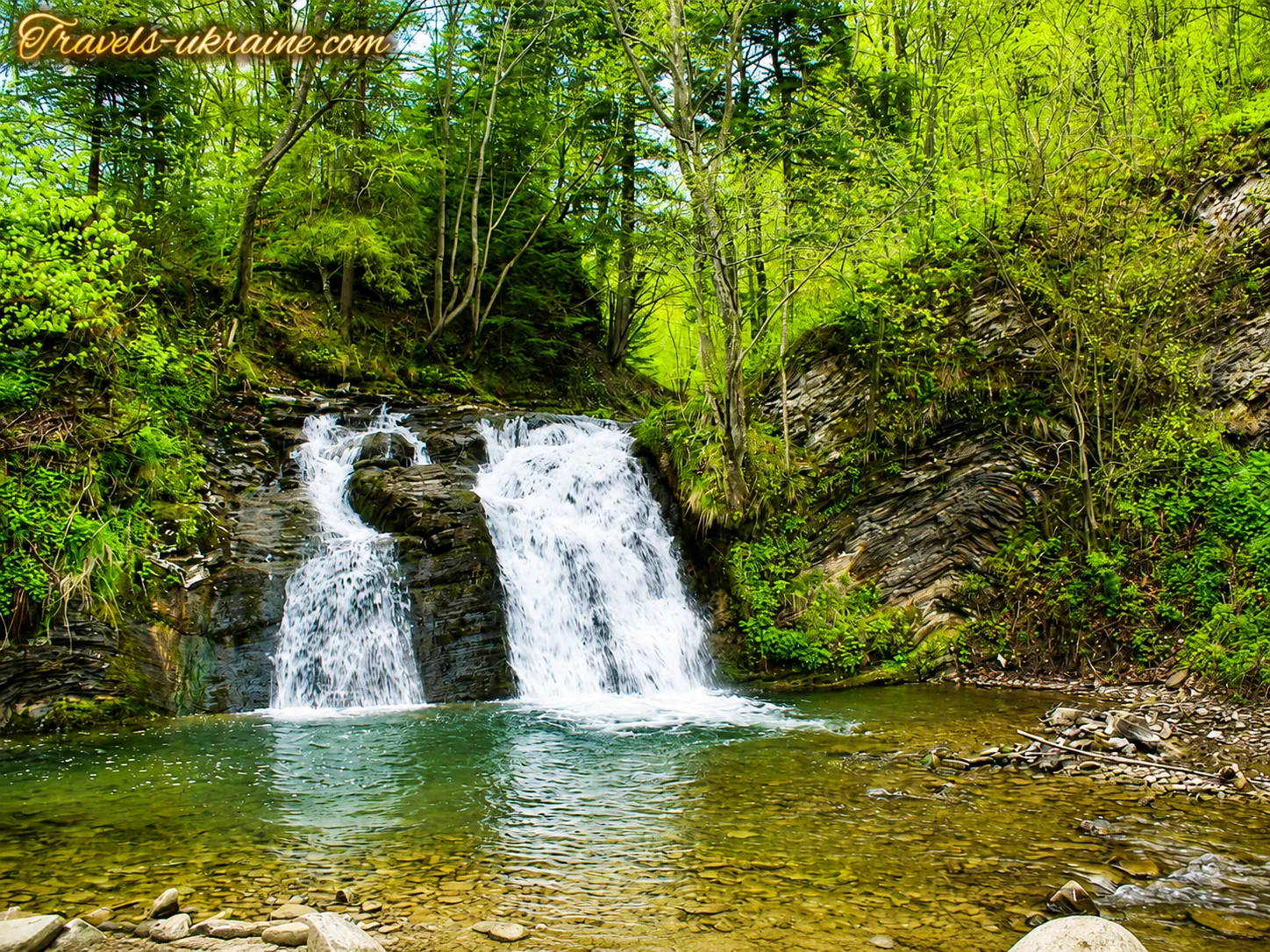
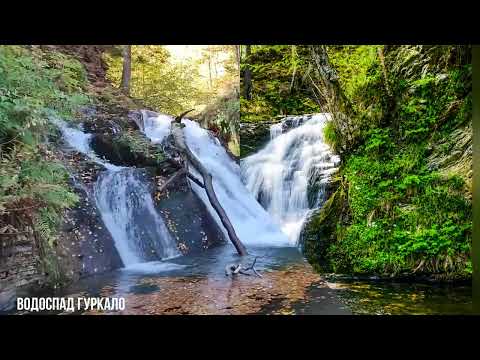
The water cascade consists of one main drop. The water approaches it through a relatively narrow channel, curves around rocky outcrops, and plunges steeply to the base. A rock in the middle of the stream divides it into two uneven parts, giving the waterfall its distinctive double silhouette.
The stronger flow carries most of the water and creates the main roar. The smaller stream depends more heavily on rainfall and the level of the Velyka Richka. After a long dry spell, it becomes thin and sometimes nearly invisible. After heavy rain or spring snowmelt, both flows grow stronger and cover a wider section of the rocky ledge.
This seasonality is typical of small mountain waterfalls whose water supply depends directly on snow and rain. That is why Hurkalo cannot be judged from a single photograph. It is a living part of the river system, responding quickly to weather in the upper reaches of the Parashka Range.
The plunge pool at the foot of the waterfall
A natural hollow has formed beneath the cascade, known as a plunge pool. It is approximately ten meters in diameter and reaches about two meters deep in places. The basin was created by the prolonged action of falling water, stones, and sand on the rock at the foot of the ledge.
The stream constantly moves small fragments that gradually deepen the hollow. During floods, this process intensifies: water swirls in the basin, creates powerful backcurrents, and lifts stones from the riverbed. For this reason, the pool beneath the waterfall can be dangerous even when it appears calm from the bank.
The stones near the water are almost always wet, and in shaded places they are covered with moss. Approach the edge carefully, do not jump between boulders, and do not stand directly beneath the stronger flow. After rain, a surface that looks safe may be extremely slippery.
The Velyka Richka—the mountain artery of Hurkalo Waterfall
The Velyka Richka is a tributary of the Stryi and feeds the waterfall throughout the year. Its upper reaches are connected with the northern slopes of Parashka. Along the route, the river changes character: in places it flows calmly between grassy banks, while on rocky sections it forms riffles, small rapids, and minor cascades.
The mountain river remains cold even in summer. Its clear sections are home to brown trout, locally called pstruh, which require cool, well-oxygenated water. The presence of this fish highlights the waterway’s natural value and the need to avoid polluting it with food waste, detergents, or litter.
When traveling from Korchyn, the trail approaches and crosses the river several times. In dry weather, the water may appear shallow, but after rainfall its level and current speed rise quickly. The Velyka Richka determines not only the appearance of the waterfall but also the accessibility of the entire route.
Forests and wildlife around Hurkalo Waterfall
The waterfall in the heart of the Skole Beskids is surrounded by beech and mixed forests. Farther along the route toward Mount Dil, old beeches have been preserved, some with trunks up to one and a half meters in diameter. Tree hollows, deadwood, mosses, and polypore fungi create habitat for insects, birds, and small forest animals.
Salamanders, squirrels, martens, roe deer, wild boar, and deer may be found across the wider route area. Lynx and brown bears appear much more rarely in remote forest sections. Most animals avoid people, so tourists are more likely to notice tracks, movement heard in the undergrowth, or distant silhouettes than the forest inhabitants themselves.
Ferns, mosses, wild grasses, and berry plants grow around the trail. The species composition changes in open meadows, while sunny areas attract butterflies and other insects. Do not pick unfamiliar flowers or dig up plants: some species of the Skole Beskids are rare and protected.
How the picturesque waterfall changes throughout the year
In spring, Hurkalo most often reveals its turbulent character. Snowmelt fills the Velyka Richka, both flows become prominent, and the surrounding forest gradually takes on fresh green foliage. At the same time, the road may be muddy and crossings through the water difficult.
In summer, relaxing by Hurkalo Waterfall is appealing for its coolness. The dense canopy provides shade, and the temperature near the river feels lower than in open areas. After a prolonged hot spell, the waterfall carries less water, but the path is usually drier and more accessible for an easy walk.
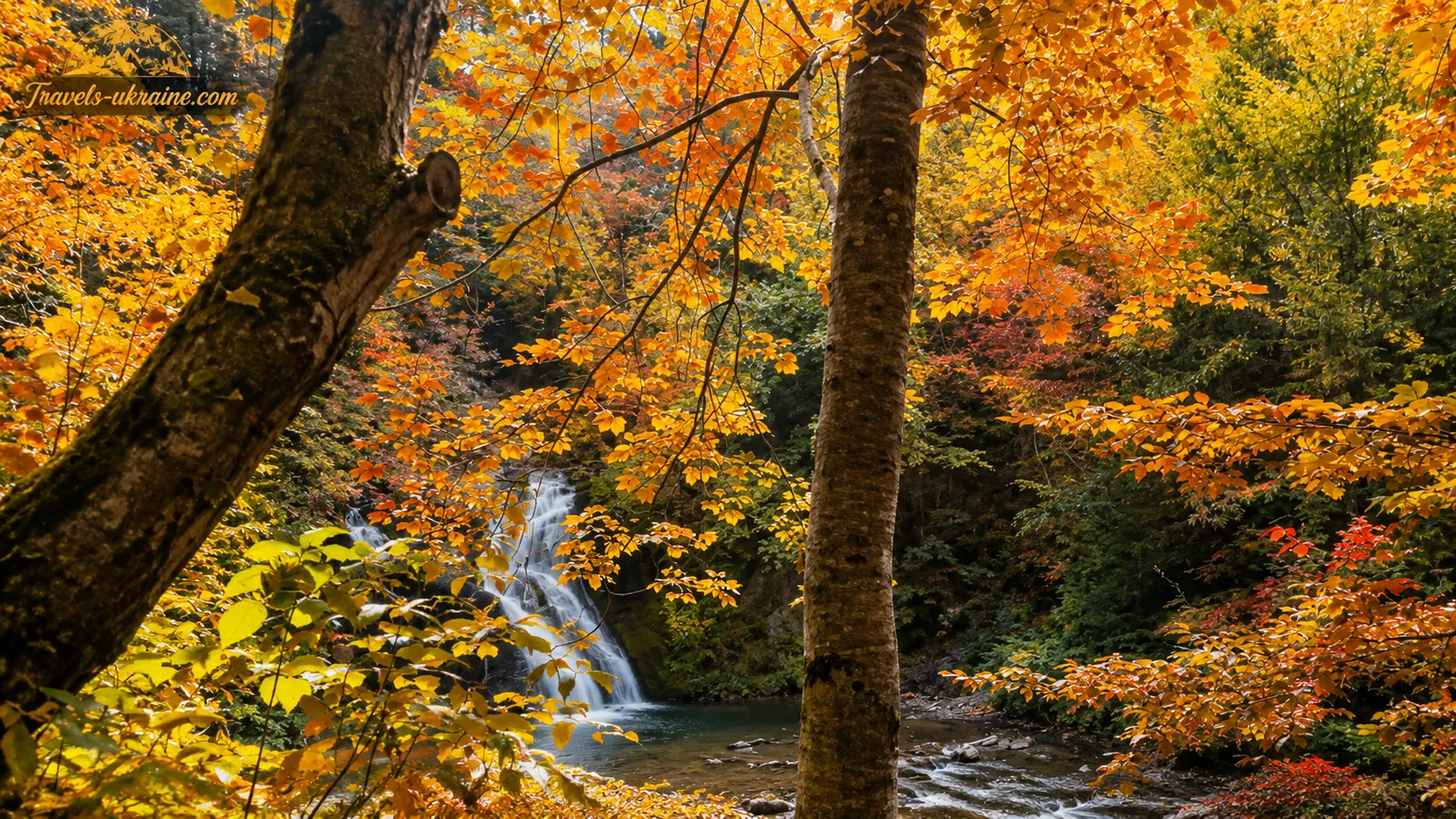
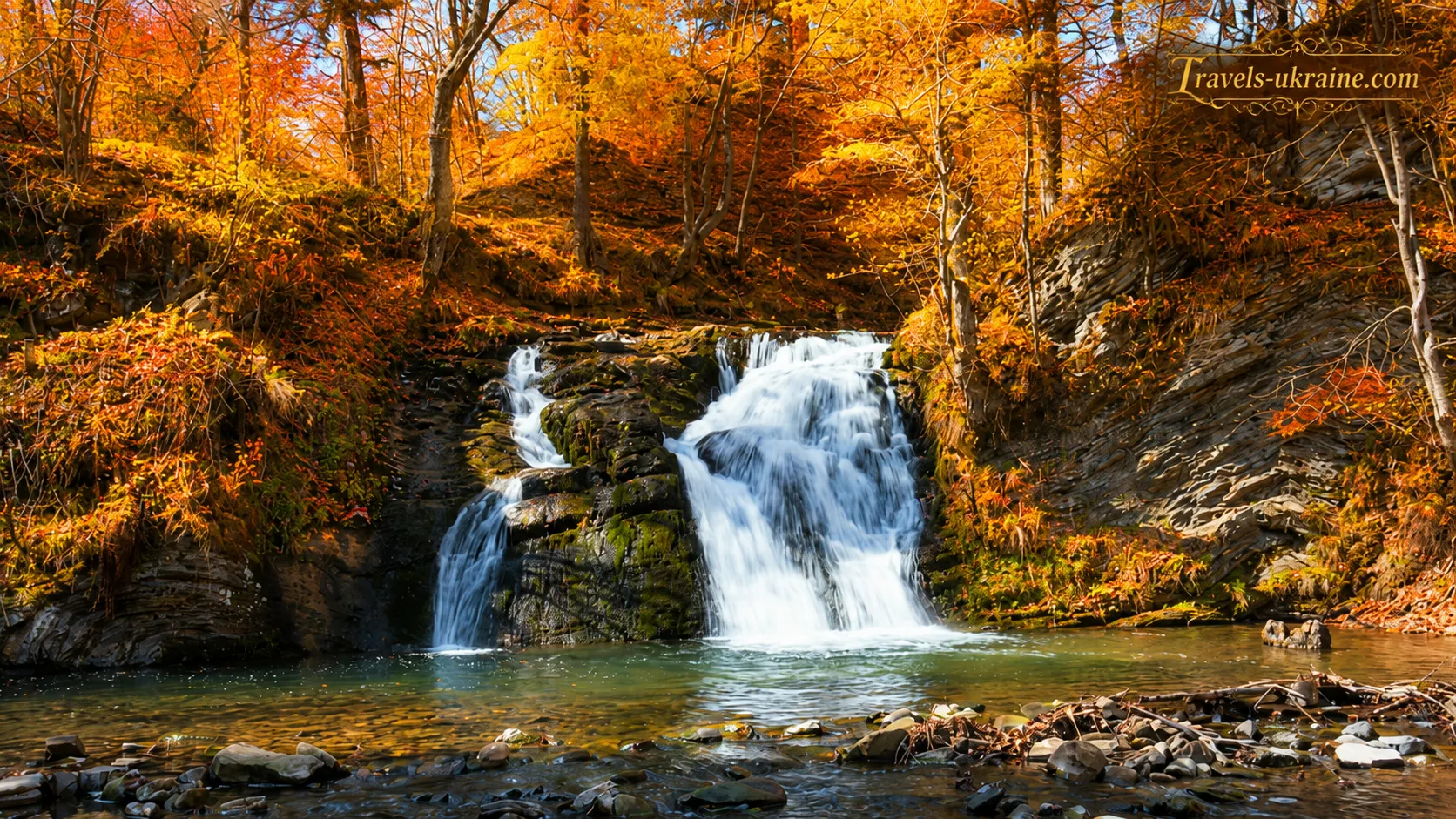
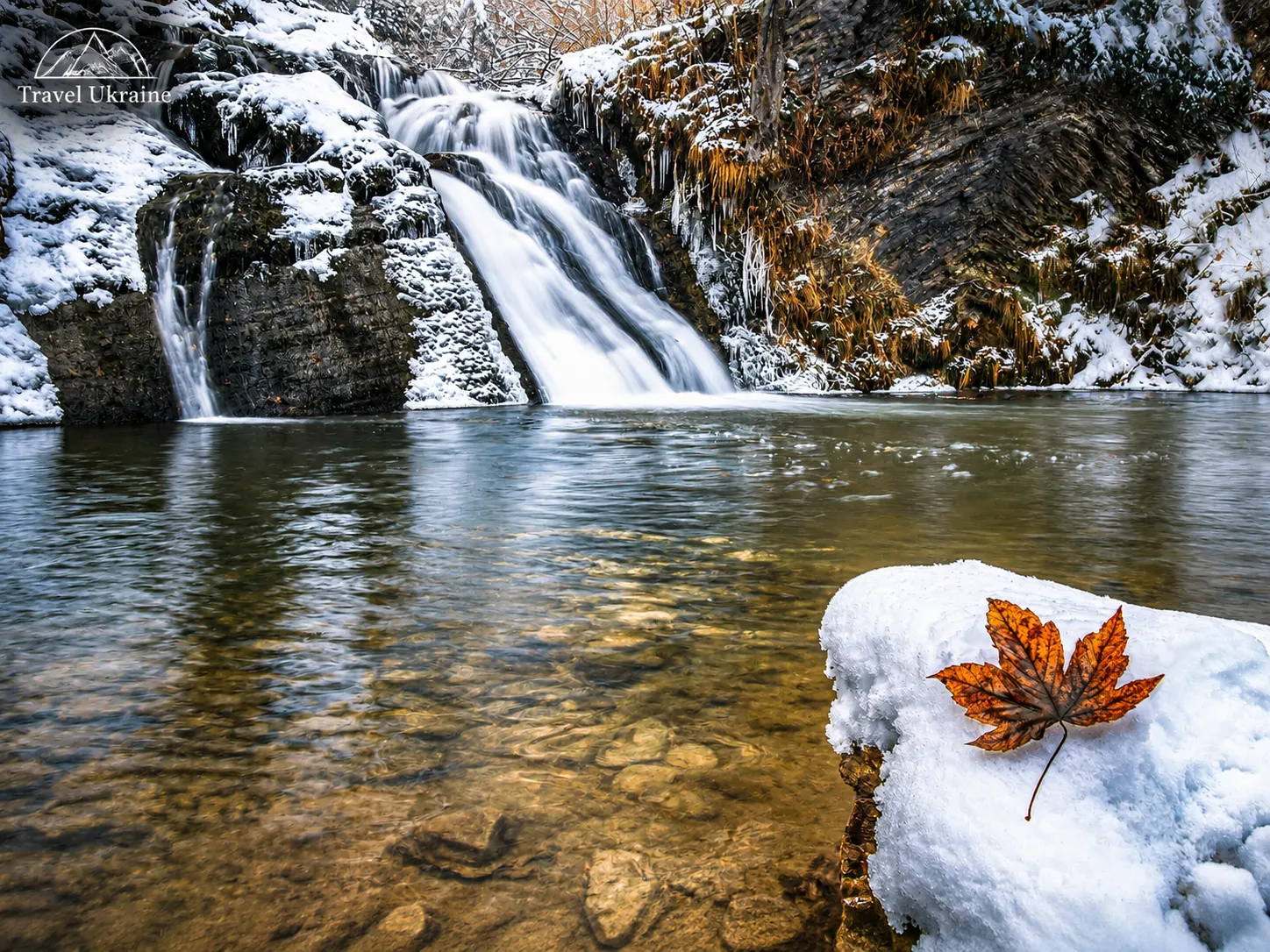
In autumn, the slopes around the cascade turn yellow, copper, and crimson. This is one of the most striking periods for photography, although wet leaves on the stones require extra caution. In winter, the water partly freezes into icicles and sheets of ice, but snow conceals uneven sections of the trail, while frozen stones become extremely slippery.
Hurkalo Waterfall: a brief route guide
Several cozy meadows stretch near the waterfall, on the Velyka Richka’s first terrace above the floodplain. In the warm season, you can rest here after the walk, have a picnic, or pitch a tent for the night. The sound of water, the coolness of the Carpathian forest, and the distance from busy tourist centers create a special atmosphere of seclusion. At the same time, the site remains wild and almost undeveloped, so you must bring everything needed for overnight stays, cooking, and collecting your waste.
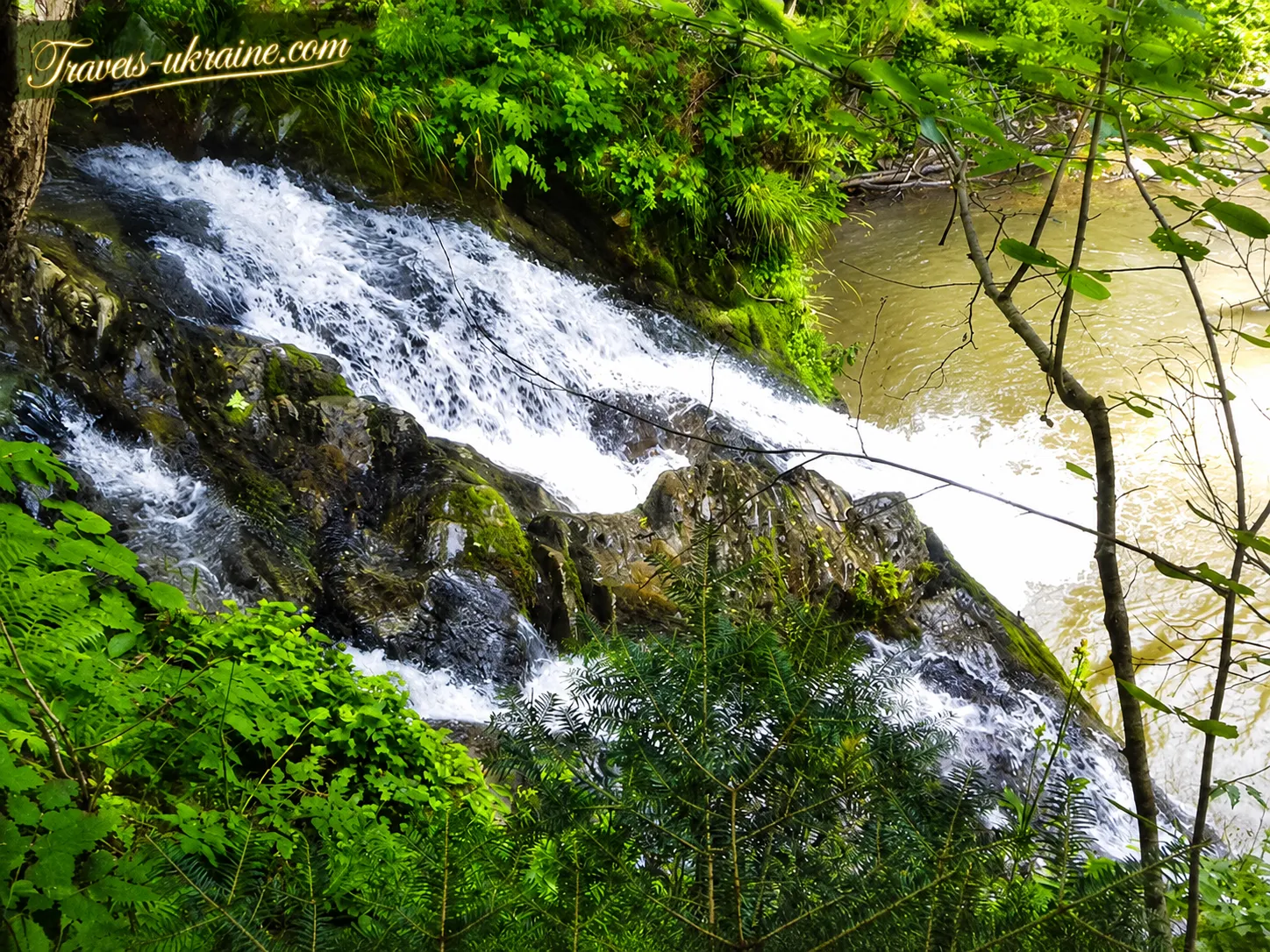
A little upstream, the Velyka Richka River overcomes rocky rapids, forming small falls and noisy steps of water. Locals regard this section as a separate waterfall and call it Malyi Hurkalo. It is lower and less powerful than the main cascade, but adds another interesting natural stop to the walk. Here, the water splashes between the rocks, forms white streams, and fills the valley with a steady mountain roar.
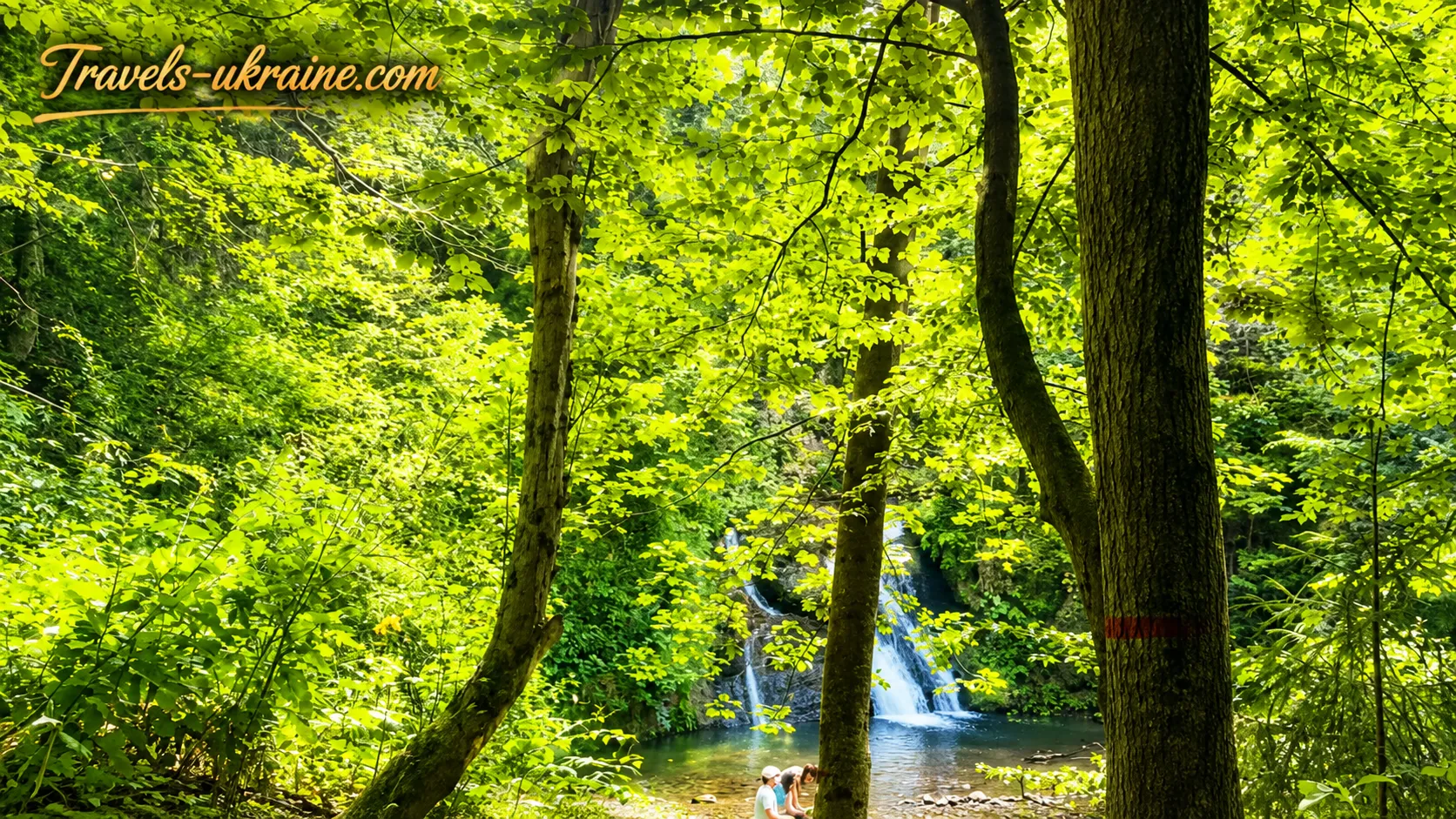
The waterfall can be reached by several hiking routes. A marked trail leads through the forest from the village of Krushelnytsia. Its markings are easy to recognize: a white rectangle with a yellow stripe across the middle, painted on tree trunks. Another popular route starts in the village of Korchyn and follows the Velyka Richka River valley, gradually entering the Skole Beskids forests.
Type of tourist attraction and recommended visit duration
The Noisy Pearl of the Carpathians is an outdoor natural attraction. There is no separate museum here; the cascade follows the river’s natural rhythm, and the length of a visit depends on the chosen route. Most tourists spend between 30 minutes and one hour directly beside Hurkalo Waterfall.
For a short family trip, the Korchyn — Hurkalo — Korchyn route is sufficient. Experienced hikers can continue climbing Mount Parashka or take the hiking route from Skole through the Kamianystyi tract. The official route from Skole is 10 kilometers long and takes approximately 6–7 hours.
Difficulty of the route to Hurkalo Waterfall
The route to Hurkalo Waterfall from Korchyn runs mainly along an unpaved forest road and meadows beside the Velyka Richka River. There is no significant sustained ascent to the cascade itself, but the route should not be compared with a well-maintained urban walk.
The route includes rocks, puddles, washed-out ruts, and crossings through mountain water. After rain, the river becomes fuller and more turbulent, while the ground turns to mud. In such conditions, even a relatively level section requires more time and effort. In dry weather, the route to the waterfall can be considered moderate for adults and school-age children accustomed to long walks.
Accessibility for children, older people, and strollers
A trip with children is possible, but adults should supervise them near the river, on slippery rocks, and beside the plunge pool. For preschoolers, the ten-kilometer route may be too exhausting, especially after rain or on a hot day.
Because of the natural surface, uneven ground, and water crossings, the route to the cascade is not fully accessible. A standard stroller, wheelchair, or other vehicle with small wheels is unsuitable for the entire route. Older travelers should realistically assess their stamina and avoid planning the trip after heavy rainfall.
Estimated budget for a trip to Hurkalo Waterfall
A trip to Hurkalo Waterfall can be organized in different formats—from a short self-guided walk to a full excursion accompanied by a local guide. The route passes through Skole Beskids National Nature Park, so before traveling, it is worth checking the current visiting conditions, the state of the hiking trails, and any restrictions related to the weather or conservation work.
The overall travel budget depends primarily on the means of transport and the length of the stay. Expenses may include fuel, bus or train tickets, food, guide services, hiking equipment rental, or accommodation in a private guesthouse. For a one-day independent trip, it is usually enough to budget for transport, a snack, and drinking water.
Tourists planning to stay in the Skole Beskids for several days should book accommodation in advance in Skole, Korchyn, Krushelnytsia, or nearby settlements. The region has private guesthouses, small hotels, and cottages where visitors can rest after a hike and continue exploring the natural attractions of Lviv Oblast the following day.
It is best to purchase some necessary food and equipment before setting out. There is no developed retail infrastructure directly beside the waterfall, so bring water, food, a first-aid kit, a raincoat, and bags for your own rubbish. This preparation will help avoid unexpected expenses and make your time beside Hurkalo Waterfall much more comfortable.
Events, excursions, and festivals near Hurkalo Waterfall
Hurkalo Waterfall in the Carpathians remains primarily a natural destination for peaceful recreation rather than a permanent festival venue. There is no large stage, fairground, or annual mass celebration with fixed dates directly beside the cascade. The absence of loud entertainment infrastructure helps preserve the special atmosphere here, where the main sounds are the roar of the water, the rustle of the beech forest, and birdsong.
At the same time, Skole Beskids National Nature Park is not isolated from the cultural and tourist life of Lviv Oblast. Educational hikes, natural-history excursions to Hurkalo Waterfall, environmental classes, school trips, and field studies take place here. Some of these activities involve park employees, who introduce visitors to the local flora and fauna, rules of conduct in the mountains, and the importance of preserving Carpathian ecosystems.
An excursion to Hurkalo Waterfall is especially useful for families with children and travelers visiting the Skole Beskids for the first time. A guide helps assess the difficulty of the route correctly, points out inconspicuous natural features, and explains the historical significance of the tracts along the way.
Seasonal hikes in the Skole Beskids
The most notable natural events near Hurkalo are connected not with calendar holidays but with the changing seasons. In spring, tourists are drawn by the full-flowing cascade, which gains strength after the snow melts. In summer, family walks, natural-history activities, and relaxation beside the waterfall become popular. In autumn, visitors come for colorful forest landscapes, while winter brings icy waterfall formations and the silence of the snow-covered Beskids.
Spring trips to full-flowing Hurkalo
Spring offers the strongest impression of the water cascade. After the snow melts, both streams become more pronounced, and the roar of the water can be heard from far away. During this period, nature hikes in the mountains reveal the seasonal awakening of the forest, the first plants, and the rapid changes in the mountain river.
However, the spring route to Hurkalo Waterfall requires caution. A waterlogged road, cold water, and the elevated river level can make crossings more difficult. Excursion organizers should assess the route’s condition immediately before departure, while participants should wear waterproof footwear and stay on the safe trail.
Summer eco-walks and family activities
In summer, the park holds nature-education activities for children and young people. These trips may combine a hike to the waterfall, plant observation, discussions about forest inhabitants, and practical lessons in environmentally responsible behavior. This is not a festival in the usual sense, but an opportunity to discover the Carpathians directly in the living natural environment.
For a family, this format can turn an ordinary day off into a meaningful journey. Children not only see the picturesque waterfall near Skole, but also learn not to leave rubbish, destroy anthills, pick rare plants, or frighten wild animals.
Cultural events and festivals in the Skole area
During a multi-day trip, a visit to Hurkalo can be combined with cultural events in Skole, nearby communities, or other settlements in Stryi Raion. The region hosts fairs, ethnographic gatherings, sporting events, tourism presentations, and events dedicated to Boyko culture.
These events show Lviv Oblast not only as a land of mountain routes, but also as a region with living crafts, local cuisine, music, and traditions. After a walk to Hurkalo Waterfall in the Carpathian mountains, tourists can visit a museum, buy goods made by local craftspeople, or attend a themed event in one of the nearby towns or villages.
There is no single unchanging festival calendar specifically for the area around Hurkalo. The dates, venues, and programs of regional events change every year, and some activities may be postponed because of weather or the security situation. Therefore, it is not advisable to plan a trip solely on the basis of an old event listing.
How to find out about current events before your trip
Before traveling, it is advisable to check the official news of Skole Beskids National Nature Park, the pages of local communities, and tourist information centers. These sources publish announcements about excursions, conservation campaigns, route openings, temporary restrictions, and cultural events in the region.
For an organized group, clarify in advance whether an escort is available, the recommended number of participants, and the condition of the trail. Do not join unofficial mass events whose organizers fail to control safety, the use of fire, or site cleanup.
The best event near Hurkalo does not always have a stage or an announced program. Sometimes it is the morning mist over the river, the first roar of spring water, or a quiet autumn walk when there are almost no people on the trail. These moments most accurately convey the character of the water pearl of the Skole Beskids.
What to see and do near Hurkalo Waterfall
Relaxation near Hurkalo is not limited to taking a few photographs beside the main cascade. The road through the Velyka Richka River valley, forest glades, rocky rapids, and the option to continue hiking to Mount Parashka turn the trip into a full Carpathian adventure. It is easy to spend several hours here watching the water, exploring the surroundings, and enjoying the silence of the Beskids.
It is best not to hurry. After the hike, rest first, listen to the sound of the river, and only then view the cascade from various safe points. Hurkalo changes appearance depending on the light, water level, and season, so even a short move along the bank reveals a new composition.
The best view opens up from below and from the side of the bank, where the falling water, rocky ledge, and natural pool at the foot are clearly visible. Do not climb onto the wet rocks above the cascade: the surface is slippery, and the edge may be unstable.
A little above the main cascade, the Velyka Richka River forms rocky rapids and small steps of water. Locals call this section Malyi Hurkalo. It does not have as pronounced a drop as the main waterfall, but reveals a different character of the mountain river. Here, the water divides among the rocks, gathers in small hollows, and accelerates again over the rapids. This walk complements the hiking route, but you should follow only the visible trail along the bank and avoid crossing the river at random points.
Not every trip to the Carpathians has to become a test of endurance. Near Hurkalo, you can simply stop, watch the current, and allow yourself several unhurried hours. This format helps you notice details that are easy to miss when moving quickly along the route: water flowing between boulders, sunlight glinting on leaves, and the gradual change in the sounds of the forest.
Relax on the meadow near Hurkalo Waterfall
On the riverbank beside the cascade, there is a cozy clearing where tourists can rest after the journey. The recreation area features resting places by Hurkalo Waterfall, tables, gazebos, and specially designated fire pits. However, the facilities do not relieve visitors of their responsibility: after a picnic, take away all the rubbish you brought and make sure the fire is completely extinguished.
The best way to enjoy your time here is without loud music. The sound of Hurkalo, the coolness of the river, and the rustling of the trees create the natural soundtrack that draws travelers away from the bustle of the city. The clearing is suitable for a quick snack, reading, a quiet conversation, or relaxing before the return journey.
Tents and Overnight Stays near Hurkalo Waterfall
Near the waterfall, on the first terrace above the floodplain of the Velyka Richka River, there are several relatively level clearings where tourists sometimes pitch tents. Spending the night in the Carpathian forest lets you see Hurkalo without the daytime crowds and hear how the sound of the river changes after sunset.
This kind of отдых requires advance preparation. Check the current rules for pitching tents in the national park, choose an authorized recreation area, and do not camp too close to the river channel. After heavy precipitation, the river level can rise quickly, so low-lying places near the water are unsuitable for overnight stays.
Continue the Hiking Route from Hurkalo to Mount Parashka
For experienced hikers, the hiking route to Hurkalo Waterfall can be only the first part of a longer trek. From the cascade, the official trail returns to the main road, passes through an old beech forest, climbs Mount Dil, and then continues to Parashka.
Along this section, you can see ancient beech trees, moss-covered slopes, and open mountain vistas. At over 1,260 meters high, Mount Parashka is the highest peak of the Skole Beskids range of the same name. In clear weather, it offers views of the Stryi Valley, nearby villages, and the rolling ridges of the Carpathian Mountains.
Continuing the hike requires considerably more time and physical effort than an ordinary walk to Hurkalo Waterfall. There are steep ascents near the summit, so set out on the full route early, in stable weather, with extra water, food, and suitable equipment.
Frequently Asked Questions about Hurkalo Waterfall
Where is Hurkalo Waterfall located?
Hurkalo Waterfall is located on the Velyka Richka River in the Skole Beskids massif, near the village of Korchyn in Stryi Raion, Lviv Oblast. The cascade lies among the forests of the Skole Beskids National Nature Park at an elevation of approximately 570 meters above sea level.
How do you get to Hurkalo Waterfall from Korchyn village?
A hiking trail leads from Korchyn to the waterfall through the Velyka Richka Valley. From the start of the walking section, you need to cover approximately five kilometers one way. The route passes through forested areas, clearings, and natural landmarks, at times coming close to the mountain river channel. After rain, the trail becomes washed out and more difficult to navigate.
Can you drive directly to Hurkalo Waterfall?
There is no comfortable road access directly to the cascade. The dirt road has deep ruts, rocky, washed-out, and muddy sections. Even in dry weather, driving an ordinary passenger car may be virtually impossible. It is better to leave your vehicle in an authorized, safe place closer to the village and walk the rest of the way.
How long does the route to Hurkalo Waterfall take?
Allow approximately 3–4 hours for the walk from Korchyn to the waterfall and back, including stops and rest. The total distance is about ten kilometers. If you continue the hike from Hurkalo to Mount Parashka, the route will take considerably longer and require good physical fitness.
When is the best time to visit Hurkalo Waterfall?
Hurkalo Waterfall in spring is usually at its fullest thanks to melting snow and seasonal precipitation. In summer, the road is often drier, and the riverbank is pleasantly cool. In autumn, the cascade is surrounded by colorful beech forests. It is best not to set out immediately after a heavy downpour, as the Velyka Richka can become turbulent, while the rocks and dirt road may become slippery.
Is the route to Hurkalo Waterfall suitable for children?
The route may suit school-age children who are accustomed to long walks. For preschoolers, the round trip may be tiring. Near the river, the plunge pool, and wet rocks, a child must remain close to an adult at all times. After rain, it is better to postpone a family trip until a drier day.
Can you swim in Hurkalo Waterfall?
The water of the Velyka Richka remains cold even in summer. Beneath the cascade is a natural pool with an uneven bottom, slippery rocks, and possible eddies. Diving, jumping from the rocks, or entering directly beneath the strong flow is dangerous. For a brief refreshment, choose a calm, shallow section of the bank and do not enter the water when the river level is high.
Can you pitch a tent near Hurkalo Waterfall?
There are several clearings near the waterfall on a terrace above the Velyka Richka floodplain where tourists stop to rest and spend the night. A tent should be pitched only in an authorized recreation zone, on level, elevated ground, and a safe distance from the river channel. Before staying overnight, check the current rules of the National Nature Park.
What should you bring on the route to Hurkalo Waterfall?
For the hike, bring hiking boots or sturdy sneakers with a rugged sole, drinking water, snacks, a rain jacket, warm clothing, a first-aid kit, a charged phone, an offline map, and a rubbish bag. Spare socks, a flashlight, and a power bank are also useful. Continuing the route to Parashka requires more water, food, and full hiking equipment.
What can you see near Hurkalo Waterfall?
Upstream, there are rocky rapids that locals call Malyi Hurkalo. Experienced hikers can continue the route to Mount Parashka. During a multi-day trip, it is also worth visiting the town of Skole, the Hredliv Barons’ Palace, Kamianka Waterfall, Zhuravlyne Lake, and the Tustan Historical and Cultural Reserve.
Hurkalo — where the sound of water grows louder than everyday worries
Hurkalo Waterfall in the Carpathian Mountains is remembered not for its record height or flashy tourist attractions. Its power lies in the sensations: the road along the mountains and river, the cool air beneath the beech canopies, the wet rocks underfoot, and the roar of water growing clearer as it echoes through the forest.
When the trail finally leads to the cascade, you will want to stop and simply watch. Water tumbles from a rocky ledge, breaks into spray, and fills the natural pool at its foot. There is no city noise, hurry, or unnecessary decoration around you — only the forest, the river, and the unceasing voice of the Carpathians. For some, this journey will be an easy walk to a picturesque cascade. For others, it will be the beginning of a longer hike to Parashka. And some will remember only a few quiet minutes on the bank of the Velyka Richka, when there was nowhere to hurry, when they could listen to the water and feel their fatigue from the bustle of the city gradually fade away.
Hurkalo reminds us that the true beauty of the Carpathians does not always need grand words. Sometimes it hides at the end of a forest road, beyond a rocky crossing and another bend in the river. You have to reach it on your own feet, hear it from afar, and then remember it for a long time after returning home.
When planning a holiday in the Lviv region, leave enough time in your itinerary not only for the journey and photographs, but also for the moment of meeting the waterfall itself. Do not rush; listen to the forest, feel the coolness of the spray, and let this noisy jewel of the Carpathians leave its own mark on your memories.

No Comment
You can post first response comment.