
 English
 Українська
 Latviešu
 Lietuvos
 Русский
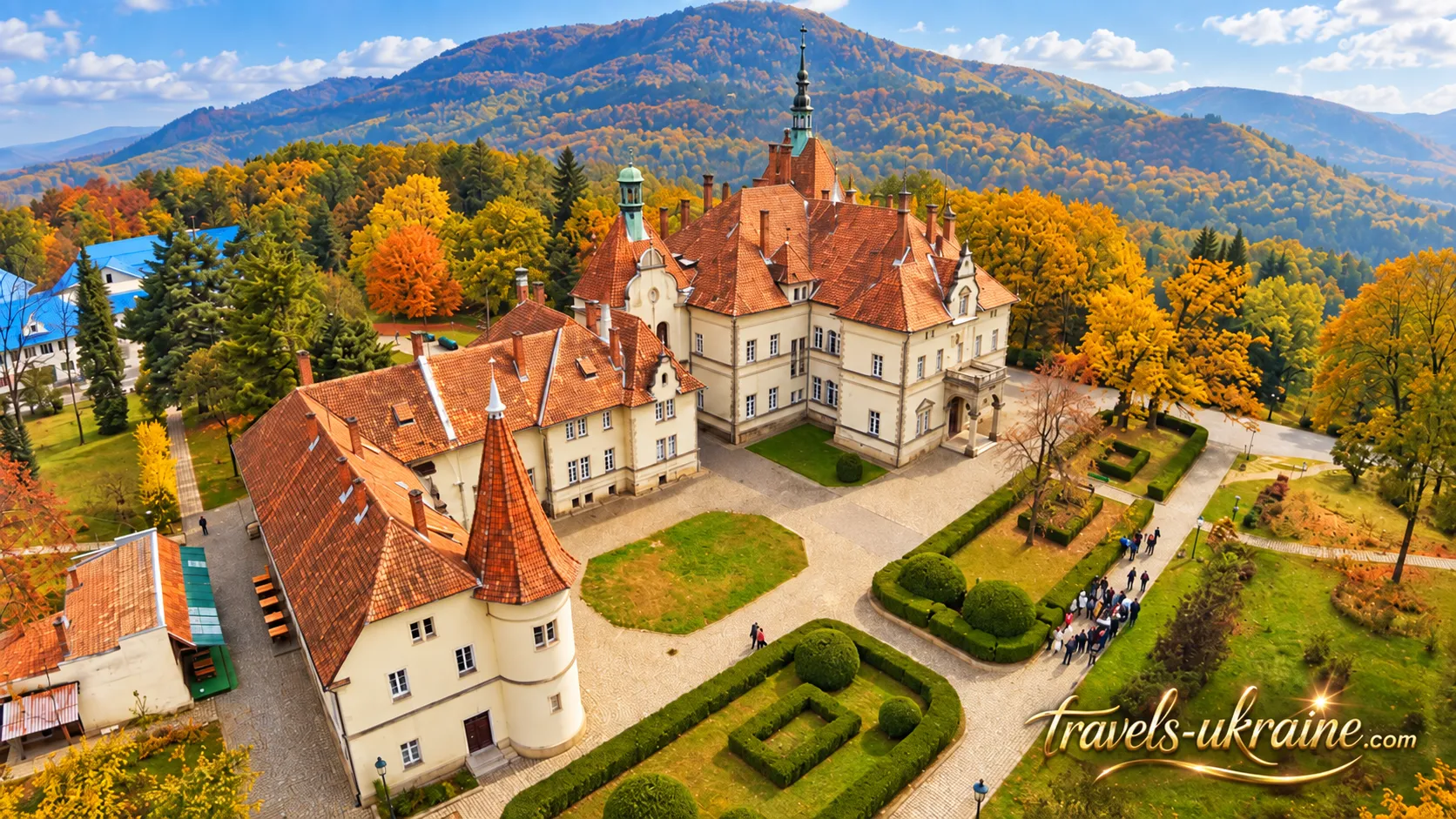
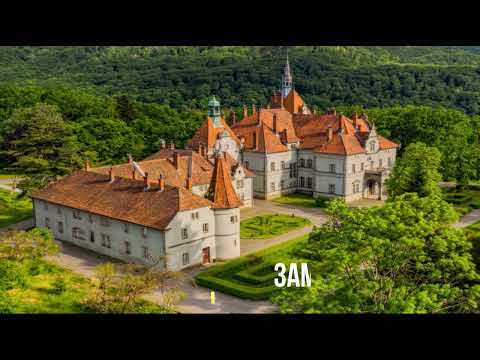
Some castles immediately explain their purpose: thick walls, loopholes, a moat, and preferably a few stories about sieges. And then there is Shenborn Castle in the Zakarpattia village of Karpaty. It has towers, spires, and even a clock on the tower—but no one was particularly planning to storm this building. Because what stands before us is not a fortress, but the former hunting residence of the Counts of Schönborn, created for considerably more pleasant pursuits.
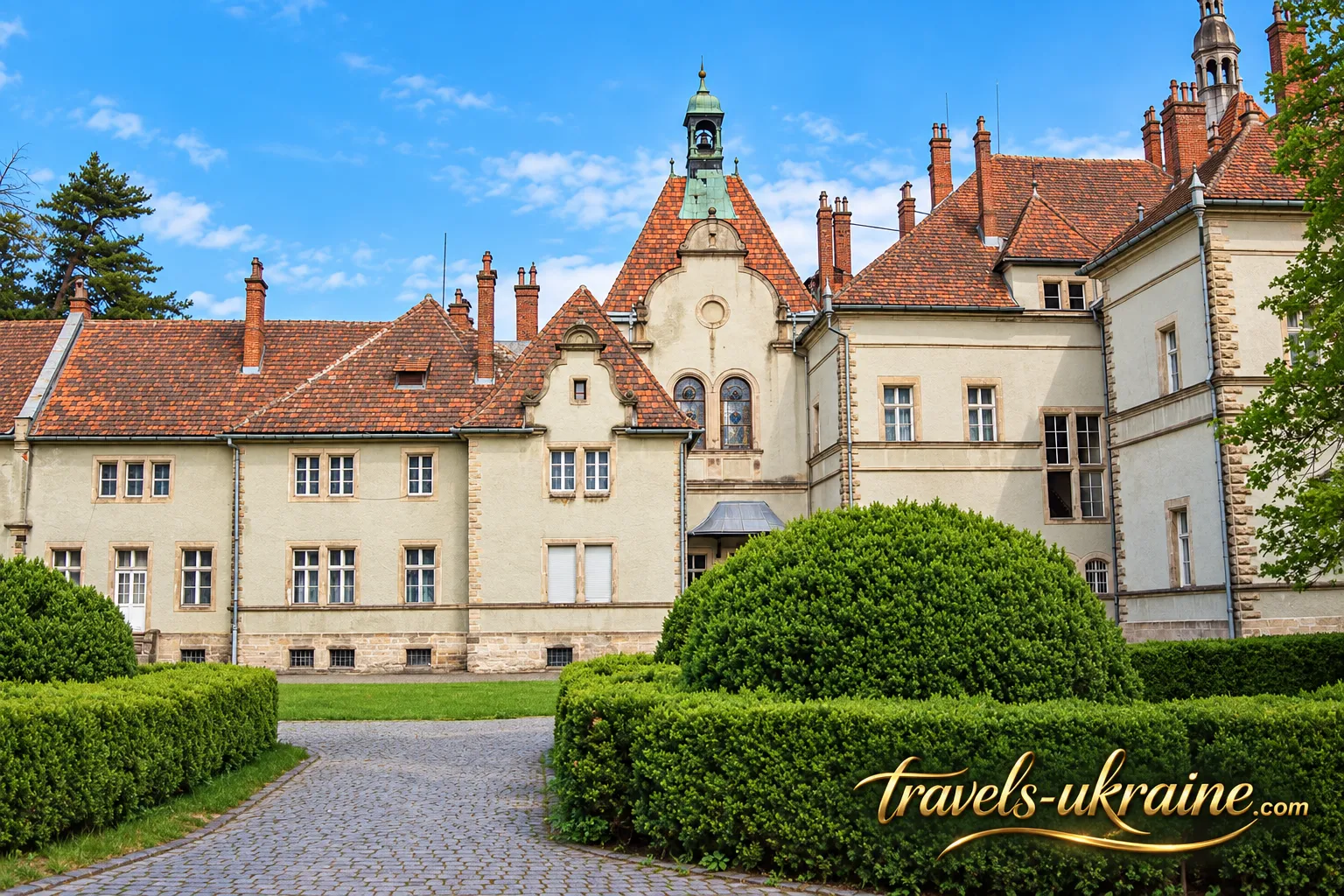
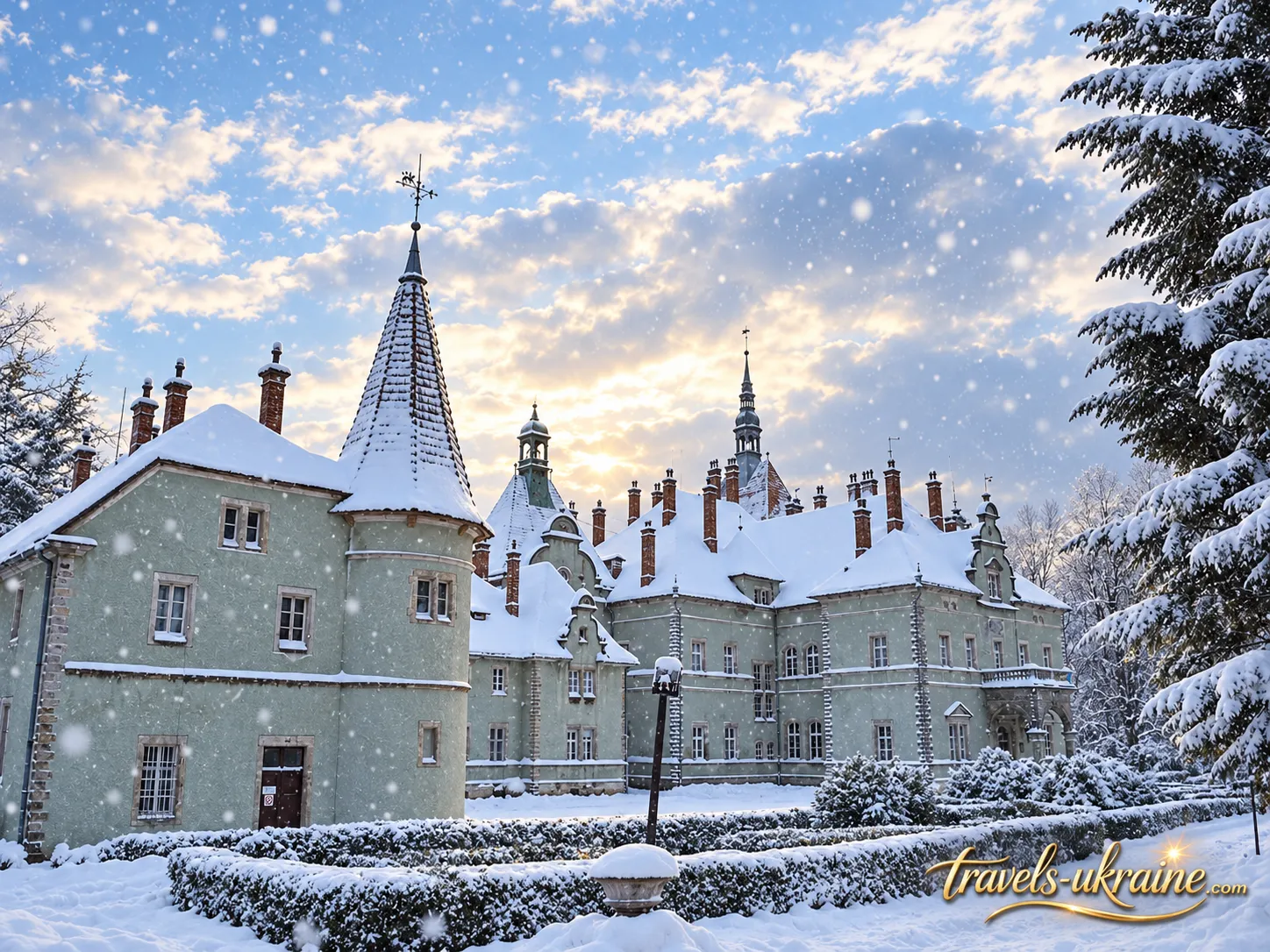
From a distance, the palace looks as though its architect was asked to draw a «typical fairy-tale castle» and then allowed not to restrain his imagination. Towers of different shapes, tall roofs, decorative spires, weather vanes, stone ornamentation, and a large park around it make the palace one of the most recognizable in Zakarpattia. It looks especially striking against the backdrop of the Carpathian slopes. Unlike many historic residences, it is not surrounded by dense urban development. This palace stands amid an old park and encircled by mountains, and it is precisely the combination of architecture and nature that creates most of its atmosphere.
But its appearance is only half the intriguing story. One of Zakarpattia’s most popular tourist legends has long lived on around the palace. It is said that the building was designed as a kind of architectural calendar: 365 windows were meant to symbolize the days of the year, 52 rooms or chimneys the weeks, 12 entrances the months, and four towers the seasons. It sounds so beautiful and logical that travel guides and even official resources have been repeating the story for decades. There is just one small problem: at some point, someone decided not to take it on faith and simply count. And that was when the calendar mathematics began behaving rather strangely.
We will return to this check separately—and in considerable detail, because this is one of those rare cases when a practical count turned out to be more interesting than the legend itself.
The grounds around the residence are no less fascinating. The Schönborns established a large arboretum park with rare trees here, and one of the best-known local stories concerns a lake whose outline supposedly replicated a map of the Austro-Hungarian Empire. There is also the so-called «Fountain of Beauty,» which local lore credits with properties that would make modern cosmetology seriously nervous.
Today, the palace has an entirely different occupation—it is part of the Karpaty Sanatorium. So you should not arrive expecting a classic museum tour from room to room. The site’s main tourist value lies precisely in the castle’s exterior, the park, the atmosphere of an old count’s residence, and the stories that have accumulated around it.
In this article, we will not retell the entire Schönborn family history or compile a catalogue of architectural terms. Instead, we will find out why the counts needed a hunting palace in the Carpathians, check the famous story about the 365 windows, take a walk through the park with its unusual ideas, and determine whether it is worth making a special trip to Shenborn Castle today.
Not a Fortress but a Hunting Residence: Why the Schönborns Needed This Palace
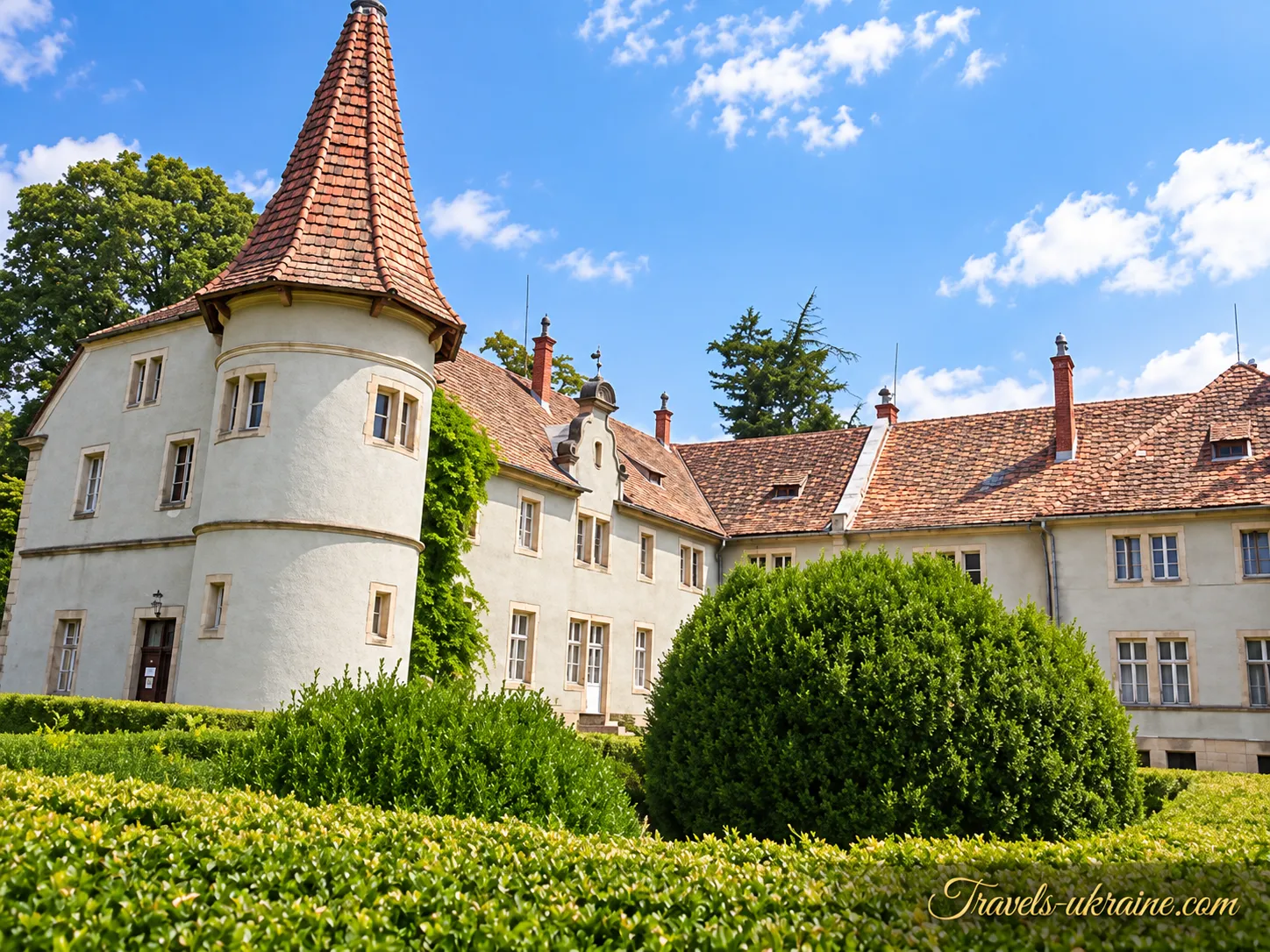
The name «Shenborn Castle» is somewhat misleading. There was no garrison here, the moat was not filled with water before an enemy attack, and the towers were certainly not built so their occupants could fire on the neighbors. What stands before us is a hunting palace and country residence of the Counts of Schönborn—a place where they came to relax, entertain guests, and hunt in the surrounding Carpathian forests.
The palace’s location amid the Carpathian forests was anything but accidental. The Schönborns used the estate as a base for hunting trips, while the residence itself allowed them to host guests in the level of comfort expected by the European aristocracy of the late 19th century. After a hunt, there was no need to return to Mukachevo or look for accommodation in the nearest village. Guests had a palace, a park, meals, leisure, and everything necessary for a stay of several days.
Even the surrounding landscape was gradually transformed into part of the residence. A large arboretum garden with an ornamental lake was laid out beside the palace, rare trees were planted, and walking paths were created. In other words, Beregvár was conceived not as a single beautiful building in an otherwise random forest, but as a complete country estate ensemble.
How the Schönborns Came to Zakarpattia
The Schönborns’ holdings in this region came into being long before the palace itself. After the suppression of Ferenc II Rákóczi’s uprising, substantial lands of the former Mukachevo–Chynadiyovo Dominion passed to representatives of the German-Austrian Schönborn family. In the 18th century, they became some of the largest landowners in Transcarpathia. Their estates were enormous: forests, villages, arable land, and farms. Among all this wealth, the Carpathian forests held particular value—not only as a natural resource, but also as superb hunting grounds.
For the European aristocracy of the time, hunting was far more than simply a way to bring dinner home. It was part of social life: guests arrived, hunting trips were organized, business was discussed, lunches were hosted, and several days were spent far from the bustle of the city. In short, it was something like a 19th-century corporate retreat—only with a forest instead of a conference room and guns instead of name badges.
At First, There Was Just an Ordinary Hunting Lodge Here
The Schönborns’ first residence at this location was a much more modest wooden hunting lodge. The owners came here during hunting trips and used it as a country retreat. But by the late 19th century, a wooden lodge was evidently no longer enough for one of the region’s wealthiest aristocratic families. Count Erwin Friedrich Schönborn-Buchheim decided to replace it with a full-fledged residence.
Thus, in 1890–1895, a palace appeared in the Beregvár estate, known today as Shenborn Castle or the Beregvár Palace. And if the goal was to create a house that would be difficult to confuse with an ordinary country cottage, the task was accomplished with room to spare.
Why Shenborn Castle Looks Like a Fairy-Tale Set
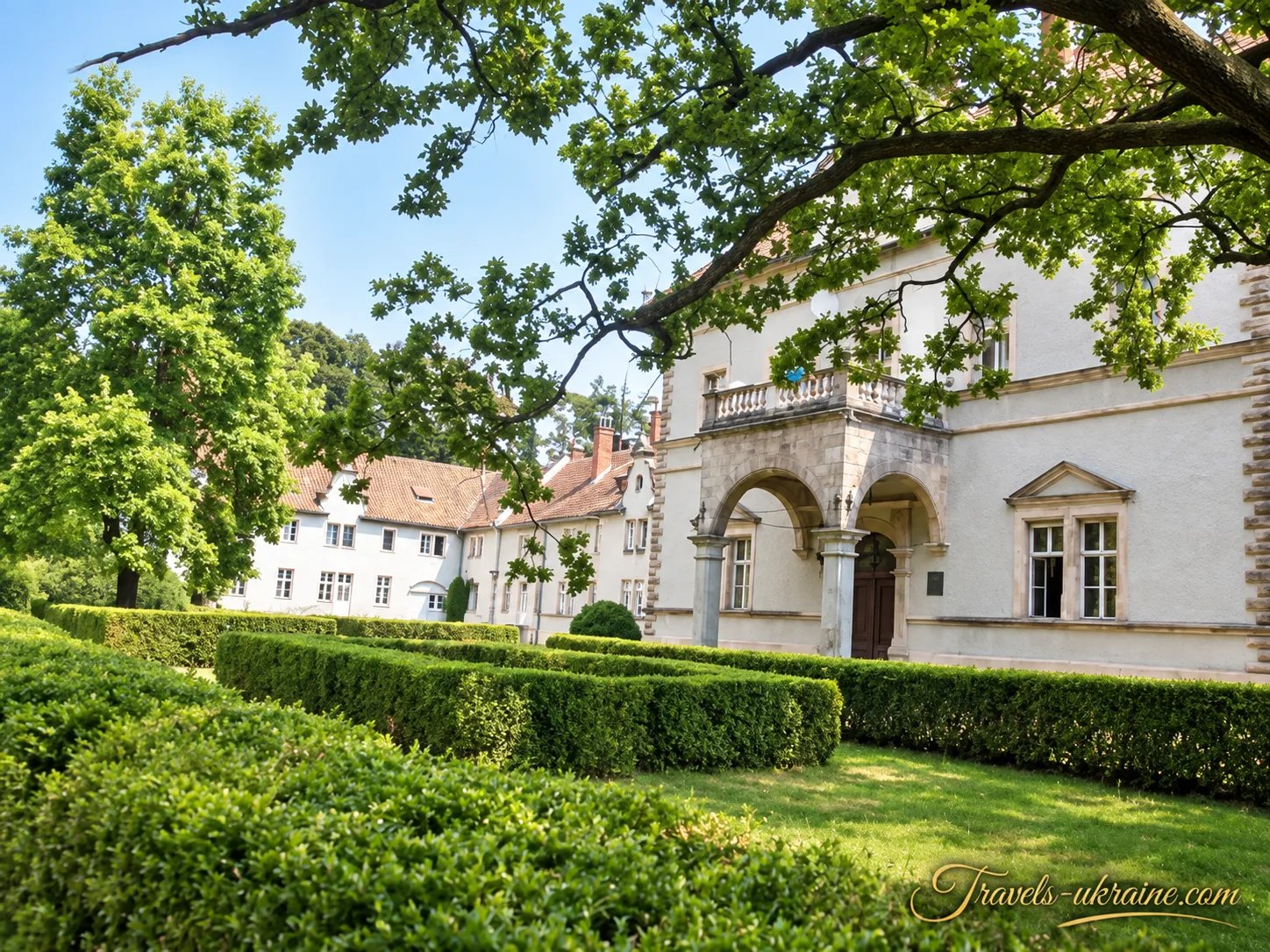
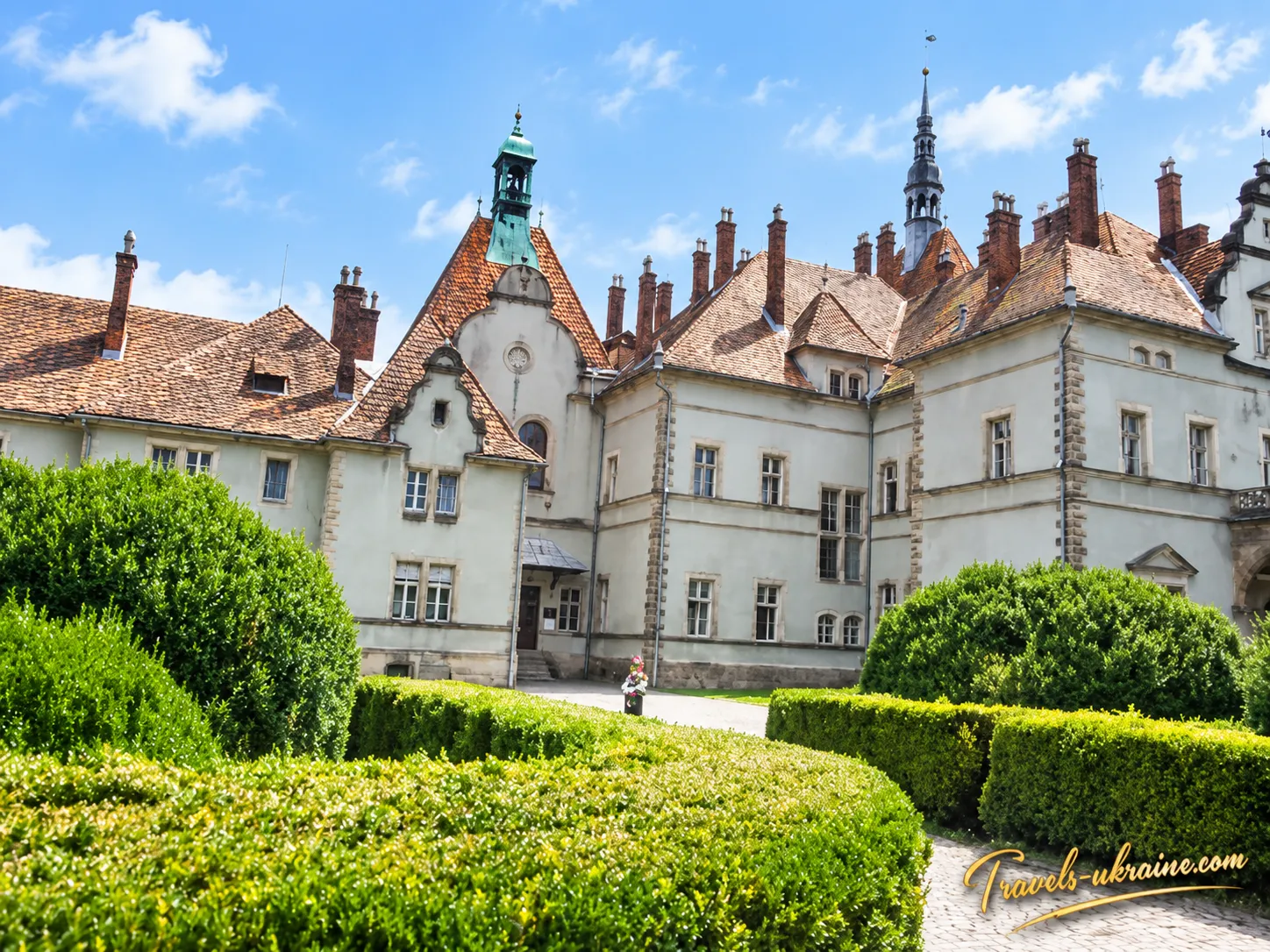
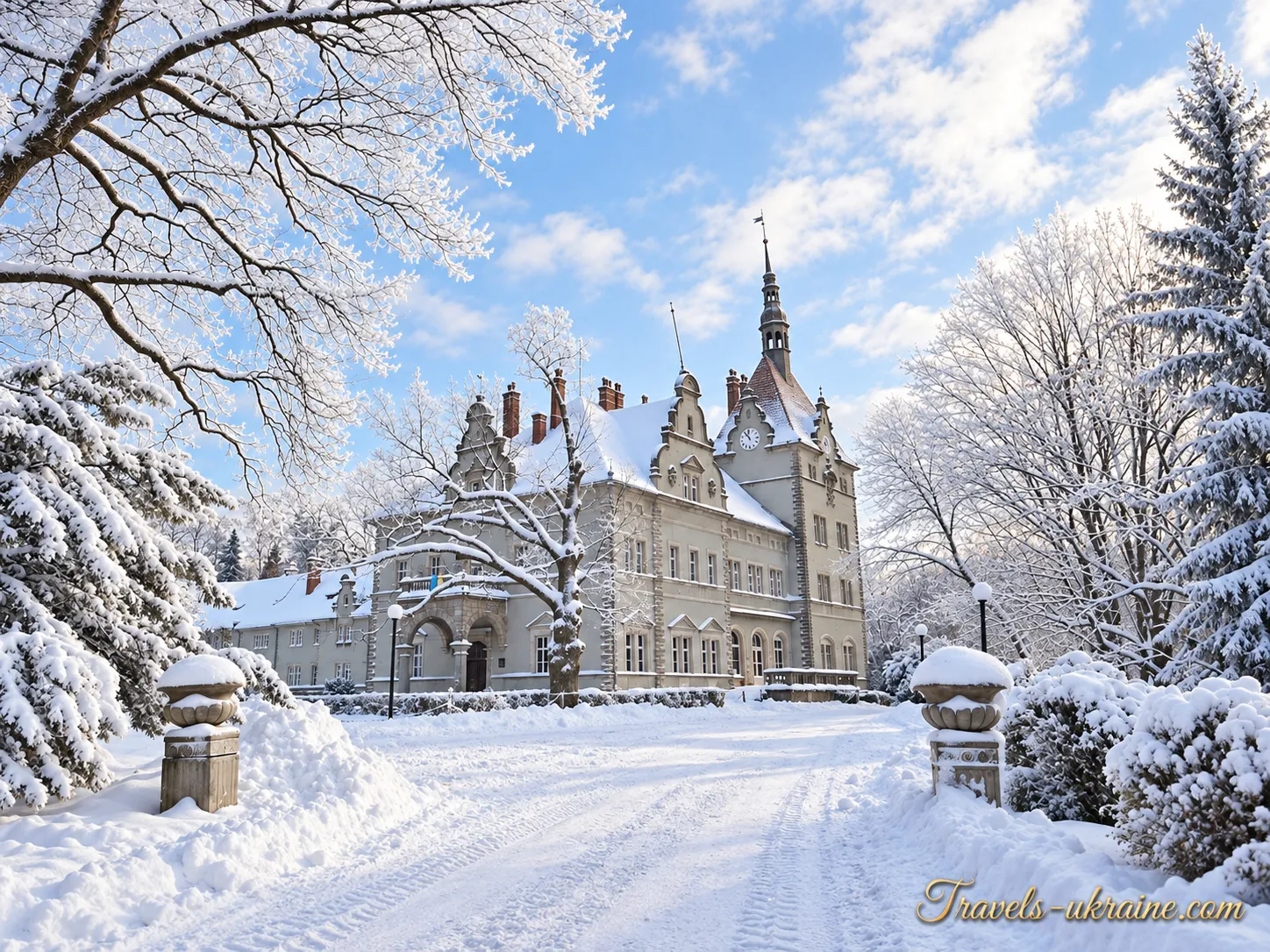
The palace was built in the romantic European tradition, combining motifs from various historical styles. Hence its distinctive silhouette: asymmetrical towers, tall roofs, spires, weather vanes, decorative gables, balconies, and windows of many different shapes. The architect clearly had no intention of making all four sides of the building identical. On the contrary: as you walk around the palace, it constantly changes. A tall tower dominates on one side; on another, there is a complex line of roofs; farther on, terraces and decorative elements come into view. That is why the Schönborn Palace is so interesting to photograph from different angles. There is no single «correct façade» after which you can put your phone back in your pocket and consider the job done.
The building still preserves elements of the Schönborn family heraldry, bas-reliefs, decorative weather vanes, and other details. One of the most noticeable is the tower clock with chimes, which adds even more of that same fairy-tale theatricality to the palace. It is important here to understand the difference between the Schönborns’ residence and the genuine medieval castles of Zakarpattia. Mukachevo Palanok was built so that an enemy would deeply regret deciding to approach its walls. Beregvár was created to make a different impression: a guest was meant to see a beautiful, prestigious, and modern-for-its-time count’s residence.
Even the Road to the Residence Was Meant to Be Convenient for the Schönborns
A railway ran alongside the estate, and a small Karpaty station still stands near the palace today. Its historic building echoes the residence stylistically and itself resembles a small castle. This is a particularly telling detail: a count’s hunting residence could stand amid the Carpathian forests, but that did not mean its owners wanted to spend several days reaching it by wagon over the mountains. An aristocratic love of nature fit perfectly well with the desire to have reliable transport links nearby. By the end of the 19th century, the Schönborns had achieved exactly what they had planned: an impressive country residence amid a large park, close to hunting grounds and transport links.
And then a story emerged around this architecture that is now perhaps even better known than the Schönborns themselves. Supposedly, the palace conceals an entire calendar: 365 windows, 52 rooms or chimneys, 12 entrances, and four towers. The legend is so beautiful that almost everyone repeats it. But what happens if you simply count?
The Calendar Palace: 365 Windows, 52 Rooms, and 12 Entrances—Truth or a Beautiful Legend?
It must be admitted that the building itself does the legend a great favor. The palace is asymmetrical and complex in layout, with many windows of different shapes, dormer openings, towers, chimneys, projections, and several wings. If you stand in front of the façade and start counting windows without any preparation, your brain will probably agree somewhere around the twentieth one: yes, there could easily be 365 here.
What is more, the calendar symbolism fits the romantic architecture of the late 19th century perfectly. Secret numbers, an astronomical design, a building conceived as a model of the year—all of this is far more interesting to tell tourists than simply saying, «The architect put in so many windows because the palace needed light.» There is just one problem: beautiful symbolism is not in itself proof that the architect actually incorporated it into the design.
Of course, the story about Shenborn Castle is one you will almost certainly read before your trip. It is so beautiful, logical, and memorable that it has long become practically the palace’s calling card. According to the popular version, the residence was designed as a kind of architectural calendar. Supposedly, each important number in the building corresponds to a calendar year:
- 365 windows—the number of days in a year;
- one more bricked-up window—supposedly for a leap year;
- 52 chimneys or rooms—the number of weeks;
- 12 entrances—the number of months;
- 4 towers—the four seasons.
It sounds almost perfect. So perfect that guidebooks, travel websites, and informational materials have been repeating this version for decades. Even Zakarpattia’s official tourism resource currently presents 365 windows, 52 chimneys, and 12 entrances as one of the architectural features of the Schönborn Palace. And everything would be wonderful if, one day, someone had not thought of doing the most dangerous thing possible to a good legend—actually checking the figures.
What the Actual Count Revealed
The most interesting practical check of this story was carried out by the author of a study published under the pseudonym Zommersteinhof. Rather than arguing with the guidebooks in theory, he prepared a schematic plan of the building before his trip, divided the façades into separate sections, and then walked around the palace twice on site, counting the openings one by one. The count was as generous as possible toward the legend. It included not only ordinary windows, but also blind and bricked-up windows, dormer openings, a small ventilation opening, and even two windows that had appeared where a former through passage had been.
The result?
265 exterior openings. Not 364. Not 360. And not even anything particularly close to the legendary 365.
The author also found about 15 interior windows. But even if they are added to the total, there is still a very substantial shortfall from the calendar figure. And this is where the legend runs into its first serious problems. To reach 365, one would have to find dozens more windows somewhere inside the palace that do not face the outside. For a building, that would be, to put it mildly, a rather unusual architectural decision.
The Mathematics Does Not Quite Add Up for the 52 Chimneys Either
The next popular figure is 52 chimneys, one for each week of the year. Checking them from the ground is much more difficult, so the study used an aerial view of the palace. The aerial photograph made it possible to count approximately 30 chimneys. That means more than two dozen would still have to be found somewhere to complete the calendar.
This is where another version of the legend comes in: some sources speak not of 52 chimneys, but of 52 rooms. And that is a much more convenient figure for a tourist retelling—rooms cannot be counted from the street. Were there really 52 of them in the original palace? Architectural plans or a reliable building inventory would be needed to make a confident claim. The mere repetition of this number in tourist descriptions is not enough.
And what about the 12 entrances and four towers?
The situation with the entrances is even more interesting, because first we need to agree on what exactly counts as an entrance. Only doors leading in from the street? Exits to the park? Service passages? Interior doors? A hatch to the attic? Depending on the counting method, the result may vary, so the attractive number «12,» without an explanation of how it was calculated, proves very little.
The popular legend also often adds four towers—four seasons. But here too, the palace’s actual silhouette is not particularly eager to conform to the school calendar. The building has several different tower-like and projecting volumes, and depending on what is called a tower, arriving at an unequivocal «four» is not easy. The problem repeats itself: first we have an attractive number, and only afterward do we try to adapt the architecture to it.
But there is an important «but»: Schönborn Palace changed
It would be unfair to declare the entire calendar story a fabrication after a single modern count and ceremoniously close the case. The palace has not reached us completely unchanged. Old photographs show that some parts of the building were rebuilt. In particular, one of the wings once had a different number of floors. Openings were altered, some passages were bricked up, and new windows appeared. Consequently, the number of windows, doors, rooms, and even chimneys today may theoretically differ from what existed at the end of the 19th century.
And this is precisely where the line between good research and sensation lies. A modern count does not prove that a calendar concept never existed. But it does show very convincingly that the figures 365, 52, and 12 should not be repeated as an indisputably established architectural fact.
So is the calendar palace fact or legend?
The most honest answer is this: the calendar concept is an extremely popular tourist version, but its literal accuracy remains questionable both documentarily and factually. Official tourist materials continue to repeat the figures of 365 windows, 52 chimneys, and 12 entrances. At the same time, a practical count of the modern building produces entirely different results, while the available old photographs confirm that the palace underwent changes.
Perhaps the original design really did contain some calendar symbolism. Perhaps some of the figures emerged later and gradually turned into a beautiful legend. Or perhaps the actual concept was much simpler than its modern tourist version. Without the original architectural design or a document in which the residence’s authors themselves explain the «365–52–12» principle, it is too early to draw a final conclusion. But that is precisely what makes the story interesting.
Now, when you stand in front of Schönborn Castle, you can do more than simply photograph the façade—you can try to check at least part of the legend yourself. That said, I would recommend counting all the windows only to people with exceptional patience—one researcher has already done the job for us twice. And even if the palace turned out not to be as precise a calendar as the guidebooks promise, it certainly has not become any less interesting. On the contrary: a story that can be checked with your own eyes is far more fascinating than a legend simply copied from one website to another.
Schönborn Park: a map-shaped lake, exotic trees, and the «Beauty Spring»
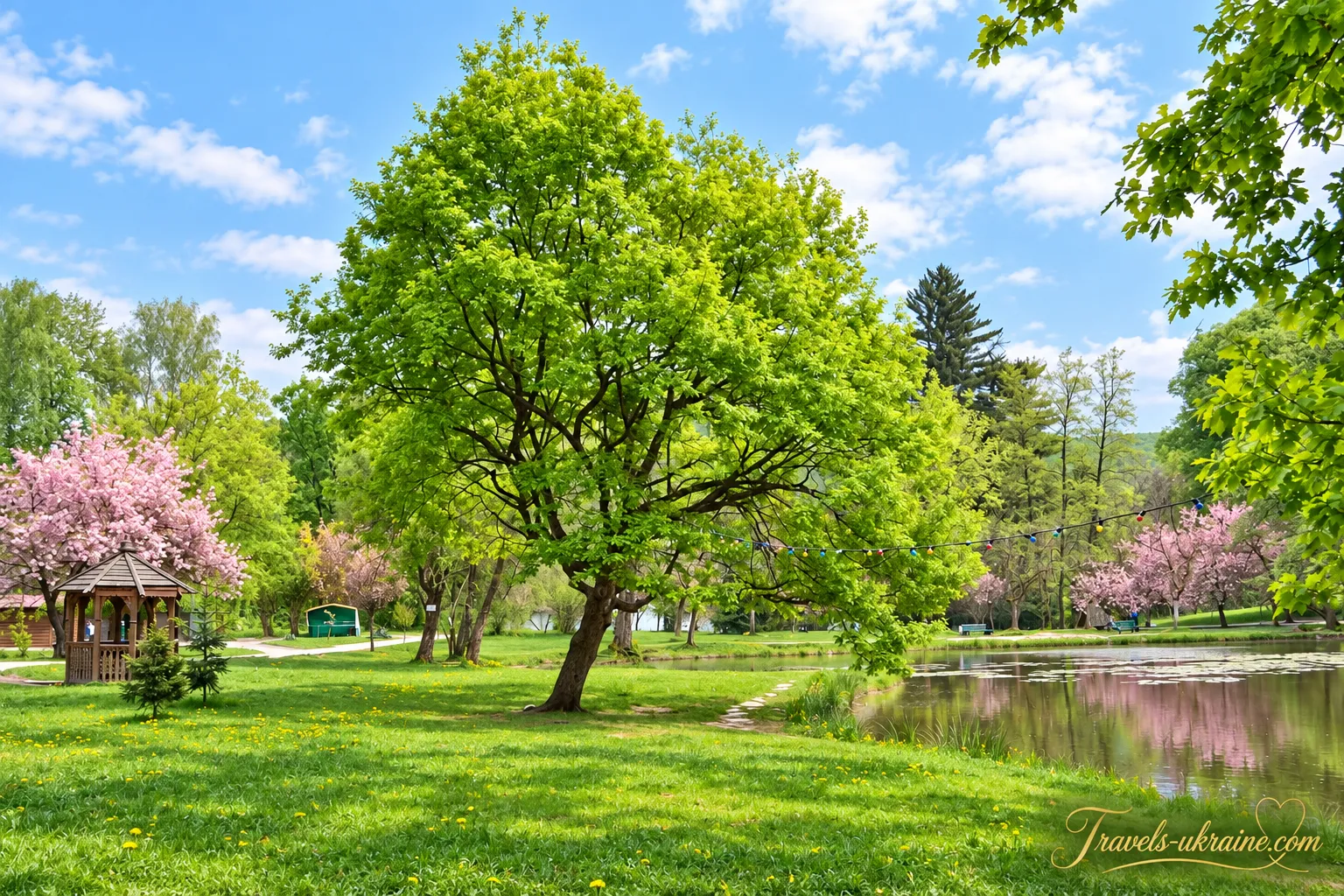
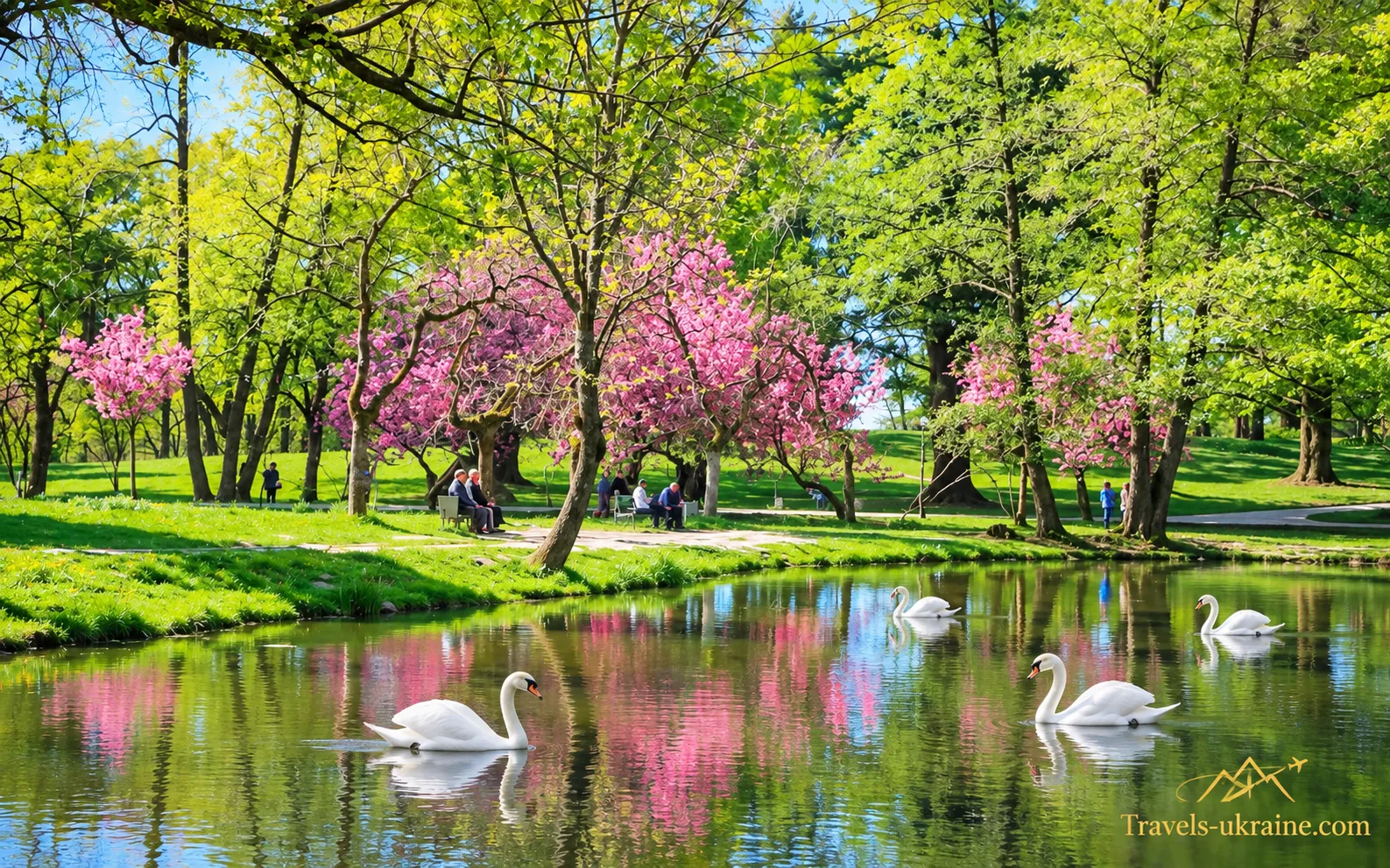
If, after touring the castle, you simply turn around and head to the car, you may miss a good half of the former count’s residence concept. The palace was not built as a solitary beautiful structure among random trees—around it, they created a large arboretum park intended to continue the residence itself. And this is where the atmosphere changes. Beside the façade, the main characters remain the towers, spires, and clock, but after a few minutes of walking they are gradually displaced by old trees, avenues, and a decorative lake. So a visit to Schönborn is best viewed not as «saw the castle—left,» but as a short stroll through an old aristocratic estate.
The arboretum where the Schönborns gathered trees from different countries
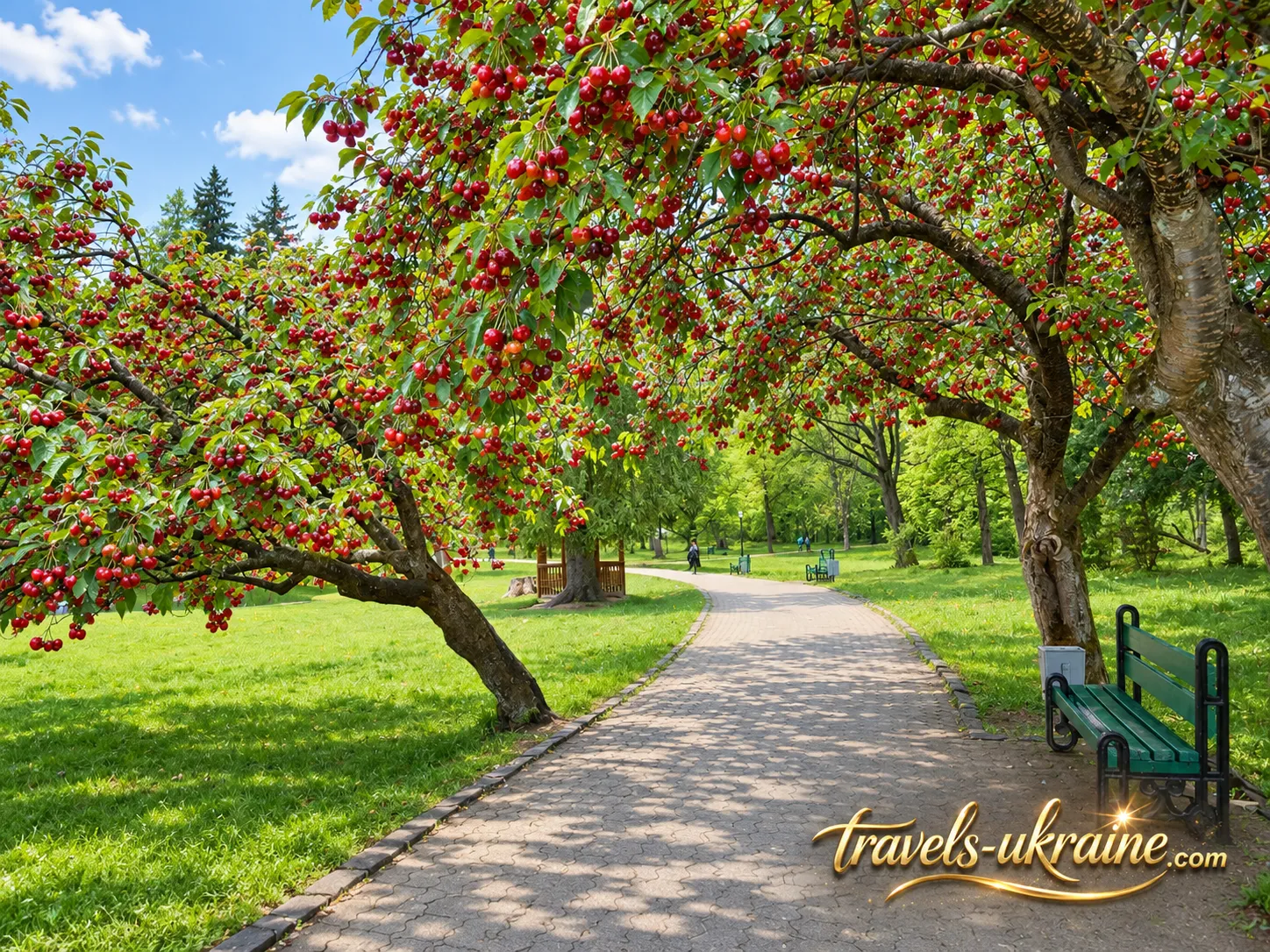
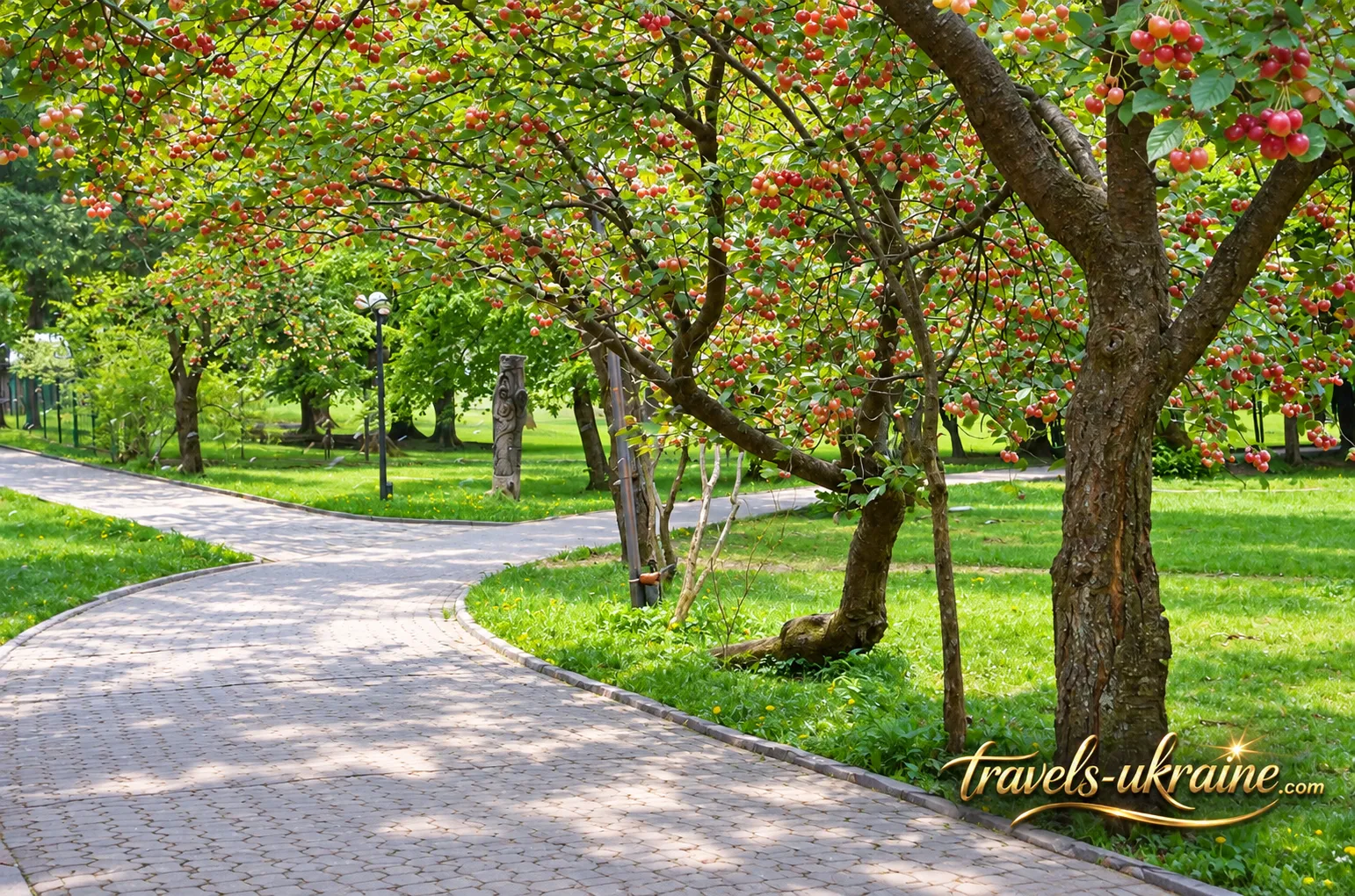
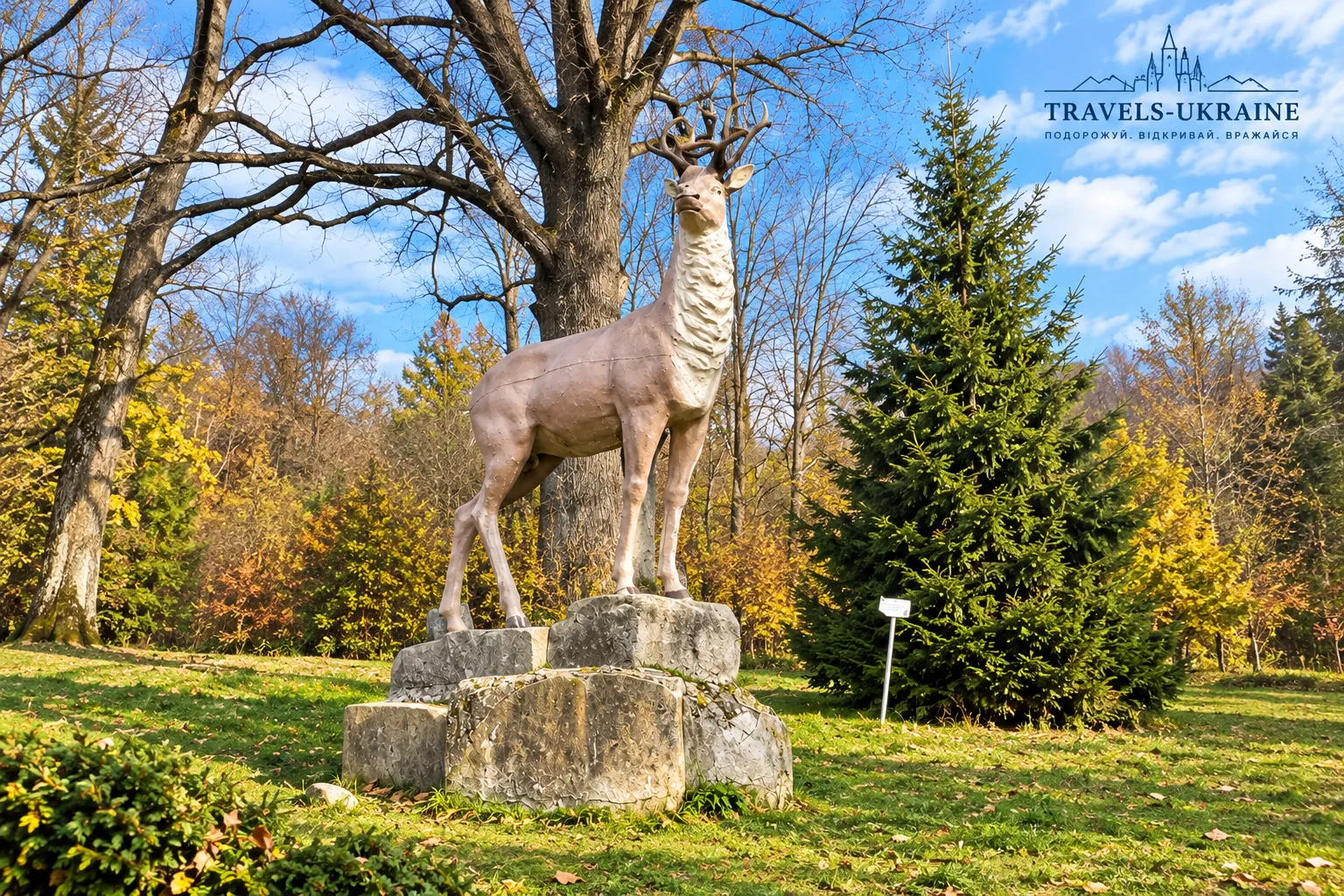
At the end of the 19th century, a landscape park with rare and exotic plants was laid out around the palace. According to modern descriptions, more than forty species of trees and ornamental plants grow here, some of them entirely atypical of an ordinary Transcarpathian forest. They include Weymouth pines, yews, magnolias, Italian wisteria, Canadian spruces, cherry trees, copper beech, catalpas, tulip trees, larches, as well as old oaks and ash trees.
In other words, the counts were not satisfied with simply having a good Carpathian forest around their residence. If you are going to create a park, it should be one where a local oak, a North American pine, and a plant that under normal circumstances would encounter Transcarpathia only in a botanical atlas can become neighbors.
Today, the park no longer looks exactly as it did under the Schönborns: the trees have grown, the layout has partly changed, and some decorative elements have been lost. But it is the old plantings that create the atmosphere around the palace, which is why it looks so good in photographs in every season.
A lake shaped like Austria-Hungary: another beautiful symbol
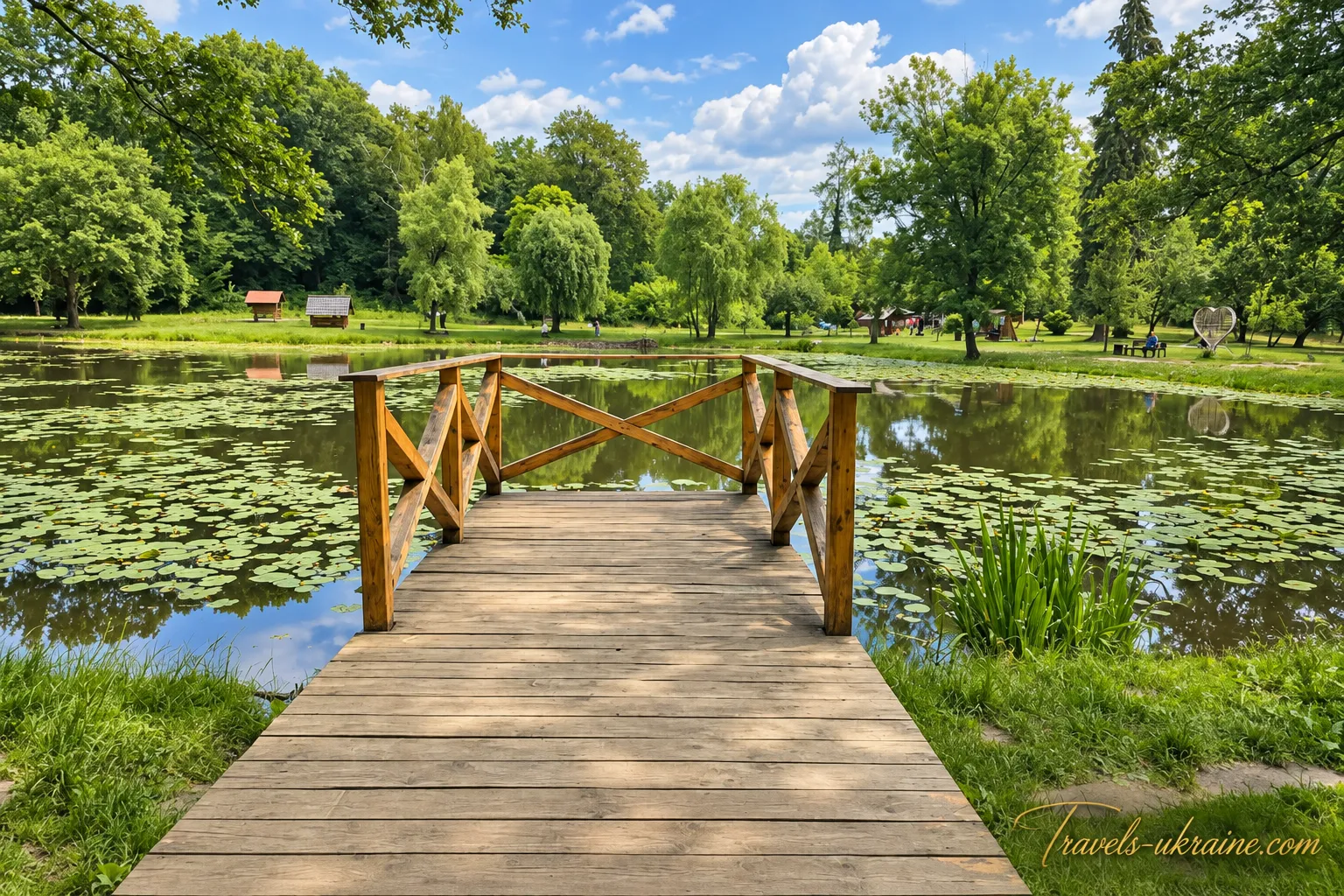
At the center of the park lies a decorative lake, associated with another well-known Schönborn story. According to an official tourist description of Transcarpathia, the waterbody was created so that its outline would roughly reproduce a map of the Austro-Hungarian Empire. After the story of the 365 windows, this sounds slightly dangerous—now one immediately wants to pull out a historical map and start comparing the shoreline.
But here the wording is much more cautious: it refers specifically to an approximate shape, not a geographical copy accurate to every border. Moreover, over more than a century the shoreline has changed, the waterbody has become overgrown, and the park has undergone renovations, so seeing the former empire’s perfect outline on the site today would be difficult.
The best way to view the lake is not as a cartographic exercise, but as another detail of the estate’s romantic concept. The Schönborns created an environment in which even an ordinary body of water was meant to have its own story. And if the map version really reflected the original concept, the owners’ scale of thought was suitably grand: when an estate is large enough, you do not have to hang a map of a country on the wall—you can dig it into the garden.
The «Beauty Spring»: water that, according to legend, knows more than cosmetologists
Another well-known spot in the park is the so-called «Beauty Spring.» Here, historical facts give way to local folklore, and it is best to distinguish the two clearly from the outset. Several legends explain why the spring received this name. In one of them, an old woman supposedly turned into a young girl after drinking the water. Her husband decided to repeat the procedure, overdid the dosage slightly, and became so young that his wife found a little boy by the spring. Folk medicine, it seems, insists even in legends: follow the recommended dose.
Another version connects the spring directly with the Schönborn family. According to it, the count’s daughter, returning from Vienna, saw how much the appearance of her childhood friend had improved; the friend supposedly washed her face regularly with spring water. The story then moves into the classic genre of a Carpathian legend, with jealousy, unjust punishment, and a rather dramatic ending. Naturally, there is no documentary confirmation of such stories. So it is best to regard the «Beauty Spring» as a local tourist tradition, not a free alternative to rejuvenation treatments.
When the count’s palace became a sanatorium and appeared in films
Most old palaces have two common fates after the aristocratic era ends: either the building becomes a museum, or it gradually turns into a romantic ruin later photographed through the trees. Schönborn Palace received a third option—it acquired a thoroughly practical profession and has been operating as part of a sanatorium complex for many decades. This may partly explain why today we see before us not the remains of walls, but a complete historic building with roofs, towers, a clock, and a recognizable silhouette.
The last member of the Schönborn family connected with the estate left Transcarpathia during the Second World War. In 1945, the estate was nationalized, and as early as 1946 the former count’s residence began operating as the Karpaty sanatorium. At first glance, the change of profession seems quite radical. Until recently, aristocrats came here to hunt; now people come for treatment and rehabilitation. Yet if you think about it, the place’s main purpose has not changed that much: then and now, people come here to get away from the bustle of the city, among the old park and Carpathian air. It is simply that procedures are prescribed much more often than hunting these days.
Today, the sanatorium complex occupies a large area around the palace. It includes treatment and residential buildings, a pump room, and other sanatorium facilities, while the historic residence itself remains part of the functioning complex. This modern function explains one important point: Schönborn Palace is not a classic museum castle where you buy a ticket and follow a route through a dozen rooms, with a plaque beside every exhibit.
The building is used by the sanatorium, so the site’s tourist appeal today is focused primarily on viewing the palace from outside and walking through the park. That is how it should be planned into an itinerary. And this is not a disadvantage at all. Schönborn Palace is one of those structures whose main impact comes from its exterior: the intricate silhouette, towers, steep roofs, weather vanes, old clock, and surrounding park. Even without entering the former count’s rooms, you can fully understand why this place has become one of Transcarpathia’s best-known architectural images.
When Schönborn Palace became a film set
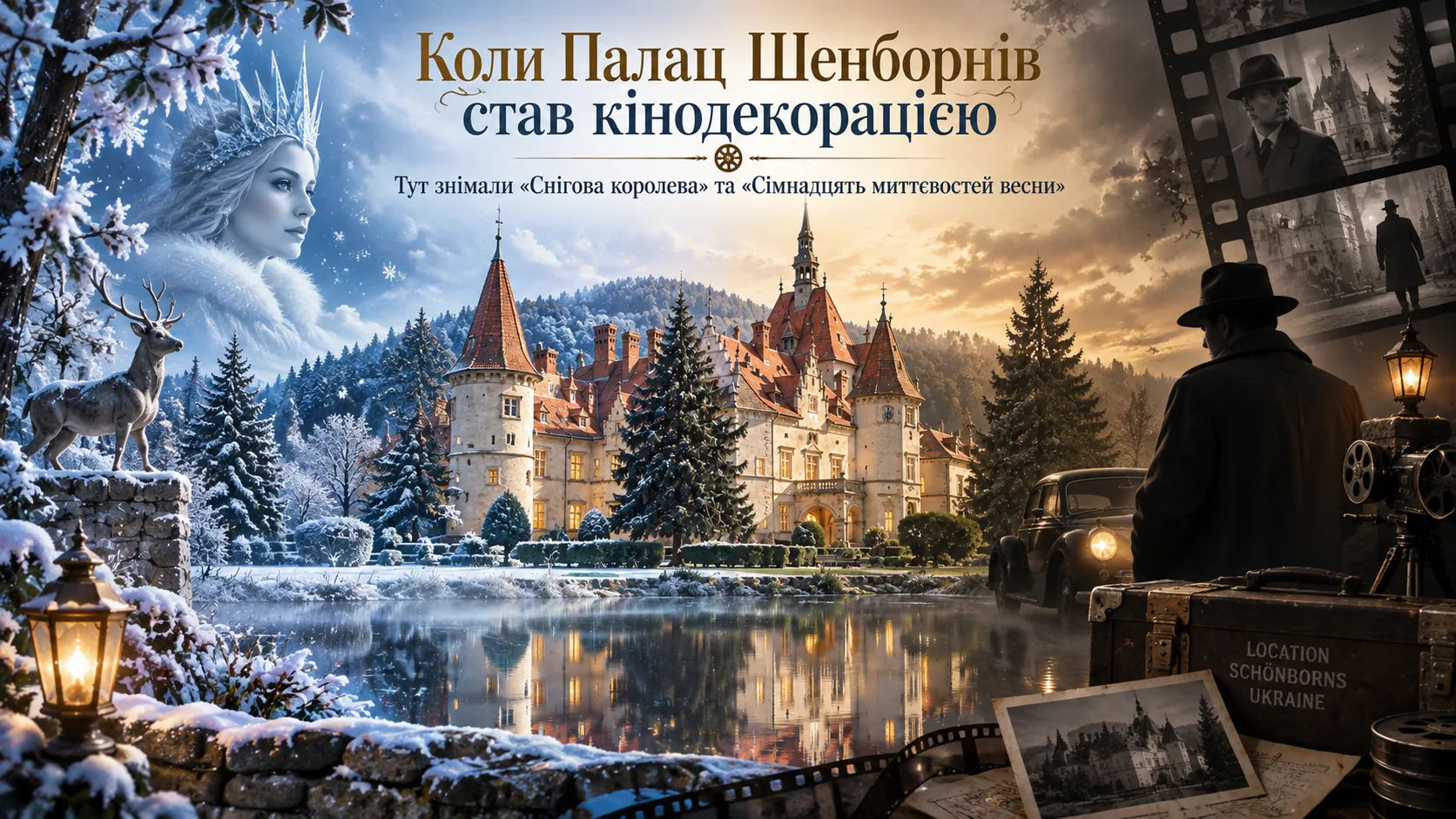
And here its fairy-tale appearance found another practical application. The palace appealed to filmmakers. One of the best-known films associated with the residence is the 1966 Soviet fairy tale «The Snow Queen». For a film about enchanted kingdoms, palaces, and distant journeys, Schönborn Palace looked so convincing that elaborate sets were almost unnecessary.
The palace also appeared in the famous television series «Seventeen Moments of Spring,» which premiered in 1973. Some scenes of the series were filmed in Transcarpathia, and one of the locations was connected specifically with Schönborn Palace. This demonstrates the building’s versatility well. In real life, it is an Austro-Hungarian hunting residence. In film, when needed, it becomes an entirely different country and a different era. Architecture, like a good actor, simply steps into the required role.
Some tourist sources offer much longer lists of films supposedly shot near the palace. But it is better not to turn Schönborn’s filmography into a contest for the greatest number of titles: «The Snow Queen» and «Seventeen Moments of Spring» have sufficiently reliable confirmation, and these two examples are more than enough to convey the site’s cinematic quality.
Is Schönborn Castle worth visiting today?
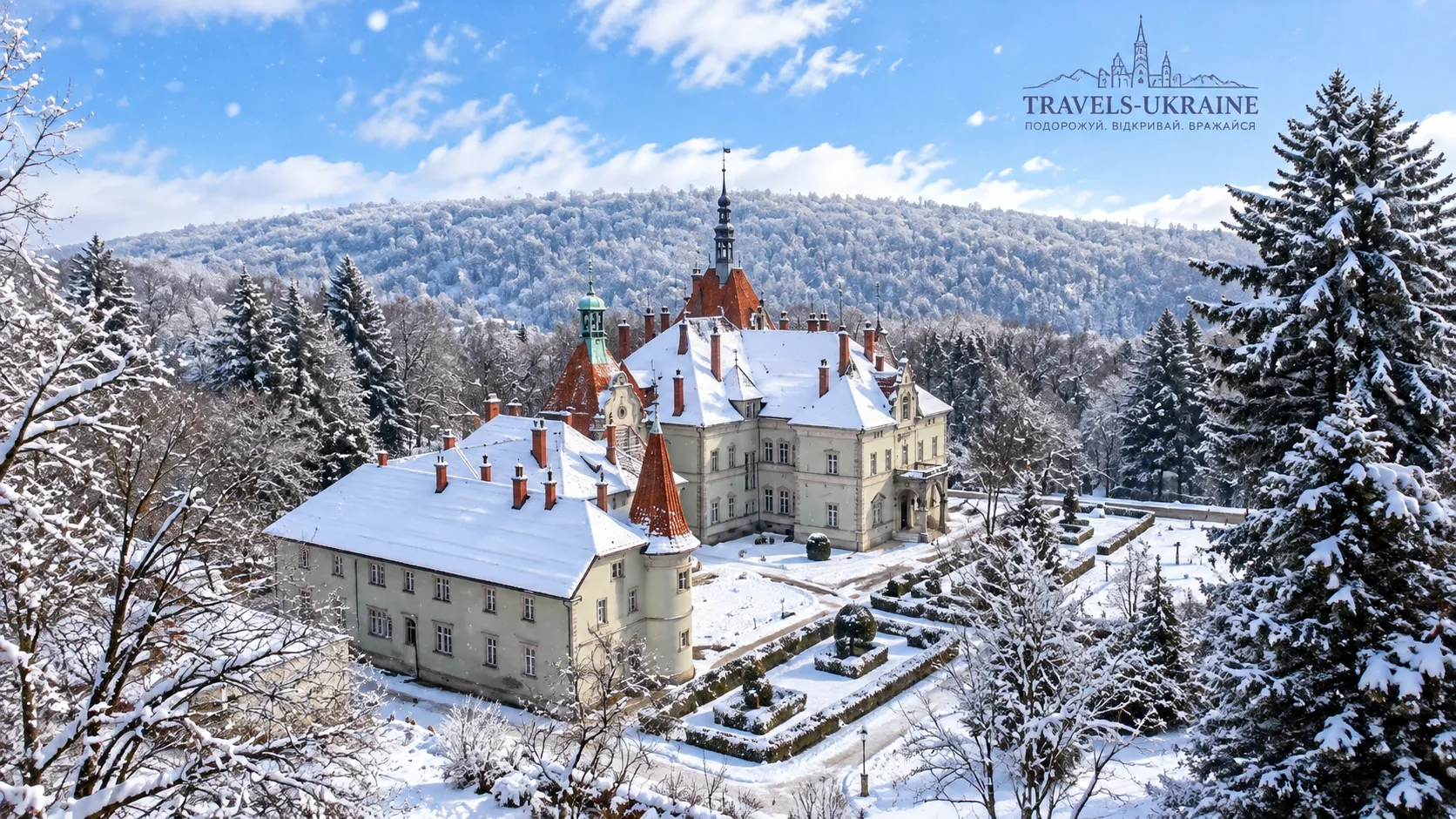
After stories about countly hunts, the palace-calendar, a lake shaped like Austria-Hungary, and film shoots, the simplest question remains: is Schönborn Palace worth a special trip today? The short answer is yes, but it is important to have the right idea of where you are going. This is not Palanok with museum halls and a long exhibition route. Nor is it Pidhirtsi Palace, where the historic building itself is the main purpose of the excursion. And it is not a ruin that you have to reconstruct in your imagination. Schönborn Palace is прежде за all a well-preserved architectural ensemble set in a large old park, which is now part of an operating sanatorium.
The main impression begins here as soon as you approach the palace. Its intricate silhouette, towers of different shapes, high roofs, clock, weather vanes, and decorative façade look far more impressive in person than in most photographs. The route then naturally continues through the park. You can walk along the old avenues, find the ornamental lake, see rare trees, look for the «Fountain of Beauty,» and simply walk around the palace from different sides. This is exactly how the visit should primarily be viewed: an exterior look at the palace plus a walk through the park.
Access to the interior may depend on the sanatorium’s operating schedule, events, or temporary restrictions. Therefore, it is not worth building your entire trip around the expectation that you will definitely be shown the former countly rooms. Even without that, the location stands perfectly well on its own.
Who will enjoy Schönborn Palace the most
Above all, people who love romantic architecture, old palaces, parks, and atmospheric places. You do not need to know the history of Austria-Hungary or distinguish Romanesque Revival from Neo-Gothic architecture to enjoy a walk here.
The location is also excellent for photography. The palace silhouette constantly changes depending on the viewpoint, while the park offers plenty of opportunities to find a shot without cars, modern buildings, or random advertising banners in the background. The palace is also well suited to a family trip. There is no demanding route, lengthy mountain climb, or several-hour excursion after which children become interested only in the nearest ice cream.
So if you are primarily looking for a large museum, authentic furnished rooms, or a lengthy historical tour inside, Schönborn Palace may not meet your expectations. Today, the palace functions as part of a sanatorium rather than as a museum residence. The main attraction here is therefore not the number of exhibits, but the atmosphere of the place itself.
Nor should you expect dozens of separate tourist attractions inside the park. There are no rides or large entertainment complex here. This is a place for a peaceful walk, photographs, and an introduction to the architecture. If that kind of experience appeals to you, you are unlikely to be disappointed.
Is Schönborn Palace worth visiting on its own?
If you are already traveling between Mukachevo, Svaliava, or the resorts of Zakarpattia, it is definitely worth stopping here. The palace is conveniently located and does not require a full day. As a separate long-distance trip made solely for one palace, it depends on how much you enjoy historic architecture and old parks. But on a Zakarpattia itinerary, it is one of those stops that stays in your memory precisely because of its appearance.
And you do not even have to believe in 365 windows or look for the exact borders of Austria-Hungary in the lake. Schönborn Palace is interesting enough without the legends: its romantic architecture, old park, and almost fairy-tale silhouette speak for themselves. The legends simply make the walk a little more fun.
Frequently asked questions about Schönborn Palace
Where is Schönborn Palace located?
The Palace of the Counts Schönborn is located in the village of Karpaty, Mukachevo Raion, Zakarpattia Oblast, on the grounds of the «Karpaty» sanatorium. The location lies between Mukachevo and Svaliava, close to the highway, making it convenient to add to a road trip through Zakarpattia.
Is Schönborn Palace a real fortress?
No. Despite its towers, spires, and the name «castle,» the building was constructed at the end of the 19th century as a hunting and country residence for the Counts Schönborn. It had no defensive function. The names «Schönborn Palace,» «Schönborn Castle,» and «Beregvár Castle» are now used for the same building.
Can you go inside Schönborn Palace?
The palace does not operate as a regular museum—the historic building now houses part of the «Karpaty» sanatorium. Access to the interior may depend on the sanatorium’s operating schedule, organized tours, and current restrictions. The main tourist experience is therefore viewing the palace from outside and walking through the park.
How much does it cost to enter Schönborn Palace?
Entry to the grounds for tourists is paid, but it is best to confirm the current fee directly before your trip. Tourist sources list different amounts for different years because the price has changed. The entrance fee should not automatically be understood as a ticket for a full tour of the palace interior.
What are the visiting hours for Schönborn Palace?
Tourist guides most often list access to the grounds approximately during the daytime, but access hours may change because of the sanatorium’s operations, events, or filming. Before making a special trip, it is advisable to confirm the current conditions with the administration of the «Karpaty» sanatorium.
How much time is needed to see Schönborn Palace?
Allow approximately 60–90 minutes for viewing the palace from outside and taking an unhurried walk through the park. If you only want a few photographs by the façade, 20–30 minutes will be enough, but you will then miss the lake, old avenues, and much of the park.
Does Schönborn Palace really have 365 windows and 52 chimneys?
This is one of the palace’s best-known legends. According to the popular version, 365 windows symbolize the days of the year, 52 chimneys represent the weeks, and 12 entrances represent the months. However, a modern practical count found approximately 265 external openings and about 30 chimneys. The palace was rebuilt, so the original symbolic design cannot be ruled out completely, but presenting the calendar figures as an indisputably confirmed fact would also be inaccurate.
Is Schönborn Palace worth visiting with children?
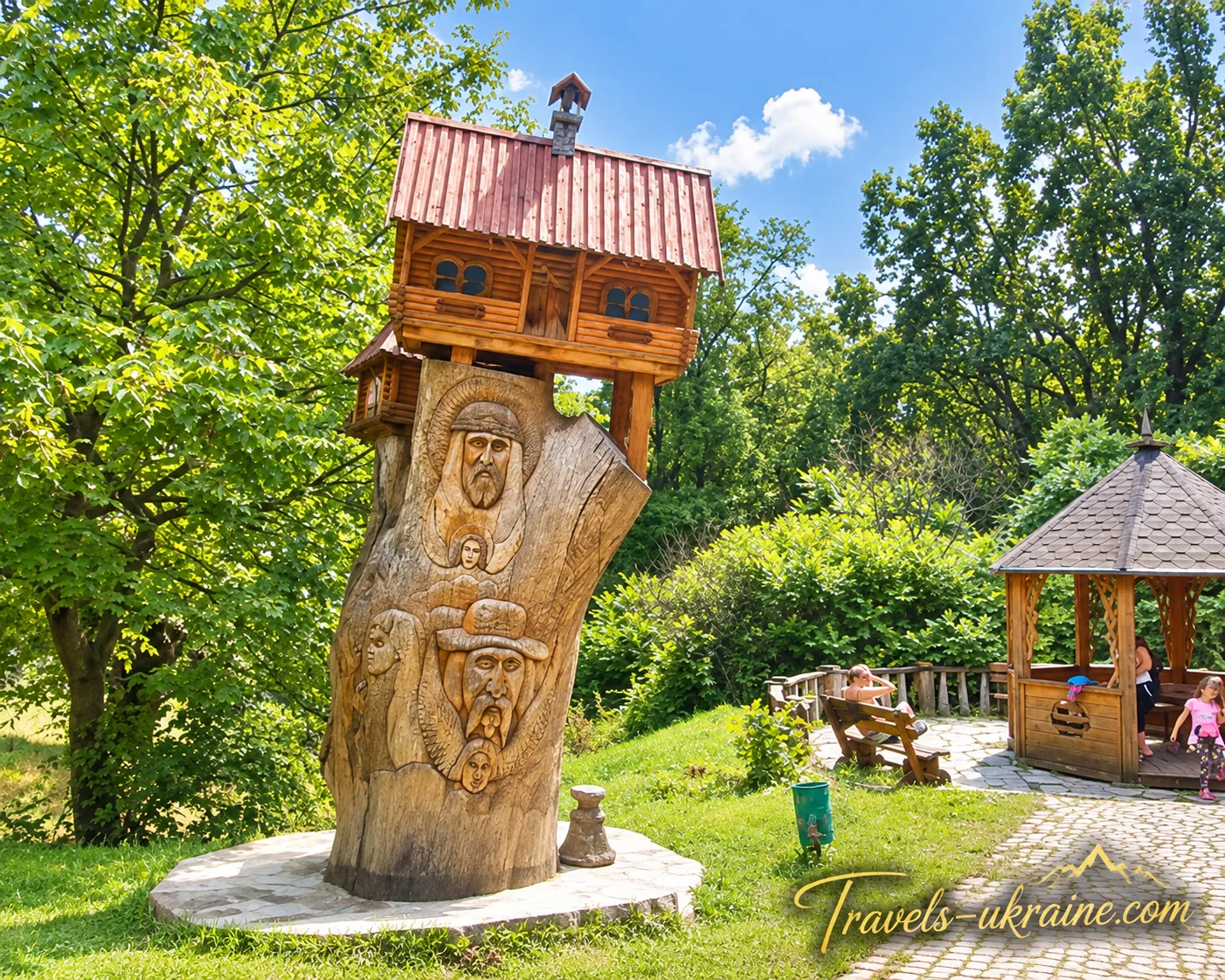
Yes. The walk does not require a difficult climb or several hours of museum touring. Children may enjoy the fairy-tale towers, park, lake, sculptures, and the legend of the «Fountain of Beauty». Just remember that this is the grounds of an operating sanatorium, not an amusement park.
Can you reach Schönborn Palace without a car?
Yes. The Karpaty railway station is located near the palace complex. Rail routes toward Uzhhorod and Mukachevo pass through it, but specific trains and stop times change, so the current timetable should be checked on the Ukrzaliznytsia website before your trip.
When is the best time to visit Schönborn Palace?
The palace is interesting at any time of year. Spring is ideal for seeing the park in bloom, summer for the green avenues, while autumn combines the light façade and reddish roofs particularly strikingly with colorful foliage. After snowfall in winter, the palace takes on an almost fairy-tale appearance, which helps explain why «The Snow Queen» was filmed here.
What makes Schönborn Palace memorable
The Palace of Counts Schönborn, also known as Beregvar Castle, is not a place to visit for a lengthy museum tour or dozens of exhibition halls. Its main appeal lies elsewhere: in its appearance, park, and the atmosphere of an old aristocratic residence that has somehow survived several eras and remains a living part of Zakarpattia. Here, it is easy to understand why the palace works so well in photographs and films. Towers, spires, steep roofs, a clock, old trees, and the surrounding Carpathian landscape create an image that looks almost too fairytale-like for a real building.
At the same time, Schönborn is interesting for more than its beauty. So many legends have accumulated around the palace that some of them now have to be checked with a tape measure and a calculator. The park adds another layer to the site. A lake with the legendary outline of Austria-Hungary, old avenues, exotic trees, and the «Beauty Spring» make the walk far more interesting than simply viewing the façade. The palace’s modern function only highlights its unusual fate. Once the counts’ hunting residence, it is now part of a sanatorium, remains in use, and has not become an abandoned relic of the past.
So if you are travelling through Zakarpattia via Mukachevo, Svaliava, or the village of Karpaty, it is worth including a stop at Schönborn Palace in your itinerary. Not simply to tick another box next to the word «castle,» but to take a leisurely walk through the old park, view the palace from different angles, and see whether it really looks as fairytale-like as it does in photographs. And if you want to see more places like this afterward, continue discovering other palaces and estates across Ukraine. Each has its own character: some survived sieges, others became ruins, while Schönborn simply decided to remain beautiful.
No Comment
You can post first response comment.