
 English
 Українська
 Български
 Hrvatski
 Čeština
 Dansk
Dansk Nederlands
 Eesti
Eesti Suomi
Suomi Français
 Deutsch
 Ελληνικα
 Magyar
 Íslenska
 Italiano
 Latviešu
 Lietuvos
 Polski
 Português
 Română
 Русский
 Српски
 Slovenčina
 Slovenščina
 Español
 Svenska
 Türkçe
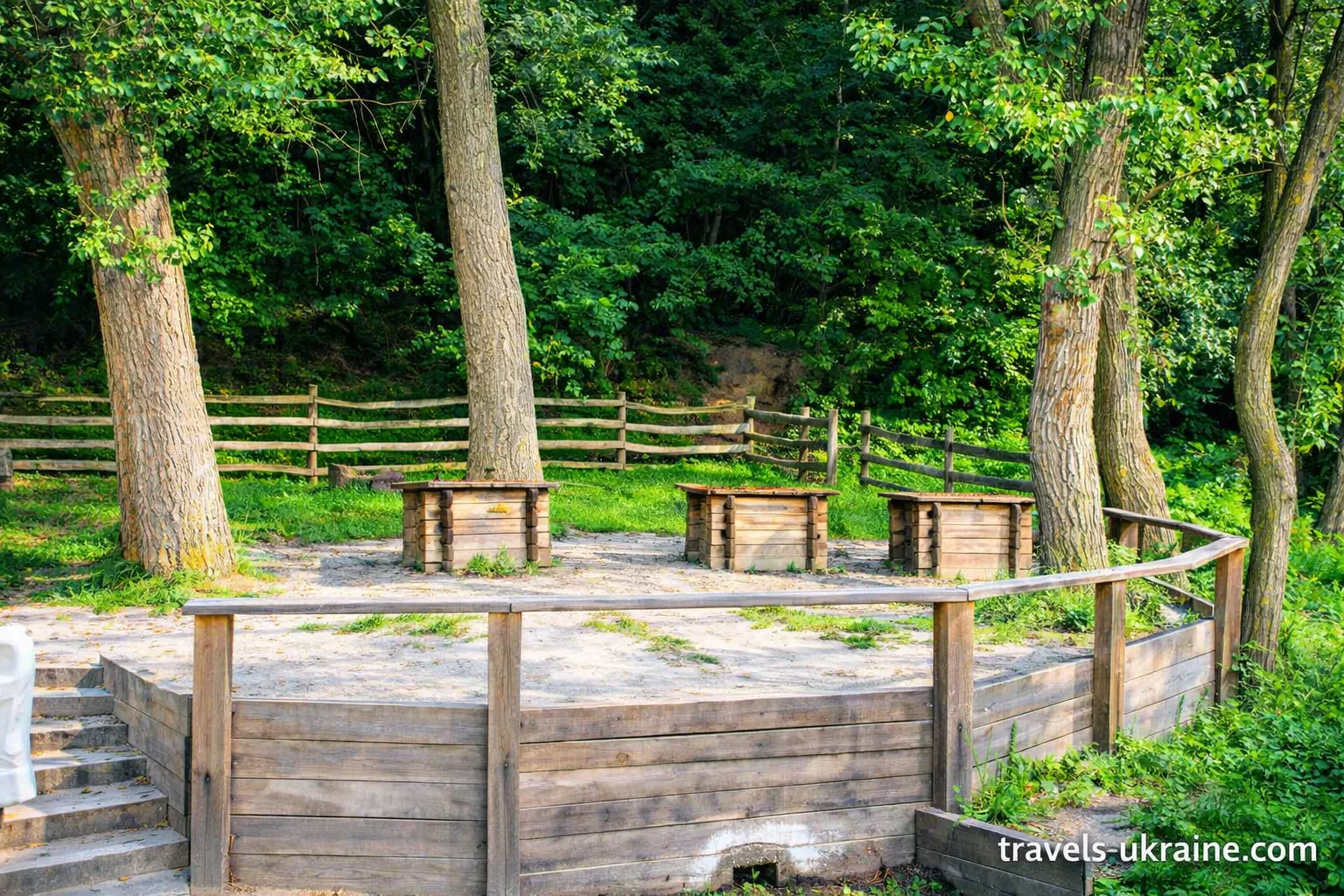
Time never stands still. Quietly, it erases the present, turning it into memories, legends, and stories passed down from generation to generation. What will remain after us is something only we can decide. That’s why, in every era, people have tried to leave a mark: some in words, some in stone, and others through deeds that changed the course of history.
Ukrainian soil remembers many figures whose legacy has outlived the centuries. One of them is Bohdan Khmelnytsky—a Hetman whose life was filled with dramatic events, victories, losses, and fateful decisions. His era still echoes through Ukraine’s historic landmarks, Cossack legends, and old places of power.
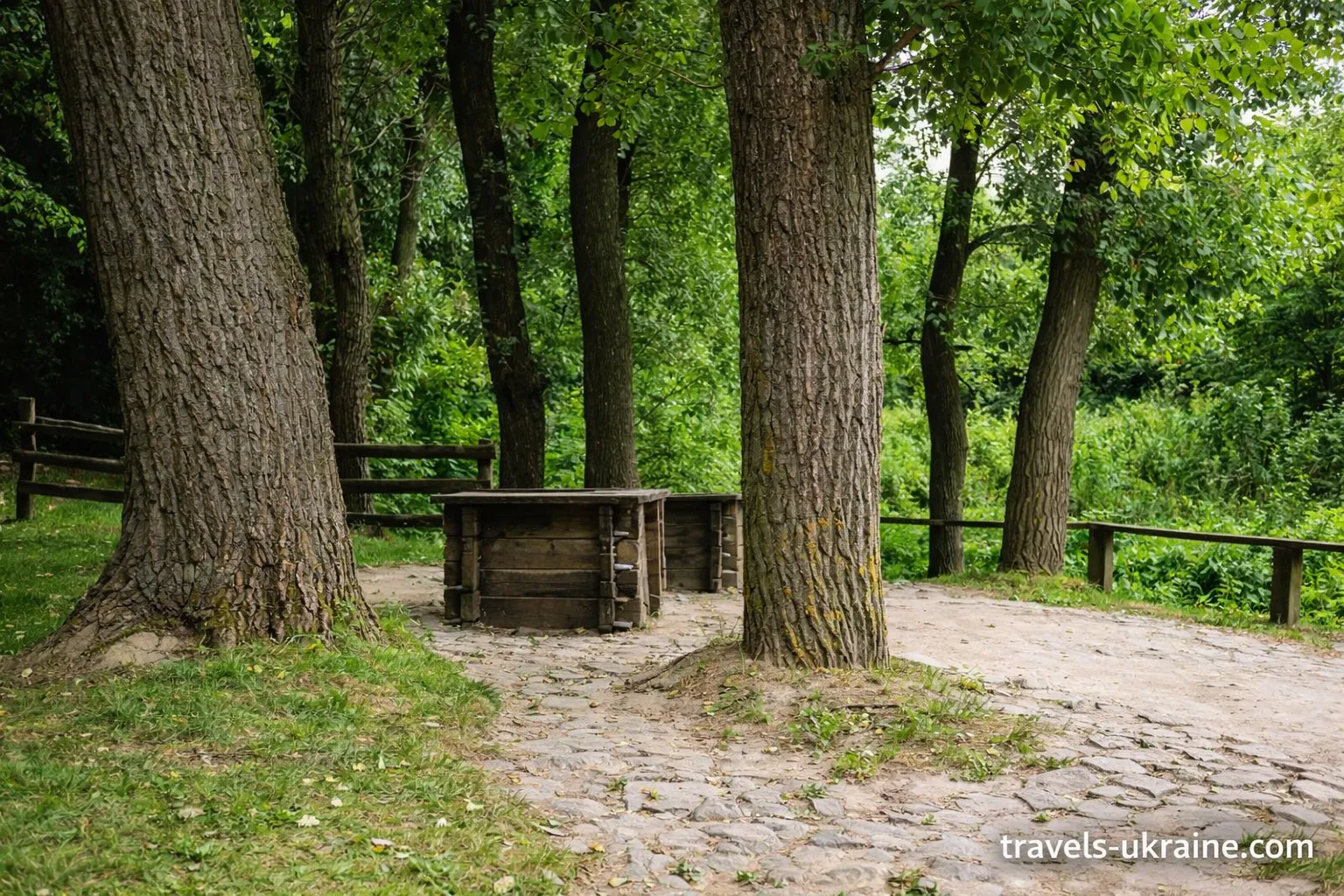
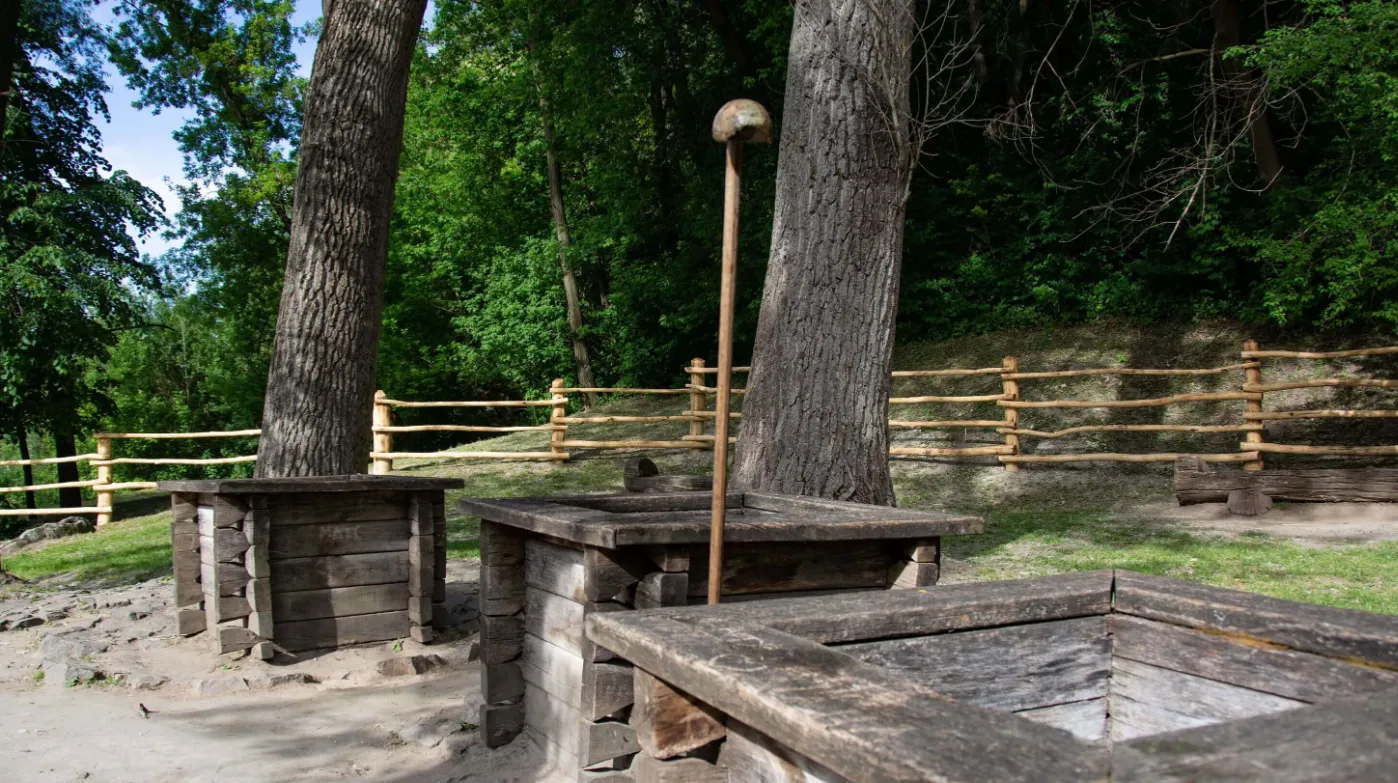
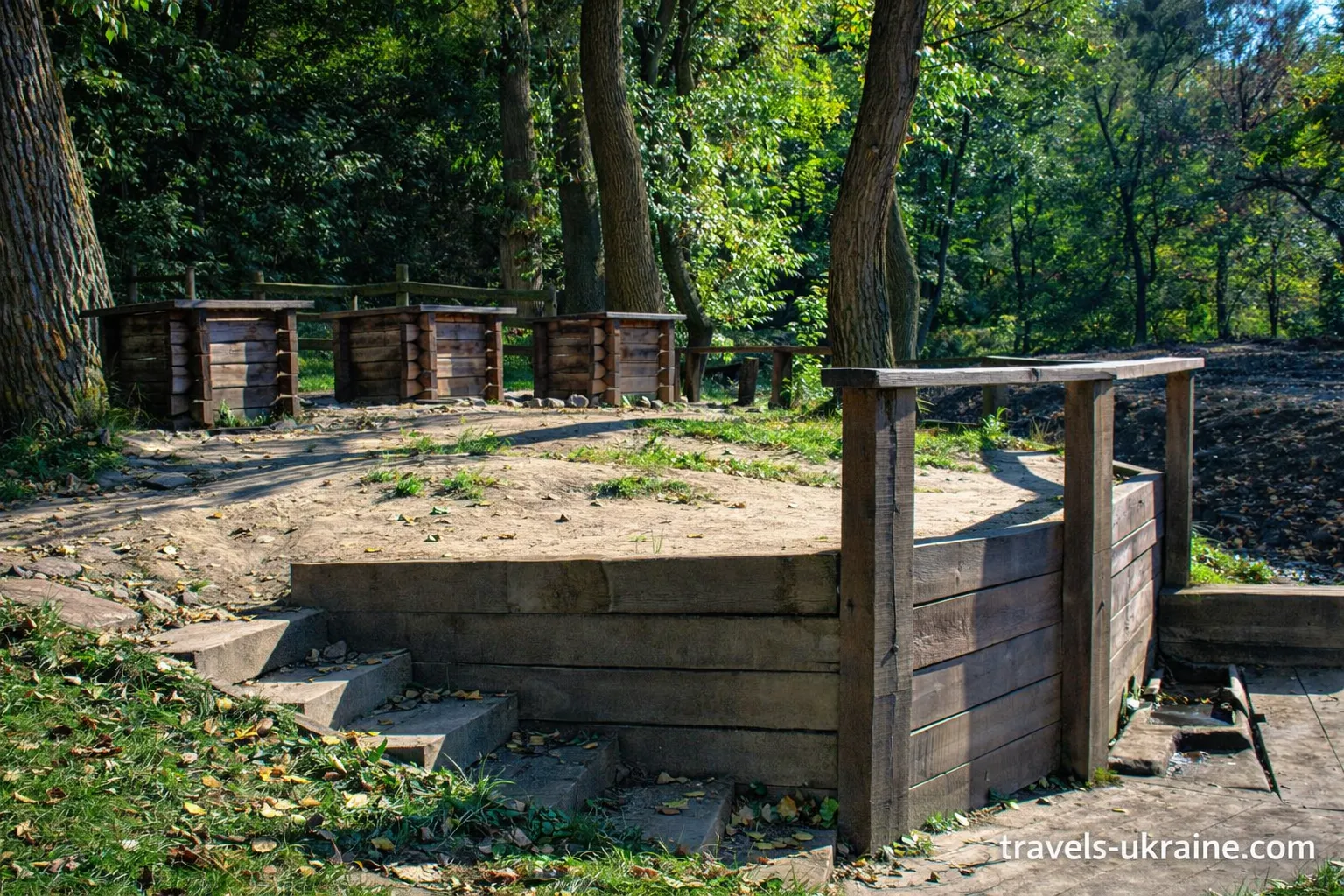
Among them, a special atmosphere surrounds the small village of Subotiv in the Cherkasy region—a former Hetman’s land, where history feels as if it’s hanging in the air. Here, in the hush of the forest, three ancient wooden wells lie hidden. According to folk tales, their water had healing power: it restored wounded Cossacks, renewed strength, and fortified the spirit before new battles.
Subotiv’s Three Wells is a quiet historical corner and a fairly well-known tourist spot that impresses not with loud monuments, but with the depth of its silence, the rustle of leaves, and a sense of an invisible bond with the past. Here, history isn’t in textbooks—it’s under your feet, in the spring water, and in the legends that still live among people, shaped as a place of power in the Chyhyryn area. The Three Wells tract brings together natural beauty, Cossack memory, and a distinctive calm that draws travellers from all over Ukraine.
For today’s traveller, this tract with its legendary wells is also a chance to blend a journey into the past with time in nature. The forests of the Chyhyryn district, clean air, birdsong, and the coolness of the springs create perfect conditions for an unhurried walk. If you’re wondering what to see near Chyhyryn, planning a weekend route around the Chyhyryn area, or thinking about where to go for the weekend in the Cherkasy region, these three historic wells in the Subotiv forest will be a discovery.
Why the Three Wells in the Cherkasy region attract tourists
The historic site of the Three Wells brings together several layers of value at once: natural, spiritual, and cultural. These are ancient wells in the Subotiv forest, surrounded by legends passed down through generations. At the same time, it’s part of a broader historical panorama—Cossack landmarks of the Chyhyryn area linked to the Hetman era. That’s why the Three Wells tract is often mentioned among the standout places of the Chyhyryn region and the natural heritage sites of Cherkasy.
Subotiv’s Three Wells isn’t a roofed museum or a bustling tourist centre. It’s a woodland place of memory where history speaks quietly, yet very clearly. And that is its main value for those travelling through the Chyhyryn area at a slower pace, with a desire to feel the true depth of Ukrainian land.
The history of the Three Wells tract — Cossack springs near Subotiv
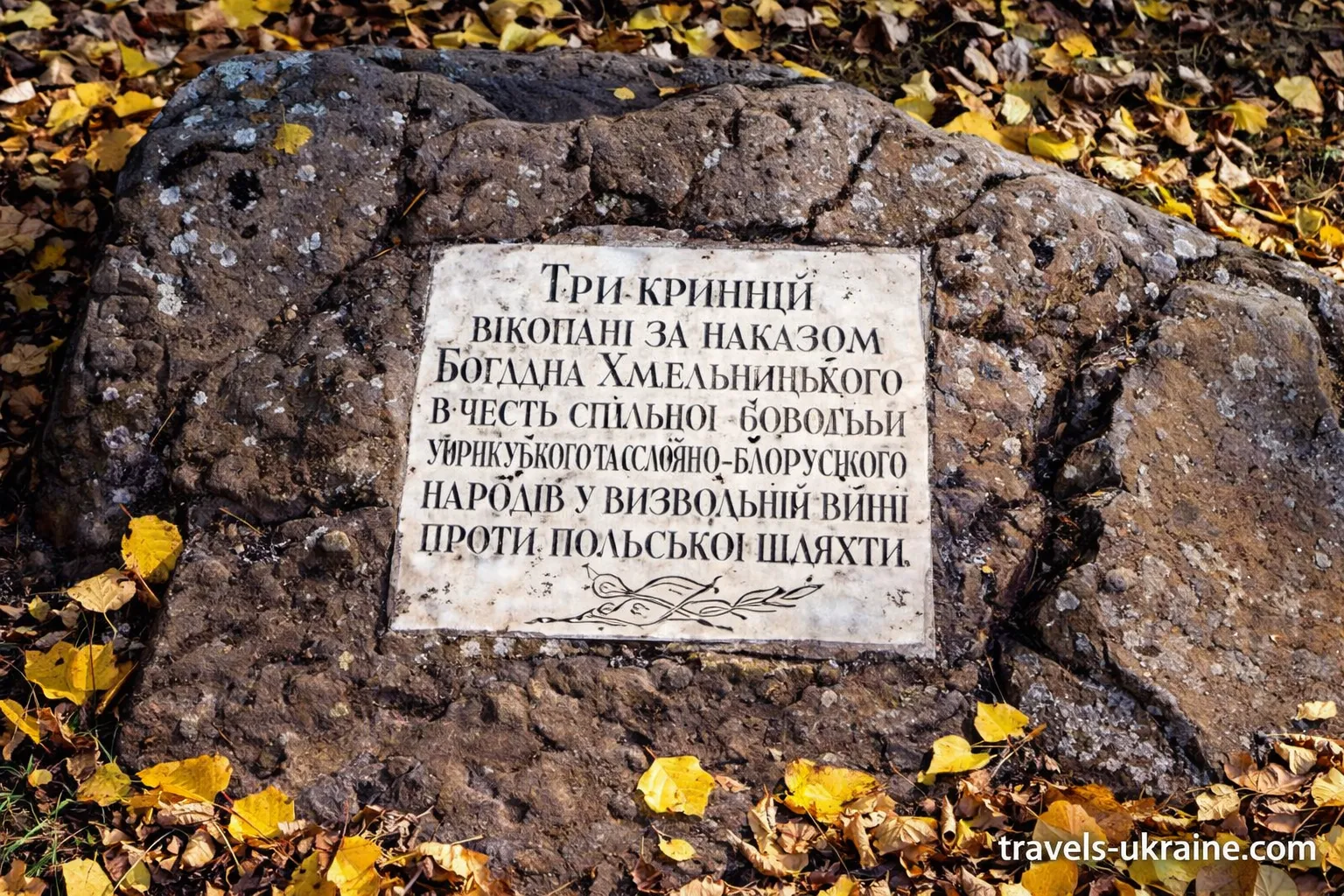
The historic site of the Three Wells near Chyhyryn has deep roots reaching back to the Cossack era. This location lies not far from Subotiv—a village that, in the 17th century, was the family home of Bohdan Khmelnytsky and an important part of the Hetman capital, Chyhyryn. That is why the historic springs near Chyhyryn are seen not only as a natural feature, but as living memory of an era when Ukraine’s political and military life surged here.
The story of the Three Wells is wrapped in oral tales passed down from generation to generation. According to local tradition, these three ancient wells in the Subotiv forest existed back in the days of active Cossack movement. The woodland tract with three wells was a convenient resting place for detachments travelling between Chyhyryn, Subotiv, and Kholodnyi Yar. The spring water was considered pure, cool, and “living”, giving the wells special importance for travellers and warriors.
The Three Wells and Bohdan Khmelnytsky — historical context
When people talk about the Three Wells near Subotiv, the name Bohdan Khmelnytsky almost always comes up. And it’s no surprise: Subotiv was the Hetman’s family nest, and Chyhyryn was the Hetman capital. Everything around here quite literally breathes the Cossack era. So it didn’t take long for folk imagination to conclude: if there are ancient wells, then Khmelnytsky must surely have had a hand in it.
But if we set romance aside and approach history with a cool head (as a good Cossack would with a mug of uzvar after a campaign), we should be honest: there is no documentary proof that these wells were dug on the Hetman’s orders. So far, historians have found no decrees or chronicles with an entry like, “I order three wells to be dug in the forest, for thirst torments us”.
Yet there is something else—logic of the time. In the 17th century, the forests around Chyhyryn weren’t remote wilderness, but a space of constant movement: Cossack routes ran here, camps were set up, detachments passed through. Water was a strategic resource—without it you couldn’t cook borshch, water a horse, or rinse a sabre after a fight. So the appearance of wells in such a place looks entirely natural for the Cossack age.
That’s why it’s fair to view the Cossack wells near Subotiv as a site tied to Cossack history and the Hetman era, even if the specific “project author” remains unknown. And the legend that the water healed the wounded and restored strength is very much in Cossack style: our ancestors believed that true power lies not only in a sabre, but also in a spring of clean water… and in good brotherhood. So perhaps Khmelnytsky didn’t stand here with a spade, but the spirit of his era is felt in the Three Wells tract very vividly. And the Cossacks would probably have put it simply: “Good water is half the victory.”
Today, the Three Wells tract is seen as a Cossack landmark from the Khmelnytsky era, even if part of what we know has survived only in folk memory. It’s this mix of history and legend that creates the special atmosphere—an ощущення that the land here remembers far more than is written in textbooks.
Natural features of the Three Wells tract near Chyhyryn
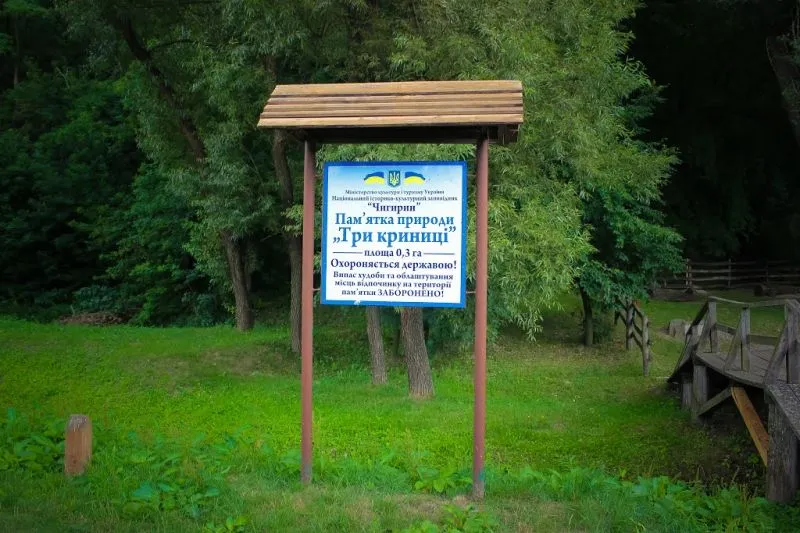
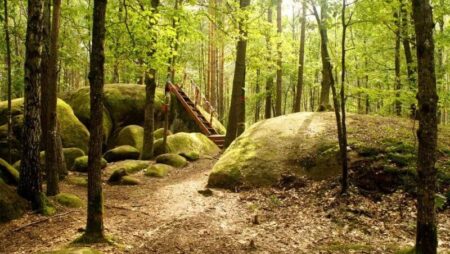
The Three Wells tract is, first and foremost, a natural landmark of the Chyhyryn area, where history blends harmoniously with the woodland landscape. The “Three Wells” tourist attraction is set among the hills and ravines typical of this part of the Cherkasy region. Oaks, hornbeams, and maples dominate here, and in spring and early summer the forest is covered with a thick carpet of grass and woodland flowers.
The three-well complex is located a short distance from one another, forming a distinctive natural-and-historical place linked to Cossack history. The water stays cold even on hot days, is clear, and has a pleasant taste. Thanks to this, the tract with legendary wells has long been seen as a place of power in the Chyhyryn area and a natural refuge from the summer heat.
Landscape and atmosphere: a quiet historic corner of the Chyhyryn area
The terrain around the wells has a gently rolling relief: small rises give way to cosy lowlands where moisture lingers longer. It’s in places like these that natural springs appear. The forests of the Chyhyryn district here look almost untouched, creating a feeling of time travel—as if you’ve stepped into a world where Cossack detachments once moved between Chyhyryn and Kholodnyi Yar, choosing forest paths over open roads.
The sounds here are special: instead of city noise, you hear the rustle of leaves, twigs cracking underfoot, and birdsong. On a hot day, the air near the wells feels noticeably cooler, as the water and the shade of old trees create a natural microclimate. That’s why many visitors call this place a cosy woodland tract with springs and an ideal spot for a peaceful break.
The natural features of the Three Wells make it not only historically significant, but also valuable in ecological terms. It’s pleasant not just to “tick off” the site, but to linger: walk a forest path, rest by the springs, and feel how nature’s slow rhythm brings back inner calm.
Three Wells, Cherkasy region — a quick guide for travellers
When planning a trip to the Three Wells tract near Chyhyryn, it helps to understand what kind of place this is. It’s not a classic museum complex and not a landscaped park, but a forest tract with three wells that combines a natural landmark with a historic site. That’s why a visit here feels more like an unhurried walk in nature, with a historical undertone.
The three historic wells suit those looking for interesting places in the Chyhyryn area without crowds and noise. It’s one of those corners you visit for the atmosphere, the quiet, and a sense of connection with the past. A tract dating back to the Cossack era fits perfectly into a “weekend route in the Chyhyryn area” or a trip along the Chyhyryn — Subotiv — Kholodnyi Yar line.
Key features of the Three Wells location in the Chyhyryn area
To plan your visit more smoothly, keep a few important points in mind. They’ll help you combine time in nature with exploring a historic site, without any unnecessary surprises.
- Type of location: a natural-and-historical landmark, a tract with legendary wells
- Visit length: 30–60 minutes as part of a larger route
- Difficulty: an easy walk along forest paths, without steep climbs
- Accessibility: partly dirt roads and paths; it can be slippery after rain
- Budget: free to visit; costs are only for getting there
The three springs are located in the forest, so it’s worth wearing comfortable shoes and considering the season. In warmer months it’s a pleasant shaded walk, and in autumn it becomes one of the most scenic spots near Chyhyryn, with vivid leaf colours. In winter, the tract looks especially quiet and a little mystical, which only heightens the sense of antiquity.
As tourist places near Chyhyryn, the Three Wells are best experienced alongside other attractions in Subotiv and the wider Chyhyryn area. Then this woodland stop becomes not just a point on the map, but an important part of a fuller journey through the Chyhyryn region.
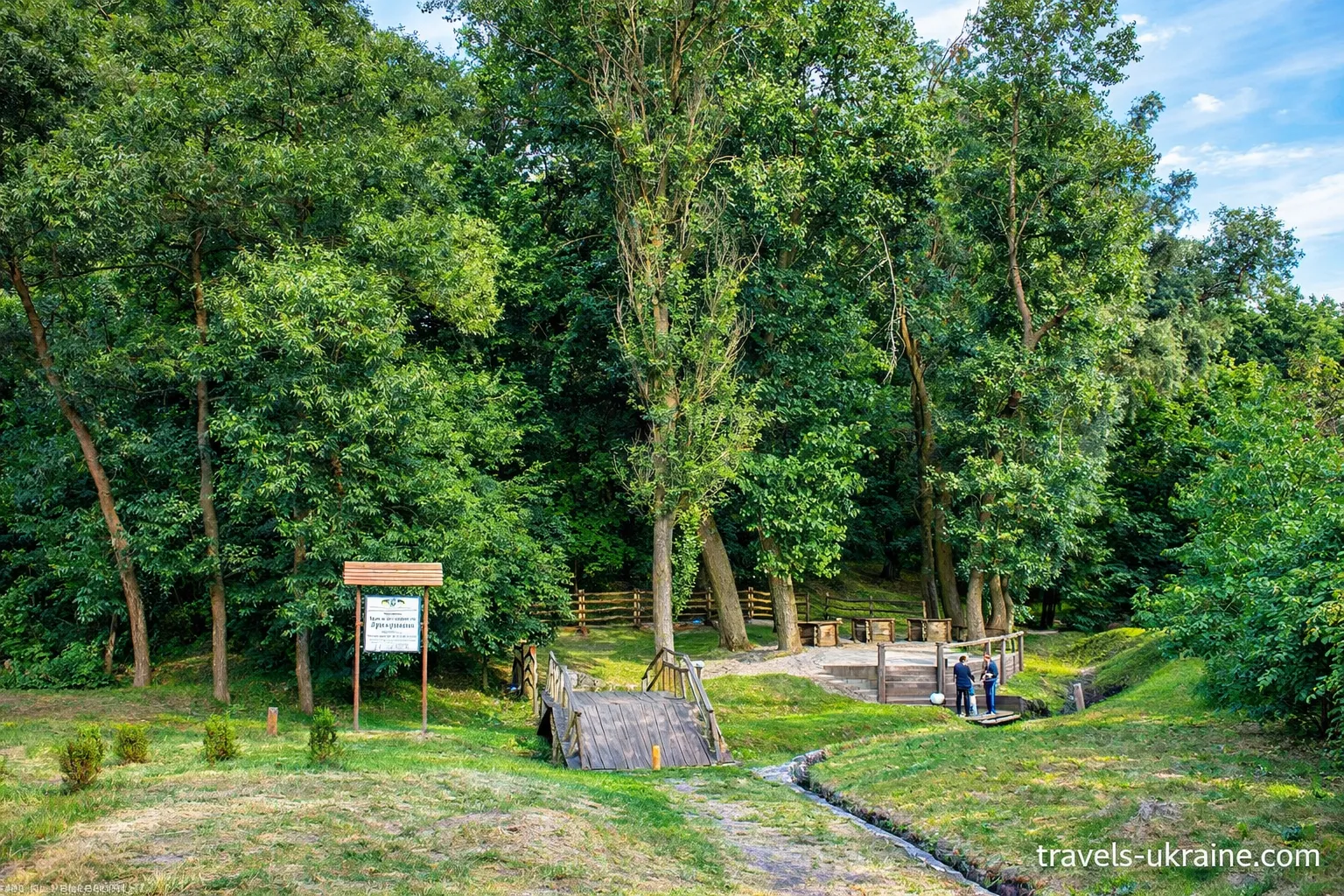
Photo and video gallery
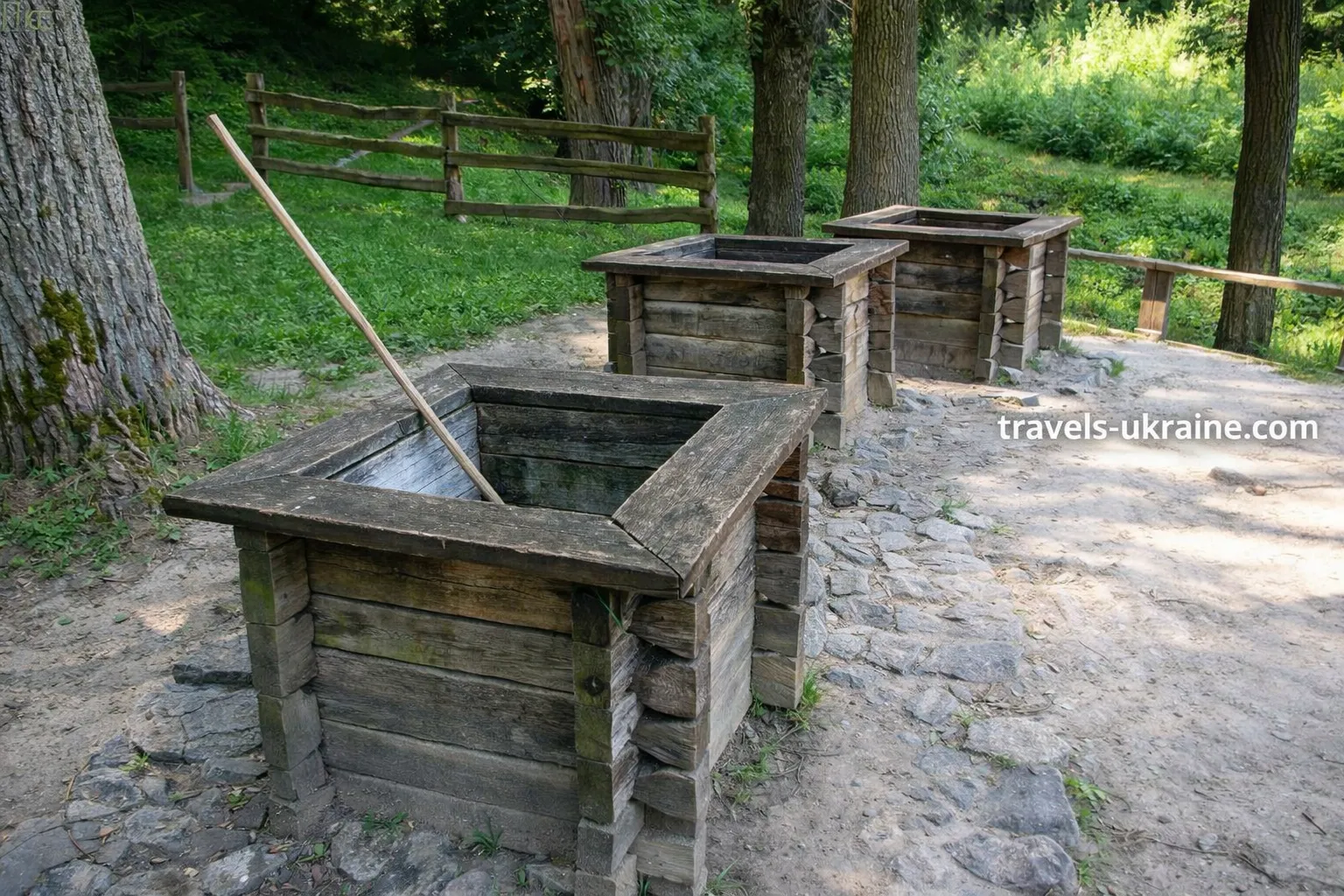
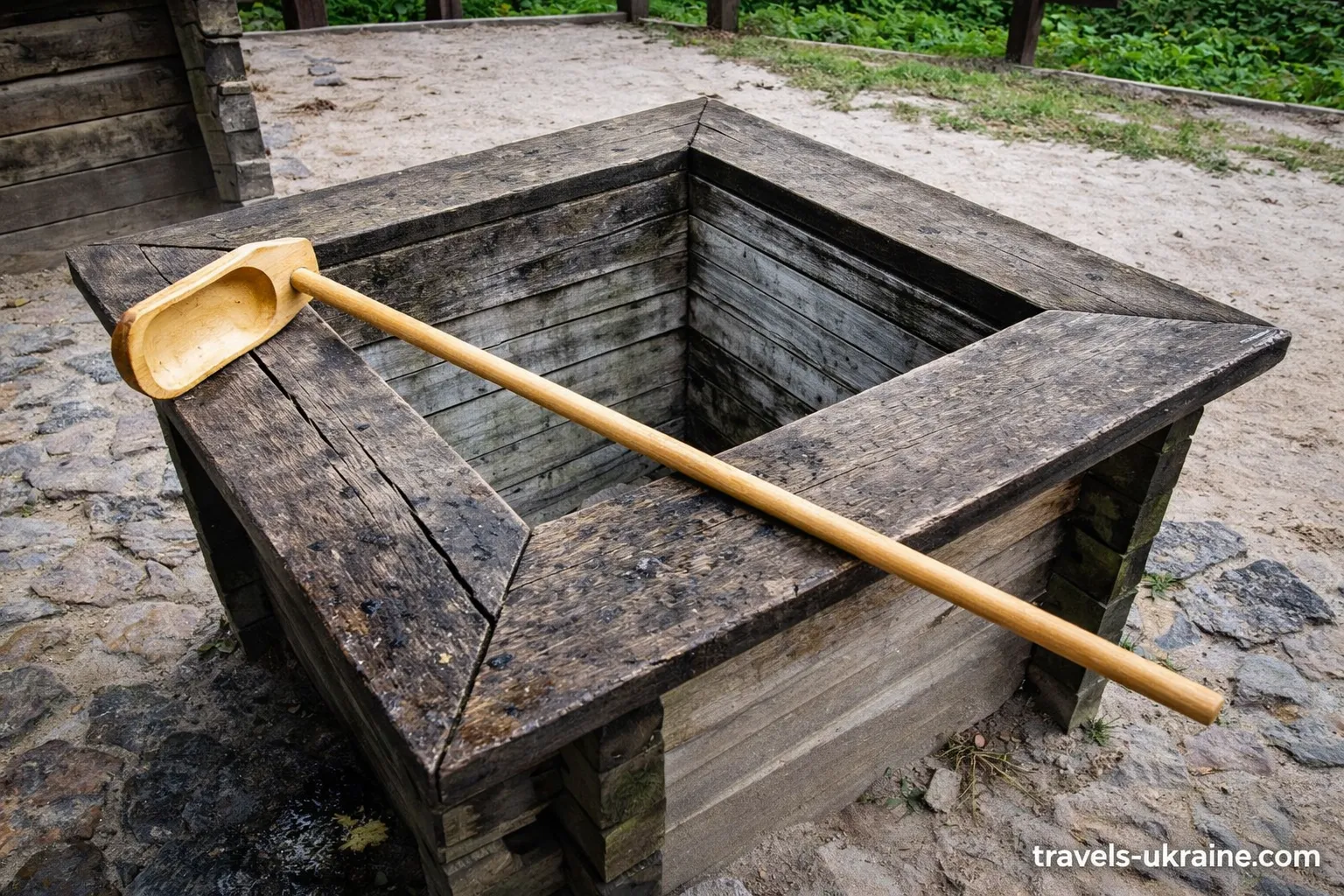
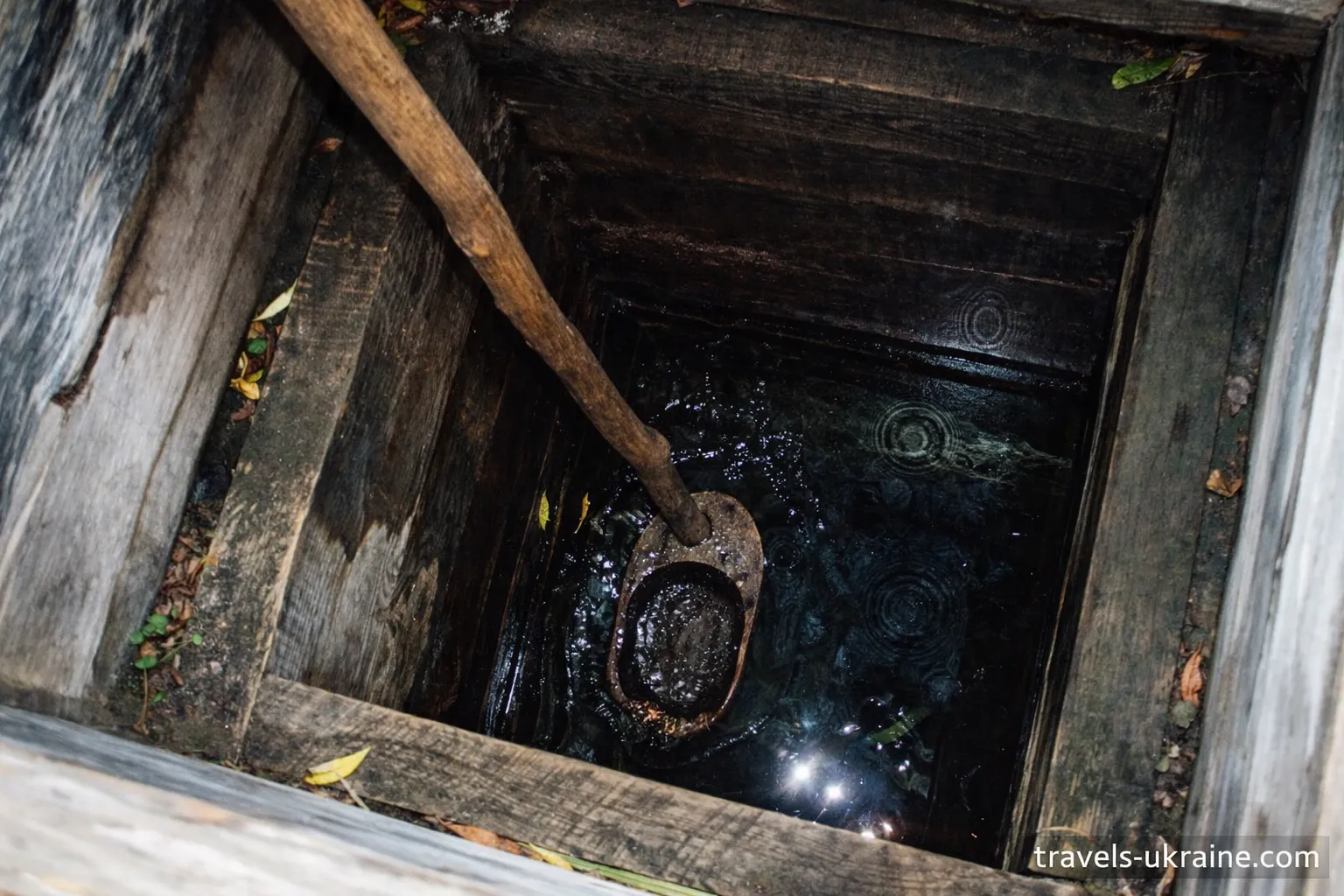

Interesting facts and legends about the Three Wells tract
The tract and the Three Wells near Chyhyryn have long been a place where history intertwines with folk imagination. Although no precise written sources about the origin of each well have survived, locals pass down legends from generation to generation, giving this woodland corner a special meaning. It’s exactly these stories that shape the atmosphere, so the historic site of the Three Wells is felt not only with the mind, but also with the heart—earning its place among the landmarks of Subotiv within the travellers’ community.
The legend of Cossack healing
One of the best-known stories says that water from the three springs helped wounded Cossacks regain their strength. Supposedly, each well had its own purpose: one “for strength”, the second “for health”, and the third “for a clear head”. Whether it’s true is hard to say, but the very fact that people believed in the water’s healing power shows the special attitude to this place even in old times.
Even today, some visitors take water with them, seeing it as a symbol of natural purity and inner renewal. It’s only important to remember: this is first and foremost a natural spring, not a medical remedy—so treat it with respect and common sense.
The Three Wells as a place of power in the Chyhyryn area
Another common motif is the idea of the tract with legendary wells as a place of power in the forest. The quiet, the shelter of trees, the cool water, and the distance from modern bustle create a state in which a person naturally slows down. That sense of inner calm became the foundation for stories about the “special energy” of this location.
- Each well is given symbolic meaning
- The spring water is considered “living” and exceptionally pure
- The place is often linked to Cossack rituals of rest and recovery
Legends about the Three Wells in the Cherkasy region shouldn’t be taken as historical documents, but they do make a trip here emotionally deeper. When you stand by a wooden well frame, hear the quiet splash of water in a bucket, and watch sunbeams filter through the leaves, it’s easy to understand why this place has gathered so many tales. It almost prompts you to pause, listen to yourself, and hear the land’s quiet memory.
Three Wells and time in nature
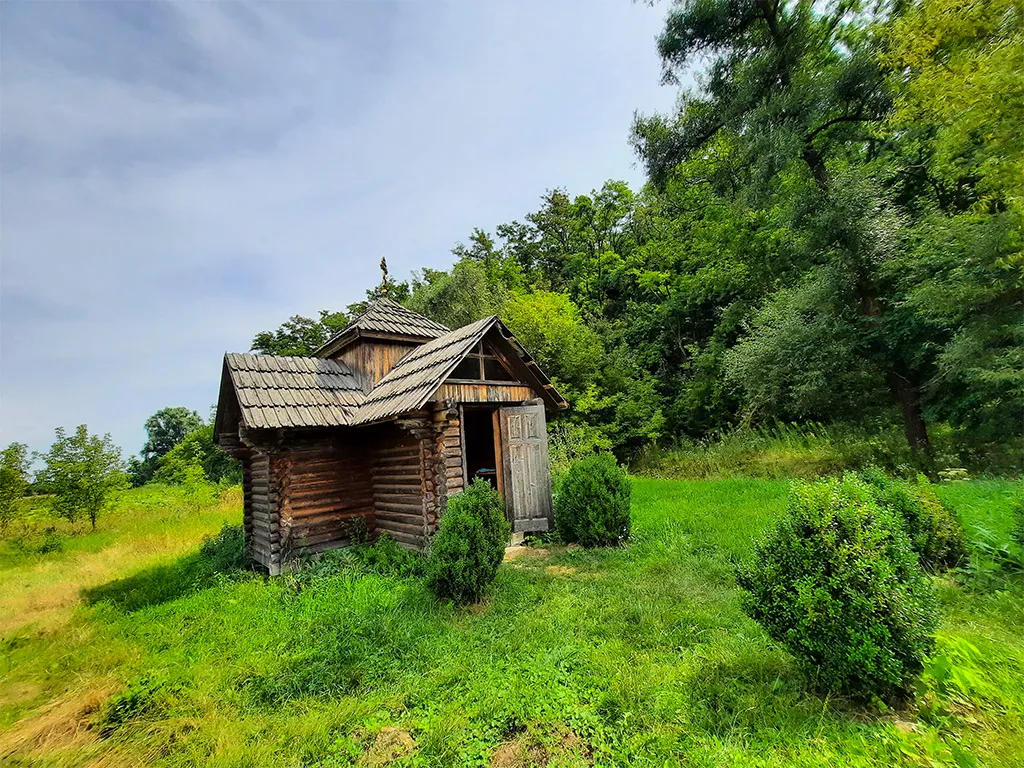
The woodland place of memory known as Three Wells is not just a quick stop by the springs, but a full-on format for calm, nature-based relaxation. If you’re looking for what to see near Chyhyryn, this spot lets you combine historical interest with an unhurried forest walk. There are no souvenir stalls and no loud guided tours—just quiet, the shade of trees, and a real feel for the Chyhyryn region. In places like this, travelling around Ukraine stops being a rushed checklist and becomes personal: you can sit on a fallen trunk, listen to the wind in the canopy, and breathe in the coolness rising from the water.
The wells are tucked among the greenery so naturally, as if the forest itself decided to keep them for those willing to leave the tarmac behind. The journey here is part of the adventure, and the location becomes a gentle pause between the busier highlights of a Chyhyryn-region itinerary. It’s a lovely place to stop with family, take a few photos, fill a bottle, and feel that travel can be not only interesting, but soothing too.
Walks and unhurried eco-tourism
The woodland tract with three wells is perfect for easy eco-tourism. The paths are natural and the terrain isn’t demanding, so the walk is accessible to most travellers. It’s a great option for a family trip or a pause during a road travel route: Chyhyryn — Subotiv — Kholodnyi Yar.
It’s especially pleasant to visit the three ancient wells in the warm season: on hot days it’s cool here, and the air is filled with forest scents. In autumn, the tract with three wells turns into a vivid natural scene with golden foliage, making it popular with photographers.
- A walk along forest paths among old trees
- Resting in the shade by natural springs
- Photographing woodland scenery and the wells’ wooden frames
- A calm stop while travelling through the Chyhyryn region
The atmosphere people come here for
Khmelnytsky’s wells in Subotiv draw visitors not with attractions, but with a mood. It’s a place of power where it’s easy to slow down, step off the road, and simply be in nature. It’s ideal for a short pause—listening to the forest and feeling how a journey becomes deeper than simply sightseeing.
That’s why the landmarks of the Chyhyryn region are increasingly seen not as a list of “sites”, but as a route of sensations. And the Three Wells tract is one of those places that adds quiet, meaning, and a living connection to Cossack land.
What to visit nearby — tourist places close to the Three Wells
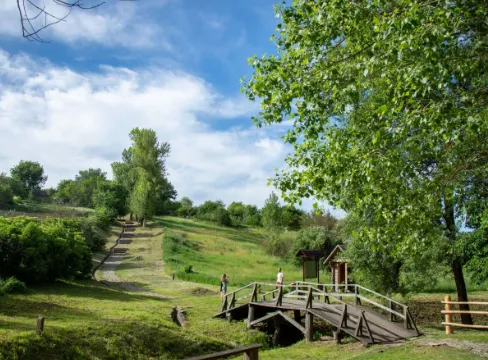
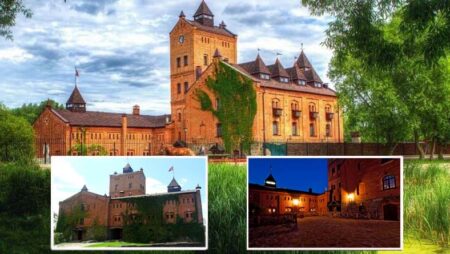
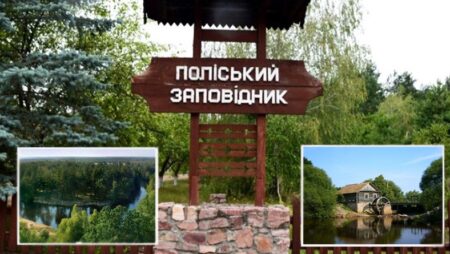
The tract with three wells is easy to combine with other well-known spots in the region, because the Chyhyryn area is a land of concentrated history and scenic nature. If you’re planning a trip around the Chyhyryn district, it’s worth setting aside time not only for the woodland tract, but also for nearby landmarks that help you feel the spirit of the Hetman era more fully. Because, as a Cossack on the road might say: “If you’ve already left home, it’s a sin to see just one well when a whole history is standing around and waiting.”
Distances here are short, and impressions are plentiful. Today you’re standing in the forest shade by ancient springs, and within half an hour you can be walking places where the fate of an entire state was decided. A trip like this feels a bit like a Cossack campaign—only without night alarms and without having to sleep under a cart. Though your appetite after the walks might be just as heroic—here the spirit of the era works flawlessly.
Want to make the journey even richer? Don’t stop at the Three Wells tract alone. Nearby are iconic tourist places of the Chyhyryn area, where Cossack history meets picturesque views. Learn more about what to visit near the Three Wells, build your own route, and discover the Chyhyryn region as a whole journey into the past and into nature.
Landmarks of Subotiv — the heart of Cossack history
The village of Subotiv is a must-stop for anyone interested in the historic places of the Hetman capital. It has preserved architectural landmarks connected with the Khmelnytsky era, and the settlement itself has a special atmosphere of calm antiquity. From the Three Wells, you can get here quickly, which makes the route logical and rewarding.
- Old churches and historic buildings
- Landscapes that have hardly changed since Cossack times
- Viewpoints overlooking valleys and forests
Chyhyryn — the Hetman capital and a cultural centre
The town of Chyhyryn is a key point for historical tourism in the Cherkasy region. Museums, monuments, and viewpoints here tell the story of Cossack history in the Chyhyryn area. After the quiet of the Three Wells tract, the town adds broader historical context and helps you see what one of the main political capitals of the Cossack state looked like.
Here you can feel the scale of 17th-century events: defensive fortifications, hills with views over the Tiasmyn valley, and museum exhibitions help you imagine Chyhyryn as a living Hetman-era town, not just a page in a textbook. Walking its streets, it’s easy to understand why this region became a centre of state-building, military power, and Cossack culture.
Combining the forest hush of the Three Wells with the historical depth of Chyhyryn creates a special balance in the trip: first—nature and calm, then—scale and events. This shift of impressions is exactly what makes a Chyhyryn-region route varied, rich, and truly memorable for those who want not only to see landmarks, but to feel the spirit of the era.
Natural spots and eco-tourism nearby
Besides historical landmarks, there are plenty of natural sites nearby that suit a break in the Cherkasy countryside. Forests, ravines, and hills create ideal conditions for gentle outings, walks, and photo stops. Together with the tract of legendary wells, these places form a complete Chyhyryn-region weekend route.
In this way, the Three Wells near Chyhyryn become not an isolated point on the map, but part of an entire tourist region. It’s in combination with Subotiv, Chyhyryn, and the surrounding landscapes that this location truly opens up.
Tourist infrastructure — Three Wells
The Three Wells tract is a natural location, so tourist infrastructure here is minimal. That’s exactly what shapes its character: it has remained a woodland tract with three wells rather than turning into a commercial leisure zone. Still, everything you need for a comfortable trip can be found nearby—in Subotiv and the town of Chyhyryn.
There are no cafés, shops, or permanent toilets by the wells themselves. It’s important to consider this when planning your route and your time in nature. At the same time, the lack of extra infrastructure helps preserve the atmosphere of a woodland place of memory and natural quiet.
- Forest paths for walking
- Wooden well frames with access to water
- Natural spots for a short rest, without built benches
Infrastructure in and around Chyhyryn
In Chyhyryn itself and nearby settlements, it’s different: there are places to eat, grocery shops, guesthouses, and small hotels. That’s why the Three Wells in the Cherkasy region are best visited as part of a wider route—combining nature with comfortable stops in towns and villages.
For travellers with a car, it’s convenient: you can leave the car closer to the road, walk through the forest to the tract, and then continue on to historical landmarks or lunch in town. This format works well for a day trip, when it’s important to balance impressions with comfort.
The main rule is simple: it’s best to prepare in advance—water, a snack, comfortable shoes. Then the tract with legendary wells will give you exactly what people come here for: calm, nature, and a sense of living history without the city rush.
Safety and tips — how to visit the Three Wells comfortably
The Three Wells tract is a natural location without developed tourist infrastructure, so safety during your visit depends mainly on travellers’ own attentiveness. The woodland tract feels calm and friendly, but it’s worth remembering that this is living nature, with its own quirks.
What to consider before a walk in the forest
The route to the wells runs along forest paths that can be damp after rain or covered in fallen leaves in autumn. That’s why comfortable, non-slip footwear is the key to an easy walk. In warmer months, it’s worth protecting yourself from insects, and on hot days—bringing drinking water, even if you plan to fill up from the springs.
- Choose closed shoes with a good sole
- Use tick and mosquito repellent in season
- Bring a small запас of water and a snack
- Don’t get too close to the edges of old wooden well frames
Water from the wells: caution above all
The three ancient wells in the Subotiv forest are known for their clean, cold water, but these are natural springs without laboratory monitoring. If you decide to taste the water, do so carefully and don’t rely on it as your only source of drinking water during the trip—especially with children.
It’s also worth bearing in mind mobile reception: in the forest it can be unstable. So before your walk, it’s better to let your family know your route—especially if you’re travelling in a small group or visiting tourist places in the Chyhyryn area for the first time.
Following these simple tips will help make your visit to the tract with legendary wells safe and pleasant. Then the Three Wells will be remembered for their quiet, nature, and history—not for minor inconveniences.
Frequently asked questions about the Three Wells near Chyhyryn
Where are the Three Wells located?
The Three Wells tract is located in a forest not far from the village of Subotiv, in the Chyhyryn district of the Cherkasy region. It’s a natural-and-historical site usually visited as part of the Chyhyryn — Subotiv — Kholodnyi Yar route.
How do you get to the Three Wells?
The easiest way is to drive to Subotiv or the outskirts of Chyhyryn, then walk along forest paths. Part of the road may be unpaved, so it’s worth considering the weather conditions.
How much time do you need for a visit?
Usually, exploring the tract and having a walk takes from 30 minutes to an hour. Most travellers combine the Three Wells with other landmarks in the Chyhyryn area over the course of a single day.
Do you have to pay to visit?
Visiting the tract is free of charge. It’s a natural location with no ticket office or turnstiles, so costs relate only to getting there and your personal needs during the trip.
Can you drink the water from the wells?
The water looks clean and cold, but these are natural springs without laboratory monitoring. Drink it with caution and don’t rely on it as your only source of drinking water.
Is the location suitable for visiting with children?
Yes, the forest walk is easy, but you should keep an eye on children near the wells and on uneven paths. Comfortable shoes and attentiveness will make the visit safe.
What time of year is best to go?
The most comfortable seasons are spring, summer, and autumn. In winter the place is still picturesque, but the paths can be slippery and access may be more difficult.
Can you light a campfire near the wells?
Lighting a fire in the forest is not recommended, especially during dry seasons. The tract is a natural landmark, so please follow fire-safety rules and leave the area clean.
What places are best to combine with a visit to the Three Wells?
The Three Wells are easy to combine with a trip to Subotiv, Chyhyryn, and the natural locations of Kholodnyi Yar. This route lets you see both Cossack history and the region’s scenic nature.
Environmental note — preserving the Three Wells tract
The Three Wells tract is not only a historic site, but also a valuable natural patch of woodland in the Chyhyryn area. A natural micro-landscape has been preserved here, with springs, moist soils, and forest vegetation typical of the region. Thanks to minimal human interference, the place looks almost the same as it did centuries ago.
Natural springs are very sensitive to pollution. Even a small amount of litter left by visitors, or washing dishes or hands with detergents, can disrupt the water’s natural balance. The three ancient wells are, above all, springs fed by groundwater, so the cleanliness of the surrounding environment directly affects their condition.
How travellers can help nature
Responsible tourism is the key to ensuring the tract with legendary wells remains attractive for future generations. Every visitor can take simple, but important steps to protect this natural landmark of the Chyhyryn area.
- Take all rubbish with you, even organic food waste
- Don’t use chemicals near the springs and don’t wash anything in the wells
- Stick to existing paths without trampling the undergrowth
- Don’t pick rare woodland plants or damage trees
The Three Wells in the Cherkasy region are a great example of natural and historical heritage living side by side. Treating the forest, water, and quiet with care helps keep this place of power in the Chyhyryn area alive—authentic, peaceful, and full of natural harmony.
Subotiv’s Three Wells — a quiet gem of the Chyhyryn area
The Three Wells tract is exactly the kind of place that doesn’t impress with scale, yet stays with you for a long time. There are no flashy attractions, but there’s something far deeper: a blend of nature, quiet, and historical memory. In the forest, by three ancient springs, the connection with the Chyhyryn area is felt especially sharply—a region where the Cossack state took shape and legends were born.
The Three Wells near Chyhyryn naturally complement a journey through historic places of the Hetman capital, natural landmarks, and forest routes. It’s not a place for rushing, but for a brief pause—where you can slow down, listen to the forest, and let your trip become not only informative, but inwardly restorative too.
If you’re looking for interesting places in the Chyhyryn area, planning a weekend route around the Cherkasy region, or want to combine Cossack history with time in nature, this tract with three wells makes a great stop. Here, history doesn’t shout—it quietly lives in every breath of wind, in the cold spring water, and in the shade of the old forest.
Subotiv’s Three Wells are a reminder that the real value of travel is often hidden in quiet places. It’s there—without the extra noise—that you can best hear the voice of the land, the memory of time, and your own thoughts.

One Response Comment
You can post first response comment.