
 English
 Українська
 Français
 Magyar
 Íslenska
 Italiano
 Latviešu
 Lietuvos
 Русский
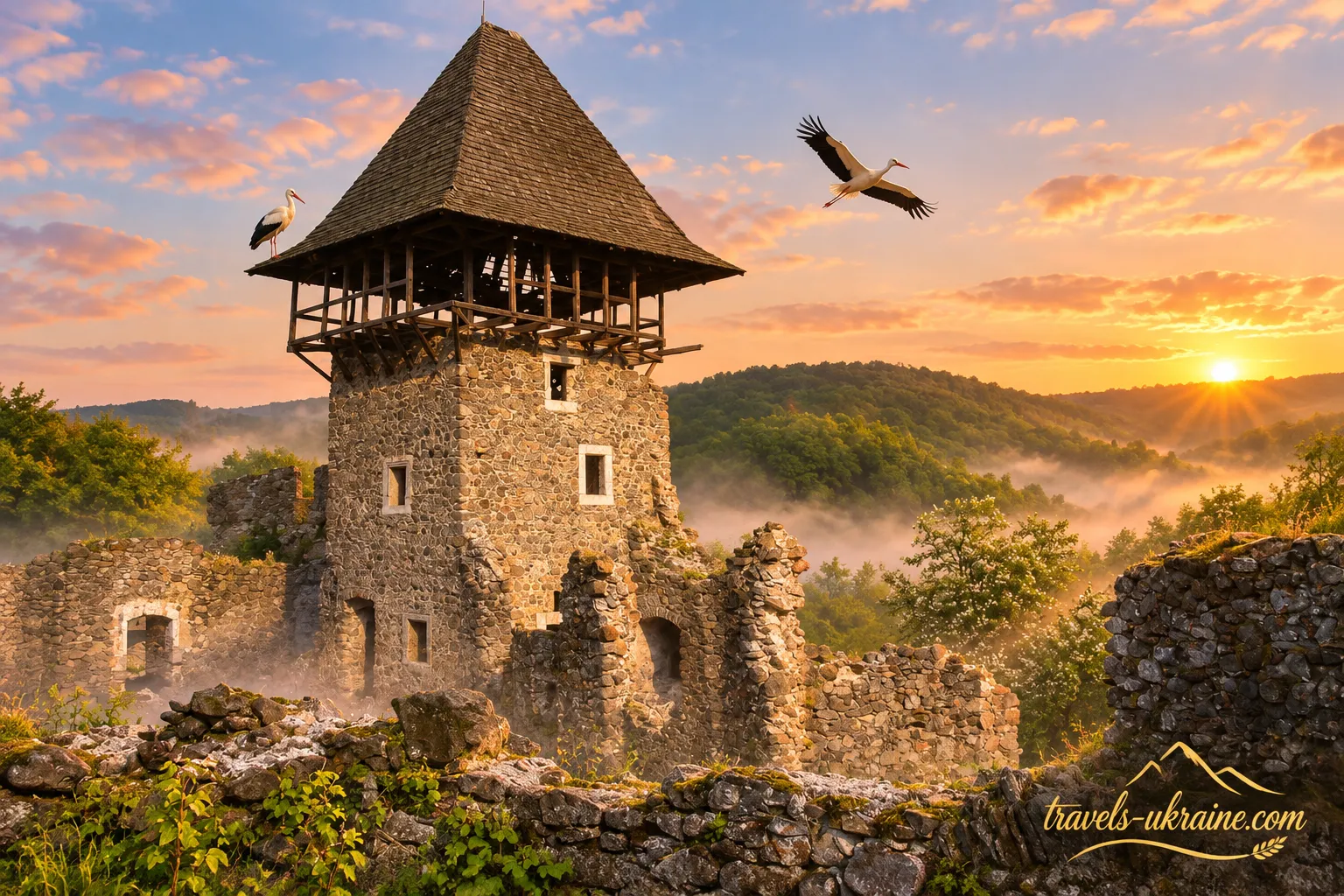
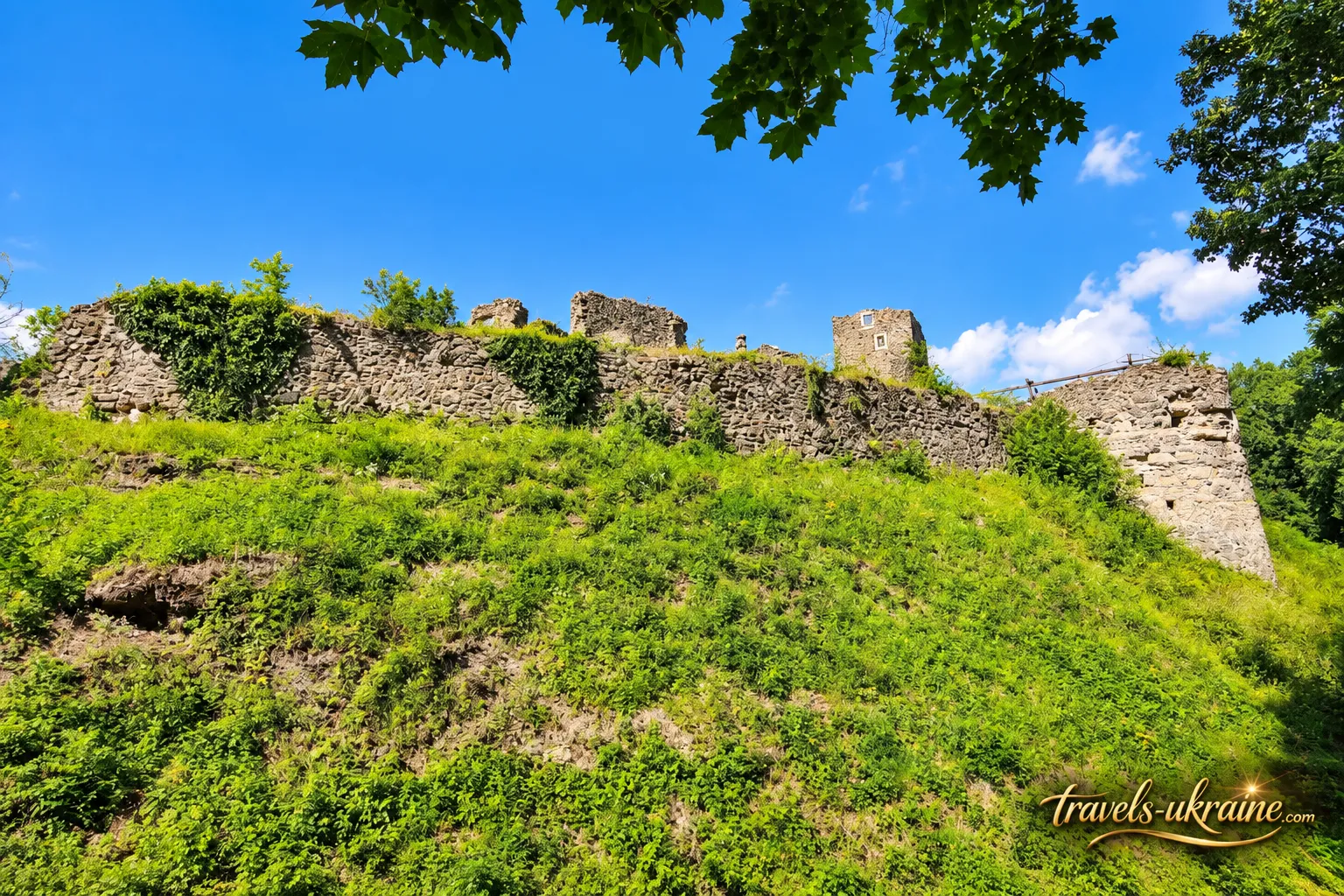
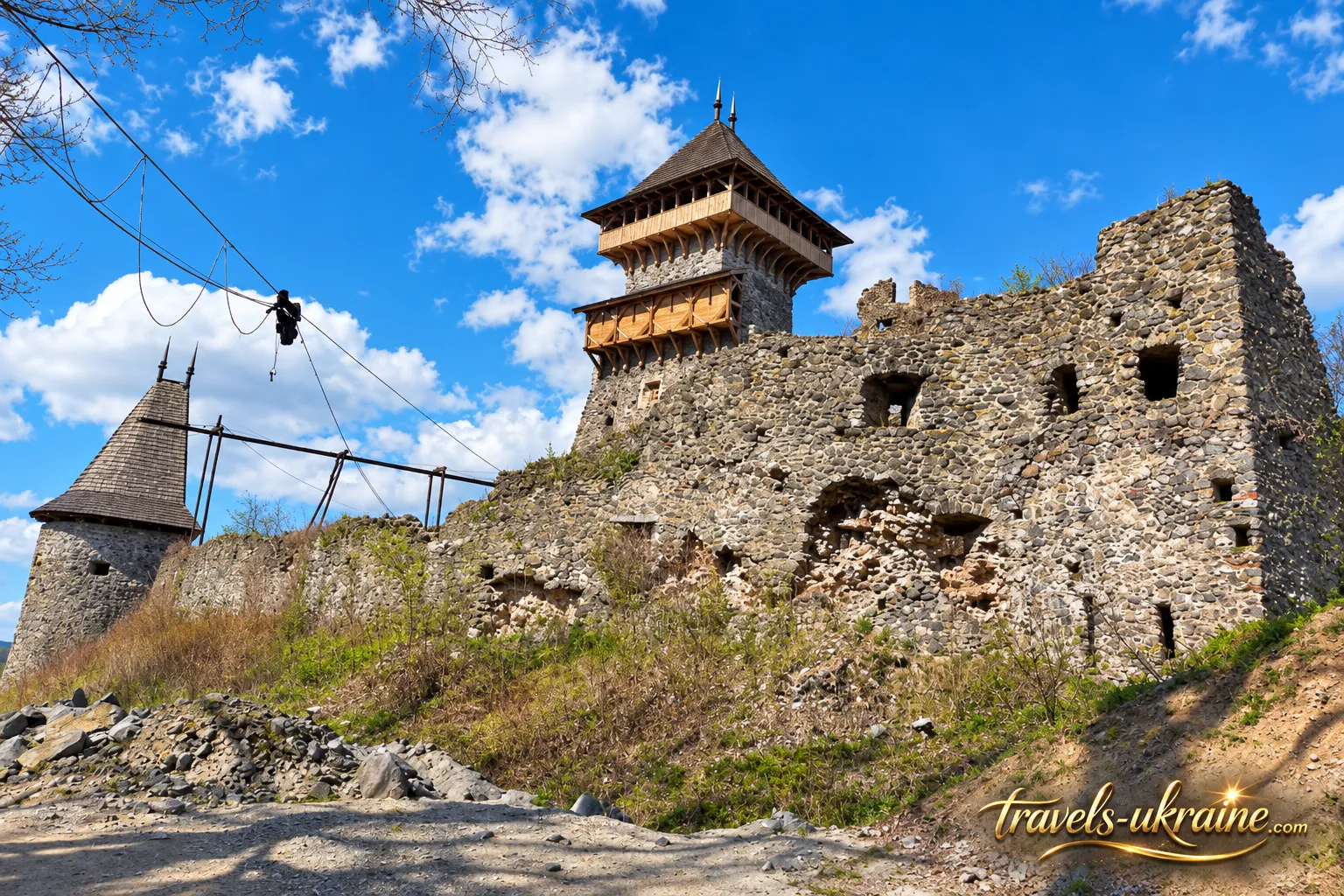
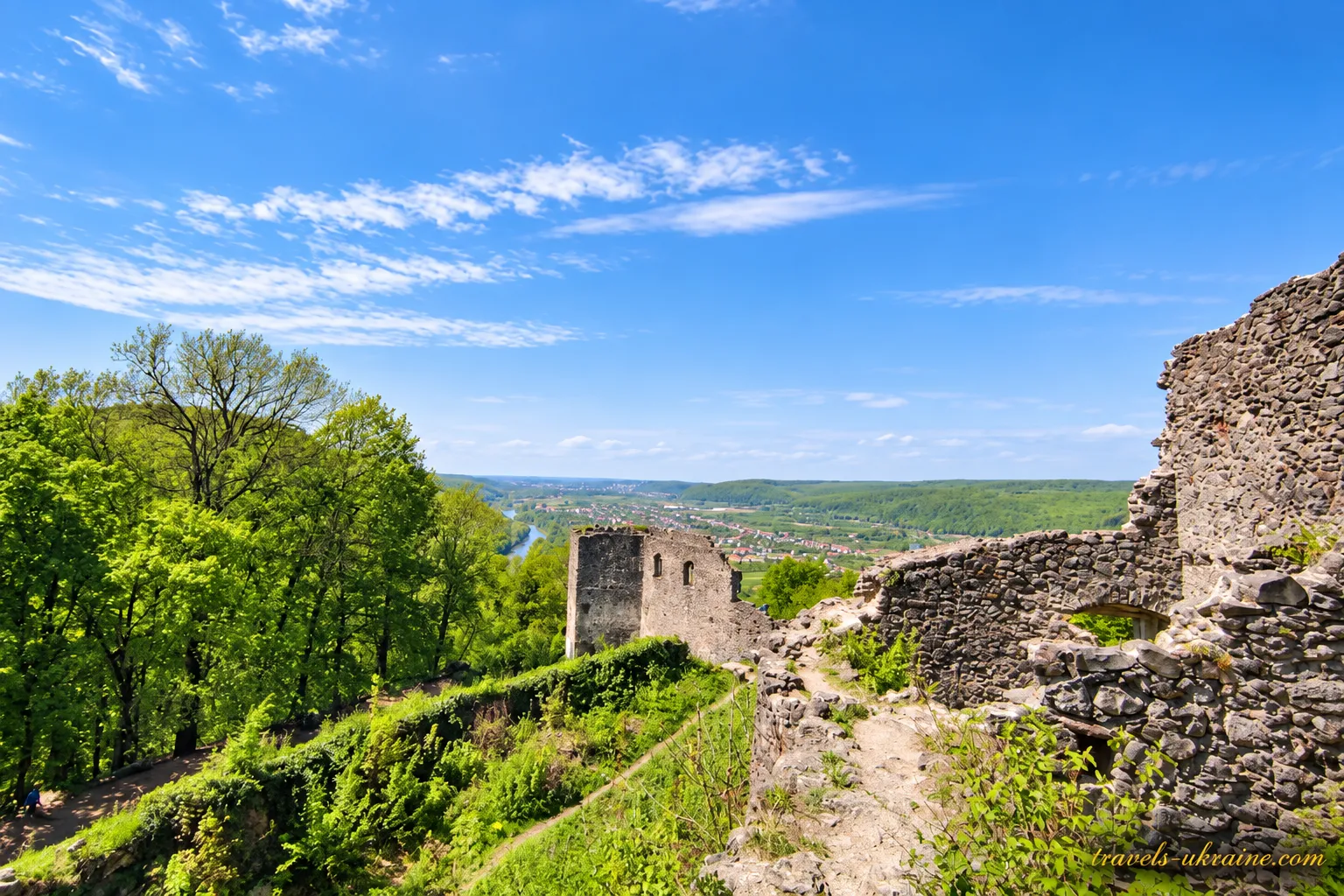
Amid the Carpathian forest near Uzhhorod stand the ruins of one of Zakarpattia’s best-known medieval fortresses — Nevytsky Castle. From below, its stone walls are almost lost among the trees, but once you climb Castle Hill, an entirely different picture opens before you: an old tower, the remains of defensive walls, an inner courtyard, and a view of the valley once controlled by this fortress.
Today, Nevytsky Castle is silent, but its ruins preserve traces of several centuries of turbulent history. The fortress was rebuilt, reinforced, and fought over, and in the XVII century it endured events after which it never regained its former power. The fact that the castle was barely adapted to new needs after its destruction helped preserve it as a kind of frozen fragment of medieval fortification.
Yet historical documents are only one part of this place’s appeal. Over generations, legends arose around the castle about the cruel Bad Maiden, ghosts, underground passages, and hidden riches. Among the lesser-known tales is even a mysterious mention of Knights Templar — a version that at first glance seems like ordinary romantic invention, but proves far more intriguing upon closer examination. That is why it is worth coming here not only for the beautiful ruins. Nevytsky Fortress offers a rare opportunity to move literally through several layers of the past: to see genuine defensive structures, learn the history of the Drugeth family, separate facts from folk tales, and try to understand why, hundreds of years later, the old castle above the Uzh still raises new questions.
The History of Nevytsky Castle: From the First Fortifications to the Ruins
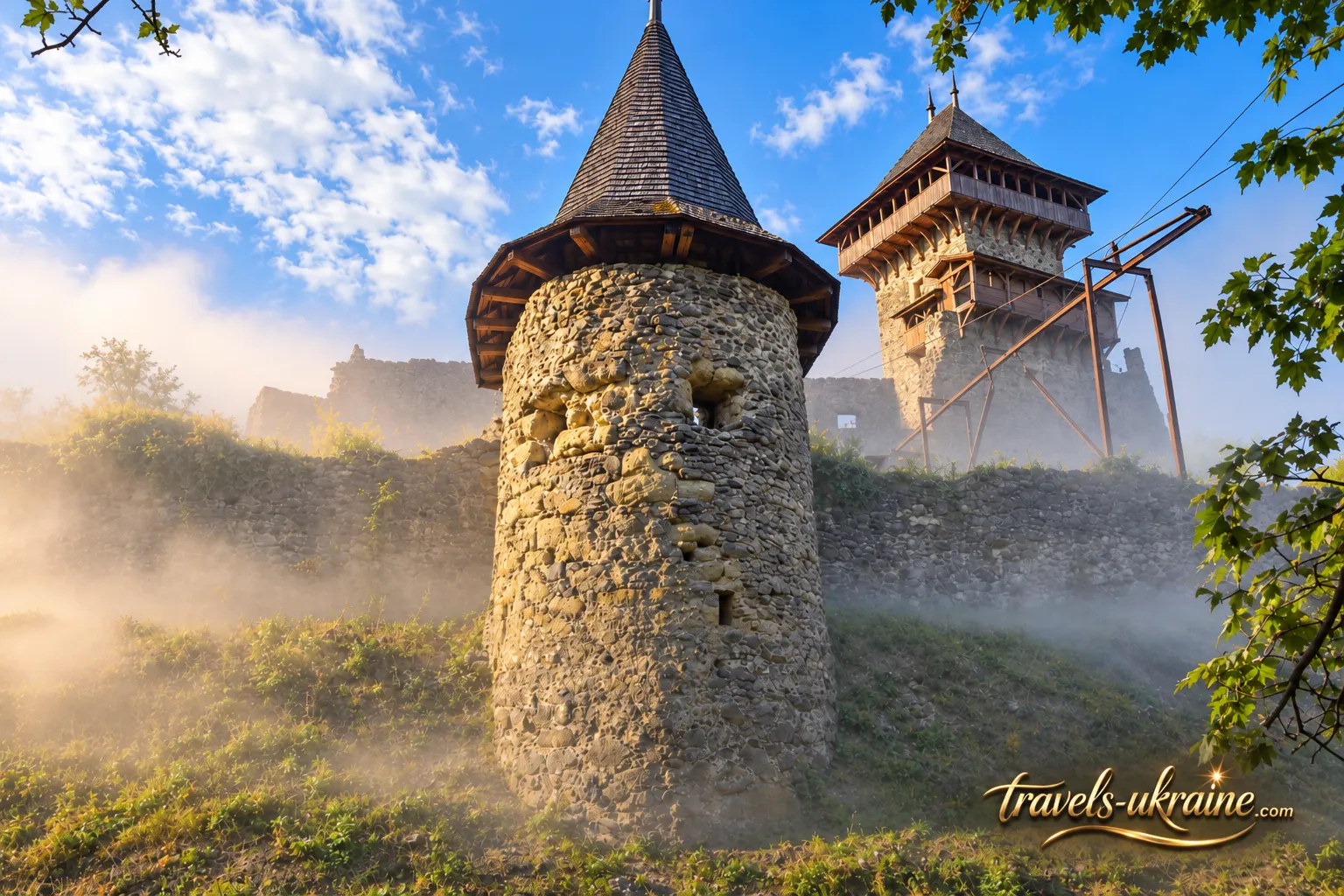
The history of Nevytsky Castle began long before the familiar silhouette of the stone fortress appeared above the Uzh Valley. Archaeological research shows that the first medieval fortifications on Castle Hill already existed in the XIII century. At that time, it was a much more modest defensive structure: a round stone keep surrounded by timber-and-earth fortifications. The location was no coincidence — from the high hill, the Uzh Valley and the route leading deep into the Carpathians toward the passes could be surveyed clearly.
The First Fortifications and the Struggle for Control of the Uzh Valley
Popular literature often identifies 1274 as the first written mention of Nevytsky Castle. At the same time, archaeologist Oleksandr Dzem bas points out that the oldest surviving and reliable charter in which the castle is directly mentioned under the name «Nevytsky» dates to 1322. This difference shows how cautiously the earliest period of its history must be reconstructed.
At the end of the XIII century, these lands came under the rule of the influential Aba family. At first, Finta Aba controlled Uzh County and the castle, and later it was controlled by his brother Amadeus Aba, one of the most powerful Hungarian magnates of his time. Researchers associate this period with a major rebuilding of the early fortress: the old round keep gave way to a square stone tower, while the defensive system gradually became more complex.
In 1317, the descendants of Amadeus Aba entered into open conflict with King Charles I Robert of Anjou. The royal army captured Nevytsky Castle by storm, after which the fortress returned to the control of the crown. This event marked the beginning of a new stage in its history — soon the castle passed to a family with which the following several centuries would be associated.
The Drugeths and the Transformation of Nevytsky Castle into a True Fortress
In the first half of the XIV century, Nevytsky Castle was acquired by John Drugeth, a member of an influential family that arrived in the Kingdom of Hungary with the Angevin dynasty. Different sources date the transfer of the fortress to the Drugeths to 1322 or 1328, but it was with them that the castle’s longest and most important period of development was associated.
The Drugeths owned Nevytsky Fortress for several centuries and gradually transformed it from a relatively small stronghold into a complex defensive system. Particularly extensive works were carried out in the XIV–XV centuries, when the development of firearms forced medieval castles to change their defensive principles.
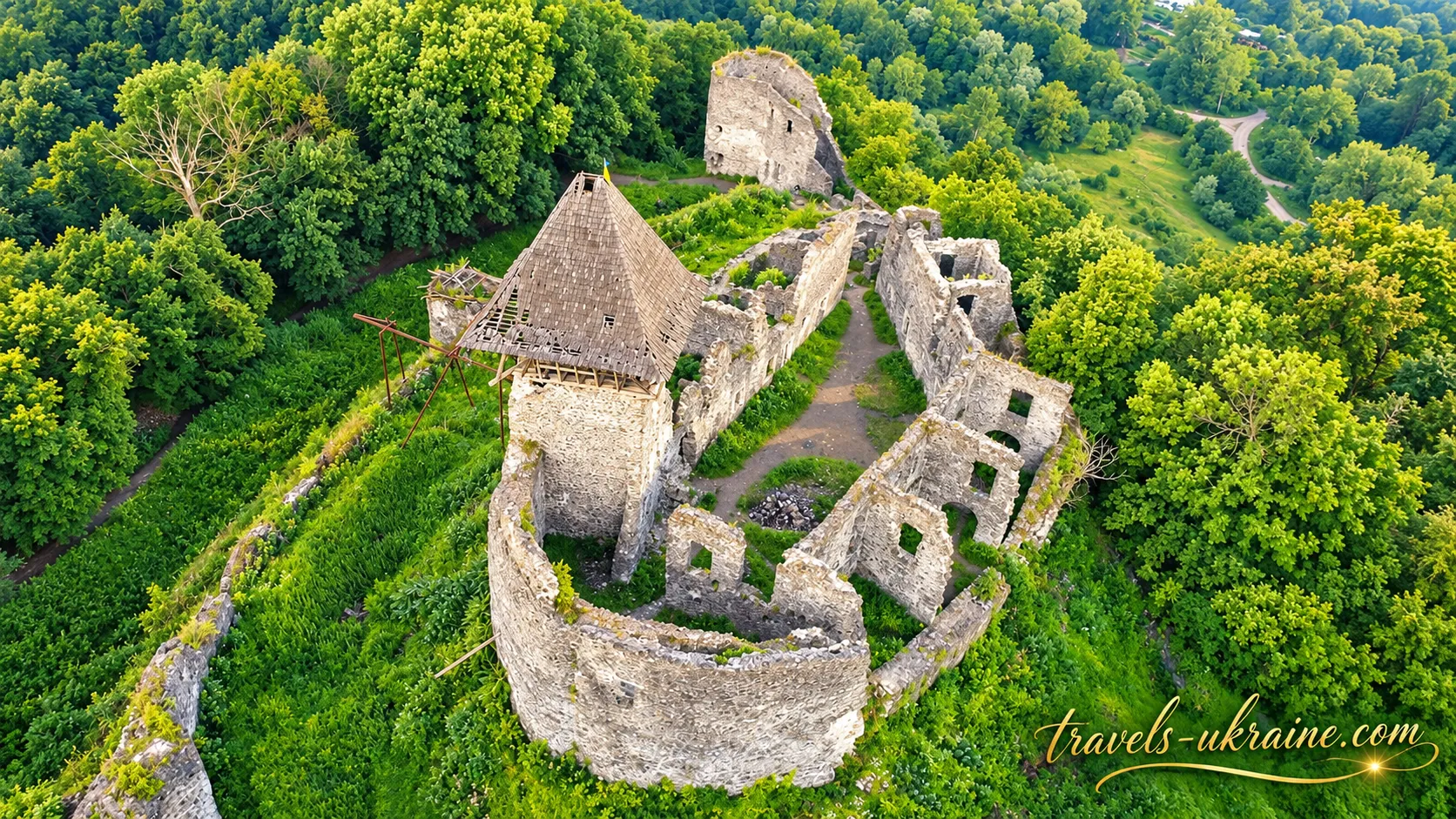
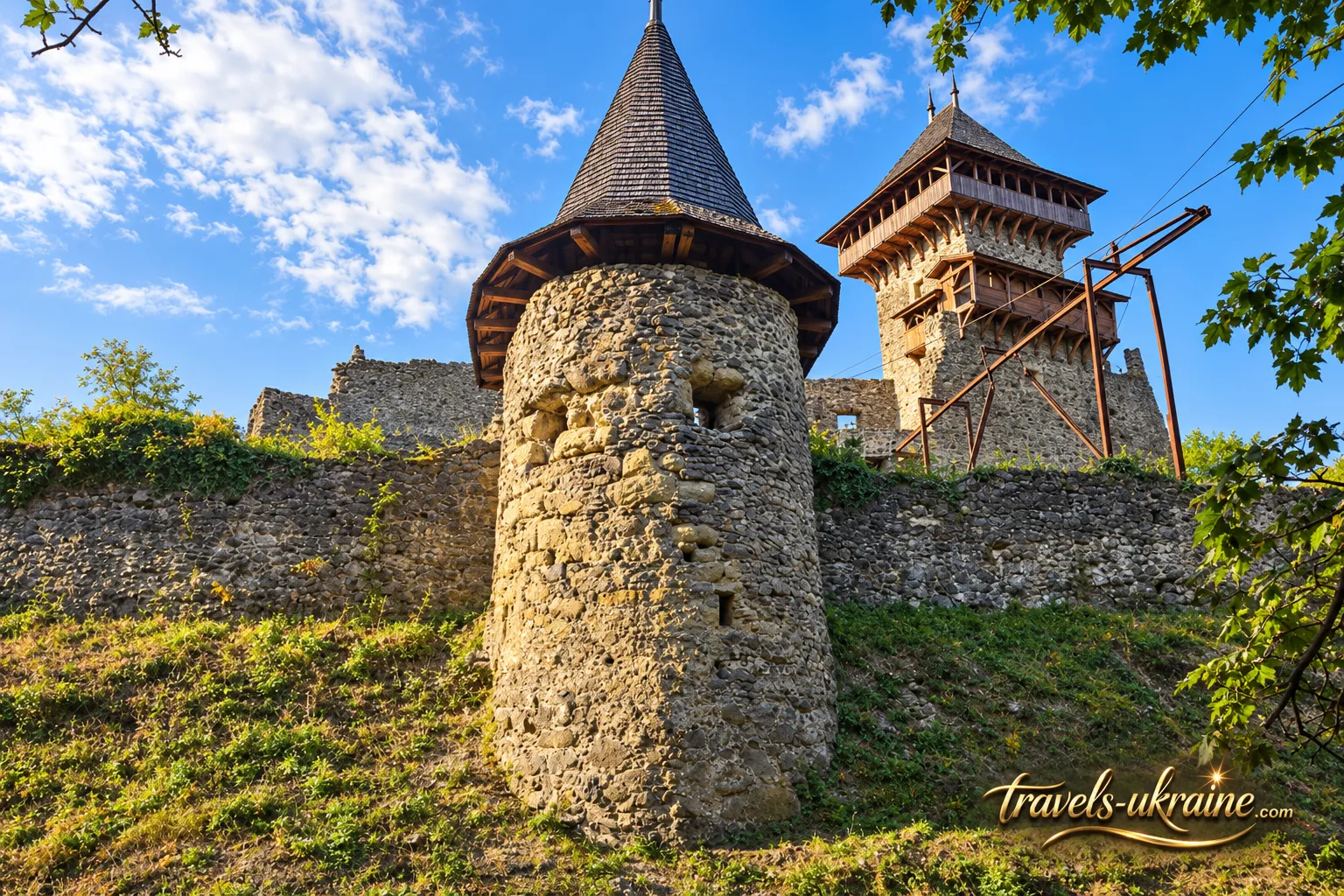
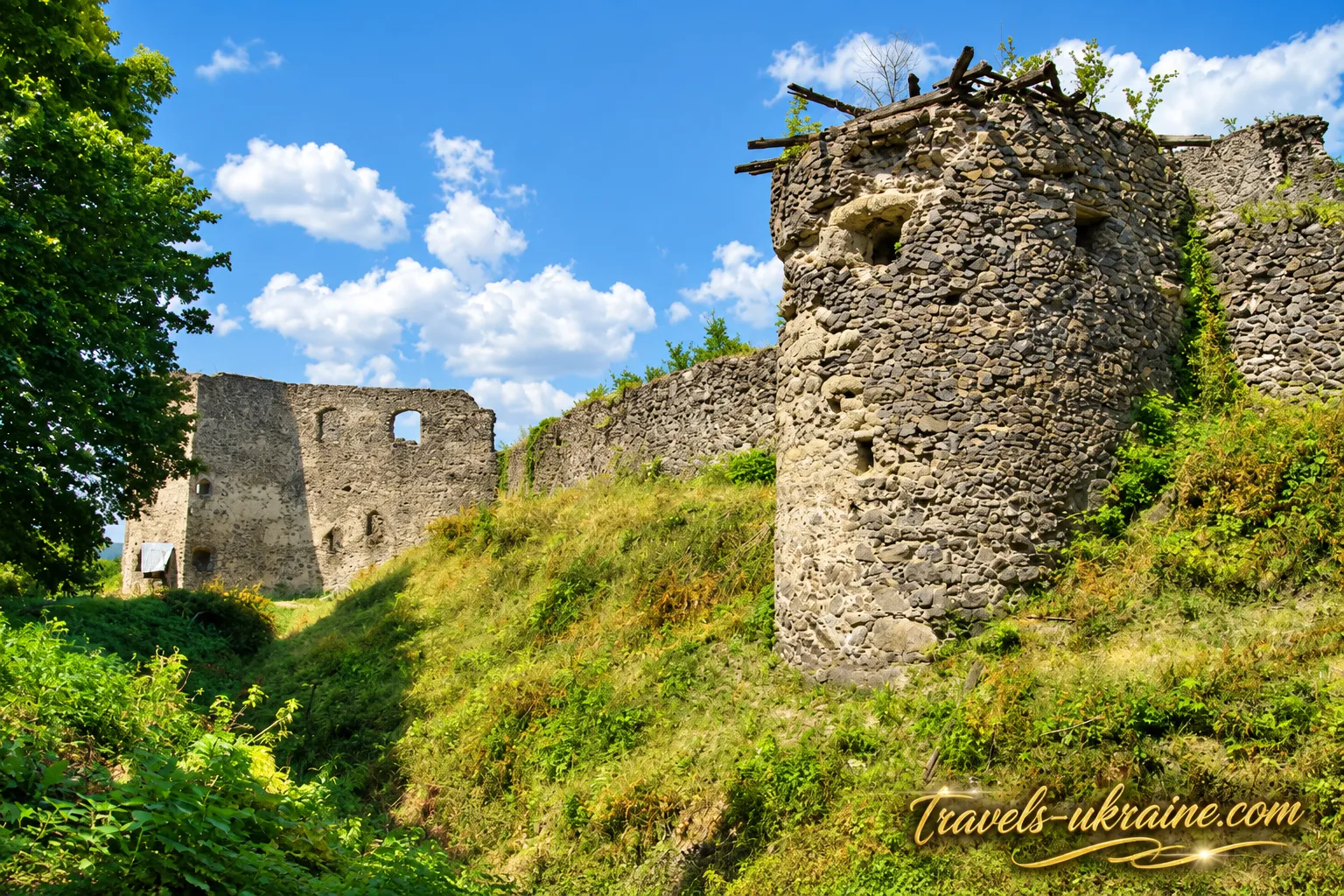
In the middle of the XV century, the old square keep was dismantled, and a second stone defensive line appeared around the castle’s inner core. It was strengthened by four low semicircular tower-bastions and a projecting pentagonal three-tiered barbican tower. A deep moat was cut directly into the rock in front of the new walls. It was after these reconstructions that Nevytsky Castle acquired the main features still recognizable in its ruins today.
More Than a Fortress: Life Behind the Walls of Nevytsky Castle
The castle was not merely a military outpost. Archaeological finds testify to active economic life: craftsmen worked here, weapons were repaired, and a forge and foundries were used. Household items, textiles, coins, weapons, and farming implements show that the fortress was an important administrative and economic center of the Uzh domain.
The water-supply system was especially interesting. At different times, residents used a spring, a water-storage cistern, and a well, while from approximately the middle of the XV century to the beginning of the XVII century, water was even supplied to the castle through wooden pipes from a neighboring mountain. For a high-mountain fortress that could be completely cut off from the valley during a siege, a reliable water supply was vital.
Researchers regard the end of the XV century and the XVI century as the period of Nevytsky Castle’s greatest flourishing. By then, it had become such a prominent political and geographical landmark that it appeared on contemporary maps of the Kingdom of Hungary.
The Wars of the XVII Century and the Fortress’s Demise
At the turn of the XVI–XVII centuries, the situation changed. Central Europe was experiencing prolonged dynastic and religious-political conflicts, while Zakarpattia found itself caught between the interests of the Habsburgs and the princes of Transylvania. Nevytsky Castle changed hands increasingly often.
In 1619, the fortress was seized by the Transylvanian prince Gabriel Bethlen. After his death, the castle returned to the Drugeths, who supported the Habsburgs. The final turning point came in 1644, when, during the war against Emperor Ferdinand III, Nevytsky Castle was captured by the Transylvanian prince George I Rákóczi. On his orders, the fortifications were destroyed.
Unlike many other castles, Nevytsky Fortress was not rebuilt afterward or adapted into a palace, barracks, or an economic facility. The castle gradually fell into ruins, but this very circumstance helped preserve its medieval structure without extensive later alterations.
Thus, the ruins of Nevytsky Castle that we see today are not a romantic imitation of the Middle Ages. Before us are the remains of a genuine defensive complex dating from the XV to the first half of the XVII century, shaped by several centuries of rebuilding, wars, and struggles for control of the Uzh Valley. Alongside its documented history, the old walls have also preserved a very different legacy — legends in which a cruel ruler, secret passages, and supernatural forces have long merged with real events.

Legends of Nevytsky Castle: The Bad Maiden and the Fortress’s Secrets
Nevytsky Castle has long lived not only in historical documents but also in folk memory. Over the centuries, an entire body of tales arose around its walls — about a cruel ruler, unusual construction, King Matthias, underground passages, a golden cradle, and even a ghost. Some of these stories are very ancient, while others appeared much later, but together they created the mystical image of the fortress that survives to this day.
The best-known heroine of local folklore became Pohan-Divka, also called Poh an-Divche or Dzhyndzher-Divka. One of the earliest known records of this tale was made by folklorist Volodymyr Hnatiuk in 1896 in the village of Vorochevo. Later, other researchers recorded the legend as well, and in different villages it already contained distinct details and its own explanations.
In the most widespread version, the Bad Maiden appears as a cruel ruler who forced peasants to work on the castle’s construction and hand over food to strengthen the walls. The tales mention eggs and milk supposedly added to the mortar. In later, more dramatic versions, the story becomes even darker: the mortar allegedly required even breast milk or blood. Ultimately, the Hungarian King Matthias put an end to the Bad Maiden’s rule, deciding to free the people from the cruel ruler. He used a ruse: bells and burning bundles of hay were tied to livestock, and at night the herd was driven toward the castle. From a distance, this looked like a huge army carrying lights, causing the fortress’s defenders to panic.
According to the legend, the castle was captured, and King Matthias personally punished the Bad Maiden. His role in the tale is therefore entirely logical: in Hungarian and Zakarpattian folklore, the king often appears as a just ruler who punishes cruel lords and protects ordinary people.
Why the Castle Was Called Nevytsky
Another well-known legend explains the fortress’s very name. According to the tale, before the great feudal castle appeared, a fortified refuge existed on the hill where, during attacks, women, children, and young brides were hidden. This supposedly gave rise to the name «Nevytsky,» meaning a place associated with brides.
Interestingly, folklorists do not dismiss this story as complete fantasy. Kseniia Akhekian points out that the legend may preserve a distant memory of an earlier hillfort-refuge that could have existed on Castle Hill before the medieval feudal fortress was formed. At the same time, the origin of the name Nevytsky Castle cannot be regarded as definitively established solely on the basis of a folk tale.
The Historical Investigation into the Templars and Nevytsky Castle
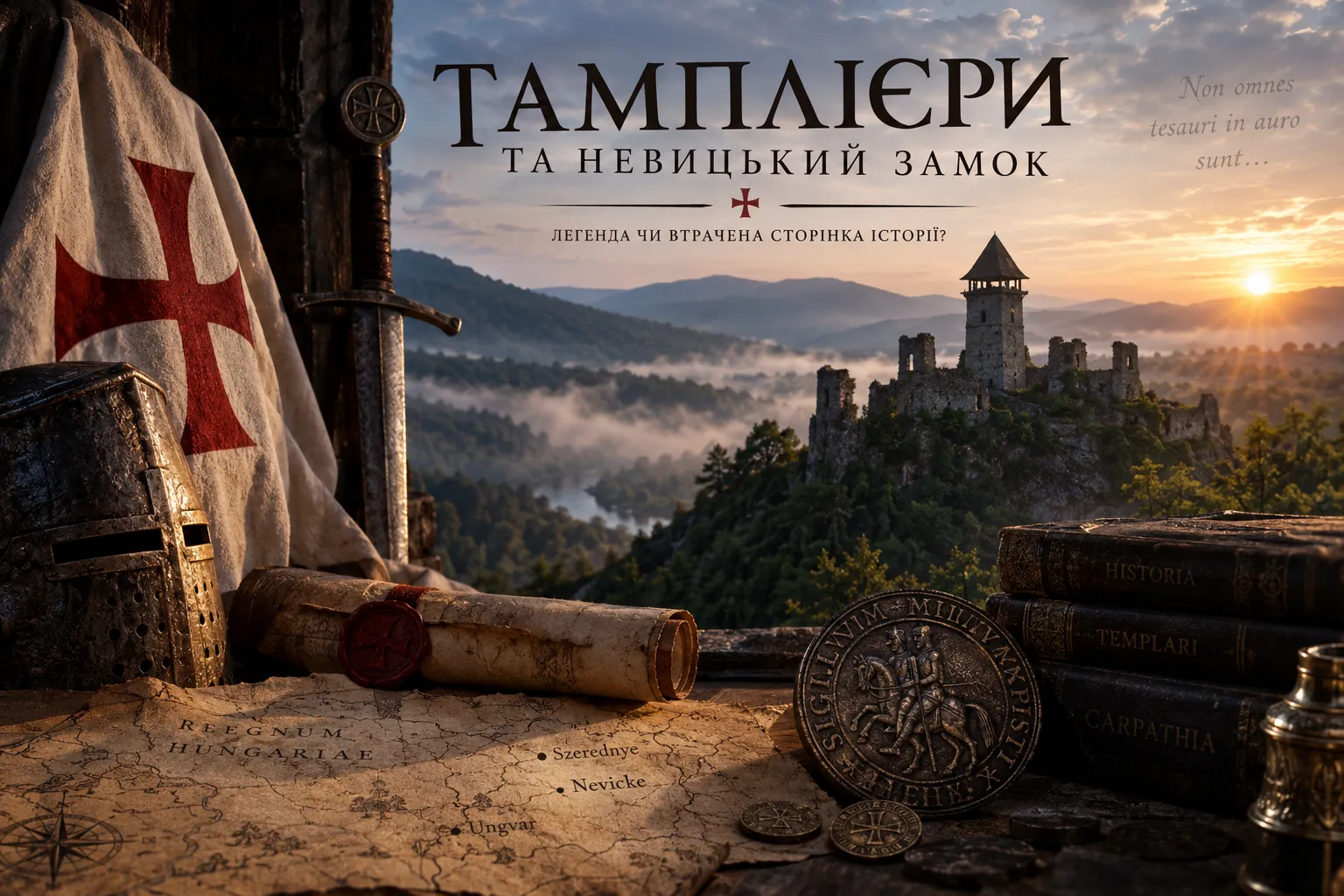
Among the stories occasionally associated with Nevytsky Castle, one sounds particularly intriguing: the claim that Knights Templar may have been connected with the fortress’s early history. A mysterious order, a medieval castle, old underground passages, and legends of hidden treasure — it is such an appealing combination that it easily turns into a captivating tourist story. But is there any real historical basis behind it?
Let us separate what is confirmed by documents and archaeology from what chronology allows, and from later folklore. Here, the story proves far more interesting than a simple «yes» or «no.»
Did the Templars Operate in the Lands That Included Present-Day Zakarpattia?
Yes — this is a confirmed historical fact. In the Middle Ages, the territory of present-day Zakarpattia belonged to the Kingdom of Hungary, and the Order of the Temple did indeed have its own provincial structure, estates, and centers there. Historian Zsolt Hunyadi, in his work «The formation of the territorial structure of the Templars and Hospitallers in the medieval Kingdom of Hungary», notes that the Hungarian Templar province already existed around the middle of the XII century, while the order’s first documented presence in the kingdom dates to 1169.
At the same time, Hunyadi emphasizes an important problem: the source base concerning the Templars’ activities in the medieval Kingdom of Hungary remains fragmentary. The main areas of their activity have been reconstructed, but historians still lack a complete modern picture of the location of all the order’s estates and contacts. This means that the absence of a reference to a particular place cannot, by itself, automatically prove that the knights were never there.
Does the Templars’ Period of Existence Overlap with the Early History of Nevytsky Castle?
Yes—and this is where the first real intrigue emerges. Research into Nev ytske Castle indicates that its history began before the first known written reference. Maryana Senkiv’s work «Nevytske Castle», based on archaeological data and historical studies of the fortress, states that in its earliest phase there was a round stone tower-keep surrounded by timber-and-earth fortifications.
The first known written reference to the castle dates to 1274, when it belonged to King Ladislaus IV of Hungary. In 1279, the castle passed to Finta Aba and later to Amadeus Aba; in 1317, after a rebellion by his descendants, King Charles Robert’s army captured the fortress by storm. Nevytske Castle later passed to the Drugeth family.
The Knights Templar officially ceased to exist only in 1312. Thus, the early fortress on Castle Hill and the order did indeed exist at the same time for several decades.
But a chronological overlap is not proof of a connection. After the first written reference, the owners of Nevytske Castle can be traced fairly well, and the Templars do not appear among them. If any contact now unknown to us did exist, the least documented period is precisely the early era before 1274.
Are there any Templar documents or archaeological finds at Nevytske Castle?
Not at present. The available archaeological and historical studies of Nevytske Castle contain no reliably identified Templar seals, burials, inscriptions, weapons, documents, or other objects that would directly connect the fortress with the Order of the Temple.
Moreover, critical historiography takes a cautious view of many traditional stories about the Templars in Central Europe. Balázs Stossek, the author of «A templomosok Magyarországon»—«The Templars in Hungary»—quotes the Hungarian National Archives: approximately 75–80% of the order’s known possessions and centers within the Kingdom of Hungary were located in Croatia and Slavonia, while written sources reliably attest to only a small number of their houses in the Hungarian lands proper.
In the network of Templar centers reconstructed by historians, Nevytske Castle and Ung County do not appear as confirmed centers of the order. Therefore, there are no historical grounds for calling the fortress a «Templar castle.»
So where could the Templar legend have come from in the first place?
And this is where the investigation becomes especially interesting. It turns out that Templar legends in Transcarpathia have a much older tradition than modern tourist retellings. They were studied extensively by ethnographer Adel Edelényi in her doctoral dissertation «Templomos lovagok mint ambivalens hősök az európai néphagyományban»—a study of the image of the Templars in European folk tradition.
In the section devoted to modern Ukraine, the researcher directly names three Transcarpathian places where the memory of the so-called «red brothers» has survived—a folk name often used for the Templars in Hungarian tradition: Berehove, Sarosoroszi, and Serednie.
Particularly intriguing for our investigation is Serednie. Like Nevitsky Castle, it historically belonged to Ung County. According to local legends, Templars supposedly lived there, and west of the settlement there was a place called Baráterdő — «Monks’ Forest», where, according to tradition, a monastery of the «red brothers» once stood. Researchers were still recording this legend in the 19th century, although by then no material traces of the monastery remained.
Adorján Diénes’s collection «Regélő romok» even preserves a story that the Templars came to the foothills of the Uzh River Mountains, settled in Serednie, and built their monastery there. How closely this story corresponds to actual events in the 13th century is a separate question, but one thing is important: a Templar tradition genuinely existed in historic Ung County and was documented long before modern tourism marketing.
Could the legend from Serednie have spread to Nevytske Castle?
This is a hypothesis, not an established fact. Nevertheless, it has an interesting folkloristic basis. Adel Edelényi’s research shows that Templar legends consist not only of local narratives but also of so-called migratory motifs: similar stories about «red brothers,» dungeons, abductions, destroyed monasteries, or hidden riches were repeated near different ruins across many regions of Central Europe.
The Hungarian National Archives also draws attention to this phenomenon: local tradition often attributed old monasteries and fortifications to the Templars even when critical historiography does not confirm their presence. In other words, the mere existence of ancient ruins could, over time, «draw» the popular legend of the mysterious order to them.
For this reason, a cautious folkloristic hypothesis can be proposed: the Templar story of Nevytske Castle may have formed as part of a broader complex of legends from Ung County, where the memory of the «red brothers» was already associated with Serednie. The motif may later have spread to one of the region’s most striking medieval fortresses.
There is currently no direct evidence of such a transfer of the legend, so this is merely a possible explanation of its origins.
And what is known about Templar treasures?
Wherever the Templars appear, the theme of hidden treasure almost inevitably appears as well. Interestingly, however, this is not merely a product of modern novels and films. Folkloristic research shows that motifs involving gold, underground vaults, caves, secret passages, and the treasures of the «red brothers» existed for centuries in the folk traditions of various European regions.
Transcarpathia was no exception. Edelényi’s study mentions a tale from Sarosoroszi in which, according to folk memory, the «red brothers» hid their treasures on Mount Kelemen, while local residents supposedly continued searching for them for many generations.
The dissertation itself devotes a separate analysis to hidden treasures: the author shows that legends about monastic dungeons, gold coins, treasure-filled barrels, and secret hiding places are typical elements of the Templar folklore cycle. The appearance of similar tales near old castles is therefore entirely understandable.
Yet regarding Templar treasures at Nevytske Castle, the answer is unequivocal: there is no archaeological evidence of such a cache. If stories about gold and underground passages are told here, they should be regarded as part of the legendary tradition, not as proof of an actual treasury belonging to the order.
So could the Templars have had a connection with Nevytske Castle?
After reviewing the evidence, the answer is this: on the basis of the modern source base alone, it is impossible to rule out any contact between the Templars and this part of Ung County, but there is currently no evidence of their presence at Nevytske Castle itself.
- Confirmed fact: the Templars operated in the medieval Kingdom of Hungary.
- Confirmed fact: the early Nevytske Castle existed during the same period as the Order of the Temple.
- Confirmed fact: an old folk tradition about the Templars and the «red brothers» existed in Transcarpathia.
- Historical possibility: contacts may have existed during the poorly documented early period, but the sources have preserved no record of them.
- Folkloristic hypothesis: the Templar legend may have reached Nevytske Castle from the broader tradition of Ung County, in particular through tales associated with Serednie.
- Unconfirmed: Templar ownership of the castle, a Templar commandery at Nevytske, Templar burials, artifacts, or treasures.
Thus, Nevytske Castle cannot be called a Templar fortress. Yet the legend itself no longer looks like a random invention: it arose in a region where the medieval order was well known in folk memory, where ethnographers genuinely recorded old tales about the «red brothers,» and where the fortress’s early history still leaves many questions unanswered.
And perhaps that is precisely why this story has survived so well through the centuries. Where documents fall silent and old walls remain above the Uzh Valley, the realm of hypotheses and legends begins. Until archaeologists find new evidence, the mystery of the Templars at Nevytske Castle will remain open—but at least we now know where history ends and legend begins.
What to See at Nevytske Castle Today
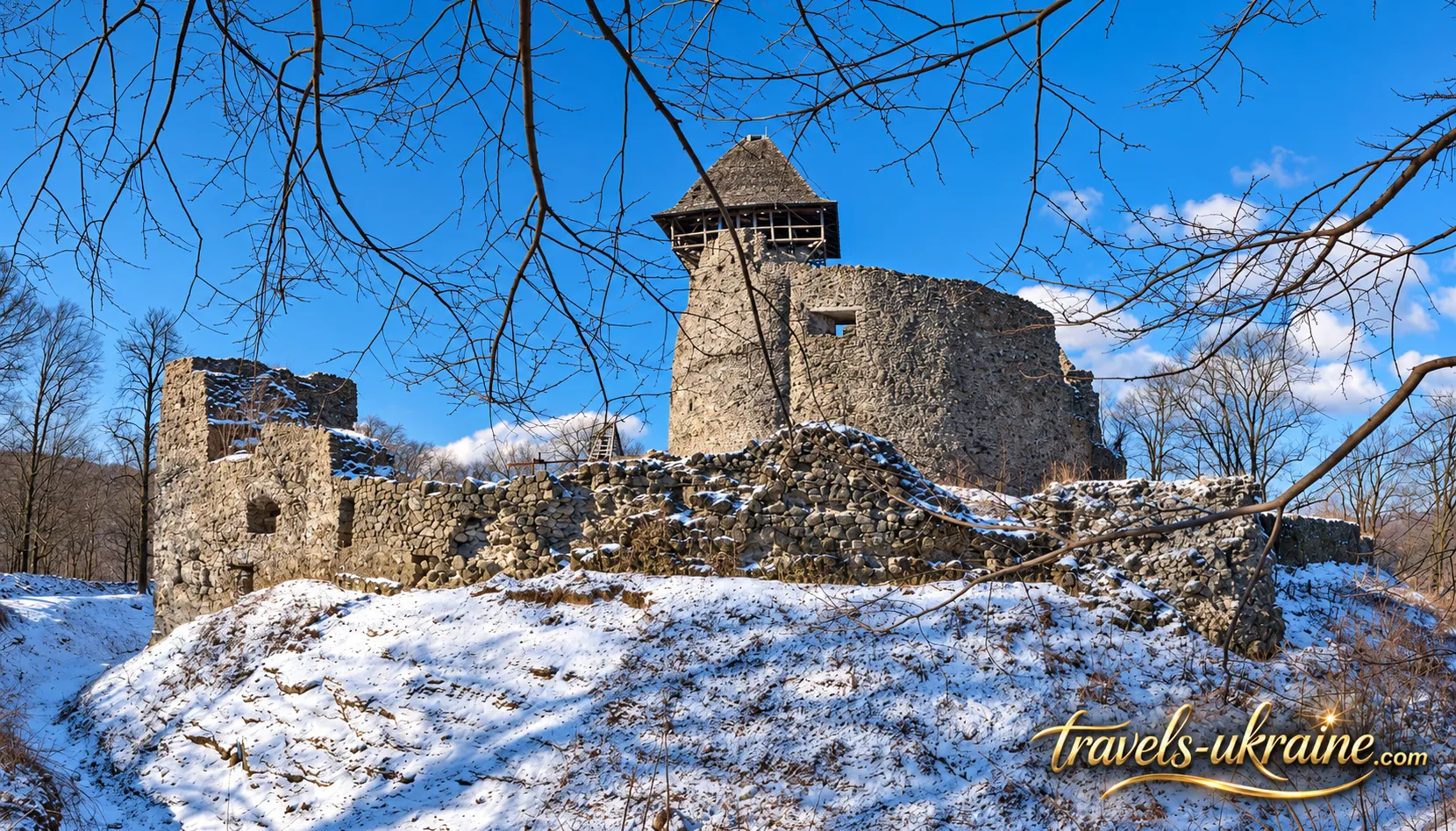
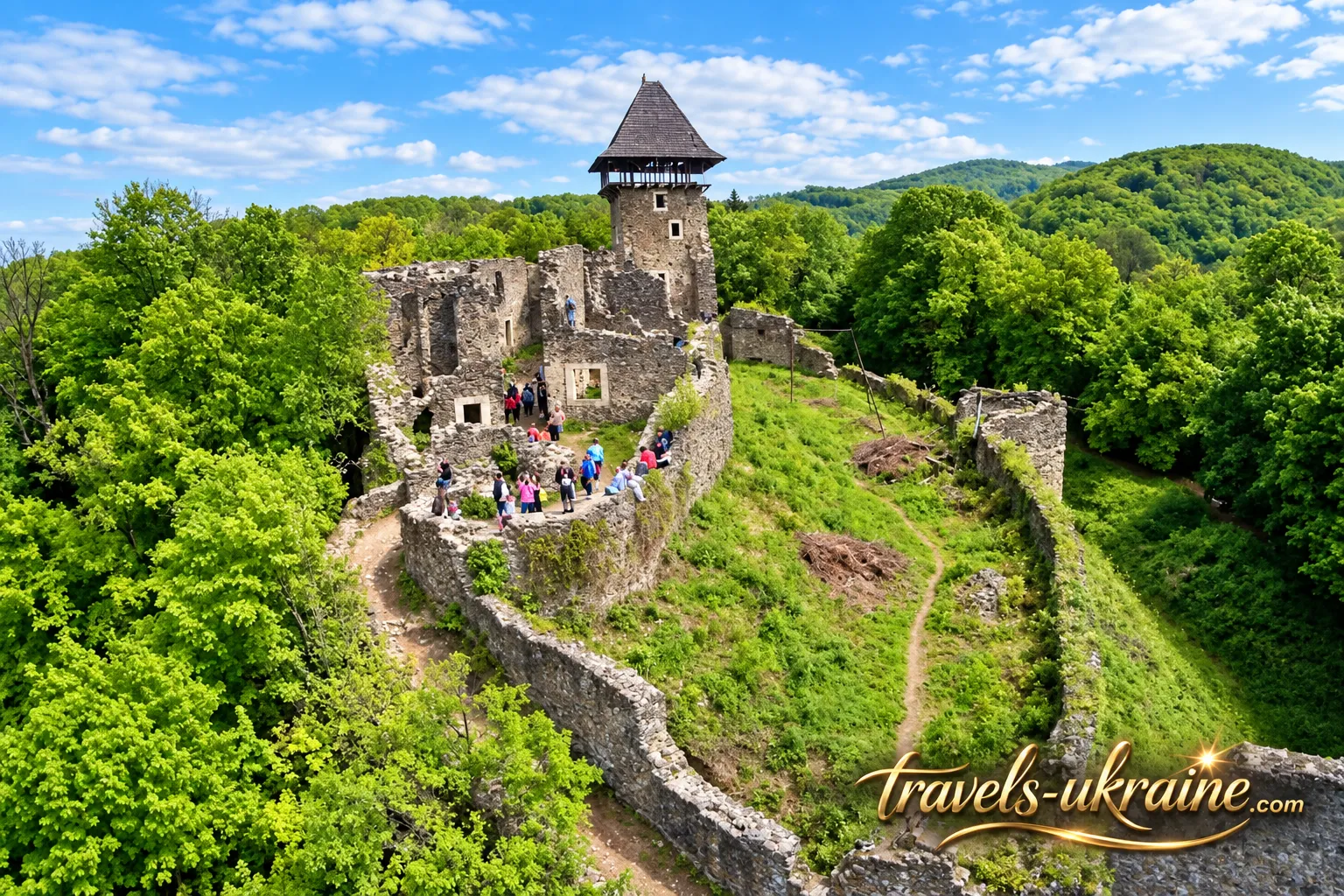
Today, the castle near the village of Kamianytsia appears to travelers not as a restored palace with museum galleries, but as a genuine medieval fortress in ruins. Much of its atmosphere lies precisely in this: the stone walls preserve traces of rebuilding, defensive systems, and destruction, while the surrounding forest has gradually become part of the castle landscape. To see more here than simply old stones, it helps to know which details to look for.
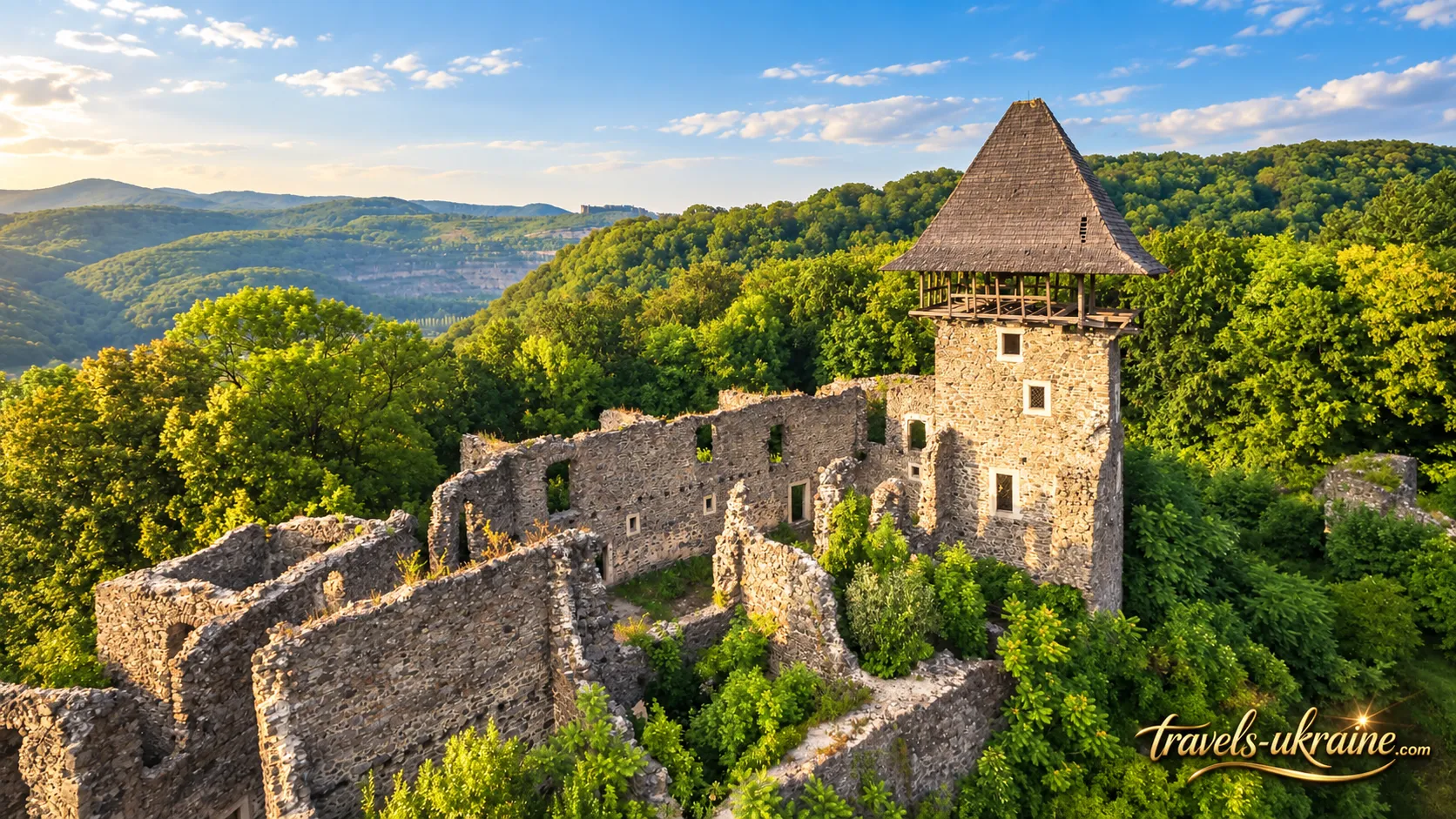
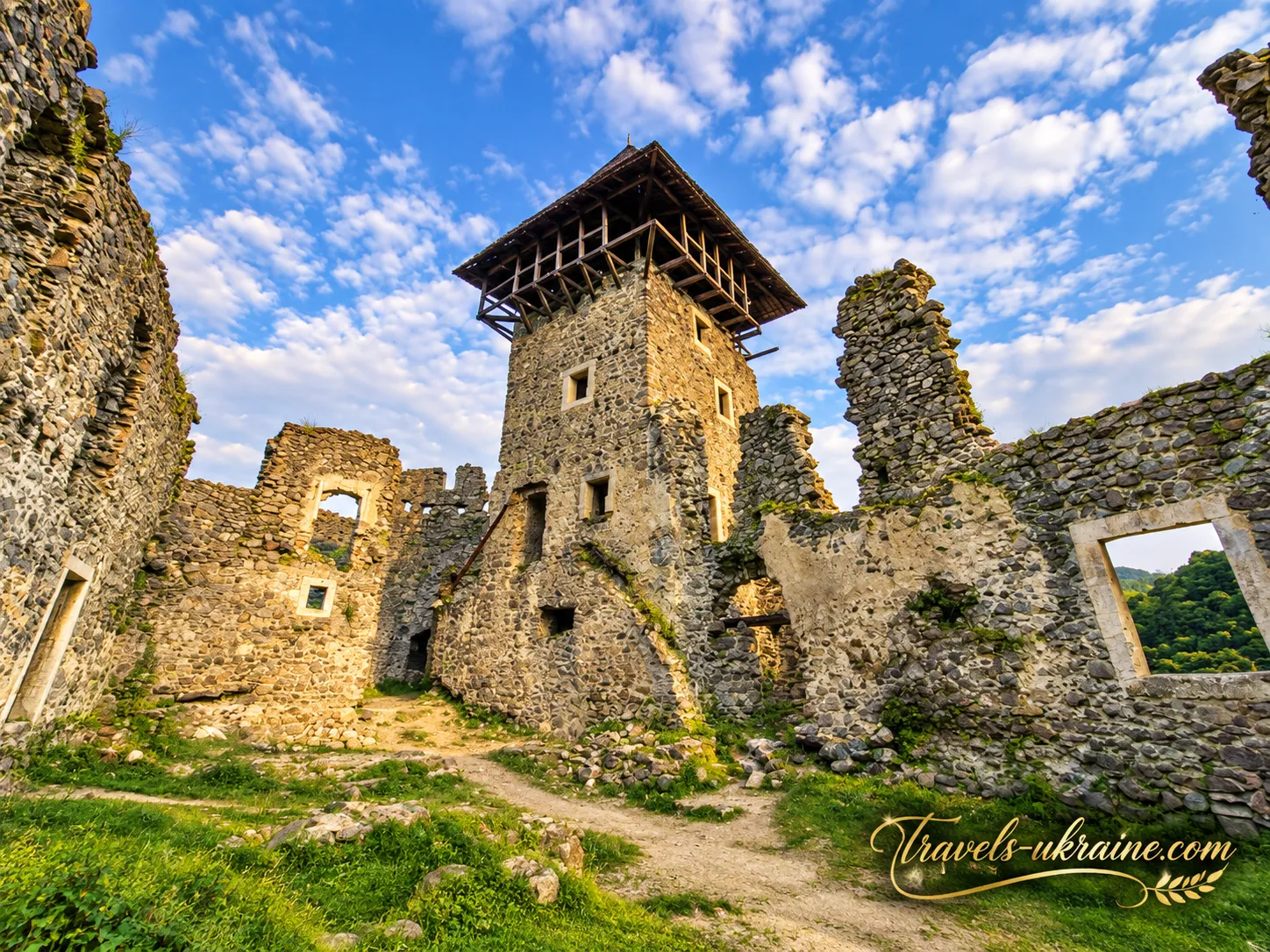
Here, towering above the ruins, is the main quadrangular tower, clearly visible from a considerable distance. Its silhouette, crowned by a high wooden roof, has become something of the fortress’s hallmark. Archaeological research shows that the castle went through several successive construction phases: an early round tower, a later square keep, and the main tower, created during a large-scale reconstruction of the fortress in the 15th century.
The tower’s roof is not entirely medieval in its present form—the structure was reinforced and restored several times. After the roof collapsed in 2019, a new phase of emergency stabilization began, during which the towers and the most dangerous sections of the walls were strengthened. Today, the main tower remains the most distinctive part of the castle complex.
The Barbican, Defensive Walls, and Castle Moat
It is particularly interesting to trace how medieval architects developed the fortress’s defenses. In the mid-15th century, a second stone wall with semicircular bastion towers was built around the castle’s central core, while a pentagonal barbican—a separate defensive tower protecting the approaches to the gate—was erected in front of the main entrance.
In front of the outer line of walls, a deep castle moat was cut into the rock. A drawbridge with a counterweight system once crossed it. Archaeologists established that the mechanism was designed so efficiently that just a few people could raise the bridge’s heavy span in a short time. The mechanism is gone today, but the moat’s configuration and the remains of the defensive structures help visitors imagine how difficult the route into the fortress’s inner area once was.
The Inner Courtyard and Traces of Everyday Life
At the center of the complex lies the castle courtyard. Here, archaeologists discovered a large number of objects showing that Nevytske Castle was not only a military structure but also a place of everyday life. The finds include pottery, household tools, weapons, cannonballs, coins, and items associated with crafts.
The remains of the castle well have also survived in the courtyard. Researchers associate its construction with the need for an independent water source during a siege. Before that, the fortress had a complex water-supply system: water arrived through wooden pipes from a nearby mountain and was used not only for household needs but also as part of the defensive system.
The View over the Uzh Valley—the Best Explanation of the Fortress’s Location
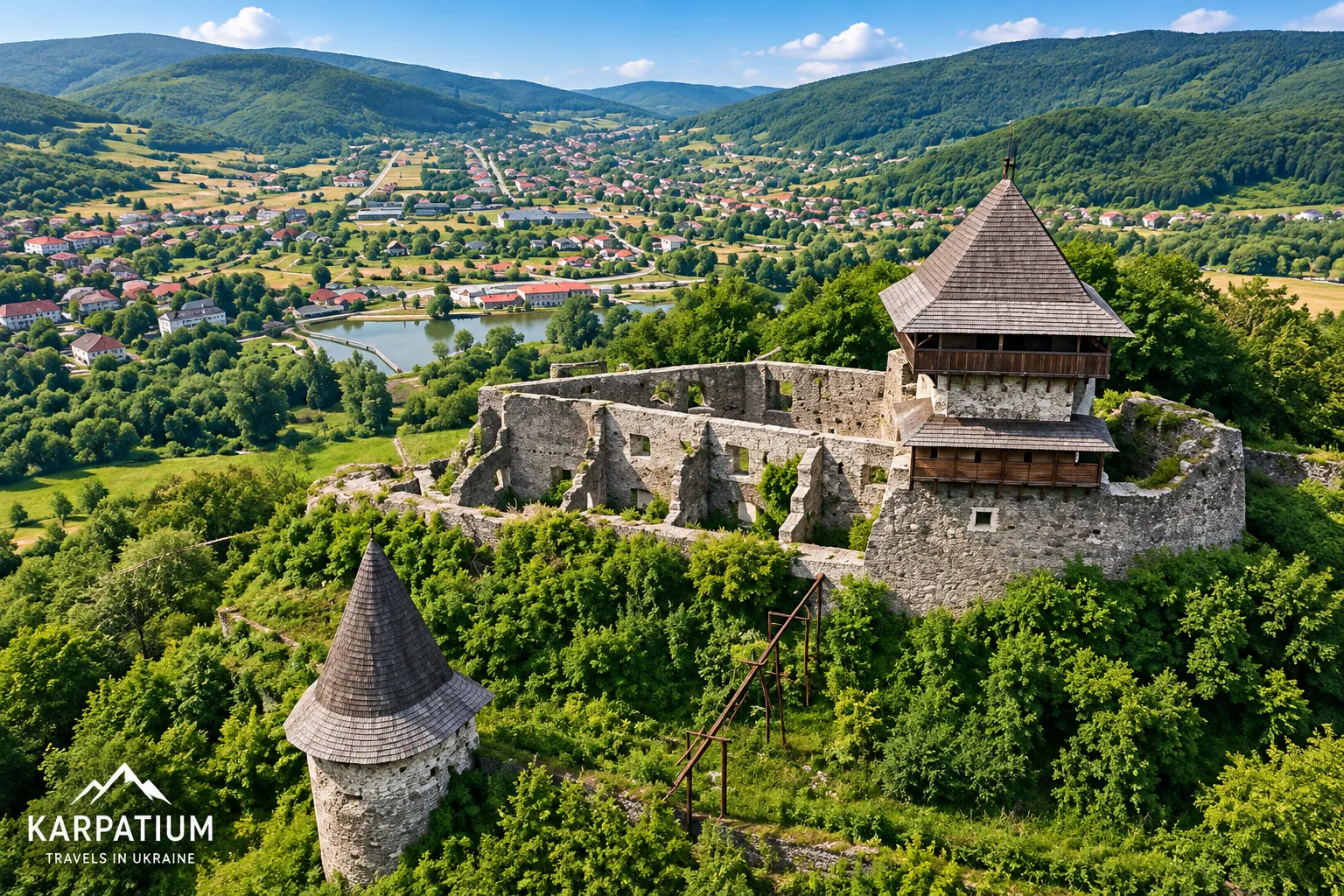
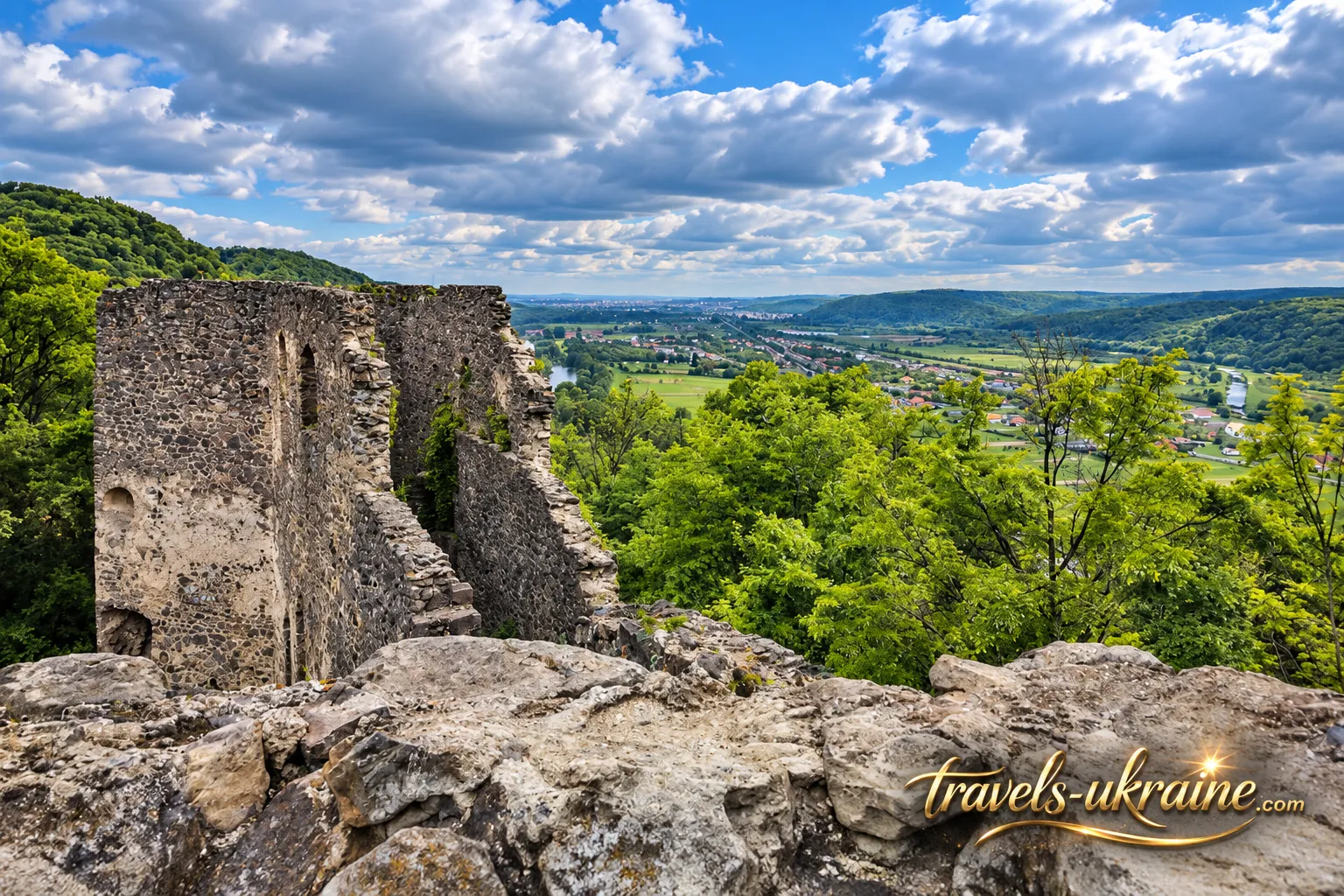
One of the strongest reasons to climb to the castle is the panorama from Castle Hill. Below lies the Uzh Valley, with views of Kamianytsia, the surrounding hills, and the forested foothills of the Carpathians. From here, it becomes clear why medieval builders chose this particular summit.
The fortress made it possible to control movement through the valley and the important route toward the Carpathian passes. What today looks like a beautiful viewing platform was, several centuries ago, a strategic advantage: from this height, the movement of people or troops could be spotted in advance and defenses prepared.
It is best not to rush and to follow the entire accessible route around the ruins. Nevytsky Castle today is interesting not because of the number of restored rooms, but because it offers a chance to see the authentic structure of a medieval fortress—from the tower and barbican to the moat, courtyard, and defensive walls. The surrounding forest and panorama of the Uzh Valley only strengthen the feeling of a place that has endured far more than can be understood at a single glance.
What to See Near Nevytsky Castle
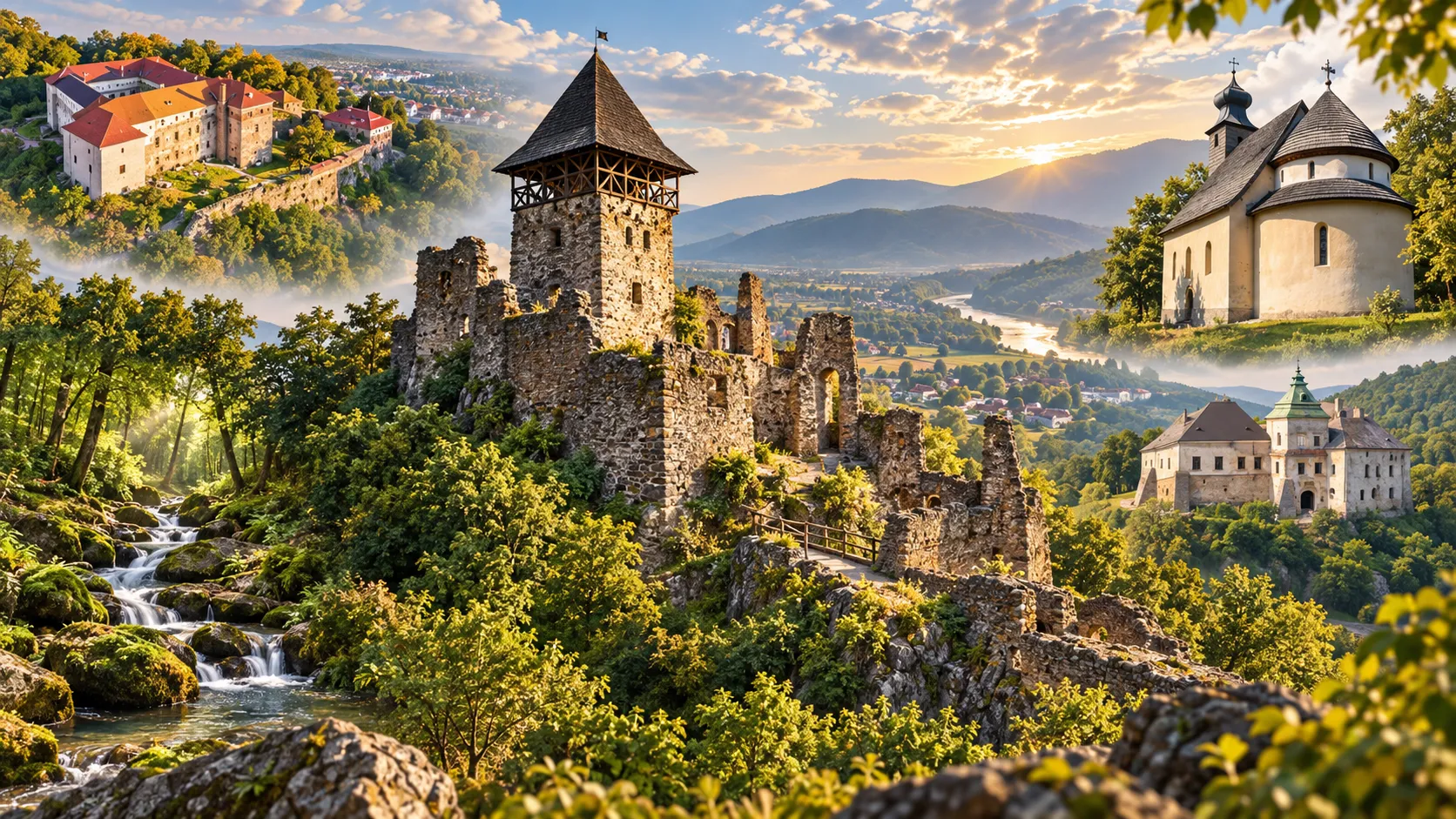
A trip to Nevytsky Castle can easily become a full itinerary through the Uzhhorod area. The fortress is located near the regional capital, and within a relatively short drive you can see several other very different sites—from an ancient church and a museum castle to a protected natural area and another set of medieval ruins.
Uzhhorod Castle and the Transcarpathian Regional Museum of Local Lore
The most logical continuation of the route is Uzhhorod Castle. Unlike Nevytsky Fortress, it has survived in much better condition and is now used as a museum complex. The Transcarpathian Regional Museum of Local Lore operates here, while a walk through the castle courtyard offers a clear sense of how differently the histories of the two fortresses connected with the Uzhhorod area unfolded.
Near the castle is the Transcarpathian Museum of Folk Architecture and Rural Life, an open-air museum. This makes Uzhhorod convenient to plan as a separate part of the day after visiting Nevytsky Castle: here, medieval history is complemented by old urban architecture, museums, the Uzh River embankment, and the historic center.
Horyany Rotunda—One of the Region’s Oldest Sacred Landmarks
On the outskirts of Uzhhorod, it is worth seeing the Horyany Rotunda, a small stone church with an exceptionally ancient history. Its oldest section is traditionally dated to approximately the X–XI centuries, while the Gothic nave was added later. Medieval frescoes from the XIV–XV centuries have survived inside.
After the massive castle walls, this site creates a completely different impression: instead of defensive architecture, there is an intimate ancient church that has survived several historical eras and preserved unique paintings.
Tepla Yama Tract—Nature Near Kamianytsia
If, after exploring the fortress, you would like to stay closer to nature, consider the Tepla Yama tract near Kamianytsia. It is a botanical natural monument of national importance covering approximately 93 hectares, protecting oak and oak-beech forests, including old stands of sessile oak.
Tepla Yama is especially appealing as a peaceful continuation of the walk: after the stone ruins, you can move on to a forest trail and see the natural surroundings of the Vyhorlat-Hutyn volcanic massif, of which Zamkova Hora is also a part.
Serednie Castle—Another Medieval Mystery of Transcarpathia
Fortification enthusiasts should continue to Serednie, where the ruins of another medieval castle have survived. The former fortress is represented mainly by a massive stone tower, but this site is associated with one of Transcarpathia’s best-known legends—it was linked with the Templars for many years.
After investigating the Templar story at Nevytsky Castle, this stop is especially interesting: it allows you to see another fortress of the Uzh River region with your own eyes, one that has also inspired a rich body of medieval legends.
Thus, Nevytsky Castle near Uzhhorod can conveniently serve as the central point of a short itinerary: combine it with Uzhhorod Castle and the Horyany Rotunda, add a walk through a natural tract, or continue exploring medieval fortresses in Serednie. In this way, a single stop by the old ruins becomes an introduction to several layers of Transcarpathia’s history and nature at once.
If Nevytsky Castle is only one stop on your journey, you can continue exploring the region’s fortresses and castles with the author’s «Castles of Transcarpathia» road trip, which brings the region’s most interesting castle structures together in one driving journey.
Frequently Asked Questions About Nevytsky Castle
How do you get to Nevytsky Castle from Uzhhorod?
By car, drive from Uzhhorod toward Kamianytsia, then follow the signs to the castle. You can drive almost to Zamkova Hora, after which part of the route must be completed on foot. Without a car, you can take public transport to Kamianytsia and continue on foot.
Is there an admission fee for Nevytsky Castle?
Nevytsky Castle consists of open-air ruins rather than a museum complex with a ticket office. According to current tourist information, access to the grounds is free. During restoration or emergency stabilization work, access to certain areas may be temporarily restricted.
How much time do you need to visit Nevytsky Castle?
Allow approximately 1–2 hours for the climb, an unhurried look at the ruins and defensive structures, and views over the Uzh Valley. If you plan to walk through the surrounding forest or visit other places near Kamianytsia, you will need more time.
Can you climb the main tower of Nevytsky Castle?
Access to individual parts of the fortress depends on the condition of the landmark and current restrictions. After emergency stabilization work, the viewing platform on the main tower was being prepared for visitors; however, before climbing, pay attention to barriers, warning signs, and the current access rules.
Can you visit Nevytsky Castle with children?
Yes, but remember that these are genuine medieval ruins, not a fully equipped tourist park. The site has uneven stones, changes in elevation, and the remains of walls, so young children must be supervised by adults at all times. Comfortable footwear is recommended for the walk.
When is the best time to visit Nevytsky Castle?
The castle is interesting in every season, but spring, summer, and early autumn are the most convenient times for a walk. The fortress looks especially atmospheric in autumn, when the surrounding forests change color. After heavy rain, snowfall, or during icy conditions, the climb and stony grounds may be slippery.
Was Nevytsky Castle really connected with the Templars?
There is no direct historical or archaeological evidence of such a connection. The Templars were active in the medieval Kingdom of Hungary, and old legends about the «red brothers» have been recorded in Transcarpathia. However, the Order of the Temple does not appear in the known history of Nevytsky Castle’s owners. The Templar theory therefore remains an intriguing historical mystery and folklore hypothesis, not a proven fact.
Can Nevytsky Castle be included in the «Castles of Transcarpathia» itinerary?
Yes. Nevytsky Castle fits well into a driving route through the castles of Transcarpathia. It is most convenient to combine it with Uzhhorod and Serednie castles, and on a longer journey continue to Palanok Castle in Mukachevo and Saint Miklos in Chynadiiovo.
Nevytsky Castle: A Place Where History Does Not End with Ruins
Nevytsky Castle does not impress with luxurious halls or fully restored interiors. Its strength lies elsewhere—in authentic stone walls, traces of ancient rebuilding, towers that survived wars, and the silence of Zamkova Hora above the Uzh Valley. Here, it is easy to sense the difference between restored historical scenery and a place that changed over the centuries along with Transcarpathia itself. The Drugeths, the struggle for the fortress, the destruction of the XVII century, the legend of the Bad Maiden, tales of treasures, and even the mysterious Templar theory have created a history around the castle in which documented facts constantly border on folk memory.
That is why the ruins of Nevytsky Castle are interesting not merely to look at, but to explore: searching for remnants of old defensive lines, imagining the drawbridge over the moat, looking down from above at the Uzh Valley, and trying to understand why this summit was so important to the medieval rulers of the region. And if you combine Nevytsky Fortress with Uzhhorod and Serednie castles, old churches, and the natural sites of the Uzhhorod area, a short trip easily becomes a full tourist route through historic Transcarpathia.
Perhaps that is why Nevytsky Castle near Uzhhorod continues to draw travelers even hundreds of years after its destruction. The fortress lost its military importance long ago, but it has not lost what matters most—the ability to make people stop, look closely at the old walls, and ask themselves: how many stories have they yet to tell?

One Response Comment
You can post first response comment.