
 English
 Українська
 Русский

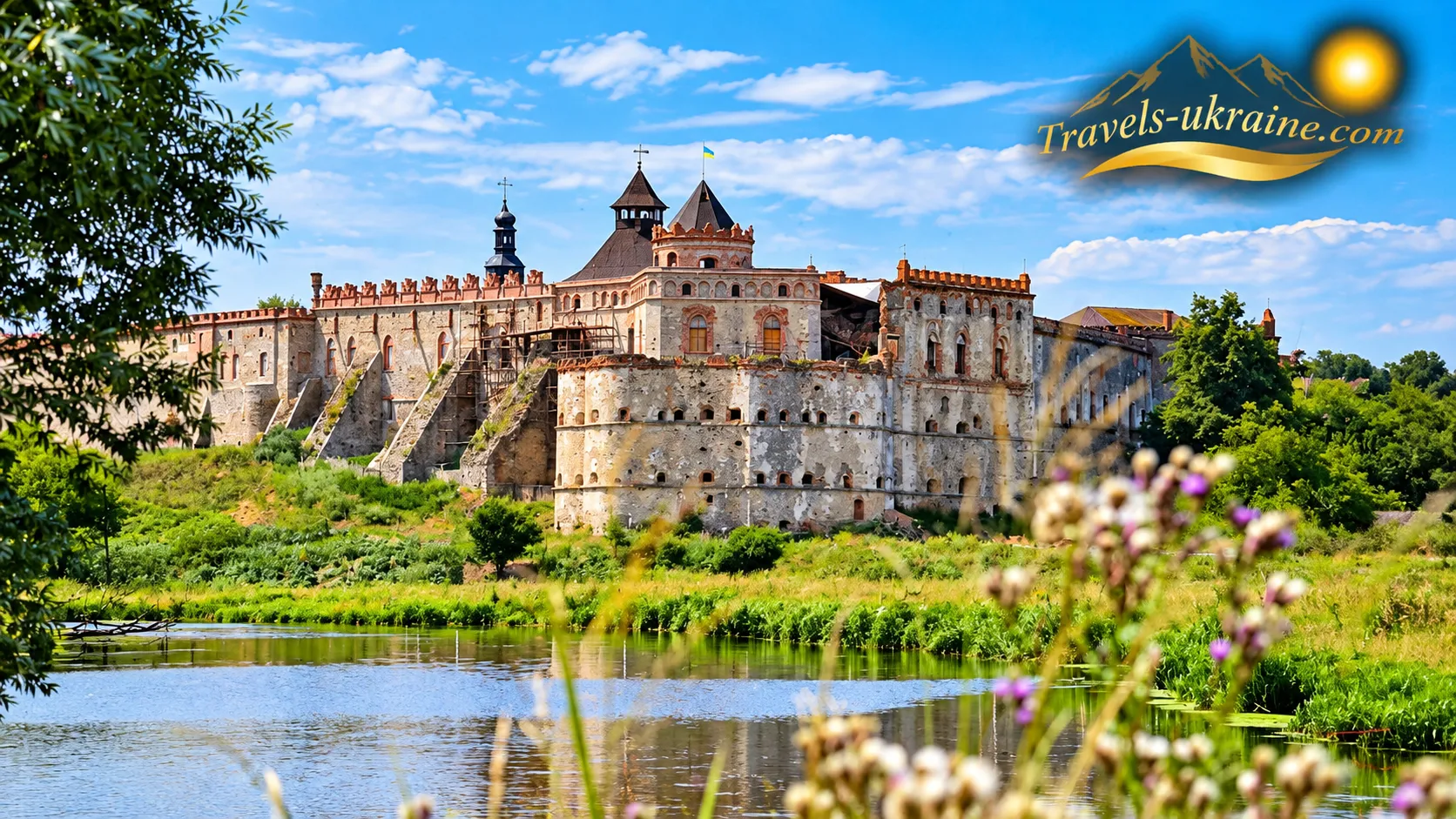
Some old fortresses make you search for an information board just to understand what you are looking at. Others need no explanation: before you have even parked your car, you already know that something impressive lies ahead. Medzhybizh Fortress belongs to the second category. Its massive walls, towering defensive structures, and enormous silhouette overlooking the river valley quickly explain why this landmark has become one of the best-known historical symbols of Khmelnytskyi Oblast.
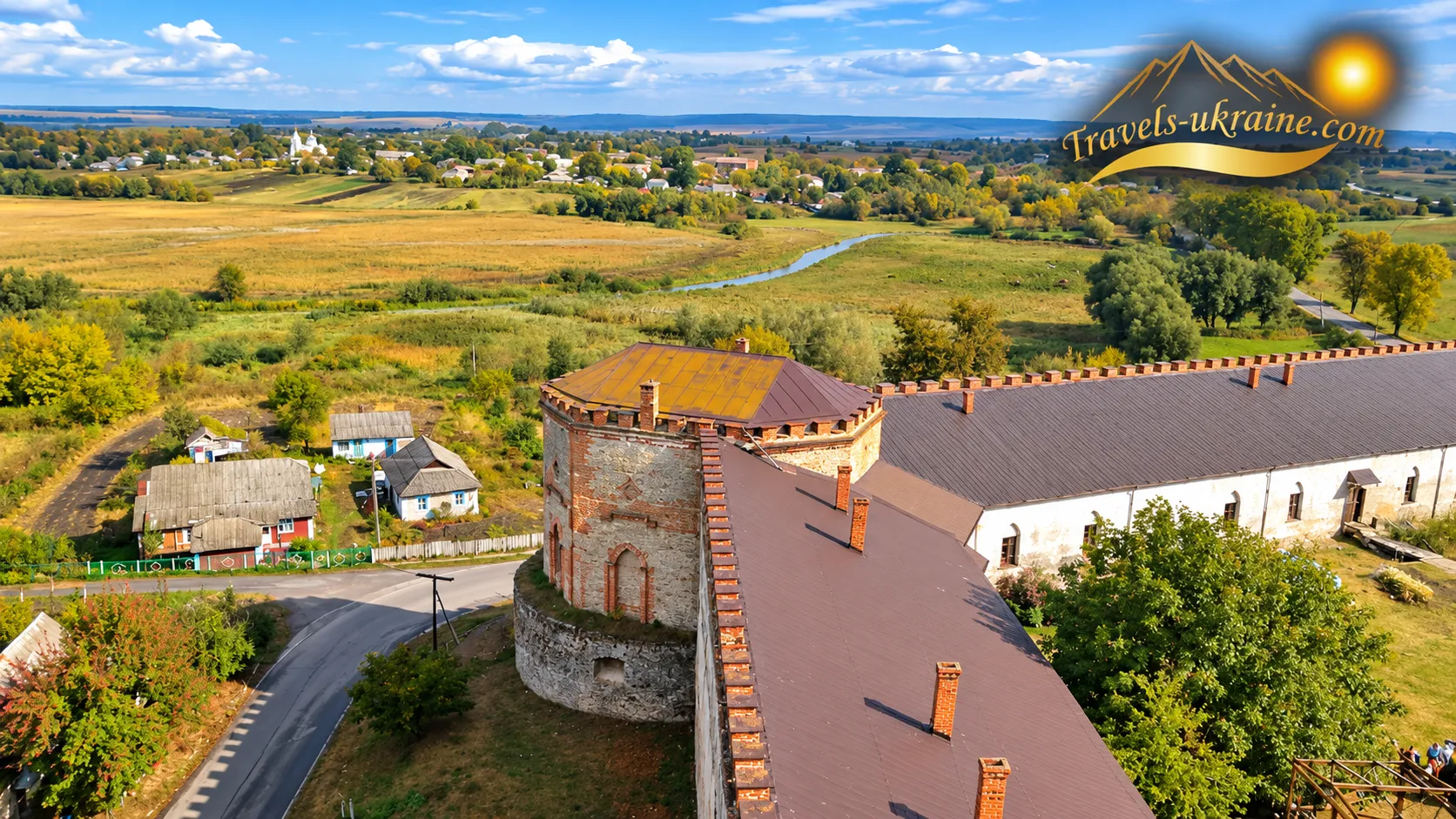
The fortress occupies a particularly remarkable location — between the Southern Bug and Buzhok rivers. In fact, the name Medzhybizh itself is associated with its position between two rivers. Today, the water brings a sense of tranquility to the landscape and provides beautiful perspectives for photography. Several centuries ago, however, people viewed these rivers much more pragmatically: they formed natural barriers that enemies had to overcome when approaching the fortifications. Less romance, perhaps, but impeccable defensive logic.
Yet the most interesting discoveries begin once you pass through the walls. Medzhybizh Fortress is not a single building that can be fully appreciated simply by walking around it. Behind its defensive walls lies an entire historical complex: towers, an inner courtyard, palace buildings, a castle church, museum exhibitions, and architectural traces of different eras. It is easy to spend much more time here than originally planned. Especially if, before entering, you confidently announced, "What is there to see? Half an hour should be enough."
This is one of the main attractions of the fortress. Its history cannot be reduced to a single construction date or the name of one owner. The fortifications changed alongside Medzhybizh itself, passing between different rulers, being rebuilt to meet new military requirements, and surviving wars, sieges, periods of prosperity, and decline. Each era added something, transformed something, or, unfortunately, took something away. That is why Medzhybizh Castle should not be viewed as a frozen scene from one particular century but as an enormous historical puzzle. Defensive architecture, an aristocratic residence, religious buildings, and museum collections come together in one place. And if you know where to look, the ancient walls begin to reveal much more than you might expect from stones, which are not usually known for being particularly talkative.
History of Medzhybizh Fortress: From Ancient Fortifications to the Present Day
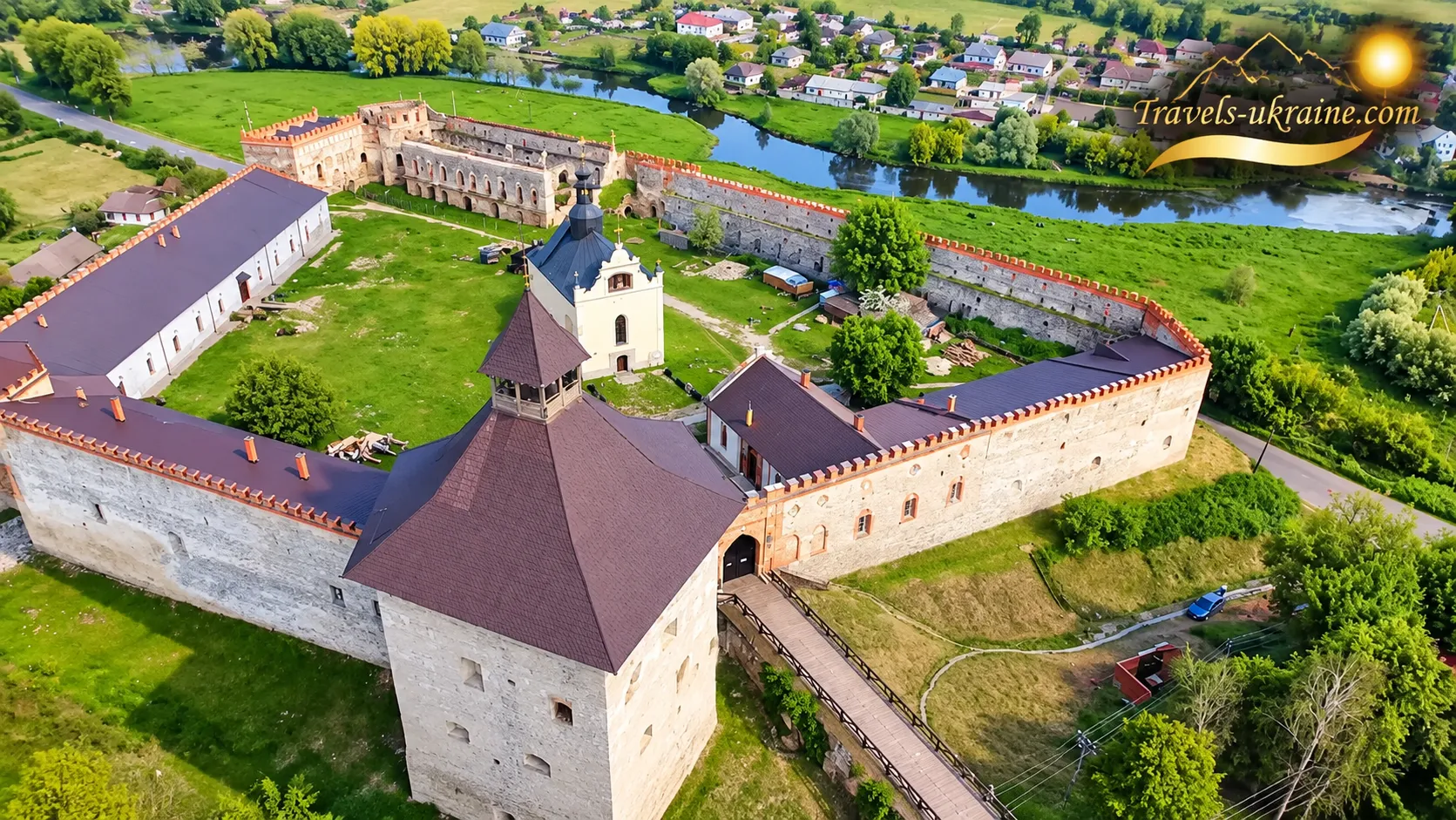
Looking at Medzhybizh Castle today, it is easy to imagine that one day a very wealthy owner simply ordered, "Build a castle here," and a few years later, the familiar walls rose above the rivers. In reality, the story is far more fascinating. The fortress developed over centuries, and its present appearance is the result of numerous reconstructions, wars, changes of ownership, and constant adaptation to new circumstances.
The location itself was important long before the stone walls visible to modern tourists appeared. The confluence of the Southern Bug and Buzhok rivers created a naturally protected site, while the surrounding routes made Medzhybizh a strategic stronghold. The fortress was not built here because medieval builders were particularly fond of picturesque scenery. Although, admittedly, they were fortunate with the views as well.
Medzhybizh Before the Stone Fortress
Medzhybizh is mentioned in written sources, specifically the Hypatian Chronicle, in an entry dating to 1146. The settlement was located in the territory known as the Bolokhiv Land, through which important routes passed. Consequently, the need for defensive structures arose long before the construction of substantial stone walls. The earliest fortifications consisted primarily of wood and earth and looked significantly different from the fortress we know today.
During the 13th century, the region experienced the Mongol invasion and major political changes. Older fortifications lost their importance or were destroyed, but the strategic value of the location remained unchanged. The rivers were still there, as were the trade and military routes. Therefore, the question "Do we need a fortress here?" effectively had only one sensible answer.
The Koriatovych Princes and the Transformation of Medzhybizh into a Stone Stronghold
A new chapter in the history of Medzhybizh Fortress began in the 14th century, when Podillia came under the rule of the Lithuanian Koriatovych princes. This period is associated with the development of stone fortifications on the site of an older defensive structure. For medieval Podillia, this was a logical development. Wooden defensive structures no longer met all the military requirements of the time, and such an important strategic location needed more reliable protection. A stone defensive complex gradually took shape here, although it would undergo many further transformations over the following centuries.
This is why the question "Who built Medzhybizh Fortress?" cannot be accurately answered with a single surname and date. The fortress is the result of several major construction phases. Some owners established the fortifications, while others expanded, rebuilt, and adapted them to new weapons and changing ways of life.
The Sieniawski Family and the Great Reconstruction of Medzhybizh Fortress
One of the most important periods in the complex's history is associated with the Polish noble Sieniawski family. During the 16th century, Medzhybizh passed into their possession, and the fortress underwent extensive reconstruction. They gradually transformed the old stronghold into both a powerful fortress and a prestigious aristocratic residence. Defensive walls were reinforced, towers and other structures were adapted for firearms, and the residential sections were expanded.
This is an important detail for understanding the architecture of Medzhybizh Fortress. It had to fulfill two seemingly contradictory functions: to be strong enough to withstand attacks while remaining comfortable enough to serve as the residence of an influential noble family. In modern terms, its owners wanted both security and decent living conditions. The only difference was that instead of alarm systems, surveillance cameras, and security guards, they relied on high walls, towers, cannons, and a military garrison. Technology has changed, but the desire for a peaceful night's sleep has remained much the same.
Medzhybizh Fortress During the Cossack Wars
The 17th century brought anything but a peaceful museum-like existence to the fortress. During the National Liberation War led by Bohdan Khmelnytskyi, Medzhybizh found itself at the center of military and political events, and control over the fortified town was strategically important. The historical complex changed hands, different armies were stationed here, and the surrounding lands repeatedly became battlefields. For modern visitors strolling peacefully through the spacious inner courtyard, it can be difficult to imagine that several centuries ago, the question of who would control these walls tomorrow was anything but rhetorical.
Such periods provide the clearest explanation of why successive owners invested so many resources in strengthening the defensive system. Medzhybizh was more than an attractive private residence — its location made the fortress an important military stronghold in the region.
The Ottoman Period in the History of Medzhybizh
At the end of the 17th century, history took another dramatic turn. After a significant part of Podillia came under Ottoman rule, Medzhybizh Fortress was temporarily controlled by the Ottoman Empire. This episode was relatively short compared with the complex's centuries-long history, but it clearly demonstrates Medzhybizh's strategic importance. The fortress was not contested because of its romantic towers or magnificent river views. Controlling this fortified position meant controlling important territory and transport routes. After Ottoman rule ended, the complex returned to its previous owners and continued to change alongside the region's political landscape.
From the Sieniawski Family to the Czartoryski Family
In the 18th century, following the end of the Sieniawski family line, Medzhybizh passed into the possession of the Czartoryski family. The military role of old European fortresses was gradually changing: advances in artillery and new fortification principles made medieval defenses increasingly less effective. Nevertheless, the complex continued to serve as a residence. During such periods, defensive architecture often began to give way to more prestigious residential features. Owners were no longer concerned solely with resisting enemy attacks but also with living in a manner appropriate to their status. Thus, the castle gradually lost its exclusively military character. The walls remained, and the towers did not disappear, but their role in the life of Medzhybizh had changed.
Medzhybizh Fortress Under the Russian Empire
Following the partitions of the Polish-Lithuanian Commonwealth in the late 18th century, Medzhybizh became part of the Russian Empire. The fortress subsequently came under state and military administration. Throughout the 19th century, the historic complex was adapted to new purposes. Individual buildings were reconstructed, and their functions and appearances changed. This is why it would be incorrect to assume that every façade visible today looks exactly as it did to the inhabitants of the 16th century.
Incidentally, it was during the 19th century that the complex acquired its distinctive light-colored exterior finish, which led to Medzhybizh Fortress being described in historical accounts by the romantic nickname "White Swan." Against the backdrop of the water, the pale fortress must have looked very different from the imposing stone stronghold of earlier centuries.
The 20th Century: When the Fortress Was Almost Lost
Sometimes the greatest threat to an ancient castle is not a medieval siege but the moment when people simply stop seeing any value in it. During the 20th century, the fortification complex in Medzhybizh experienced precisely such a period. Wars, revolutions, changes of government, and utilitarian use did little to preserve the historic site. The Soviet decades proved particularly difficult, as parts of the complex suffered serious damage, and ancient masonry was sometimes regarded primarily as a convenient source of building materials.
For a monument that had survived Tatar raids, Cossack wars, Ottoman rule, and the rise and fall of empires, the prospect of gradually disappearing through neglect was particularly ironic. The fortress had withstood cannons — only to nearly surrender to practical economic considerations.
Restoration of Medzhybizh Fortress and Its Present Status
The situation began to improve when the historical and architectural significance of the complex became the subject of systematic research and preservation efforts. During the second half of the 20th century, restoration work, archaeological investigations, and the gradual revival of the monument's cultural role began. Today, the complex forms part of the Medzhybizh State Historical and Cultural Reserve. It hosts museum exhibitions, research activities, restoration projects, guided tours, exhibitions, and cultural events.
However, the restoration process cannot be considered fully complete. Such a large historical complex requires continuous research, conservation, and restoration. Every intervention raises a difficult question: what exactly should be restored, and which historical period should serve as the reference point when the building has changed over several centuries?
This is precisely what makes the monument so fascinating today. It is not a reconstructed "medieval attraction" built yesterday and artificially aged for photographs. It is an authentic historical structure bearing traces of many eras — from ancient defensive fortifications and princely possessions to military barracks, museum halls, and modern restoration work.
What to See at Medzhybizh Fortress
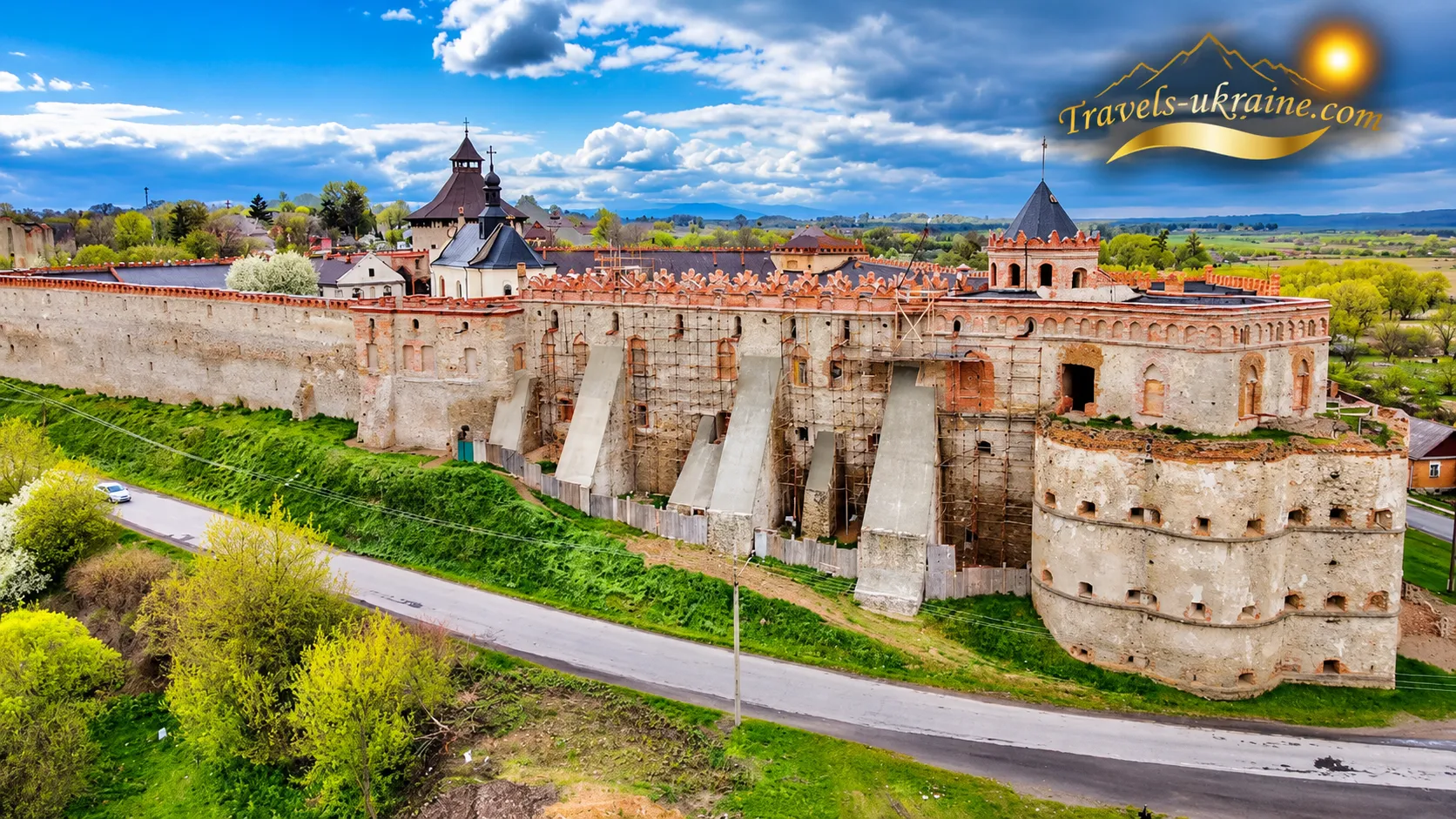
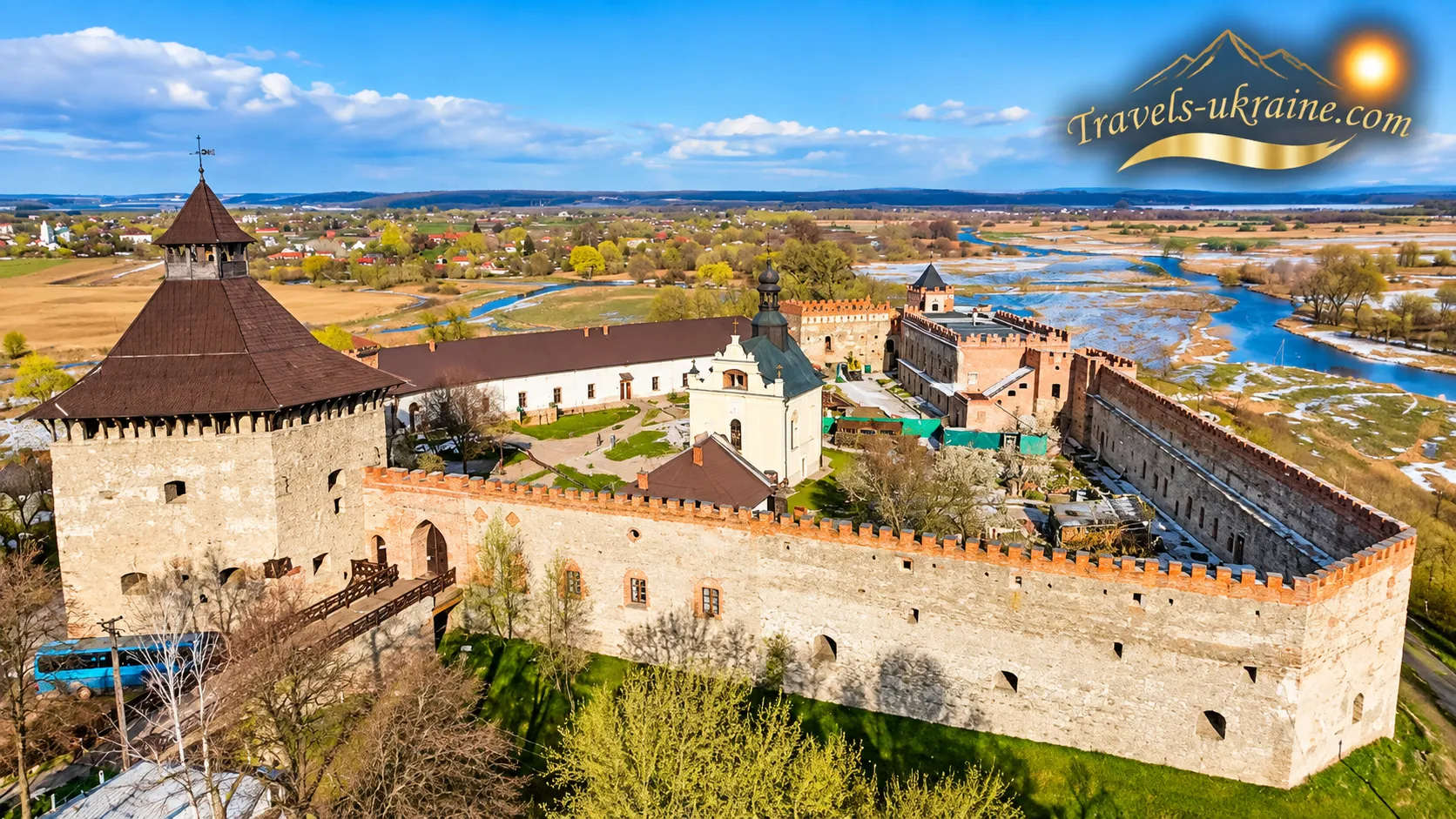
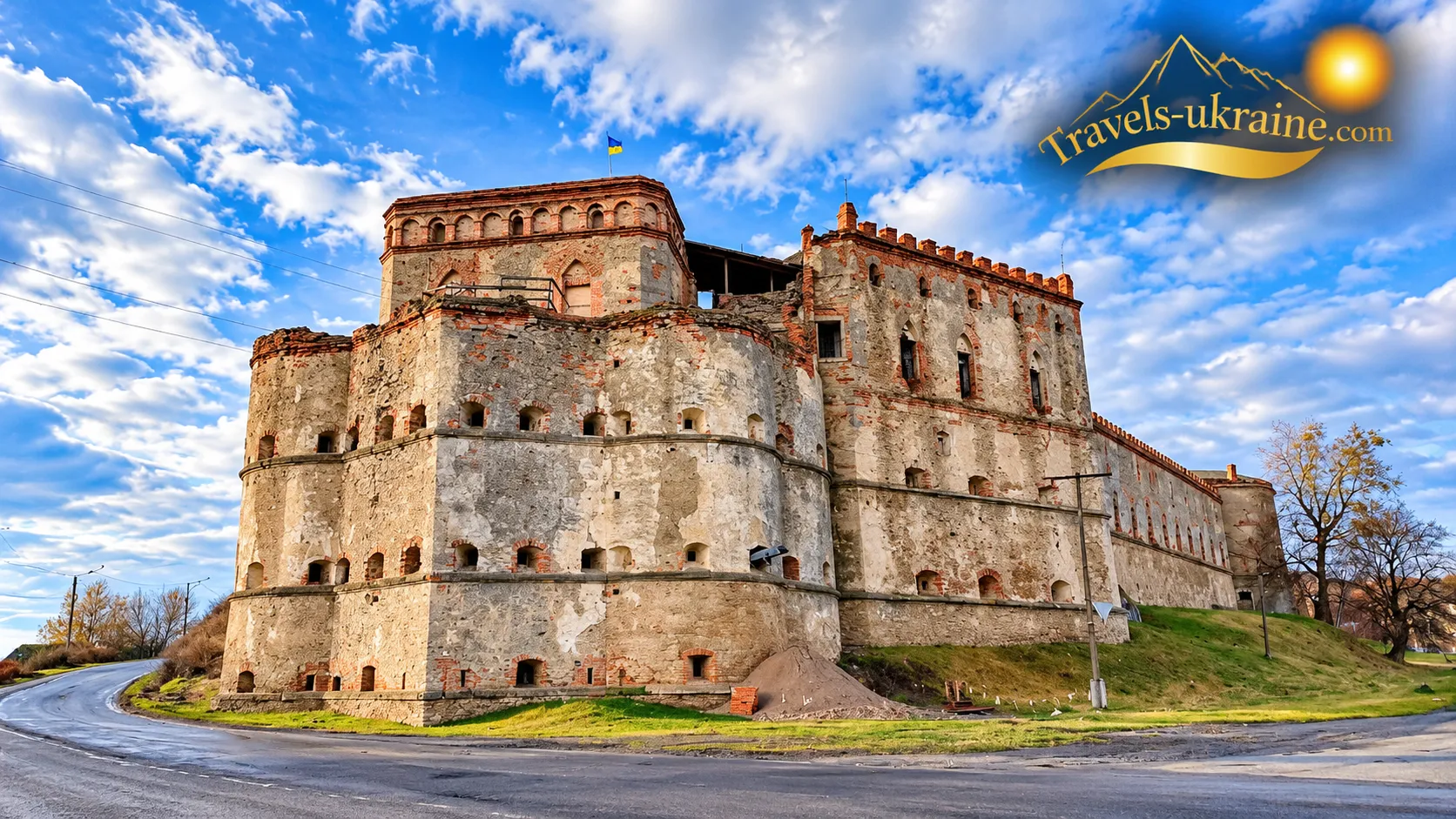
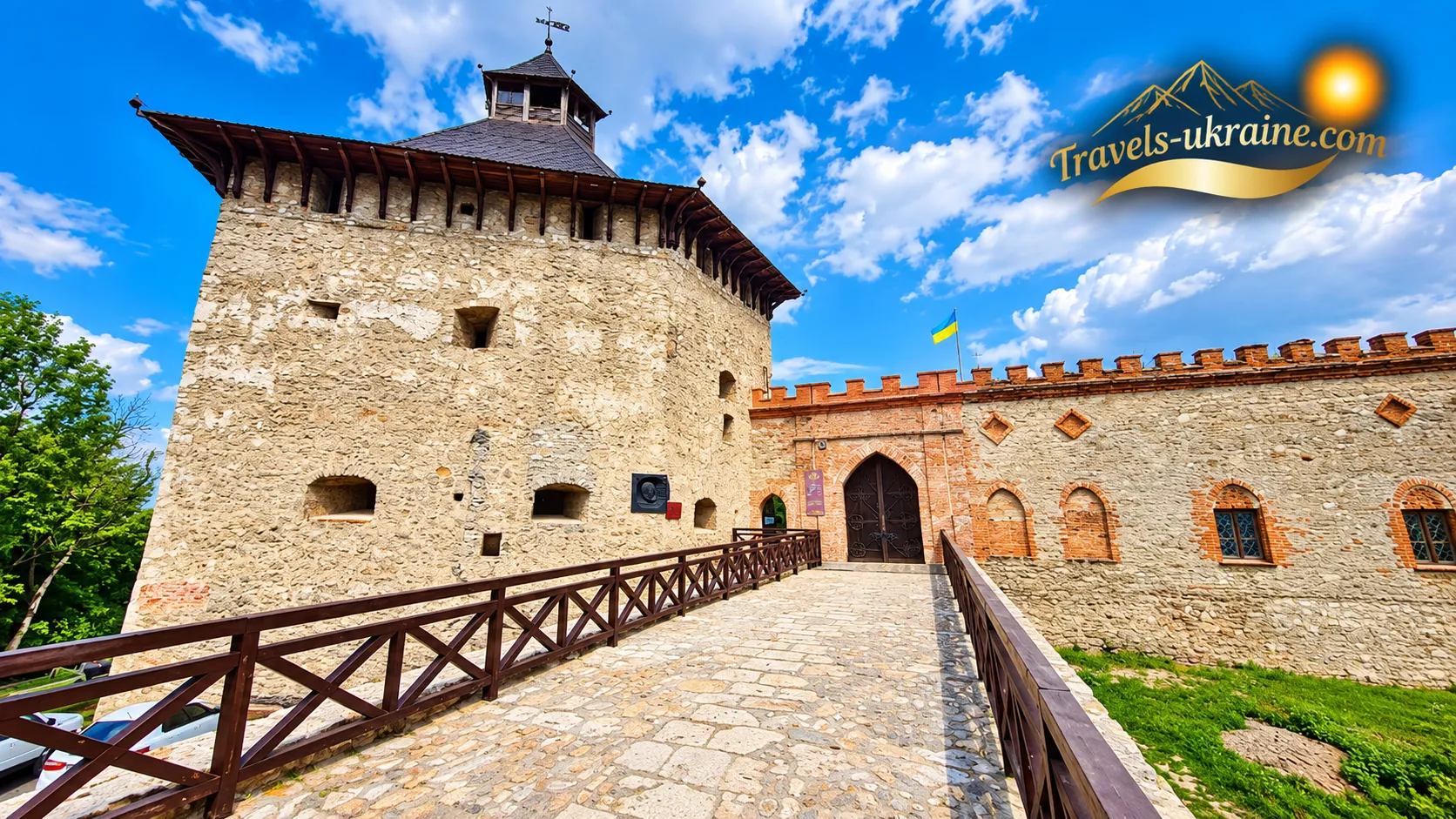
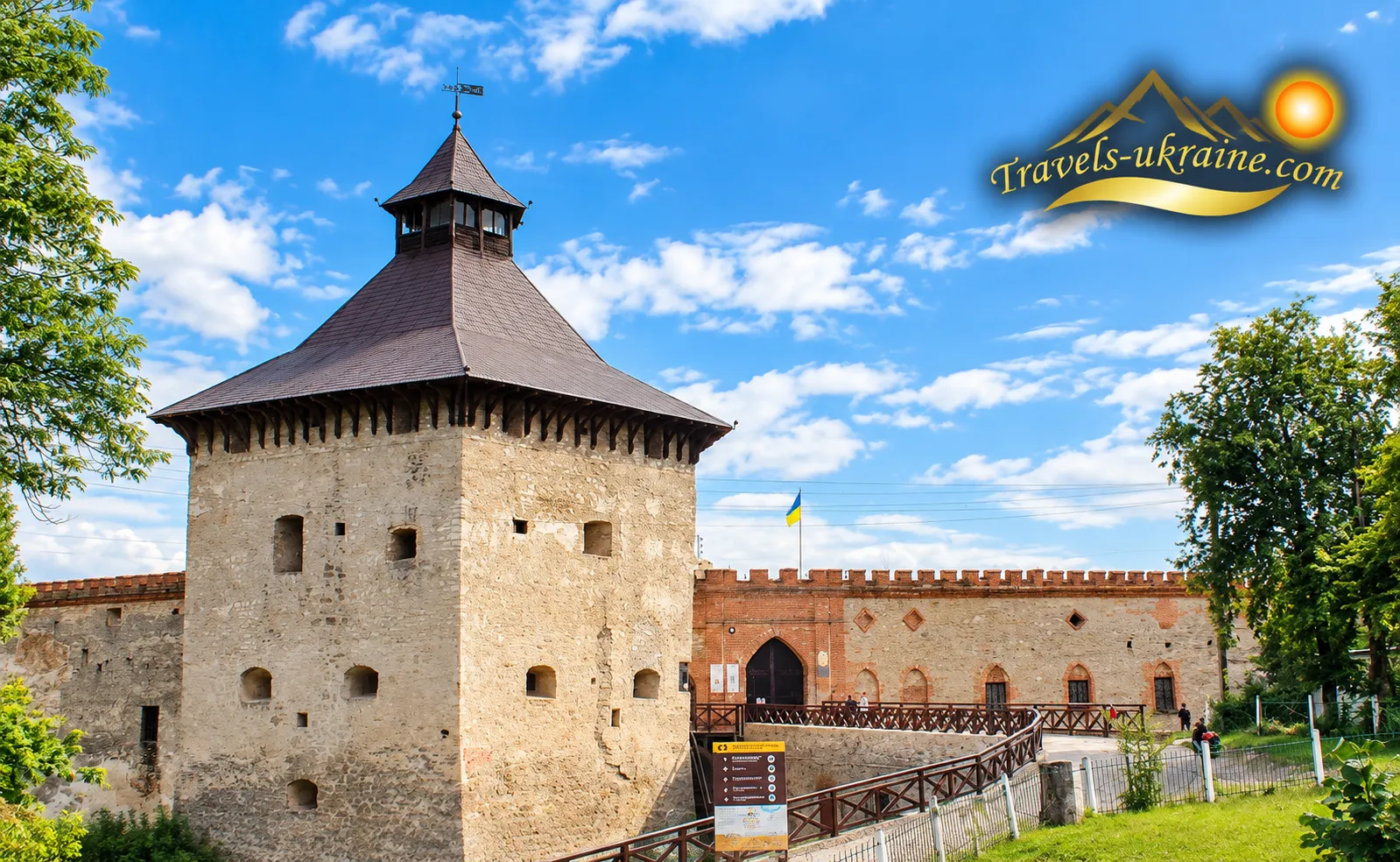
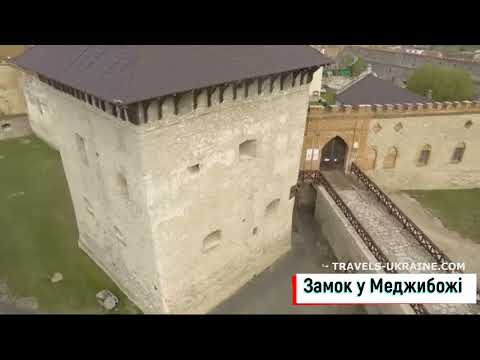
From the outside, the defensive complex impresses visitors primarily with its scale. Once you step through the walls, however, an entirely different experience begins. Instead of a single large castle, you discover a complex in which different buildings served different purposes: some provided defense, others served as living quarters, and still others were connected with religious life. Today, several rooms are used for museum exhibitions. Therefore, the worst strategy is to rush across the courtyard, take a photograph beside the tallest tower, and decide that you have seen the entire fortress. In reality, the architectural landmark of Medzhybizh becomes most interesting when you explore its individual elements and gradually piece together the bigger picture.
Defensive Walls of Medzhybizh Fortress
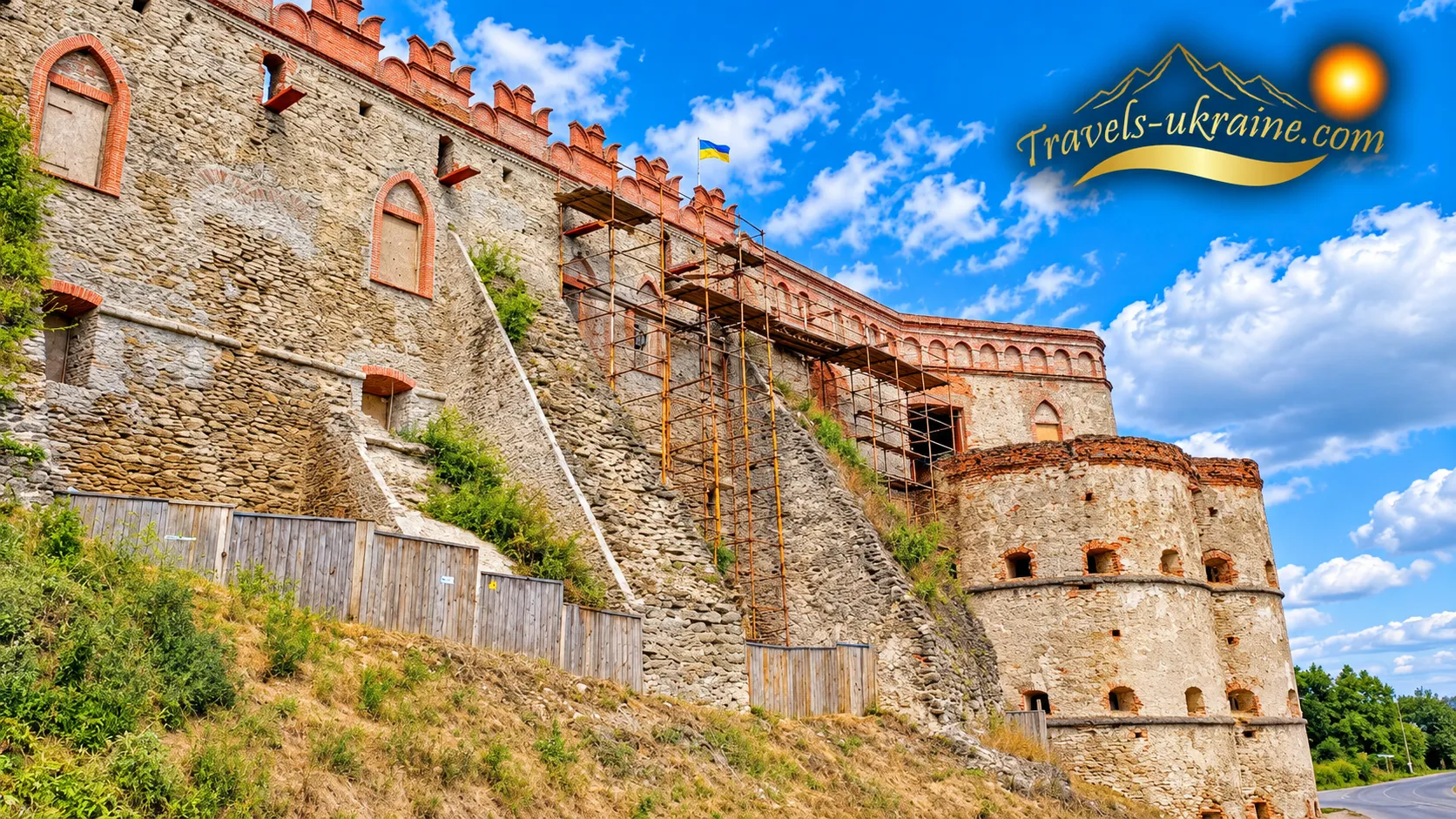
It makes sense to begin with what is impossible to overlook — the massive defensive walls. Their layout follows the contours of the headland between the Southern Bug and Buzhok rivers, allowing the natural terrain to become part of the fortification system. The true scale of the castle is especially apparent from the outside. Tall walls define the fortress's silhouette, while towers reinforce its most important defensive positions. It is worth walking around part of the fortifications and viewing them from different directions: what looks like an ordinary old wall from the inner courtyard may appear completely different from outside.
Pay attention to the masonry itself. These walls are not a pristine modern reconstruction designed to look old. They reveal traces of rebuilding, repairs, and restoration. For an observant traveler, they provide a kind of historical timeline — only with stone and brick instead of pages.
Fortress Towers — Architecture Designed for Defense
One of the most distinctive features of Medzhybizh Fortress's architecture is its towers. They give the complex its recognizable silhouette and remind visitors of the castle's original purpose: controlling the approaches and protecting the fortifications. Their shapes, wall thicknesses, the placement of firing openings, and the internal organization of the defensive structures all followed military logic. As firearms developed, the fortifications had to change, making it possible to trace the transition from medieval defensive principles to later methods of warfare.
Here, it is worth forgetting for a few minutes that you are a tourist. Try looking out from a tower, or from its base, not at the beautiful landscape but at the approaches to the fortress. You will immediately understand why that particular structure stands exactly where it does. Fortunately, things are much easier for modern visitors: the most threatening force likely to approach the fortress today is another group of tourists.
St. Nicholas Church at Medzhybizh Fortress
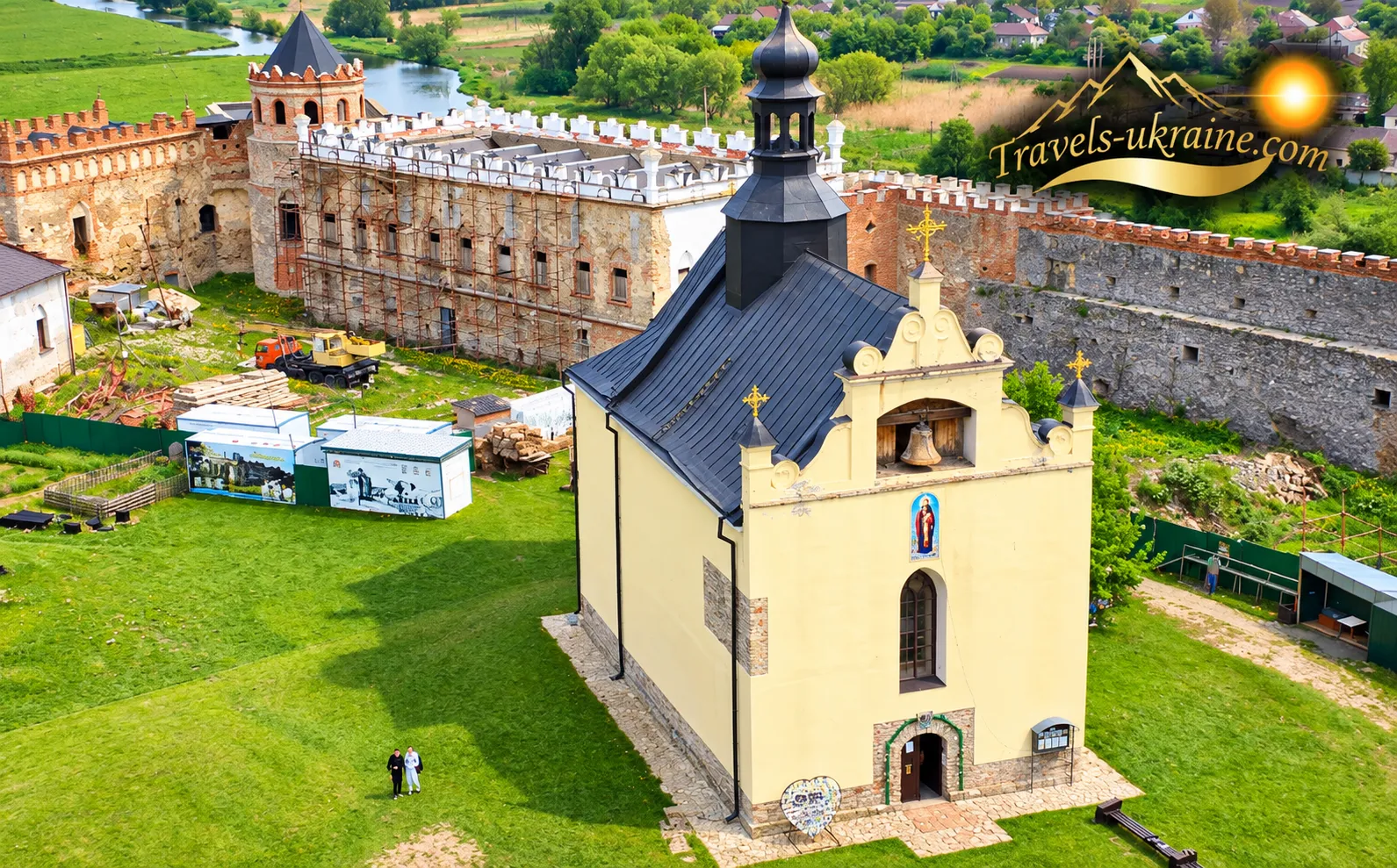
In the central part of the castle courtyard stands another important landmark — St. Nicholas Church. This religious building is an integral part of the historical ensemble and reminds visitors that life within the fortress was not limited to military service and the affairs of its owners. The church underwent reconstructions and changes alongside the complex itself. It should therefore be understood as part of Medzhybizh's multilayered history rather than simply as a separate church that happened to stand within the defensive walls.
When exploring the site, pay attention to the relationship between the church, the palace buildings, and the defensive perimeter. Every element within the fortified area had its own purpose, and religious architecture was as natural a part of everyday life as residential quarters or military structures.
The Inner Courtyard — Where You Can Appreciate the True Scale of the Fortress
One thing photographs do not always capture accurately is the size of the interior of Medzhybizh Fortress. After passing through the fortifications, visitors enter a large courtyard surrounded by the main buildings of the complex. This is where it becomes easiest to understand that the site is not a small private castle but an extensive multifunctional complex. At different times, residential, military, economic, and religious spaces all existed simultaneously within these walls.
Do not rush straight into the first open room. Stop in the middle of the courtyard and take a look around. This is one of those situations where a few minutes without a fixed itinerary can be more rewarding than trying to race through every museum room on a checklist.
Museum Exhibitions of the Medzhybizh State Historical and Cultural Reserve
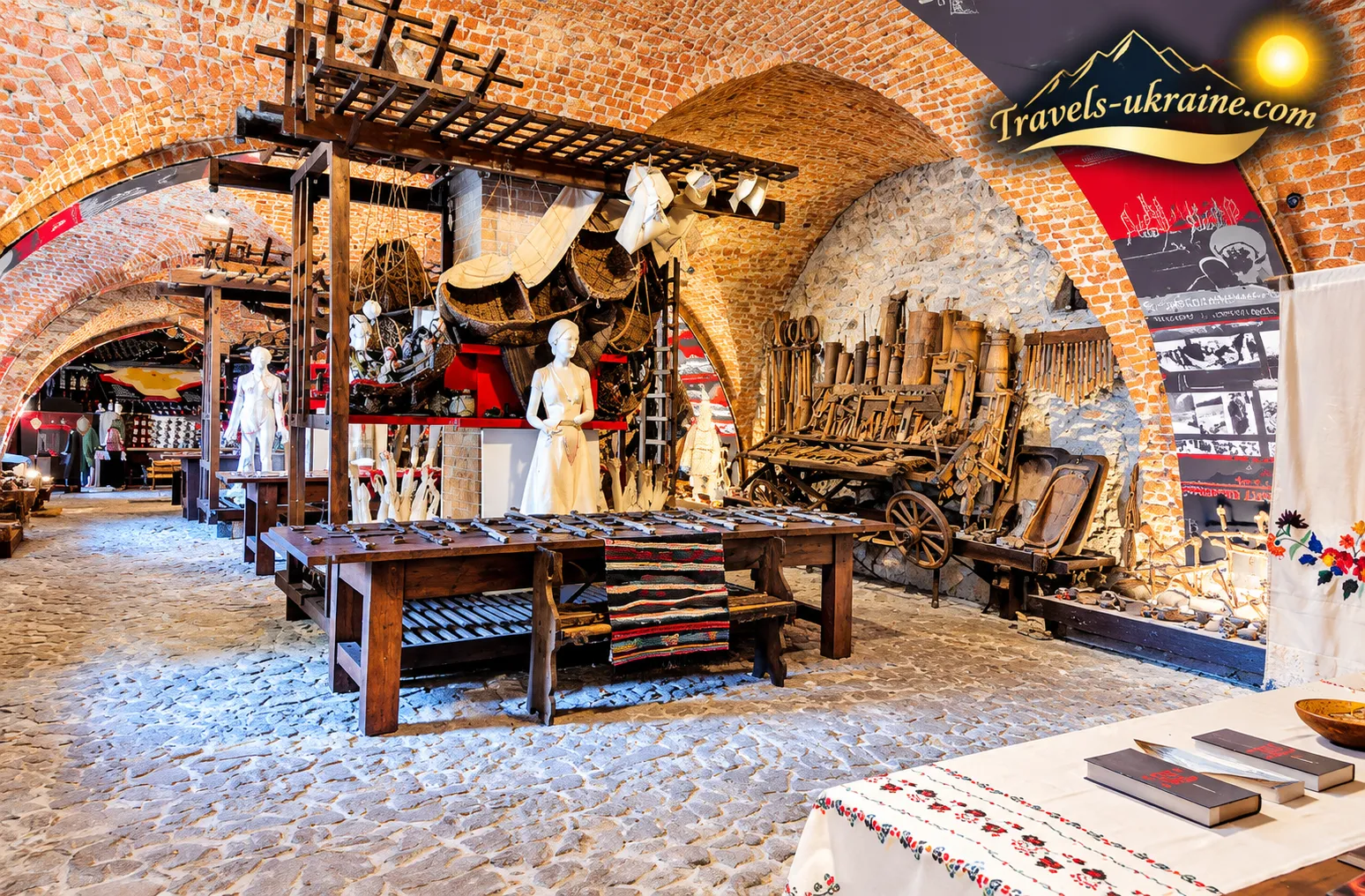
Today, Medzhybizh Fortress is not only an architectural monument but also a museum complex. Exhibitions organized by the Medzhybizh State Historical and Cultural Reserve allow visitors to explore much more than the castle's walls and towers. The displays introduce the history of Medzhybizh and the surrounding region, archaeological research, everyday life in different historical periods, military history, and local cultural heritage. Here, it becomes especially clear how long people have inhabited this area and how many layers of history are hidden within a place that modern tourists usually refer to simply as "the castle."
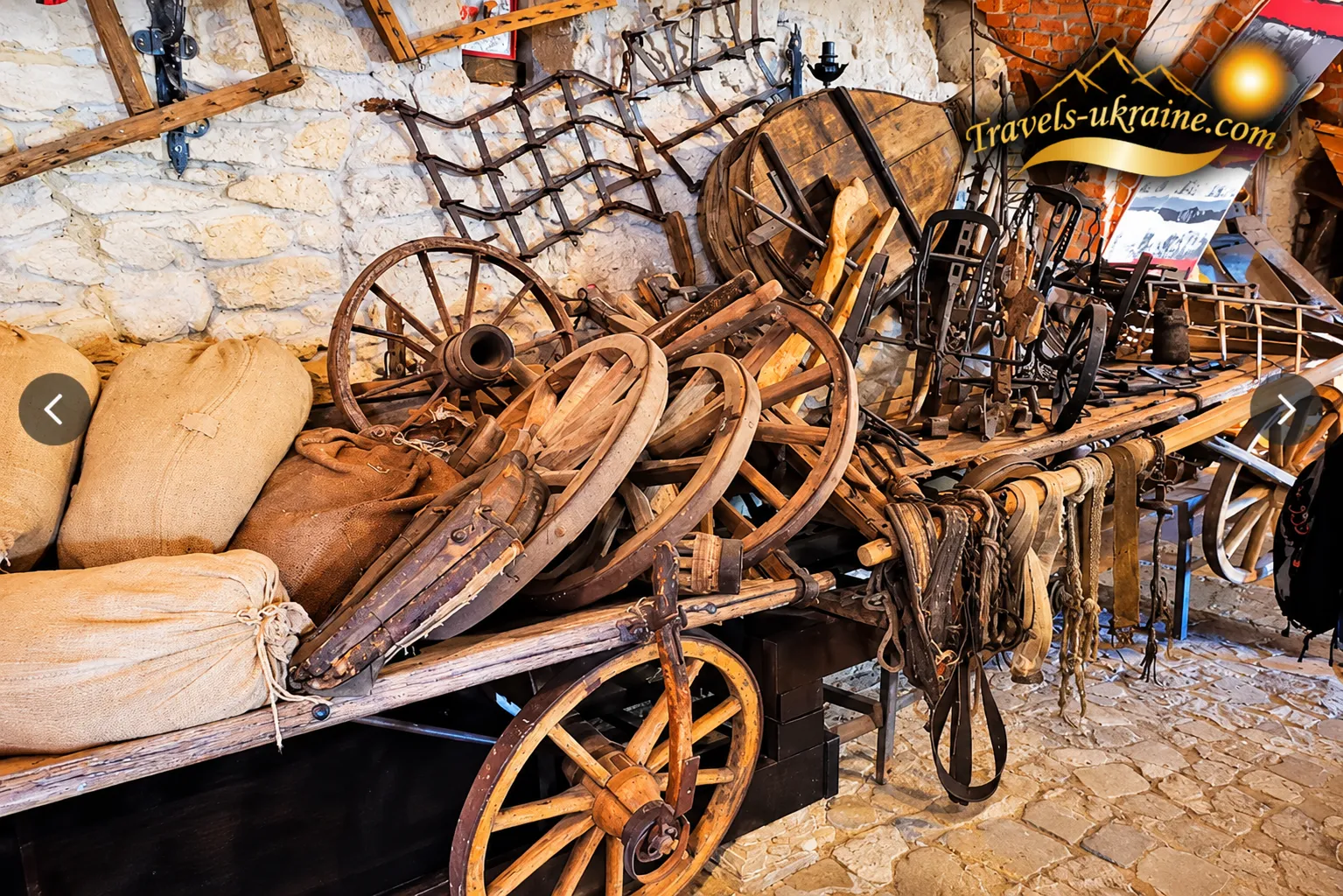
Archaeological discoveries are particularly valuable. Fragments of pottery, household objects, weapons, coins, and other artifacts help shift the focus from major historical events to the everyday lives of ordinary people. Sometimes a small object in a museum display can reveal just as much about the past as an entire tower.
In addition to permanent displays, the reserve may also host temporary exhibitions. Their themes change and can include historical, archaeological, ethnographic, artistic, or local history projects. This means that even a return trip to Medzhybizh will not necessarily be a repetition of your first visit. The architecture may be familiar, but the museum exhibitions can offer something entirely new.
Festivals, Historical Reenactments, and Cultural Events at Medzhybizh Fortress
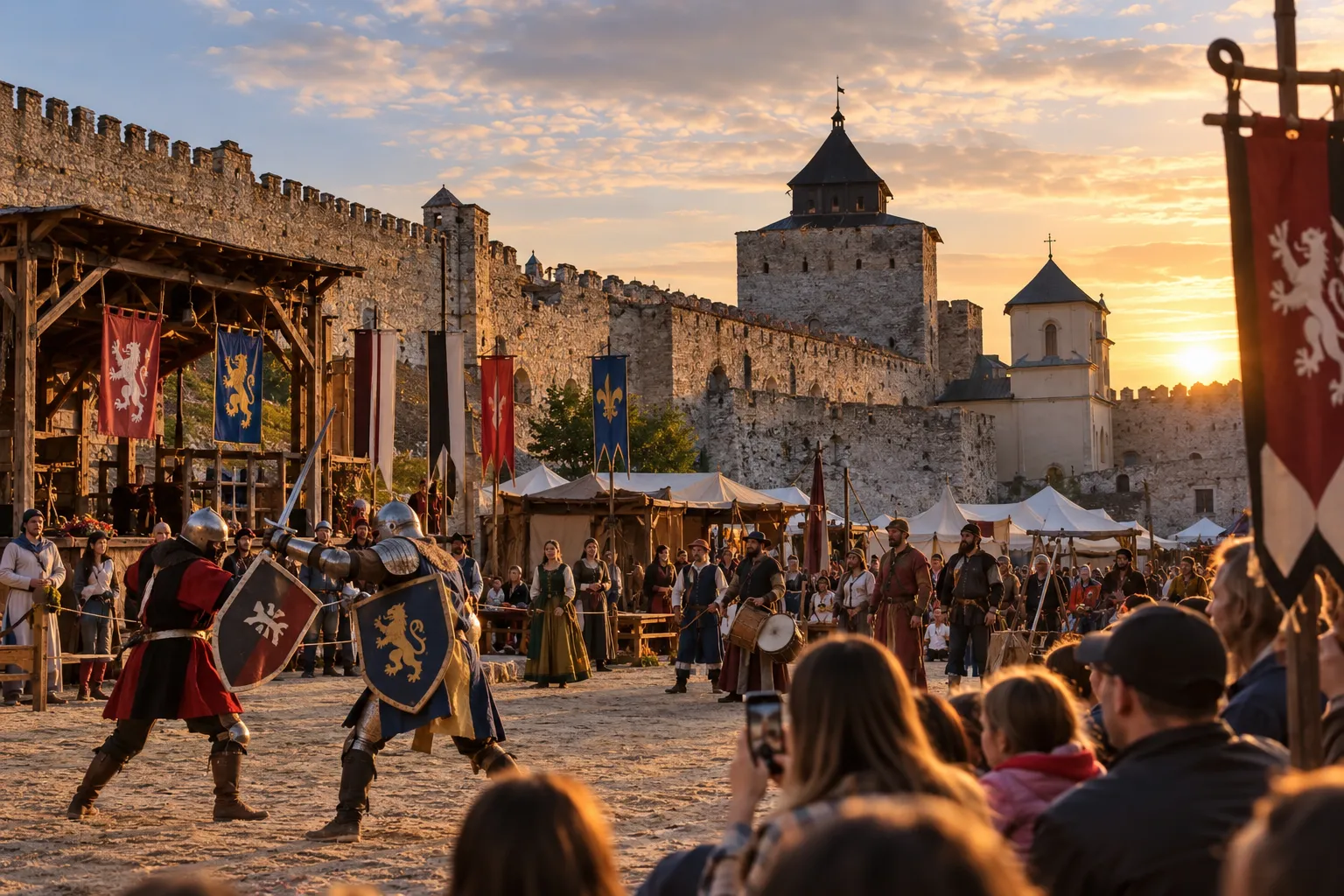
There are two ways to experience an ancient fortress. The first is to visit on an ordinary day, when you can peacefully explore the walls, towers, and museum exhibitions. The second is to arrive during a festival or historical reenactment, when the courtyard fills with people, music, costumes, and an entirely different atmosphere. The castle complex is equally well suited to both experiences.
The spacious inner courtyard, defensive walls, and historic architecture provide a natural setting for cultural events. There is no need to construct artificial medieval scenery — simply look around. Admittedly, electrical cables, loudspeakers, and visitors' smartphones occasionally remind you that the time machine is not quite working perfectly yet.
Historical Reenactments in Medzhybizh
One of the most fascinating activities for a location like this is historical reenactment. Its greatest advantage is that visitors can do more than read about history on a museum information board — they can see it in motion. Period clothing, armor, weapons, military customs, traditional crafts, and recreated elements of everyday life from past centuries all become part of the experience. Such activities feel particularly authentic in Medzhybizh. Throughout its long history, the fortress witnessed different armies, changes of ownership, sieges, and reconstructions. A reenactment event held among genuine defensive structures therefore creates an entirely different impression from a similar performance in an ordinary town square.
At the same time, it is important to understand the difference between historical reenactment and an actual historical event. Reenactors attempt to reproduce the clothing, equipment, tactics, and everyday customs of a particular era, but the performance itself remains a modern interpretation of the past. And that is perfectly reasonable: what matters most is that the experience inspires visitors to learn how events actually unfolded.
Festivals at Medzhybizh Fortress
Over the years, festivals in Medzhybizh have become an important part of the historical complex's cultural life. These events can take many forms, ranging from historical programs to artistic, musical, museum, and local heritage activities. For tourists, visiting during a festival has an obvious advantage: in addition to exploring the architecture, they can enjoy a special program and experience the fortress in an unusual atmosphere. However, there is another side to the story. If your dream was to spend an hour sitting beside an ancient wall in complete silence and photographing an empty courtyard, a major festival could introduce several hundred very energetic complications to that plan.
The best choice therefore depends on the purpose of your trip. If you are looking for atmosphere, performances, and events, plan your visit around a specific program. For leisurely exploration of the architecture and museum exhibitions, an ordinary day may be more convenient.
Museum Events and Themed Programs
The cultural activities of the Medzhybizh State Historical and Cultural Reserve extend beyond major festivals. Visitors are more likely to encounter smaller-scale events, including themed guided tours, presentations, exhibition projects, educational programs, lectures, and activities dedicated to the region's history and cultural heritage.
Such events may prove even more interesting than a large festival, especially if you are looking for more than entertainment and want to gain a deeper understanding of the fortress. For example, a themed guided tour might draw your attention to an architectural detail you would otherwise have walked straight past, wearing the confident expression of someone who had supposedly understood everything.
What to See in Medzhybizh and Near Medzhybizh Fortress
The simplest itinerary for a trip to Medzhybizh looks like this: arrive, spend a few hours exploring the fortress, take some photographs, and continue your journey. However, if you head straight back to your car after leaving the castle gates, you may miss an important part of Medzhybizh itself. The town's history does not end at the defensive walls.
For centuries, Medzhybizh was a meeting place of different cultures and religious traditions. Ukrainians, Poles, and Jews lived here; states and borders changed; crafts and trade developed. Medzhybizh holds a particularly important place in the history of Hasidic Judaism, attracting pilgrims from different countries around the world. Therefore, the answer to the question "What is there to see in Medzhybizh?" certainly extends beyond the fortress alone.
After the fortress, the most important historical subject associated with Medzhybizh is Israel ben Eliezer, known as the Baal Shem Tov or the Besht — an 18th-century religious figure regarded as the founder of the Hasidic movement. He spent a significant part of his life in Medzhybizh. As a result, this small Ukrainian town became one of the important places for followers of Hasidic Judaism. For many international visitors, the main reason for traveling to Medzhybizh is not even the fortress but the sites associated with the Besht.
This creates a rather unusual combination of travel experiences. One traveler comes to see the towers and defensive walls, while another arrives as a pilgrim visiting a place associated with a spiritual teacher. Later, they may meet in the same café and discover that each has experienced a completely different Medzhybizh.
What to See Near Medzhybizh
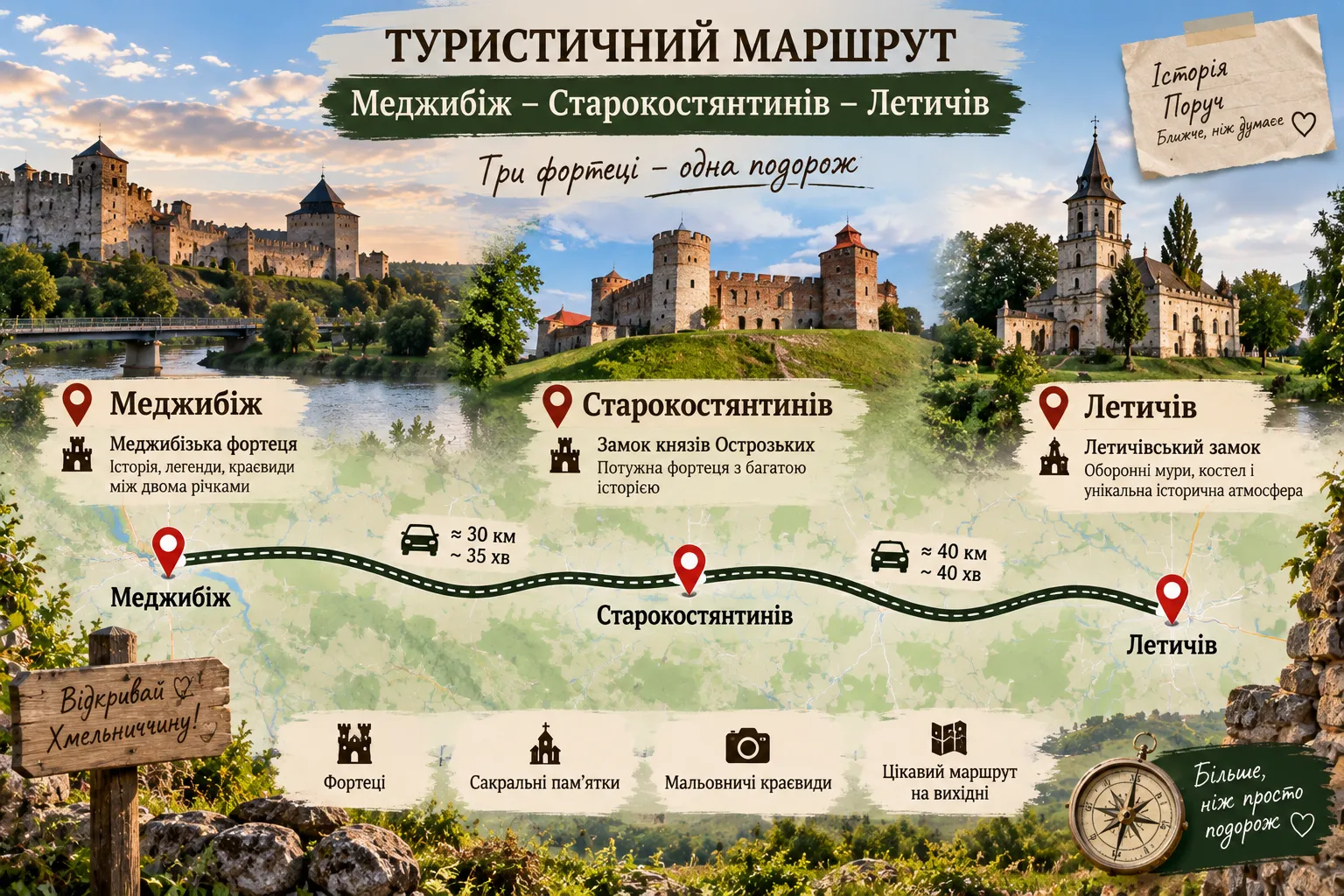
If you are traveling by car, Medzhybizh is easy to include in a broader itinerary through Khmelnytskyi Oblast. The fortress is conveniently located for continuing your journey to other historical and natural attractions in the region. One logical destination is Starokostiantyniv, home to the Castle of the Ostrogski Princes. Comparing these two fortresses on the same trip is particularly interesting: they differ in scale, architecture, and historical development, although both were important defensive centers in the region.
Another destination is the town of Letychiv, where the historic Letychiv Castle survives alongside defensive and religious landmarks. If you have more time, you can extend the itinerary to other interesting places in Khmelnytskyi Oblast. The main thing is not to turn the entire region's map into a checklist that must be completed in a single day. Two or three places explored properly will leave much stronger impressions than seven fortresses you have mostly seen through your car's windshield.
Medzhybizh Fortress: Frequently Asked Questions
Where is Medzhybizh Fortress located?
Medzhybizh Fortress is located in the settlement of Medzhybizh, Khmelnytskyi Oblast, near the confluence of the Southern Bug and Buzhok rivers. The fortress is approximately 30 kilometers from Khmelnytskyi, making it convenient to visit either as a separate destination or as part of a driving itinerary exploring the region's historic landmarks. The exact address and GPS coordinates are provided in the visitor information section below.
How can I get to Medzhybizh Fortress?
The most convenient way to reach Medzhybizh is by car from Khmelnytskyi or another town in the region. The settlement is situated near major roads, and the fortress can easily be located using a navigation app once you reach central Medzhybizh. Travelers without a private car can use bus services to Medzhybizh, but current public transport schedules should be checked shortly before departure.
How much time should I allow to explore Medzhybizh Fortress?
For a proper exploration of the fortress, it is worth allowing at least 2–3 hours. This should provide enough time to walk around the courtyard, admire the main architectural landmarks, and visit some of the museum exhibitions. If you are planning a guided tour, want to explore the museums thoroughly, take photographs, or attend a temporary exhibition, allow additional time. It is advisable to set aside half a day for the fortress and other attractions in Medzhybizh.
How much does admission to Medzhybizh Fortress cost?
Admission to the museum complex requires a ticket, and different ticket categories and separate charges for guided tours may apply. Prices change periodically, so it is best to confirm the latest rates before traveling. The ticket information available when this article was updated is provided in the visitor information section below.
Can visitors enter Medzhybizh Fortress?
Yes. Medzhybizh Fortress operates as a museum complex, so visitors are not limited to viewing its walls from the outside. Tourists can enter the inner courtyard and visit accessible museum and exhibition rooms. However, certain sections of the historical complex may be temporarily closed due to restoration, conservation, or other work.
Are guided tours available at Medzhybizh Fortress?
Yes, the reserve offers guided tours of Medzhybizh Fortress and its museum exhibitions. A guided tour is particularly useful for first-time visitors because the complex developed over many centuries, and without an explanation, it is not always obvious which historical period a particular building belongs to or how its function changed. For group visits, it is advisable to arrange the availability and timing of a guided tour in advance.
Is Medzhybizh Fortress worth visiting with children?
Yes. The massive walls, towers, inner courtyard, and museum artifacts make the fortress a much more engaging way for children to experience history than simply listening to a story. Visiting during a themed program, historical reenactment, or interactive event can be especially interesting. Families with younger children should be mindful of stairs, uneven surfaces, and other features of historic architecture.
Is parking available near Medzhybizh Fortress?
Medzhybizh Fortress is convenient to visit by car. Visitors should look for parking in permitted areas near the historical complex. During major festivals, historical reenactments, and other large events, the number of vehicles increases considerably, so it is advisable to arrive with extra time to spare.
What else can I see during a trip to Medzhybizh?
In addition to the fortress, Medzhybizh offers sites associated with the Baal Shem Tov, the old Jewish cemetery, religious landmarks, and the valley of the Southern Bug and Buzhok rivers. Travelers by car can continue their journey to Starokostiantyniv, home to the Castle of the Ostrogski Princes, or to Letychiv. This makes it easy to turn a single visit into a comprehensive itinerary exploring the historic attractions of Khmelnytskyi Oblast.
Is Medzhybizh Fortress Worth Visiting?
Some tourist attractions are places where you stop along the way, take a few photographs, and continue your journey twenty minutes later. You could follow the same approach at Medzhybizh Fortress — but that would be rather like visiting a museum, looking at the entrance door, and deciding you have already experienced everything it has to offer. The true scale of this place only becomes apparent after stepping inside the walls. The spacious inner courtyard, towers, palace buildings, church, museum exhibitions, and traces of numerous reconstructions gradually come together to tell one remarkable story. And then you realize that this is not simply a beautiful castle but a complex that has changed alongside Podillia itself over many centuries.
It is precisely this multilayered history that makes the fortress so fascinating. There is no single "correct" historical era to which the entire monument can be assigned. Some walls recall the times when defense was the primary concern, others reflect the transformation of the stronghold into a residence, while the museum halls tell their stories through archaeological discoveries, documents, and everyday objects. That is why the fortress is equally appealing to people interested in Ukrainian castles and fortresses, history, architecture, archaeology, or simply an unusual destination for a weekend getaway. And even if the words "fortification architecture" do not normally make you want to jump straight into your car, the sheer scale of the ancient walls and the views over the river valley stand a good chance of changing your mind.



No Comment
You can post first response comment.