
 English
 Українська
 Български
 Hrvatski
 Čeština
 Dansk
Dansk Nederlands
 Eesti
Eesti Suomi
Suomi Français
 Deutsch
 Ελληνικα
 Magyar
 Íslenska
 Italiano
 Latviešu
 Lietuvos
 Polski
 Português
 Română
 Русский
 Српски
 Slovenčina
 Slovenščina
 Español
 Svenska
 Türkçe
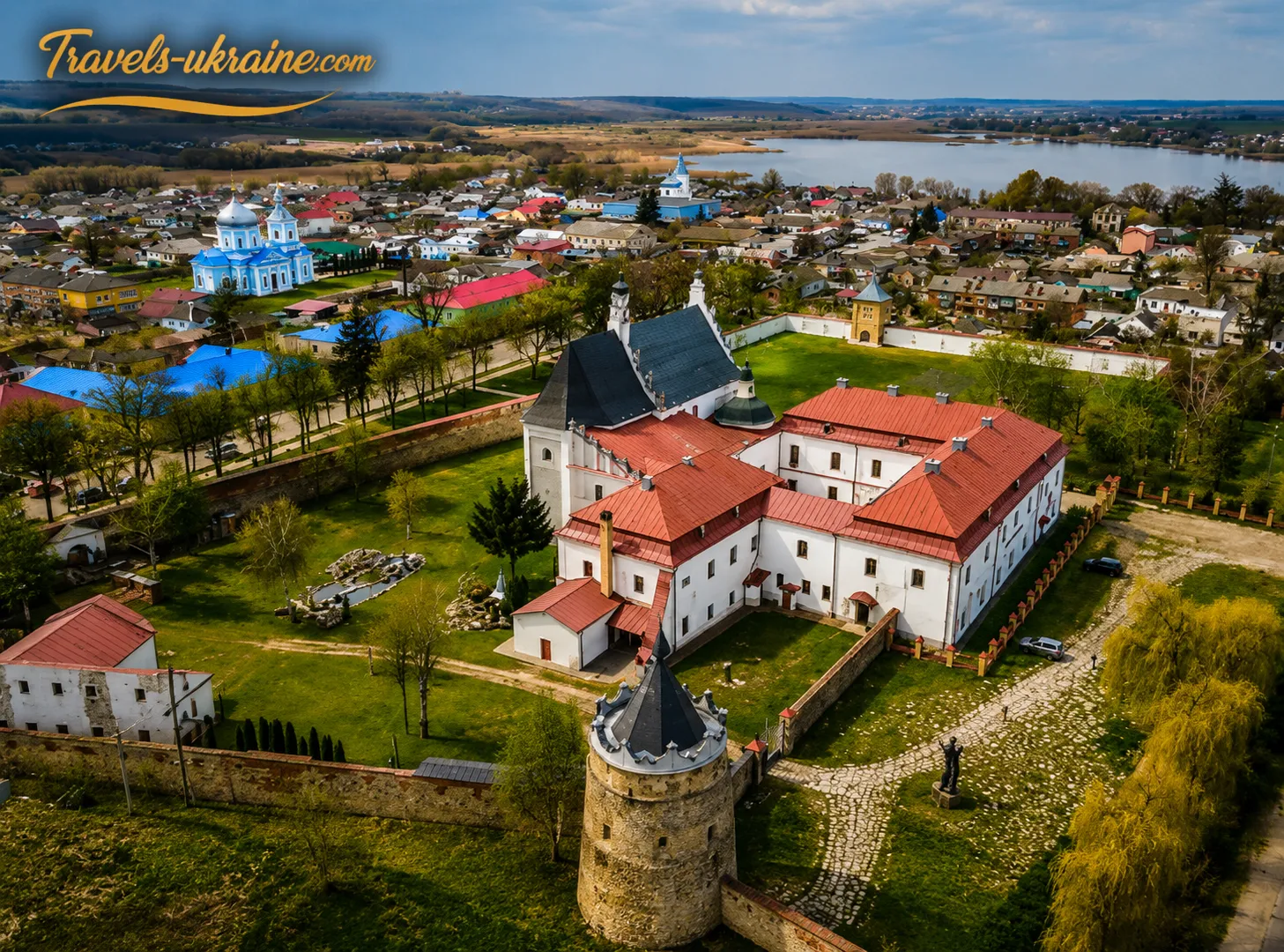
Did you know that a fortress has survived in the very heart of Podillia, beside whose walls the stories of defensive battles, an ancient shrine, and the legendary Ustym Karmaliuk have become intertwined? Today, Letychiv Castle no longer greets travelers with high walls, numerous towers, and deep moats as it did several centuries ago. Yet even a single surviving round tower and fragments of ancient walls can tell us far more than fully restored monuments sometimes can.
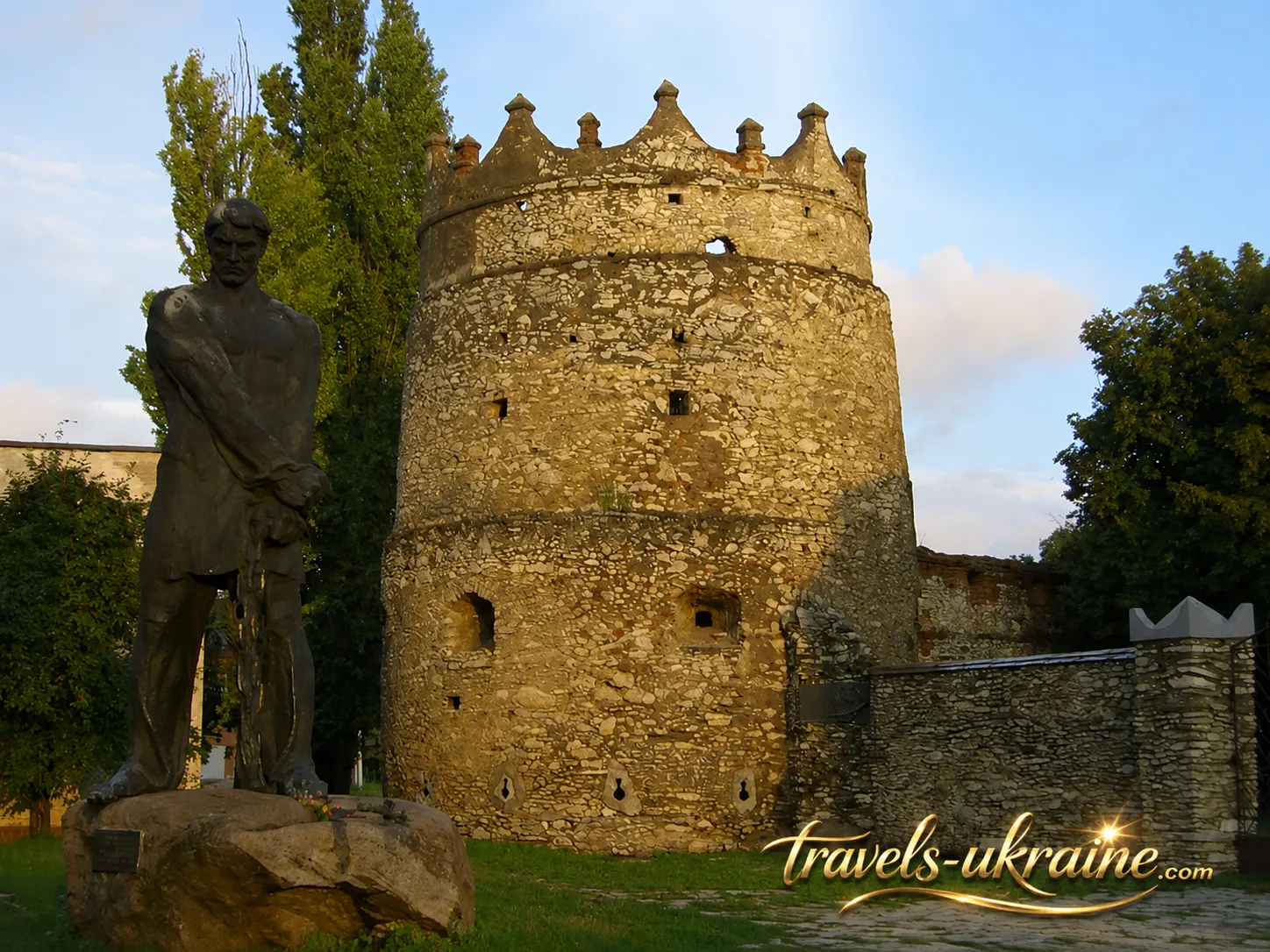
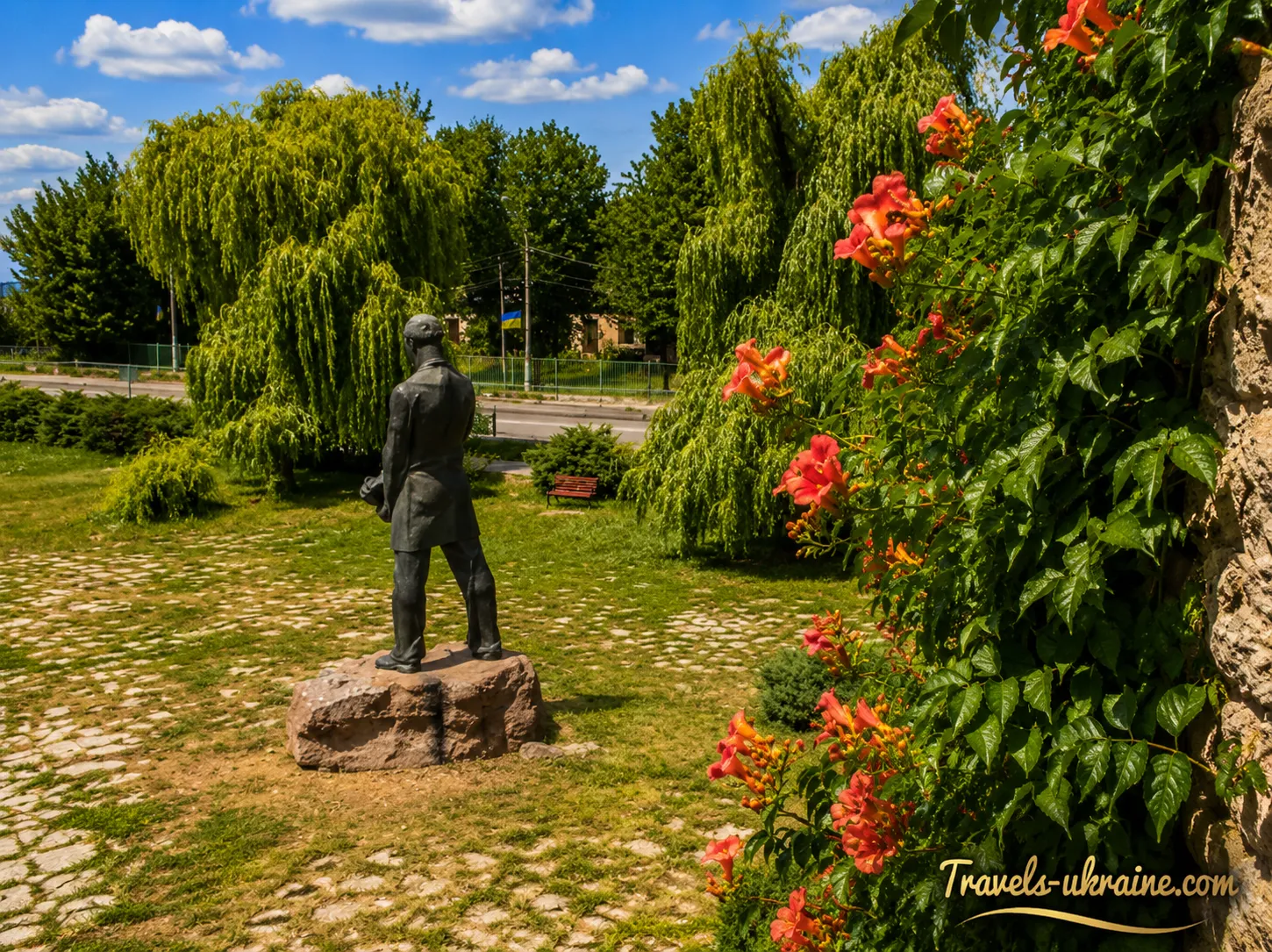
The castle in Letychiv stands in a place where history has not remained merely on the pages of books. Beside the remains of the defensive fortress stands the Sanctuary of Our Lady of Letychiv—a historic Roman Catholic church and monastic complex visited by pilgrims. Nearby rises a monument to Ustym Karmaliuk, while Letychiv itself preserves the memory of the folk avenger with whom this region is particularly closely connected.
That is why Letychiv’s defensive complex is perceived as more than just the remains of an old castle. It is a place where several historical layers coexist: medieval defenses, noble rule, monastic life, Cossack wars, popular uprisings, and spiritual tradition. All it takes is stopping beside the rough stone masonry to imagine how many different people passed through here long before us.
Today, the former castle is not used as a museum with a ticket office, admission tickets, and a stern «do not touch» sign, but as part of an active religious complex. The Sanctuary of Our Lady of Letychiv, the Church of the Assumption of the Blessed Virgin Mary, and monastic buildings operate on its grounds, welcoming pilgrims and participants in spiritual gatherings.
The fortress itself has preserved a round defensive tower and fragments of its walls, so modern visitors find themselves in a rather unusual place: on one side are traces of ancient battles, and on the other, the silence of the church and prayer. Although the cannons here have long fallen silent, the castle still has a guardian—only now it is not a halberd-wielding sentry, but a calm atmosphere that quickly reminds tourists that they are not merely beside a historic monument, but also on the grounds of an active shrine.
So in this article, we will travel into the past together, follow in the footsteps of ancient defenders, and lift the veil on the events that shaped Letychiv’s history over many centuries. We will learn why a mighty fortress was built here, what trials its walls endured, how the defensive complex became an important spiritual shrine, and why the name of Ustym Karmaliuk has been etched forever into the memory of Podillia. Finally, we will try to understand what secrets the solitary castle tower still conceals and what it might tell us if the old stones could suddenly speak.
The History of Letychiv Castle: From a Wooden Fortress to a Shrine of Podillia
The history of Letychiv Castle resembles a long chronicle in which peaceful years were far less common than sieges, fires, and changes of power. The fortress was rebuilt repeatedly, lost its military importance, acquired new purposes, and eventually became part of an active religious complex. Only a round defensive tower and fragments of the walls have survived from its former might, but even these remains are enough to convey the scale of the events witnessed by Letychiv.
The town lay on an important route through Podillia, near the place where the Vovk River flows into the Southern Buh. This location encouraged trade and development, but at the same time made the settlement vulnerable to attacks. During the 15th–17th centuries, Letychiv repeatedly suffered from Tatar raids, as one branch of the Black Route passed nearby. Its own defensive fortress was therefore not a sign of luxury for the town, but a necessary condition for survival.
The Wooden Castle in Letychiv and the First Defensive Fortifications
Researchers date the first fortress in Letychiv to the second half of the 14th century. According to the widely accepted historical version, the wooden fortification was built after 1362, when Podillia came under the rule of the Grand Duchy of Lithuania. The official historical reference of the Letychiv community states that the fortress was already mentioned in documents from 1411. At the same time, the best-known surviving source describing its early appearance is a 1494 account of the castles of Podillia, in which Letychiv Castle appears as a wooden defensive structure.
The fortress of that time most likely consisted of wooden walls, defensive structures, earthen ramparts, and a moat. Surrounding marshlands and bodies of water provided additional natural protection. Such a system was common in medieval Podillia: building with wood was faster and cheaper, but during an attack, wooden fortifications easily fell victim to fire.
The attacks of 1453 and 1537 were particularly devastating for Letychiv. After each successive destruction, the town had to be rebuilt almost from scratch. Along with residential houses, craftsmen’s yards, and commercial buildings, the fortress was also restored, since without it the settlement was left almost defenseless.
Letychiv Fortress: What Is Reliably Known About Its Stone Walls and Towers
By the second half of the 16th century, the old wooden castle could no longer provide Letychiv with adequate protection. The town had repeatedly suffered attacks, while the development of firearms demanded stronger defensive structures. At the same time, Letychiv’s administrative importance was growing: by a resolution of the Warsaw Sejm in 1581, a municipal court was established here to hear criminal and property cases, maintain court registers, and safeguard important documents.
According to the Encyclopedia of the History of Ukraine, in 1598 a new castle was built in Letychiv by a decree of the Warsaw Sejm. It was intended to serve as a fortified administrative center and replace the wooden fortress, which had burned down and been rebuilt several times. Local historical tradition also associates the beginning of the castle’s reconstruction in stone with Kamianets starosta Jan Potocki and dates it to the late 16th century.
The most important source for understanding the fortress’s appearance at the time is the inventory of the Kamianets and Letychiv starosties, compiled in 1613. The original document is kept at the Central Archives of Historical Records in Warsaw, in the “Crown Treasury Archive” collection. The Encyclopedia of the History of Ukraine relies on this inventory in reporting that at the time Letychiv Castle had eight towers and was relatively lightly armed.
At the same time, modern local-history publications sometimes offer a different reconstruction of the castle plan: four round towers at the corners of the defensive perimeter and a separate quadrangular entrance tower. This count gives five principal tower structures. However, this scheme should not be categorically set against the 1613 inventory, as it may reflect a different stage in the fortress’s reconstruction or count only the largest corner towers and the gate tower.
It is therefore most accurate to state that the documentary description of 1613 records eight towers, while later reconstructions often show four round corner towers and one quadrangular entrance tower. Because most of the castle structures were lost and the complex was rebuilt repeatedly, it is now difficult to match all the towers mentioned in the sources precisely to the modern plan.
The Dominican Defensive Monastery Within the Castle Complex
At the beginning of the 17th century, the history of the castle took a new direction. Around 1606, a Dominican monastery was founded in Letychiv. The monks brought here a copy of the Roman icon of Our Lady of the Snows, which later became known as the icon of Our Lady of Letychiv. The monastery was established directly on the castle grounds, so the religious and defensive structures formed a single architectural ensemble. Beside the stone walls, they built the Church of the Assumption of the Blessed Virgin Mary and monastic cells. Construction of the masonry church continued during the first half of the 17th century and, according to encyclopedic sources, was completed in 1638.
Thus, the Dominican Defensive Monastery came into being, combining religious life with the realities of a borderland. Its strong walls were meant to protect not only the monks and the shrine, but also people who might seek shelter here in times of danger. During the events of 1648, the Dominicans left Letychiv and took the revered icon with them. The monastery buildings suffered repeated fires, looting, and destruction. From 1672 to 1699, Letychiv was part of the Kamianets Eyalet of the Ottoman Empire, so this period did not contribute to the peaceful development of either the fortress or the monastery.
The Fortress in Letychiv After Wars and Reconstructions and the Loss of Its Defensive Importance
After Podillia returned to the rule of the Polish–Lithuanian Commonwealth, the monastery began to recover. In 1724, the church was rebuilt, and the revered icon was returned to it. However, the fortress in Letychiv gradually lost its former military role. The development of artillery changed the requirements for defensive structures, and the old castle walls could no longer provide the protection they had in previous centuries.
In 1793, after the Second Partition of the Polish–Lithuanian Commonwealth, Letychiv came under the rule of the Russian Empire. Two years later, it became a district town in the Podillia Viceroyalty and later in the Podillia Governorate. The settlement retained its administrative importance, but the ancient defensive complex increasingly became a historic monument.
In 1832, the imperial authorities closed the Dominican monastery after suppressing the Polish uprising of 1830–1831. The church, however, continued to function as a parish church. The castle structures were gradually dismantled or adapted to new needs, so only a small part of the former eight towers and extensive system of walls survived.
Ustym Karmaliuk as Part of the History of the Castle in Letychiv
Was Ustym Karmaliuk really imprisoned in the tower of Letychiv Castle? Let us try to find the answer based not on tourist legends and later retellings, but solely on reliable historical sources. So, what do we have?
One fact is supported by documentary evidence: after their arrest in June 1827, Karmaliuk and his companions were escorted by fifty soldiers to the Letychiv Prison, from where they were later transferred to the Lityn jail. A scholarly study based on historical materials does not call this prison a castle tower and does not identify it with Letychiv Castle.
The academic Encyclopedia of the History of Ukraine confirms Karmaliuk’s activities in Letychiv and Lityn counties, the work of a special investigative commission, and his burial in Letychiv, but it likewise does not report that he was imprisoned in Letychiv Castle.
The official website of the Letychiv community explicitly mentions another confirmed place of imprisonment—the Old Fortress in Kamianets-Podilskyi, where Karmaliuk was held behind bars three times. It says nothing about his having stayed in the tower of Letychiv Castle.
Where the Version of Karmaliuk’s Imprisonment in the Castle Tower Came From
Tourist and popular publications do indeed contain the claim that in 1827 Karmaliuk allegedly spent six months «in a prison in the fortress tower.» However, other materials place the prison of that time in a separate building in the center of Letychiv, later used as the People’s House or House of Culture. Local officials have also testified that the prison where Karmaliuk was held stood beside the old music school, rather than necessarily in the castle tower.
Thus, the picture is as follows: Karmaliuk’s stay in Letychiv Prison in 1827 is a historically substantiated fact; the claim that this prison was located specifically in the tower of Letychiv Castle is a disputed local-history theory; there is no evidence that he permanently lived or stayed in the castle.
Letychiv’s Historic Monument in the 20th Century
The darkest page in the history of the complex is connected with the Second World War. During the Nazi occupation, a concentration camp operated on the grounds of the castle and monastery. A place that had once been meant to protect people was transformed into a site of imprisonment, suffering, and death.
After the war, a Soviet prison operated in the monastery buildings, and later the church and cells were used as a warehouse. In 1989, the church was handed over to the Roman Catholic community, after which its revival began. The restored monastery buildings once again acquired a religious purpose, while the tower and fragments of the walls remained tangible witnesses to the ancient fortress.
Today, the monument of defensive architecture combines traces of several historical eras. Within one ensemble, visitors can see the remains of a medieval castle, a restored church, monastery buildings, and a monument to Karmaliuk. This is not simply a collection of separate structures, but a kind of chronology of Letychiv, written in stone.
History explains why the ancient stronghold of Podolia looks the way it does today. Little remains of the castle, yet every surviving section of wall has become evidence of the time when Letychiv was an important defensive and administrative center. The fortress could not be preserved in its entirety, but its role in the life of the town outlived wars, states, and generations—and that is sometimes more important than perfectly restored walls.
The Architecture of Letychiv Castle
Letychiv Castle has not survived as an intact fortress with a complete ring of walls, all its towers, a gate, and interior buildings. The complex’s modern appearance is shaped by the remains of the ancient fortifications and the much better-preserved buildings of the Dominican monastery. That is why travelers see here not one architectural object from a particular period, but several historical layers that gradually accumulated on top of one another.
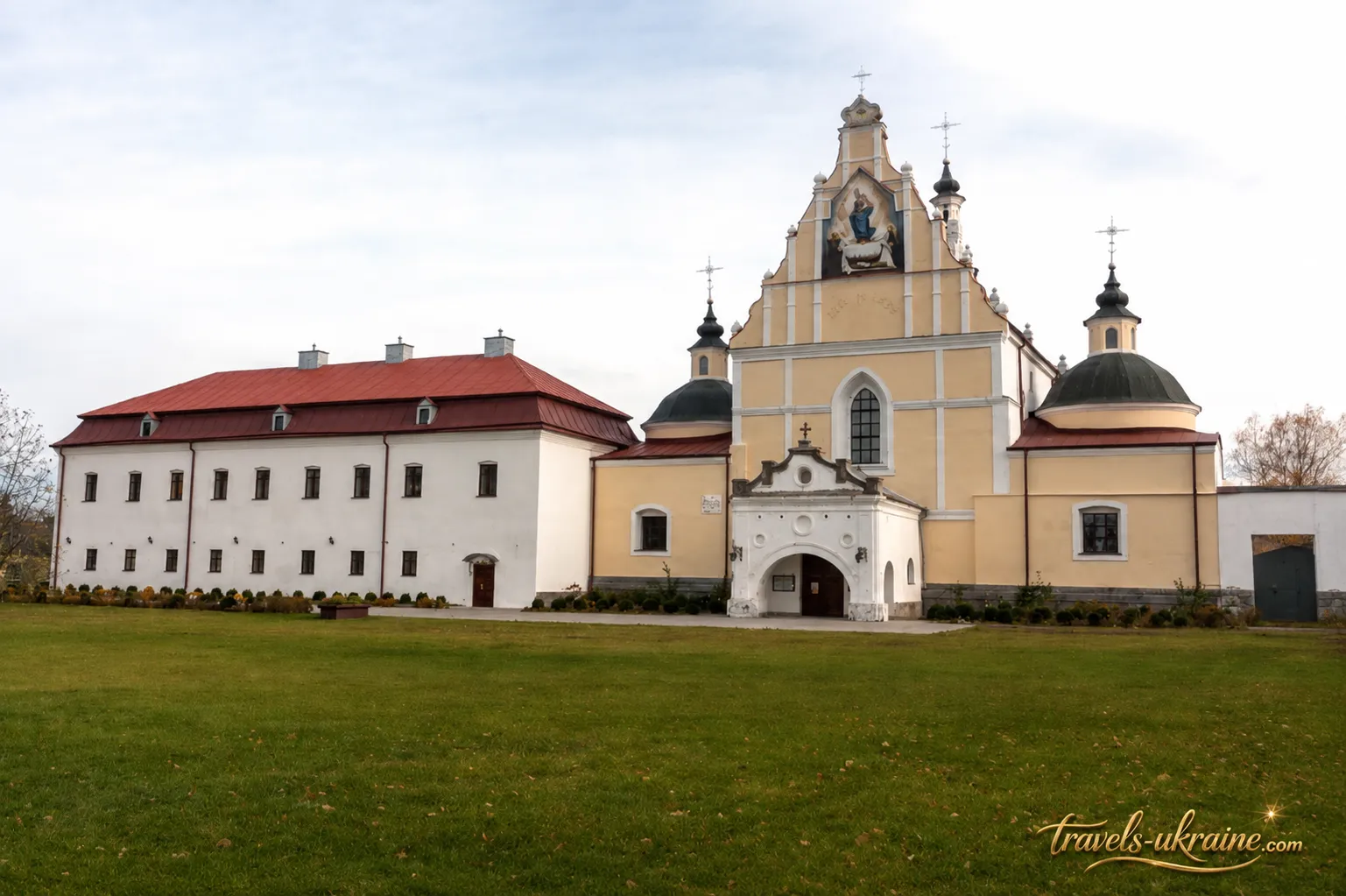
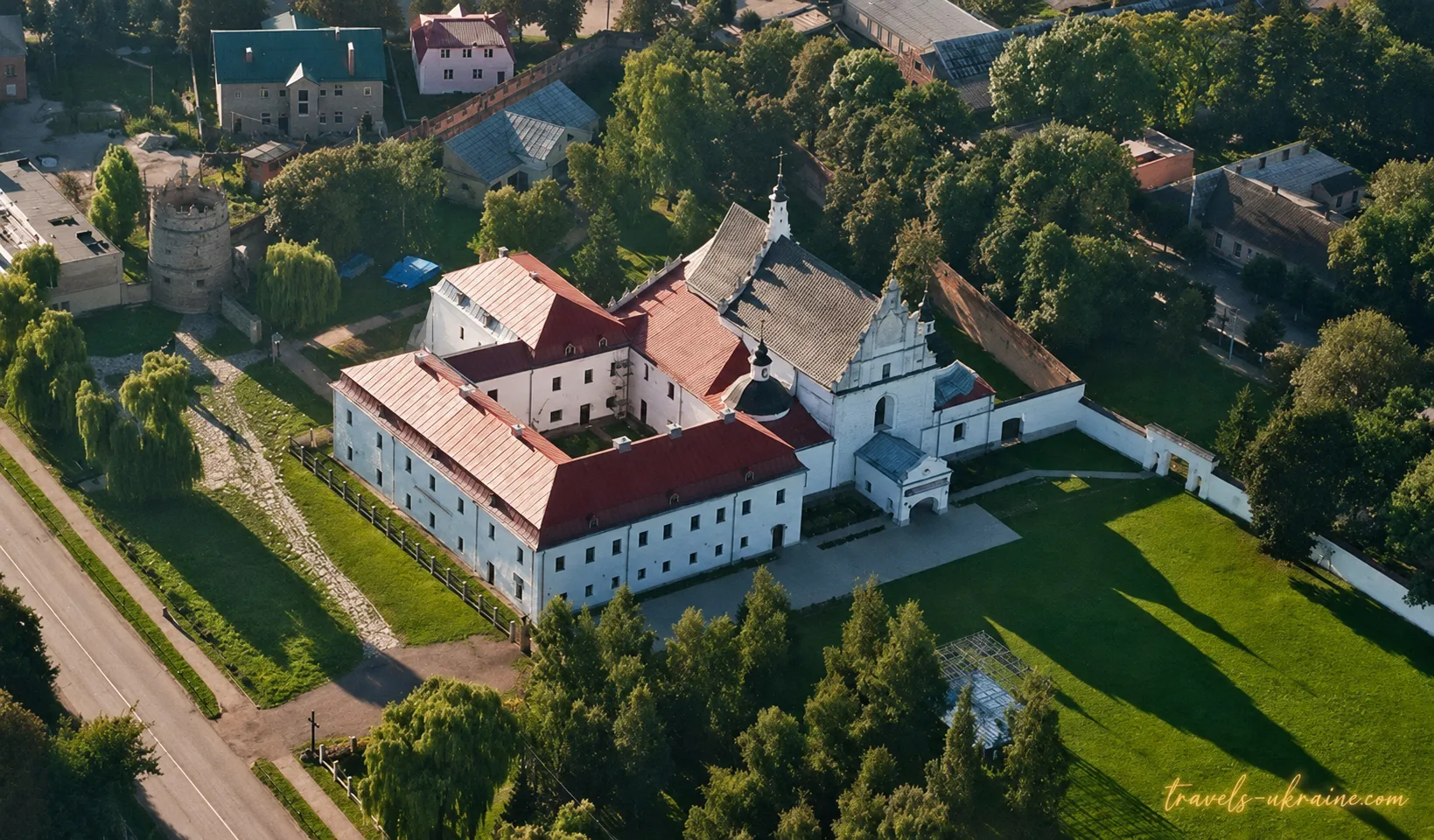
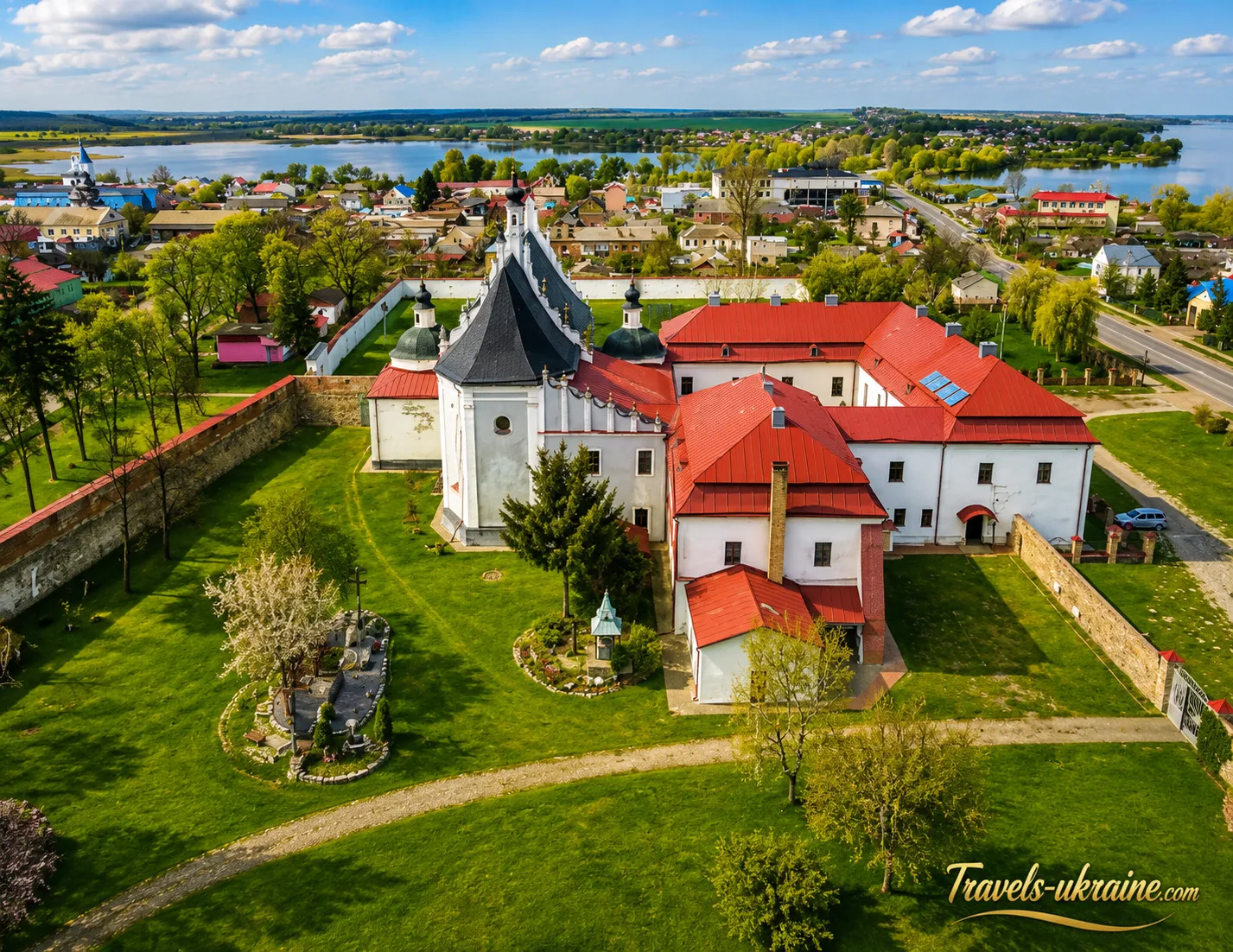
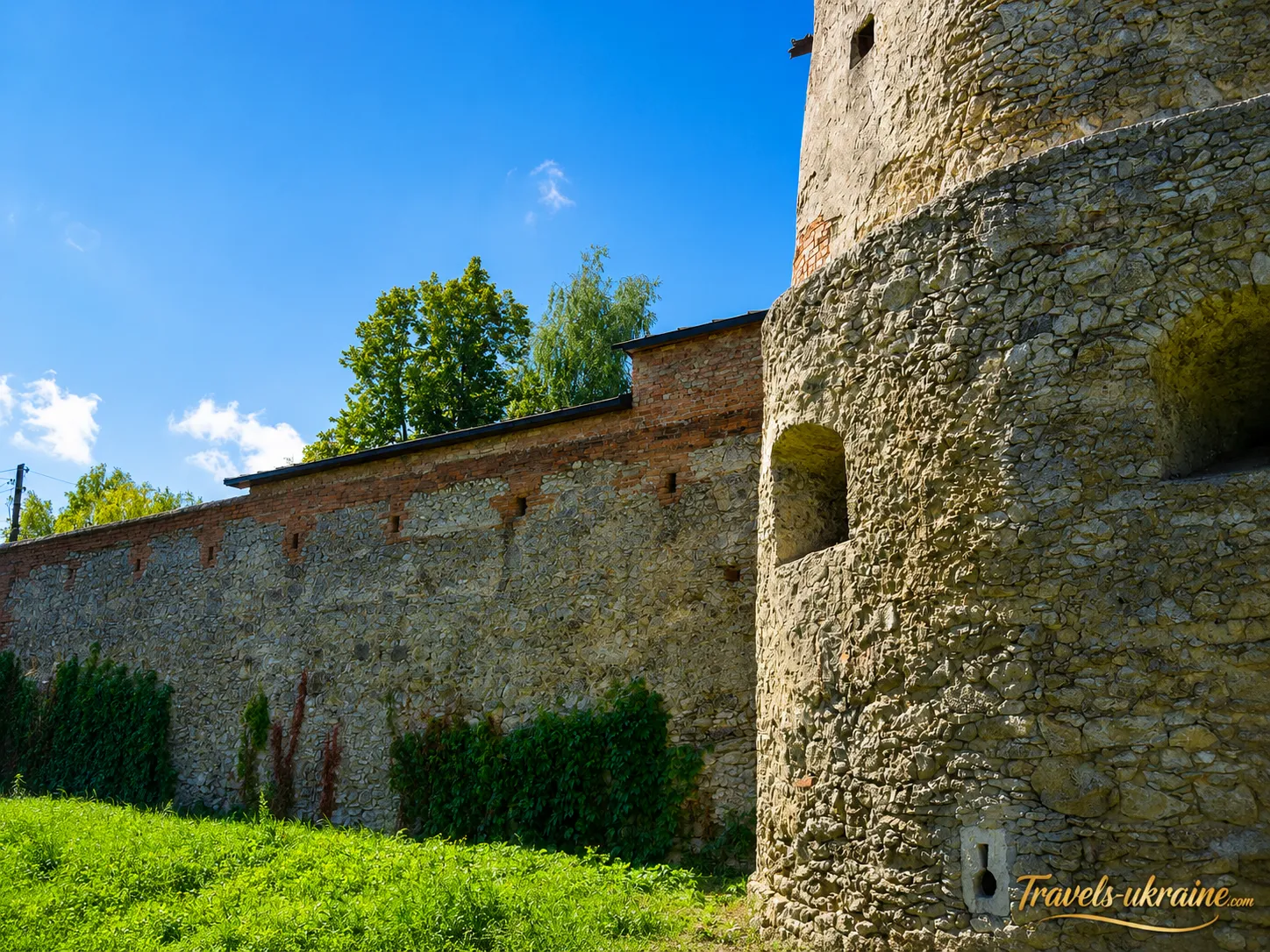
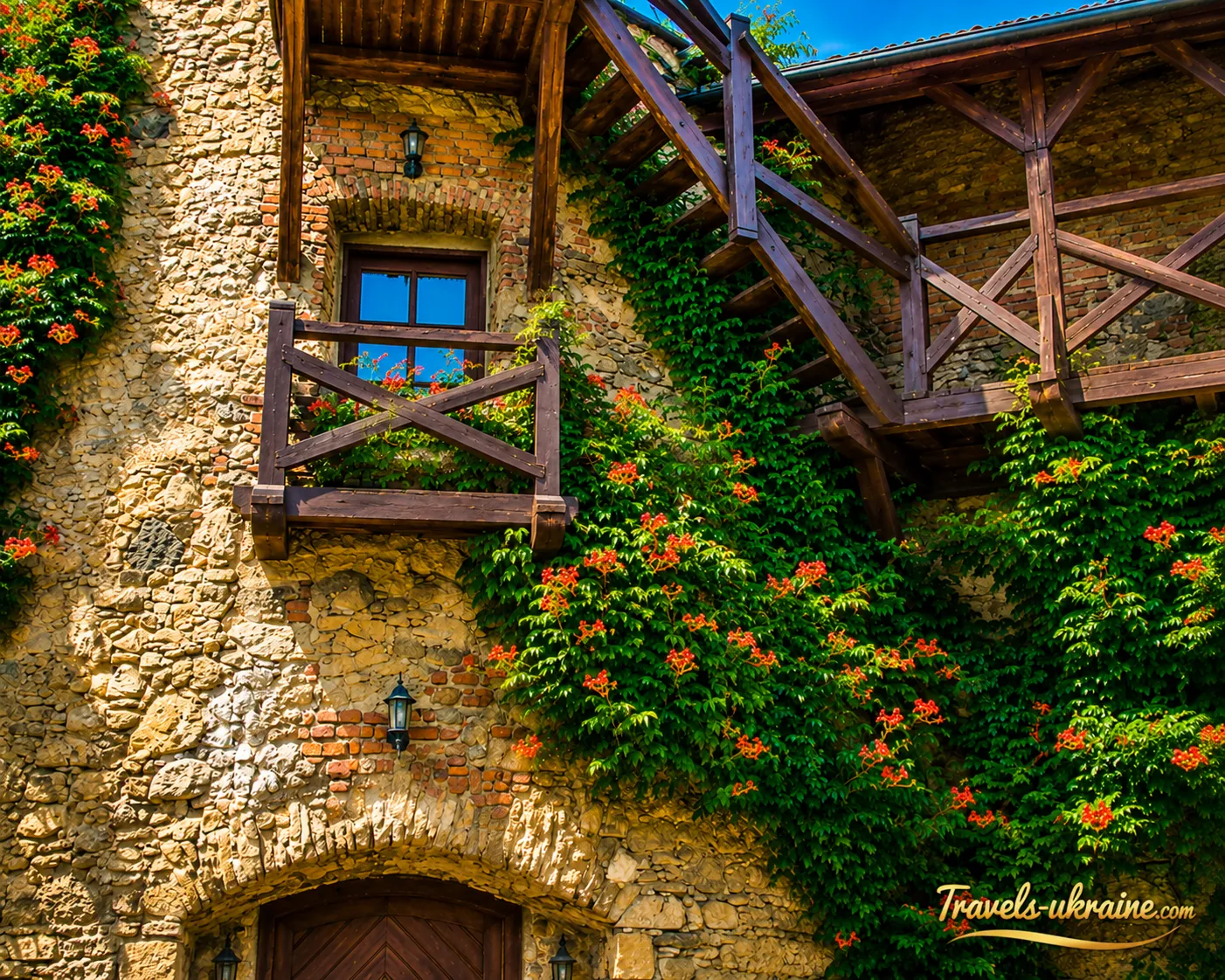
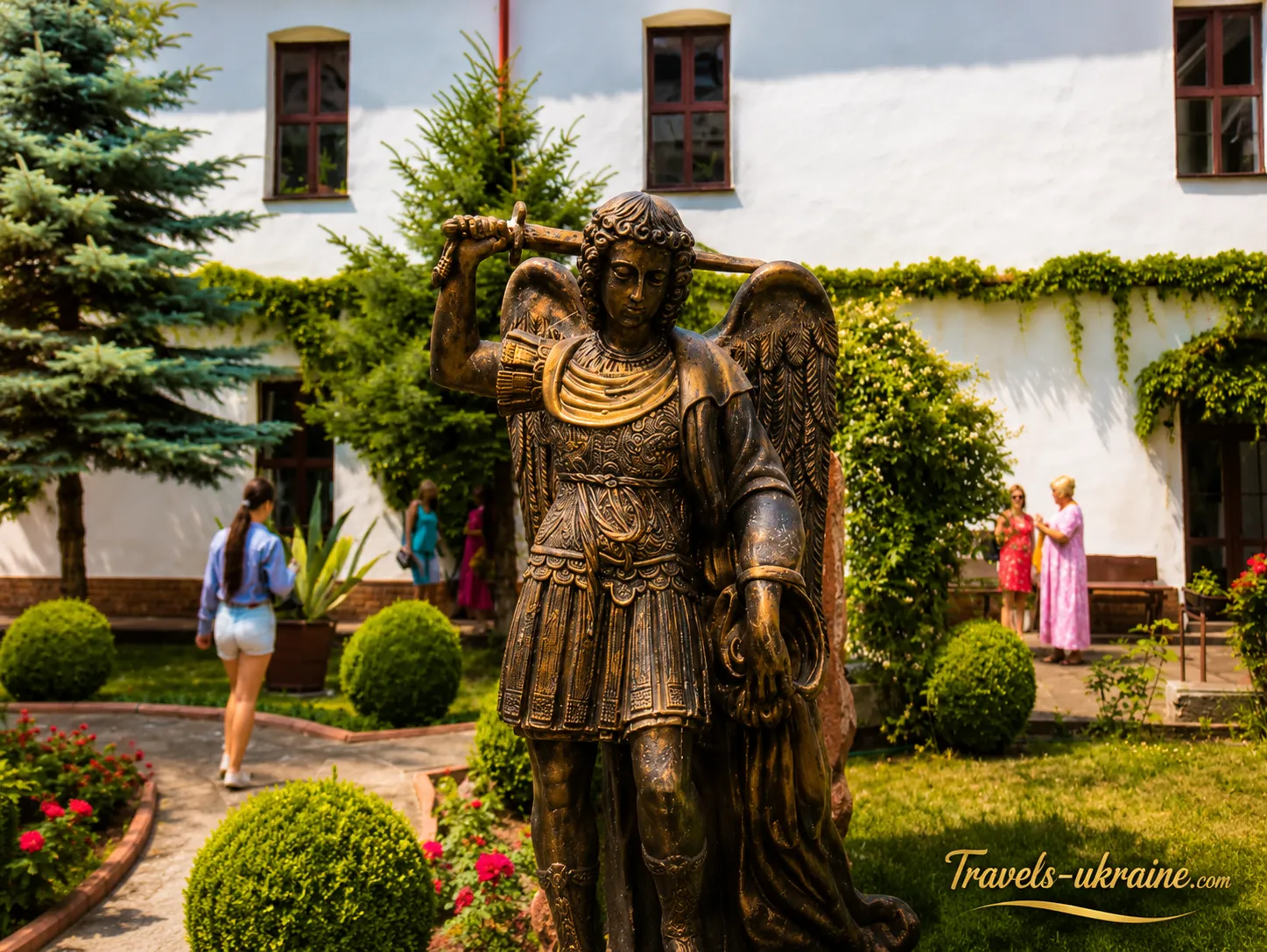
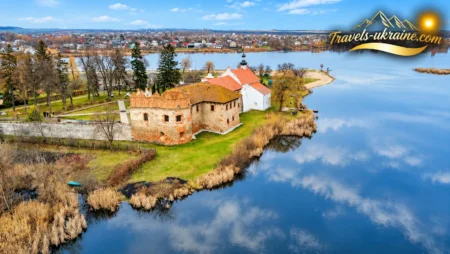
A round stone tower and fragments of the castle walls have survived from the former fortress. According to official materials from the Letychiv community, walls remain on three sides of the complex. Within the defensive perimeter are the Church of the Assumption of the Blessed Virgin Mary, the monastery buildings, and an inner courtyard. Because of this combination, the castle complex in Letychiv simultaneously resembles an old fortress, a monastery, and a quiet space for pilgrims.
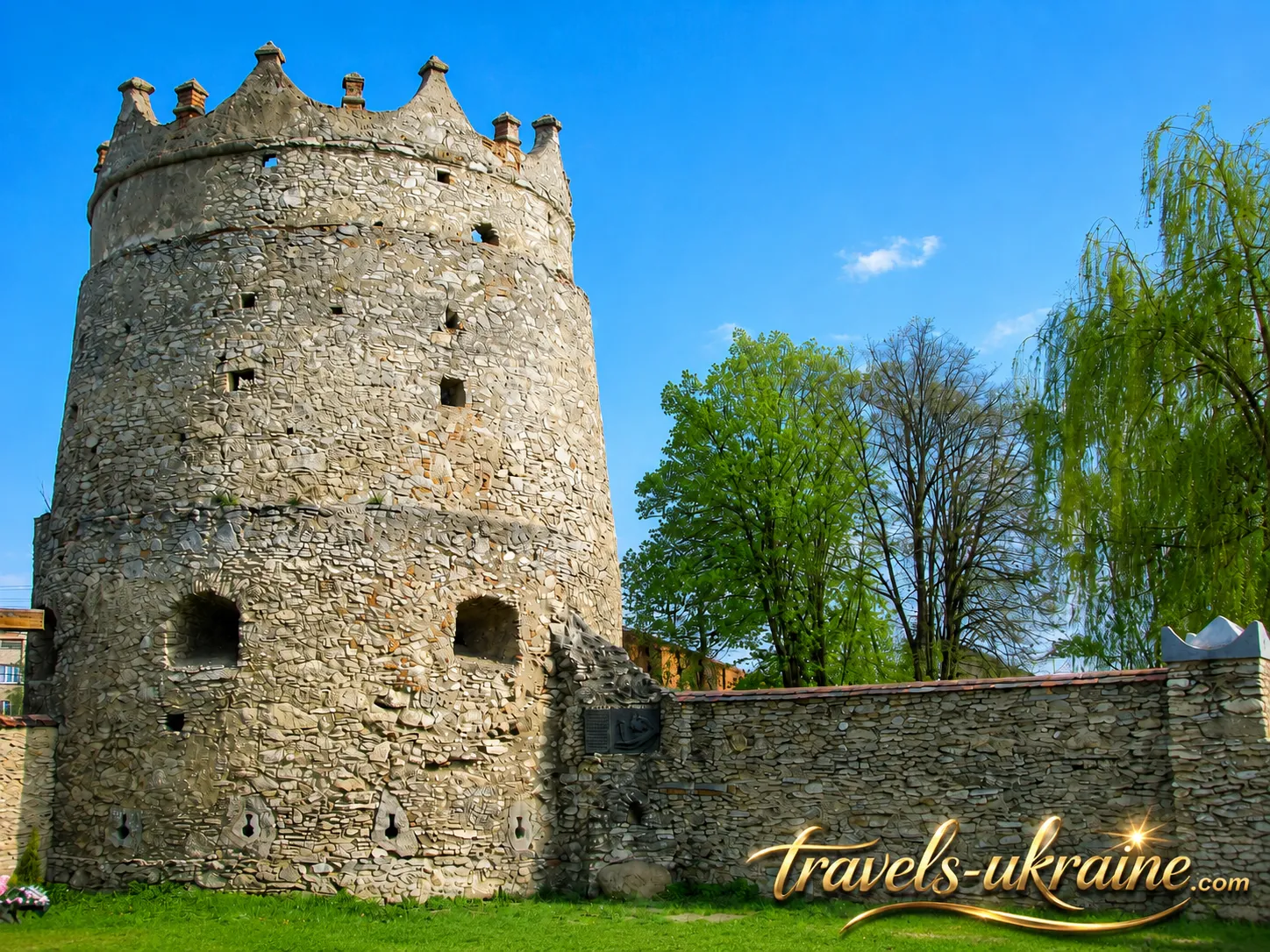
The most striking part of the monument is the round defensive tower. It stands beside the remains of the wall and is clearly visible from central Letychiv. The massive stonework, small openings, and heavy silhouette of the structure remind us that the tower was built not to decorate the landscape, but to protect the castle perimeter.
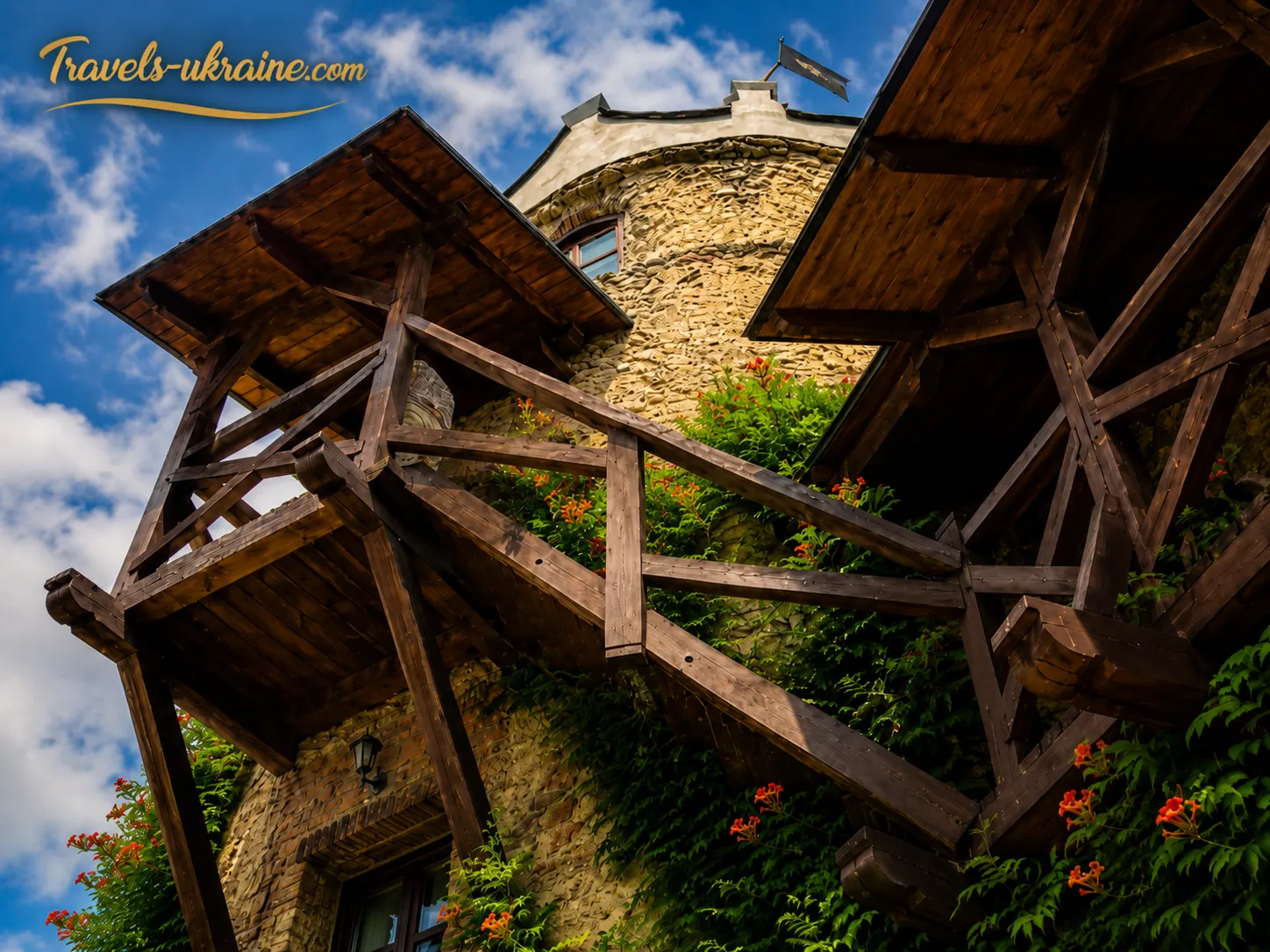
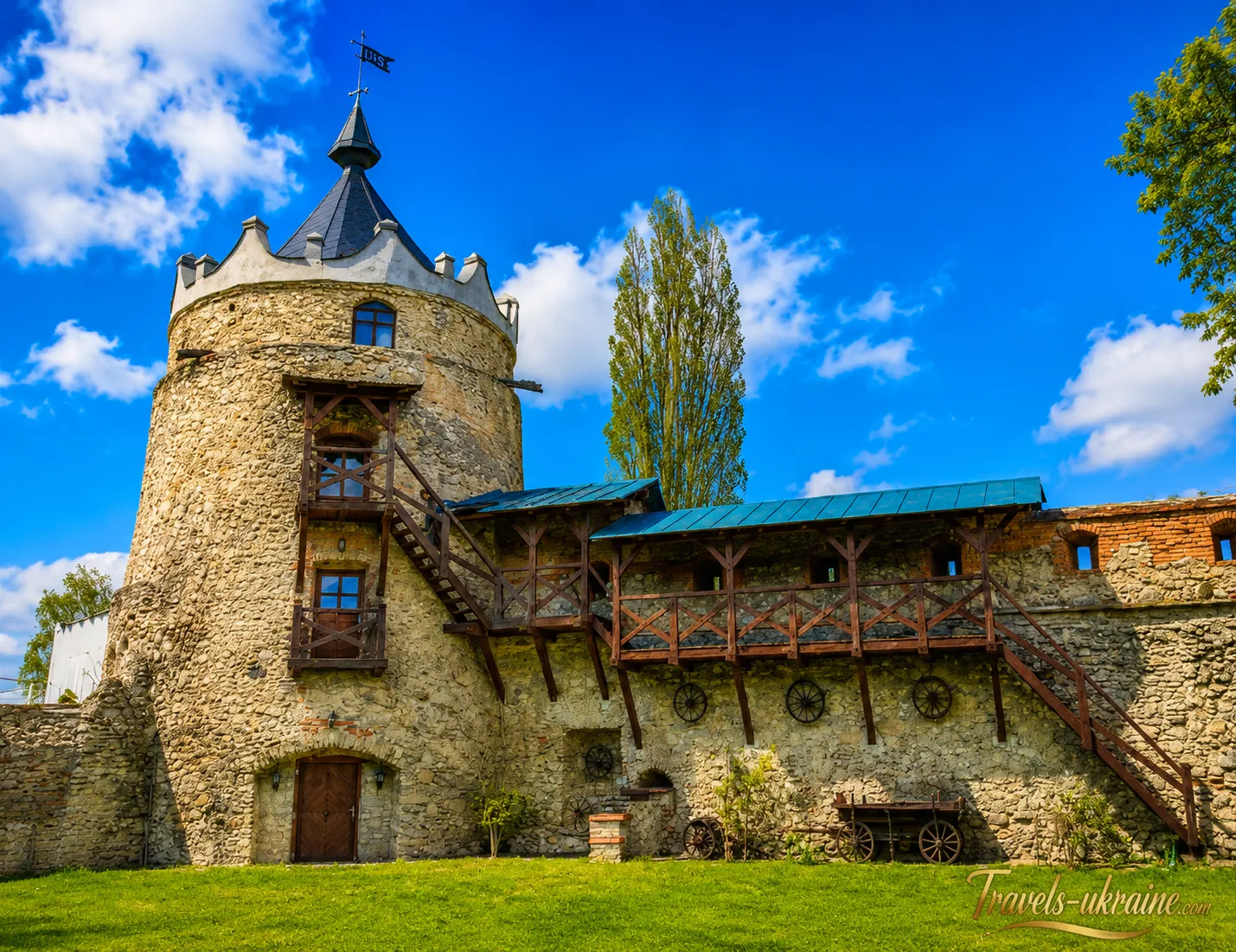
The upper part of the tower is crowned with an ornamental feature that resembles a crown from a distance. Thanks to this detail, the tower is easily recognizable in photographs and has become one of the town’s unofficial symbols. At the same time, its modern roof, wooden stairs, and gallery are the result of later restoration work, so not all the elements visible today belong to the original structure.
When examining the site, it is worth paying attention not only to the overall silhouette but also to the uneven surface of the old masonry. Stones of different sizes, traces of repairs, and changes in materials show that the tower was restored repeatedly. This does not diminish its value—in fact, it makes it possible to see how an ancient defensive structure adapted to new times and survived successive reconstructions.
Ancient Walls of Letychiv and the Lost Defensive Perimeter
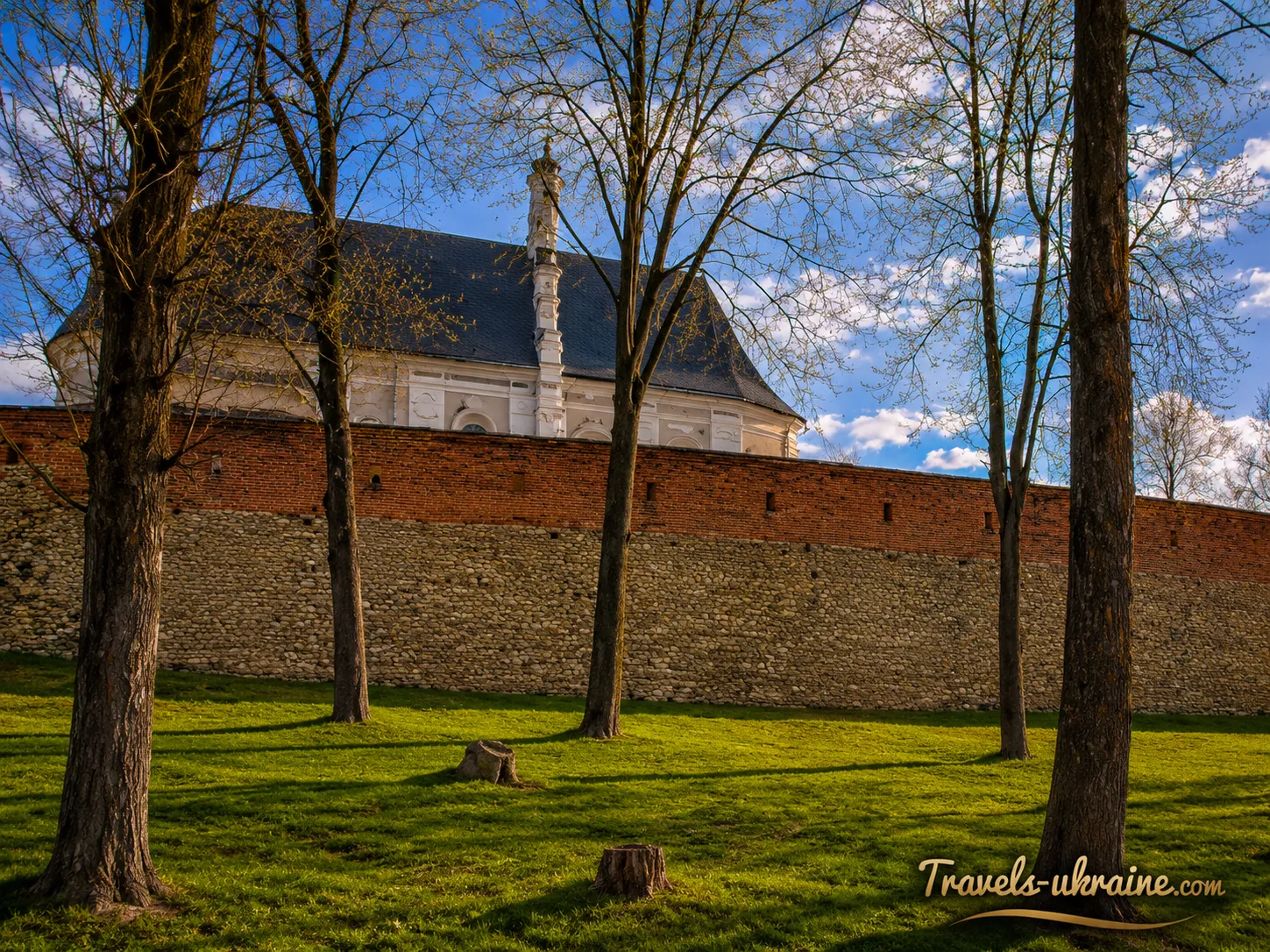
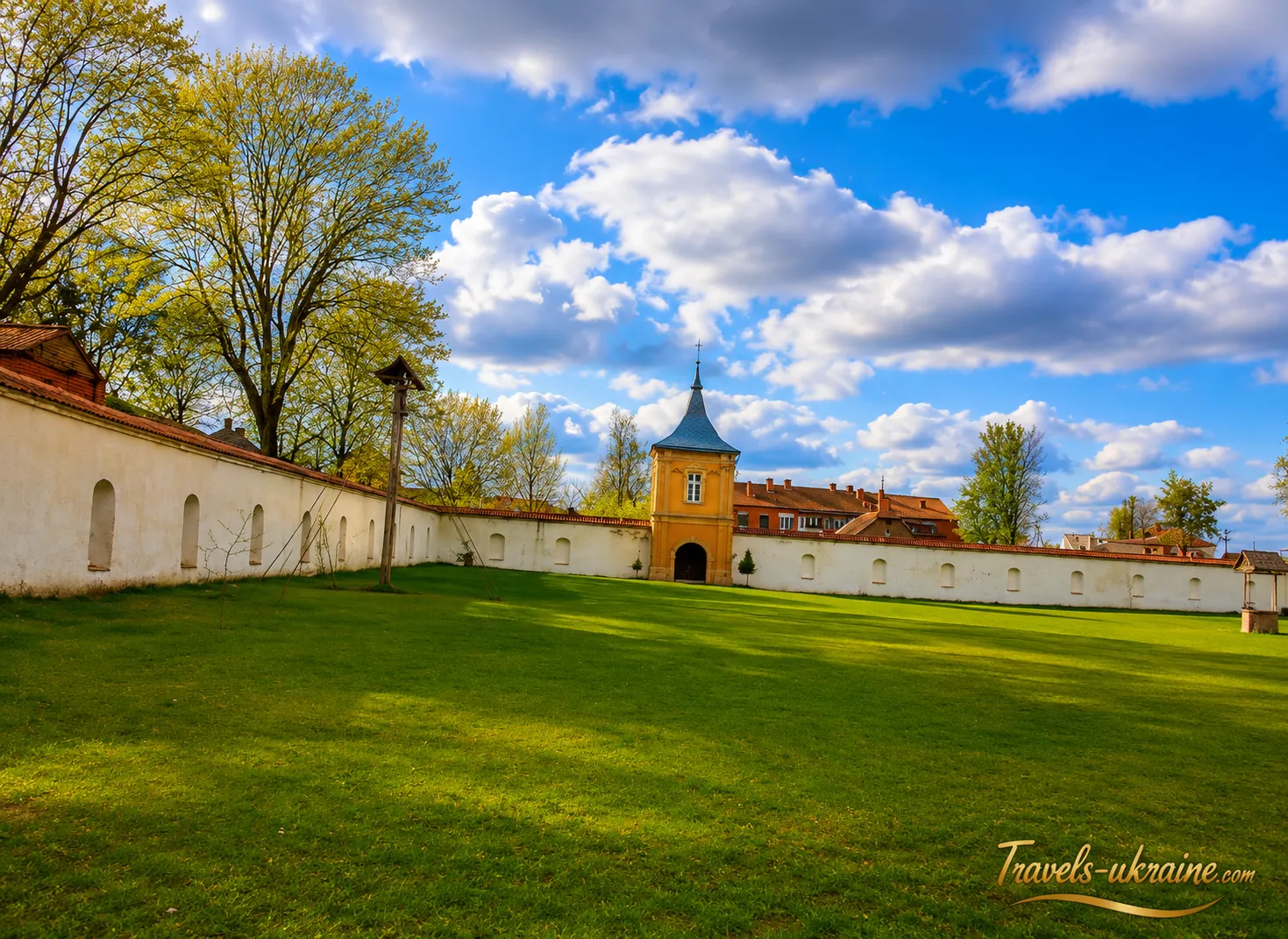
The surviving walls provide only a partial impression of the scale of the former fortress. They do not form a completely authentic castle ring, since over the centuries individual sections were destroyed, repaired, or incorporated into the monastery complex. Therefore, the modern walls should not be regarded as an unchanged plan of the castle from the late 16th or early 17th century.
The surviving fragments reveal the main principle of defensive architecture: the outer wall was meant to separate the inner courtyard from the town and make a direct attack more difficult. Towers strengthened the most vulnerable sections, while the gate controlled entry. It is difficult to reconstruct precisely what the complete defensive perimeter looked like in different years because of rebuilding and conflicting information about the number of towers. Nevertheless, even the preserved part of the walls helps us understand that the historic fortress of Khmelnytskyi Oblast was not a decorative aristocratic castle, but a practical defensive structure. Its architecture served military needs, territorial control, and the protection of an administrative center.
The Pond and Marshes as Part of Letychiv Fortress’s Defenses
Medieval fortifications rarely relied solely on the thickness of their walls. The terrain itself played an important role, and the historic landmark of Letychiv was no exception. An academic description of the town based on the 1613 inventory notes that the castle was relatively lightly armed, while the pond and marshes surrounding the town provided its main defensive advantages.
Marshy areas made it more difficult for cavalry, artillery, and large detachments to move. Water obstacles forced attackers to approach the fortifications from only certain directions, where they could be more easily controlled. In this way, the natural landscape effectively functioned as an extension of the castle walls.
Today, this system is no longer as clearly legible as it was several centuries ago. Some bodies of water have changed shape, development has expanded, and the town has long since grown beyond its ancient defensive core. Nevertheless, knowledge of the ponds and marshy terrain helps explain why the fortification could remain an important strongpoint even with a relatively modest garrison.
To better understand the ancient castle in Letychiv, it is worth exploring it in a particular order. First, view the tower and walls from the outside: this is the best way to sense their defensive role. Then proceed to the inner courtyard, where the severity of the old stone gives way to calmer monastery architecture.
Do not expect to find a fully preserved medieval castle with knights’ halls and princely chambers here. The Letychiv landmark is interesting for another reason—it shows how a military site gradually changed its purpose, lost part of its fortifications, and became the foundation for a large spiritual complex.
The architecture of Letychiv Castle is interesting not for its monumentality, but for its contrasts. Here, rough defensive walls stand beside a church, a military tower beside a monastery courtyard, and traces of ancient attacks beside the modern life of a sanctuary. This combination is the complex’s defining feature: its history did not end with the decline of the fortress, but continued in a different form.
Photo and Video Gallery
Brief Tourist Information about Letychiv Castle
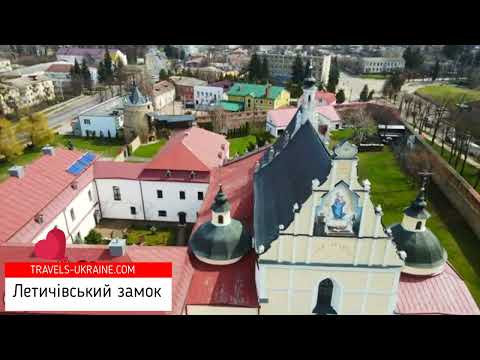
Letychiv Castle is not a classic museum complex with a ticket office, permanent exhibition, and established visitor route. Today, tourists explore the remains of the defensive fortress—the round stone tower and fragments of the walls—as well as the active Sanctuary of Our Lady of Letychiv, with its church, monastery buildings, and inner courtyard.
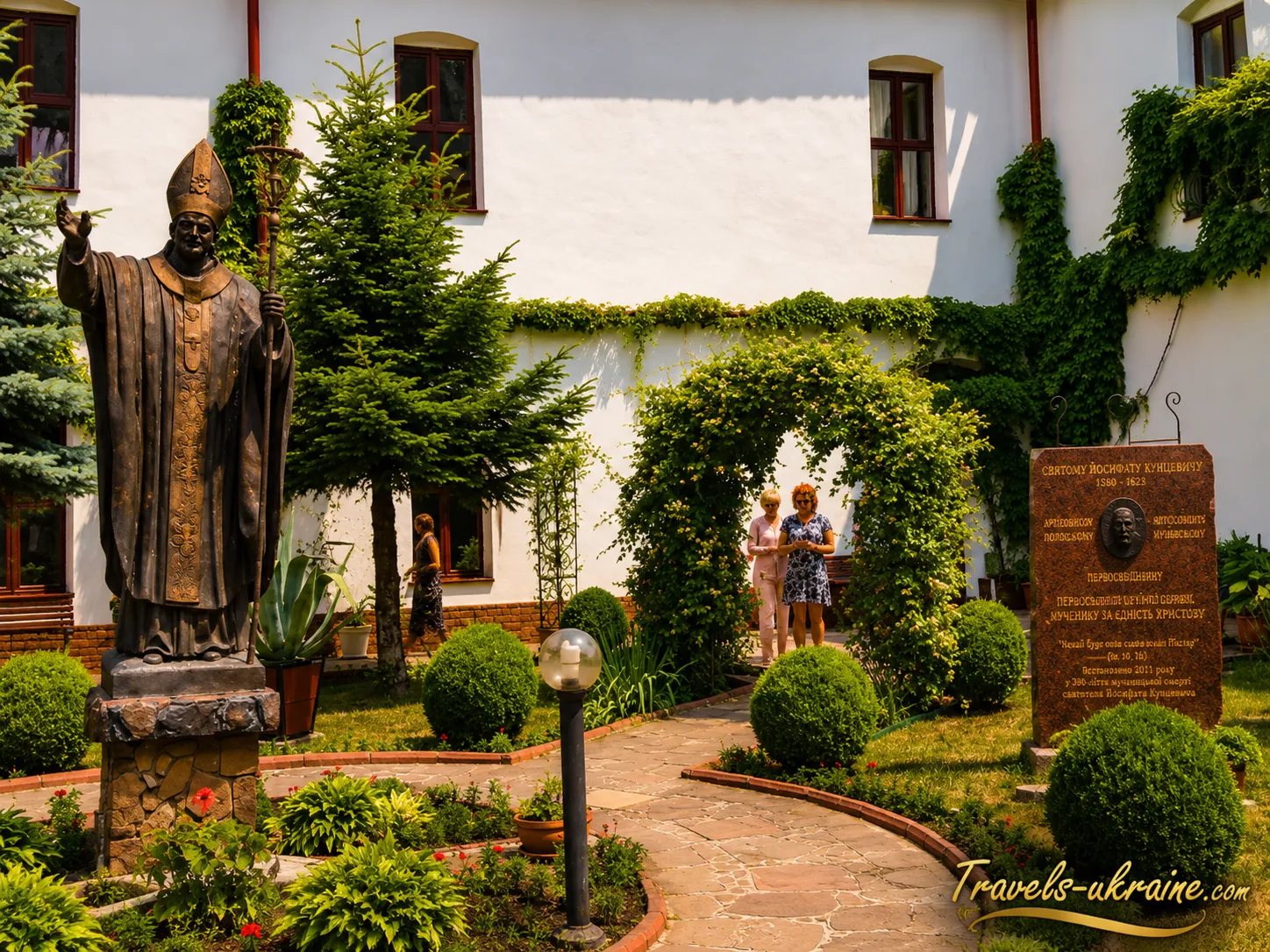
Because the complex is relatively small, a first visit usually takes between 45 minutes and an hour and a half. During this time, visitors can view the castle tower and walls from the outside, walk through the inner courtyard, visit the church, see the monument to Pope John Paul II, and appreciate the architectural combination of fortress and monastery.
Letychiv’s castle heritage belongs to the town’s historical, architectural, and sacred monuments. It consists of the remains of a defensive complex combined with an active Roman Catholic sanctuary. The visiting experience therefore differs from a walk through an ordinary fortress: visitors can admire the historic architecture, but must also take services, pilgrimages, and religious events into account.
The complex has no separate museum exhibition devoted exclusively to the history of the castle. The traveler’s main impression comes from the architecture itself, the old stonework, the monastery courtyard, and the historical context. That is why it is useful to learn at least a little about the fortress’s history before the trip—then the solitary tower will no longer seem like merely an old structure, but will emerge as the remains of a much larger defensive system.
Interesting Facts and Legends of Letychiv Castle
The medieval castle in Letychiv is one of those historic places where documented facts are closely intertwined with religious traditions, folk songs, and romantic legends. Over several centuries, the old fortress endured attacks, fires, reconstructions, and changes of purpose, so it is no surprise that many stories arose around it—about miraculous signs, underground passages, hidden treasures, and the defiant Ustym Karmaliuk.
However, a legend and an established historical fact are not the same thing. Some events are confirmed by documents, church records, and old inventories, while others exist only in oral tradition. This does not make the stories uninteresting, but it helps us understand them correctly: as part of Letychiv’s cultural memory, rather than as an eyewitness report from someone who happened to live for several centuries.
Our Lady of Letychiv—the Main Shrine of the Castle Complex
One of the most important facts in the history of the castle complex in Letychiv was the arrival of the Dominicans at the beginning of the 17th century. They brought to Podolia an image of the Virgin Mary with the Child, created after the model of a famous Roman icon from the Basilica of Santa Maria Maggiore. According to church tradition, Pope Clement VIII gave this image to the missionaries.
Gradually, the icon became known as Our Lady of Letychiv, and the place where it was venerated grew into an important pilgrimage center. The shrine’s history was turbulent: because of wars and persecution, the image was taken out of Letychiv several times to save it from destruction. Today, the sanctuary houses a venerated copy of the icon, blessed by Pope Benedict XVI.
It was the devotion to Our Lady of Letychiv that helped the former military site acquire a new life. The fortress, built to protect against attackers, gradually also became a place of spiritual refuge. The stone walls remained, but instead of military orders, prayers were increasingly heard here.
The Legend of the Radiance over the Icon and Jan Potocki’s Decision
One of the best-known stories concerns the Dominicans’ first days in Letychiv. According to legend, the local starosta, Jan Potocki, initially refused to allow the monks to settle in the town, so they stayed in two small houses on the outskirts.
One night, while the Dominicans were praying before the icon they had brought, residents saw an unusual light over the building. At first, people thought a fire had broken out, but as they approached, they supposedly saw a radiance rising from the image of the Virgin Mary toward the sky.
The story claims that Jan Potocki himself witnessed the phenomenon. After seeing it, he changed his attitude toward the missionaries, allowed them to settle in the fortress, and supported the construction of a church. The sanctuary’s official history presents this event as a religious tradition, not as a fact confirmed by independent documents from the time.
Ustym Karmaliuk—a Folk Avenger Compared to a Kharakternyk
The best-known historical figure associated with Letychiv was Ustym Karmaliuk. His insurgent activities lasted for more than twenty years and covered a large part of Podolia, while in the 1830s the Letychiv area was one of the movement’s important centers. Songs and stories about Karmaliuk were composed during his lifetime. Popular imagination endowed him with extraordinary strength, endurance, cunning, and near-invulnerability. Because of his numerous escapes from custody and exile, he was sometimes compared to a kharakternyk—a person believed to possess special abilities.
Karmaliuk’s documented biography is far more complicated than the romantic image of a noble avenger who supposedly took everything from the rich and gave it all, without exception, to the poor. His detachments included people of various backgrounds, and their activities involved attacks, robberies, and violent clashes. Nevertheless, for many residents of Podolia, he remained a symbol of resistance to serfdom and social injustice.
Legends of the Underground Passages of Letychiv Fortress
Almost every castle in Ukraine has a legend about an underground passage, and the ancient walls of Letychiv are no exception. Popular tourist materials mention tunnels that supposedly ran beneath the castle and monastery, connected separate buildings, or allowed people to leave the fortifications unnoticed during a siege.
The existence of utility cellars, vaults, or small underground rooms in the old defensive and monastic complex is entirely possible. They may have been used to store food, water, property, and church items. However, no reliable evidence of a large network of long secret tunnels has been found in the available official and academic sources.
It is precisely this uncertainty that gave rise to dozens of theories. According to some accounts, the underground passage could be used to reach far beyond the fortress; according to others, it led to the river or neighboring buildings. Until archaeologists produce an accurate plan and research findings, such stories are best left in the category of beautiful local legends.
The Potocki Treasures and the Ghosts of the Defenders
Another popular tale tells of treasures hidden in the underground chambers during one of the attacks. In different versions, they may be money, jewelry, weapons, or monastic relics. The story is sometimes embellished with ghosts of fallen warriors who supposedly still guard the hiding place.
There are no documents confirming a castle treasure or secret Potocki treasury. The story bears all the hallmarks of a typical fortification legend, similar to tales about dozens of other castles. Yet it conveys the atmosphere of the place well: the massive tower, old masonry, and inaccessible rooms really do set the imagination working overtime, especially when the guide lowers their voice a little.
The legends of the ancient Podillia stronghold should neither be accepted uncritically as fact nor dismissed contemptuously. They show how different generations explained mysterious events, preserved the memory of remarkable people, and tried to hear the voice of the past. Documents tell us what happened, while legends help us understand what people felt and what they wanted to believe.
Perhaps there is no Potocki chest beneath the tower, and no ghostly guard walks along the walls at night. Yet the true mystery of Letychiv Castle is no less fascinating for that. It lies in how a small part of what was once a great fortress managed to survive wars, empires, and oblivion—and still makes travelers debate, search for answers, and study the old masonry a little longer than they had planned.
What to Visit Near Letychiv Castle: Interesting Tourist Attractions
Visiting Letychiv Castle can easily become a full-fledged journey through historic Podillia. The settlement lies on an important road between Khmelnytskyi and Vinnytsia, so nearby you can find ancient fortresses, museums, pilgrimage sites, and landmarks associated with Ustym Karmaliuk.
It is easiest to plan your route according to the direction of your onward journey. If you are traveling toward Khmelnytskyi, it is worth stopping at Medzhybizh. Travelers heading to Vinnytsia may enjoy continuing their exploration of Karmaliuk’s history in Lityn. For a separate day trip, you could choose Khmelnytskyi, Vinnytsia, or the palace and park complex in Maliivtsi.
Ustym Karmaliuk’s Grave in Letychiv
Before leaving Letychiv, it is worth completing the route dedicated to Ustym Karmaliuk by visiting his grave in the local cemetery. The folk avenger was buried in Letychiv after his death in 1835. This site helps distinguish real history from the many legends that arose around Karmaliuk’s name. Near the castle tower, tourists see the monumental image of an unconquered rebel; at the grave, they encounter a real memorial site dedicated to a man whose life was far more complex than romantic folk tales suggest.
When visiting the burial site, remember that it is located in an active cemetery. Restrained behavior, quiet, and respect for other visitors are appropriate here. It is best to check the exact route on a navigation map in advance or ask local residents for directions.
Medzhybizh Fortress—A Castle Landmark Near Letychiv
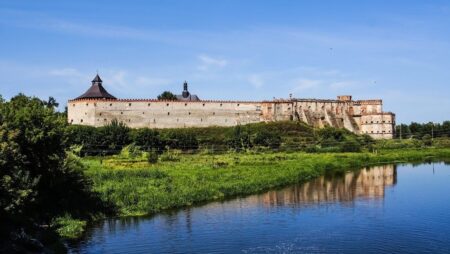
The most logical continuation of your journey is Medzhybizh Fortress, located in neighboring Medzhybizh. While Letychiv Castle survives only as a separate tower and part of its walls, the Medzhybizh castle ensemble provides a much fuller impression of the scale of Podillia’s defensive architecture.
The fortress rises near the confluence of the Southern Buh and the Buzhok. Its location between two rivers gave the settlement its name and created natural protection for the fortifications. Massive walls, towers, an inner courtyard, palace buildings, and a church form one of the most distinctive defensive complexes in Khmelnytskyi region.
Today, the Mezhybizh State Historical and Cultural Reserve operates on the site. Restored buildings house museum exhibitions dedicated to the region’s history, archaeology, ethnography, and art. A separate part of the complex is the Museum of Remembrance of the Holodomor Victims. It is advisable to allow at least one and a half to two hours to see the fortress. The grounds are considerably larger than the castle complex in Letychiv, and the museum exhibitions require additional time.
The Ustym Karmaliuk Lityn Local History Museum
Travelers heading toward Vinnytsia after Letychiv should stop in Lityn and visit the Ustym Karmaliuk Local History Museum. This is a particularly fitting continuation of the route after learning about the folk avenger’s monument, grave, and history in Letychiv.
The museum is housed in an architectural monument dating from the 18th–19th centuries, in a building associated with the former Lityn prison complex. Karmaliuk was held in custody at Lityn Prison after being transferred from Letychiv. Consequently, this museum has a much more reliable documentary connection to his imprisonment than the popular but unconfirmed version involving the castle tower in Letychiv.
The exhibition features materials on the history of the Lityn area, archaeological finds, ethnographic objects, and documents connected with the 19th-century rebel movement in Podillia. Visiting the museum helps visitors see Karmaliuk not merely as a hero of songs and legends, but as a real historical figure of his era.
Maliivtsi Palace and Park for a Separate Day Trip
Those who enjoy not only fortresses but also palace architecture should take note of Maliivtsi. The former residence of the Orlovsky family now houses the Maliivtsi Regional Historical and Cultural Museum. The palace was built in the late 18th century. It is surrounded by an old park, outbuildings, a water tower, and the famous rock waterfall with a grotto. Unlike the austere Letychiv fortress, Maliivtsi attracts visitors with its refined palace architecture and romantic park landscape.
The settlement is not close enough for it to be treated as a brief stop after the castle. This location is best planned as a separate part of a larger road trip through Khmelnytskyi region. Before visiting, check the museum’s schedule, tour arrangements, and the condition of the access roads.
Frequently Asked Questions About Letychiv Castle
Where is Letychiv Castle, and how do you get there?
Letychiv Castle is located in the central part of the settlement of Letychiv in Khmelnytskyi region, on the grounds of the Letychiv Mother of God Sanctuary. The M-30 highway, connecting the Vinnytsia and Khmelnytskyi directions, passes through Letychiv. In a navigation app, it is convenient to search for the Letychiv Mother of God Sanctuary or the monument to Ustym Karmaliuk, located beside the castle tower.
What remains of the castle in Letychiv today?
The former defensive fortress has preserved a round stone tower and fragments of the castle walls. The monastic part of the complex has survived much better: the Church of the Assumption of the Blessed Virgin Mary, the monastery buildings, the inner courtyard, and the gate tower-bell tower. The present-day landmark is therefore a combination of fortress remains and an active religious complex.
Is Letychiv Castle a museum or a monastery today?
Today, it is not a separate castle museum. The former fortress grounds are home to the Roman Catholic Letychiv Mother of God Sanctuary, with a church, monastic premises, a Retreat House, and a Pilgrim’s House. The castle remains can be viewed as a historical and architectural monument, although part of the complex continues to serve a religious and monastic function.
Do you need to buy a ticket to visit Letychiv Fortress?
The complex’s official resources do not publish a fixed tourist ticket price for viewing the castle tower, walls, and open grounds from the outside. Certain services, organized tours, accommodation, or visits to specific premises may require prior arrangements. Visitors may leave a voluntary donation at the church, but it is not a mandatory admission ticket.
Can you go inside the castle tower?
No regular tourist schedule for visiting the inside of the tower has been officially published. Access may depend on the condition of the building, work being carried out on the grounds, and the decision of the Sanctuary administration. Therefore, you should not plan your trip assuming that access to the tower will be open. It is best to check the possibility of entering in advance.
How much time is needed to see the castle complex in Letychiv?
For an exterior view of the tower, walls, and inner courtyard, 45–60 minutes is usually enough. If you plan to enter the church, explore the monastic complex at a leisurely pace, see the monument to Ustym Karmaliuk, and take photographs, allow approximately one and a half hours. Together with a walk through Letychiv and a visit to Karmaliuk’s grave, the route may take up to two or three hours.
Was Ustym Karmaliuk really held in the tower of Letychiv Castle?
It is reliably known that in 1827 Ustym Karmaliuk was taken to the Letychiv prison and later transferred to the prison in Lityn. At the same time, no documents have been found that unequivocally confirm he was imprisoned specifically in the surviving castle tower. Therefore, the story of «Karmaliuk’s Tower» in Letychiv should be viewed as a popular local-history theory rather than an established historical fact.
Is Letychiv Castle suitable for a trip with children?
Yes, a short walk will be interesting for children thanks to the old tower, stone walls, and legends about Karmaliuk. However, the site is not a specially equipped playground. Children should be kept close to you near the old masonry, stairs, and closed passages, and should not be allowed to climb the walls.
Is the fortress in Letychiv accessible to people with reduced mobility?
Viewing the exterior of the tower and parts of the walls does not require a challenging route, although the grounds feature uneven stone paving, curbs, steps, and narrow passageways. Fully step-free access to all parts of the complex has not been officially confirmed. Before your trip, it is advisable to check with the administration which entrance will be the most convenient.
What can you visit near Letychiv Castle?
In Letychiv itself, you can see the monument to Ustym Karmaliuk and visit his grave. The most popular continuation of the route is Medzhybizh Fortress, which has been preserved much more extensively. On the way toward Vinnytsia, you can stop at the Ustym Karmaliuk Lityn Museum of Local History, while a separate trip around Khmelnytskyi Oblast could include the palace and waterfall in Maliivtsi.
Practical Information About Letychiv Castle
Why Letychiv’s Historical and Architectural Landmark Is Worth the Trip
Podillia’s defensive complex will appeal to travelers who value authentic history more than tourist staging. There is no lengthy route through room after room, no theatrical knight battles, and no large souvenir street. Instead, there is old stone masonry, the quiet of a monastery courtyard, an active church, and the feeling that different eras still exist side by side.
The main impression made by the castle in Letychiv comes not from its scale but from the combination of opposites. A former defensive structure has become a sanctuary; a military tower stands beside a church; historical documents coexist with legends; and a monument to a rebel stands beside walls that once symbolized power.
This complex shows that an architectural landmark can change its purpose without losing its significance. The fortress no longer protects the town from attackers, yet it continues to preserve the memory of the past. Its walls recall wars and reconstructions, the monastery speaks of spiritual tradition, and the figure of Karmaliuk evokes the struggle that inspired countless tales.
Letychiv Castle is worth visiting not for the sake of a perfectly restored medieval fairy tale. People come here to see the genuine traces of time, experience the silence of the old walls, and understand how a defensive fortress gradually became a spiritual sanctuary and a place of historical memory. The old tower may not open the way into a legendary dungeon or reveal the Potocki family’s treasures. Yet it will leave you with something more valuable—the desire to discover how many untold stories are still hidden in Ukraine’s small towns. Sometimes, after all, a single surviving tower is enough for an entire fortress to rise before a traveler once again, filled with the voices of defenders, the prayers of pilgrims, and legends of the elusive Karmaliuk.
No Comment
You can post first response comment.