
 English
 Українська
 Български
 Hrvatski
 Čeština
 Dansk
Dansk Nederlands
 Eesti
Eesti Suomi
Suomi Français
 Deutsch
 Ελληνικα
 Magyar
 Íslenska
 Italiano
 Latviešu
 Lietuvos
 Polski
 Português
 Română
 Русский
 Српски
 Slovenčina
 Slovenščina
 Español
 Svenska
 Türkçe
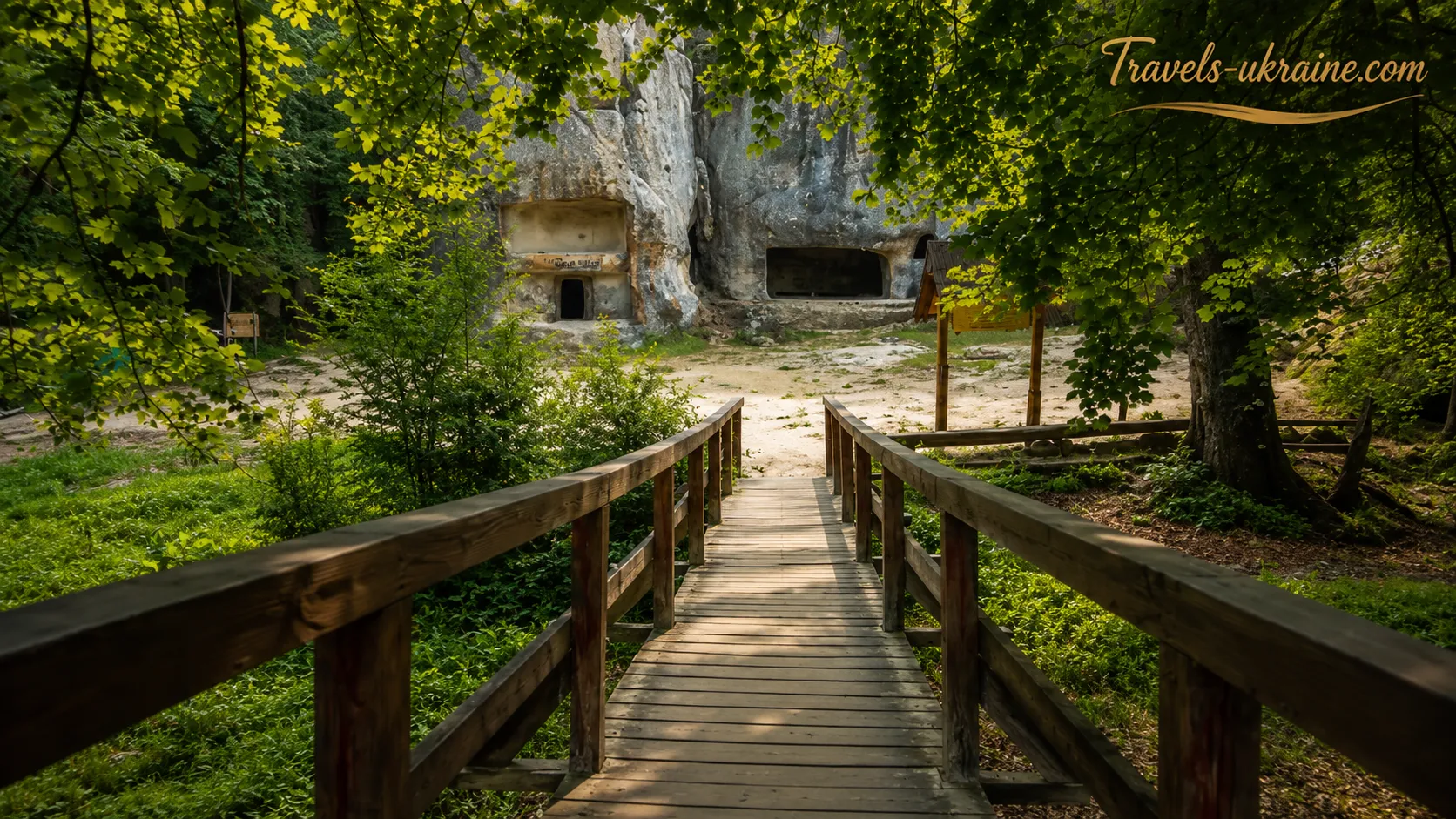
In the Carpathians, there are places where nature seems especially inventive. It parts the forest, raises gigantic boulders above the ground, carves narrow passages between them, and leaves room for the imagination. This is how travelers are greeted by Dovbush Rocks near Bubnyshche—one of the best-known rock-and-cave complexes in the Carpathian foothills, where natural sandstone formations merge with traces of human activity, ancient legends, and the history of the Carpathian opryshky movement.
Dovbush Rocks lie among the forests of Ivano-Frankivsk Oblast, not far from the village of Bubnyshche. Today, the area forms part of the Polianytsia Regional Landscape Park, while the rocks themselves have the status of a natural monument of national importance. Yet the dry wording of a nature conservation register says almost nothing about the impression made by a first encounter with these rocky masses.
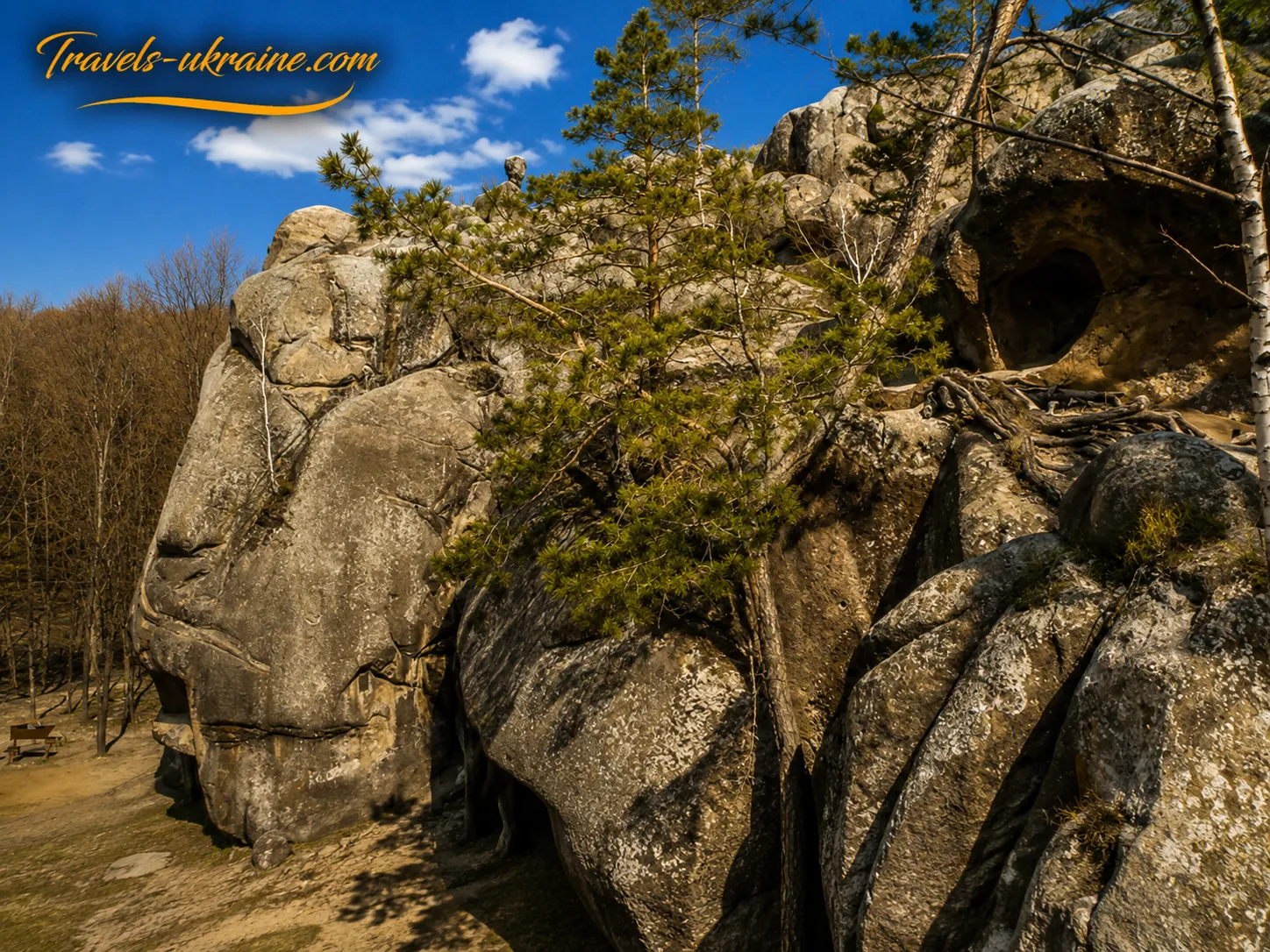
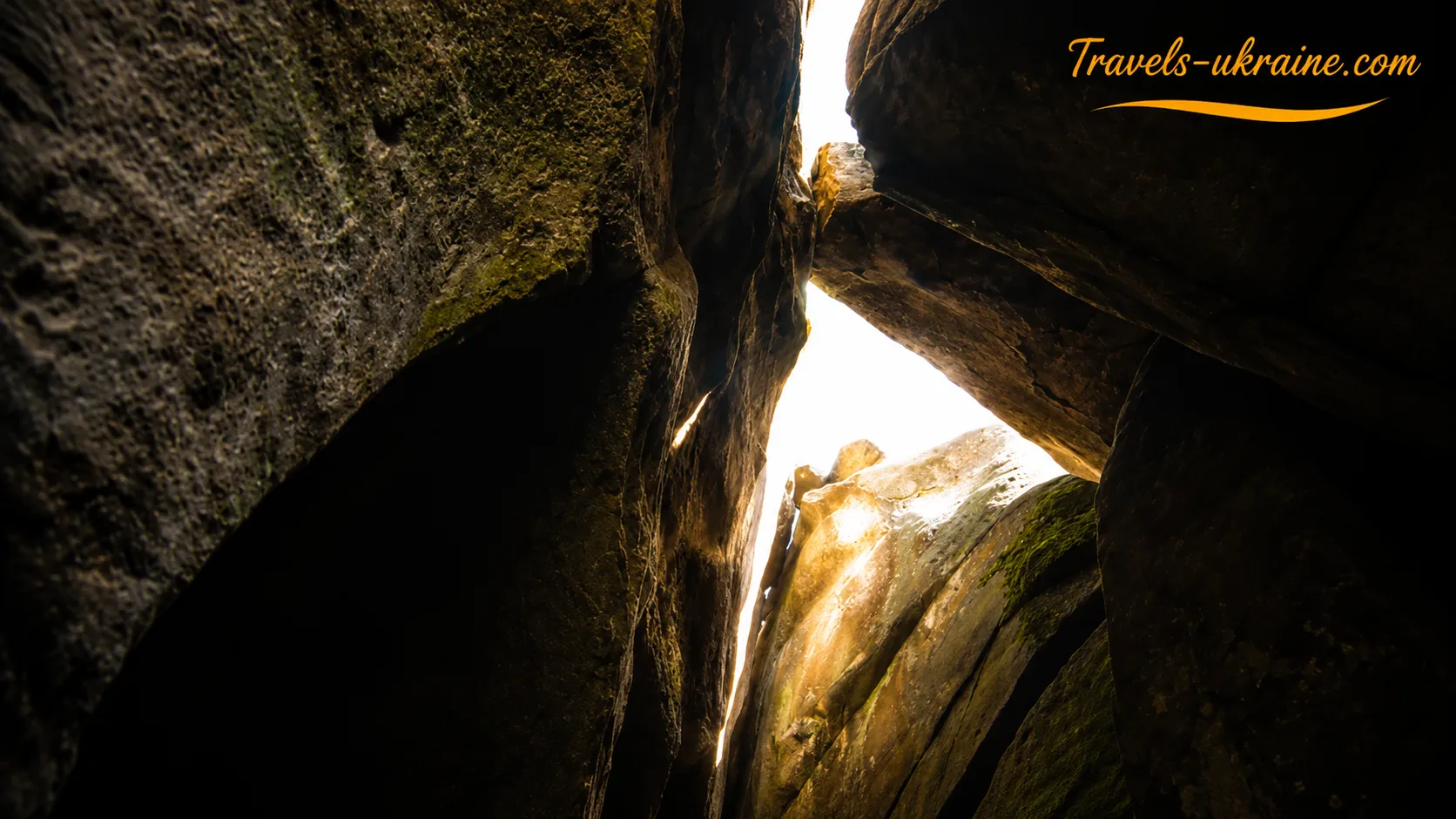
The trail gradually leads into a cool Carpathian forest, where gray sandstone walls begin to appear between the trees. At first they look like separate boulders, but the closer you get, the more clearly an entire stone labyrinth emerges: tall rock towers, deep cracks, grottoes, ravines, natural corridors, and rooms hewn into the stone. Some passages are so narrow that you have to move through them almost sideways, while massive boulders loom overhead.
It is precisely the combination of natural terrain and human intervention that makes the Bubnyshche Rocks special. This is not simply a picturesque jumble of stone or an ordinary lookout point. Visitors encounter a complex historical and natural site in which the sandstone walls may have served defensive, sentry, domestic, or ritual purposes at different times. Researchers have debated the purpose of the rock chambers, fortifications, and traces of stonework for many years, so the history of Bubnyshche still raises more questions than it offers definitive answers.
What makes Dovbush Rocks near Bubnyshche so impressive at first sight
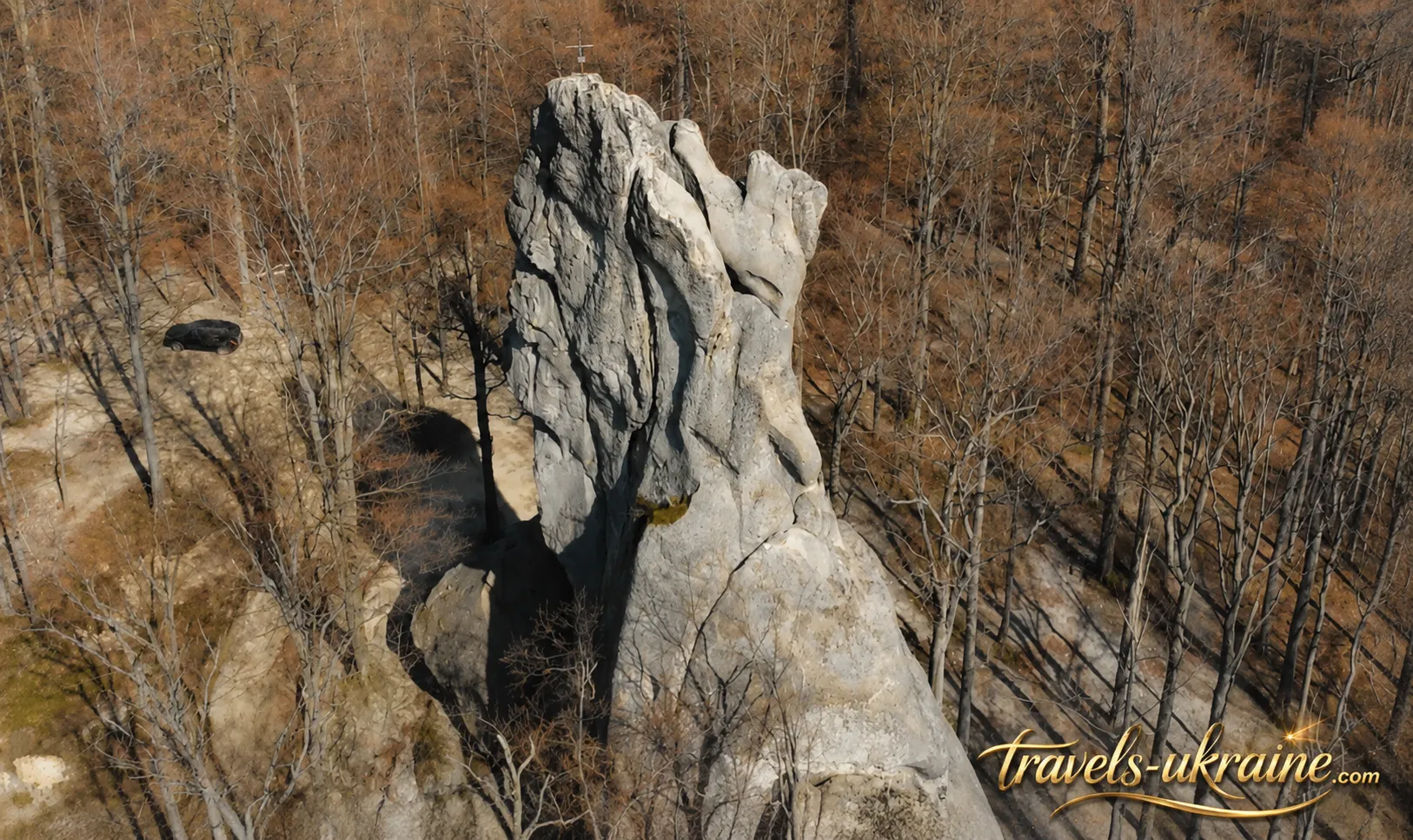
The strongest impression comes from the scale. When viewed in photographs, Dovbush Rocks may seem like a group of large boulders in the middle of the forest. Once you arrive, it becomes clear that this is an entire space with its own routes, passages, and separate rock groups. Some stones resemble watchtowers, others the walls of a natural fortress, while some have such unusual outlines that they have acquired names of their own. Among them are rock formations that travelers compare to giant animals, human figures, and fantastic creatures.
The atmosphere is constantly changing here. From open areas, you can see the Beskids’ slopes, green ridges, and distant Carpathian vistas. In the deep passages, shade, coolness, and silence prevail, broken only by footsteps, tourists’ voices, and the rustling of trees. That is why people come here for more than history: the Dovbush Rocks natural complex attracts photographers, families with children, hiking enthusiasts, climbers, and those looking for a short weekend hike and some peace and quiet.
In this article, we will go beyond beautiful legends and dry information such as where Dovbush Rocks are located and how to get there. Ahead lies a genuine historical detective story featuring verified facts, archival references, natural features, old hypotheses, and legends about Oleksa Dovbush. We will try to find out who carved rooms into the rocks and why, whether a fortress once stood here, and where scholarly assumptions end and Carpathian legends begin. Along the way, we will cover routes, viewpoints, safety, and practical details of the journey—because even the most fascinating historical detective story is much better when a traveler knows where to leave the car and which shoes will not turn a hike into a drama of its own. If you are ready to look beyond the stone walls, pass through narrow ravines, and find out how much truth is hidden in ancient legends, then let’s set off on a journey to Dovbush Rocks.
The History of Dovbush Rocks: From an Ancient Fortification to Legends of the Opryshky
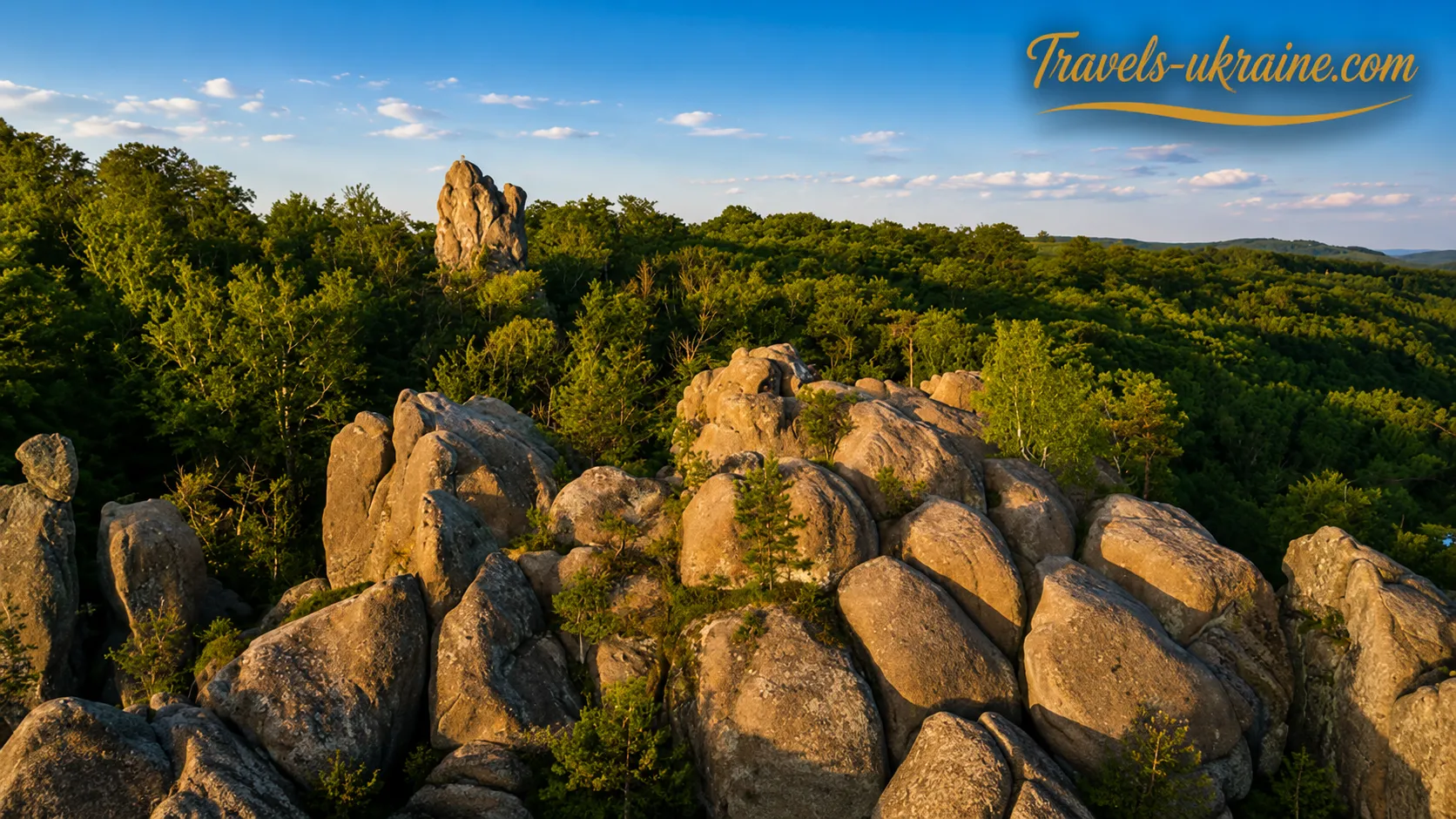
The history of the natural monument «Dovbush Rocks» resembles a layered manuscript in which natural processes, traces of human labor, researchers’ hypotheses, and folk legends have been superimposed over the centuries. The rocky masses formed long before humans appeared here, but people later adapted the natural walls to their needs: they carved out rooms, created passages, reinforced access points, and left traces of their tools on the sandstone.
That is why the Dovbush Rocks rock-and-cave complex cannot be explained by one simple theory. It is not only a natural monument, but also a place that may have been used in different ways during several historical periods. Some researchers saw a pagan sanctuary here, while others proposed a monastic dwelling, a defensive post, or a medieval rock fortress. Even today, there is no definitive answer to all the questions.
The Boulders Before the Name «Dovbush Rocks» and Traces of an Ancient Fortification
The modern name of the rock formations is associated with Oleksa Dovbush, although older sources often referred to the complex differently. Nineteenth-century Polish-language works used names such as Bołdy w Polanicy, Bołdy na Sokołowem w Polanicy, or simply the rocks in Polianytsia and Bubnyshche. Some authors used the word «bovdy» to denote large, bare rocky monoliths of unusual shape.
Archaeologist Volodymyr Demetrykevych, who studied the complex at the beginning of the twentieth century, noted that local residents did not necessarily use the bookish name «bovdy» and might have referred to the formation more simply as the stone. This is an important detail: the tourist name changed, but the rocks remained a well-known landmark for the residents of Polianytsia, Bubnyshche, and Trukhaniv.
In June 1900, Włodzimierz Demetrykiewicz examined the local stone giants and published his findings in 1903 in the study «Caves Hewn in the Rocks of Eastern Galicia from an Archaeological Perspective.» The researcher documented carved chambers, traces of an earthen rampart and an artificial ditch, but found no convincing evidence that the complex had been a prehistoric pagan temple. He attributed the traces of rock working to the historical period and suggested that the site may have had a defensive purpose.
The First Descriptions and Images of the Bubnyshche Rocks
Some of the earliest known written references to the rock-and-cave complex are associated with letters written in 1818 by the archaeologist and ethnographer Zorian Dolenga-Khodakovsky. However, these were brief reports, known mainly through later bibliographic publications rather than through a full scholarly study of the site.
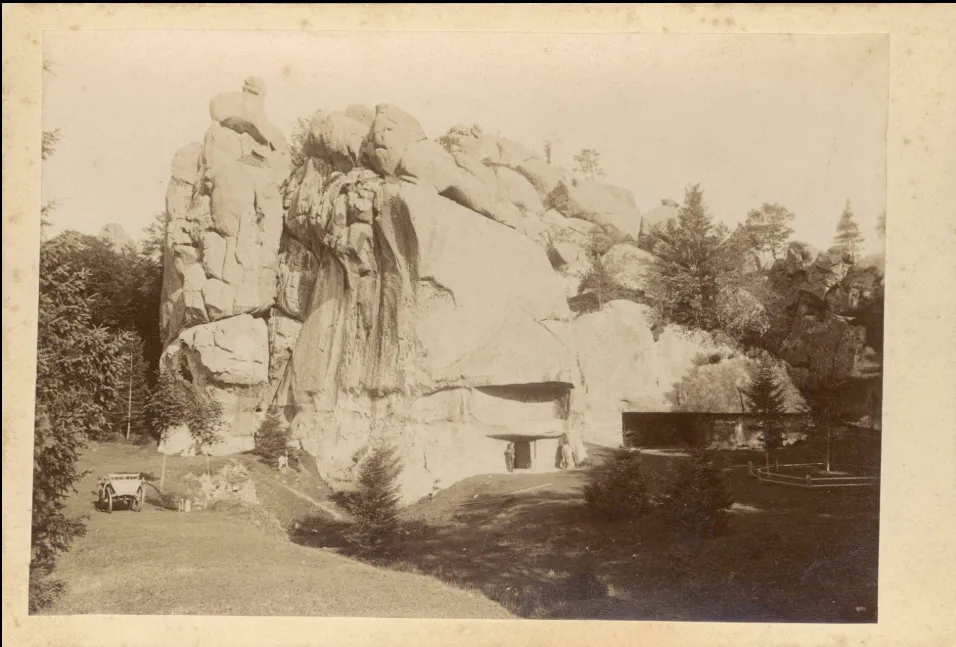
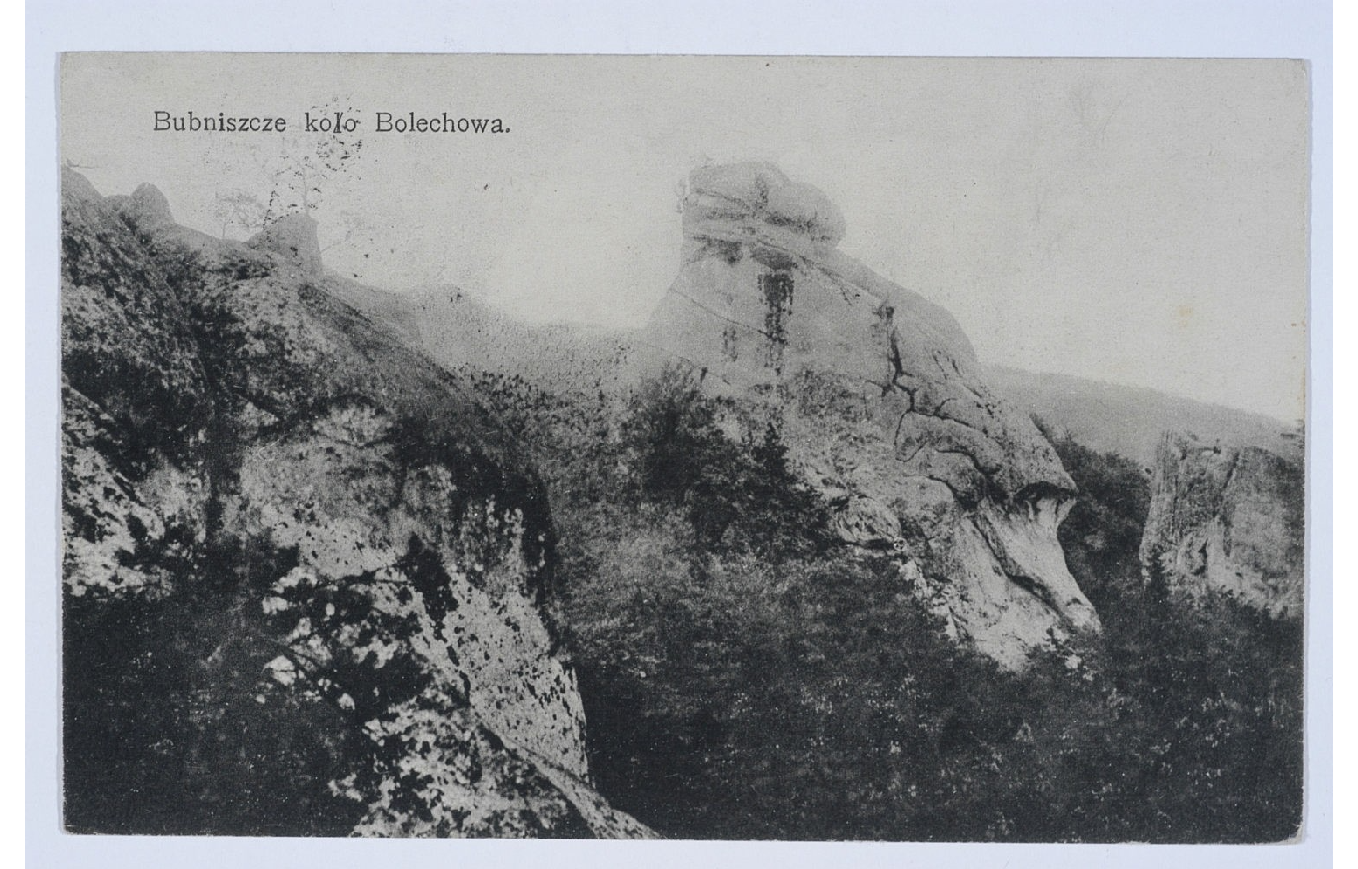
The first detailed printed description of the Bubnyshche Rocks appeared in the late 1830s. August Bielowski published the work Bołdy na Sokołowem w Polanicy, in which he described the unusual rocky masses, caves, and local legends. In 1839, the material was printed in the journal Przyjaciel Ludu, together with one of the earliest known images of the rocks.
In 1862, Ivan Vahylevych devoted a separate study to the complex, Bołdy w Polanicy. He described in detail the rooms hewn into the rock, the markings on the stone, and the possible purpose of the site. At the same time, some of his conclusions reflected the Romantic ideas of nineteenth-century archaeology, so today they are regarded as historical hypotheses rather than conclusively proven facts.
During archaeological research in 1984 and 1987, Bohdan Tomenchuk studied traces of wooden structures and defensive constructions at the Bubnyshche rock complex. In the inner area, he recorded a substantial seventeenth-century cultural layer containing fragments of pottery and stove tiles. Grooves and cut-outs in the rocks led the researcher to suggest the existence of two-storey wooden log structures adjoining the natural rock formation. At the same time, the exact dimensions and overall appearance of the fortifications remain a reconstruction, since the results of the fieldwork were not published in detail.
In 2014–2015, the Carpathian Historical and Archaeological Expedition of Vasyl Stefanyk Precarpathian National University, led by Professor Mykola Kuhutiak, carried out a large-scale survey of the Bubnyshche rock-and-cave complex. The researchers documented numerous hollows, markings, reliefs, and sculpture-like forms, which they interpreted as anthropomorphic and zoomorphic images, solar symbolism, petroglyphs, and ritual objects. The results of this work were presented in Mykola Kuhutiak’s book «Bubnyshche. The Rock Sanctuary of the Great Goddess in the Carpathians,» published in 2015.
The author proposed a concept according to which part of the complex may have been an ancient sanctuary associated with the cult of the Great Goddess and observations of the solstices. However, this interpretation is not a universally accepted definitive conclusion of archaeology. The dating of the images, their human-made origin, and their ritual purpose require further research and independent scholarly confirmation.
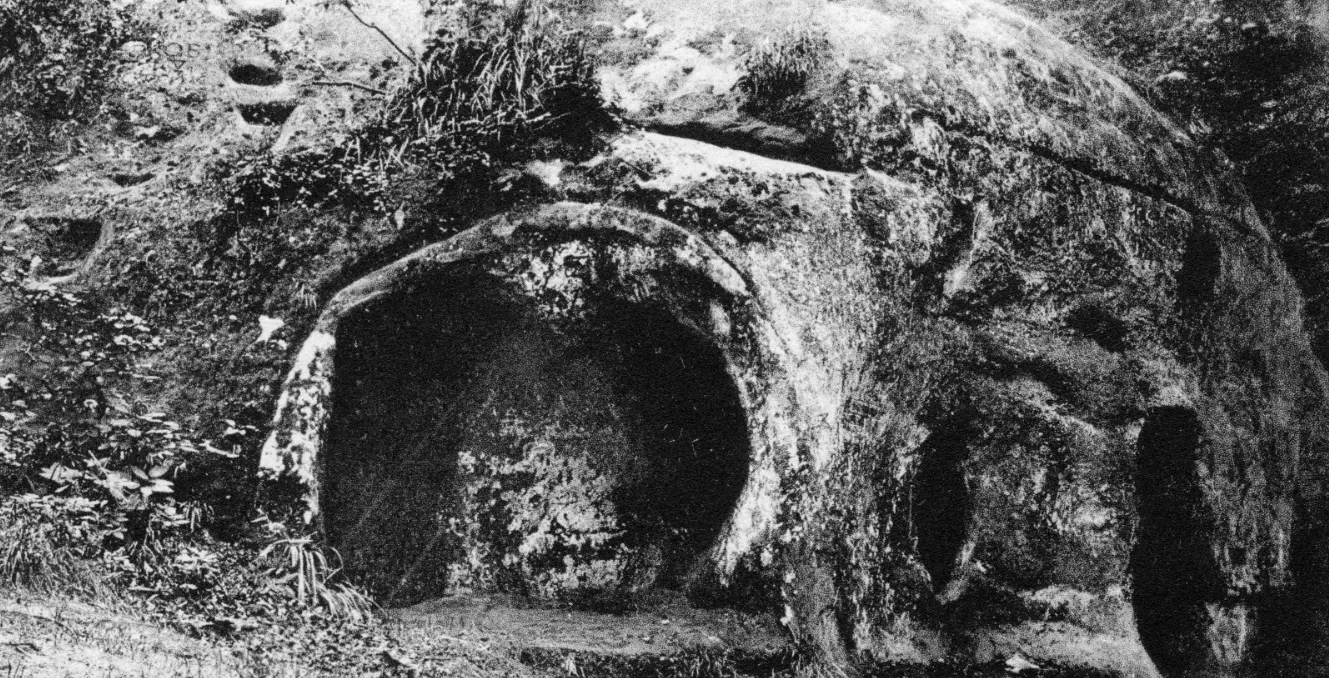
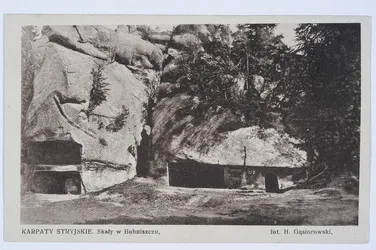
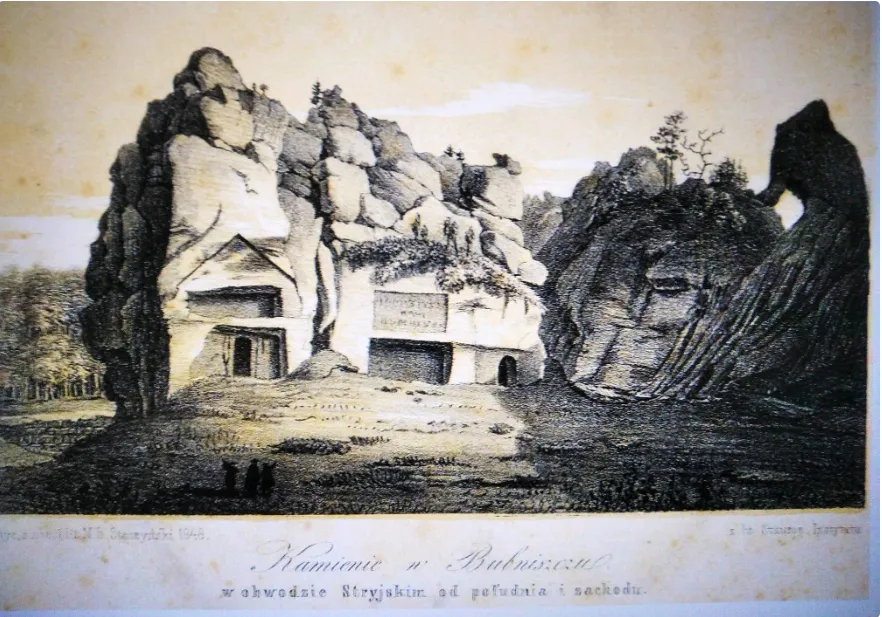
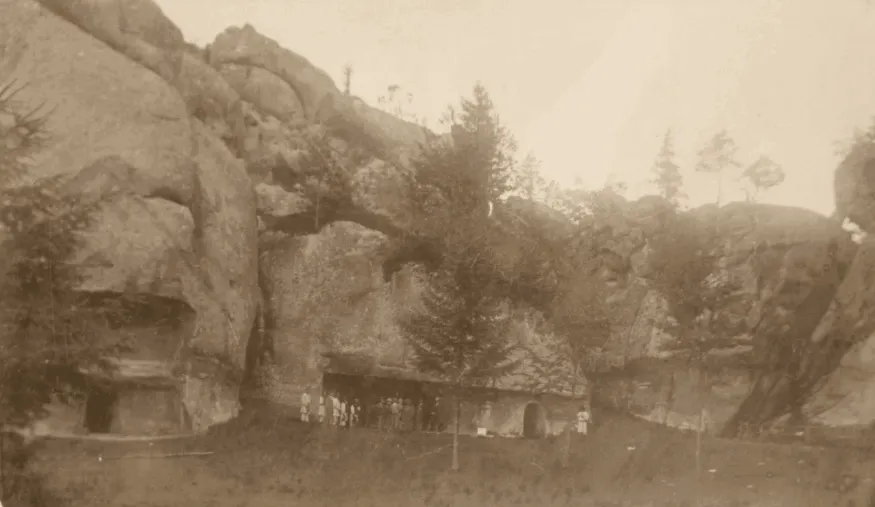
Oleksa Dovbush and the Opryshky in the Bubnyshche Rocks
The best-known historical layer is associated with the opryshky. In the XVII–XVIII centuries, small armed bands operated in the Carpathians, using forests, mountain paths, and hard-to-reach areas for shelter. The natural fortress near Bubnyshche could well have served as a convenient temporary refuge. Folk tales claim that Oleksa Dovbush visited the site and that Dovbush’s Cave served as shelter for his band. Legends tell of weapons stores, secret passages, Dovbush’s gold hidden in the rocks, and a treasure that no one has supposedly found to this day.
However, there is currently no known archival document that directly confirms Dovbush’s presence in this particular complex. The legendary outlaw’s connection with Bubnyshche should therefore be regarded as a strong local tradition rather than an indisputable historical fact. The name Dovbush Rocks became so firmly established that it has almost entirely displaced the older names. In the popular imagination, the enormous boulders, hidden passages, and caves naturally merged with the image of a leader who knew the Carpathians, evaded pursuers, and appeared where he was least expected.
Archival and academic sources document the activities of Dovbush’s band in Pokuttia, Hutsulshchyna, the Chornohora range, and in the areas around Drohobych, Solotvyn, and Bohorodchany in detail. It is also known that his main camp was located for some time on Mount Stih. At the same time, the known documents contain no direct mention of the leader being specifically in the Bubnyshche Rocks. The possibility that the band made a brief stop remains historically plausible. In autumn 1744, Dovbush was campaigning toward Drohobych and Turka and may have passed near Bolekhiv. Rocks with ravines, caves, and forest would indeed have been a convenient place for temporary shelter, but no known document allows us to state with confidence that the opryshky stopped here.
It is entirely possible that other opryshky bands also used the rocks. They travelled along remote mountain routes, avoided busy roads, and sought natural shelters. However, archaeologists have not yet found traces that could be unequivocally linked specifically to the opryshky of the XVIII century. Stories about Dovbush’s Cave, the chieftain’s stone chair, underground passages, and hidden gold belong to the local oral tradition. Folk memory often attributed the exploits of other opryshky to Dovbush. This happened, for example, with the attack on Bolekhiv in 1759: according to the tales, it was carried out by Dovbush, although historical documents link the event to Ivan Boychuk’s band—after the legendary chieftain’s death.
Therefore, the name Dovbush Rocks primarily reflects the power of folk memory. It does not prove that Oleksa lived here or hid treasures, but it shows how deeply his image has entered the culture of the Carpathians. Among the stone walls, real history gradually became intertwined with folklore—and now separating them can sometimes be more difficult than finding the right way out of the rock labyrinth.
Who Were the Opryshky and Why Did Their Bands Appear in the Carpathians?
Opryshky were participants in small armed groups that operated in the Carpathians, Galicia, Bukovyna, and Transcarpathia approximately from the 16th to the 19th century, offering armed resistance to the nobility and government representatives who oppressed the local population. They were joined primarily by peasants, shepherds, impoverished townspeople, and people fleeing serfdom, persecution, or military service. They left their settlements, hid in hard-to-reach mountain areas, and raided estates, moneylenders, tavern keepers, and representatives of the local authorities of the Polish–Lithuanian Commonwealth.
Assessment of the opryshky movement remains ambiguous. Authorities and estate owners regarded the opryshky as ordinary bandits, while in folk songs and legends they often appear as defenders of the poor and avengers of social injustice. Historians, too, have no single view: some researchers see their actions as a form of social resistance, while others emphasize that certain groups engaged in robbery without a clear political or national objective. Therefore, the opryshky should not be unreservedly called either noble heroes or ordinary criminals—the real history was far more complex than later legends.
Opryshky operated in small, mobile groups, knew the mountain trails, forests, and passes well, enjoyed the support of part of the local population, and quickly changed their location. They were armed with muskets, pistols, spears, knives, and traditional axes. Inaccessible caves, gorges, and rocky passages could serve as temporary hideouts, resting places, or observation posts. This is why the Bubnyshche rocks naturally became part of opryshky legends over time.
The best-known leader was Oleksa Dovbush, but the opryshky movement had existed long before him and did not end after his death in 1745. Folk memory gradually brought together around his figure stories about various leaders, daring raids, escapes from pursuers, and hidden treasures. As a result, numerous Carpathian caves, stones, trails, and rocks were named after Dovbush—even where his personal presence has not been documented.
From a mysterious landmark to a protected natural area
At the beginning of the 20th century, it became clear that the Dovbush Rocks natural monument required protection not only as a historical site but also as a unique natural object. In 1907, the Bubnyshche rock-and-forest reserve was established here—one of the early examples of natural heritage protection in the Carpathians. Later, the area was granted the status of a comprehensive natural monument of national significance, and in 1996 it became part of the Polianytsia Regional Landscape Park. This protects not only the sandstone formations, but also the forests, vegetation, and natural landscape.
The history of the Dovbush Rocks cannot be reduced to one beautiful date or one ready-made version. This is a place that may have served as a natural fortress, a fortified site, a monastic refuge, a temporary shelter, and an object of folk worship at different times. The stone has preserved traces of the human hand, but left no signature revealing whose hand it was.
It is precisely this uncertainty that makes Bubnyshche so fascinating. Here, history does not lie in a museum display with a ready-made label—it has to be pieced together from carved grooves, old descriptions, archival photographs, and legends. As for Dovbush’s treasures, we will leave them to professional treasure hunters for now: a tourist should first try to find at least the right trail among the stone giants.
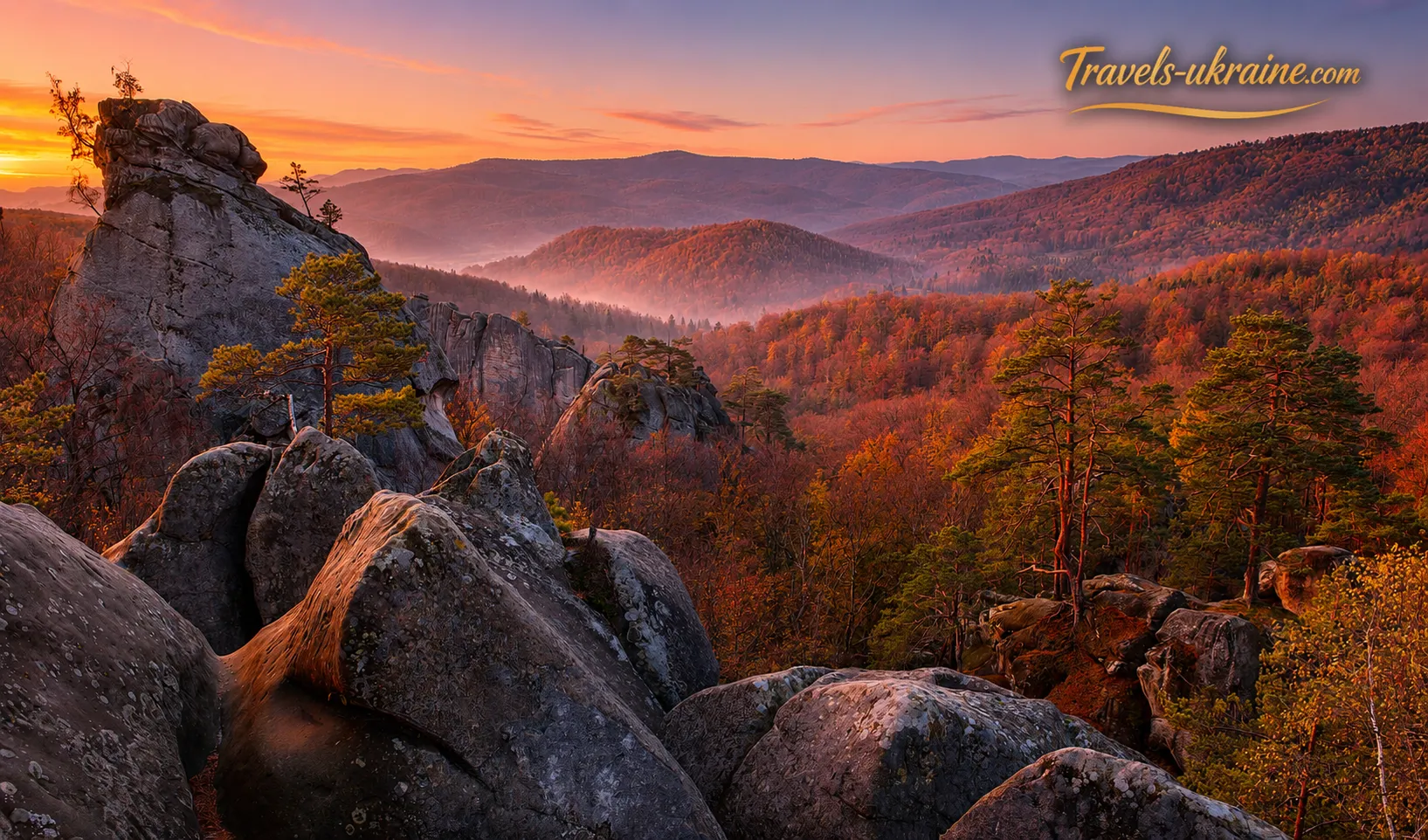
Today, then, seeing this unique historical and natural landmark does not require joining an opryshky band or belonging to the academic community. All you need is the desire to be surrounded by nature and silence, along with a little free time to visit this special tourist destination. Here, you can breathe in the scent of pine needles and pure mountain air, walk among stone giants, or watch the sunrise amid the mountains and Carpathian forest.
The Dovbush Rocks are well known among enthusiasts of ecotourism, hiking, and active outdoor recreation. Visiting the Bubnyshche rocks can be a standalone weekend trip or a meaningful addition to a tourist route through the Carpathians. This location can conveniently be combined with trips to Bolekhiv, Trukhaniv, Skole, Kamianka Waterfall, Tustan Fortress, and other natural and historical landmarks in the region.
Natural and architectural features of the Dovbush Rocks
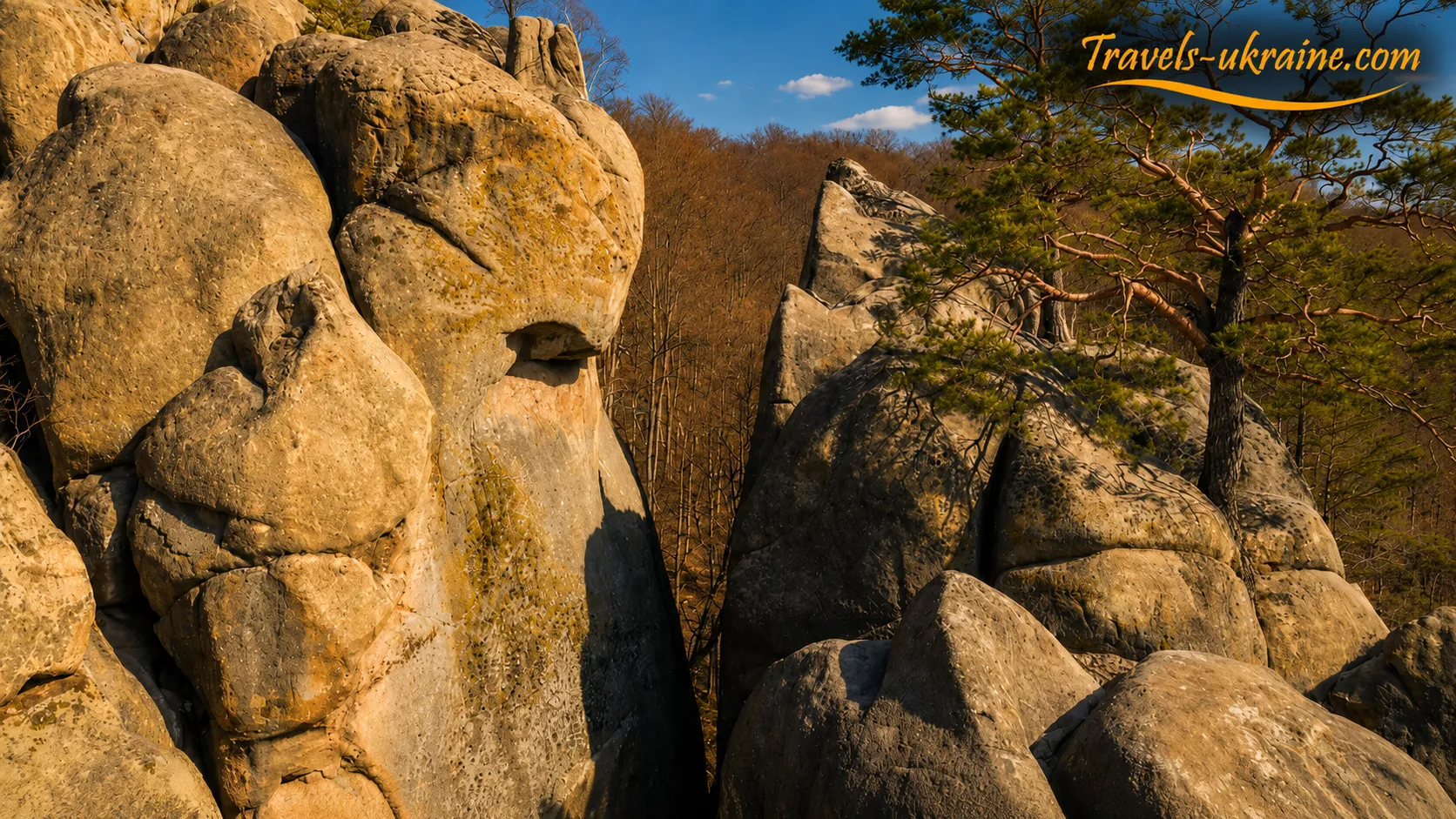
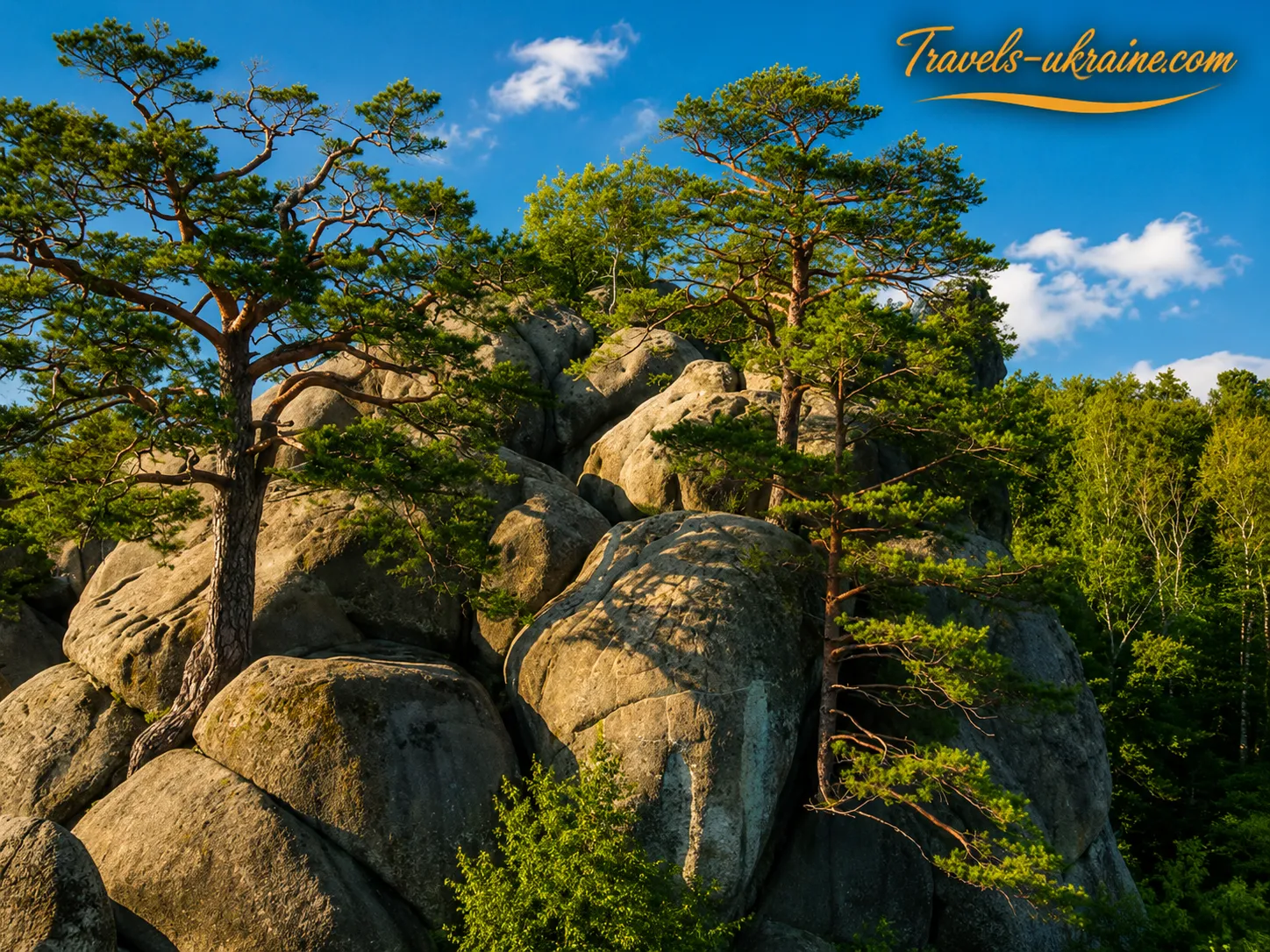
The Dovbush Rocks near the village of Bubnyshche stand at an elevation of approximately 668 meters above sea level. Amid the Carpathian forest, imposing sandstone outcrops rise up to 80 meters high—silent witnesses to an era that began more than 70 million years ago. At that time, an ancient Paleogene sea stretched across the site of today’s mountains, with sandy deposits accumulating on its floor. Over time, they became solid rock, were uplifted by tectonic forces together with the Carpathians, and were shaped into their fantastical forms by water, wind, and frost.
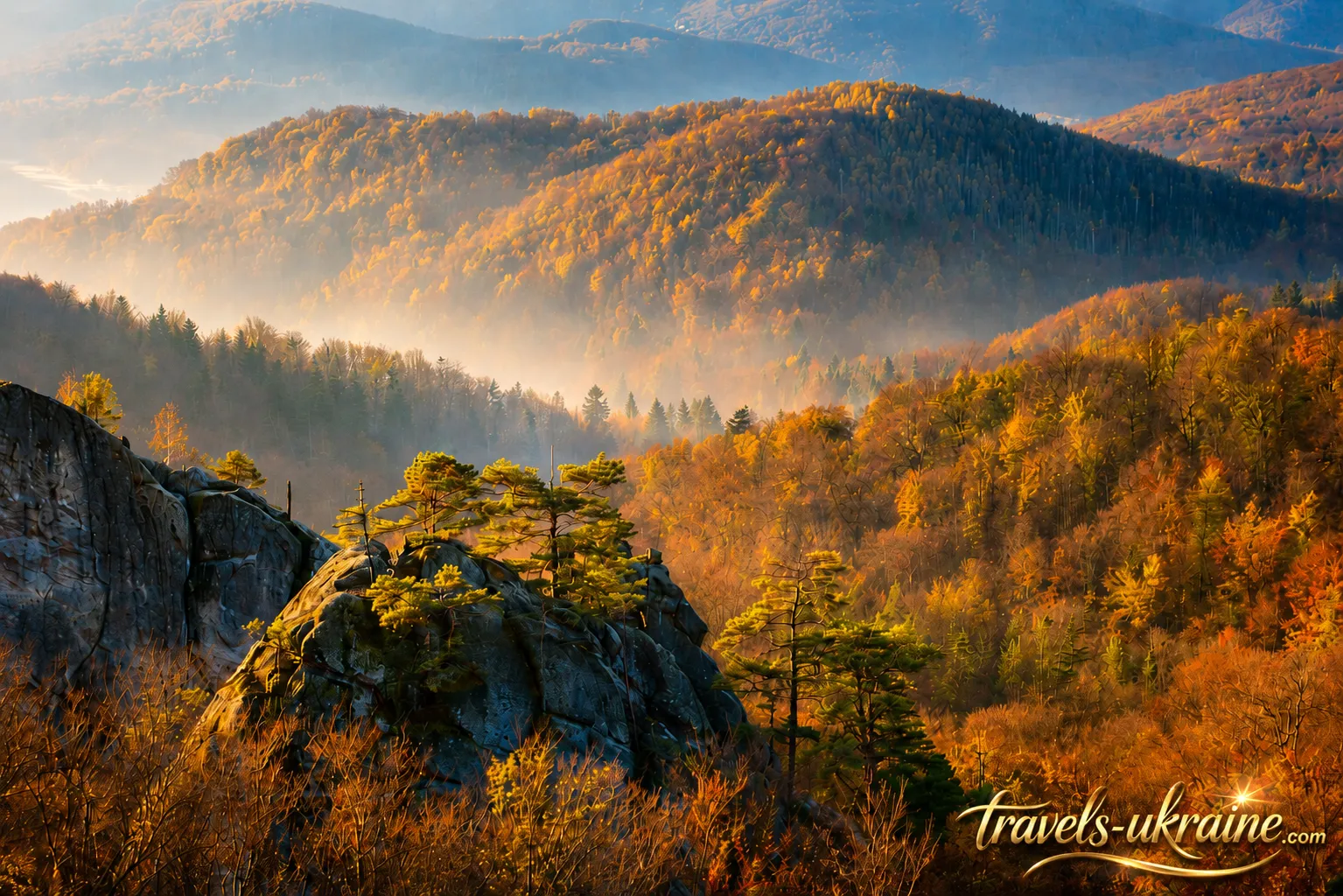
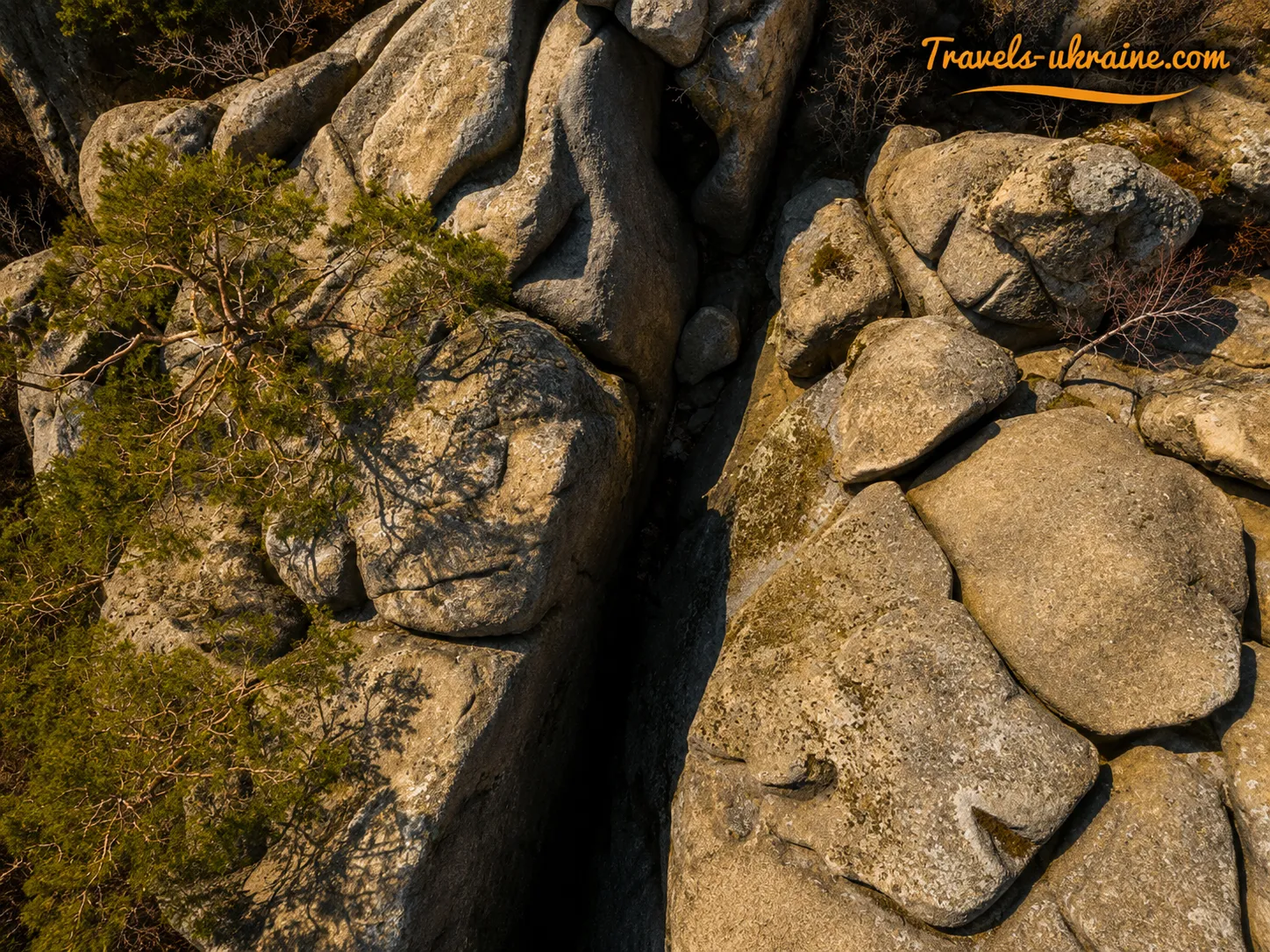
Today, a stone labyrinth up to 200 meters wide extends almost a kilometer from east to west. It lies hidden in a beech-and-spruce forest, alternately opening into towering walls and isolated stone towers, then narrowing into dark gorges, passages, and secluded clearings. The rocks seem to grow straight out of the forest floor, while trees surround them on every side, enveloping them in moss, roots, and cool shade.
As you travel through this natural labyrinth, it is easy to lose track of time. A new landscape appears around every bend: a sheer wall, a narrow stone corridor, a huge boulder of remarkable shape, or a gap between the trees through which the green Carpathian ridges can be seen. Here, one feels especially keenly how brief human history is beside stone that remembers an ancient sea long before the first Carpathian settlements appeared.
Caves, chambers, and carved rooms
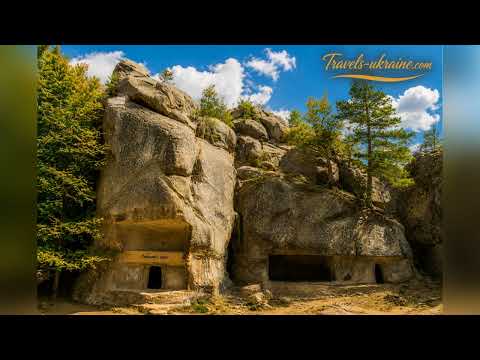
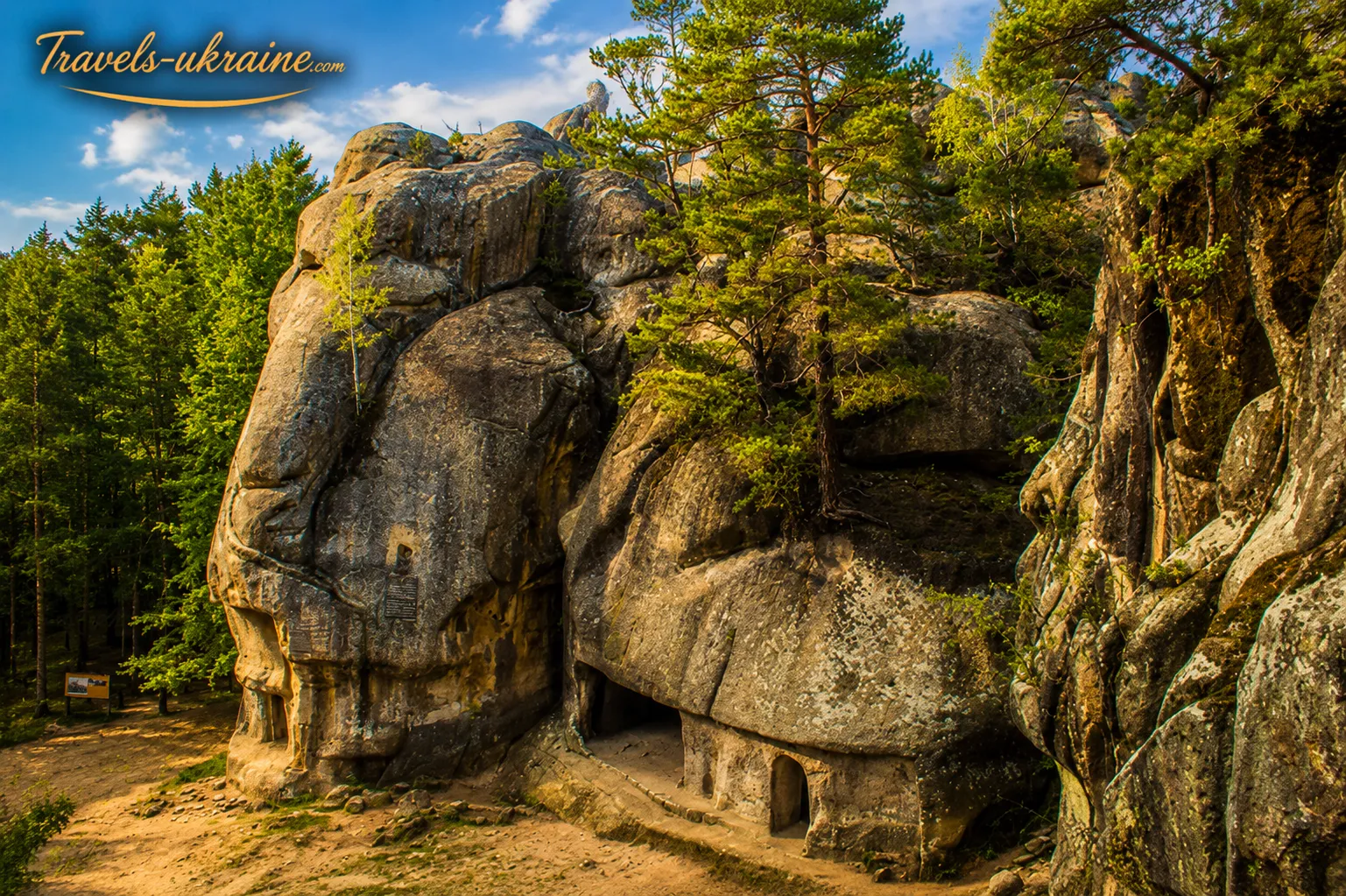
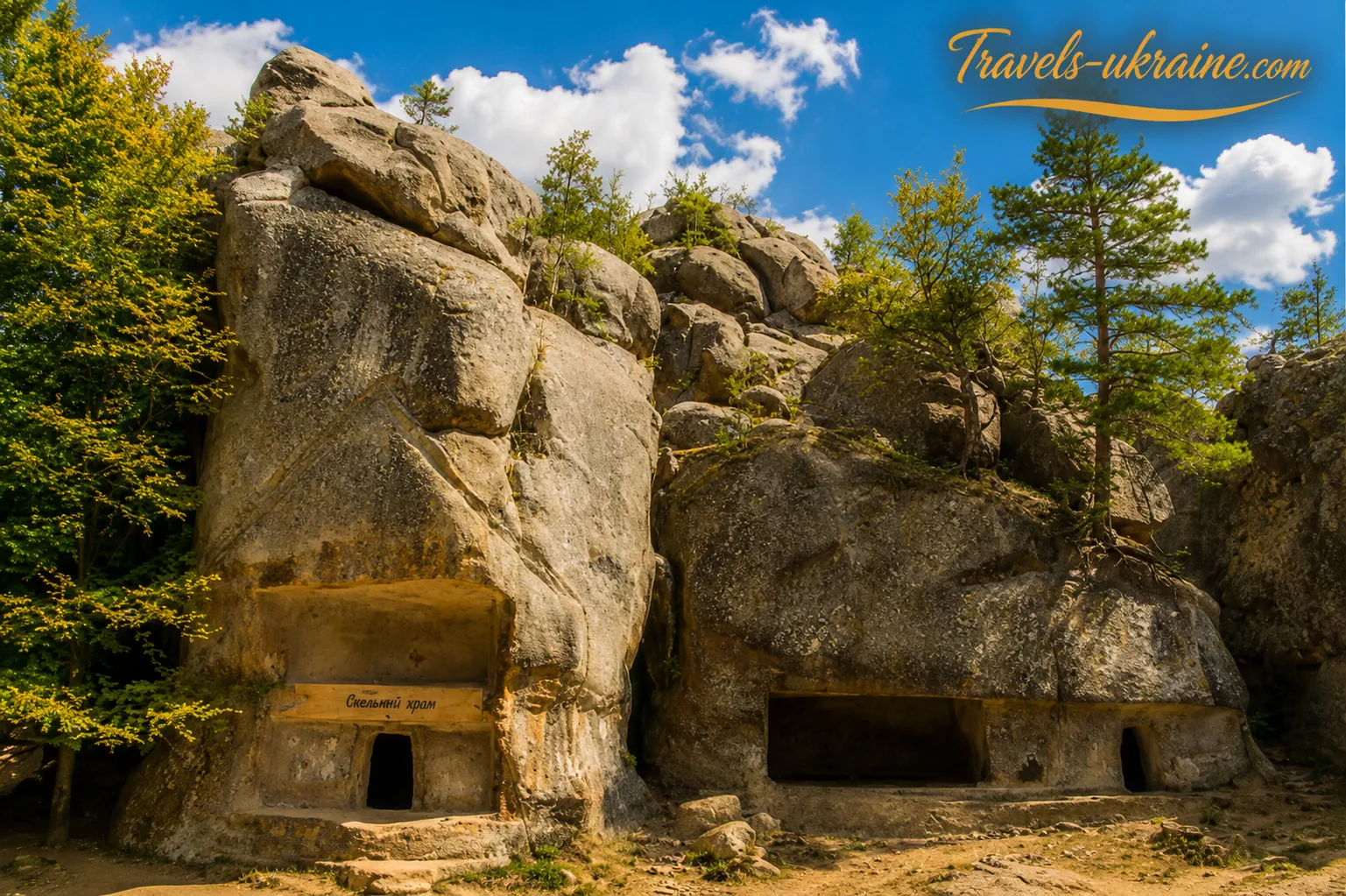
The three rooms carved into the central part of the rock formation raise the most questions. They have geometric shapes, relatively even walls, finished surfaces, and visible tool marks. Nearby, one can see niches, grooves, indentations, steps, and openings whose purpose researchers explain in different ways.
People probably did not create these rooms from scratch. They used natural fissures, grottoes, and hollows, then enlarged them, leveled the walls, and adapted the space to their needs. This is why it is more accurate to call Bubnyshche a natural-anthropogenic rock-and-cave complex: nature formed its foundation, but people substantially altered certain parts.
The precise purpose of each chamber has still not been established. They may have been used for living, storing supplies, defense, хозяйственные needs, or seclusion. Theories that they were a pagan sanctuary, monastery, watch post, or fortress remain subjects of scholarly debate and should not be presented as one definitive answer.
Traces of wooden construction on the stone
Grooves, cuttings, and holes have survived on the vertical surfaces of the Bubnyshche rocks; wooden beams may once have been secured in them. These traces suggest that wooden ceilings, platforms, fences, or multilevel structures once adjoined the natural stone walls. The rocks may have served simultaneously as a foundation, support, and part of a defensive structure, while wooden elements connected separate sections of the complex and blocked open passages.
A similar building principle can be seen at the Urych Rocks, where the Tustan rock fortress stood in the Middle Ages. Its stone walls also preserve numerous grooves and cuttings intended for fastening wooden structures. Thanks to these traces, researchers were able to reconstruct in considerable detail the arrangement of the fortress walls, passageways, and several levels of wooden construction. At the same time, this similarity does not mean that the Bubnyshche complex had the same appearance, age, or purpose: the fastening system at Tustan has been studied much more thoroughly, while the construction of the Dovbush Rocks remains a matter of scholarly hypotheses.
The wooden structures themselves have not survived to the present day, so their appearance is reconstructed from the arrangement of the carved grooves and comparisons with other rock fortifications. Natural walls may have replaced part of the defensive structure, while wooden elements blocked passages, formed living quarters, and connected different levels of the complex.
Using the terrain in this way was practical: instead of building a large stone fortress, people only needed to supplement the existing natural formation with wooden structures. The rocks provided protection, elevation, and a good view of the surrounding area, while the narrow passages could be controlled relatively easily.
A stone courtyard and a natural fortress
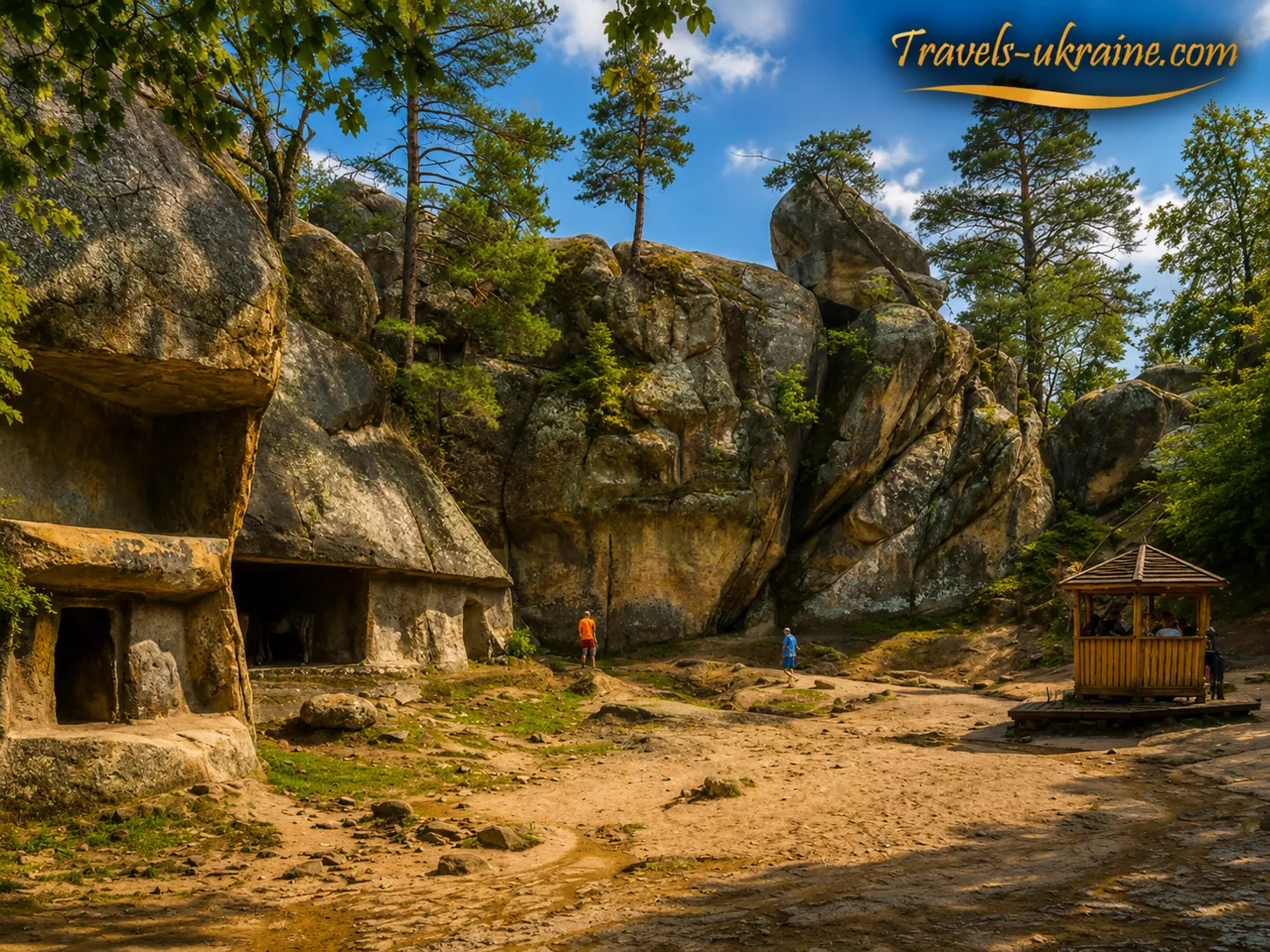
One of the most distinctive parts of the complex is an open площадка surrounded by high rock walls. Because of its shape, it resembles a fortress’s inner courtyard. Here, one can especially well appreciate how effectively the natural terrain could be adapted for defense or habitation.
On one side, the площадка is protected by sheer rocks; on the other, earthen and wooden fortifications may once have existed. The entrances to the carved chambers open directly into this space, making the entire complex seem like a single architectural ensemble.
However, it is worth remembering that the present appearance of the Dovbush Rocks is the result of many stages. Nature shaped the formation over millions of years, people altered it during different historical periods, and time gradually destroyed the structures and erased some of the traces. Thus, what stands before us today is neither a finished castle nor an ordinary cave, but a unique stone archive in which every crack, niche, and carved groove may form part of a much larger story.
Photo and video gallery
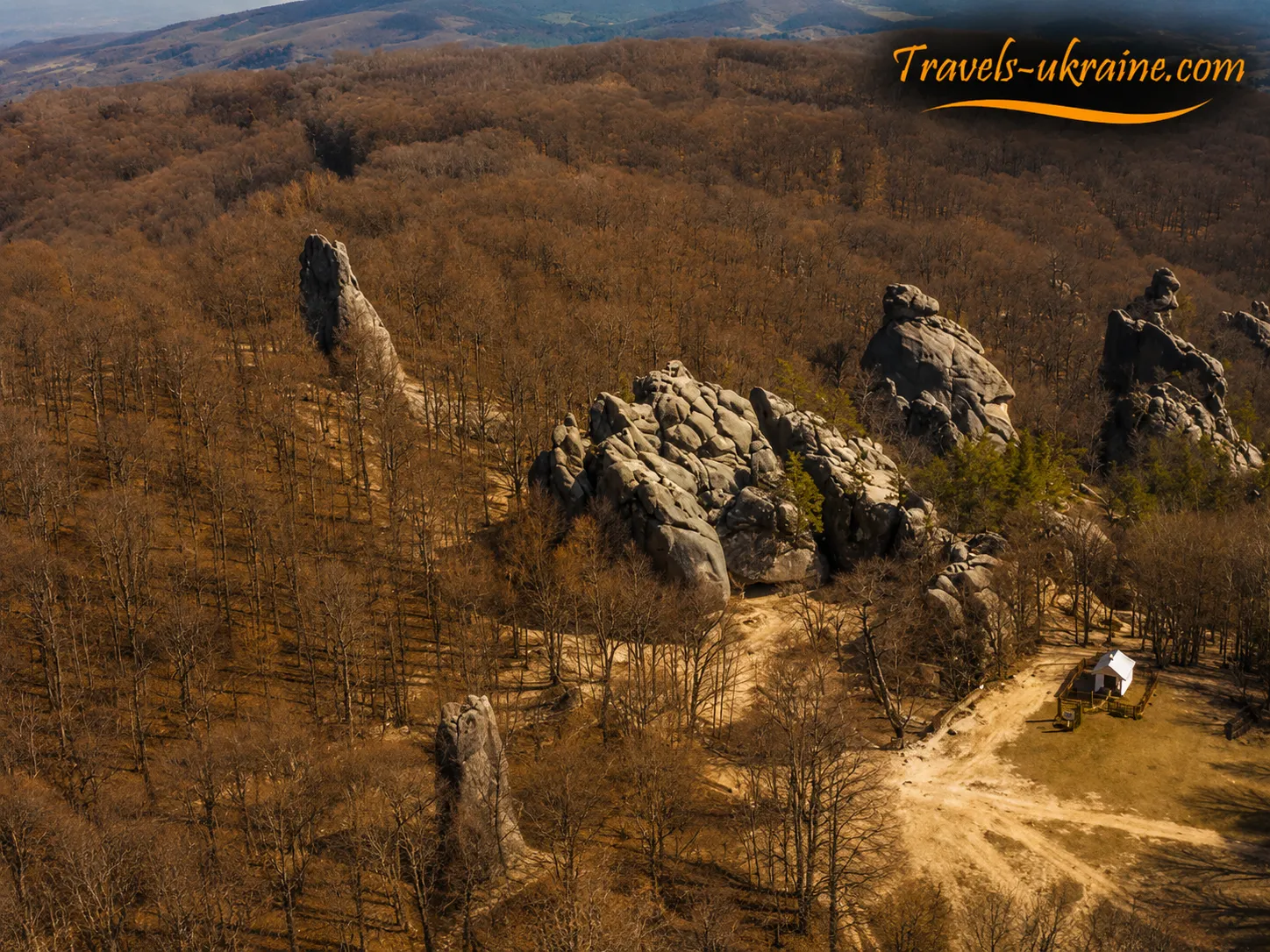
Dovbush Rocks: a brief guide for travelers
The Dovbush Rocks in Ivano-Frankivsk Oblast are more than a historical landmark visited during a short excursion. People come here for a leisurely walk, a family picnic, an active hike, rock-climbing training, or camping. Recreation areas, places to stop a car, and food establishments are located near the stone labyrinth, so the trip can be organized for a few hours, a full day, or an entire weekend.
The tourist area of the complex can be reached by car from Bubnyshche, which is about three kilometers from the rocks. Cars are left in the recreation or parking area, after which visitors continue on foot to explore the main formation. This is convenient for families with children, travelers carrying outdoor gear, and those planning to stay near the rocks longer than a few hours.
Driving to the site does not mean that free movement through the forest or between the rock formations is permitted. Vehicles must be left in the designated area without blocking roads or trails. Entry conditions and any possible recreation fee may change, so it is best to check the latest information immediately before your trip.
The complex appeals both to those who want to spend a peaceful day in nature and to those seeking a more active adventure. Some visitors limit themselves to the central clearing and caves; others head to the more remote stone towers, photograph the sunrise, spend the night in a tent, or devote the day to climbing routes.
This variety is what makes the Dovbush Rocks a full-fledged tourist destination rather than a brief stop for a few photographs. Here, you can combine history with active recreation, walk through the forest, go camping, sample local cuisine, and discover rock climbing in the Carpathians. Above all, respect the conservation rules, leave no waste behind, and remember that tourist comfort should not become a burden on the forest and rocks.
Personal Experience: A Family Trip to the Dovbush Rocks
On the eve of the summer holidays, I was looking for a family getaway in the Carpathians that would interest the children too. My boys were not particularly enthusiastic about museums or lengthy excursions, so I wanted to find a place where they could do more than listen to adults’ stories—where they could explore, overcome natural obstacles, and feel like participants in a real adventure. The Dovbush Rocks were a perfect fit.
We packed a tent, camping gear, and food and set off for Bubnyshche. The trip took place before the full-scale war began, so entry conditions, recreational arrangements, and infrastructure availability at that time may differ from those today. Once we arrived, it became clear that we could spend not just a few hours among the rocks, but an entire day—or even stay overnight.
What surprised me most was the children’s reaction. Instead of their usual question, «Are we going home soon?» I heard, «Can we climb up there?» Under our supervision, the boys made their way through narrow passages, explored grottoes, and tackled accessible sections of rock. Every crack seemed like a secret passage to them, while the stone corridors easily became hideouts for opryshky.
We remember this trip not for luxurious service, but for the forest, enormous rocks, fresh air, and the feeling of a small family adventure. Sometimes this is exactly the kind of getaway you need most: no rush and no complicated itinerary, just walks in nature, an evening by the tent, and children who need no convincing that travel can be exciting.
Legends, Mysteries, and Fascinating Facts about the Dovbush Rocks
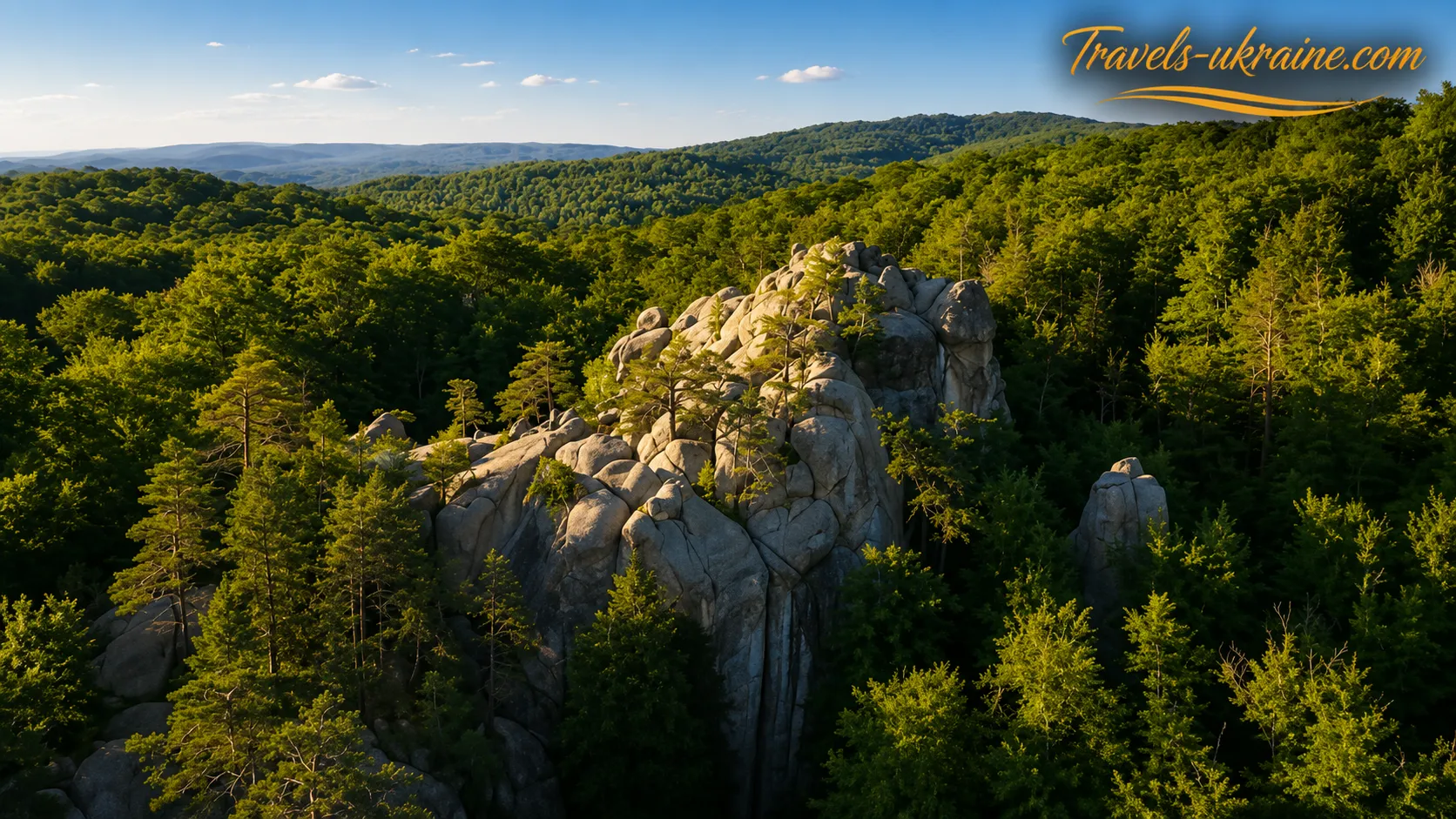
The Dovbush Rocks in Ivano-Frankivsk Oblast preserve more than traces of natural processes and ancient human activity. For centuries, local residents tried to explain the origins of the stone giants, caves, grooves, and mysterious hollows. Where written sources were lacking, legends emerged—vivid, contradictory, and sometimes so convincing that distinguishing folk imagination from historical conjecture proved harder than finding a way out of the rocky labyrinth itself.
Researchers were recording folklore connected with Bubnyshche as early as the nineteenth century. Ivan Vahylevych drew on local oral traditions in his attempts to understand the purpose of the caves and traces of ancient structures. The tales preserved stories of giants, an unfinished city, an impregnable castle, the rescue of residents during attacks, and, of course, opryshky treasures.
Giants Who Moved Rocks
One of the oldest legends tells of giants who once lived in the Carpathians. They supposedly carried enormous stones from place to place, stacked them on top of one another, and built structures beyond the reach of ordinary people. The bizarre towers, individual boulders, and massive stone walls seemed too large to local residents to be merely the result of water, frost, and time.
These tales did not arise by chance. Without modern knowledge of geology, people found it difficult to explain how rocks as tall as a multistory building had appeared in the middle of the forest. The theory of giants sounded much easier to understand—and, above all, more interesting—than an explanation involving sedimentary rocks, tectonic movements, and millions of years of weathering.
The image of a stone giant later appeared in Ukrainian literature as well. Ivan Franko, who visited Bubnyshche in 1874, later dedicated the poem «Bubnyshche» to the area. In it, one of the rocks appears like a mighty giant, forever frozen among the Carpathian forest.
The Legend of Two Brothers and the Unfinished City
Another tale tells of two brothers who planned to build a great city among the rocks. Natural walls were to serve as its fortifications, while the caves would house residents and supplies. The work supposedly progressed successfully until a dispute arose between the brothers.
Unable to reach an agreement, they abandoned the construction, and the city remained unfinished. All that supposedly survived were stone corridors, hollows, and traces of structures on the vertical walls. The legend has an almost universal moral: even the strongest fortifications cannot save a project if its creators cannot divide the responsibilities. Modern builders and family travelers may find this thought suspiciously familiar too.
An Impregnable Castle Built by Dark Forces
Another story links the Bubnyshche rocks with a cruel lord who supposedly decided to build an impregnable castle here. It was impossible to complete such a task alone, so he sought help from dark forces. In a single night, walls, passages, towers, and secret chambers appeared among the rocks.
As often happens in folk legends, the pact with dark forces brought the owner no happiness. The castle fell into ruin, the wooden structures disappeared, and the stone walls remained as a reminder of human greed and the desire to have everything at once. There is no historical evidence that such a lord existed, yet the tale vividly conveys the impression the complex made on people: the natural rocks seemed to be part of an ancient fortress whose origins had long been forgotten.
Dovbush’s Cave, Opryshky Treasures, and Underground Passages
The largest group of local legends is connected with Oleksa Dovbush and the opryshky. According to the tales, they hid among the stone walls, stored weapons in caves, divided their spoils, and watched the surrounding roads. One of the carved chambers came to be known as Dovbush’s Cave, although it is impossible to establish with certainty whether the leader himself ever entered it.
The most popular legend tells of Dovbush’s gold, hidden somewhere among the rocks. In different versions, it consists of valuables, weapons, or loot taken from wealthy lords. The treasure supposedly lies in a secret passage, a sealed cave, or beneath a stone that opens only on a particular day.
Understandably, archaeologists have found no evidence that such riches exist. Yet the legend lives on because it fits so well with the mystery of the Bubnyshche rocks, with their dozens of hollows and hard-to-reach passages. It also lets every tourist become a treasure hunter for at least a few minutes. Admittedly, the most valuable discoveries are usually beautiful views, great photographs, and the realization that after several hours among the rocks, you still managed to find your car.
The tales often mention long secret passages in the Dovbush Rocks that supposedly led from the rocks to neighboring settlements or allowed the opryshky to leave their hideout unnoticed. The complex does contain narrow ravines, natural cracks, grottoes, and passages between rock formations. Some are so tight and dark that they can easily seem like entrances to a vast underground world.
At the same time, no verified system of tunnels stretching for many kilometers has been found here. Most of the known «secret passages» are natural fissures or short routes between the rocks. Water and frost shaped the sandstone into a complex landscape, while human imagination added underground corridors, secret exits, and a few chests of gold—for the full Carpathian legend package.
A Place of Power—or the Power of Impression
The Dovbush Rocks are often called a place of power. Some visitors speak of special energy, while others associate it with an ancient sanctuary, solar symbols, or ritual sites. Such claims lack unequivocal scientific confirmation and depend largely on personal perception.
Even so, it is genuinely easy to feel that this is an unusual place. Tall stone walls muffle sounds, narrow ravines remain cool even in summer, and trees, moss, and diffused light create the atmosphere of a secluded world. Perhaps the secret of Bubnyshche’s «power» lies not in mystical phenomena, but in the rare opportunity to spend a few hours far from city noise, phone notifications, and everyday concerns.
Events and Sporting Competitions at the Dovbush Rocks
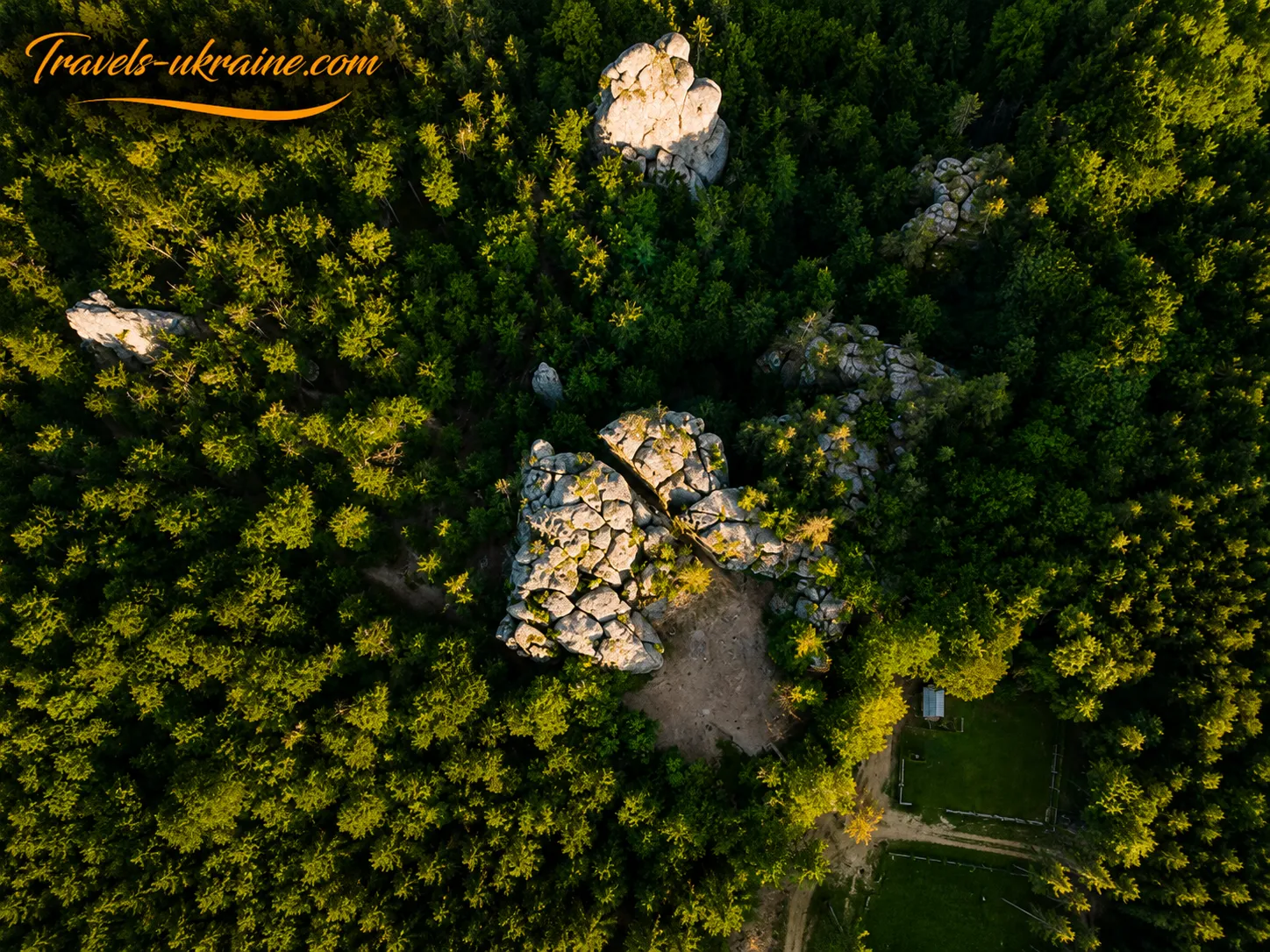
The Dovbush Rocks in the Carpathians have long been a meeting place for people who see the mountains as more than an easy walk through the forest. Natural stone walls, challenging terrain, numerous routes, and spacious clearings attract climbers, members of hiking clubs, instructors, youth teams, and mountain-sports enthusiasts.
You should not expect a permanent festival stage, loud concerts, or a weekly events calendar here. The main events at the Bubnyshche rocks are primarily sporting, tourist, or local-history oriented. In different years, the complex has hosted mountain-tourism competitions, climbing practice sessions, training camps, hiking camps, and team outings.
Mountain Tourism Competitions
The rock massif near Bubnyshche is well suited to courses involving natural obstacles, rope work, crossings, and rescue-technique practice. Participants must demonstrate not only physical strength, but also the ability to work as a team, use equipment correctly, and make quick decisions.
One notable example was the jubilee XXX Ukrainian Championship in sport mountain tourism, «Dovbush Rocks—2025,» held in late August 2025 near the village of Bubnyshche. The event brought together more than 120 participants from ten regions of Ukraine. Athletes competed on seven courses of varying difficulty, including «Mountain Obstacles,» «Tactical and Technical Course,» and «Technical Rescue Techniques.»
For an ordinary tourist, such events can become an unexpected part of the trip. Instead of a quiet clearing by a rock, you may see rope systems, judges’ stations, teams in helmets, and people who voluntarily climb places where most visitors are cautious even about looking up.
Climbing Practice and Club Outings
Bubnyshche is considered one of Ukraine’s best-known natural climbing areas. Numerous routes of varying difficulty have been equipped on individual rock formations—from beginner lines to routes designed for well-trained athletes. During the warmer months, climbers can therefore often be seen near the rocks, training independently, arriving with clubs, or conducting instructional sessions.
For beginners, a supervised session with an experienced instructor can be one of the most exciting ways to get acquainted with the rocks. However, equipment, belaying, and professional guidance are not formalities here but necessities. Natural terrain has no soft gym-floor covering, and sandstone becomes slippery after rain and requires careful handling.
Hiking Camps, Training Sessions, and Themed Excursions
Clearings and recreational areas within the complex are used for hiking camps, training trips, and practical classes. Participants learn to pitch tents, navigate the terrain, work with ropes, provide first aid, and move safely across challenging ground.
Such activities are especially popular with hiking clubs and youth teams. The rocks become a natural training ground where theoretical knowledge must be tested in practice. Maps, knots, and belaying rules are remembered much better when a real stone wall rises nearby instead of a picture in a textbook.
Not all events near the Dovbush Rocks are connected with sporting results. The area hosts themed excursions, local-history trips, and educational outings devoted to geology, the history of fortifications, the opryshky movement, and local legends. During these gatherings, participants can see things an ordinary tourist may sometimes pass without noticing: marks left by sandstone working, grooves for wooden structures, remnants of defensive features, and the differences between natural grottoes and spaces enlarged by people.
How to Behave During Sporting Events
Even if the competition comes as a surprise, you can usually look around the site by following the organizers’ instructions. Do not cross the barrier tape, touch ropes, equipment, or belay points, or walk directly beneath the athletes.
Standing beneath a climbing route is especially dangerous: a small rock, piece of equipment, or another object may fall from above. It is better to move to a safe distance and watch the event from the side. Believe me, an athlete’s confidence on a vertical wall is just as easy to see without testing the strength of your own helmet—which an ordinary tourist usually does not have anyway.
Sporting events bring a special energy to the Bubnyshche Rocks. They show that this ancient stone complex remains a living space where history, nature, and modern active tourism meet in one place. Some people come here for a medal, others for a new route, while most travelers are content with beautiful views and the quiet pleasure of knowing they do not have to climb to the summit today.
Continue Your Journey: From the Dovbush Rocks to Castles, Waterfalls, and the Dniester
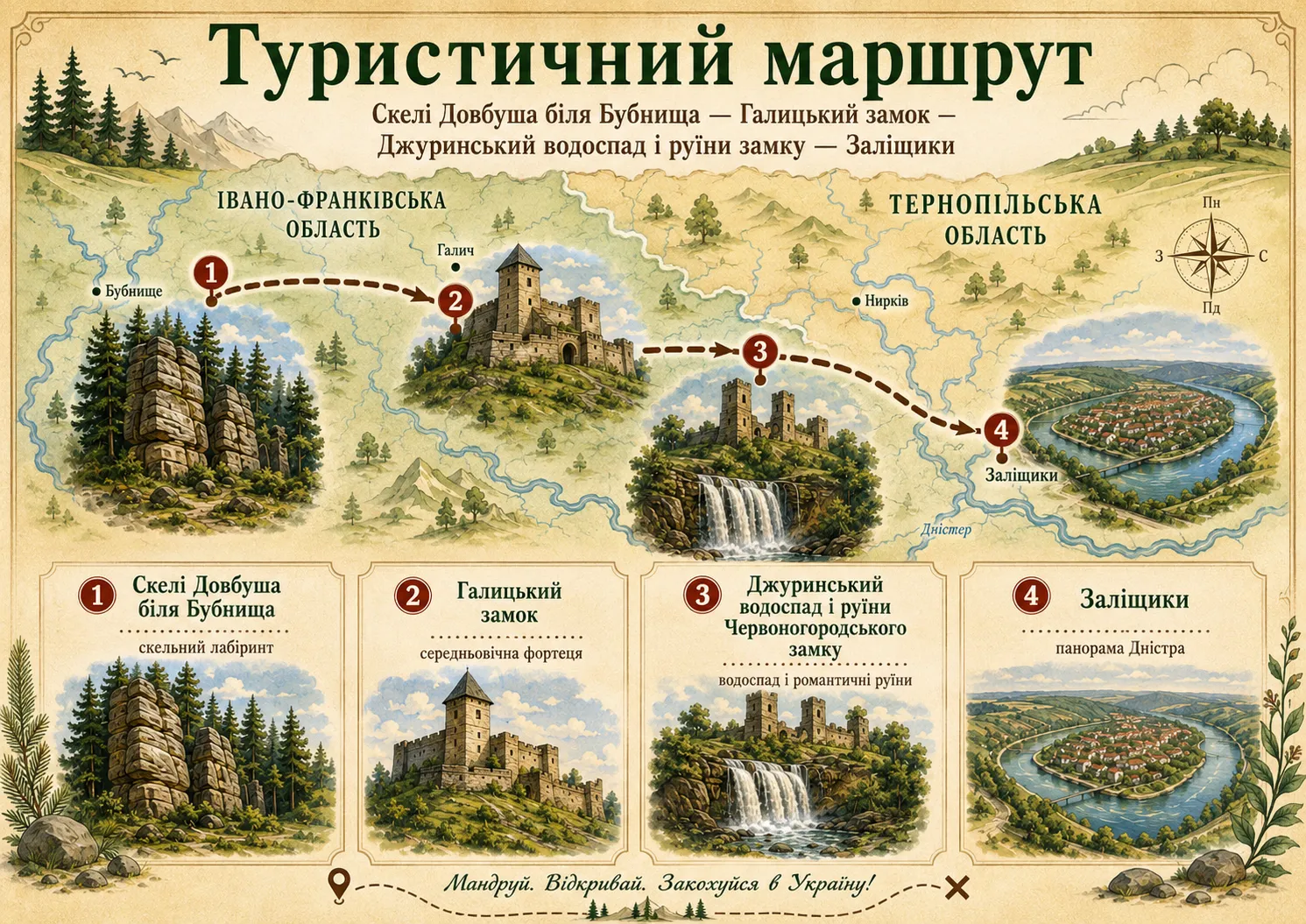
A trip to the Dovbush Rocks near Bubnyshche does not have to end immediately after you have enjoyed the finest views from the park’s observation decks and taken part in its outdoor activities. By continuing your journey through Ivano-Frankivsk Oblast and farther toward Ternopil Oblast, you can visit numerous natural, historical, and religious landmarks that can complement your Carpathian travel itinerary.
Some places are relatively nearby and suitable for a short stop on the same day. Others require a longer drive, so it is better to include them in a separate day trip or weekend itinerary. In the Carpathians, the distance on the map does not always accurately reflect travel time: winding roads, forest stretches, and the desire to stop at every beautiful viewpoint regularly interfere with even the strictest travel schedule.
Thus, the most convenient town stop on the way to Bubnyshche is Bolekhiv. Here you can take a short break before continuing your journey, replenish your supplies of food and drinking water, find a pharmacy, refuel your car, or have a coffee. This stop is especially useful if you plan to spend the whole day near the Dovbush Rocks, have a picnic, or stay in nature with a tent.
The town is interesting in its own right. Bolekhiv has a long history, historic buildings, religious landmarks, and the peaceful atmosphere of a small town in the Carpathian foothills. For most tourists, it primarily serves as a convenient starting point, but if you have time, it is worth taking at least a short walk here rather than simply speeding through the central streets. Combining Bolekhiv with the Dovbush Rocks is well suited to a leisurely day trip. In the first half of the day, you can explore the rock complex, then stop in town for lunch or a short walk after returning from the forest. After several hours among rocky cliffs, an ordinary flat street can sometimes feel almost like a tourist attraction in its own right.
Halych Castle: Where the Past Looks Out from Castle Hill
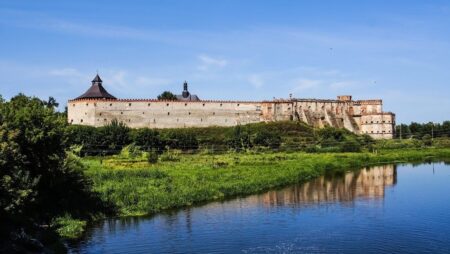
Approximately 100 kilometers by road from the Dovbush Rocks lies another fascinating historical landmark of Ivano-Frankivsk Oblast—Halych Castle, also known as the Starostynskyi Castle. Its remains rise on Castle Hill above modern-day Halych, offering a broad panorama of the town, the Dniester Valley, and the surrounding hills.
In the XIV–XV centuries, the fortress was an important defensive center and the residence of the Halych starostas. Fragments of walls, remnants of fortifications, and a restored tower have survived to this day. A walk up Castle Hill does not take much time, so Halych Castle can be included in a broader road trip through Ivano-Frankivsk Oblast. After the stone labyrinths of Bubnyshche, this location reveals another chapter in the region’s history—not a natural fortress in the forest, but a genuine medieval stronghold that watched over the routes along the Dniester for centuries.
Dzhuryn Waterfall and Castle Ruins: Where Water Meets History
After exploring Halych, you can continue your journey with a trip to the Dzhuryn Waterfall and the ruins of Chervonohorod Castle. Both landmarks are located close to each other in the Chervone tract near the village of Nyrkiv in Ternopil Oblast. The drive from Halych is approximately 120 kilometers, depending on the route chosen, so it is better to plan this location as a separate continuation of your trip or as part of a multi-day itinerary.
Dzhuryn Waterfall drops in several broad cascades from a height of about 16 meters and is considered the highest lowland waterfall in Ukraine. The sound of the water can be heard before the waterfall itself comes into view, and in warm weather the coolness beside the cascades is especially pleasant after a long drive. The waterfall lies within the territory of Dniester Canyon National Nature Park.
Not far away, romantic ruins of Chervonohorod Castle rise among the hills. The former defensive structure was later rebuilt as a palace, and two partly ruined towers and fragments of the walls have survived to this day. The castle stands in the deep valley of the Dzhuryn River, which forms an almost enclosed loop around the hill. Red sandstone, green slopes, old towers, and the roar of the waterfall create a landscape that resembles the setting of a historical film more than an ordinary stop on a tourist route.
Allow at least several hours to view the waterfall, walk to the castle, and take photographs. Be careful near the ruins: the old walls are in a dangerous condition, so do not climb them or enter areas beneath sections where stones may crumble. Even without risky climbs, this place offers plenty of impressions—nature prepared its own program here long ago, while history added two castle towers for an even more convincing atmosphere.
Zalishchyky: The Town Embraced by the Dniester’s Green Arms
After visiting Dzhuryn Waterfall and the ruins of Chervonohorod Castle, it makes sense to continue your journey to Zalishchyky. The drive from Nyrkiv to the town is approximately 27 kilometers, so this trip does not require a major detour. In a short time, the stone ruins and the roar of the waterfall will give way to a completely different landscape: a town set in a deep bend of the Dniester and surrounded on almost every side by the river and the high slopes of the canyon.
It is best to begin your first introduction to Zalishchyky at the panoramic viewpoint on the opposite high bank of the Dniester, near the village of Khreshchatyk. This is where the famous view of the Dniester meander opens up: the town’s neighborhoods lie below, a bridge stretches across the river, and green slopes form an almost enclosed natural ring around the town. It is one of those situations when a photograph really does turn out beautifully, yet still fails to explain why travelers stand at the edge of the viewpoint for so long in silence.
After taking in the panorama, descend into Zalishchyky itself and walk along its old streets, waterfront, and city park. The town preserves the Church of Saint Stanislaus, the Brunicki Palace with its park, religious buildings, and individual fragments of historic architecture. Thanks to the sheltered Dniester Valley, the area has a relatively mild microclimate, and in the past Zalishchyky was a well-known resort where people came for warmth, beach отдыха, grapes, and scenic views.
Tourist Ethics at the Dovbush Rocks: How to Leave Behind Only Footprints on the Trail
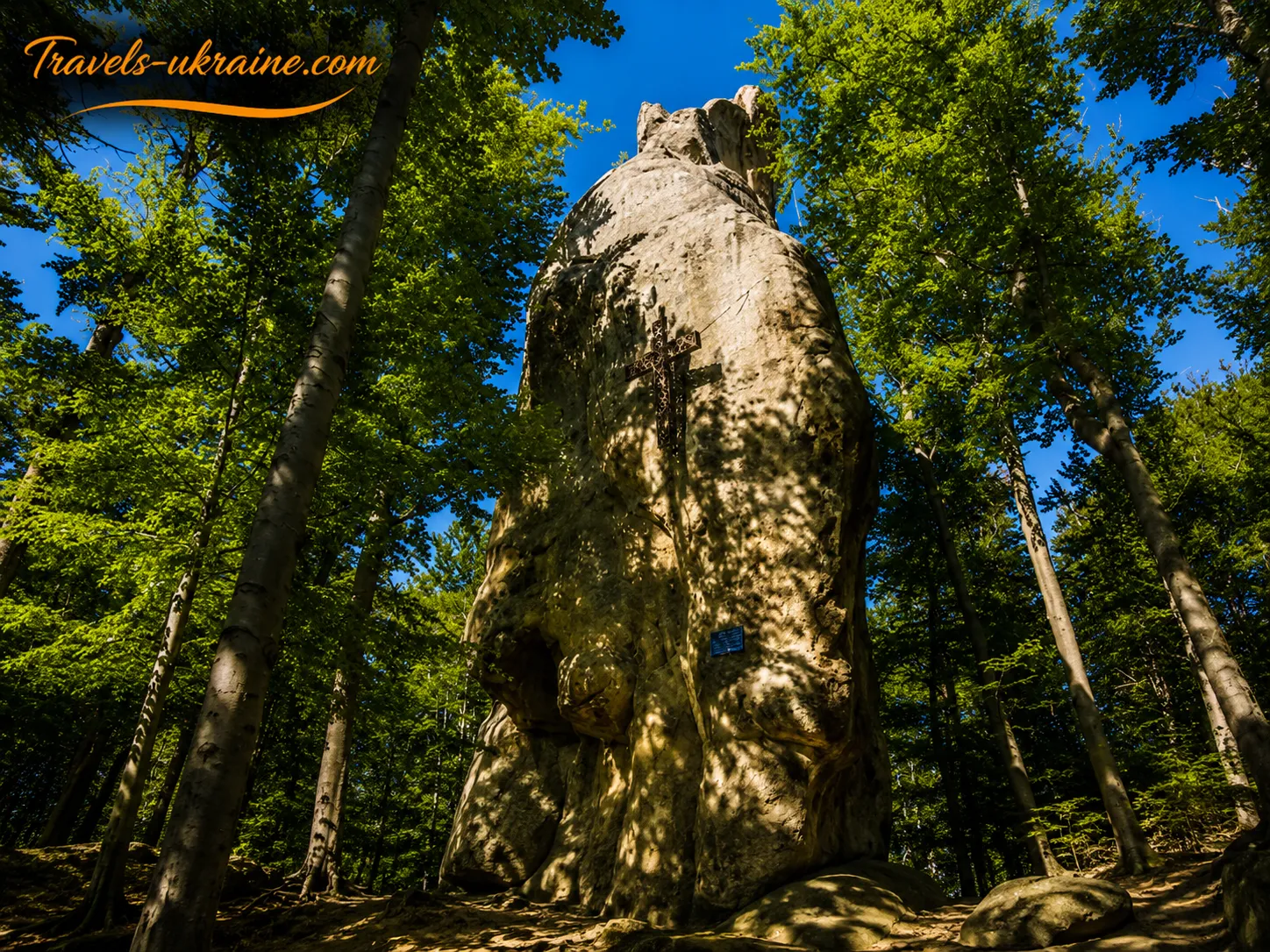
The Dovbush Rocks are not a tourist-park set that can be repaired or replaced after the season ends. They are a complex natural landmark, a historic site, and a living Carpathian forest where stone, moss, trees, and carved chambers form one integrated system. That is why the main rule for visiting is simple: after your trip, the place should remain exactly as you found it. Let the evidence of your visit be photographs, memories, and slightly tired legs—not a name painted on the sandstone.
Rocks, moss, plants, and even dry roots are part of the natural environment. Do not chip off pieces of rock, collect «souvenirs,» dismantle old stonework, or try to clear a mysterious niche yourself. Even if a find appears to be an ordinary fragment, it may have geological, archaeological, or research value. It is best to photograph anything interesting, remember where you found it, and leave it where it was. A stone from Bubnyshche looks far more convincing in the forest than on a shelf beside keys and old receipts.
Beeches, spruces, ferns, and other forest plants grow around the rocks. On shaded stone surfaces, vegetation develops slowly, so it can easily be damaged by footwear, wheels, or careless preparation of a resting spot. Where there is a visible trail, avoid creating a parallel route through young trees or the forest floor. This is especially important for large groups: one tourist leaves almost no trace, while several dozen people can quickly turn a green area into trampled ground.
Bottles, bags, disposable dishes, wet wipes, cigarette butts, and food scraps must not be left near the rocks or in forest clearings. Even organic waste changes animal behavior, attracts insects, and spoils the appearance of the area. The simplest solution is to bring several sturdy bags in advance and take your rubbish to a container after your rest. If the container is full, take the bag with you rather than creating a new locally significant garbage monument beside it.
Families with children, photographers, tour groups, climbers, and people who simply want to spend a few hours in nature all come to the Bubnyshche Rocks. Loud music, shouting, and nighttime revelry disturb not only other travelers but also forest animals. There will always be another place for a portable speaker, while near the rocks it is worth listening, at least for a little while, to what people come to the Carpathians for: the rustle of trees, the wind in narrow passages, and the silence that takes much longer to find in the city.
If athletes are working on the rocks, do not stand directly beneath the route, touch the ropes, or move the equipment. A rock, carabiner, or other object may fall from the wall, so a safe distance is necessary even for those who are only watching.
Tourist ethics does not require complex knowledge or special equipment. It is enough to behave as though you were visiting a place that existed long before you and should remain after you leave. So the rule is simple: do not damage the rocks, leave no inscriptions, take no natural or historical objects, and use only designated places for resting and making fires. Then future travelers will see the same stone labyrinth, hear the same silence, and be able to debate the legends of Dovbush rather than who left the largest heart with initials carved into the wall.
Safety at the Dovbush Rocks: How to Return from Your Trip with Only Pleasant Memories
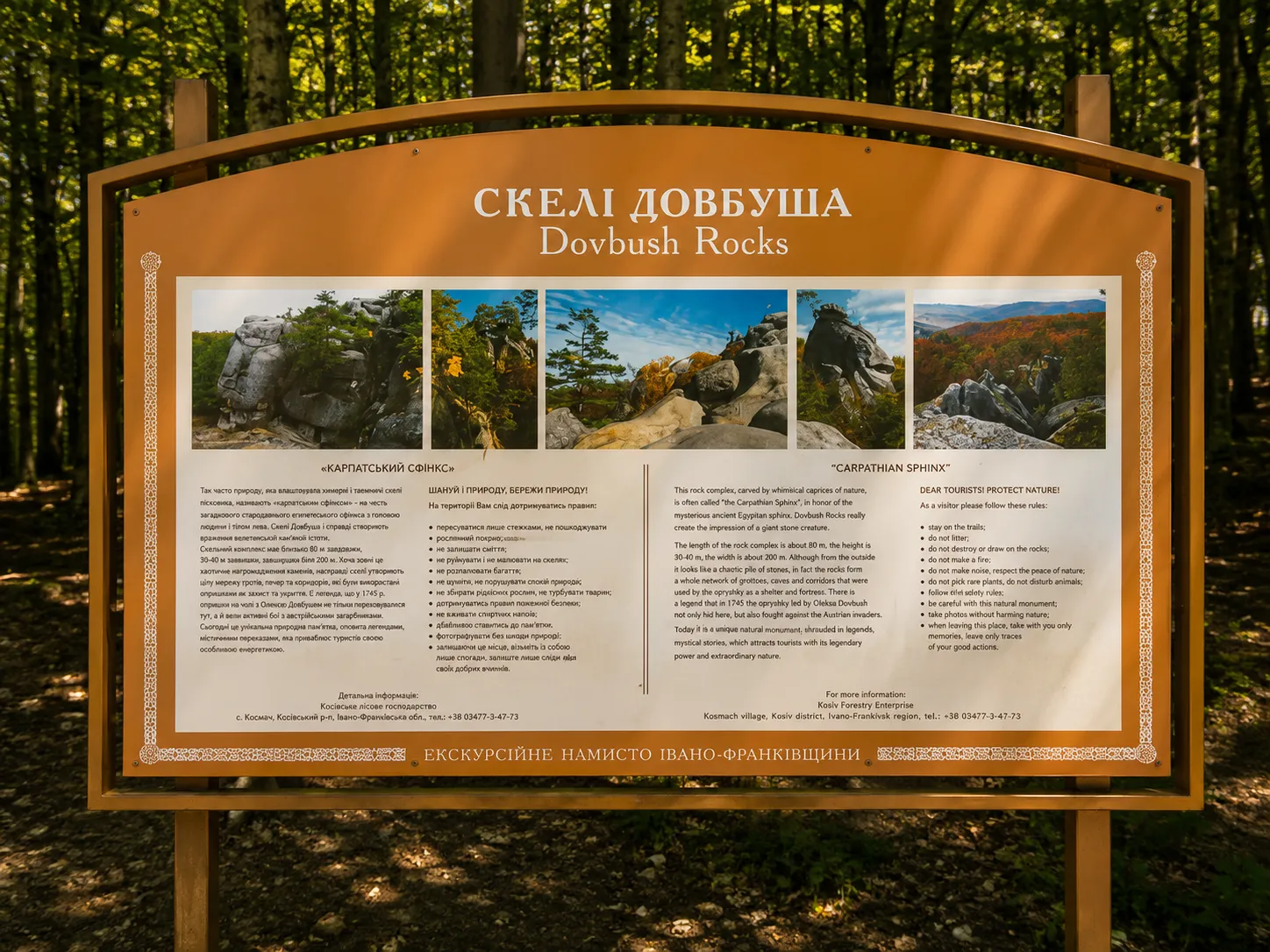
The Dovbush Rocks near the town of Bolekhiv are accessible to ordinary tourists and do not require special mountaineering training if you limit yourself to walking through the central part of the complex and along marked trails. However, this is a natural area with uneven terrain, high rock walls, narrow gorges, slippery surfaces, and exposed cliff edges.
Most dangerous situations arise not because the route is difficult, but because of haste, unsuitable footwear, the desire to take a spectacular photo, or overconfidence in one’s own agility. The rocks may forgive a tourist for forgetting a sandwich, but they are far less forgiving of attempts to take one more half-step toward the cliff edge. Keep in mind that after rain, sandstone, tree roots, and dirt trails become slippery. Sloping rock surfaces covered with moss or wet leaves are particularly dangerous. In such conditions, it is better to avoid climbing to the upper sections and focus on walking around the base of the rocks.
During a thunderstorm, do not remain on an exposed summit, near a solitary tree, or on the highest part of the rock formation. Descend to lower ground, move away from metal equipment, and wait out the storm in a safe place. A rocky landscape beneath lightning really does look dramatic, but it is better to admire it without playing the leading role.
Hiking boots or comfortable sneakers with a sturdy, non-slip tread are the best choice for a walk. Your footwear should support your feet well and protect your toes while moving through rocky passages. Sandals, smooth-soled city sneakers, flip-flops, and high-heeled shoes are poor choices even for a short route. In the central section, you will have to step over roots, stones, and uneven ground, while after rain an ordinary trail can quickly turn into a test of balance.
Small fragments may naturally fall beneath high walls and individual rock towers. The risk increases after heavy rain, frost, sudden temperature changes, or when people are above on the slope. Do not stand for long directly beneath overhanging boulders, loose sections, or climbing routes. If someone in your group is moving higher up, do not walk directly below them: a stone dislodged carelessly can quickly pick up speed.
Rock climbing — only with proper equipment and experience
The presence of metal protection points and established routes does not mean that every visitor can safely climb the rock. Sport climbing requires a helmet, harness, rope, appropriate equipment, and the ability to use it. Beginners should climb only with an experienced instructor or as part of an organized group. Do not use a rope found by chance, old slings, or unknown anchor points without having them checked by a specialist.
Climbing without protection is especially dangerous after rain. Wet sandstone becomes slippery, and some holds may be fragile. Descending often proves more difficult than climbing up, although from the top this important detail usually dawns on tourists rather late.
Tick protection and what to do if you encounter a snake
The route passes through forest and tall grass, so during the warmer months it is important to remember ticks. Choose light-colored, covered clothing, tuck your trousers into your socks or footwear, and use repellent according to the instructions. During a long walk, inspect your clothing periodically, and after returning, carefully check your body, hair, backpack, and belongings. Pay particular attention to the areas behind the knees, armpits, neck, hairline, and places where clothing fits tightly against the body.
If a tick has already attached itself, do not pour oil, alcohol, or other substances over it. It is best to seek medical attention; if that is not possible, carefully remove it with fine-tipped tweezers, treat the bite area with an antiseptic, and consult a doctor if necessary.
In the forest, a snake will usually try to avoid people. Do not touch it, try to catch it, photograph it from close range, or drive it away with a stick. Give the animal a chance to crawl away peacefully. In the event of a bite, remain calm, restrict movement of the affected limb, and seek medical attention as soon as possible. Do not cut the wound, cauterize it, apply a tight tourniquet, or try to suck out the venom.
Even on a short walk, it is useful to carry a small first-aid kit with bandages, sterile wipes, a dressing, antiseptic, personal medication, and an allergy remedy that you have used before on a doctor’s recommendation. In the event of an injury, fall, disorientation, fire, or other dangerous situation, you can call the unified emergency number 112. Ukraine also has separate emergency service numbers: 101 — rescue services, 102 — police, 103 — emergency medical services.
Dovbush Rocks do not demand heroism from tourists. Much more useful here are attentiveness, comfortable footwear, common sense, and a willingness to abandon a risky climb. The best trip is one that makes you want to return to the place again, not one you later spend a long time recounting to a trauma doctor.
Frequently asked questions about Dovbush Rocks near Bubnyshche
Where are Dovbush Rocks near Bubnyshche located?
Dovbush Rocks are located in Ivano-Frankivsk Oblast, near the village of Bubnyshche and approximately 11–15 kilometers from Bolekhiv, depending on the route chosen. The rock complex lies amid beech forest within a protected natural area. When searching in a navigation app, be sure to check the oblast and the nearest settlement, as there are several tourist sites in the Carpathians associated with the name Oleksa Dovbush.
Are Dovbush Rocks near Bubnyshche and the Dovbush Trail in Yaremche the same place?
No, they are different tourist destinations. Dovbush Rocks near Bubnyshche are a large natural rock-and-cave complex near Bolekhiv. The Dovbush Trail is located near Yaremche and is a separate hiking route. The distance between these landmarks is considerable, so an accidental navigation error can completely change your travel plans.
What is the most convenient way to get to Dovbush Rocks?
The most convenient option is to drive your own car through Bolekhiv toward the village of Bubnyshche, then follow the road signs and map. Before setting off, download offline navigation, as mobile service in forested areas may be unstable. Do not choose an unverified shortcut simply because your navigation app suggests it: some forest sections may be difficult for an ordinary passenger car.
How much time is needed to visit Dovbush Rocks?
Allow approximately 2–3 hours for a brief look at the main rocks. A leisurely walk through the stone corridors, photography, and rest will take about 4–5 hours. If you plan to explore more remote sections or combine the route with a picnic, it is better to set aside nearly the entire daylight period.
Are Dovbush Rocks suitable for a family outing with children?
Yes, the central part of the complex can be visited with children if adults supervise them constantly near steep slopes, rock ledges, and narrow passages. For a family trip, it is better to choose dry weather and a shorter route without difficult climbs. Children should wear closed-toe shoes with non-slip soles and have water and clothing suitable for the weather.
Can you reach Dovbush Rocks with a stroller?
It will be difficult to explore the rock complex fully with a stroller. Forest trails have uneven ground, roots, stones, climbs, and narrow passages. Even a stroller with large wheels will not be suitable for most routes between the rocks. A child carrier may be more practical for a small child, but it should be used only on safe sections and with consideration for the adult’s physical fitness.
Is special equipment needed for a walk around Dovbush Rocks?
Special mountaineering equipment is not needed for an ordinary walk along the main tourist trails. Comfortable closed-toe shoes with a sturdy tread, a small backpack, water, a raincoat, a charged phone, and a compact first-aid kit are sufficient. A flashlight may be useful in darkened passages, but you should not enter unknown deep crevices on your own.
Can you go rock climbing at Dovbush Rocks?
Dovbush Rocks are well known among climbers and are used for training, but attempting vertical routes without experience is dangerous. Climbing requires appropriate preparation, a helmet, a belay system, inspected equipment, and someone who knows how to set up a belay correctly. Beginners should tackle their first routes only with a qualified instructor.
When is the best time to visit Dovbush Rocks?
The most comfortable period for a first trip is from late spring to mid-autumn. In dry weather, the trails are safer, and the long daylight hours allow you to explore the rocks without rushing. In summer, it is best to arrive in the morning to avoid the heat and large crowds. After heavy rain, during thunderstorms, icy conditions, or dense fog, it is better to postpone going onto high rock ledges.
Are there parking areas, cafés, and other amenities near Dovbush Rocks?
Parking areas, seasonal stalls, and leisure facilities may operate near the main approaches to the tourist site, but their availability depends on the season, day of the week, and current conditions. Do not rely entirely on being able to buy water or food directly by the rocks. It is better to bring drinking water, a snack, cash, and essential personal items, and to check current access and parking conditions before your trip.
Why Visit Dovbush Rocks
Dovbush Rocks is one of those tourist destinations in Ukraine that is difficult to describe with numbers, historical dates, or a list of natural features alone. You have to see it in person: walk between the towering sandstone walls, feel the coolness of the narrow stone corridors, hear the rustling of the beech forest, and pause for at least a few minutes where nature and human history have coexisted for many centuries.
This place does not reveal itself all at once. At first, travelers see large boulders covered with moss and tree roots. Then they begin to notice hollows, carved steps, ancient openings, passageways, and traces of human presence. Eventually, a feeling emerges that Dovbush Rocks is much more than a natural landmark or a popular photo spot. It is a place where each rock seems to preserve its own story, and the boundary between fact and legend becomes almost imperceptible.
A trip to the Bubnyshche tract is ideal for those seeking beautiful places in the Carpathians without having to tackle challenging high-mountain routes. Here, you can combine hiking, exploring history, photography, peaceful forest relaxation, and the discovery of an unusual rock complex. These rocks appeal to all kinds of travelers. Families come here to share an adventure, photographers seek striking natural compositions, history enthusiasts look for traces of an ancient rock settlement, and lovers of legends come for the atmosphere associated with Oleksa Dovbush and the Carpathian opryshky.
A trip to Dovbush Rocks can easily become an eventful journey through western Ukraine. You can combine it with visits to Bolekhiv, Halych, Dzhuryn Waterfall, the ruins of Chervonohrad Castle, Zalishchyky, and other tourist destinations in Ivano-Frankivsk and Ternopil regions. Such a route shows how diverse Ukraine can be even within a few days: from Carpathian forests and ancient rocks to river canyons, castles, and sweeping panoramas of the Dniester.
However, Dovbush Rocks itself deserves a full day, or at least several unhurried hours. Its value lies not only in its dramatic scenery. It lies in the combination of nature, archaeology, history, and folk memory. This is what makes the Bubnyshche Rocks one of the most fascinating tourist landmarks in the Precarpathian region.
And it is entirely possible that after returning home, you will remember neither the largest rock nor the most famous legend, but a brief moment of silence among the stone giants. That moment best explains why you will want to return to Dovbush Rocks again.


No Comment
You can post first response comment.