The history of nature in the Polissya Reserve is a continuous struggle against the elements, time, and human interference. Over the centuries, all sorts of inhabitants have found their place here — from small forest creatures to large mammals and rare birds. Yet this beautiful land has always attracted the most dangerous predator on the planet — humankind. Even so, the reserve’s nature has not given in. Slowly and persistently, it is reclaiming what was lost, restoring its natural balance and preserving its unique character and identity.
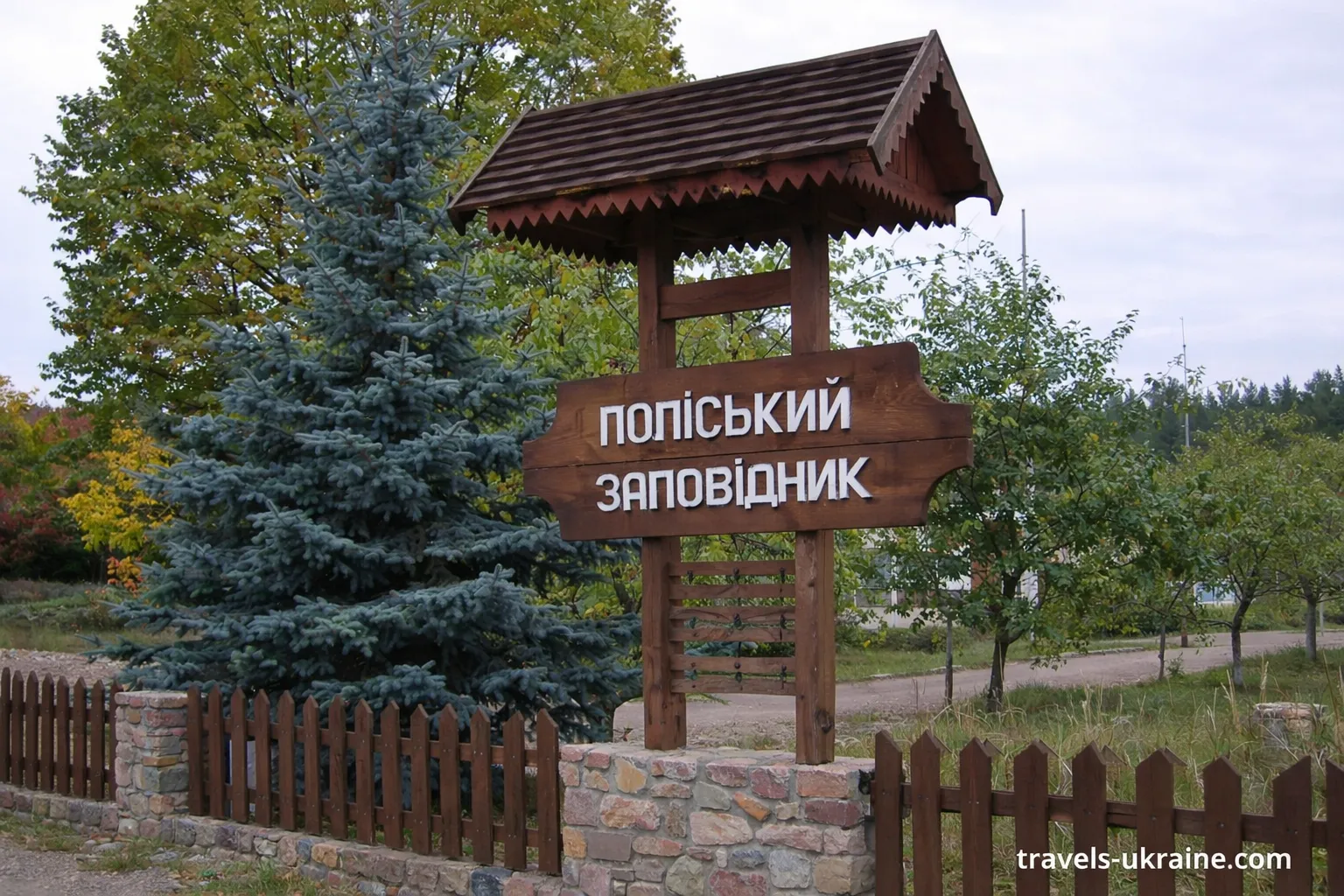
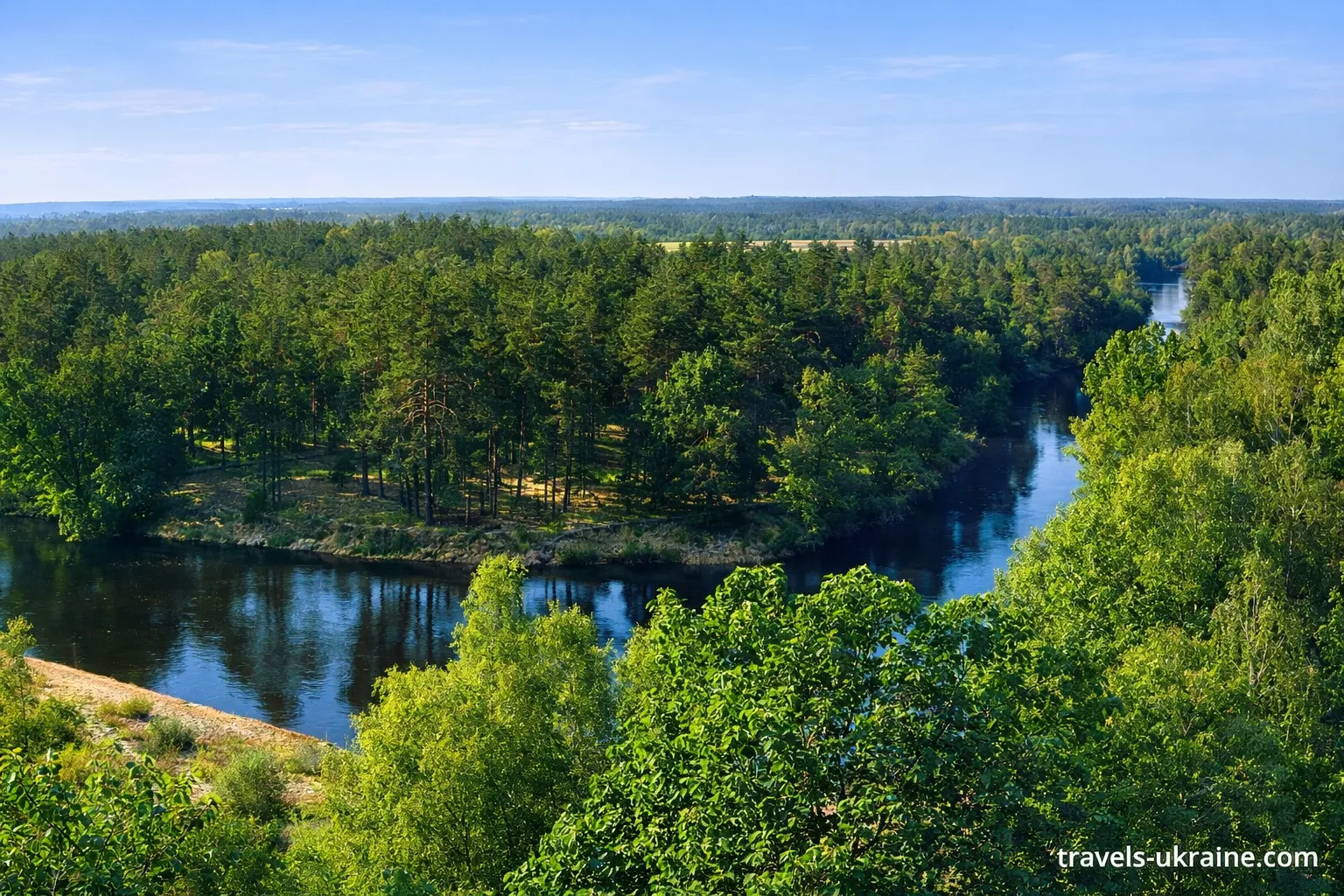
In the north of Ukraine, near the border with Belarus, stretch the little-disturbed, at times truly remote expanses of protected Zhytomyr Polissya. This is a land of pine forests, bogs, sandy dunes, and quiet waters, where life still moves to its own rhythm, far removed from intense human impact. It is here that the Polissya Nature Reserve reveals to travellers the true face of the wild: austere, calm, profound, and strikingly beautiful.
This region attracts admirers of nature-based tourism and ecotourism with its rich flora and fauna. Paths worn by wild animals still wind through forest thickets, marshy lowlands, and sandy hills, preserving the almost primeval character of the local landscapes. Here, more than anywhere, you feel that the protected nature of Polissya is not an open-air museum, but a living, changing world where everything follows the laws of nature.
The modern forest-and-wetland world of Ukrainian Polissya took shape after the retreat of the last glacier. As huge masses of ice began to melt, water collected in low-lying areas, forming marshes, small lakes, floodplains, and broad interfluvial spaces. That is how the distinctive natural landscape gradually emerged — the one for which the Polissya Reserve of Zhytomyr Region is now known: pine forests, raised bogs, river valleys, and rich biodiversity.
Today, this protected natural site is not only an important part of the Nature Reserve Fund of Ukraine, but also a true sanctuary for wildlife, home to rare plant species and animals typical of Ukrainian Polissya. That is why the Polissya reserve remains a place where nature can still be seen almost as it was many centuries ago.
How the Polissya Nature Reserve Took Shape
The nature of this region is far older than the history of the officially established protected area. The landscapes for which the Polissya Reserve is known today began to form after the last glacier melted, creating picturesque scenery.
According to official information, this nationally significant protected natural site in Polissya was established in November 1968. Its main purpose was to preserve in their natural state the forest-and-bog habitats typical of Ukrainian Polissya, as well as rare species of plants and animals.
The reserve covers 20,104 hectares, and the territory itself lies in the north of Zhytomyr Region, within the Olevsk and Ovruch districts. The reserve includes three forestry divisions subordinate to the State Forestry Committee of Ukraine.
The creation of this protected area, in the Mixed Forests zone, was an important step in preserving Ukraine’s natural heritage. At the time, it was already clear that a significant part of Polissya’s bogs, forests, and waters was being altered by economic activity, drainage, and forestry use. That is why the Zhytomyr Polissya Reserve was granted protected status of national importance. Its mission was not only to safeguard nature, but also to study typical Polissyan ecosystems, preserve biodiversity, and support natural processes without active human intervention.
How the Importance of Polissya’s Protected Lands Has Changed Over Time
Over the years, the importance of this territory has only grown. Today, the protected lands of Polissya are not merely an area of safeguarded nature, but one of the most valuable strongholds of wild forest-and-bog habitat in Ukraine. For scientists, it is a place to observe natural processes; for ecologists, a space where rare species and valuable ecosystems are preserved; and for travellers, an opportunity to see the true nature of Polissya without artificiality or tourist bustle.
The modern image of the reserve has been shaped by several factors at once: the ancient post-glacial origin of its landscapes, complex hydrology, the natural isolation of certain areas, and long-term protection. That is why the forest-and-bog reserve of Polissya still retains features that have long since disappeared elsewhere. Here, you feel especially clearly that nature is not a formal list of territories, but a real system for protecting unique natural complexes.
Natural Features of the Polissya Reserve: Forests, Bogs, Rivers, and Lakes
The reserve of Ukrainian Polissya is one of the most striking natural areas where you can see a true land of forests and bogs, untouched by modern economic activity. Its territory impresses not with contrast, but with wholeness: forests, bogs, waterways, and sandy elevations are all woven into one living space. That is why the landscapes of the Polissya Reserve leave such a powerful impression — they do not look “made for tourists”, but remain natural, quiet, and authentic.
What makes the strongest impression here is not one particular spot, but the atmosphere itself. Here, wild nature speaks through details: the scent of pine after rain, soft moss underfoot, mist over the bog, animal tracks in the damp sand, the morning stillness above the waters. That is precisely why nature-based tourism in places like this is valued for the depth of feeling it offers, rather than the number of развлечions. This is a territory where time in nature becomes attentive, unhurried, and genuinely restorative.
Forests and Bogs of the Polissya Nature Reserve
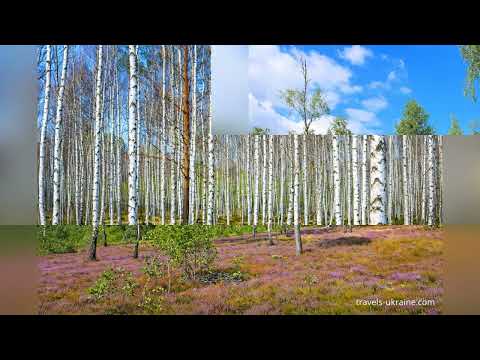
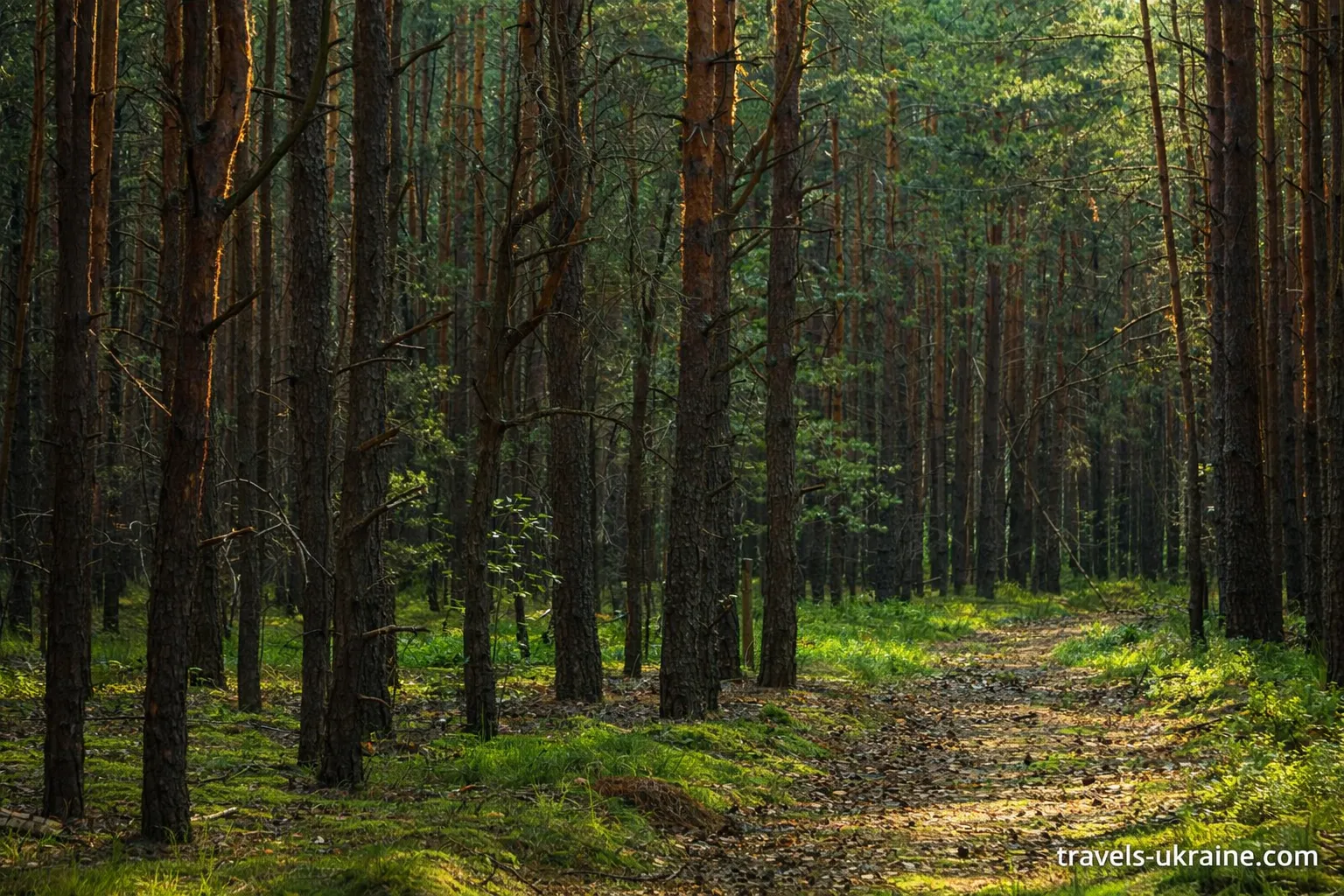
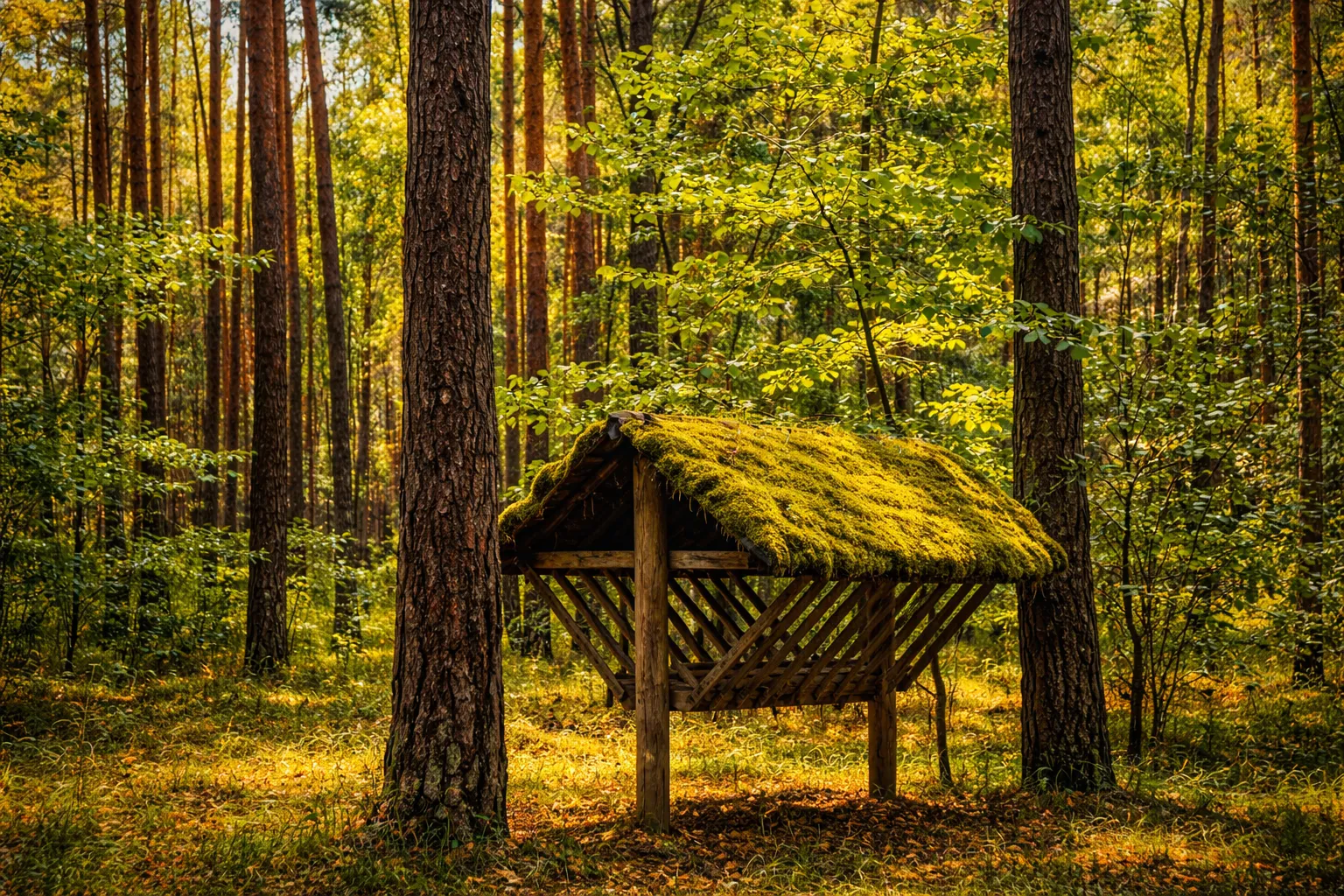
The reserve’s forests are above all pine massifs, which define the character of the entire region. They create that distinctive image for which Zhytomyr Polissya is often compared to northern taiga-like landscapes. Within the reserve, there are dry pine forests on sandy ground, wet woodlands in lower areas, as well as patches of juniper, bilberry, lingonberry, and moss cover. Thanks to this, the reserve is valuable not only as a travel destination, but also as an important stronghold for preserving typical Polissyan ecosystems.
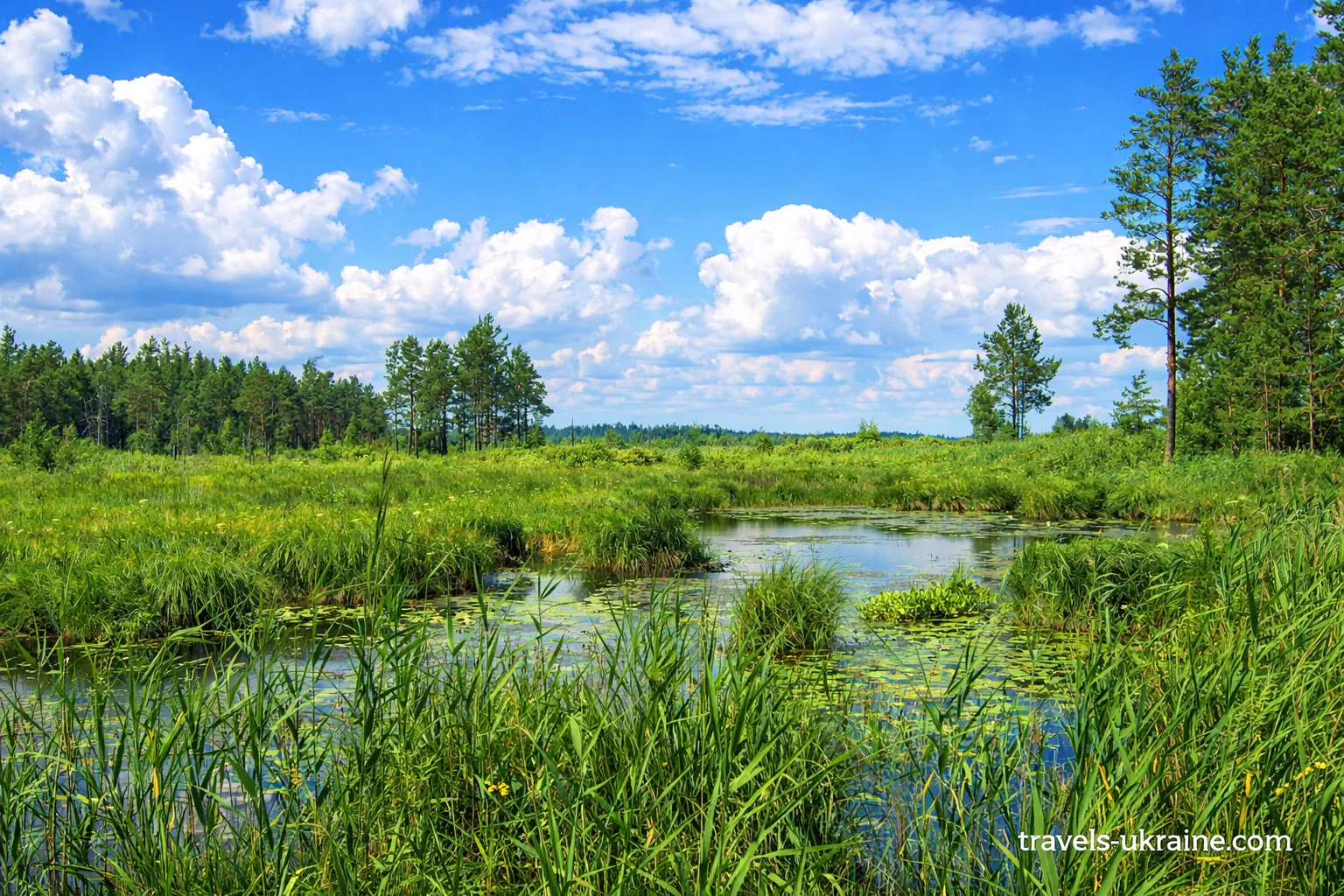
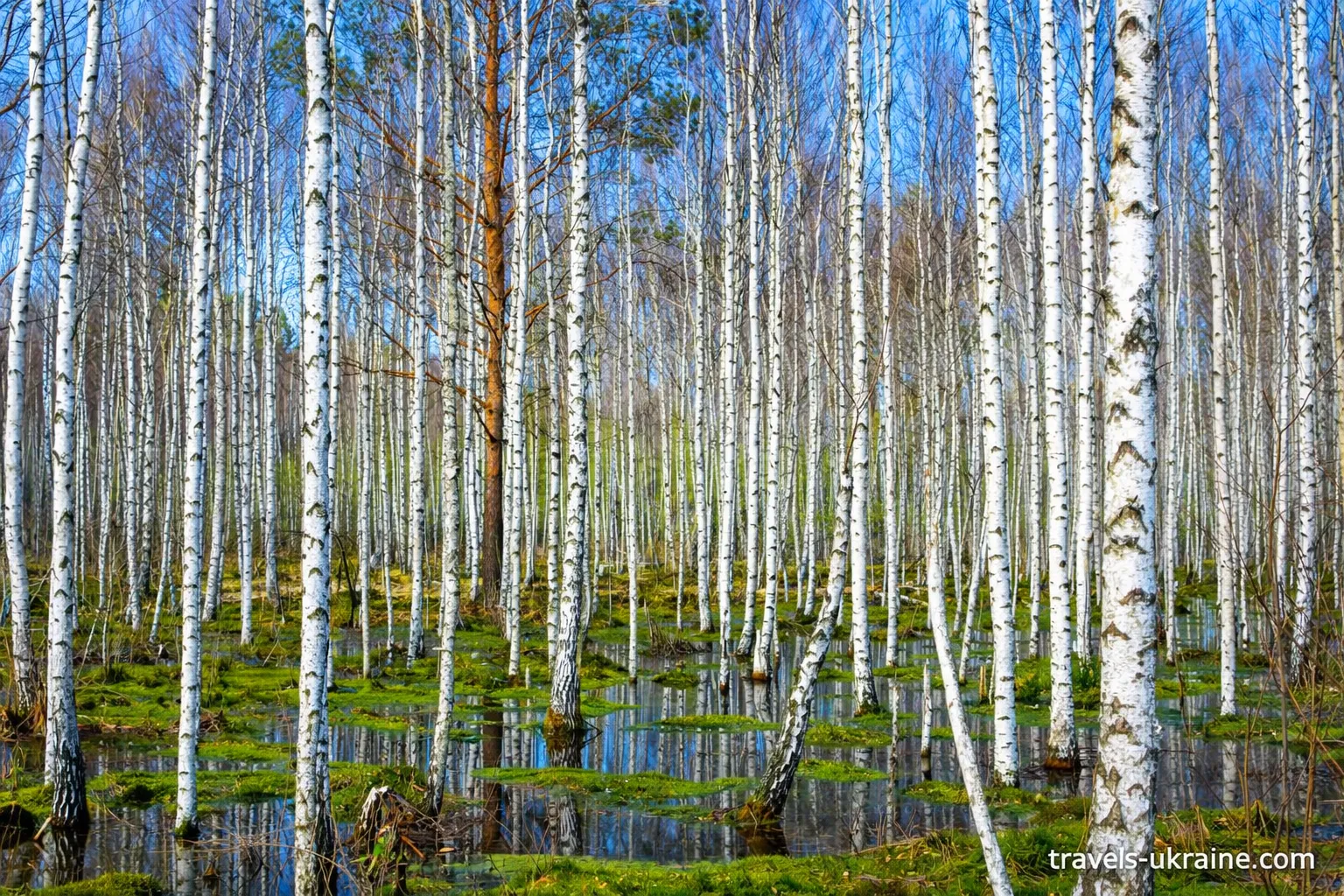
The bogs of the nature reserve hold the greatest natural value. They retain moisture, maintain the water balance, and form a habitat for many rare species of plants and animals. Here, bogs are not a random element of the scenery — they are the foundation of the local ecosystem. Combined with the forests, they create that very Polissya forest-and-bog reserve considered one of the most valuable natural complexes in the region.
Rivers of the Polissya Nature Reserve and Local Waters
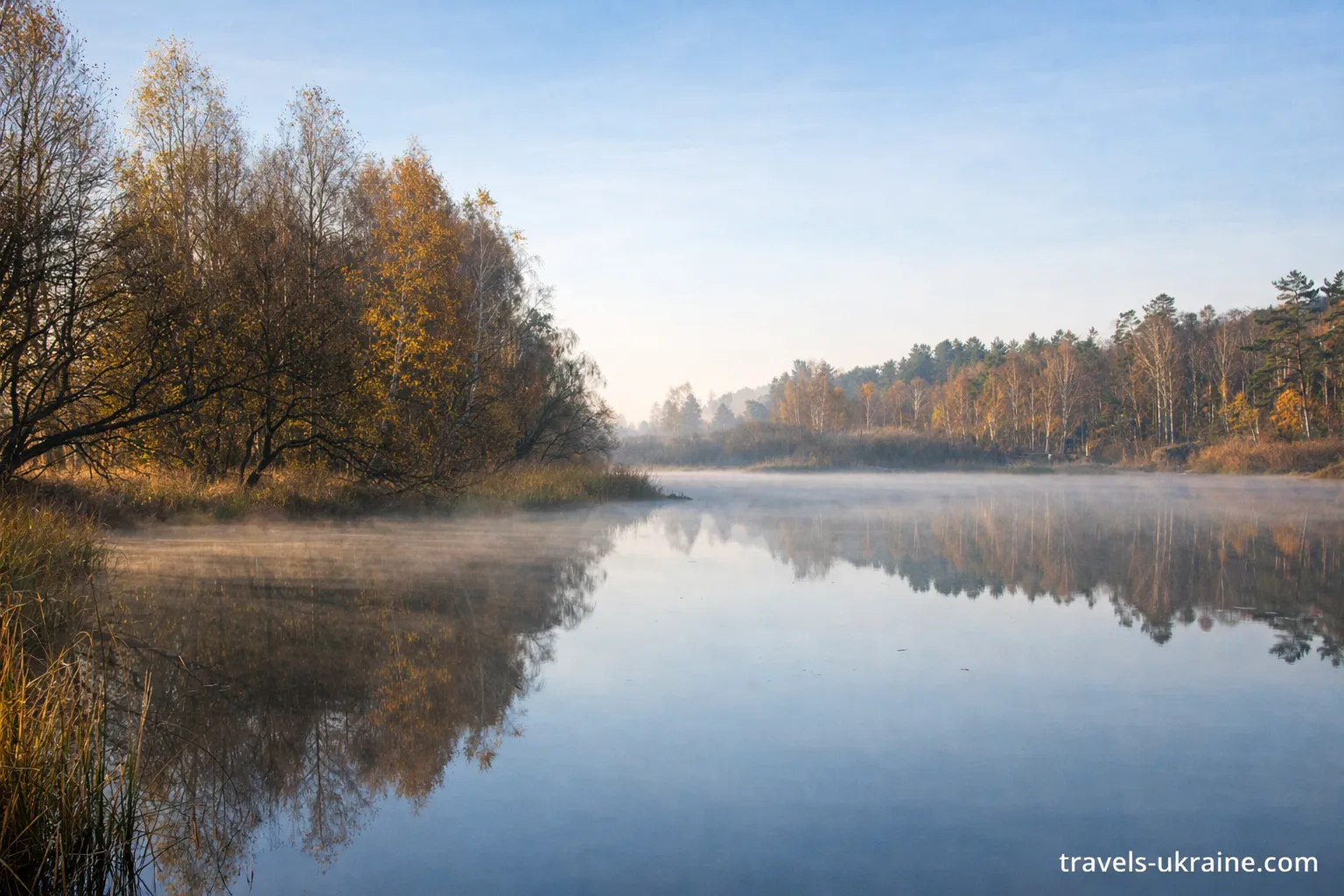
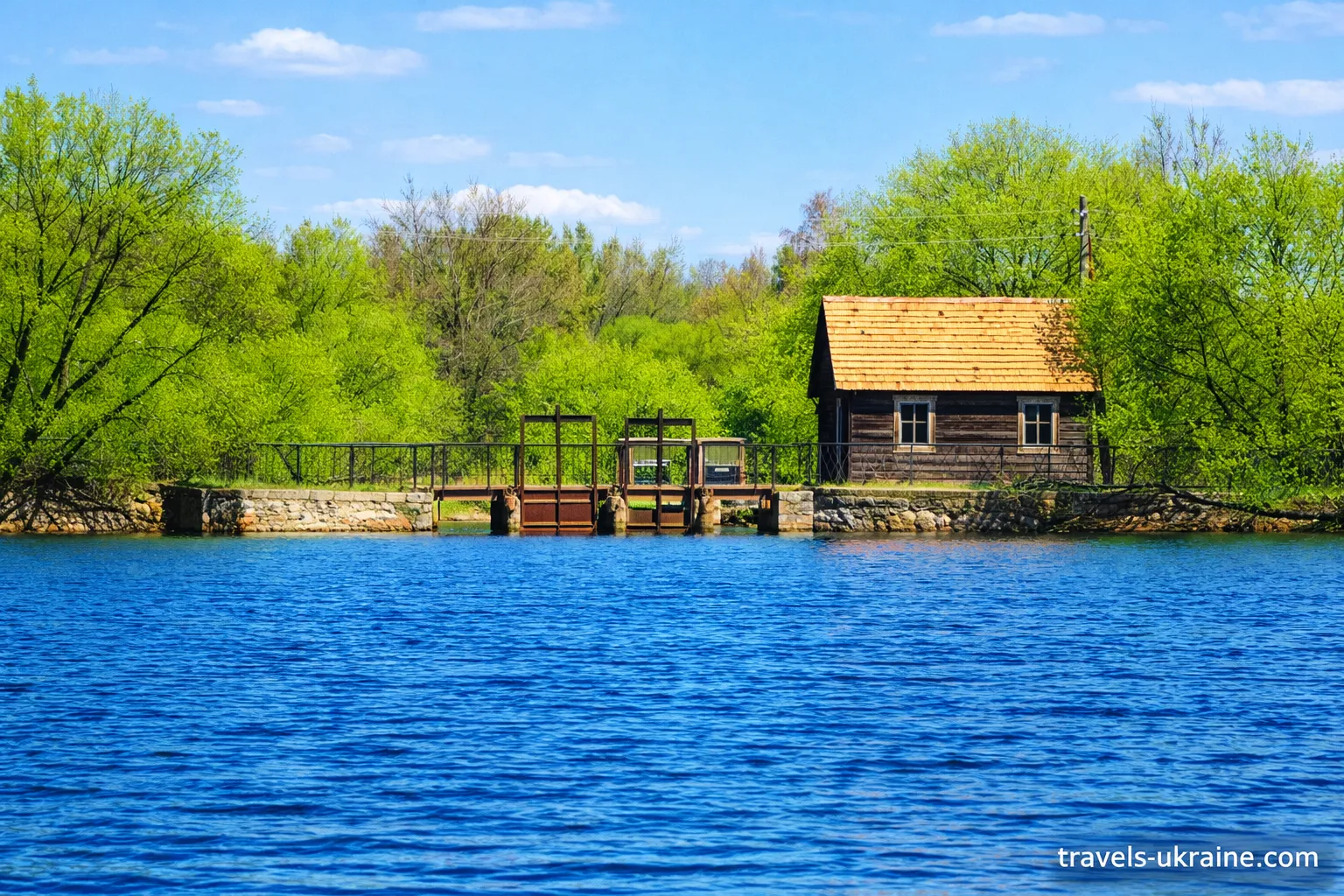
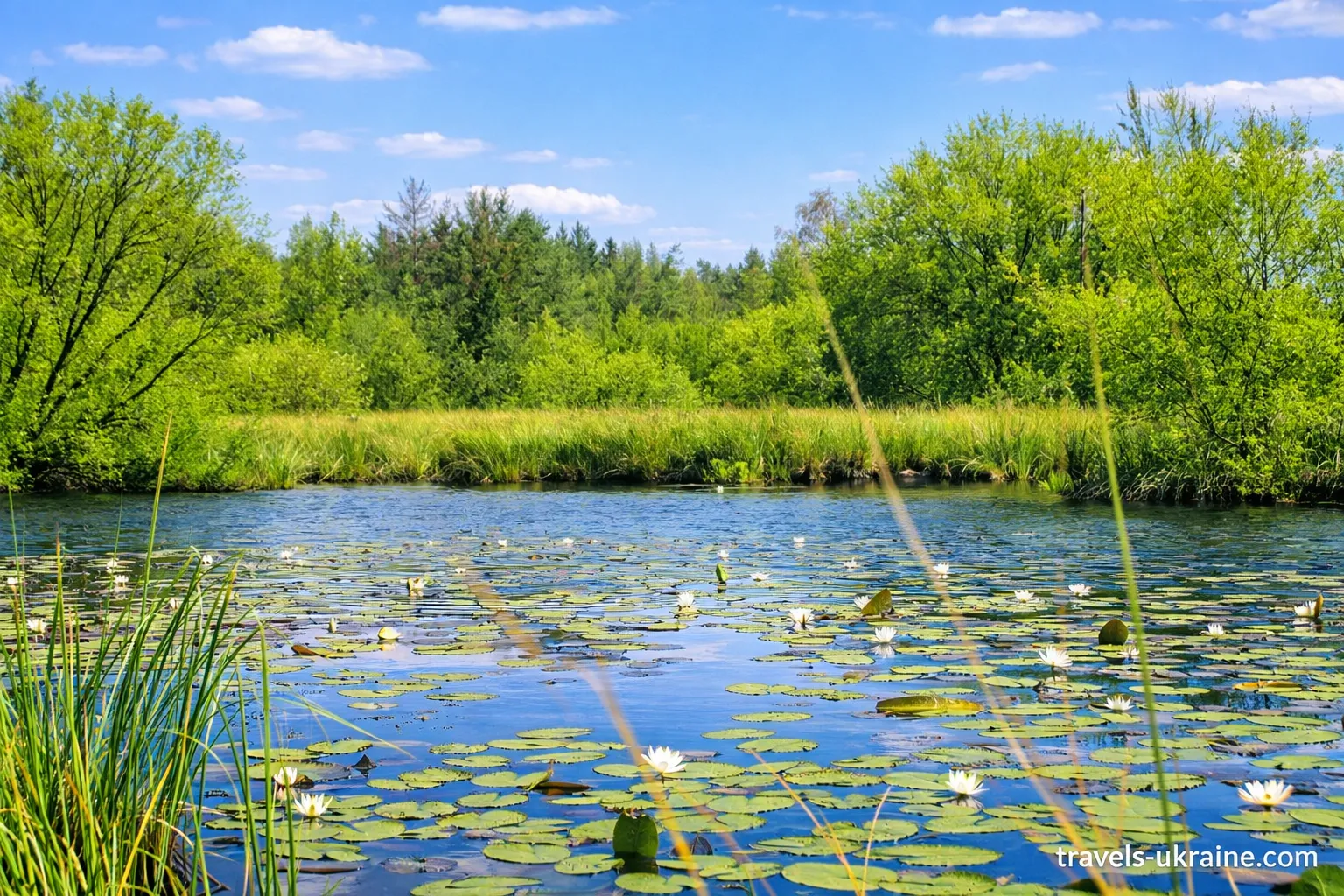
The rivers of the Polissya Nature Reserve do not have mountain torrents or dramatic speed, yet their beauty lies precisely in this unhurried nature. The territory lies between the Ubort and Bolotnytsia rivers, while small rivers, floodplains, marshy lowlands, and local stretches of water create the area’s characteristic watery pattern. When speaking of the lakes of the Polissya Reserve, it is worth referring less to large tourist water bodies and more to a system of small lakes, marshy patches, and depressions that together sustain high eco-diversity and make this territory exceptionally important for wildlife.
Photo and Video Gallery
Quick Guide: The Polissya Reserve for Visitors
Polissya Nature Reserve, Zhytomyr Region is a wild destination not for a rushed glance, but for a thoughtful encounter with nature. The most important thing to understand is this: this place is a protected area, not a classic amusement park or a place for unrestricted mass recreation. That is why a trip here is best planned as an educational journey into the natural world, with respect for the reserve’s rules, local conditions, and outdoor etiquette.
An excursion to the Polissya Reserve is usually seen not as a brief stop, but as a destination in its own right. If your aim is simply to see part of the landscape and feel the atmosphere of Polissya, it is worth allowing at least a few hours. If, however, you are planning a deeper exploration of the area, nature photography, birdwatching, or including the reserve in a broader tourist route around Zhytomyr Region, setting aside almost the whole day makes sense.
Difficulty, Accessibility, and Budget: What to Know Before You Go
This is not a place where everything is adapted for large numbers of visitors. Parts of the area are naturally, and at times rather difficult to access: sandy roads, wet patches, boggy surroundings, and distance from major towns. That is why ecotourism here requires a little more preparation than an ordinary countryside outing. For a family trip, a photography journey, or a peaceful break, it is important to clarify the format of the visit, seasonal conditions, and the possibility of an organised excursion to the Polissya reserve in advance.
The budget for such a trip usually depends less on the cost of the location itself and more on logistics, accommodation, and the format of the visit. If you are travelling by your own transport and combining travel around Zhytomyr Region with visits to other places, the costs will be one thing. If you are planning an organised tour, an overnight stay nearby, or an extended route including several natural locations, they will be another. In any case, tourism in Polissya is usually less about expensive entertainment and more about a meaningful, peaceful experience.
Type of location: nature reserve, protected area, stronghold of wildlife.
Ideal visit length: from a few hours to a full day, depending on the route.
Accessibility level: moderate; advance preparation and clarification of visiting conditions are important.
Style of visit: ecotourism, educational travel, nature observation, photography trip.
So, the Polissya Nature Reserve of Zhytomyr Region is a place for those seeking not noisy recreation, but a deeper connection with nature. This is not somewhere for rushing, ticking boxes, or chasing spectacle. Instead, it is a place where you can truly feel the strength of Polissya, see its protected lands, and understand why this territory is considered one of Ukraine’s most valuable natural locations.
Red Book Animals: Who the Polissya Reserve Protects
The Polissya Nature Reserve is not simply a vast forested area in the north of the country, but one of the most important places where wild nature is preserved. Here, the silence of pine forests, vast bog systems, marshy woods, and little-disturbed waters create conditions for many rare species to live. For visitors, this is a chance to see not some generic “green zone”, but a true living world where natural balance still survives. And for nature itself, it is a territory where vulnerable and rare animals have a chance to survive and breed.
The fauna of the Polissya Reserve is an entire living world that reveals itself gradually to the attentive traveller, yet leaves a lasting impression. For lovers of ecotourism, wildlife, and quiet observation of forest life, this area is a real discovery. In total, there are more than 279 animal species here: 45 species of mammals, almost 200 species of birds, 12 species of amphibians, and 7 species of reptiles. Together, they form the complex and remarkably harmonious world of protected Polissya.
Most of them are, of course, forest dwellers, since forests, bogs, and damp tracts define the character of this land. Yet Polissya is also fascinating because its natural world carries features of a northern, almost taiga-like realm. And thanks to its particular geographical position, the local fauna also includes certain species more typical of open landscapes. It is this combination that makes the animal world of the Polissya Reserve so rich and distinctive — wild, authentic, and full of life.
Which Animals of the Polissya Nature Reserve Are Considered the Most Valuable
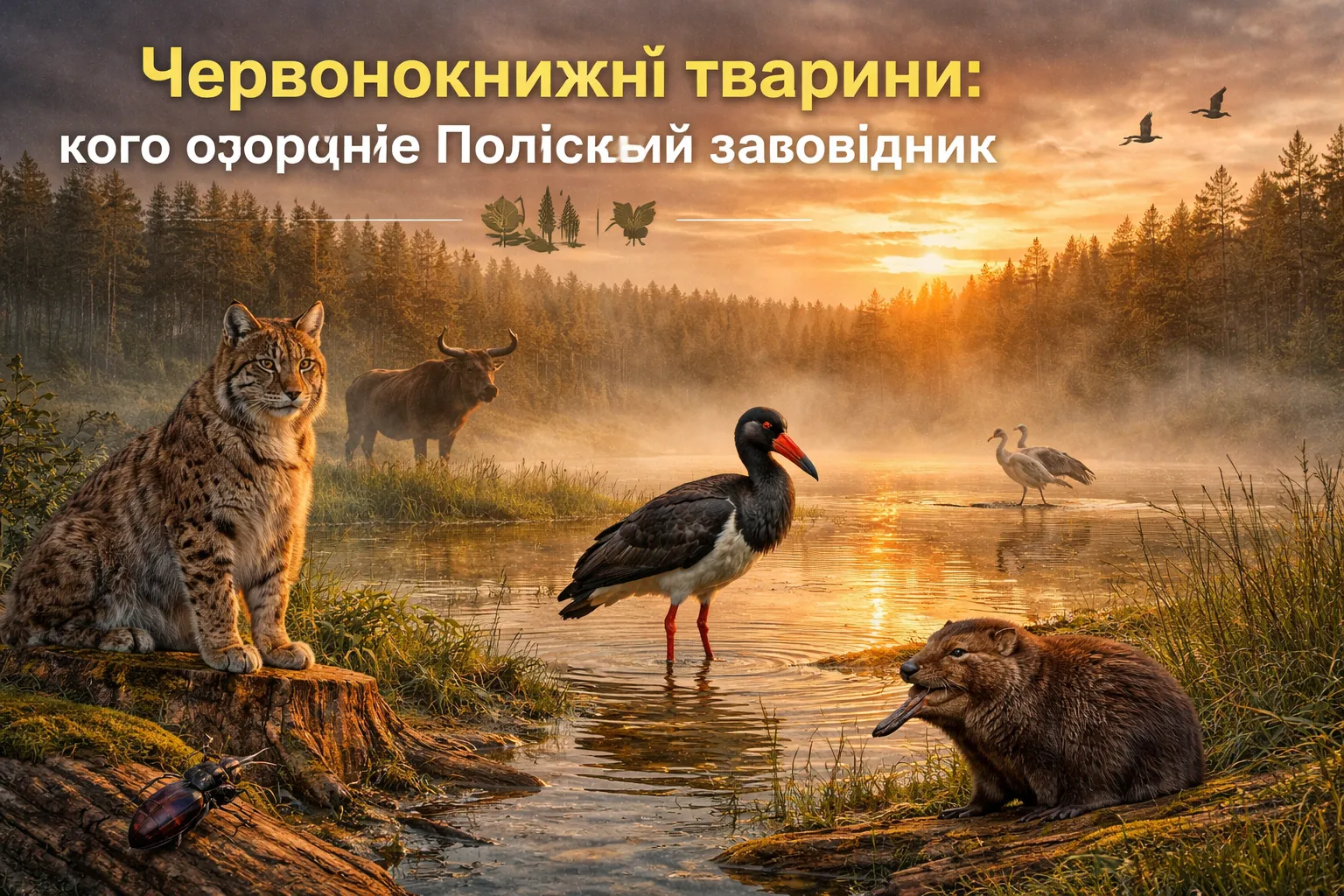
The reserve’s official page, in the section “Animals We Protect”, highlights the lynx, common crane, great grey owl, black grouse, Eurasian elk, European beaver, and stag beetle. This list conveys the main point well: the Polissya Nature Reserve does not protect just one “iconic” animal, but an entire complex world of forest, bog, and wetland inhabitants. Particularly valuable are large, cautious species that need peace, space, and undisturbed natural habitats.
When people speak of the Red Book animals of Polissya, they most often mean the species most closely tied to the atmosphere of this wild forest-and-bog land. The lynx embodies the strength and secrecy of the forest, the black stork the silence of remote marshy tracts, the common crane the open space of bogs and wet clearings, and the black grouse the authentic character of Polissyan landscapes. These are not “decorative” inhabitants of nature, but important indicators that the ecosystem still retains its integrity. If such species remain in the reserve, it means that the forests of the Polissya Reserve, its bogs, and its waters continue to function as a living natural organism.
Of course, the Red Data Book of Ukraine is the official state document that records rare and endangered animal species protected throughout the country. However, when speaking of the value of the Polissya Reserve’s fauna, it is worth mentioning not only national protection, but also international conservation recognition. Some of this region’s rare inhabitants are also included in respected European and global lists and conventions, underlining their exceptional natural importance.
In particular, 7 animal species found in this protected area are listed in the IUCN Red List, another 7 appear in the European Red List, and 6 are included in the CITES Washington Convention. In addition, there are records of 87 species listed under the Bonn Convention, as well as 229 species protected under the Bern Convention. All this proves once again that the Polissya Reserve is not merely an important natural area of Ukraine, but a true refuge for many rare representatives of wild fauna.
What Animal Protection in the Polissya Reserve Really Means
Protecting animals in places like this is not just about banning hunting or trapping. In reality, it involves a much broader approach: preserving silence, untouched bogs, old pine forests, bird nesting places, feeding grounds, and the natural water regime. That is why the protected massif of Polissya is so important for the ecology of the entire north of Ukraine. What is protected here is not individual animals “on a list”, but their home — the entire landscape, without which no rare species can exist.
That is why a strict protection regime applies throughout the reserve, prohibiting any form of economic activity. In particular, logging, hunting, fishing, and gathering mushrooms and berries are not allowed here. All these restrictions are aimed at one thing — preserving the natural complexes of Polissya in the most undisturbed state possible.
When planning your leisure time or an excursion to the Polissya Reserve, it is worth remembering that unrestricted visits to this territory are limited. Travellers should therefore follow the established rules of access, respect the regime of the protected area, and avoid breaching it. Only in this way can this unique world of wildlife be preserved for future generations.
Important note: some parts of the reserve’s territory are mined. For safety reasons, visits are permitted only after agreement with the border service and exclusively when accompanied by a representative of the reserve.
Flora and Vegetation of the Polissya Reserve: The Living World of Forests, Bogs, and Protected Nature
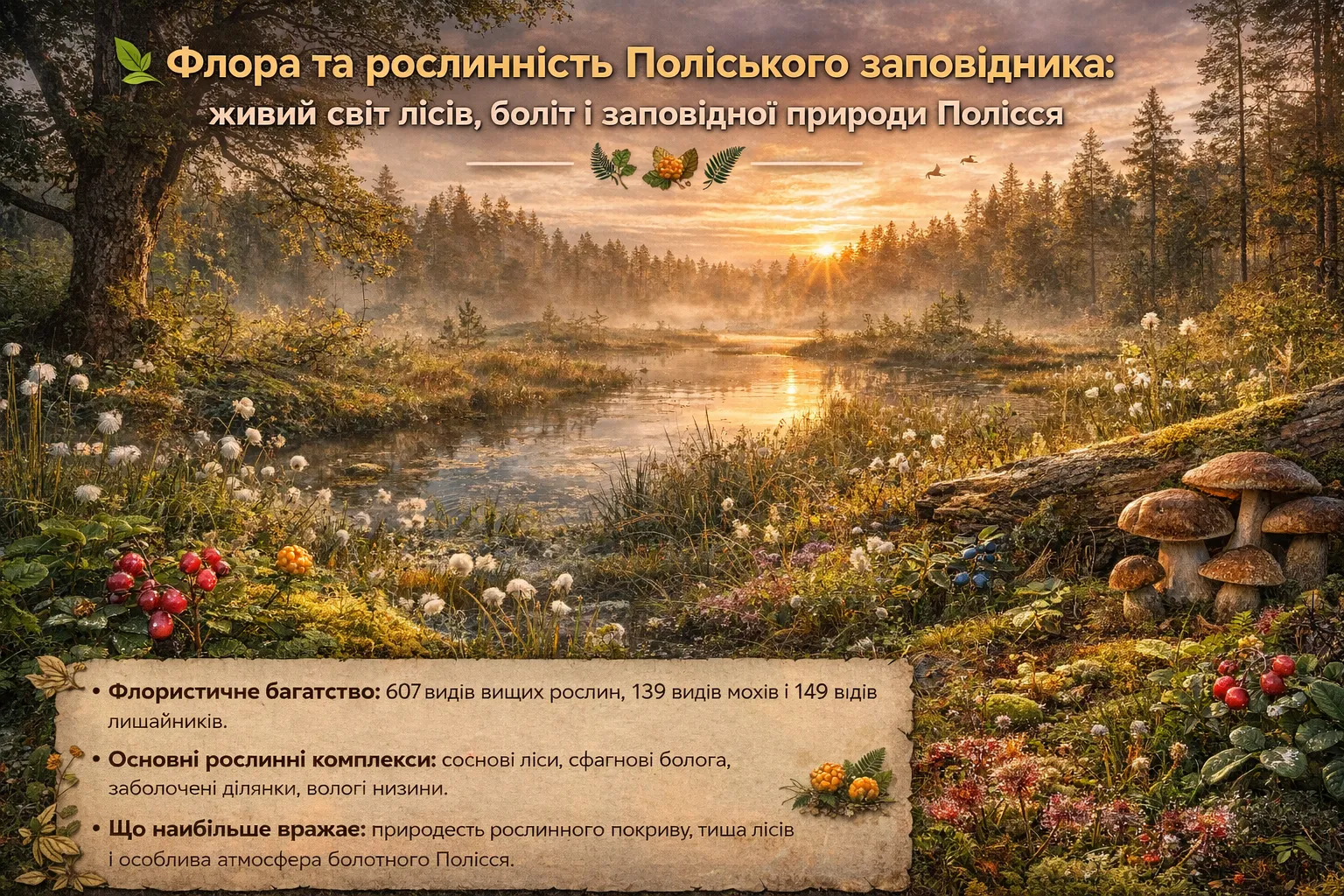
The flora of the Polissya Reserve is an entire living universe, where every forest layer, every patch of bog, and every damp hollow has its own character. It is the vegetation that creates the distinctive image for which the landscapes of the Polissya Reserve are so highly valued: tranquil pine massifs, soft moss carpets, marshy stretches, shrub thickets, and wetland habitats. According to official data, the reserve’s flora has a boreal and nemoral character and includes 607 species of vascular plants, 139 species of mosses, and 149 species of lichens. This highlights just how rich and varied the nature of Ukrainian Polissya really is.
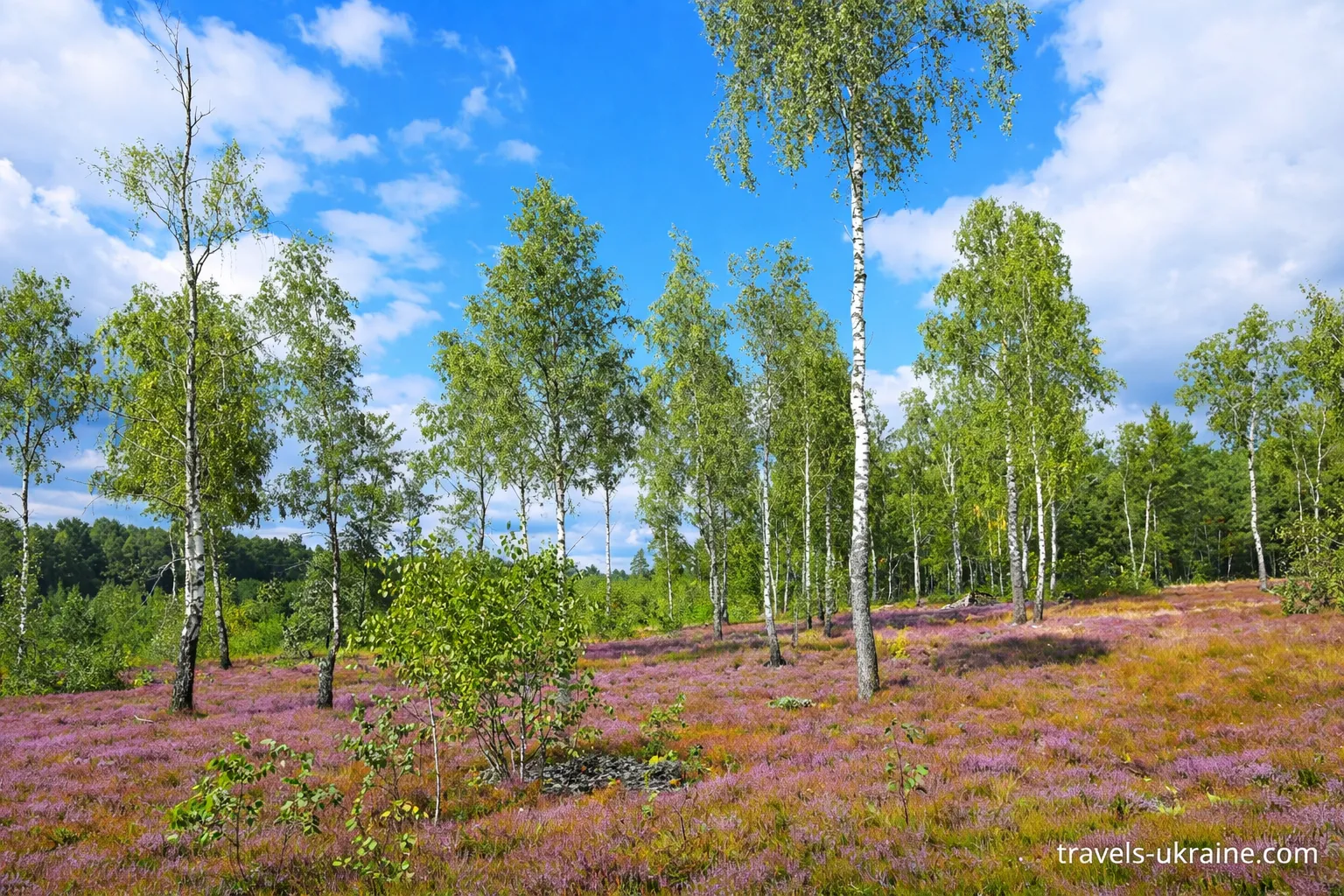
The forested zone of the reserve consists primarily of pine-forest and sub-pine-forest complexes, which create the recognisable landscape of Polissya. The greater part is made up of pine stands, while the understorey and herb layer form plant combinations typical of this region. What matters here is not simply the presence of forest, but its natural structure: light pine tracts, damp lowlands, moss cover, patches of heather and bilberry, and transitions into boggy expanses. It is precisely because of this that the reserve’s natural landscape feels so whole and authentic.
The bogs of the Polissya Reserve hold not only ecological, but also exceptional botanical value. Sphagnum, or raised bogs, and sphagnum-sedge bogs are especially well represented here, with mosses, sedges, cranberry, dwarf birch, and pine playing an important role. It is bog vegetation that creates that distinctive atmosphere of Polissya, where the earth seems to breathe with moisture and the landscape feels ancient and almost untouched. For travellers, this is one of the most powerful images the reserve offers; for science, it is invaluable evidence of how natural ecosystems function without rough human interference.
Rare Plants and the Natural Heritage of Ukrainian Polissya
One of the special values of this territory is its rare plant species, associated with Polissyan forests, bogs, and damp tracts. Sources about the reserve mention relict and rare plants, including sessile oak, yellow rhododendron, dark-barked birch, ivy, and certain rare ferns, although some of these findings are also connected with forestry areas bordering the reserve. This once again shows that the protected territory of Polissya matters not only for safeguarding animals, but also for preserving a unique plant world..
For the attentive traveller, the vegetation here is not the backdrop, but the main character of the journey. It sets the mood for the entire space: pines create a lofty silence, moss softens the ground underfoot, bogs add depth to the scenery, and small botanical details reveal the true character of Polissya. That is why ecological tourism in places like this is built not around a quick look, but around observation, attentiveness, and respect for nature’s rhythm. This landmark of Polissya attracts precisely because its plant world is not decorative, but living, self-sufficient, and strikingly expressive.
So, the vegetation of the Polissya Nature Reserve is the foundation of all local life — the unseen framework supporting the entire world of forests, bogs, waters, and wild fauna. It is thanks to this that the reserve remains one of the most valuable corners of the Nature Reserve Fund of Zhytomyr Region, where nature speaks quietly, but very convincingly.
What to Do in the Polissya Reserve: Ideas for Excursions, Observation, and Rest
Picturesque landscapes that, in their expressiveness and natural beauty, can easily rival many of Ukraine’s well-known locations make the Polissya protected area a genuinely attractive place for time spent in nature. This is a territory where travellers are won over not by loud spectacle, but by the deep, calm, and profoundly authentic beauty of Polissya — with its pine forests, bogs, waters, and remarkable silence.
Within the protected complex, you can visit a small but cosy recreation base, where tourists can stay in a wooden cottage, rest after the journey, and try local dishes. It is also here that you can arrange a guided walk through the reserve or book one of the excursions. These trips come in various formats: themed, educational, local-history-based, and even supplemented with interesting masterclasses.
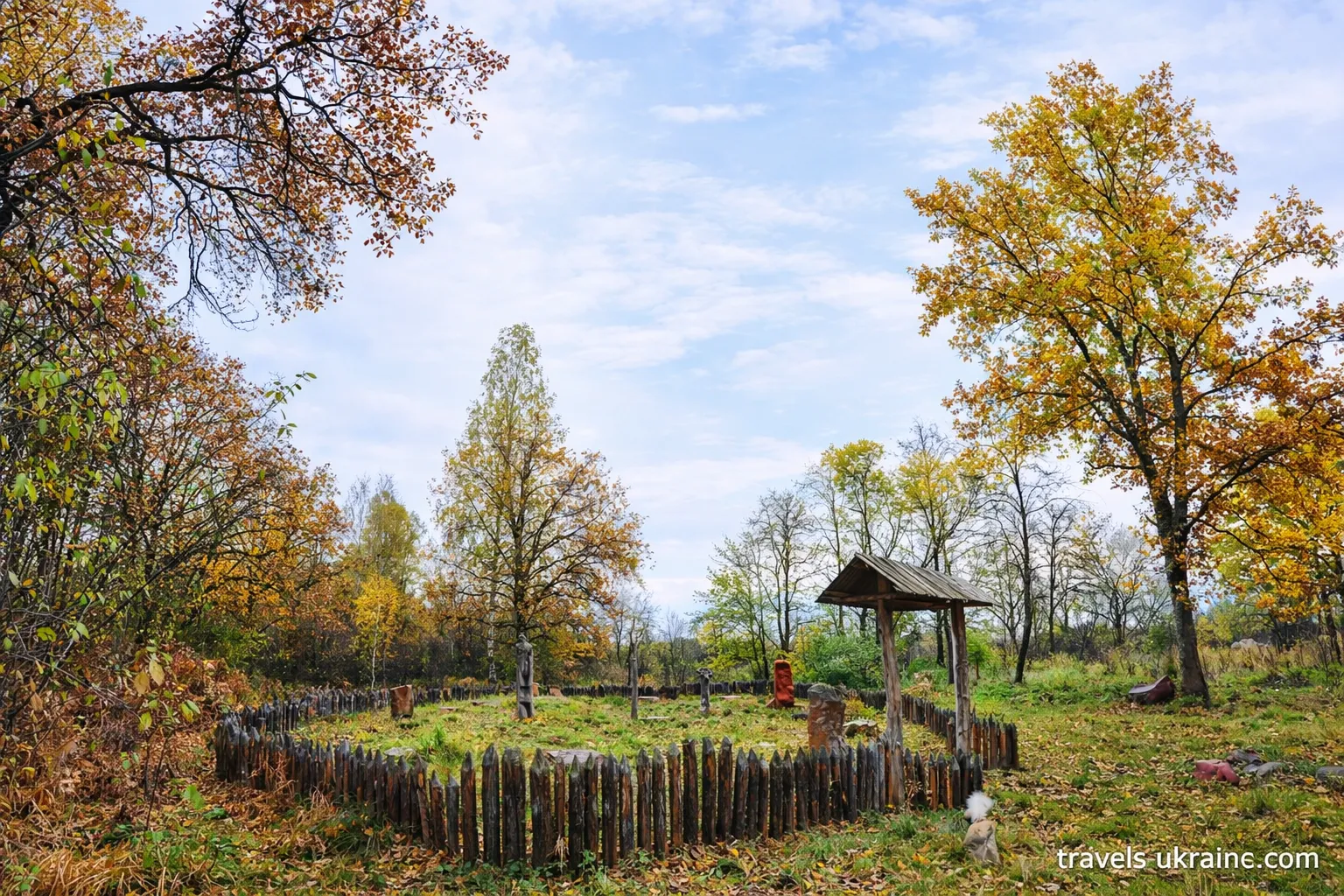
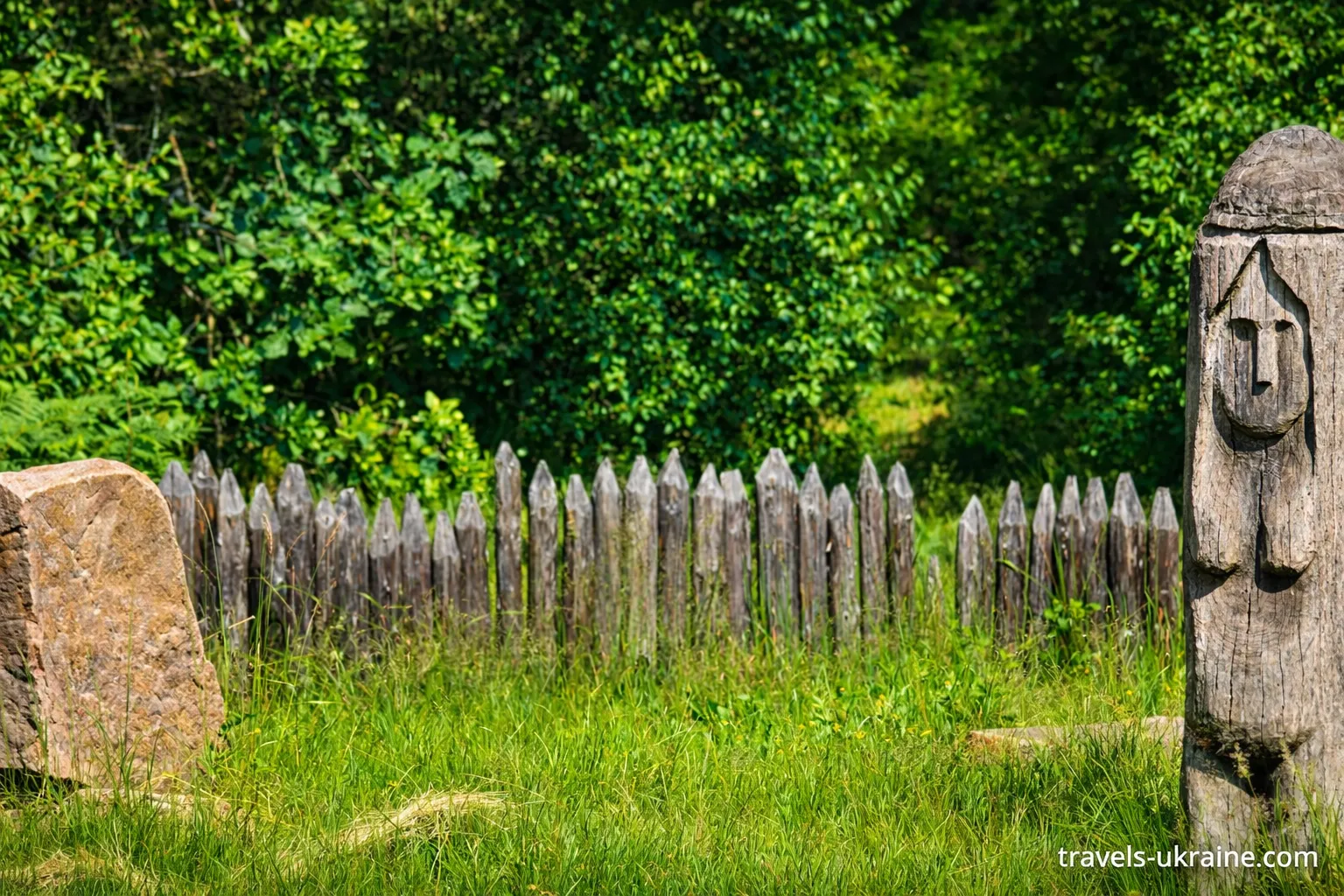
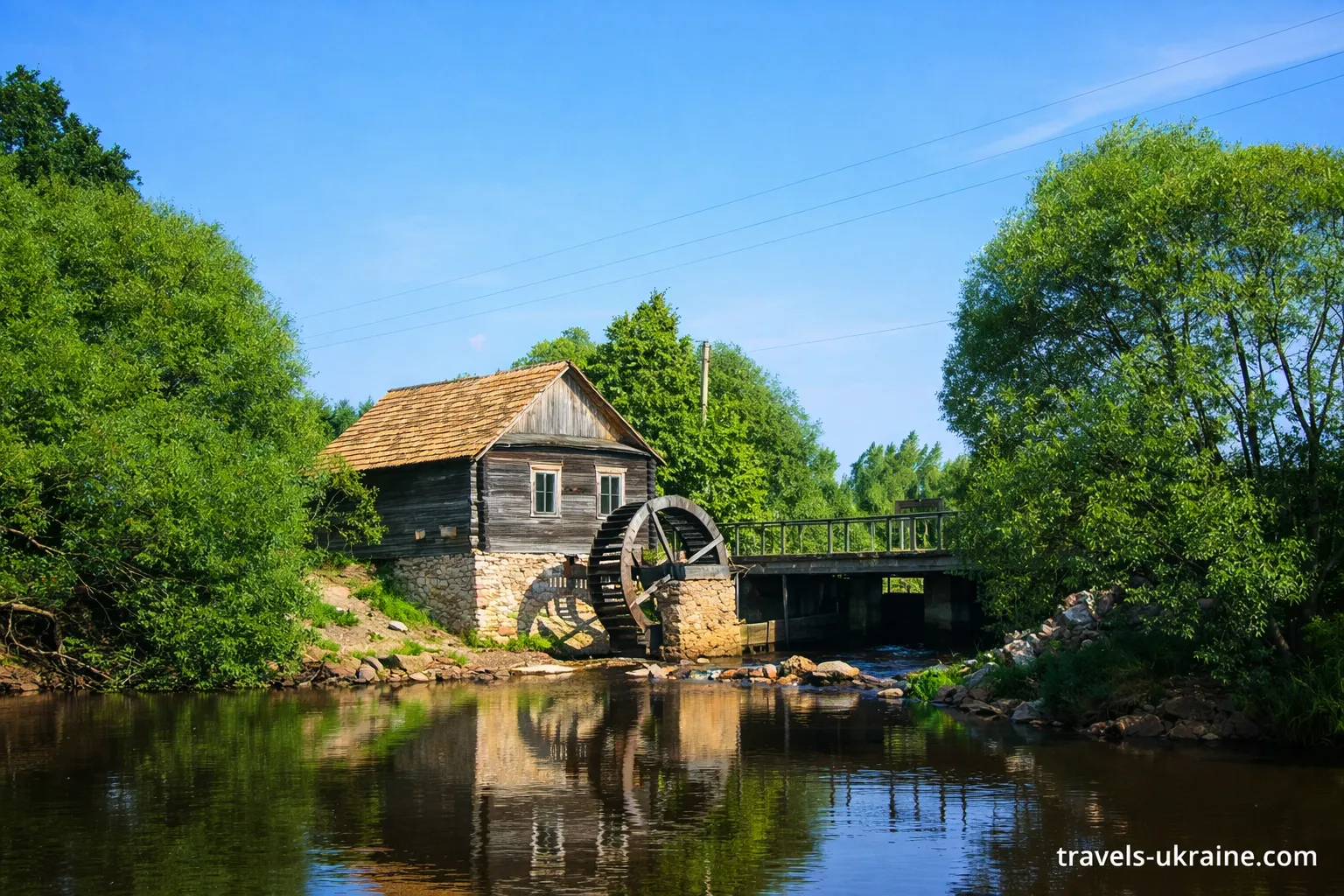
Particular attention should be paid to the museum space “Drevlyan Village”, which operates within the reserve. It features exhibits introducing visitors to the everyday life, crafts, beliefs, and daily routines of the ancient Polissyan tribes. All these sites are located in the small village of Selezivka, which in itself adds a special charm to the journey. Among the most interesting locations are the “Village Homestead” museum, the stone museum, the watermill, the pagan sanctuary, and other ethnographic sites that bring the land of the Drevlyans to life.
In this atmospheric place, you can not only surround yourself with nature and feel the slow rhythm of Polissya, but also stay in a log house and touch the way of life of past centuries. In addition, guests have the chance to learn how, in ancient times, people smelted iron from bog ore, kept bees, harvested honey, and built a livelihood in a forest-and-bog land. Details like these make a journey through the reserve not simply pleasant, but genuinely meaningful.
It is also worth noting that the reserve is an important centre for educational work with local residents and visitors to the region. Special attention is given here to environmental education, promoting careful attitudes towards nature, and introducing people to the natural heritage of Polissya. An ecological trail is open within the area, offering an excellent addition for guests and helping them better understand the value of the local landscapes, flora, and fauna.
Rest in a natural setting is, above all, about silence, focus, and respect for the space around you. For photographers, this is a chance to capture the soft Polissyan light, layered forest scenes, wetland landscapes, and atmospheric seasonal changes. For family travellers and those who enjoy quiet journeys through forests, it is an opportunity to see what the true nature of Zhytomyr Region looks like when it has not been adapted for mass tourism.
Tourist Infrastructure: Visiting the Polissya Reserve
The Polissya Reserve is not a place of mass tourism with lots of services, hotels, and entertainment zones. Its tourist infrastructure has a different character: restrained, functional, and subordinate to the main task — preserving wildlife. That is why the reserve should be understood not as an ordinary recreational location, but as a territory where everything is organised so that travellers can get to know Polissya without harming its fragile ecosystems.
The main point from which a visit to the reserve usually begins is the village of Selezivka. This is where the administrative centre of the reserve is located, along with some of the places that help visitors better understand the nature and cultural context of the region: museum sites, local-history elements, and spaces for educational visits, making this village not merely an administrative point, but a true gateway into the world of protected Polissya.
In practice, tourist infrastructure in the Polissya Reserve is not about comfort for comfort’s sake, but about guidance, orientation, meaningful content, and safe route organisation. Here, more important than usual service options are access to reliable information, the possibility of guided excursions, museum locations, ecological trails, and contact with staff who know the territory well. This model is the best match for the reserve’s status as part of the Nature Reserve Fund of Zhytomyr Region and makes a visit not only pleasant, but also responsible.
Main point for visitors: the village of Selezivka and the central estate of the reserve.
What the infrastructure includes: eco-trails, routes, museum and ethnographic sites, and staff support.
Key condition for visiting: prior approval, compliance with the rules, and consideration of safety restrictions.
So, Polissya Nature Reserve, Zhytomyr Region offers travellers not mass-market service, but something more valuable — the chance to see the real Polissya in an organised, safe, and meaningful format. And it is precisely this kind of infrastructure that best reflects the nature of the region: restrained, profound, and very real.
Rules and Etiquette in the Polissya Reserve
The protected territory of Polissya is a place where nature has the right to remain in the leading role. That is why the rules of being here are not a formality, but a necessary condition for preserving forests, bogs, waters, rare species, and the entire living rhythm of the surrounding land. For visitors, this means one simple but important thing: people come here not to “use nature”, but to encounter it respectfully, attentively, and without unnecessary interference.
The Polissya Reserve protects not just individual locations, but entire natural complexes. Here, every path, boggy stretch, bird nesting corner, or place where wild animals live is part of a fragile ecosystem. That is why even ordinary carelessness — noise, litter, going off-route without permission, or trying to pick or take something away — can have a far greater impact than it may seem at first glance. In places like this, respecting the rules is an extension of respecting nature itself.
When planning an excursion through the reserve, it is worth preparing in advance for a calm and responsible style of visit. This is not somewhere to behave as though it were an ordinary forest recreation area. It is important to follow the agreed route, not wander into unknown areas, keep noise to a minimum, avoid disturbing animals, and carefully follow the instructions of your guide. This kind of behaviour is the foundation of both safety and true ecotourism.
Etiquette during a journey through natural places begins with your mindset. Silence, attentiveness, and the ability to notice more than what lies on the surface are especially valued here. A good traveller in Polissya does not try to conquer the landscape, but learns to be a guest within it. That is why the best way to behave here is with a quiet voice, an unhurried step, a respectful attitude towards the work of the reserve’s staff, and an understanding that this territory lives by its own laws.
FAQ: frequent questions about the Polissya Reserve, visiting, and travelling through Polissya
Where is the Polissya Nature Reserve located?
The Polissya Nature Reserve is located in the north of Zhytomyr Region, between the Ubort and Bolotnytsia rivers, near the border with Belarus. The reserve’s administrative centre is associated with the village of Selezivka, which for many travellers is also where their acquaintance with this protected area begins. :contentReference[oaicite:0]{index=0}
What is the area of the Polissya Reserve?
The Polissya Nature Reserve covers 20,104 hectares. It is one of the most valuable protected natural massifs of Ukrainian Polissya, safeguarding forest, bog, and wetland complexes. :contentReference[oaicite:1]{index=1}
Can you visit the Polissya Reserve freely?
No, unrestricted visits to the reserve should not be planned. Open descriptions of the location state that parts of the territory are mined, so visits are possible only with permission from the border service and when accompanied by a member of staff from the institution. That is why the trip must be arranged in advance. :contentReference[oaicite:2]{index=2}
What is the best format of visit for a tourist?
The best choice is an organised educational visit: an excursion, a local-history route, or an ecological trail with a guide. Sources about the reserve mention tourist trails, eco-trails, and local-history routes that combine an introduction to nature with the cultural heritage of Polissya. :contentReference[oaicite:3]{index=3}
What interesting things can you see apart from nature?
Besides forests, bogs, and protected landscapes, it is worth paying attention to the ethnographic museum space “Drevlyan Village” in Selezivka. Sources mention the “Village Homestead” museum, the stone museum, a watermill, a pagan sanctuary, a dugout shelter, and other sites that help visitors better understand ancient Polissyan life. :contentReference[oaicite:4]{index=4}
Is there a place nearby to stay overnight or relax?
Tourist descriptions of the reserve mention the possibility of staying in wooden cottages and combining the trip with organised excursions. However, before booking or planning an overnight stay, it is essential to check the current conditions directly before travelling, as the access regime to this border area may change. :contentReference[oaicite:5]{index=5}
When is the best time to go to the Polissya Reserve?
The best time depends on what kind of Polissya you want to see. For photography trips and nature observation, spring, early summer, and autumn are especially expressive, when the landscapes shift in mood, light, and colour. In winter, tours to Selezivka, the “Drevlyan Village” museum, and other sites have also been organised, although routes may change depending on the weather. :contentReference[oaicite:6]{index=6}
Is kayaking possible in the Polissya Reserve?
At present, kayaking should not be considered a freely available tourist activity within the reserve. Open sources provide no confirmation that this format of visit is allowed for independent travellers, while the special access regime and safety restrictions require prior approval for any trip. :contentReference[oaicite:7]{index=7}
Why is the Polissya Reserve especially valuable for Ukraine’s nature?
This reserve is valuable because it preserves vast areas of Polissyan forests, bogs, and wetlands where rare species of flora and fauna exist in their natural environment. It is thanks to places like this that Ukraine preserves its living natural heritage — something that can no longer be recreated artificially. :contentReference[oaicite:8]{index=8}
Visitor Information about the Polissya Nature Reserve
Visits by prior arrangement only
Visit format
By prior arrangement only, with permission from the border service and accompanied by a member of staff from the institution
Type of location
Nature reserve, protected area of Ukrainian Polissya, forest-and-bog natural complex
The route is usually planned via Ovruch or Korosten, then onwards towards Selezivka after prior approval of the visit
Important note
Part of the territory is potentially dangerous; independent unrestricted visits are not allowed
Conclusion: Why the Polissya Reserve Is Worth Seeing at Least Once
The Polissya Reserve is a place that does not try to win you over instantly. It does not impress with artificial showiness, lure you in with loud entertainment, or adapt itself to the fast pace of modern tourism. Its strength lies elsewhere: in the silence of pine forests, in the breathing of the bogs, in the calm of the waters, in the tracks of wild animals, and in that rare feeling when a person suddenly finds themselves not above nature, but beside it. That is why it leaves behind not merely beautiful memories, but a deep inner impression.
This unique protected territory opens up the true Polissya to travellers — austere, beautiful, silent, and astonishingly alive. Here, you feel especially clearly the value of what cannot be recreated artificially: the natural landscape, the wild fauna, the boggy expanse, the slow rhythm of the land. The Polissya Reserve teaches you to look more closely, listen more deeply, and accept nature not as scenery for leisure, but as a separate world with its own laws, beauty, and dignity.
This place will be remembered most by those who love nature-based relaxation, quiet journeys, observing wildlife, and unhurried routes. It will appeal to photographers, lovers of wild nature, families seeking meaningful experiences, and anyone who wants to see one of the most valuable faces of Ukraine’s natural forest heritage.
The main reason to visit the Polissya Reserve is simple: this is one of the few places where you can still see nature as it ought to be — free, self-sufficient, and real. And if your journey calls not only for a new destination, but for something with deeper meaning, the Polissya Reserve of Zhytomyr Region is fully capable of offering exactly that kind of experience.

 English
 Українська
 Български
 Hrvatski
 Čeština
 Dansk
Dansk Nederlands
 Eesti
Eesti Suomi
Suomi Français
 Deutsch
 Ελληνικα
 Magyar
 Íslenska
 Italiano
 Latviešu
 Lietuvos
 Polski
 Português
 Română
 Русский
 Српски
 Slovenčina
 Slovenščina
 Español
 Svenska
 Türkçe

No Comment
You can post first response comment.