
 English
 Українська
 Български
 Hrvatski
 Čeština
 Dansk
Dansk Nederlands
 Eesti
Eesti Suomi
Suomi Français
 Deutsch
 Ελληνικα
 Magyar
 Íslenska
 Italiano
 Latviešu
 Lietuvos
 Polski
 Português
 Română
 Русский
 Српски
 Slovenčina
 Slovenščina
 Español
 Svenska
 Türkçe
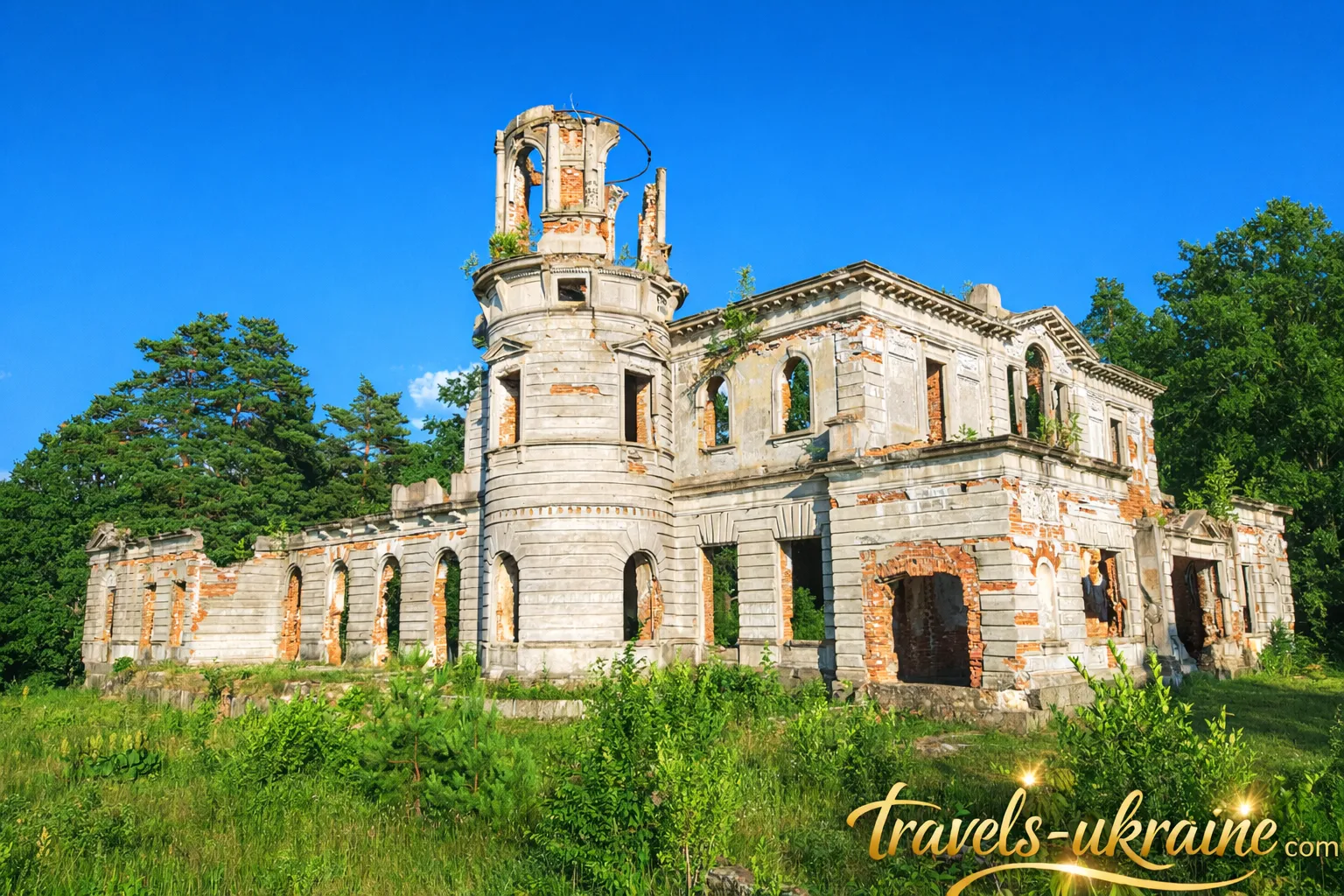
The village of Denyshi is not simply a picturesque corner of the Zhytomyr region, hidden among forests, cliffs and the bends of the Teteriv River. It is a place where nature and history seem to have agreed to work together, leaving an impression on everyone who comes here. At first glance, Denyshi may seem like a quiet village for an unhurried trip out of the city, but stay here a little longer — and a completely different space opens up before you: dramatic, beautiful, at times austere, and surprisingly emotional. This is where two forces have come together, ones that rarely meet so naturally side by side — the adrenaline of rock-climbing routes and the silent grandeur of ancient ruins.
For many travellers, Denyshi is first and foremost associated with mountaineering. The local cliffs have long become a landmark for those seeking not a decorative adventure, but real contact with height, stone and their own abilities. The sheer canyon wall, well known among climbers, attracts not only athletes but also spectators who want to see a person literally enter into a duel with the terrain. Here, the scale of nature is felt especially sharply: below — silence, water and greenery; above — a stone massif, wind and the tension of every movement. Mountaineering in Denyshi ceases to be just a sport — it becomes part of the character of the location itself, its rhythm and its mood.
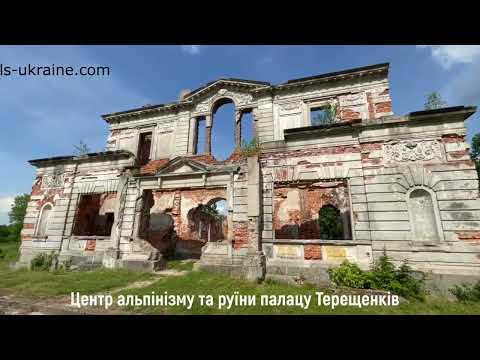
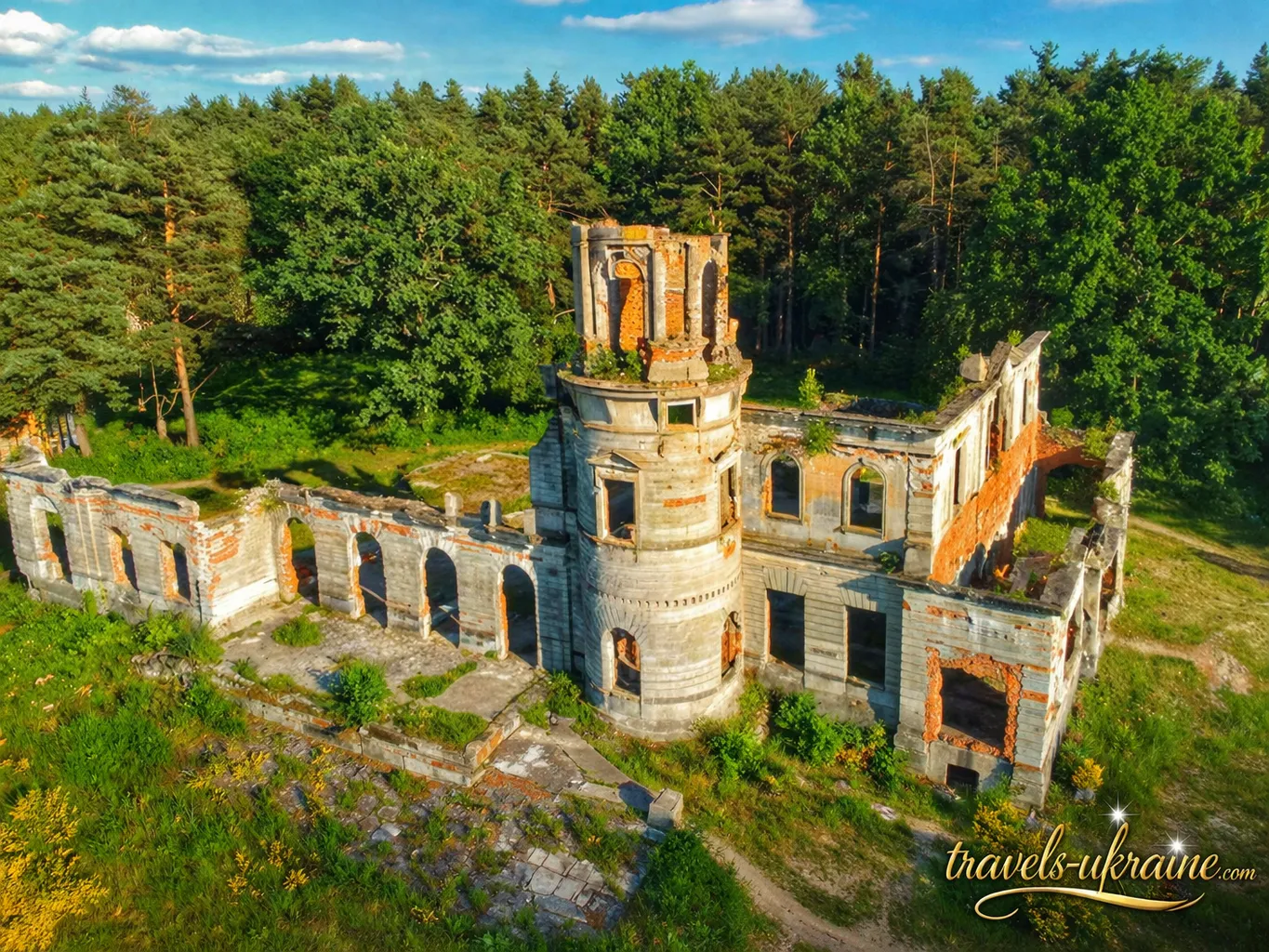
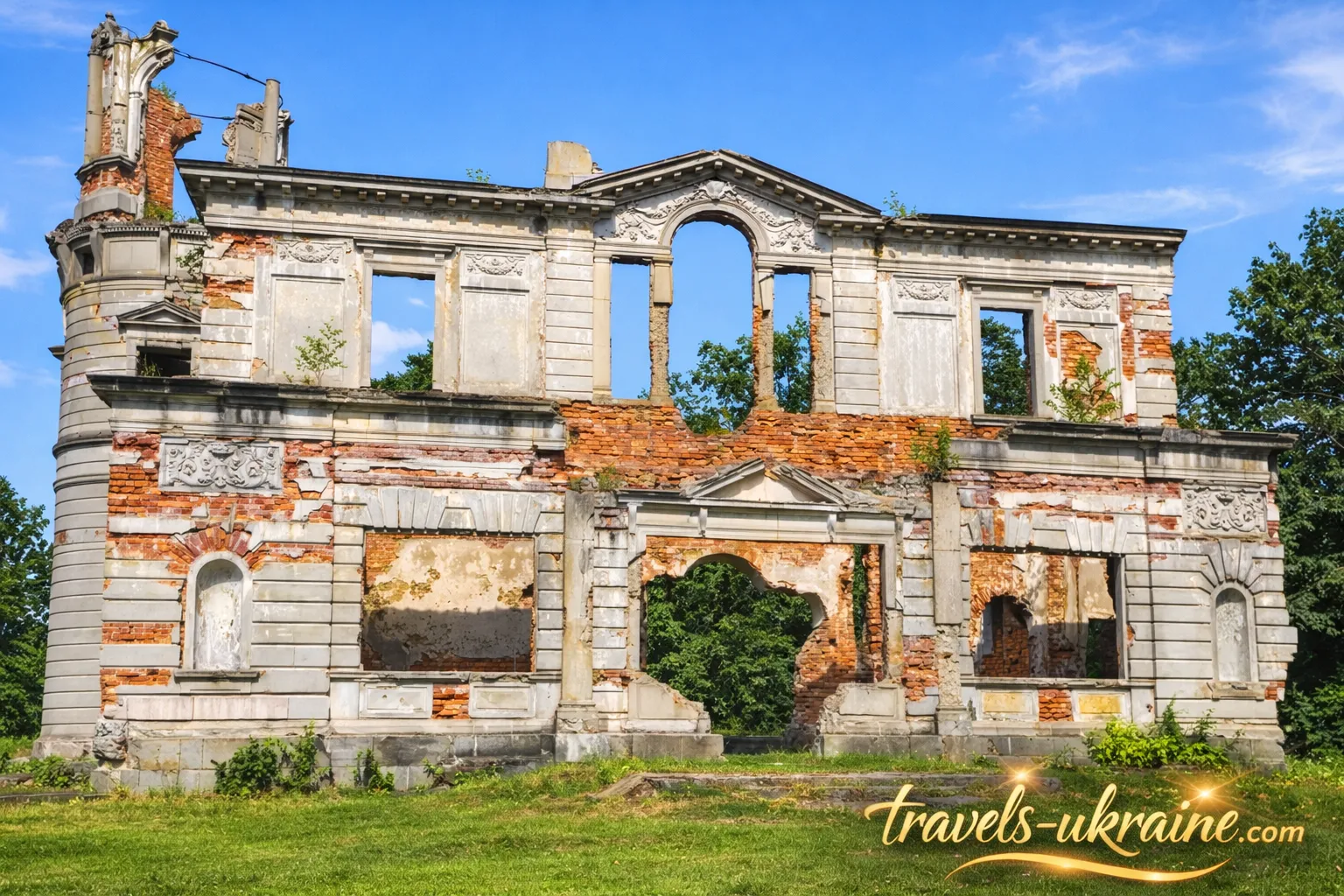
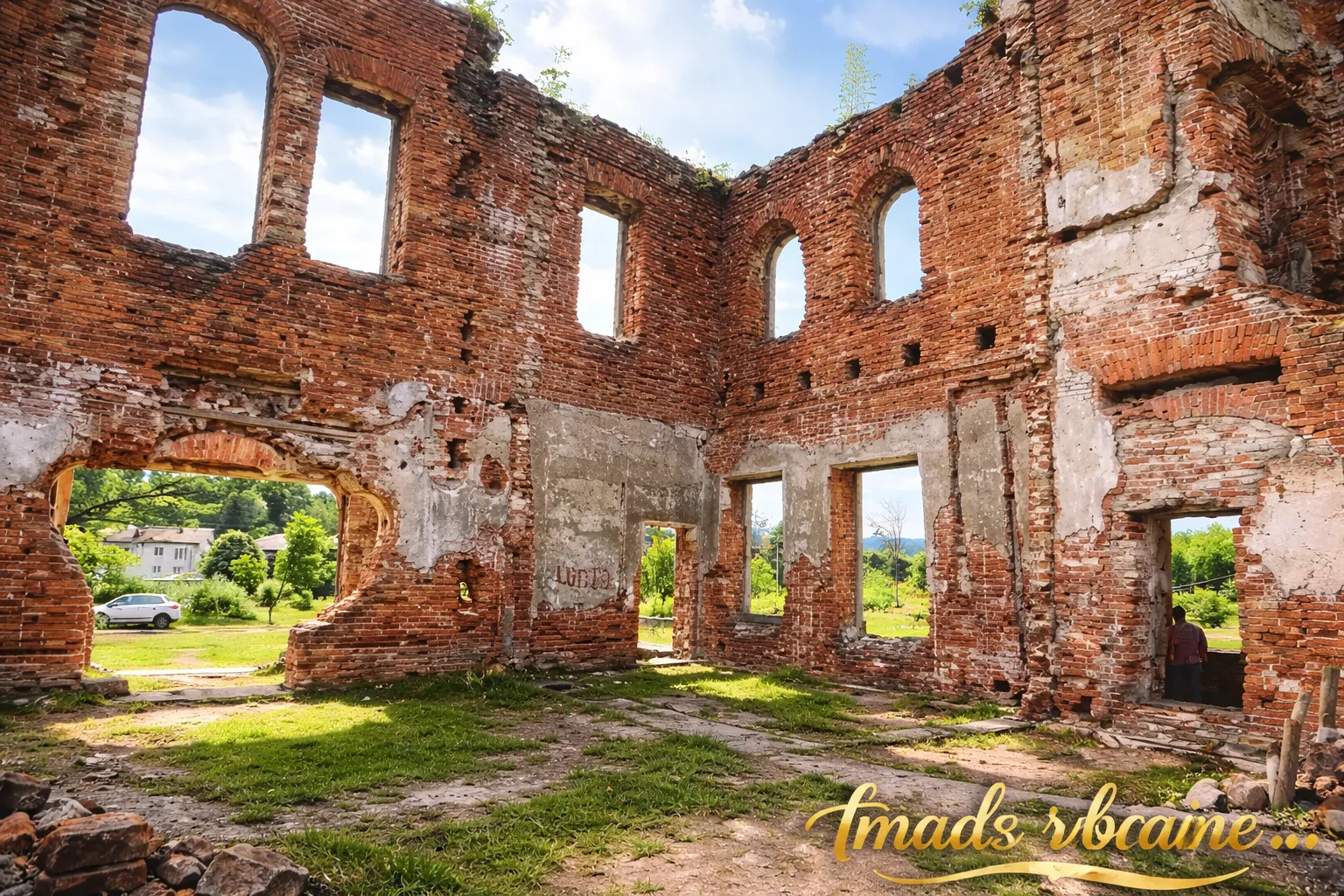
But the true magic of this place begins where active recreation turns into an encounter with the past. Among the trees, shrubs and soft light breaking through the crowns rise the ruins of the Tereshchenko Palace — one of the most atmospheric historical and architectural landmarks of the Zhytomyr region. It was once an elegant residence, conceived as a space of beauty, status and calm. Today, before us stands a palace in ruins, where the preserved fragments of walls, arches and façades speak more powerfully than any long explanation. There is no need to invent anything here: the very presence of these ruins already raises questions. What was life like in this palace? What conversations once took place in its halls?
Denyshi is far more than just an interesting tourist spot near Zhytomyr. It is a space where an architectural monument, natural landscape and spirit of adventure create a complete impression. Here you can begin the day by contemplating the cliffs above the Teteriv, then walk to the palace ruins, and afterwards continue thinking for a long time that you have seen something far more important than simply a beautiful location.
That is why it is worth visiting the Tereshchenko Palace and seeing Denyshi with your own eyes not only for the beautiful views. People come here for the mood, for an inner response, for that rare feeling when a journey is remembered not by a list of facts, but by an emotion. And perhaps this is the main strength of this place: it does not try to please artificially, but reveals itself gradually — through a cliff, a path, a ruin, silence — and that is exactly why it stays in the memory for a long time.
History: how the Tereshchenko Palace appeared in Denyshi and why it lies in ruins today

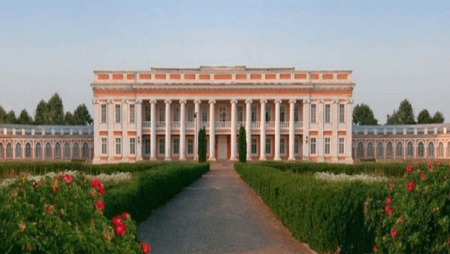
The palace in Denyshi is not just a beautiful ruin among trees and hills, but a memory of a time when country residences were created not for a fleeting impression, but as carefully planned spaces of style, calm and status. It was here that the Tereshchenko family decided to build an elegant palace residence, intended to become not only a private place of rest, but also a symbol of the taste, wealth and cultural ambitions of its owners. Today, the Tereshchenko estate has survived as ruins, yet even this condition has not destroyed its magnetism — on the contrary, it has added drama, depth and a special power over the traveller’s imagination.
The history of this location begins in 1910 and is closely connected with one of the most famous Ukrainian entrepreneurial dynasties. The Tereshchenkos were not only industrialists, but also patrons — people who invested in art, education, architecture and public projects. That is why the estate is not perceived as a random manor house on the outskirts. It was part of a broader worldview — a desire to create an environment around themselves where comfort, aesthetics and prestige came together.
The complex was designed by architect Pavlo Hollandskyi at a time when country estate architecture was already striving not merely for grandeur, but for a distinctive artistic image. That is why the Tereshchenko Palace in Denyshi was conceived from the very beginning as a place with character: not cold and ceremonial, but alive, stylish, integrated into the natural landscape and at the same time visible from afar.
The golden age of the Tereshchenko estate in Denyshi
At the beginning of its existence, the Tereshchenko residence we see today was a place of a completely different mood. It was a well-kept, carefully planned and representative estate, where every architectural element emphasised the prestige and taste of the owners. Around it formed a space of country life — with views, walking areas, service buildings and a sense of a world removed from the bustle of the city. All this made the Tereshchenko Palace in the Zhytomyr region an important centre of the family’s private history and, at the same time, a striking example of how palace culture developed on Ukrainian lands.
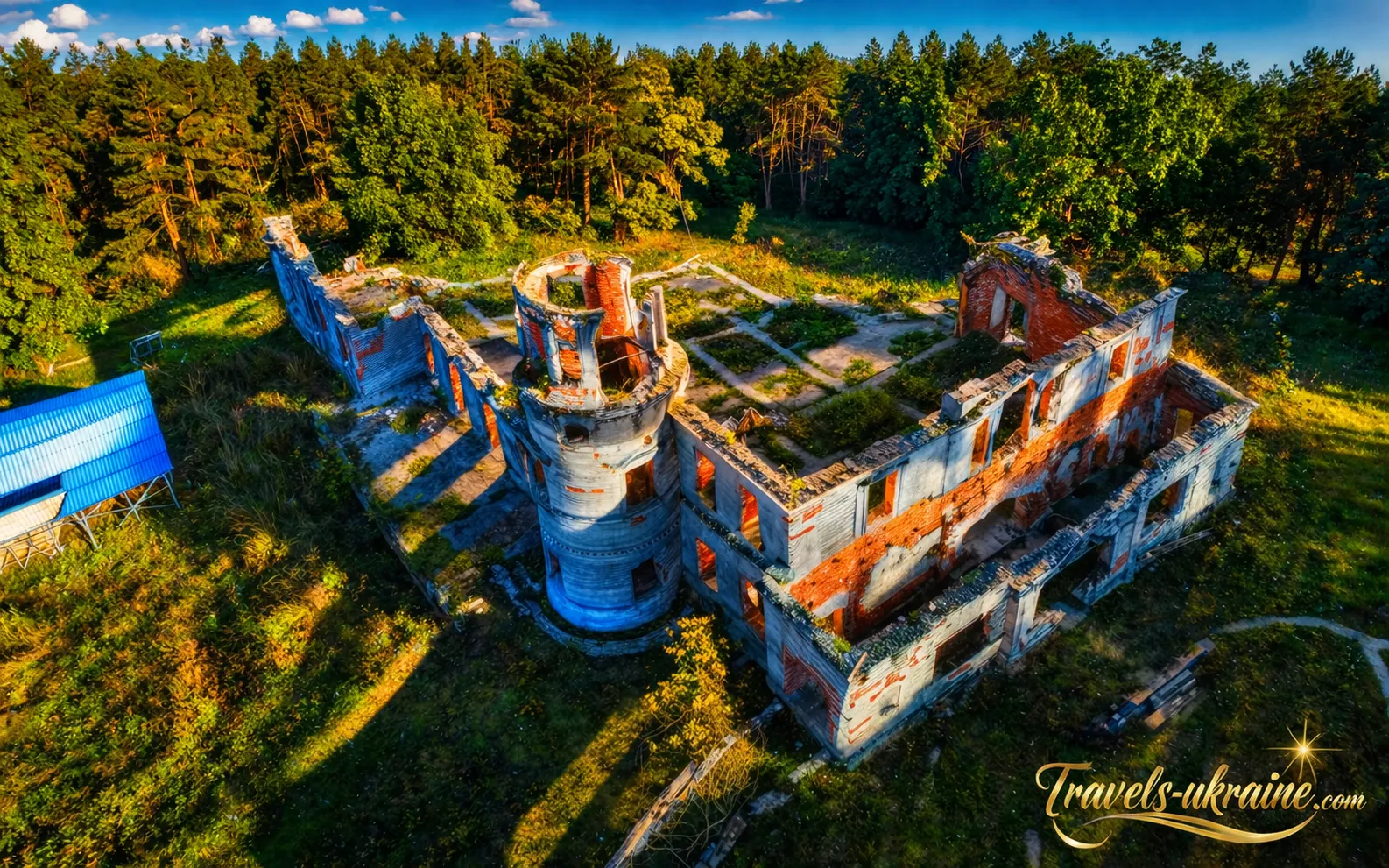
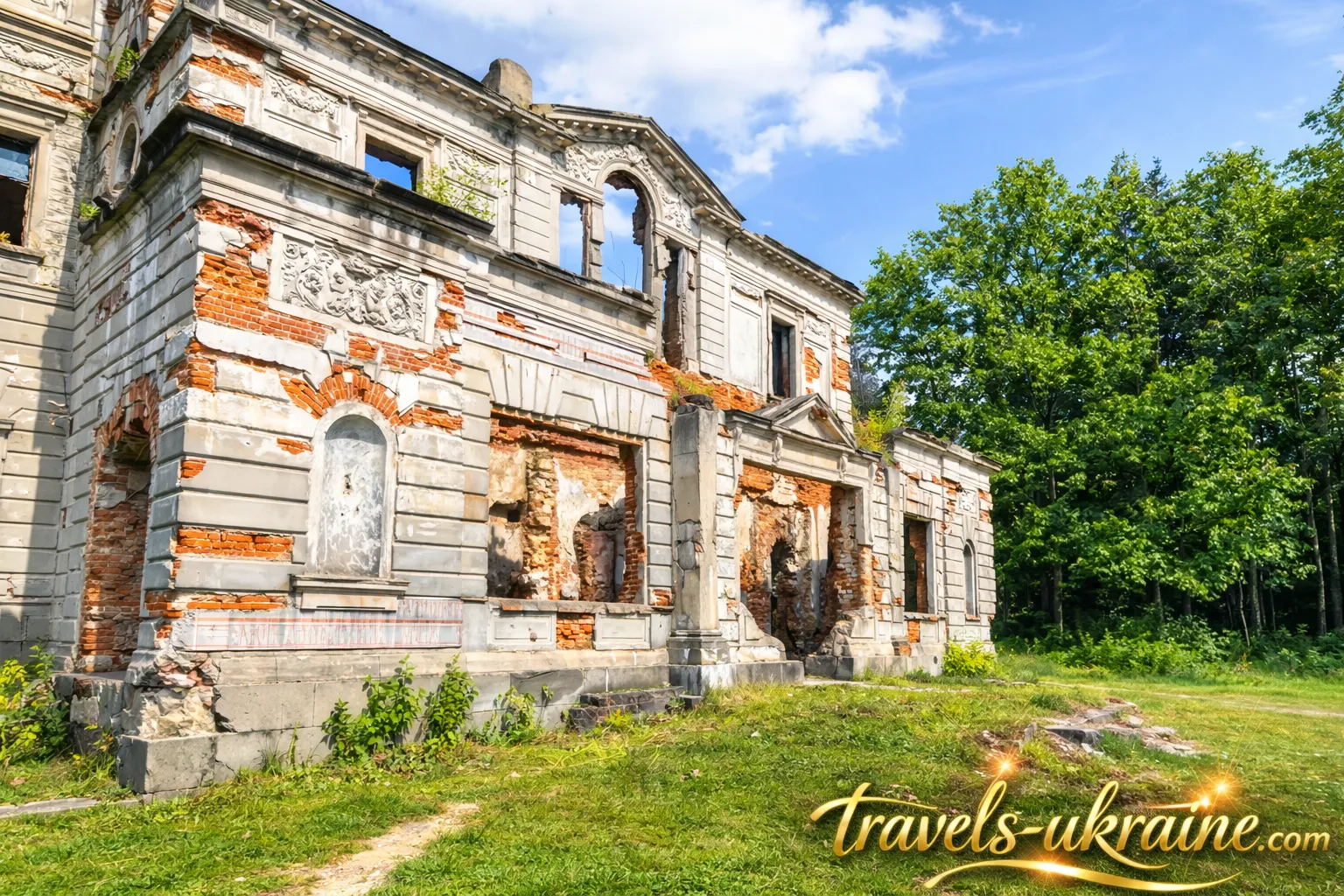
The manor had a symmetrical two-storey composition designed in the style of the Italian Renaissance. The palace consisted of forty luxurious rooms and towers, while its architectural image was highlighted by refined decorative details: shaped ornaments, pediments, stucco with patterns and, of course, classical columns. In short, luxury was felt here in every detail — not ostentatious, but thoughtful, noble, created to impress through harmony of form and taste.
A park area was laid out next to the palace, naturally and elegantly complementing the estate. Green plantings, thoughtful spatial planning and the combination of architecture with the surrounding landscape created a complete image of a country residence. Without exaggeration, this was the golden period of the Tereshchenko estate in Denyshi — a time when the palace was full of life and embodied the aesthetics of the era, the family’s wealth and its desire to leave behind something truly refined. Life flourished here, guests arrived, matters were discussed, plans were made, and the estate itself looked like a place created for calm luxury.
Why the Tereshchenko Palace in the Zhytomyr region became a ruin
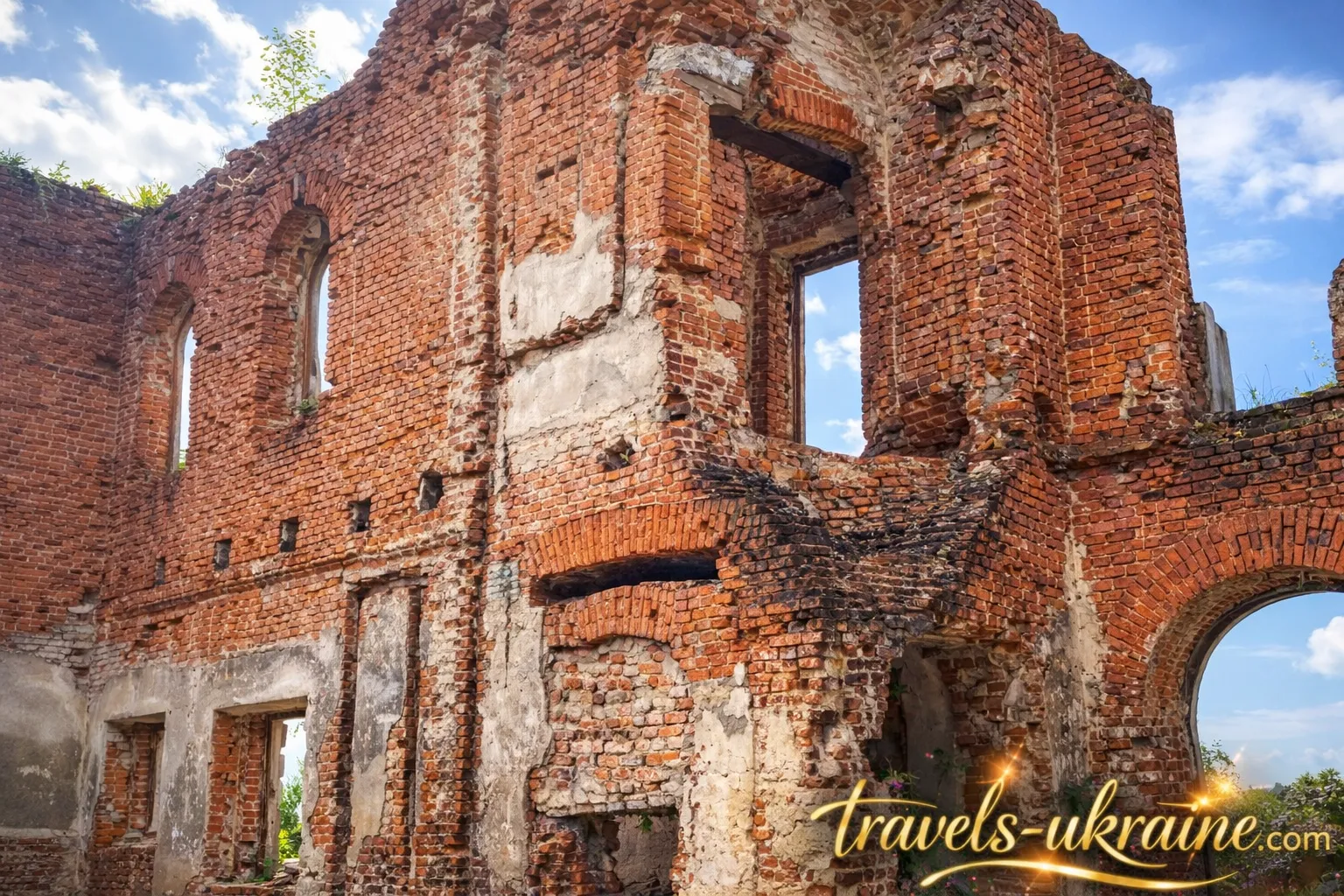
Like many other historical landmarks of Ukraine, the palace in Denyshi did not withstand the upheavals of the twentieth century. The change of political eras, the October coup, looting, decline, the loss of its original purpose and the lack of proper care gradually destroyed this building. What was once a symbol of wealth and refinement became vulnerable over time to indifference and physical destruction. After all, the ruins of the Tereshchenko Palace in the village of Denyshi are largely the result of the local population systematically dismantling the building, stone by stone, for construction needs. Therefore, today this location is perceived not only as a picturesque site, but also as a painful reminder of how destructive human indifference can be and how fragile cultural heritage becomes when it is not protected.
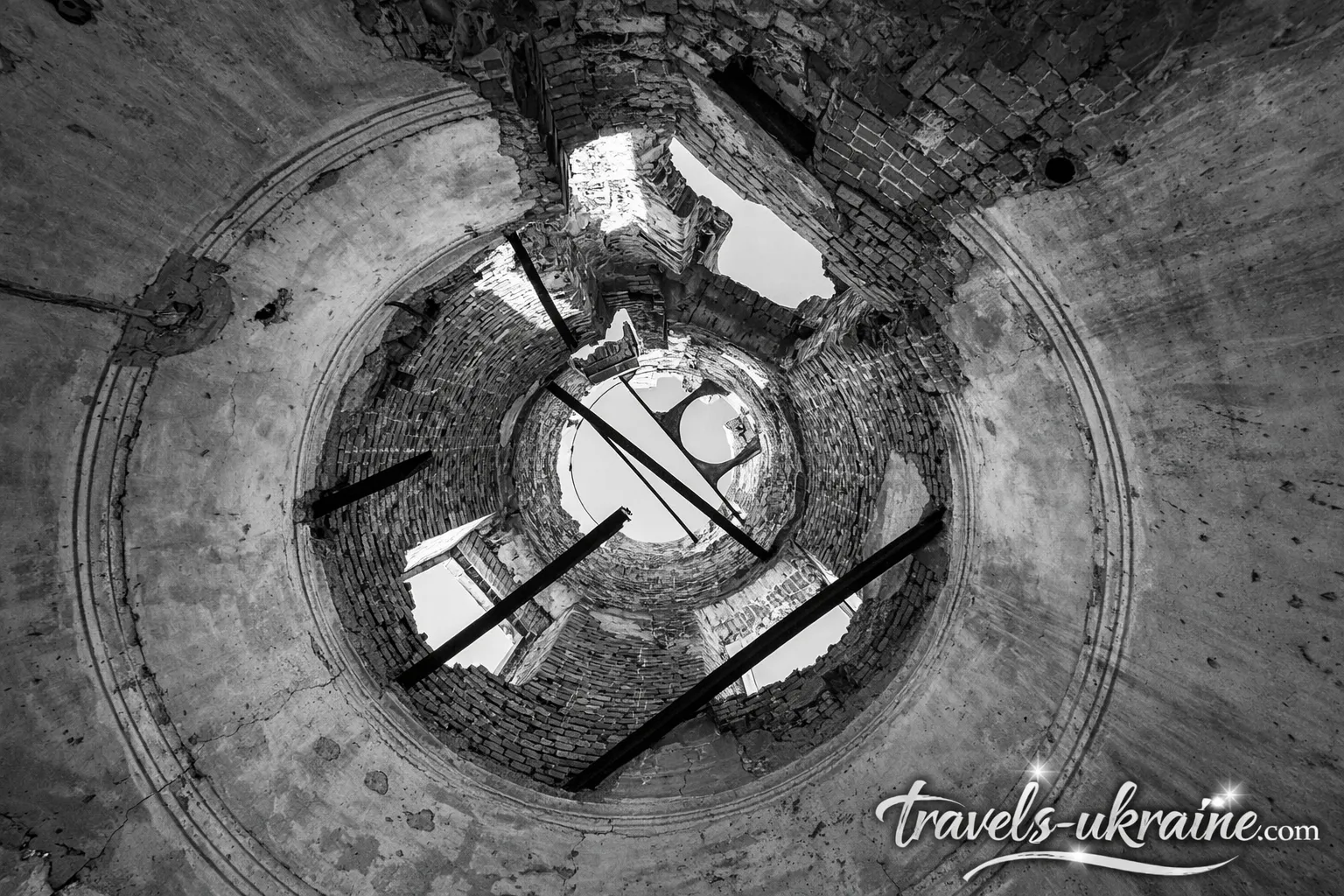
This is where the special power of the location lies: it does not hide its wounds. The ruined Tereshchenko Palace in the Zhytomyr region is not embellished with excessive restoration décor, and that is exactly why it has such a strong effect. When you look at the remains of the walls, the outline of the tower, and what has survived of the former palace architecture, you feel not only admiration, but also an inner question: how many more places like this are we at risk of losing? That is why palace landmarks of Ukraine such as Denyshi are important not only as tourist locations, but also as a living conversation about memory and responsibility.
That is why it is worth visiting the palace ruins in Denyshi not only for striking photographs. This place offers a rare opportunity to see how history is preserved not in perfect form, but in an honest, open state — with traces of time, loss and grandeur. And perhaps precisely because of this, the architectural monument in Denyshi makes a stronger impression than many well-kept but emotionally empty sites. Here history is not behind glass — it is simply in front of you, in stone, in the landscape, in the silence.
The ruins of the Tereshchenko Palace — a symbol of public indifference and the failures of the Ministry of Culture
The palace ruins in Denyshi are not only a destroyed architectural gem, but also an open mirror of public indifference and state weakness in the protection of cultural heritage. What was once a symbol of taste, prosperity and an era has today become a silent reproach to everyone who, for years, became used to destruction as something normal. And although responsibility for the palace landmarks of Ukraine lies not only with the relevant ministry, it is the state that must shape a real policy for protecting heritage, rather than leaving it alone with time, indifference and oblivion. The Tereshchenko Palace reminds us of a simple truth: cultural heritage does not die in an instant — it disappears where, for too long, everyone pretends it is none of their concern.
Sadly, indifference and inaction in the corridors of power, where public interest too often gives way to corruption, personal gain and empty promises, never gave this building a real chance of restoration. Over all these years, not enough has been done to save the palace from further destruction, to draw systematic state attention to it or to turn this monument into a fully fledged cultural and tourist site. As a result, what could have become a centre of historical memory, a place of knowledge, pride and regional development, continues to remain a symbol of neglect, lost responsibility and a chronic inability to protect one’s own cultural heritage.
Of course, the local population also quite clearly demonstrates the indifference and vandalism that for years contributed to the decline of this historical monument. The destruction of the palace happened not only because of officials’ inaction, but also through everyday damage, the theft of materials, careless treatment of the territory and the lack of a basic understanding of the value of cultural heritage. This kind of daily, seemingly invisible indifference often harms monuments no less than time or natural decay. And this is the tragedy of the ruins of the Tereshchenko Palace: they have become evidence not only of historical losses, but also of how easily society allows the destruction of what it should protect as part of its own memory and history.
Photo and video gallery

Denyshi: cliffs for climbers, landscapes and the cinematic history of the location
Denyshi near Zhytomyr is a place where adrenaline blends with history, and active recreation unexpectedly echoes the atmosphere of cinema. People come here not only for nature, but also for a sense of space, the power of the terrain and the emotion that locations with character can give. The cliffs, with their famous sheer wall for climbing, are located among the forest, near the well-known “Denyshi” sanatorium, not far from the village itself. Both locations are well known among residents of Zhytomyr and visitors to the region who enjoy extreme sports tourism, rock climbing or simply quality outdoor recreation. Getting here is not difficult, especially by private car, as this active leisure spot has a convenient location along the Zhytomyr—Chudniv road.
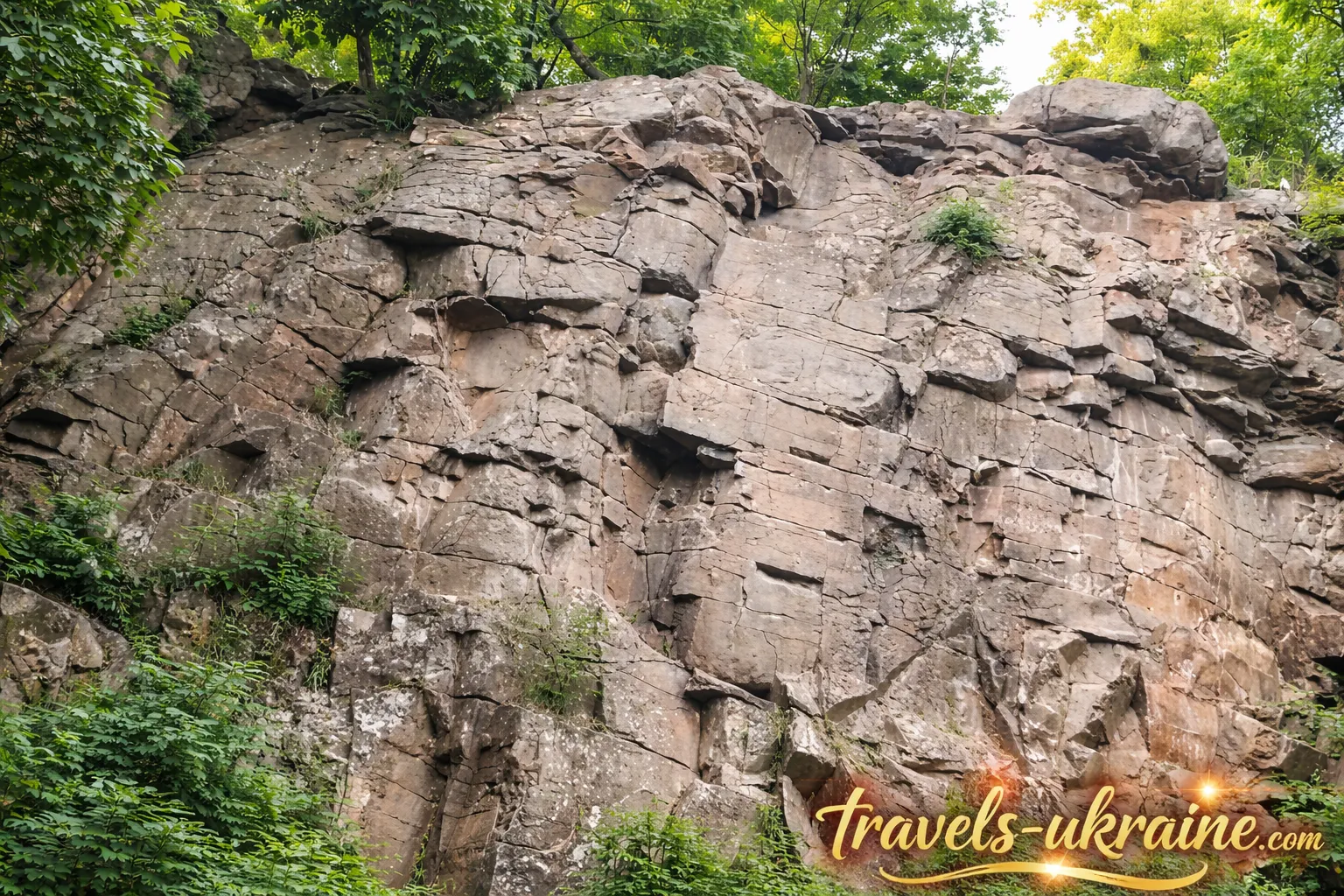
The cliffs for climbers are surrounded by forest and stretch along the Teteriv River, so the views here are truly impressive. The total length of the rock massif reaches almost 150 metres, while the height of individual sections is approximately 20–25 metres. The vertical structure of the cliffs, the natural relief and the convenience for training have made this place popular among rock climbers.
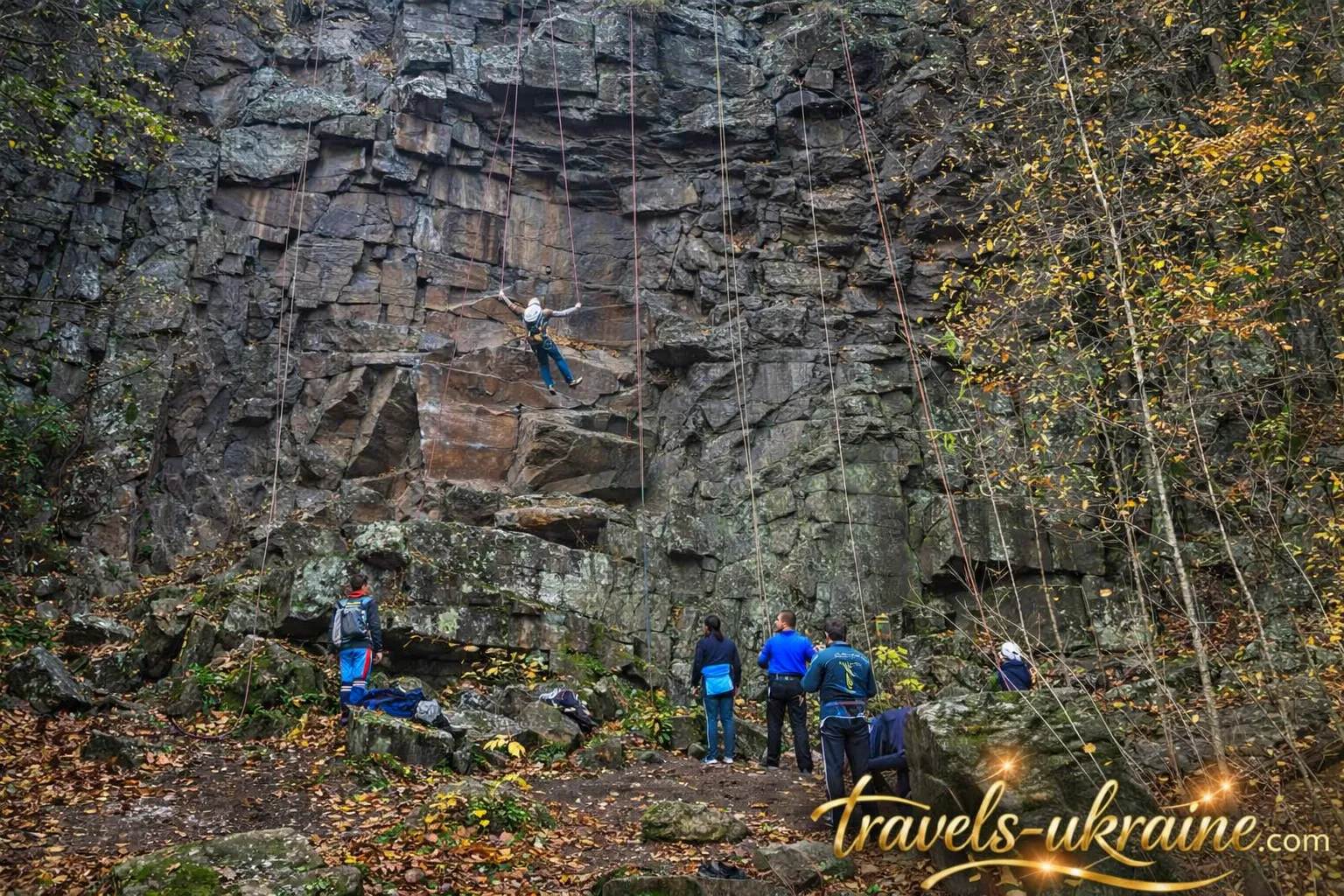
In the warm season, it is especially lively here: tents appear in the clearings, athletes train near the routes, and the whole space fills with movement, concentration and that special energy that always accompanies a real adventure. Such popularity is entirely natural, as the sheer wall of the Denyshi canyon serves as a natural mountaineering ground and has long been an important place for training and outdoor trips.
However, Denyshi is interesting not only for its cliffs. Another special layer of this area is its cinematic history. It was here, among the expressive landscape, old ruins and natural scenery, that film crews have worked more than once. The location attracts with its atmosphere, so it was not chosen by chance for episodes that needed drama, scale and a sense of another time. In particular, in 2019, scenes for the historical fantasy series “Slavs” were filmed here. Here, nature, stone, space and light almost create ready-made scenery by themselves. Travelling through these places, it is easy to imagine how the real landscape turns into a film set, and an ordinary walk becomes a journey into a space of cinematic images, legends and visual magic.
That is why Denyshi should be discovered not in haste, but with attention — looking closely at the line of the cliffs, the flow of the river, and the forest paths that lead to new impressions. Here you can feel the true spirit of adventure, see how a natural location becomes a place of power for athletes and at the same time a space of inspiration for filmmakers. In Denyshi, every cliff, every curve of the bank and every view has its own emotion. And that is why this journey is remembered not only for its beautiful views, but also for a deeper feeling — as if you have visited a place where nature, history and human imagination have met at one point.
The ruins of the Tereshchenko Palace: legends and the atmosphere of a mysterious landmark
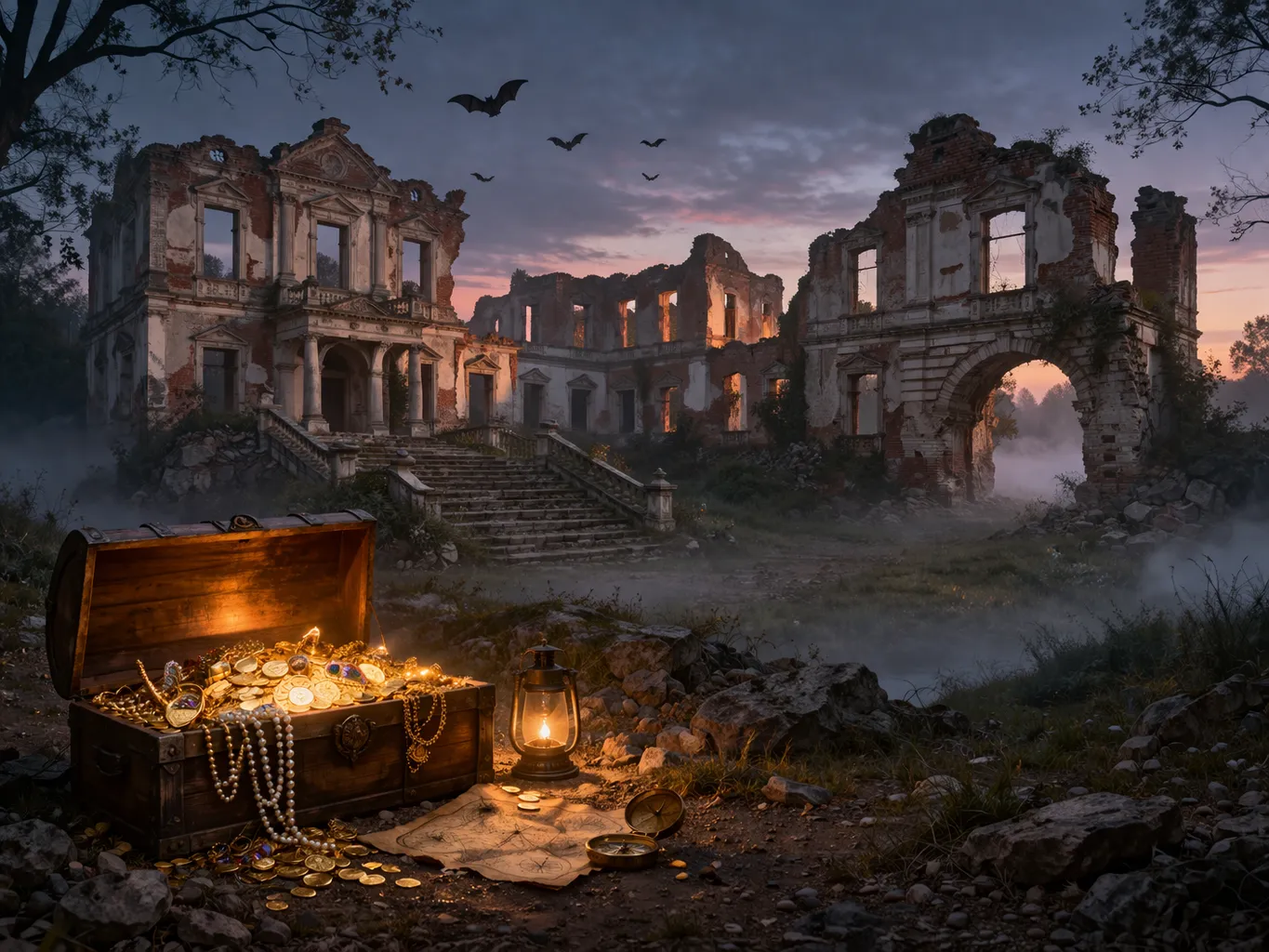
Every abandoned estate sooner or later becomes surrounded by stories, and the palace ensemble in Denyshi is no exception. In such places, legends are born almost by themselves: from the silence, from the traces of destruction, from the contrast between former beauty and the present state. Some speak of the secrets of the old estate, others of the dramatic fates of people connected with the palace, while others simply feel a special energy here that is difficult to explain rationally. And although not every tale can be confirmed by documents, it is these stories that shape the aura around Denyshi as a place where the past still remains tangible.
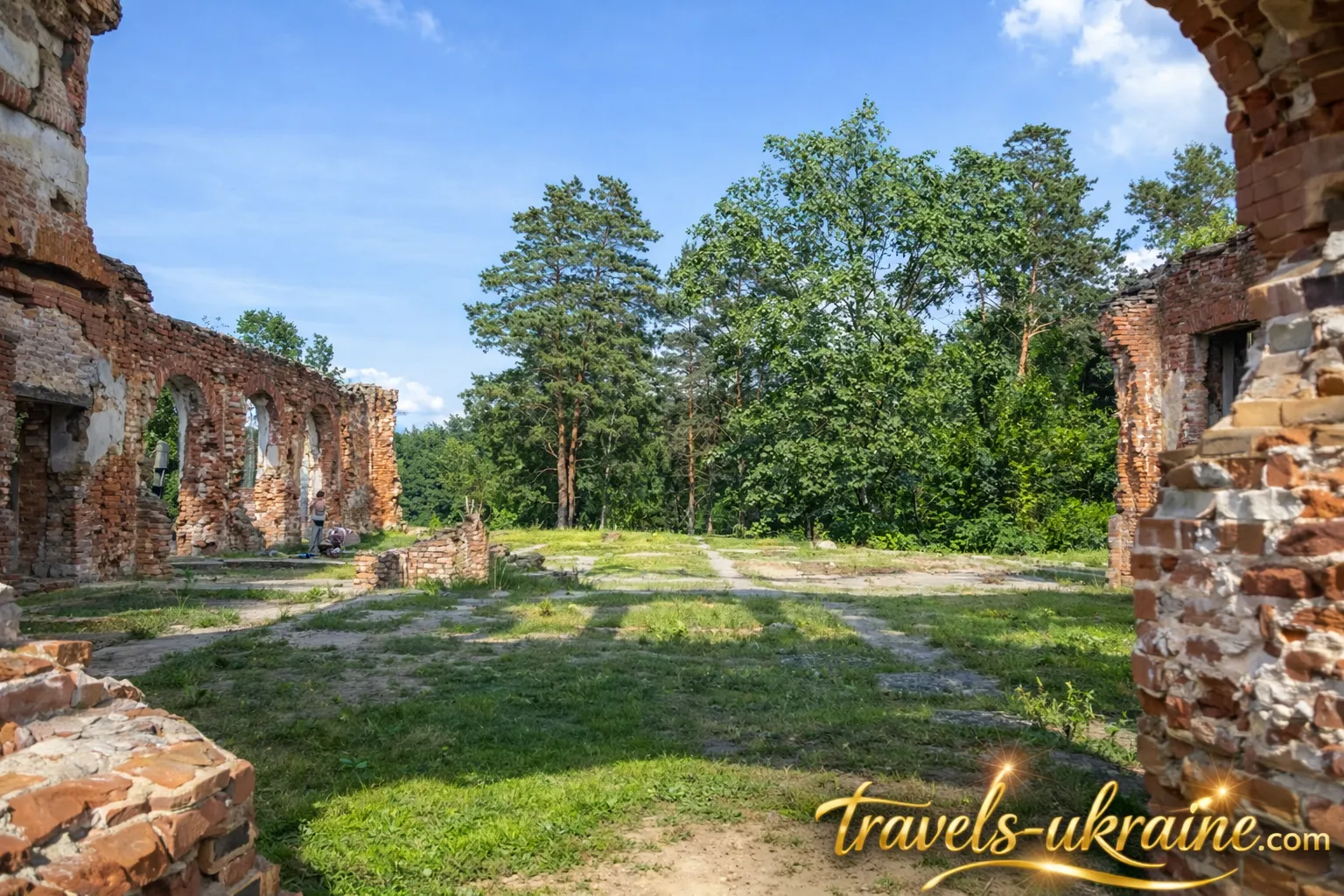
There is nothing surprising about this. A palace complex preserved only in fragments always awakens the imagination more strongly than a fully restored building. A ruin does not tell the story to the end — it leaves space for the inner involvement of the reader, tourist, photographer or researcher. That is why the ruins of the Tereshchenko Palace are so often perceived not only as a historical landmark, but also as a place with the romance of loss, silent beauty and that very feeling of mystery for which many people set out on journeys along unusual routes.
One of the most popular legends about the Tereshchenko palace ruins is connected with treasures supposedly hidden on the estate grounds. According to the stories, the owners may have hidden jewels, antique ornaments, coins and other valuables in the walls of the palace, in cellars or somewhere in the garden. That is why rumours about secret hiding places circulated around this location for a long time, and the estate in Denyshi attracted not only tourists, but also those who believed in the possibility of finding lost riches.
Another well-known version of the legend says that the palace floor was supposedly laid with gold coins placed on their edges. This story sounds almost unbelievable, but that is exactly why it became so firmly rooted in local imagination. And although there is no documentary evidence for such stories, they add a special charm to the palace. In these tales there is always something more than simple fantasy: a memory of former luxury, an echo of a lost era and a desire to believe that the ruins have not yet revealed all their secrets.
Events and activities: mountaineering, training and the living atmosphere of Denyshi
To be honest, Denyshi is not one of those tourist locations that lives primarily through large festivals or loud mass celebrations. Its strength lies elsewhere. This place attracts visitors above all with its nature, atmosphere, ruins of the Tereshchenko Palace and cliffs above the Teteriv, as well as the activities that arise around the location itself. That is why events in Denyshi are not so much fairground or entertainment-oriented as sporting, travelling and educational.
The liveliest and most recognisable part of Denyshi’s event life is precisely its mountaineering and rock-climbing scene. The local cliffs are known as a training location, and at different times educational trips, workshops and competitions in mountaineering technique are held here, involving athletes from different regions of Ukraine.
This feature is what makes the location feel alive. Unlike many historical places where a tourist merely contemplates the past, in Denyshi you can see movement, preparation, concentration and real sporting work on the terrain. Because of this, a trip to Denyshi often combines two impressions at once: a calm acquaintance with the Tereshchenko Palace and watching how the nearby cliffs continue to perform their modern function — as a ground for training and competitions.
Tourists should come here not expecting a large stage or a calendar of mass entertainment, but for a different format of impressions. The Tereshchenko estate in Denyshi, the cliffs, nature and the presence of the sporting community create the feeling that this location lives on its own, without artificial decoration. Here, the event is often not a poster, but the day in Denyshi itself: when someone is training on the cliffs, someone is photographing the palace ruins, and someone is simply listening to the river and realising they have found a special weekend tourist route.
So events in Denyshi are, above all, not festival glitter, but the living presence of people who come here for nature, movement, history and a strong impression. And this is the real value of the location: it does not entertain artificially, but allows you to feel part of a space where tourism, recreation, sport and a historical and architectural monument come together naturally.
What to see and do in Denyshi
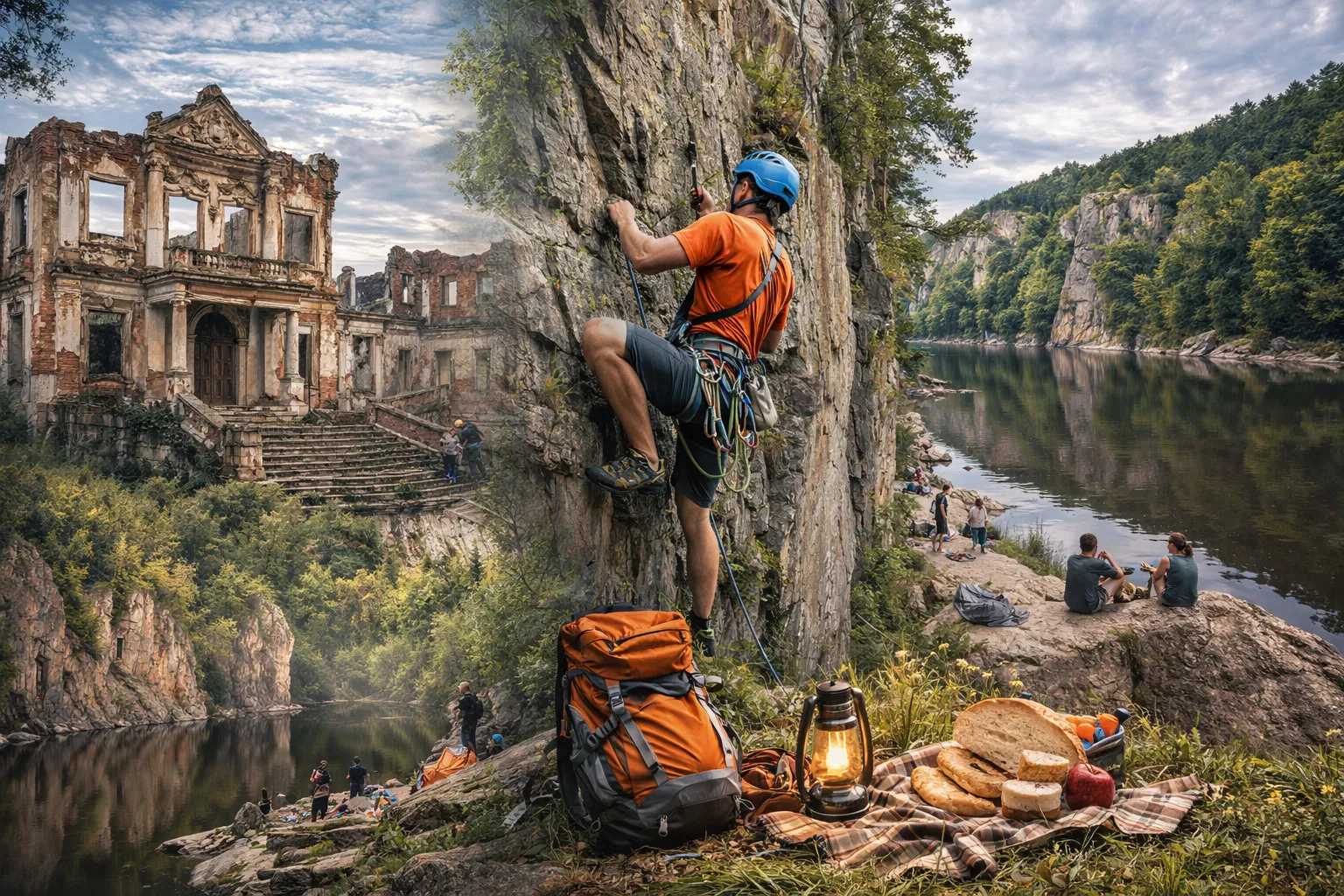
Denyshi is the kind of place where one trip can combine several impressions at once: an encounter with history, a walk in nature, watching climbers and a complete break in the Zhytomyr region on the banks of the Teteriv. The main value of the location lies in the fact that here you do not have to choose between cultural heritage and active leisure. The ruins of the Tereshchenko Palace, the rock massif, forest paths and views above the river create a complete route that works well both for a short family trip and for an eventful weekend route.
The first reason people come to the village is the Tereshchenko residence. Even in ruins, the building retains its expressiveness, while individual fragments of walls, the tower, stucco and decorative niches give an idea of the former scale and beauty of the monument. During the visit, it is worth not rushing: walk around the remains of the palace from different sides, look closely at the preserved details and feel how palace architecture continues to work even in destruction. This is not a place for a quick “photo stop”, but a location best read slowly — like an old story that opens fragment by fragment.
Another essential part of the visit is the Denyshi cliffs, which have long had a reputation as one of the best-known locations for rock climbing and mountaineering near Zhytomyr. The rock massif stretches along the Teteriv River for around 150 metres, while the height of individual sections reaches 20–25 metres. This is why the place has become very popular among athletes, and in various tourist descriptions Denyshi is directly called a “Mecca” for mountaineers and climbers. For tourists, it is also a chance simply to enjoy a powerful landscape — granite outcrops, water, forest and open views that make the location especially photogenic.
An equally important part of the experience is the surrounding nature itself. The cliffs, forest and Teteriv River create a very strong backdrop for an unhurried walk, a picnic or a short rest after exploring the Tereshchenko estate in Denyshi. That is why the location works well not only as a historical landmark, but also as a place where you can simply spend time in nature without unnecessary haste. For many travellers, this format turns out to be the most valuable: first visiting the palace ruins in Denyshi, and then moving on to the views above the Teteriv, where history gives way to silence, space and the calm rhythm of rest.
The main advantage of Denyshi is that you do not need to “invent” how to fill the day. The location naturally offers several scenarios at once: exploring the Tereshchenko estate in Denyshi, discovering the cliffs, walking along the river, watching sporting activity and enjoying peaceful rest in a natural setting. That is why an excursion to Denyshi is well suited both to those who love ecotourism with historical meaning and to those looking for an accessible, beautiful and emotionally rich one-day escape.
Frequently asked questions about the ruins of the Tereshchenko Palace in Denyshi
Where are the ruins of the Tereshchenko Palace in the village of Denyshi located?
The ruins of the Tereshchenko Palace in the village of Denyshi are located in the Zhytomyr region, not far from Zhytomyr, in a picturesque area near the Teteriv River. The location is known not only as an architectural monument in Denyshi, but also as part of a popular route for those who want to combine exploring historical heritage with a walk in nature.
How do you get to the Tereshchenko Palace in Denyshi?
The most convenient way to reach the Tereshchenko Palace in Denyshi is by car from Zhytomyr, as the journey does not take long. It is also possible to travel by public transport in the direction of the “Denyshi” sanatorium, and then continue on foot to the location. That is why a trip to Denyshi is well suited even to a one-day outing.
Is it worth visiting the palace ruins in Denyshi if you are interested not only in history, but also in nature?
Yes, absolutely. The ruined Tereshchenko Palace in the Zhytomyr region is interesting not only as a historical landmark, but also as part of a very beautiful natural space. Nearby are cliffs, forest, the bank of the Teteriv and scenic viewpoints, so this location is especially attractive to those who enjoy recreation, tourism, photo walks and unhurried routes in nature.
How much time is needed to see the ruins of the Tereshchenko Palace?
A short visit to the ruins of the Tereshchenko Palace may take 30–40 minutes, but for a fuller acquaintance with the location it is better to allow from one and a half to three hours. If you want not only to see the Tereshchenko estate in Denyshi, but also to walk to the cliffs or enjoy a peaceful stroll around the area, you will need more time.
Is this tourist location suitable for a weekend route?
Yes, Denyshi is a very good weekend route for those who want to see palace landmarks of Ukraine, spend time in nature and avoid complicated logistics. This trip can easily be combined with visiting the cliffs, the Teteriv, Tryhiria or other locations in the Zhytomyr region.
What makes the Denyshi cliffs special, and can you see climbers here?
The Denyshi cliffs are well known among fans of rock climbing and mountaineering. Their main feature is the expressive terrain, sheer sections and beautiful location along the Teteriv. In the warm season, you really can see athletes and training trips here, which adds a particularly lively atmosphere to the location.
Is it safe to explore the palace in Denyshi?
The palace in Denyshi can be explored safely if you behave carefully and do not take risks. You should not climb onto dangerous parts of the ruins, approach unstable walls too closely or neglect comfortable footwear. This is an abandoned estate and a partially ruined site, so the main rule here is caution and respect for the space.
Is there developed tourist infrastructure near the Tereshchenko Palace?
There is no major infrastructure directly near the ruins, so it is better to bring water, a snack and anything else you may need. At the same time, thanks to the proximity to Zhytomyr and the nearby sanatorium, it is quite convenient to visit the Tereshchenko Palace even as a short trip. This is more a location for an independently planned journey than a classic tourist complex.
What is the best-known legend connected with the ruins of the Tereshchenko Palace?
One of the most popular legends about the ruins of the Tereshchenko Palace in the village of Denyshi is connected with hidden treasures. According to the stories, jewels, coins or other valuables may have been hidden on the estate grounds. There is no documentary confirmation of these tales, but such legends add mystery to the location and strengthen its romantic atmosphere.
When is the best time to go to Denyshi?
The most pleasant time to go to Denyshi is in dry weather — in spring, summer or early autumn, when it is comfortable to walk around the grounds, descend to scenic viewpoints and combine exploring the Tereshchenko estate in Denyshi with a nature route. In the warm season, the location looks especially alive, and the views above the Teteriv open up at their best.
Environmental note: how to preserve Denyshi, the ruins of the Tereshchenko Palace and the natural beauty of the Zhytomyr region
Denyshi is not only the ruins of the Tereshchenko Palace, but also a complete natural and historical space where every element matters. What is important here is not only the remains of old architecture, but also the cliffs, forest, riverbank, paths, silence and that special rhythm of nature that makes this location truly unforgettable. That is why to visit the ruins of the Tereshchenko Palace means not simply to see a beautiful monument, but to come to a place that needs careful treatment at every level.
Unfortunately, such locations are especially vulnerable. They are damaged not only by time, but also by human carelessness: rubbish after picnics, trampled vegetation, remains of fires, damage to walls, writing on the ruins, noise and the habit of behaving as if nature and cultural heritage exist on their own and can withstand everything. But the truth is that the palace in Denyshi and the surrounding landscape have already lost too much to afford modern negligence as well. In places like this, even a small act of carelessness becomes part of a larger destruction.
The ecology of travel is also part of a traveller’s culture
The best environmental behaviour in Denyshi is almost invisible. Do not leave rubbish, do not break branches, do not light fires where it is inappropriate, do not pick plants, do not drive where it is better to walk, and do not make unnecessary noise. Respect for a location is made up of exactly these simple things. The Tereshchenko estate in Denyshi is especially valuable because architecture and nature still exist here in a strong relationship. And if one is damaged, the entire impression of the place becomes poorer.
A true traveller is not defined by the number of places visited on a map, but by how they behave on the road. If you came to the Tereshchenko estate, took your rubbish away, did not damage the ruins, left no traces of carelessness and respected the surrounding space, then you have done more for this place than it may seem. Because the preservation of such locations begins not with loud words, but with the behaviour of each individual person.
- do not leave rubbish on the grounds of the ruins, near the cliffs or on the banks of the Teteriv;
- do not damage walls, fragments, vegetation or the natural relief;
- do not light fires in random places or leave traces of a picnic behind you;
- respect the silence, space and natural character of this tourist location;
- treat the architectural monument in Denyshi not as a resource for entertainment, but as a value that must be protected.
In the end, the main environmental note is very simple: a trip to Denyshi should be easy for you, but not destructive for the location itself. If after your visit the Tereshchenko Palace, nature and cliffs remain as clean, quiet and worthy of respect as they were before you arrived, then you have visited this place properly. This is how mature recreation is born: when a person not only takes impressions from a place, but also leaves it a chance to survive for future travellers.
Conclusion: why it is worth visiting the Tereshchenko Palace in Denyshi
Denyshi and the Tereshchenko Palace are far more than simply a beautiful ruin against a natural backdrop. This is a place where old architecture, the memory of the Tereshchenko family, the cliffs above the Teteriv, the atmosphere of an abandoned estate and the living energy of travel come together into one powerful impression. That is why the palace ruins remain one of the most emotional locations in the Zhytomyr region — not glossy, not perfectly arranged, but real.
It is worth coming here not only for photos or a short stop on the road. The Tereshchenko estate in Denyshi opens itself to those who are ready to look attentively: to see in the ruins not only loss, but also beauty; to feel in the silence not emptiness, but depth; to perceive this location not as a random object on the map, but as part of a broader Ukrainian history. This is the special value of the place — it does not entertain artificially, but makes you stop, look closer and feel more than you expected at the start of the trip.
Denyshi in the Zhytomyr region is well suited both to those who love palace landmarks and to those looking for a beautiful weekend route, as well as to travellers who value views, nature, cliffs and the river. Here you can combine an encounter with history, a walk in nature, watching climbers, a photographic journey and simple but very valuable rest without unnecessary fuss. It is precisely this layering that makes the palace in Denyshi a place you want to return to in thought long after the trip.



No Comment
You can post first response comment.