
 English
 Українська
 Български
 Hrvatski
 Čeština
 Dansk
Dansk Nederlands
 Eesti
Eesti Suomi
Suomi Français
 Deutsch
 Ελληνικα
 Magyar
 Íslenska
 Italiano
 Latviešu
 Lietuvos
 Polski
 Português
 Română
 Русский
 Српски
 Slovenčina
 Slovenščina
 Español
 Svenska
 Türkçe
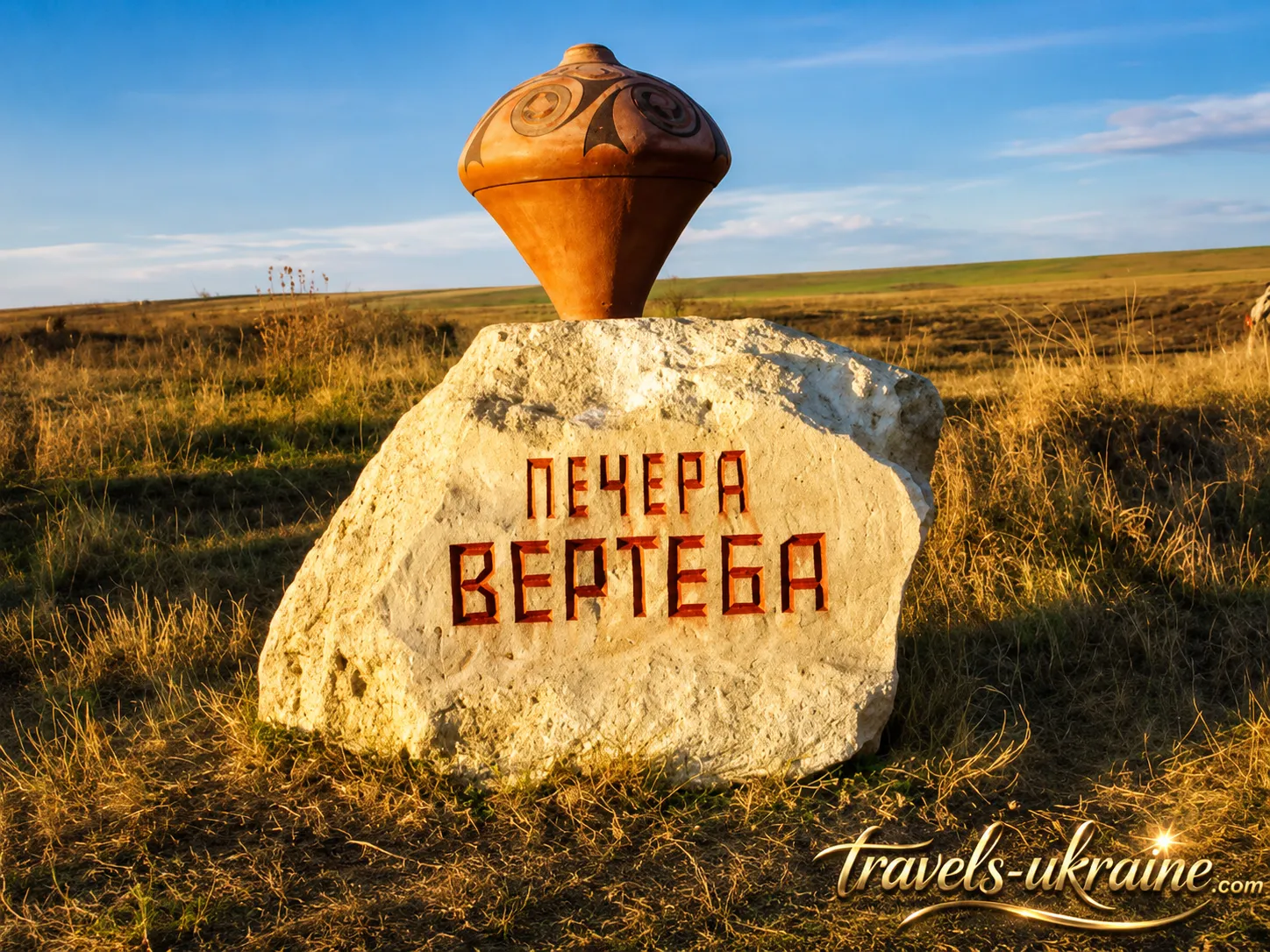
Ternopil region is a land once shaped by water. The ancient Sarmatian Sea, rivers, quiet lakes, karst springs, and waterfalls worked here for thousands—and even millions—of years, like patient sculptors. They wore away the rocks, carved valleys, hid cavities underground, and left behind landscapes in which beauty often begins not on the surface, but deep beneath our feet.
If one could take a kind of X-ray of Ternopil region, this land might resemble a gigantic piece of cheese—with dark cavities, hidden passages, sinkholes, and underground labyrinths. And this is no artistic exaggeration: many parts of the region are associated with karst formations, while caves here are not a coincidence but a part of the very nature of the land.
It is no wonder that people in Ternopil region speak of entire cave districts. There are many of them, but Borshchiv district holds a special place among them—a land where genuine underground worlds lie hidden beneath ordinary villages and fields. It is here, near the village of Bilche-Zolote, that Verteba Cave is located, one of the best-known and most mysterious caves in Ternopil region.
But Verteba is not simply a gypsum cave or a tourist route underground. It is a place where nature created a labyrinth and people left traces of an ancient civilization within it. Here, darkness has a memory, silence seems alive, and every underground corridor appears to lead not only deeper into the earth, but also back to the times when the Trypillians lived in Podillia. And the farther you venture into this underground world, the more strongly you sense that Verteba conceals far more than meets the eye at first glance.
Why Verteba Gypsum Cave Is Worth a Tourist’s Attention
Verteba is fascinating not only because it is one of the best-known caves in Ternopil region. Its value runs deeper: here, a traveler encounters not an isolated museum exhibit, but an entire underground space connected with the life of an ancient civilization. Imagine a cave beneath whose gypsum vaults the memory of the Trypillians—their daily life, rituals, fears, beliefs, and way of life—has been preserved. This is what makes Verteba not merely a geological and archaeological monument of national importance, but a place where history comes alive.
For families with children, a tour of Verteba Cave can become a living lesson in history and nature. For archaeology enthusiasts, it is an opportunity to see a site connected with finds from the Trypillia culture. For tourists who have already visited the popular castles, canyons, and parks of Ternopil region, it is a chance to discover another side of Podillia—mysterious, underground, and highly atmospheric.
What Awaits Travelers Underground
Verteba’s underground world is unlike an ordinary walk. What matters here is not only the cave’s formations, but also the sense of space: narrow passages, gypsum walls, natural coolness, half-darkness, the guide’s narration, and the thought that people may have used these places thousands of years ago. Verteba gradually immerses you in the atmosphere of ancient history, where every turn in the labyrinth reveals a new fragment of a great underground story. It is at this moment that you begin to understand: Verteba’s main mystery lies not only in its passages and chambers, but in the people who once chose this darkness for living, protection, or ritual. Who were they, why did they come here, and what did they leave behind underground? These are precisely the questions worth exploring next.
In this article, we will follow Verteba step by step: learn where the cave is located, how to get there, why it matters to archaeology, what you can see during a tour, and which tourist attractions are worth visiting nearby. Above all, however, we will try to understand why this cave has become more than a natural landmark—a place where the breath of the ancient Dniester region can still be felt underground.
The History of Verteba Cave: From the Trypillians to an Underground Archaeology Museum
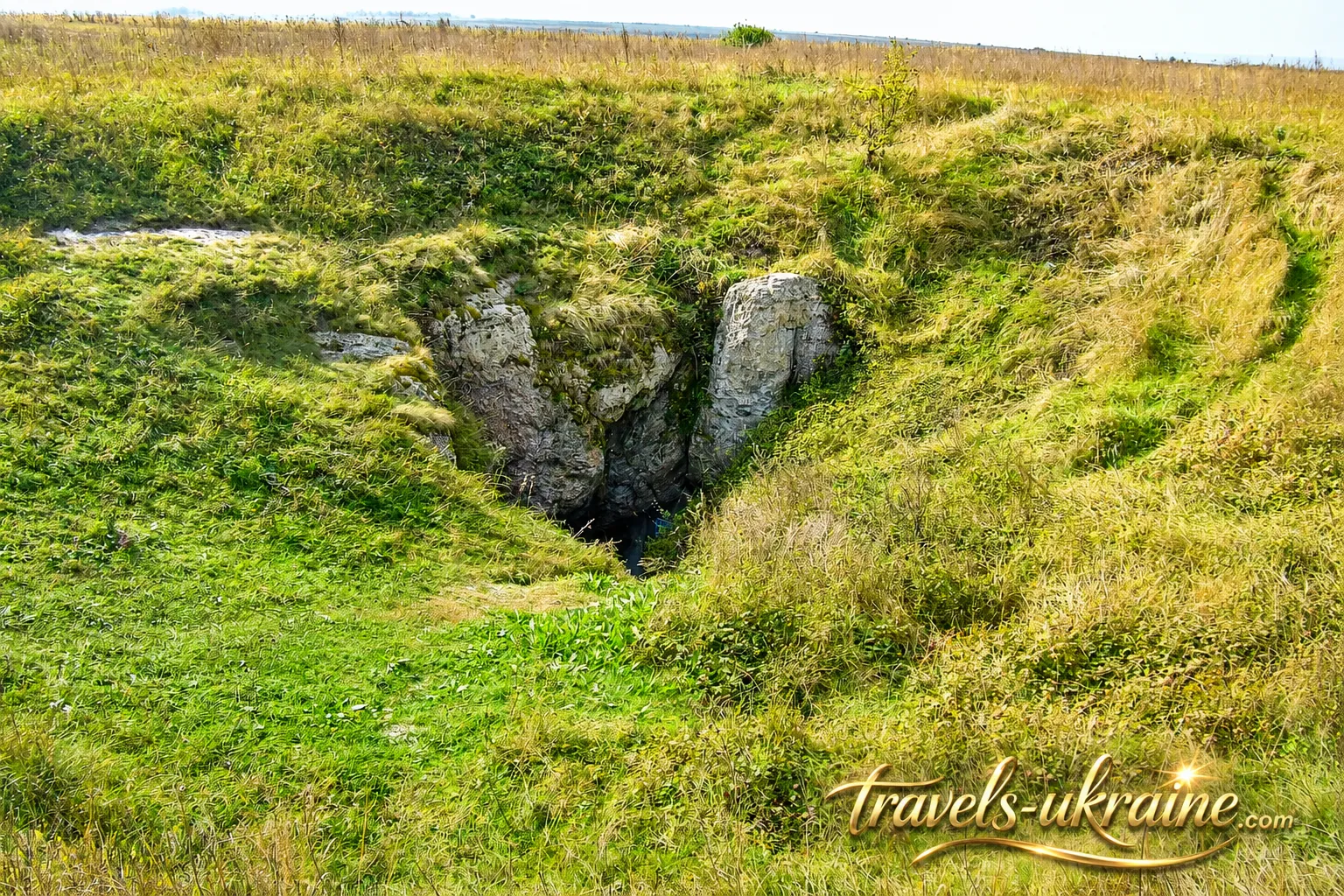
The history of Verteba Cave began long before tourist routes, museum exhibitions, or the first scholarly descriptions appeared. At first, nature did the work: water slowly dissolved the gypsum rock, carved passages underground, enlarged cavities, and created the same mysterious labyrinth now regarded as one of the most intriguing caves in Podillia. But Verteba’s true fame began when people entered its darkness.
For the ancient inhabitants of the Dniester region, this gypsum cave was more than a natural shelter. It could protect them from bad weather, cold, and danger, while at certain times it became a space connected with daily life, rituals, and a special attitude toward the underground world. This is why Verteba Cave in Bilche-Zolote is so important to archaeology: here, history has not survived as a single chance fragment, but as an entire complex of finds, cultural layers, and questions to which scholars are still seeking answers today.
What makes this site special is that the cave was used more than once and not by chance. Researchers speak of several cultural layers from different periods, showing that the Trypillians returned here at various times. This makes Verteba unique among the caves of Podillia, because it was not merely a natural cavity, but a space that people settled, remembered, and used over an extended period.
When you stand in Verteba’s underground corridor, it is easy to forget that above your head lies the modern world of roads, villages, and fields. The cave seems to transport you to a time when human life depended on nature far more strongly than it does today. For the Trypillians, the underground may have been a refuge, a place of temporary residence, a setting for important activities, or even a kind of boundary between the ordinary and the sacred. This uncertainty is precisely what makes Verteba so captivating: it does not surrender its secrets all at once.
Verteba’s First Studies: How the Cave Became an Archaeological Gem of Ternopil Region
Verteba’s scholarly history began to take shape in the 19th century, when the cave attracted the attention of researchers and local landowners. Sources mention that pottery, human bones, traces of fires, and other objects were already being found underground at the beginning of the 19th century, indicating that the site had a much older history than it initially appeared to have.
The first archaeological studies at Verteba are associated with Adam Kirkor, who surveyed the cave and described the materials discovered there in the second half of the 19th century. Later, Gotfryd Ossowski, a researcher who worked in Ternopil region and left a significant mark on the study of Trypillia antiquities, played an important role in exploring the cave. Thanks to people like them, Verteba gradually ceased to be merely a local underground curiosity and became a serious archaeological monument.
Imagine the first researchers entering the cave without modern lighting, with limited equipment and almost no ready answers. Before them lay dark passages, mysterious finds, bones, pottery fragments, and the feeling that something immensely important was hidden underground. Their work resembled a conversation with the past, in which every object they found became a separate word, while the entire cave was a great text written over thousands of years.
Verteba Cave Museum Today: History You Can See with Your Own Eyes
Today, Verteba is known as a cave museum of the Trypillia culture, operating as a department of the Borshchiv Local History Museum. This matters because tourists do not come here merely to “see a cave”; they enter an underground archaeology museum, where the natural space helps them better understand the ancient history of Podillia. This format makes the tour especially distinctive: the story of the Trypillians is told not in an abstract exhibition hall, but in the very place where people truly lived thousands of years ago.
Verteba Cave, as a museum of Trypillia culture, is a place where the past does not feel distant. It is close at hand: in the gypsum walls, in the underground silence, in the archaeological finds, and in the route followed during the tour. Here, it is easy to understand why Verteba is called an archaeological gem of Ternopil region and one of the most important caves in western Ukraine.
Why Verteba’s History Is Still Unfinished
Despite decades of research, Verteba Cave has not become a book that has been “read to the end.” On the contrary, every new study only deepens interest in it. Why did the Trypillians return here repeatedly? Was the cave a refuge, a ritual site, a temporary settlement, or all of these at once? What events drove people underground, made them bring pottery with them, maintain fires, and leave traces that we find thousands of years later?
That is why Verteba’s history does not end with dates, researchers’ names, or museum labels. It continues in every tour, every question from a tourist, and every new perspective on the underground chambers. And when, after this history, you turn to the cave’s natural features, it becomes clear that to truly experience Verteba, you must see not only what people left behind, but also what the earth itself created.
Verteba Cave near Bilche-Zolote: Natural Features
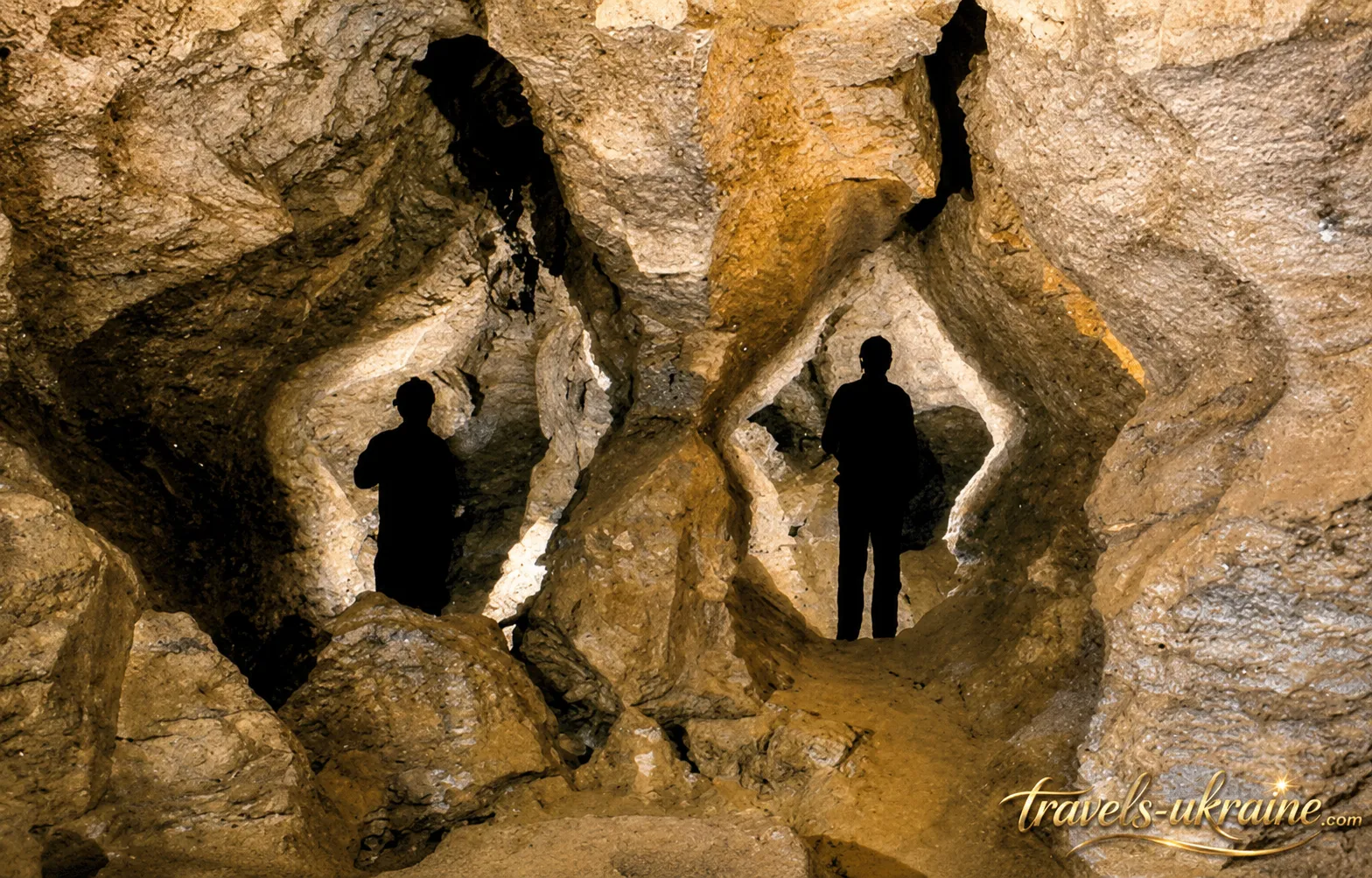
Verteba Cave in Ternopil region has a character all its own. It does not impress with height like mountain cliffs, nor does it reveal itself to tourists at once like a panoramic view. Its beauty lies elsewhere—in the shape of its underground space, the winding corridors, the sense of silence, the gentle lines of the gypsum walls, and the strange calm that emerges underground. This is a space that must not merely be seen, but gradually experienced.
By nature, Verteba belongs to the gypsum caves of Podillia. Such underground spaces formed where water seeped into cracks in gypsum rock over long periods, dissolved it, widened passages, and gradually created complex systems of cavities. This is how underground passages, galleries, chambers, and labyrinths came into being—places that now attract tourists, speleologists, and archaeologists.
The natural landmark at Bilche-Zolote is among the largest caves in Europe, and the length of its explored underground passages is approximately 9021 m; some sources also give the figure 8550 m. But the most important thing is not the number of meters. Once you enter this underground world, dry statistics quickly recede into the background: nine kilometers of gypsum labyrinth sound impressive, but underground they feel even more convincing. It is easy to understand why Verteba is called one of the most fascinating caves in Ternopil region: it is not merely long—it preserves ancient history underground.
The average annual temperature in the cave remains at approximately 9–10°C, while relative humidity reaches 92–100%. In other words, Verteba has its own climate—cool, humid, and remarkably stable. On a hot summer day, it may feel like a natural air conditioner, albeit one without a “make it warmer” button. So even if the sun is blazing outside and you feel like taking shelter in the shade, it is best to bring a light jacket or sweater into the cave.
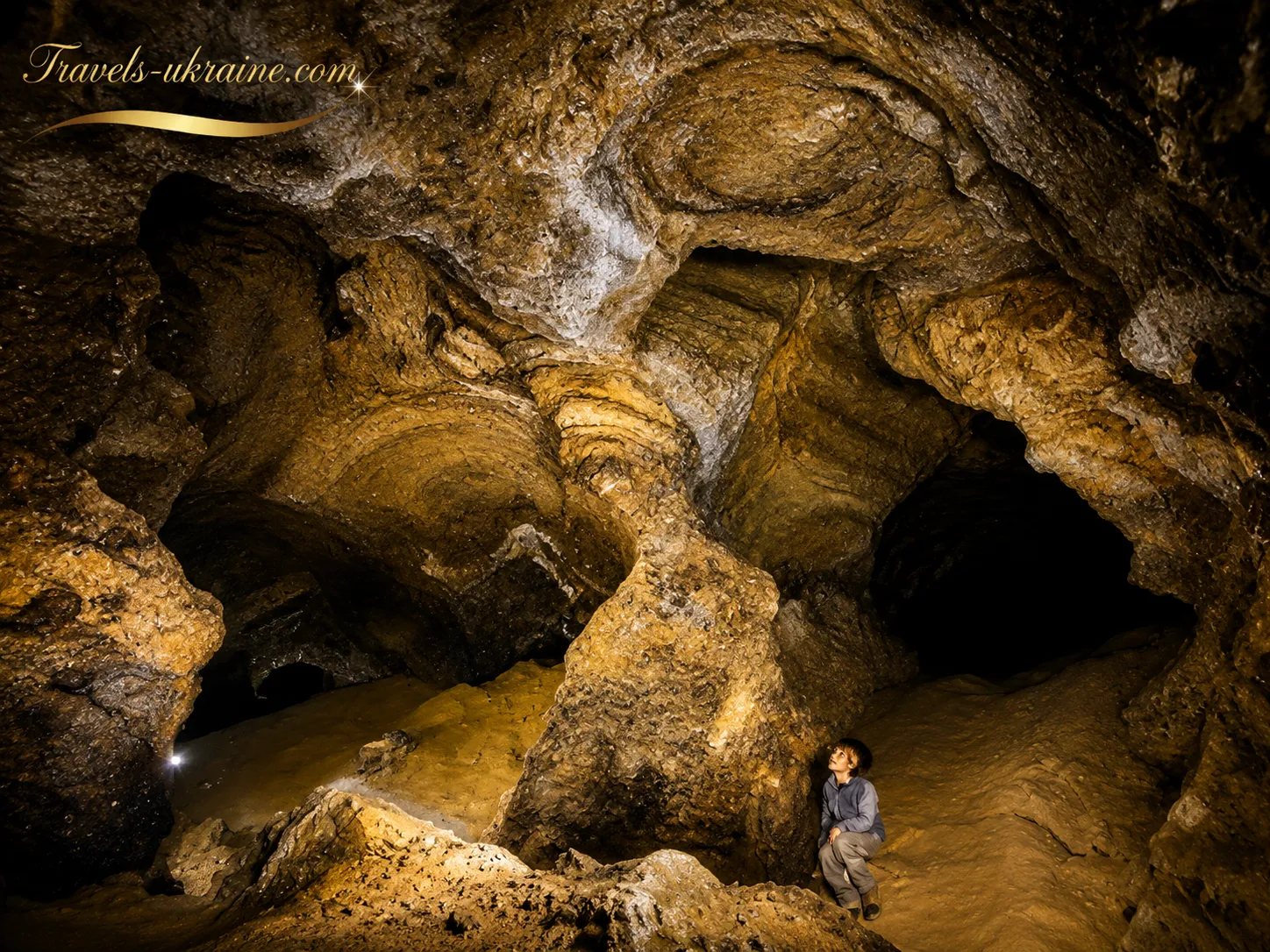
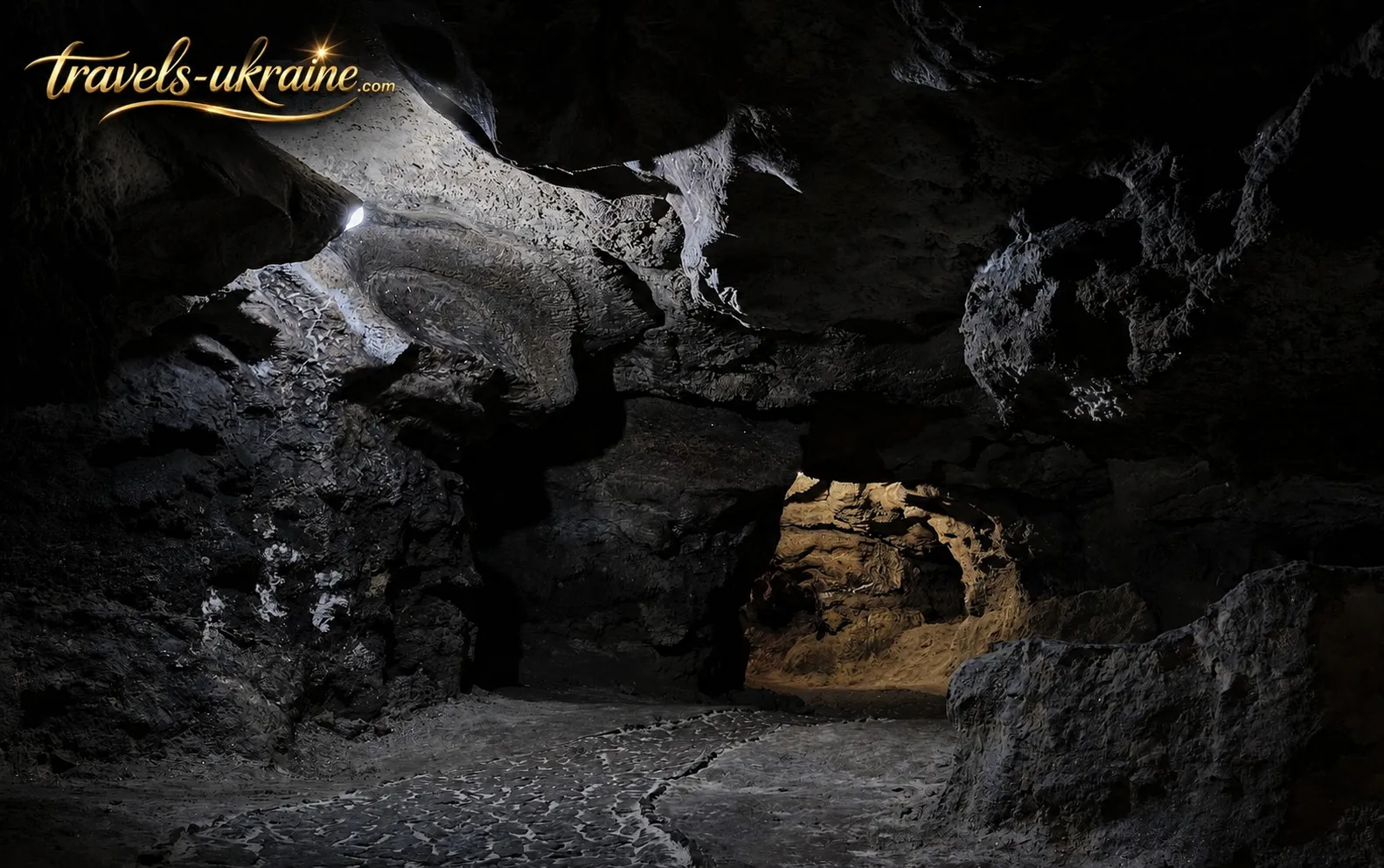
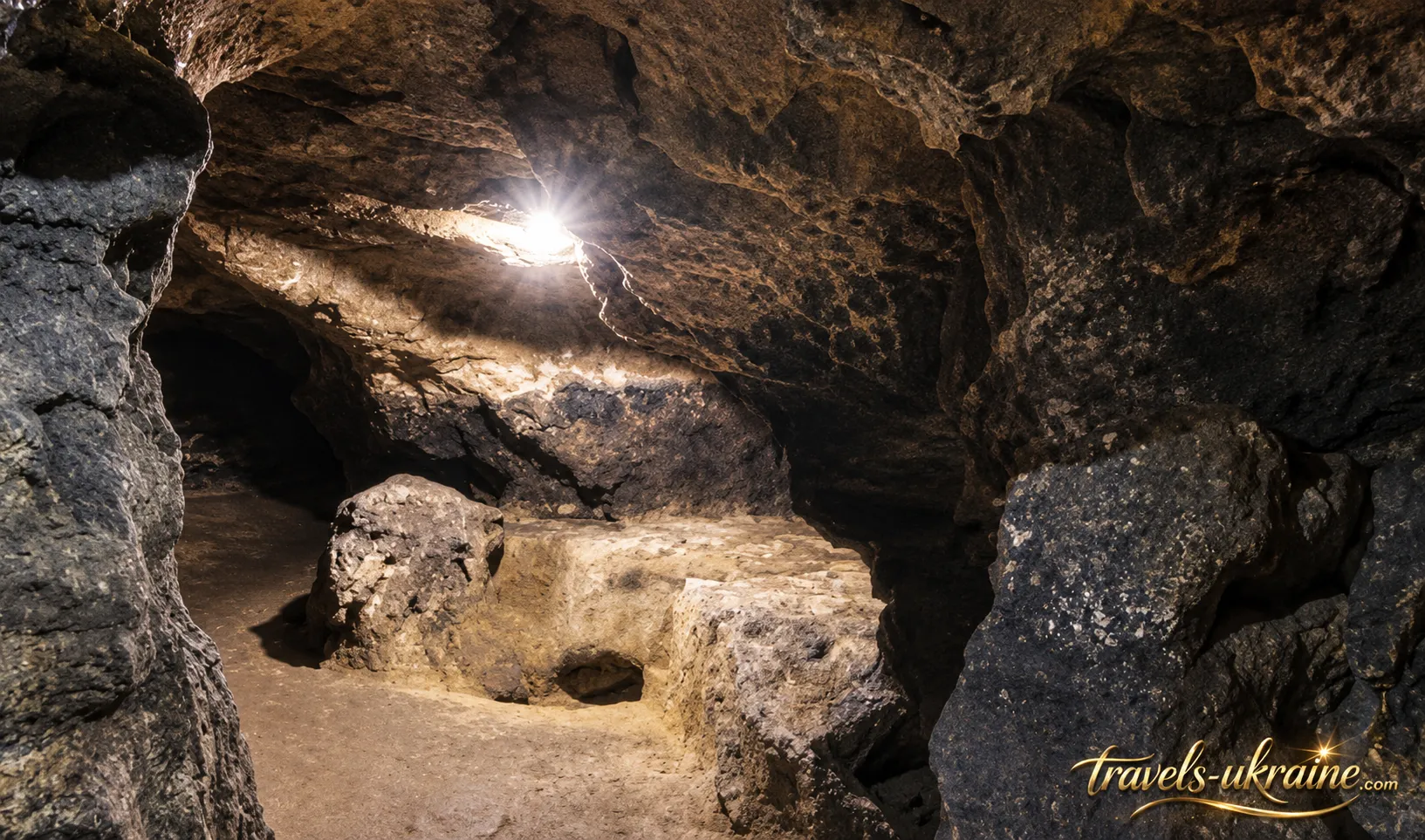
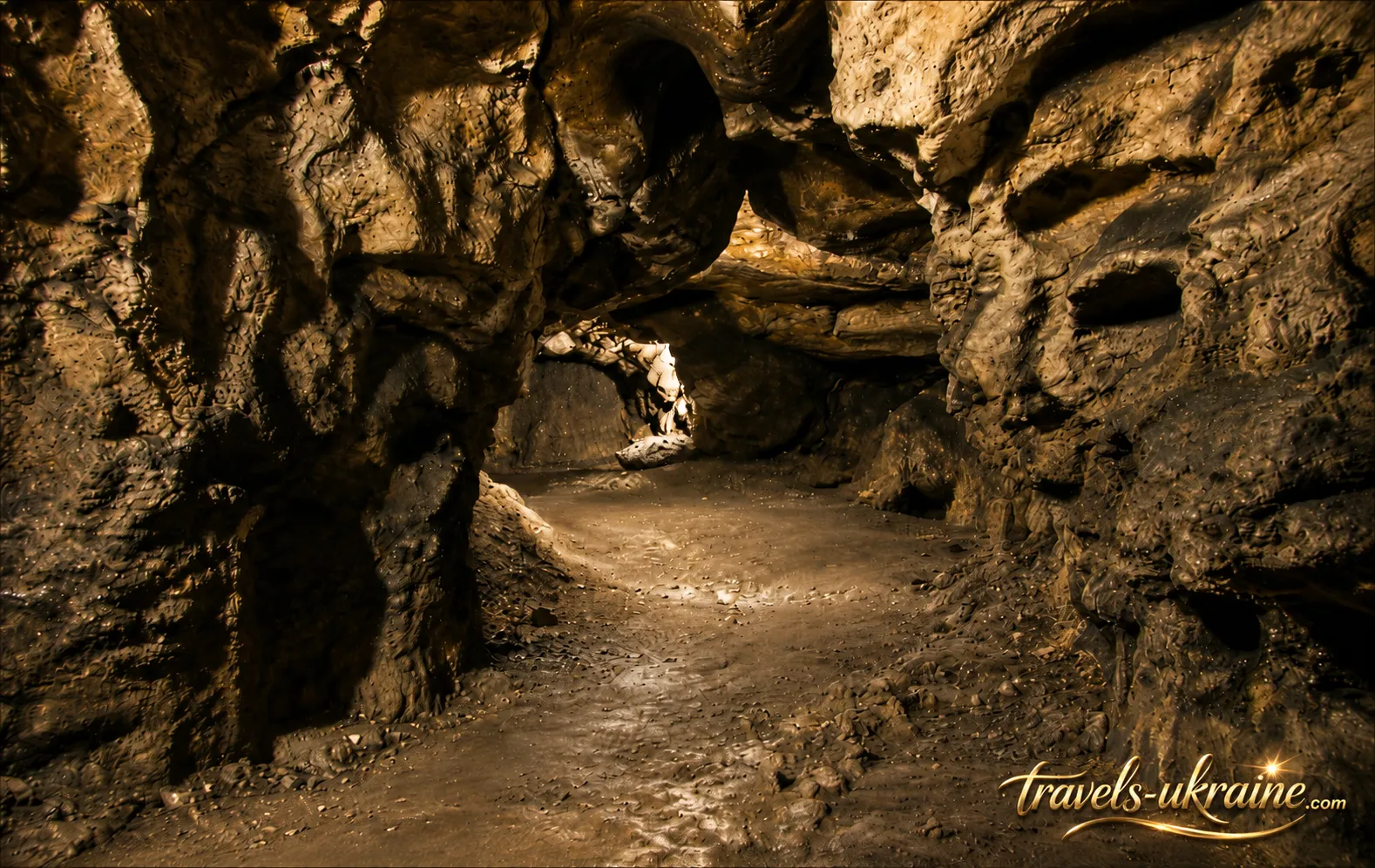
The cave consists of broad galleries separated by narrow partitions. As a result, the underground route never feels monotonous: the space widens, then suddenly narrows, prompting travelers to watch their footing and the walls more carefully. The smooth, dark surfaces of the gypsum walls create the impression of an ancient underground corridor, where every turn has its own silence, its own shape, and its own small mystery.
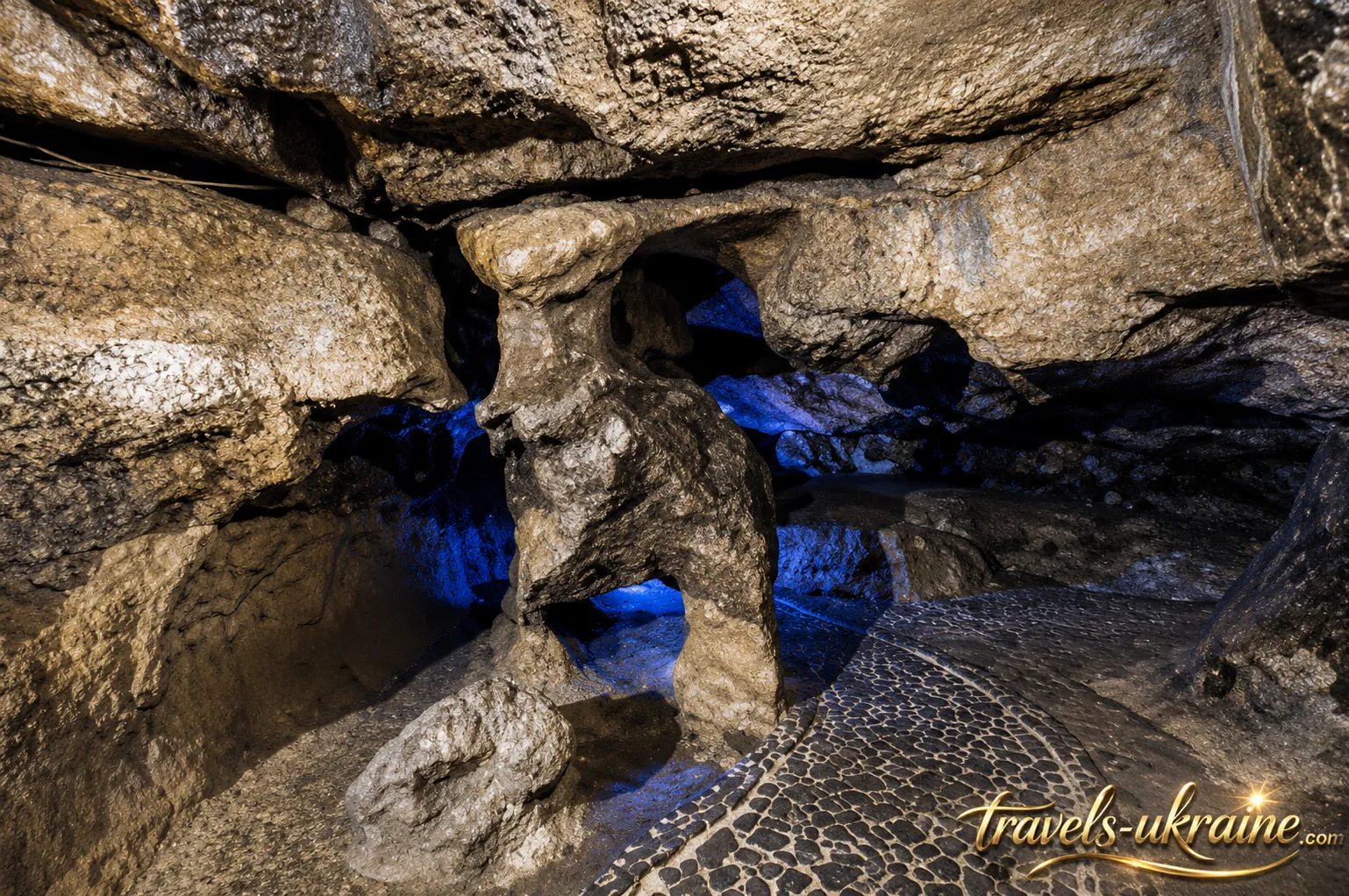
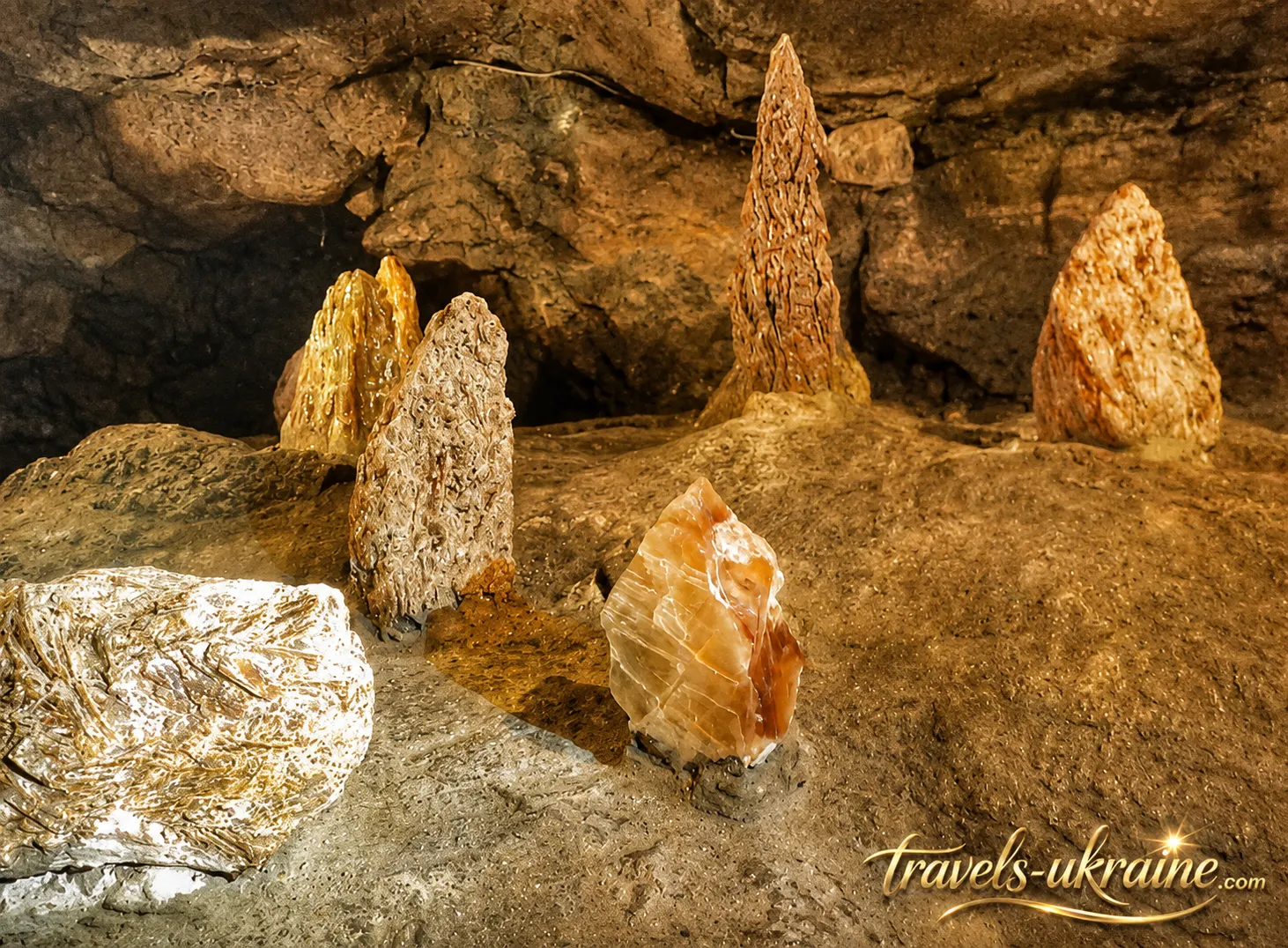
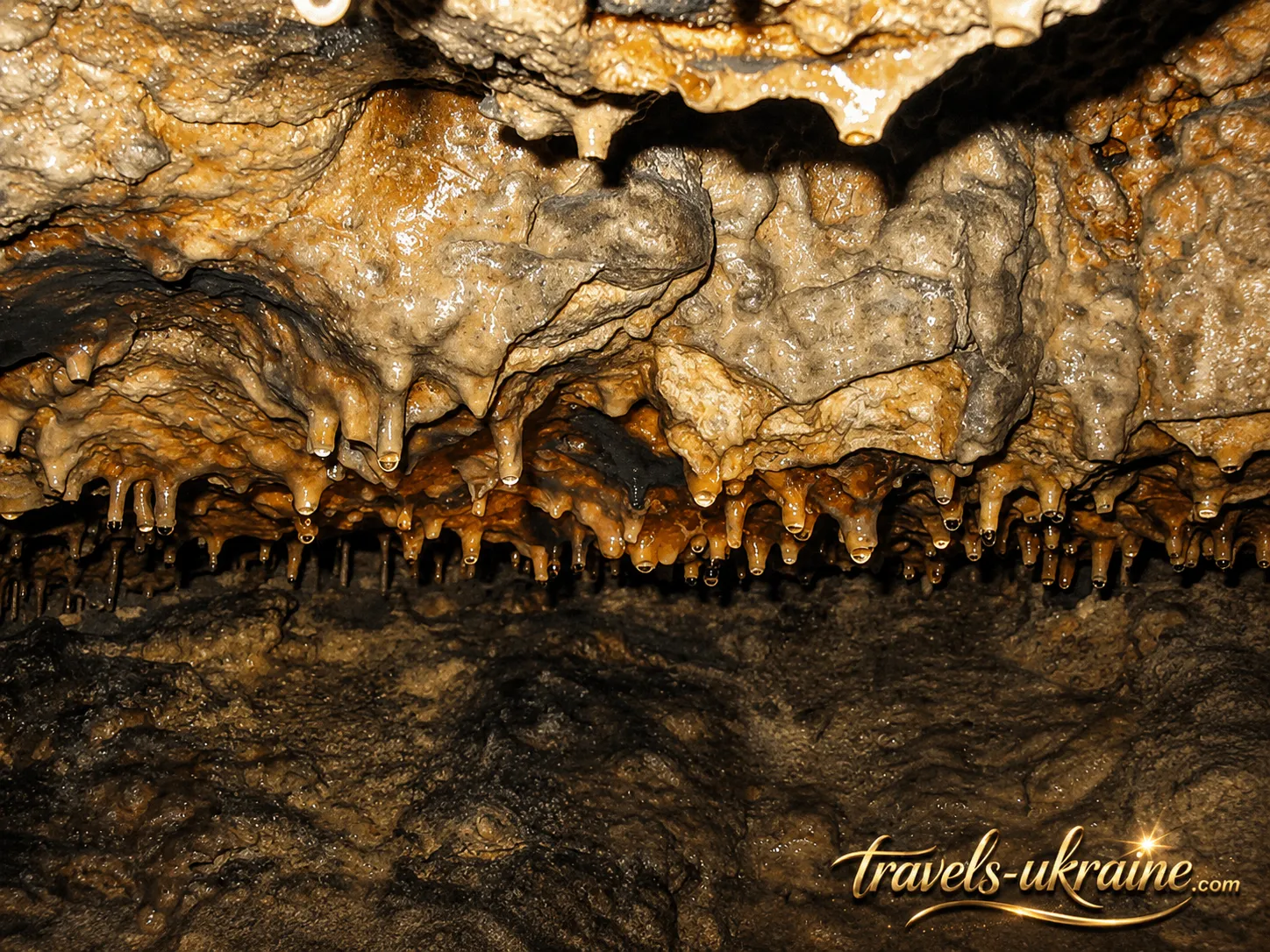
On Verteba’s ceilings, you can see carbonate flowstone formations in the form of crusts and, in places, small stalactites. The cave formations include so-called “barrels,” unusually shaped stalagmites, and an intriguing mineral formation with the poetic name “moon milk”. The name sounds almost magical, although in reality it is a natural mineral coating found in caves. But admit it: when someone shows you “moon milk” underground, your imagination immediately works more actively than it would after hearing the ordinary word “deposit.”
These are the details that make Verteba Gypsum Cave special. It does not impress with crystal splendor at every turn; instead, it gradually reveals its restrained beauty: dark walls, humid air, cool galleries, natural dripstone formations, and a silence in which even your own footsteps sound like part of a great underground history.
Photo and Video Gallery
Verteba Trypillia Cave: A Brief Guide for Tourists Before the Tour
Before traveling to Verteba, remember one thing: this is not simply a place to “drop in for 10 minutes and look at a cave.” The Museum of Trypillia Culture in Verteba Cave is an underground tour where the route, the guide, suitable clothing, and readiness to leave the sunshine, mobile noise, and familiar pace of life above ground behind for a while all matter. You do not need to be a professional speleologist, but arriving in white sneakers, a light T-shirt, and with the attitude of “I’ll just be a minute” is questionable. The cave appreciates prepared tourists, even if preparation means nothing more than a sweater, comfortable shoes, and a call ahead.
As a destination, the underground gem of Ternopil region combines a natural landmark, an archaeological site, and a museum underground. It is one of Ukraine’s best-known gypsum caves, located in a region often called the cave heart of Podillia. For tourists, this means that a visit reveals not only natural passages, galleries, and corridors, but also a space connected with Trypillia Culture, archaeological discoveries, and the ancient history of the Dniester region.
Verteba is especially appealing to those who enjoy meaningful travel. There is no amusement-park bustle here, but there is atmosphere and the feeling of a genuine place. It is a great destination for families, schoolchildren, students, archaeology enthusiasts, nature tourists, and anyone looking not for an ordinary stop, but for a journey into an underground world.
Route Difficulty and Accessibility for Tourists
The tourist route in Verteba does not require special speleological training, but it is still a cave, not a city museum with an even floor, a cloakroom, and coffee every twenty meters. You should be prepared for cool temperatures, humidity, uneven ground, semidarkness, and confined spaces in some places. For most healthy adults and school-age children, the tour is quite manageable, but people with severe claustrophobia, serious musculoskeletal problems, or a fear of the dark should assess their comfort level in advance.
Verteba can be very interesting for families with children, but it is important to explain the rules before entering: do not run, do not touch unnecessary things, listen to the guide, and stay with the group. A cave is not the place for a game of “who can find the exit first.” The exit is, of course, there, but it is better for a specialist to show it than for a child’s intuition to do so after a chocolate bar.
Trip Budget: Tickets, Travel, and the Tour
The cost of visiting Verteba is usually affordable, especially compared with large tourist complexes. Ticket prices and tour conditions may change, so it is best to check the latest information with the museum or on its official pages before traveling. You should also allow for travel, fuel, parking if needed, meals along the route, and possible additional nearby destinations.
If you are planning a trip from Ternopil, Chortkiv, Zalishchyky, or Kamianets-Podilskyi, Verteba is easy to include in a half-day or full-day itinerary together with other interesting places in Podillia. It is a good option for a family trip: the destination does not require a large budget, yet it offers far more impressions than an ordinary quick stop “just to tick it off.”
The archaeological gem of Ternopil region is best suited to those who enjoy meaningful travel. If you are interested in nature, Trypillia Culture, cave tourism, unusual places in Ternopil region, and interesting routes through western Ukraine, this destination is certainly worth your attention. And if you judge a place only by the number of vivid photos, Verteba may initially seem restrained. But that is precisely its strength: it does not reveal itself instantly, yet leaves you feeling as though you have experienced not merely a tour, but a brief journey through time.
The Mysteries of Verteba Cave: Interesting Facts and Underground Stories
Verteba Cave has a remarkable quality: the more you learn about it, the less “ordinary” it seems. At first glance, it is a gypsum cave in Bilche-Zolote, a tourist destination in Ternopil region, an underground route with halls and corridors. But look deeper, and it becomes more than just a cave: it is a place where geology, archaeology, human destinies, wartime memory, ancient legends, and that sense of mystery without which a genuine journey loses half its flavor are intertwined.
Verteba is not one of those landmarks that reveal themselves at a glance. It is more like an old chest found in an attic: dusty on top, with a lock that sticks a little, but once opened, it may contain an entire world. And this underground world is truly multilayered: it holds traces of Trypillia Culture, natural gypsum labyrinths, stories of hiding places, bats, underground silence, and people who came here in different eras not for a tour, but because the cave could save their lives.
The Cave Known as the “Podillian Pompeii”
Verteba is sometimes called the “Podillian Pompeii”. The comparison is grand, but understandable: just as Pompeii preserved fragments of life in an ancient city, Verteba Cave preserved traces of people who came here in the distant past. Of course, there are no Roman streets, forums, or frescoes here, but there is another kind of power—the silence of the underground, pottery fragments, cultural layers, traces of fires, and the feeling that the past has not disappeared completely but has simply hidden in the gypsum passages.
This is what makes Verteba Cave, a museum of Trypillia Culture, so important. In an ordinary museum, an artifact often stands apart from the place where it was found. Here, everything is different: the cave itself is part of the exhibition. Visitors see not merely objects, but the space in which those objects acquire deeper meaning. It is like reading an old letter not in an archive, but in the very room where it was once written.
Verteba’s Trypillia Artifacts: Objects That Speak More Quietly Than Words
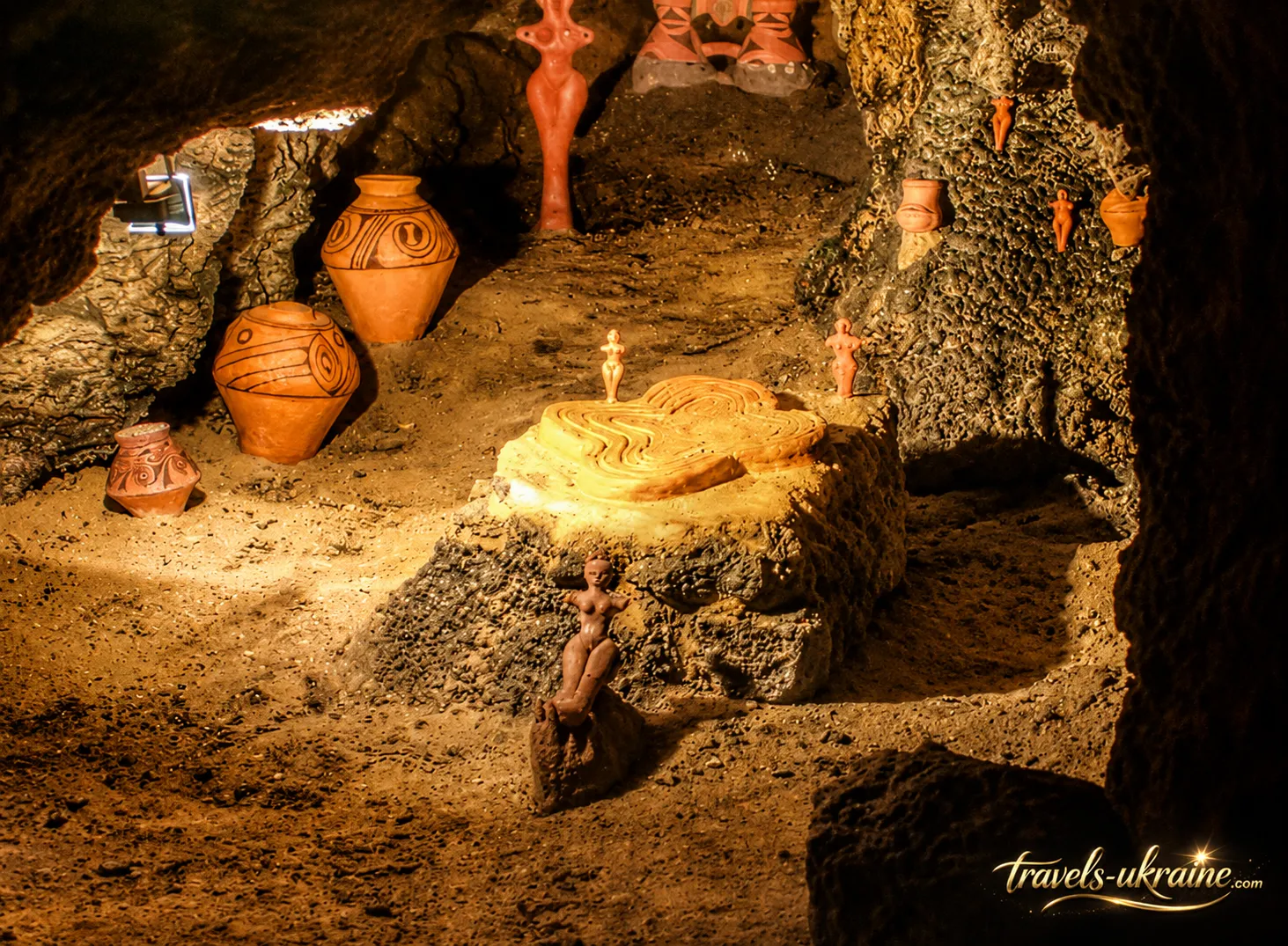
The archaeological finds from Verteba Cave are a reason in themselves to come here. In the 19th century, Verteba literally “began to speak” the language of archaeology: its underground passages yielded more than 400 complete vessels, over 35,000 clay and ceramic fragments, nearly 120 anthropomorphic figurines, around 200 bone and horn tools, and approximately 300 bone and stone artefacts. To an ordinary tourist, this sounds like some very serious museum statistics; to an archaeologist, it is almost like discovering an ancient history warehouse underground, where the Trypillians seem to have left everything except an explanatory note saying: “what was this, and what was it for?”
All these finds belong to the ancient Trypillia Culture and transform Verteba Cave into a unique place where the past can be not only seen but almost felt. Trypillia ceramics, vessels, fragments of household objects, and traces of ancient human presence help us imagine the life of a civilization that existed long before the historical states familiar to us. And the most fascinating thing is not even that these objects are thousands of years old, but that they somehow make the past remarkably human.
Because a vessel fragment is not merely a fragment. Someone once held it, used it, carried it from place to place, and cared for it; perhaps they broke it accidentally and were deeply upset. People change and eras disappear, but our feelings about breaking a beautiful piece of pottery seem eternal. Details like these make Trypillia Culture at Verteba feel closer: before us is not an abstract “ancient culture,” but the traces of real people with daily lives, worries, beliefs, and their own small dramas.
In 2023, three Trypillian ritual artefacts were discovered in the cave, dating back approximately 5,000 years. Such finds are especially valuable because they bring us closer not only to the everyday life of the Trypillians, but also to their inner world—their ideas, beliefs, rituals, and symbols. A vessel can tell us what a person ate or stored, while a tool can show how they worked; a ritual object hints at something far deeper: what they feared, what they believed in, and how they tried to make sense of the world around them.
That is why the archaeology of Verteba Cave does not feel like dry textbook science. Here, every new discovery sounds like a sentence from an ancient letter written in the language of clay, bone, stone, and silence. And although the Trypillians left us no ready-made answers, they left enough clues underground for modern people to return to Verteba again and again with one question: what else is hidden in this dark gypsum labyrinth?
Bats in Verteba Cave: The Quiet Keepers of the Underground
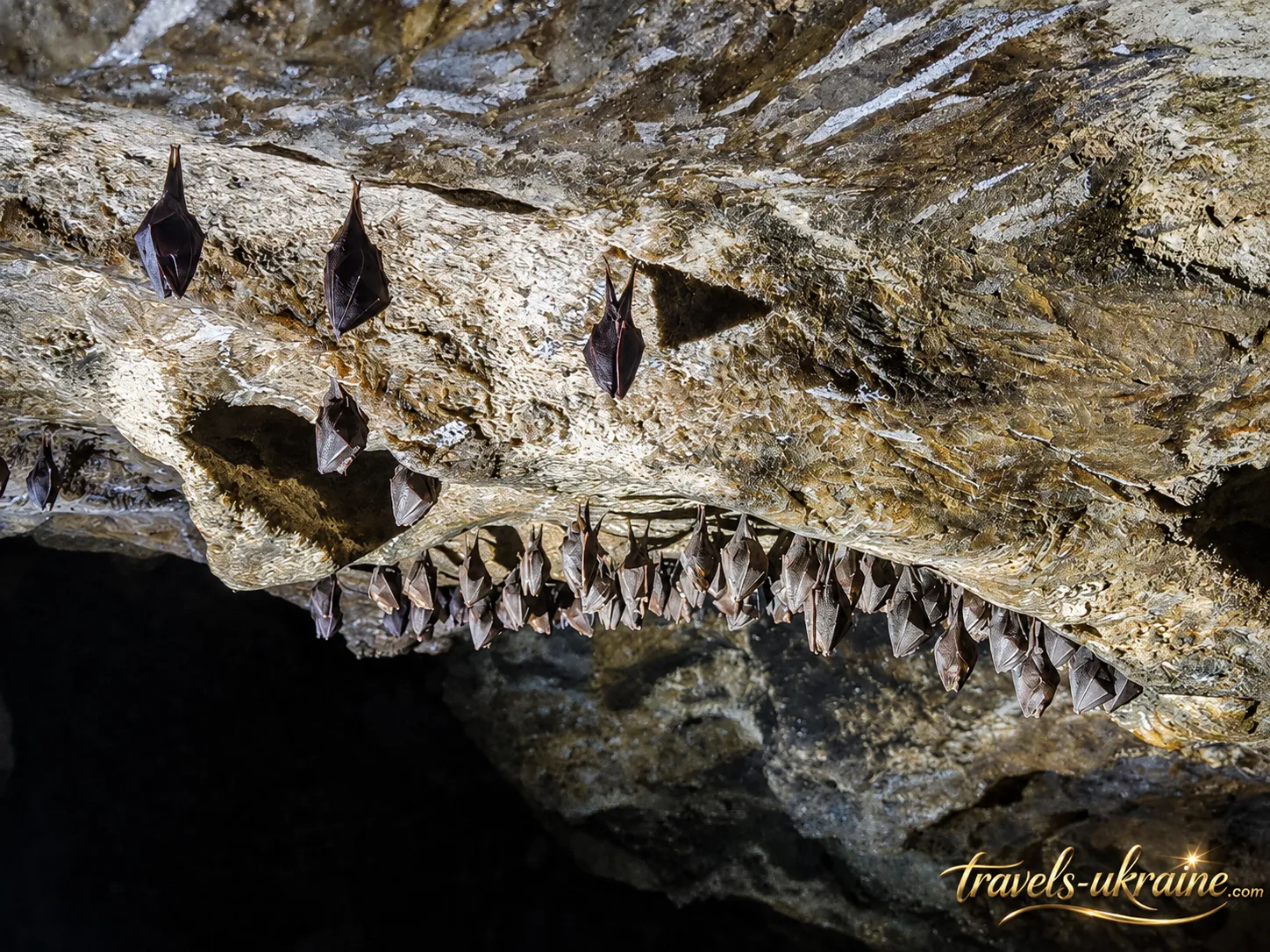
Caves often have real inhabitants of their own, and Verteba is no exception. Bats live in its underground spaces, and some species are of conservation importance and listed in the Red Data Book of Ukraine. For tourists, this is an important reminder: the cave is not only a museum or a tour route, but also a natural environment where life follows its own rules. So do not make unnecessary noise underground, touch everything within reach, or behave as though the cave has been temporarily rented for a photo shoot.
Bats do not conduct tours or check tickets, of course, but they have every right to peace and quiet. If you are lucky enough to see these nocturnal inhabitants during your visit, it is better to regard the encounter not as a frightening scene from a film, but as a meeting with nature that lived here long before tourist routes appeared. At Verteba, humans are guests, while the underground world has its ancient keepers.
Verteba During the War: The Cave That Became a Place of Refuge
One of Verteba’s most powerful chapters is connected not with legends, but with real human lives. Sources mention that during World War II, parts of the cave were used as a refuge. People escaping mortal danger hid here, and there are also accounts of underground fighters and a UPA unit headquarters staying in the cave. Facts like these change how the cave is perceived: it is no longer merely a tourist destination, but a place of fear, hope, and survival.
Imagine the underground not during a tour, with a group, flashlights, and a guide’s voice nearby, but in wartime, when darkness might not have been an attraction but the only protection. Humid air, cold, uncertainty, every sound from above—and people forced to entrust their lives to the cave. After this, Verteba feels entirely different. Its silence no longer seems like simple silence; it is as though an echo remains there of those who once waited for dawn.
A DNA Trace of Ancient History More Than 6000 Years Old
A separate and especially eloquent chapter in Verteba’s history was revealed by human bones found in its underground passages. These are not merely pottery fragments or tools, but a direct trace of people who entered this darkness long before modern cities, roads, and even the states familiar to us existed. DNA research has shown that these remains are more than 6000 years old, meaning that the cave preserves the memory of people from an era that seems almost mythical to us.
Discoveries like these change the way we perceive Verteba. It is no longer merely a gypsum cave or an underground museum of Trypillia Culture; it is a place where ancient history has a human face. Bones, ceramics, ritual objects, and traces of fires together form a quiet yet powerful story about those who lived, feared, believed, hid, performed rituals, or sought refuge in this underground world thousands of years ago.
And this is where Verteba begins to work most powerfully on the imagination. It is one thing to know that you are looking at an archaeological site, and quite another to realize that real people once stood beneath these vaults. They breathed this damp air, touched these walls, lit fires in the darkness, and left behind silent traces that, six thousand years later, have spoken to us again in the language of science.
Verteba Cave artifacts in European museums: when underground history spread across the world
Interestingly, the history of Verteba has long extended beyond the cave itself and even beyond the Ternopil region. A significant collection of artifacts found in the cave is kept at the Archaeological Museum in Kraków. This is a revealing detail: the underground world near Bilche-Zolote proved so important to science that its artifacts became part of major European museum collections.
Objects from Verteba are also kept in museums in Borshchiv, Warsaw, Vienna, Kraków, Lviv, and Ternopil. In other words, fragments of pottery, vessels, figurines, tools, and other traces of the Trypillia culture can now be found not only where they were discovered, but also in major museum collections. The cave remained in Podillia, while its story spread across different cities, like an ancient mosaic whose pieces are now preserved in different museums.
There is a special intrigue to this. A tourist descends into Verteba and sees where everything began: dark gypsum passages, underground chambers, cool air, and traces of ancient human presence. Somewhere in museum storerooms in Kraków, Warsaw, Vienna, Lviv, Ternopil, or Borshchiv, objects that once lay right here, in this silence, are being preserved. It is as if the cave tells one part of the story and the museums another. To form a complete picture, you have to connect them in your mind.
Verteba—the only Trypillia culture cave museum in Ukraine
One of Verteba’s main features is that it is not simply a gypsum cave or merely an archaeological site. Verteba is considered Ukraine’s only underground museum of the Trypillia culture, where the cave itself has become part of the museum space. Here, the exhibition is not separated from the place where the finds were made: tourists descend to the very site where traces of ancient life, pottery fragments, tools, ritual objects, and the memory of Eneolithic people were preserved for thousands of years.
In an ordinary museum, exhibits stand silently behind glass while visitors view them from a safe distance. At Verteba, everything is different: the cave itself becomes the “hall,” gypsum rock forms the “walls,” and underground passages, galleries, coolness, and semi-darkness serve as the “scenery.” This creates a unique impression: you are not merely looking at objects from the Trypillia culture—you are in a space where this history is literally embedded in the earth.
This format makes the Verteba cave museum a unique tourist destination. It combines archaeology, a natural landmark, an underground route, and the living atmosphere of ancient Podillia. You do not need to strain your imagination to feel the past here: just take a few steps underground, let your eyes take in the dark gypsum walls, and listen to the guide’s story. Verteba will do the rest—quietly, unhurriedly, but very convincingly.
What to see in Verteba Cave: an underground tour, artifacts, and labyrinths
If the question is what to see in Verteba Cave, the short answer is this: look not only with your eyes, but with your imagination. Verteba is not simply an underground corridor that tourists walk through from entrance to exit. It is a cave, an underground museum of the Trypillia culture, an archaeological site, a natural labyrinth, and a place where every turn has its own story. There is no need to search for the “most photogenic angle” from the first seconds—the mysterious labyrinth reveals itself more slowly, but more deeply.
The main activity at Verteba is an underground guided tour. It helps you understand that this is not just an ordinary cave, but a space connected with culture, archaeological discoveries, natural processes, and human stories from different eras. Without a specialist’s explanation, you may see walls, passages, and chambers, but not always grasp the essential point: why this particular cave became so important to Podillia and all of Ukraine.
The first and most important experience at Verteba is walking along the underground tourist route. Wide galleries alternate with narrower passages; the space opens up and then contracts, while the gypsum walls constantly remind you that you are not in a set, but inside a real cave. In such a place, even an ordinary “look to your right” from the guide sounds more convincing, because on the right there may be not just a wall, but a fragment of history thousands of years old.
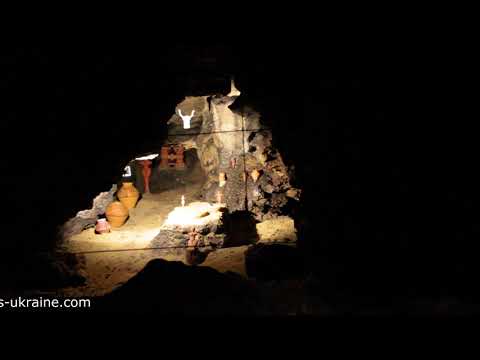
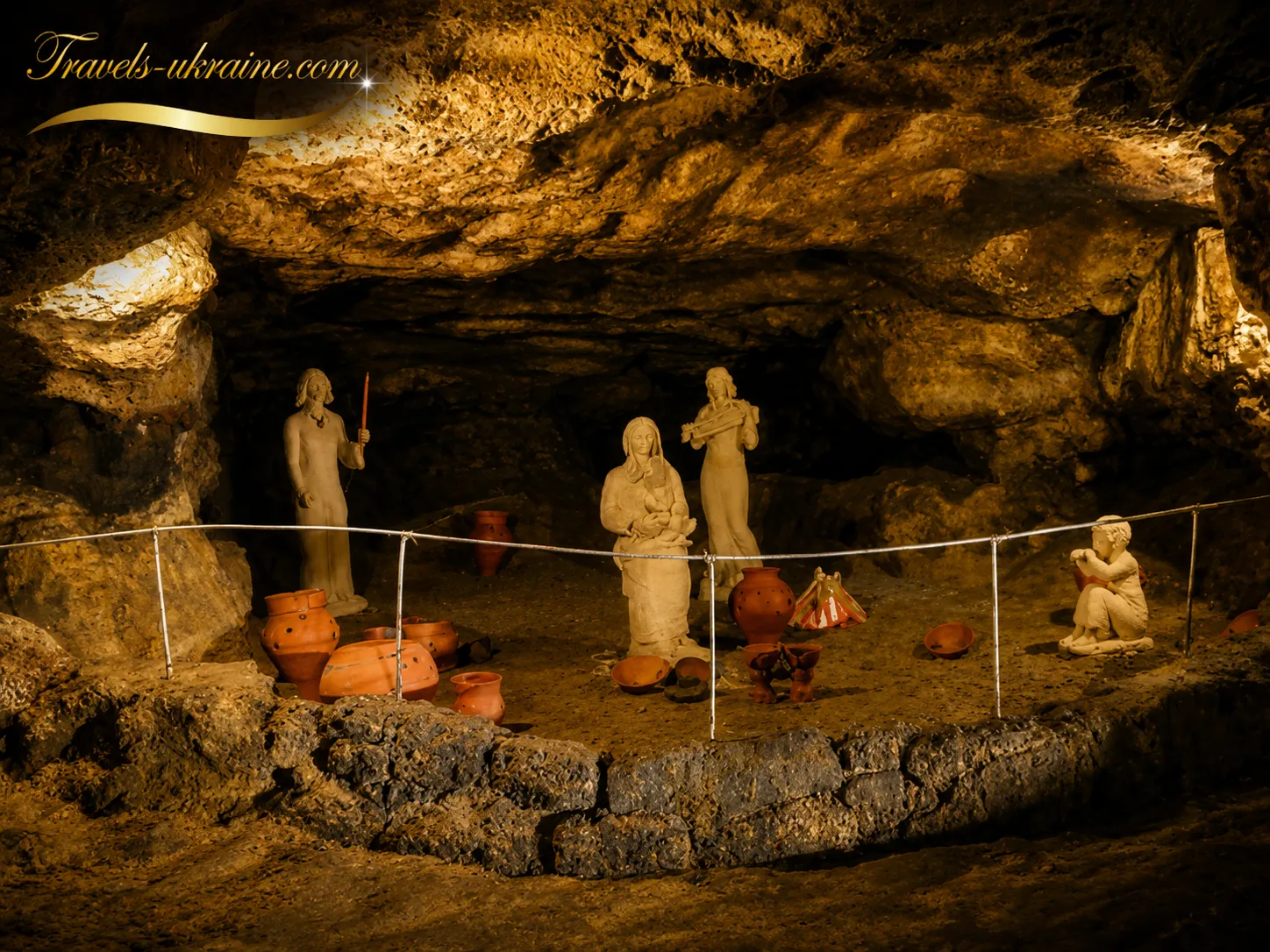
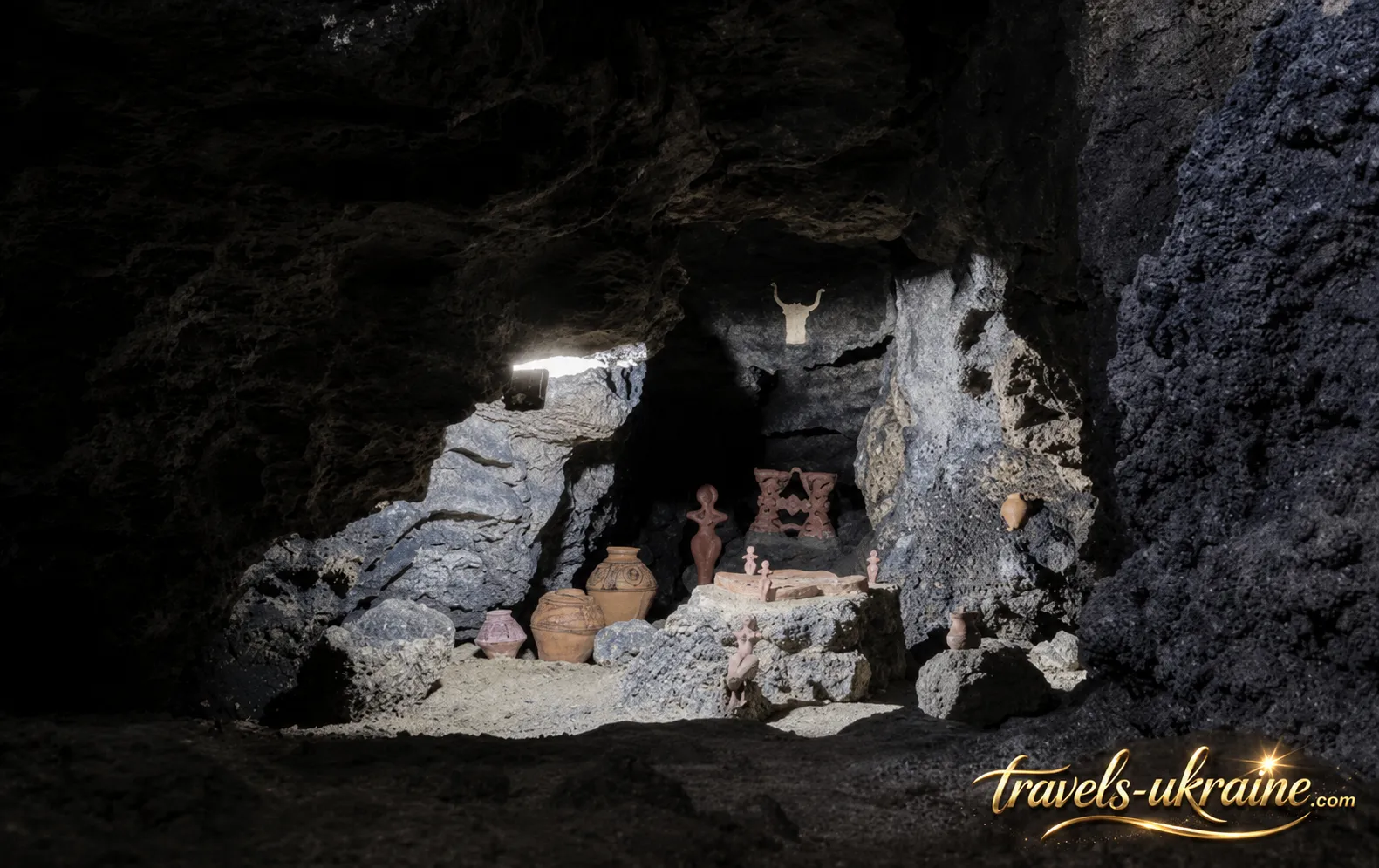
One of the main reasons to visit Verteba is its museum section dedicated to the Trypillia culture. Archaeology feels completely different here than in an ordinary exhibition hall. When you see an exhibition underground, beside gypsum passages and the places where ancient artifacts were found, the past ceases to be abstract. Pottery, vessel fragments, tools, ritual objects, and reconstructions begin to function not as separate exhibits, but as parts of one great underground story.
This is especially important for those traveling with children or teenagers. Explaining the Trypillia culture through words alone can sometimes be difficult: “Eneolithic,” “archaeological layer,” and “anthropomorphic figurine” sound serious, and to a schoolchild they may resemble spells from a textbook. But when these things are shown in a cave with darkness, cool air, and real underground passages, history suddenly becomes much closer and easier to understand.
Photography in Verteba Cave: what to capture to convey its atmosphere
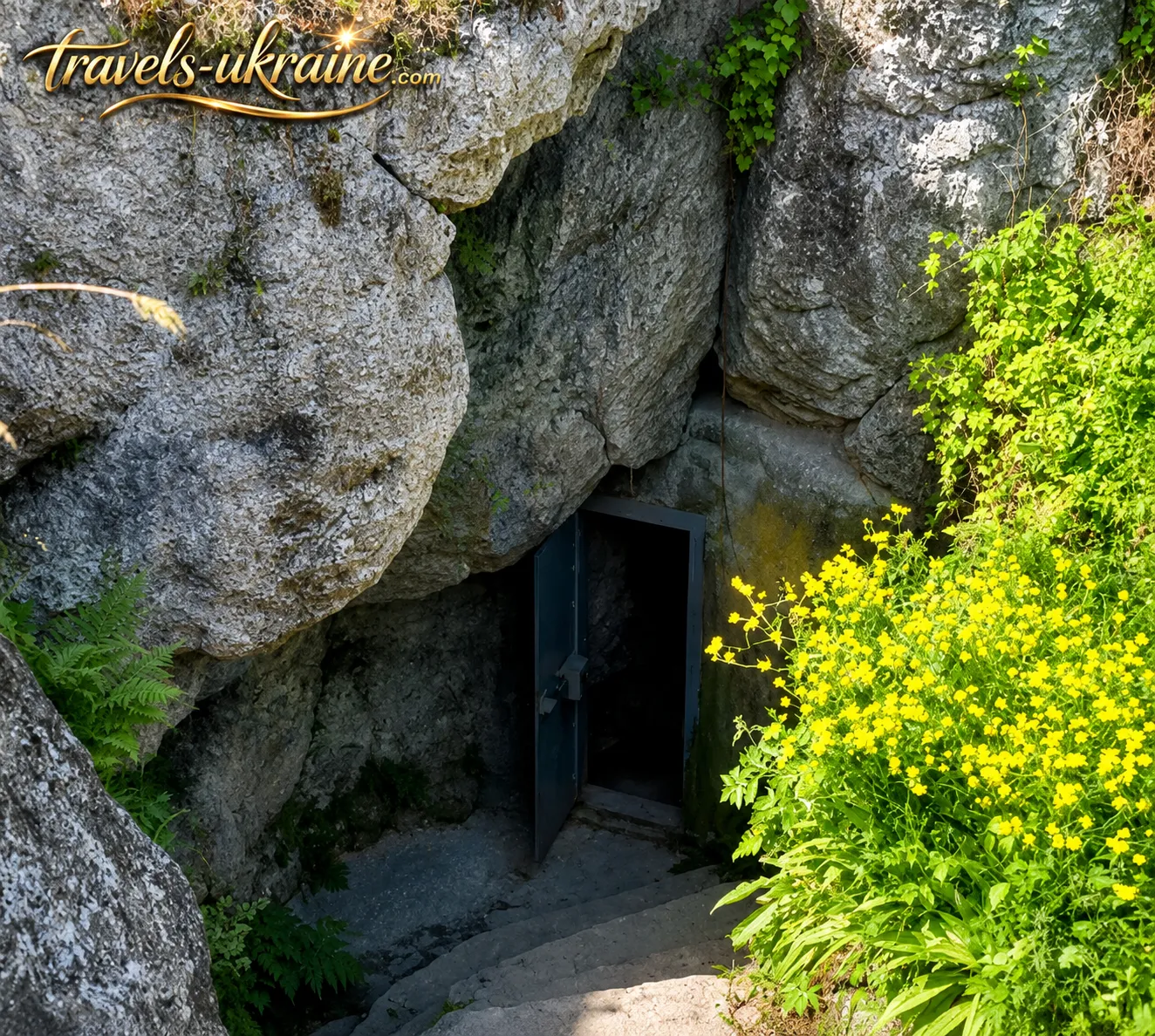
At Verteba, photograph not only the exhibits but also the atmosphere. Images of gypsum corridors, light in the semi-darkness, wall details, the cave entrance, museum elements, and the overall feeling of the underground route convey its mood particularly well. But there is an important nuance: the cave does not like fuss. If you spend the whole time looking only at your phone screen, you may miss what matters most—the feeling of space, silence, and history’s presence.
The best photograph from Verteba is not necessarily the brightest or sharpest. Sometimes it is a frame showing only part of a corridor, a shadow on the wall, or a small fragment of the exhibition. The cave is not really the kind of place that poses for tourists. It is more likely to stand there in the darkness and think, “I’ve been here for six thousand years, so hurry up before the tour moves on.”
What to do at Verteba with children: turn the tour into an adventure
For children, Verteba Cave can become a real adventure if it is presented in the right way. Do not begin with long dates and complicated terms. It is better to explain that they are entering an underground labyrinth where ancient people once lived, and where vessels, figurines, bones, hearths, and mysterious objects were found. For a child’s imagination, that is already enough to turn the tour from “just another museum” into a journey into the ancient world.
Before entering, it is a good idea to agree on a few simple rules: do not run, shout, wander away from the group, or touch the exhibits, and listen to the guide. You can give children a small task: find the most interesting shape on a wall, remember one fact about the Trypillians, or explain after the tour what surprised them most. This turns the visit from passive viewing into active participation.
To make a tour of Verteba Cave truly memorable, do not rush through the route on autopilot. Listen to the story, notice the details, ask questions, and allow yourself to pause from time to time. A cave is not a place for racing through. It is more like an old book: if you turn the pages too quickly, the plot is still there, but the most interesting parts slip away.
What to visit near Verteba Cave
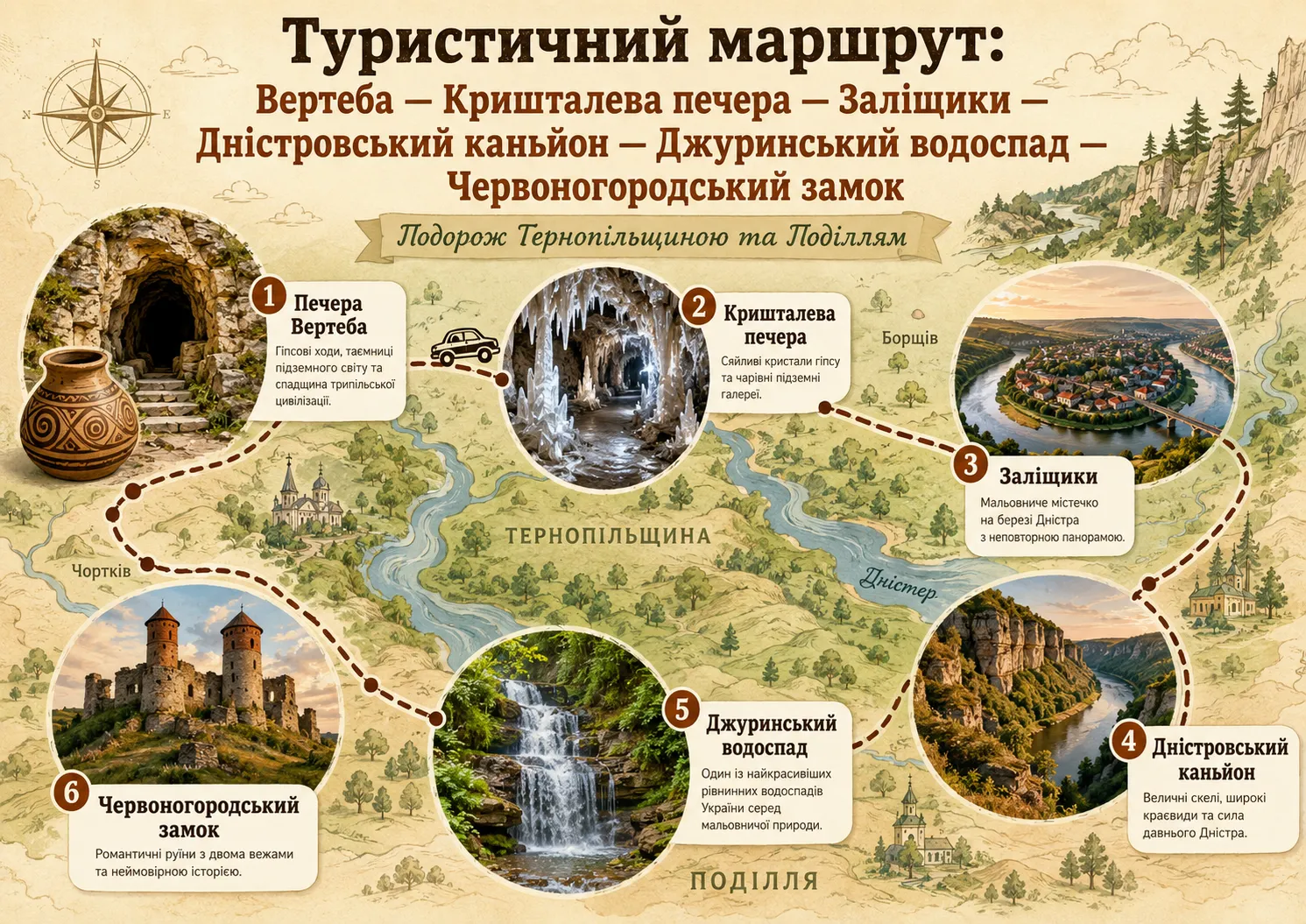
Verteba Cave in the Ternopil region is an excellent destination for a separate excursion, but it reveals itself even better as part of a broader travel itinerary. The Borshchiv area, Podillia, and the Dniester region are so densely packed with interesting places that after leaving the cave, your hand reaches not for the “home” button but for the map: where else can we turn? And that is the right instinct, because near Verteba there are caves, canyons, waterfalls, castle ruins, and views of the Dniester.
The most convenient approach is to make the cave museum the central point of your route and add several other destinations around it, depending on your time, the weather, and your mood. If you have only half a day, choose one or two nearby attractions. If you are planning a full-day or weekend trip, you can create a packed itinerary: Verteba, the Crystal Cave, Zalishchyky, the Dniester Canyon, Dzhuryn Waterfall, and Chervonohorod Castle. Podillia is generous in this respect—just keep turning from one interesting road onto another.
Crystal Cave in Kryvche: another gem of the Ternopil region
One of the most logical places to combine with Verteba is the Crystal Cave in the village of Kryvche. It is one of the best-known caves in the Ternopil region, equipped for tourist excursions. If Verteba is defined above all by its archaeology and connection with the Trypillia culture, Crystal Cave impresses with the natural beauty of its gypsum crystals, underground chambers, and classic cave-exploration atmosphere.
Together, these two destinations make an excellent cave route through Podillia. At Verteba, you immerse yourself in the history of people who came underground thousands of years ago; at Crystal Cave, you feel more of the geological beauty and natural imagination of gypsum labyrinths. They are like two different chapters of one underground book: one about archaeology, the other about nature. Both are worth reading.
Zalishchyky and the Dniester Canyon: views that make you want to stop
After Verteba’s underground world, the open spaces of the Dniester make an especially powerful impression. Zalishchyky is one of the best-known towns on the Dniester, loved by tourists for its panoramas, river bends, and distinctive atmosphere of southern Podillia. It is an ideal place to pause after the cave: breathe the fresh air, look out over the canyon, have a coffee if you are lucky enough to find a spot, and return from the darkness underground to a broad horizon.
The Dniester Canyon is not a single point on the map, but an entire natural area of steep banks, cliffs, viewpoints, villages, trails, and river landscapes. If Verteba shows that the Ternopil region has depth underground, the canyon reminds you that its surface is just as serious about beauty. After the cave corridors, a panorama of the Dniester feels almost like a gulp of open sky.
Dzhuryn Waterfall and Chervonohorod Castle: water, ruins, and a touch of Podillian drama
Another excellent destination to visit after Verteba is Dzhuryn Waterfall and the ruins of Chervonohorod Castle near the village of Nyrkiv. It is one of the most popular tourist sites, attracting visitors with the sound of water, walks, photographs, and the feeling of a wilder, more romantic Podillia. After the quiet cave, the waterfall and ruins feel especially vivid: Verteba whispers, while Dzhuryn speaks at full volume.
Verteba Cave works wonderfully as the starting point for a major route through the Ternopil region. It establishes depth—in both the literal and figurative senses. Around that depth, it is easy to build a journey of landscapes, waterfalls, castles, towns, and unexpected stops that are often remembered no less than the main destination.
Rules for visiting Verteba Cave: etiquette in an underground museum
Verteba has survived thousands of years, but that does not mean it has to survive every tourist with a loud phone, a desire to touch everything, and an urge to write “I was here” on a plaster wall. The best behavior in a cave is calm, attentive, and respectful. You are entering not simply an underground space, but a place where nature and history have been at work far longer than any tourist season.
You should not enter on your own “around that bend,” fall behind the group, or look for your own way through the underground passages. The cave has a labyrinthine structure, so the tourist route exists for a reason. It helps visitors see the most interesting features without unnecessary risk to the group or the site itself.
At Verteba, you will naturally want to examine everything up close: the plaster walls, corridors, museum displays, archaeological artifacts, and natural formations. But “examining” does not mean “testing it with your hand.” Something that took thousands of years to form or was preserved underground for centuries should not suffer from an accidental touch, scratch, or the desire to take “a little stone as a souvenir.”
This is especially important to explain to children before the tour: do not run, shout, touch the exhibits, wander away from the group, or ignore the guide. The best souvenir from Verteba is a memory, a few photos, and a new interest in history—not a piece of plaster in your pocket.
The rules at Verteba are not intended to restrict tourists, but to preserve this unique place. If you behave thoughtfully, the cave rewards you in the best possible way: it lets you feel not like an accidental visitor, but like a quiet guest in a vast underground history.
Safety in Verteba Cave: Tips Before Your Underground Tour
Verteba Cave near Zalishchyky is not an extreme caving route, but it is still a real underground environment, not a park walkway. It is cool and humid here, with uneven surfaces, semi-darkness, narrow passages, and a natural cave microclimate. So safety begins not with a hero’s helmet from an adventure film, but with simple things: comfortable shoes, warm clothing, attentiveness, and a sensible attitude toward the guide’s recommendations.
It is best to think of a cave tour as a calm but responsible underground journey. There is no need to fear every step, but you should not be careless either. The cave has its own rhythm: people do not run, push one another, fall behind the group, or try to prove that “I can figure this out without a guide.” Underground, such confidence may look brave, but it is not particularly smart.
Even if it is hot outside, Verteba remains cool, so you should bring a sweater, light jacket, or fleece for the tour. Clothing should be comfortable and suitable for getting a little dirty. A cave is not a catwalk, although the photos you take there can be wonderfully atmospheric. The important thing is to remember Verteba afterward—not your freezing hands or slippery shoes.
Choose closed shoes with nonslip soles. Sandals, flip-flops, heels, or brand-new white sneakers are not the best companions for plaster passages and damp surfaces. Hiking sneakers, trekking shoes, or any comfortable pair that lets you walk confidently along an uneven route will work well in the cave.
Who Should Take Extra Care During an Underground Tour
For most tourists, Verteba’s underground labyrinths are manageable, but people with severe claustrophobia, a pronounced fear of darkness, serious musculoskeletal problems, or breathing difficulties should assess their abilities in advance. If you have any doubts, clarify the route conditions before your trip and do not hesitate to ask the organizers direct questions.
You can visit the cave with children, but it is important to prepare them psychologically. Explain that it will be cool and somewhat dark underground, that they need to listen to the guide, and that they must stay with the adults. If a child is afraid of the dark, do not turn it into a “test of character.” Verteba should leave them with exciting memories, not a story about how the little one heroically endured a cave and now dislikes archaeology.
The most important safety rule is very simple: do not rush. Verteba does not like hustle and bustle. It is better to arrive a little early, meet the guide calmly, dress for the temperature inside the cave, and follow the route attentively. Then the underground tour will leave you with neither fatigue nor discomfort, but with exactly what brings people here: a sense of mystery, ancient history, and a living connection with Trypillia culture.
Frequently Asked Questions About Verteba Cave
Where is Verteba Cave located?
Verteba Cave is located in Ternopil Oblast, near the village of Bilche-Zolote, within the historic Borshchiv region. This is the southern part of Ternopil Oblast, the Podillia and Dniester area, known for its gypsum caves, the Dniester Canyon, old towns, and picturesque nature routes.
How do you get to Verteba Cave?
The most convenient way to reach Verteba Cave is by car or as part of an organized tour group. Before setting out, plan a route to Bilche-Zolote, confirm the meeting point with the guide, and check the road conditions. If you are traveling independently, it is best to have not only a navigation app but also verified landmarks, because navigation in rural areas sometimes has a sense of humor of its own.
Do you need to make arrangements in advance for a tour of Verteba Cave?
Yes, before your trip, it is advisable to confirm the possibility of visiting, opening hours, ticket prices, and guide availability in advance. Verteba Cave is not an ordinary city museum with a constant stream of visitors, but an underground attraction where it is better to settle organizational details ahead of time. This will help you avoid a situation in which the cave is there, but the tour exists only in your plans.
Why is Verteba called a museum of Trypillia culture?
Verteba is called a museum of Trypillia culture because numerous archaeological artifacts have been found in its underground passages: pottery, vessel fragments, tools, anthropomorphic figurines, human bones, and traces of ancient human activity. What makes Verteba special is that its museum theme is connected not only with the exhibits but also with the cave space itself, where these traces of ancient history were discovered.
Can you visit Verteba Cave with children?
Yes, Verteba Cave can be fascinating for children, especially if the tour is presented as a journey into an underground museum and the world of the Trypillians. Before entering, explain the rules: do not run, shout, touch the exhibits or walls, wander away from the group, or ignore the guide. For very young children or those who are especially afraid of the dark, it is best to assess in advance whether such a tour will be comfortable for them.
What is the temperature in Verteba Cave, and how should you dress?
It is cool and humid in the cave even in summer, so bring a sweater, fleece, or light jacket for the tour. Choose closed, comfortable, nonslip shoes. Light beachwear, flip-flops, and high-heeled shoes are unsuitable for the cave: Verteba is an underground route, not a stroll along the waterfront.
Can you take photos in Verteba Cave?
Photography in the cave must comply with the tour rules. Before taking pictures, it is best to confirm whether flash photography is allowed, which exhibits may be photographed, and where you should avoid holding up the group. Verteba offers wonderful atmospheric photo opportunities, but the key is not to experience the entire tour through your phone screen and miss the real feeling of the underground world.
How much time do you need to visit Verteba Cave?
You should usually allow about an hour for the underground tour, but for a comfortable visit it is better to leave extra time. The journey, organizational details, waiting for the group, photos, and a short break after exiting may add another 30–60 minutes. If you plan to combine Verteba with Kryvche Crystal Cave, Zalishchyky, or the Dniester Canyon, plan your route without excessive haste.
What can you visit near Verteba Cave?
Near Verteba Cave, it is worth visiting Crystal Cave in Kryvche, Zalishchyky, the Dniester Canyon, Dzhuryn Waterfall, the ruins of Chervonohrad Castle, Borshchiv, or Chortkiv. For a single day, it is better to choose two or three locations; for a full trip around Podillia, plan a weekend itinerary.
When is the best time to visit Verteba Cave?
Verteba can be visited at different times of year because a steady cool temperature is maintained inside the cave. In summer, the underground offers welcome relief from the heat; in spring and autumn, the trip combines beautifully with the landscapes of Podillia; and in winter, you should plan the journey and return time more carefully. In any season, the main thing is to confirm the tour and visiting conditions in advance.
Verteba Cave: A Journey into the Underground World of Trypillia Culture
Verteba, the first underground museum of Trypillia culture, is more than just another interesting attraction in Ternopil Oblast. It is a place where nature, archaeology, ancient history, human lives, and a silence that seems almost alive meet beneath the earth. Here, gypsum passages and underground galleries become not merely a natural formation, but a stage where people lived their lives thousands of years ago.
Verteba is special because it does not try to impress visitors with spectacle. It works differently: gradually, quietly, almost imperceptibly. First you see the cave entrance, then feel the cool air, hear the guide’s voice, look at the gypsum walls, corridors, and exhibits, recall the vessels, figurines, human bones, and ritual artifacts found here—and suddenly realize that this underground journey has already become something more than an ordinary excursion.
The Verteba Cave Museum is well worth the attention of those who enjoy meaningful travel. Here, you can not only see an unusual place in Ternopil Oblast, but also catch a glimpse of one of the oldest chapters in the history of Podillia. It is an underground world, an archaeological site, a natural labyrinth, and, at the same time, a deeply atmospheric destination where history comes alive.
That is why it is better not to treat Verteba as a brief stop “along the way.” It deserves an unhurried visit, an attentive tour, and a little time after you return to the surface. After leaving the cave, you do not want to rush on immediately; you want to take in what you have seen. The underground silence is still echoing in your mind, while your imagination fills in the people who once entered these same passages carrying fire, vessels, fears, faith, and hope.
The main impression Verteba leaves is a sense of the past being present. Not museum-like, distant, and cold, but almost human. Here, history does not stand behind glass; it seems to hide in the walls, corridors, silence, and darkness. And the more attentively you listen to the story of the cave, the more clearly you understand: it preserves not only artifacts, but also the memory of the people who lived, believed, feared, worked, and left traces of their world underground.
If you are looking for an interesting destination that combines nature, history, archaeology, and the atmosphere of a genuine adventure, Verteba is definitely worth your attention. This is not a place you simply “see and forget.” It is a cave that stays with you for a long time—a dark corridor, a gypsum wall, a Trypillia ornament, and a quiet question: how many more mysteries remain beneath the earth?

No Comment
You can post first response comment.