
 English
 Українська
 Български
 Hrvatski
 Čeština
 Dansk
Dansk Nederlands
 Eesti
Eesti Suomi
Suomi Français
 Deutsch
 Ελληνικα
 Magyar
 Íslenska
 Italiano
 Latviešu
 Lietuvos
 Polski
 Português
 Română
 Русский
 Српски
 Slovenčina
 Slovenščina
 Español
 Svenska
 Türkçe
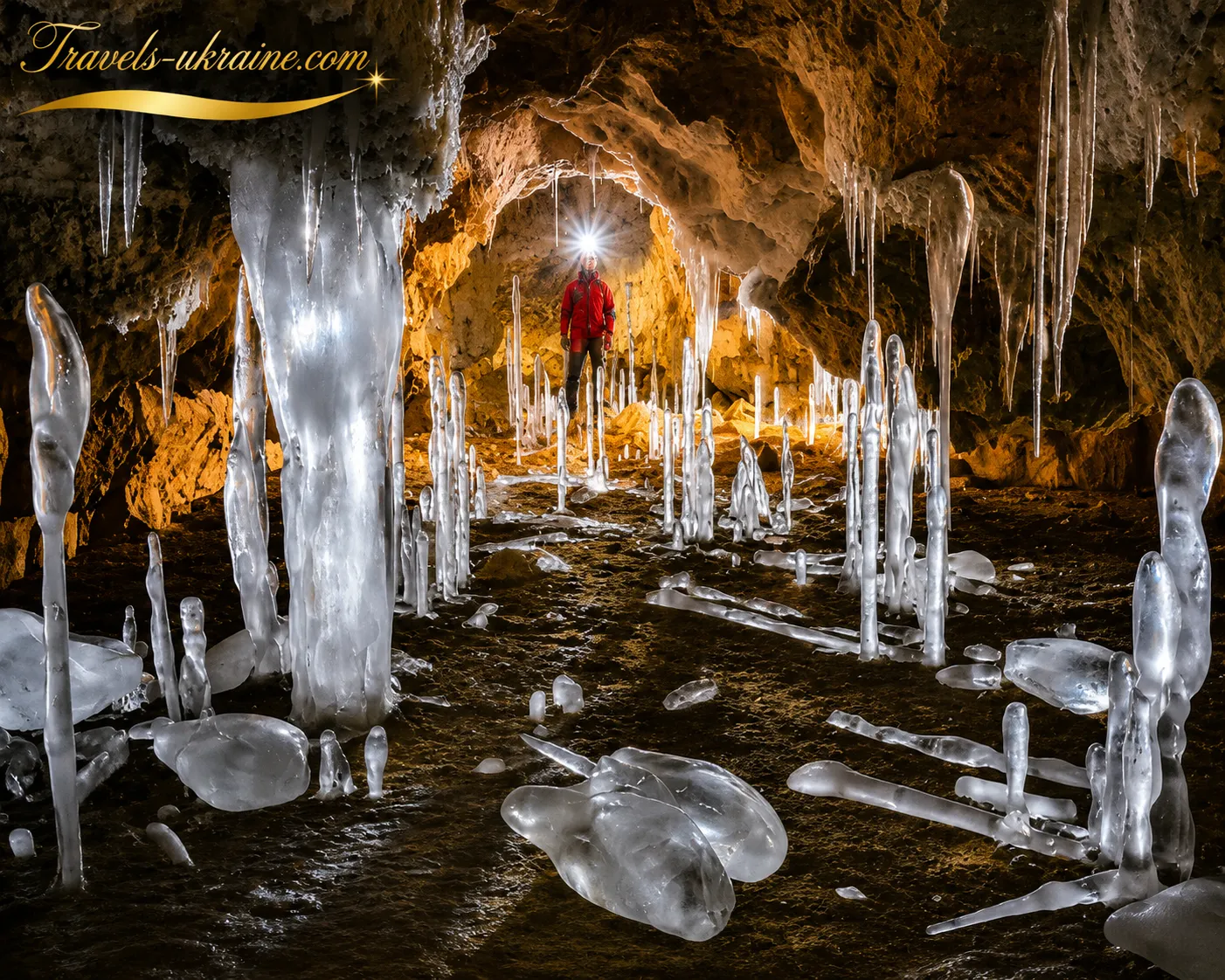
Imagine this: you arrive in the quiet village of Kryvche, surrounded by Podolian landscapes, an ordinary road, and the peaceful Ternopil region, while somewhere nearby underground, an entirely different world is hiding. No advertising, no flashy signs, no grandstanding. Just a cave you enter with curiosity and leave filled with wonder—and with a slight urge to say, “Can we do it again, only more slowly?” That is exactly how Crystal Cave works: it does not shout about its beauty; it quietly leads you into the darkness and suddenly shows you that darkness can be beautiful, too.
Crystal Cave in the village of Kryvche is one of Ukraine’s best-known caves and a true underground gem of the Ternopil region. This is not one of those tourist attractions that looks good only in photographs. Here, it is the opposite: photos convey the shapes, but not the feeling. They cannot convey how the sound of your footsteps changes in the underground corridors, how the cool air touches your face, or how the cave’s crystalline walls begin to sparkle in the lamplight—as if someone very patient had decorated this labyrinth for thousands of years and never allowed anyone to hurry.
This underground fairy tale is more than just an interesting natural landmark. It is a karst gypsum cave where nature has done a better job than any interior designer. There are no marble halls, chandeliers, or golden railings, but there are crystal formations, cave chambers, underground passages, silence, and that distinctive chill after which a jacket seems not unnecessary but like a stroke of genius. And if you thought a cave was simply “an ordinary hollow in a rock,” the natural landmark in Kryvche will quickly and very convincingly explain that you have been underestimating the underground.
Why the gypsum cave in the Ternopil region instantly captivates travelers
Some tourist destinations require a long explanation: why they matter, what makes them special, and what exactly to look for there. Then there is Crystal Cave, where everything becomes clear after the first few meters of the route. The familiar sky disappears overhead, a mysterious labyrinth beneath Kryvche begins ahead, and a childlike curiosity awakens inside you—one that adults often try to pretend is very serious. Even the most reserved traveler will think at least once: “Wow, is this really in Ukraine?” Yes, it is. And that is precisely why Crystal Cave is so well suited to a weekend getaway.
This place has a special kind of magic: it does not frighten you, but it keeps you intrigued. It does not exhaust you, but it leaves you with a sense of adventure. It does not require you to be a speleologist, but it lets you experience the flavor of genuine cave tourism. That is why a tour of Crystal Cave appeals to children and adults alike, to nature-travel enthusiasts and to those who usually “just came along for the company” but end up being the first to tell everyone they know that they saw a real underground wonder.
The underground world of Kryvche—a place where stone has a memory of its own
The cave space in Kryvche is not a set or an attraction created for a quick selfie. It is a stone history of Podolia, recorded in gypsum, crystals, narrow passages, and natural forms. It is easy to imagine how water, time, and silence shaped this underground route over centuries, without hurrying or asking about our schedules. Perhaps that is why the bustle of the city disappears so quickly in Crystal Cave: the usual rhythm of the day seems to remain by the entrance, while your mind catches an entirely different wavelength—calmer, deeper, and slightly mysterious.
In this article, we will explore the entire route carefully and without tourist “fluff”: we will recall its history, examine its natural features, find out what to see in Crystal Cave, how to prepare for an underground tour, what to bring, where to go nearby, and why this natural landmark of national importance has long deserved a place on the list of the Ternopil region’s most interesting destinations. A warning in advance: after this journey, the word “cave” will no longer sound like a dark underground space, but like an invitation to adventure.
The History of Crystal Cave in Kryvche: From an Ancient Reference to a Tourist Gem
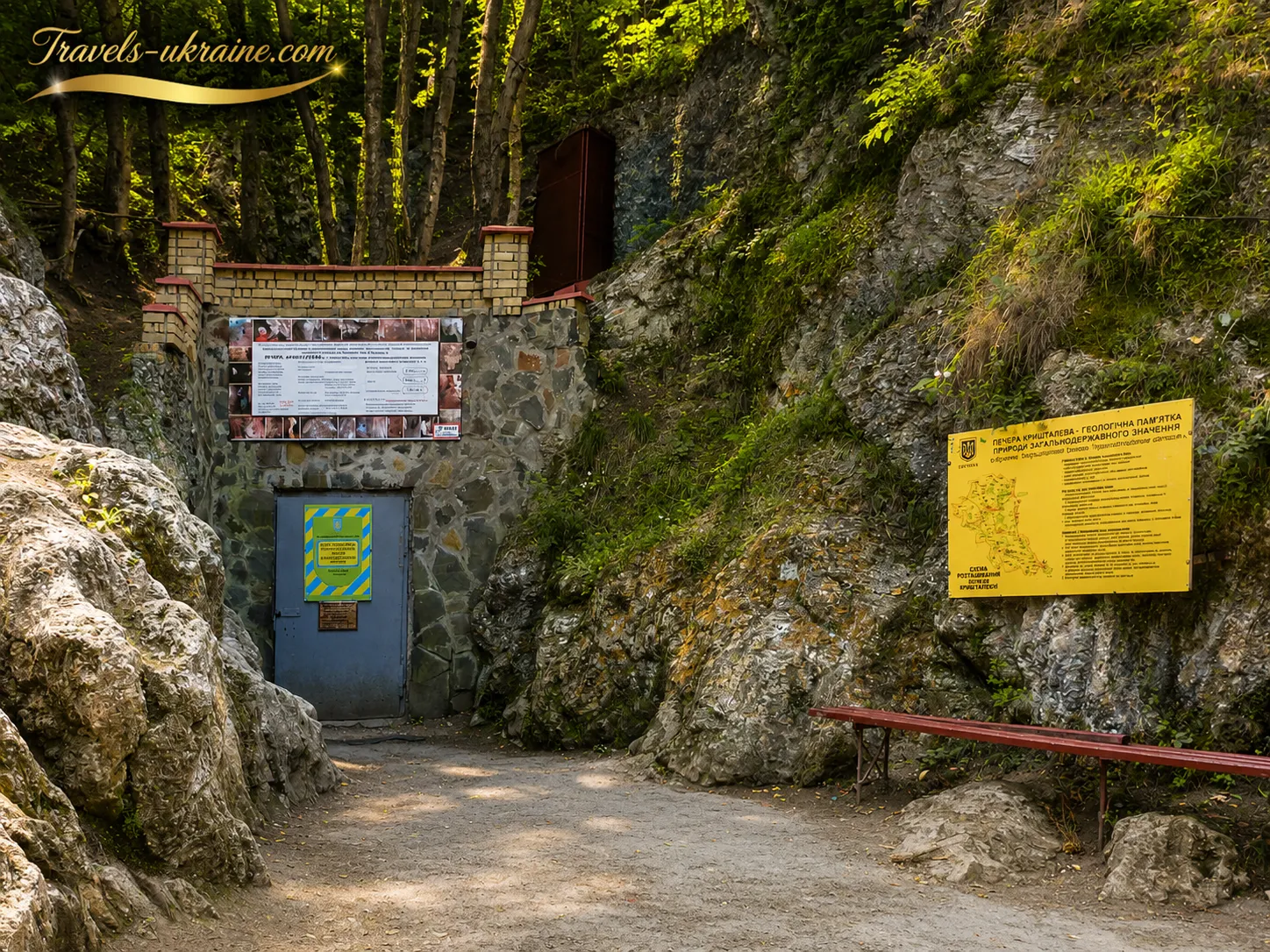
The history of Crystal Cave does not begin with a ticket office, a tour schedule, or a sign by the entrance. It began much earlier—in a time when underground passages already existed but remained almost invisible to people. Locals may have known about sinkholes, cold openings in the ground, strange legends, and mysterious places near Kryvche, but the cave’s true fame came gradually. And, as often happens with natural wonders, people discovered it more than once: first for science, then for researchers, and eventually for tourists who come here today in search of an underground adventure.
The person commonly believed to have brought Crystal Cave out of the underground silence and onto the pages of history was the Jesuit monk Gabriel Zhanzhynskyi. In 1721, he mentioned the cave for the first time in his book «Natural History of the Kingdom of Poland»—and, one might say, gave it its first “advertisement,” long before travel blogs, navigation apps, and enthusiastic online reviews. The cave, however, was in no hurry to become famous: it continued to lie quietly beneath Kryvche, decorating its walls with gypsum crystals and patiently waiting for travelers who would one day arrive with flashlights, warm jackets, and wide eyes of amazement.
In other words, when most modern roads, hotels, and tourist routes had not even entered travelers’ dreams, this cave—where stone has a memory of its own—was already attracting the attention of people interested in nature, geography, and unusual phenomena. You could say that the cave patiently waited for its time: it did not rush to become popular, launch advertising campaigns, or ask for an online rating. It simply existed—deep, cold, crystalline, and mysterious.
Kryvche Cave and Its Second Discovery: When the Underground Spoke Again
Sources often mention that Kryvche Cave was rediscovered at the beginning of the XX th century, particularly in 1908. It was a highly symbolic moment: the cave seemed to emerge from the shadows once again, although in reality it had remained underground all along—calm, silent, and slightly amused by human forgetfulness. Imagine the situation: beneath your feet lies an entire mysterious labyrinth, with underground corridors, mineral formations, and cave chambers, while on the surface people go about their ordinary lives, not always suspecting what a wonder is hidden nearby.
It is often through such rediscoveries that the true history of tourist destinations begins. First come researchers, then speleologists, followed by descriptions, maps, measurements, and routes. In this way, the cave in Kryvche gradually ceased to be merely a local mystery and became an important natural attraction of Podolia. To scientists, it is fascinating as a karst gypsum cave; to travelers, it is an atmospheric underground world; and to the Ternopil region, it is one of the area’s best-known natural landmarks.
Exploring Crystal Cave: The Role of Speleologists and Underground Routes
The research history of Crystal Cave continued throughout the XIX century and did not stop at the beginning of the XX century, but the underground was not subjected to a truly “serious interrogation” until 1961–1971. It was then that speleologists thoroughly surveyed the passages, described the cave chambers, and carried out mapping. And this was no stroll with a flashlight in the spirit of “let’s see what’s around the bend,” but painstaking, meticulous work: meter by meter, corridor by corridor, silence by silence. Thanks to these studies, Crystal Cave ceased to be merely a mysterious underground world and acquired its own map—a kind of labyrinth passport, without which tourists would have had to rely solely on intuition, and intuition in a cave, let’s be honest, is not always the best guide.
Thus, the exploration of the cave in Kryvche is a separate story of patience, attentiveness, and love for the underground world. Speleologists did not simply “go in to see what was inside.” Their work involved measuring passages, preparing descriptions and diagrams, studying the condition of the rocks, assessing the safety of the routes, and examining natural features. Thanks to such research, we now know that this mysterious underground site has an extensive passage system, with an explored length reaching tens of kilometers. Tourists walk only part of the route, but that section makes it possible to safely see the highlights: the underground passages of Kryvche, the cave’s crystalline walls, the gypsum labyrinths of Podolia, and that special silence you cannot buy at any souvenir kiosk.
In the 60s, the cave became even more accessible to tourists. After the entrance was equipped and guided tours were organized, Crystal Cave in the Ternopil region became an accessible underground destination that could be visited not only with caving equipment but also with ordinary curiosity. This was an important moment in the cave’s history: from a natural mystery, it evolved into a place that introduces a broad audience to cave tourism. And, frankly, it did so very successfully—with no unnecessary grandiosity, but with a powerful “wow, I didn’t expect that” effect.
How the Crystal Chambers of Kryvche Became a Popular Tourist Destination
Crystal Cave’s popularity is easy to explain: it combines beauty, accessibility, and a genuine sense of adventure. Not every cave can claim to be interesting to geologists, convenient for tours, and exciting for children, who are usually quite honest about whether they are bored. In Kryvche, they are not bored. Adults are not either, by the way—although they may pretend to be listening attentively to the guide rather than examining the walls with the same sparkle in their eyes as schoolchildren on their first big trip.
Crystal Cave in the Ternopil region is more than just a point on the map. It is a tourist gem of Podolia, part of the itinerary for those who want to see not only castles, canyons, and historic towns, but also Ukraine’s underground side. It is often included in trips around the Ternopil region and combined with visits to the Dniester Canyon, castles, and natural landmarks. This offers a major advantage: a cave tour can be either the main purpose of a getaway or a memorable part of a larger travel itinerary.
- 1721: one of the earliest known references to the cave in Kryvche.
- 1908: a rediscovery after which the site gradually returned to researchers’ attention.
- 1960s: active research, improvements to the entrance, and the start of organized tours.
- Today: Crystal Cave in Kryvche is an equipped cave for tourists and one of Podolia’s best-known caves.
The history of this cave is valuable for more than its dates. It shows how a natural landmark gradually becomes part of a region’s cultural memory. At first, it was a cave with gypsum crystals known to few people. Then it became an object of research. Later, an excursion cave. And now it is a place people visit for experiences, knowledge, family recreation, and that very feeling that Ukraine has far more remarkable destinations than we usually imagine.
The Natural Features of Crystal Cave, Where Stone Knows How to Surprise
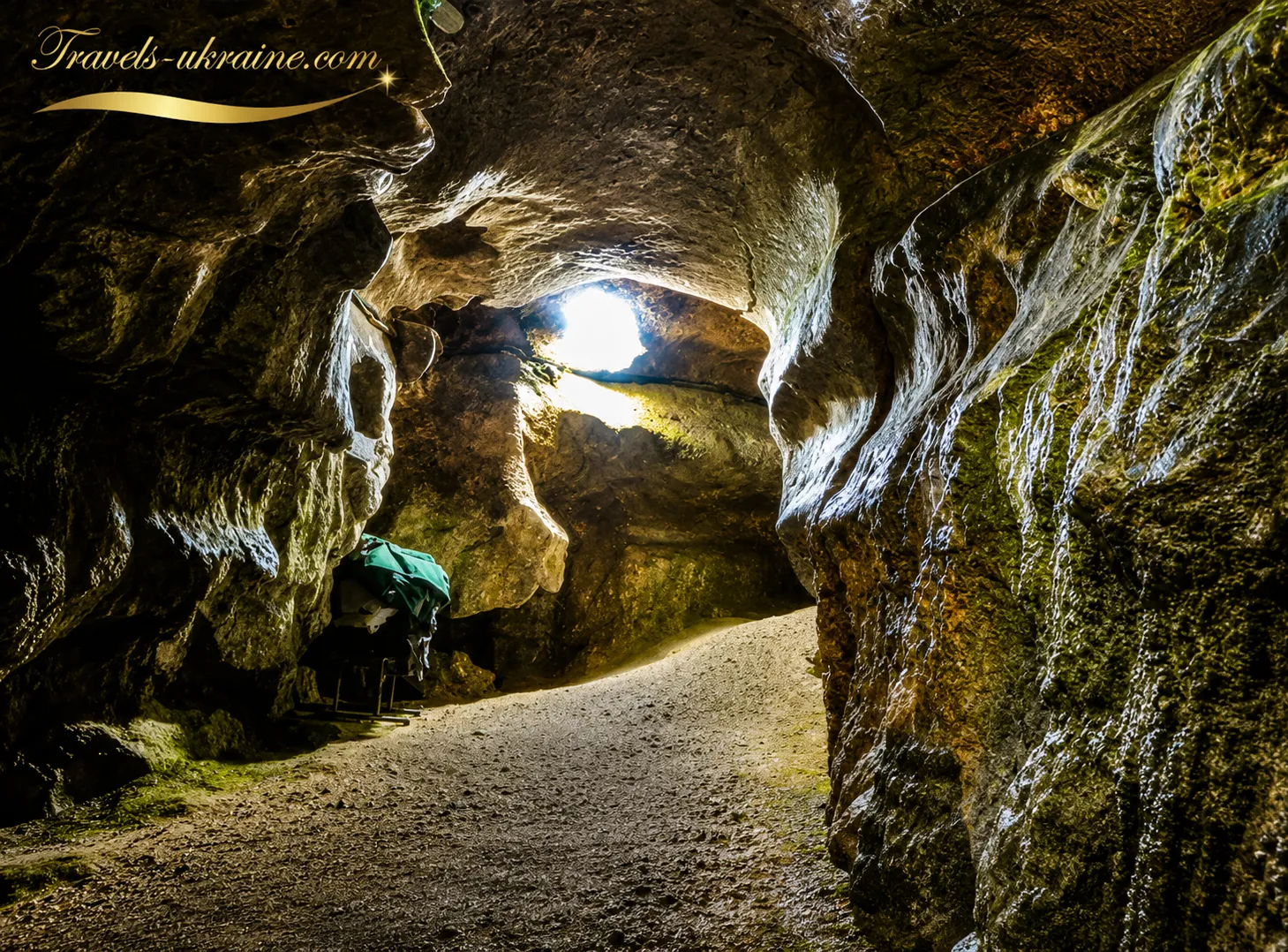
Crystal Cave impresses not only tourists, who continue talking about its gypsum crystals, cool air, and underground corridors long after the tour. Its natural value has official recognition as well: by Resolution No. 1180-r of the Council of Ministers of the Ukrainian SSR dated August 7, 1963, the cave was granted the status of a geological natural landmark of national importance. In other words, this is not simply a place that is beautiful, dark, and makes you want to stay a little closer to the guide, but a natural site important to the whole of Ukraine.
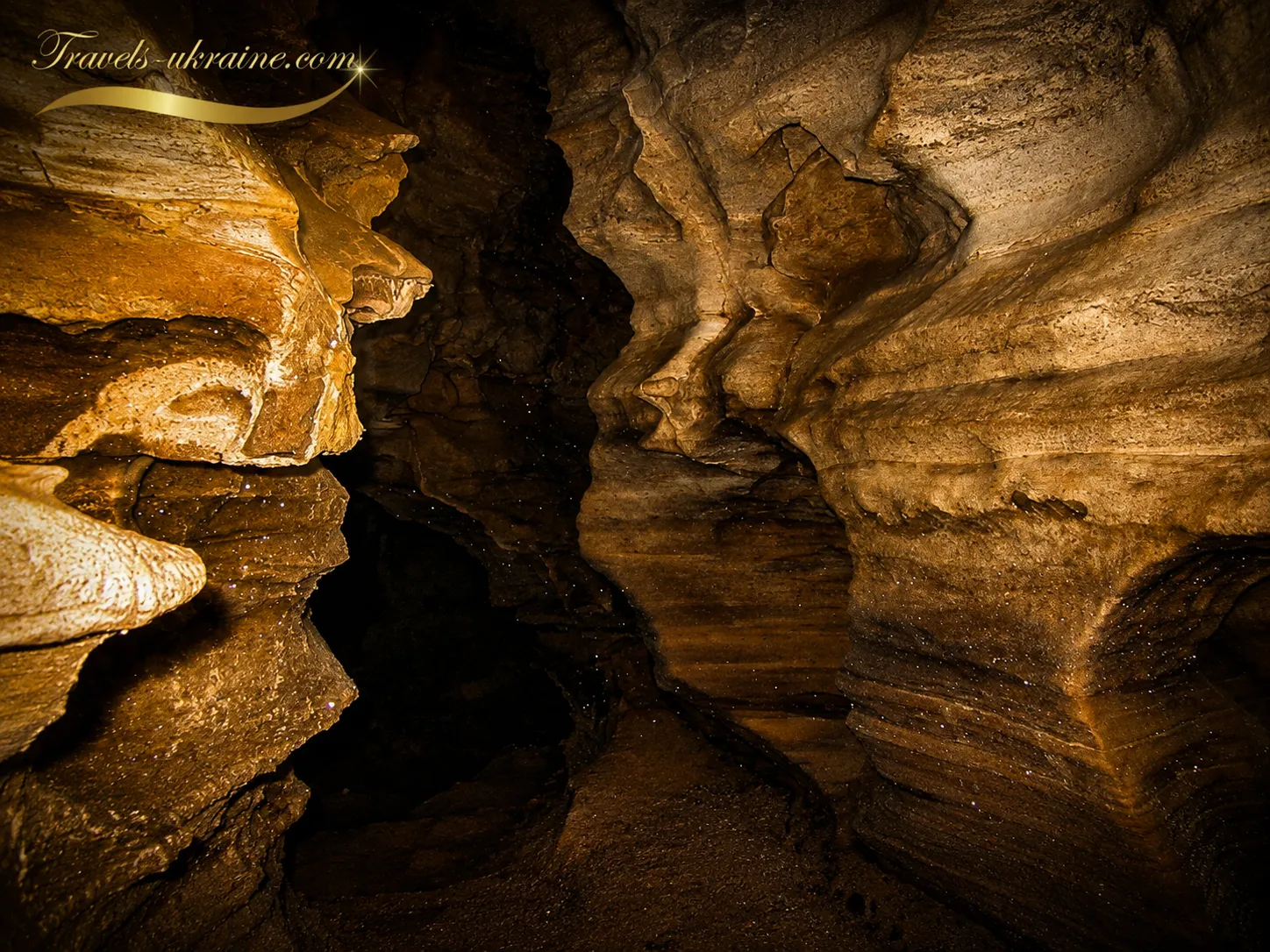
The Crystal Cave is one of those places where nature was clearly in no hurry, but did have an excellent sense of taste. It did not build grand halls here, order designer lighting, or approve the interior with a tourism department. Yet the result is more convincing than any project: corridors, the cave’s crystal walls, natural patterns on the walls, cool air, silence, and the feeling that you have entered not merely a cave, but an ancient stone book of Podillia.
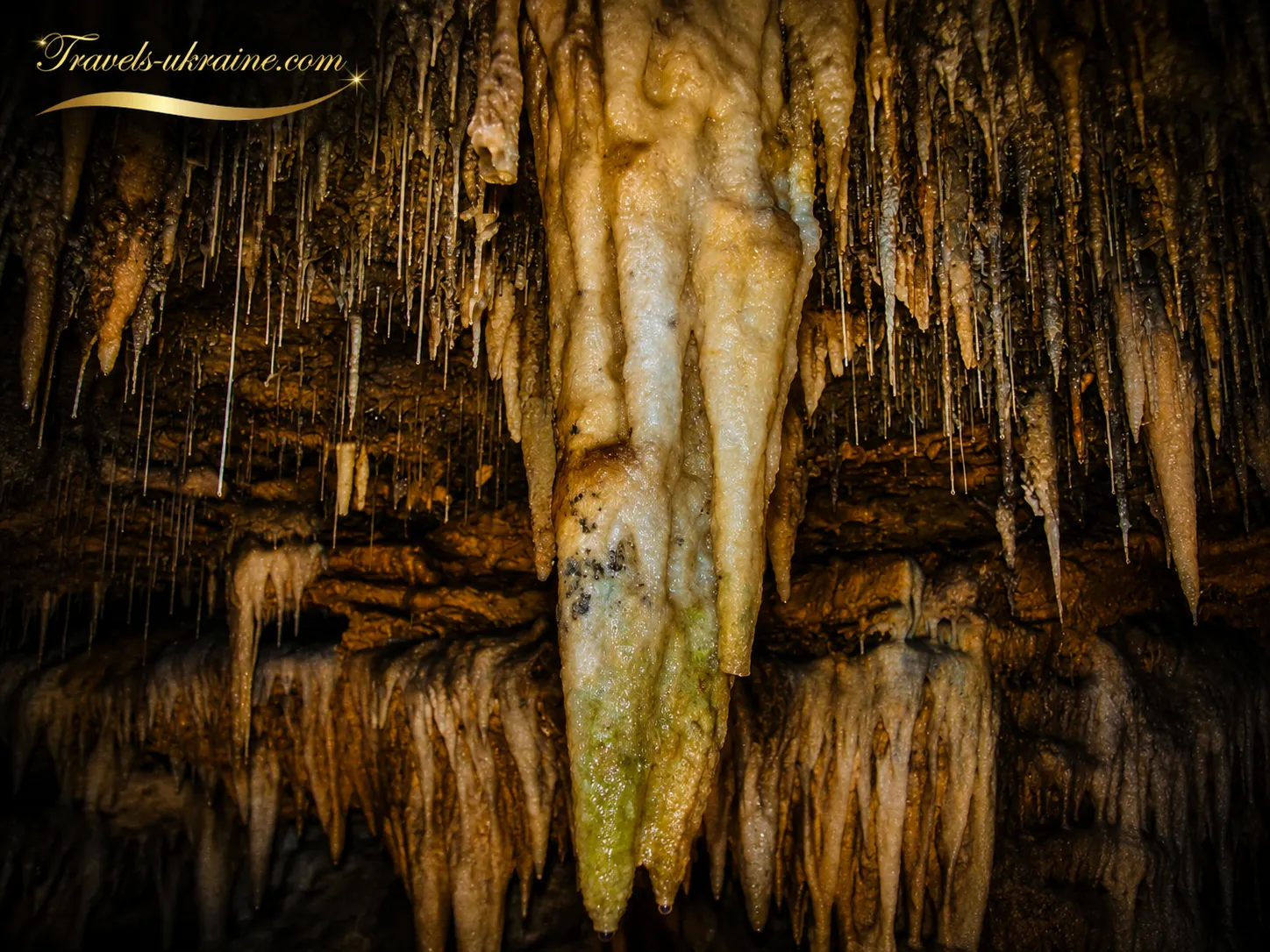
By its nature, the Kryvche Crystal Cave is a karst gypsum cave. This means that its underground passages formed in layers of gypsum through the work of water, time, and patience—qualities that nature, fortunately, possesses in far greater abundance than a tourist waiting for morning coffee. Water gradually dissolved the rock, widened cracks, created corridors and halls, and then left behind the remarkable underground relief that travelers see today during the tour.
Gypsum Crystals and the Cave Walls
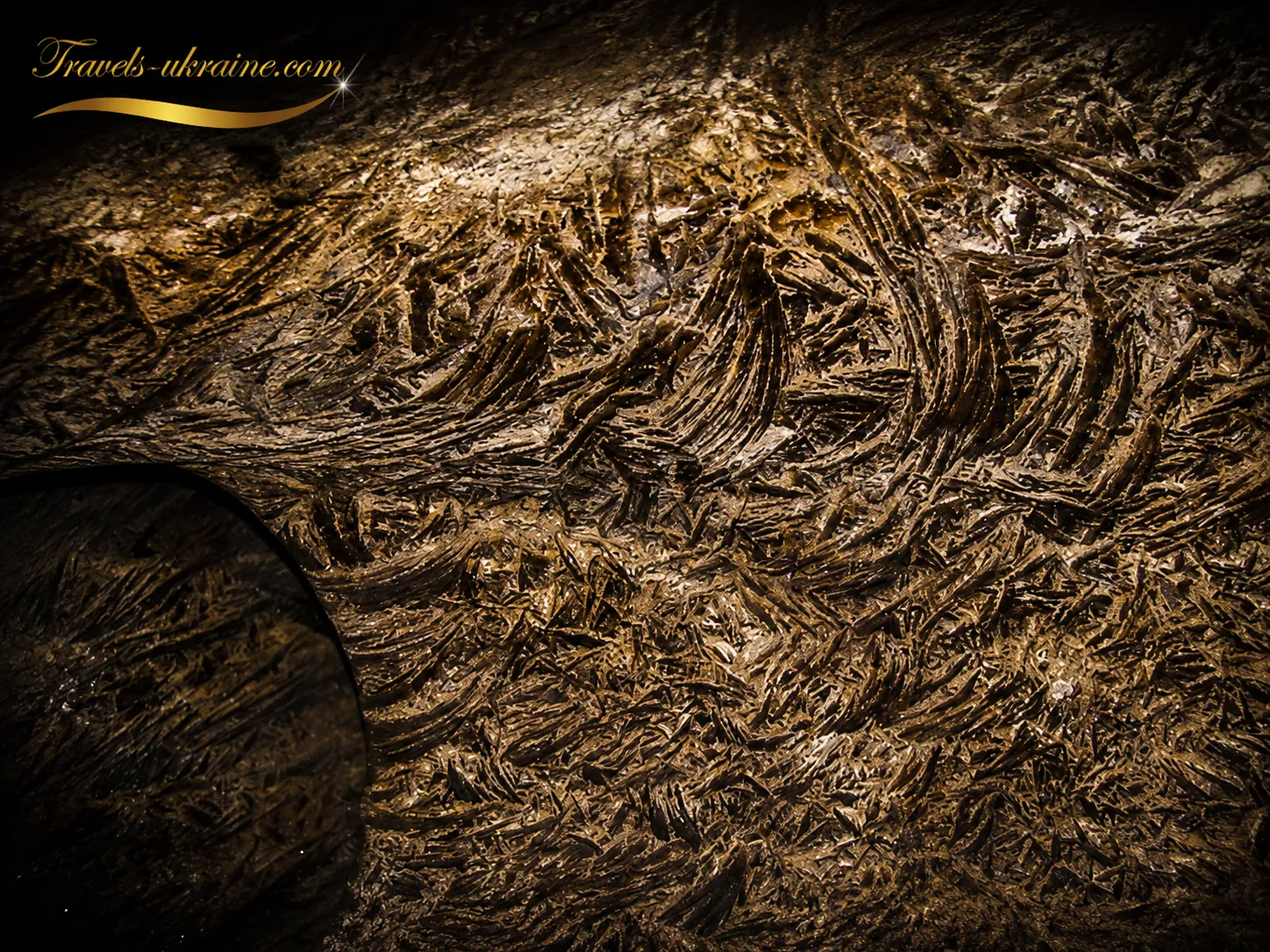
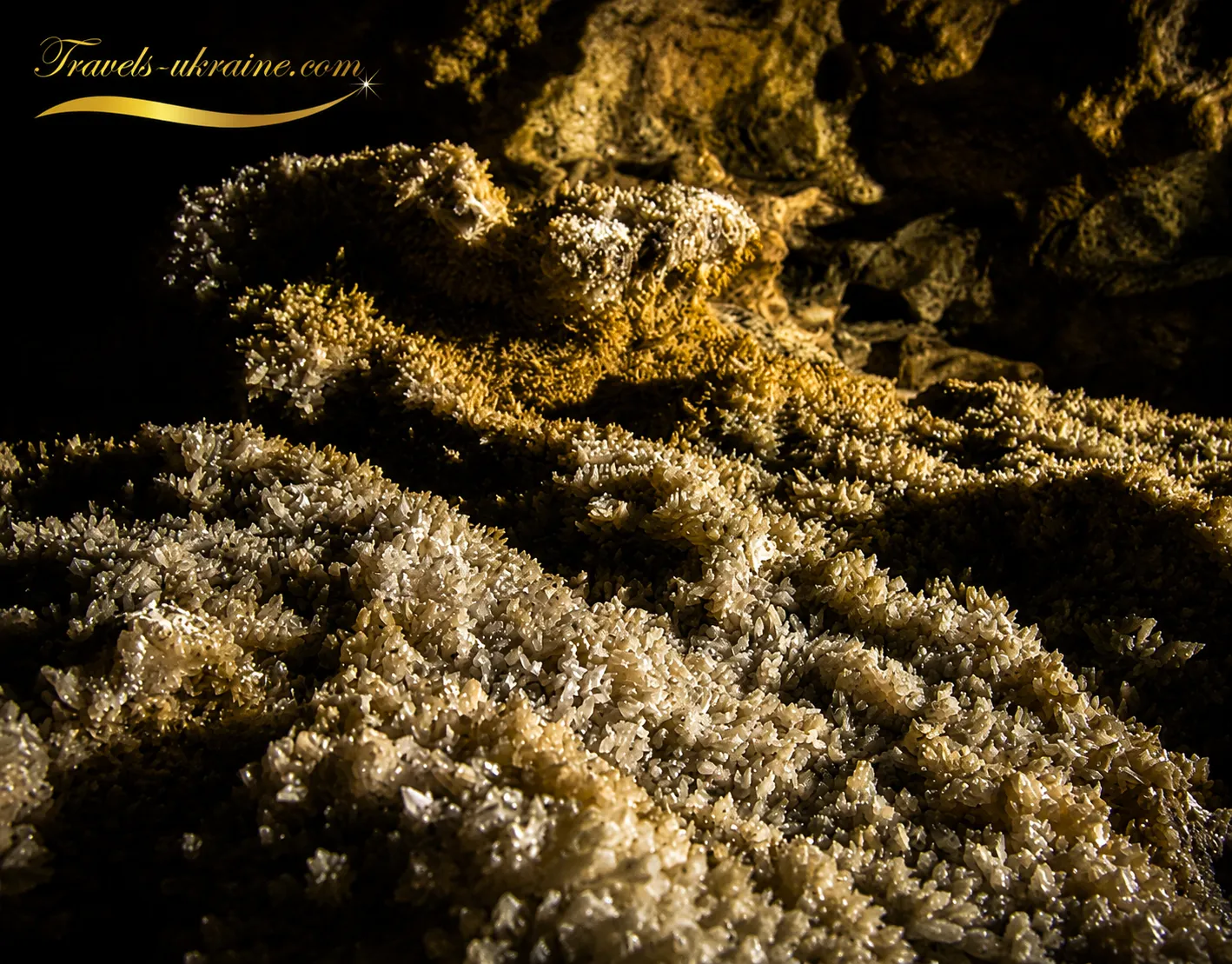
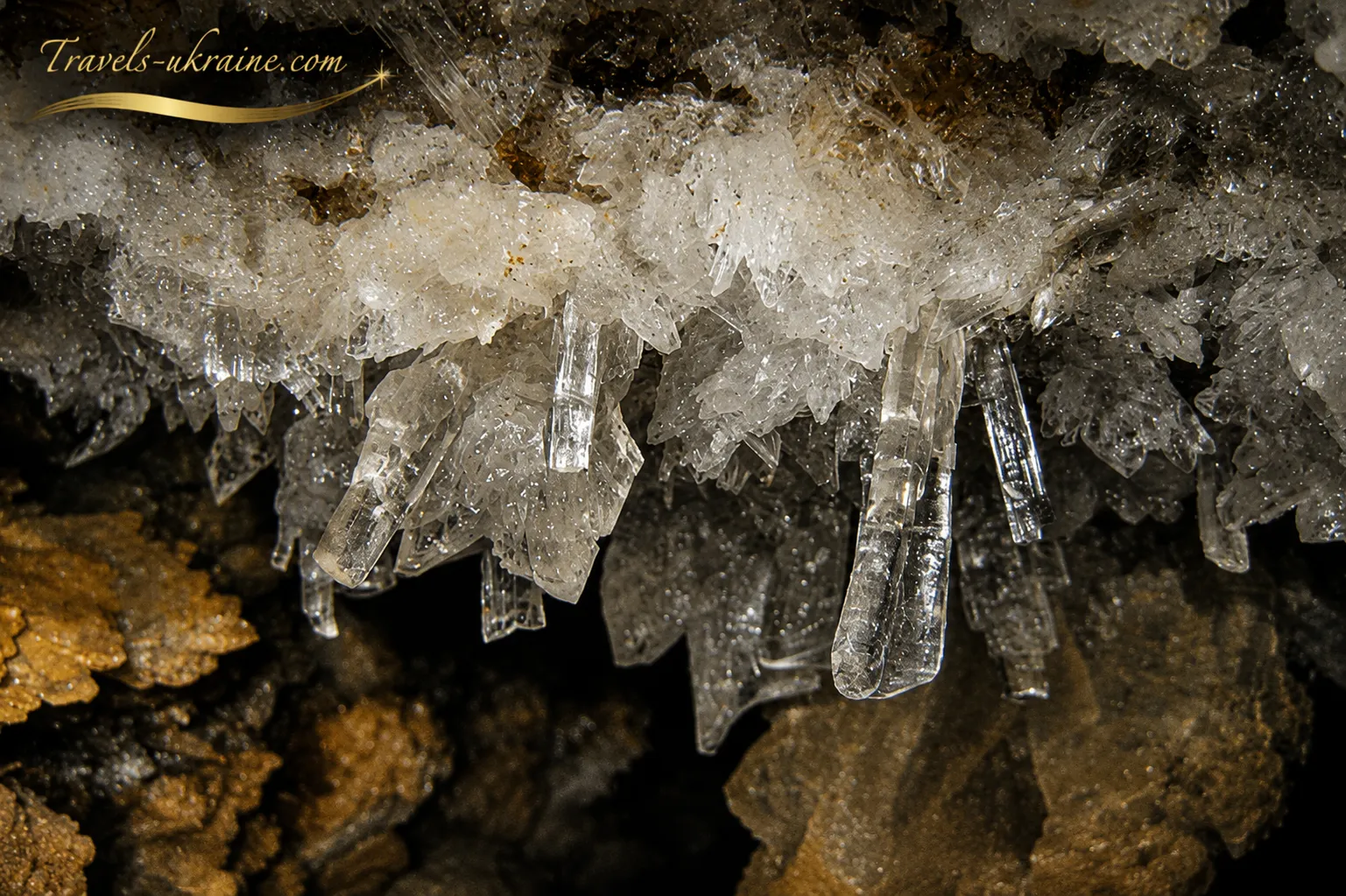
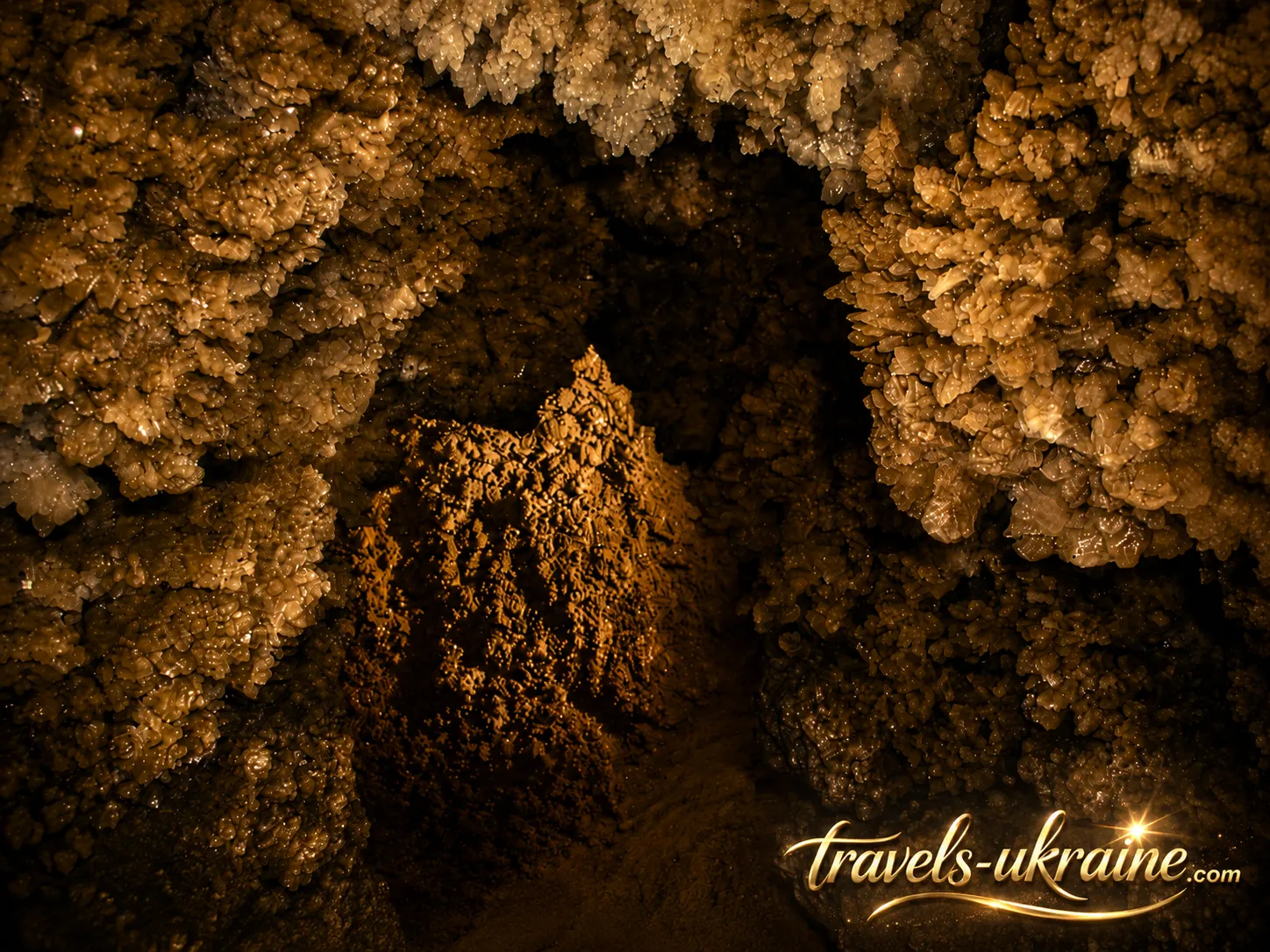
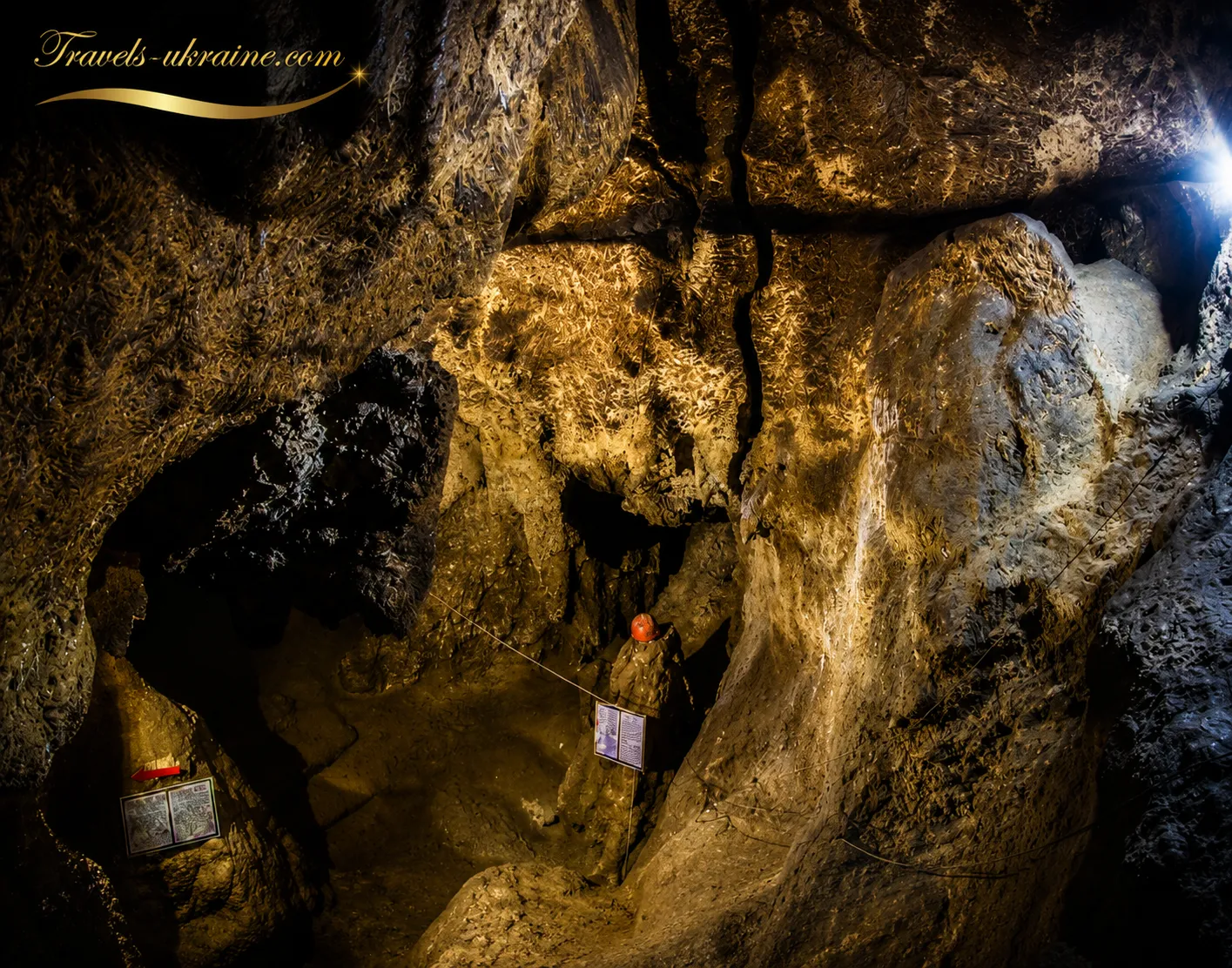
The name “Crystal” is wonderfully fitting, although you should not expect diamonds the size of apples here. The cave received its poetic name thanks to the gypsum crystals that cover some of its walls and galleries. In the light of the lamps, they may appear white, cream-colored, yellowish, or warmly amber. Sometimes these patterns resemble fern leaves, sometimes frozen waves, and sometimes proof that nature enjoys decorating too—it simply does not call it renovation.
Crystallized gypsum walls are one of the main reasons tourists examine every turn of the route so carefully. There is no monotony here: one section of wall seems smooth and restrained, another rough and richly textured, while a third suddenly begins to sparkle as if someone had lightly dusted it with underground silver. These details create the impression that the underground space has a character of its own and reveals itself only to those who do not rush through the route.
Underground Halls, Corridors, and Labyrinths of the Crystal Cave
The Crystal Cave impresses not only with its crystals but also with its scale. The total length of its explored passages is about 28 kilometers, although the tourist route covers only part of this vast underground labyrinth. And, frankly, that is a good thing: a complete walk through every passage could turn a family outing into an expedition featuring the questions “Who brought the sandwiches, and are we sure we are still in Ternopil Oblast?”
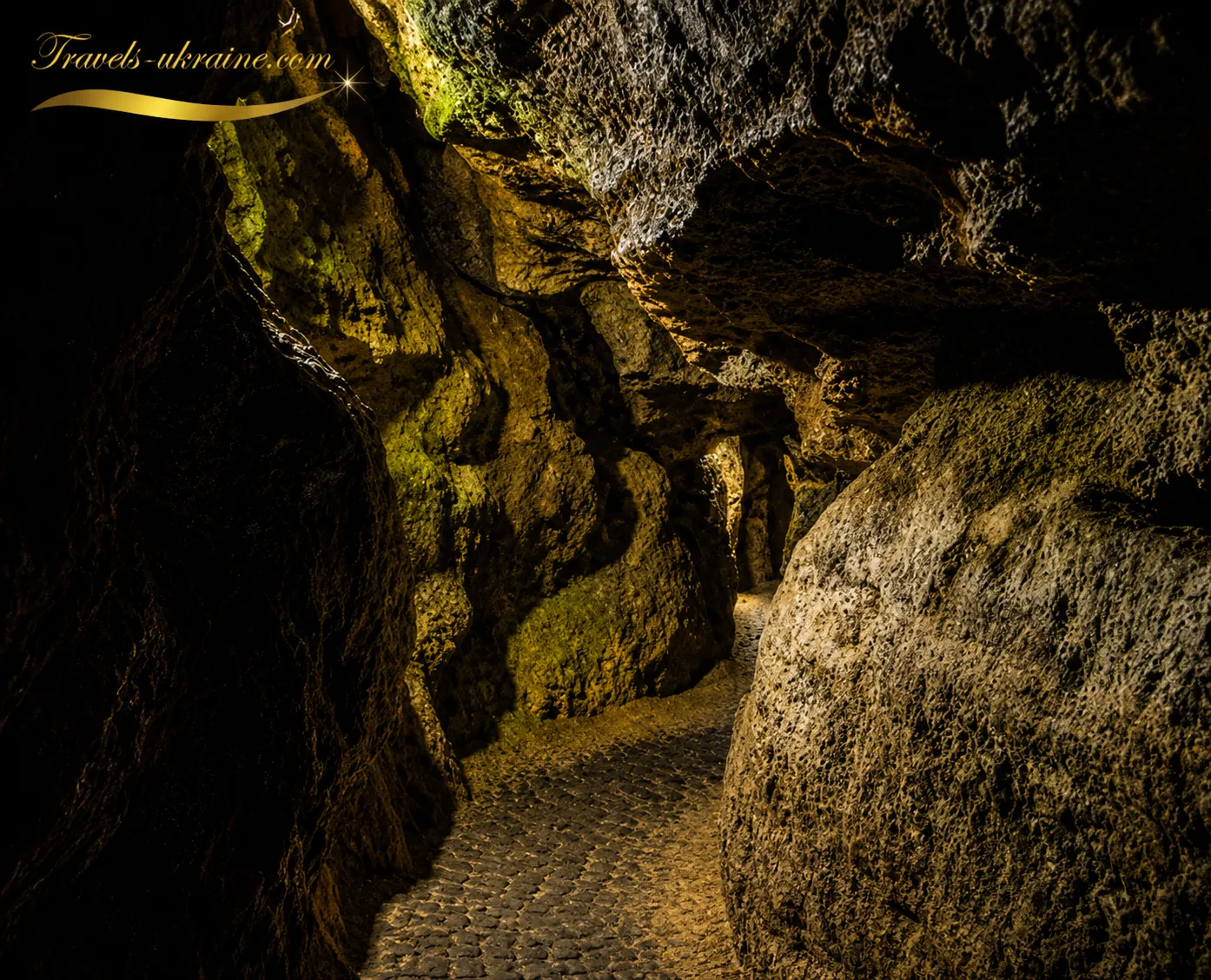
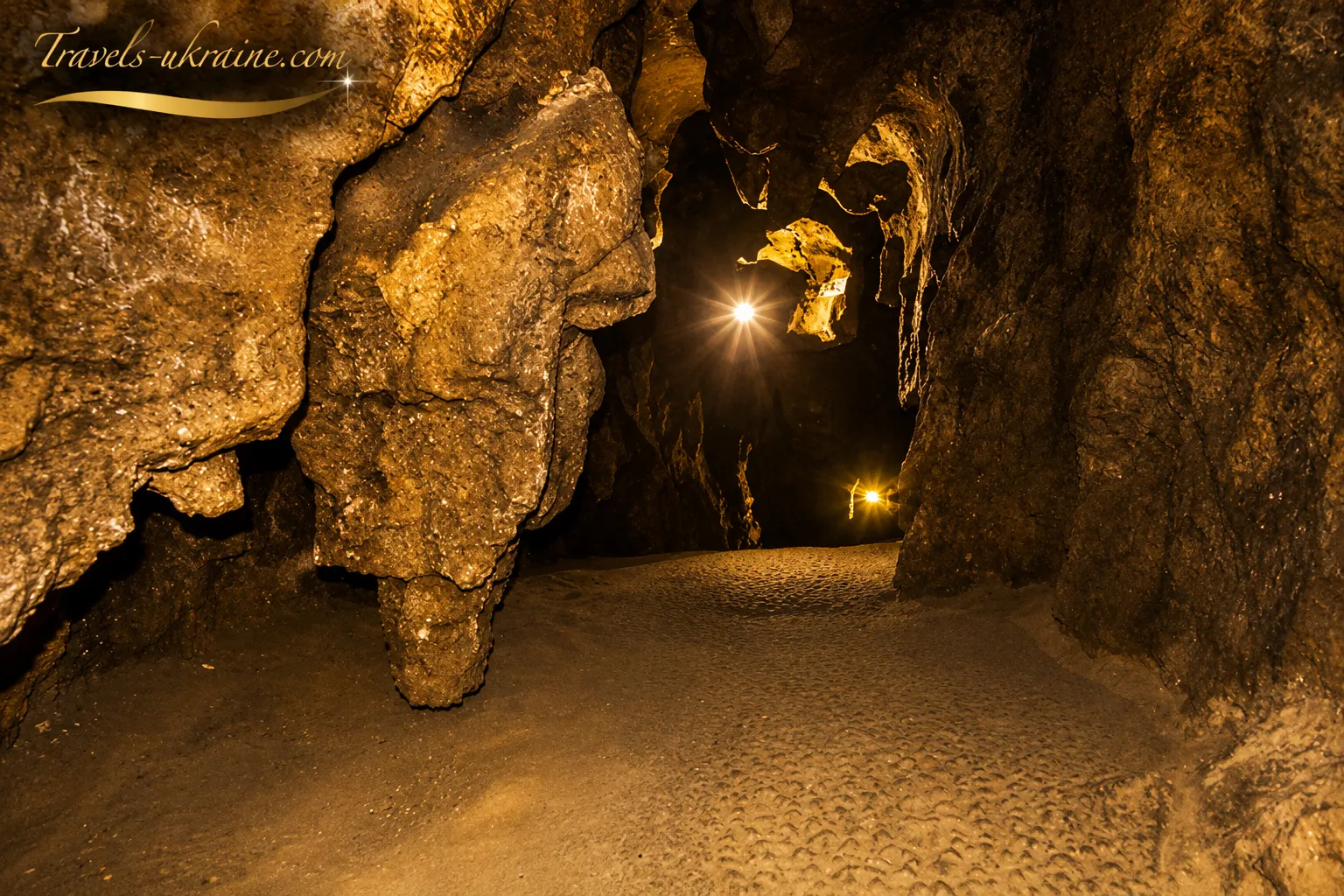
A convenient cave route approximately 2.5 kilometers long has been arranged for visitors. It passes through underground corridors, galleries, and cave halls where you can see characteristic forms of gypsum rock. Thanks to electric lighting, the Crystal Cave in the village of Kryvche is accessible to tourists without special equipment. You do not need to be a professional speleologist, but warm clothing, comfortable shoes, and a healthy respect for the underground are advisable.
Temperature in the Cave and the Atmosphere of an Underground Tour
One feature that tourists notice very quickly is the constant coolness. The temperature in the Crystal Cave remains around +10.6 °C throughout the year. So even on a hot day, when you want to hide in the shade and avoid moving unless absolutely necessary, fresh cool air awaits you underground. It is not aggressive, but it is convincing enough to make a light jacket not an “unnecessary item,” but a wise travel decision.
This stable temperature, silence, and distinctive humidity create the unique atmosphere of an underground tour. Voices sound different in the cave, space feels different, and even your own footsteps seem to become part of the route. You do not feel like making noise here: the underground seems to ask you to speak more quietly, look more closely, and take your time. Because a cave with gypsum crystals is not a place for running, but a location where beauty reveals itself slowly.
- Cave type: a karst gypsum cave formed by natural processes in layers of gypsum.
- Main attraction: natural crystal formations, the cave’s crystal walls, underground galleries, and natural patterns.
- Route atmosphere: cool air, silence, soft lighting, cave corridors, and the feeling of a genuine underground adventure.
- For tourists: a cave equipped for tours that can be visited year-round without professional speleological equipment.
It is these natural features that make the Crystal Cave not simply an interesting stop on the map, but a true tourist gem of Podillia. Here, geology, beauty, accessibility, and a touch of mystery come together. And if, after your visit, you start paying closer attention to the word “caves” in Ukraine’s tourist routes, do not be surprised. The Crystal Cave has that habit: it opens the door not only to the underground, but also to a new curiosity about the wonders of nature.
Photo and Video Gallery
Interesting Facts and Legends of the Crystal Cave
The Crystal Cave is interesting not only for its gypsum crystals, underground corridors, and coolness that quickly explains the value of a warm sweater to any tourist. It has another strong quality—character. This cave does not merely show you stone and darkness; it seems to wink at the traveler: “Look more closely—things are not so simple here.” That is why legends, tales, colorful names, and facts have grown up around it, making a tour of the Crystal Cave far more engaging than an ordinary walk underground.
When you enter an underground world of cold, silence, and legends, it is easy to understand why people like to add a little mystique to caves. Imagine it: long passages, silence, flashlight beams, gypsum walls with crystal patterns, and another turn ahead. Even the greatest skeptic becomes a romantic for a few seconds here. And if the guide tells a legend as well, that is it—the tourist is no longer simply listening, but mentally filming their own adventure movie, starring themselves, with their slightly chilled nose in a supporting role.
The Crystal Cave—One of Podillia’s Most Famous Gypsum Caves
The first fact worth remembering is that the gypsum cave in Kryvche is not a small underground room for a quick “go in, look around, and leave.” The explored cave passages extend for about 28 kilometers, which is already a serious claim to fame. The underground tourist route covers only part of this labyrinth, but even that is enough to give you a sense of its scale. And it is a good thing that visitors have access to an equipped route, because walking independently through all the underground passages could turn a holiday into a game of “find the exit and do not lose the group.”
This karst cave is also special because it is fairly dry and easy to navigate compared with many other underground locations. But “easy” does not mean “you can go in wearing beach clothes.” The cave has its own climate, its own silence, and its own logic of movement. Do not rush, touch the walls, or test whether the crystals are real. They are real. And believe me, they do not need every tourist to perform an additional fingertip test.
The Crystal Cave’s Microclimate: A New Impetus for Recreational Development
The Crystal Cave’s distinctive microclimate gives it not only tourist value, but recreational value as well. Sources mention increased ionization of the air and water, the absence of pathogenic organisms, as well as mineral therapeutic mud and water. Thus, the cave appears not merely as a beautiful underground location, but as a natural space for quietly restoring your energy—a kind of underground relaxation room where gypsum, silence, and steady coolness take the place of scented candles.
It is this natural “laboratory of silence” that makes the cave appealing not only to travelers looking for a beautiful excursion, but also to those who view speleotourism in the Ternopil region more broadly—as an opportunity to combine leisure, the natural environment, and gentle recovery from the bustle of city life. There is no loud music, bright signage, or hurried pace here. Instead, there is cool air, an even temperature, muted sounds, and the feeling that underground even your thoughts move more slowly, so they do not get lost without a guide.
At the same time, it is important to understand that the Crystal Cave is first and foremost a geological natural monument, not a medical facility. Its recreational potential should be viewed carefully and responsibly, without exaggerated therapeutic promises. The cave can offer tranquility, an interesting underground tour, an emotional reset, and a sense of closeness to nature. Diagnoses, prescriptions, and the magical idea that you “leave the cave a new person” are better left to fairy tales. Although, to be honest, a walk among gypsum crystals really does often improve your mood.
That is why developing recreation around the Crystal Cave could become an important step for the tourism potential of the village of Kryvche and the Ternopil region as a whole. If quality tours, preservation of the natural environment, convenient infrastructure, informative routes, and respect for the underground space are brought together, this location could attract not only cave enthusiasts, but also families, fans of ecotourism, peaceful getaways, and educational travel.
The Legend of the Golden Cart and the Underground Secrets of the Crystal Cave
One of the best-known local legends is connected with the golden cart—a mysterious treasure that, according to tradition, may have ended up somewhere in the underground passages or rocks near Kryvche. The “golden cart” was, essentially, a horse-drawn cart or wagon filled with gold. The local legend says that during a retreat, a Turkish ruler or pasha supposedly ordered looted treasures to be hidden in a cart and buried beneath the fifth Kryvche rock, opposite the mill.
Stories like these have a special tourist power: as soon as the word “golden” appears in a text, the reader’s attention wakes up faster than a tour group before entering a cave. Of course, this tale should be treated precisely as a legend, not as instructions for finding treasure. The Crystal Cave is a natural monument, not an underground bank with public access. Yet such stories give the cave a vivid character: they do not replace the facts, but they help us feel how long this underground location has lived in people’s imaginations.
For some, the cave with gypsum crystals is a geological monument. For others, it is a tourist gem of Podillia. And for someone else, it is a place where a story might well be hiding in the darkness, patiently waiting for an attentive listener. Sometimes a legend is what makes a route not merely educational, but truly unforgettable. Because even if the golden cart remained only in tradition, the Crystal Cave itself is already a treasure—not one carried away in a wagon, but one you take with you in your memory.
An Underground Tour of the Crystal Cave: Where Darkness Reveals Beauty
When a tourist first enters the Crystal Cave, they usually have two plans. The first is to listen carefully to the guide. The second is to discreetly look around, take a few photos, stay with the group, and avoid looking like someone who has just whispered, “Are we definitely coming out where we went in?” That is a normal reaction. The underground gem of the Ternopil region has exactly the kind of atmosphere that makes you want to listen to the story, watch your step, examine the gypsum walls with their crystal patterns, and occasionally stand silently in awe.
The most important thing to do during the tour is not to hurry. An underground journey is not designed as a quick “tick the box and move on” dash, but as a careful introduction to the cave. The Crystal Cave reveals itself through details: the sparkle of crystals, the shape of the corridors, shadows on the walls, the coolness of the air, and the silence between the guide’s words. This is a place where beauty is often hidden not in one grand “wow,” but in dozens of small discoveries.
Crystal Cave Tour Route: What to See Inside
The route through Kryvche Cave runs through the equipped section of the underground labyrinth, where tourists can safely see the main features of this gypsum cave. There are corridors, halls, natural niches, walls covered with gypsum crystals, and areas where the lighting beautifully highlights the texture of the stone. The lighting helps reveal what would otherwise remain only a guess in the darkness. And guesses in a cave, as everyone knows, quickly grow to the size of a dragon.
During the route, it is worth paying attention not only to the large halls but also to the small details. The crystals in Crystal Cave can look different depending on the angle of the light: in some places they resemble a sparkling crust, in others frozen waves, and elsewhere a delicate natural ornament. This is not a museum exhibit behind glass, but the real depths of a cave shaped by nature over a very long time. So the best behavior for a tourist here is simple: look carefully, do not touch the walls, and do not test with your finger whether “it is real.”
The halls of Crystal Cave, corridors, and underground passages of Kryvche
One of the route’s particular pleasures is the halls of Crystal Cave and its winding corridors. They create the feeling that you are moving not simply underground, but inside a work of natural architecture in which every turn has its own character. One corridor seems restrained and narrow, another suddenly opens out, and a third resembles a set from an adventure film. Only without actors, special effects, or unnecessary drama—the cave has plenty of charisma of its own.
The underground passages here are also interesting because they clearly show the logic of a karst gypsum cave. Water, time, and gypsum created a complex system of transitions that speleologists studied for years. For tourists, this is an opportunity to see the result of nature’s work without difficult terminology or scientific diagrams. It is enough to follow the route, listen to the guide’s explanations, and understand that the Podillia region has its own geography underground—and it is certainly no less interesting than the landscapes on the surface.
The Dragon’s Spine in Crystal Cave and natural formations
There are places in Crystal Cave where the imagination starts working faster than the camera. That is why tourists love evocative names and natural formations such as the Dragon’s Spine. In some places, gypsum layers really can resemble the back of a mythical creature; elsewhere, a wave frozen in stone; and somewhere else, an ancient sign written by nature without a single grammatical mistake. Although if you stare into the darkness for too long, you may also see things that are not there. The cave takes this calmly: it has a good sense of humor, just a very stony one.
Children and adults who have not yet forgotten how to imagine especially enjoy such formations. And that is wonderful, because Crystal Cave is a great underground adventure for the whole family. Children look for dragons, fairy-tale silhouettes, and strange shadows; adults listen to the geology and then start examining the walls more closely too. That is the cave’s strength: it combines science, nature, and fairy tale so naturally that none of them gets in the way of the others.
What to do during an underground tour
Crystal Cave is not a place for activities in the usual tourist sense. There is no need to run, compete loudly, or go hunting for the perfect shot at the cost of falling behind the group. The best thing to do in a cave is observe attentively. Listen to the guide, look closely at the crystals, notice how the space changes, feel the temperature in the cave, absorb the atmosphere, and allow yourself to be surprised a little. For the modern tourist, this is almost a luxury: simply looking and being present in the moment.
- Look closely at the crystals: they create the cave’s main visual magic and explain its name.
- Listen to the guide’s stories: facts, legends, and explanations help you see more than just stone walls.
- Pay attention to the corridors: the cave passages show how Kryvche’s underground labyrinth was formed.
- Do not rush to take photos: look with your own eyes first and only then take out your phone, because the strongest impression does not always fit in the frame.
- Compare the shapes: look for dragons, waves, natural patterns, and your own associations—the cave is excellent at training the imagination.
After such a tour, it becomes clear that the question “what to see in Crystal Cave” has more than one answer. Here, it is worth looking at everything—the walls, the ceiling, the corridors, the shadows, the crystals, the children’s reactions, and your own sense of wonder. Because a cave with crystals is interesting not only because it is beautiful, but also because it makes travelers slow down. And these days, that is almost a separate tourist service—only here it is provided not by an administrator, but by nature itself.
What to see near Crystal Cave: 1–2-day itineraries
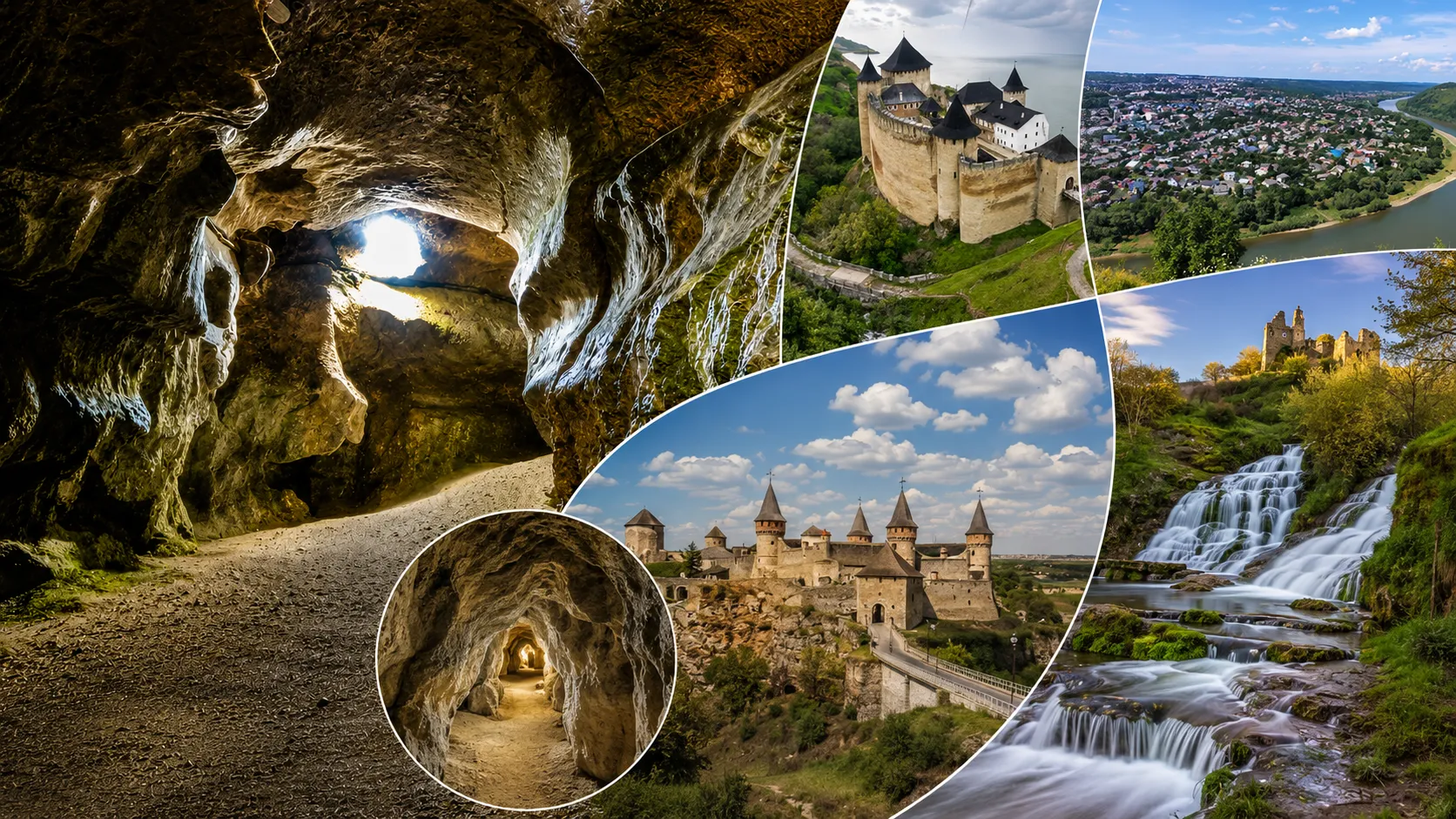
Crystal Cave is a powerful destination in its own right, but traveling here solely for one underground route would be a little unfair to Podillia. This region has a rare talent: just when you have come out of the cave, adjusted your jacket, and solemnly announced, “I conquered the underworld,” several more places worth seeing have already appeared around you. Nearby, there are castle ruins, ancient villages, other caves in Ternopil region, local-history museums, canyons, viewpoints, and roads that seem to be asking for the journey to become longer.
That is why a trip to the cave in Kryvche is best viewed not as a brief one-hour stop, but as part of a larger journey through Podillia. Crystal Cave reveals the natural side of the region, while the nearby destinations add history, panoramas, old architecture, and an entirely different mood to the route. This format is convenient for those who want more than simply placing one pin in a navigation app and instead want to spend a full and varied day traveling.
After the tour, you do not have to head straight home. Within approximately 100 kilometers of Kryvche are several excellent tourist destinations that can easily be combined with a cave visit: other natural landmarks, fortresses, canyons, viewpoints, and towns with a distinctive historical atmosphere. Crystal Cave can therefore be not the final point of the route, but a successful starting point for a journey through Ternopil region and the neighboring regions.
Traveling by car is especially convenient. Crystal Cave, near the village of Kryvche, then becomes not merely a separate destination but a great starting point for a journey through Podillia. In one or two days, you can see the nearest landmarks of Ternopil region, visit interesting places in Khmelnytskyi region, and even add landmarks of Chernivtsi region to the route. The distances below are approximate and measured from Crystal Cave, so it is worth checking the route in a navigation app before setting off. Navigation apps, of course, sometimes have a sense of humor too, but they usually get you there more reliably than tourist intuition after three turns in a village.
Atlantida Cave — about 30 km from Crystal Cave
Atlantida Cave is an excellent destination for those who want to continue exploring the underground world after Crystal Cave. It is another well-known cave attraction, appealing to fans of nature tourism, speleotourism, and unusual routes. If the cave in the village of Kryvche is better suited to a classic underground tour, Atlantida has a reputation for a more adventurous atmosphere. Here, you want not merely to listen, but to study every turn carefully and mentally check whether your shoelaces are tied tightly enough.
Combining two caves in one trip is a good idea for travelers who want to see the different faces of Ukraine’s gypsum caves. This route will especially appeal to those interested in geology, underground labyrinths, and the natural landmarks of Podillia. The main thing is not to overestimate your strength or plan everything too tightly: caves favor attentive travelers, not marathon runners with stopwatches.
Khotyn Fortress — about 47 km from Crystal Cave
Khotyn Fortress is one of Ukraine’s best-known defensive landmarks and a very good continuation of the route after the cave and Kryvche’s underground silence. This fortress transports tourists into a completely different atmosphere: high walls, the history of battles, sweeping views, and the feeling that the stone here remembers a great deal too—only not about water and gypsum, but about armies, sieges, and human stubbornness.
This destination is especially convenient for those who want to combine tourism with historical sites. Crystal Cave reveals underground beauty, while Khotyn Fortress tells a military story. Together, they create a highly contrasting journey: first you walk underground, where the main sound is footsteps, and then you stand beside the walls, where your imagination fills in cavalry, flags, and dramatic music that no one actually turned on.
Zalishchyky — about 62 km from Crystal Cave
Zalishchyky is one of the most picturesque destinations worth adding to a tourist trip after visiting the cave in Kryvche. The town is known for its location within a bend of the Dnister, panoramic views, and the distinctive atmosphere of southern Ternopil region. After the underground corridors of Crystal Cave, Zalishchyky offers an entirely different sense of space: not walls all around, but a river, slopes, sky, and a horizon that suddenly seems remarkably generous.
This is a good option for tourists who enjoy landscapes, photo stops, and leisurely walks. Zalishchyky can be included in the itinerary as a place to rest, have lunch, or take an evening break after a full sightseeing program. Here, it is easy to understand that Podillia is interesting not only underground: sometimes all you need to do is climb to a viewpoint, and nature will give you a tour without a ticket or a strict schedule.
Kamianets-Podilskyi Castle — about 65 km from Crystal Cave
Kamianets-Podilskyi Castle is a classic destination on Podillia’s tourist routes and one of the strongest options for continuing your journey. If Crystal Cave is Ternopil region’s underground fairy tale, Kamianets-Podilskyi is a genuine stone stage of history, where the castle, canyon, and old town work together so convincingly that tourists usually take out their phones before they even manage to say, “Oh, how beautiful it is here.”
This destination is best planned with plenty of time, because Kamianets-Podilskyi deserves more than a quick stop—it calls for a full walk. You can see the castle, old streets, bridges, the Smotrych Canyon, and historic buildings. After Crystal Cave, the trip creates a wonderful balance: first nature shows what it can build underground, and then people demonstrate that they, too, can handle stone rather impressively.
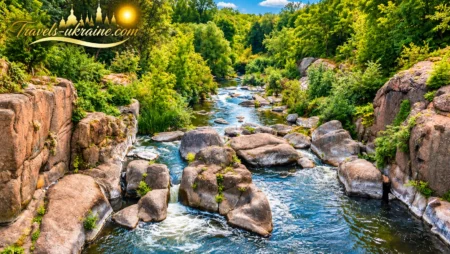
Dzhuryn Waterfall and the ruins of Chervonohorod Castle — about 70 km
Dzhuryn Waterfall and the ruins of Chervonohorod Castle are an interesting destination for those who want to add more wild beauty, water, history, and romantic decay to their route. After the cool silence of the cave, the sound of the waterfall feels almost like a loud greeting from the surface. The energy here is different: not underground concentration, but open space, water, rocks, greenery, and ruins that look as if they had been waiting especially for photographers.
This location is well suited to a summer or warm off-season trip. The waterfall adds natural freshness to the route, while the ruins provide a sense of history. Together with Crystal Cave, they create a remarkably full tourist day: underground passages, a drive, views, a waterfall, ruins, and, at the end, a pleasant tiredness that says not “why did we come here?” but “we should have taken another day.”
How to plan a driving route near Crystal Cave
To make your trip enjoyable rather than a race against the navigator, it is better to choose several locations along the same route. If you want more underground experiences, combine Crystal Cave with Atlantis Cave. If you are interested in history, add Khotyn Fortress or Kamianets-Podilskyi Castle. If you are looking for scenery and nature, head to Zalishchyky or Dzhuryn Waterfall. And if you have two days, you can create a full route through three regions: Ternopil, Khmelnytskyi, and Chernivtsi.
- For a short trip: Crystal Cave + Atlantis Cave, or Kryvche and the nearby area.
- For a historical route: Crystal Cave + Khotyn Fortress + Kamianets-Podilskyi Castle.
- For a nature route: Crystal Cave + Zalishchyky + Dzhuryn Waterfall.
- For a weekend trip: combine several destinations, but leave time for the drive, lunch, photos, and proper rest.
The main piece of advice is simple: do not try to see everything in one day if you truly want to enjoy the journey. Crystal Cave is a strong starting point, but Podillia has plenty of other attractions nearby. It is easy to plan a trip here that includes underground passages, fortresses, castles, canyons, waterfalls, and distinctive towns. That is exactly what makes a trip to Kryvche so rewarding: you arrive to see a cave and return with the feeling that you have discovered an entire tourist region.
Crystal Cave Visitor Rules: Etiquette in the Underground World
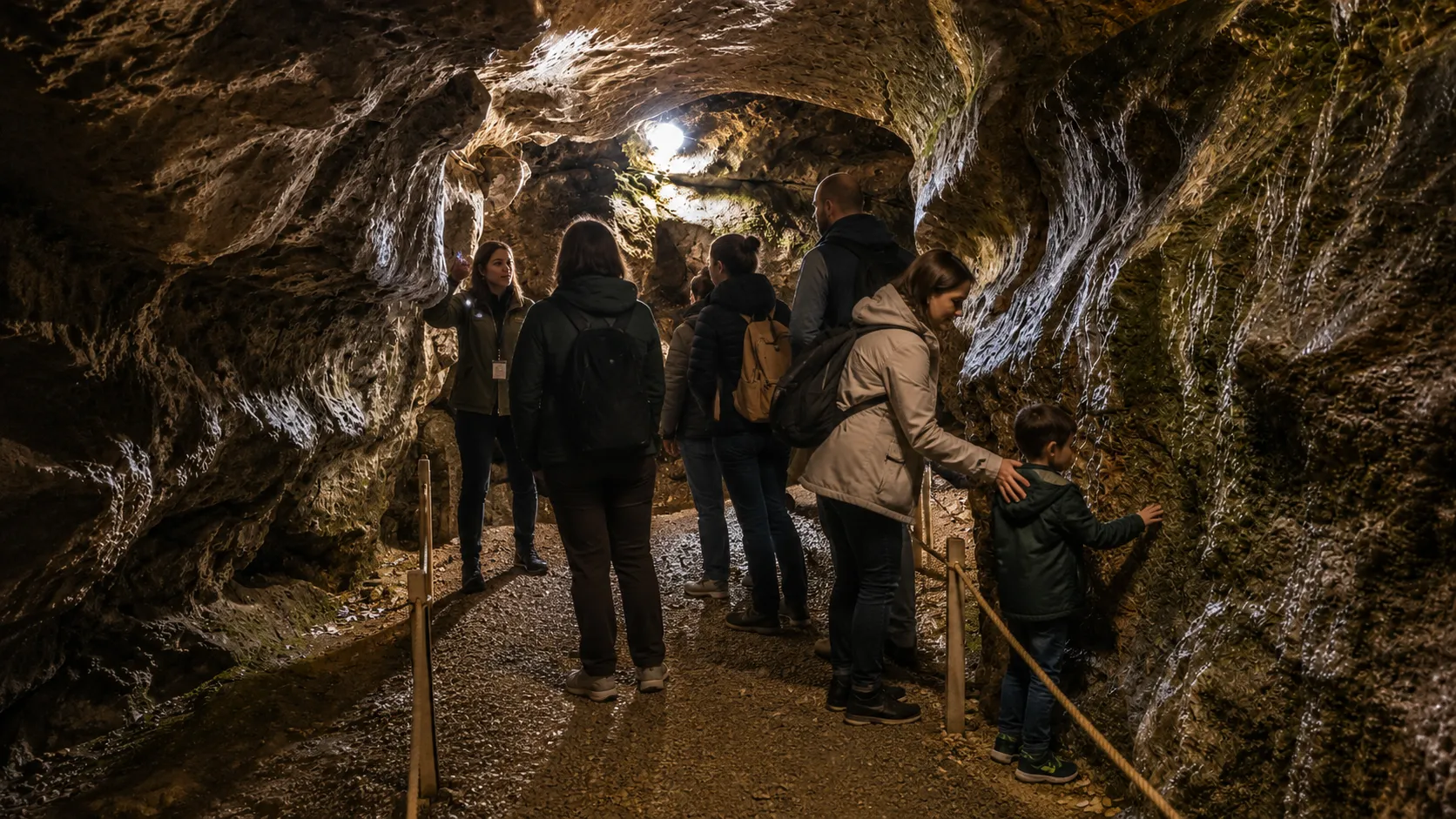
Crystal Cave is not simply a tourist attraction but a geological natural monument that took far longer to form than any guided tour lasts. So behave carefully and respectfully: do no harm, do not disturb the group, listen to the guide, and do not turn the underground tour into a personal expedition of “I’ll just take a look around that corner.” In a cave, such “justs” can quickly become quite adventurous.
The main rule is not to touch the walls, gypsum crystals, or natural formations. The walls of Crystal Cave may look solid, but touching them leaves marks, contaminates the surface, and gradually damages what nature created over centuries. This is especially important to explain to children before entering: nothing in the cave should be broken off, scratched, or taken home “as a souvenir.” The best souvenirs from here are photos, emotions, and a story you will want to tell later.
Sounds carry clearly underground, so it is best to speak calmly, avoid interrupting the guide, and let others listen. You can take photos, but do so thoughtfully and without rushing: do not block the passage, fall behind the group, or look for the “perfect angle” in places where entry is prohibited. A good photo matters, but good manners in a cave matter even more.
Simple Rules for a Comfortable Underground Tour
- Do not touch the walls or crystals: natural formations must be preserved for future visitors.
- Do not leave litter: the cave should not have to clean up after people, even if it is very patient.
- Stay with the group: the equipped route exists for your safety.
- Keep your voice down: sound travels more strongly in a cave than you might expect.
- Prepare children: explain the rules before entering so the tour is interesting rather than one long “don’t touch that.”
The rules at Crystal Cave are not about being strict; they are about preserving its beauty. The best tourist in Kryvche’s underground world is one who looks carefully, moves cautiously, respects nature, and leaves behind only good memories. And a few honestly taken photos too—without heroically climbing into places you should not go.
Safety at Crystal Cave: Tips for a Comfortable Tour
The underground chambers of Crystal Cave are accessible for tours, but it is still a cave, not a paved promenade with even tiles and a coffee shop at every turn. It is cooler, darker, damper, and narrower in places than it is above ground. So the main advice is simple: do not be afraid of the cave, but do not take it lightly either. The underground favors attentive visitors, while it can quickly teach overconfident ones a lesson with a low ceiling or slippery section.
For a tour of Crystal Cave, choose comfortable closed-toe shoes with non-slip soles. The route may include uneven surfaces, cool sections, and places where it is better to watch your step rather than focus only on the mineral deposits. Even in summer, bring a light jacket, sweatshirt, or fleece: the cave has a natural “air conditioner” that does not ask tourists whether they arrived in a T-shirt.
Visiting the cave is suitable for most tourists, but people with claustrophobia, musculoskeletal problems, or poor health should assess their abilities in advance. If you are traveling with children, explain the rules before entering: do not run, touch the walls, leave the group, or ignore the guide. That way, the adventure will be enjoyable rather than turning into an endless “don’t touch that.”
A Quick Safety Checklist Before Your Visit
- Wear comfortable shoes: the soles should be sturdy and non-slip.
- Bring warm clothing: the cave is cool even in summer.
- Assess how you feel: the tour should be enjoyable, not exhausting.
- Stay with the group: do not wander into side passages.
- Prepare children: explain the rules simply and in advance.
Kryvche Crystal Cave requires neither heroics nor special equipment. All it needs from you is attentiveness, comfortable clothing, respect for the route, and a good attitude. Then a walk through the cave will leave exactly the impressions that bring people here: silence, coolness, the beauty of gypsum walls, and the pleasant feeling of a genuine adventure.
Frequently Asked Questions About Crystal Cave in Kryvche
Where is Crystal Cave located?
Crystal Cave is located near the village of Kryvche in Ternopil Region. It is one of the best-known caves in Ternopil Region and a popular tourist attraction in Podillia. It is often included in routes through the Borshchiv area, trips to castles, the Dniester Canyon, and other natural attractions in the region.
What makes Crystal Cave in Kryvche special?
Crystal Cave is special because it is a karst gypsum cave with underground corridors, chambers, and walls covered in gypsum crystals. These natural crystalline patterns create its distinctive atmosphere. Here, darkness is not frightening; instead, it helps reveal a beauty you simply cannot encounter above ground.
How long does a tour of Crystal Cave take?
A tour of Crystal Cave usually lasts about one to one and a half hours, depending on the route organization, group, and visiting conditions. Allow a little extra time for the journey, waiting for the group, photos at the entrance, and a few minutes after leaving to shift from an underground frame of mind back into ordinary tourist mode.
What is the temperature inside Crystal Cave?
The cave maintains a cool underground microclimate year-round. Even in summer, it is noticeably fresher inside than above ground, so a warm sweatshirt, fleece, or light jacket will come in handy. Crystal Cave has its own natural “air conditioner,” and it does not ask tourists whether they arrived in a T-shirt.
Is Crystal Cave suitable for children?
Yes, Crystal Cave is well suited to family outings, provided that children are ready to walk calmly along the route with the group. Before entering, explain a few simple rules: do not run, touch the walls, wander away from adults, or ignore the guide. For children, this can become a genuine underground adventure filled with crystals, corridors, and legends.
What should I bring to Crystal Cave?
For a comfortable underground tour, bring comfortable closed-toe shoes with non-slip soles, warm clothing, water, a charged phone, and some extra time. If you are traveling with children, prepare them for the behavior rules in advance. In a cave, it is better to be a practical tourist than the hero of a story about a slippery sole and an unexpected turn.
Can I take photos inside Crystal Cave?
Photography is usually allowed as long as it does not interfere with the tour or other visitors. It is important to stay with the group, avoid blocking the passage, remain behind the barriers, and not touch the walls for the sake of a shot. The best photos come when a tourist looks with their eyes first and reaches for the phone afterward.
Can I touch the gypsum crystals in the cave?
No, you should not touch the gypsum crystals, walls, or natural formations. Touching leaves marks, contaminates the surface, and can damage what nature took a very long time to create. Crystal Cave is a natural monument, so the best way to behave here is simple: look carefully, take photos respectfully, and do not take anything “as a souvenir.”
What can I see inside Crystal Cave?
Inside, look out for the underground chambers, cave corridors, gypsum crystals, natural patterns on the walls, and sections where the lighting beautifully highlights the cave’s texture. It is also interesting to listen to the guide’s legends and explanations: they help you see not just stone, but an entire hidden world beneath the ground.
What can I visit near Crystal Cave?
You can plan an action-packed route through Podillia around Crystal Cave. Popular destinations include Atlantis Cave, Khotyn Fortress, Zalishchyky, Kamianets-Podilskyi Castle, Dzhuryn Waterfall, and the ruins of Chervonohorod Castle. If you are traveling by car, Kryvche is a convenient starting point for exploring the landmarks of Ternopil, Khmelnytskyi, and Chernivtsi regions.
Crystal Cave: An Underground Adventure Worth Seeing and Experiencing
Crystal Cave in Kryvche is not just another destination on Ukraine’s tourist map. It is a place where a journey suddenly changes direction: you drive along an ordinary road, see a village, hills, and Podillia landscapes, then take a few steps underground—and find yourself in a completely different world. A world without haste, city noise, or unnecessary decorations. There is only stone, subdued light, a leisurely route, and the feeling that nature has long known how to amaze without any advertising.
Here, the cave combines everything needed for a successful trip: an interesting history, natural beauty, legends, an accessible guided route, and a convenient location near other Podillia attractions. It is ideal for family outings, school excursions, weekend trips, educational tourism, and those moments when you want to see something truly unusual—but without climbing gear or a dramatic farewell to civilization at the entrance.
It has a special power: it does not try to impress through sheer spectacle, but works more subtly. At first it piques your interest, then captivates you, and after you leave, it makes you return in your thoughts to the underground halls, the walls covered in gypsum crystals, and the quiet route where every turn had its own character. That is why this cave is remembered not merely as a natural landmark, but as an emotion—calm, profound, and slightly magical.
If you enjoy nature tourism, the caves of Podillia, historical routes, legends, and places where beauty and discovery come together, Crystal Cave in the village of Kryvche is certainly worth your attention. It reveals Ternopil region from an unusual perspective: not only as a land of castles, canyons, and picturesque towns, but also as a realm of an astonishing underground world, where stone has a memory of its own and darkness unexpectedly reveals beauty.
So if Crystal Cave is not yet on your travel list, now is the time to change that. Bring warm clothes, comfortable shoes, a little extra time, and an openness to new experiences. Then let the cave do its work: slow your pace, sharpen your attention, amaze you with its crystals, and remind you that the most fascinating places are sometimes hidden not at the heights of scenic viewpoints, but deep underground.

No Comment
You can post first response comment.