
 English
 Українська
 Ελληνικα
 Íslenska
 Italiano
 Latviešu
 Lietuvos
 Polski
 Português
 Română
 Русский
 Српски
 Slovenčina
 Slovenščina
 Español
 Svenska
 Türkçe
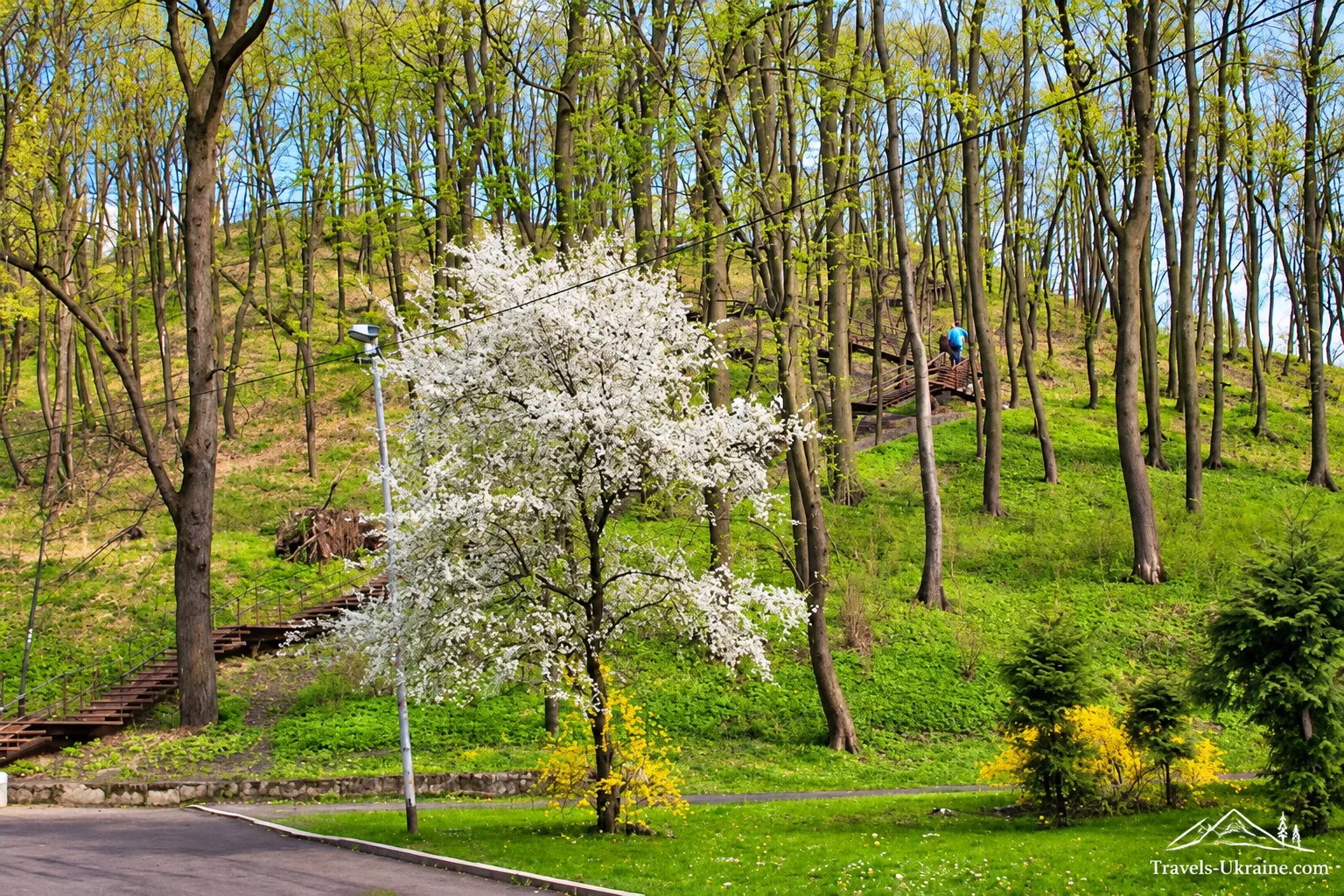
High Castle is one of those Lviv names that can slightly confuse tourists. Hearing about a castle above the old city, it is easy to imagine stone towers, walls, and medieval gates. In reality, today you will find primarily a park, an observation deck, and a panorama of Lviv at the summit. Only a small fragment of the old masonry wall remains of the castle itself.
Yet the name is far from accidental. Castle Hill really was home to one of the most important defensive structures of ancient Lviv. The first fortifications existed here as early as the princely era, and in the 14th century a masonry High Castle took shape on the site of an earlier fortress. It was called «High» in contrast to the Lower Castle, which stood directly beside the city center.
The location was almost ideal for defense: the hill rose above the city and made it possible to control the surrounding area and the roads leading to Lviv. The castle was rebuilt and repaired over the centuries, but as artillery developed, medieval fortifications gradually lost their military importance.
One of the best-known chapters in its history came in 1648, when the fortifications were captured by Cossack forces during Bohdan Khmelnytskyi’s campaign. In the 17th–18th centuries, the fortress fell increasingly into disrepair, and later its ruins were literally dismantled for building materials. By the beginning of the 19th century, the former defensive hill looked anything but romantic. With little vegetation, its slopes were washed away by rain, while wind carried dust and sand into the city. The area was therefore chosen for greening. In 1835, work began on a city park on Castle Hill, and it was given the name «High Castle». It was designed as a landscaped area with walking paths and two main levels—the lower and upper terraces. By the 19th century, people came here not to storm the fortress, but to stroll and look out over Lviv from above.
So what remains of the castle itself?
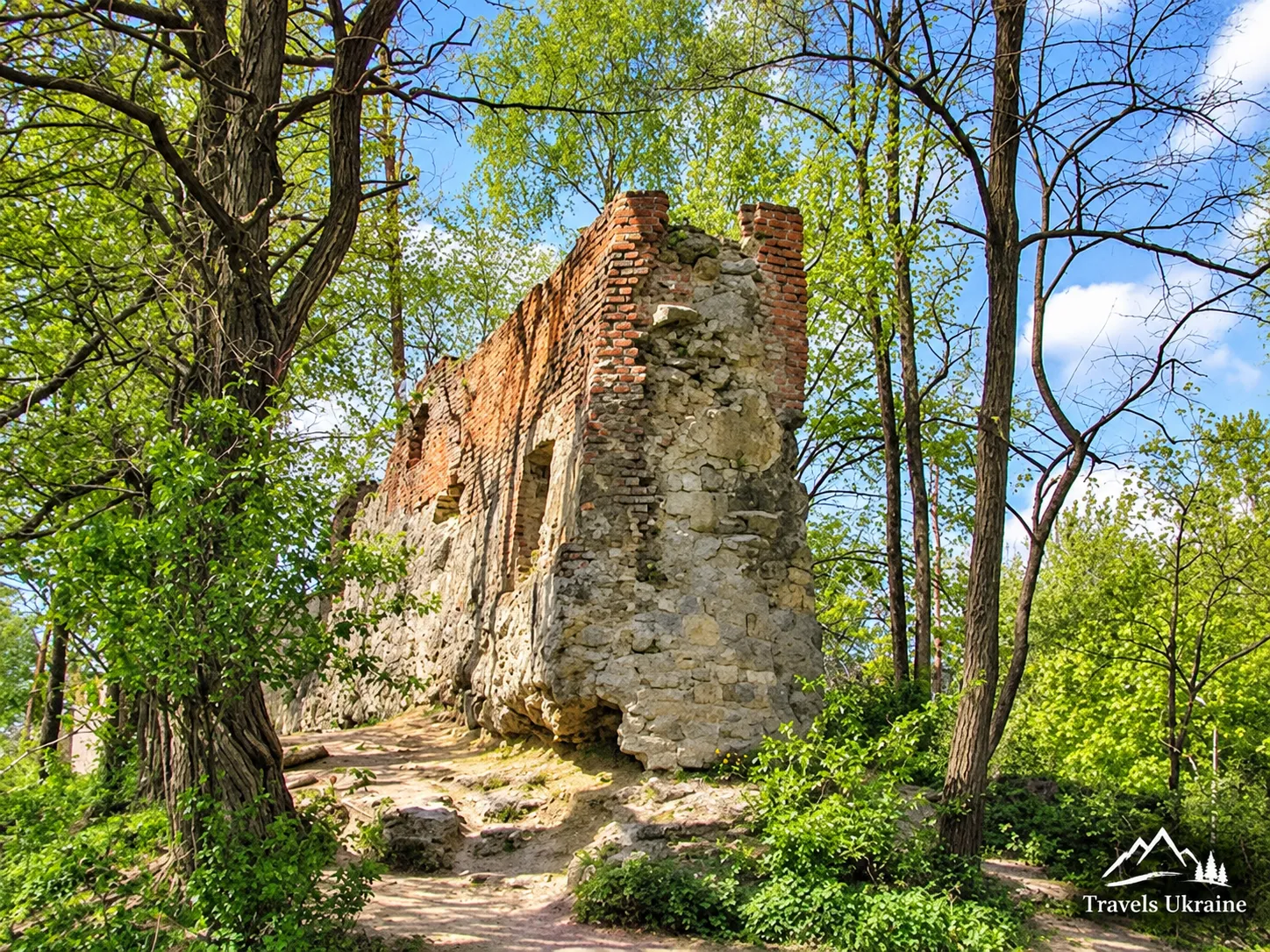
Not much. What has survived to this day is a fragment of the southern wall of the masonry fortress, with remnants of the old brickwork. Against the scale of the former castle, it looks rather modest, so it is no surprise that some tourists walk past it without immediately realizing that they are looking at a genuine remnant of medieval fortifications.
But this small wall is precisely what reminds us that High Castle is not simply a picturesque park name. Beneath the modern paths, slopes, and embankment lies a place that was part of Lviv’s defensive system for centuries. Today, people come here for an entirely different purpose. Instead of sentries, there are tourists with phones; instead of castle walls, park paths; and the main «weapon» is a camera with a wide-angle lens. Even so, High Castle remains one of the best places to see Lviv from above and, at the same time, feel how deeply the modern city has grown out of its own history.
What to See in High Castle Park
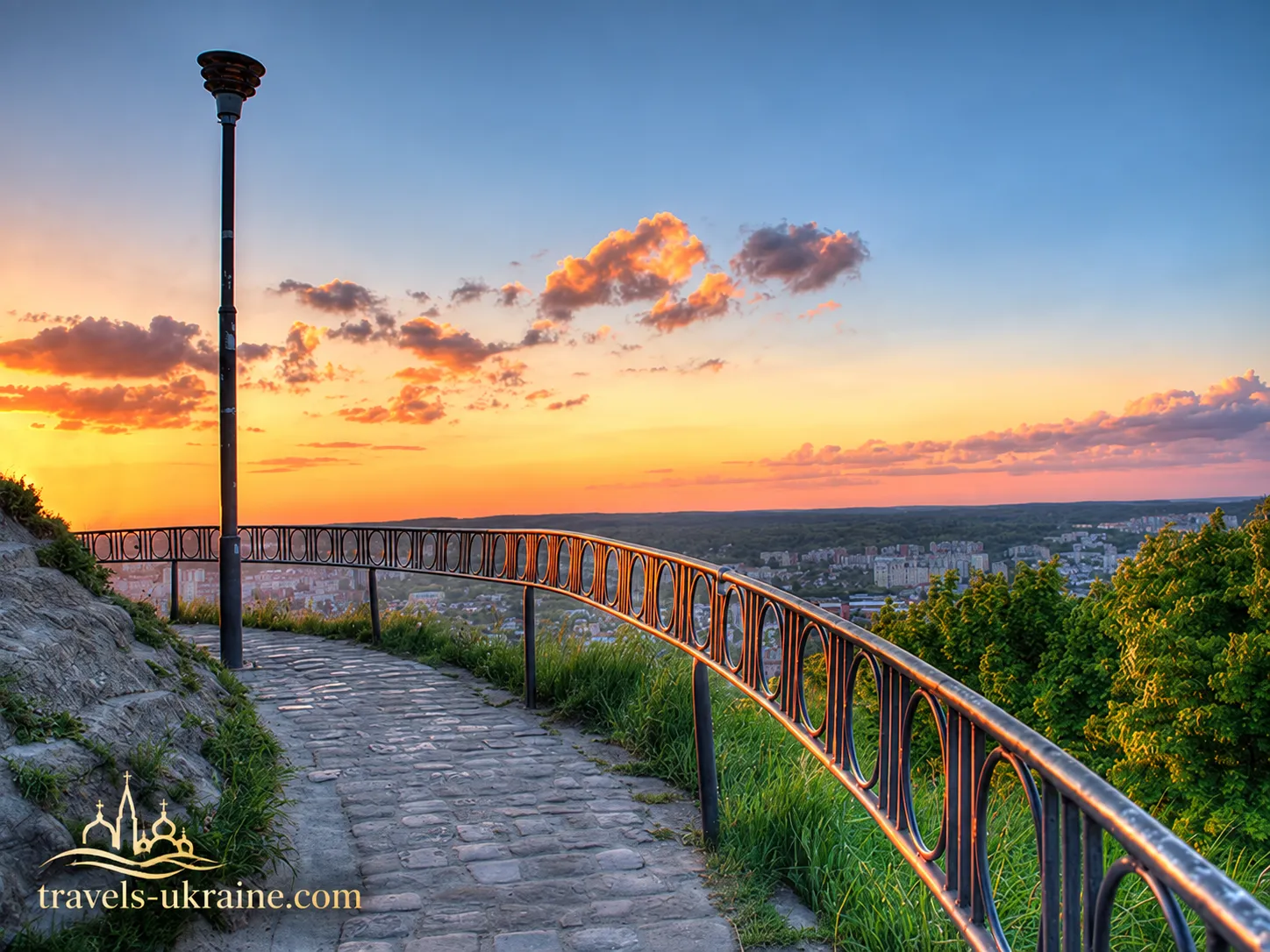
Most tourists climb to High Castle Park primarily for the panorama of Lviv. And that is entirely understandable—from the summit, the city unfolds before your eyes in old neighborhoods, church towers, tiled roofs, and newer districts far beyond the historic center. But if you do not rush straight to the highest point, you can see several other places along the way that help explain High Castle itself.
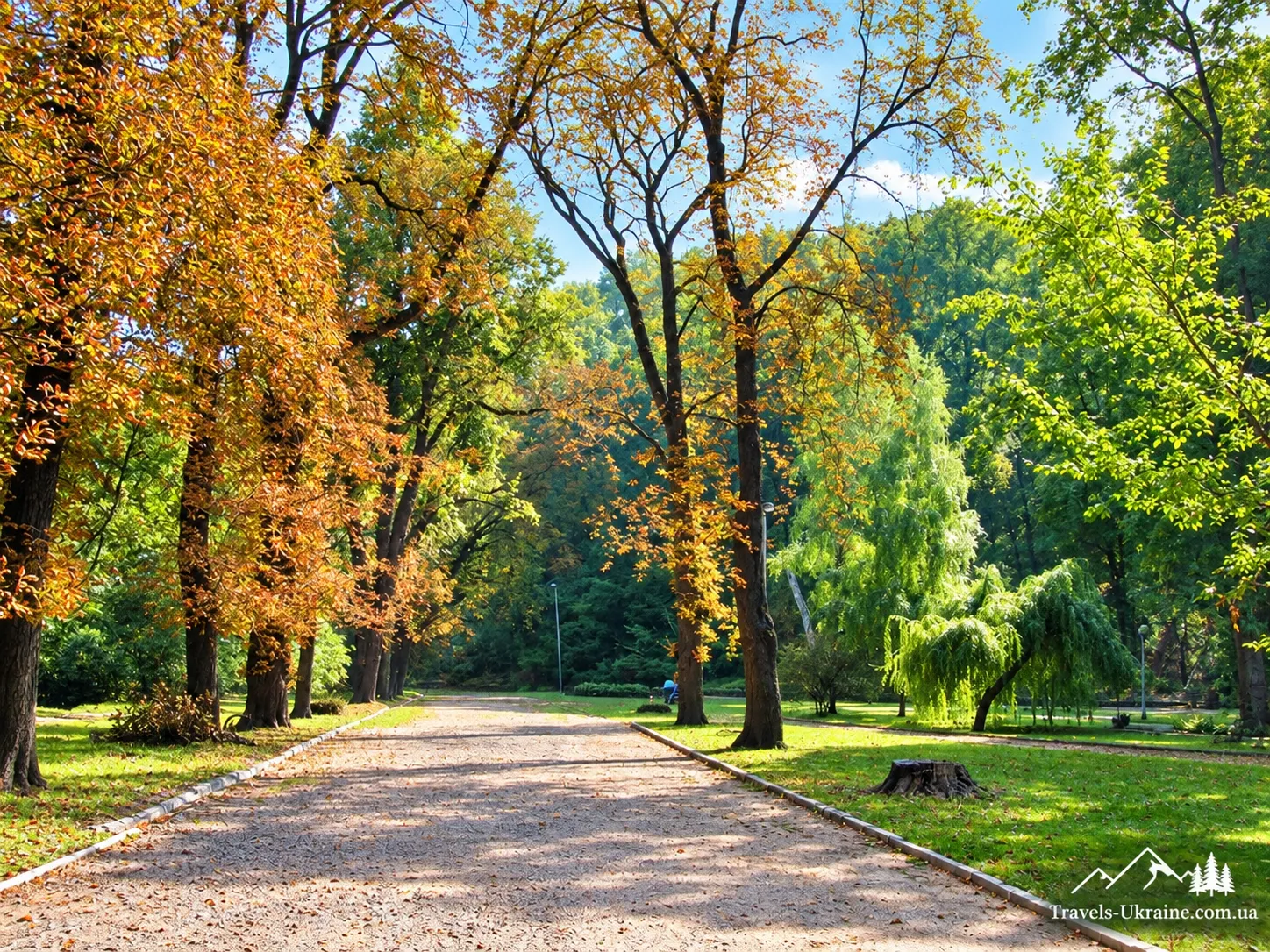
For example, the park has two main levels—the lower and upper terraces. The lower terrace is more reminiscent of a classic urban park, with old trees, broad avenues, benches, and walking paths winding around the slope of Castle Hill. One of its distinctive features is the chestnut and ash-lined avenues. This is a good place to slow down, especially if you have arrived from the busy center of Lviv: after a few minutes of climbing, squares, trams, and cafés give way to trees, slopes, and the quiet of a city park.
The lower terrace also preserves memorials connected with different chapters of Lviv’s history. One commemorates King John III Sobieski’s victory over the Tatar army in 1675; another recalls the capture of High Castle by Cossacks led by Maksym Kryvonos in 1648.

The Grotto with Stone Lions and the Remains of the Real Castle
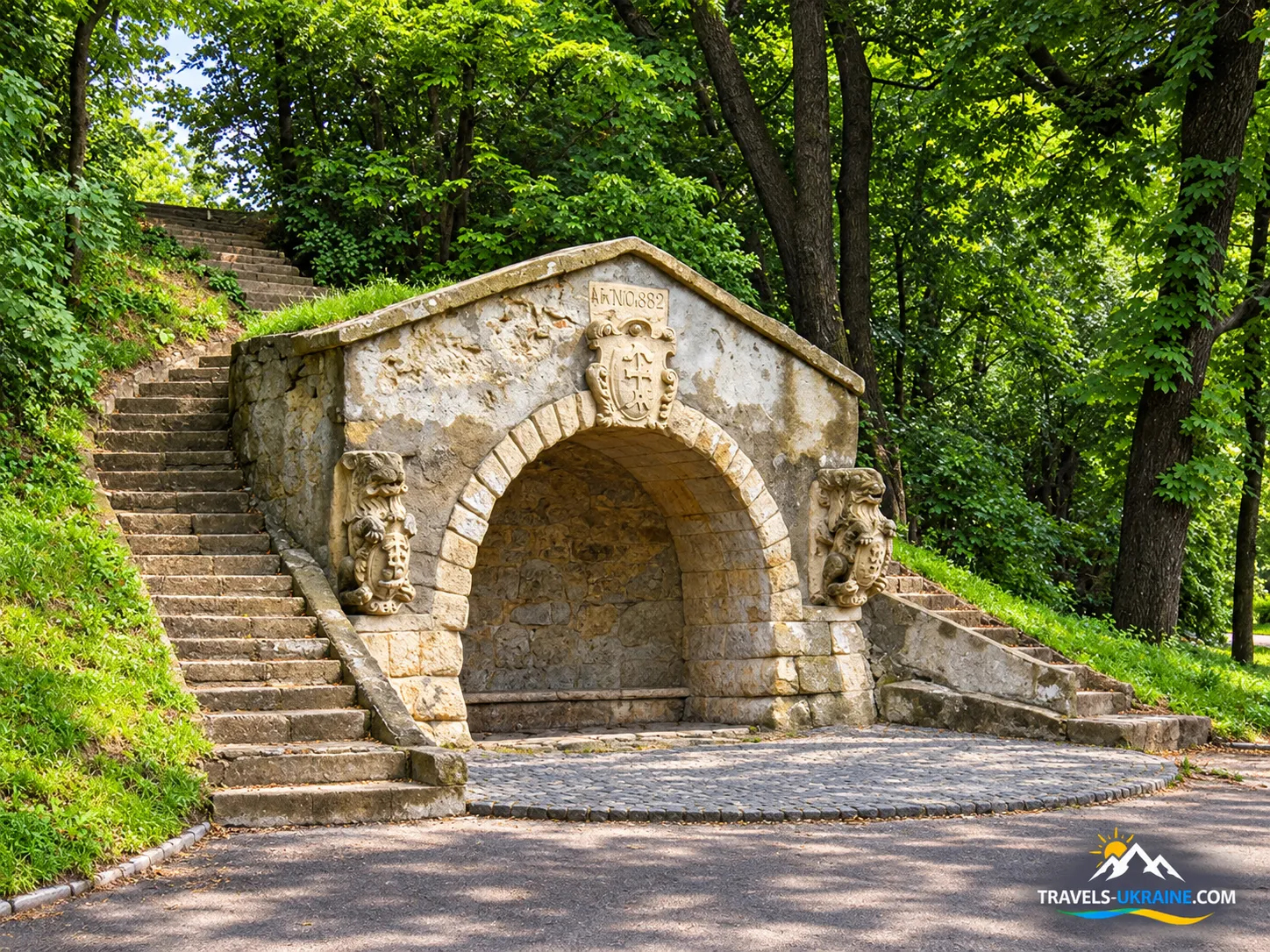
Another interesting feature of the lower part of the park is an artificial grotto, created when High Castle was being developed as an urban recreational area. Stone lions associated with the old Lviv Town Hall stand beside it. This is not a destination worth crossing the entire city for on its own, but on the way to the summit it is a useful reminder that the park was created with a purpose: in the 19th century, it was conceived as a place for walking, relaxation, and views of the city.
Before climbing the Mound, pay attention to the park’s most important historical feature—the remnant of the wall of the medieval High Castle. It is small and, at first glance, looks nothing like the ruins of a large fortress. Only a fragment of the southern wall of the masonry castle has survived from the former defensive structures. That is why tourists expecting to see towers or at least substantial ruins on the hill are sometimes left slightly puzzled.
Historically, however, this is probably the most valuable point in the entire park. Much of the landscape familiar to us today took shape later, while this stone fragment belongs directly to the old defensive complex.
The Mound of the Union of Lublin
The most famous part of the walk begins next—the climb to the Mound of the Union of Lublin. Construction of the artificial mound began in 1869 to mark the 300th anniversary of the Union of Lublin. The work continued for decades, using earth, stone, and some material from the old castle ruins.
The path winds around the embankment, gradually revealing an increasingly broad view. This is where the walk begins to justify all the steps you have climbed. The highest point of the observation deck is located at approximately 413 meters above sea level. This is an important detail: High Castle’s modern highest tourist point lies on an artificial mound, not on the original natural summit of Castle Hill.
The Panorama of Lviv from High Castle
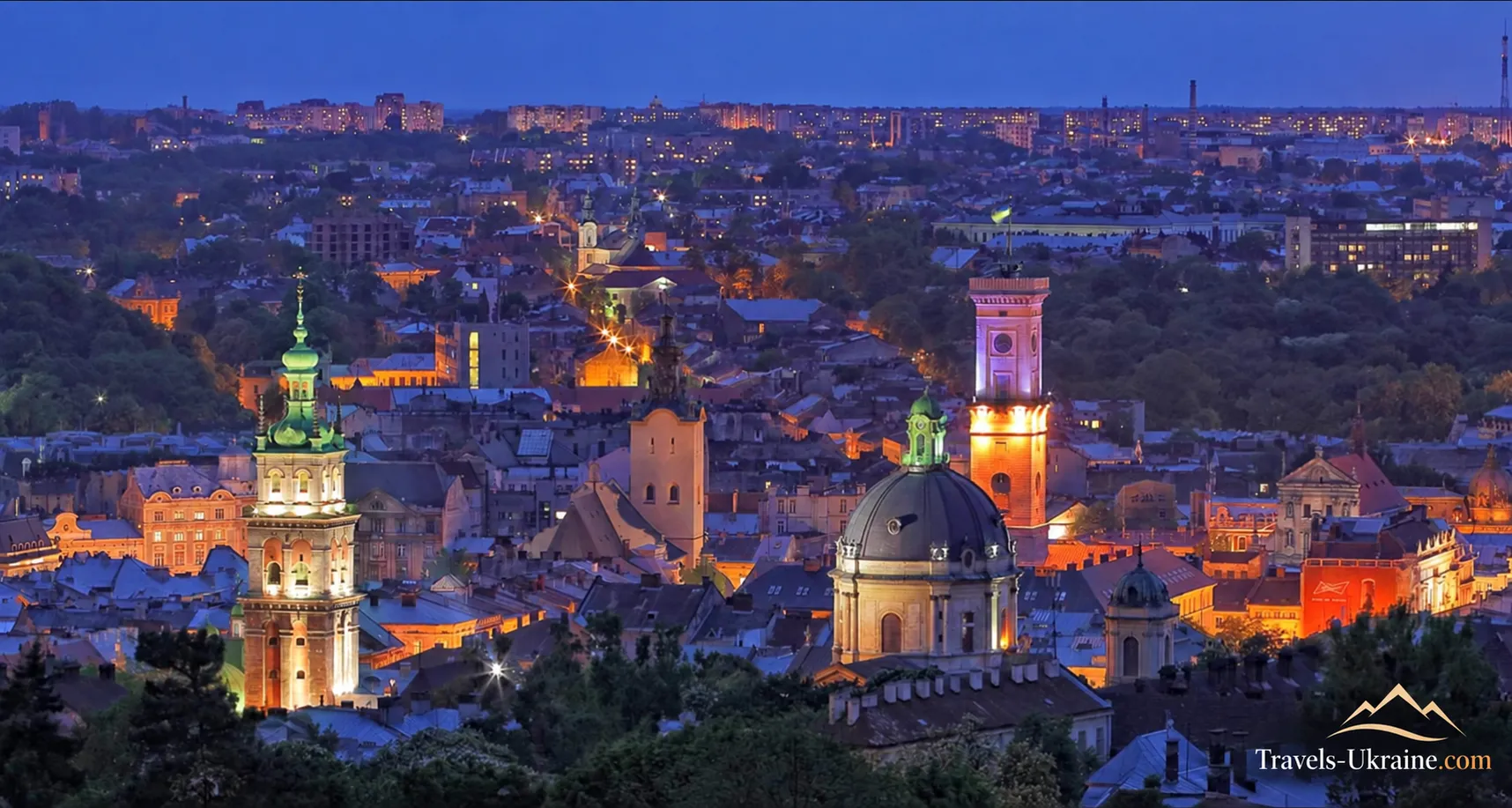
The main reason to climb here is still at the top. The observation deck offers one of the best-known panoramas of Lviv. From here, it is easiest to recognize the historic center: the tower of Lviv Town Hall, the domes and bell towers of old churches, and the dense development of the city center. Modern districts stretch beyond them, and in good weather the horizon extends far beyond Lviv.
The view is especially interesting after a walk through Old Lviv. Below, the streets look like a tangled maze, while from High Castle it suddenly becomes clear how compact the historic core is and how it lies among the surrounding hills. The most pleasant light for photography is usually in the morning or toward evening. At sunset, the observation deck naturally becomes one of the more popular places in the city, so you should not expect complete solitude.
And here it finally becomes clear why High Castle remains popular even without the castle itself. The medieval fortress has almost disappeared, but the site has preserved the very reason it was built here—the ability to see far across Lviv. Only now, instead of a sentry on the wall, there is a tourist with a phone trying to fit the entire city into a single frame.
Frequently Asked Questions About High Castle Park in Lviv
Where is High Castle Park located?
The park is located on Castle Hill, directly above Lviv’s historic center. The city’s official tourism website lists the address as Vulytsia Zamkova. The main approach to the park is from Maksym Kryvonos Street, while paths from the Pidzamche district and nearby streets also lead to the slopes.
How do you get to High Castle from central Lviv?
The most pleasant way to climb is on foot from the Old Town. One convenient route leads from the Powder Tower area and the «On the Ramparts» Square toward the Memorial to the Heroes of the Heavenly Hundred, then along Zamkova Street to the park. Another route follows Maksym Kryvonos Street, from which you can reach the upper part of the park directly.
Is there an admission fee for High Castle Park?
The park and observation deck are open urban spaces. The official Lviv tourism portal does not list a separate admission ticket for visiting the park or the Mound of the Union of Lublin. Unlike some paid observation decks in Lviv, this is a place people visit simply for a walk.
Is there a real castle at High Castle?
There is no complete castle today. Only a small fragment of the defensive wall remains from the former masonry fortress. Therefore, the name «High Castle» refers to the historic site, not to a preserved castle building. The modern tourist complex consists primarily of a park, the remains of the fortifications, and an observation deck.
How high is High Castle?
The upper observation deck on the Mound of the Union of Lublin is located at approximately 413 meters above sea level. It is important to note that the highest tourist point itself is a 19th-century artificial embankment built above natural Castle Hill.
How much time is needed for a walk around High Castle?
If your goal is simply to climb to the observation deck, take photos of the panorama, and return to the center, approximately an hour and a half is enough, including the climb. For a relaxed walk along the lower terrace, a look at the grotto and castle remains, and stops to enjoy the views, it is better to allow about two hours.
When is the best time to climb High Castle?
For photography, the morning and evening hours are especially pleasant, when the light is softer. Lviv’s official tourism portal specifically recommends early morning for those who want to see the panorama without large crowds. During the popular tourist season, the upper deck can be quite busy during the day.
Can you drive to High Castle?
Yes, you can drive or take a taxi up Maksym Kryvonos Street to the park entrance area. There is a parking area near the upper part of the street. However, you cannot drive directly to the Mound of the Union of Lublin—the final part of the route to the observation deck must be completed on foot.
Is High Castle accessible with a stroller?
The park’s lower paths are much easier to walk, but the climb to the upper lookout includes stairs, switchbacks, and a noticeable change in elevation. The walk is possible with a stroller, but not along every route, and it will be less comfortable than a regular climb on foot. With small children, it is better to choose the gentlest route in advance and not plan on a quick ascent.
Is it worth climbing High Castle if you have little time in Lviv?
Yes, especially if this is your first trip to Lviv and you want to see the historic center from above. High Castle is located very close to the Old Town, so it is easy to include even in a short itinerary. The main thing is not to expect a large medieval fortress: come here primarily for the panorama, the walk, and the history of the place.
High Castle — is it worth the climb?
Is it worth climbing High Castle? Yes, it is. But not because a medieval fortress awaits you at the top. Very little remains of the old High Castle, and if you come here specifically for towers, walls, and castle halls, you may easily be disappointed. Today, it is no longer a castle in the usual sense, but a place where Lviv’s history lives on in the name, a few fragments of the old wall, and the very terrain of the hill.
The true value of this place today lies elsewhere. It is a short walk from the bustling center to a green hill, with a few historical details along the way and that moment when Lviv suddenly lies below you — with its towers, rooftops, old neighborhoods, and new districts stretching far beyond the city center. And the higher you climb, the more your perception of the city changes: what seemed below like a chaotic tangle of streets begins to look from above like one vast and unmistakably Lviv panorama.
There is another pleasant thing about this walk: it does not require a whole day or complicated planning. High Castle is very close to the center, so it is easy to climb up between other walks around Lviv, linger at the lookout, take a short break, and return to the city. And if you arrive toward evening, Lviv below gradually begins to light up — making the familiar panorama look completely different.
Of course, Lviv also has other viewpoints where you can see the city from above. But High Castle has its own special atmosphere. You do not feel that you have simply climbed another tower for the sake of a photograph. There is a park, old trees, the history of the place, the remains of the fortress, and the path itself, which gradually takes you farther from the noise of the central streets.
And for this view, even several dozen minutes of climbing do not seem excessive at all. So people come to High Castle ostensibly looking for an old fortress, but find something entirely different — Lviv, which for a few minutes lies right before you. And perhaps it is at that moment that it becomes clear why even those who have known the city for a long time and have seen it from below many times still return here.


No Comment
You can post first response comment.