
 English
 Українська
 Български
 Hrvatski
 Čeština
 Dansk
Dansk Nederlands
 Eesti
Eesti Suomi
Suomi Français
 Deutsch
 Ελληνικα
 Magyar
 Íslenska
 Italiano
 Latviešu
 Lietuvos
 Polski
 Português
 Română
 Русский
 Српски
 Slovenčina
 Slovenščina
 Español
 Svenska
 Türkçe
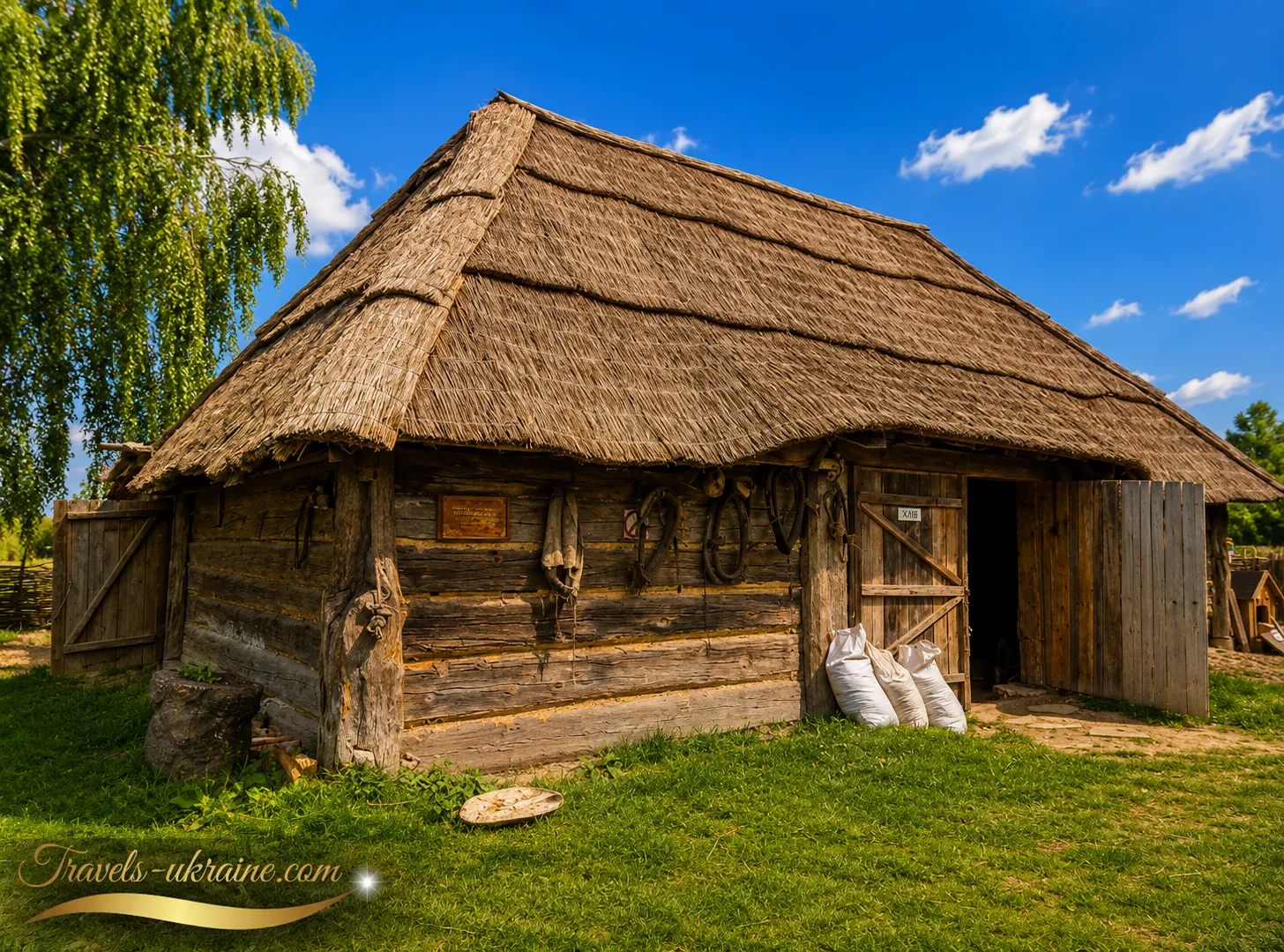
Museum of the History of Agriculture of Volyn is a place where the past is not hidden behind glass but appears before travelers in the form of wooden houses, farm buildings, antique tools, woven towels, and objects used every day by residents of Volyn’s villages. The museum combines a traditional exhibition with an open-air space. As a result, a visit feels less like an ordinary tour of museum halls and more like an unhurried journey through the history of farming, crafts, and peasant life.
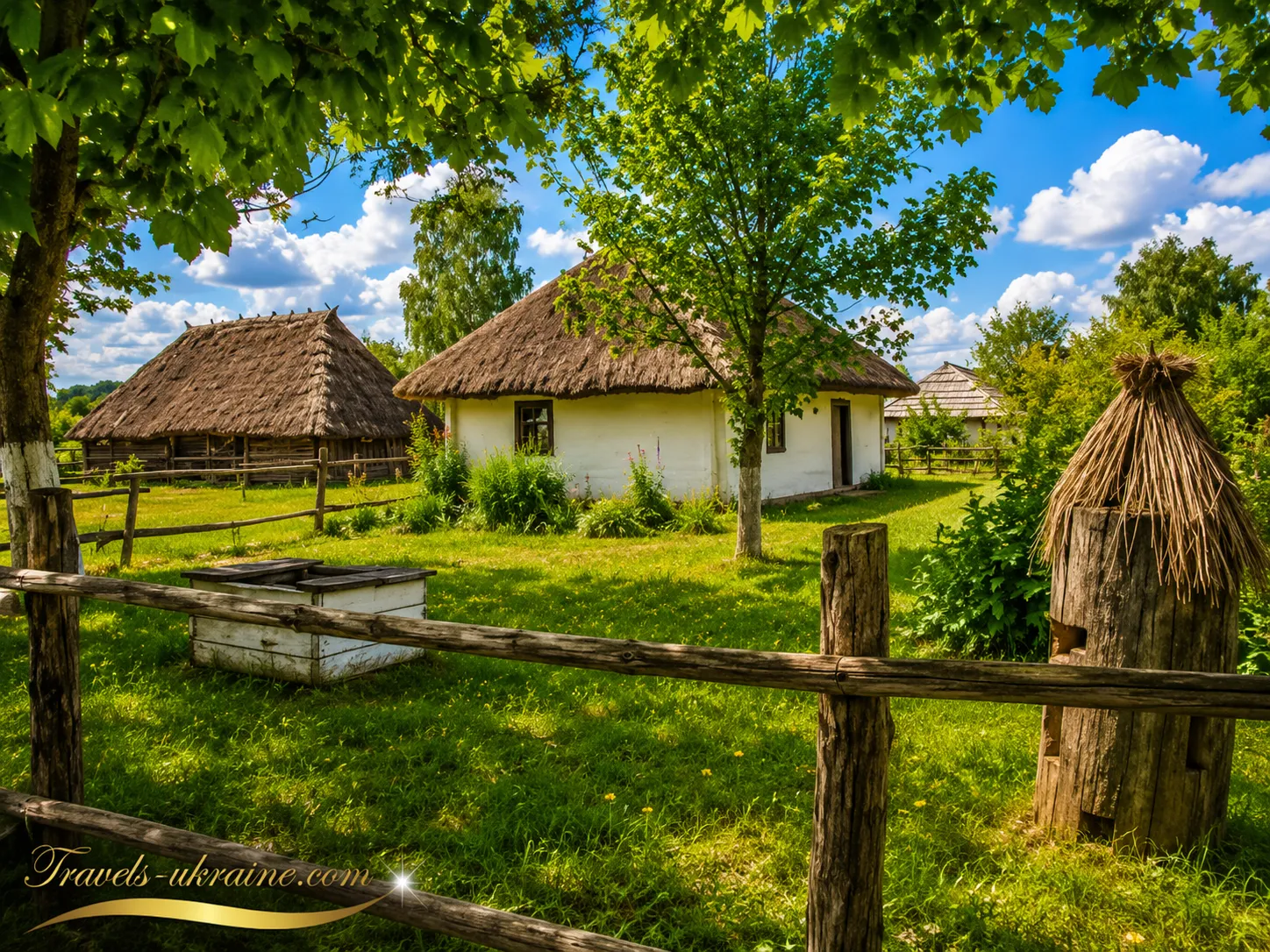
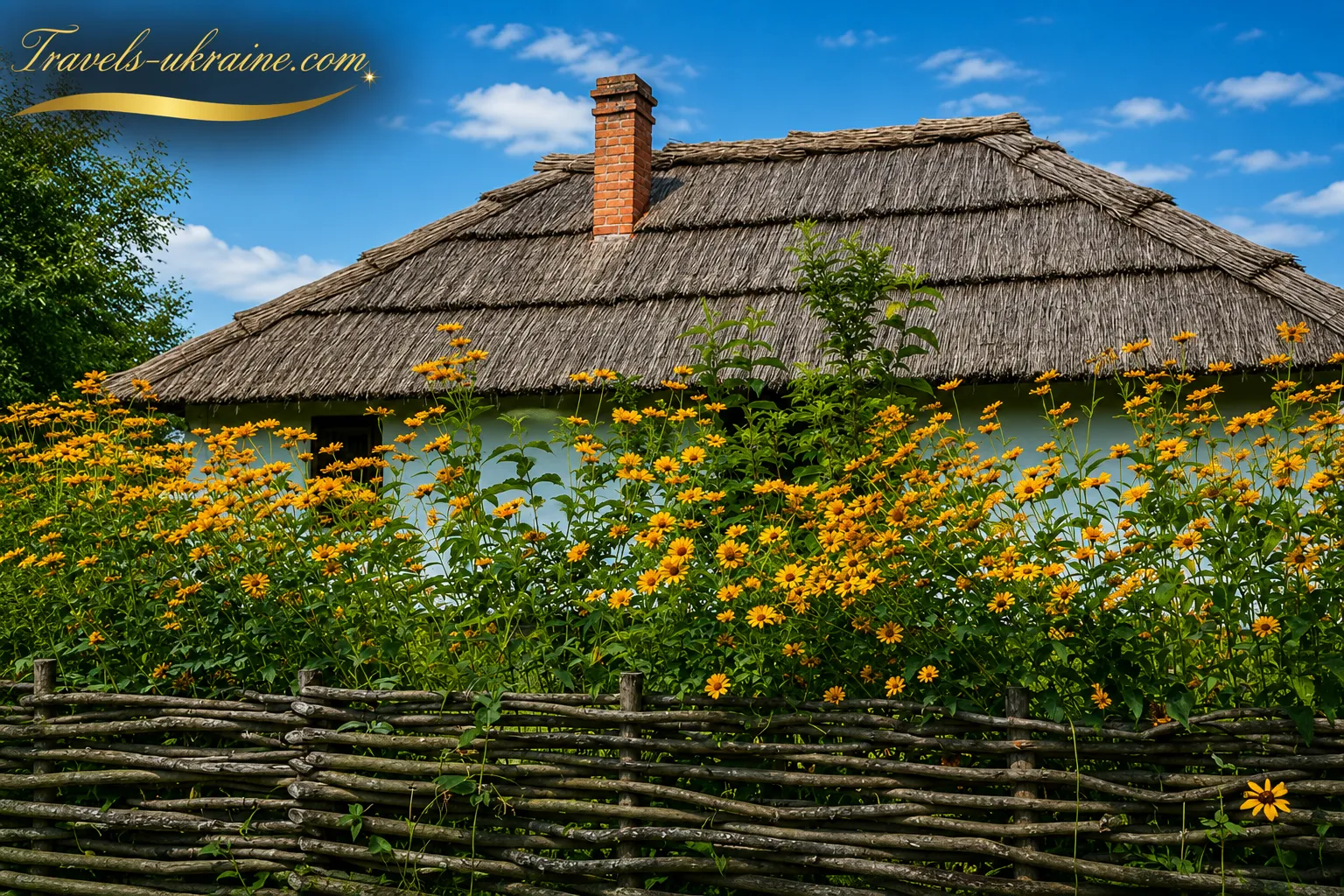
Today, the Rokyni Museum is one of the region’s most fascinating ethnographic sites. Here, visitors can see how a Volyn peasant homestead was arranged, what tools were used to cultivate the land, where grain was stored, how a forge operated, and why every farm building had a clearly defined purpose. The grounds recreate the environment of a traditional Volyn village, so an old house, barn, granary, well, wattle fence, or windmill is perceived not as a separate decoration but as part of a unified living space.
The Museum of the History of Agriculture of Volyn — an open-air museum is especially valuable because it tells visitors not only about the technical development of farming. Its exhibitions help explain the worldview of people for whom the land was a source of food, the foundation of family prosperity, and an important part of spiritual culture. A plow, sickle, millstone, wooden cart, or loom becomes evidence here of daily labor, the experience of many generations, and the ability to adapt to the natural conditions of Polesia and Volyn.
For tourists, this ethnographic museum near Lutsk reveals Volyn from another perspective—not only as a land of castles, churches, and lakes, but also as a region with a well-established culture of land management. The museum halls trace the development of agriculture in the region, the origins of farming and livestock breeding, improvements in tools, the spread of household crafts, and methods of processing agricultural raw materials. The open-air exhibition complements this story with authentic examples of wooden residential and farm architecture.
That is why the open-air museum in Rokyni will appeal not only to historians and ethnographers. It is worth visiting with children, school groups, photographers, admirers of folk architecture, and anyone looking for a meaningful weekend getaway near Lutsk. It is much easier for a child to understand what a smokehouse, barn, or traditional agricultural tool is when these objects can be seen in their natural setting, compared with one another, and imagined in use.
Why the Volyn open-air museum helps preserve Volyn’s cultural heritage
The word «skansen» means an open-air museum where architectural structures, household objects, and elements of the traditional landscape are presented in an environment as close as possible to their historical setting. This format is especially important for wooden folk architecture: old houses, forges, barns, and other farm buildings are gradually disappearing from modern villages, and with them, knowledge of traditional construction techniques and the organization of peasant households is being lost.
The Rokyni open-air museum preserves not an abstract image of a Ukrainian village but the specific features of traditional life in Volyn. Here, folk architecture meets ethnography, the history of farming, crafts, folklore, rituals, and the natural surroundings. Through objects from peasant life, the museum tells of men’s and women’s work, raising children, preparing for winter, making clothing, caring for livestock, festive customs, and mutual aid within the community.
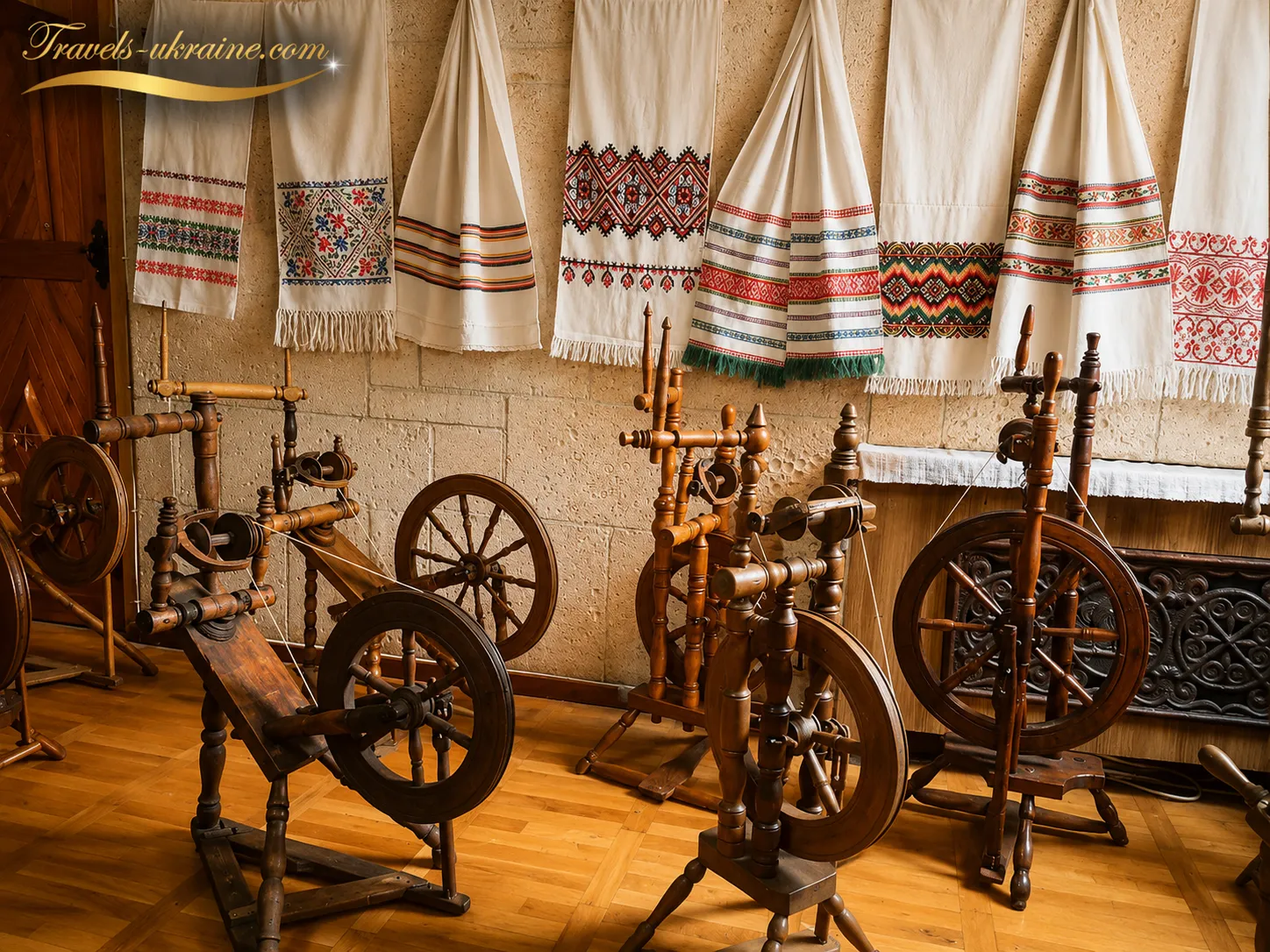
A visit to the museum offers a new perspective on ordinary things. An old wooden spoon, a Volyn woven towel, a clay pot, or a traditional plow can tell us as much about its time as a written document. Behind every exhibit stand human labor, family memory, and a way of life shaped over centuries.
Yet a true introduction to the Rokyni Museum is only beginning. Ahead lie old houses that seem still to preserve the warmth of the family hearth, a silent windmill, a forge carrying the memory of the craftsmen’s hard work, and objects touched by the hands of generations of Volyn residents. Do not hurry away from this page: next, we will uncover the history of this unique open-air museum, explore the most fascinating corners of a Volyn village, and discover what secrets its old buildings conceal. Keep reading—by the end of the article, Rokyni may become the next place you want to visit with your whole family.
History of the Volyn Museum of Agriculture in Rokyni
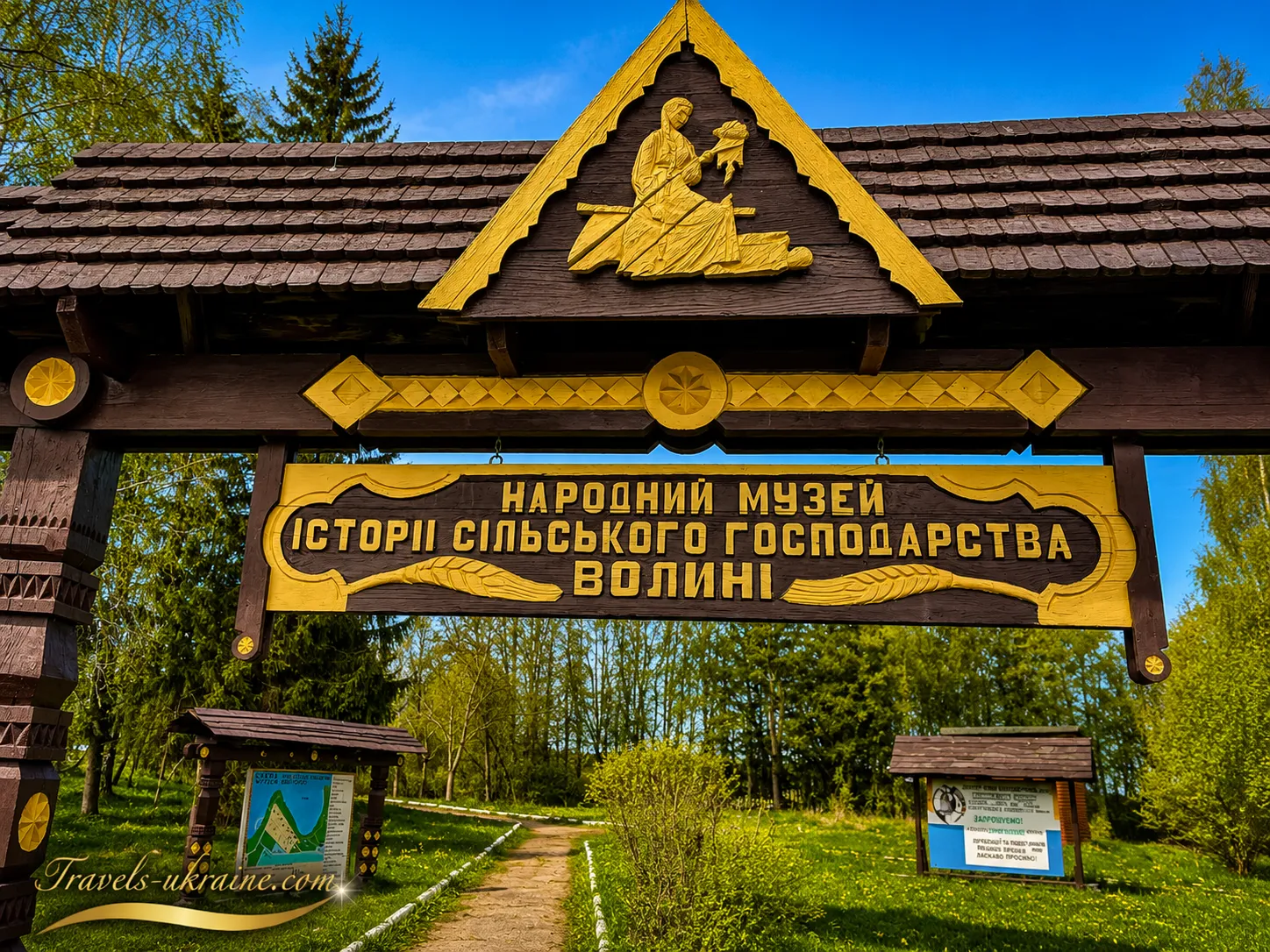
The story told today by the Museum of the History of Agriculture of Volyn did not begin with the ceremonial opening of a large museum complex, a red ribbon, and lengthy speeches. It was sparked by the realization of a simple yet troubling truth: the traditional Volyn village was changing rapidly. Old wooden houses were being rebuilt or dismantled, hand tools were giving way to new machinery, and objects once essential to every household were moving into attics and storerooms. There they waited for years until someone finally asked: «What is this, and how was it actually used?»
Along with these objects, the memory of how earlier generations of Volyn residents lived, worked, and organized their households could also have disappeared—without electric combine harvesters, robot vacuum cleaners, or online video tutorials. The desire to preserve this part of history became the foundation of the future museum space. The museum was founded in Rokyni in 1978 as a department of the Volyn Agricultural Research Station. The first exhibition hall opened in 1979, and from then on old plows, millstones, carts, and objects from peasant life had a chance not merely to gather dust in silence but to tell visitors their own remarkable stories.
Establishment of the Museum of the History of Agriculture of Volyn in Rokyni
The initiative to create the museum is associated with Petro Tesliuk, who headed the Volyn Agricultural Research Station. Its co-founder, researcher, and longtime director was the historian, local scholar, and publicist Oleksandr Serediuk. His persistent collecting and research work largely shaped the future exhibition. In other words, while someone looking at an old plow saw only unnecessary metal in a shed, the researcher already understood that he was looking at a future museum exhibit with its own biography.
Creating the museum was not limited to purchasing ready-made collections—and it is unlikely that a catalog titled «Complete 19th-century Volyn Village Set with Delivery» ever existed. Exhibits were sought during local-history trips through Volyn’s villages, hiking expeditions, archaeological surveys, and meetings with elderly residents. Staff and enthusiasts recorded memories, studied the purpose of old objects, and searched for traditional tools, household items, examples of folk clothing, textiles, documents, and photographs. Quite often, the most valuable discovery was waiting not in an archive but in a dark corner of a barn, where its owner had kept it for years, saying: «It would be a shame to throw it away, but no one remembers what it was for anymore.»
In this work, it was especially important not merely to find an old object but to reconstruct its history. Who used it? In which village was it made? What task was it intended for? How did it differ from similar objects in other parts of Volyn? Sometimes an old object raised more questions for researchers than modern equipment with instructions written in an incomprehensible language. Yet thanks to this careful approach, an ordinary sickle, plow, millstone, or wooden vessel ceased to be merely «something old from Grandma’s storeroom» and became a full-fledged historical testimony to the work, daily life, and ingenuity of Volyn’s peasants.
How the Rokyni open-air museum began taking shape in 1989
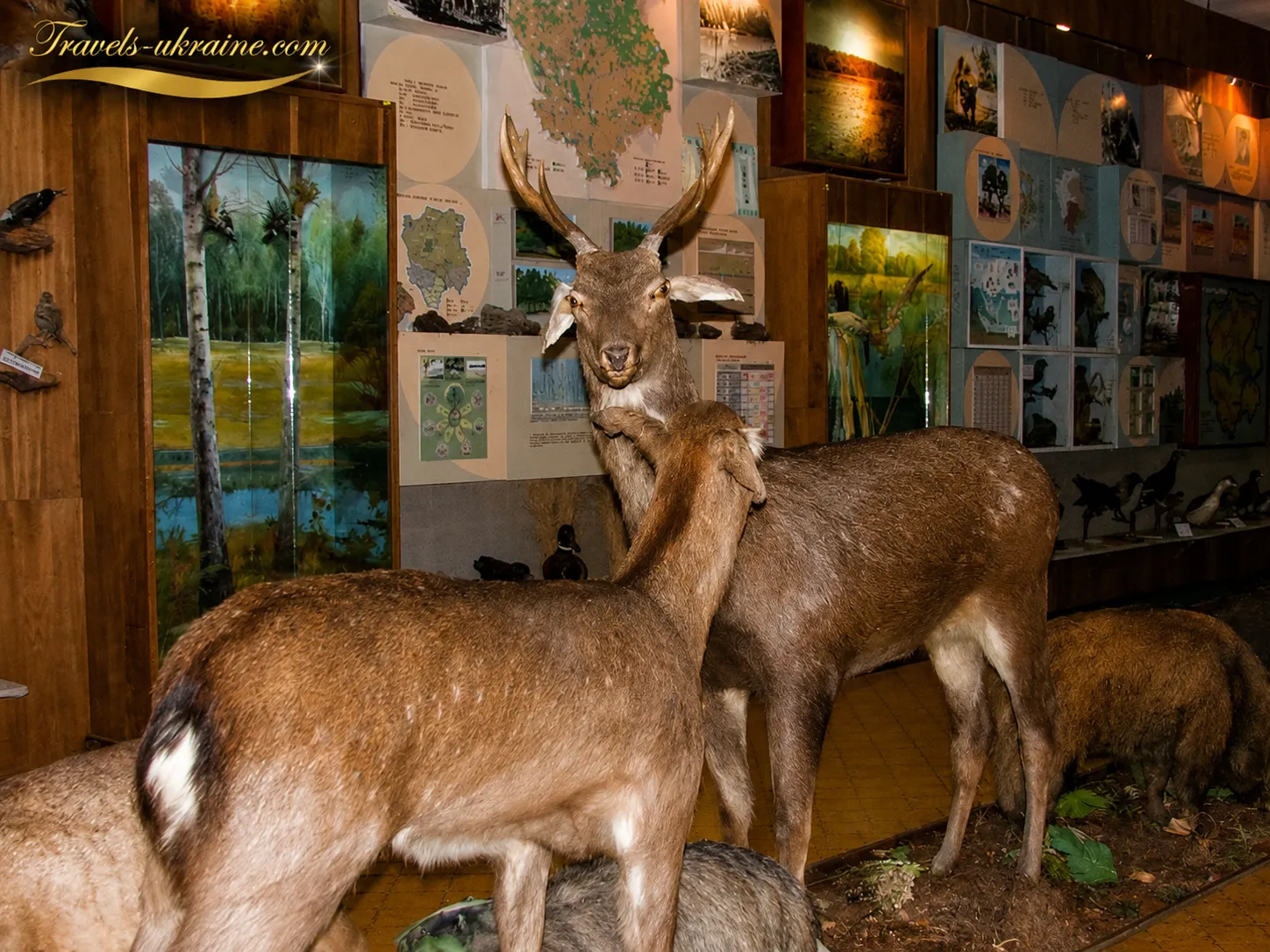
Gradually, a small initiative grew into a major local-history and cultural-educational project. The exhibition expanded, acquired new materials, and covered an increasing number of topics. Visitors learned about the origins of farming, the development of livestock breeding, improvements in tools, the processing of agricultural raw materials, folk crafts, Polesian weaving, and the region’s nature and ecology.
A new stage began in 1989, when a functioning open-air exhibition started taking shape on the grounds of the Rokyni Arboretum. This was how the Volyn open-air museum emerged—a space where history could be presented not only through individual exhibits but through entire architectural complexes.
Examples of wooden residential, farm, and household architecture were brought to Rokyni. The structures were dismantled, transported, and restored on the museum grounds, with efforts made to preserve their construction and distinctive regional features. This is how old houses, a cowshed, cellar, forge, bathhouse, windmill, and other elements of traditional Volyn farm life came to be found here.
Why the history of the Rokyni Museum matters to Volyn’s cultural heritage
The museum’s significance lies not only in the number of exhibits it has collected. Its staff effectively saved part of the material world of the Volyn village from disappearing. Along with old houses, woven towels, folk clothing, and pottery, they preserved knowledge of farming, livestock breeding, household crafts, family traditions, and everyday work.
Volyn’s cultural heritage consists not only of famous castles, churches, and written documents. Equally important are the things used by ordinary people: a wooden cradle, an old cart, a loom, a plow, a clay pot, or an embroidered towel. They help us see history not through the lives of rulers but through the experience of families who cultivated the land, built homes, and passed their skills on to their children.
- 1978 — the museum was founded at the Volyn Agricultural Research Station.
- 1979 — the first museum hall opened to visitors.
- 1983 — the institution was granted the status of a folk museum.
- 1989 — the open-air exhibition began to be created on the grounds of the Rokyni Arboretum.
Today, while walking around the museum grounds, it is easy to forget that most of these structures once stood in different villages across Volyn. They were brought together in Rokyni to create a space where the past can not only be seen but felt. Yet every old house, barn, or forge has its own origin, construction, and rescue story. In the next section, we will take a closer look at the architectural features of the open-air museum and find out why an apparently ordinary Volyn homestead conceals far more secrets than can be noticed during a quick walk.
Architectural and natural features of the Rokyni open-air museum
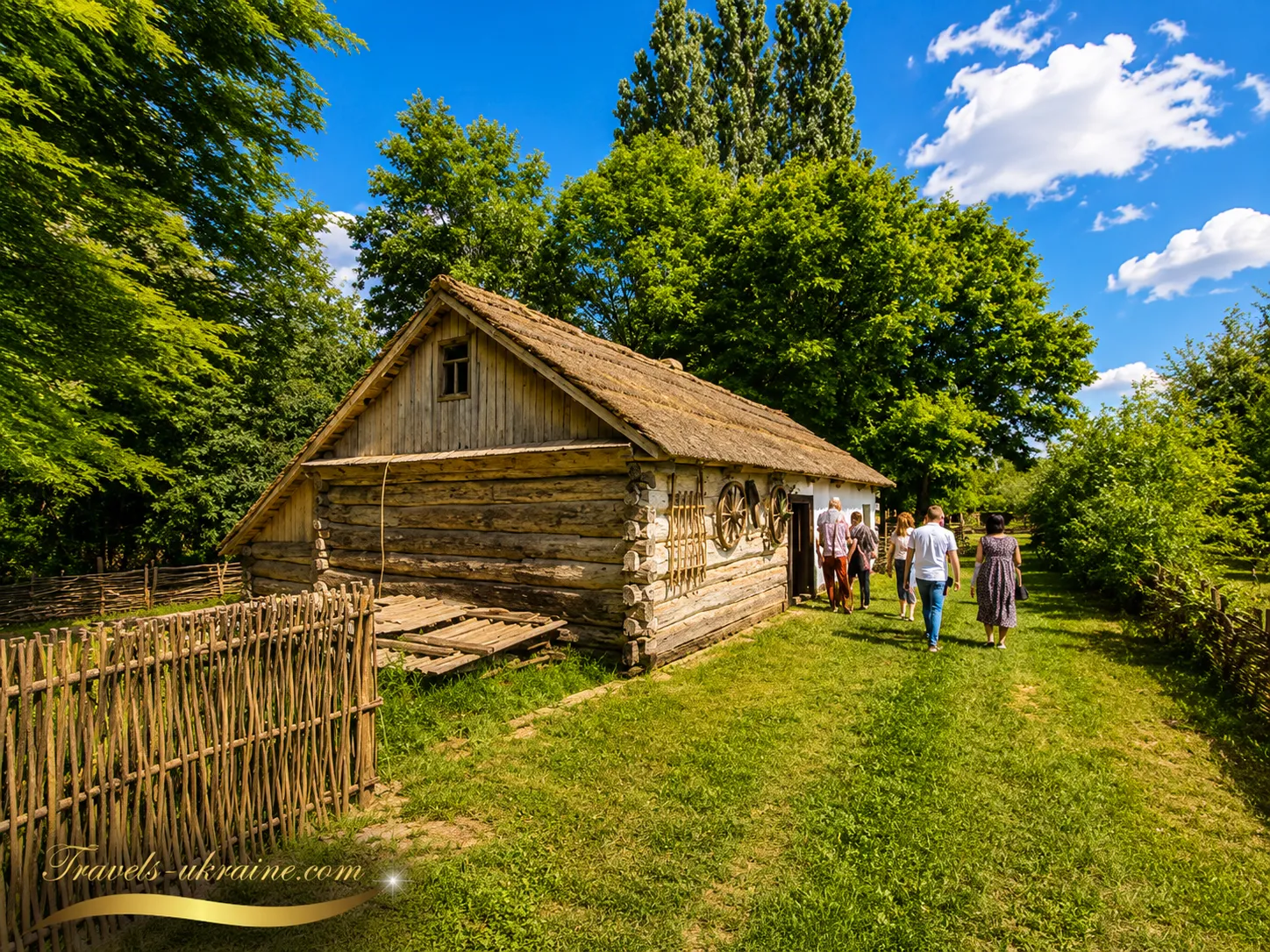
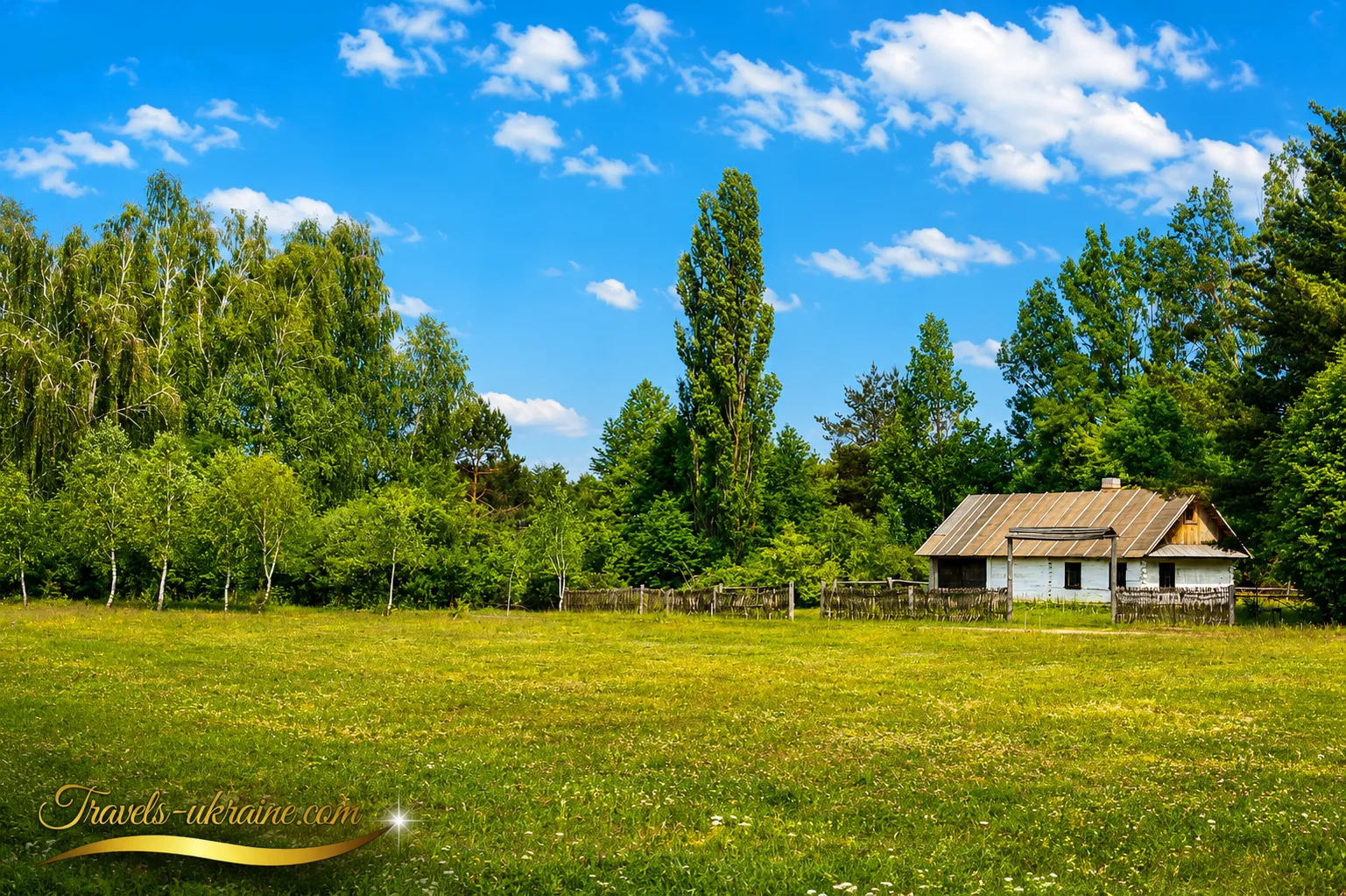
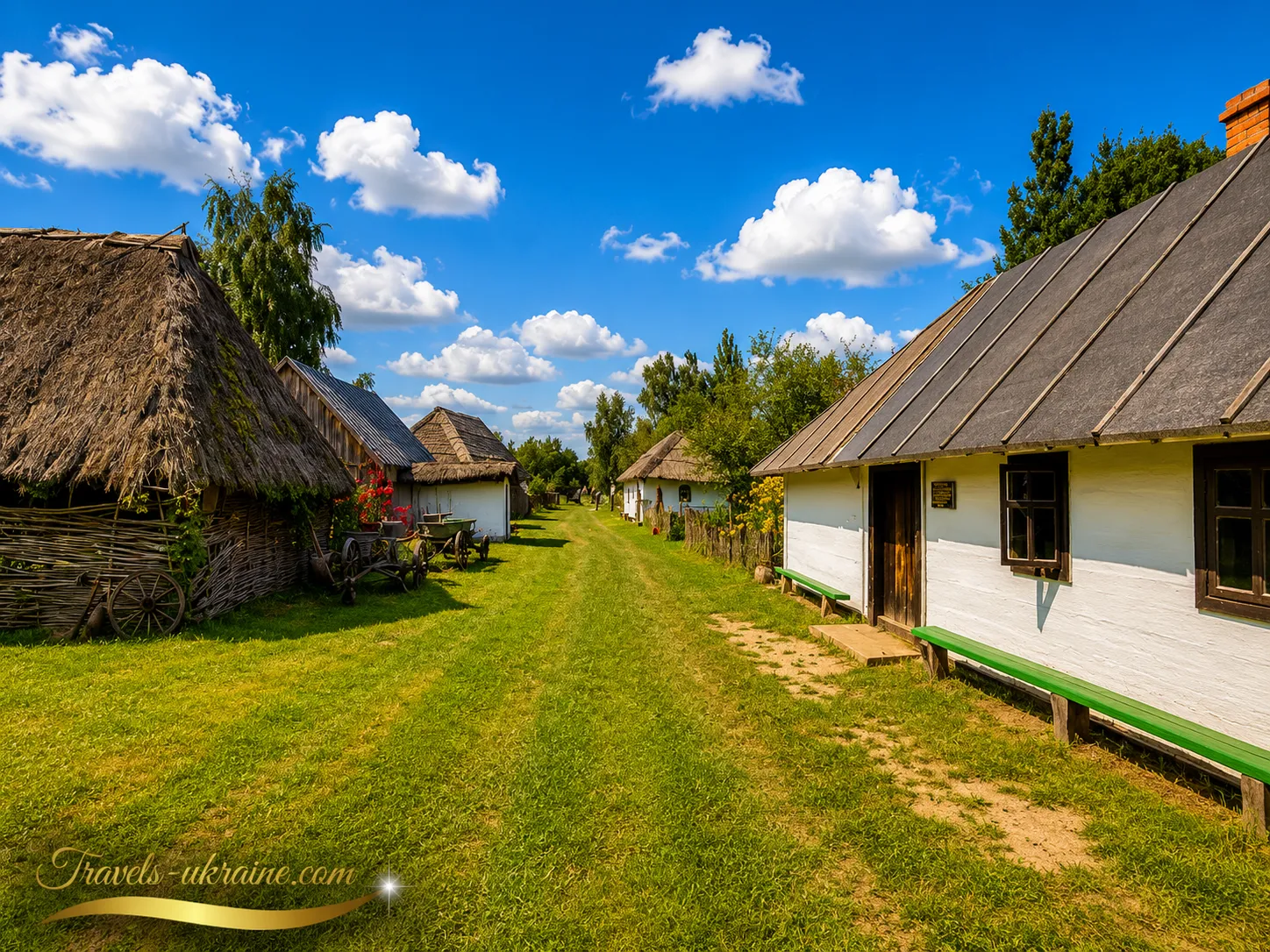
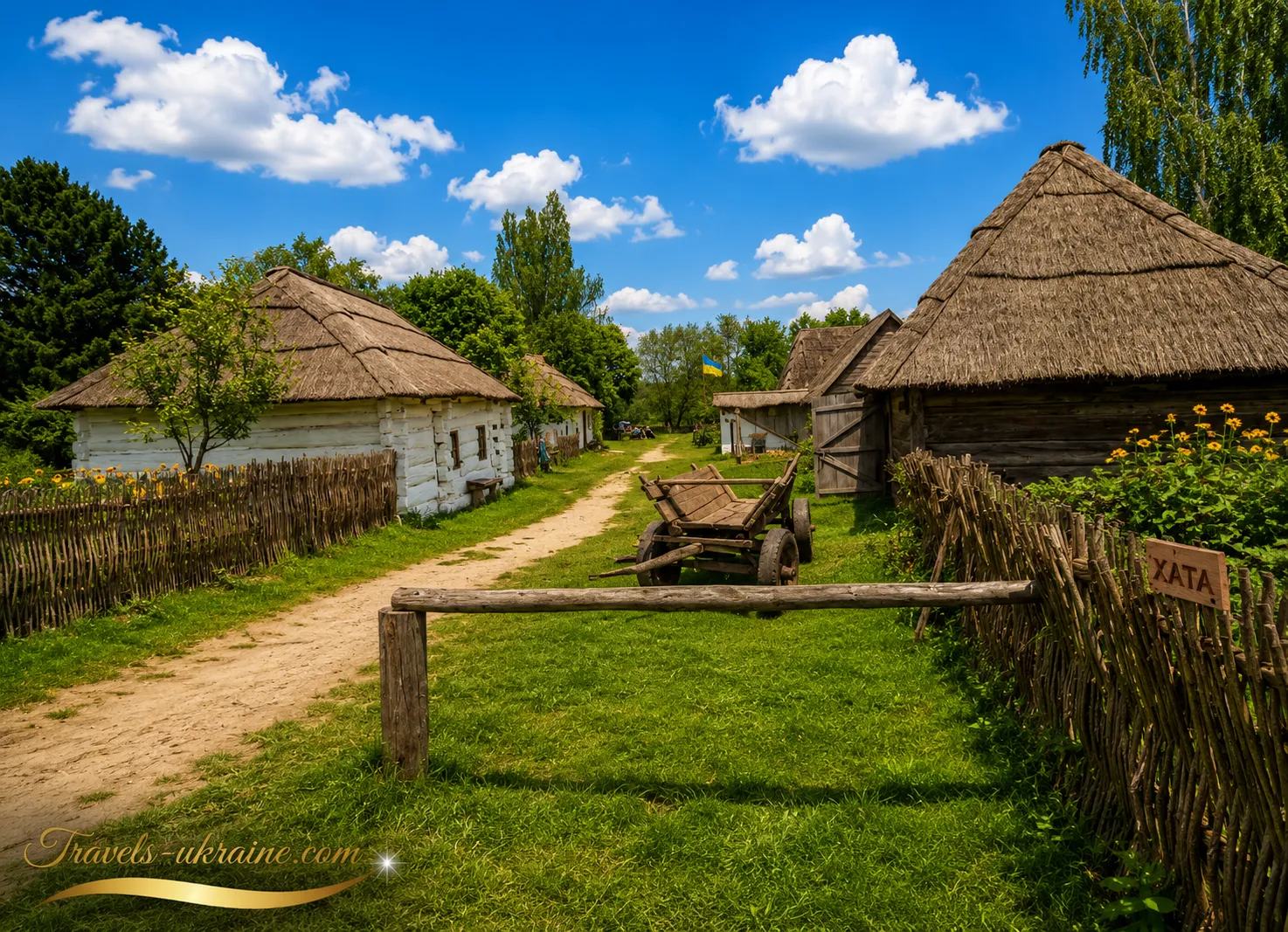
The Museum of the History of Agriculture of Volyn in Rokyni should be viewed not as a collection of separate old buildings but as a small Volyn village seemingly suspended between two eras. There is no urban noise, advertising, or rush here. Instead, there are wooden houses, thatched roofs, farm buildings, woven fences, an old windmill, and the green paths of the arboretum. Simply walk through the museum gate, and the modern pace of life begins to slow noticeably. Even the phone in your pocket seems to suggest: «Maybe this time we should just look around?»
The open-air exhibition is located on the grounds of the Rokyni Arboretum. The natural surroundings are not an accidental backdrop but an important part of the museum space. Old trees, grassy paths, open courtyards, and seasonal changes help visitors see the monuments of Volyn folk architecture in an environment as close as possible to that of a traditional village.
In spring, the open-air museum fills with birdsong—it seems the feathered visitors conduct their own tours here, albeit without advance booking or a fixed route. In summer, the museum is so convincingly engulfed in greenery that the old houses sometimes have to be literally searched for among the trees. In autumn, the grounds take on warm golden hues and become an ideal place for photographs, after which acquaintances will inevitably ask: «Is this really Volyn, not a set from a historical film?» In winter, the snow-covered roofs make the open-air museum look like an illustration from an old Christmas story—all that is missing is a sleigh by the fence and a householder stepping outside to ask why the guests are still standing outdoors.
Old houses in Rokyni as monuments of Volyn folk architecture
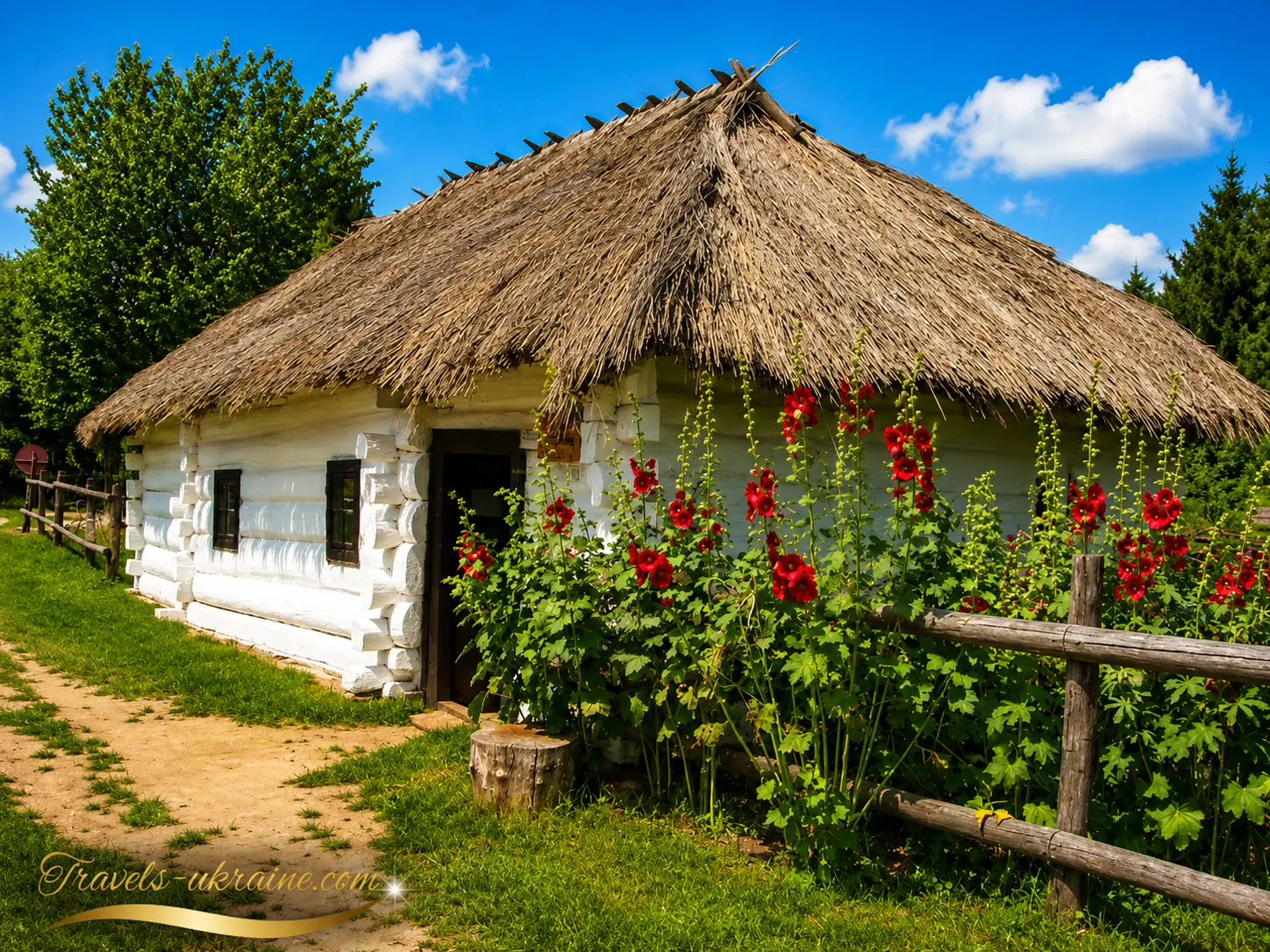
The old houses in Rokyni attract the most attention from visitors. They show how folk architecture adapted to the local climate, available materials, and the needs of a peasant family. Volyn craftsmen had no modern construction software, laser levels, or video tutorials, yet they knew how to build homes that served several generations.
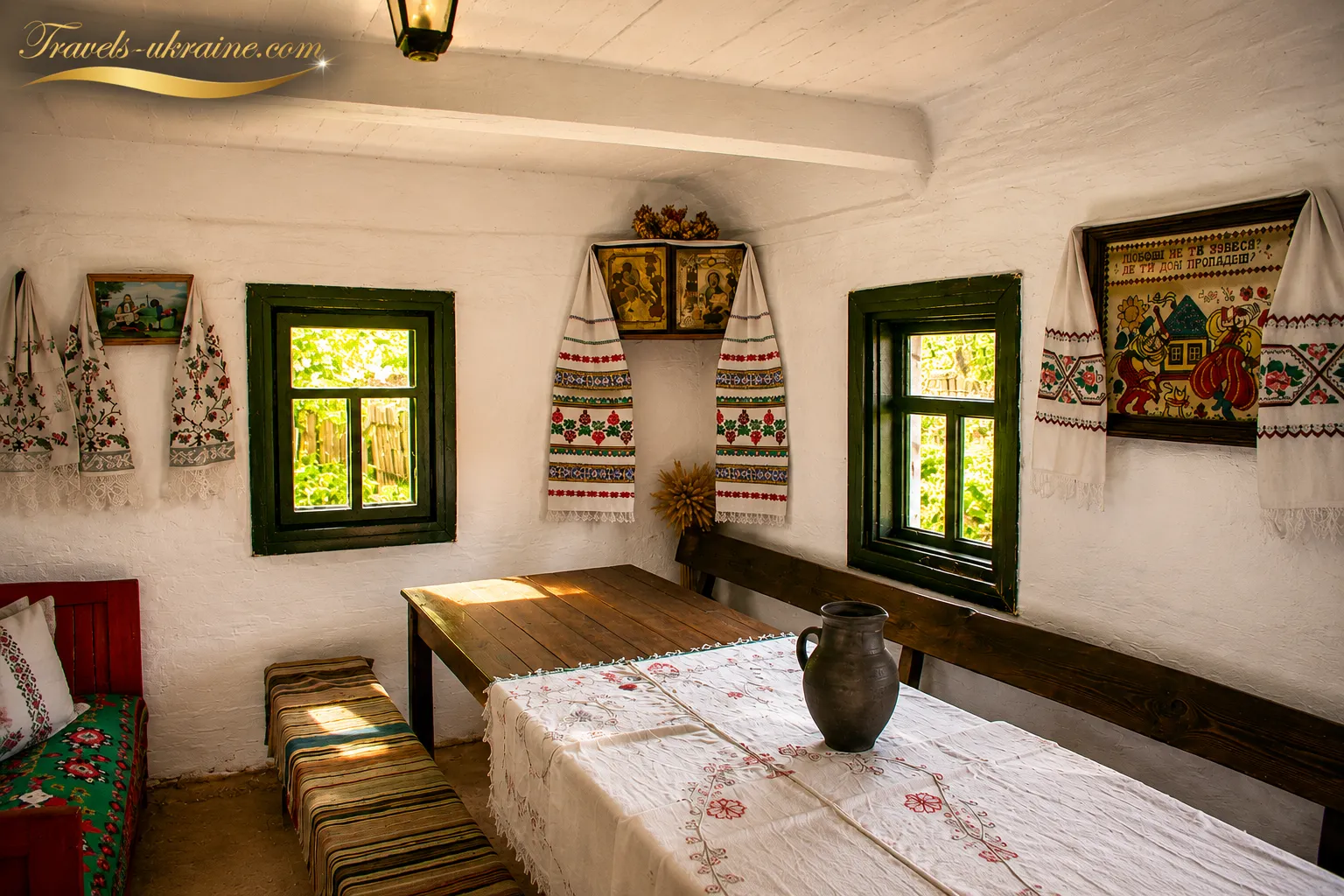
Construction relied mainly on wood because it was readily available, retained heat well, and was easy to work with. The sturdy roof protected the home from rain and snow, while small windows helped keep it warm in winter. The layout of the house was simple but well thought out: each part of the room had its own purpose, and the stove performed several functions at once—it heated the home, helped cook food, dry clothes, and sometimes even served as a place to sleep.
A smoke house in Volyn dating from 1875
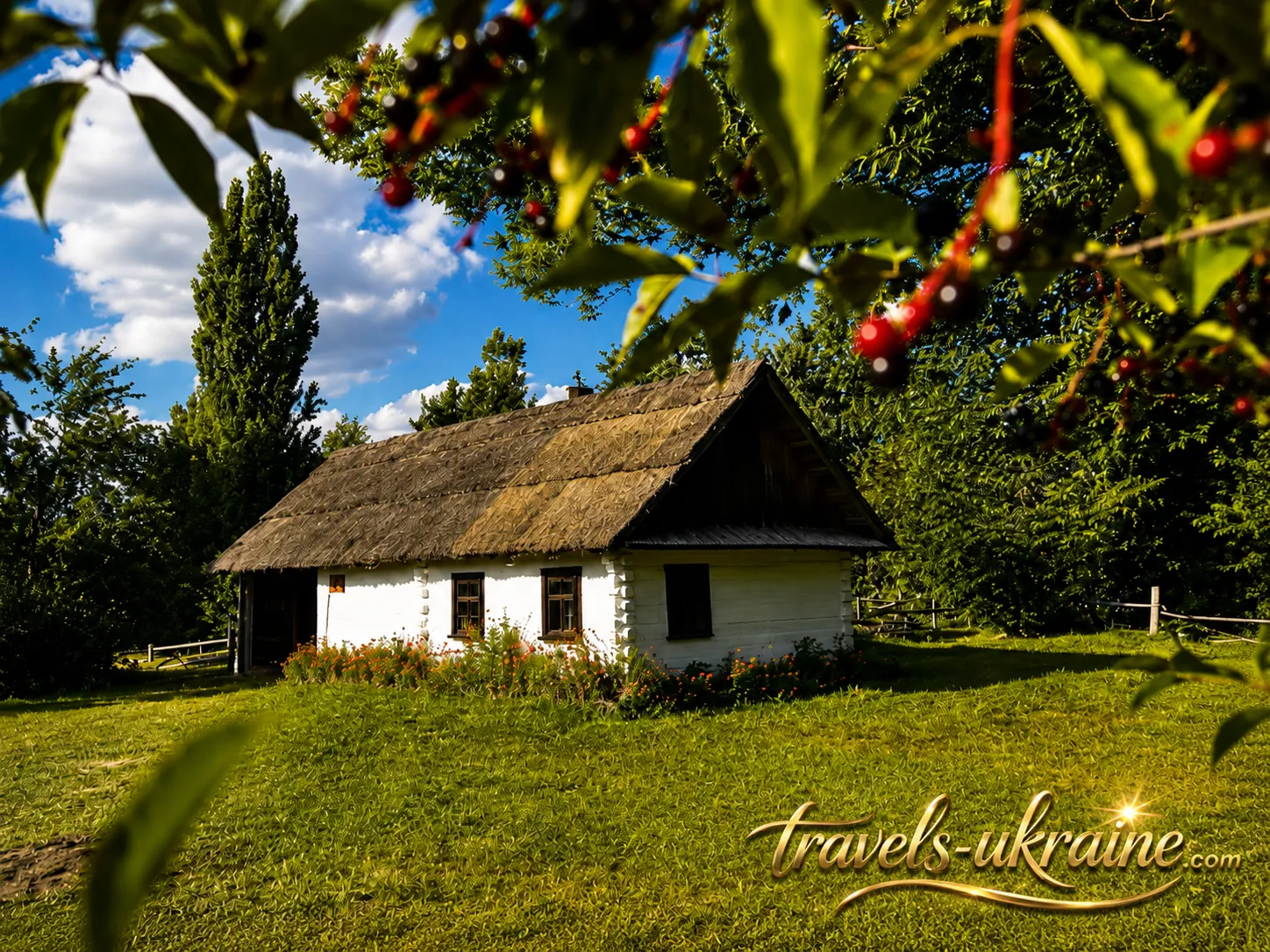
One of the museum’s most valuable structures is a smoke house from Volyn, dating from 1875 and transported from the village of Komarove. Its distinctive feature is the absence of a conventional chimney. Smoke from the stove first entered the room and only afterward escaped through openings or the door. To a modern visitor, such a system may seem like a test of endurance, but in its time it was a familiar part of everyday life.
The smoke not only warmed the room but also helped protect the wooden structures from moisture and pests. Of course, there is no need to romanticize this way of life: living in a smoke house was far from modern ideas of comfort. Yet this very building offers an honest view of the conditions in which peasants lived and of how resourcefully they used what was available.
A Polissia house from the early 20th century
Another important monument is a Polissia house from 1902, brought from the village of Berezovychi. Comparing it with the older smoke house reveals changes in home layouts, heating methods, and the organization of interior space. Such comparisons make the ethnographic museum especially interesting: history is presented here not as a frozen date but as the gradual development of everyday life.
Pay attention not only to the overall appearance of the buildings but also to the small details: the construction of the doors, the placement of the windows, the shape of the roof, the way the logs are joined, and the interior furnishings. These elements reveal the experience of folk craftsmen best. Even an ordinary threshold could be more thoughtfully designed than some modern renovations that ceremoniously conclude with the words: «Well, we’ll finish the baseboard later.»
A Volyn peasant homestead: the house, barn, granary, and farmyard
A traditional Volyn peasant homestead consisted of more than just a dwelling house. An entire farmyard took shape around it, with each structure serving a specific purpose. At the open-air museum, you can see barns, a granary, a cowshed, a cellar, wells, fences, and other elements of a rural yard.
The barn and granary in Volyn were used to store hay, sheaves, grain, and farm tools. The names and exact purposes of such buildings could vary from one area to another, but they remained vital to a peasant family. Whether supplies would last until the next season depended on proper harvest storage.
There were no accidental structures in the farmyard. The cowshed was positioned for convenient care of the animals, the cellar in a place where cool conditions were best maintained, and the well was arranged with access to clean water in mind. Even the fence served more than a decorative purpose: it marked the boundaries of the homestead, protected the vegetable garden, and helped organize the yard.
The windmill in Rokyni—a striking symbol of a Volyn village
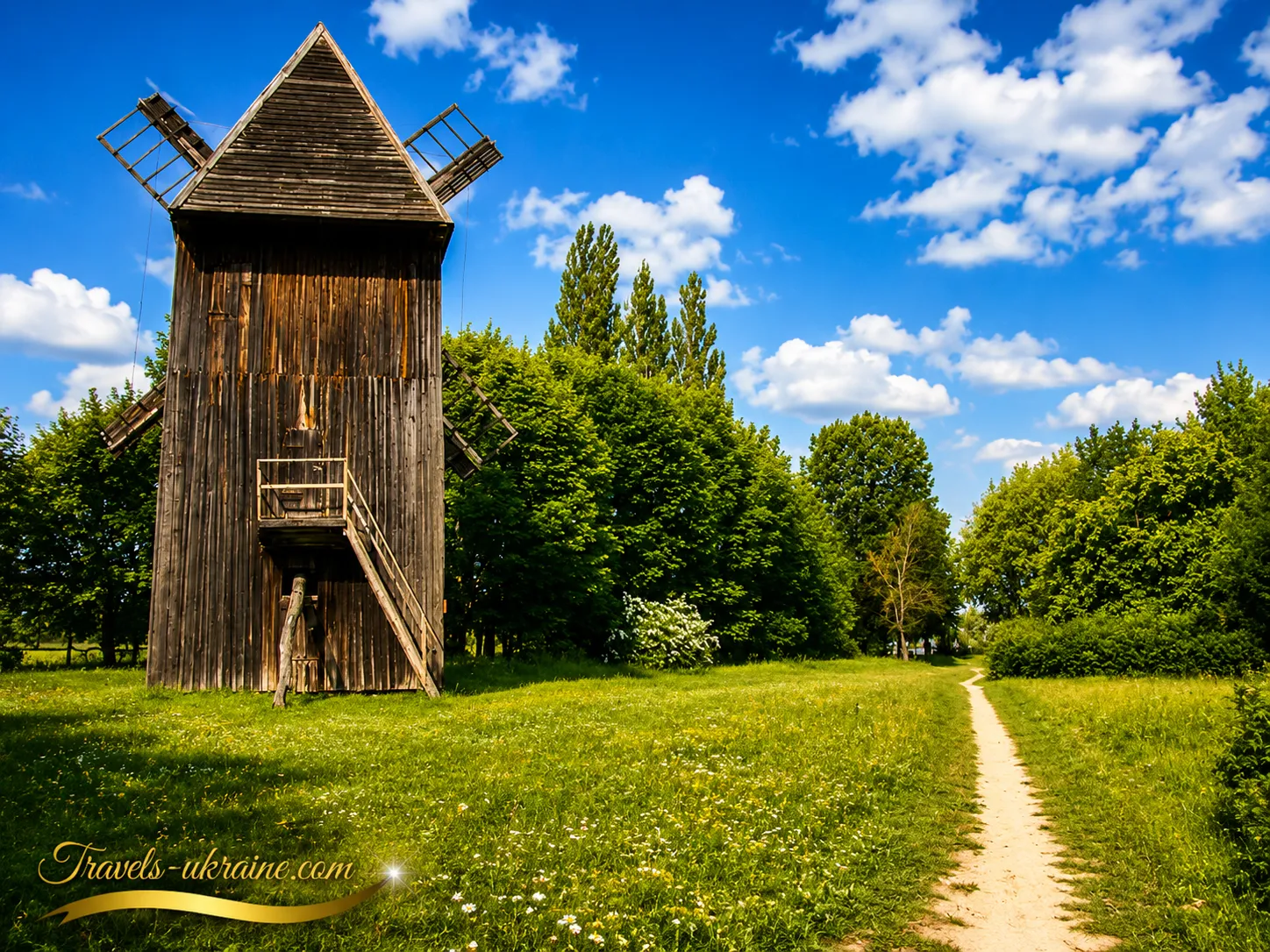
The windmill in Rokyni is one of the most prominent features of the open-air museum. Its tall wooden structure rises above the other buildings and serves as a kind of landmark for visitors. In a traditional rural economy, a windmill was a complex mechanism that transformed the power of the wind into useful work—above all, grinding grain.
Today, the old Volyn windmill is viewed romantically, especially in photographs. In the past, however, it was not a backdrop for travelers but an important part of the community’s economic life. The production of flour—and therefore the daily bread—depended on the mechanism working properly. A miller therefore had to understand wind direction, the construction of millstones, and the behavior of wooden mechanisms far better than most of us understand the settings on our own washing machines.
It is worth lingering by the windmill, examining the proportions of the structure, and imagining how its sails moved. It is one of those museum objects where the combination of folk engineering, natural energy, and everyday human labor is especially tangible.
The forge at the Rokyni Museum and traditional Volyn crafts
Equally fascinating is the forge at the Rokyni Museum, transported from the village of Huta-Lisivska. In a traditional village, the blacksmith was one of the most important craftsmen. He made and repaired axes, sickles, wagon parts, and other metal tools. Without his work, the farm could quickly grind to a halt—after all, a broken plow is not particularly concerned that sowing season has already begun.
The forge’s architecture was dictated by its function. Inside, there had to be room for the hearth, anvil, tools, and work with red-hot metal. The building was designed with fire, smoke, and the need for ventilation in mind. Thus, the forge differed from a dwelling house not only in its contents but also in the very character of the space.
Beside the forge, it is especially easy to understand how closely traditional Volyn crafts and farming were interconnected. A farmer could not work for long without a blacksmith, the blacksmith needed charcoal and orders from the community, and the craftsman who made wagons depended on quality metal parts. A Volyn village was a complex system of cooperation long before the phrase «teamwork» appeared in business presentations.
An old well, fences, and details of everyday rural life in Volyn
Large structures immediately attract attention, but the true atmosphere of the open-air museum is created by the details. An old well, woven fence, wooden cart, Volyn agricultural tools, and objects from peasant life help unite the individual buildings into a complete picture of traditional living.
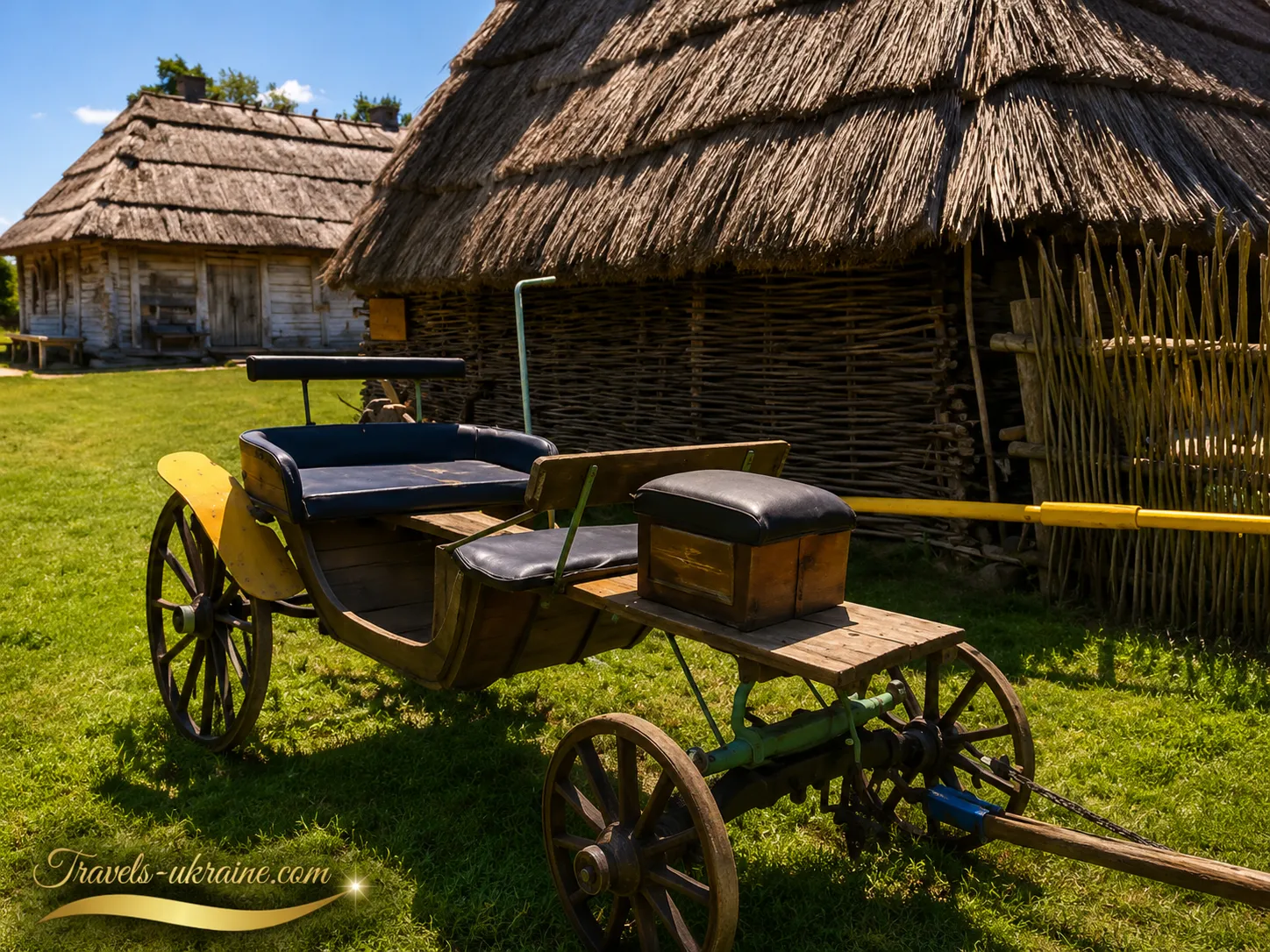
The well was not only a source of water but also an important place for everyday socializing. Neighbors met there, discussed the news, and arranged shared work. Fences were made from readily available flexible branches, while the old cart was the main means of transport for carrying crops, hay, firewood, and people.
As you examine these objects, it is useful to imagine not museum silence but a real farmyard: squeaking wheels, the clang of tools, people’s voices, the smell of fresh hay, and smoke from the stove. Then the museum of rural life in Volyn ceases to be a static exhibition and becomes a living story about everyday work.
The nature of the Rokyni arboretum and the best time for a walk
The natural surroundings make the ethnographic museum and open-air museum in Rokyni especially pleasant for a leisurely walk. Trees provide shade in warm weather, open meadows offer clear views of the architecture, and birdsong gives the space a lively soundtrack. Here, it is easy to combine an educational tour with time spent in nature.
In spring, the museum attracts visitors with fresh greenery and lively bird activity. In summer, the grounds are well suited to a family walk, although on a hot day it is best to bring water and a hat. Autumn lends the old houses a particularly warm character, while in winter the open-air museum becomes quieter and reveals the silhouettes of the wooden structures more distinctly.
During your visit, do not rush from one object to the next simply for the sake of taking photographs. Try stopping by a house, walking along the fence, examining traces of hand-worked wood, and imagining how much effort went into each structure. The most interesting things in this museum are hidden not only behind the doors of the old buildings but also in the small details that are easy to miss.
And that is where the main questions arise: how much time do you need to see the open-air museum without rushing, is it convenient to visit with children, and what budget should you set aside for the trip? In the next section, we will gather concise, practical information to help you prepare for a visit to Rokyni so that, instead of a hectic outing, you take away only good memories.
Photo and video gallery
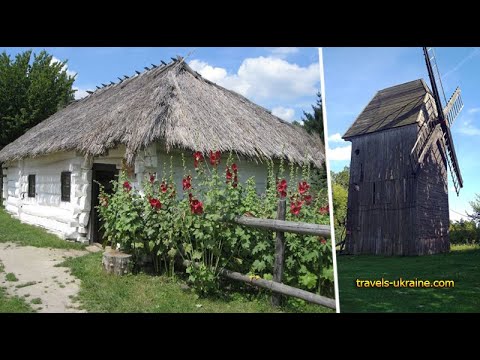
The Rokyni Museum: a brief visitor guide
The Rokyni Museum of Agriculture is an ethnographic complex, an open-air museum, a showcase of folk architecture, and a natural area for a leisurely walk. It is located approximately 12 kilometers from Lutsk, making it convenient to visit as a separate day trip from Lutsk or as part of a broader route through Volyn.
This is not the kind of museum to visit in «drop in for ten minutes, take a photo by the windmill, and rush off» mode. The grounds combine permanent exhibitions, old farm buildings from a Volyn village, a forge, a windmill, wells, fences, and leafy paths. If you move too quickly, you may see many buildings but miss the most important thing—the details that turn the open-air museum of Volyn Oblast into living history.
The unique open-air museum in Volyn is best suited to travelers interested in ethnography, folk architecture, the history of agriculture, traditional crafts, and rural life. Families with children, school groups, photographers, local-history enthusiasts, and tourists tired of routes whose main adventure is finding a free parking space will all find something to enjoy here.
For children, the open-air museum is especially valuable because history can be seen here at full scale. A house is a real house, the windmill towers over the grounds, and a plow looks far more convincing than its tiny picture on a textbook page. That is why visiting the Rokyni Museum with children can be more than a walk—it can be a natural history lesson without a test at the end.
Route difficulty and accessibility of the open-air museum
In terms of physical exertion, the route can be considered easy. There are no difficult climbs, mountain trails, or challenges that make a tourist develop a sincere respect for their own knees. At the same time, this is an open-air museum, so part of the route follows natural paths, lawns, and yards around the old buildings.
After rain, the ground may be wet, while wooden thresholds, steps, and uneven surfaces around the historic buildings require care. Comfortable closed-toe shoes are the best choice for a walk. Formal shoes or high heels risk gaining more ethnographic experience here than their owner intended.
People with mobility impairments, parents with strollers, and older visitors should check in advance which parts of the exhibition are accessible without steps or high thresholds. The historic buildings were created long before modern accessibility standards, so access to some interiors may be more difficult than walking around the main grounds.
What Budget to Plan for the Agricultural Museum near Lutsk
Visiting the museum is an affordable form of cultural recreation. The main expenses usually include admission, guided tour services, travel to Rokyni, and personal spending. Families should also set aside funds for a themed program, workshop, or additional activity if one is scheduled on the day of their visit.
Ticket, tour, and special-program prices may change, so it is worth contacting the museum or checking its official announcements before your trip. An old post with prices found deep in the internet can sometimes be just as much a historical exhibit as a millstone or wooden plow.
- Minimum budget: admission and transportation to Rokyni.
- Comfortable family budget: tickets, a tour, water, snacks, and a reserve for additional activities.
- For a group of schoolchildren: confirm the cost in advance, along with the program duration and supervision arrangements.
What to Bring to the Ethnographic Museum near Lutsk
For a comfortable visit, all you need is comfortable footwear, weather-appropriate clothing, drinking water, and a charged phone or camera. On a hot day, bring a hat; after rain, wear shoes that can handle unpaved paths; and on a family outing, pack a small snack for the children.
It is also useful to have some free time beyond your planned schedule. The Rokyni open-air museum is one of those places where you may suddenly want to return to the windmill, peek behind a fence, or take a closer look at an object you initially walked past.
Interesting Facts and Legends of the Rokyni Museum
The Rokyni Museum is interesting not only for its old houses, windmill, and agricultural implements. Every building here represents a separate journey, while many exhibits embody years of searching, conversations with local elders, and ethnographic expeditions. Some objects came to the museum from remote villages; others were rescued literally just before they might have disappeared forever. So as you walk through the open-air museum, remember: these are not sets created for attractive photographs, but genuine witnesses to the past.
At the same time, old houses, dark doorways, creaking wooden structures, and the silent windmill inevitably leave room for imagination. Although official museum and encyclopedic sources do not record a distinct «main legend of the Rokyni open-air museum,» the atmosphere here is such that your own story may emerge after just a few minutes of walking. Especially if the wind suddenly turns the windmill’s sails and an old gate creaks precisely when you were assuring the children that ghosts do not exist.
The Museum’s Exhibits Were Collected during Real Expeditions
One of the most interesting facts is that the museum’s collection did not come about through simply ordering ready-made exhibits. It was assembled during walking expeditions focused on local history, archaeological surveys, journeys through Volyn’s villages, and meetings with people who still remembered the purpose of old objects.
Staff had to do more than find an object: they also had to convince its owner that an old plow, wheel, millstone, or wooden chest had historical value. It was no easy task, since to the owner it was often just something that had stood in a barn for many years, patiently awaiting its fate. There were no internet searches, digital archives, or pins on an electronic map then, so the main navigation tool was the question: «Who in the neighboring village still has something old?»
It was thanks to such expeditions that ordinary antique agricultural implements became a museum narrative about farming, livestock raising, household crafts, and the daily work of Volyn’s peasants.
The Old Houses in Rokyni Have Real Addresses from Their Past
The buildings in the open-air museum were not constructed as imitations of the past. Some were transported from different villages in Volyn, first dismantled and then reassembled on the museum grounds. The smoke house, for example, dates from 1875 and came from Komarove village; the Polissian house, dating from 1902, came from Berezovychi village; and the smithy came from Huta-Lisivska.
In fact, these buildings had to make one of the most remarkable journeys in their history. The houses were lucky enough to change addresses without a mortgage, renovations in a new-build, or arguments with contractors over why the wall was crooked again. Most importantly, they preserved their structural features and now help visitors see how housing differed across various parts of Volyn and Polissia.
During your visit, ask the guide about the origins of a particular building. Once you know the village name, approximate construction year, and original purpose of the house, the Ukrainian village museum is perceived quite differently. It is no longer simply an «old house,» but a home where people once prepared food, raised children, endured winters, and waited for the harvest.
Rare Birds Also Choose the Open-Air Museum in Rokyni
Another little-known fact concerns the museum’s natural surroundings. The Rokyni open-air museum lies amid the greenery of an arboretum, and various bird species return here in early spring. This makes the location appealing not only to ethnography enthusiasts, but also to nature lovers, fans of peaceful walks, and birdwatchers.
The birds, admittedly, do not always observe museum etiquette: they may interrupt the guide, land on the roof of a folk-architecture monument, or put on a concert without approval of the program. Yet their calls help visitors feel that the peasant-life museum is not a frozen exhibition, but a living space where history interacts with nature.
The Museum’s Most Interesting Secret in Rokyni Reveals Itself Only to the Observant
The main secret of this place is not a hidden treasure, an underground passage, or a miller’s ghost. It lies in the small details: a worn door handle, an uneven axe mark on a wooden beam, an old wheel, an embroidered towel, or a simple pot that has outlived several generations of owners.
So do not hurry during the tour. Look closely at things that seem ordinary at first glance, ask questions, and listen to the guide’s stories. Perhaps the inconspicuous object in the corner will turn out to be the most interesting exhibit of the entire journey.
Events and Festivals at the Rokyni Museum
On an ordinary day, the Volyn Museum of Agricultural History in Rokyni welcomes visitors with the silence of old houses, the rustle of trees, and the unhurried creaking of wooden structures. But during festivals, ritual programs, and workshops, everything changes: songs ring out in the museum courtyard, craftspeople work, the scent of fresh baking fills the air, and spectators gather near the Cossack-themed areas.
It is on days like these that the open-air museum in Volyn most vividly demonstrates that cultural heritage is not merely a collection of objects to be carefully preserved. It is also the ability to weave, bake bread, decorate pysanky, sing ritual songs, and pass traditions on to children. Here, history stops being silent and begins to speak, sing, and sometimes even fire a Cossack cannon—within the bounds of an organized program, of course.
«Spirit of the Unbroken» Festival at the Rokyni Open-Air Museum
One of the largest events held on the museum grounds was the national martial arts festival «Spirit of the Unbroken.» In 2024, it took place over two days and combined Cossack martial traditions, sporting competitions, a concert program, workshops, a fair, and outdoor recreation.
Visitors could watch staged saber fights, performances by Cossack martial arts groups, belt wrestling, hopak hand-to-hand combat, and a fiery Cossack show. The program also included archery, themed talks, a tent camp, and other activities connected with Ukrainian military and sporting traditions.
For visitors, a festival like this is a chance to see the open-air museum in a completely different light. Yesterday it was quiet beside the old house; today a saber fight is being demonstrated right next to it. Above all, do not try to recreate what you see at home with kitchen utensils: Cossack courage without proper training often ends with a visit to the trauma ward.
What May Be Included in a Cossack Festival Program in Rokyni
- demonstrations of Cossack martial arts;
- competitions in traditional wrestling styles;
- staged saber duels and Cossack combat theater;
- archery and themed sporting challenges;
- workshops, talks, a fair, and a concert program;
- tent camps, Cossack-themed areas, and family entertainment.
The festival program may change each year, so specific dates, admission terms, and the list of activities should be checked in the official announcements of the museum and Lutsk City Council.
Workshops at the Rokyni Museum for Children and Adults
Workshops at the Rokyni Museum offer more than simply hearing about folk traditions: they let visitors recreate them with their own hands. Museum staff conduct sessions on pysanka making, baking bread and pies, and working with straw.
Children find these activities especially engaging. After a workshop, the word «ethnography» no longer sounds like something from a very serious book. It becomes associated with a colorful pysanka, warm dough, a straw decoration, or a handmade souvenir that later ceremoniously takes pride of place at home.
Adults should not remain mere spectators either. You can spend years assuring everyone of your creative talent, but a pysanka will quickly and honestly show how confidently you can draw a straight line. The good news is that folk art values not factory-perfect results, but attentiveness, symbolism, and sincerity.
What Interactive Activities the Rokyni Ethnographic Museum May Offer
Depending on the season, event theme, and arrangements made in advance, the museum may organize programs related to traditional life and crafts. Tourist materials about the open-air museum mention opportunities to learn embroidery and weaving, knead dough, explore agricultural work, and take part in reenactments of folk customs.
- Pysanka making — an introduction to the ornaments, symbols, and decorating techniques used for Easter eggs.
- Baking bread and pies — an interactive introduction to traditional cuisine and the household oven.
- Working with straw — making decorative items from natural materials.
- Weaving and embroidery — an introduction to folk clothing, embroidered towels, and household crafts.
- Farming activities — a demonstration of old tools and traditional methods of working the land.
Not all programs are available every day. Some activities are offered to organized groups or as part of special museum events, so it is best to book a tour in Rokyni or a workshop in advance.
Kupala Rituals and Folk Events at the Volyn Open-Air Museum
The atmosphere of an old village is particularly well suited to reenacting calendar rituals. In different years, the museum has hosted the folklore and ethnographic performance «On Kupala Night.» Its program included weaving wreaths, singing Kupala songs, passing through a symbolic gate of fire, horseback riding, and other elements of the traditional celebration.
Kupala Night at the open-air museum feels far more natural than on a city square among billboards and parked cars. Old houses, grass, trees, water, and open skies create the right setting for ancient rituals. All that remains is to find the fern flower—a difficult task, since botanists stubbornly insist that ferns do not bloom. But such minor details have never stopped true romantics.
Taking part in a program like this helps visitors understand that folk rituals were not random amusements. They reflected observations of nature, the changing seasons, hopes for a good harvest, young people’s social life, and people’s beliefs in the protective power of fire, water, and plants.
Andriy’s Eve Gatherings, Carol Singing, and Winter Traditions of Volyn
The museum’s tourist description also mentions carol singing, gift-bringing songs, and Andriy’s Eve gatherings. Such programs allow visitors to experience the tradition in its natural setting: not merely read the lyrics of a song, but hear it in an old house; not only learn about the gatherings, but feel the atmosphere of communal entertainment, fortune-telling, and youthful jokes.
It is hard to imagine Andriy’s Eve gatherings without kalita, lively challenges, and attempts to glimpse the future. The results of such predictions are best taken with a sense of humor. If an old ritual promises you a quick wedding, do not rush to book a restaurant—you should first at least meet the other party to the future family event.
During the Christmas season, carols, gift-bringing songs, and customs connected with family celebrations take on particular importance. Against a backdrop of snow-covered houses and a wooden windmill, they sound especially vivid, restoring to the holidays not a decorative but a living communal meaning.
School Trips to Rokyni and Museum Education
A school trip to the Volyn museum becomes much more engaging when it combines storytelling with practical activities. Children can not only examine old agricultural tools, but also learn how people grew grain, baked bread, wove linen, and arranged a peasant homestead.
An interactive program helps hold the attention even of schoolchildren who usually react to the word «museum» with the expression of someone who has just been told there is an extra lesson. But when dough, a pysanka, an old cart, or a Cossack challenge appears in the program, history suddenly becomes something they want to explore.
Festivals and events show the Rokyni open-air museum at its loudest, liveliest, and most dynamic, but there is no need to wait for a special occasion to visit. Even on an ordinary day, there is plenty to do here—from viewing historic interiors to searching for the most interesting tools and enjoying a family photo walk.
What to Visit Near the Rokyni Museum
After walking through the Museum of the History of Agriculture of Volyn in Rokyni, there is no need to head straight home. The site is located near Lutsk, so an introduction to old houses, a windmill, and peasant life can easily be combined with medieval walls, underground passages, museums of sacred art, and unusual architecture.
This route makes it possible to see several different faces of Volyn in a single day. In Rokyni, travelers discover village life; in Old Lutsk, princely, urban, and religious history; and in modern museum spaces, how cultural heritage can be presented through multimedia and interactive exhibitions.
The main thing is not to try to visit everything in one day just because the navigator confidently displays so many nearby markers. A tourist route is not a competition in speed photography. It is better to choose two or three sites and truly see them than to spend the evening trying to remember which museum contained that interesting object beside which you took twenty almost identical photos.
Lubart’s Castle—the Main Lutsk Attraction After a Trip to Rokyni
The most logical continuation of the route is Lutsk Castle, also known as Lubart’s Castle. It is one of the city’s best-known landmarks and a key site within the «Old Lutsk» historical and cultural reserve. Its massive brick walls, three towers, and spacious inner courtyard transport travelers from the atmosphere of a Volyn village into a world of medieval princes, defensive fortifications, and important political events. The contrast is especially striking: in the morning, you were examining a plow, millstones, and a wooden cart in Rokyni, and just a few hours later you are standing beside a fortress where decisions far more complicated than who would feed the chickens were once made.
At the castle, take a walk through the inner courtyard, see the Entrance, Styrovа, and Bishop’s towers, climb to the accessible viewing platforms, and visit the museum exhibitions. From the top of the walls, you can enjoy a panorama of historic Lutsk, while inside the complex you can learn more about the city’s defense, the princely era, the development of book culture, and the history of bells. It is easy to stay longer than planned: first you want to photograph one tower, then another, and suddenly it turns out that the trip supposedly does not count without a picture beside every embrasure.
Lubart’s Castle is an especially good complement to a visit to the Rokyni museum, as it allows you to see two different worlds of the past in a single day. The open-air museum tells the story of the work, daily life, and traditions of ordinary Volyn residents, while the castle reveals the history of princes, urban government, defense, and diplomacy. Together, these sites create a more complete picture of Volyn—a region where a peasant homestead, a craft town, and a fortified princely residence once existed side by side.
Old Lutsk—a Walk Among Churches, Squares, and Ancient Streets
From the castle, it is convenient to continue on foot through the historic part of the city. Old Lutsk brings together landmarks from different eras, denominations, and cultural traditions. Here, sacred buildings, old stone houses, remnants of the defensive system, and quiet streets can all be found close together.
The walking route can include the Cathedral of Saints Peter and Paul, the Lutheran Church, the Great Synagogue, the Church of the Intercession, Market Square, and old town houses. You do not have to enter every site: sometimes it is enough to stroll along the street, read the information plaques, and pay attention to the architectural details.
After the open spaces of the open-air museum, Old Lutsk may seem like a real labyrinth. But it is difficult to get lost here: the castle towers are excellent landmarks, and in the worst case, you can always pretend that you are not lost but exploring a little-known tourist route.
Rokyni is a convenient starting point for a grand journey through Volyn, but there is no need to plan a route the length of a small expedition. Sometimes the best day consists of an open-air museum, one fortress, a leisurely walk along old streets, and dinner during which everyone names their favorite exhibit.
Frequently Asked Questions About the Museum of the History of Agriculture of Volyn in Rokyni
Where is the Museum of the History of Agriculture of Volyn located?
The Museum of the History of Agriculture of Volyn—an open-air museum is located in the settlement of Rokyni, Lutsk District, at 1 Shkilna Street. The museum is approximately 12 kilometers from central Lutsk, so the drive usually does not take long. Still, it is best to open your navigator before setting out: the phrase «I roughly remember the way» sometimes leads tourists to a very picturesque field that is not a museum at all.
Is the museum in Rokyni open on weekends, and what are its hours?
Tourist information about the museum in Rokyni lists the basic opening hours as daily from 9:00 to 18:00. However, hours may vary during the summer, festivals, public holidays, or organizational changes. Before your trip, it is worth calling the museum to confirm visiting hours. That is more reliable than relying on a post the internet has carefully preserved from the days when your phone had buttons.
How much does admission to the Rokyni open-air museum cost?
Current ticket prices may vary depending on the season, the visitor’s age, the event format, and additional services. Guided tours, workshops, festival programs, or themed classes may be charged separately. It is therefore best to confirm the current rate by calling the museum before your visit. An old price list on a travel blog may turn out to be no less historical than the plow in the museum exhibition.
How much time is needed for a tour of the museum in Rokyni?
For a first visit, plan approximately one and a half to two hours. If you book a guided tour, are traveling with children, take part in a workshop, or want to take photos at a relaxed pace, it is better to allow two to three hours. Open-air museums have a curious quality: you arrive «for about forty minutes,» and then spend another half hour figuring out how a barn differs from a granary.
Is it worth visiting the museum in Rokyni with children?
Yes, the Rokyni open-air museum for children is a good option for an educational family trip. Here you can see a real house, oven, windmill, old cart, smithy, well, and the tools used by Ukrainian peasants. To keep your child from tiring of the amount of information, turn the route into a game: ask them to find a plow, millstones, the tallest structure, or an object whose purpose is difficult to guess. History is much more interesting when it does not begin with the words «now listen carefully to a long lecture.»
How can I book a tour at the Rokyni museum?
It is best to book a tour in Rokyni in advance by calling the museum: +38 (0332) 70-93-75. When booking, provide the date, preferred time, number of visitors, children’s ages, and group format. Also ask about the duration, price, access to the interiors, and the possibility of holding a themed class. A guide will help you notice things that, without explanation, could easily be mistaken for «yet another mysterious wooden structure.»
Are workshops held at the museum in Rokyni?
The museum holds cultural and educational events as well as special workshops related to pysanka-making, baking, working with straw, folk crafts, and traditional culture. However, these activities are not necessarily available every day: some are organized for groups, school trips, or as part of festivals. Before your trip, check the program and whether advance registration is required. Otherwise, you may arrive determined to create the perfect pysanka and return with nothing but a photo of the windmill.
How do I get to the agricultural museum from Lutsk?
Rokyni is easily reached by car, taxi, or public transport. Bus route No. 54 runs between Lutsk and Rokyni, but its timetable, stops, and intervals should be checked immediately before your trip. If you use public transport, find out the return departure time right away. This will help you avoid a situation in which the museum is already closing while your bus appears to have decided to join the exhibition of the past.
Can I take photos at the open-air museum in Rokyni?
Photography for personal use in the open-air areas is generally not a problem, but it is best to check the rules for taking pictures inside the cottages, museum halls, and during events with the staff. Separate permission may be required to use a flash, tripod, professional lighting, or a drone, or to hold a commercial photo shoot. Do not move exhibits or cross barriers for the sake of a shot: the old cottage is not going anywhere, while the photographer’s balance may occasionally have other plans.
Is the Rokyni Open-Air Museum accessible for strollers and visitors with limited mobility?
The museum’s main grounds are outdoors, but the route may include natural paths, uneven surfaces, high thresholds, steps, and narrow entrances to historic buildings. As a result, accessibility may vary from one site to another for wheelchair users, people using walkers, or visitors with strollers. Before your visit, it is worth contacting the administration and asking them to recommend the most convenient route. Traditional folk architecture has many advantages, but unfortunately, accessibility was not always among its builders’ priorities.
When is the best time to visit the Volyn Open-Air Museum?
The Volyn Open-Air Museum is worth visiting year-round. In spring, the grounds come alive with greenery and birdsong; in summer, it is easy to plan a longer family walk; in autumn, the historic buildings look especially picturesque amid the golden leaves; and in winter, snow-covered roofs create the atmosphere of an old Volyn village. For a first visit, the most comfortable choice is a dry day without intense heat, heavy rain, or strong winds. The weather matters: an open-air museum cannot simply put a roof over the entire site, even for very well-organized tourists.
Why visit the Museum of the History of Agriculture of Volyn
The Museum of the History of Agriculture of Volyn in Rokyni is a place where history does not sit politely behind glass but peeks out from the windows of old cottages, hides beside the stove, creaks in the wheels of a wagon, and silently watches from the height of a windmill. Here, you quickly realize how much knowledge, endurance, and genuine peasant ingenuity everyday life required—without electricity, the internet, robot vacuum cleaners, or the reassuring «order delivery» button. Some of the tools look so mysterious that your first impulse is to take a photo, followed only afterward by the cautious question: «Is this really for farm work?»
The Rokyni Open-Air Museum will appeal to families with children, school students, photographers, and anyone tired of weekends following the route «sofa — refrigerator — sofa.» A tour reveals the purpose of objects that, without an explanation, could easily be mistaken for a medieval exercise machine or a device for punishing a lazy farmer. A walk among the cottages, barns, smithy, and wooden fences will help you put your phone aside for a while and experience the rhythm of an old Volyn village. Still, it is best to keep the phone close—just in case you get a photo by the windmill worth showing off before you even get home.
Do not put this trip off until the mysterious «sometime later»—a place no one has ever seen marked on a calendar. Check the schedule, book a tour, gather your loved ones, and set off for Rokyni. A child may be most impressed by the old cart, you by the smoke-filled cottage, while someone in your group may suddenly announce that they could easily handle a plow, a smithy, and a windmill. Do not argue—just suggest that they start by grinding a little grain by hand. That is when the trip’s main intrigue will be revealed: who is truly ready for life in a Volyn village, and who will start asking for the Wi-Fi password after ten minutes.
No Comment
You can post first response comment.