
 English
 Українська
 Български
 Hrvatski
 Čeština
 Dansk
Dansk Nederlands
 Eesti
Eesti Suomi
Suomi Français
 Deutsch
 Ελληνικα
 Magyar
 Íslenska
 Italiano
 Latviešu
 Lietuvos
 Polski
 Português
 Română
 Русский
 Српски
 Slovenčina
 Slovenščina
 Español
 Svenska
 Türkçe
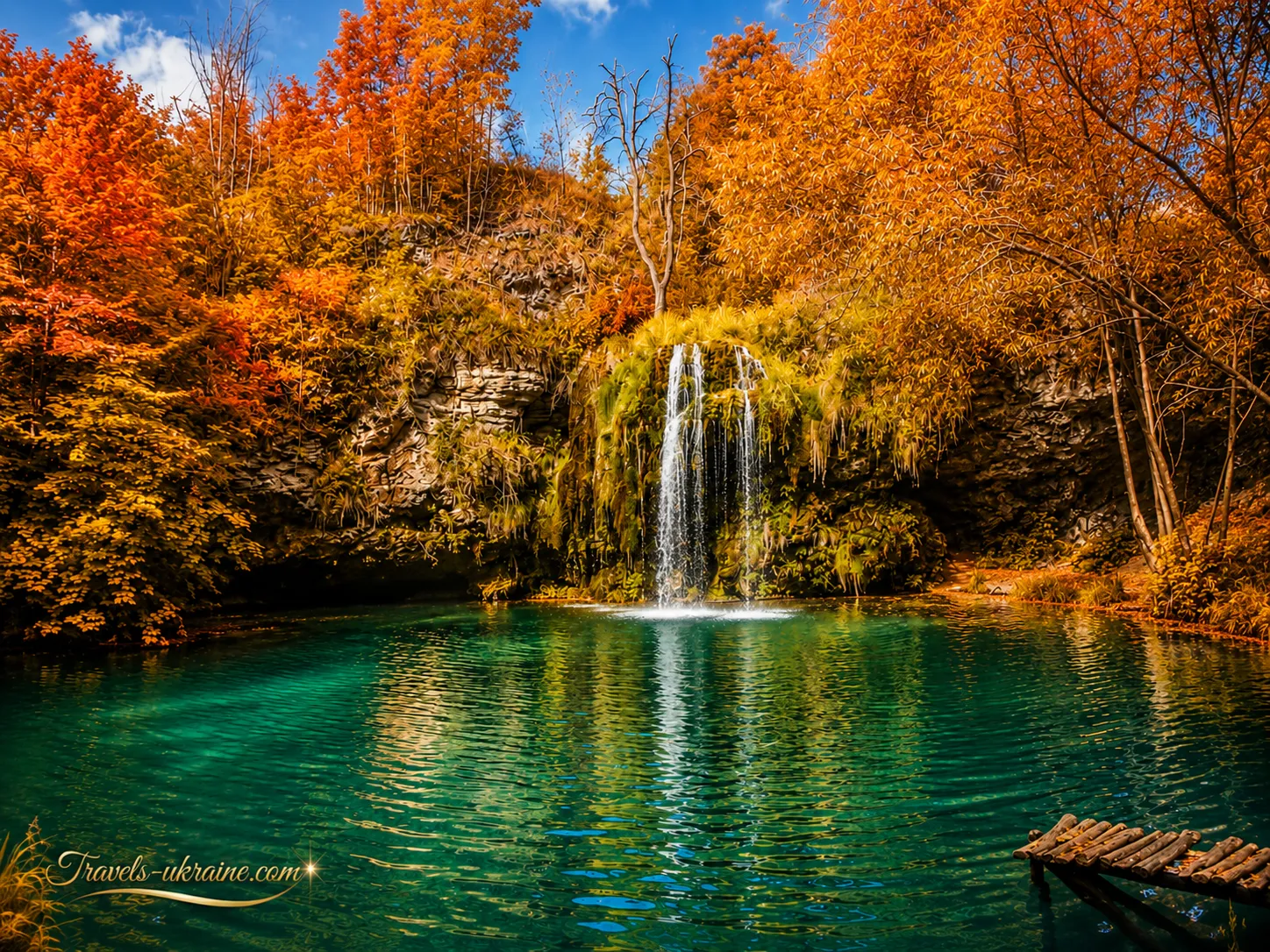
Burbun Waterfall is a little-known natural gem in Ukraine—a place one instinctively speaks of in hushed tones, as if afraid to disturb its tranquility. It does not greet travelers with bustling infrastructure, wide walkways, or crowds of tourists. Instead, this picturesque waterfall in Western Podillia is tucked away amidst greenery, cliffs, and moss, accompanied by cool air and the gentle sound of water. That is why Burbun Waterfall is often seen not merely as a spot on the map, but as a brief escape from the rush, noise, and routine of everyday life.
Burbun Waterfall is located in the Khmelnytskyi region, near the village of Lysets, within the natural canyon of the Bobravka River. It is also known as the waterfall near Dunaivtsi. For those traveling through Podillia, planning a trip to Bakota, or looking for sights near Kamianets-Podilskyi, this location can be a delightful discovery. It is perfect for a short nature getaway , a relaxing family outing, a photo walk, or a quick weekend excursion.
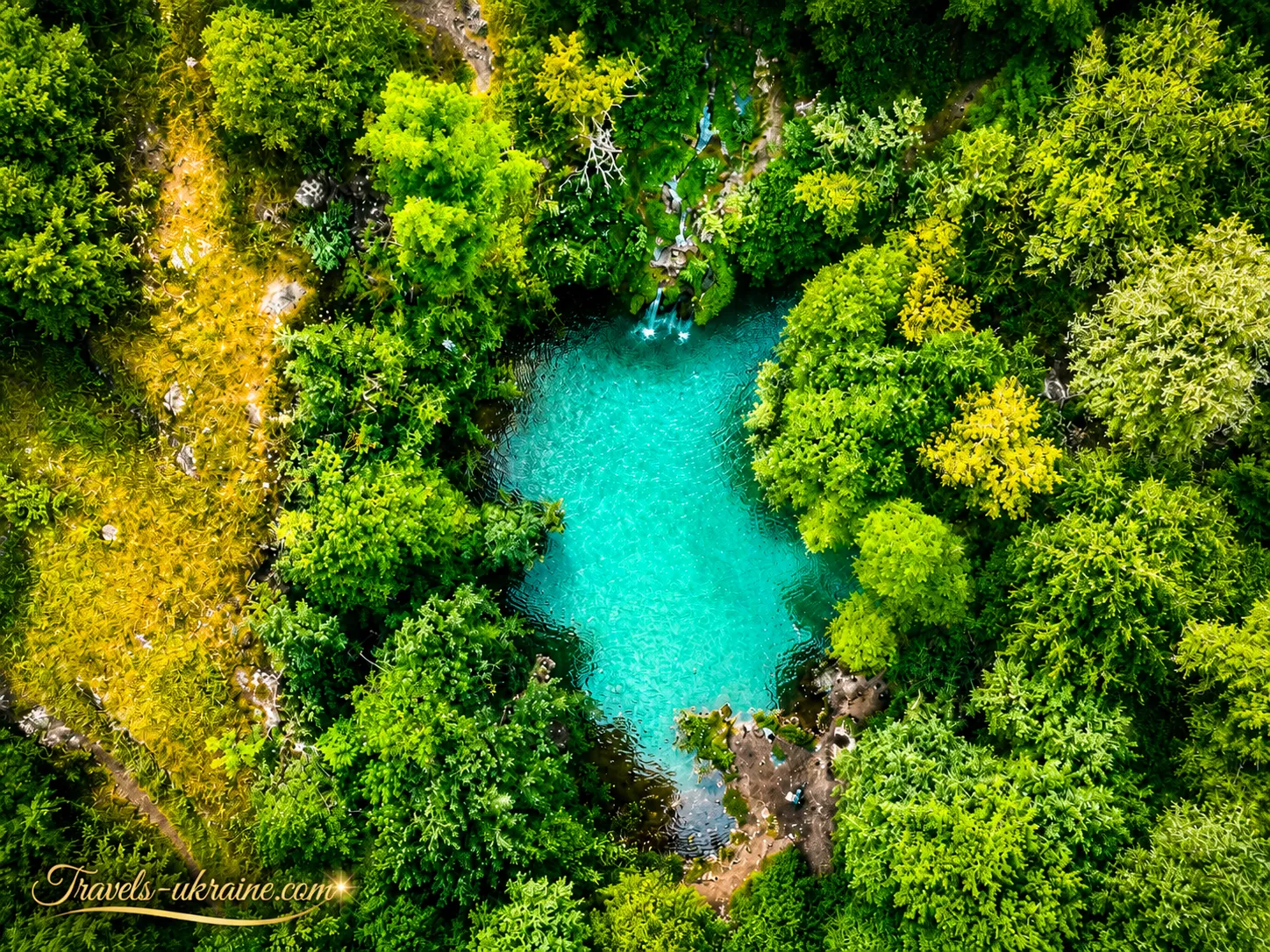
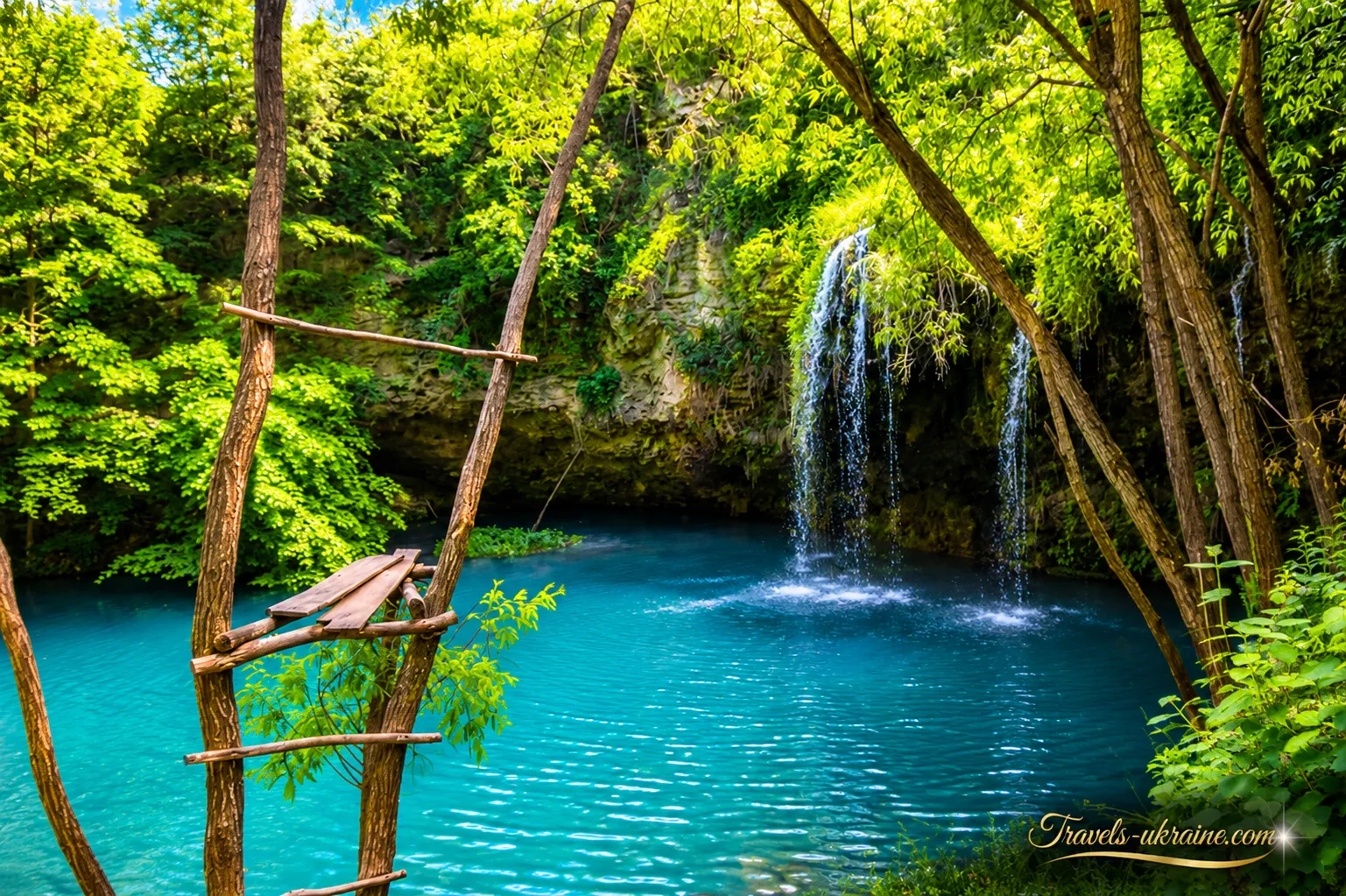
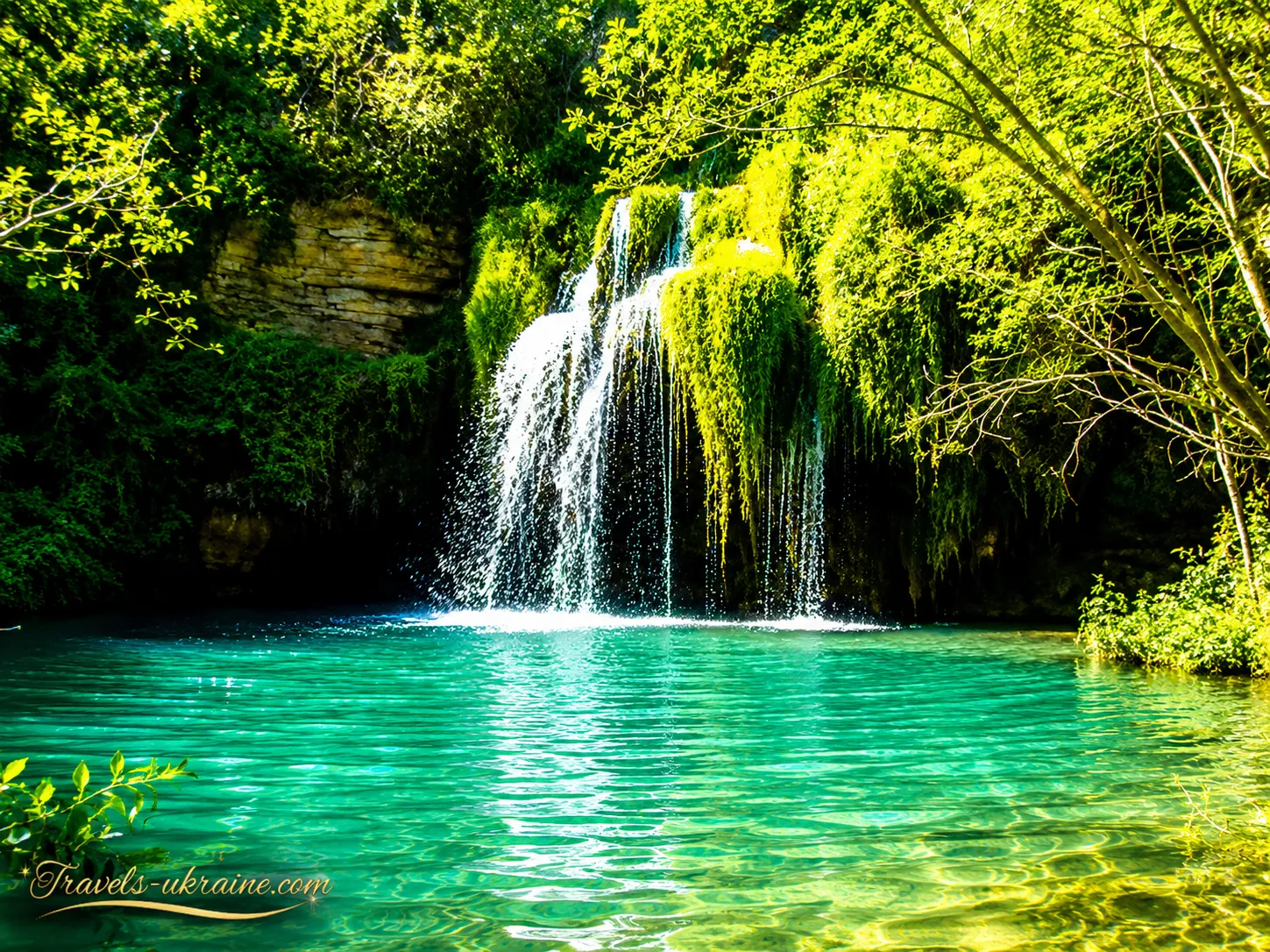
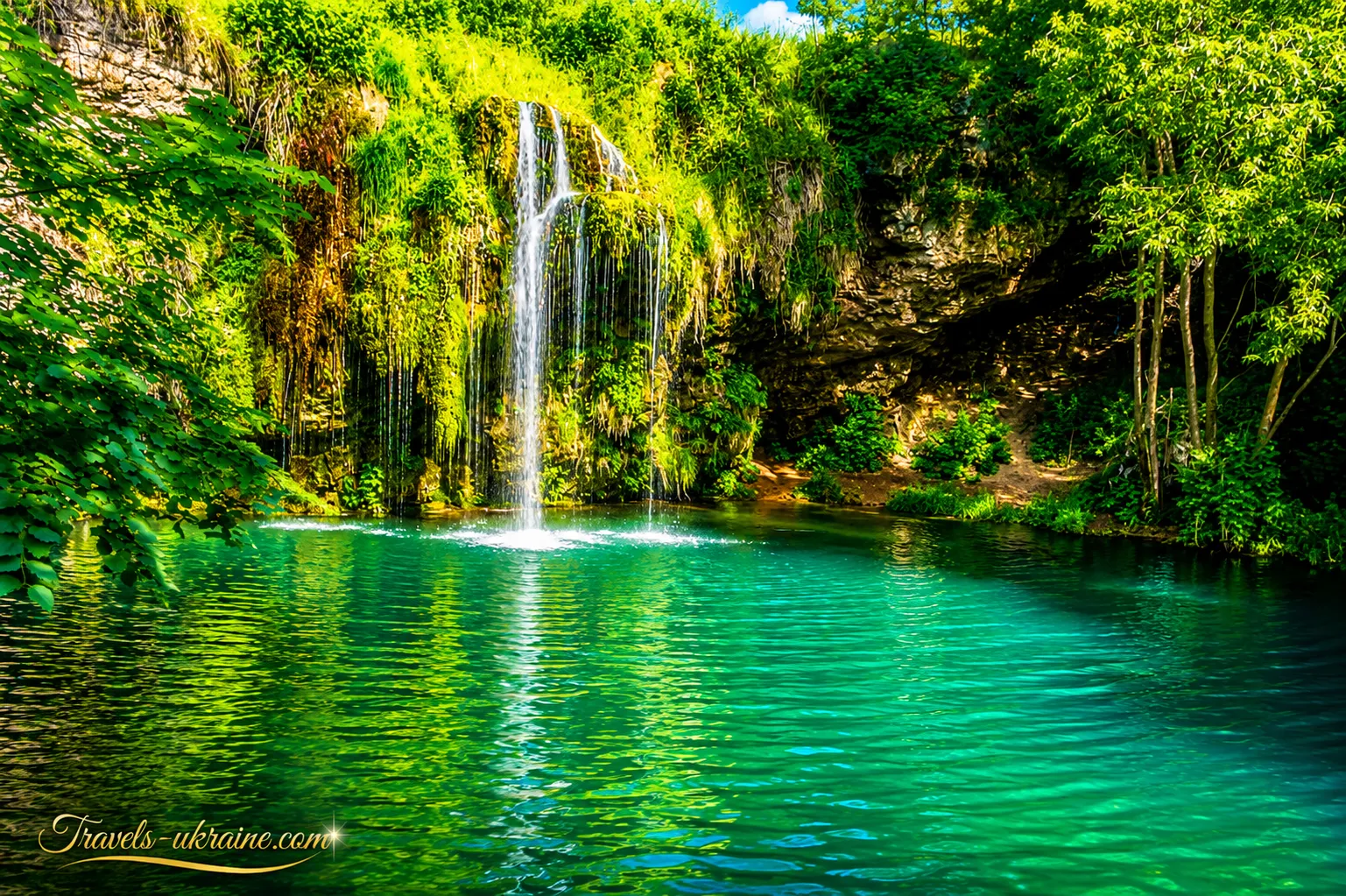
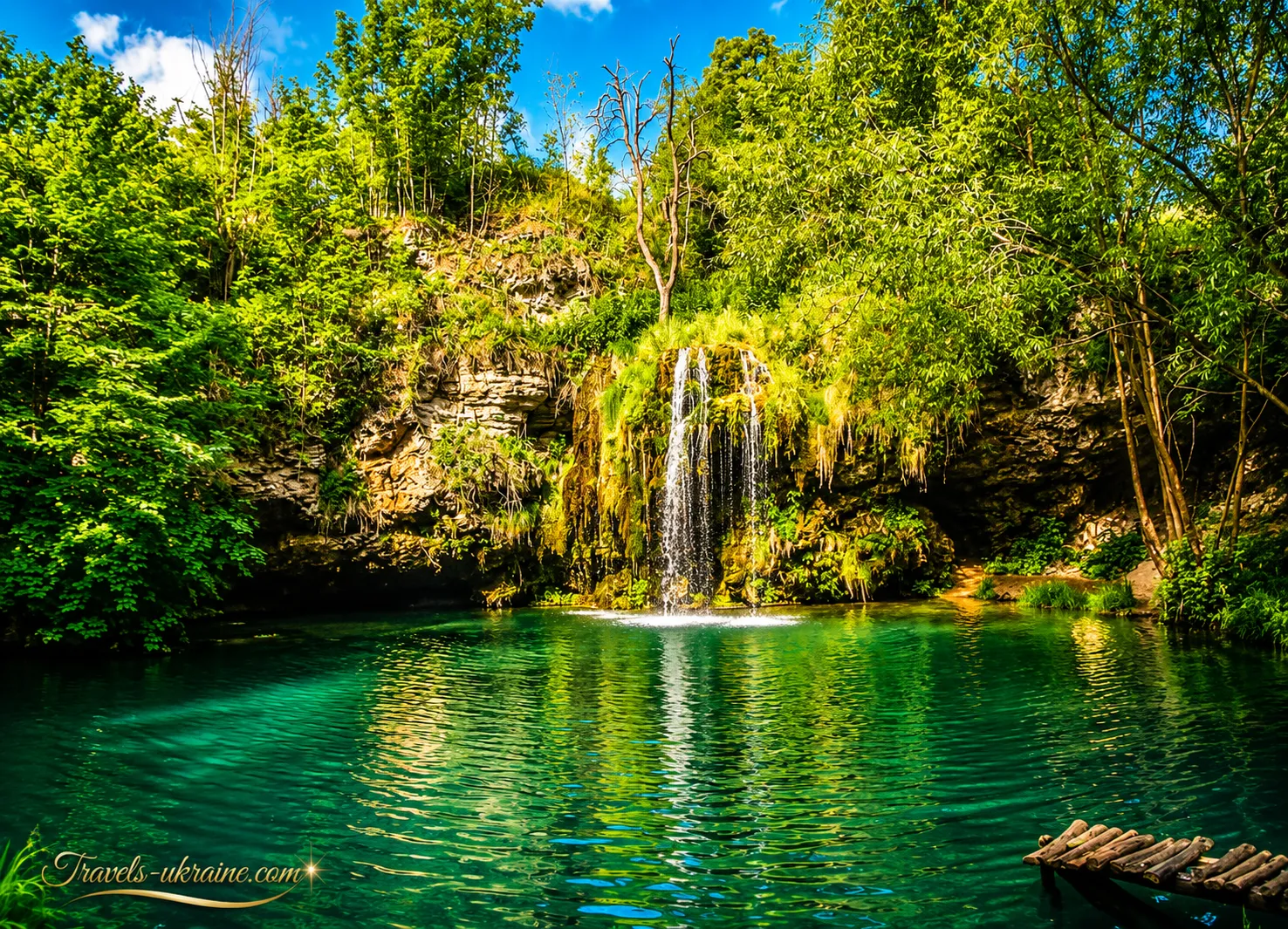
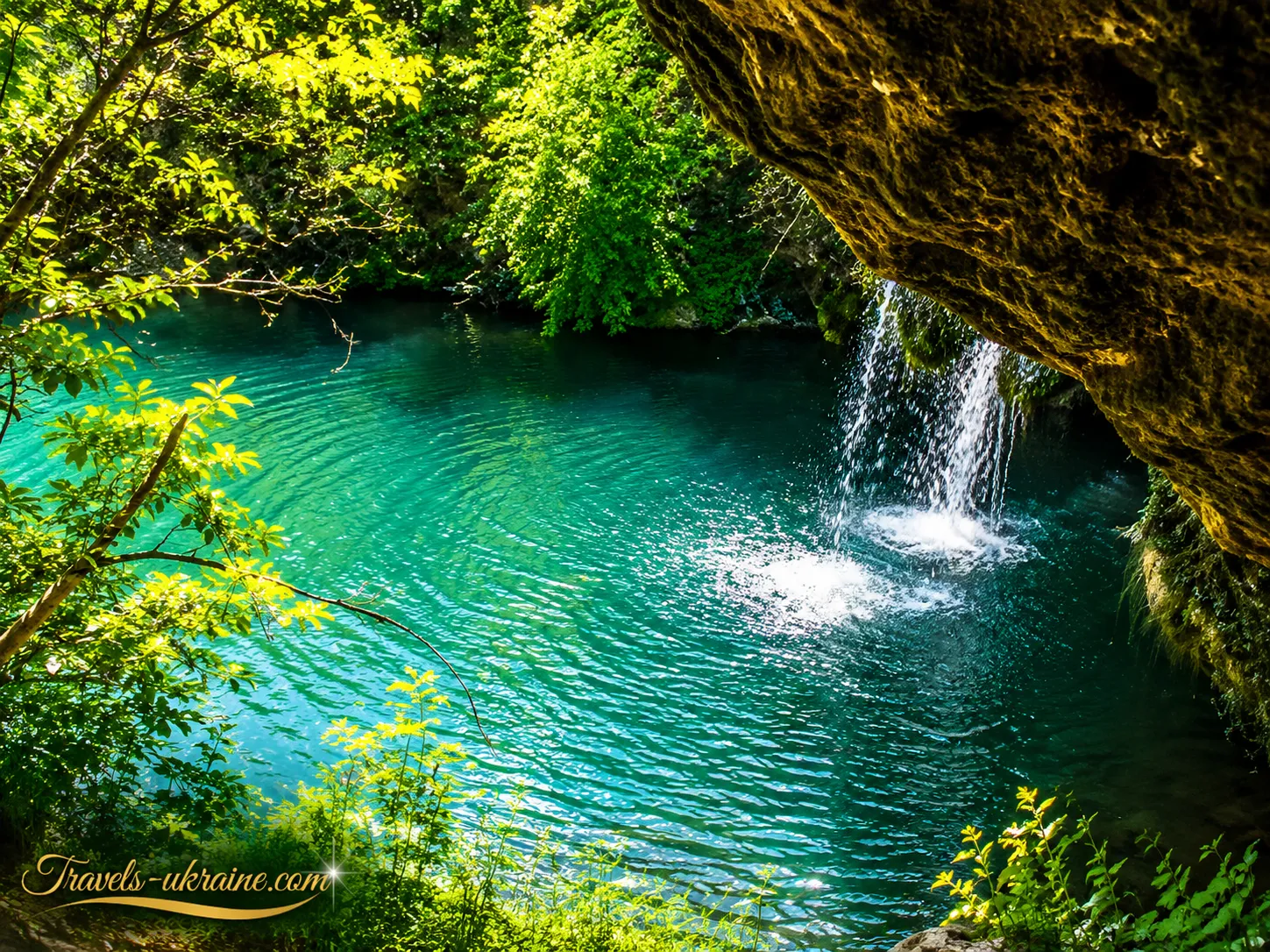
The main beauty of Burbun lies in the combination of water, stone, and silence. The stream cascades down the cliffs into a small natural pool that takes on a distinct turquoise hue under certain lighting conditions; for this reason, the site is often described as a turquoise-water waterfall. The coolness here is particularly noticeable during hot weather: the canyon provides shade, the vegetation softens the air, and the water imparts a sense of freshness to the spot, even when the surrounding fields and roads have been thoroughly warmed by the sun.
For tourists, Burbun is fascinating because it reveals Podillia not only through castles, fortresses, and panoramas of the Dniester but also through a less obvious, intimate side of nature. It is a little-known waterfall in the Khmelnytskyi region that needs no lengthy explanation: one simply has to step closer, hear the sound of the falling water, and see the rock faces to understand why travelers return here across the seasons.
Yet, the true magic of Burbun does not reveal itself all at once. At first glance, it appears to be merely a beautiful waterfall—a quiet natural spot near Kamianets-Podilskyi and Bakota. But look a little closer, and beyond the sound of the water, the place’s history, natural character, seasonal shifts, and subtle details—easily missed during a rushed visit—begin to emerge. Here, we explore why Burbun has become one of Western Podillia’s most fascinating waterfalls, the secrets held by the Bobravka River canyon, and how to plan your trip to experience this location not just superficially, but truly.
The History of the Burbun Waterfall in the Khmelnytskyi Region
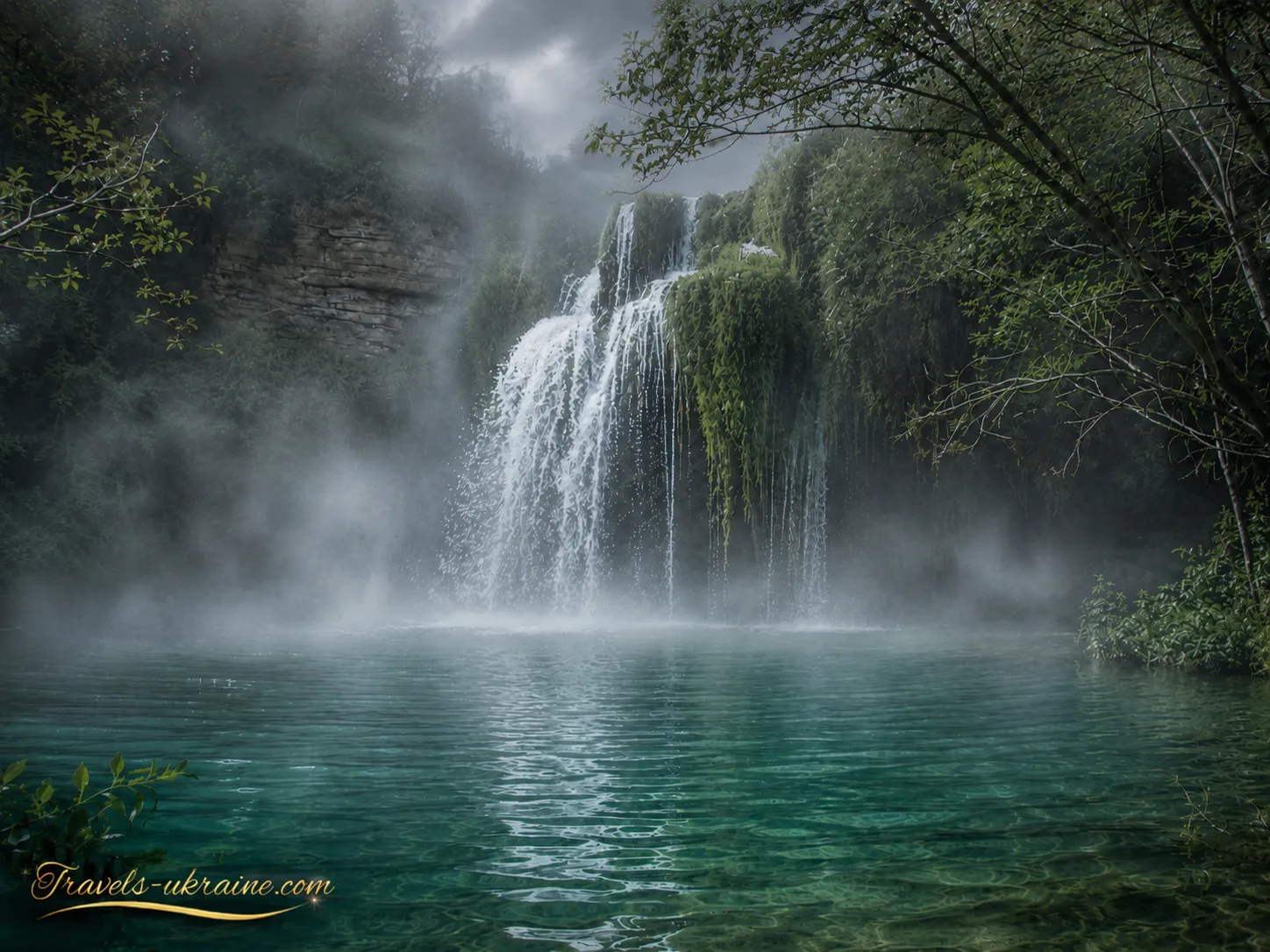
The story of Burbun Waterfall is not the story of a castle, an ancient fortress, or a major archaeological site. It is far quieter, more organic, and in some ways even deeper. It was written not by chroniclers, but by water, stone, tree roots, and time. That is precisely why this natural site should be viewed not merely as a beautiful location, but as part of the living Podillia landscape—one that took shape gradually, without haste, and at a natural rhythm.
The Burbun Waterfall, located near the village of Lysets, formed where a small river cuts through a rocky valley, creating a secluded canyon. While the river appears under names such as Bobravka or Bobrivka in various sources, for travelers, the spelling matters less than the character of the place itself: a narrow valley, rocky outcrops, lush damp greenery, moss-covered stones, and water cascading into a natural pool. It is this very landscape that created the conditions making the canyon waterfall one of the most striking natural landmarks in the area.
For a long time, this Podillia waterfall remained more of a local natural curiosity than a widely known tourist attraction. It was known to residents of nearby villages, anglers, hiking enthusiasts, and those well-acquainted with the area's network of field roads. For most tourists traveling to Kamianets-Podilskyi or Bakota, this location lay off the beaten path. That is precisely why Burbun retains a sense of discovery to this day: you arrive not at a "hyped" destination, but at a natural gem that seems to reveal itself by chance amidst the hills of Podillia.
Burbun does not have a single official “grand” legend to be repeated from one guidebook to the next. Yet, that is precisely what makes the place authentic. Its story is woven from the genuine impressions of real people: those who hike the trail here for the first time after the rain; those who bring their children to see the natural waterfall ; those who pause by the pool in autumn as leaves drift directly onto the water; and those who return in winter to witness how the familiar landscape transforms in the cold season.
Places like this do not age in the conventional sense; they simply reveal themselves differently each time. Burbun Waterfall can be vibrant and green in summer, quiet and golden in autumn, and austere and nearly deserted in winter. And every season adds a new layer to its story—not a museum-like layer, but one that is living and natural, something you can see with your own eyes.
How Burbun Waterfall Became Part of Tourist Routes
Burbun began to gain renown as travelers increasingly discovered not only the classic landmarks of Podillia but also small natural sites located near the main roads. Kamianets-Podilskyi, Khotyn, Bakota, Dunaivtsi, and the surrounding villages have long formed a major tourist destination. Yet, it is places like the Burbun Waterfall that add emotional depth to the journey: after visiting fortresses, observation decks, and panoramic viewpoints, one longs to pause somewhere free from the bustle, where the sound of water becomes the primary soundtrack.
Today, this picturesque waterfall is increasingly being included in short weekend itineraries. It attracts those interested in nature tourism, ecotourism, peaceful outdoor relaxation , and new locations free from excessive tourist development and noise. For some, it is a stopover on the way to Bakota; for others, a destination in its own right; and for many, a first opportunity to discover the diversity of the Podillia region beyond its well-known historical centers.
The Internet has played a significant role in the tourism scene surrounding Burbun. It was through travelers' photos, short videos, travel blogs, and social media posts that people from all corners of Ukraine first learned of the waterfall's existence. Some saw a snapshot of its turquoise pool, others stumbled upon a hiking route, and some were simply seeking new natural spots—and in this way , Burbun Waterfall gradually transcended its status as a purely local attraction. Today, people travel here in search of new experiences, tranquility, and a genuine nature getaway. It is quite possible that in a few years, it will no longer be described merely as an obscure waterfall in the Khmelnytskyi region, for Burbun has everything it takes to become a favorite destination for travelers.
So, if you love traveling across Ukraine, discovering new routes, and finding places that aren't yet talked about at every turn, now is the perfect time to join a quiet trend: "discovering a new tourist spot." Be one of the travelers who sees this waterfall not after it has become overly popular, but right now—while you can still experience true silence, natural beauty, and the special thrill of a first discovery.
Natural features of Burbun Waterfall: canyon, cliffs, and a turquoise pool.
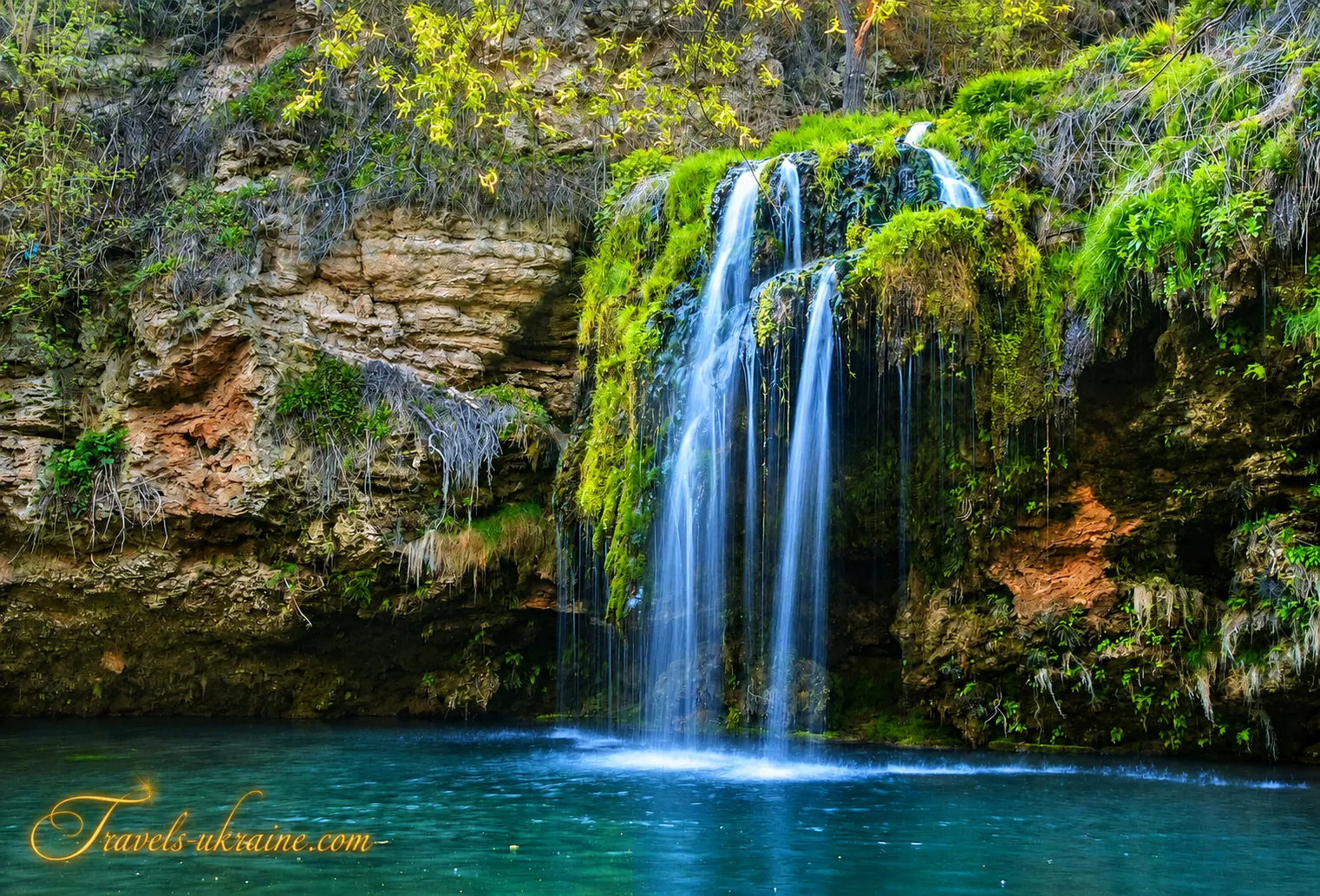
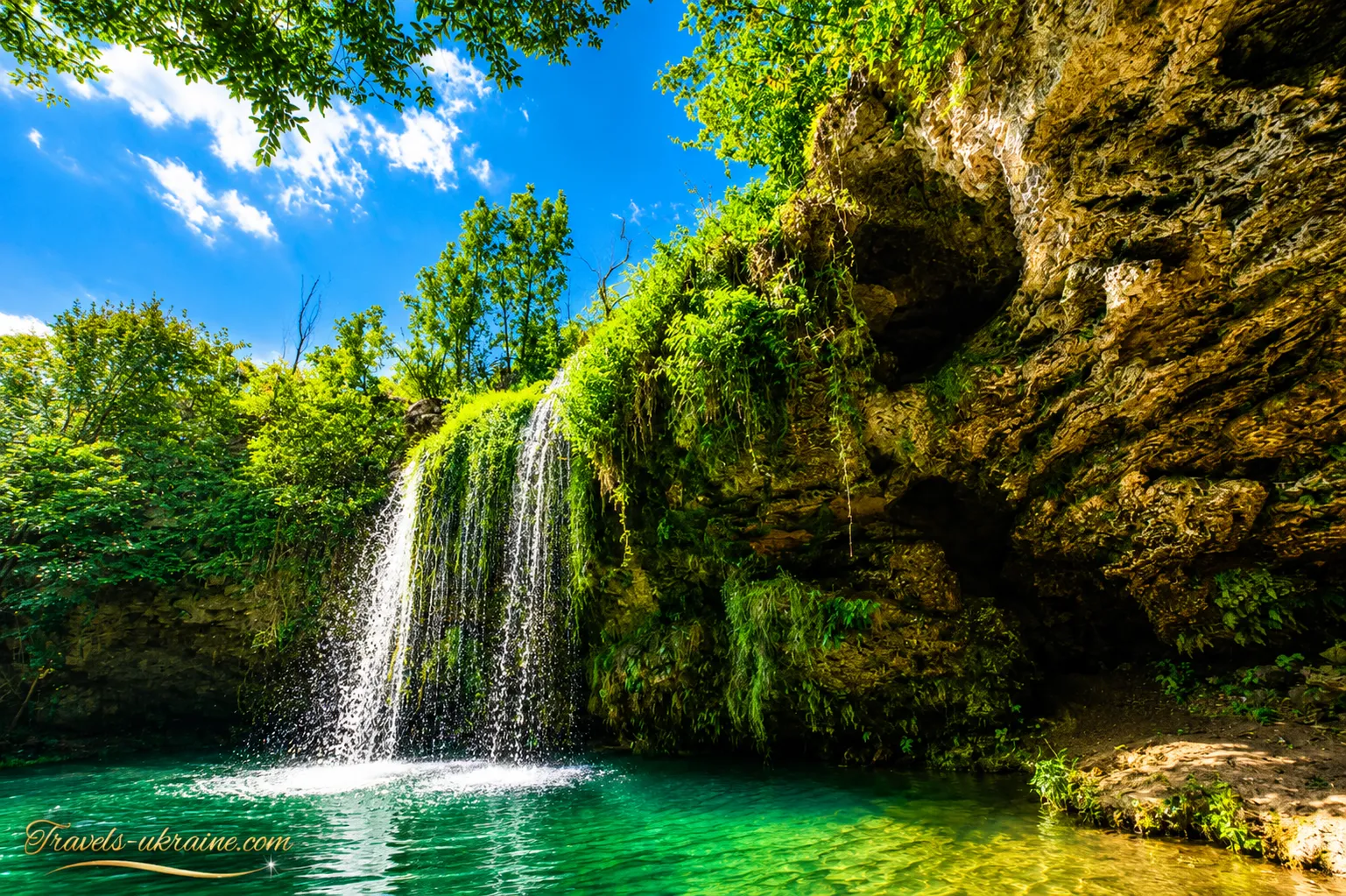
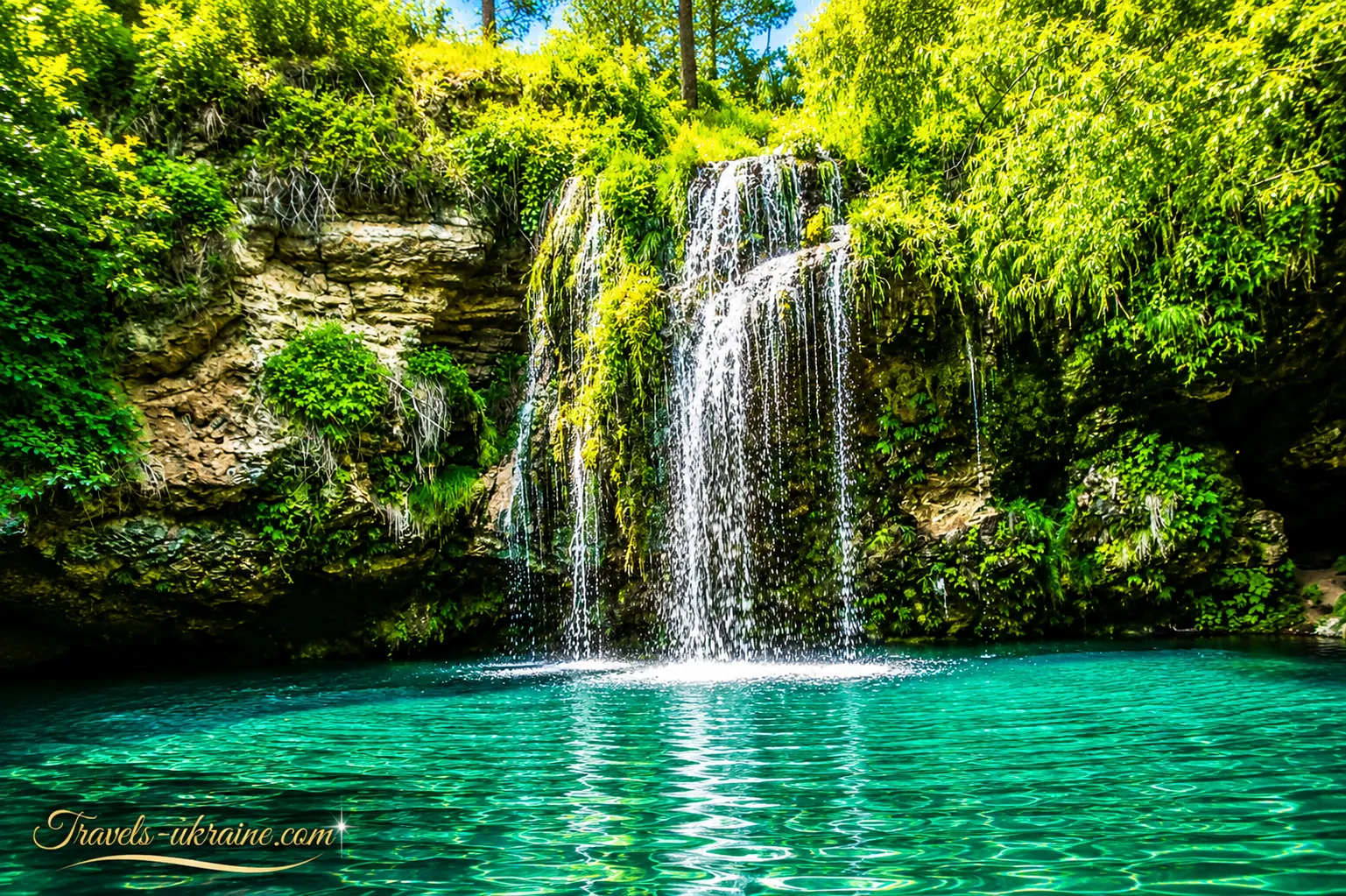
Burbun Waterfall has a distinct character: everything here appears compact yet striking. Rocky ledges form a natural basin, and the water cascades down from a height of approximately five meters, surrounded by trees, shrubs, mosses, and moisture-loving vegetation that lend the place an air of wild, almost untouched nature. During the warmer months, the canyon provides pleasant shade, ensuring the air near the waterfall remains fresh even on hot days.
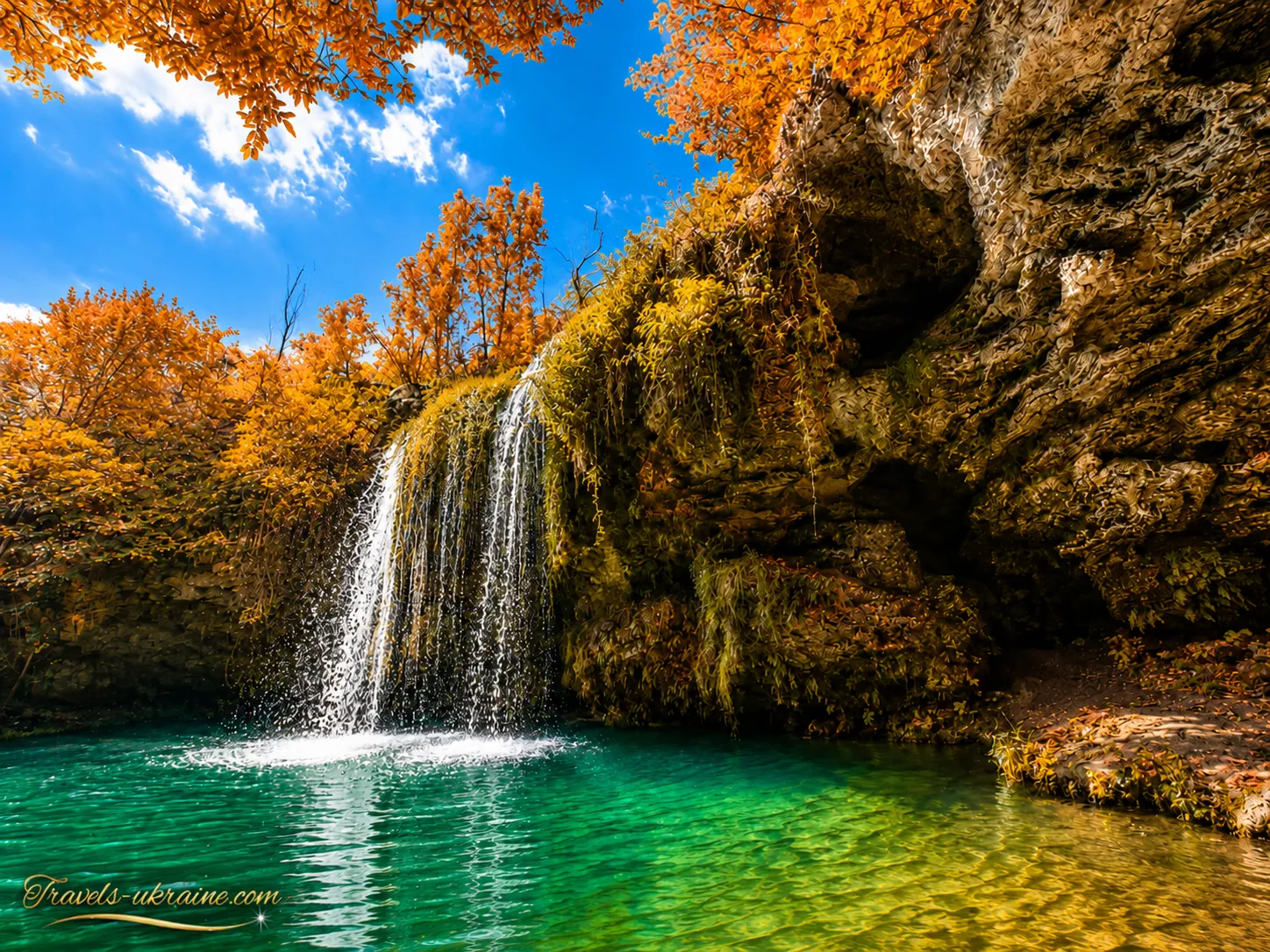
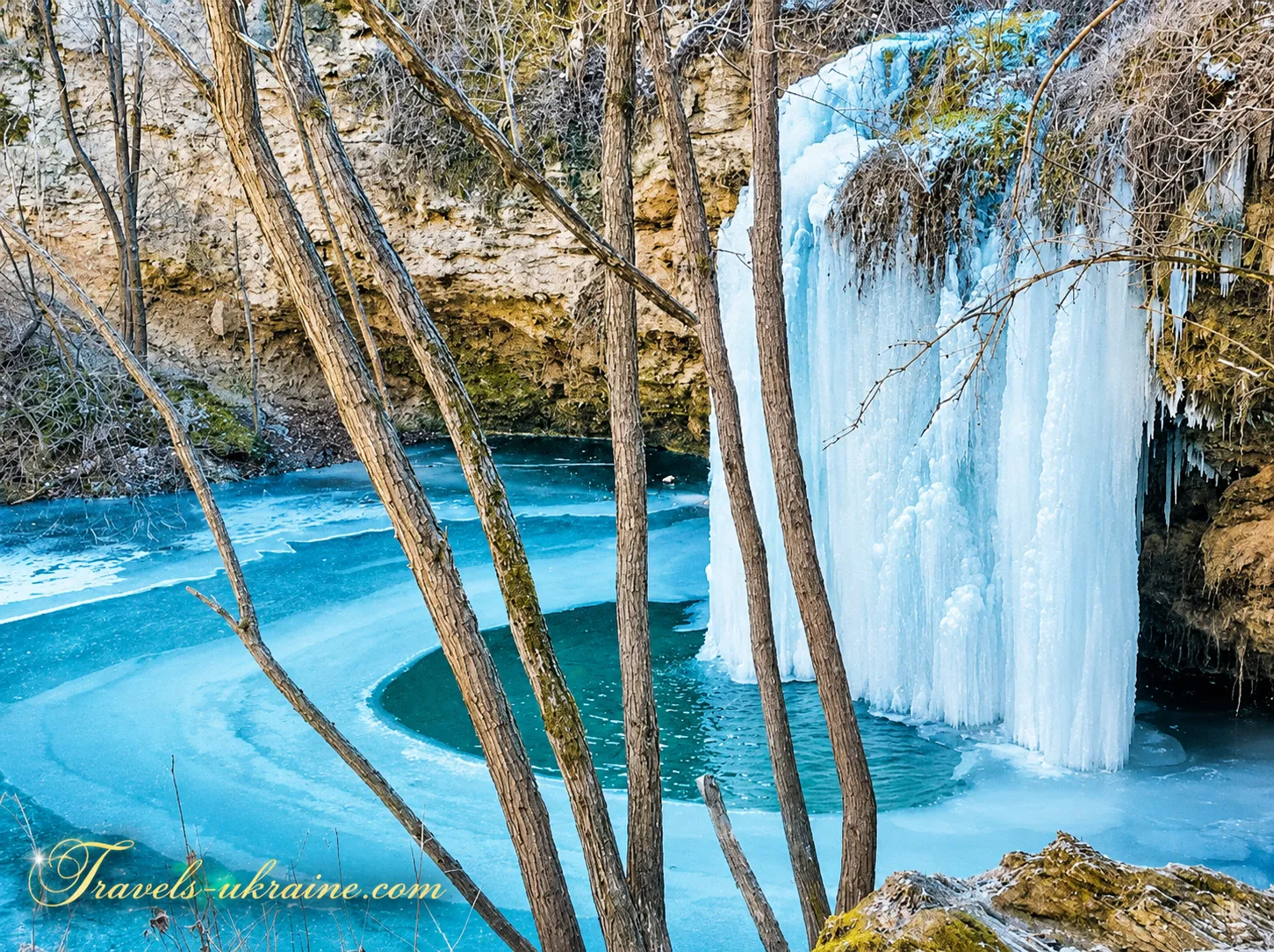
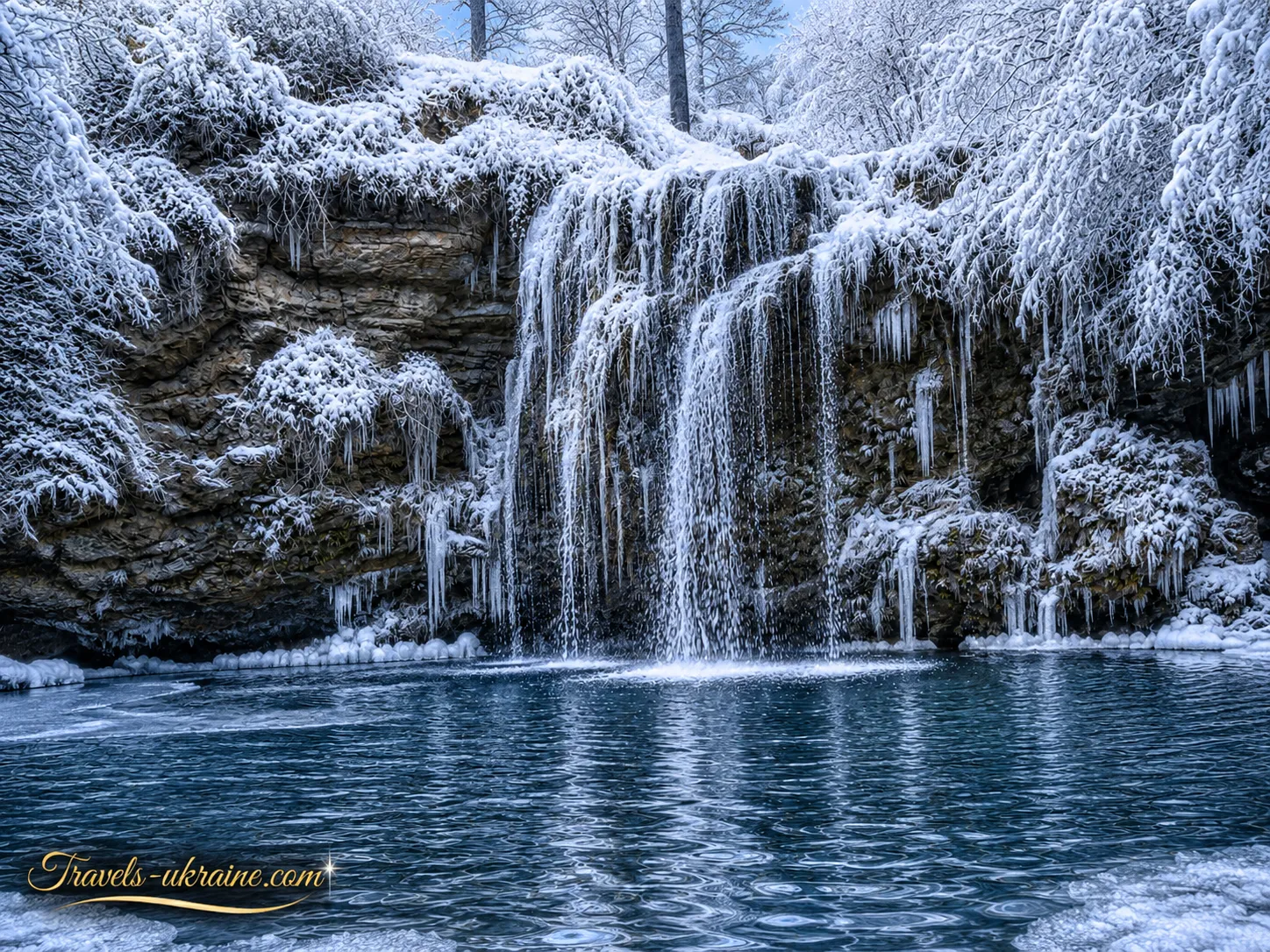
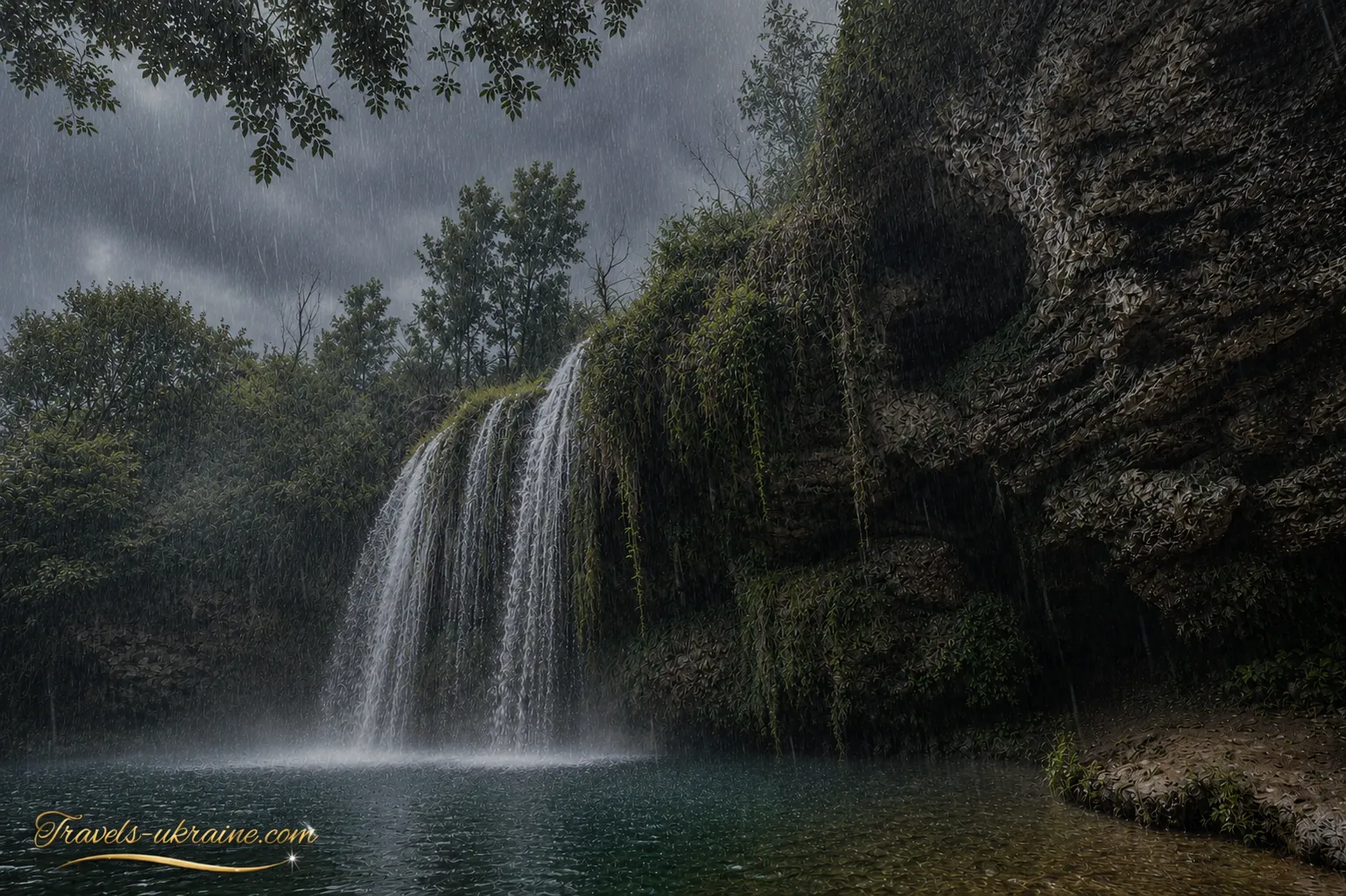
The special appeal of Burbun lies in the fact that it looks different throughout the seasons. In spring, following the snowmelt and rains, the stream flows more vigorously, and the surrounding greenery is more vibrant. Summer draws visitors with its coolness, shade, and the chance to spend a peaceful time by the water. Autumn transforms the waterfall into a highly photogenic spot, where yellow and copper leaves contrast with the dark rocks and water. Winter brings a completely different mood—restrained and quiet, characterized by crisp air, icy details, and the distinctive silence of the Podillia region.
In terms of official conservation status, the area where Burbun is located is designated as the «Bobravskyi» entomological reserve of local significance. This is a crucial detail: the site is not merely a beautiful waterfall in a canyon, but part of a natural area that requires protection. Its value lies not only in the cliffs, the pool, and the waterfall itself, but also in the surrounding ecosystem—the vegetation, insects, humid microclimate, and the tranquility that draws tourists here.
The Bobravka River canyon — a natural stage for the Burbun Waterfall.
The canyon, home to this quiet corner of Western Podillia featuring a waterfall and turquoise water, acts as a natural stage set. It seems to isolate the waterfall from the ordinary rural landscape, creating the sensation of stepping into a hidden realm. Just moments ago, you might have been surrounded by fields, a road, houses, or an open vista; yet suddenly, you are faced with cliffs, cool damp shade, water, and lush greenery. On paper or a map , the Burbun Waterfall near Dunaivtsi might appear small, but in reality, it makes a far more powerful impression. The reason lies in its natural setting: the narrow canyon amplifies the sound of the water, the cliffs create a sense of depth, and the pool at the base gives the space a sense of completeness.
It is precisely this striking sense of transition that makes the Burbun Waterfall, near the village of Lysets, so emotionally resonant. A traveler does not simply arrive at a point on a map; instead, they gradually descend into a place where the sounds, the air temperature, and the mood all shift. Within the canyon, the roar of the water takes on a deeper resonance, footsteps echo differently, and the surrounding space feels intimate. It is often these very details that leave a lasting impression—far more so than long hiking trails or grand observation decks. Burbun should not be judged merely by its height; it is a place defined by its atmosphere. It appeals to those who appreciate the nuances, who love to listen to nature, and who seek out the most authentic—rather than the most famous—tourist spots. In short: it makes no attempt at grandeur, yet it effortlessly lingers in one’s memory.
Photo and video gallery
Interesting facts and legends about Burbun Waterfall
Burbun Waterfall is interesting for more than just its secluded canyon. A unique travel narrative is gradually taking shape around it—one comprising local lore, seasonal observations, photogenic details, and the thrill of a small discovery. This is a classic case of a natural site appearing simple only at first glance. Linger by the water a little longer, and you realize the waterfall possesses a distinct character that needs no embellishment with fabricated legends. Burbun has an authentic atmosphere all its own: the stone, water, moss, trees, coolness, and silence create the impression that this place has long existed apart from the human world. There is no grand stage here, yet there is a natural depth—the very quality that draws people to this atmospheric waterfall near Bakota in search of a quiet spot to unwind amidst nature.
It is worth mentioning one of the most interesting local legends associated with the waterfall's name itself. According to popular belief, the name "Burbun" may have originated from the distinctive sound of the water as it cascades down the cliff, swirling, roaring, and seemingly "churning" within the stone basin. Such names often emerged not in offices, but directly from the everyday speech of people who saw the river daily, heard its sound after the rains, and knew the character of the local ravine well. This explanation suits the location perfectly. Standing by the water, the name "Burbun" feels anything but random: it conveys movement, sound, and a subtle sense of natural power. Even when the flow is not at its peak, it resonates more deeply within the canyon than one would expect from a small waterfall.
The turquoise waters of Burbun: the detail that intrigues tourists the most
The most striking visual feature that draws many travelers to Burbun Waterfall is the small pool at its base. In photographs and under the right lighting conditions, the water takes on a distinct turquoise or greenish-blue hue. That is why tourists often seek out this spot as the "waterfall with turquoise water." And although it might seem like "nature's magic" at first glance, this coloration is actually the result of very real physical processes.
The turquoise hue of the water typically arises from a combination of factors: optical light scattering, the mineral composition of surrounding rocks, the depth of the water body, the color of the bottom, and the angle of the sun's rays. Water absorbs part of the long-wavelength light spectrum—primarily red and orange tones—while shorter blue-green waves are more effectively reflected back to the human eye. If the water contains fine suspended particles of light-colored minerals, particularly those of carbonate origin, the effect is intensified: these particles act as natural micromirrors, scattering light and imparting a soft blue-green glow to the water.
This is particularly interesting in the context of Podillia, as the region is rich in carbonate rocks—such as limestone, marl, and clastic deposits—that readily interact with the water and the canyon terrain. While one cannot definitively claim without laboratory analysis that these rocks are what "color" the waters of Burbun, the canyon's natural environment undoubtedly influences how the water is visually perceived. The light-colored rocky bed, damp cliffs, mosses, tree shadows, and water clarity combine to create a complex optical effect, making the pool appear deeper, colder, and more intensely colored.
There is another important detail: the color of Burbun is not constant. On a sunny day, the water may appear brighter and more transparent; in overcast weather, darker and calmer; and after rains, less clear due to soil particles and natural turbidity. In autumn, the pool's hue is influenced by leaves falling into the water, while in summer, it reflects the greenery surrounding the canyon. Consequently, the waterfall in the Bobravskyi entomological reserve never looks exactly the same: its turquoise quality is not a fixed color, but the result of the interplay between light, water, stone, and the moment itself.
It is precisely this ever-changing nature that makes the Podillia waterfall so fascinating for photographers and travelers. You might arrive in the morning to see a cool blue hue, witness brilliant glints on the water during the day, and find a deeper greenish pool in the canyon’s shadow as evening approaches. There is a special intrigue in this: Burbun does not reveal itself in the same way to everyone. It seems to offer each visitor a unique version of the landscape—depending on the weather, the season, the light, and how closely you observe it.
What to see and do near Burbun Waterfall
Burbun Waterfall, located in the Kamianets-Podilskyi district , is not the kind of place where you need to rush from one "attraction" to the next. Its beauty unfolds gradually: in the sound of the water, the coolness of the canyon, the greenery on the slopes, the shimmering turquoise pool, and that special feeling a traveler gets upon finally discovering a spot tucked away from the relentless bustle. That is why the main activity here is not merely gazing at the waterfall, but taking the time to truly experience it—strolling to the canyon, examining the cliffs, taking photos, sitting by the water, observing nature, and simply resting after the journey. This place does not overwhelm you with sensory input; instead, it perfectly meets a modern traveler's need for quiet and solitude.
Naturally, the primary reason people come here is the Burbun Waterfall itself, surrounded by a unique natural setting of slopes, rocky outcrops, lush damp greenery, trees, roots, moss, and narrow paths. There is a sense of a hidden location here; it feels as though, just moments ago, you were amidst the open landscapes of Podillia, yet now you have stepped into a world apart—one where the dominant sound is the water.
Swimming, atmospheric photos, and a relaxing time by the Burbun Waterfall
The waterfall is highly photogenic, though its beauty isn't always immediately apparent from the first angle. Tourists most often photograph the rushing water and the turquoise pool, yet equally compelling shots can be captured by incorporating the surrounding rocks, foliage, moss, trees, and the narrow canyon space into the composition. It is these details that convey the true atmosphere of the location. Consequently, it is best to choose soft lighting for photography—such as morning, evening, or a day with light cloud cover. In the bright midday sun, contrasts can become too harsh, and the water may create unwanted glare in the images.
Next, depending on your itinerary and mood, a swim, nature, and simple relaxation await you at Burbun Waterfall —this isn't the place for a noisy crowd, music, or an elaborate picnic with loads of gear. The best approach here is much simpler: a good mood, a thermos of tea, water, a light snack, a few quiet moments, and a desire to take things slow—plus the chance to carefully dip into the cool water and feel a refreshing chill after your journey. It is a wonderful place to simply sit, listen to the sound of the water, and feel your inner rhythm shift.
Burbun is an ideal choice for those weary of jam-packed itineraries. If your trip has already included fortresses, viewpoints, city walks, and long stretches on the road, this picturesque spot near Bakota offers a wonderful pause. There is no need to rush or “get things done” here; simply being present is enough to let nature work its magic—soothing, refreshing, and restoring your sense of balance.
Observe nature at the Bobravskyi entomological reserve.
Since the waterfall area is linked to the "Bobravskyi" entomological reserve of local significance, it is important to visit with respect for the natural environment. The waterfall within the reserve is more than just water and rocks; it encompasses vegetation, insects, shady and damp areas, the canyon's microclimate, and subtle natural processes that often go unnoticed by the casual tourist. If you look closely, you can see just how vibrant this space is. During the warmer months, the area is lush with greenery and filled with birdsong; insects may appear over the water, while mosses and traces of constant moisture are visible on the stones. It is precisely these details that transform "recreation" from an abstract concept into a tangible practice: arriving, observing, preserving the surroundings, and leaving the place as clean as you had hoped to find it.
Walking through the nature reserve does not require a complex route, but it does call for attentiveness. After rain, the ground can be slippery and the stones wet, so it is best to move at a steady pace and watch your step. If you are visiting with children, it is advisable to keep them close, especially near slopes and water. As this is a natural recreation area without extensive infrastructure, exercising caution ensures you can enjoy your walk without any mishaps.
Burbun and the Bobravskyi Entomological Reserve do not offer dozens of pre-packaged attractions—and therein lies their strength. The main event here unfolds not on an itinerary, but within the traveler: when the sound of water quiets the mind, when the turquoise pool compels you to pause, and when an ordinary walk suddenly turns into a small discovery. To make the most of your trip, it is worth exploring the interesting sites near the waterfall and planning an itinerary that ensures a day in Podillia becomes a lasting memory.
Places to visit near Burbun Waterfall
As one of the lesser-known waterfalls of Western Podillia, Burbun is an excellent choice not only for a quick, standalone trip but also as part of a more extensive itinerary. It pairs well with visits to Bakota, Kamianets-Podilskyi, and the surrounding villages, where the Podillian landscape transitions into old roads, panoramic vistas, canyons, historical landmarks, and peaceful spots for relaxation. For this reason, the waterfall should be viewed not merely as a casual stopover, but as a key natural highlight of a rewarding journey through the Khmelnytskyi region.
The best route depends on how much time you have. If you only have a few hours, you could limit your trip to the village of Lysets, the Burbun waterfall, and a brief stop in Dunaivtsi. The latter serves as a practical stop either before or after visiting the waterfall: it is a convenient place to check your route, buy water, snacks, or fuel, or simply take a short break before the nature-focused part of the journey. For a tourist, it may not be the day's main attraction, but it is an important logistical stop. If you have a full day, it is worth adding Bakota or Kamianets-Podilskyi to your itinerary. And if you are planning a weekend trip, the picturesque waterfall—situated on the route between Kamianets-Podilskyi and Bakota— can provide a refreshing natural interlude that balances out the historical sites, Dniester panoramas, and the long drive.
But let’s not get ahead of ourselves. Burbun is just the beginning of a fascinating journey through this corner of Podillia. Next, we will take a closer look at what can be seen near the Burbun waterfall, which places are worth combining into a single itinerary, and how to make the trip not only beautiful but truly meaningful.
Bakota is a picturesque location near Burbun.
Bakota draws visitors with its sweeping views of the Dniester, a rock-hewn monastery, observation decks, and a sense of vastness. It offers a completely different experience compared to the intimate Burbun Canyon: while the waterfall is defined by shade, coolness, and the sound of rushing water, Bakota is dominated by the horizon, the waters of the Dniester, the sky, and the panoramic vista.
The combination of Burbun and Bakota works so well precisely because of the contrast. First, you see a waterfall with a turquoise pool, cliffs, moss, and an intimate natural setting; then, you find yourself amidst vast, open landscapes. This shift in scale makes the journey emotionally rich. In a single day, you can experience both the cozy atmosphere of the canyon and the grandeur of the Dniester’s shores—two distinct moods of Podillia that perfectly complement each other.
Kamianets-Podilskyi — the historic center after Burbun Waterfall
The Burbun Waterfall fits perfectly into a trip to Kamianets-Podilskyi—one of Ukraine's most renowned museum-cities, where history, architecture, and a natural canyon create the distinctive atmosphere of the Podillia region. Yet, its crowning glory—the feature that defines the city's unique historical character—is the Kamianets-Podilskyi Fortress. It is a place where stone, towers, and ancient legends seem to continue conversing with everyone who walks along the old ramparts.
After the quiet of the waterfall, Kamianets-Podilskyi adds a layer of history, an urban stroll, and architectural character to the journey. It is a place to take your time: wander through the Old Town, view the fortress, pause at the observation decks, peek into courtyards, experience the dramatic changes in terrain, and understand why this destination has long been a major tourist magnet in the Khmelnytskyi region. In this itinerary, Burbun serves as a natural counterpoint—a place where, after the urban experience, one can return to water, greenery, and tranquility.
Burta Waterfall — a natural stop for observant travelers
If you enjoy discovering lesser-known natural spots, you might also want to include the area around Holozubyntsi in your itinerary. Travel guides sometimes mention another small waterfall—Burta—located near Burbun. While it is not as famous as the Burbun Waterfall in the Khmelnytskyi region, such locations often appeal to travelers who wish to look beyond the most popular sites and explore more of the region's natural features.
At the same time, one should approach such small locations with caution: check the route in advance, do not travel without navigation, consider road conditions, and do not expect developed infrastructure. It is best to include them in your itinerary only if you have plenty of time, dry weather, and a desire to explore the area at a leisurely pace. However, if this is your first trip to the region, it is better not to overpack your schedule and instead focus on Burbun, Bakota, or Kamianets-Podilskyi.
The greatest value of the route around Burbun lies in its diversity. In a single day, you can see the Burbun Waterfall in the village of Lysets, stroll by the turquoise waters, and soak up the silence of the nature reserve—before heading off to take in the panoramic views of Bakota or explore the historic streets of Kamianets-Podilskyi. It is precisely this combination that transforms Burbun from merely “another beautiful spot” into part of a grand Podillia story, where nature, the open road, water, and ancient towns come together to create a journey you will want to experience again and again.
Frequently Asked Questions about Burbun Waterfall
Where is Burbun Waterfall located?
Burbun Waterfall is located in the Khmelnytskyi region, near the village of Lysets and not far from Dunaivtsi. Situated in the canyon of the Bobravka River, the site is often searched for as the waterfall near Dunaivtsi, Burbun Waterfall near Lysets , or the waterfall near Kamianets-Podilskyi. It is a scenic natural spot in Western Podillia that can easily be included in the Kamianets-Podilskyi — Bakota — Dunaivtsi itinerary.
How do I get to Burbun Waterfall?
The most convenient way to reach Burbun Waterfall is by private car, heading towards Dunayivtsi and the village of Lysets. Before setting off, it is advisable to locate the destination in your navigation app, save the map for offline use, and check road conditions. The final stretch to the site can be affected by the weather: after rain, unpaved sections may become slippery or muddy, so it is often better to walk part of the way.
How much time is needed to visit Burbun Waterfall?
A visit lasting between 40 minutes and an hour and a half is usually sufficient to get a first impression of the location. During this time, you can descend to the waterfall, see the turquoise pool, explore the Bobravka River canyon, take photos, and relax briefly by the water. However, if you are planning a leisurely photo walk, traveling with children, or wish to combine a visit to Burbun Waterfall with Bakota or Kamianets-Podilskyi, it is best to allow more time and avoid an overly packed itinerary.
When is the best time to visit Burbun Waterfall for photos?
Burbun Waterfall is best photographed in soft light—in the morning, towards evening, or on a day with light cloud cover. At such times, the water, rocks, moss, and greenery look more natural, and the waterfall, with its turquoise pool, better conveys its unique atmosphere. In summer, Burbun draws visitors with its greenery and coolness; in autumn, with the colors of the foliage; and in winter, with its silence, icy details, and the canyon's subdued mood.
Is it possible to swim in Burbun Waterfall?
The turquoise pool at Burbun might well tempt you to take a dip in the cool water, but it is important to remember that this is not a designated swimming area. There are no lifeguards, safe entry points, checked riverbeds, or official swimming facilities at the waterfall. If you wish to cool off, please do so with great caution: do not jump from the rocks, avoid entering the water after rain or when the current is strong, do not leave children unattended, and do not take risks just to get a photo.
Is Burbun Waterfall suitable for a trip with children?
Burbun Waterfall, near the village of Lysets, makes for an interesting family trip, provided adults remain vigilant. Children usually enjoy the real waterfall, the cliffs, the canyon, and the walk in nature. However, children must not be left unsupervised near the water, slippery rocks, or steep slopes. For a family visit, it is best to choose dry weather and daylight hours, wear comfortable footwear, and avoid planning too many locations for a single day.
What footwear and clothing should I choose for a trip to Burbun Waterfall?
For a trip to Burbun Waterfall in the Khmelnytskyi region, it is best to wear comfortable sneakers or lightweight hiking shoes with non-slip soles. Rocks near the water can be wet, and trails may become slippery after rain. Your clothing should be suitable for the weather: bring sun and insect protection in summer, a windbreaker or raincoat in autumn, and warm clothes and footwear with good traction in winter. It is also advisable to carry water, a power bank, an offline map, and a trash bag.
Why does the water in Bourbon have a turquoise hue?
The turquoise or greenish-blue hue of the pool near Burbun Waterfall is the result of a combination of several natural factors: water clarity, the depth of the pool, the color of the bottom, the reflection of surrounding greenery, the angle of the sun's rays, and the optical scattering of light. Within the Bobravka River canyon, light interacts with the water, rocks, and tree shadows; consequently, the pool can appear different from day to day—brighter in sunny weather, darker after rainfall, and softer on overcast days.
What can you visit near Burbun Waterfall?
In addition to Burbun Waterfall, it is worth considering Bakota, Kamianets-Podilskyi, Dunaivtsi, and other natural sites in Podillia. Burbun fits perfectly into a route from Kamianets-Podilskyi to Bakota: first, you can visit the historic city and fortress, then make a stop at the waterfall to enjoy nature, and finally head to the panoramic views of the Dniester. This route combines architecture, canyons, water, scenic viewpoints, and a relaxing getaway amidst nature.
How should one behave near Burbun Waterfall so as not to harm nature?
When visiting Burbun, it is important to follow simple rules of responsible tourism: do not leave litter, make noise, light fires, pick plants, damage moss, or stray from the paths unnecessarily. The waterfall, located within the Bobravskyi entomological reserve, is part of the natural environment, so its beauty depends on the behavior of every visitor. The best principle is simple: come, see, do no harm, and leave the place as clean as you would have liked to find it.
Information about Burbun Waterfall for tourists
Conclusion: Why Burbun Waterfall Is Worth Seeing at Least Once
The Burbun Waterfall in the Khmelnytskyi region is one of those travel experiences where a small natural site leaves a far deeper impression than you expected before the trip. At first glance, it seems like nothing special: a waterfall near a village—just a few meters high, with rocks, water, and trees. But then you arrive, hear the sound of the rushing water, see the turquoise pool, and feel the cool air of the canyon—and suddenly you realize: this is the true magic of Podillia. No grand spectacle, no crowds, no sign telling you, “This is where you should be amazed.” It is simply nature doing what it does best—and doing it in a truly compelling way.
Burbun makes no attempt to be the biggest, the loudest, or the most hyped-up spot. It wins you over with other qualities: the quiet, the atmosphere, the cliffs, the greenery, the water cascading from a height of about five meters, and that very turquoise pool that prompts tourists to first check the map and then pack their backpacks. It is a natural site near Dunaivtsi and Kamianets-Podilskyi that is very likely to eventually shed the label “little-known.” So, perhaps now is the best time to see it as it truly is: peaceful, natural, slightly wild, and utterly authentic.
So, if you’ve long wanted to take a short trip but were waiting for the “perfect moment,” this is it. You don’t need a three-week vacation, a massive amount of luggage, or a complex twenty-point itinerary. Sometimes, all it takes is a single day off, comfortable shoes, a charged phone, a thermos of tea, and a desire to see something new. The Burbun Waterfall is exactly that kind of place: it may seem small, but the impression it leaves stays with you for a long time.


No Comment
You can post first response comment.