
 English
 Українська
 Български
 Hrvatski
 Čeština
 Dansk
Dansk Nederlands
 Eesti
Eesti Suomi
Suomi Français
 Deutsch
 Ελληνικα
 Magyar
 Íslenska
 Italiano
 Latviešu
 Lietuvos
 Polski
 Português
 Română
 Русский
 Српски
 Slovenčina
 Slovenščina
 Español
 Svenska
 Türkçe
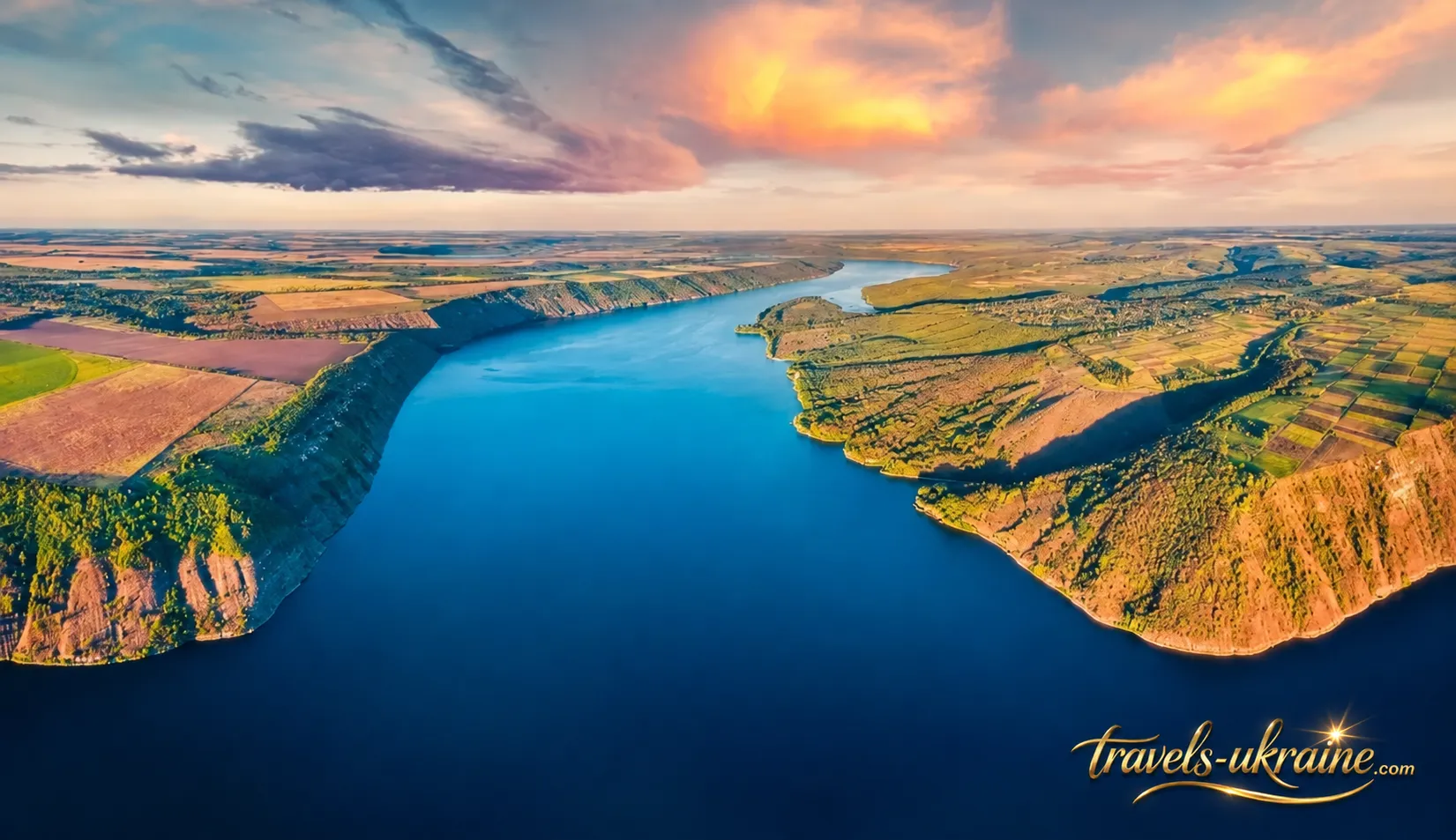
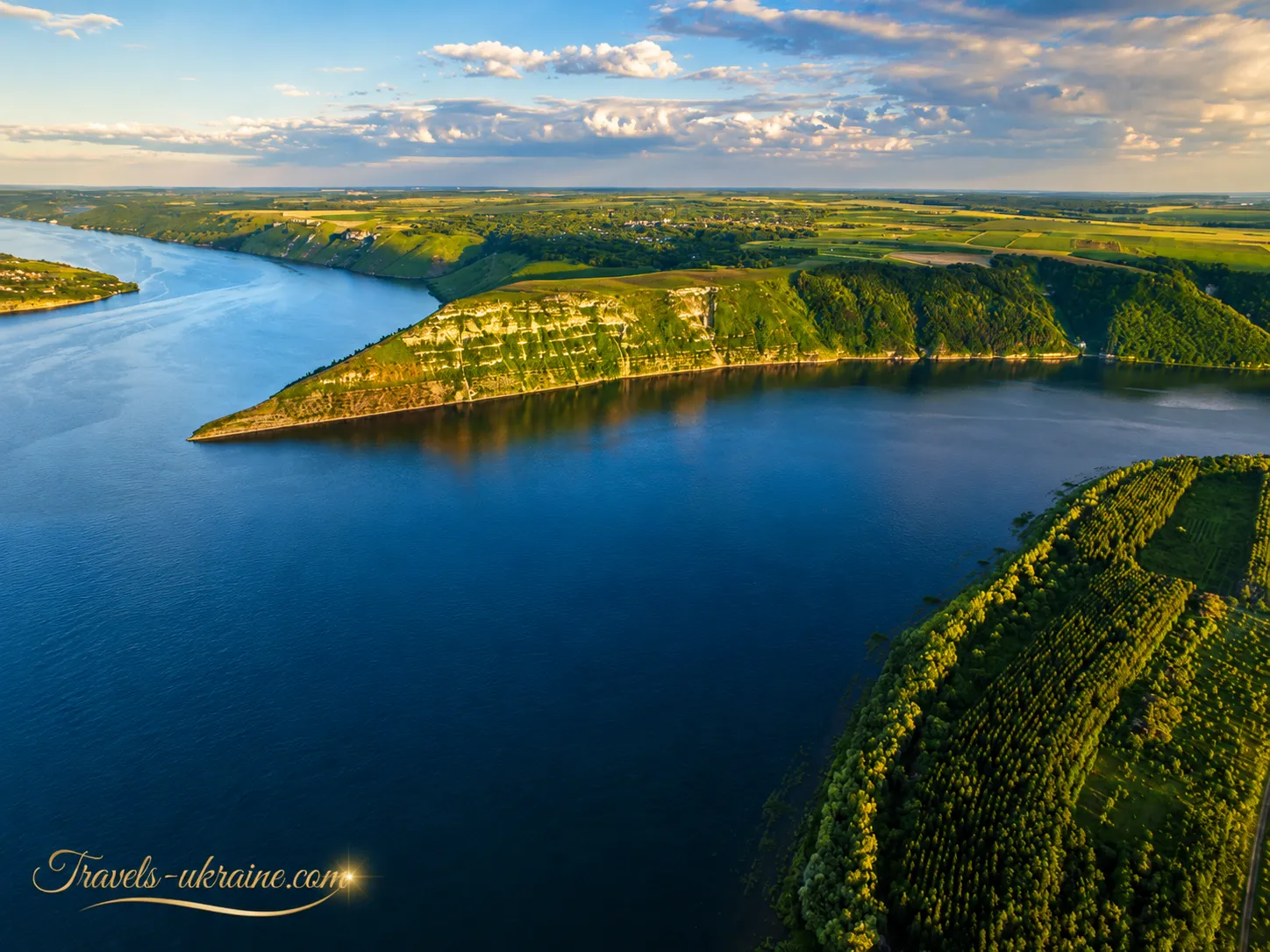
Bakota is a place where silence speaks more deeply than any words. Here, the Dniester spreads into a broad blue expanse, the white slopes of the Podolian Tovtry rise above the water, and the air holds that special sense of peace people are willing to travel hundreds of kilometers to find. For some, it is the Bakota Bay of the Dniester Reservoir; for others, simply Lake Bakota, although it is not actually a natural lake but part of a vast reservoir. Still, the name has long taken root in tourist vocabulary: Bakota is seen as a picturesque lake surrounded by forests, cliffs, and sunny shores.
This corner of Podillia is often called the Ukrainian Atlantis. And not only because it is a beautiful metaphor. Beneath the waters of the Dniester lies an ancient human story — the flooded village of Bakota, old homesteads, roads, memories, and an entire layer of Podolian life. That is why Bakota after the flooding became more than a tourist destination on the Dniester: it became a place with a powerful emotional resonance. It is easy to admire the panorama here, but difficult not to reflect: beneath this calm water there was once a village where people lived, worked, celebrated, waited for spring, and saw autumn out.
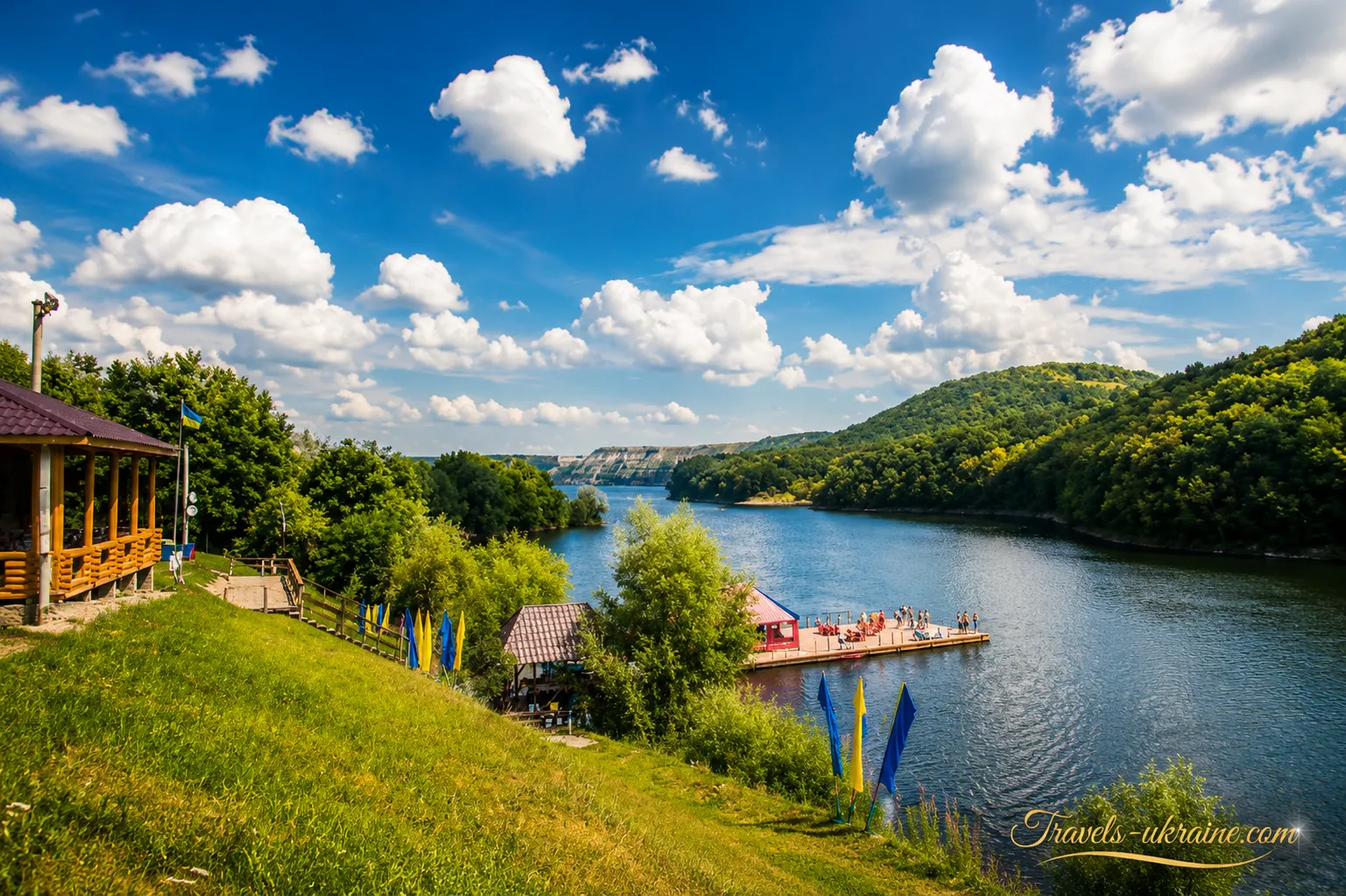
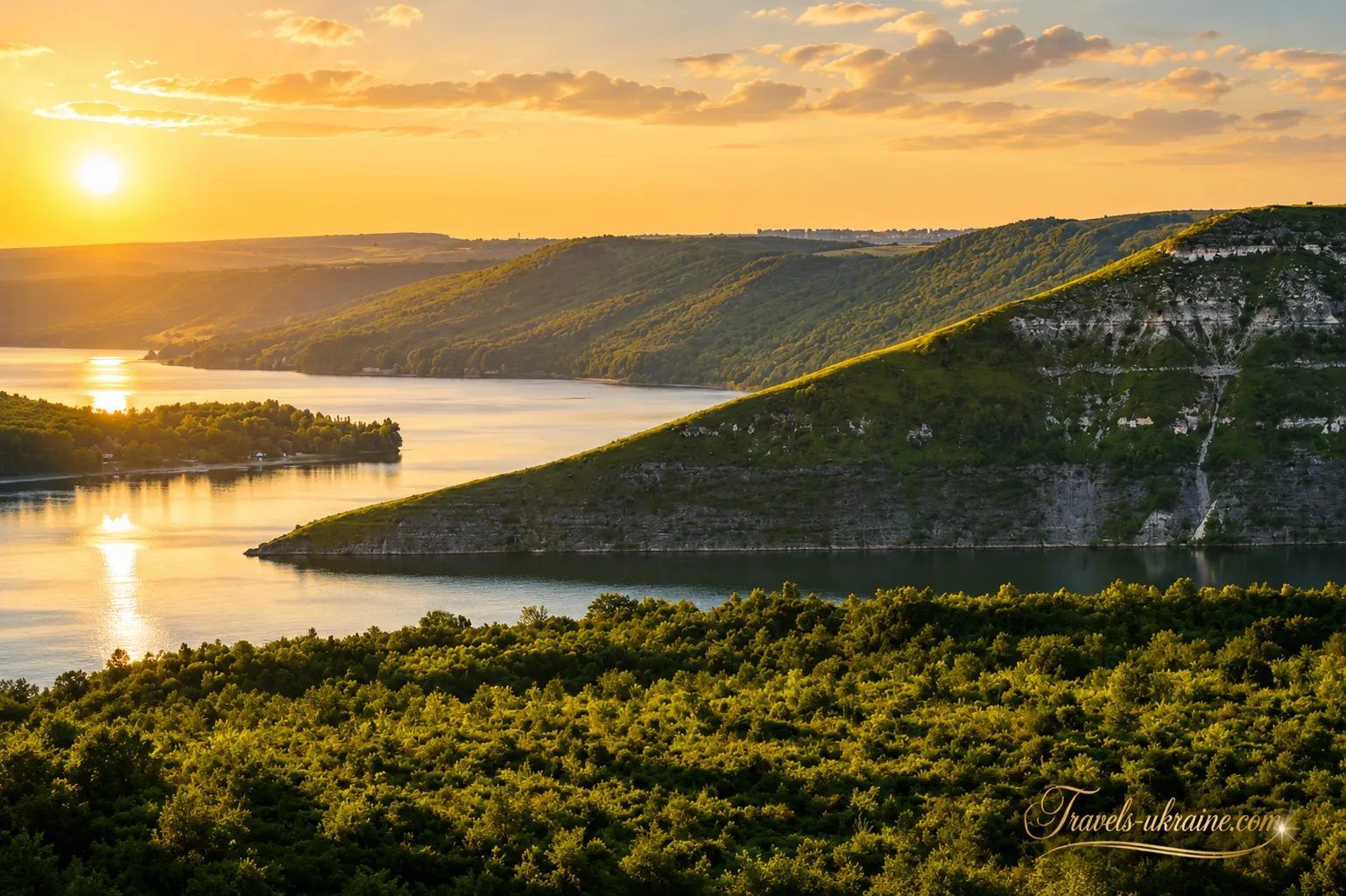
Today, Bakota in Khmelnytskyi Oblast, in Kamianets-Podilskyi Raion, is known as one of the most beautiful places in Ukraine. People come here for weekends, summer holidays, photo trips, excursions, waterfront camping, or simply to spend time away from the noise. The Bakota water body attracts visitors not with loud entertainment but with a sense of space: here, you want to walk slowly to the viewing platform, sit above the water, gaze at the distant shores, listen to the wind, and catch the moment when the sun touches the Dniester Reservoir.
Why Bakota Became a Tourist Gem of Khmelnytskyi Oblast
Bakota’s main magic lies in the combination of nature, history, and silence. This is not merely a beautiful panoramic bay on the Dniester, but a natural treasure of Podillia, where water, steppe slopes, forest paths, an ancient rock monastery, and the memory of a flooded village exist side by side. The landscape does not simply open before your eyes here — it seems to make you pause inwardly. You stand above the water, look across the tranquil Bakota Bay, and realize that beneath this beauty lies the entire story of people, homes, gardens, and roads that can no longer be seen but can still be felt in the air. That is why this unique body of water impresses not through spectacle but through depth — it does not entertain; it quietly touches memory, thought, and the heart.
This corner of Podillia does not try to impress you from the first second with artificial spectacle. Bakota’s tourist allure works differently: gradually. First, you see the road, fields, and Podolian hills. Then the water appears. Next comes the broad view of the bay, the slopes, cliffs, sky, boats below, and the strange feeling that time has slowed down. That is precisely why people return here: for a silence that is not empty but filled with history.
Next, we will explore where Bakota is located, why it is called the Ukrainian Atlantis, when and why the ancient village was flooded, what you can see near Bakota Bay, and which places offer a completely different view of the Dniester. We will discuss viewing platforms, beaches, campsites, glamp sites, water activities in Bakota, nearby routes, and overnight accommodation options. Most importantly, we will try to understand why Bakota stays with you after your first visit: what its quiet waters conceal, why people return here for peace, and what stories still seem to echo above the flooded shores. This will be more than a travel guide — it will be a slow journey to a place worth seeing attentively, without haste or unnecessary noise.
The History of Bakota: A Flooded Village, the Ukrainian Atlantis, and Memory Beneath the Water
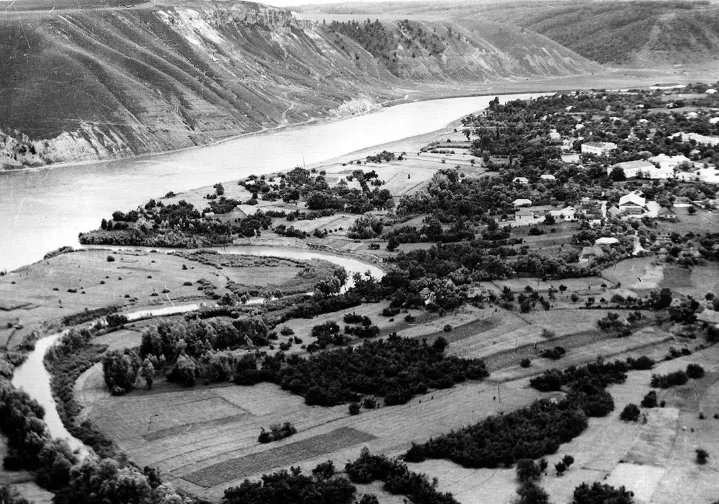
The history of Bakota is not a dry date in a tourist guidebook but the entire fate of a place that was first a living settlement, then disappeared from the map, and eventually returned to people’s memory as the Ukrainian Atlantis. Today, tourists see calm water, viewing platforms, cliffs, slopes, and a panoramic bay on the Dniester. But behind this beauty lies a much deeper story: streets, vegetable gardens, orchards, human voices, church bells, roads to neighboring villages, and ordinary Podolian life once existed here — a life that should not have vanished so completely.
Before the flooding, Bakota was an ancient settlement in the Dniester valley. It is remembered as an important historical center of Podillia, connected with the Lower Dniester region, trade routes, fortifications, spiritual life, and the natural wealth of the Dniester shores. This was not an accidental village on the outskirts — Bakota lived at its own pace, with its own memory, landscape, and place in the history of the region. That is why the question «Why was Bakota flooded?» sounds to many not merely like a tourist’s curiosity but like an attempt to understand why an entire world ended up beneath the water.
Before the Dniester Reservoir appeared, this area was part of the Dniester’s natural valley — warm, fertile, and protected by high slopes — and it carried immense historical value. People lived here for generations: they cultivated orchards, worked the land, ran households, fished, used nature’s gifts, built homes, and passed on to their children not only property but also a sense of belonging to this place.
According to archaeological research, the banks of the Dniester in the area of present-day Bakota have been inhabited since ancient times. Traces of early settlements, pagan sanctuaries and sacred sites, and burial mounds have been found here. All this shows that this Dniester valley was long ago not an accidental spot on the map but an important space of life, beliefs, and rituals. Long before the village of Bakota appeared, people came here to the water, cliffs, and high banks, leaving behind silent signs of their presence that still give this landscape an exceptional depth.
It is also worth mentioning the chronicle sources, which state that Bakota was first mentioned in 1240, although life along these Dniester shores had flourished much earlier. By the 13th century, it was already a large city and one of the most important political and administrative centers of the Lower Dniester region, which later became known as Podillia. Bakota belonged to the sphere of influence of the Principality of Galicia–Volhynia and played a notable role in the life of the region.
The more deeply you study Bakota’s history, the more sharply one simple yet painful question emerges: who could raise a hand against it, and what purpose could justify the decision to erase such valuable historical heritage of the Ukrainian people from the face of the earth? Beneath the water disappeared not merely a village but an entire layer of memory: homes, places of prayer, work, and everyday life belonging to several generations. Bakota was not an insignificant point on the map but part of Podillia’s deep history, a living testament to how Ukrainians inhabited the banks of the Dniester for centuries, created culture, preserved their faith, and passed their land on to their children. That is why today the quiet surface of Bakota Bay is perceived not only as a picturesque landscape but also as a silent reminder of a loss that cannot be measured by any figures.
When Bakota Was Flooded and Why It Became the Ukrainian Atlantis
The answer to the question «When was Bakota flooded?» is connected with the construction of the Dniester hydroelectric complex and the creation of a large reservoir. Bakota’s visible history came to an end in 1981, when, during the construction of the hydroelectric power station, the local population was forcibly resettled to neighboring towns and villages, and the settlement itself gradually disappeared beneath the waters of the Dniester Reservoir. Other ancient settlements of the region — Studenytsia, Kalius, and Ushytsia, known as Stara Ushytsia since 1826 — also ended up underwater along with Bakota.
What was lost was not merely several settlements but an entire historic landscape: a valley with people’s homes, gardens, roads, cemeteries, memories, and the legacy of generations. The water covered stone, soil, and traces of everyday life, but it could not erase Bakota from history. On the contrary, after the flooding it became a symbol of the Ukrainian Atlantis, a place where natural beauty became forever intertwined with the pain of loss.
That is why Bakota flooded village is not simply a popular search phrase. Behind it lies a dramatic history of resettlement, loss, and memory. Imagine a person leaving their yard for the last time, looking at the trees planted by their parents, the path to the river, and the house where their childhood passed, realizing that soon none of it would be visible. Not because time would destroy the house, but because water would slowly cover everything familiar. This is the source of Bakota’s greatest emotional power: its beauty was born alongside a profound loss.
Bakota After the Flooding: A Place That Disappeared but Has Not Fallen Silent
Bakota changed its appearance after the flooding but did not lose its significance. On the contrary, it became an even stronger symbol. Where there was once a valley, Bakota Bay now stretches out. Where roads once ran, there is water. Where homes once stood, the sky is reflected. It seems that nature soothed the pain by covering it with a blue surface, but an attentive traveler still senses that this place has a voice.
For this reason, picturesque Bakota is not perceived as an ordinary tourist gem of Khmelnytskyi Oblast. It has a dual character. On the one hand, it is one of the most beautiful places for recreation in Ukraine: a panoramic bay, a natural treasure of Podillia, and a setting for water-based recreation, ecotourism, camping, lakeside picnics, and nature trips. On the other, it is a place of memory where every view carries the shadow of the past. It is this depth that makes Bakota so special.
Accordingly, it is worth learning Bakota’s history before your trip. Without it, the place may seem like nothing more than a beautiful bay for a weekend getaway. But once you understand that before you lies not only water but a flooded valley filled with human lives, this well-known destination on the Dniester reveals itself in an entirely different way. Every look at the water becomes deeper, every path more meaningful, and the silence above the water no longer empty but filled with memory.
Bakota and the Podolian Tovtry: Natural Features, Cliffs, Water, and the Monastery
According to meteorologists, a special microclimate has developed around Bakota: the average annual amount of heat per 1 m² here is almost comparable to that of Yalta. Cliffs and forests act as a natural shield, protecting the Dniester shoreline from cold northern air currents, as though nature itself had erected an invisible wall bearing a sign: «Drafts not allowed.» That is why Bakota often feels warmer, milder, and sunnier than one might expect from a Podolian landscape.
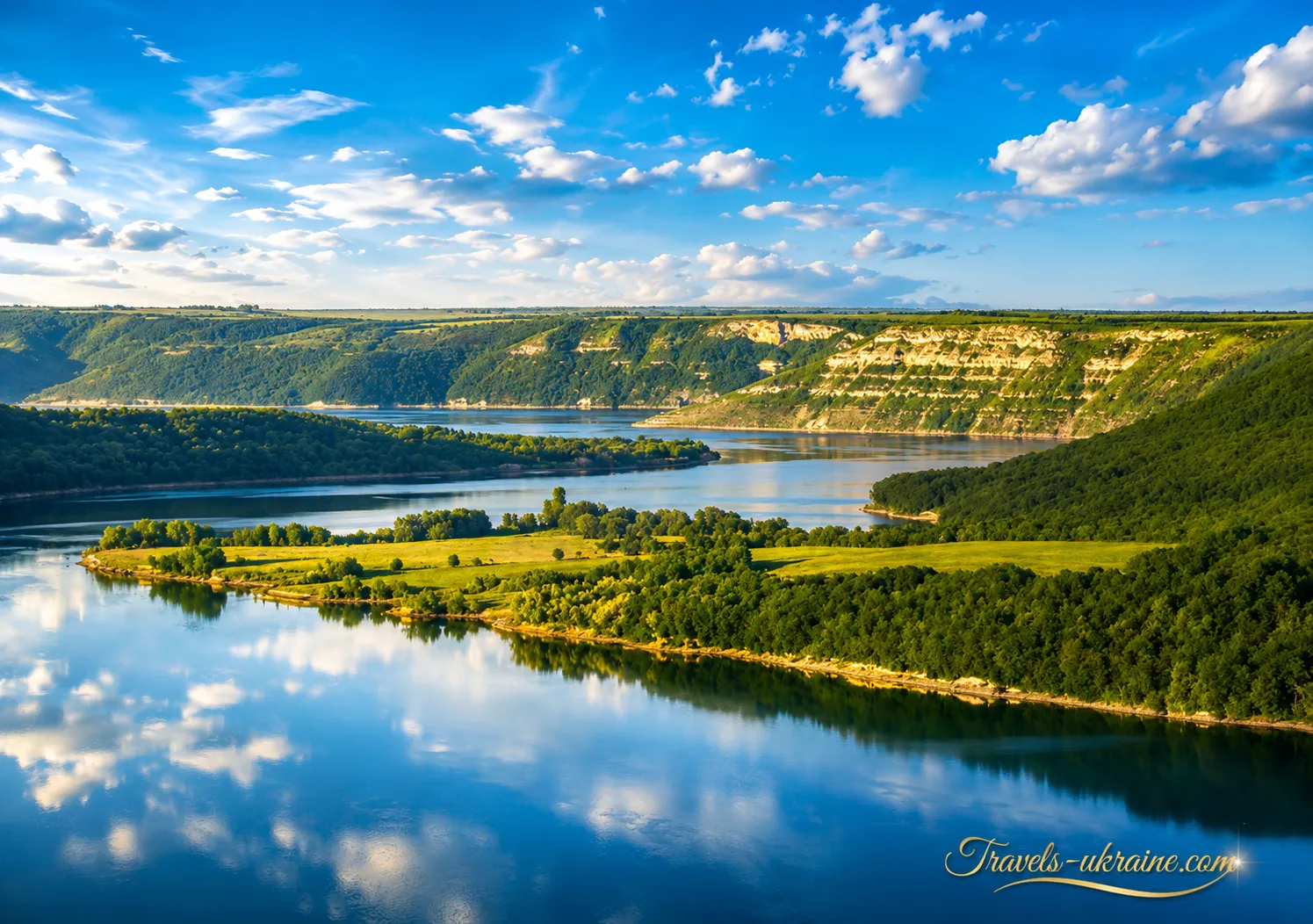
Bakota is also distinctive because it does not look like an ordinary place by the water. It is not simply a beach, just lakeside camping, or merely a tourist route for a walk. The gem of Podillia has depth and dimension: you need to view it from above, experience it along the trails, listen to it beside the cliffs, and take it in together with its history. Every element of the landscape contributes to the overall impression: the bay’s blue surface, limestone slopes, green ravines, sunny open terraces, paths to the monastery, springs, tree shadows, and the distant bends of the Dniester.
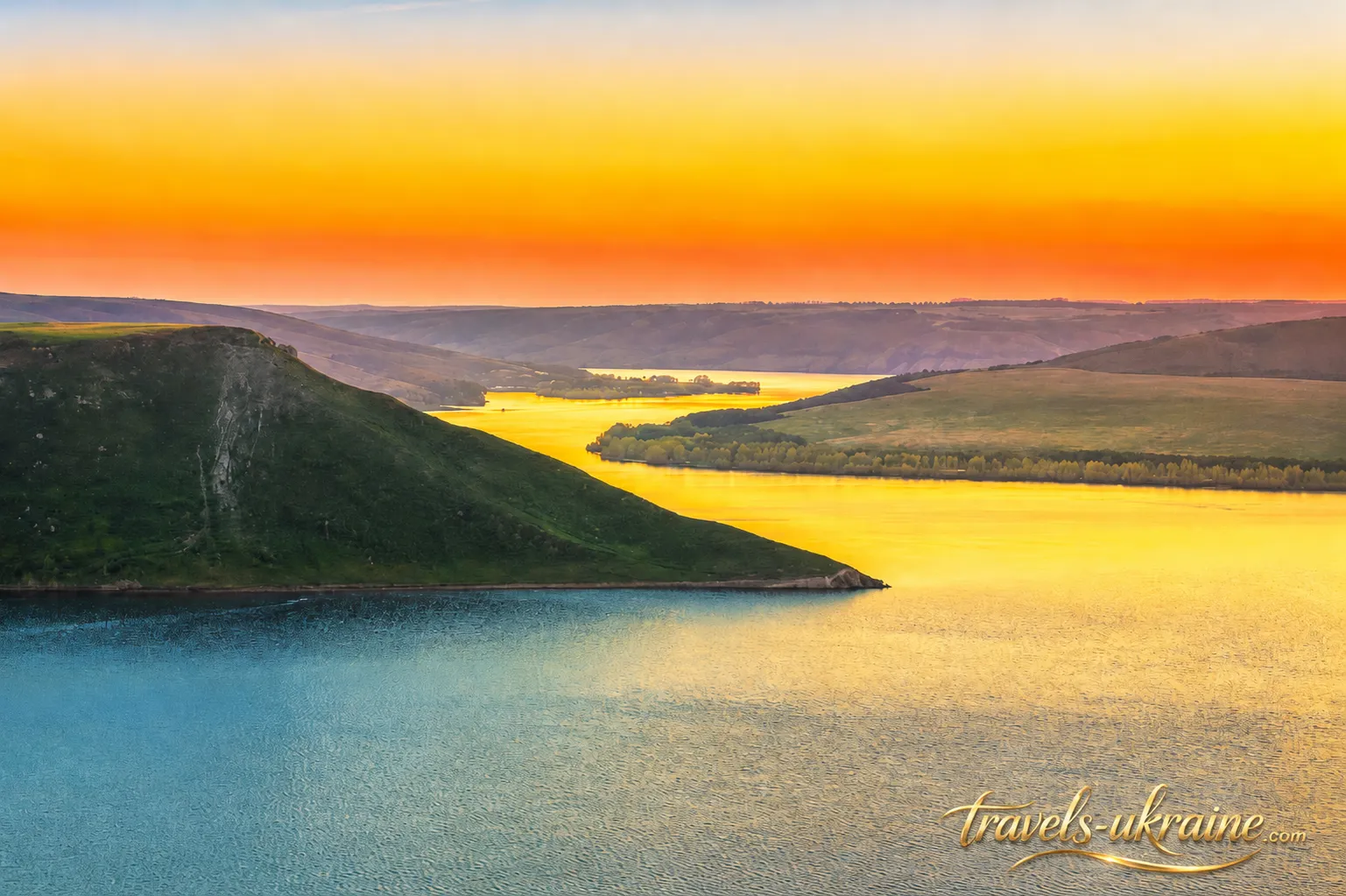
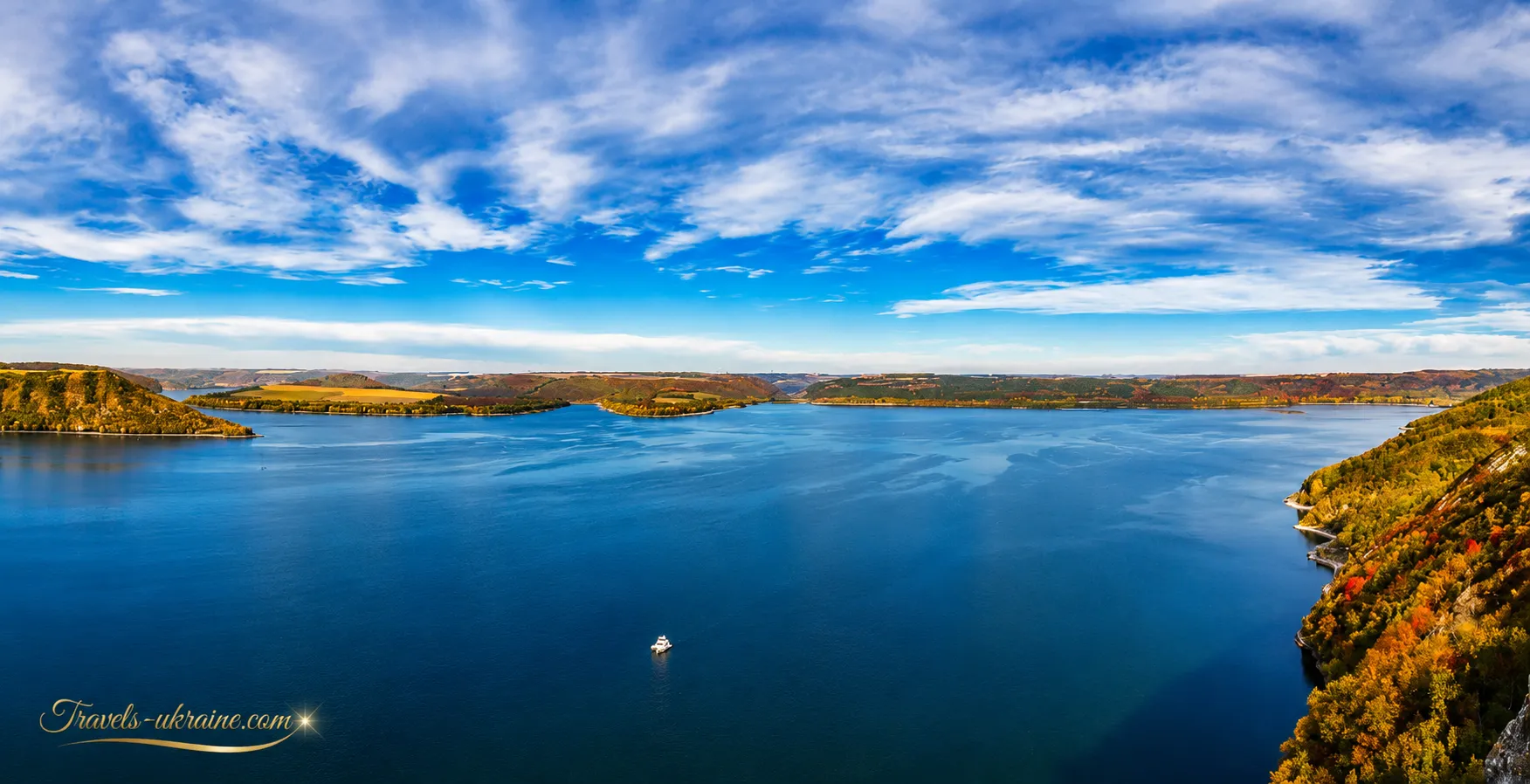
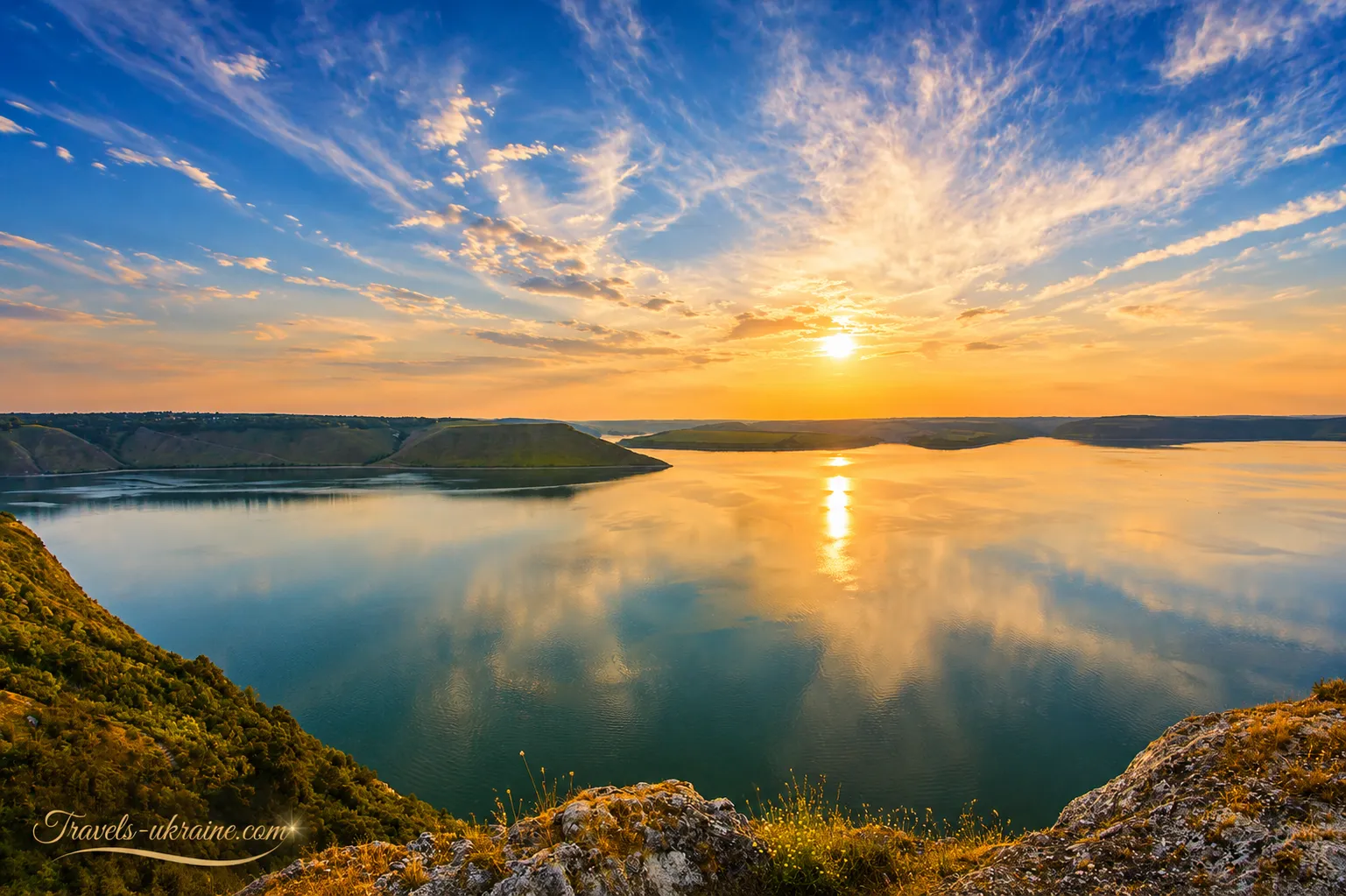
In clear weather, the water in Bakota Bay changes color throughout the day. In the morning it may be silvery and cool, during the day a rich blue, and in the evening warm and almost golden. That is why the viewing platform in Bakota has become one of the most popular places for photographs, but the true value of this panorama lies not only in pictures. When you stand above the bay, your gaze instinctively slows down: you want not to take endless photos but simply to remain silent and look.
The Podolian Tovtry and Bakota’s Nature: Cliffs, Slopes, and a Living Landscape
The Podilian Tovtry give Bakota its distinctive character. This is neither a flat shoreline nor an ordinary river valley, but a complex natural landscape of hills, limestone outcrops, cliffs, sun-warmed slopes, and diverse vegetation. In summer, the air is scented with dry grasses, heated earth, and water, while in spring the slopes come alive with tender greenery. In autumn, Bakota softens in color: the shores are covered in golden, copper, and amber tones, and the Dniester reflects the sky differently—more calmly and deeply.
This natural gem of Podillia is especially valuable because it has preserved a sense of wilderness. Even where there are hiking trails, viewpoints, or places to rest, Bakota does not lose its natural character. It does not feel fully developed or conquered by people. On the contrary, people here adapt to the landscape: they choose comfortable shoes, bring water, walk more slowly, do not litter or make noise, and learn to be attentive to the place.
Bakota Cave Monastery: Spiritual Architecture
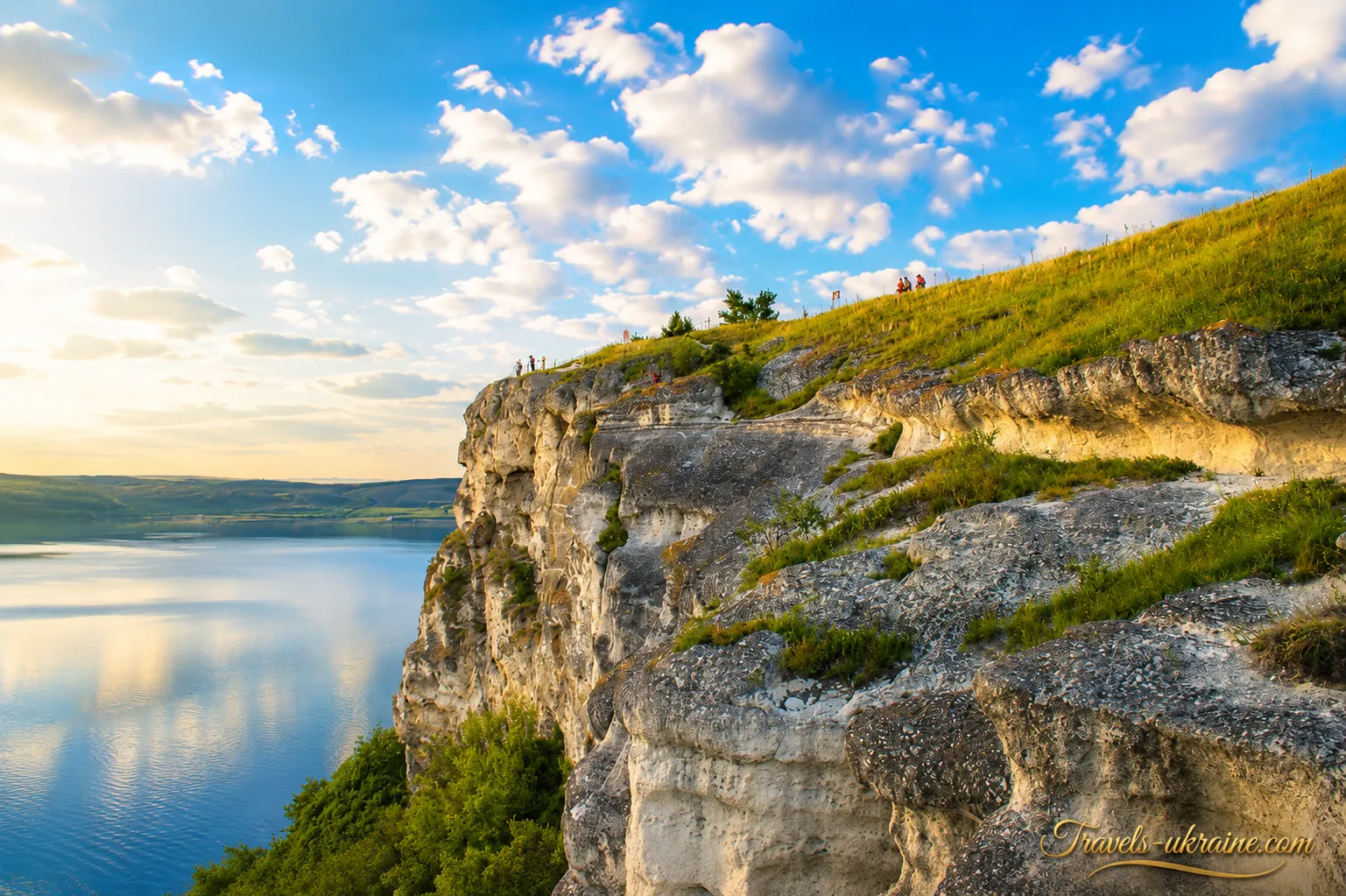
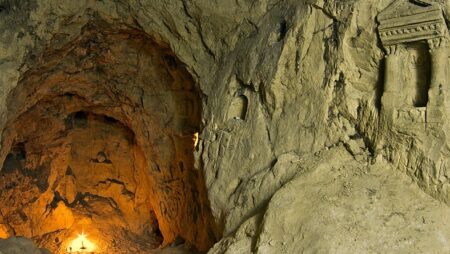
Bakota Cave Monastery is one of the most important landmarks in this area. Its value lies not only in its age but also in how organically it is connected with nature. This is not architecture that competes with the landscape; rather, it continues it. Rock niches, cave spaces, springs, stone, and silence create a special atmosphere in which history can be physically felt—in the coolness of the rock, the uneven stone surface, narrow passages, and the view of the water from above.
For a traveler, Bakota Monastery is a place to stop without rushing. There is no need to look for outward splendor or large decorative details here. Its strength lies in simplicity, restraint, and a sense of ancient spiritual life. Such places were once chosen for a reason: the rock provided protection, the height opened up the surrounding space, nearby water was a source of life, and silence helped people focus. That is why the monastery near Bakota is perceived not as an isolated landmark, but as part of the greater history of this land and a natural feature in its own right.
Bakota Viewpoint: Where the Dniester Panorama Unfolds
Bakota Viewpoint is one of those places worth visiting even for just a few hours. From here, you can clearly see how the Dniester brings water, sky, rocks, and distant shores together in one space. The panorama is not merely beautiful—it has depth. Below, the bay stretches out; somewhere beneath the water lies old Bakota, while the surrounding landscape seems both peaceful and majestic.
The best time to visit the viewpoints is in the morning or close to sunset. The light is softer then, the shadows are longer, and the water looks especially expressive. The scenery is impressive during the day as well, but the morning and evening hours give Bakota the atmosphere for which it is called a place of power. Here, it is easy to understand why a holiday in Bakota means more to many people than swimming, camping, or a lakeside picnic; it also means an inner reset.
- Water creates the main panorama of Bakota Bay and a feeling of vast, peaceful space.
- Rocks and slopes shape the distinctive relief of the Podilian Tovtry and give the landscape dimension.
- Bakota Cave Monastery adds historical and spiritual depth to the area.
- Viewpoints offer the best views of the Dniester, the bay, and the natural panorama of Podillia.
It is these natural and architectural features that make Bakota more than a popular weekend destination—it is a true tourist gem of Khmelnytskyi Oblast. You may arrive looking for a beautiful photo, but leave with something much greater: the feeling of having touched a place where nature, memory, and silence have merged into one vast Podilian landscape.
Photo and Video Gallery
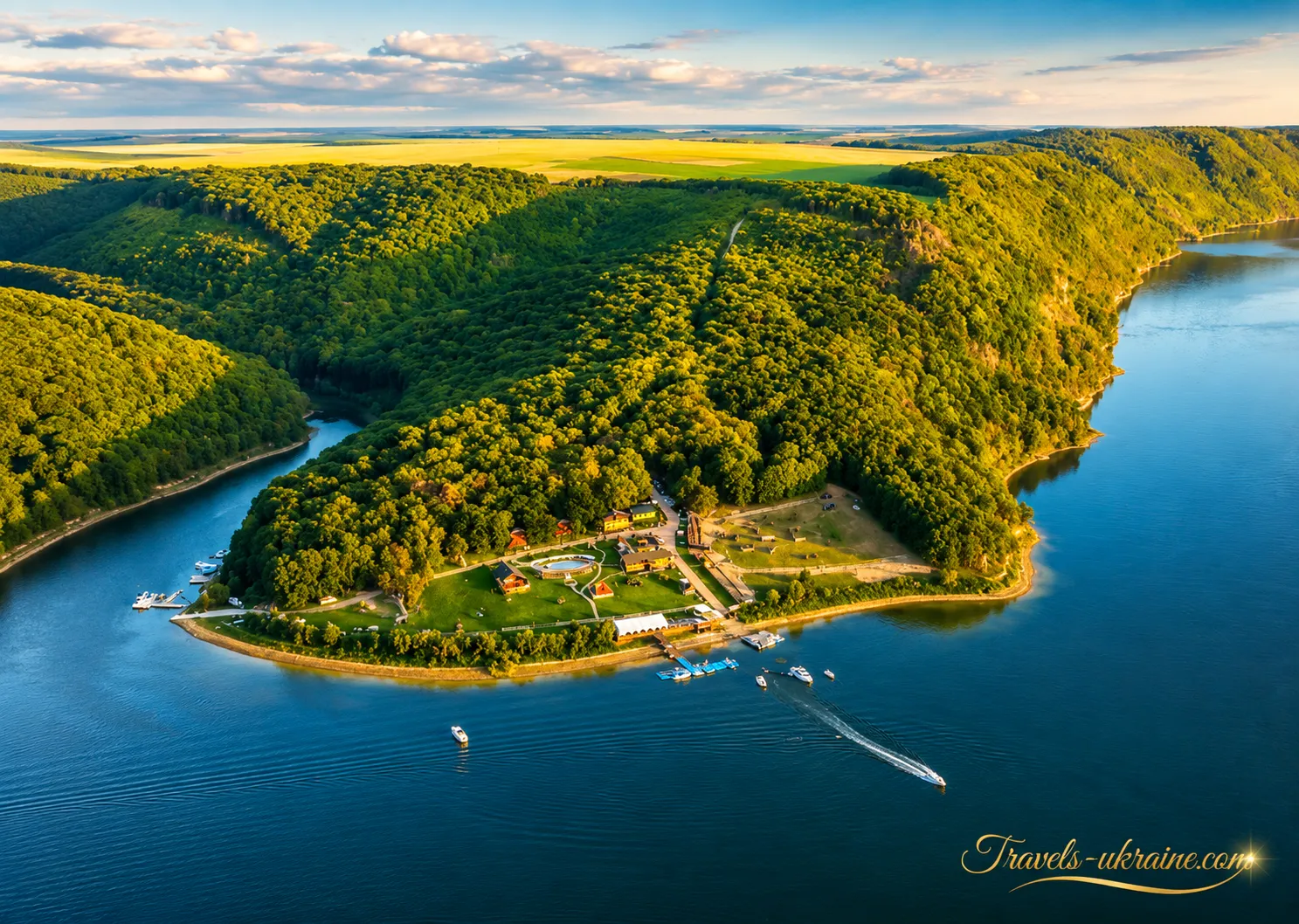
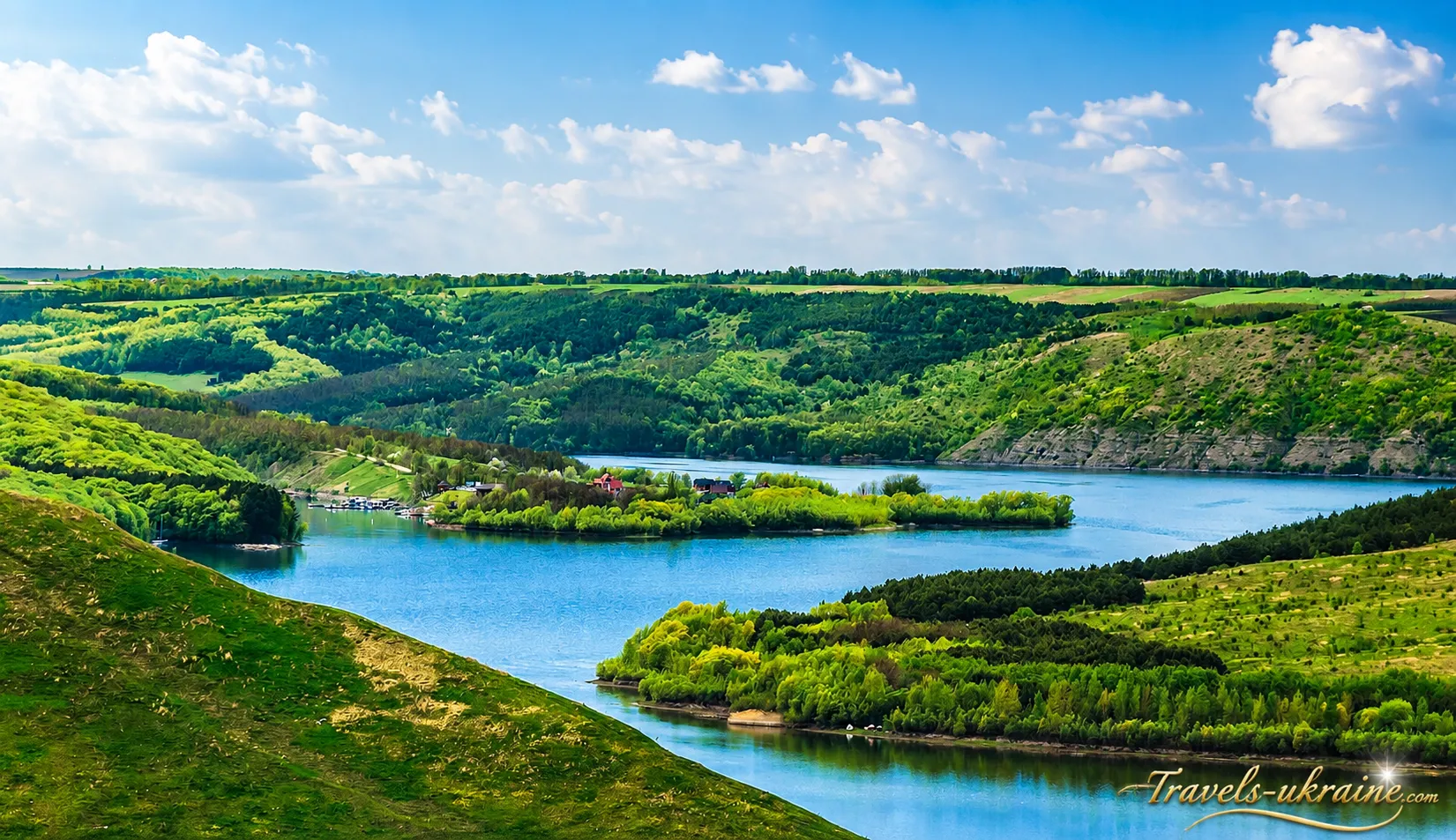
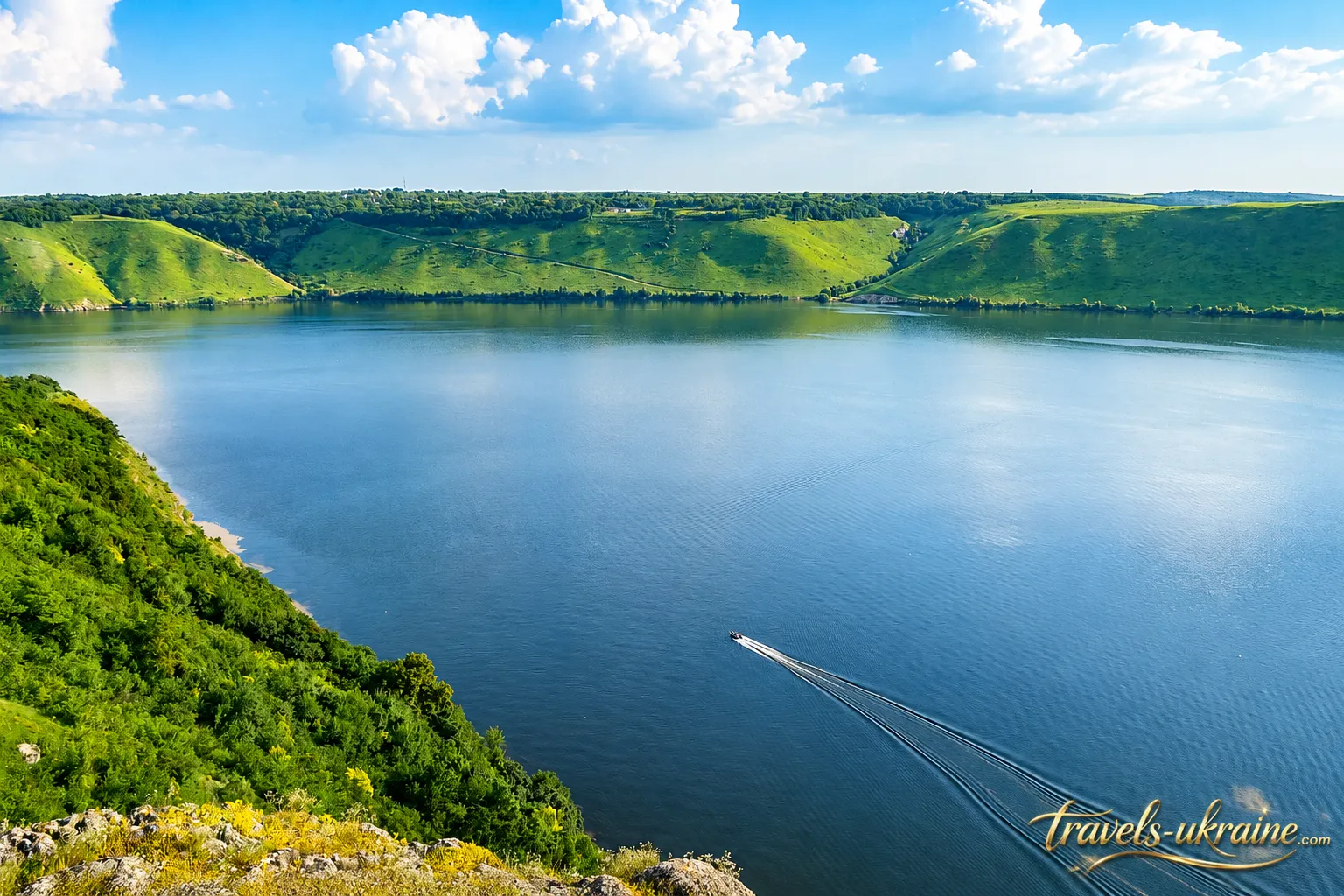
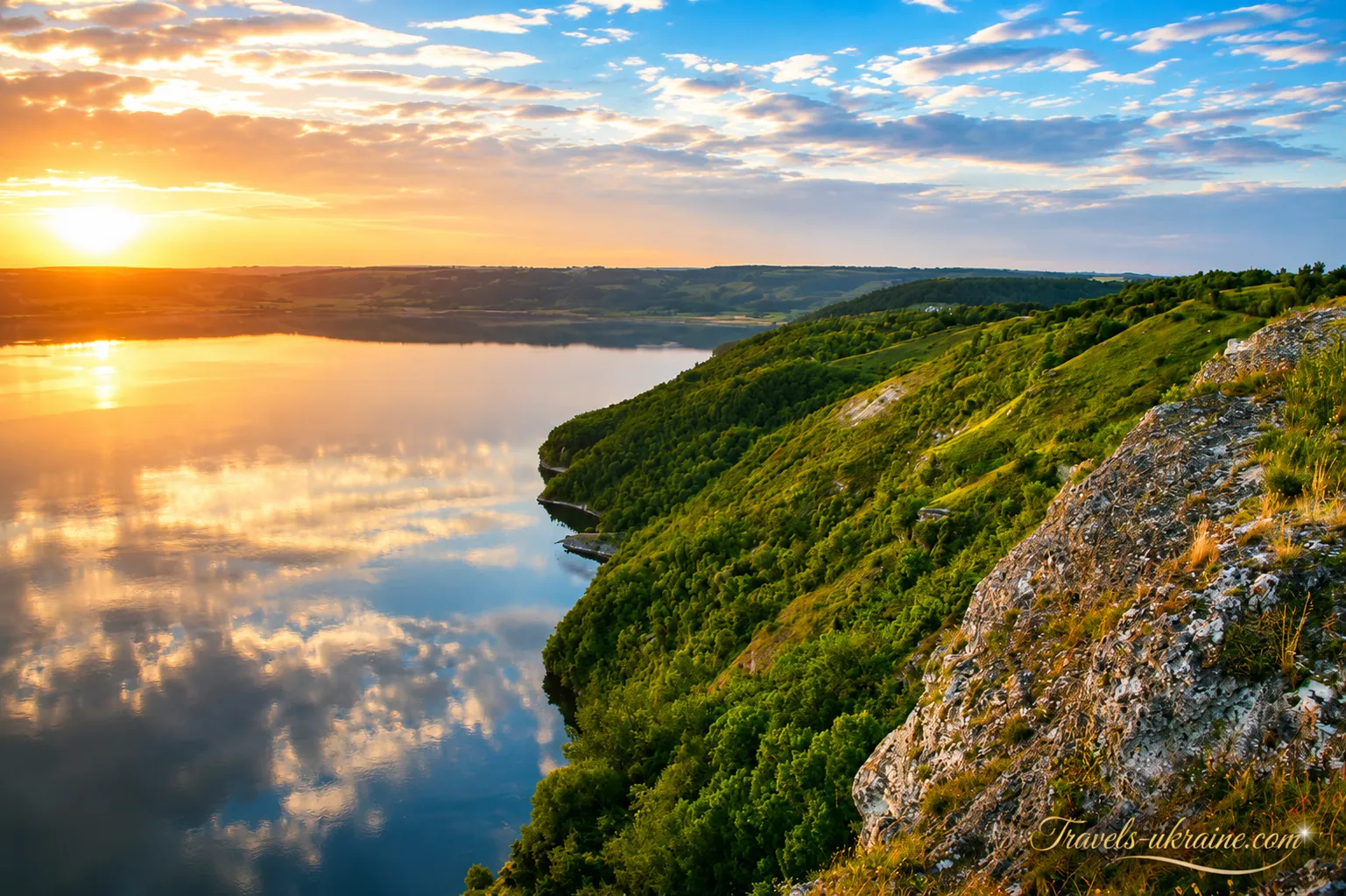
Seasonal Holidays in Bakota: Tours, Rafting, and the Spirit of Podillia
Bakota in Kamianets-Podilskyi Raion is not the kind of place where a large stage thunders every week, spotlights flash, and tourists get lost between food courts and souvenir stalls. Bakota lives more quietly. Its main events follow the seasons rather than a program: the first warm day by the Dniester, morning mist over the water, a summer rafting trip, an evening by the tent, an excursion to Bakota Cave Monastery, or a sunset after which even the most talkative group becomes philosophical for a moment.
That is why a holiday in Bakota Bay is best understood as a seasonal journey in which nature itself can be the main event. During the warmer months, people come for excursions, water walks, rafting trips, camping, glamping, picnics, photo tours, and romantic getaways. In autumn, Bakota attracts those seeking peace, soft light, and less crowded routes. In spring, it draws people who want to see the slopes of the Podilian Tovtry come alive after winter. In summer, the Bay becomes a true waterside recreation center.
Summer in Bakota: Waterside Recreation, Beaches, Camping, and Glamping
Summer holidays in Bakota are the most active period for tourists. At this time, beaches, walks by the water, boats, SUP boards, kayaks, motorboats, camping, tents, and, of course, Bakota glamping are especially popular. People come for the weekend to be closer to the Dniester, feel the warmth of the rocks, spend the evening above the bay, and replace the noise of the city with the sound of water for at least a few days.
Bakota has a special atmosphere in summer. In the morning, you want to walk to the viewpoint; during the day, hide in the shade, swim, or relax by the water; and in the evening, sit on the shore for a long time, watching the sun slowly sink behind the Podilian slopes. This is when it becomes clear why a trip to Bakota Bay is such a good leisure idea, often recommended to those tired of rushing. No one shouts, «Hurry up, the program is starting!» Instead, Bakota seems to whisper, «Sit down. Breathe out. At last, you are not going to be late anywhere.»
Tour to Bakota from Kamianets-Podilskyi: A Short-Trip Format
A tour to Bakota departing from Kamianets-Podilskyi is one of the most convenient options for those who want to see this place without complicated planning. Such a trip usually combines the journey to the site, viewpoints, an introduction to the history of the flooded village, a visit to Bakota Cave Monastery, and time for photos. It is a good choice for travelers staying in Kamianets-Podilskyi for a few days who want to add a sweeping natural panorama of the Dniester to the city’s architecture.
An excursion to Bakota is especially valuable when led by someone who knows not only the route but also the history of the place. Without context, Bakota may seem like nothing more than a beautiful bay. But with a story about the ancient settlement, the Lower Dniester region, Bakota before the flooding, the resettlement of its people, and the monastery in the rock, the landscape becomes much deeper. The water no longer merely sparkles in the sun—it begins to speak to memory.
Kayaking Trip: Active Recreation on the Dniester in Bakota
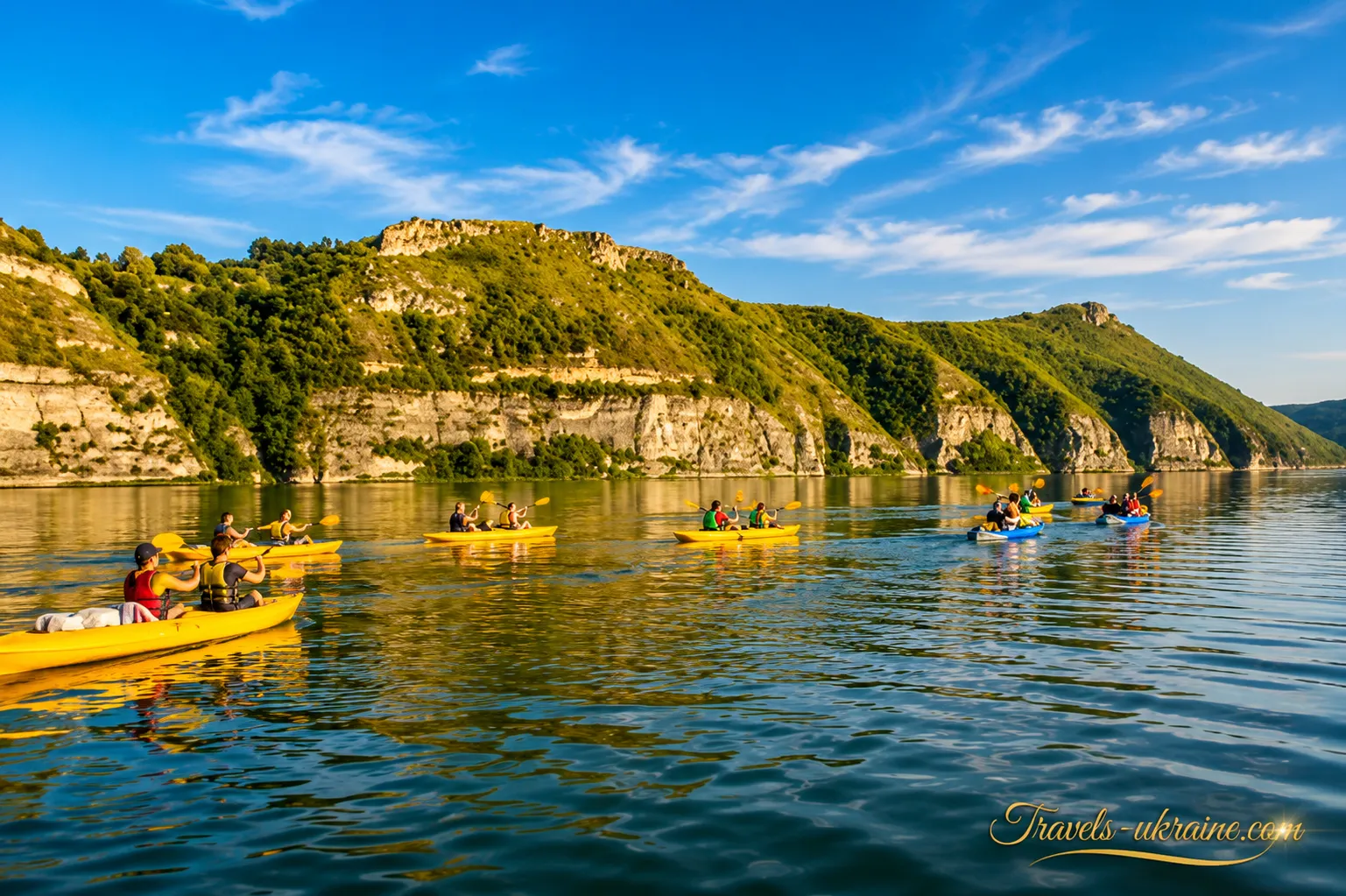
A kayaking trip is one of the most interesting ways to enjoy Bakota for those who want to see it from the water. This route lets you experience the Dniester in a completely different way—not as a panorama below, but as a living waterway between shores, rocks, green slopes, and quiet bays. It is no longer simply a tour to Bakota, but a small adventure in which every bend of the river reveals a new frame.
Rafting in the Podilian Tovtry is usually chosen by active travelers who are not afraid of water, are ready for several hours or several days on the move, and want to combine nature with light physical activity. It is important to remember that even when the Dniester looks calm, water always demands respect. A life jacket, an instructor, tested equipment, a clear head, and the ability to follow advice are not «excessive caution» but the normal price of a great adventure without a bad ending.
Diving in Bakota: A Descent into the Quiet Mystery of the Flooded Village
Diving is one of the most fascinating and responsible options for those who want to see Bakota from beneath the water. The image of a village beneath the water naturally sparks the imagination: it seems that somewhere beneath the calm surface of Bakota Bay, old roads, foundations, traces of human courtyards, and fragments of a past hidden from view by the water still lie in silence.
But it is important to understand that diving in Bakota Bay is not an easy tourist pastime based on «dive in, have a look, and come out a hero.» The Dniester Reservoir has its own challenges: depth, changing visibility, currents, silt, underwater obstacles, and weather conditions. Therefore, underwater swimming in Bakota, freediving, snorkeling, or full-scale diving on the Dniester should be planned only with experience, quality equipment, and people who know the local waters well. The water may look gentle here, but it quickly reminds you that romance is one thing, while a life jacket and common sense have never spoiled anyone’s holiday.
For beginners, the best option is not an independent dive but safer formats: a boat ride, snorkeling in shallower permitted areas, or getting to know the waters under an instructor’s supervision. Experienced divers may find diving in the Dniester Reservoir interesting precisely because of the atmosphere: underwater, they are not looking for coral reefs or brightly colored tropical fish, but for silence, depth, and a sense of contact with history. It is an entirely different kind of experience—restrained, slightly mystical, and unmistakably Bakota.
Photo Tours, Romantic Getaways, and a Weekend in Bakota
A weekend in Bakota is often the choice of couples, photographers, and those who want to escape the city without complicated logistics. It is easy to create your own little occasion here: watch the sunrise over the Dniester, have a photo session against the backdrop of Bakota Bay, arrange a picnic, stay in a cottage, cabin, or glamping site, and in the evening simply watch the water without checking your phone every three minutes. Though, of course, the phone will practically beg to be picked up—the views here are highly photogenic and shamelessly take advantage of it.
Bakota and a romantic getaway are not about grand gestures but atmosphere. Romance here is not about ordering the most expensive dinner; it is about sitting together in silence above the water without feeling awkward. Bakota has a rare quality: it does not overwhelm you with impressions but leaves room for your own thoughts, conversations, and memories. That is why many people return not for new entertainment, but for the same state of calm they once experienced.
Bakota does not need a major festival to be memorable. Its best events are often very simple: the first cup of coffee by the water, the evening breeze over the Dniester, the road to the monastery, a quiet conversation after sunset, rafting between the Podilian shores, or a night in a tent when the only sounds over the bay are water and distant voices. And perhaps this is its greatest advantage: Bakota does not organize experiences for you—it creates a space in which they arise on their own.
What to Visit Near Bakota
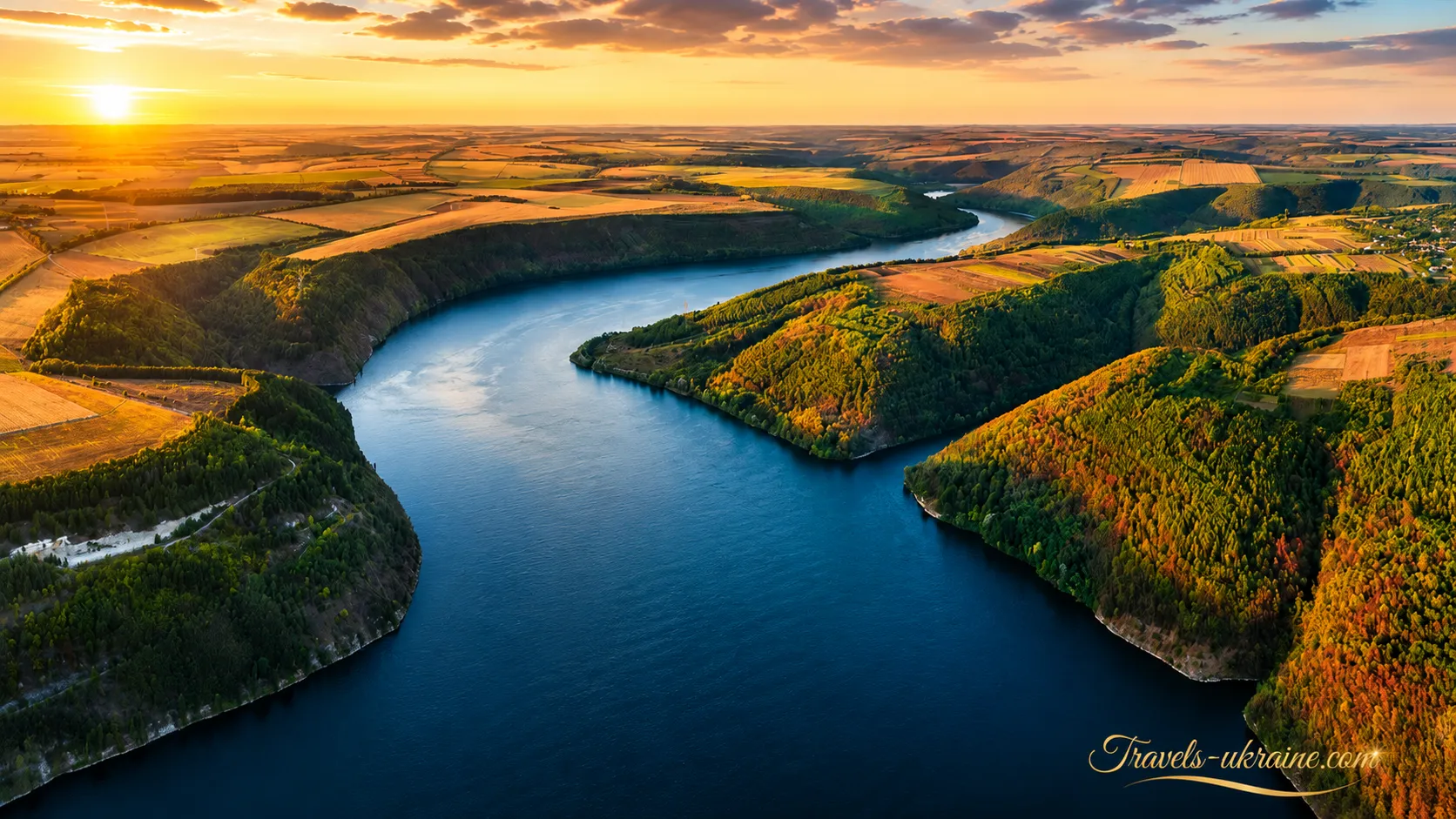
Which tourist sites to visit near Bakota is a question worth asking before the trip. Bakota is rarely «just one point on the map.» It can easily become the center of a small route through Podillia: today you are standing above the bay of the Dniester Reservoir, tomorrow you are walking the old streets of Kamianets-Podilskyi, and along the way you may see other landscapes, villages by the water, rocky slopes, fortresses, cave landmarks, and quiet places where Podillia reveals itself without the rush of tourism.
That is precisely the advantage of a trip to the bay: it combines naturally with both outdoor recreation and historical tourism. If you have come for one day, it is best to focus on Bakota, the rock monastery, and the water. If you have two or three days, you can put together a full travel itinerary. Then the trip stops being just an outing into nature and becomes an introduction to an entire region.
Kamianets-Podilskyi: a fortress city worth combining with Bakota
Kamianets-Podilskyi is the most popular base for modern travelers planning to visit Bakota from Kamianets-Podilskyi. The city has a special atmosphere: a canyon, old walls, towers, cobblestones, Catholic and Orthodox churches, narrow streets, and the feeling that history here is not confined to a museum but quietly walks alongside you. After the silence of Bakota Bay, the museum city and Kamianets-Podilskyi Fortress add an entirely different rhythm to the trip—urban, architectural, and rich in detail.
The best combination for a first trip is to spend part of the day in Kamianets-Podilskyi and the rest in Bakota—or the other way around: see the water and cliffs first, then immerse yourself in the city’s stone medieval world. Kamianets is well suited for an overnight stay, an evening walk, cafés, museums, and the start of an excursion to Bakota.
Khotyn Fortress: a powerful continuation of the route after Bakota
Khotyn Fortress is one of the most impressive historical sites to add to a trip through Podillia. Its high walls, towers, and position above the Dniester create a completely different mood from Bakota. If the bay speaks to travelers through silence, Khotyn speaks through stone, defense, battles, and scale. It is a place where it is easy to imagine the movement of armies, the noise of a market, the clatter of horses’ hooves, and the ancient frontier world in which the Dniester was not only a beautiful river but also an important boundary.
The combination of Bakota and Khotyn Fortress is an excellent choice for those who want to see the different faces of one region. Together, these two locations make a strong impression: from Ukrainian Atlantis to a stone sentinel above the river.
Stara Ushytsia: a quiet place to relax above the Dniester
Stara Ushytsia is an important stop for those who want to better experience life along the Dniester Reservoir. It is located in the same Dniester landscape and is well suited for a peaceful stop, a walk, relaxation by the water, or an overnight stay nearby. While Bakota often draws tourists to its viewpoints and monastery, Stara Ushytsia offers a more local, unhurried atmosphere—with no unnecessary bustle, but with the same feeling of vast water nearby.
For travelers, it is a fine addition to the idea of an overnight stay in Bakota. It is easy to find accommodation, recreation centers, or places to pitch a tent here. This is a place where you should not rush: walk by the water, look out over the Dniester’s banks, and simply sense how the region has lived through great historical changes. Because near Bakota, even an ordinary stop can suddenly become a small continuation of a great story.
Podillia’s Tovtry: nature trails, eco-trails, and landscapes
Podillia’s Tovtry are not merely a backdrop to Bakota but a vast natural area worth exploring on its own. There are slopes, ravines, rocky outcrops, forested areas, steppe fragments, springs, and routes that let you see the Dniester from more than just the popular panorama.
If you have the time and physical stamina, consider the eco-routes, walks to springs, hiking trails near Bakota Bay, and natural viewpoints. This is a good choice for anyone who does not want to stick to the classic «arrive—take photos—leave» routine. Podillia’s Tovtry teach a different pace: here, you gather a landscape gradually, like a herbarium of impressions—a slope, water, stone, the shade of a tree, the scent of grass, a distant bank, and suddenly the very shot that made the walk worthwhile.
So, what can you visit near Bakota? The best answer depends on your pace. Love history? Add Kamianets-Podilskyi and Khotyn. Want nature? Choose Podillia’s Tovtry, the Dniester, and quiet panoramas. Planning Bakota and a weekend getaway? Stay overnight in Stara Ushytsia and do not try to see everything in one day. Bakota has a curious quality: the less you hurry, the more it reveals.
Burbun Waterfall near Bakota: a little-known place within 40 km
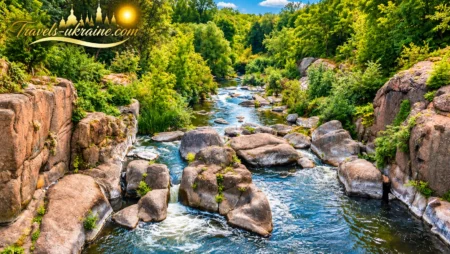
If, after taking in the panoramas of Bakota Bay, you would like to add another natural site to your itinerary, consider Burbun Waterfall. This little-known yet highly atmospheric place in Khmelnytskyi Oblast lies within 40 km of Bakota, near the village of Lysets. Unlike the broad, open expanse of Bakota Bay, Burbun has an entirely different character: it is an intimate waterfall hidden among rocks, greenery, moss, and silence—as if nature had deliberately concealed a small gem for those who enjoy turning off the main road.
Burbun Waterfall is worth visiting as an addition to a trip to Bakota. After the Dniester’s vast watery panorama, it is fascinating to see another type of Podillian landscape: a narrow ravine, cool cliffs, a lively stream, and a small natural pool below the waterfall. In the warm season, it is especially pleasant for a short stop, photos, a walk, and a rest in the shade. It does not feel like a major tourist attraction—rather, it is a small natural stage where water takes the lead, and visitors are kindly asked not to make noise or leave behind props in the form of plastic bottles.
Safe recreation in Bakota: water, viewpoints, and slopes
Safety in Bakota is not a topic to put off «until later,» especially if you are planning outdoor recreation, a route to the Bakota Rock Monastery, camping, tenting, a rafting trip, or water activities. Bakota seems very peaceful: the Dniester’s blue surface, gentle slopes, silence, birds, warm sunshine, and a view that makes you want to forget everything. But it is precisely in places like this that people most often let their guard down. When everything around you is beautiful, the brain sometimes decides that danger does not exist. Unfortunately, water, cliffs, and slippery paths do not always share that optimism.
Bakota on the Dniester Reservoir is a natural destination, not a fully controlled urban park. There may be steep slopes, uneven paths, slippery rocks, deep water, changes in depth, heat, insects, unstable mobile service, and areas with minimal infrastructure. So the main rule is simple: enjoy Bakota attentively. Not anxiously or in a panic, but with ordinary tourist caution that does not spoil your recreation; on the contrary, it helps you return home with good memories rather than adventures requiring a visit to the emergency room.
As a body of water, Bakota is especially inviting in the warm season for swimming, boat trips, paddleboarding, kayaking, freediving, and scuba diving. The water may look calm, but that does not mean it is always safe. Do not dive in unfamiliar places, swim far from shore, swim after drinking alcohol, leave children unsupervised, or overestimate your abilities. Even experienced swimmers should remember that a reservoir is not a pool with a transparent bottom and uniform depth.
If you are planning a trip into nature or eco-friendly recreation, be sure to consider the weather, wind, waves, shoreline conditions, and whether other people are nearby. For boats, paddleboards, and kayaks, a life jacket should be a genuine part of your safety equipment, not a pretty accessory «for photos.» This is especially important for children, beginners, and anyone unsure of their skills. The Dniester can be gentle, but it is very quick to explain the difference between courage and overconfidence.
Take extra care after rain, in strong winds, or in winter, when hiking trails may be slippery. If you are traveling with children, keep them close and explain the rules before heading up to the viewpoints. Bakota looks wonderful in photographs, but no shot is worth taking a risk. It is better to take a slightly simpler photo and remain safe than to go down in the family archive as the person who decided to challenge a cliff. So check the weather forecast before your trip. Strong winds, heavy rain, or thunderstorms can change your plans, especially if you were planning water activities, a picnic, or a trail route. Bakota is beautiful in all kinds of weather, but bad weather above the reservoir is not the time to prove your love of dramatic landscapes.
Camping in Bakota: a safe overnight stay in a tent by the water
Camping and tenting in Bakota are an excellent option for anyone who wants to spend the night closer to nature. But choose your tent site carefully: do not pitch it on slopes, near cliffs, in areas that may flood, or where dry branches could fall. If you are staying overnight by the water, keep a safe distance from the shore and bear in mind that the weather may change during the night.
For an overnight stay, it is advisable to have a flashlight, power bank, first-aid kit, warm clothing, a supply of water, insect repellent, and trash bags. Do not leave food uncovered, light fires where they are prohibited, or leave embers unattended. Camping in Bakota should feel like a friendship with nature, not a test of its endurance. Nature is strong, of course, but that does not mean you need to prove it to tourists every weekend.
Even a short weekend trip will be more comfortable with some advance preparation. You do not need to bring half your apartment, but a basic travel kit will help a great deal—especially if you are planning a walk, tent camping, or a trip with children.
- Water and a snack: especially in summer, when you quickly get thirsty near the slopes and in open areas.
- Comfortable shoes: for trails, rocks, descents to the monastery, and walks by the water.
- Hat and sun protection: Bakota is sunny, and the Podillian slopes heat up well.
- First-aid kit: plasters, antiseptic, allergy medication, personal medicines, and painkillers if needed.
- Power bank and cash: mobile service and cashless payments may not be reliable everywhere.
- Trash bag: so you leave behind a clean shore, not evidence of your own carelessness.
Safety in Bakota does not mean giving up adventure. On the contrary, it allows you to enjoy the trip more fully: look calmly at the Dniester, avoid worrying about minor things, walk the trails confidently, relax safely by the water, and return home feeling that the trip was a success. Tourist Bakota is generous to attentive travelers. It reveals panoramas, offers silence, creates space for relaxation, and seems to quietly remind you that the best journey is one in which beauty and good sense go hand in hand.
Frequently asked questions about Bakota: recreation, travel, overnight stays, the beach, and Bakota Bay
Where is Bakota located?
Bakota is located in Khmelnytskyi Oblast, in Kamianets-Podilskyi Raion, on the shore of the Dniester Reservoir. Today, tourists usually mean not the former village itself, but Bakota Bay, the viewpoints, the Bakota Rock Monastery, and the recreational areas by the water. It is one of Podillia’s best-known natural and historical destinations.
Is Bakota a lake or the Dniester Reservoir?
People often refer to it as Lake Bakota or the Bakota water body, but it is more accurate to call it the Bakota Bay of the Dniester Reservoir. It formed after the reservoir was created on the Dniester River. That is why the water here looks like a vast, picturesque lake among the Podillia hills, although in origin it is part of the Dniester Reservoir.
Why is Bakota called the Ukrainian Atlantis?
Bakota is called the Ukrainian Atlantis because an ancient settlement lies beneath the waters of the Dniester Reservoir. The former village was flooded when the reservoir was created, and its residents were relocated. That is why Bakota today is not only a beautiful panoramic bay on the Dniester, but also a place of remembrance for the flooded village, its homes, roads, gardens, and an entire historic landscape of Podillia.
What can you see in Bakota in one day?
In one day in Bakota, be sure to see the viewpoint overlooking the Dniester, visit the Bakota Rock Monastery, walk the trails near the hillsides, get closer to the water, and leave time to relax by Bakota Bay. If you arrive in the morning or toward evening, the scenery will be especially striking and the atmosphere more peaceful.
Can you stay overnight in Bakota?
Yes, an overnight stay in Bakota is a very popular option. You can look for accommodation around Bakota Bay, Stara Ushytsia, or Kamianets-Podilskyi, choosing guesthouses, holiday bases, cabins, cottages, campsites, or glamping sites. During the high season, it is best to book in advance, especially if you are planning a weekend trip.
Is there a beach in Bakota, and can you swim?
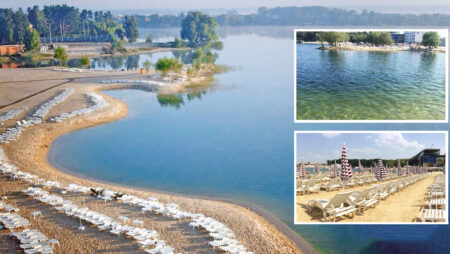
Bakota beach is a popular search during the summer season, but remember that this is a natural destination rather than a traditional urban resort. There are places to relax by the water near Bakota Bay, but you should swim only where it is safe and permitted. Do not dive in unfamiliar places, swim too far out, leave children unattended, or ignore the weather and water conditions.
What water activities are available in Bakota?
During the warm season, boat trips, motorboat rides, stand-up paddleboarding, and kayaking are popular in Bakota, as is kayaking the Bakota–Podillia Tovtry route. Some visitors are interested in snorkeling, freediving, and diving in Bakota, but these activities require experience, equipment, safe conditions, and preferably the guidance of people who know the Dniester Reservoir well.
Is Bakota suitable for a family holiday with children?
A family holiday in Bakota with children is possible and can be very enjoyable if you plan the route carefully. Children love the open spaces, water, boats, trails, and views, but adults need to be cautious near hillsides, viewpoints, and the water. Bring water, snacks, sun hats, and comfortable footwear, and avoid planning an overly long walk in hot weather.
What is the best way to travel to Bakota—independently or on a tour?
If you have a car and enjoy independent routes, you can travel to Bakota by your own vehicle after checking the road, parking, and weather conditions in advance. If you would rather not handle the logistics, a convenient option is a tour to Bakota from Kamianets-Podilskyi. A guided excursion helps you better understand the history of the flooded village, the Bakota Rock Monastery, and the Lower Dniester region.
What can you visit near Bakota?
Near Bakota, it is worth visiting Kamianets-Podilskyi, Khotyn Fortress, Stara Ushytsia, the natural routes of the Podillia Tovtry, Dniester panoramas, and the little-known but fascinating Burbun Waterfall, located within 40 km of Bakota Bay. If you have 2–3 days, Bakota is easy to combine with historic and natural attractions across Podillia.
Why Bakota Is Worth Your Time
Bakota, a tourist gem of the Khmelnytskyi region, is not the kind of place where you say, «Well, it’s pretty—let’s move on.» It works on you more subtly. At first, it seems you have simply come to admire the bay’s scenery, take a few photos, walk to the monastery, and put a neat tick next to it on your mental travel list. But then you find yourself standing above the water, looking at the Dniester, the hills of the Podillia Tovtry, and the silence here that almost has a physical form, and suddenly you understand: the tick never appears. Because Bakota is not a stop—it is a place that stays with you longer than planned.
The Dniester’s panoramic bay has a strange quality: it does not try to win you over. It does not shout through signs, lure you with noisy attractions, or promise «the best holiday of your life within three minutes of arrival.» It simply remains quiet. Then that silence begins to work better than any advertising. The water rests calmly below, the cliffs hold up the sky, the wind moves through the grasses, and even the busiest traveler gradually remembers that life contains more than deadlines, queues, phone notifications, and the eternal «we’re already late.»
Bakota, Ukraine’s Atlantis, impresses visitors not only because a village lies beneath the water. Its real power is that it makes you look deeper. At first glance, you see a picturesque bay, a natural treasure of Podillia, a beautiful place above the Dniester Reservoir. But the longer you look, the more you feel that this water hides not emptiness, but memory. Here, the landscape has a subtext, the silence has weight, and the sun over the Dniester illuminates not only the hillsides, but also a history that cannot be restored, only remembered.
Perhaps that is why Bakota stays with you. It does not entertain you every minute like an overzealous resort animator. It does something else—it leaves room. Room for thoughts, pauses, conversation, silence, and that very moment when you suddenly stop rushing and notice that a day can feel complete even without a packed schedule. And that, you must admit, is almost a tourist miracle: to go somewhere and not have to «fit everything in,» yet experience more than on a trip with ten destinations in one day.
Come here without rushing. Do not chase every point on the map. Do not try to turn Bakota into a marathon of photographs. Give yourself the luxury of slow travel: sit by the water, walk along a trail, enter the rock monastery, watch the Dniester in the evening light, and spend some time in silence. In our time, this is almost an extreme form of relaxation—simply being in a beautiful place without turning it into a report of three hundred shots.
So, if you are looking for a place to travel in Ukraine that is not ordinary, noisy, or just another «beautiful photo spot,» set out for Bakota. Bring people with whom you are comfortable being silent. Or go alone—Bakota knows how to keep you company. The road here is worth every kilometer, because at the end you will find not merely a bay, but a space where the water preserves memory, the cliffs hold the silence, and the traveler suddenly remembers a simple truth: we travel not only to see the world, but also to hear ourselves again.


No Comment
You can post first response comment.