
 English
 Українська
 Български
 Hrvatski
 Čeština
 Dansk
Dansk Nederlands
 Eesti
Eesti Suomi
Suomi Français
 Deutsch
 Ελληνικα
 Magyar
 Íslenska
 Italiano
 Latviešu
 Lietuvos
 Polski
 Português
 Română
 Русский
 Српски
 Slovenčina
 Slovenščina
 Español
 Svenska
 Türkçe
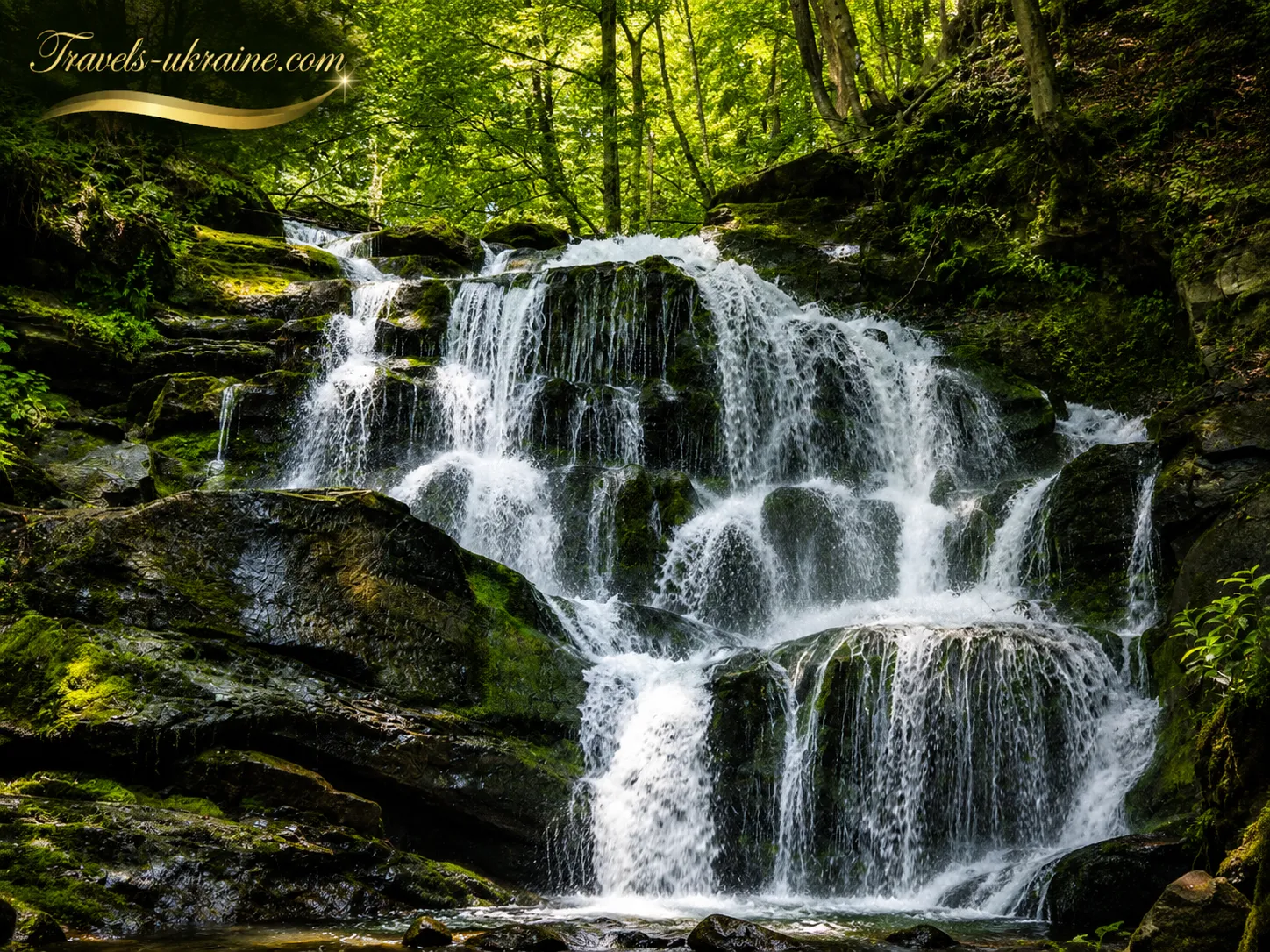
Shypit Waterfall is one of those Carpathian places where nature needs no loud advertising. You only have to come closer, hear the soft yet assured roar of mountain water, watch the stream break against rocky ledges, and it becomes clear: this place truly has a character of its own. There is no sense of an artificial tourist set here—instead, Shypit feels like part of the greater rhythm of the Carpathians, where everything moves naturally: water, wind, the shadows of trees, travelers’ voices, and the silence of the mountains.
When you step onto the moss-covered stones along its banks, it feels as though the first note of a water concerto is already sounding somewhere deep within your soul. Crystal streams plunge downward with incredible force, dance between rocky outcrops, and scatter tiny sparks of joy, coolness, and living Carpathian energy all around. Simply touch this cold mountain water with your hand, and the world around you seems to fall silent for a moment. The noise of the road disappears, everyday worries recede, and all that remains inside is a pure sense of presence: you are here, in the Carpathians, beside water that has been carving its way through stone and forest for centuries.
Against the green waves of the Transcarpathian forest, Shypit resembles a natural cathedral created not by human hands, but by the power of mountains, time, and water. Its silvery streams descend in cascades, break against the rocks, and give birth to a melody in which one can hear the breath of the Borzhava mountain meadows, the rustle of trees, and nature’s quiet whisper.
And when the sun rises above the mountains and a gentle breeze touches your face, you begin to understand: Shypit Waterfall is not simply a beautiful natural gem of Transcarpathia. It is a place where the soul grows calm, thoughts become lighter, and the heart seems to remember once again what it means to breathe freely. Here, nature does more than impress with its beauty: it heals with silence, water, and that special feeling of unity that stays with you long after the journey.
Why Shypit Waterfall in the Carpathians Deserves a Trip of Its Own
For travelers, Shypit in the Carpathians is interesting not only as a beautiful point on the map. It combines well with other routes around Pylypets, a climb toward Mount Hymba, walks across the Borzhava mountain meadows, and visits to Transcarpathian villages. You can spend an hour here or stay for half a day: walk along the forest road, take photos beside the cascades, sit by the water, listen to the stream, and simply feel the mountain landscape gradually ease the fatigue of the journey.
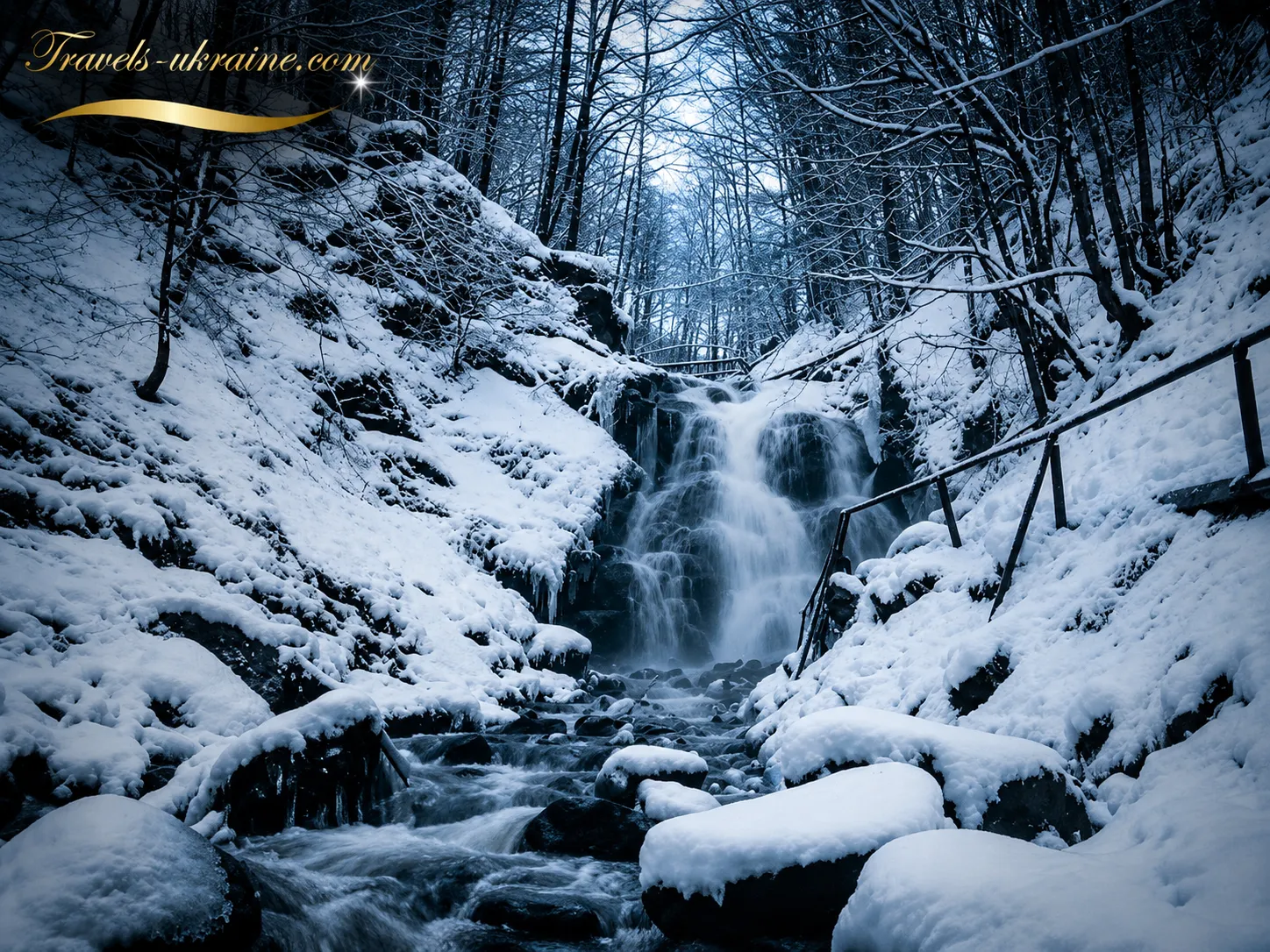
Shypit Waterfall at the foot of Mount Hymba in the Borzhava mountain meadows is especially beautiful after rain and in spring, when the stream grows fuller and the surrounding greenery looks rich and fresh. In summer, visitors come for the coolness; in autumn, for the colors of the forest; and in winter, for the atmosphere of snow-covered Transcarpathia. This is not simply a scenic cascading waterfall in the Carpathians, but a natural destination that reveals itself differently in every season.
- For a family trip: Shypit is convenient for an easy nature walk without excessive physical exertion.
- For photographers: the cascades, rocks, forest, and soft light create plenty of rewarding angles.
- For ecotourism enthusiasts: it is a fine example of how nature tourism can be peaceful, mindful, and environmentally responsible.
- For travelers exploring Transcarpathia: the waterfall is easy to combine with Pylypets, Borzhava, the lift to Hymba, and other nearby tourist attractions.
In short, Shypit in Transcarpathia is a place for those who want to see not showy but living Carpathian beauty. There is no need to hurry here. Walk a little more slowly, listen to the water, watch how it changes color on the rocks, how cool reflections appear in the shade of the trees, and how, in sunny weather, certain sections of the stream can seem almost turquoise.
The History of Shypit Waterfall: From a Carpathian Whisper to a Tourist Legend
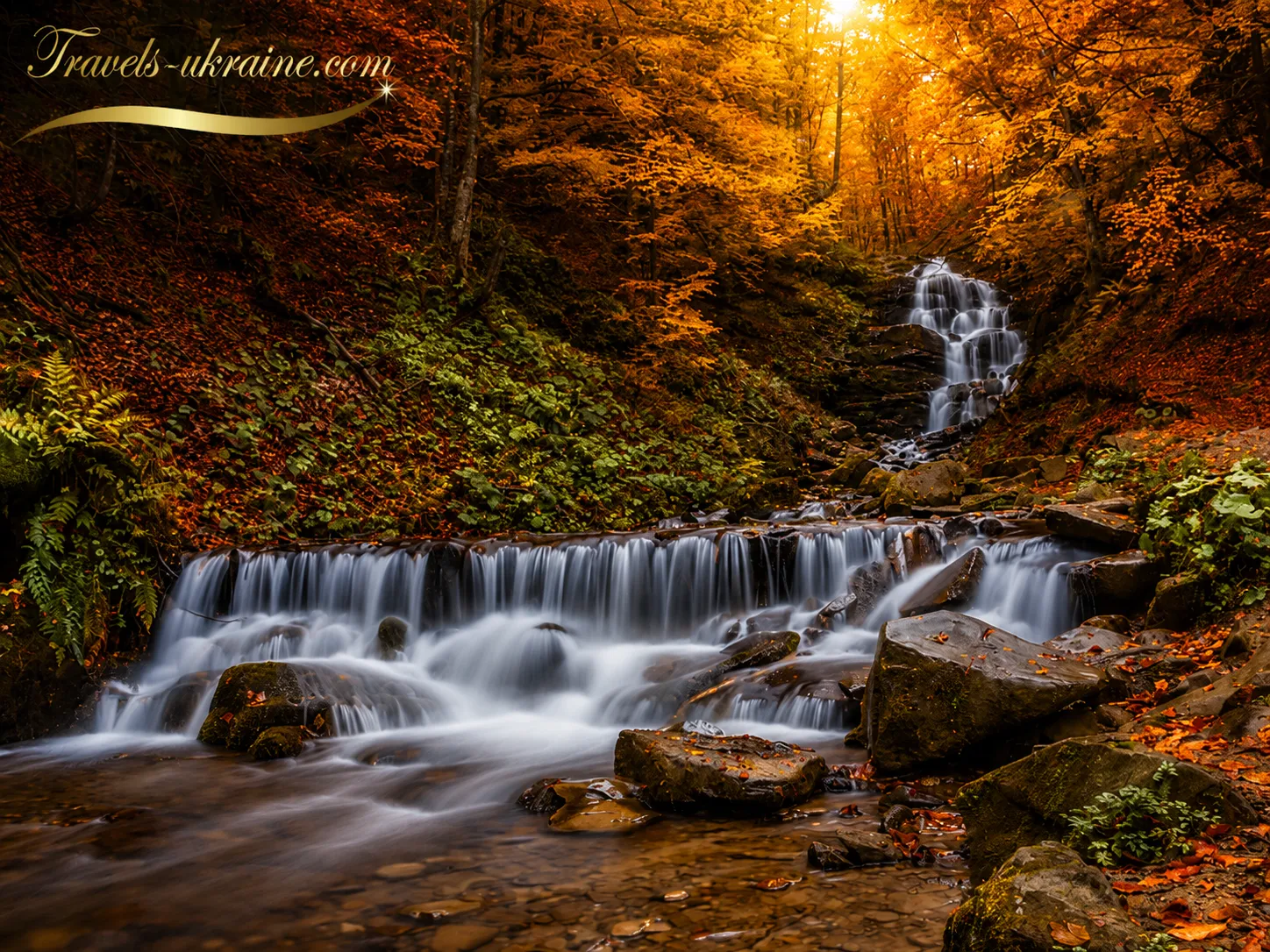
Shypit Waterfall does not have the kind of history that can be measured by construction dates, architects’ names, or stone inscriptions on a façade. Its history is far older and deeper—it was born not in human documents, but in the movement of mountain water, in stone, in the forest, in the voices of local residents, and along the path generations of travelers took to reach this place. That is why this Transcarpathian waterfall is perceived not merely as a natural feature, but as a living part of the Carpathian memory.
Shypit Waterfall in the Carpathians has remained for centuries a place where nature spoke more powerfully than any words. Mountain streams descending from the Borzhava mountain meadows shaped rocky ledges, washed over cliffs, cut their way through the forest, and gradually created the cascading waterfall now known to tourists from across Ukraine. So when we speak of Shypit Waterfall on the slopes of the Borzhava mountain meadows, it is worth remembering that we are looking not at a random beautiful point on a map, but at the result of water, terrain, and time working together over ages.
Today, Shypit remains a place where history has not become frozen in the past. It continues every day: in tourists’ footsteps, children’s delight beside the water, photographs against the cascades, conversations along the trail, and the return of those who have been here before. Each season gives Shypit a new mood: spring brings strength, summer freshness, autumn depth of color, and winter a fairytale-like restraint. That is why Shypit Waterfall in the Ukrainian Carpathians should not be viewed merely as a stop on a tourist route. This place has a voice of its own. And if you come without rushing—not simply to “see it and leave,” but to truly stop, listen to the water, breathe in the coolness of the forest, and look more closely at the cascades—you may feel the essential truth: Shypit does not tell its story loudly. It whispers it.
How Shypit Became One of the Symbols of Carpathian Tourism
The true popularity of Shypit Waterfall in the Carpathians began to grow as Pylypets gradually became a notable tourist destination in Transcarpathia. Visitors began arriving not only from nearby areas but from different regions of Ukraine: some sought an easy route to the waterfall, some beautiful photographs, some the coolness of the forest in summer, and others the feeling of being in real mountains without an overly demanding hike.
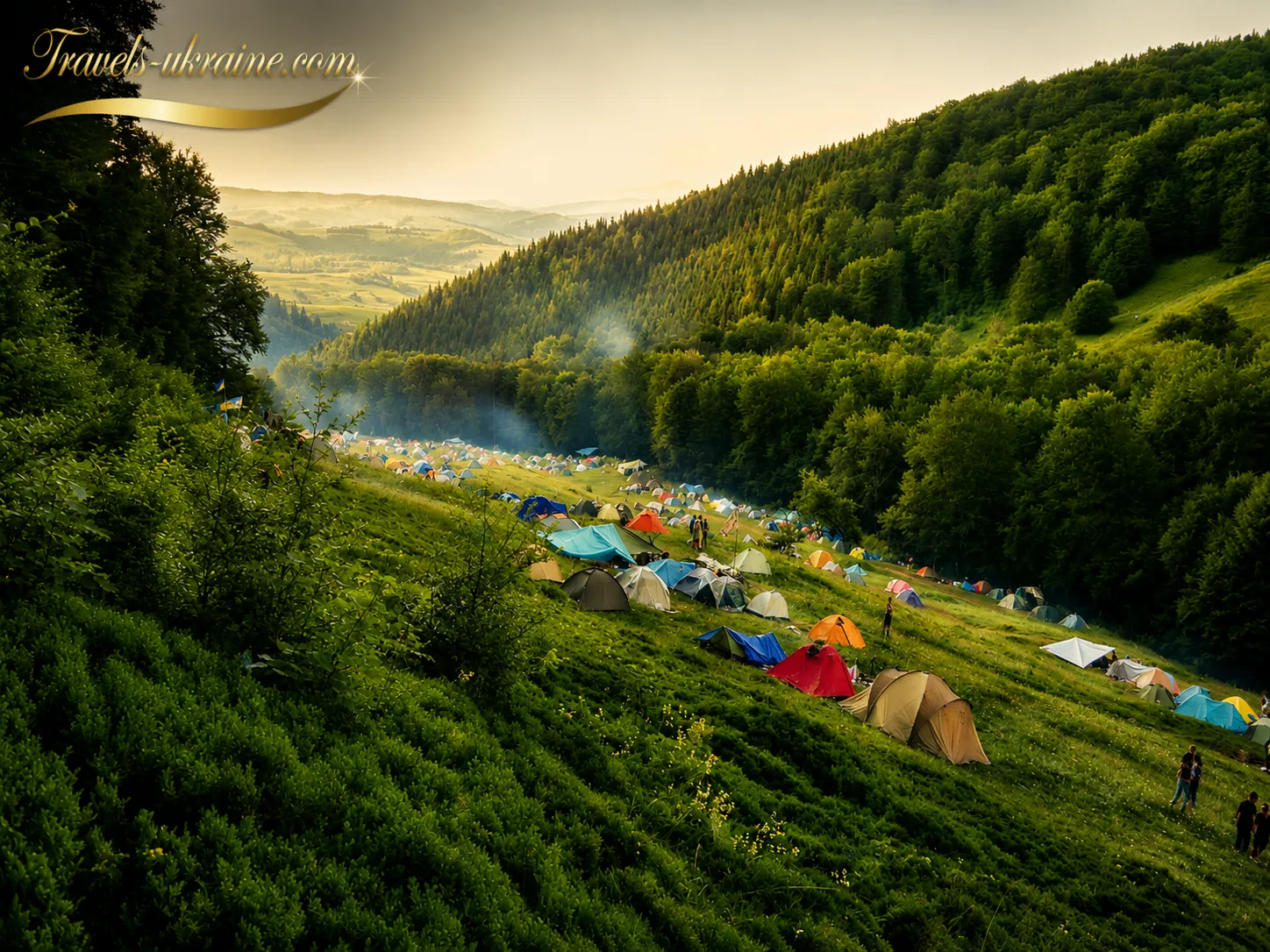
Summer youth gatherings and the festival movement around Shypit also played a significant role in making the place widely known. Through them, the waterfall’s name became familiar not only to traditional tourists but also to people who sought freedom, informal company, night skies, campfires, music, and the distinctive atmosphere of mountain summers in the Carpathians. For some, Shypit in Transcarpathia is a quiet natural destination for a family trip; for others, it is a place of memories, meetings, and youth culture. This very richness of meaning is what makes it so alive.
Natural Features of Shypit Waterfall
Shypit Waterfall is not merely a stream of water falling from a height. Its beauty is born from the combination of several natural elements: mountain terrain, rocky ledges, forest shade, cool air, and the living movement of water. That is why the mountain waterfall looks different depending on the season, weather, time of day, and even the traveler’s mood. On one day it may seem calm and almost meditative; on another, powerful, loud, and full of wild Carpathian energy.
Unlike lowland waterfalls, Shypit has a distinctly cascading character. The water does not fall as one continuous wall, but descends over several natural steps, breaking against the rocks and changing its direction, speed, and sound. As a result, each section of the cascade has its own rhythm: at the top, the stream may be swift and tense; in the middle, it may scatter into silvery rivulets; and below, it gathers into a cool mountain flow that continues between stones and trees.
It is the cascades that create the sense of movement for which tourists, photographers, and nature-tourism enthusiasts come here. The water seems not simply to fall, but to dance down stone steps formed by nature itself. This gives the cascading waterfall in the Carpathians a highly photogenic appearance: up close, you can see tiny droplets, white foam, dark rocks, moss, and transparent streams constantly changing shape.
What is especially impressive is that Shypit has no “single correct angle.” Viewed from below, it seems majestic and tall. Move closer to individual cascades, and an entirely different picture opens up—detailed, almost intimate: water flowing around stones, disappearing into the shade, sparkling in the sun, and creating a cool mist. This variability makes the waterfall so appealing to those who want not merely to “tick it off” their itinerary, but to truly take in the place.
Forest, Stone, and Air: The Natural Atmosphere of Shypit Waterfall
A special forest atmosphere surrounds the waterfall. Trees provide natural shade, rocks become covered in moss, and the air near the water turns fresher and cooler even on a hot day. That is why Shypit Waterfall near Pylypets is often experienced as a place for a short “reset”: here, you want to speak more quietly, move more slowly, and pay closer attention to details that usually go unnoticed in the city.
The rocky ledges beside the waterfall are an important part of its natural character. They create not only the shape of the cascades but also their distinctive sound: water strikes the stone, breaks into tiny droplets, changes tone, and seems genuinely to “whisper.” That is why Shypit is remembered not only visually but aurally. After their visit, many travelers recall not just the photographs, but the sound itself—soft, deep, and unmistakably mountain-born.
Shypit Waterfall in the heart of the Borzhava mountain meadows is valuable not only for its beauty, but also because it reveals the true character of mountain nature. Here, it is easy to see how water, stone, forest, and terrain create a single natural system. This is not a separate “photo opportunity,” but part of a living Carpathian landscape that deserves respect and careful treatment.
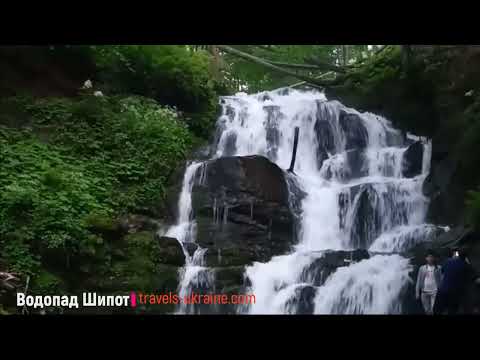
Photo and Video Gallery
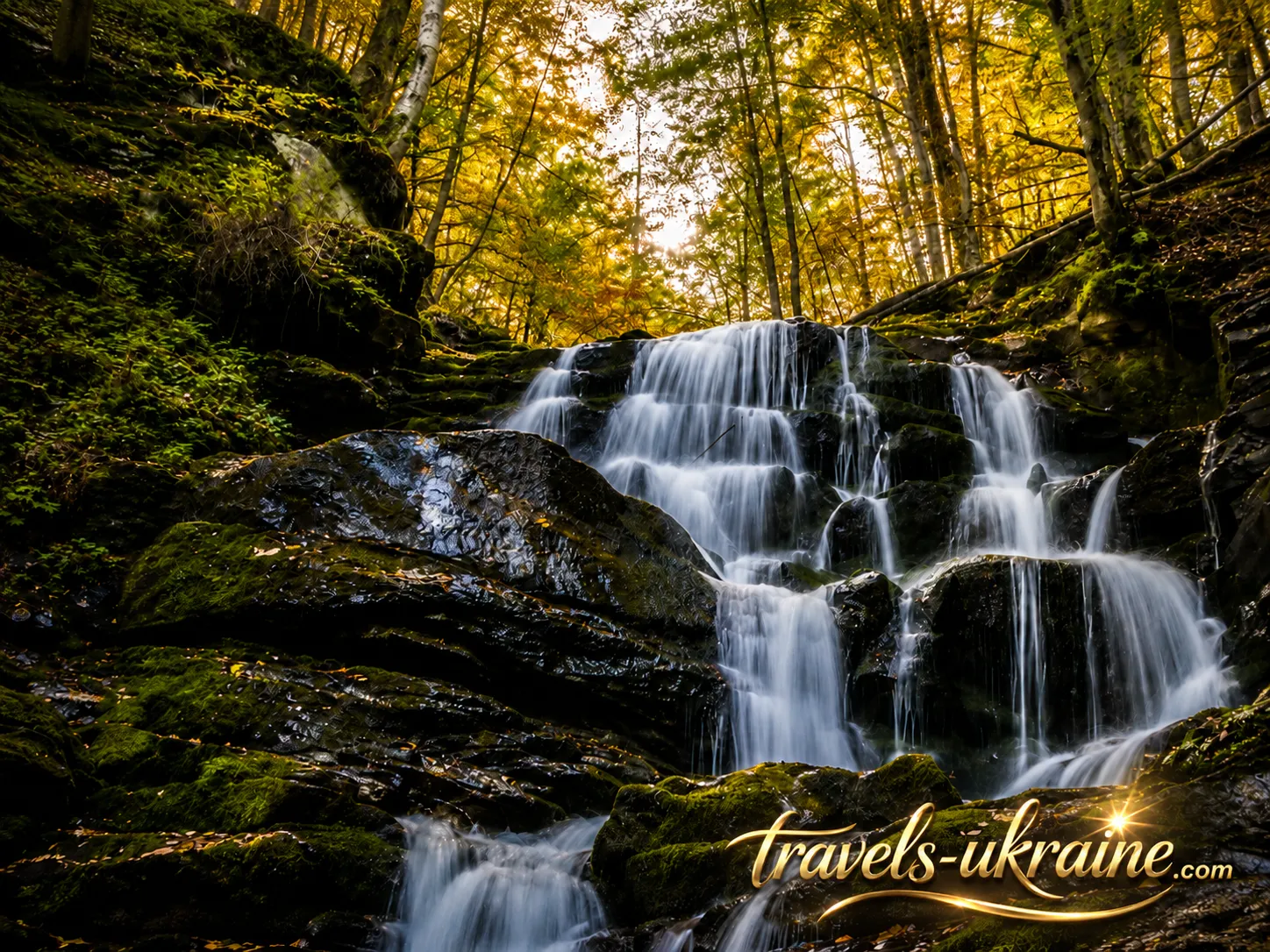
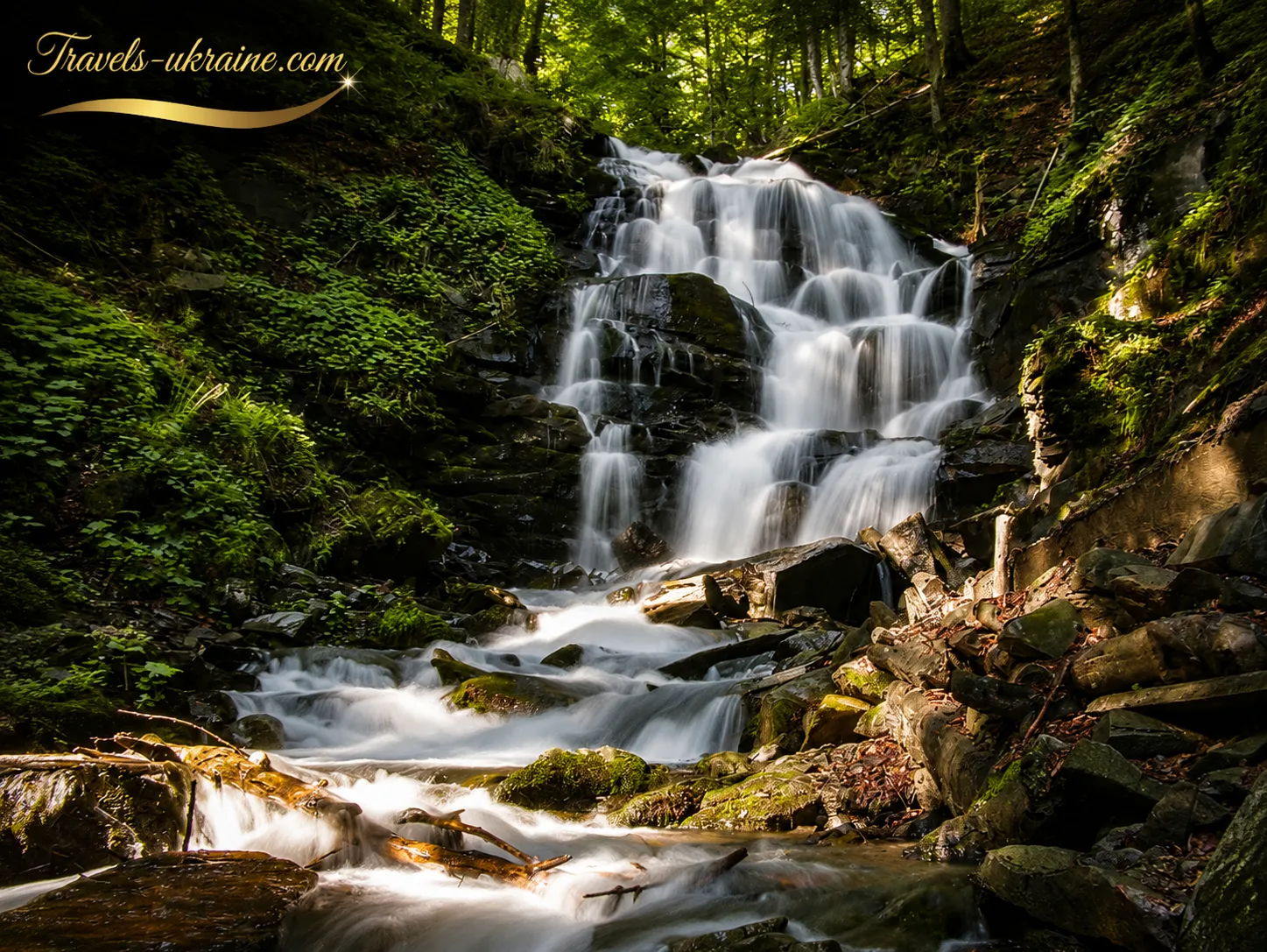
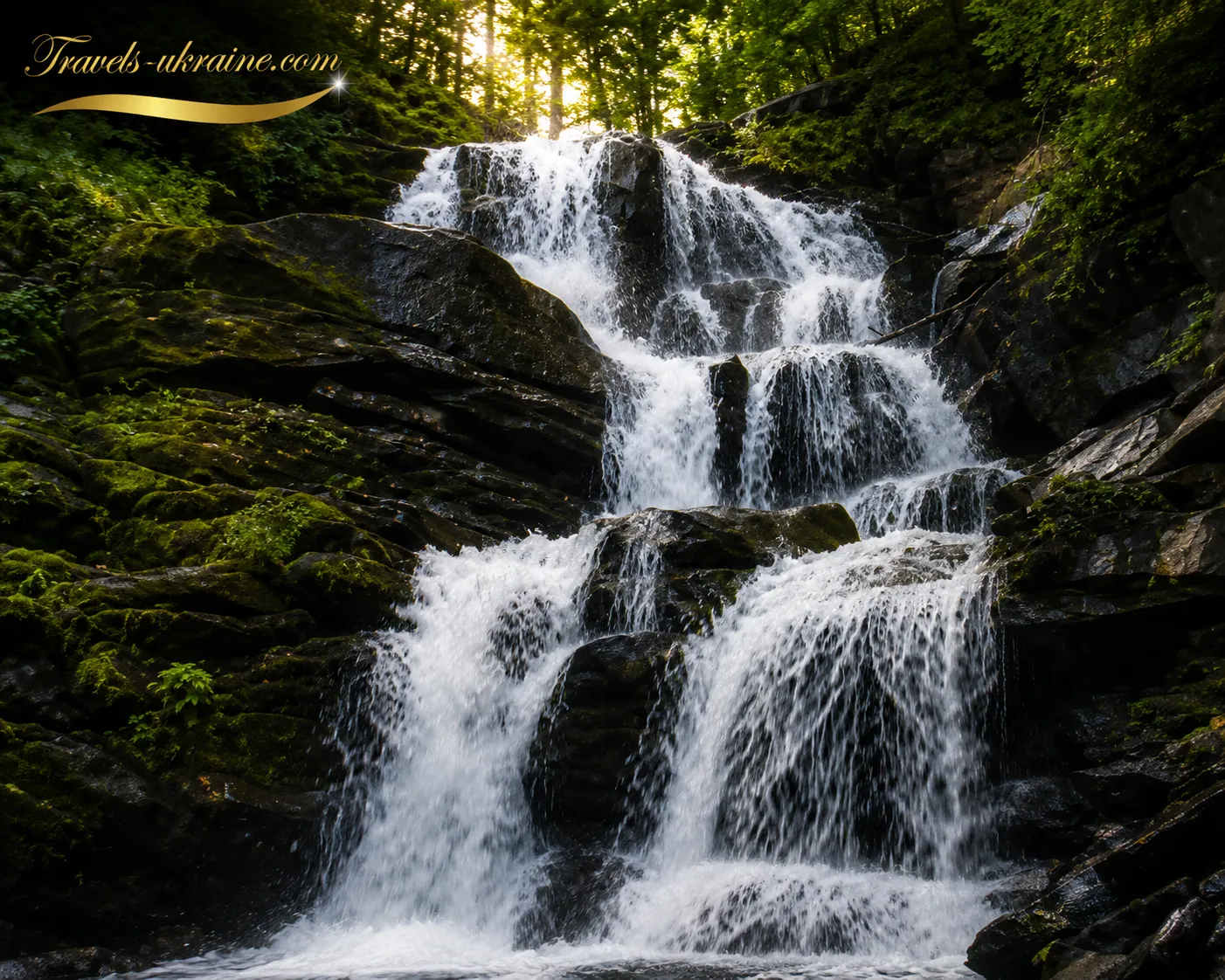
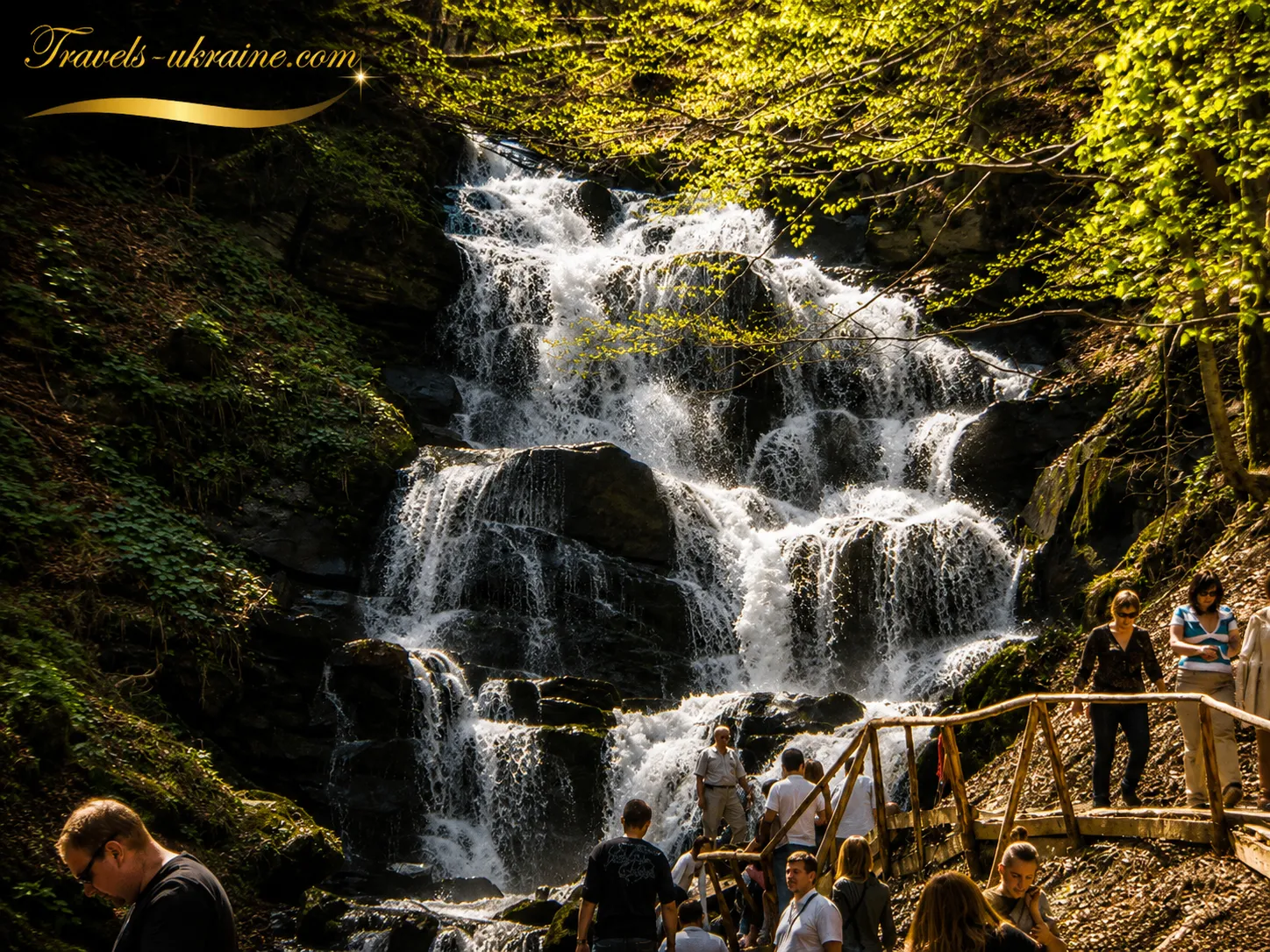
Shypit Waterfall: A Quick Guide for Travelers
Shypit Waterfall on the Pylypets stream is a convenient natural destination for those who want to see the genuine beauty of the Carpathians without a difficult, hours-long hike. You can plan a short walk, a family nature getaway, a photo session, a stop during a trip through Transcarpathia, or the beginning of a longer tourist route toward the Borzhava mountain meadows and Mount Hymba.
In terms of the type of recreation, Shypit is best suited to nature tourism, easy ecotourism, short walks, and discovering mountain landscapes. It is not a museum or a restricted landmark with a fixed tour script, but a living natural area whose main attraction is the landscape itself: water, stones, forest, fresh air, and the sound of a mountain stream.
- Type of destination: natural waterfall, cascading mountain stream, Transcarpathian tourist attraction.
- Visiting format: self-guided walk, excursion, or part of the Pylypets–Shypit–Hymba route.
- Suitable for: families, couples, photographers, travelers, Carpathian enthusiasts, and those who enjoy peaceful relaxation by a waterfall.
- Ideal pace for the trip: a leisurely walk, nature watching, and an easy route without rushing.
If your goal is simply to see Shypit Waterfall, take a few photos, and sit by the water for a while, 1–1.5 hours is usually enough. But if you would like to explore the cascades without rushing, rest in the forest, have a coffee nearby, or combine Shypit with a walk toward Mount Hymba, it is better to allow 2 to 4 hours.
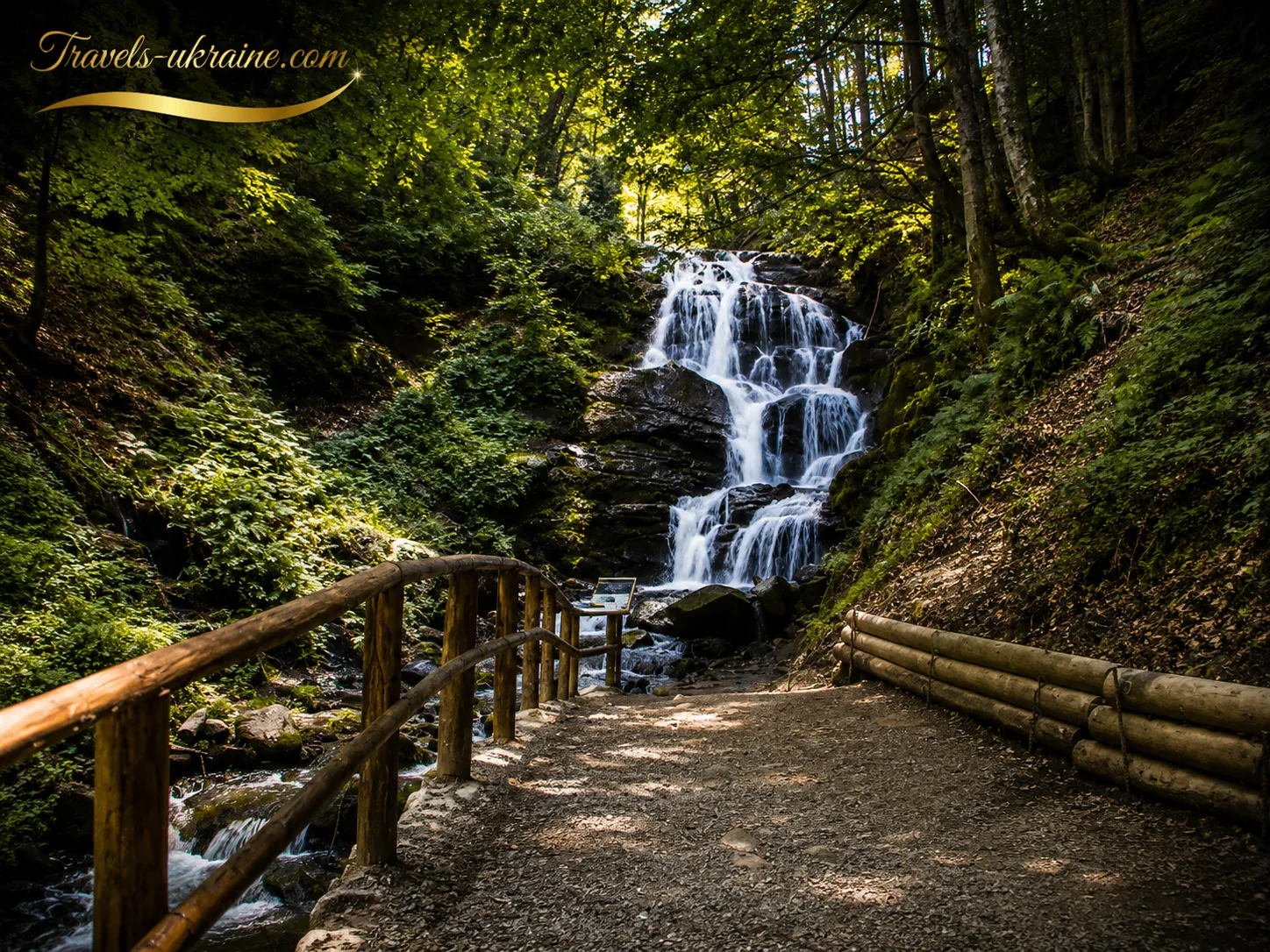
The waterfall is considered a fairly accessible destination. A short walking approach leads from the parking area to the waterfall, so the route does not require special hiking gear or serious physical preparation. At the same time, this is still mountainous terrain: after rain, the rocks may be slippery, the trails wet, and you need to move carefully near the water itself.
For most adult travelers and families with children, the walk to Shypit will be easy. Older people and tourists with small children should take their time, choose comfortable footwear, and avoid getting too close to wet rocky ledges. If the weather is rainy or icy, even a short route may require extra caution.
Who Will Enjoy Shypit Waterfall Most
The waterfall on the slopes of the Polonyna Borzhava mountain range will appeal most to those looking not for a noisy attraction, but for living nature. It is an excellent place for a first introduction to Zakarpattia, a romantic walk, a family trip, memorable photos, or a short break from the road. There is no need to invent anything here: simply arrive, pause by the water, and let the Carpathians do their work.
If you are planning a travel itinerary through Zakarpattia and looking for a place where easy access, beautiful nature, a mountain atmosphere, and a genuine sense of adventure come together, Shypit Waterfall is an excellent choice. It is a destination that does not require much time, yet often leaves a stronger impression than long and overloaded routes.
Mysteries and Legends: Shypit Waterfall in the Heart of the Carpathians
Shypit Waterfall, plunging from a height of about 14 meters in the picturesque Carpathians, attracts travelers not only with the power of its mountain waters and the beauty of Zakarpattian nature. This place has long been surrounded by mysteries, folktales, and legends that seem to live in the sound of its cascades. Simply stop beside the waterfall and listen to its voice—and it may seem that the water is truly whispering something ancient and hidden, something understood only by the mountains.
One of the best-known legends associated with Shypit Waterfall tells of the love of two young hearts separated by war and human circumstances. According to the tale, they agreed to meet by the waterfall every year on Ivan Kupala. And each time the lovers came to this place, the water became especially loud, lively, and powerful, as though nature itself rejoiced at their meeting. Their love echoed in the roar of the stream, the freshness of the mountain air, and the silvery spray scattering over the rocks.
Another legend says that a crystal key with extraordinary power is hidden somewhere in the depths of Shypit. It is supposedly guarded by a good witch who lives near the waterfall and helps those who come with pure intentions. She does not frighten travelers or do them harm; instead, she opens the way for those seeking answers, healing, or inner peace. They say she can be heard not with words, but with the heart—in the quiet whisper of the water when the forest around falls silent.
Yet perhaps the most mysterious legend about Shypit Waterfall concerns its water. Some tales claim that at a certain time of year it gains special power. Whoever touches it with an open heart may receive an answer to an important question in life, feel relief, or see something that has long been hidden deep within their own thoughts. Perhaps it is merely a beautiful legend, or perhaps it is the way the Carpathians remind us that sometimes answers come not through words, but through silence, water, and attentiveness to ourselves.
Regardless of whether you believe these legends or regard them as a poetic part of Carpathian folklore, the picturesque waterfall remains one of the mountains’ most enchanting places. Its power, beauty, and mystery intertwine in a single feeling that is difficult to explain. Here, the water does not simply fall from rocky ledges—it speaks. It whispers of love, loss, hope, the road, and the eternal power of nature. That is why Shypit is not merely looked at—it is listened to, felt, and remembered for a long time.
Shypit Festival and Ivan Kupala Night
Shypit Waterfall is known not only as a picturesque destination in the Carpathians, but also as a place with a distinctive cultural atmosphere. For some tourists, it is a quiet forest walk to the cascades; for others, it is a symbol of freedom, summer gatherings, music, tents, campfires, and the night sky above the Borzhava mountain meadows. That is why Shypit has two different yet equally important sides: natural and event-based.
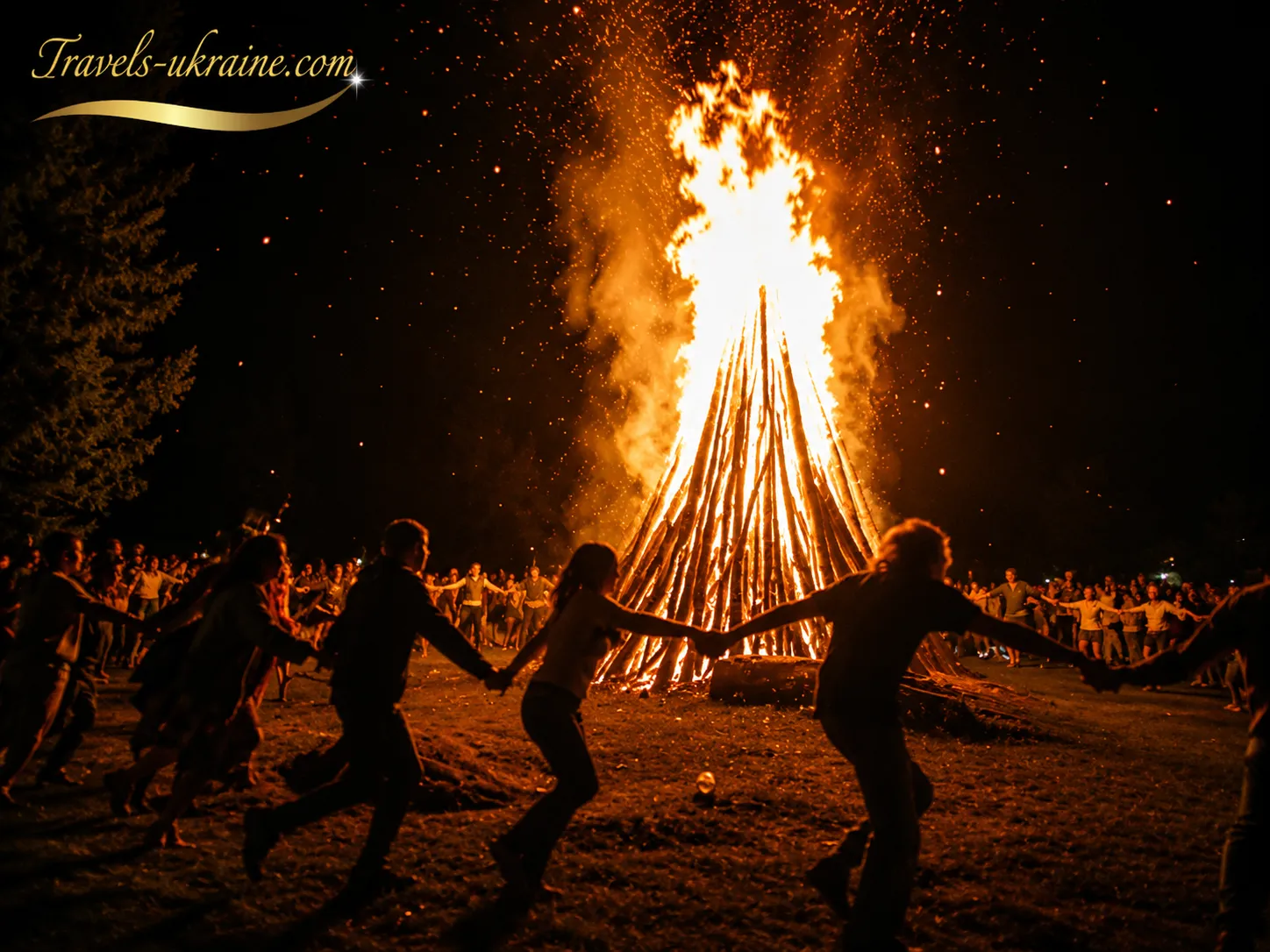
Every year, when the Carpathians fill with summer warmth and nature blossoms in all its strength, one of Ukraine’s brightest and most mysterious traditions—the celebration of Ivan Kupala—comes alive near Shypit Waterfall. At this time, the quiet mountain setting becomes a meeting place for people seeking freedom, genuine communication, music, fire, and a special sense of unity with nature. Travelers arrive from all over Ukraine and from abroad—people drawn to the informal spirit of the Carpathians and an atmosphere where everyone can be themselves.
The modern tradition of Kupala gatherings near Shypit Waterfall began to take shape in 1993, when a group of enthusiasts decided to revive the ancient summer festival in a special place—among mountains, forest, and the sound of water. Since then, Shypit has become more than a natural destination: it has become a symbol of a free Carpathian summer. There is no conventional stage with an official program, no strict boundaries or prewritten script. There is water, sky, fire, music, conversations until dawn, and the feeling that for a few days the world becomes simpler, more honest, and closer to nature.
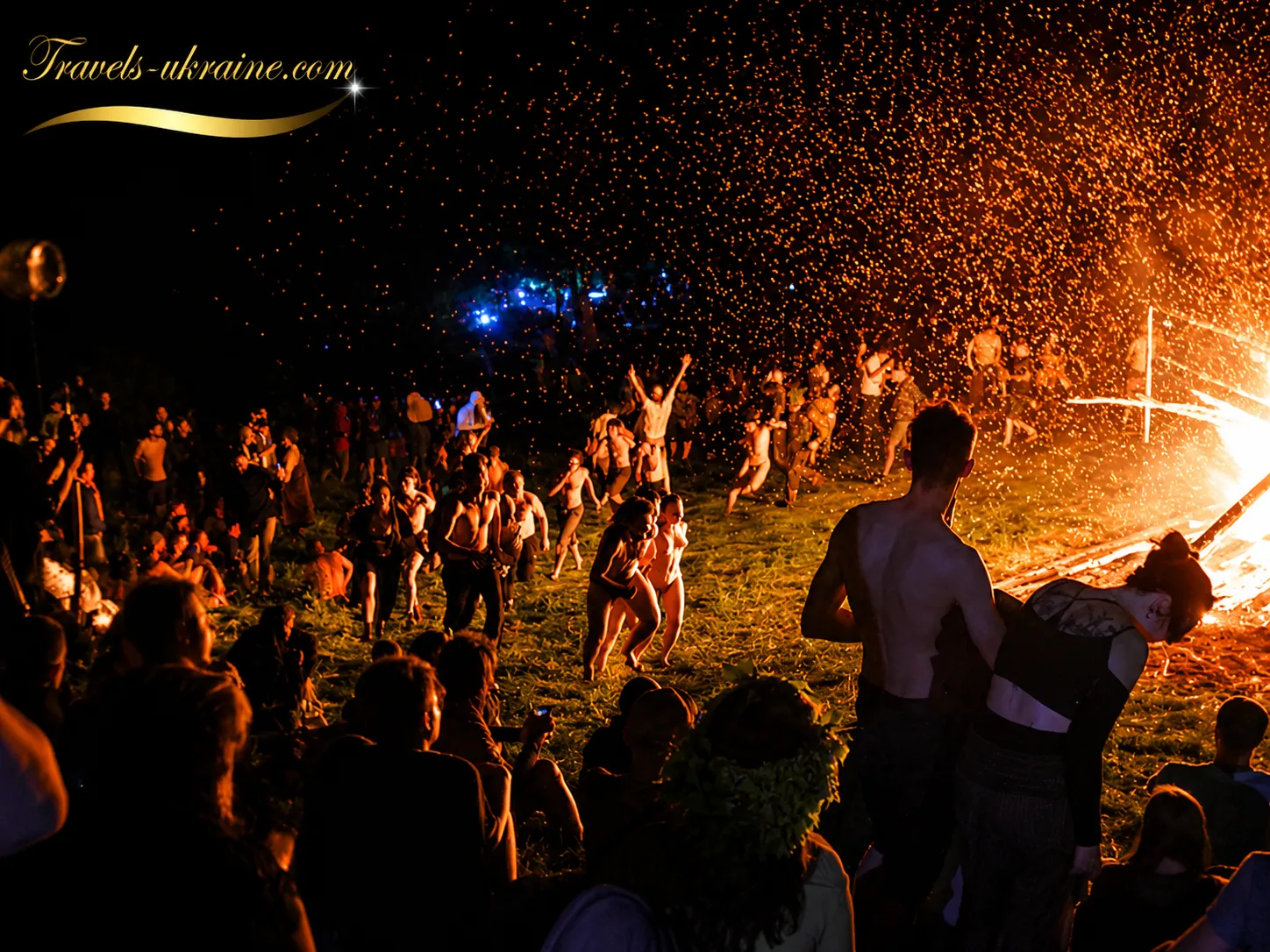
The festival takes on a special magic on Kupala Night, when, according to folk beliefs, light defeats darkness, water purifies, fire grants strength, and herbs and forests seem to reveal their secrets. People gather around campfires, sing, dance, meet one another, share stories, and spend the night in the rhythm of the ancient celebration. At such moments, Shypit seems not merely a backdrop but a living participant in the event: its roar blends with voices, music, the crackle of the fire, and the breathing of the mountains.
At the same time, it is worth understanding that the festival atmosphere around Shypit is quite free and informal. You may encounter people dressed in a very relaxed, unconventional way—sometimes with minimal clothing and without the usual urban conventions. For some visitors, this is a way to relax without tension, judgment, or city rules. Therefore, if you are planning a trip to Shypit Waterfall with children, it is best to take this detail into account in advance and choose dates that suit the kind of experience you prefer.
The Ivan Kupala festival near Shypit Waterfall brings together very different people: tourists, musicians, artists, travelers, fans of alternative culture, romantics, and those who simply want to escape everyday life for a few days. This is where its special strength lies. Familiar boundaries between strangers fade away, and the Carpathians become one vast open space where mood, sincerity, and a willingness to truly experience nature matter more than status or appearance.
And perhaps that is precisely why Shypit during Ivan Kupala leaves such a powerful impression. Some people return with new friends, some with a strange sense of inner freedom, while others simply remember for a long time the night by the campfire, the roar of the waterfall, and the dark Carpathian sky overhead. This celebration is not for everyone, but for those who embrace its atmosphere, it can become a genuine reset—emotional, vibrant, and slightly magical.
How to Behave During the Festival Period Near Shypit Waterfall
If you arrive at Shypit Waterfall during days of active gatherings, the best approach is to be respectful and attentive. Respect the people who have come for the atmosphere, but show equal respect for nature, local residents, and tourists seeking peace and quiet. Do not leave litter, damage trees, step onto slippery rocks near the water, create dangerous situations around the cascades, or forget that mountainous terrain requires common sense even during a celebration.
Events around Shypit can be highly colorful, but nature remains the true main character of this place. It created the legend, the sound, the space, and the energy that bring people back here again and again. So whether you have come for the festival, a family walk, or a short travel itinerary through Zakarpattia, remember: Shypit Waterfall in the Carpathians reveals itself best to those who know not only how to look, but also how to listen.
What to See and Do Near Shypit Waterfall
Shypit in Pylypets is not a destination people visit for just a few minutes to take a single photo. Yes, the first encounter with the cascades is truly impressive: water tumbles over rocky ledges, the forest fills with coolness, and the sound of the stream seems to wash away the fatigue of the journey. But if you take your time, Shypit reveals much more. You can walk, listen to the water, take photos, climb higher for mountain views, explore Pylypets, and feel the authentic rhythm of Zakarpattia.
The main value of this place lies in its natural simplicity. There is no need to devise a complicated program near Shypit: the road to the waterfall itself, the forest shade, moss-covered rocks, cool air, and the voice of the water already create a sense of adventure. That is why Shypit Waterfall in Zakarpattia Oblast is well suited to a family outing, a romantic walk, or a short route during a longer journey through the Carpathians.
See Shypit Waterfall Up Close and Take Atmospheric Photos
The first reason tourists come here is the cascading Shypit Waterfall itself. It is best viewed without rushing—not only from the central vantage point, but also from various safe angles. From below, the waterfall appears taller and more powerful; from the side, you can better see the water breaking over the rocky ledges; and closer to the stream, small details emerge: spray, moss, transparent rivulets, and the dark sheen of wet stone.
Shypit Waterfall is a wonderfully photogenic place. It has everything a camera loves: moving water, textured rocks, green forest, soft light, natural depth, and a vivid atmosphere. The best photos often come not at midday, when the light is harshest, but in the morning or toward evening, when the sun passes more softly through the trees and does not wash out the white water in the frame. You do not need to climb onto slippery rocks or approach the water dangerously close to capture beautiful images. On the contrary, the most atmospheric shots are often taken from a safe distance, with not only the waterfall but also the surrounding forest in the composition. This is how Shypit Waterfall in Pylypets looks most natural—not as an isolated object, but as part of a vast Carpathian landscape.
Walk Along a Forest Trail and See the Borzhava Mountain Meadows
Shypit Waterfall in Zakarpattia reveals itself best to those who do not hurry. The road to the waterfall and the surrounding area are already part of the experience. You will want to walk more slowly, listen to the sound of the stream, breathe in the damp forest air, and catch the moment when the rhythm of city life finally lets go. This is the essence of nature tourism: sometimes the most valuable part is not the destination, but the journey to it.
If you want a longer route after the waterfall, consider heading toward Mount Hymba. Broad Carpathian views and the picturesque expanses of the Borzhava mountain meadows open up here. This is a different level of journey: open space, mountain meadows, wind, distant ridges, hiking routes of every difficulty, and the feeling that the Carpathians are far broader than they seemed down in the forest. This option suits those with more time and energy. If a short visit to Shypit is an easy walk, hikes and trekking toward Hymba require better footwear, water, attention to the weather, and at least a basic readiness for mountain terrain. The reward is well worth the effort: after the waterfall’s cool roar, an entirely different Carpathian scene opens before you—spacious, windswept, and highly photogenic.
The Borzhava mountain meadows are known not only for their sweeping mountain views, gentle ridge lines, and hiking trails. They are also one of those places in the Carpathians where you can see the mountains in a completely different way—from a bird’s-eye view. Paragliding over Borzhava offers a sense of freedom that is hard to compare with any other kind of active recreation: green mountain meadows stretch out beneath your feet, Pylypets and Shypit Waterfall remain somewhere below, and an endless expanse opens up ahead.
So, if you enjoy active leisure and want to add a little adrenaline to your trip, Borzhava may be a genuine discovery. Paragliding is not simply entertainment, but an opportunity to feel part of the sky for a few minutes, see the mountain range from an unusual perspective, and understand why these places captivate travelers so deeply. Here, the Carpathians stop being merely a route beneath your feet—they unfold before you in all their grandeur, silence, and freedom.
Tents, Berries, and the Cable Car near Shypit Waterfall
In addition to walking to the cascades, Shypit Waterfall is ideal for those who want to experience the mountains not only with their eyes, but with their whole body: spend more time in nature, breathe in the scent of the forest, listen to the quiet of the night, and wake up to the sound of a mountain stream. Camping is popular in the Pylypets and Borzhava mountain meadow area, but tents should be set up only in permitted and safe places, without leaving litter behind or damaging nature.
During the season, Borzhava offers another enjoyable opportunity—berry picking. On the slopes and mountain meadows, you may come across bilberries and other gifts of the forest that make a walk even more atmospheric. This is when a journey stops being simply a route: you walk along the trail, the wind rustles around you, Shypit remains somewhere below, and in your hands is the true taste of the Carpathians.
And if you would like to see this beauty from above, consider the cable car in Pylypets, which leads toward Mount Hymba. During the season and in favorable weather, it offers a completely different view of the area: forests, homesteads, trails, and Shypit Waterfall lie below, while the broad Borzhava mountain meadows open up ahead. It is an excellent option for those who want to combine an easy walk to the waterfall with mountain panoramas without a challenging ascent on foot.
Getting to Know Pylypets and the Local Atmosphere
After walking to the waterfall, do not rush to leave—take some time to experience Pylypets itself. This village has long been one of the tourist centers of this part of Zakarpattia. Here you will find guesthouses, cafés, local routes, opportunities to rest after the journey, and a chance to continue discovering the Carpathians not only through water and forest, but also through the local rhythm of life.
Shypit Waterfall is often the main reason for a trip, but it is not the only impression. Nearby, you can find beautiful views, mountain trails, seasonal activities, places to have lunch, and full-day routes. In Pylypets, you can arrange quad biking and jeep tours, adding new experiences to your holiday. That is why it is better to see this destination not as a quick stop, but as part of a larger journey through Zakarpattia—with a waterfall, mountains, a village, local people, and that special unhurried Carpathian pace that makes you want to return.
To make your trip to Shypit Waterfall rewarding without being exhausting, it is better to choose a few activities rather than try to fit everything in at once. For a first visit, a leisurely walk to the waterfall, photos by the cascades, a short rest by the water, and an introduction to Pylypets are ideal. If you have more time, you can add an ascent toward Hymba or a walk through the Borzhava mountain meadows.
Most importantly, do not turn Shypit into a box to tick off with a “see it quickly and leave” approach. This Carpathian waterfall has a different character. It reveals itself through sound, cool air, slow movement, attention to detail, and the desire to stay beside the water, if only for a little while. If you allow yourself this pace, Shypit will become more than a beautiful location—it will be one of those places remembered for the inner peace it brings.
What to Visit near Shypit Waterfall
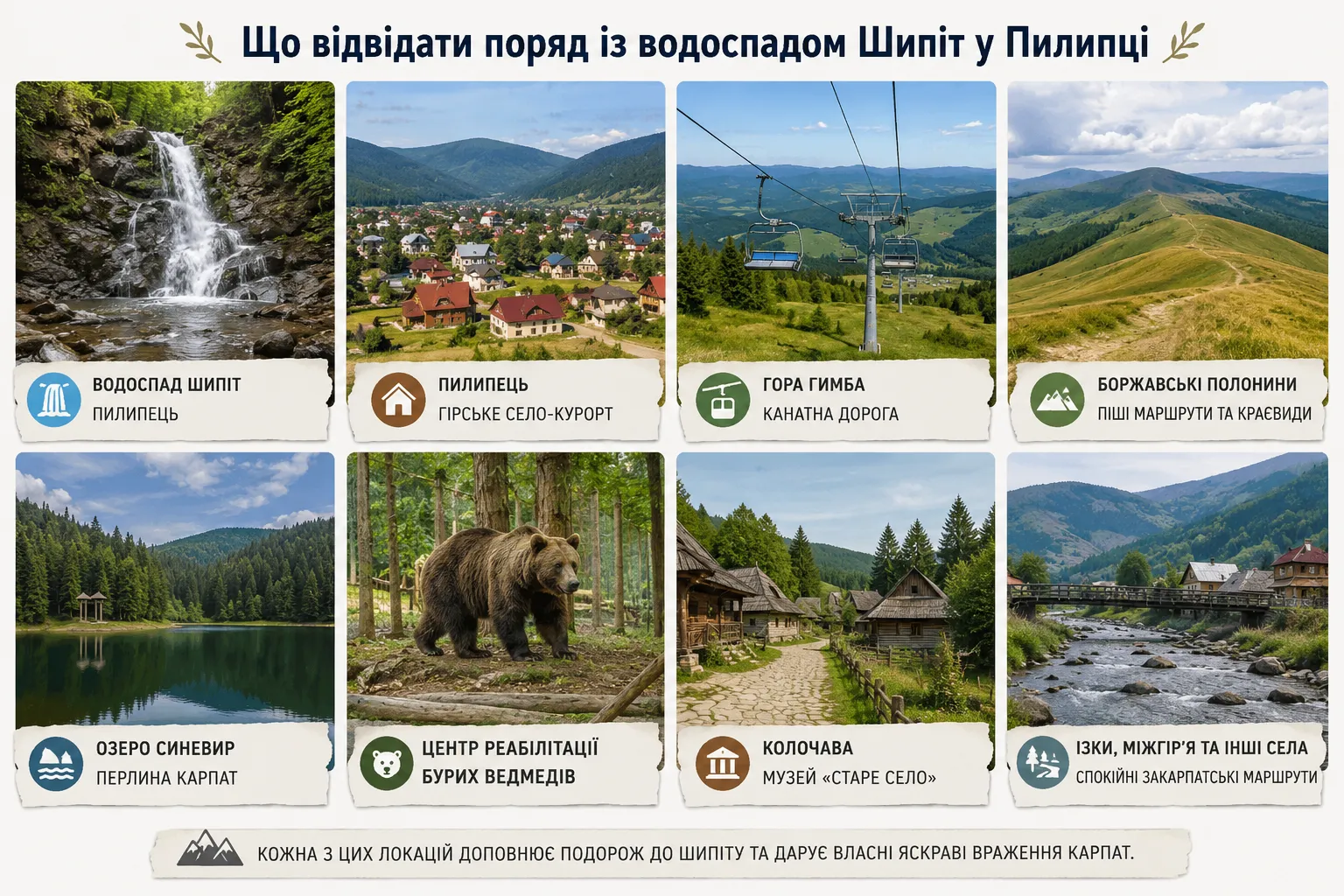
Shypit Waterfall in Pylypets is convenient because it can easily be combined with other interesting places in Zakarpattia. If you come only for an hour, you can see the cascades, take some photos, and continue on your way. But the true power of this destination emerges when Shypit becomes part of a larger route—with mountains, mountain meadows, villages, lakes, wooden churches, local cuisine, and an unhurried Carpathian atmosphere.
There are several nearby options for different kinds of getaways. Some people choose an easy walk around Pylypets and a cable-car ride up Hymba; others plan an active route through the Borzhava mountain meadows, while some continue on to Lake Synevyr, Kolochava, or Mizhhiria. That is why the waterfall is suitable both for a short weekend trip and for a fuller introduction to the Carpathians of Zakarpattia.
Lake Synevyr—the Pearl of the Carpathians near the Route
If you would like to continue your journey after Shypit, consider a trip to Lake Synevyr. It is one of the best-known natural attractions in the Ukrainian Carpathians and is often combined with a route through Pylypets, Shypit, and Mizhhiria. Synevyr has a completely different mood: not a roaring cascade, but a calm surface of water surrounded by mountains and forest, where you want to walk slowly, remain silent, and watch the reflection of the sky change in the water.
Combining Shypit Waterfall and Lake Synevyr is ideal for travelers who want to see two different elements of Zakarpattia in one trip: the movement and power of mountain water at Shypit, and the calm, depth, and legendary character of Synevyr. If you have a full day, this route can become one of the most memorable in this part of the Carpathians.
Brown Bear Rehabilitation Center
Travelers often visit the Brown Bear Rehabilitation Center on the way to Synevyr. It is an interesting destination for families with children, nature lovers, and anyone who wants to see animals not as entertainment, but in a space created for their recovery and care. This stop complements the journey well, showing Zakarpattia not only as a land of beautiful scenery, but also as a place where responsible treatment of wildlife matters.
If you plan to go there after Shypit Waterfall, it is best to check the current opening hours, seasonal conditions, and road situation in advance. In mountainous areas, travel time may depend not only on distance, but also on the weather, road conditions, and weekend tourist traffic.
Kolochava and the «Old Village» Museum
Another interesting direction for continuing your journey is Kolochava. This village is known for its historic atmosphere, museums, and the opportunity to better understand life in Zakarpattia not only through nature, but also through everyday life, architecture, and the memory of local communities. The «Old Village» Museum of Architecture and Everyday Life is often included in tourist routes together with Shypit and Synevyr.
After the waterfall, Kolochava feels like another facet of the journey. If Shypit speaks through water, stone, and forest, Kolochava tells the stories of people: their homes, crafts, daily lives, traditions, and past eras. This contrast makes the route richer and more profound.
Izky, Mizhhiria, and Peaceful Zakarpattian Routes
If you prefer less crowded places, consider the surrounding villages and destinations—Izky, Mizhhiria, and other nearby locations. Here you can find peaceful guesthouses, beautiful scenery, local cuisine, wooden churches, short walks, and a sense of Zakarpattia without unnecessary bustle. Not every worthwhile stop has to be a famous landmark; sometimes the best moments happen on the road between well-known places.
These routes are well suited to those who are not chasing a list of popular attractions, but want to see the region as it really is. After visiting the waterfall, you can take your time returning and leave room for coffee, lunch, a short stop at a viewpoint, or an unplanned walk through a village. These small moments are often what create the warmest memories of a journey.
Tourist Infrastructure near Shypit Waterfall
Shypit Waterfall is one of those natural Carpathian destinations where the beauty of the mountains is combined with fairly convenient tourist infrastructure. It is not a remote wilderness spot in the middle of an isolated forest, reached only after hours of travel with no amenities. Nearby are the village of Pylypets, guesthouses, cafés, parking, seasonal tourist services, a cable car toward Mount Hymba, and routes that make it easy to combine time by the waterfall with other destinations in Zakarpattia.
For those who want to stay overnight, Pylypets offers a variety of accommodation options: private guesthouses, bed-and-breakfasts, cottages, small hotels, and tourist complexes. This is convenient if you plan not merely to take a quick look at Shypit Waterfall, but to spend several days in the area—climbing Hymba, walking through the mountain meadows, visiting Synevyr, or simply relaxing in the mountains without rushing.
During the season, it is best to book accommodation in advance, especially for weekends, holidays, and periods of heavy tourist traffic. If peace and quiet matter to you, ask about the guesthouse’s location: staying closer to the road may be more convenient for getting around, while a place farther from the center will be quieter and more atmospheric. For families with children, it is better to choose accommodation with private grounds, a kitchen, or the option to order meals.
After walking to the cascades, it is pleasant to stop for lunch or hot tea, as the mountain air quickly works up an appetite. In Pylypets and near the tourist routes, you can find cafés, kolybas, and places serving Carpathian cuisine. Try simple, hearty dishes that are perfect for a trip: bograch, banosh, mushroom soup, deruny, homemade cheeses, herbal tea, or coffee after your walk.
The waterfall area is usually reached by car or tourist transport via Pylypets. During the season, parking areas may operate near the popular approaches to the waterfall, but spaces can be limited on weekends and holidays. To avoid crowds and unnecessary waiting, it is better to arrive early or plan your visit for a weekday.
One of Pylypets’ main advantages is the opportunity to combine relaxing by the waterfall with an ascent toward Mount Hymba. During the season and in favorable weather, the chairlift lets you see the mountains and meadows from above without a challenging hike. This is especially convenient for tourists who want panoramic views but are not planning a full mountain trek.
You can also find local tours, transfers, walks to nearby destinations, routes to Borzhava, and trips to Synevyr or Kolochava in the Pylypets area. All of this makes Shypit not just a separate stop, but a convenient base for several days of travel through Zakarpattia.
The infrastructure around Shypit makes the journey convenient without taking away its most important feature—the feeling of being in living nature. This balance is what makes the place so appealing: accommodation, food, parking, and tourist services are close by, yet a few steps toward the water leave you alone again with the sound of the cascades, the coolness of the forest, and that special atmosphere that brings people back to Shypit Waterfall time and again.
Frequently Asked Questions about Shypit Waterfall in Pylypets
Where is Shypit Waterfall located?
Shypit Waterfall is located in Zakarpattia, near the village of Pylypets, in the Borzhava mountain meadow area. It is one of the best-known natural attractions in the Ukrainian Carpathians and is often combined with a trip to Mount Hymba, the cable car in Pylypets, and routes along the Borzhava Ridge.
How do you get to Shipit Waterfall in Pylypets?
The most convenient way to reach Shipit Waterfall in Pylypets is by car or tourist transfer. First, you need to get to the village of Pylypets, and then take a short walking route to the cascades. You can also reach Pylypets by public transport via the nearest settlements, but this option takes more time and requires careful planning of connections.
Is there an entrance fee for Shipit Waterfall?
Entry to the area around Shipit Waterfall may be subject to a fee, while parking is often charged separately. Prices may vary depending on the season, local conditions, and how the tourist area is managed, so it is best to carry cash in small denominations. Before your trip, check the latest information with your accommodation or local tourism sources.
When is the best time to visit Shipit Waterfall?
The best time depends on the kind of travel experience you prefer. In spring, the waterfall is usually fuller and more powerful; in summer, it is a pleasant place to escape the heat; in autumn, the surrounding forest becomes especially photogenic; and in winter, Shipit can have a magical snowy atmosphere. For a quieter visit, choose weekdays or morning hours.
Is Shipit Waterfall suitable for a trip with children?
Yes, Shipit Waterfall near Pylypets is suitable for a family walk, but adults must supervise children constantly near the water. The rocks can be slippery, especially after rain or close to the stream itself. With children, it is best to stay on the main trail, keep away from dangerous ledges, and explain the basic rules for behaving near the waterfall in advance.
How much time is needed to visit Shipit Waterfall?
About 1 hour is enough for a brief introduction to the waterfall. If you want to walk around at a relaxed pace, take photos, sit by the water, and avoid rushing, allow 1.5–2 hours. If you plan to add a cable car ride, Mount Hymba, or a walk through the Borzhava mountain meadows, set aside half a day or a full day.
Can you swim at Shipit Waterfall?
Swimming near Shipit Waterfall should not be treated like an ordinary beach holiday. The water is cold, the rocks are slippery, the bottom is uneven, and the current can be stronger after rain or snowmelt. It is safer to touch the water, cool off beside the stream, or take photos from a safe distance without entering hazardous areas.
Can you camp in a tent near Shipit Waterfall?
Camping is popular in the Pylypets and Borzhava mountain meadow area, but tents should be pitched only in permitted, safe places. Do not set up camp directly beside the cascades, leave litter, damage moss or trees, or light fires where they are prohibited. The best principle is simple: after your visit, the place should remain clean and natural.
What can you see near Shipit Waterfall?
Near the waterfall, visit the village of Pylypets, take the cable car toward Mount Hymba, explore the Borzhava mountain meadows, and consider a trip to Lake Synevyr, the Brown Bear Rehabilitation Center, or Kolochava. For a short trip, the most convenient combination is Shipit, Pylypets, the cable car, and the panoramic views of Borzhava.
Is the cable car near Shipit Waterfall operating?
Pylypets has a chairlift toward Mount Hymba, which is often combined with a visit to Shipit Waterfall. Its operation depends on the season, weather, technical conditions, and the resort schedule, so it is best to check the latest information before your trip. When operating, it is one of the easiest ways to see the Borzhava mountain meadows from above without a strenuous uphill hike.
Shipit Waterfall in Pylypets: a journey to the heart of Zakarpattia
Shipit Waterfall is a place that is difficult to see as just another tourist spot on the map of Zakarpattia. Yes, people come here for beautiful photos, the sound of mountain water, a walk through the forest, and time in nature. But Shipit's true value reveals itself a little deeper — in the moment when you stand beside the cascades, listen to the water, and suddenly realize that the Carpathians are speaking to you without a single word. And most importantly, they speak so convincingly that you may even want to put your phone back in your pocket instead of taking twenty more identical photos: “well, maybe one more from this angle.”
This picturesque cascading waterfall in the Carpathians is perfect for anyone who wants to experience living nature without taking on an overly challenging route. Shipit welcomes everyone: families with children, couples in love, photographers, ecotourism enthusiasts, active travelers, and those simply tired of city noise and longing for some quiet in their heads at last. Some will see Shipit as a beautiful waterfall, some as the start of a route into Borzhava, some as a romantic legend, and others as a place where they can exhale so deeply that it feels as if all the chaos accumulated over the year leaves with the breath.
If the waterfall could be described through a single feeling, it would be the feeling of nature's living presence. Here, the water does not merely fall over the rocks — it moves, sounds, breathes, changes, and seems to remind us of something very simple: not everything important has to be sought far away; sometimes it is enough simply to stop beside a mountain stream. And yes, your legs may hint after the walk that they would not mind some coffee or bograch in Pylypets, but your soul will already be saying: “That was the right choice. That was a real journey.”
That is why Shipit should not be visited in a rush, in “run in — take a photo — run on” mode. Give yourself at least a little time: stand by the water, listen to its whisper, feel the coolness on your face, and watch the light play across the wet rocks. Because Shipit Waterfall is not merely a beautiful stop on a journey through Zakarpattia. It is a place where the Carpathians gently but firmly remind you that sometimes the best kind of rest is not when you have seen a lot, but when you have finally felt something deeply.


One Response Comment
You can post first response comment.