
 English
 Українська
 Русский
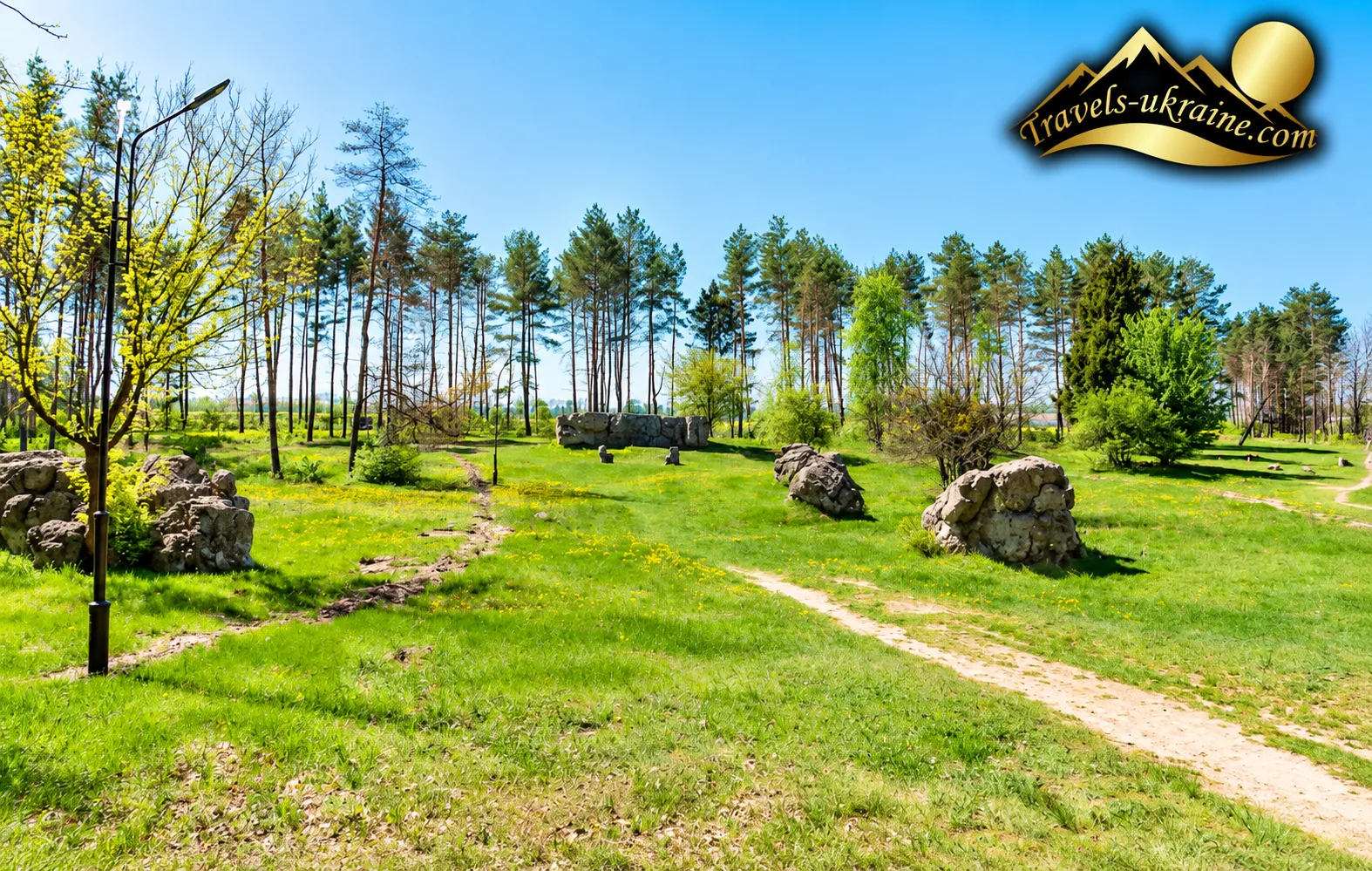
If the phrase “Hitler’s headquarters in Vinnytsia” immediately brings to mind dark underground corridors, heavy steel doors, secret rooms, and a bunker still hidden somewhere beneath the forest, reality has a small surprise in store. Today, there is no preserved underground complex where visitors can wander for hours with a flashlight. Instead, there is something far more important: the actual site where one of Adolf Hitler’s field command headquarters was located during World War II.
Known by the code name “Werwolf”, the headquarters was not located in Vinnytsia itself, as tourist materials often suggest, but near the settlement of Stryzhavka, a few kilometers from the city. Today, the forest and silence bear little resemblance to a place that in 1942–1943 was connected with the activities of the highest military and political leadership of Nazi Germany on the Eastern Front.
And it is precisely this contrast that perhaps makes the strongest impression. Where today you can hear the wind in the trees and the footsteps of visitors, there were once guard posts, communications equipment, service and residential buildings, and constant movement by military personnel and members of the Nazi leadership. The area was closed, heavily guarded, and functioned essentially as a separate military complex. And then almost all of it disappeared.
That is why the ruins of the “Werwolf” headquarters look very different from what most tourists expect. Instead of intact concrete bunkers, there are enormous fragments of reinforced concrete. Instead of offices and command rooms, there are pieces of destroyed structures. Instead of secret doors leading underground, there is a site where, without historical context, it can sometimes be difficult even to imagine the original scale of the complex. And this raises the main question: what exactly was built near Stryzhavka, and why did so many legends arise around this place after the war?
Stories about multi-level underground bunkers, secret tunnels, sealed rooms, hidden archives, and unknown underground chambers have surrounded the “Werwolf” site near Vinnytsia for decades. Some of these stories grew out of real features of the complex, some from the lack of reliable information, while certain versions drifted so far from documented facts over time that today they resemble the plot of an adventure film more than history. So on this journey, we will not need a shovel for searching out a secret tunnel, but something much more useful — the ability to separate historical facts from myths.
At the same time, it would be wrong to view this place only as a mysterious “Hitler bunker near Vinnytsia”. Behind the construction and operation of the headquarters lies a much darker history of the Nazi occupation of Ukraine, forced labor, and human suffering. Today, the site is home to the Historical and Memorial Complex dedicated to the victims of Nazism, so a visit to “Werwolf” is not an attraction about secret bunkers, but an encounter with one of the tragic chapters of World War II history in Vinnytsia Oblast.
And yet, there is no shortage of questions here. Why was the Vinnytsia area chosen for the headquarters? How quickly was such an important facility built? How much time did Hitler spend at “Werwolf”? What did the security system look like? How large were the concrete shelters? Who destroyed the complex, and how? Does anything remain underground? And finally, what can a tourist who comes to Stryzhavka actually see today? Some of these questions are well answered by documents and research. Others are still surrounded by exaggerations and conflicting versions. That is why “Werwolf” is interesting not because of the number of preserved structures, but because the picture of the past has to be literally reconstructed from fragments, plans, documents, and testimonies.
So let us begin with the time when this complex did not yet exist. We will return to the early 1940s and examine why one of Hitler’s field headquarters was established near Vinnytsia, how “Werwolf” was built, and what role it was intended to play in the war against the Soviet Union.
The History of the “Werwolf” Headquarters: Why Hitler’s Command Post Was Built near Vinnytsia
To understand why the “Werwolf” bunker complex was built near Vinnytsia, it is necessary to look not so much at the modern map of Ukraine as at the situation on the Eastern Front in 1941–1942. After the attack on the Soviet Union, the Nazi leadership needed command posts located closer to the areas of active combat, while still being sufficiently protected, concealed, and equipped with reliable communications.
The location was not chosen by chance. The Vinnytsia area was relatively close to important sectors of the Eastern Front, had transport connections and the necessary infrastructure. At the same time, the large forested area near Stryzhavka helped conceal the facility from aerial reconnaissance.
To a 21st-century tourist, the forest may look like nothing more than a pleasant place for a walk. Military planners in the early 1940s viewed the same trees much more pragmatically: the harder it was for the enemy to spot the facility from the air, the better.
Construction of the “Werwolf” Headquarters near Stryzhavka
Construction work on the headquarters began in late 1941 and was carried out under strict secrecy. The complex was not a single enormous underground structure. Instead, an entire system of above-ground buildings, service facilities, communications infrastructure, security zones, and protected reinforced-concrete shelters was created on the site. The work proceeded rapidly because the facility had a practical military purpose and was needed while active combat operations were still underway. German organizations and workers were involved in its construction, but an important and tragic part of its history was also the use of forced labor.
This is where tourist curiosity about the “secret headquarters” should give way to historical context. Behind the concrete structures that raise so many questions today stood a system of Nazi occupation, violence, and human exploitation. The history of those who worked on the construction and died during the occupation is an inseparable part of the history of “Werwolf.”
Why the Headquarters Was Built near Vinnytsia
The choice of Vinnytsia Oblast was driven primarily by military logic. In 1942, the German command was planning large-scale operations on the southern sector of the Eastern Front. Locating the headquarters in central Ukraine allowed Hitler and his staff to remain much closer to the areas of active combat than they would have been from command centers in Germany or East Prussia.
The region’s transport capabilities were also important. A command post required far more than a few concrete shelters. It needed reliable communications, transportation of personnel and supplies, electricity, water, security, and rapid connections with other military centers. “Werwolf” should therefore be understood not as a solitary bunker hidden in the forest, but as part of a much broader military infrastructure.
Hitler at “Werwolf”
In the summer of 1942, the headquarters began to fulfill its primary purpose. Adolf Hitler arrived at “Werwolf” on July 16, 1942. His first stay near Vinnytsia was the longest. From here, he followed the progress of military operations, held meetings with senior commanders, and made decisions related to the conduct of the war.
Hitler did not remain at the headquarters continuously until the end of the occupation. He visited it during different periods. His longest stay was in the summer and autumn of 1942, and he later returned to the complex several more times. The exact number of days varies somewhat between studies depending on the methodology used, but in total his stays amounted to several months. This made “Werwolf” one of Hitler’s important field command posts on the Eastern Front.
How the “Werwolf” Headquarters Was Destroyed
Throughout 1943, the military situation for Nazi Germany deteriorated significantly. Soviet forces were advancing westward, and the command post near Vinnytsia was gradually moving closer to the combat zone. For a secret headquarters, that was a fairly convincing reason to change location. As a result, the complex ceased to play the role for which it had originally been created. However, the site itself continued to be used by German structures for some time.
In early 1944, as German forces were retreating from Vinnytsia Oblast, a decision was made to destroy the headquarters so that its buildings and equipment would not fall into enemy hands. The complex was blown up. Particularly powerful explosions destroyed the massive reinforced-concrete structures, fragments of which today form the most recognizable part of the “Werwolf” ruins.
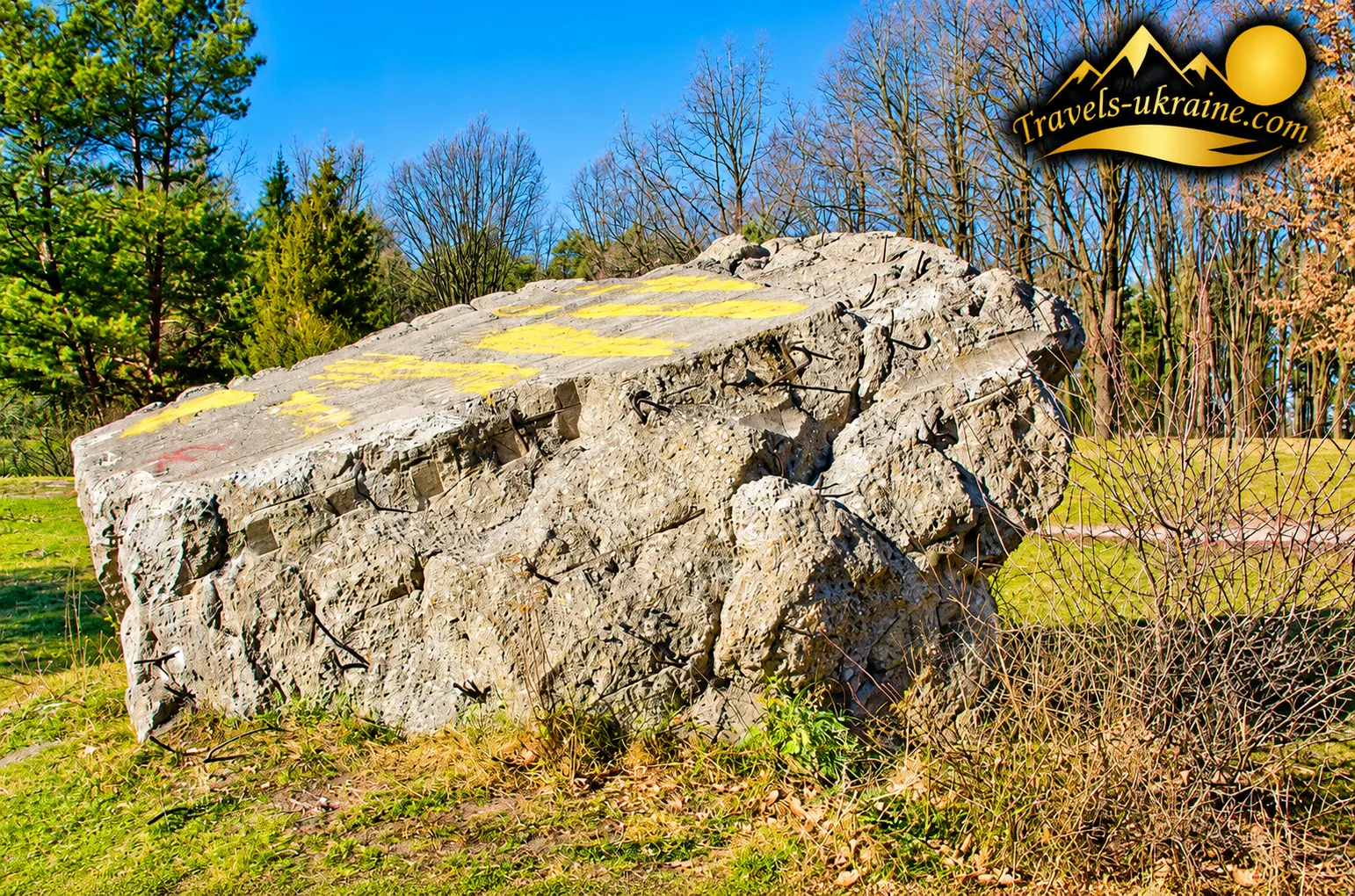
The scale of the destruction is still clearly visible today. Huge blocks of reinforced concrete were split apart and displaced by the explosions. These very structures later became one of the sources of legends about extraordinarily thick bunkers, unknown underground levels, and secret rooms supposedly still hidden beneath the ground. But it is important not to jump to conclusions. A massive piece of concrete is not, by itself, proof of dozens of secret underground floors.
What Happened to the Site After the War
After the war ended, the site of the former headquarters was investigated, and the question of its actual layout gradually became the subject of historical and archaeological research. At the same time, limited information and the scale of the destroyed structures created ideal conditions for the emergence of numerous legends. The less that could be seen on the surface, the more people wanted to imagine underground.
Over the decades, many theories arose around the “Werwolf” military headquarters concerning secret tunnels, hidden levels, underground storage facilities, archives, and even entire rooms that were supposedly still unexplored. Some of these claims were examined during investigations of the site, but far from every popular story was confirmed.
Today, the former headquarters serves a very different purpose. The site is home to the Historical and Memorial Complex dedicated to the victims of Nazism, and the territory itself has become a place for reflecting on the occupation, the war, and the crimes of the Nazi regime. And before moving on to the legends about underground chambers, it is important to understand what “Werwolf” actually looked like while it was in operation. How many zones did the headquarters have, what buildings stood among the trees, where were the concrete shelters located, and how extensive was the security system? That is what we will examine in the next section.
How the “Werwolf” Headquarters Was Organized
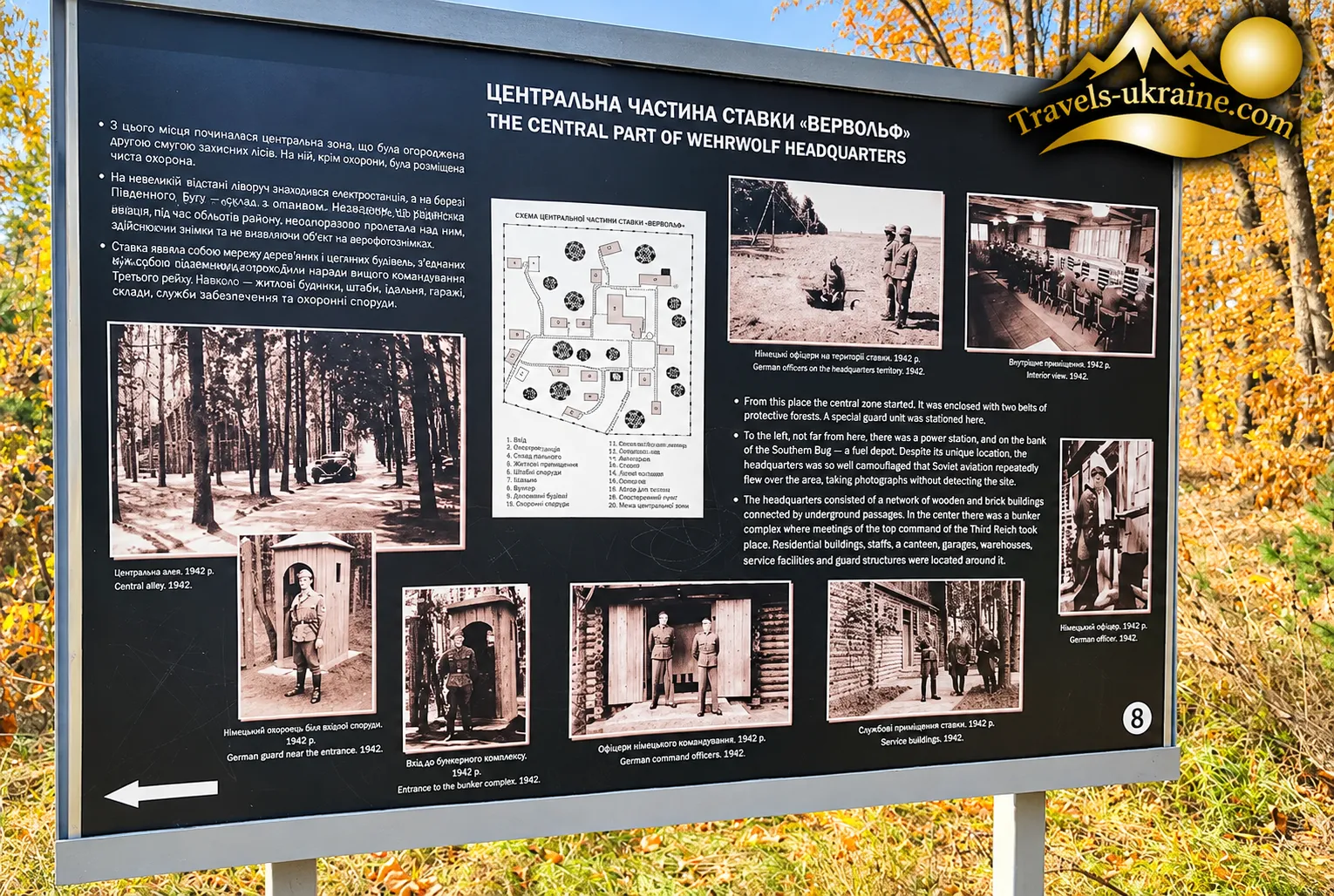
In popular imagination, the bunker near Vinnytsia often looks something like this: a camouflaged entrance hidden in the middle of the forest, concrete stairs leading downward, and below them an enormous underground city with dozens of rooms, tunnels, and secret levels. It is a perfect scenario for an adventure film. The real “Werwolf” headquarters was organized differently — and that makes it no less interesting.
It was a dispersed military command complex, a significant part of which was located above ground. Wooden residential and service buildings stood among the trees, while communications, technical services, and security units operated throughout the site. The reinforced-concrete structures served primarily as protected shelters. In other words, it is incorrect to look for one single structure that could be called “the whole Werwolf.” The headquarters functioned as an integrated system in which each facility had its own purpose.
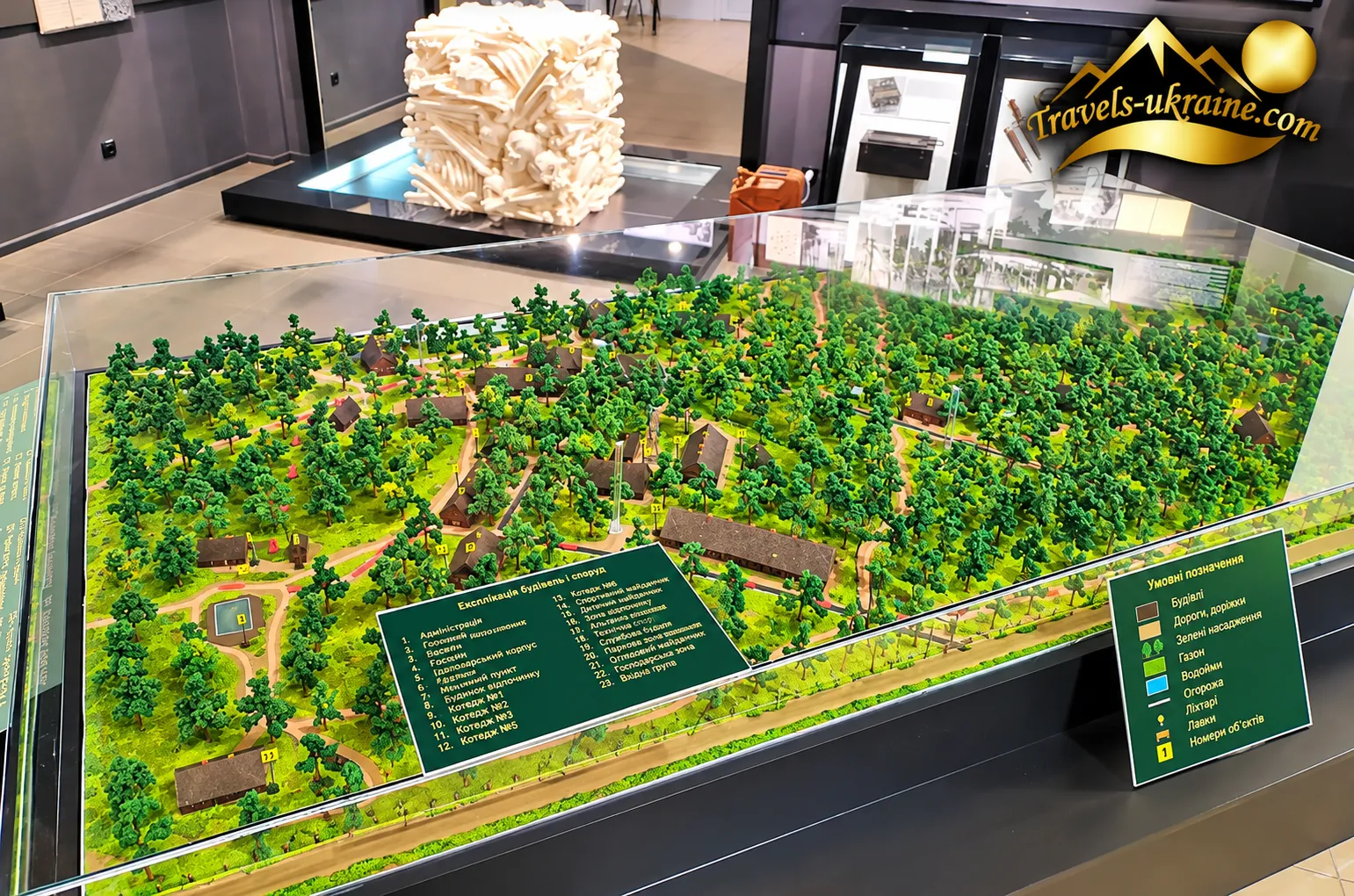
The site was organized so that the command staff could operate independently of ordinary urban infrastructure. It was necessary to accommodate senior leadership, headquarters personnel, communications staff, security forces, and service personnel, while also providing electricity, water, transportation, and communications. That is why the layout of the “Werwolf” headquarters is far more interesting than the image of a single concrete bunker. On plans, the complex looks more like a small specialized settlement scattered through the forest. The buildings were deliberately not concentrated in one large structure. Dispersing them reduced the risk that a single air strike could disable the entire command center at once.
Concrete Bunkers and Protected Shelters of “Werwolf”
The reinforced-concrete structures of the headquarters raise the most questions today. Their enormous fragments, left after the complex was blown up, became the main physical evidence of the existence of “Werwolf.” The protected structures were designed to withstand the effects of aerial bombardment and provide shelter for key personnel and staff. To achieve this, massive concrete constructions with very thick walls and ceilings were used.
After the demolition, these structures broke into enormous fragments. Standing today beside a multi-ton block of reinforced concrete, it is easy to understand where stories about “incredible underground bunkers” came from. But the thickness of the concrete alone does not prove the existence of a multi-level underground city. A protected shelter may have exceptionally massive walls and ceilings precisely because its main purpose was to survive a direct or nearby explosion.
Was the “Werwolf” Headquarters Underground?
Some of the protected structures may have been partially buried or designed to make use of the terrain, but the popular image of a huge multi-level underground complex should not automatically be applied to the entire headquarters. This is where the distinction between a “bunker” and an “underground city” becomes essential. The former is entirely plausible for a military command post. The latter requires far stronger evidence than stories that “there must still be something somewhere beneath the forest.”
Today, visitors cannot enter through a secret doorway and descend into preserved offices once used by Hitler. There is no underground complex here that is open to the public. It is worth knowing this before your visit, so you do not spend half the day suspiciously examining every hill in search of a door marked “secret bunker.”
Technical Infrastructure of the “Werwolf” Headquarters
For a command post, communications were no less important than concrete shelters. “Werwolf” had to maintain constant contact with military headquarters and other command centers, since the complex had been created specifically to direct military operations. The site therefore included the necessary technical services and communications equipment. Orders, operational information, and messages between command structures were transmitted through these systems. Without such infrastructure, even the thickest bunker would have become nothing more than a very expensive concrete shelter in the middle of a Ukrainian forest.
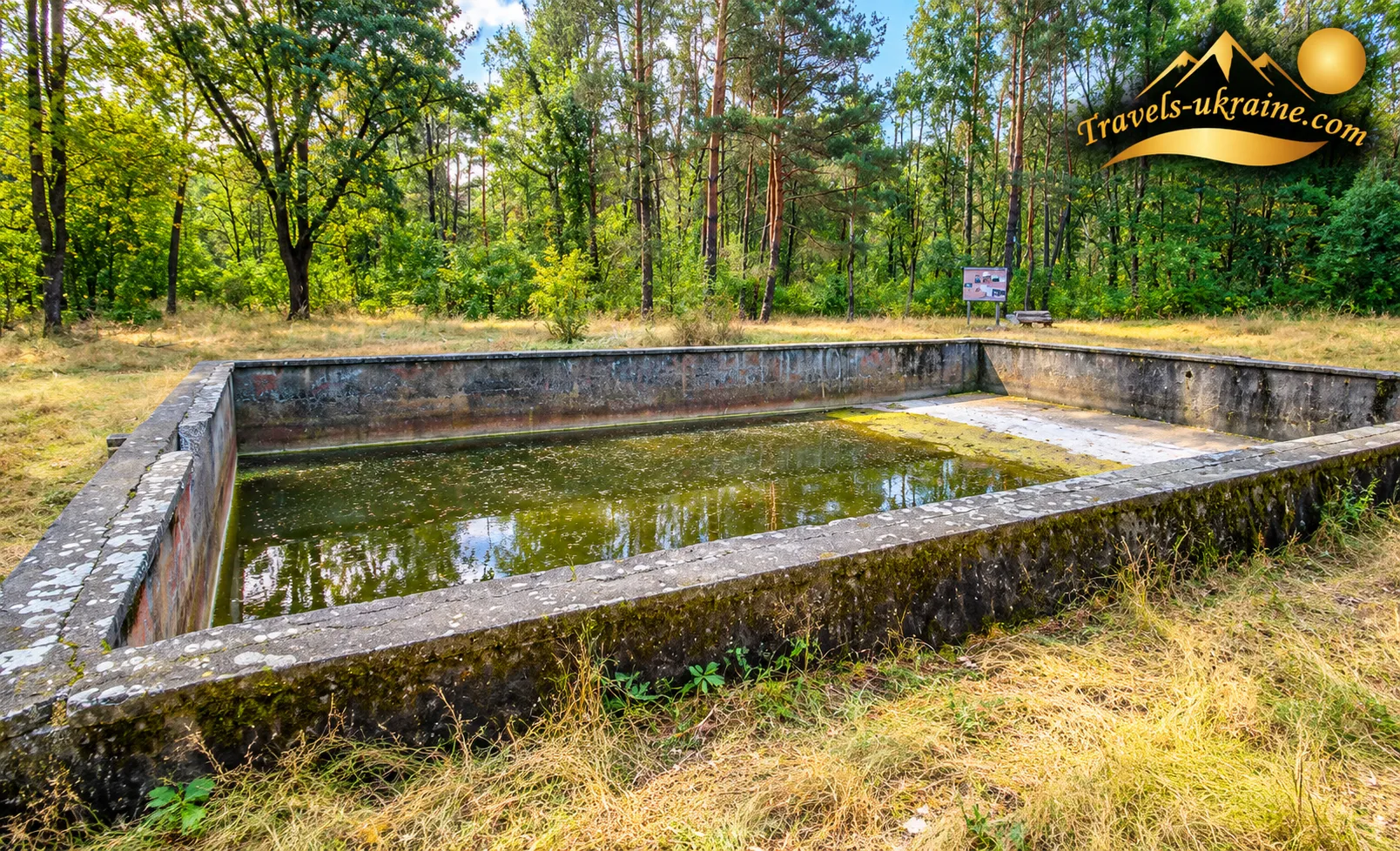
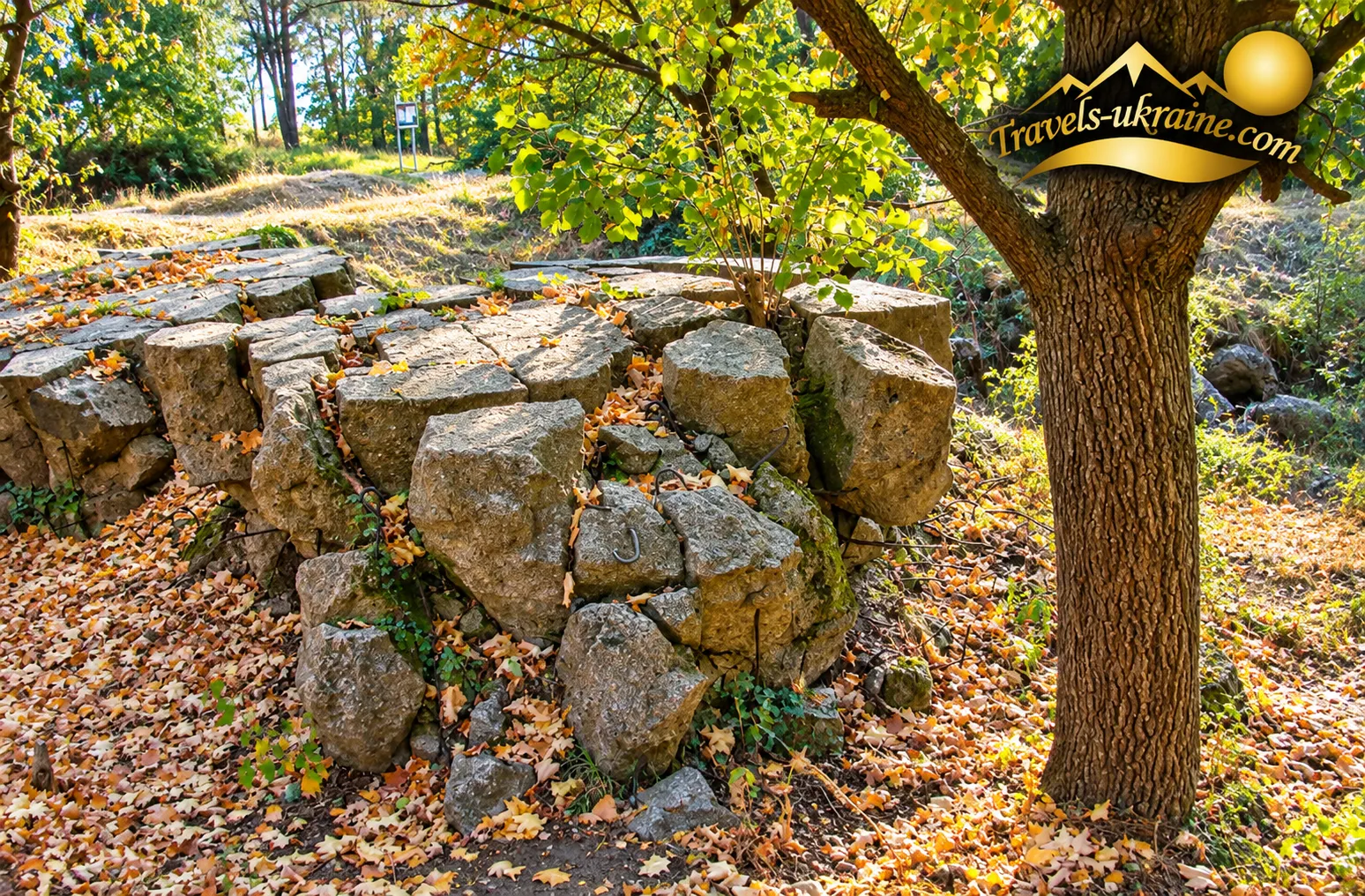
The complex had both autonomous and backup engineering infrastructure. Reliable operation required electricity, water supply, sanitation systems, technical rooms, and fire-protection facilities. One of the few objects associated with the former headquarters that has survived much better than the concrete shelters is the fire-water reservoir. At first glance, it may seem far less impressive than the bunker ruins, but objects like this are a useful reminder that “Werwolf” was a functioning complex, not merely a collection of military structures.
A command post had to operate every day, which meant dealing with hundreds of completely ordinary problems: water, electricity, food, repairs, fire safety, cleaning, and transport. The history of major headquarters starts to look much less like a movie once you begin counting how many people were needed simply to keep everything working.
Several Layers of Security at the “Werwolf” Headquarters
The forest near Stryzhavka was itself part of the defensive system. Above-ground structures were designed to blend into the surrounding environment as much as possible, making them harder to detect from the air. Camouflage was especially important because of the threat of aerial reconnaissance and bombing. A large concentration of buildings, roads, and vehicles could reveal the location of an important command center, so the infrastructure was made as unobtrusive as possible.
Security around one of Hitler’s command posts was multi-layered. The site was divided into zones with different levels of access, and guard posts, patrols, fences, and checkpoints were used. The closer a person came to the most important parts of the complex, the stricter the controls became. Accidentally wandering into the area while trying to take a shortcut through the forest would have been an extremely poor tourist decision — especially in 1942.
Security was not limited to controlling physical access. For a secret military facility, restricting information, screening personnel, and preventing leaks about the location and layout of the headquarters were equally important.
Air defense around “Werwolf” also played a separate and important role. Even a well-camouflaged command post could not rely solely on trees and secrecy. Observation and air-defense systems operated around the headquarters area. In the event of a threat, key personnel were expected to move into protected shelters. It was the combination of camouflage, security, air defense, and reinforced-concrete shelters that created a multi-layered defensive system. No single element could guarantee safety, but together they made an attack on the command center far more difficult.
How to Imagine the Scale of “Werwolf” Today
This is one of the main challenges for modern visitors. Most of the above-ground buildings have not survived, the concrete shelters were blown up, and the forest has long since reclaimed much of the site. Simply looking at isolated ruins is therefore not enough. It is much better to first study a plan of the “Werwolf” headquarters or a model of the complex and only then walk through the site. Once you do that, the scattered fragments begin to form a much clearer picture. The scale of the complex itself explains why the word “bunker” does not fully describe this place. “Werwolf” was a system of dozens of structures with different functions, engineering infrastructure, security zones, and communications.
And now for the part that is most interesting to visitors: what has actually survived after more than eight decades? Next, we will walk through the grounds of the modern memorial complex and examine which ruins and structures can still be seen with your own eyes, what has been reconstructed to help explain the history of the headquarters, and what you definitely should not expect to find here.
Hitler’s Headquarters Today: What Remains and What Visitors Can See
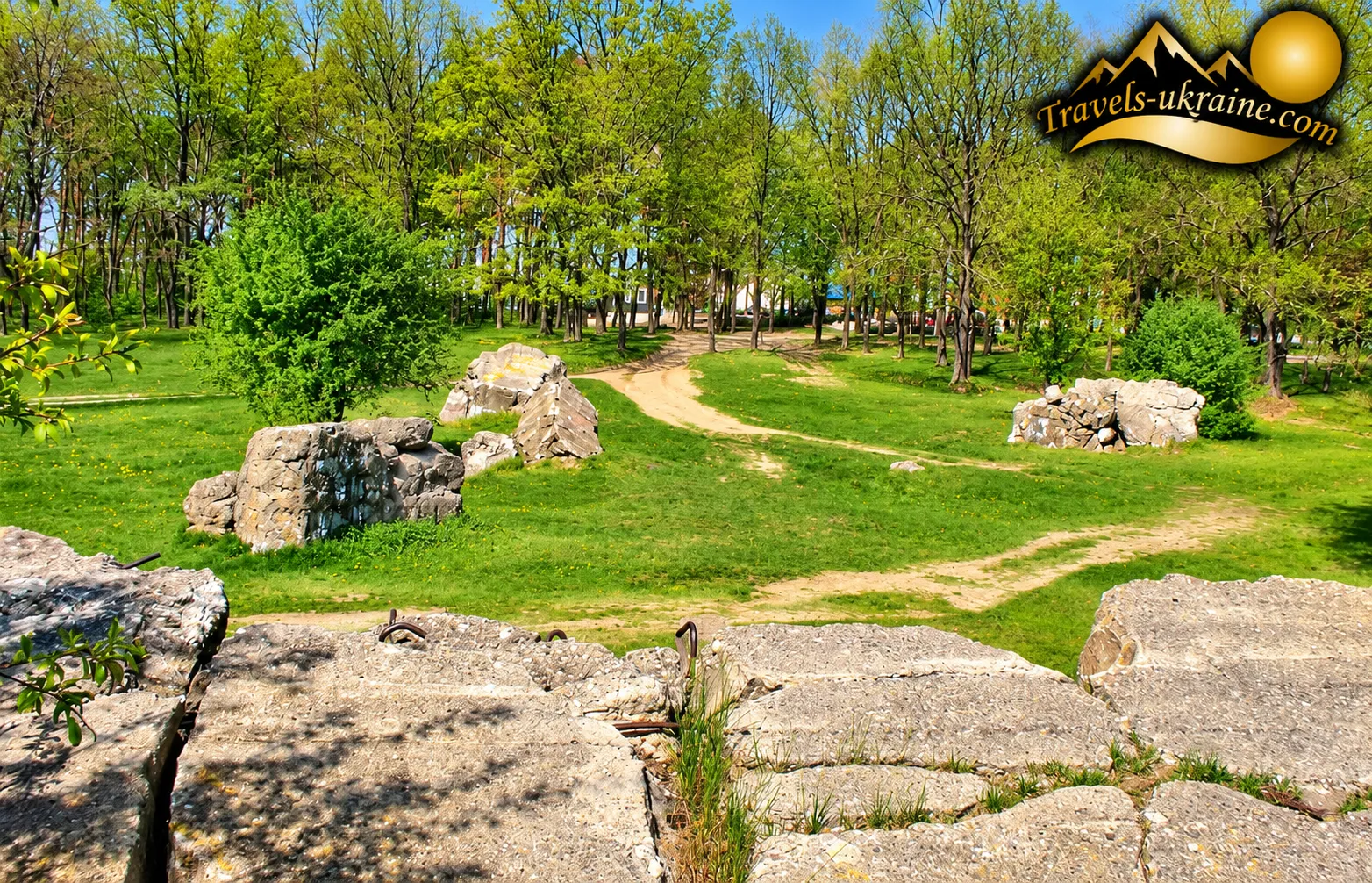
After hearing about bunkers, security zones, and dozens of service buildings, a perfectly logical question arises: what remains of Hitler’s “Werwolf” headquarters today? This is where visitors’ expectations most often diverge from reality. If you imagine a preserved concrete bunker with doors, stairs, underground corridors, and Hitler’s office, you will not find such a structure near Stryzhavka. After the complex was destroyed, most of its buildings were lost, while the massive defensive structures were reduced to enormous fragments of reinforced concrete. Yet these ruins are among the most impressive things visitors can see today.
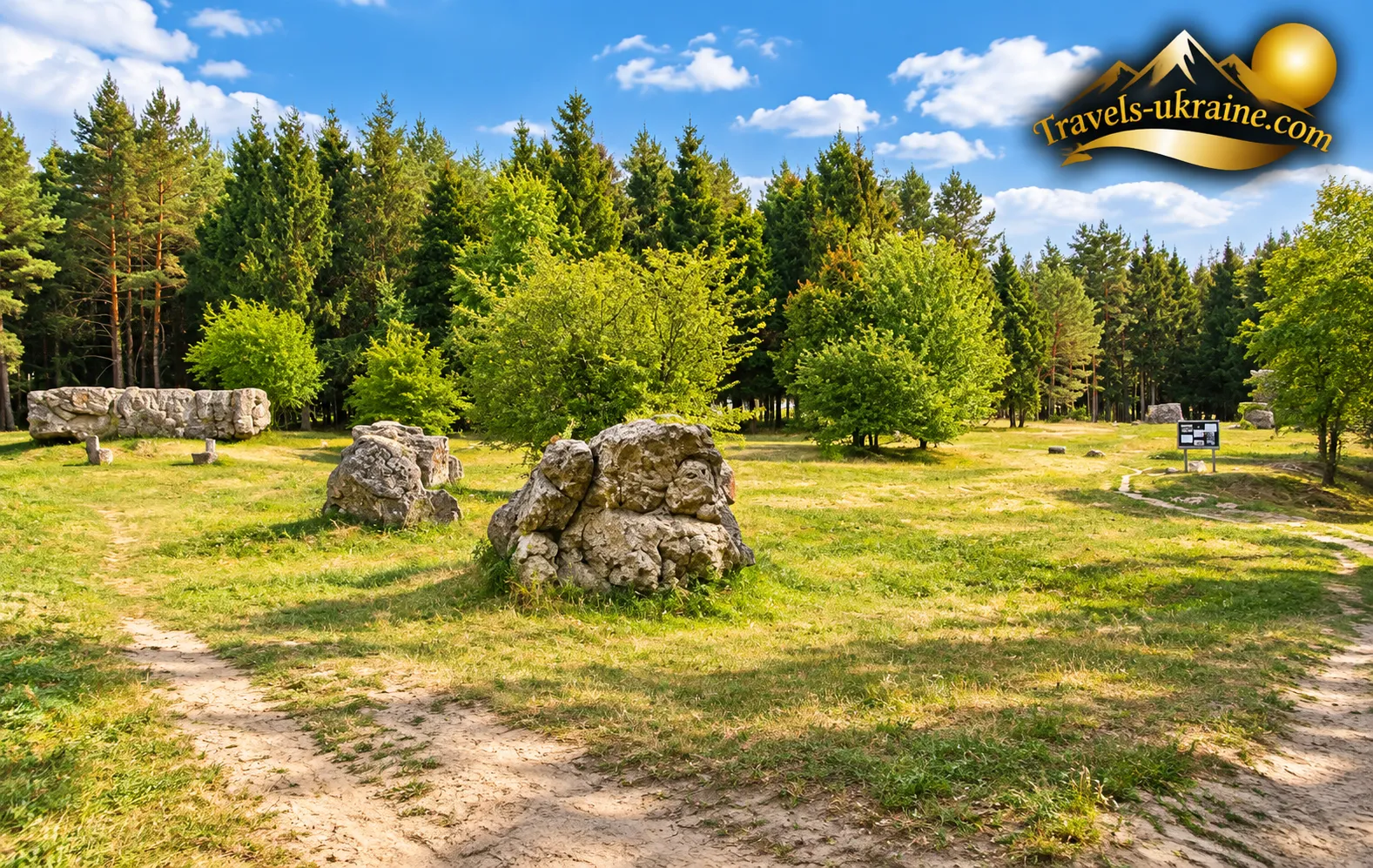
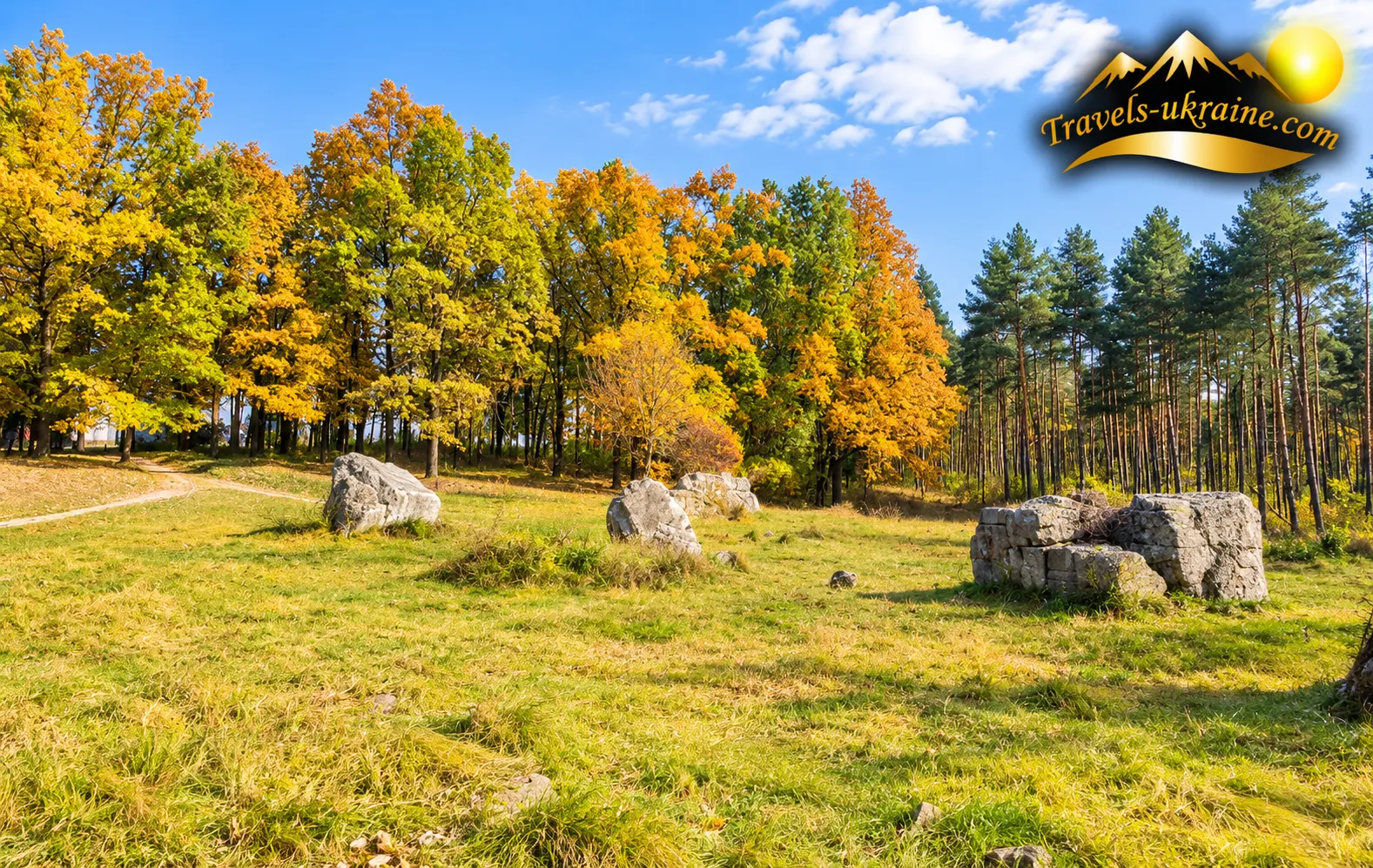
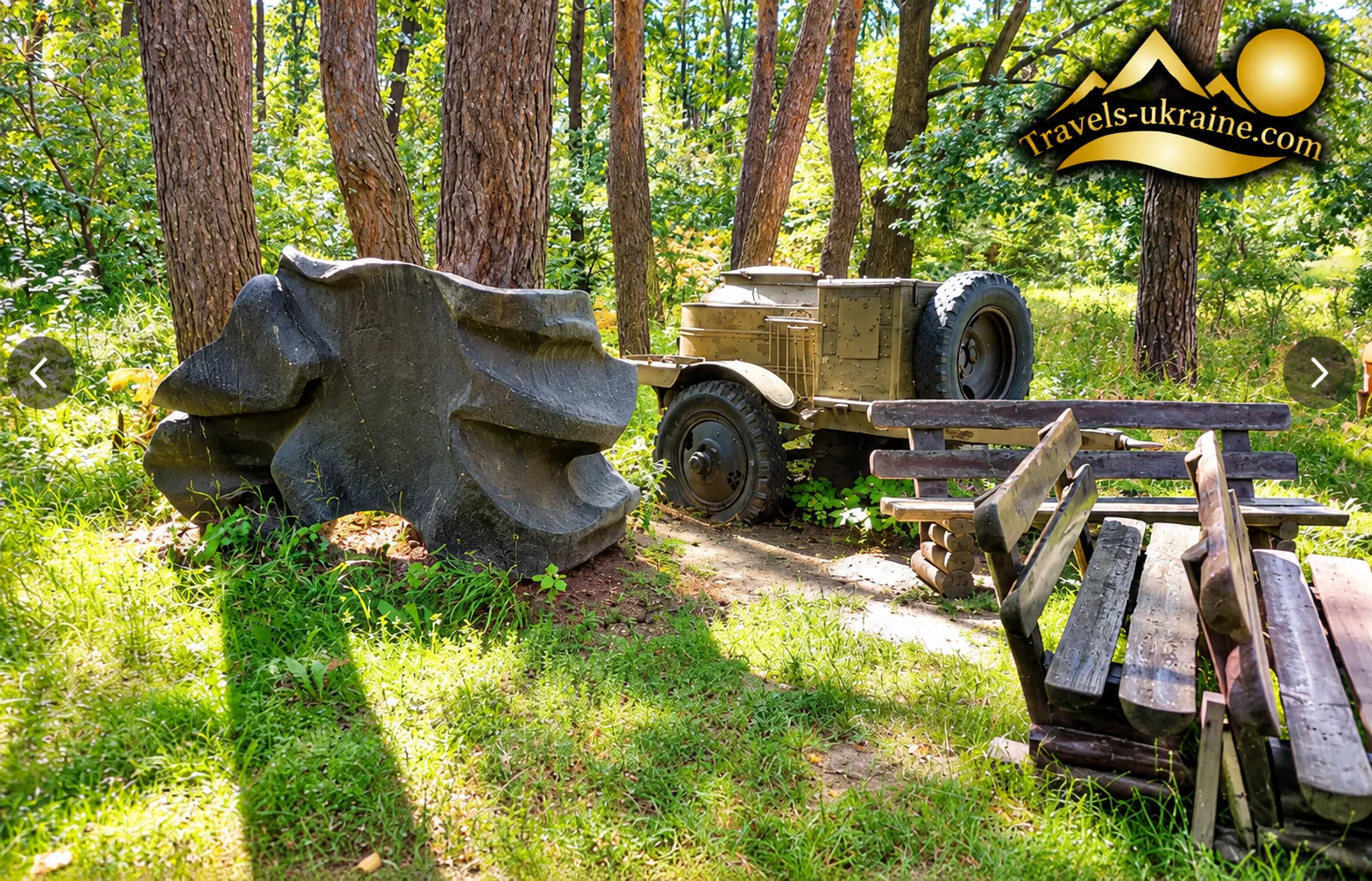
The best-known physical remains of the complex are the giant fragments of demolished reinforced-concrete structures. They lie among the trees in different positions: some blocks are split apart, others were shifted by the force of the explosions, and in places the steel reinforcement still reveals the internal structure of the concrete. These ruins make it easiest to understand the scale of the destruction. They are not natural rocks and not decorative reconstructions created for tourists. They are parts of the actual defensive structures of the military complex.
The Fire-Water Reservoir — One of the Few Well-Preserved Structures
Among the surviving features of the former headquarters, the fire-water reservoir deserves particular attention. Against the backdrop of enormous concrete ruins, it may not seem especially dramatic: there are no secret doors, thick armored walls, or mysterious tunnels. But structures like this help visitors understand “Werwolf” not as a legendary bunker, but as a real functioning complex. People lived and worked here, technical infrastructure operated on the site, and that meant water, electricity, communications, and fire protection were all necessary. Sometimes an ordinary reservoir tells us more about the everyday operation of a military facility than the most spectacular legend about a secret underground level.
Historical and Memorial Complex Dedicated to the Victims of Nazism
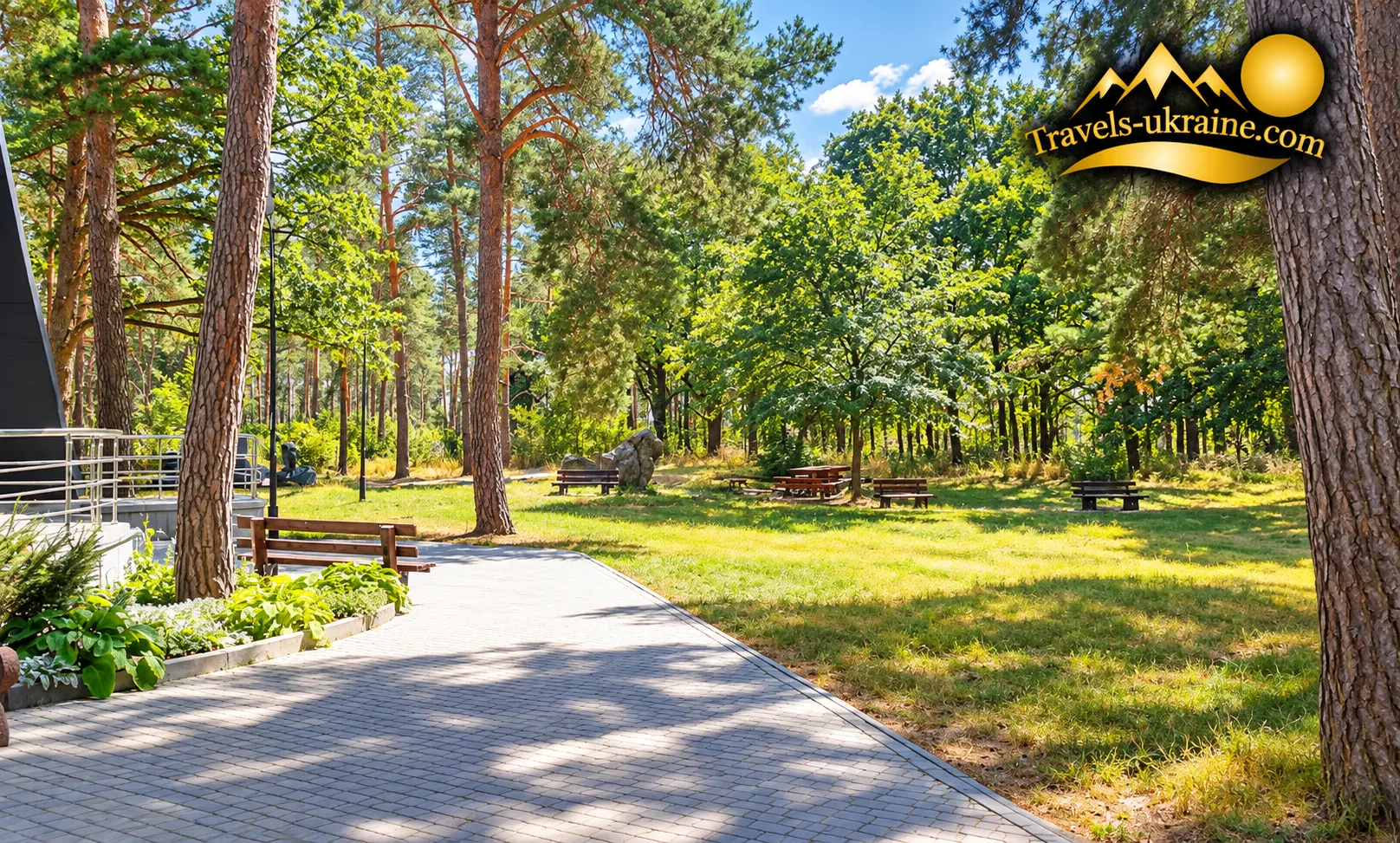
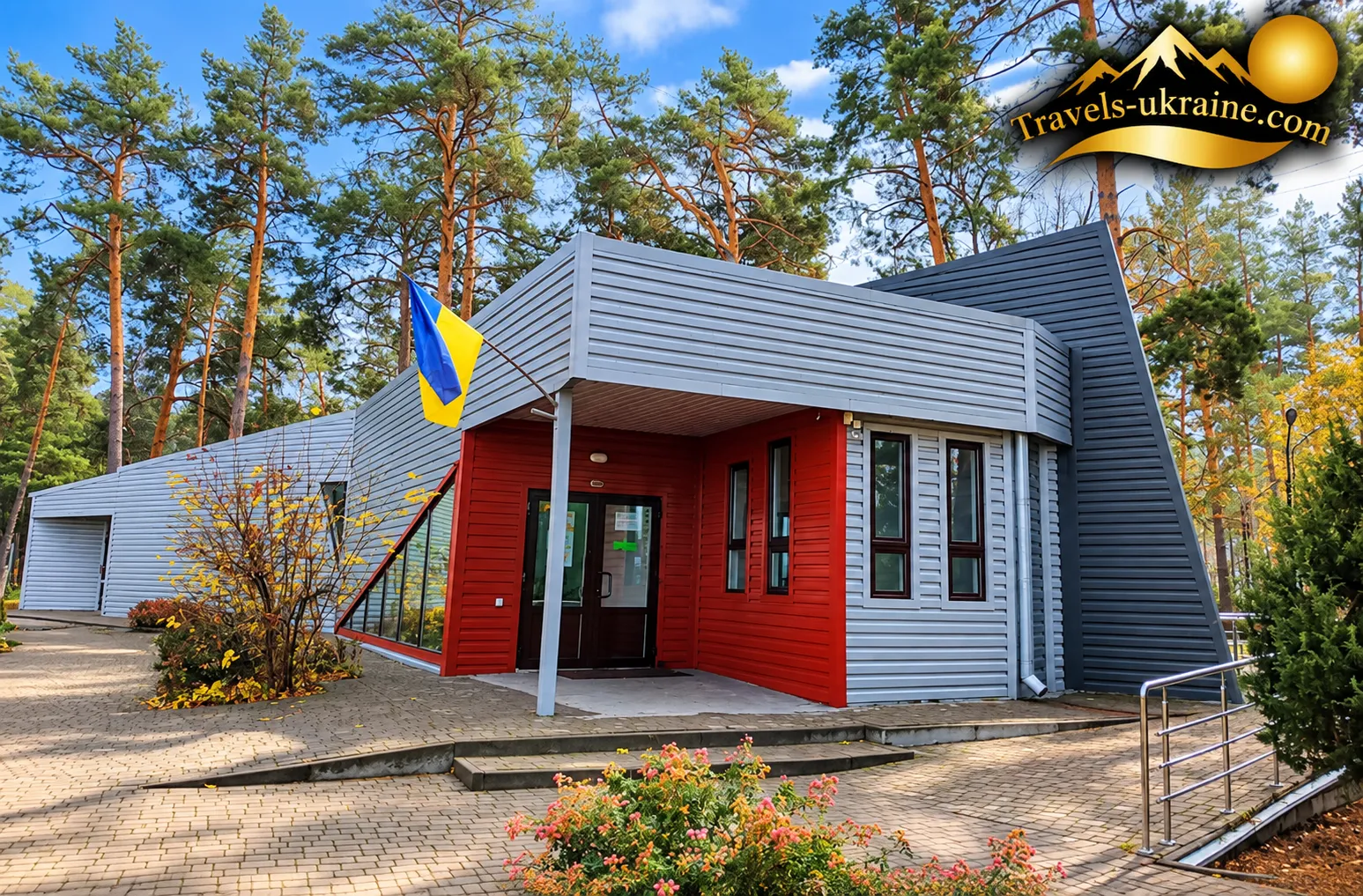
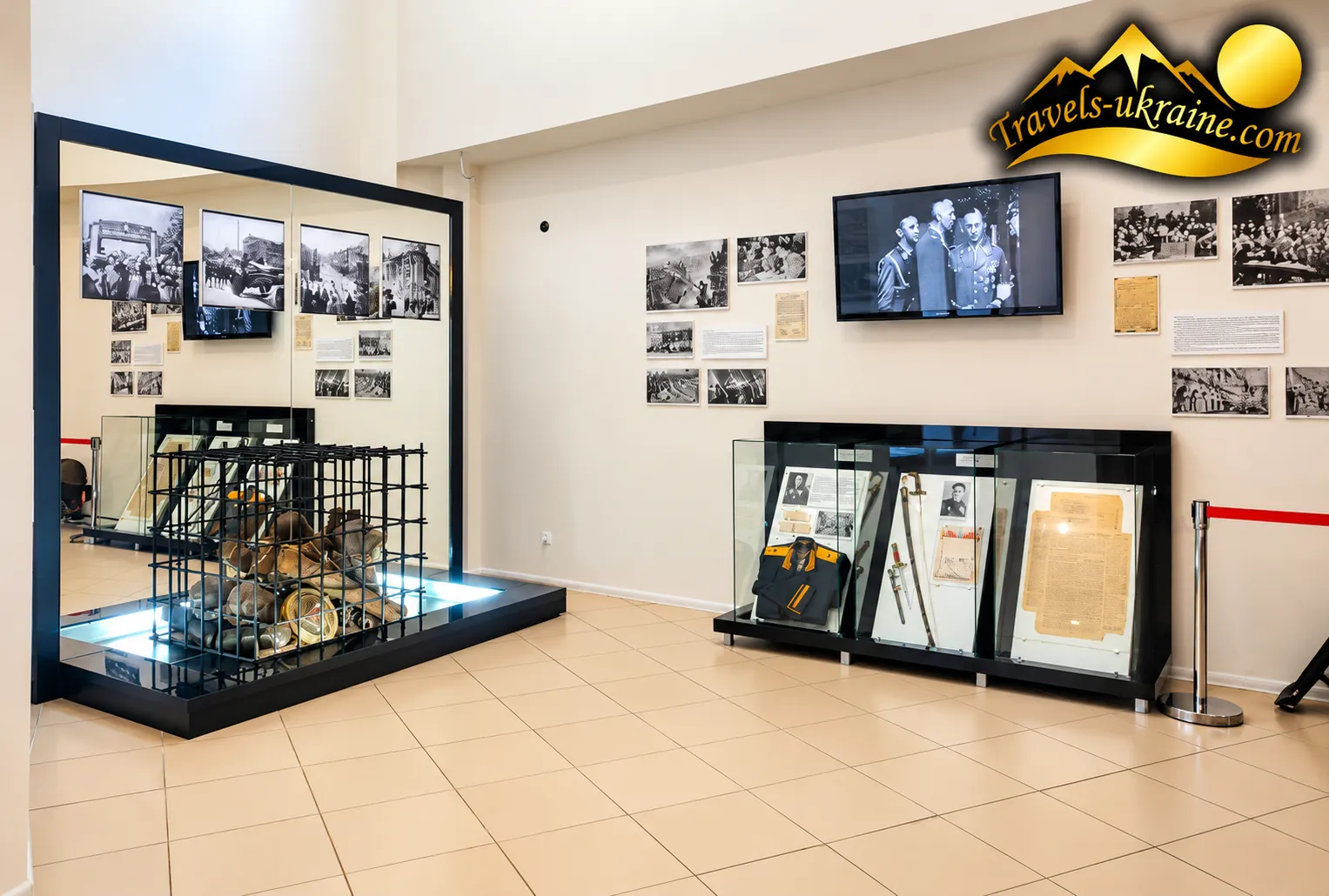
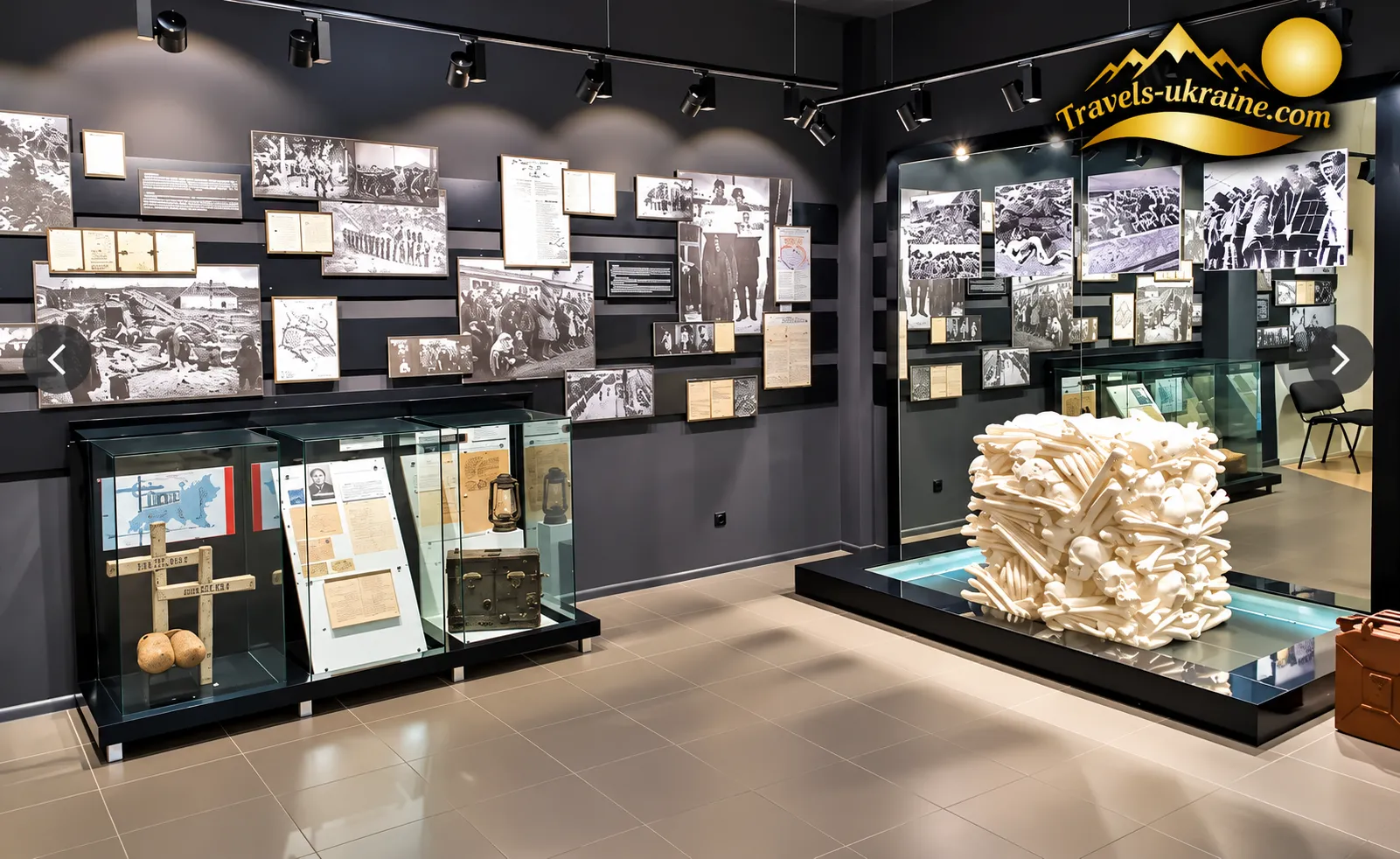
Today, the site has a fundamentally different significance. It is home to a memorial complex associated with the Vinnytsia Regional Museum of Local History. This is an important point in understanding the location. The modern complex is not intended to glorify the former headquarters or create an attraction centered on Hitler. Its purpose is to tell the story of the Nazi occupation, the operation of “Werwolf,” and the people who became victims of the regime. For that reason, the information materials and memorial elements are just as important as the concrete ruins themselves.
The materials presented at the complex help visitors understand not only the structure of the former headquarters, but also the broader historical context. Visitors can learn about the Nazi occupation of Vinnytsia Oblast, the construction and operation of “Werwolf,” the events of World War II, and the lives of people connected with this place. Plans and reconstructions help recreate the original appearance of the complex, since it is almost impossible to imagine it from the present-day ruins alone. Documentary materials, in turn, bring the story back from legend to specific events and real people.
Walking Through the Former Headquarters Site
Visiting “Werwolf” near Stryzhavka is largely an open-air walk through a historic site. The forest has long since reclaimed the space that was once a closed military facility during the war. This creates an unusual atmosphere. Trees, greenery, and an ordinary natural landscape surround you, yet among them suddenly appear fragments of concrete — physical traces of a completely different era.
You should not expect an impressive structure every ten meters. The significance of the site is revealed through context. If you simply walk through the area without understanding its history, some of the surviving objects may seem unremarkable. That is why a guided tour, or at least some prior familiarity with the history of “Werwolf,” is especially useful here.
Is It Worth Visiting If the Bunker Has Not Survived?
This is probably the main question for anyone learning about the actual condition of the complex for the first time. And the answer depends on your expectations. If your goal is to see a fully preserved underground headquarters with furniture, corridors, and command rooms, Hitler’s headquarters near Vinnytsia will not provide that kind of experience.
But if you are interested in the history of World War II, the archaeology of military sites, authentic places connected with historical events, and the chance to see the scale of destroyed defensive structures with your own eyes, then the trip has an entirely different value. In fact, the absence of a “ready-made” bunker forces you to look at the site more carefully. Here, history is not presented as a perfectly restored set. You have to reconstruct it in your own imagination from ruins, plans, documents, and explanations.
And it is precisely this incompleteness that became one of the main sources of legends. When most of the complex has been destroyed and its most massive structures lie shattered among the trees, it is very easy to assume that “the real Werwolf” is still hidden somewhere deeper underground. This is where the stories about secret tunnels, unknown underground levels, sealed rooms, and mysteries that supposedly remain undiscovered begin.
The Secrets of “Werwolf”: Myths and Confirmed Facts
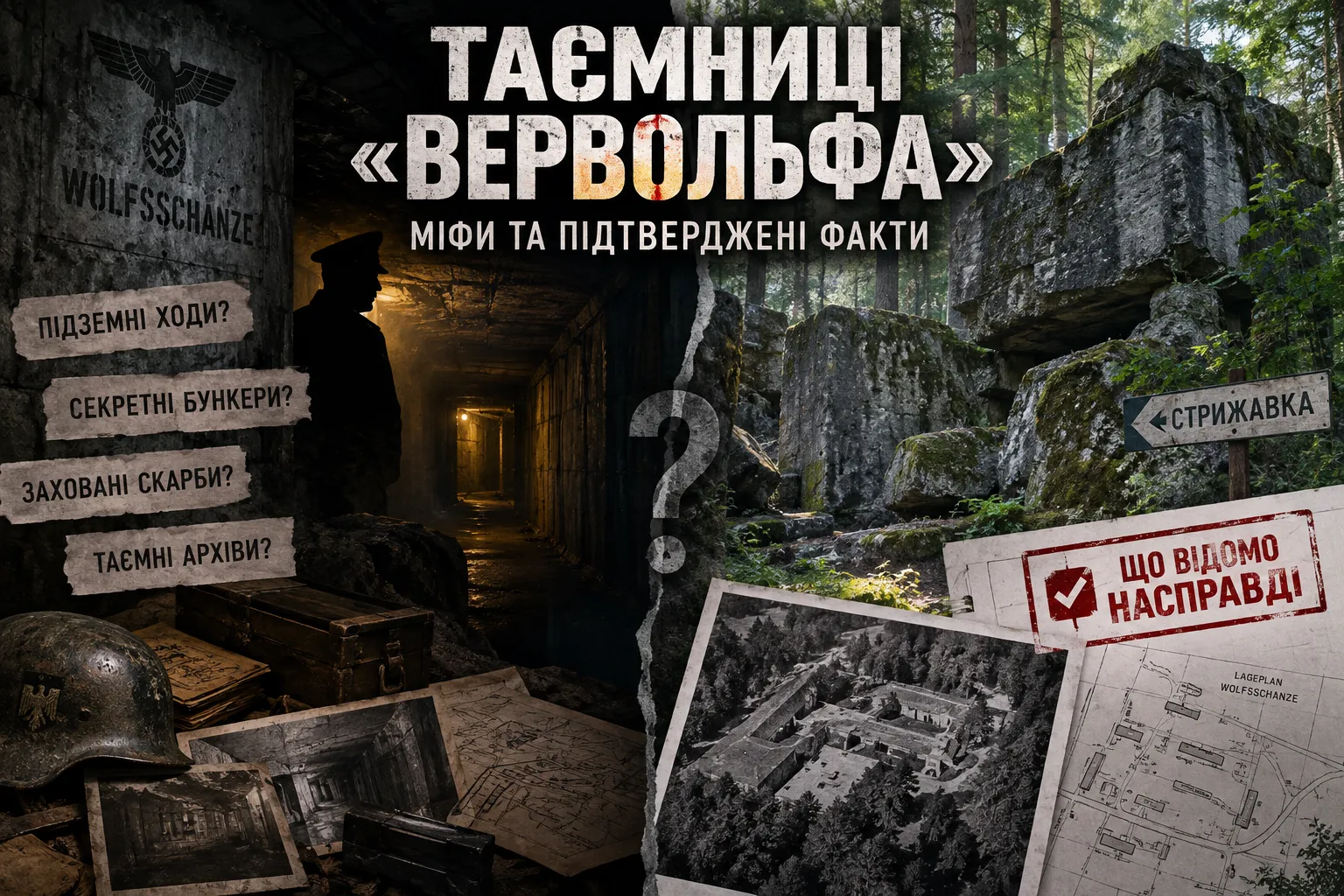
If a large military complex leaves behind mostly giant fragments of concrete while many of its structures disappear entirely, legends are almost inevitable. The “Werwolf” headquarters near Vinnytsia has accumulated more than its share. Underground levels, multi-kilometer tunnels, sealed rooms, secret archives, hidden treasures, and unknown structures — over the decades, an entire parallel “Werwolf” has grown around the former headquarters, sometimes far larger than the real one ever was.
There is only one problem: an interesting story and a proven historical fact are not the same thing.
So let us try not to destroy the atmosphere of the place, but also not to add several extra underground floors through imagination alone. We will examine the most popular mysteries of the “Werwolf” headquarters using a simple approach: what people say — and what can be stated cautiously on the basis of the known layout of the complex and the research that has been carried out.
So let us conduct a small historical investigation together. We will take the best-known legends about “Werwolf,” compare them with documents, research findings, and what has actually survived near Stryzhavka, and try to determine where confirmed facts end and myths begin. We will examine everything without unnecessary mysticism, but also without rushing to conclusions.
Myth No. 1. A Huge Underground City Lies Beneath Stryzhavka
This is probably the most famous legend about Hitler’s bunker. According to various versions, a multi-level system of rooms supposedly exists beneath the forest, with long corridors, command halls, storage areas, and technical floors. It is easy to understand how this idea arose. Massive concrete fragments, the secrecy of the site, its military importance, and its almost complete destruction create perfect conditions for one assumption: if almost nothing remains on the surface, then the most important part must be underground.
What is known: “Werwolf” did indeed include protected reinforced-concrete structures, some of which may have been partially buried. However, this does not automatically mean that a huge multi-level underground city existed beneath the entire headquarters area. A significant part of the complex was above ground. The idea that the real “Werwolf” was almost entirely hidden deep underground therefore oversimplifies the actual structure of the site.
Myth No. 2. The Underground Tunnels of “Werwolf” Stretch for Many Kilometers
One of the best-known legends about the “Werwolf” headquarters concerns a vast network of underground tunnels. Different versions describe different routes: the passages supposedly led toward Vinnytsia, the railway, other military facilities, or ended at emergency exits several kilometers away from the main headquarters area. At first glance, the idea sounds plausible. After all, this was a secret command post used by Hitler, with protected concrete structures, several layers of security, and a complex stretching for roughly 2.5 kilometers. Why not assume that some parts of it were connected underground? And this is where things become especially interesting: the underground part of “Werwolf” is not an entirely invented subject.
After the war, there were references to underground or partially buried air-raid shelters. In 1989–1990, the site was investigated as part of the Soviet scientific program “Hermes”: researchers scanned the ground, drilled boreholes, and used geophysical methods. According to accounts later published by the head of the research team, Leonid Bobrovnikov, underground cavities were detected at depths of up to 15 meters. Because the earlier results remained controversial, new ground-penetrating radar surveys were discussed in the 21st century to help determine what kinds of underground structures might still remain within the former headquarters site. But an important distinction must be made here. An underground cavity, a partially buried air-raid shelter, or a technical passage is not the same thing as a tunnel stretching for many kilometers.
Researchers who have worked with German construction documentation draw attention to the quantities of materials used. Records have survived concerning the concrete and crushed stone used to build the protected structures. The parameters of the massive constructions are also known: walls about two meters thick, foundations reaching approximately 2.5–3 meters, and heavy concrete ceilings. According to researchers, these volumes are sufficient to explain the existence of several extremely robust air-raid shelters, but they do not confirm the construction of a vast multi-level underground complex with kilometers of corridors.
There is also a straightforward engineering problem. Several kilometers of full-scale military tunnels would have required an enormous amount of excavation, concrete, ventilation, drainage, electricity, and other infrastructure. Concealing not only the construction process itself but also all of its physical traces would have been far more difficult than building several protected shelters.
What is known: underground or partially buried elements could indeed have existed within the “Werwolf” site, and some investigations reported underground cavities. The existence of protected air-raid shelters is also consistent with the purpose of such a command post.
What has not been confirmed: there is currently no reliable documentary or archaeological evidence of a tunnel network extending for many kilometers toward Vinnytsia, the railway, or other distant facilities. The legend of “kilometers of underground passages” should therefore not be confused with the real question of the headquarters’ underground structures. The former remains an attractive theory; the latter is a serious subject for further research. And perhaps this is where “Werwolf” leaves us with one of its genuine mysteries: not whether a secret tunnel to Vinnytsia exists, but what the actual design and depth of the protected structures that became inaccessible after the demolition really were.
Myth No. 3. An Entire Hitler Bunker Still Exists Beneath the Ruins
This version is especially appealing. According to the story, the Germans destroyed only the entrances and the upper part of the structure, while the lower rooms remained intact and are still sealed underground. This creates an almost cinematic image: somewhere below are doors, offices, desks, maps, and personal belongings that no one has touched since 1944.
What is known: the complex was deliberately destroyed during the retreat of German forces, and the force of the explosions is clearly demonstrated by the enormous displaced fragments of reinforced concrete. Underground and partially buried sections of individual structures may have survived in fragments, but that is very different from an intact, accessible command bunker.
Myth No. 4. Treasures Are Hidden Beneath the Headquarters
World War II + a secret command post + a hurried retreat + demolished bunkers — and we are almost guaranteed to end up with a legend about hidden gold. Similar stories surround many German military sites across Europe, and “Werwolf” did not escape this genre either. Various accounts mention gold, valuables, documents, works of art, or other treasures that may supposedly have been left beneath the ruins after German forces withdrew. But in the case of Vinnytsia, this legend did not arise entirely from nowhere. We know for certain that during the Nazi occupation, cultural and material valuables were indeed removed from the city on a large scale. Here, we are no longer dealing with folklore, but with museum and archival records.
The history of the Vinnytsia Regional Museum of Local History is particularly revealing. During the occupation, representatives of the German administration selected items from the museum’s collections for removal. Special attention was paid to archaeological materials and objects of folk culture. In December 1943, the selected museum valuables were packed into 43 crates, one chest, and 10 bundles. The cargo was loaded onto German vehicles. The crates were marked “Stadt Winniza Museum” — “Vinnytsia City Museum.” The museum was given a receipt confirming the removal of the property, but without a detailed inventory of all the objects contained inside.
After the liberation of Vinnytsia, the scale of the losses began to be documented. Among the missing museum objects were 60 Ukrainian carpets, about 1,000 ceramic items, approximately 3,000 embroidery samples, around 100 embroidered shirts, towels, and belts, about 500 pysanky, roughly 300 archaeological exhibits, as well as around 1,000 coins and medals. In total, the documents recorded the loss of about 5,960 museum objects. And this was only one museum. The fact that cultural valuables were removed from Vinnytsia on a large scale during the German occupation is therefore beyond serious doubt.
The story took an interesting turn after the war. Information emerged that some of the removed museum property had been discovered in Kraków, in university basements. Some of the items were later returned. In other words, this was not a legend about “trainloads of treasure,” but a real chain of events: selection of museum valuables → packing → removal by German transport → postwar recovery of part of the property.
This should also be viewed in a broader context. The Nazi system of looting in occupied territories was not limited to museums. Works of art, archival materials, church valuables, jewelry, precious metals, and private property were removed. The plundering of property belonging to the Jewish population of Vinnytsia Oblast during the occupation is also documented. That is why the legend about possible valuables at “Werwolf” no longer looks like a fantasy with no historical basis at all. The area around the headquarters was part of an occupation system that seized and transported property, while “Werwolf” itself was one of the most important command posts of the Nazi leadership on the Eastern Front, with enhanced security, transport support, and closed infrastructure.
In theory, various important shipments could have passed through such a well-protected military facility, or property could have been stored there temporarily. And during the 1944 retreat, the situation at the front was changing so rapidly that the idea that some items may not have been evacuated in time is not entirely impossible. But this is exactly where a very clear line must be drawn between historical possibility and established fact.
We have documents confirming the looting of Vinnytsia. We have specific figures for lost museum objects. We have information about dozens of crates of cultural valuables being loaded onto German transport. We also have postwar records concerning the search for part of the removed collections. What we do not currently have is documentary evidence that these shipments passed specifically through the “Werwolf” headquarters, were stored in its bunkers, or were left there before the retreat. And that distinction is crucial. The proven fact that Vinnytsia was looted cannot automatically be turned into proof that a “Hitler treasure” exists beneath Stryzhavka. The key link is still missing — a document, testimony, or material discovery that would directly connect the stolen valuables with the headquarters.
Similar legends have also emerged around other major military sites from World War II. For example, the bunkers and defensive structures of the Árpád Line in the Ukrainian Carpathians are likewise associated with stories about documents, military equipment, caches, and valuables supposedly left behind during retreat. Real underground structures, military secrecy, and hurried withdrawal create almost ideal conditions for such stories. But there too, every specific legend has to be examined separately.
What is known: the Nazi looting of Vinnytsia and the removal of cultural valuables are documented facts. Around 5,960 objects disappeared from the collections of the Vinnytsia Regional Museum of Local History alone. However, there is currently no evidence of a dedicated cache of gold, valuables, or museum collections directly within the “Werwolf” site. The treasure legend therefore should neither be presented as fact nor dismissed with the claim that “it definitely could not have happened.” There is a genuine historical basis for why the story arose, but the key question remains unanswered: did the route of the stolen valuables ever intersect with the headquarters itself?
Perhaps future archival discoveries or archaeological investigations will one day provide a more precise answer. Until then, the “treasures of Werwolf” remain exactly where an unconfirmed but historically understandable theory belongs — on the boundary between fact and legend.
What to See Near the “Werwolf” Headquarters: Interesting Places to Visit
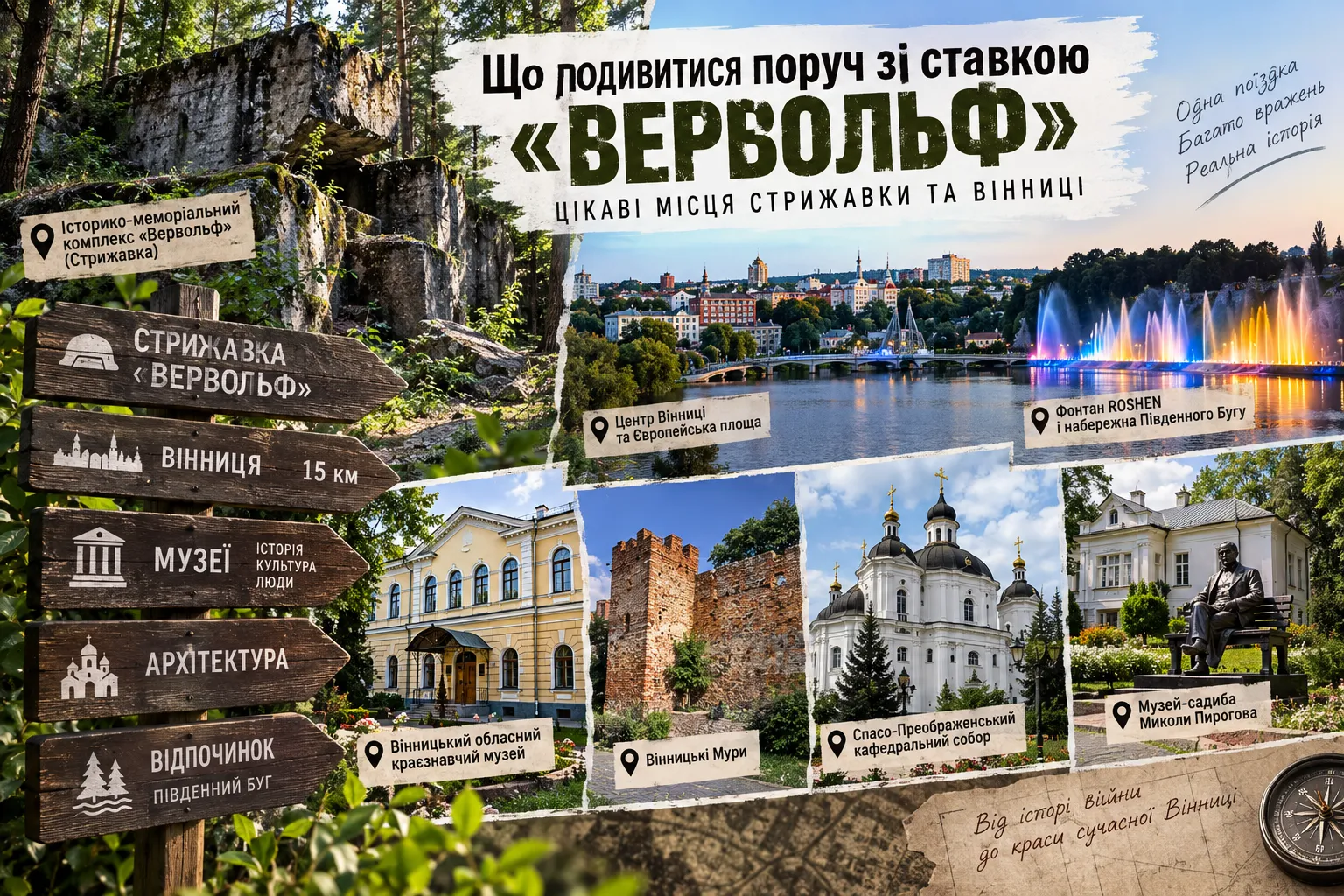
A trip to “Werwolf” does not have to end immediately after visiting the memorial complex. Vinnytsia is very close by, which means one historical site can easily become part of a complete tourist route lasting half a day or even a full day. The continuation of the trip can also feel completely different in mood. After the difficult history of World War II, you can move on to historic architecture, walk through the city center, visit a museum estate, or end the day by the Southern Bug River. Such a route is much more varied than spending several hours in a row among military landmarks.
First of all, it is worth getting the geography right. The popular phrase “Hitler’s headquarters in Vinnytsia” is convenient for search, but the historical and memorial complex itself is located near Stryzhavka, not in central Vinnytsia. So Stryzhavka is not just a name tourists see on a road sign on the way to the bunkers. The surrounding area itself was directly connected with the secret military complex during the occupation. After visiting “Werwolf,” it is worth paying at least some attention to the surrounding landscape. Modern roads, houses, and the ordinary life of the settlement create a striking contrast with what happened here in the 1940s.
Vinnytsia Regional Museum of Local History
If you would like to continue exploring the historical theme after visiting “Werwolf,” one of the best options is the Vinnytsia museum. This is an especially logical continuation of the route because the Historical and Memorial Complex dedicated to the victims of Nazism is one of its separate branches. The museum allows you to broaden the context of the trip considerably: from one specific military site to the history of the entire region — its archaeology, culture, everyday life, and events from different historical periods.
And this is also where another connection with our story becomes relevant. During the Nazi occupation, the museum lost thousands of objects from its collections. So the story of the looting of Vinnytsia, which we discussed in the section about the possible “treasures of Werwolf,” is far from abstract for this institution.
Vinnytsia Mury — the Historic Heart of the City
Near the local history museum is one of Vinnytsia’s most important historical and architectural landmarks — the complex known as the Vinnytsia Mury. These are the remains of historic monastic and defensive structures associated with the development of the city in the 17th and 18th centuries. After the military history of the 20th century, this stop offers a useful change of perspective: Vinnytsia suddenly appears as a city whose history began long before World War II. The Mury are easy to include in a walking route through the central part of the city together with nearby historic buildings. There is no need for a separate multi-hour expedition.
Mykola Pirogov Estate Museum
If you have enough time, it is worth adding the National Pirogov Estate Museum to your route. This is an entirely different chapter of history — medicine, science, and the life of one of the most famous surgeons of the 19th century. The site preserves the estate associated with Pirogov’s life, museum exhibitions, and memorial objects. A separate part of the complex is the necropolis church, where the scientist’s embalmed body is preserved.
After “Werwolf,” the contrast is especially striking: the first location tells the story of war, occupation, and a totalitarian regime, while the second is associated with medicine, scientific work, and a man who devoted much of his life to treating others.
Central Vinnytsia and European Square
For a less history-intensive part of the route, you can simply leave the car and take a walk through central Vinnytsia. European Square and the surrounding streets are a good place to take a break between museums. Here, there is no need to search for traces of secret headquarters or work out which century a particular wall belongs to. You can have a coffee, stop for lunch, and remind yourself that a tourist trip should occasionally include some rest. Especially if, before that, you spent two hours walking through the forest and carefully examining every concrete fragment while thinking: “What if the tunnel is right underneath this one?”
ROSHEN Fountain in Vinnytsia and the Southern Bug Riverfront
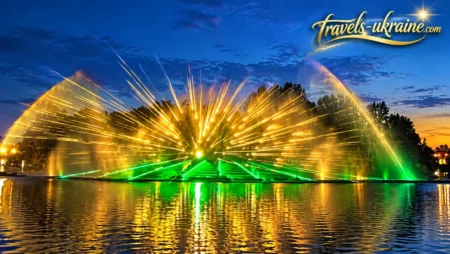
During the warmer months, you can end the day near the ROSHEN Fountain and the Southern Bug riverfront. This is modern tourist Vinnytsia — completely different in atmosphere from the memorial complex and the historic center. At the same time, it is worth checking the current operating schedule before your visit. The fountain’s format may change depending on the season and circumstances. In particular, the large-scale music, light, and laser programs familiar from the pre-war years should not automatically be assumed to be available today.
Even without a major show, the riverfront remains a good place to end the route — especially after a day filled with museums and historical landmarks.
The “Werwolf” Headquarters near Vinnytsia: Answers to the Most Frequently Asked Questions
Where is Hitler’s “Werwolf” headquarters located?
The former “Werwolf” headquarters is located near the settlement of Stryzhavka in Vinnytsia District, Vinnytsia Oblast. The popular phrase “Hitler’s headquarters in Vinnytsia” is therefore a convenient geographical reference, but not entirely precise: the complex itself is located outside the city. Today, the site is home to the Historical and Memorial Complex dedicated to the victims of Nazism.
How do you get to the “Werwolf” headquarters near Stryzhavka?
The most convenient option is to travel from Vinnytsia toward Stryzhavka by car, using a navigation app and the coordinates of the memorial complex. The distance from Vinnytsia is relatively short, so “Werwolf” can easily be included in a one-day tourist itinerary. Without a private car, you can take public transport toward Stryzhavka, but it is best to check the current timetable and the onward route to the complex before departure.
Can you enter Hitler’s bunker at “Werwolf”?
No. There is no preserved underground bunker here that is open to tourists. The main protected structures of the complex were blown up during the retreat of German forces. Today, visitors can explore the former headquarters site, see large fragments of reinforced-concrete structures, several surviving features, and the memorial and information sections of the complex.
When and for how long did Hitler stay at the “Werwolf” headquarters?
Adolf Hitler first arrived at the headquarters on July 16, 1942. His longest stay took place during the summer and autumn of 1942, when German forces were conducting major operations on the southern sector of the Eastern Front. He later returned to the complex several more times. In total, his stays amounted to several months, although the exact number of days varies between different studies.
Who destroyed the “Werwolf” headquarters?
The main structures of “Werwolf” were blown up by German forces during their retreat in early 1944, so that the important military facility would not fall into enemy hands in usable condition. As a result of these explosions, the massive reinforced-concrete structures were reduced to enormous fragments that can still be seen at the site today.
How much time is needed to visit “Werwolf”?
For a standard visit to the memorial complex, it is worth allowing approximately 1–2 hours. If you take a guided tour, spend time carefully reading the information materials, and want to explore the site without rushing, you may need more time. The visit can easily be combined with a trip to Vinnytsia on the same day.
How much does admission cost, and are guided tours available at “Werwolf”?
The Historical and Memorial Complex is open to visitors and also offers guided tours. Ticket prices, tour fees, current opening hours, and contact details may change, so the exact information is provided in the reference section below and should preferably be checked again against the official information from the Vinnytsia Regional Museum of Local History before your visit.
Is Hitler’s “Werwolf” Headquarters near Vinnytsia Worth Visiting?
Hitler’s “Werwolf” headquarters is an unusual tourist site, if only because it will almost certainly look different from what you imagined before your visit. There is no restored Hitler office, no endless underground corridors, and no armored doors that a guide dramatically opens in front of a tour group. Much of the complex has disappeared, the concrete shelters were blown up, and the forest has long been reclaiming the area. And yet, the site is still worth visiting.
Perhaps that is precisely why. “Werwolf” does not present visitors with a ready-made stage set of the past. Here, you have to look at a massive fragment of reinforced concrete and imagine the structure it once belonged to. You have to look at the quiet forest and remember that headquarters buildings, guard posts, communications systems, and the military infrastructure of one of Nazi Germany’s field command centers once stood among these trees. Because of this, the site can engage the imagination more powerfully than some fully reconstructed military locations. What you see is not a reconstruction “styled as 1942,” but the actual place where history left behind fragments — and where not every question has received a final answer.
After all the discussion of concrete, secrecy, and military engineering, it is important to return to the central point. The headquarters existed on occupied territory. Around it stood the reality of the Nazi regime: forced labor, persecution of civilians, the Holocaust, repression, looting of property, and the removal of cultural valuables. For that reason, the enormous concrete fragments here should not be viewed only as interesting engineering remains. They are remnants of the military infrastructure of a regime whose actions had tragic consequences for millions of people.
If your route brings you to Stryzhavka, do not come here only in search of a “secret Hitler bunker”. Walk through the grounds, look at the ruins, study the plan of the complex, and read about the people and events connected with this place. Because the greatest mystery of “Werwolf” is not necessarily what might still remain underground. Far more important is understanding what is already known about the events that took place on its surface.

No Comment
You can post first response comment.